A mowed lawn is a green desert. It feeds almost nothing, shelters no one, and the silence that settles over it at dusk is the silence of an empty room. But swap even a corner of that turf for the right feature and the whole yard wakes up. Chickadees start casing the place. Toads move into the shade, and fireflies draft lazy loops over long grass where nothing used to happen. The wild doesn’t need acreage to show up — it needs a reason. Below are real, buildable features that give it one, each a small invitation the local ecosystem has been waiting on.
31. Native Wildflower Meadow Where the Lawn Used to Be
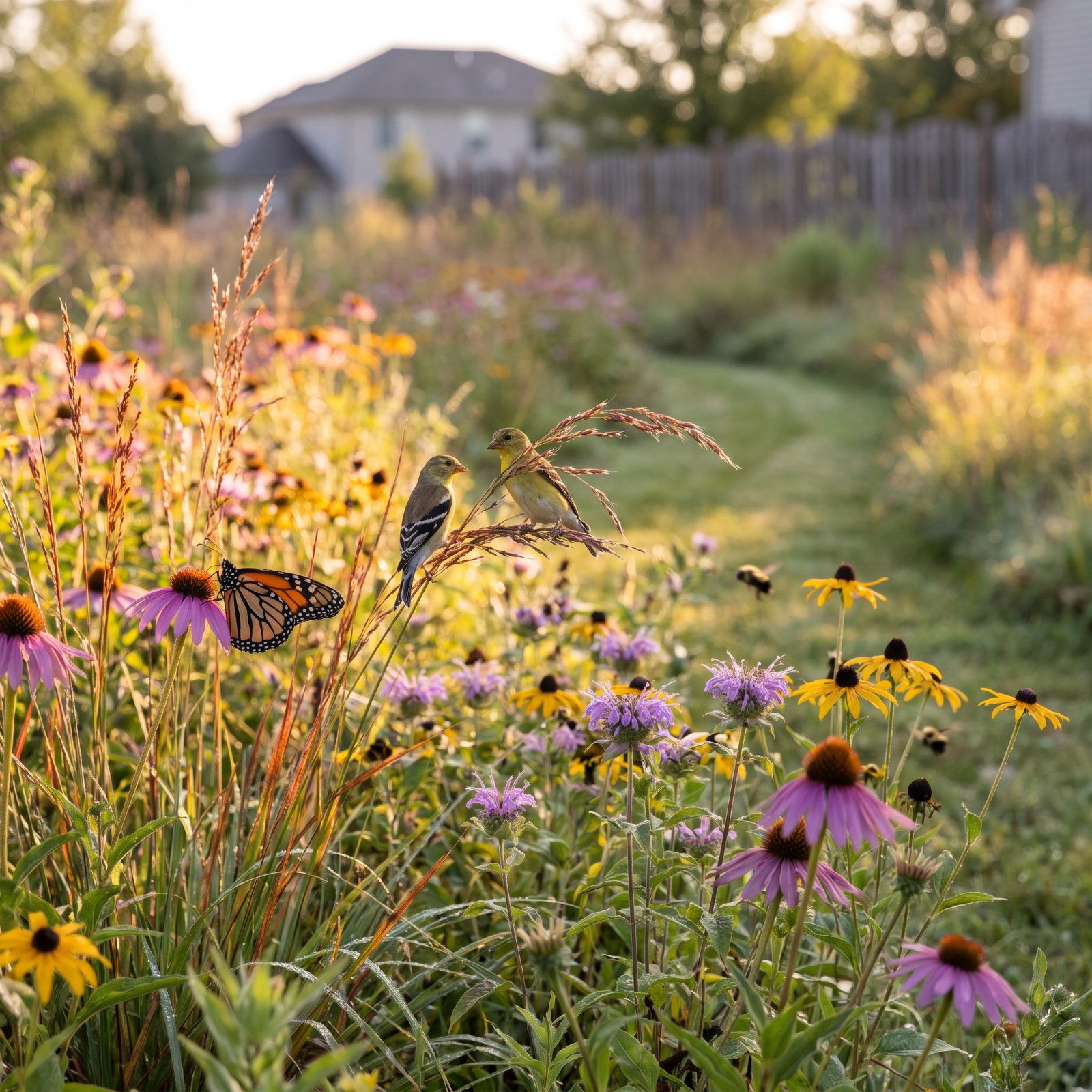
Turf gives you one plant, mowed to a stub, feeding nobody. A native wildflower meadow gives you dozens, and the difference shows up fast — within a season you’ll have goldfinches riding the seed heads and native bees you didn’t know lived nearby.
The trick most people miss: you can’t just scatter a wildflower mix over existing grass and wait. The lawn wins. You have to kill or smother the turf first, usually under cardboard or with repeated solarizing, then sow into bare soil in fall so the seeds get their cold stratification. And use regional natives, not the pretty generic “wildflower” cans sold at every checkout. Half of what’s in those is non-native filler.
30. A Backyard Pond With Gently Sloped Edges
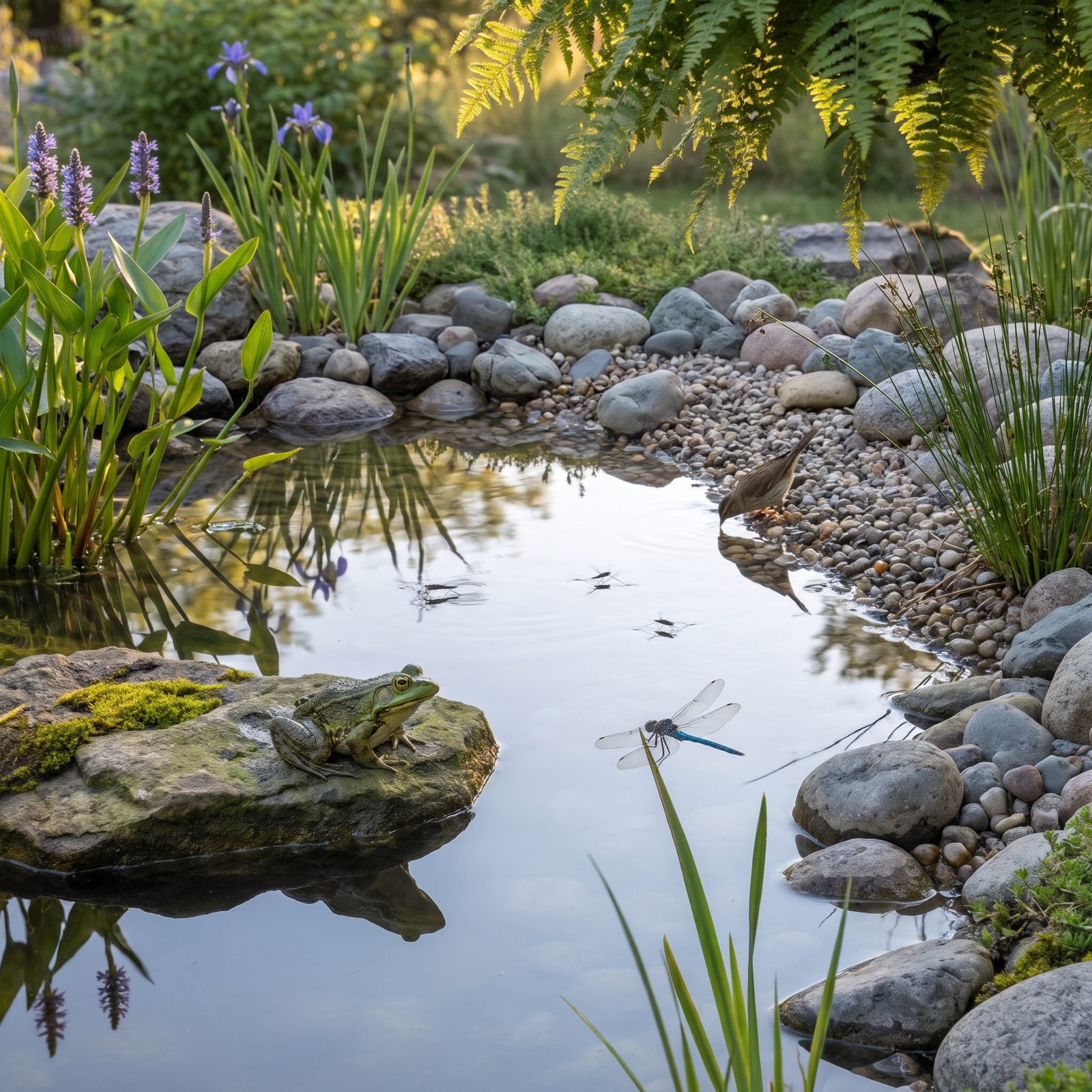
The single most important design choice in a wildlife pond isn’t the plants or the pump. It’s the slope. A pond with steep sides is a drowning trap, while one with a shallow, pebbled beach on at least a single edge becomes a watering hole for everything within flying or hopping distance.
Frogs need to climb out. Hedgehogs and chipmunks fall in and need a ramp, and birds bathe in the inch-deep margin, not the deep middle. Build in a gradual gravel shelf and you’ve made the water safe to use instead of just pretty to look at. Skip the fish if wildlife is the goal — they eat the tadpoles and dragonfly larvae you’re trying to host.
29. A Clustered Bird Feeding Station, Not One Lonely Feeder
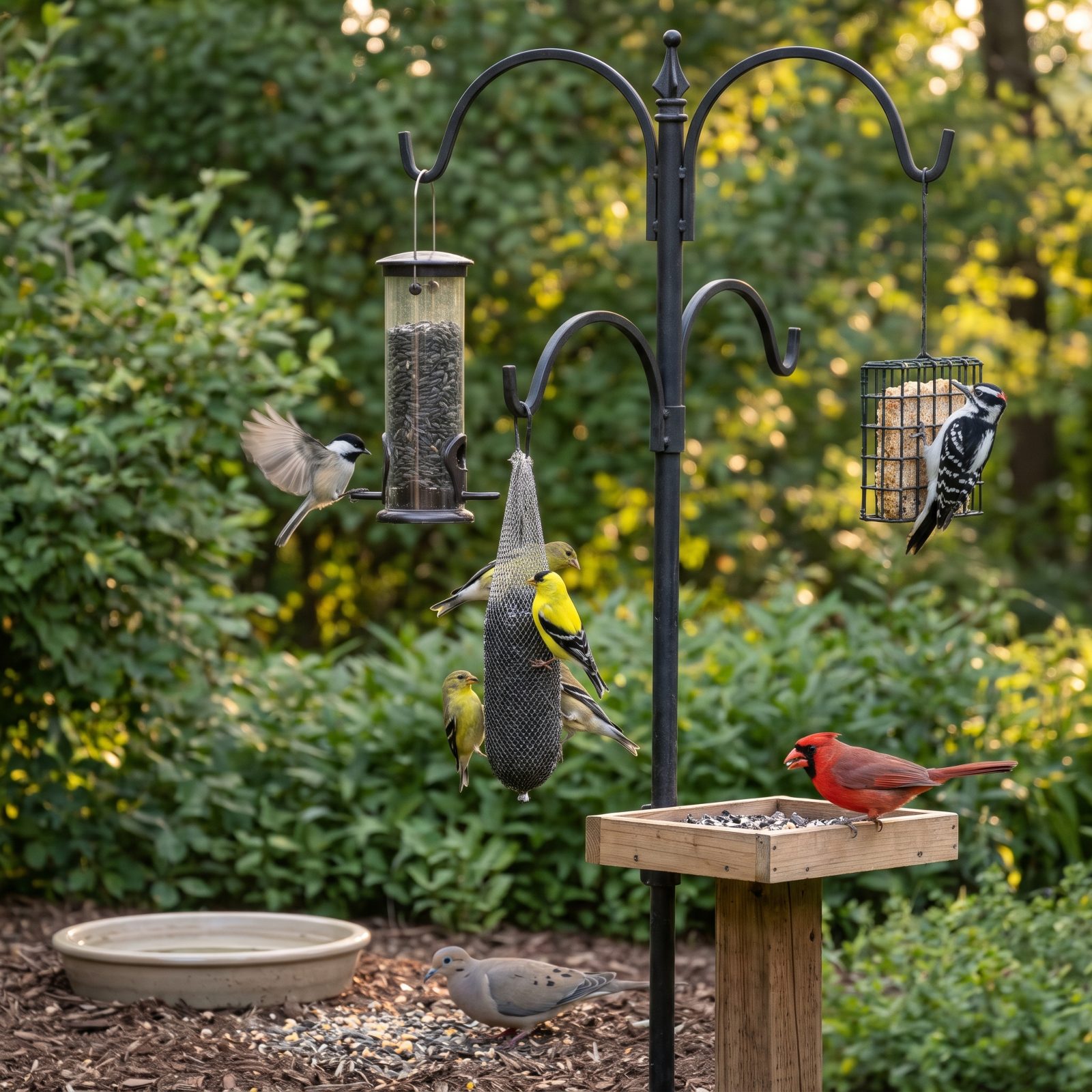
One feeder is a snack bar. A cluster is a destination. Group three or four feeders with different foods, add water nearby, and a single visit turns into a reason for birds to stay, work the area, and come back daily.
Vary the menu: black oil sunflower for the generalists, nyjer for finches, suet for woodpeckers and nuthatches, a tray on the ground for juncos and doves that won’t cling. Different foods pull different species, and a busy station reads as safe to passing birds the way a full parking lot reads as a decent restaurant.
28. A Pollinator Border Humming From Spring to Frost
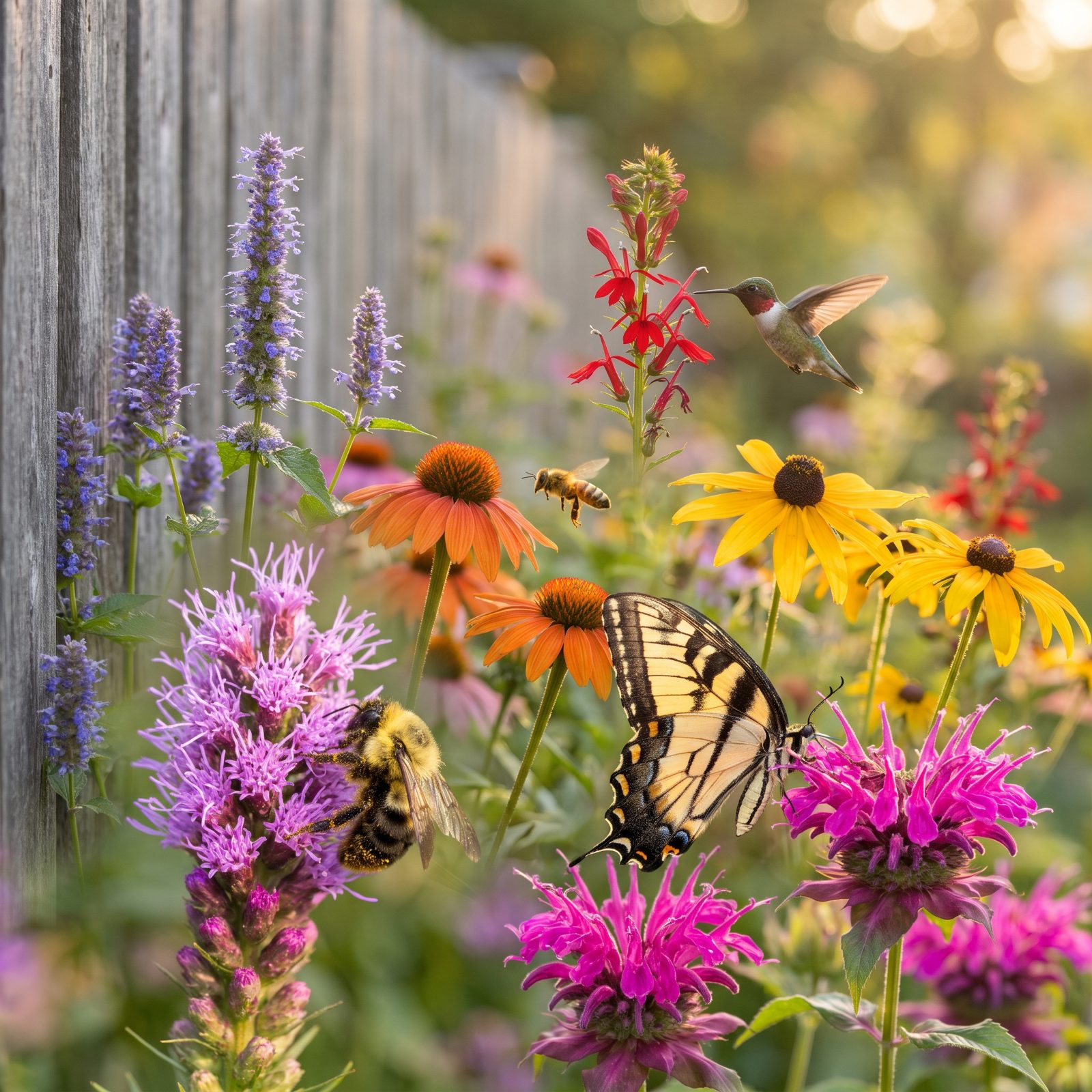
A pollinator border hits its peak in July, when coneflower, liatris, bee balm, black-eyed Susan and butterfly weed all flower at once and bees, butterflies and hummingbirds crowd in. Don’t let it go bare the rest of the year. Hungry insects don’t book appointments. Build a relay around that midsummer core: something flowering in early spring when queen bumblebees emerge starving, and something in fall when migrating monarchs need fuel.
Group each species in clumps of three or more, not single plants dotted around. A bee working a patch of the same flower forages efficiently, and a solid block of color is far easier for passing pollinators to spot than one bloom here, one there.
27. A Log and Brush Pile That Looks Like Nothing and Does Everything
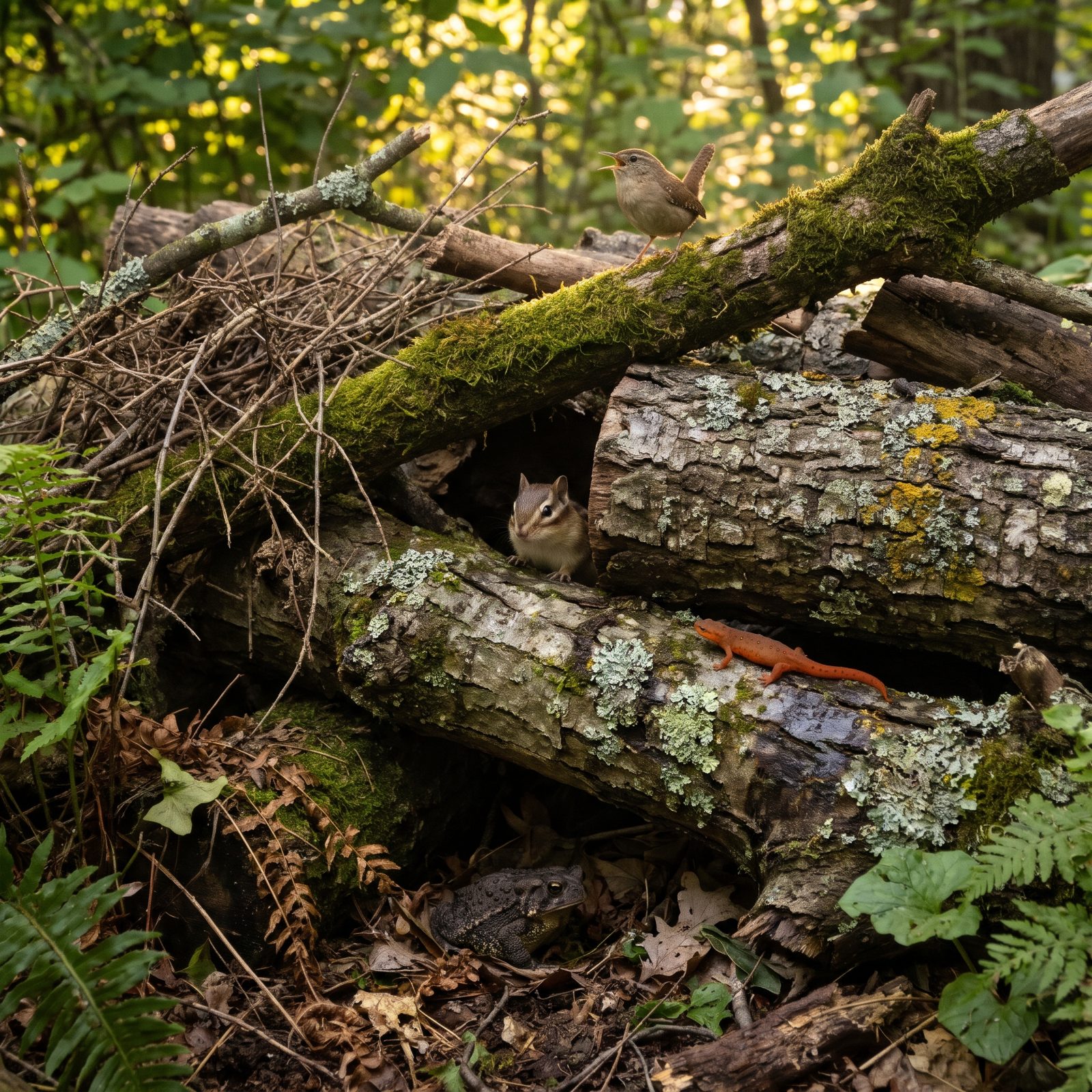
Here’s the feature nobody brags about and everything uses. A pile of logs and brush in a quiet corner is five-star habitat for the creatures that make the whole yard tick — toads, salamanders, wrens, chipmunks, beetles, overwintering queen bumblebees. All of them need cover, and manicured yards offer none.
Stack logs with gaps. Pile the brush loosely so there are hollows and shade, then let it rot. The decay is the whole point: it feeds fungi and insects that in turn feed the birds. It’s easy to resist this one because it looks untidy. Then a wren raises a brood three feet from the compost and how it looks stops mattering.
26. A Hedgerow of Native Shrubs Instead of a Fence Line
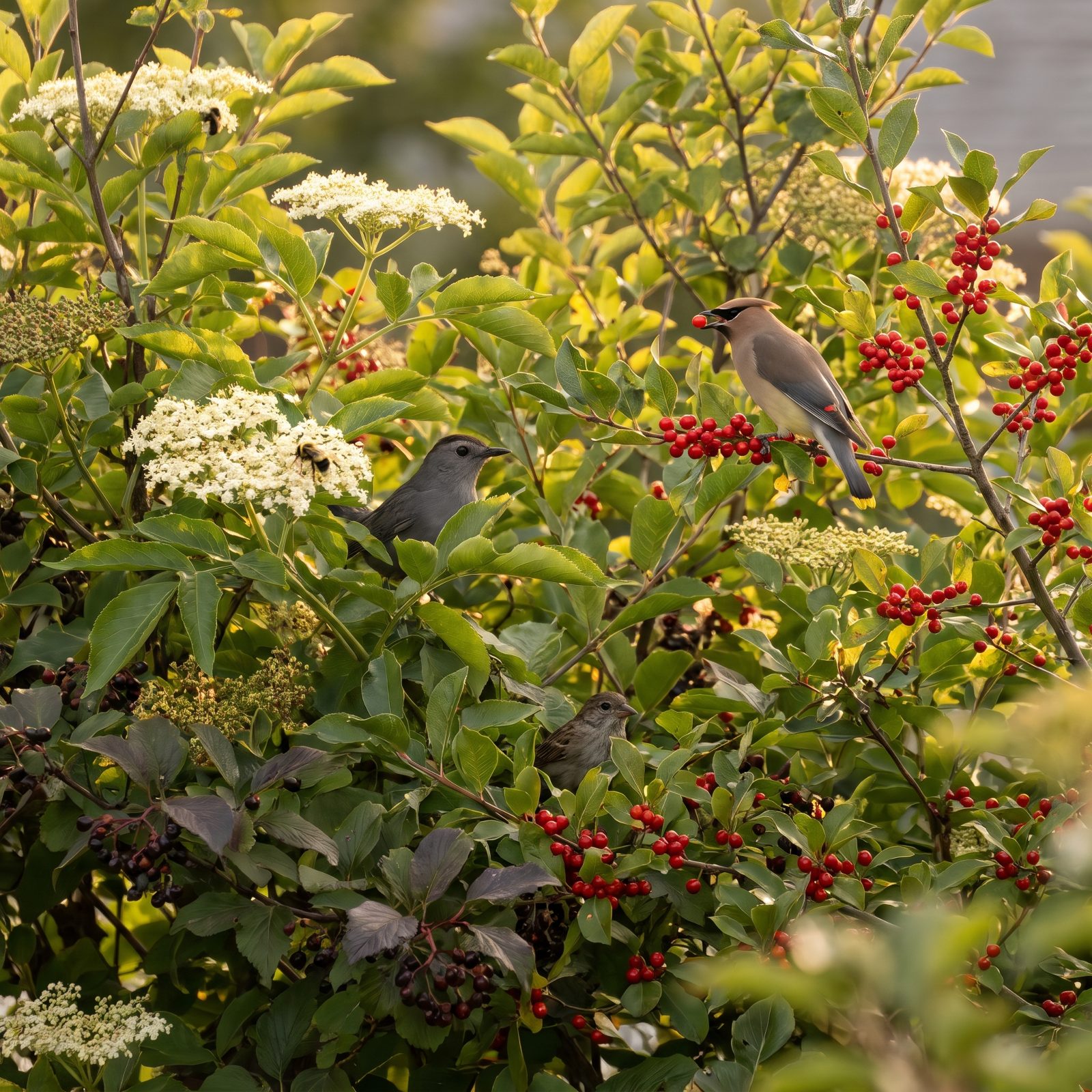
A fence marks a boundary. A hedgerow marks a boundary and feeds the neighborhood. Mix native shrubs — serviceberry, elderberry, winterberry, dogwood, viburnum — and you get a living wall that offers spring flowers for pollinators, fall berries for birds, and dense cover for nesting through the seasons in between.
The layering is what makes it work. Different shrub heights and fruiting times mean something is always on the menu and something is always providing shelter. Cedar waxwings and robins will strip a winterberry bare in a cold snap. Catbirds nest deep in the tangle. A row of identical arborvitae gives you a green wall; a mixed native hedge gives you a corridor.
25. A Butterfly Puddling Station in a Sunny Patch
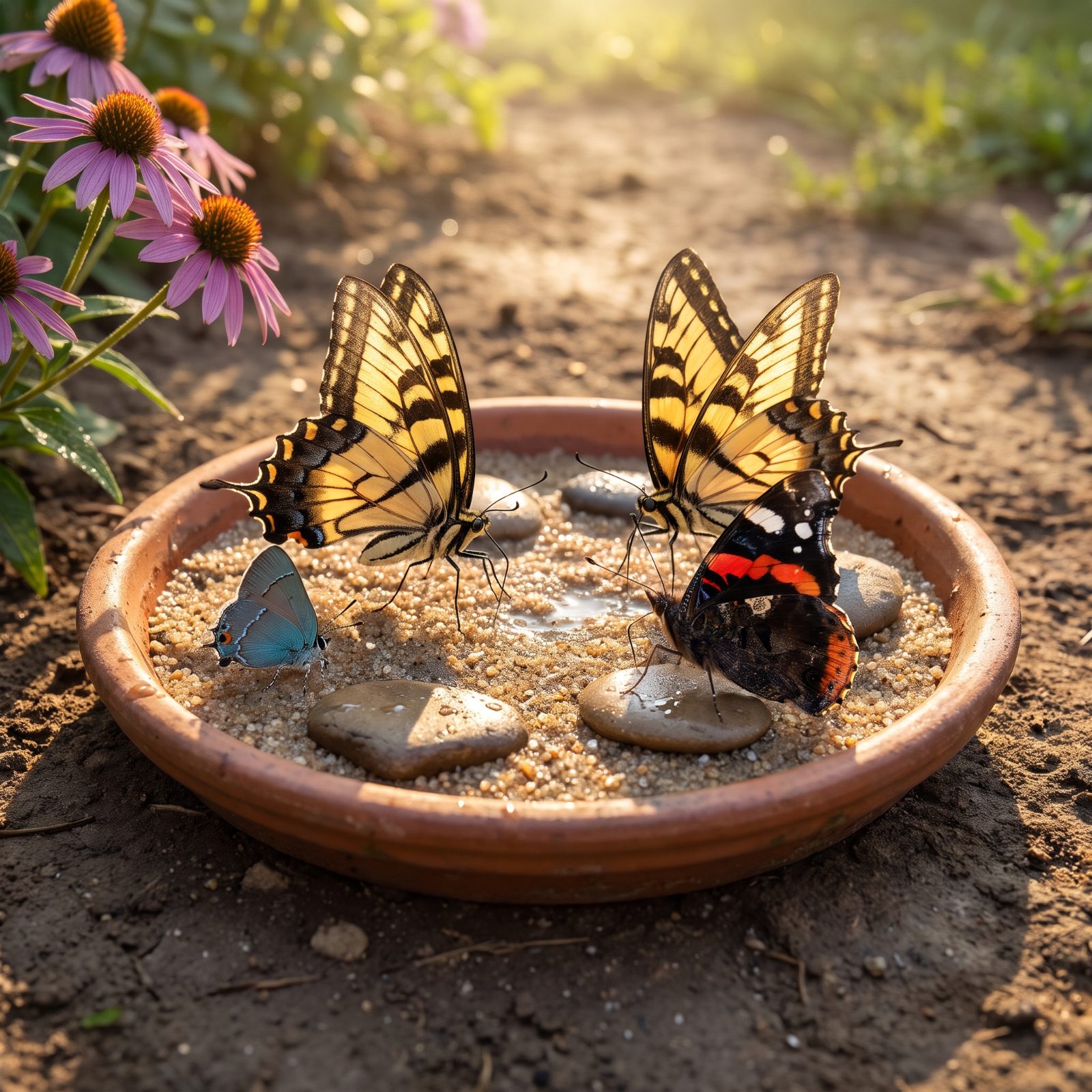
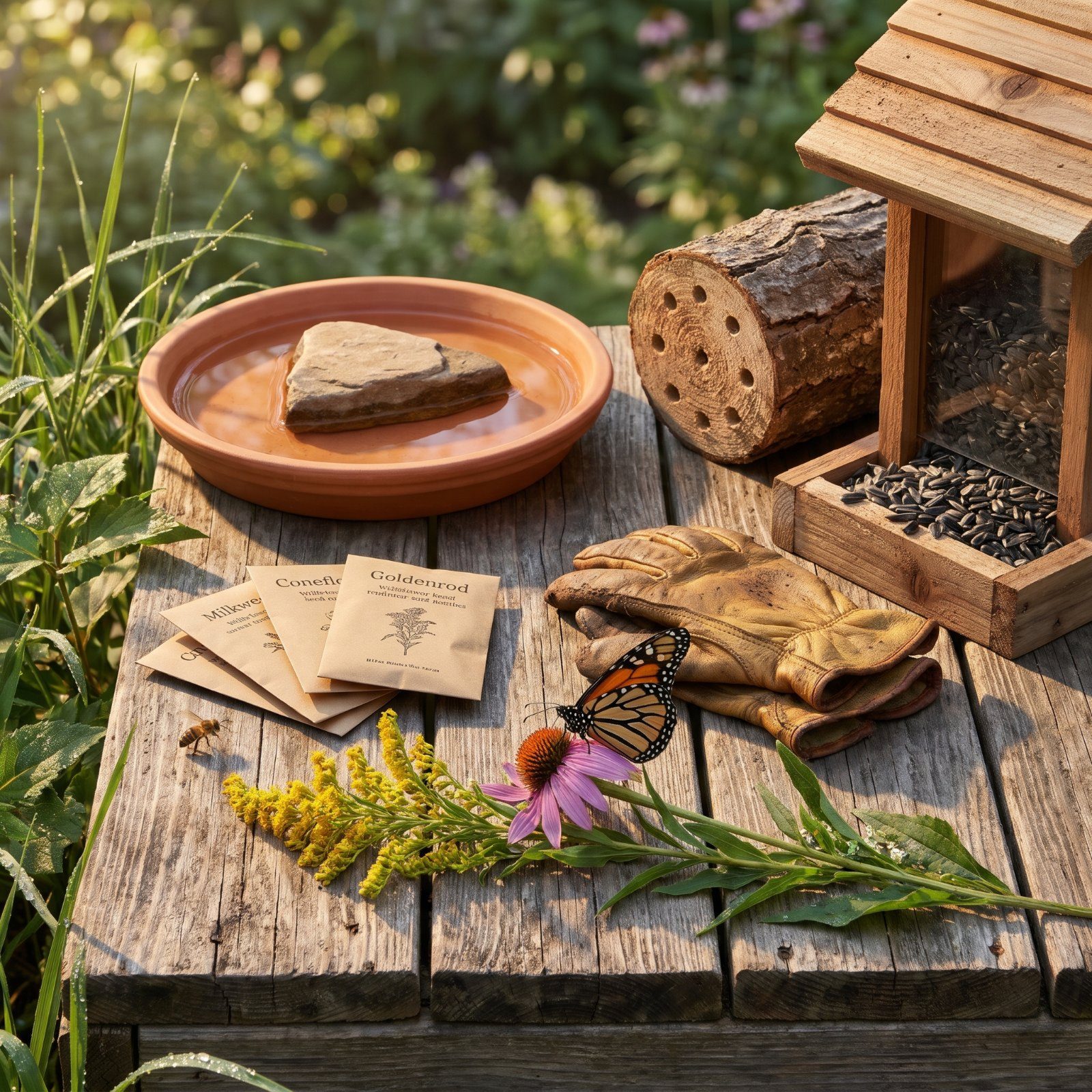
Butterflies don’t live on nectar alone. The males especially need minerals, salts and amino acids no flower provides, so they gather at damp ground to drink — puddling, naturalists call it. You can fake it with a shallow dish of coarse sand kept wet and set in full sun.
A pinch of sea salt or a smear of compost in the sand sweetens the deal. Keep it damp, not flooded, and tuck it near your nectar plants where butterflies already patrol. On a hot afternoon you may find swallowtails lined up like deer at a salt lick, wings twitching in the sun.
24. A Dead Standing Snag Left Up for the Cavity Nesters
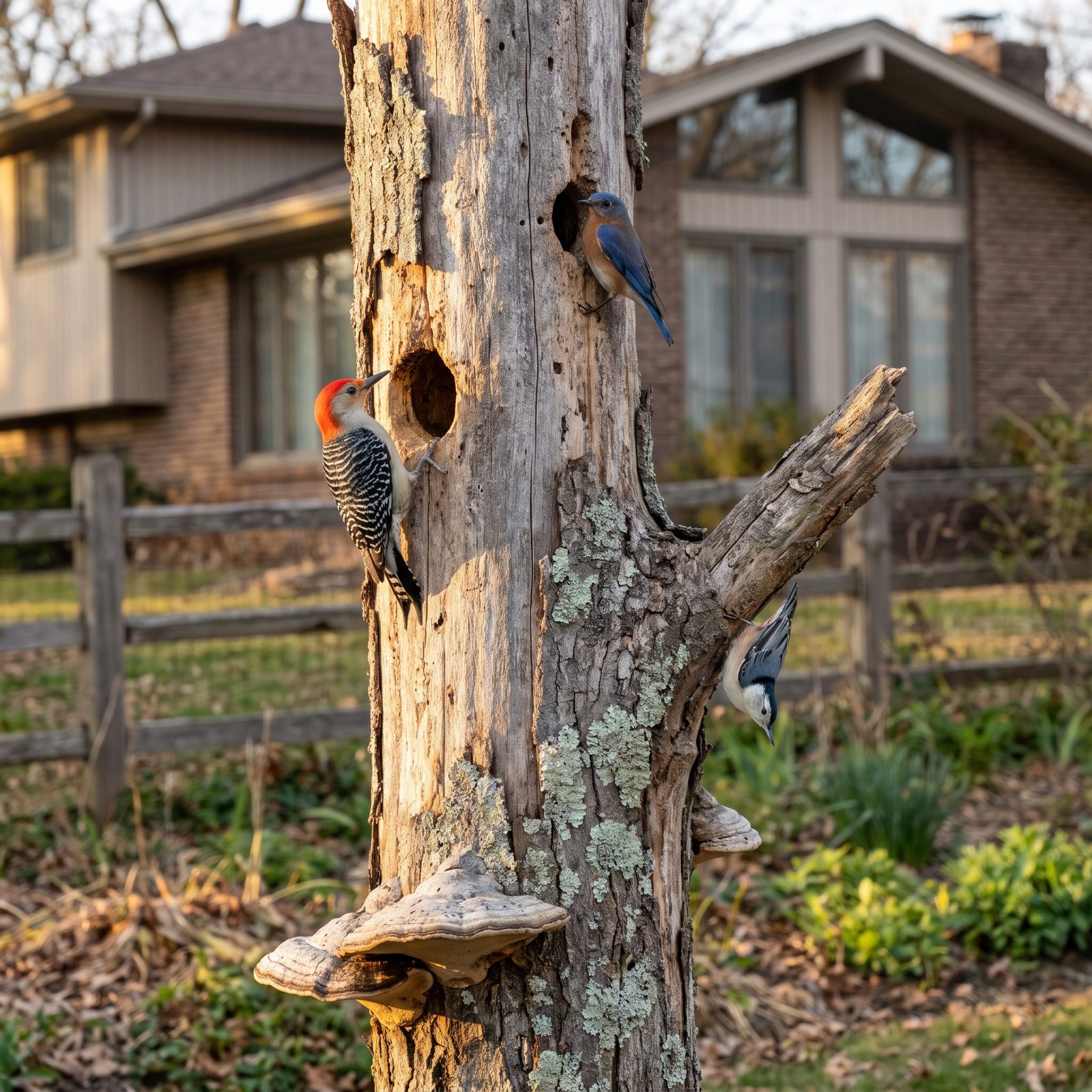
The instinct is to cut down a dead tree. The wildlife move is to leave it standing, if it’s safe to. A dead snag is prime real estate. Woodpeckers chisel holes in it; later on bluebirds, chickadees, nuthatches and screech owls move into the old cavities. Beetles and grubs riddle the soft wood and feed the birds hunting it.
Safety first, and honestly: if the snag could fall on a house, a fence or a person, it comes down or gets topped to a safe height by a pro. But a sound trunk in an open corner, shortened to eight or ten feet, is one of the richest features you can keep — and it costs nothing but restraint.
23. A Rain Garden That Puts the Downpour to Work
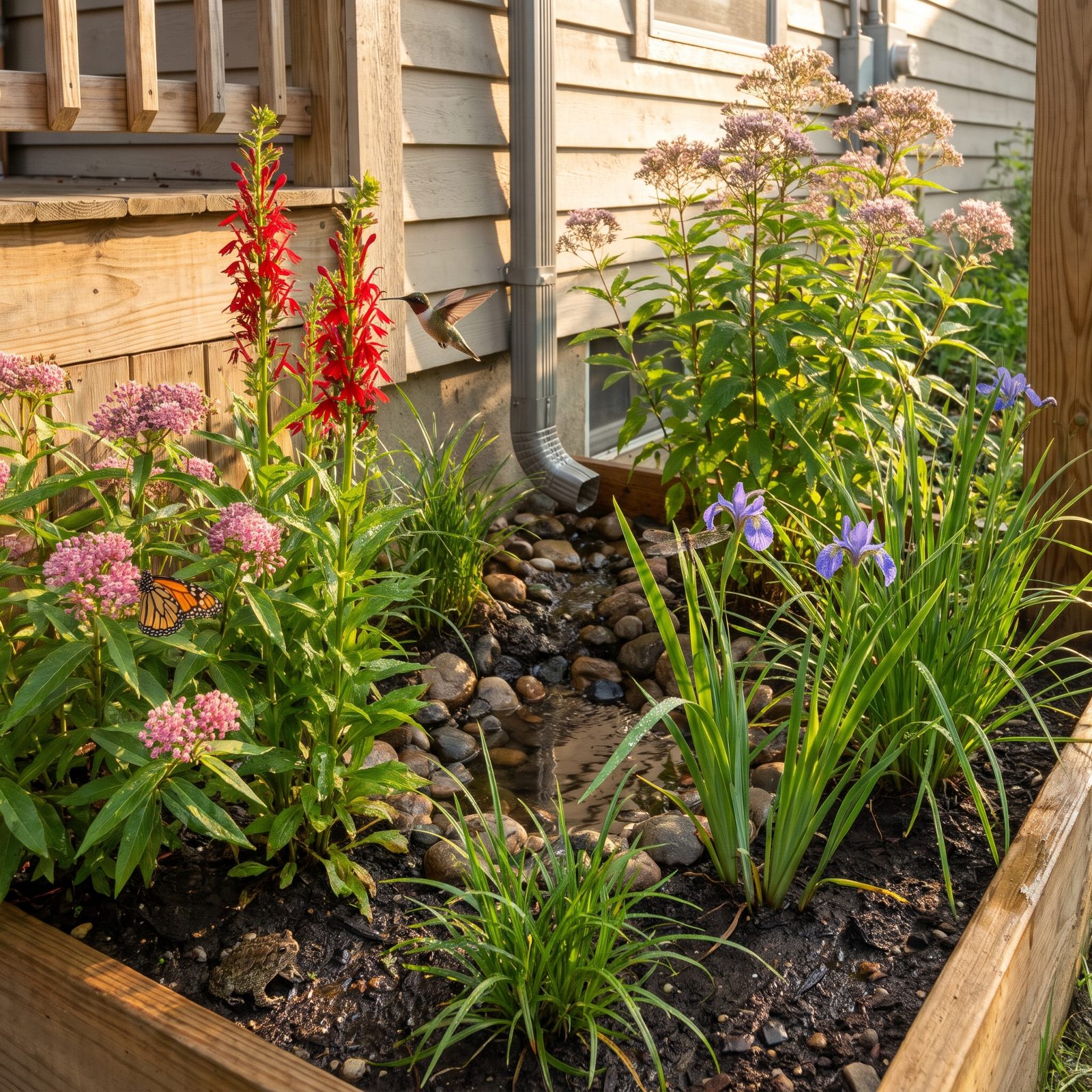
Every storm, your roof dumps hundreds of gallons into a downspout that races it to the storm drain, carrying lawn chemicals along for the ride. A rain garden intercepts that flow — a shallow planted basin that catches the runoff, lets it soak in slowly, and grows wetland natives that shrug off the feast-or-famine moisture.
Swamp milkweed, cardinal flower, blue flag iris and joe-pye weed all thrive in the brief flooding and feed hummingbirds, monarchs and dragonflies. It drains within a day or two, so no mosquitoes. It filters pollution out of the water and recharges groundwater besides. The ugliest part of a storm becomes the most alive corner of the yard.
22. A Bat House Mounted High on a Sunny Pole
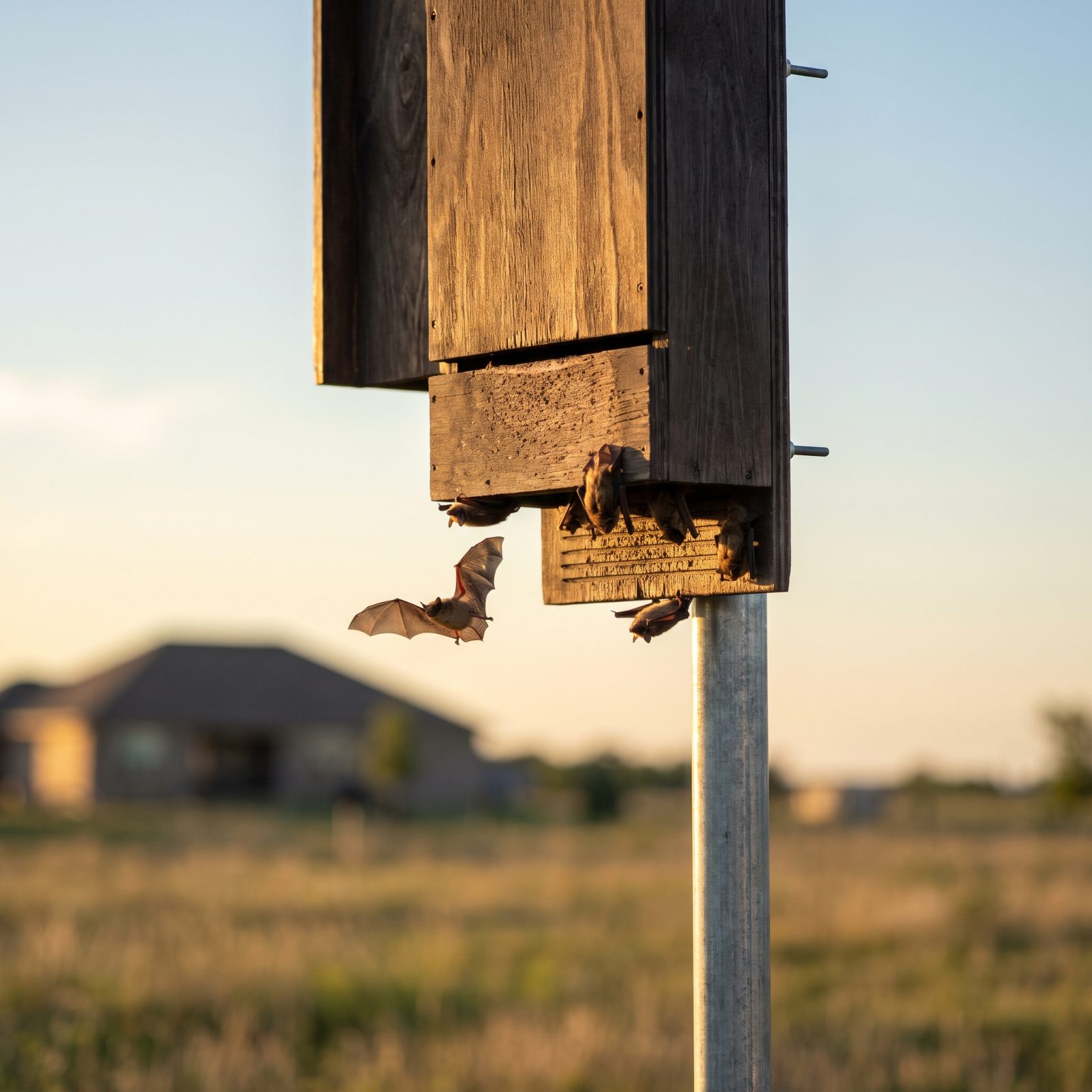
A single little brown bat eats enormous numbers of insects in a night, mosquitoes included. Give a colony a place to roost and you’ve hired the most effective pest control going, working the night shift for free. A bat house is the invitation.
Placement makes or breaks it, and most people get this wrong. Bats want heat, so the box needs to face south or southeast and bake in full sun, mounted at least twelve to fifteen feet up on a pole or a wall, well clear of any trees that let predators ambush them. A box in deep shade on a shady trunk stays empty for years.
21. The Mason Bee Hotel That Outworks Honeybees
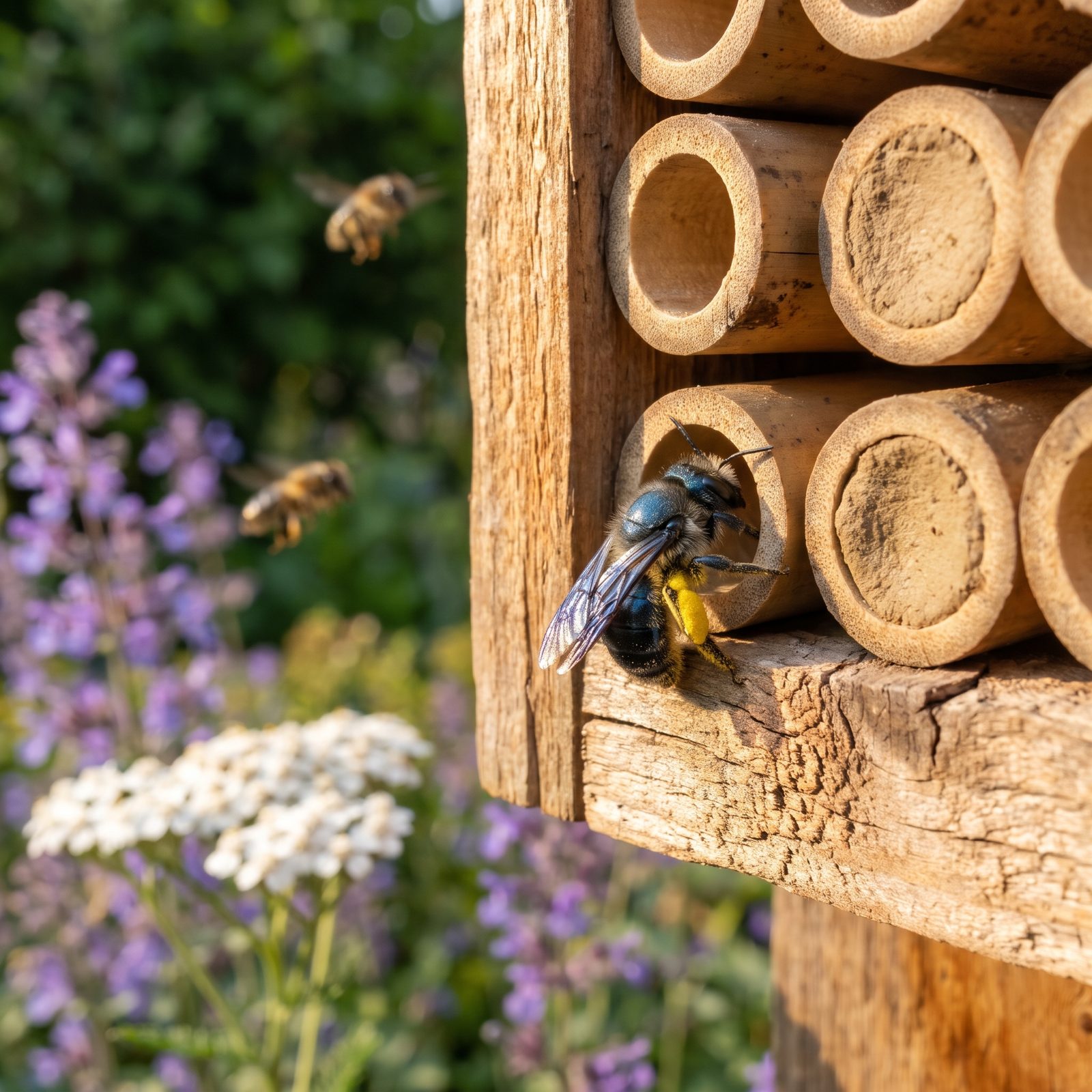
A single mason bee pollinates like a hundred honeybees. No stinger worth worrying about, no hive to manage, no beekeeper suit — they just show up in spring, fill your hollow tubes with mud and pollen, and move on.
Most people miss the one thing that matters: the tubes have to be cleanable or replaceable. Leave the same bamboo out year after year and you quietly breed parasitic wasps and mold that wipe out next spring’s bees. Swap in fresh paper liners each autumn and the problem disappears.
20. Berry-Loaded Native Trees Birds Actually Fight Over
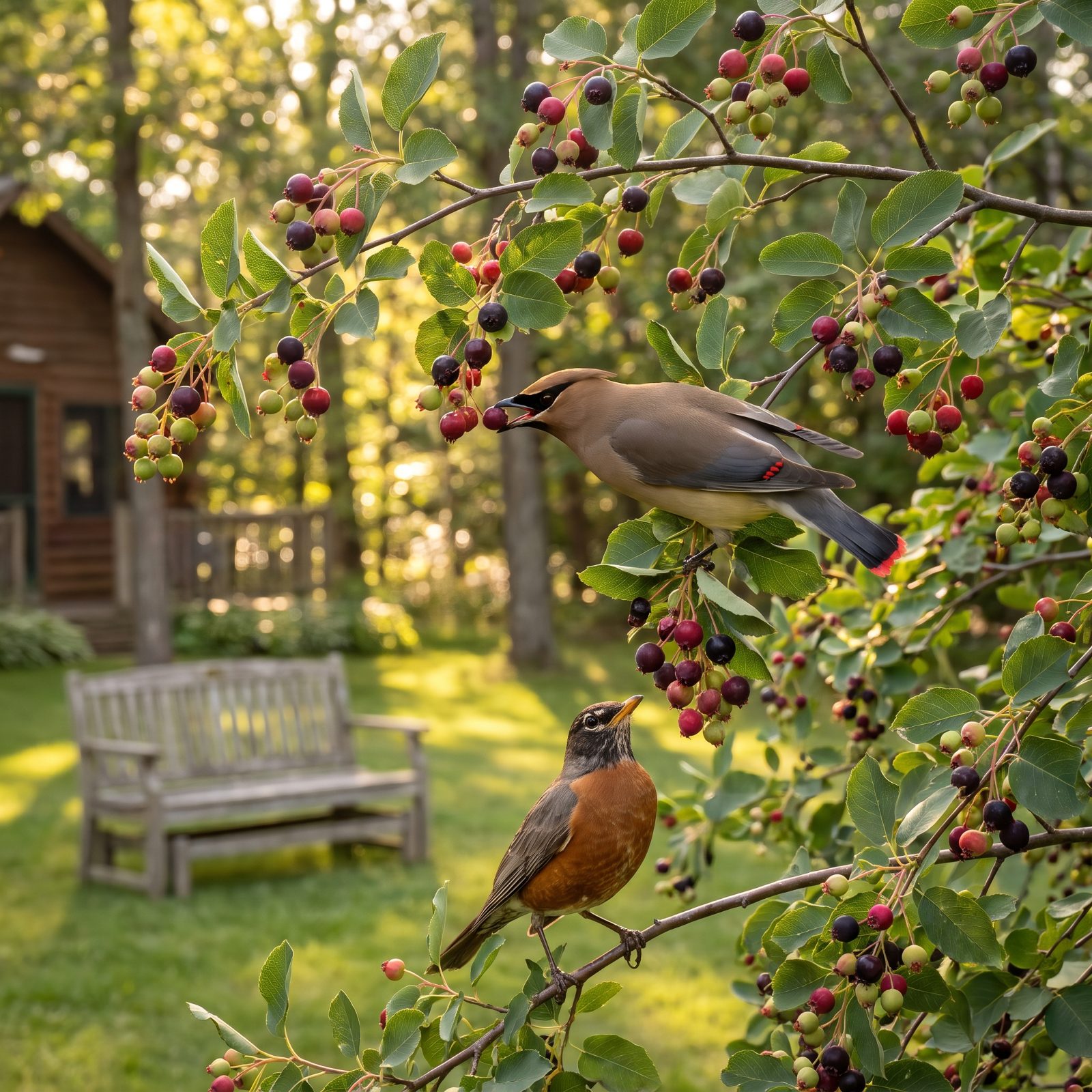
Plant a serviceberry, a dogwood, or an elderberry and you’ve opened a diner that never closes. Native fruiting trees feed birds during the exact weeks they migrate through — something the ornamental Bradford pear never manages.
And nobody warns you about the catch: you will not get the berries. Waxwings and robins strip a serviceberry in roughly two days, and they go at it with the urgency of a fire drill. Good. The tree earns its keep by vanishing fast.
19. The Dripping Water Fountain Birds Can Hear From Across the Yard
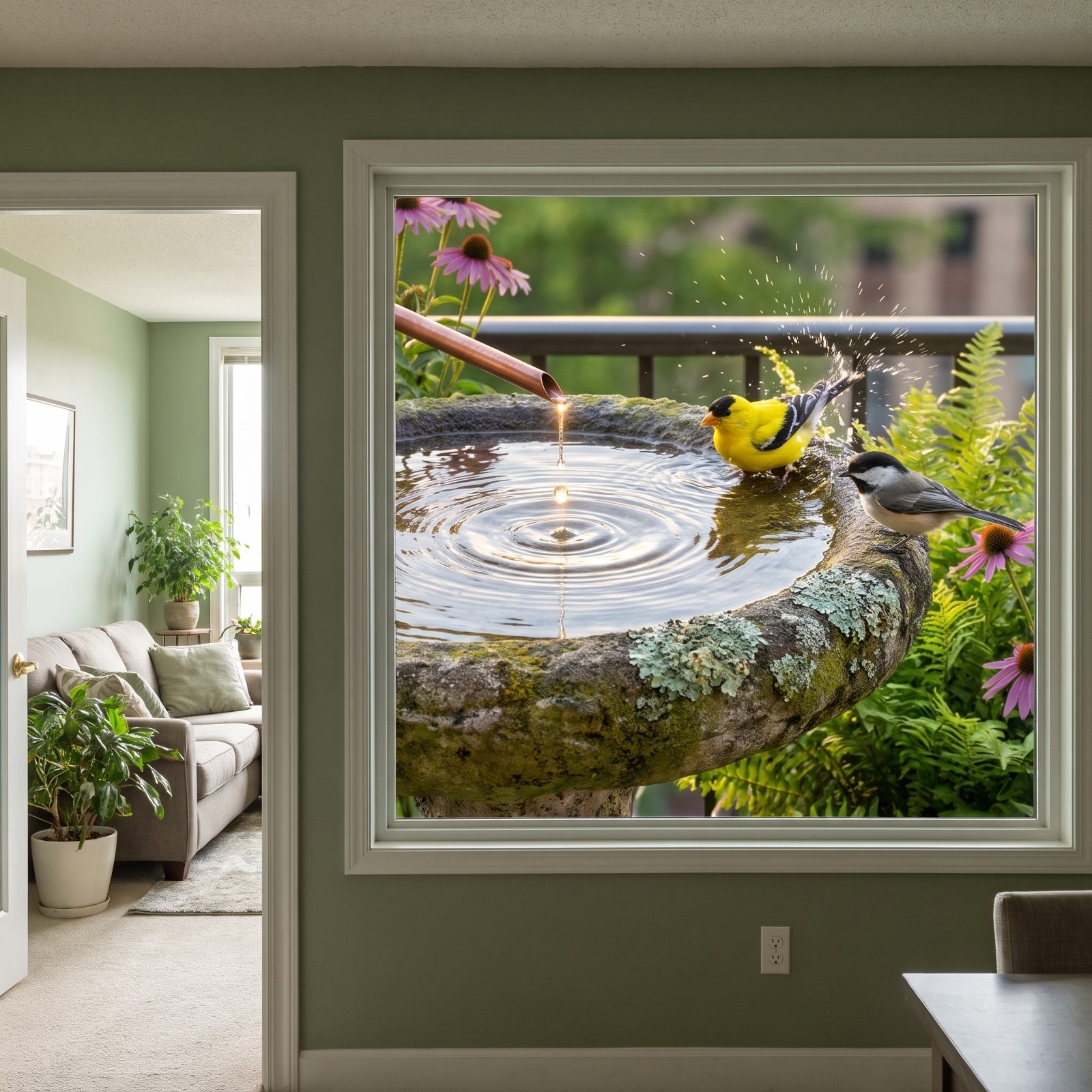
Moving water is the single best bird magnet you can add. A still bowl gets the occasional visitor. Add a slow drip or a small bubbler and the sound carries — birds within earshot will detour across a whole neighborhood to find it.
Keep it shallow, two inches at the deepest, with a rough bottom so small feet can grip. Birds drown in deep, smooth bowls more often than you’d ever guess.
18. A Sun-Baked Rock Pile That Doubles as a Reptile Resort
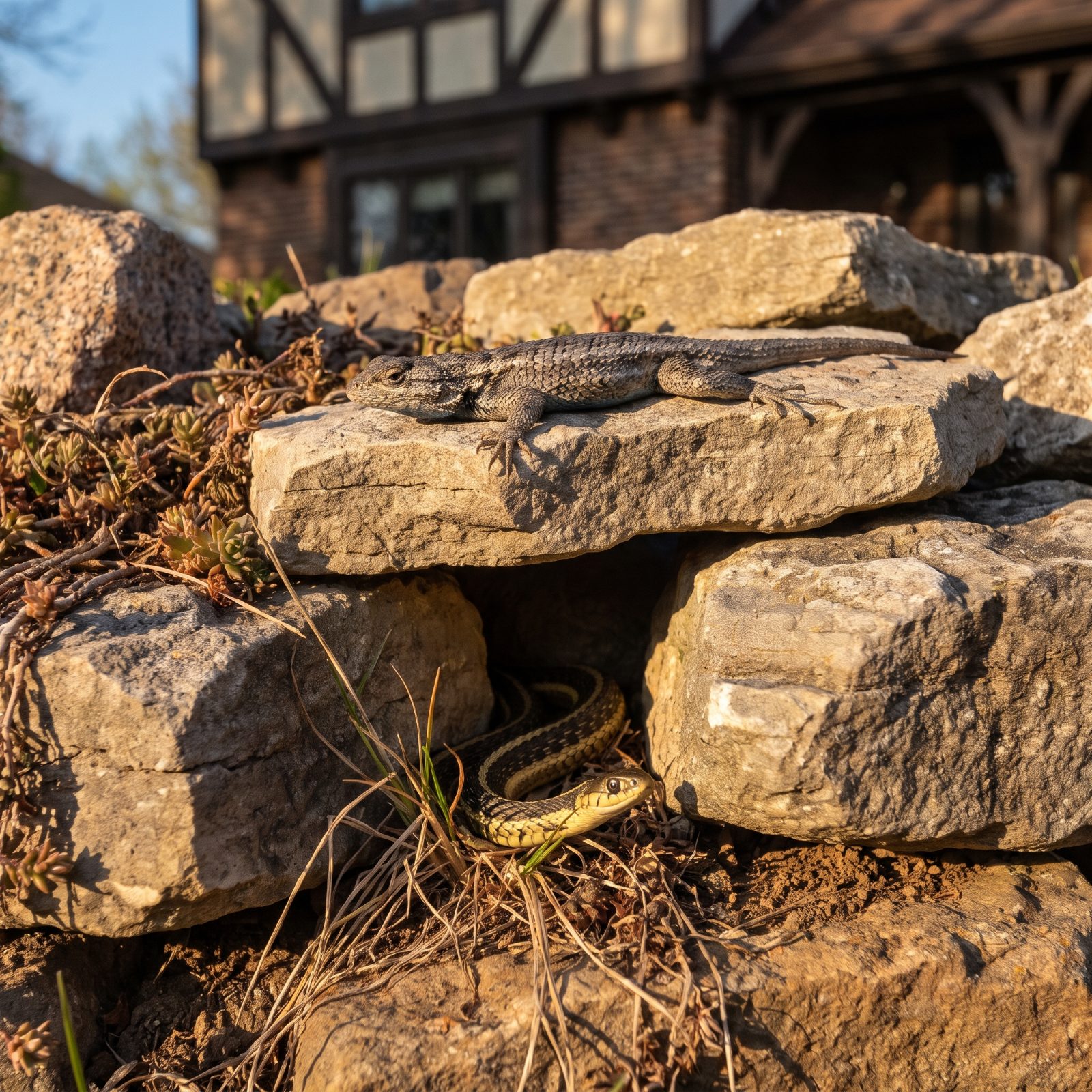
Pile up a dozen flat rocks in a sunny corner and you’ve built thermal real estate. Cold-blooded animals can’t generate their own heat, so a south-facing stack becomes a basking station by morning and, down in the shaded gaps, a cool damp hideout by afternoon.
Lizards work the warm tops. Snakes, toads, and ground beetles take the shady voids below. Leave real hollows between the stones instead of mortaring them tight — the whole value sits in the dark spaces nothing can see into.
17. The Compost Heap Secretly Running a Food Web
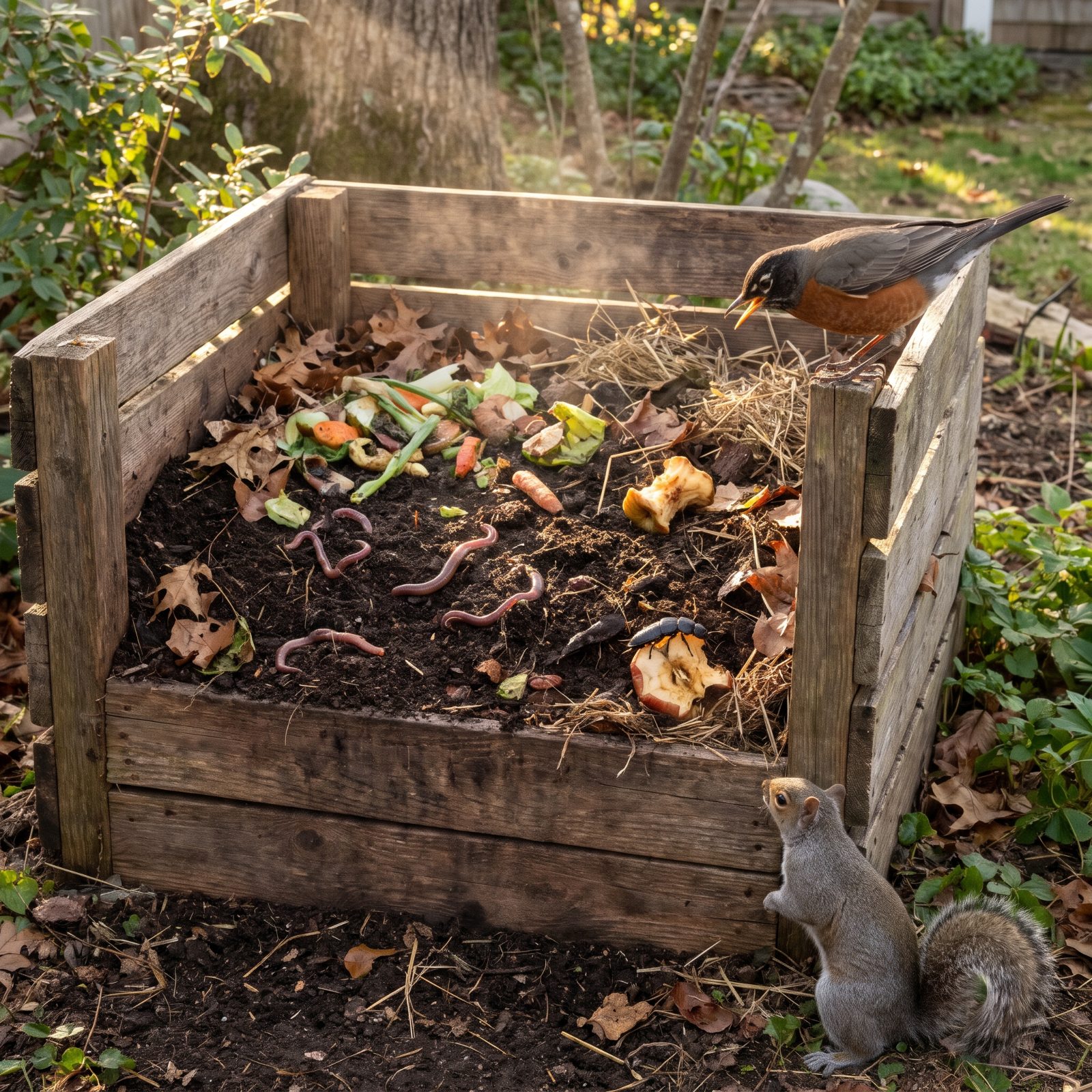
Your compost pile isn’t rotting. It’s hosting.
Underneath that heap of coffee grounds and leaves runs an entire food chain — bacteria feed springtails, springtails feed beetles, beetles and worms feed robins and toads, and the whole thing hums along cranking out free soil while you ignore it completely. An open heap near a hedge pulls in more wildlife than most purpose-built features ever do.
16. A Nectar Garden Hummingbirds Return to Every Year
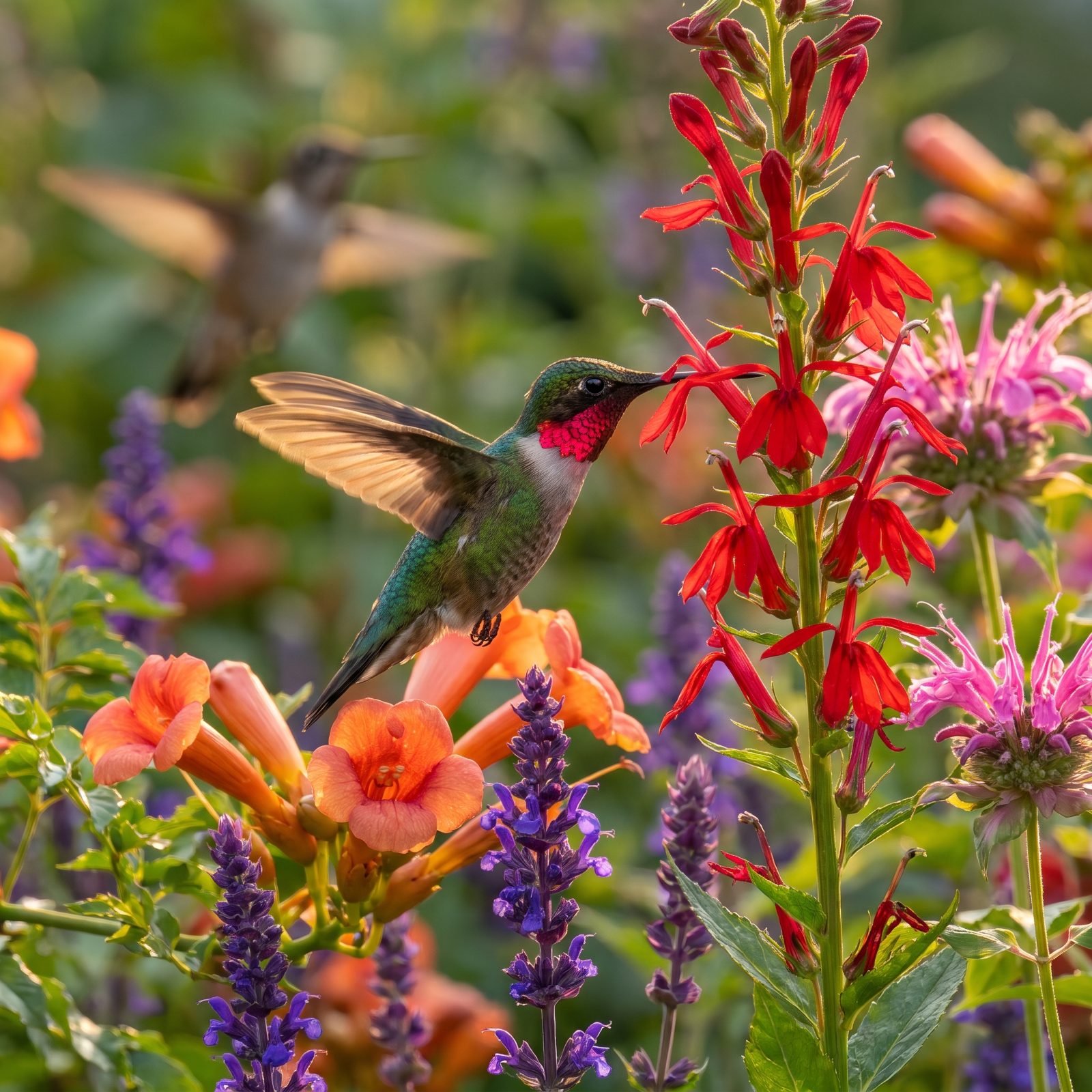
Forget the plastic feeder for a second. A bed of real tubular flowers — cardinal flower, bee balm, trumpet vine, salvia — feeds hummingbirds without the mold risk or the sugar-water scrubbing chore most people quietly abandon by July.
Go for red and orange tubes. Hummingbirds see red vividly and remember exactly where the good patches are, coming back to the same yards season after season. Creatures of habit, with a memory sharper than mine.
15. The Toad Abode That Cuts Your Slug Problem for Free
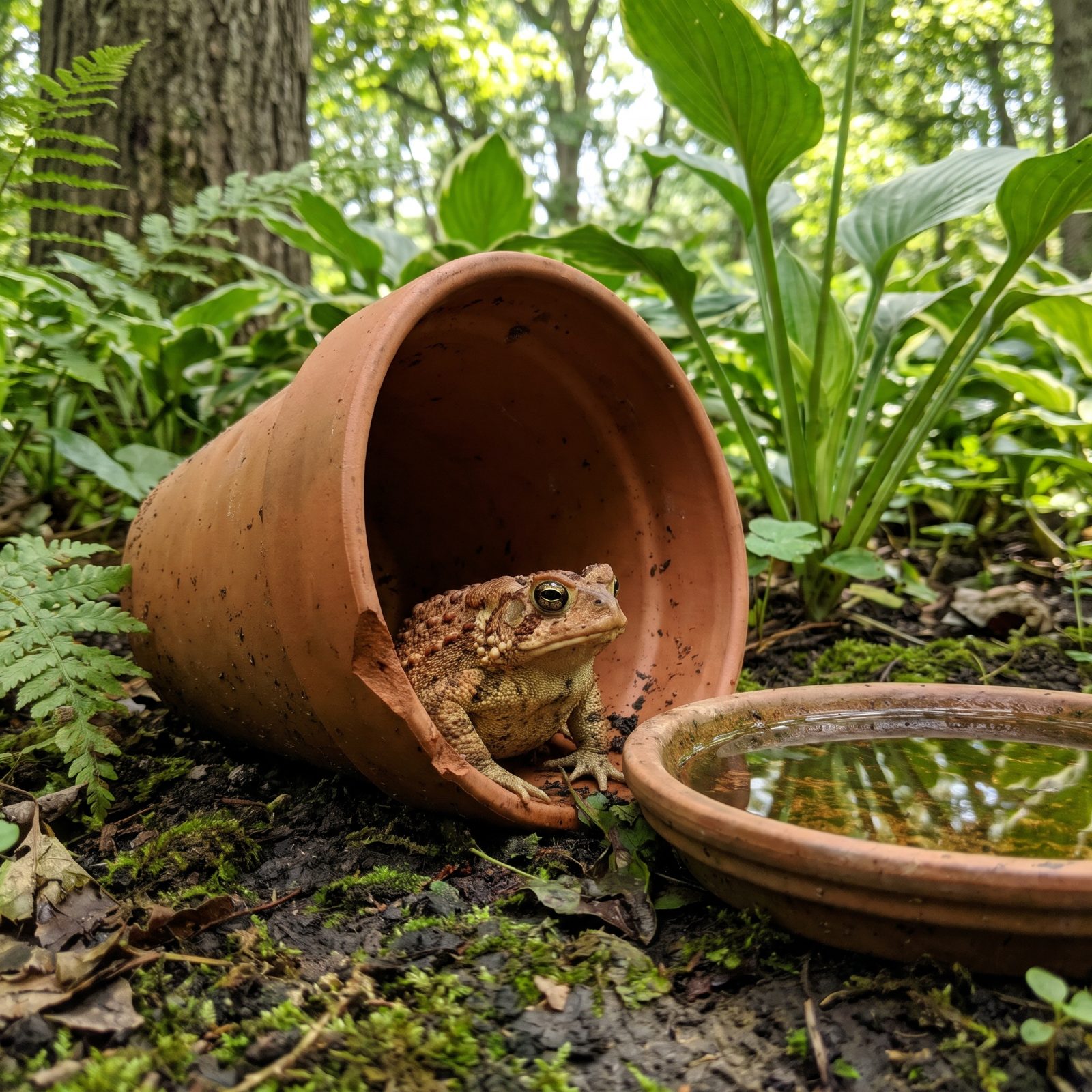
One toad eats thousands of slugs, beetles, and cutworms over a single summer. That’s free pest control that never runs out of batteries.
Give them a cool, dark hideout and they’ll stay put. An overturned clay pot with a chipped doorway, tucked into shade with a shallow water dish nearby, is all it takes. Toads need damp skin and darkness — provide both and you get a resident who works the night shift.
14. A Nesting Box Trail That Brings Back the Bluebirds
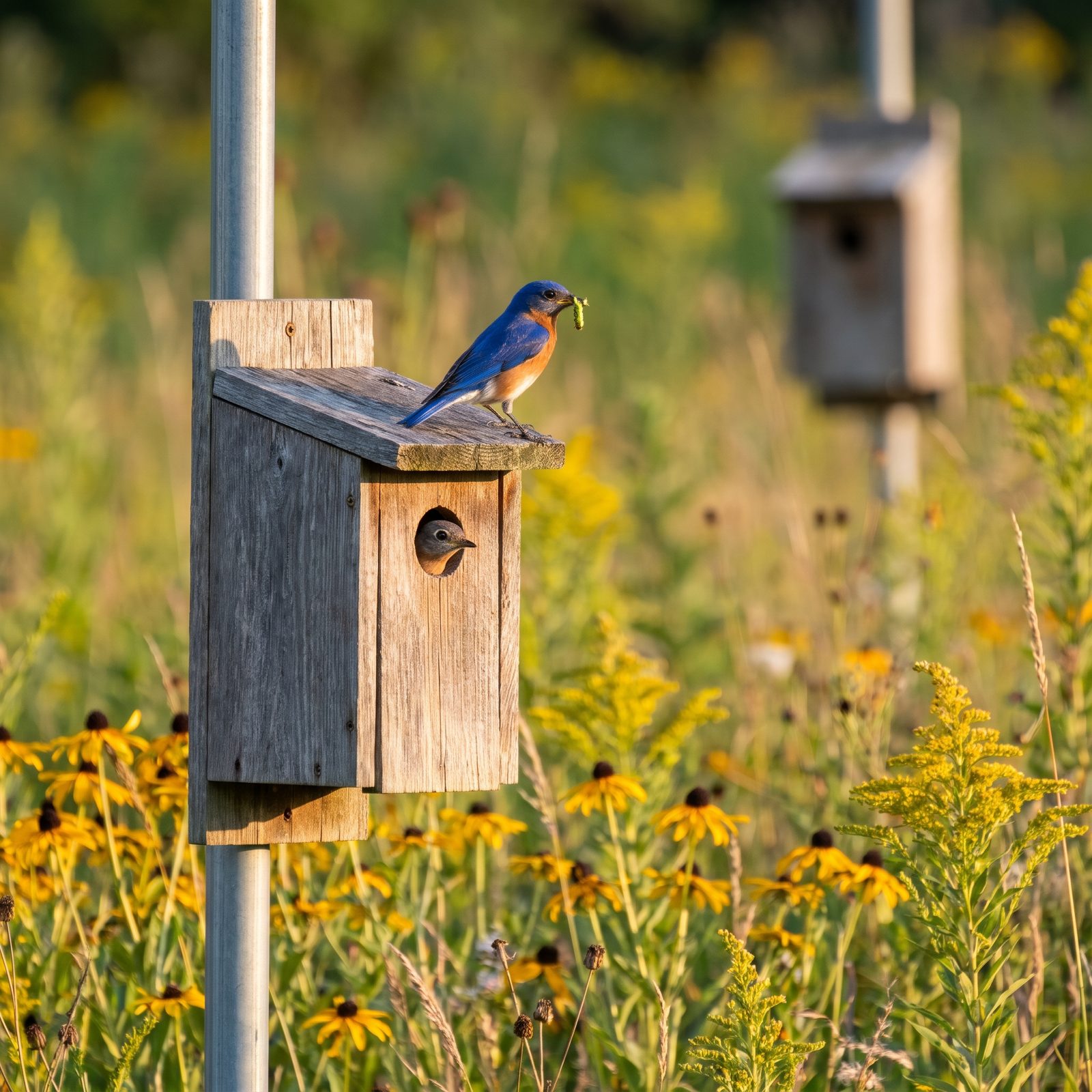
A line of nesting boxes is called a trail, and it’s one of conservation’s quiet success stories. Eastern bluebirds nearly vanished mid-century as old orchards and wooden fenceposts disappeared. Then volunteers started putting up boxes, and the birds came roaring back.
Hole size is everything. A one-and-a-half-inch opening lets bluebirds in and keeps starlings out. Face the box away from prevailing wind, mount it on a smooth pole with a baffle, and clean it out between broods. And skip the cute perch dowel under the hole — it only gives predators something to hang onto.
13. The Night-Blooming Garden That Feeds the Moonlight Shift
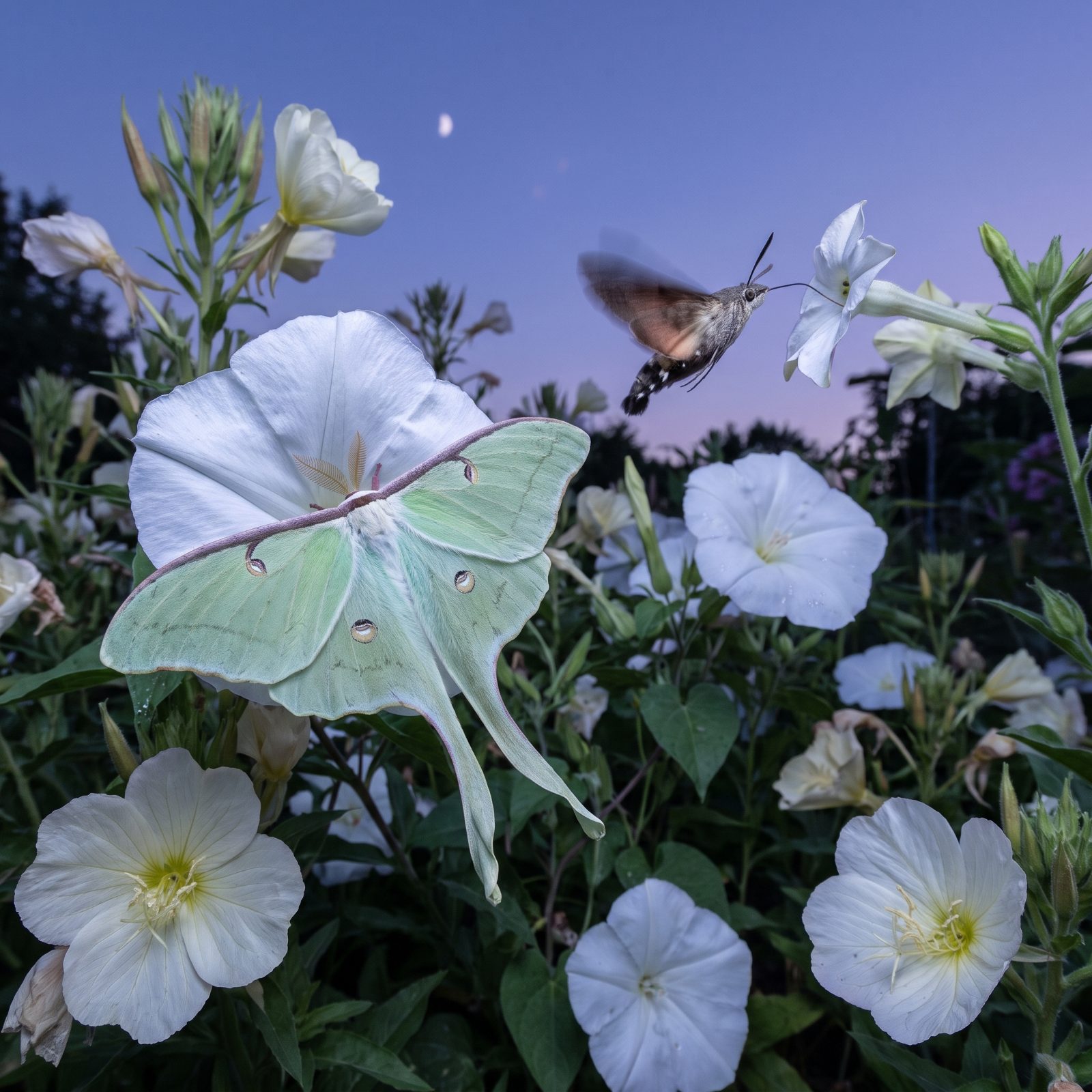
Most gardens clock out at sunset. The night shift is a whole separate ecosystem, and almost nobody plants for it.
White, pale, and heavily scented flowers — moonflower, evening primrose, nicotiana, night-scented stock — crack open after dark and release perfume to reel in moths. And moths matter far more than people credit them for. They pollinate every bit as hard as bees and feed every bat and nightjar in the neighborhood.
12. The Leaf Litter Corner You’re Supposed to Leave a Mess
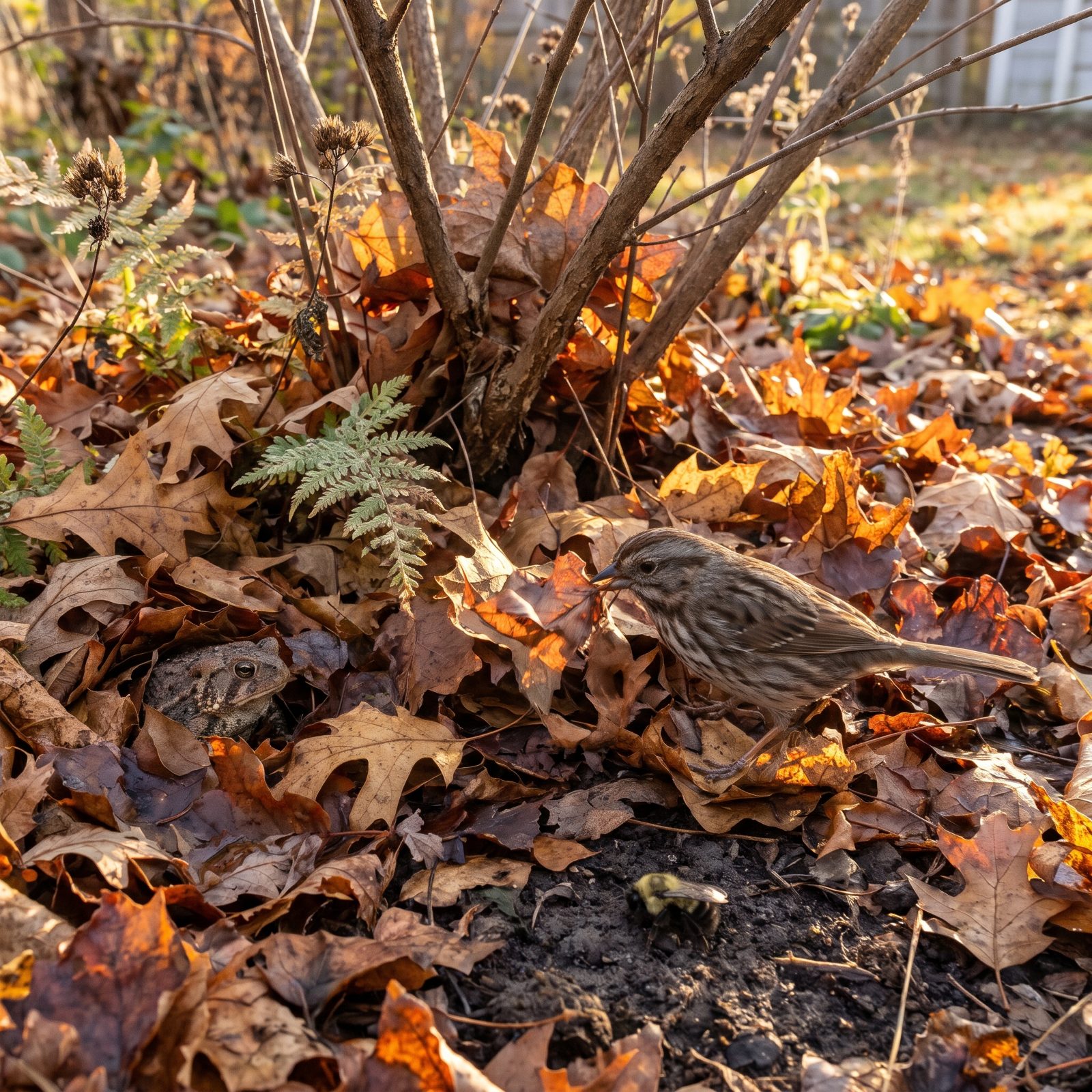
The most useful thing you can do for wildlife is stop raking one corner. That’s it. That’s the feature.
Leaf litter is where fireflies spend their larval stage, where luna moths pupate, where bumblebee queens and overwintering butterflies ride out the cold. Bag it all up at the curb and you’ve tossed next year’s fireflies out with it. A wild corner left untouched all winter does more than most of the gear you could buy. We got this wrong for years, raking every last leaf like it was a moral duty. Now we leave a patch — and the yard’s louder with life for it.
11. A Patch of Native Prairie Grass That Hums All Summer
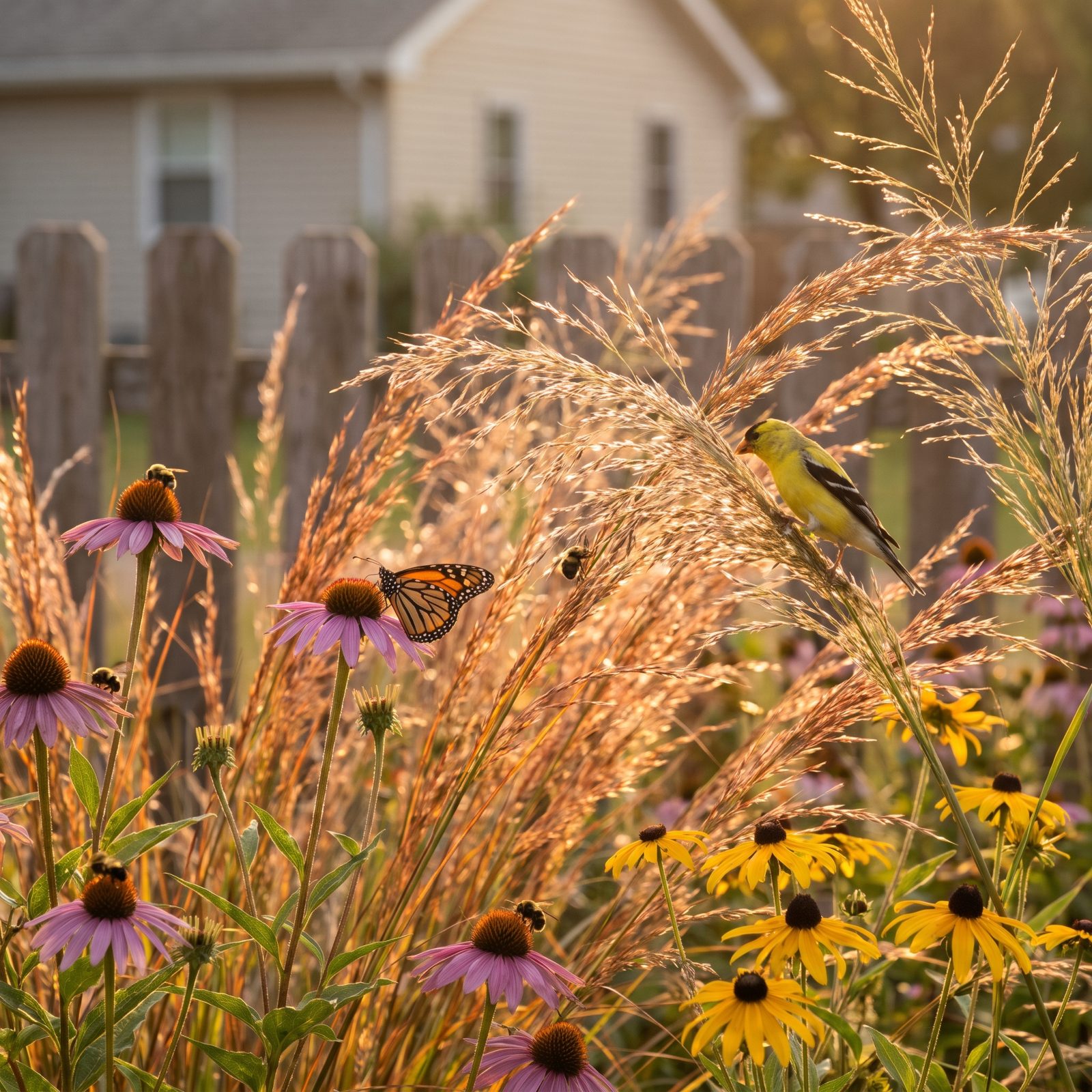
A clipped lawn is a green desert. A patch of little bluestem and switchgrass is a buffet whose seedheads feed goldfinches straight through winter, while the stems themselves become nurseries for skipper butterfly caterpillars.
Here’s what nobody tells you: native prairie grass sends roots down several feet, which is drought insurance built right into the plant. Once it’s established, you stop watering it entirely.
Leave it standing through winter instead of cutting it down in fall. The faded bronze stems look better against snow than any ornamental, and the overwintering insects tucked inside become spring bird food.
10. A Heated Birdbath That Keeps Water Open Through a Hard Freeze
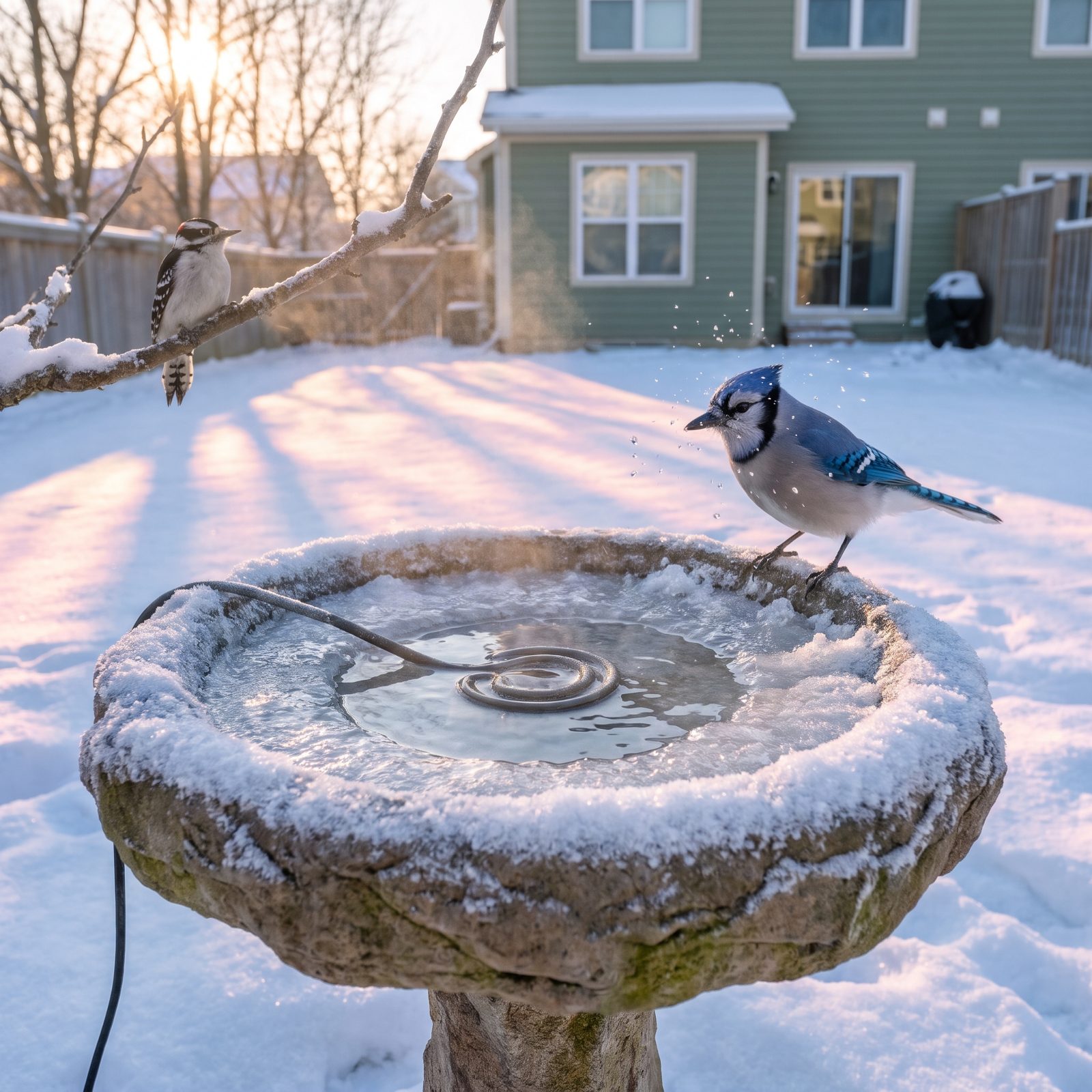
In January, open water is rarer than food. Birds dig seeds and berries out from under snow just fine. What they can’t find is liquid water when everything is frozen solid, and dehydration kills more winter birds than cold does.
A heated birdbath — or a simple drop-in heater element in one you already own — keeps a patch of water open through single-digit nights. Expect species you’ve never once spotted at your feeders.
9. A Three-Tree Fruit Row That Feeds You and the Orchard Orioles
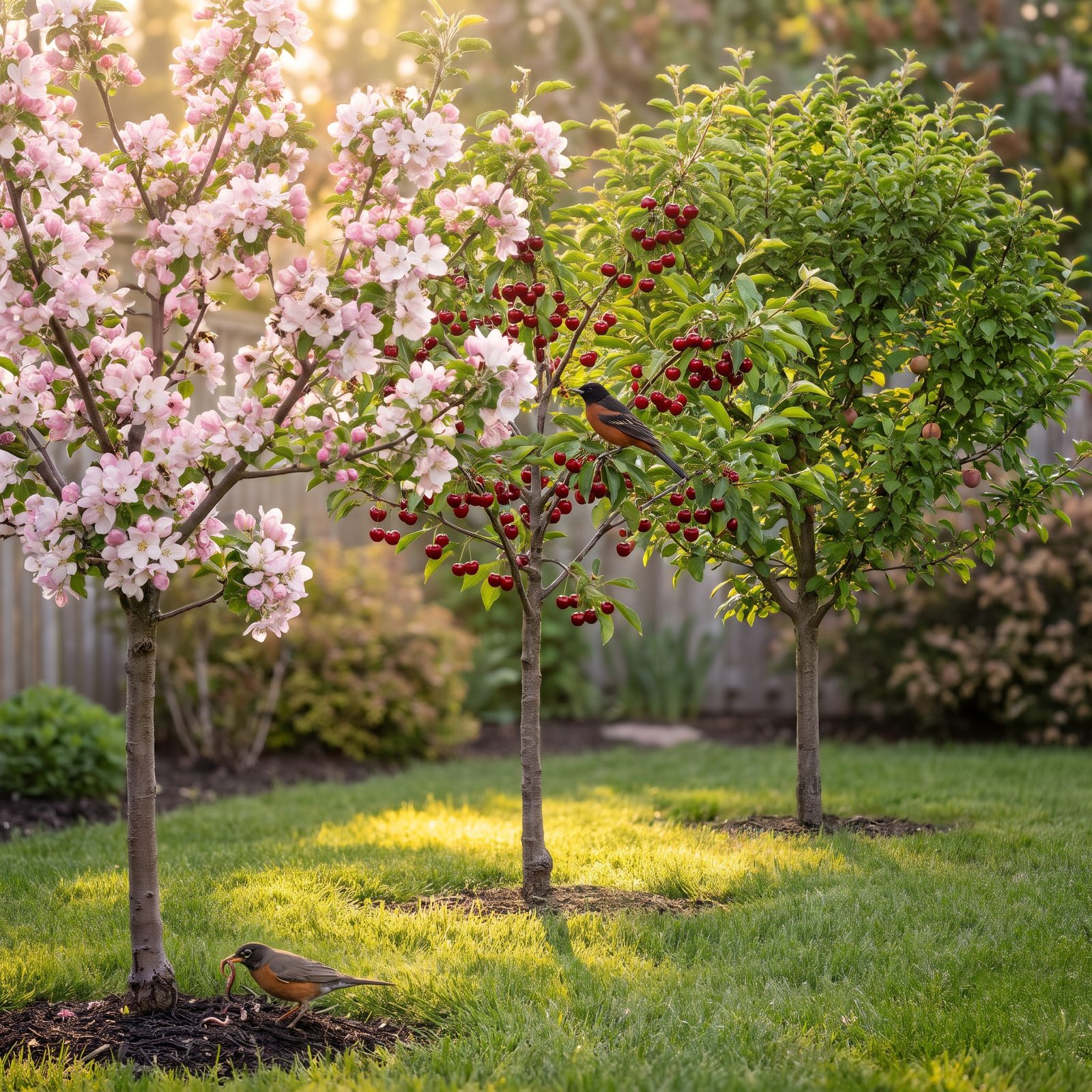
You don’t need an orchard. Three dwarf trees in a short row do the work: one tree in blossom that bees swarm while its neighbor already hangs heavy with cherries that you and the birds split, and fallen fruit in fall that feeds everything from robins to ground beetles.
The trick most people miss is leaving the windfall. Those bruised apples on the ground are a late-season feast for orioles, waxwings, and tanagers passing through.
8. A Container Pond That Brings Frogs to a Fourth-Floor Balcony
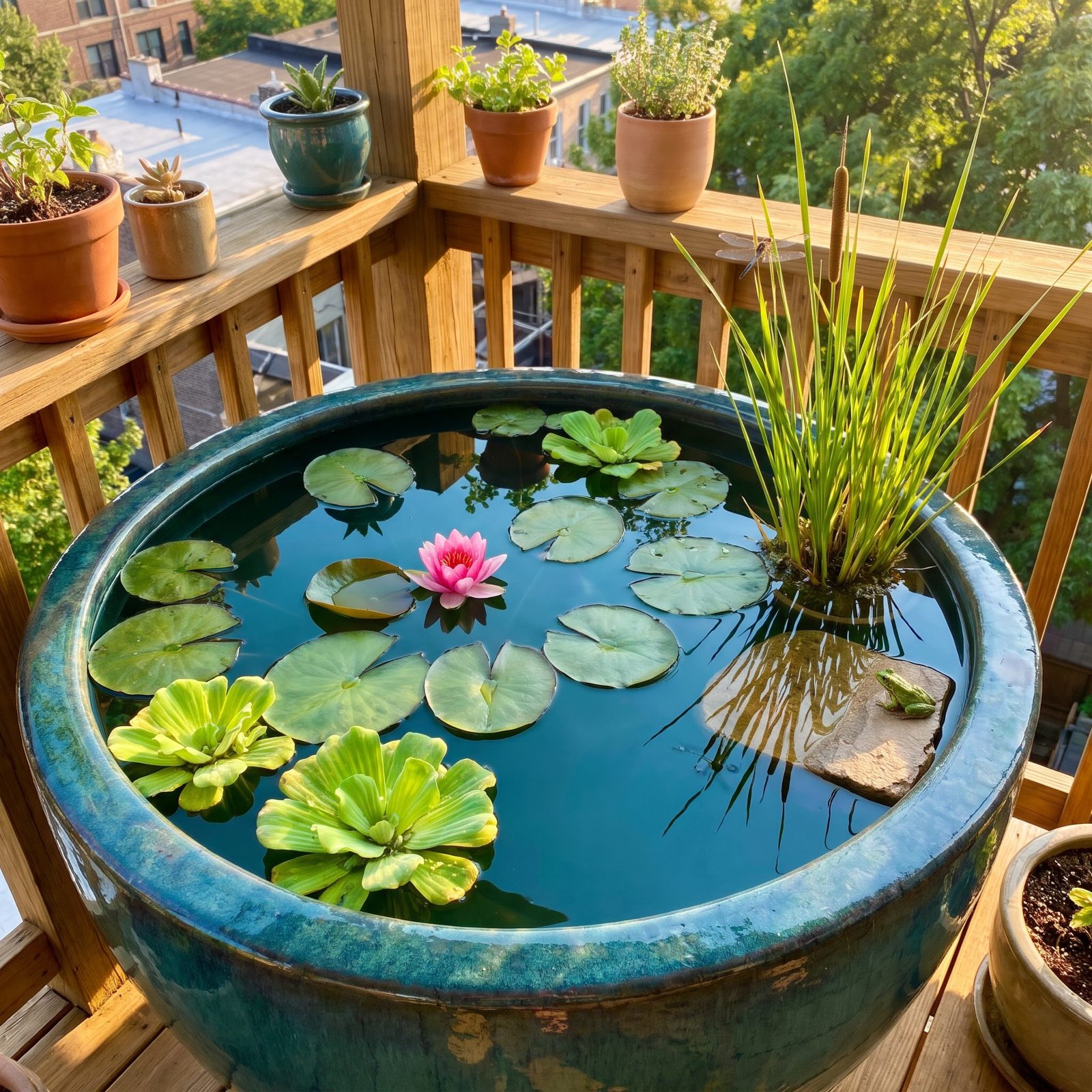
A half-barrel or a glazed pot holds enough water to start a tiny ecosystem, and you don’t need a yard for it. Add a miniature water lily and a flat stone for a landing spot. Skip the fish — without them, dragonflies and amphibians actually have a chance.
Mosquitoes worry everyone, and fairly so. The answer is a trickle of movement or a mosquito dunk, which is harmless to everything else. Give it a summer and you may find a treefrog has located the only water for blocks. They’re uncanny at finding it.
7. An Owl Nesting Box Mounted High in a Backyard Oak
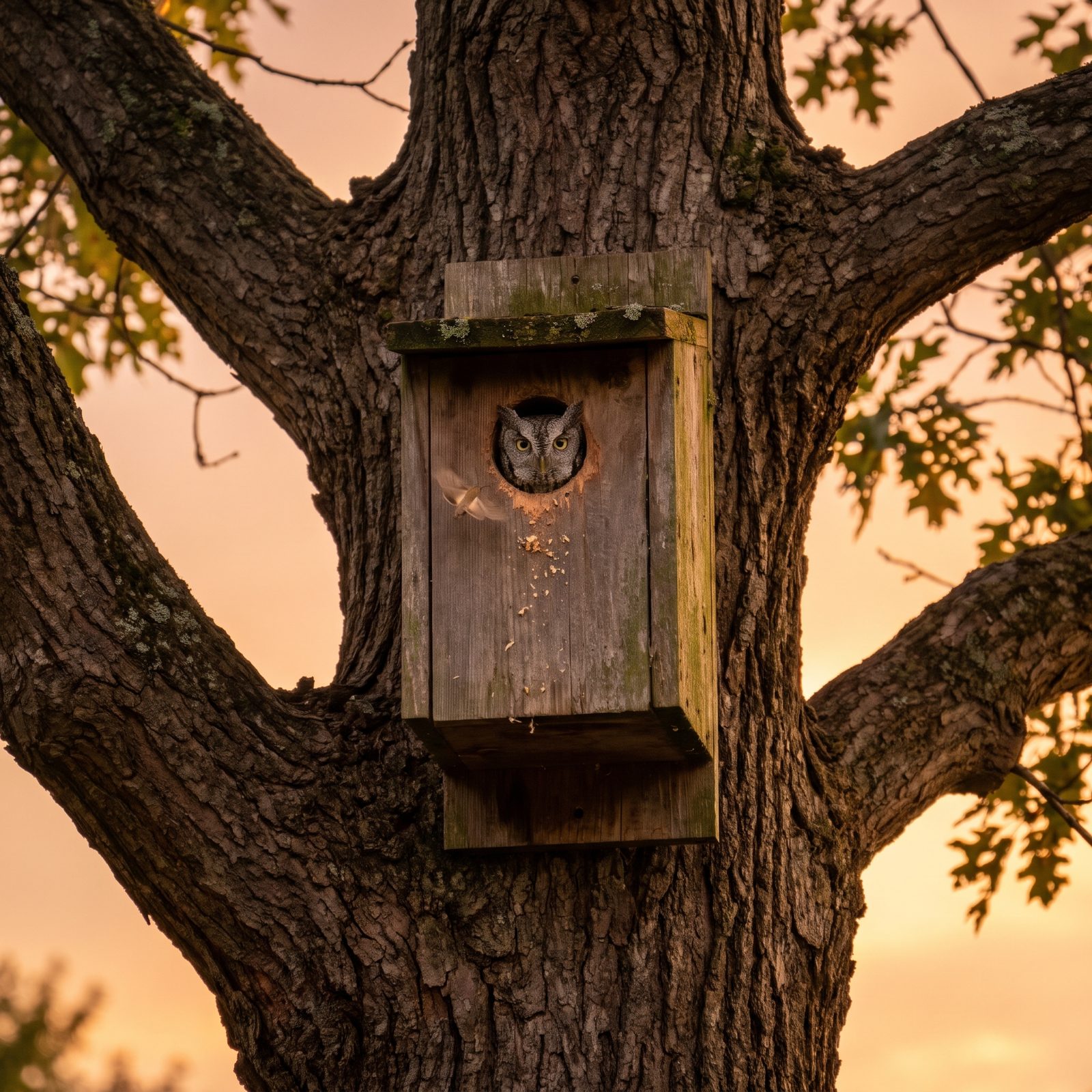
Owls don’t build nests. They move into holes, which is why dead trees matter and why a well-placed box can land you a resident screech owl in a suburban yard. Mount it ten to fifteen feet up on a sturdy trunk, entrance facing away from prevailing weather.
A single screech owl pair will clear your yard of mice and voles without a trap or a drop of poison. That’s the payoff nobody mentions. Put a couple inches of wood shavings in the bottom, because the owls won’t carry in any nesting material themselves and a bare floor gets rejected.
6. A No-Mow Lawn Zone Buzzing With Bees and Fireflies
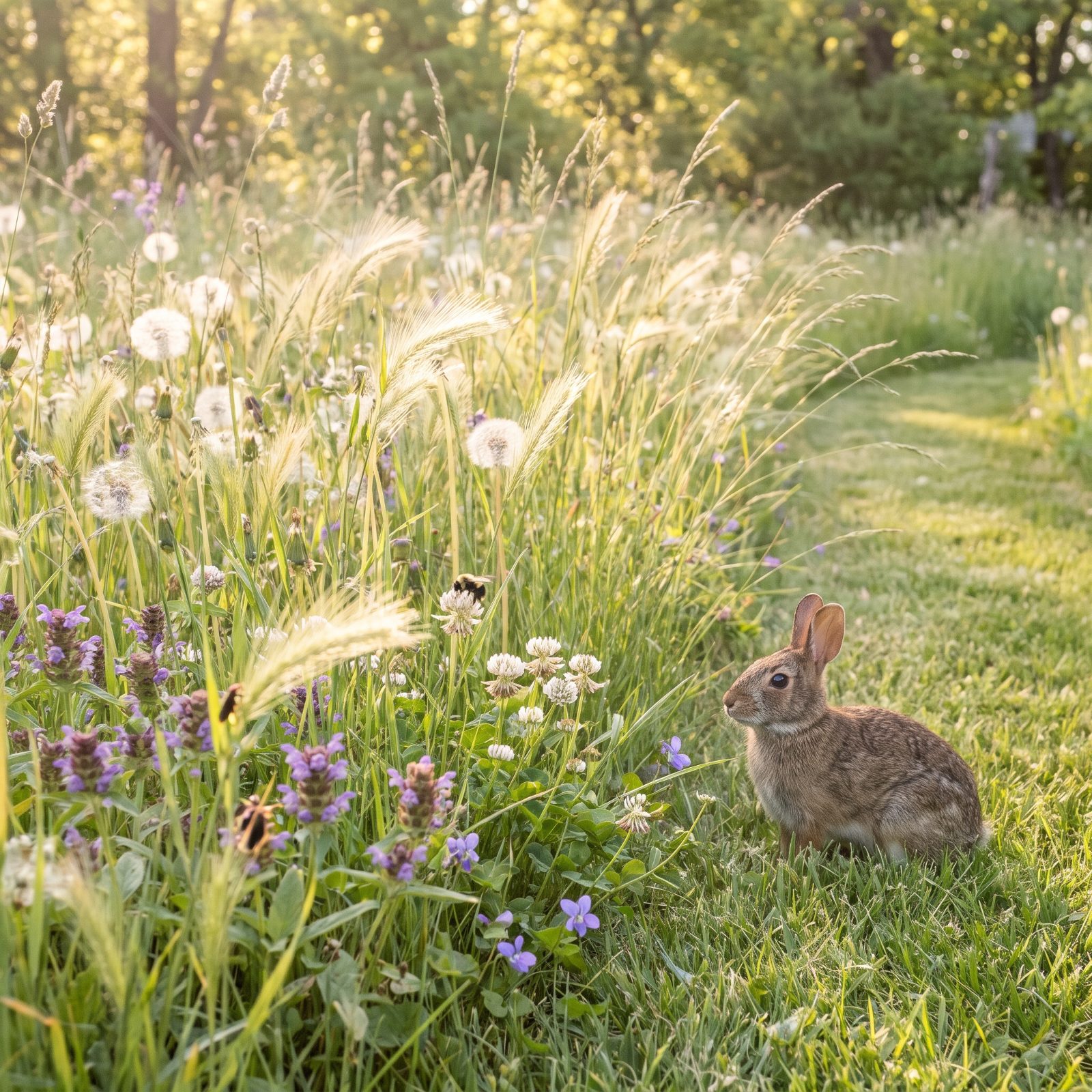
The tidiest lawn in the neighborhood is also the deadest. Stop mowing one section and within weeks the clover, self-heal, and violets that were always hiding down in your turf finally get to bloom. That’s where the bees go.
Mow a crisp path through it so it reads as intentional rather than neglected. That one clean edge is what keeps the neighbors calm — a psychology trick more than a gardening one, honestly.
5. A Vertical Living Wall Packed With Pollinator Nooks
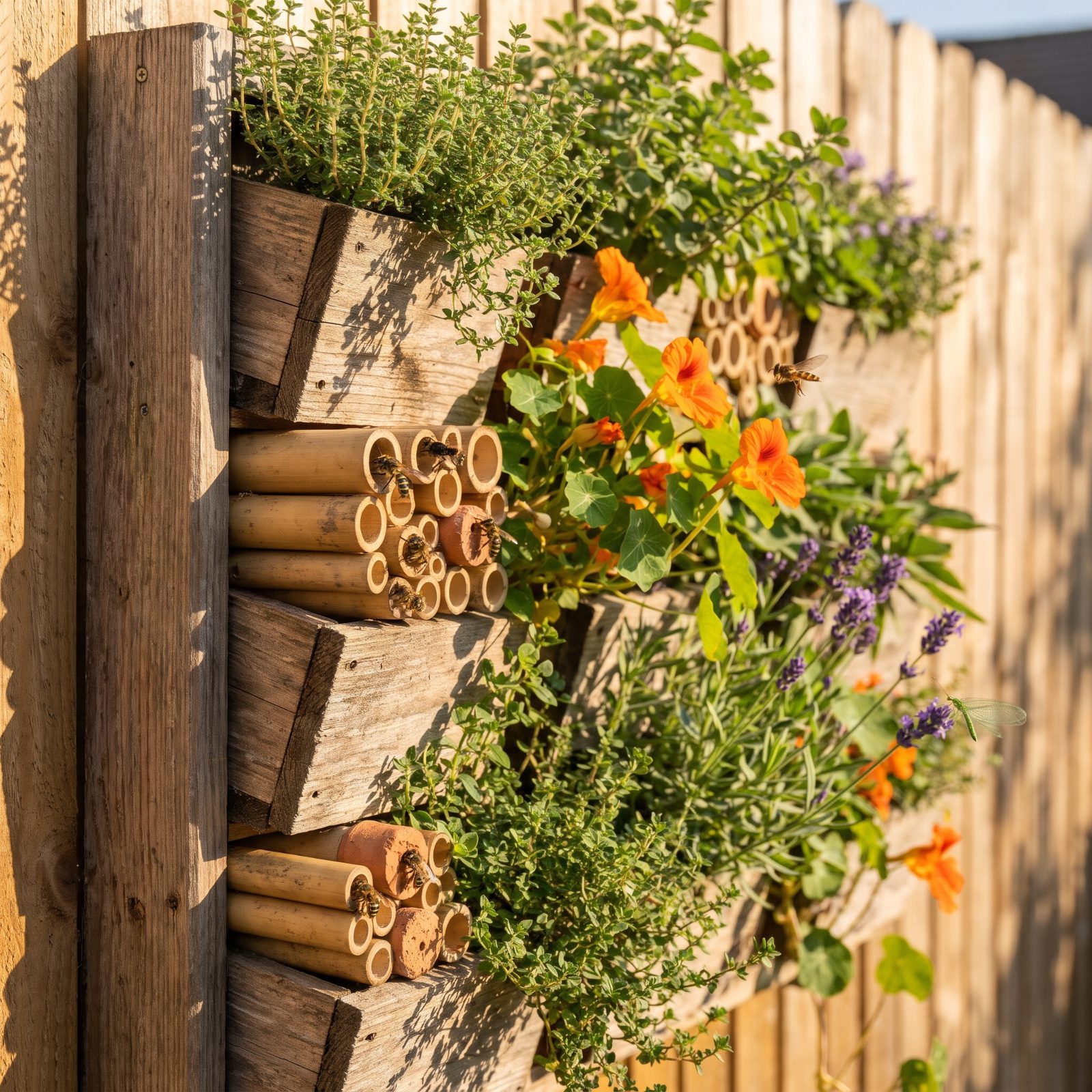
Walls are wasted space for wildlife — until you hang one like this. Stack planting pockets with herbs and trailing flowers, then tuck bundles of hollow bamboo and drilled wood blocks into the gaps. The flowers feed pollinators; the tubes house them.
Solitary wasps, the black-and-yellow striped mason-wasp kind, rarely sting and don’t swarm. They lay eggs one by one in those tubes and cap each cell with mud, and watching one seal a tube is oddly hypnotic. Mount the wall facing morning sun so the wasps warm up and start working early.
4. A Woodland Shade Understory That Thrives Where Grass Gives Up
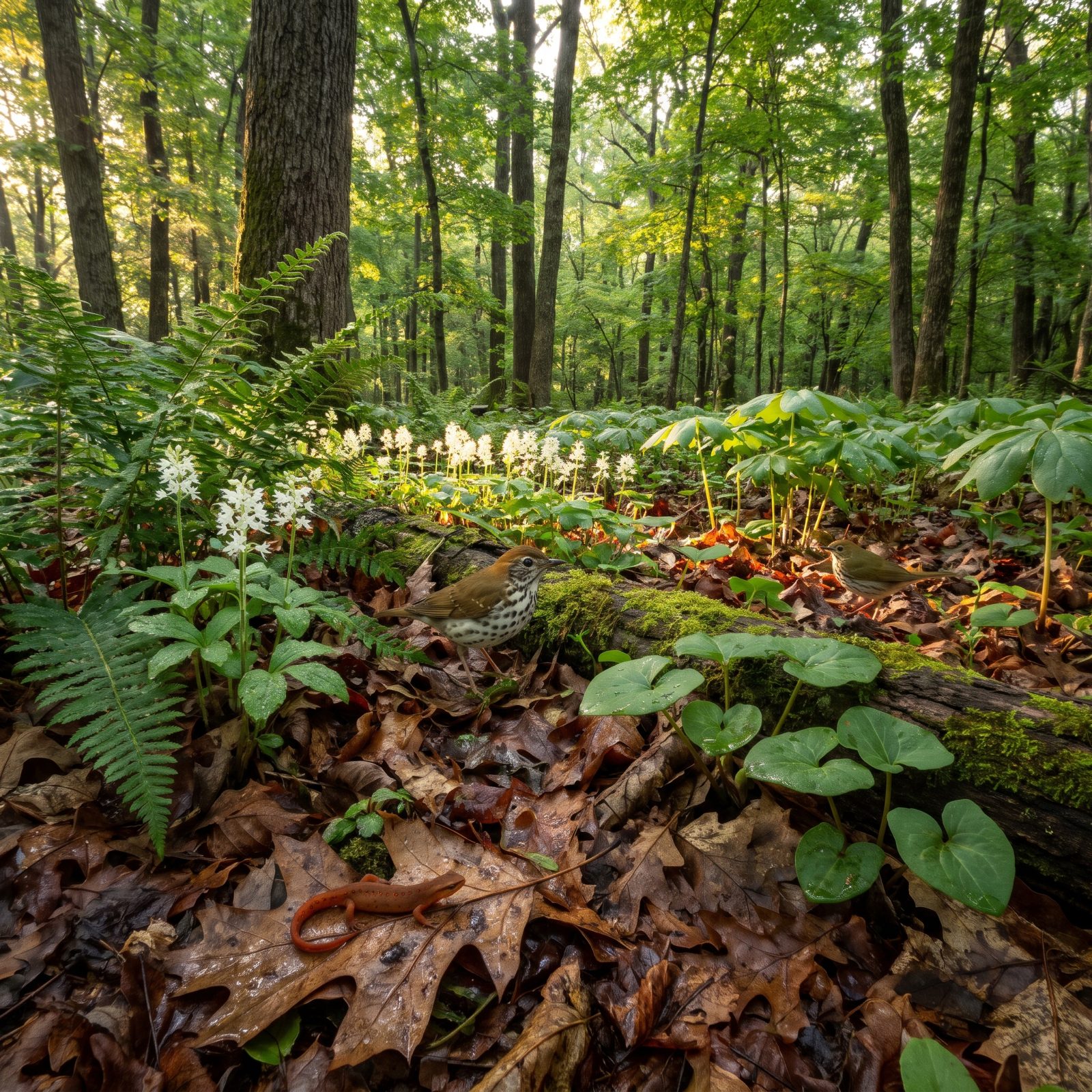
Everyone fights the shady corner where grass refuses to grow. Stop fighting it. That dry shade under your trees is prime real estate for a woodland understory — wild ginger, foamflower, Christmas fern, the plants that evolved for exactly those conditions.
Build it on fallen leaves rather than raking them out, because the leaf litter is the whole system. It holds moisture, feeds the soil, and shelters the ground-foraging thrushes and the occasional salamander that wander in.
3. Leave the Seed Heads Standing: A Winter Garden That Feeds Finches
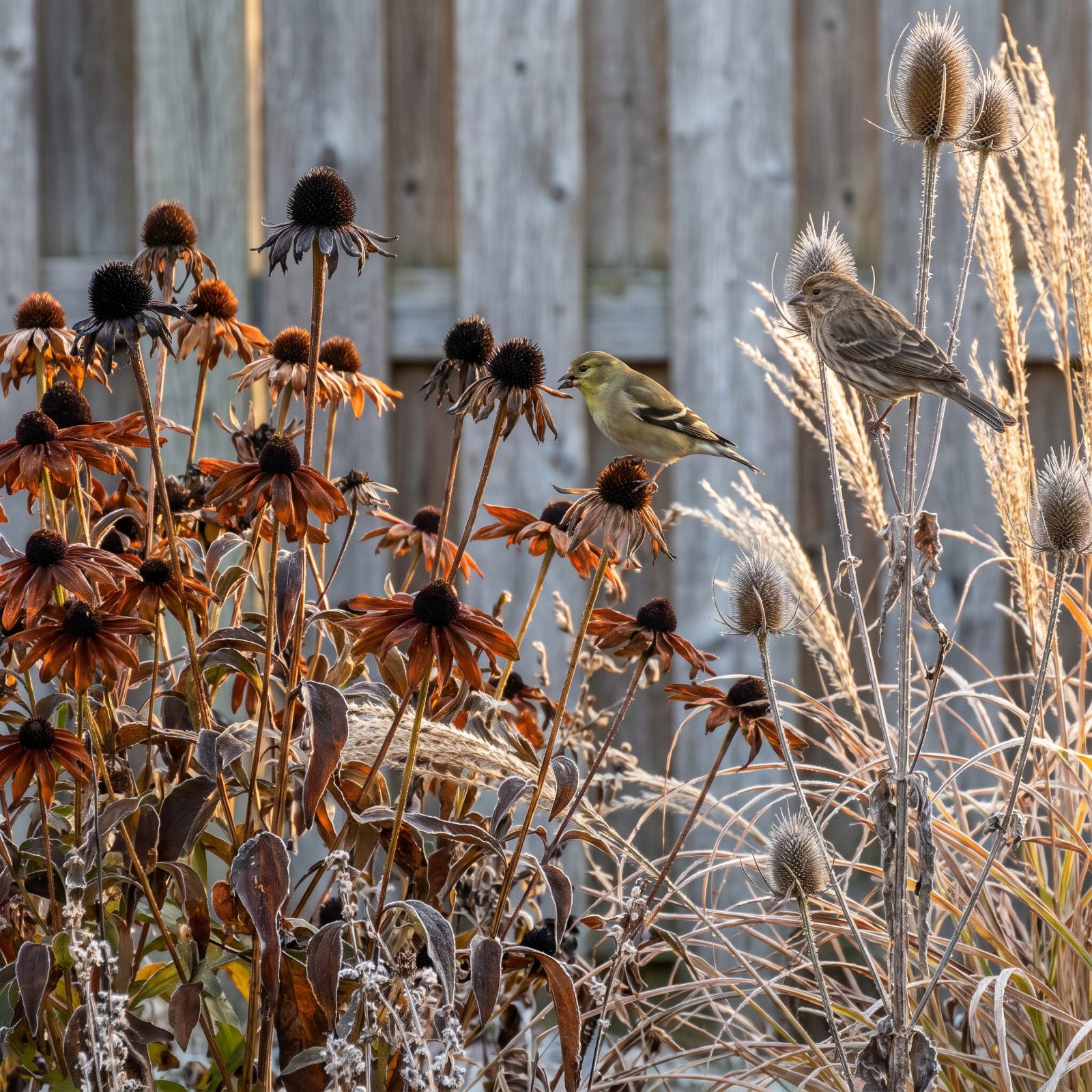
The tidiest gardeners cut everything down in October, then wonder where the birds went. They went to the messy yard next door.
Standing seed heads are a free winter feeder. Coneflower, rudbeckia, sunflower, teasel and native grasses hold their seed into January, and goldfinches, juncos and chickadees work them all winter long. The hollow stems double as overwintering sites for native bees and lacewings. Cut it all to the ground in a single afternoon and you’ve thrown out the pantry and the nursery at once — a very efficient kind of mistake.
Wait until early spring to trim, once the cold stops swinging below freezing. Honestly, the frost-rimmed silhouettes beat bare mulch anyway.
2. A Ground-Cover Corridor Hedgehogs and Toads Can Travel Through
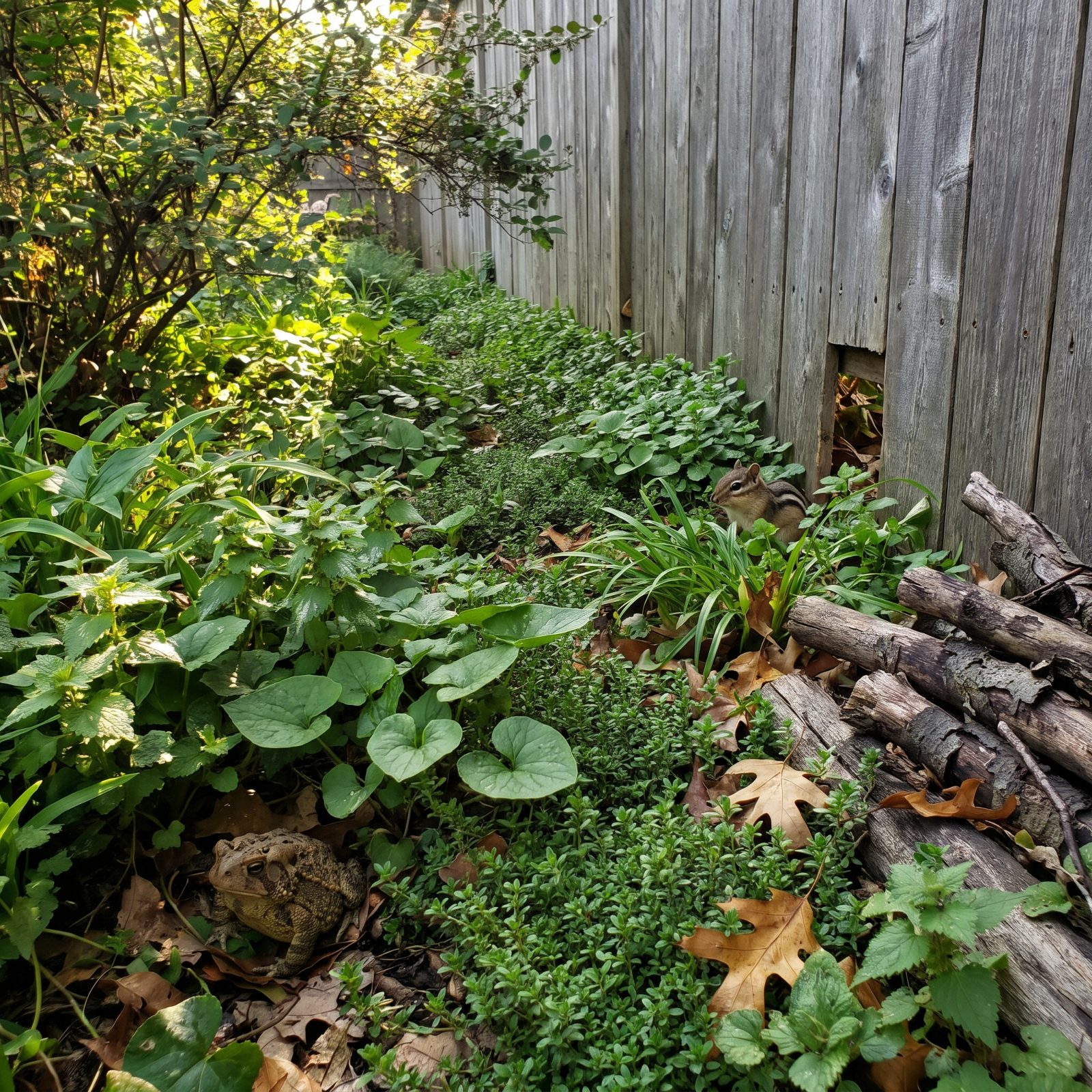
Every manicured yard in a neighborhood is an island. Fences and clipped lawn edges turn a whole block into a grid of cul-de-sacs that no small animal can cross.
A ground-cover corridor stitches the island back into the mainland. Run a continuous ribbon of low, leafy planting — creeping thyme, wild ginger, sedge, native dead nettle — along a fence line, and toads, chipmunks, salamanders and beetles gain a covered highway to move, feed and duck away from hawks. And where hedgehogs still roam, a palm-sized gap sawn at the base of a solid fence lets them cross between yards instead of starving on one side of a board.
The log pile and leaf litter at the ends count for as much as the planting itself. That’s where the toads actually sleep.
1. A Bare Sand Bank for Solitary Mining Bees
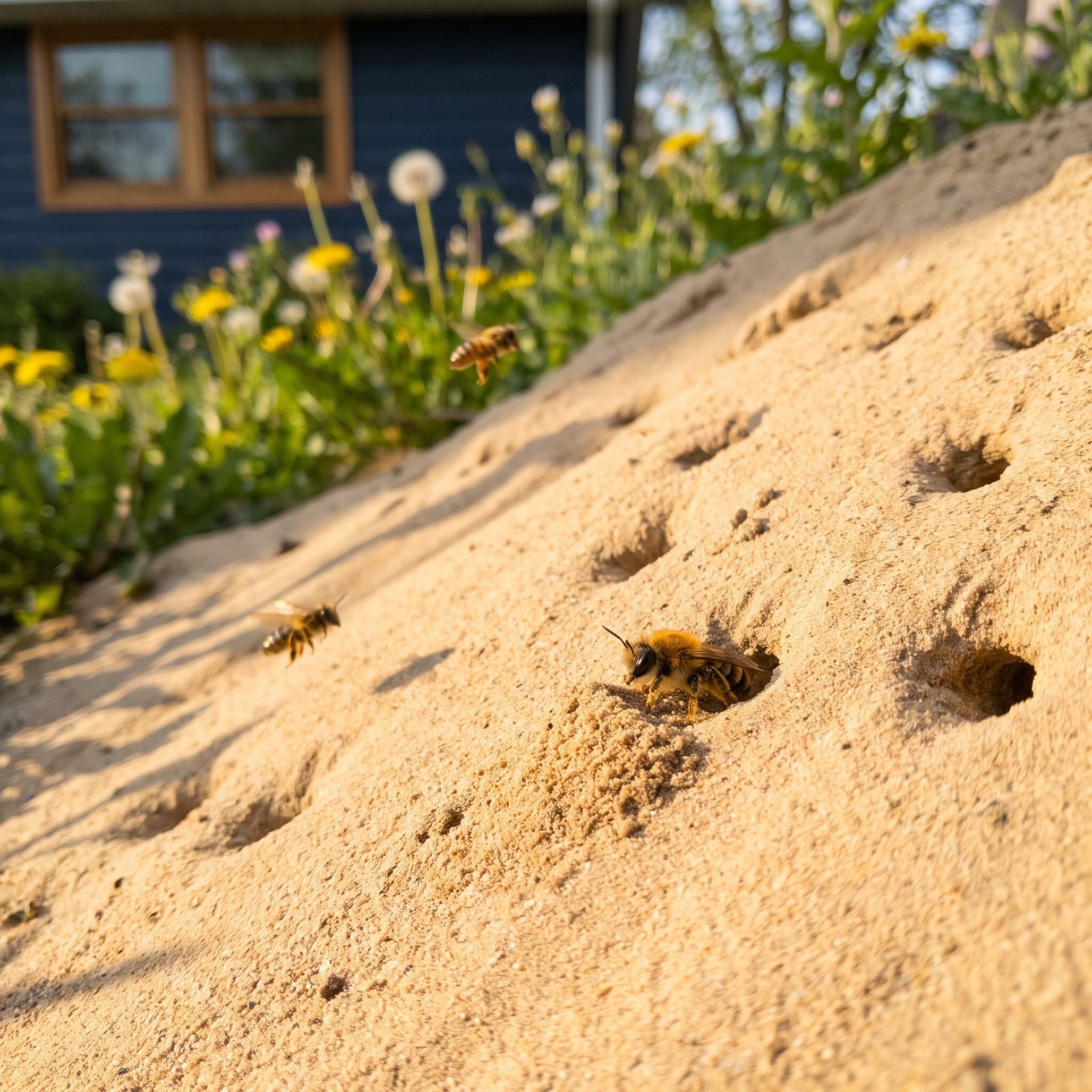
Most native bees aren’t honeybees, and most never see the inside of a hive.
The great majority of North America’s native bee species nest underground, digging solitary burrows in bare, sunny soil. Mulch every square inch and you’ve served them an eviction notice. A small, south-facing bank of exposed sandy earth — no mulch, no weed fabric — hands mining bees somewhere to tunnel. They’re gentle creatures that rarely sting, and they pollinate fruit trees earlier in spring than honeybees even bother to fly.
We ignored this for years, mulching right up to every edge like a good tidy gardener. Leave one scruffy sunny patch bare. That’s the whole ask.