
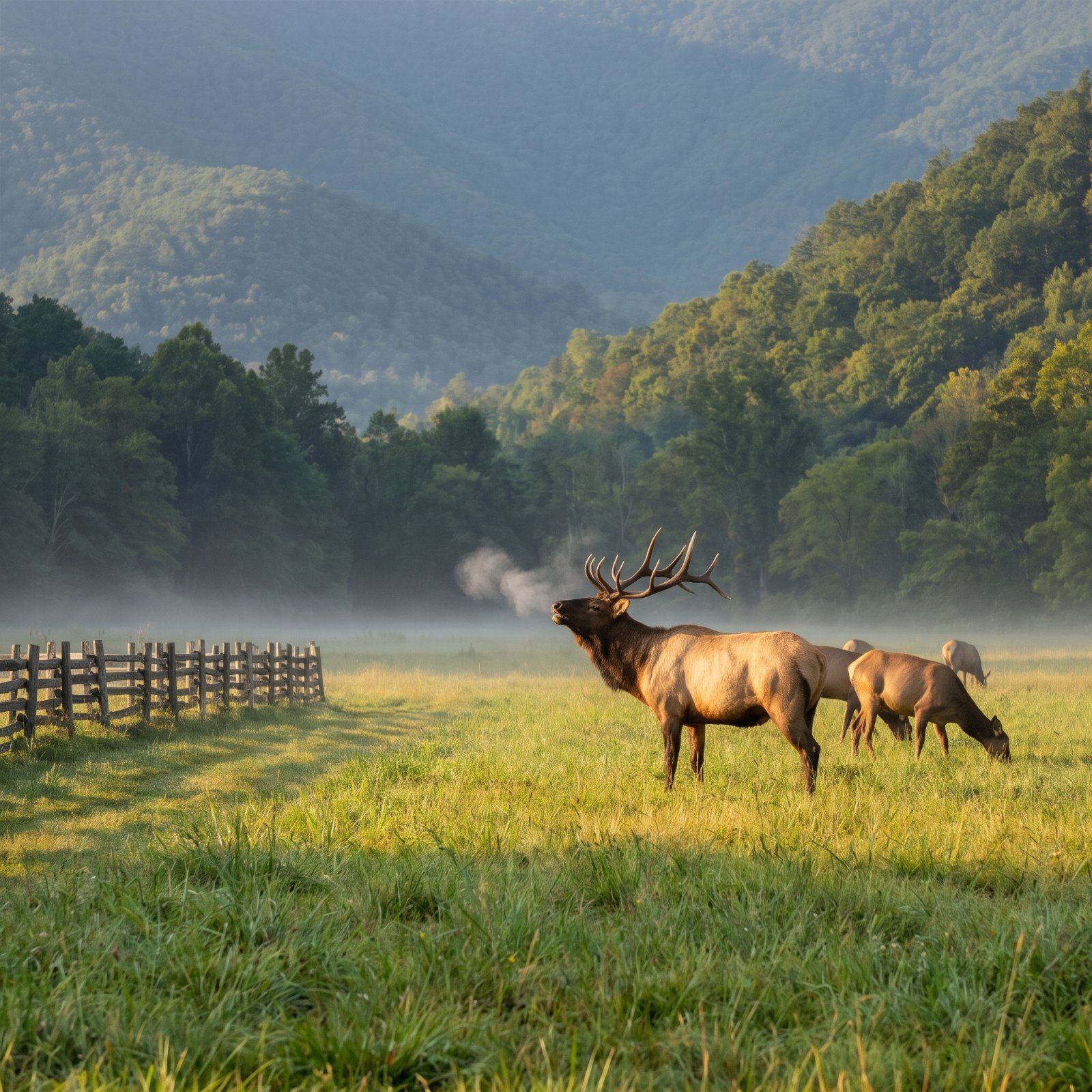
Two hundred years ago, the last elk in the southern Appalachians fell to a hunter’s rifle and the mountains went quiet. Then, in 2001, the National Park Service trucked 25 elk down from Kentucky and let them loose in a fog-soaked valley near Waynesville. They stayed. Today a few hundred wild elk roam western North Carolina, bulls heavy enough to flatten a car, bugling across meadows at dawn like something out of the Pleistocene. The whole trick is knowing where to stand and how far back to keep. Here are the real spots, with directions, timing, and the one rule that keeps both you and the animals out of trouble.
7. Cataloochee Valley, Where the Whole Thing Started
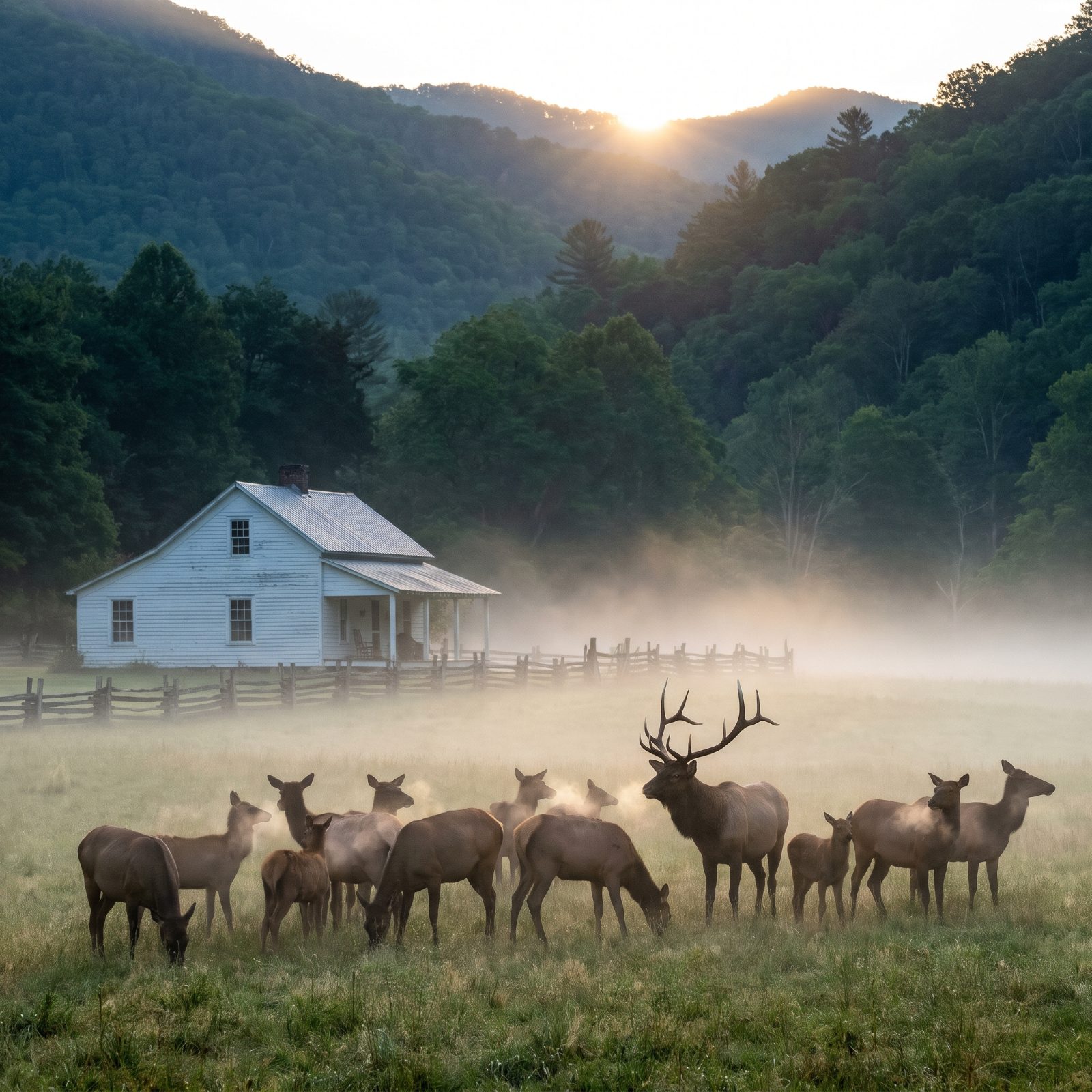
This is ground zero. In 2001 the Park Service released 25 elk into Cataloochee, followed by 27 more the next year, and the valley has been the heart of the herd ever since. Getting there is half the adventure: take I-40 to exit 20, go a fraction of a mile on US 276, then turn onto Cove Creek Road and follow the signs eleven winding miles in.
That road is narrow gravel with steep drop-offs and no guardrails. Take it slow. Dawn and dusk pull the elk out into the fields, and the viewing is still excellent.
6. The Fields Beside Oconaluftee Visitor Center, Cherokee
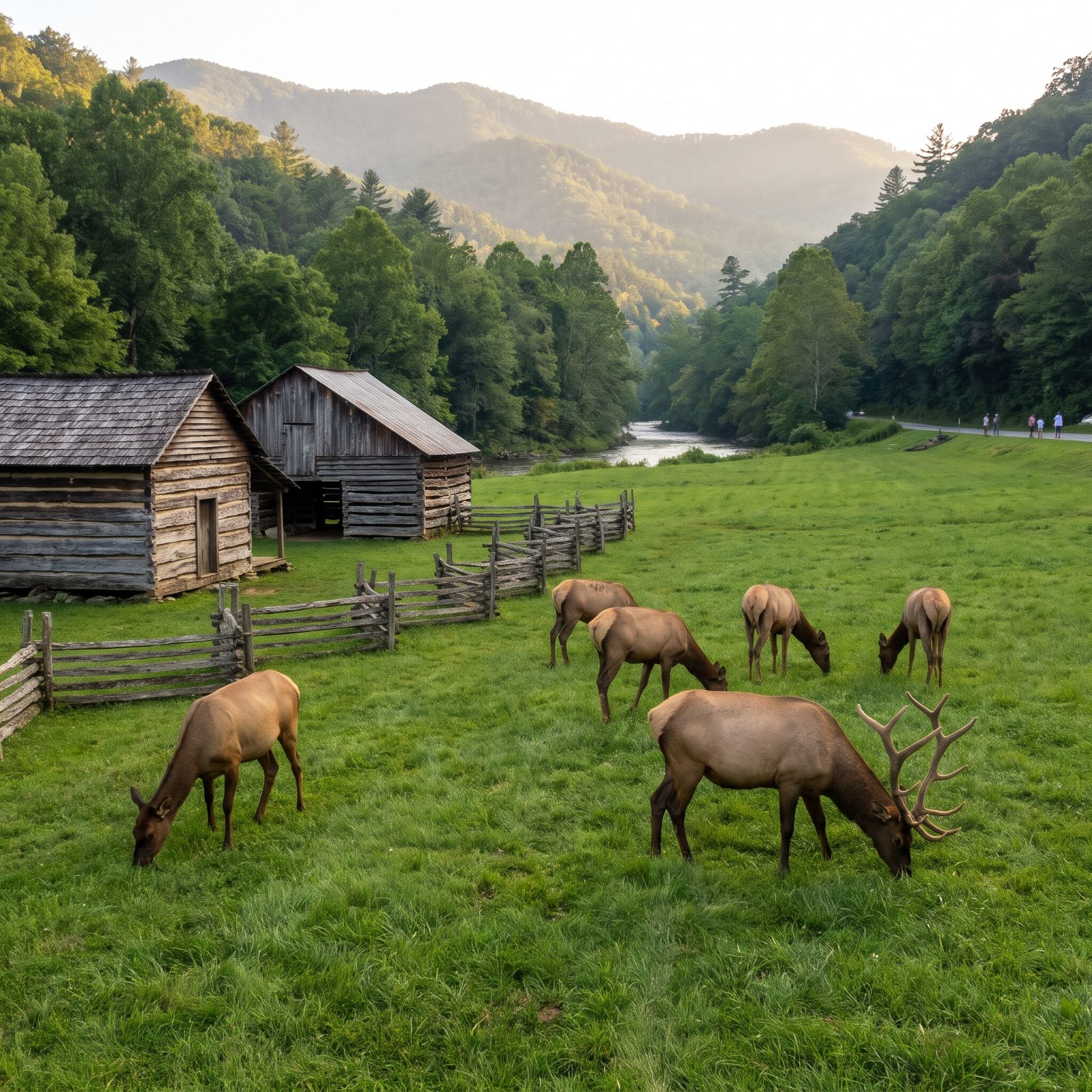
Had enough white-knuckle gravel? Skip Cataloochee and come here instead. Elk often graze right out in the open meadows beside the Oconaluftee Visitor Center at 1194 Newfound Gap Road, the park’s southern gateway next to the Qualla Boundary, home to one of the park’s two main herds.
The Mountain Farm Museum sits right there too, all old log cabins and split-rail fences, which makes a ridiculous backdrop for a thousand-pound animal. Walk about a mile up US 441 and you’ll hit more lowland fields they favor. Watch from the roadside. Binoculars, not boots in the grass.
5. The Oconaluftee River Trail During the Fall Rut
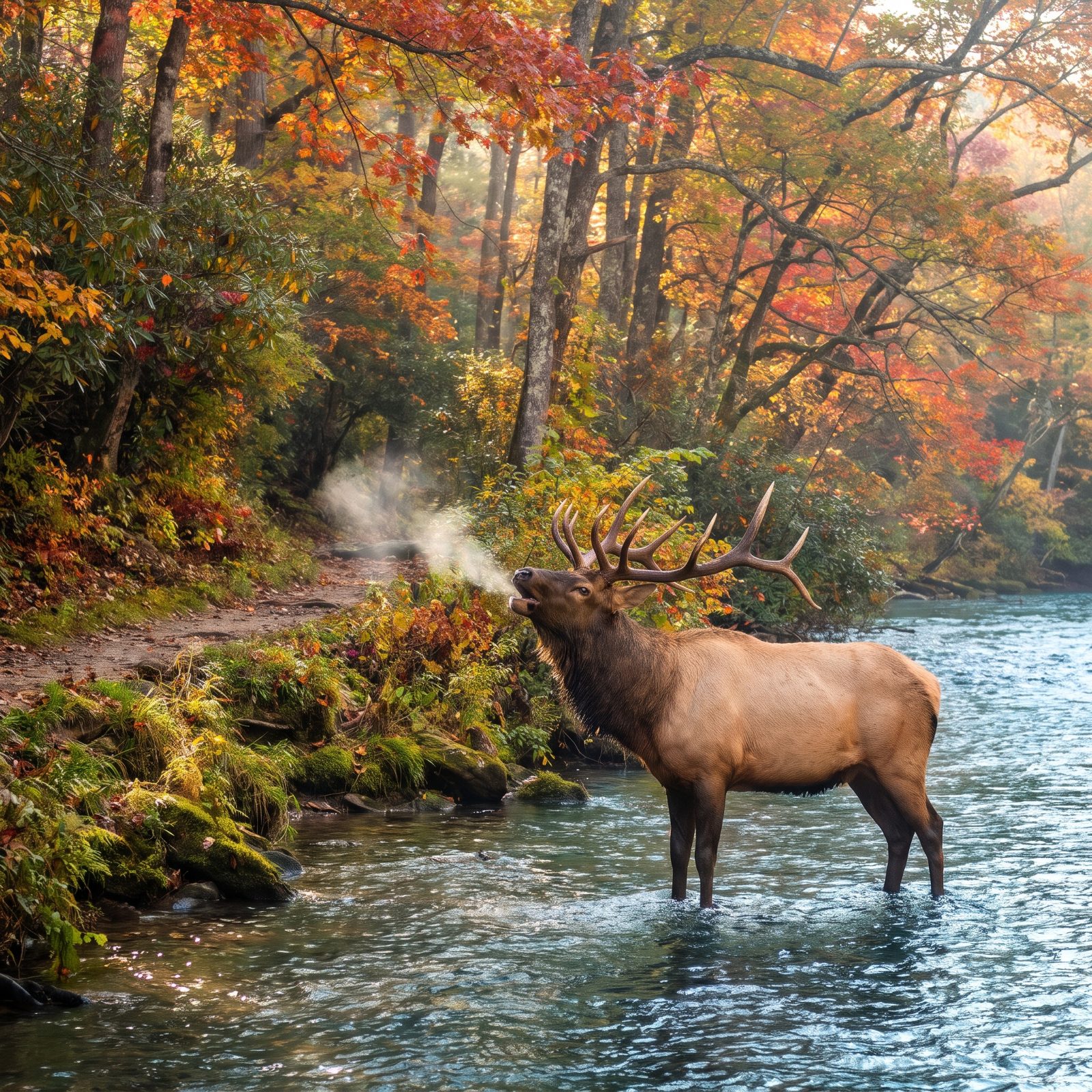
This flat, pretty trail runs about a mile and a half each way along the Oconaluftee River between the visitor center and the town of Cherokee. Come in fall and you might catch elk standing in the river itself, or crossing it, or planted on the trail like they own the place.
They sort of do. The rut runs September through mid-October, when bulls bugle, a sound somewhere between a whistle and a roar, and turn aggressive defending their cows. Keep at least 50 yards back. On a narrow trail that means turning around if an elk is on it.
4. Balsam Mountain, Where One Stubborn Cow Outsmarted the Bears
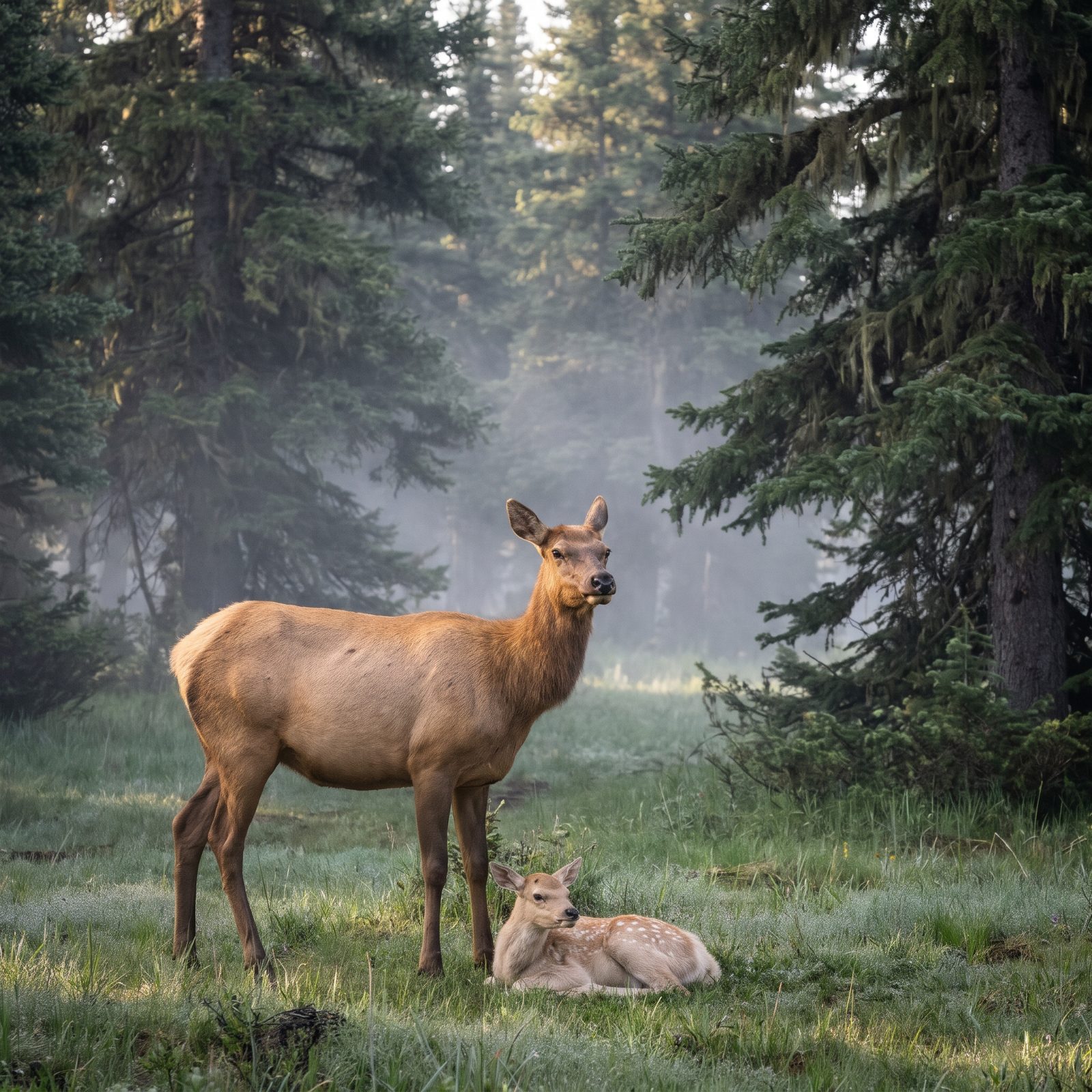
The science here beats the view, and the view is good. Park biologist Joe Yarkovich tells the story of Cow Number 15, one of the original elk, who lost her calves to black bears two years running. The third year she climbed up to Balsam Mountain to give birth, and that calf lived. She and her daughters have calved up there ever since.
Animals learn. One stubborn cow worked out the whole problem and passed the answer down. You reach Balsam via Heintooga Ridge Road, a paved spur off the Blue Ridge Parkway at milepost 458.2, roughly eleven miles from the Cherokee Parkway entrance.
3. The Town of Maggie Valley, Where Elk Walk the Streets
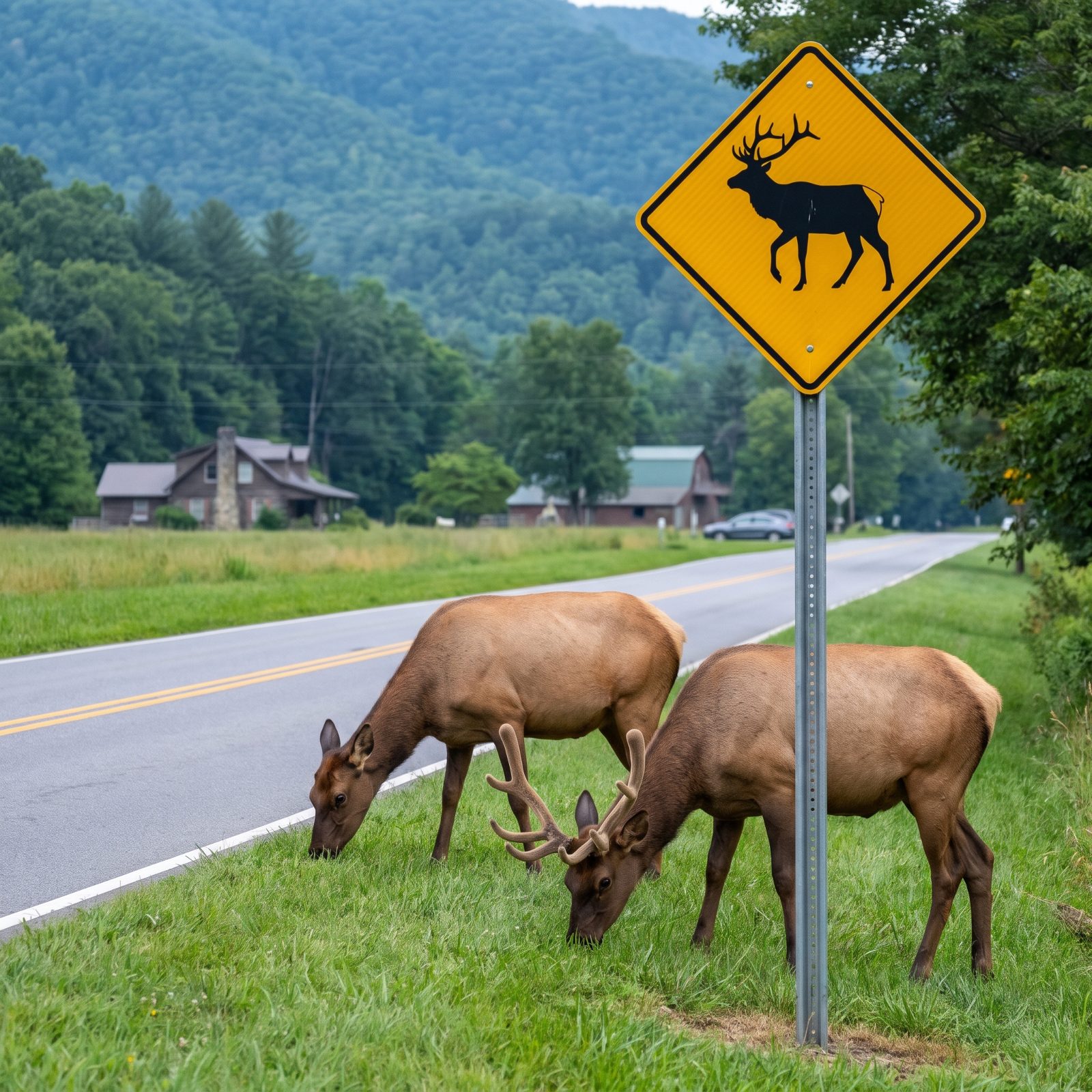
Some of the Cataloochee elk got comfortable and wandered into town. Maggie Valley now has at least two herds spending time inside the town limits, grazing roadside verges and strolling through neighborhoods like they pay property taxes.
Charming? Sure. Also a genuine problem. In June 2025 the NC Wildlife Resources Commission asked people to stop feeding, approaching, and touching the elk after a string of dangerously close encounters. Town leaders back the state’s “Elk Smart” campaign, and new elk crossing signs now line US 19 up Soco Mountain.
Most of this is private land and town roads. Watch from public spots, keep off private property, and for the love of everything, slow down behind the wheel. A thousand-pound animal does not lose an argument with a sedan, but nobody wins it either.
2. The Meadows Along Big Cove Road on the Qualla Boundary
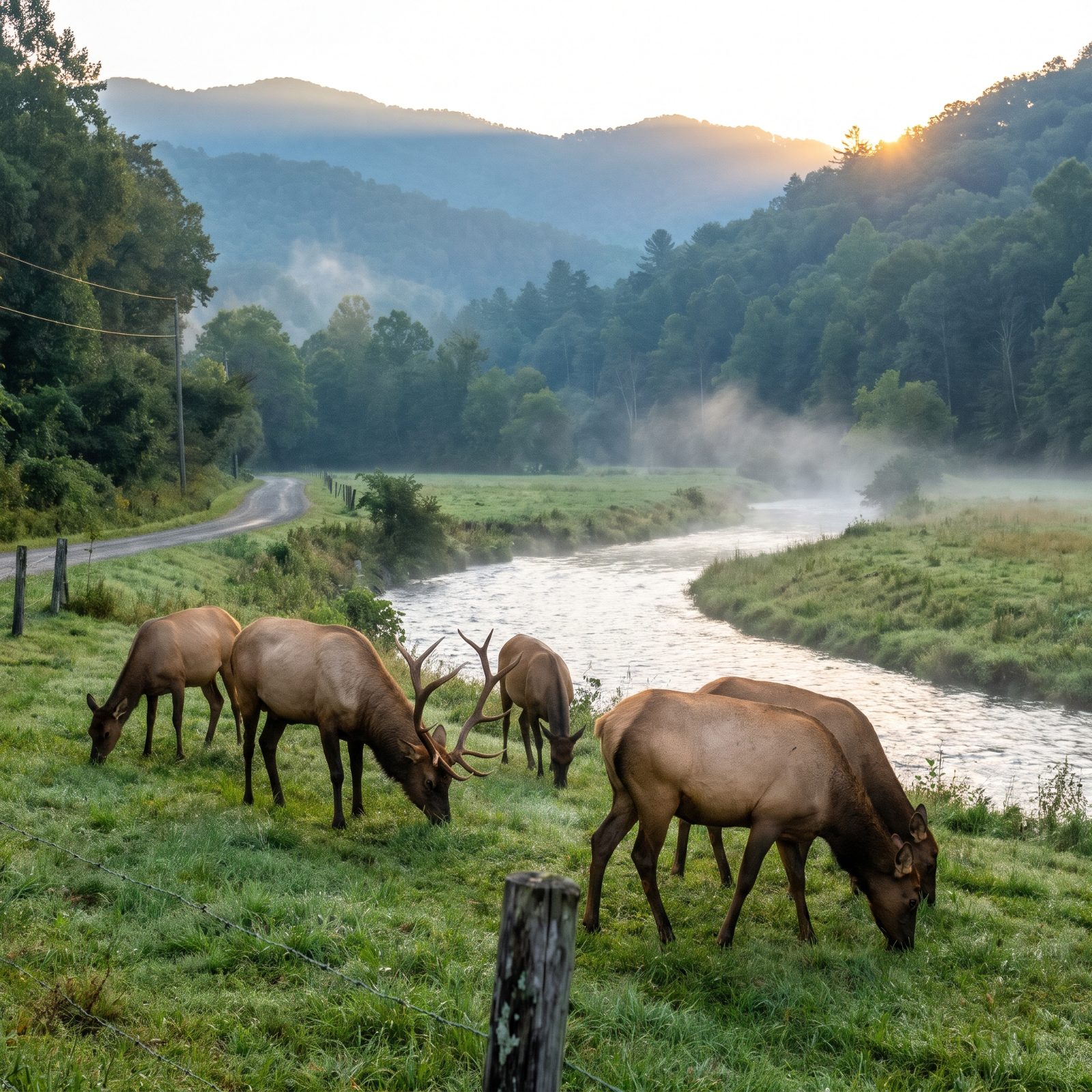
The elk never bothered to read the park boundary signs. They’ve spread onto Eastern Band of Cherokee Indians land, and beyond the Oconaluftee fields you’ll find them in meadows along Newfound Gap Road and Big Cove Road.
There’s a deeper thread here. Elk once ranged across the whole southern Appalachians before hunters wiped them out by the late 1700s. Visit Cherokee ties their return to the Cherokee people’s old hunting-and-gathering way of life, a circle quietly closing after two centuries. On tribal land the Eastern Band handles elk issues separately from the park, but the manners are identical: stay back, stay off private property.
1. Any of Them, If You Honor the 25-Yard Rule
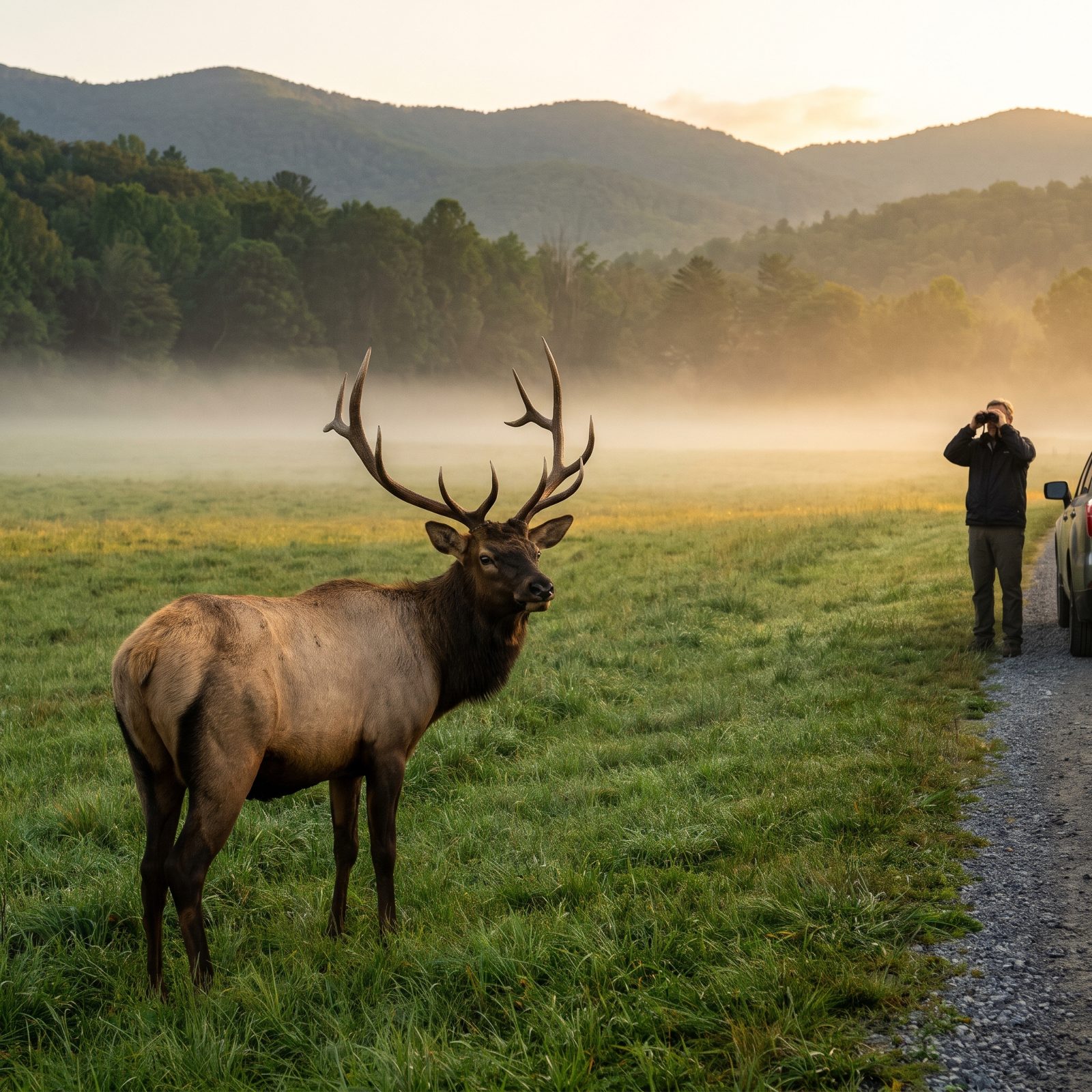
One rule makes every spot on this list work, or ruins it. Inside the national park it is illegal to approach within 50 yards, that’s 150 feet, of an elk on purpose, or to get close enough to disturb one. Don’t walk into the fields. No spotlights, no wildlife calls either. Both are banned.
Fifty yards sounds generous until a bull decides you’re too close. These are wild animals, not petting-zoo props, and a rutting bull will charge. Sometimes a bull wanders right up to the roadside on his own and ends up only a few yards from you. When that happens, don’t step closer. Back away slowly to restore the gap and stay by your car. Pack binoculars. Keep your distance. The elk were gone for two centuries. Let’s not hand them a reason to leave again.