
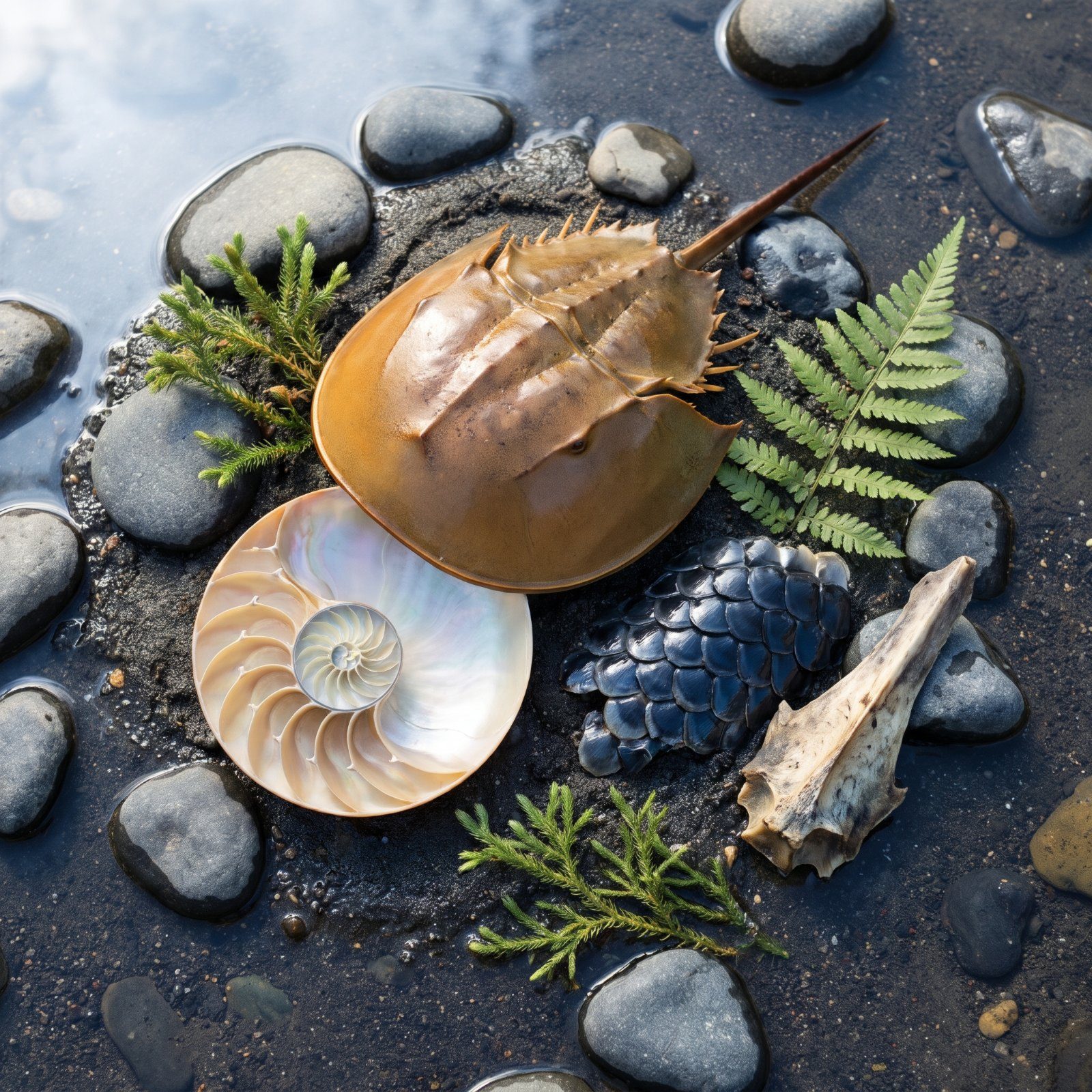
A horseshoe crab flipped upside down on a beach looks like a mistake nature forgot to fix. It isn’t. That hinged, helmet-shaped body was crawling across seafloors before the first dinosaur drew breath. Across rivers, reefs and the black water miles below the surface, a handful of animals still wear anatomy so old it predates the first flower. None of them are frozen in time, and no species here is genetically identical to its Mesozoic cousins. What survived is the blueprint — the armor, the fin, the shell, the jaw. Look closely and you’re reading a sentence first written hundreds of millions of years ago.
46. Horseshoe Crab, The Armored Seafloor Scavenger Older Than Dinosaurs
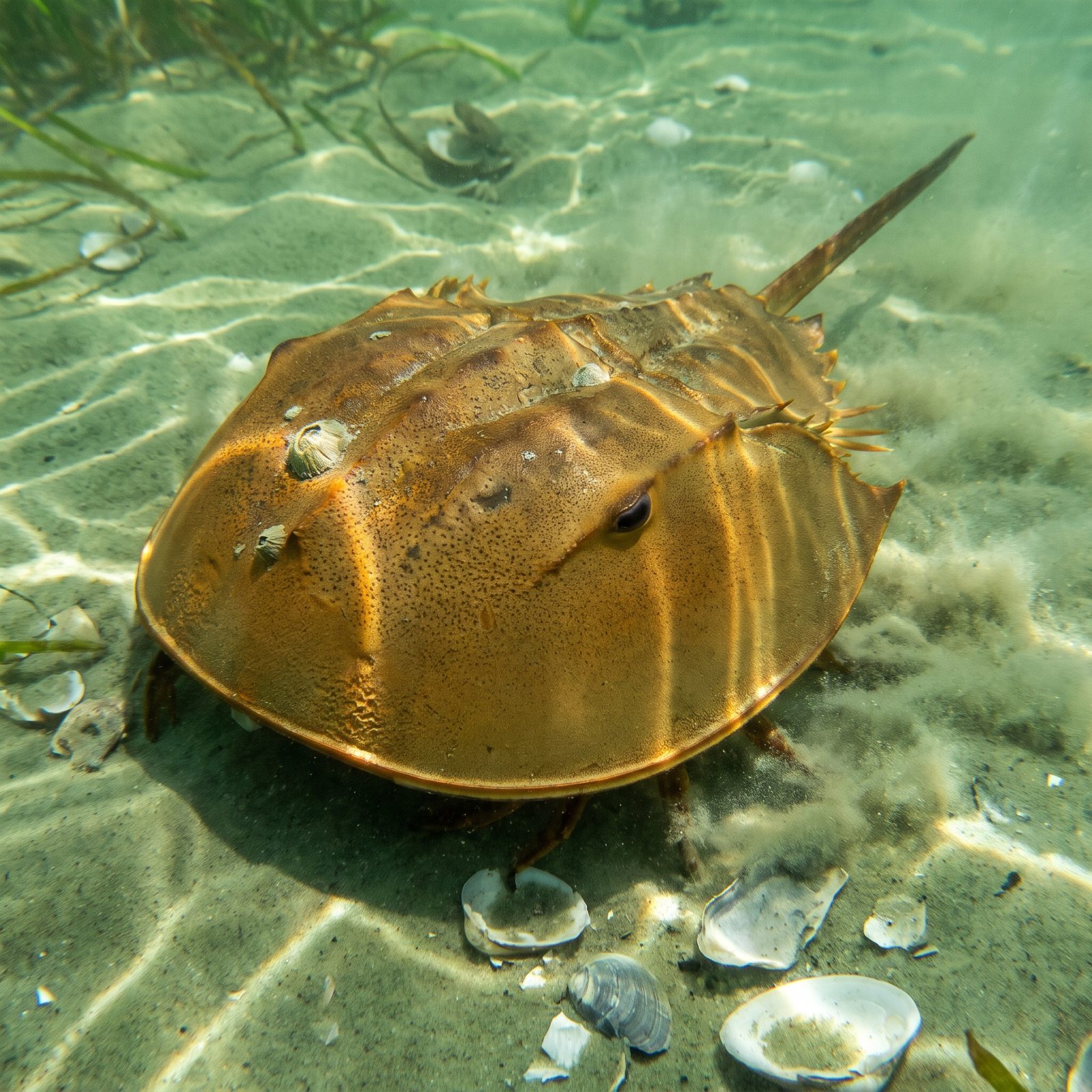
That tail you were warned never to pick them up by? Not a weapon. A lever. Flip over in the surf and the spike is how a horseshoe crab rights itself before the gulls show up.
The body plan goes back more than 400 million years, long before anything you’d call a dinosaur, and what survived is the shape: hinged shell, book gills, that jointed tail. The living species are modern animals, not fossils out for a walk. Their blood is the famous part — copper-based, sky-blue, and still drawn by the biomedical industry to test vaccines for contamination.
45. Tuatara, The Last Survivor of an Ancient Reptile Order
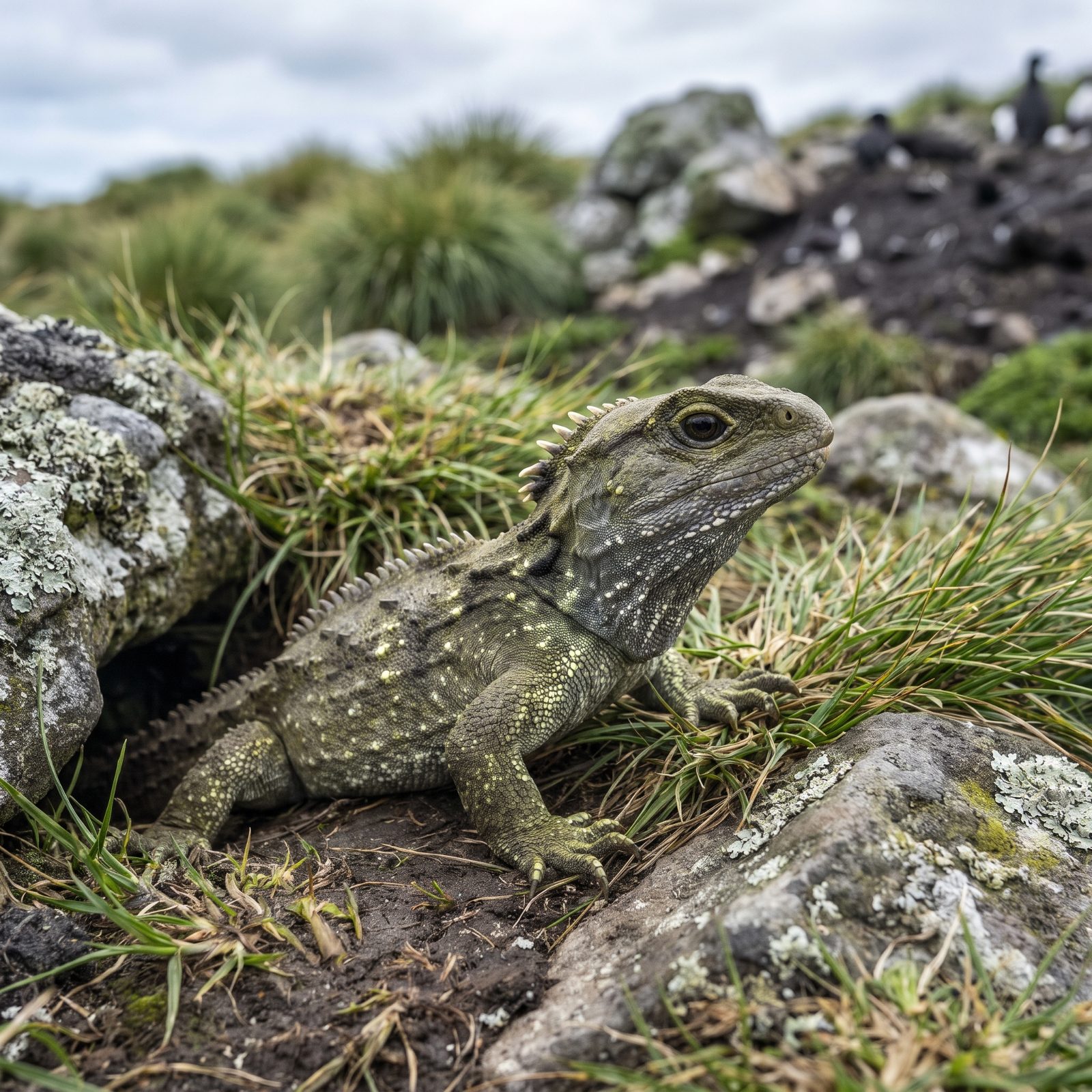
Call it a lizard and a biologist will correct you, politely but firmly. The tuatara is the sole survivor of the Rhynchocephalia, a reptile order that thrived alongside the early dinosaurs and then vanished everywhere except a scatter of islands around New Zealand.
The jaw gives it away. Two rows of teeth on top, one on the bottom, slotting together like a saw. There’s a light-sensitive “third eye” on top of its skull, visible in hatchlings. And it lives at a glacial pace — still growing past 30, sometimes breeding past 100. The order is ancient; the animal blinking back at you is very much alive.
44. Chambered Nautilus, A Living Cephalopod in a Spiral Shell
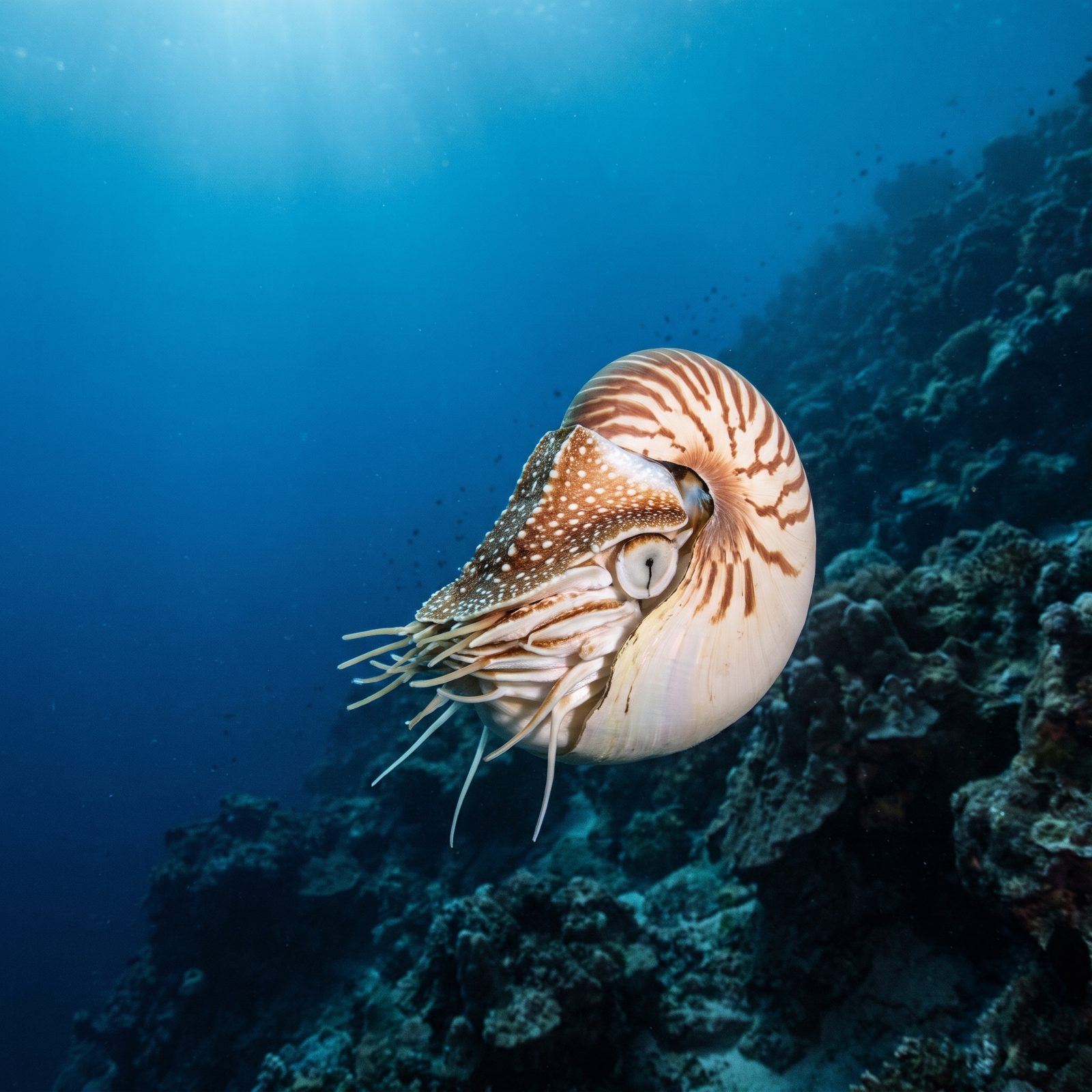
The shell is a math lesson and an oxygen tank at once. Behind that spiral of tiger-striped chambers, the nautilus pumps gas and fluid to rise and sink — a buoyancy system older than it has any right to be.
Coiled, shelled cephalopods like this ruled the seas back in the age of ammonites, and the living nautilus keeps the recognizable kit: external shell, gas-filled chambers, a ring of suckerless tentacles. Unlike its octopus cousins, it peers out through a simple pinhole eye with no lens at all.
It sees the deep ocean through what amounts to a hole in a bucket, and it has done fine for a very long time.
43. Alligator Gar, The Giant Fish Wearing Ganoid Armor
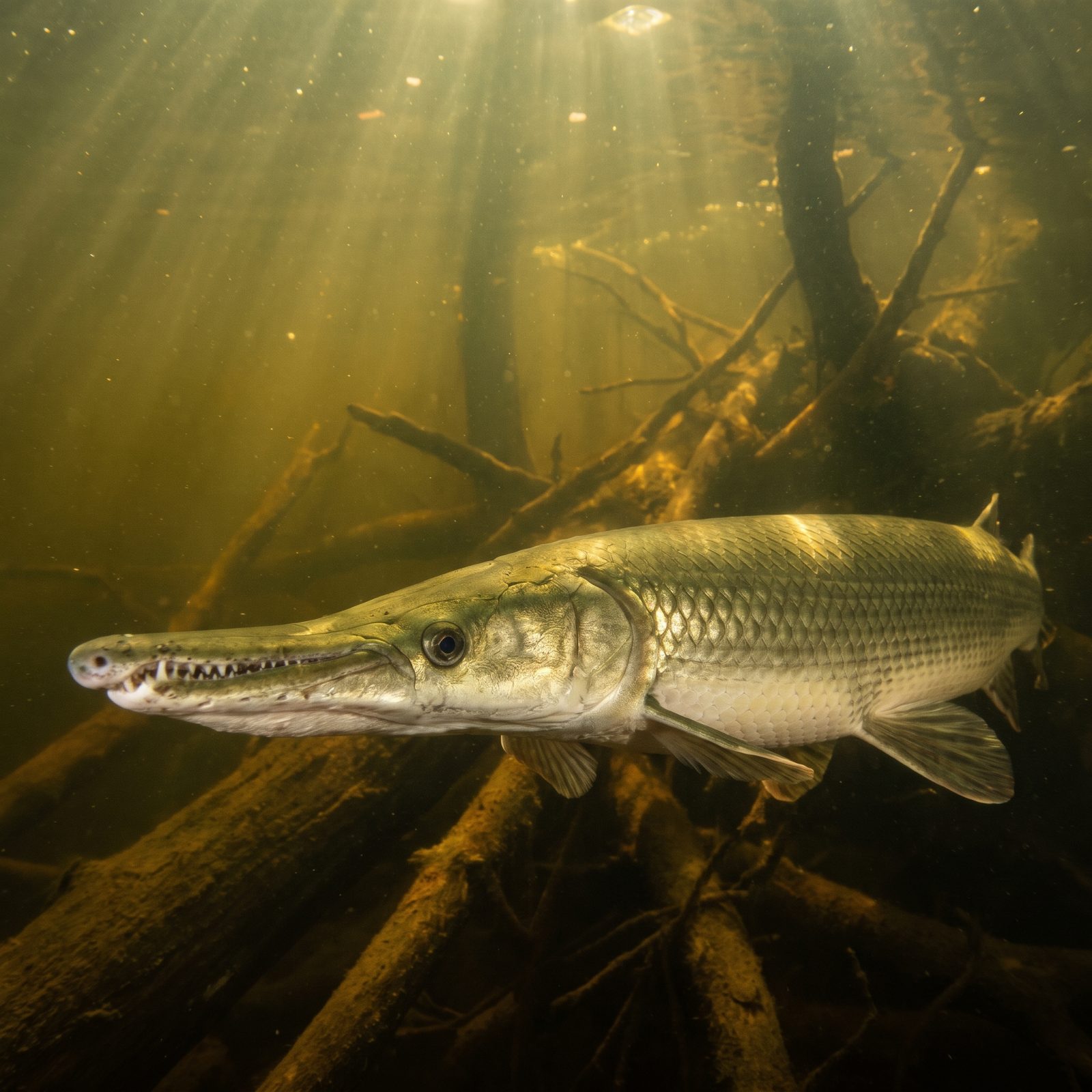
This fish wears shingles. This fish is sheathed in hard, diamond-shaped ganoid scales, laid down in neat rows like roof tiles. Native Americans used gar scales as arrowheads, which tells you something about the durability.
Gar lineages run back into the Mesozoic, and that long, torpedo-shaped body has barely needed updating since. The living giant can top eight feet, and it gulps air at the surface using a swim bladder that works like a crude lung. People fear them. They shouldn’t — no credible record exists of one attacking a person.
42. Australian Lungfish, The Air-Breathing Fish With Primitive Fins
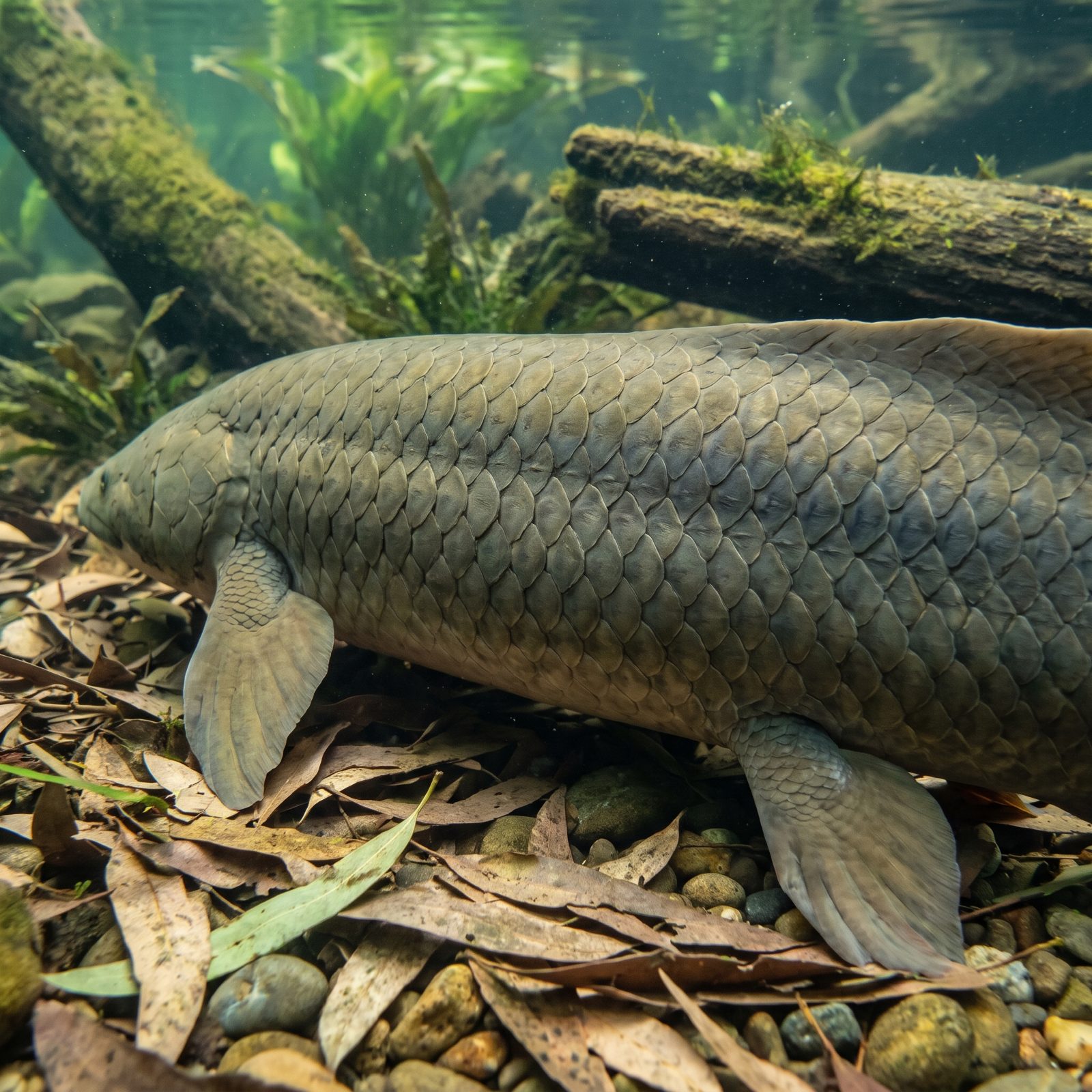
Watch an Australian lungfish push off the river bottom and something looks wrong, in the best way. The paired fins are fleshy and lobed, closer to stubby limbs than to the thin fans most fish wear, and that fin type sits near the root of the whole story of how vertebrates eventually hauled themselves onto land.
It carries a single lung and can gulp air when the water goes stale, though unlike its African relatives it can’t ride out a dry season buried in mud. Lungfishes as a group are deeply ancient; this particular species is a modern animal that happens to keep the old gear. Some in captivity have lived past 80.
41. Lake Sturgeon, A Whiskered River Giant With Ancient Scutes
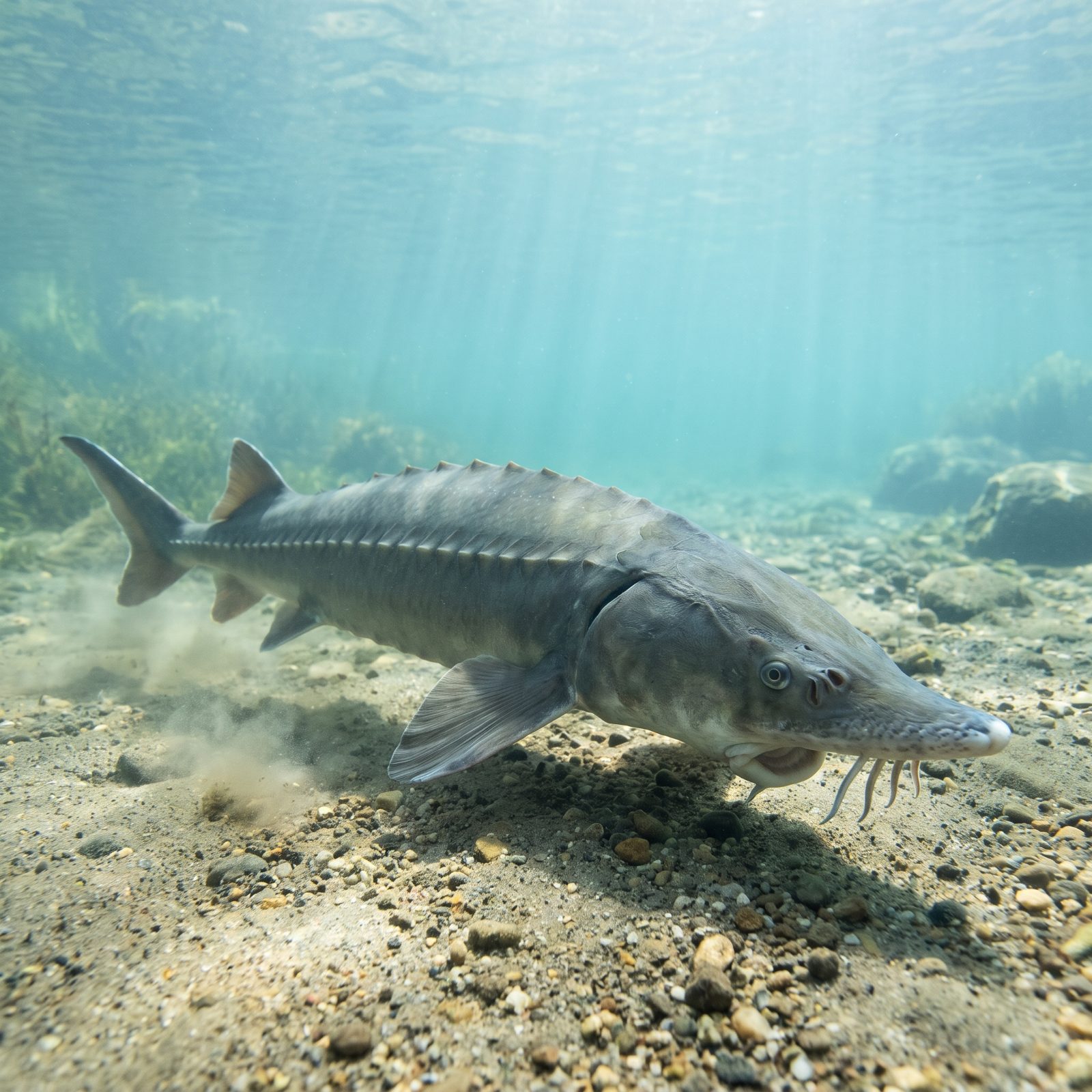
Run a hand down a sturgeon’s back and you feel the past: five rows of bony plates called scutes, ridged like the keel of an old boat. Young sturgeon are rough as sandpaper with them. The big ones can outlive the people studying them, past a century in some cases.
Scutes, a sucking tube mouth, barbels that taste the riverbed — the whole sturgeon design traces back deep into dinosaur time and barely budged. These are modern fish. Slow to mature, slow to breed, which is precisely why overfishing and dams hit them so hard.
40. American Paddlefish, The Plankton-Feeder With a Paddle-Shaped Snout
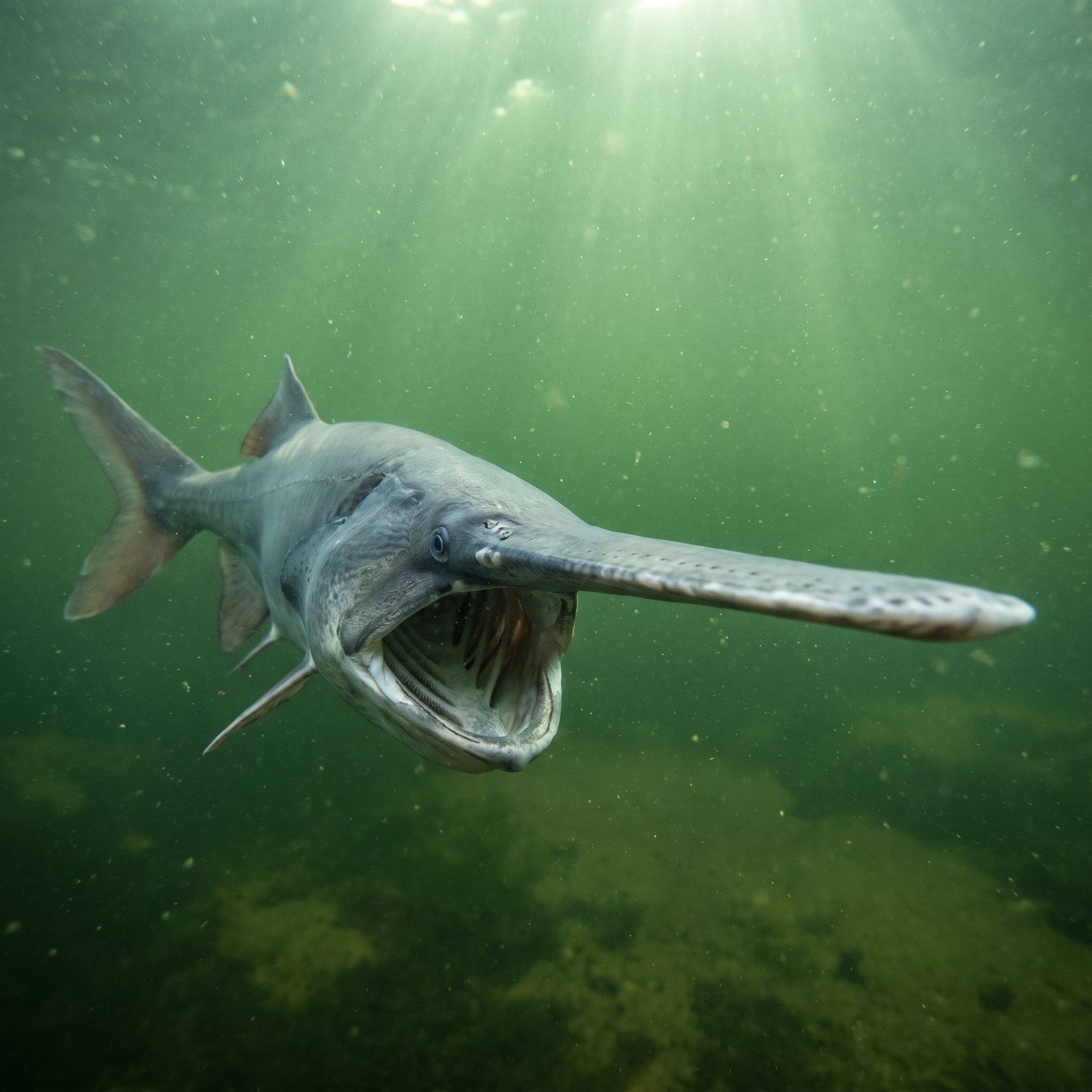
The snout is not a shovel and not a sword. It’s an antenna. The paddlefish’s long flat rostrum is studded with electroreceptors that pick up the faint electrical buzz of swarming zooplankton, which it then strains from the water with a gaping mouth and comb-like gill rakers.
Only two paddlefish species made it into the present, and one — the Chinese paddlefish — was declared extinct in recent years. The American one still patrols big river systems. Scaleless body, cartilage skeleton, close cousin of the sturgeon, and a face that has been working the same old plan for an awfully long time.
39. Senegal Bichir, A Lung-Breathing Fish Clad in Diamond Scales
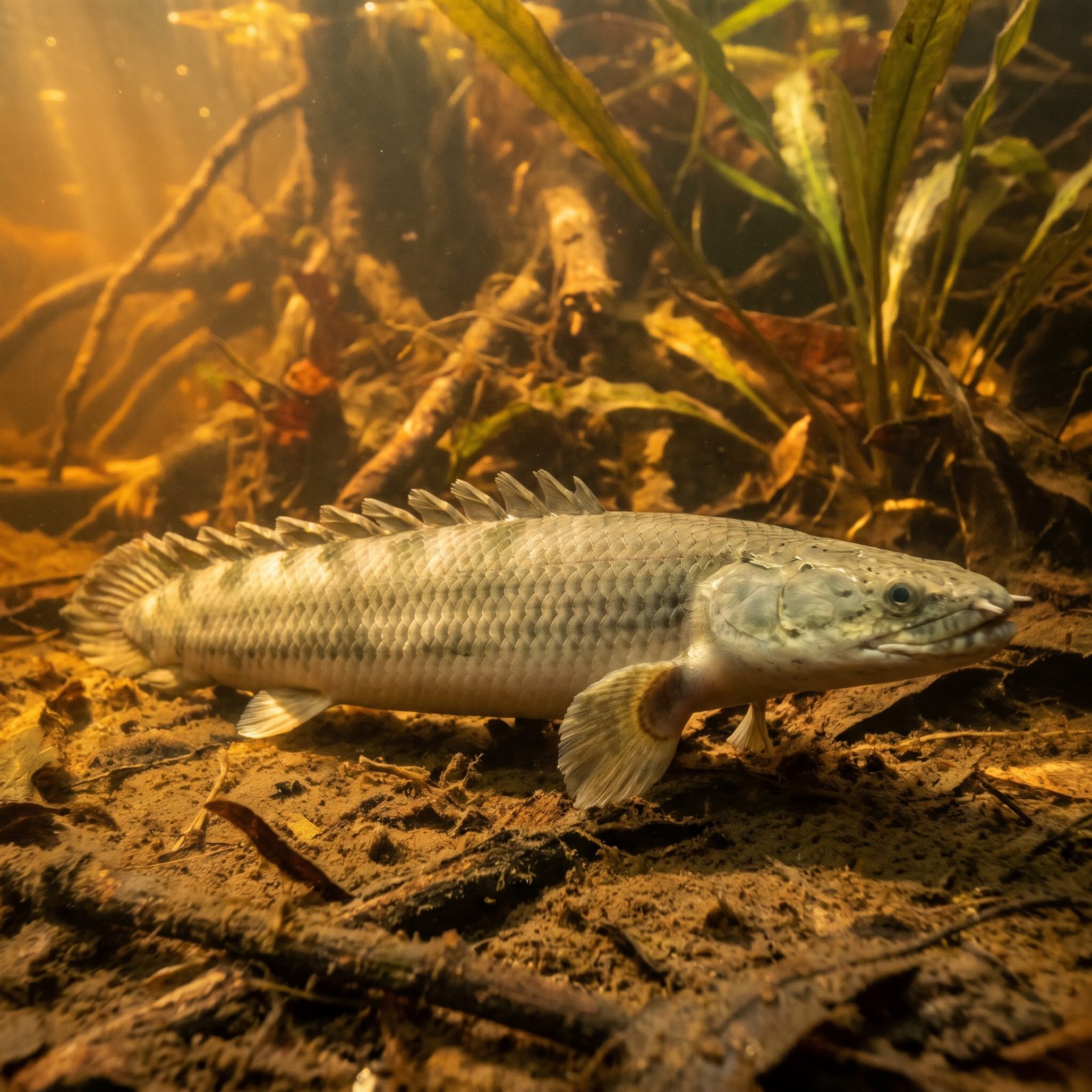
Snake-ish, finned, armored, strange. The bichir looks assembled from spare parts, and that oddball build is exactly what makes it a window into a very old chapter of fish evolution.
Instead of one flag-like dorsal, the back carries a row of separate little finlets. The body is sheathed in glossy diamond scales. And it breathes air through paired lungs so efficiently that a bichir can survive out of water as long as it stays damp. The ray-finned branch it belongs to split off early and hung onto these primitive features while its relatives moved on.
38. Bowfin, The Lone Survivor of a Once-Widespread Fish Lineage
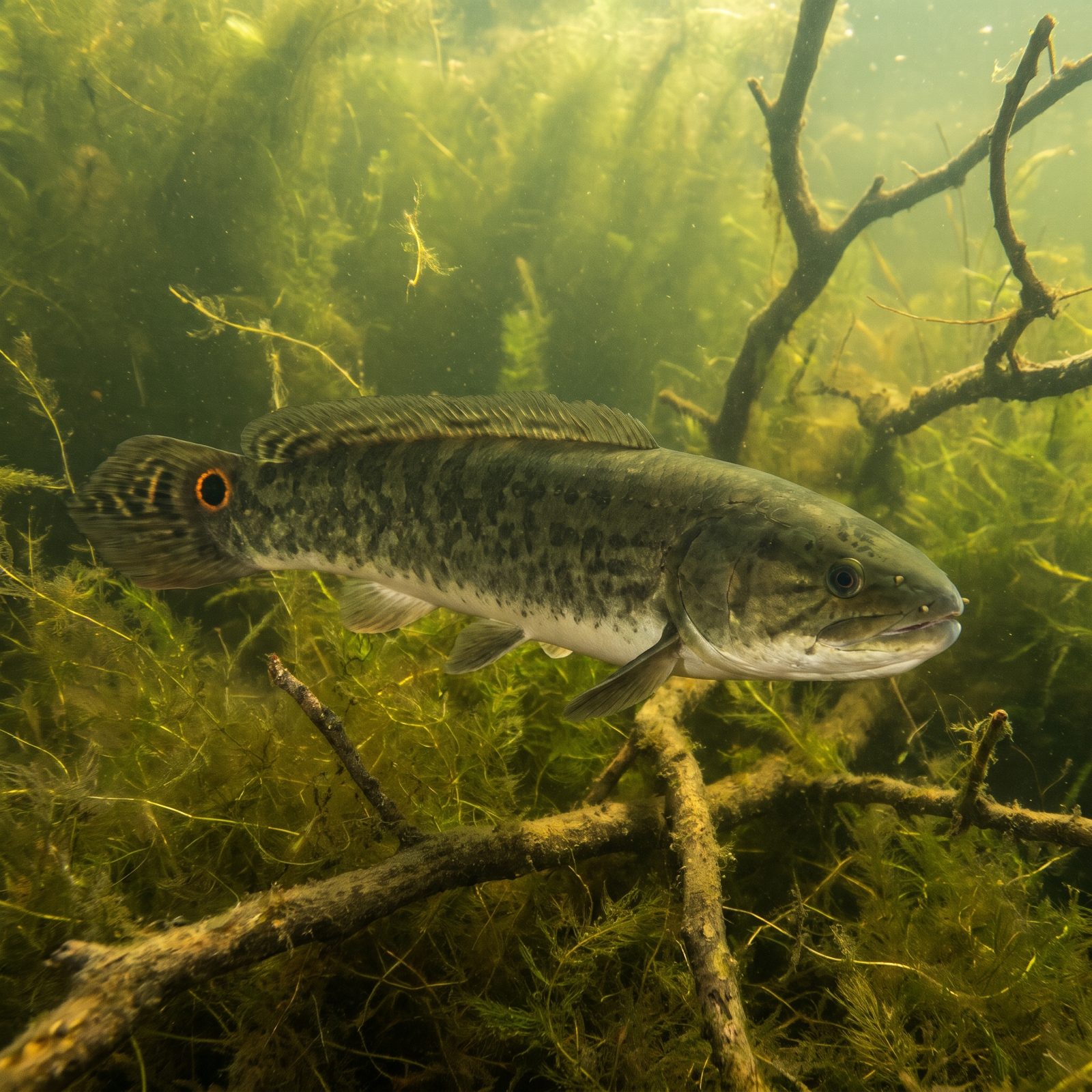
The bowfin is the last one standing. Its entire group once spread across ancient waters worldwide, and now a single living species holds the fort in North American swamps and sluggish rivers.
It’s built to outlast bad water. A gas bladder doubles as a lung, so a bowfin gulps air and shrugs off oxygen-starved mud that would kill most fish, while the long rippling dorsal fin lets it hover and reverse on a dime. Males guard the nest and herd the fry in a dark living cloud. Overlooked, cursed at by anglers, and quietly one of the oldest designs still swimming.
37. Frilled Shark, A Deep-Sea Predator With an Eel-Like Body
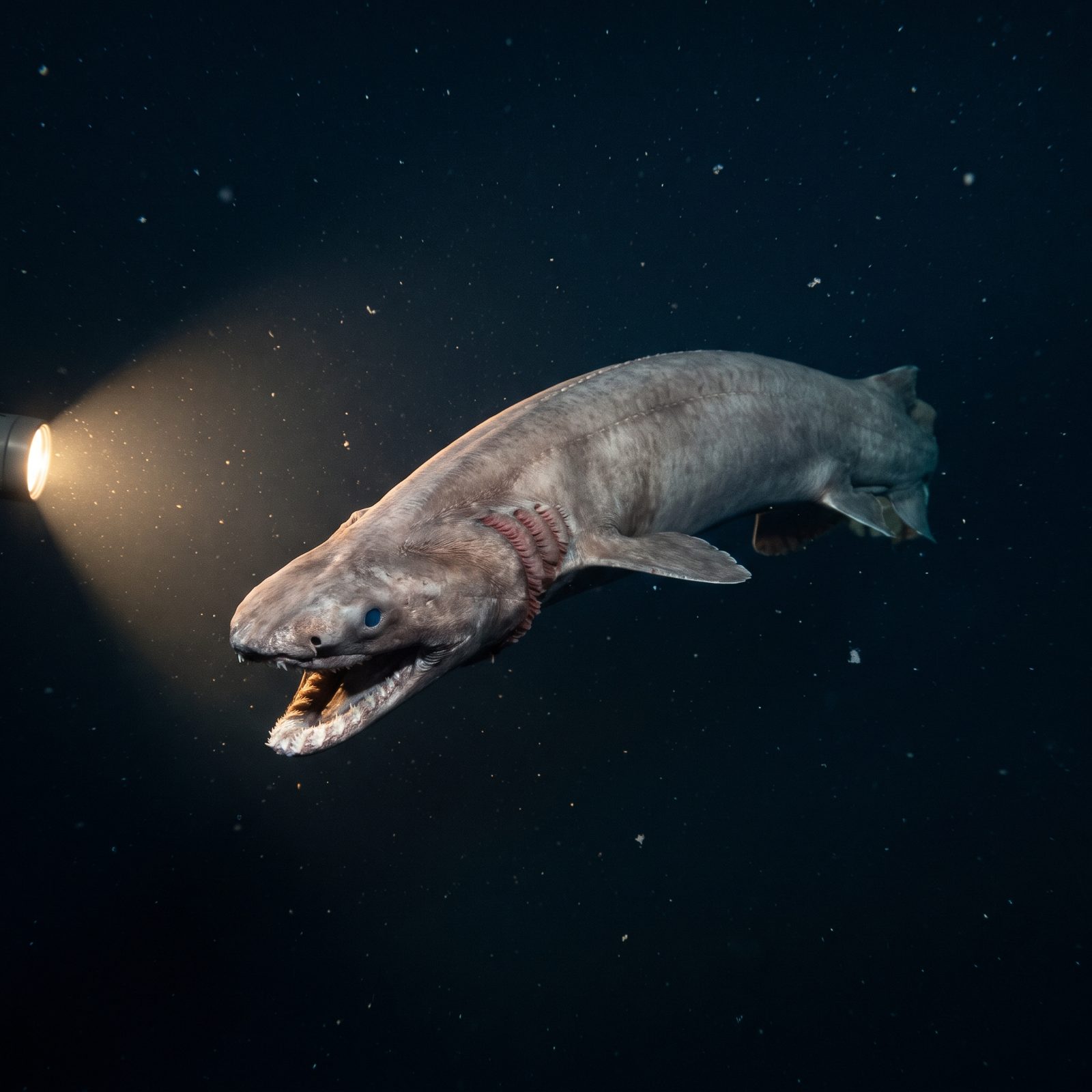
Haul one up from the deep and it looks like a mistake — a shark that can’t decide what it wants to be. The frilled shark has a long, slender, eel-like body, a mouth set at the very front of a short, flattened snout, and six pairs of ruffled gill slits that earned it the name.
Inside that mouth sit rows of fine, three-pronged teeth, a design you’d recognize from sharks of long-vanished seas. It lives mostly in the dark deep ocean, so a live encounter is rare. The shark in front of you is a modern species. The build it carries has a very long pedigree.
36. Goblin Shark: The Pink Shark With Projectile Jaws
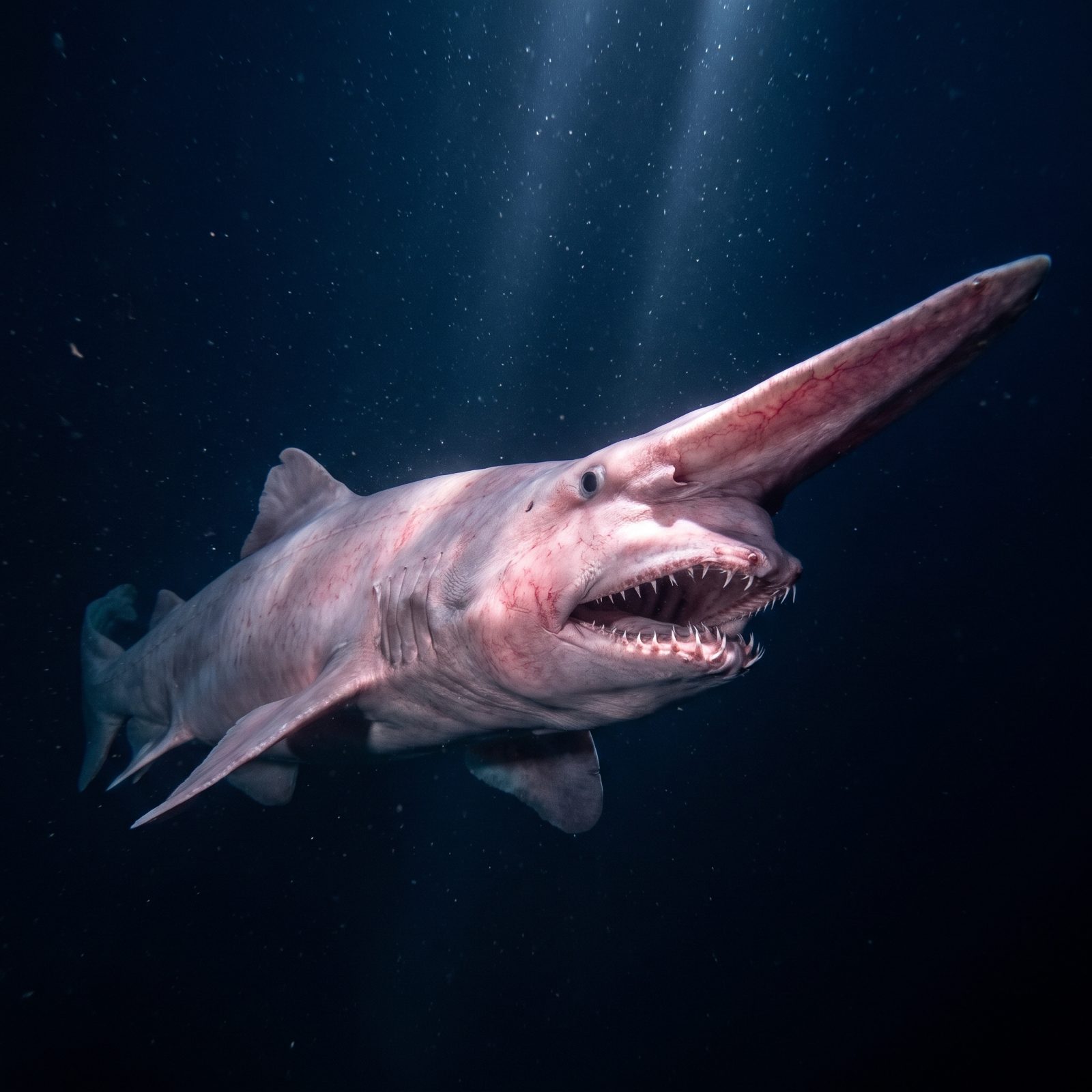
That snout isn’t a weapon. It’s an antenna. The flat, blade-like rostrum is packed with electroreceptors that pick up the faint electrical twitch of prey in water so dark that eyes barely matter.
Then the jaws fire. Loosely slung under the head, they shoot forward on stretchy ligaments and snap shut well ahead of where the face started — one of the fastest bites ever measured in any fish.
Goblin sharks belong to a family, Mitsukurinidae, whose fossil relatives go back over 100 million years. But the living species isn’t a frozen Cretaceous animal. It’s the one surviving branch of a once-wider group, hanging onto a body plan that simply worked.
35. Bluntnose Sixgill Shark: Six Gill Slits From a Deep Past
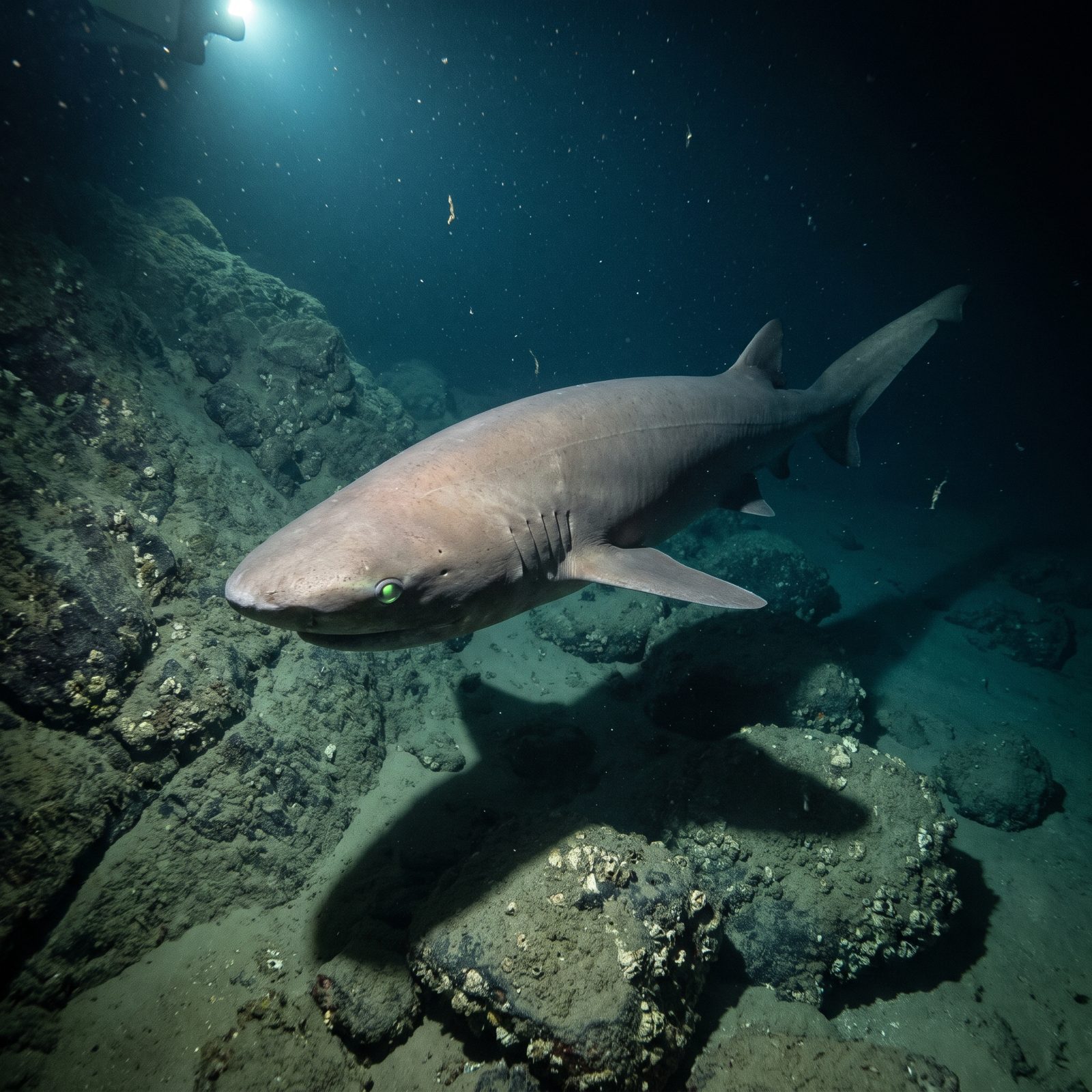
Count the gills. Nearly every shark you’ll ever see has five slits per side; this one has six, and that sixth slit flags an old, deep branch of the family tree.
Sixgill and sevengill sharks sit among the cowsharks, a lineage with fossil cousins reaching back to the Jurassic. The six-gill arrangement is thought to be the ancestral setup — the configuration most early sharks ran before five became the industry standard, so to speak.
They spend daylight in the cold dark and drift shallower after sunset to hunt. One caveat on the word “ancient”: the body plan is old and the gill count is old, but each living shark swimming out there right now is a thoroughly modern animal, tuned to today’s deep ocean.
34. Australian Ghostshark: The Cartilage Fish From a Forgotten Branch
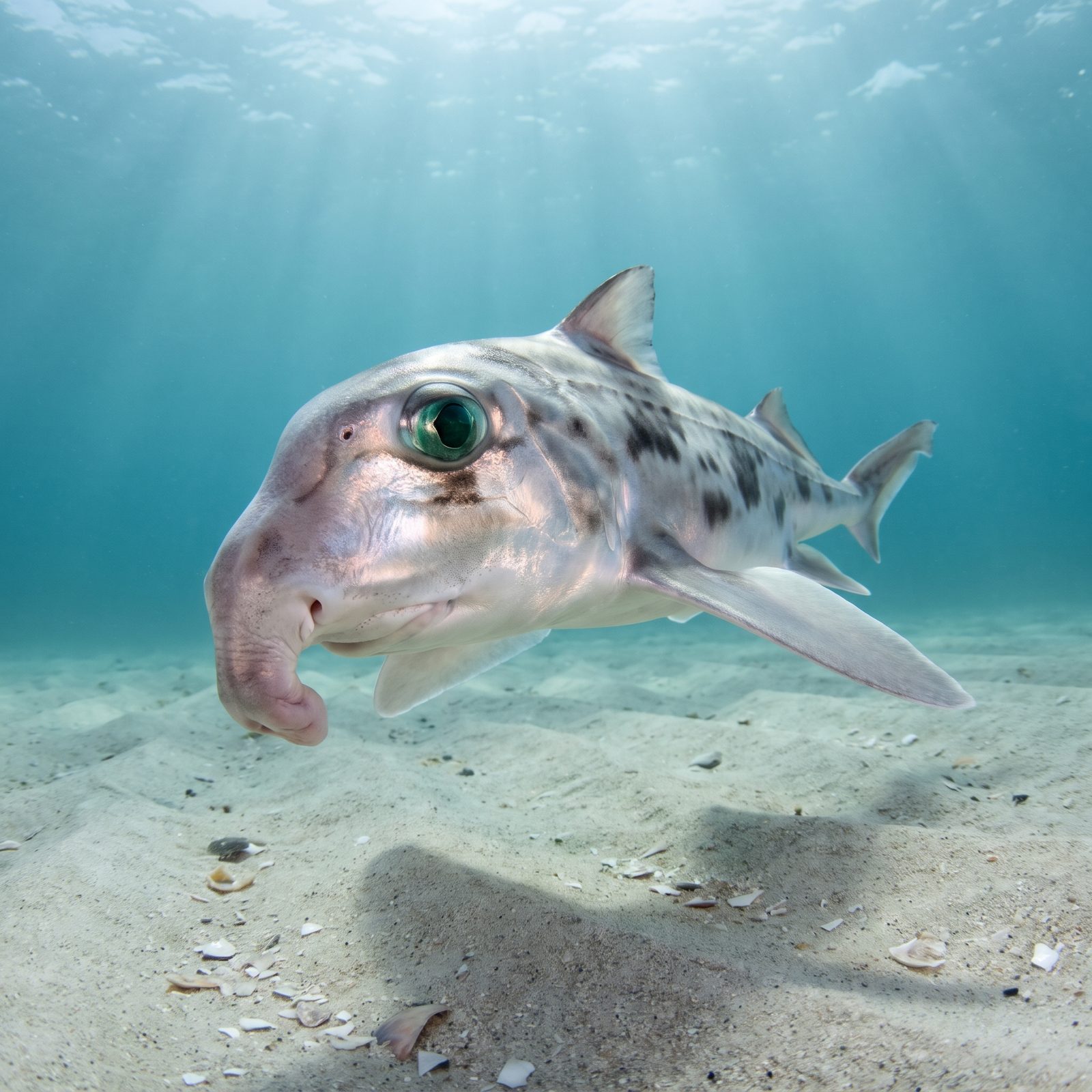
It looks assembled from spare parts — the droopy snout, the sail-like fins, the big green eyes. The ghostshark, or elephant fish, belongs to the chimaeras, a group that split from sharks and rays an astonishingly long time ago.
Chimaeras and sharks share cartilage skeletons but parted ways early, with the chimaera line turning up in the fossil record hundreds of millions of years back. What swims today is a small, strange remnant of a crowd that was once far more varied.
That snout works as a sensory tool, feeling out buried prey in the sand. And the males? They carry a club-shaped structure on the forehead — one of those details you don’t expect and then can’t unsee.
33. Hagfish: The Jawless Scavenger That Drowns Attackers in Slime
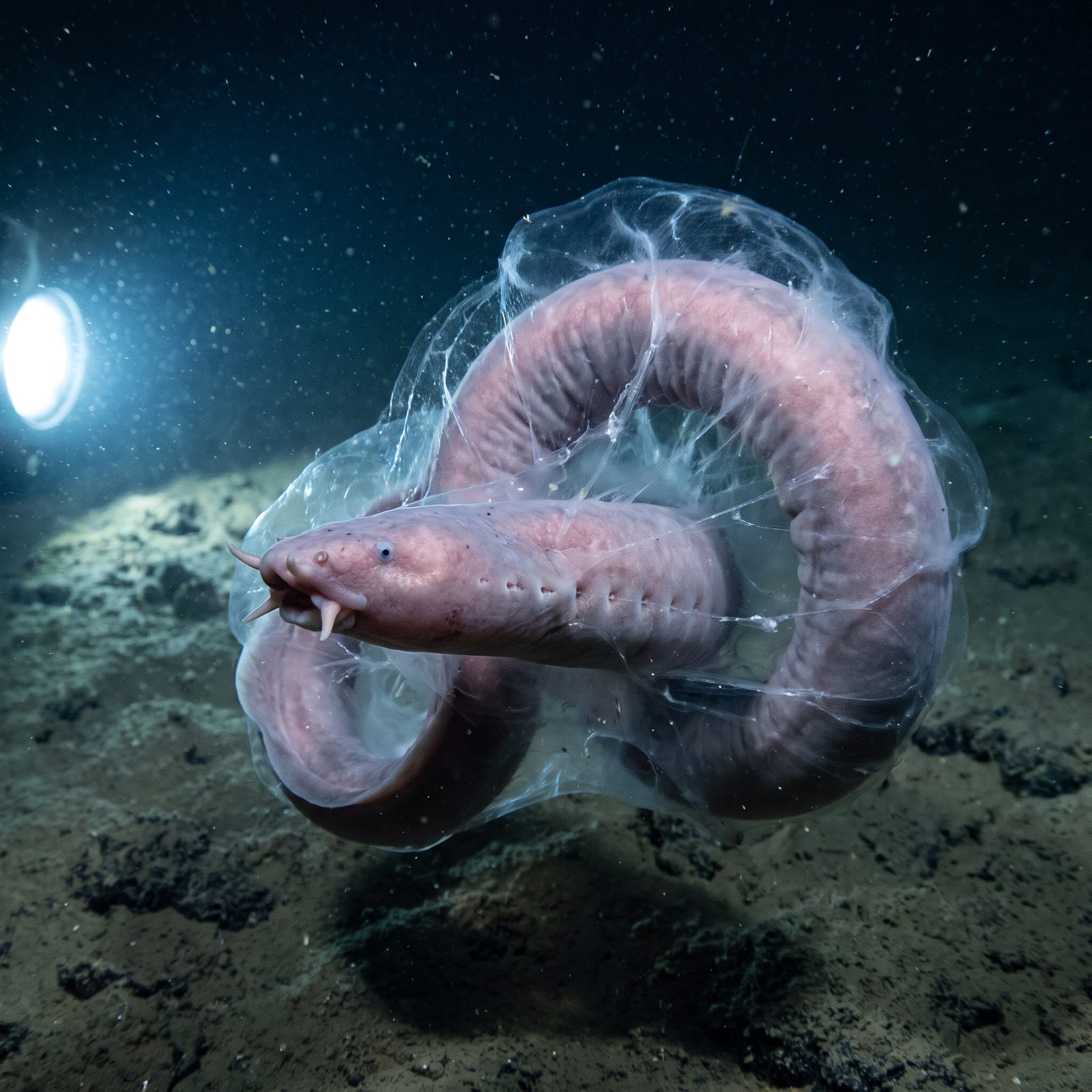
Grab a hagfish and you’ll regret it. In a fraction of a second it releases proteins and tiny coiled fibers that explode into liters of slime, clogging the gills of whatever tried to swallow it.
No jaws, no real bones. Hagfish sit near the very base of the vertebrate family tree, holdouts from a jawless body plan that predates the Mesozoic by a wide margin — their fossil relatives go back more than 300 million years.
They tie themselves in knots, both to scrape off their own slime and to pull food apart, and they can soak up nutrients straight through their skin. And no, the slime isn’t some campfire story you half-remember. It’s the most effective defense in the sea.
32. Sea Lamprey: The Suction-Cup Mouth With No Jaws
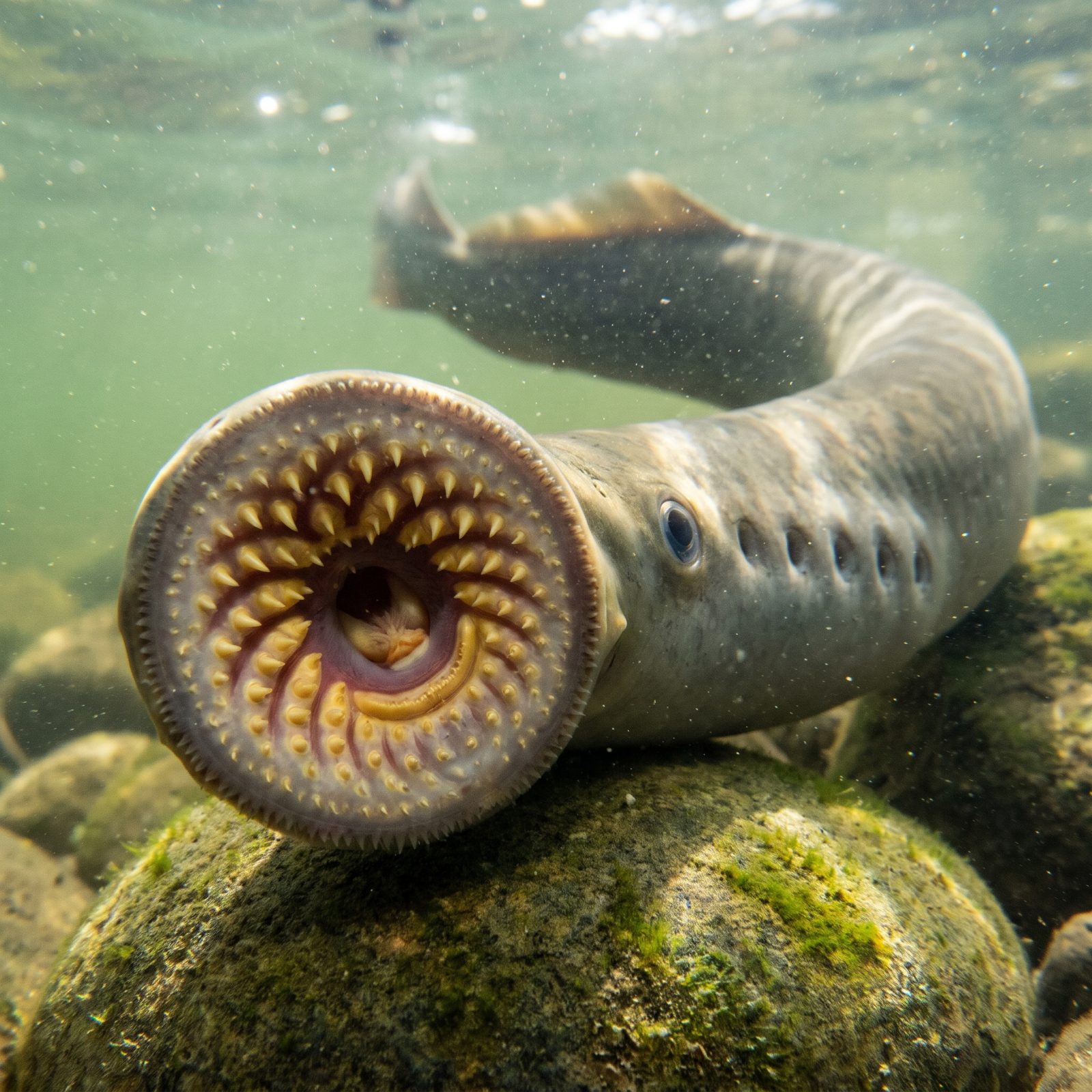
The mouth is a horror and a marvel at once — a round disc lined with ring after ring of teeth, built to latch onto a living fish and rasp straight through the skin.
Like hagfish, lampreys are jawless, the other surviving lineage of an ancient group of vertebrates that had already committed to this body plan long before dinosaurs showed up. Lamprey fossils that look eerily like the modern animal date back hundreds of millions of years.
A correction worth making, though: the species alive today isn’t literally that old. What’s old is the lineage and the design — that eel-shaped, jawless, gill-pored blueprint that just keeps working in rivers and seas.
31. Chinese Giant Salamander: A Living Amphibian the Size of a Dog
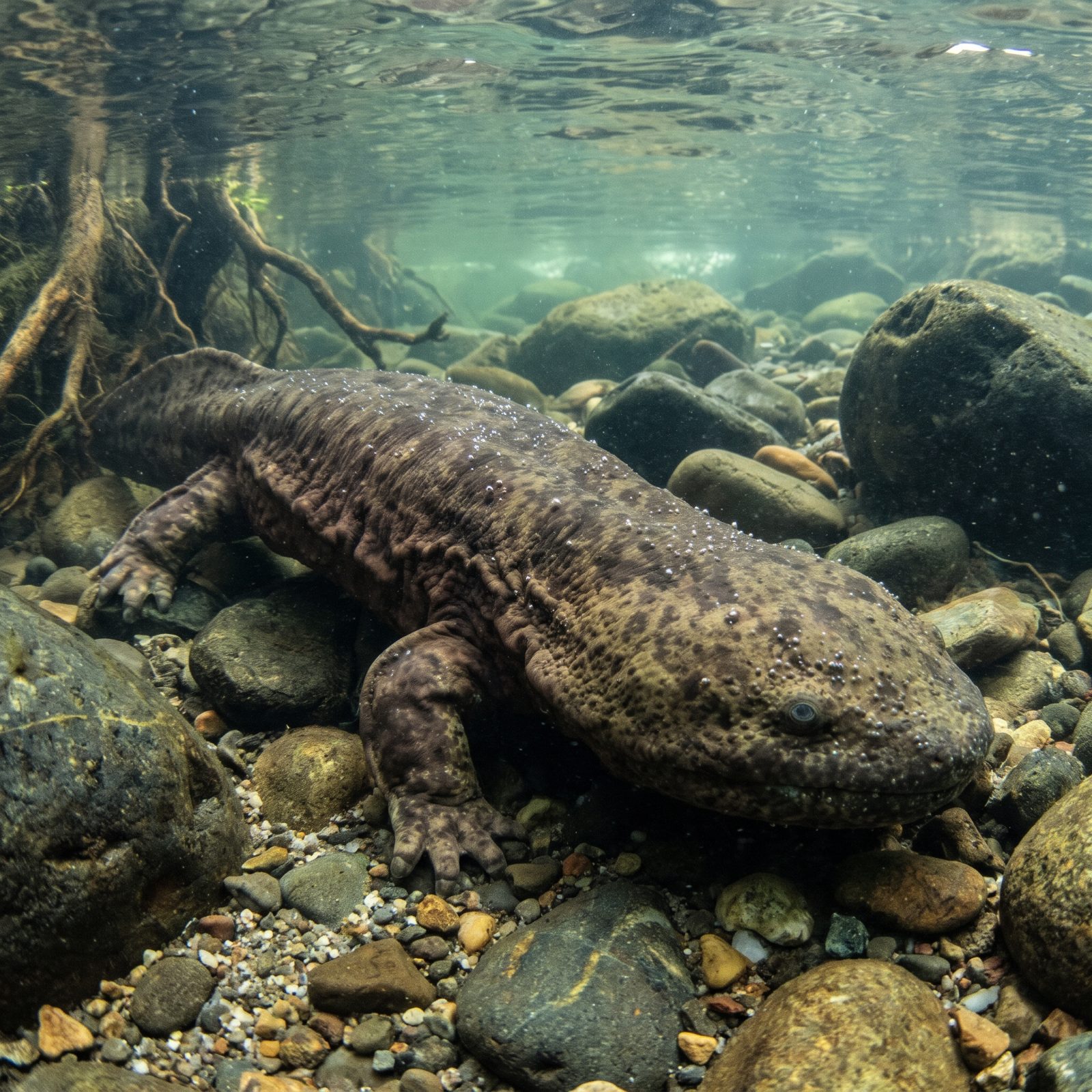
Picture an amphibian long enough to stretch across a doorway. The Chinese giant salamander is among the largest alive — a slab of wrinkled, oxygen-absorbing skin lounging in cold, clear streams.
Its family has fossil relatives reaching back to the Jurassic, which is why one extinct cousin earned the nickname “the eyewitness of the flood.” The recognizable shape has barely needed updating in all that time.
Those loose folds along the sides aren’t decoration. They massively increase surface area so the animal can breathe through its skin in frigid, fast water. Sadly, this old survivor is now critically endangered, squeezed by habitat loss and the food trade. Ancient doesn’t mean safe.
30. Tailed Frog: The Stream-Dweller That Kept the Old Frog Features
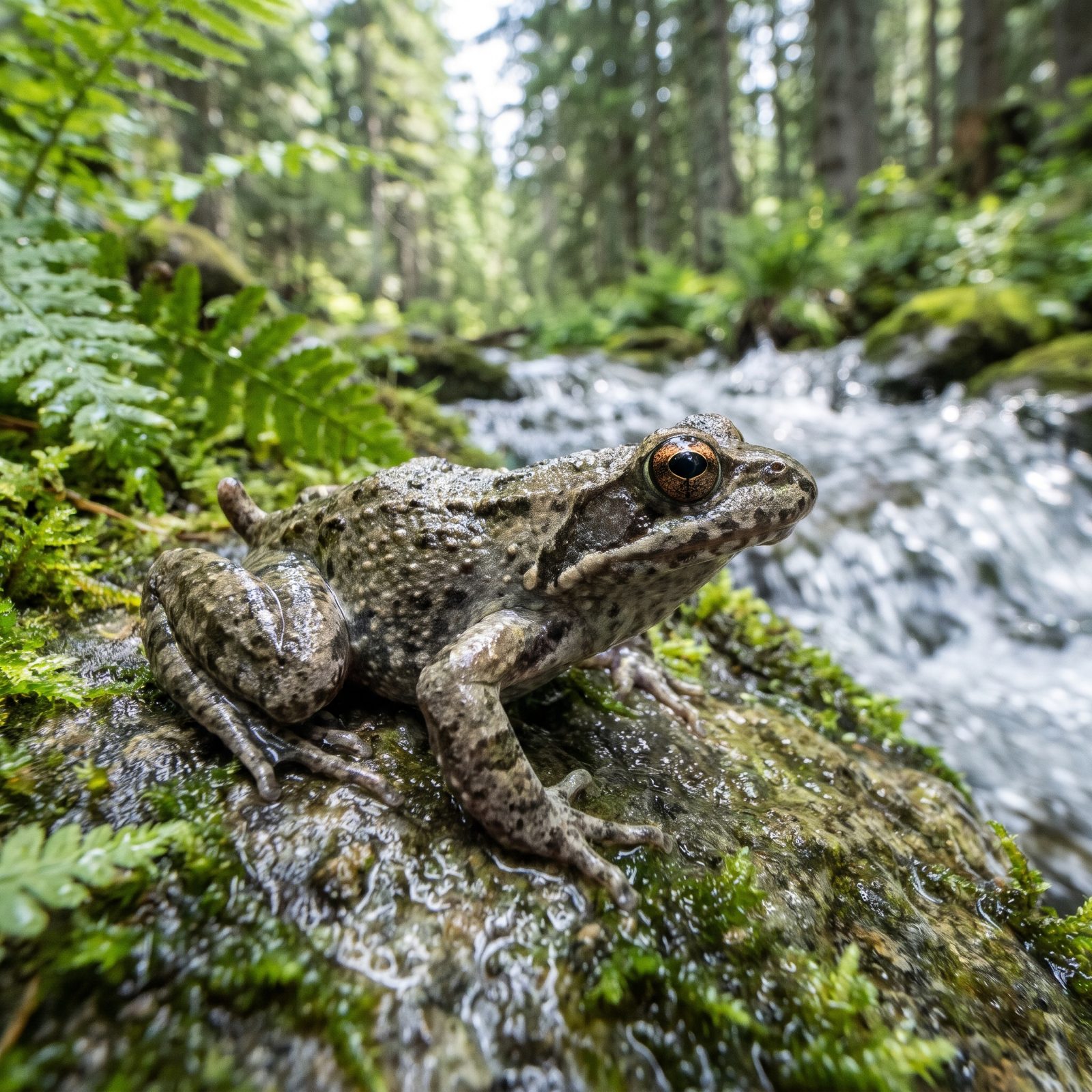
The “tail” isn’t really a tail. In males it’s an organ used for internal fertilization — a rare thing among frogs, and one of several traits that mark this animal as a stubborn holdout.
Tailed frogs branch off very early in the frog family tree. They hang onto anatomical quirks — extra tail-wagging muscles, odd vertebral details — that most modern frogs lost along the way. In cold, roaring streams, those relics still earn their keep.
Their tadpoles have suction-cup mouths to grip rocks in current that would sweep anything else downstream. A good reminder that “primitive” never meant poorly built. It meant early, and early can be excellent.
29. Leiopelma Frog: New Zealand’s Survivor From Frog Deep Time
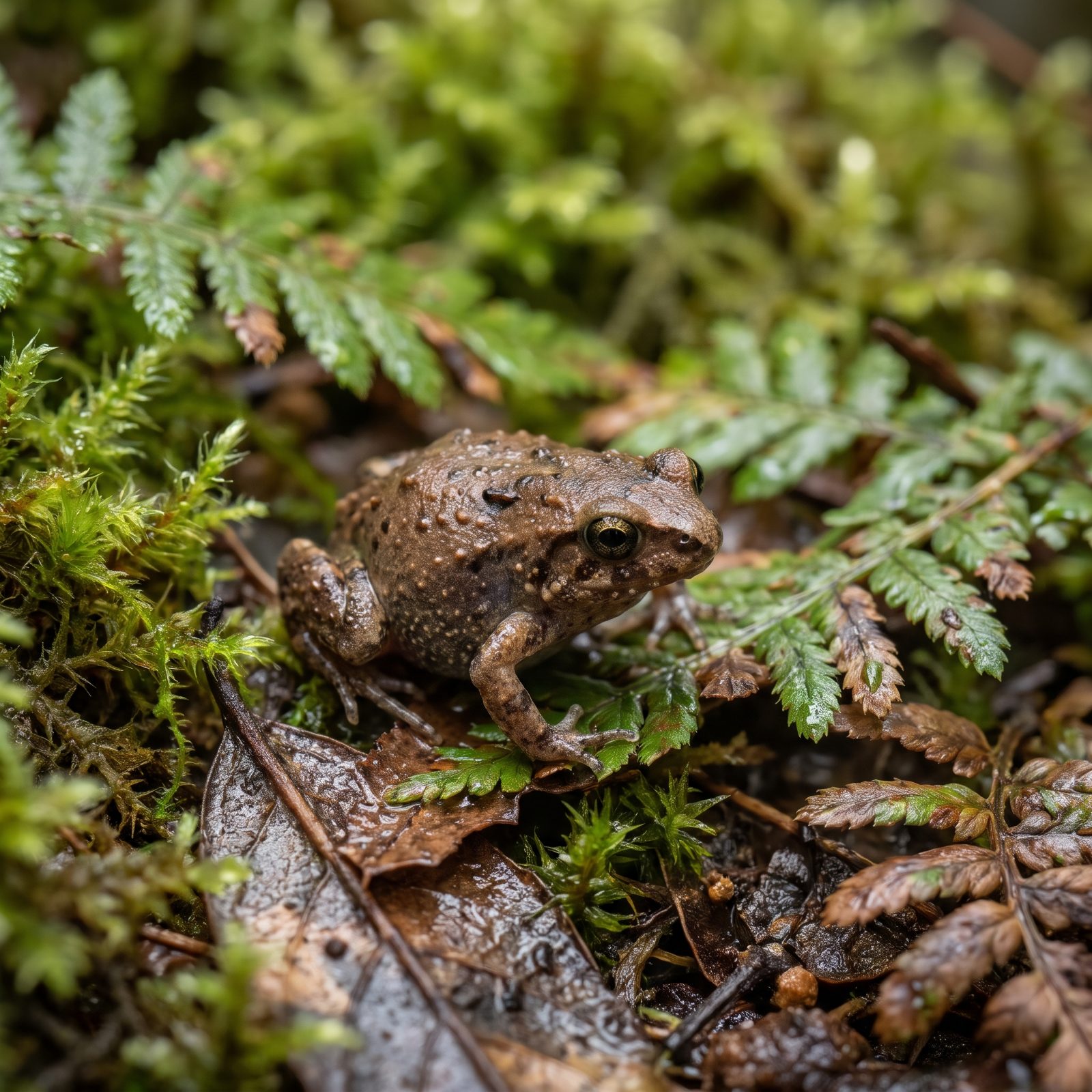
Some frogs croak. These barely make a sound. New Zealand’s native Leiopelma frogs skipped several features most frogs take for granted, which tells you just how early their branch split off.
They’ve got extra tail-wagging muscles, round rather than slit pupils, and some don’t bother with a free-swimming tadpole stage at all. The young develop on land, sometimes riding around on a parent’s back. For frogs, that’s deeply old-school.
Their lineage stands apart from nearly every other frog on Earth. Only a handful of species cling on, mostly tucked away in remote wet forest, which makes them some of the most valuable frogs alive for anyone trying to understand how the whole group began.
28. Ringed Caecilian: The Limbless Amphibian Built for Burrowing
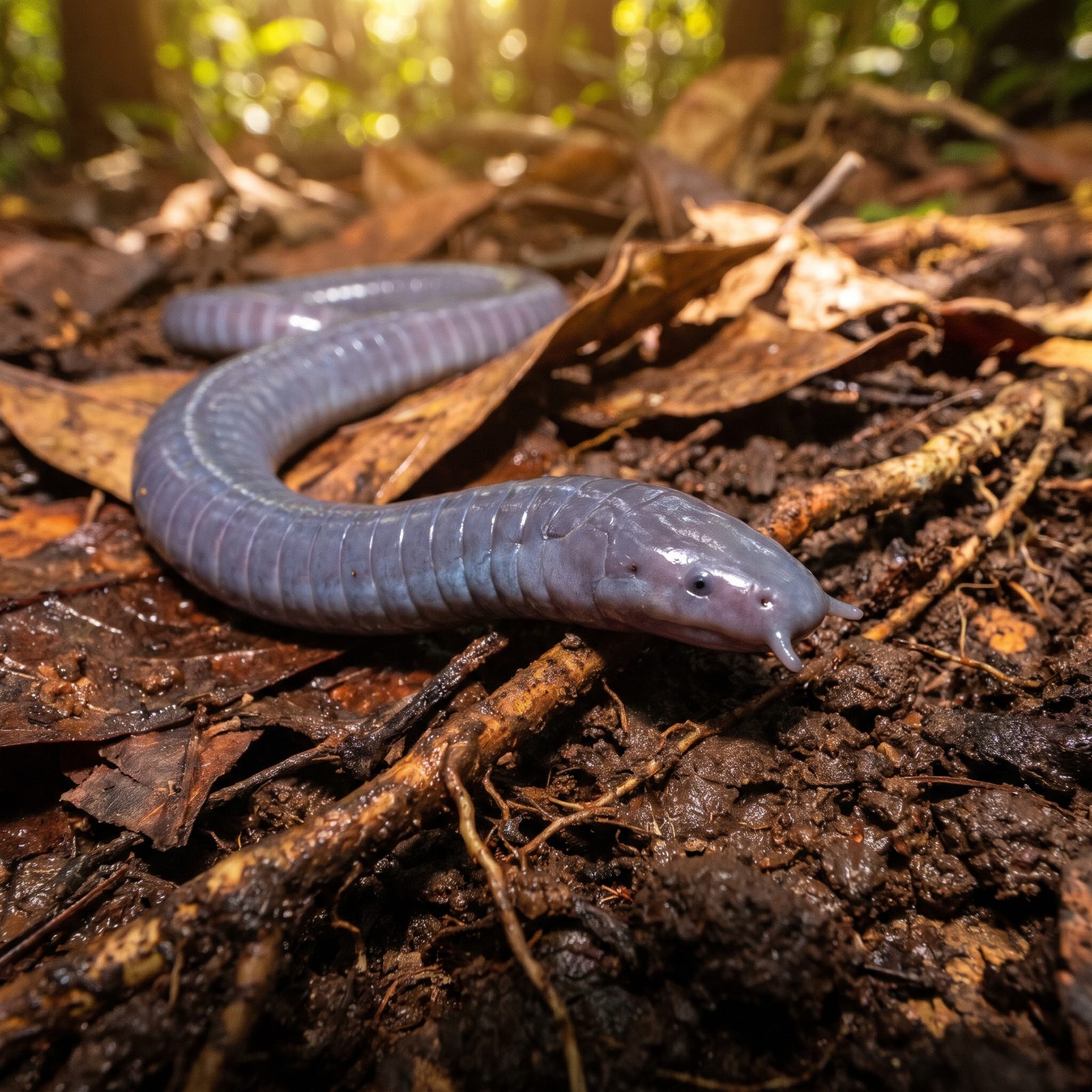
You could step right over one and call it a worm. The ringed caecilian is a limbless amphibian — a third branch of the group alongside frogs and salamanders — and most people have never heard of it.
No legs, tiny eyes often buried under skin, and a pair of chemical-sensing tentacles for sniffing out prey in the dark. It spends its whole life tunneling through tropical soil, and that ring-grooved body is built for exactly that push through the earth.
Caecilians go back a very long way as a group, with fossil relatives from the age of the dinosaurs. Losing limbs wasn’t a step backward. For a full-time digger, legs just get in the way.
27. Saltwater Crocodile: The Modern Master of a Mesozoic Body Plan
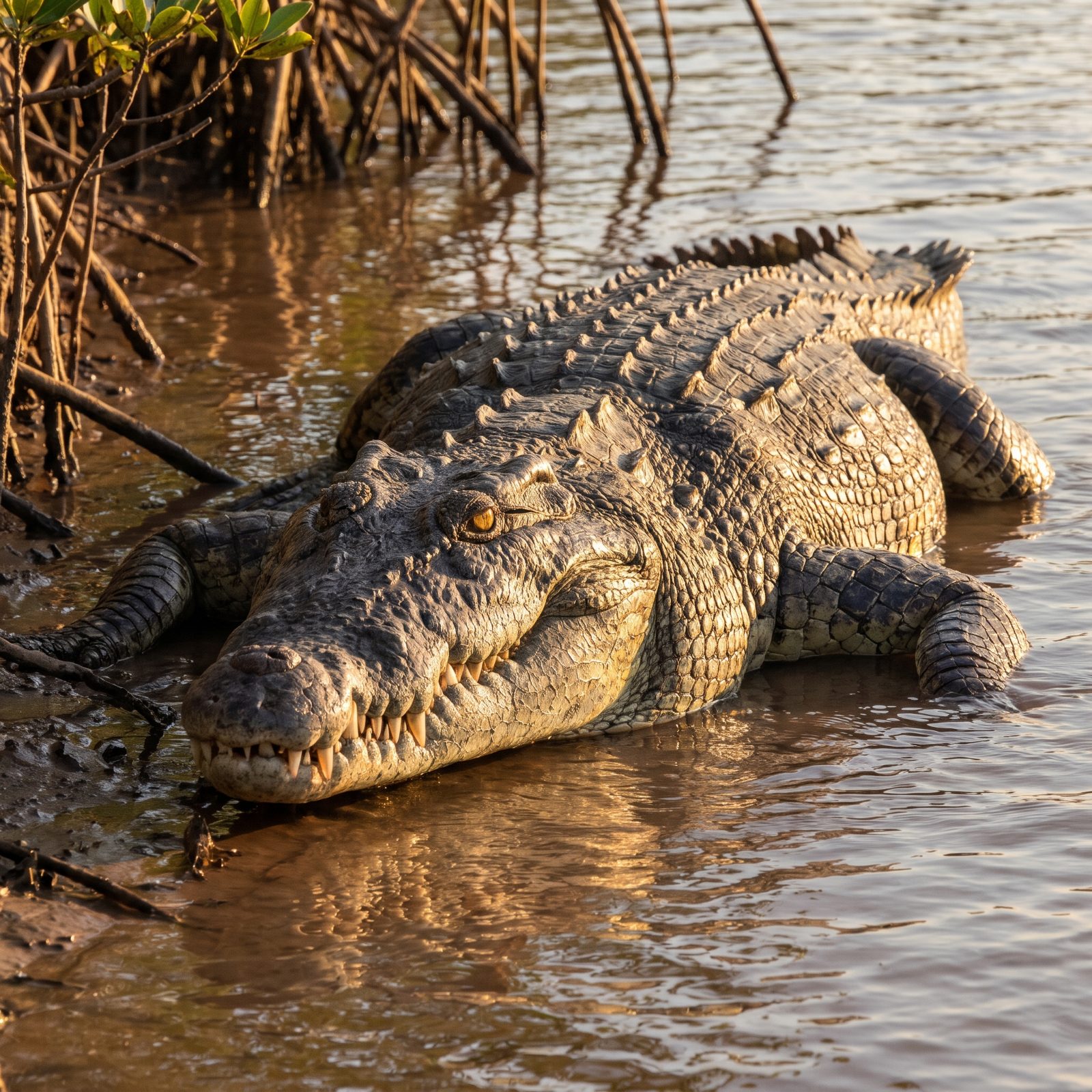
Settle a myth first: crocodiles are not unchanged dinosaurs, and they are not lizards that outlasted them. They belong to a reptile group, the crocodylomorphs, that stretches well back into the Mesozoic — and the broad, croc-shaped predator template has been refined ever since, not frozen in place.
The saltwater crocodile is the largest living reptile, with one of the strongest bites of any animal ever measured. Ambush from water. Armored hide. Eyes and nostrils perched high on the head so it can watch you while staying nearly invisible. This design has been winning for a very long time.
The body plan is ancient. The individual crocodile hunting that riverbank is as modern as you are.
What makes it a master isn’t age. It’s that an old blueprint still beats almost everything foolish enough to enter its water. Respect that, and keep your distance.
26. Leatherback Sea Turtle, The Shell-Less-Looking Giant of an Old Turtle Line
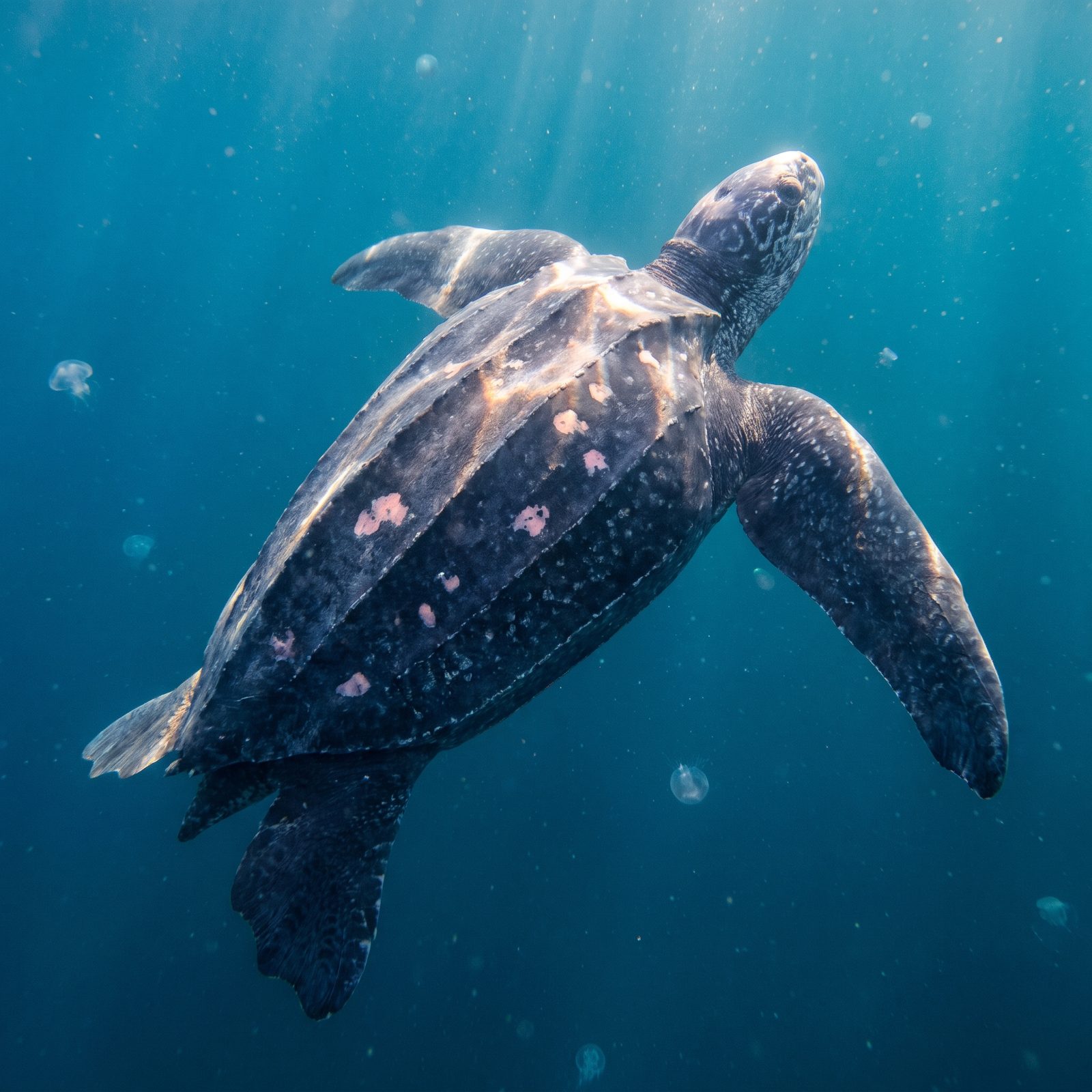
No bony plates. No hard dome. The leatherback wears a ridged, rubbery skin stretched over a mosaic of tiny bones, so it looks like it skipped the turtle memo entirely. It didn’t. Sea turtles as a group go back to the age of dinosaurs, and the leatherback is the last survivor of a once-crowded branch of that family.
What’s old here is the lineage and the broad body plan, not some genome frozen in amber. Today’s leatherback is a modern animal with very deep roots.
25. Pig-Nosed Turtle, A Flipper-Footed Freshwater Relic
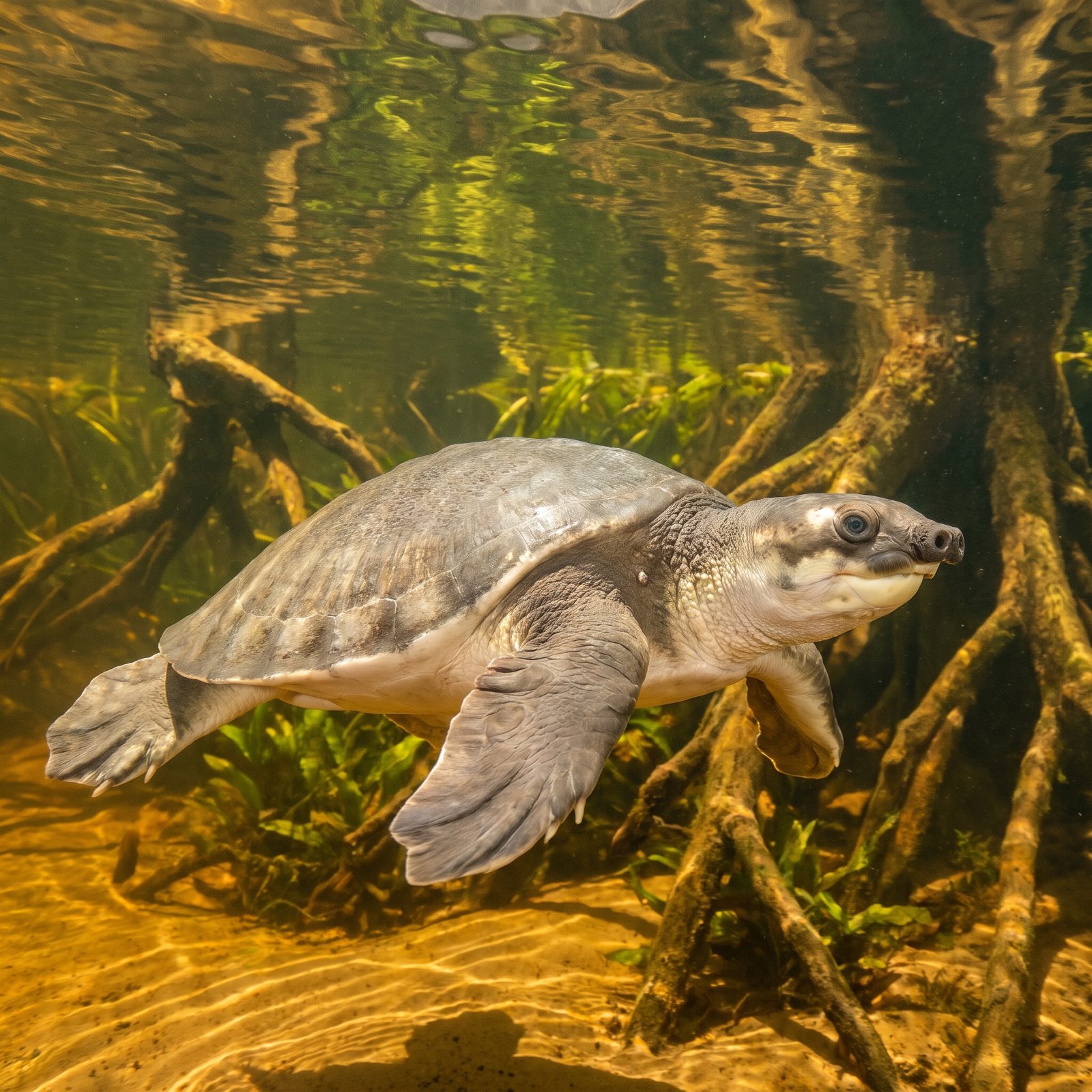
A freshwater turtle with ocean flippers and a snorkel for a face. The pig-nosed turtle rows along on the paddle-shaped limbs you’d expect on a sea turtle, yet it lives in the rivers of northern Australia and New Guinea. That mismatch is exactly what makes it strange.
It’s the lone survivor of a turtle family that once spread far wider. Those flippers and that fleshy, upturned snout — which doubles as a built-in snorkel — trace a very old evolutionary road, and everything else that walked it is gone.
24. Tadpole Shrimp, The Shield-Backed Crustacean of Temporary Pools
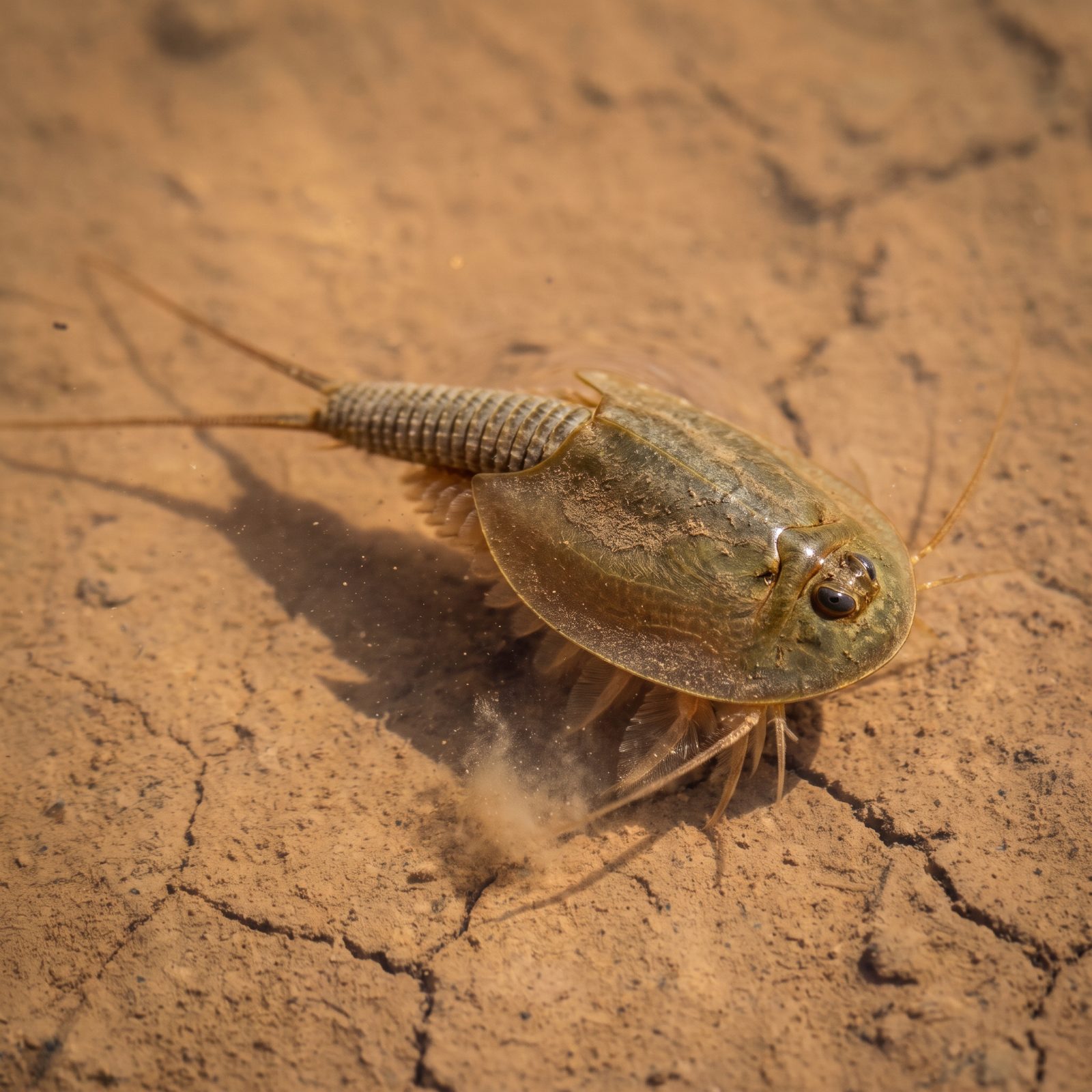
In a shallow, sun-warmed rain pool, something that looks pulled straight from a fossil slab is pictured scuttling along the muddy bottom. The tadpole shrimp — often sold as “Triops” in novelty kits — carries a flattened shield over its front end and a bristling fan of legs beneath.
Its body plan is genuinely ancient, recognizable in rocks hundreds of millions of years old. But here’s where people trip up: the living species are not those exact fossil animals. The shape persisted; the organism kept evolving the whole way through.
23. Fairy Shrimp, The Upside-Down Swimmer With a Deep Fossil History
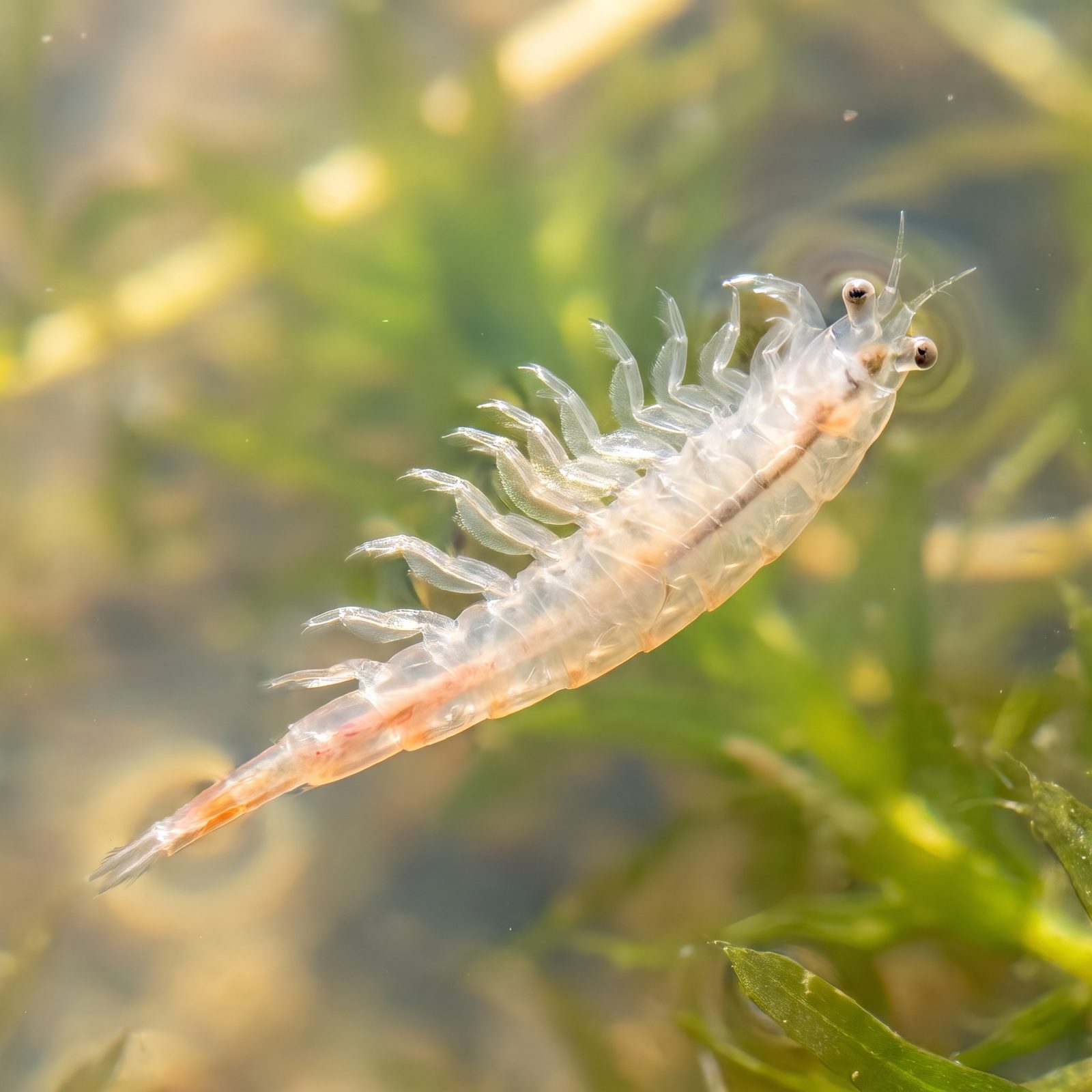
It swims on its back. Always. The fairy shrimp drifts through seasonal pools belly-up, rowing with eleven pairs of leafy legs that work as both gills and oars — no shell at all, just a soft translucent body you can nearly see straight through.
That feeding-and-swimming setup reaches deep into the fossil record, so watching one feels like glimpsing an older version of what crustaceans used to be. The lineage is ancient. The individual shrimp bobbing in a puddle near you hatched this spring.
22. Sea Spider, The Long-Legged Marine Arthropod With a Tiny Body
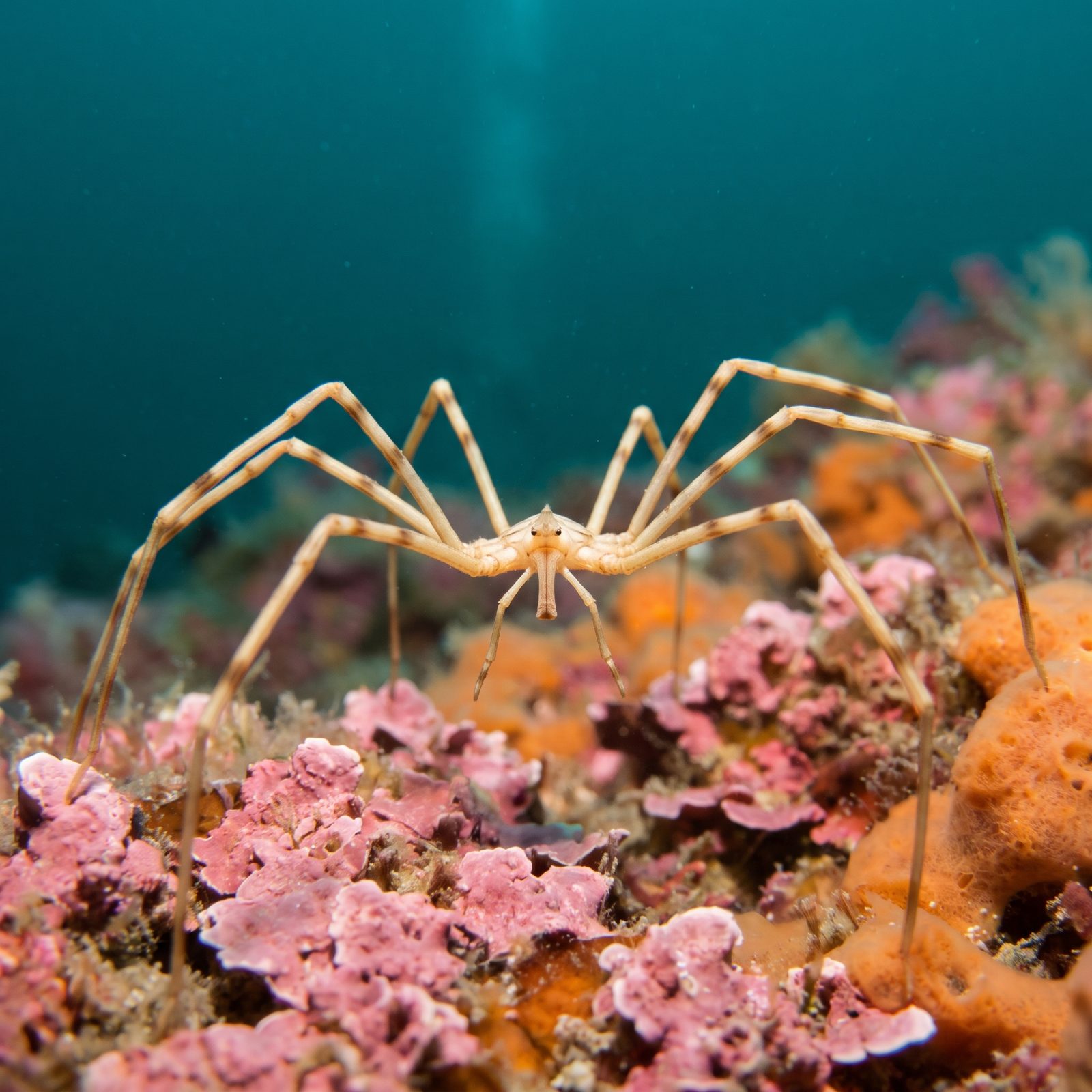
All legs, almost no body. The sea spider’s torso is so pinched that some of its organs — bits of gut and reproductive tract — spill out into the legs themselves. Those spindly limbs can span a dinner plate in the cold deep while the central body stays matchstick-thin.
These aren’t true spiders. They belong to an ancient arthropod group with roots reaching far back into the Paleozoic, and the long-legged, tiny-bodied design shows up across an enormous stretch of time. Modern sea spiders are its living continuation, not a photocopy.
21. Velvet Worm, The Soft-Bodied Hunter That Fires Sticky Slime
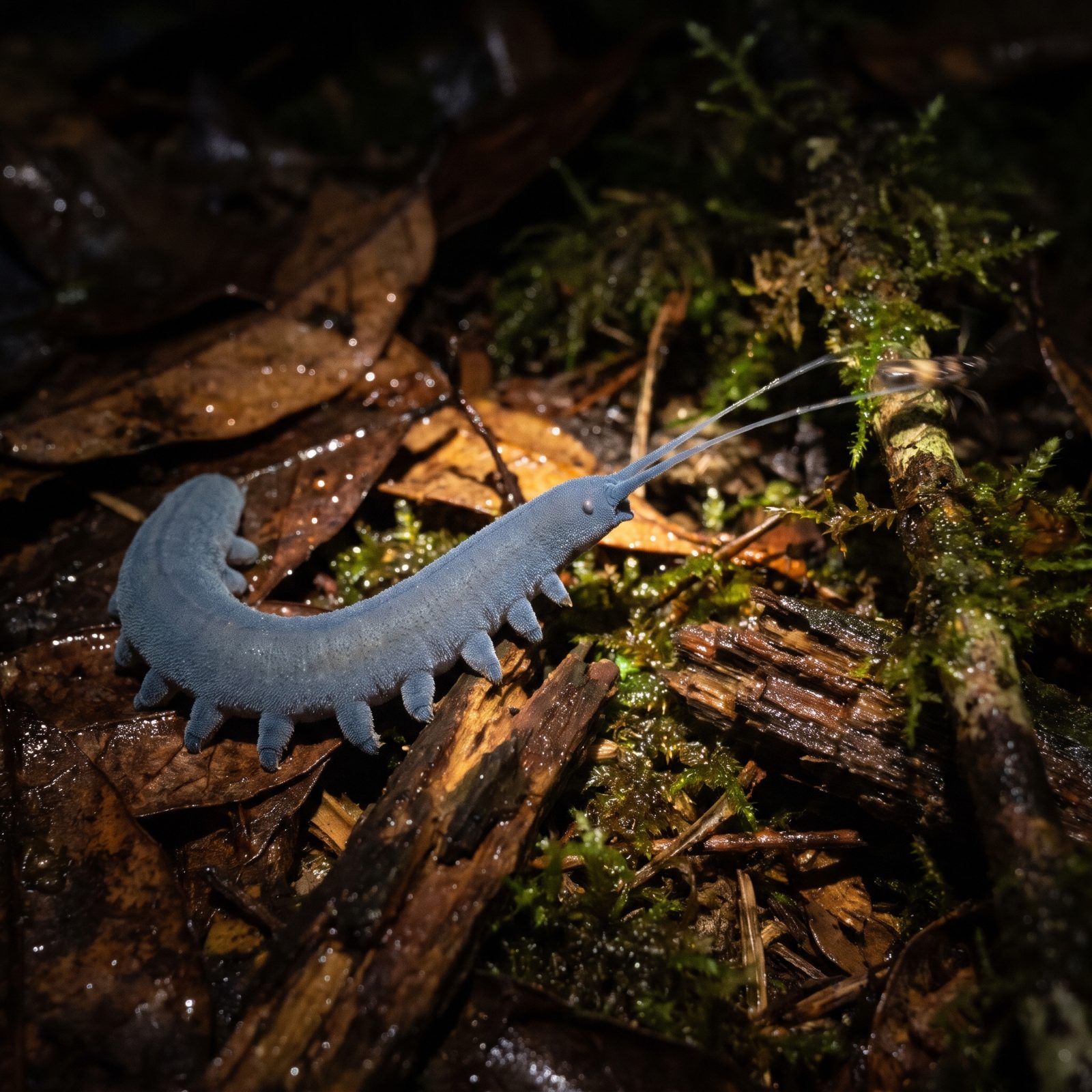
It hunts by gluing its prey to the ground. The velvet worm sprays two jets of sticky slime from a pair of nozzle-like papillae on either side of its head, pinning an insect in a net of fast-hardening goo, then ambles in on its stubby, clawed legs to finish the job.
Soft-bodied, segmented, faintly plush to the eye — it belongs to a group whose relatives swam in seas long before the first dinosaurs. Today’s velvet worms live on land, in damp tropical and temperate forests. The slime cannon and the squishy, many-legged form echo a very old design, though the living worm is thoroughly up to date underneath.
20. Tardigrade, The Microscopic Eight-Legged Survivor
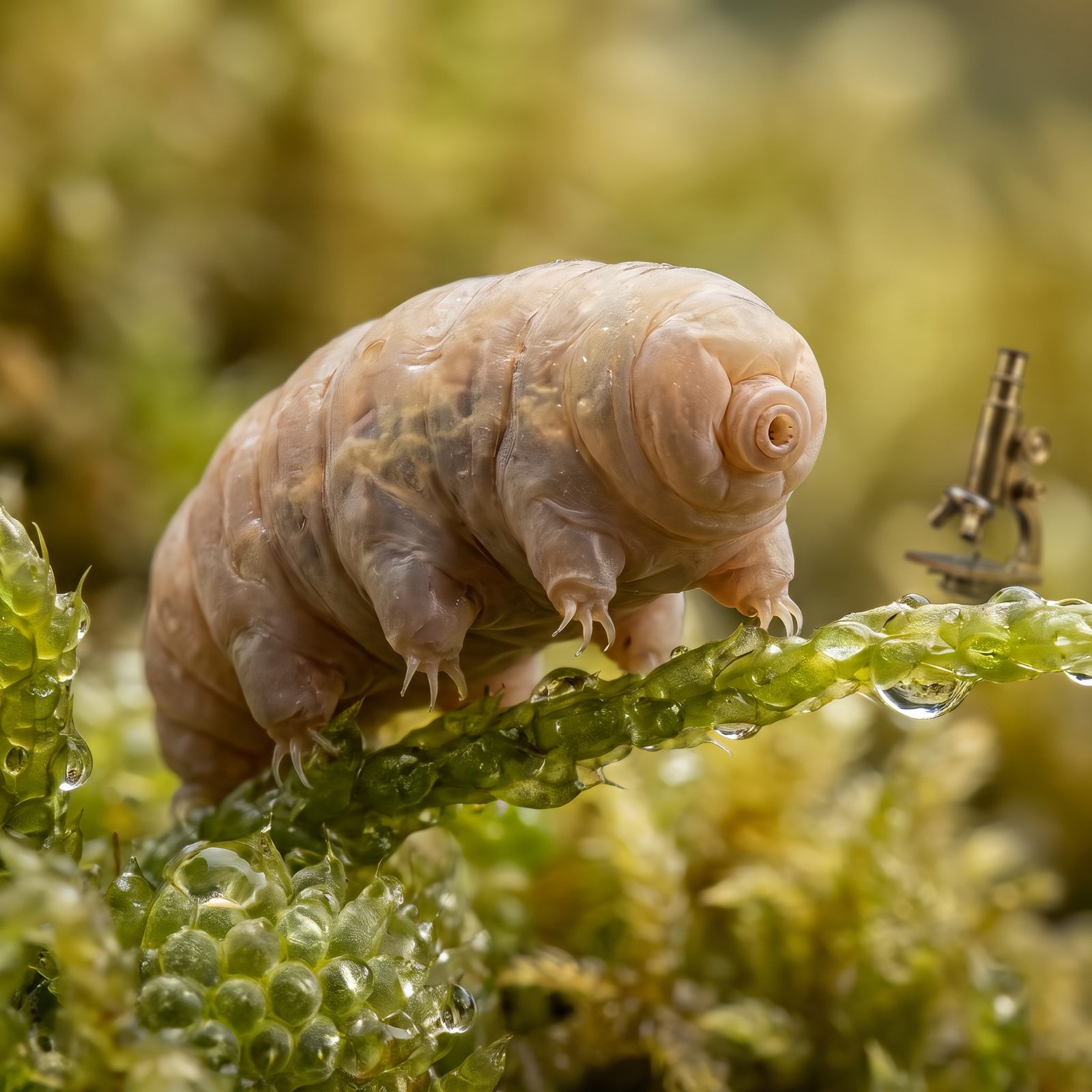
Boil it. Freeze it near absolute zero. Blast it with radiation. Fling it into the vacuum of space. The tardigrade — pictured here towering over a playfully miniaturized brass microscope, though in real life barely visible without one — has lived through every one of these in real lab experiments by curling into a dried-out, near-dormant state called a tun.
These eight-legged “water bears” have a fossil record reaching back to the Cambrian, which makes their chubby, clawed form one of the longest-running on the planet. What endures is the lineage and the shape, not a single immortal species.
The toughest animal on Earth lives in the moss on your roof, and it’s smaller than a grain of sand.
19. Giant Vinegaroon, The Whip Scorpion That Sprays Acidic Mist
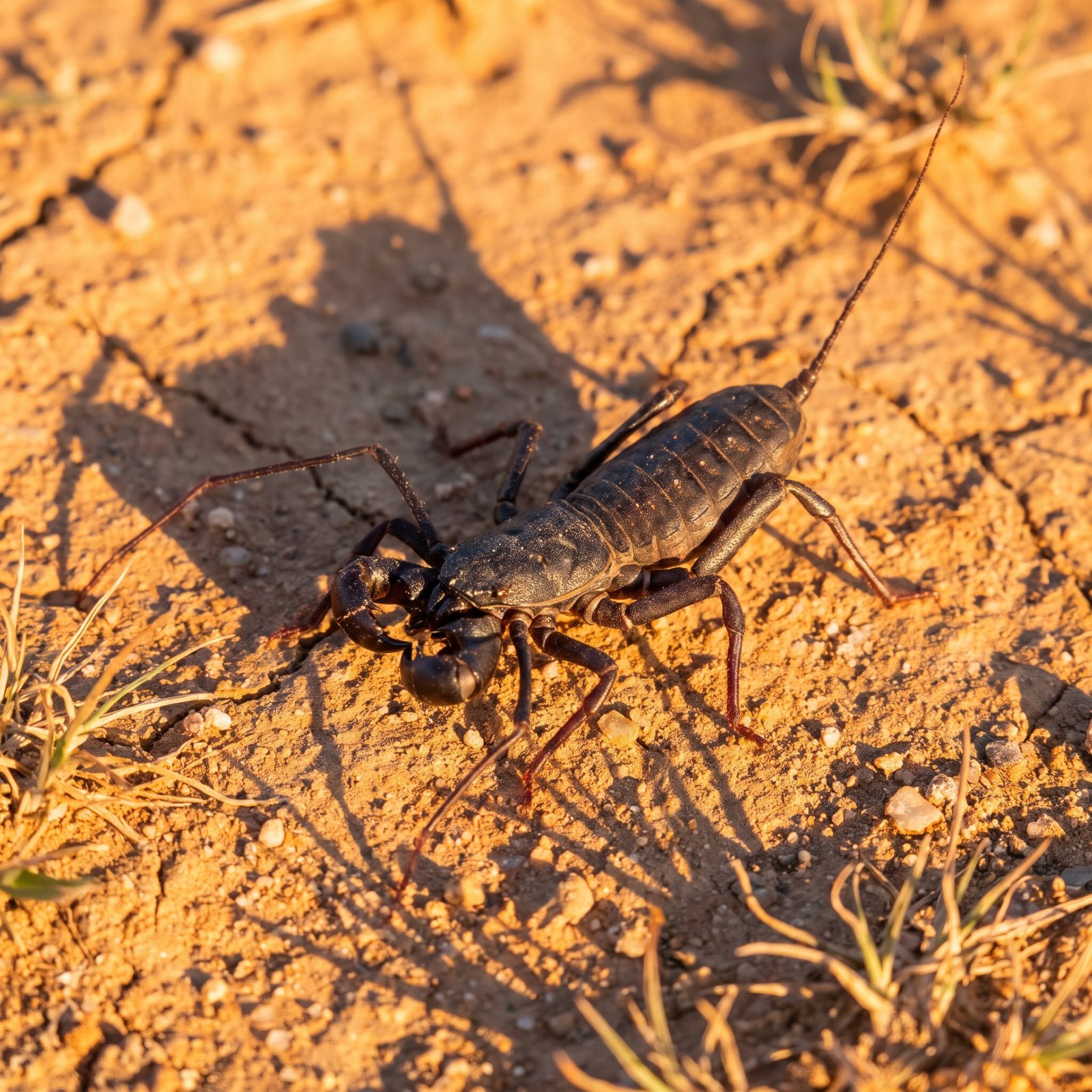
Corner one and it swings its tail your way, spraying a fine mist that reeks sharply of vinegar — which is where the name comes from. The spray is mostly acetic acid, harmless on your skin but a real deterrent to a predator’s eyes and nose.
The vinegaroon looks like trouble, with heavy pincers and that whip of a tail, and yet it carries no venom whatsoever. Its arachnid line runs deep into the Paleozoic, and the flattened, pincered, whip-tailed layout has stayed recognizable for an awfully long time.
18. Mesothele Trapdoor Spider, A Primitive Spider With a Segmented Abdomen
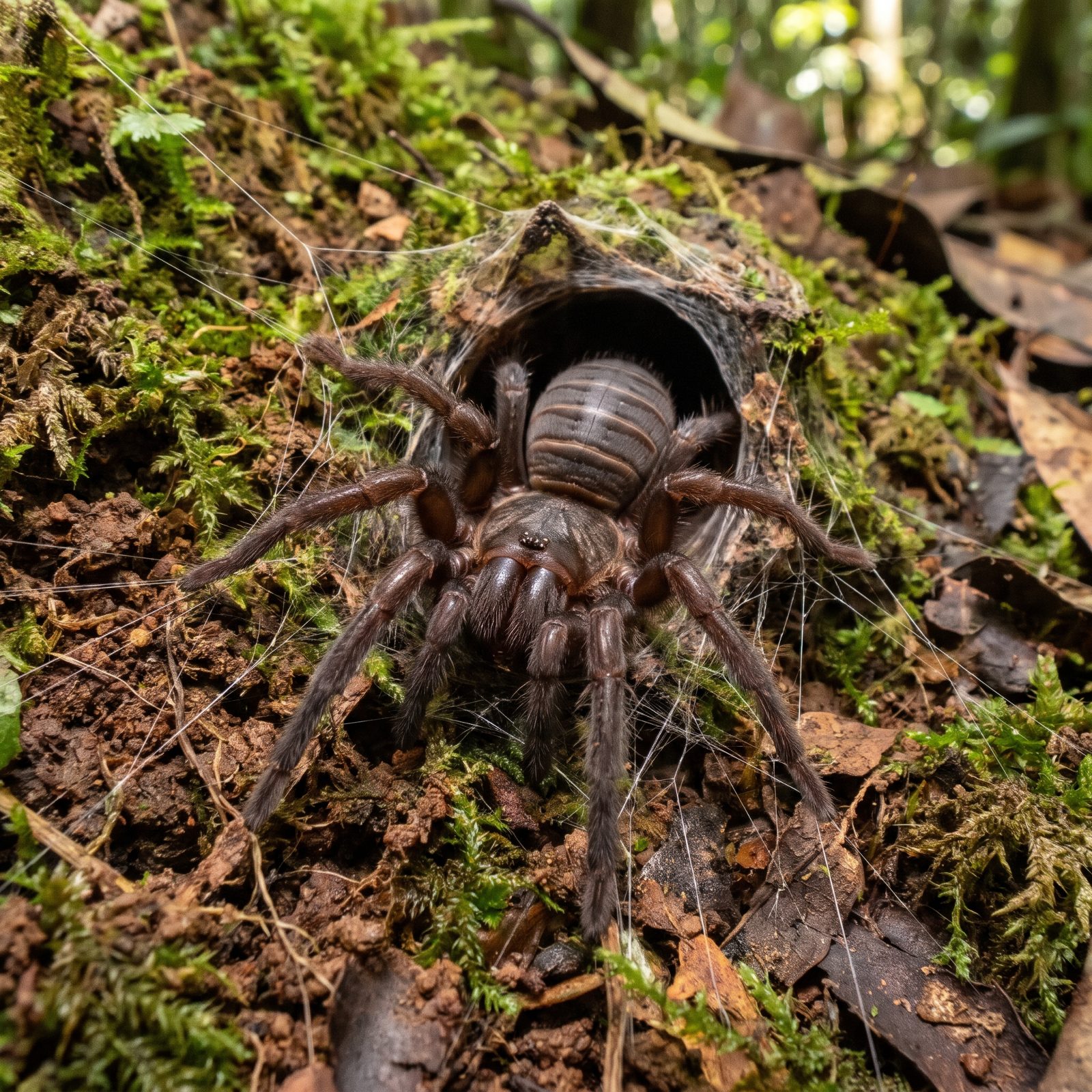
Look at its back and you’ll spot something almost no other living spider has: hard plates ridged across the top of the abdomen, the segmented look that most spiders shed long ago. These mesothele spiders of Asia are the most primitive true spiders still with us, perched right at the base of the entire spider family.
That segmentation is a holdover from an early stage of spider evolution, preserved on this one surviving branch. The fangs point straight down, another relic feature. Not a fossil come to life — a living line that simply kept the oldest hardware running.
17. Harvestman, The Long-Legged Arachnid With a Fossil-Familiar Form
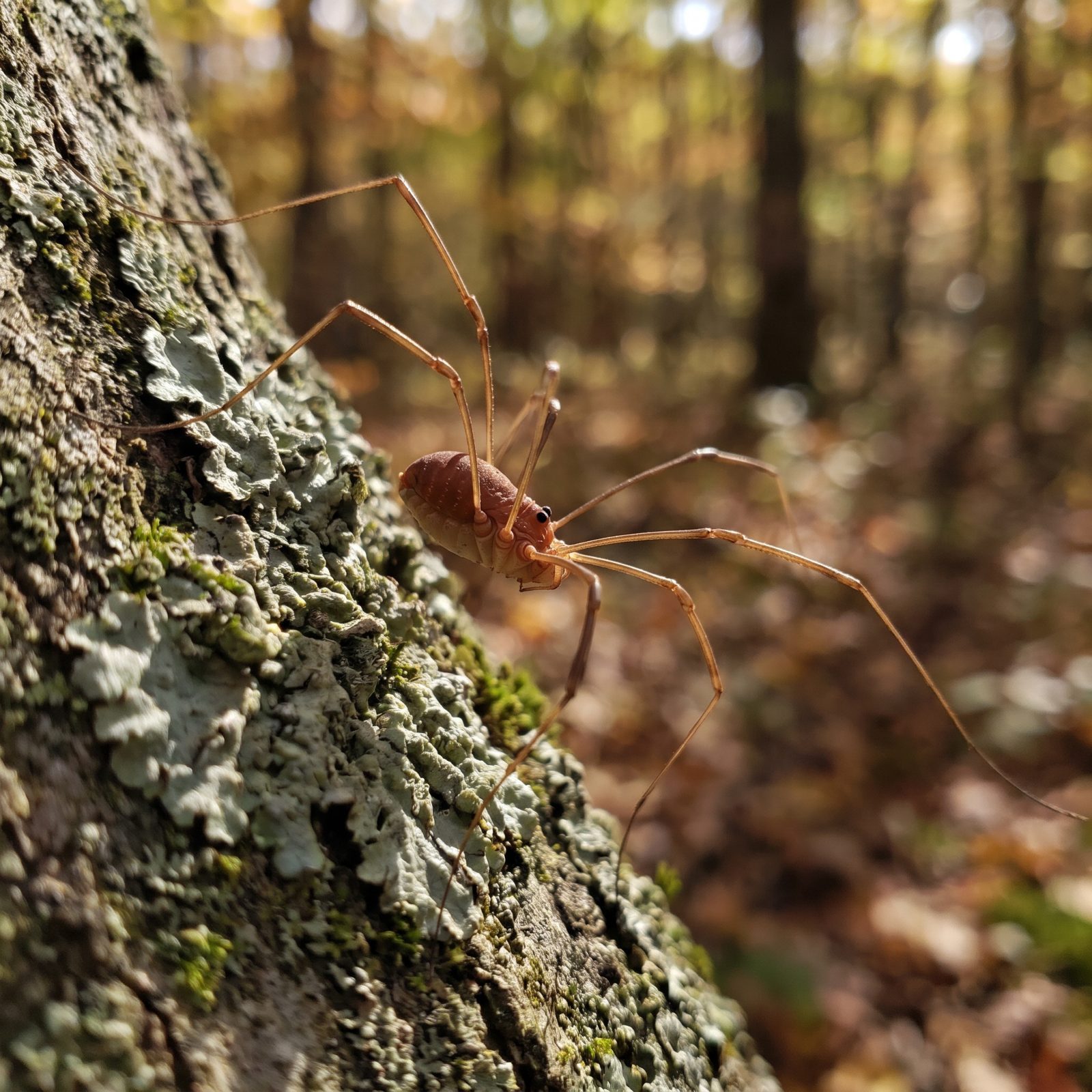
Not a spider. People insist it is, and they’re wrong. The harvestman has a single rounded body with no waist pinch, no silk, no venom, and it can’t bite you — it just stands on absurdly long legs and goes about its business.
Now for the astonishing part. A harvestman fossil roughly 400 million years old sits so close to living ones that you’d struggle to tell them apart at a glance. The form has been that stable. Yet the DNA inside today’s harvestmen has been shifting the whole time, quietly, generation after generation. Old shape, modern animal. That’s the honest version of “living fossil,” and it’s the one worth holding onto.
16. Giant African Millipede: A Many-Segmented Detritivore From an Ancient Line
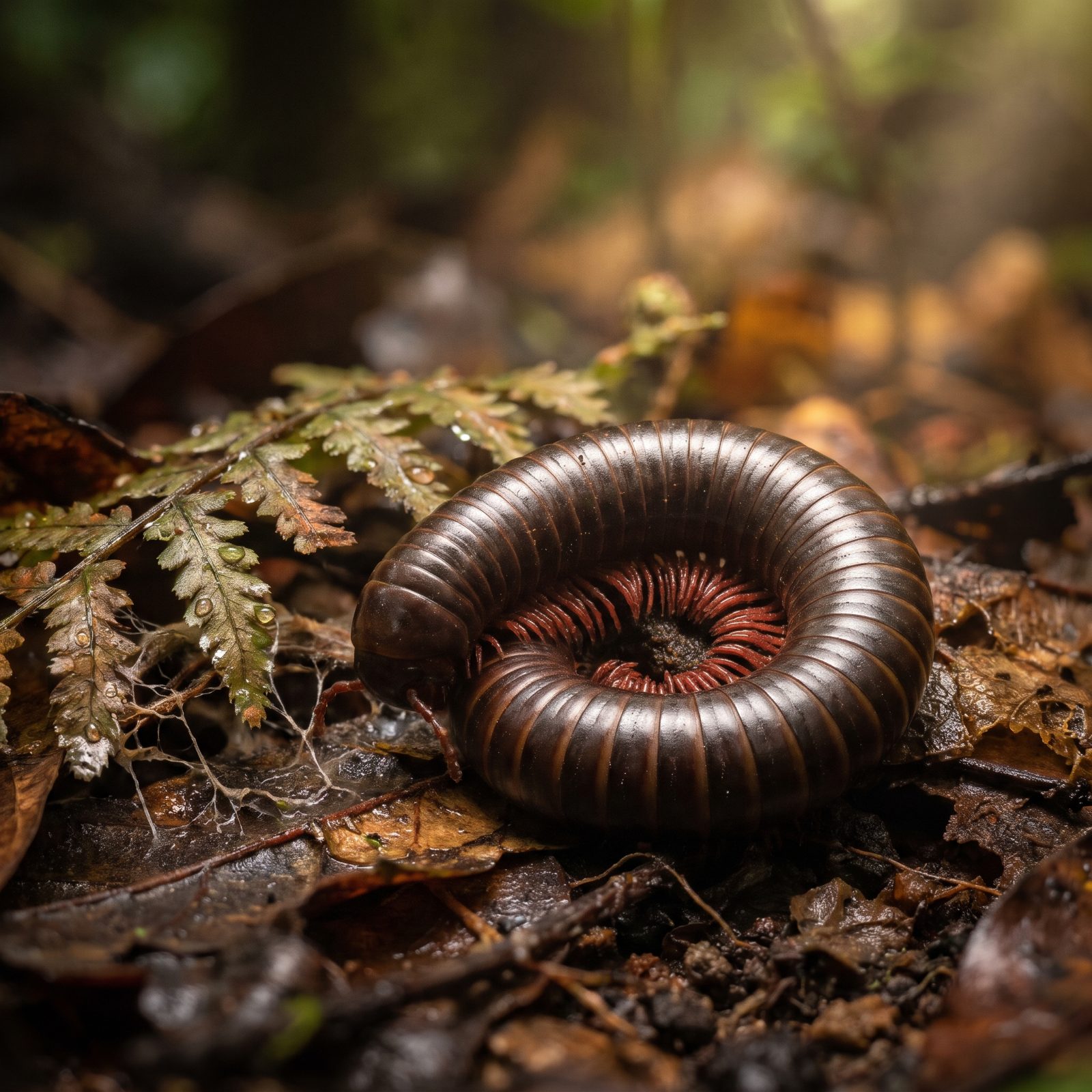
Millipedes gave the world its oldest known land animals. Their relatives show up as fossils in rocks over 400 million years old, back when the first plants were barely clinging to bare continents.
The giant African kind you see here is a modern species, not a living fossil frozen in time. The ancient part is the blueprint: a long armored tube divided into segments, two pairs of legs apiece, a slow life spent grinding dead plant matter back into soil. That body plan worked in the Paleozoic and it still works in the damp leaf litter today.
15. Cockroach: The Flattened Insect That Outlasted Entire Ecosystems
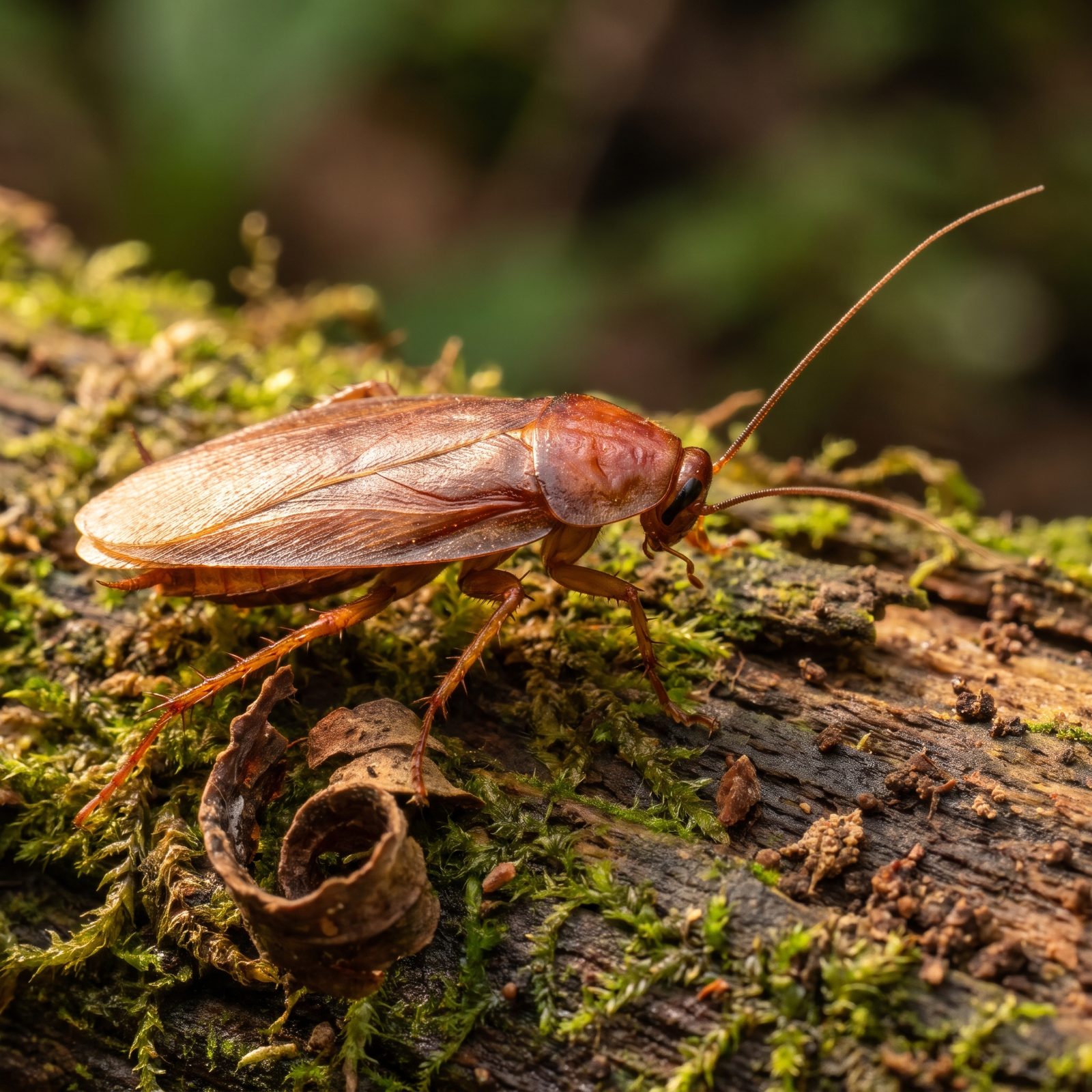
You’ve met cockroaches in a kitchen at 2am and formed strong opinions. Fair. But step back a few hundred million years and they earn some grudging respect.
Roach-like insects were scuttling through Carboniferous swamps roughly 320 million years ago, so common that paleontologists sometimes call that stretch the Age of Cockroaches. The flat, tough, fast body you’d recognize anywhere was already in business before the first dinosaur, and modern species barely needed to tweak it. Low, flattened, able to squeeze under anything, able to eat almost anything — that’s why they shrugged off extinctions that erased far flashier creatures.
14. Dragonfly: The Aerial Predator With an Ancient Flight Design
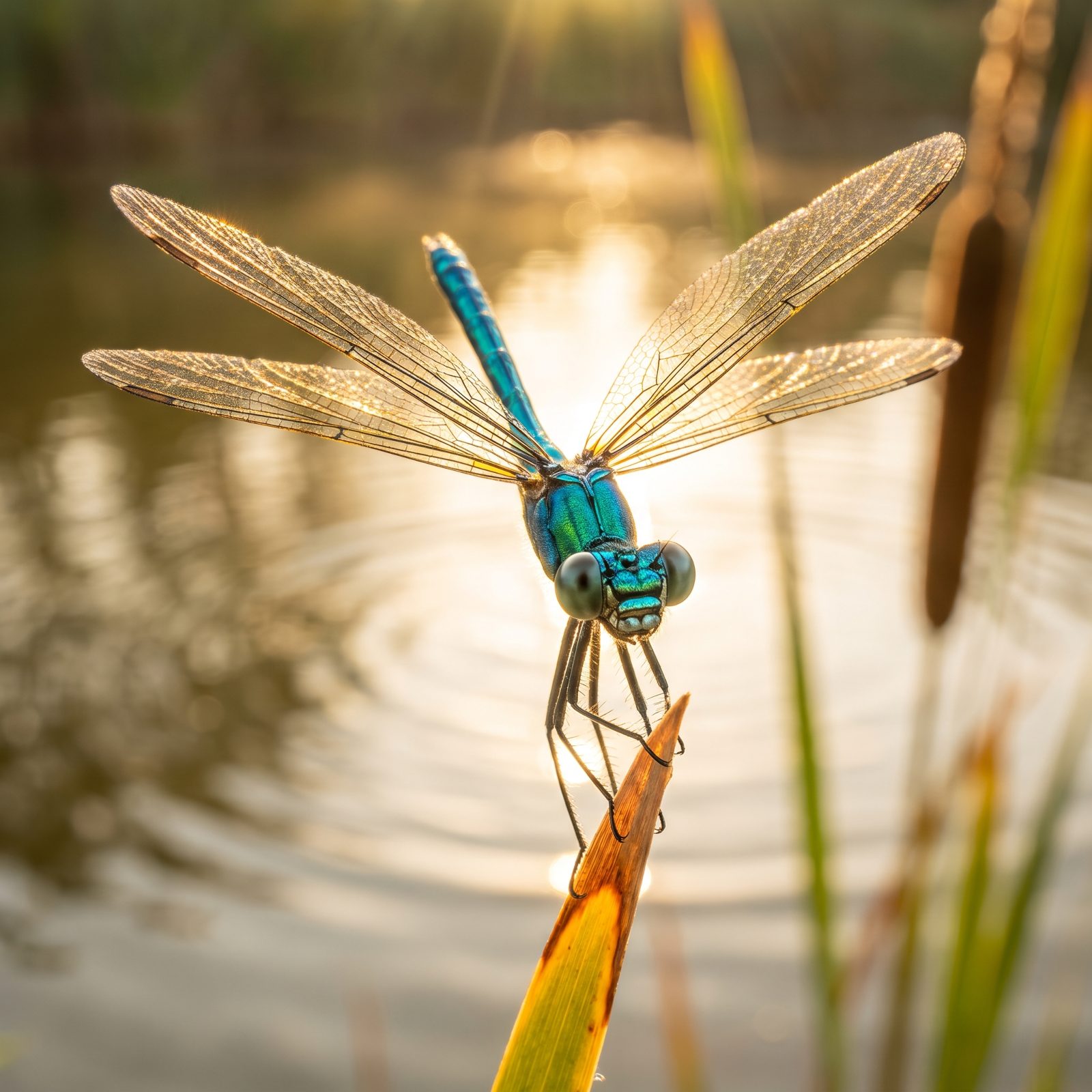
Watch a dragonfly hover, snap sideways, then reverse in midair, and you’re watching flight engineering that beat birds to the punch by an enormous stretch.
Griffinflies, the dragonfly’s giant Paleozoic cousins, patrolled the skies around 300 million years ago. Some spanned close to two and a half feet, the largest flying insects that ever lived, bankrolled by oxygen levels far higher than today’s. Our dragonflies are much smaller, but the core idea held: four wings working independently, each one steerable on its own. No modern insect flies quite like it, which is exactly why a dragonfly plucks prey out of the air with a success rate most hunters would kill for.
13. Mayfly: The Short-Lived Adult With Deep Paleozoic Roots
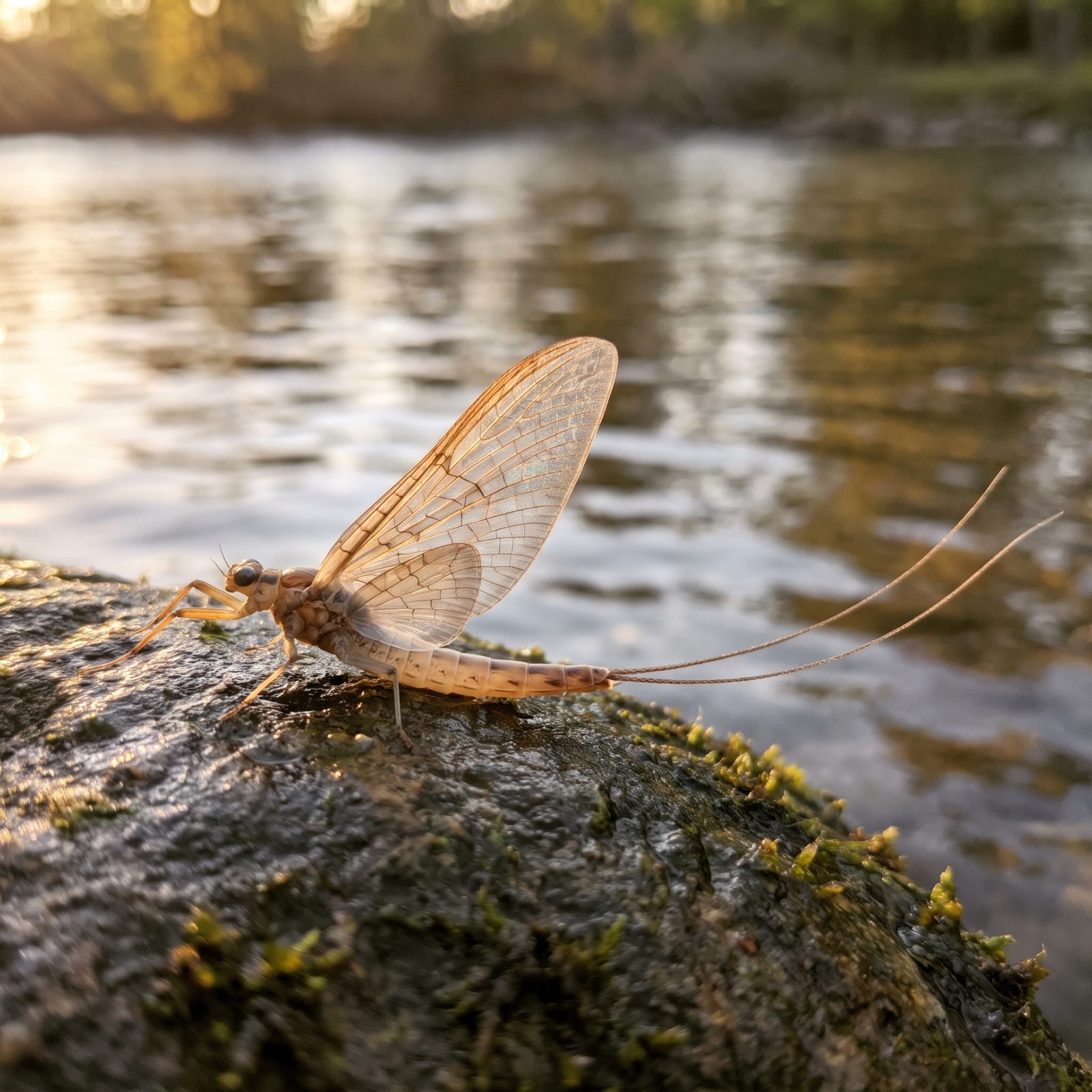
The mayfly gets written off as the bug that lives a day and dies. Half true. The better half is the part nobody mentions.
The winged adult really does last hours to a couple of days, built only to mate, with a mouth too useless even to feed itself. Underwater, though, the nymph soldiers on for a year or more. And the family line runs deep — mayflies are among the oldest winged insects on Earth, with ancestors preserved in rocks over 300 million years old. They were among the very first creatures to fly, part of the opening chapter of life taking to the air. One brief adulthood, one very long story.
12. Silverfish: The Wingless Insect Covered in Shimmering Scales
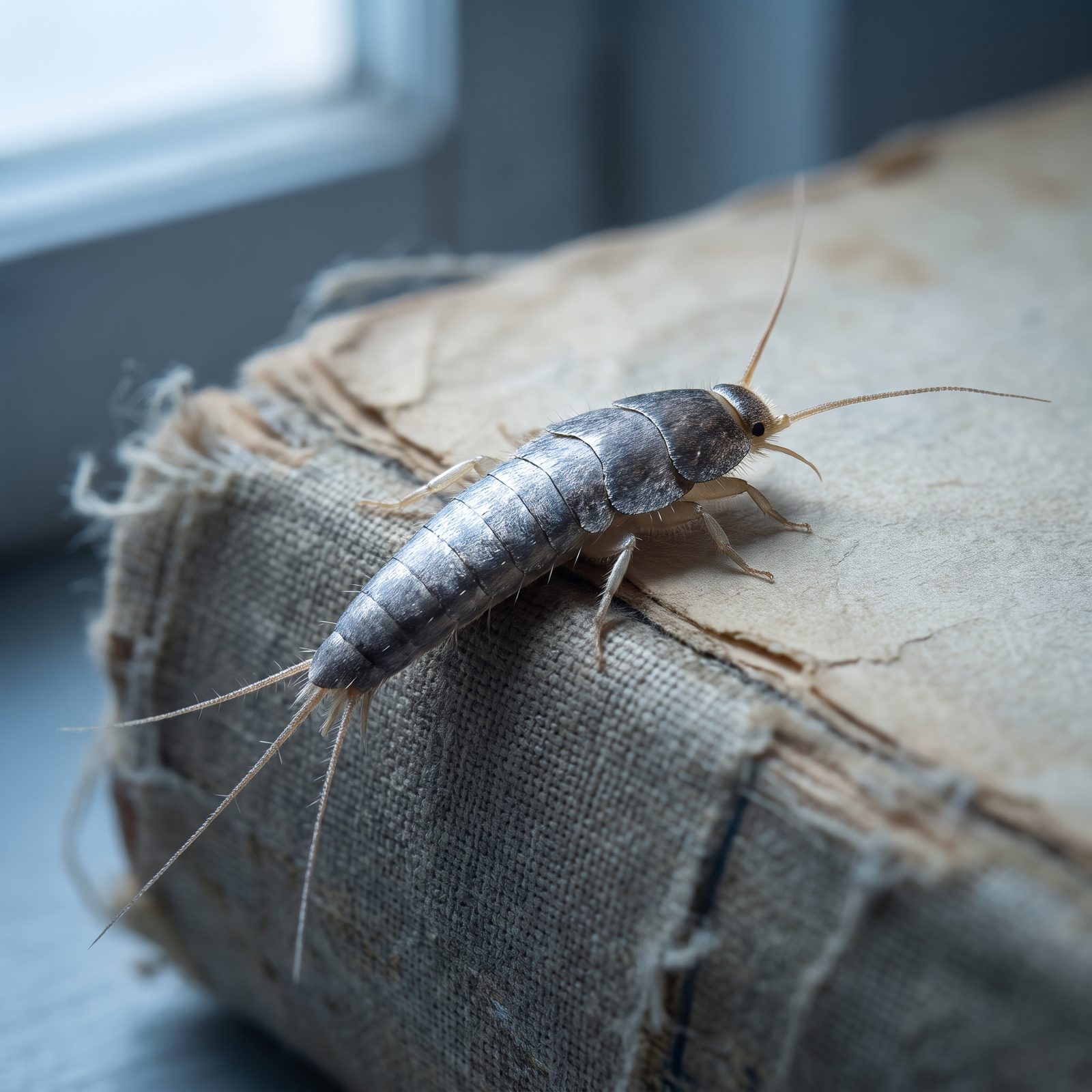
That silvery dart you glimpsed vanishing behind the bathroom baseboard belongs to one of the most primitive insect groups still alive.
Silverfish and their kin never evolved wings at all, and that isn’t a loss — it’s the original condition. Their lineage branched off before insects took to flight, which makes them a living window into what the earliest insects looked like well over 400 million years ago. The shimmer comes from overlapping scales, the same sort that rub off a moth’s wing onto your fingers. They slip through gaps a credit card couldn’t, they can fast for months, and they’ve been doing both since before the first forest existed.
11. Snakefly: The Long-Necked Insect Known From the Mesozoic
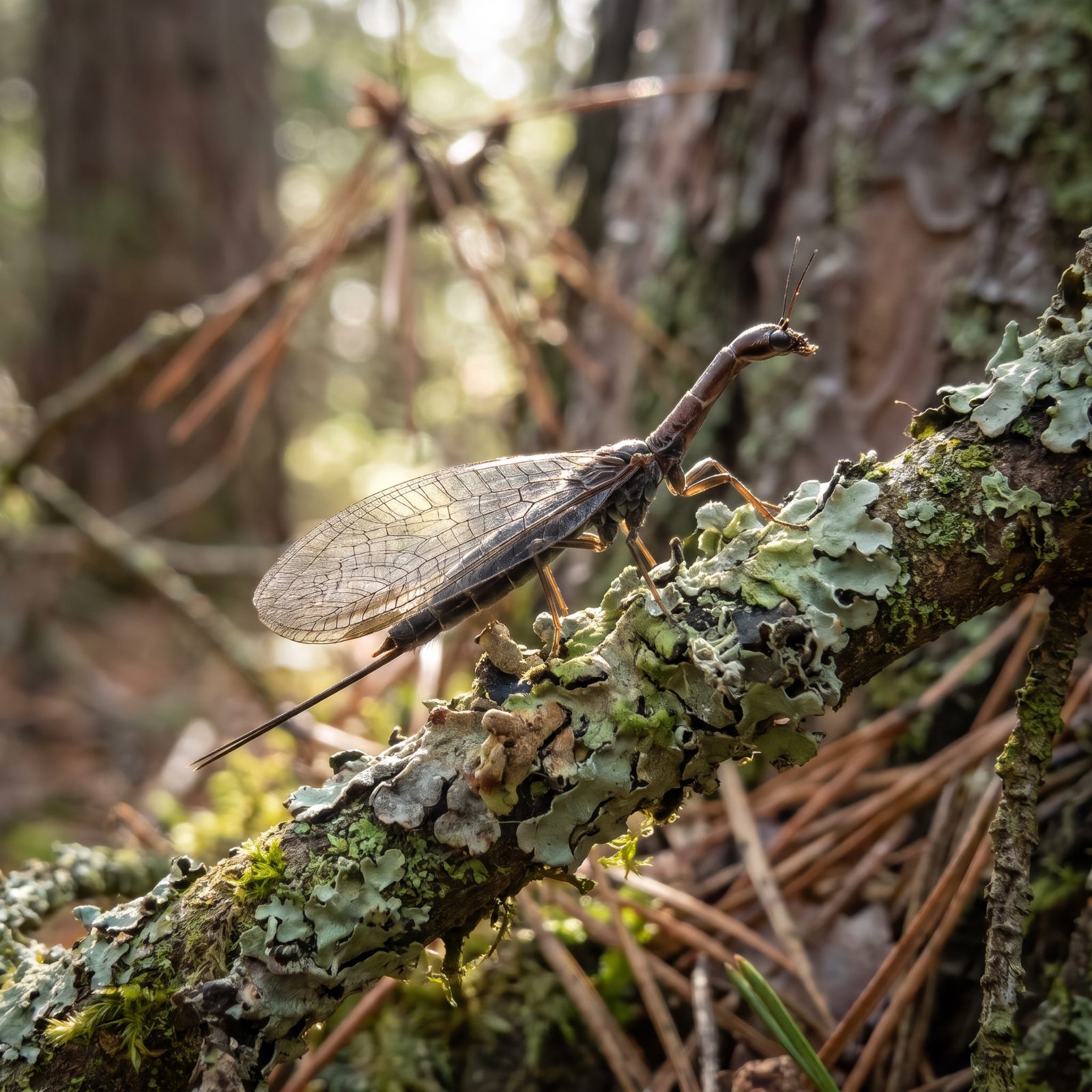
Here’s a strange-but-true creature most people have never heard of. The snakefly looks exactly like its name — a tiny insect that can rear its long neck like a cobra sizing up a strike.
Snakeflies are well documented from the Mesozoic, the age of dinosaurs, and some of their fossil relatives were more varied and far more widespread than the handful of survivors we have now. Today they stick to cooler, temperate forests, hunting aphids and other soft prey among the bark. That raised “neck” lets them probe into crevices a flatter insect couldn’t reach. An old design, a narrow niche, and a face only an entomologist could love.
10. Barrel Sponge: A Simple Filter Feeder Based on an Ancient Animal Design
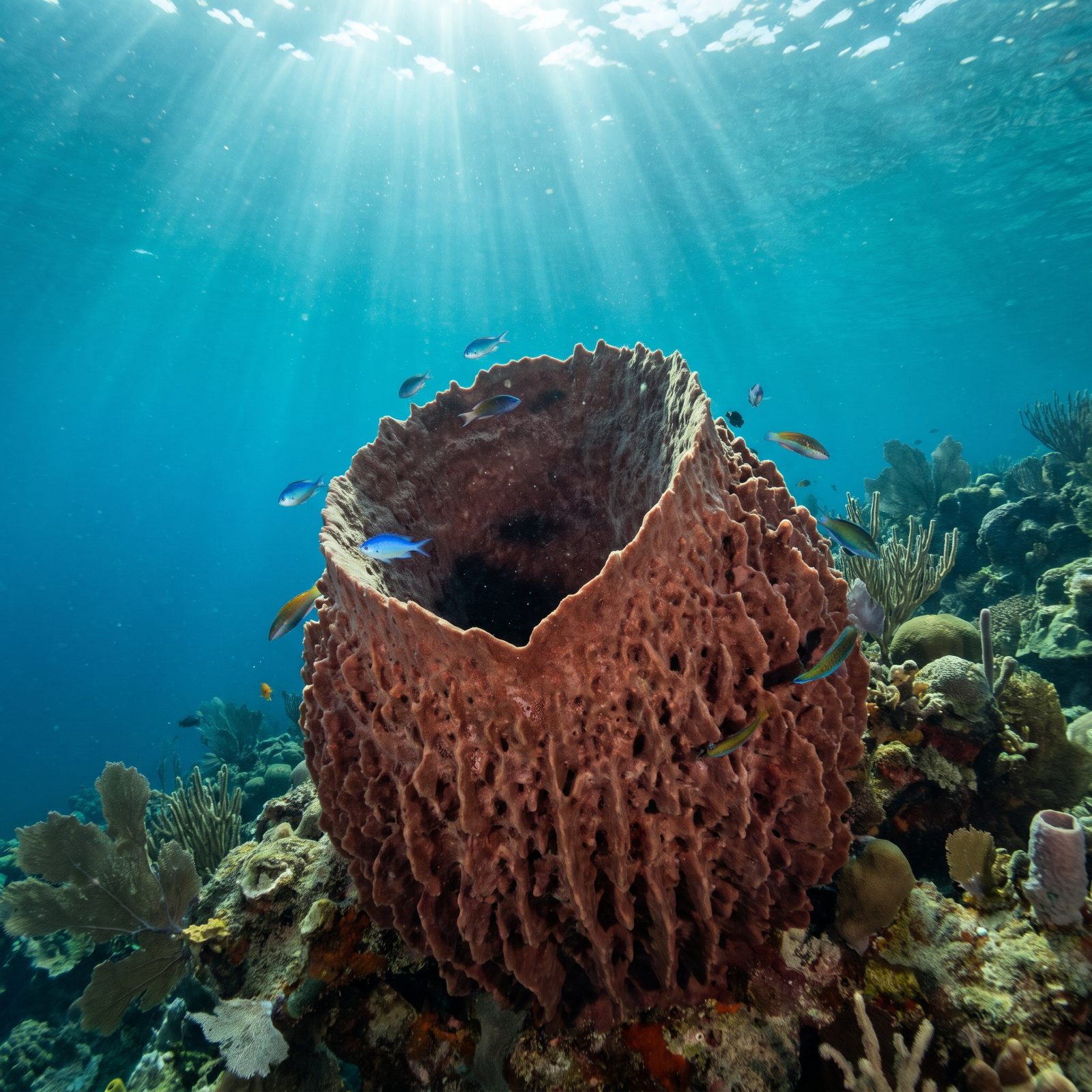
Sponges barely match what most of us picture when we hear “animal.” No brain, no nerves, no heart, no gut. That’s exactly the point.
They sit near the very base of the animal family tree, their body plan older than almost any other on Earth, with a fossil record stretching back more than 500 million years. The giant barrel sponge pumps thousands of gallons of seawater through itself every day, straining out bacteria and tiny particles as it goes. The biggest ones on Caribbean reefs can be centuries old, which earned them the nickname “redwoods of the reef.” A living reminder of how simple an animal can be and still thrive for half a billion years.
9. Moon Jelly: A Pulsing Drifter With a Deep Evolutionary Past
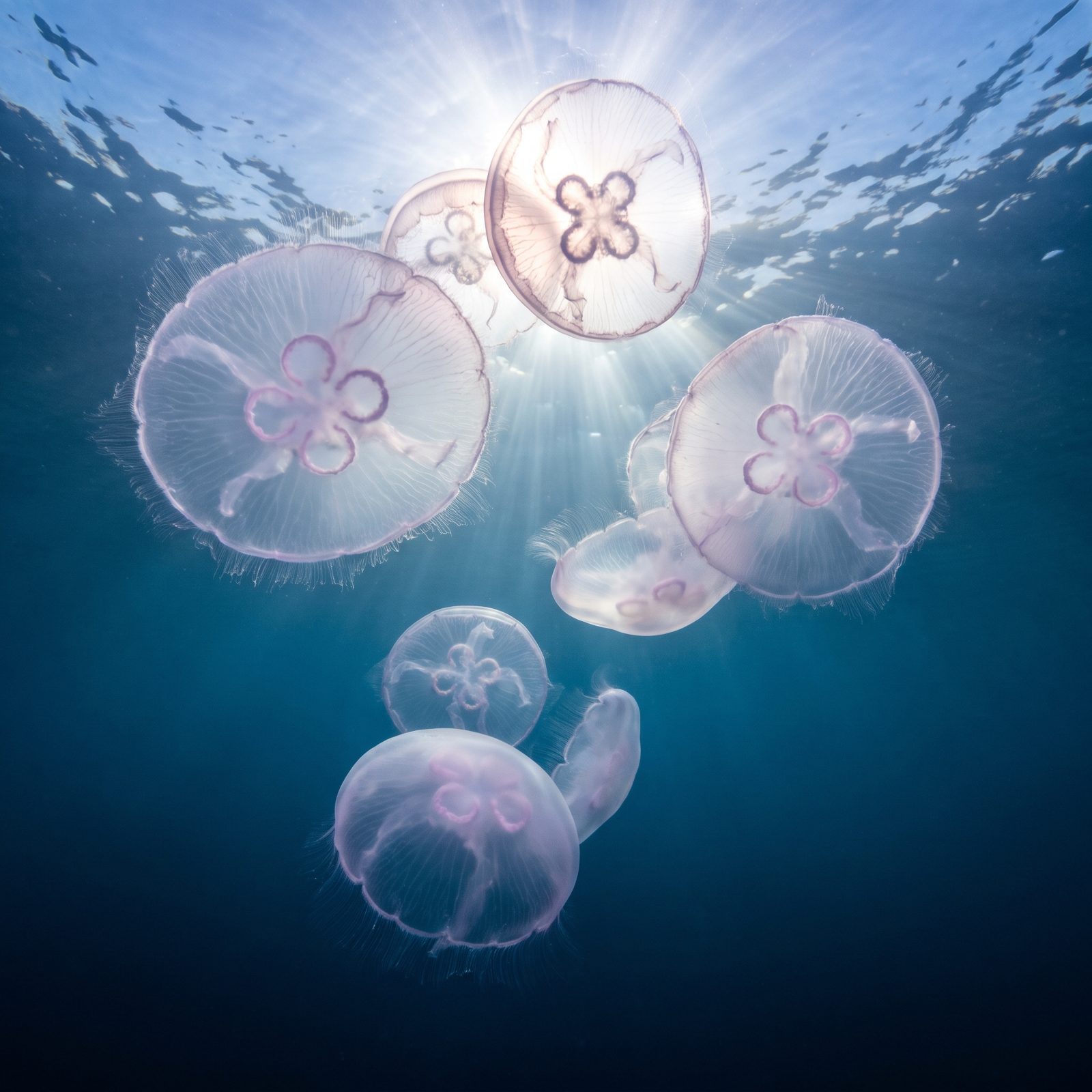
A moon jelly pulsing through a shaft of blue light looks almost too simple to be ancient. It’s both.
Jellyfish belong to one of the oldest animal lineages we know of, with fossil impressions of jelly-like creatures turning up in rocks over 500 million years old — a time before fish, before shells, before almost anything you’d recognize. The moon jelly’s body is mostly water, no brain, just a loose net of nerves and the slow rhythmic throb of its bell. That design predates the dinosaurs so thoroughly it makes them look like latecomers, and it still drifts through every ocean on the planet.
8. Sea Gooseberry: A Comb Jelly Powered by Rows of Shimmering Cilia
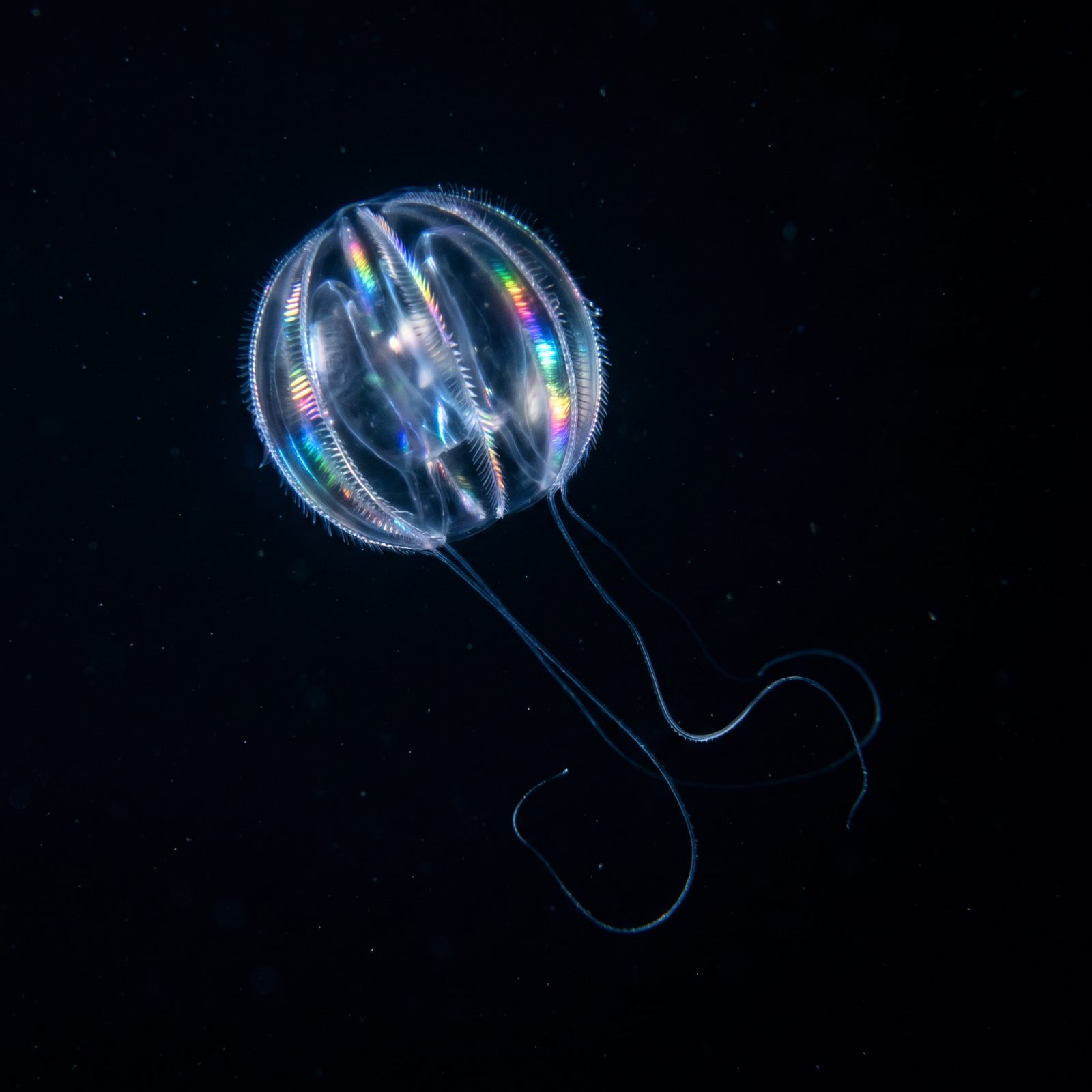
The shimmer running down a sea gooseberry isn’t the creature glowing. It’s light scattering off thousands of tiny beating hairs — the largest animals on Earth to get around using cilia.
Comb jellies may sit at the very root of the animal kingdom, so old that scientists still bicker over whether they or sponges branched off first. Their flimsy bodies almost never fossilize, but what evidence survives points to a line reaching back over 500 million years. They look fragile to the point of absurdity. And yet they’re voracious hunters, trailing sticky tentacles to reel in plankton. Rainbow-lit, nearly invisible, quietly ancient.
7. Stalked Sea Lily: A Crinoid Resembling an Underwater Flower
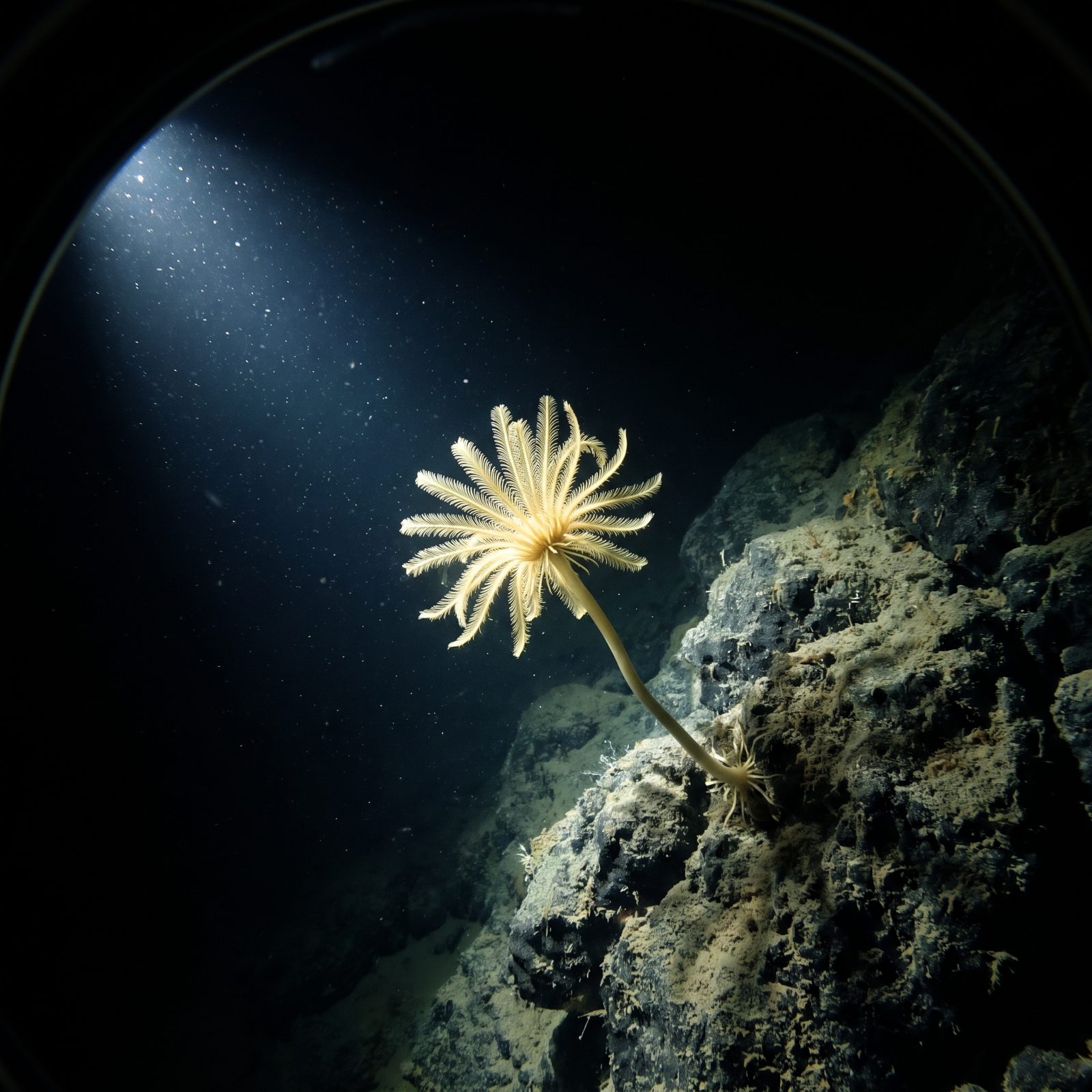
It looks like a flower on a stalk, waving in the current. It’s an animal, and one with a past so deep it’s almost dizzying.
Crinoids are echinoderms, cousins of starfish and sea urchins, and their fossil record runs back more than 480 million years. Whole layers of limestone are built from the crushed stalk segments of ancient sea lilies — so many that some old rocks are practically made of them. The stalked forms living today are rare and mostly deep, tucked away where few of us ever see them, filtering food from the water with feathery arms while anchored in one spot. It’s a way of life that was already old by the time the first dinosaurs showed up.
6. Lingula Brachiopod: The Burrowing Lamp Shell That Reads Like a Fossil
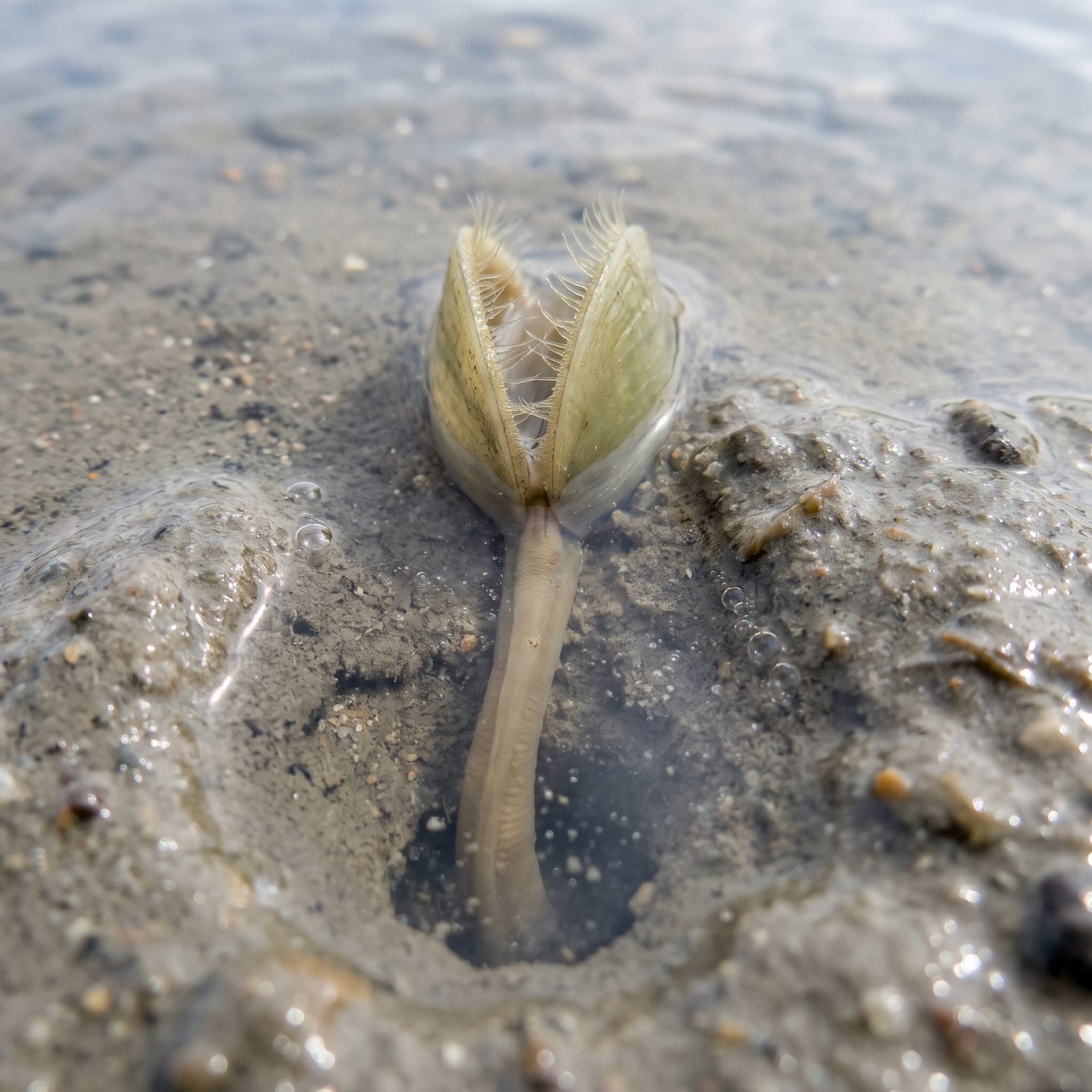
Crack open a 450-million-year-old rock in the right place and you’ll find a shell that looks almost exactly like the one burrowing in the mud off a coast today. That’s Lingula. People love calling it unchanged, which isn’t quite right — the modern animals are their own living species, with their own genes doing their own thing. What hasn’t budged much is the body plan: two tongue-shaped valves, a long fleshy stalk, a quiet life spent head-down in sediment filtering seawater.
It survives because the job is good and the mud never ran out. Boring, in the best possible sense.
5. Gumboot Chiton: Eight Shell Plates Buried Under Leather
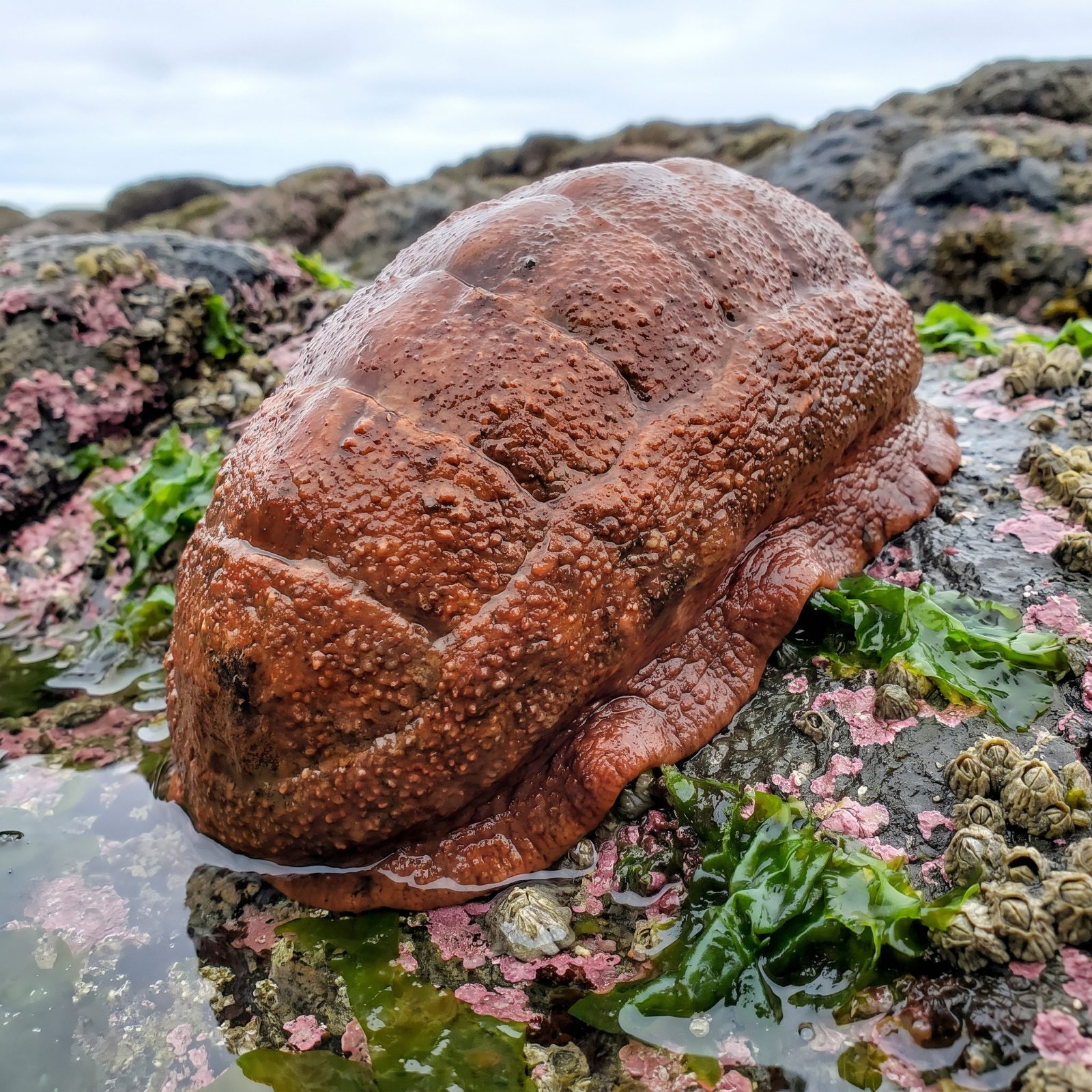
It looks like a meatloaf that crawled out of the sea, and honestly that’s most of the charm. The gumboot chiton wears the oldest trick in the mollusk book: eight overlapping shell plates running down its back. On most chitons you can see them plainly. On this one — the biggest chiton on Earth — a tough leathery girdle grows up and over the plates and hides them completely.
Chitons as a group go back to the Paleozoic, long before the first dinosaurs. That eight-plate armor is the ancient signature, and it let these animals grind algae off surf-pounded rock for hundreds of millions of years, outlasting extinctions that erased far flashier creatures. Flip a dead one over on the beach and you’ll find the plates, pale and shaped a bit like butterfly wings. Beachcombers call them exactly that.
4. Neopilina: The Deep-Sea Mollusk That Came Back From the Fossil Record

For a long time, scientists knew this group only from fossils in ancient rock and assumed it had died out hundreds of millions of years ago. Then a Danish research expedition in 1952 dredged up living ones from deep water off Central America. A whole class of mollusk, written off as extinct, had been down there the entire time.
What makes Neopilina worth the fuss isn’t the small, cap-shaped shell. It’s the repetition inside. Gills, muscles, and other organs come arranged in a serial, almost segmented pattern — a feature that sparked decades of argument about how mollusks relate to worms and how segmented body plans first evolved.
3. Priapulid Worm: The Spiny-Throated Burrower From the Cambrian Playbook
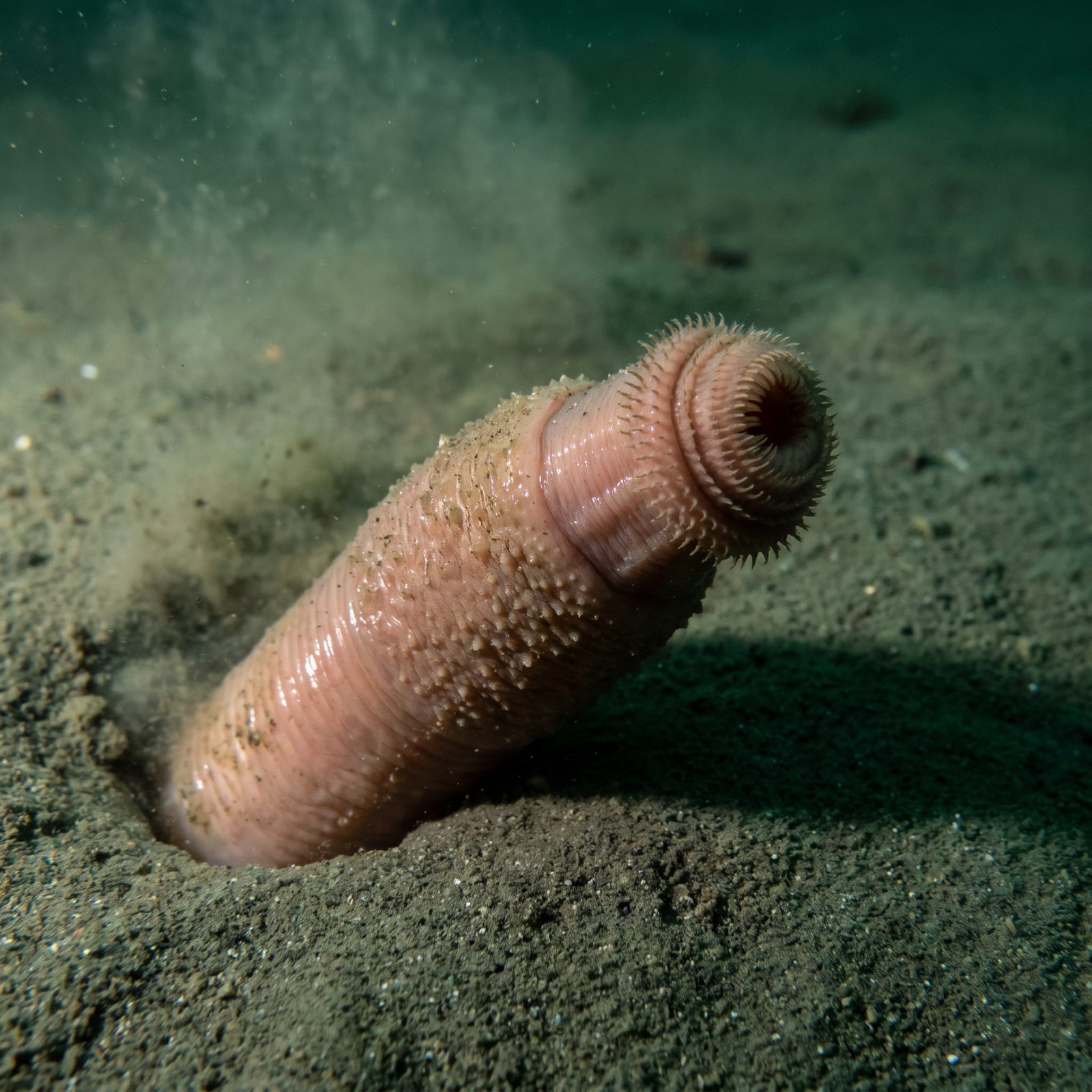
Half a billion years ago, the seafloor crawled with soft, spiny-mouthed worms that pulled their throats inside out to grab prey. Many of the famous Cambrian fossils belong to this crowd, and most people assume that world is long gone.
It isn’t, entirely. Priapulid worms still live in cold marine mud, still flinging out that retractable spine-ringed proboscis to feed and move. The group thinned out dramatically — today only a handful of species remain — but the eversible armed throat that defines them in those ancient rocks is still doing its grim work in the dark.
They’re easy to overlook. That’s the point. The showstoppers of the Cambrian mostly vanished; the quiet mud-dweller held on.
2. Lancelet: A Fishlike Chordate That Never Bothered With a Backbone
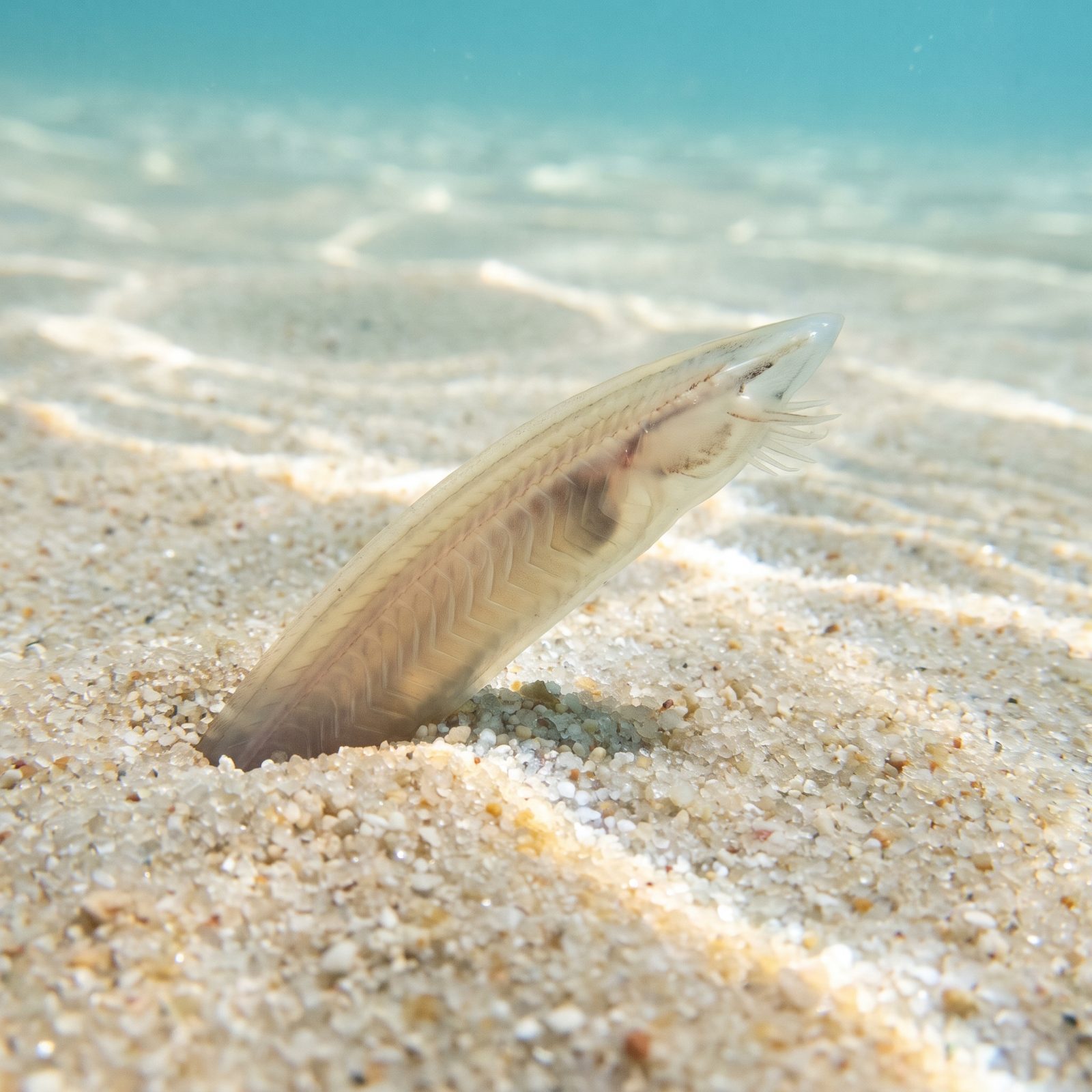
No spine. Just a pale, translucent head with a faint dark smudge, a fringe of feeding tentacles, and a see-through body. And yet, in the clearest way imaginable, this little creature shows you where you came from.
The lancelet looks like a tiny translucent fish filtering food from the bottom of a sandy shore. Where a backbone should be, it has a notochord — a stiff flexible rod — plus a hollow nerve cord above it and segmented muscle blocks running down each side. Those are the core features of all chordates, the group that eventually produced every fish, frog, bird, and reader of this sentence.
Fossils of lancelet-like animals turn up in Cambrian rock. The living ones aren’t our ancestors, though. Think of them instead as a surviving sketch of the blueprint, which is exactly why biology students keep dissecting them.
1. Coelacanth: The Lobed-Fin Fish That Showed Up 66 Million Years Late to Its Own Funeral
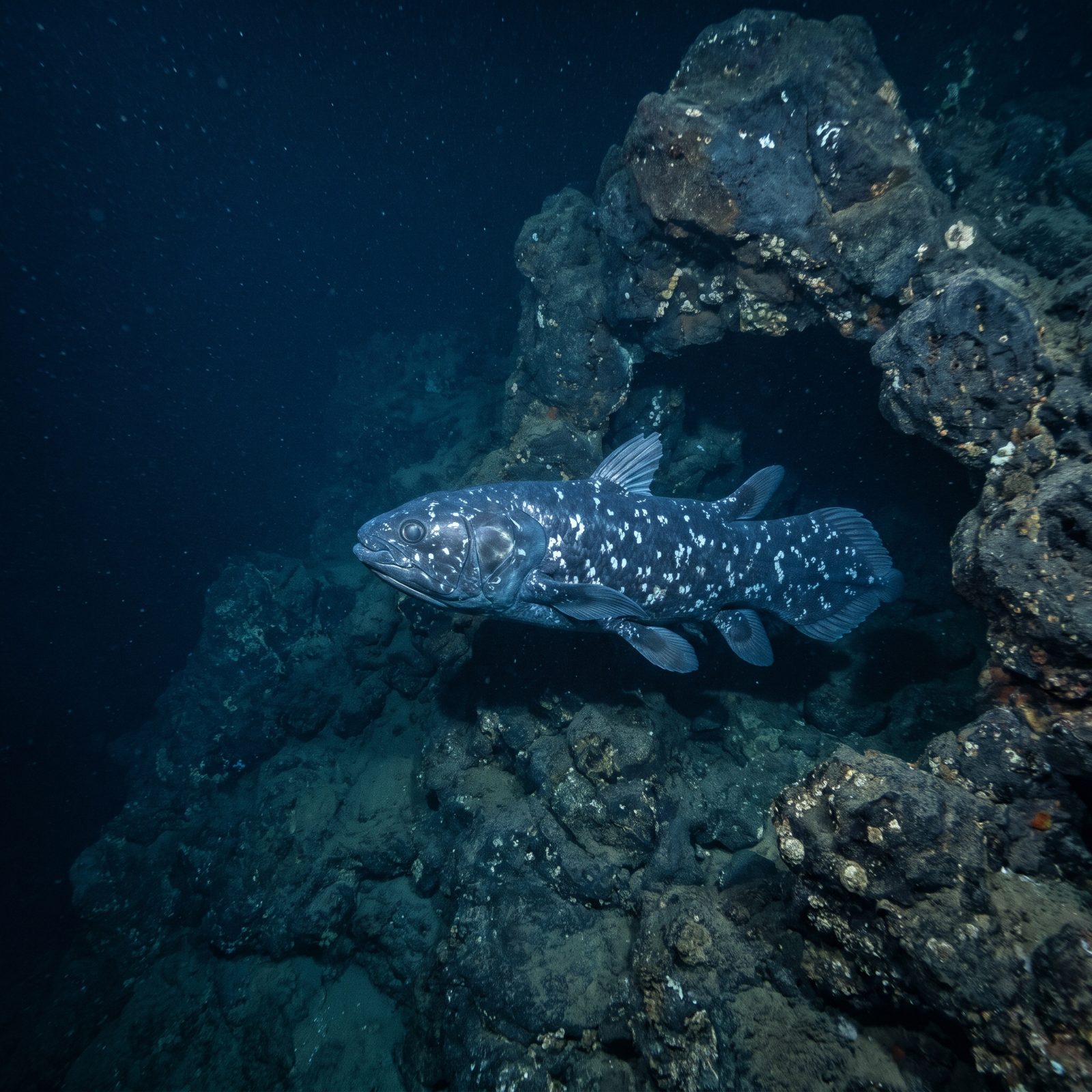
In 1938, a museum curator in South Africa got a call about an odd fish in a trawler’s catch. It turned out to be a coelacanth, a lineage science had declared extinct for around 66 million years, gone alongside the non-bird dinosaurs. It had been swimming in deep water the whole time, keeping its own counsel.
Here’s what people get wrong. The living coelacanth, Latimeria, is not the Jurassic fish swimming around unchanged — it’s a modern species in an ancient group. What survived is the overall design: those stout, fleshy, limb-like paired fins that connect, distantly, to the story of how backboned animals first hauled themselves toward land.
A lineage can vanish from the fossil record for tens of millions of years and simply be living somewhere nobody thought to look.
We know two living species now, one near the Comoros and one off Indonesia. They move slowly, live deep, and bear live young. None of that makes them relics frozen in time. It makes them survivors who kept a very old idea working in the dark.