
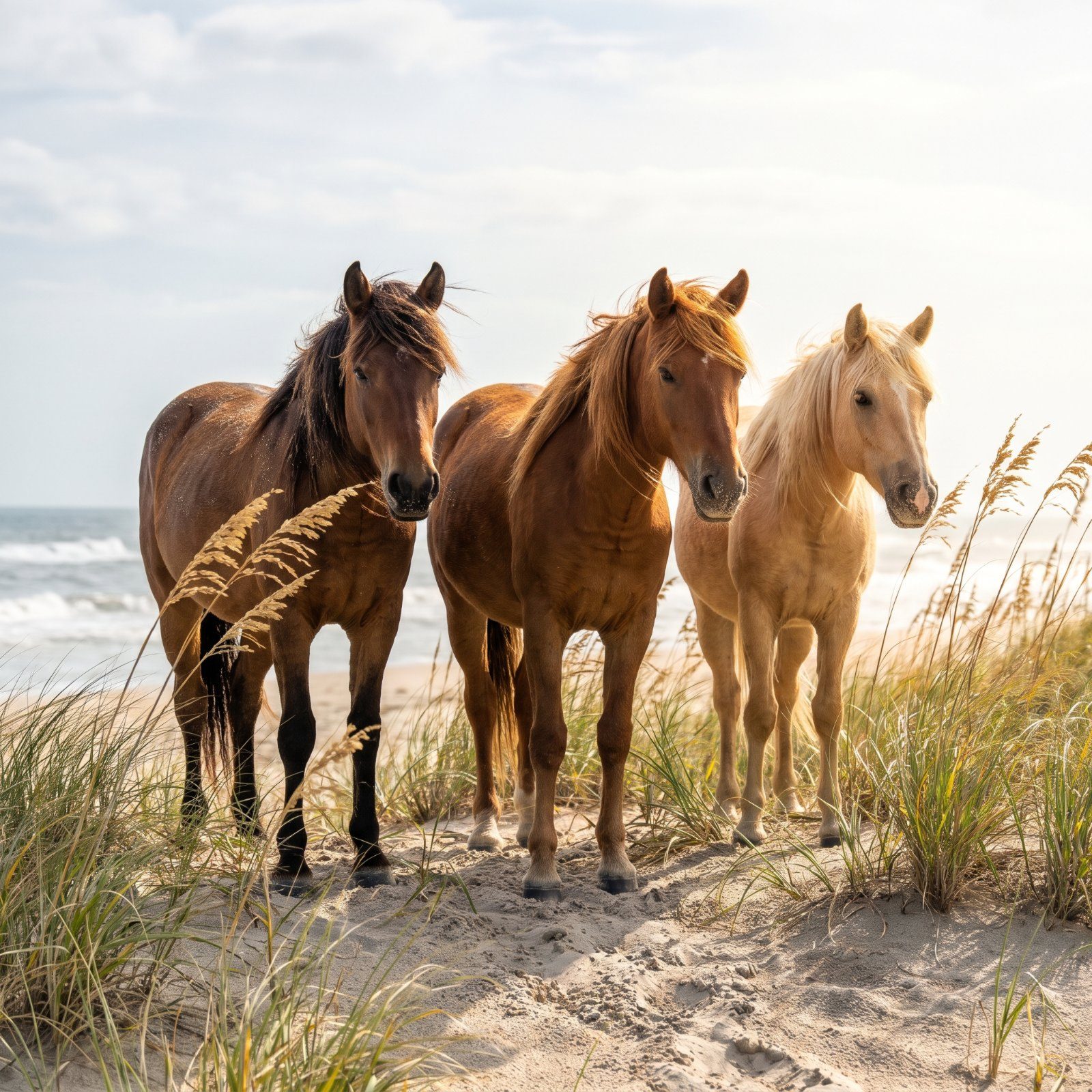
They dig their own drinking water out of the sand. They graze on salty cordgrass most horses would never touch. And a single drop of their blood carries a genetic marker that also turns up in Puerto Rican Paso Finos and in the mustangs of a Montana mountain range two thousand miles away — a coincidence nobody can explain by chance.
Four small bands cling to North Carolina’s coast, living where almost nothing with hooves should: Corolla, Shackleford Banks, Ocracoke, and the Rachel Carson Reserve near Beaufort. Some descend from Spanish survivors of the age of sail. One isn’t Spanish at all. One is protected by a federal law a president signed in 1998. And every last one of them is holding on against rising seas and well-meaning tourists armed with apples. Here’s what makes them extraordinary.
16. A Spanish Bloodline Written in Their Blood
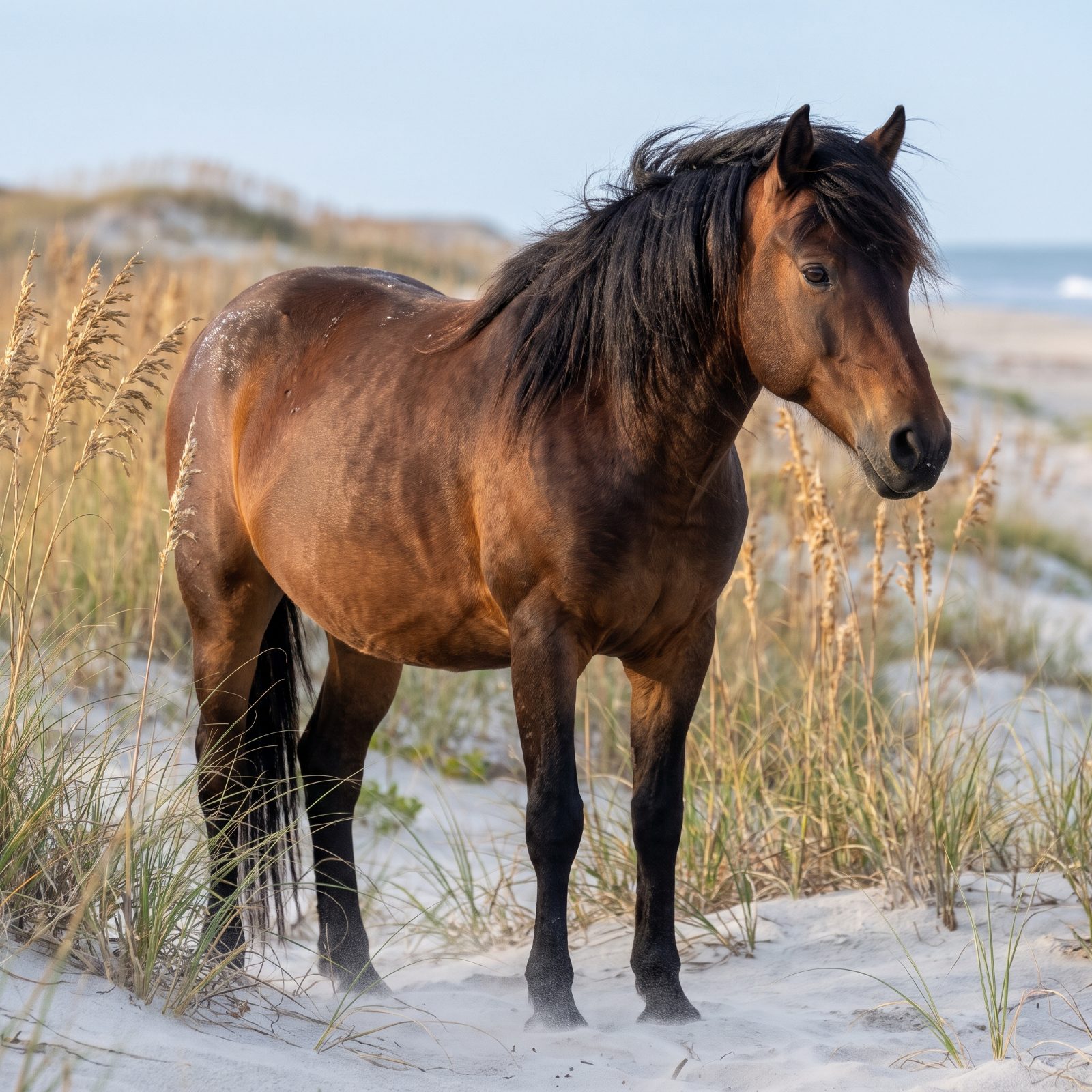
The proof isn’t in the hooves or the head shape, though both hint at Iberia. It’s in a blood variant called Q-ac. Shackleford horses carry it, and so do Puerto Rican Paso Finos and the Pryor Mountain mustangs of Montana — a shared marker pointing straight back to old Colonial Spanish stock.
Dr. Gus Cothran of Texas A&M analyzed Corolla DNA in 1992 and again in 2007, confirmed the Spanish origin, and that result qualified the herds as registered Colonial Spanish Mustangs. How they actually got here, though? Nobody can prove it. Three theories compete: they swam ashore from wrecks, were heaved overboard to float grounded ships free, or were simply abandoned when a colony failed.
15. The Official State Horse That Schoolkids Put on the Books
In June 2010, the North Carolina General Assembly named the Colonial Spanish Mustang the official state horse through Session Law 2010-6. No breeders. No lobbyists. The push came from students at Shawboro Elementary School in Currituck County, working alongside the Corolla Wild Horse Fund.
Both the Corolla and Shackleford herds are registered Colonial Spanish Mustangs, and because so few exist, the breed sits on the critical lists of both the American Livestock Breeds Conservancy and the Equus Survival Trust. A state symbol that is also, quietly, an endangered animal.
14. From Thousands to a Few Hundred
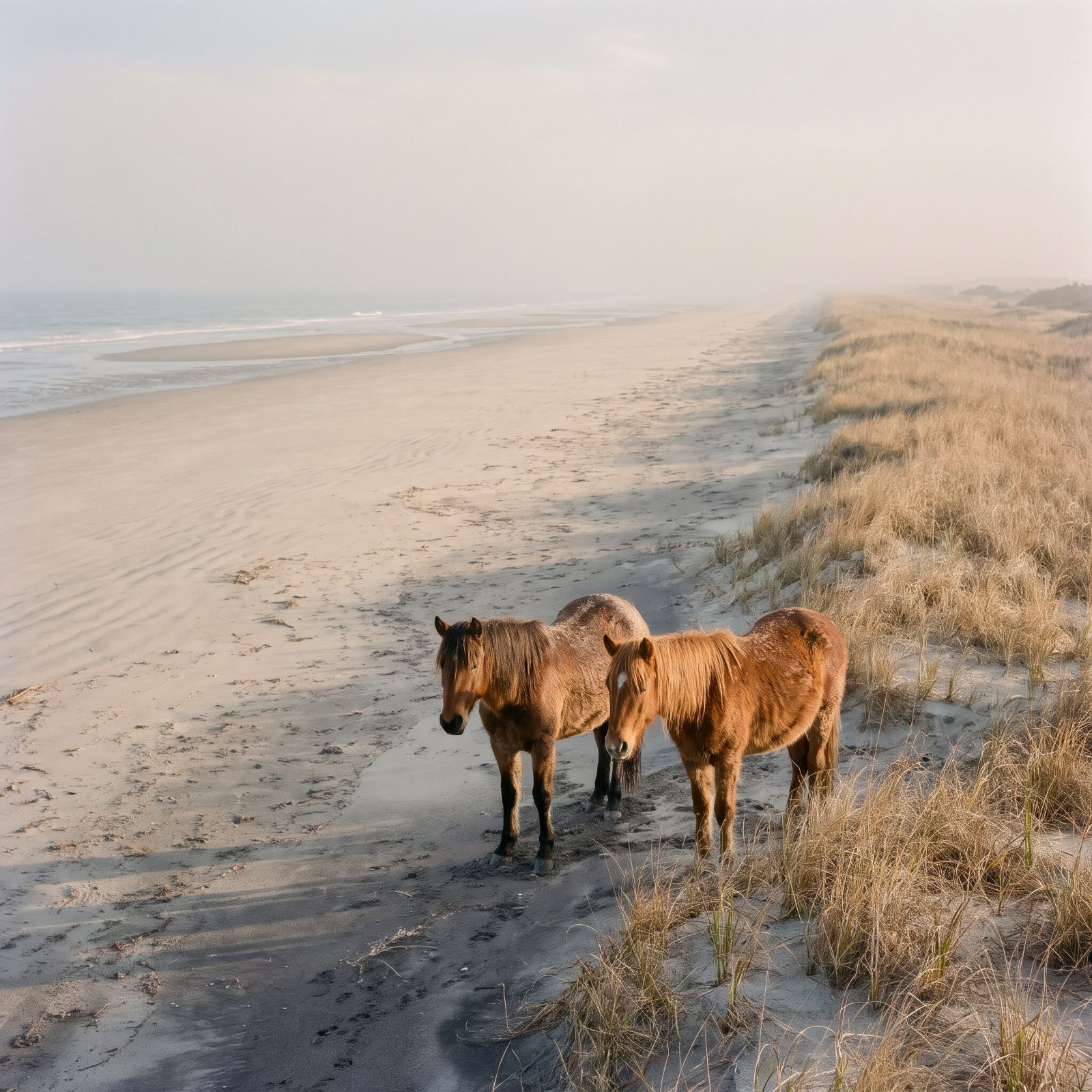
Barely a century ago, this coast was crawling with them. National Geographic, as cited by NCpedia, put the figure at thousands of wild horses along North Carolina’s shore as recently as 1926.
North Carolina now has four herds, and the totals are startlingly small: about 100 at Corolla, more than 100 on Shackleford (the Park Service has floated figures from 110 to 130), roughly 30 at the Rachel Carson Reserve, and fewer than 20 penned on Ocracoke. A few hundred animals where thousands once ran. The counts shift by source and year, so treat any single tally as a snapshot, not scripture.
13. The Only Horse Herd Protected by an Act of Congress
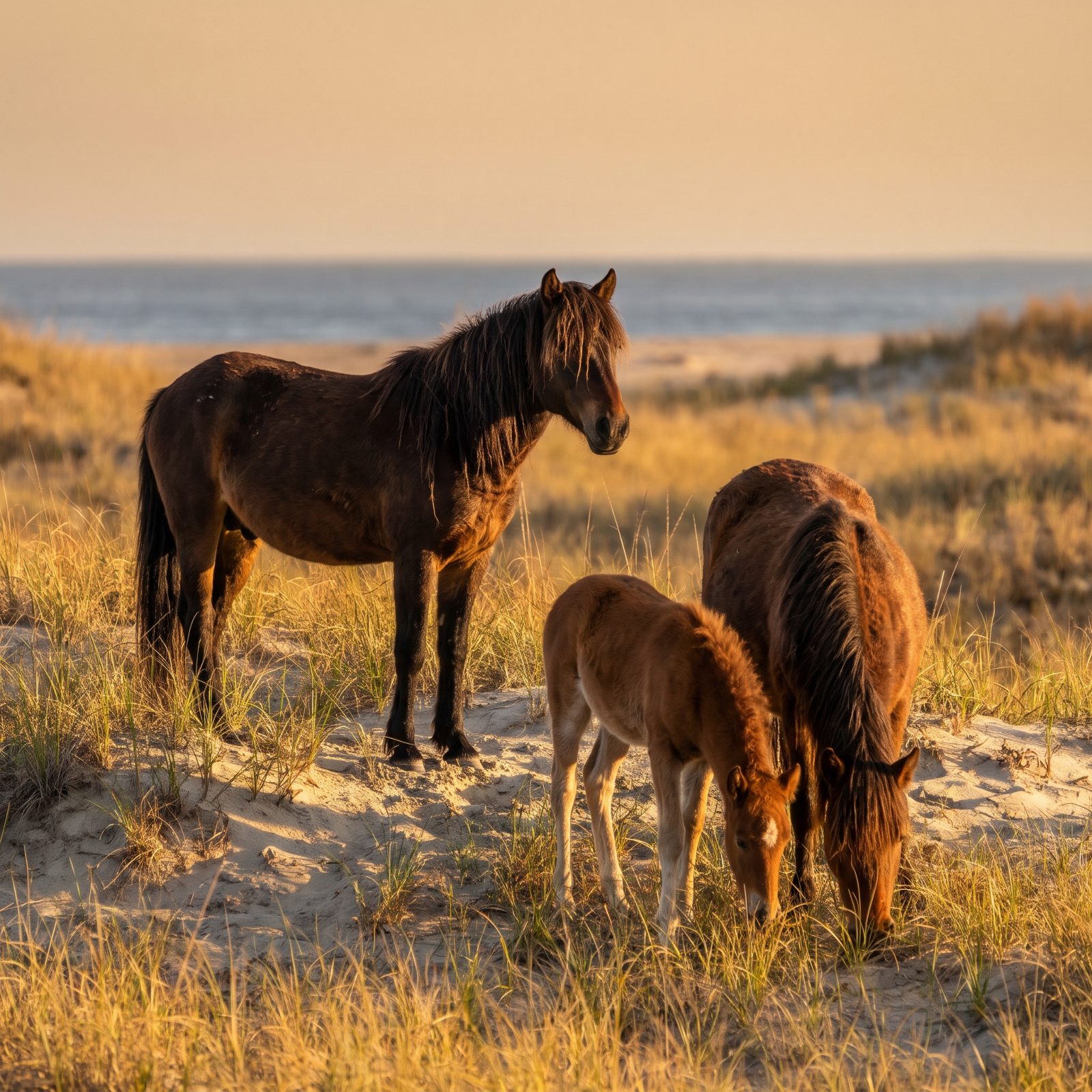
No other wild horse herd in America has its own federal law. The Shackleford Banks horses do.
President Clinton signed the Shackleford Banks Wild Horses Protection Act on August 13, 1998 (Public Law 105-229), sponsored by Representative Walter B. Jones Jr. The House had passed it the year before by a lopsided 416 to 6. The law, as amended by Congress in 2005, keeps the herd at no fewer than 110 horses, with a target of 120 to 130 — a floor genetic research pinned as the minimum for long-term survival.
Climb past that ceiling and the healthy extras get adopted out rather than culled. The National Park Service runs the whole thing jointly with the nonprofit Foundation for Shackleford Horses. A rare case of Washington agreeing on anything, let alone with votes to spare.
12. Birth Control Delivered by Dart, Not Roundup
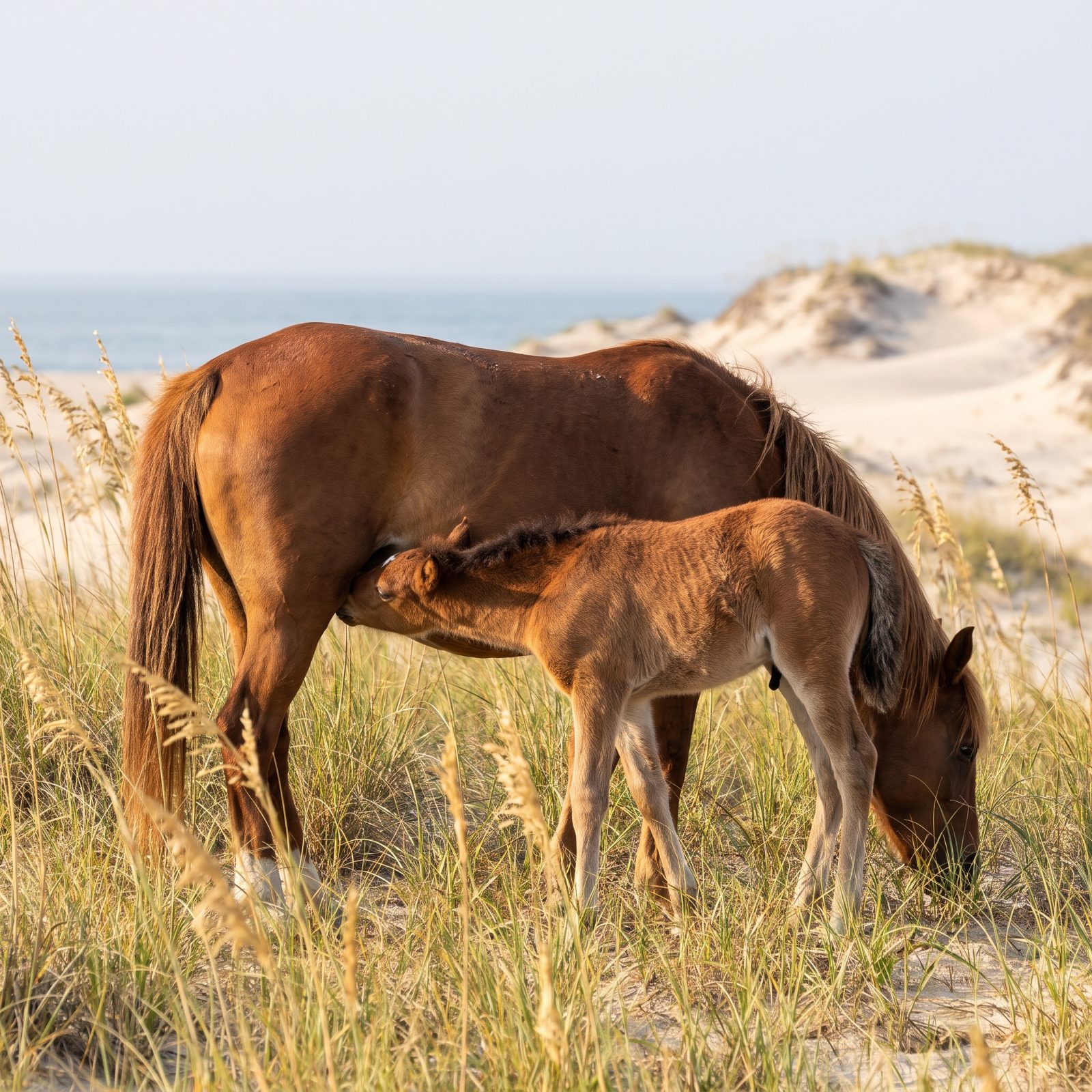
No helicopters. No corrals. No tranquilizer darts flooring animals in the dunes.
Shackleford mares get immunocontraception vaccines fired by dart, out in the open field, with no sedation at all. A single dose of the PZP vaccine lasts one year, which lets managers fine-tune the population animal by animal. When heavier intervention is needed, specific horses are pulled and rehomed.
Beaufort’s Rachel Carson Reserve herd gets the same yearly shot on selected mares, for a blunt reason: studies showed too many horses were chewing the island vegetation right down to bare dirt. Fewer foals means more grass, and more grass means a herd the island can actually feed.
11. Wild Horses in the Backyards of Corolla’s 4×4 Beach
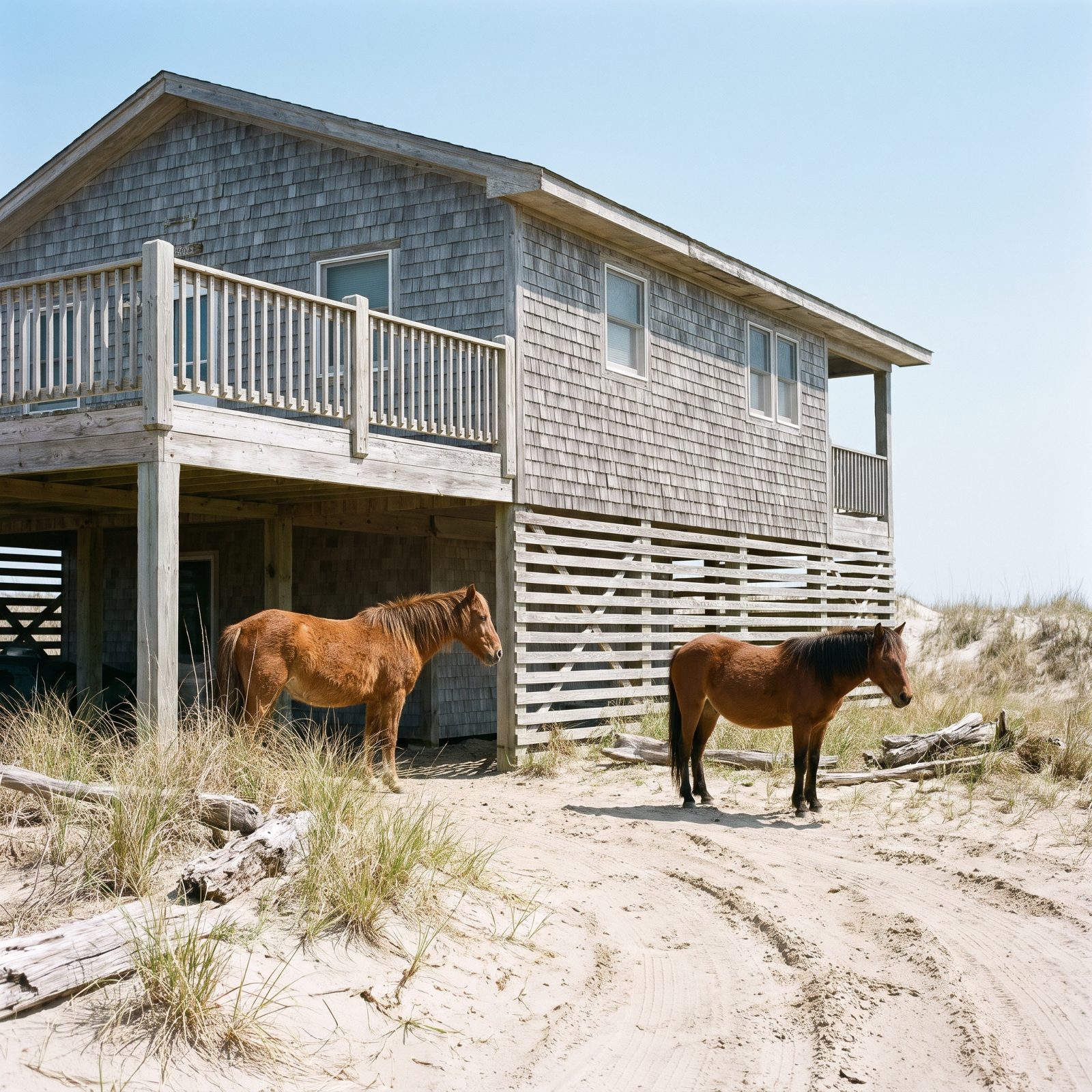
Drive north until NC 12 ends and the pavement simply quits on you. From there the Corolla horses roam about 7,544 acres, and here’s the strange part: roughly two-thirds of those acres are privately owned. This isn’t a wildlife refuge. It’s a neighborhood that happens to have mustangs in it.
They were moved to these four-wheel-drive beaches in 1995, after the paved extension from Duck to Corolla kept getting them killed. The Corolla Wild Horse Fund had formed back in 1989, when car-horse collisions spiked once NC 12 was paved. The Fund’s own FAQ just shrugs: horses loitering under rental houses and blocking cars are part of life up there.
10. The 50-Foot Rule and Why an Apple Can Kill
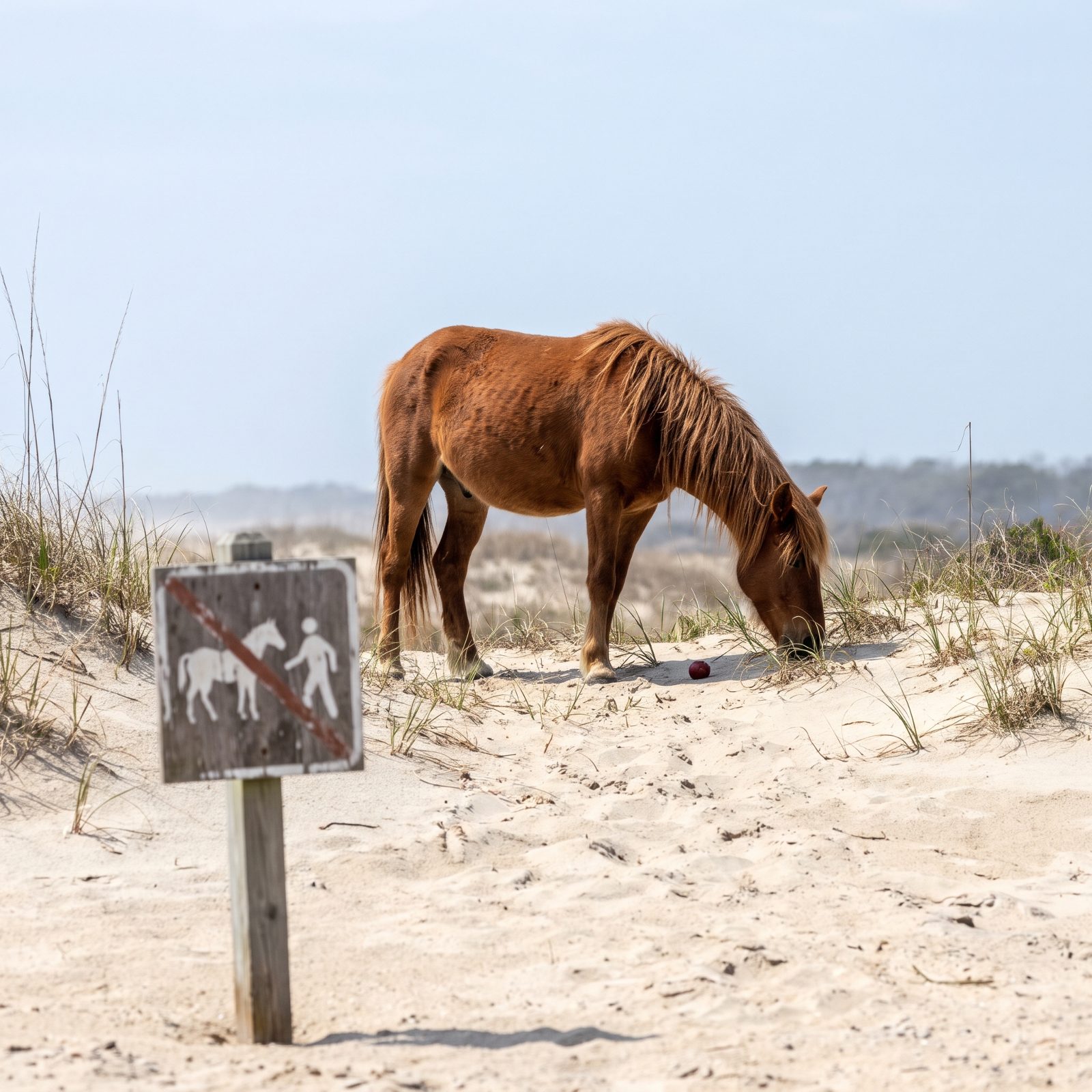
A Currituck County ordinance makes it illegal to come within 50 feet of the horses or to feed them. And yes, the rule holds even when the horse ambles up to you. Beaufort has its own 50-foot ordinance for the Rachel Carson Reserve horses, and on Shackleford visitors are asked to stay back at least that far — roughly the length of a city bus.
The feeding ban isn’t bureaucratic fussiness. The Fund says several horses have died from being fed, including a young one that swallowed a watermelon rind someone tossed into a yard. Apples and carrots can do harm too. These animals live on native plants and grasses, and their guts never evolved for picnic food. The kindest-looking gesture can kill.
9. A Genetic Bottleneck and a Stallion Rescue
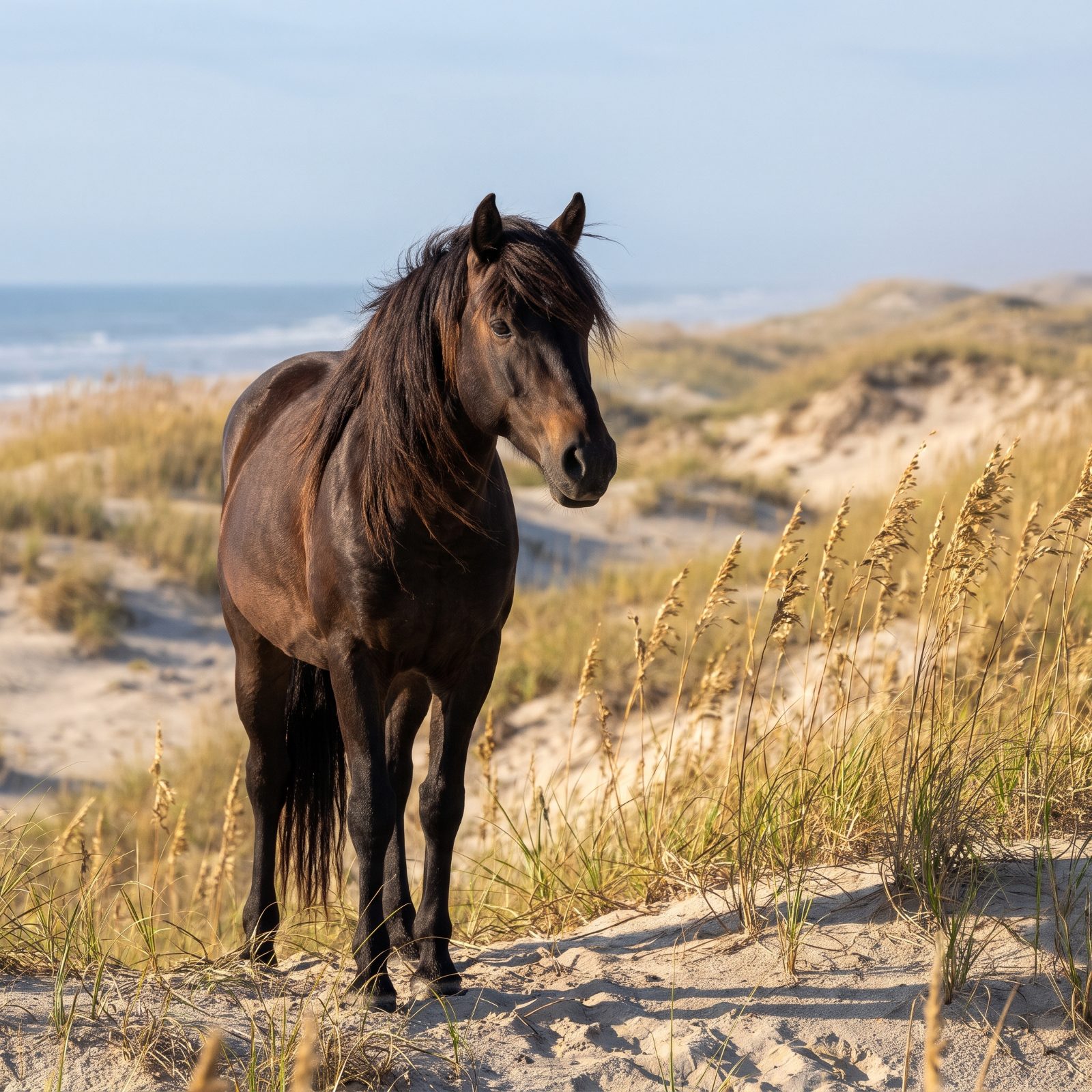
Testing in 1992 revealed a problem you can’t spot from a car window. The Corolla herd had squeezed through a severe genetic bottleneck. Very low diversity, a single maternal line — the kind of inbreeding that quietly ends a population.
So in 2014, managers trucked a stallion over from Shackleford Banks to inject fresh genes while keeping the Iberian lineage intact. Representative Walter Jones had testified in 2011 that the 60-horse cap then in place was itself the threat, choking the herd through inbreeding, and Dr. Cothran recommended 120 to 130 animals as the healthier floor.
Corolla is now building a DNA family tree of its roughly 100 horses, so future matches aren’t left to chance.
8. Pony-Sized, But Don’t Call Them Ponies
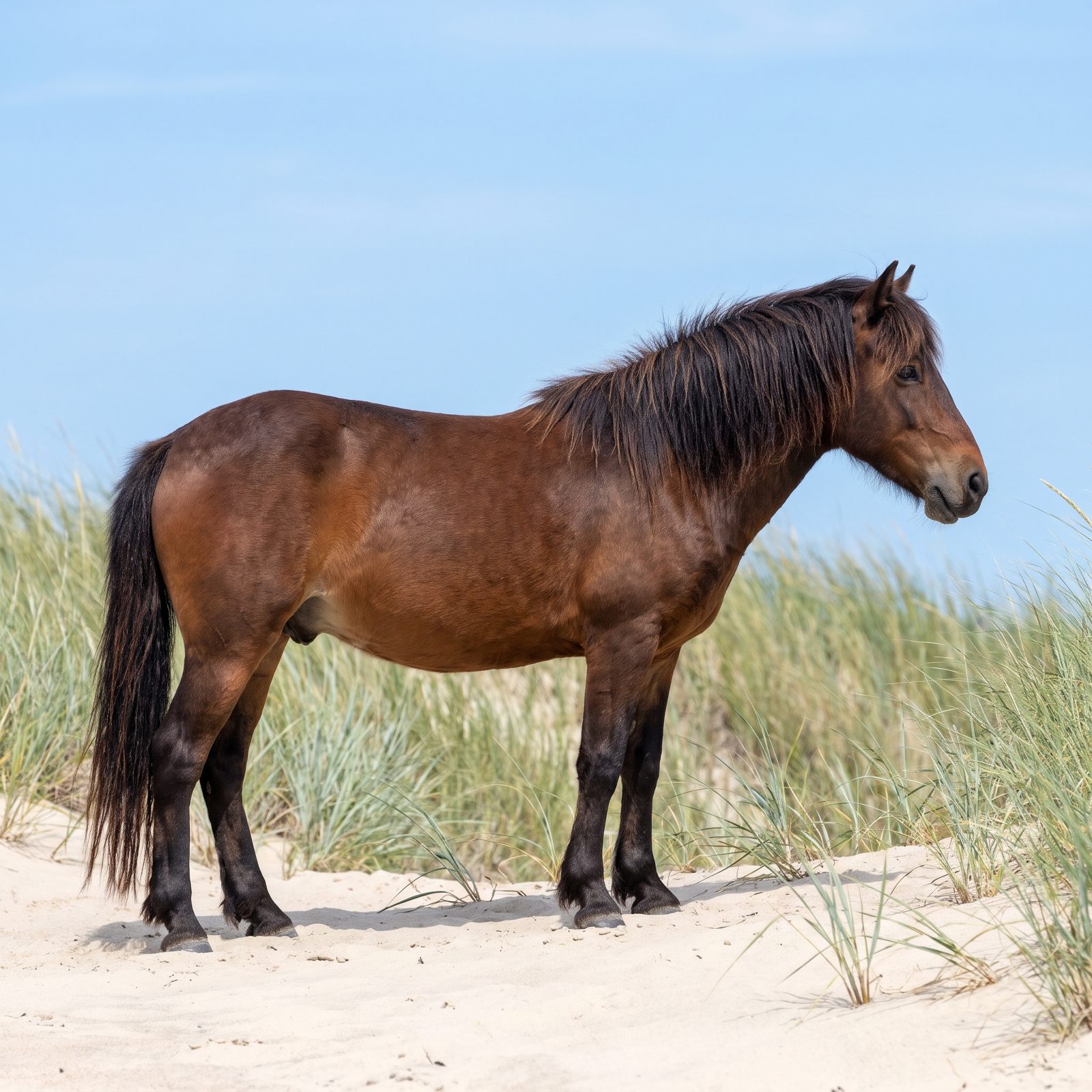
They look like ponies. They’re not, technically.
Shackleford adults average 12 hands at the withers, ranging from 11 to 13 (a hand is four inches). People call them Banker ponies, and the name stuck thanks to their range across the Outer Banks. But the Ocracoke Guide insists they’re full-grown horses — just small ones, shaped by centuries of scarce food and salt air.
One oddity visitors notice: the color card is awfully short. Corolla horses mostly come in bay, black and chestnut. A breed evaluation posted by the Corolla Wild Horse Fund noted that the gray once seen in the herd appears to have been lost.
7. An Unusual Skeleton Hiding Under the Coat
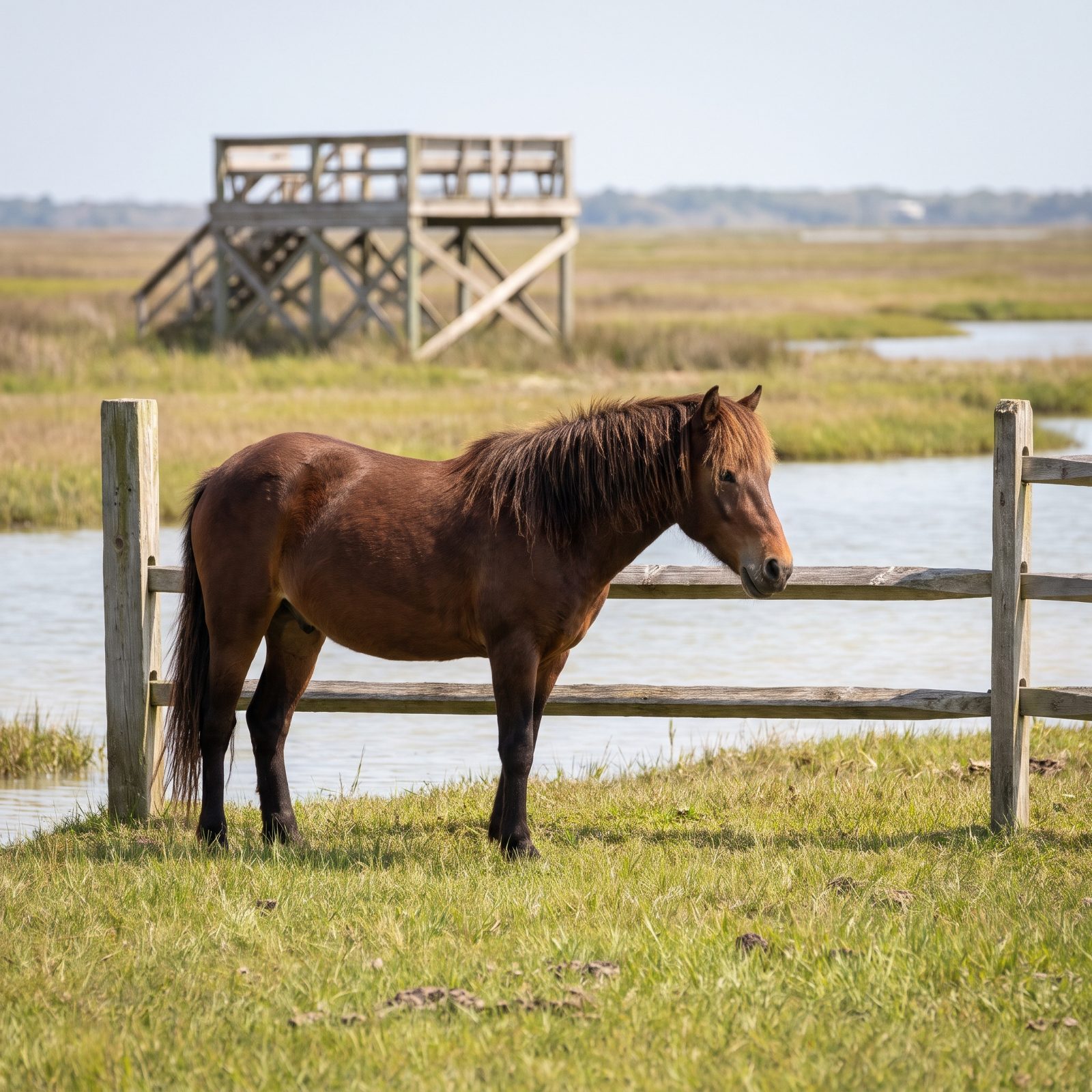
Here’s a strange-but-true one. Local and secondary sources report that Ocracoke ponies carry five lumbar vertebrae instead of the usual six, and 17 ribs instead of 18. They’re described as different from standard horses in shape, posture, color, size and weight. That shorter back with fewer vertebrae shows up in Corolla’s Colonial Spanish horses too.
A caveat worth stating plainly: these skeletal counts come from local and secondary sources, not the Park Service, so take them as reported rather than lab-confirmed. Still, if true, it’s a quiet signature of their deep Iberian ancestry — printed right into the bone.
6. Troop 290, the Only Mounted Boy Scouts in America
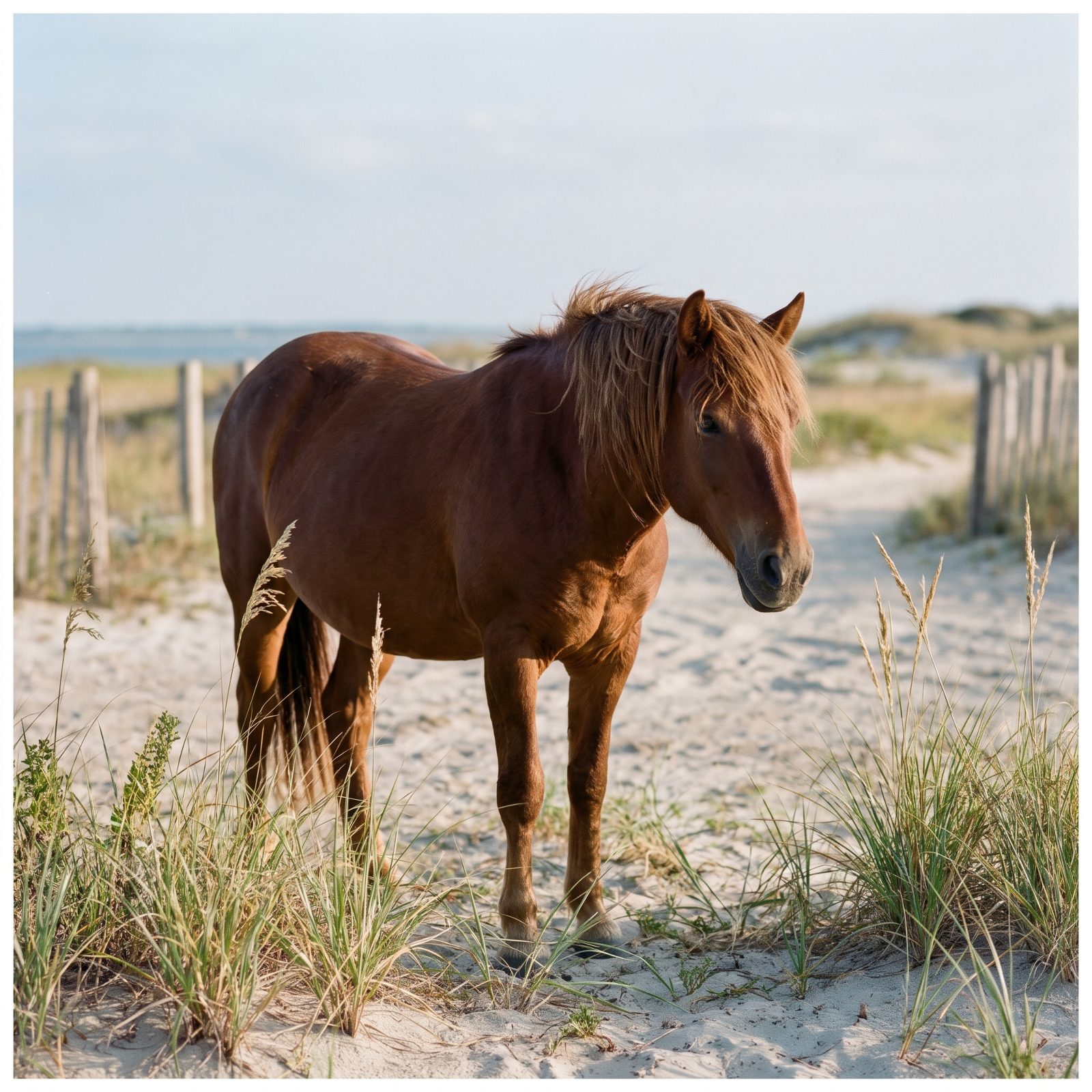
In the 1950s, Ocracoke kids did something no other Scouts in the country did. They rode. Mounted Boy Scout Troop 290, led by Scoutmaster Marvin Howard, saddled up the island’s own Banker ponies and became the only mounted Scout troop in the United States. Picture that — merit badges earned from horseback on a barrier island, the whole troop clopping across the sand between tasks.
When the highway finally opened, the Scouts built a pony pen in 1959 under a special-use permit, and the National Park Service calls that the first real management of the herd. Islanders and donors around the world chipped in for the fencing.
5. From Shipwreck Patrols to Mr. Bob, the Ranger’s Horse
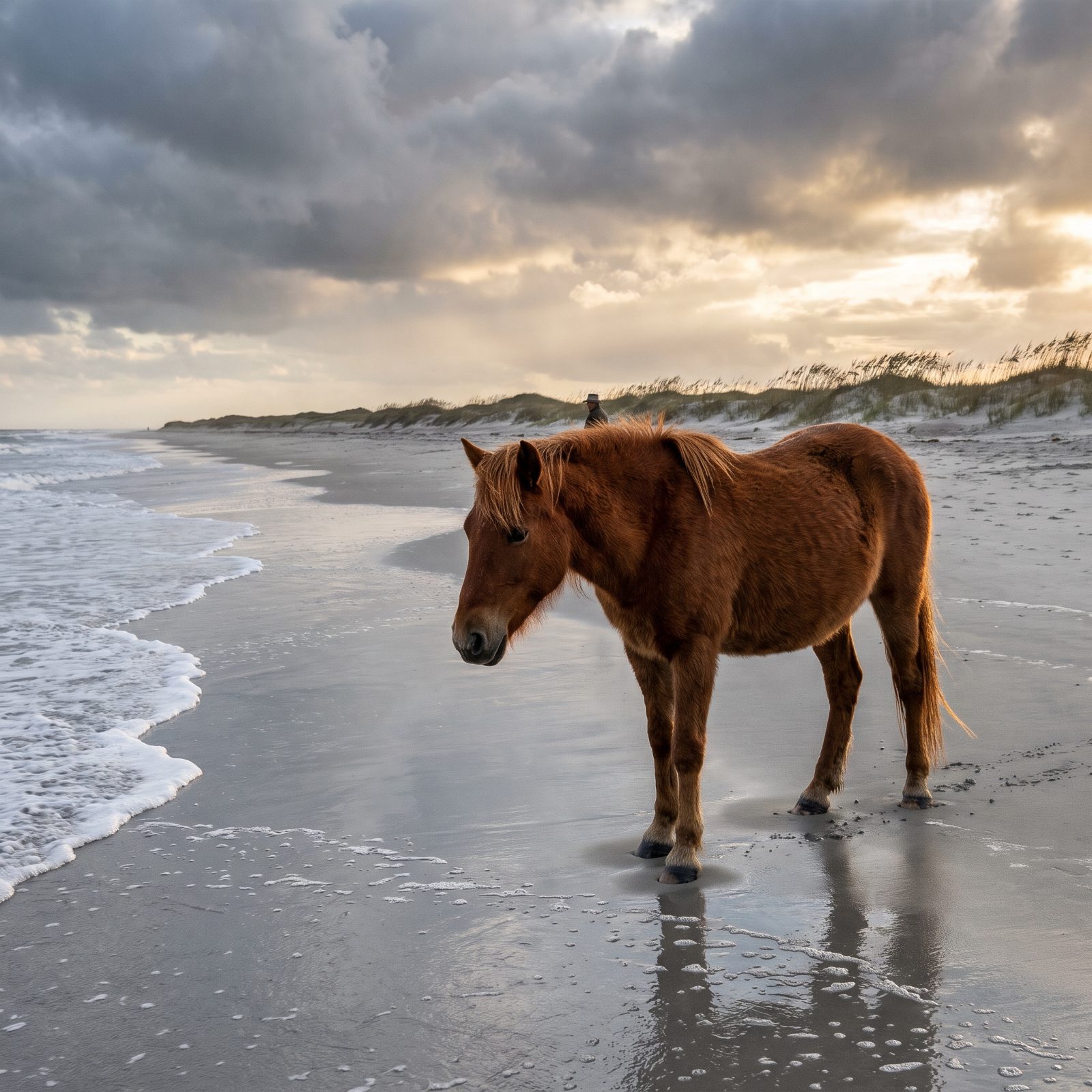
Long before they were a tourist draw, these ponies worked. The U.S. Life-Saving Service used Banker ponies to patrol the beaches and haul heavy rescue gear out to shipwrecks. During World War II, the Coast Guard kept a small band for beach patrols, scanning the dark water for submarines.
Then came Mr. Bob. In 1981 this Ocracoke pony became the first horse on the National Park Service’s Ocracoke beach patrol — and Cape Hatteras National Seashore is the only NPS unit ever to put native ponies into service work. A horse that swam out of some forgotten century, drawing a federal paycheck. Let that sink in.
4. Beaufort’s Rachel Carson Herd Isn’t Spanish at All
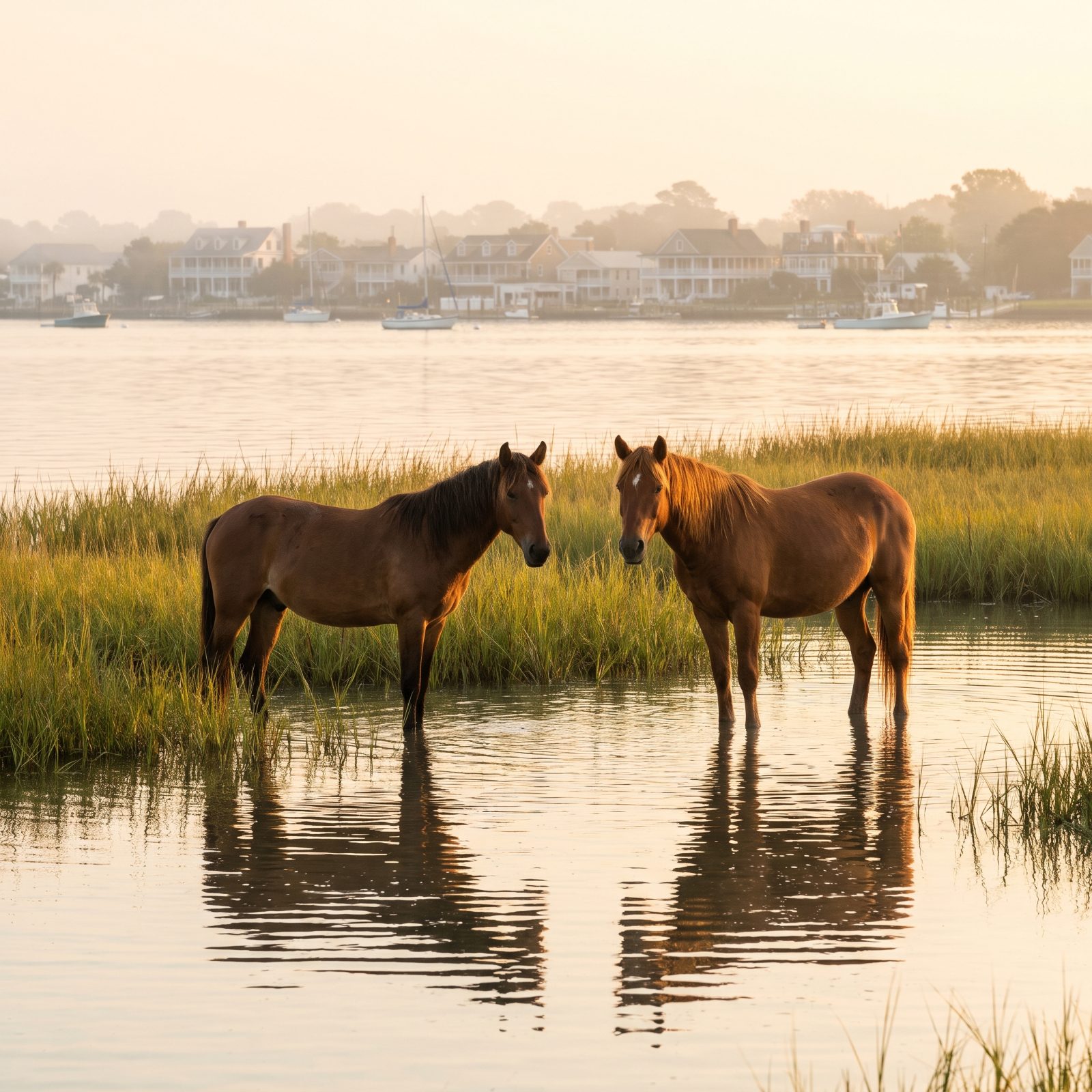
Everyone assumes all four herds trace back to Spanish shipwrecks. The Beaufort horses blow that story up. A local doctor brought them to the islands in the 1940s, and over the decades they simply went feral. No conquistadors and no mystery. The founding stock reportedly mixed Banker ponies with domestic quarter horses, horses that were let loose and never came back.
About thirty of them roam Carrot Island, Town Marsh, Bird Shoal and Horse Island, managed by the state’s N.C. Coastal Reserve. You reach the islands only by boat or ferry. And yet you can often spot the horses from the Beaufort waterfront, grazing across Taylor’s Creek like they’re part of the view on purpose.
3. Why These Horses Dig for Their Own Drinking Water
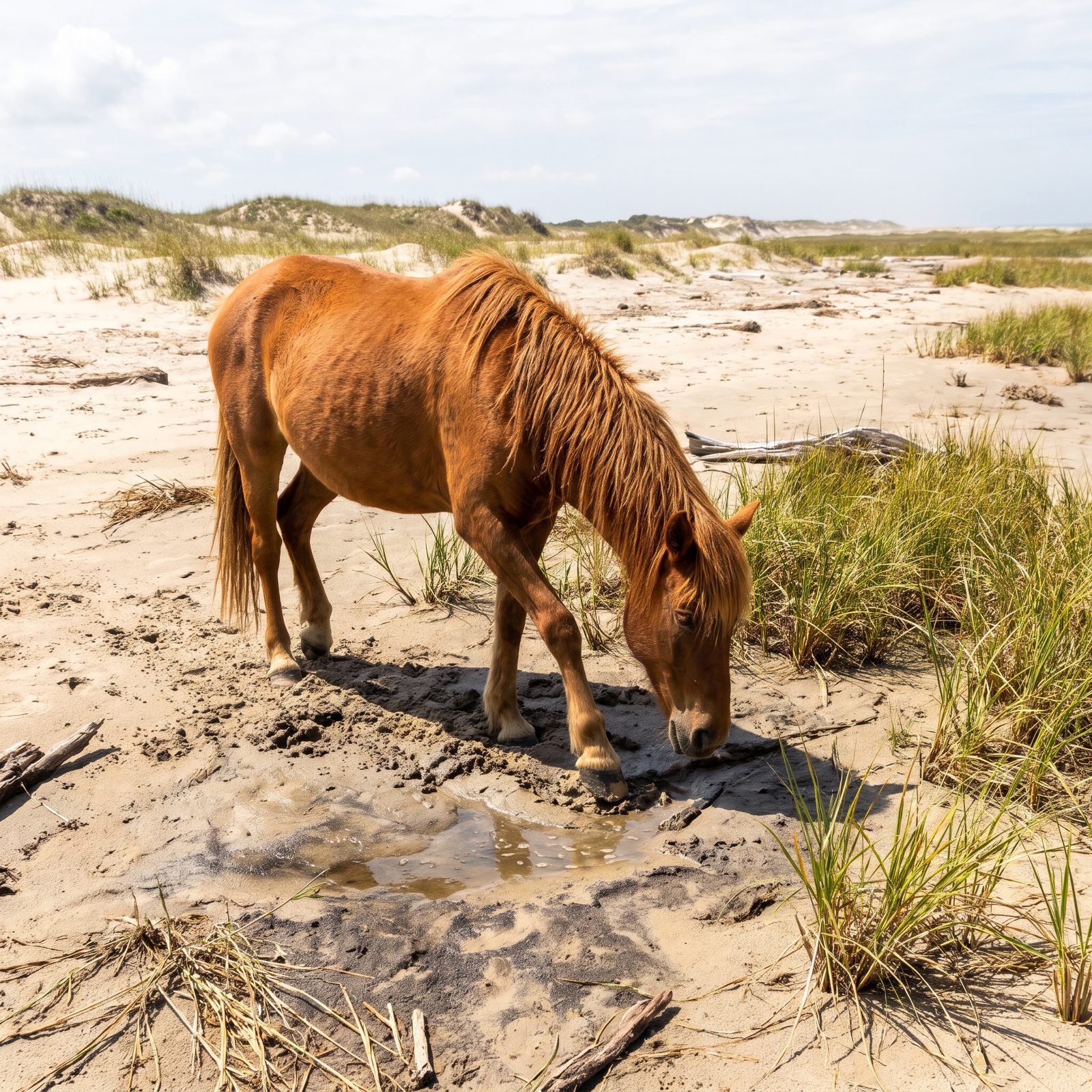
Salt water everywhere and barely a drop to drink. That’s the daily problem on these islands. The Rachel Carson Reserve holds very little fresh water, so the horses solve it themselves — they paw and dig shallow pits in the sand until groundwater seeps up into the hollow.
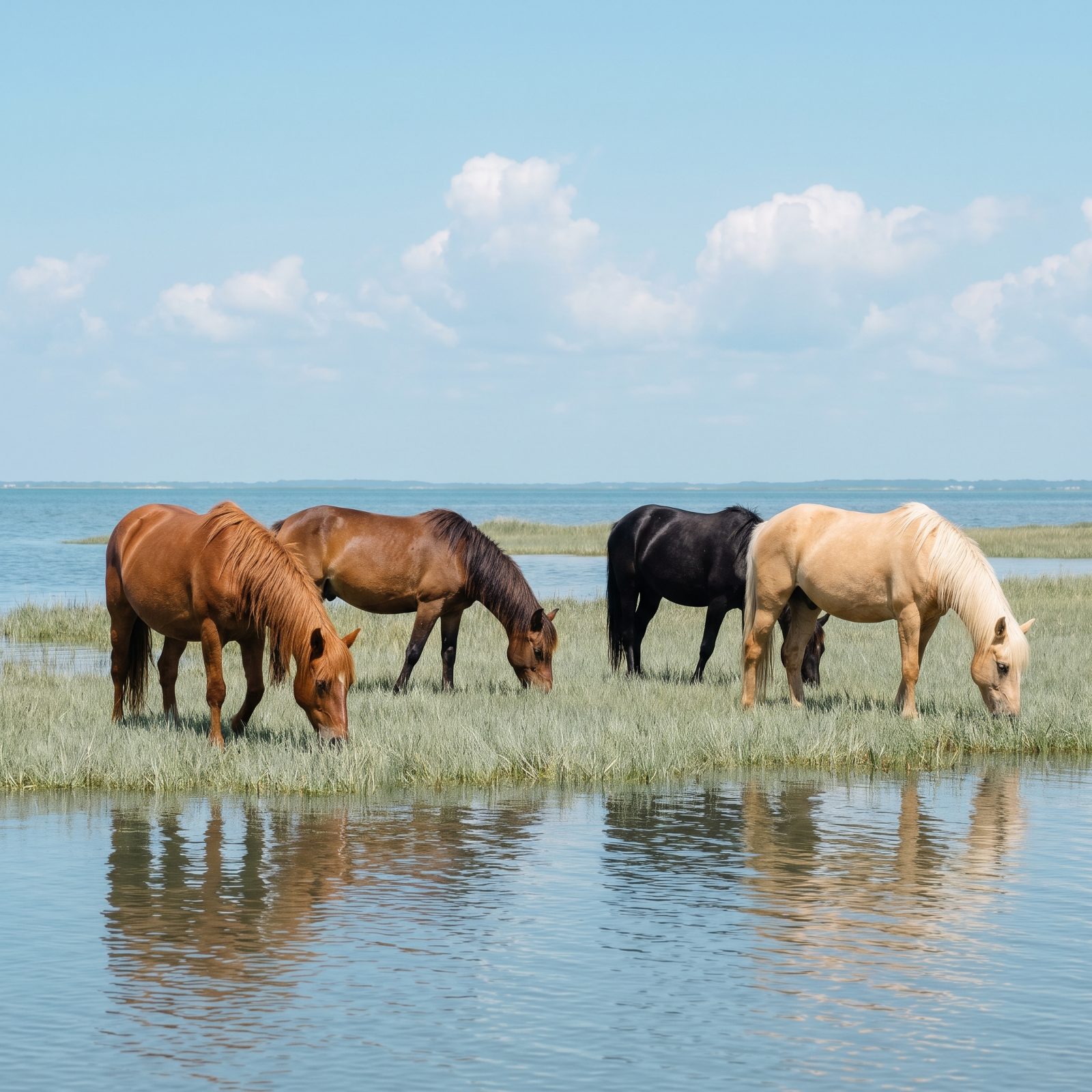
Their diet is just as hard-won. Beaufort’s horses survive on cordgrass plus the water they excavate. The Shackleford herd grazes salt-meadow cordgrass and sea oats, and those scrubby dune plants matter far more than they look. Trample the dunes and you take food out of a wild horse’s mouth, which is exactly why you’re asked to stay off them.
2. A Living Laboratory Hiding on Shackleford Banks
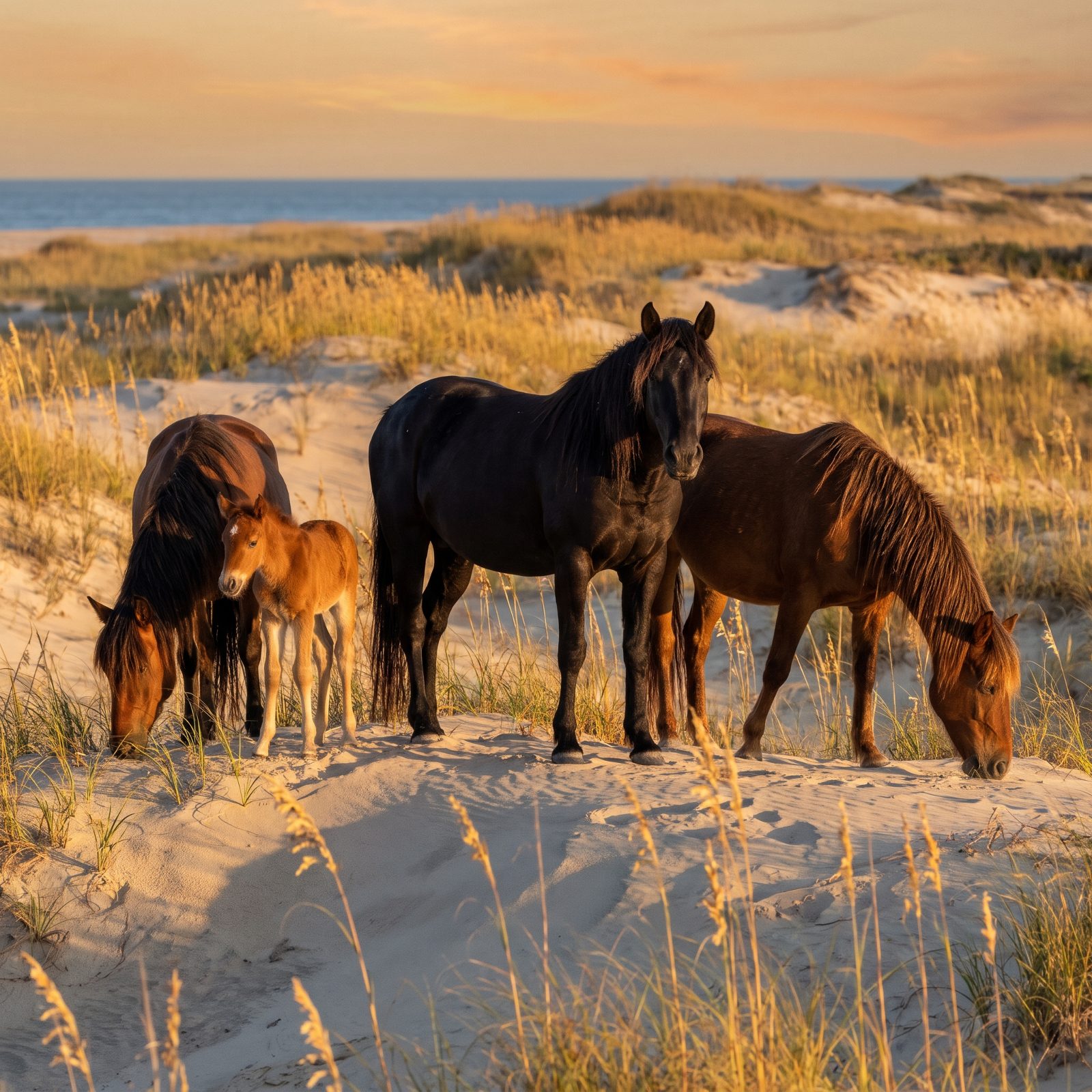
Shackleford Banks is a research goldmine, and most visitors have no idea. Princeton ecologist Dr. Daniel Rubenstein and his students have tracked these horses’ social lives for decades, keeping a family tree that traces every foal back through its mothers, generation after generation. The animals live in harems — a stallion with his mares and foals — and you can actually watch that structure play out on the dunes.
Then there’s the medical side, which is wilder than the behavior work. Some horses removed from Shackleford carried Equine Infectious Anemia for decades without ever showing a symptom, and studying them has given University of Kentucky equine disease researchers valuable information that may help the search for a cure. Over at Corolla, managers are now building their own DNA family tree of roughly a hundred horses.
A wild herd on a barrier island turned out to be one of the longest-running horse behavior studies anywhere.
1. Rising Seas Are Closing In on All Four Herds
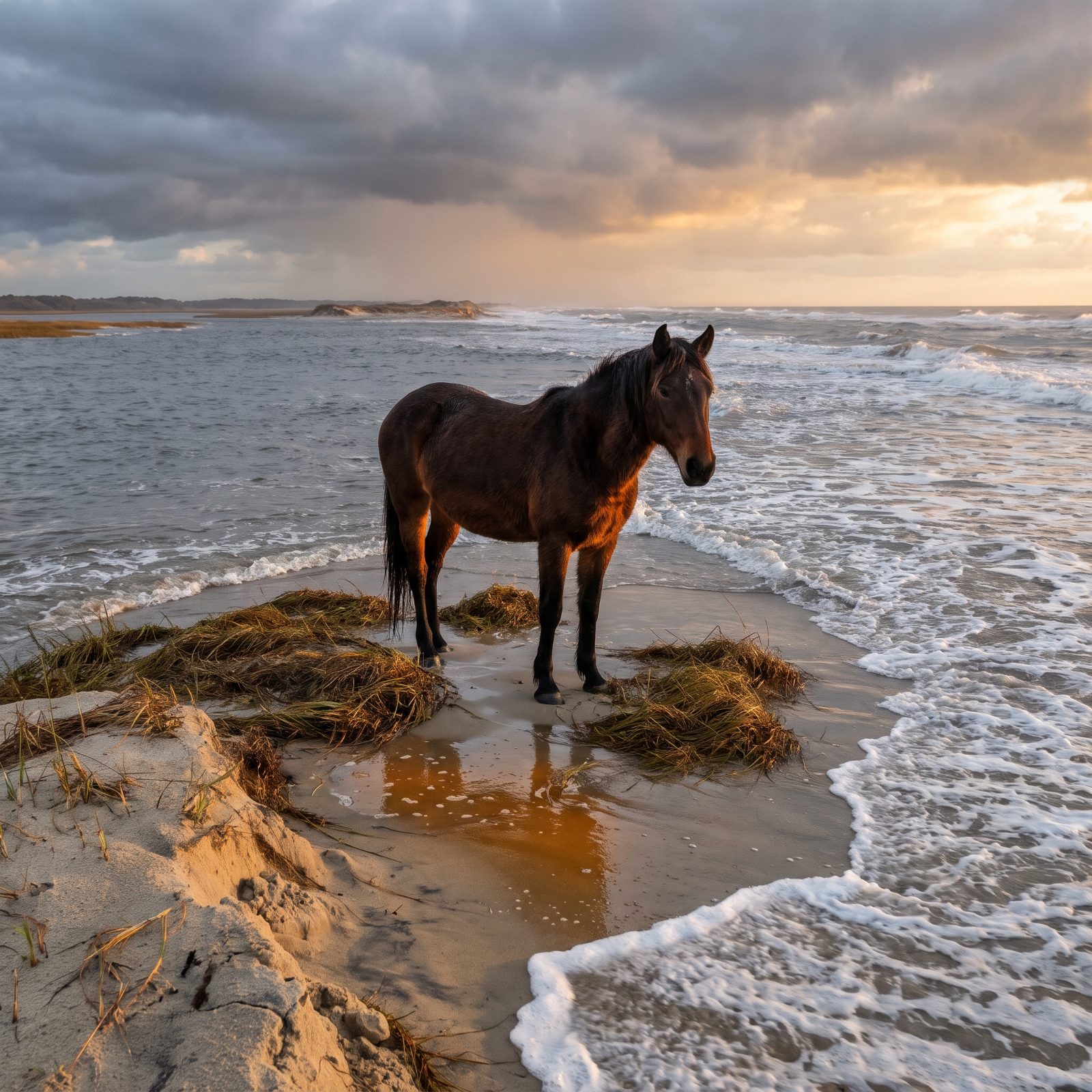
The sea is doing the arithmetic now. Cape Lookout staff point to rising water, marsh loss, overwash, erosion, shifting vegetation and shrinking fresh water — all of it chipping away at how many horses Shackleford can actually feed.
In 2025, roughly one in six of the Shackleford herd died, far above the long-run norm, and most of those deaths traced back to poor body condition from thin forage. On Ocracoke, the NPS is drafting a fresh management plan because sea-level rise is expected to squeeze the penned herd’s food, water and facilities harder every year. These horses outlasted shipwrecks and centuries of storms. The tide line is the one threat nobody can dart or fence.