

Your eyes catch three colors of light. A mantis shrimp catches twelve, plus a flavor of light your brain has no word for. That gap is the whole story here. Every creature below runs a sense so far past human hardware that calling it “better” misses the point entirely — it isn’t better, it’s a different reality stacked on top of the one you walk through every day. Fish that taste with their skin. Owls that pin down a mouse’s faintest rustle under snow. Snakes that watch heat the way you watch light. We like to think we see the world clearly, but we see a sliver of it.
44. The Mantis Shrimp Reads Polarized Light That’s Invisible to You

You have three types of color receptor. The mantis shrimp has twelve. For years scientists assumed that meant it saw a riot of color beyond anything we could picture.
The opposite is closer to the truth. Its brain doesn’t blend those receptors into fine color discrimination the way ours does — instead it reads each channel fast and dirty, like a scanner dragging across a page. The real trick is polarization. This shrimp detects the circular polarization of light, something no other animal on record can manage, and it uses that hidden channel to send private messages to other mantis shrimp. A secret broadcast on a frequency predators literally cannot tune into.
43. The African Elephant Hears Through Its Feet Across Miles of Savanna
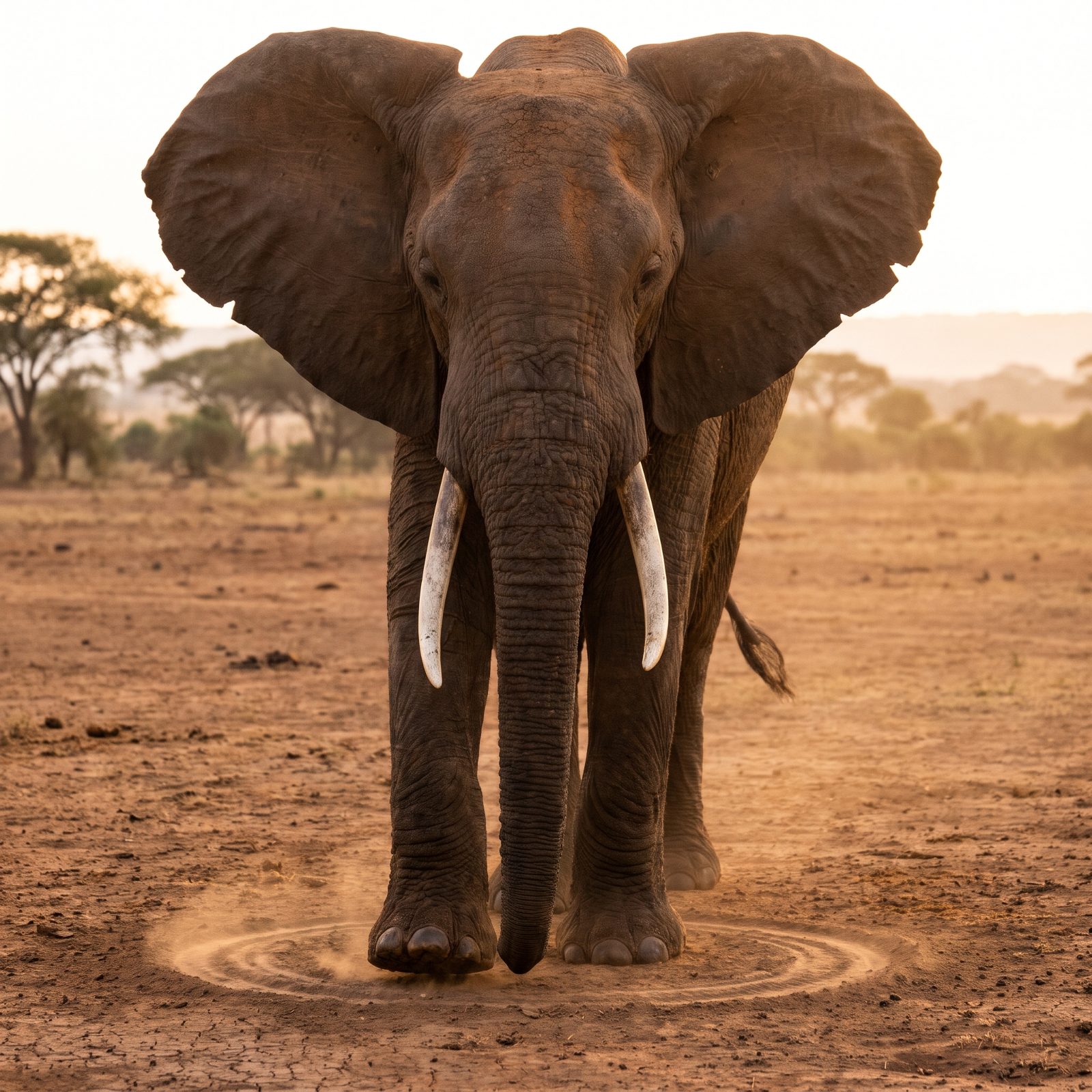
An elephant can answer a call it never “heard” in any way you’d recognize.
Much of elephant communication happens in infrasound, below roughly 20 hertz, under the floor of human hearing. These low rumbles travel enormous distances, and not only through air — they move through the ground as seismic waves, and elephants pick them up through sensitive cells in their feet and trunk. A herd will freeze, go dead still, then wheel toward something kilometers off that you’d swear was total silence.
The social weight of this is the part people miss. A mother tracks her family, a bull picks up on a distant female, a herd gets early warning of danger — all through signals you’d need instruments to even know existed.
42. The Pit Viper Watches the Warmth of a Mouse in Pitch Darkness
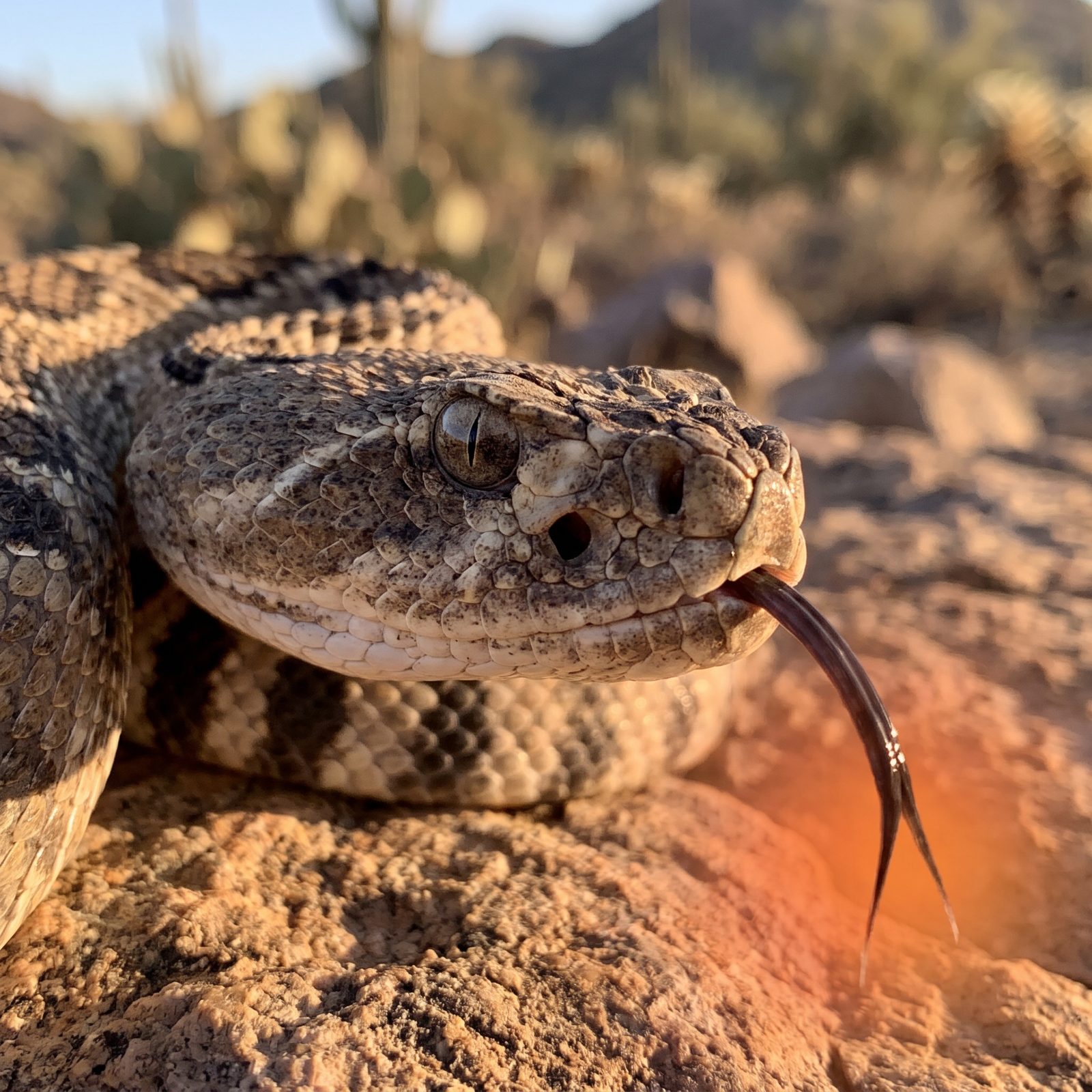
A rattlesnake can strike a mouse with its eyes closed and never miss. Between each eye and nostril sits a pit organ — a tiny chamber lined with a membrane so packed with heat-sensitive nerve endings it registers a change of a few thousandths of a degree.
This isn’t vague warmth detection. The viper forms a crude thermal image, overlays it onto what its regular eyes see, and gets a targeting map of any warm body nearby. A desert rodent crouched in black darkness glows like a lantern. The snake knows exactly where the head is, which is where it aims.
41. The Platypus Closes Its Eyes and Hunts With Its Electric Bill
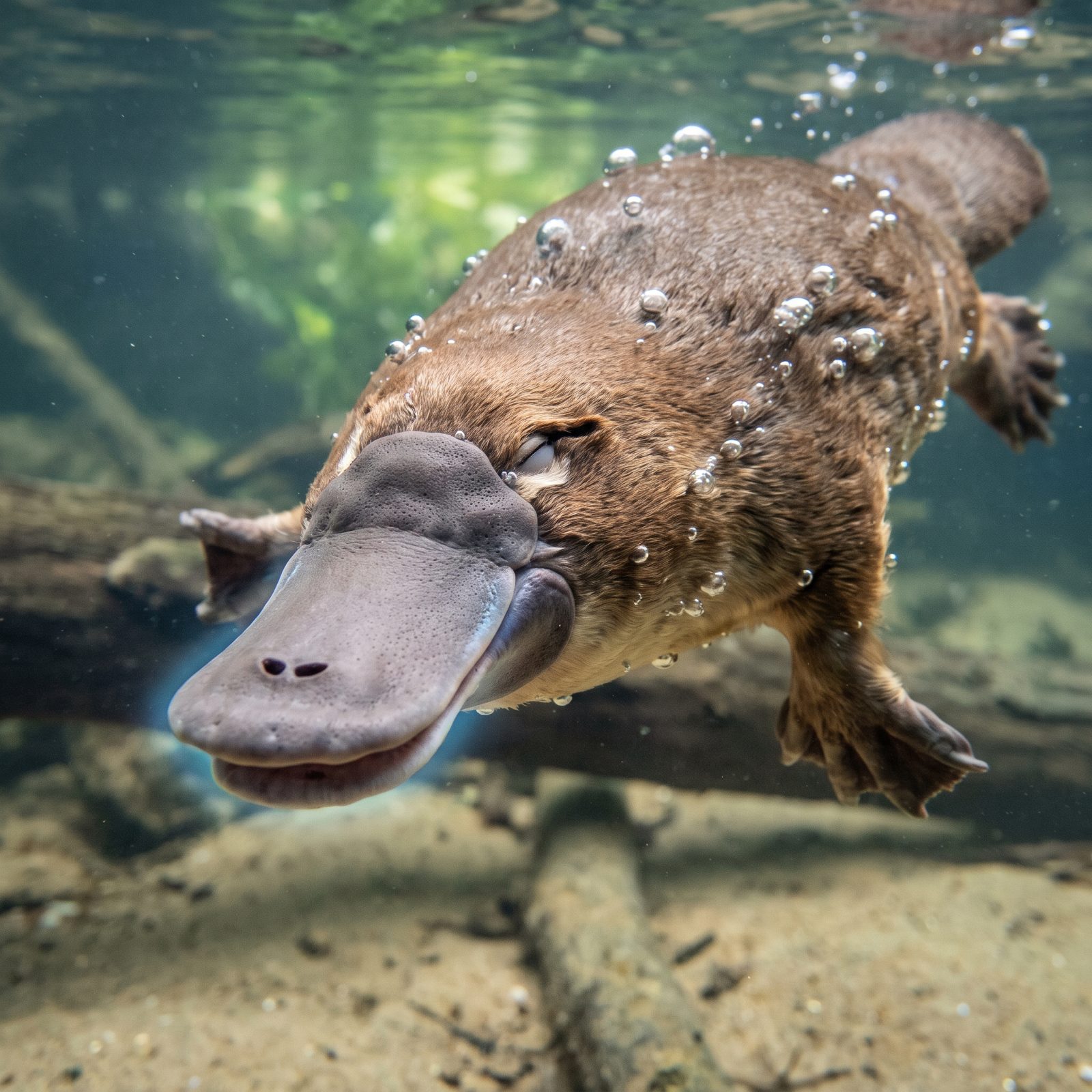
When a platypus dives, it shuts off its senses almost entirely. Eyes closed, ears sealed, only the nostrils near the tip of the bill left showing as two small holes. It hunts the bottom of a muddy river completely blind and deaf.
The bill does everything. It’s studded with tens of thousands of receptors — some reading pressure and touch, many more reading the faint electric fields thrown off by the muscles of shrimp and insect larvae. A flicking tail, a twitching leg, each leaks a tiny signal the platypus triangulates with uncanny precision.
40. The Big Brown Bat Paints the Night in Sound
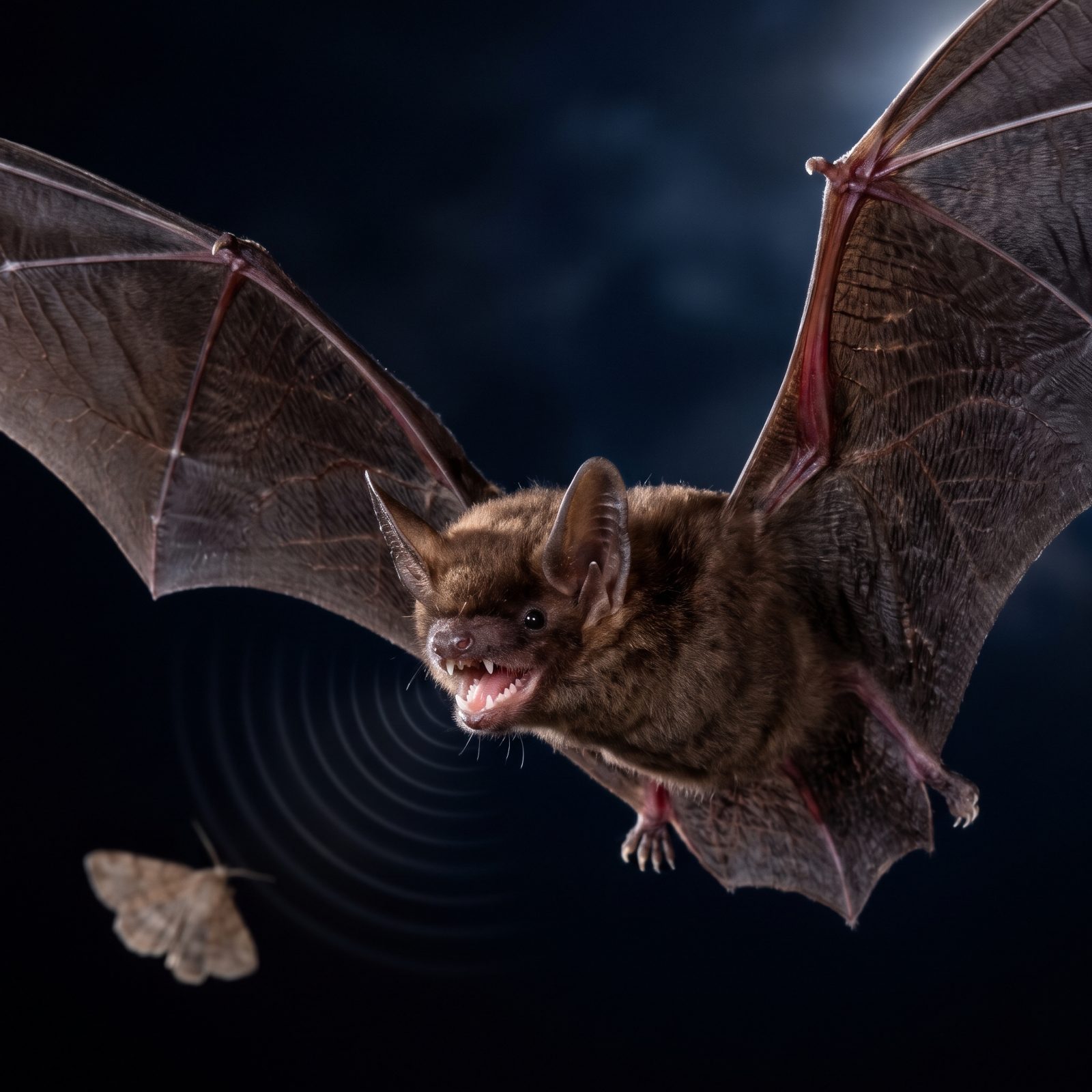
Imagine screaming into a dark room and knowing, from the echoes, where every object sits, how big it is, and which way it’s moving. Then imagine doing it fifty times a second while flying full tilt through the trees.
That’s a big brown bat on an ordinary Tuesday night. It fires out ultrasonic pulses, far above your hearing, and reads the returning echoes to build a working map of the air around it. Closing on a fleeing moth, the bat ramps up to a rapid “feeding buzz,” cranking its update rate to lock on.
Here’s the part that stops you cold. Some moths evolved ears tuned to bat calls, and a few even jam the sonar with clicks of their own. An arms race run entirely in frequencies no human will ever hear.
39. The Bottlenose Dolphin Uses Sonar to See Inside a Body

A dolphin’s sonar doesn’t stop at a surface. It goes through.
Clicks fired from the melon — the fatty bulge on its forehead — penetrate soft tissue and bounce back off bone, air pockets, and density changes inside an object. A dolphin can tell a hollow pipe from a solid one, pick out a fish buried in sand, and read the swim bladder of prey without ever laying eyes on it. Closer to the ultrasound a doctor uses than to anything we’d call hearing.
38. The Barn Owl Finds a Mouse by Sound Alone Under the Snow
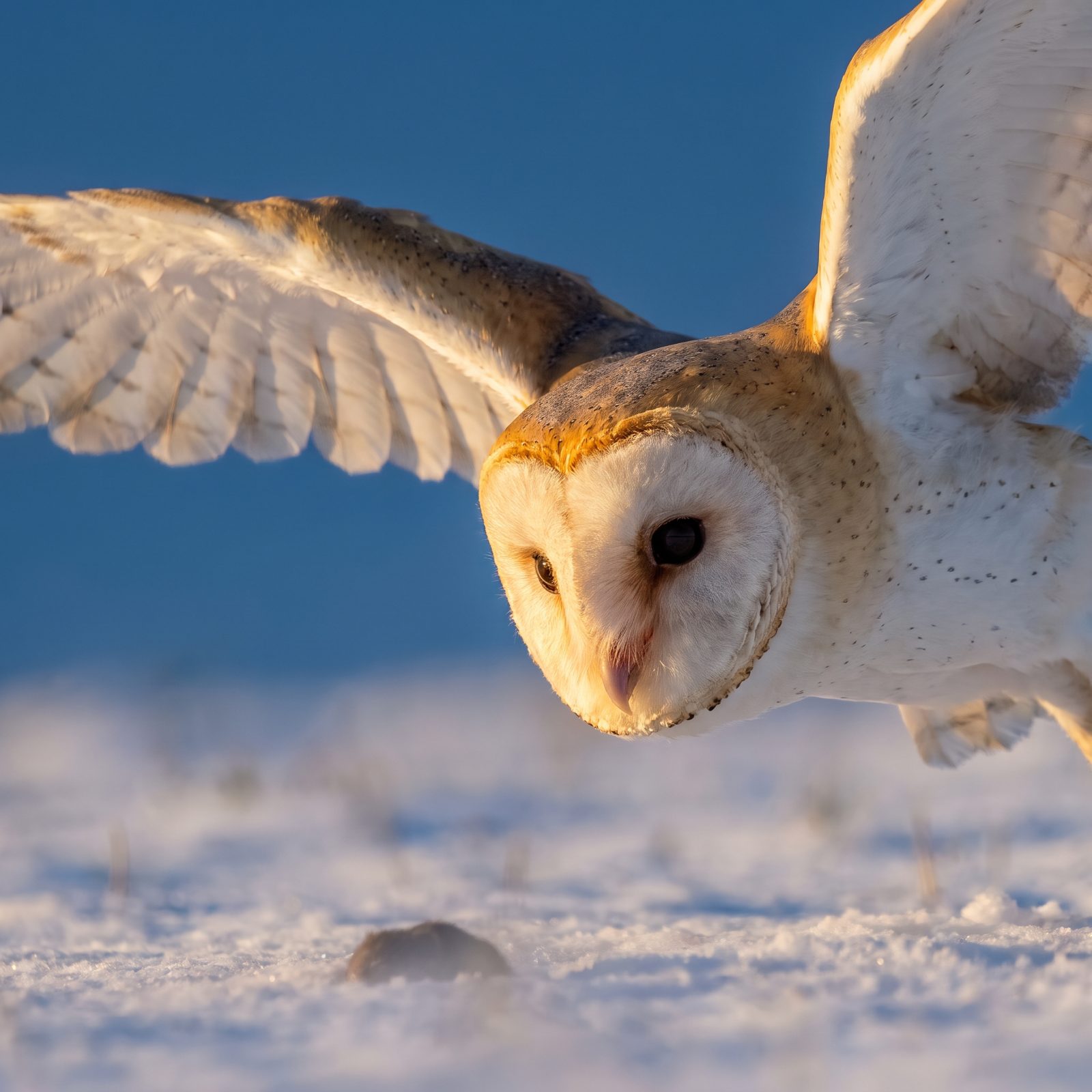
Put a barn owl in total darkness and it will still kill. Its hearing alone is that good.
The secret is asymmetry. One ear opening sits slightly higher than the other, so a sound reaches each ear at a fractionally different time and loudness, and the owl’s brain reads that difference to fix the source in both left-right and up-down space with freakish accuracy. That heart-shaped face isn’t decoration, either — it works like a radar dish, funneling the faintest rustle toward the ears.
A vole scurrying under snow or dead leaves, hidden from any eye, might as well be ringing a bell.
37. The Harbor Seal Tracks a Fish’s Invisible Trail With Its Whiskers
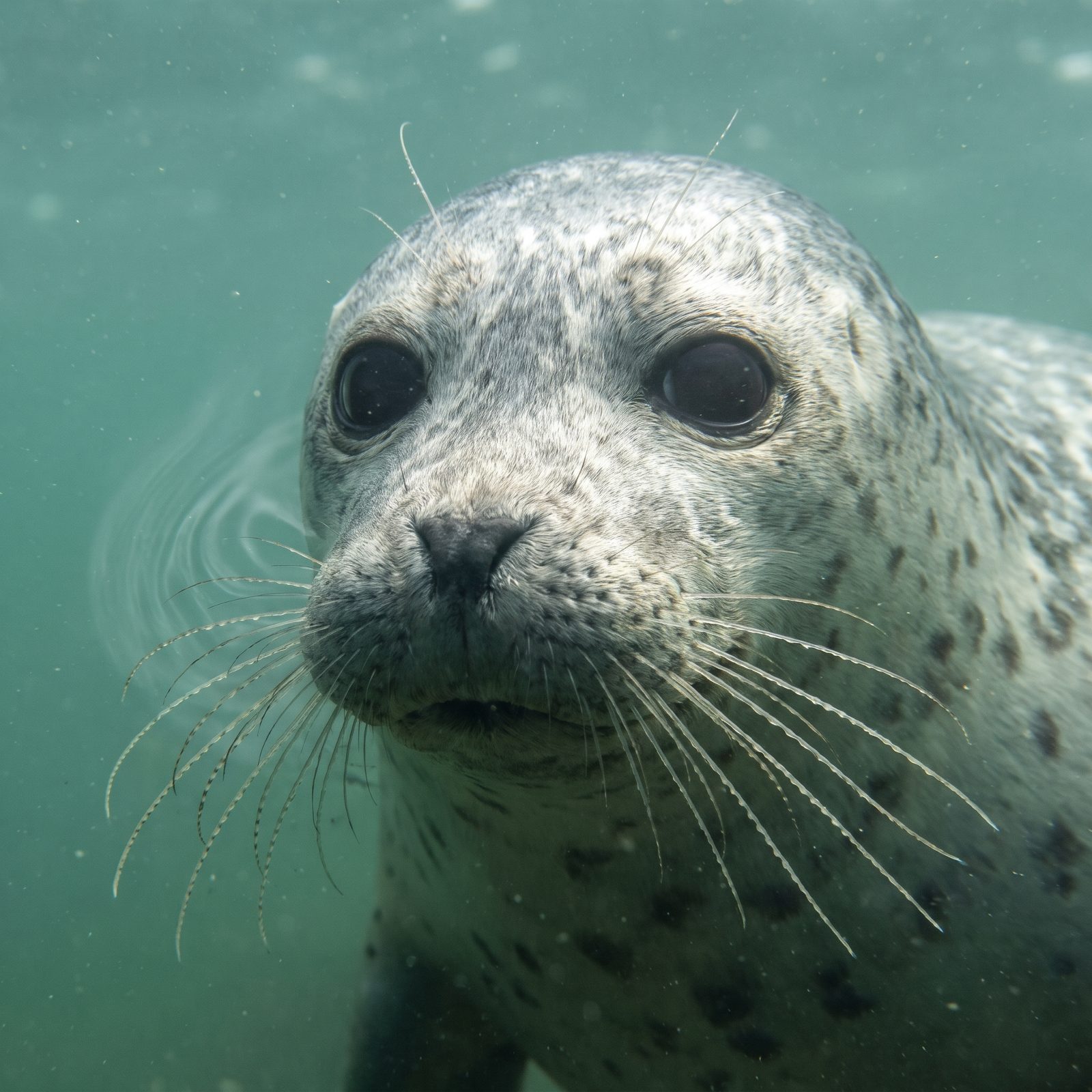
A fish that swam past thirty seconds ago leaves a trail in the water. You’d never find it. A harbor seal follows it like fresh tracks in snow.
The whiskers do the work. They aren’t simple straight hairs — each one has a wavy, beaded shape that cancels the drag of the seal’s own swimming, so the whisker stays quiet to its own motion but comes alive the instant it crosses the tiny vortices a fleeing fish stirs up. Blindfolded, in dark or cloudy water, a seal can trace the exact path a fish took and reel it in.
36. The Channel Catfish Is Essentially a Swimming Tongue
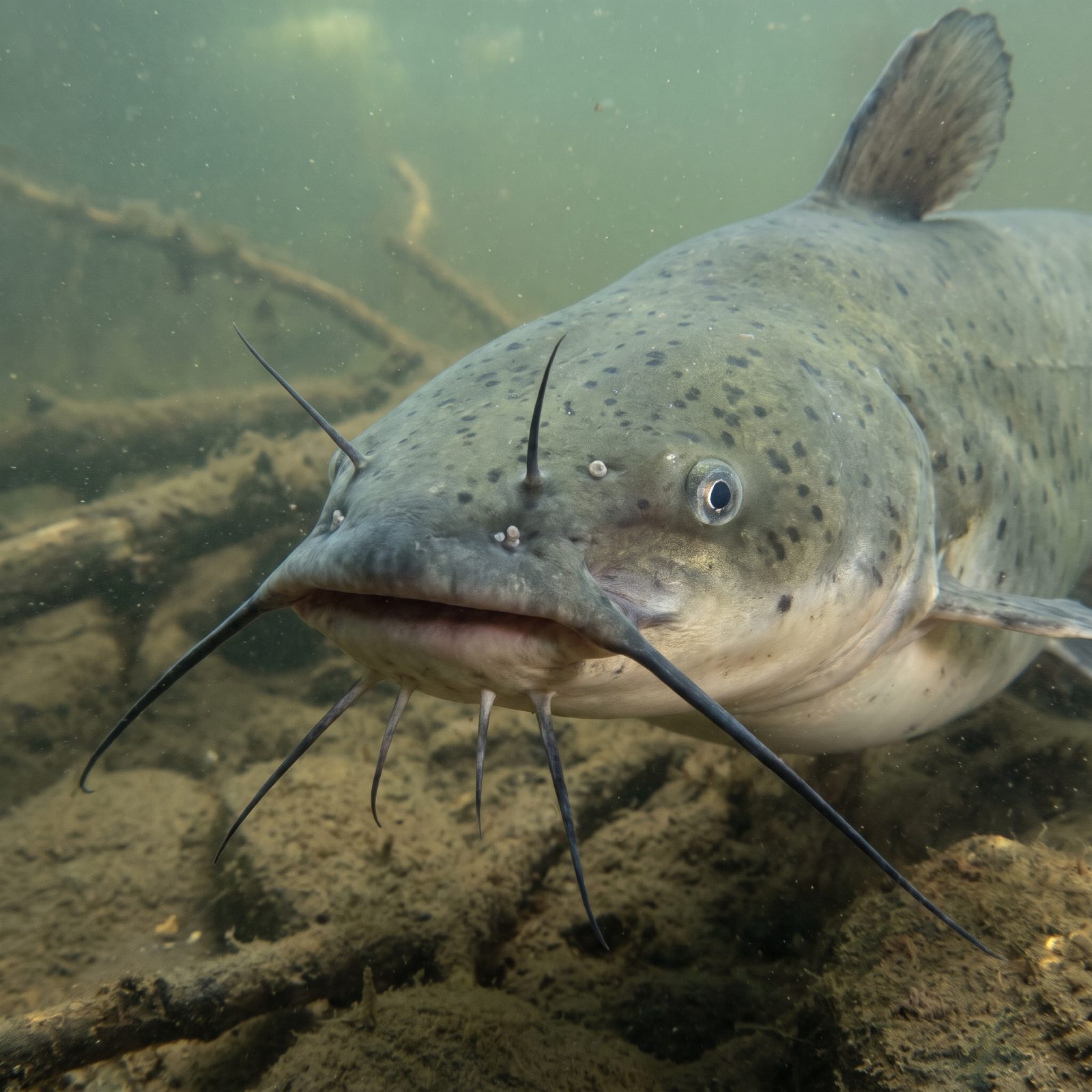
Your tongue holds a few thousand taste buds. A channel catfish carries more than a hundred thousand, and most of them aren’t in its mouth.
They’re all over its body — head to tail, every inch of skin, thickest on those long barbels. A catfish doesn’t just taste what it eats. It tastes the whole river. It can pick up a trace of food from across a dark, muddy pool and swim straight to it, following a chemical gradient the way you’d follow a smell down a hallway.
35. The Honeybee Sees the Hidden Landing Lights Painted on Flowers
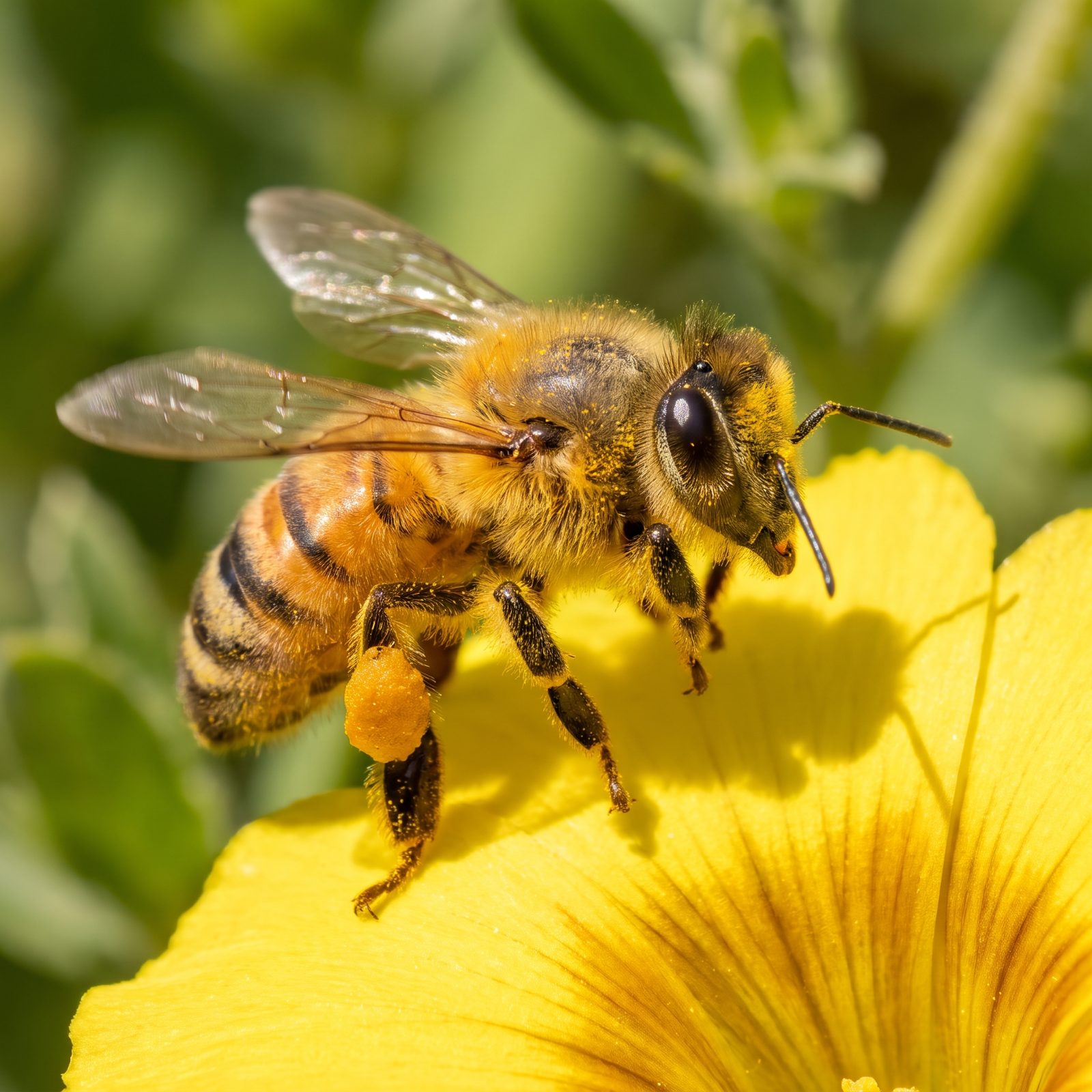
The flowers in your garden are hiding instructions, and they’re written for someone else.
Honeybees see ultraviolet, a band of light your eyes can’t register. Under UV, many flowers reveal patterns invisible to us: dark central targets, radiating lines, bullseyes pointing straight at the nectar. Botanists call them nectar guides — landing lights, aimed squarely at the pollinator’s visual range.
So that plain yellow bloom you walk past without a thought? To a bee it’s blazing with a glowing arrow that says land here. The plant and the pollinator have been running this private conversation for tens of millions of years, in a color we only learned about with machines.
34. Jumping Spider: Judging Distance With Multi-Layered Retinas
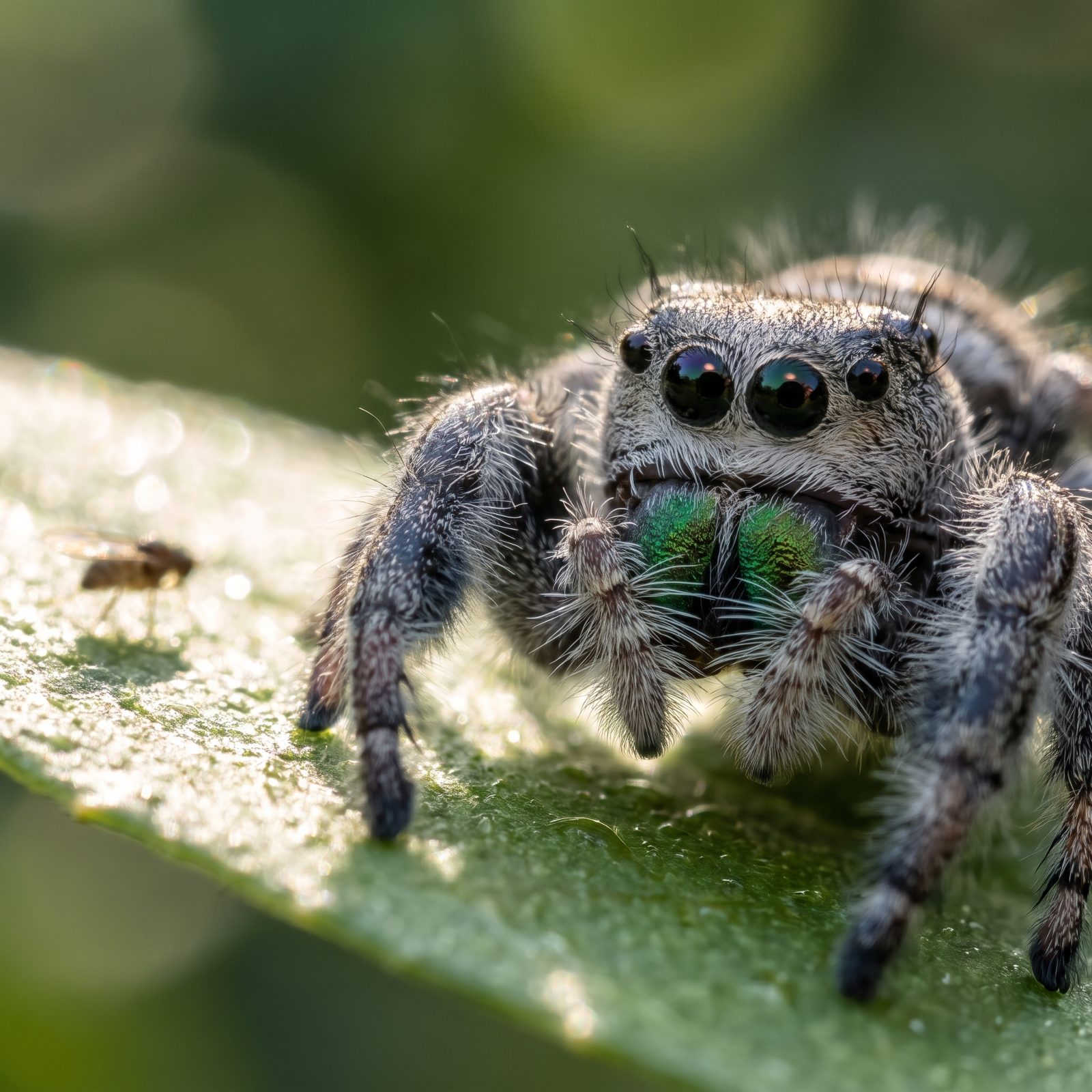
Behind those two headlight eyes sits a trick no human eye can pull off. The jumping spider’s main retinas are stacked in layers, and only one layer receives a sharp green image at a time while the others catch the same scene slightly blurred. By reading how blurry the out-of-focus layers are, the spider works out exactly how far away its prey sits, then pounces. No tape measure required.
It’s depth perception from defocus, running in a brain smaller than a grain of rice. You need two eyes and a lot of neurons to judge distance. This hunter manages it with one eye and a clever stack of film.
33. Dragonfly: Tracking Fast Prey With Nearly 360-Degree Vision
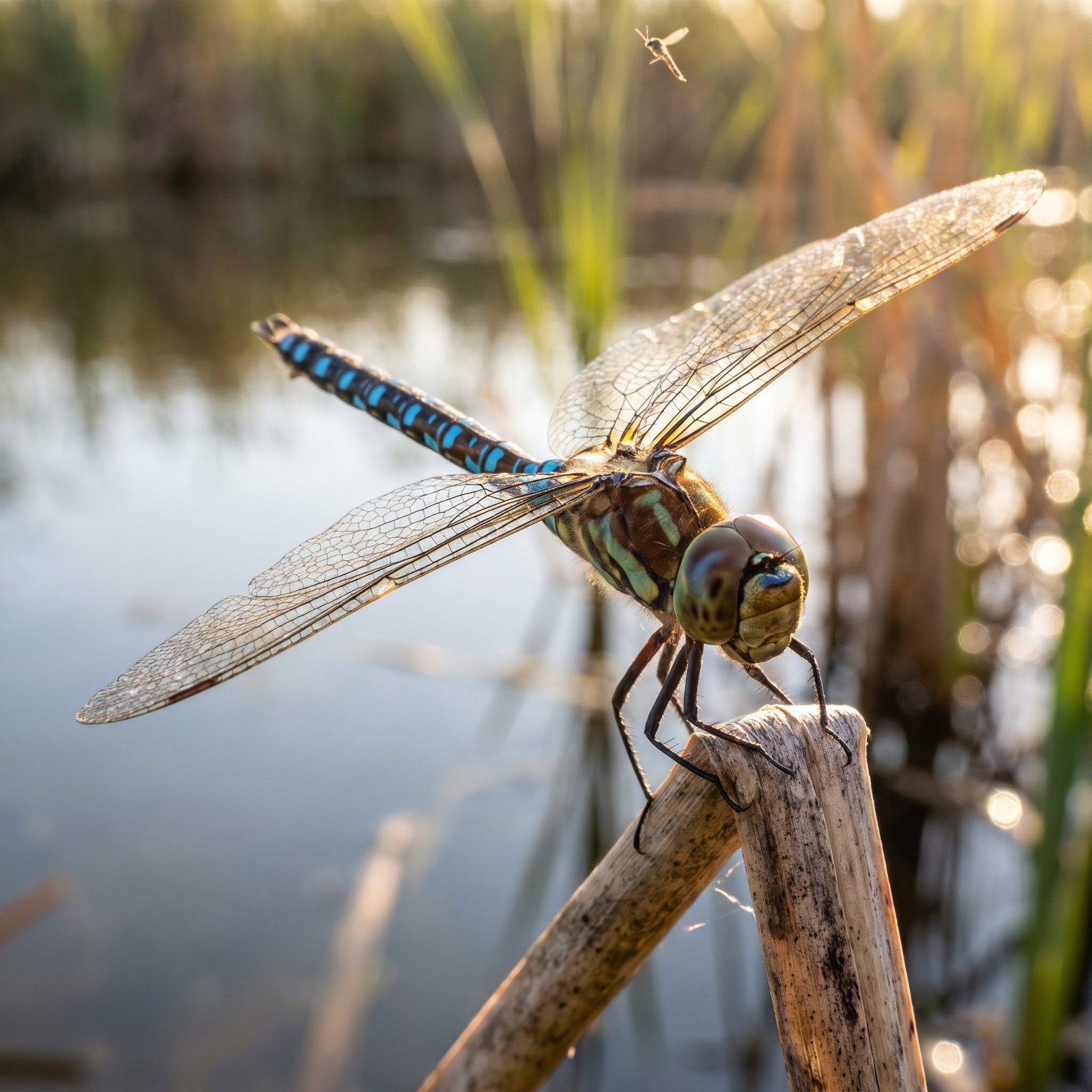
A dragonfly sees almost everything at once. Each compound eye carries thousands of lenses, and together they wrap nearly the full sphere around the insect’s head, so something sneaking up from behind is already on its radar.
But the real marvel is speed. A dragonfly’s eyes refresh fast enough that a flickering movie which looks smooth to you would read like a slideshow of separate frames to it. That flicker rate is exactly why it can lock onto a mosquito mid-flight and intercept it rather than chase it, predicting where the prey will be. Its hunting success is extraordinary — lions, by comparison, miss far more often than they’d like you to think.
32. Giant Squid: Spotting Distant Shadows With Dinner-Plate Eyes
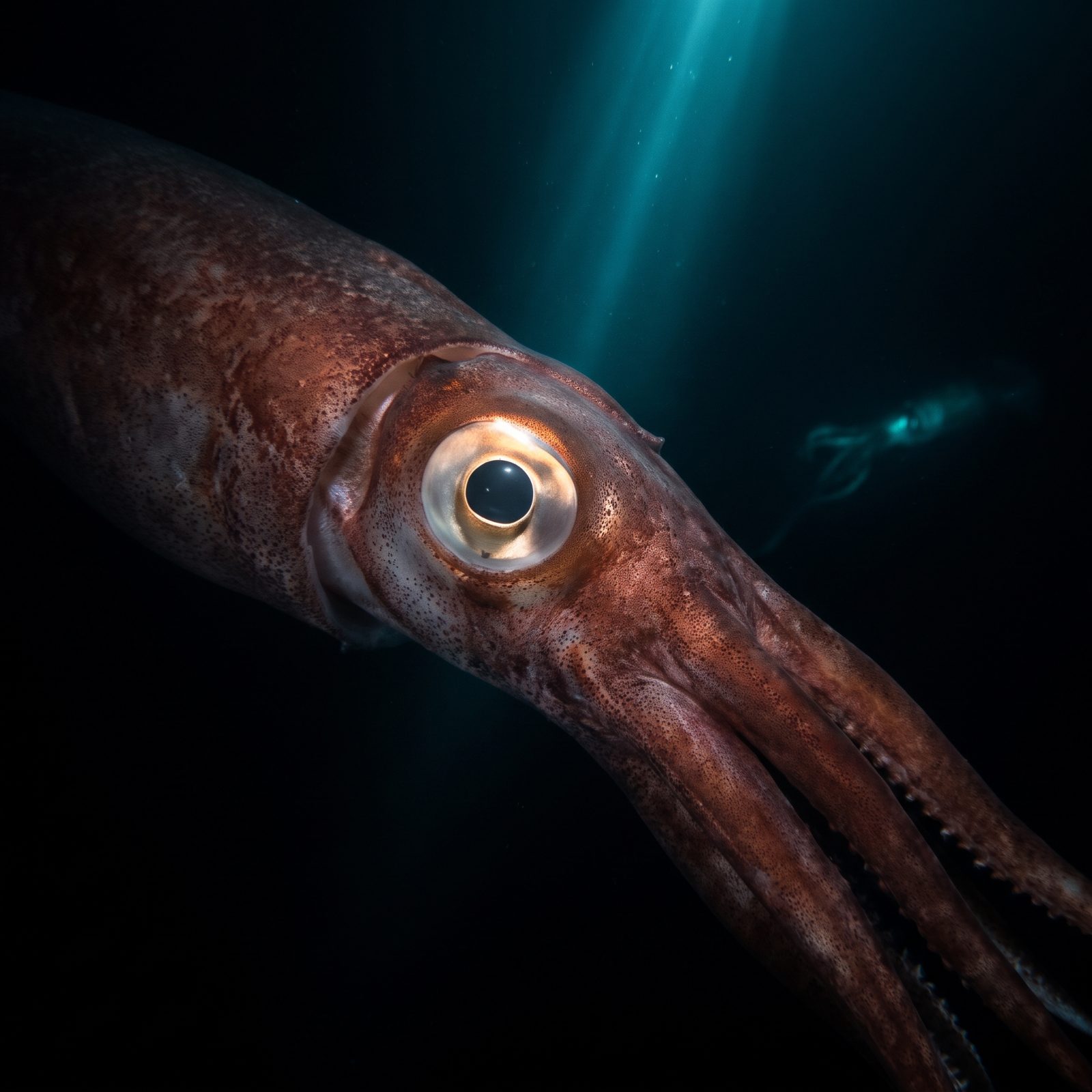
The giant squid owns the largest eyes of any animal alive, each one roughly the width of a dinner plate. Why grow something that heavy and that expensive to run in a world with almost no light?
The leading answer is one specific threat: the sperm whale. A whale pushing through the deep disturbs tiny glowing plankton, lighting up a faint, drifting cloud of bioluminescence around its body. A squid with monstrous eyes can catch that glow from a distance and start running. The eye isn’t for finding food. It’s for seeing death coming through the dark.
31. Barreleye Fish: Staring Up Through a See-Through Head
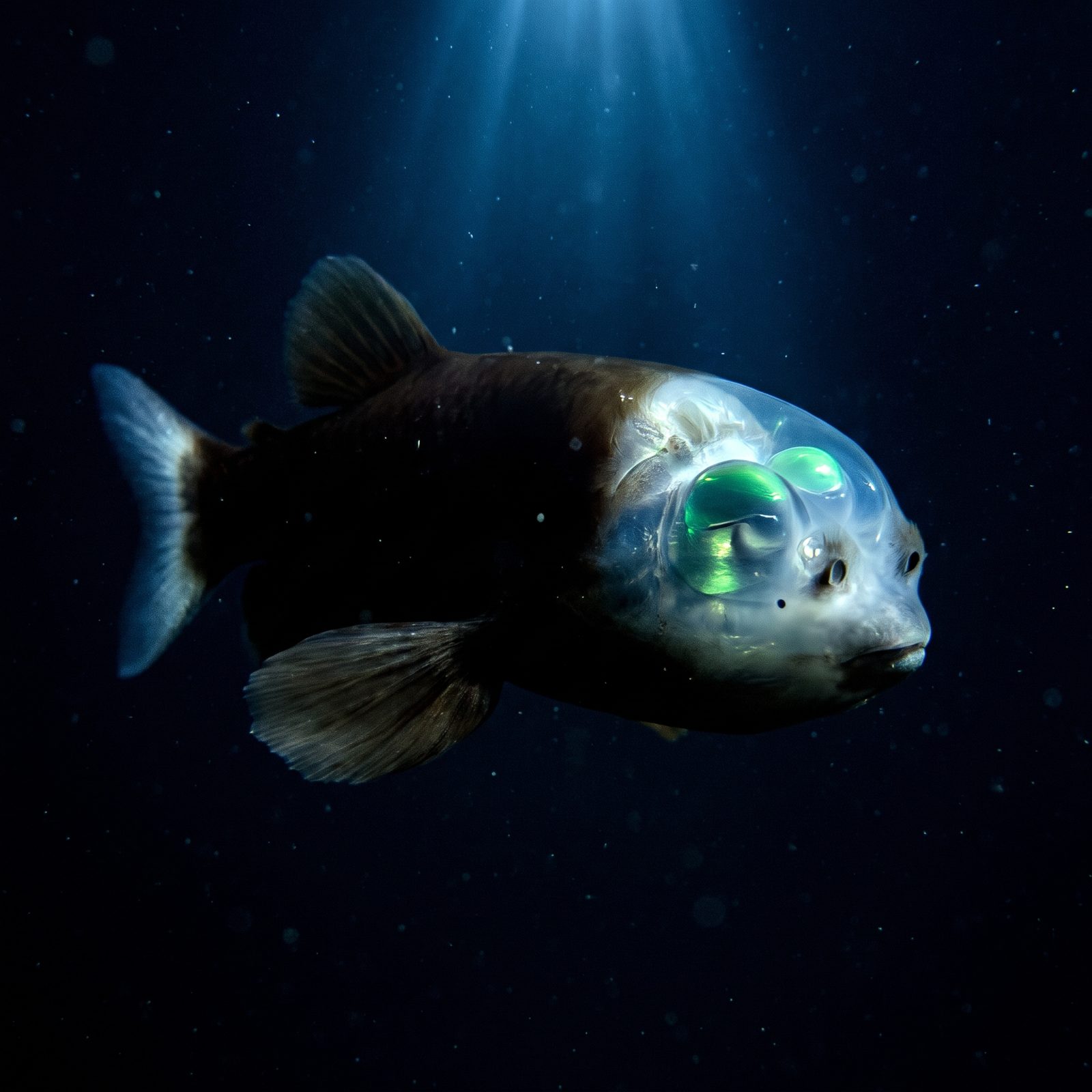
This fish looks like a design mistake and turns out to be a masterpiece. The barreleye’s eyes are tubular, pointing straight up through a dome of transparent flesh so it can scan the faintly lit water overhead for the silhouettes of prey drifting past.
For years, scientists assumed those upward eyes were locked in place, leaving the fish blind to anything in front of it. Then submersible footage showed the eyes can actually rotate forward inside that clear head. Tilt up to feed, and the prey stays in sight the whole way. And those two dark spots on its face that everyone mistakes for eyes? Nostrils.
30. Scallop: Watching for Trouble With Hundreds of Mirror Eyes
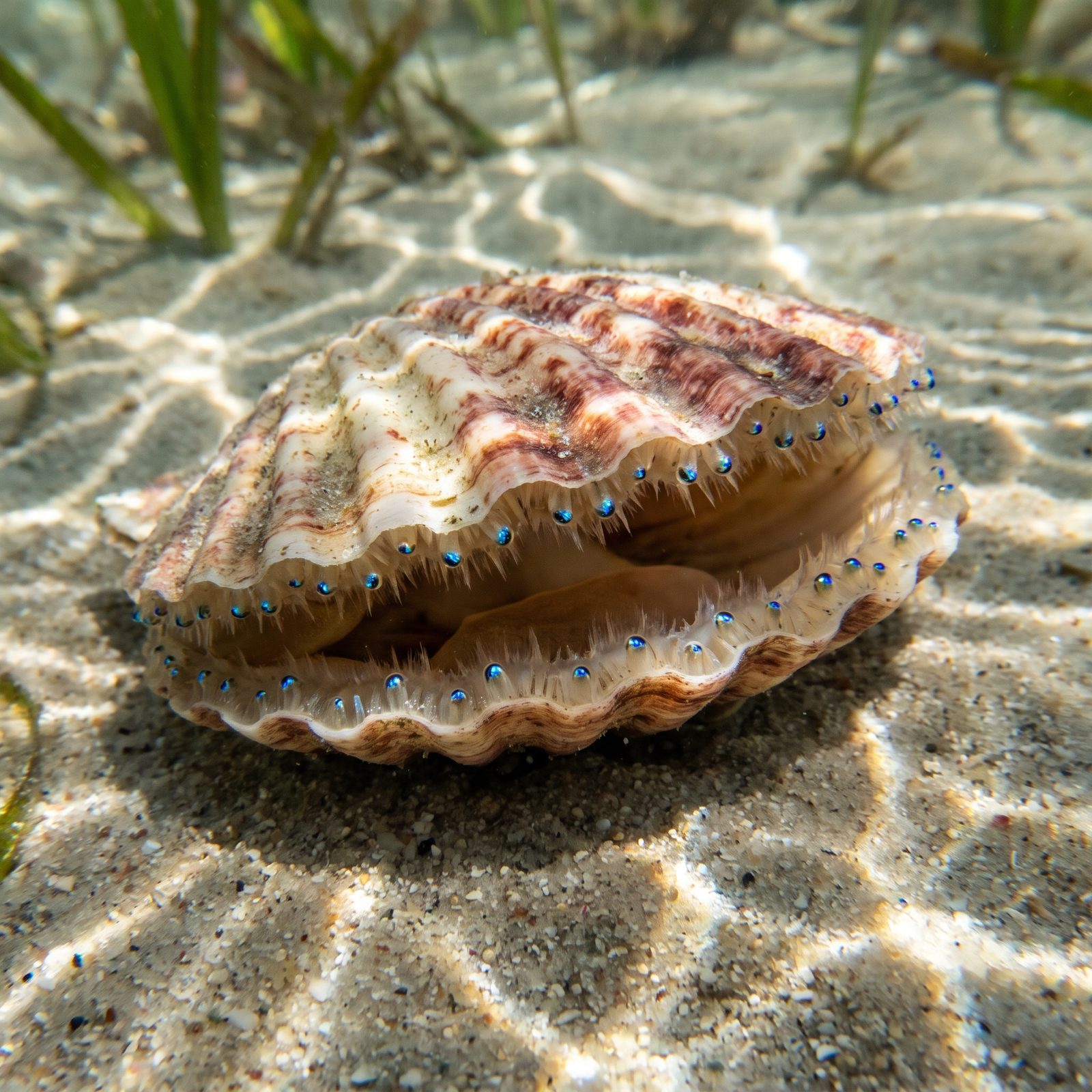
A scallop can line the edge of its shell with up to 200 eyes, each one glinting blue. That alone is strange enough. How they work is stranger.
Instead of focusing light with a lens like ours, each eye uses a curved mirror at the back, built from stacked crystals of guanine, that bounces light onto twin retinas. Same optical principle as a reflecting telescope — running inside a shellfish with no brain to speak of. It can’t see fine detail. But it can catch moving shadows and dark edges, and that’s enough to clap the shell shut and jet away before a predator closes in.
29. Four-Eyed Fish: Seeing Above and Below the Waterline at Once
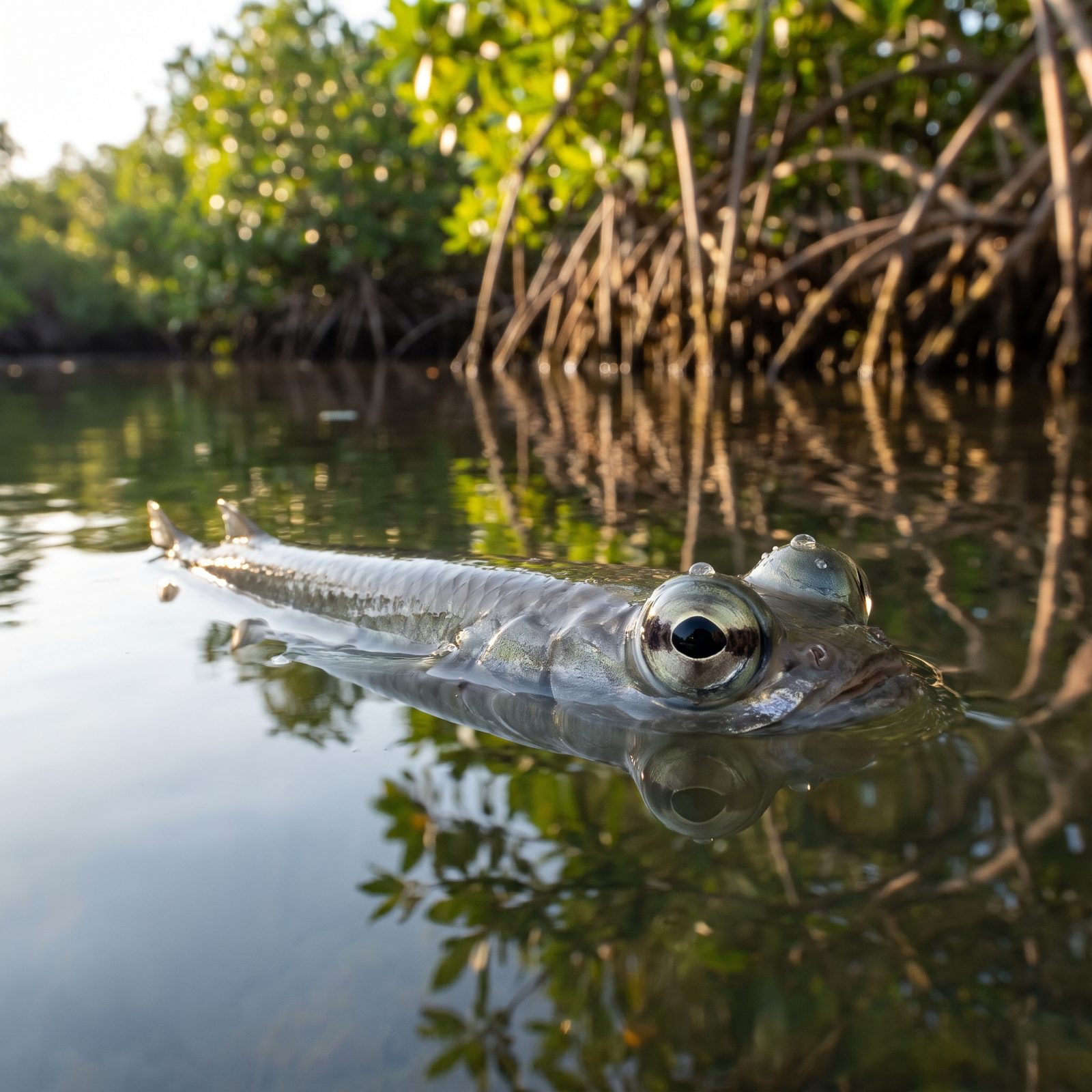
Technically it has two eyes. But each one bulges high on the head, with its pupil split in two by a band of tissue. The fish cruises right at the surface, eyes split right at the waterline, body submerged.
Air and water bend light very differently, which should throw the vision hopelessly out of focus. The four-eyed fish gets around it with an egg-shaped lens that focuses light differently for the upper and lower halves of each eye. So in the same instant it scans the sky for birds and the water for food — two worlds watched at once, no blinking required.
28. Sea Urchin: Sensing Light With Its Entire Body
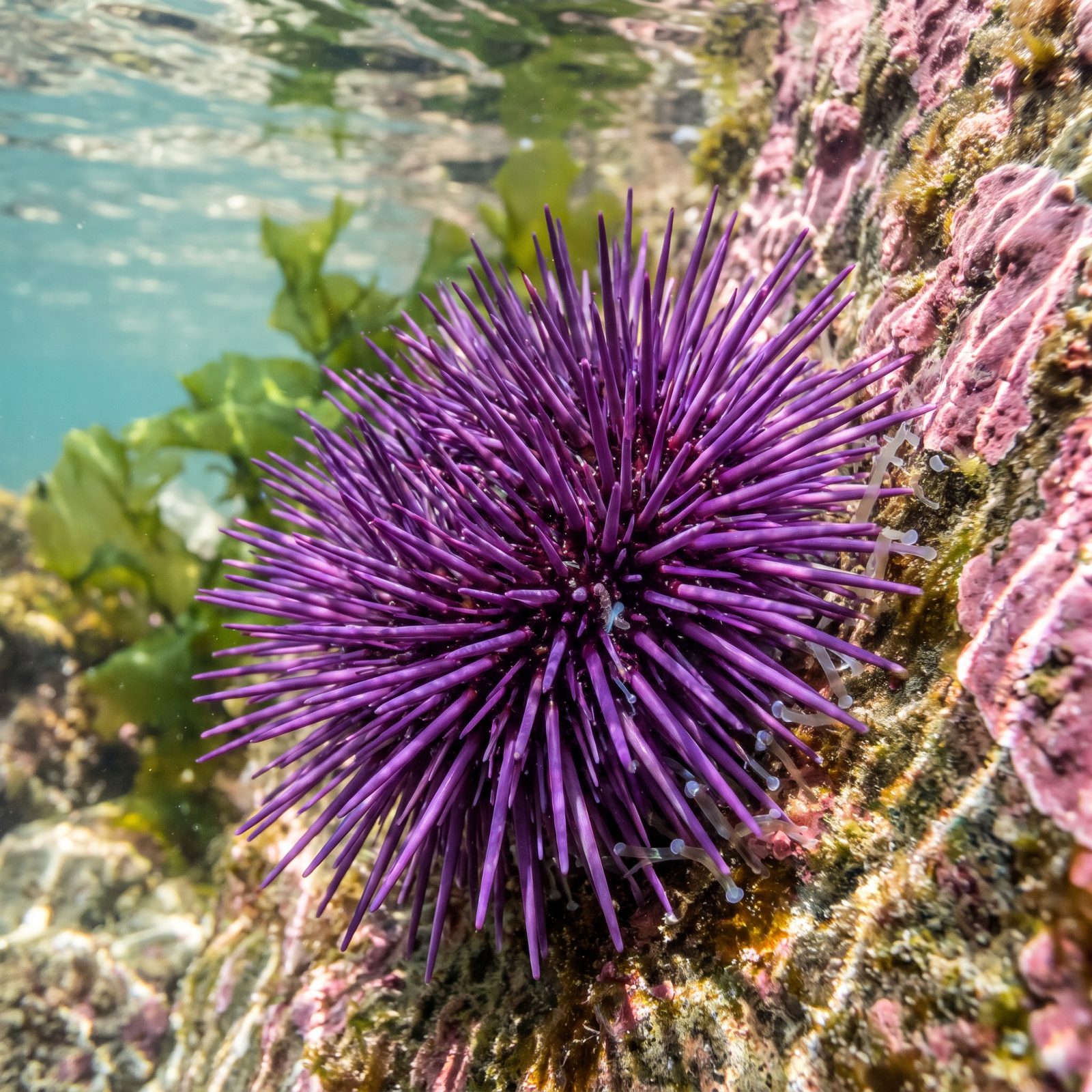
No eyes. No brain. And yet a sea urchin reacts to shadows and shuffles toward dark crevices to hide.
The trick is that light-sensitive cells are scattered all over its body, clustered around the bases of its spines and tube feet. Researchers suspect the whole animal functions as one giant compound eye, the spines acting like a screen that blocks light from certain directions and tells the urchin where a shadow is coming from. It’s vision with no single organ you could point to and call an eye. The animal is the eye.
27. Elephant Hawkmoth: Seeing Color on Nights That Look Black to Us
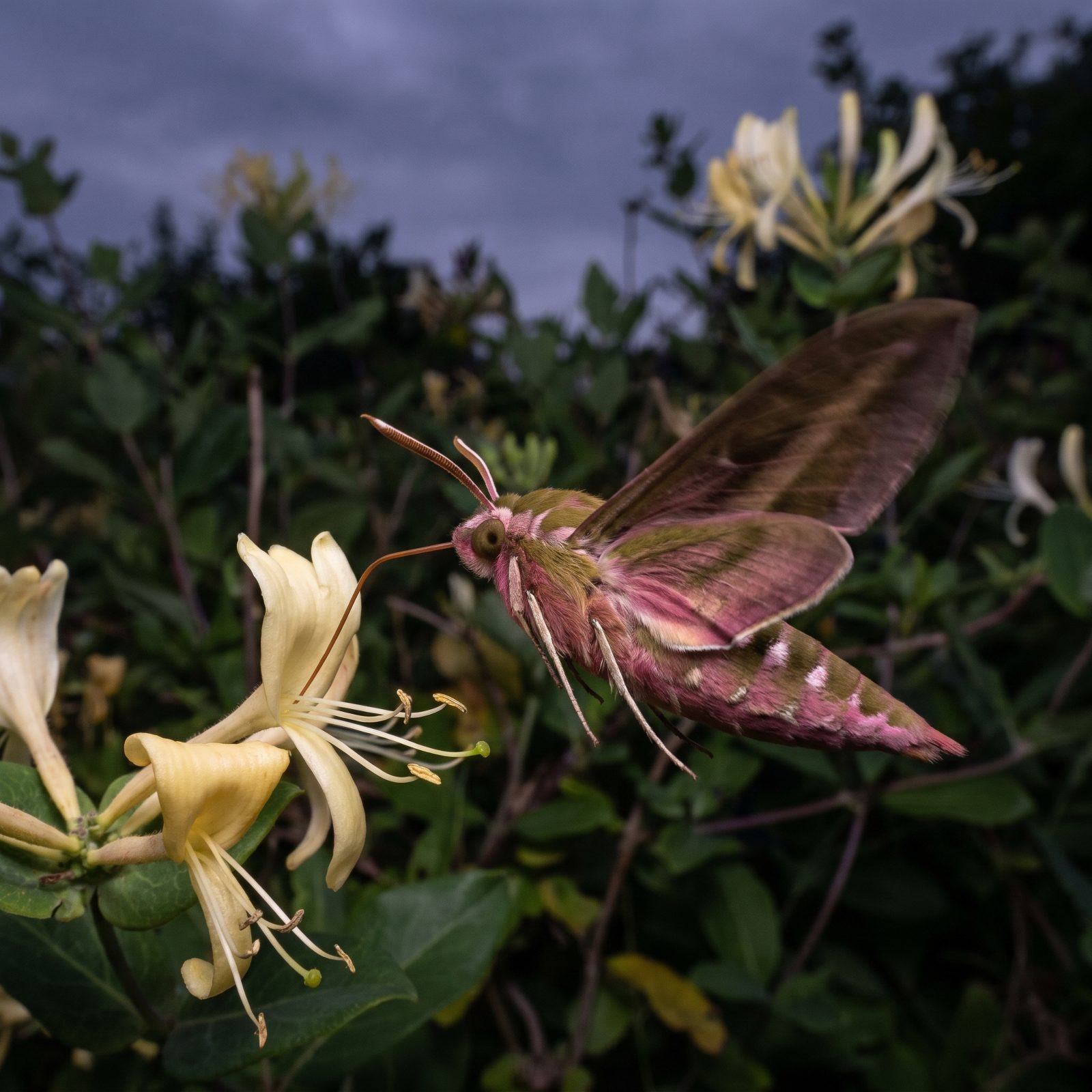
On a moonless night, when your eyes have given up on color and the garden has gone grey, this moth can still pick the pink of one flower from the yellow of another.
Classic experiments showed this moth distinguishes colors in light so dim a human sees only shades of grey. Its eyes gather and pool photons across many cells, trading a little sharpness for the ability to read hue in near-darkness. It flies to the right blooms by color alone, in conditions where you’d be feeling your way to the back door.
26. Deep-Sea Dragonfish: Hunting With a Private Red Searchlight
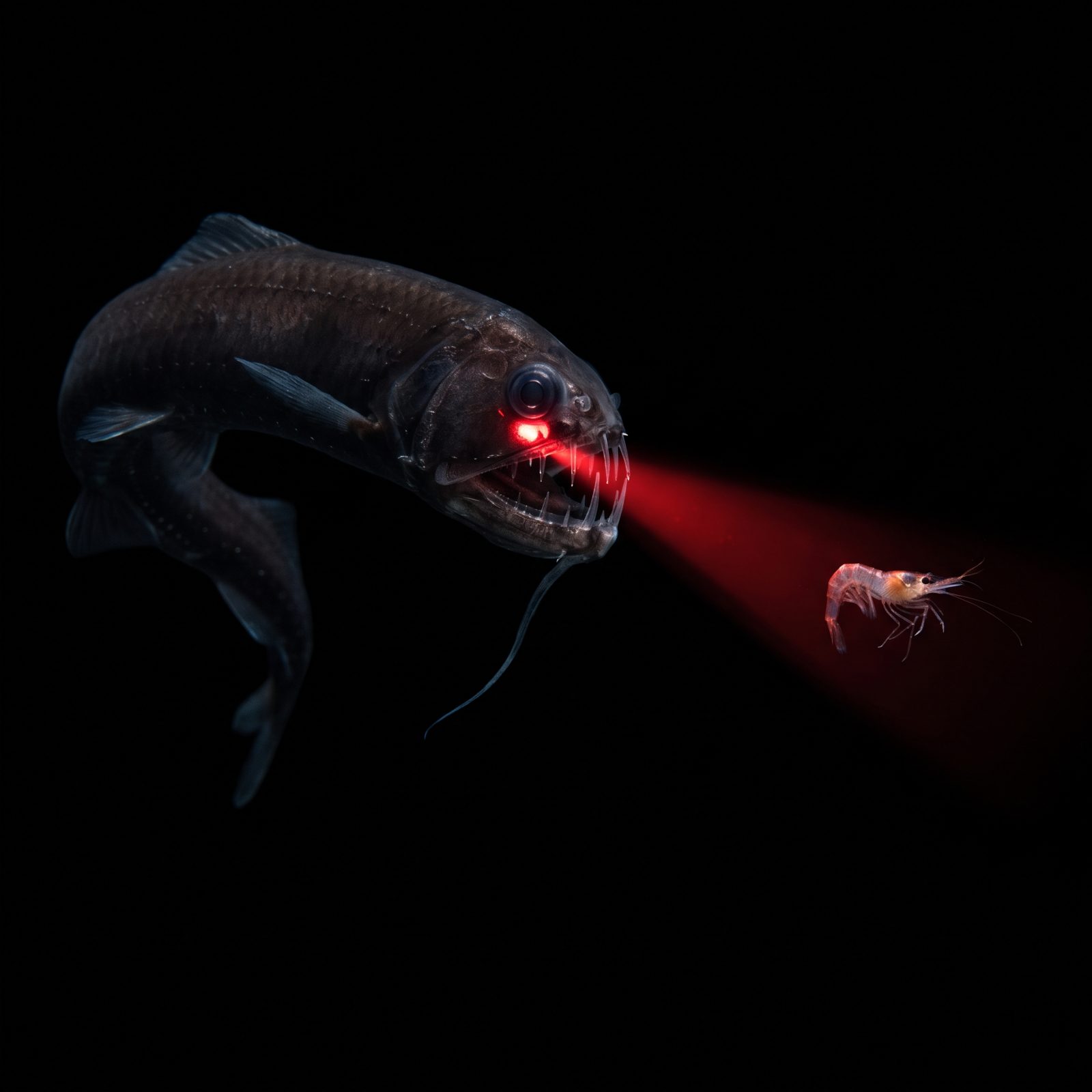
Almost everything in the deep sea makes blue-green light, and almost everything down there is blind to red. The dragonfish turned that blind spot into a weapon.
It carries a light organ under its eye that produces a red beam, and it’s one of the rare few that can actually see that red. So it floods its prey with a color no other animal can perceive — a hunter in night-vision goggles, working a pitch-dark room full of people who can’t see infrared. The prey never knows it’s been spotted. By the time it matters, the teeth are already closing.
25. Loggerhead Sea Turtle: Reading Earth’s Magnetic Field Like a Map
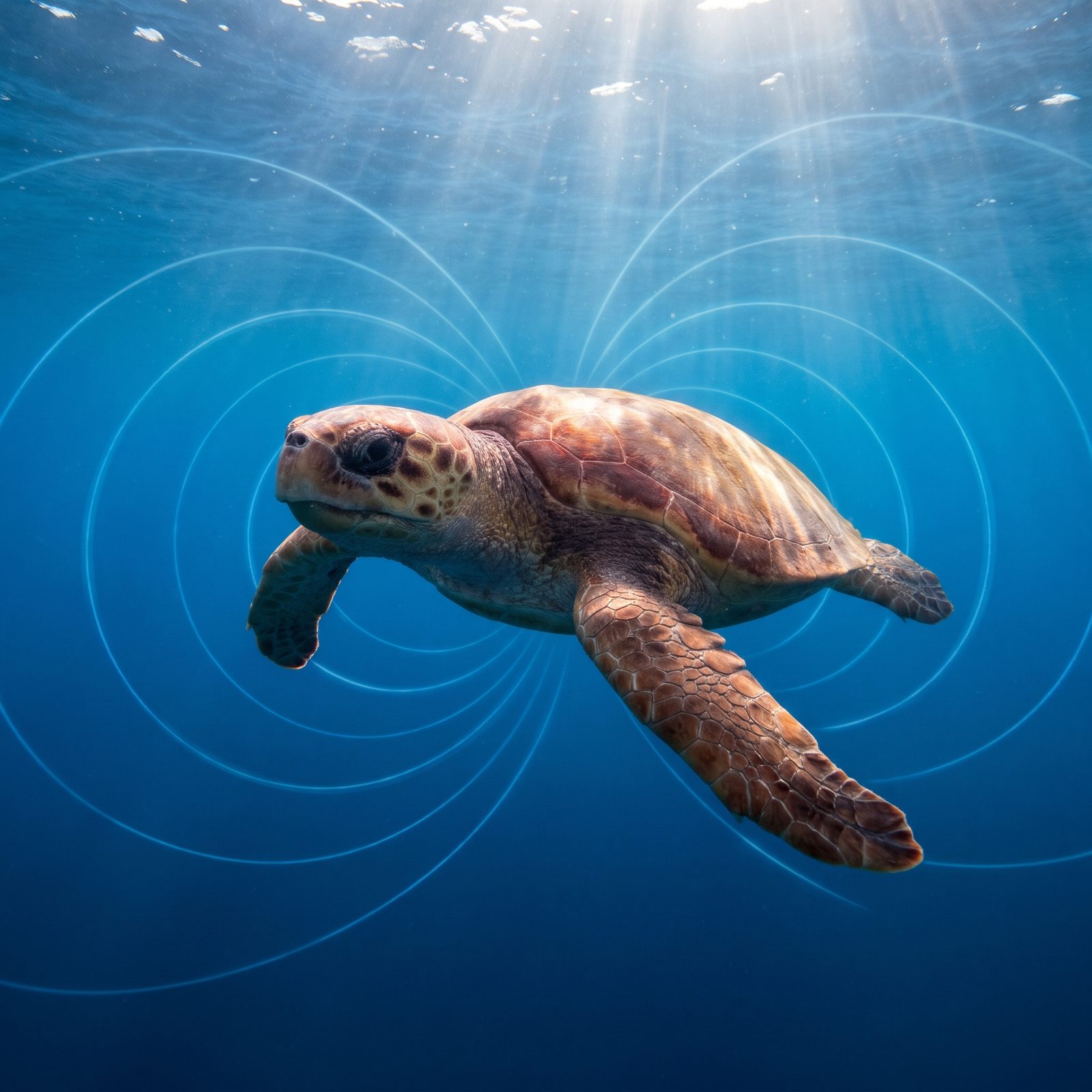
Hatch on a Florida beach, swim out into the Atlantic, loop thousands of miles around the whole ocean basin, and years later come back to nest within sight of where you were born. No map, no coastline to follow, no one to ask. How?
Loggerheads read the Earth’s magnetic field. Different patches of ocean carry their own magnetic signature — a unique combination of field intensity and angle — and the turtles sense both, carrying a built-in GPS tuned to the planet itself.
Here’s the unsettling part. Lab tests suggest a hatchling inherits an approximate magnetic map before it has ever been anywhere. It’s born already knowing which way the ocean turns.
24. The Dung Beetle That Steers by the Glow of the Milky Way
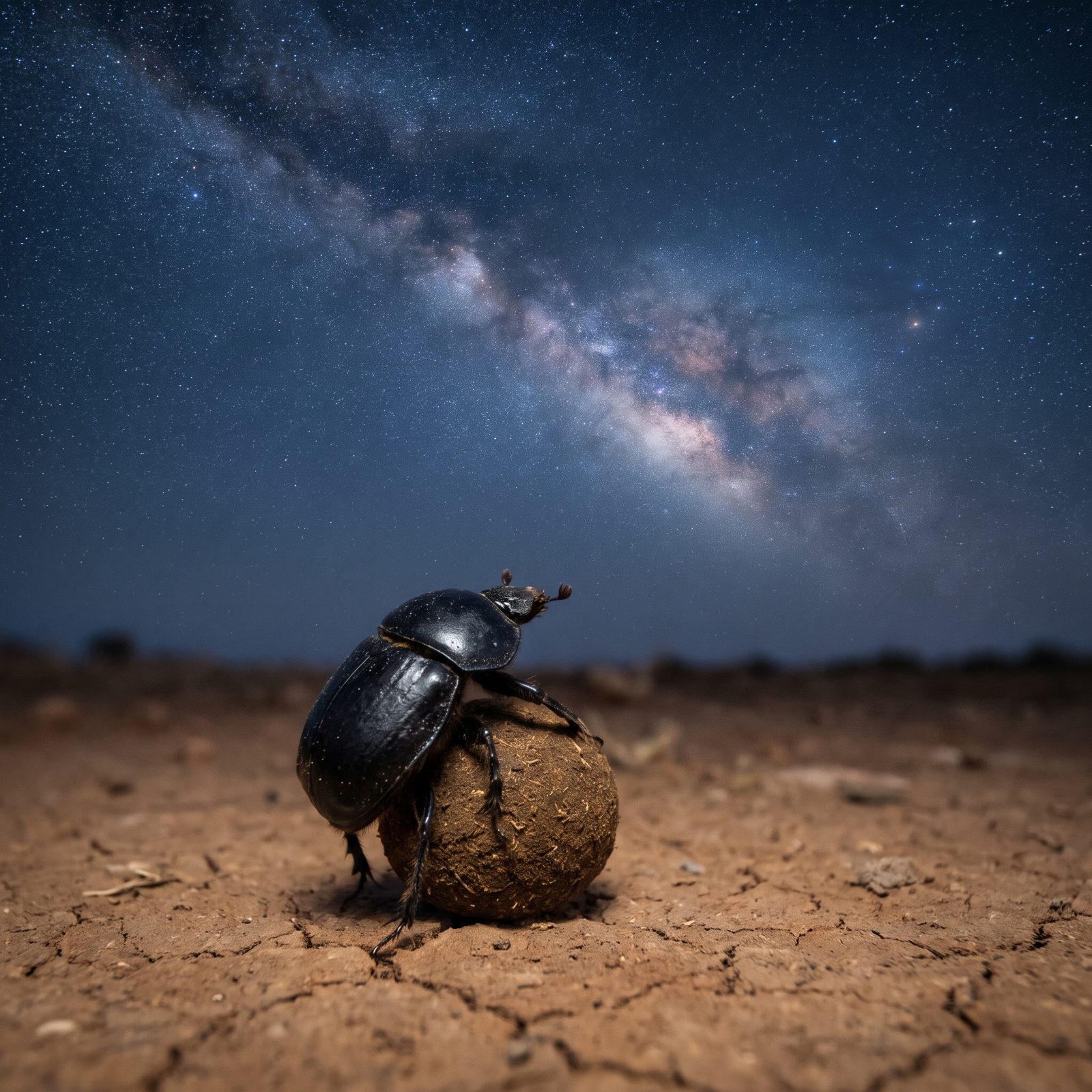
A beetle rolling a ball of dung does not look like an animal doing advanced navigation. It is.
When a dung beetle grabs its prize, it has to flee the pile in a straight line before some bigger beetle muscles in and robs it blind. Curve back toward the heap and you lose everything. So it climbs on top of the ball, does a little rotating dance to snapshot the sky, then rolls dead straight away from the chaos.
On moonless nights, with no sun and no moon to guide it, the beetle reads the faint smear of the Milky Way itself. Researchers confirmed this by capping beetles with tiny cardboard hats to block out the sky — hatted, they just wandered in circles. Our eyes can barely pick the galaxy out on a good night. A beetle the size of a cherry treats it like a highway sign.
23. The Atlantic Salmon That Smells Its Way Back to the Exact Stream It Was Born In
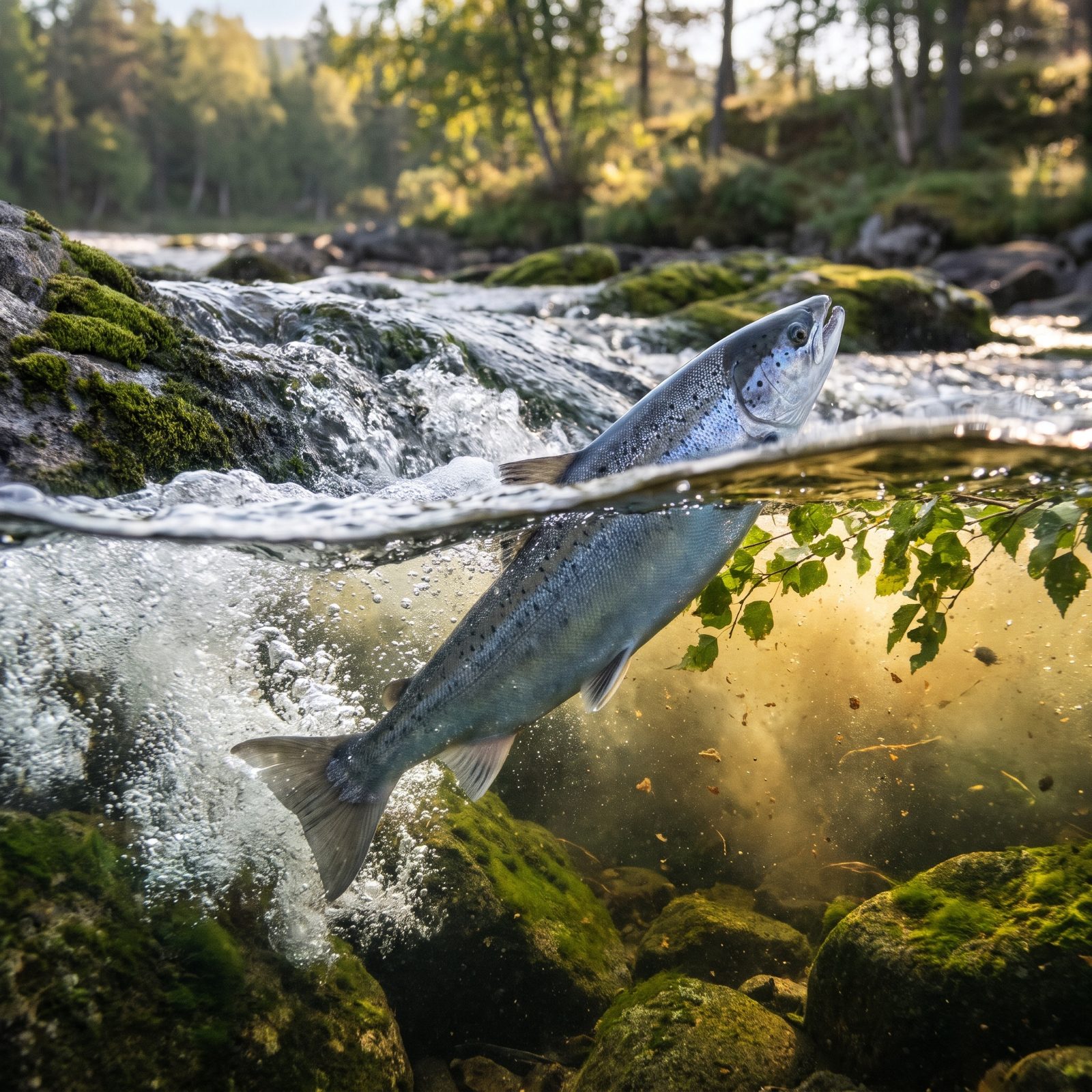
A salmon can find one specific creek out of thousands using nothing but its nose.
After years at sea — sometimes a thousand miles out — an adult salmon turns back toward land and threads its way to the exact gravel bed where it hatched. The homing is so precise that fish from neighboring tributaries rarely mix up their doorsteps.
The trick is olfactory imprinting. As juveniles, salmon memorize the chemical bouquet of their home water: the particular mix of minerals, plant compounds, and soil leaching off that one watershed. Decades of research point to this scent memory, locked in early, as the final guidance system that carries them home to spawn. Foul up a river’s chemistry and a returning fish can end up lost at the front door it has traveled an ocean to reach.
22. The Wandering Albatross That Sniffs Out Food Across Open Ocean
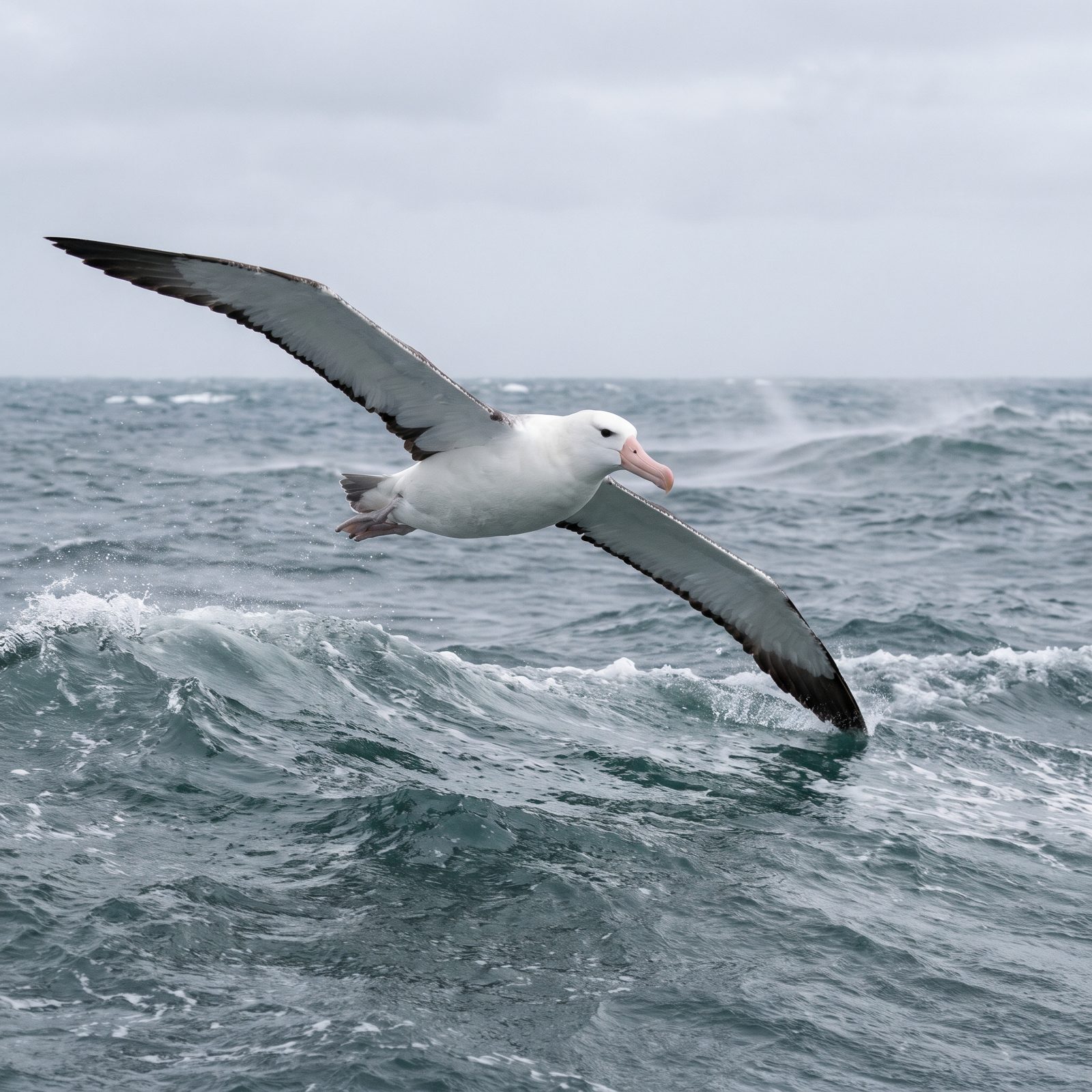
The open ocean looks like a desert to us. To an albatross, it’s dotted with scent beacons.
Wandering albatrosses cover distances that defy belief, circling the entire Southern Ocean after patchy, unpredictable food. They find it partly by following airborne trails of dimethyl sulfide, a compound released where plankton is being grazed and where their prey tends to cluster. The bird reads the wind like a menu.
Those tube-shaped nostrils running along the top of the bill give the game away. They funnel and sample air with a sensitivity our own noses can’t come close to, and a bird can lock onto a scent plume and track it upwind to the source from miles off.
21. The Turkey Vulture That Detects Death From a Thousand Feet Up
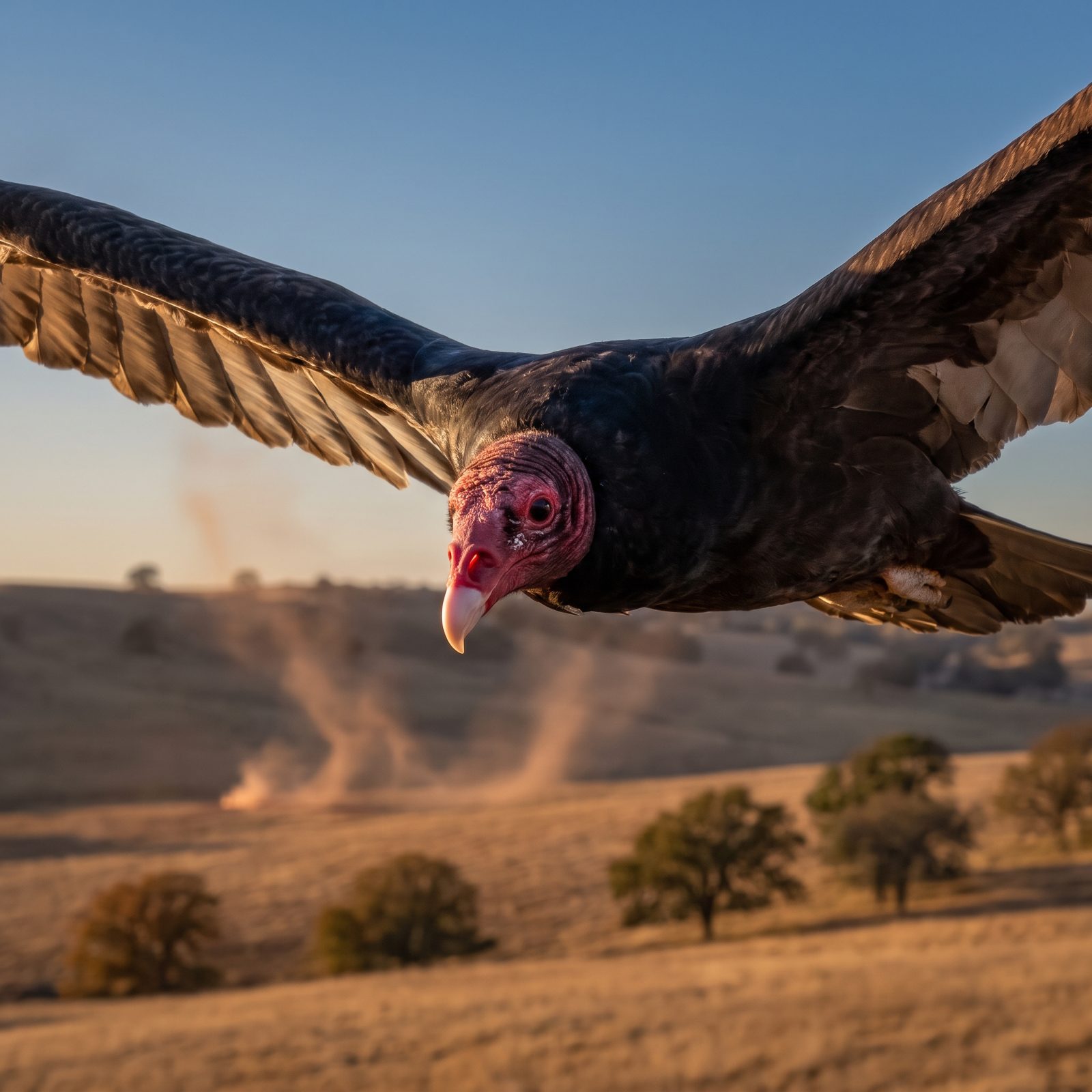
Most birds have a feeble sense of smell. The turkey vulture is the glaring exception, and it built a whole lifestyle around that nose.
Soaring high above forest and field, a turkey vulture picks up the faint gases of early decay rising from carrion hidden under a canopy so dense no eye could ever spot it. The scent that tips it off is largely ethyl mercaptan — the same stuff added to natural gas so you can smell a leak. Gas companies have literally tracked vultures circling over pipeline breaks to find where their lines were cracked.
Its cousin the black vulture, cursed with a weaker nose, often just watches for turkey vultures to locate the meal, then crashes the party and shoves in. One bird smells. The other freeloads.
20. The Kiwi That Hunts Underground With Nostrils on the Tip of Its Bill

Nearly every bird on Earth keeps its nostrils at the base of the bill, up near the face. The kiwi stuck them out at the very tip.
This flightless New Zealander is close to blind and hunts in the dark, jabbing its long bill into soft forest soil after earthworms, grubs, and larvae it cannot possibly see. Nostrils at the end mean it can smell prey while the bill is buried, sniffing its way underground toward a wriggling worm it will never lay eyes on.
It’s one of the few birds with a nose good enough to feed itself blind. Evolution handed the kiwi a sense of smell and quietly repossessed almost everything else.
19. The Male Silkmoth That Finds a Mate From a Single Molecule on the Breeze
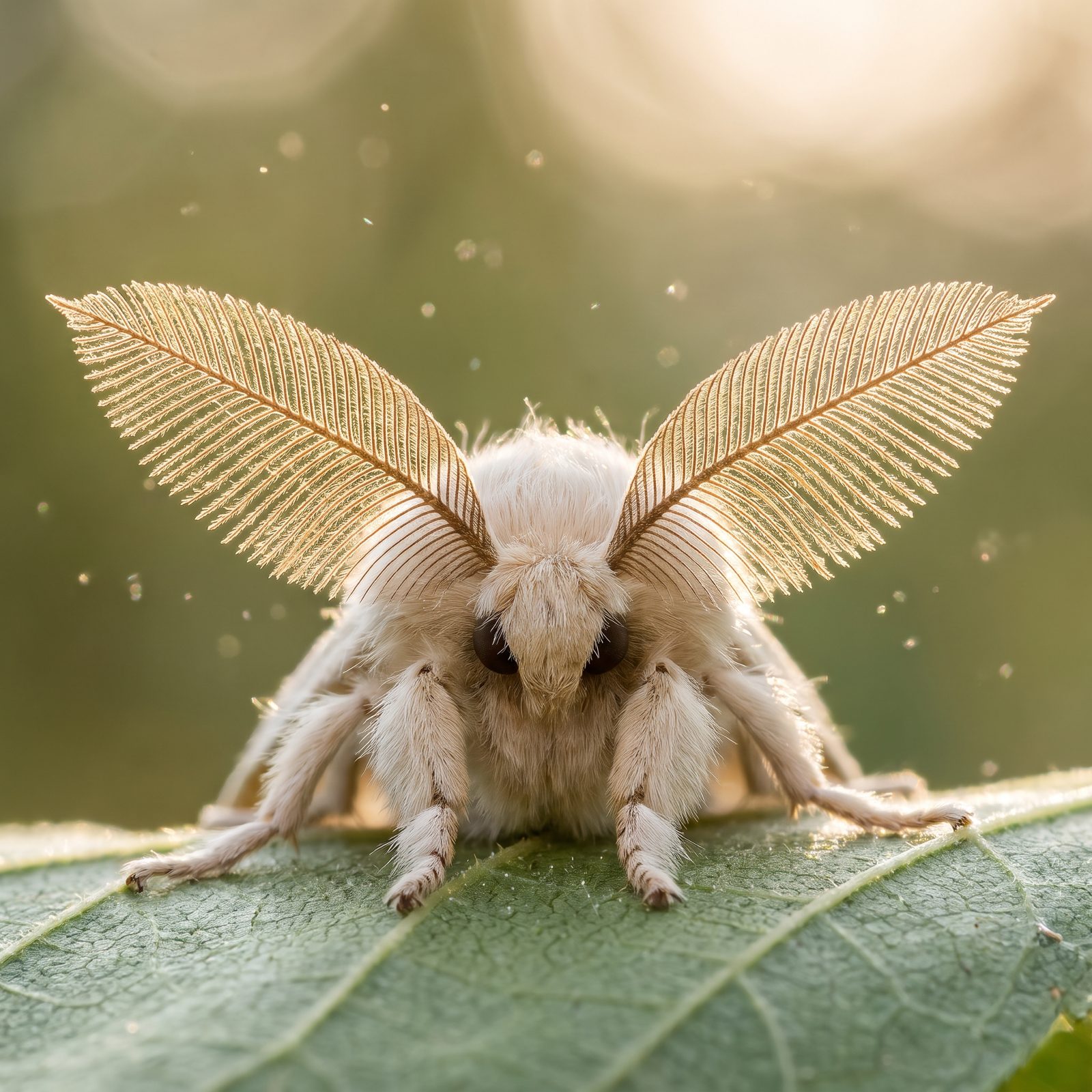
Those spectacular feathery antennae are not decoration. They are among the most sensitive scent detectors in the animal kingdom.
A female silkmoth releases a pheromone called bombykol, and the male can catch it at concentrations that border on the absurd. His branching antennae bristle with thousands of scent receptors, laid out to snag stray molecules from the air as he fans through it. Classic experiments showed he’ll twitch to a mere handful of molecules.
Catch a whiff and he swings straight upwind, walking the scent gradient back to its source across open ground. No sound, no sight of her — just a thread of chemistry stretched across the breeze, and he follows it all the way to the end.
18. The Mosquito That Stacks Carbon Dioxide, Body Heat, and Skin Odor to Hunt You Down
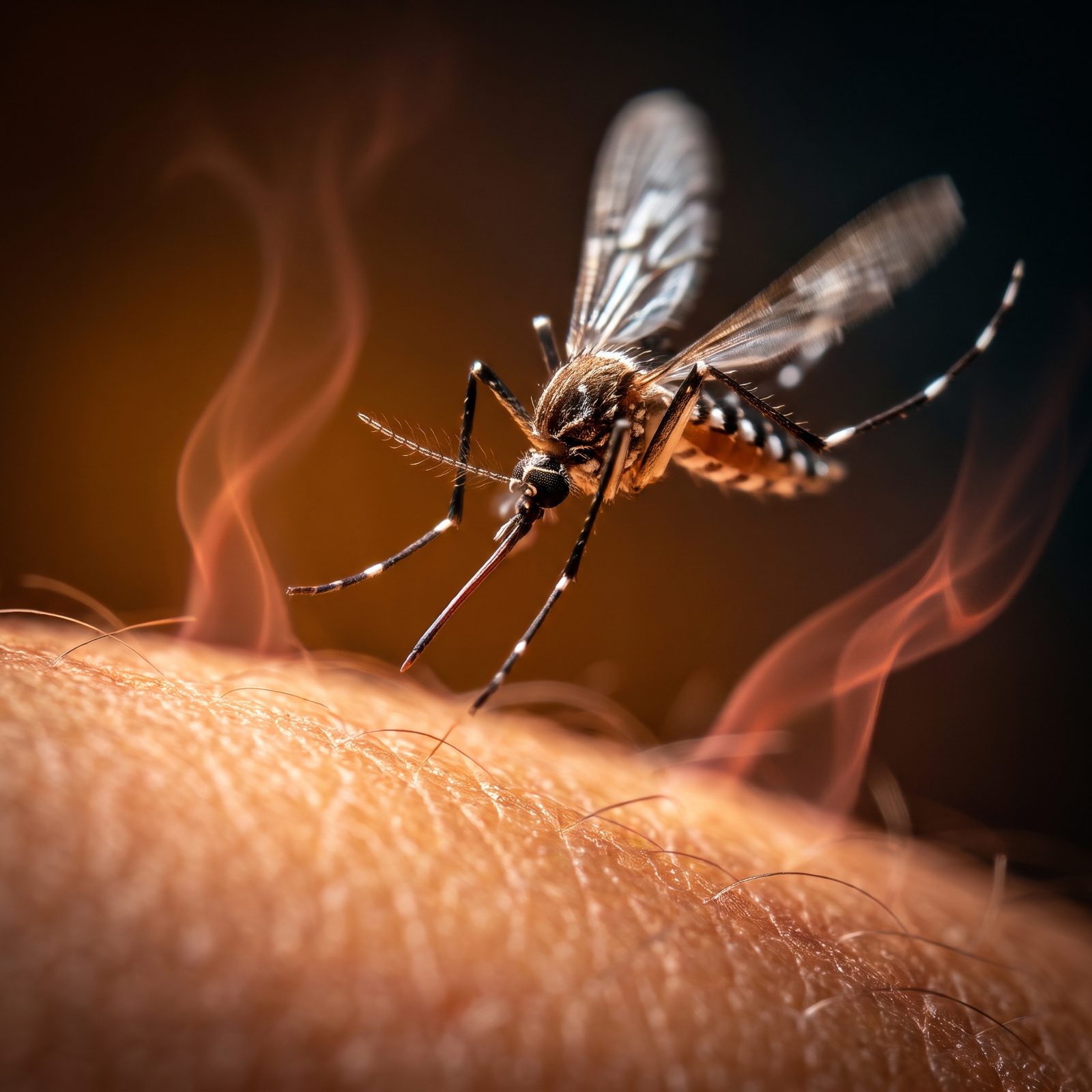
You’re not imagining it — some people really do get bitten more, and the mosquito runs a layered search to pick them out.
A hunting female starts with carbon dioxide, which she detects from a surprising distance on your exhaled breath. That plume reels her in. Up close she switches over to body heat and the particular cocktail on your skin: lactic acid, ammonia, the output of the bacteria living on you. Blood type, sweat, even a recent beer can nudge how appealing you read.
No single cue does the job. She stacks them — breath against warmth against scent, cross-checking as she closes in. Which is exactly why mosquitoes are so maddeningly good at finding your ankles in a pitch-dark room at two in the morning.
17. The Octopus That Tastes Everything It Touches With Its Suckers
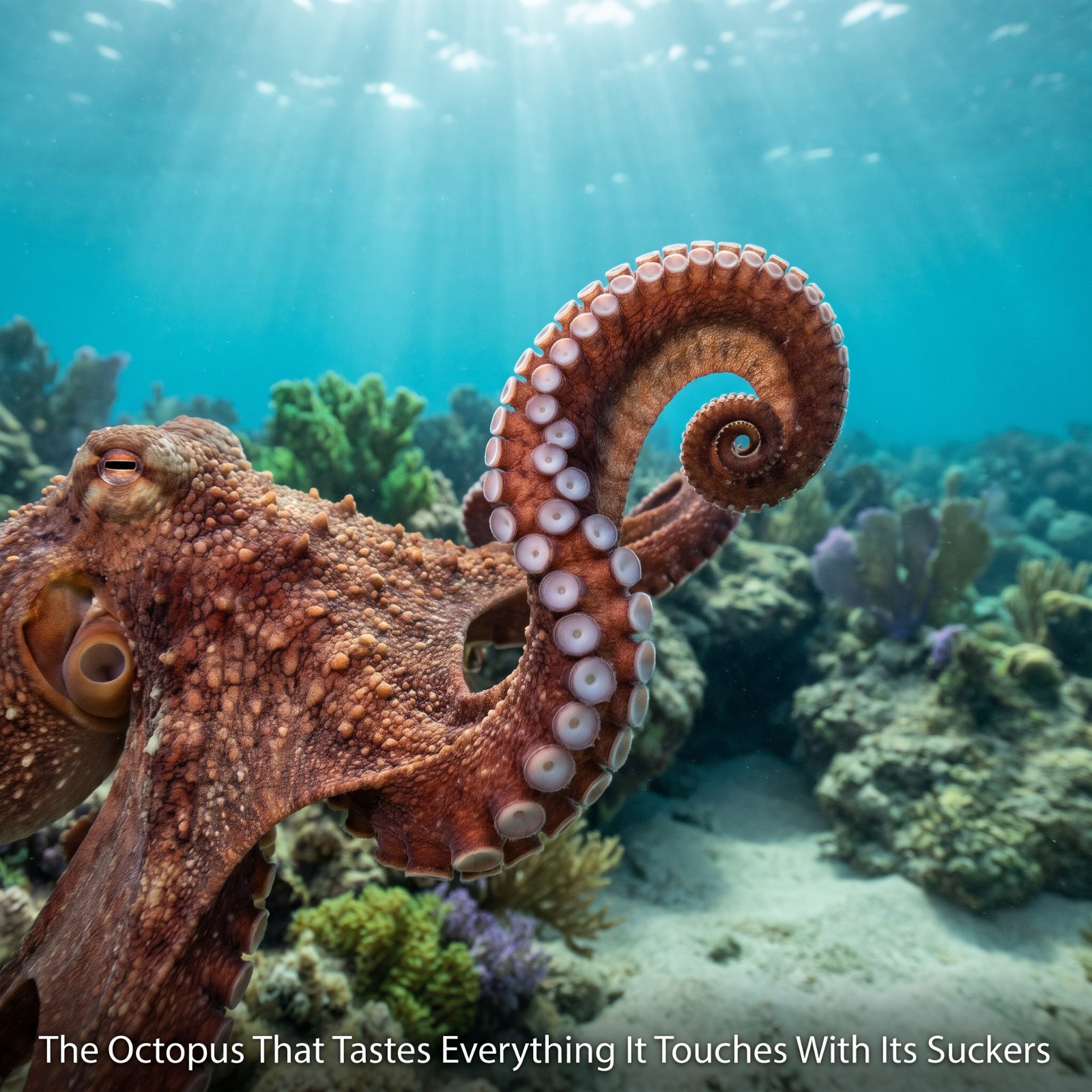
An octopus doesn’t just feel the rock it reaches into. It tastes it.
Every one of those suckers — and there are hundreds strung along the arms — carries receptors that read chemicals on contact. Poke an arm into a dark crevice and the octopus is sampling the surface for the chemical ghost of a crab or clam, no eyeballs required. Taste and touch fused into a single sense.
And the arms do a lot of this thinking for themselves. A huge share of the animal’s neurons sits out in the limbs rather than crammed into the head, so an octopus can be mulling something over with one arm while the rest of it gets on with other business entirely. A mind that reaches, and tastes as it goes.
16. The Snake That Smells in Stereo With Its Forked Tongue
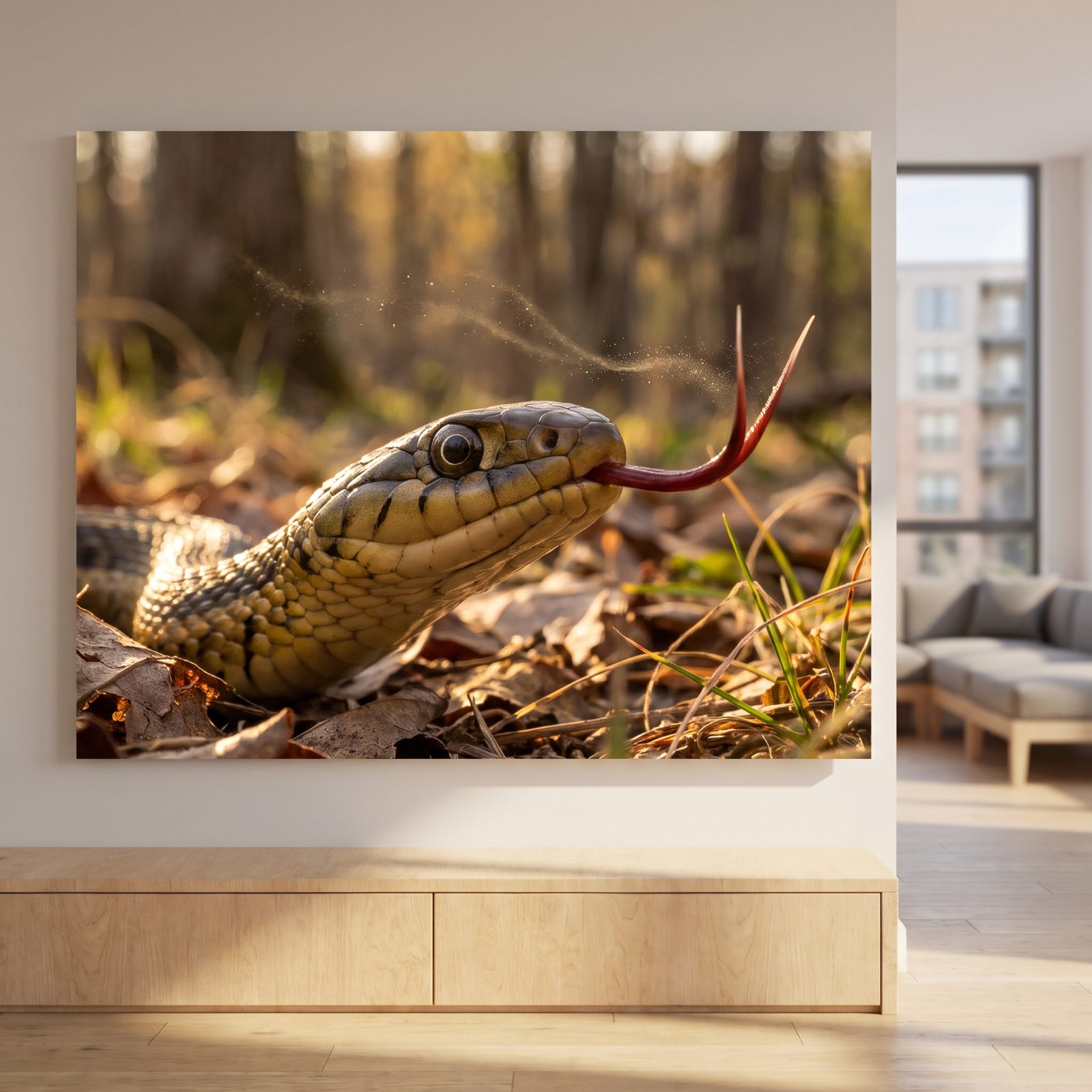
That flicking tongue isn’t tasting the air for show. It’s collecting scent from two points at once.
With every flick, each fork grabs odor molecules from a slightly different patch of air. The snake then reels the tongue back in and presses the tips into the Jacobson’s organ on the roof of its mouth, which reads the chemical load from each side separately.
Here’s the clever part. If the left tip comes back carrying more prey scent than the right, the snake knows the trail bends left. Two samples, compared side by side, hand it a direction — smelling in stereo, the same way your two ears let you tell which way a slammed door came from. A forked tongue is a tracking instrument.
15. The Bumblebee That Feels the Faint Electric Halo Around a Flower
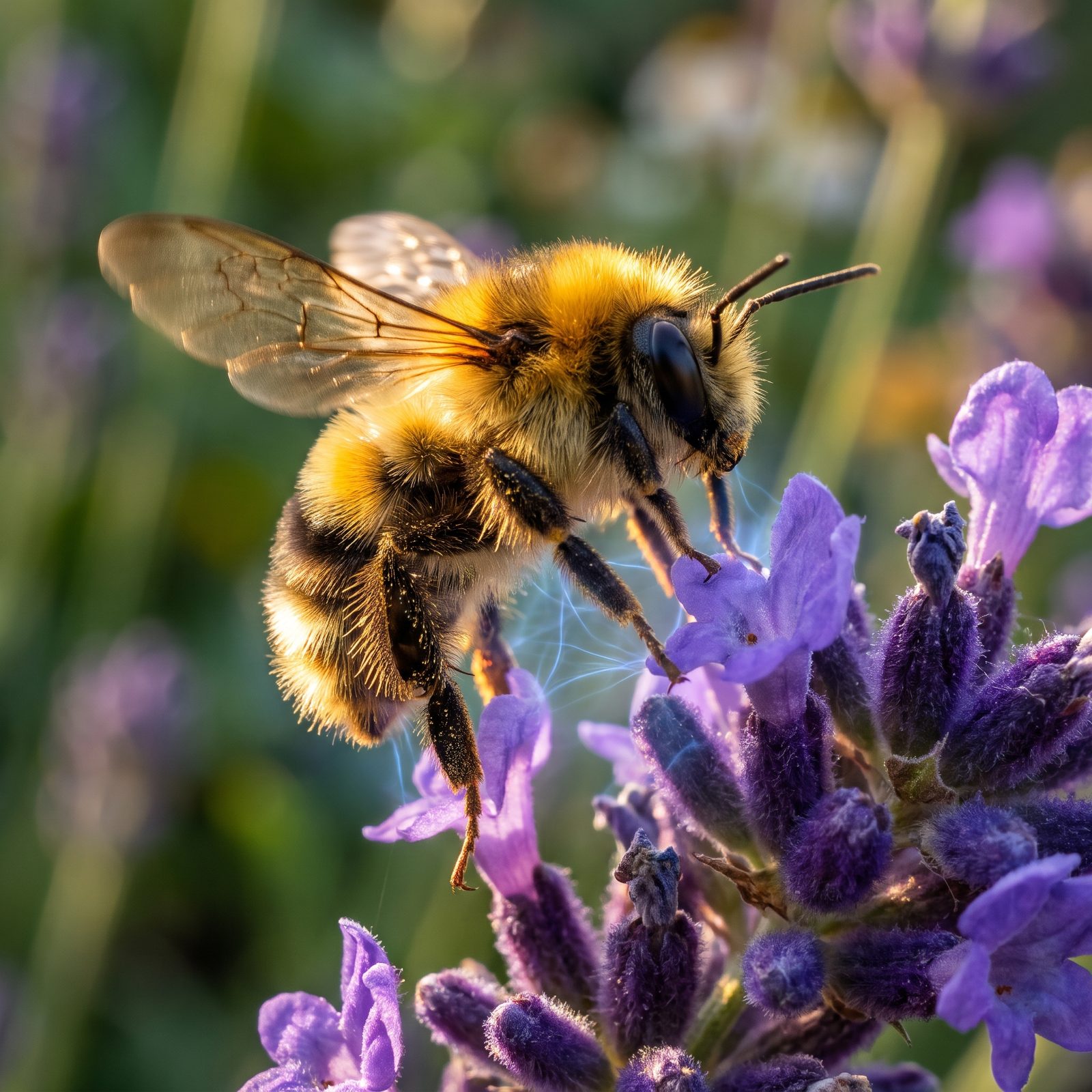
Flowers carry a weak electric charge, and bumblebees can feel it.
Plants tend to sit at a slightly negative charge while a flying bee builds up a positive one. As the bee approaches, that difference raises a tiny electric field, and the bee picks it up through the fine hairs on its body, which deflect in response. The field even whispers something useful before the bee ever touches down.
Drain a flower of its nectar and the bee changes that flower’s charge for a short while. Later bees read the altered field and skip the bloom that was just emptied, sparing themselves a pointless landing. A pollinator reading a shop’s “just sold out” card, written in static electricity — and nobody has to rewrite it.
14. Elephantnose Fish, Building an Electric Picture of Everything Nearby
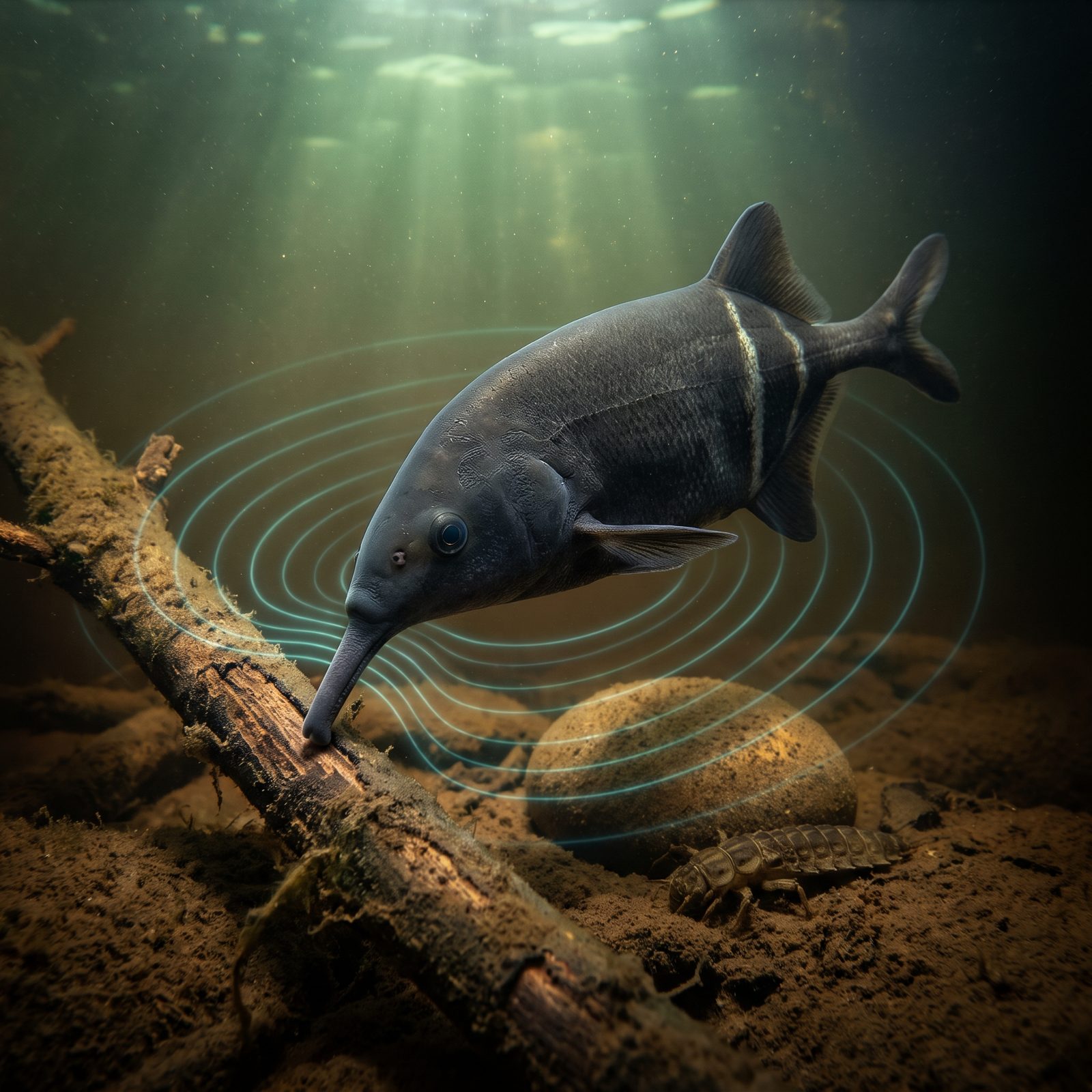
Imagine seeing with electricity. The elephantnose fish does exactly that, pumping a weak electrical field from an organ in its tail and reading the distortions with thousands of sensors in its skin. A rock bends the field one way, a buried worm another. It reads those smudges the way you’d read a face in the dark.
Its brain is enormous for a fish, greedy enough to swallow a huge share of the animal’s oxygen budget. All that circuitry needs feeding, because building a live electric portrait of muddy water is expensive work.
13. Nile Crocodile, Reading the Water Through Thousands of Pits on Its Face
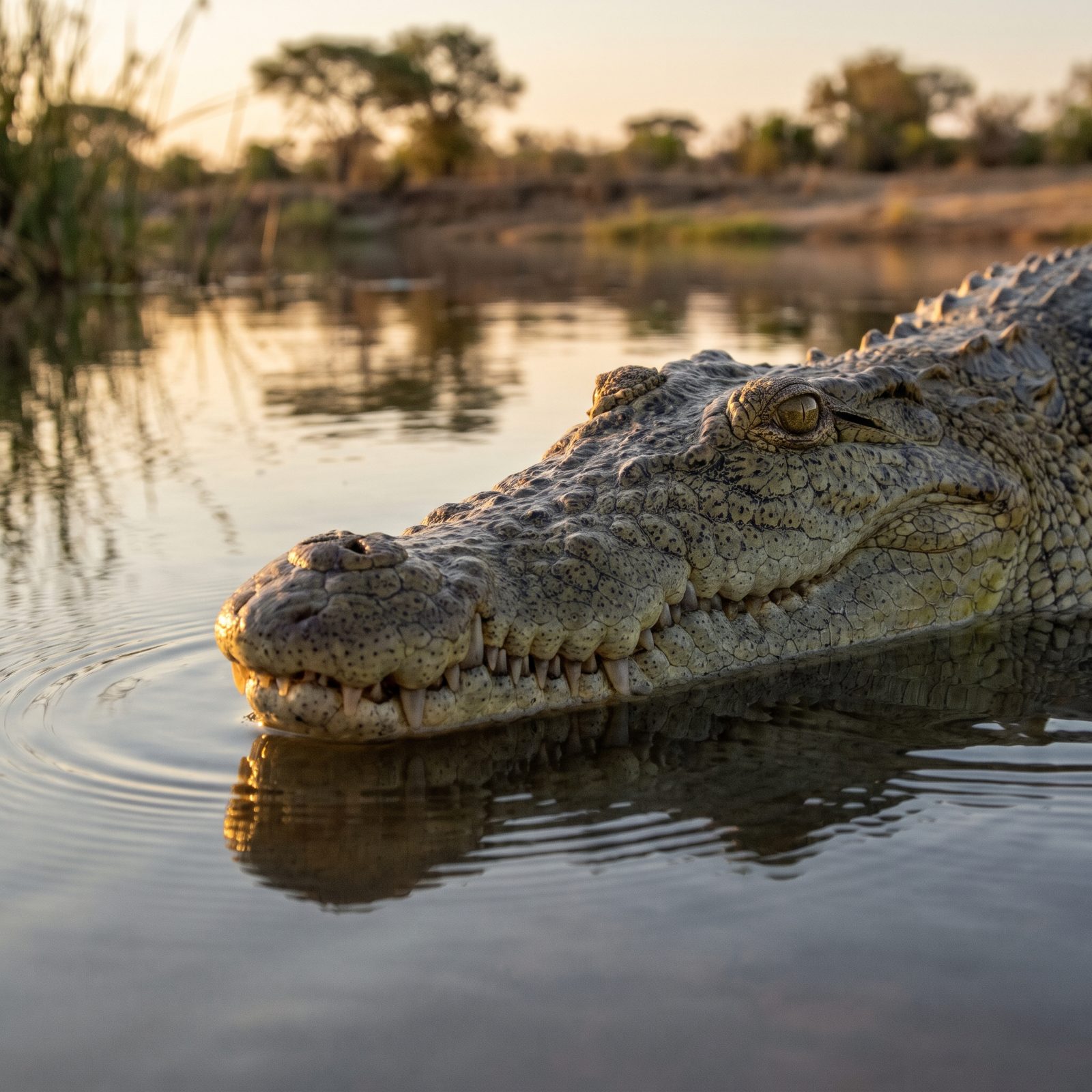
Those black speckles across a crocodile’s jaw aren’t decoration. They’re dome pressure receptors, thousands of them, more sensitive to a ripple than your fingertips are to a feather. A single drop hitting water on the far side of a dark pond registers instantly.
So a croc can hunt in total blackness and still snap sideways at the exact spot a fish brushed the surface. It feels the water thinking before anything moves.
12. Blind Cavefish, Navigating Lightless Water With a Pressure Map Along Its Body
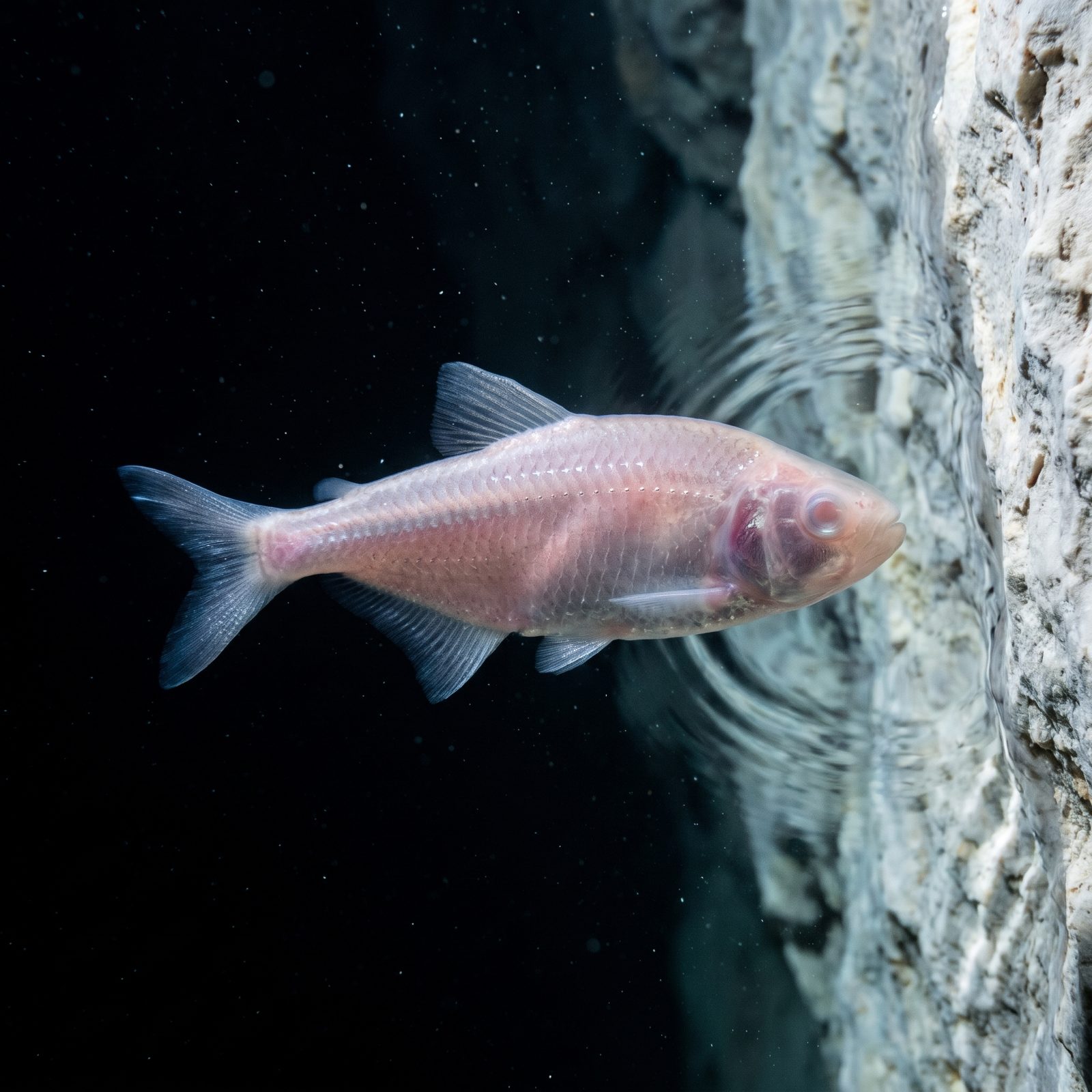
No eyes. No light. No problem.
Generations of Mexican tetras trapped in dark caves lost their sight entirely, because eyes cost energy and darkness never pays it back. What they kept and sharpened is the lateral line, a row of tiny pressure sensors running head to tail. As the fish swims, its own motion shoves water against the cave walls, and the push-back tells it where everything sits. It travels a map it feels rather than sees.
11. Orb-Weaver Spider, Decoding Prey, Mates, and Threats From a Single Trembling Thread
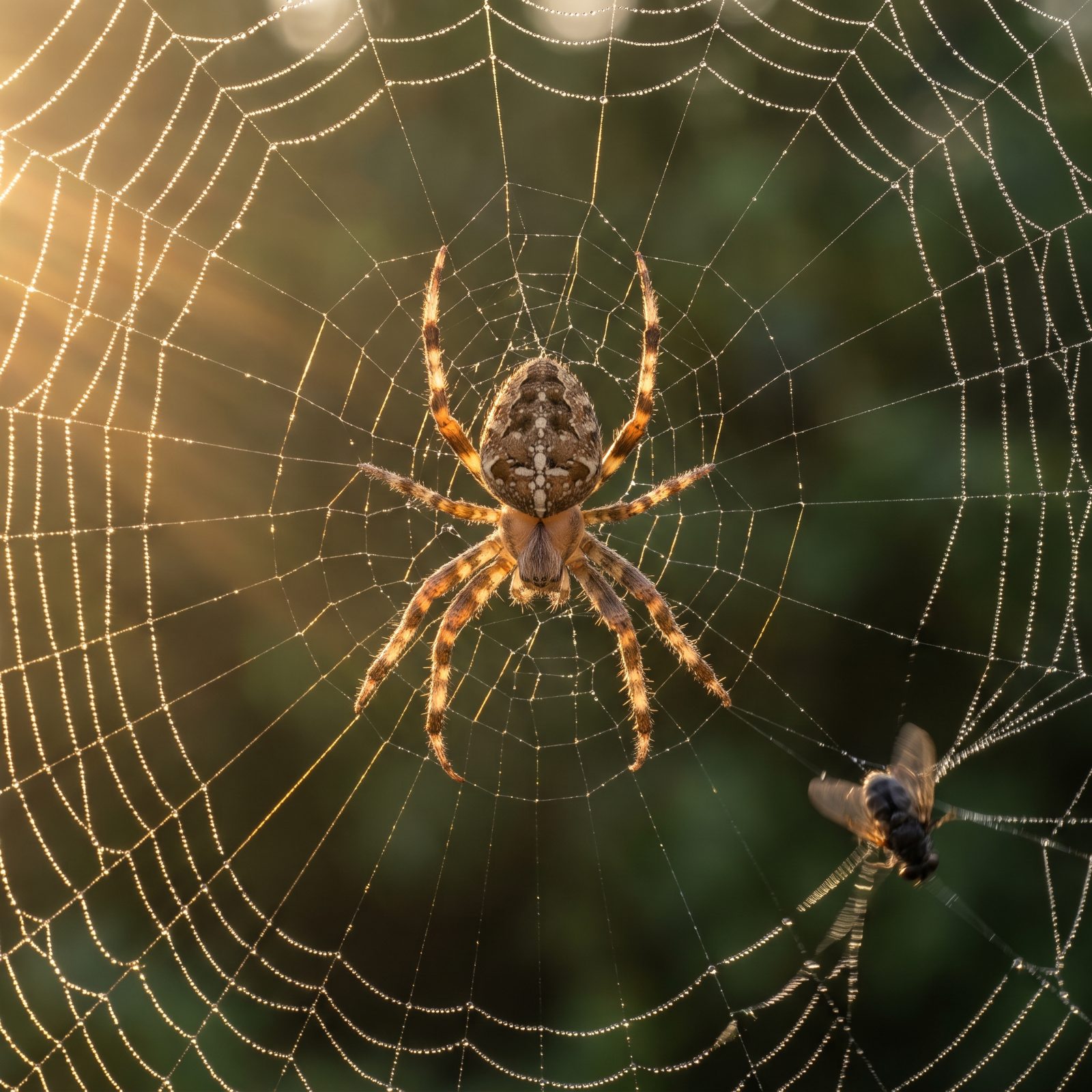
A web is an instrument, and the spider plays it by listening with her legs.
Each radial thread carries its own frequency. A struggling fly rings high and frantic. A heavier intruder thuds low. An approaching male plucks a careful, specific rhythm, because strumming the wrong tune gets you eaten. She sits at the hub, legs splayed across the strings, and reads the whole situation from vibration before committing to the walk.
Some species even pluck the silk themselves, bouncing prey tighter into the mesh. The web is her outboard nervous system, spun fresh most nights and swallowed again at dawn.
10. Sand Scorpion, Pinpointing a Beetle’s Footsteps From Vibrations in the Dune
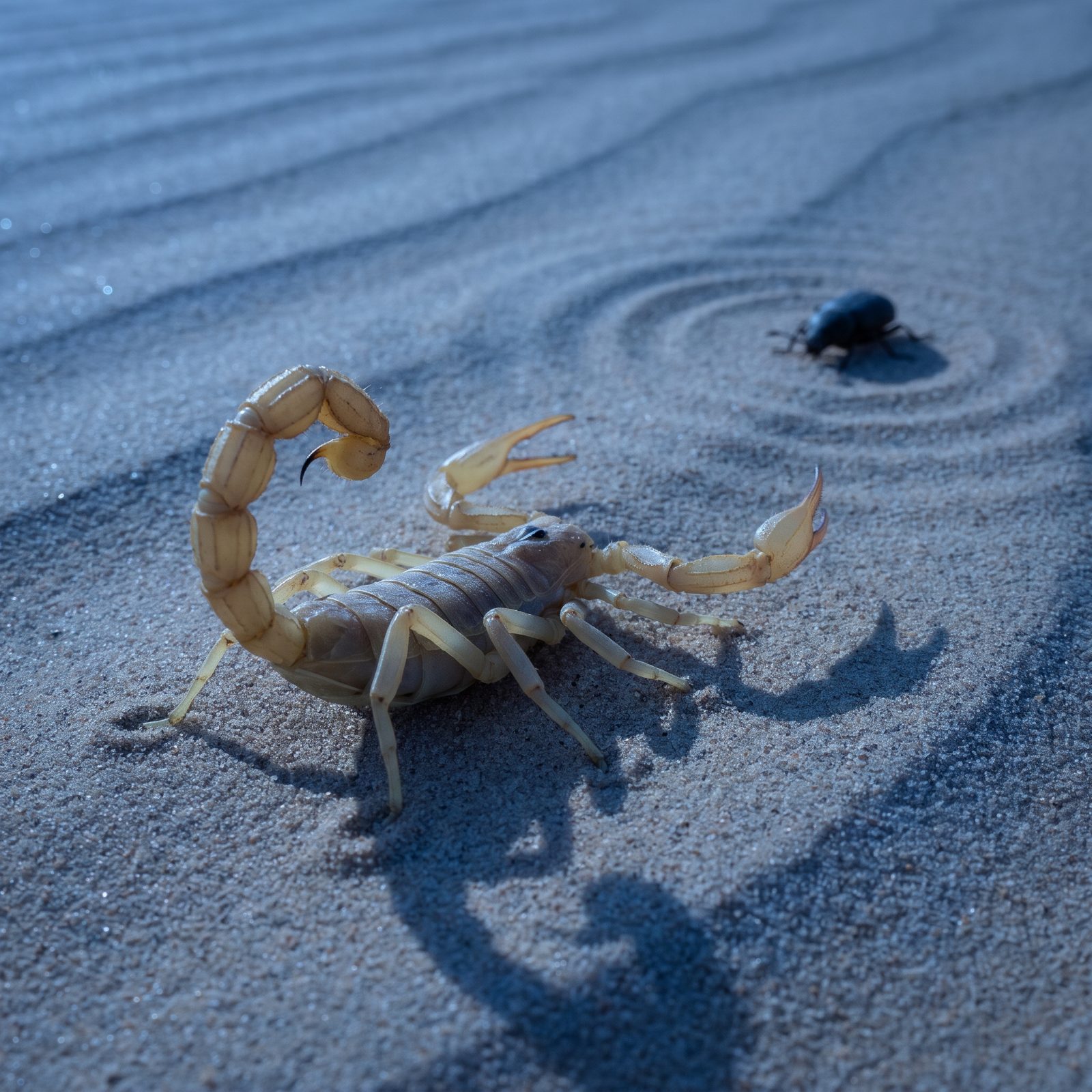
Pitch dark, open dune, and a beetle takes a step. The sand scorpion already knows where it is.
Slit sensors near each leg joint catch two kinds of tremor from that footstep: a fast surface wave and a slower one rolling through the grains. The gap between when each wave reaches different legs gives away the direction, the same trick a seismologist uses to pin down an earthquake, shrunk to the width of a palm.
9. Cockroach, Sensing the Air You Push Ahead of Your Shoe
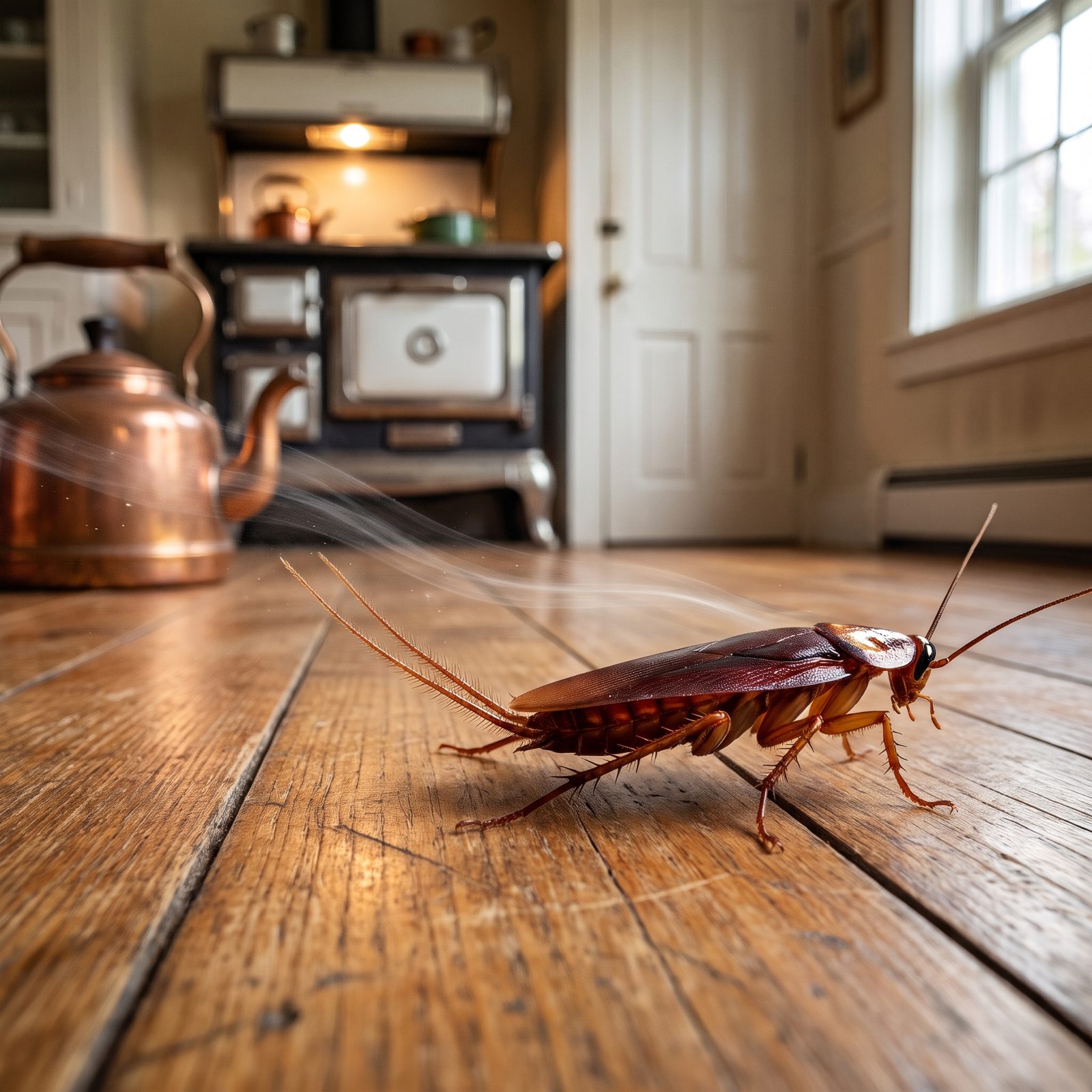
You never catch one because it leaves before your foot does.
Raised high at the cockroach’s rear are two long, spiny appendages, bristling with hairs so fine they bend in the faint breeze your descending shoe shoves ahead of it. That little puff trips an alarm wired almost straight to the legs, skipping most of the brain. The roach is already running in the blink of a reflex, far faster than you can consciously react, aiming away from the threat.
One of the fastest escape reflexes known. Humbling, when you’re the one holding the slipper.
8. Greater Wax Moth, Hearing Pitches No Other Animal on Earth Can Match
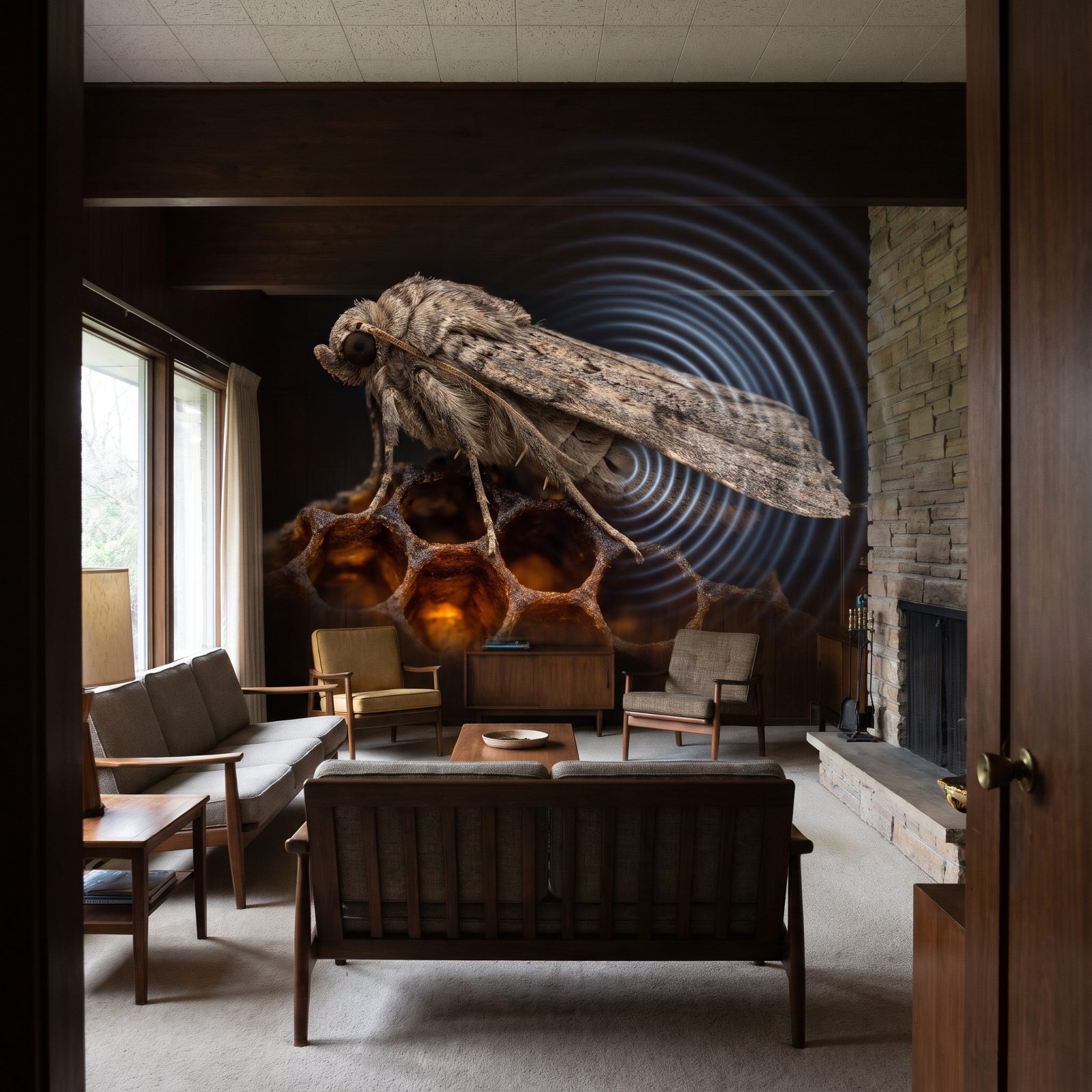
A young person’s hearing tops out around 20 kilohertz, and your grandparents lost the upper slice of that decades ago. The greater wax moth hears up to roughly 300 kilohertz, the highest frequency sensitivity ever documented in any animal.
Why so extreme? An arms race. Bats hunt with ultrasound, and over millions of years the moths that could catch the very top of a bat’s call survived to breed. So the moth now eavesdrops on pitches even echolocating bats don’t bother using, a head start against predators that haven’t evolved yet.
7. Golden Mole, Chasing Termites by Feeling the Ground Hum
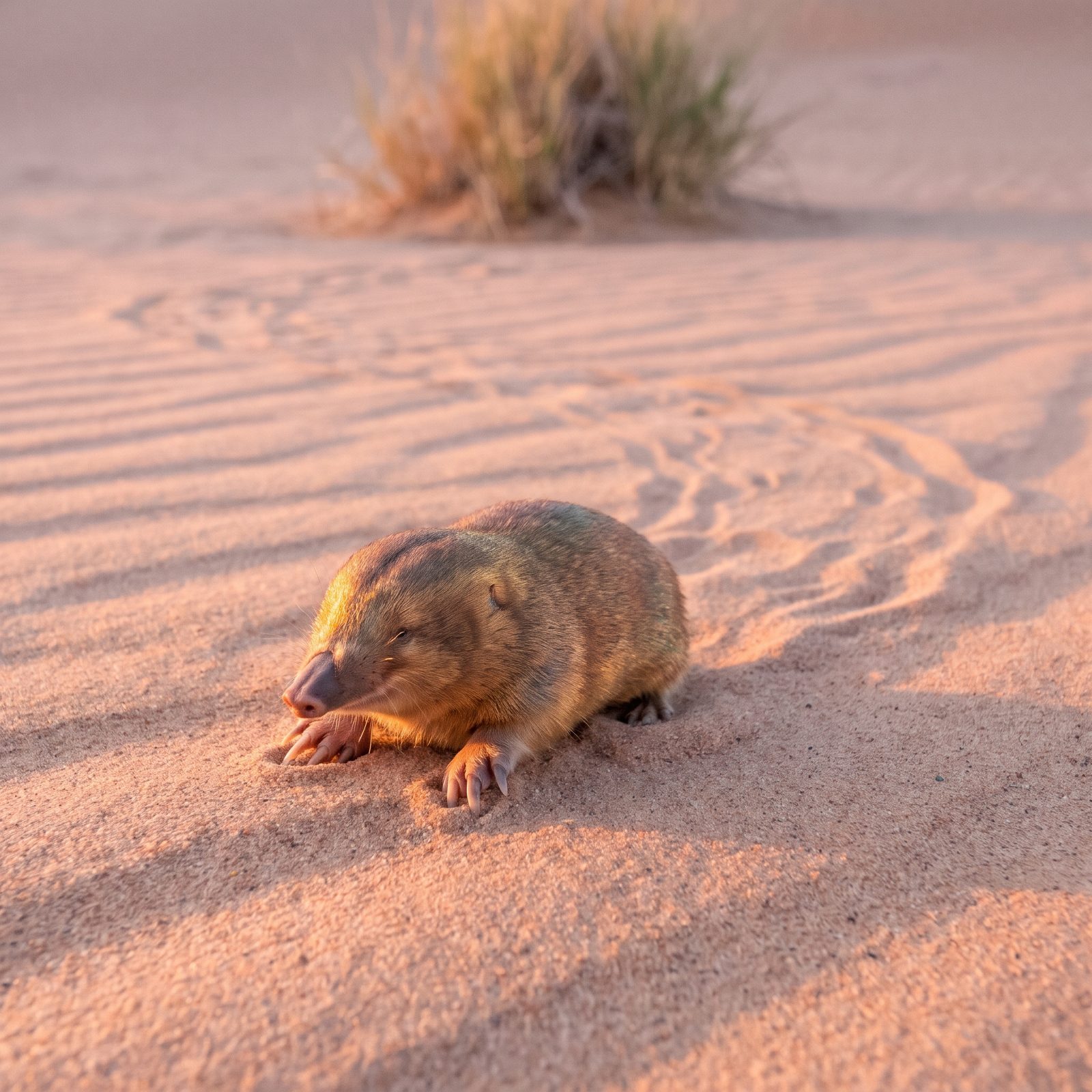
Blind, with only a small ear opening tucked into its fur, this thumb-sized scrap of gold still crosses open Namib dunes straight to food it cannot see or smell from a distance.
The secret is a hugely enlarged ear bone that drinks up seismic energy. Wind rattling a far-off grass hummock, where termites shelter, sends faint vibrations rolling through the sand. The mole “sand-swims” below the surface, popping up now and then to dip its head and read the ground, then locks onto the strongest signal. It’s hearing with its skull, pressed flat against the earth.
6. Oilbird, Flying Through Total Cave Darkness on Its Own Clicks
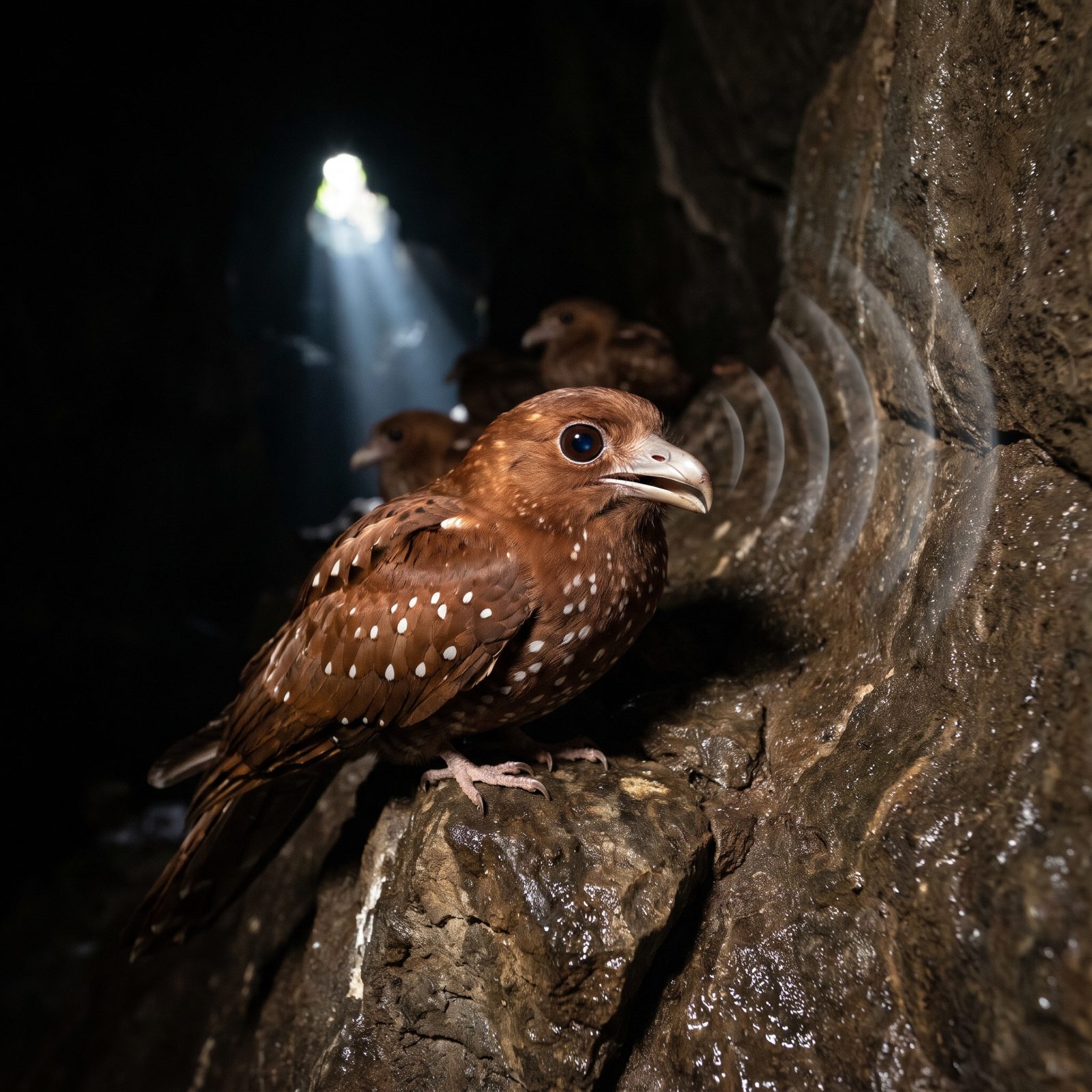
Most birds need light. The oilbird gave up on it.
These South American cave dwellers roost by the thousand in darkness so complete your own hand is invisible, and they wheel in and out without clipping a thing. They echolocate like bats, but with sharp clicks around 2 kilohertz, well inside your own hearing range. Stand in one of their caves and the racket is deafening.
Their echolocation is coarse, fine for walls and ledges but useless for snatching insects, so once outside they swap to huge, light-hungry eyes and a sharp nose to track down fruit in the night.
5. Archerfish, Doing the Physics of Bent Light Before It Spits
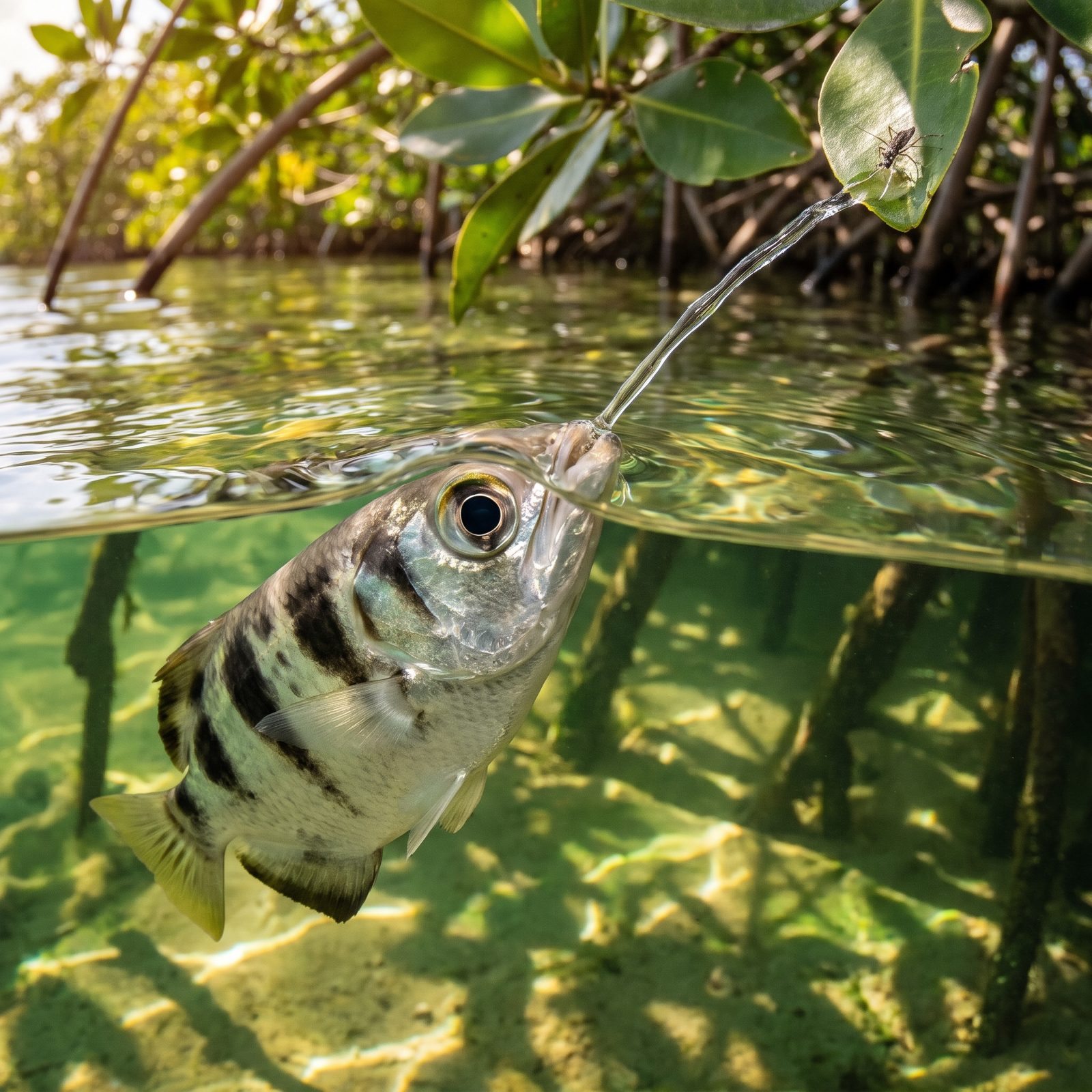
Here’s a puzzle that trips up human students: light bends as it leaves water, so an insect on a leaf isn’t actually where it appears to be from below the surface. Archerfish solve it on instinct, aiming from underwater. It corrects for that bent view of the bug as it fires a jet of water to knock it down, accounting for refraction, distance and gravity in a single shot.
It gets stranger. The fish tunes the power of its jet to how far up the target sits, bunching the stream into a heavier droplet that lands at peak force. Young fish learn by watching their elders. A brain the size of a pea, running ballistics and optics at the same time.
Believe it or not, it’s one of the only animals known to wield a tool made purely of water.
4. The Chameleon’s Swiveling Turret Eyes Scan Two Directions at Once
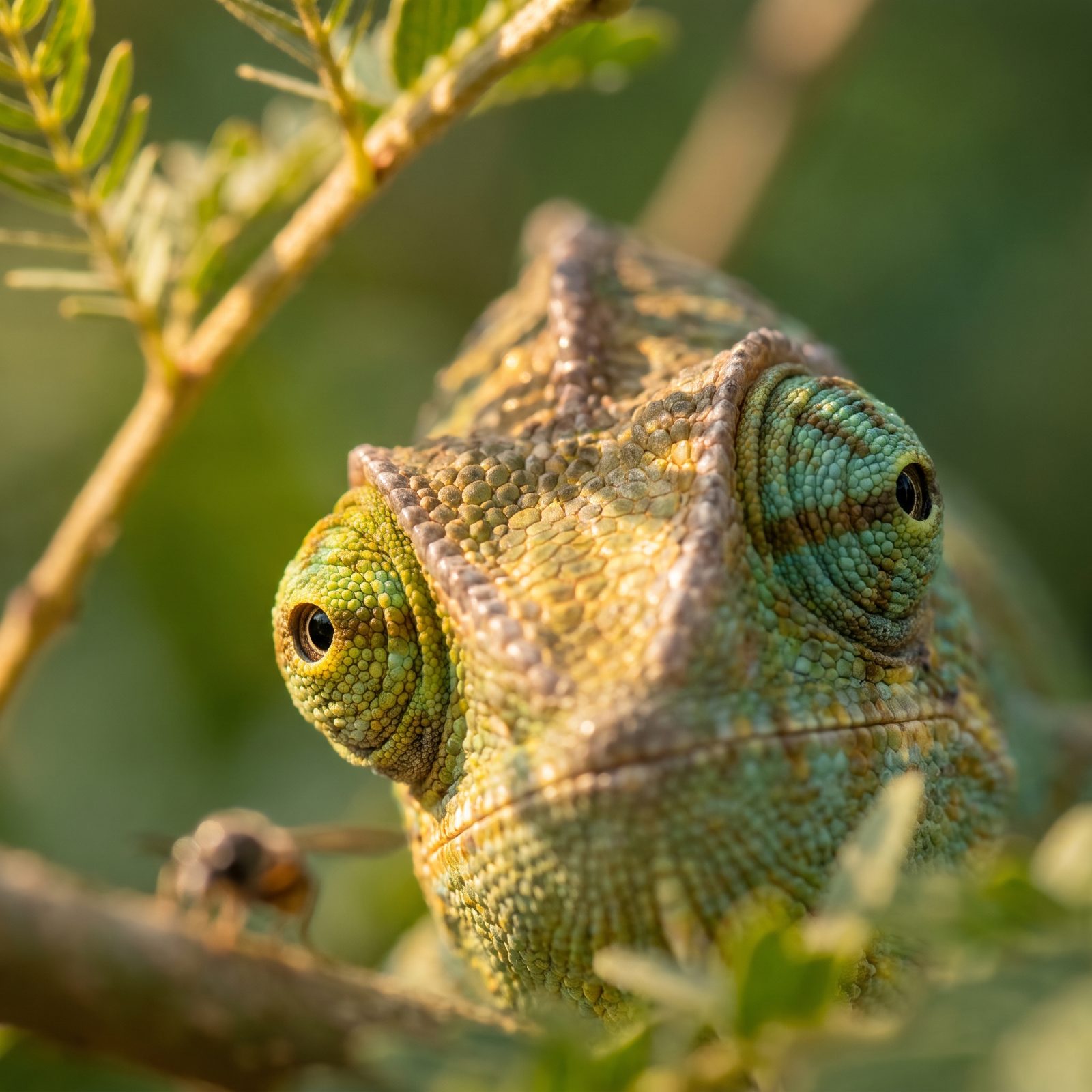
Each eye works solo. One rolls forward while the other sweeps backward, handing a chameleon a near 360-degree view without a single turn of the head. Two separate video feeds running at once — which sounds like a recipe for chaos, and somehow isn’t.
The part people skip is that independent scanning is only phase one. The second a chameleon spots prey, both eyes snap onto the same target and flip into full stereo vision, giving it the precise depth it needs to fire that ballistic tongue and nail a moving insect on the first try.
3. The Aye-Aye Taps Tree Bark and Listens for Grubs Hiding Inside
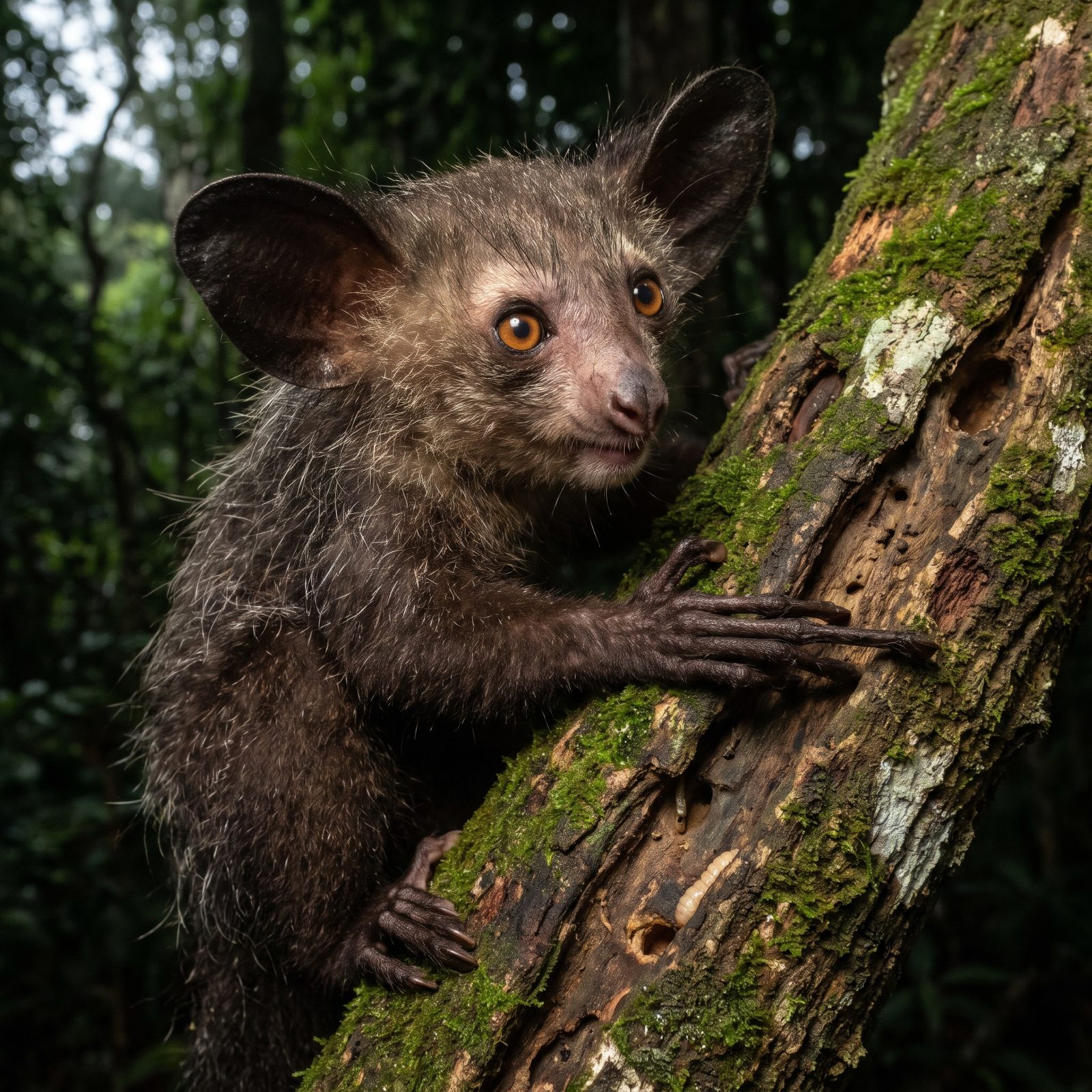
The aye-aye hunts by a method called percussive foraging. It raps on bark with a bizarrely skinny middle finger, several taps a second, then presses those oversized ears to the wood and reads the echo. Hollow chambers sound nothing like solid timber, and that faint acoustic shift is all the aye-aye needs to know grubs are tunneling somewhere beneath.
Once it pins down the void, it gnaws a hole and hooks the larva out with the very same skeletal finger. Call it echolocation done with knuckles. No other primate on Earth feeds this way — which is part of why people in Madagascar long treated this harmless little creature with dread.
2. The Water Strider Reads the Surface Like a Vibrating Telegraph Line
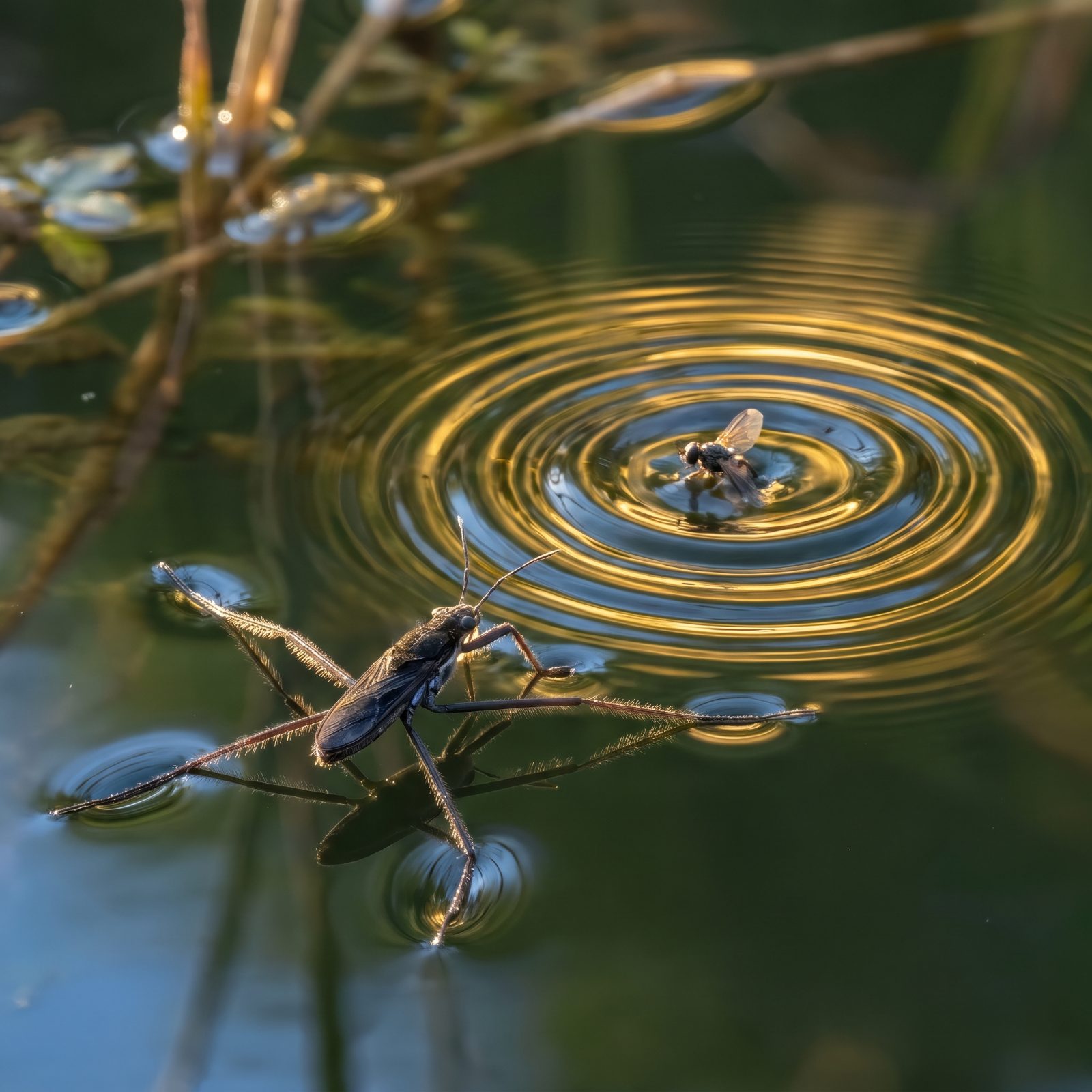
A water strider doesn’t really see its prey. It feels it.
Those long legs rest on the surface film and pick up the faint ripples thrown off by some insect that’s tumbled in, reading the frequency and direction of the waves to fix the meal’s position, then making a beeline for it. The same trick doubles as chatter — males drum out precise rhythms on the water to court females and chase off rivals, turning the pond skin into a message board.
The whole system runs on surface tension and a coat of water-repellent hairs that keep the bug from ever punching through. An insect that treats a pond like a stretched drum, and hears every thump.
1. The Star-Nosed Mole Identifies Food by Touch Faster Than You Can Blink
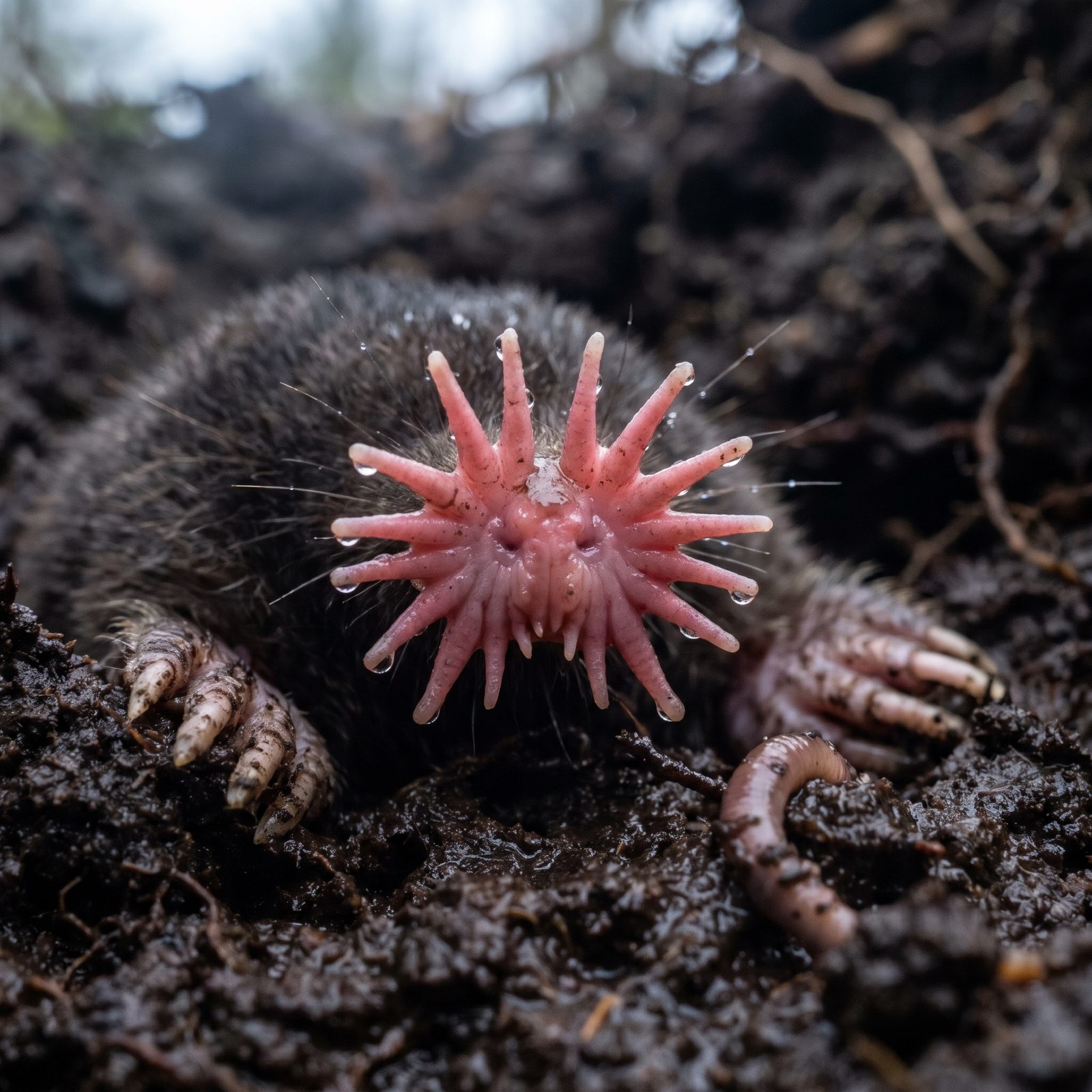
That pink star isn’t a nose in any ordinary sense. It’s the most sensitive touch organ we’ve found in any mammal, crammed with over 100,000 nerve fibers spread across twenty-two fleshy rays — far more than you’ll find in a whole human hand.
The mole lives in near-total darkness, so it feels its way through the mud at a ludicrous clip. Touch a potential snack, judge whether it’s edible, swallow it — all in a sliver of a second. We’re talking roughly eight milliseconds to identify prey, quicker than the physical limit most people assume a brain can even register a touch. Blink and you’ve already lost that race.