
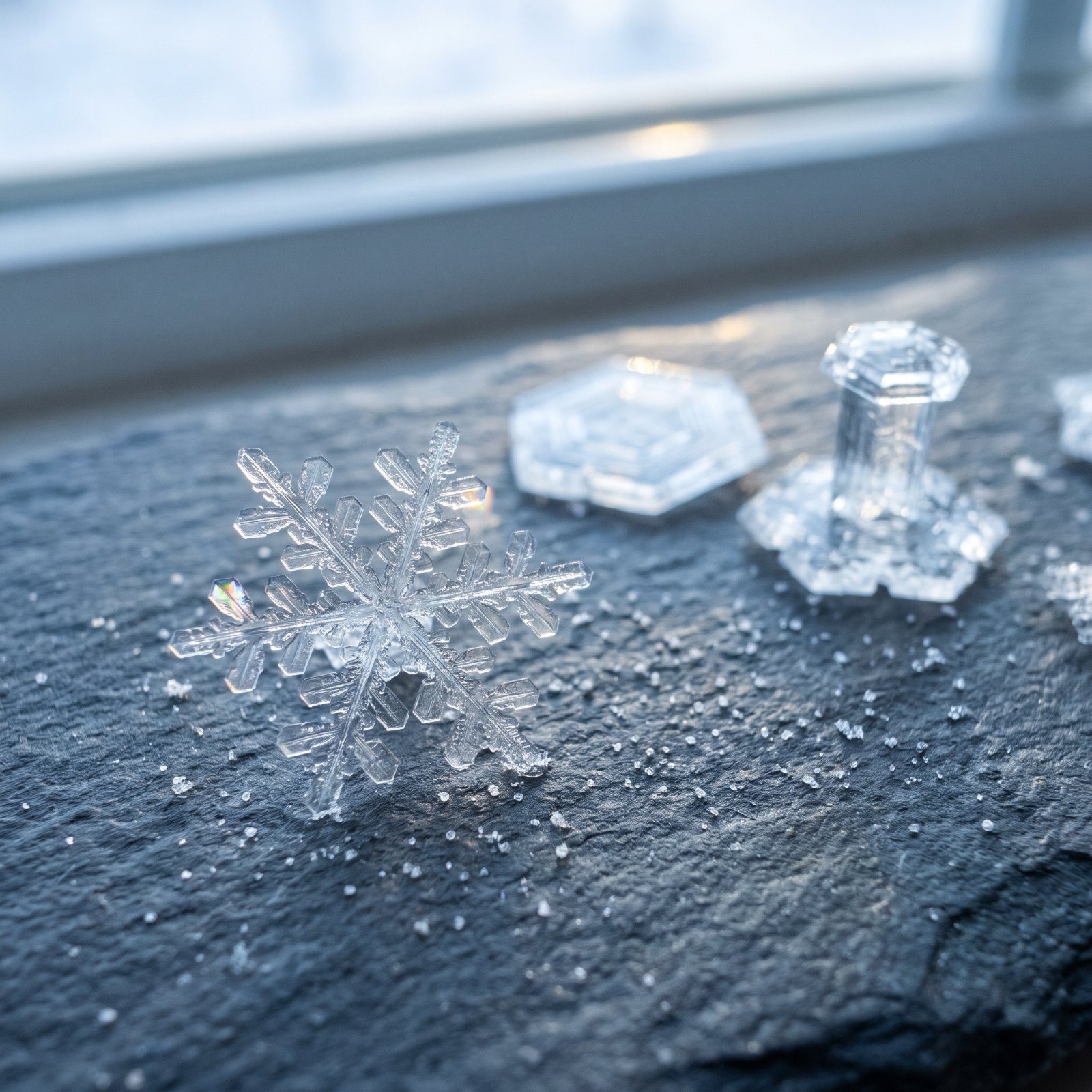
Catch a snowflake on a dark sleeve and you’re holding a weather report. That delicate six-armed crystal drifted through a cloud for the better part of half an hour, recording every temperature and moisture change it met on the way down. Read it right and it tells you the physics of the sky overhead. Most of what you were taught about snow is slightly wrong, or at least half-true, and the real story is stranger. Vapor turning straight to ice. Branches that grow without ever touching. Shapes dictated by a few degrees of cold. Here’s what actually happens inside a falling flake.
37. Why Scientists Can’t Actually Prove No Two Snowflakes Are Alike
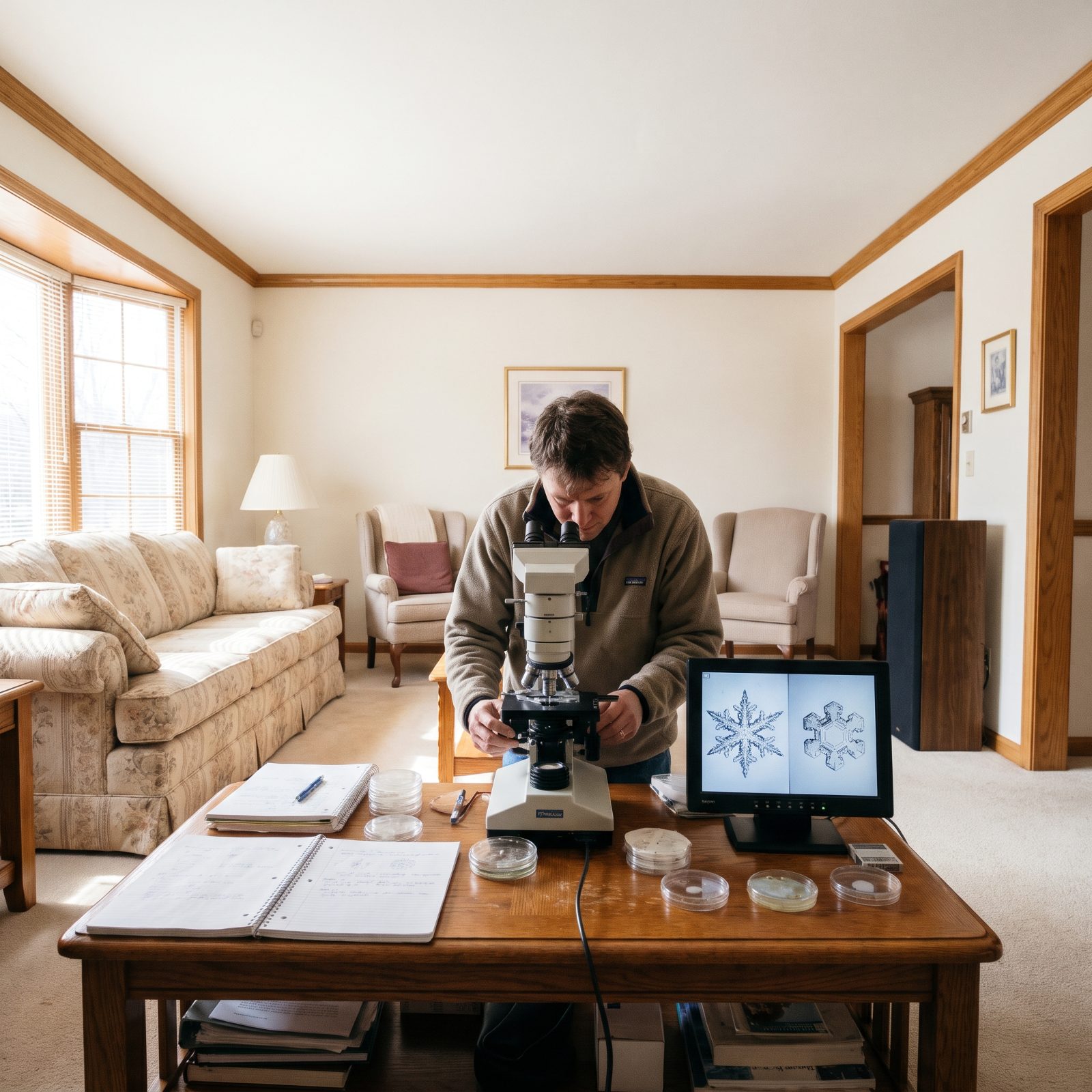
Nobody has ever checked. That’s the honest answer. The old line about no two snowflakes being identical isn’t a measured fact but a probability argument, and a wildly convincing one.
A single snow crystal holds roughly a quintillion water molecules, and the number of ways they can arrange themselves dwarfs every flake that has ever fallen on this planet. Two matching ones are, for all practical purposes, impossible. But “impossible by odds” and “proven never” are different animals.
Physicist Kenneth Libbrecht has spent decades photographing snow crystals, and in the lab he’s grown small simple ones that come out nearly identical. The sprawling branching flakes are the genuine one-offs.
36. Snowflakes Skip the Liquid Stage Entirely
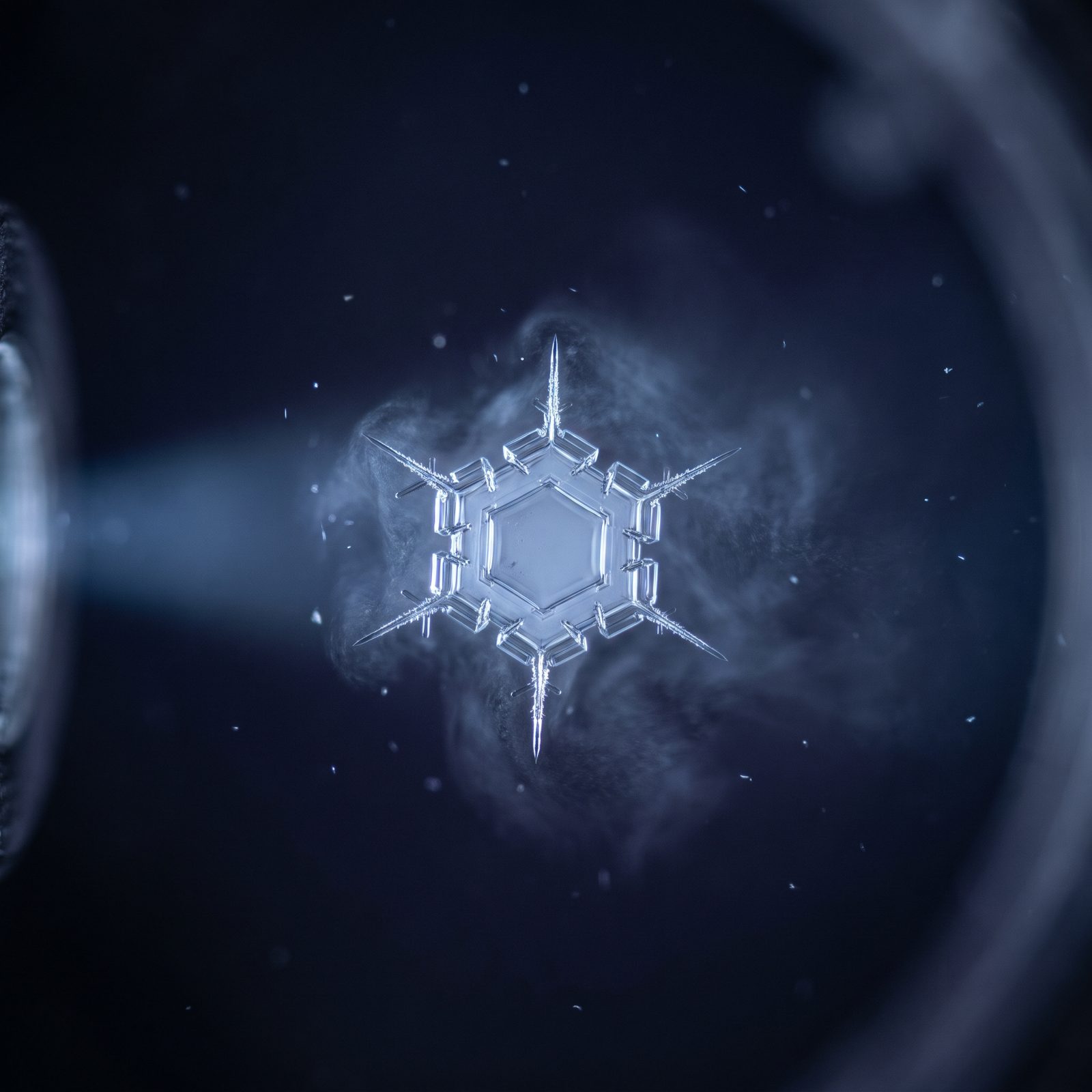
Freeze a raindrop and you get a lump of ice, not a six-pointed star. Snowflakes are built differently.
They grow by deposition, meaning water vapor in the cloud turns straight from gas into solid ice and skips the liquid phase entirely. Molecules lock onto the crystal one layer at a time, following the hexagonal scaffold that water naturally wants to form, and that slow orderly assembly produces the branches and facets.
Which is why sleet and snow aren’t the same thing at all. Sleet really is frozen rain, little ice pellets with no structure. A true snow crystal never existed as a droplet. It condensed into shape out of thin air, a far odder process than most people picture.
35. Most Snowflakes Are Built Around a Speck of Dust
Pure water doesn’t want to freeze. Left completely clean, it can stay liquid well below 32°F, sometimes down toward minus 40 before it finally gives in.
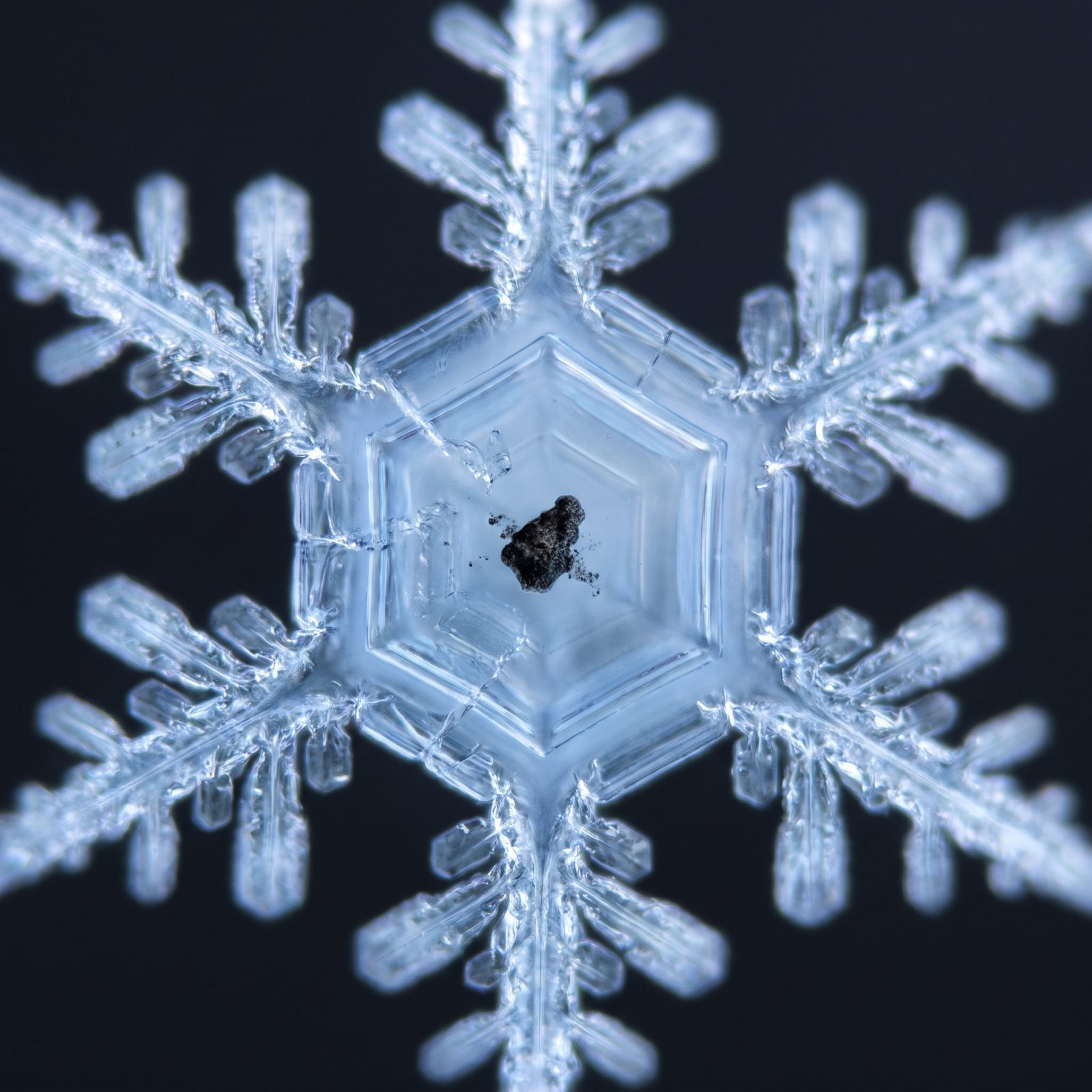
So most snow crystals need a helper. A microscopic particle floating in the cloud gives the first water molecules something to grab onto: a grain of mineral dust, a fragment of pollen, a bit of bacteria, even soot. That seed is called an ice nucleus, and the crystal grows out from it.
Look at the heart of many flakes under magnification and you’ll sometimes spot the culprit sitting right in the middle. Snow is cleaner than air, yet it almost always starts dirty.
34. The Six-Sided Shape Comes From the Water Molecule Itself
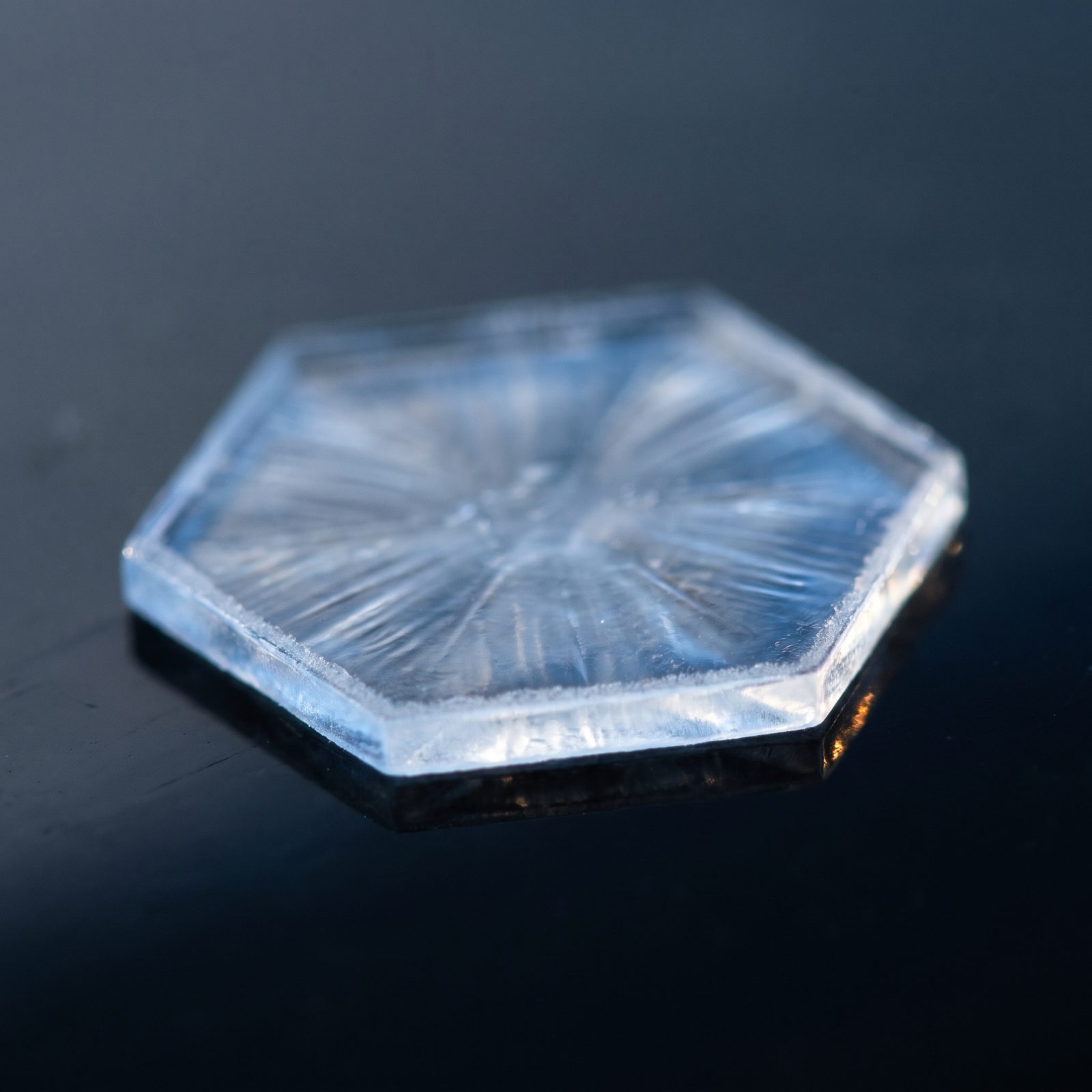
The six comes from chemistry, not chance. A water molecule is two hydrogen atoms attached to one oxygen, bent at an angle of about 104 degrees, and when water freezes those molecules bond into a lattice where each oxygen sits at the center of a little pyramid of neighbors.
Stack that pattern up, and the most stable arrangement has six-fold symmetry. Every ice crystal inherits it. The hexagon isn’t decoration. It’s the molecular shape showing through at a scale your eye can finally catch.
Johannes Kepler figured this out back in 1611, centuries before anyone could see a molecule. He wrote an entire essay puzzling over the six-pointedness of snow and got remarkably close to the truth.
33. Every Snowflake Begins Life as a Plain Hexagonal Prism
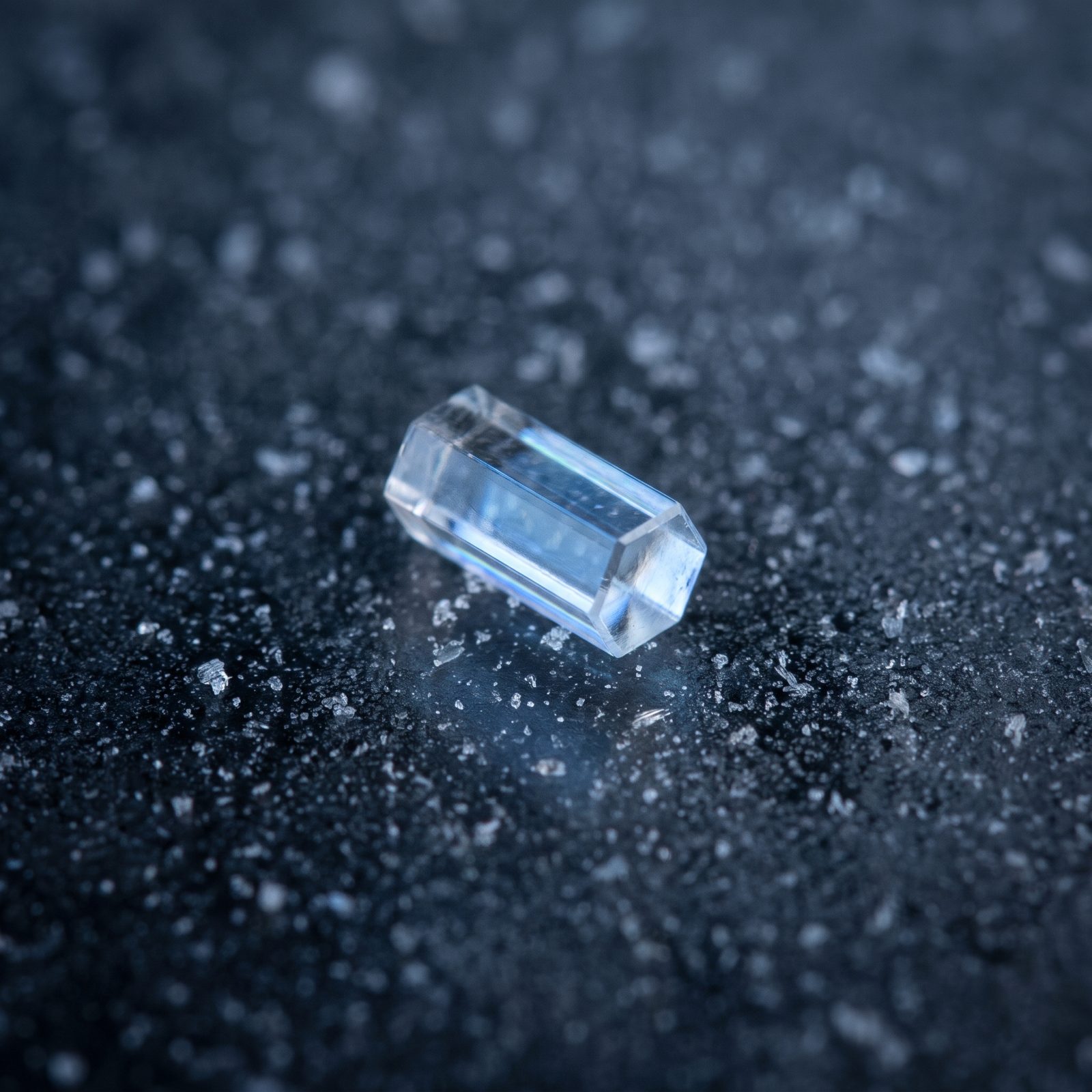
Before the spectacular arms, there’s a boring little brick. Every snow crystal starts as a simple hexagonal prism, a tiny six-sided column or plate with flat faces and no branches at all.
What happens next depends entirely on the air it drifts through. Stay in gentle conditions and the crystal may stop right there, falling as a plain plate or a stubby column. Catch the right mix of cold and moisture, though, and the corners start sprouting branches, because corners stick out and gulp up vapor faster than the flat faces do.
That one rule, edges grow quicker than faces, drives every elaborate flake you’ve ever admired.
32. All Six Arms Grow in Sync Without Ever Communicating
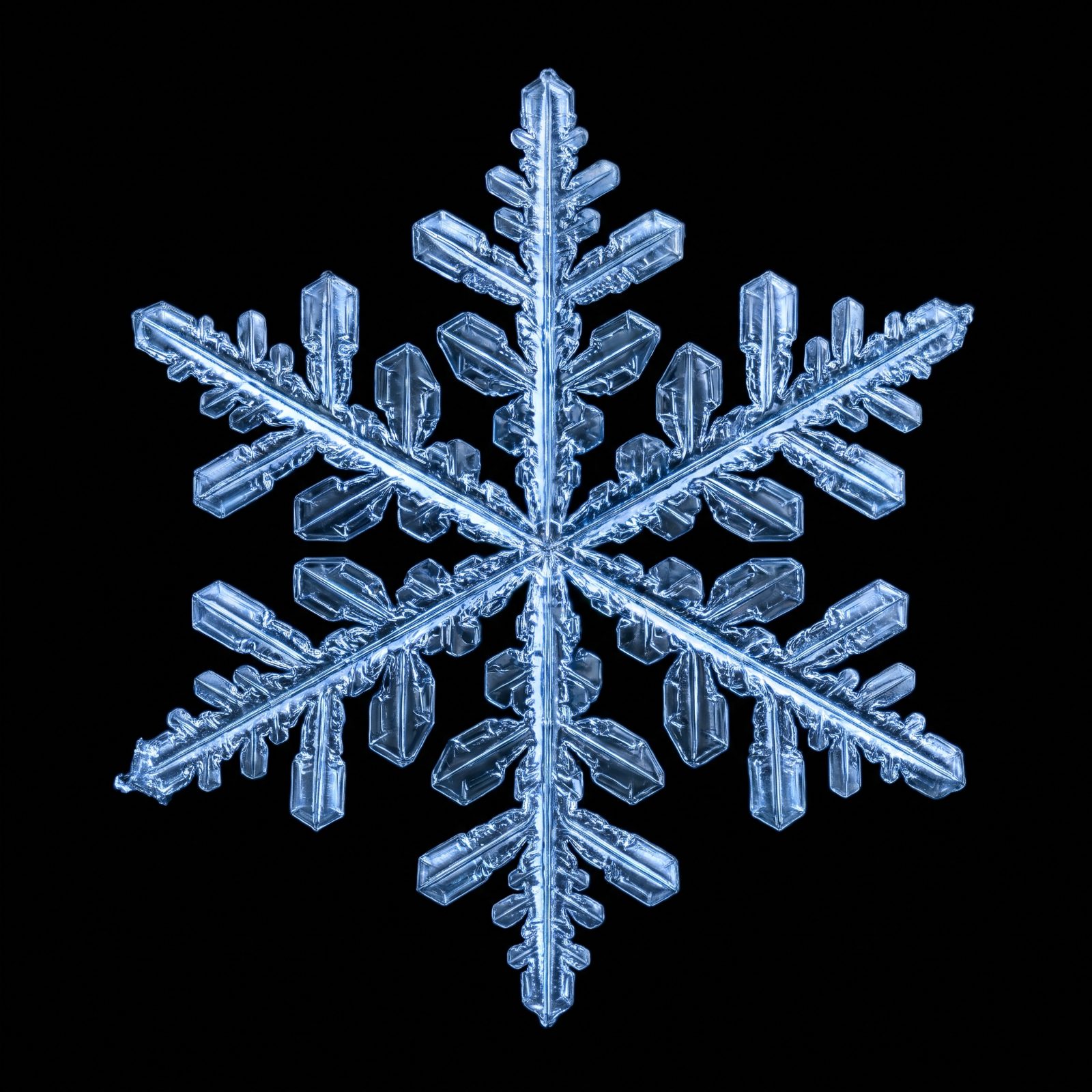
This one genuinely stumped researchers for a while. A snowflake’s six arms often grow into nearly matching patterns, yet they sit millimeters apart with no way to signal each other. So how do they stay in step?
They don’t. They simply share the same history. As the crystal tumbles through the cloud, all six arms pass through the same shifting temperature and humidity at the same moments, so the same conditions trigger the same growth response. A warmer pocket makes every arm sprout plates together. A drier stretch narrows them all at once.
The flake is basically six independent crystals keeping identical diaries of the same trip.
A snowflake’s symmetry isn’t cooperation. It’s six arms living through the exact same twenty-minute weather report.
31. The Flawlessly Symmetrical Snowflake Is a Beautiful Lie
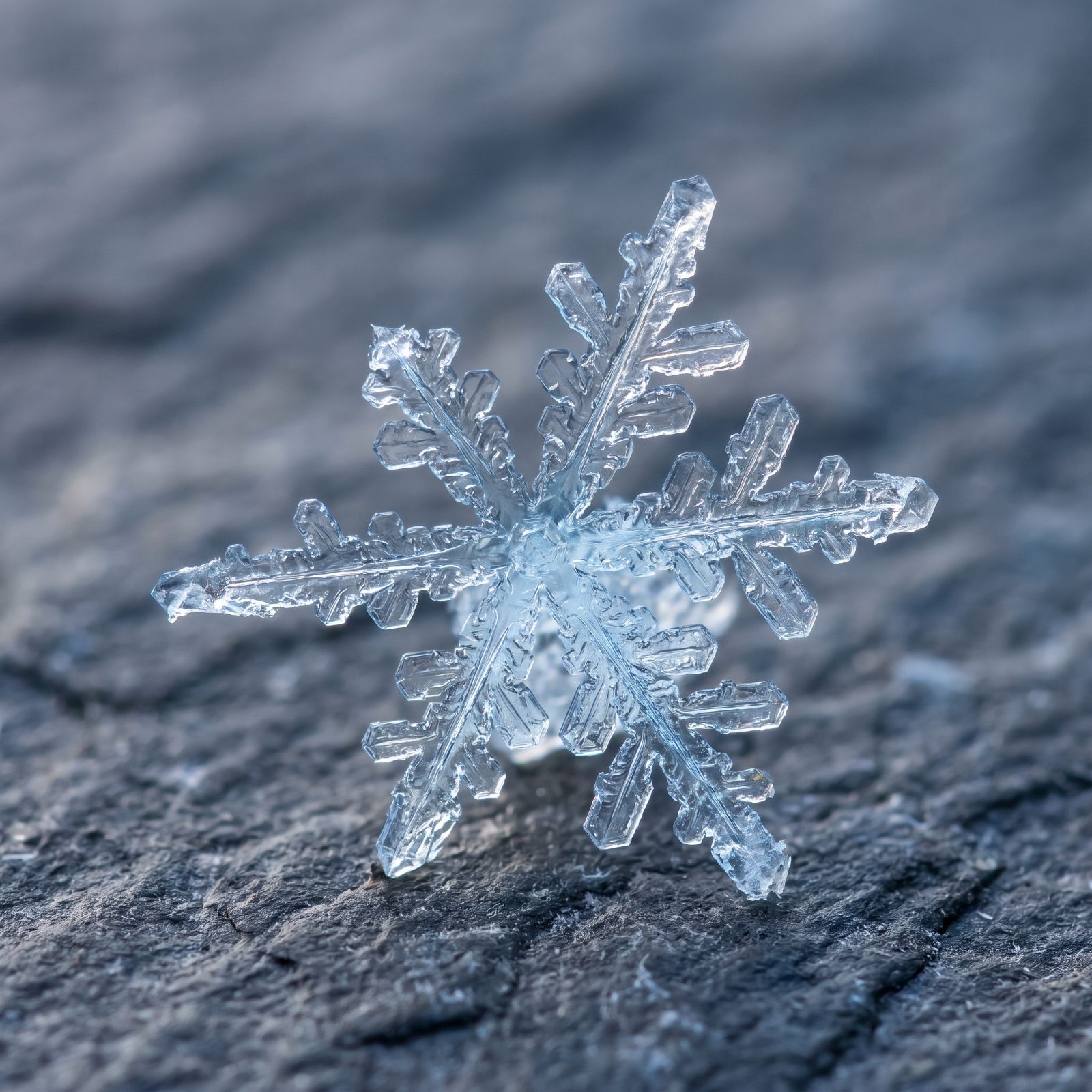
The textbook snowflake, six identical arms in perfect balance, is rare out in the wild. Most real flakes are lopsided, broken, clumped, or half-formed.
Turbulence tilts them, arms collide with neighbors, tips snap off, and two flakes stick together into a ragged mess on the way down. The pristine specimens you see in photos are hand-picked survivors, the lucky few that fell through calm, steady air and landed intact.
Snow crystal photographers sift through thousands of flakes to find one keeper. The messy ones aren’t failures. They’re the normal population, and they carry the same cloud information, just harder to read.
30. Temperature Is the Master Switch for a Crystal’s Basic Shape

Shift the temperature by a few degrees and you get an entirely different kind of crystal. The link is so reliable that scientists mapped it out: the Nakaya diagram, named for Ukichiro Nakaya, who grew the first artificial snow crystals in Japan during the 1930s.
The pattern is strange and non-linear. Around 28°F you get plates. Drop to about 23°F and it switches to columns and needles. Keep cooling toward 5°F and it flips back to plates and stars. The shape zigzags with temperature in a way nobody fully explains at the molecular level, even now.
Which is why a single flake can record its altitude. A plate center with needle tips means it drifted through two different temperature zones on its way down.
29. Humidity Decides Whether a Flake Stays Plain or Gets Fancy
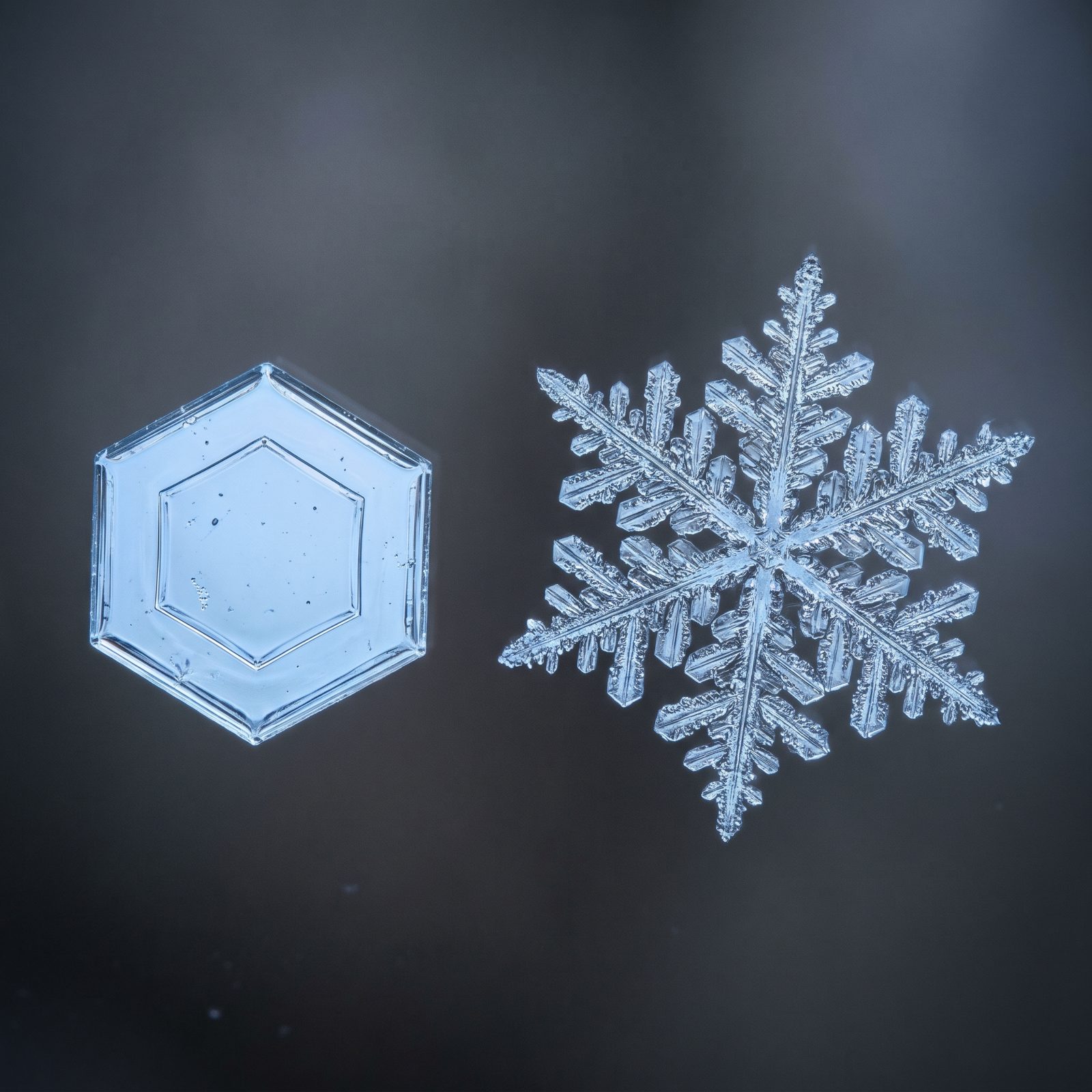
Temperature picks the shape. Humidity decides how dramatic that shape gets.
In air just barely saturated with vapor, crystals grow slow and simple, all plain plates and blocky columns, nothing showy. Crank up the moisture and suddenly there’s a feast of vapor for those hungry, fast-growing corners to devour, and that’s when you get the lacy, fern-like dendrites with branches sprouting branches.
So the fanciest snowflakes, the ones that look hand-cut, form in cold clouds packed with moisture. A dry cloud produces the plain stuff. Next time you catch a wildly ornate flake, you’ve caught evidence that it grew in a humid pocket where water was practically pouring onto its arms.
28. Needle-Shaped Crystals Betray a Cloud Sitting Right Around 23°F
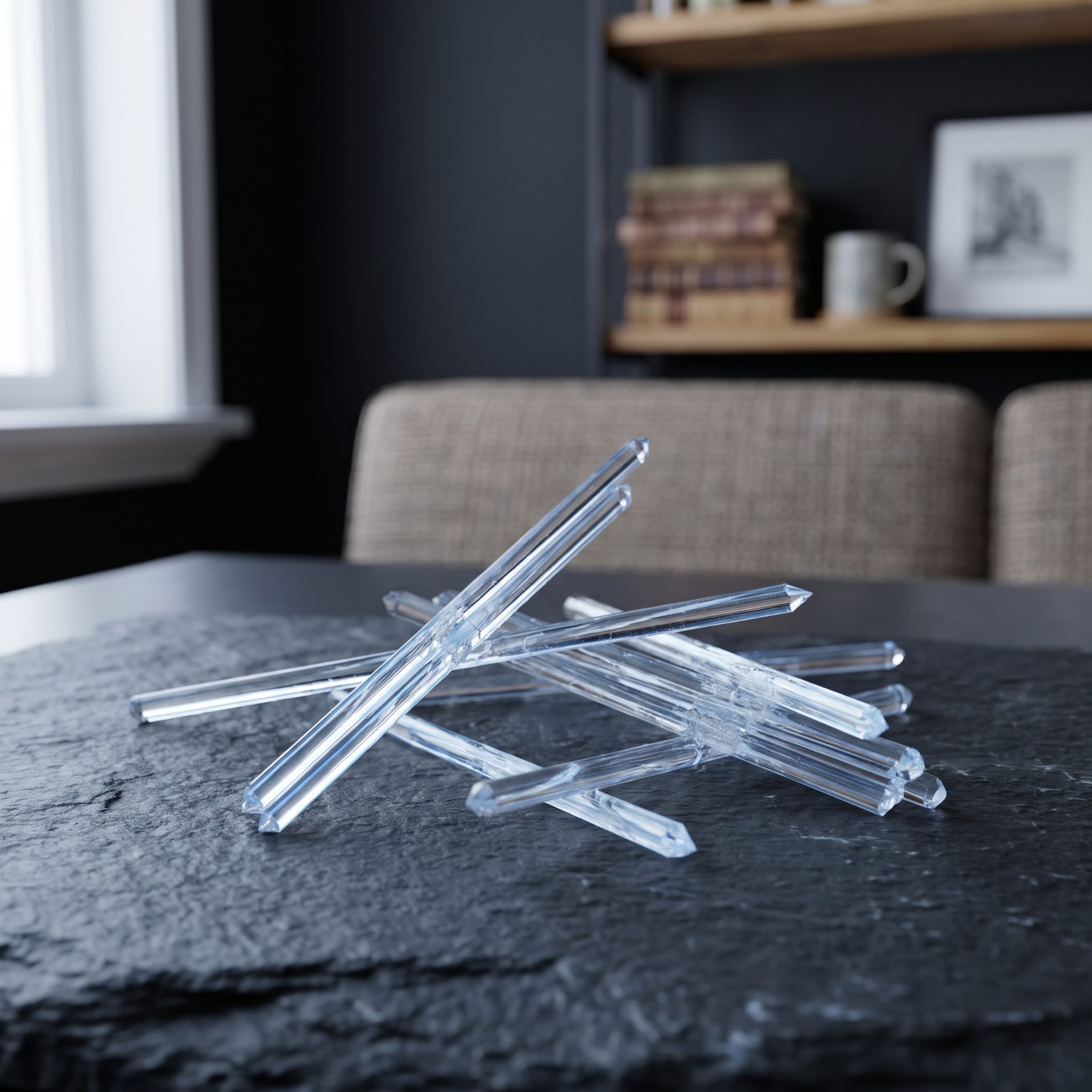
Find needles in your snow and you’ve pinpointed a temperature. Needle crystals form in a narrow window near 23°F, that odd band where the usual plate-making rules flip and ice shoots out into thin spikes instead.
They often fall in clumps, bundles of slender rods that look nothing like the classic star. On the ground they pack into dense, squeaky snow rather than the fluffy powder dendrites leave behind.
This fussiness is exactly what makes snow such a precise instrument. A meteorologist can’t always see inside a cloud, but the crystals falling out of it have already measured the temperature at their birth altitude and carry that reading in their shape. Study a few up close and see what the sky’s been up to.
27. Stellar Dendrites Grow Fernlike Arms Near 5°F
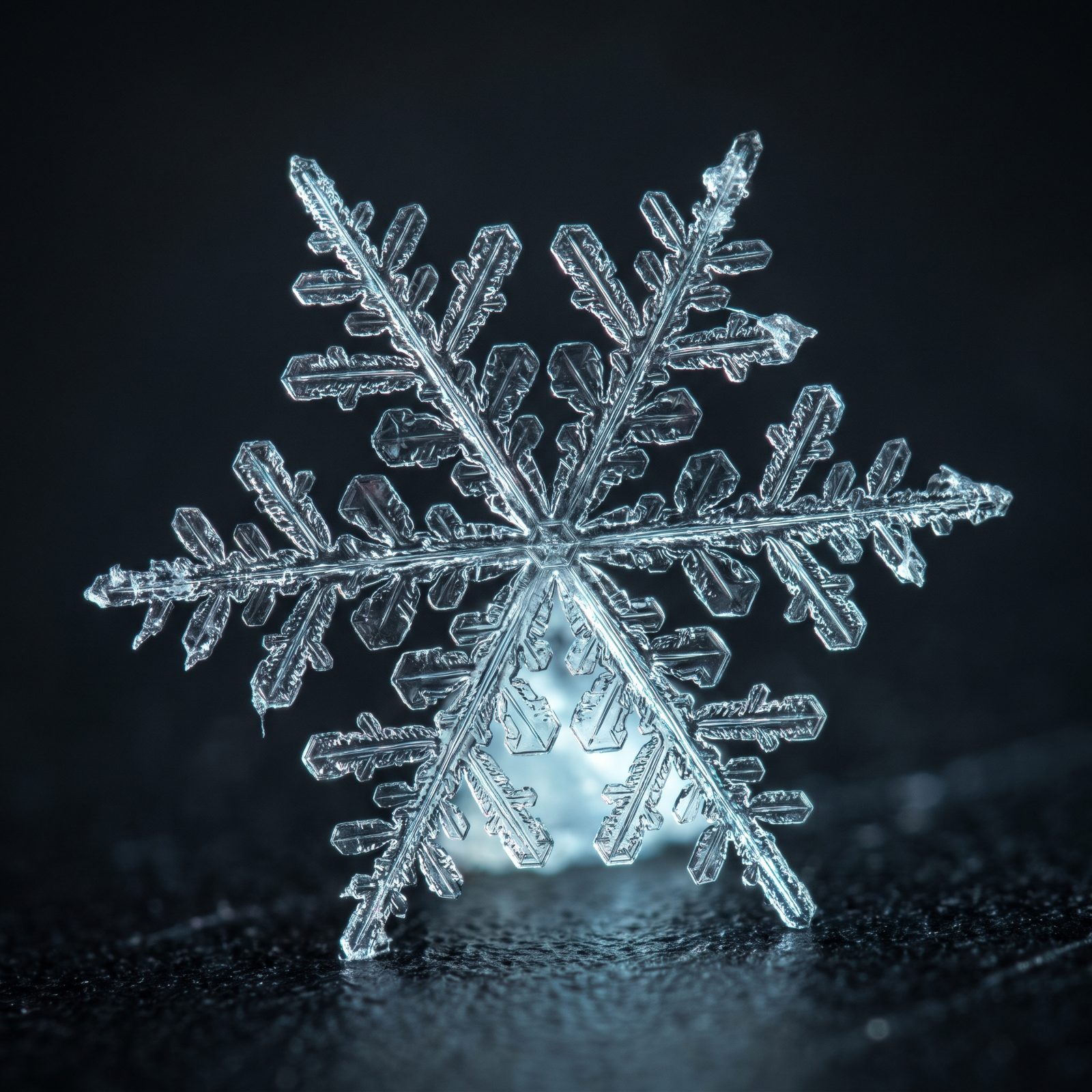
The branchiest, most photogenic snowflakes don’t form in the deepest cold. They form in a narrow window around 5 degrees Fahrenheit, where water vapor piles onto crystal corners faster than it can smooth into flat plates.
That instability is the whole trick. The corners stick out into fresher vapor, grow faster, sprout side branches, and the side branches sprout their own — and you get the classic six-armed fern. Shift the temperature a few degrees and the same cloud turns out boring flat plates instead.
26. Some Snow Crystals Grow Into Rare Triangular Plates
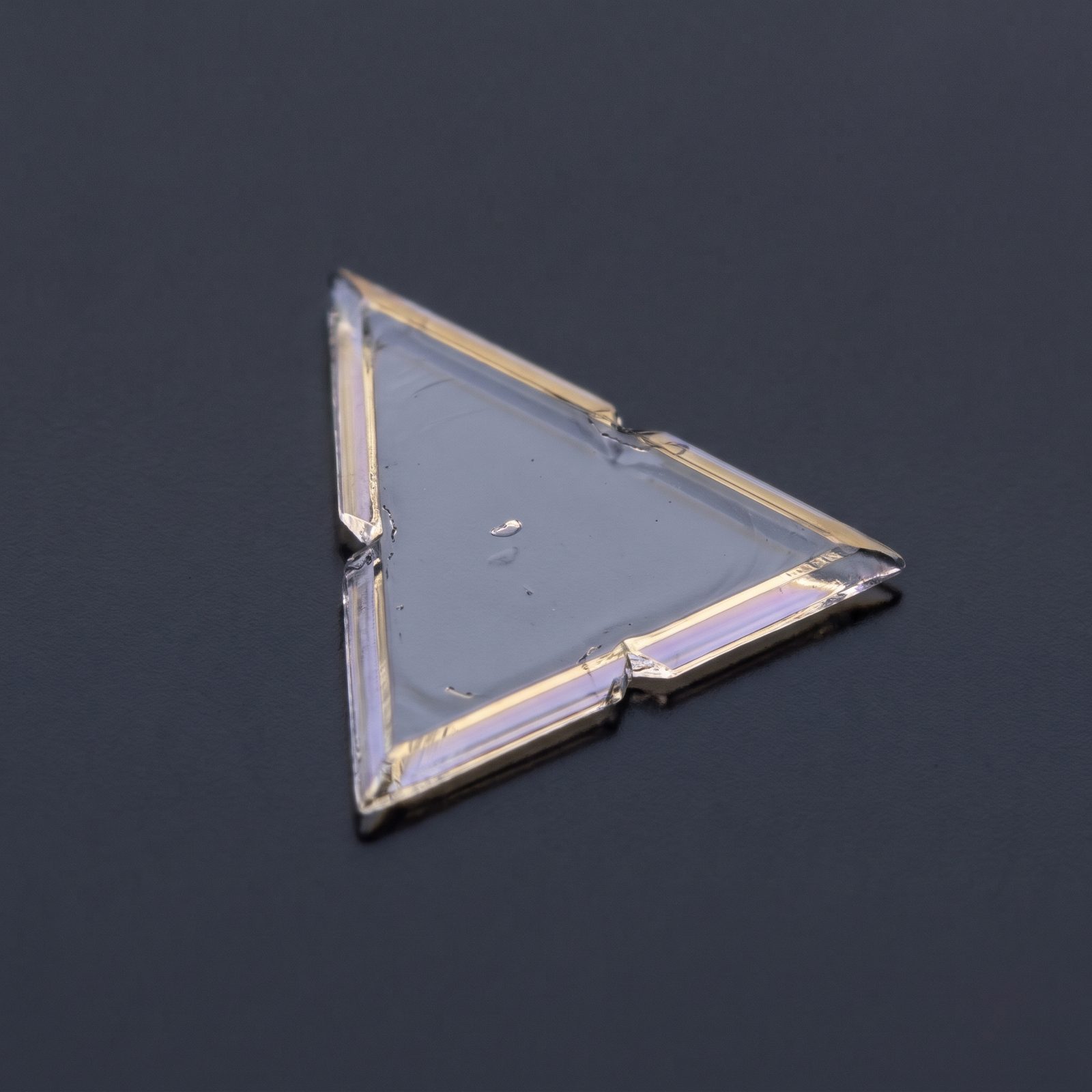
Snow crystals are built on a six-sided molecular skeleton, so a true triangle sounds impossible. But they happen anyway.
What you’re really looking at is a hexagon that grew lopsided — three alternating edges stretched long while the other three stayed stubby, flattening the six-sided plate into something that reads as a near-perfect triangle. Why? Scientists suspect tiny aerodynamic effects as the crystal tumbles may bias which edges get the vapor. That’s the honest answer: it’s still debated. Nobody has fully nailed down why triangles turn up as often as they do.
25. Twelve-Branched Snowflakes Can Form From Twinned Crystals
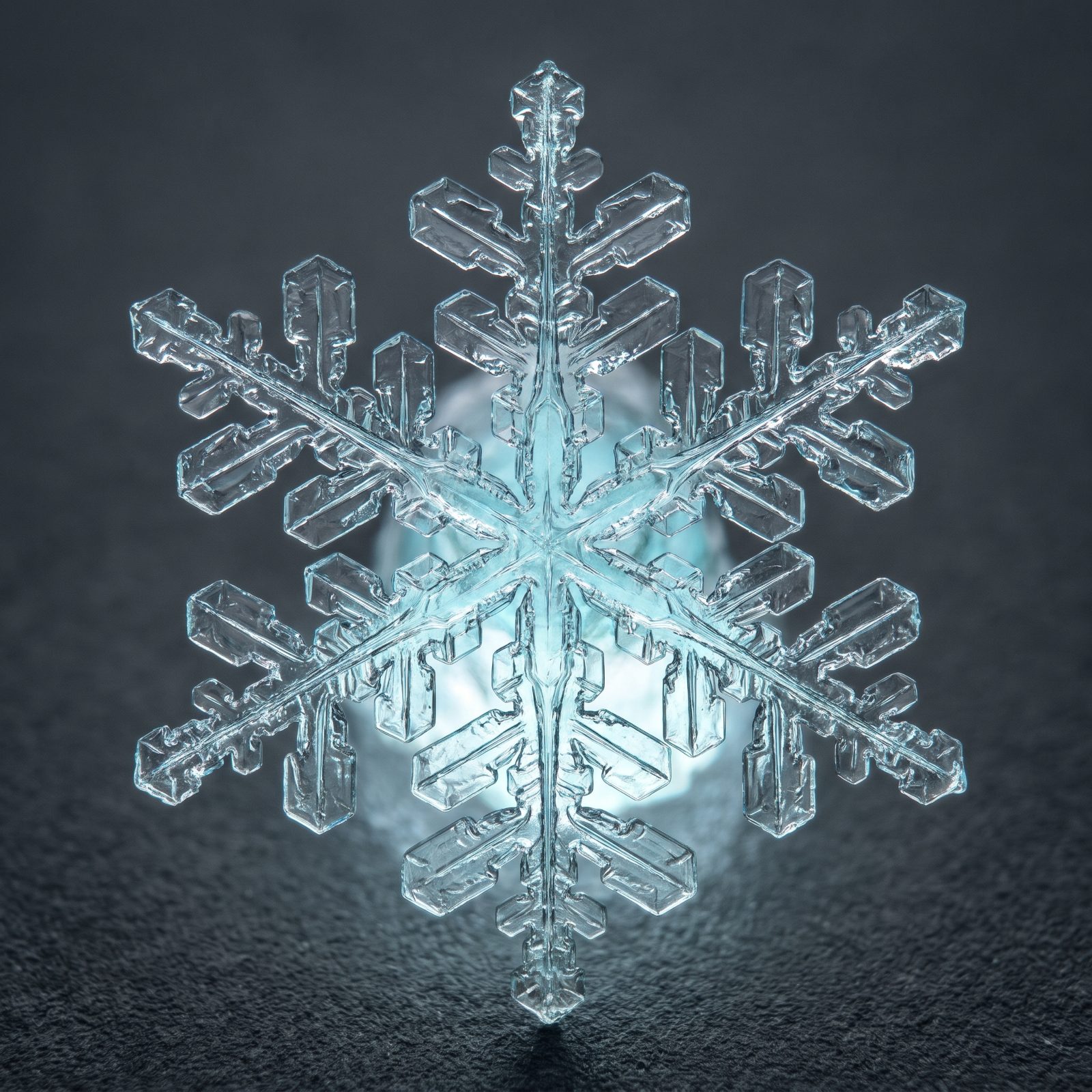
Twelve arms, not six. These are the ones that stop people scrolling.
They aren’t some separate species of crystal. They’re two ordinary six-armed crystals that nucleated almost on top of each other and locked together at roughly a 30-degree twist, and the result reads as a single twelve-pointed star. Look hard at the hub, though, and you can usually spot the seam where two became one.
24. Bullet Rosettes Look Like Ice Flowers Exploding From a Point

Not every snow crystal is flat and lacy. Up in the colder, higher cloud layers you get bullet rosettes — a cluster of long, clear hexagonal columns, each with a pointed tip, all firing outward from one shared center.
They form when a single frozen droplet turns into a polycrystal, several crystals sprouting from one seed in different directions. Each becomes a column, and together they look like a firework frozen mid-burst, shrunk to snowflake size. You’ll rarely catch one on your mitten. They tend to shatter on the way down.
23. Spatial Dendrites Grow Branches in Three Dimensions
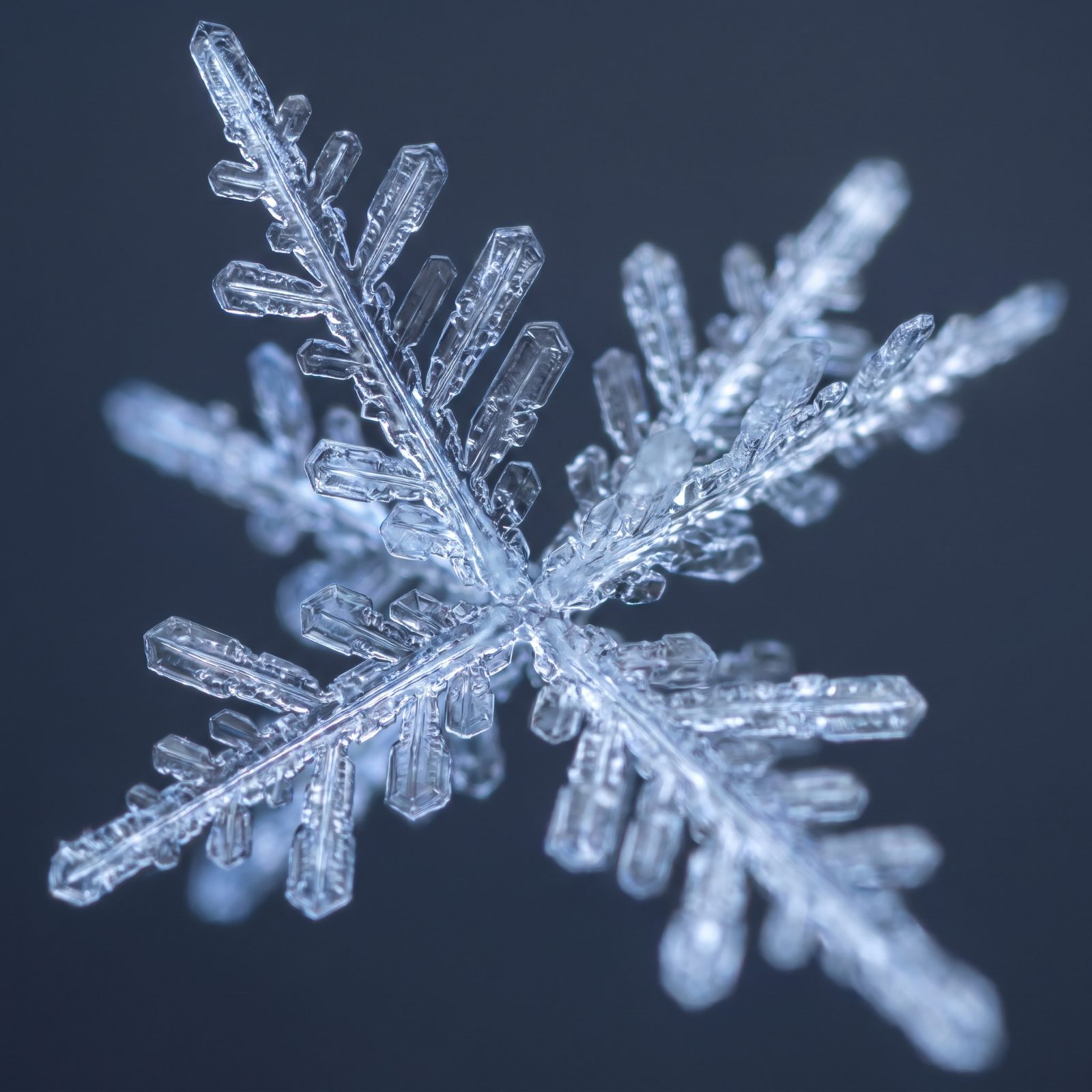
Flat snowflakes get all the attention, but plenty of crystals ignore the single-plane rule entirely.
Spatial dendrites branch outward in three dimensions, arms jutting at wild angles instead of staying in one tidy layer. Under a camera, only a few of those arms are ever in focus at once. A spatial dendrite never lines up neatly, which is exactly why they’re a nightmare to shoot cleanly.
They form when a crystal begins life as a polycrystal rather than a single lattice, so different parts grow with their flat faces tilted every which way. Here’s the part that reorders your whole mental picture: the flat, symmetric six-armed snowflake we draw on windows (unlike the one shown here) grows from a single lattice, so every branch stays in the same plane.
22. Branch Tips Grow Faster Because They Reach Untapped Vapor
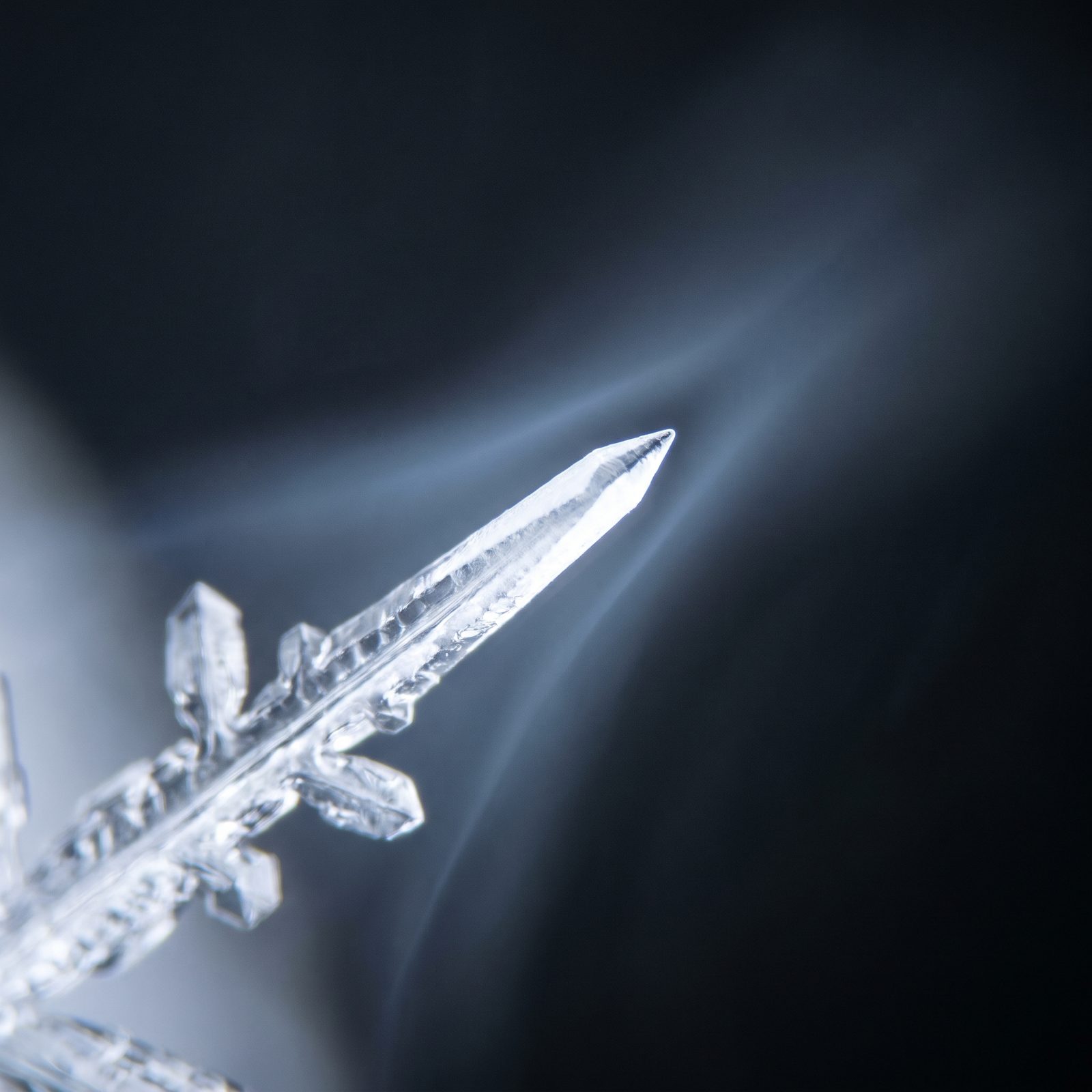
A snow crystal is in a constant fight with itself over food. Nobody mentions that part.
As it grows, the crystal strips water vapor out of the air right around it, leaving a thin, starved zone pressed against its flat faces. But the tips and corners poke beyond that depleted layer into air still rich with vapor, so they grow faster. The faster they grow, the farther they reach, the more vapor they grab.
This runaway feedback loop is the reason snowflakes branch at all. A perfectly smooth sphere of ice would be chemically simpler — and it almost never shows up in a cloud.
21. A Snowflake’s Shape Records Its Journey Through the Cloud
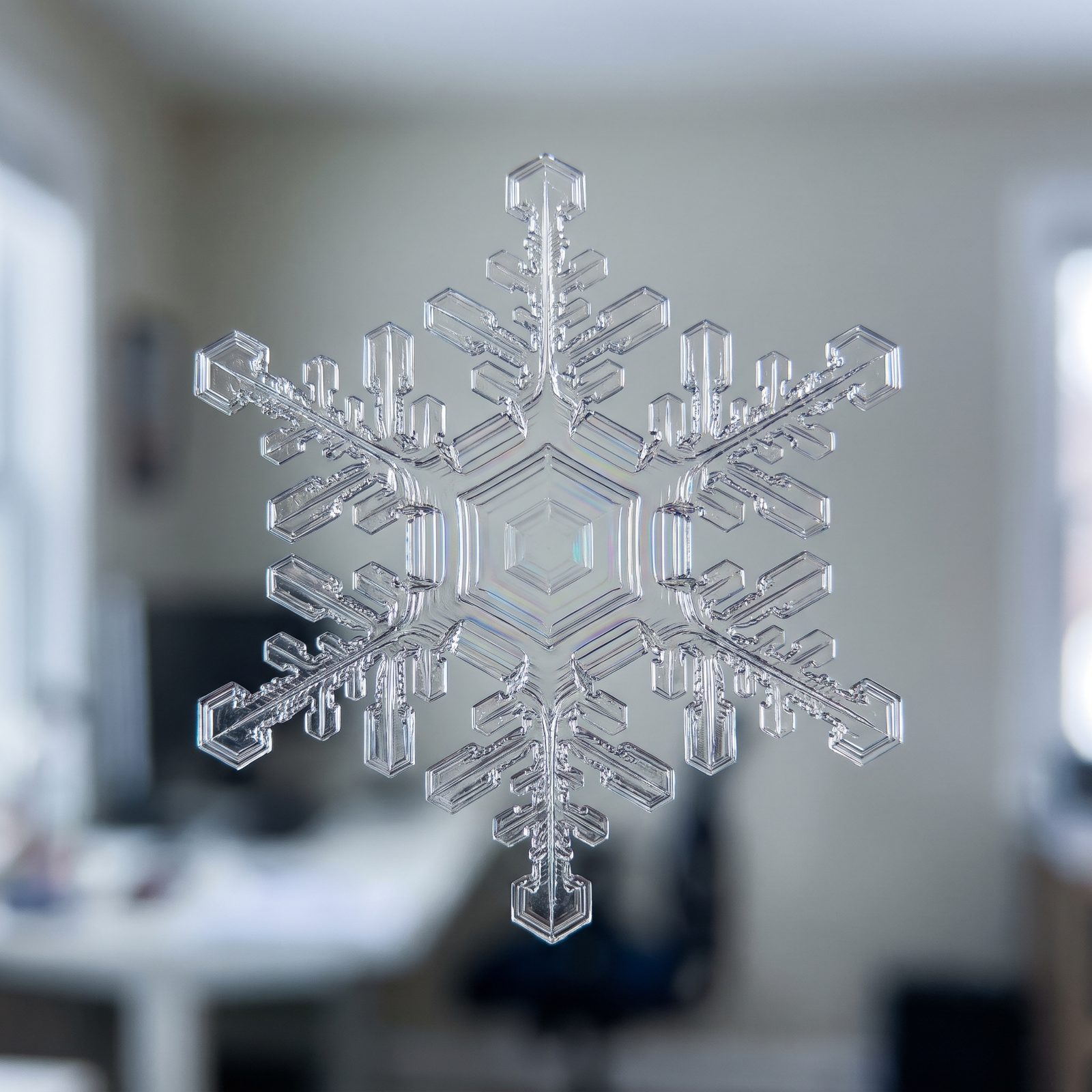
You can read a snowflake like tree rings.
Every crystal drifts up and down through layers of a cloud, and each layer carries its own temperature and humidity, leaving a signature behind. A plate at the center that sprouts dendrite arms that then end in little plates again tells you the crystal passed through warm, then cold, then warmer air — in that exact order.
And here’s the genuinely wild part. Hand a crystallographer a photo of a single snowflake and they can roughly reconstruct the weather it fell through, written in ice, start to finish.
20. The Largest Reported Snowflake Was Probably Many Crystals Stuck Together
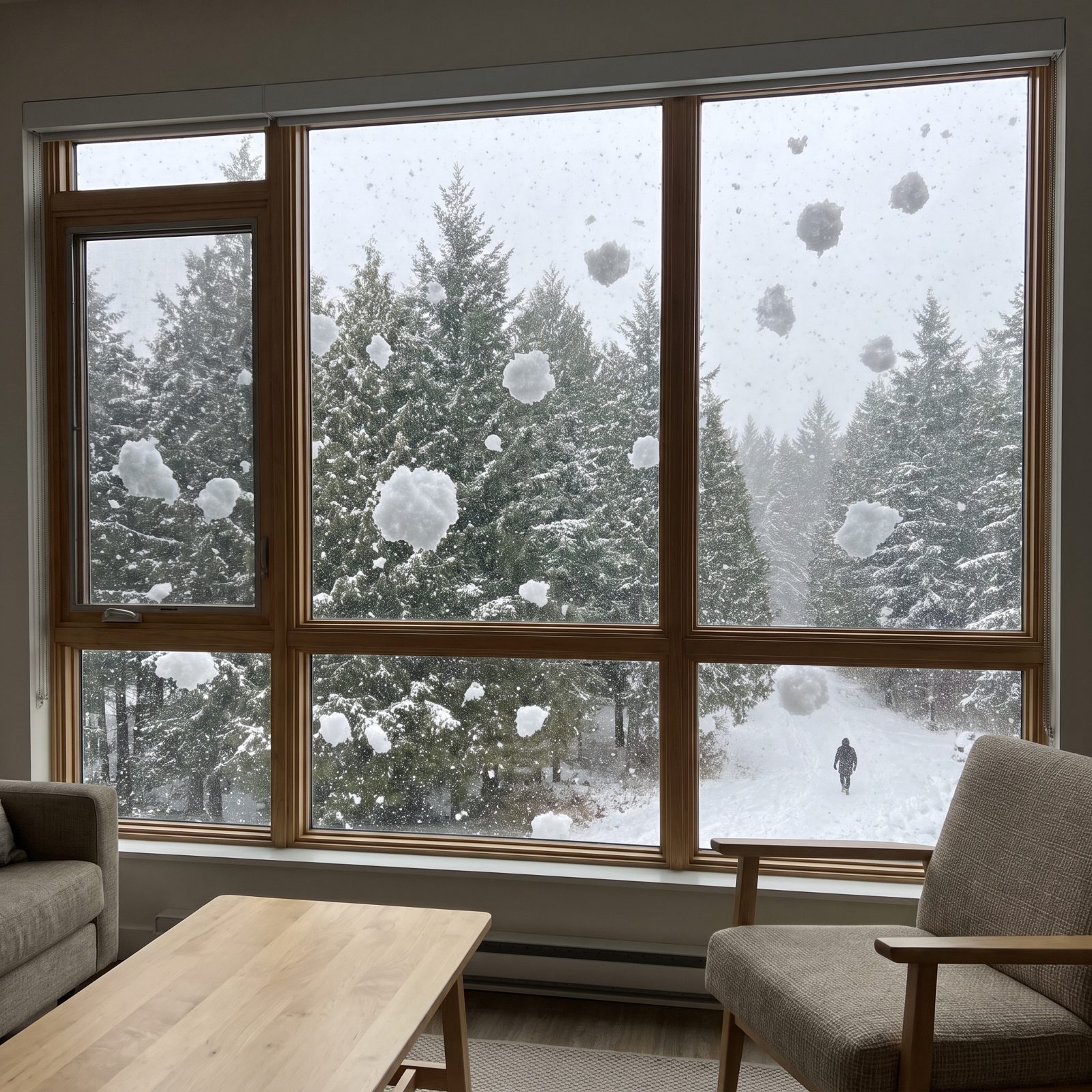
The famous claim of a 15-inch snowflake falling in Montana in 1887 is almost certainly real snow — and almost certainly not one crystal.
A single crystal tops out at a few millimeters. That’s the physical ceiling. The giants are aggregates: dozens or hundreds of crystals that collide and tangle on the way down, especially near freezing when their arms turn slightly sticky. You know those fat, soft clumps you catch on your sleeve in a wet snow? Each one is a whole crowd of flakes holding hands.
19. Broad Snowflake Plates Flutter Like Falling Leaves
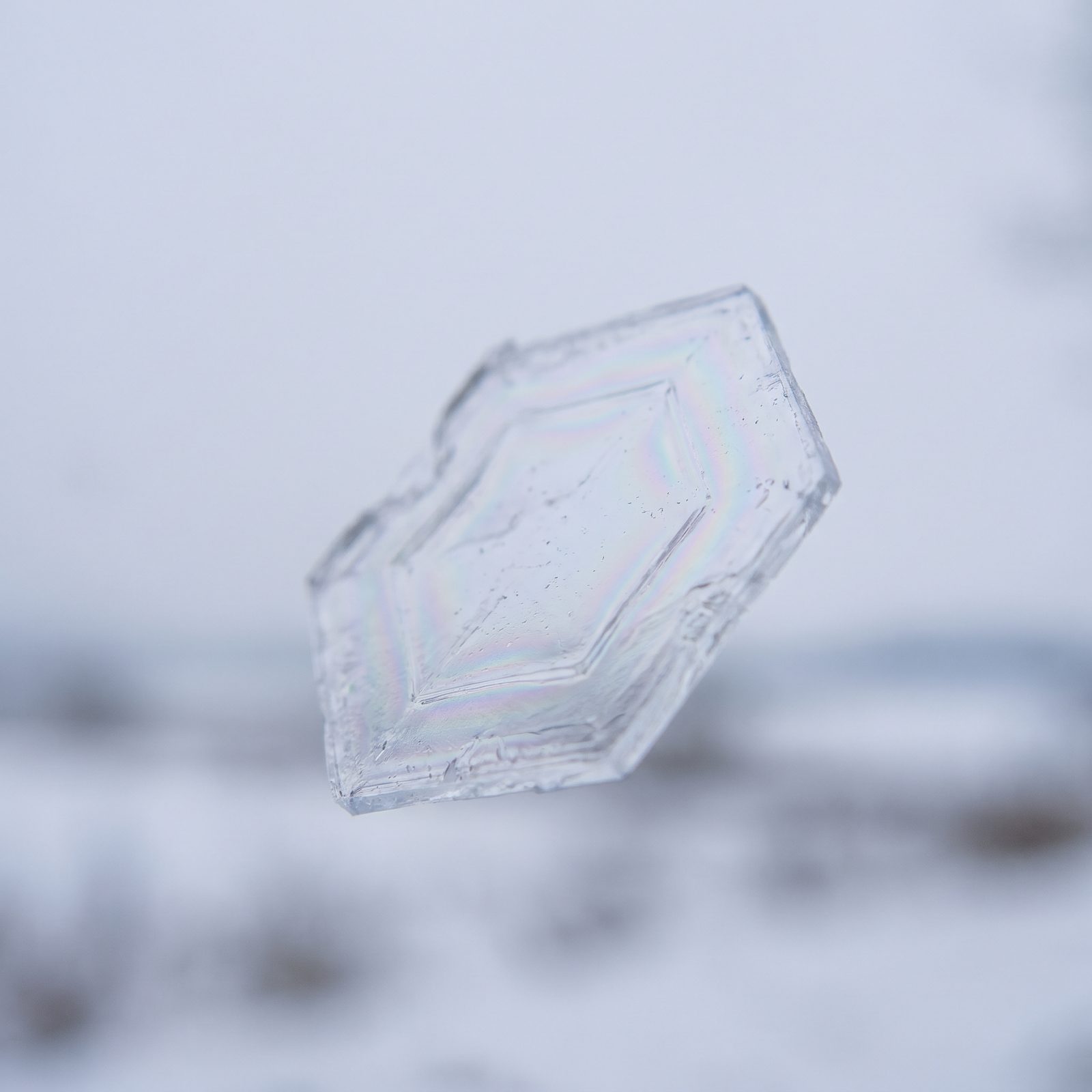
Watch heavy snow long enough and you’ll notice something: some flakes don’t fall. They flutter, rocking and swerving like leaves off a maple.
Broad thin plates are the culprits. Their wide, flat shape catches air the way a dropped playing card does, so they tumble and glide instead of dropping straight down. Compact columns and tight clumps fall faster and steadier. That lazy, hypnotic drift during a snowfall is pure aerodynamics — the same physics that keeps a paper airplane aloft, shrunk down to something smaller than your fingernail.
18. A Snowflake Can Take More Than an Hour to Reach the Ground
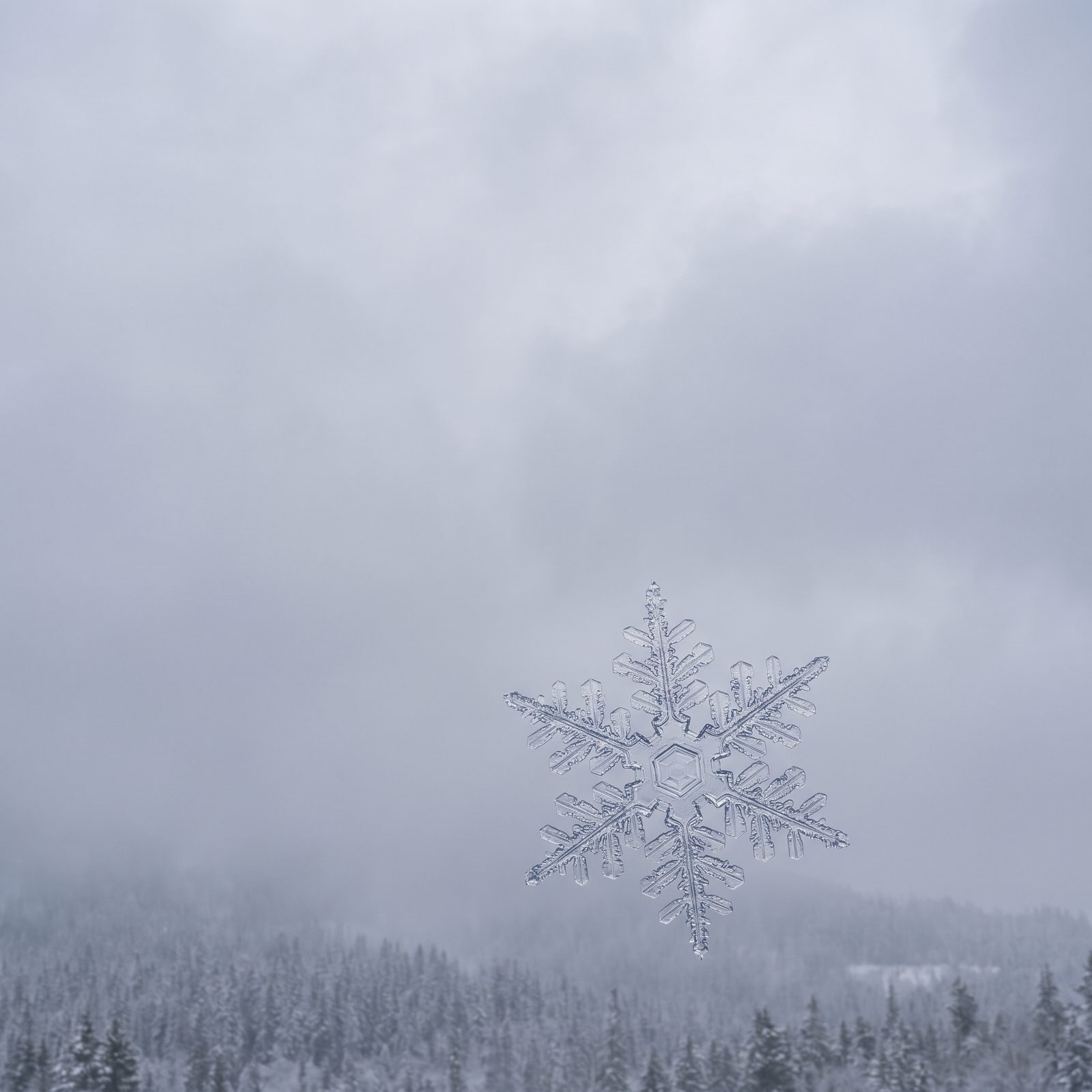
A fat stellar crystal falls at about a foot per second, slower than a drifting leaf. From a cloud base a mile up, that math stretches into a journey past an hour, and that’s before you count the updrafts that keep shoving it back toward the sky.
Here’s what the long fall buys: the crystal keeps growing the whole way down. Every second it spends sifting through moist air, it sprouts another branch, lengthens an arm, collects more filigree. Ornate snowflakes are slow snowflakes. That’s the trade.
17. Snow Crystals Can Carry Positive or Negative Electric Charge
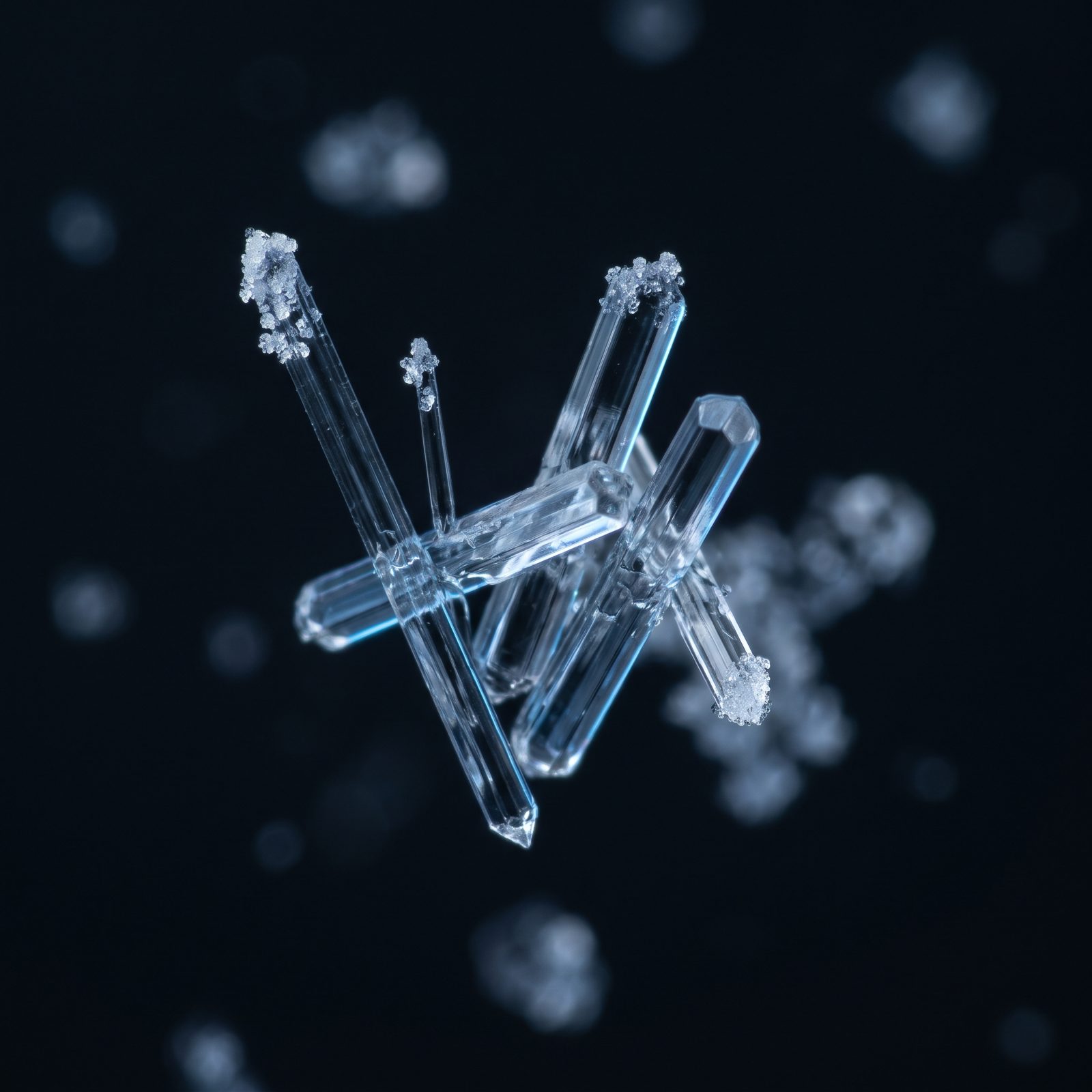
Snow is not electrically neutral. As crystals collide and splinter inside a cloud, they trade charge. Lighter ice fragments tend to carry positive charge upward, while heavier graupel drags negative charge down toward the ground.
That split is the engine behind thundersnow, the rare winter storm that hurls lightning through falling snow. Standing in a blizzard and watching the sky flash is one of the stranger things weather does.
How much charge any single crystal carries depends on temperature and the geometry of its collision. Scientists still bicker over the fine mechanics, so take the exact figures as open research, not settled scripture.
16. Supercooled Droplets Can Bury Delicate Snowflakes in Graupel

Clouds are full of water that flat-out refuses to freeze. Droplets stay liquid well below 32°F, hanging in a supercooled limbo until something gives them an excuse to crystallize.
A drifting snow crystal is that excuse. When it plows through the mist, each droplet freezes on contact, and thousands pile on until the lacy crystal vanishes under a crust of frozen beads. That crusted pellet is graupel, sometimes called soft hail.
Step on it and it crunches like tiny Styrofoam. You’ve probably caught it bouncing off your jacket and written it off as hail — but it isn’t. Hail belongs to summer thunderstorms. Graupel is just a snowflake that got buried alive on the way down.
15. A Thin Liquidlike Layer Makes Warm Snowflakes Stickier
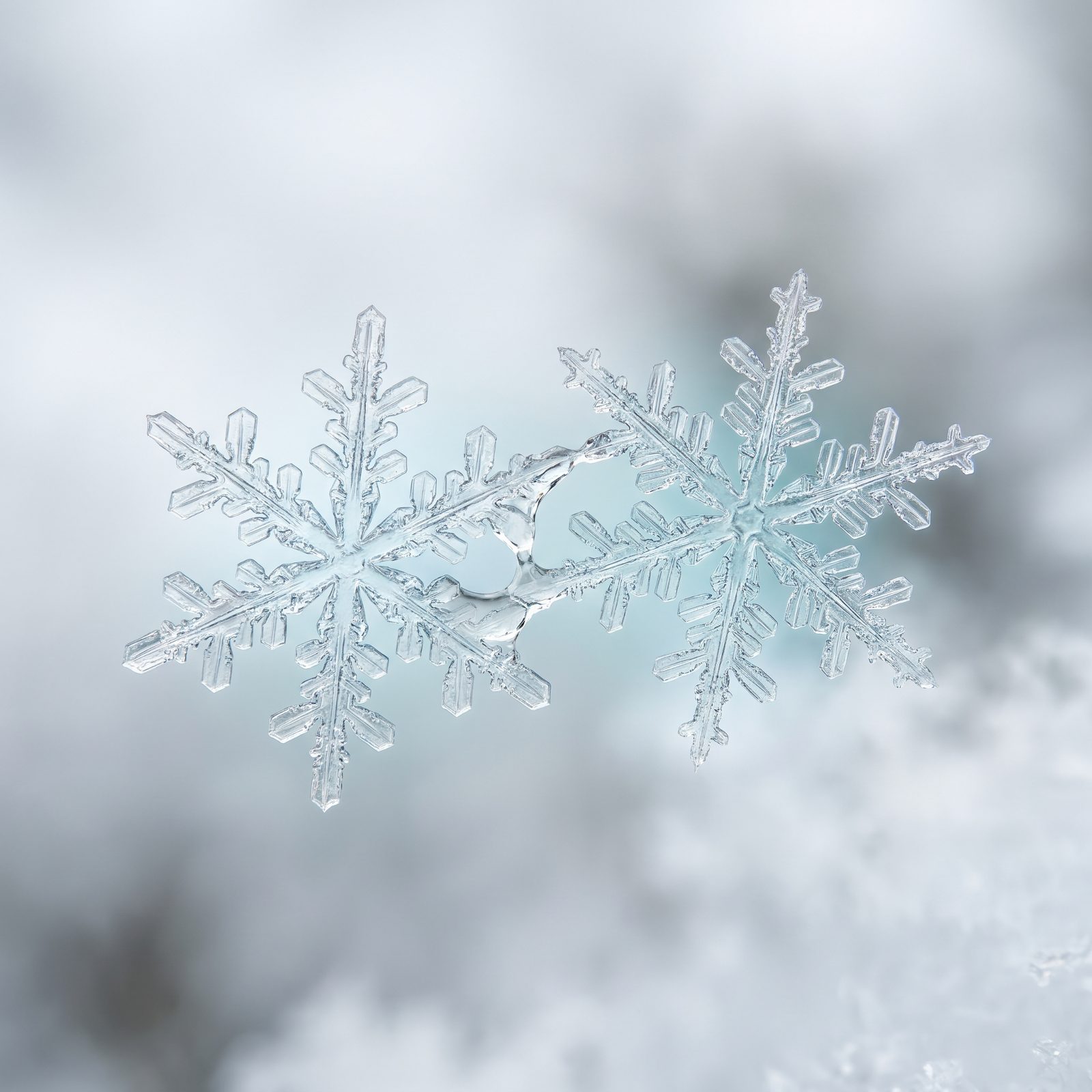
Ice is slippery, and scientists only nailed down why fairly recently. Even far below freezing, the surface of ice wears an ultra-thin film that behaves almost like liquid water — just a few molecules deep.
Warm the air toward 32°F and that film thickens. Near the melting point, snowflakes practically weld themselves together the instant they touch.
Which explains the whole difference between a powder day and a slushball day. Fluffy stuff falls when it’s frigid; fat wet clumps fall when it’s barely freezing. Warm snow sticks, cold snow scatters, and good snowball weather is nothing more than that liquidlike layer earning its keep.
14. Snowflakes Can Shrink Without Ever Melting
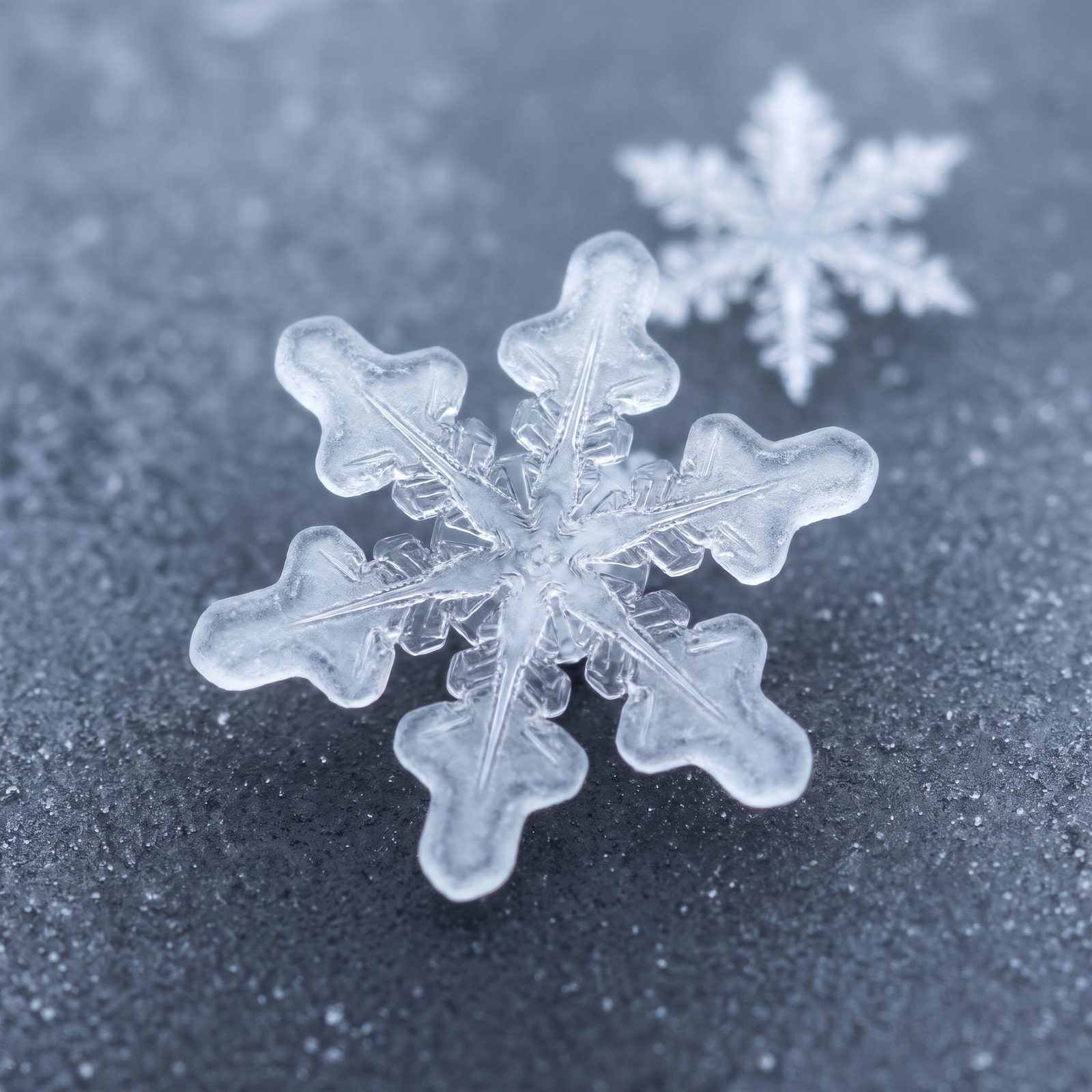
Ice can skip the liquid step entirely, going straight from solid to vapor in a process called sublimation.
Picture a snowflake resting on cold dry ground. It slowly feeds its sharpest edges into the air as water vapor — the fine tips erode first, then the arms round off, until a once-intricate crystal looks like a worn pebble. No puddle. No drip. It just thins into nothing while you aren’t looking.
13. Falling Snow Can Vanish Into Dry Air as Virga
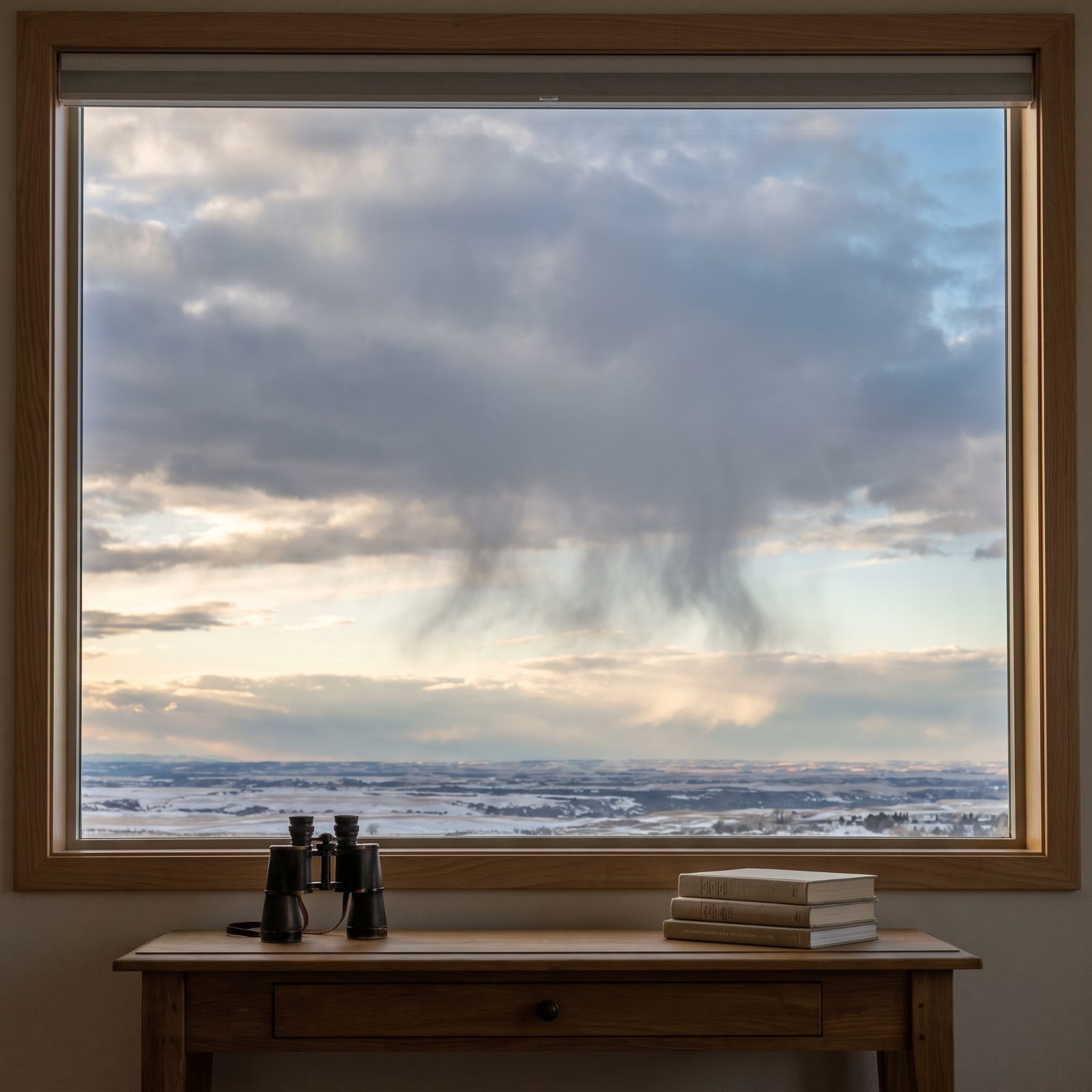
Look up on a cold clear day and you might catch snow falling from a cloud that never actually arrives. The streaks hang below the cloud base, feather out, and dissolve into empty sky.
That’s virga. The falling crystals sublimate completely before they reach the surface, devoured by a dry layer of air on the way down.
It fools forecasters and hikers alike. Radar picks up snow aloft, the ground stays bare, and the storm you braced for simply never lands.
12. Snow Squeaks More Loudly in Bitter Cold
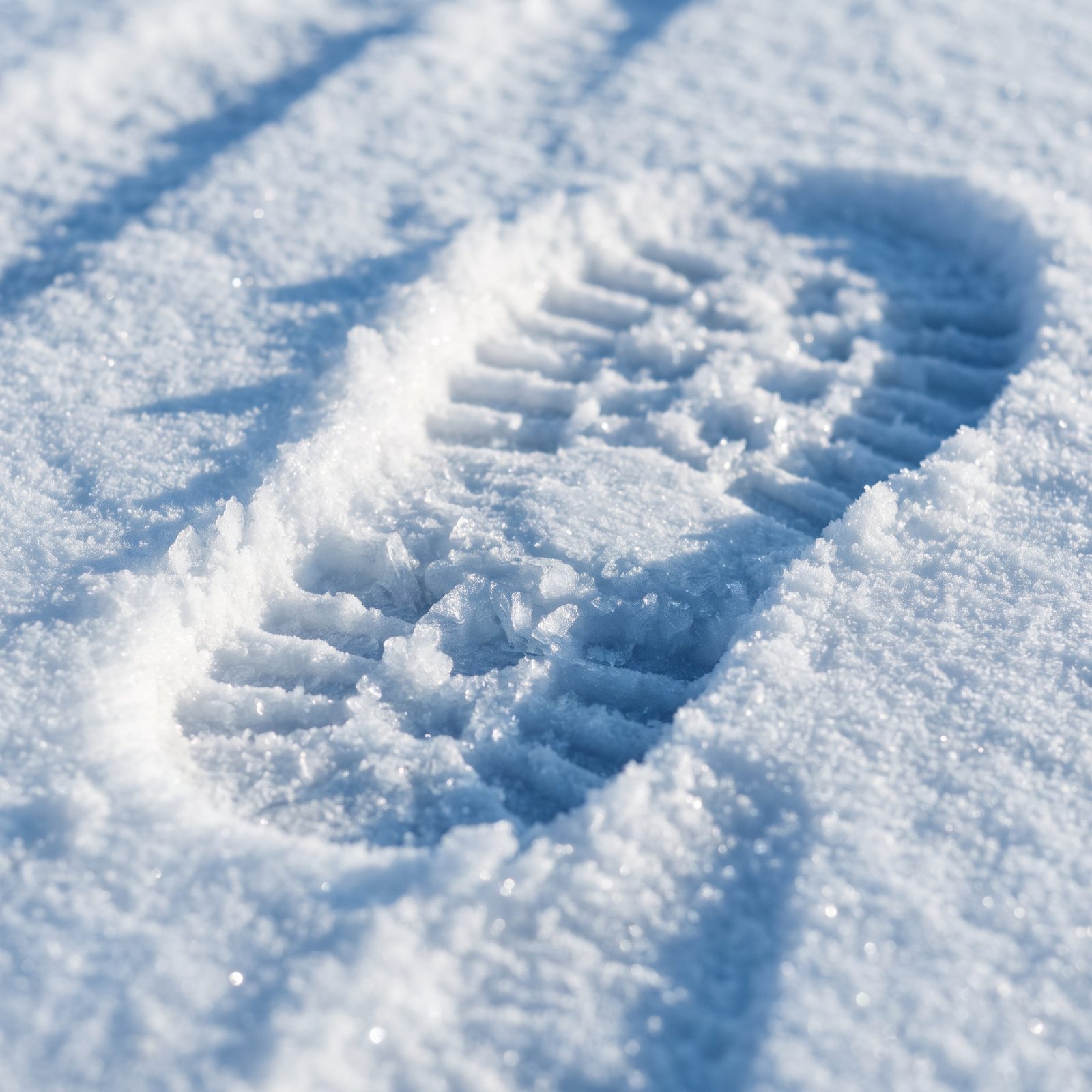
That crunch underfoot is physics you can hear. When snow sits near freezing, the liquidlike film on each grain lets crystals glide quietly past one another as you step.
Now drop below roughly 14°F. The film thins out until it can’t lubricate anything, so the grains stop sliding and start snapping — thousands fracturing at once under your boot, all of it collapsing into one sharp, high squeak.
So the squeak is a thermometer. When the snow screams at you, it’s genuinely, bitterly cold out there.
11. Individual Snow Crystals Are Clear Even Though Snowbanks Look White
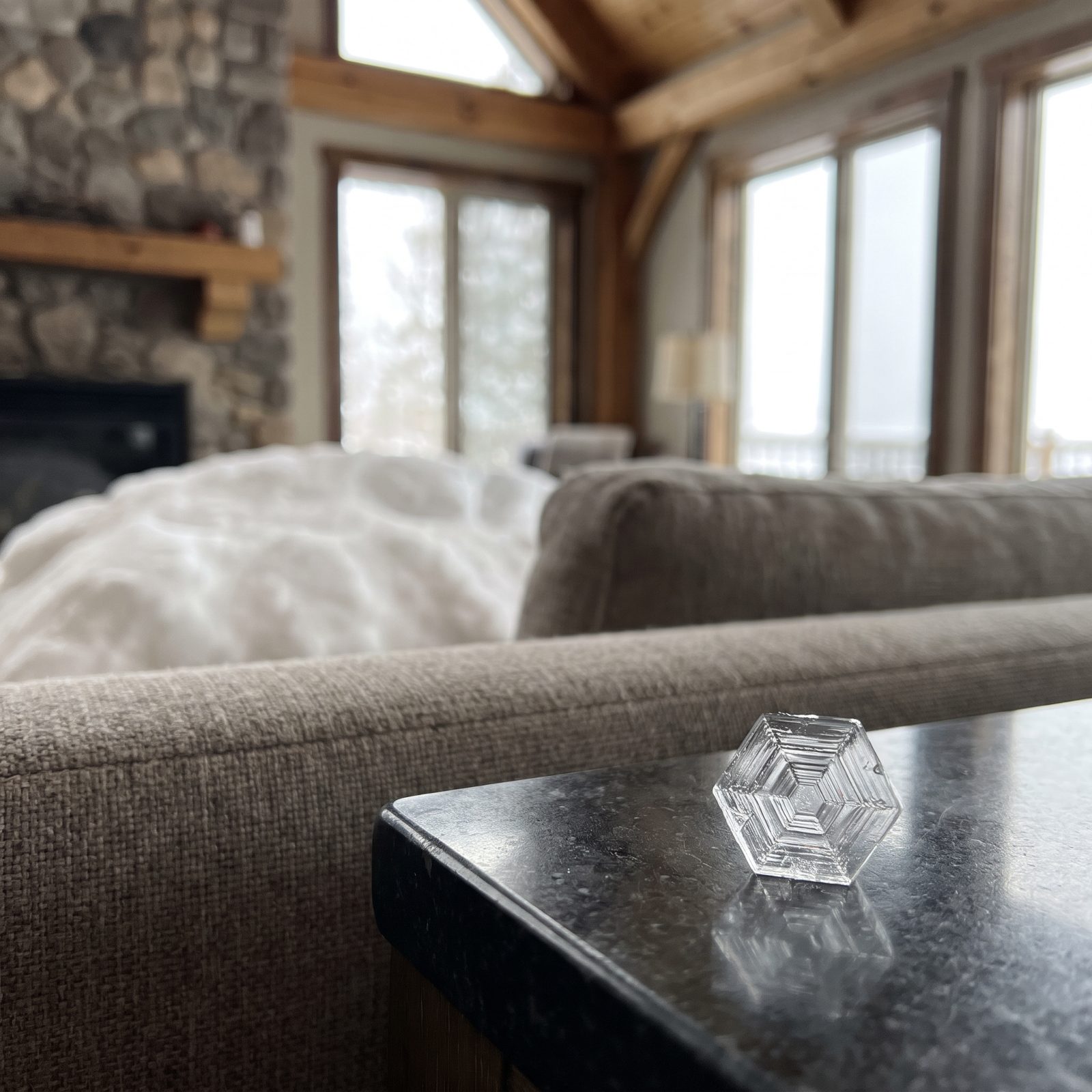
Pick up one snow crystal and it’s clear as glass. Pile a billion of them together and the heap turns bright white. The crystal never changed color — the geometry did.
Each tiny facet bends and bounces light in a slightly different direction. With countless surfaces scattering every wavelength equally, no single color wins out, so your eye reads the whole mass as bright white.
Same trick that makes crushed glass, sugar, and salt look white while the individual pieces stay clear or colorless. More surfaces, more scattering, more white.
10. Deep Snow Can Appear Blue After Absorbing Red Light
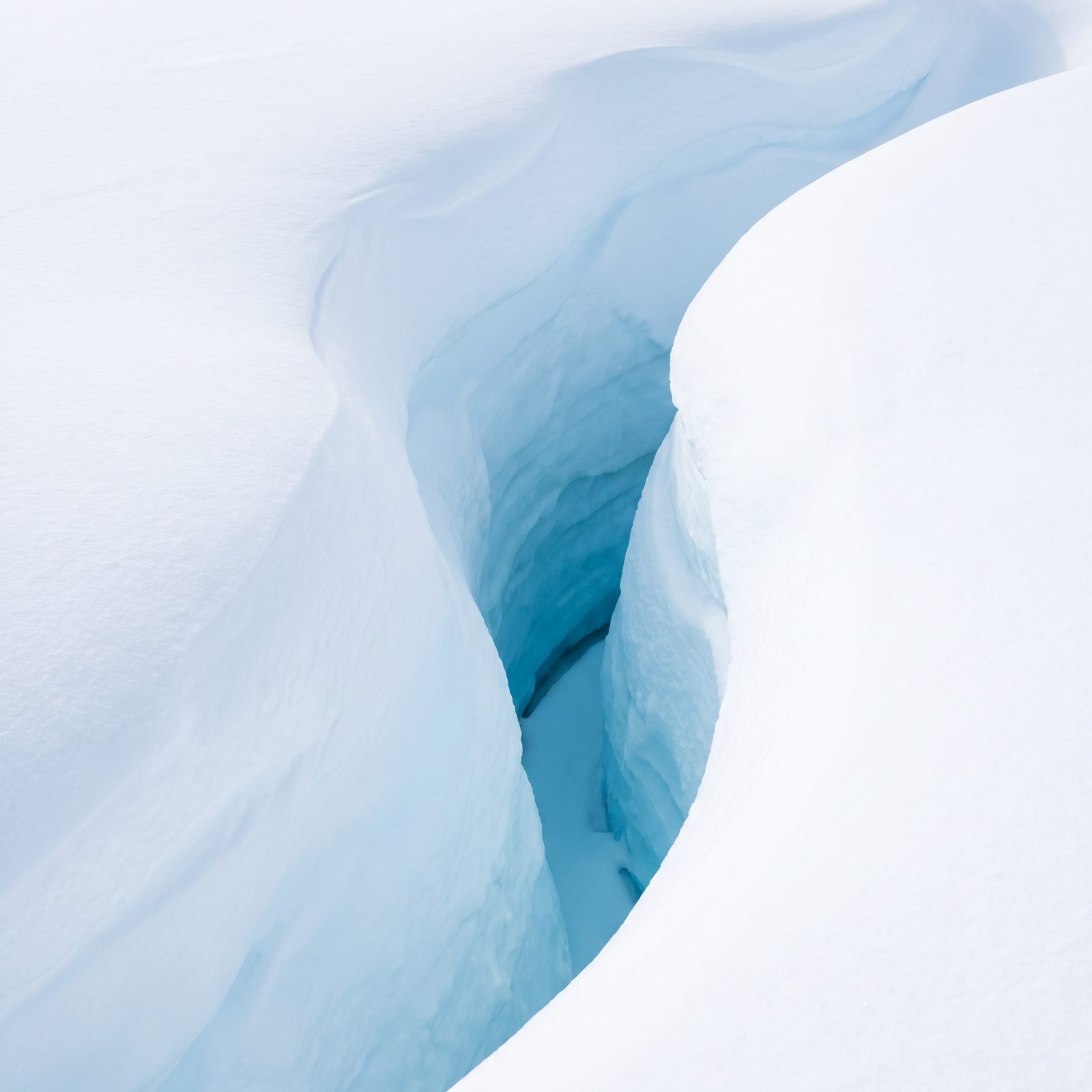
Dig a deep hole in a snowbank and peer into the shadows. The walls glow blue — almost electric down in the deepest hollows.
Light that travels far enough through snow has its red wavelengths absorbed along the route. Blue scatters and survives, so whatever finally reaches your eye from deep inside the pack arrives tinted that cold, luminous blue.
Shallow snow never pulls it off because the light doesn’t travel far enough to shed its reds. You need genuine depth, which is exactly why glaciers and thick drifts broadcast that unearthly blue so loudly.
9. Plate-Shaped Snow Crystals Can Produce Bright Sun Dogs
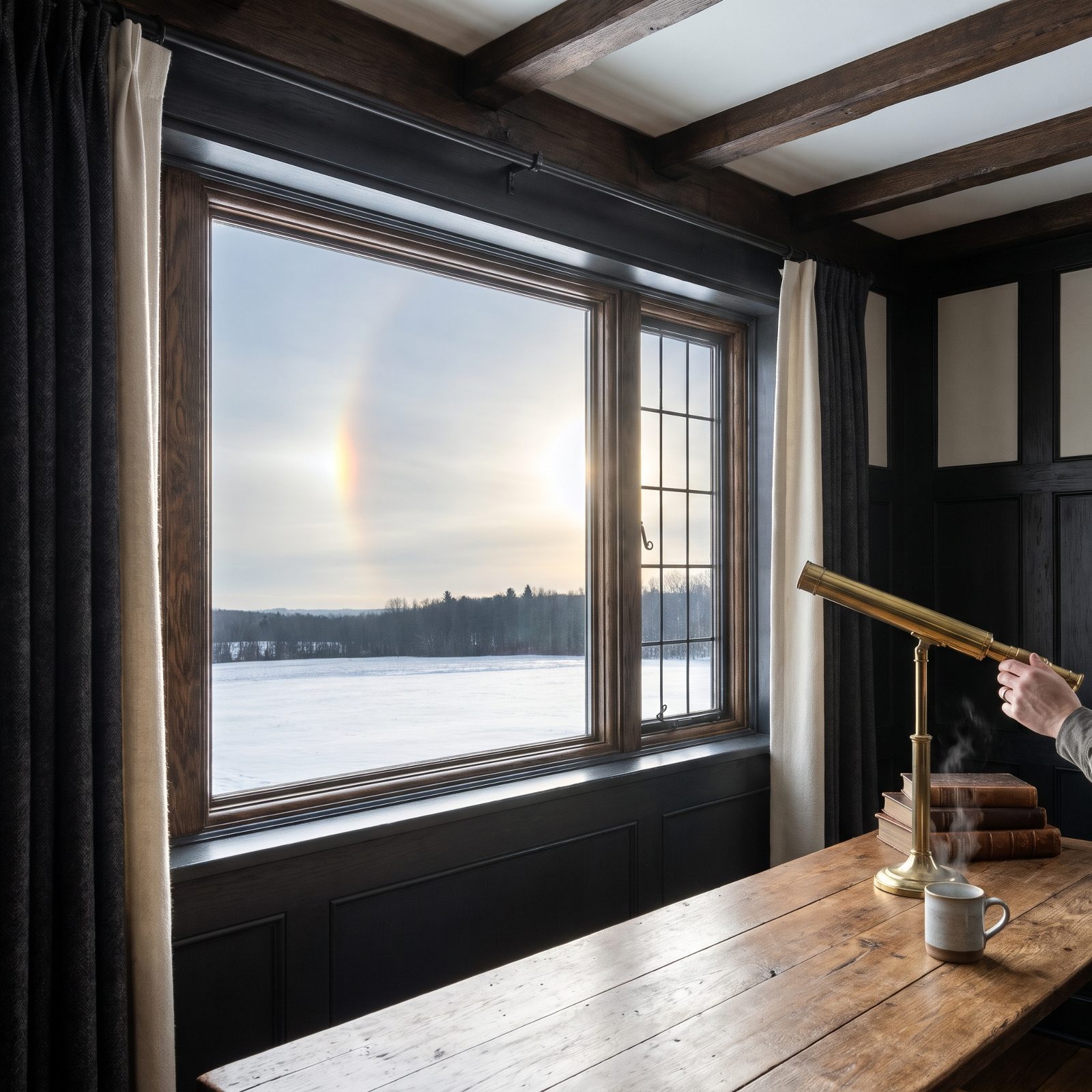
On a frigid clear day, two bright patches of light sometimes flank the sun — one left, one right. Those are sun dogs, conjured by snow crystals you can’t even see.
Way up high, flat hexagonal plate crystals drift downward with their broad faces held level, like a sky full of tiny falling dinner plates. Each one bends sunlight through a precise angle of about 22 degrees, and when millions line up at once, that bent light gathers into glowing spots beside the sun.
Red on the inner edge, blue on the outer. Spot one and you’re reading the shape and orientation of crystals miles overhead, no telescope required. Look up more often. The sky tells on itself constantly.
8. Falling Ice Plates Can Stack the Sky Into Vertical Light Pillars
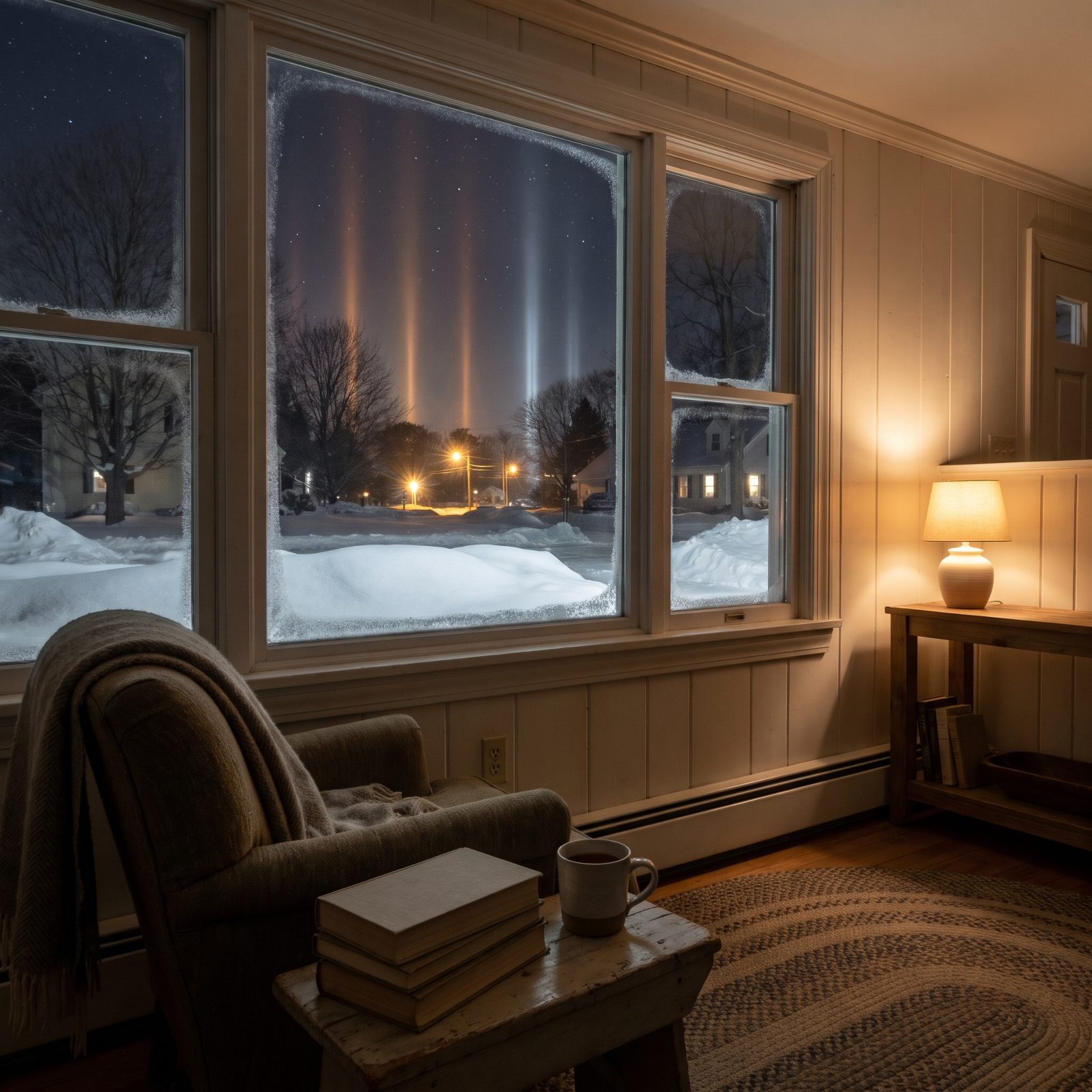
Look up on a frigid night near city lights and you might catch a beam standing straight up, like a column holding up the sky. That’s not the aurora. It’s a light pillar, and the trick behind it is simpler than it looks.
When the air goes cold and dead calm, tiny flat hexagonal ice plates drift down almost perfectly level, settling the way a leaf lands flat on a pond. Each one works as a little mirror. Thousands stacked in a vertical lane bounce a streetlamp or the moon back toward your eye, and your brain reads that collective flash as one solid shaft of light.
7. Diamond Dust Is Snow That Falls From a Nearly Cloudless Sky
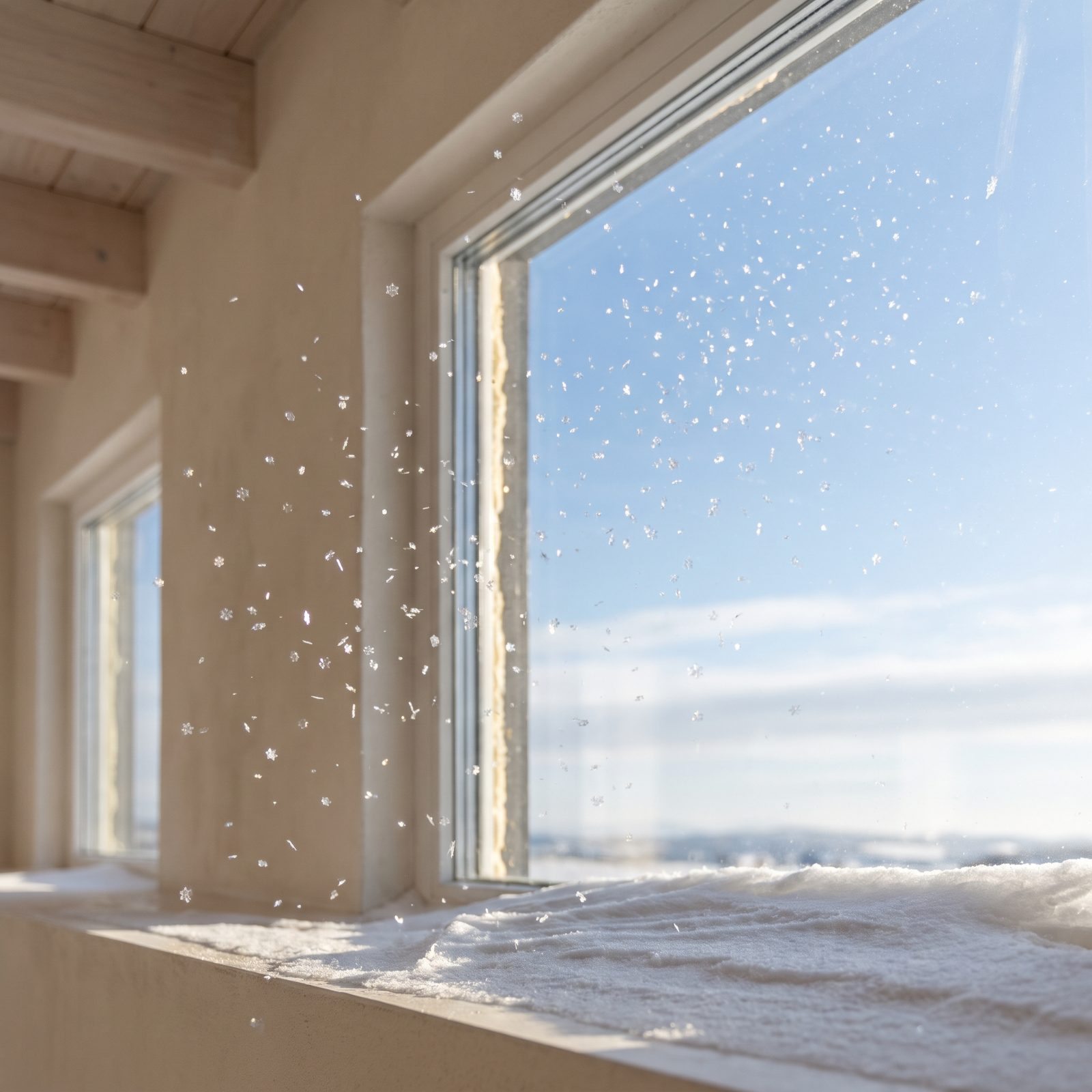
Snow from a clear sky sounds like a contradiction. In the coldest places on Earth, it happens constantly.
Diamond dust forms when the air near the ground gets so cold that the moisture already hanging in it freezes straight into ice crystals, no proper cloud required. The sky looks mostly empty and yet the air sparkles. Watch it drift past a sunlit window inside a room and it looks like suspended glitter that keeps catching the sun.
The crystals come in a surprising range: flat hexagonal plates and slender columns, mostly tiny and simple. They’re also why you sometimes catch sun dogs and halos, since each flat facet bends sunlight the same predictable way.
6. Thundersnow Fires Lightning Straight Through a Snowstorm
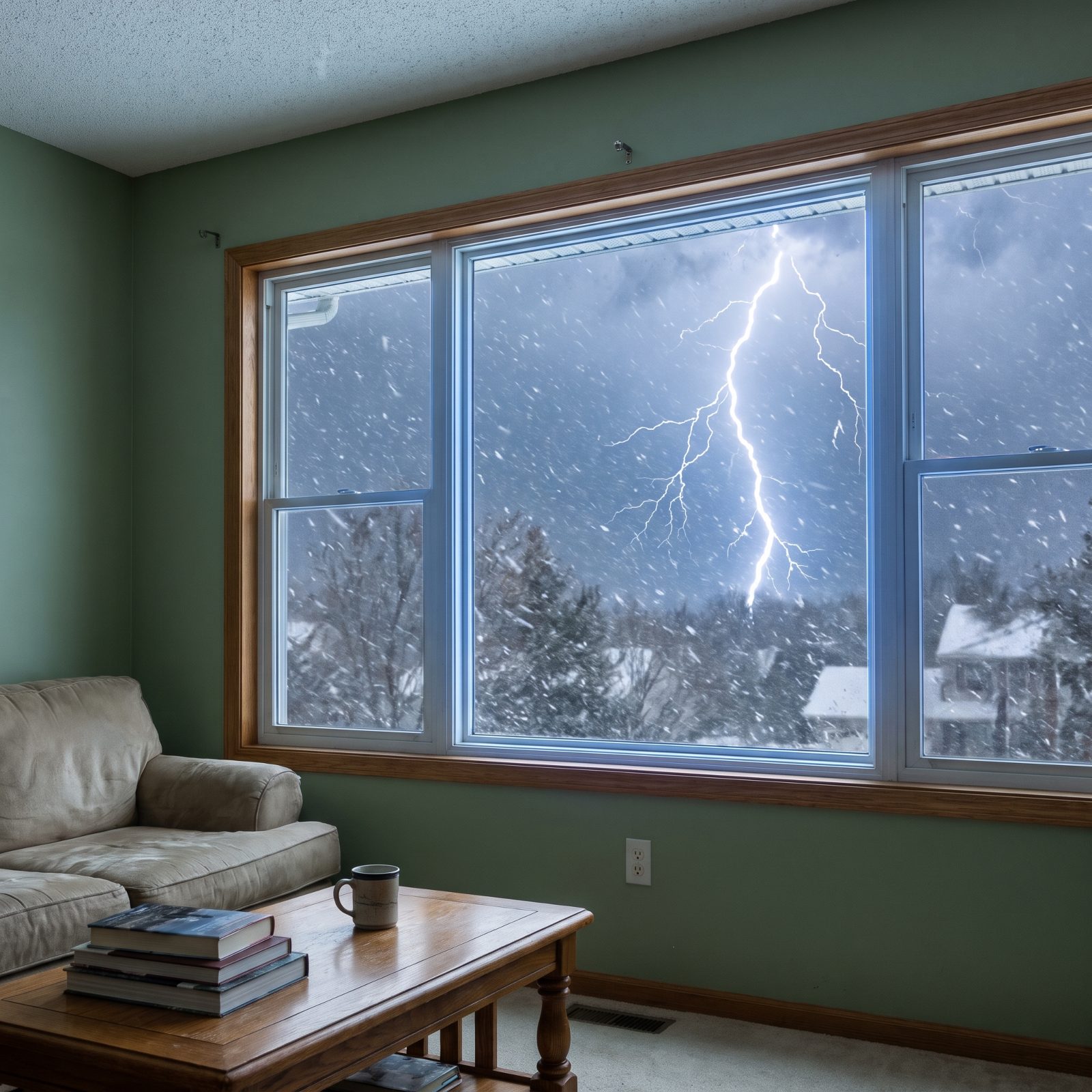
Snow and thunder arriving together feel wrong, like the weather glitched. It’s real, and it’s rare.
Thundersnow needs the same unstable, rising air that powers a summer thunderstorm, only the whole system runs cold enough to drop snow instead of rain. Ice particles tumbling through that churning cloud rub together, build up a charge, and eventually let it go as lightning. The thunder follows. But the thick falling snow muffles the boom, so what you usually hear is a dull, close rumble rather than a sharp crack.
Here’s the part people miss. Thundersnow tends to mark a seriously intense band of snowfall, so if thunder rolls during a storm, expect the heaviest, fastest-piling snow of the day to land right then.
5. Snow Guns Don’t Actually Make Snowflakes at All
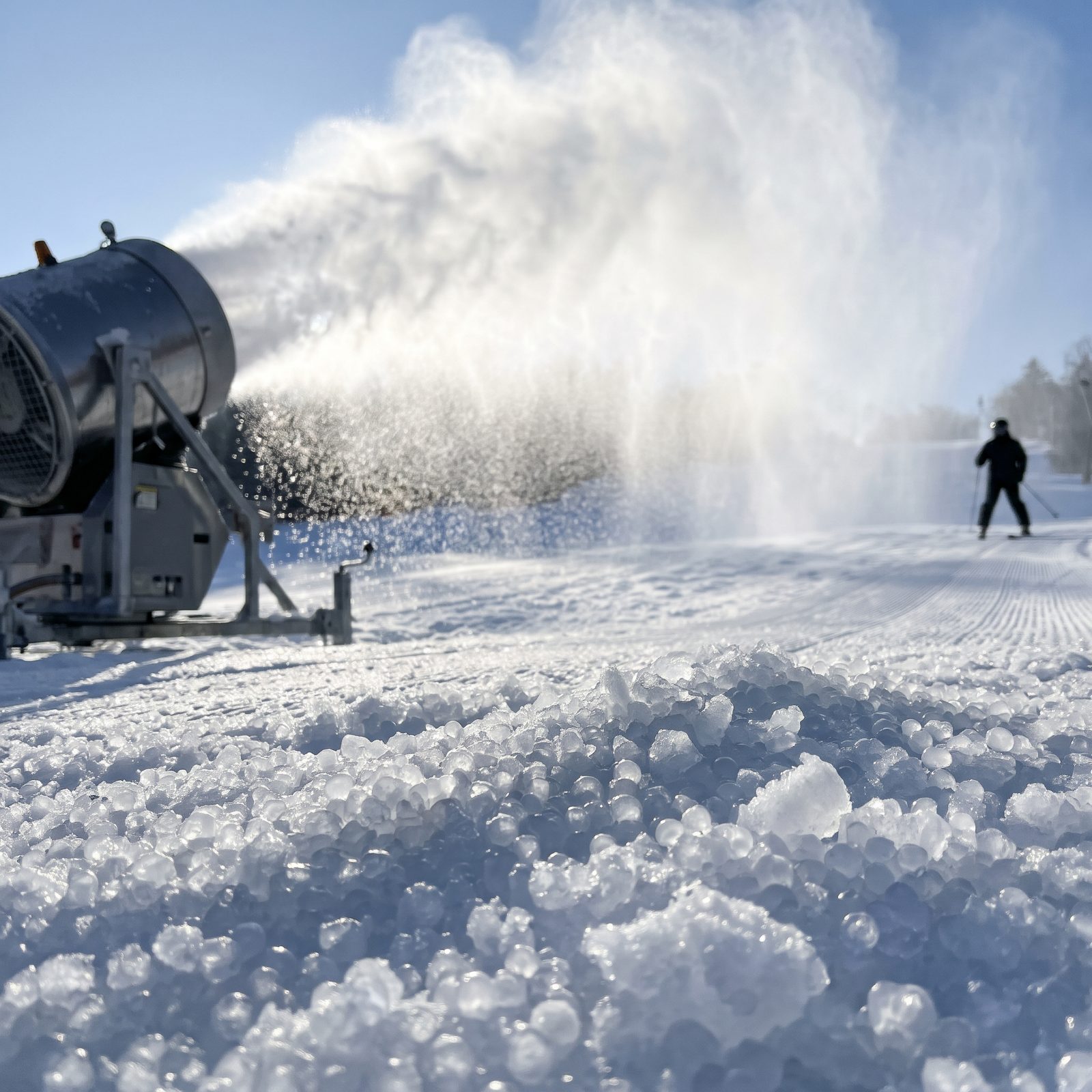
Every resort you’ve ever skied probably lied to your eyes. That isn’t snow. Not really.
A snow gun blasts a fine mist of water into freezing air, sometimes with a seed of compressed air or a tiny nucleating additive to jump-start the freezing. The droplets harden into round pellets of solid ice before they even hit the ground, with no slow crystal growth and none of the six branching arms you’d see on a real flake.
Which is exactly why machine snow skis so differently. It’s denser, grippier, and it hangs on longer when temperatures flirt with melting, because packed little ice balls don’t give up as fast as the delicate crystals a cloud lets fall.
4. Microplastics Are Turning Up Inside Fallen Snow

Snow in the remote Arctic should be about as clean as water ever gets. Not anymore.
Researchers sampling snow everywhere from the Alps to the high Arctic keep finding microplastic particles folded in, tiny fibers and fragments that rode up into the atmosphere and came back down frozen inside the flakes. Snow scrubs the air on its way down, gathering whatever happens to be drifting up there. That’s precisely how our pollution ends up in places where no human has ever set foot.
3. Wilson Bentley Spent a Lifetime Photographing Single Snow Crystals
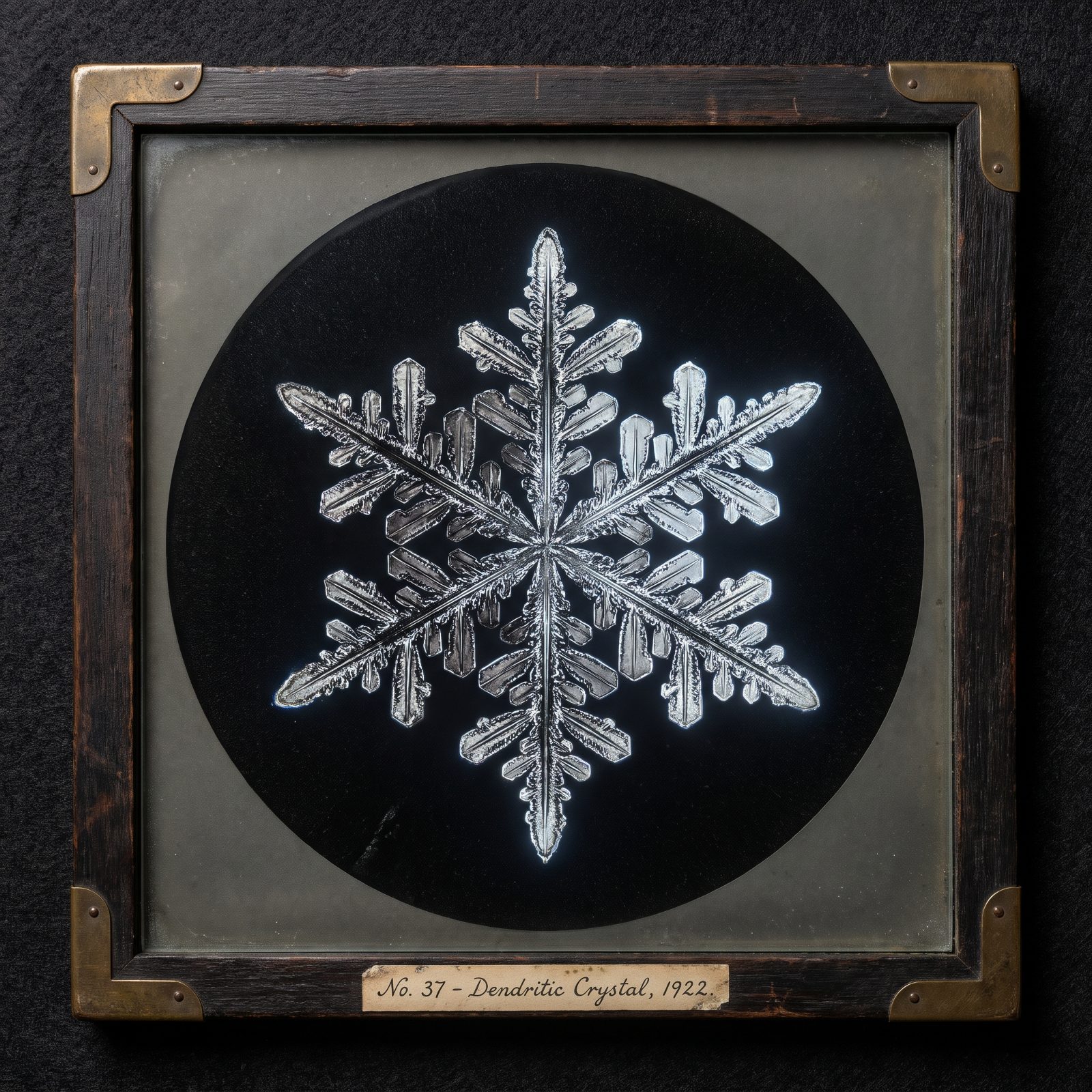
Before anyone understood why snowflakes branch the way they do, a Vermont farmer simply decided to catch them on film.
Wilson Bentley rigged a camera onto a microscope in an unheated shed, and from the 1880s onward he photographed snow crystals one at a time for roughly half a century. He’d catch a flake on a cold black board, nudge it into place with a feather or a splinter before it sublimed away, and race to shoot it before it was gone. Over 5,000 images, all told.
His collection is where the notion that no two snowflakes are alike really sank into the public imagination. He did fudge a little, though. He sometimes trimmed his images to play up symmetry, and real crystals run messier than his prettiest plates let on. That messiness is half the science.
2. Ukichiro Nakaya Grew the First Snow Crystal in a Laboratory
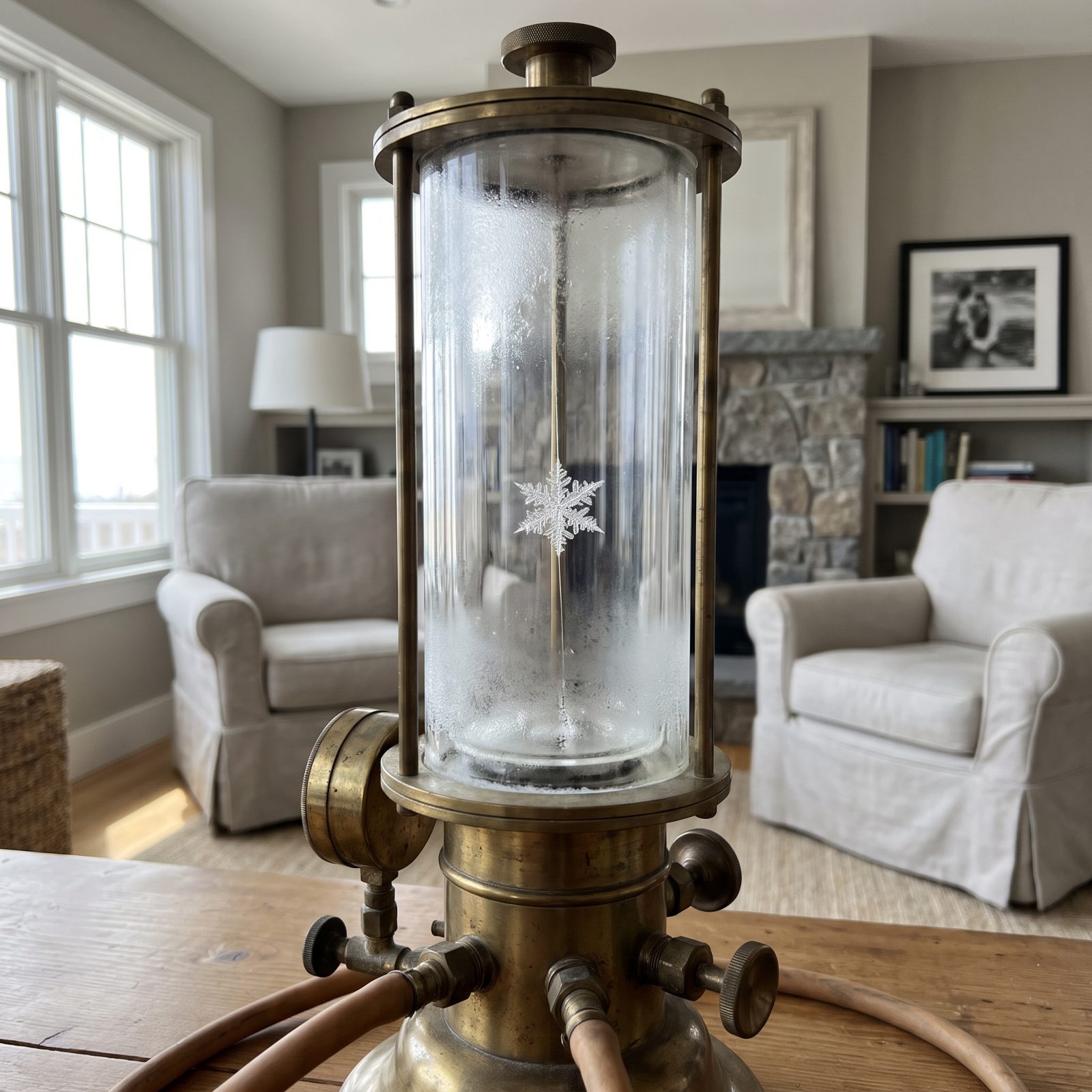
Want to know why one cloud spits out needles while another builds those classic six-armed stars? You have to grow crystals on demand. A Japanese physicist worked out how to do exactly that back in the 1930s.
Ukichiro Nakaya built cold chambers and coaxed individual snow crystals into existence on a single fine rabbit hair, carefully tuning the temperature and humidity around each one. By shifting those two conditions he could conjure any shape he pleased, from plates and columns to needles and sprawling dendrites, and he mapped the whole range into a chart scientists still reach for today.
His most quoted line calls a snowflake “a letter from the sky.” Read the shape and you can read the temperature and moisture of the cloud that made it. Each flake is a record of its own journey down.
1. Snow on Mars Falls as Cube-Shaped Carbon Dioxide, Not Six-Sided Ice
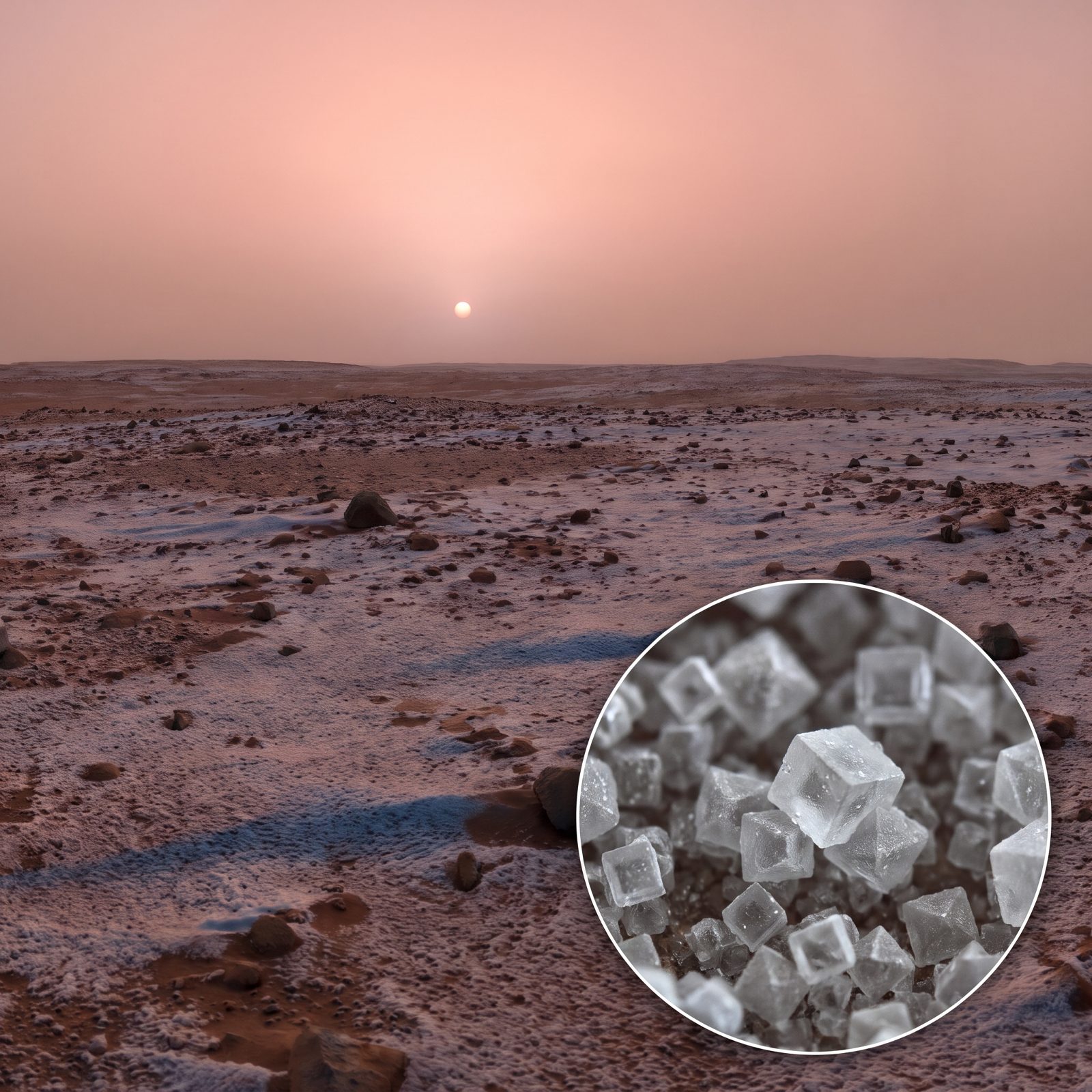
Snow falls on Mars. It just wouldn’t resemble a single flake on your coat.
Earth’s snow is frozen water, and water molecules settle into a six-sided lattice all on their own, which is why nearly every flake you’ve ever seen wears six arms. Mars, meanwhile, gets so cold at its poles that carbon dioxide freezes straight out of the thin air into dry-ice snow. Carbon dioxide crystallizes in a cubic structure, so the models suggest Martian snow would come down as tiny blocky grains, roughly cube or octahedron shaped, nothing like a lacy six-pointed star.
No lander has yet caught a Martian flake under a microscope, so those shapes are predicted from physics and orbital data rather than photographed. The chemistry, though, is firm. Different molecule, different lattice, different snow. That six-armed star is an Earth signature, written by water alone.