
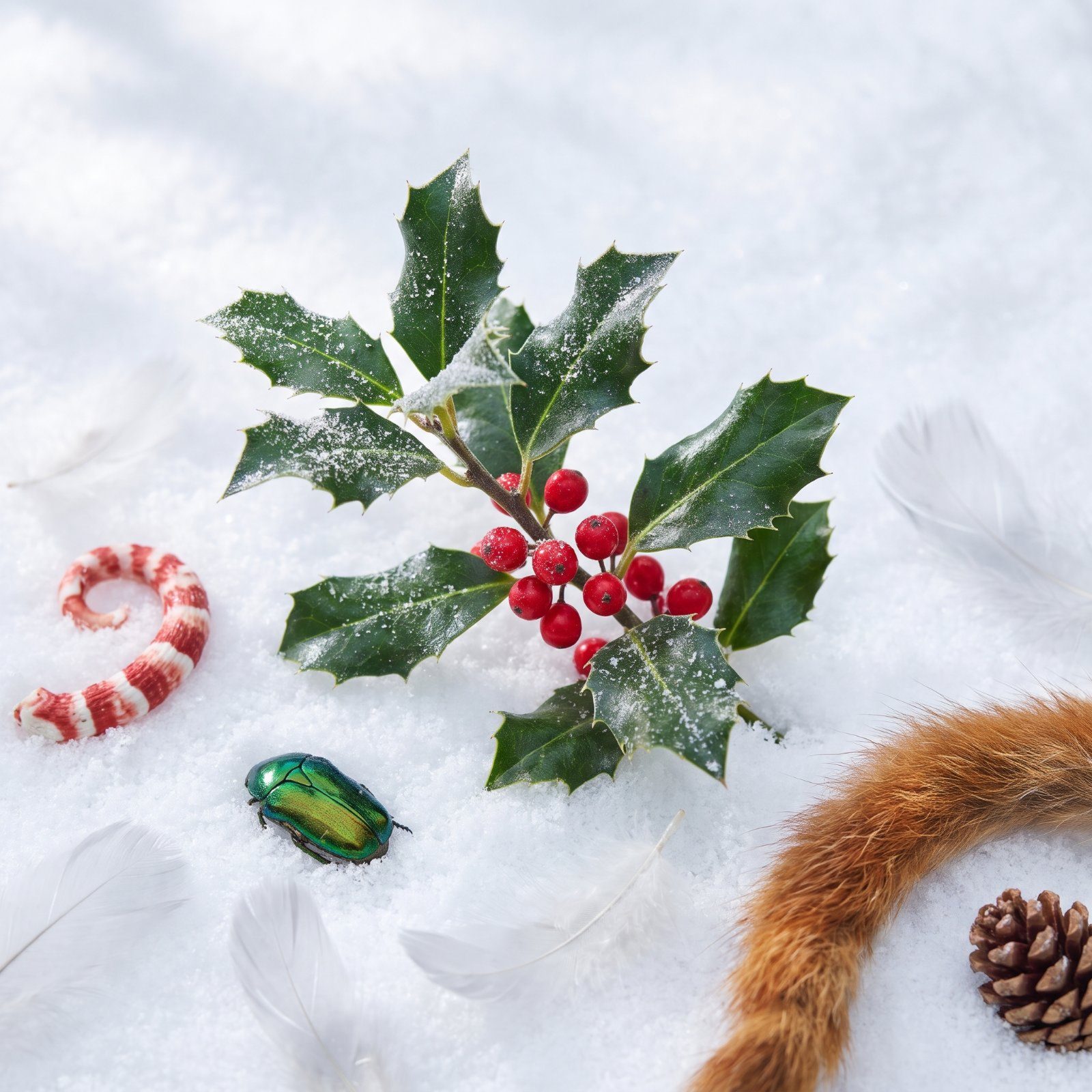
Somewhere in the cloud forests of Guatemala, a bird is wearing a cape that looks stolen from a nativity play. No one dressed it. Evolution did. The natural world is stuffed with creatures that stumbled into Christmas colors by accident, chasing mates or dodging predators or just surviving winters that would kill a lesser animal. Red-and-white stripes on a shrimp. A weasel in a white coat with black trim. A peacock drowning in what looks like snow. None of it is costume — it’s survival gear that happens to read as holiday finery to human eyes. Here are the animals nature wrapped like presents.
42. The Reindeer Crowned by Its Own Antlers
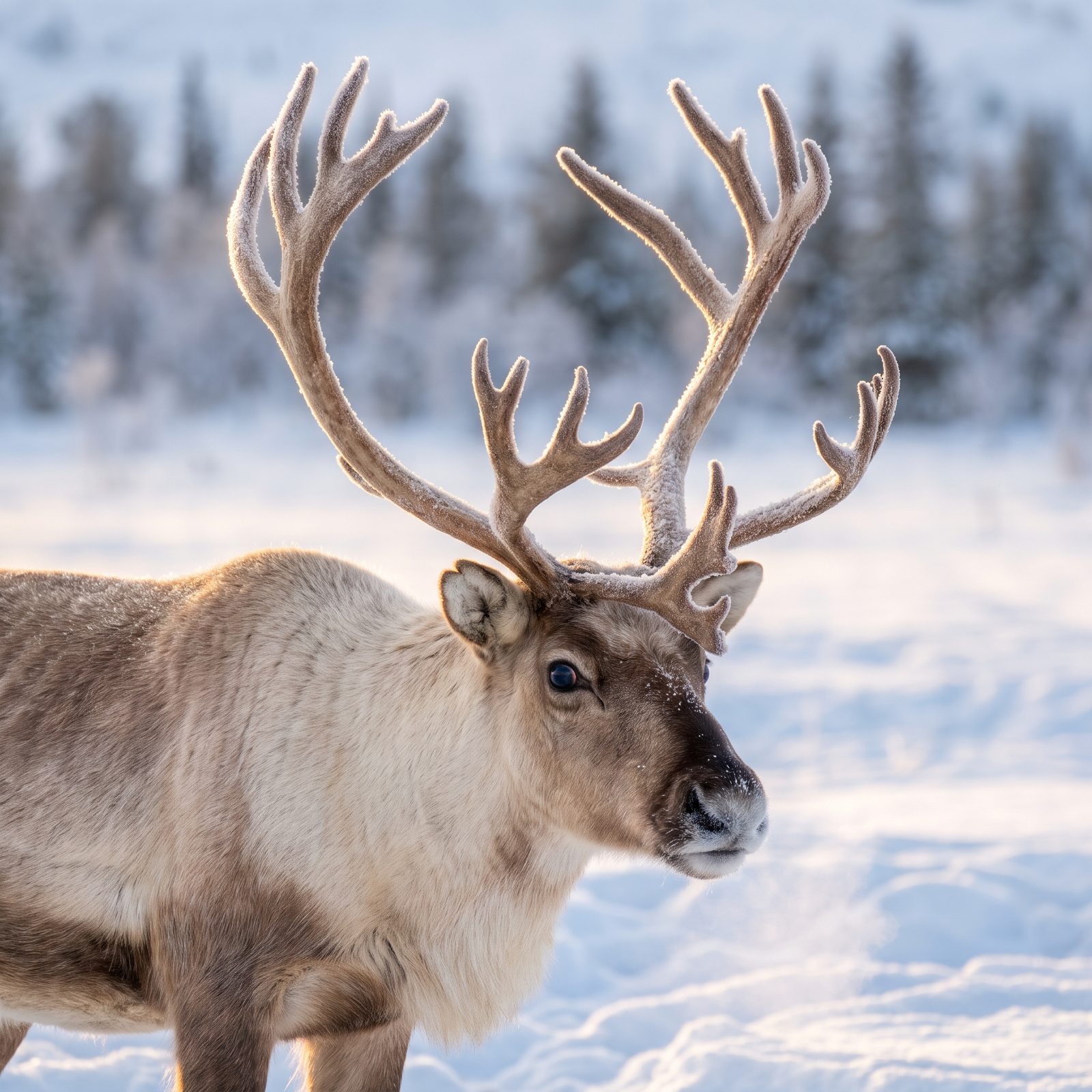
Here’s the fact that quietly wrecks the Santa story: the reindeer pulling that sleigh in every illustration, antlers blazing through December, would almost certainly be female. Males shed their antlers before winter. Females keep theirs well into spring and use them to defend the feeding craters they dig through the snow.
So the crown is real, and it belongs to the does. They regrow the entire rack every year — the fastest-growing bone tissue of any mammal — and it’s no decoration. That headgear is a shovel, a weapon, and a winter survival tool all at once, worn by the animals doing the hardest work in the herd.
41. The Resplendent Quetzal and Its Living Red-and-Green Cape
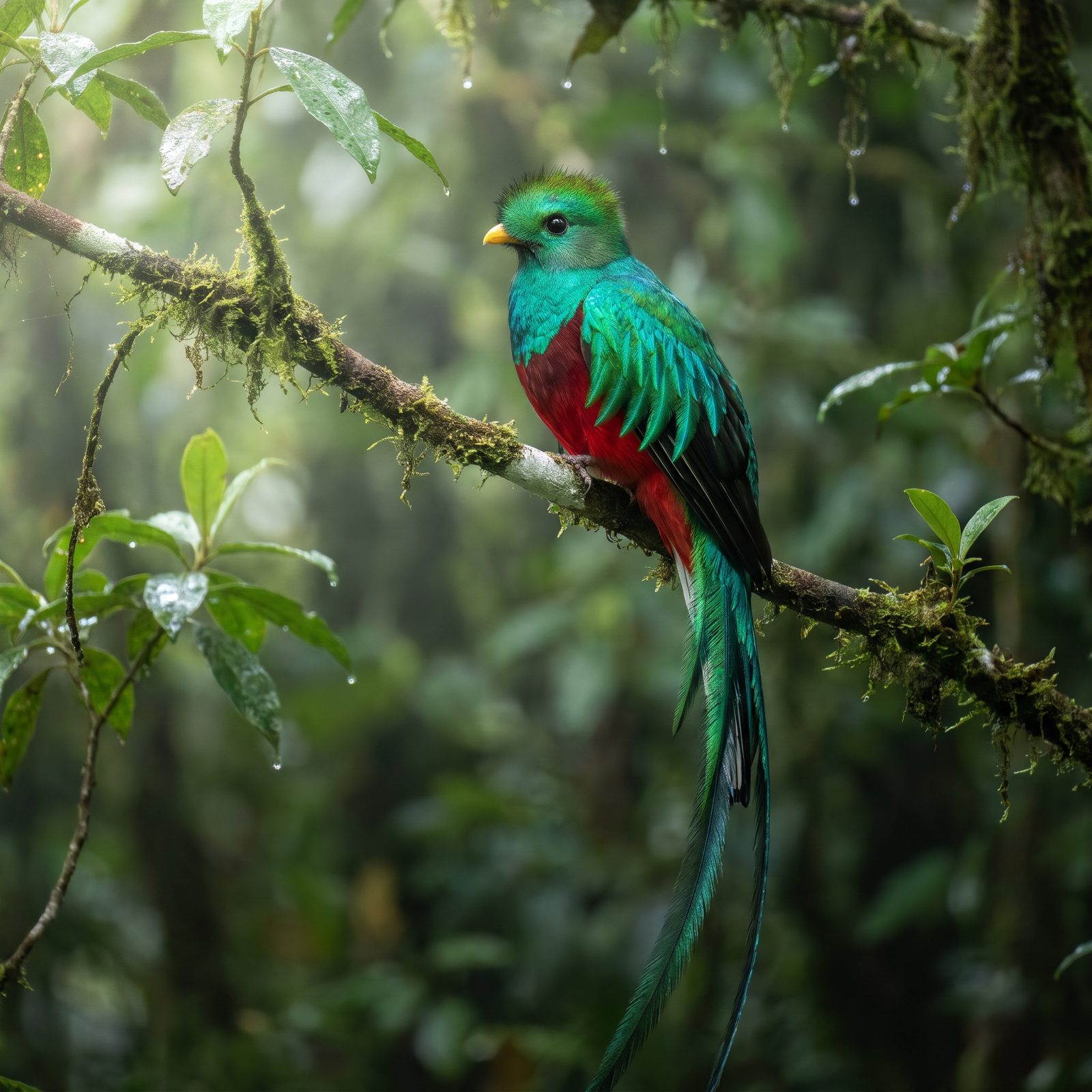
The Aztecs and Maya thought this bird was divine, and honestly, look at it. The male resplendent quetzal wears emerald-green across its back and a slash of crimson down its belly — the exact two colors humans reach for every December.
Those long shimmering tail feathers trail up to two feet past the body, and here’s the twist: they aren’t the tail at all. They’re overgrown tail coverts. And the color? Not pigment. The green comes from the microscopic structure of the feathers scattering light, which is why it flashes from green to gold as the angle shifts. Kill the bird and the magic dims. Which is partly why the Maya plucked the feathers and let the bird go.
40. The Red Panda’s Rust Coat and Ringed Scarf-Tail
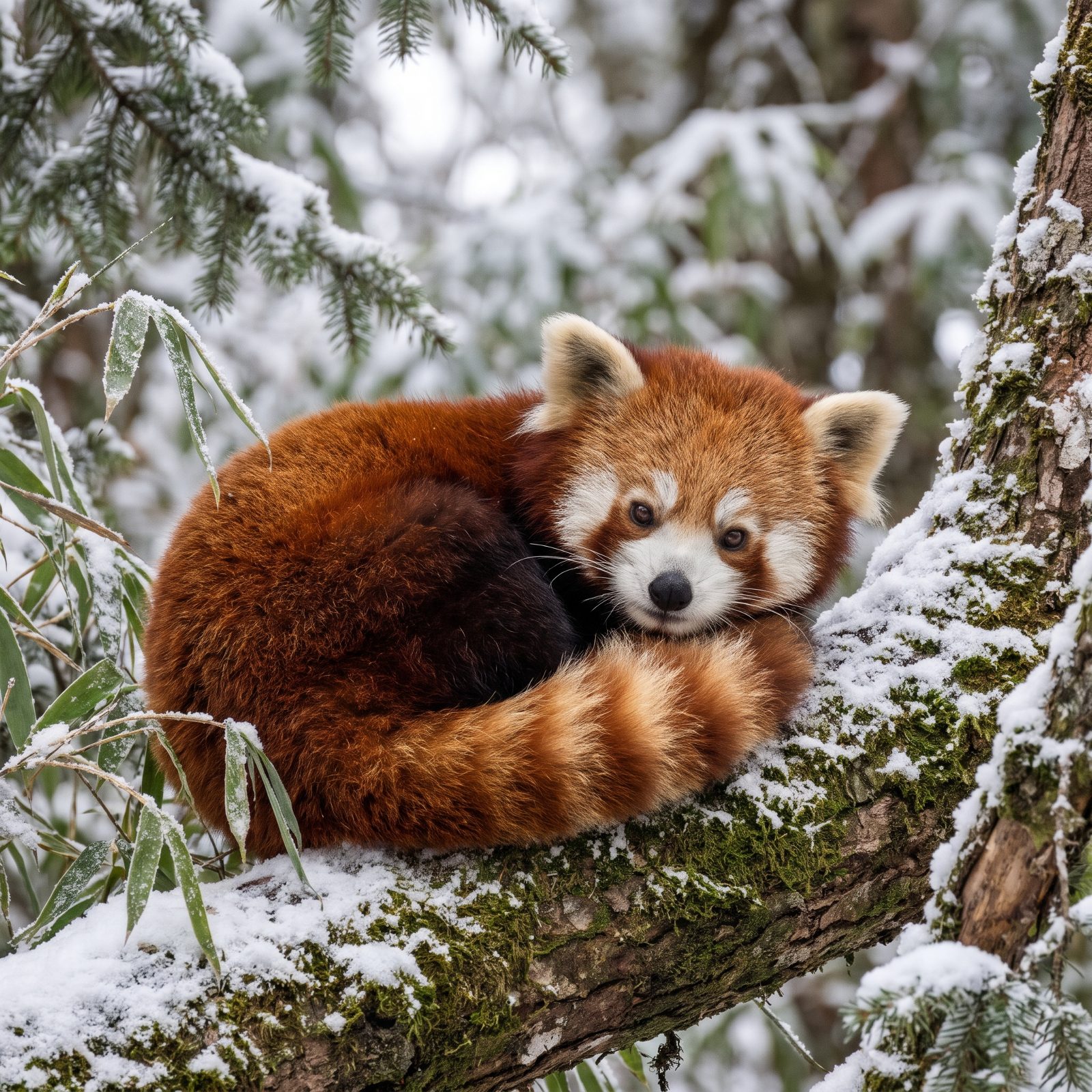
That tail pulls double duty. Wrapped around the body on a freezing Himalayan night, it’s a blanket. Striped in alternating rust and cream rings, it also reads — to us, anyway — like a holiday scarf.
And despite the name, the red panda isn’t related to the giant panda at all. It’s closer to weasels and raccoons, and it eats bamboo despite being built like a carnivore, which means it spends most of its day chewing just to break even on calories. The rust coat with its white-rimmed face is camouflage. In the reddish moss and white lichen of its home trees, this animal nearly vanishes.
39. The Emperor Penguin in Permanent Black Tie
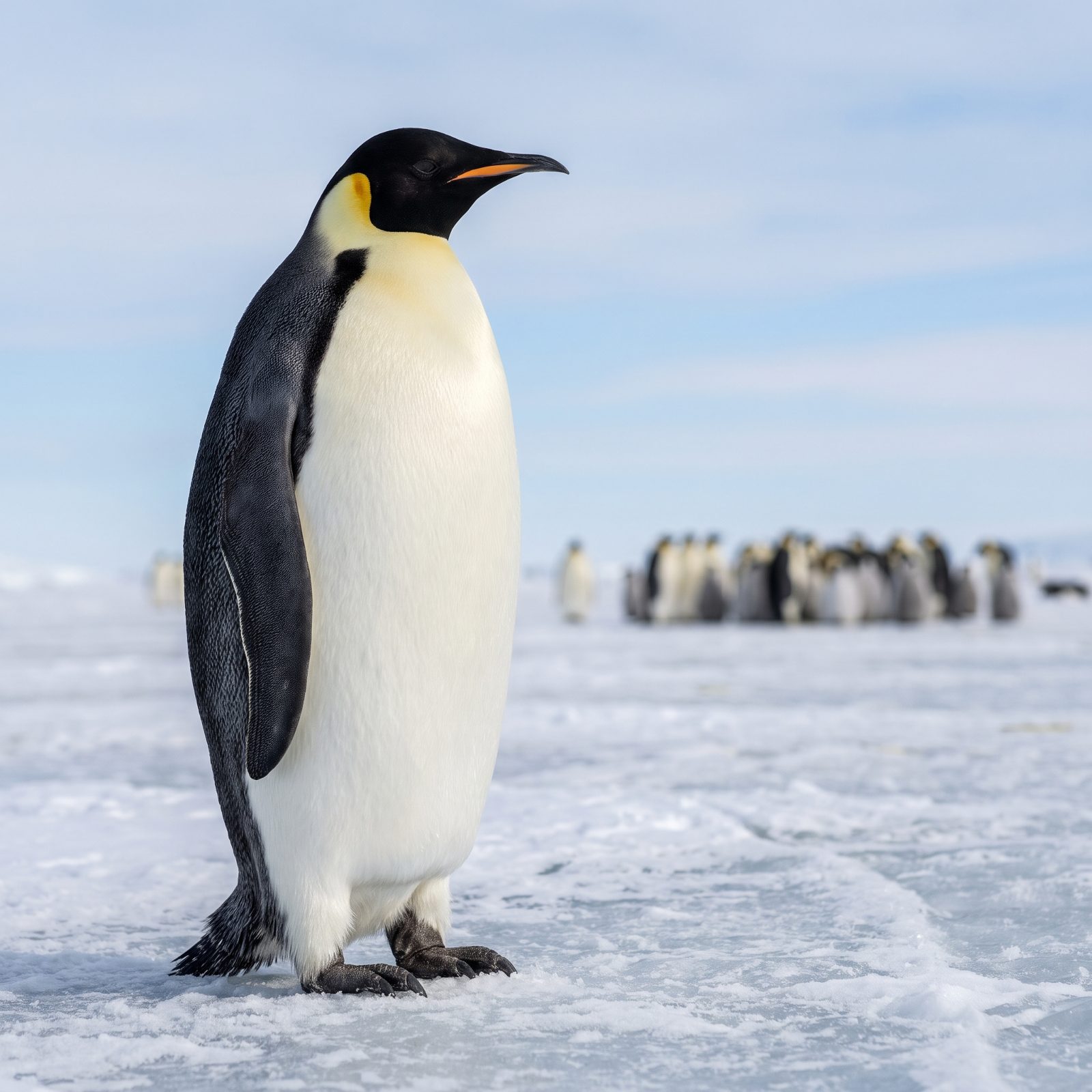
No animal on Earth wears a tuxedo better, and none has earned it harder.
The emperor penguin’s black back and white front is countershading, the oldest trick in the ocean. Seen from below, the white belly disappears against bright sky. Seen from above, the black back blends into dark water. The gold splash at the collar is the only flourish, and it matters for mating.
But think about where this bird wears its formalwear. Emperors breed in the Antarctic winter — in darkness, in winds that hit 100 miles an hour, in cold that drops to minus 40. The males balance a single egg on their feet for over two months without eating a thing. Best-dressed and toughest guest at the party, hands down.
38. The Australian Christmas Beetle Wrapped Like a Gift
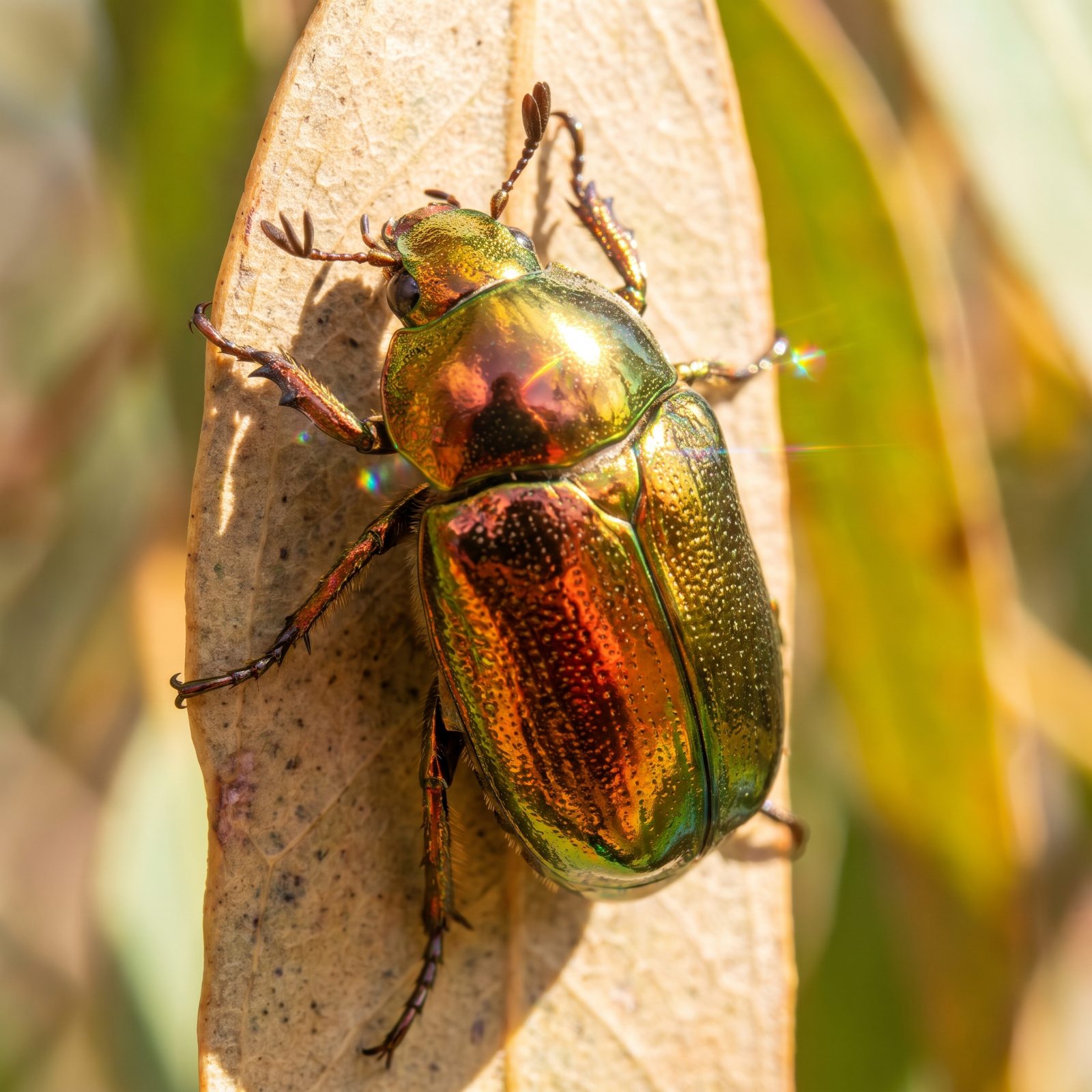
In Australia, Christmas doesn’t come with snow. It comes with beetles. Dozens of species in the genus Anoplognathus swarm in the warm weeks around late December, shining like someone dipped them in polished foil.
That shimmer is a structural-color trick. The shell is built from stacked layers that bend light, which is also why some species seem to glow from certain angles. Scientists studying one species found its shell reflects circularly polarized light — something human eyes can’t even perceive without a filter. We just see wrapping paper. The beetle sees a secret signal.
37. The European Robin and Its Bright Red Bib
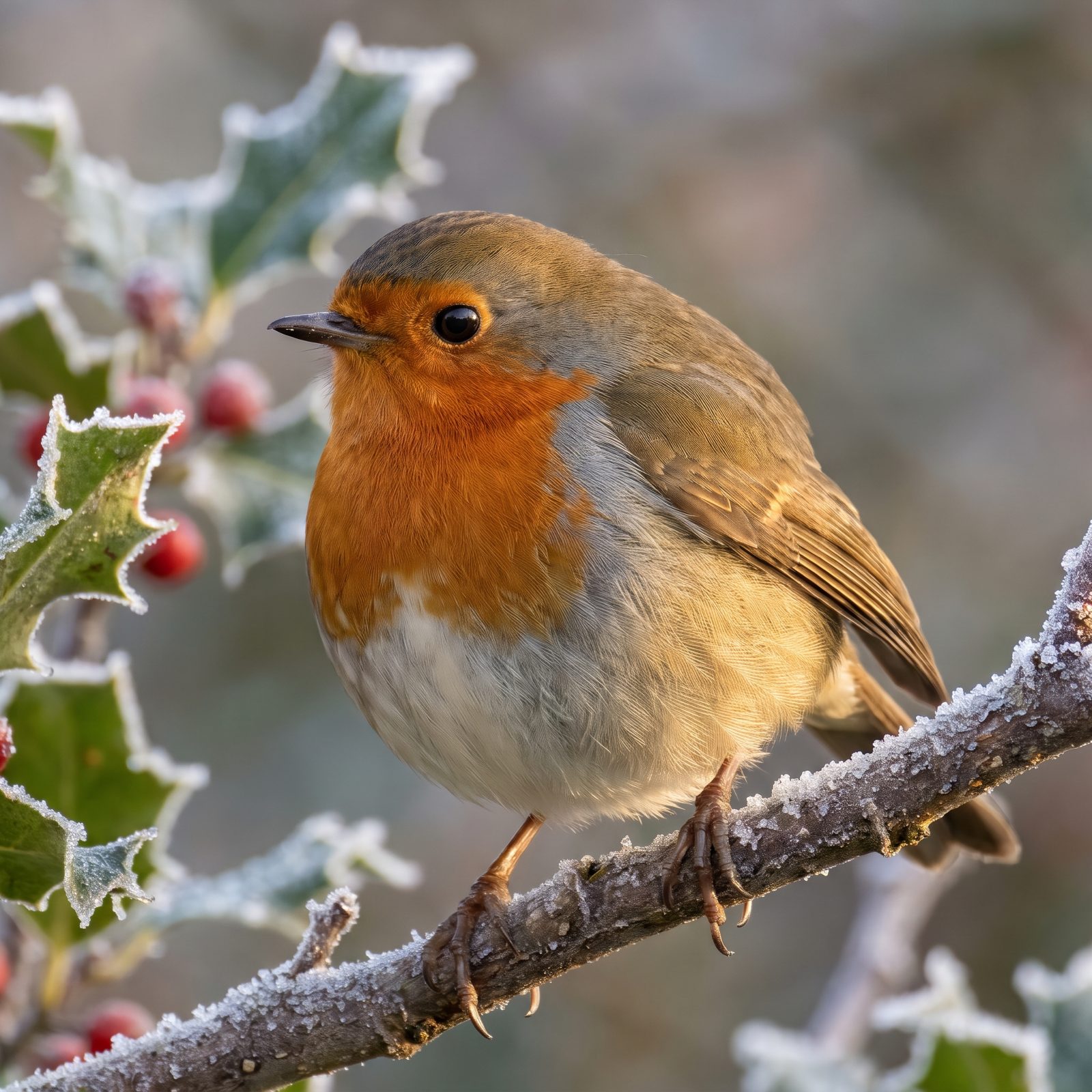
The robin landed on British Christmas cards through a bit of Victorian wordplay. Postmen wore red coats and got nicknamed robins, so illustrators started drawing the red-breasted bird delivering letters. It stuck for well over a century.
The breast itself is no accident of cheer. That red is a warning. Robins are fiercely territorial, and they’ll puff that bib and attack rivals so aggressively that a stuffed robin — or even a lone tuft of red feathers — can trigger a real bird into a fury. The color we find festive, another robin reads as a threat. One of the few genuinely bold birds that’ll sing straight through a frozen morning while everything else stays quiet.
36. The White Peacock in a Snow-White Ball Gown
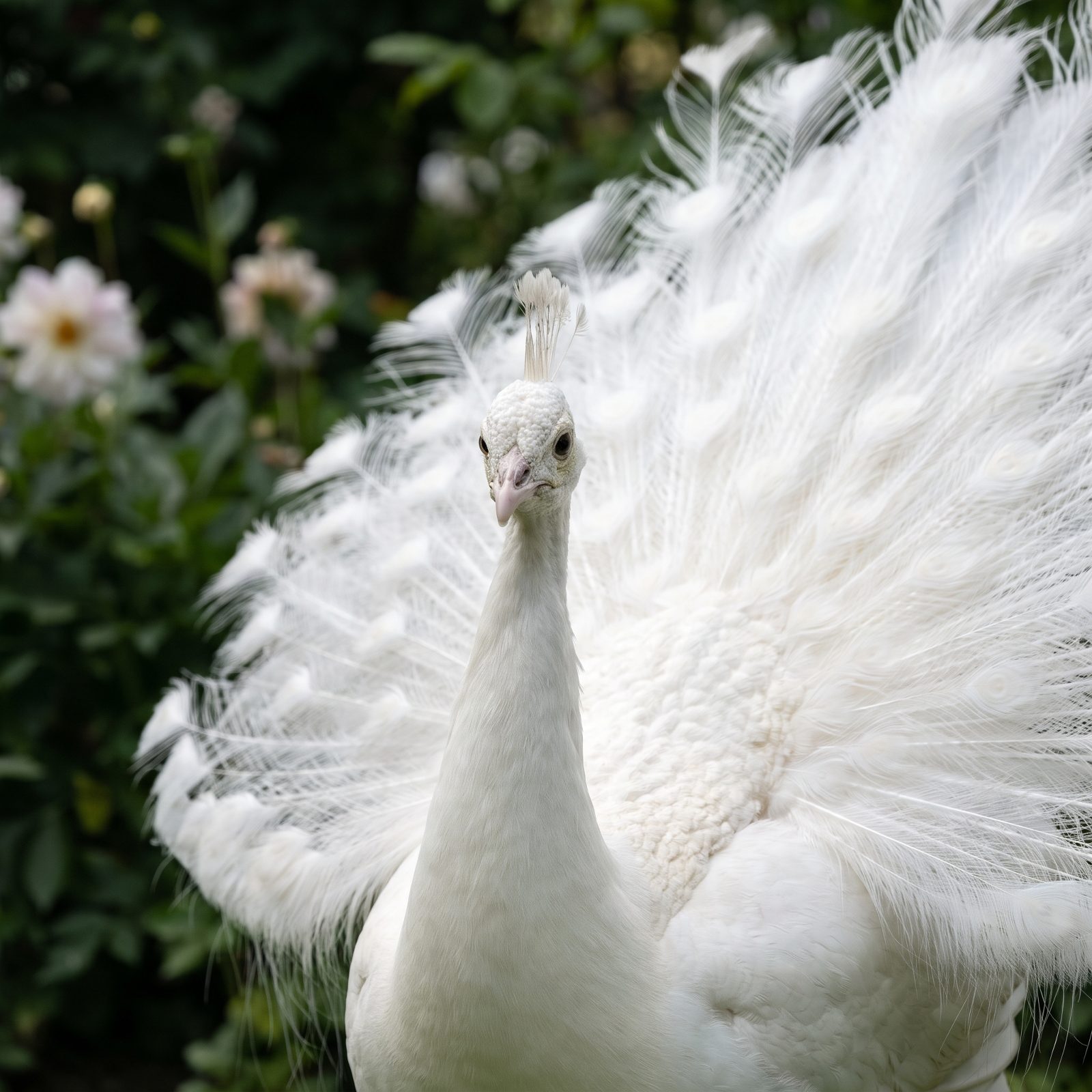
Fan that white train out and it looks like a gown spun from lace and snow. But this bird isn’t an albino, and the distinction matters more than you’d think.
The white peacock is leucistic — its feathers lack pigment, but its eyes stay dark, where a true albino’s would glow pink or red. A leucistic bird still has melanin; it just can’t deposit it in the feathers. So you get the full peacock display stripped of every color, which means you finally notice the structure underneath: the eye-spots rendered in ghostly relief, the sheer scale of a train that can double the bird’s length. Turns out the shape alone, with no color at all, was always doing half the work.
35. The Candy Cane Shrimp in Perfect Red-and-White Stripes
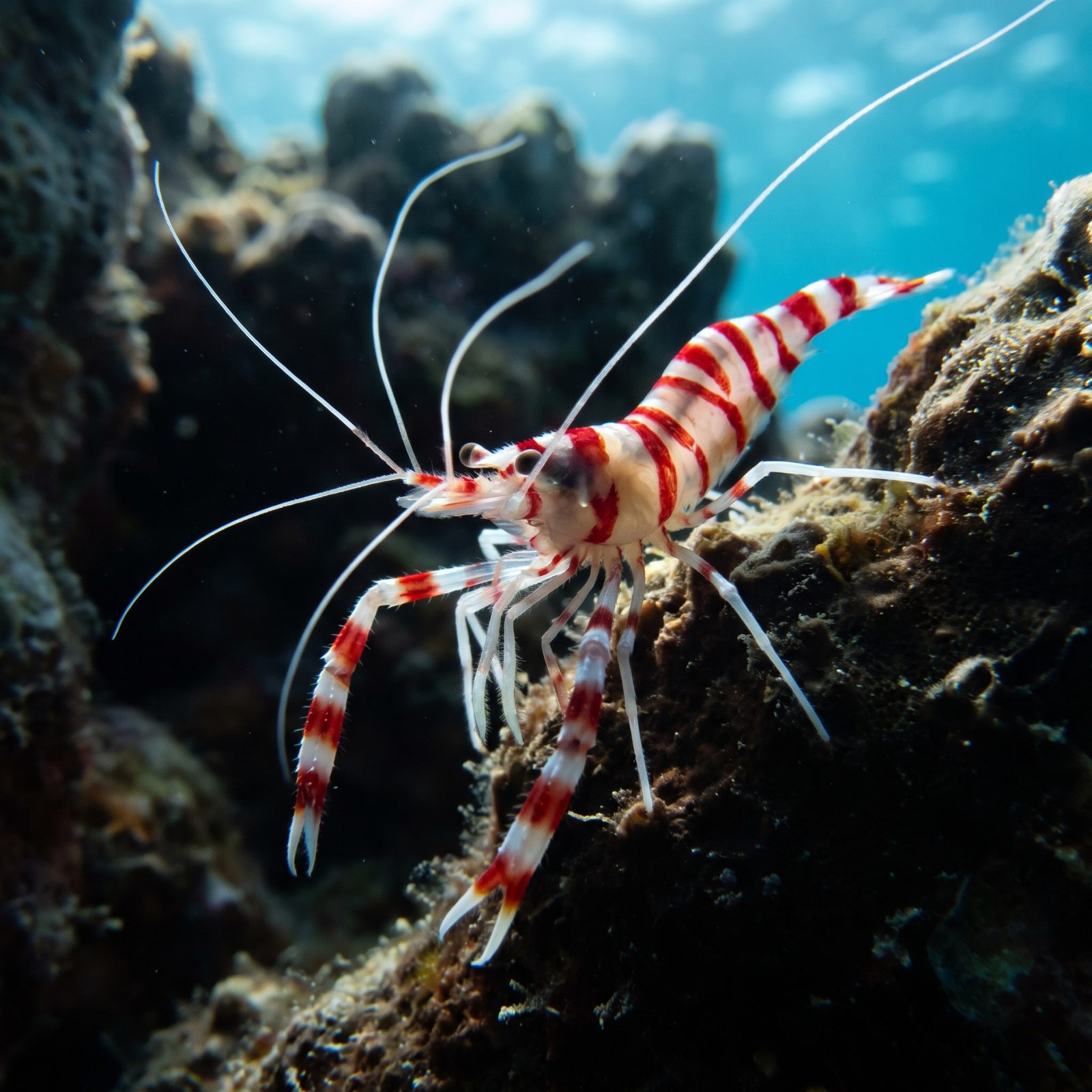
A shrimp dressed like a peppermint stick, and it’s trying to tell you something.
Those bold red-and-white bands aren’t camouflage. They’re a billboard. This is a cleaner shrimp, and the stripes advertise its services to passing fish. A grouper will hold perfectly still, mouth gaping open, while the shrimp strolls into the danger zone picking off parasites and dead skin.
Why does it work? Because the fish won’t eat the thing cleaning its teeth. Vivid warning patterns like this turn up again and again in cleaner species — a visual contract honored across completely unrelated animals. The peppermint look is a uniform. It says: I’m here to help, don’t swallow me.
34. Lady Amherst’s Pheasant and Its Elaborate Festive Cape
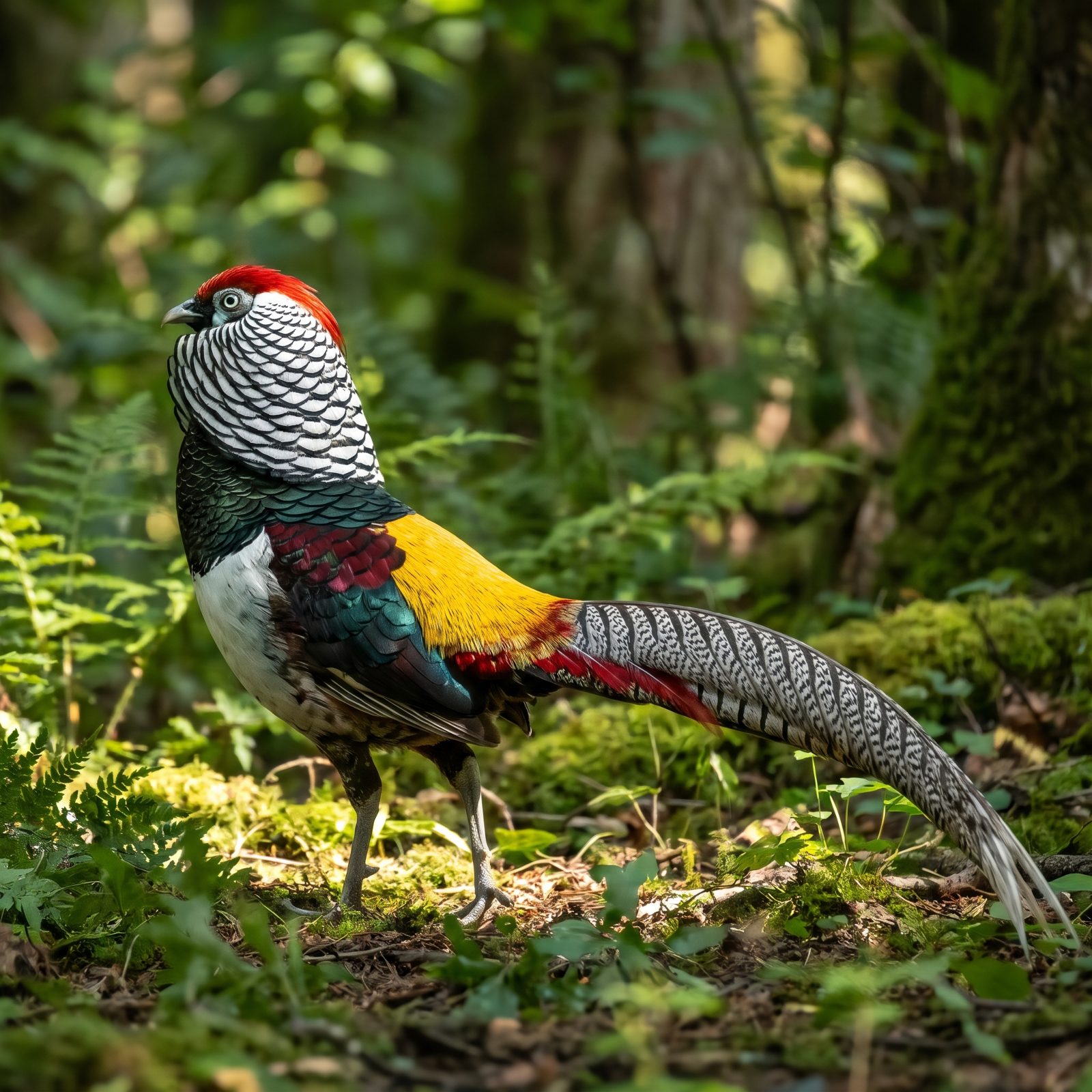
Pull apart the male Lady Amherst’s pheasant and it looks assembled from a dozen different birds. A red crest on the crown. A black-and-white scaled cape that flares out like a starched collar. Emerald back, yellow rump, red wing flashes, and a tail longer than the rest of the bird combined.
Named after a British countess who shipped the first specimens to London in the 1820s, the males carry all of this for one blunt reason: the females are choosing. Plain brown and sensible, the hens get the final vote, and every absurd flourish is a bid for their attention. During courtship the cape fans forward to frame the face — the whole gaudy display turned up to maximum. Showing off, written into the genes.
33. The Stoat in a White Ermine Coat With Black-Tipped Trim
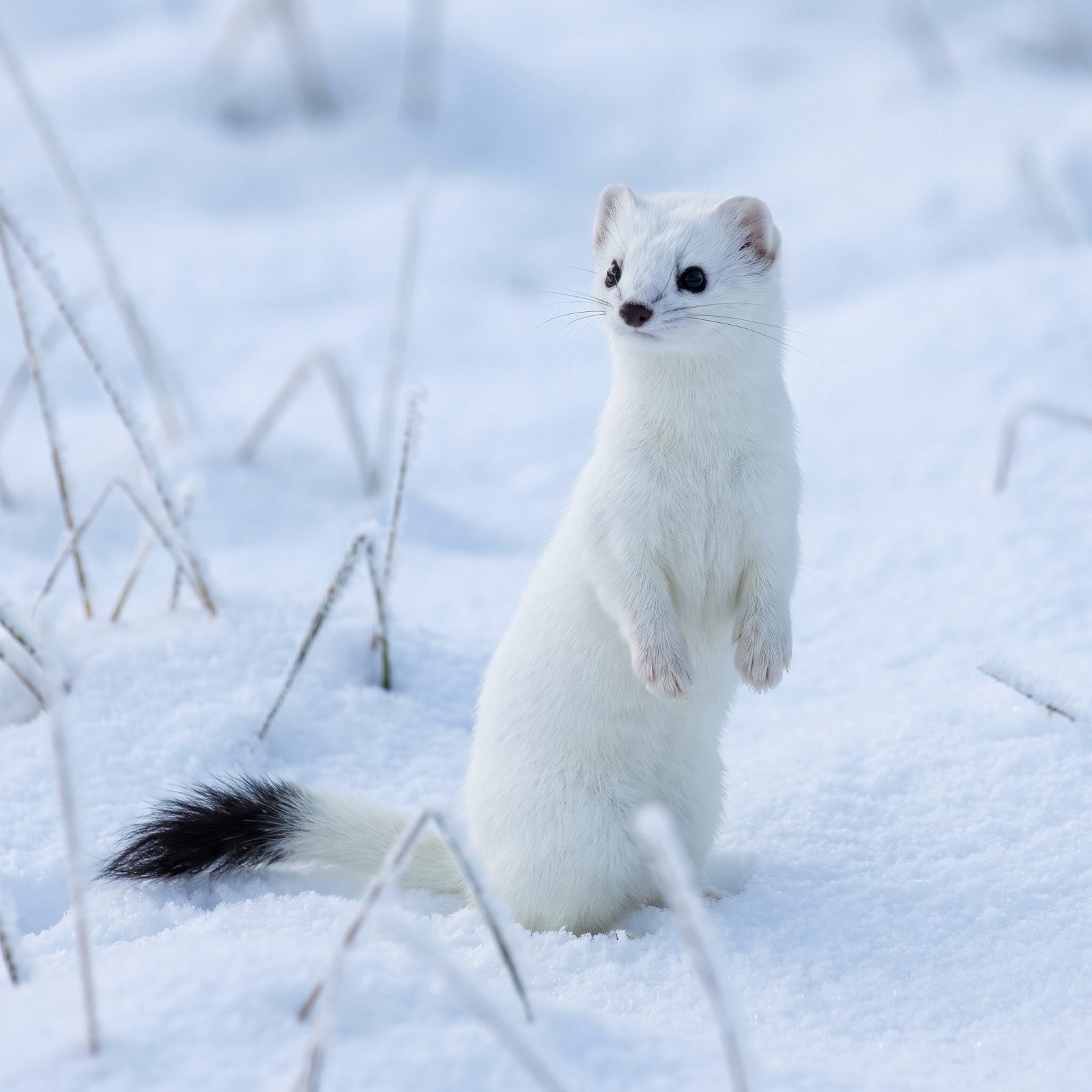
Royal robes trimmed in white fur with little black spots? That’s this animal. For centuries the stoat’s winter coat — called ermine — lined the capes of kings and judges, each black spot a tail-tip sewn into the white.
The transformation is the real story. As daylight shortens, the stoat molts its summer brown for pure white, perfect cover against snow. But the tail tip stays stubbornly black all year round. Scientists think that black dot is a decoy: a diving hawk aims for the dark spot and overshoots the body entirely. So the one apparent flaw in the camouflage is the exact feature keeping the stoat alive. The fanciest coat in the forest, and underneath it’s a survival trick.
32. The Mandarin Duck That Looks Dressed for a Christmas Party
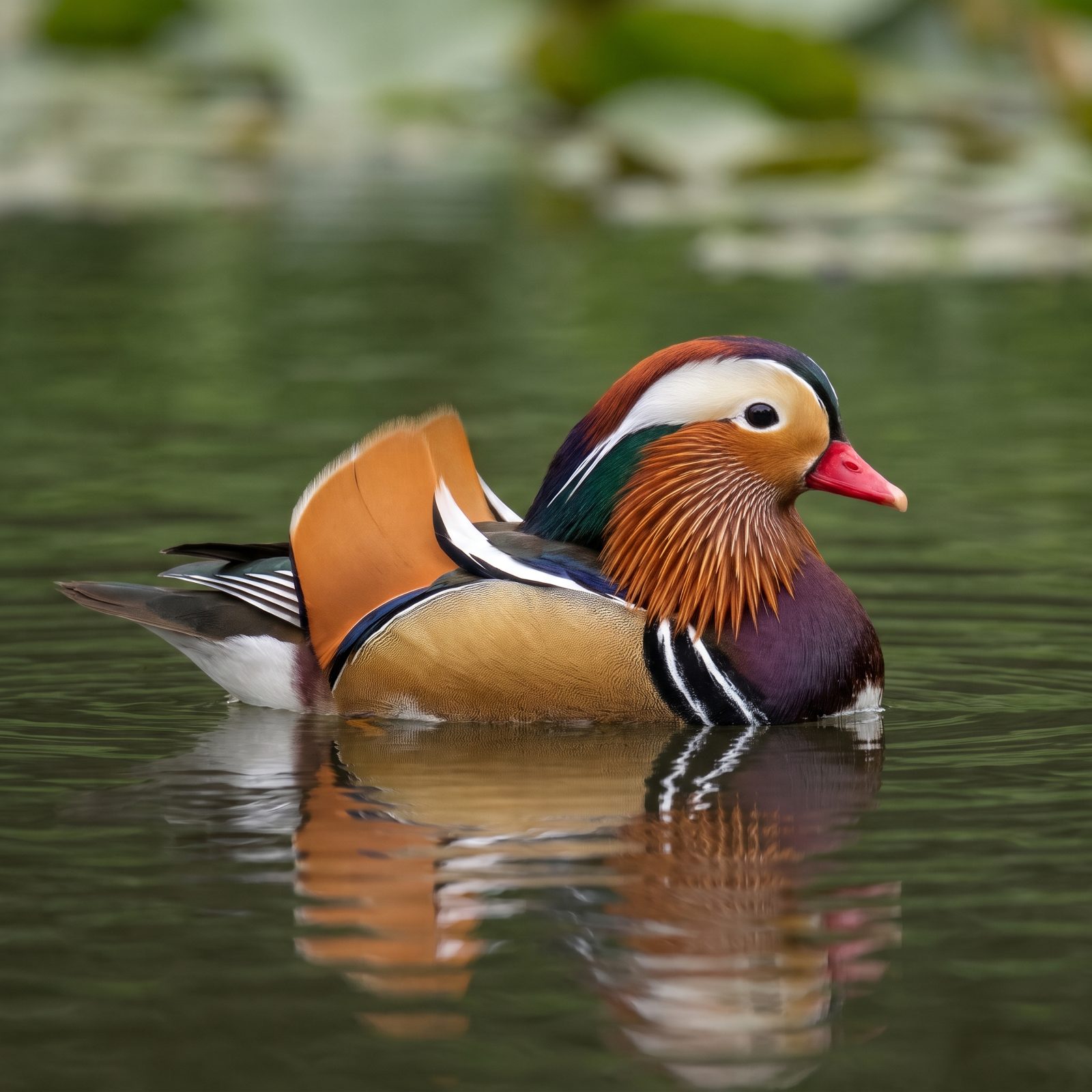
No bird on Earth packs this much color into one body without looking ridiculous, yet the male Mandarin pulls it off. Rusty orange sail feathers stand up off his back like little upright plumes, the chest glows purple-maroon, and the bill is the exact red of a holiday ribbon.
Now the part nobody mentions: he doesn’t wear this outfit year-round. After breeding season he molts for a few months into a drab brown that looks almost nothing like the postcard bird, so time your visit wrong and you miss the whole show.
31. The Okapi and Its Striped Candy-Cane Stockings
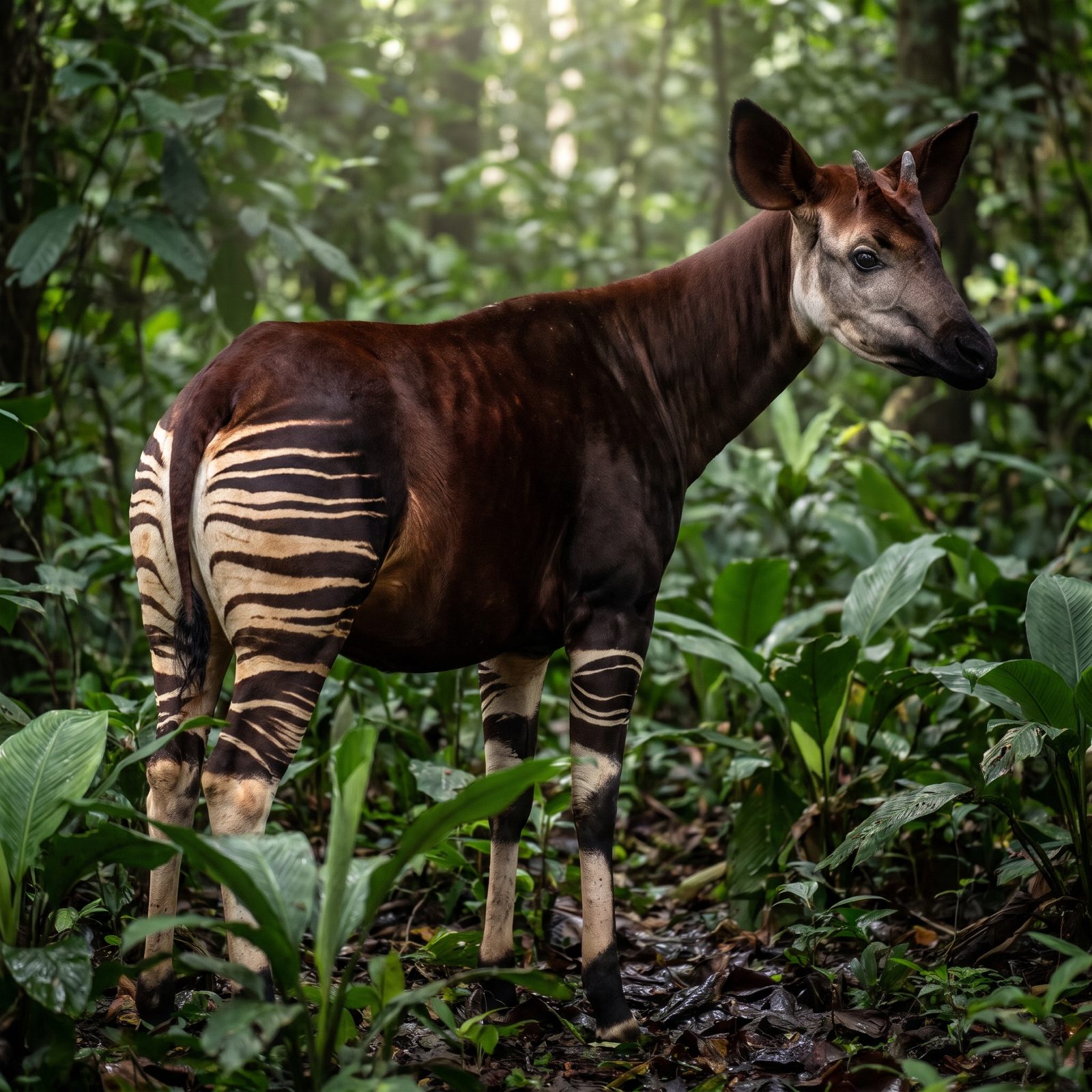
Western science didn’t even know the okapi existed until 1901 — which is wild for an animal the size of a horse. Those striped legs are the giveaway. Cream and dark bands wrap the upper limbs and hindquarters like a pair of festive knee socks, and they earn their keep.
In the dim, broken light of the Congo understory the stripes shatter the animal’s outline, so predators struggle to read where it ends. A calf can follow the pattern of its mother’s rear through the gloom. Function first, holiday charm by accident.
30. The Orchid Mantis in Its Frilly White Party Dress
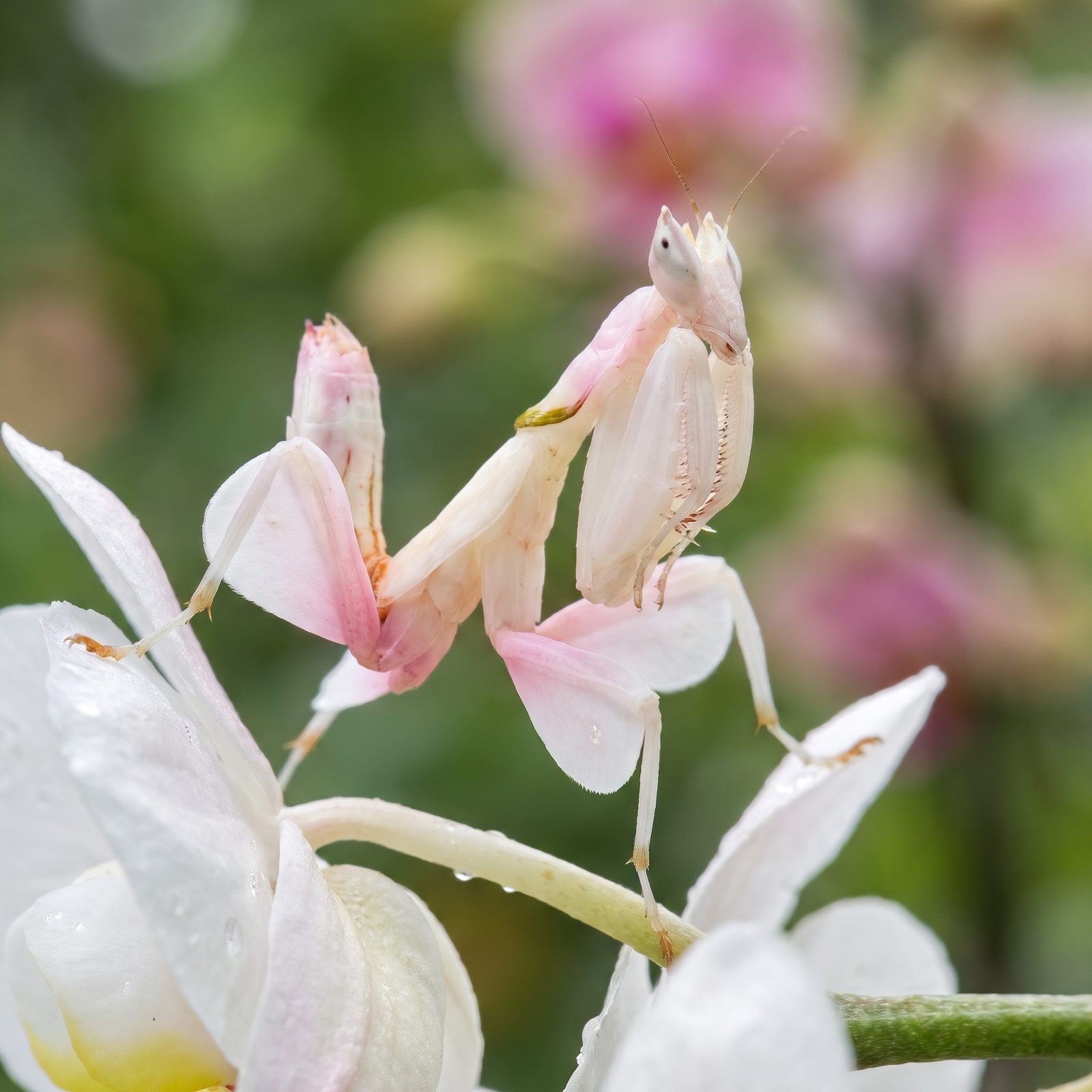
Those ruffled petal-shaped legs look like the hem of a tiny white party dress. They’re a weapon. The orchid mantis doesn’t just hide among flowers — research suggests it reads as more flower-like than the real blossoms around it, and pollinating insects fly straight into its arms.
29. The Atlantic Puffin and Its Painted Winter Mask
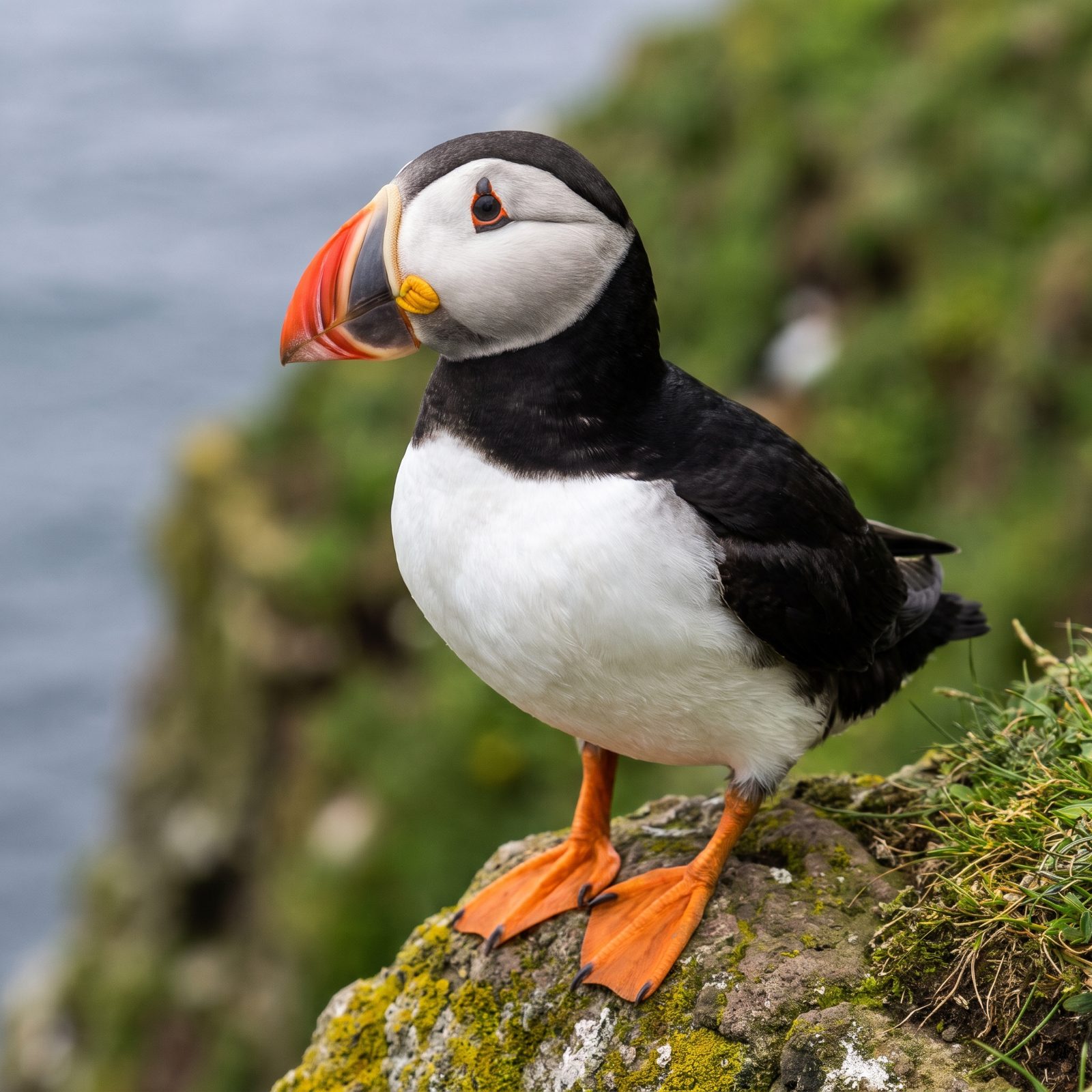
That carnival-colored beak is a costume the puffin takes off. Through most of the year the bill sits smaller and a dull grey. Come spring the outer plates grow in bright red, orange and blue, then shed again after breeding like a mask stashed in a drawer until next season.
Why bother? The colors broadcast health and age to potential mates. And here’s the thing people always get wrong about puffins: they’re tiny. Stand beside one and it barely clears your knee — about the height of a bowling pin with its face painted for a party.
28. The Harlequin Shrimp in Its Star-Spotted Party Suit
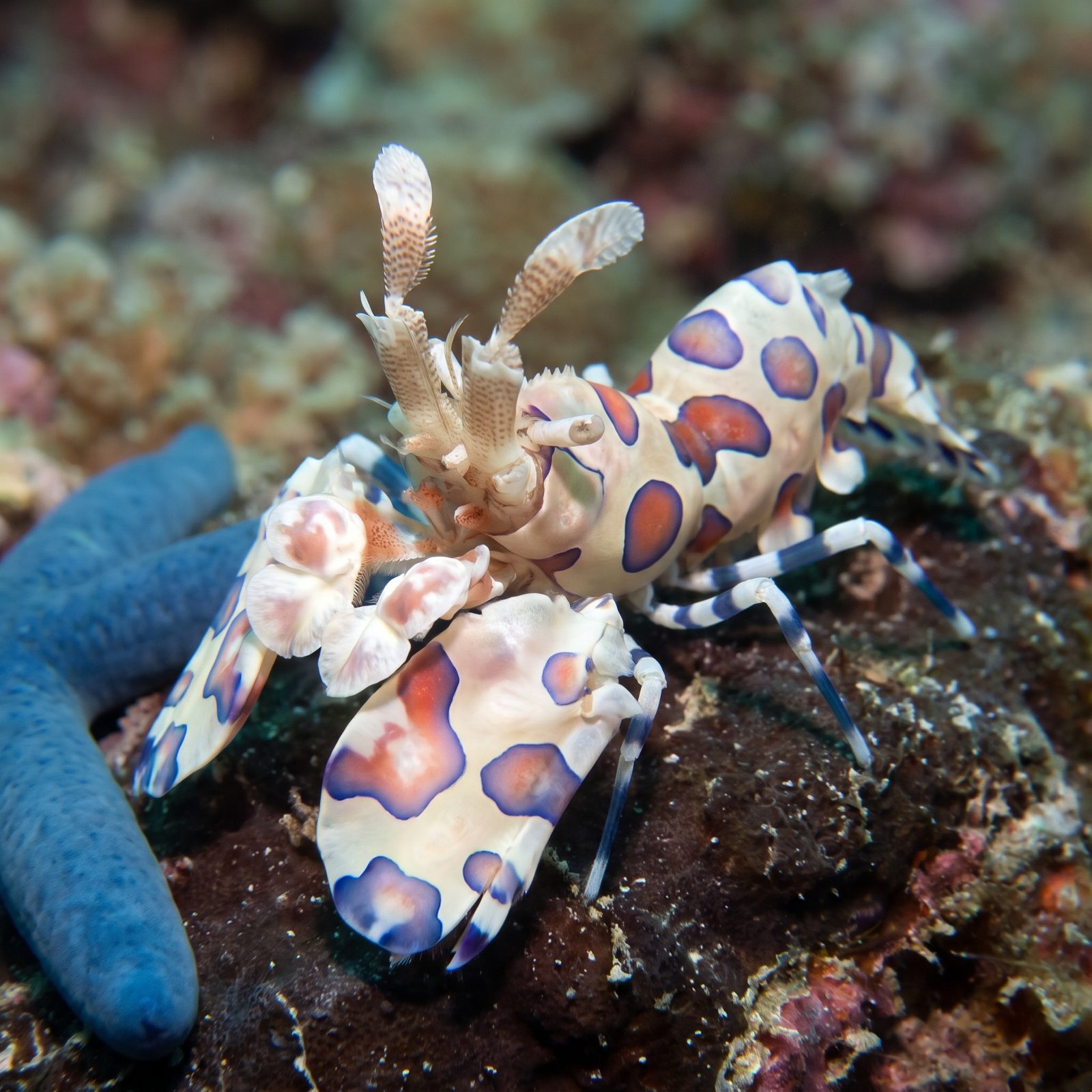
Cream-white splashed with blue and orange, the harlequin shrimp looks like someone spilled confetti across a glossy suit. The outfit is gorgeous. The lifestyle is grim.
These shrimp eat almost nothing but live sea stars. A pair will flip a starfish onto its back, haul it to a safe corner, and feed on it slowly over days while it’s still alive — sometimes clipping off one arm at a time and keeping the host going so the meat stays fresh. Gorgeous outfit. Ruthless diner.
27. The Flamingo Tongue Snail in Its Polka-Dot Mantle
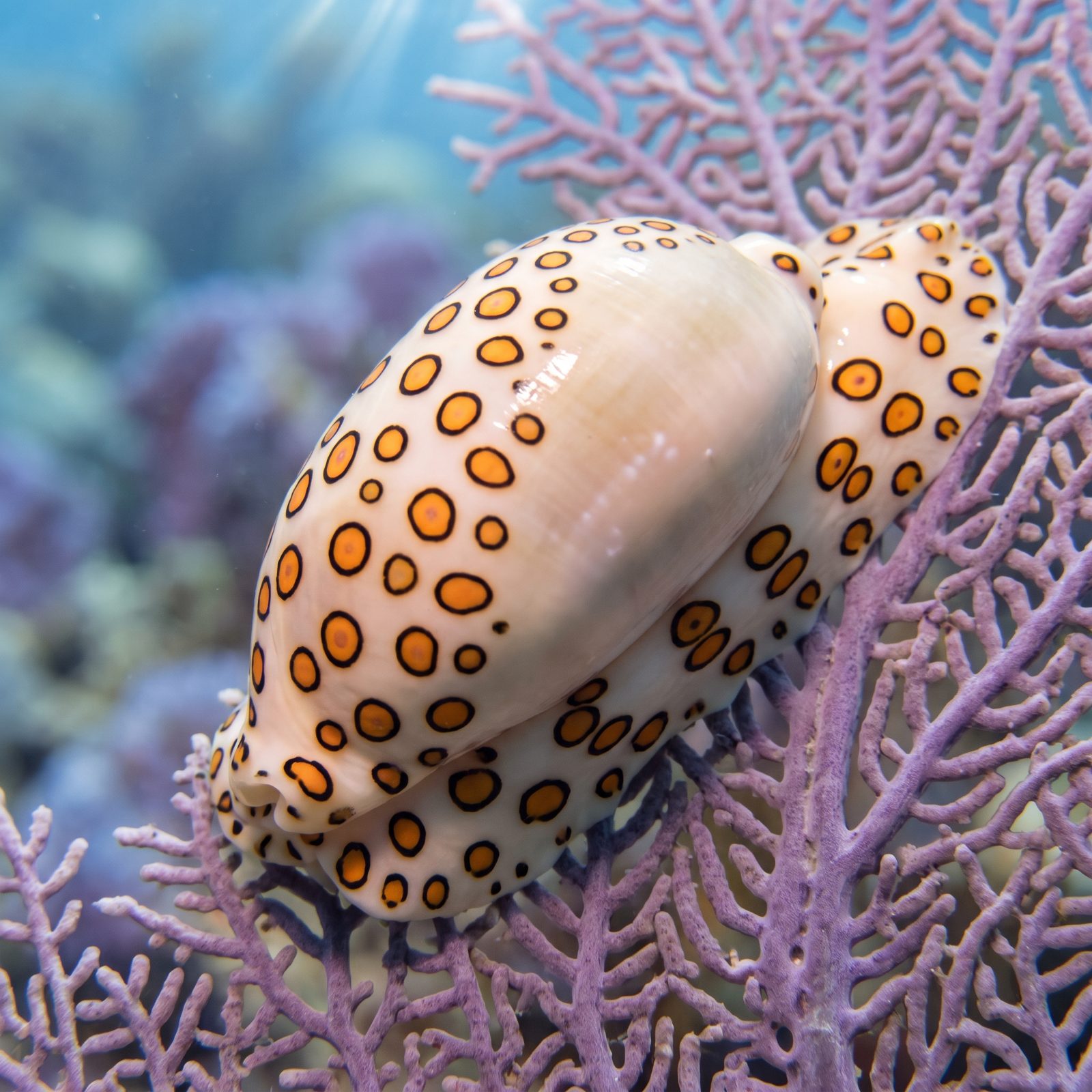
The spots aren’t on the shell. Underneath, the shell itself is hard, glossy and plain. That gorgeous polka-dotted pattern of black-ringed orange spots on cream belongs to the soft mantle wrapped around it.
When the snail pulls its mantle back, the pattern disappears. The dots are part of the living tissue, not the hard shell itself. It grazes on toxic sea fans and banks their chemicals, which is why the bold spotting likely works as a warning sign rather than camouflage.
26. The Valais Blacknose Sheep in Its Woolly Coat and Black Boots
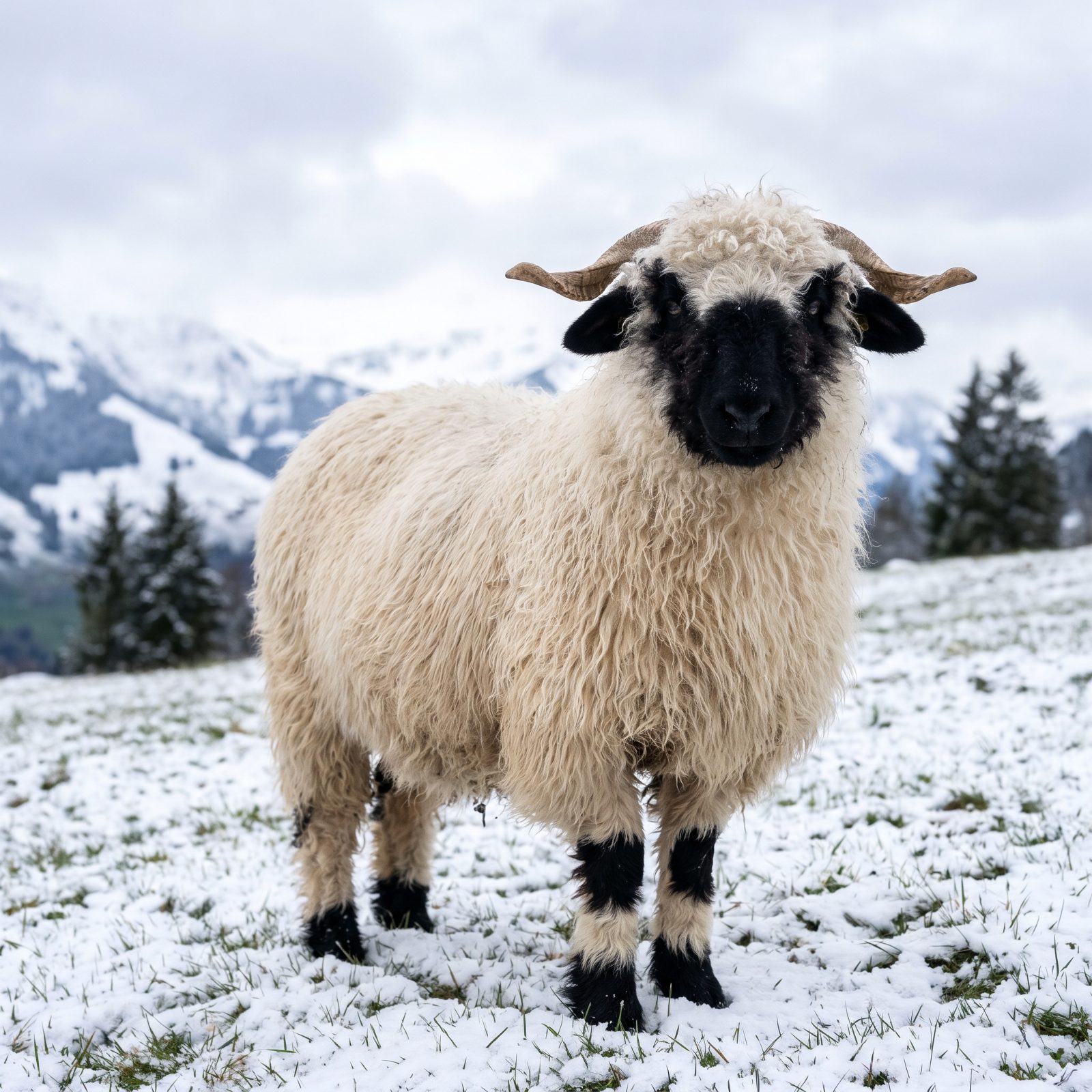
Picture a fluffy white cloud someone fitted with a black face and four little black boots. That’s the Valais Blacknose, a Swiss mountain sheep bred in the Alps for centuries and built for cold, rocky ground.
The black lower legs read exactly like pulled-on winter boots, and the deep cream fleece hangs like a coat two sizes too big. The whole effect lands somewhere between a storybook and a greeting card — and no, there’s no Photoshop involved. The wool genuinely grows that long and needs shearing twice a year.
25. The Ruby-Throated Hummingbird and Its Glittering Red Collar
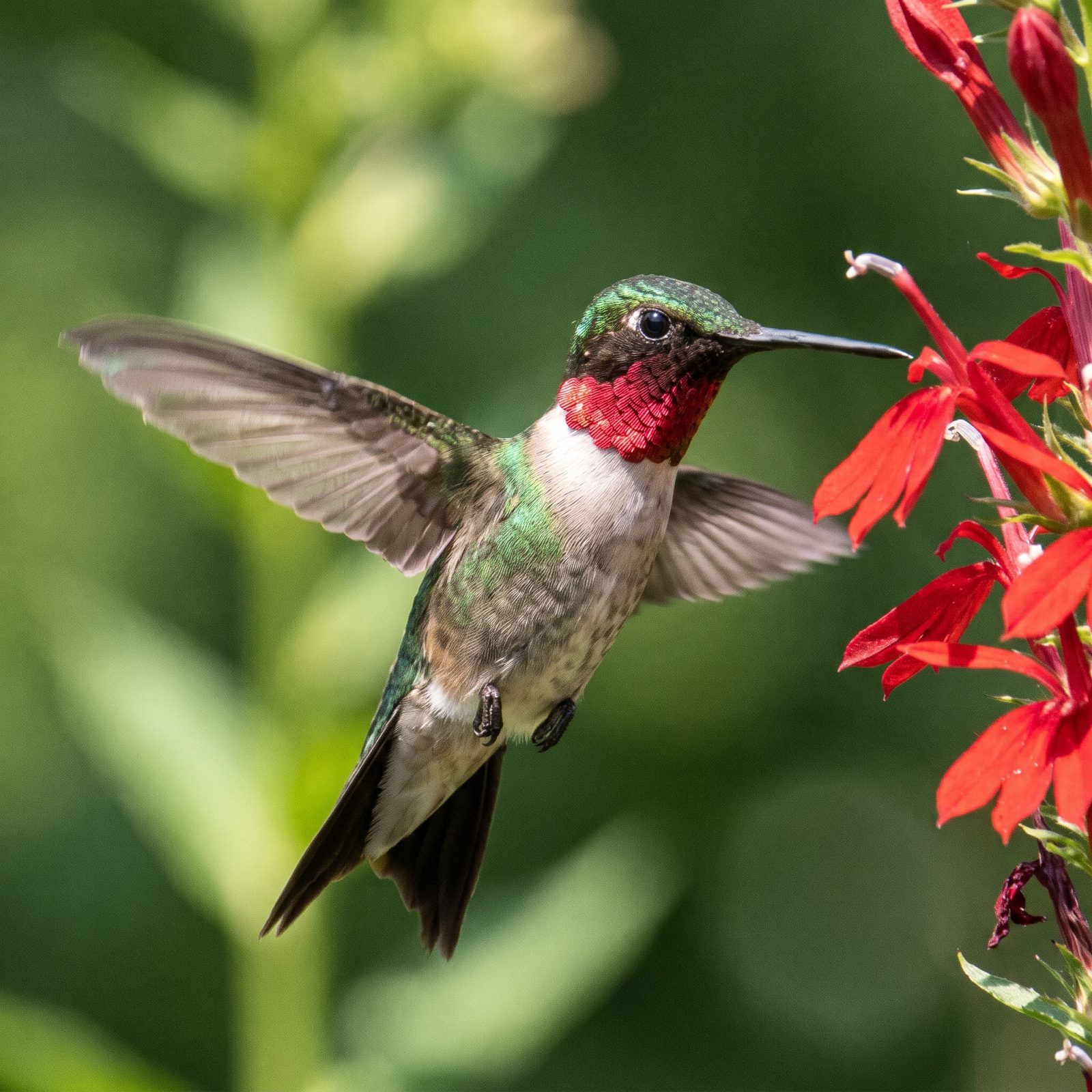
That blazing red throat is a trick of physics, not pigment. The gorget feathers of a male ruby-throated hummingbird are built to bounce light, so the red only ignites when it catches the sun at the right angle. Turn his head a few degrees and the collar drops to black.
And he flashes it on purpose, angling his throat during courtship to throw red fire at a female. A bird this small burns energy at a rate that would simply kill most animals, feeding hundreds of times a day just to keep the lights on.
24. The Harlequin Duck in Its Bold Patterned Sweater
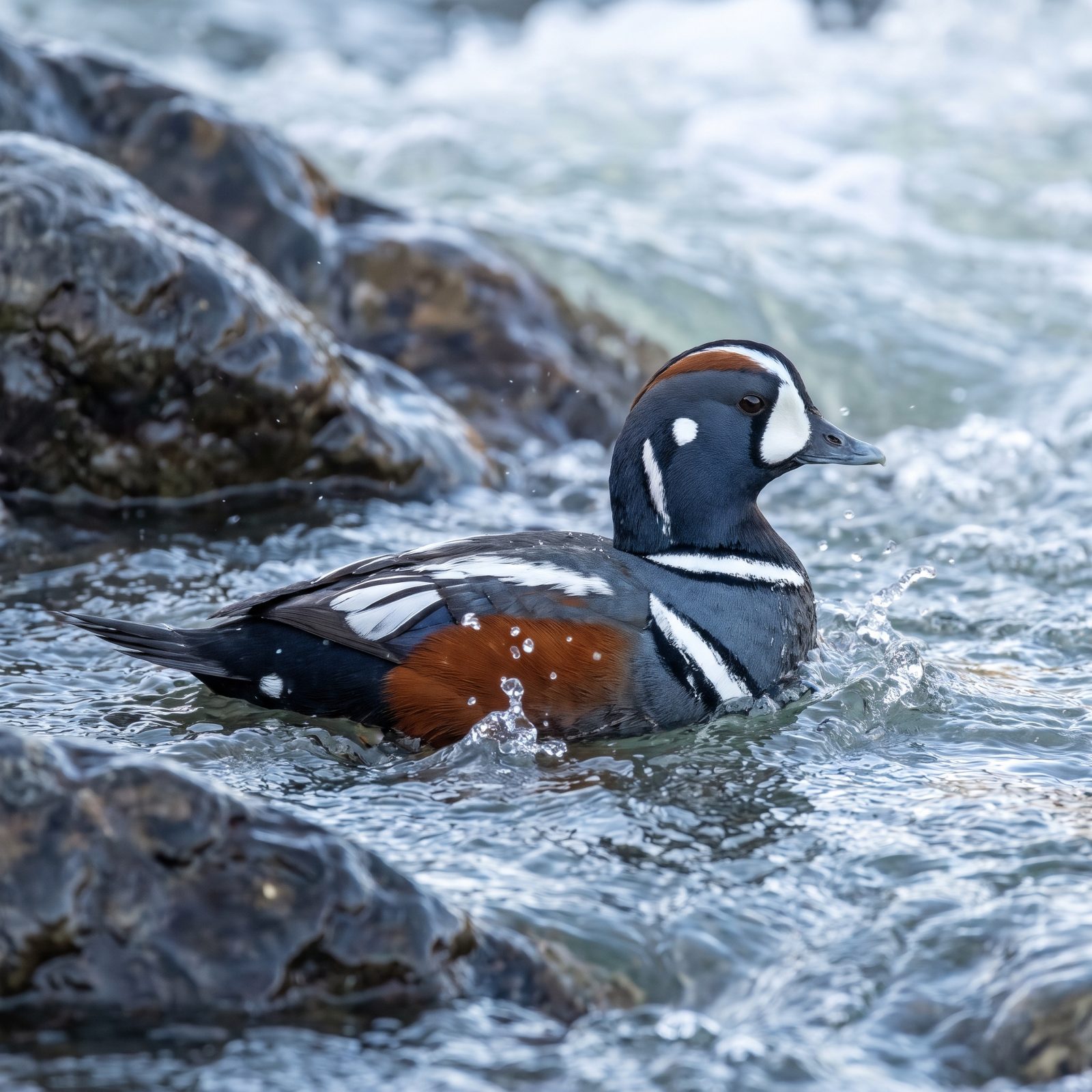
Slate blue, chestnut, and white laid out in crescents and spots, the male harlequin duck looks like he pulled on a hand-knit Fair Isle sweater. The busy pattern earned him the name — borrowed from the costumed harlequin clowns of old Italian theater.
These are tough little birds. They live on crashing coastal surf and churning mountain rivers, plunging into rapids that would break a swimmer. Vets examining wild harlequins have found old healed fractures, bones snapped on rocks and knitted back together with no help at all. Pretty sweater, brutal life.
23. The Japanese Macaque With a Rosy Face and Snow Fur Hood
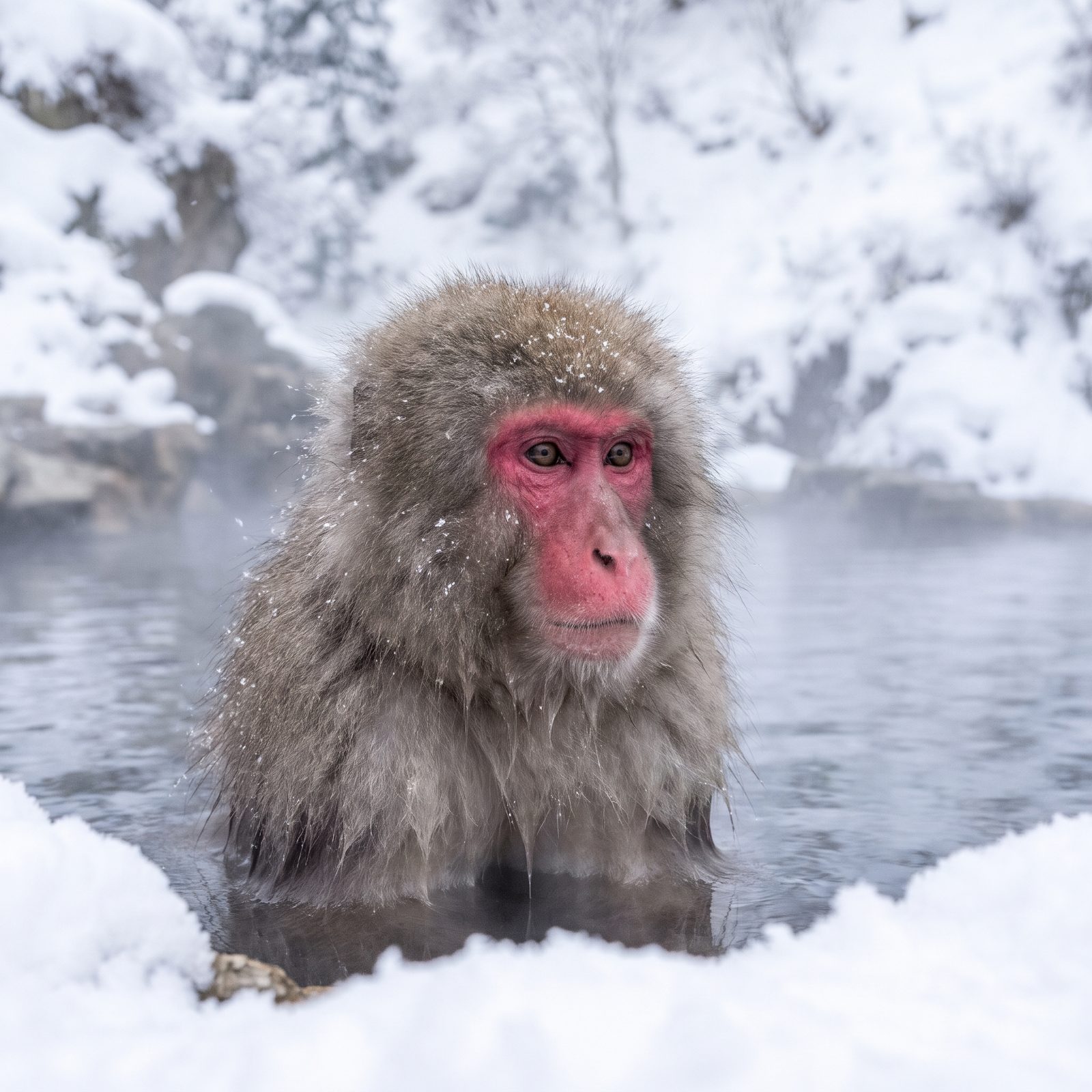
The famous snow monkeys of Japan live farther north than any other primate except us. Their faces flush bright rosy-pink against a thick ruff of grey-brown winter fur that wraps the head like a fur-lined hood.
The pink isn’t makeup or windburn — it’s blood-rich bare skin, and it reddens more in healthy, high-ranking individuals. And that soaking-in-hot-springs habit everyone photographs? Not natural at all. A few monkeys started copying people at a resort decades ago, and the trick spread through the troop by imitation. It’s one of the clearest cases of learned culture in wild animals.
22. Emerald Tree Boa Draped Like Green Garland
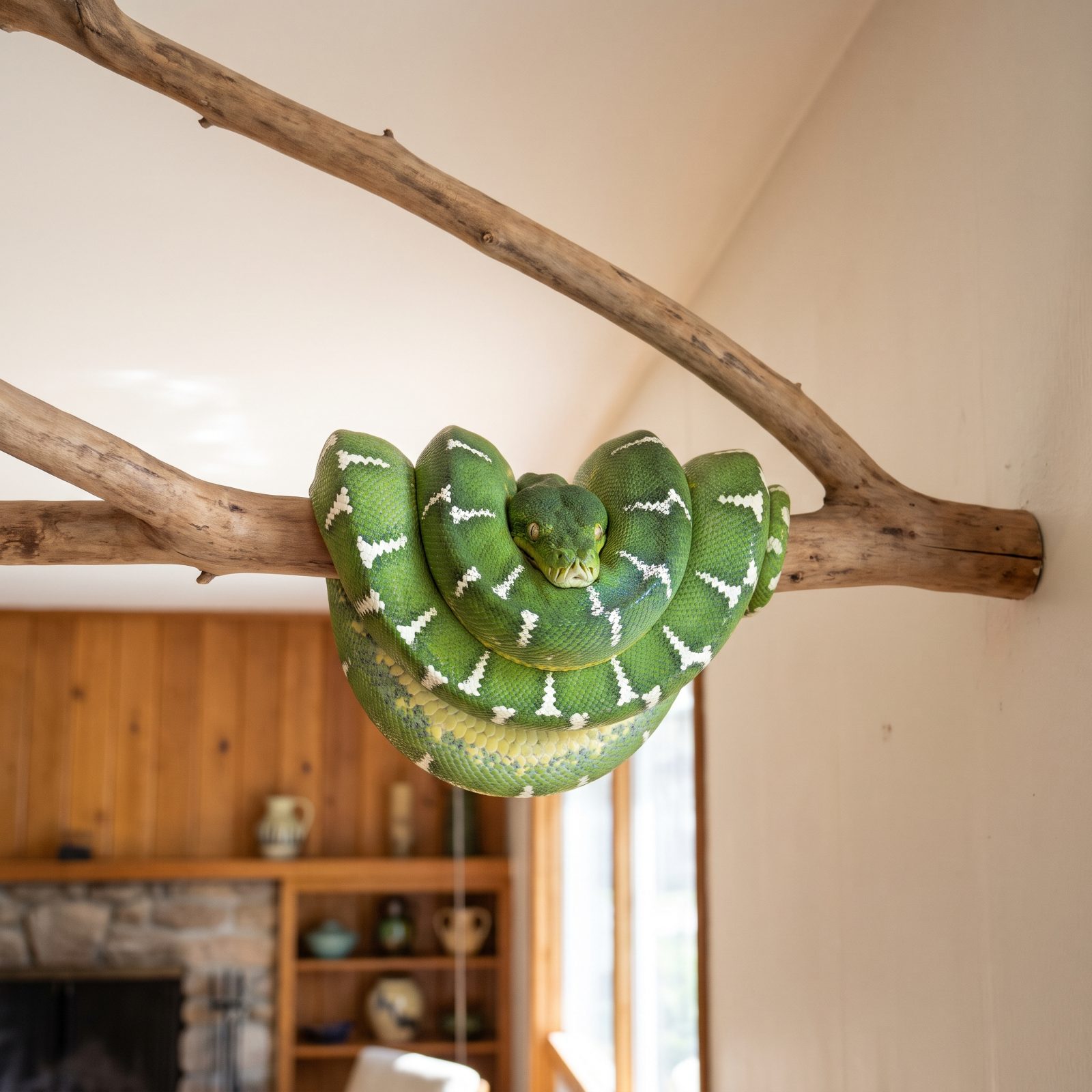
Look at how it hangs. A healthy emerald tree boa loops its body over a branch in neat, even coils with its head resting dead center, and the shape it makes is pure holiday garland. Those white lightning-bolt bands across the emerald back only sell it harder.
Now the part people get wrong. Babies aren’t green at all — they hatch brick-red or orange and take up to a year to turn. And the coil? That’s function. It lets the snake ambush birds and small mammals passing below with one fast strike.
21. Cotton-Top Tamarin Wearing a White Tinsel Mane
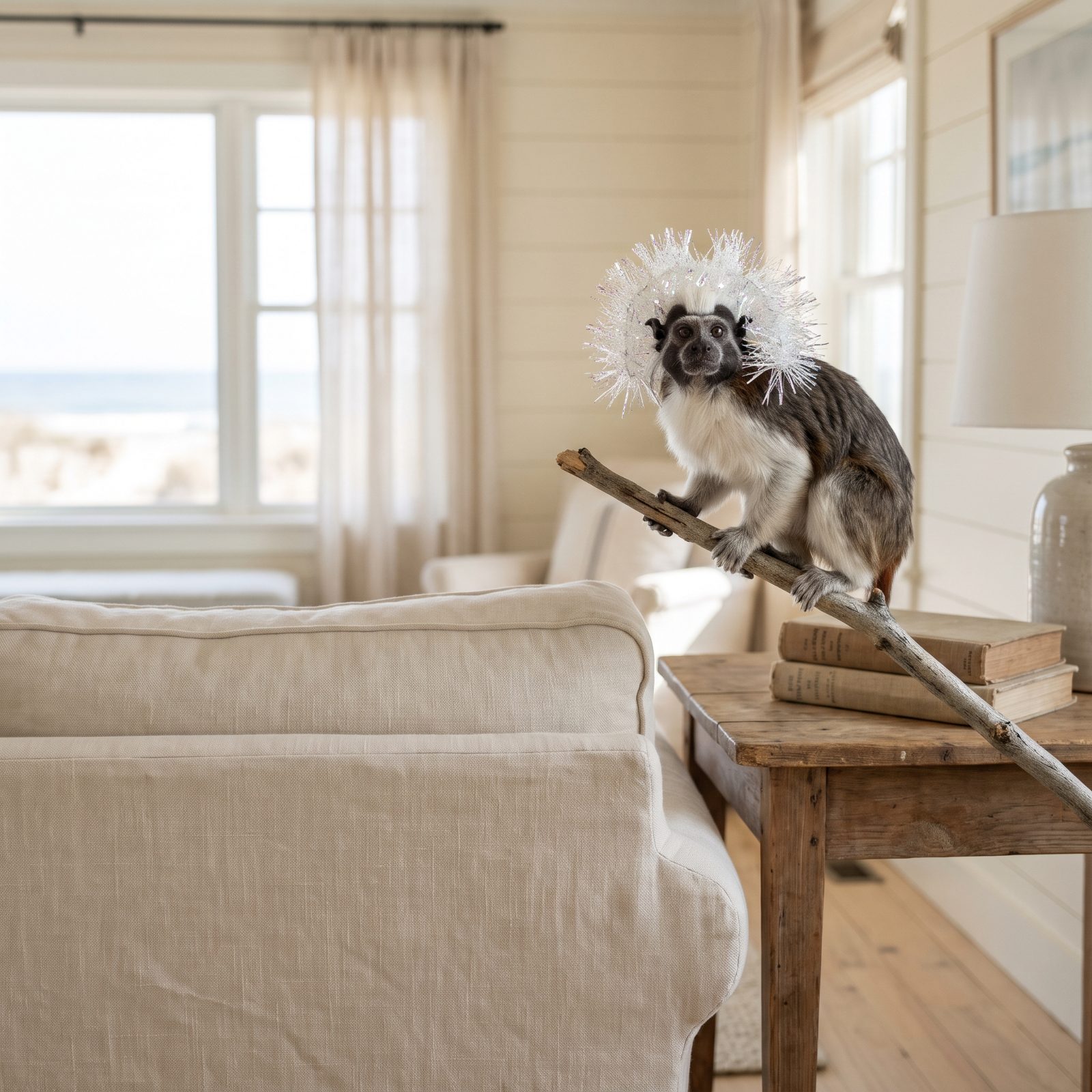
That spiky ring of white hair framing its head looks just like tinsel. The cotton-top tamarin weighs less than a bag of sugar, and that long white crest is the most striking thing about it.
That natural crest isn’t styling, though. The real mane fans out during alarm calls and social displays, making the animal look bigger and broadcasting mood to the rest of the troop. These tamarins cling to a shrinking patch of northwest Colombia and rank among the most endangered primates alive. The crest is gorgeous — and it’s running out of forest to show off in.
20. Magnificent Frigatebird With a Giant Red Throat Bauble
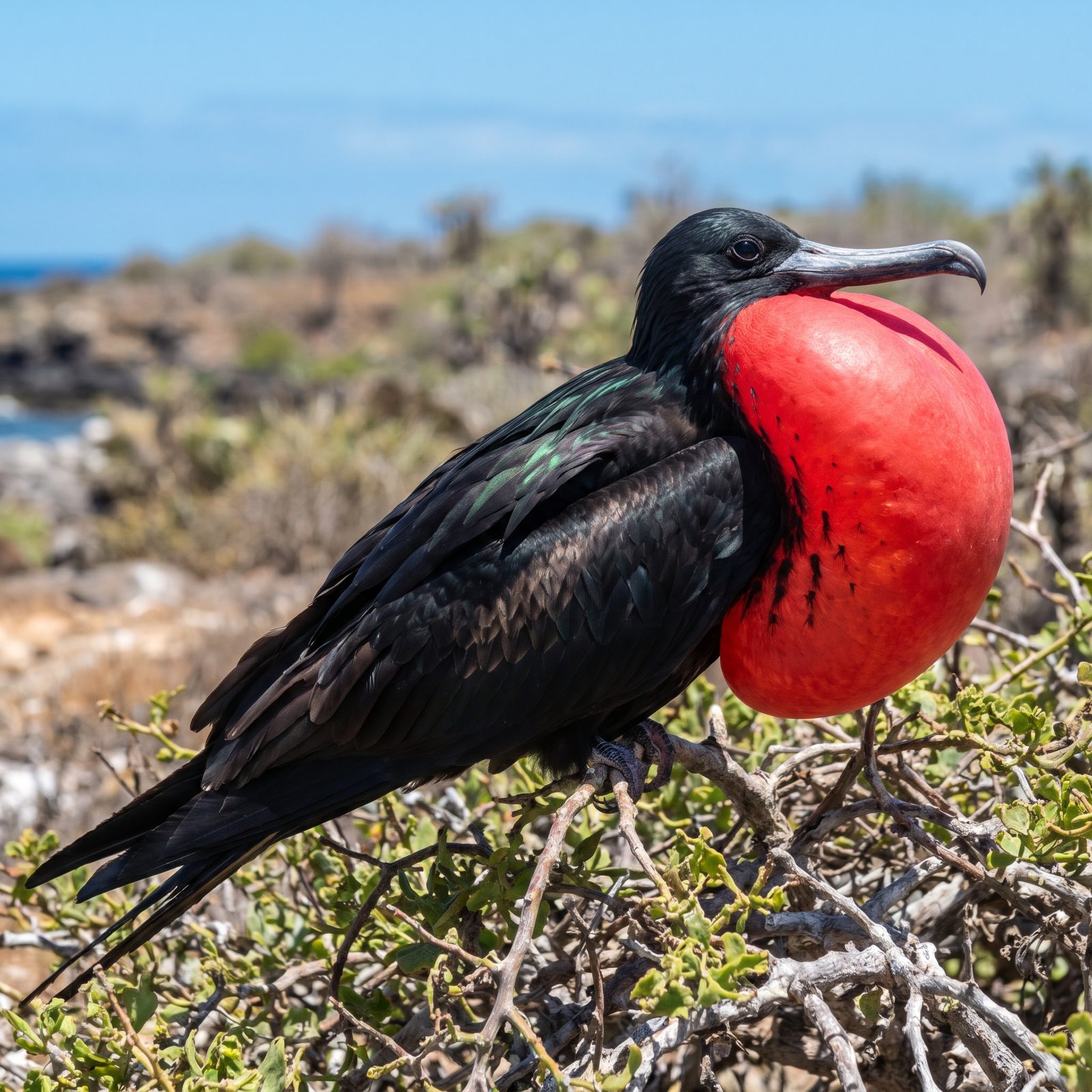
The male inflates his throat into a scarlet balloon so large it looks like he’s swallowed an ornament. He’ll hold it for hours in the heat, head tipped back, bill rattling, hoping a passing female picks him over the dozen guys doing the exact same thing on the branches around him.
The cost is real. That pouch can’t stay up forever, and the competition never lets up. Odd thing about frigatebirds: despite being seabirds, they can’t land on water — their feathers aren’t waterproof — so they snatch fish from the surface or simply bully other birds into coughing up theirs.
19. Bongo Antelope in a Chestnut Coat With White Pinstripes
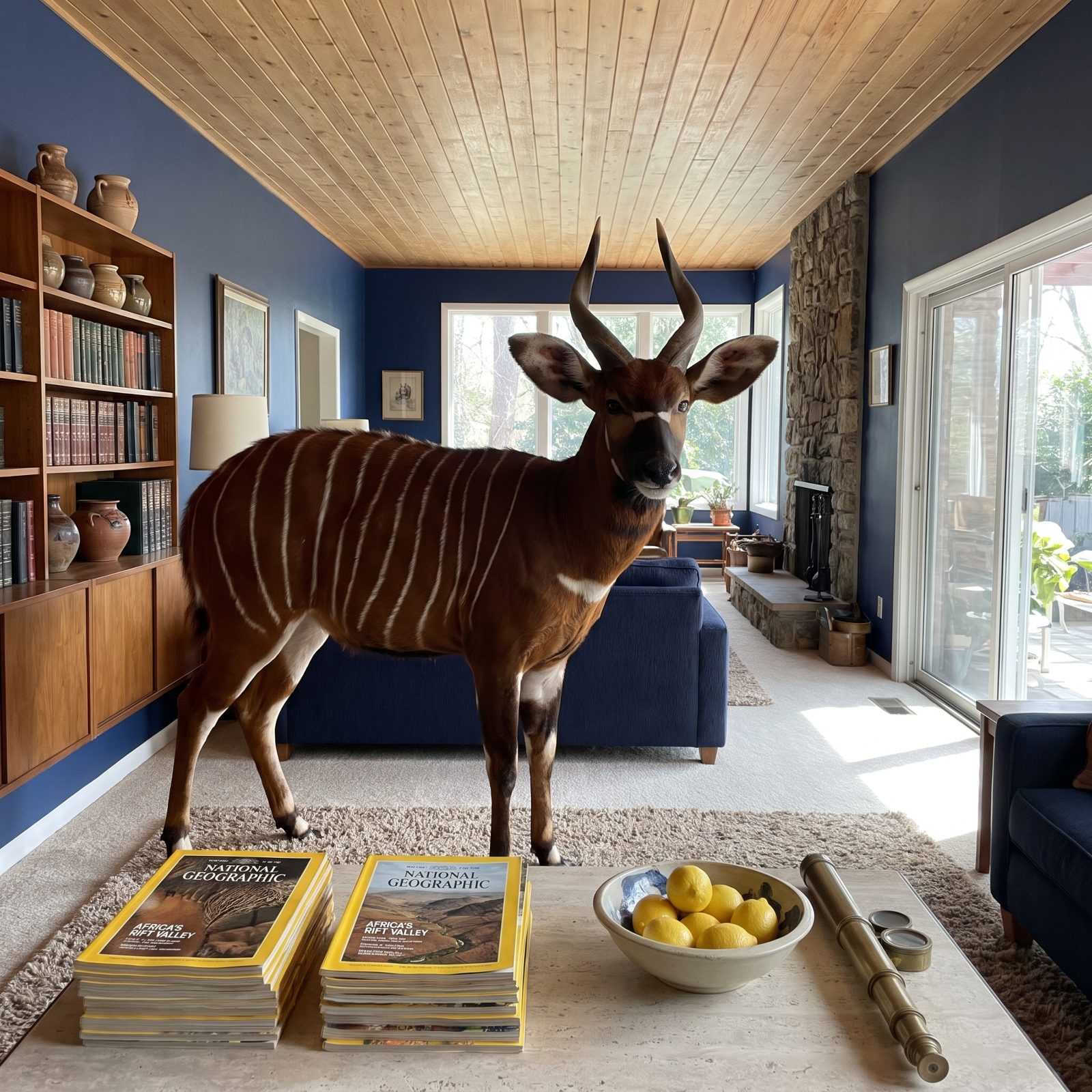
Deep chestnut-red flanks ruled with ten to fifteen vertical white stripes. On a bongo it reads like the most elegant pinstripe suiting you’ve ever seen — worn, as it happens, by the largest forest antelope in Africa.
The stripes are camouflage, not tailoring. In the broken light and shadow of dense montane forest, the pattern shatters the animal’s outline until it practically dissolves. The mountain bongo of Kenya is critically endangered, down to a few hundred in the wild. That handsome striped coat has become something close to a ghost in its own habitat.
18. Rock Ptarmigan in White Winter Boots
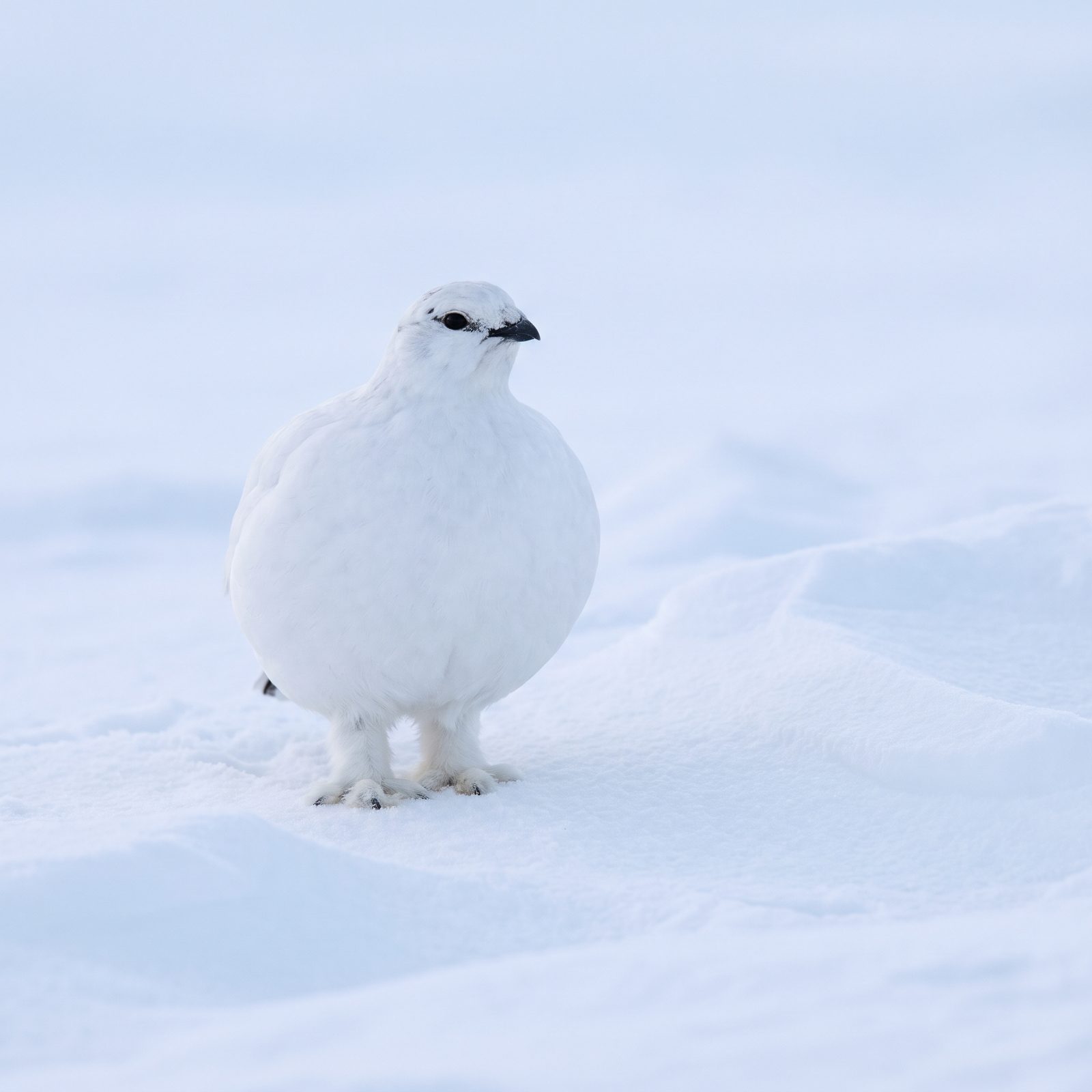
Come winter the rock ptarmigan turns white from head to toe — and I mean toe. Its feet grow a thick coat of feathers right down over the claws, a pair of fluffy white boots no other bird quite pulls off.
They earn their keep, those boots. They work like snowshoes, spreading the bird’s weight so it treads on soft powder instead of sinking, and they insulate against ground cold enough to freeze bare feet. Summer flips the trick entirely. The same bird molts to mottled brown and gray and melts into the rocks. One species, two disguises, timed to the snow.
17. Peacock Spider Raising a Colorful Display Fan
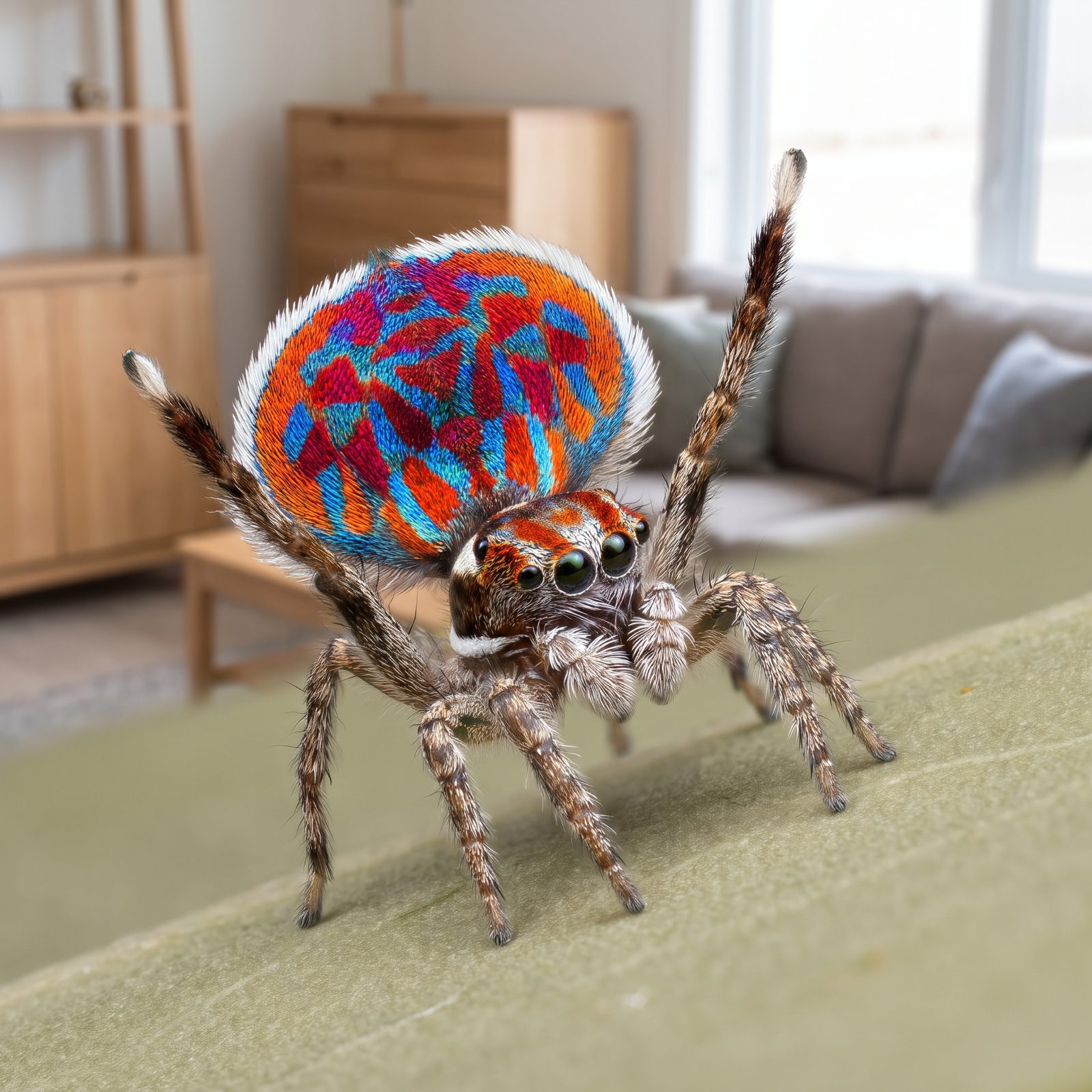
Barely bigger than a grain of rice, the male peacock spider lifts a flap on his abdomen and unfurls a fan of iridescent scales — red, blue, orange, geometric patterns that look painted on by hand. Then he dances.
And this is life or death. He waves the fan and drums his legs through a precise routine, and if the much larger female isn’t impressed, she may simply eat him. Every species carries its own signature pattern, which is how researchers keep turning up new ones across Australia. A creature this small, this electric, putting on a show most people will never notice.
16. Cedar Waxwing With Red Wax-Drop Wing Tips
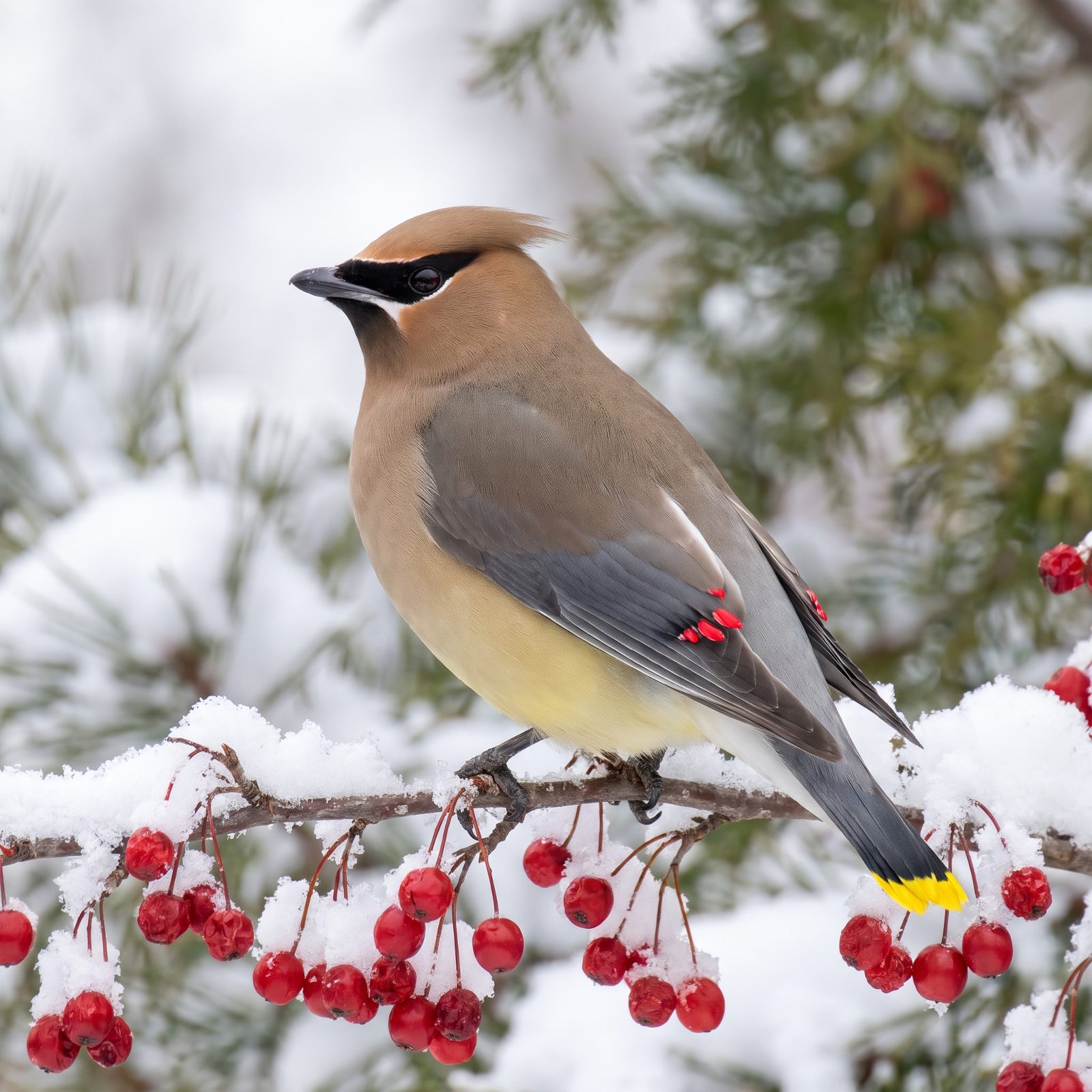
Run your eye down a cedar waxwing’s folded wing and you’ll spot them: tiny beads of waxy red at the tips of the inner feathers, bright as holly berries, like someone dripped sealing wax along the edge.
Why they’re there is still up for argument. The leading idea? The red tips signal age and maturity — older birds carry more of them, and they tend to pair off with mates sporting a similar count. The color comes straight from the berries they gorge on. Change the diet, change the waxwing.
15. Red-Shanked Douc in a Multicolored Tailored Suit
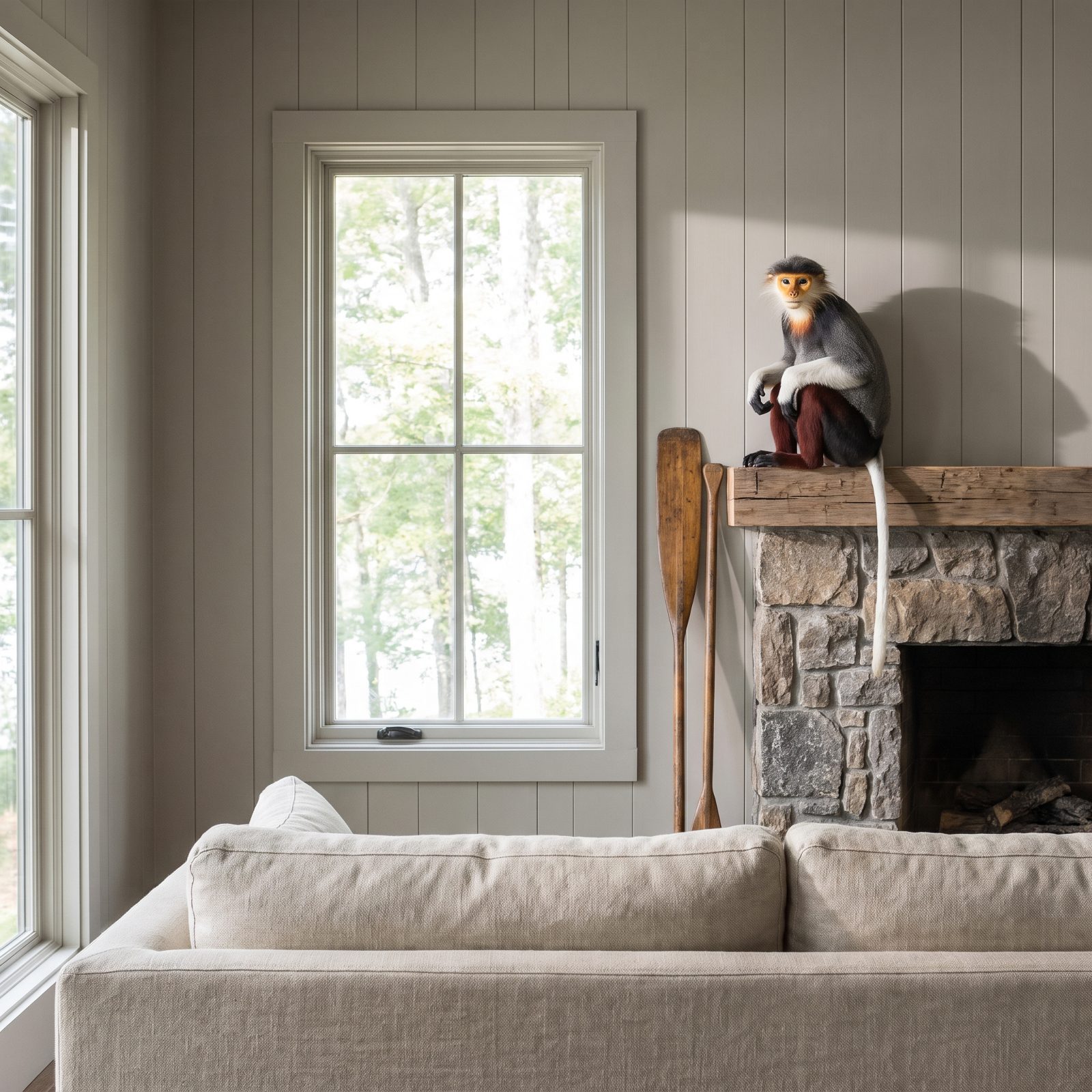
Few animals look this deliberately dressed. Maroon-red stockings on the lower legs, white gloves on the forearms, a gray body, black hands and feet, a golden face ringed in white — all on one monkey. Early naturalists took one look and called it the costumed ape.
The color blocking isn’t for our benefit. Up in the dappled canopy of Vietnam and Laos, those sharp boundaries split the body into pieces and scramble a predator’s eye. That’s why, for all its finery, the douc can be surprisingly hard to spot from the forest floor.
14. Picasso Bug Painted Like a Tiny Holiday Ornament
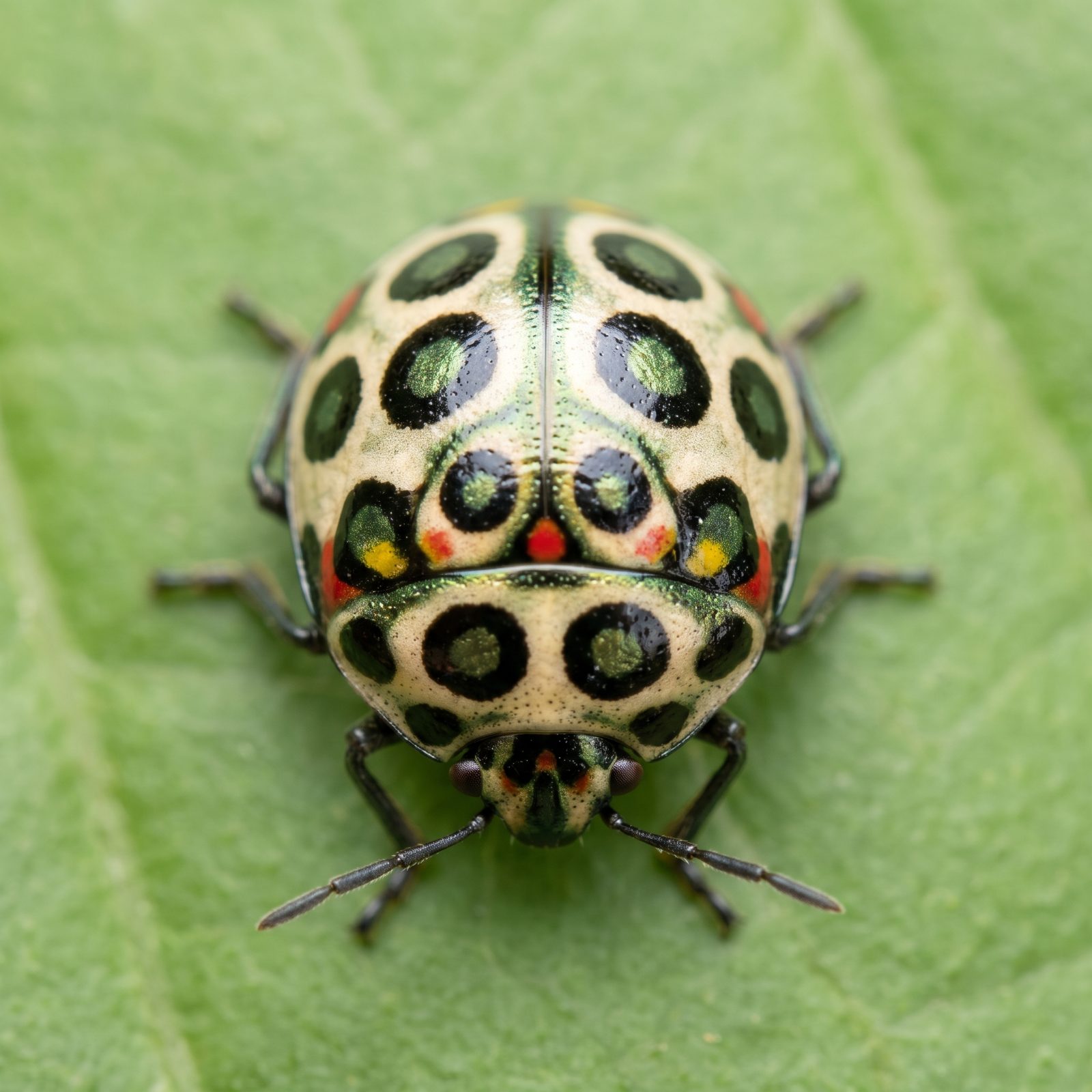
Barely a centimeter across, the Picasso bug wears a shell so boldly marked — ringed spots, splashes of green, cream, red and yellow — that it could pass for a glass bauble someone enameled by hand. The name, yes, comes from the artist.
The gloss and the pattern aren’t celebration, they’re a warning. This African shield bug packs chemical defenses, and the loud design tells birds to keep their beaks to themselves. That shiny back is a hardened extension of its shoulder plate — a built-in shield over the delicate wings tucked underneath.
13. Spanish Dancer Sea Slug in a Flowing Red Dress
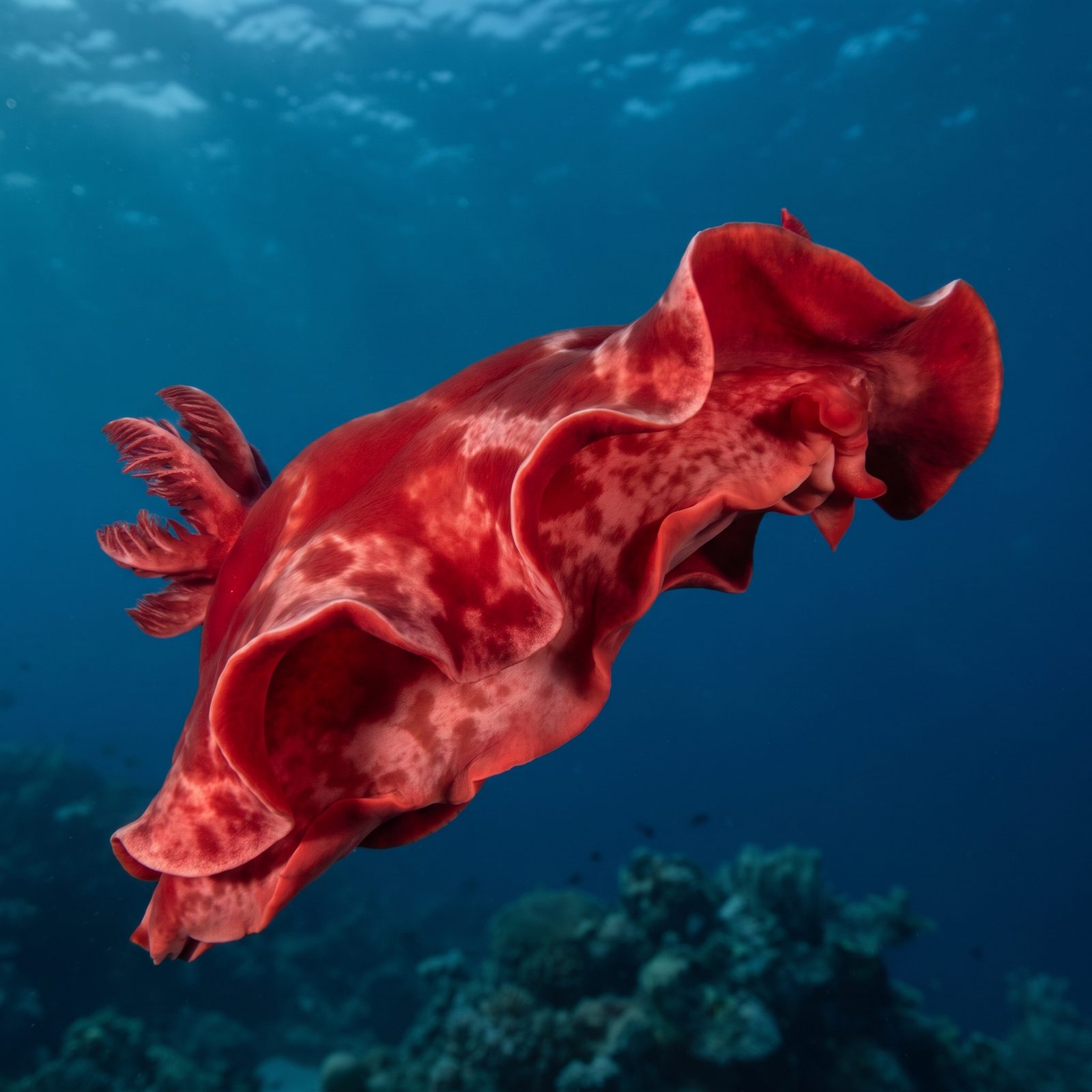
Watch it swim and the name explains itself. The sea slug flares the edges of its scarlet body and undulates through open water, and the ripple looks exactly like the swirling hem of a flamenco dress mid-spin.
Most of the time, though, it just crawls along the reef, folded up and forgettable. The dance is an escape move — triggered when something disturbs it — and few divers are ever lucky enough to catch it. At nearly a foot long it ranks among the larger sea slugs anywhere, and all that red is a chemical warning dressed up as theater.
12. The King Eider’s Ice-Blue and Pistachio Hood
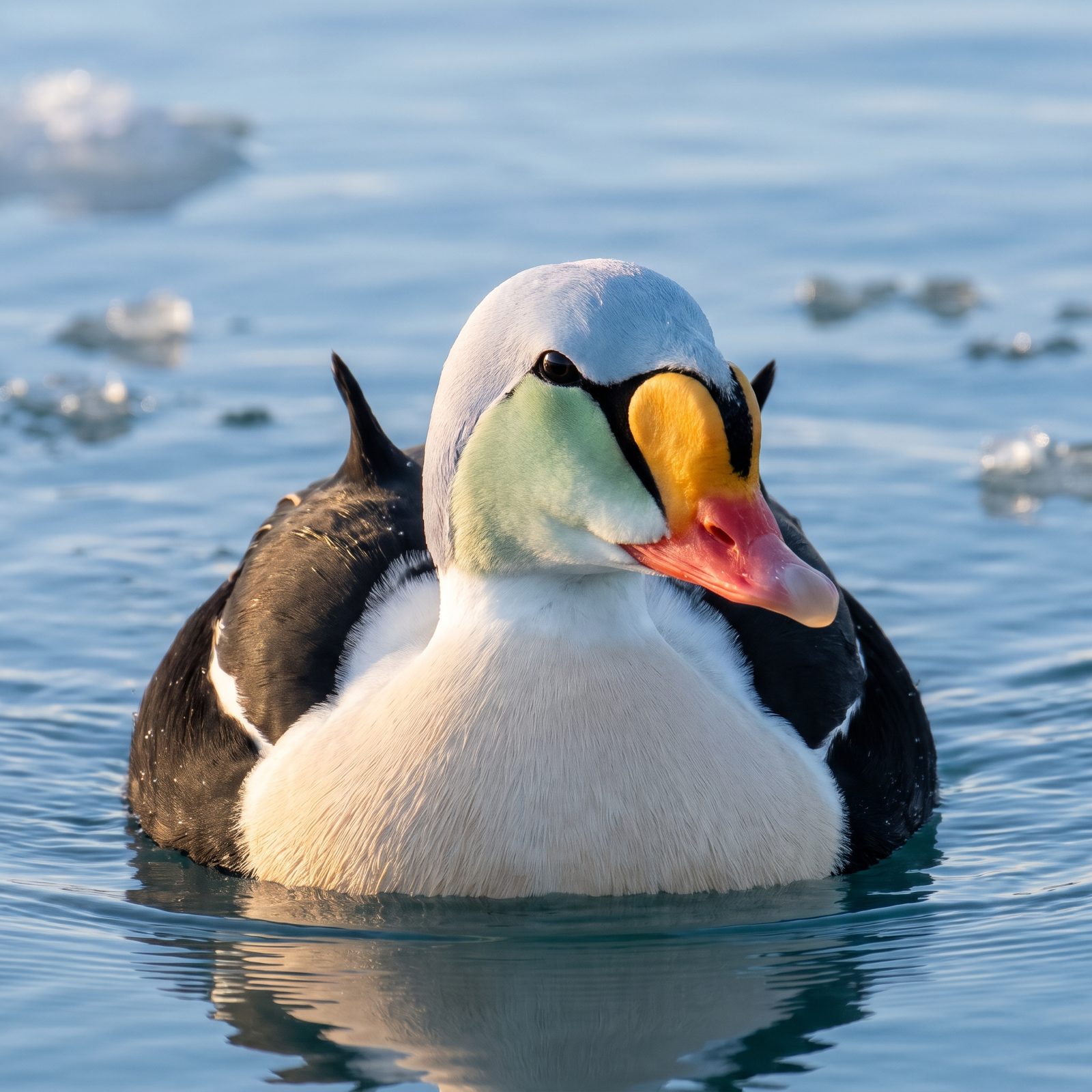
Pale blue skull, green cheeks, an orange bill like a bauble — the male King Eider wears the whole color scheme without a single sequin. The blue sits on the crown and nape, the green washes down the face, and that bulbous orange shield at the base of the bill swells bigger and brighter as breeding season peaks.
And then it all fades. Outside of courtship, males molt into a drab brown eclipse plumage that makes them look like a completely different species. The festive version is just a seasonal costume, built to impress females on the high Arctic tundra and then packed away until next year.
11. The Ring-Tailed Lemur and Its Striped Candy-Cane Tail
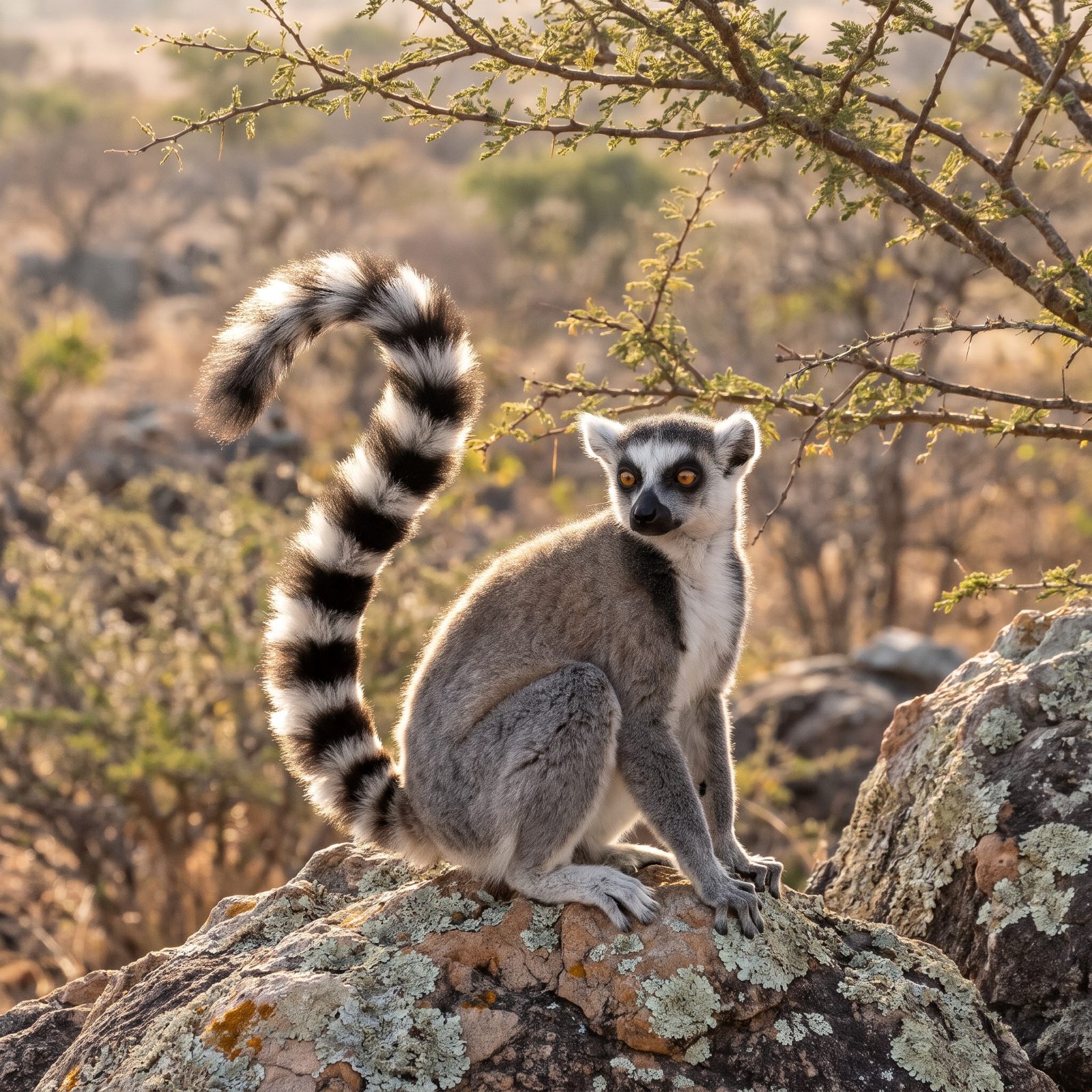
That tail does more than look like a wrapped-around striped scarf. Ring-tailed lemurs carry roughly a dozen alternating black-and-white bands, and the whole thing works as a social billboard — held high like a flag as they move through the dry forests of southern Madagascar, keeping the troop together across tangled scrub.
Males take it further during breeding season. They rub scent from wrist glands onto the tail, then wave it over their heads at rivals in what researchers actually call “stink fights.” So the pretty scarf doubles as a chemical weapon. Nature rarely builds anything pretty without quietly handing it a second job.
10. The Decorator Crab Covered in Its Own Ornaments

Give a decorator crab a reef and it builds its own outfit. It clips living sponges, algae, anemones and coral onto hooked hairs across its shell, assembling a disguise piece by piece until the thing looks like a crab that mugged a wreath.
Camouflage is the whole point, and it works almost too well. Many species keep their decorations alive; some deliberately choose stinging or foul-tasting pieces so predators learn to steer clear. When the crab molts, it carefully peels off the good bits and reattaches them to the new shell. Nobody wants to decorate twice.
9. The Española Marine Iguana That Turns Red and Green to Breed
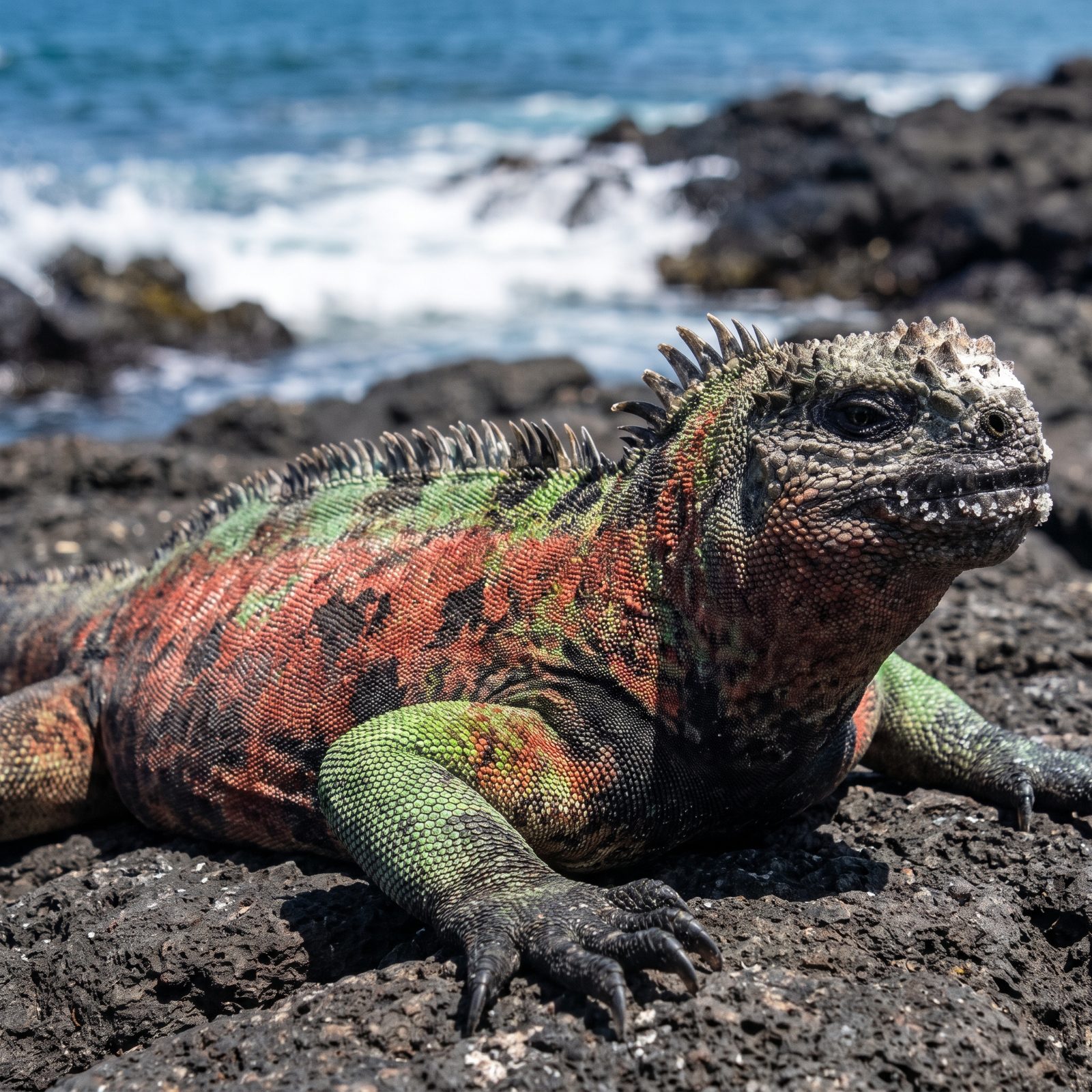
Most marine iguanas match the lava they sprawl across. The males on Española Island refuse to. Come breeding season they flush with patches of brick-red and vivid green, the exact pairing you’d dig out of a box of ornaments.
Why Española’s iguanas go so loud while other islands stay dull is still an open question. The red probably comes from pigments in the red algae they graze. Whatever drives it, these are the same seawater-sneezing lizards Darwin dismissed as “imps of darkness” — and he clearly never saw them in December mode.
8. The Tussock Caterpillar Bristling With Four White Pom-Poms
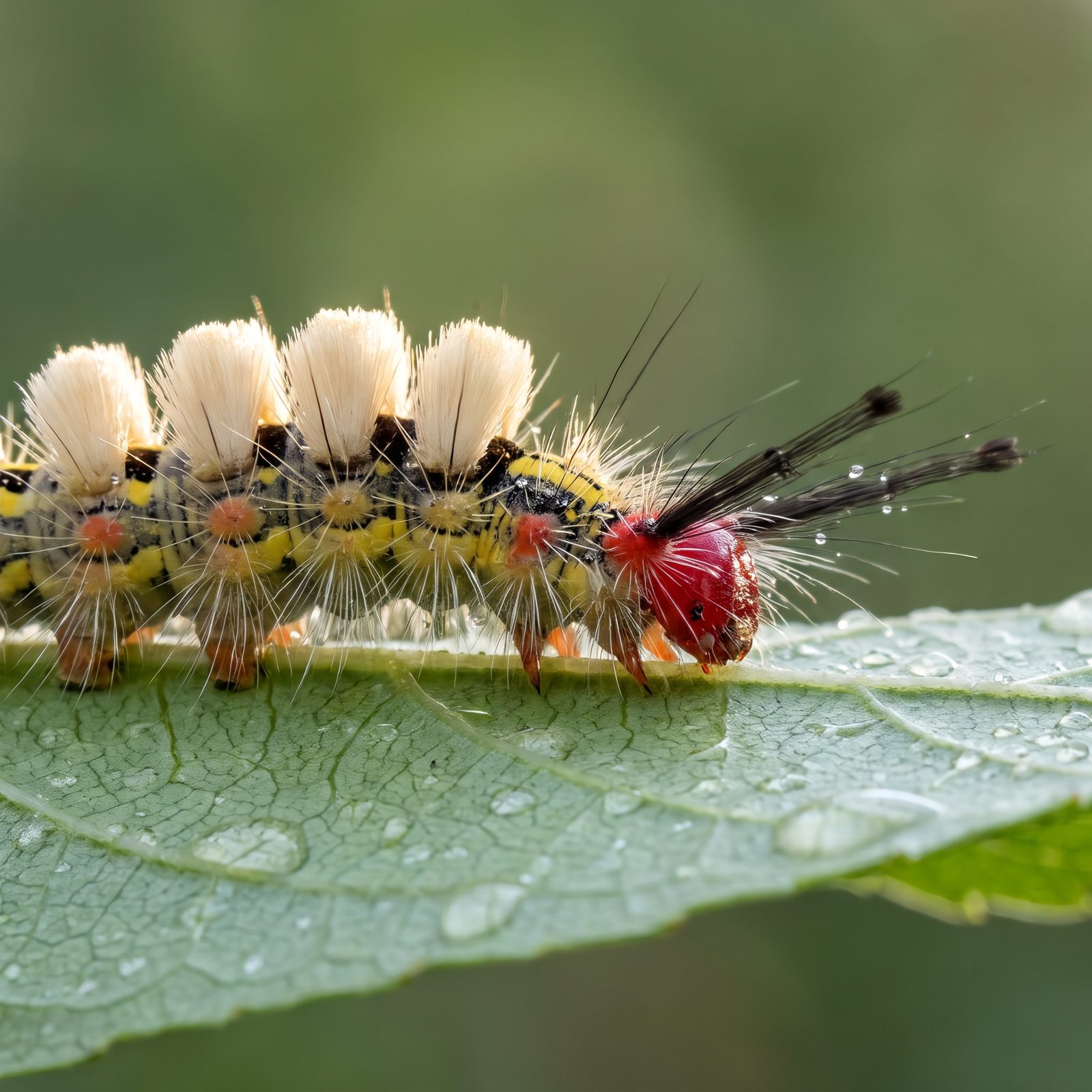
Four white tufts standing straight up its back, a scarlet head, long black bristles sweeping forward like antennae. The white-marked tussock moth caterpillar looks decorated on purpose.
It is not friendly. Those tufts are packed with hairs that can irritate skin and raise a rash in sensitive people, so admire this one with your eyes only. The red head and screaming contrast aren’t decoration either — they’re a warning label, telling birds the whole package tastes terrible. Pretty? Sure. Touchable? No.
7. The Pom-Pom Crab Waving Two Living Anemone Pom-Poms
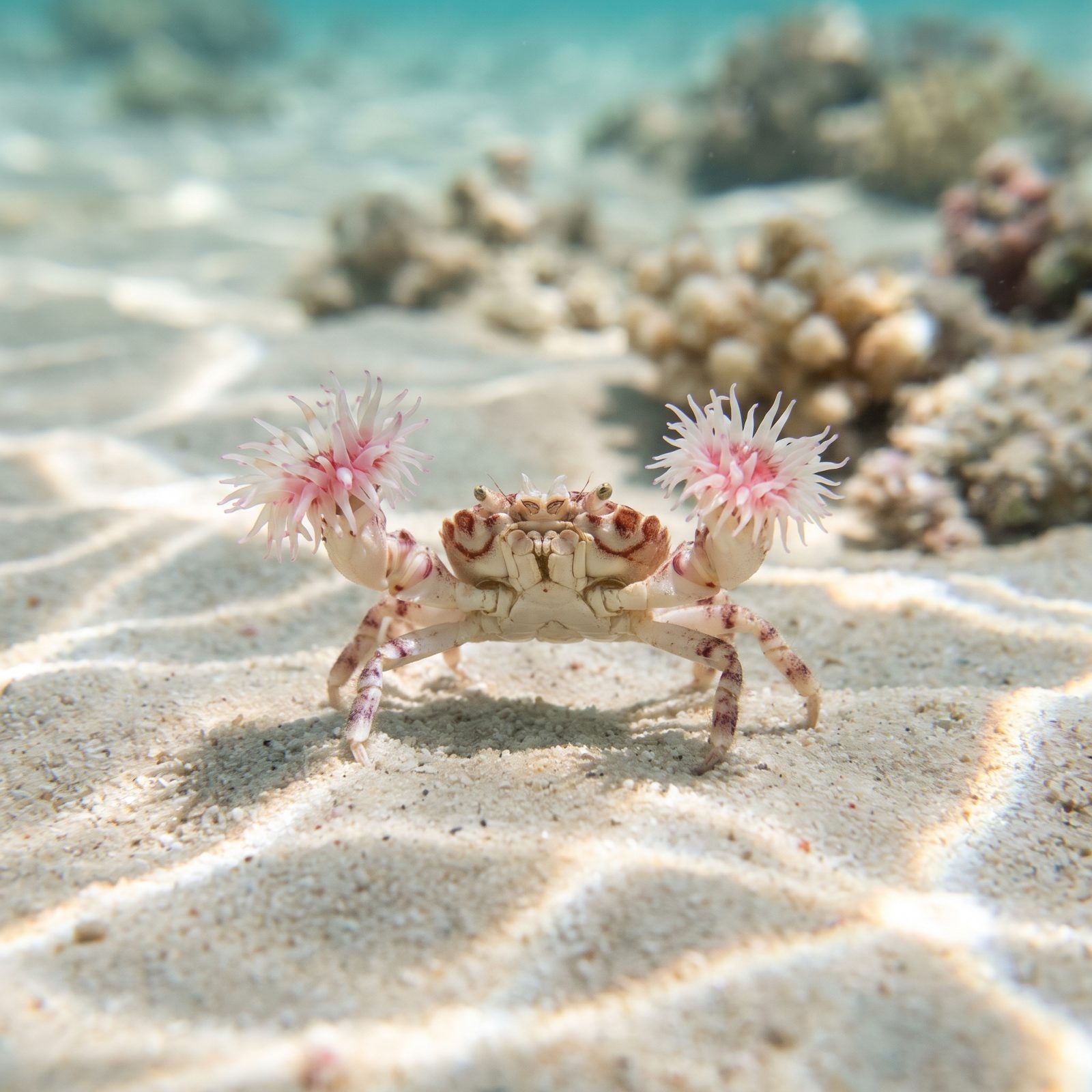
And here’s the one that literally waves pom-poms. The boxer crab grips a small stinging anemone in each claw and holds them up like a cheerleader mid-routine. Threatened, it jabs with them. Relaxed, it dabs them along the seabed to mop up food scraps the tentacles have snagged.
The bond goes surprisingly deep. These crabs almost never let go of their anemones, and a crab that loses one can tear its remaining anemone in half so both claws stay armed. Some populations may hold the same anemone clones for a lifetime. A partnership, a weapon, and a snack-catcher, all balanced in two tiny fists.
6. The Red-Crowned Crane and Its Bare Scarlet Cap
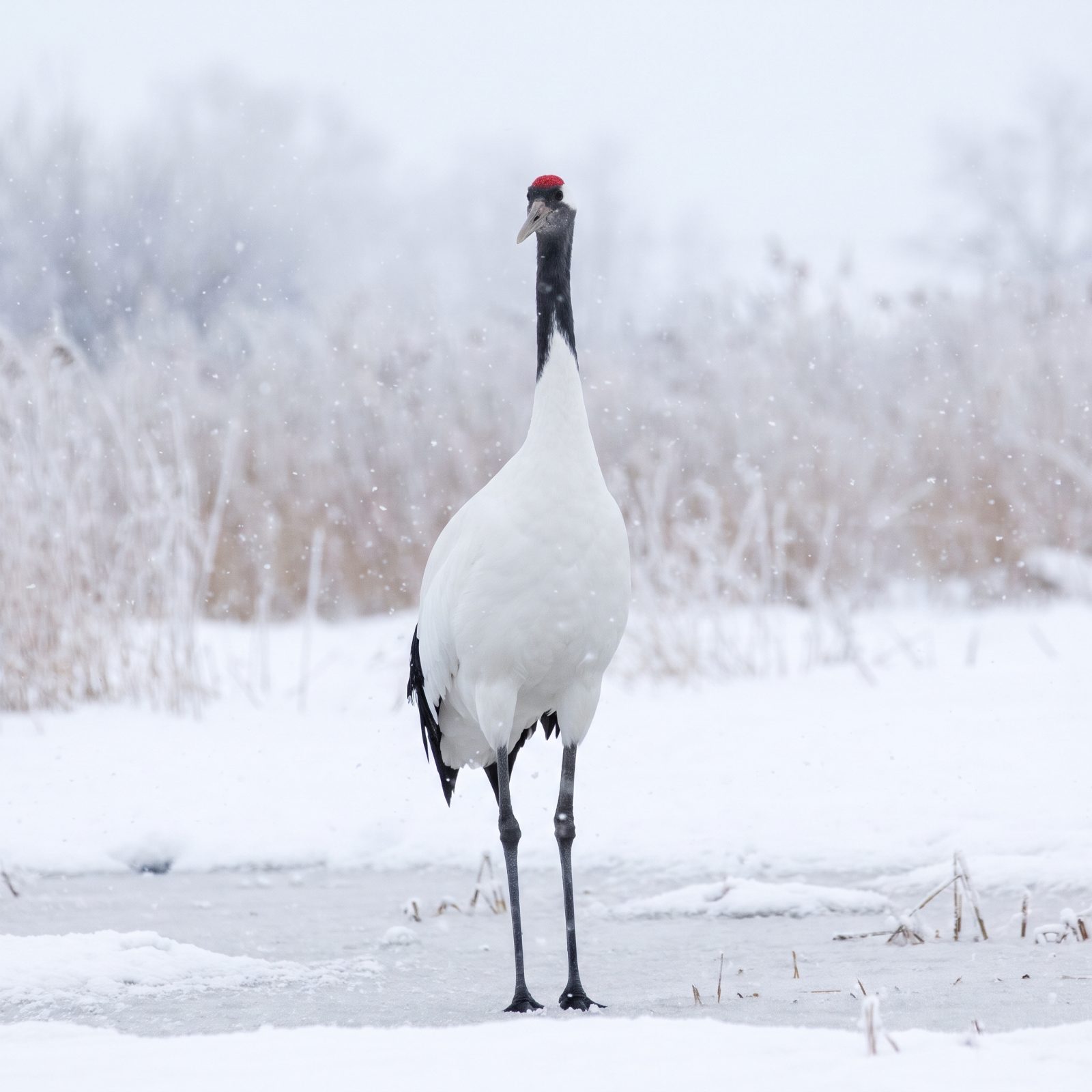
That “crown” isn’t feathers at all. On the red-crowned crane it’s bare skin, and it flushes brighter whenever the bird is excited, agitated, or courting. Against the snow of Hokkaido, where these cranes winter, the red reads like a single ornament pinned to an all-white bird.
They’re among the rarest cranes on Earth, and famous dancers. Pairs bow, leap and fling vegetation in courtship displays that cultures across East Asia have revered for centuries; in Japan the bird stands for longevity and good fortune. The holiday-card looks are entirely beside the point to the crane, which has worn them for millions of years without knowing what December is.
5. The Peppermint Angelfish in Crisp Red-and-White Stripes
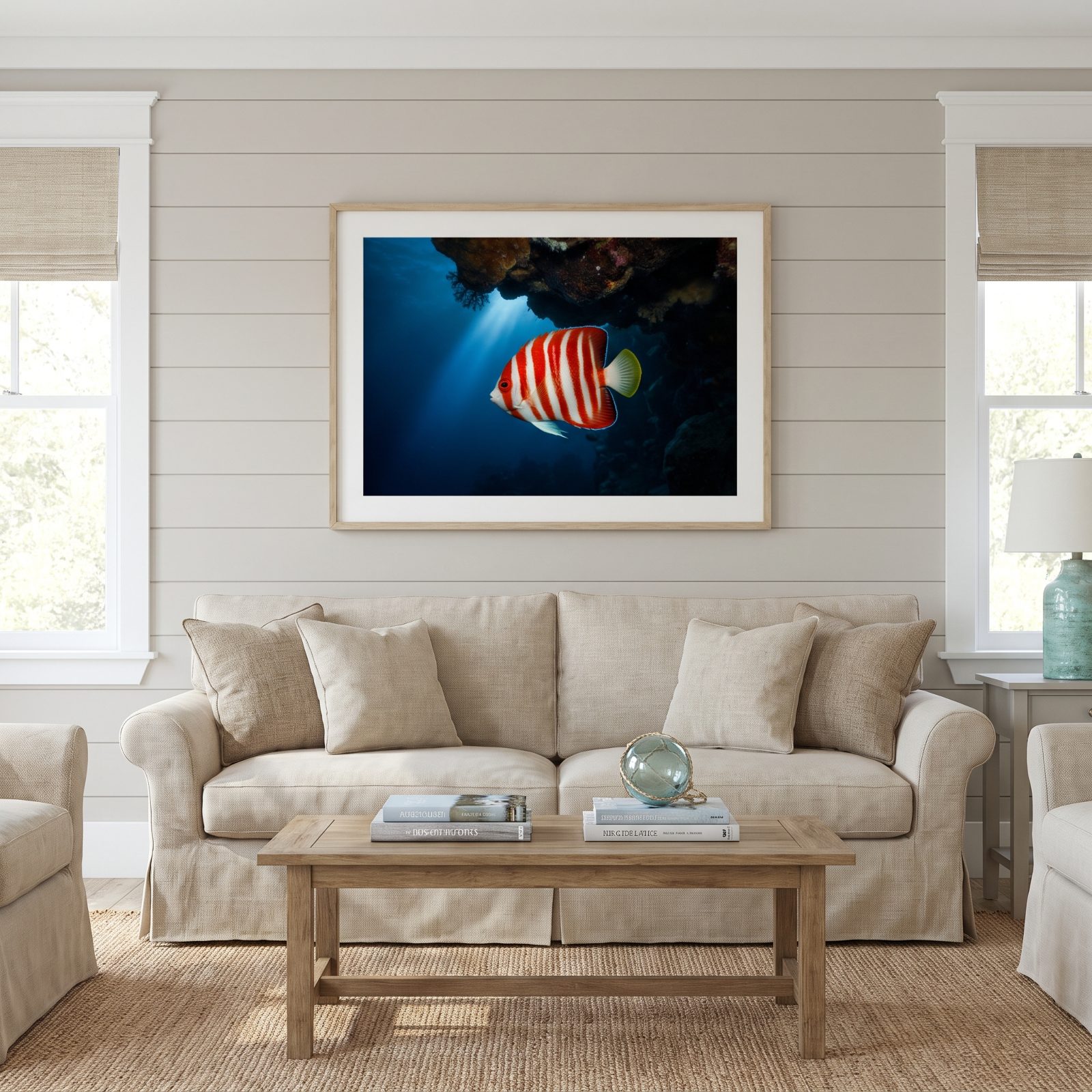
Red and white stripes, candy-cane clean. The peppermint angelfish earned its name honestly, and it’s one of the most coveted fish on the planet. It lives on deep reefs well below recreational diving range — hundreds of feet down — which makes it nearly impossible to see without technical diving or a submersible.
That scarcity turned it into a legend among aquarists. A single collected specimen reportedly changed hands for a jaw-dropping sum years ago, and the fish has barely surfaced in captivity since. Most of the people who adore it have only ever met it in a photograph.
4. The Pajama Cardinalfish in Its Spotted Festive Sleepwear
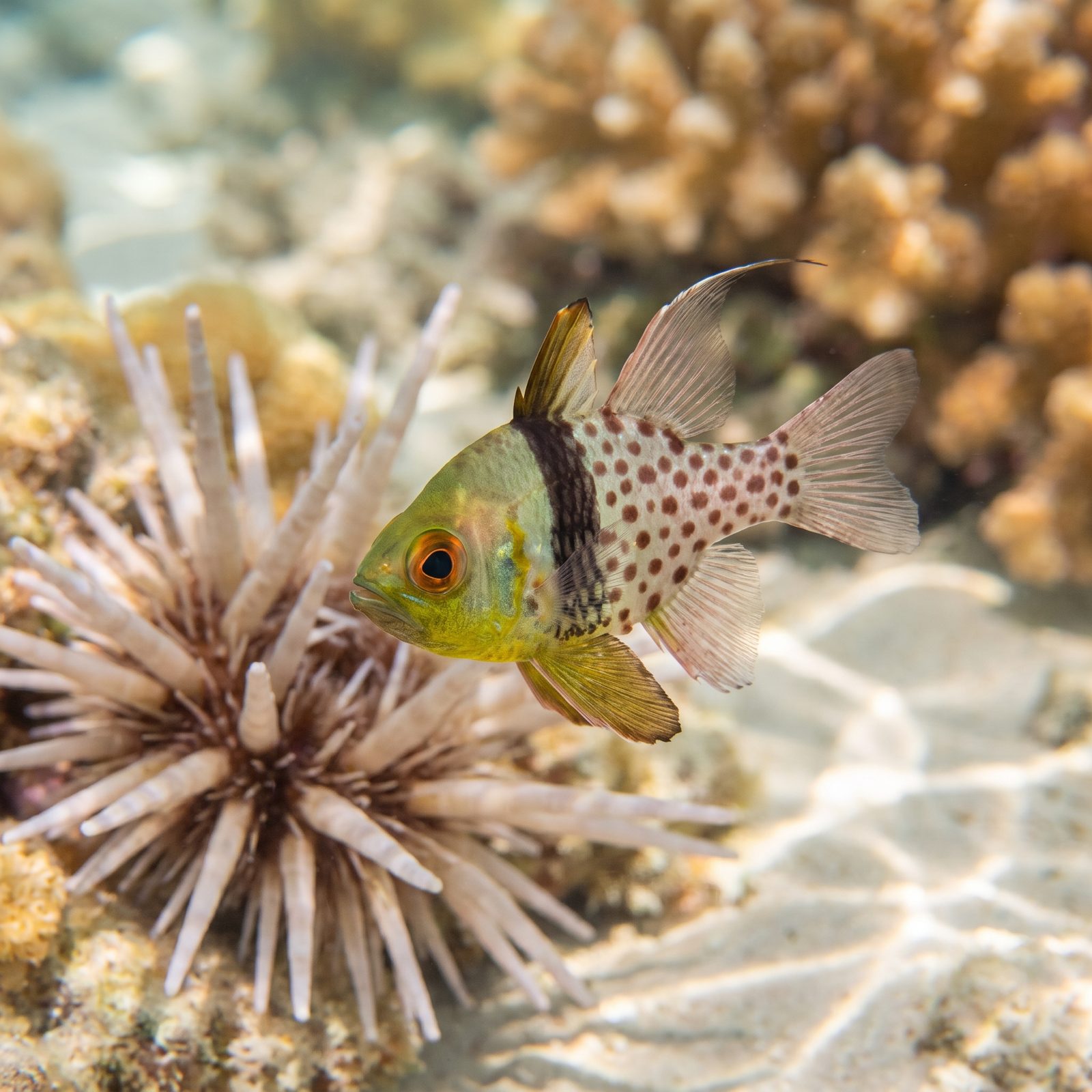
Three outfits on one fish. The pajama cardinalfish sports a yellow-green face with oversized orange eyes, a single dark band slung across its middle like a waistband, and a polka-dotted rear end that honestly looks like printed sleepwear.
That mismatched get-up probably breaks up its body outline among the branching corals and urchins it shelters in by day. And it’s a mouthbrooder: the male holds fertilized eggs inside his mouth until they hatch, refusing to eat the entire time. So behind the loud pajamas sits a devoted, very hungry dad.
3. The Frilled Lizard That Snaps Open a Ruffled Collar
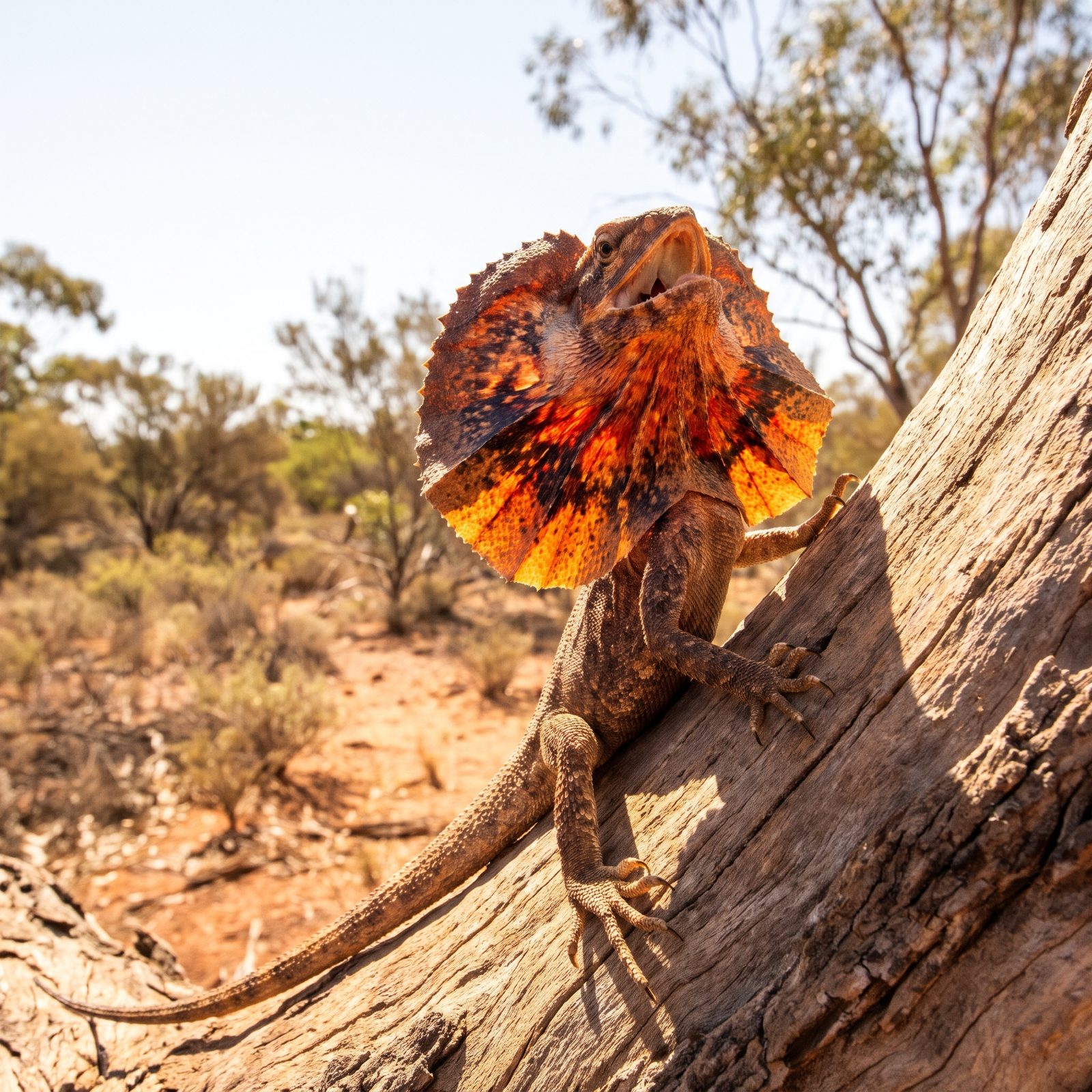
Most of the time the frill lies folded flat against the neck and you’d never guess it was there. Then the lizard feels cornered and the whole thing snaps open into a wide ruffled collar edged in orange and red, backed by a gaping pink mouth — enough to make a modest reptile look twice its size.
It’s pure bluff. The frilled lizard of northern Australia and New Guinea would far rather scare you off than fight. If the collar display flops, it drops the act and bolts away upright on its hind legs. All that pageantry, and the grand finale is sprinting for the nearest tree.
2. The Pinecone Fish That Shines Like a Living Golden Ornament
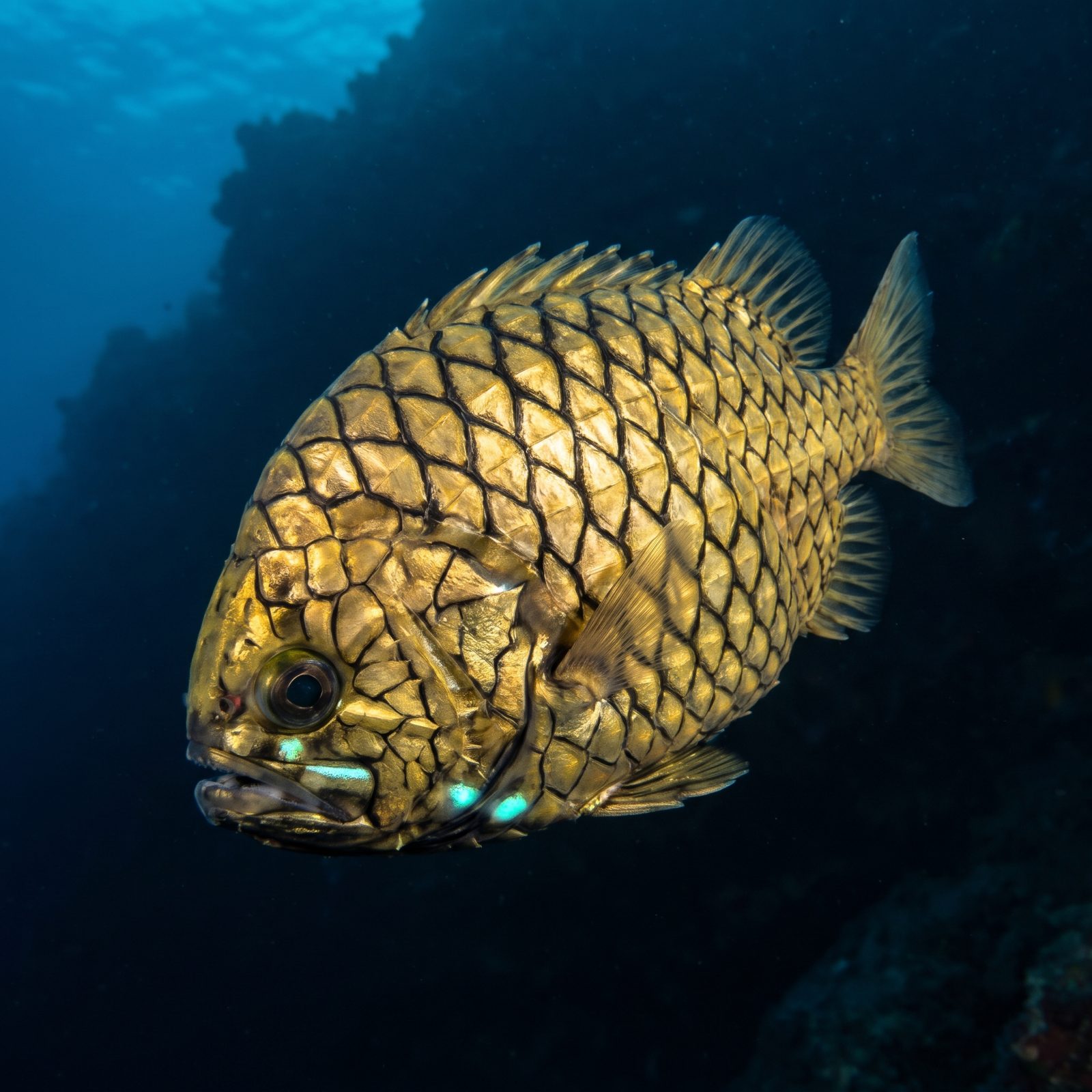
Look at one under a torch beam and the resemblance is almost comic. The pinecone fish wears a coat of heavy bony plates, each gold with a black border, stacked like the scales of a closed pinecone — or an ornament pulled from the good box. That armor is the whole point. Slow, stiff, nearly tank-like, it trades speed for a suit nothing can chew through.
And here’s the part nobody mentions at the aquarium glass. Tucked near the tip of its lower jaw sit small light organs packed with glowing bacteria, so in the dark this little gold ornament lights its own candles to lure the shrimp it eats.
1. Christmas Tree Worms and Their Twin Spiral Evergreen Crowns
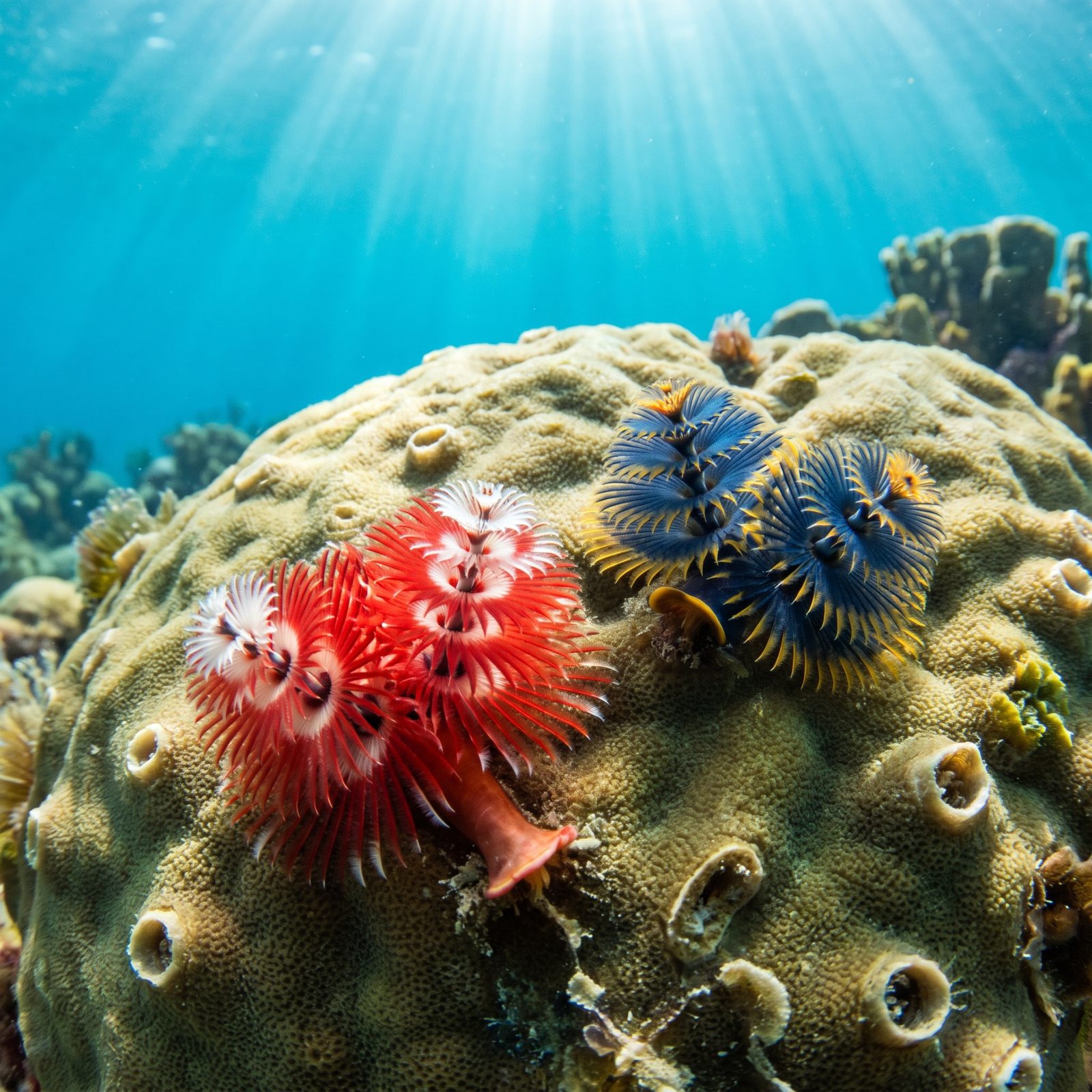
Scatter a coral head with these and it looks like somebody planted a tiny forest of firs across the reef. Each Christmas tree worm sends up a stacked, tiered crown — whorls of feathery radioles layered one above another along a central stalk, like boughs on a tiny fir. Scarlet, white, electric blue, orange, yellow. The colors land like a box of mismatched decorations that nobody bothered to sort.
But those tiers aren’t for show. They pull oxygen from the water and sweep up plankton at the same time, pulling double duty as gills and feeding net. Wave a hand nearby and the whole thing vanishes in a blink, yanked down into the tube the worm keeps sunk in the living coral. Wait it out, stay still, and the little trees come creeping back up.