

Tool use was supposed to be the thing that made us human. Then a crow in the South Pacific sat down, selected a twig, trimmed it into a hook, and fished a fat grub out of a log with the patience of a surgeon. The wall came down. Across oceans, forests, and swamps, animals are shaping sticks, hauling stones, stacking shells, and baiting fish with bread. Some of it is learned. Some of it gets passed from mother to daughter like a family recipe, and all of it is real, documented, and stranger than you expect. Here are the animals bending the rules.
Please note that some of the images in this article were created with the assistance of AI.
28. New Caledonian Crows Carve Hooked Sticks to Extract Grubs
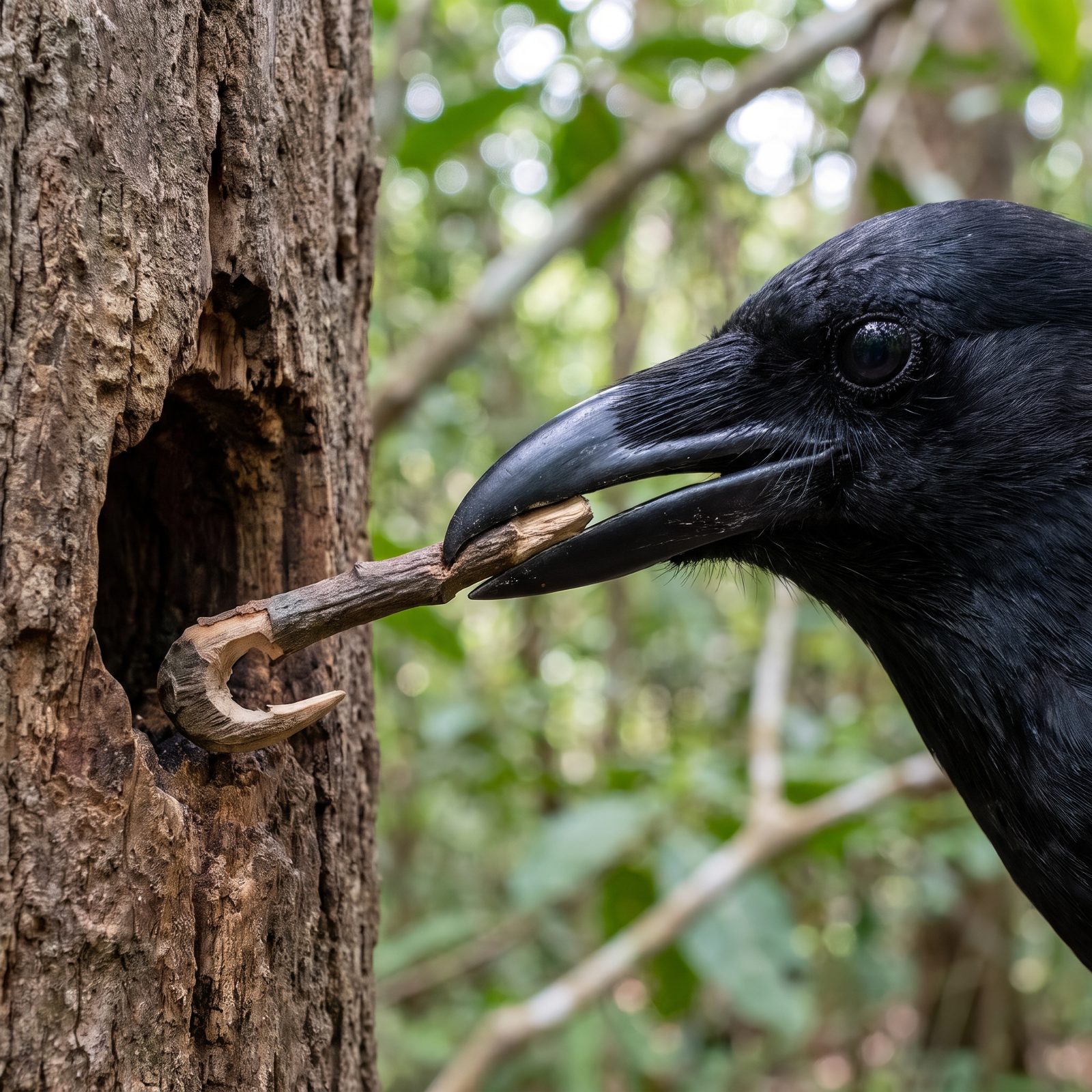
These crows don’t just grab any stick. They snap off a forked twig, strip it, and sculpt one end into a working hook — and then they keep the good ones. A bird with a favorite tool will tuck it under a foot while it eats rather than drop it and start over.
The hooked variety beats a straight probe by a wide margin, and the crows know it. Captive birds have even bent wire into hooks with no training, which is the kind of thing that makes you rethink the whole “birdbrain” insult.
Reporting on a study of how the crows store their hooked tools, a crow tool-use researcher says “It was exciting to see that crows are just that bit more careful with tools that are more efficient and more costly to replace.”
27. Bottlenose Dolphins Wear Sea Sponges to Protect Their Beaks
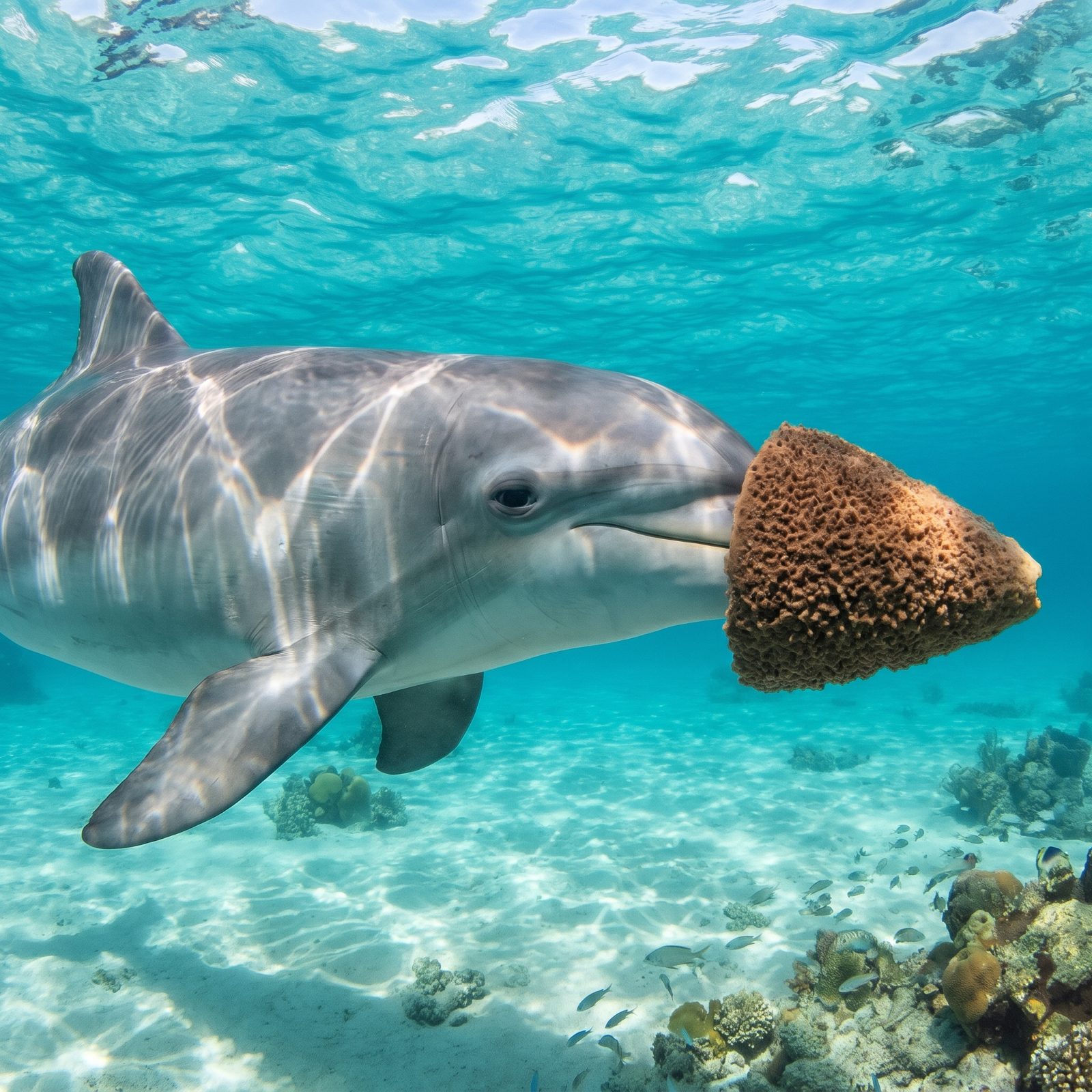
In the shallows of Shark Bay, certain dolphins tear a cone-shaped sponge off the seafloor and slip it over their snouts. The sponge works like a padded mitt, letting them root through sharp rubble and rocky bottom to flush out fish that hide where other dolphins won’t dig.
The part that stops you cold? It’s almost exclusively a female tradition, taught by mothers to daughters. Scientists call these dolphins “spongers,” and they can trace the whole behavior back to a single innovative female generations ago.
26. Veined Octopuses Carry Coconut Shells as Portable Shelters
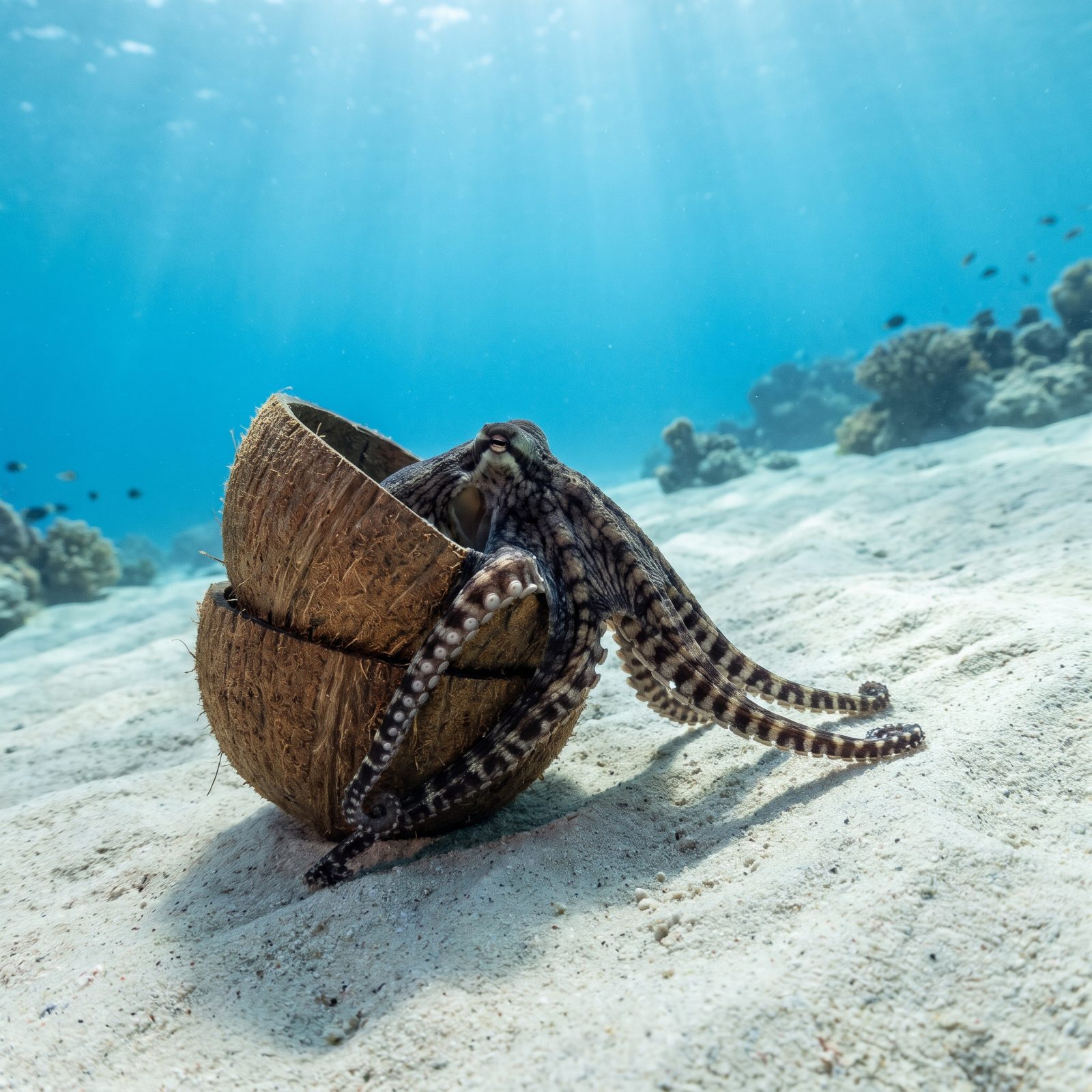
This is one of the few animals ever caught carrying a tool to use later. The veined octopus collects discarded coconut shell halves, fits them together, and sprawls over the top on the open seabed, arms wrapped around its prize.
It’s a ridiculous-looking pose and genuinely risky. Out in the open, the octopus is exposed to predators while it clings to its luggage. The payoff comes later, when it reassembles the halves into a sealed hiding spot on a featureless bottom with nowhere else to shelter. Forward planning, by an animal with no bones and a nine-month lifespan.
25. Sea Otters Keep Favorite Rocks for Cracking Shellfish
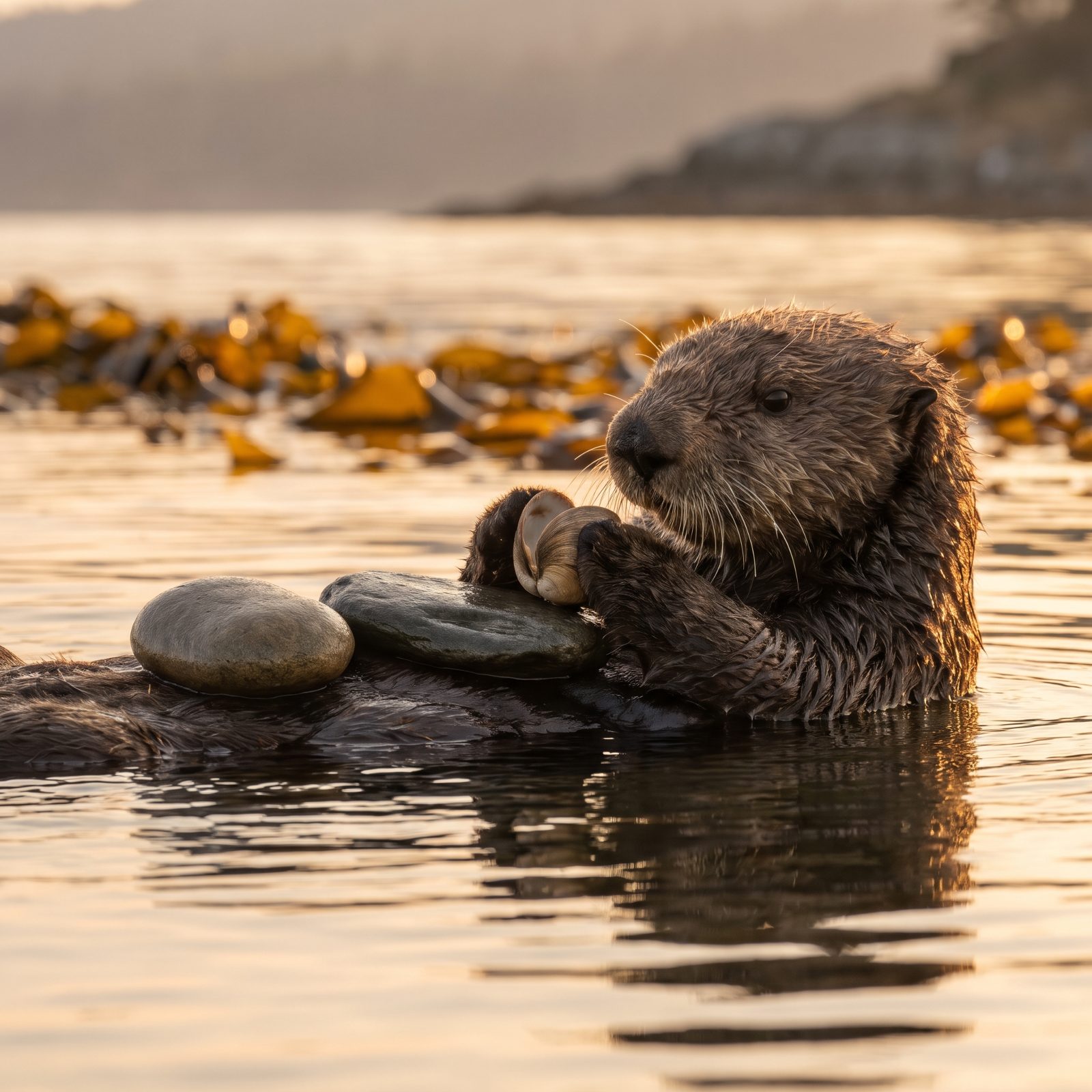
A sea otter cracking a clam on its chest is a familiar sight. What people miss is the loyalty. Many otters keep a single favorite rock, tucking it into the loose skin under their forearm like a pocket, carrying it from dive to dive for days on end.
They’ll use the same anvil hundreds of times, and some even hammer shellfish against the hard hull of a boat or a rock face. An otter has to eat roughly a quarter of its body weight daily just to stay warm. A reliable tool isn’t a luxury — it’s the difference between dinner and starving in cold water.
24. Egyptian Vultures Throw Stones to Break Ostrich Eggs
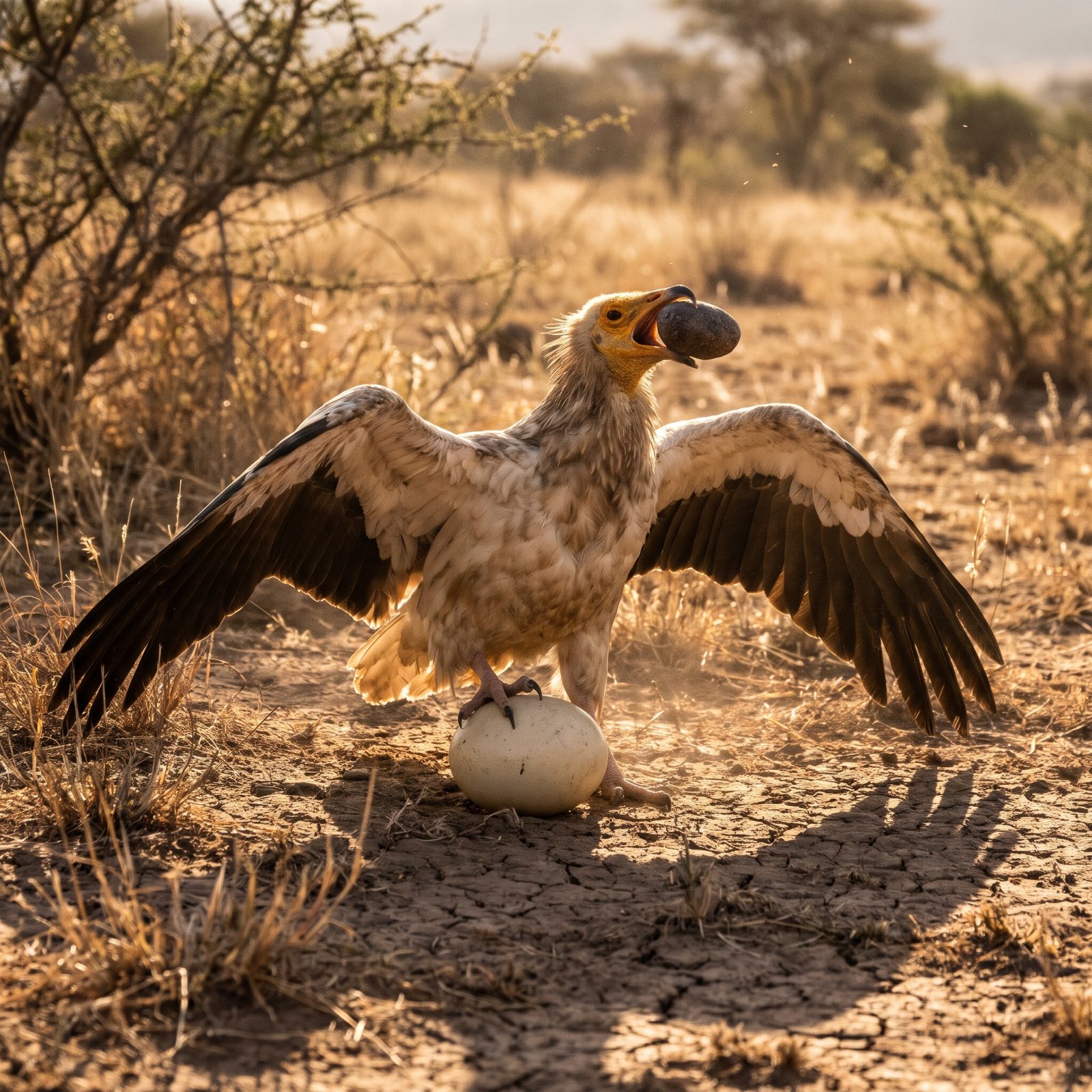
An ostrich egg has a shell thick enough to shrug off a jackal. So the Egyptian vulture cheats. It picks up a stone, takes aim, and hurls it down at the egg again and again until the shell finally gives.
This was one of the first clear cases of tool use documented in a wild bird, back in the 1960s, and it rattled people at the time. Not every vulture does it well, and the clumsy ones can take dozens of throws. Still — a bird choosing a rock and swinging it like a hammer is exactly the kind of thing we assumed birds couldn’t do.
23. Green Herons Drop Bait on Water to Lure Fish
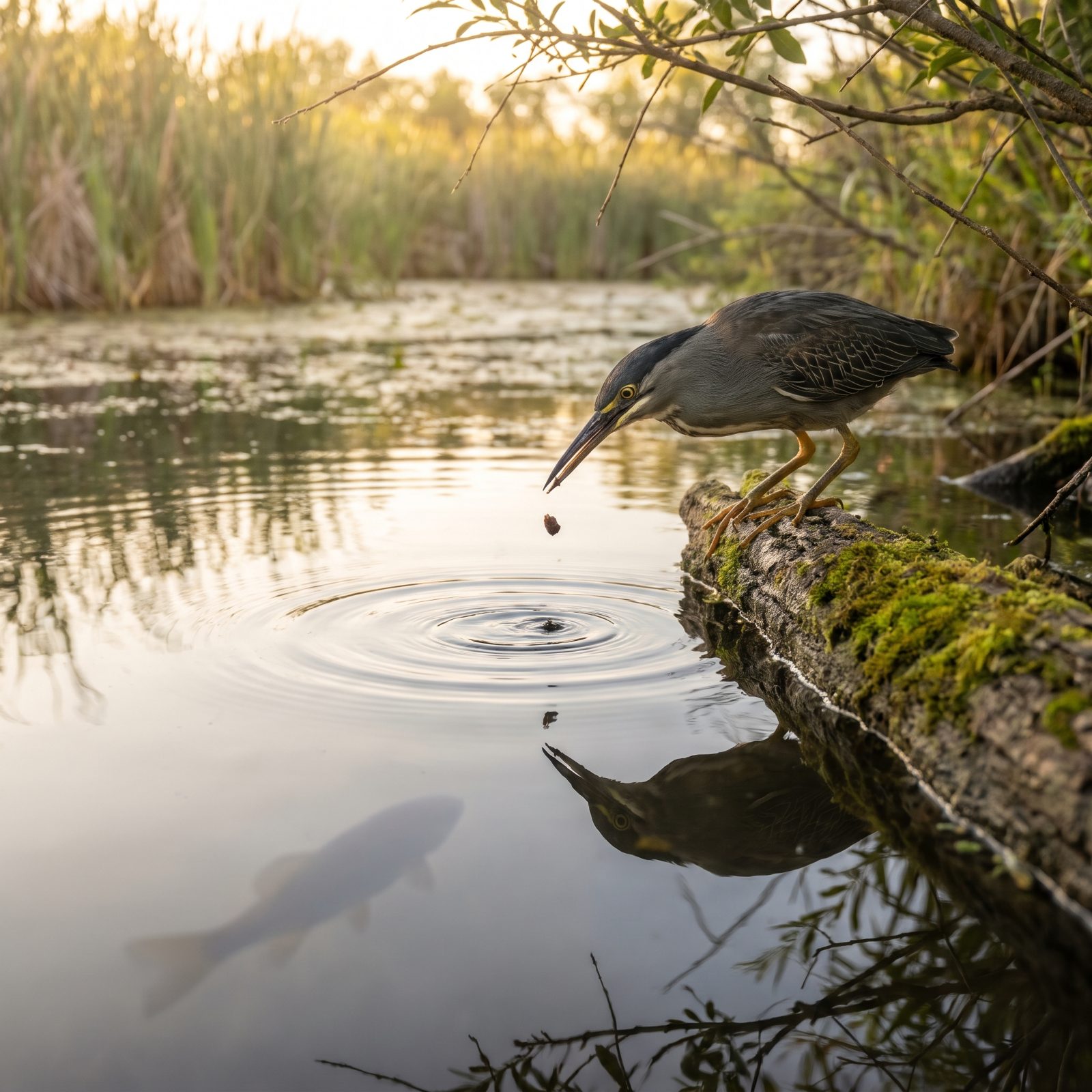
Some green herons fish the way a human angler does: with bait.
They’ve been seen dropping bread crusts, insects, feathers, even bits of trash onto the water’s surface, then freezing in a crouch and waiting. A curious fish rises for the lure, and the heron strikes.
Not every green heron bothers, and the ones that do often learn to work spots where people feed ducks, snagging the bread and repurposing it as fishing tackle. It’s opportunistic, it’s smart, and it’s a reminder that a brain the size of a walnut can still out-think a fish.
22. Gorillas Use Branches to Test the Depth of Swamp Water
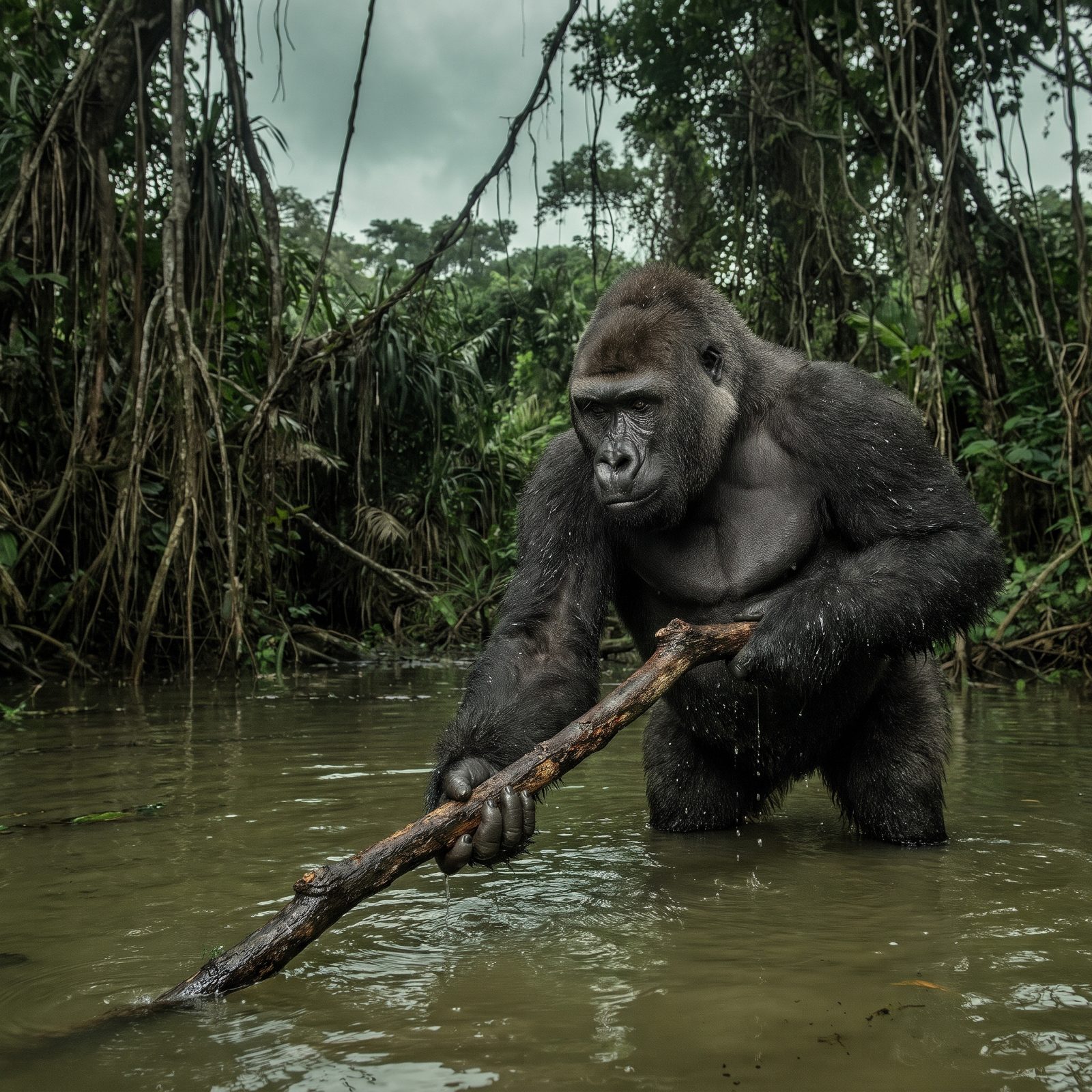
The first wild gorilla ever filmed using a tool wasn’t cracking anything. She was being careful.
Wading into a swampy clearing in the Congo, a female lowland gorilla broke off a branch and used it to probe the water ahead, checking the depth before each step. Another was seen laying a trunk down as a makeshift bridge and leaning on a stick for balance in deep mud.
No food, no cracking, no hunting. Just a 200-pound animal doing what you’d do at an unfamiliar river crossing: finding the bottom before you trust it. Caution, it turns out, is its own kind of intelligence.
21. Woodpecker Finches Probe for Insects With Cactus Spines
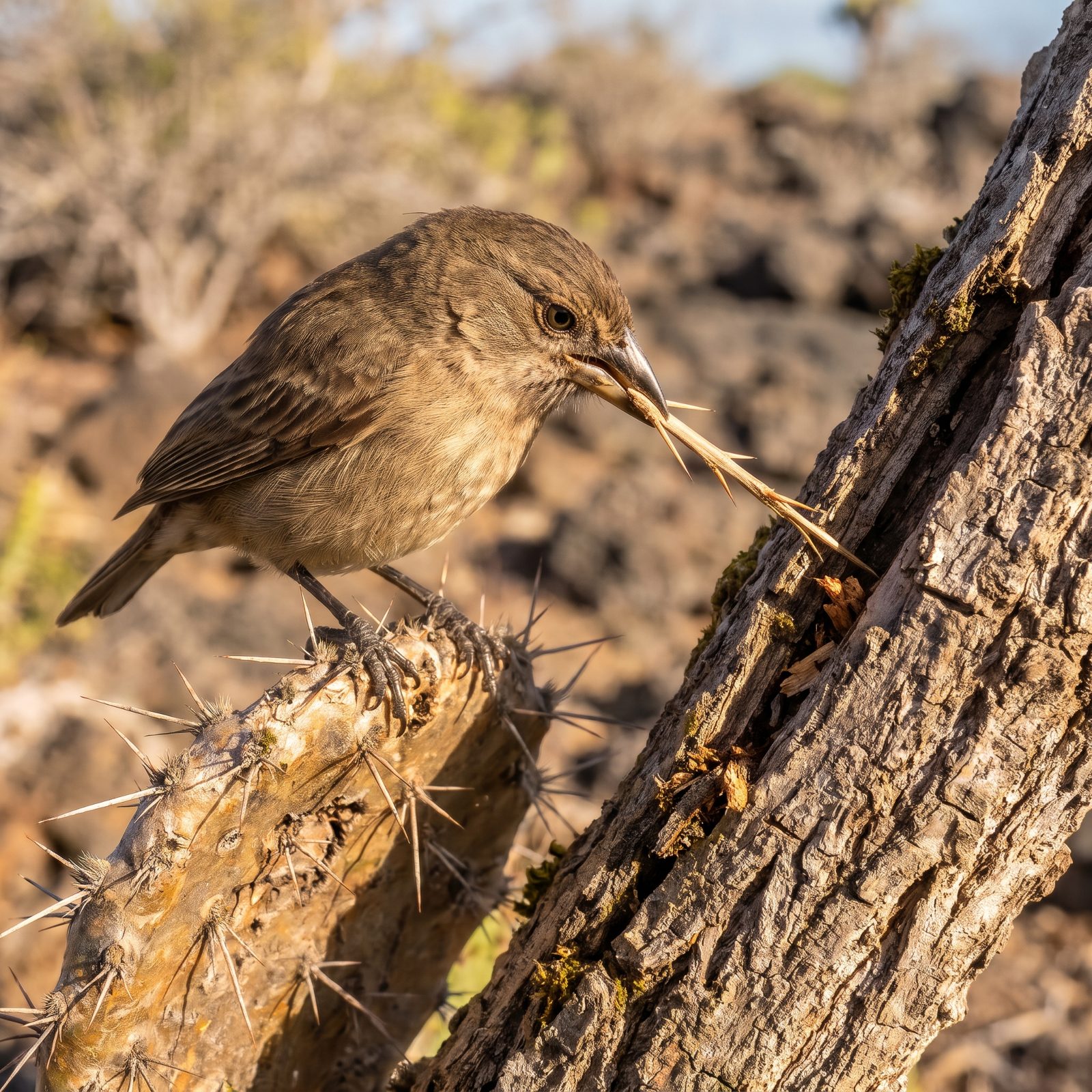
On the Galápagos, where woodpeckers never arrived, a small brown finch took the job instead. It snaps off a cactus spine or twig, trims it to length, and jabs it into bark to flush out larvae it can’t reach with its beak.
Here’s the part that stops you. Not every finch does this. The skill clusters on dry islands where food is scarce, and it clings on partly through watching older birds — young ones fumble for weeks before they get it right.
20. Burrowing Owls Scatter Dung to Attract Edible Beetles
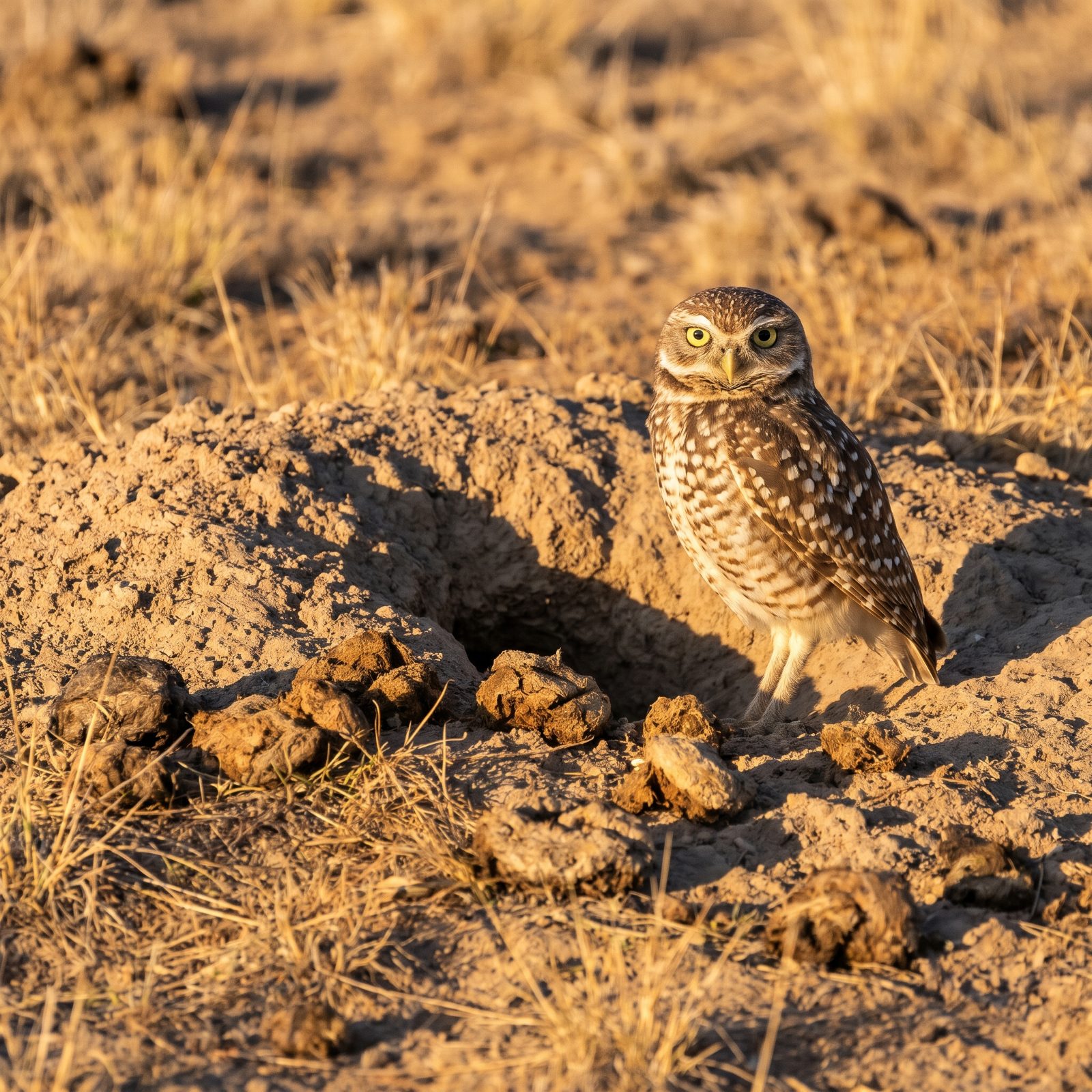
A burrowing owl collecting cow pats looks like bad housekeeping. It’s bait.
The owls drag dung to their burrow entrances, and dung beetles come looking for it — which is exactly the plan, because the owls then eat the beetles. One study found burrows lined with manure caught far more of them than clean ones, and when researchers stripped the dung away, the beetle haul crashed.
Scientists still argue over whether this is true tool use or just lucky scavenging. Either way, the owl has worked out that dung means dinner, and acts on it.
19. Greater Vasa Parrots Grind Seashells With Pebbles
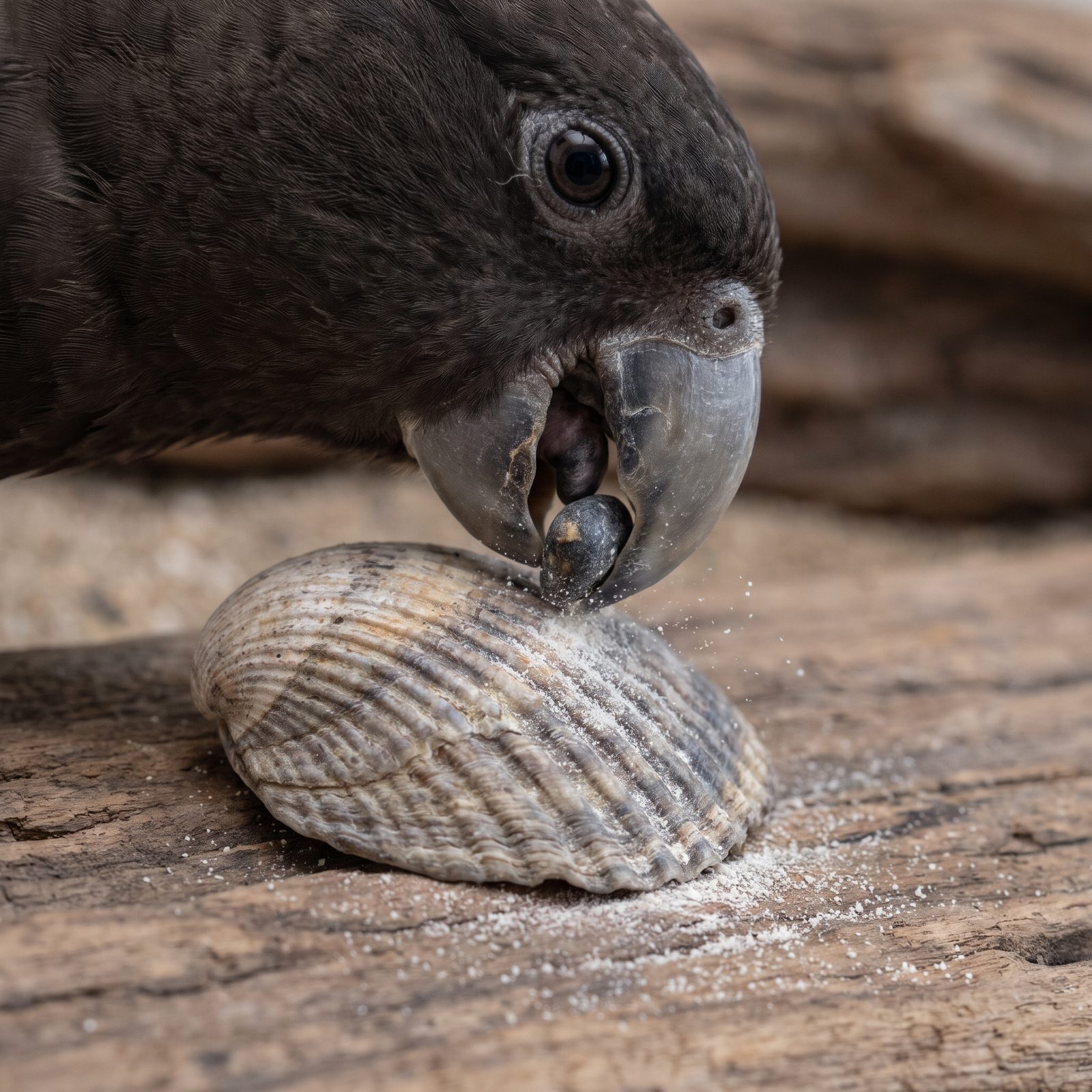
This was the first known bird to use a tool for grinding. Greater vasa parrots in captivity were filmed wedging a pebble or date pit against a cockle shell and rasping it back and forth, licking up the powdered calcium that came off.
The timing matters. The behavior spiked right before breeding season, when females need extra calcium for eggshells. Males did it too, oddly, sometimes handing the shell fragments to females during courtship.
A parrot filing a shell sounds like a small thing. But it rewrote what we thought the parrot brain was capable of.
18. Japanese Macaques Floss Their Teeth With Hair
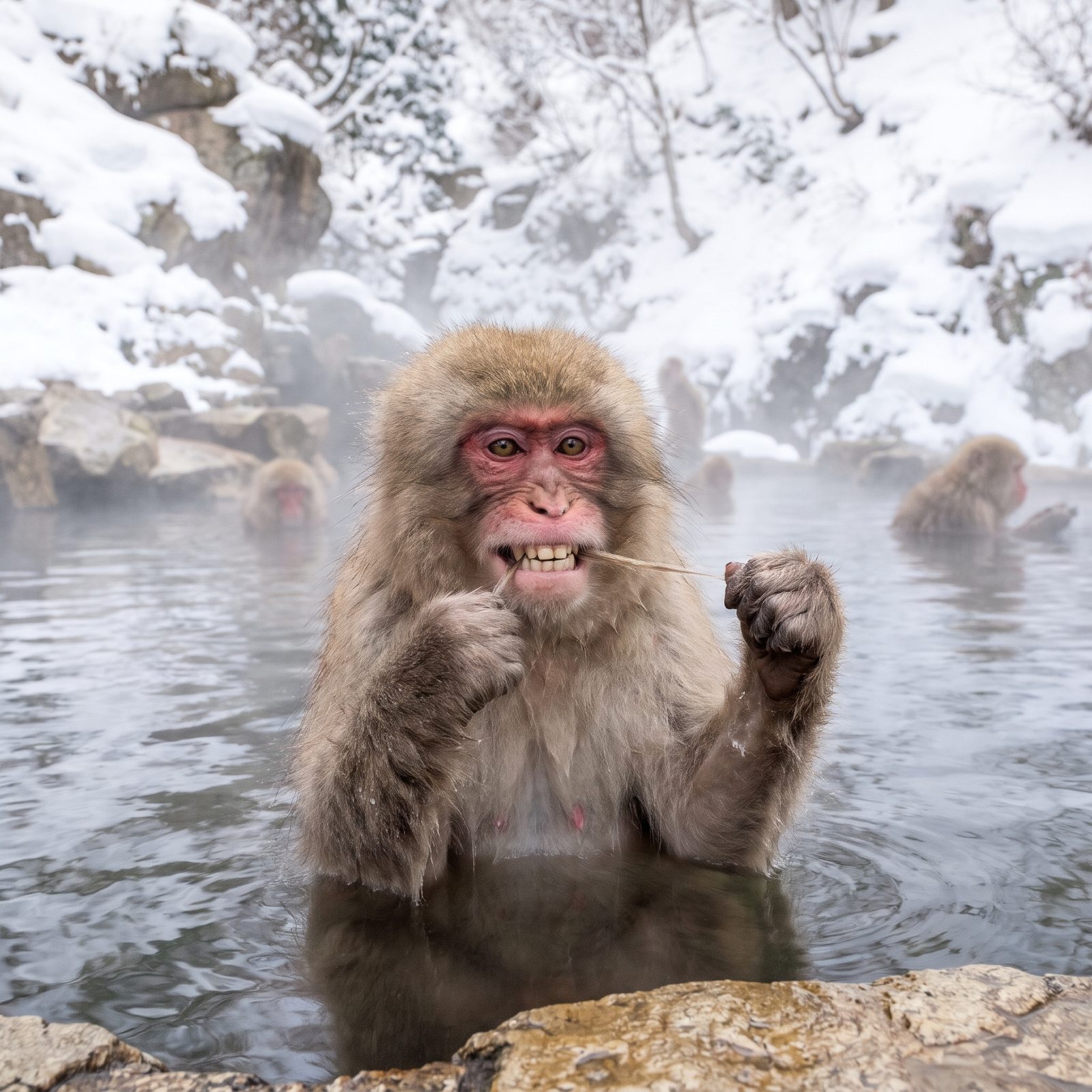
You’ve flossed before a dentist appointment and felt virtuous about it. A snow monkey in Japan does the same thing with a strand of its own hair, drawing it between its teeth to drag out food stuck in the gaps.
It gets stranger. Mothers do it more often, and more carefully, when their infants are watching. The flossing slows down, the motions exaggerate, as if the whole point shifts from clean teeth to clear demonstration. That looks a lot like teaching — rare in the animal world, and still hotly debated.
17. African Elephants Modify Branches Into Fly Swatters
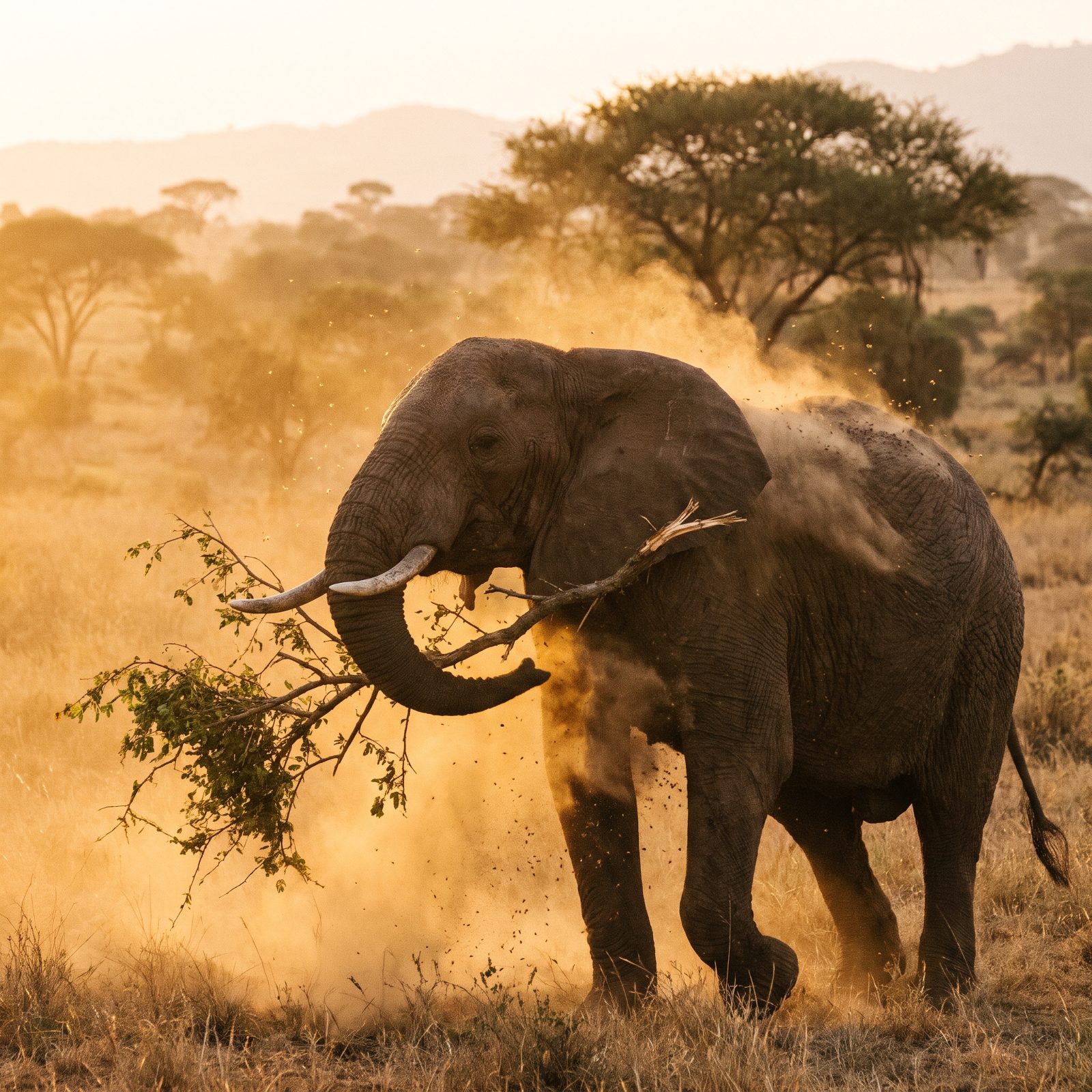
An elephant plagued by flies doesn’t just grab a branch. It edits one.
Watch closely and you’ll see them break a branch to a handier length and strip off the extra side shoots before swatting. In a sanctuary study, elephants handed long unwieldy branches shortened them into more effective swatters rather than using them as-is.
That small act — altering an object to make it work better — is the textbook definition of tool modification. The trunk helps. With 40,000 or so muscles and no bone, it’s the most dexterous nose on Earth, and the elephant wields it like a hand.
16. American Badgers Plug Burrow Exits to Trap Prey
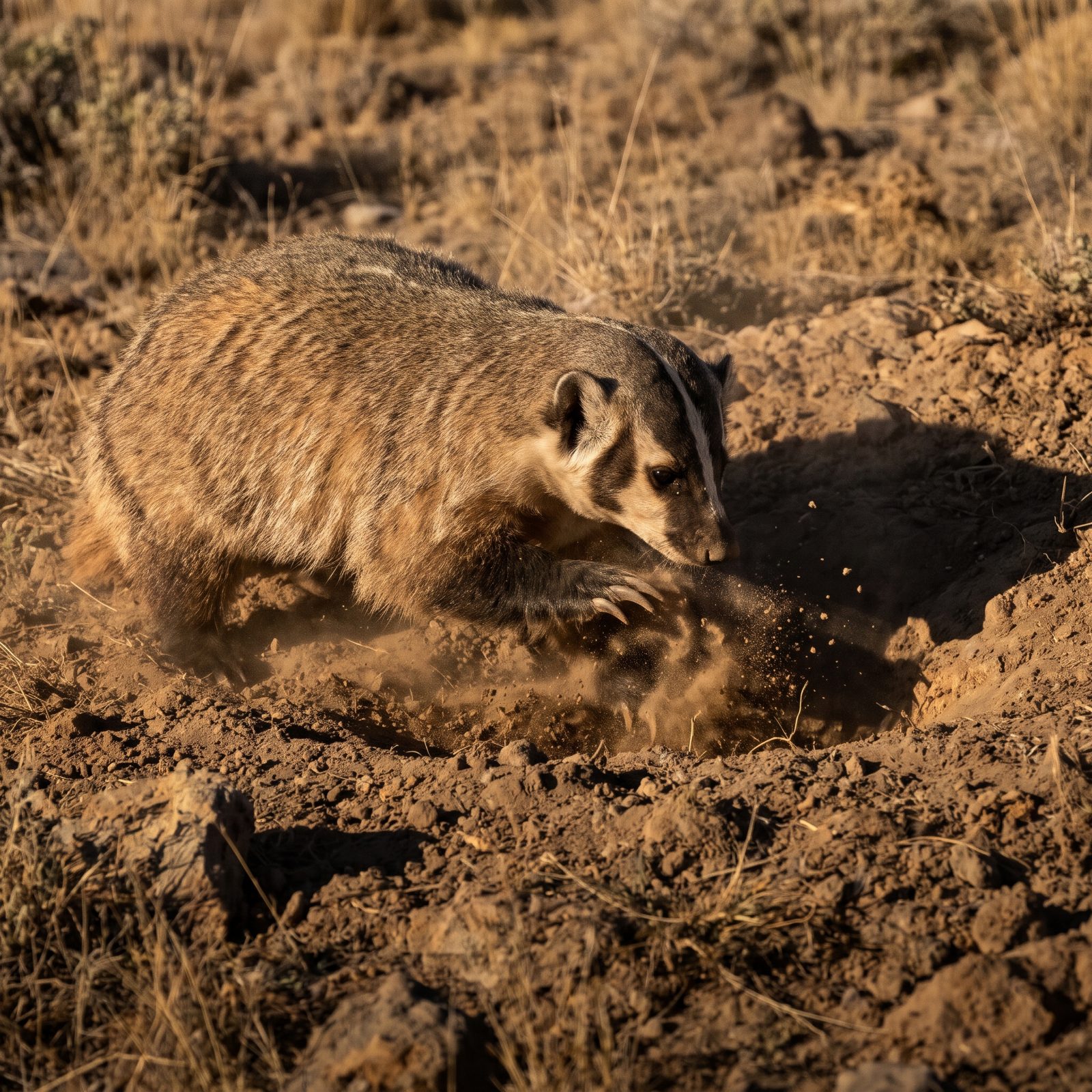
A ground squirrel burrow usually has a back door. The badger closes it.
Before digging in at one entrance, American badgers have been documented hauling dirt and objects to plug the other openings of a prey burrow, sealing off the escape routes. Researchers watched one badger drag material more than 100 meters to block holes it couldn’t reach any other way.
Call it tool use, call it brutal problem-solving. The prey is trapped underground with only one exit left, and the badger is standing on it.
15. Honey Badgers Stack Objects to Reach Food or Escape
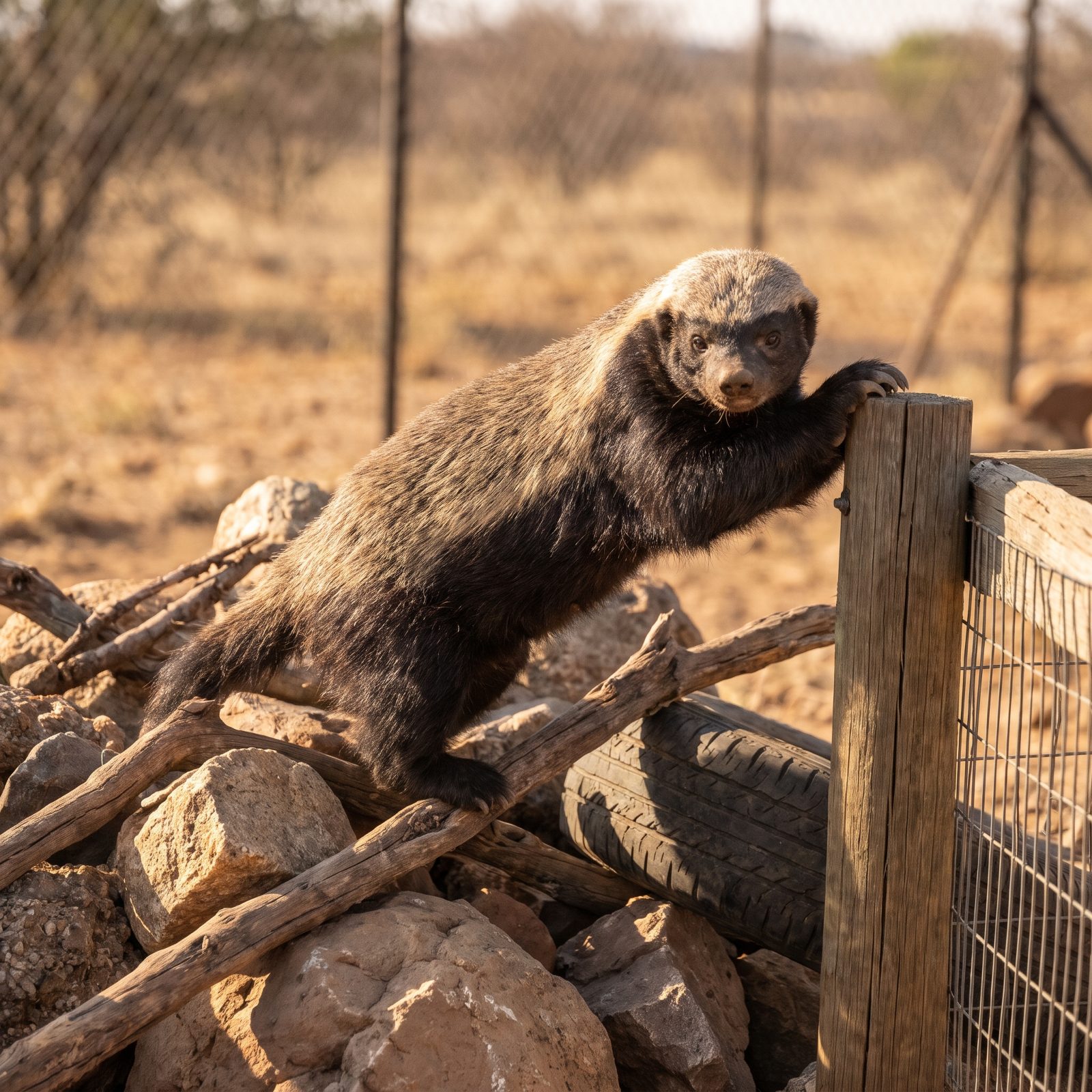
A honey badger named Stoffel became famous for a reason that should worry anyone who builds fences.
At a rehabilitation center in South Africa, he repeatedly broke out of his enclosure by rolling rocks, dragging logs, and once piling up balls of mud into a ramp he could climb. Staff removed every object. He found new ones. He used a rake left leaning against the wall.
This is improvised tool use under pressure, the kind of cleverness most people assume belongs to primates and crows. The honey badger did not get that memo. It just wanted out.
14. Visayan Warty Pigs Dig With Pieces of Bark
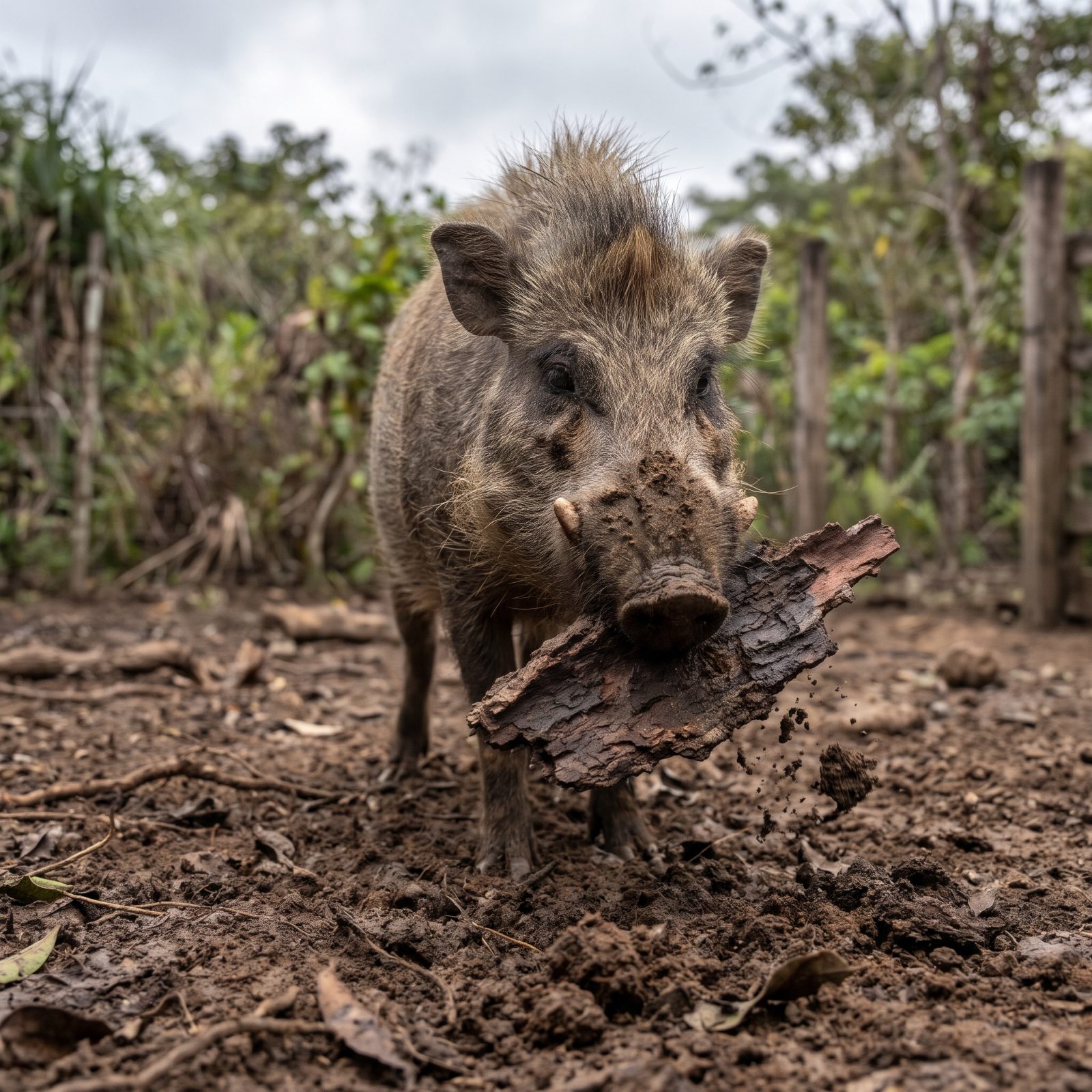
Pigs rarely make the list of clever tool users. One of the rarest pigs on the planet quietly changed that.
At a Paris menagerie, Visayan warty pigs were filmed rooting through the mud with their snouts and gripping a flat, thin slab of bark in their mouths as they dug and shaped their nesting pits. One female led, and others in the group picked it up.
It was the first tool use ever recorded in any pig species, documented only in 2019. And it came from a critically endangered animal most people have never heard of, which makes the finding feel both thrilling and a little sad.
13. Naked Mole-Rats Wedge Wood Shavings Behind Their Teeth as Dust Masks
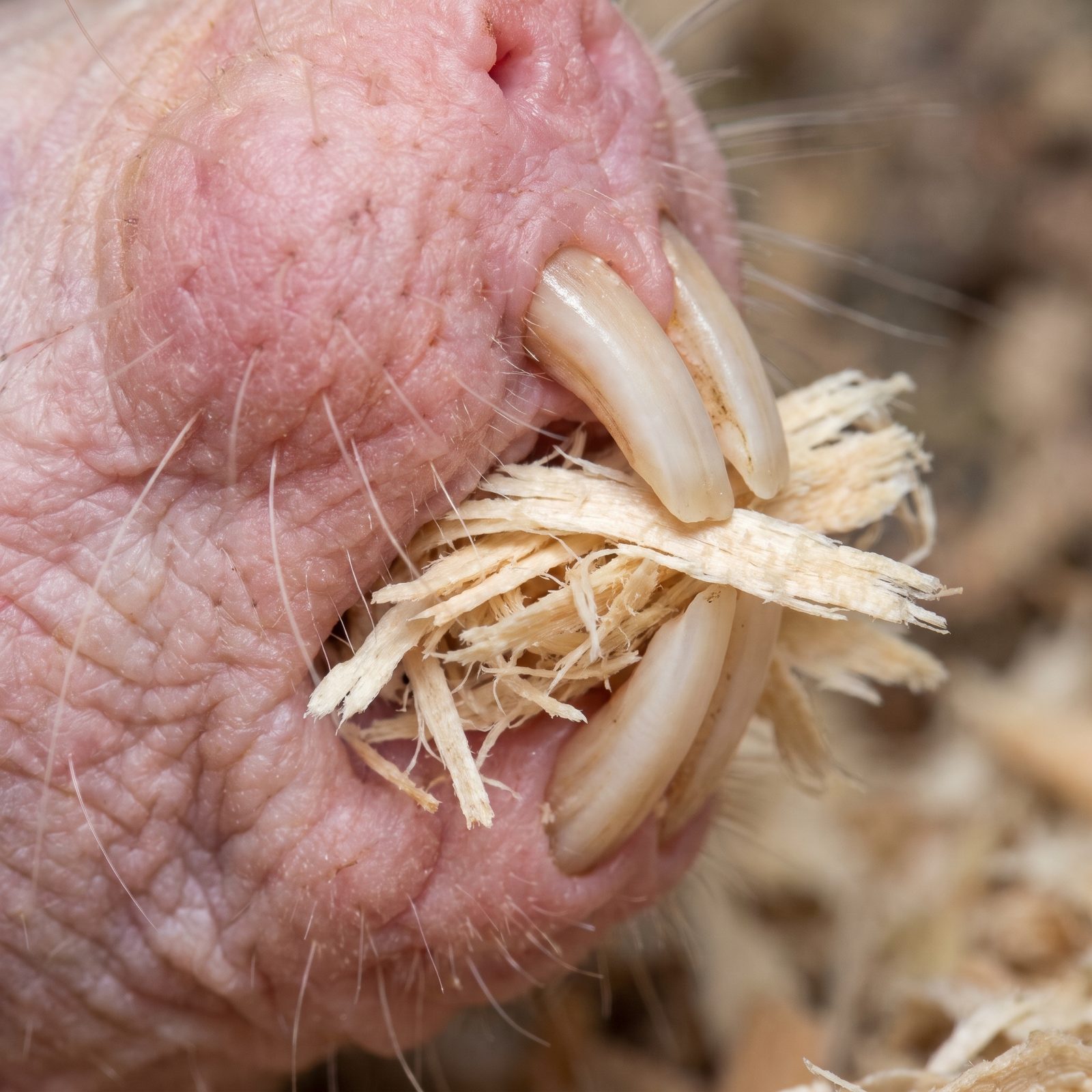
Naked mole-rats dig with their teeth, which sit outside their lips so they can gnaw without eating dirt. That alone is odd. The next part is cleverer.
To keep soil out of their mouths while they work, they wedge a wood shaving or chip behind their incisors, forming a crude barrier — a dust mask made of splinters, basically, improvised from whatever’s in the tunnel.
For an animal that’s nearly blind, cold-blooded in all but name, and can survive minutes without oxygen, a homemade face shield almost feels ordinary. Almost.
12. Brown-Headed Nuthatches Pry Under Bark With Bark-Flake Tools
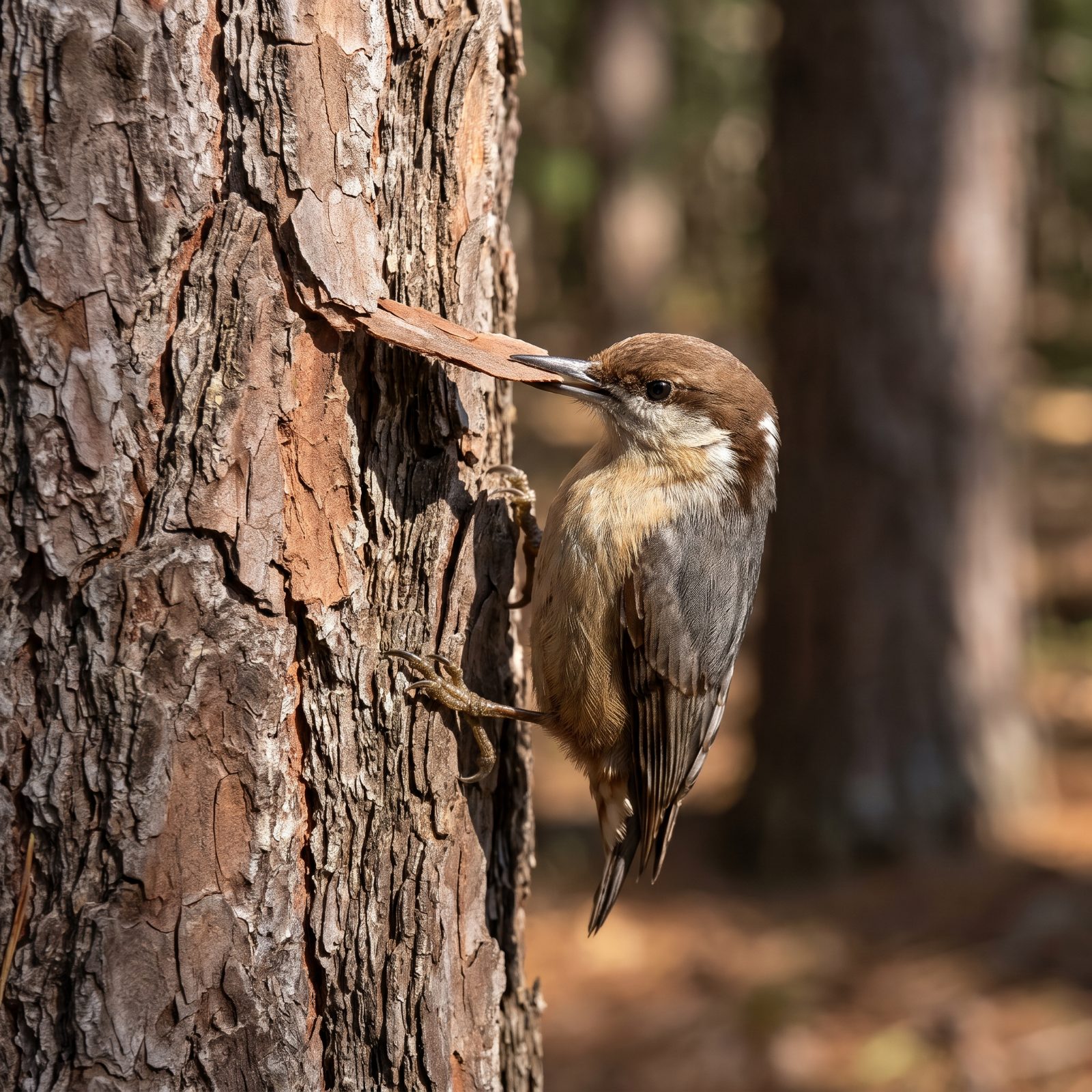
A bird barely bigger than your thumb, working a pine trunk in the American Southeast, picks up a flake of bark and uses it as a lever.
Brown-headed nuthatches wield these bark-flake tools to pry up other loose bark and expose the insects hiding beneath, sometimes carrying a favored flake from tree to tree. It’s one of the very few tool-using songbirds in North America.
Spend enough time reading about this stuff and a pattern shows up. Tool use isn’t a sign of a big brain so much as a small one under pressure, solving a specific problem with whatever’s lying around. The nuthatch didn’t need to be a genius. It needed a stick, and a bug it couldn’t otherwise reach. Go watch your backyard pines a little more carefully.
11. Japanese Carrion Crows Use Traffic to Crack Walnuts
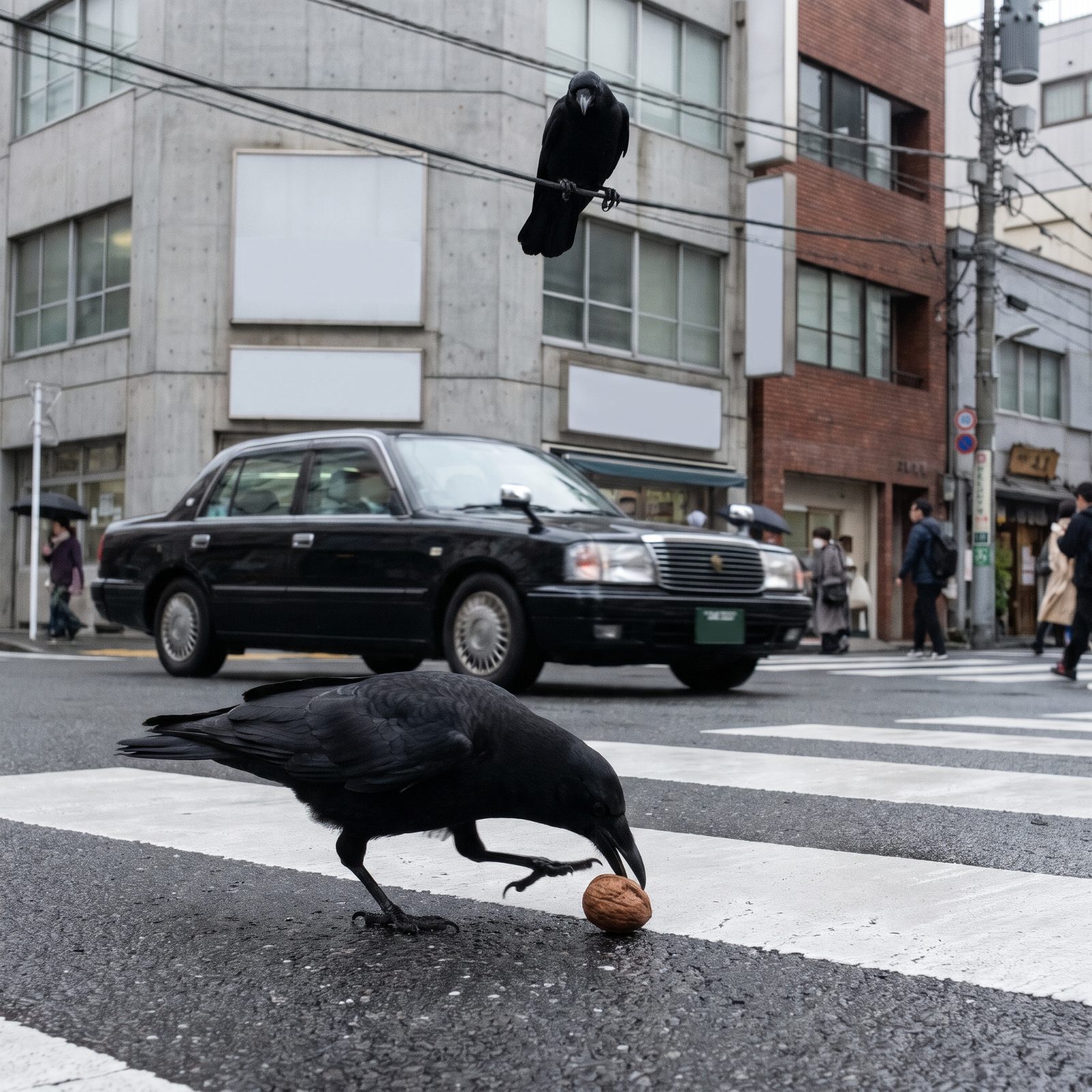
A walnut shell beats a crow’s beak. So the crows in Sendai figured out something better: let a two-ton car do the cracking.
They drop nuts onto crosswalks, wait for traffic to roll over them, then collect the meat when the light turns red and the cars stop. Some even nudge nuts that didn’t get hit back into the lane. They’ve learned the rhythm of the signals, which means they’re reading human infrastructure as a tool bent to their own ends.
Watch one work a busy intersection and you stop calling it instinct. It looks a lot more like a plan.
10. Blanket Octopuses Wield Stinging Tentacles Stolen From Siphonophores
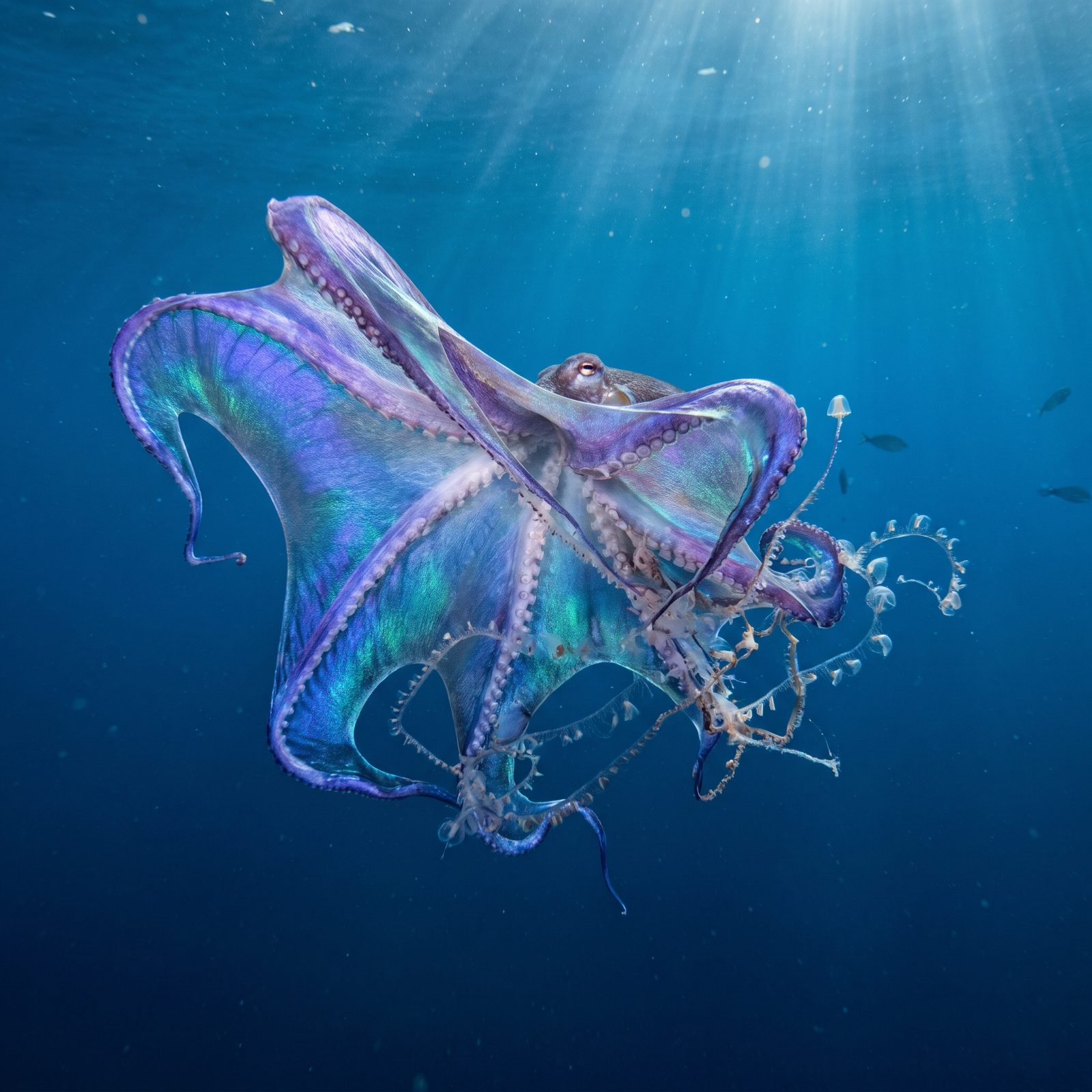
This animal is immune to the most feared sting in the open ocean, and it turns that immunity into a weapon.
Young blanket octopuses rip the venomous tentacles off Portuguese man o’ war jellyfish and carry them in their arm tips like whips. The stolen stingers still fire. The octopus just happens to be unbothered, so it borrows another creature’s venom for its own hand-held defense.
There’s a size twist too. Females can grow over six feet long, while the males top out around an inch — among the most lopsided size gaps in the animal world — and they rarely bother with the tentacle trick at all.
9. Boxer Crabs Carry Living Anemones Like Defensive Gloves
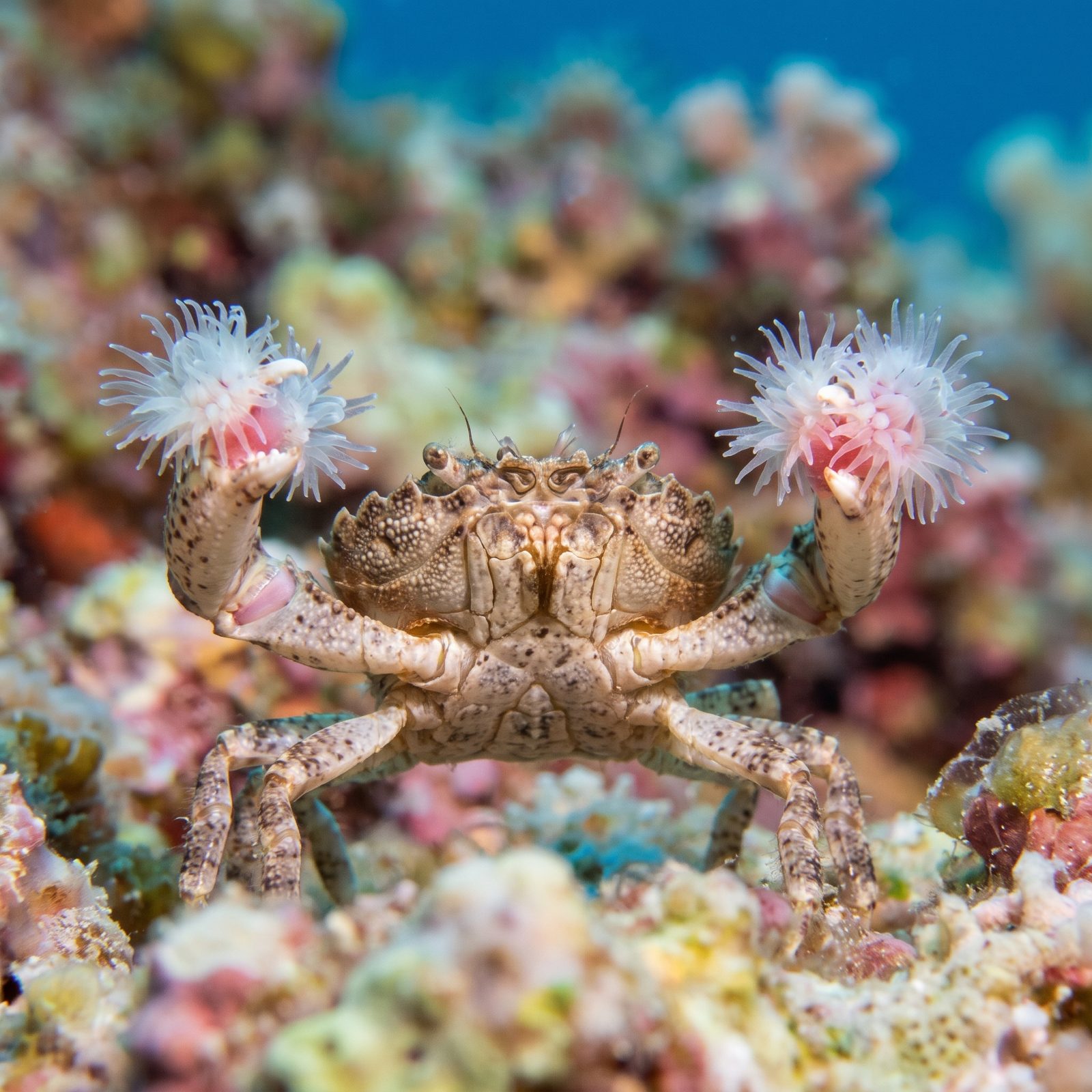
About the size of your thumbnail, the boxer crab doesn’t fight with its claws. It fights with what it’s holding in them.
Each claw grips a small stinging anemone, which the crab waves at predators like a pair of venomous mittens, jabbing the stingers forward when threatened. The anemones get ferried to new feeding spots in return, so both sides come out ahead.
Lose one? The crab can tear its remaining anemone in half, and each piece regrows into a full one. It’s cloning its own weapon.
8. Orange-Dotted Tuskfish Smash Clams Against Rock Anvils
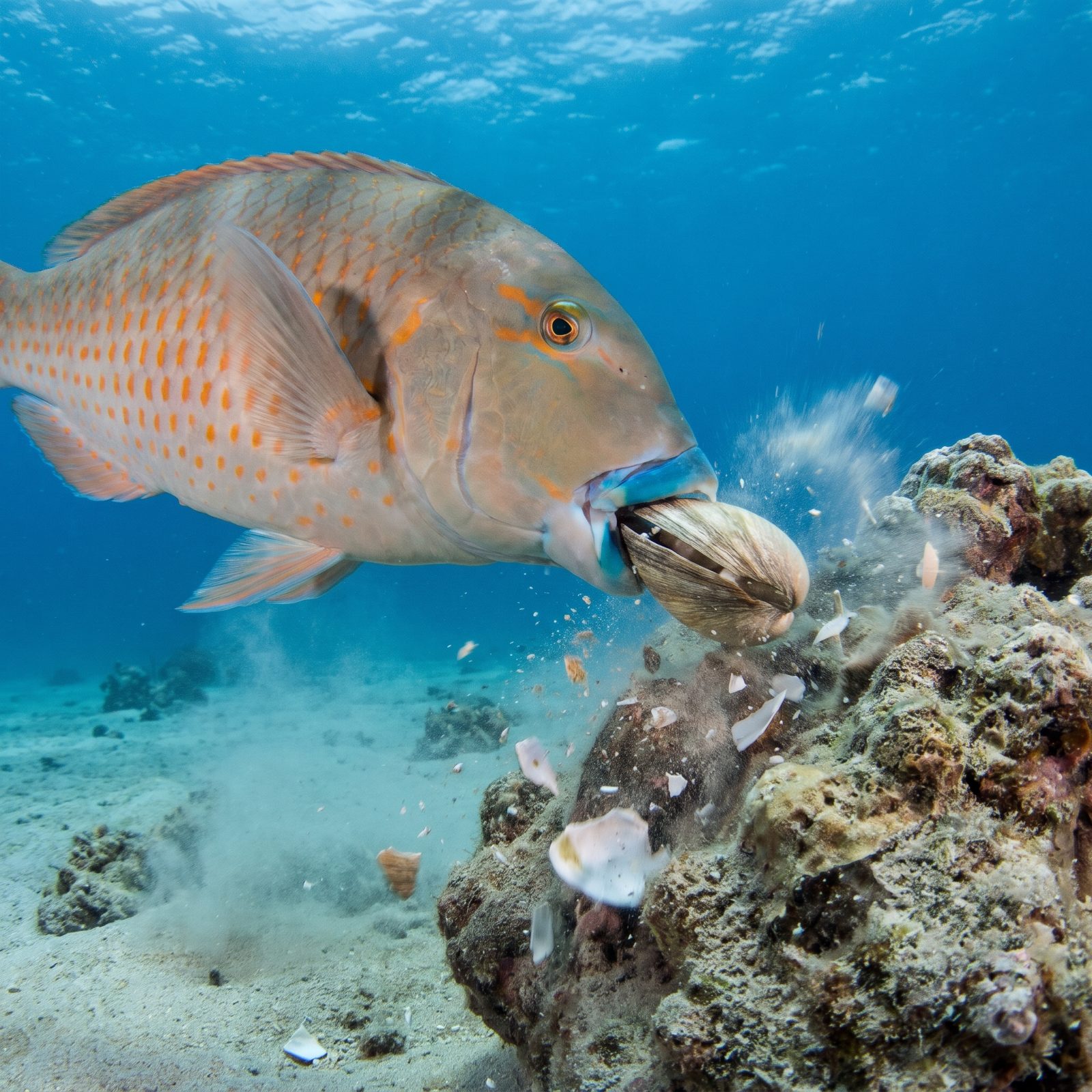
For years people insisted fish couldn’t use tools. No hands, the argument went, so no tools.
Then a diver filmed an orange-dotted tuskfish carrying a clam to a specific rock and ramming it head-on into the stone, setting off an explosive burst of shell shards and rock debris.
What makes it clever isn’t the smashing. It’s the anvil. These fish return to the same favored rocks again and again, and the reef floor around them is littered with old shells — they’ve picked a tool and they remember where they left it.
Describing his own underwater footage of an orange-dotted tuskfish, a fish biologist says “The animal excavates sand to get the shell out, then swims for a long time to find an appropriate area where it can crack the shell”
7. Archerfish Fire Calculated Water Jets at Insects
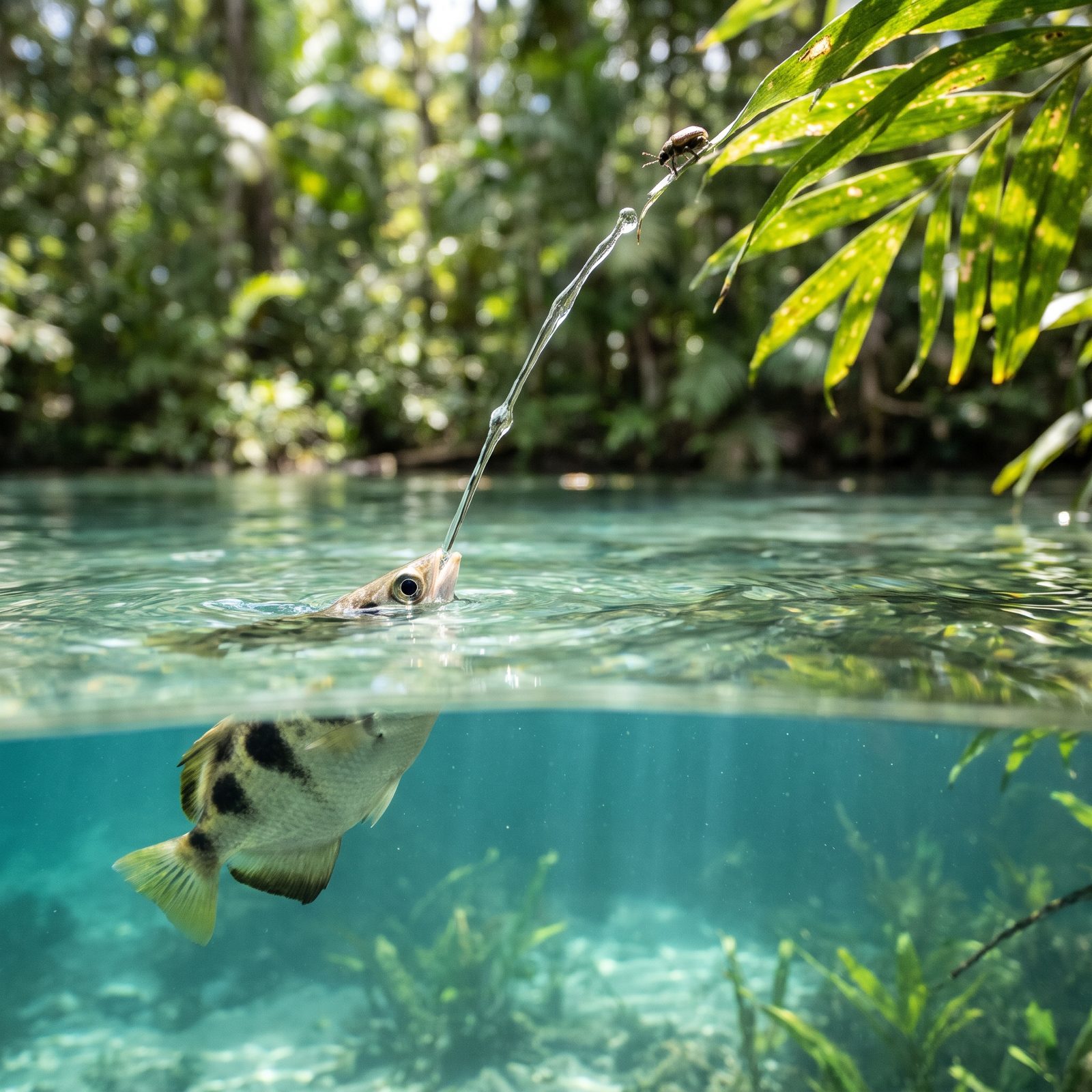
The archerfish shoots down lunch. It presses its tongue against a groove in its mouth, snaps its gill covers shut, and fires a jet of water that knocks insects clean off overhanging leaves.
The hard part is the physics. Aiming from underwater at a target in the air means correcting for the way light bends at the surface — and the fish gets it right from several body lengths away, then lunges to catch the falling prey before a neighbor steals it.
Young ones learn by watching the adults. The aim improves with practice, same as yours would.
6. Asian Honeybees Spread Animal Dung Around Hives to Repel Hornets
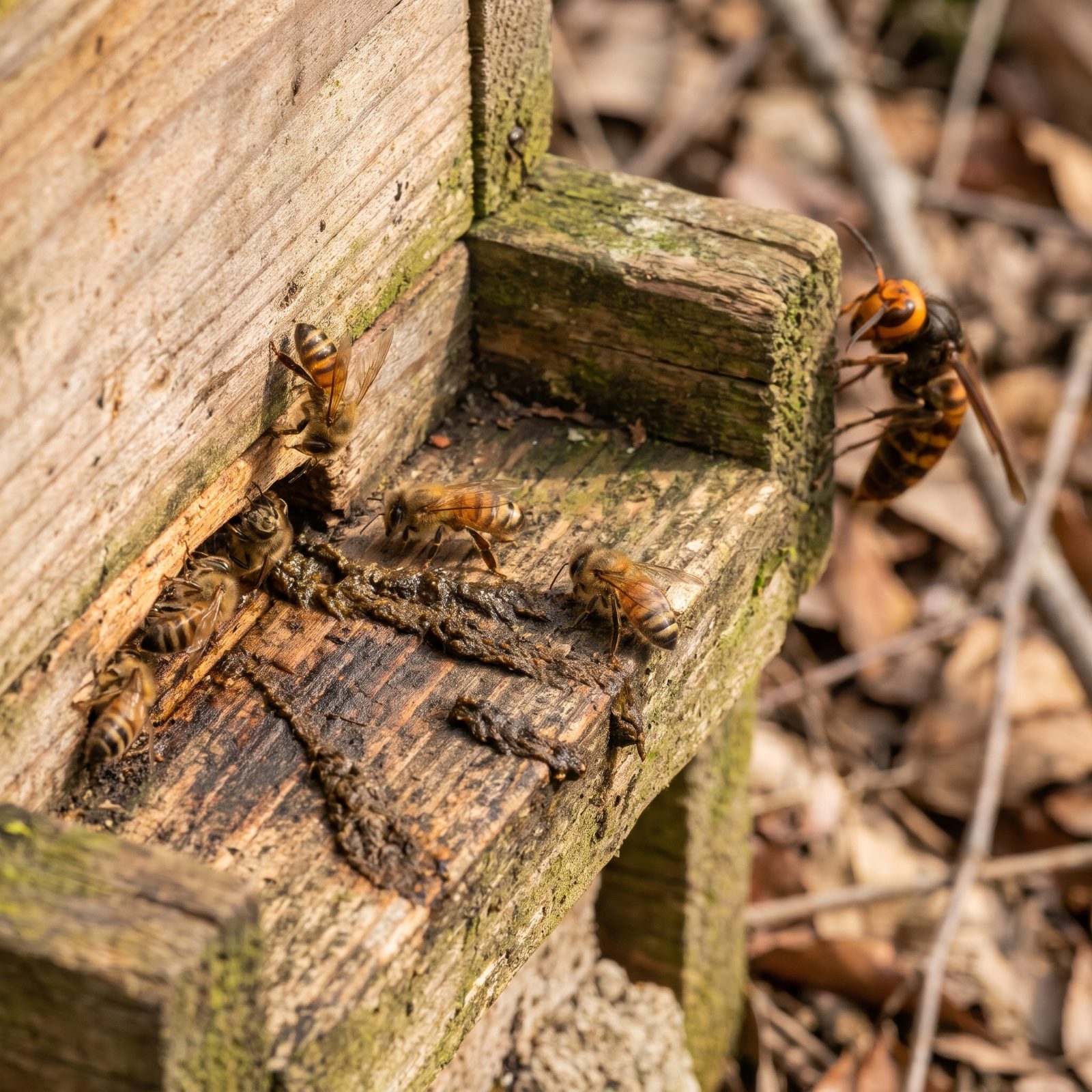
Faced with giant hornets that decapitate workers by the hundreds, Asian honeybees reached for the grossest tool available.
They collect animal dung — buffalo, chicken, whatever’s handy — and the result is thick streaks and globs smeared across their hive entrance. Researchers call it fecal spotting, and it’s the first clear case of a social insect using a tool found outside the plant world.
The hornets hate it. Colonies with more dung around the entrance see fewer and shorter hornet attacks, likely because the smell scrambles the chemical markers hornets use to coordinate a raid.
A dirty doorstep, it turns out, makes a surprisingly good burglar deterrent.
5. Ammophila Wasps Tamp Nest Entrances With Pebble Hammers
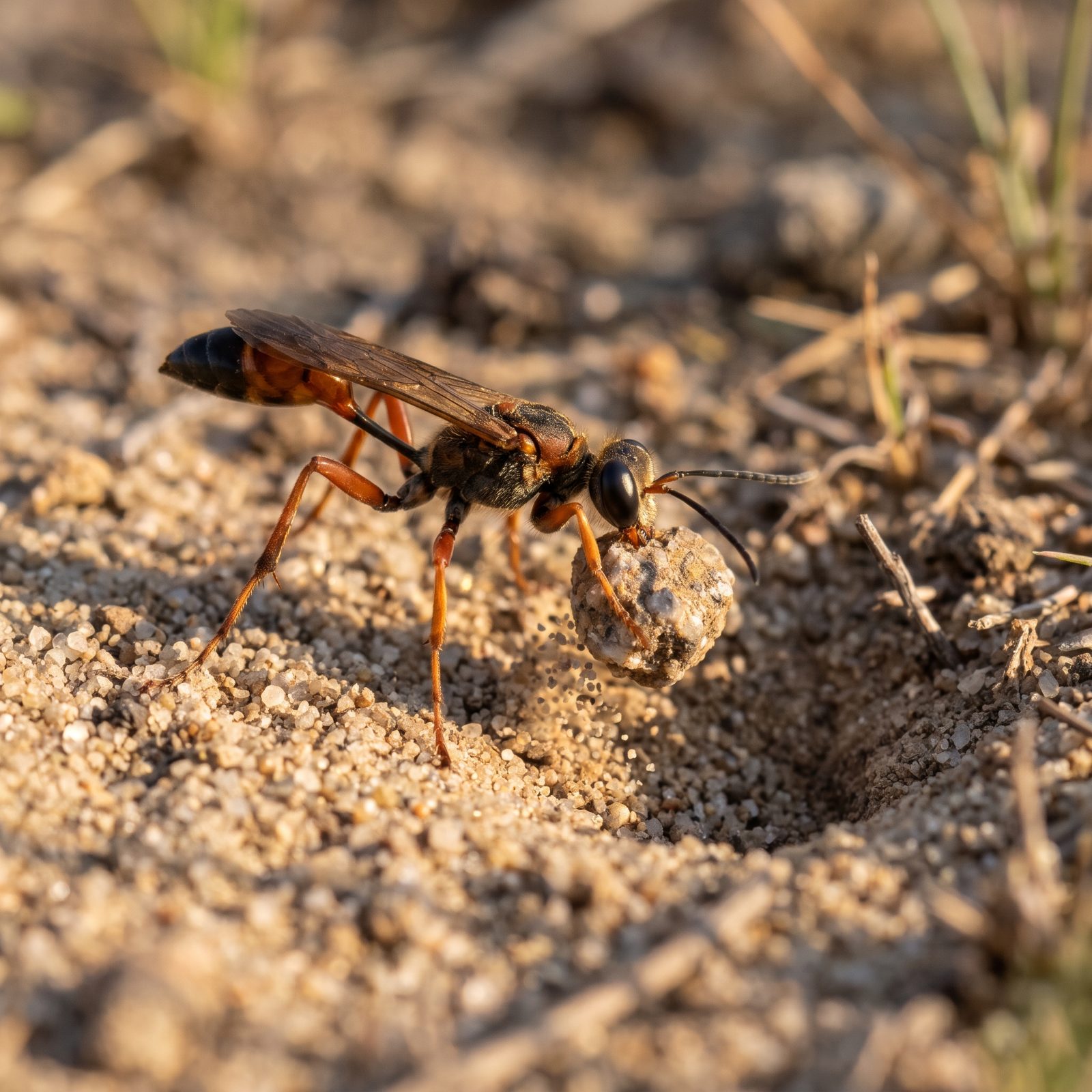
This one made history before anyone believed it. A female Ammophila wasp, about to close up her nest, braces a front leg on a rounded pebble beside the still-open, gaping entrance. That stone is what she will grip in her jaws to pound the loose soil flat once the hole is filled.
The pebble is a hammer. Reported back in the 1890s, it stood among the first tool-use claims in any insect, and for decades plenty of scientists flatly refused to accept it.
The point is camouflage. A packed, level entrance hides her buried egg and its paralyzed caterpillar meal from parasites hunting for exactly that soft spot in the sand.
4. Aphaenogaster Ants Use Debris as Sponges for Carrying Liquid Food
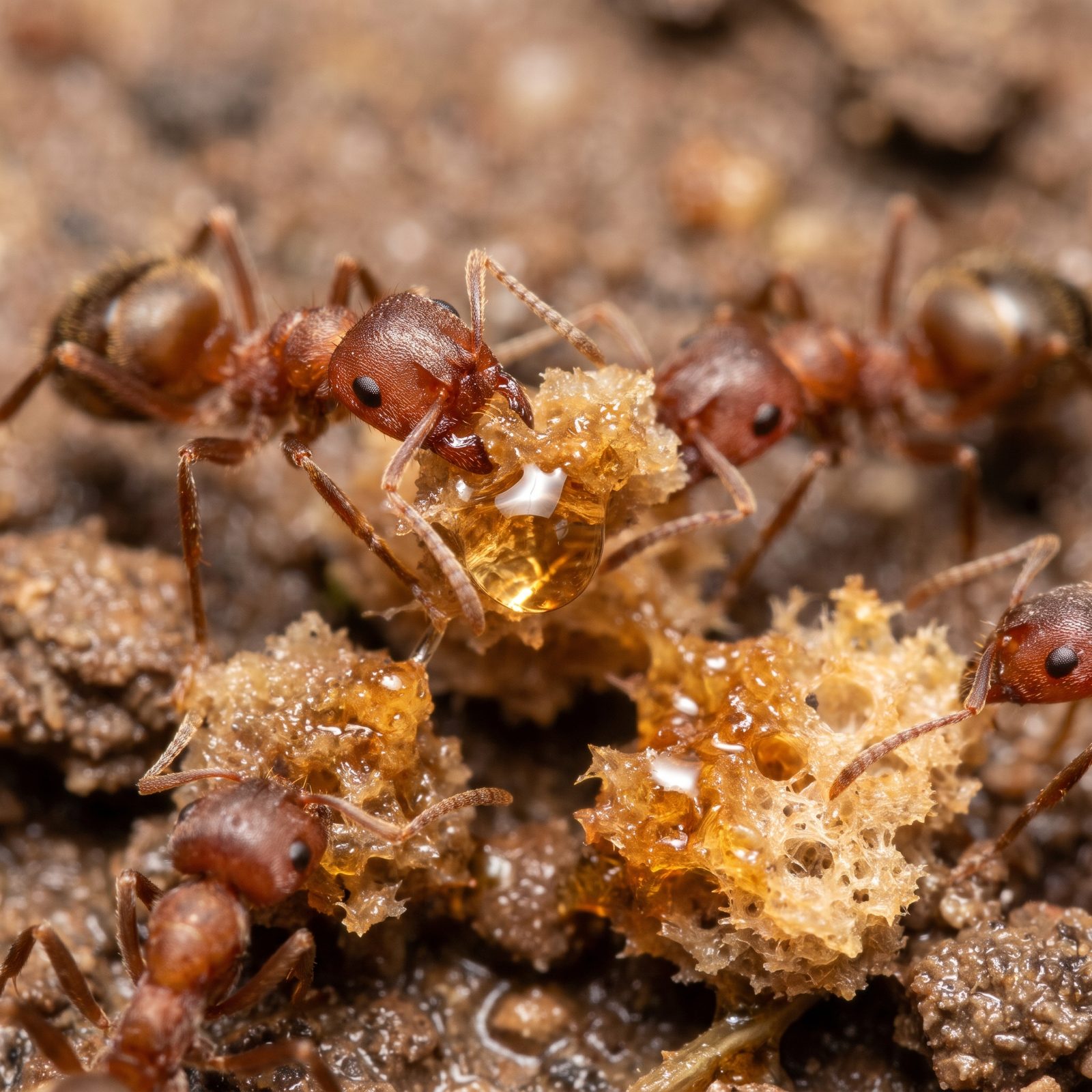
No container, no problem. Aphaenogaster ants can’t carry a puddle of liquid food back to the nest, so they drop bits of leaf, soil or dry debris into it, let the fragments soak up the liquid like a sponge, then haul the loaded pieces home.
That moves far more food per trip than lapping it up ever could. And the ants are fussy about it — they choose materials that absorb best, swapping to better options when something better turns up.
Choosing one object over another because it works better is the kind of judgment we usually reserve for much bigger brains.
3. Assassin Bugs Coat Their Legs With Sticky Plant Resin
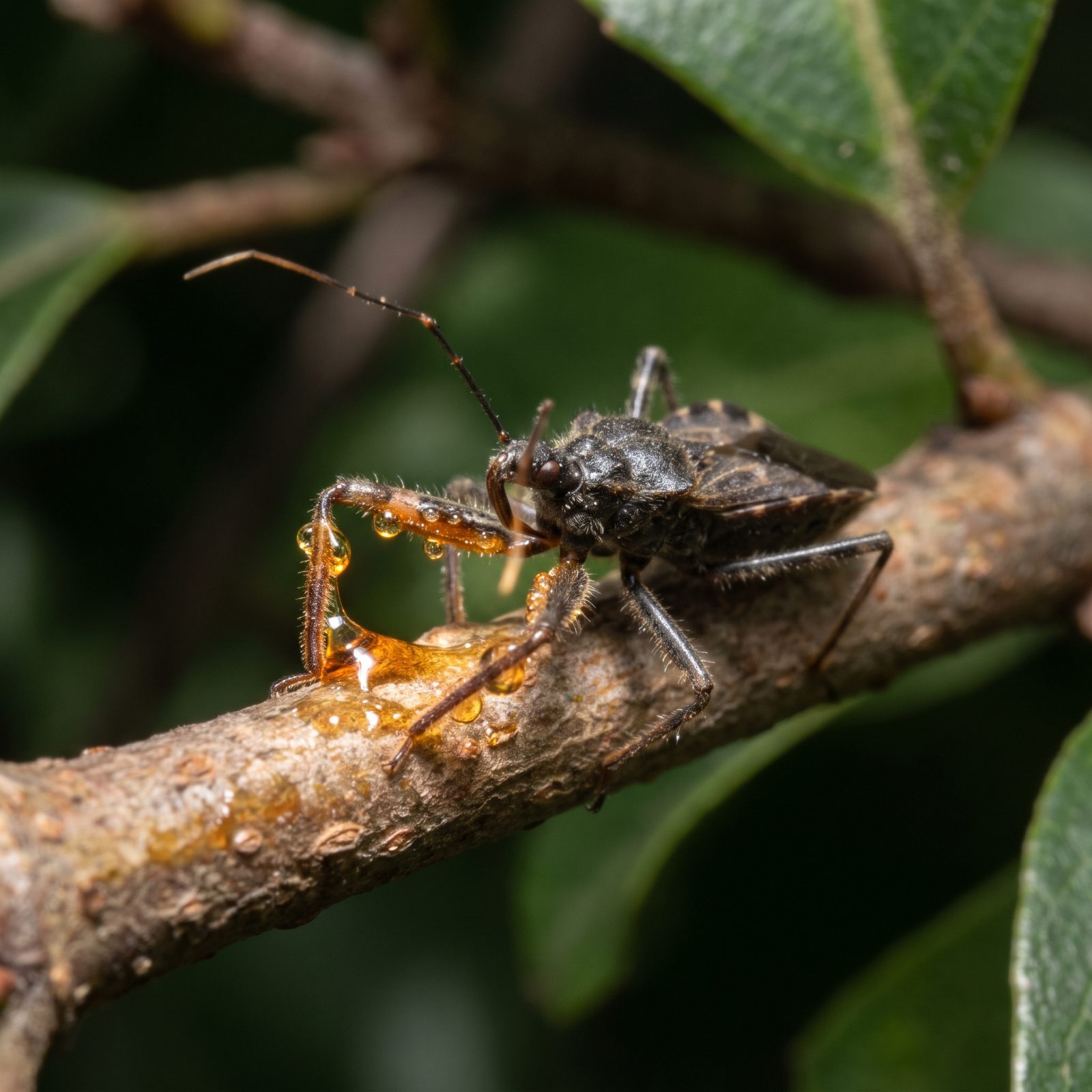
Some assassin bugs don’t trust their grip, so they improve it. They gather sticky resin from plants and smear it along their front legs, where it beads into glassy droplets, turning their own bodies into flypaper.
Prey that touches those gummy legs can’t struggle free, so the bug catches more and holds it longer than it could with bare legs. A few related species go further and coat their whole bodies in resin, becoming a walking glue trap.
It’s a tool you wear instead of carry. And it’s a reminder that the natural world worked out adhesives, hammers, sponges and venom-dipped weapons long before anyone thought to put us at the center of the story.
2. Sponge Crabs Cut Living Sponges Into Wearable Camouflage
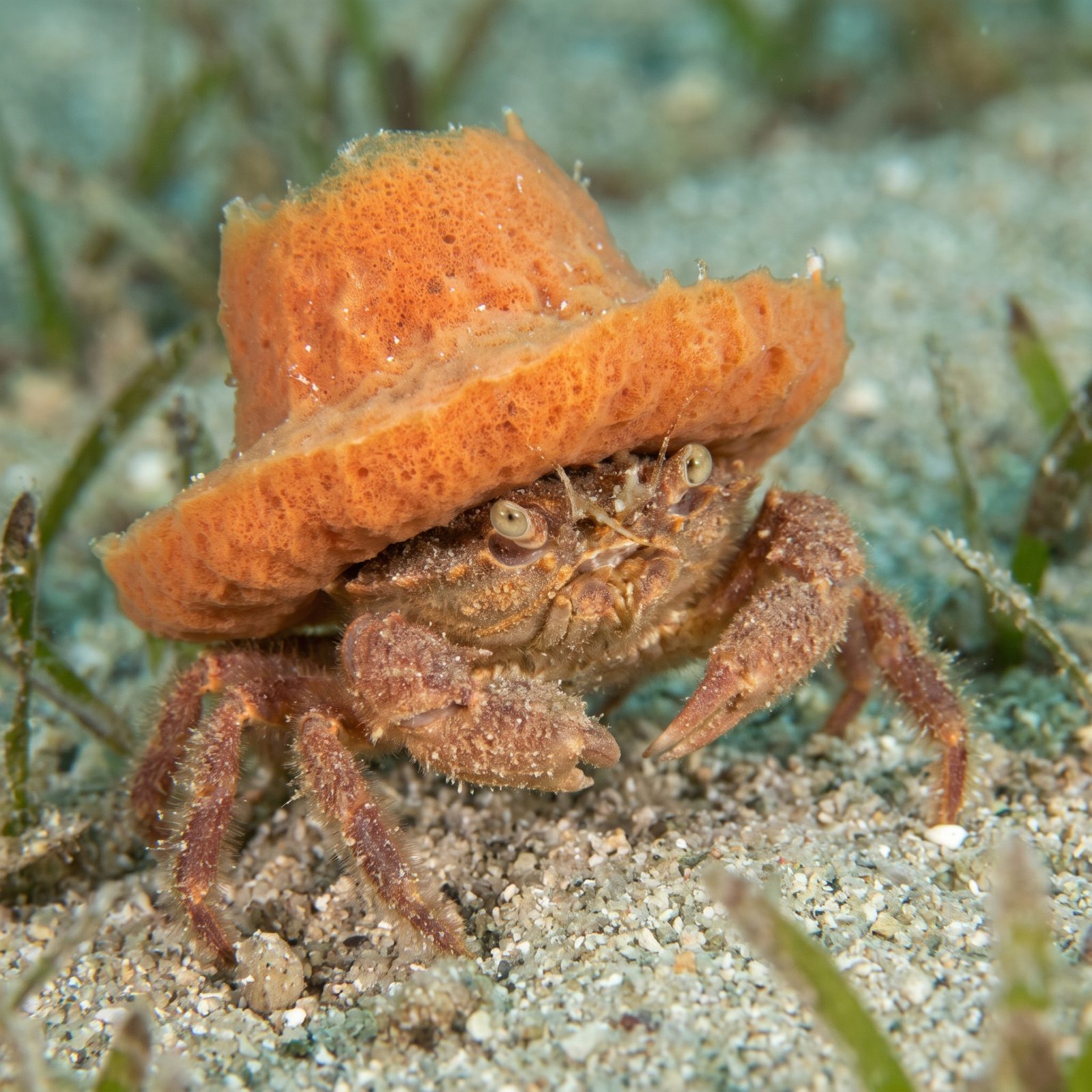
The crab doesn’t find a hat. It makes one. Using its claws, a sponge crab clips a living sponge down to size, carving it until the cut matches its own shell almost exactly, then reaches back with two hooked rear legs and presses the sponge into place like a hand holding a cushion to its head.
And here’s the clever part: the sponge keeps growing on the crab’s back, so the disguise mends itself over time. Most predators hunt by smell and sight. A sponge tastes foul and looks like nothing worth eating, which means the crab walks the seabed wearing a creature that actively fights off anything curious enough to approach.
1. Chimpanzees Sharpen Branches Into Spears for Hunting
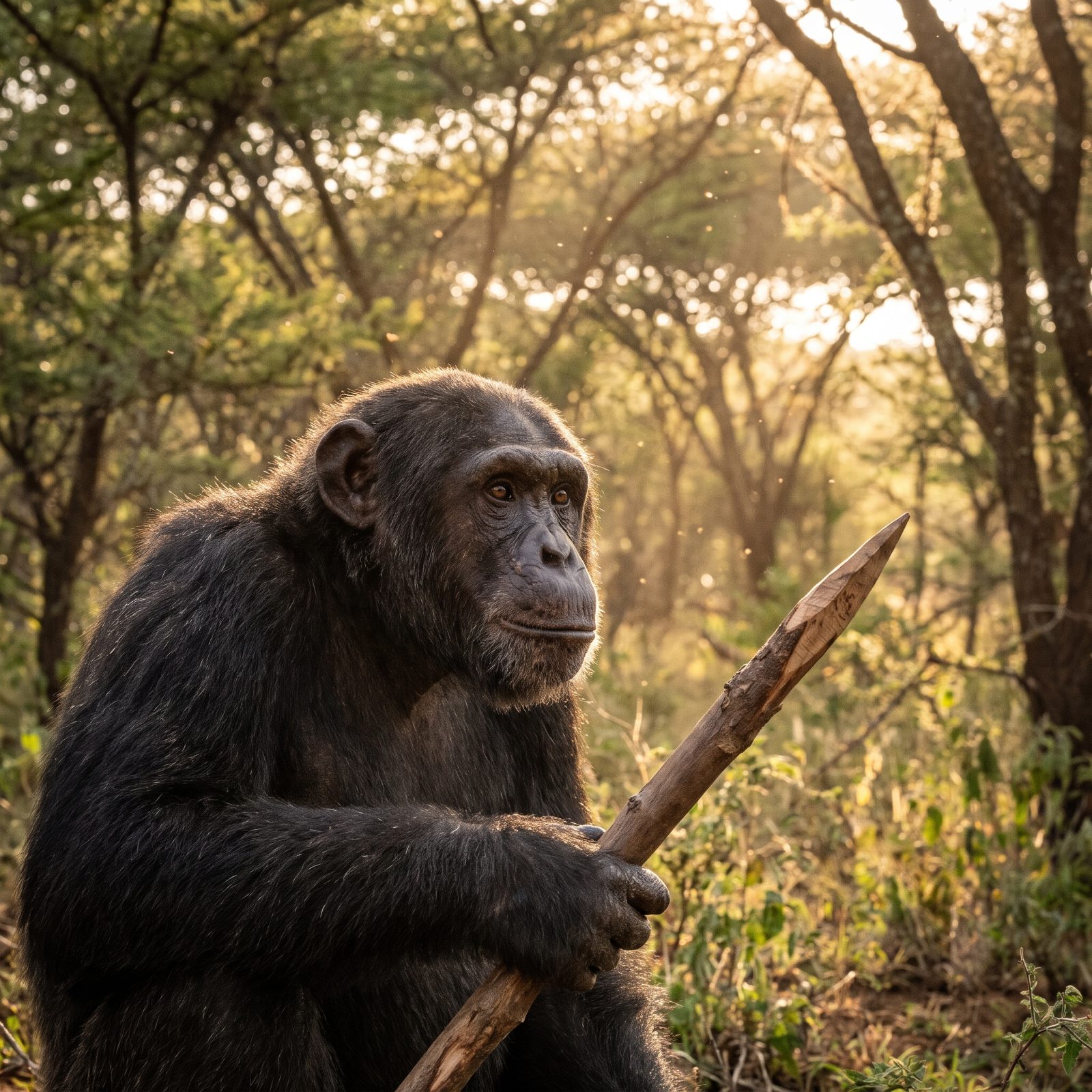
This is the only non-human animal ever documented making a weapon to hunt other animals. In the savanna woodlands of Fongoli, Senegal, chimpanzees break off branches, strip away the leaves and bark, then whittle the end to a point with their teeth. Researchers watched them jab these spears into tree hollows where small primates called bush babies sleep through the day.
But the real jolt was who did it. Females and younger chimps used the spears far more than adult males, who lean on brute strength and speed instead. A sharpened stick evens things out. A smaller animal can suddenly reach prey it could never grab by hand.
Each spear takes several deliberate steps. Snap, strip, sharpen, aim. And that sequence, planning a tool before the prey is even in sight, is exactly the kind of forethought we once figured belonged to us alone.
Explaining how the Fongoli chimps make their spears after breaking off the flimsy end of a branch, a primatologist studying savanna chimpanzees notes “and then some individuals will trim the tip further with their teeth.”