
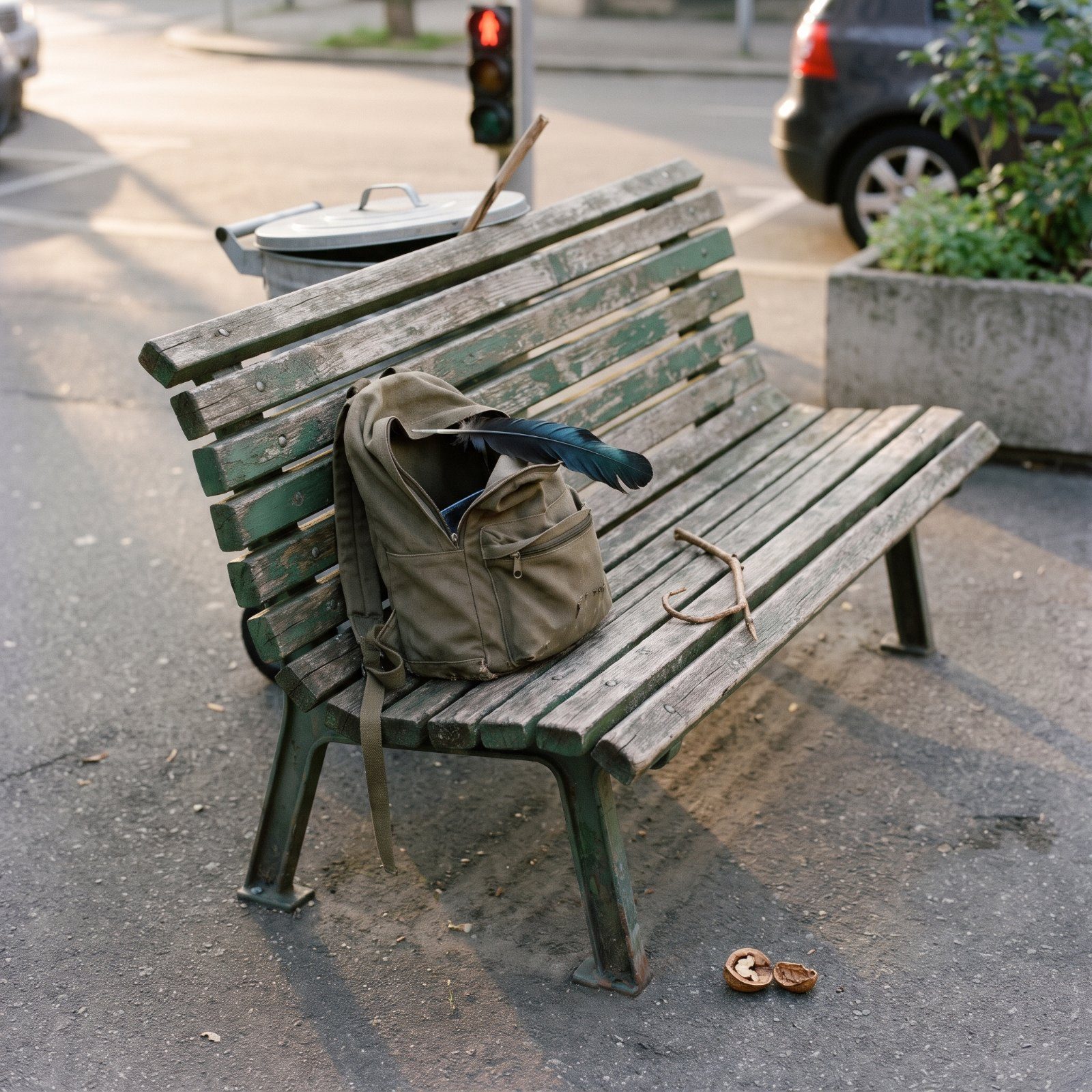
A crow in Japan drops a walnut at a red light, waits for the cars to roll over it, then steps into the crosswalk when the signal changes to collect the cracked prize. Nobody taught it that. It worked the whole thing out on its own. For decades birds have been quietly reverse-engineering our lives, bending bins and doors and fishing lines and traffic lights to their own ends. Some craft tools, some memorize faces, and a few run con jobs on their own flockmates. What follows is a tour of the sharpest feathered minds on the planet, all documented, none exaggerated. Prepare to feel slightly outwitted.
Please note that some of the images in this article were created with the assistance of AI.
34. New Caledonian Crow, Crafts Hooked Tools to Retrieve Food
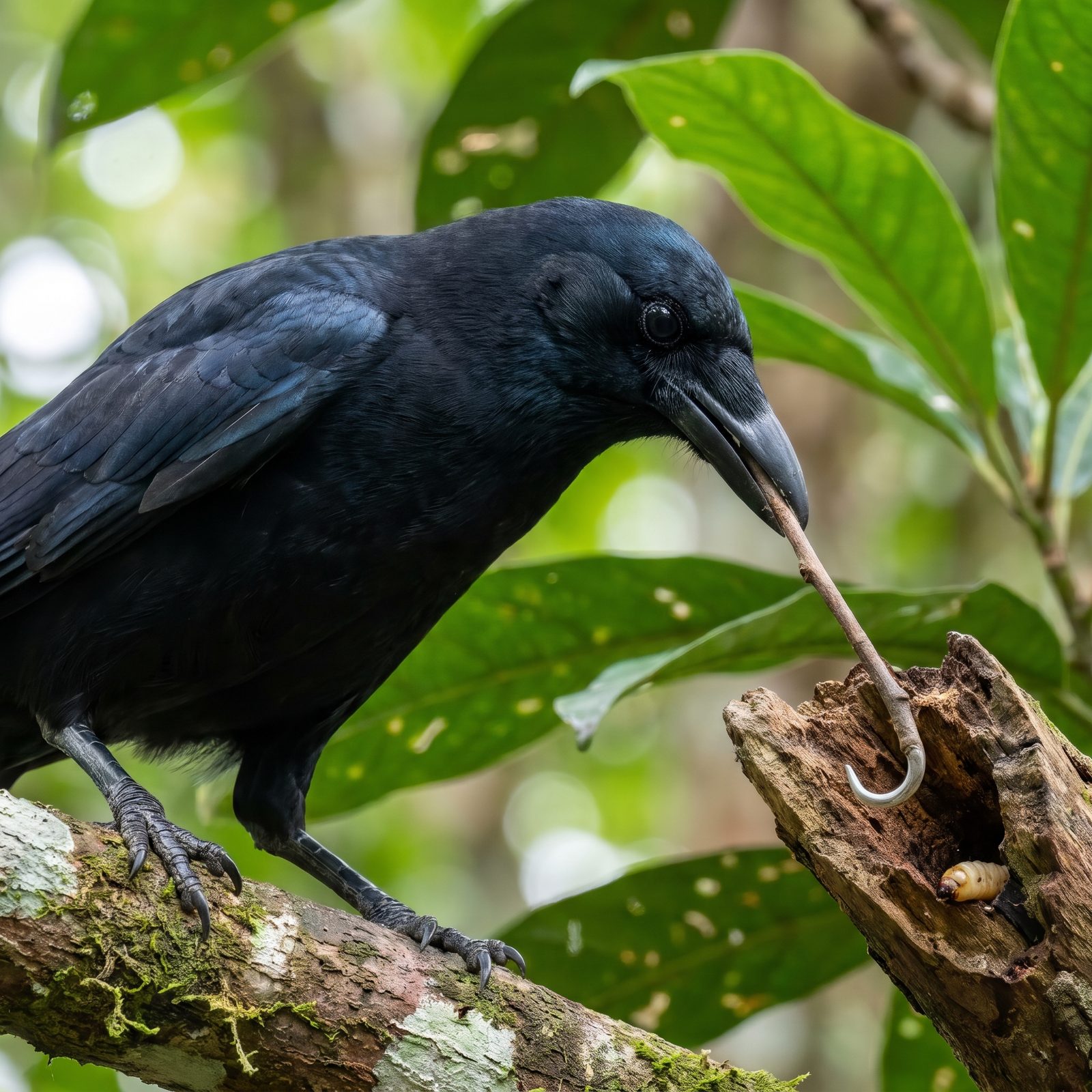
This crow doesn’t just grab a stick. It builds one. On the island of New Caledonia, these birds snap twigs, strip the bark, and work the tip into a small hook to yank grubs out of rotting logs. The hook is the giveaway, because random stick-poking will never produce one. It takes a plan, a goal held steadily in mind, and the patience to shape raw material into a finished tool.
What floors researchers is that captive-raised crows build those hooks with no adult around to copy. The blueprint seems partly baked in, then honed by trial and error. Precious few animals outside ourselves make hooked tools on purpose.
33. Kea, Opens Latches, Bins and Backpacks in Alpine Car Parks
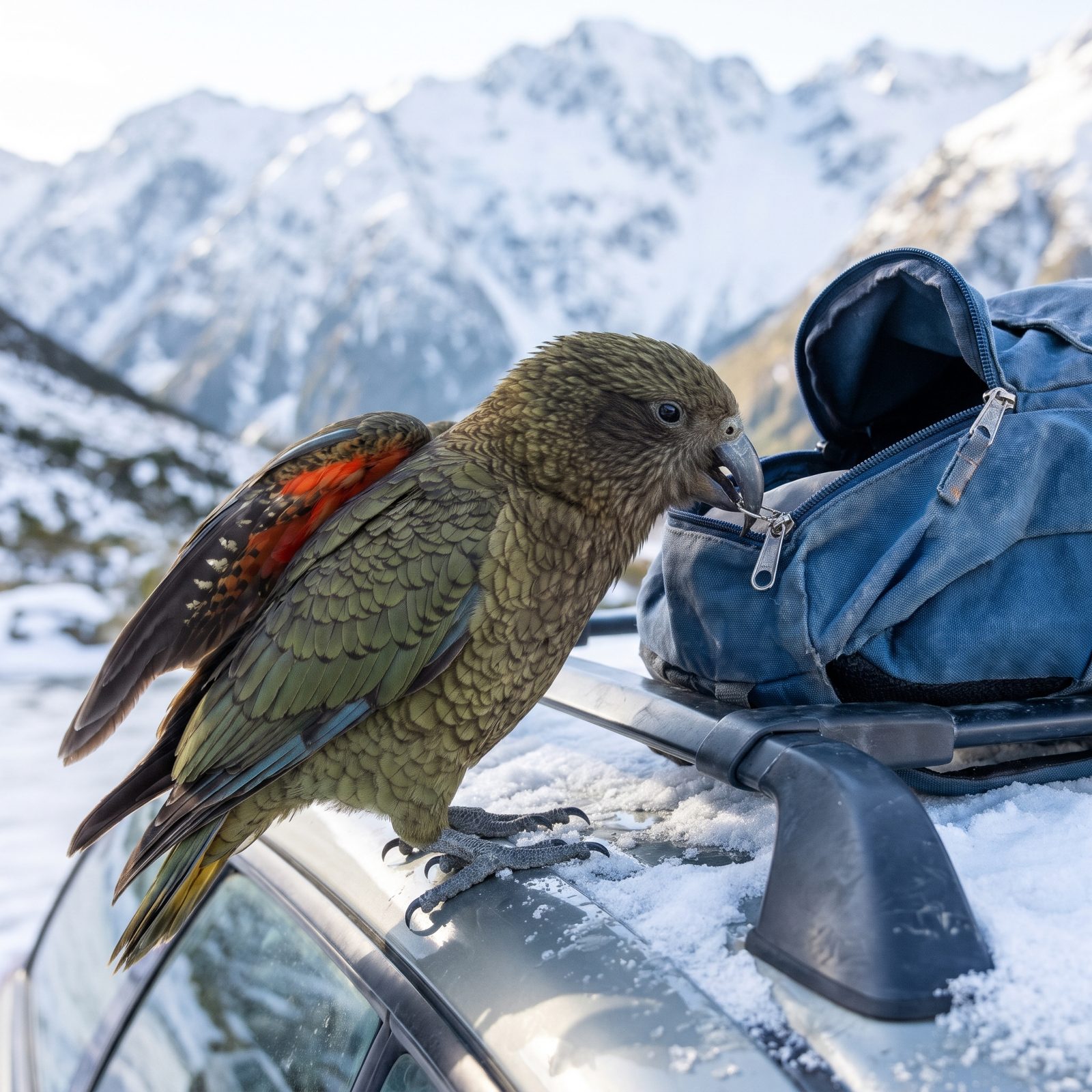
The world’s only alpine parrot treats a mountain car park like a vending machine nobody gave it the combination to, so it invents one. Kea work latches, flip bin lids, slide zippers and peel the rubber trim off windscreen wipers. A tourist’s backpack is just a puzzle box, and the kea has all day plus a beak built like a bolt cutter.
In lab tests they crack multi-step locking mechanisms and even cooperate, two kea pulling strings at the same moment. That cheeky curiosity has a cost: chewed-up cars and emptied lunches scattered across the Southern Alps. Feeding them is illegal, and rightly so. A fed kea is a bolder, hungrier, more destructive kea.
In a newspaper report, a senior conservation ranger says kea are known for landing on cars and picking things off them, and sometimes stay on board when the car drives away.
32. Carrion Crow, Drops Walnuts Into Traffic for Cars to Crack
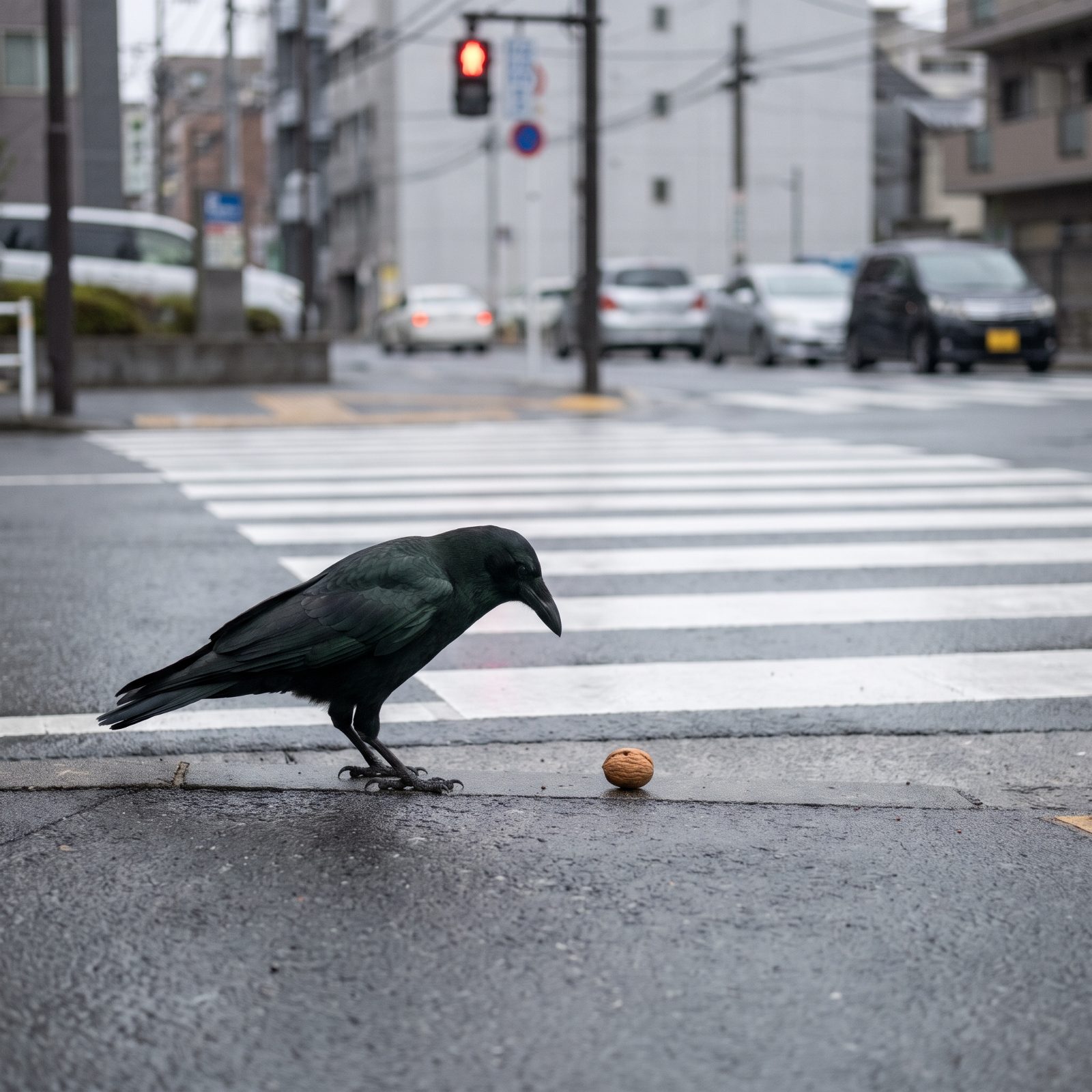
A crow figured out the one thing a walnut can’t survive: a car tire. In Sendai, Japan, carrion crows began laying walnuts on the road in front of stopped traffic and waiting for a vehicle to roll over and crack the shell. Too tough for a beak alone, the nut gets a two-ton nutcracker instead.
The clever part isn’t the dropping. It’s the timing. These crows learned to set nuts down when the light is red, retreat, and dart out for the kernel only once the crosswalk signal turns and traffic halts. They read the lights, cross when it’s safe, and collect when it’s clear.
31. Sulphur-Crested Cockatoo, Learned to Open Wheelie-Bin Lids
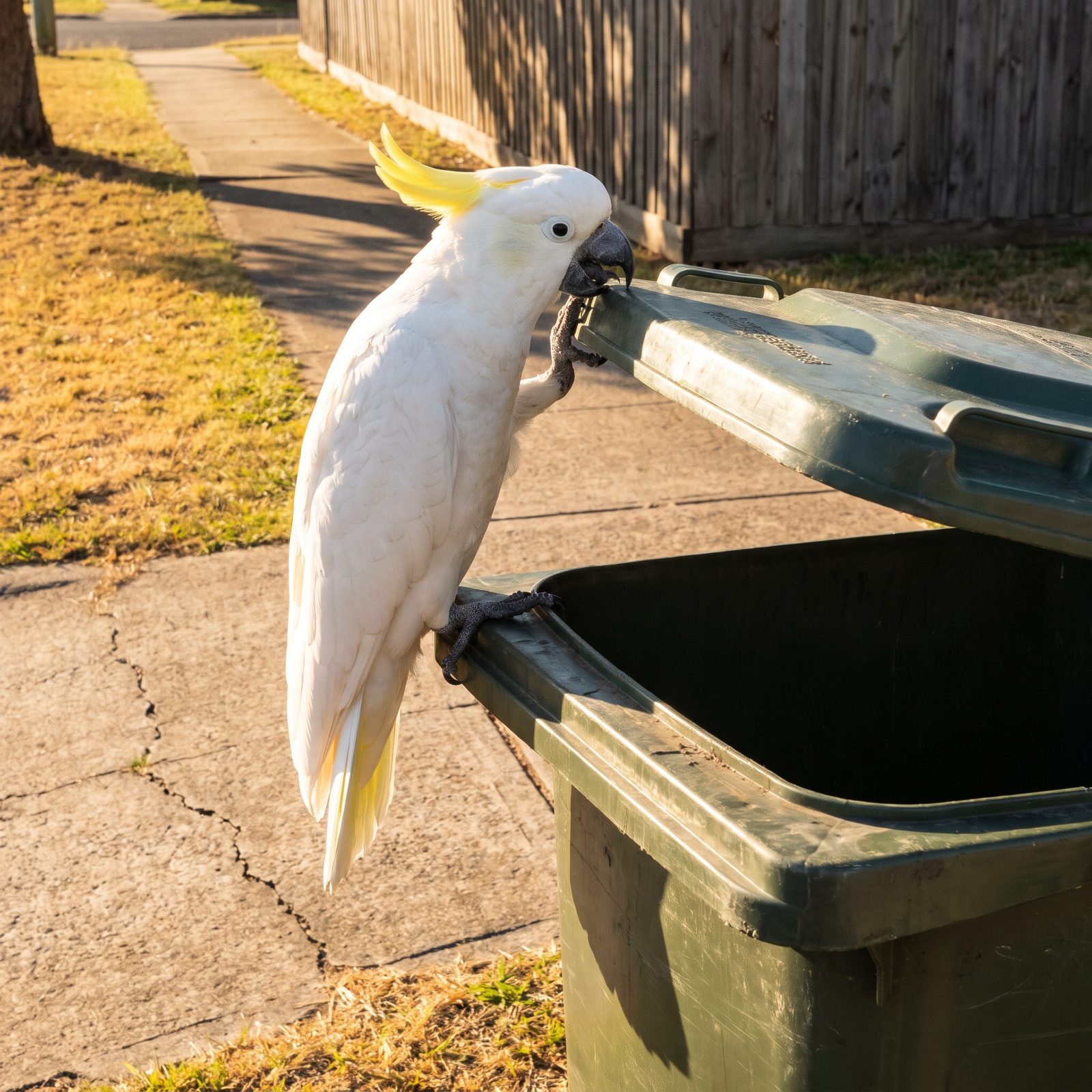
Household bins in Sydney’s suburbs sparked a small arms race. Sulphur-crested cockatoos worked out how to grip the lip of a closed wheelie-bin lid, walk it open with beak and foot, and flip the top back for a buffet of leftovers. One bird cracked it. The rest watched and copied.
Scientists mapped the spread across dozens of suburbs and found the trick moving bird to bird, neighborhood to neighborhood, like a recipe passed over the back fence. Different areas even developed slightly different opening styles. That’s culture in the proper sense, behavior learned socially rather than inherited.
Residents fought back with bricks and bungee cords on their lids. The cockatoos adapted. The match continues.
Looking back on the original discovery, a behavioural scientist studying cockatoos says “When we first started looking at this behaviour, we were already amazed because actually the cockatoos learned how to open the bins”
30. American Crow, Recognizes and Remembers Threatening Human Faces
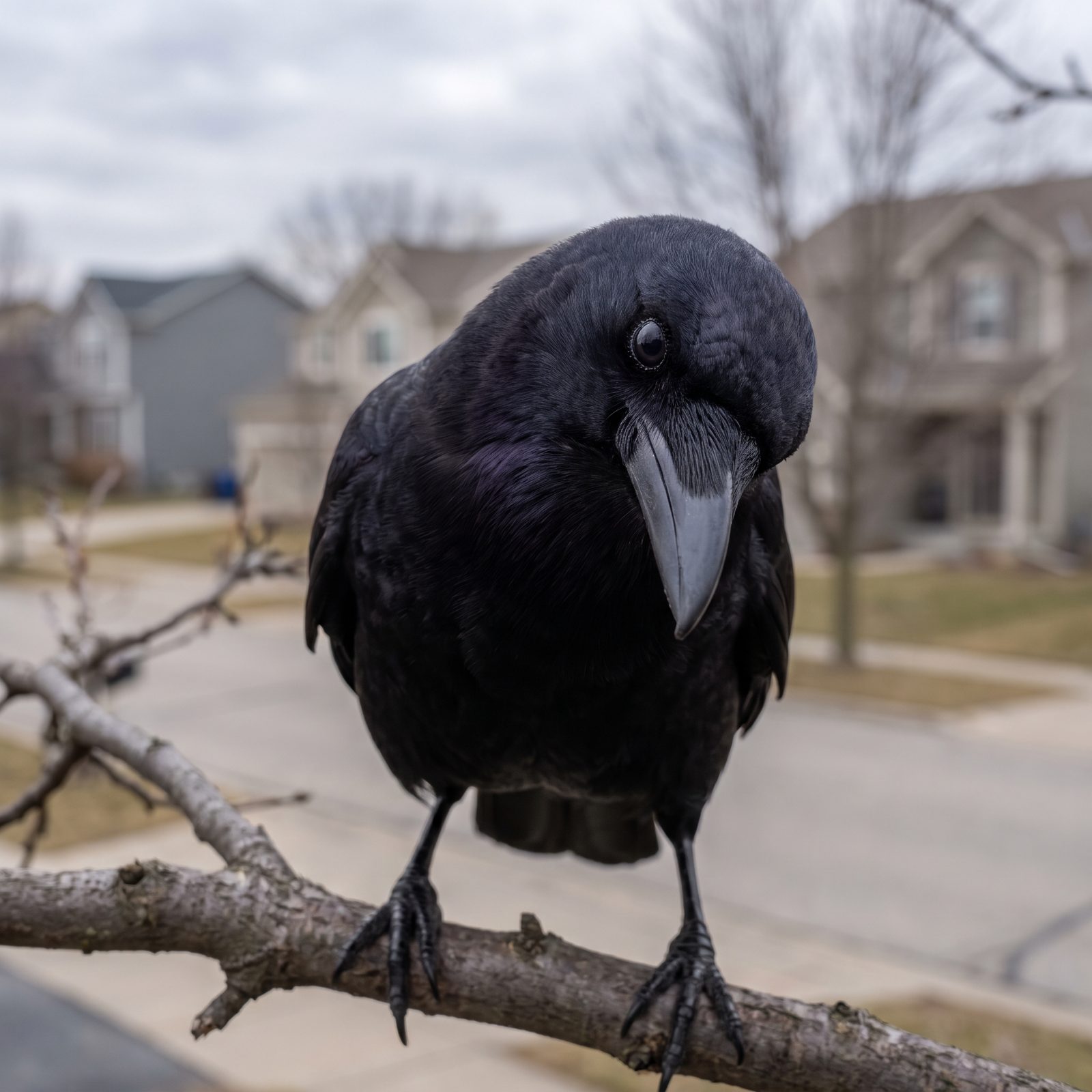
Wrong a crow from this family once, and the whole neighborhood may hold it against you for years. In a now-classic study, researchers wore distinctive masks while trapping American crows. For years afterward, crows mobbed and scolded anyone wearing that same mask, including birds that had never been caught themselves.
They remember faces. They warn the flock. The grudge outlives the original encounter and gets handed down to crows that only ever heard about you.
Explaining how one grudge spreads through a whole flock, an ornithologist who studies crows says “Crows are extremely responsive to other crow behavior. They learn from the reactions of other crows”
29. Goffin’s Cockatoo, Builds Multi-Part Tool Sets for One Goal
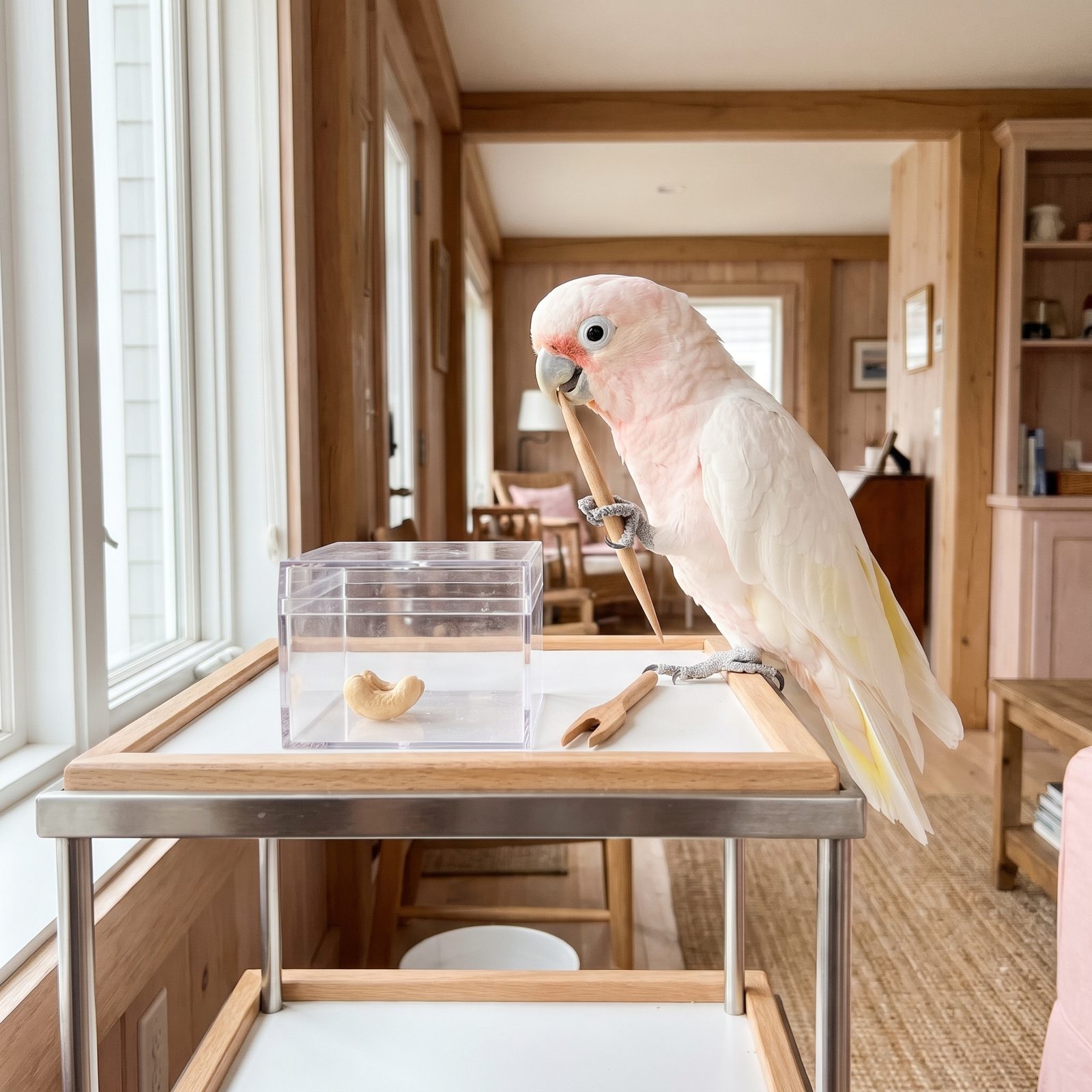
Give a Goffin’s cockatoo a problem that needs two different tools and it will carry both. On their Indonesian islands these parrots barely use tools in the wild. In the lab, though, they stunned researchers by making and selecting whole tool sets: one implement to punch through a barrier, another to reach the reward waiting behind it.
Working out that a single stick won’t finish the job, then gathering the right combination before even starting, is planning. The cockatoo handles the pair as a kit, hauling both to the work site the way a plumber grabs a wrench and a cutter in one trip.
That’s the detail people miss. Not that birds use tools, but that one can hold a multi-step plan in its head before the first move.
Describing birds that could have fetched one tool at a time, a researcher studying cockatoo cognition says “Instead, at least three of them learned to collect both tools in advance. This suggests that they can categorize both tools as a set”
28. Common Raven, Uses Distraction Tactics to Protect Hidden Food
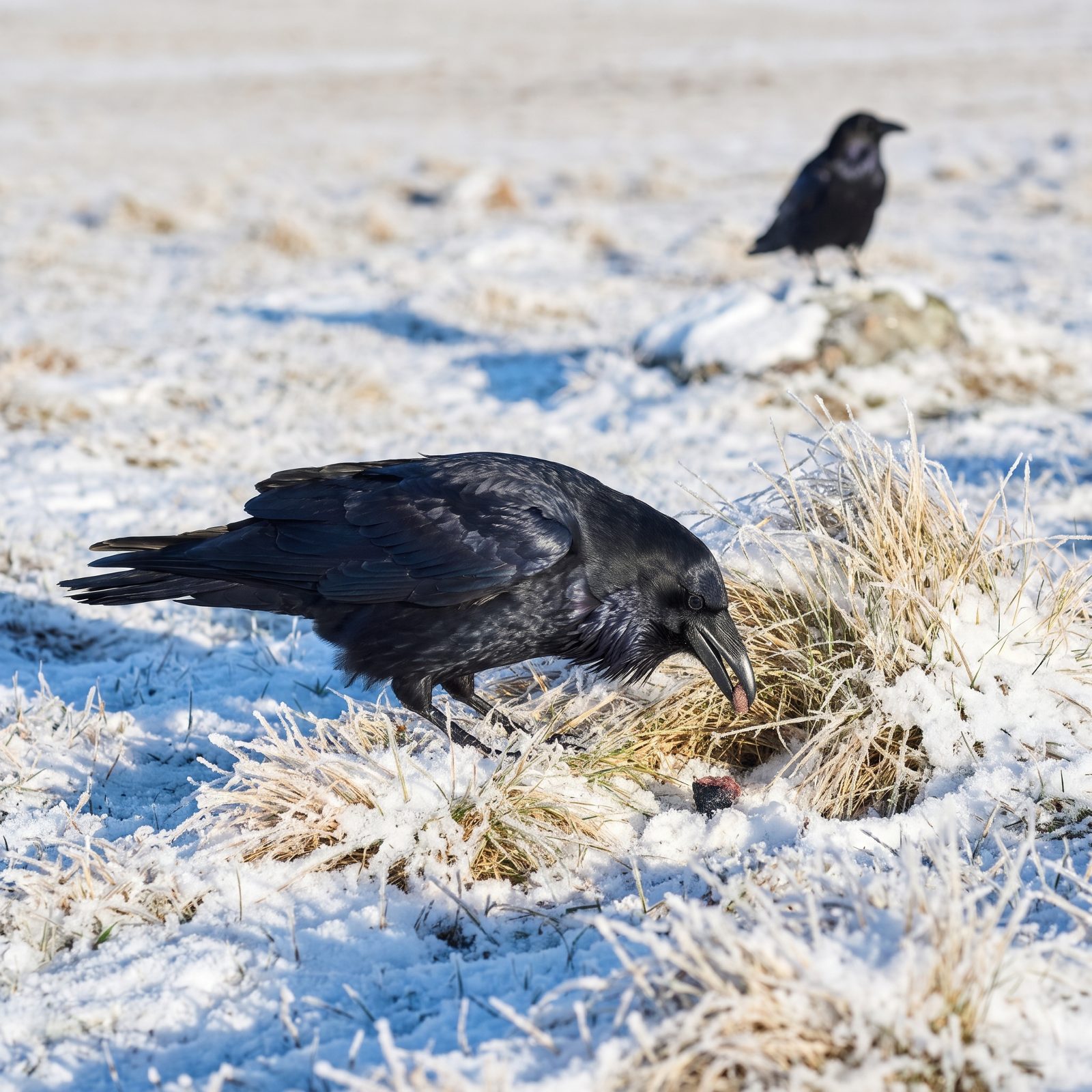
A raven hiding food knows it’s being watched, and acts accordingly. These birds bury surplus meals in the ground, but if a rival is looking on, the owner will stall, fake a stash in some decoy spot, or simply wait until the onlooker loses sight before burying the real prize.
And that demands something rare. The raven grasps that another individual carries knowledge of its own, then goes to work on what that other mind believes. Caching in private, it behaves one way. Caching with an audience, it behaves another, on purpose.
A raven that fakes a hiding spot isn’t just clever. It’s modeling what a competitor can and cannot see.
27. Great Tit, Pierces Milk-Bottle Caps to Reach the Cream
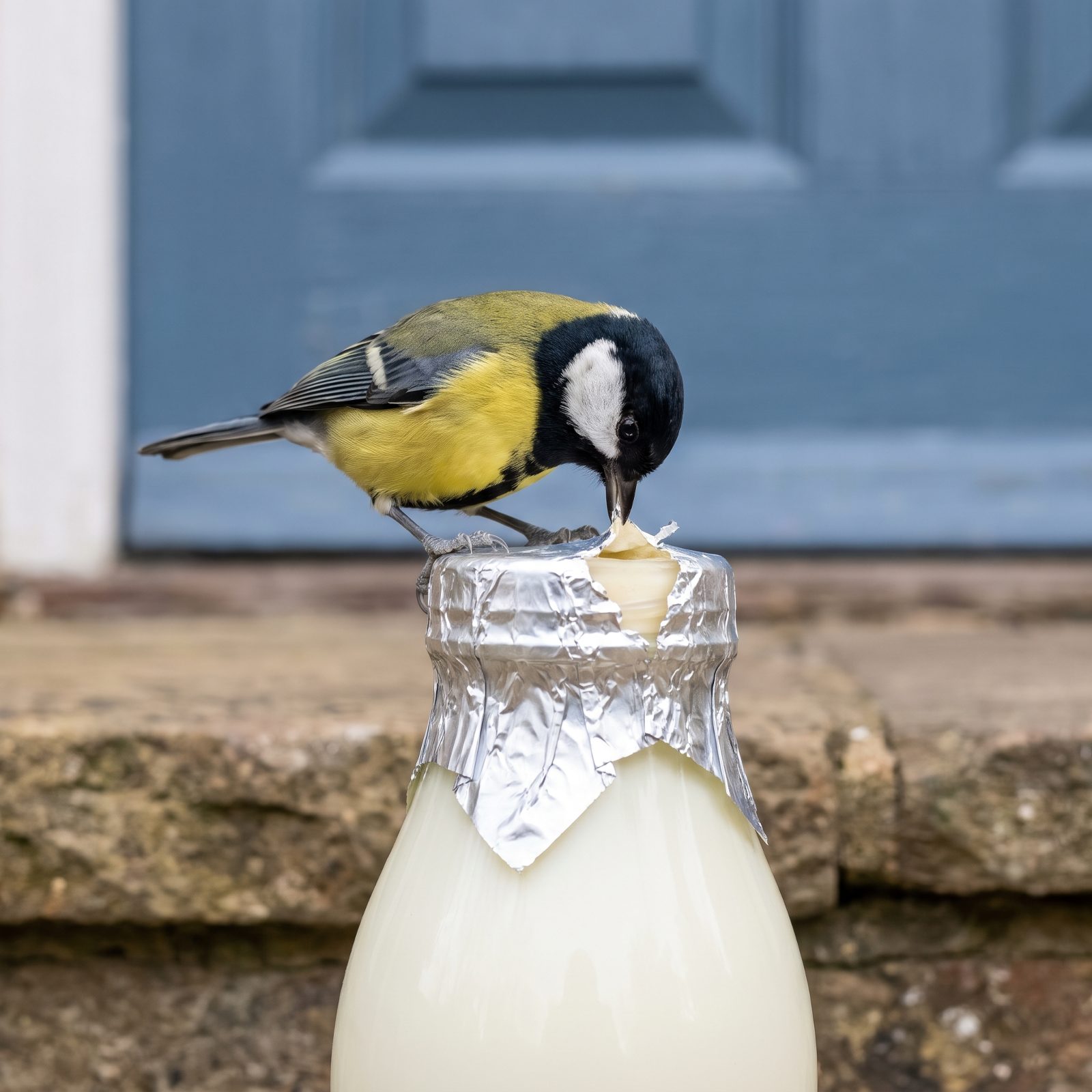
Back when milkmen left bottles on British doorsteps, great tits and blue tits discovered that the foil cap hid a layer of cream underneath. They learned to pierce the caps and skim it off.
Then the trick spread. From a handful of towns in the early twentieth century, cap-piercing rippled across the whole country as birds watched one another and copied, becoming one of the first and clearest examples of a learned behavior sweeping through a wild animal population.
26. House Sparrow, Triggers Automatic Doors to Enter Food Courts
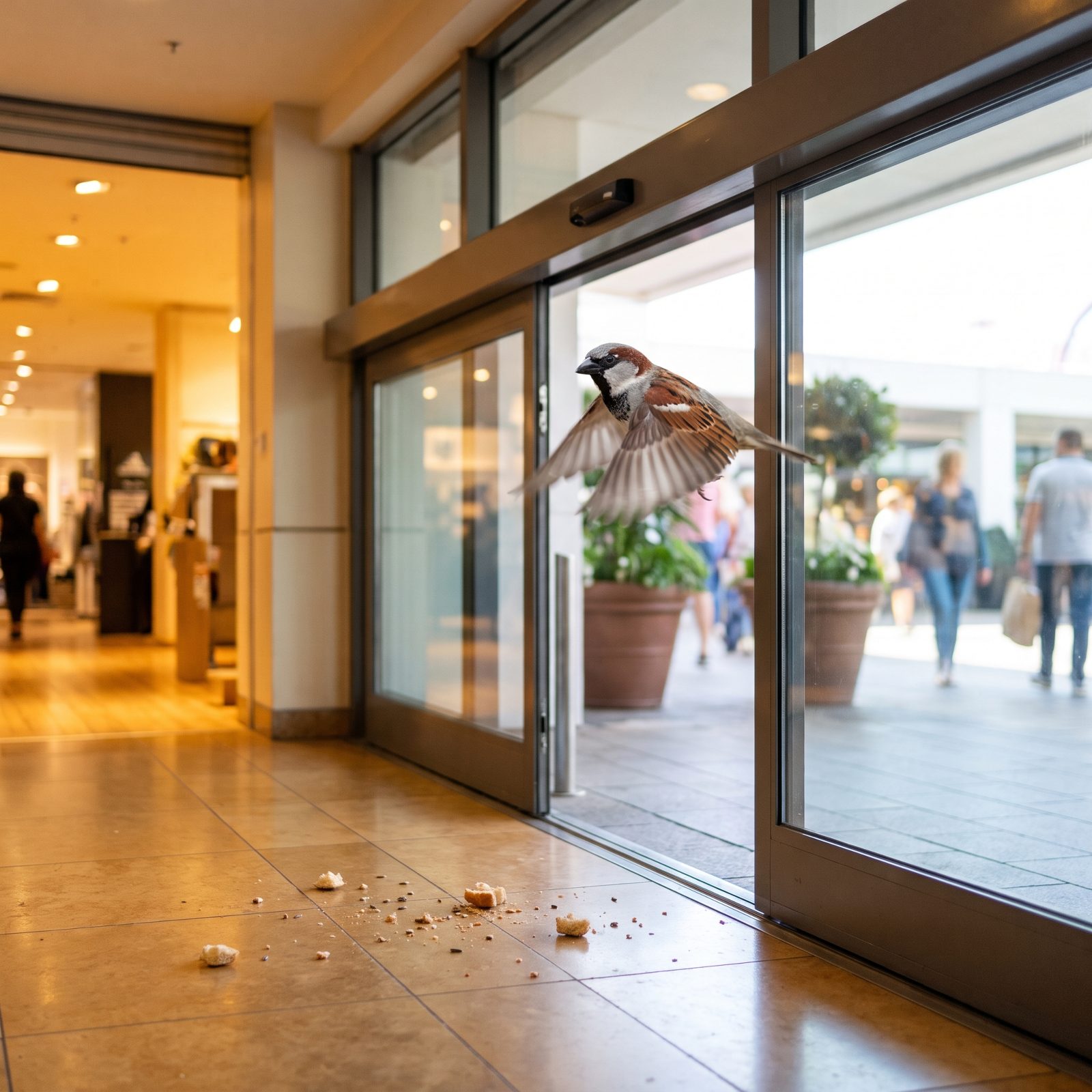
House sparrows in bus stations and food courts learned that the magic doors open when something moves near them. So they move near them. Birds have been recorded hovering in front of automatic-door sensors to trip them, then flying inside to raid dropped fries and crumbs.
Some wait by the door for a human to set it off. Others go DIY and flutter right in the sensor’s eye themselves. Either way, a bird the size of your fist has spotted an infrastructure quirk we built for ourselves and bent it toward lunch.
25. Striated Caracara, Unzips Bags and Dismantles Human Equipment
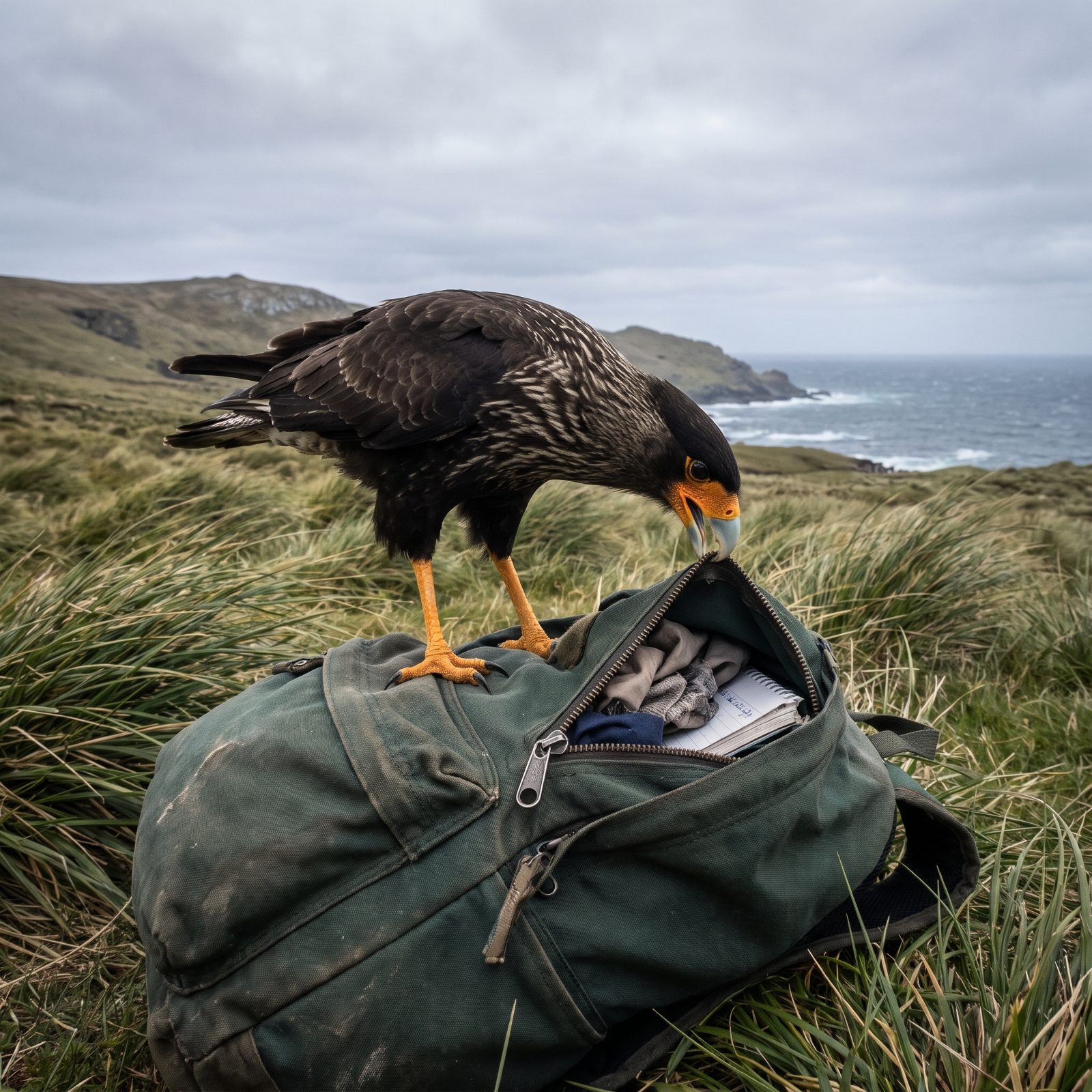
On the remote southern islands where they live, striated caracaras treat a visiting human as the most interesting thing to happen all year. These bold, nosy birds of prey unzip backpacks, undo straps, pull apart camera gear and make off with anything loose and shiny.
Put them through problem-solving tests and they rival parrots, working through puzzle sequences with a persistence and flexibility most raptors never manage. Life on islands of bare rock and grass seems to have selected hard for curiosity and nerve. When your world holds almost nothing, poking at everything new is how you survive.
Leave a bag unattended around them and you won’t find it the way you left it. That’s not a maybe. That’s a promise.
24. Florida Scrub-Jay, Rehides Its Food After It Notices It Was Watched
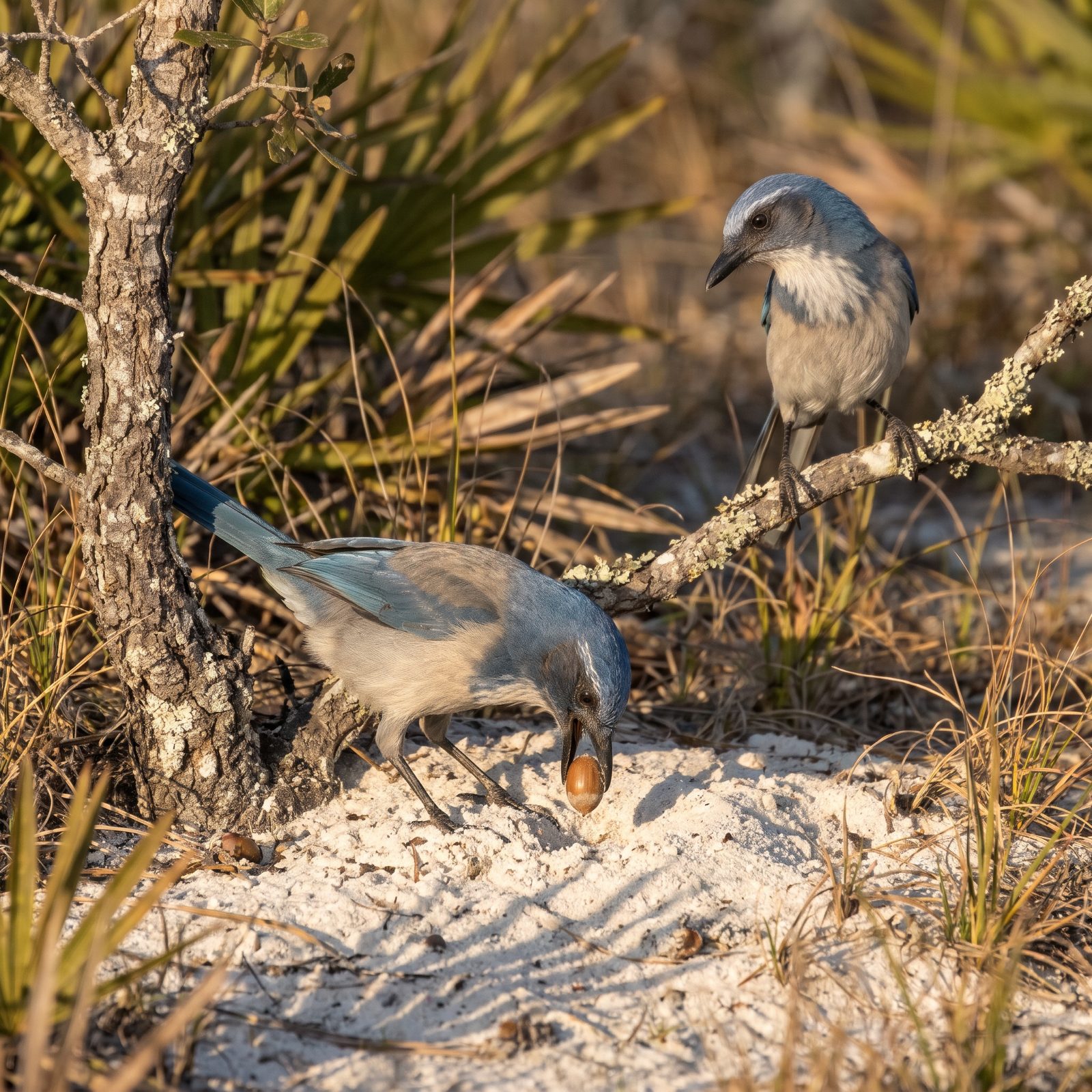
Watch a scrub-jay bury an acorn while another bird looks on, and something clever follows. The moment the audience leaves, the hider often digs the food back up and relocates it. A stashed seed seen by a rival is a seed as good as stolen, and the bird knows it.
What makes this remarkable is the inference underneath. The jay isn’t reacting to a theft — it’s predicting one, remembering who watched and acting on that memory later. Here’s the twist: only birds that have themselves pilfered a rival’s cache tend to bother, which tells you the whole strategy gets learned from a stint as a thief first.
23. Green Heron, Drops Bread on the Water as Fishing Bait
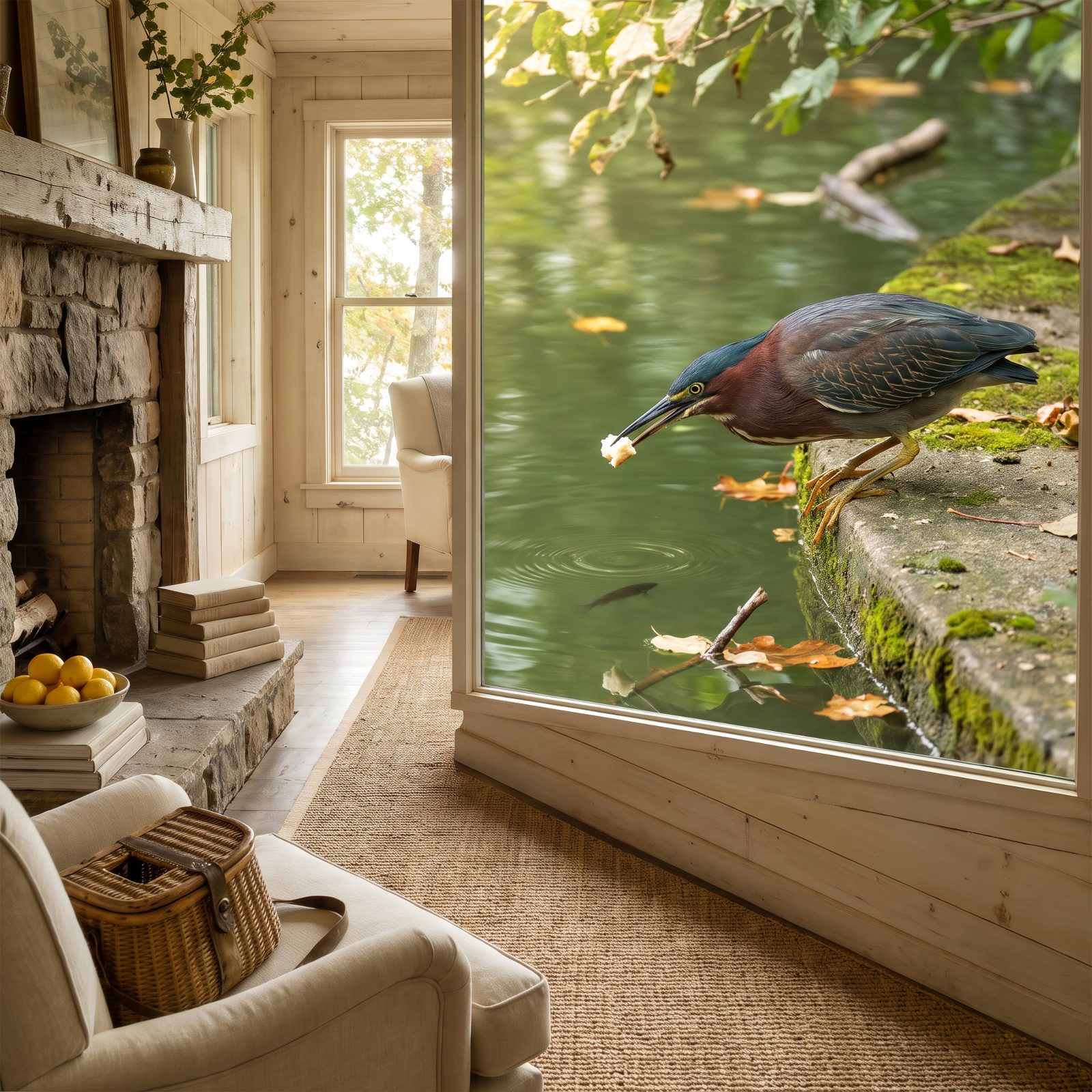
Most herons stand still and wait. A green heron does something sneakier: it drops a piece of bread, an insect, a feather, even a stray bit of popcorn onto the water, then freezes and watches for a curious fish to rise toward the lure.
This is tool use in the purest sense — an object deployed to change another animal’s behavior. Birds that learn it tend to work the parks and canals where people toss bread, so human handouts, oddly enough, handed these herons a ready-made baiting kit. The real pros tear the bread into smaller pieces and chase down a lure that drifts too far. That’s not instinct. That’s practice paying off.
22. Hawaiian Crow, Picks the Correct Stick Before Starting the Job
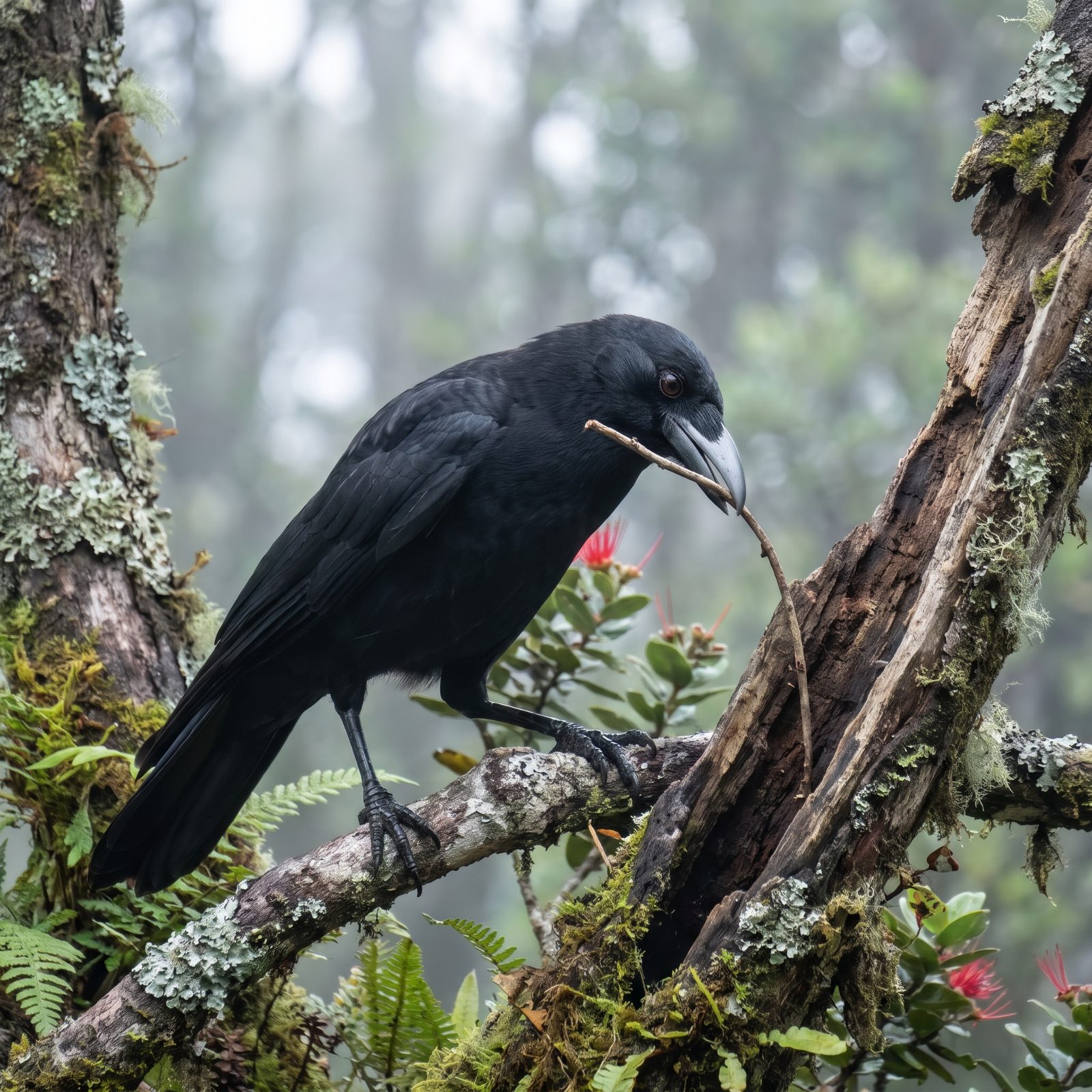
Nearly every Hawaiian crow tested uses tools, and that is almost unheard of in birds. The ʻAlalā holds a twig in its bill to winkle grubs and insects out of bark crevices and rotting wood, prying with a leverage no bare beak could ever manage.
The sharp part is the choosing. Before working a hole, the bird sizes it up and selects a stick of the right length and stiffness, sometimes whittling one down when it doesn’t fit. Juveniles fumble. Adults rarely waste a bad tool on a good crevice.
And there’s a gut-punch buried in all this. The ʻAlalā went extinct in the wild, surviving only through captive breeding — the problem-solving brain nearly vanishing along with the feathers around it.
21. African Grey Parrot, Asks for a Specific Object by Name
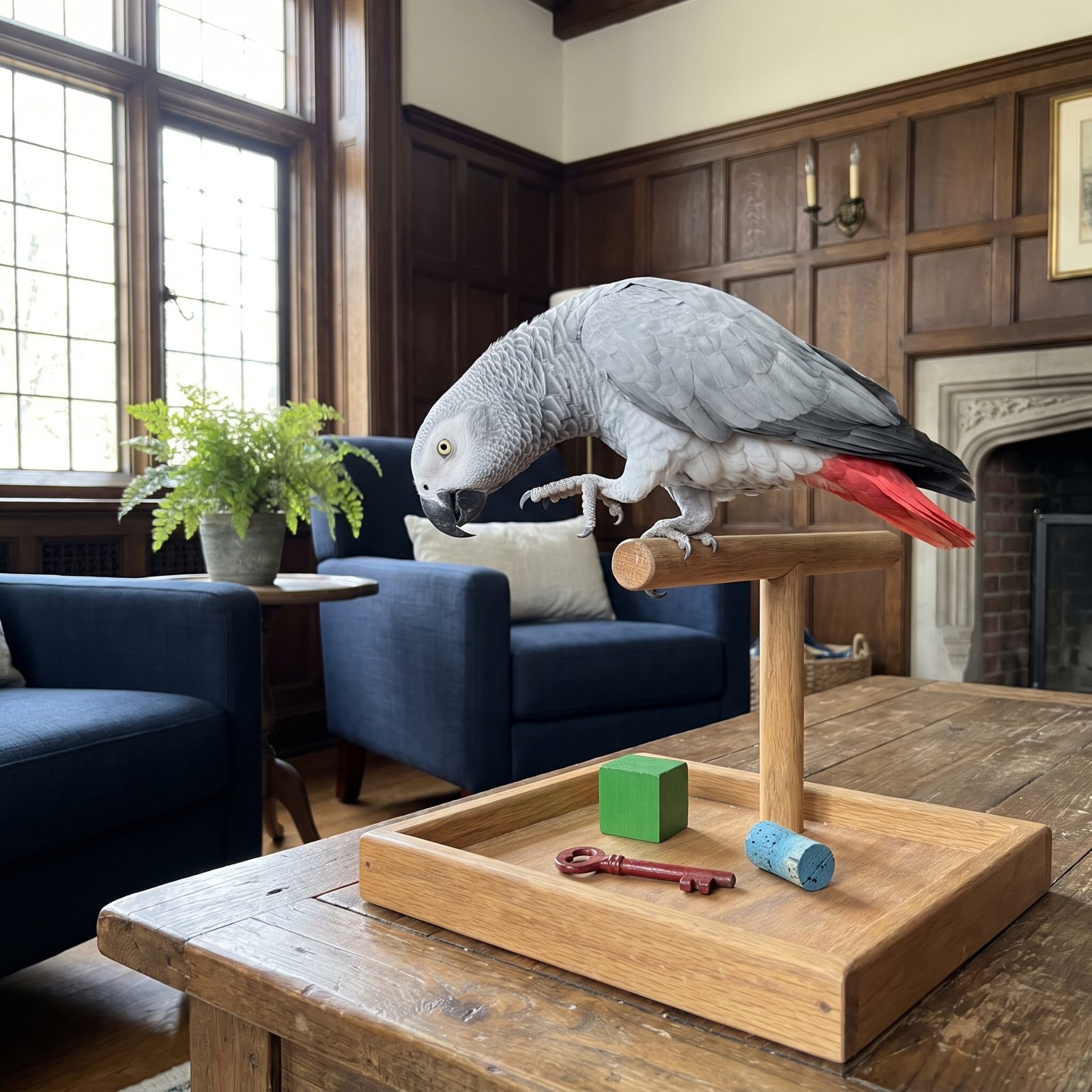
Give a trained African grey a tray of colored objects, ask what it wants, and some birds will name one. Not mimicry on cue — a labeled request. The color, the material, the shape, and then a reach for the thing that matches the word they just spoke.
Decades of study with these parrots turned up birds that could count small quantities, grasp the difference between “same” and “different,” even wrap their heads around the idea of zero. The vocal labels weren’t party tricks. They were the parrot operating a human tool — language — to pull the outcomes it wanted from the people around it.
20. Rook, Raises the Water Level by Dropping Stones Into a Tube
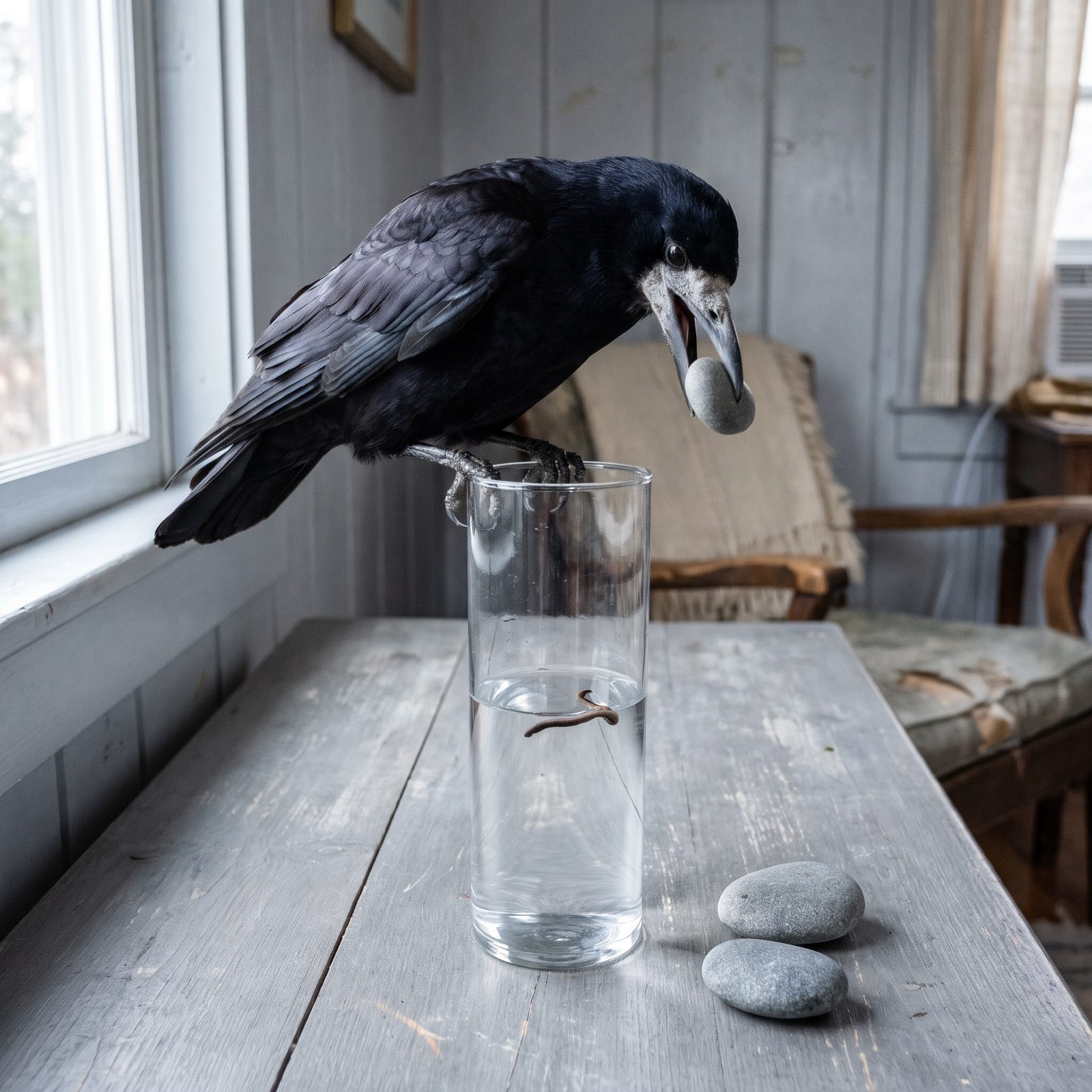
An old fable made flesh. Faced with a floating treat sitting too low inside a narrow tube of water, a rook drops stones in one by one, nudging the level up until the reward rises within beak’s reach.
And they cracked the physics fast. The birds chose larger stones over small ones — bigger stones shove more water aside — and picked a tube of water over a tube of useless sawdust every time. Here’s what makes it stranger still: wild rooks don’t normally use tools at all. The capacity was just sitting there in the brain, unused, waiting for the right problem to walk in.
19. Cormorant, Fishes for Its Human Partner While Counting the Catch
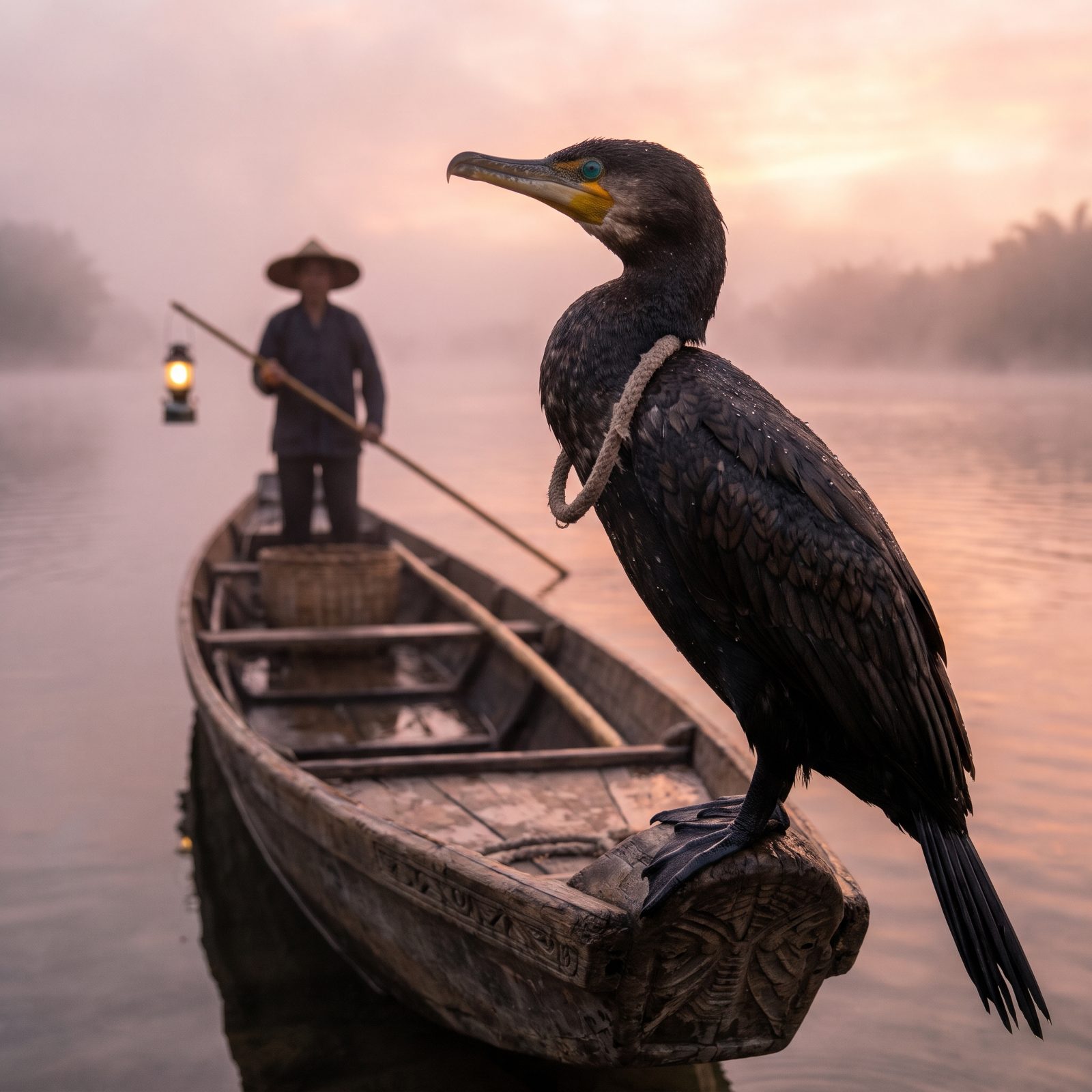
For over a thousand years, fishers on certain rivers have worked alongside trained cormorants, a loose cord stopping the bird from swallowing the bigger fish it hauls up. The bird dives, grabs, surfaces, and hands over the catch. Smaller fish it gets to keep.
Here’s the lore passed down among old cormorant handlers: the birds keep count of the bargain. After an agreed number of fish, some cormorants reportedly refuse to dive until they’re paid their cut, as though tallying exactly what they’re owed. Treated unfairly, a working bird can sulk and down tools. Strict counting or sharp pattern-reading — either way, the cormorant is plainly reading the human system it lives inside.
18. Canada Jay, Snatches the Sandwich the Second You Look Away
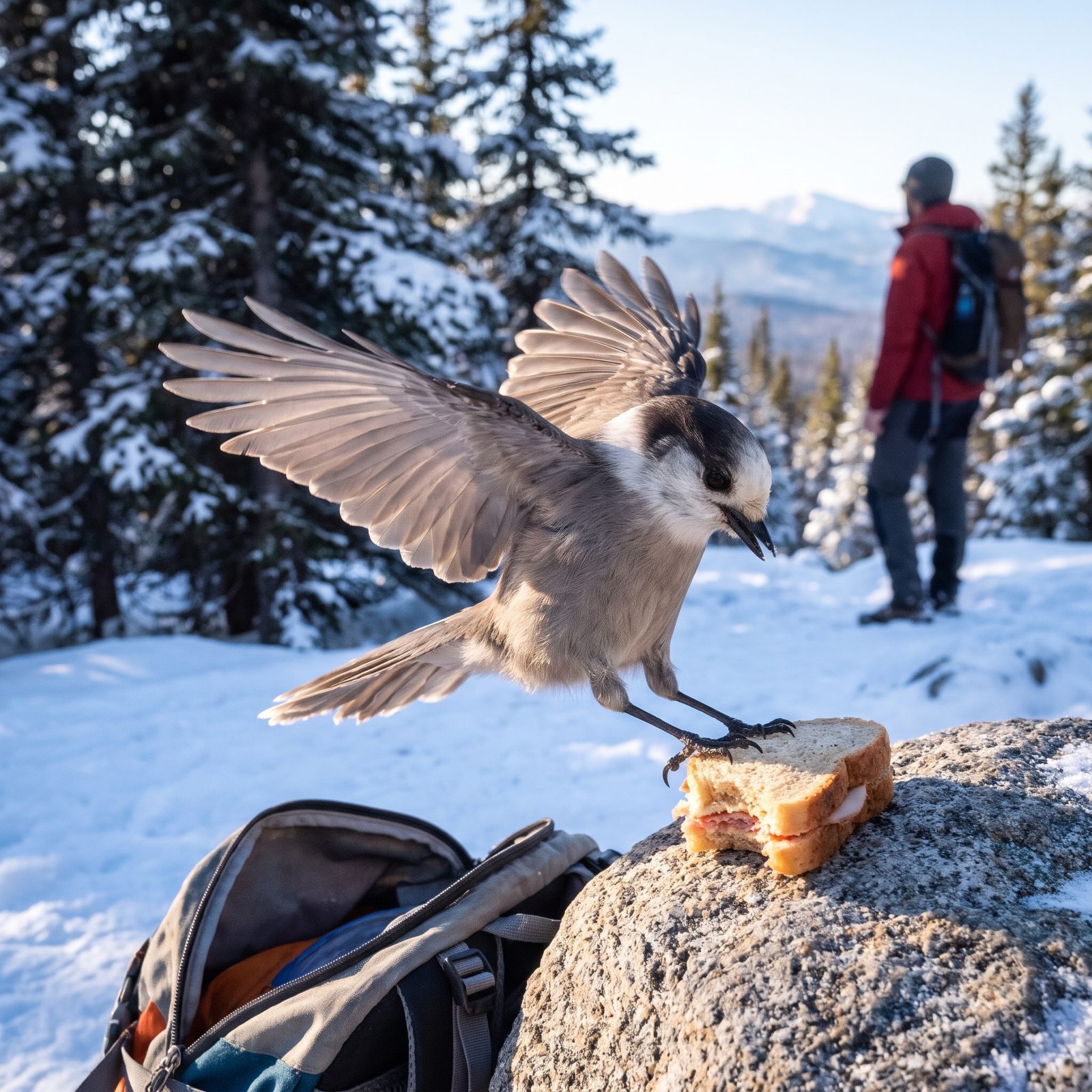
Anyone who’s eaten lunch on a Canadian or northern-US trail knows this bird. It waits in the spruce, patient as a pickpocket, and the instant your attention drifts, it’s on your sandwich.
Timing and memory are what these jays are built around. They cache thousands of food scraps across a sprawling territory, gluing each morsel in place with sticky saliva and tucking it under bark to outlast brutal winters. The boldness toward hikers isn’t tameness — it’s opportunism honed over generations near camps and trails, reading human attention as a window that swings open and shut. Look away, and the window opens.
17. Kākā, Works Through a Puzzle Box One Step at a Time
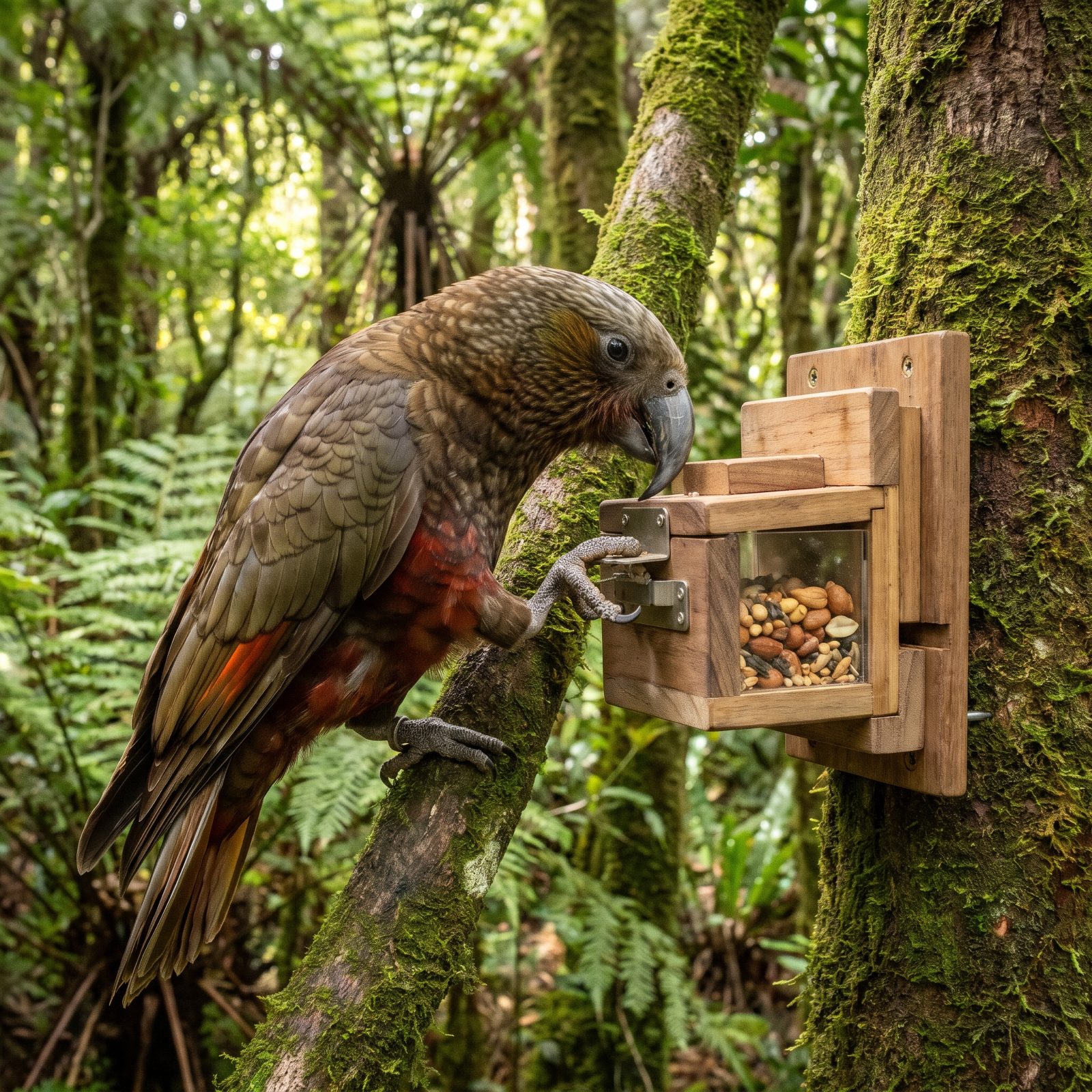
Hand a kākā a puzzle box that only opens after a sequence — pull this, slide that, lift the last catch — and it will grind patiently through the steps. Latches, levers, sliding panels: the parrot treats the whole contraption as a problem with an order to it, not a lock to brute-force.
Curiosity is the engine. Kākā investigate nearly everything, and in all that relentless poking they trip over solutions and then remember them. Same brain that lets them strip bark, lever open seed pods and crack rubbish bins across New Zealand’s reserves. A closed container, to a kākā, reads less like an obstacle and more like an invitation.
16. Steller’s Jay, Fakes a Hawk Call to Scatter the Feeder Crowd
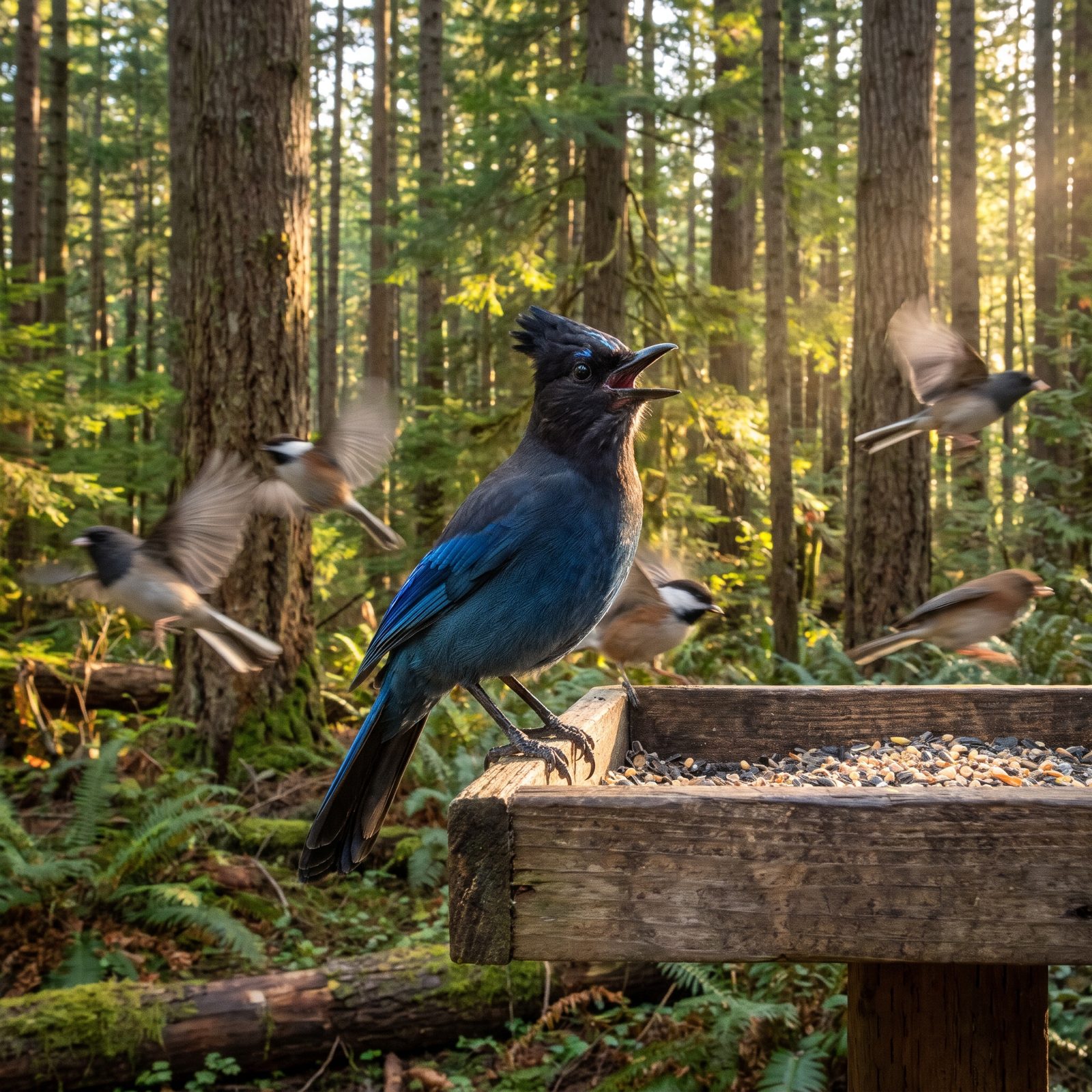
A Steller’s jay rolls up to a busy feeder, throws back its crested blue head, and reels off a passable Red-tailed Hawk. The smaller birds bolt for cover. The jay drops in and dines in peace.
The delicious part is the deliberate lie. The jay isn’t scared of any hawk — it’s manufacturing fear in everyone else to clear the table. Jays are gifted mimics, and this particular con turns a borrowed alarm call into a door-opener. False alarm, empty feeder, full jay.
A bird that lies to other birds to get a better seat at dinner is doing something most of us would call cunning.
15. Western Jackdaw, Follows Where You Look and Where You Point
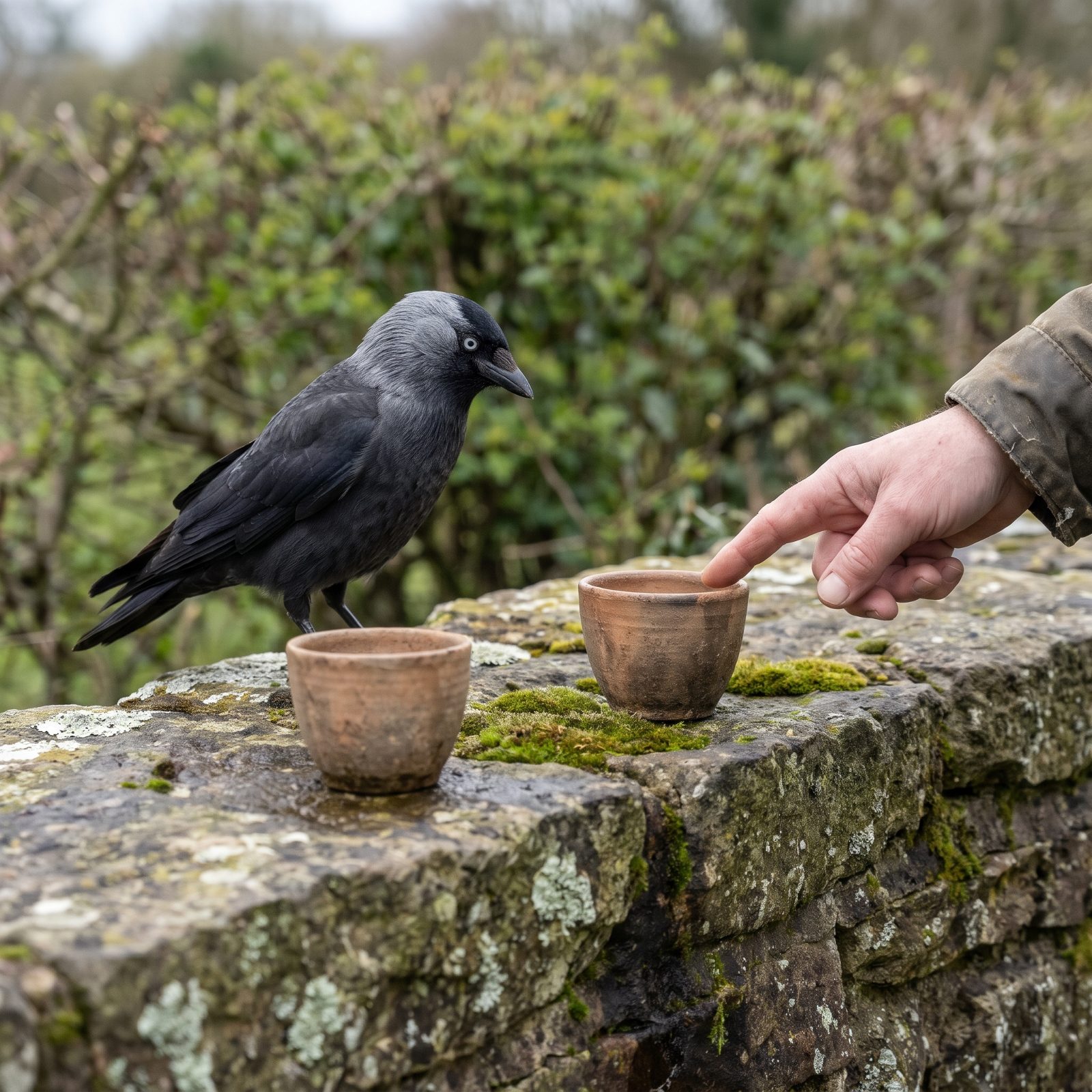
Glance toward one of two hidden food cups and a jackdaw tends to look where you looked. Point at it, and the bird will often trace your finger to the right one. Reading human gaze and gestures is a trick dogs picked up over thousands of years of living beside us — the jackdaw pulls it off with none of that shared history.
Those pale, almost ghostly eyes matter too. Jackdaws read each other’s eyes constantly, and that same sensitivity spills over onto ours. A bird that clocks exactly where a human’s attention is pointing is a bird that can borrow our knowledge and dodge our intentions. In a world run by people, that’s a handy thing to notice.
14. Eurasian Magpie: It Remembers Exactly Where You Stashed the Snack
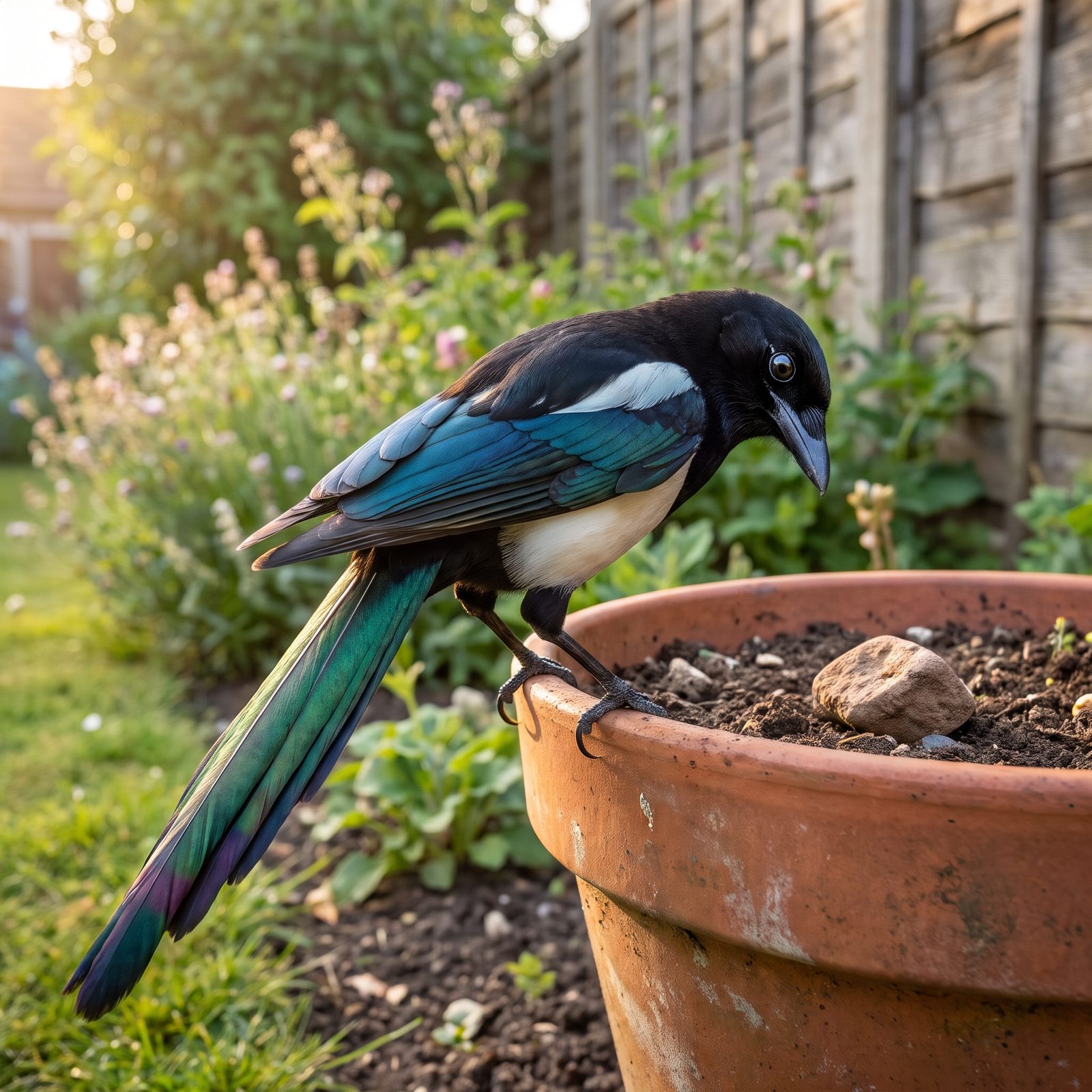
Magpies run a map of your habits in their heads. They belong to the corvid family, the brainy branch of the bird world, and they track caches with the precision of an accountant who never forgets a receipt.
What makes them maddening to anyone with a bird feeder is how they watch you refill it, clock the routine, and show up before you do. They aren’t reacting to the food. They’re predicting it.
13. Egyptian Vulture: It Throws Stones to Smash Eggs Too Tough for Its Beak
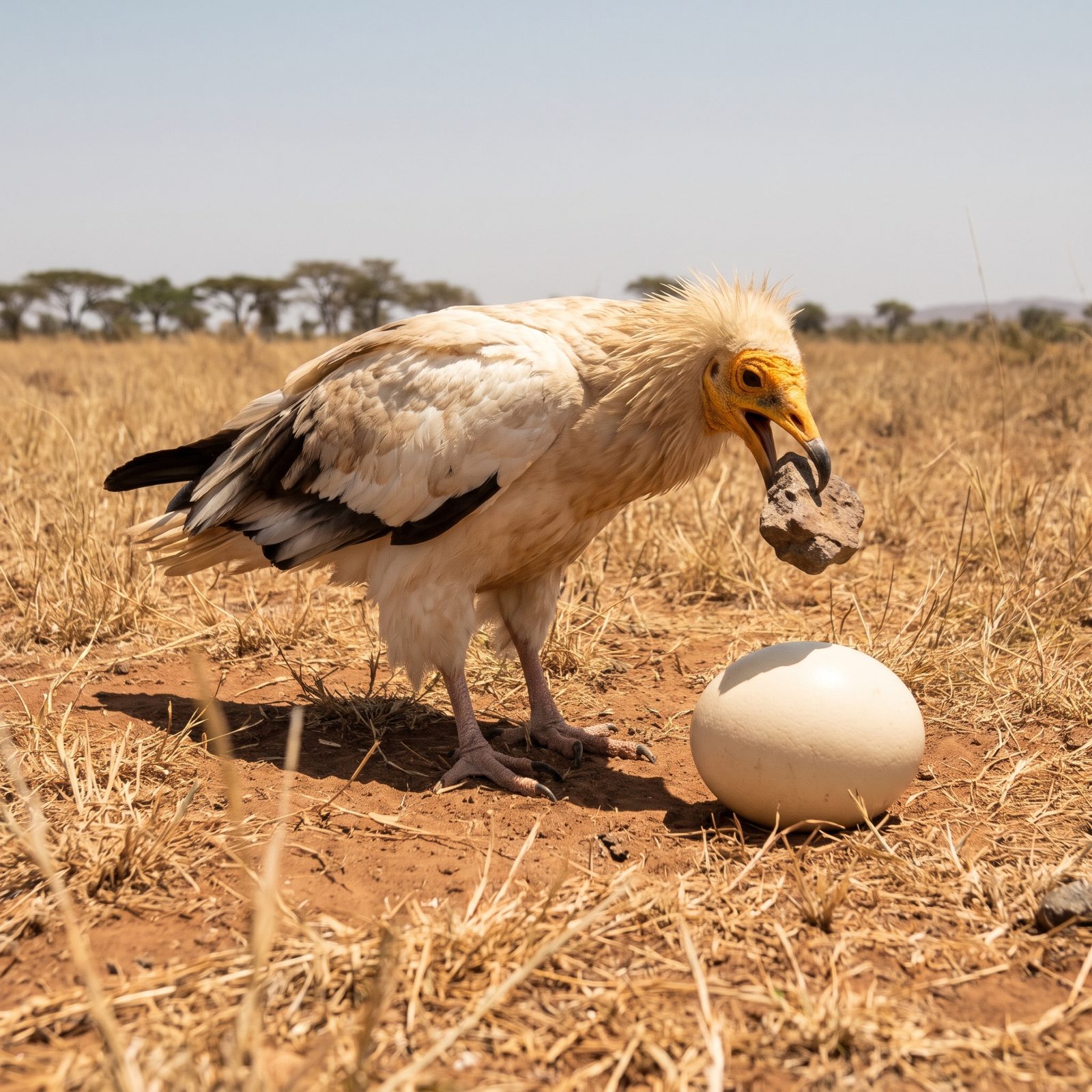
Ostrich eggs have shells thick enough to stand a grown person’s weight on. An Egyptian vulture can’t crack one by pecking, so it picks up a stone, winds back, and throws.
This is one of the earliest documented cases of tool use in birds, noted by scientists back in the 1960s. Young vultures aren’t born knowing the trick. They learn it by watching, so the skill gets passed down the generations like a family recipe.
12. Eurasian Jay: It Buries Thousands of Acorns and Comes Back for Them
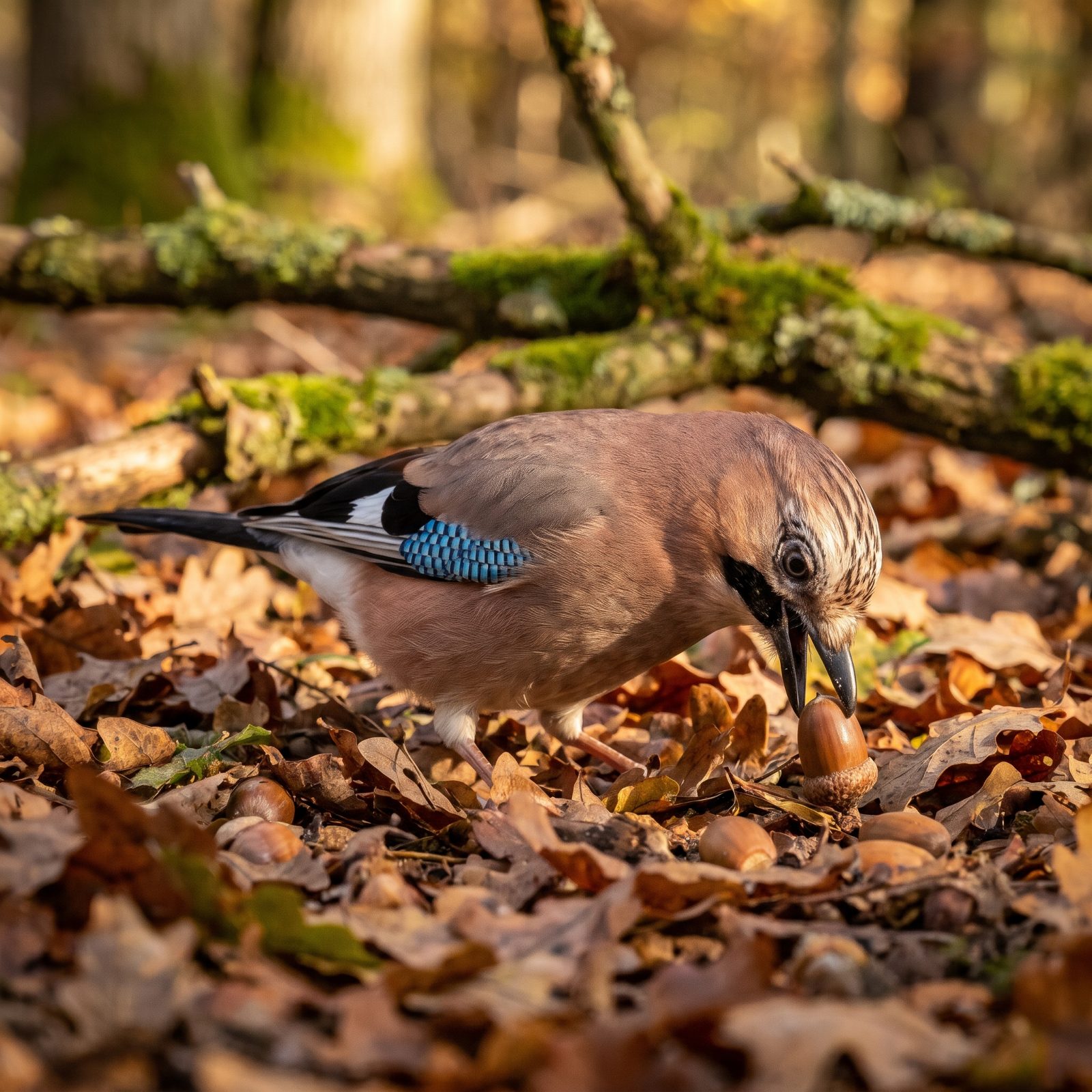
A single jay can bury thousands of acorns across one autumn. The remarkable part isn’t the hiding. It’s the restraint.
Rather than gorge on a glut, the jay plans for lean months, scattering surplus across a wide area and recovering it through winter. Experiments show jays even cache based on what they expect to want later, not just what they crave right now. That is a bird making a decision for its future self.
The ones it forgets become oak trees. Jays are, in effect, foresters who plant far more woodland than they ever eat.
11. Black Kite: It Carries Burning Sticks to Spread Fire and Flush Prey
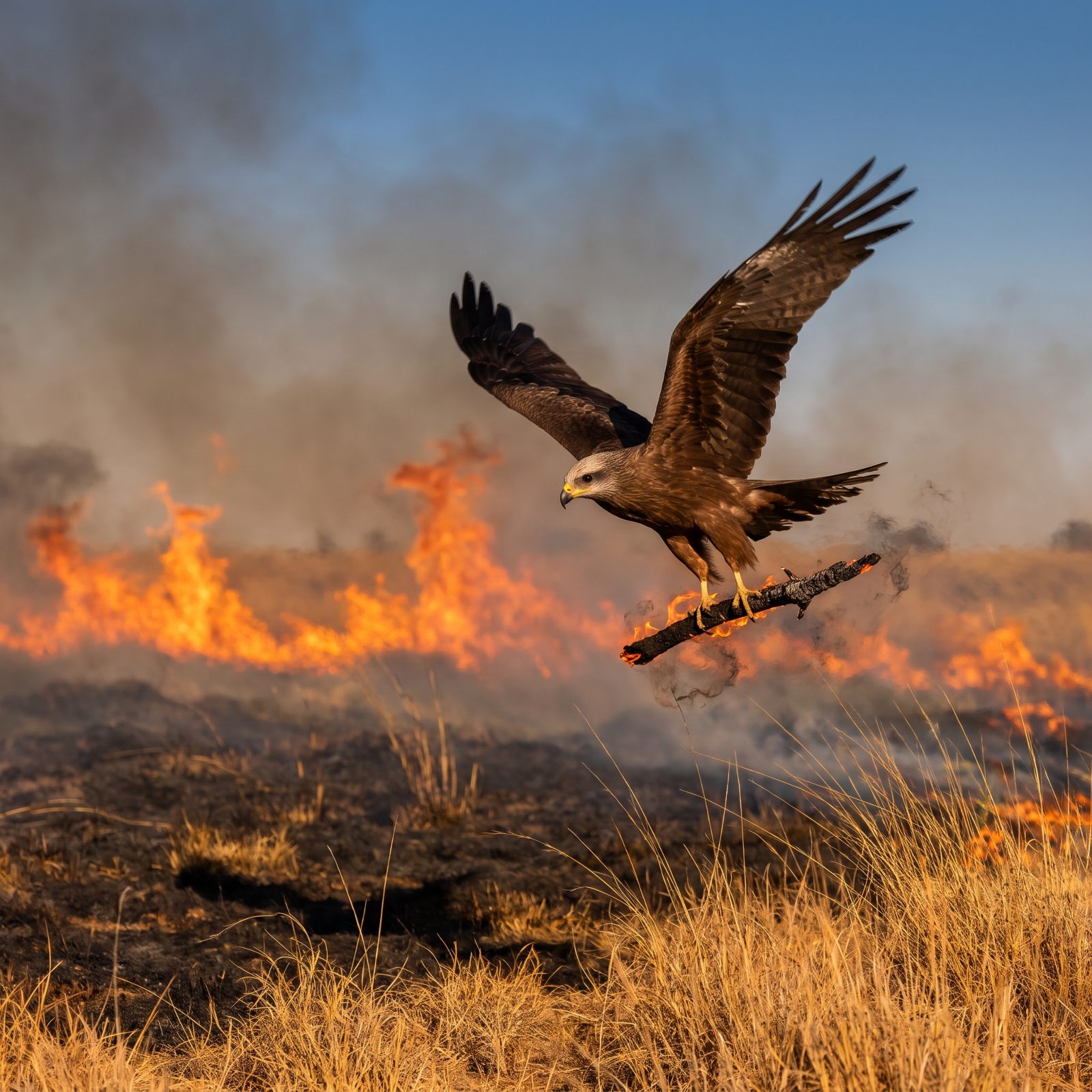
Some birds do not just use fire. They spread it.
Across northern Australia, Aboriginal observers and later field researchers have watched black kites and other raptors lift smouldering sticks from a blaze and drop them into dry grass ahead of the fire line. The new flames flush out insects, lizards and small mammals, and the kites feast on the panic.
Reports stretch back generations in Indigenous knowledge, and a formal 2017 paper in the Journal of Ethnobiology compiled the accounts. A bird that recruits fire as a hunting partner rewrites what we thought only humans could pull off.
10. Hooded Crow: It Reels In a Fisherman’s Line Through a Hole in the Ice
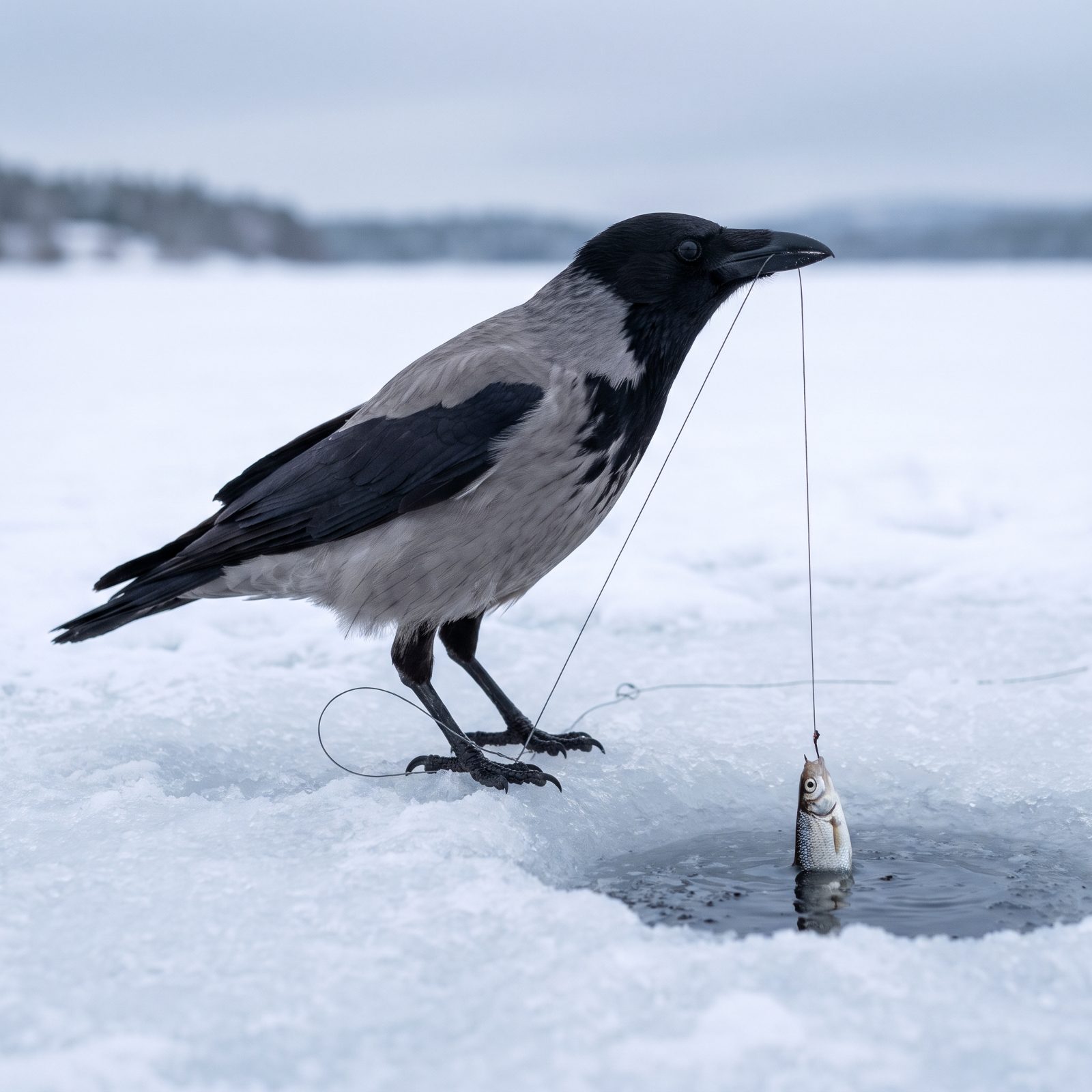
Ice fishers in Scandinavia and northern Russia leave their lines in drilled holes and wander off to warm up. Hooded crows have learned the move.
A crow grabs the line, hauls it up a beakful at a time, and stands on the slack with one foot so the fish can’t slide back under the ice. Pull, pin, pull again, repeated until the catch is theirs. It’s a full multi-step sequence, worked out and executed without a single lesson from us.
9. Adélie Penguin: It Swipes Nest Stones the Second a Neighbor Turns Its Back
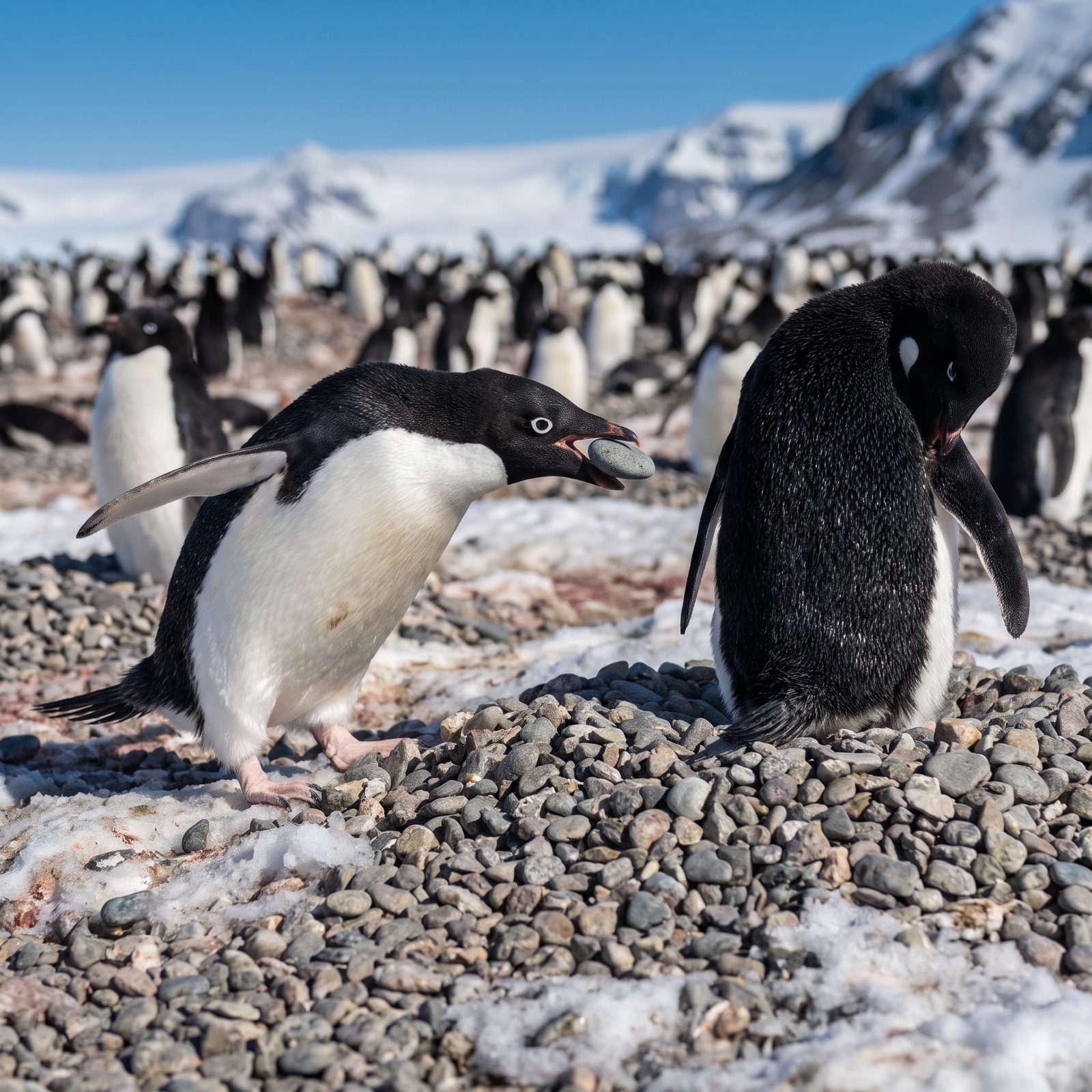
On the Antarctic shore, pebbles are currency. Adélie penguins build their nests from stones to keep eggs off the freezing meltwater, and good stones are maddeningly scarce.
So they steal. A penguin waits for a neighbour to wander off or glance away, then calmly lifts a prime pebble and shuffles it back to its own mound. The watching and the timing are deliberate. It reads the moment, moves when the coast is clear, and keeps a straight face the whole way home.
8. Great-Tailed Grackle: It Cracks New Problems With No Special Tools at All
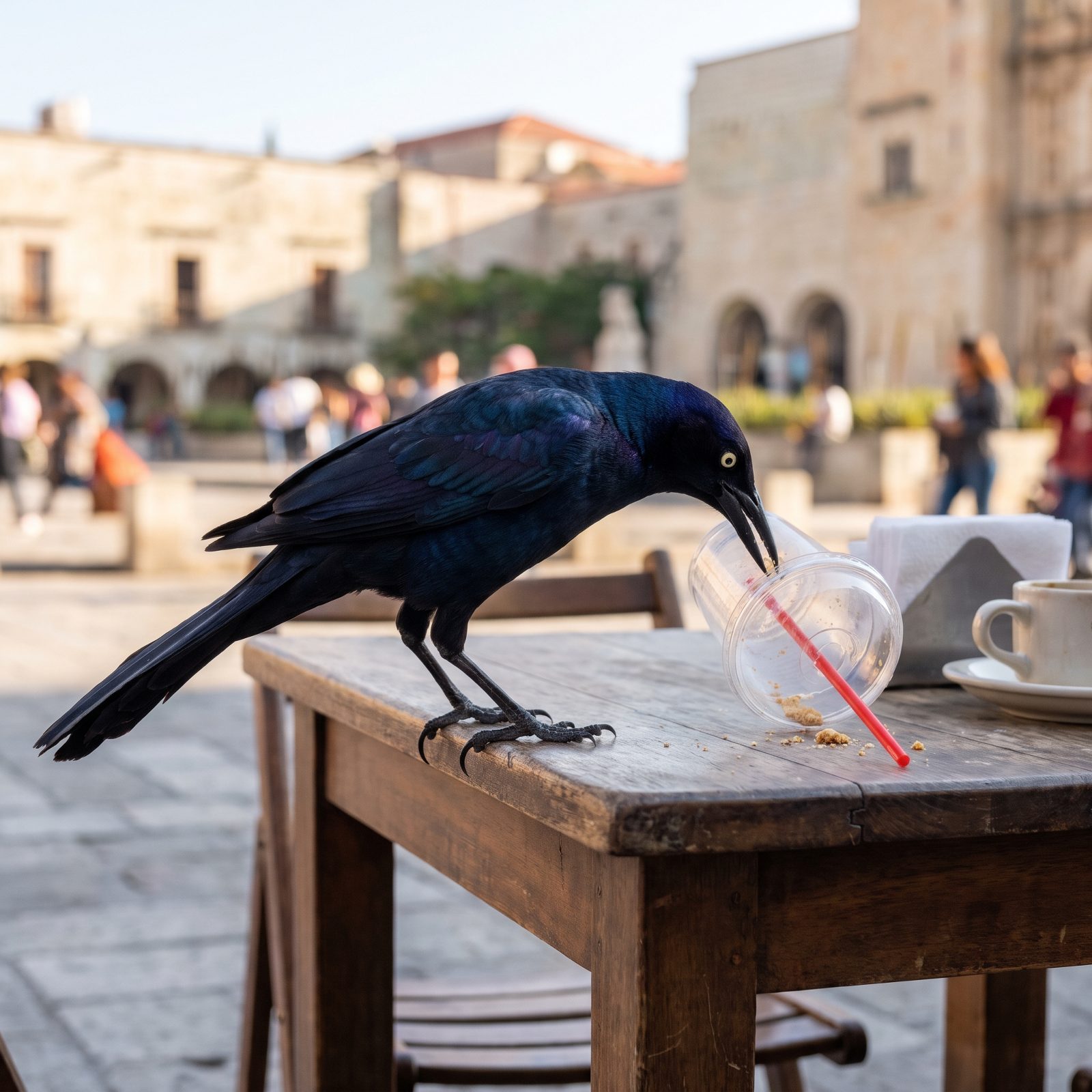
Great-tailed grackles are the city birds that keep surprising scientists. Researchers at UC Santa Barbara and elsewhere hand them novel puzzles, little boxes and levers they’ve never seen, and the grackles crack them through flexible trial and error.
No specialised tool. No hardwired trick. They adapt on the spot, which is exactly why they’re thriving across parking lots and plazas from Texas down into Central America.
7. European Starling: It Mimics Your Ringtone, Car Alarms and Factory Noise
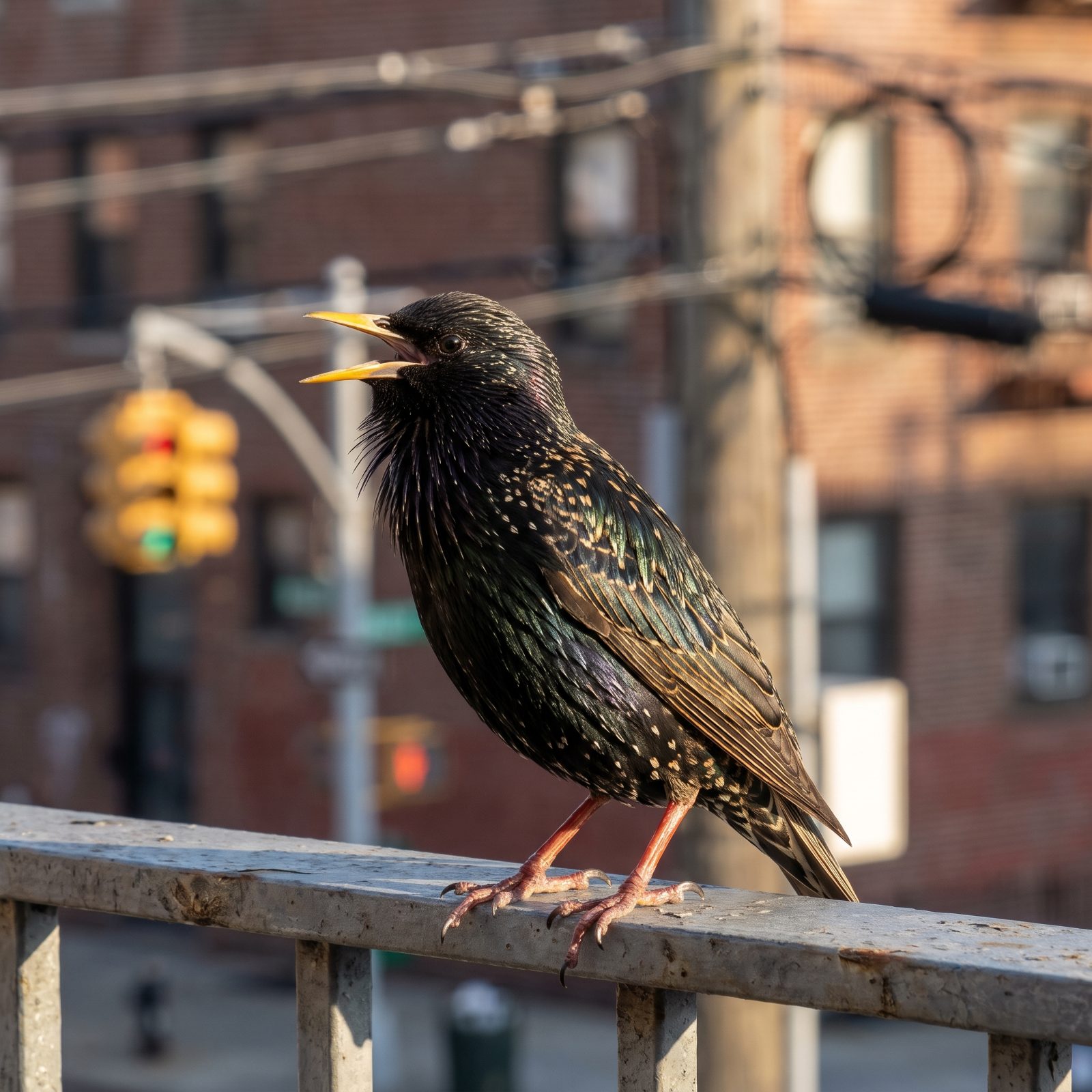
That phone ringing in the park might be a bird. European starlings are vocal mimics, and they fold the sounds of our world straight into their repertoire.
Car alarms, ringtones, machinery, even human speech in captive birds, all get copied and woven into their chatter. Mozart famously kept a pet starling that reportedly mangled a phrase of his own music right back at him.
They’re not mimicking to talk to us. They simply absorb whatever soundscape they live in, and ours happens to be crammed with beeps.
6. Palm Cockatoo: It Manufactures Its Own Drumsticks and Trims Them to Shape
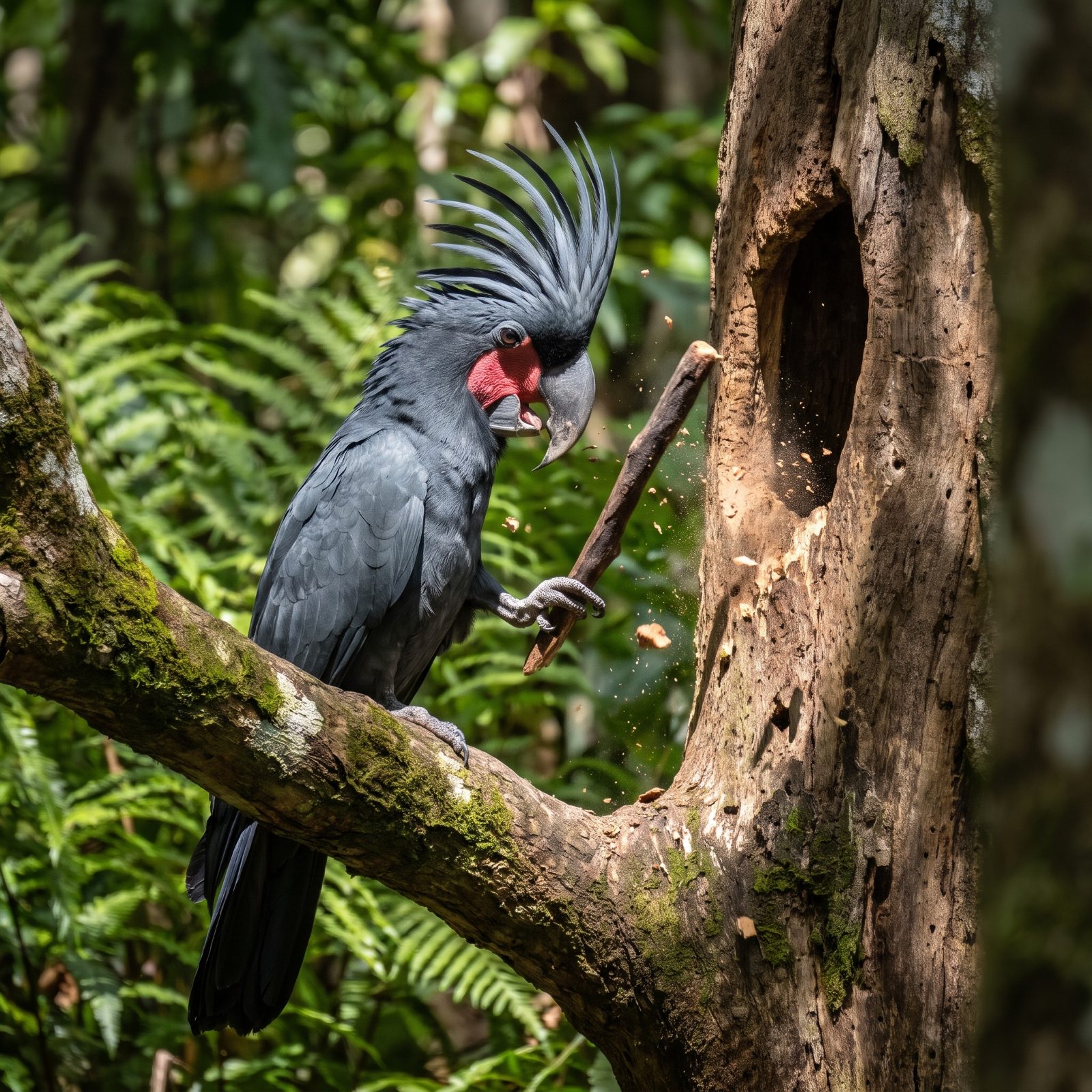
This is a bird that builds an instrument.
Palm cockatoos in far north Queensland snap off a stick, strip it, and whittle it into a drumstick, then grip it in one foot and beat a rhythm against a hollow trunk. Research led by Robert Heinsohn found that each male keeps his own personal beat, as distinct as a signature.
No other animal besides us is known to craft a tool purely to make music. Not hunting, not feeding, not nest-building. It’s display, and maybe something close to style.
A cockatoo whittling a stick to the right thickness, then keeping a steady beat, is the closest the animal world comes to a drummer tuning a kit.
Watch one at work and the line between instinct and artistry gets harder to draw than you’d ever expect.
5. Common Myna: Clocking the Lunch Rush at Outdoor Cafés
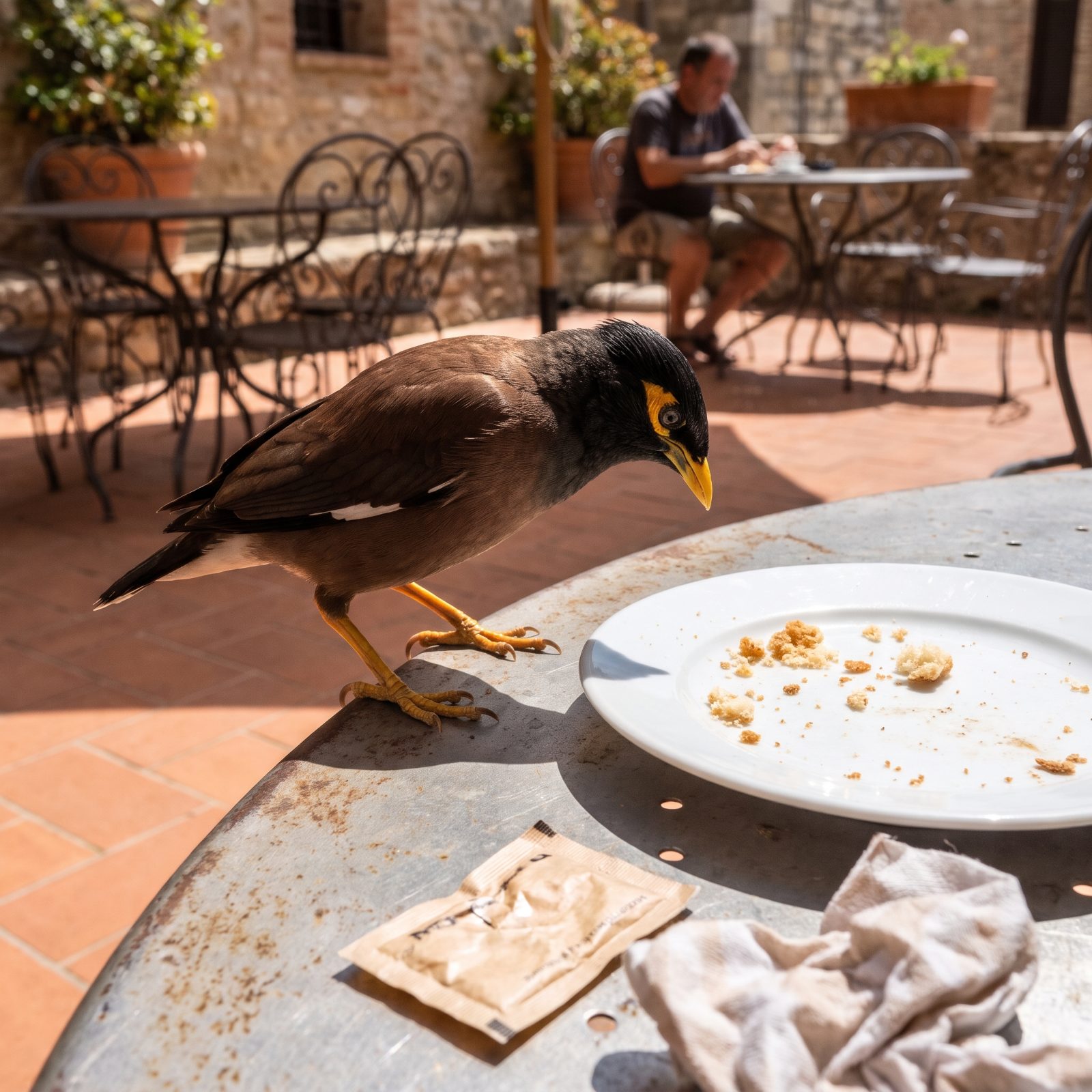
Watch an outdoor café in Sydney or Dubai long enough and you’ll notice the mynas don’t arrive at random — they show up when the tables fill. That’s the giveaway. These birds have learned our schedule, not just our scraps.
A myna waits on a railing, times the gap between a diner standing up and a server clearing the plate, then drops in during that narrow window. It’s reading human behavior, not food. Entirely different skill, and it’s exactly why mynas flourish in cities that poison, trap and curse them.
4. Peregrine Falcon: Treating the Skyline Like a Granite Cliff
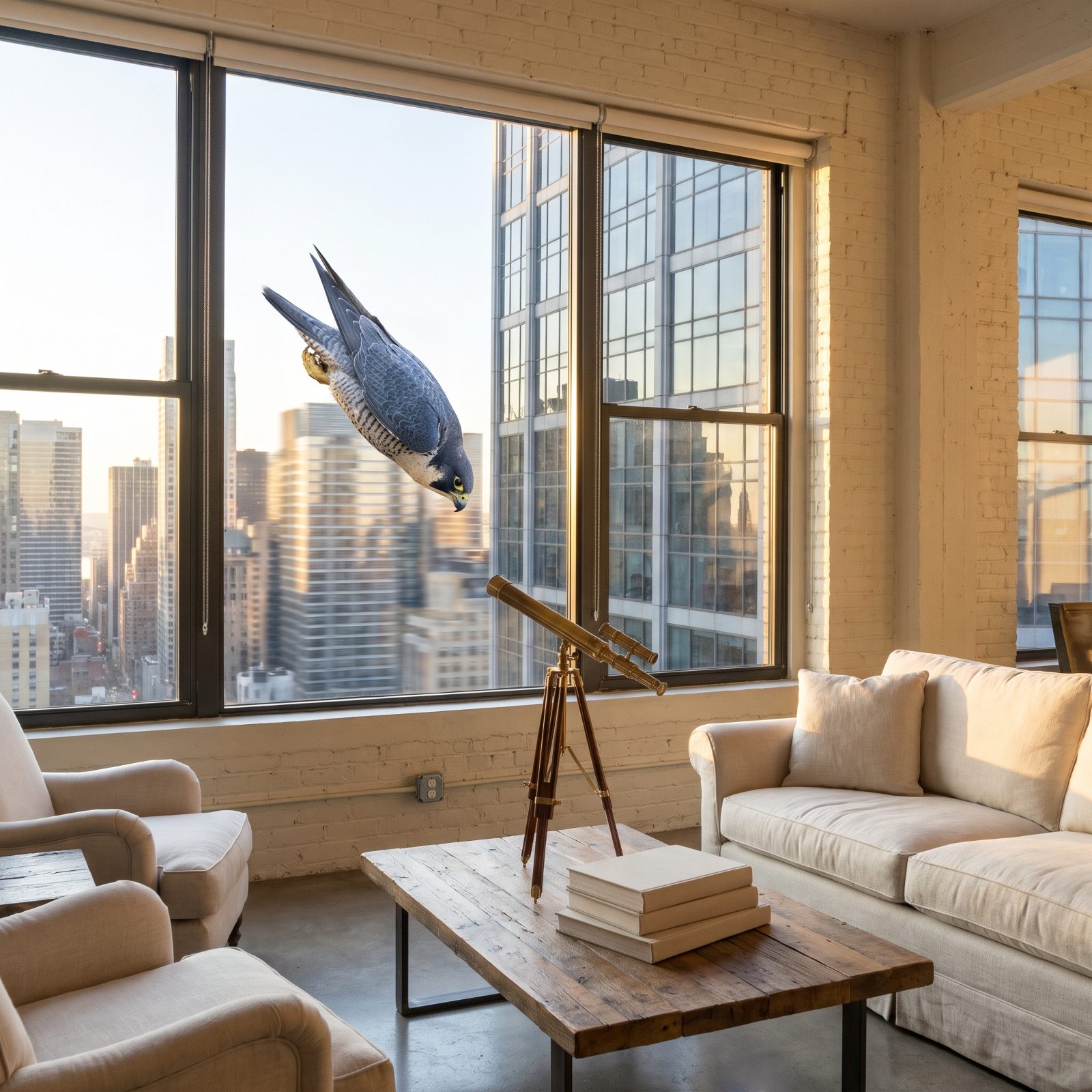
The fastest animal on Earth figured out that a 40-story office tower is just a cliff with better lighting.
Peregrines had nearly vanished from North America by the 1970s, poisoned out by DDT. The comeback happened partly downtown. Ledges on bridges and high-rises mimic the rocky bluffs the species evolved to nest on, and up there you get no predators and an endless supply of pigeons and starlings wandering below.
A stooping peregrine hits speeds measured above 240 miles per hour. In a city, that dive ends against mirrored glass instead of stone — same ancient instinct aimed at a brand new wall.
3. Cattle Egret: Following the Tractor Instead of the Cow
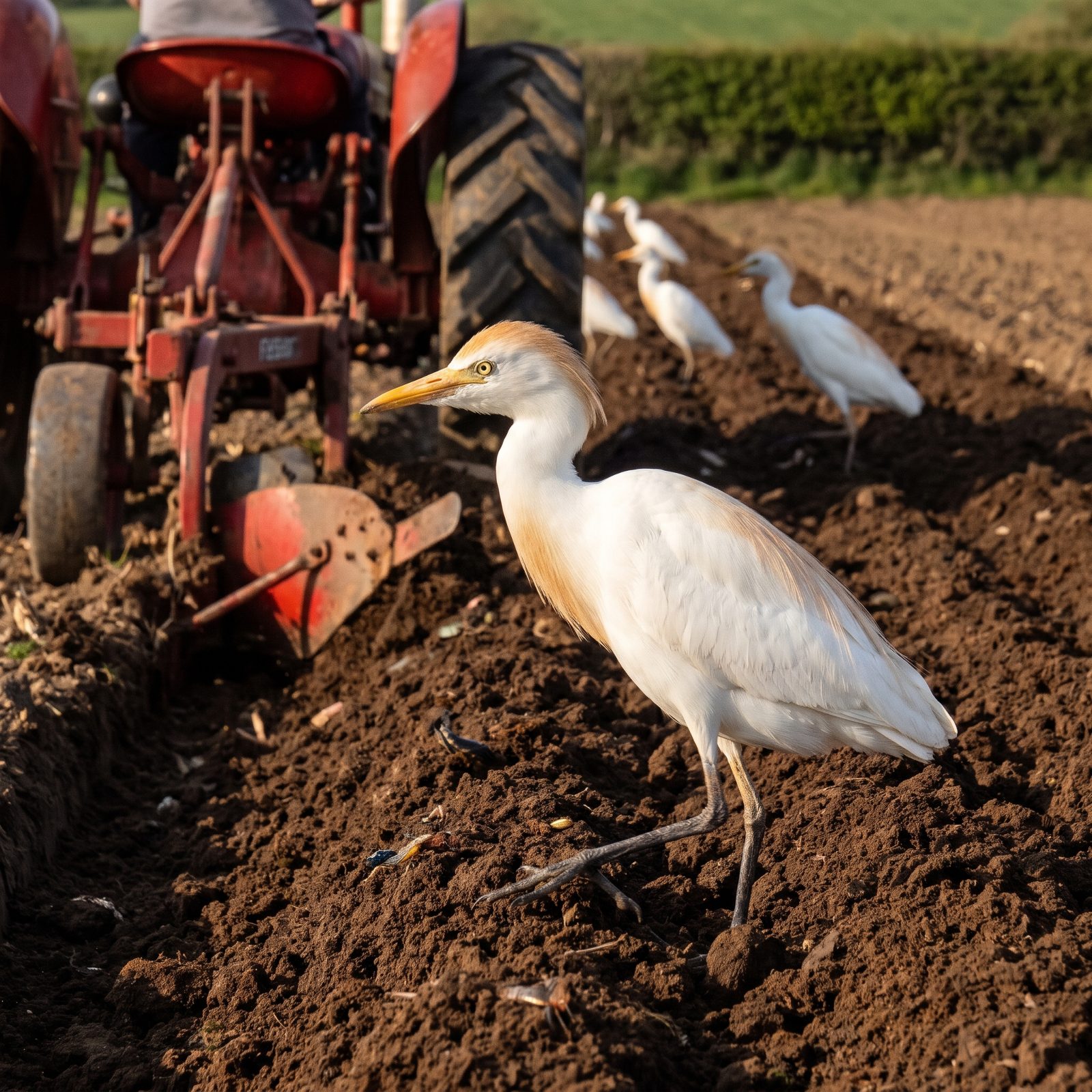
The name says cattle. The behavior says whatever moves the dirt.
Cattle egrets evolved to shadow large grazing animals that kick insects out of the grass as they walk. Then tractors arrived, and the egrets made the swap without blinking — a plow turning soil exposes far more grubs, crickets and frogs than any cow ever could, so now you’ll spot a tidy line of white birds trailing the machinery across a field.
Small detail, but it tells you something real about these birds. They were never loyal to cattle. They were loyal to the principle of disturbed ground, and the tractor just happened to do the job better.
2. Black-Capped Chickadee: Encoding Danger Levels Into Its Call
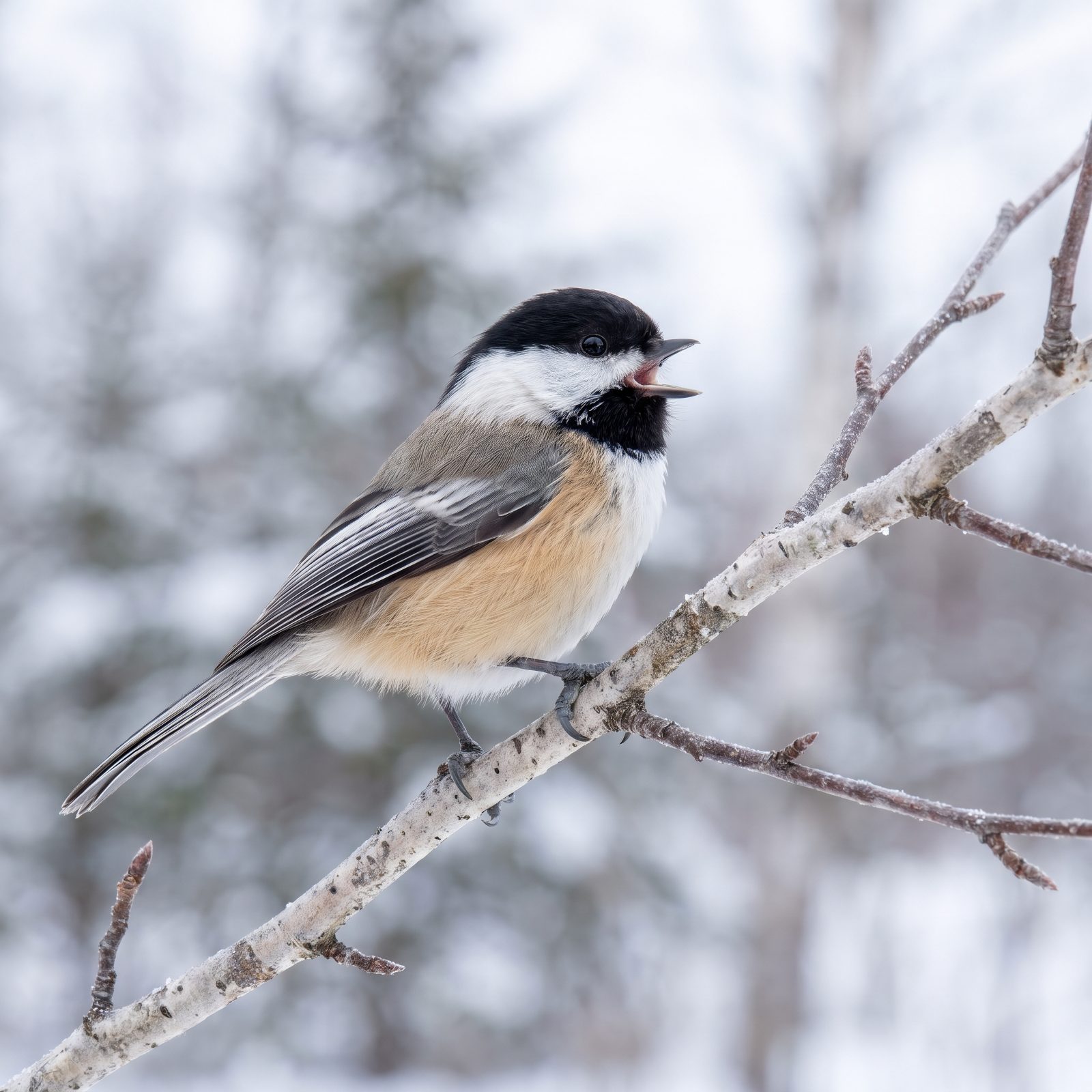
That cheery “chick-a-dee-dee-dee” is actually a threat-assessment report.
Research shows black-capped chickadees pack more “dee” notes into their alarm call when the predator is more dangerous. And here’s the twist: small agile hunters like a pygmy owl — the ones most likely to actually catch a chickadee — trigger the most dees. A big slow hawk gets fewer.
Other birds nearby eavesdrop and respond to the count. The chickadee isn’t just shouting danger. It’s broadcasting the size, the agility and the urgency of one specific threat, and a whole neighborhood of species acts on that intel.
1. Satin Bowerbird: Hoarding Blue Bottle Caps and Clothespins
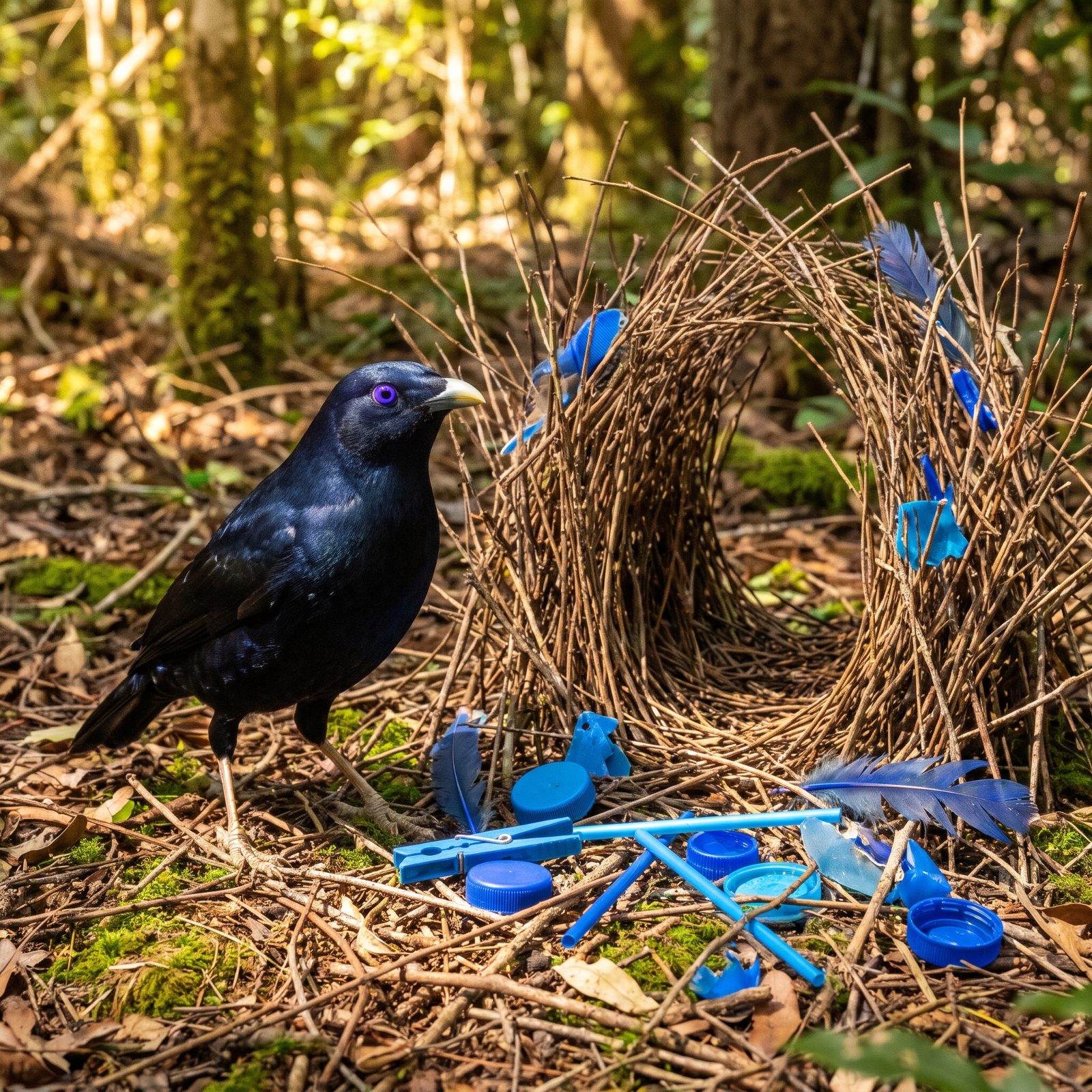
A male satin bowerbird builds a twig avenue on the forest floor, decorates it, and keeps exactly one color in mind. Blue. He wants it so badly he’ll steal bottle caps, straws, clothespins and ballpoint pen barrels to get more.
Blue is scarce in the Australian rainforest, which is probably why it became the prize in the first place. Human trash handed these birds a bottomless supply, and they grabbed it. A strong collection of blue baubles signals a male worth mating with, so he guards his hoard and raids rivals’ bowers to wreck theirs.
Honestly? The first time you learn a wild bird deliberately sorts litter by color, it rearranges everything you thought you knew about taste.