
Most of North Carolina’s underground is off-limits, and the reason sounds like science fiction. A fungus called white-nose syndrome has wiped out whole bat colonies, so the U.S. Forest Service banned entering any cave in the Pisgah and Nantahala national forests as of September 11, 2025, hoping to slow the spread. Which makes the handful you can still legally duck into something special. Cold air that never budges. Trout swimming blind in total darkness. Rock that peeled off a cliff after hundreds of millions of years of patience. Here are the ones still open, with access details, geology, and the odd history behind each.
Please note that some of the images in this article were created with the assistance of AI.
5. Linville Caverns: Trout Swim in the Dark Under Humpback Mountain
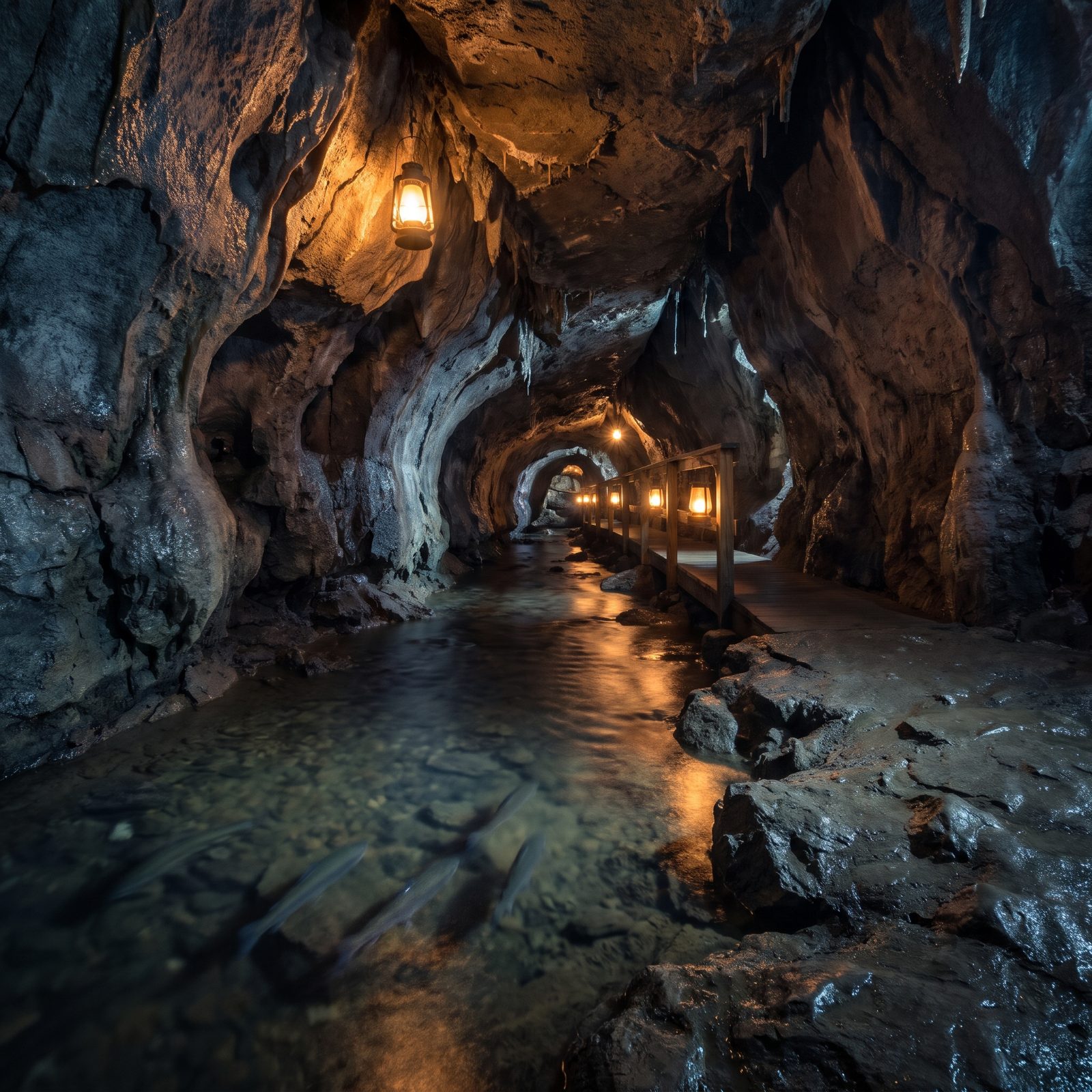
The one that bills itself as North Carolina’s only show cavern sits off US 221 North in Marion, and it’s still alive in the literal sense — water runs through it right now. The cave holds a steady temperature of about 50 degrees all year, so you walk from a summer afternoon into sweater weather in about three steps.
Trout live in the underground stream. So do salamanders and bats, which is why the guides want your flash off. The 30-minute tour passes Civil War deserter hideouts and flood lines from the 1940s and from 2004, still smeared across the walls like high-water tattoos.
Admission runs $15 for adults, $14 for seniors 62 and up, $13 for kids 4 to 12, free under 4.
4. Tory’s Den: The 20-Foot Loyalist Hideout at Hanging Rock
About 27 miles north of Winston-Salem, in Stokes County, a short walk from the Tory’s Den lot drops you at a cave only 20 feet deep. Local tradition says Loyalists hid here during the Revolution, hence the name. No velvet rope, no admission — just a hole in the rock and a story.
That same quick trail reaches Tory’s Falls, which plunges roughly 240 feet and ranks as the park’s tallest waterfall. Two sights, one easy out-and-back.
Park at 1185 Charlie Young Road. The trailhead sits at the east end of the lot, and entry is free. Watch for Wehrle’s salamander and Schweinitz’s sunflower, both listed by the state parks folks among the local residents.
3. Boone’s Cave: Where a Teenage Daniel Boone May Have Wintered on the Yadkin
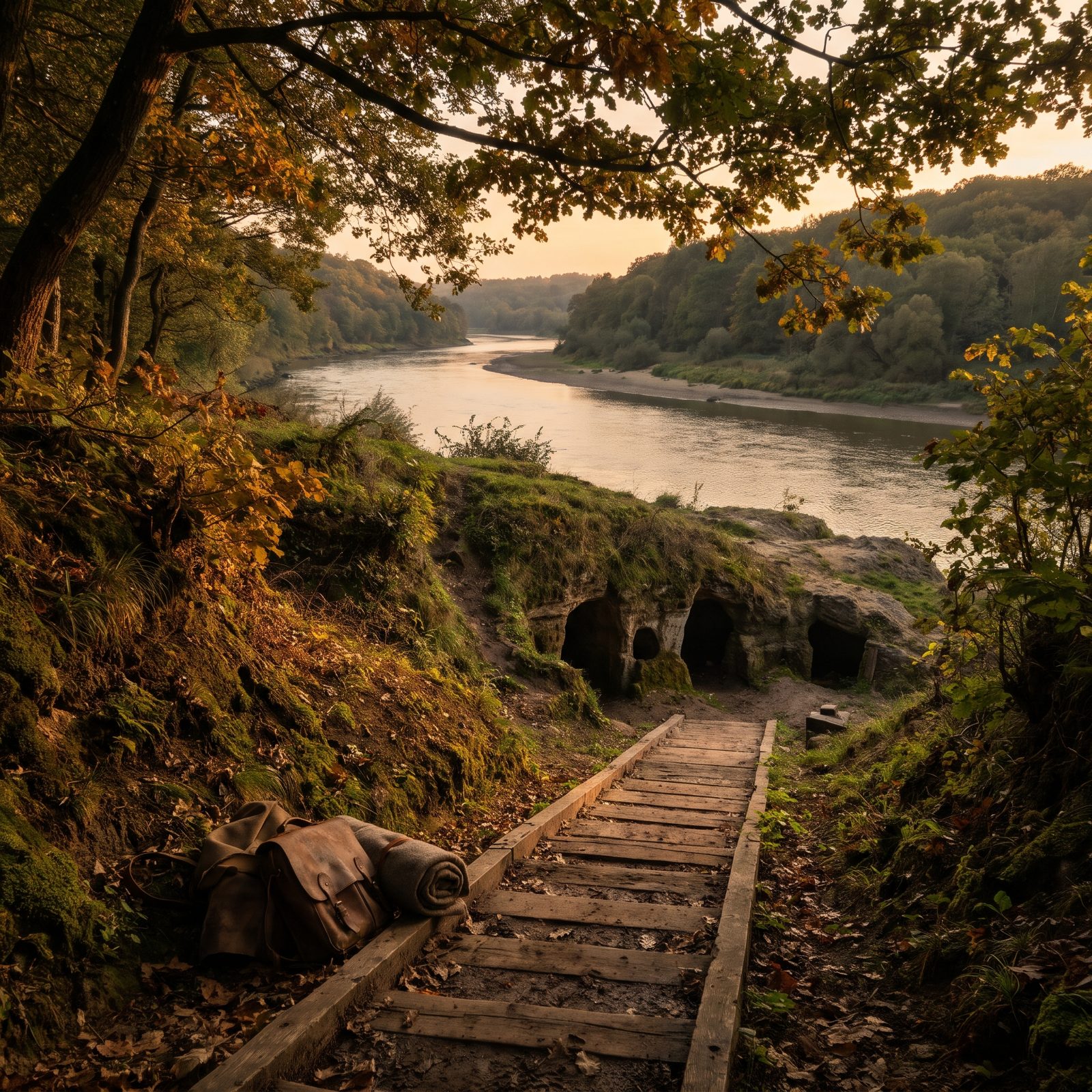
Three small caves tucked into the riverbank, a set of stairs down to them, and a legend nobody can prove. That’s Boone’s Cave Park, a free Davidson County spot at 3552 Boone’s Cave Road on the Yadkin. Family tradition holds that Squire Boone’s clan — a teenage Daniel among them — spent their first North Carolina winter here around 1750 to 1751. The documents to back it up simply don’t exist.
The cave is tiny and sits right against the water, so a visitor review flat-out warns you to take care after rain. Good advice.
About 46 acres here make up a Natural Heritage Site, with a hardwood forest and wildflowers you’d expect in the mountains, not the Piedmont. The 0.66-mile Cottonwood Trail runs from the cave to an eastern cottonwood more than a century old.
2. Gneiss Cave: A Slab That Slid Off the Chimney 535 Million Years Ago
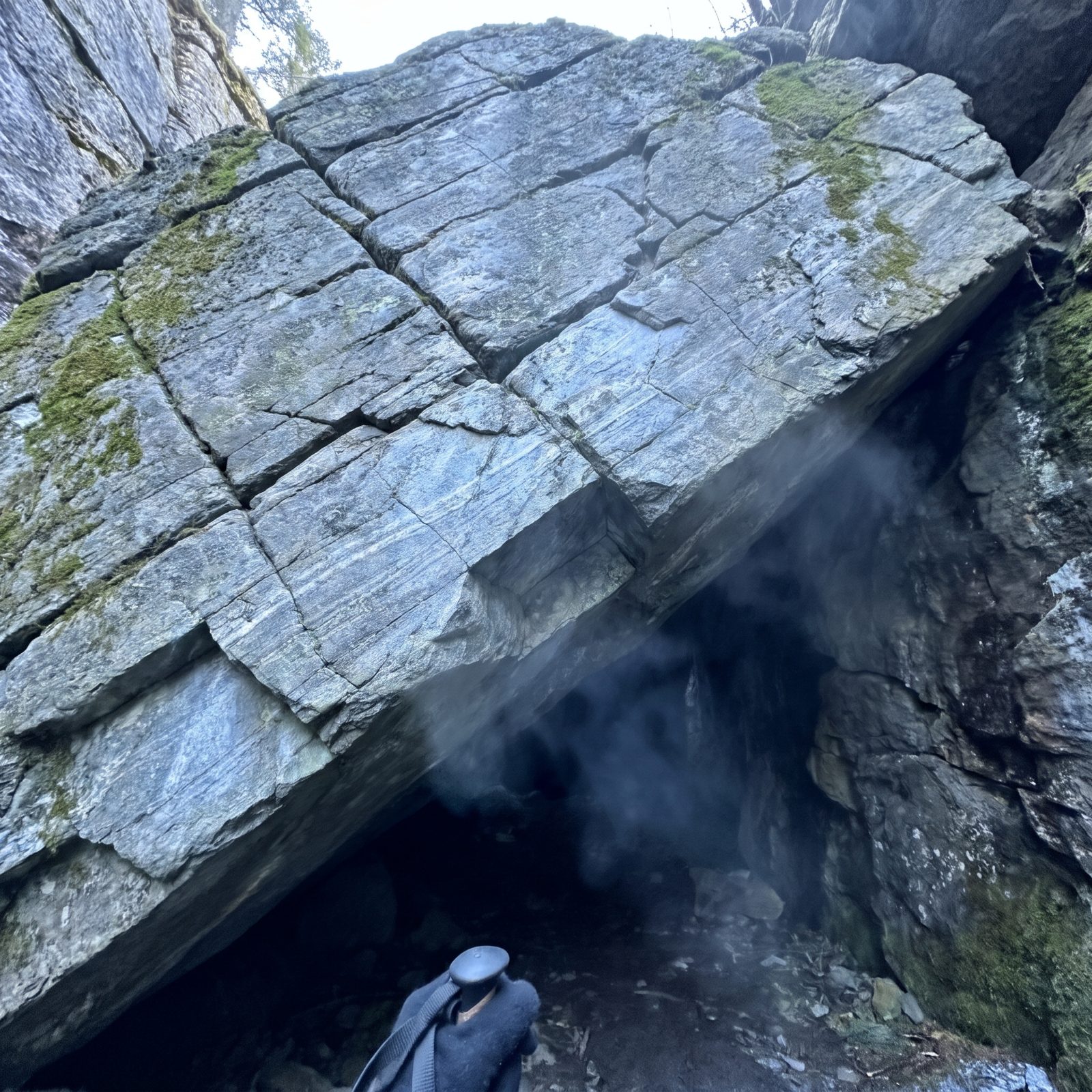
You duck your head, drop down a couple of steps, and feel the air go cool. That’s Gneiss Cave, right at the start of Chimney Rock’s Outcroppings Trail. It’s a talus cave, formed when a huge slab peeled off the cliff and slid to the bottom, leaving a gap you can walk into.
The name comes from Henderson Gneiss — pronounced “nice” — the 535-million-year-old rock that makes up the Chimney itself. Keep going up the trail’s 494 or so steps and you’ll pass features named the Grotto and the Subway.
One thing to plan around: the park reopened June 27, 2025, nine months after Hurricane Helene. At reopening, access ran by detour through Lake Lure and reservations were required.
1. Indian House Cave: A High Rock Shelter on Grandfather Mountain (Check Before You Go)
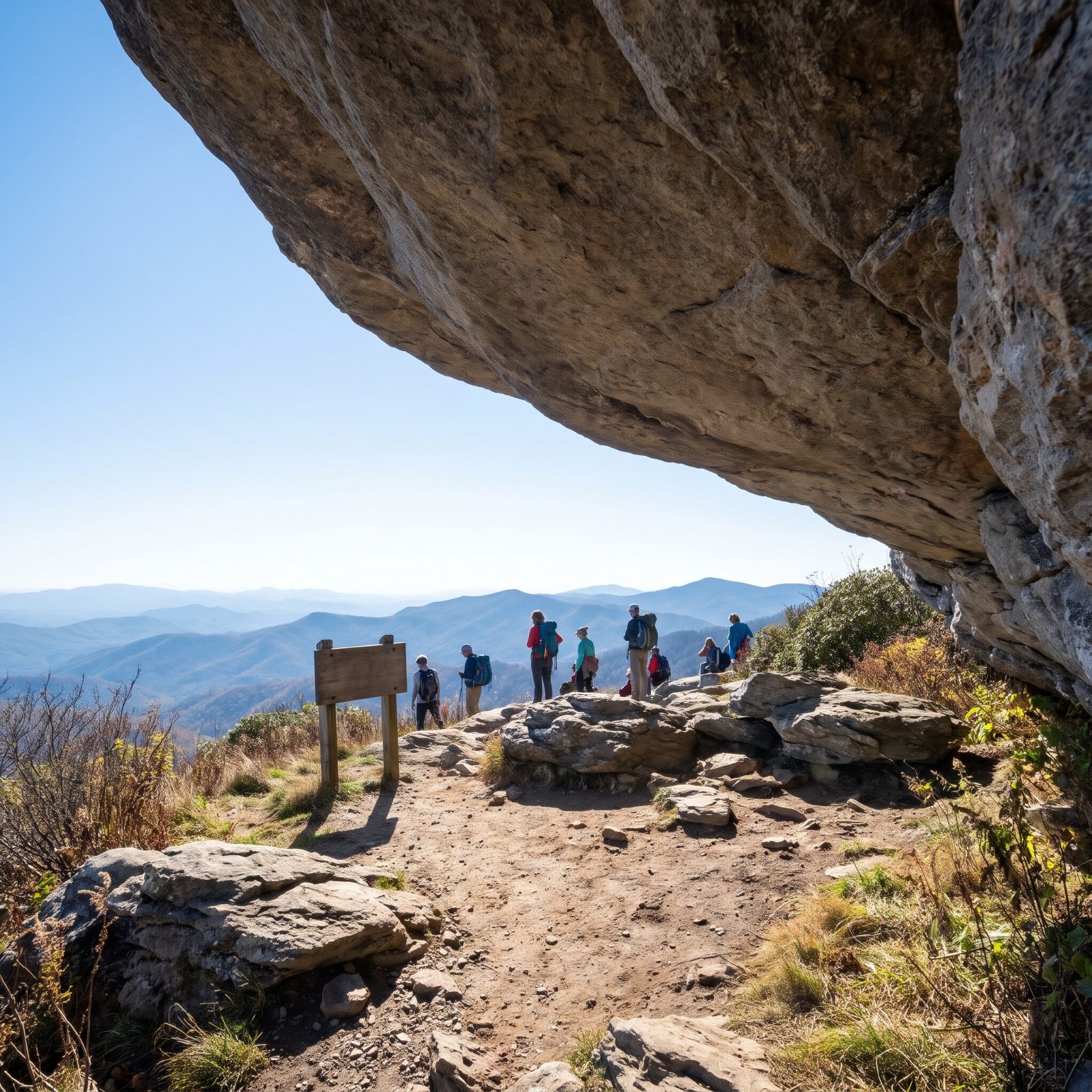
Strictly speaking this is a rock shelter under an overhang, not a true cave, and the distinction matters to the people who study it. Indian House Cave counts as an important Native American archaeological site. You’ll find it as a side trip off the Grandfather Trail near Attic Window Peak, marked right on the official state parks map.
The trails are free. The fast way in goes through the private Grandfather Mountain attraction, which charges admission; come instead from the Profile Trail area and you’re in for several hours of hard hiking.
Here’s the catch, and it’s a real one. One travel guide reports the shelter may be closed to protect bats from white-nose syndrome. Call the park and confirm current access before you plan anything around it.