
A bird the size of a paperback takes off from Alaska, points itself at New Zealand, and does not land for eight days. No food, no water, no rest. It burns half its body weight and arrives alive. That kind of thing happens constantly on this planet, and most of us sleep through it. Across oceans, deserts, river canyons and frozen tundra, animals pull off feats of endurance and navigation that would kill a human and leave an engineer stammering. Some follow the stars. Some follow magnetic fields. Some follow a hunger older than memory. These are the ones worth staring at.
41. Wildebeest Throwing Themselves Into the Mara River
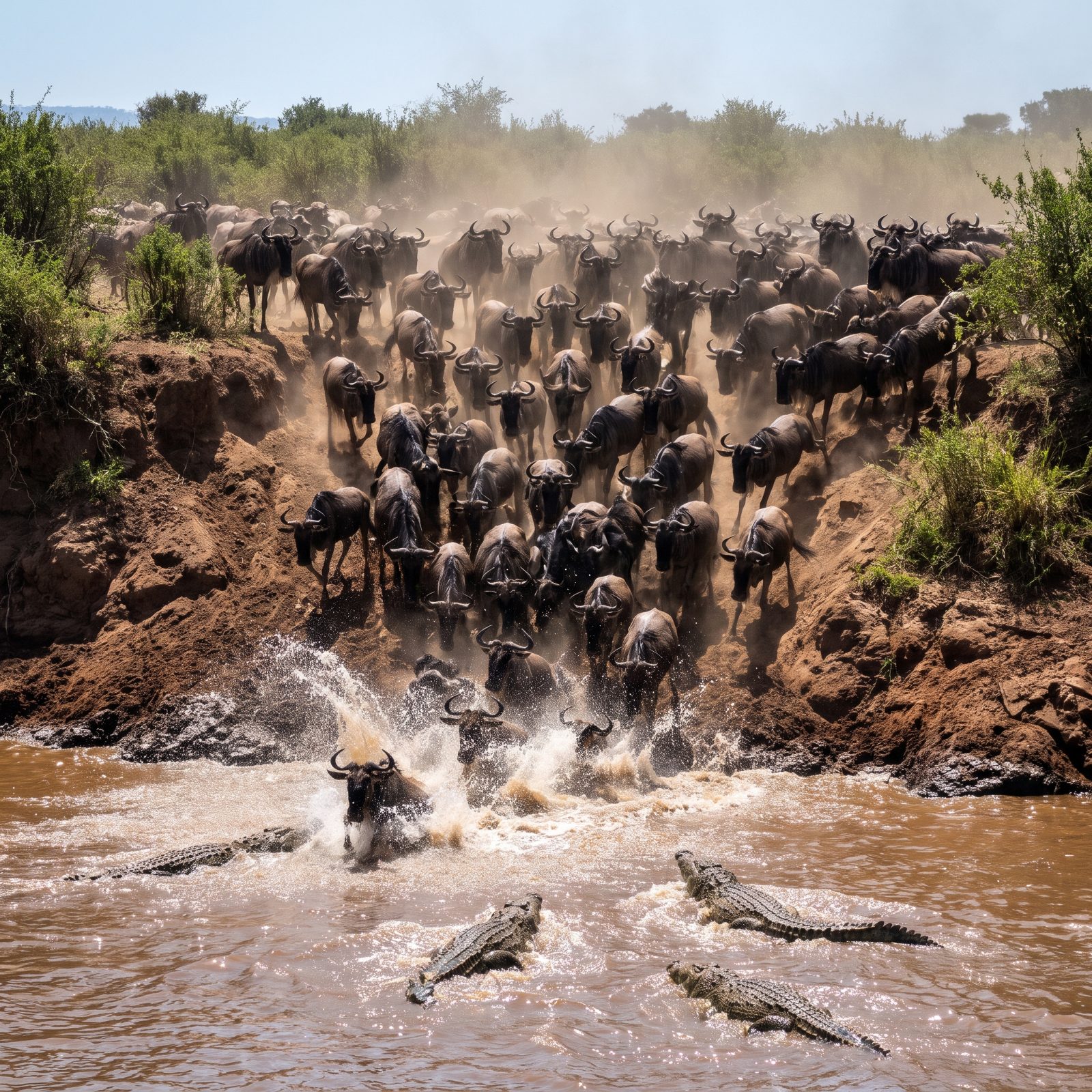
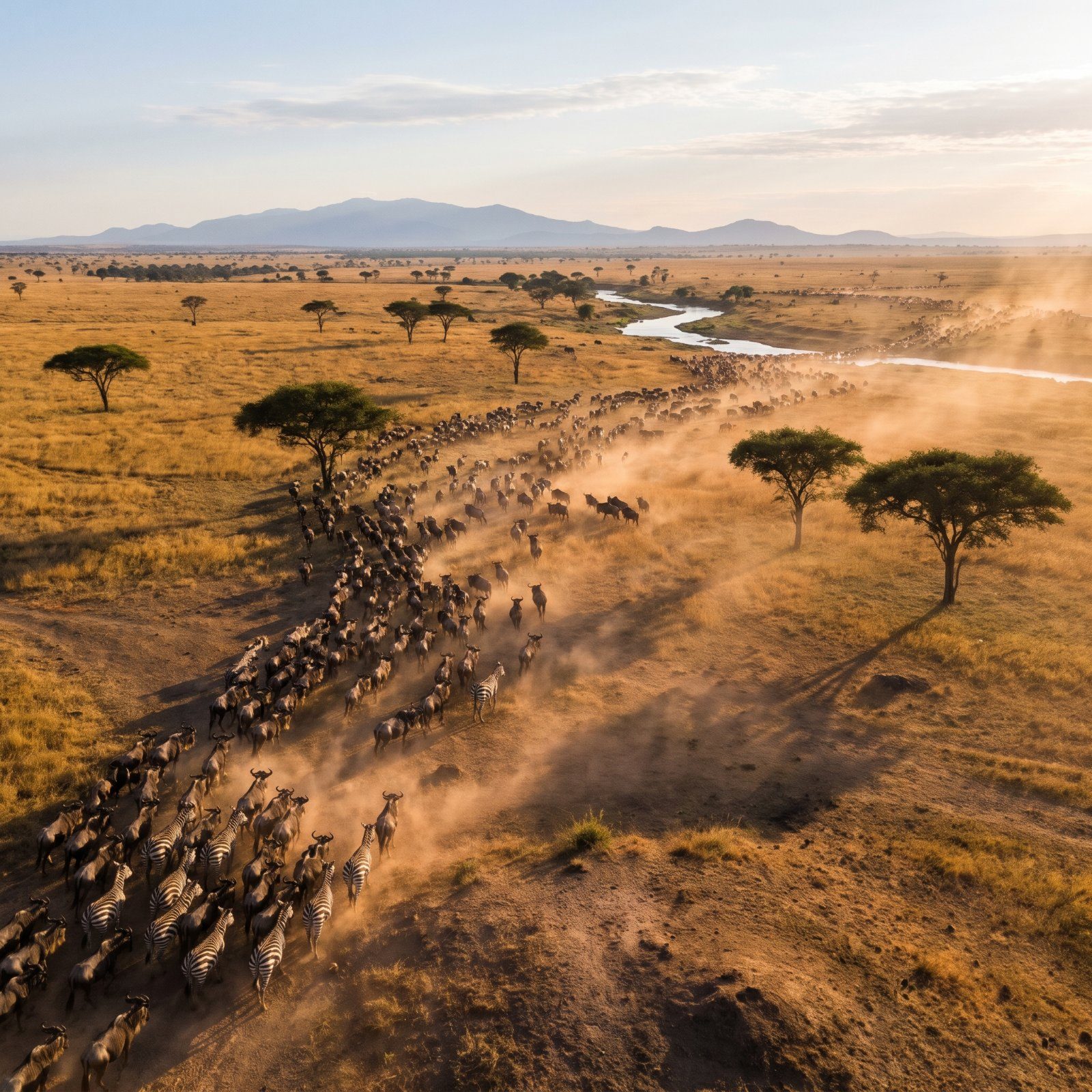
The crossing is the part everyone pays to see. It’s also the part that makes no sense if you think about it too hard. More than a million wildebeest spend the year chasing rain across the Serengeti-Mara, and the river sits right in the path like a tollbooth with teeth.
Crocodiles wait, the bank is steep, and the water takes the weak and the unlucky. The herd goes anyway, because the grass on the other side really is greener, as literally as that phrase can mean anything.
Here’s the detail nobody mentions. Wildebeest will cross, graze, then cross back the same river days later if the weather shifts. There’s no single heroic crossing — just a messy, repeating gamble driven by where the rain fell last.
40. Monarchs Finding a Forest They’ve Never Seen
This one should break your brain a little. No single monarch makes the round trip. The butterfly that leaves Canada in autumn winters in Mexico, then dies somewhere in the southern US on the way back, and it’s its descendants generations later that finish the trip north and eventually return south.
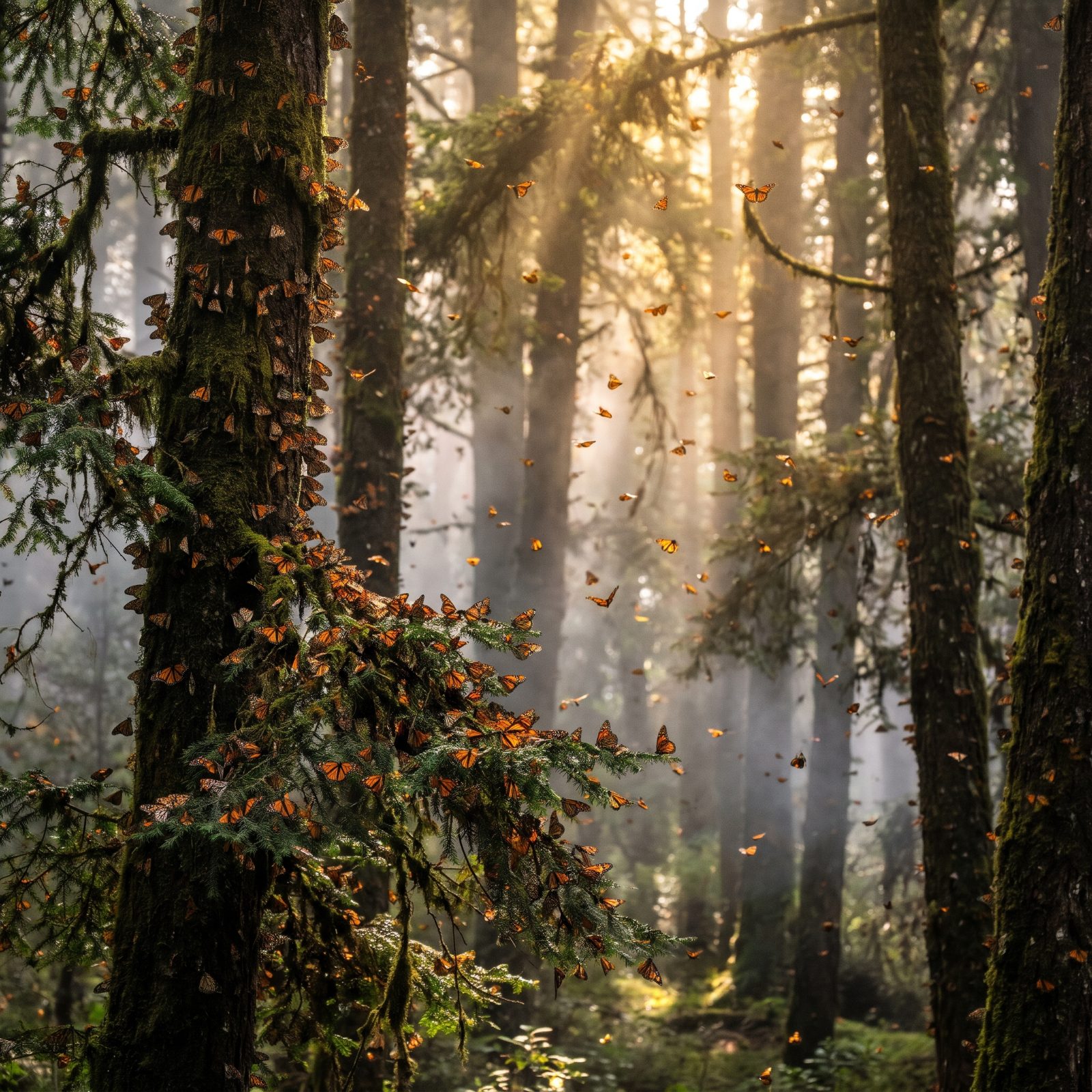
Which means the butterflies arriving in those Mexican fir forests have never once been there, and neither had their parents. They navigate to a specific few acres of mountaintop using an inherited sense of direction and a sun compass wired into eyes smaller than a pinhead.
They pile onto the oyamel firs by the millions, hanging like dead leaves until the branches sag. It’s one of the few insect migrations you can actually hear. On a warm afternoon the collective flutter sounds like soft rain.
39. The Sardine Run That Pulls in Every Predator at Once
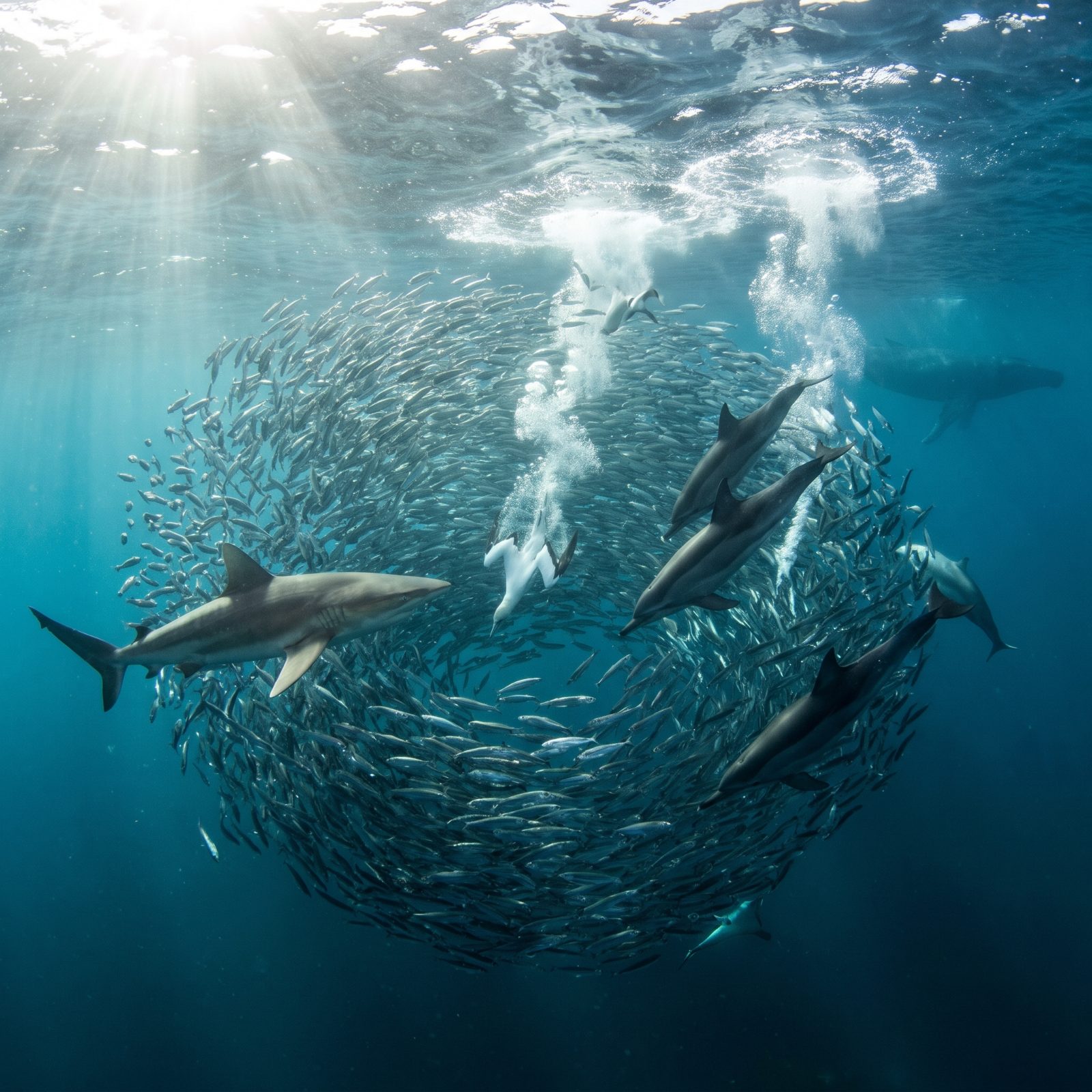
Billions of sardines ride a band of cold water up South Africa’s east coast around winter, and the ocean loses its mind.
Dolphins work in teams to split the shoal into bait balls. Gannets fold their wings and hit the water like javelins from thirty meters up. Sharks, whales, seals and the occasional baffled penguin all turn up to the same buffet, in what ranks among the largest gatherings of marine predators anywhere, compressed into a few frantic weeks.
People get one thing wrong about it. The run isn’t guaranteed. Some years the cold water doesn’t push far enough north and the whole spectacle just fizzles, and warming seas are making the big years rarer.
38. The Godwit That Flies Eight Days Without Stopping
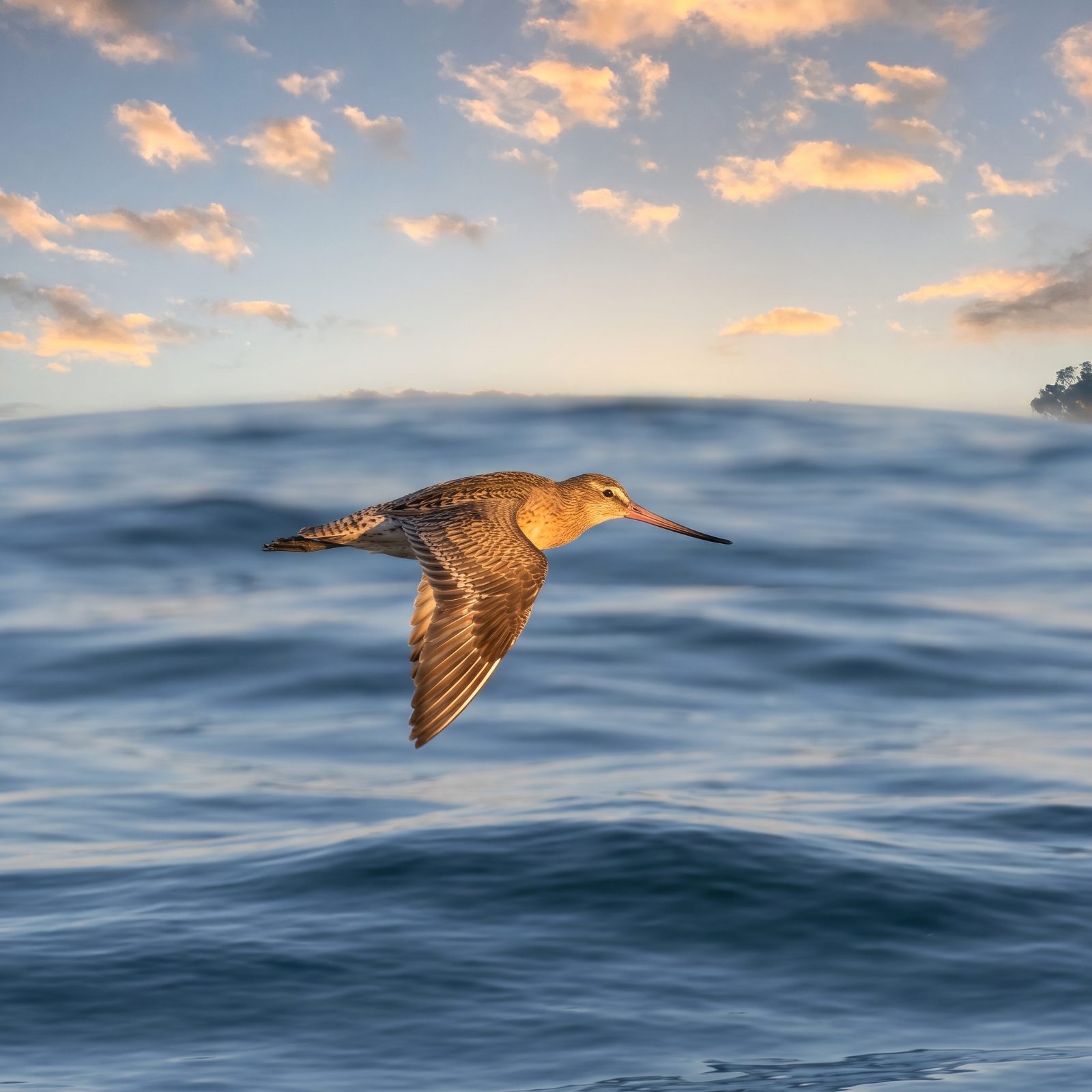
Eight days is a typical run to New Zealand, and the record flight went even longer. A satellite-tagged bar-tailed godwit flew from Alaska to Tasmania without landing — more than eleven days aloft, over eight thousand miles of open Pacific with nothing to perch on and nothing to eat.
Before leaving, the birds gorge until they’re almost spherical. Then their bodies do something borderline unbelievable: digestive organs shrink to save weight while flight muscles bulk up. They remodel their own anatomy for the trip, which is not a thing most living creatures get to do on demand.
And they can’t stop on water. Godwits aren’t ducks. If one goes down over the ocean, that’s the end. Every single flight is all-in.
Most Alaska godwits head straight for New Zealand, so an independent shorebird researcher who tagged the record-setting bird admits “It was a surprise that our first tracked juvenile went to Tasmania, for sure”
37. Sockeye Salmon Clawing Upstream to Die Where They Were Born
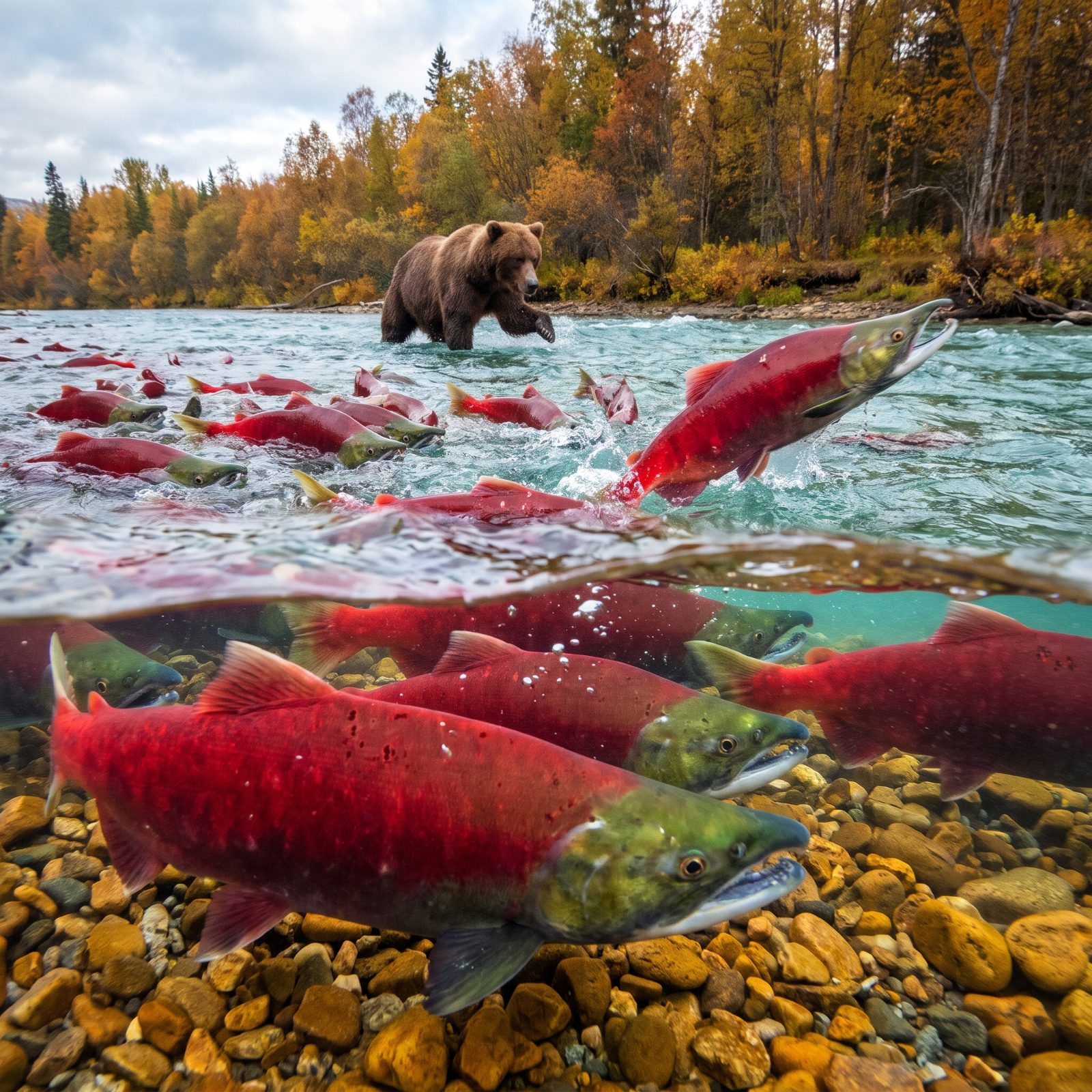
A sockeye leaves the river as a silver smolt, spends years fattening in the open Pacific, and then, when its time comes, finds its way back to the exact stream where it hatched. Not the general area. The stream. Sometimes the same stretch of gravel it wriggled out of.
It does this partly by smell, reading the chemical signature of its home water like a fingerprint. Then comes the brutal part. Once it enters fresh water it stops eating, its body flares to a brilliant red, its jaw hooks into a weapon, and it runs on borrowed time against the current and the bears.
They spawn, and then they die. All of them. There’s no return ticket, and the rotting bodies feed the forest that shades the next generation into being.
36. Caribou Herds Pouring Across the Arctic to Calve
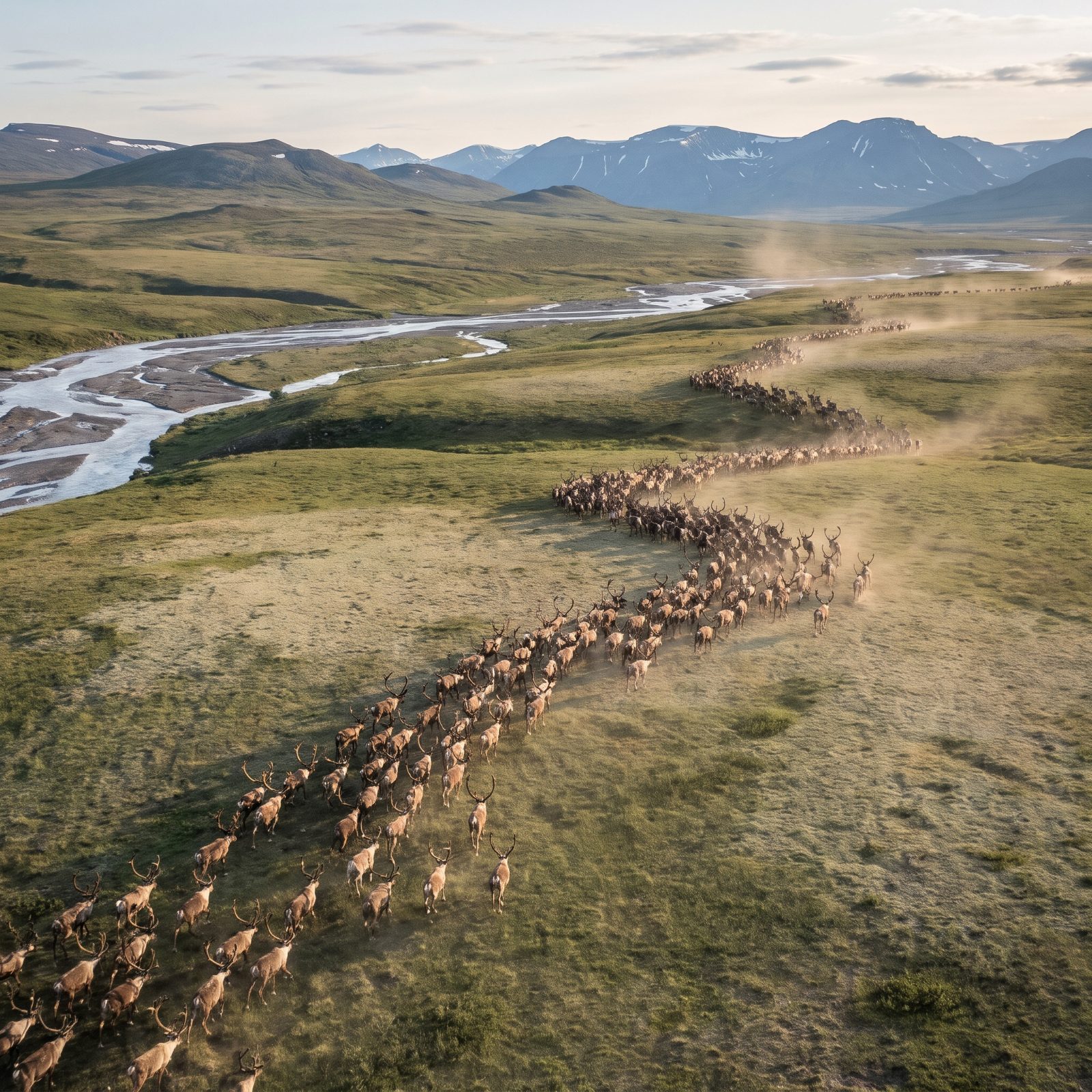
The Porcupine caribou herd runs one of the longest land migrations on the planet — a loop of well over a thousand miles between the wintering grounds and the coastal calving plains that straddle Alaska and Canada.
They push north in spring to drop their calves in a narrow window, timed so the newborns arrive just as the tundra greens up and before the predators concentrate. A calf is up and running within hours. It has to be.
Then the bugs arrive. Clouds of mosquitoes and warble flies drive the herd to keep moving, sometimes straight into the wind or up onto lingering snow patches just for relief. Half of this migration is about food. The other half is about getting away from insects, which is a strangely relatable motive for an animal this heroic.
35. Ten Million Fruit Bats Darkening Zambia’s Dusk
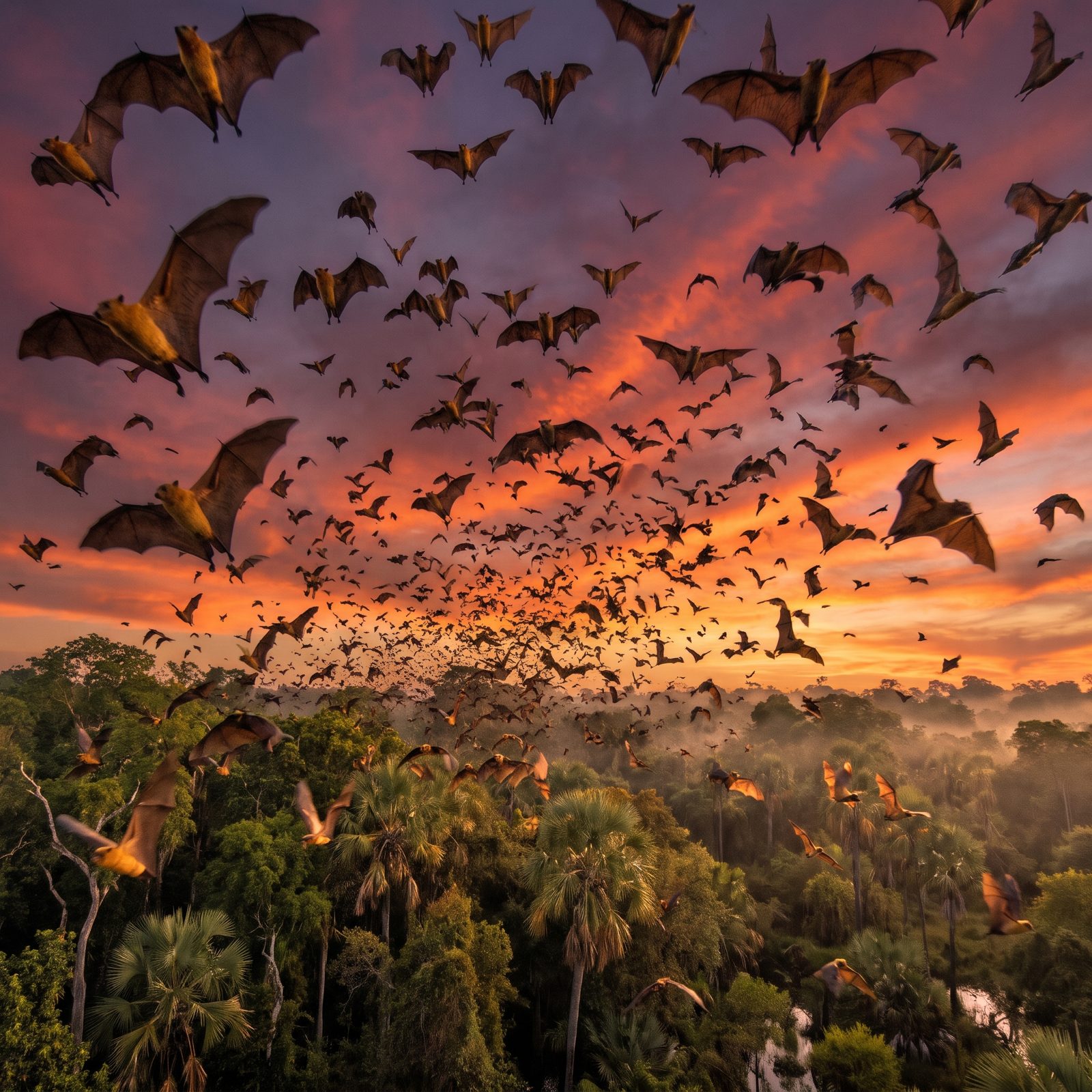
For a few weeks late each year, a tiny patch of swamp forest in Zambia hosts the largest mammal gathering on Earth. Not by weight — by sheer headcount.
Around ten million straw-colored fruit bats funnel into Kasanka, pulled in by ripening fruit. At dusk they lift off all at once and darken the sky. The roost trees sag and sometimes snap outright under the collective weight of them.
They came from all over the continent, and this is the wild part: nobody fully knows the routes. Fruit bats scatter across central and western Africa, then converge here on a timetable tied to fruiting seasons. One of the great migrations hiding in plain sight, happening after sunset, long after most tourists have wandered off to dinner.
34. A Dragonfly That Crosses an Ocean on Monsoon Winds
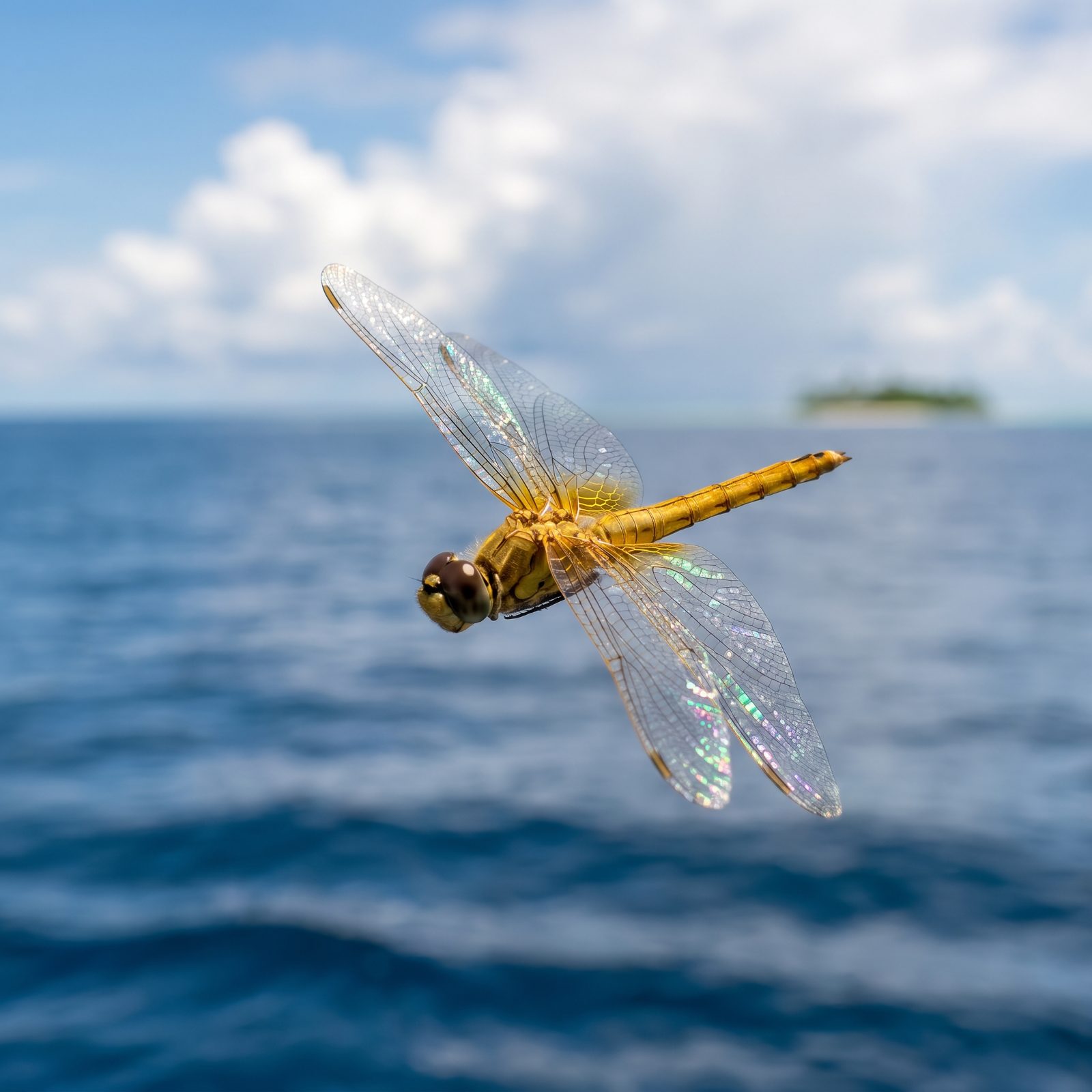
An insect you could balance on your fingertip may be the longest-migrating one alive. The globe skimmer dragonfly appears to cross the Indian Ocean, riding monsoon winds between India and East Africa on a route that can top eleven thousand miles over multiple generations.
Consider the margins here. This creature weighs about as much as a grape seed, yet it rides air currents thousands of feet up, chasing the rains that fill the temporary pools its larvae need. No individual completes the loop. Like the monarchs, it’s a relay handed down across generations.
The evidence is partly genetic. Populations separated by an entire ocean keep mixing their DNA, which doesn’t happen unless something is physically carrying genes across the water. That something is a dragonfly the weight of a seed.
33. Leatherback Turtles Reading the Planet’s Magnetic Field
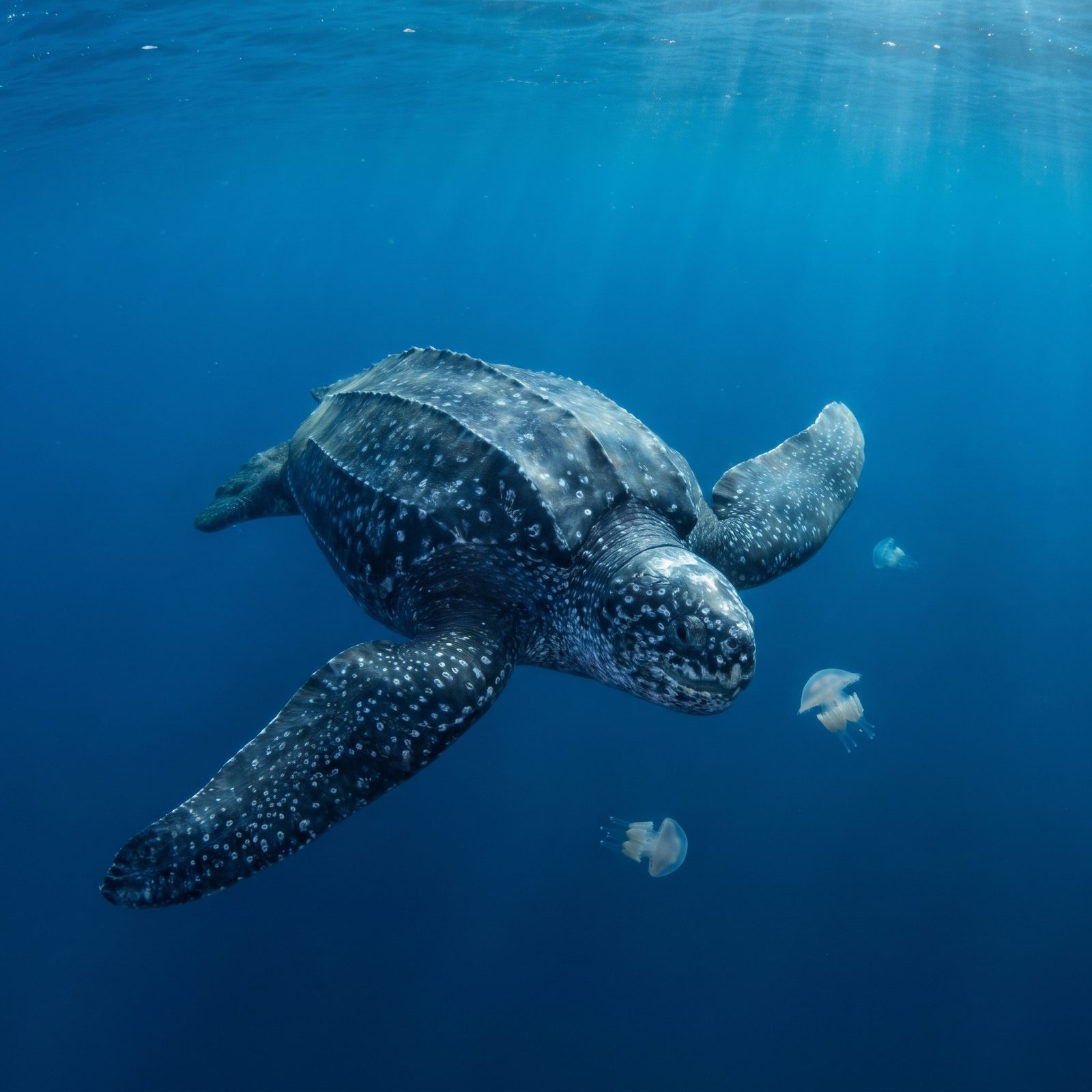
The leatherback is the heavyweight of sea turtles and the deepest diver, and it treats an entire ocean basin like a commute. Some cross the Pacific from Indonesia to the California coast, thousands of miles, chasing jellyfish.
And here’s the navigation trick that still floors researchers: leatherbacks appear to read Earth’s magnetic field, sensing both its angle and its intensity. That gives them something like a built-in coordinate grid, so a hatchling that just scrabbled off a beach can eventually find its way back to that same stretch of sand decades later to lay eggs.
They’ve been doing this since before the dinosaurs vanished. The animal works. What’s failing is the beaches, the fishing lines, and the plastic bags that look exactly like the jellyfish they’re built to hunt.
32. Gray Whales Hugging the Coast From the Arctic to Baja
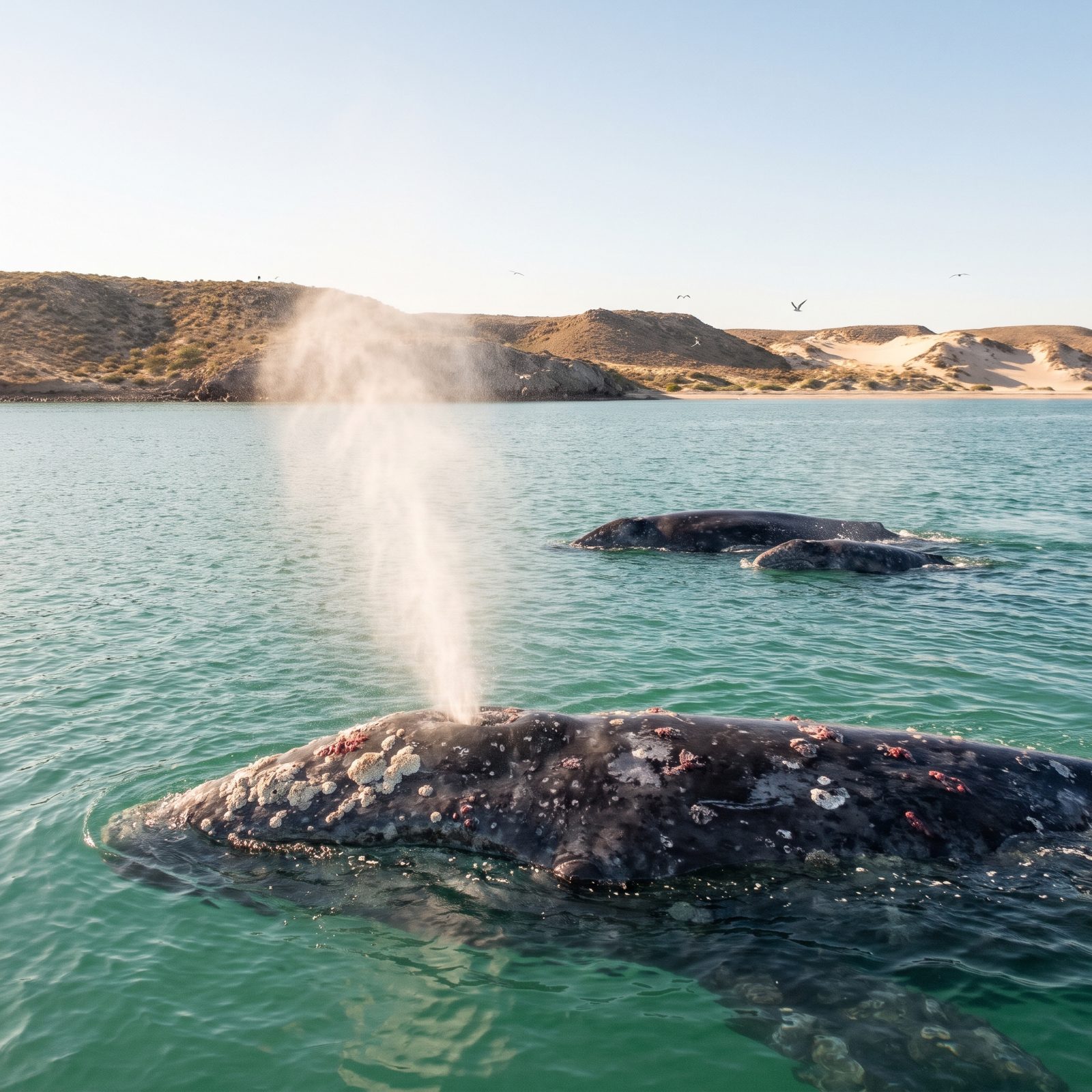
Gray whales run one of the longest migrations of any mammal, a round trip that can stretch past ten thousand miles between the feeding grounds off Alaska and the warm lagoons of Baja California, Mexico.
They don’t cut across the open ocean. They trace the coast the whole way, which is exactly why you can stand on a California headland in winter and watch the parade go by. Pregnant females lead the charge south to give birth in shallow, warm, salty water where the calves can gain strength before the long haul back.
In those Baja lagoons they’ve picked up a reputation for approaching small boats and letting people touch them. Nobody can fully explain why a creature we nearly hunted to extinction decided to come say hello. But they do it, every winter — one of the gentlest surprises in the whole animal world.
31. Botswana’s Plains Zebras Following the Rains
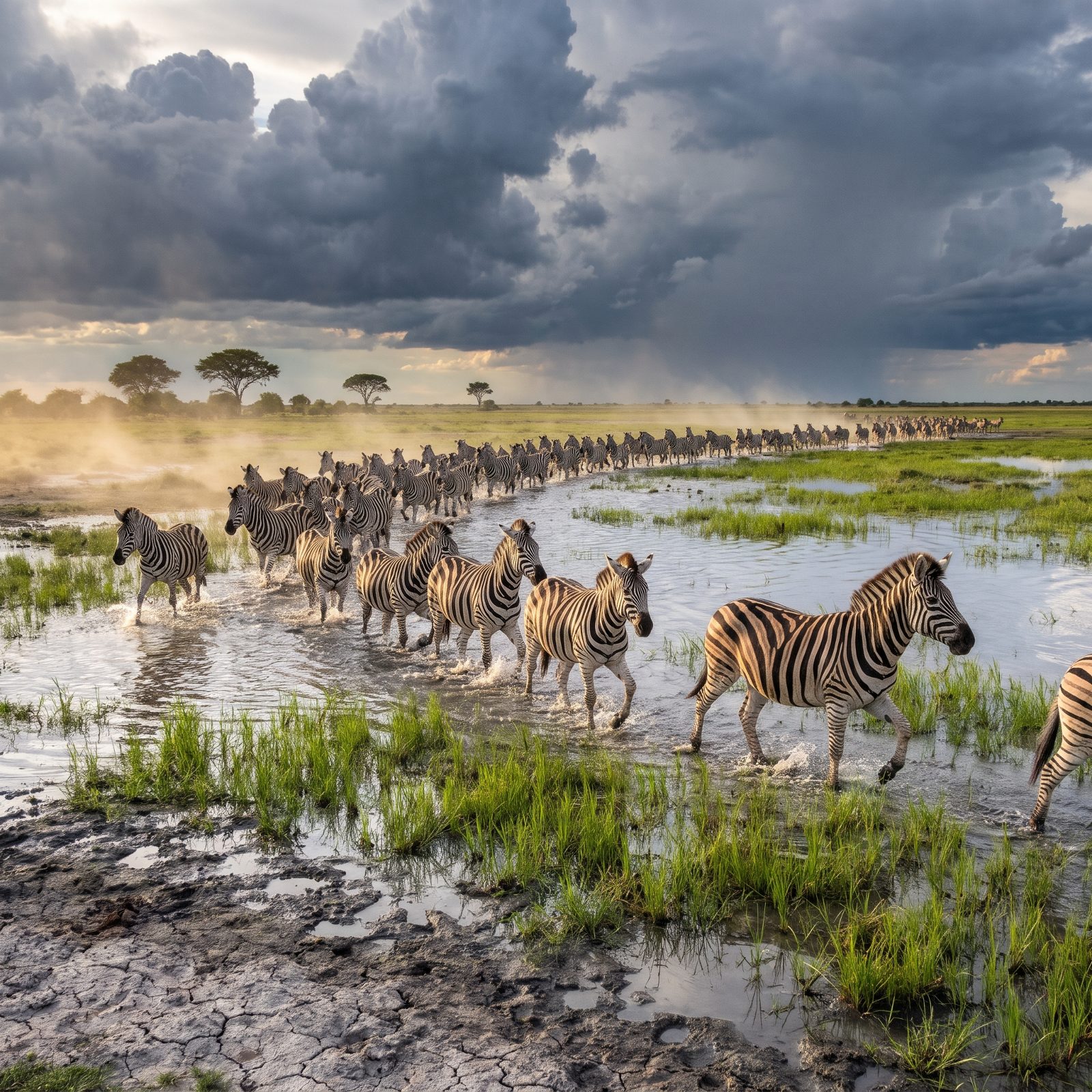
For years scientists wrote off the zebra herds between the Okavango and the Nxai Pan as aimless wanderers. They were wrong. GPS collars revealed one of the longest land migrations in Africa, a round trip of roughly 300 miles chasing the rains and the mineral-rich grass that trails behind them.
Here’s the part that stops you cold. Nobody taught them the route. The pans had been fenced off for decades, and the moment one fence came down the zebras picked their way back to a destination not a single living animal in the herd had ever laid eyes on. That map lives somewhere far deeper than memory.
30. Grand Teton Pronghorn Squeezing Through an Ancient Corridor
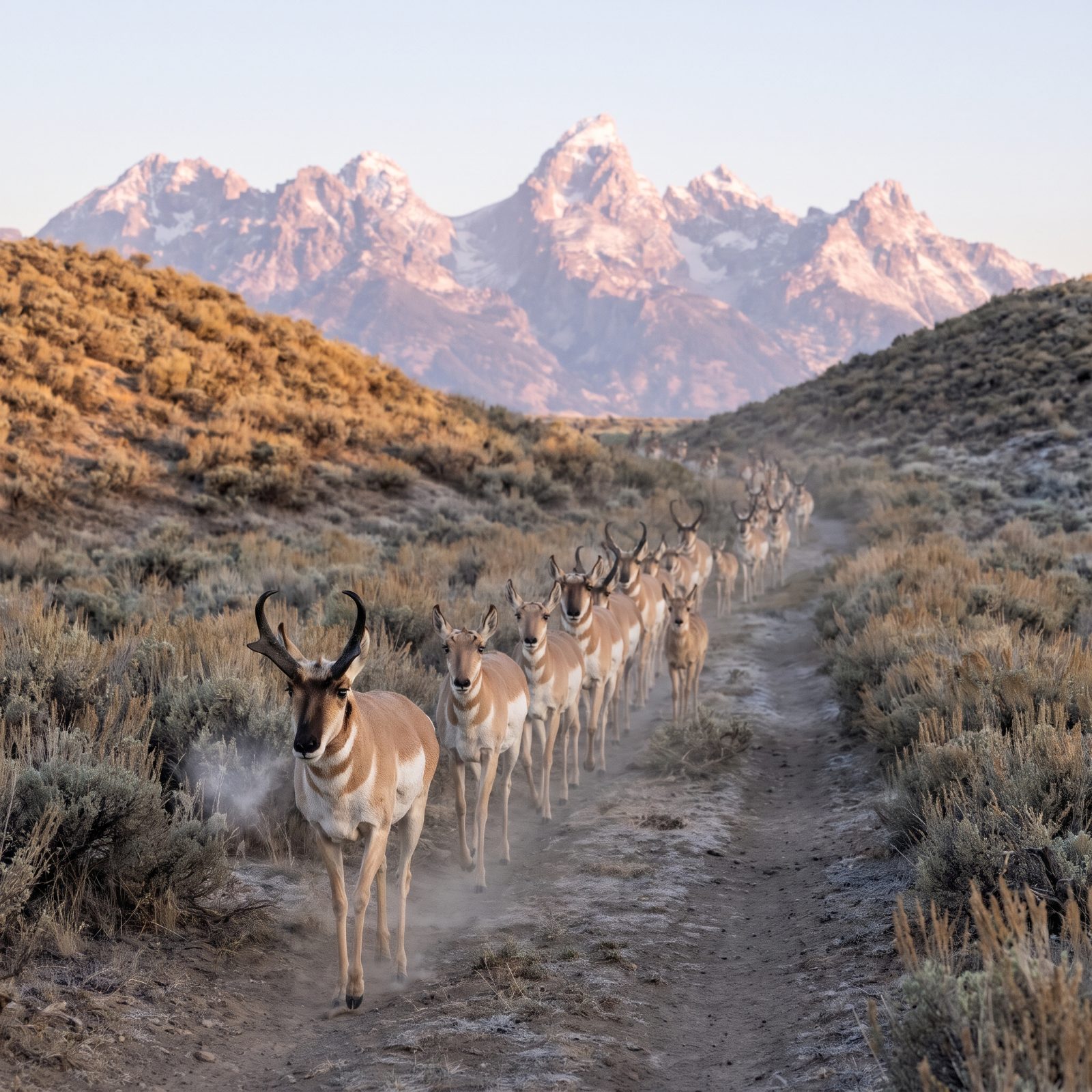
The pronghorn that spend summers in Grand Teton walk a path thousands of years old. We know because archaeologists dug up their bones along the very same route, left behind by animals that made the trip some six thousand years ago.
And the whole journey hangs on one squeeze. Trapper’s Point is a gap barely half a mile wide, and these days fences, roads and subdivisions crowd right up against it. Block that single spot and the entire 150-mile migration collapses. It’s the reason Wyoming built the country’s first dedicated wildlife overpasses. Picture it: an animal older than agriculture, saved by a bridge.
29. European Eels Vanishing Into the Sargasso Sea
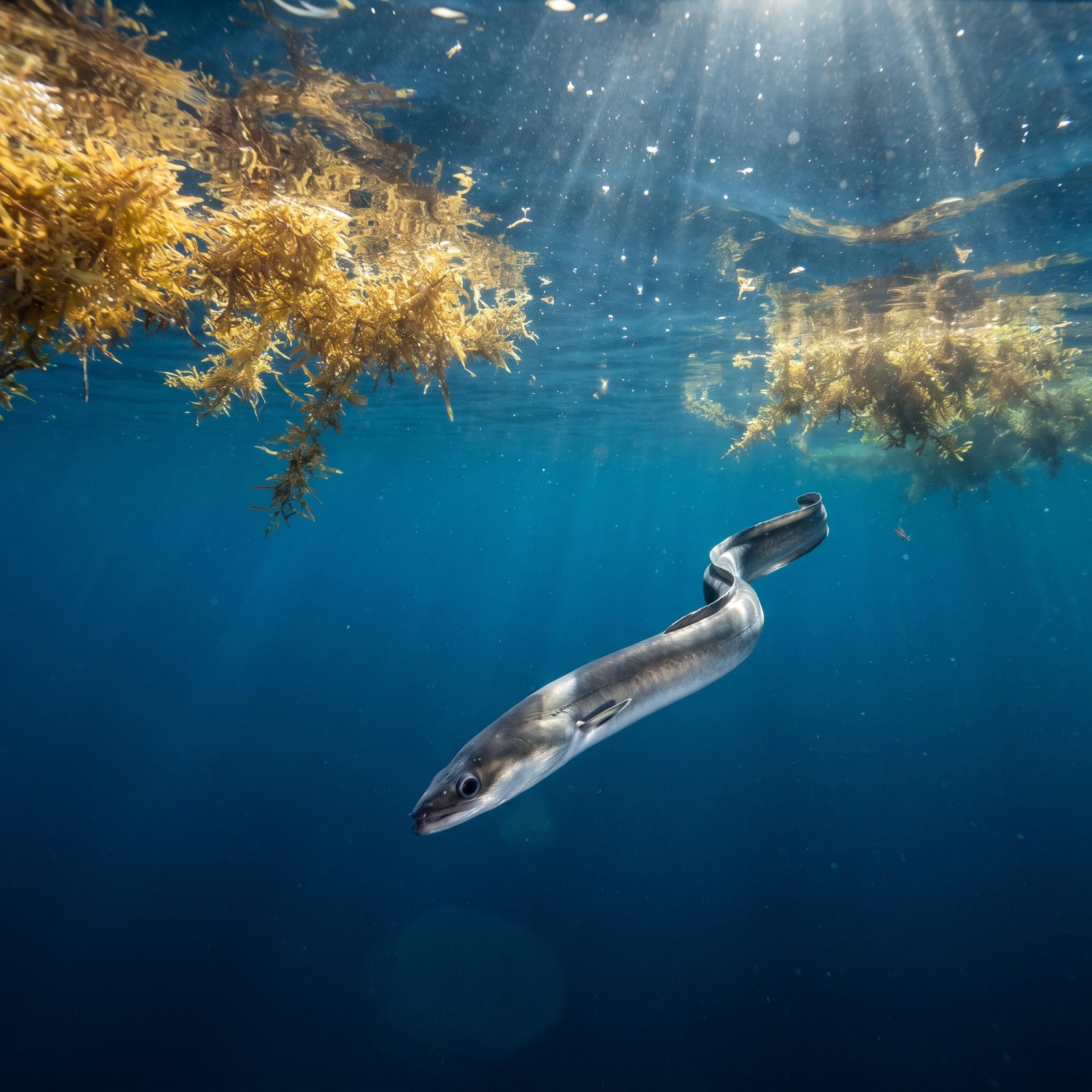
No human has ever watched a European eel spawn. We’ve been trying for over a century, and the Sargasso Sea has kept its mouth shut.
Consider what these fish pull off. Born in the middle of the Atlantic, the leaf-shaped larvae drift thousands of miles to European rivers, where they settle in for decades as yellow eels. Then something flips. Their guts shrink, their eyes balloon, their bodies turn silver, and they swim all the way back across the ocean to the exact region they came from, spawn once, and die.
In 2022, satellite tags finally tracked adult eels to the edge of the Sargasso, confirming a destination we’d only guessed at since 1920. The breeding itself? Still never seen by a single pair of human eyes.
28. Emperor Penguins Trekking Across Antarctic Sea Ice
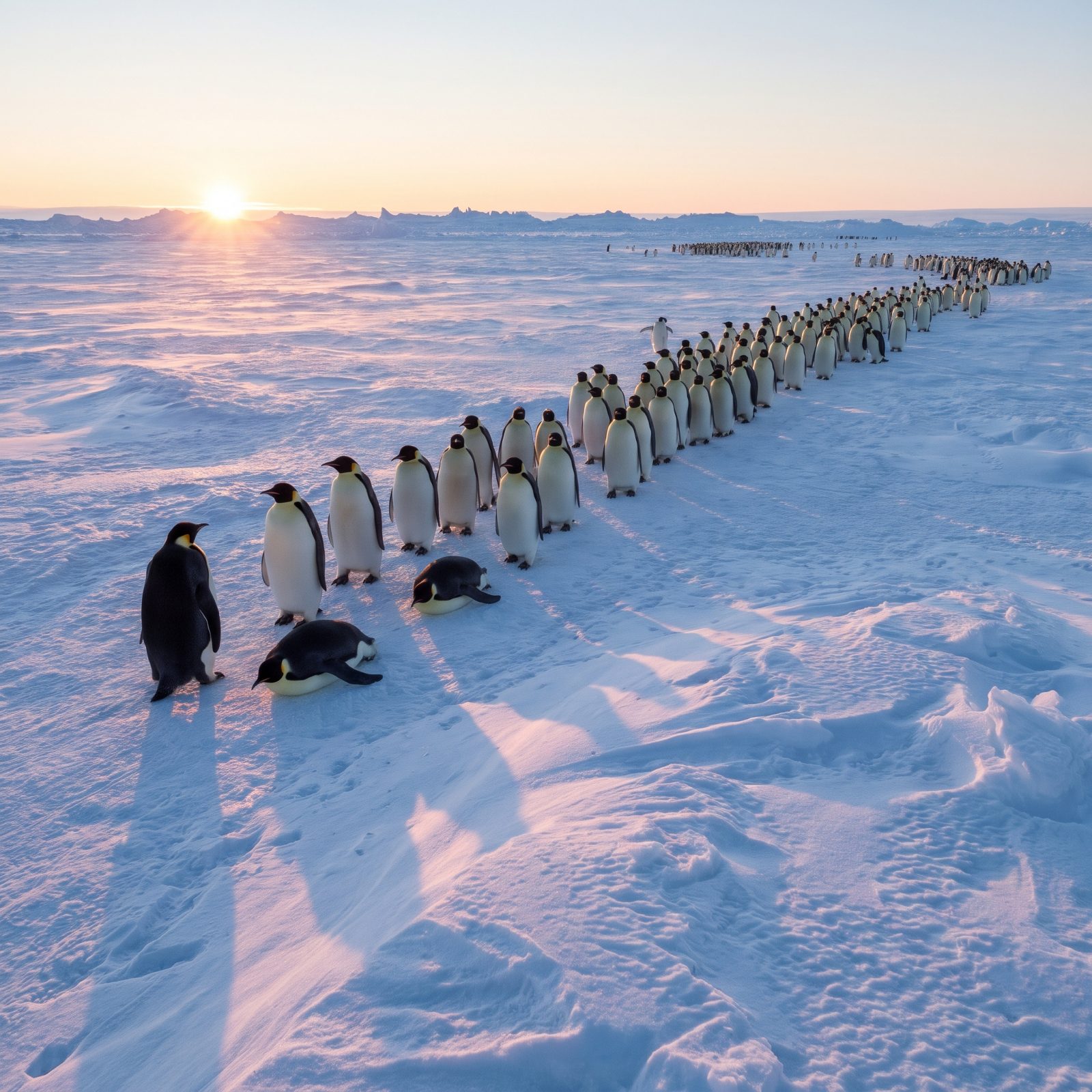
Most animals flee the Antarctic winter. Emperor penguins walk straight into it.
As temperatures crash toward minus 40 and the sun vanishes for weeks on end, these birds march up to 75 miles inland across the sea ice to reach their breeding colonies. Then the male balances a single egg on his feet, tucked under a flap of warm skin, and stands there through the darkest, coldest months this planet can throw at anything. He eats nothing for around 115 days and can shed nearly half his body weight waiting for the chick, and for the female to return from the sea with food.
27. Red Knots Refueling on Delaware Bay Horseshoe Crab Eggs
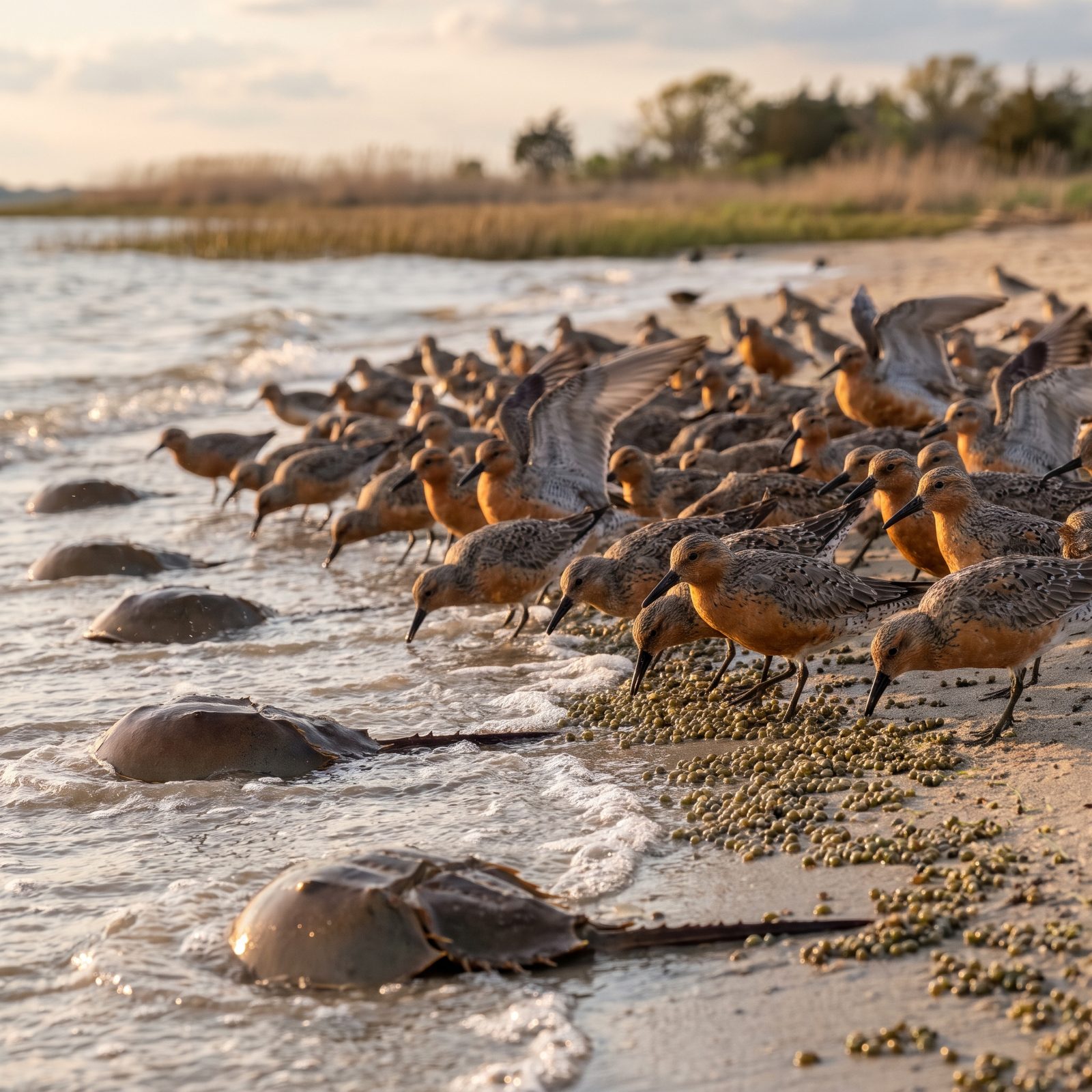
A rufa red knot weighs about as much as a tennis ball. Yet it flies from the tip of South America all the way to the Canadian Arctic, one of the longest migrations of any bird alive, and the whole thing balances on a single beach.
When they drop onto Delaware Bay, the birds are half-starved. Their rescue is the eggs of horseshoe crabs, creatures older than the dinosaurs, which haul ashore to spawn in the exact weeks the knots arrive. A bird can nearly double its weight in days, gorging on fatty green eggs, then launch north for the final leg.
Overharvest the crabs and the knots simply run out of fuel somewhere over the Atlantic. Two deep-time travelers, their fates tied together on one strip of sand.
26. Wyoming Mule Deer Surfing the Spring Green-Up
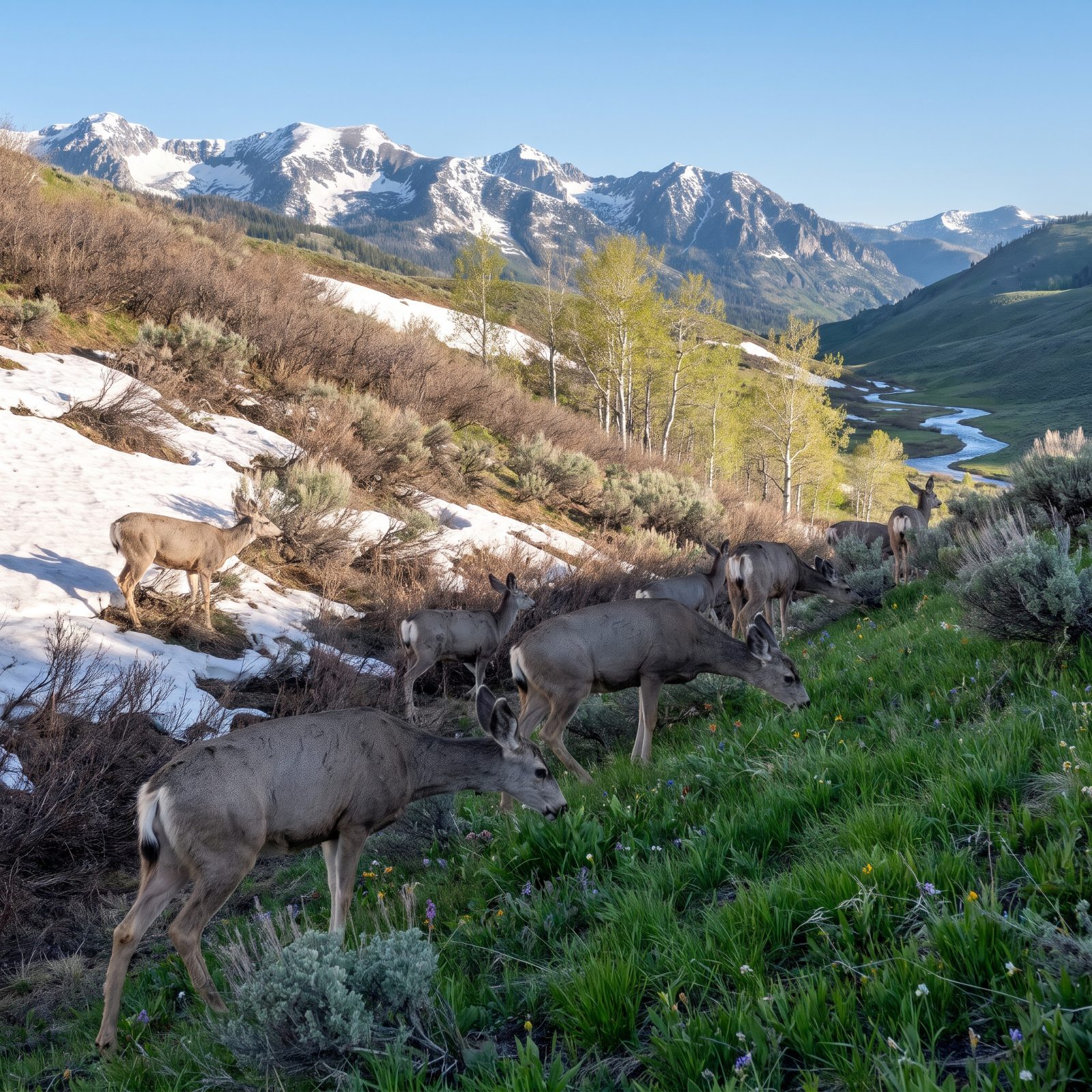
Mule deer don’t just migrate from A to B. They surf.
As spring melts its way up a mountainside, it drags along a moving wave of the tenderest, most nutritious new plants. GPS data from Wyoming’s 150-mile Red Desert to Hoback migration showed the deer timing their travel to ride that green-up, reaching each elevation band right as the grass peaked in quality. Move too fast and the food is still frozen solid. Too slow and it’s already gone tough and dry.
Biologists call it green-wave surfing, and it turns the entire migration into a feast stretched across months rather than a hungry sprint between two fixed points.
25. Saiga Antelope Sweeping Across the Central Asian Steppe
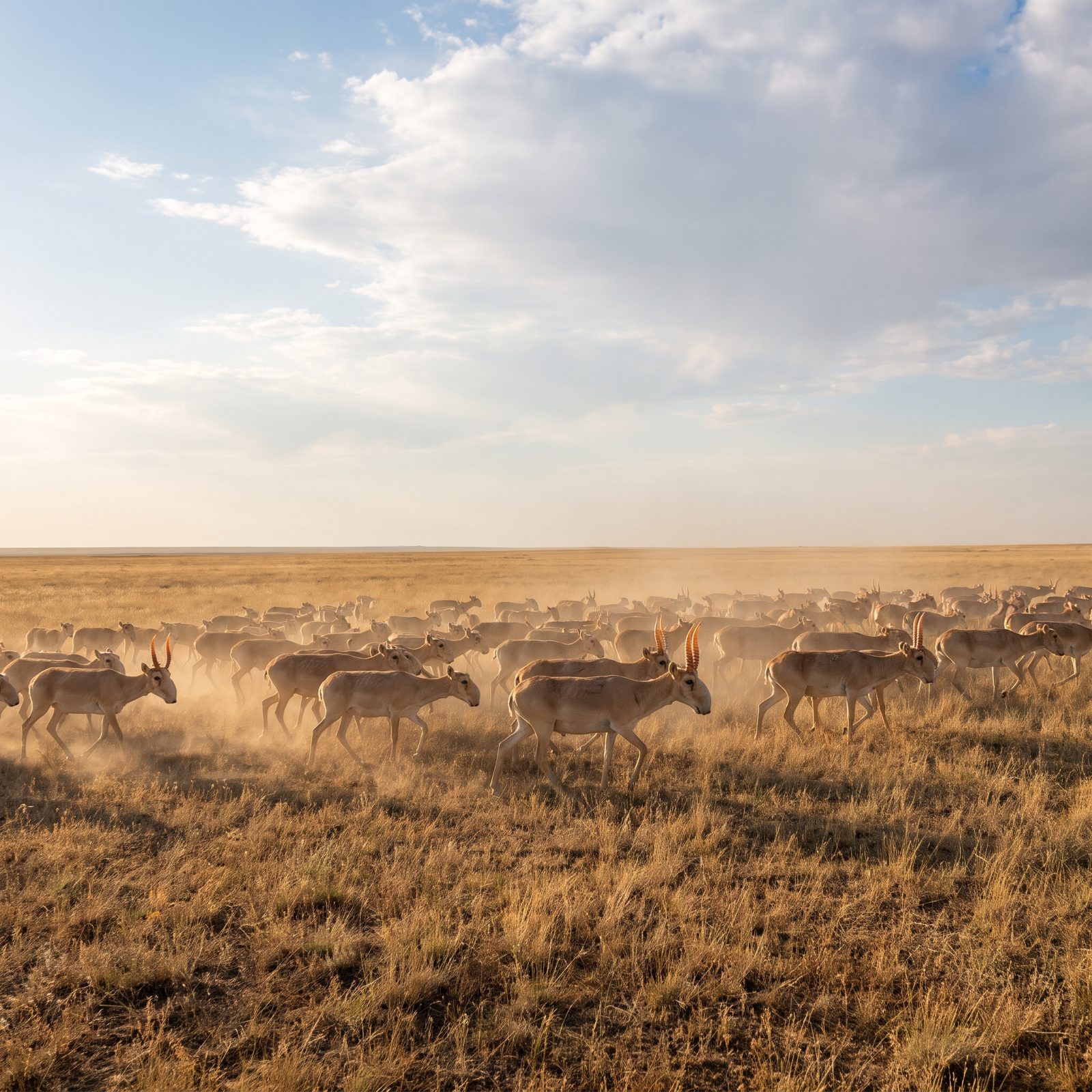
The saiga is built for hard country. Pale, sandy coats melt into the dry grass, slender ridged horns rise above the herd, and that hardy design has carried this species through the Ice Age and straight across the open steppe ever since.
These antelope cover enormous distances chasing grass and water, gathering into vast herds that pour across the plains of Kazakhstan. They’re also staggeringly fragile. In 2015 a bacterial infection killed more than 200,000 saiga in a matter of weeks, over half the global population, a die-off researchers are still trying to untangle.
And yet here’s the twist. Strict protection has hauled them back from the brink, and the herds are swelling again across the steppe where they’ve always run.
24. Bogong Moths Flying to Cool Australian Mountain Caves

Each spring, billions of thumbnail-sized bogong moths lift off the plains of southeast Australia and fly up to 600 miles to a handful of cool caves in the Alps. They’ve never been there before. Their parents are long dead. They steer by the stars and the Earth’s magnetic field, the first invertebrate ever shown to navigate by a stellar compass.
Inside the caves they shingle the walls like roof tiles, tens of thousands per square yard, and doze through summer in a cool torpor before flying home to breed and die. It’s one of the only known insect migrations where the same individuals complete a round trip.
23. Lesser Flamingos Chasing East Africa’s Vanishing Soda Lakes
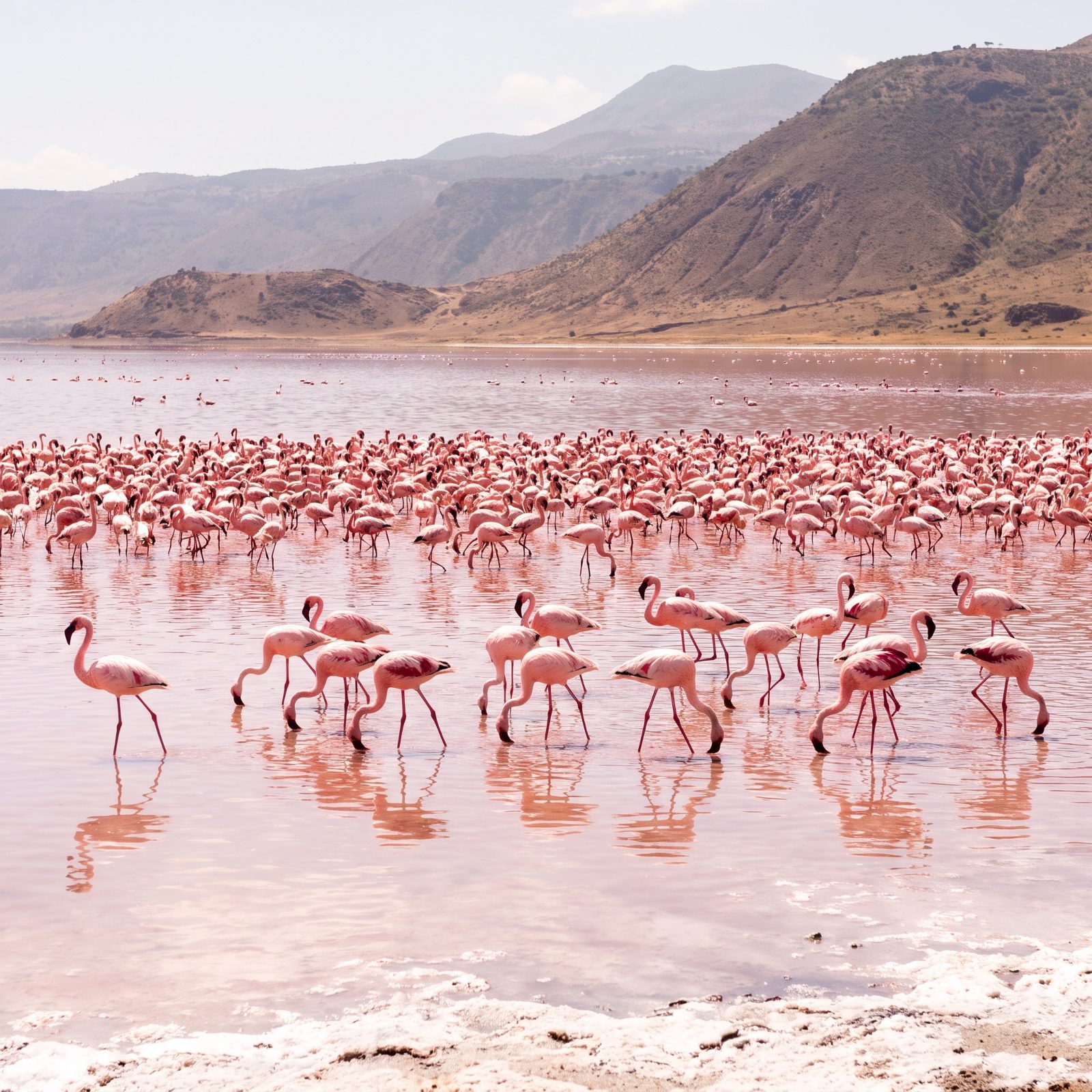
Lesser flamingos don’t follow a fixed route. They follow the algae, which means they follow the weather, which makes them one of the most restless big birds alive.
They feed on microscopic blue-green algae that blooms in caustic soda lakes so alkaline the water would scald your skin. Those lakes swell and vanish with the rains, so the flamingos drift between them across Kenya, Tanzania and Ethiopia, sometimes gathering a million strong on one lake before abandoning it the moment it dries.
Their one dependable breeding site is Lake Natron, a bleak expanse of caustic mud that keeps predators out. The hostility is exactly why it works.
22. Whooping Cranes Following Human-Guided Migration Routes
By 1941 there were about 15 whooping cranes left on Earth. Fifteen. North America’s tallest bird stood one hallway from extinction.
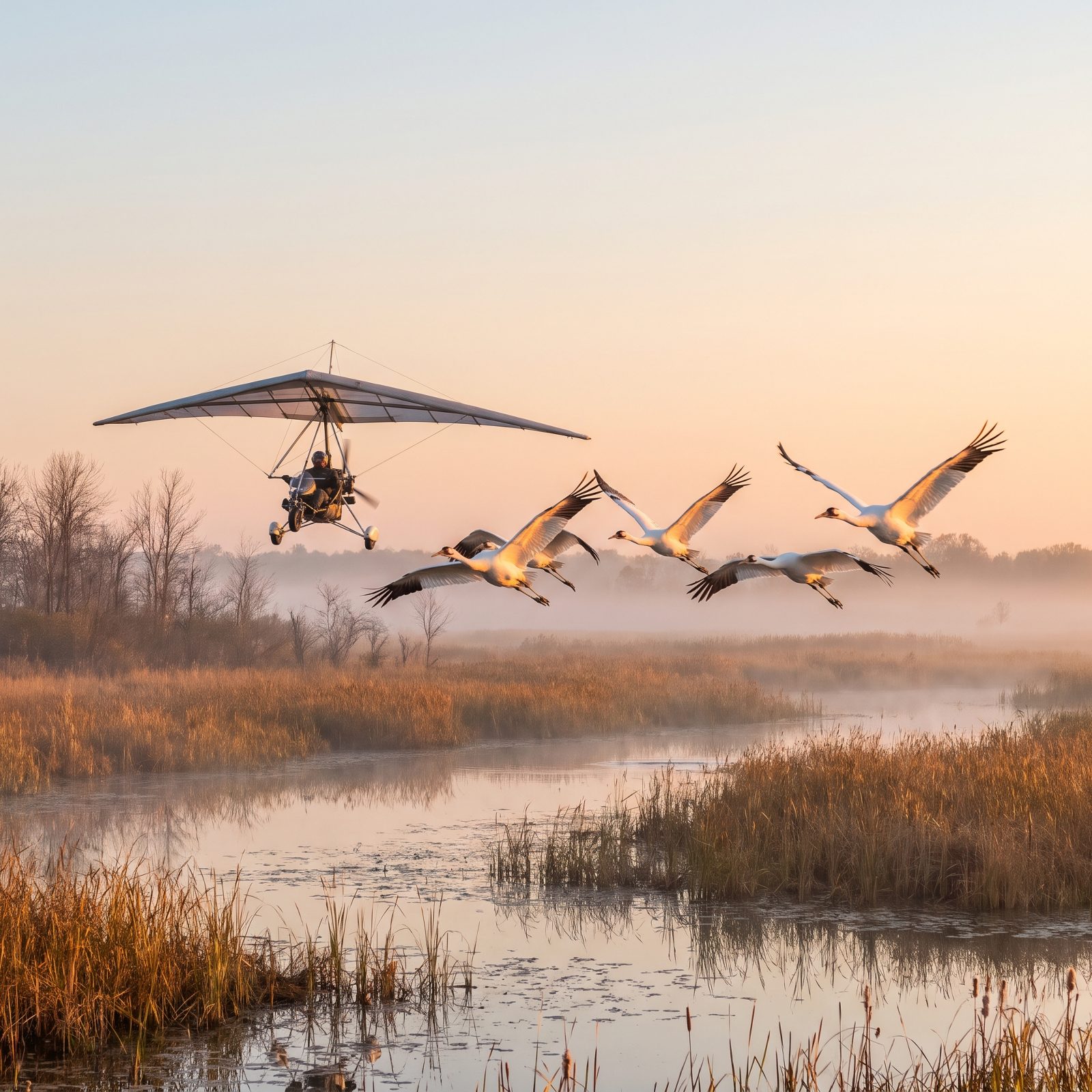
Part of the rescue plan reads like science fiction. To rebuild a migratory flock, conservationists raised chicks that had never met a wild crane, then taught them a route south by leading them in ultralight aircraft, the birds imprinted to trail the machine the way they’d trail a parent. The handlers even wore crane costumes so the chicks wouldn’t bond with people.
The aircraft-led program has since wound down, but the gamble paid off. Cranes hatched from those efforts now migrate on their own and pass the route to their young. We handed the map back.
21. Yellowstone Bison Climbing Toward Fresh Alpine Grass
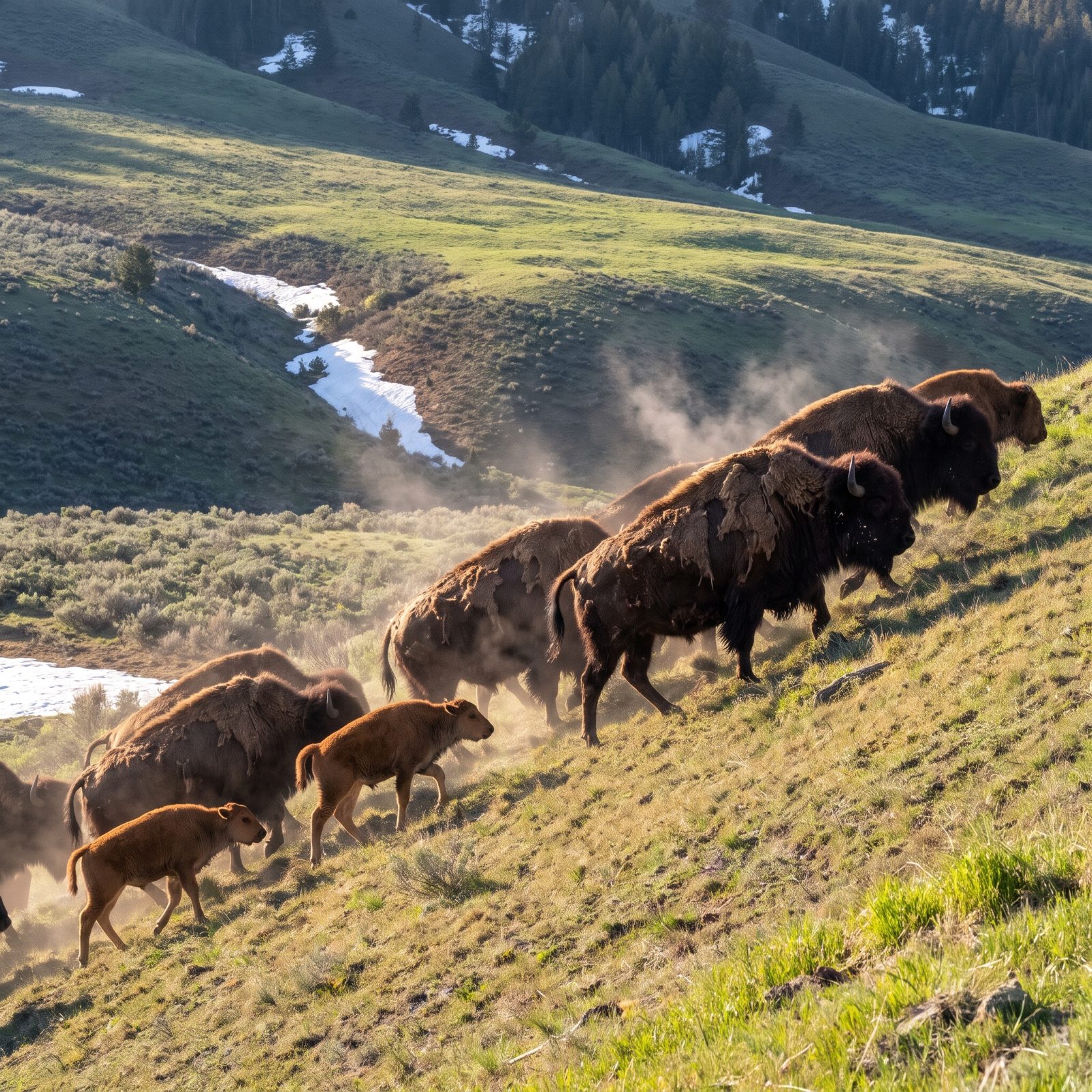
Bison don’t wander. They follow the green wave — as snow retreats up the mountains each spring, fresh grass sprouts in a rising band, and the herds climb to meet it, grazing the most tender, nutritious shoots at the exact moment they appear.
Researchers call this surfing the green wave, and Yellowstone’s bison do it better than almost any animal ever studied, having fine-tuned the timing over generations. A thousand-pound animal that gets it wrong eats tough, low-protein grass and limps into winter thinner than it should be. Get it right? The calves grow fat.
20. Great White Sharks Crossing the Pacific to the White Shark Café
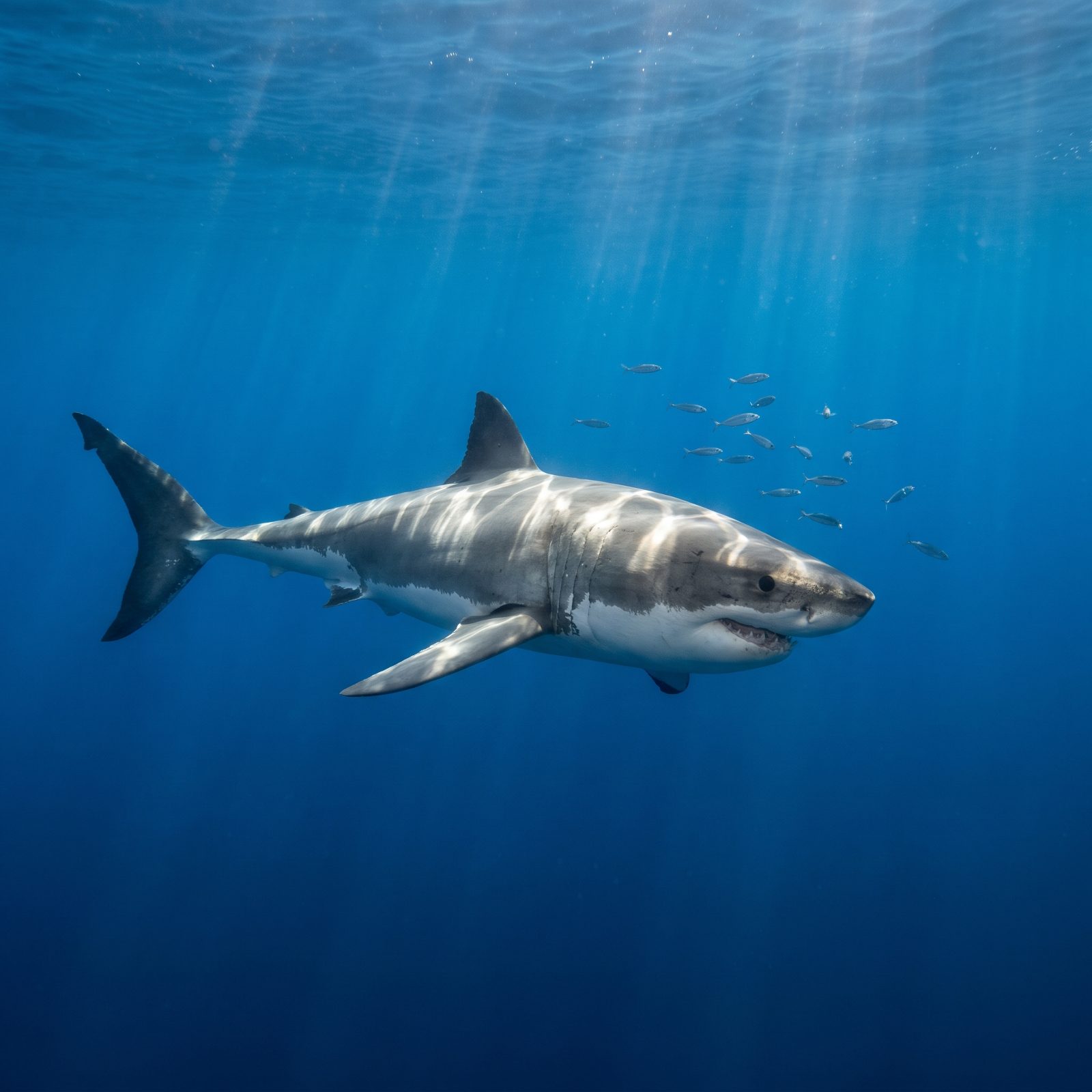
Every winter, great whites from the California coast strike out roughly 1,500 miles into the empty middle of the Pacific. There’s a spot between Baja and Hawaii, nicknamed the White Shark Café, where dozens of them gather in open water with no obvious food, no reef, nothing.
For years nobody could explain it. Satellite tags showed the sharks diving hundreds of times a day into the twilight zone, and the best current guess is that they’re feeding on the deep layer of squid and fish living down there. A desert at the surface, a buffet below.
19. Olive Ridley Turtles Arriving for Mass Nesting Events
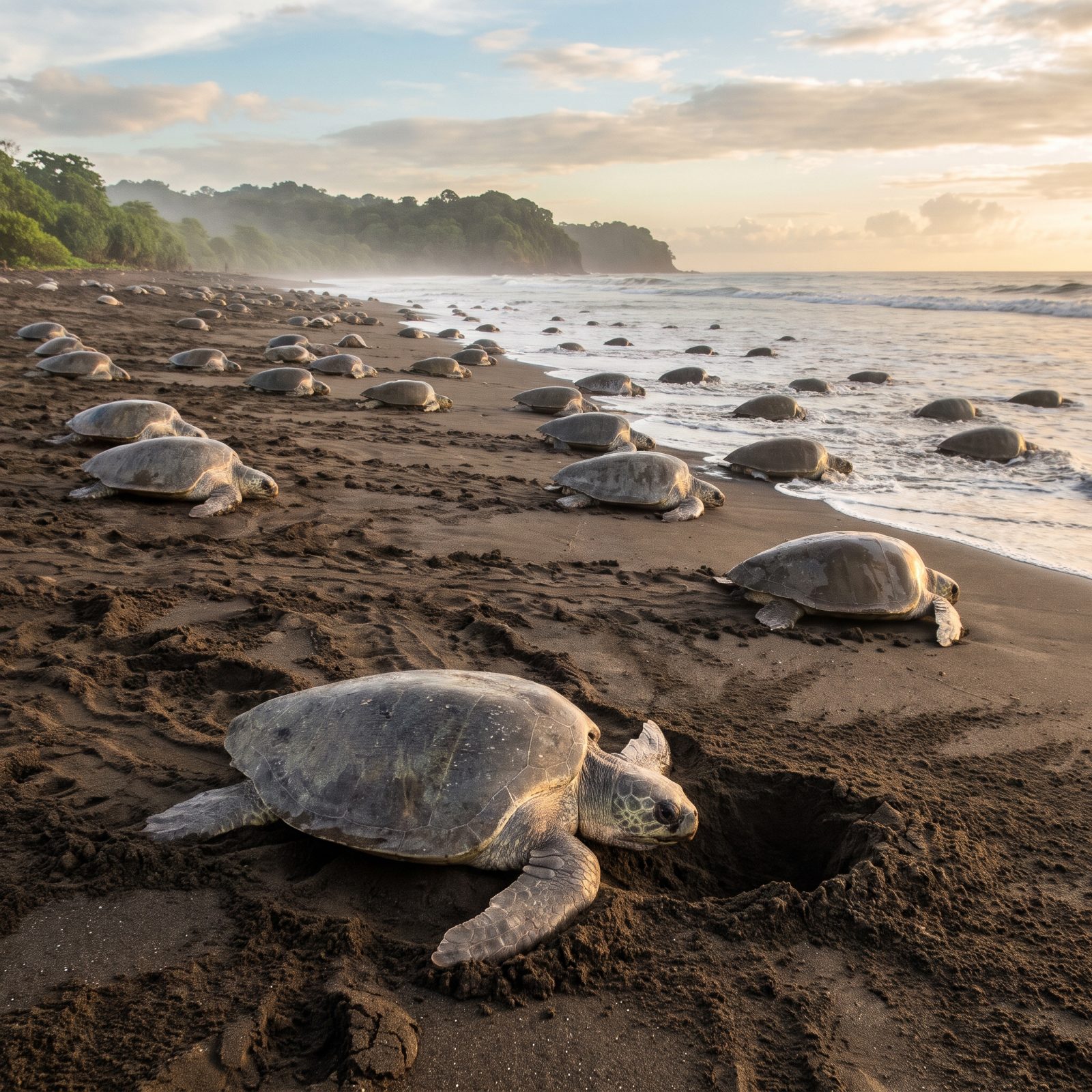
Imagine a beach where thousands of turtles come ashore in a single night. Olive ridleys do exactly that, in synchronized mass nestings called arribadas — Spanish for arrivals. On a handful of beaches in Costa Rica, Mexico and India, they show up by the tens of thousands over just a few days.
The whole gamble rides on overwhelming numbers. So many eggs get laid at once that predators simply can’t eat them all. But there’s a brutal cost: later-arriving females dig up nests laid by earlier ones, wrecking millions of eggs in the chaos.
18. Snow Geese Darkening the Sky Over North American Wetlands
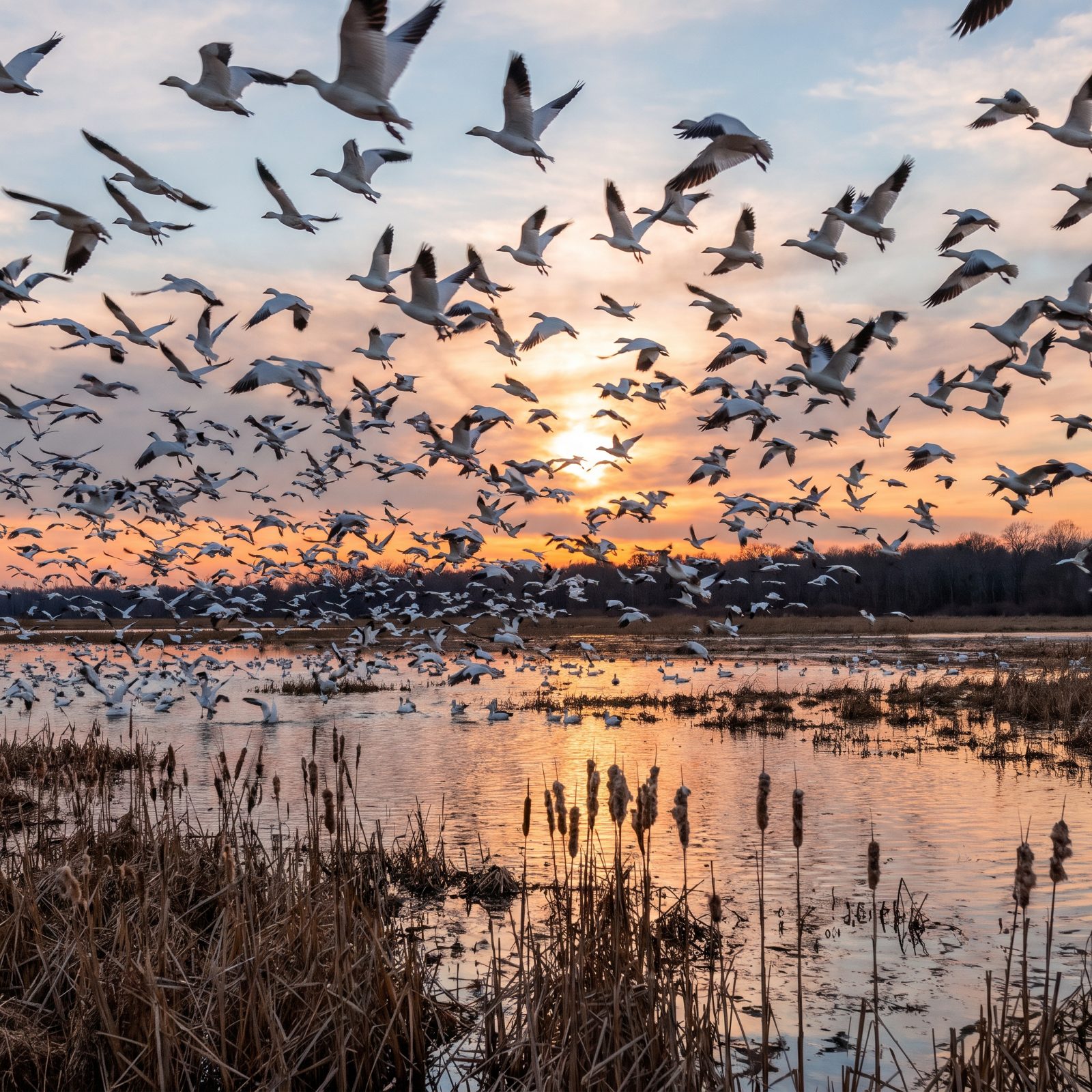
When a flock of snow geese lifts off, it sounds like weather — a continuous roar, and the sky genuinely dims. These birds migrate between Arctic breeding grounds and southern US wintering wetlands in flocks that can number in the hundreds of thousands.
And here’s the twist almost nobody sees coming. Snow geese are doing too well. Their population has exploded, partly fed by leftover grain in farm fields along the route, and they’re now stripping their fragile Arctic tundra nesting areas down to bare mud — which is why some regions run special conservation hunts to thin the numbers.
17. African Elephants Following Ancestral Paths to Water
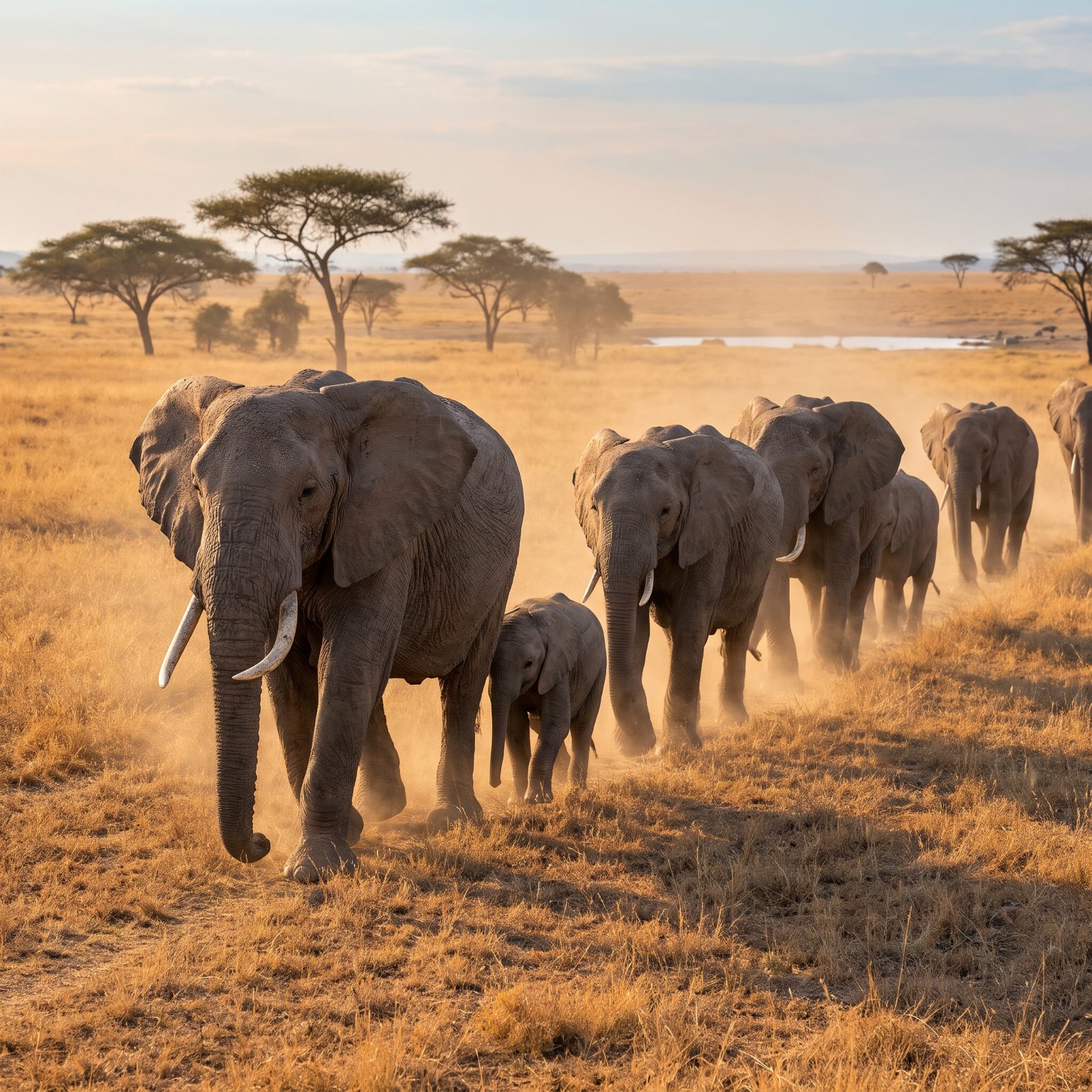
Elephant herds walk the same routes their grandmothers walked. The matriarch carries a mental map built over decades — remembering where water hides in the worst droughts — and she leads the family there along paths worn into the land across generations.
That memory is survival. During severe droughts, researchers found herds led by older matriarchs pulled through far better, because those females recalled a distant waterhole from a dry spell decades earlier. Kill the old females and you don’t just lose an animal. You erase the map the whole family depends on.
16. Golden Jellyfish Migrating Across a Tropical Lake Each Day
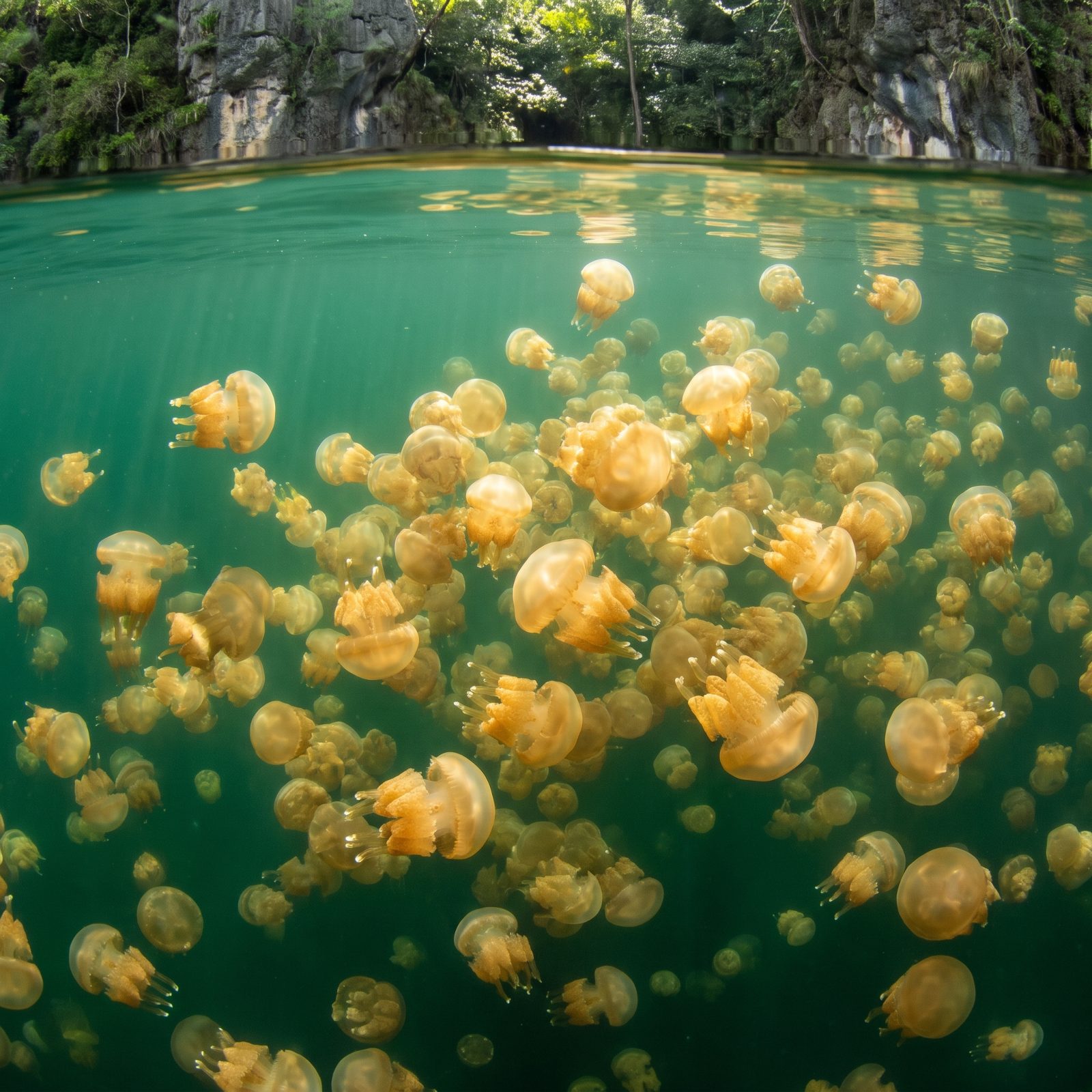
In a saltwater lake in Palau, millions of golden jellyfish drift across the water every single day, chasing the sun from one shore to the other and back again.
They’re not hunting for food in any ordinary sense. These jellies farm. Tiny algae live inside their tissues and spin sugar from sunlight, so each jellyfish hauls around its own solar garden, angling itself for maximum light all day long. At night they sink to feed on nutrients in the deeper water. A daily commute powered entirely by photosynthesis.
15. Zooplankton Making Earth’s Largest Daily Migration
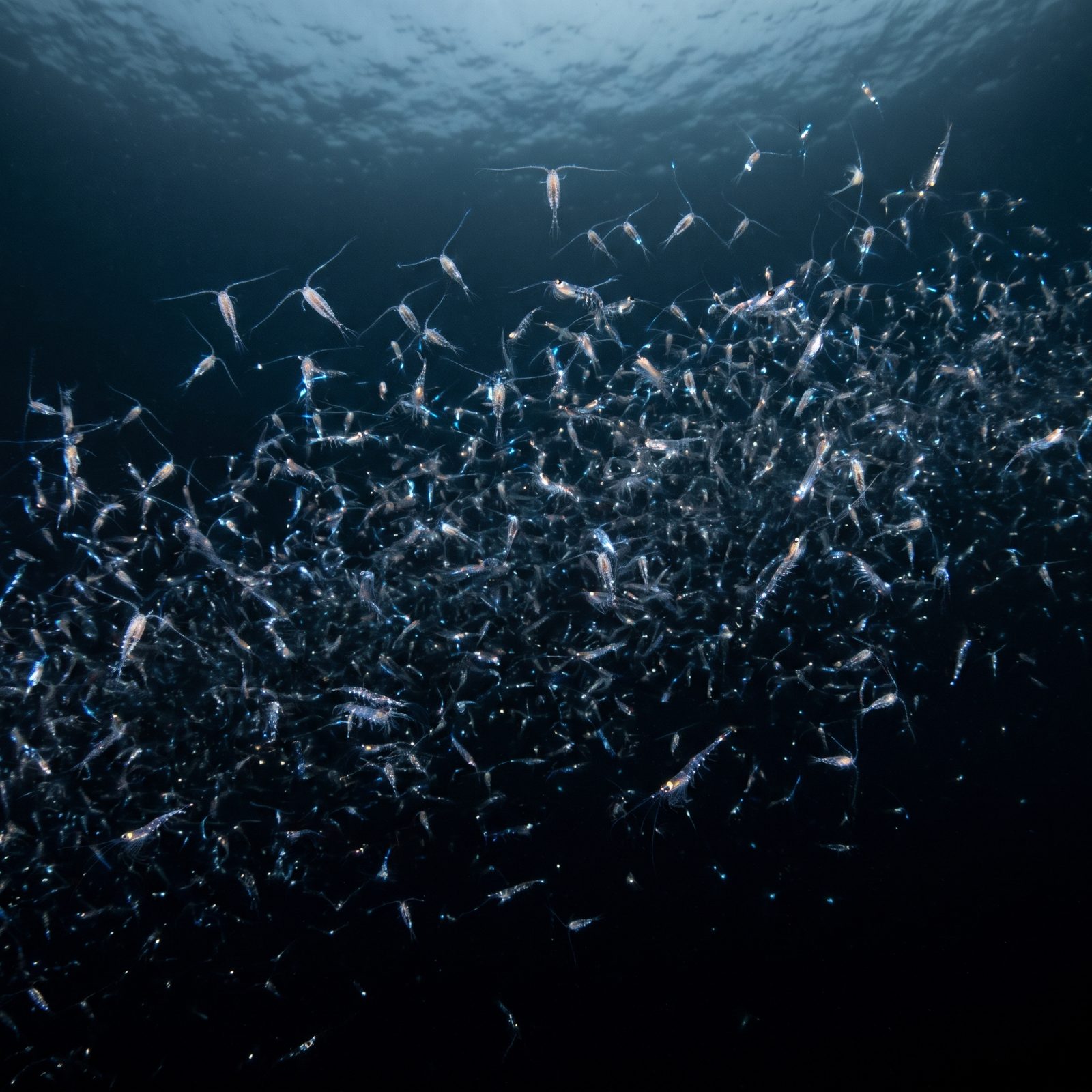
The biggest movement of animals on the planet happens every single night, and almost nobody ever sees it. Countless billions of tiny zooplankton rise hundreds of meters out of the dark deep toward the surface at dusk, feed under cover of night, then slip back down before dawn.
Scientists call it diel vertical migration, and the combined mass is staggering. Early sonar operators were baffled by a mysterious layer that rose and fell each day — they nicknamed it the deep scattering layer before anyone realized it was alive. That nightly shuttle drags enormous amounts of carbon into the deep sea too, quietly helping steady the whole climate.
14. Antarctic Krill Tracking Seasonal Sea Ice
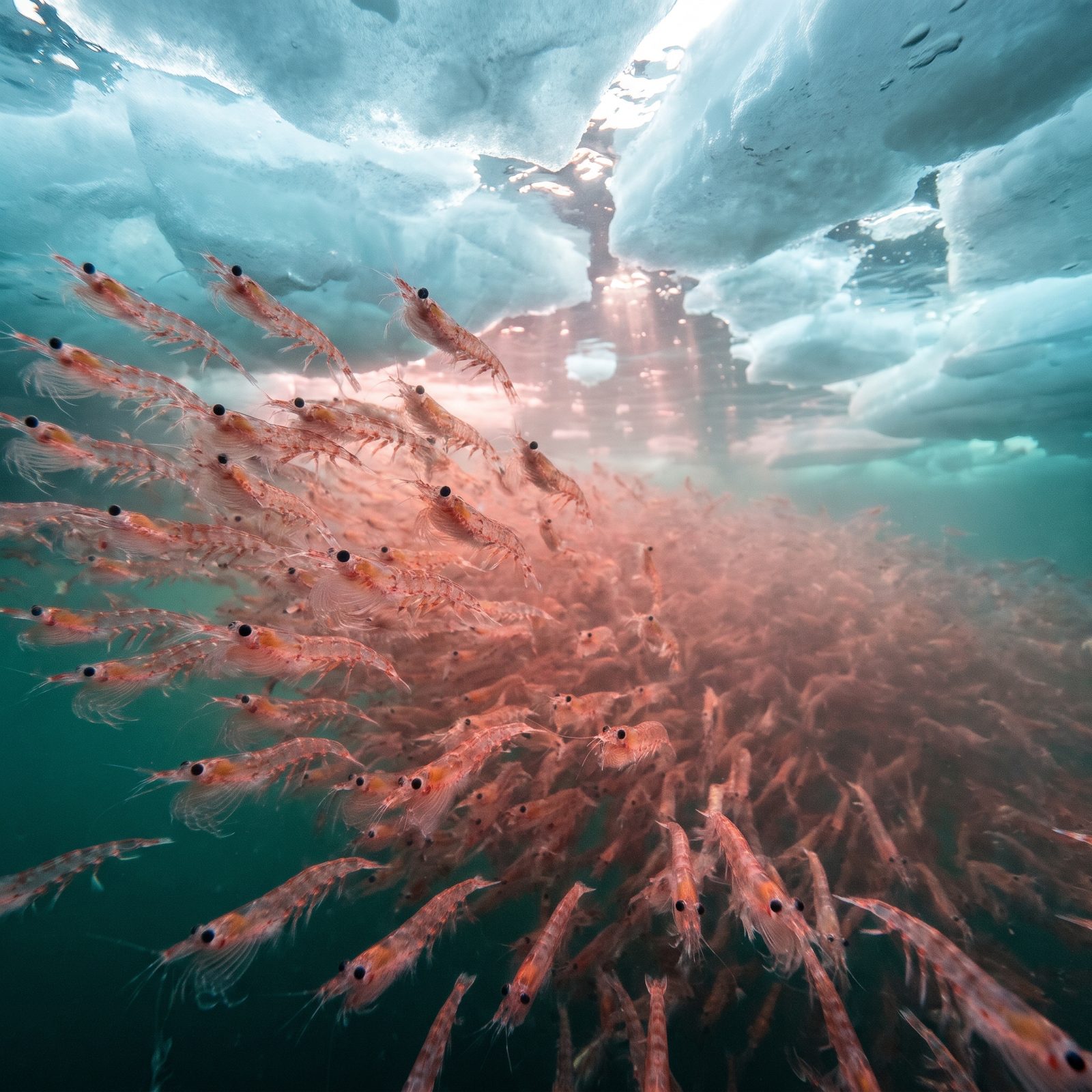
Antarctic krill measure only a couple of inches long, yet together they may outweigh any other wild animal species on Earth. Whales, seals, penguins and seabirds all funnel down to these finger-sized crustaceans.
Their lives track the ice. Come winter, larval krill cling to the underside of the sea ice and scrape algae off it to survive, and as the ice advances and retreats with the seasons, the swarms shadow its edge. Shrink the ice and you pull the floor out from under an entire ocean’s food web. Which is exactly why polar warming keeps biologists up at night.
13. Caribbean Spiny Lobsters Marching in Single File
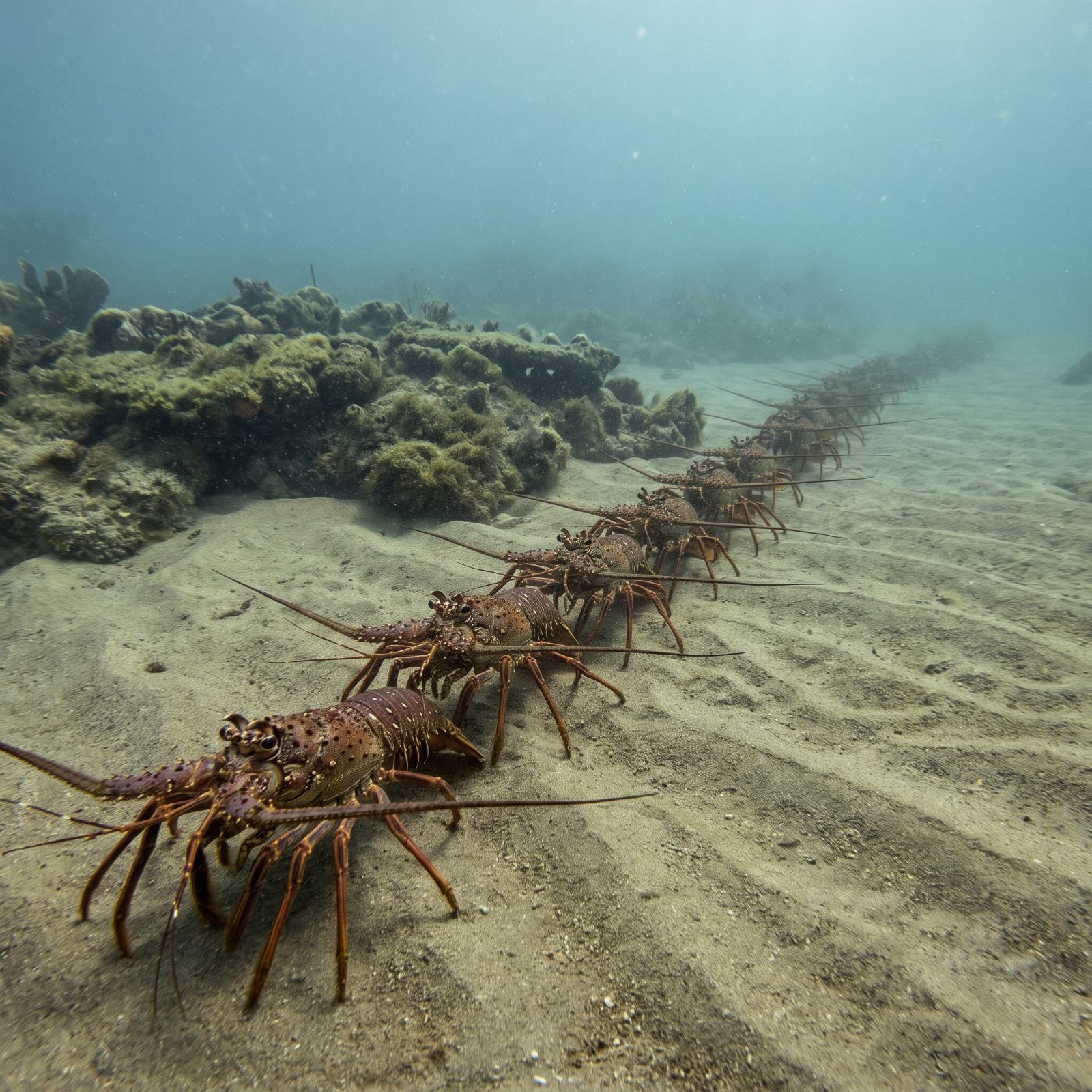
Each autumn in the Caribbean, spiny lobsters line up nose to tail and march across the seafloor in single file — sometimes dozens in a row — each one keeping a feeler on the lobster ahead.
Why the conga line? Autumn storms churn up cold, turbulent water, so the lobsters head for deeper, calmer ground. A tight queue cuts drag for everyone behind the leader, the way cyclists draft, and the constant touch holds the group together when visibility drops to nothing. Stranger still, these lobsters navigate by Earth’s magnetic field — a built-in compass in a creature with barely any brain to speak of.
12. Horseshoe Crabs Crowding Atlantic Beaches Under the Full Moon
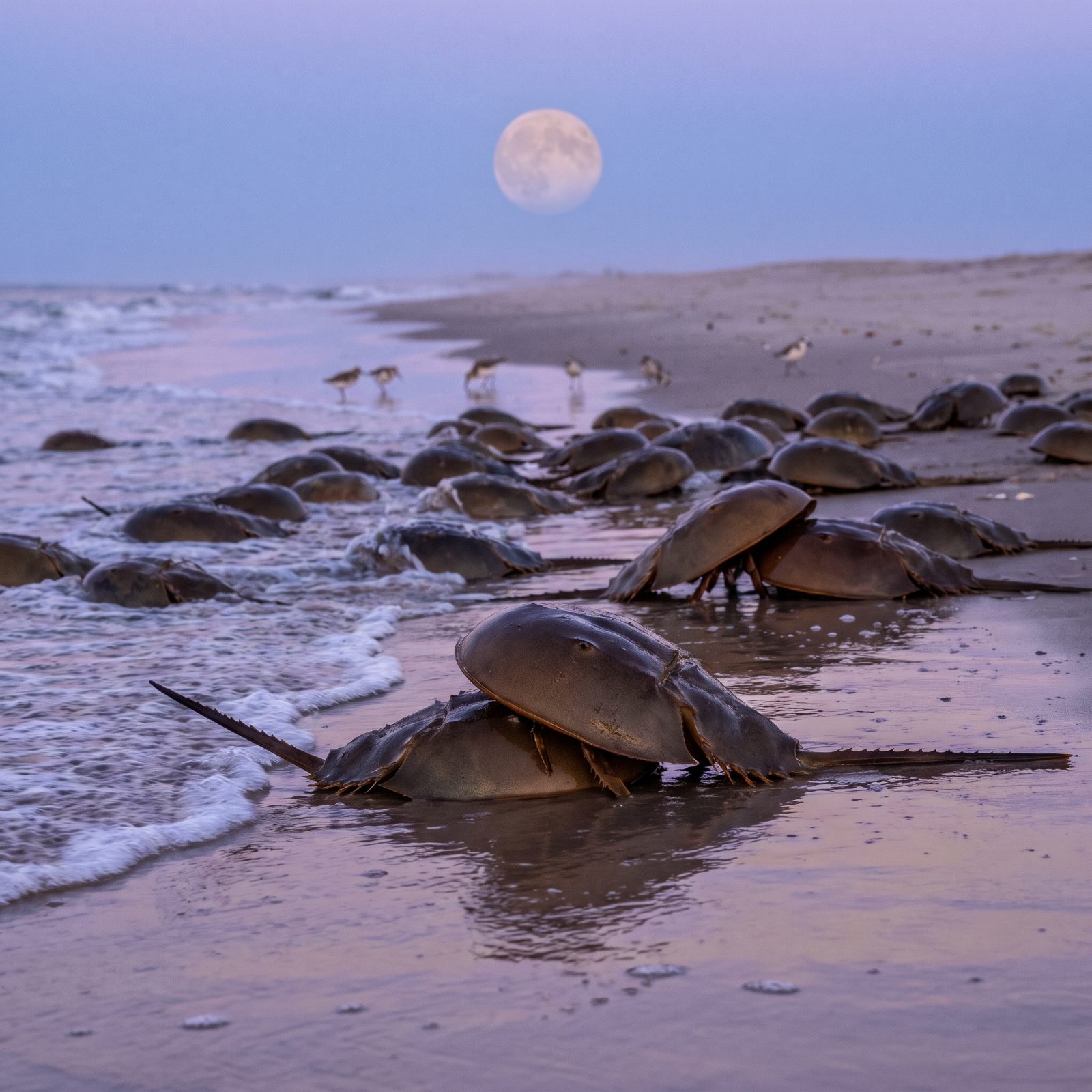
These animals were spawning on beaches before dinosaurs existed. Horseshoe crabs have barely changed in roughly 450 million years, and every spring they still haul ashore by the thousands on Atlantic beaches to lay eggs, timed to the high tides of the full and new moons.
Their green eggs feed migrating shorebirds that fly thousands of miles and land starving, perfectly synced to the feast. Then there’s the blood — a pale, milky blue, and it clots instantly around bacteria, which is why the biomedical industry harvests it to screen vaccines and medical devices for contamination. One of the oldest creatures alive is quietly keeping modern medicine safe.
11. Hudson Bay Polar Bears Trekking Toward Forming Sea Ice
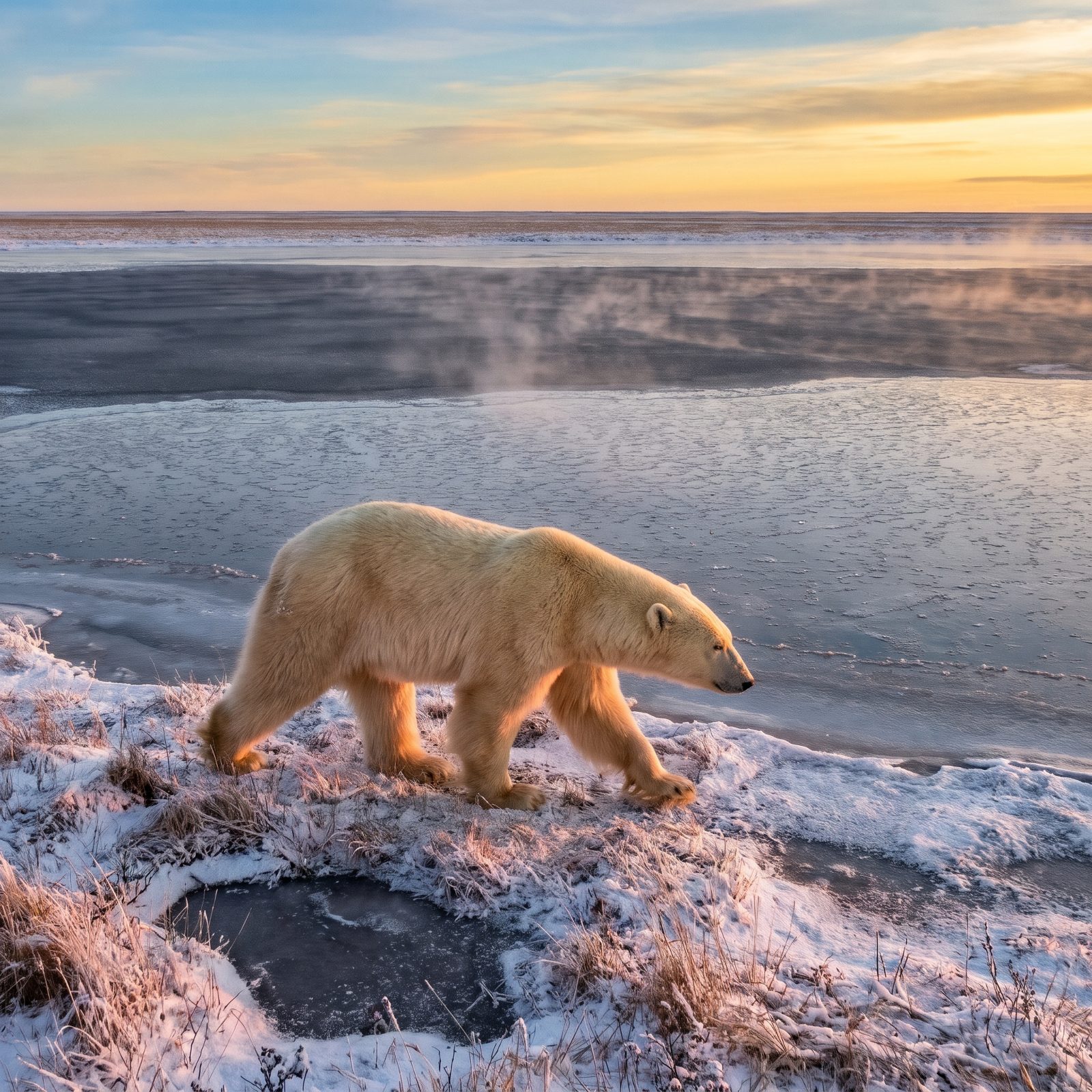
Every autumn, the polar bears of western Hudson Bay stake their survival on physics. They spend the ice-free months fasting on land, losing weight, waiting. The moment the bay begins to freeze, they march for the forming edge, because ice is a hunting platform and seals are the whole point.
The cruel part is the timing. Freeze-up near Churchill arrives later now than it did decades ago, and a few extra weeks ashore means a few more weeks with nothing to eat. For a pregnant female, that margin is everything. These bears aren’t wandering. They’re racing a calendar that keeps slipping out from under them.
10. Sooty Shearwaters Making a Figure-Eight Journey Across the Pacific
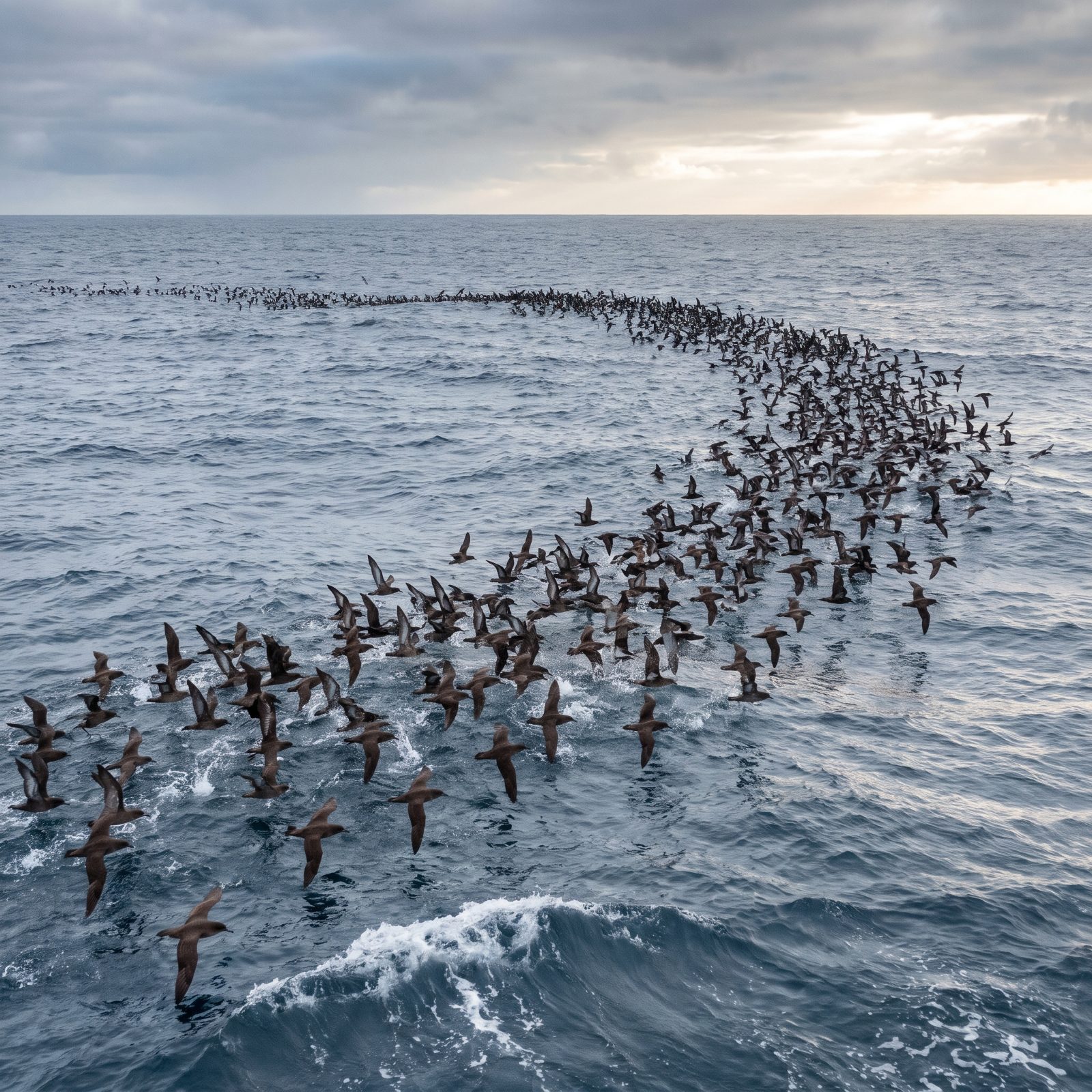
A sooty shearwater the size of a small gull will fly tens of thousands of miles in a single year. Electronic tags logged the record, and it still sounds made up.
They breed in New Zealand and Chile, then trace a vast figure-eight across the entire Pacific, chasing summer and rich feeding waters into the North Pacific off Japan, Alaska and California before looping home. The distance isn’t even the clever part — it’s the route. These birds ride prevailing wind systems the way an old sailor reads the trades, letting the whole ocean do a share of the paddling.
One bird, one year, enough ocean crossed to circle the Earth more than once.
9. Amur Falcons Crossing the Arabian Sea to Africa
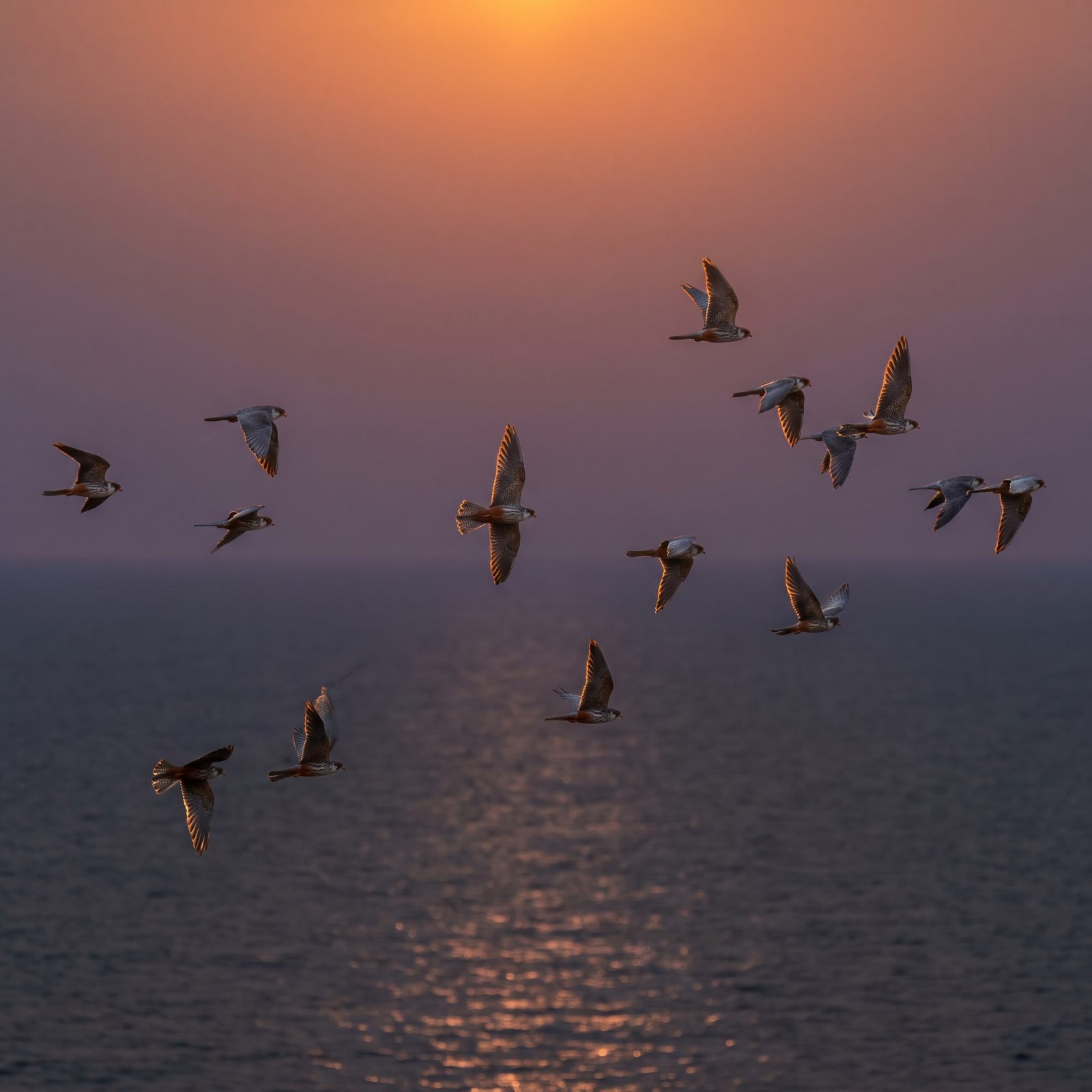
A bird that weighs less than a baseball crosses open ocean in the dark. Amur falcons breed in southeastern Siberia and northern China, then fly to southern Africa to winter. The hard stretch is the middle: a nonstop haul over the Arabian Sea, much of it done without rest.
They fuel up first on enormous swarms of flying termites and dragonflies in northeast India, gorging in huge roosting gatherings. For years that stopover doubled as a slaughter — until communities in Nagaland turned the hunting into protection. And the falcons came back, hundreds of thousands strong.
8. Bar-Headed Geese Crossing the World’s Highest Mountains
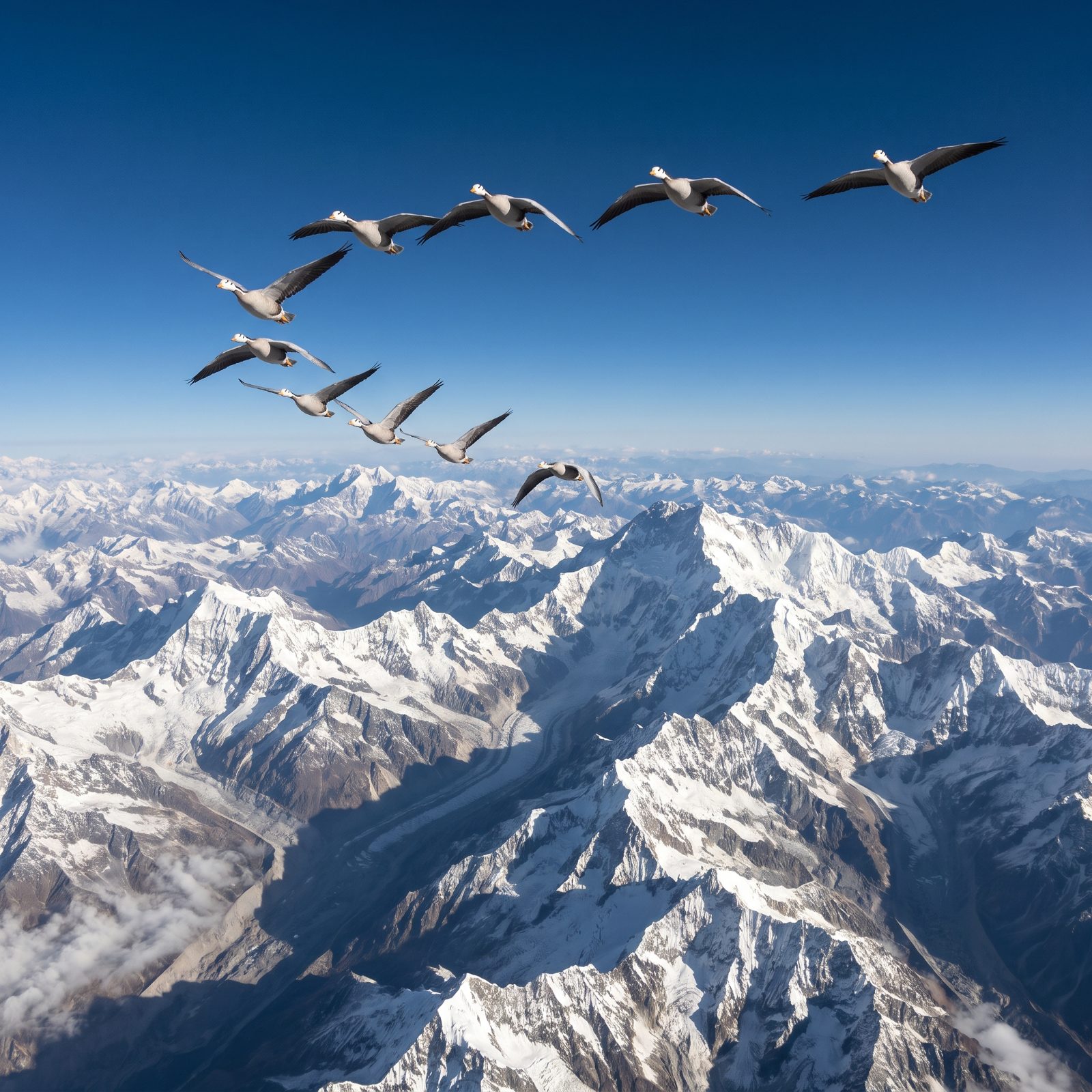
Climbers on supplemental oxygen have heard geese honking somewhere above them. That’s not a tall tale. Bar-headed geese cross the Himalayas on their migration between Central Asia and South Asia, flying through air so thin a human up there would black out.
They manage it with a stripped-down engine. Their blood binds oxygen more efficiently, their lungs move air faster, and their flight muscles are threaded with extra capillaries. Most of the flock climbs at night, when cooler air packs denser, then hugs the terrain instead of fighting a straight line over the summits.
7. Desert Locusts Riding Winds in Continent-Spanning Swarms
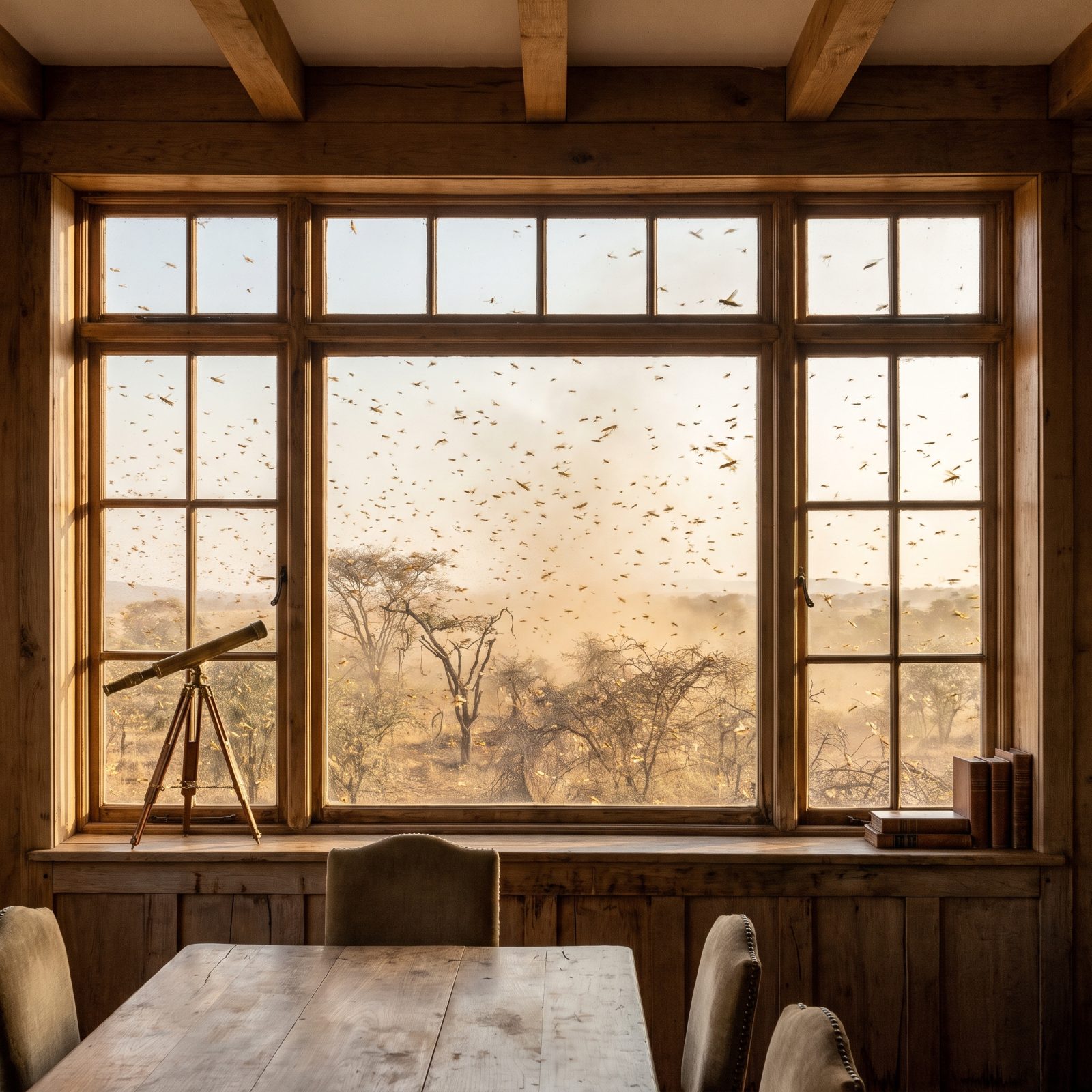
A desert locust swarm is weather you can eat. A single big one can cover hundreds of square miles and carry billions of insects, and it moves by hitching a ride on the wind rather than muscling across continents on its own.
Here’s the strange science. Locusts are usually shy loners. But when rain triggers a population boom and the crowding gets intense, a surge of serotonin flips a switch in their bodies — they change color, grow longer wings, turn gregarious, almost a different animal altogether. Then they lift off together and ride seasonal winds out of Africa into the Middle East and South Asia. A 2020 swarm pushed as far as the edge of the Indian subcontinent in force.
6. Spotted Salamanders Crossing Rainy Roads to Vernal Pools
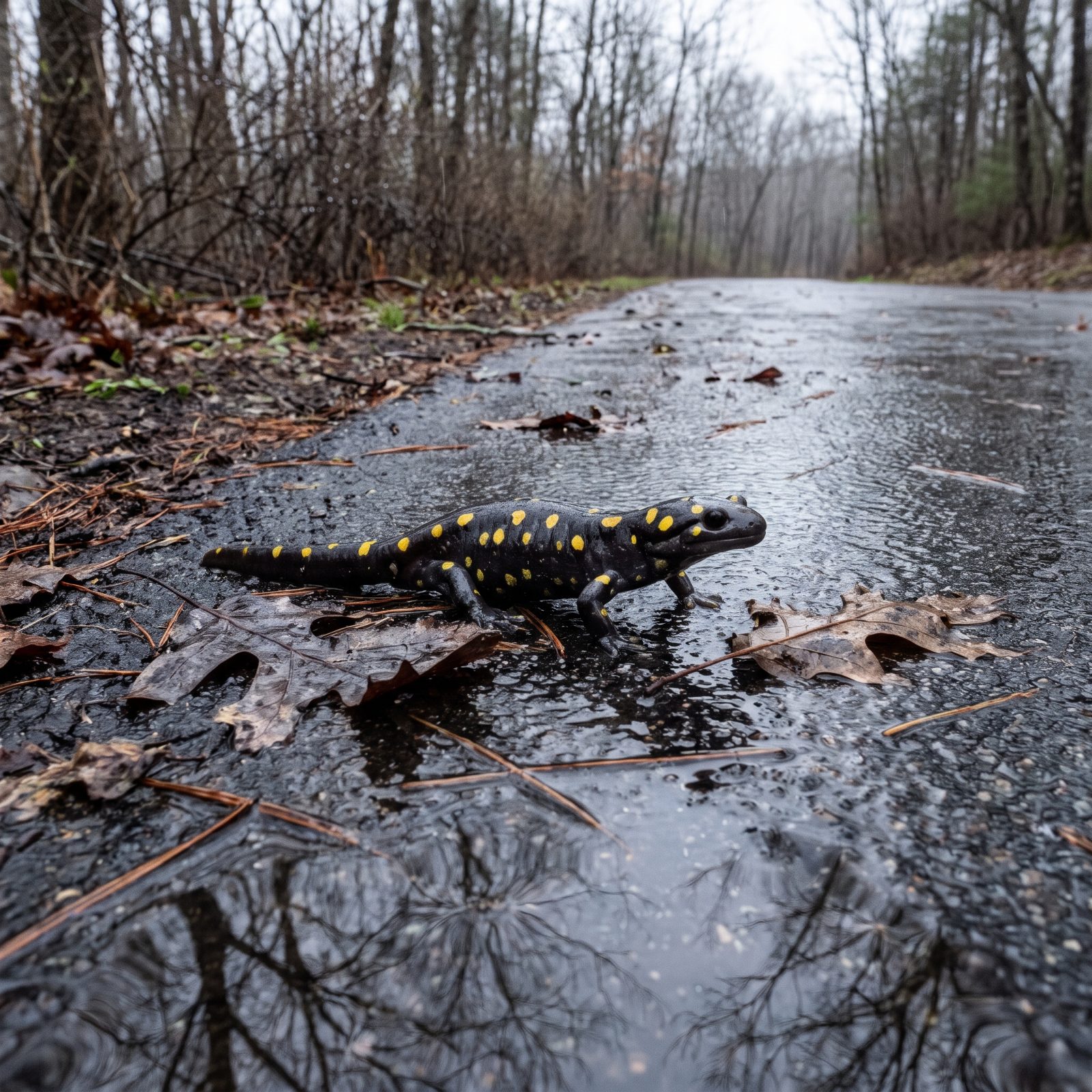
On the first warm rainy night of spring, the forest floor comes alive underfoot. Spotted salamanders, hidden underground all year, emerge by the thousands and walk — sometimes hundreds of yards — back to the exact woodland pool where they hatched. They do it in near-silence, in the dark, in the rain.
These vernal pools dry up by summer, and that’s the whole point: no fish, no predators lurking for the eggs. Short in miles, brutal in risk. A single road can erase a population in one night, which is why volunteers across the northeastern US stand out there with flashlights and buckets, playing crossing guard for amphibians.
Describing the first rainy spring night, a conservation center science director who leads salamander crossing brigades says “Thousands and thousands and thousands of salamanders and frogs all moving at the same time en masse to their breeding pools, and it’s just exquisite and most people don’t even know that it’s happening”
5. Red-Sided Garter Snakes Converging on Communal Dens
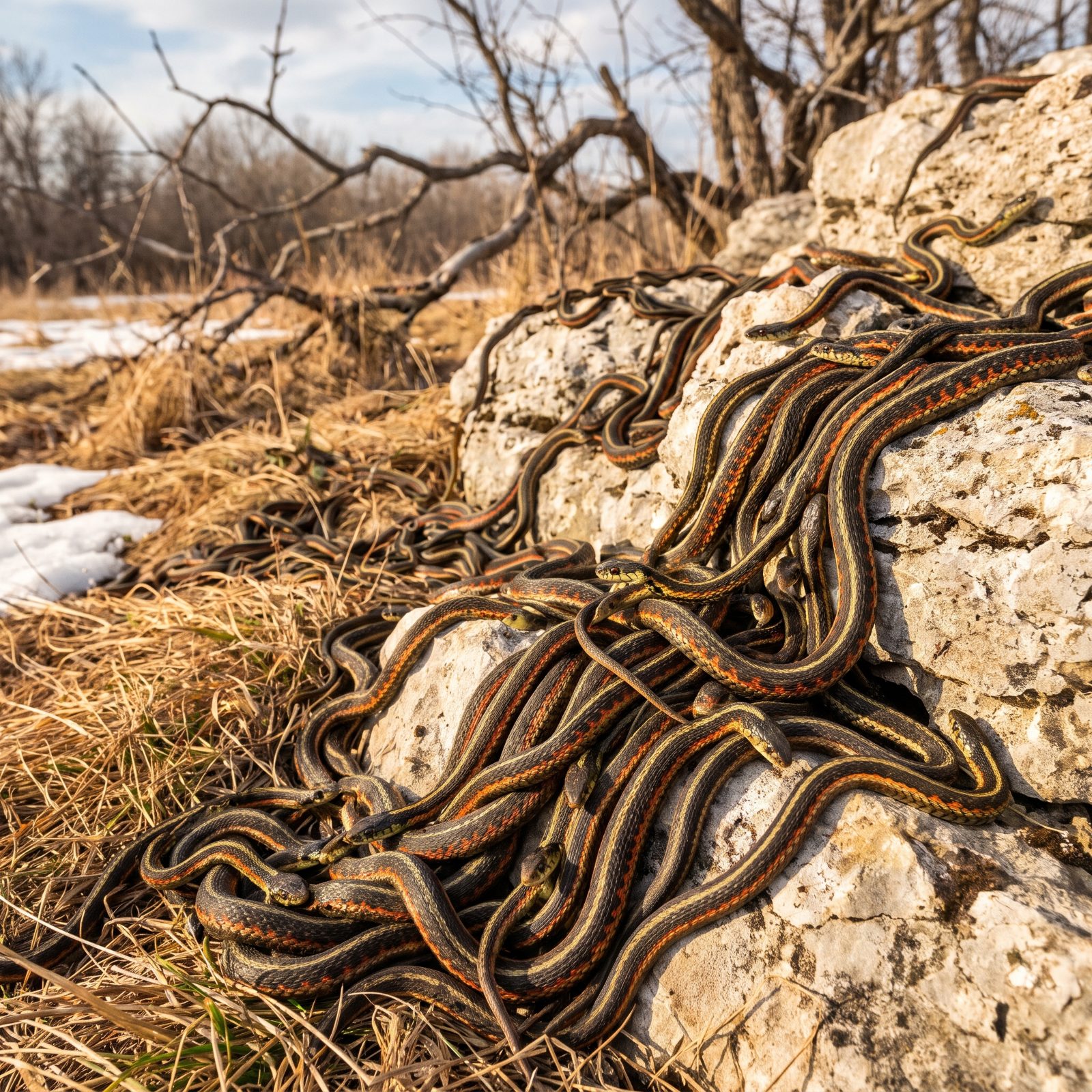
Each spring, red-sided garter snakes pour out of the limestone sinkholes near Narcisse, Manitoba, in what may be the biggest snake gathering on the planet.
They winter packed below the frost line, surviving brutal cold by sheer numbers. When they surface, males wildly outnumber females and tangle into writhing “mating balls” — dozens of males wrapped around a single female. Looks like chaos. Really it’s a migration measured in feet, not miles, though the snakes do scatter to the surrounding marshes to feed all summer and then homing back to the same dens by instinct every fall.
4. Giant Australian Cuttlefish Gathering Beneath Spencer Gulf
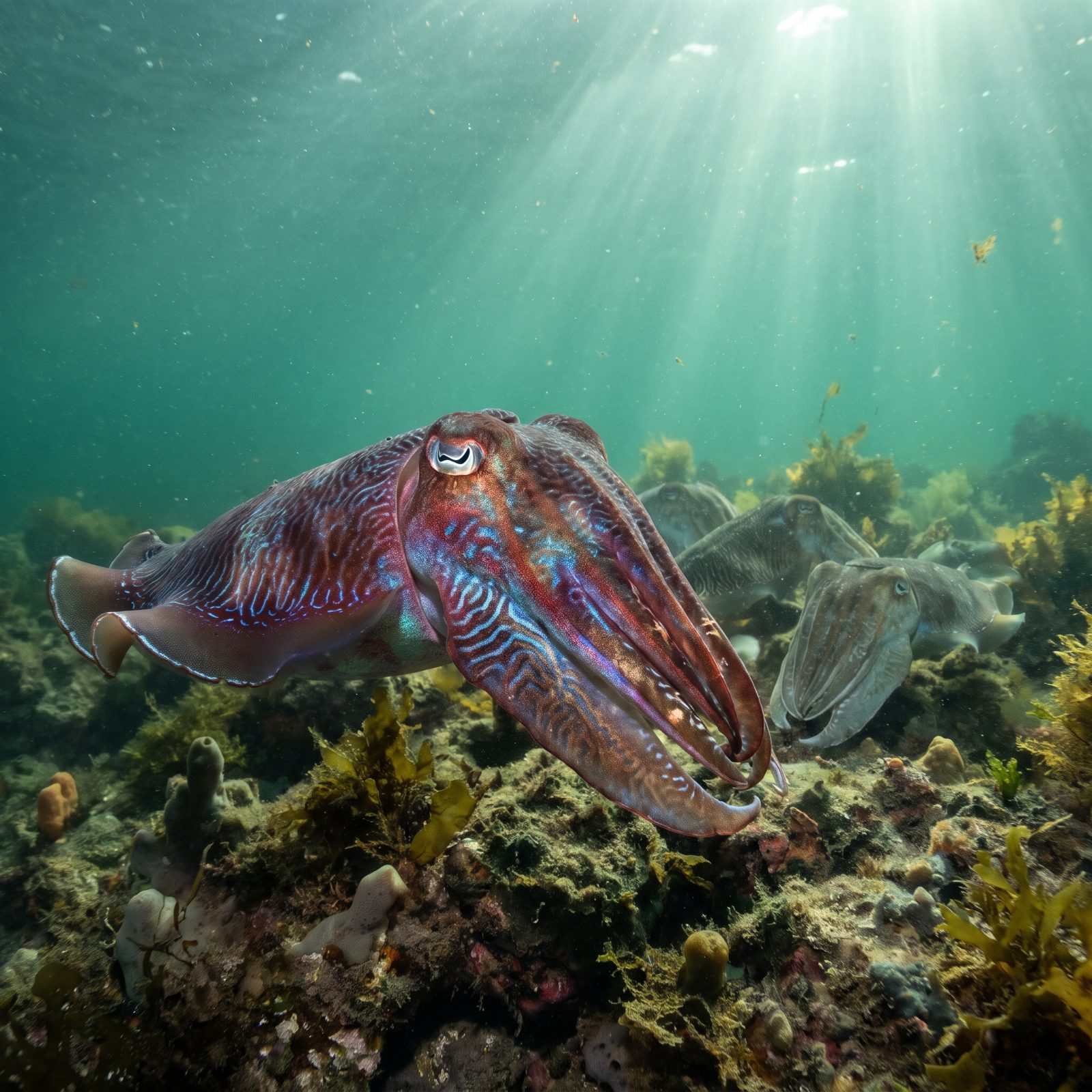
Every Australian winter, giant cuttlefish funnel into a few miles of rocky reef near Whyalla in South Australia. Nowhere else on Earth do they gather in numbers like this to breed — a dense congregation on a stretch of coast you could walk in an afternoon.
The males are living billboards. Pigment cells under their skin let them scroll color across their bodies like a marquee, flashing to intimidate rivals. Smaller males pull a sneakier trick: they mute the display, tuck in their arms, and impersonate a female to slip past a bigger guard and reach the real ones. Deception dressed as camouflage, and it works.
3. Giant Spider Crabs Gathering in Towering Underwater Mounds
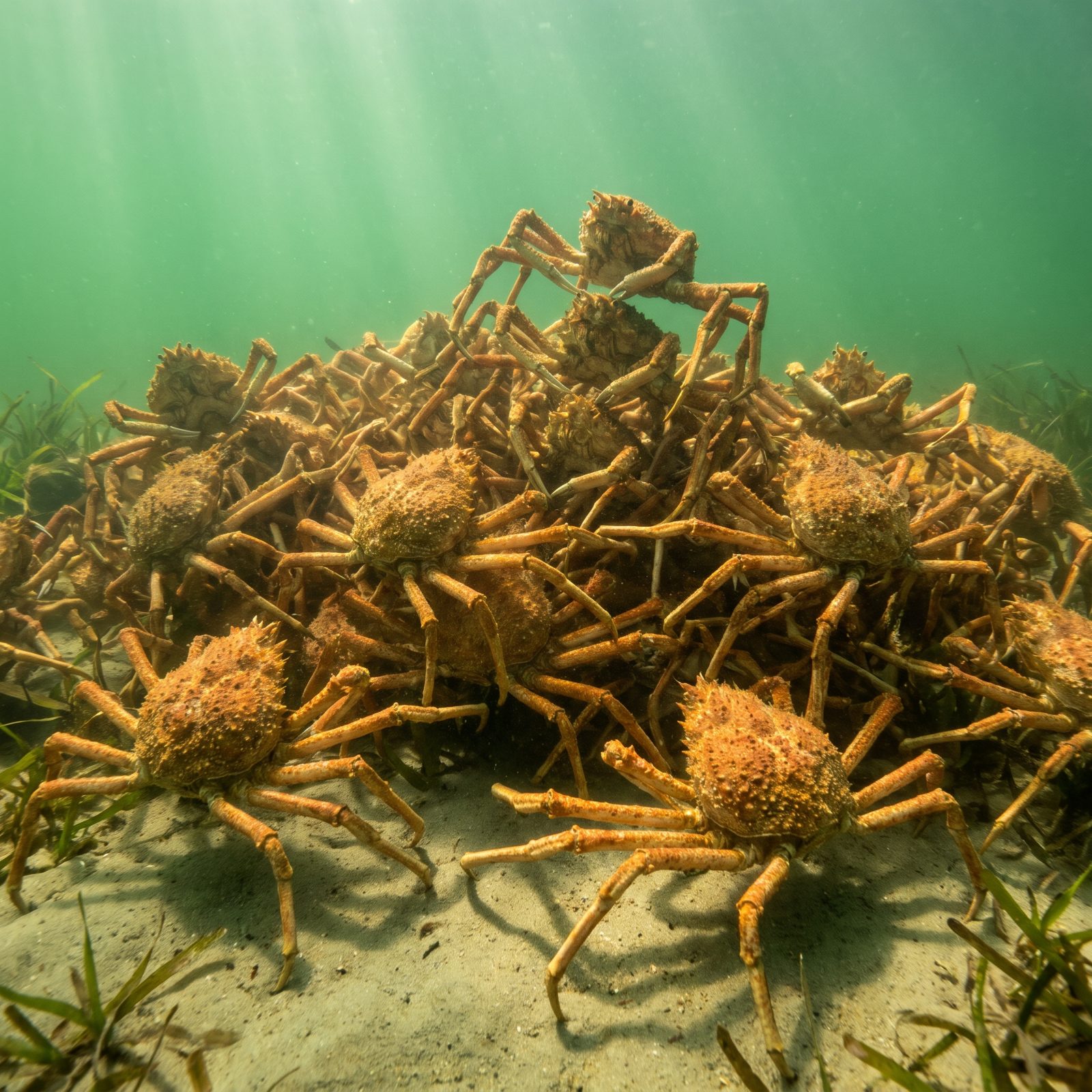
Once a year in Australia’s Port Phillip Bay, giant spider crabs march out of deeper water and pile into a single writhing heap — thousands upon thousands of them stacked legs over carapace in the shallows.
It’s a safety-in-numbers molt. A crab that has just shed its shell stays soft and defenseless for a day or two, easy pickings for rays and seals. So they synchronize. Molt together in a vast mound and each individual lowers the odds of being the one that gets eaten. The water goes quiet, then fills with the sound of cracking shells as the whole gathering slips out of its armor at once.
Explaining why the crabs pile up in the shallows, an aquatic scientist who swam through the aggregation says “When the crabs have freshly moulted, their bodies are soft, making them vulnerable to predators such as rays and sharks”
2. Pacific Bluefin Tuna Crossing the Ocean Between Japan and California
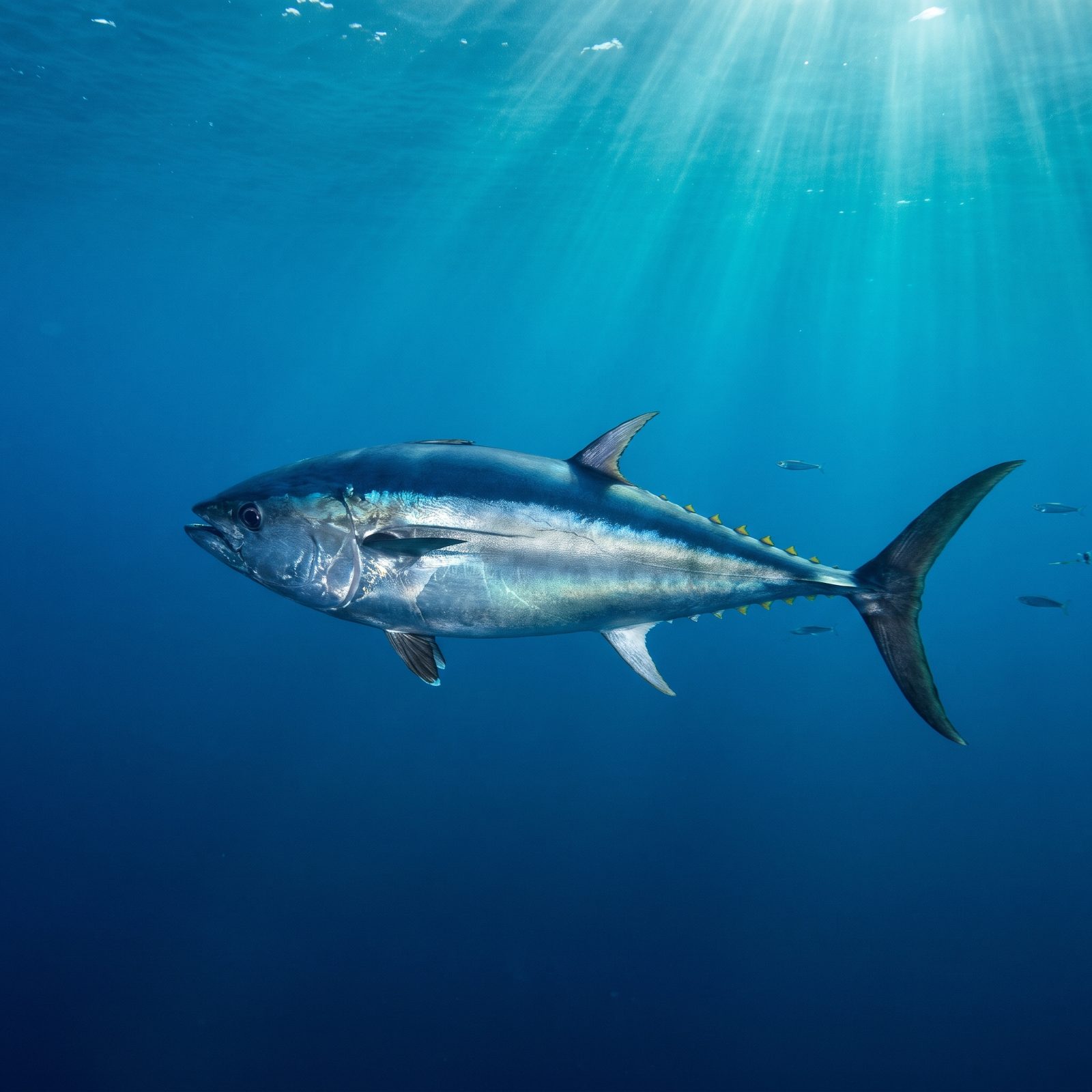
Some bluefin hatch off Japan, then swim the entire Pacific to feed off Baja California and the US West Coast. We’re talking several thousand miles, done by a fish, on nothing but what it catches along the way.
Here’s the part people miss: bluefin are warm-blooded, or close enough. A network of blood vessels called a rete mirabile recycles muscle heat, keeping the fish warmer than the water around it. That’s why it can chase prey into cold northern seas where most fish would just stall out. Hot muscle, no stopping.
1. Arctic Terns Traveling From Pole to Pole
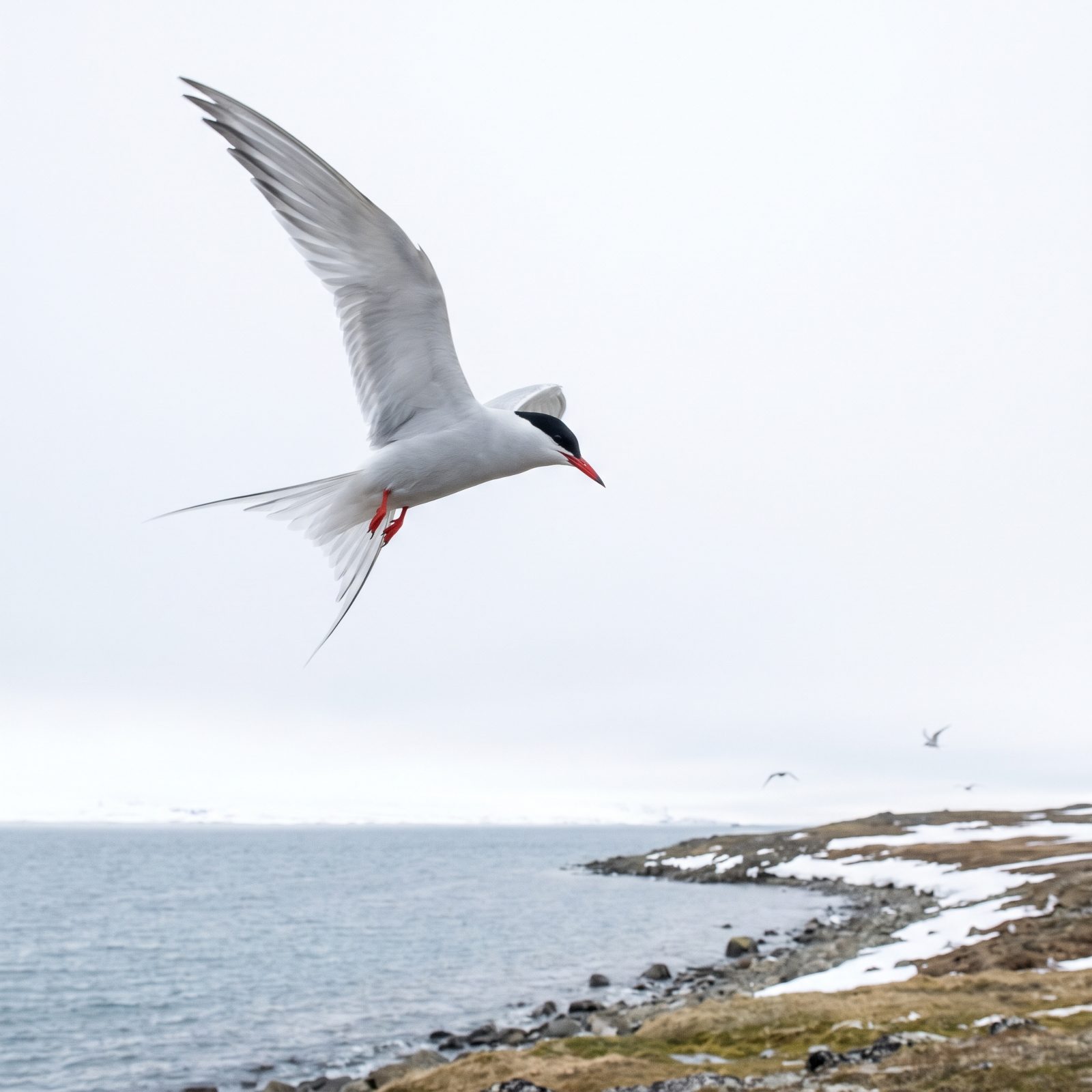
No animal on Earth sees more daylight. The Arctic tern breeds in the far north through the northern summer, then flies all the way south to the Antarctic for the southern one, chasing endless light at both ends of the planet.
And the flight is anything but a straight line. Tracking studies found terns taking a wandering, wind-assisted route down the Atlantic, piling up a round trip of tens of thousands of miles a year. Stretch that across a life that can run three decades and you’re looking at several round trips to the moon — logged by a bird that weighs about as much as a tennis ball.