
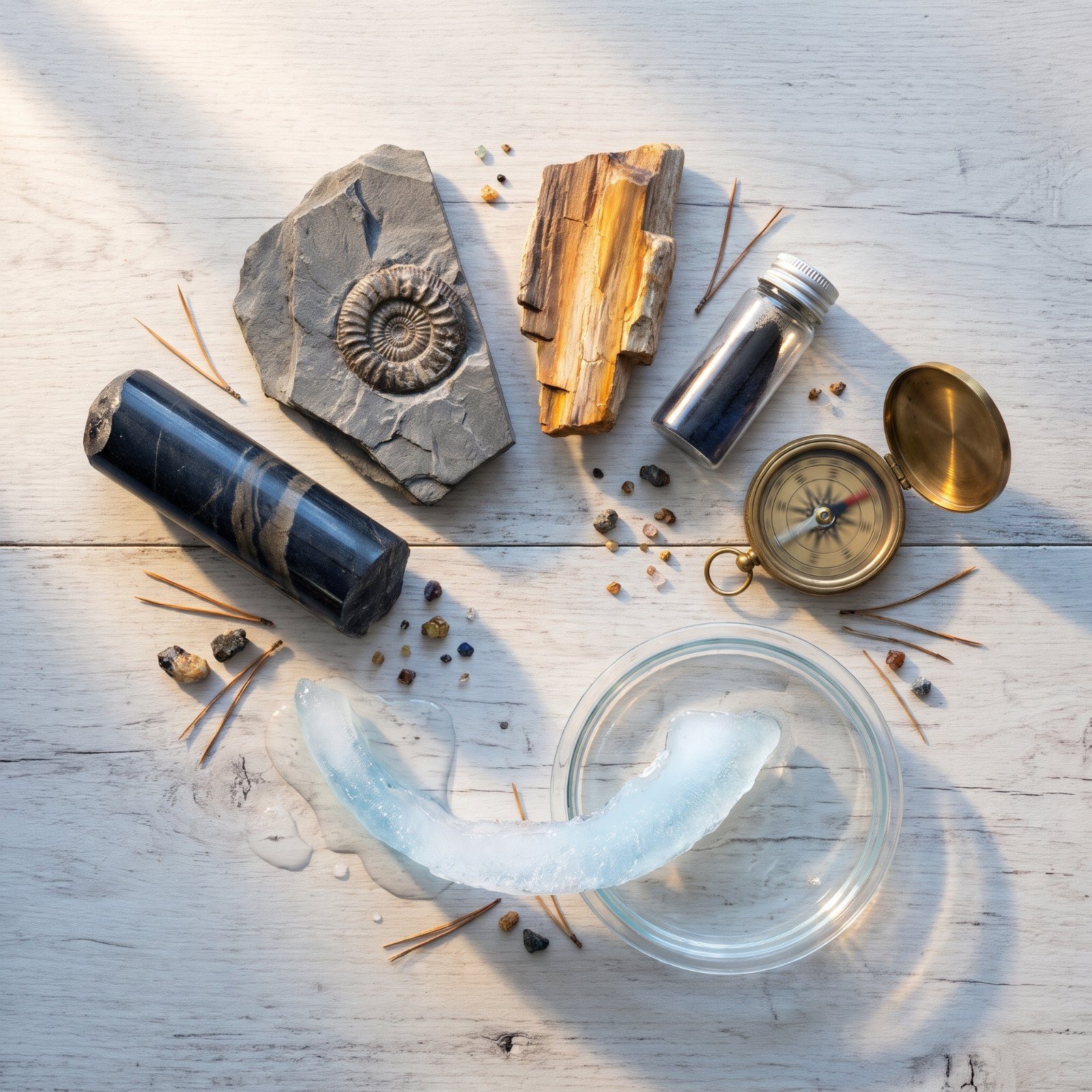
Stand at the exact spot where every direction is south, and you’d expect a sheet of ice older than memory. For most of Earth’s history, that ice simply wasn’t there. The geographic North Pole has sat over dark open ocean, over forests of conifers, over seas warm enough for marine reptiles and oxygen-starved water the color of ink. Rocks drilled from the Lomonosov Ridge and fossil beds across the far north let scientists rebuild those vanished worlds date by date. Here are key moments at the top of the planet, reconstructed from real evidence, each one a place you could never have stood.
Please note that some of the images in this article were created with the assistance of AI.
252 Million Years Ago: A Dark Polar Ocean After the Great Dying
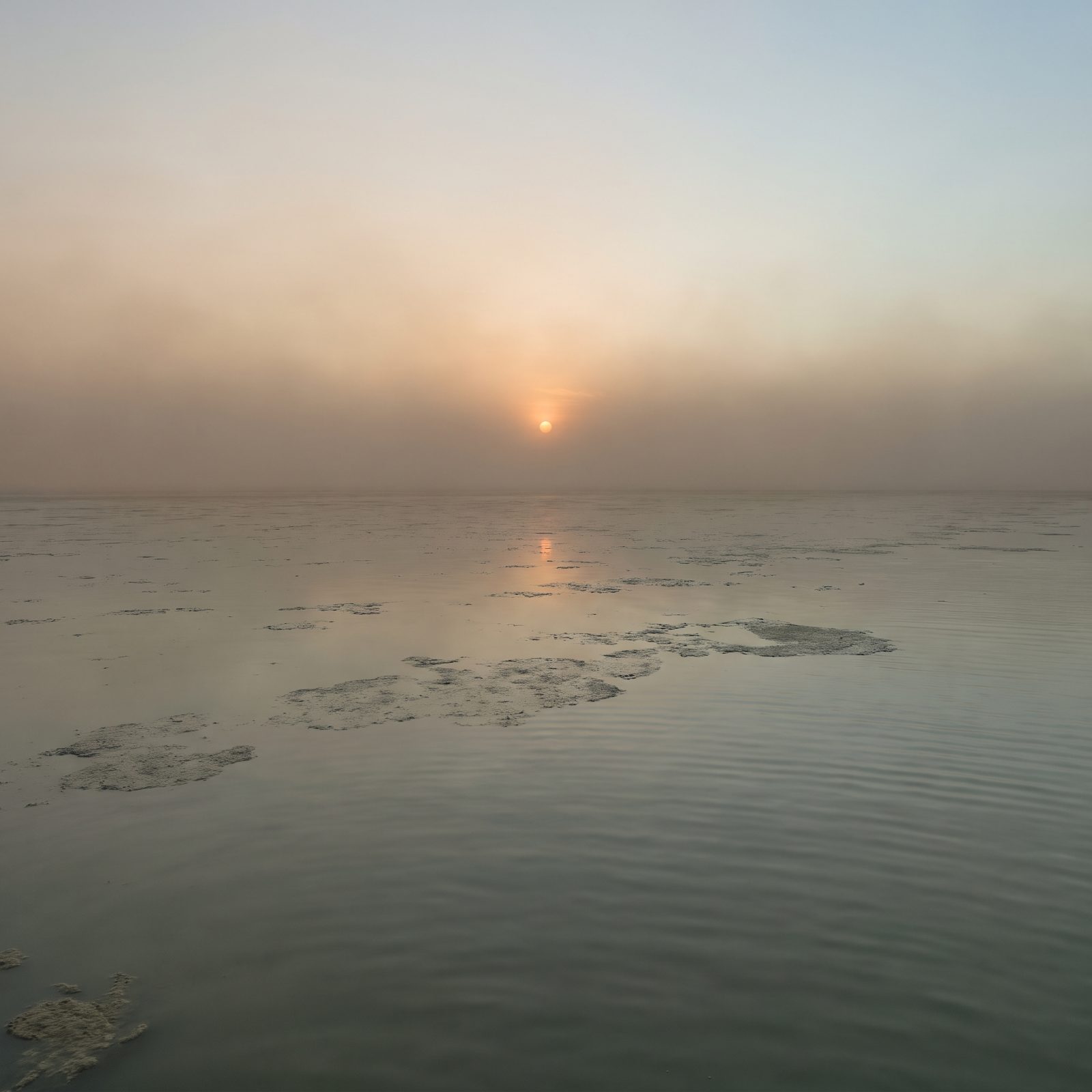
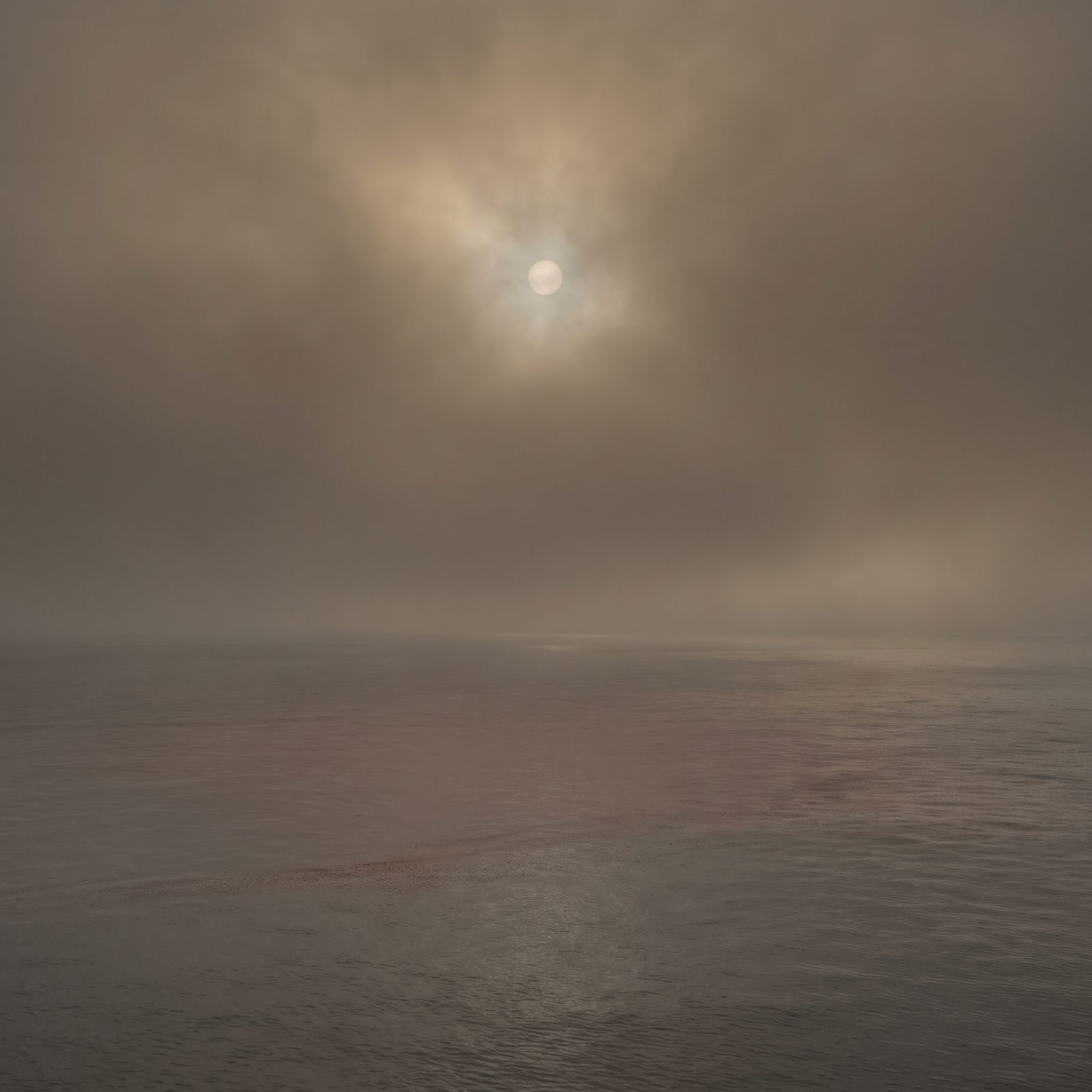
Earth had just survived the worst catastrophe in its long life. The end-Permian extinction wiped out roughly nine in ten marine species, and here that polar ocean stretches to a hazy horizon, its still, greenish-gray water dotted with pale scum floating where coral and fish should be.
What you’d notice first is the calm: a pale orange sun glowing low through thick haze, its reflection a faint streak across gentle ripples, and drifting patches of foam on the water. It’s a quiet, open view of a sea holding its breath while life clawed its way back.
240 Million Years Ago: Marine Reptiles Hunt Beneath Ice-Free Polar Waters
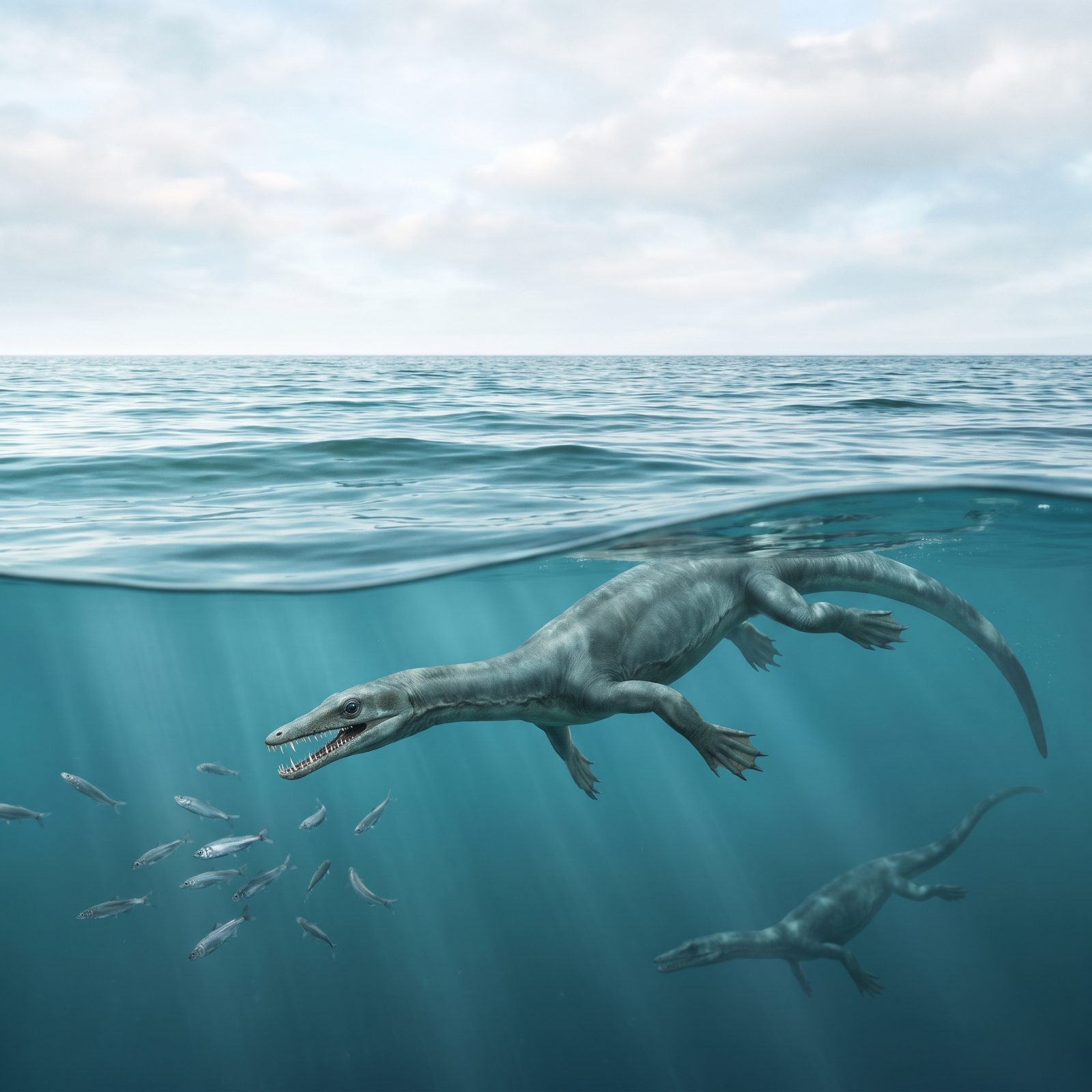
By the Middle Triassic, the seas had recovered their swagger. Long-necked nothosaurs — early marine reptiles with paddle limbs and jaws of needle teeth — cruised these high-latitude waters hunting fish.
No polar ice meant no barrier. Warm-blooded or not — the debate over their physiology grinds on — these reptiles ranged into latitudes that today sit under permanent pack ice. The Pole in this era was simply productive ocean, the kind of place a predator could make a living year-round.
210 Million Years Ago: Conifer Forests Fringe the Far-Northern Shores
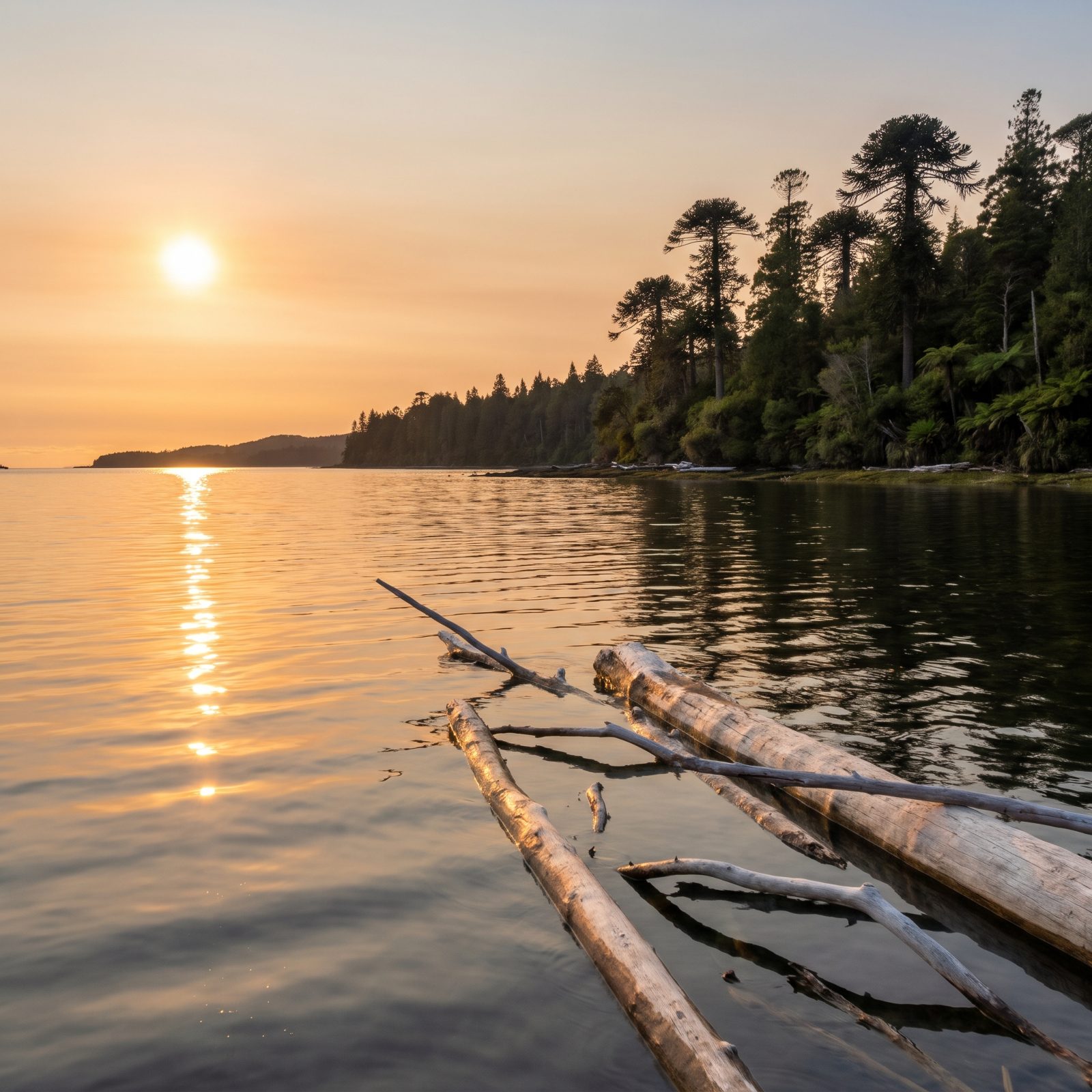
Trees grew close to the top of the world. Late Triassic conifers, relatives of the modern monkey puzzle, fringed the far-northern coasts in a warm greenhouse climate with no permanent ice at either pole.
You could have walked a shoreline of resinous forest in continuous summer light. The forests didn’t reach the geographic Pole itself, which sat over water, but they came remarkably close — a green hem on a world that ran warm from equator to cap.
202 Million Years Ago: Volcanic Haze Darkens the Triassic-Jurassic Boundary
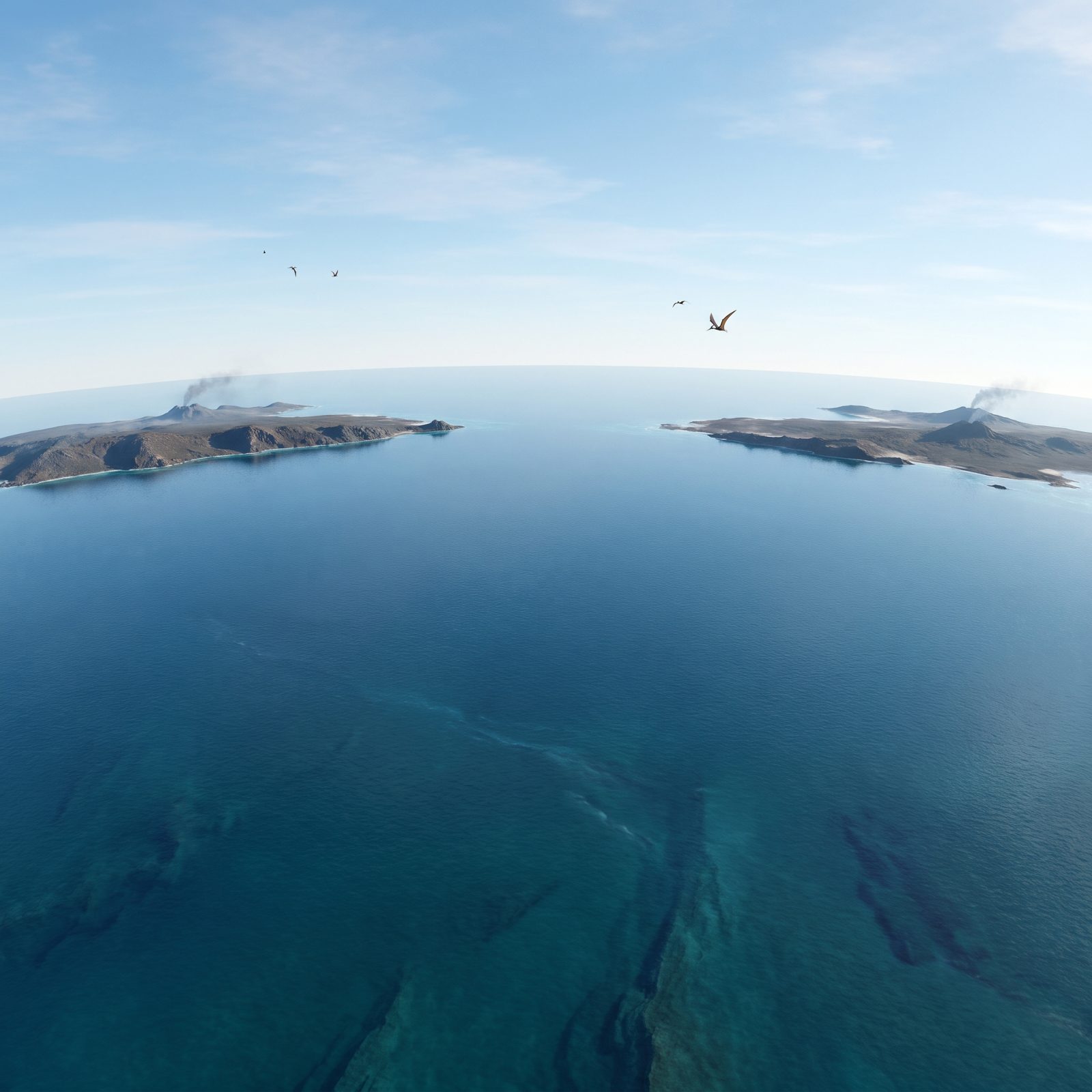
Another boundary, another catastrophe. The end-Triassic extinction lines up with one of the largest volcanic events in Earth’s history, the Central Atlantic Magmatic Province, as the supercontinent Pangaea began tearing apart.
At the Pole, the water didn’t freeze — the sky did the damage. Sulfate aerosols and carbon dioxide from enormous lava flows swung the climate hard, and roughly half of marine species vanished. The idea that this volcanism drove the extinction is well supported, though scientists still argue over how fast the killing blow actually landed.
135 Million Years Ago: New Arctic Basins Begin Opening Between Continents
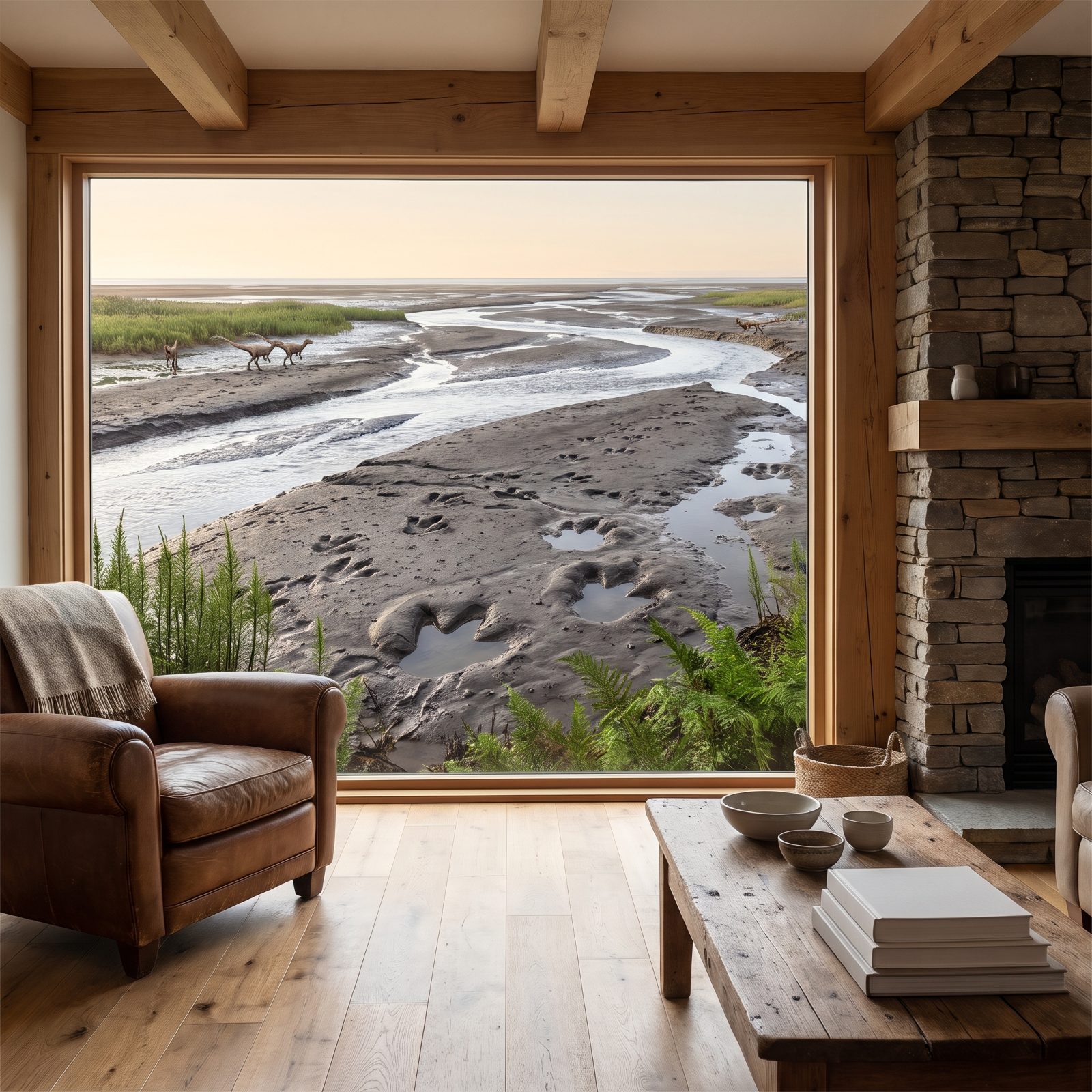
The map was being redrawn. As Pangaea’s fragments drifted, new ocean basins began prying open across the far north — the deep structural ancestors of today’s Arctic Ocean.
Picture the Pole sitting over young, deepening water, flanked by continents pulling slowly apart. Tectonics is demolition and construction at once, both happening in geological slow motion. And here’s the payoff: the basins that opened would eventually channel the currents and trap the sediments that scientists now core to read this entire story backward.
125 Million Years Ago: Dinosaur Tracks Mark a Far-Northern River Delta
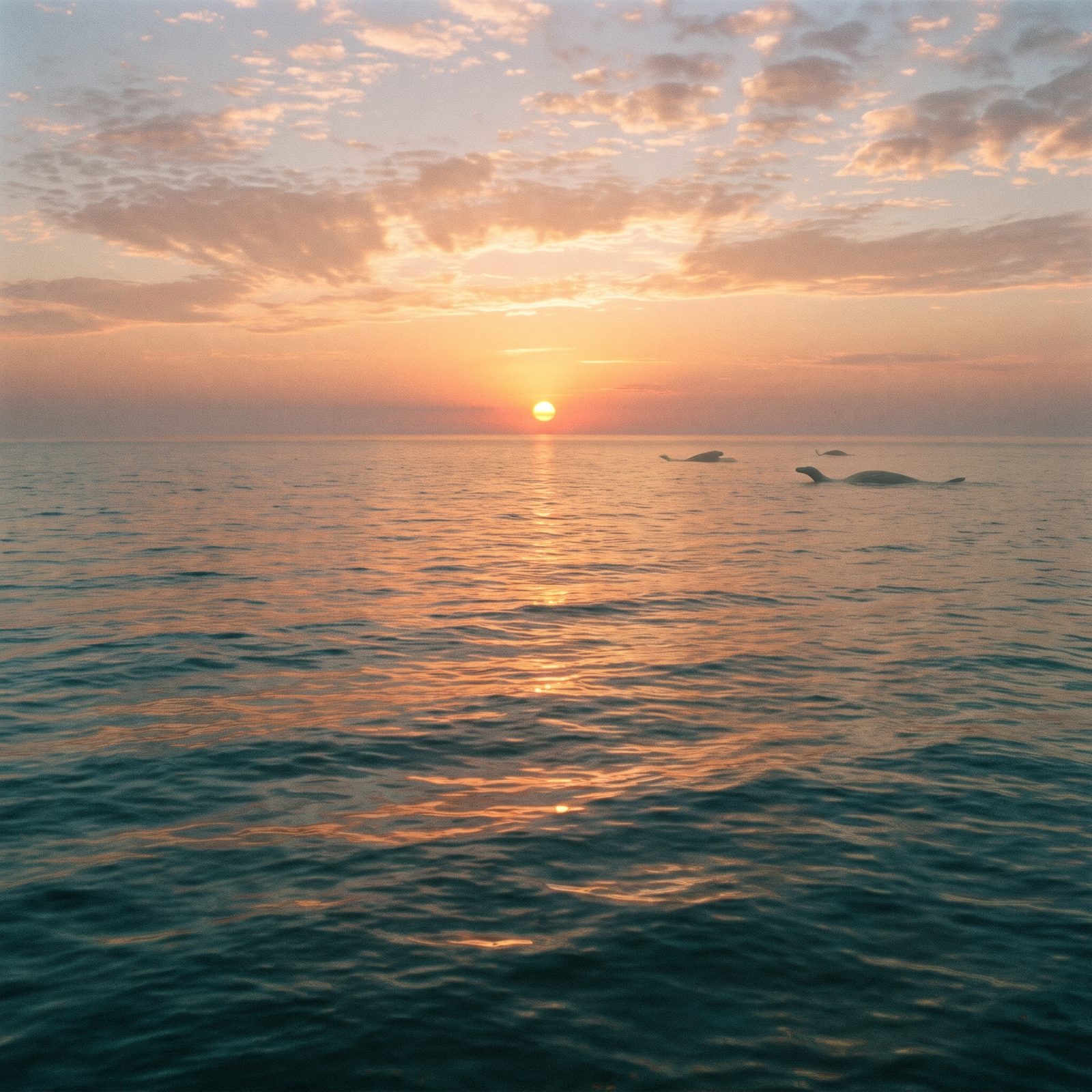
Dinosaurs lived in the polar regions, and they left their feet behind. Early Cretaceous tracksites in the far north preserve rounded, lobed footprints pressed into river-delta mud — the slab pictured holds several paw-like hollows, some now cupping small pools of water — proof that large animals endured months of winter darkness up here.
No permanent ice, but real seasonality: long dark winters, bright endless summers. These animals weren’t tropical tourists. Some polar dinosaurs appear to have been year-round residents, which raised early questions about dinosaur physiology that still fuel research today.
100 Million Years Ago: An Ice-Free Ocean Under the Midnight Sun
This is the strangest image in the whole timeline: the geographic North Pole as warm open sea, the sun circling the horizon at midnight and never setting.
The mid-Cretaceous ranks among the hottest stretches in hundreds of millions of years. Carbon dioxide ran high, there were no ice caps worth the name, and polar surface waters stayed mild enough for abundant life. Stand on the water here and you’d feel warm air and low, endless summer light. That frozen cap you picture? A very recent invention.
94 Million Years Ago: Black, Oxygen-Poor Water During a Global Anoxic Event
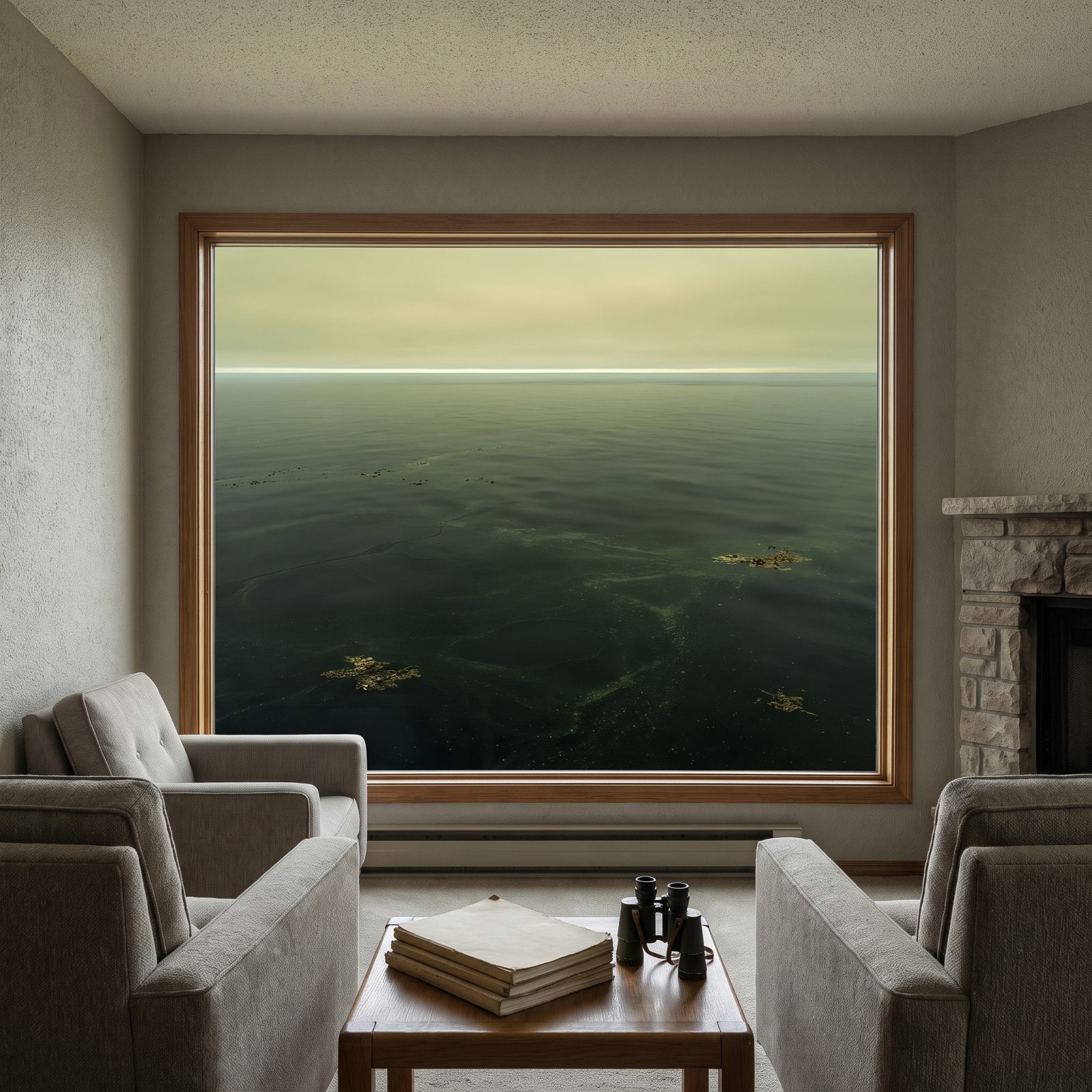
The sea turned black. During the Cenomanian-Turonian oceanic anoxic event, huge volumes of ocean water lost their oxygen, and the deep sediments that formed are dark with undecayed organic carbon.
A warm ocean holds less oxygen, and a warm ocean that stops mixing can suffocate itself from the bottom up.
At the Pole, the surface may still have teemed, but below it the water went still and starved. Those black, carbon-rich layers became source rock for petroleum — which is why oil companies and climate scientists end up reading the same muddy pages for wildly different reasons.
85 Million Years Ago: Mosasaurs Cruise Through the Polar Sea
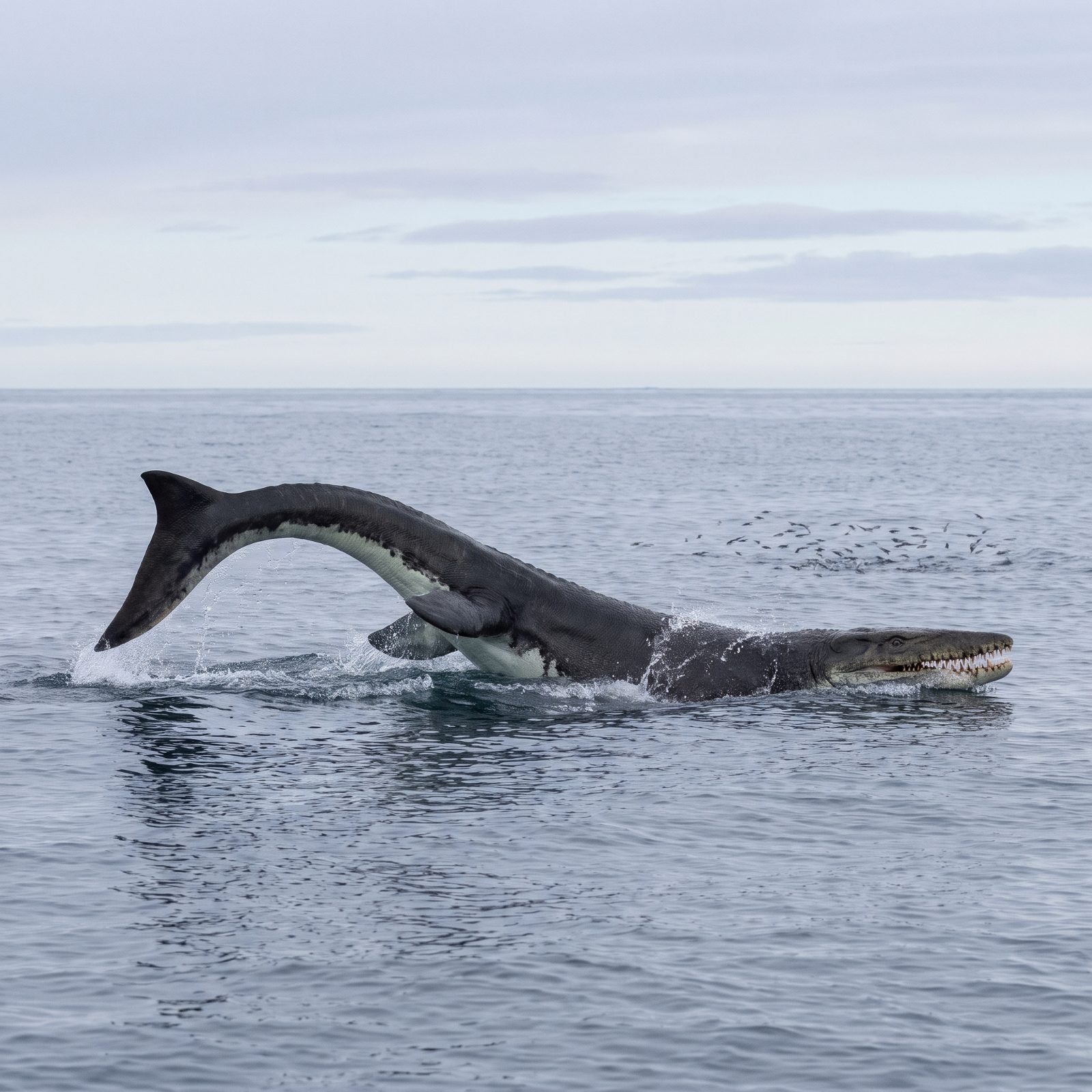
The apex predator had changed. By the Late Cretaceous, mosasaurs — enormous marine lizards related to monitors and snakes — ruled the seas, including the cooler polar waters.
Fossils from high-latitude Cretaceous rocks show these reptiles ranged far north. A big mosasaur rolling at the surface would have been the closest thing this world had to an orca, built for speed with a powerful downturned tail fluke. Still no ice, still open water. But the cast of hunters had been swapped out completely.
70 Million Years Ago: Polar Dinosaurs Endure Months Without Sunlight
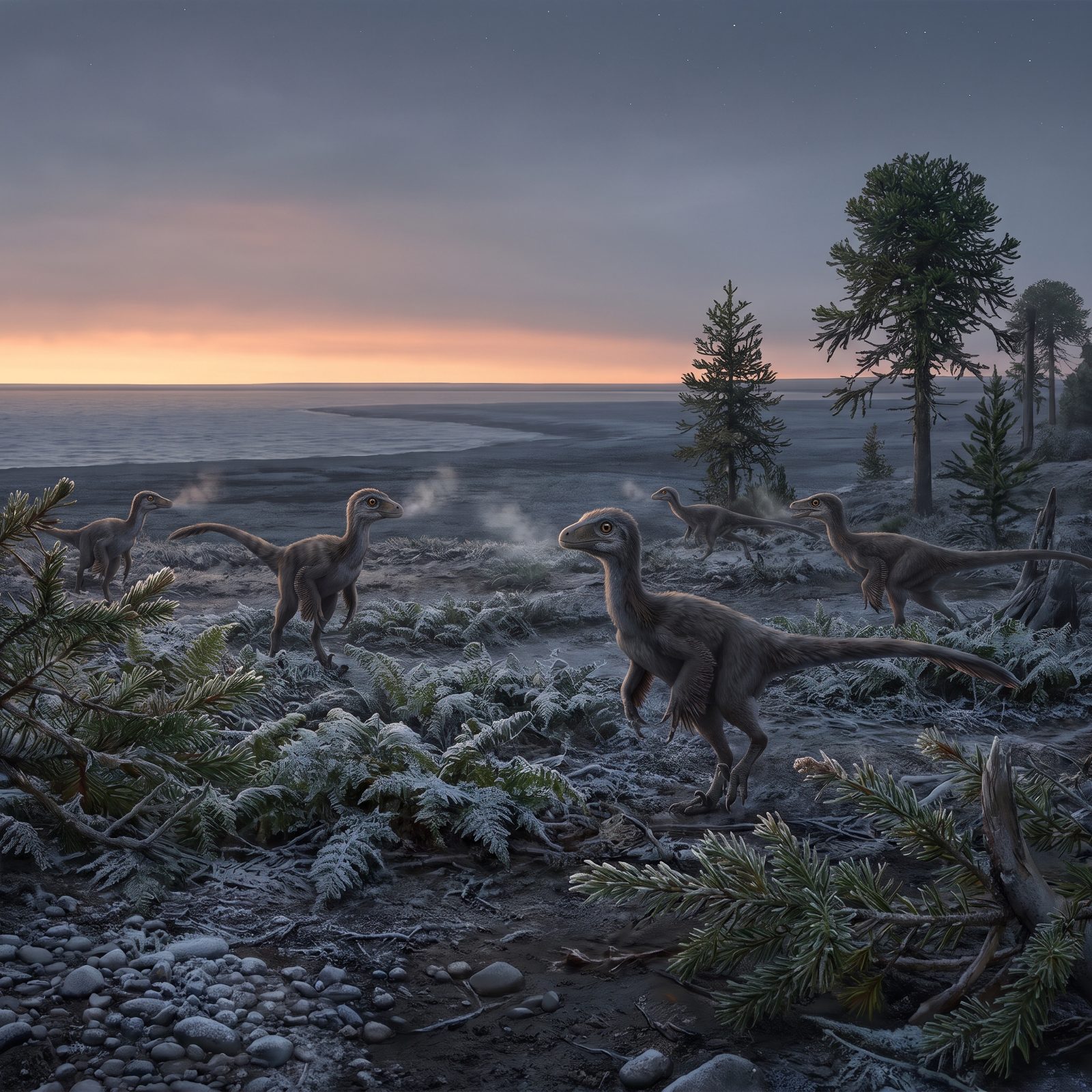
The dinosaurs living here were not tropical. They weathered winters with the sun below the horizon for weeks on end, the ground crusted in frost and food scarce. Fossils from high-latitude sites tell us some stayed year-round rather than packing up and migrating south.
The leading idea? Larger eyes helped them hunt in the long dark, and warm-blooded metabolisms kept the furnace lit. Picture a troodontid picking across frozen mud under a sky the color of a bruise, waiting for light to crawl back over the edge of the world. It did, eventually. Every single year.
After baby-dinosaur fossils turned up on Alaska’s North Slope, an Alaska museum paleontologist who led the study explained “If they reproduced, then they over-wintered there. If they overwintered there, they had to deal with conditions that we don’t usually associate with dinosaurs, like freezing conditions and snow”
66 Million Years Ago: Impact Dust Turns the North Pole Dark and Cold
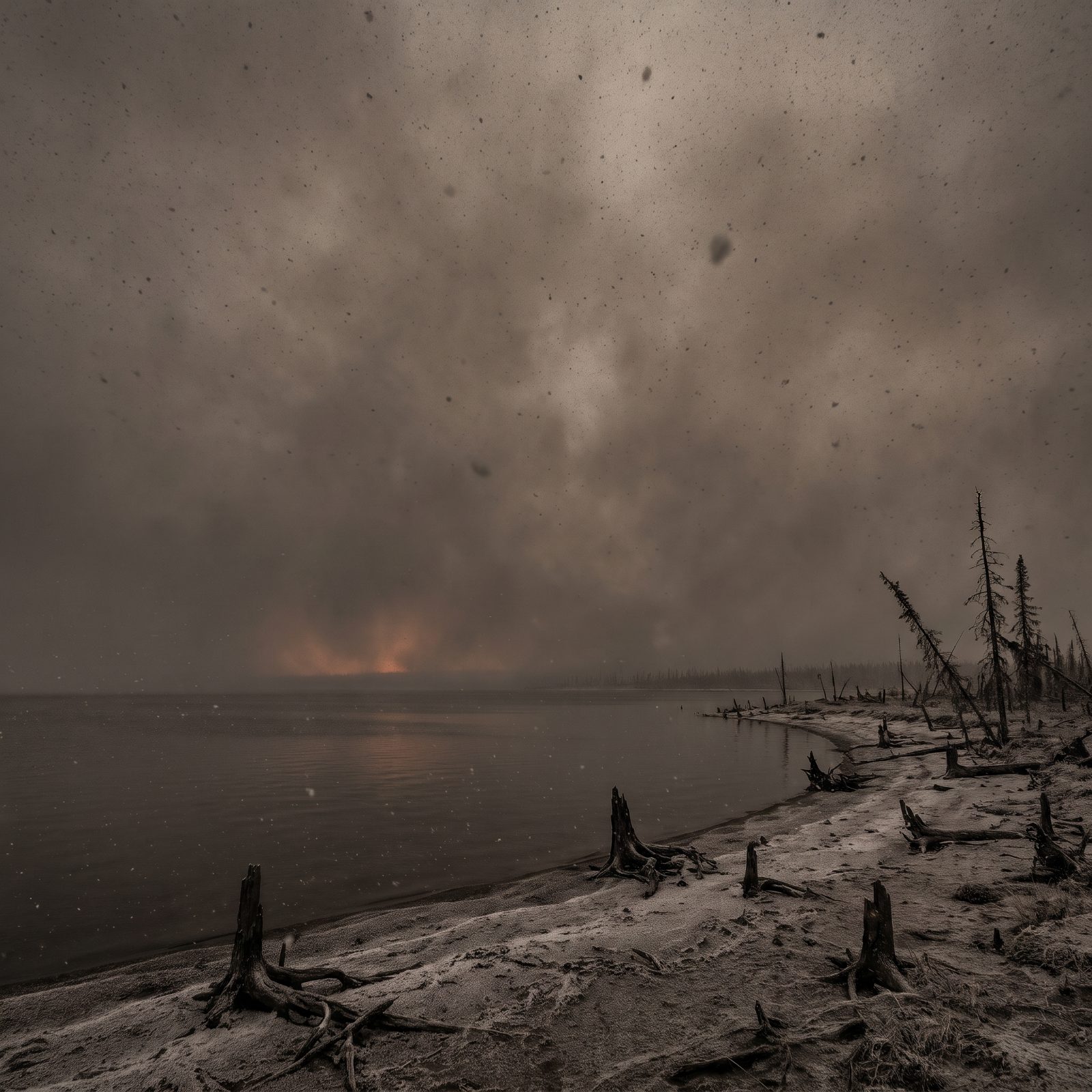
The asteroid hit thousands of miles south, near what is now Mexico. The Pole never felt the blast. It felt the aftermath.
Dust, soot and sulfur aerosols circled the planet within days and shut down sunlight for months, maybe longer, and photosynthesis stalled worldwide. At the Pole, already dim and cold, daylight faded to a dull brown murk while temperatures plunged. An impact winter, reaching every corner of Earth. The ferns and forests that had shrugged off the ordinary polar night could not survive this one. The quiet in this scene is the quiet of a food web coming apart from the bottom up.
65 Million Years Ago: Ferns Spread Through the Post-Impact Arctic
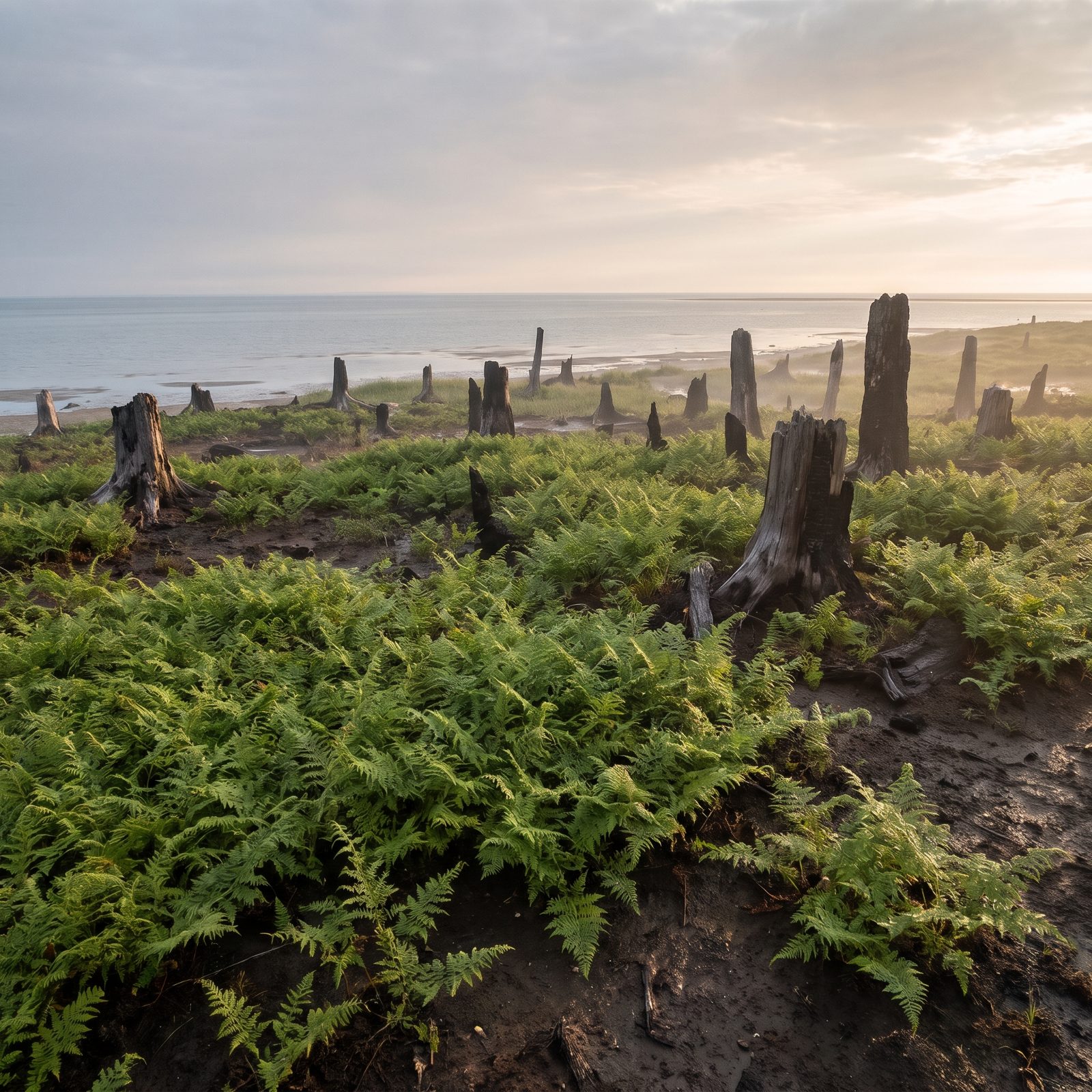
Ferns are the colonizers. After volcanic eruptions, after wildfires, after the worst single day in the history of life on this planet, they come back first. Geologists even have a name for the burst of fern spores in the rock right above the extinction layer: the fern spike.
Here at the recovering Pole, ferns carpet the burned ground while the slower-growing trees are still nowhere to be seen. A familiar green, the same one that moves into a scorched hillside today. Proof that life does not wait for permission to start over.
56 Million Years Ago: Extreme Heat Reaches the Pole During the PETM

The Arctic Ocean once reached bathwater warmth. Sediment cores from the Arctic seabed record surface waters around 73 degrees Fahrenheit during the PETM. At the Pole. In the same ocean we now cross on icebreakers.
A massive, fast release of carbon spiked global temperatures by several degrees in a geologic blink, and the poles warmed most of all. What had been cool forest turned humid and subtropical, with conditions that suited palms and crocodile relatives.
Scientists study this event hard, because it is the closest natural comparison we have to a rapid carbon release. The difference? This one unfolded over thousands of years, not a couple of centuries.
53 Million Years Ago: Dawn Redwood Forests Crowd the Arctic Basin
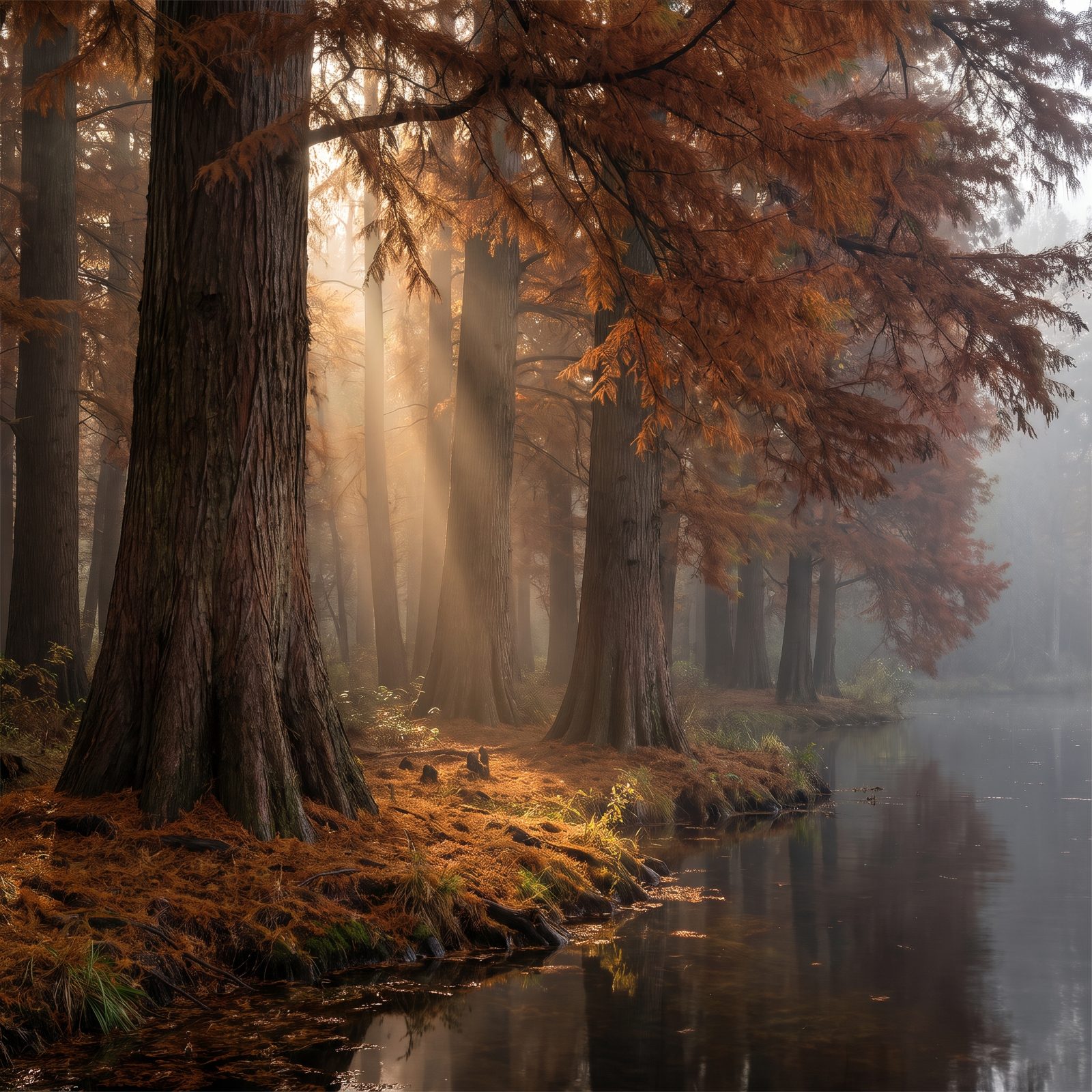
Imagine redwoods at the North Pole. Not a figure of speech. Fossilized stumps and leaf mats from the high Arctic show vast forests of dawn redwood, a deciduous conifer, growing where there is now open sea ice.
They were deciduous for a reason. Three months of total winter darkness makes keeping leaves pointless, so these trees shed their needles every autumn, went dormant through the polar night, then leafed out again for the endless summer daylight. A whole forest holding its breath for a quarter of the year.
Dawn redwoods were thought extinct until living ones turned up in a Chinese valley in the 1940s. You can plant one in your yard today.
52 Million Years Ago: Turtle- and Reptile-Filled Wetlands Thrive in Polar Darkness
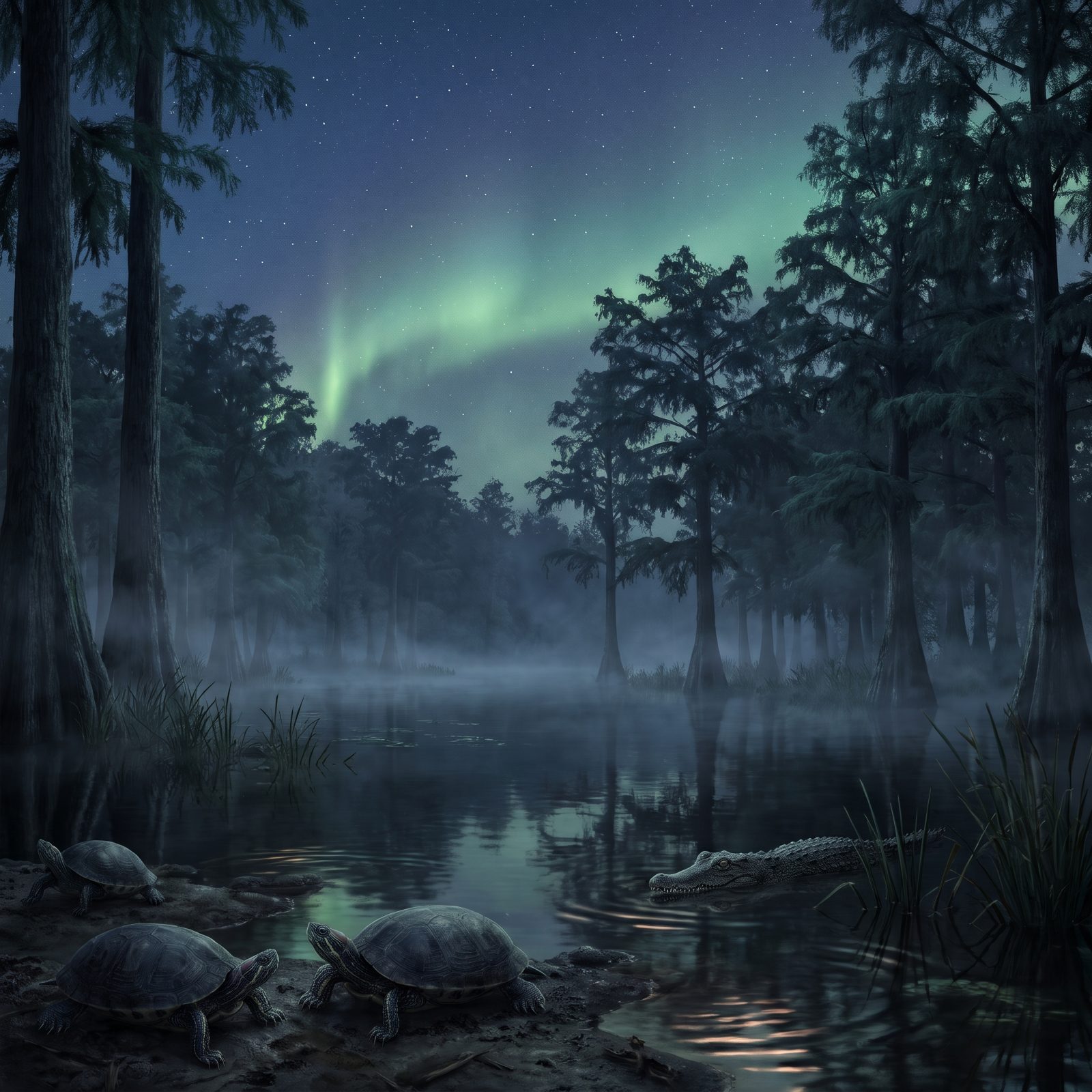
Turtles and crocodile relatives are cold-blooded. They need warmth. So finding their fossils in Eocene Arctic rock is one of the strangest facts in all of paleoclimate.
The catch is the winter. Even in a hothouse world, the Pole still went dark for months, and these animals endured a cool, sunless season every year. The best explanation researchers have is that winters stayed mild enough to survive and summers warm enough to recover and reproduce. Picture a turtle resting in an unfrozen pool under a faint aurora, waiting out the dark. A scene that should not be possible, and the fossils insist it was.
48, 47 Million Years Ago: Azolla Carpets the Arctic and Draws Down Carbon
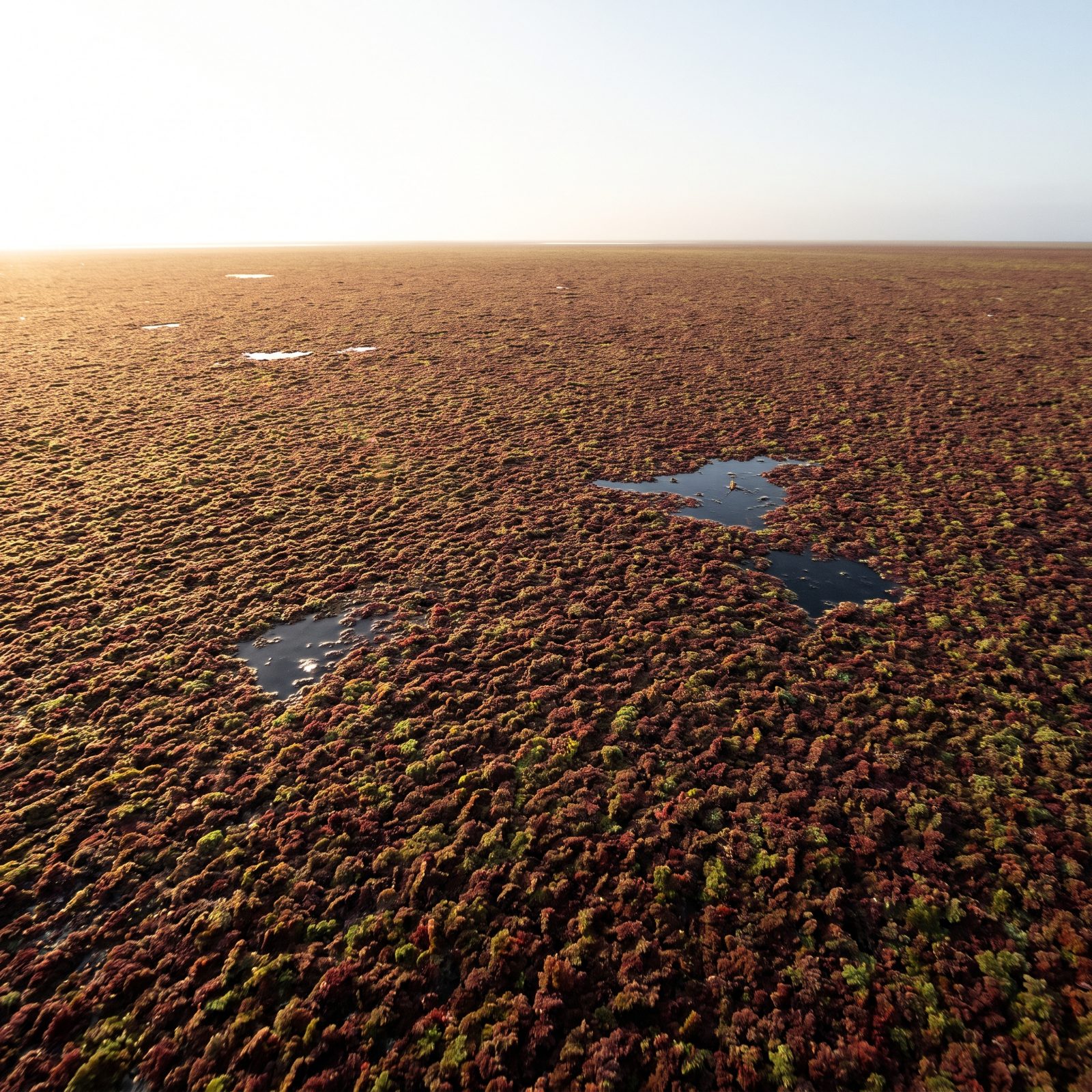
A fern you can hold between two fingers, the same kind that still carpets tree-fringed marshes in rusty red mats today, may have helped cool the entire planet.
For something like 800,000 years, the semi-isolated Arctic Ocean grew a floating skin of Azolla, a tiny fast-growing water fern. It bloomed, died, and sank into oxygen-starved bottom water where it couldn’t rot. Generation after generation, it pulled carbon dioxide out of the air and buried it in the seabed.
Many researchers think this Azolla Event helped drag the hothouse Earth toward the cooler world that eventually allowed polar ice. The idea is still argued over, and the exact figures are fuzzy, but the thick Azolla layers in Arctic cores are real and genuinely remarkable.
30 Million Years Ago: Regular Winter Ice Starts Forming Across the Ocean
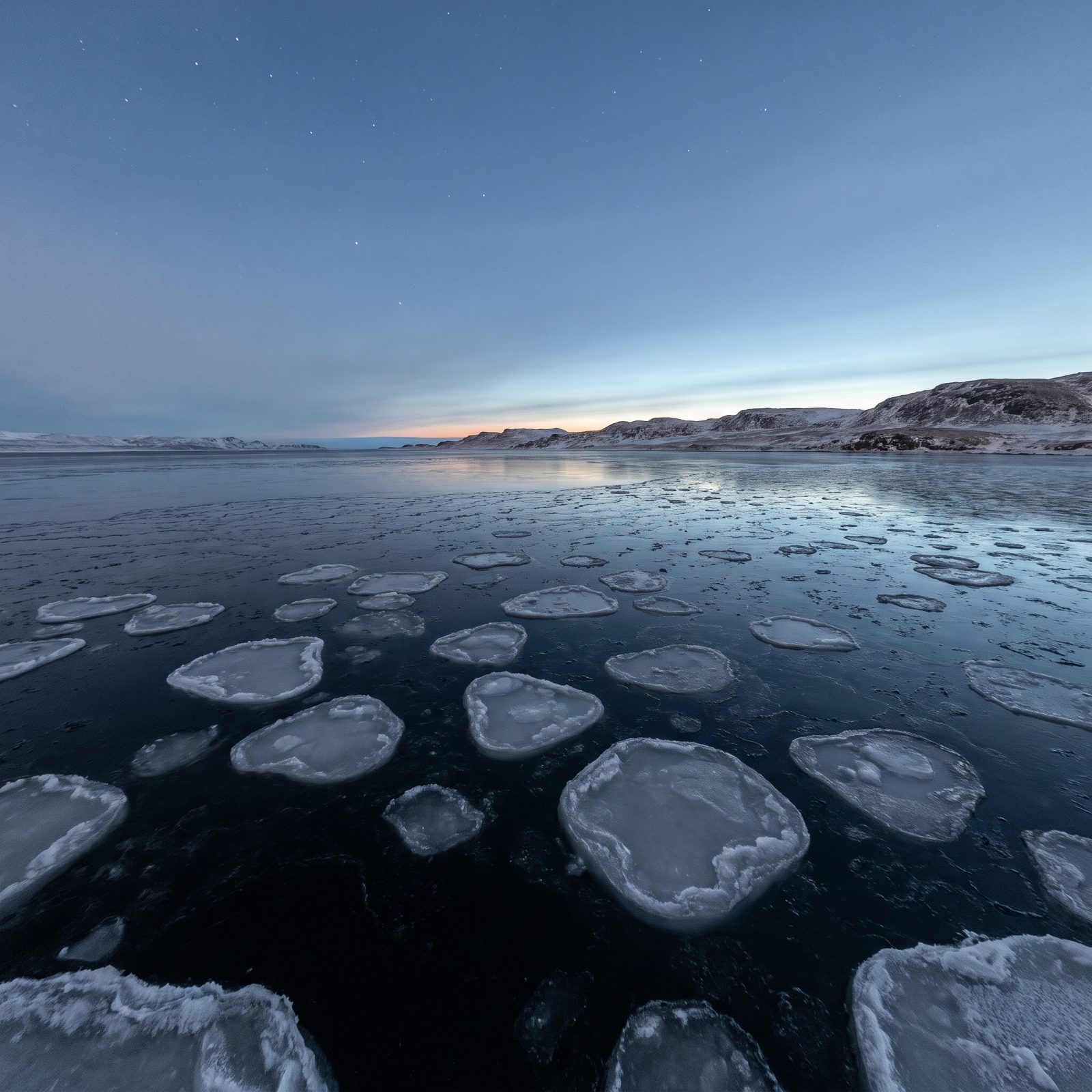
No dramatic event here. No asteroid, no superbloom. Just the slow turn of the climate toward cold.
As carbon dioxide levels dropped over millions of years and ocean currents rearranged themselves, the Arctic finally chilled enough that winter sea ice began forming on a regular basis. Not a permanent cap yet. Thin, seasonal, retreating each summer. But a real break from the ice-free hothouse that came before.
This is the Arctic starting to become the Arctic we recognize. The pancake ice drifting on that black water is the opening move of a cold era still running today.
25 Million Years Ago: Ancient Whales Surface Between Broken Ice Floes
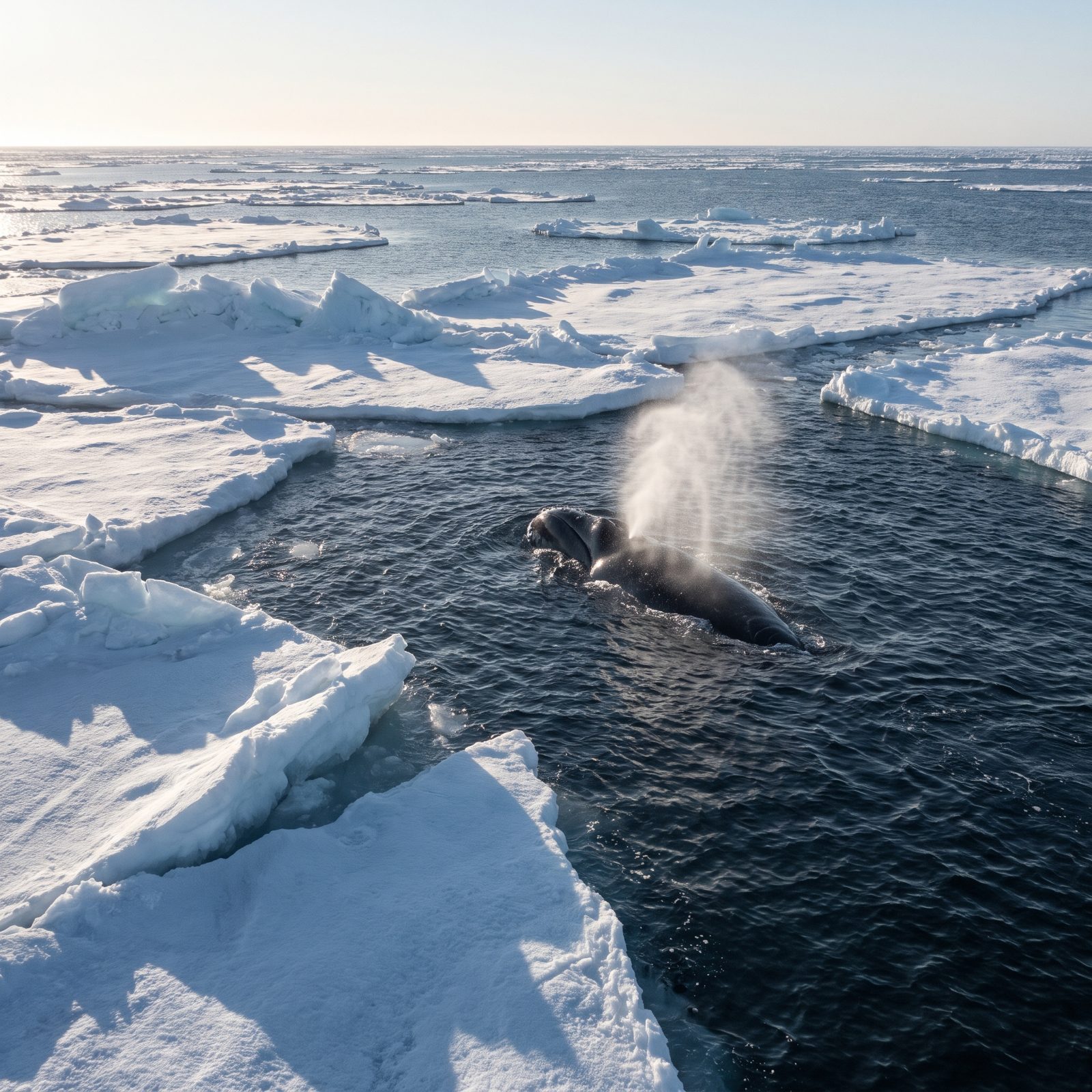
A cold, productive ocean is a feast. By this time the Arctic seas were cooling into exactly the kind of nutrient-rich water that whales adore, and the whales were changing to meet it.
This is roughly when baleen whales, the filter-feeders, were diversifying into ocean giants. Picture one surfacing to breathe in a gap between floes, spout hanging in the cold air, the way gray and bowhead whales do in the very same ocean now. The cast is ancient and unfamiliar, but the behavior would look completely at home to a modern Arctic whale watcher.
10 Million Years Ago: Expanding Greenland Ice Alters the Arctic Horizon
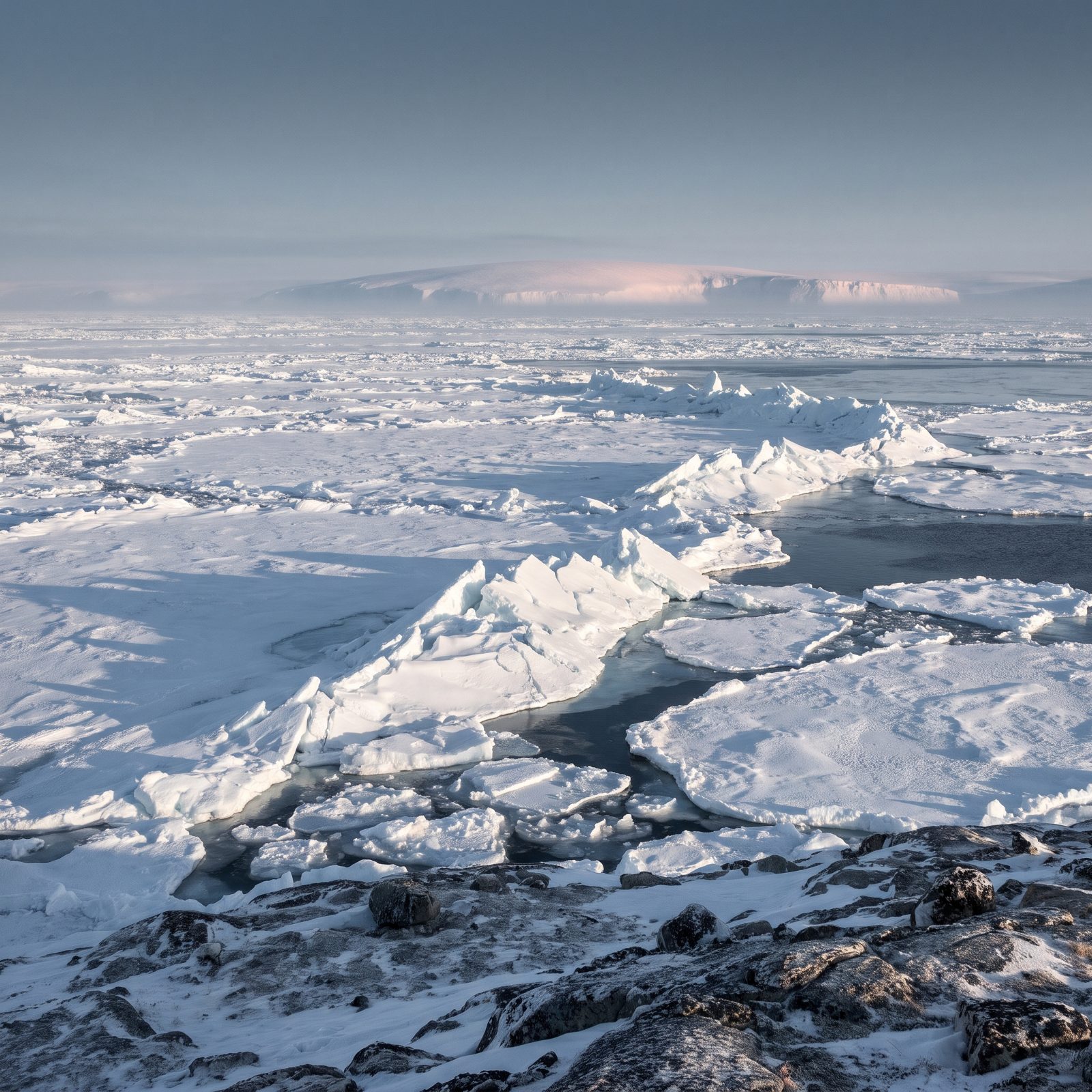
The Arctic was committing to cold now. Greenland’s ice, which had come and gone through earlier phases, was expanding toward the large, persistent sheet we know today.
More land ice meant more reflected sunlight, which meant more cooling, which meant still more ice. A feedback loop tightening with each turn. The sea ice thickened, and the open hothouse water of the Eocene became a memory buried deep in the seabed cores.
Stand at the Pole in this scene and the view is almost modern: pack ice, pressure ridges, a pale frozen horizon. The strange, warm, forested Arctic was gone. The one in our photographs was being assembled floe by floe, and it would take ten million more years.
5.3 Million Years Ago: A Warm Pliocene Summer Leaves Open Water at the Pole
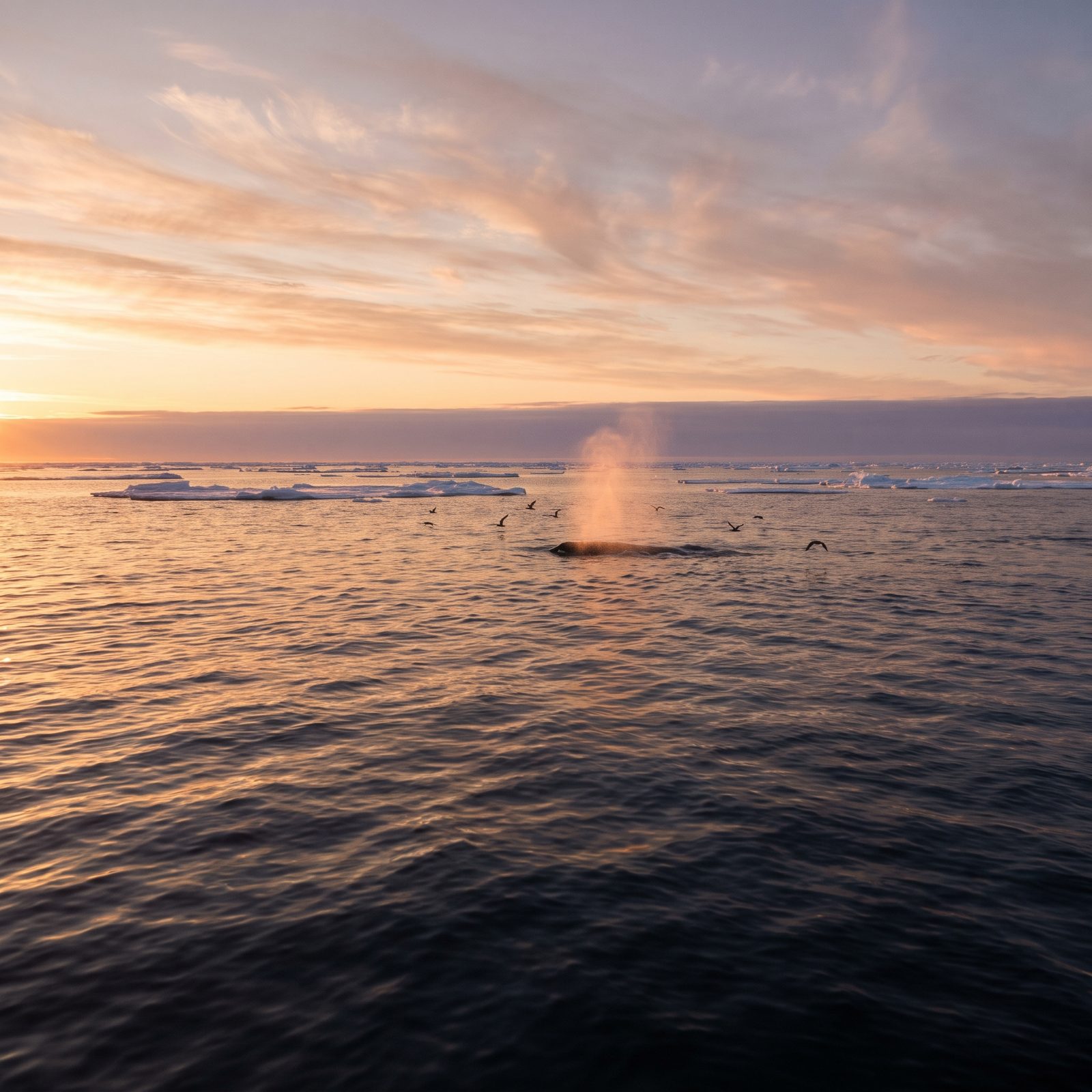
The Pliocene opens on a world that looks almost modern, but runs warmer. The continents sit roughly where they are today, yet the far north is a different place. Forests of larch, spruce and birch grow on Arctic islands that now hold only tundra and rock, and fossil sites in the Canadian High Arctic preserve the bones of beavers and even giant camels.
Out over the Pole, many reconstructions point to summers with much less ice than today, and possibly stretches of open water. Ice probably still formed each winter, but the long, perennial pack we picture had not yet locked into place. Around this time, Pacific water was also beginning to spill into the Arctic through the newly opened Bering Strait, changing the ocean’s mix. Stand here in August and you’d likely see dark swells where explorers would one day haul sledges.
2.6 Million Years Ago: The Quaternary Ice Ages Begin to Grip the Arctic
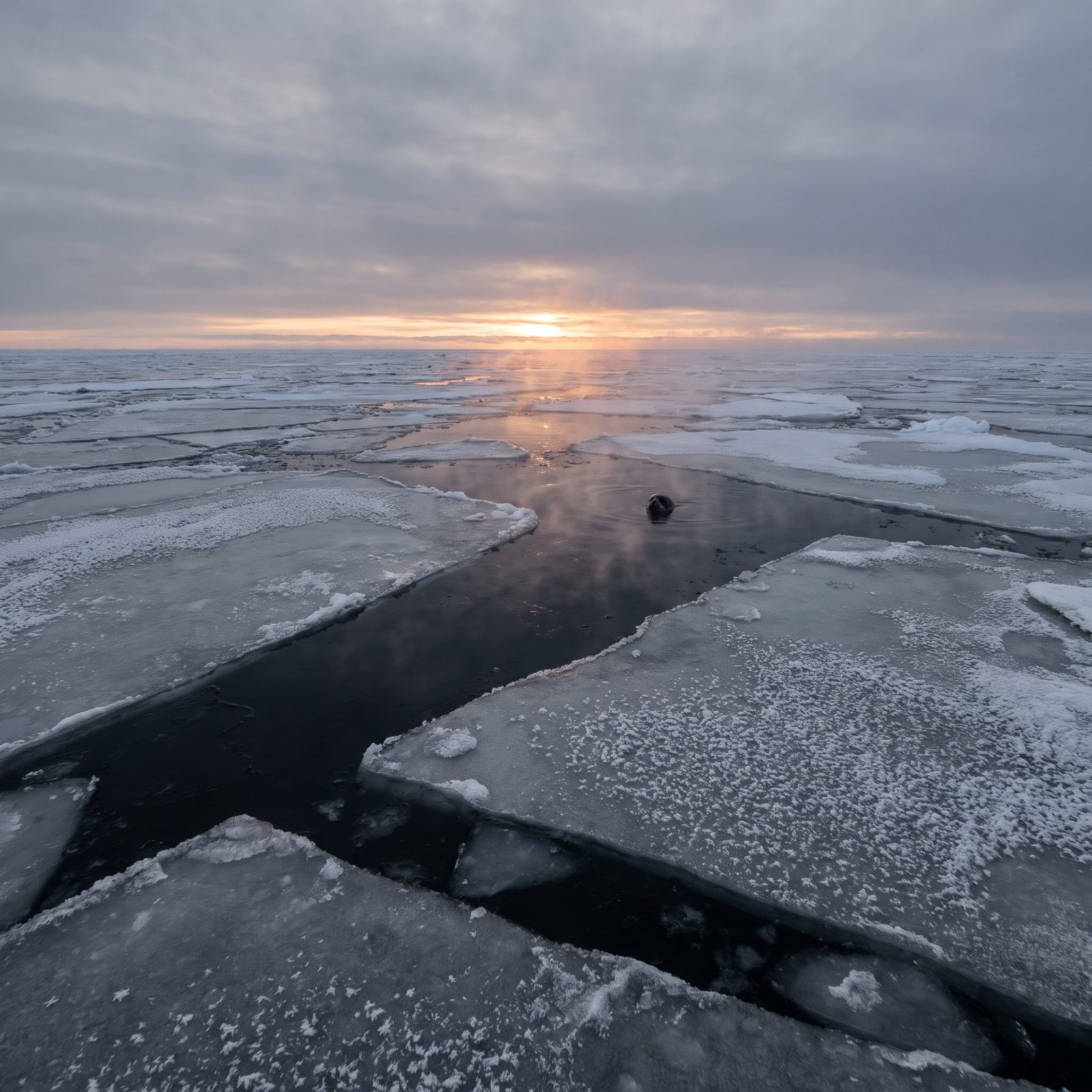
Around 2.6 million years ago, the planet tips over an edge. Geologists mark it as the start of the Quaternary, the period we still live in, and it arrives with ice. Vast sheets begin to grow and retreat across North America and northern Eurasia, and the Arctic Ocean starts holding sea ice through the summer far more reliably than before.
The rhythm of this new world is set by Earth’s orbit. Slow wobbles in the tilt of the planet’s axis change how much summer sunlight reaches the high north, and for the next long stretch the ice advances and pulls back roughly every 41,000 years. At the Pole, the scene settles into something recognizable: a white, drifting lid over black water, cracking and refreezing as the climate breathes in and out.
1.2 Million Years Ago: Thick Pack Ice Seals the Pole in a Deep Glacial Stage
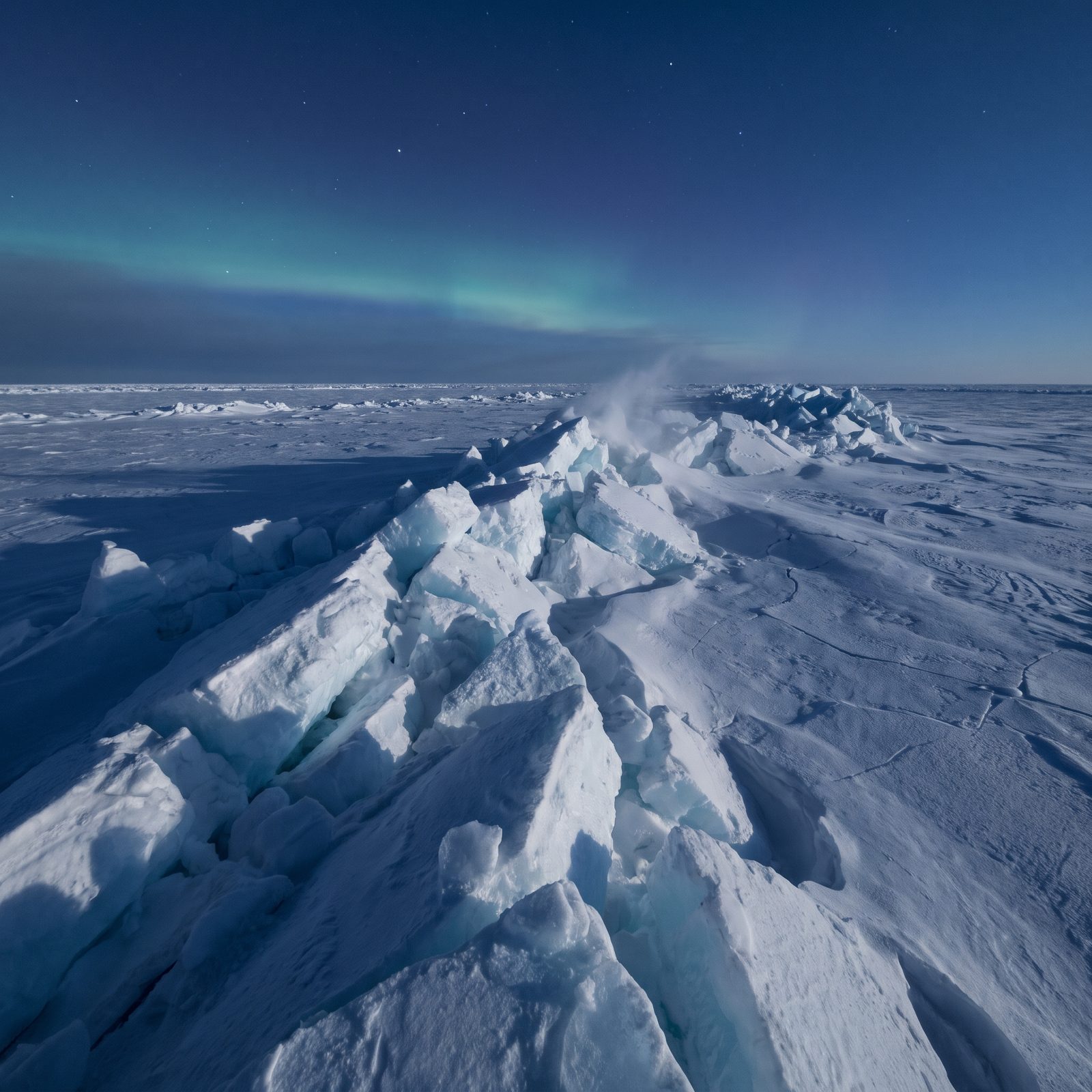
The ice ages are about to get meaner. Somewhere around this point, Earth begins a shift that scientists call the Mid-Pleistocene Transition. Glacial cycles stretch out from about 41,000 years to roughly 100,000, and the cold phases grow longer and deeper. Why it happened is still an open question, with ideas ranging from falling carbon dioxide to changes in how ice sheets slid over their bedrock.
In a deep glacial stage like this, the Pole sits under thick, old pack ice that rarely gets a chance to melt. Floes pile into pressure ridges taller than a house, and the sea beneath stays sealed for years at a time. Sediment cores from the central Arctic show how little material reached the seafloor during the harshest cold, a sign of an ocean almost completely capped. This is the polar landscape at its most closed off.
400,000 Years Ago: An Interglacial Cracks Leads Across the Polar Ice
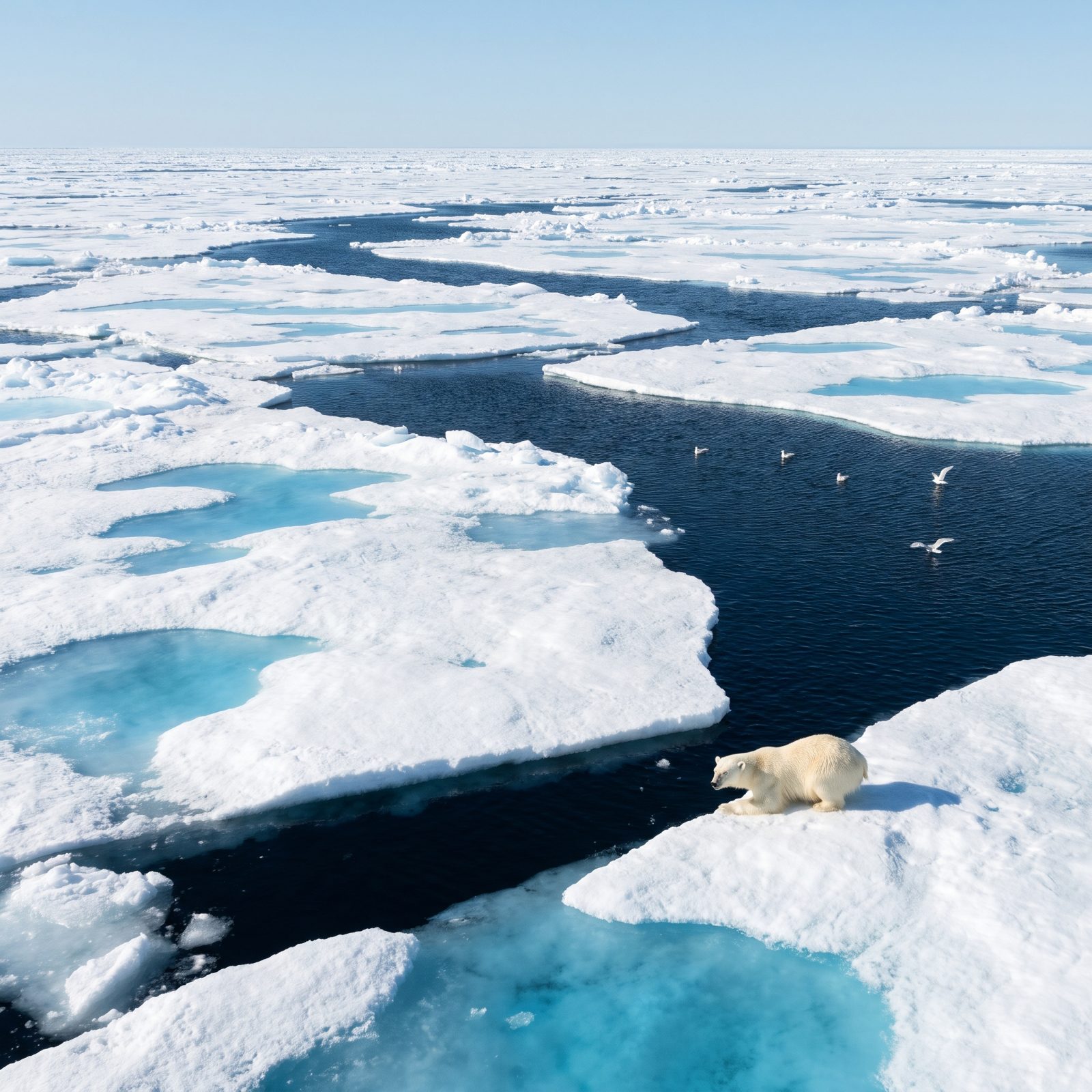
About 400,000 years ago, the cycle swings hard the other way. Scientists know this warm spell as Marine Isotope Stage 11, and it stands out for being unusually long, lasting tens of thousands of years. Earth’s orbit at the time was similar to today’s, which is one reason researchers study it so closely.
The warmth was enough to strip much of Greenland’s ice away in places; sediment recovered from beneath the ice sheet in northwest Greenland shows that ground there was once exposed and plant-covered around this time. At the Pole, the pack ice would have thinned and loosened. Picture long dark leads splitting the white surface, open channels of seawater steaming in the cold air, and ice that no longer survived from one year to the next as easily as it did during the glacial stages before.
125,000 Years Ago: Eemian Warmth Shrinks the Summer Ice to Open Sea
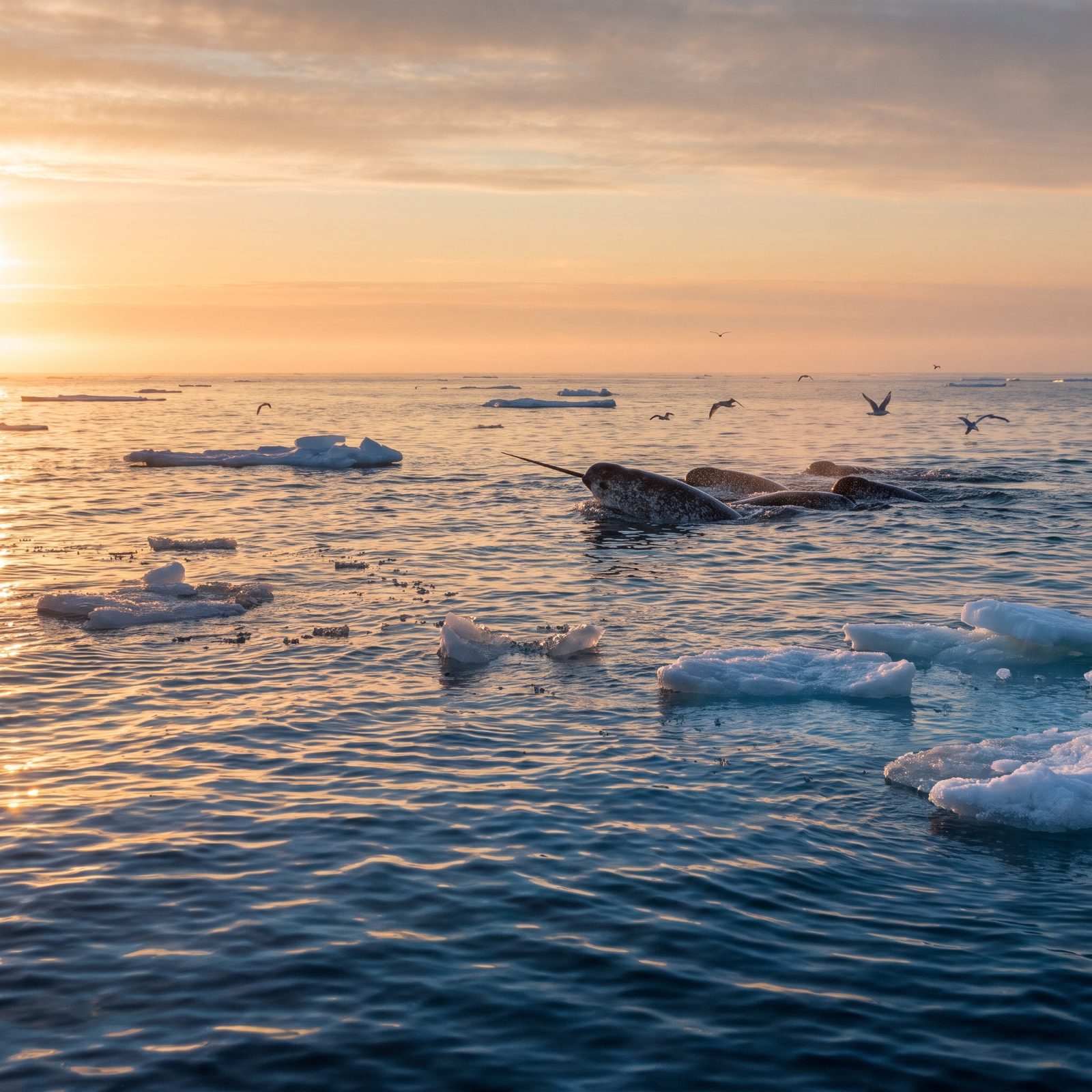
The last time Earth was this warm before our own era, the sea stood meters higher. The Eemian interglacial, which peaked around 125,000 years ago, brought Arctic summers several degrees warmer than today. Global sea level ran roughly six to nine meters above the modern shoreline, fed partly by melting from Greenland and Antarctica.
Hippos wallowed in rivers in what is now southern England. Forests crept farther north than they grow now. And out over the Arctic Ocean, some climate models suggest the summer ice may have shrunk dramatically, perhaps to the point of open sea at the Pole itself. That last point is still debated, because direct evidence from the central Arctic is thin. But it is the reason this period has become one of the most-studied previews of where a warming Arctic could be headed.
26,000 Years Ago: The Pole Locked in Ice at the Last Glacial Maximum
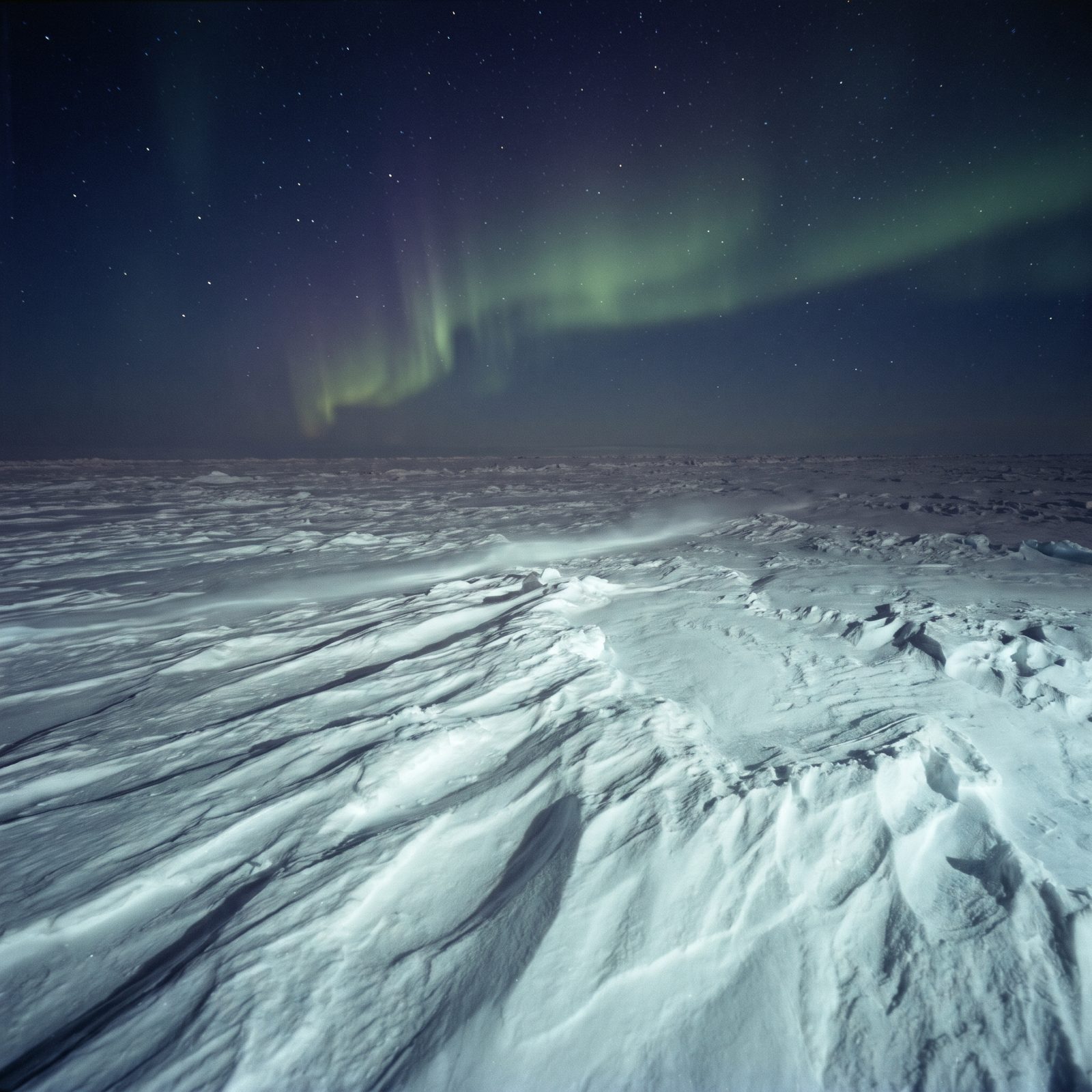
Now the world is about as cold as it gets. At the Last Glacial Maximum, ice sheets several kilometers thick bury most of Canada, Scandinavia and the northern edge of Europe. So much water is locked up on land that sea level sits around 120 meters lower than today, and a broad land bridge joins Siberia to Alaska.
The Arctic Ocean is boxed in by ice on almost every side. Over the Pole, the pack is thick, perennial and slow-moving, and cores from the central basin show very little sediment settling during this time, consistent with a sea that barely saw open water. Stand here and you’d see nothing but white in every direction, under a sky that alternates between months of twilight and months of glare. It is the frozen Pole of popular imagination, pushed to its extreme.
14,700 Years Ago: Abrupt Warming Shatters the Ice Pack at the Bølling Onset
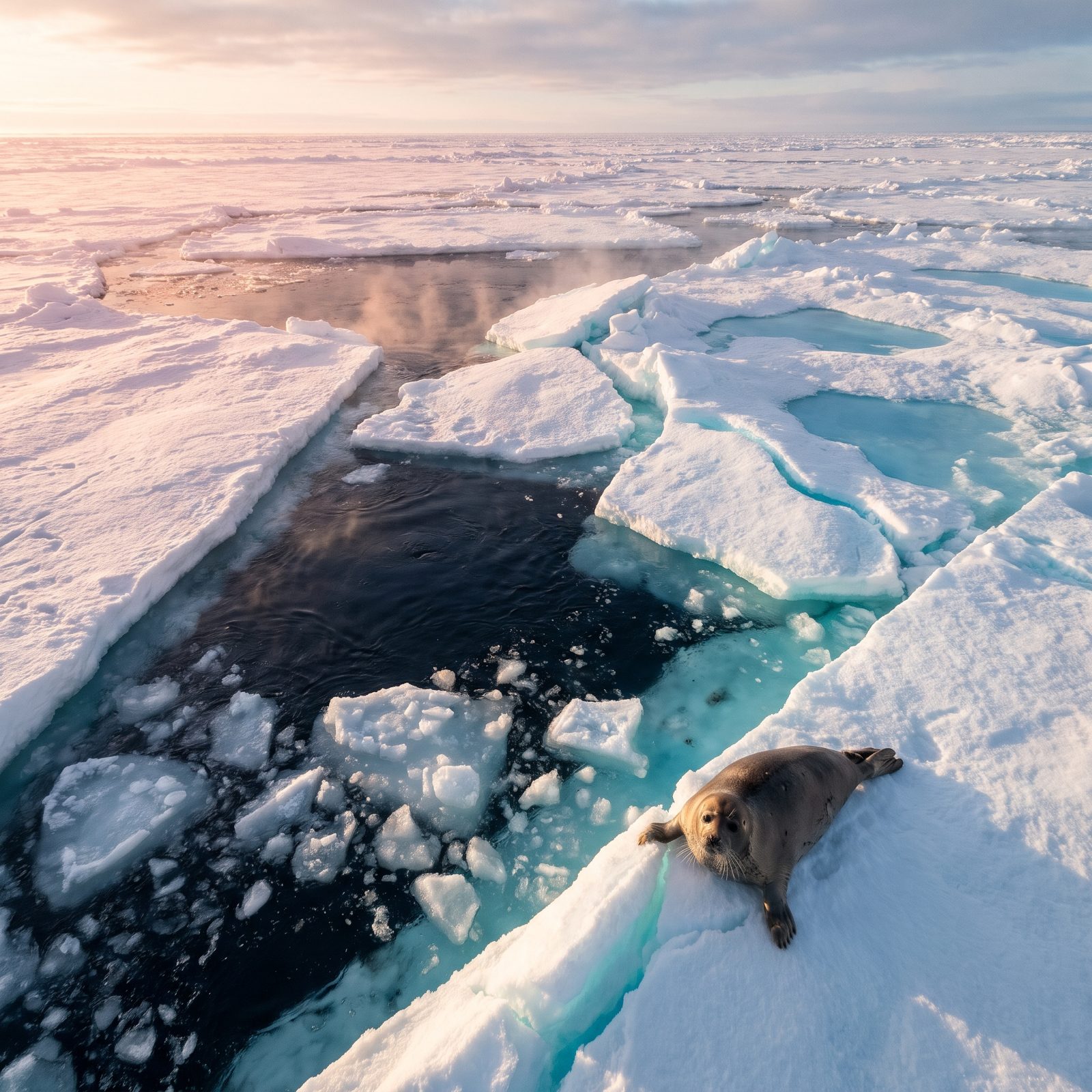
Then the thaw arrives almost overnight, by geological standards. Greenland ice cores record a startling jump in temperature at the start of the Bølling warm phase, with the climate swinging from glacial cold to something far milder within just a few decades. Meltwater poured off the great ice sheets, and global sea level rose rapidly in a surge researchers call Meltwater Pulse 1A.
Around the edges of the Arctic, warmer Atlantic water pushed north and the sea ice margins pulled back. Closer to the Pole, the pack would have grown more broken and mobile, with floes grinding against each other and leads opening across the surface. The ice did not vanish, but the long glacial grip was suddenly loosened. For anyone who thinks climate only changes slowly, this moment is a jolting counterexample.
12,900 Years Ago: The Younger Dryas Slams the Pole Back Into Deep Freeze
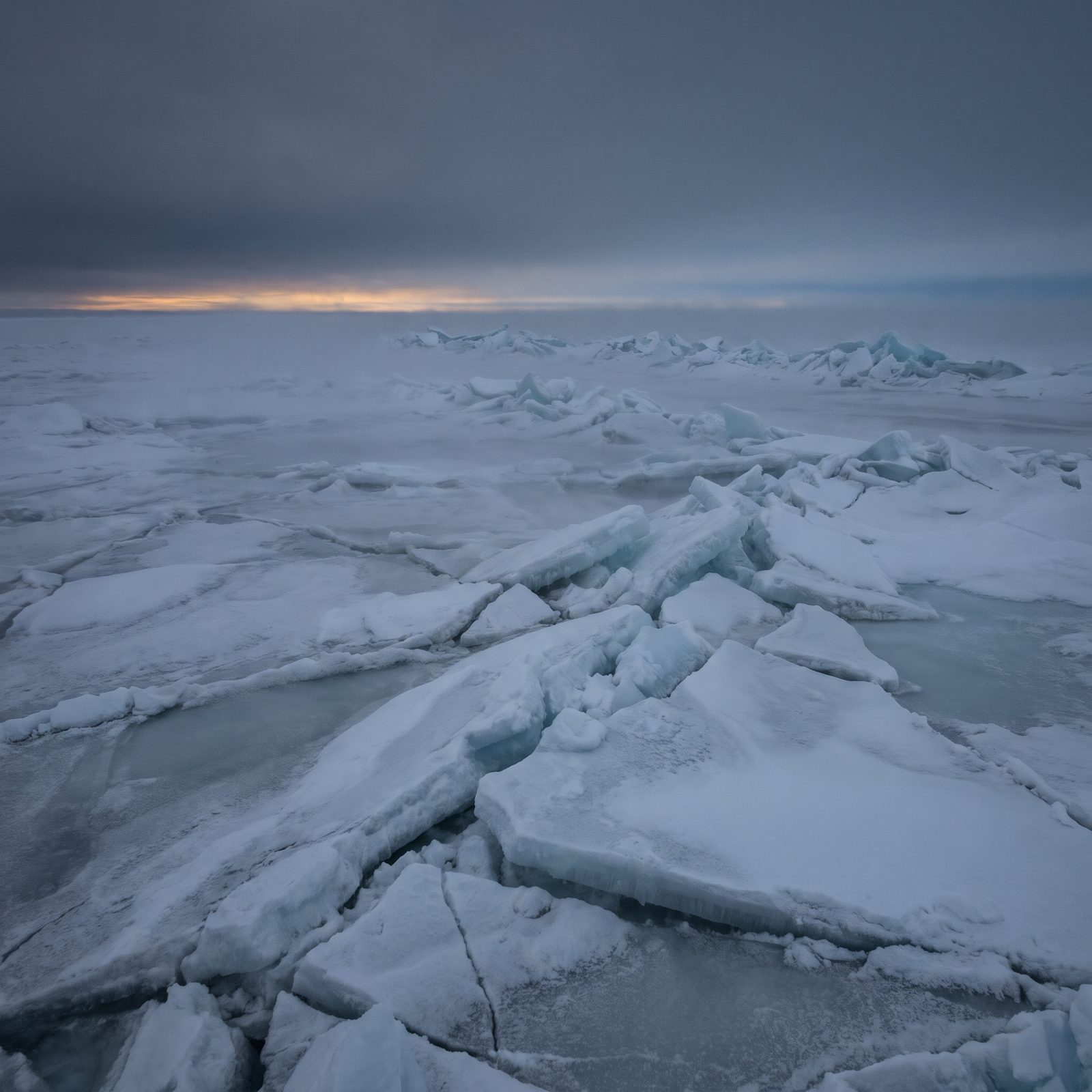
The warmth didn’t last. Around 12,900 years ago, the north plunged back toward glacial conditions in a cold snap known as the Younger Dryas. Across Greenland and the North Atlantic, temperatures fell sharply, and the chill held for roughly 1,200 years.
A leading explanation is a flood of fresh meltwater from the shrinking North American ice sheet, which may have disrupted the ocean currents that carry heat northward. Some evidence suggests part of that water drained into the Arctic Ocean itself. At the Pole, the pack thickened and closed up again, its leads freezing shut. And then, just as dramatically, the Younger Dryas ended, with Greenland warming by many degrees in a matter of decades.
8,200 Years Ago: A Meltwater Pulse Chills the Arctic in a Single Snap
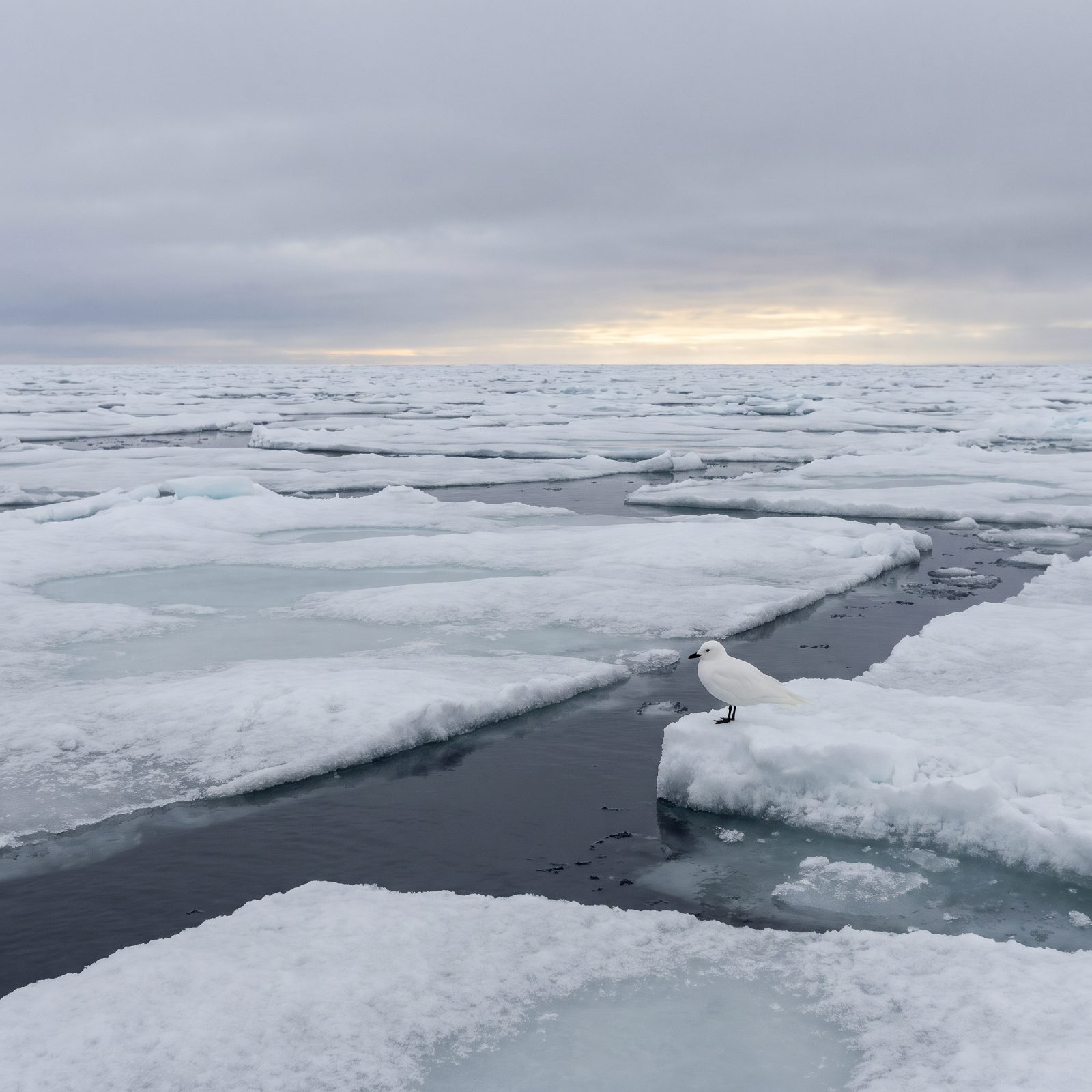
One enormous lake, one sudden drain. As the last North American ice sheet melted, it held back a vast body of meltwater known as Lake Agassiz-Ojibway. Around 8,200 years ago, that water broke through and rushed out via Hudson Bay into the North Atlantic.
The freshwater surge seems to have weakened the ocean circulation that carries warmth north, and Greenland ice cores record a cooling of a few degrees that lasted roughly a century and a half. By ice age standards it was brief, a sharp dip in an otherwise warm era. At the Pole, the effect would have been a season-by-season hardening of the ice, thicker floes and shorter melts, before the climate rebounded. It remains one of the clearest natural examples of how fresh water can nudge the climate system off balance.
6,000 Years Ago: Mid-Holocene Sunlight Thins the Pole’s Summer Ice
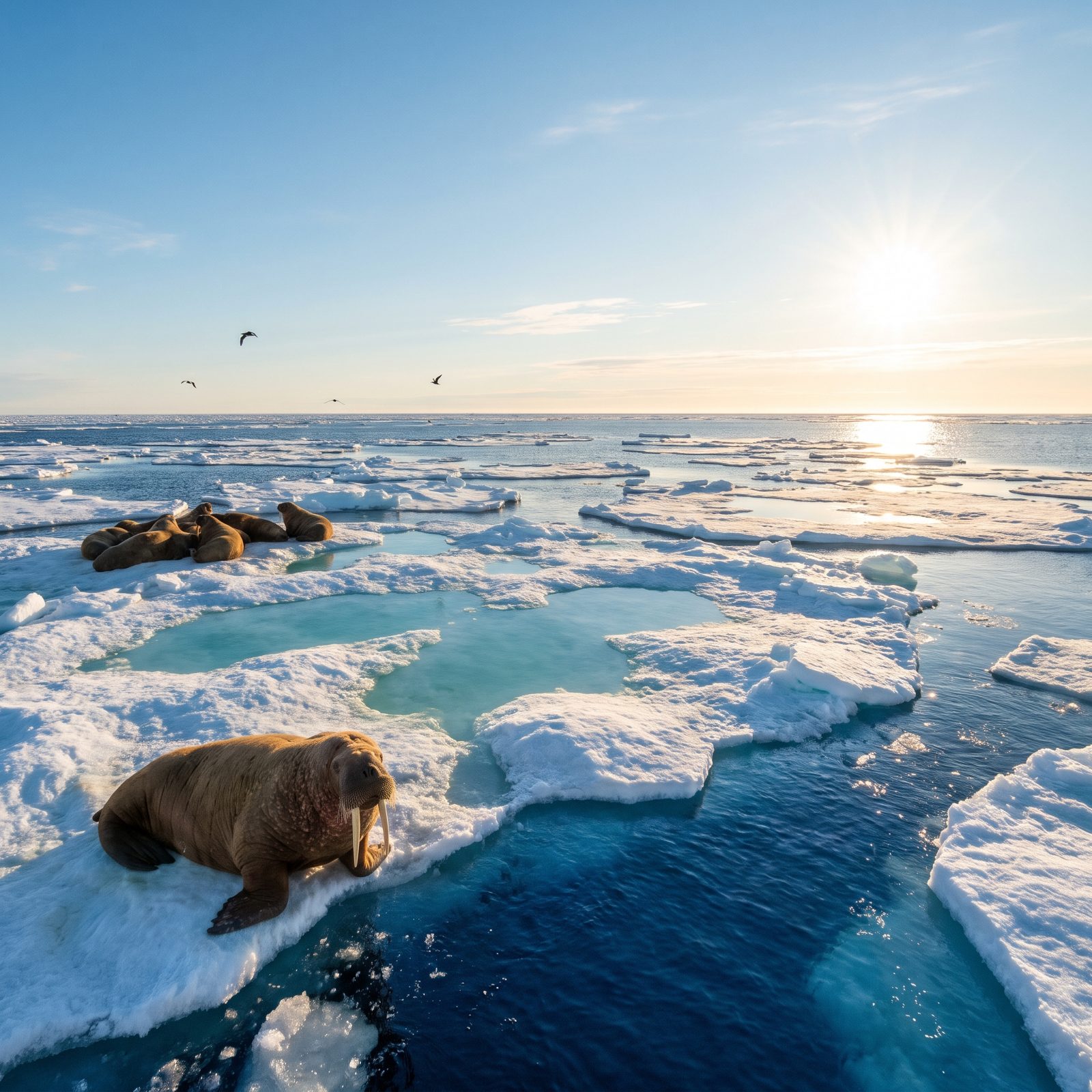
By 6,000 years ago, the ice sheets are mostly gone and the Arctic has settled into the warm early part of the Holocene. Earth’s orbit is still delivering stronger summer sunlight to the high north than it does today, and the effect shows up in the ice.
Along the northern coast of Greenland, ancient beach ridges and stranded driftwood suggest that sea ice there once broke up in summer far more often than it does now, letting waves reach the shore. At the Pole, the pack likely still survived the year, but it ran thinner and looser in the warmest months. From this point on, as the summer sunshine slowly faded with the orbital cycle, the Arctic would gradually cool and its ice would build back, setting the stage for the colder centuries ahead.
1650: The Little Ice Age Locks the Arctic in Heavier Pack Ice
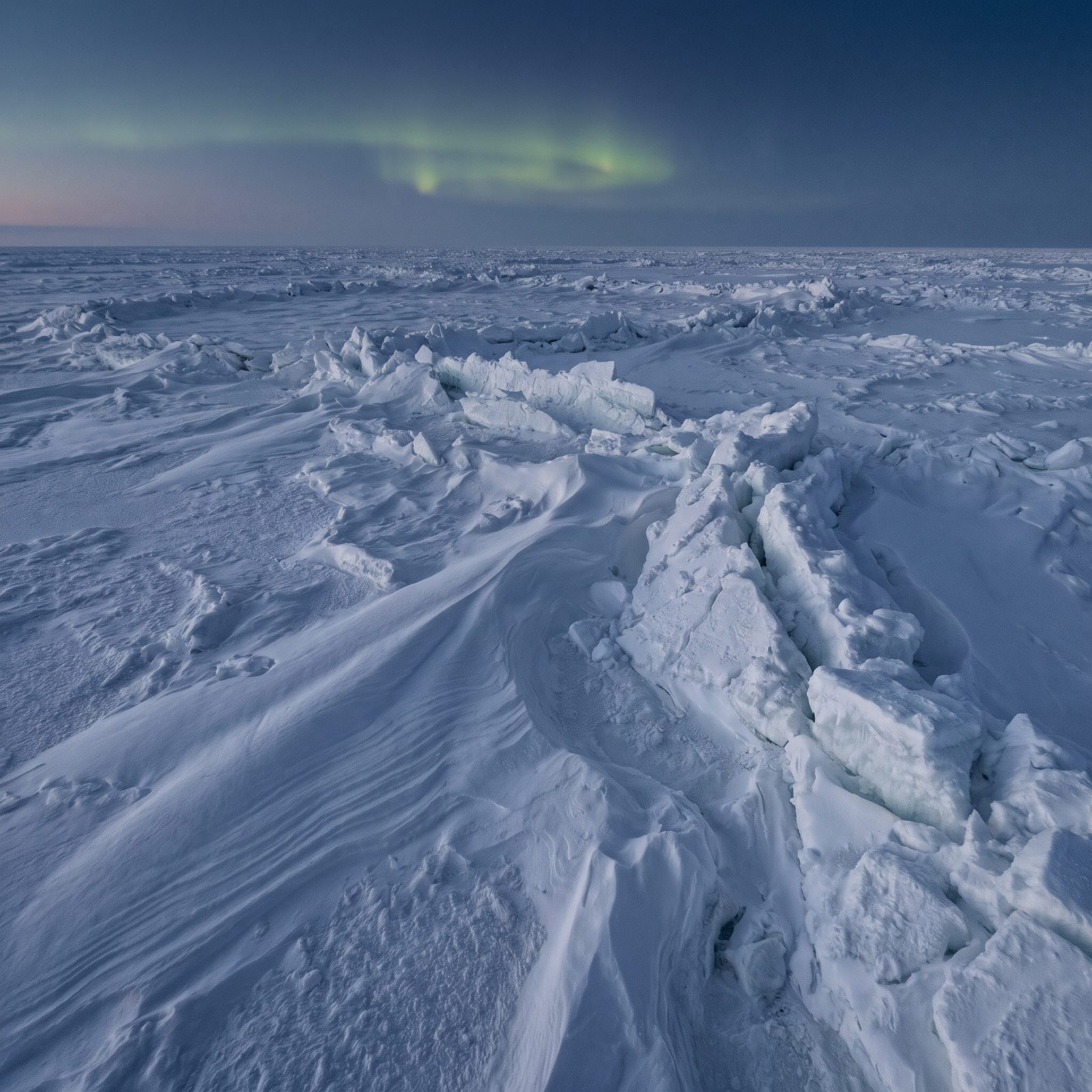
Start the clock here, before any ship or sledge. Around 1650 the planet sat deep in the Little Ice Age, a centuries-long cool stretch tied to sluggish solar activity and clusters of enormous volcanic eruptions, and the Arctic answered by growing thicker, older pack ice than anything crossing the Pole today.
Nobody stood here to see it. The ice groaned, split, and refroze in total winter darkness, building the pressure ridges that would later stop wooden hulls dead.
1893: The Fram Lets Itself Be Frozen In and Drifts Toward the Pole
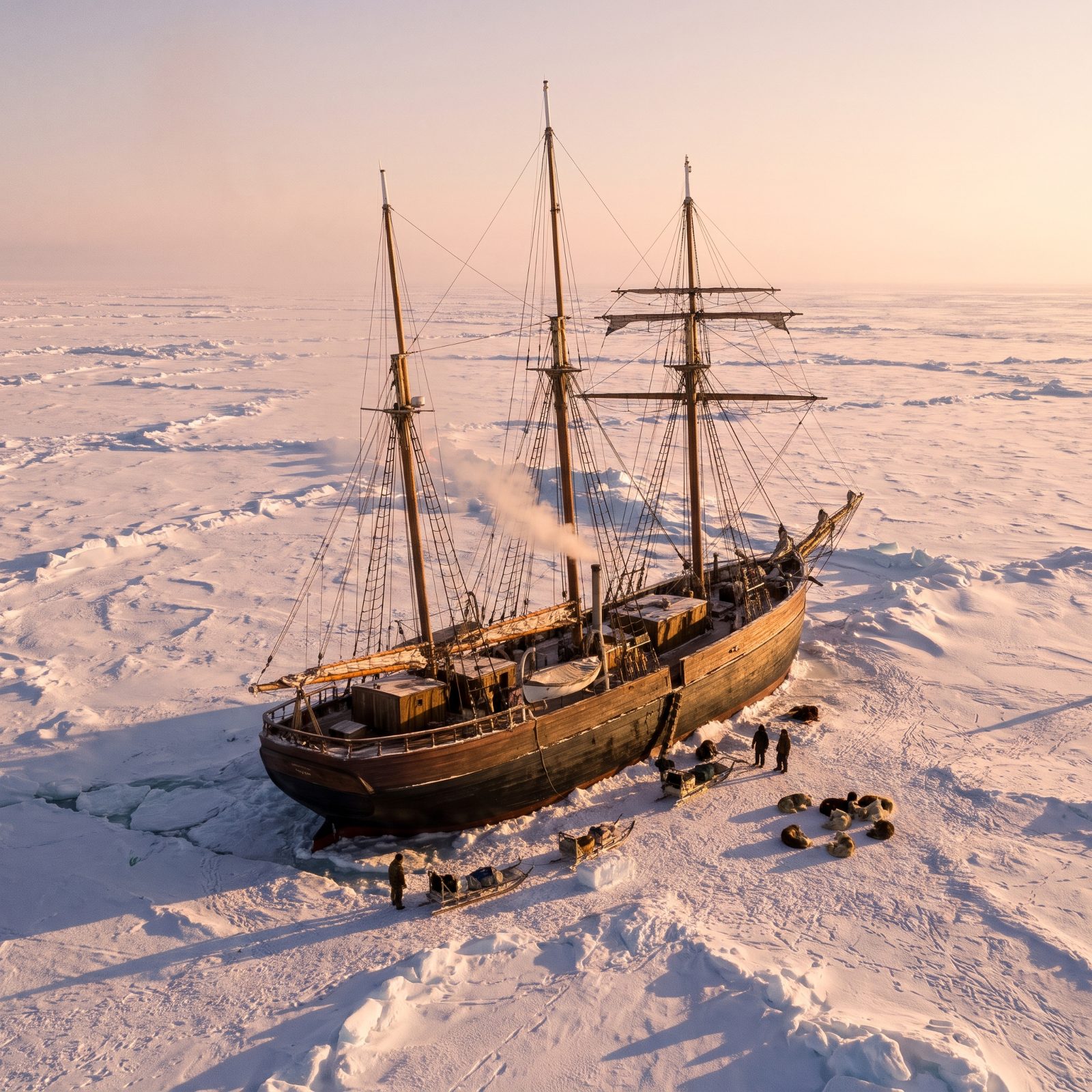
The boldest Arctic idea of the century was to quit fighting the ice and ride it. Freeze a specially built ship into the pack, then let the natural drift carry it across the top of the world.
The hull was the whole trick. Rounded and smooth below the waterline, so when the floes bore down the ship popped upward instead of splintering like every doomed whaler before it. The drift ran slower and more southerly than anyone hoped, and the Pole itself stayed out of reach — but the vessel survived three winters locked in ice, which nobody had ever managed on purpose.
Proof that the Arctic Ocean was a moving river of ice, not a solid cap.
1909: A Dog-Sledge Party Claims the Pole, and the Argument Never Ends
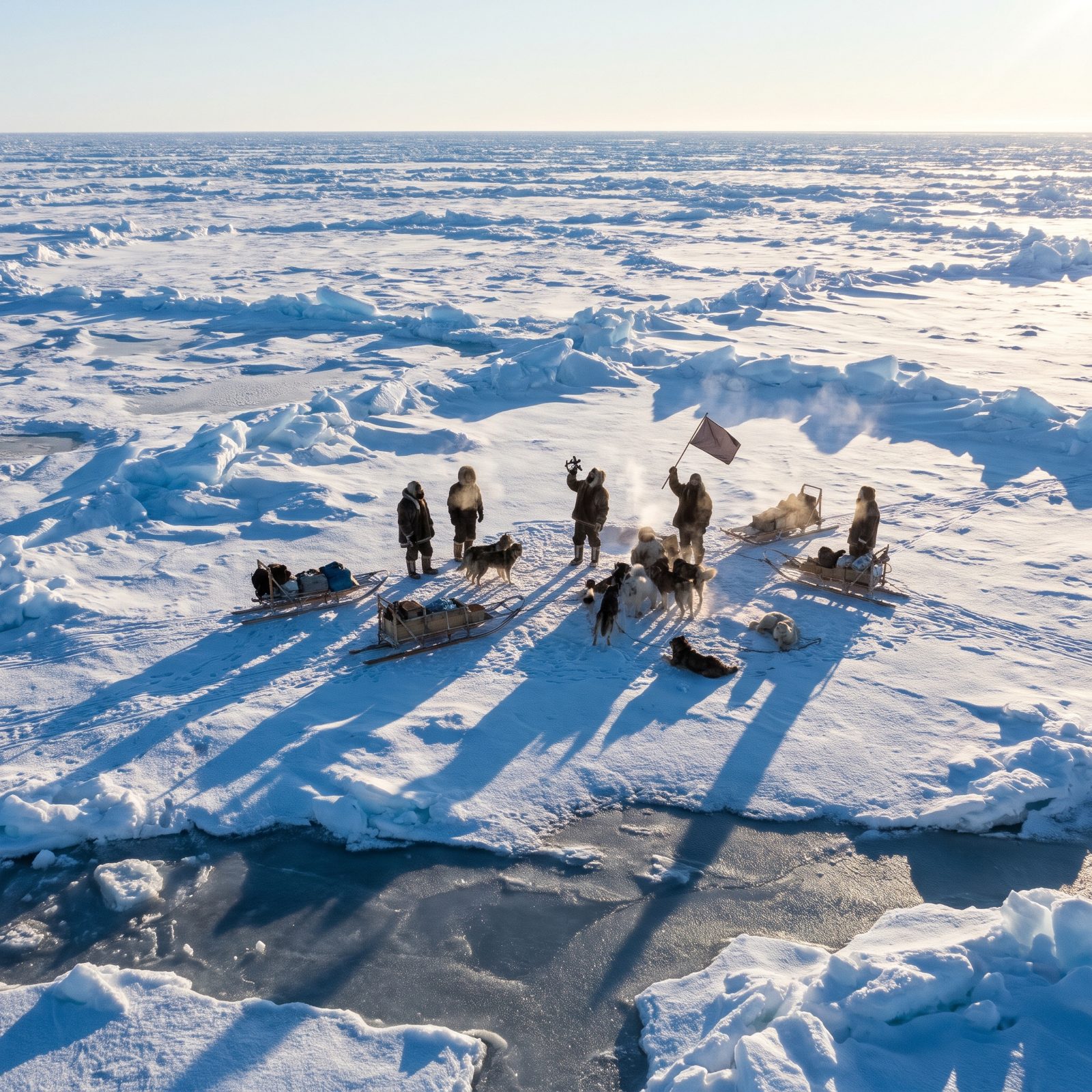
The honest version goes like this: someone almost certainly reached the vicinity of the Pole by dog sledge in April 1909, after a brutal haul across shifting ice. Whether the navigation was precise enough to prove they stood exactly on 90 degrees north? Serious people still argue about it.
Navigating on drifting ice is cruel work. The ground slides under you while you measure the sun, so a reading taken in the morning is already wrong by afternoon.
1926: An Italian-Built Airship Crosses the Pole Without Touching Down
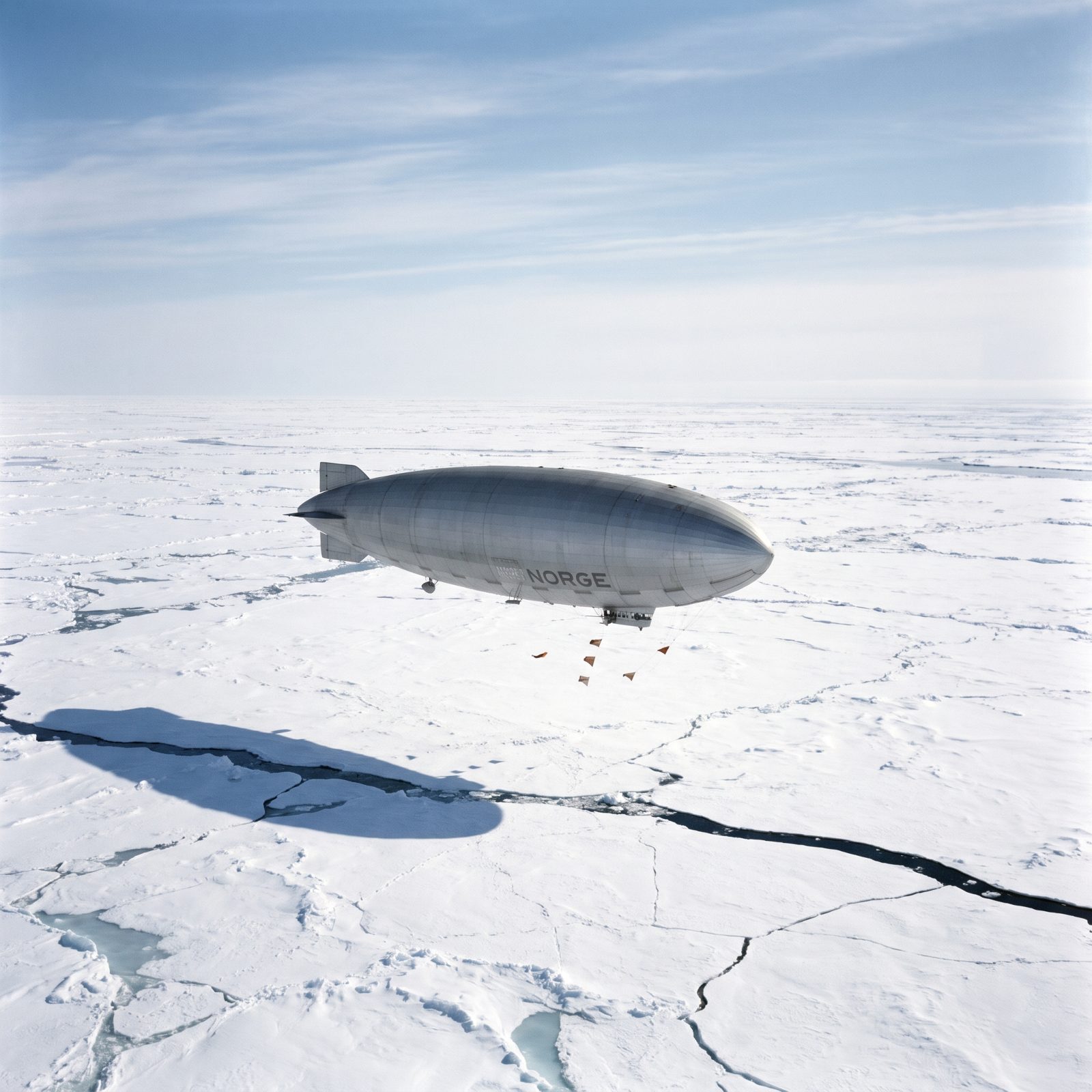
The first undisputed arrival over the Pole came not on foot but by air, drifting above the ice in a semi-rigid airship in May 1926. No sledges, no dying dogs, no frostbitten slog — just an engine hum and a long gray envelope sliding over the white.
The crew dropped small flags onto the pack below and kept going, all the way across the Arctic Ocean to Alaska. For the first time, human eyes confirmed what lay between Europe and North America over the top: ice, leads of black water, and more ice. No hidden land. No lost continent.
1937: Soviet Scientists Set Up Camp on a Drifting Floe
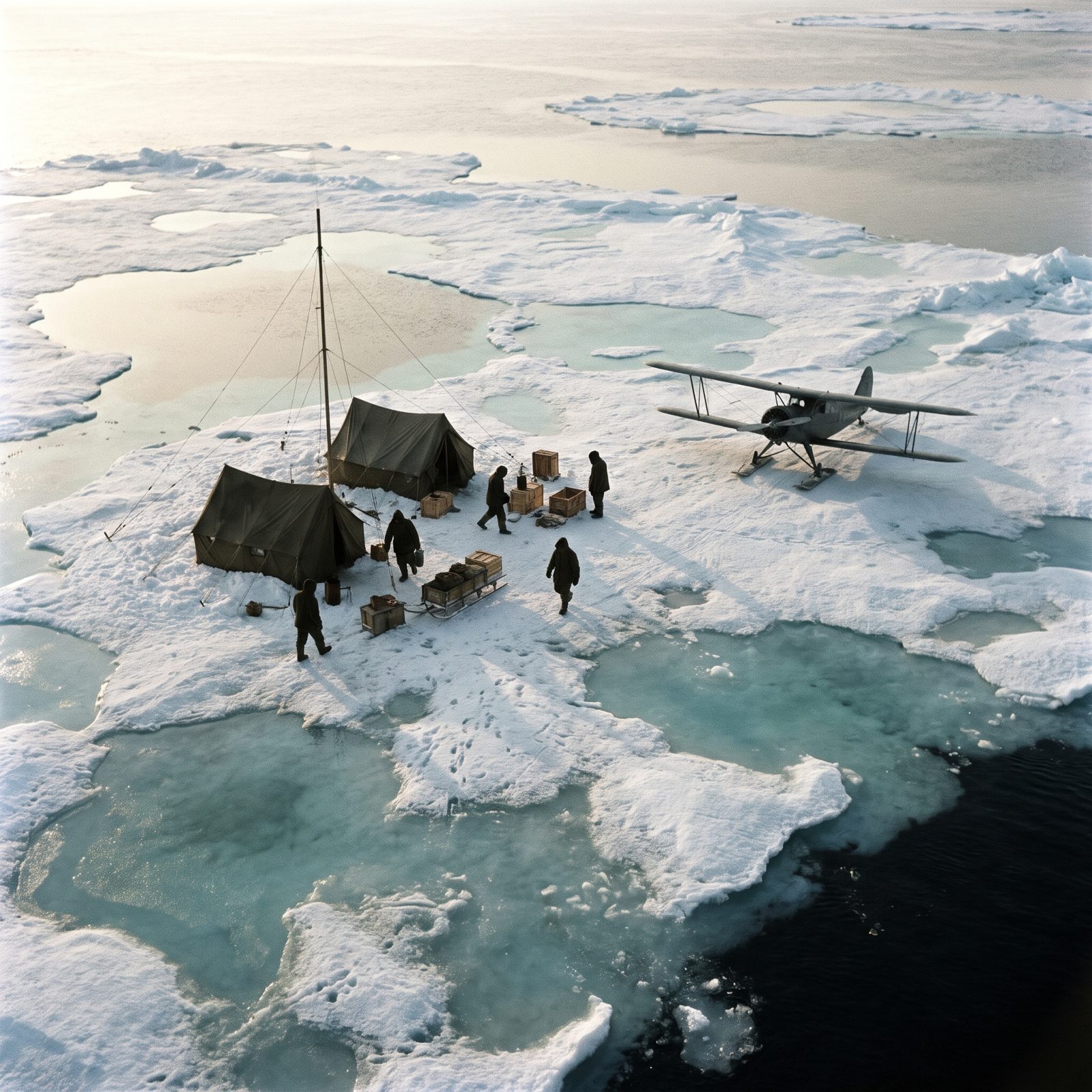
The Pole became a laboratory the day people stopped visiting and started living on it. In 1937 a Soviet team of four people was flown onto a thick drifting floe and left there, deliberately, to measure the ocean, the weather, and the ice as it hauled them hundreds of miles south over nine months.
Their floe cracked and shrank beneath them until it was barely bigger than a tennis court. Picture running radio reports and water-depth soundings while your island quietly dissolves under your boots. There’s the whole Arctic in one image — solid ground that is really just floating meltwater with a skin on it.
1948: Planes Land at the Pole and Turn It Into a Field Station
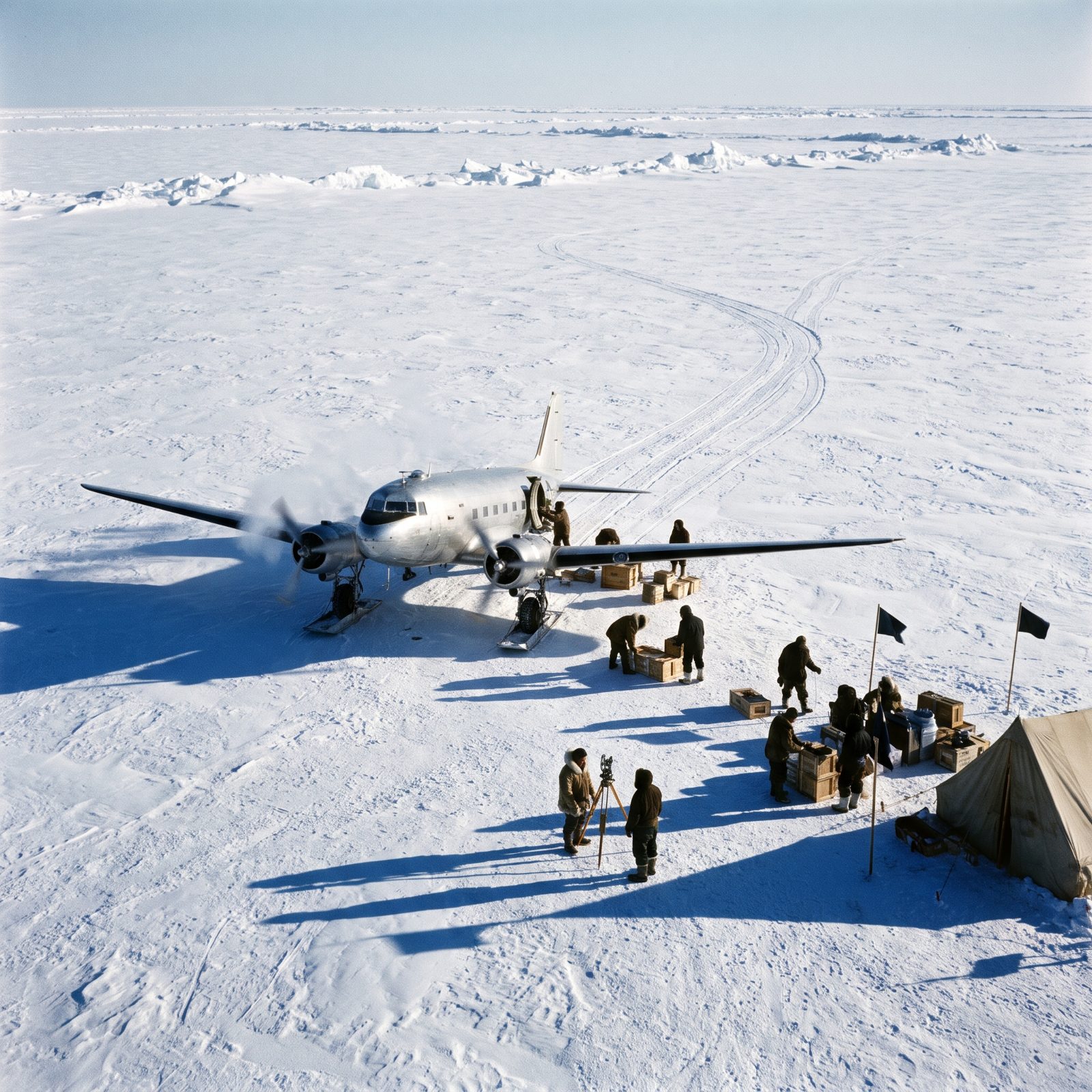
Reaching the Pole shrank from an expedition into an errand. Once ski-equipped aircraft could land on the pack and lift off again, scientists flew in, dropped instruments, sounded the ocean depth right at 90 north, and flew home.
That one capability rewired everything. The Pole stopped being a prize and became a worksite.
1958: A Nuclear Submarine Slides Beneath the Ice at 90 North
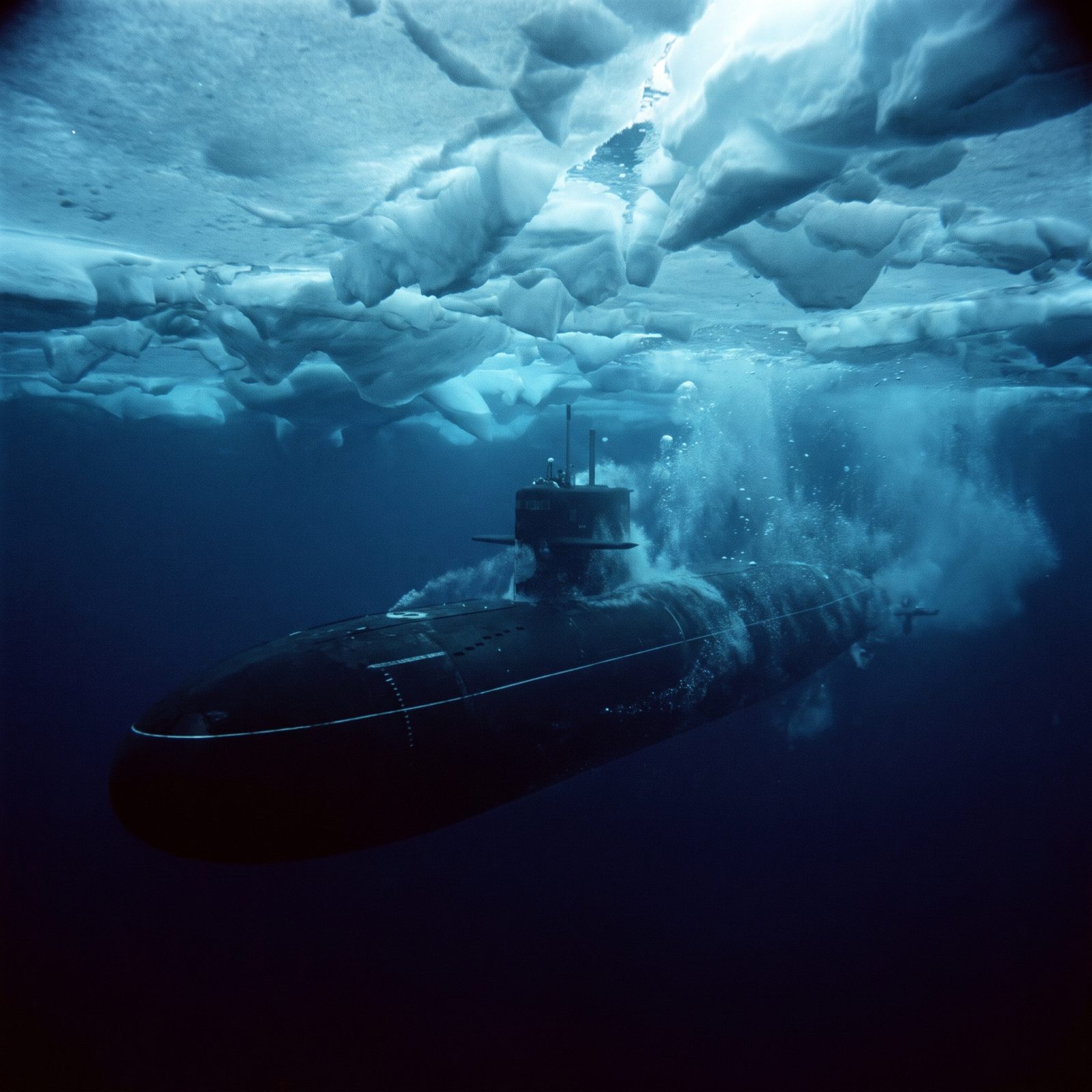
The Pole was conquered from below before most people realized that was even an option. In August 1958 a nuclear submarine ran submerged beneath the ice and passed directly under 90 north, proving the Arctic Ocean was a true ocean — deep enough to hide a warship.
Picture the view no one had ever had: a ceiling of ice overhead instead of a surface underfoot, blue light leaking down through the cracks. The underside of the pack is a whole landscape, ridges and keels hanging down into the dark like upside-down mountains.
Nuclear power made it possible. A conventional sub would have had to surface for air, and under permanent ice there is nowhere to surface.
1968: The First Confirmed Overland Arrival Comes on Snowmobiles
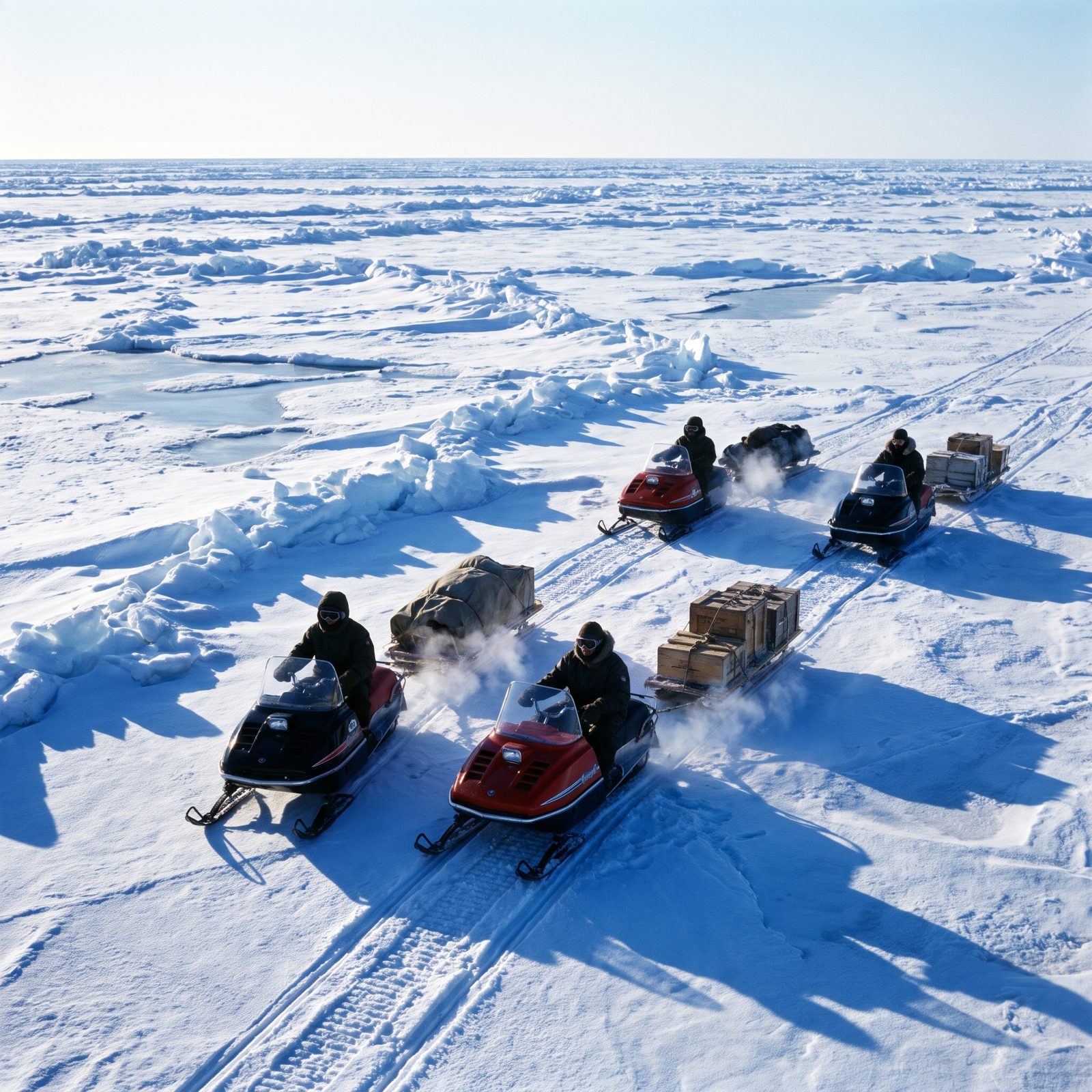
And here’s the strange footnote. The first surface arrival that modern navigators can firmly verify didn’t come by dog or boot — it came by engine. In 1968 a small team ground across the pack on snowmobiles and fixed their position with instruments precise enough to close the question for good.
The irony is sharp. After decades of disputed footprints and contested sextant readings, the Pole finally fell to gasoline and a reliable position fix. No romance to it. Just a confirmed set of coordinates on a moving sheet of ice.
1977: A Soviet Icebreaker Smashes Its Way to the Pole on the Surface
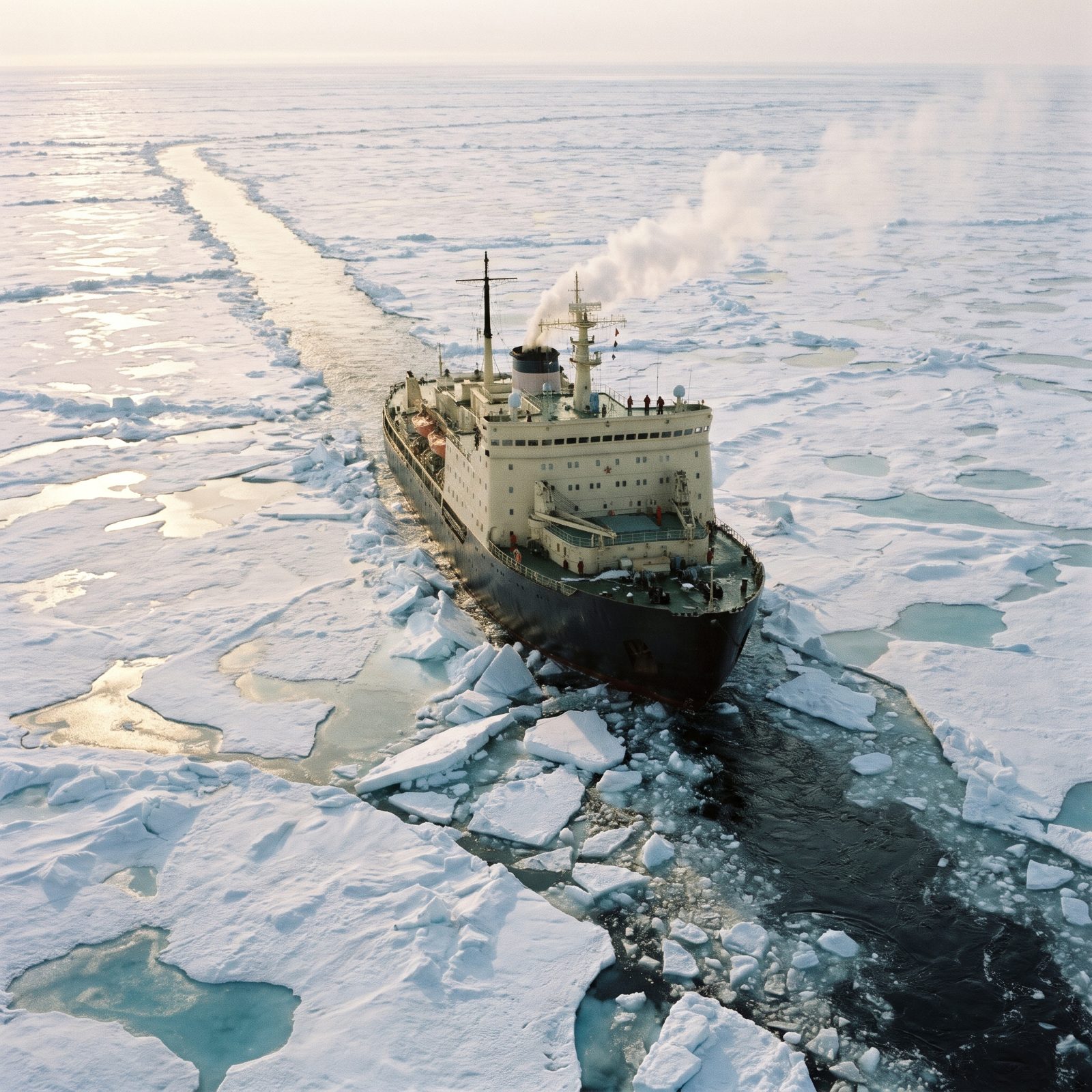
For most of history, a surface ship at the Pole meant a wreck. In 1977 a nuclear icebreaker rewrote that by ramming through the thickest ice on Earth and parking at 90 north — the first ship to reach the Pole on the surface rather than beneath it.
The method is brutal and simple. The reinforced bow rides up onto the ice and the ship’s own weight crushes it, over and over, leaving a pool of black water and shattered slabs churning around the bow. No elegance. Just steel, a reactor, and patience.
2007: Submersibles Drop Four Kilometers to the Seabed Under the Pole
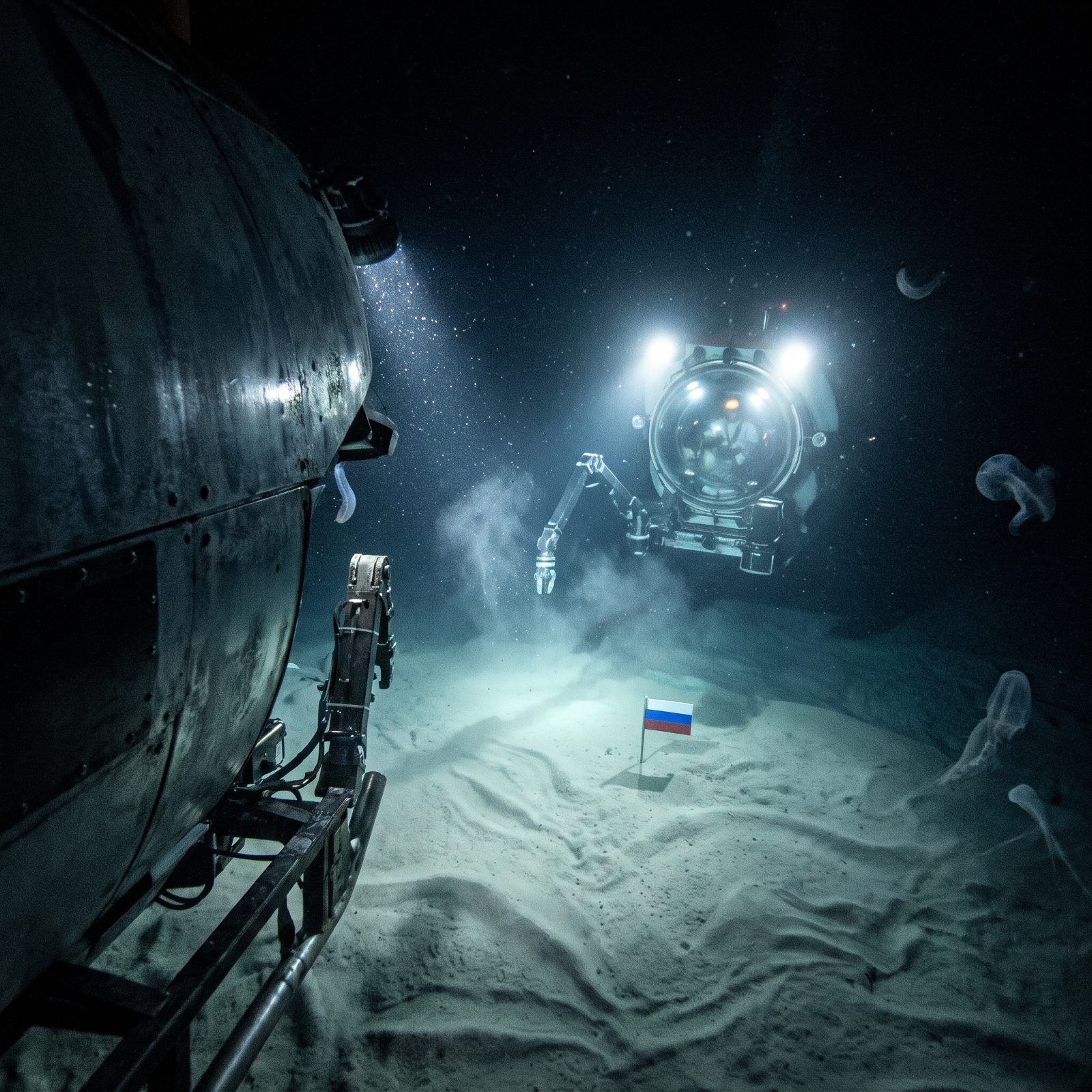
This chapter of exploration ends not up on the ice but at the very bottom, in the dark. In 2007 two manned submersibles sank through kilometers of black water and touched the seabed directly below the Pole, the first humans ever to reach the floor of the Arctic Ocean at 90 north.
That floor is nothing like the ice overhead. No light reaches it, the water hovers near freezing, and a fine rain of marine snow drifts down forever onto soft pale mud. A flag was planted in that sediment — as much a geopolitical move as a scientific one, since whoever can map the underwater ridges down there may one day claim the oil and gas beneath.
From a shrinking floe you could stand on, to a seabed no human had ever seen. The full column of the Pole, top to bottom, and we’ve now been to both ends of it.
2020: A Drifting Research Ship Freezes Itself Into a Pack That Won’t Stop Moving
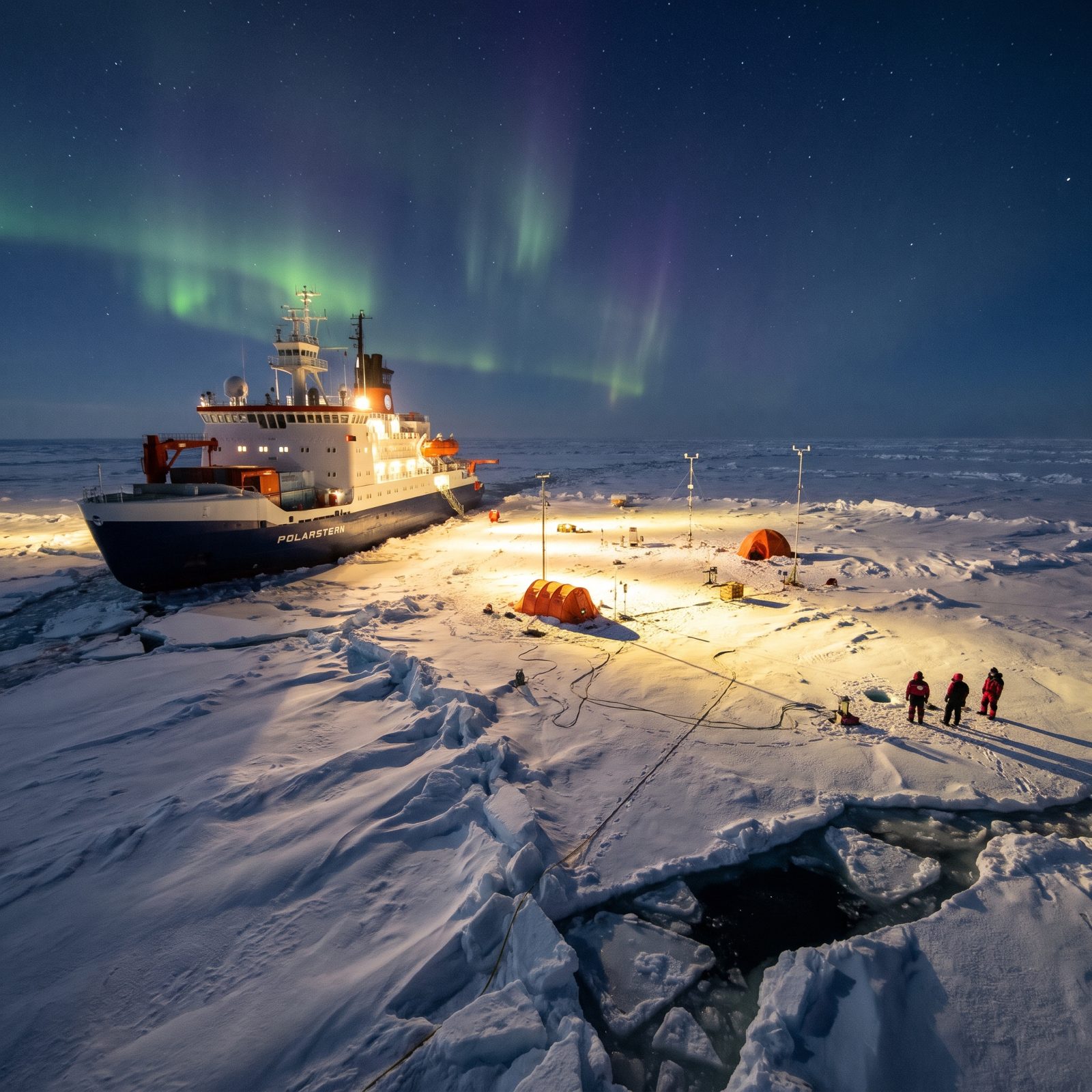
The plan was to let the ice do the driving. In late 2019, an icebreaker locked itself into the pack on purpose and spent a year going wherever the ice felt like taking it — the largest Arctic science expedition ever mounted, with hundreds of researchers rotating through the long dark.
What they found was ice thinner and more broken than any model had promised. Their floe kept splitting. Leads of open water yawned open beneath their feet, and pressure ridges shoved up overnight, swallowing instruments whole and forcing crews to drag entire stations across the pack by hand.
The team expected a slow, steady drift. The ice gave them a fractured, restless pack that kept rewriting the map beneath them.
That instability is the whole story. A thick, stable pack holds together; the one they measured kept coming apart and refreezing, over and over, and the data told a blunt tale — an Arctic ocean shedding its old, multi-year ice faster than anybody wanted to admit.
While teams searched for a floe to freeze the ship into, the expedition’s leader warned “We won’t find a multi-year ice floe. The Arctic has shifted to be dominated by first-year ice over the last decade”
Today: Standing at the Pole on a Planet Where the Summer Ice Is Running Out
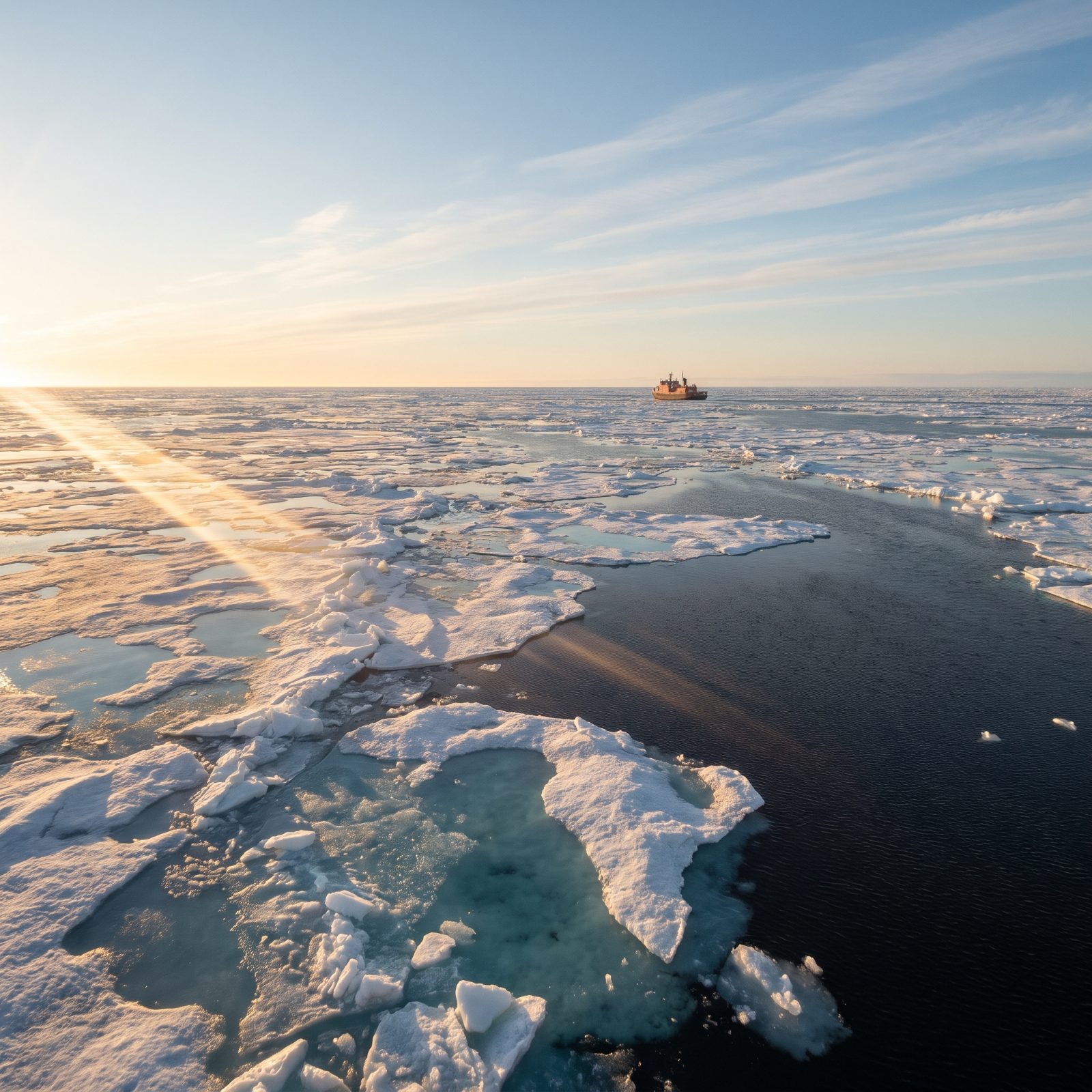
Right now, in late summer, you could stand near the geographic North Pole and see open water and melt ponds among the ice. The pole still freezes solid every winter — no argument there. It’s the summer that’s vanishing.
September sea ice has shrunk dramatically since satellites began watching in 1979. The thick, ancient multi-year ice that once ruled the basin is mostly gone, swapped out for thin stuff that forms in autumn and melts away the following year. Flimsy ice, basically. Here one season, gone the next.
Climate models point toward an Arctic Ocean that could go essentially ice-free in late summer sometime in the coming decades. The exact year is argued over endlessly, and anyone handing you a confident date is guessing. The direction, though? That’s not up for debate.
From the first ice sheets of the deep past to turquoise melt ponds glowing under a midnight sun, the Pole has never once sat still. It has just rarely changed this fast.
Looking back at the 2024 sea-ice minimum, a senior research scientist who tracks Arctic ice noted “This summer we saw very early ice loss in Hudson Bay, open water near the North Pole and a stubborn ice floe near the Bering Strait that persisted through the summer melt season.”