
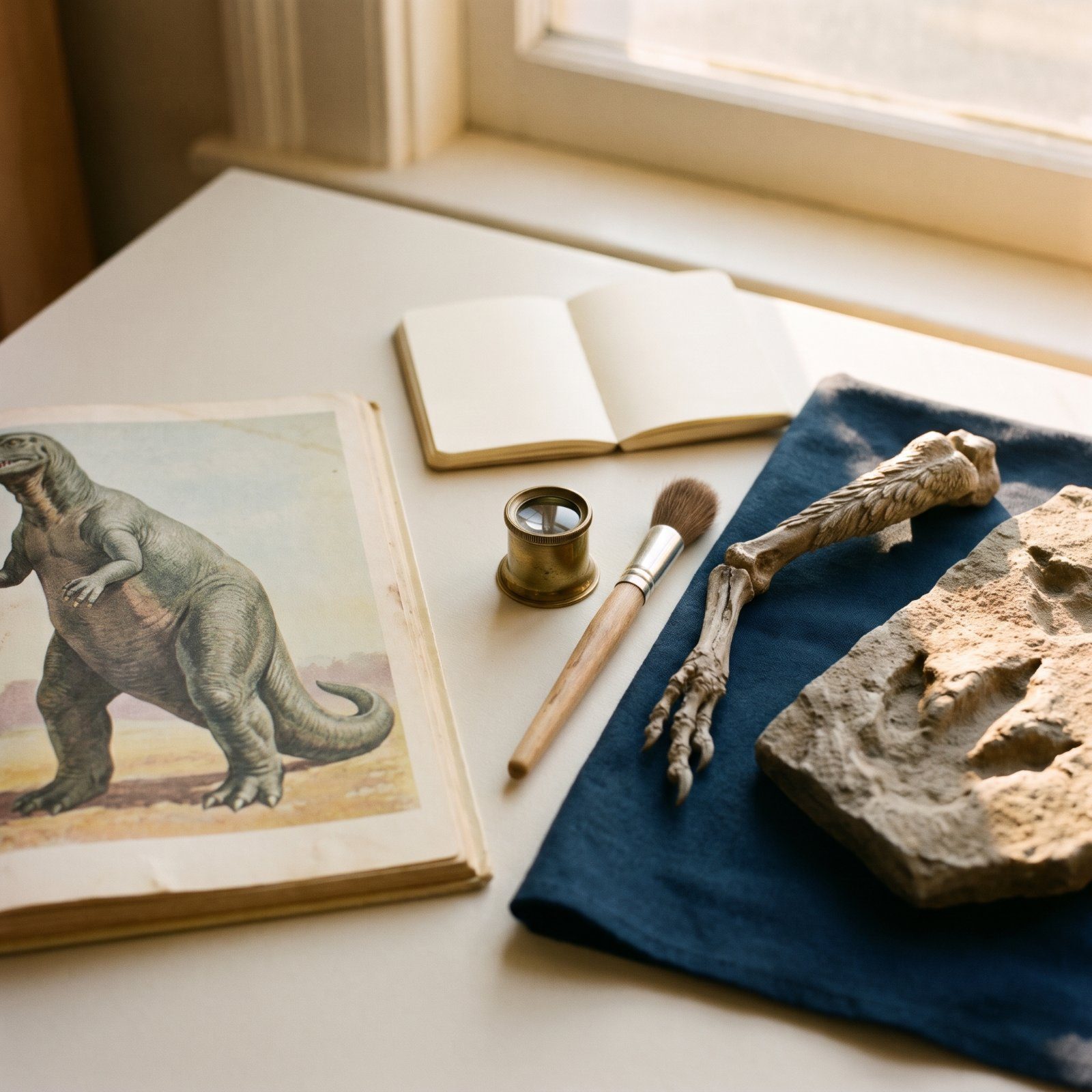
Open a dinosaur book printed in 1975 and you meet a different animal entirely. Tails drag through the mud, tongues loll with hot-blooded doubt, and a T. rex stands propped up like a kangaroo stuffed into a rubber suit. For most of the twentieth century, museums mounted these giants as slow, swampy, lizard-cold failures waiting for a meteor to put them out of their misery. Then the fossils kept talking. Trackways, feather impressions, nests, bone chemistry, biomechanics — they tore the old picture apart one claim at a time. Here’s what we got spectacularly wrong, and the hard evidence that set it straight.
35. Dinosaurs Were Cold-Blooded, Just Big Lizards in the Sun
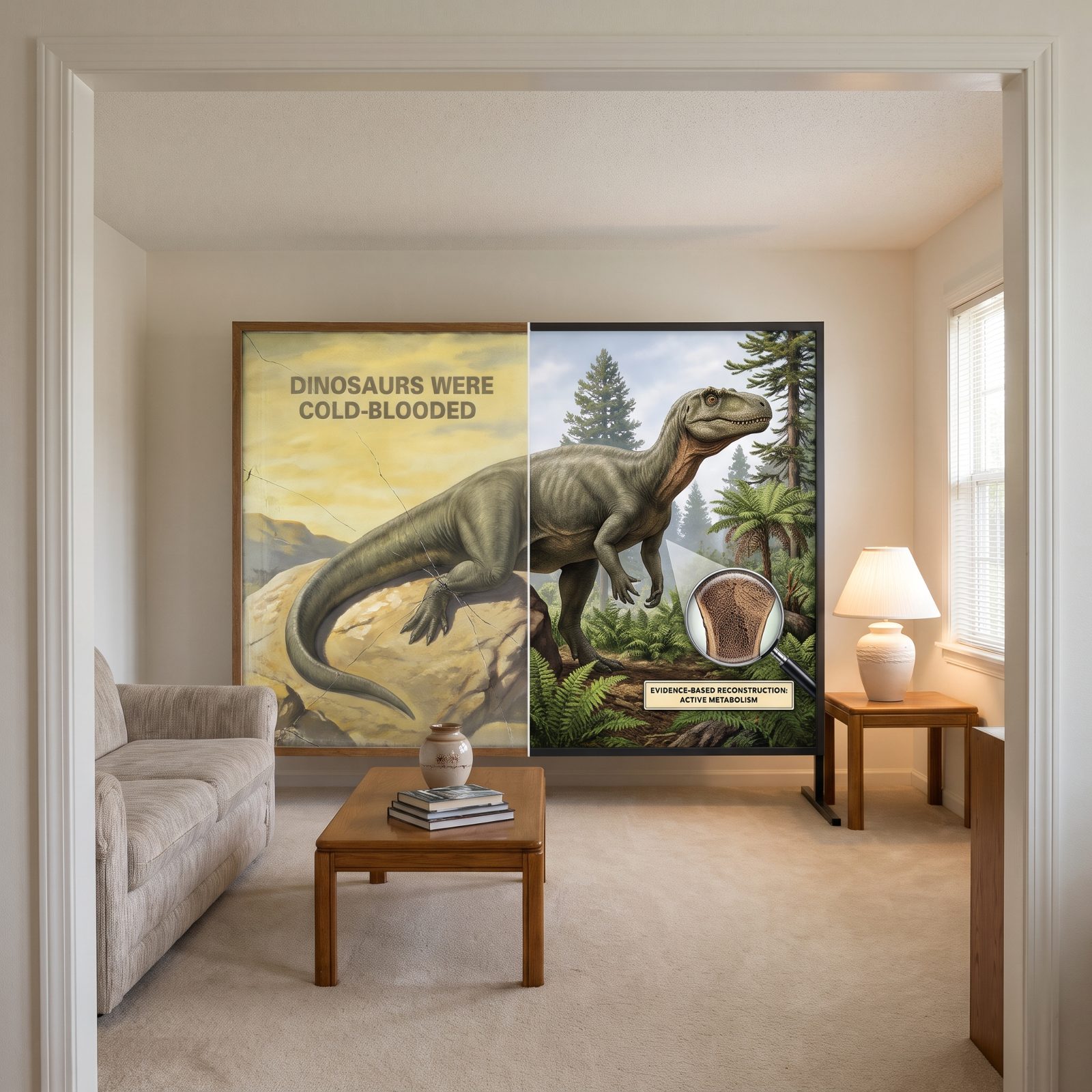
The old picture was a reptile the size of a bus, waiting on a warm rock for the sun to turn over its engine. That was the consensus for decades: dinosaurs were ectotherms, cold-blooded, slow by thermodynamic law.
Then people cut the bones open. Under the microscope, dinosaur bone looks nothing like a crocodile’s — it’s fibrolamellar, laced with blood vessels, the dense fast-growing tissue you find in mammals and birds. The Dinosaur Renaissance of the sixties and seventies, led by John Ostrom and his student Robert Bakker, dragged the whole argument into the open.
The honest answer today is messier than either side wanted. Plenty of dinosaurs ran hot, probably mesothermic, somewhere between a lizard and a sparrow. Not quite us. Not remotely a basking iguana.
34. Most Dinosaurs Were Sluggish, Swamp-Bound Evolutionary Failures
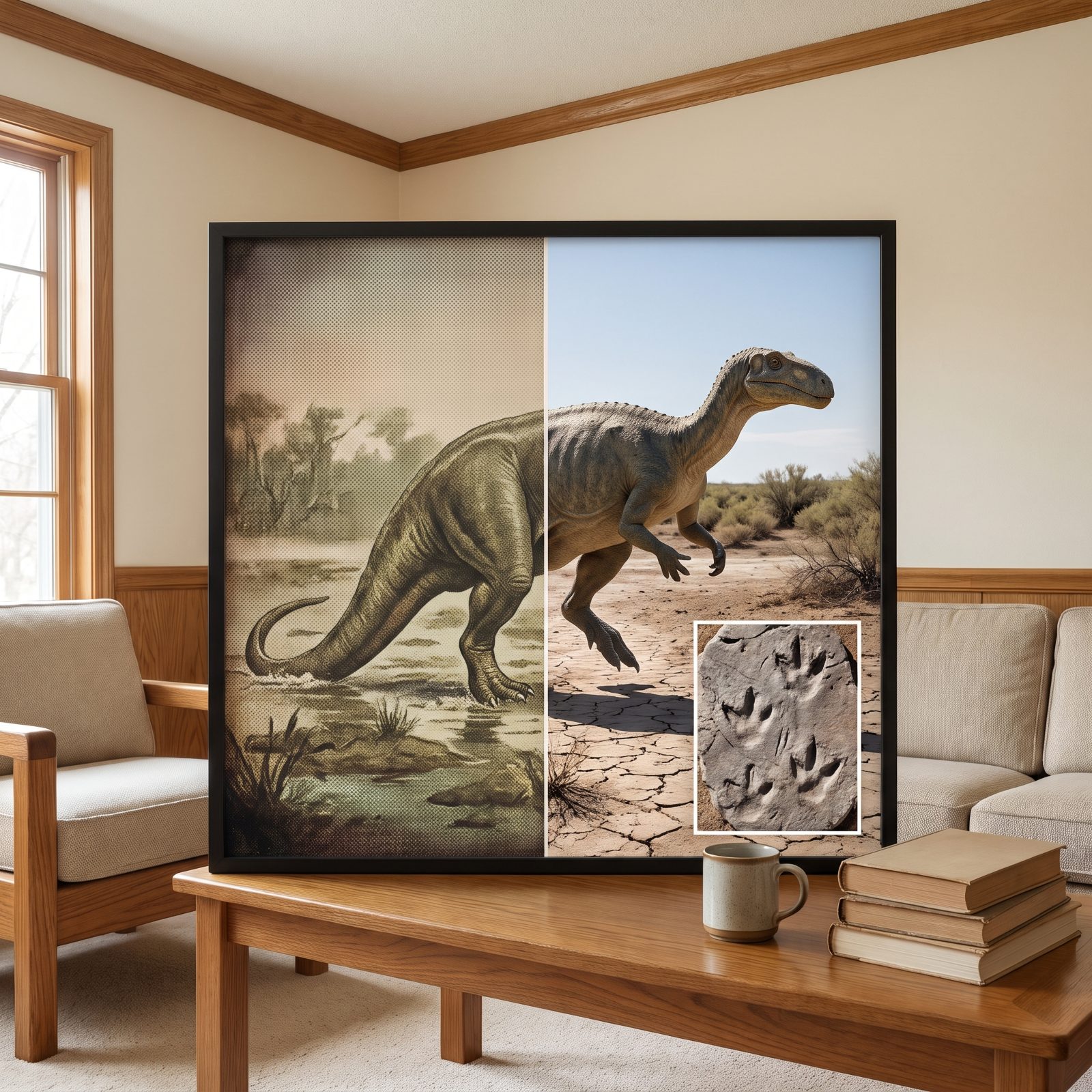
For most of a century, “dinosaur” was practically shorthand for evolutionary dead weight. Big, dumb, doomed — the word itself turned into an insult you hurl at anything outdated.
Trackways rewrote that. Fossil footprint sites across Texas and Colorado preserve stride lengths you can actually measure, and the math spits out speeds no cold, lumbering reptile could manage. Some small theropods clocked along at a running ostrich’s pace.
And failures? They ruled the land for over 160 million years. We’ve managed a couple million. Calling them a flop is a bit rich coming from us.
33. Walking Dinosaurs Dragged Their Tails Like a Heavy Rope
The clue was sitting in plain sight the whole time, right there in the dirt.
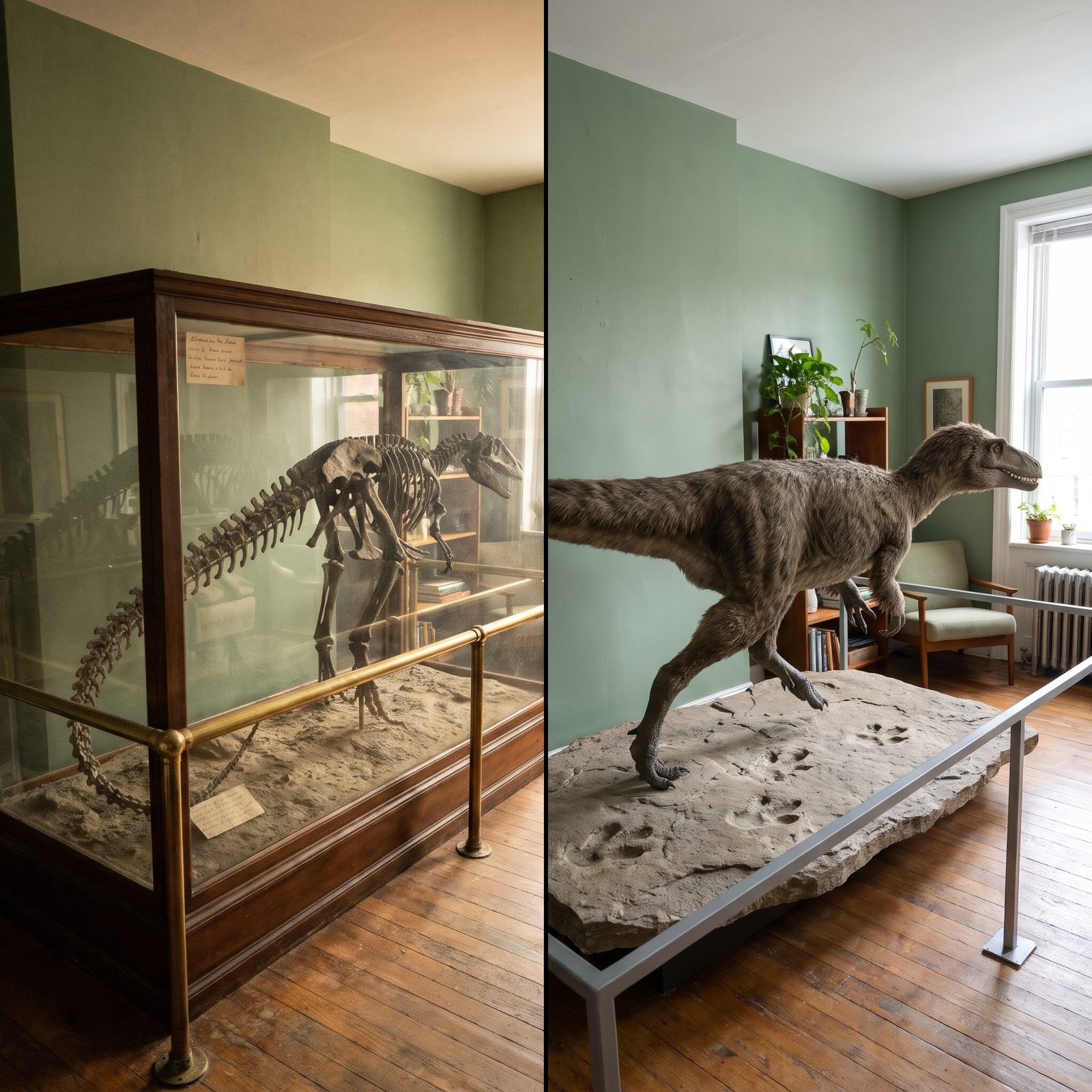
Old mounts and murals showed bipedal dinosaurs standing tall with tails flopped behind them like a dropped garden hose, scraping a furrow in the mud. Logical enough — if you’ve never looked at the tracks.
Nobody could explain away the one glaring detail: dinosaur trackways almost never show a tail drag. Thousands of footprints, two tidy rows, and clean ground running straight down the middle where that heavy tail supposedly scraped. The tail was held up and out, rigid, a counterweight to the head and torso. The whole animal was a horizontal seesaw balanced over the hips.
32. Giant Predators Were Too Heavy to Run at All
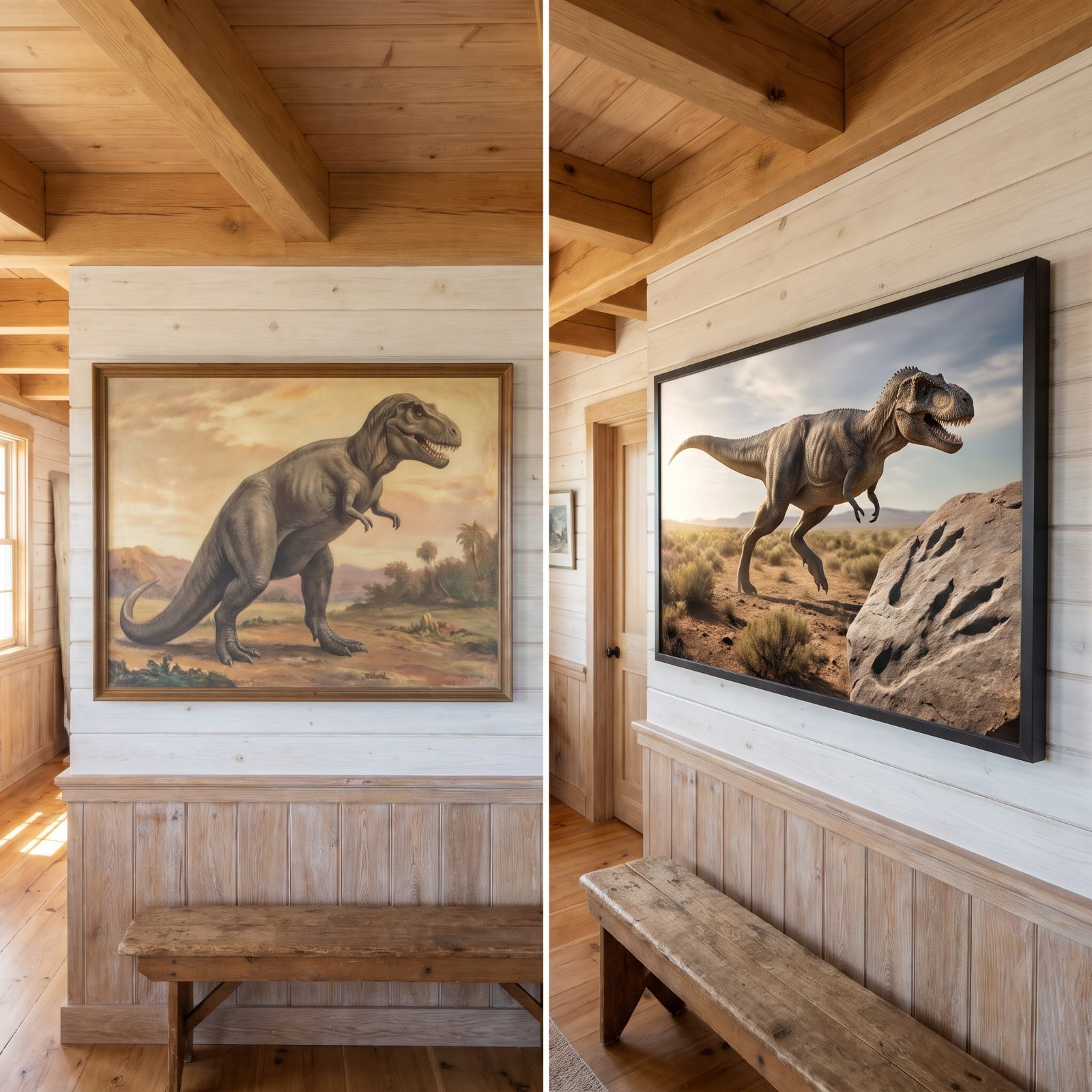
The sheer bulk of a tyrannosaur set off an argument that still simmers. Could something that big actually run?
The 1975-era assumption leaned hard toward no. Too heavy, legs would shatter, best it could do was shuffle. Later work complicated the picture in both directions. Limb-bone strength modeling suggests the very largest adults probably couldn’t sprint flat-out without risking injury, so those full-speed Hollywood chases are off the table.
But “couldn’t gallop” is a long way from “too cumbersome to move.” A powerful walk and a fast run are two different claims. Current estimates put a big T. rex at a brisk, ground-eating pace — faster than most of its dinner.
31. Sauropods Lived Submerged in Deep Swamps to Hold Up Their Weight
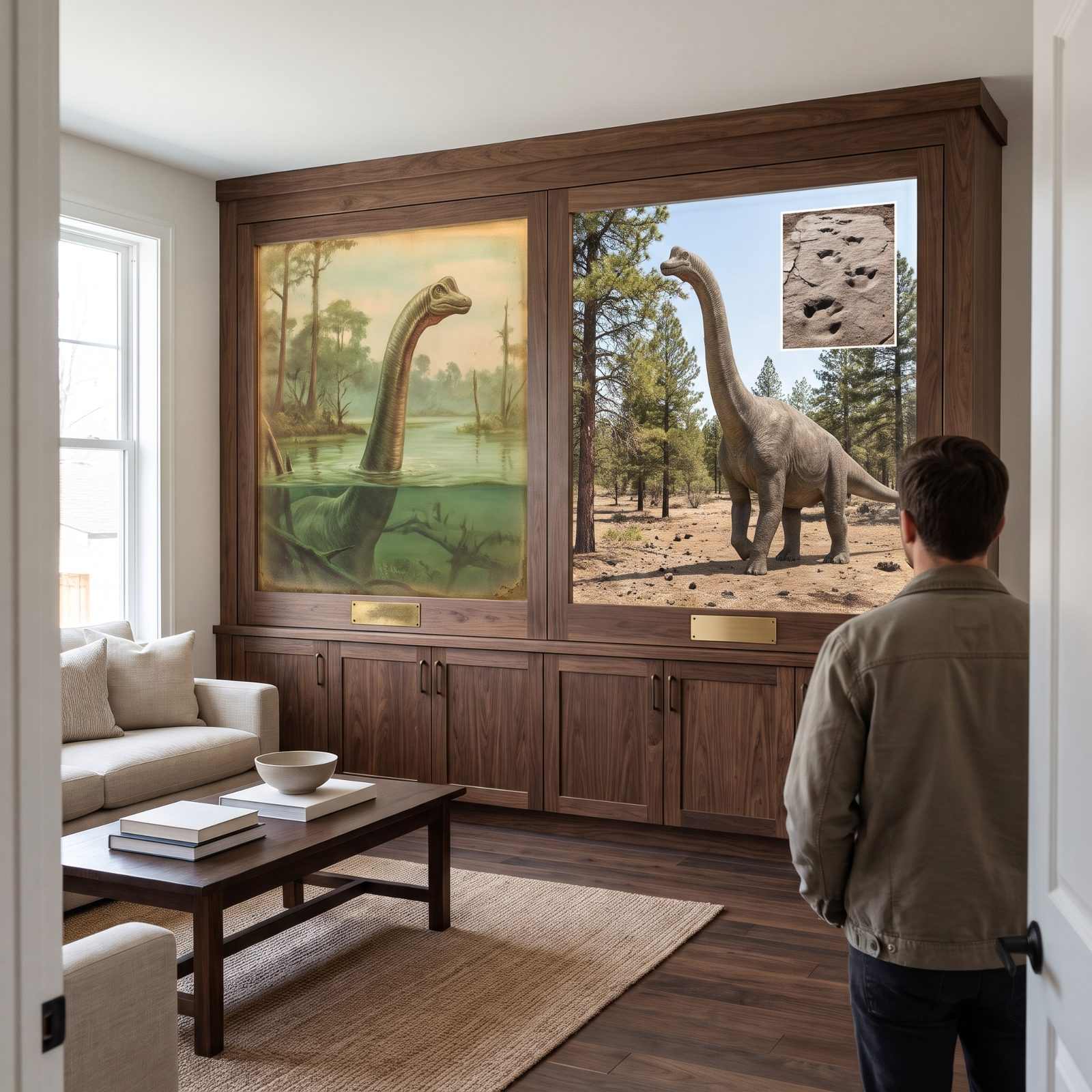
You’ve seen the painting. A Brontosaurus standing chest-deep in a lake, head on a periscope neck, the water supposedly taking the strain off those enormous legs.
Physics wrecked the scene. At that depth, the pressure on the chest would have made breathing impossible — the lungs couldn’t expand against it. The poor thing would have suffocated before lunch.
Then came the bones and the ground. A sauropod skeleton is built to bear weight on land: pillar legs, air-filled lightened vertebrae, the whole frame tuned for solid earth. And their trackways march straight across dry floodplains, pressed into the same ground as the small, clawed, hand-like four- and five-toed prints of the smaller animals that shared their world. These were terrestrial giants browsing treetops, not reluctant hippos.
30. Duck-Billed Dinosaurs Spent Their Lives Paddling in Lakes
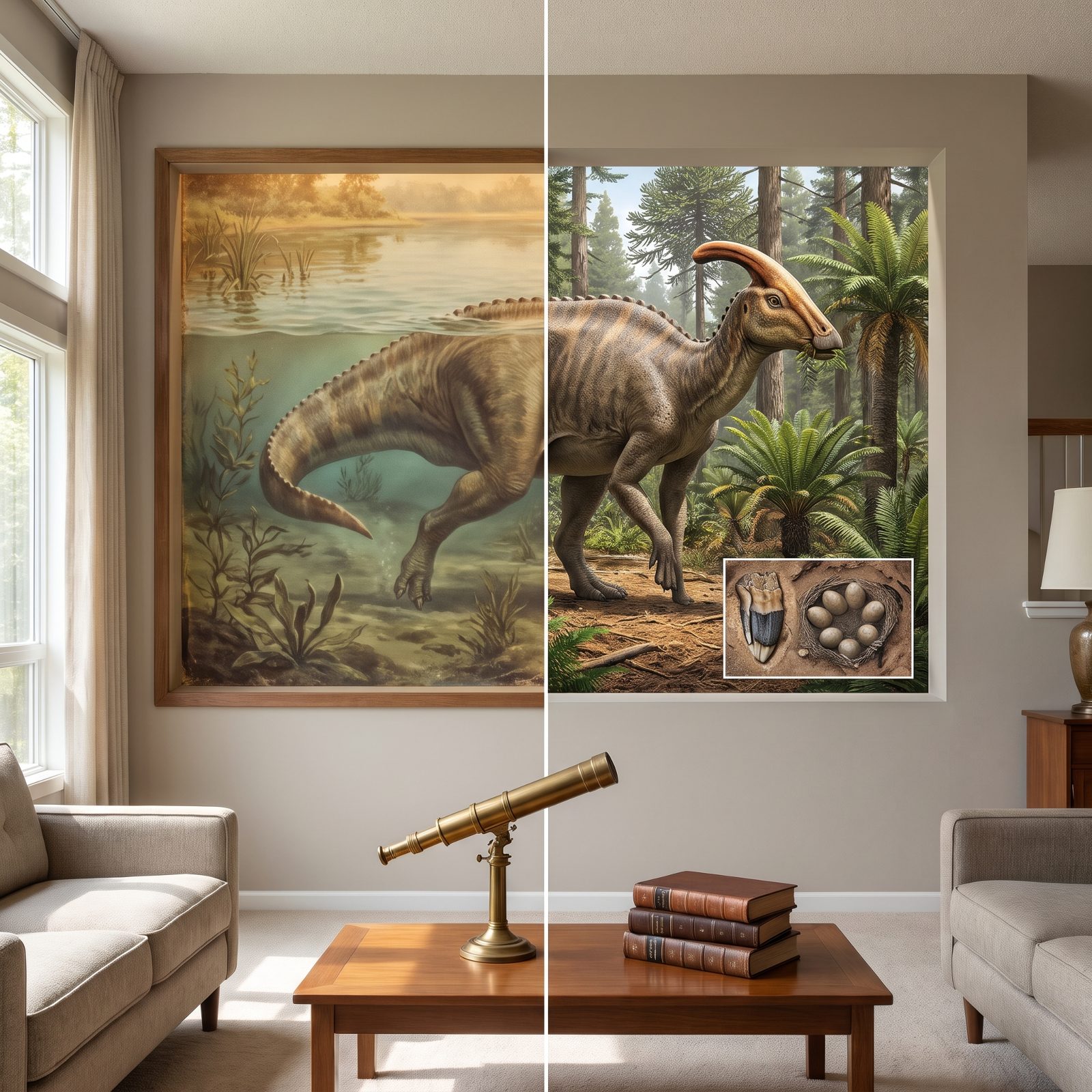
The flat bill looked like a duck’s, so naturally the whole animal got filed under “water bird.” Hadrosaurs were drawn drifting through lakes, grubbing for soft plants.
Their mouths say otherwise. A hadrosaur jaw packed hundreds of teeth into a self-replacing grinding battery, machinery built to pulverize tough terrestrial vegetation — not slurp pond weed. Twigs, needles and gritty foliage wear teeth down fast, and that’s precisely what these jaws were built to outlast.
Mummified specimens seal it. Fossil gut contents and skin impressions point to a land animal, a Cretaceous browsing machine, far closer to a cow than a swan.
29. Parasaurolophus Used Its Long Crest as a Snorkel
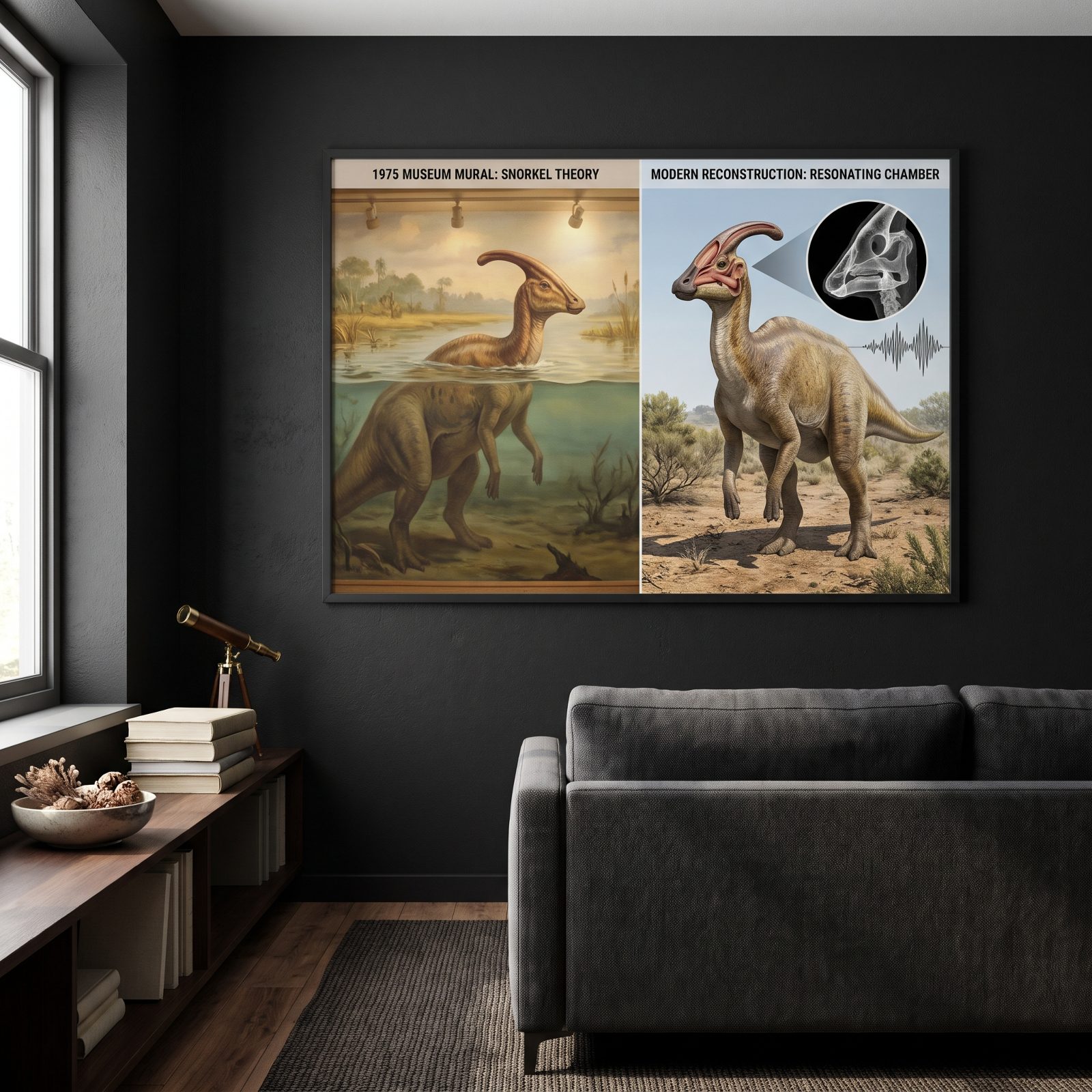
The crest was a puzzle, and the first guesses were wonderfully wrong. That long, backward-sweeping tube on Parasaurolophus looked like plumbing, so people decided it was a snorkel for a diving dinosaur.
Problem one: the crest is a dead end. No hole at the tip means it couldn’t draw a breath of air, so the snorkel idea sank the moment anyone studied the anatomy.
CT scans later traced the crest’s internal passages — long looping tubes of nasal cavity — and modeled the sound they’d make. The answer was a low, resonant honk. The crest was a built-in instrument, probably for calling across a herd and showing off to mates. Not a breathing tube. A trombone.
28. Stegosaurus Supposedly Needed a Second Brain Near Its Hips
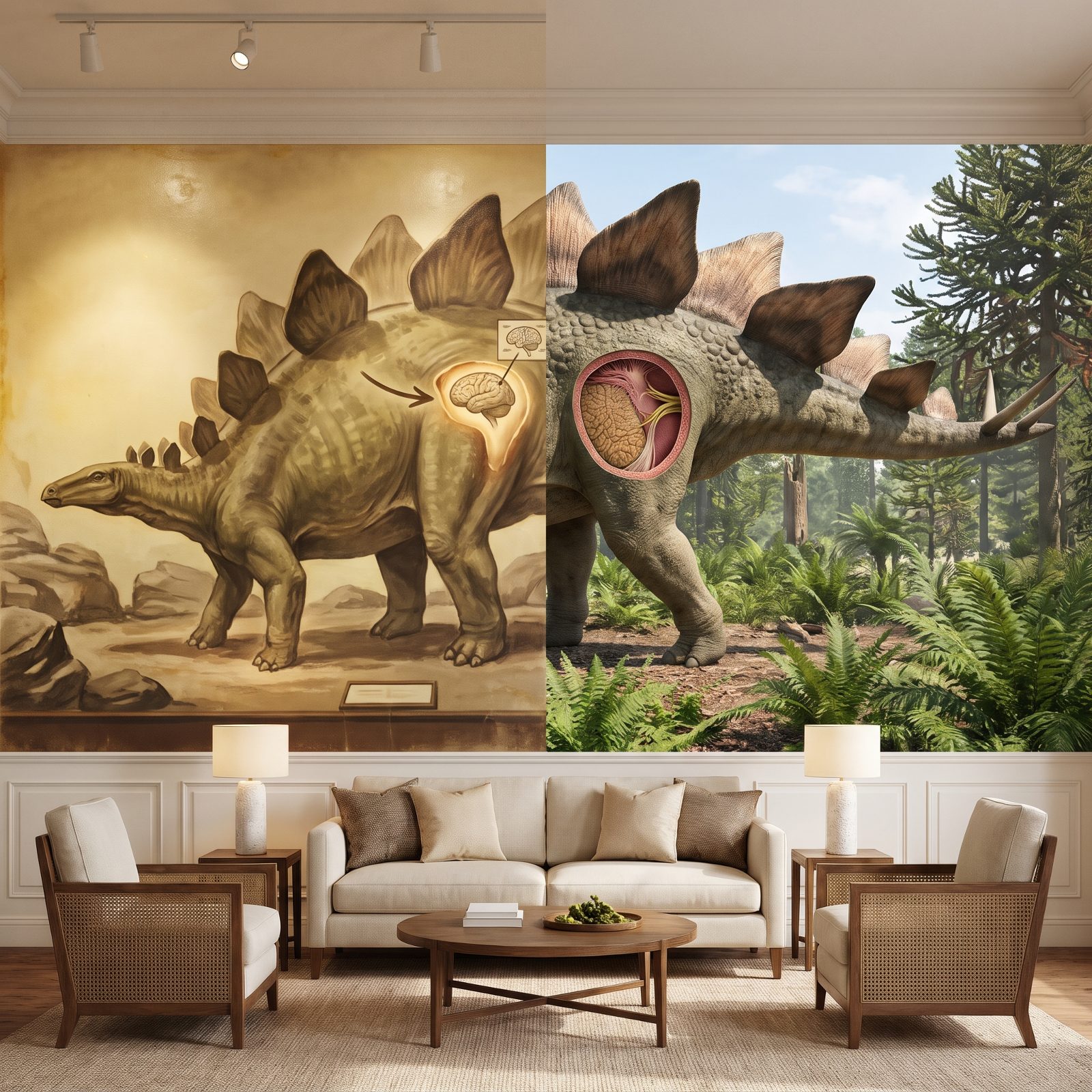
For a century, the story went that Stegosaurus kept a backup brain over its hips because the one in its skull was too small to run the back half of the body. It sounds like a joke, and it basically was.
The enlarged cavity near the hips, drawn here as a ragged hole in the animal’s side with arrows pointing at it, is real. What filled it almost certainly was not a second brain. Birds have the same structure, and in them it holds a glycogen body — a store of energy-rich tissue tied to the nervous system. No neurons running a rear command center. Just a nerve bundle and some biological fuel. Yet the two-brain line survived in popular books long after anatomists stopped believing a word of it.
27. Nearly Every Dinosaur Was Written Off as a Dim-Witted Reptile
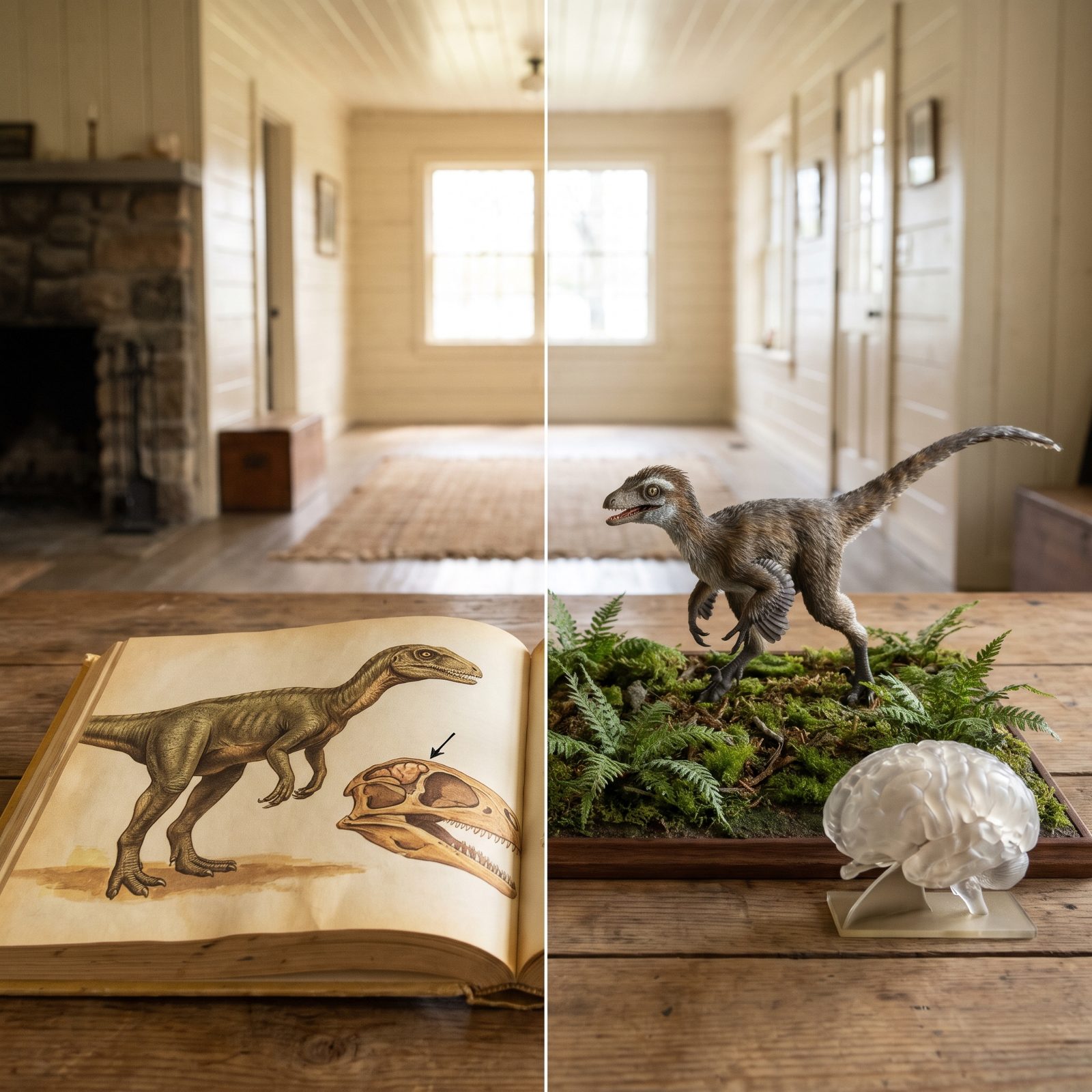
The old assumption was simple: big body, pea brain, not much going on upstairs. Dinosaurs got lumped in with slow modern reptiles and treated as living machinery.
CT scans of fossil braincases changed that. Endocasts of small theropods like Troodon show brains proportionally larger than a crocodile’s, with the hardware for fast reactions. These animals weren’t geniuses, but some were sharp, visual hunters. The flat generalization that they were all dumb? Gone.
26. Big Dinosaur Herds Were Thought Too Social to Be Real
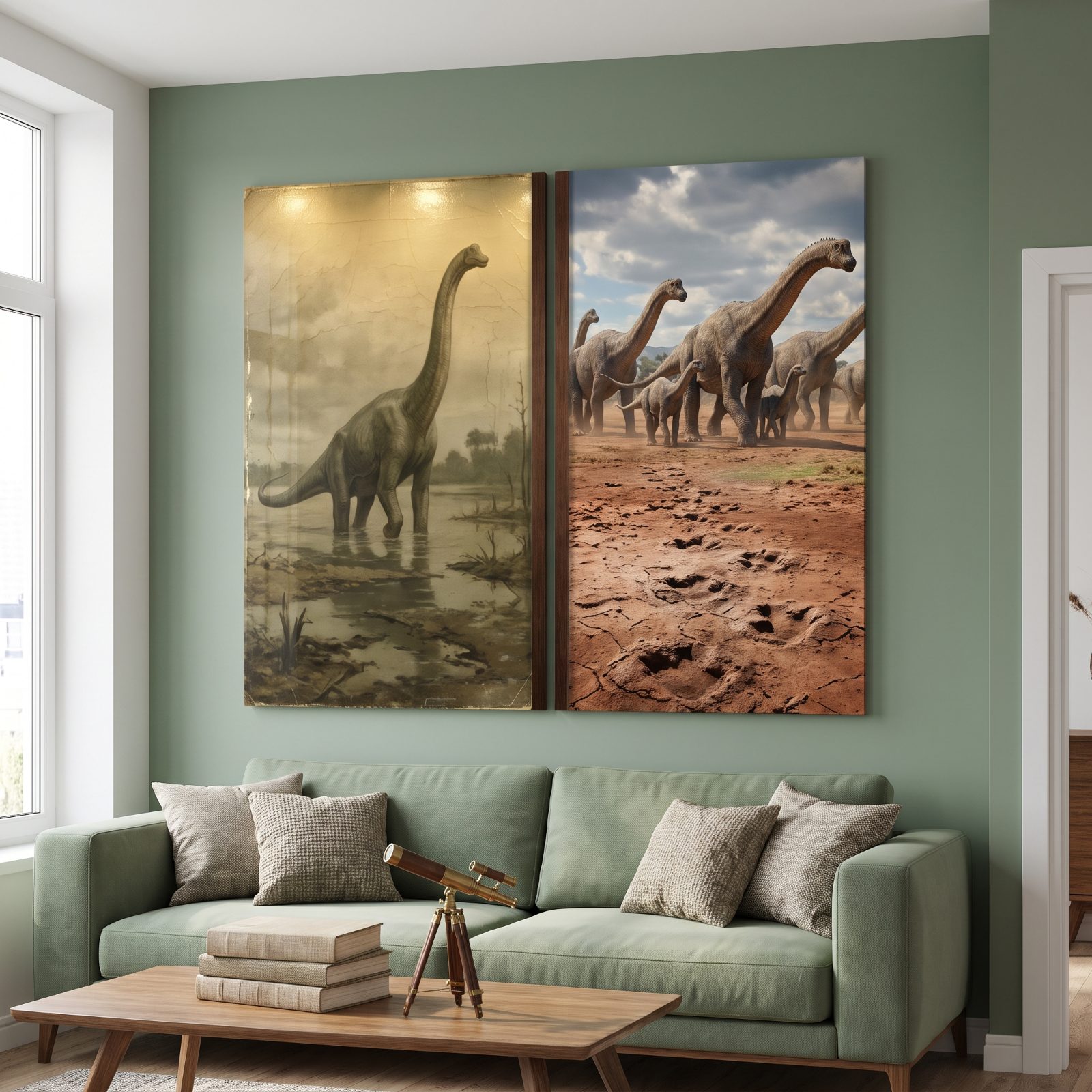
Picture the 1975 diorama. One big sauropod, up to its belly in a lake, alone. Herds were considered a stretch for creatures assumed to be solitary and slow.
Then the trackways turned up — parallel sets of footprints running the same direction, same spacing, same depth, with smaller prints tucked in the middle. That’s no coincidence. That’s a herd walking with its young protected at the center, the way elephants do. Bonebeds packed with dozens of individuals of one species told the same story. These animals traveled in groups, and the mud recorded every step.
25. Nobody Believed Dinosaurs Made Seasonal Migrations
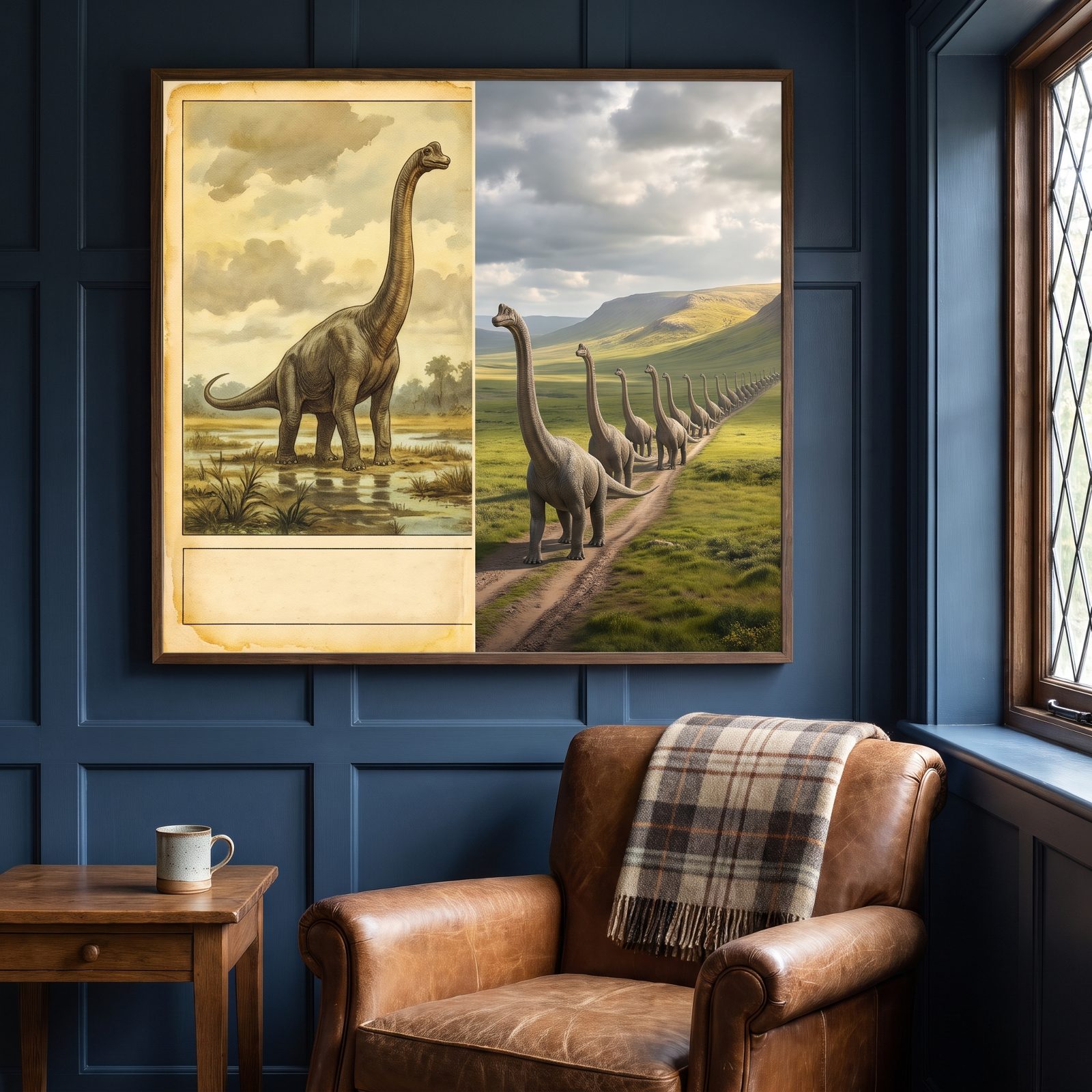
Migration seemed like too much ambition for an animal picture-booked as a sluggish swamp dweller. Why would it go anywhere?
Chemistry and geography answered that. Isotope ratios locked into fossil teeth can reveal where an animal drank its water, and in some sauropods those signatures shift in ways that point to long seasonal moves between regions. Throw in polar dinosaur fossils and evidence of harsh seasonal climates, and you get a picture of animals tracking food and warmth across hundreds of miles. The static dinosaur, planted in one swamp for life, was a failure of imagination.
24. Communal Nesting Colonies Were Dismissed as Impossible
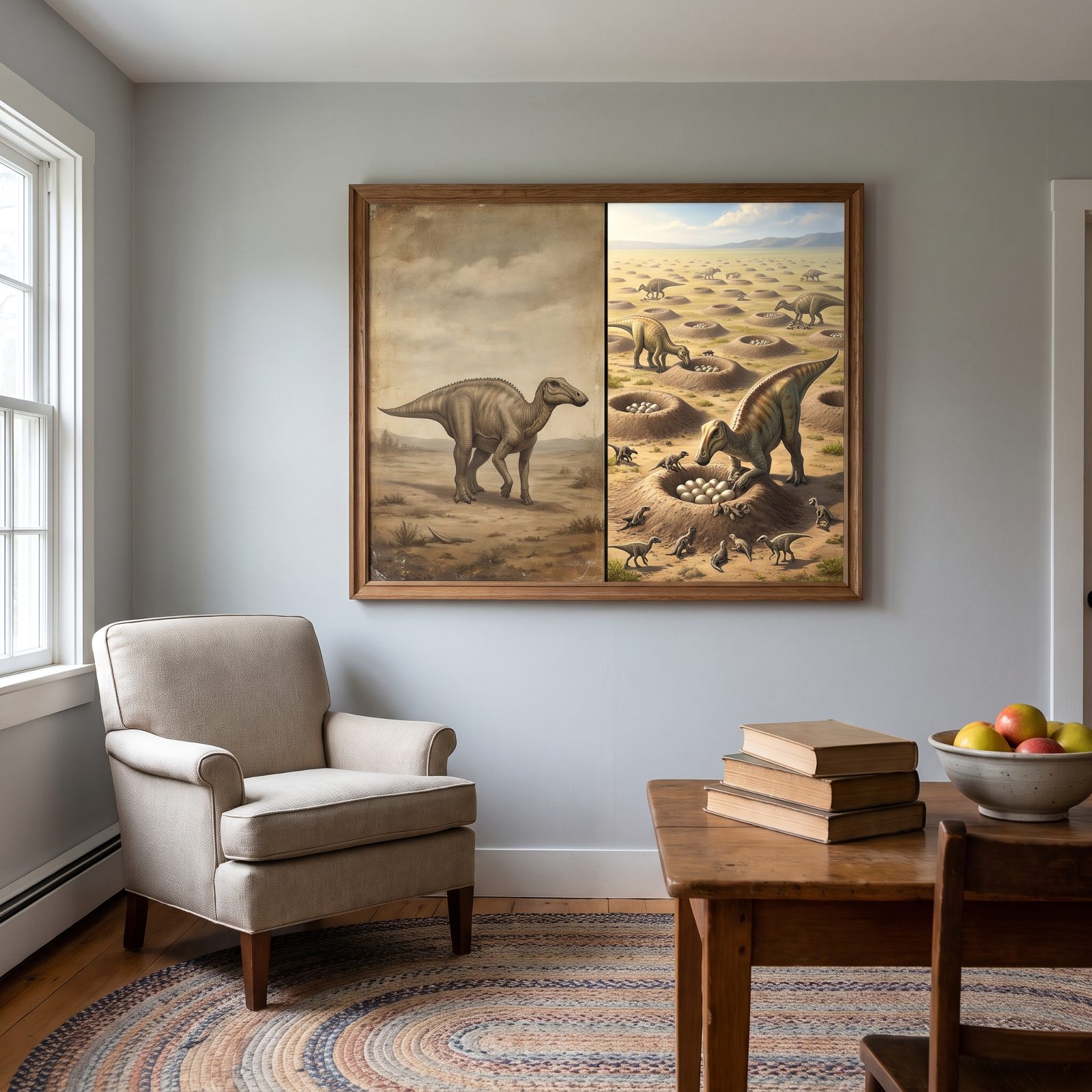
Then came Egg Mountain. In the late 1970s, fieldwork in Montana’s Two Medicine Formation uncovered something nobody had planned for: a whole nesting ground of the hadrosaur Maiasaura.
Nest after nest, mounded from dirt, spaced roughly one adult body-length apart. That spacing is the tell. It mirrors colonial seabird rookeries — far enough that adults don’t trample each other’s clutches, close enough to count as a colony. Dinosaurs returned to communal grounds to breed together. The lone-reptile model couldn’t survive the sight of a nursery that size.
23. The Myth That Dinosaur Parents Just Walked Away From Their Eggs
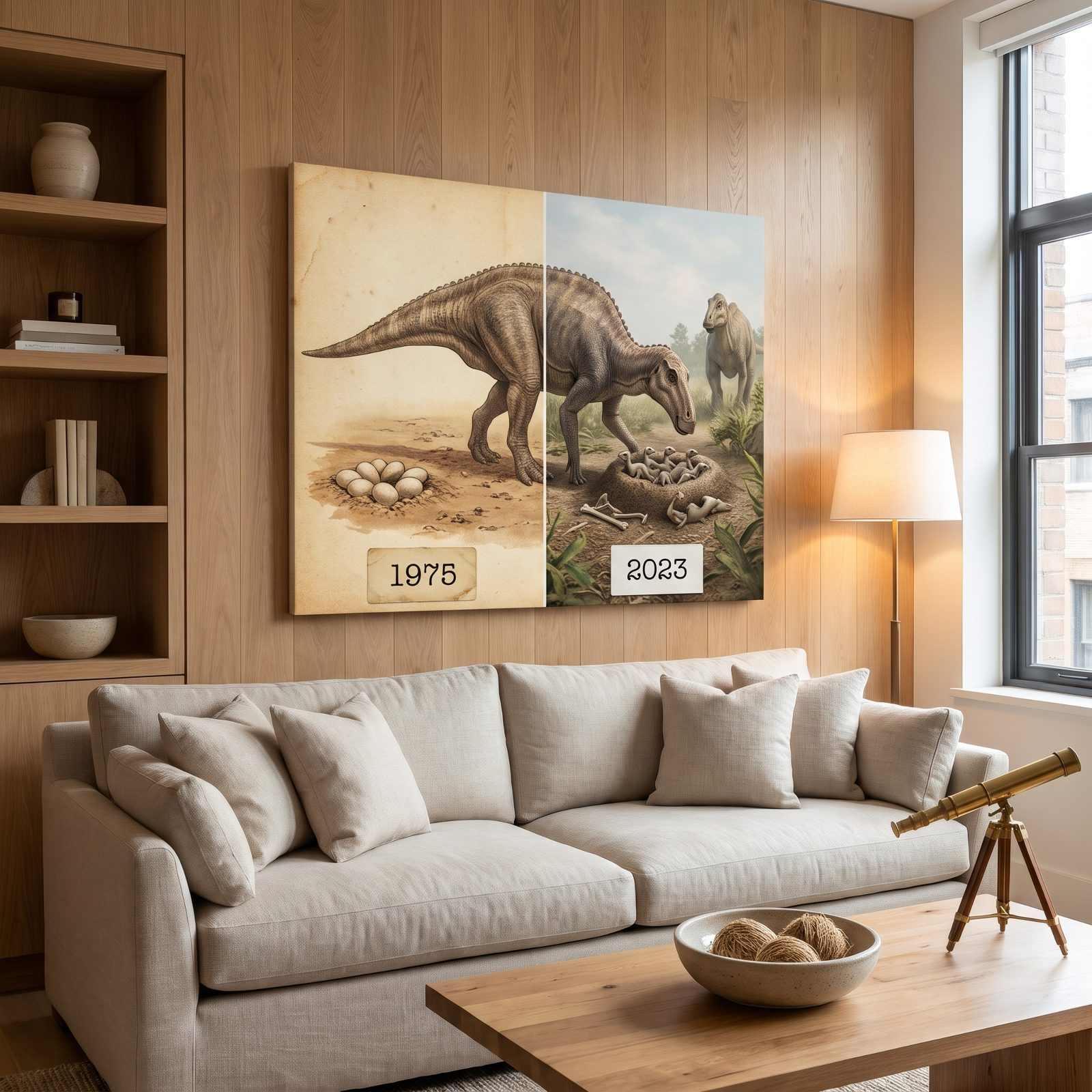
Reptiles lay eggs and leave, so dinosaurs must do the same — that was the thinking. Dig a hole, drop the clutch, walk off. No parenting whatsoever.
The Montana nests said otherwise, and the name says it all. Maiasaura means “good mother lizard.” Hatchlings found in those nests had poorly developed leg joints, meaning they couldn’t have foraged for themselves right away. Yet their teeth showed wear. Something was bringing them food. Call it parental care — the kind you’d expect from a bird, not a lizard.
22. Oviraptor Was Falsely Accused of Stealing Another Dinosaur’s Eggs
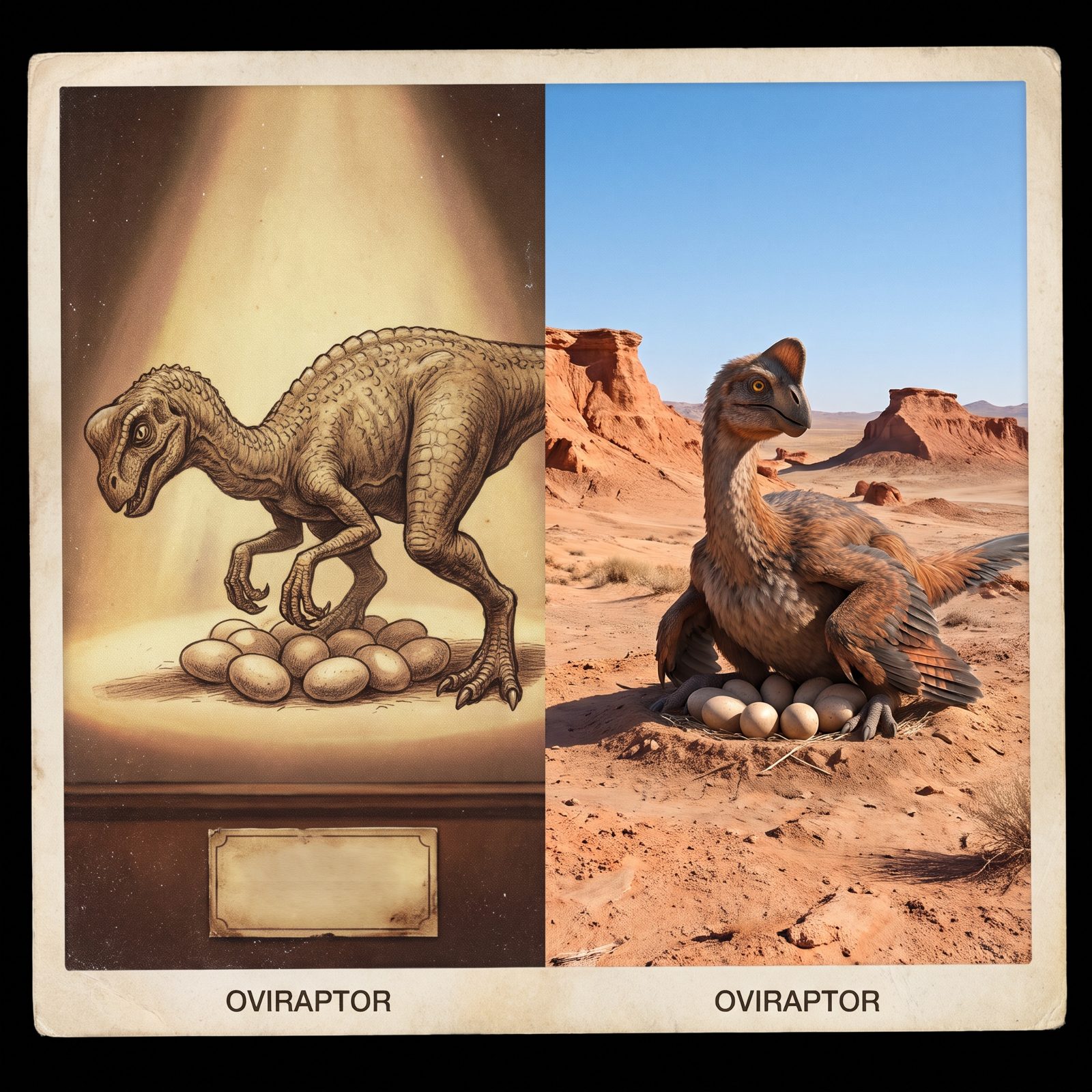
The name is a slander that stuck. Oviraptor means “egg thief.” When the first specimen turned up in Mongolia’s Gobi in the 1920s, it lay atop a clutch of eggs assumed to belong to the herbivore Protoceratops. Obvious verdict: caught mid-robbery.
Decades later, better specimens cracked the case open. An embryo found inside one of those exact egg types was an Oviraptor. The “stolen” eggs were its own. This animal wasn’t raiding the nest — it was sitting on it, brooding, arms spread over the clutch like a hen. The thief was the parent all along, and we never bothered to rename it.
21. Dinosaurs Were Thought to Grow at a Reptile’s Crawl
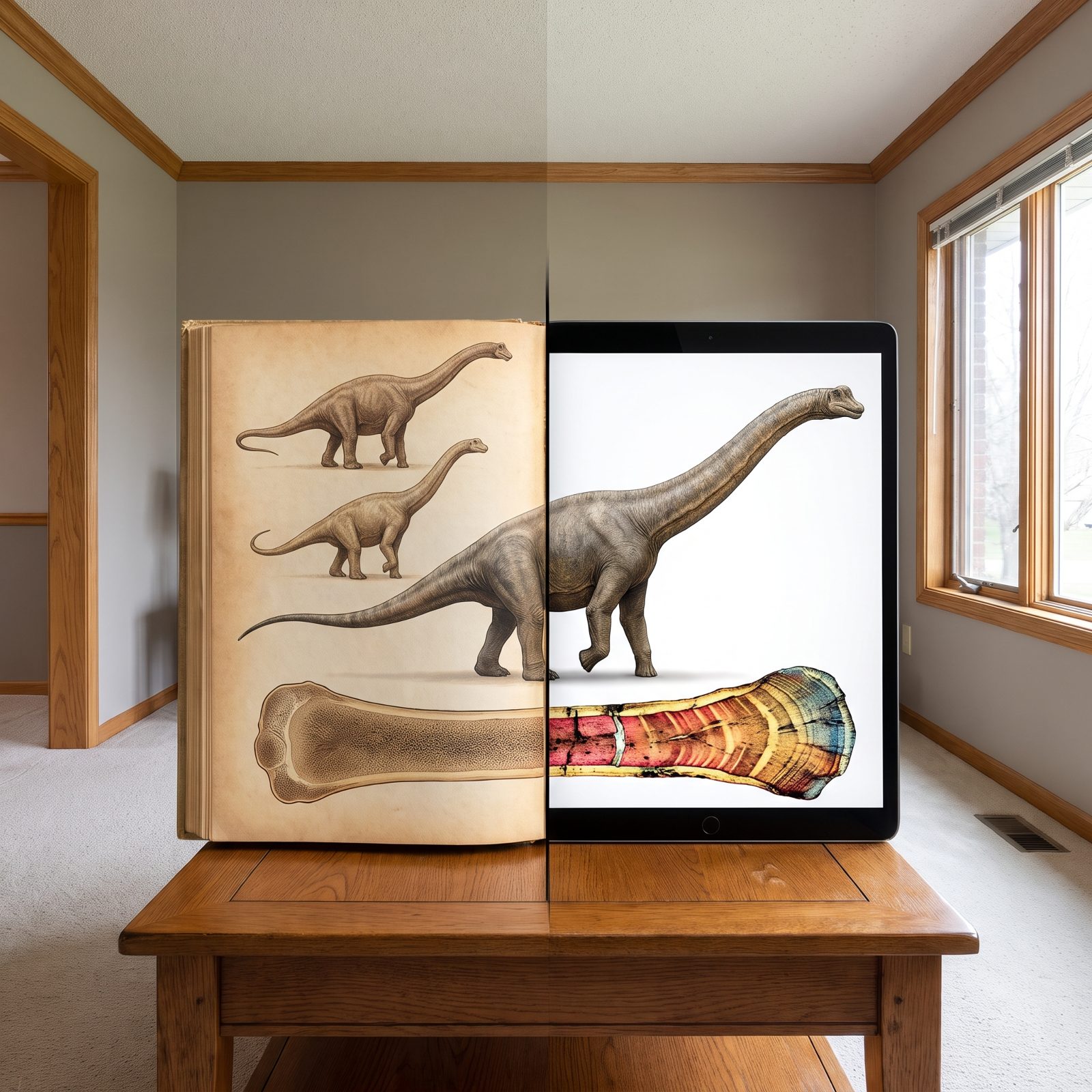
If dinosaurs were overgrown lizards, they should grow slowly for decades, inching toward their enormous size over a long, cold-blooded life.
Cut a fossil bone into a thin slice, hold it to the light, and the truth pours out. The cross-section is banded with concentric rings, much like a sawn tree trunk, and their wide spacing signals fast growth — closer to a mammal or bird than a reptile. Those growth lines, like tree rings, let researchers count the years and clock the rate. A Tyrannosaurus hit adult bulk in its teens. Slow and steady was never the plan.
20. The Poles Were Considered Off-Limits to Any Dinosaur
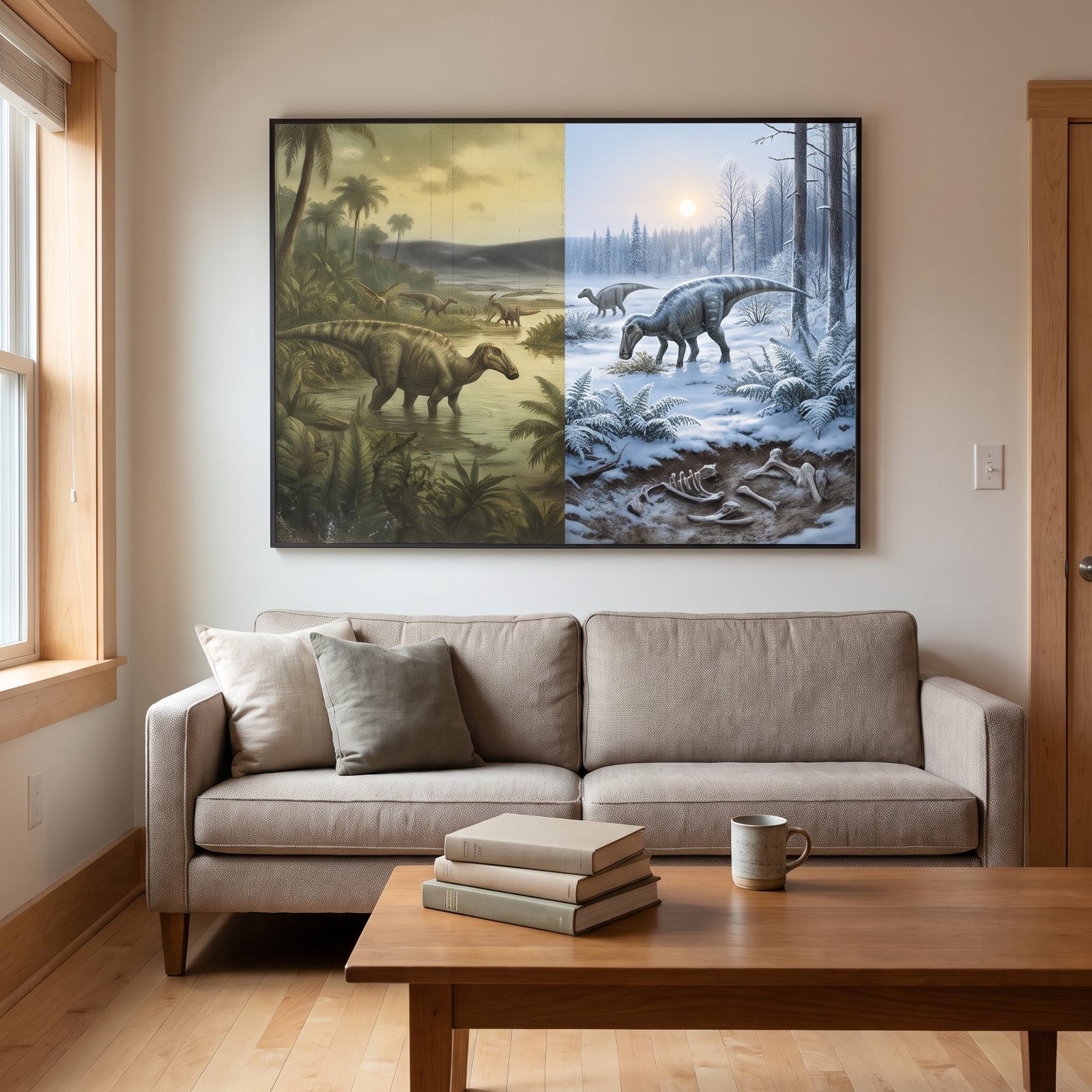
Cold-blooded animals can’t run a body through the dark polar winter. So the poles were ruled out. No dinosaur territory up there — case closed.
Fossils from southeastern Australia and Alaska’s North Slope wrecked that rule. These animals lived at high latitudes that, in the Cretaceous, still endured months of winter darkness and genuine cold. Some may have sheltered; some may have stayed active straight through it. Whatever the strategy, they were there, and their presence is one more nail in the cold-blooded-lizard coffin. Polar dinosaurs existed, and we have their bones to prove it.
19. Every Dinosaur Was Pictured in Nothing but Scales
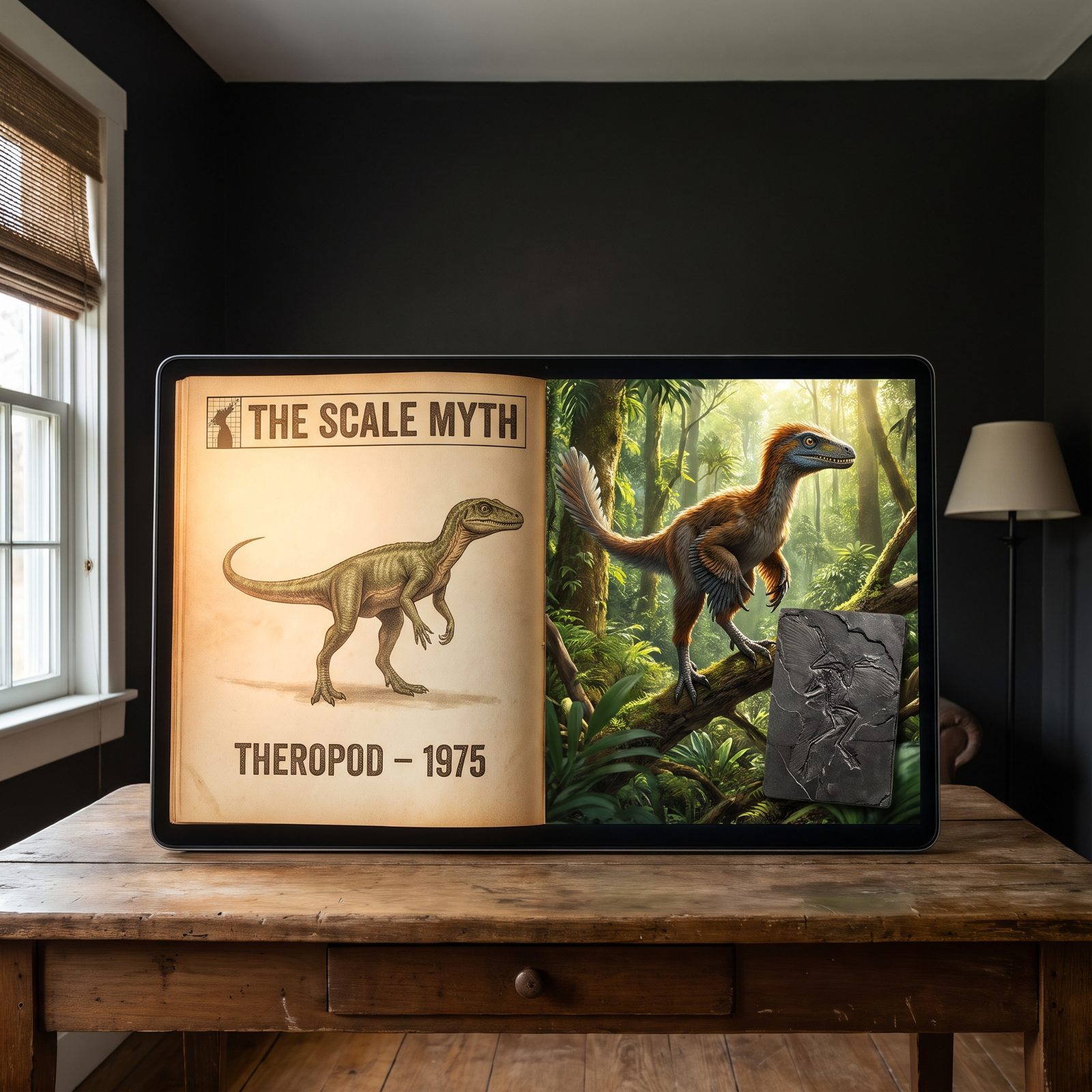
Scales. Every illustration, every model, every plastic toy — pebbled reptilian skin from snout to tail, no exceptions. That was the whole look in 1975.
The shale beds of Liaoning, China, buried that idea under a pile of feathers. Since the 1990s, fossil after fossil has come out of those deposits with plumage preserved in fine detail, from downy fuzz to fully vaned feathers. Some even retain microscopic pigment structures, letting researchers reconstruct real color. Many dinosaurs wore feathers. The link to living birds stopped being a theory and became a feathered fact.
18. Birds Were Dinosaur Relatives, Not Living Dinosaurs
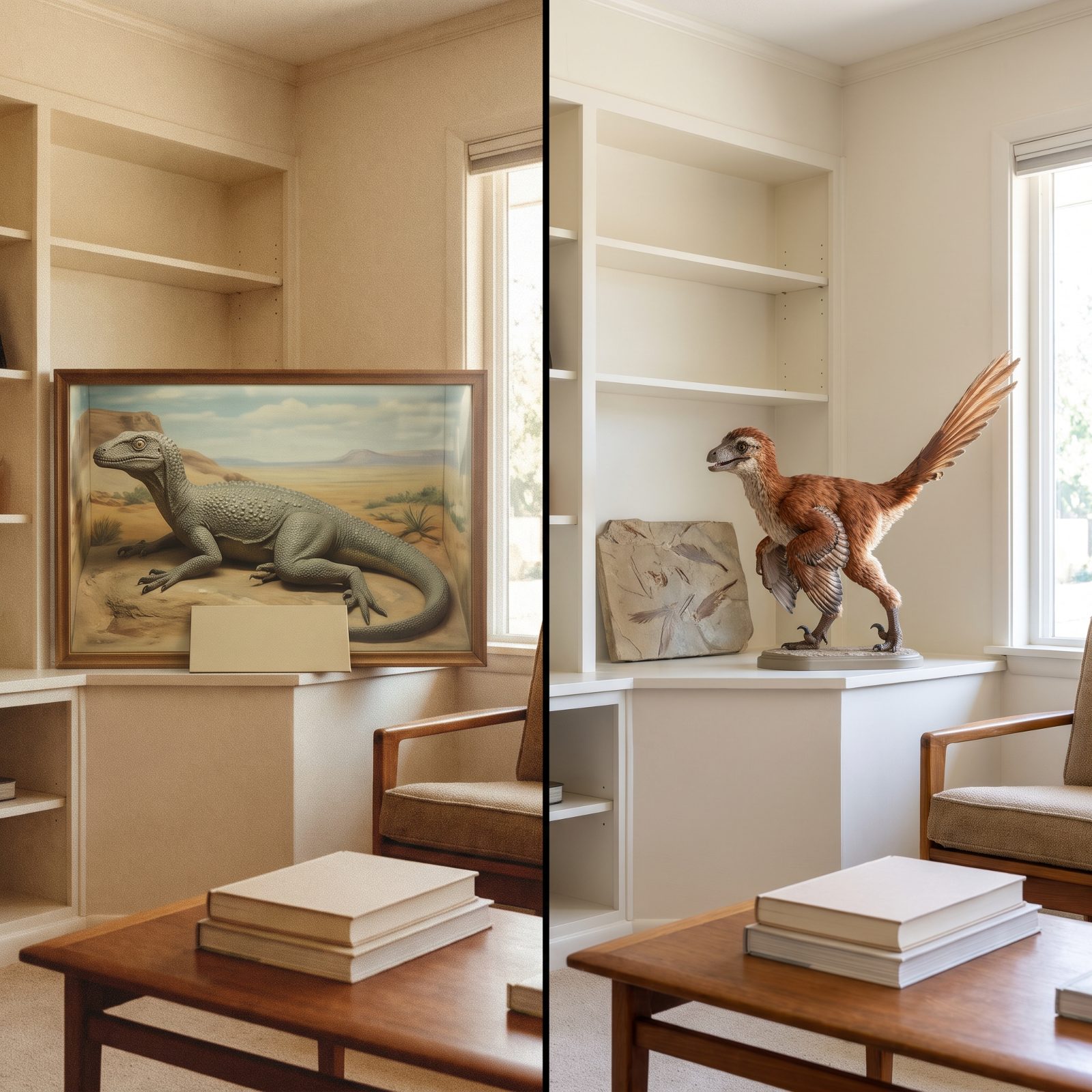
The old line was clean and wrong: birds were merely related to dinosaurs, somewhere back in the misty past, like a distant cousin who left the family farm. Seventies textbooks drew theropods as scaly reptiles and filed birds under “came later, came separate.”
Then came Liaoning, China. Early Cretaceous rock, starting with Sinosauropteryx in 1996, yielded feather impressions — on dinosaurs, not on bird ancestors standing nearby, but on the animals themselves.
Birds aren’t relatives of dinosaurs. They are dinosaurs, a surviving branch of theropods. The chickadee at your feeder is a living dinosaur, and we still think that’s one of the best facts in all of science.
17. Dinosauria Was an Artificial Group With Two Separate Origins
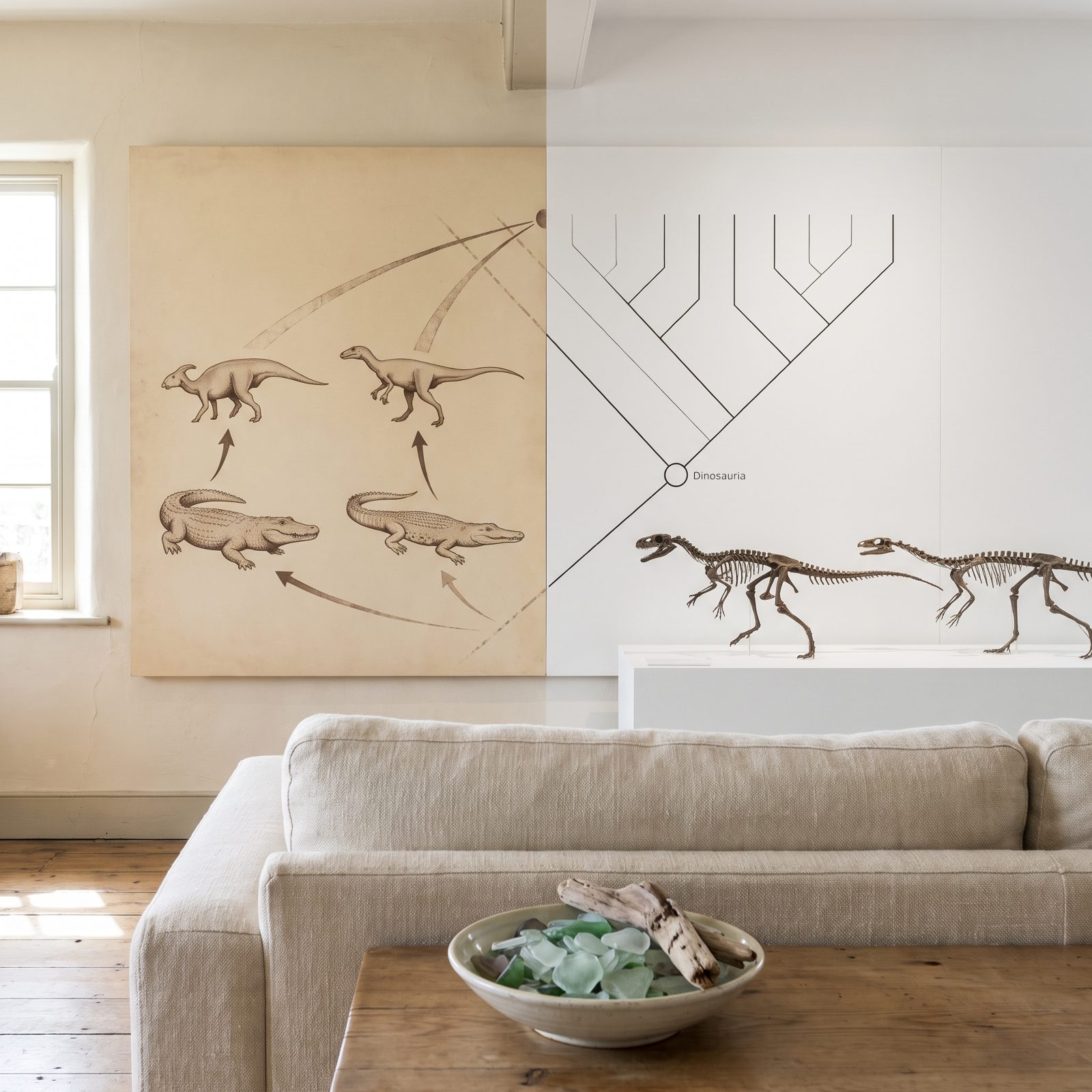
For decades, a respected idea held that “dinosaurs” weren’t a real natural group at all. The two great branches — lizard-hipped saurischians and bird-hipped ornithischians — supposedly evolved separately from different Triassic reptiles and only looked alike by coincidence.
Harry Seeley split them in 1887, and the split stuck for most of the twentieth century. Then Robert Bakker and Peter Galton pushed back hard in 1974, arguing Dinosauria was one lineage with a shared ancestor. They won.
Dinosaurs are a true clade, united by a fully open hip socket and an upright stance. Two hip shapes, one family — not two families wearing the same costume.
16. Carnosaurs Formed One Natural Family of Large Predators
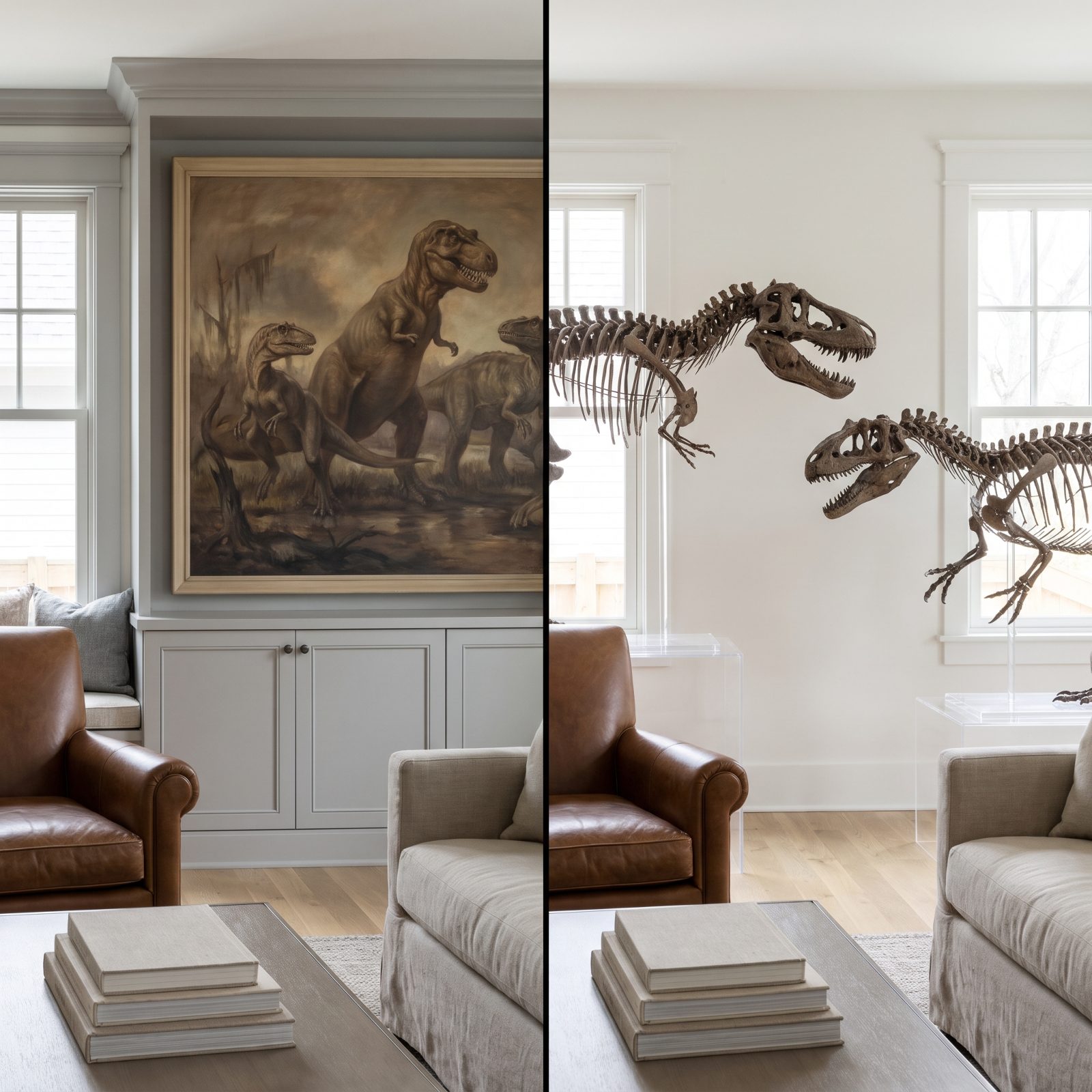
Big predator, must be a carnosaur. That was the logic for a long time. Allosaurus, Megalosaurus, Tyrannosaurus — all the giant meat-eaters got dumped into one group called Carnosauria, as if size alone made them relatives.
Cladistic analysis through the 1980s and 1990s took that bucket apart. These animals had grown large independently. Tyrannosaurus, it turns out, sits far closer to small, bird-like coelurosaurs than to Allosaurus.
Convergent evolution fooled everyone. Being huge and toothy is a job description, not a bloodline. The old carnosaur family tree judged a book by its cover, and the cover said “will eat you.”
15. Hypsilophodon Climbed Trees to Escape Predators
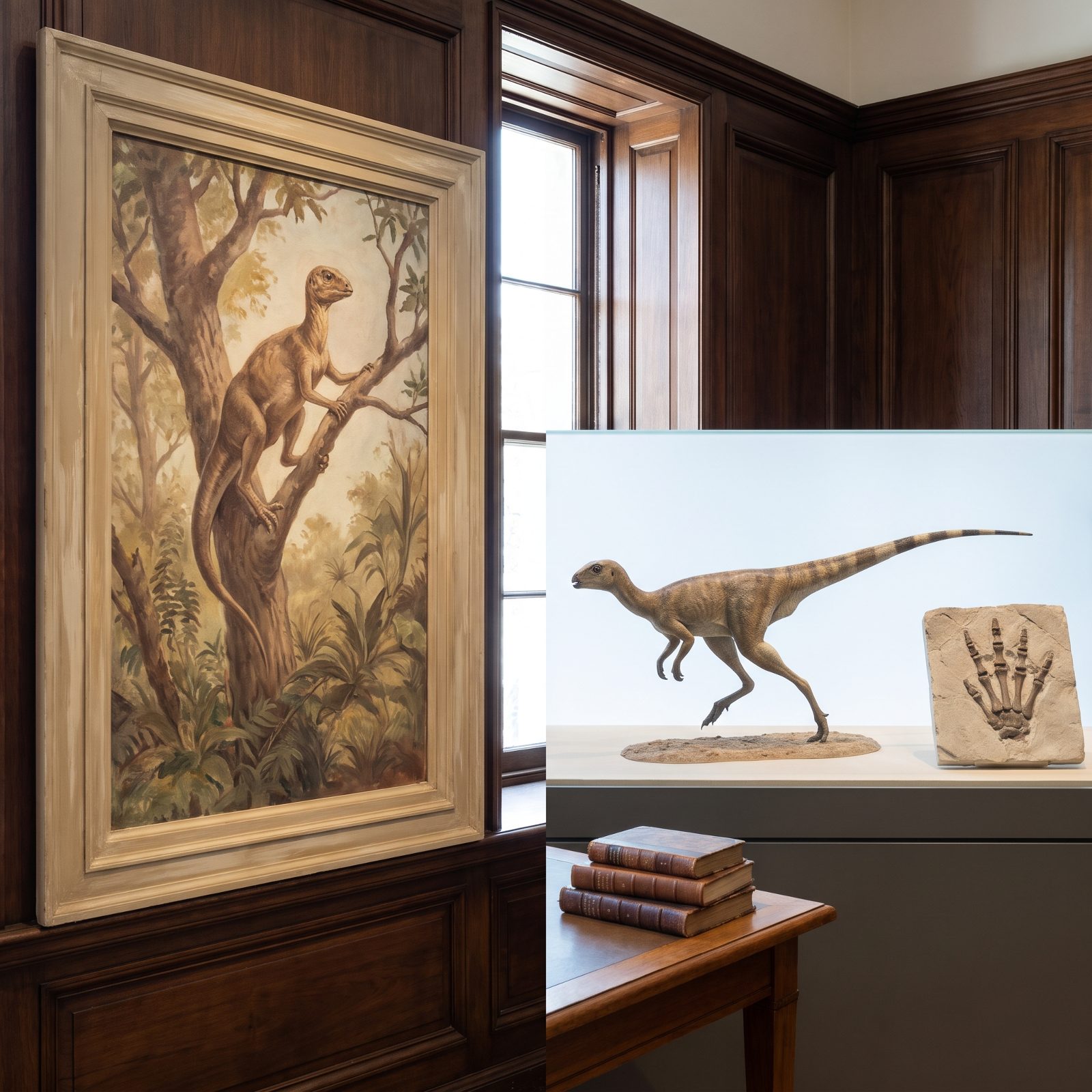
One of the stranger misreads in dinosaur history.
For years, this small, nimble plant-eater from the Early Cretaceous of the Isle of Wight was rebuilt as a tree-climber. Early workers thought its first toe pointed backward, like a perching bird’s — perfect for gripping branches and fleeing predators.
Peter Galton re-examined the anatomy in the 1970s and found the foot grasped nothing. Hypsilophodon was built for speed on the ground: light frame, long legs, a stiffened tail held out straight for balance at a run.
So the tree-climbing dinosaur came down to earth and became exactly what it looks like — a fast little sprinter that outran trouble instead of hiding up a trunk.
14. Iguanodon Balanced Upright in a Kangaroo-Like Pose
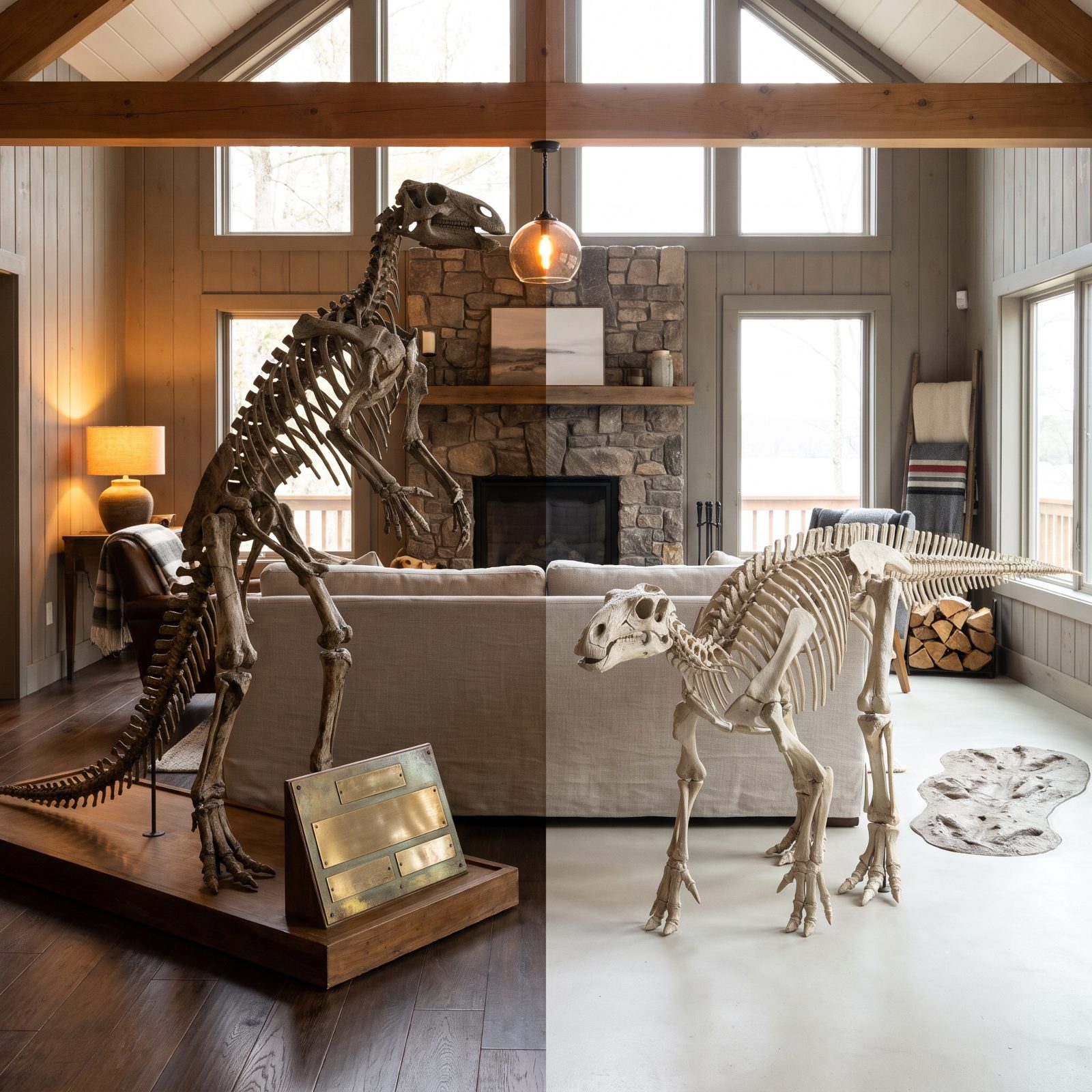
Walk into any older museum and you’d meet Iguanodon standing tall, body upright, tail flopped on the floor behind it like a kangaroo using its tail as a kickstand. That pose defined the animal from its first mounts in the 1880s right through 1975.
The trouble? The tail had rows of ossified tendons stiffening it into a rigid rod. Bend it down to the ground and you’d have to snap it.
Modern reconstructions, backed by biomechanics and trackways, hold the body horizontal, spine level, tail out straight as a counterweight. Iguanodon could drop to all fours and walk. The upright kangaroo was an anatomical impossibility that stood in galleries for a hundred years.
13. Sauropod Feet Resembled Fully Nailed Elephant Feet
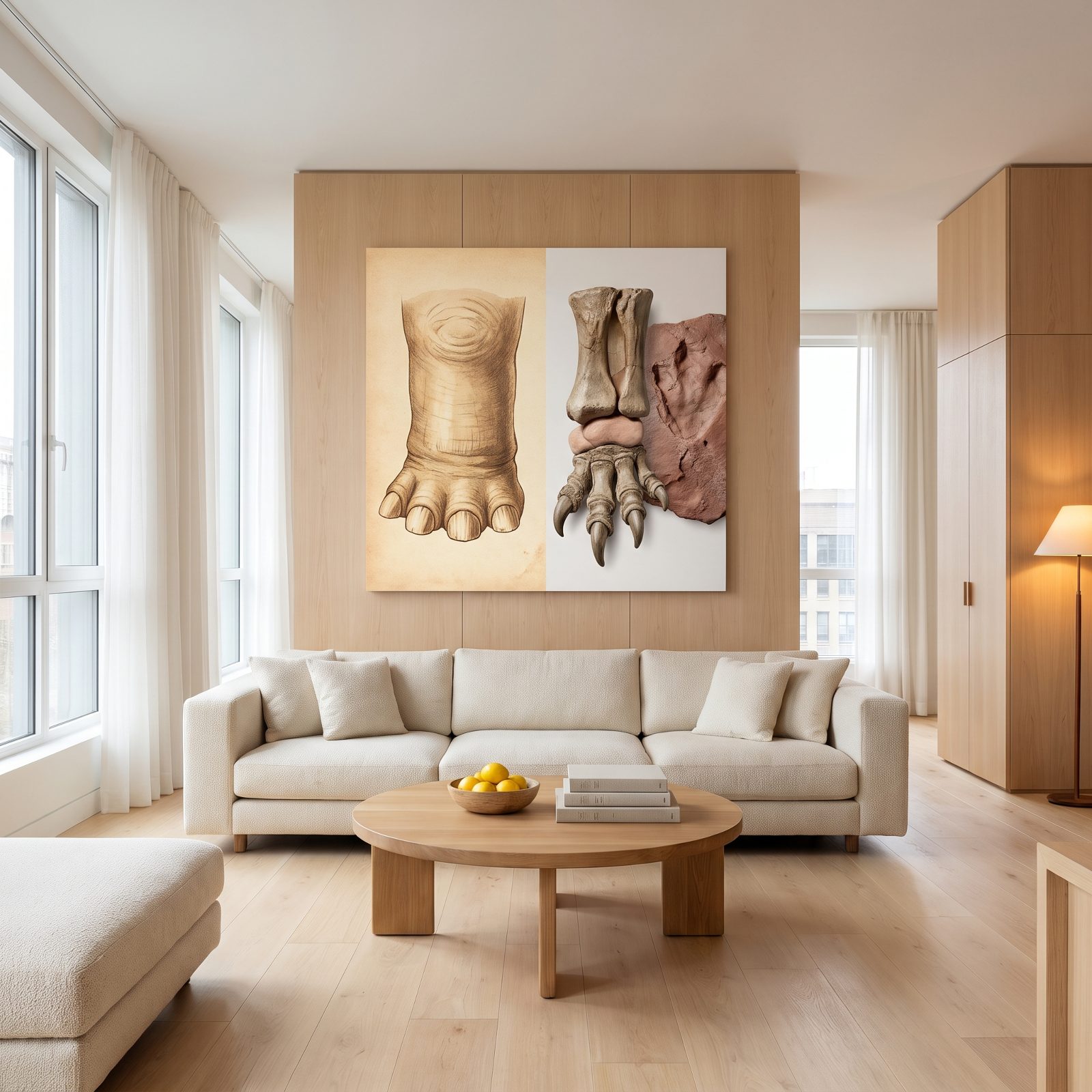
Big animal, column legs, so illustrators reached for the obvious match: the elephant. Old reconstructions gave sauropods rounded, flat elephant-style feet, often with a tidy row of toenails across the front.
Fossil feet and trackways tell a different story. The hind foot carried large curved claws on the inner toes, all set in front of a large, bulbous heel pad at the back of the foot that cushioned the weight. The front foot was weirder still — a horseshoe-shaped column of bones with almost no toes showing at all.
Not an elephant foot. Something stranger and more specialized, shaped by the demands of hauling thirty tons across Jurassic floodplains.
12. Sauropods Ground Their Food With Swallowed Stomach Stones
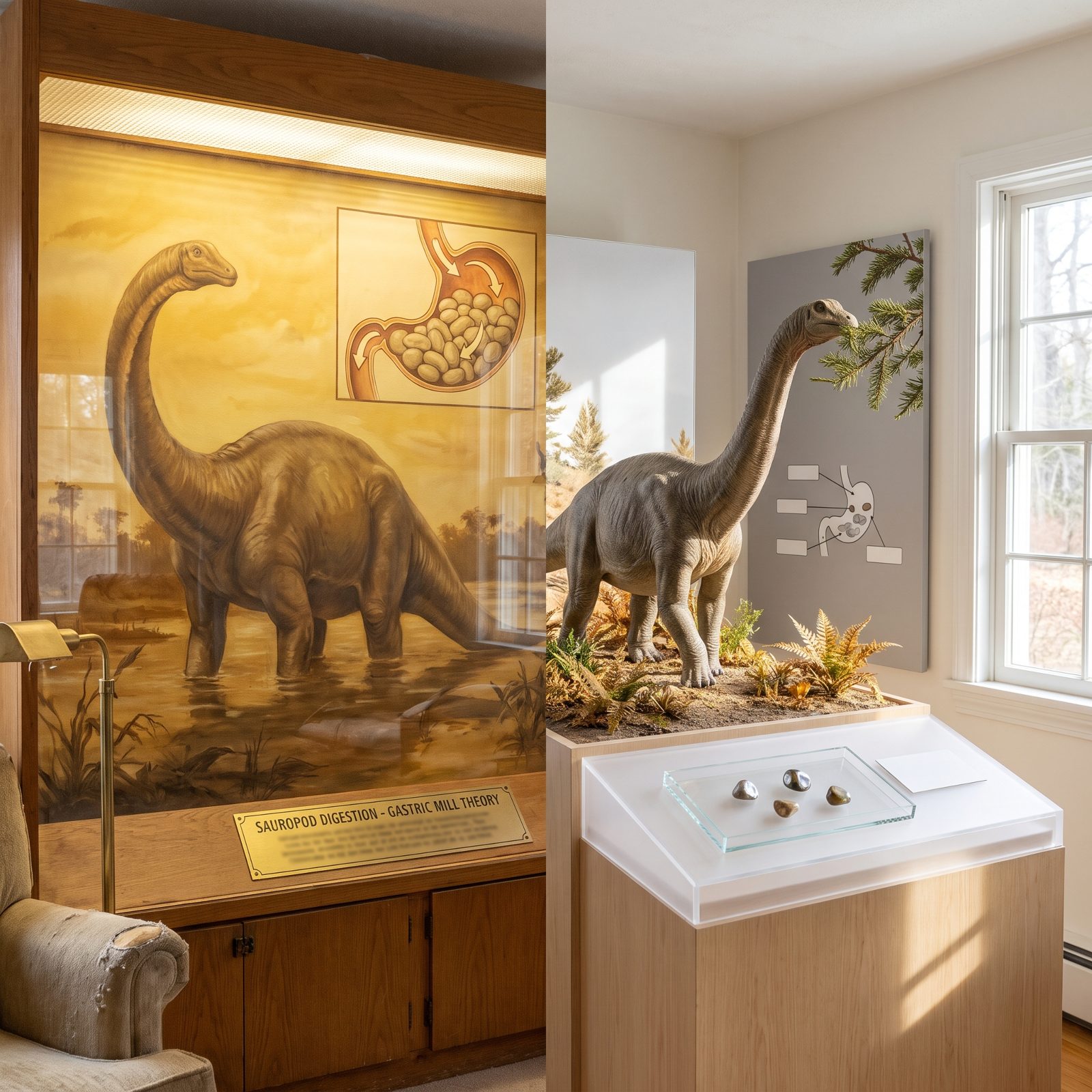
The old picture was tidy. A sauropod had no chewing teeth, so it must have swallowed stones to pulp its food like a giant gizzard, same as a modern bird, and the diagrams showed a rock-filled stomach churning away.
Then people actually counted the stones. The gastroliths found with sauropods were too few, too scattered, and nowhere near polished enough to grind tons of plant matter a day. Birds that use stomach stones carry a far bigger load relative to body size. The real answer turned out less glamorous and more impressive: sauropods barely processed food in the mouth at all, letting enormous guts and slow fermentation do the work.
11. Raptor Claws Didn’t Slash Bellies Open
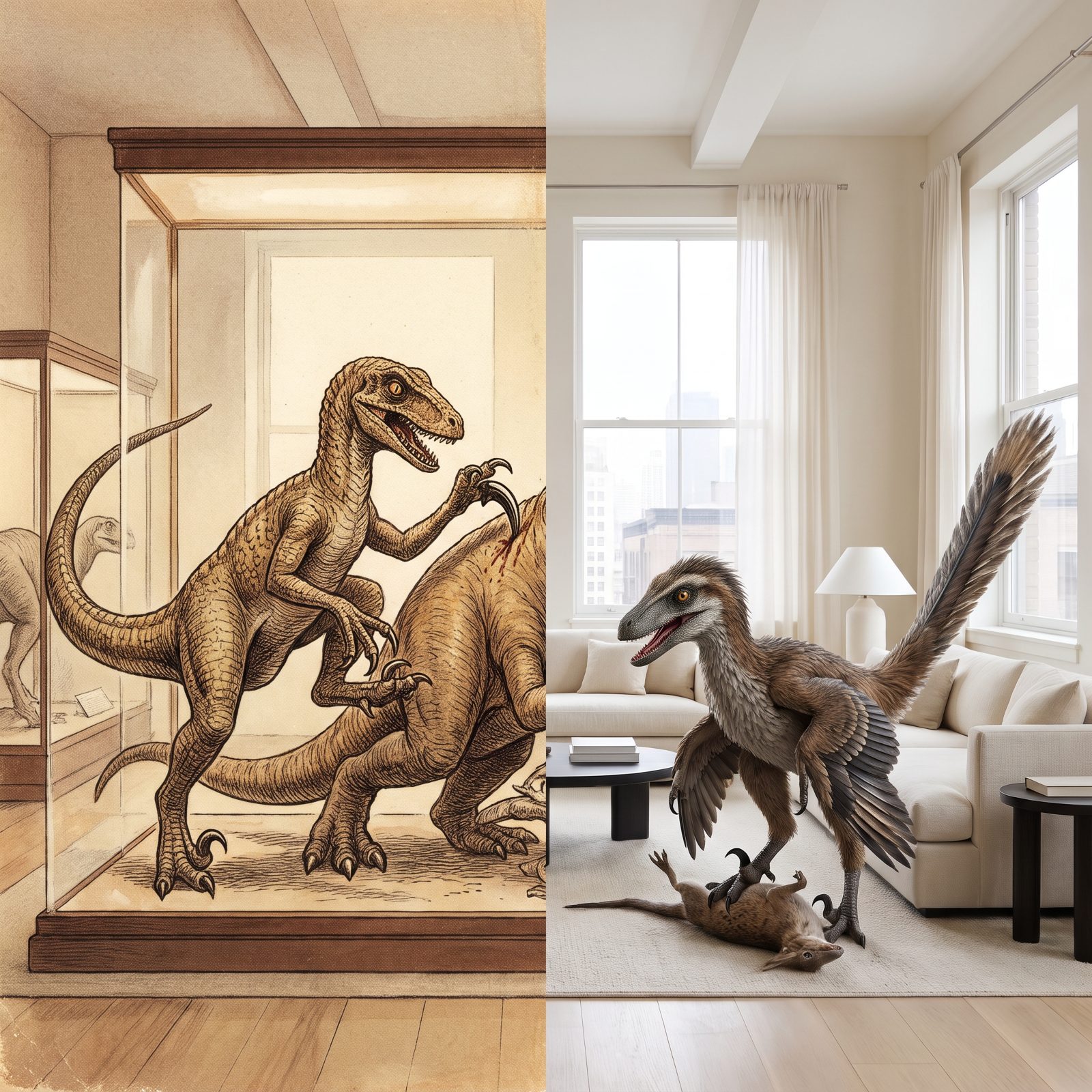
The slashing raptor is pure Hollywood, and it predates Hollywood. For decades the sickle claw was read as a disemboweling blade, swung to open a prey animal from stem to stern.
Engineers eventually tested it, and the claw’s shape is wrong for slicing. It’s a hook, built to puncture and grip, not to cut long wounds. Combine that with trackways and the discovery that these animals were feathered, and the new model is grim but clever: a raptor jumped onto prey, dug the claw in to hold on, pinned it with body weight, and flapped for balance while it ate. Living hawks do almost exactly this.
10. T. Rex Saw the World in Sharp, Hawk-Like Detail
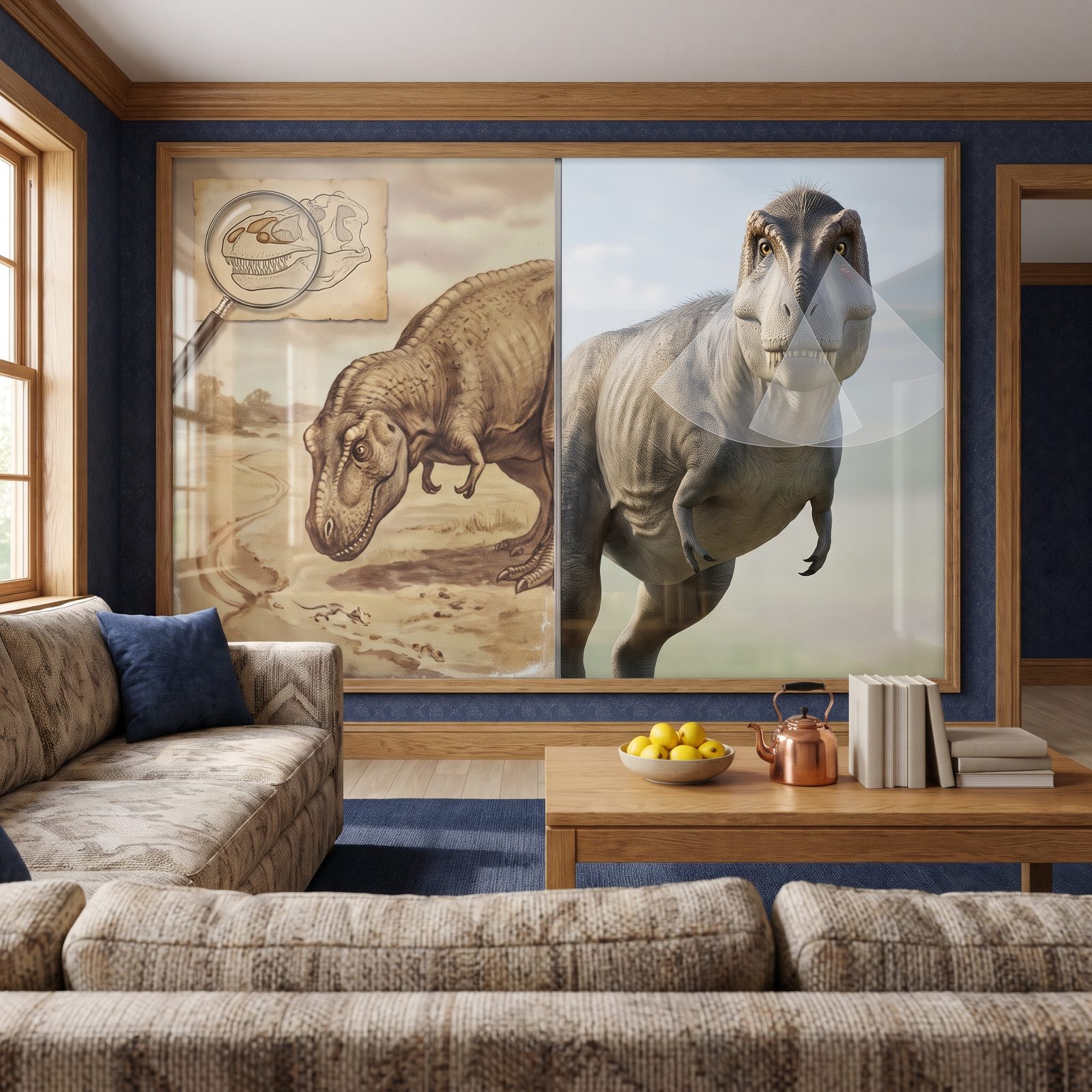
The scavenger debate dragged a myth along with it: that T. rex had weak eyes and basically hunted by nose, sniffing out carcasses like a vulture.
Skull studies told a different story. As the snout narrowed through evolution, the eyes rotated forward, giving a wide zone of overlapping vision. Modeling the optics put its depth perception and visual acuity in eagle-and-hawk territory, possibly several times sharper than a human. It had a terrific sense of smell too. But the picture of a near-blind sniffer is gone. This was an animal that could judge distance and spot movement across a wide valley.
9. We Now Know the Actual Colors of Some Dinosaurs
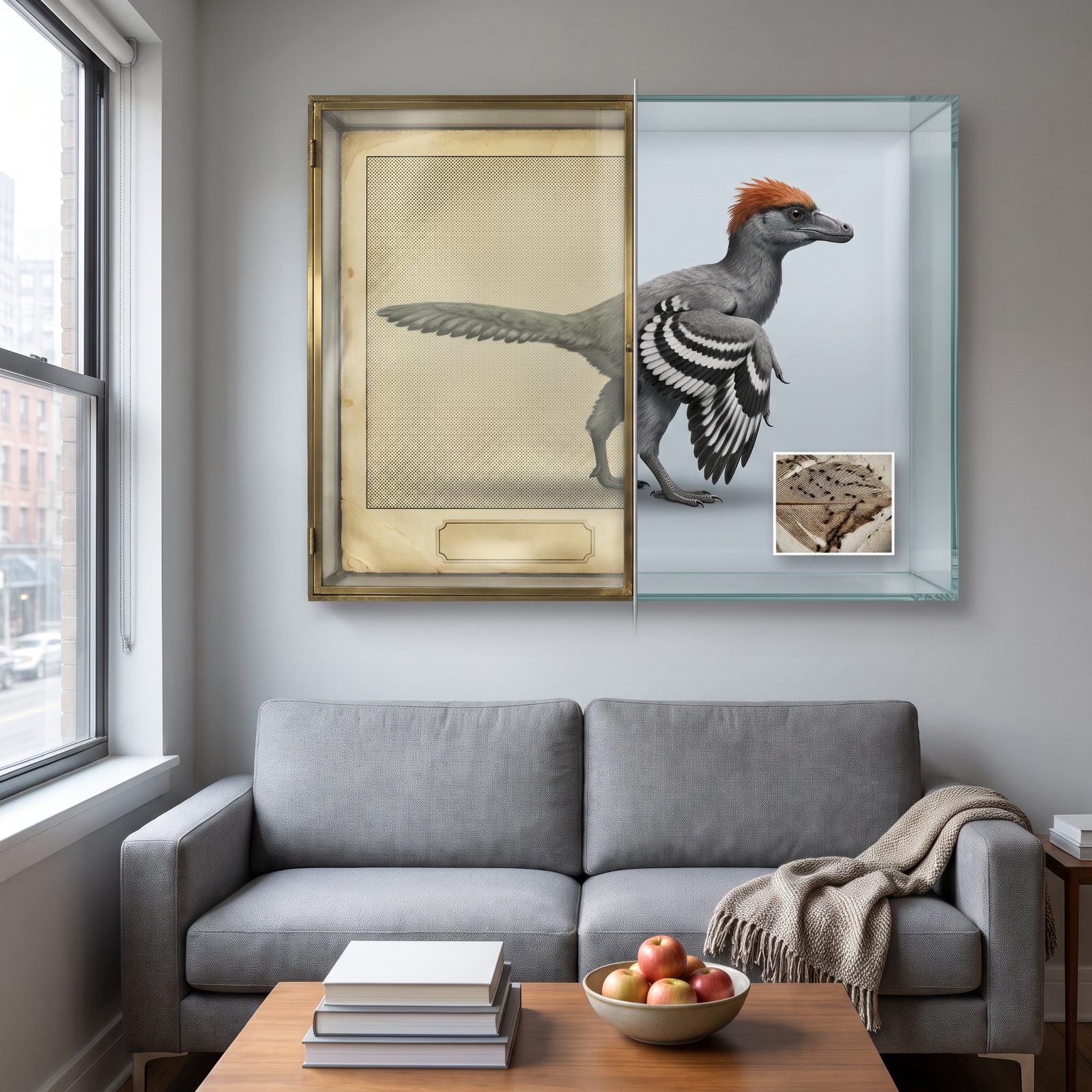
“We’ll never know what color they were” was stated as a fact, not a limitation. Color seemed like the one thing rock could never keep.
It kept it anyway. Inside exceptional feather fossils sit melanosomes, tiny pigment-carrying structures whose shape and packing correspond to specific colors in living birds. Compare the fossil shapes to a reference library and you get real answers. Anchiornis had a gray body, banded wings, and a reddish crest. Sinosauropteryx wore a ginger-and-white striped tail. Not every color survives, and iridescence and genuine blues are tricky. But the blanket “impossible” is finished.
8. Dinosaur Soft Tissue Can Survive 68 Million Years
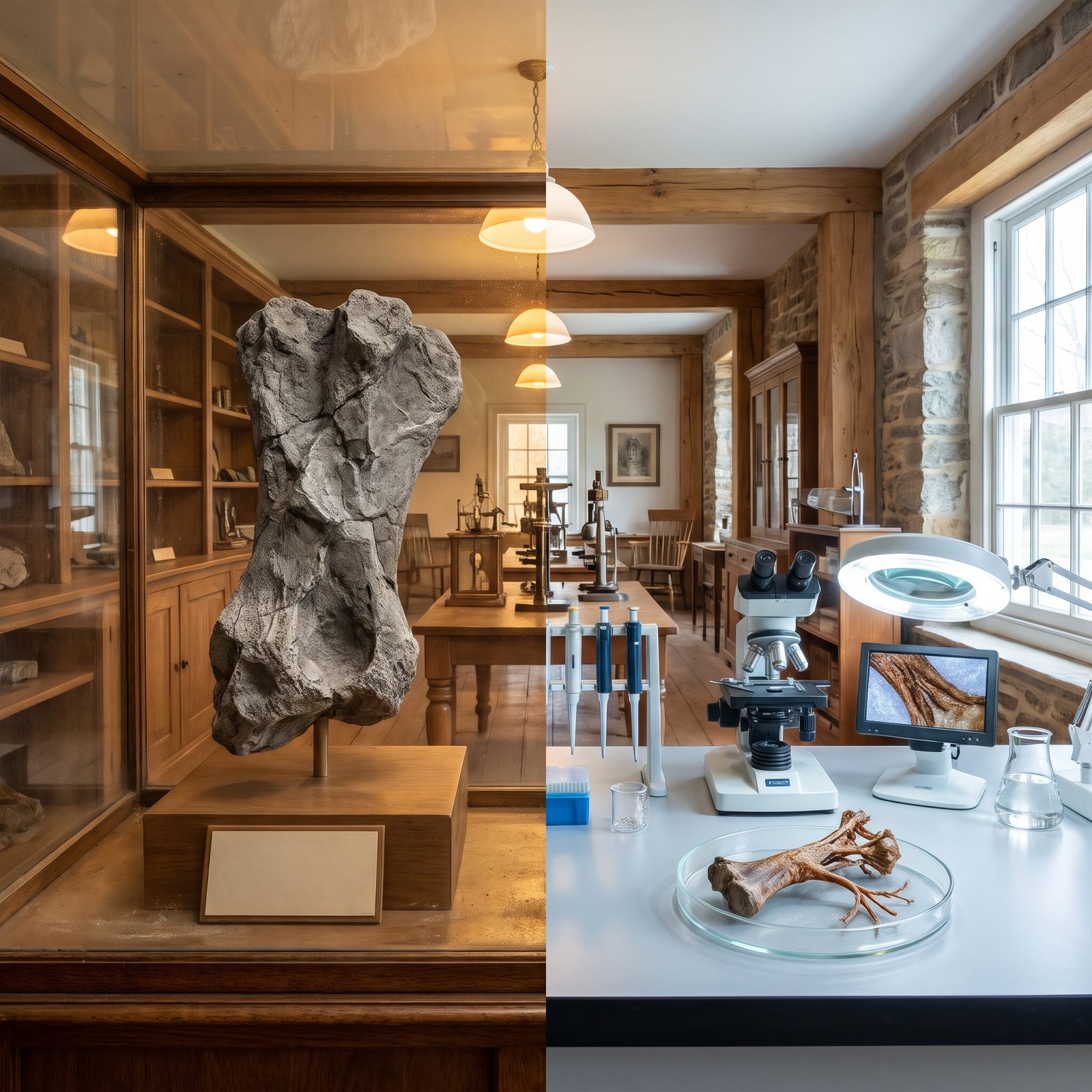
Textbook rule: fossilization replaces everything. Bone turns to stone, soft stuff vanishes. End of story.
Then a T. rex femur from Montana was dissolved in acid and left behind flexible, branching structures that looked like blood vessels, plus fibrous material and cell-like shapes. The claim was so startling it got fought over for years, and people still argue the interpretation. What’s agreed is that original organic molecules, fragments of proteins, can persist far longer than anyone in 1975 would have allowed. The flat “never” was wrong. These are rare, exceptional cases, sure. But rare is not impossible, and that distinction rebuilt a whole field.
7. Some Dinosaurs Hunted Under Cover of Darkness
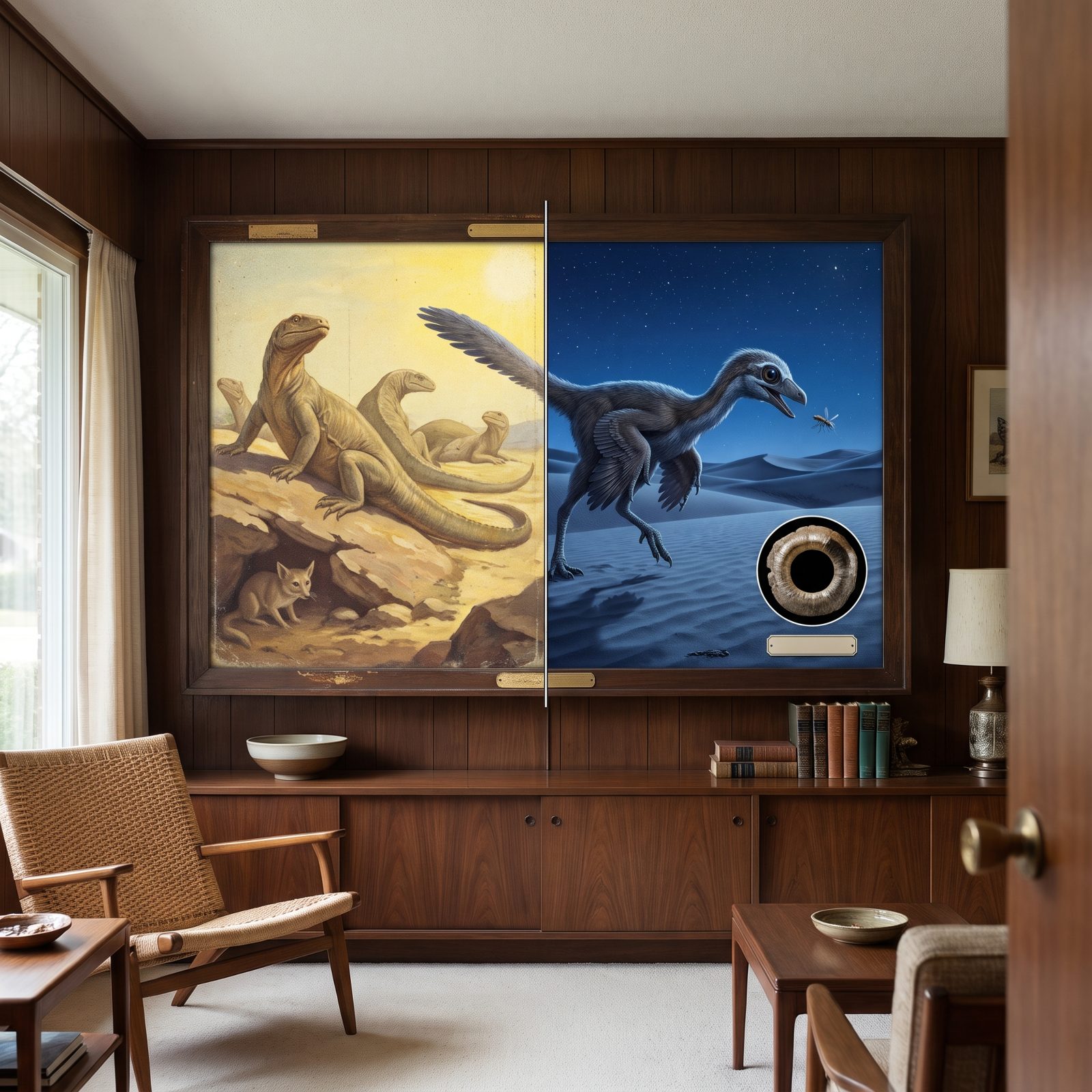
The sun-lizard idea assumed dinosaurs needed daylight to warm up and move, so the night belonged to small mammals. A clean division of labor, and also false.
The giveaway is a donut-shaped ring of bone inside the eye socket, the scleral ring, whose size reveals how wide the pupil opened. Measure enough of them and a pattern appears: predatory dinosaurs skewed toward night vision, large plant-eaters toward daytime, and the little desert hunter Shuvuuia had an eye and inner ear built for dark-hunting on par with a modern barn owl. Dinosaurs ran the clock around.
6. Spinosaurus Was a Water-Hunting Swimmer
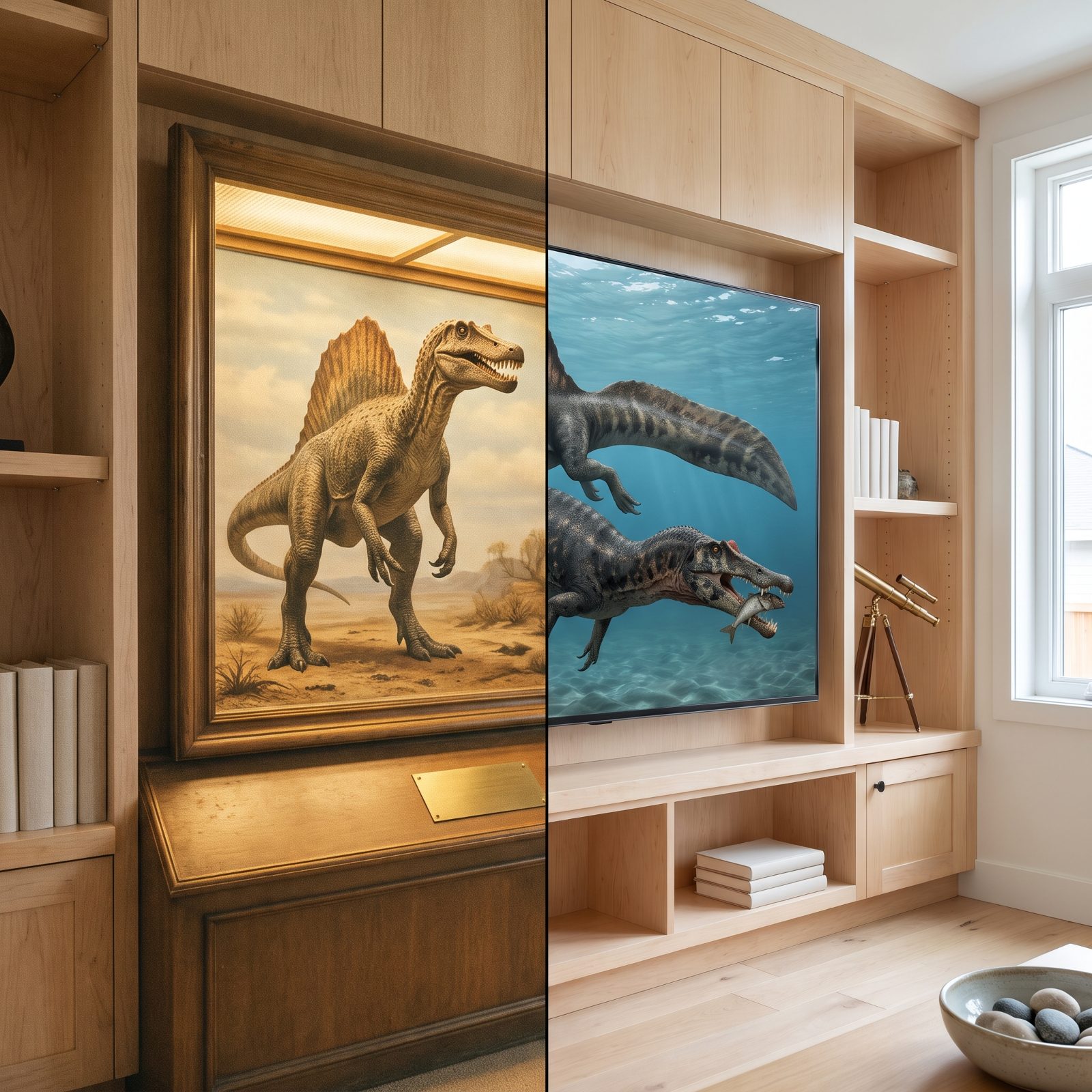
The old line was that dinosaurs were too bulky and poorly built to swim, so water was the territory of marine reptiles instead. Dinosaurs stayed on land where they belonged.
Trackways killed part of that early, with fossil footprints showing dinosaurs wading and paddling. Then Spinosaurus arrived to finish the job. Newer African material revealed dense bones for ballast, short back legs, broad flat-clawed feet, and a tall, paddle-like tail. This was not a land animal that occasionally got wet. It was built to hunt in rivers like a giant heron crossed with a crocodile. Some dinosaurs didn’t just tolerate water. They lived in it.
5. Grass Existed, and Some Dinosaurs Were Eating It
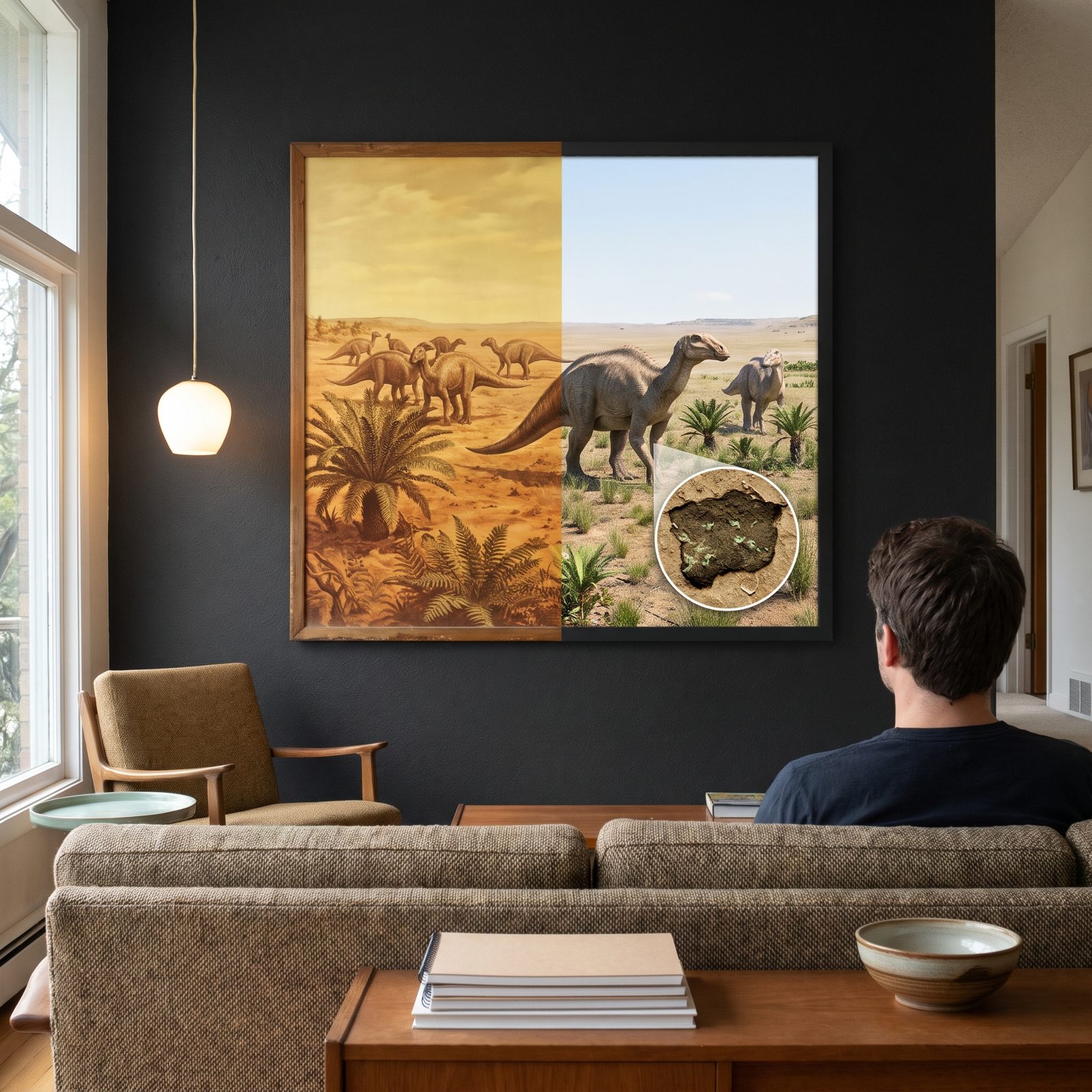
Grass was supposed to be a latecomer, spreading long after the dinosaurs were gone. Every reconstruction showed ferns and cycads, never a blade of grass. It felt settled.
The proof came out of dinosaur dung. Fossilized droppings from India held phytoliths, the tiny silica skeletons grasses leave behind, representing several grass groups. So grass was already around in the Late Cretaceous, and at least some plant-eaters were eating it. The first lawns on Earth were being chewed by dinosaurs. Not a sweeping prairie yet, but grass, genuinely there, long before the old timeline allowed.
4. Those Showy Crests Did Not Tell You Male From Female
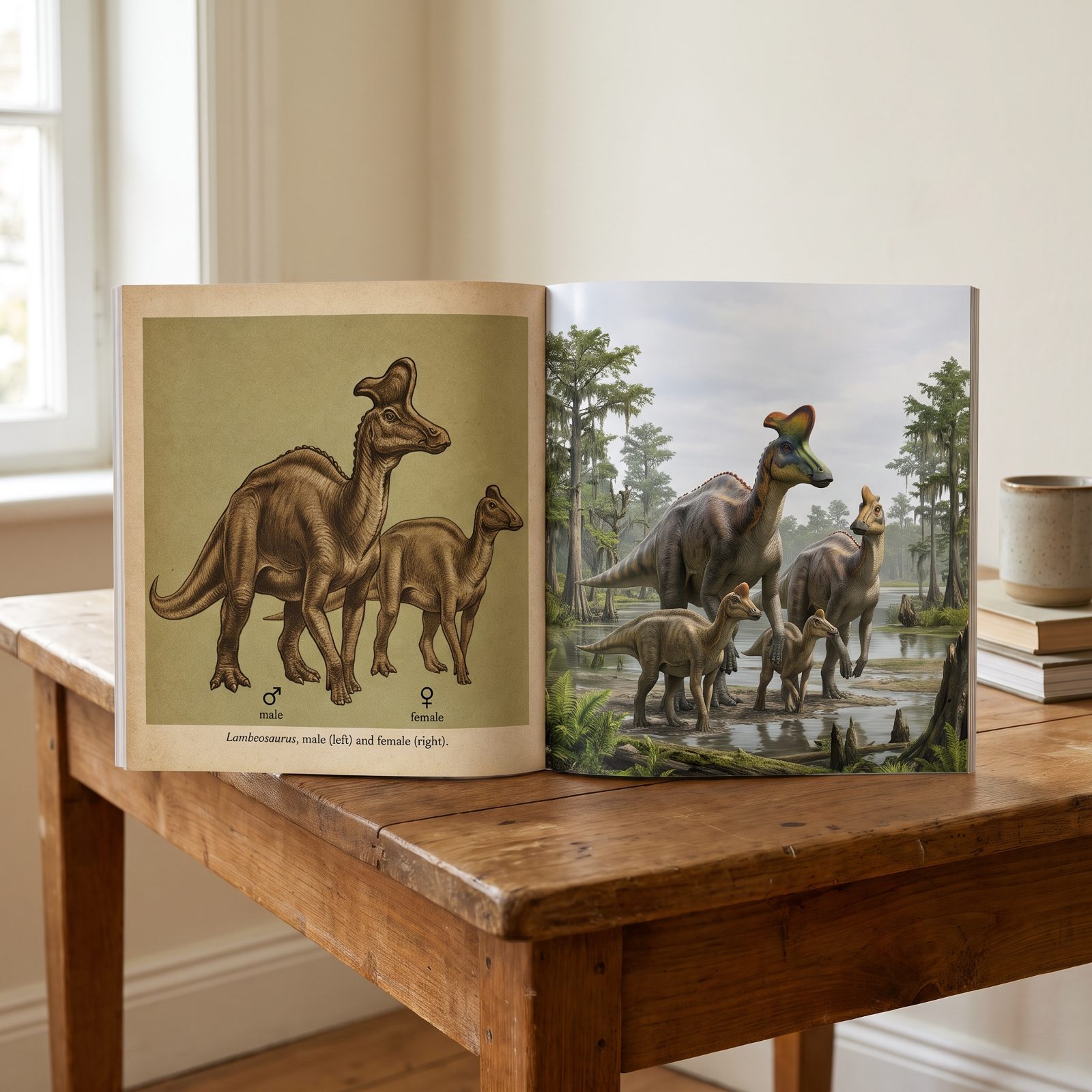
For decades, a bigger crest meant a male and a smaller crest meant a female. Museums split their hadrosaur species in two on exactly that logic, and some of those crests got their own species names.
Growth series fossils undid it. Line up crested duckbills by age and the crest simply balloons as the animal matures — the small-crested “female” was often just a juvenile of the same species, and the two species collapsed into one.
Sexing a dinosaur from the outside is brutally hard. We have almost no reliable way to do it from a single skull.
3. Sneaky Little Mammals Did Not Eat the Dinosaurs Into Oblivion
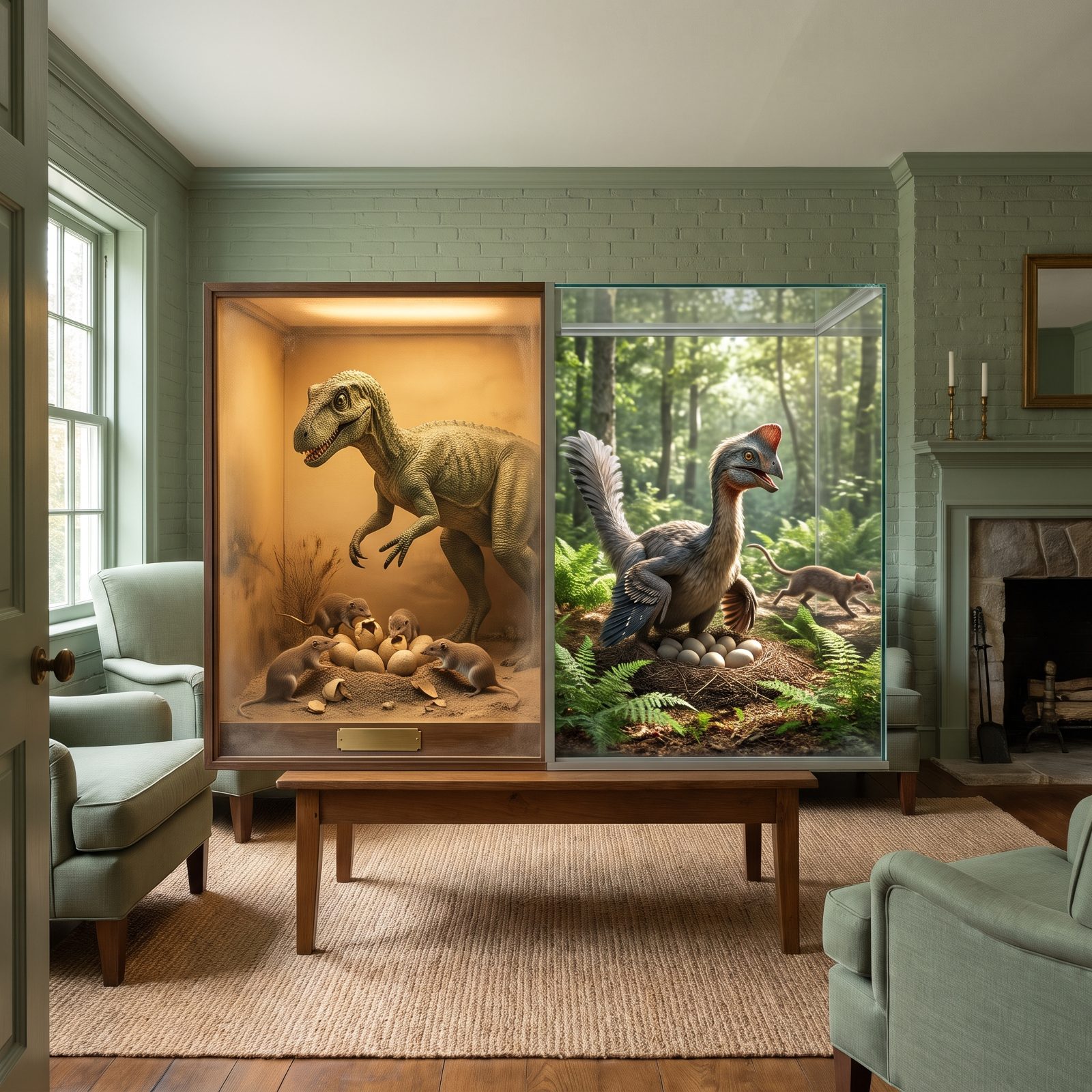
You’ve seen the old diorama: beady-eyed proto-mammals creeping into nests and gobbling eggs until the dinosaurs couldn’t replace their numbers. It made for a tidy morality tale — small, warm, clever things inheriting the Earth from the lumbering giants.
The fossil record never supported it. Mesozoic mammals were mostly tiny, many no bigger than a mouse, and they’d shared the planet with dinosaurs for over 150 million years without eating them into decline. If egg theft were going to finish the dinosaurs, it had tens of millions of years to do the job and didn’t.
Nest-raiding happened, sure. Opportunistic snacking is not a mass extinction.
2. The Great Dying Was Not a Slow Fade
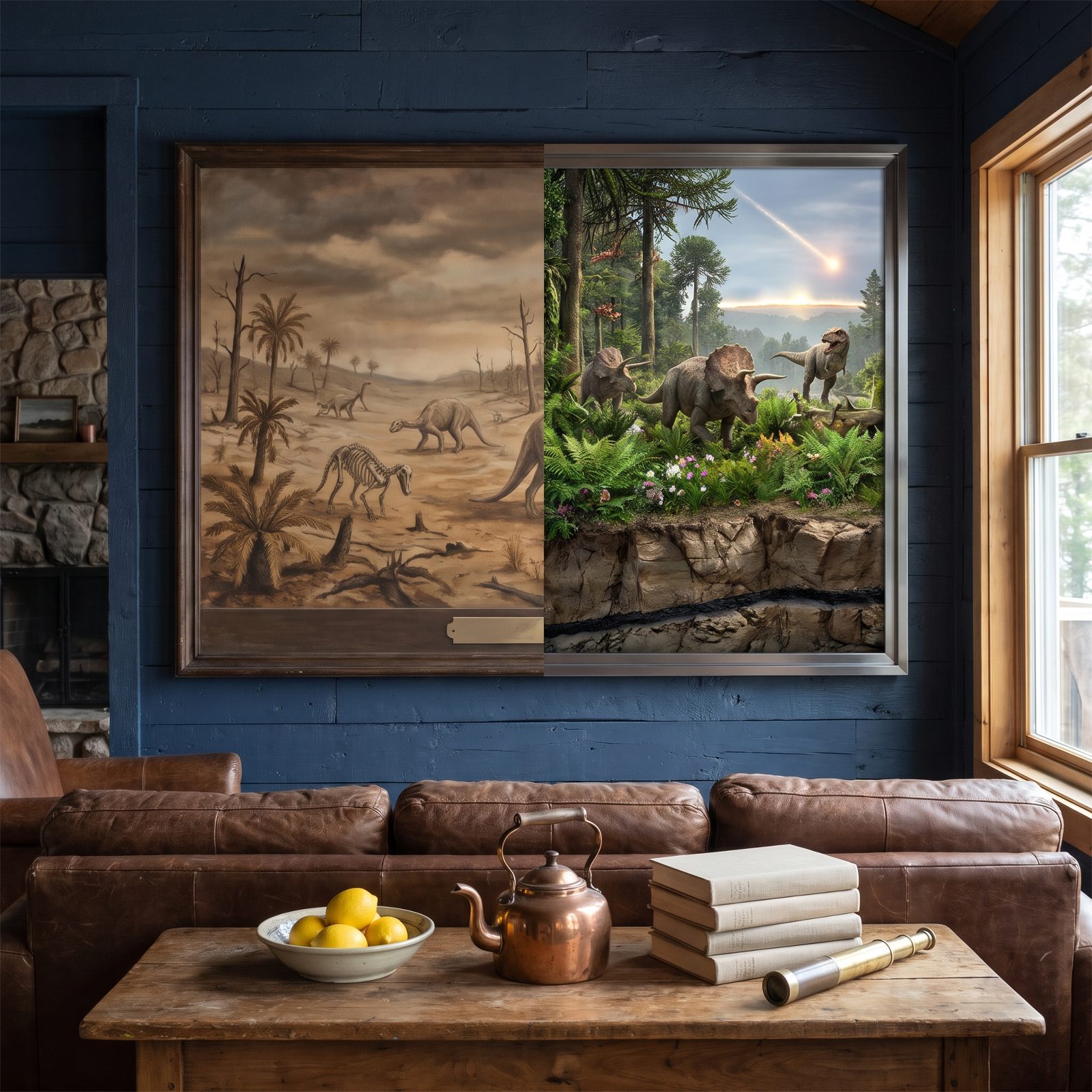
The 1975 consensus leaned on slow causes. Cooling climate, shifting seas, dinosaurs gradually dwindling over millions of years until they simply petered out — a long, dignified decline.
Then geologists found the boundary layer: a thin band of clay at the Cretaceous-Paleogene line, laced with iridium, an element rare on Earth’s surface but common in asteroids. That same chemical spike shows up in rock all over the world, at the same instant in geologic time, which points to one sudden event rather than a drawn-out wilt. And many dinosaur groups were doing just fine right up to the boundary.
1. That Asteroid Absolutely Left a Hole
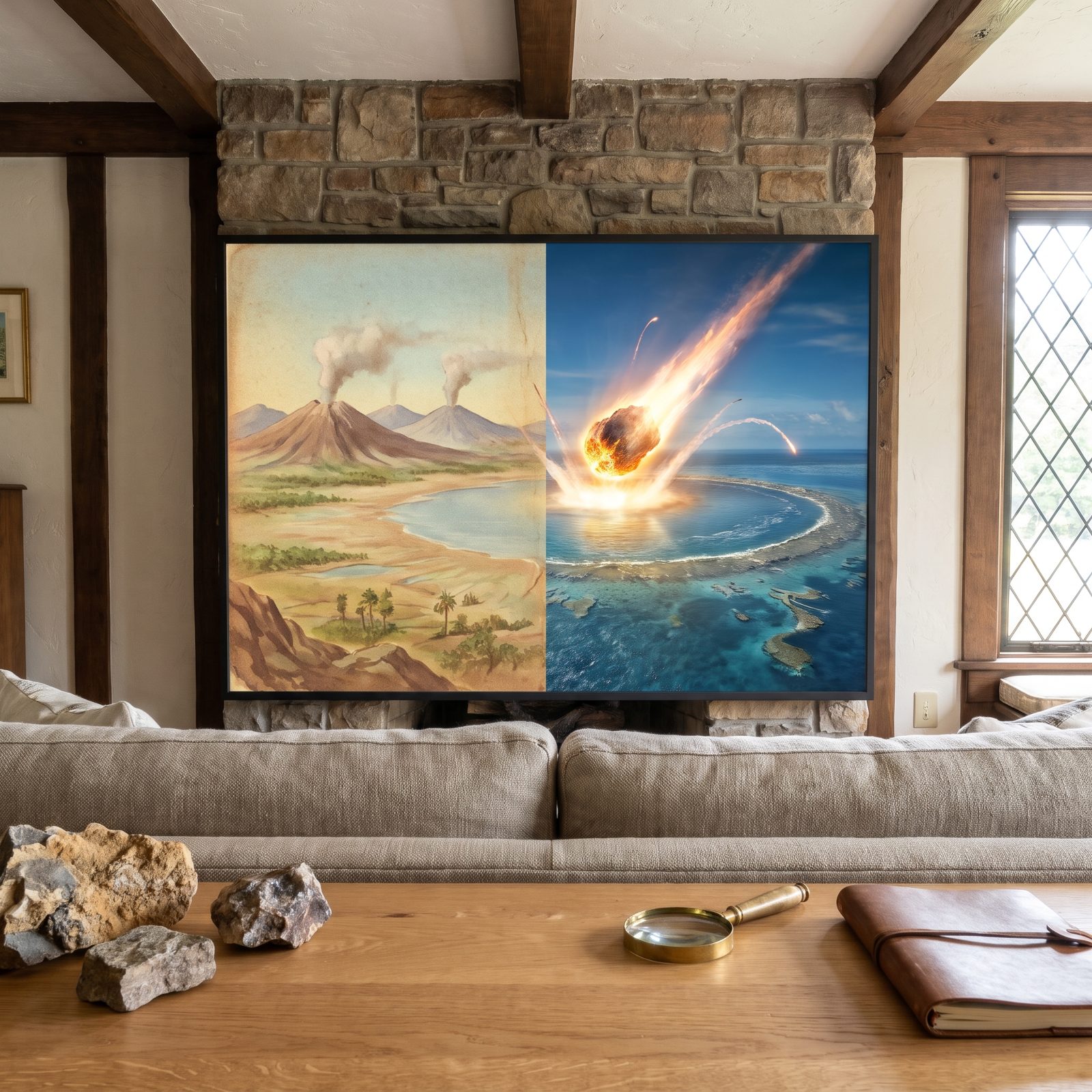
When Luis and Walter Alvarez proposed in 1980 that a giant asteroid ended the Cretaceous, plenty of scientists pushed back hard. Nice theory, they said. Where’s the crater?
It turned up buried under the Yucatan Peninsula and the Gulf of Mexico. Chicxulub, roughly a hundred miles across, dated to the exact boundary — and once you add the shocked quartz, the glassy impact spherules flung across continents, and the tsunami deposits, the case stopped being speculative.
Volcanism in India may well have piled on the stress. But a rock from space, something like six miles wide, slammed into a shallow sea and rewrote the planet’s roster of life in an afternoon. The thing that supposedly “played no role” left a scar you can map today.