
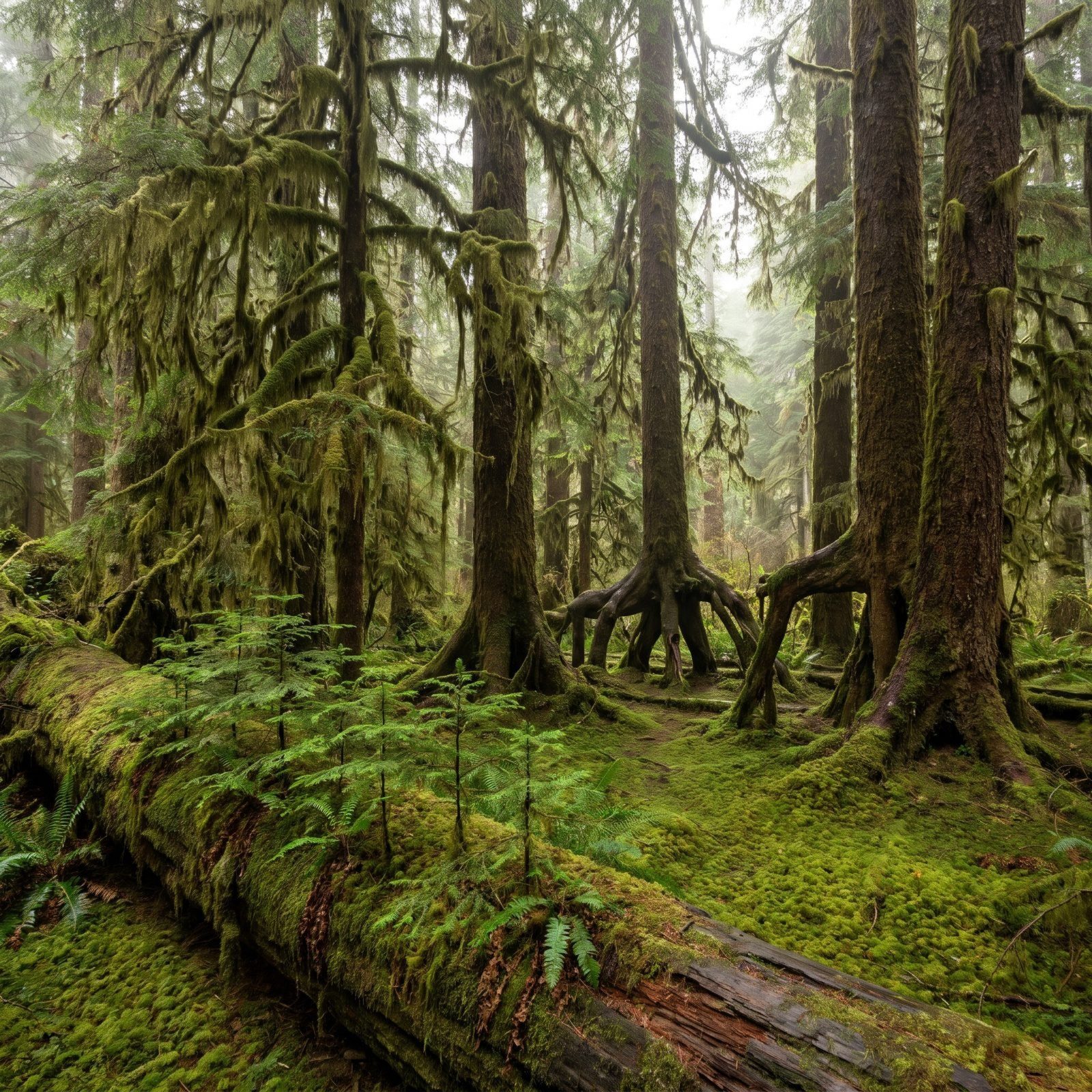
A road doesn’t vanish when people stop driving it. Roots crack the asphalt first, then moss and saplings move in, and finally a closed canopy files the whole thing away as if it never happened. Forests are patient like that. Give them a thousand years with no chainsaws, no fire crews, no weekend trail maintenance, and they rearrange everything we built according to rules that predate us by millions of years. These AI visualizations lean on real ecology — how succession actually works, which trees win, what rots and what endures — to picture what the world’s great woodlands might become once we simply walk away.
Please note that some of the images in this article were created with the assistance of AI.
39. Amazon Rainforest, South America: An Unbroken Canopy Swallows Roads, Mines and Clearings
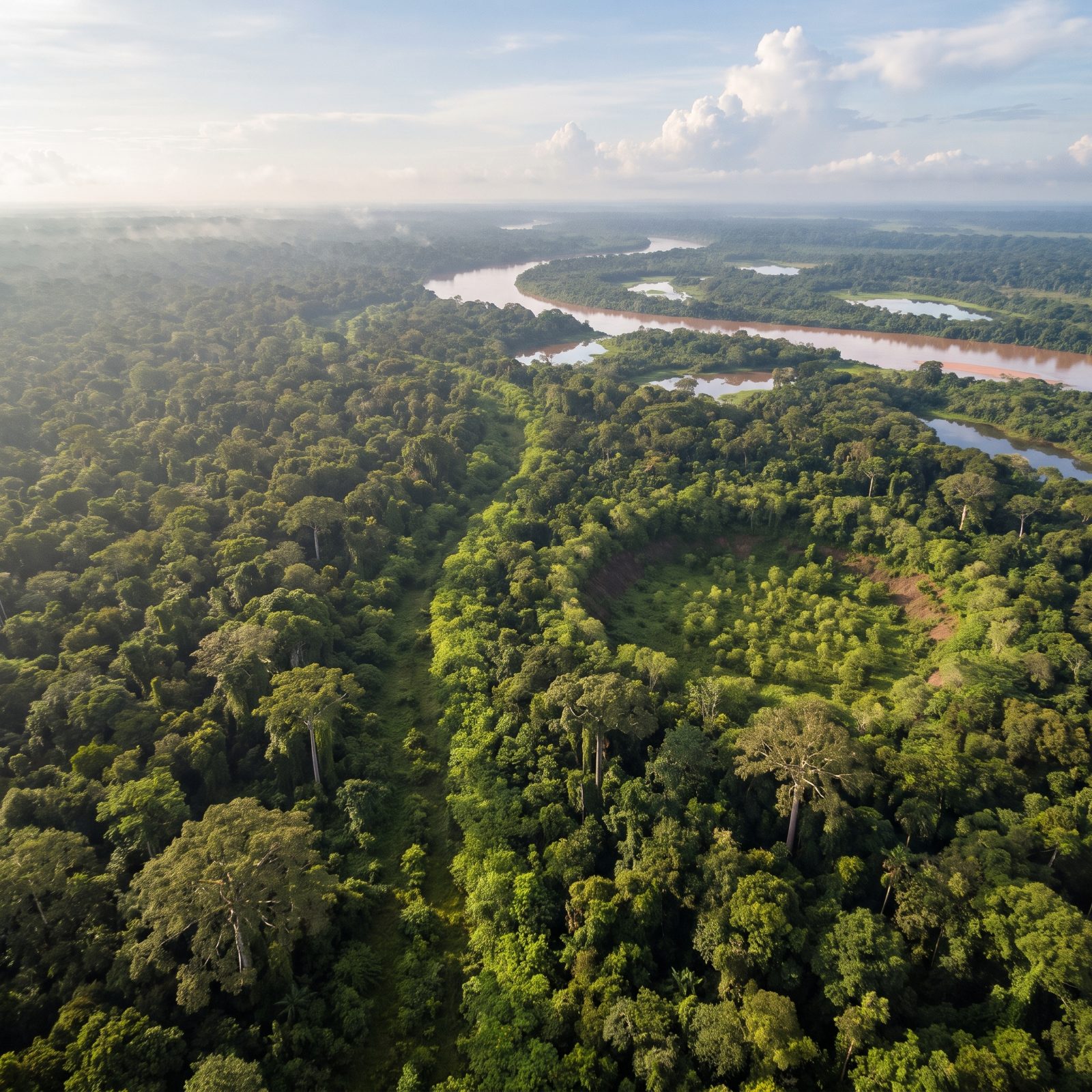
The Amazon heals fast and hides the evidence. A cleared pasture starts sprouting cecropia and balsa within a few years, even while patches of raw red soil are still exposed — those pioneers are the forest’s first responders, soft-wooded, fast-growing, short-lived, buying shade for the slow giants coming up behind them.
The scars fade slowly: an old road or cut line stays a grassy corridor for a while, and a pit or clearing keeps its bare red-brown banks for decades, but over centuries the canopy closes over both. The tell isn’t subtle: regrown patches sit slightly lower and glow a brighter green than old-growth that’s had centuries to sort itself into layers.
38. Redwood National Park, California: Coast Redwoods Close Over Abandoned Roads
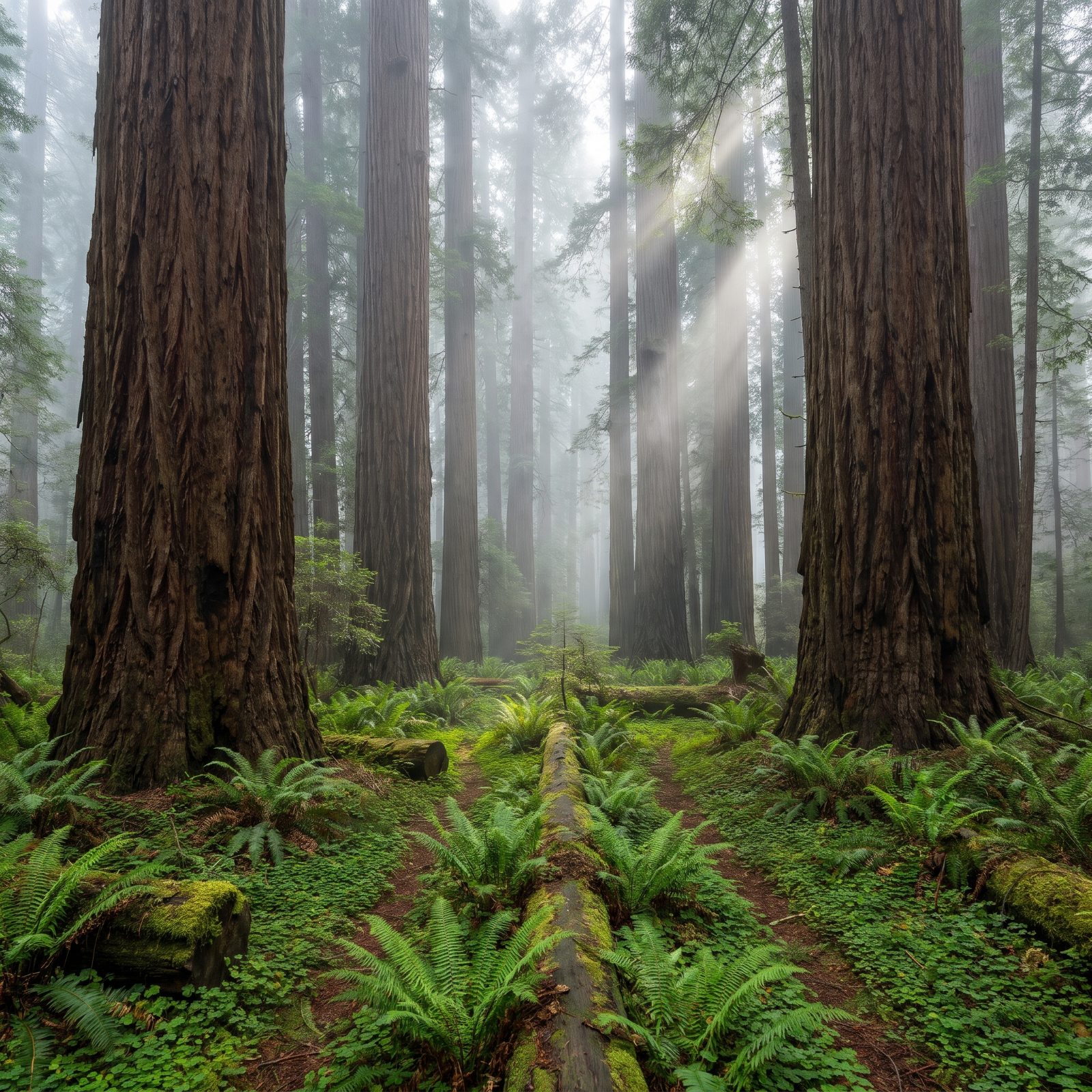
Redwoods already outlive us by a factor of twenty, so a thousand years barely registers to a tree that can top two thousand. The drama here isn’t the trees. It’s the floor.
Scenic roads cut through these groves now. Leave them alone and ferns, sorrel, and a fallen nurse log do the quiet work — downed redwoods don’t so much rot as turn into nurseries, and you’ll often spot a dead-straight line of young trees marking where an ancestor toppled. Ten centuries on, the asphalt is a ghost of a path, two soft dips in the moss that only a sharp eye would read as human.
37. Sundarbans, India and Bangladesh: Mangroves March Inland Through a Maze of Tidal Channels
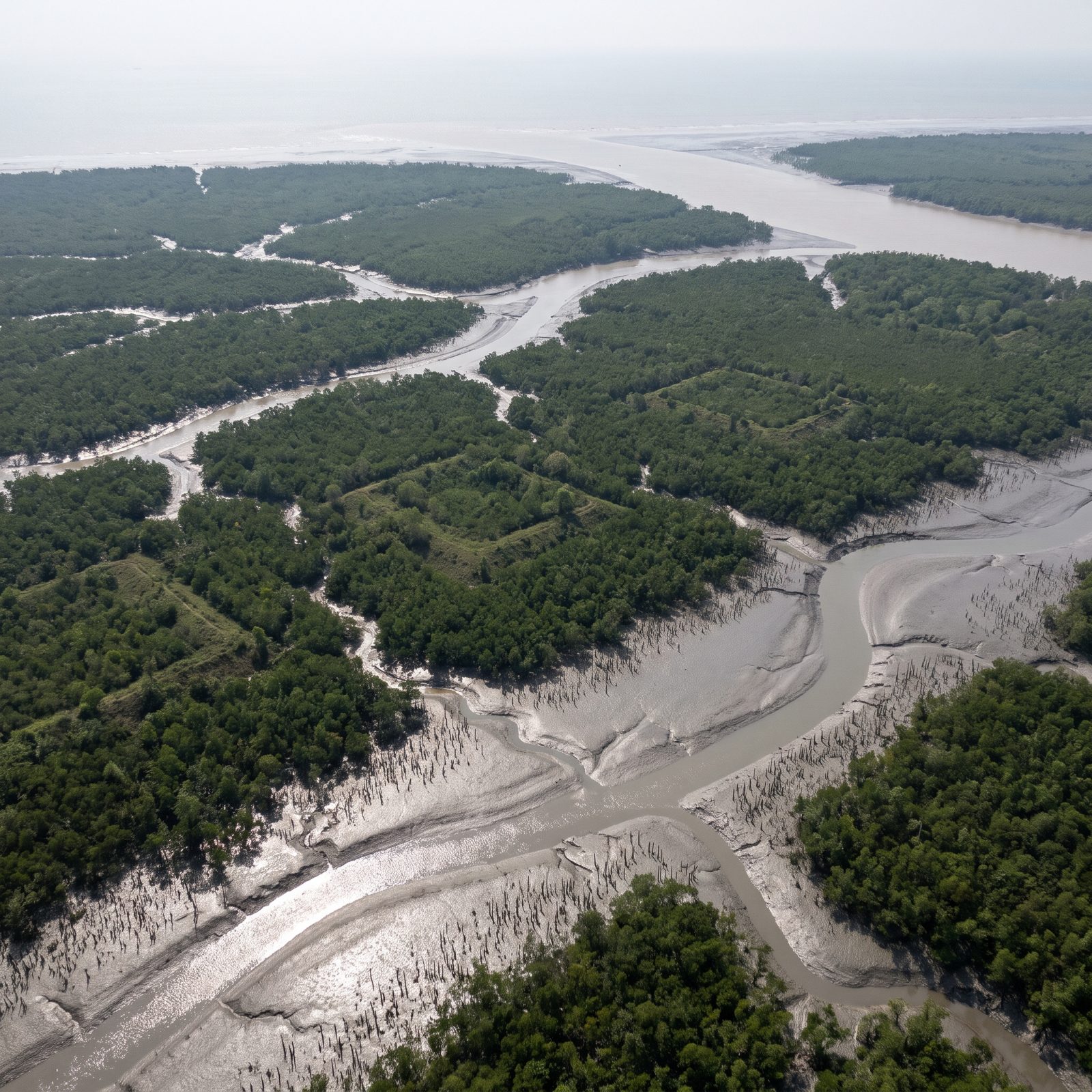
Rising seas rewrite this map constantly.
The Sundarbans is the world’s largest mangrove forest, and it survives by moving. When the sea pushes up, the mangroves don’t drown in place — they walk. Seedlings colonize new mudflats inland while the seaward edge erodes, the whole forest migrating like a slow green tide.
A thousand years without the embankments and shrimp ponds and cleared farmland, and the channels braid into a labyrinth nobody could map twice. The old villages become faint mounds, just slightly higher ground where younger trees cluster. The tigers, for whatever it’s worth, would probably do better than they do now.
36. Black Forest, Germany: Wilder Mixed Woodland Overtakes the Spruce Plantations
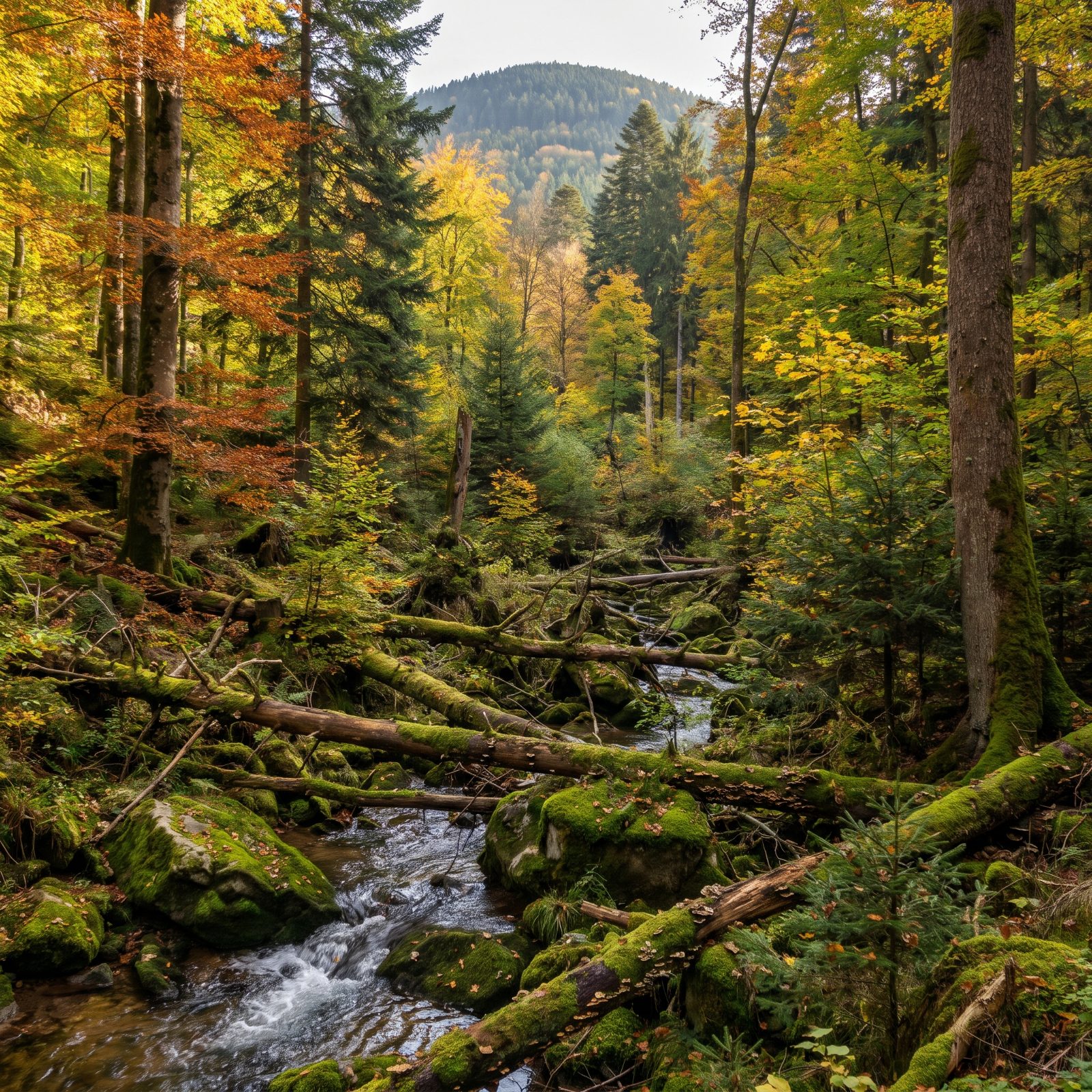
The Black Forest is mostly a story we told it to be. Those dark, tidy rows of Norway spruce are a plantation — planted for timber, not natural woodland. The real native forest here was a messy mix of beech and silver fir.
Stop managing it and the plantation falls apart in the best way. Storms punch gaps, beech and fir seed in, and the monoculture breaks into something varied and alive. Deadwood piles up, fungi move in, structure returns. A thousand years on, the orderly spruce is a memory, and the forest finally looks like itself again instead of a crop with delusions.
35. Congo Basin Rainforest, Central Africa: Lianas and Swamp Forest Reclaim Abandoned Settlements
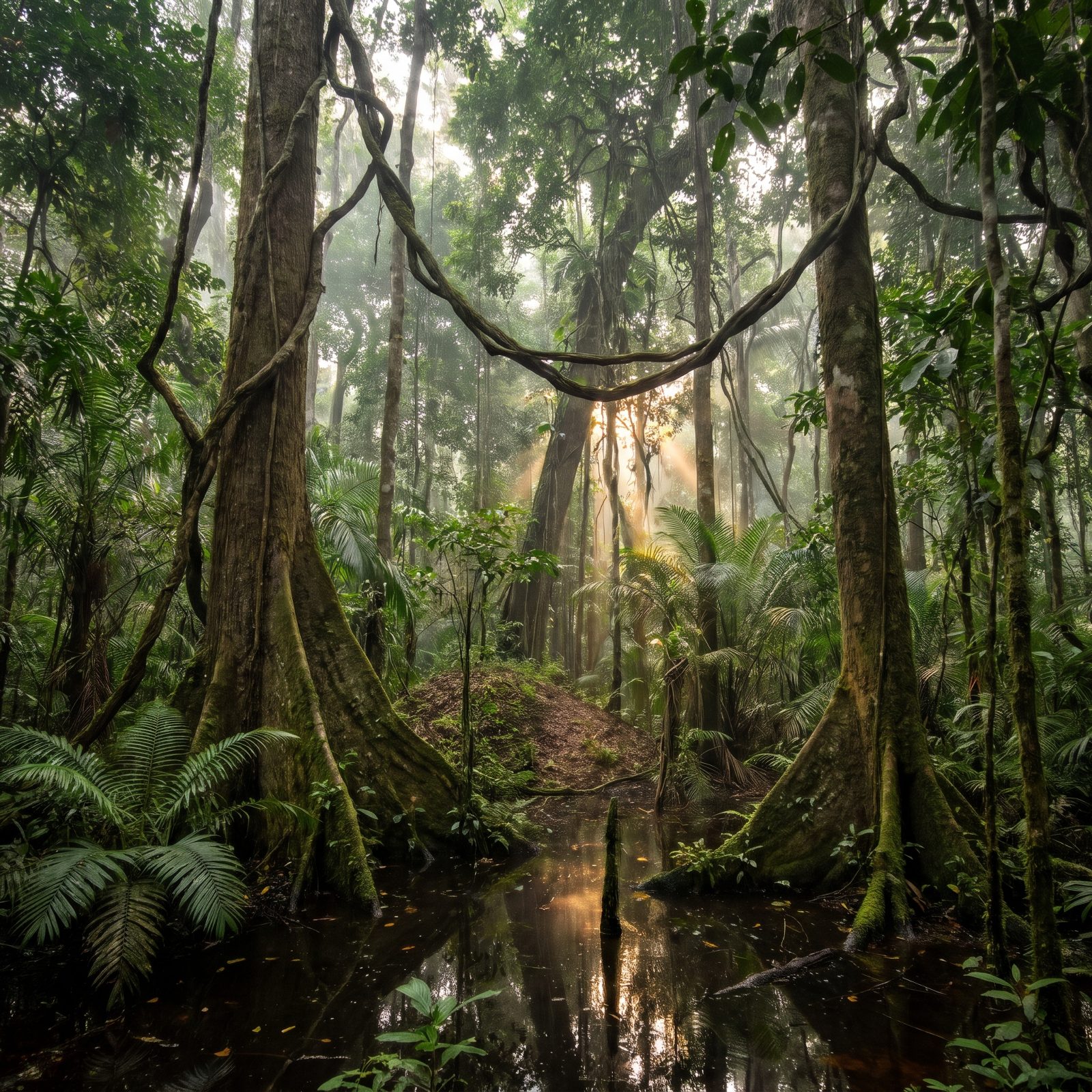
The Congo is the Amazon’s quieter, less-photographed twin, and it reclaims land just as thoroughly. Here the muscle is the lianas — woody vines that rope up into the canopy and knit the whole forest into one connected mass.
Where villages and clearings sit now, give it centuries and raffia palm thickets move in first, then the hardwoods follow. In the low wet basins the floor floods into swamp forest, buttressed trees standing in black, tannin-stained water that stores a staggering amount of carbon. An abandoned settlement becomes a faint mound. The path becomes a hunch — a slightly straighter run of younger trees that means nothing to anything but the record.
34. Arashiyama Bamboo Grove, Japan: Unchecked Bamboo Pushes Into Kyoto’s Empty Outskirts
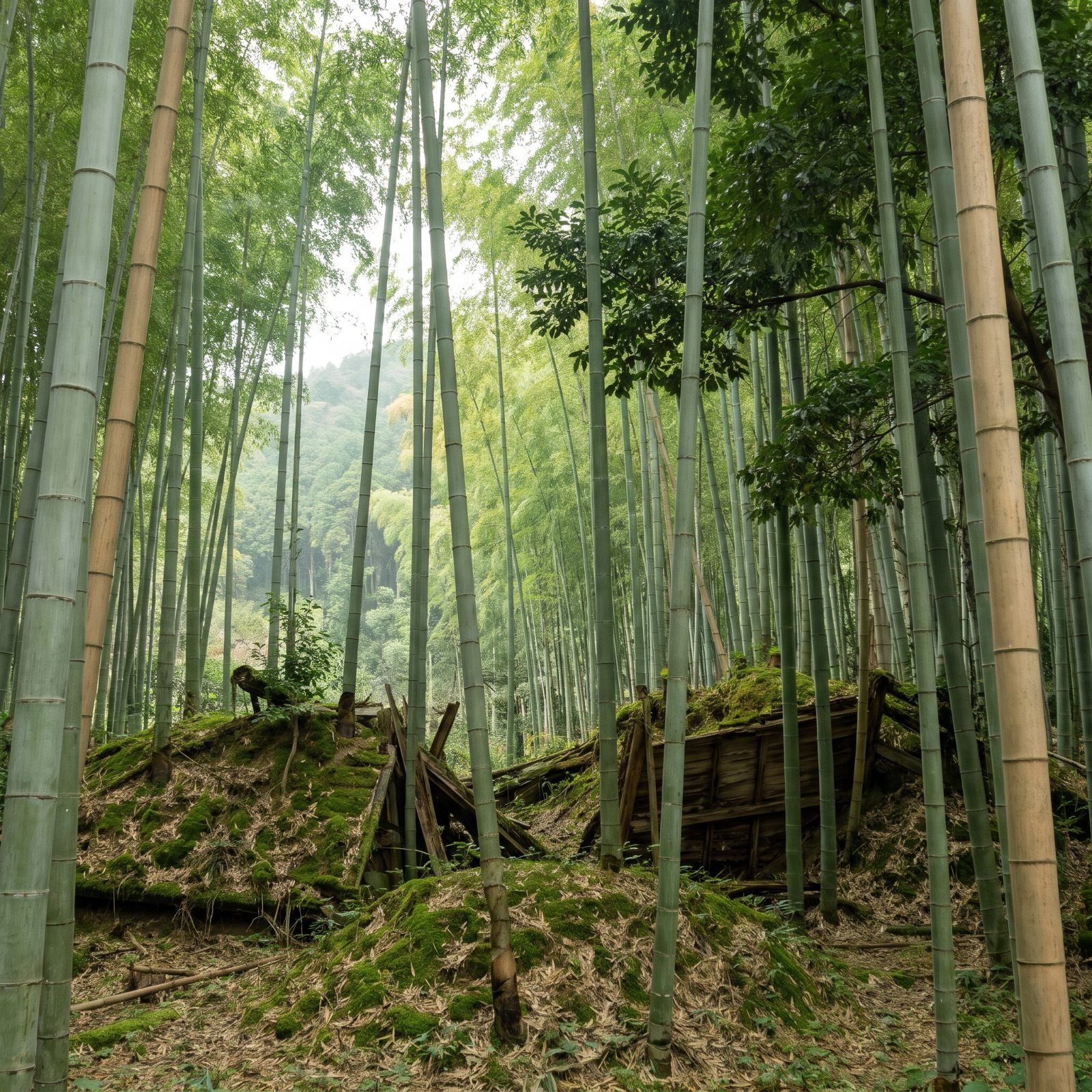
That famous grove you’ve seen in a thousand photos — the green light filtering through endless stalks — is only that tidy because people fight the bamboo daily. Moso bamboo is one of the fastest-growing plants on Earth, capable of shooting up a foot or more in a single spring day.
Left alone it does not stay in its lane. It spreads through underground rhizomes and colonizes everything soft, swallowing the manicured paths and creeping into Kyoto’s abandoned edges. But bamboo isn’t the ending. Native evergreen oaks eventually punch up through it and shade it out in patches. The thousand-year grove would be wilder, denser, and still breathtaking — just no longer arranged for the camera.
Writing about Japan’s abandoned groves, a bamboo forestry expert notes: “One of the most surprising discoveries was that when left unmanaged, stands expand their borders at the blistering pace of 1 to 3 meters a year.”
33. Białowieża Forest, Poland and Belarus: Fallen Giants Build a Vast Deadwood Wilderness
This is the closest thing Europe has to a living time machine.
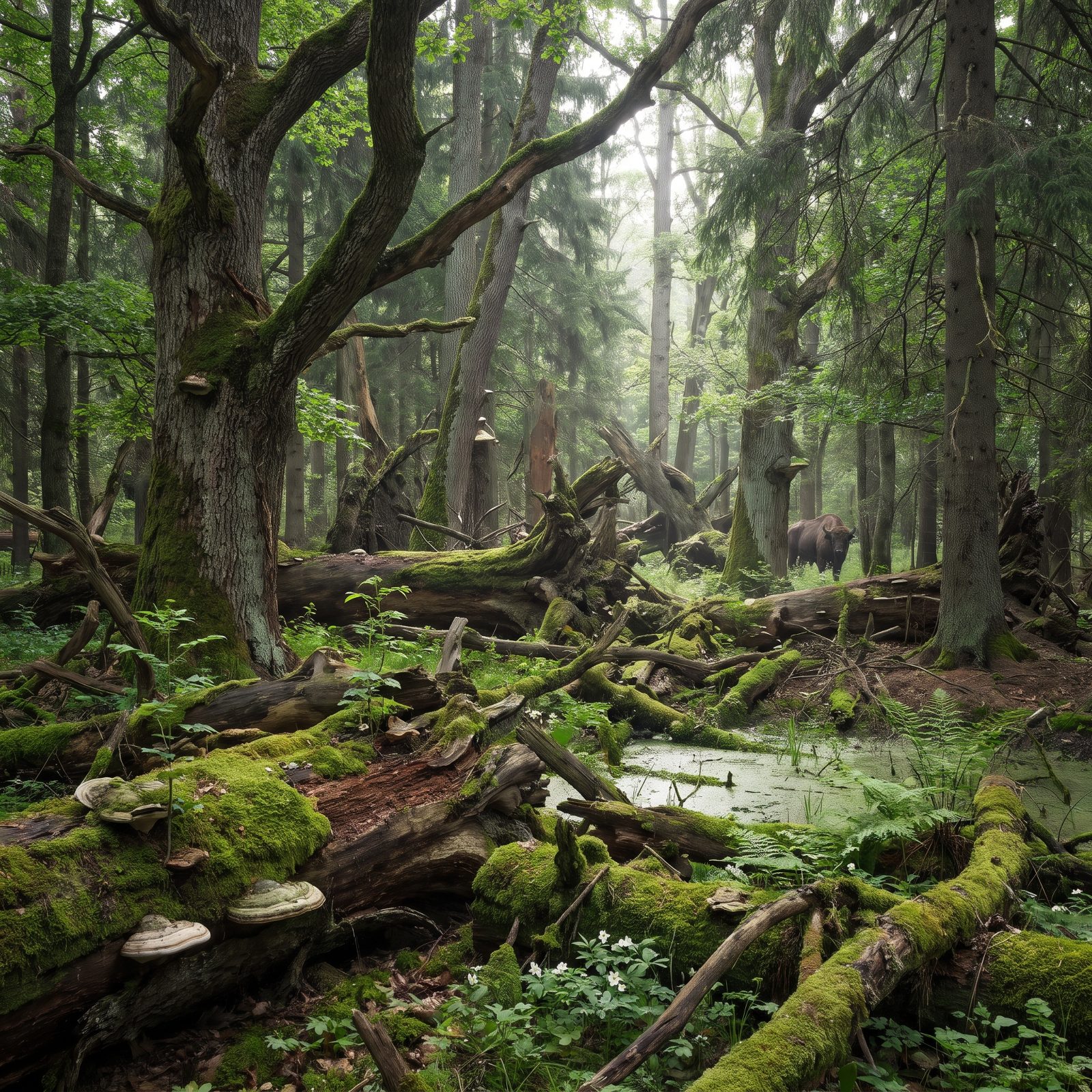
Białowieża is the last large fragment of the primeval lowland forest that once blanketed the continent, and it already shows us the answer. The ground is buried in dead wood. Fallen oaks and spruce the size of buses lie across each other, slowly dissolving into the soil, and that rot is the whole point.
Deadwood is where the life is — beetles, fungi, woodpeckers, and the seedlings that root directly in the decaying logs. A thousand years of no clearing, no salvage logging, no tidying, and the forest becomes a towering, layered, rotting cathedral. European bison already wander it. They’d keep doing exactly that.
Describing the forest Białowieża is a remnant of, a scientist who guides tours there writes: “Millennia ago a dense primordial forest veiled the continent. Its hallmarks were towering old trees, dead wood, meandering rivers and wild beasts.”
32. Dragon’s Blood Forest, Socotra: Umbrella Trees Spread Across the Empty Limestone Plateaus

Socotra looks like someone designed a planet and got bored halfway through. The dragon’s blood tree, Dracaena cinnabari, holds its branches up like an open umbrella to catch mist and shade its own roots, and it bleeds a deep red resin when cut.
But there’s a catch. These trees are struggling to reproduce because goats eat the seedlings before they ever get tall. Remove the grazing animals and the plateaus fill back in. Saplings that currently have no future would finally rise between the old giants, and a thousand quiet years could turn a thinning, aging forest into a thick one — the umbrella crowns crowding the limestone like something out of a dream you half remember.
31. Tijuca Forest, Brazil: Tropical Canopy Buries the Abandoned Edge of Rio de Janeiro
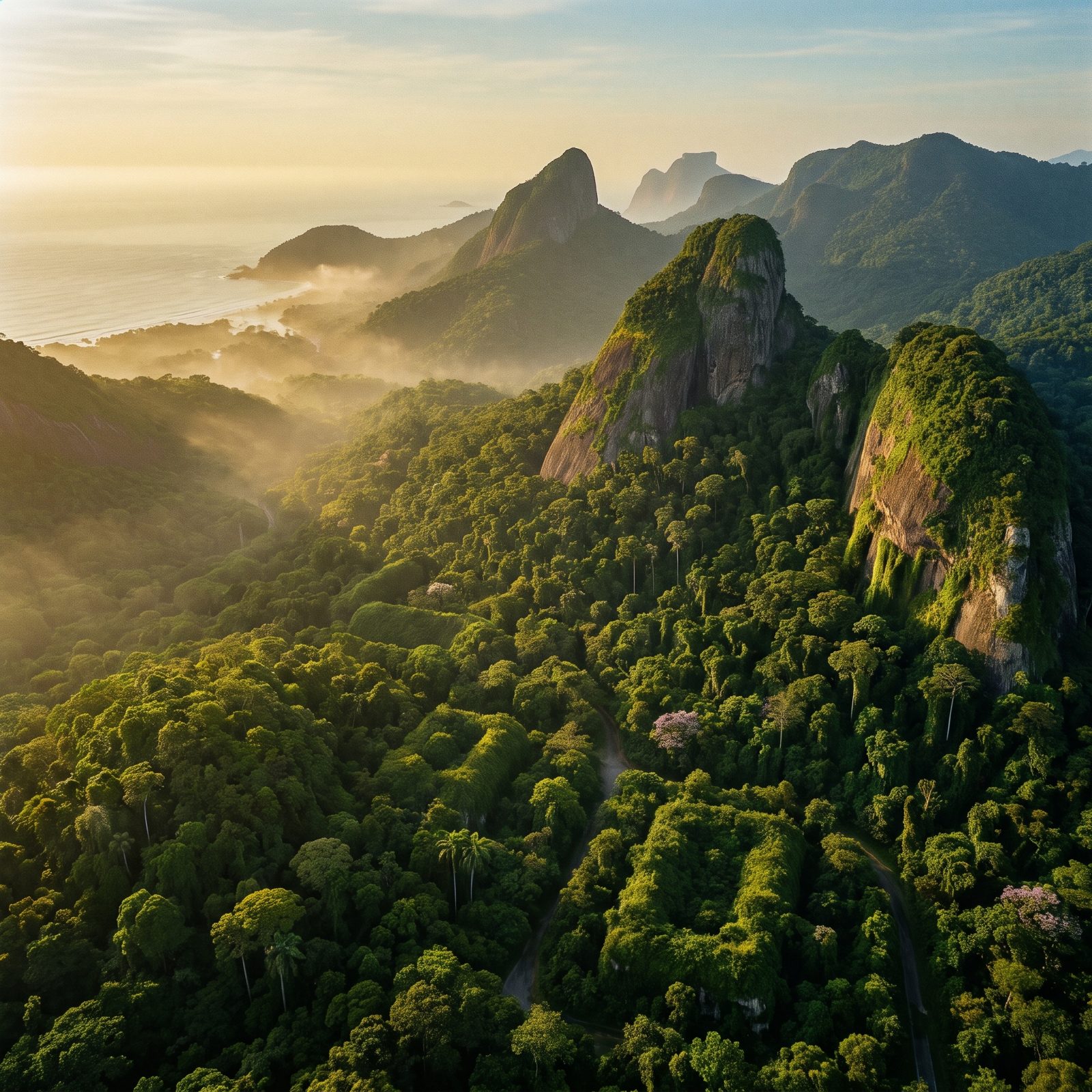
Tijuca is already a comeback story. Most of it was coffee plantations by the 1800s, hacked bare, until the land was deliberately replanted into one of the largest urban forests on the planet. The forest has done this before. It knows the way back.
Picture Rio emptied and left for ten centuries. The Atlantic rainforest — one of the most biodiverse and most threatened forests on Earth — spills down off the peaks and keeps going. Roads survive only as pale dirt tracks threading between the ruins. Buildings become roofless, wall-ringed shells filled with cecropia and jacaranda. The famous granite domes stay, draped in vegetation, and the whole thing closes over the city’s edge like water filling a footprint.
30. Giant Forest, California: Sequoia Seedlings Rise Through Cracked Asphalt
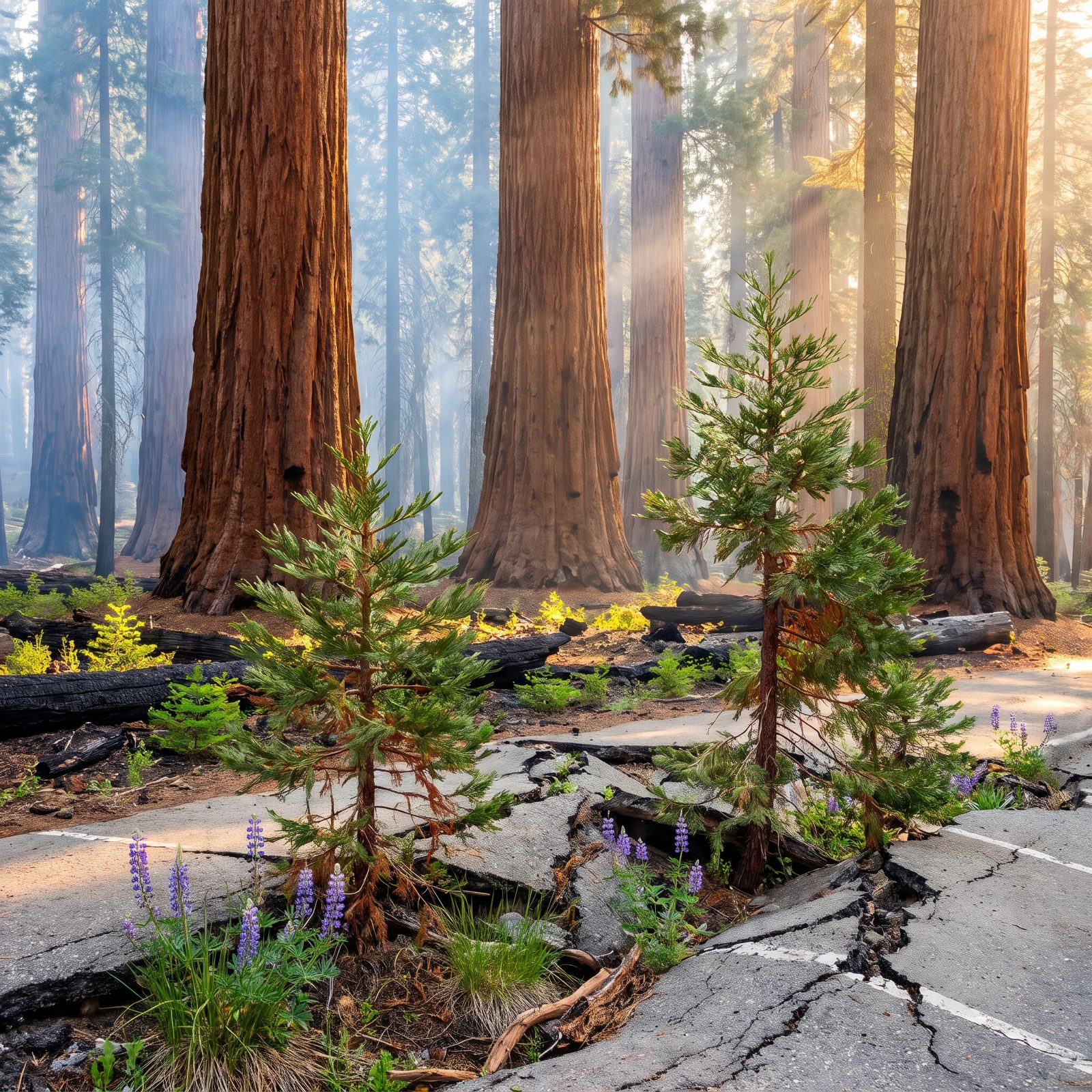
Giant sequoias need fire. Their cones often won’t release seed without the heat, and the seedlings need bare, sunlit, mineral soil to take hold. Decades of putting out every fire actually hurt them, because it let brush pile up and choked off the next generation.
So the ending here has a twist. Let nature run, and the small ground fires come back on their own schedule, clearing the floor and triggering a seed release onto the ash. Parking lots and roads crack under root pressure, and young sequoias rise dead straight through the buckled asphalt. The biggest trees on Earth by volume, growing out of a former trailhead lot. There’s no better image for who outlasts whom.
29. Daintree Rainforest, Australia, Ancient Trees Advance Across the Former Coastal Highway
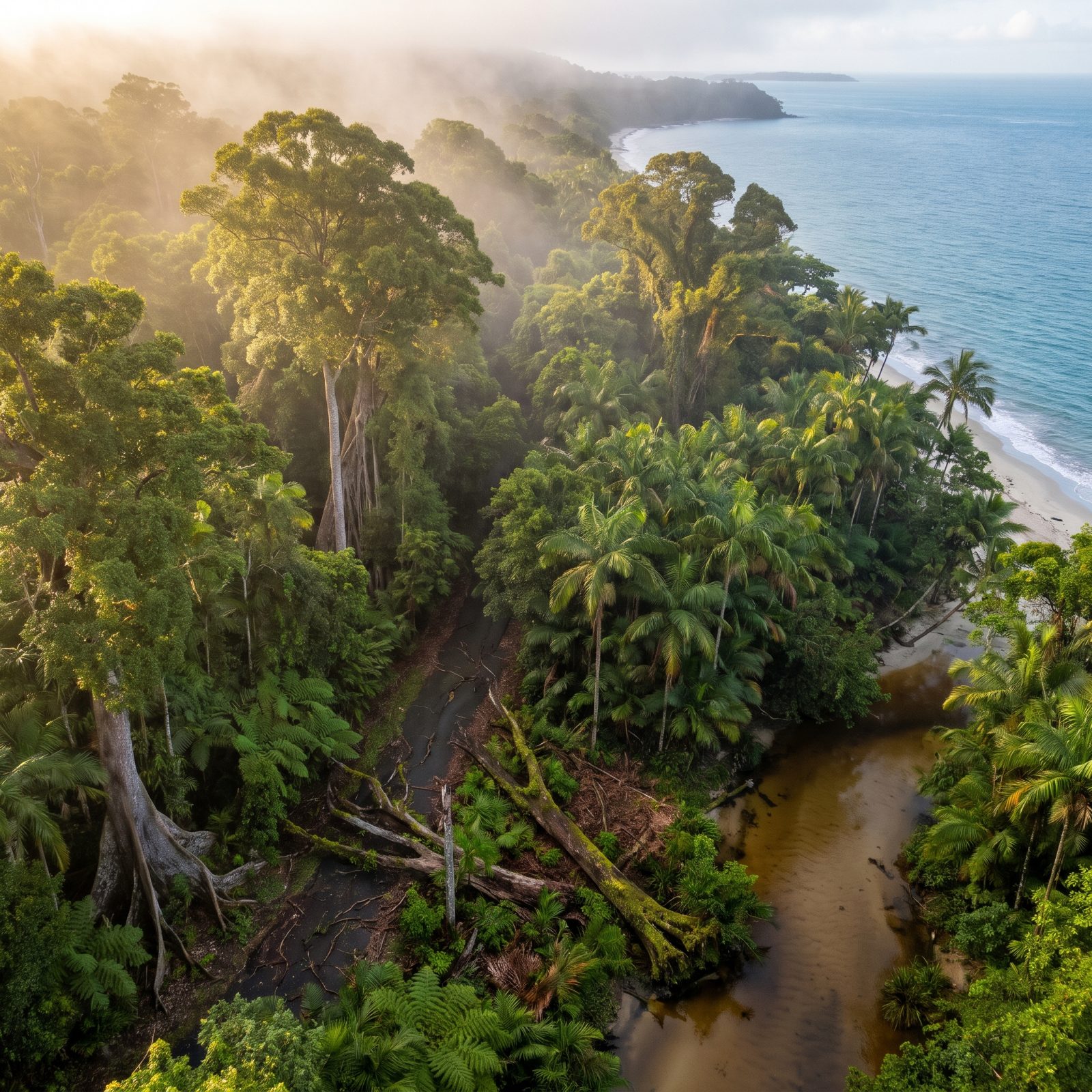
The Daintree already holds a record most forests can only envy: it’s one of the oldest continuously surviving rainforests on Earth, older than the Amazon by tens of millions of years. Give it a thousand years without us and the line between road and rainforest simply dissolves.
That thin coastal highway hugging the shore? Buttress roots don’t negotiate with asphalt. Fan palms seed into the cracks, leaf litter builds, and within a few human generations the tarmac reads as a slightly darker smudge under the ferns. There’s nothing dramatic about how the forest takes the coast back. It just leans into a space it occupied long before the road showed up.
28. Zhangjiajie National Forest Park, China, Vegetation Engulfs the Walkways Between Sandstone Pillars
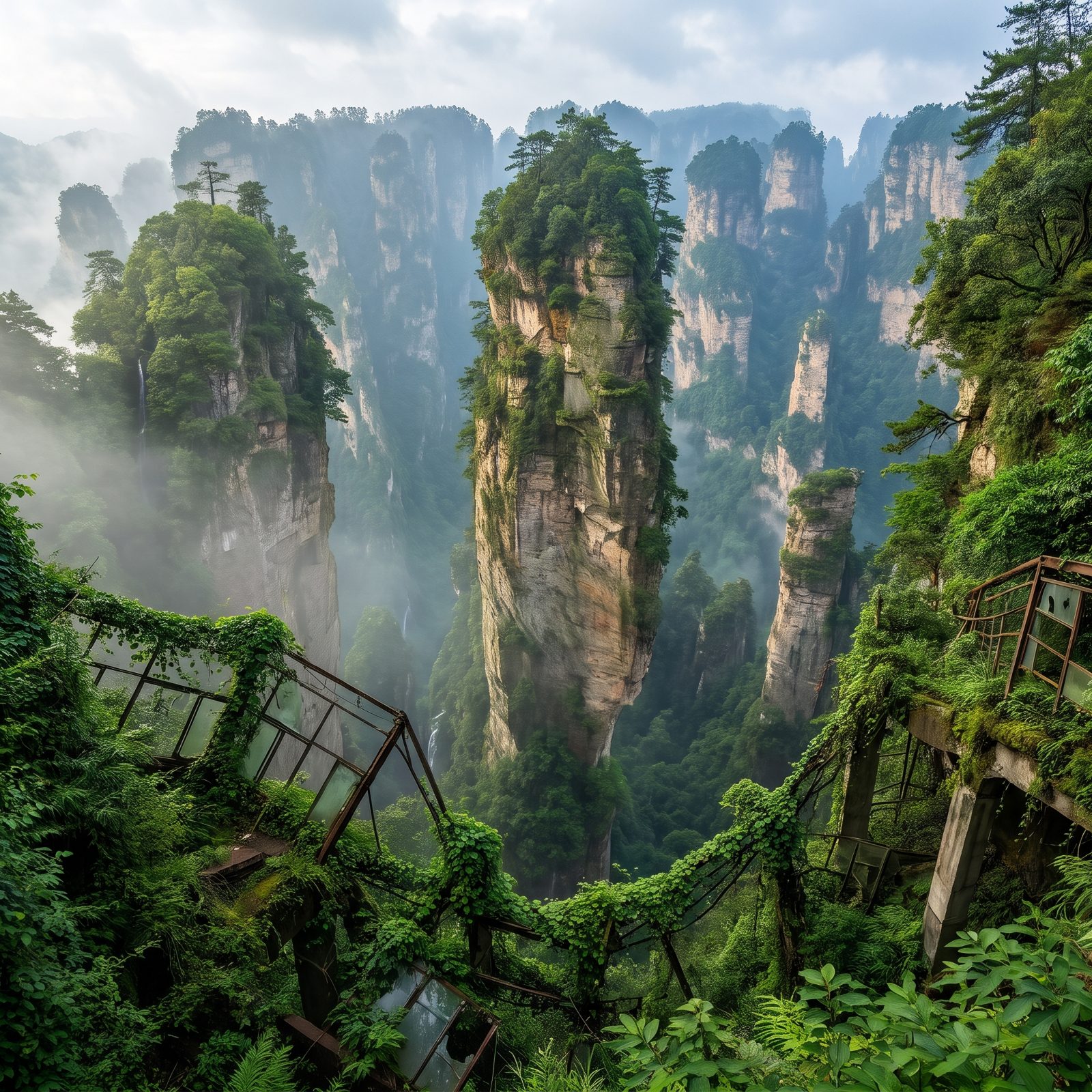
You’ve seen these pillars even if you’ve never heard the name. They’re the floating mountains that inspired the look of Pandora in a certain blue-alien blockbuster. Hundreds of quartz-sandstone columns, some towering well over a thousand feet, each one topped with its own hanging garden of pine and shrub.
Strip away the maintenance crews and the glass walkways don’t vanish so much as get swallowed. Vines and moss drape over the glass floors, railings and cantilevered platforms long before their rusting frames finally let go of the cliffs. What stays is the slow story written in the rock itself. Wind and water keep carving the pillars, pines keep colonizing the summits, and the forest floor climbs higher year by year. The scenery doesn’t need us — it was never performing for anyone.
27. Crooked Forest, Poland, The Famous Bent Pines Vanish as Straight Descendants Take Over
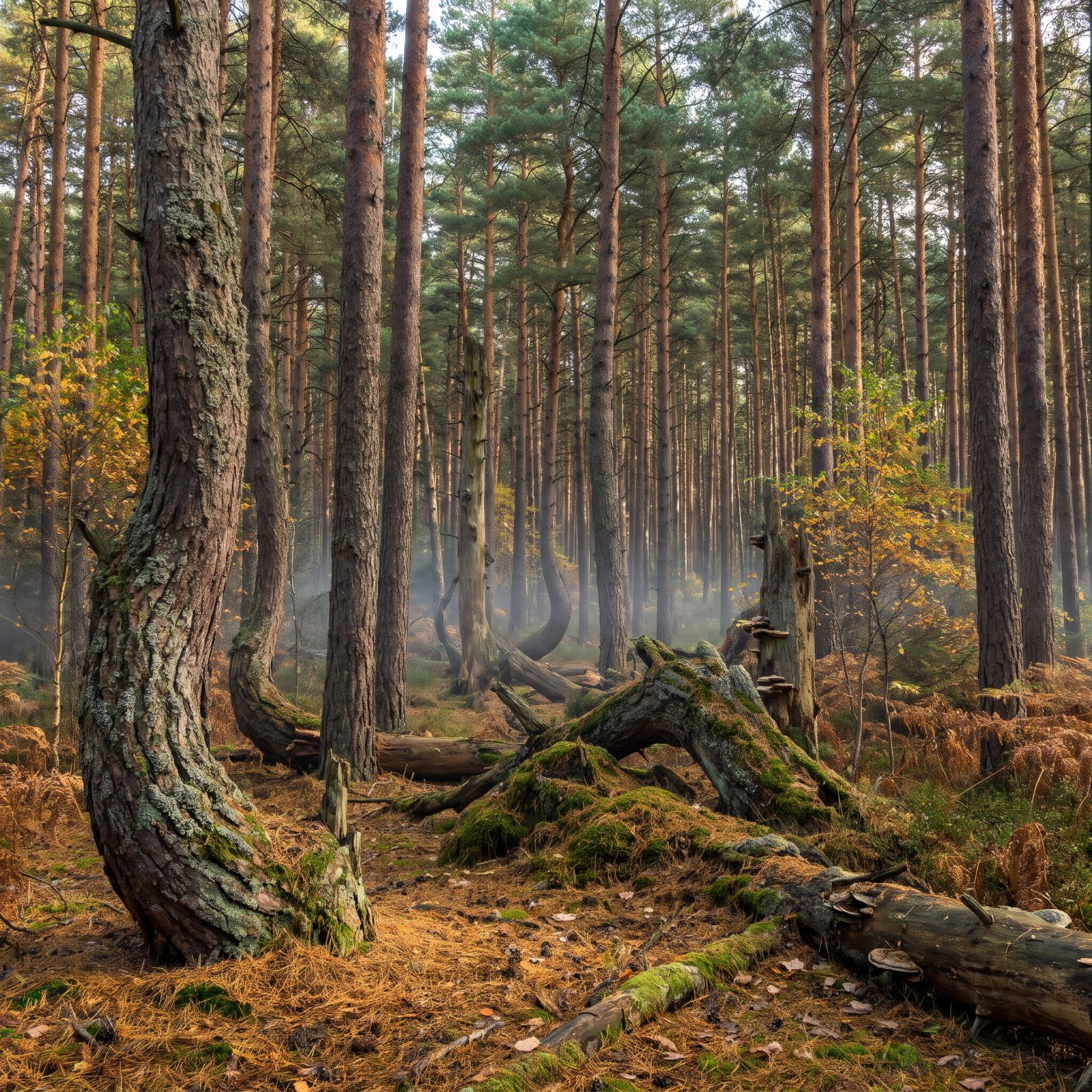
Here’s the uncomfortable truth about the Crooked Forest: the famous bend isn’t natural. Those roughly ninety pines all curve the same way at the base, almost certainly because someone trained them around 1930 — probably for curved furniture or boat timber — before the war interrupted whatever the plan was.
In this scenario, nobody tends them. And the trees’ own seeds carry no memory of the manipulation. Drop a cone from a bent pine and it grows straight up like any other Scots pine. So, given enough time, the oddity could age out. A thousand years on, the curved veterans are long gone: a few lichen-covered bent logs rot into the soil, and straight-backed pines hold the grove.
A forest’s strangest feature is sometimes the one thing it refuses to inherit.
26. Sherwood Forest, England, Ancient Oaks Spread Beyond the Vanished Visitor Paths
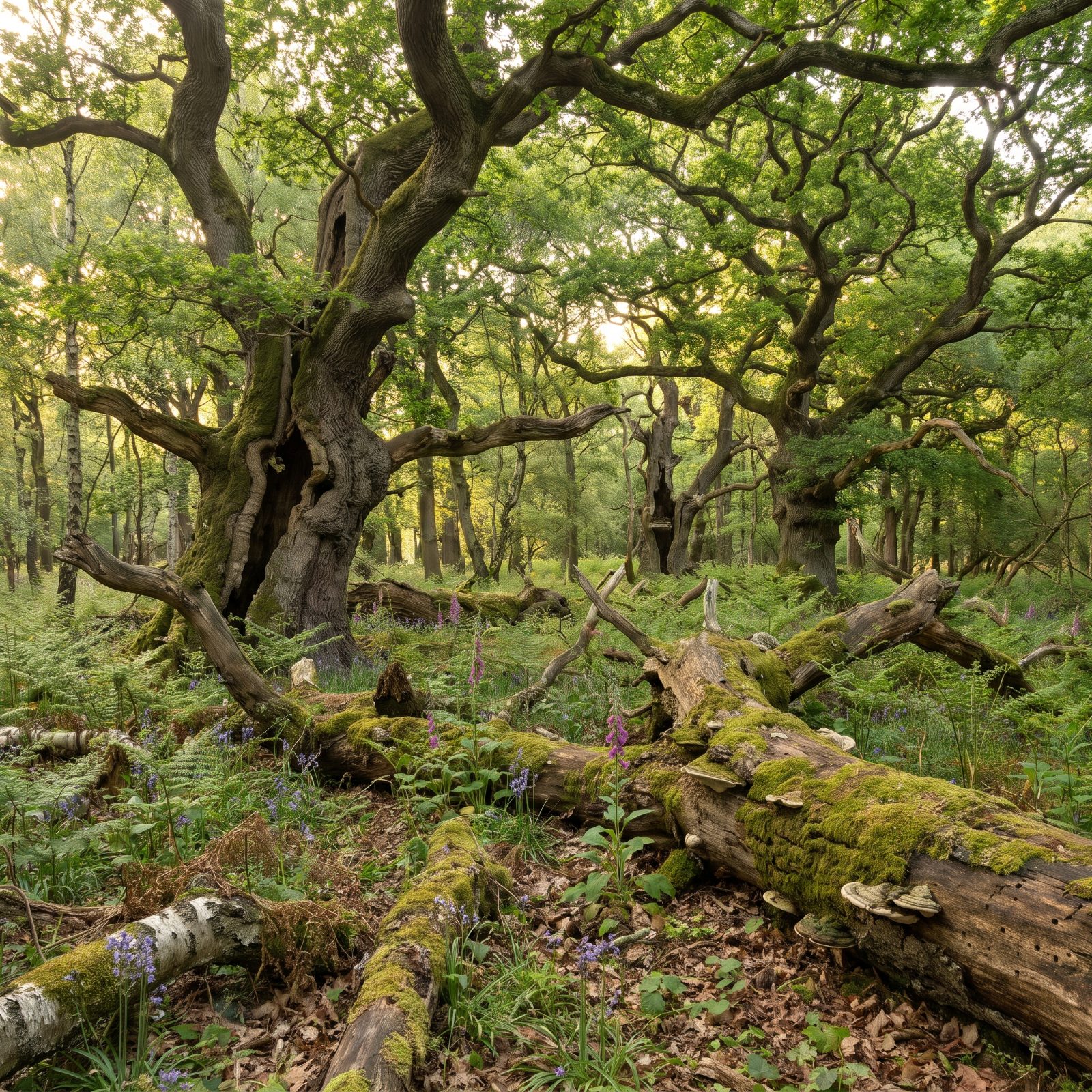
The Major Oak gets all the attention — that enormous hollow tree propped up on crutches, the one legend ties to Robin Hood. It’s real, it’s roughly eight to ten centuries old, and right now it survives partly because people brace its limbs and fence off its roots.
Take the crutches away and something interesting happens. The old giant eventually falls, yes. But the open lawns and gravel paths we keep mown for visitors are the artificial part. Left alone, oak and birch seed straight into them, and the place stops being a tidy heritage park. It thickens back into the dense wood-pasture that medieval outlaws actually would have known, where the hollow oaks become homes for bats, beetles and owls instead of photographs.
25. Great Bear Rainforest, Canada, Salmon Rivers Wind Through Unbroken Temperate Rainforest
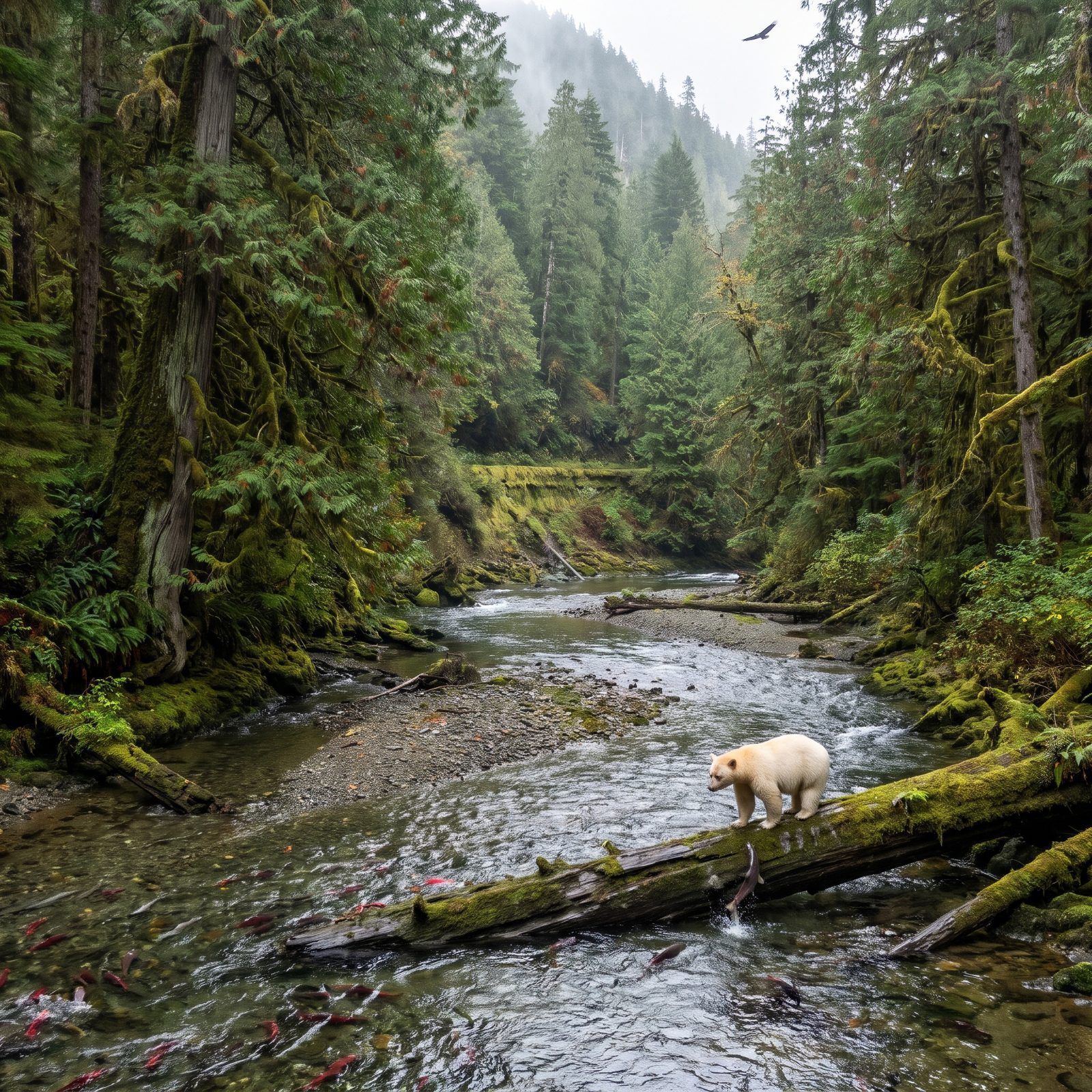
This one barely has to change, and that’s the point. The Great Bear is already one of the largest tracts of intact coastal temperate rainforest left on the planet, home to the ghostly white spirit bear, a rare color variant of the black bear found almost nowhere else.
The engine here is salmon. Returning fish feed the bears, the bears drag carcasses into the forest, and ocean nitrogen ends up in the trees — scientists can literally read salmon in the growth rings. A thousand years without logging roads or fish farms just lets that loop run cleaner. Old clearcuts finish healing, the few road scars soften into mossy ledges, and the forest keeps doing what it’s done since the last ice age.
24. Aokigahara Forest, Japan, Moss and Roots Bury the Old Paths Across the Lava
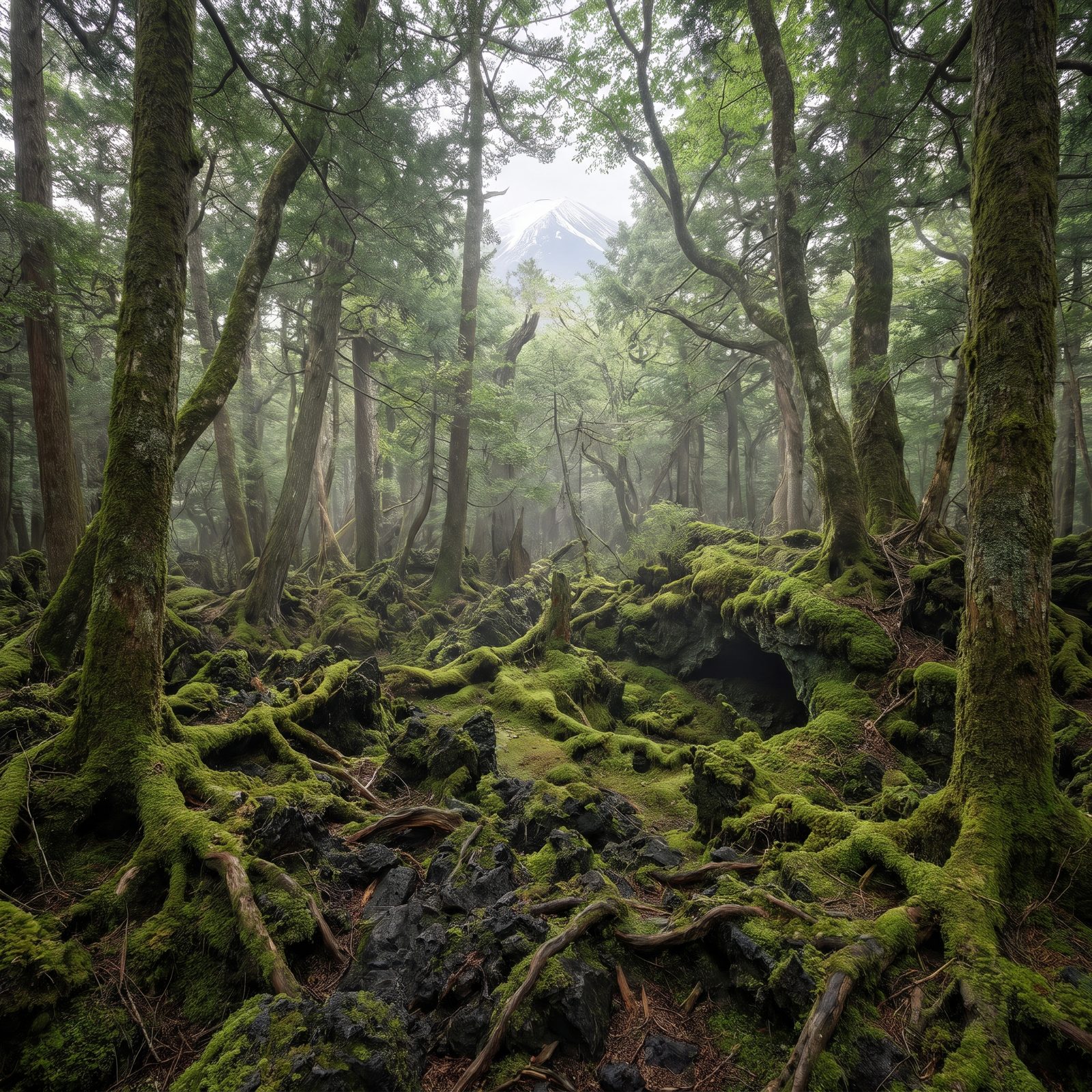
Aokigahara grows on rock. The whole forest sits on a lava flow from a Mount Fuji eruption around 864 AD, which means the soil is thin to nonexistent. That’s why the trees here spread their roots sideways across the surface in those photogenic, slightly unsettling tangles. They have nowhere to dig.
It’s famously disorienting underfoot. People sometimes blame the iron in the lava for throwing off compasses, though the bigger problem is simply that one mossy patch looks exactly like the next. Without people cutting paths, the forest closes that last human seam fast. Moss creeps over the trodden gaps, roots creep over the moss, and the floor becomes one continuous green skin stretched over black stone.
23. Cedars of God, Lebanon, New Cedar Generations Ring the Famous Ancient Survivors
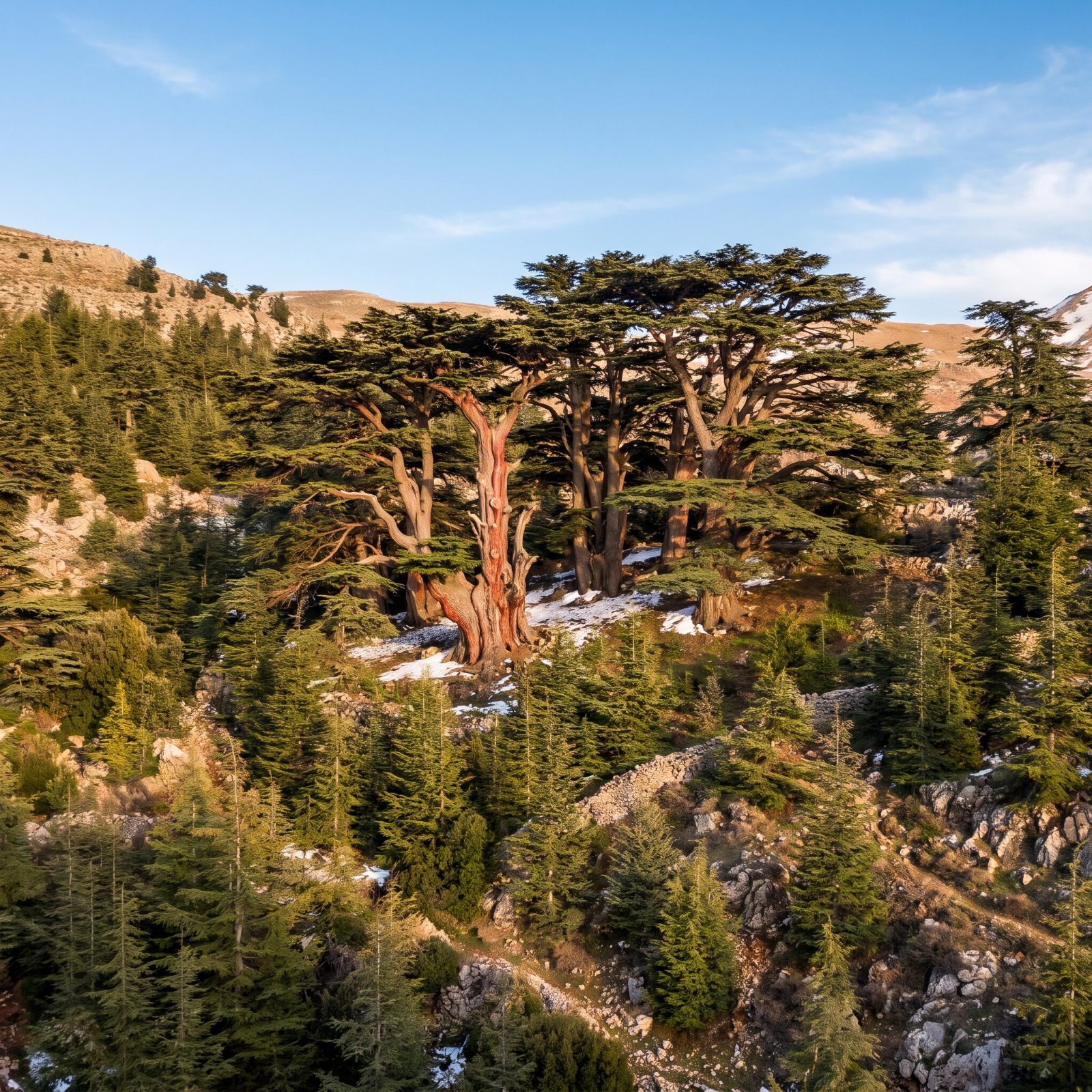
The Cedars of God are a handful of ancient trees that survived thousands of years of logging. The cedar of Lebanon was prized by Egyptians, Phoenicians and the builders of Solomon’s temple, and the mountains were stripped so thoroughly that only protected pockets like this one remain. These few hundred trees are the stubborn remnant.
Here the thousand-year change is restoration, not reclamation. Freed from grazing goats and firewood cutters, cedar seedlings finally survive long enough to mature on the surrounding slopes. The famous veterans stop being an isolated museum of trees and become the elders of a spreading forest again.
22. Adirondack Forest Preserve, New York, Beaver Wetlands Redraw a Fully Reforested Landscape
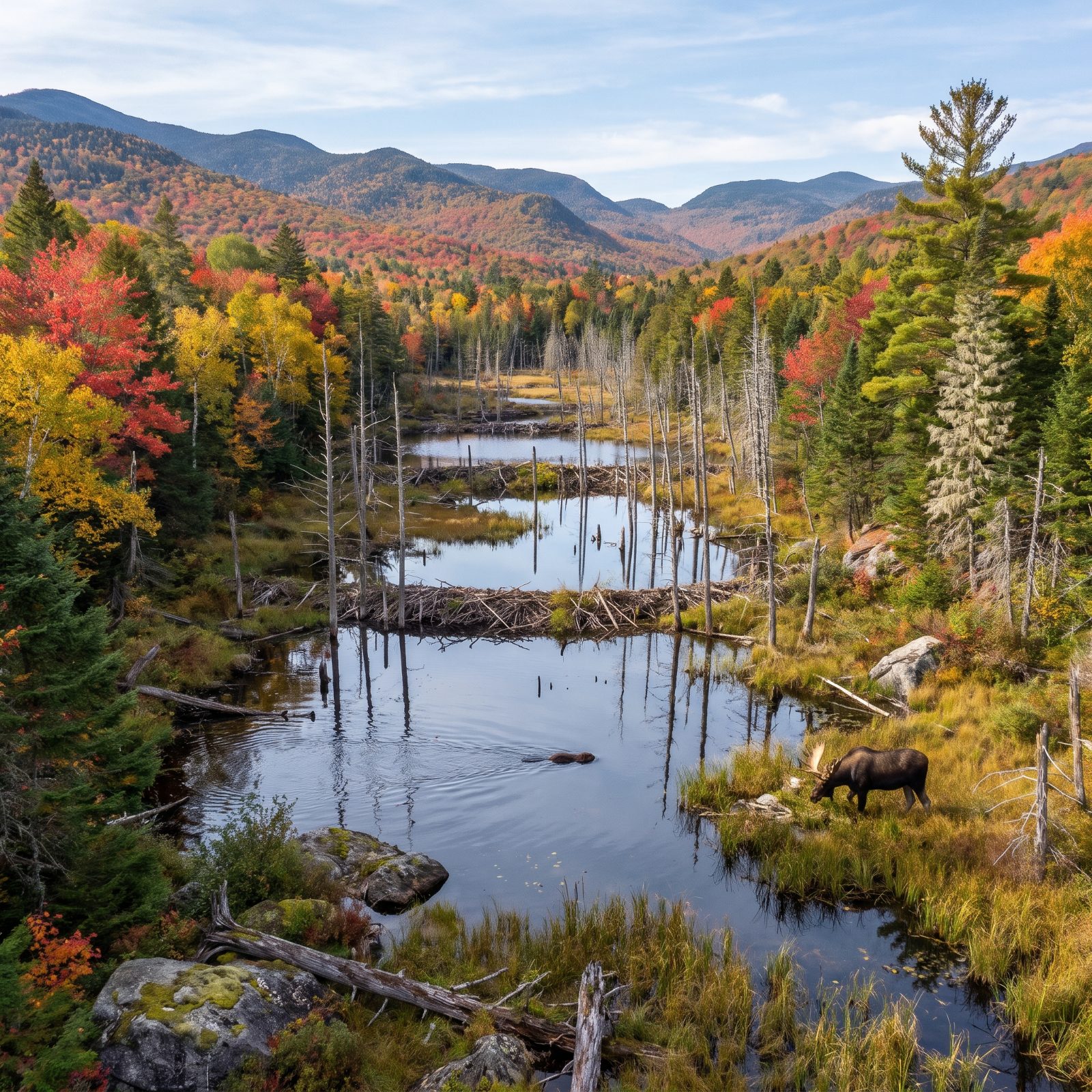
The Adirondacks are already a comeback story. A century ago much of it was logged bare and burned. Today it’s one of the largest protected tracts in the lower 48, and left fully alone for a millennium it becomes something wilder still — mostly thanks to one toothy engineer.
Beavers don’t just live in a landscape, they rebuild it. Dam a stream and you drown a patch of forest, create a pond, then a meadow as the pond silts in, then eventually new forest again once the beavers move on. Run that cycle unmanaged for a thousand years across thousands of streams and the valleys become a shifting mosaic of water and woods, with moose and otter moving in where roads used to run.
21. El Yunque National Forest, Puerto Rico, Hurricane Gaps Heal Without Trails or Towers
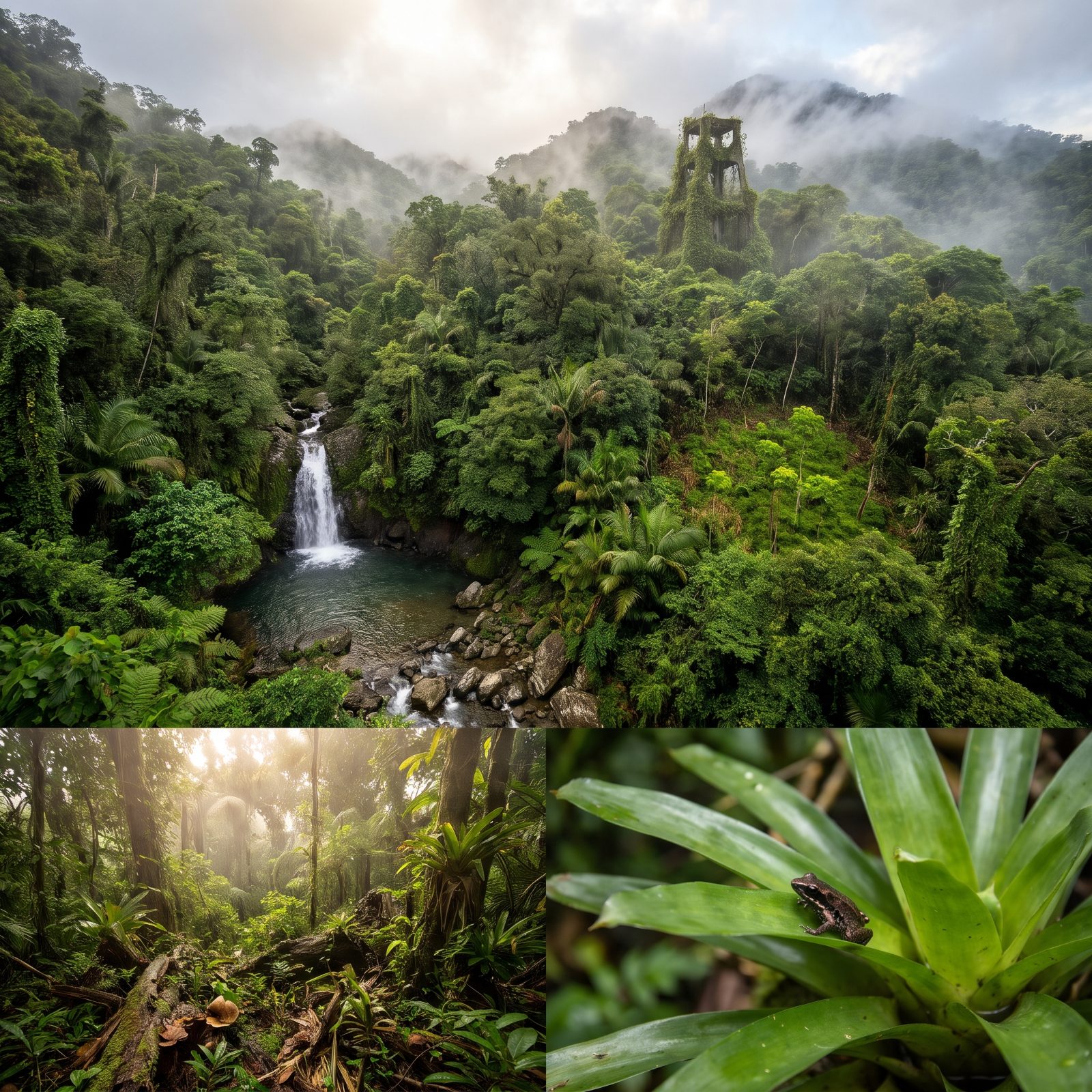
El Yunque gets hit, and hit hard. As the only tropical rainforest in the U.S. National Forest system, it sits squarely in hurricane alley, and storms like Maria in 2017 can shred the canopy in a single night. You’d think that’s a disaster. The forest treats it as routine.
Disturbance is baked into how this place works. A hurricane blows gaps in the canopy, sunlight floods the floor, and fast-growing sierra palms and vines race to fill the holes before the taller tabonuco trees reassert themselves. Over a thousand uninterrupted years that churn just keeps cycling. The old stone observation tower on the peak? Vines pull it apart quietly while the coquí frogs sing through every rebuild.
Looking back at the years after Hurricane Hugo, a tropical forestry institute director says: “When you destroy the canopy and you have to regrow that structure, the rate at which the forest regrows, which is a measure of its productivity, is the highest that we’ve ever measured before the hurricane”
20. Ancient Bristlecone Pine Forest, California, Twisted Pines Outlast Centuries of Their Own Fallen Wood
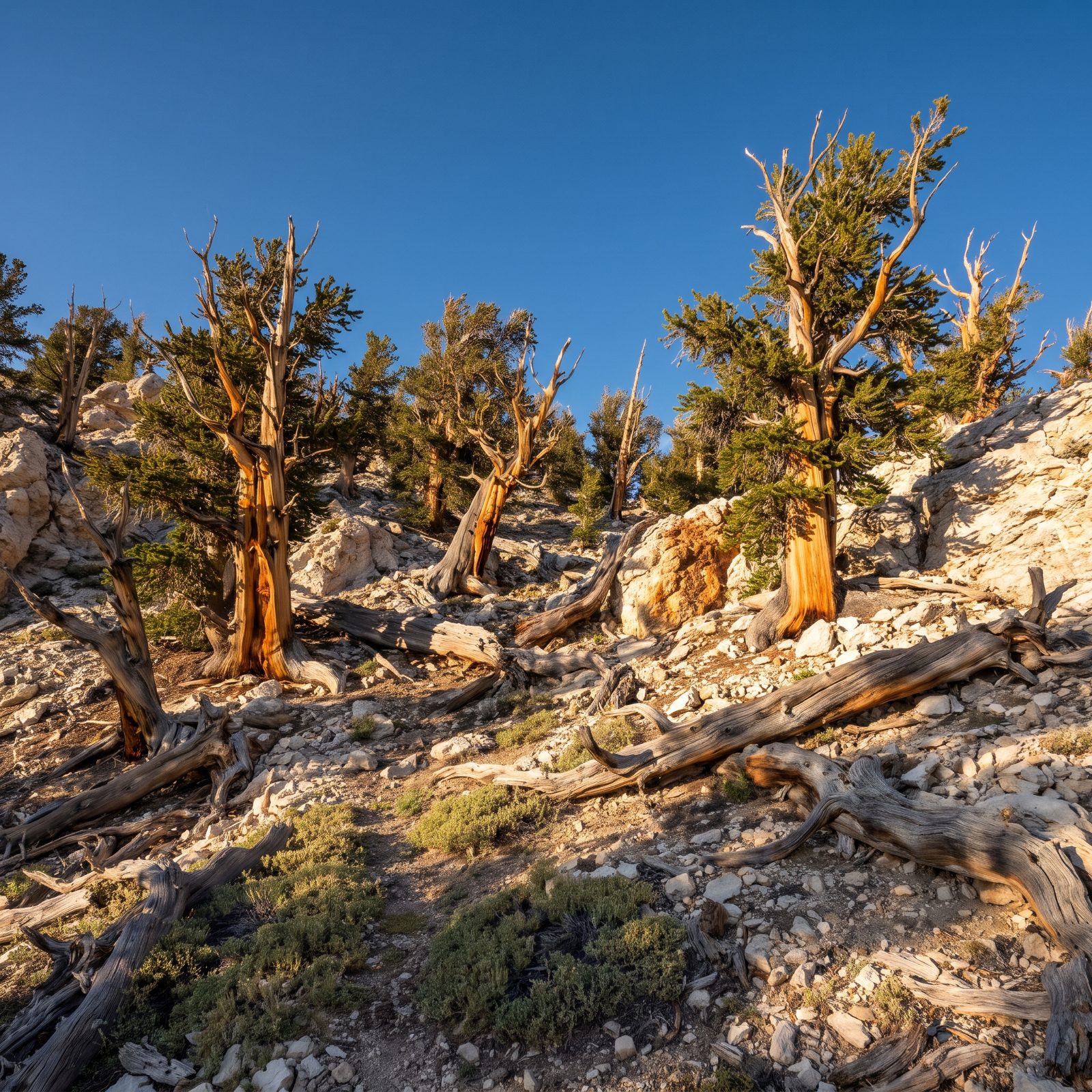
Nothing really decomposes up here. At 10,000 feet in bone-dry cold, a fallen bristlecone can lie on the ground for ages before it finally gives up, so the forest floor a thousand years from now would look almost exactly as it does today — a graveyard of silvered logs that refuse to rot, with living trees twisting up between them.
These are the oldest individual organisms on the planet. One of them, named Methuselah, was already ancient when the pyramids went up. Leave them be and they’d barely flinch. That’s the strange part: the dolomite soil is so stingy and the growing season so brief that nothing here is in a hurry.
19. Atlantic Forest, Brazil, Scattered Fragments Knit Themselves Back Into Green
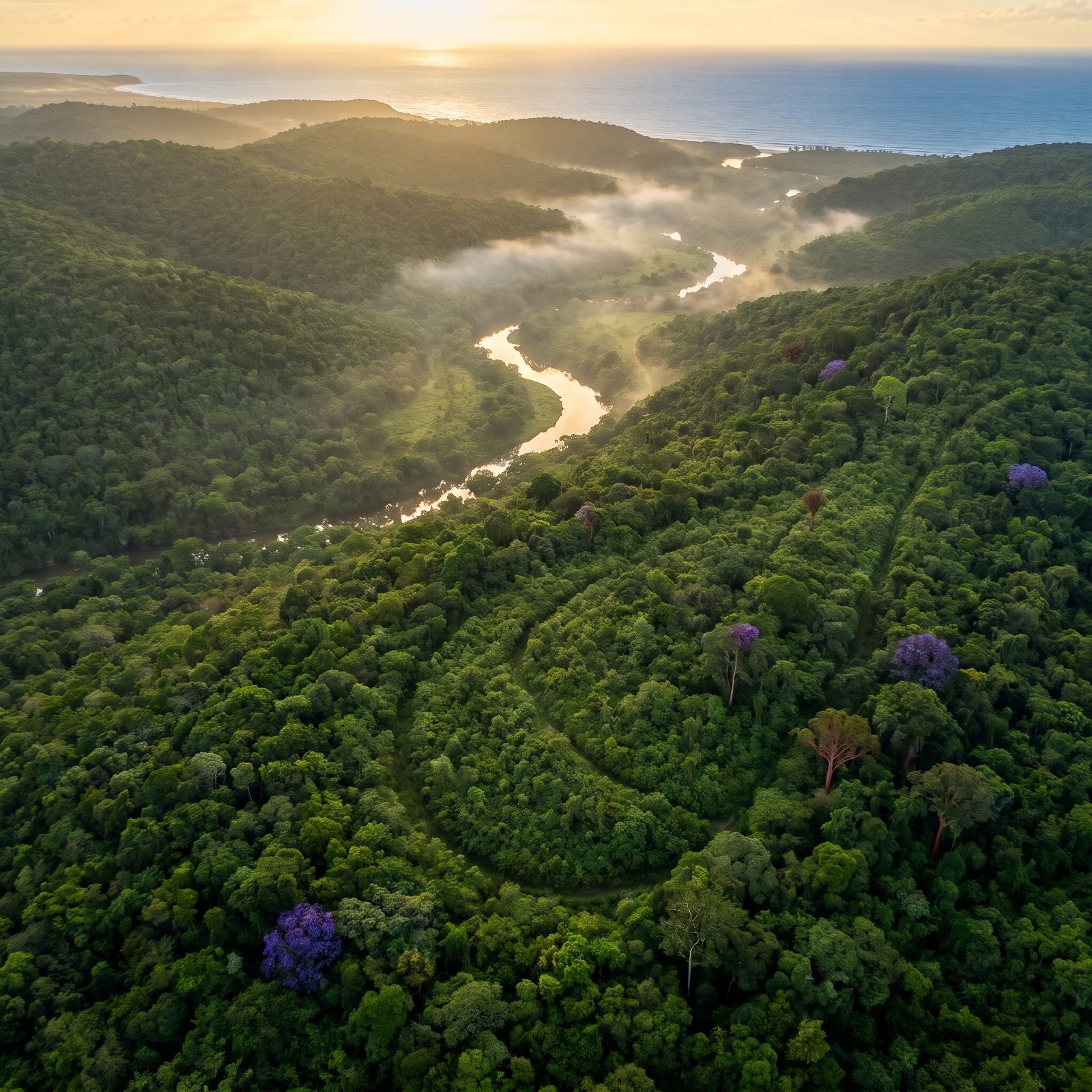
The Atlantic Forest is the comeback nobody dares bet on, because on paper it looks hopeless. Only a sliver of the original forest still stands, hacked into thousands of isolated green islands marooned in a sea of farms and cities.
Give it a thousand years, though, and those islands stitch themselves back together. Pasture turns to scrub, scrub throws up pioneer trees, and once those pioneers shade out the grass the slow-growing giants wander back in. The gaps close. Golden lion tamarins, hanging on today in a handful of lonely patches, get a continuous highway of canopy again.
Why does that matter? A chopped-up forest keeps bleeding species even when every tree is still alive, simply because animals can’t cross the gaps to find mates. Reconnect the green and the whole machine starts breathing.
18. Hoh Rain Forest, Washington, Nurse Logs Grow Whole New Forests Out of Dead Ones
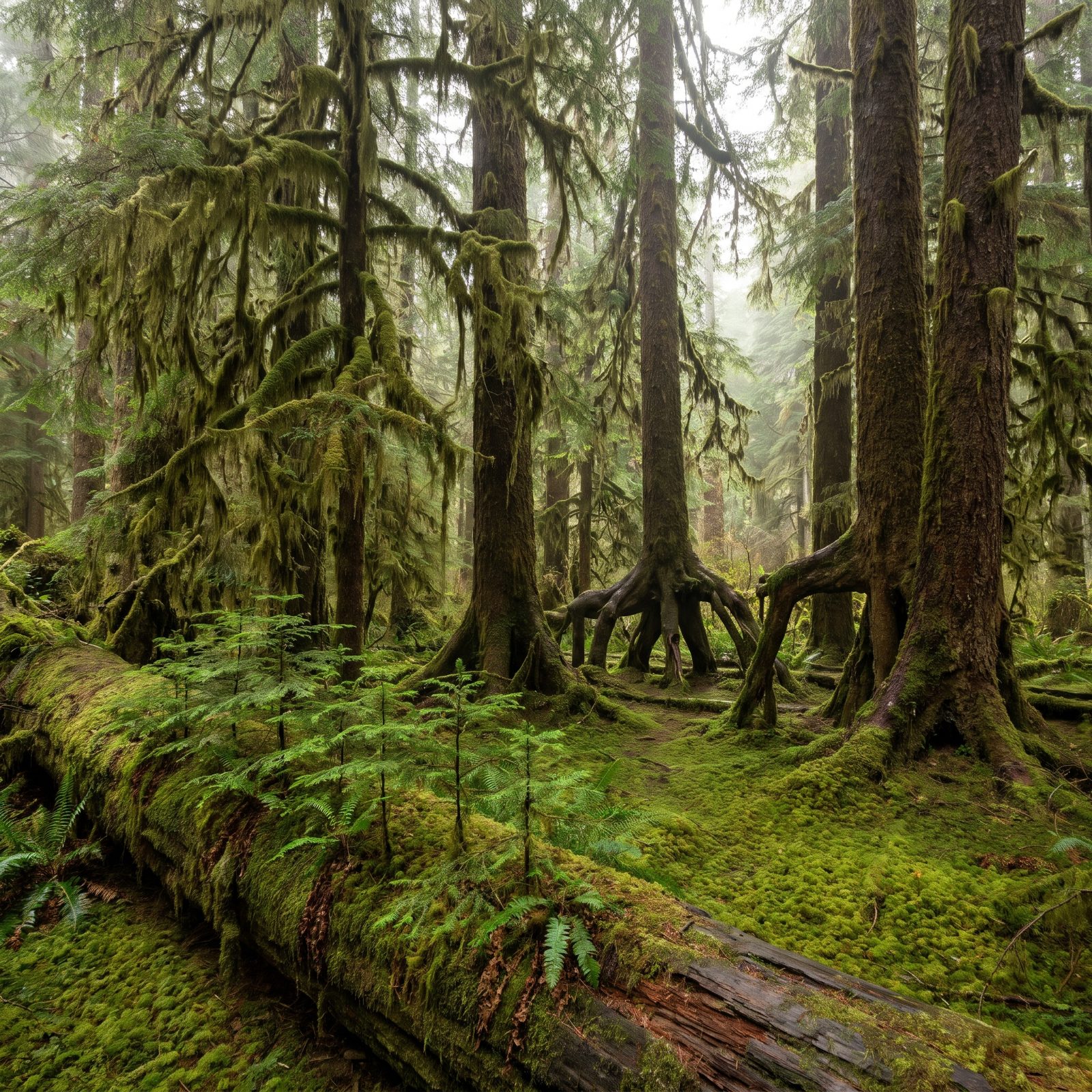
A dead tree here is not dead. It’s a nursery. When a giant topples in the Hoh, mosses and ferns swarm the trunk, then spruce and hemlock seedlings sink their roots into the rotting wood and feed off it as it crumbles.
Fast forward and you get colonnades — rows of full-grown trees lined up dead straight on stilted roots, holding the ghost shape of a log that dissolved out from under them decades earlier. A thousand untouched years just stacks more of it. Forest sprouting from forest, layer on layer.
The Hoh soaks up something like twelve feet of rain a year. Everything is wet. Everything green is climbing on something else.
17. Gir Forest, India, Dry Teak Woodland Spills Back Over Old Fields and Village Edges
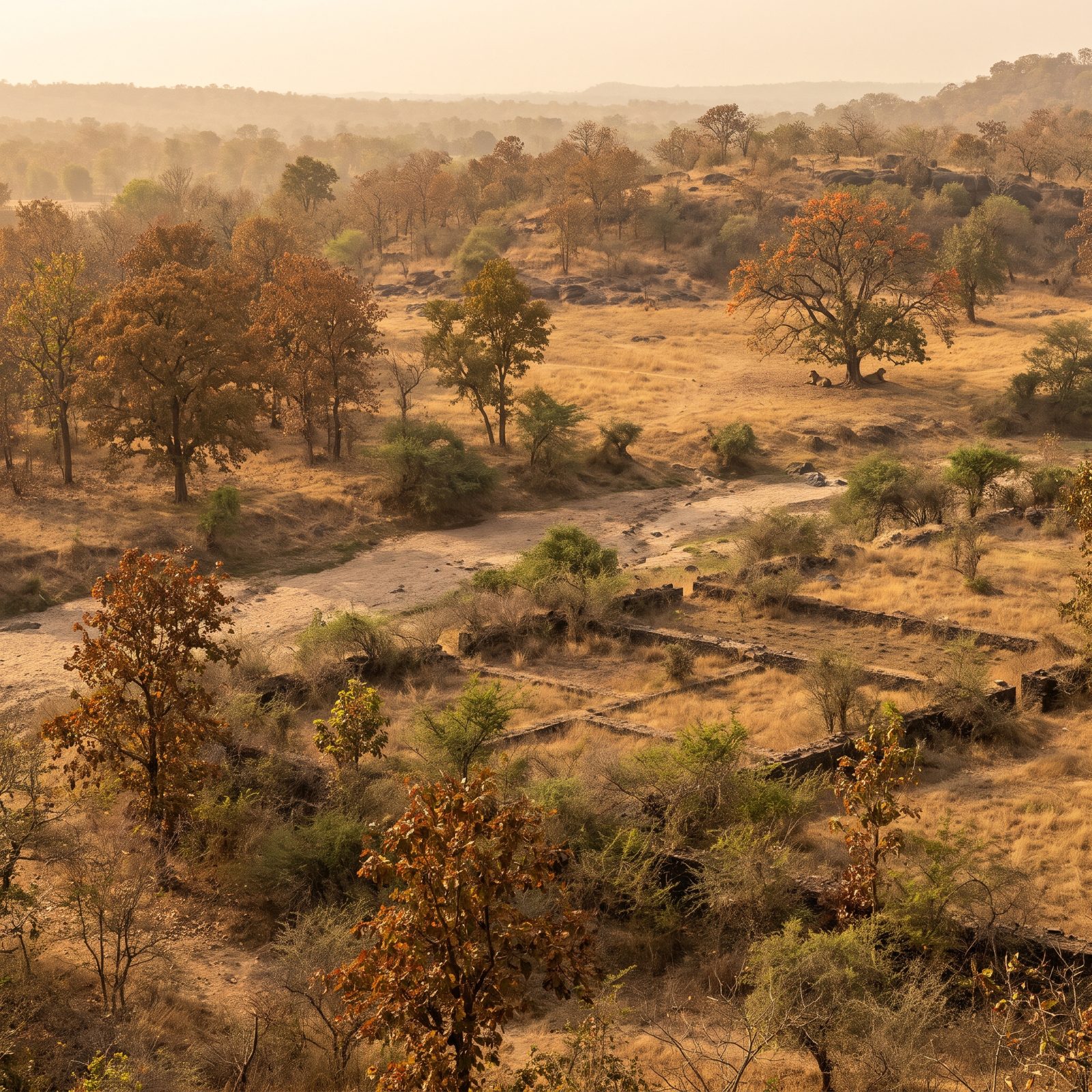
Gir is the last place on Earth with wild Asiatic lions — a few hundred of them, all crammed into one dry forest in western India, boxed in by farmland and villages.
Pull the people out and the forest pushes right back. Teak and acacia creep over abandoned fields, thorn scrub muscling in first, then the bigger trees following behind. Old village sites fade into faint rectangles in the ground cover, the sort of thing you’d only ever catch from the air.
And the lions? More room means they spread out instead of brawling over a shrinking scrap of land. A population bottled into one small place sits a single disease outbreak away from gone. Hand them the whole dry woodland and, for the first time in a very long while, they get space to breathe.
16. Gunung Leuser, Indonesia, Sumatran Rainforest Reconnects the Last Great Corridor
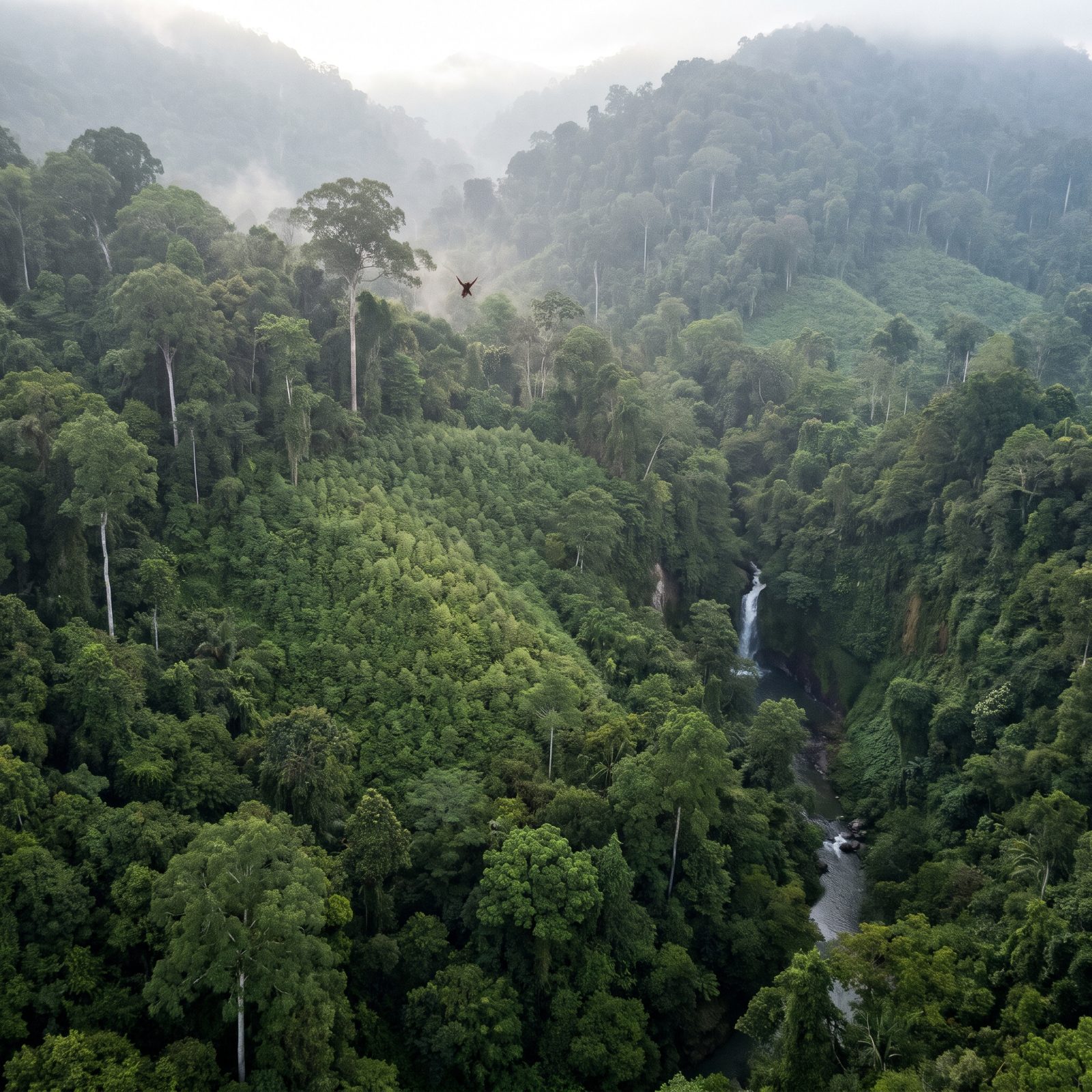
Leuser is one of the last places on Earth where orangutans, tigers, rhinos and elephants still share a single forest. The trouble is that plantations and roads have been carving it into chunks, and the animals that can’t cross open ground are exactly the ones that disappear first.
A thousand years of neglect heals the cuts. Abandoned palm oil blocks grow over, the young regrowth eventually stretches up to meet the old canopy, and the seams melt away until an orangutan could travel for days without once touching the ground.
15. Yakushima Forest, Japan, Thousand-Year Cedars Rise From a Floor of Solid Moss
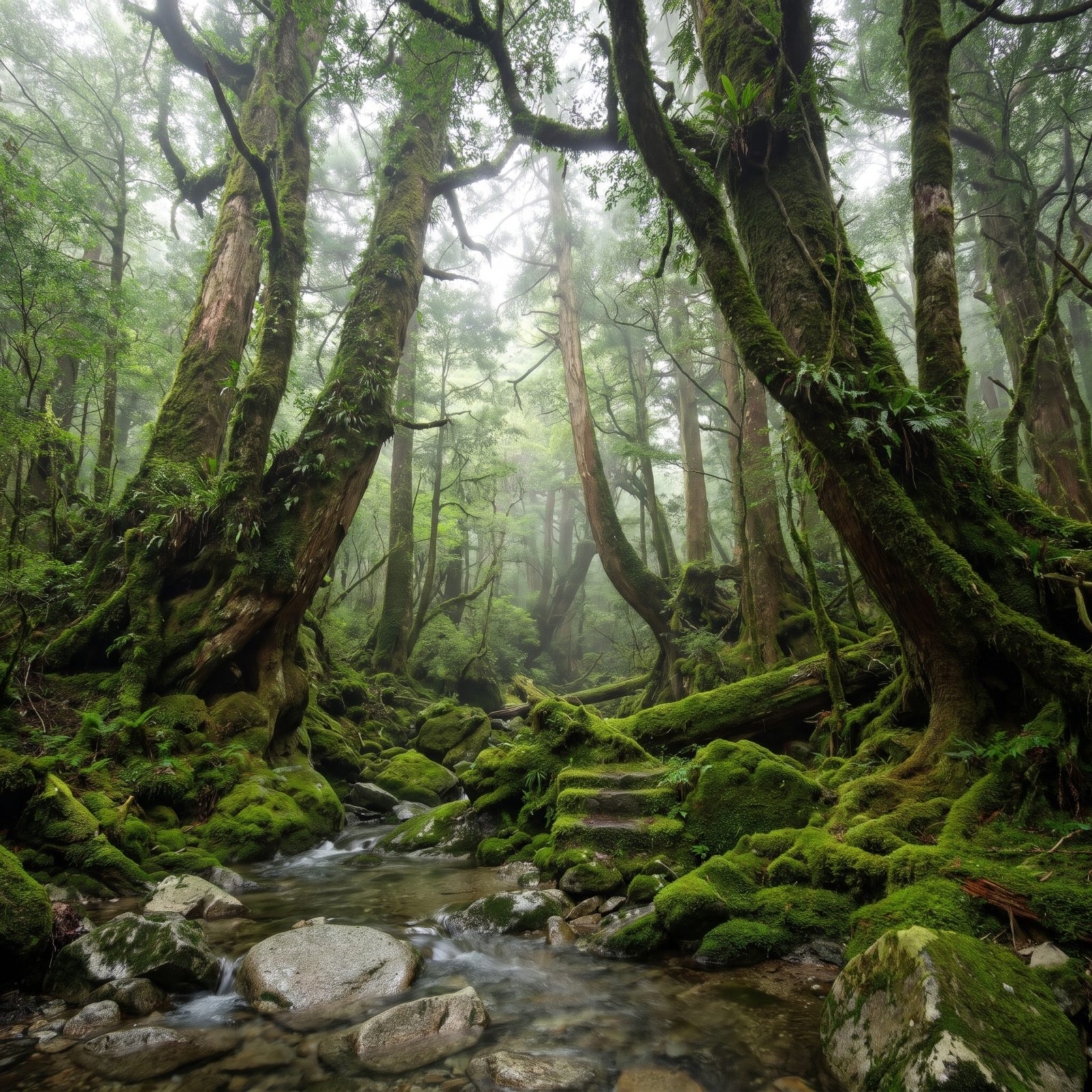
Yakushima is wet in a way that’s genuinely hard to put into words. Locals joke that it rains thirty-five days a month. All that damp is why the ground glows as one continuous carpet of moss — over a hundred species of the stuff — and why the cedars grow at a snail’s pace and live so absurdly long.
The oldest of them, Jomon Sugi, is pegged at somewhere between 2,000 and 7,000 years old. Nobody can settle the argument, which tells you plenty about how far this place runs past human reckoning.
Another thousand years without us barely counts for a tree like that. The moss deepens, ancient cedars hollow out and keep standing anyway, and the few stone steps left behind go green and vanish. This is the forest that helped shape the look of Princess Mononoke, and one glance tells you why.
14. New Jersey Pine Barrens, Fire Keeps a Million Acres From Ever Growing Up
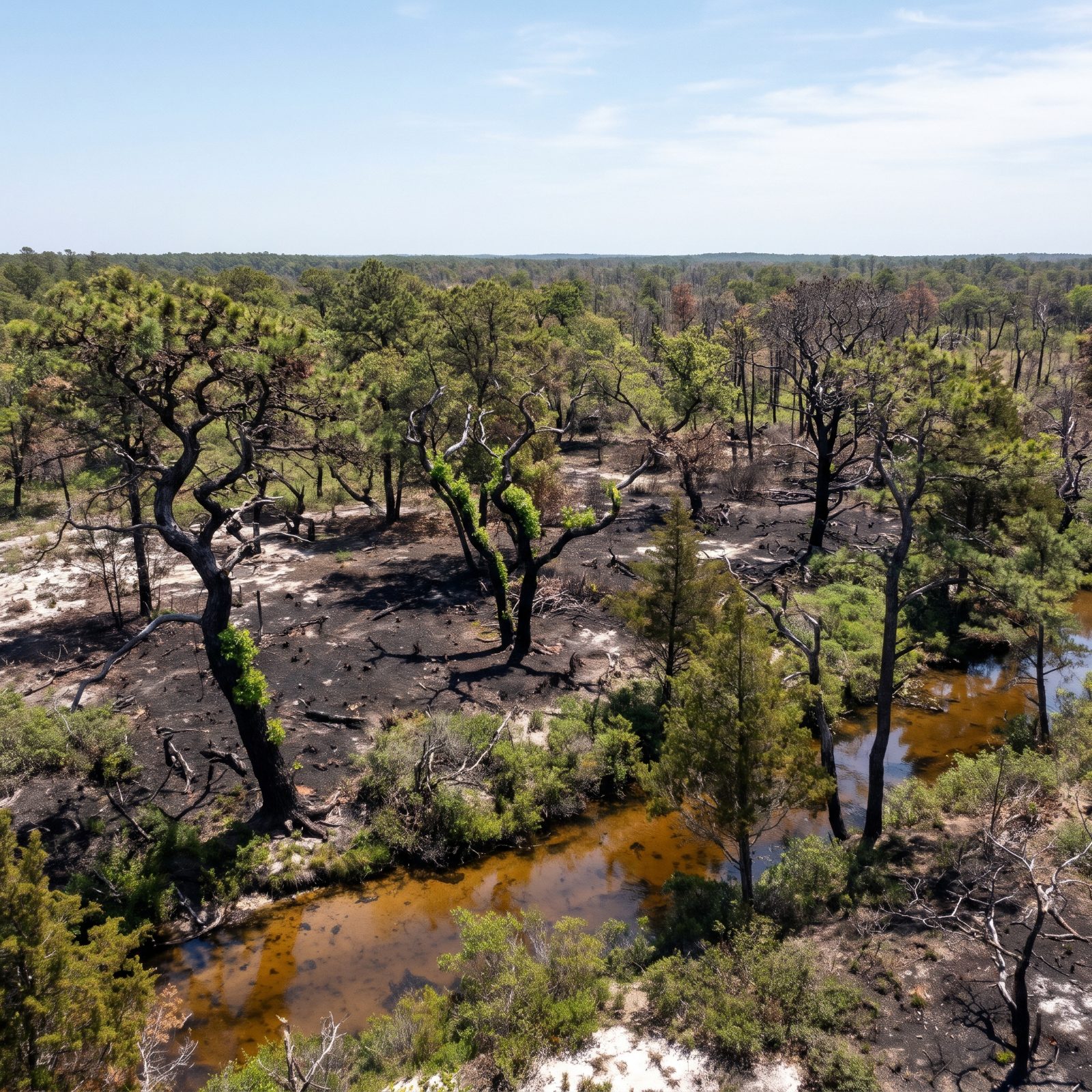
Now here’s the odd one out. Most places on this list get wilder and taller the moment you leave them alone. The Pine Barrens would stay low, scrubby and strange — and that stubborn smallness is the entire trick.
This sprawling forest on sandy soil, barely an hour from Philadelphia, lives and dies by fire. Pitch pines wear bark that laughs off flames and keep buds tucked underneath that resprout after a burn. Stop the fires and oaks muscle in, the pines lose, and the whole personality of the place curdles into something else.
Leave it be for a thousand years and lightning takes over the job we used to do. Wildfires roll through on nature’s own calendar, holding the patchwork of pine and bog and wetland right where it’s sat for millennia.
Some forests grow toward old age. This one burns to stay young, and it has done so for thousands of years.
13. Taman Negara, Malaysia, Giant Dipterocarps Rule a Forest Older Than the Amazon
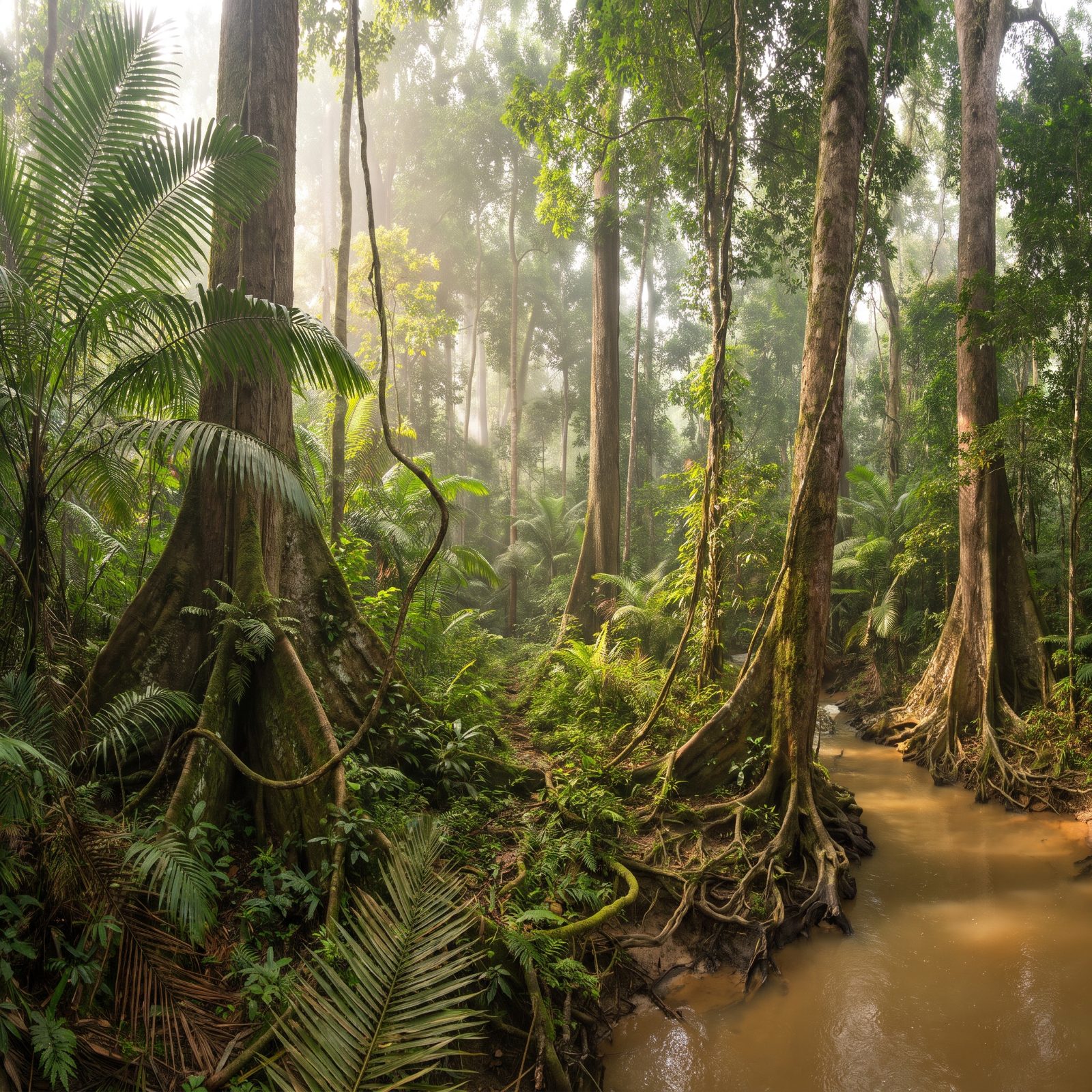
Taman Negara has been unbroken rainforest for something like 130 million years. It stood here before the Himalayas even rose. The ice ages that bulldozed so much of the planet barely brushed against it.
The giants are the dipterocarps — hardwoods with trunks like cathedral columns and buttress roots wide enough to hide behind. A thousand years of neglect means the few trails worn down by trekkers close over completely, and the forest slips back into what it has been for eons: trackless, layered, quietly enormous.
12. Bwindi Impenetrable Forest, Uganda, The Tangle Closes Over Every Gorilla Path
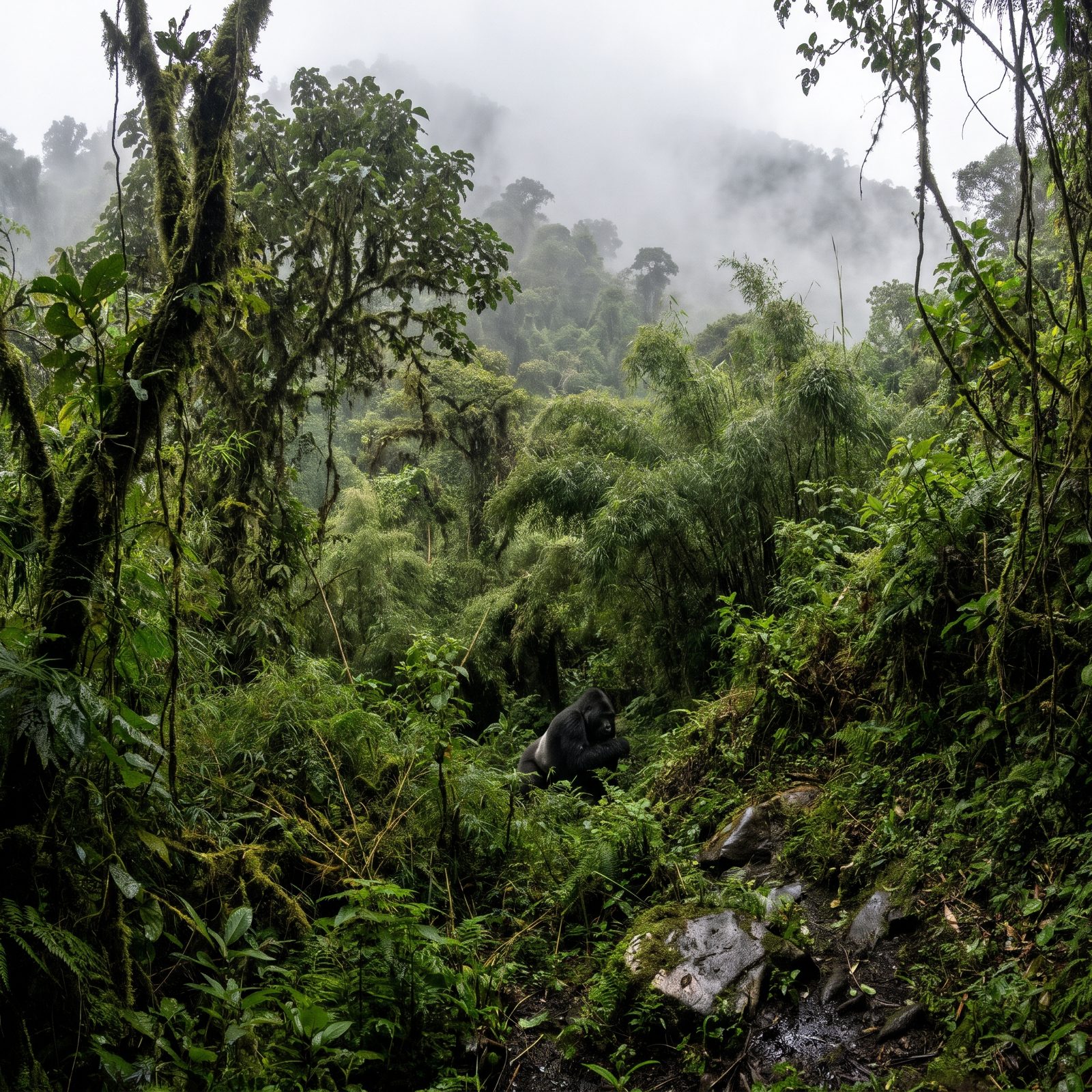
The name isn’t marketing spin. Bwindi really is close to impenetrable — a wall of vines and undergrowth so dense that people hack narrow paths just to reach the mountain gorillas, and the forest claws those paths shut again almost weekly.
Walk away for a thousand years and it wins outright. The trekking routes simply cease to exist. Roughly half of all the mountain gorillas alive today live right here, inside a forest that’s been standing since before the last ice age, when it sheltered species that were wiped out everywhere else.
Here’s a twist: the gorillas are good for the place. As they forage and shove through the undergrowth they trample small clearings, cracking open light gaps that nourish the next crop of plants. Leave them be, and the gardeners just keep gardening.
11. Masoala Rainforest, Madagascar, Endemic Palms Pour Back Over the Old Coastal Clearings
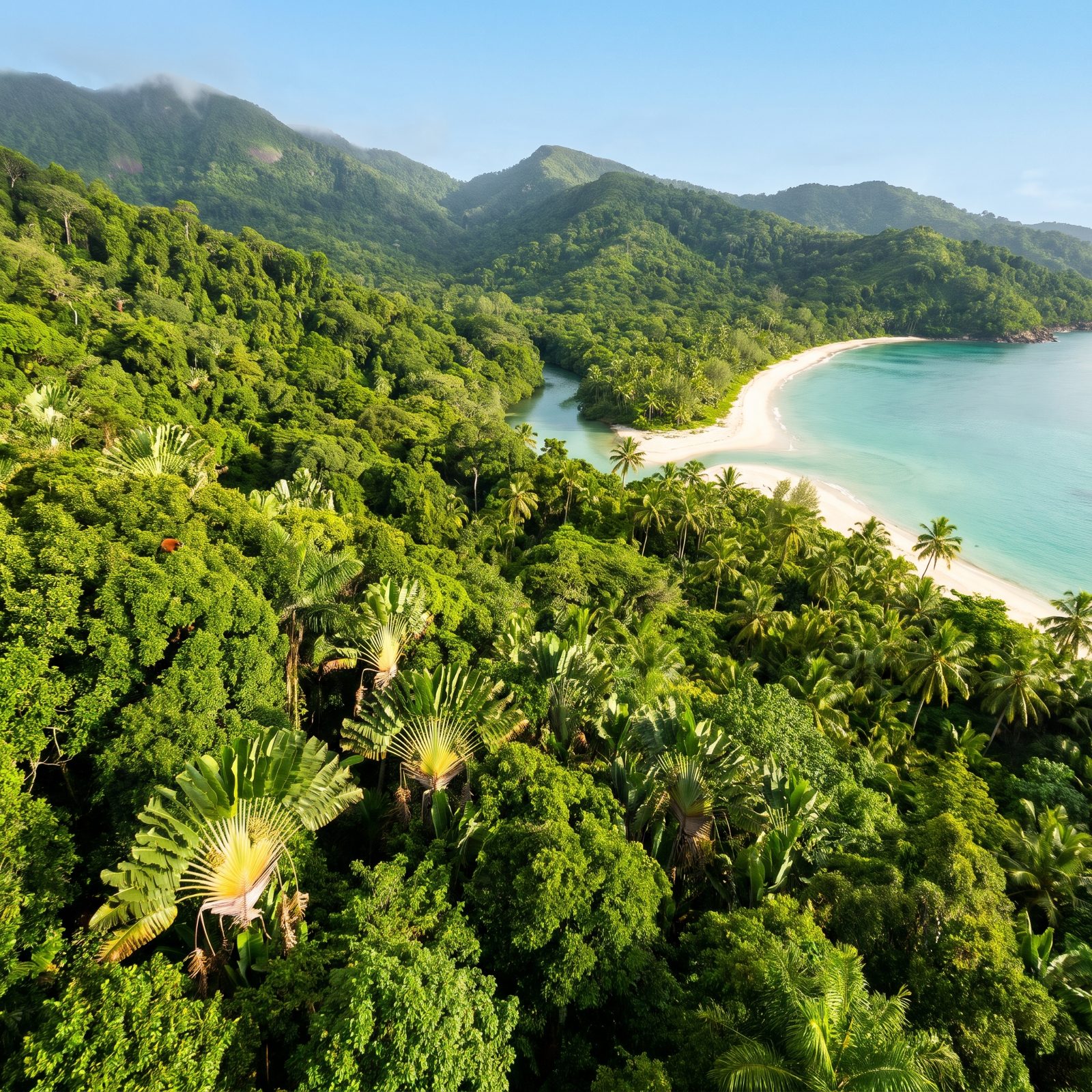
Madagascar’s plants and animals exist nowhere else on Earth, full stop. The island broke away from the rest of the world so long ago that evolution went off and did its own thing here. Masoala, where rainforest tumbles down to meet the sea on the northeast coast, cradles some of the richest of it.
The coastal clearings and old rice paddies are the first scraps the forest grabs back, with pioneer growth sealing the gaps inside a few decades. Over centuries the endemic palms and hardwoods — more than a hundred palm species found on this island alone — pour back down to the shoreline.
Red ruffed lemurs, which cling to this one corner of the world and nowhere else, get their range returned. There is no backup Masoala. What regrows here regrows nowhere, and that is the entire reason it’s worth saving.
10. Valdivian Temperate Rainforest, Chile, Ancient Conifers and Ferns Swallow Abandoned Roads
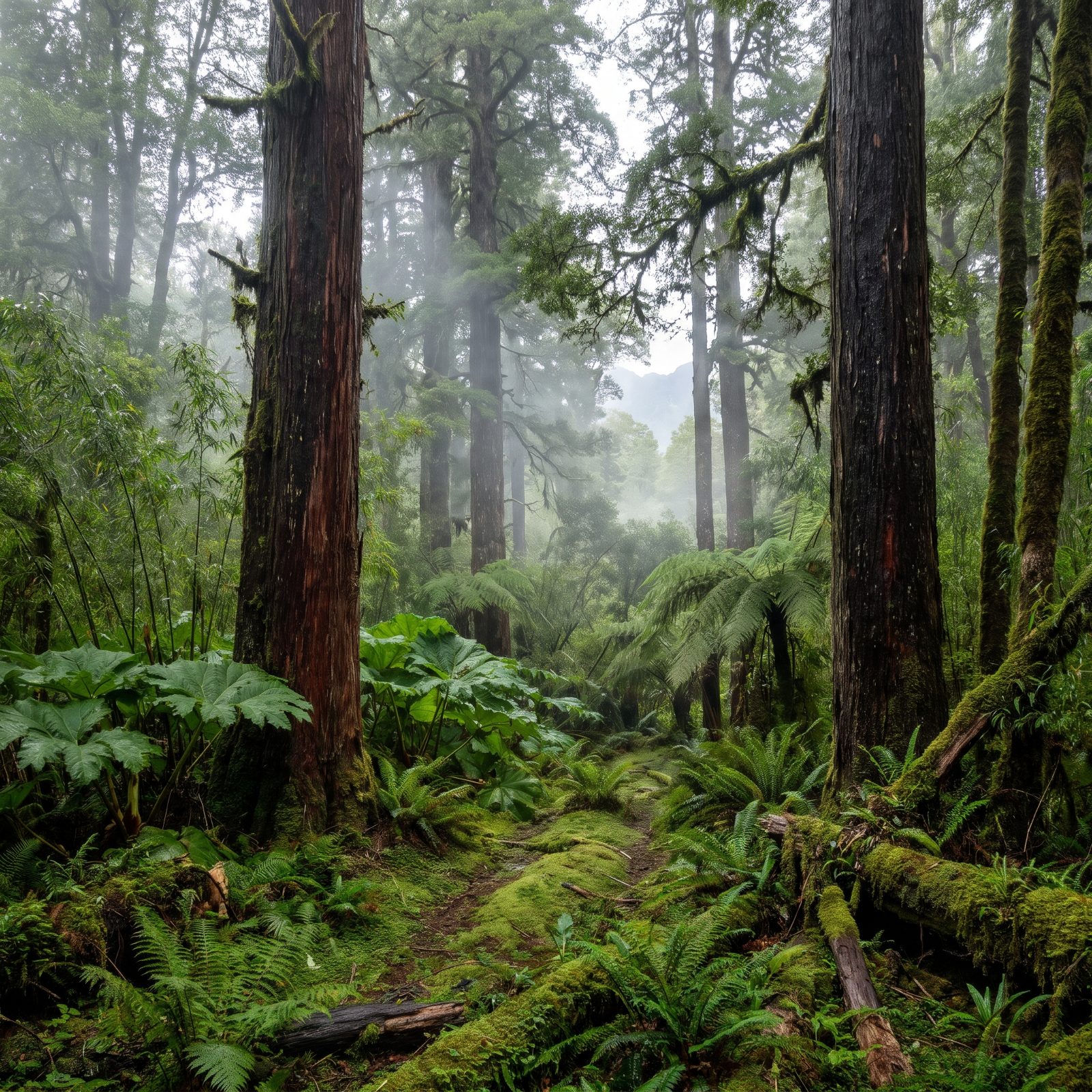
An alerce can live for thousands of years, so handing the Valdivian forest a single human-free millennium barely registers with the slow giants. What changes is everything crowded around them.
Picture the old logging road. A thousand years out it is the very last thing to vanish, because compacted gravel resists roots longest of all. But nalca unfurls leaves the size of umbrellas, quila bamboo throws up thickets, moss does the patient work, and the road becomes a slightly greener seam in the green. You’d walk across it and never know.
9. Odzala-Kokoua, Republic of the Congo, Forest Clearings That Refuse to Close
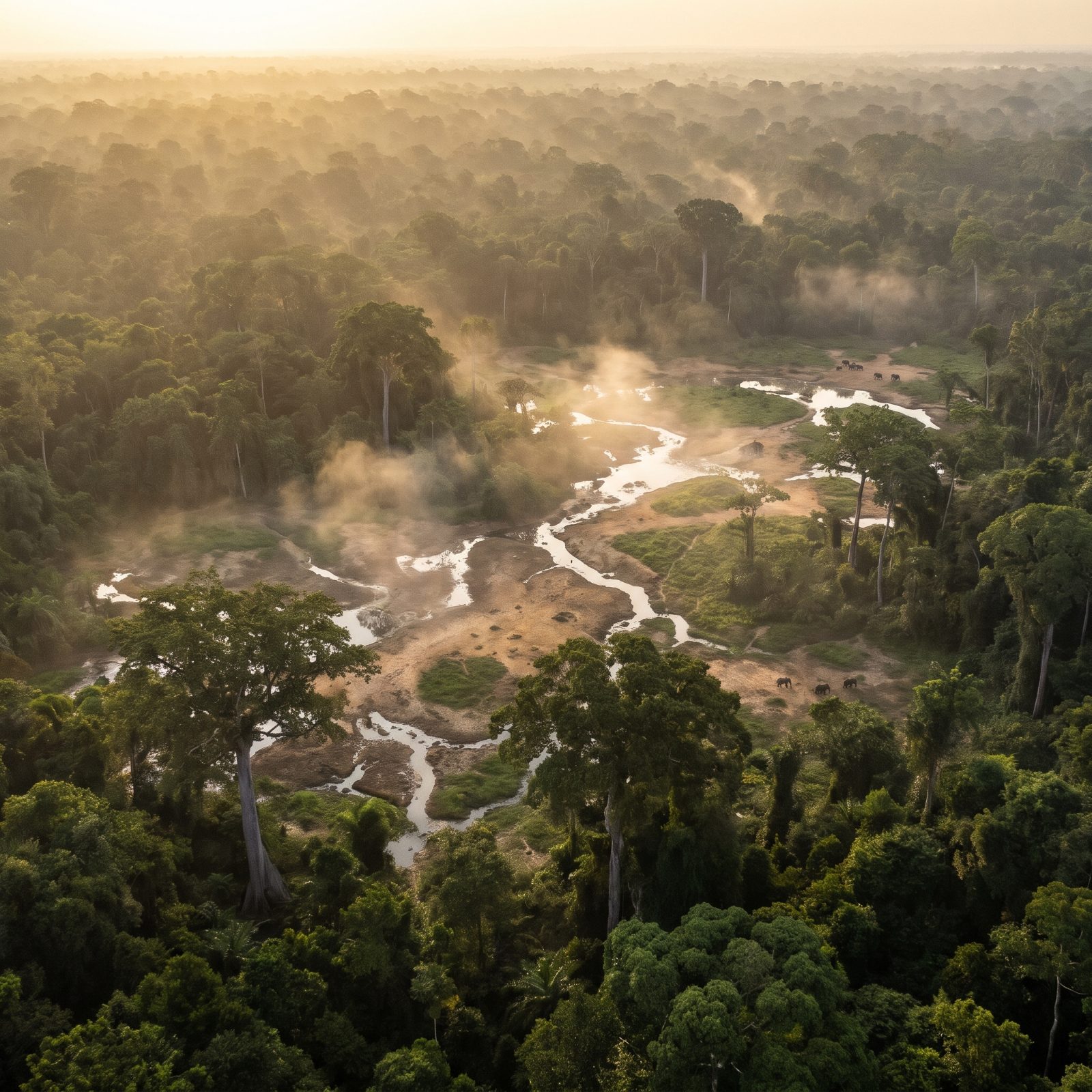
Leave a tropical forest alone and you expect it to close over everything. Odzala has clearings that argue back.
These are bais, open marshy patches where mineral springs and the churn of elephants keep the canopy from sealing. A thousand years without a single human, and the bais are still there, because they were never ours to begin with. Elephants dig for minerals, gorillas graze the sedges, and the sheer traffic keeps saplings from ever taking hold.
The rest of the forest thickens and darkens. The clearings stay open, lit, busy. One of the few places on the planet where you can watch a rainforest flat-out refuse to be uniform.
8. Tarkine Rainforest, Tasmania, Myrtle and Giant Eucalyptus Close Over the Mine Tracks
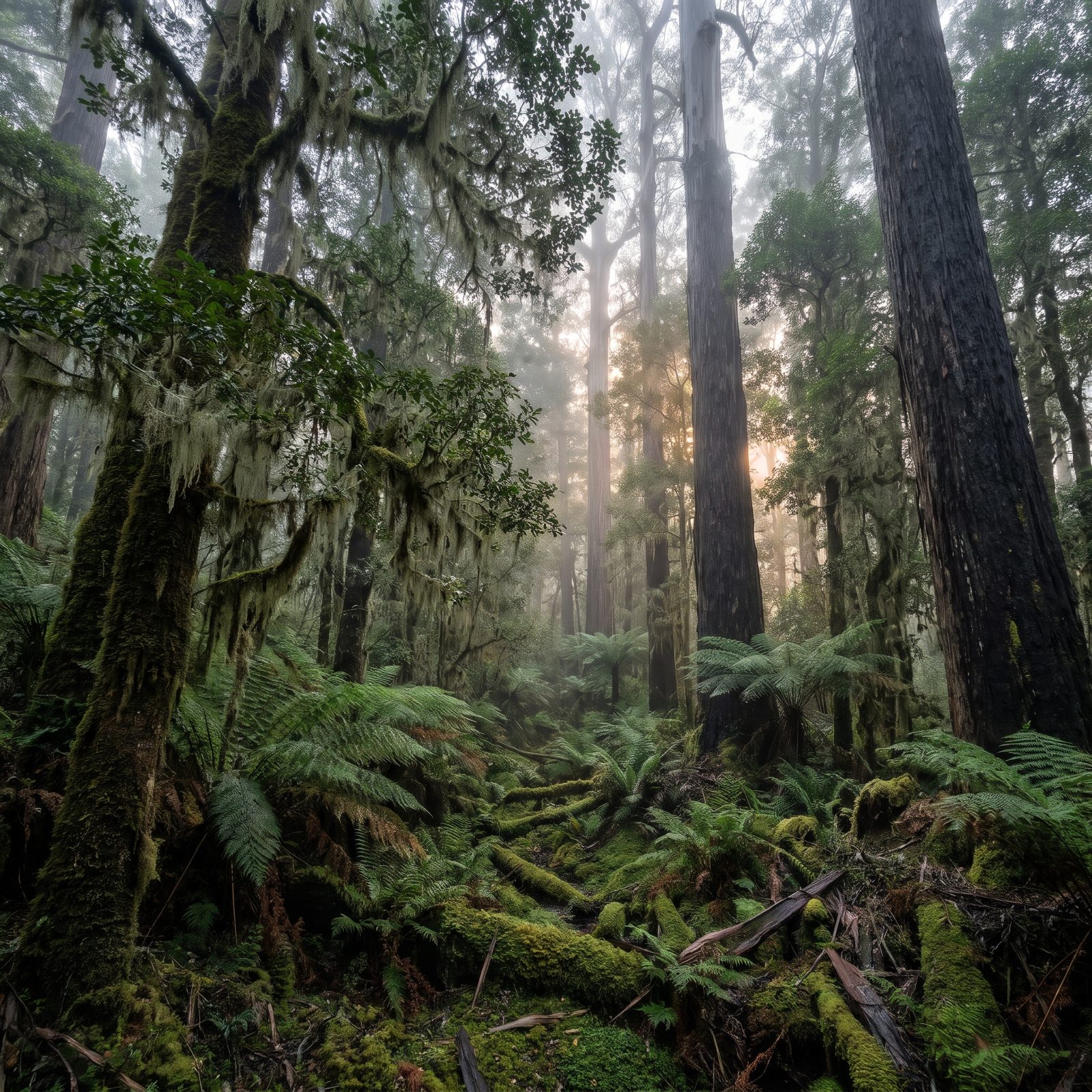
Tasmania’s Tarkine holds the largest tract of cool temperate rainforest in Australia, and it has a long memory. This is Gondwanan forest, a living echo of the old supercontinent, with myrtle beech lineages that predate most of what you’d even recognize as a tree.
Mining scarred parts of it. Tracks, cuttings, tailings. Give it a millennium of neglect and the man ferns move in first, then the myrtle closes the gap, then a Eucalyptus regnans punches skyward toward 300 feet. The mine track? A mossy ditch, still traced by a line of rotting timber posts and rails.
7. Waipoua Forest, New Zealand, A New Generation of Kauri Rises Around Tāne Mahuta
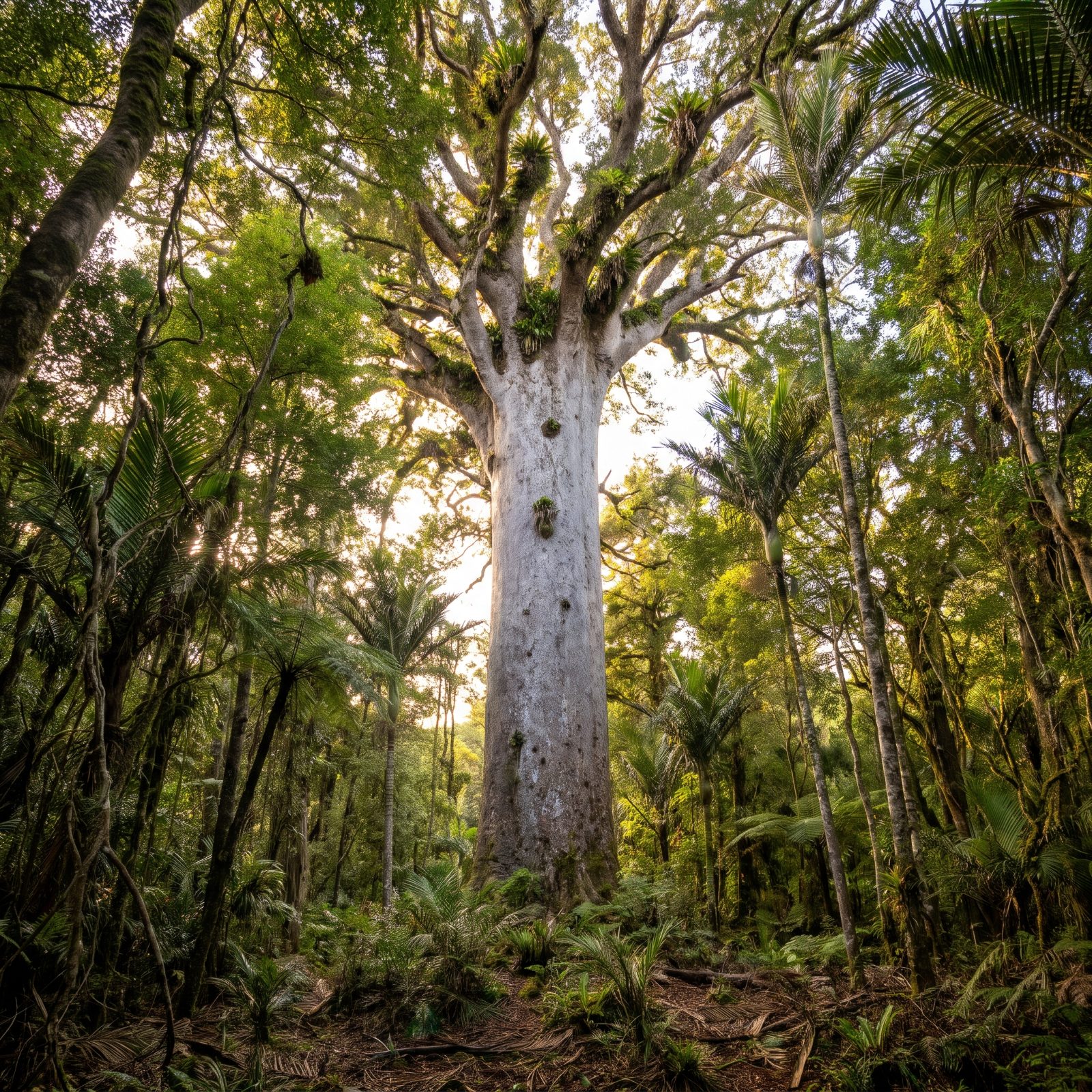
Tāne Mahuta already has a head start on the whole thought experiment. The largest living kauri is reckoned to be well over a thousand years old, maybe closer to two, so it has already watched a human-free millennium or two roll past.
What a protected future buys Waipoua is time. Kauri are slow, deliberate colonists, and a thousand years of no clearing, no roads, and critically no boots carrying kauri dieback spores gives young trees the chance to rise. A thousand years on, the giant stands among a new generation of its own kind, a pale monument wrapped in palms, tree ferns and a crowd of other forest species.
6. Fiordland, New Zealand, Southern Beech Forest Grips the Rock Down to the Waterline
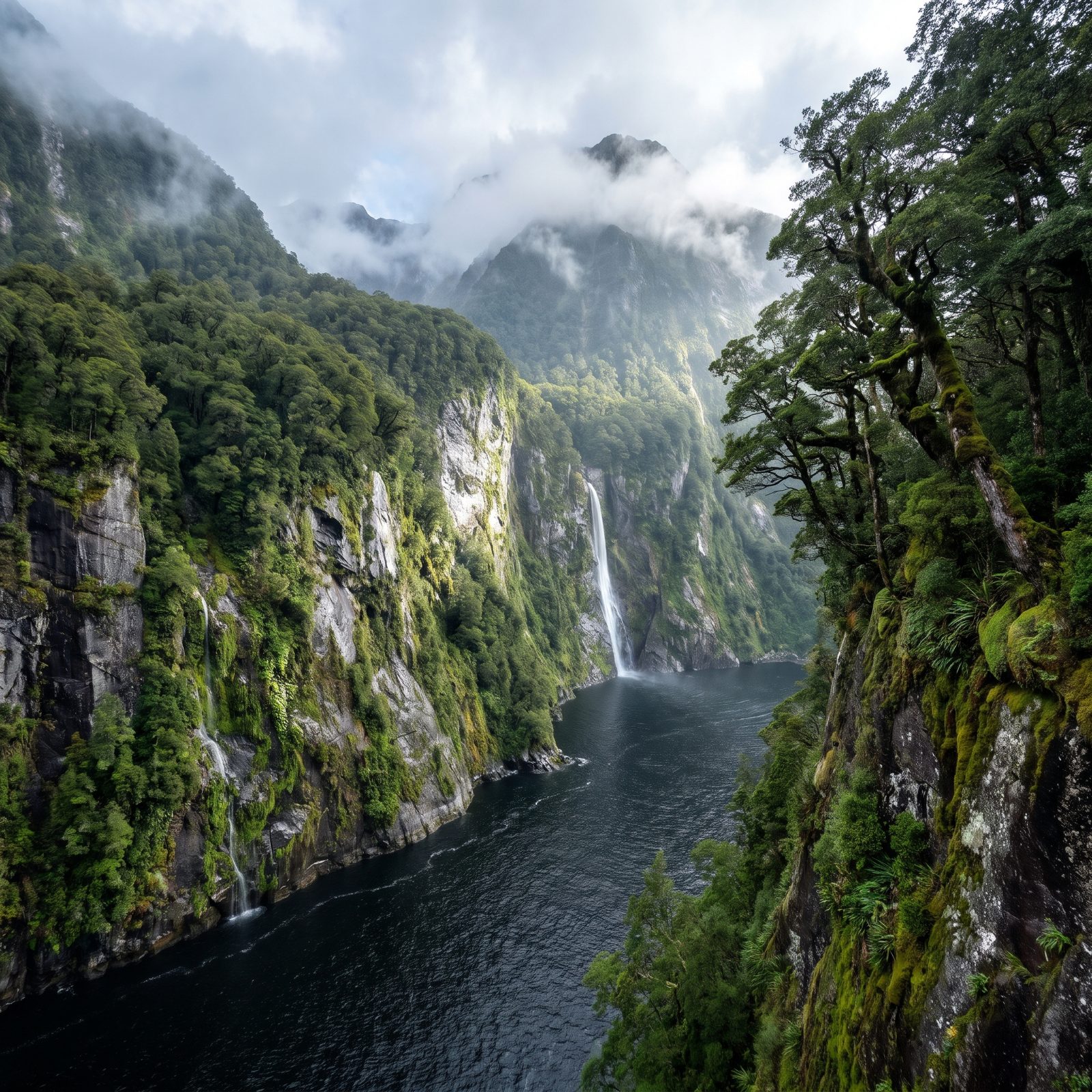
Fiordland barely needs the thought experiment. Great stretches of it already sit untouched, forest welded to rock that drops straight into black fjord water.
The oddity here is the growing medium, or rather the near-total lack of one. Silver beech roots cling to sheer glaciated granite with almost no soil, held together by a living mat of moss. Heavy rain occasionally triggers a tree avalanche, where a whole hillside of vegetation peels off at once and slides into the water. Then it starts over. Moss first, ferns, beech saplings, the slow climb back up the rock.
A thousand years from now it looks almost exactly the same. That’s the point. Some places were already running the experiment long before we turned up to wonder about it.
5. Mount Kinabalu, Malaysia, Forest Zones Climb the Granite in Living Stripes
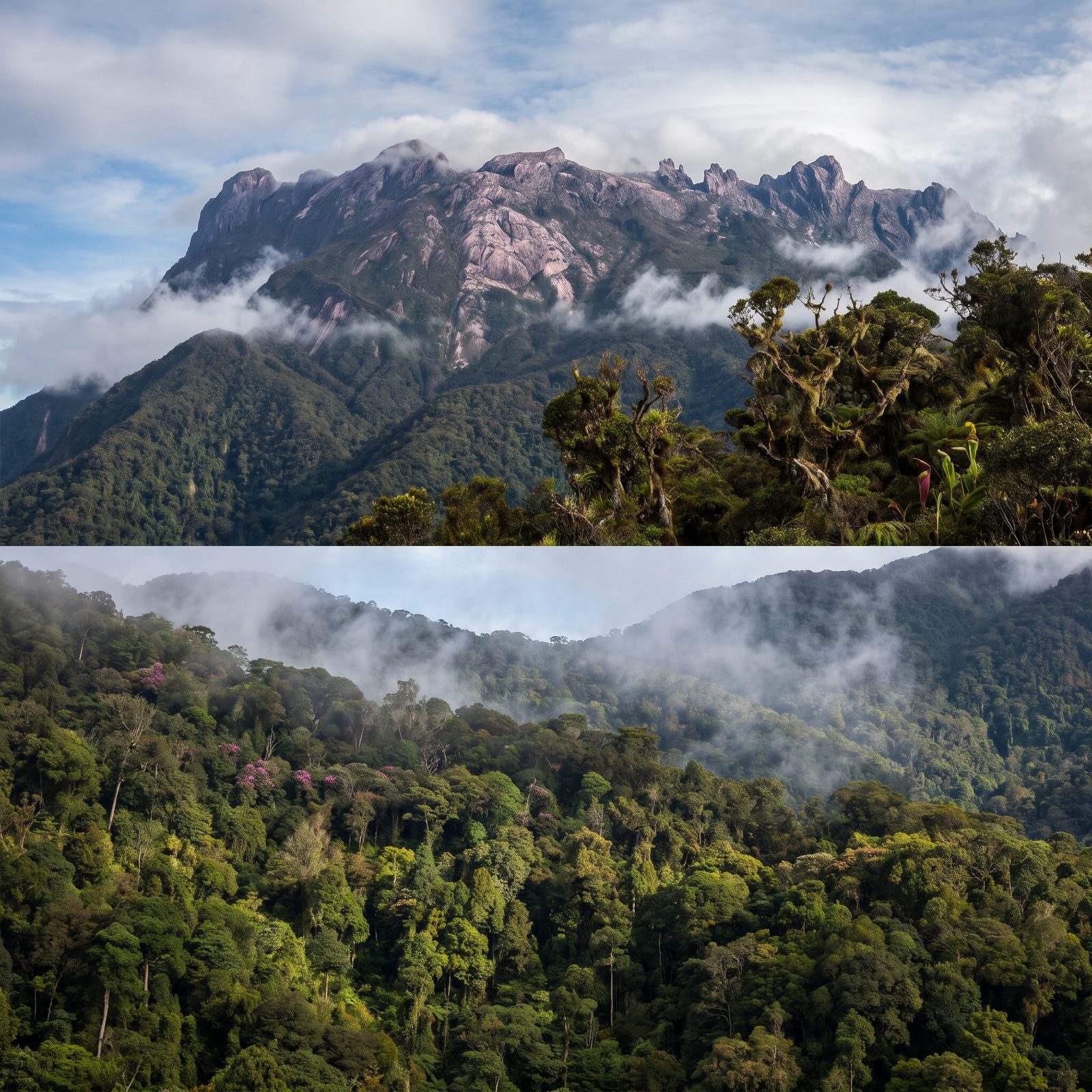
Kinabalu is a staircase of forests, stacked by altitude. Hike it and you climb through four or five different worlds in a single day.
Lowland dipterocarp giants at the bottom give way to oak and chestnut, then to gnarled cloud forest knotted with moss and pitcher plants, then to naked granite the glaciers polished smooth. Pull humans out for a thousand years and the structure holds, because climate drew these lines, not us. The real action is at the edges. Trails erase, the lower slopes thicken, and the montane bands creep upward a little as the climate shifts.
4. The New Forest, England, Open Lawns Vanish Beneath Oak, Beech and Holly
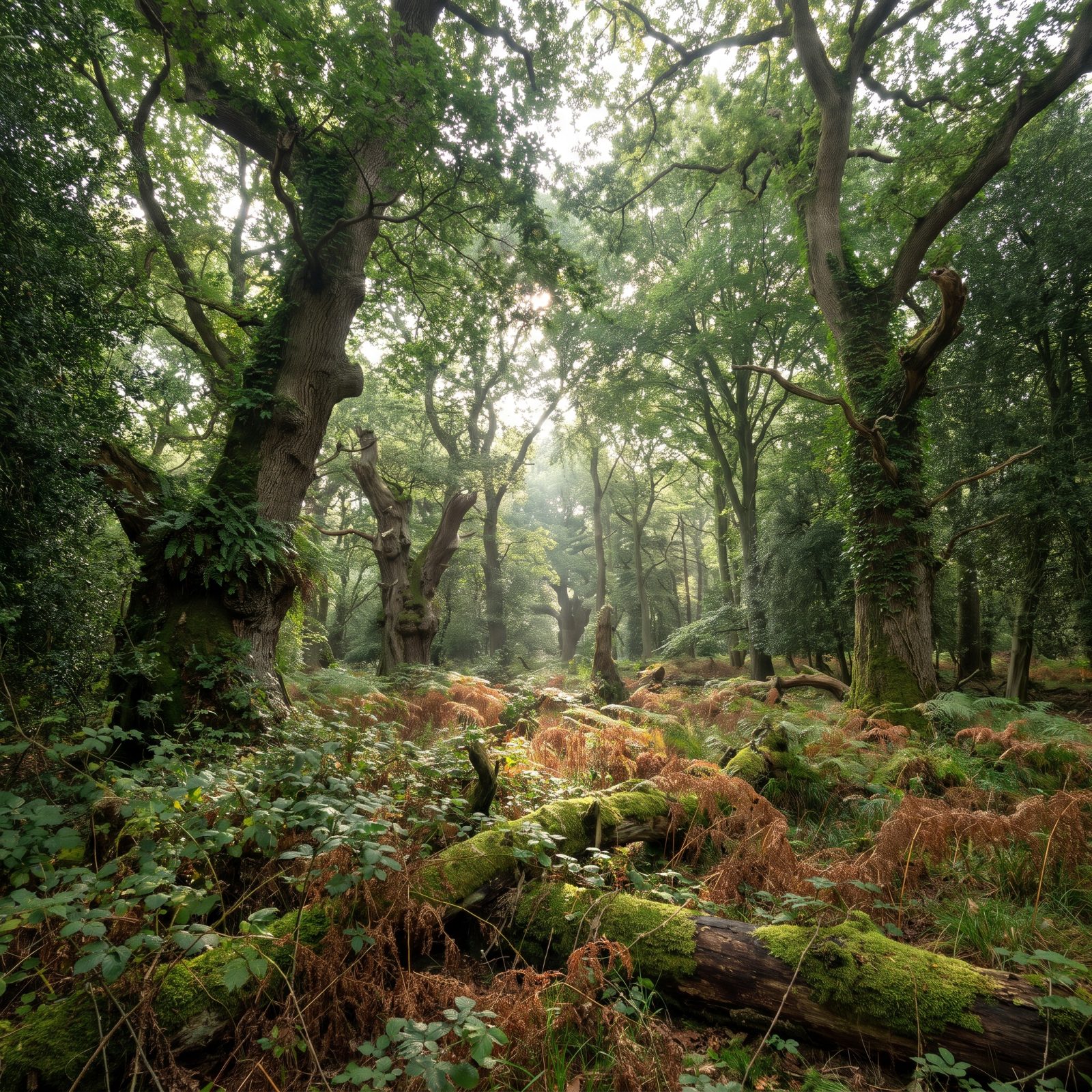
Here is the counterintuitive one. The New Forest’s famous open look is not natural at all. It is held open by teeth.
Those grassy lawns and heaths exist because ponies, cattle, and deer have cropped them for a thousand years under ancient commoners’ rights. Remove the humans and, more importantly, the managed grazing, and the whole place swaps character. Holly and bramble muscle into the lawns first, then oak and beech seedlings push up through the thorny cover that shelters them.
Within a few centuries the open heath is woodland, and the New Forest finally starts looking like a forest that earns the name.
Explaining why the forest’s livestock matter, a practising commoner writes: “In the absence of grazing, open habitats gradually become dominated by coarse grasses, bracken, gorse, and eventually scrub and woodland”
3. Forest of Dean, England, Woodland Reclaims the Quarries and Rail Beds
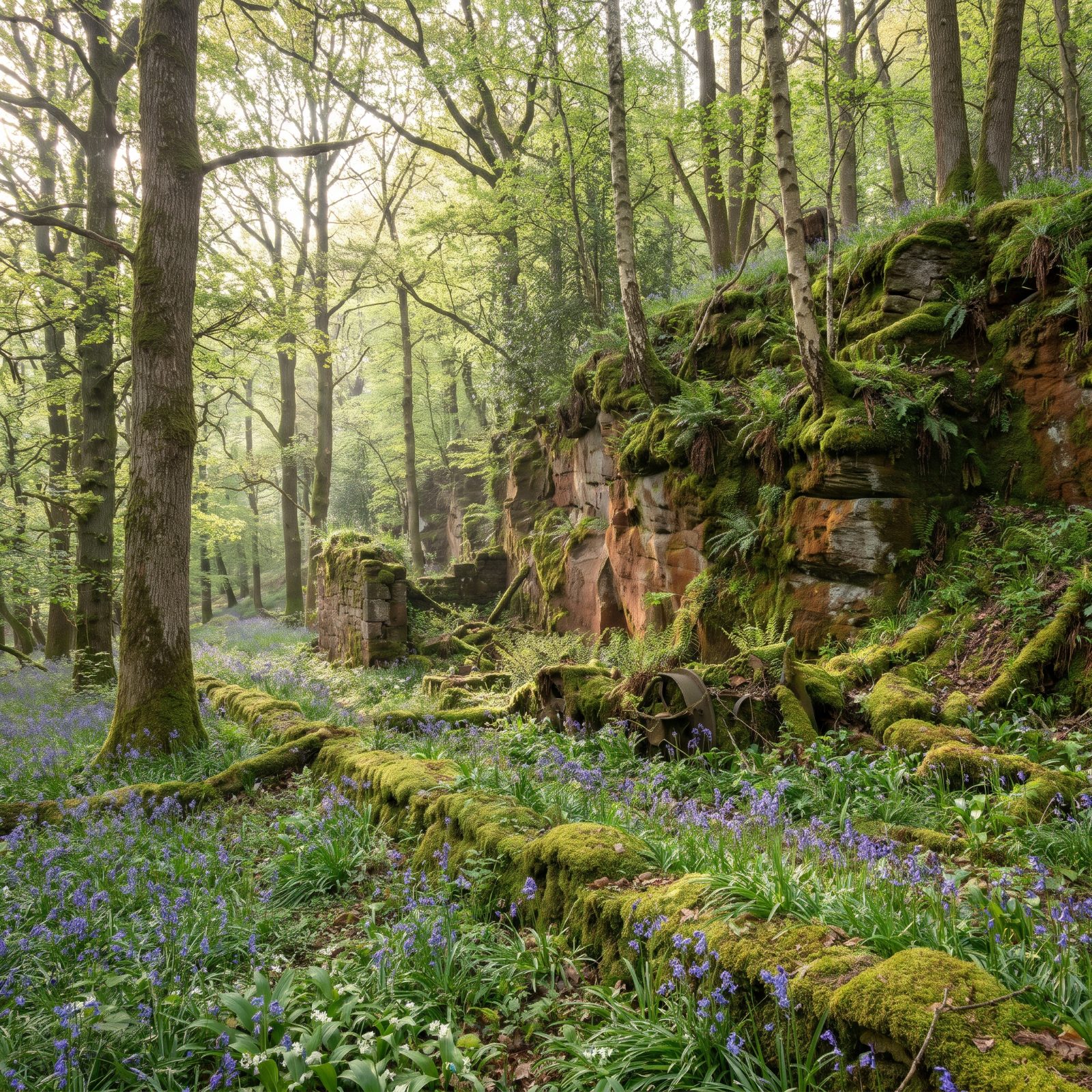
The Forest of Dean was an industrial engine for centuries. Coal, iron, stone, timber. It carries the scars under the leaves.
Give it a thousand quiet years and the woodland becomes a patient demolition crew. Quarry faces soften as ferns colonize the ledges and birch roots pry the sandstone apart, railway embankments sink into ferny ridges with no rails, and old mine shafts cap themselves with debris and moss. Slow, relentless, and thorough.
Oak and beech close over the top. Within a few centuries you’d need a geologist to tell you anything was ever dug here.
2. Laurisilva of Madeira, Portugal, Primeval Laurel Forest Flows Down the Old Terraces
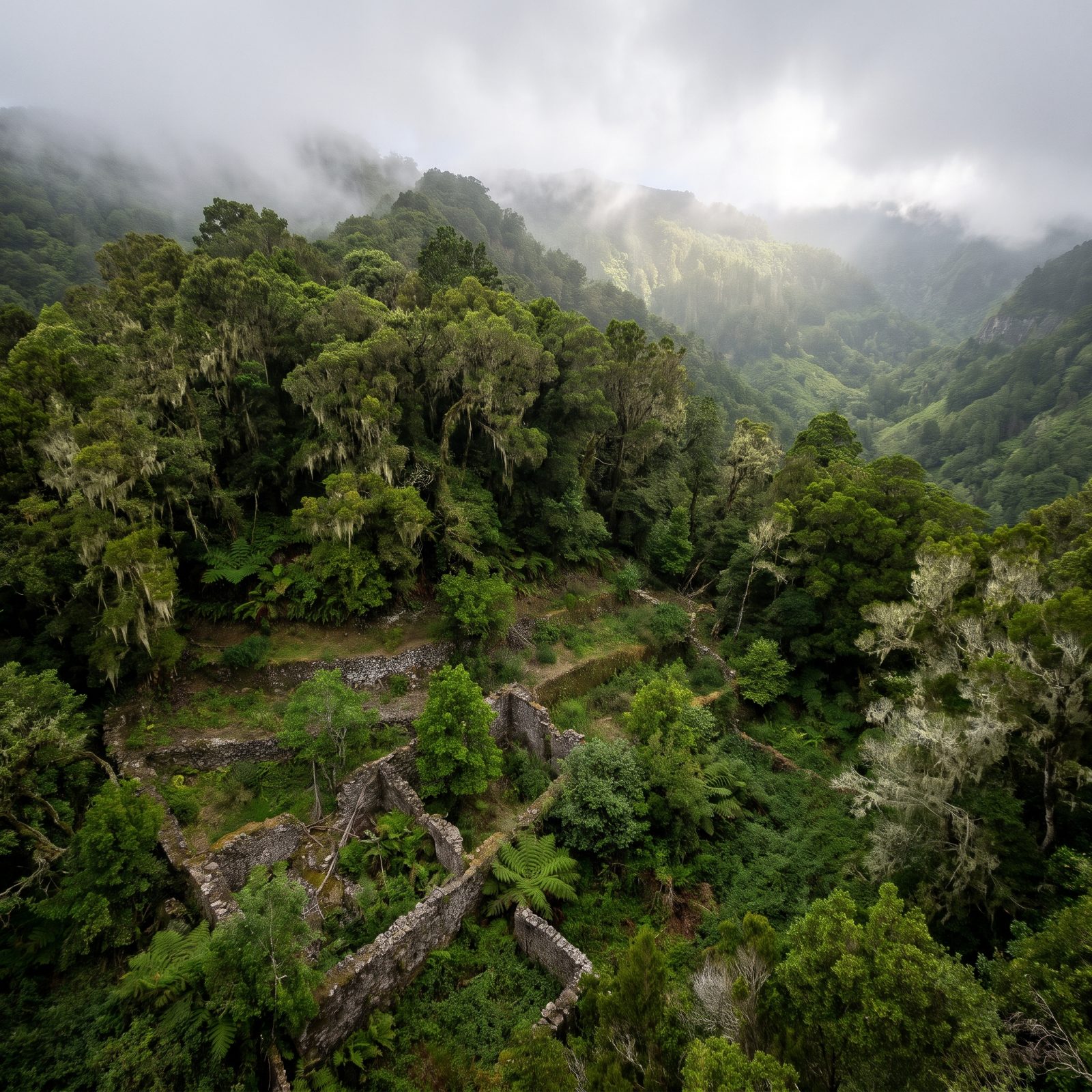
Madeira’s laurisilva is a relic. This is the kind of laurel forest that once blanketed much of southern Europe and the Mediterranean before the ice ages scrubbed it out almost everywhere. On Madeira, it hung on.
The forest drinks mist, literally. Horizontal fog condenses on its waxy leaves and drips to the ground, watering the whole island in the process. Below the surviving trees sit centuries of hand-built agricultural terraces, stone walls carved into near-vertical slopes by generations of sweat.
A thousand years without maintenance and those walls fail. Laurel seedlings root in the cracks, ferns spill over the edges, and the forest pours back downhill into ground humans spent lifetimes claiming. The ancient wood reclaiming the farm, one collapsed terrace at a time.
1. Caledonian Forest, Scotland, Scots Pine Spreads Back Across the Empty Glens
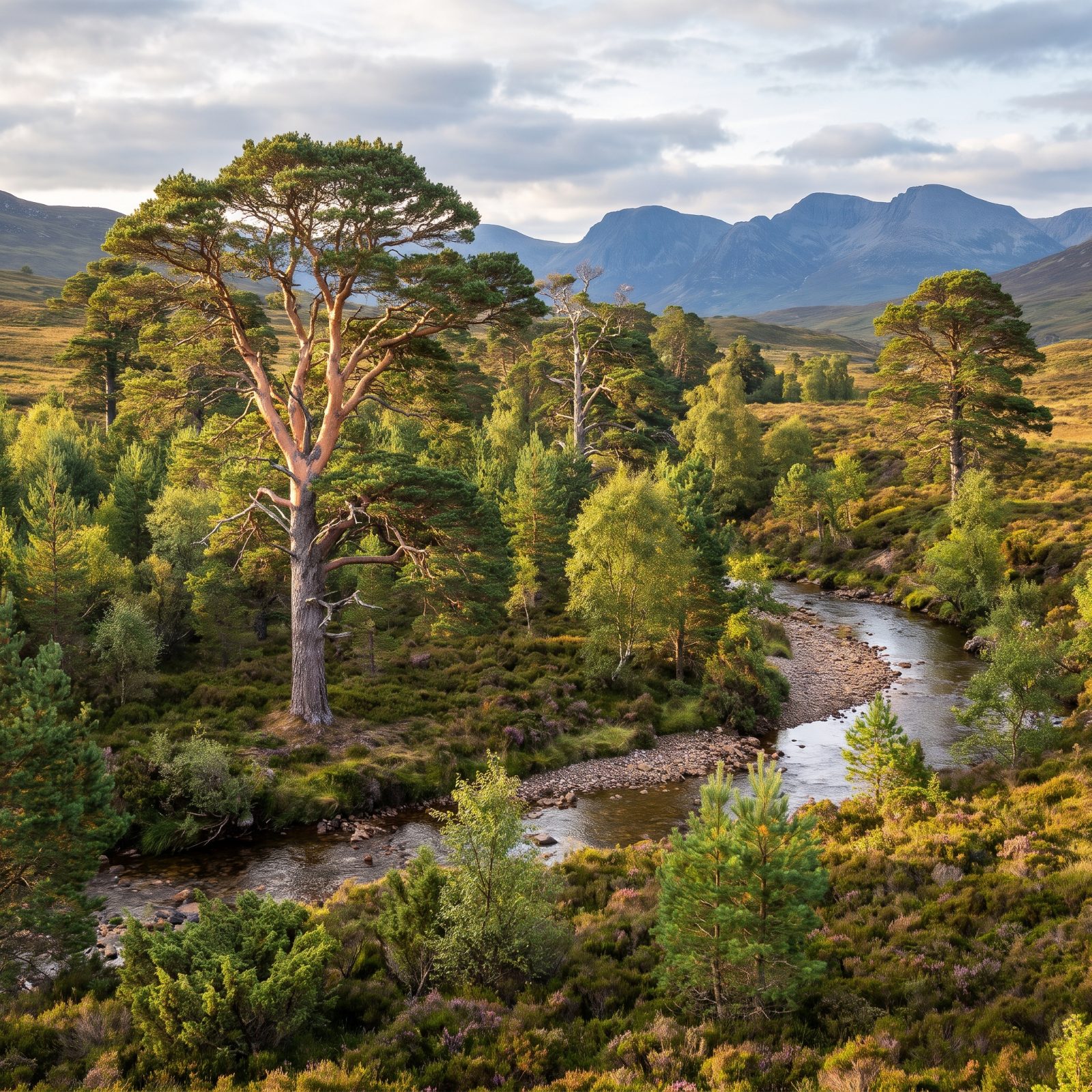
Scotland’s Highlands look wild and empty. That emptiness is a wound. The Caledonian forest once covered much of the Highlands, and today only scattered fragments survive, most of it grazed to a stump by deer and cleared long ago.
The old survivors are called granny pines, broad-crowned Scots pines with that unmistakable orange bark, some of them centuries deep. They stand alone in the heather because nothing younger lives through the deer.
Take away the people and the sporting estates that keep deer numbers unnaturally high, and the glens fill in. Birch and rowan colonize first, then pine seedlings follow, then a real forest of pine and juniper climbs back up the braes.
Speaking about a fenced stand of ancient Highland pines, a senior ecologist says: “Fencing is only a temporary fix, but for now it’s a vital way of giving these precious pinewoods a fighting chance of recovery until effective landscape-scale deer management can be properly established”