
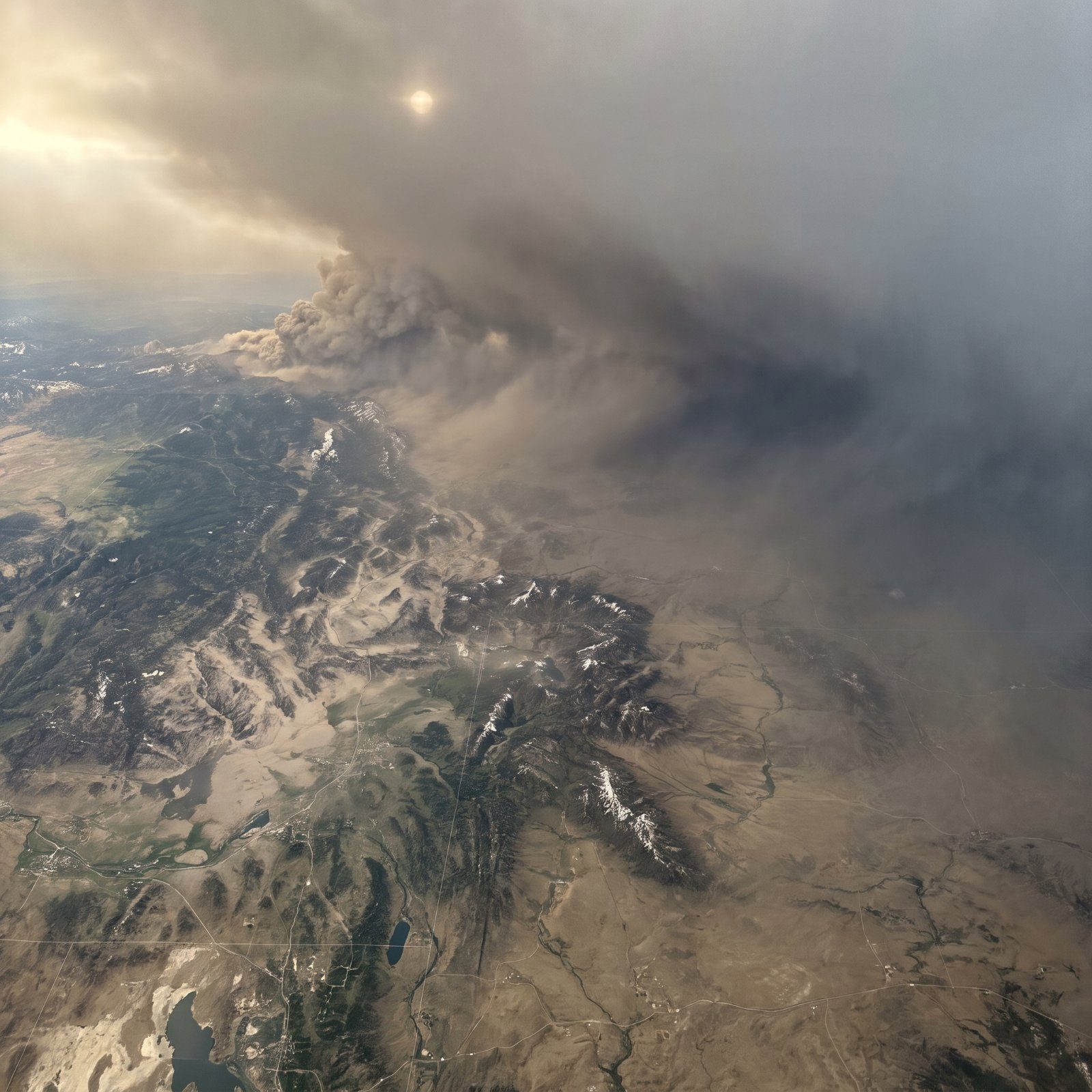
Yellowstone is not due to erupt. Let’s clear that up before anyone panics at the breakfast table. The last caldera-forming eruption happened roughly 640,000 years ago, and the odds of another in any given year are vanishingly small. But scientists model worst cases anyway, because that’s how you prepare for anything at all. So here’s one. A large eruption in late summer, prevailing winds shoving ash east and northeast, a plume feeding fallout across the Rockies and the High Plains as it goes. From that single scenario we built these plausible first-morning city scenes. The science is real. The eruption is made up. Keep that firmly in mind as you read.
Please note that some of the images in this article were created with the assistance of AI.
25. West Yellowstone, Montana, Darkness at the Edge of the Caldera
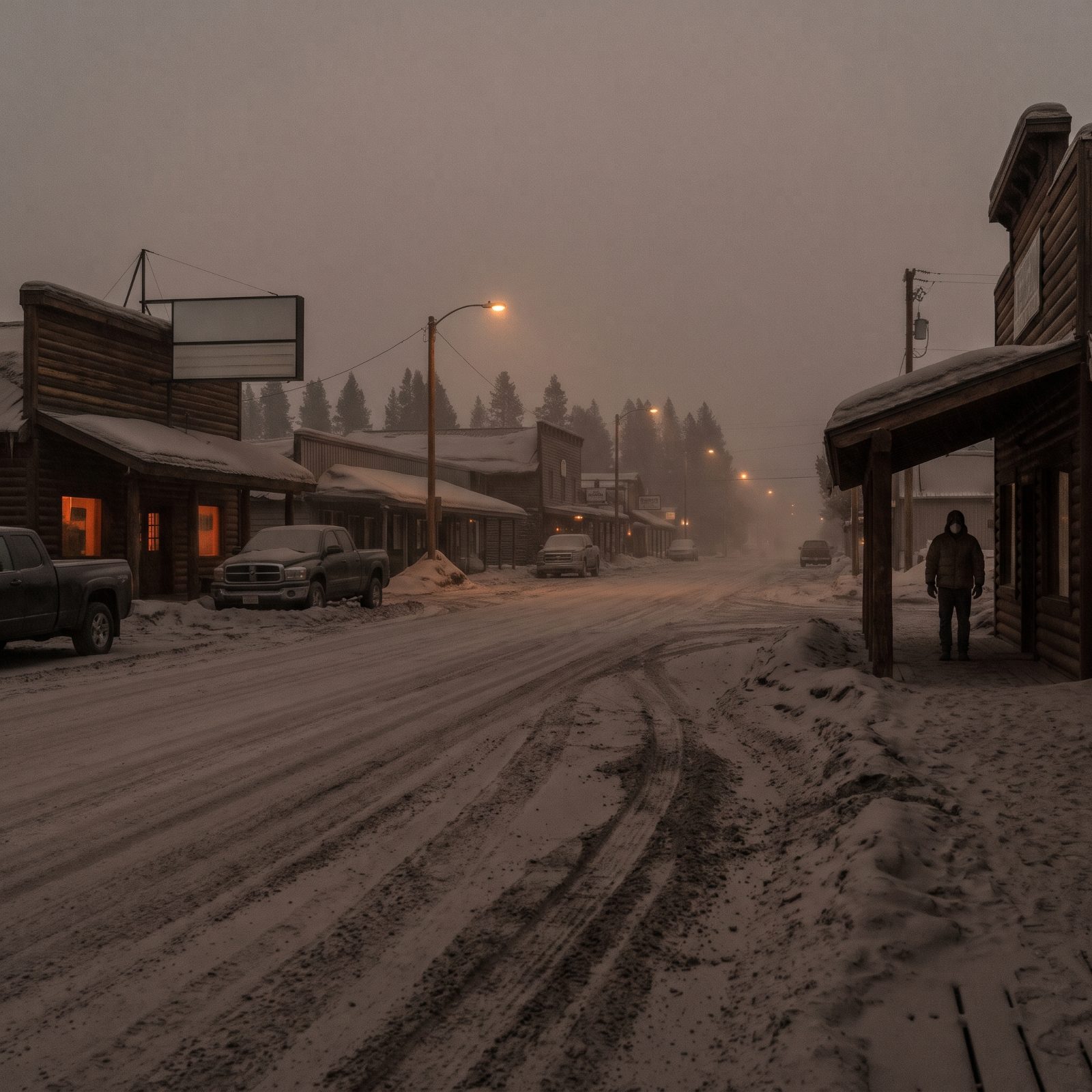
Just miles from a caldera-forming vent, you wouldn’t watch the eruption. You’d be inside it. The sky over West Yellowstone goes dark in this scenario before the ash even settles, the suspended cloud clamped over the town like a dirty lid.
Proximal fallout here could run anywhere from several inches to a foot or more within hours. Those ranges are genuinely uncertain, hinging on eruption size and whether the column collapses. Wet ash is the part people forget. Heavier than snow, abrasive, and it slips off nothing — roofs would groan under the load.
24. Billings, Montana, Rooftops Buried Under Gray Fallout
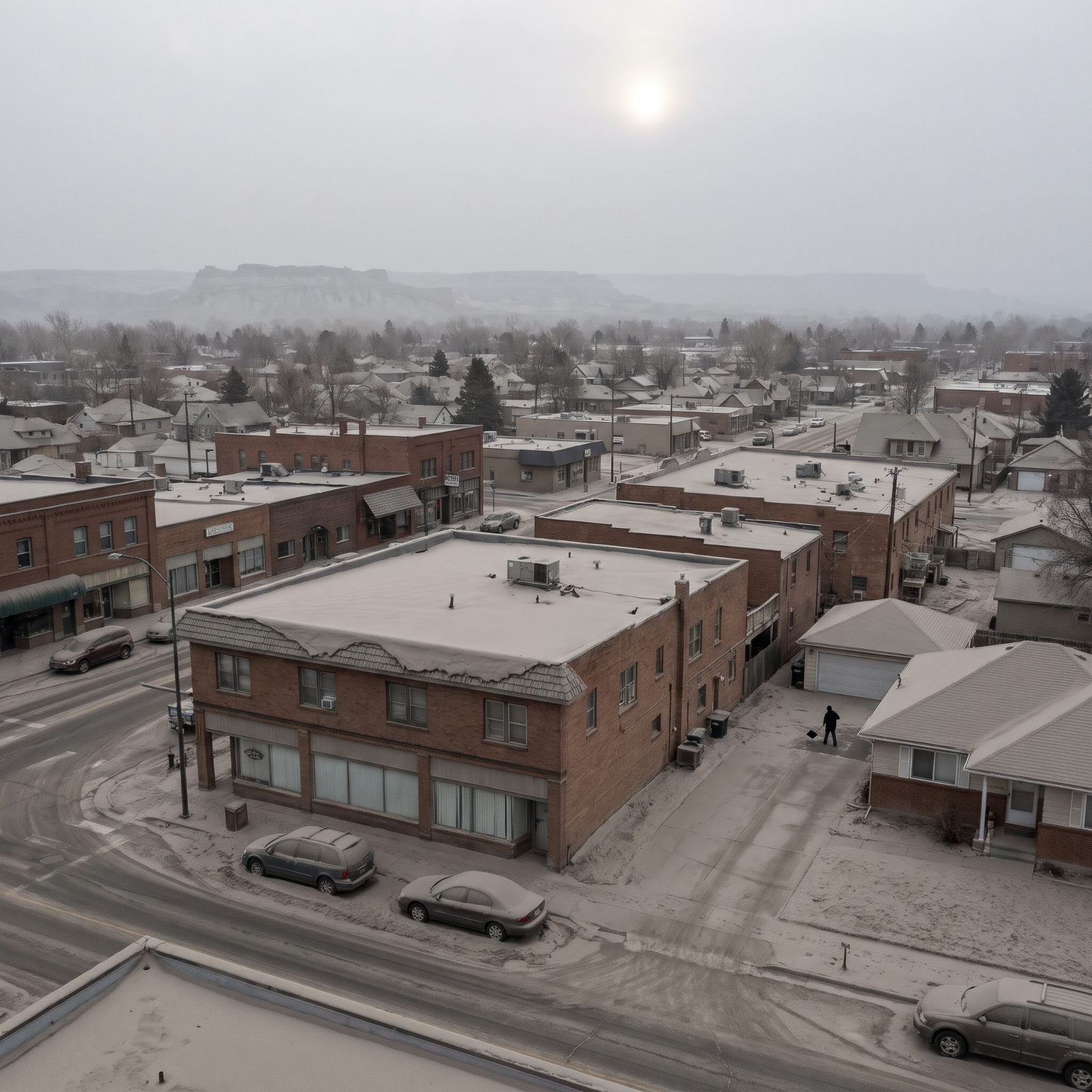
Billings sits downwind in this scenario, far enough to dodge the darkness but squarely in the fallout corridor. Step outside that first morning and the whole world is the color of wet cement.
Flat commercial roofs are the worry here. Ash doesn’t blow off a flat roof the way it slides from a steep one, so it just piles up and stays. A few inches of wet ash can outweigh the same depth of snow, and the structural load is no joke. As for the famous rimrocks that ring the city? Reduced to pale suggestions behind the haze.
23. Missoula, Montana, Fine Ash Settling Between the Mountains
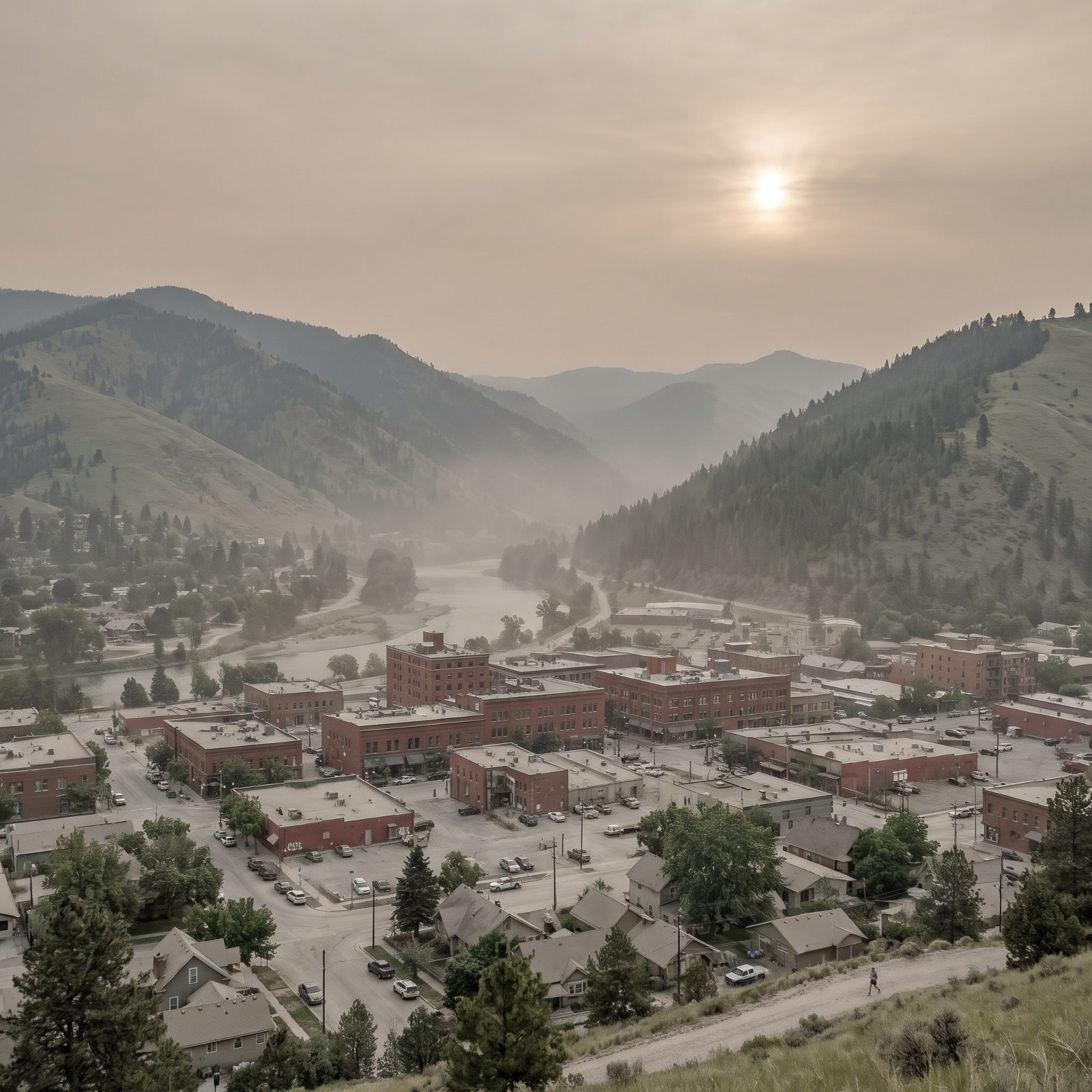
Missoula gets lucky here, relatively. Tucked farther west and partly off the main dispersal axis, the valley catches a finer, thinner dusting — a gritty gray film on your windshield rather than drifts against the door.
Here’s the catch with valleys: they trap air. Fine ash that settles low in a bowl like Missoula’s tends to linger, hazing everything for days after the fall stops. The Clark Fork and the surrounding peaks would blur into soft gray shapes, still there but muted, like a photograph left too long in the sun.
22. Great Falls, Montana, An Ash Veil Across the Missouri River
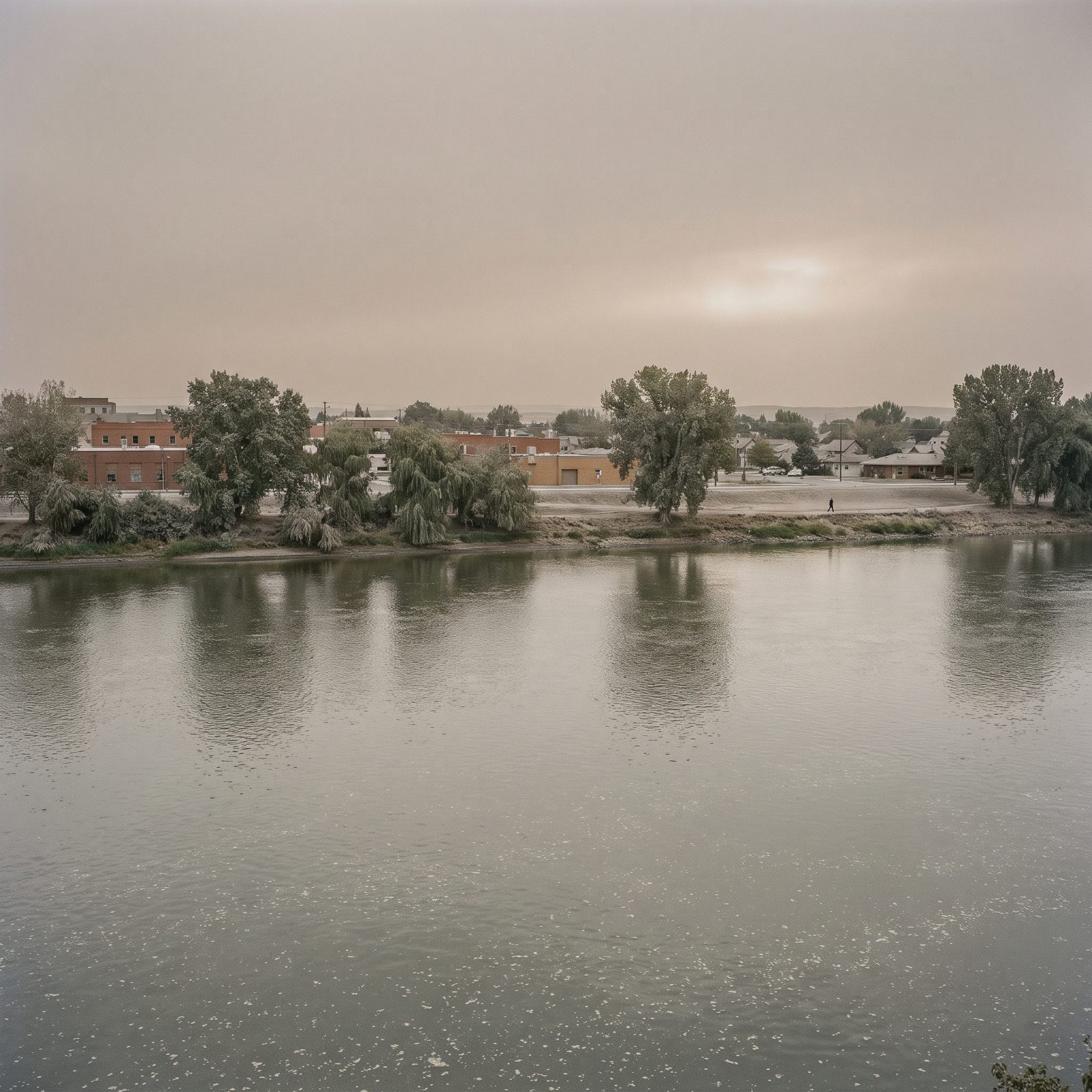
Out on the open plains east of the Rockies, Great Falls would lose its enormous sky first. That big-country horizon you can see for forty miles collapses to a flat gray ceiling you could almost reach up and touch.
Ash on water does strange things. It floats at first, a gray skin stretched over the Missouri, before it waterlogs and sinks. In a real event that spells trouble for fish gills, for water intakes, for anything downstream that drinks the river. And the cottonwoods along the bank? Coated and still, every leaf carrying its small gray burden.
21. Helena, Montana, Streetlights Burning Through the Morning Gloom
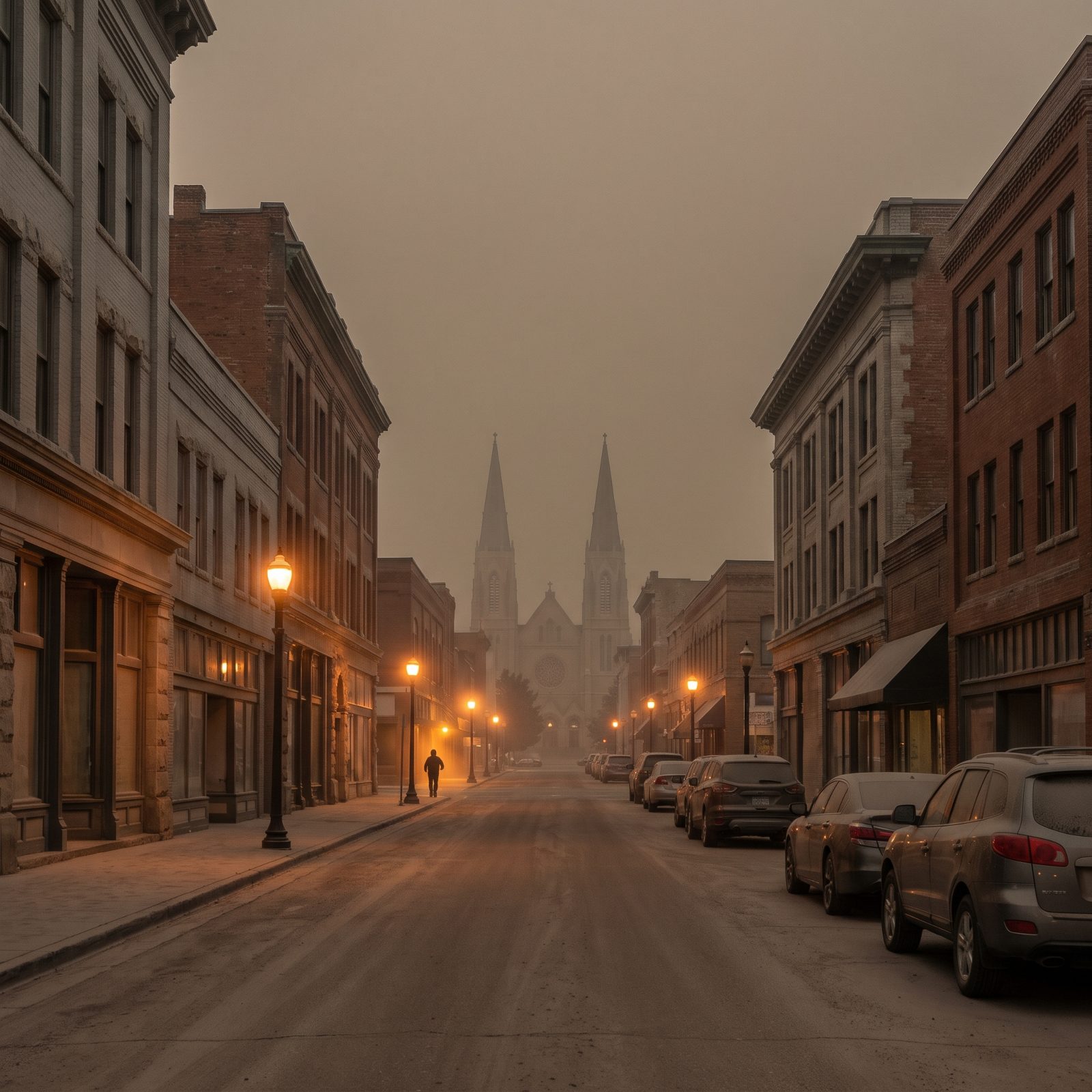
Streetlights don’t lie. If the photocells are burning at nine in the morning, the sky has given up. Helena sits in a middle zone in this scenario — enough ash overhead to drop daylight to an amber dusk, not quite enough to bury the place.
The eeriest part isn’t the ash. It’s the silence. Fine ash deadens sound the way fresh snow does, and the automatic lamps keep glowing against a brown sky that simply refuses to brighten, cathedral spires half-dissolved in the haze above them. Power grids, for what it’s worth, hate ashfall. Wet ash conducts, it flashes over insulators, and that’s one reason the lights often start failing early in these events.
20. Butte, Montana, Volcanic Dust Coating the Historic District
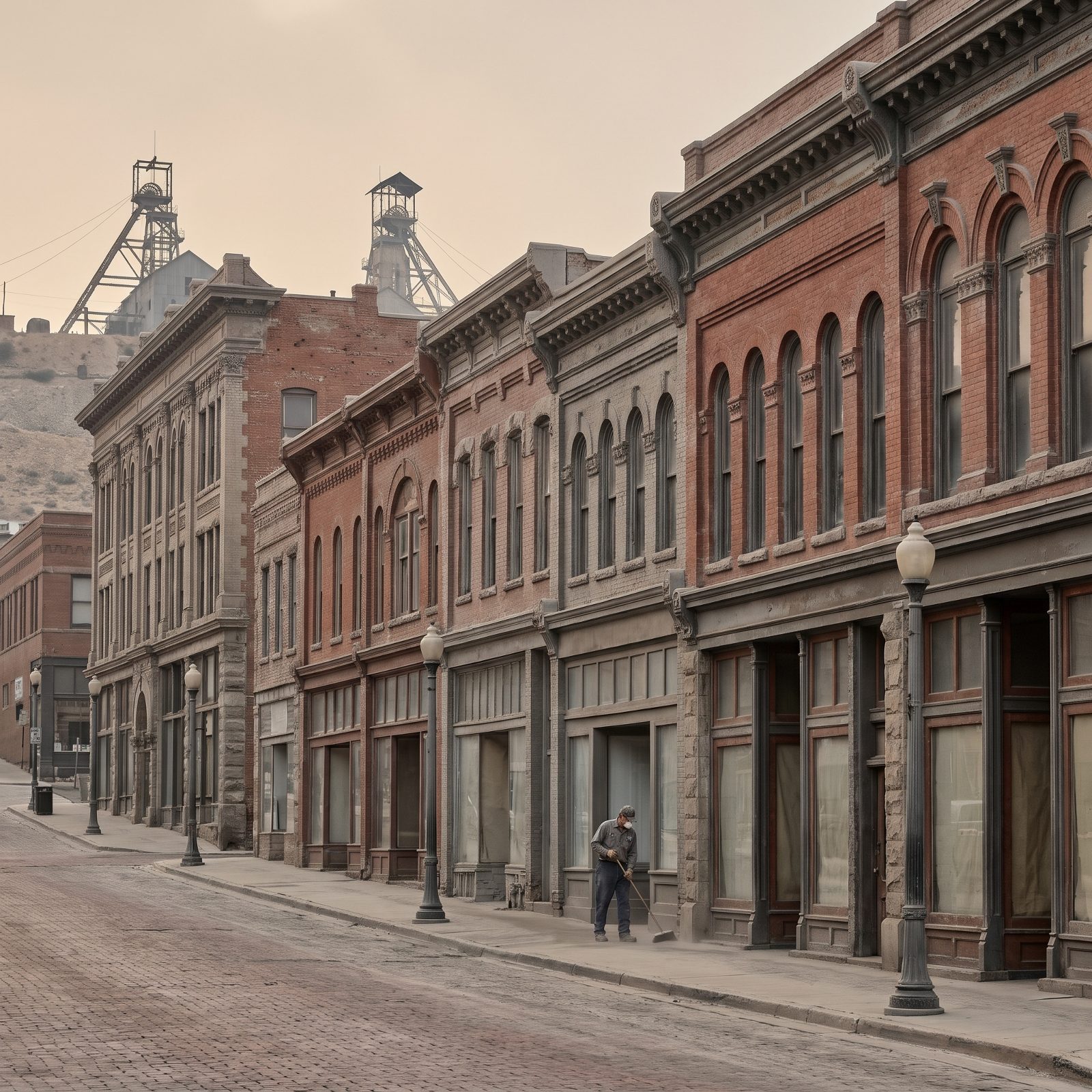
Butte’s uptown is all carved stone and brick from the copper-boom years, and ash finds every ledge of it. The dust sinks into cornices and window hoods and ornamental scrollwork, gray in every groove, aging the whole historic district a hundred years in a morning.
Farther south and west of the main plume axis, Butte catches a lighter dose here — probably a dusting measured in fractions of an inch to maybe an inch or two, though even that number carries wide uncertainty. Enough to coat and annoy. Nowhere near enough to crush a roof.
19. Jackson, Wyoming, The Tetons Vanishing Behind the Plume
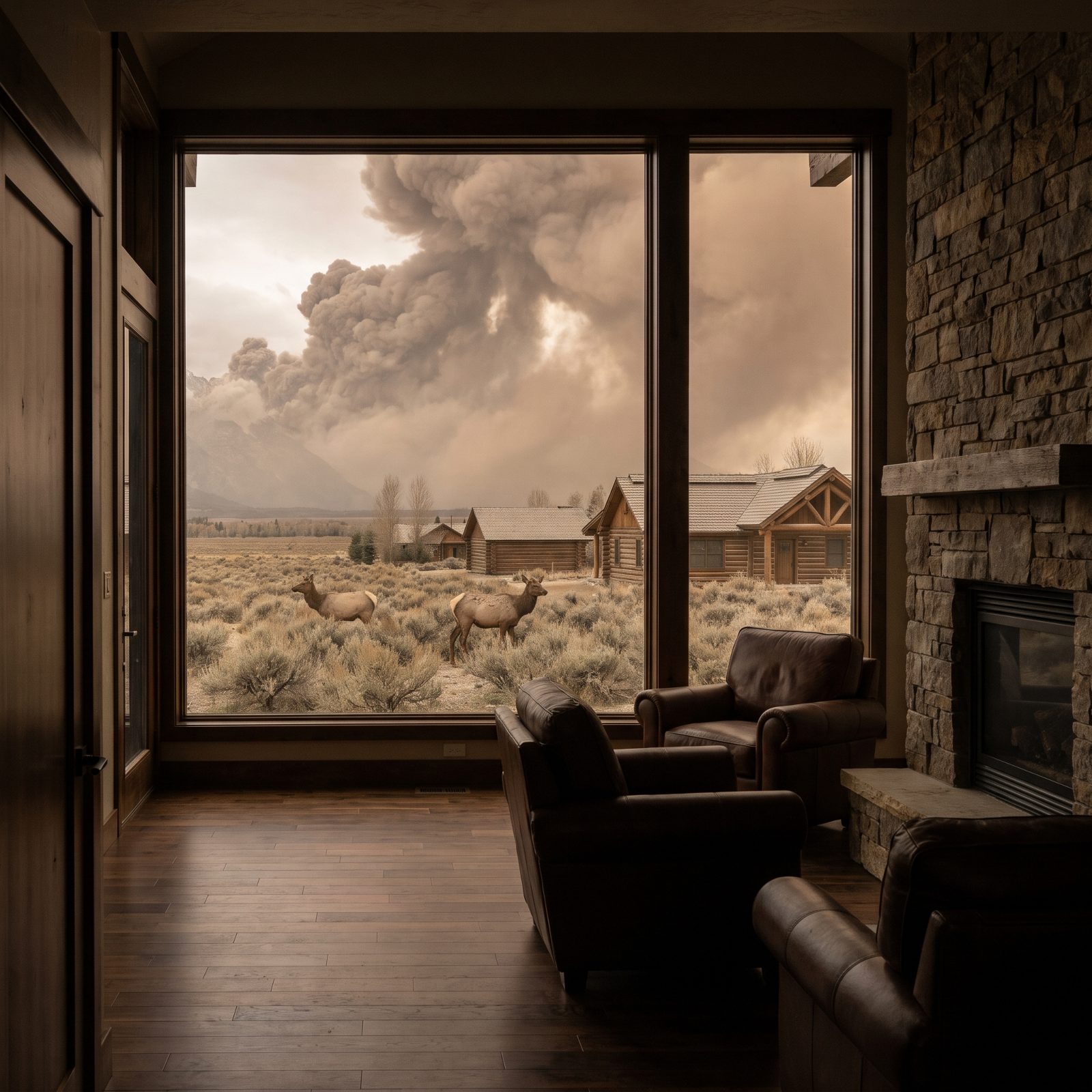
The gut-punch in Jackson isn’t the ash on the ground. It’s the mountains vanishing behind the plume.
You know the Teton skyline — those granite teeth every postcard sells. The plume to the north towers over them in this scenario, and the first morning they’re nearly gone, just a few faint, hazy peaks at the far edge of a wall of brown-gray air. The valley floor still looks dry and ordinary, with only a light dusting on the cabin roofs, at least for now. Elk in the sagebrush, still tan and brown, wandering through the brush as if nothing has changed. It’s the kind of scene that reminds you how fast a landscape you trust can slip away.
The mountains don’t fall. They just fade from sight behind it, and that is somehow worse.
18. Cody, Wyoming, Ash Falling Across an Empty Main Street
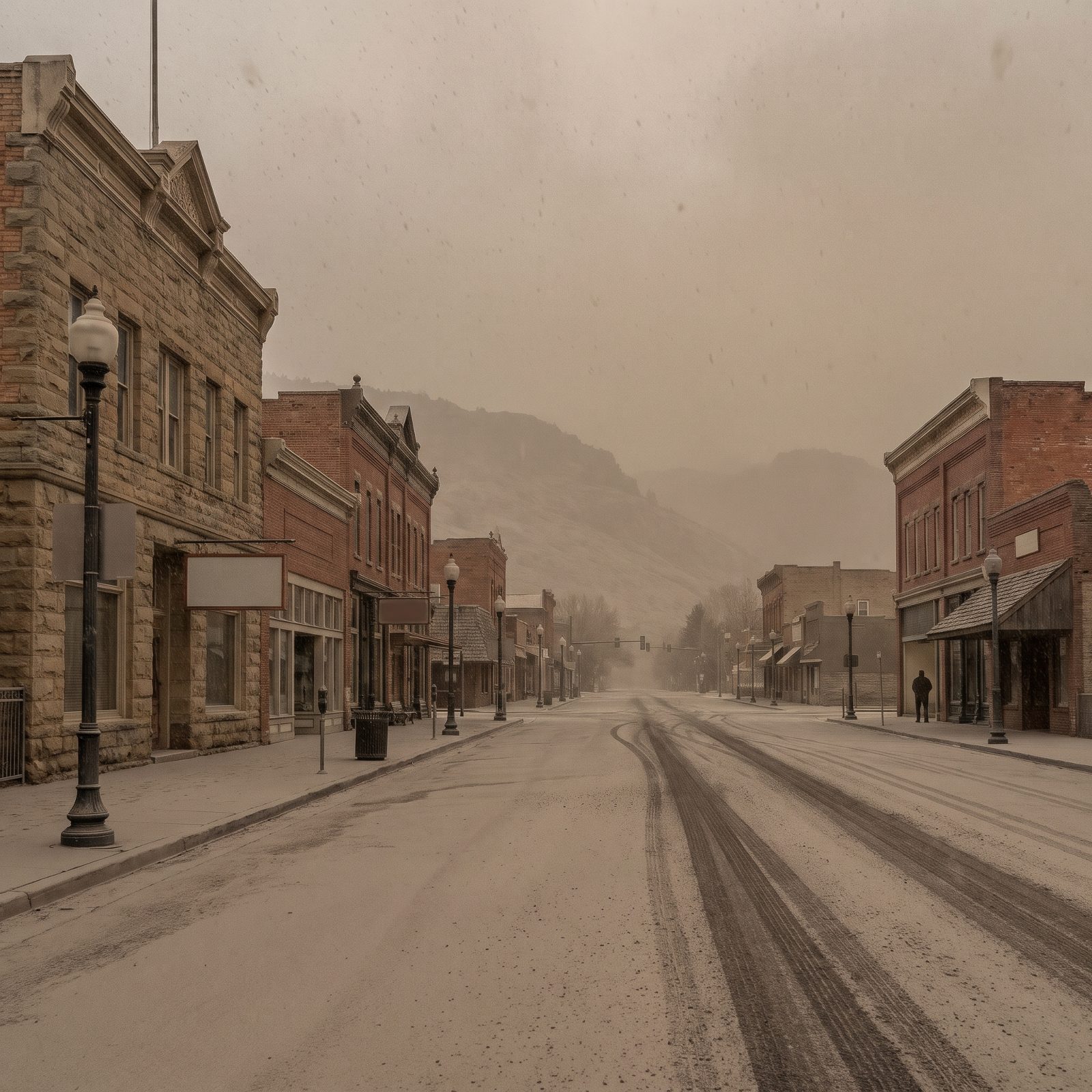
Cody’s wide western Main Street, built for parades and horse traffic, would sit nearly empty under falling ash, one lone figure standing on the right-hand sidewalk in front of a dark storefront. That’s the detail that gets you. Not chaos. Emptiness.
Close enough to Yellowstone’s east gate to take a solid dose in this scenario, Cody sees ash drifting down like gray snow, settling onto the Irma Hotel’s stone front and the old lampposts. Tire tracks from somebody who bolted early cut through all that gray, and the Absaroka foothills that usually frame the town would loom through the haze, dulled to a dusty brown.
17. Casper, Wyoming, Windblown Dust Obscuring the Skyline
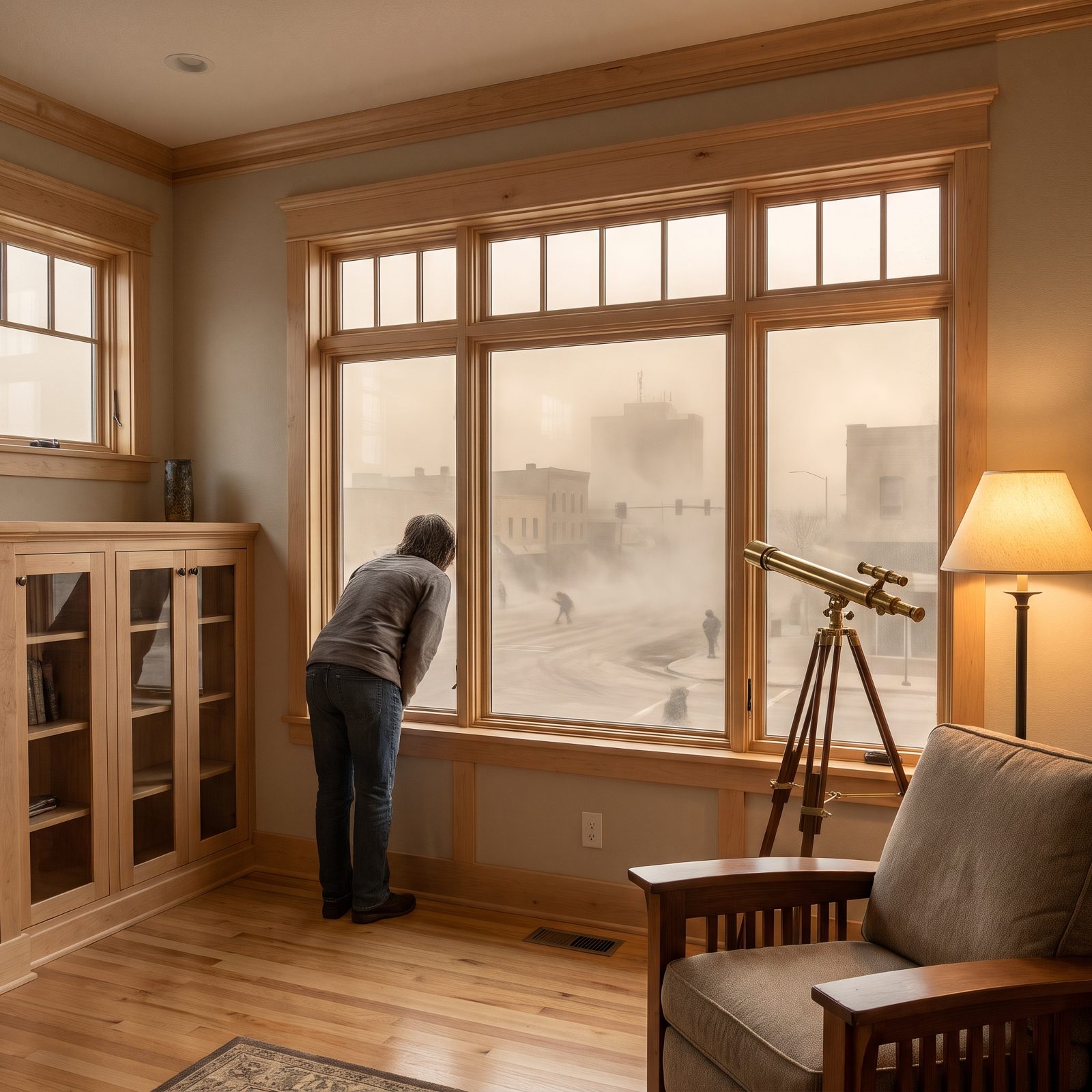
Farther out on the plains, Casper’s fallout would be thinner — but wind changes the math entirely. Loose dry ash on open prairie doesn’t sit still. It lifts, it rolls, it drifts, so even a modest deposit becomes a gritty haze that hides the skyline and never quite settles.
Scientists call this the resuspension problem, and they take it seriously. Ash that fell once can keep blowing around for weeks afterward, fouling the air long after the eruption goes quiet. Casper Mountain disappears to the south. Visibility swings with every gust — clearing for a breath, then closing right back down.
16. Idaho Falls, Idaho, Thick Fallout Along the Snake River
Here’s the twist. The prevailing winds in this scenario mostly push east and northeast, yet Idaho Falls sits close enough to the southwest that a shifting lower-level flow — or a column that spreads in all directions at once — could still bury it. Plenty of Yellowstone ash models show the terrain to the west and southwest taking a serious hit.
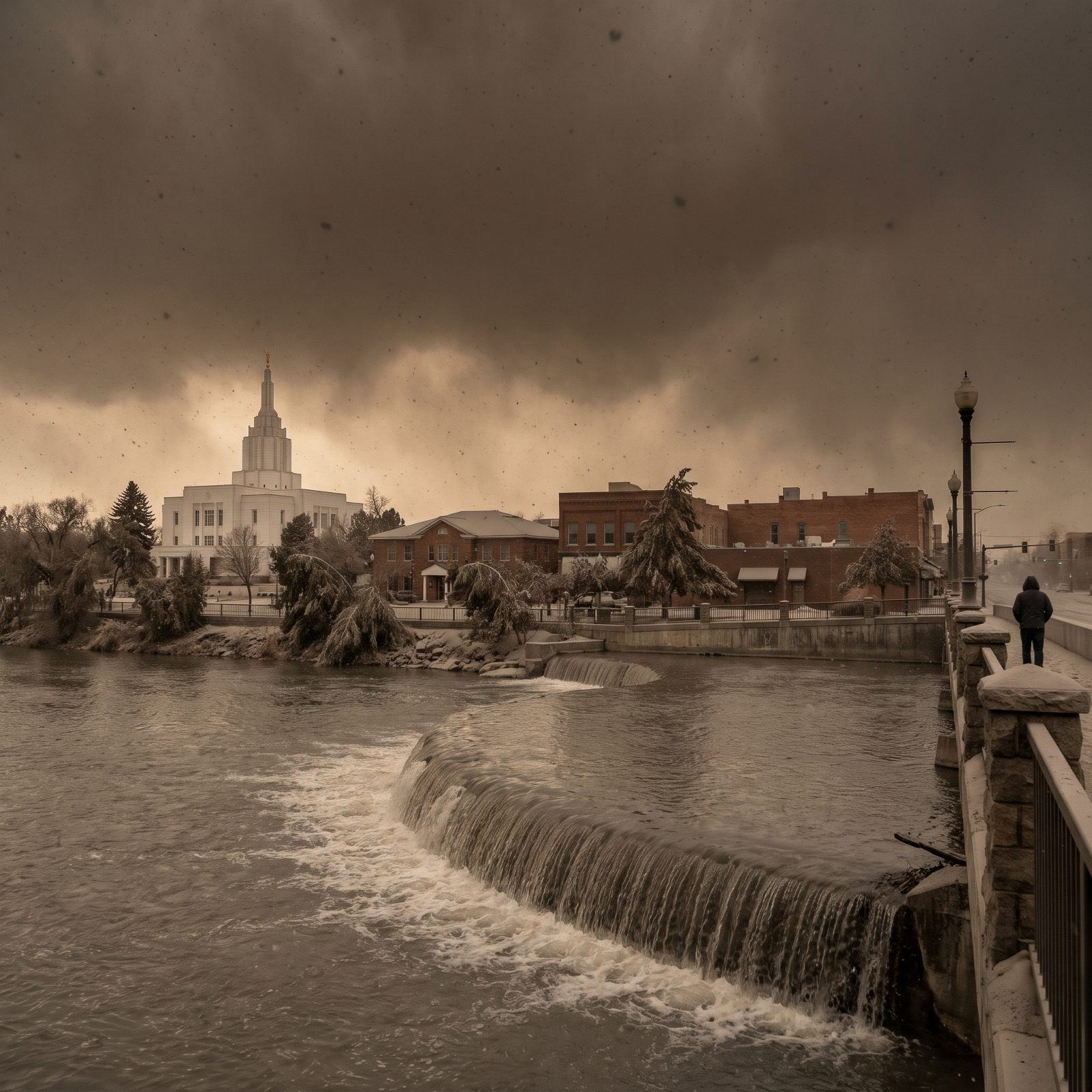
So picture the Snake River running gray, its falls churning ash-choked water, the riverside temple and downtown roofs under several inches of fallout. Trees bowed. Sky gone to amber twilight at noon.
None of this is a forecast. It’s one modeled possibility, stitched together from real ash physics and a single set of wind assumptions. The eruption itself remains, as far as any evidence shows, a very distant maybe. Which is the whole reason the models get built in the first place — so the maybe never catches anyone flat-footed.
Discussing a model of where ash would fall after a Yellowstone supereruption, a federal volcano geologist says “In essence, the eruption makes its own winds that can overcome the prevailing westerlies, which normally dominate weather patterns in the United States”
15. Salt Lake City, Utah, Volcanic Haze Trapped Over the Basin
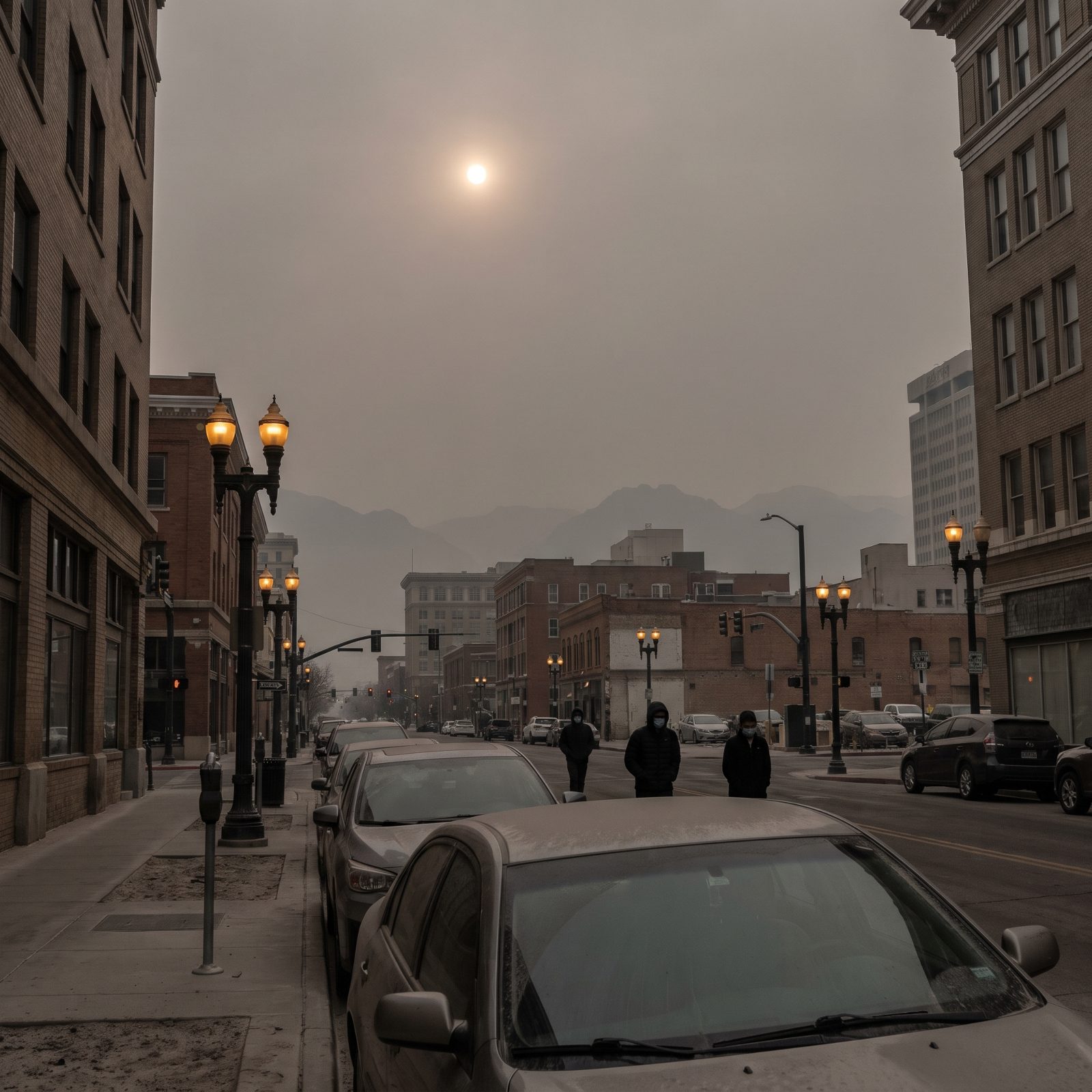
Sitting roughly 200 miles southwest of the caldera, Salt Lake would feel it fast. In this modeled scenario, a VEI-7 eruption in late summer with prevailing westerly winds pushes the heaviest plume east and northeast. And the city’s bowl shape, hemmed in by the Wasatch, is already notorious for trapping winter inversions. Drop fine ash into that bowl and it just sits there.
Expect a pale dusting here, maybe a millimeter or two, enough to turn the air chalky and knock visibility down to a few blocks. The real problem isn’t depth. It’s the microscopic silica, which scratches lungs and chokes engines.
14. Denver, Colorado, A Rust-Colored Dawn Behind the Rockies
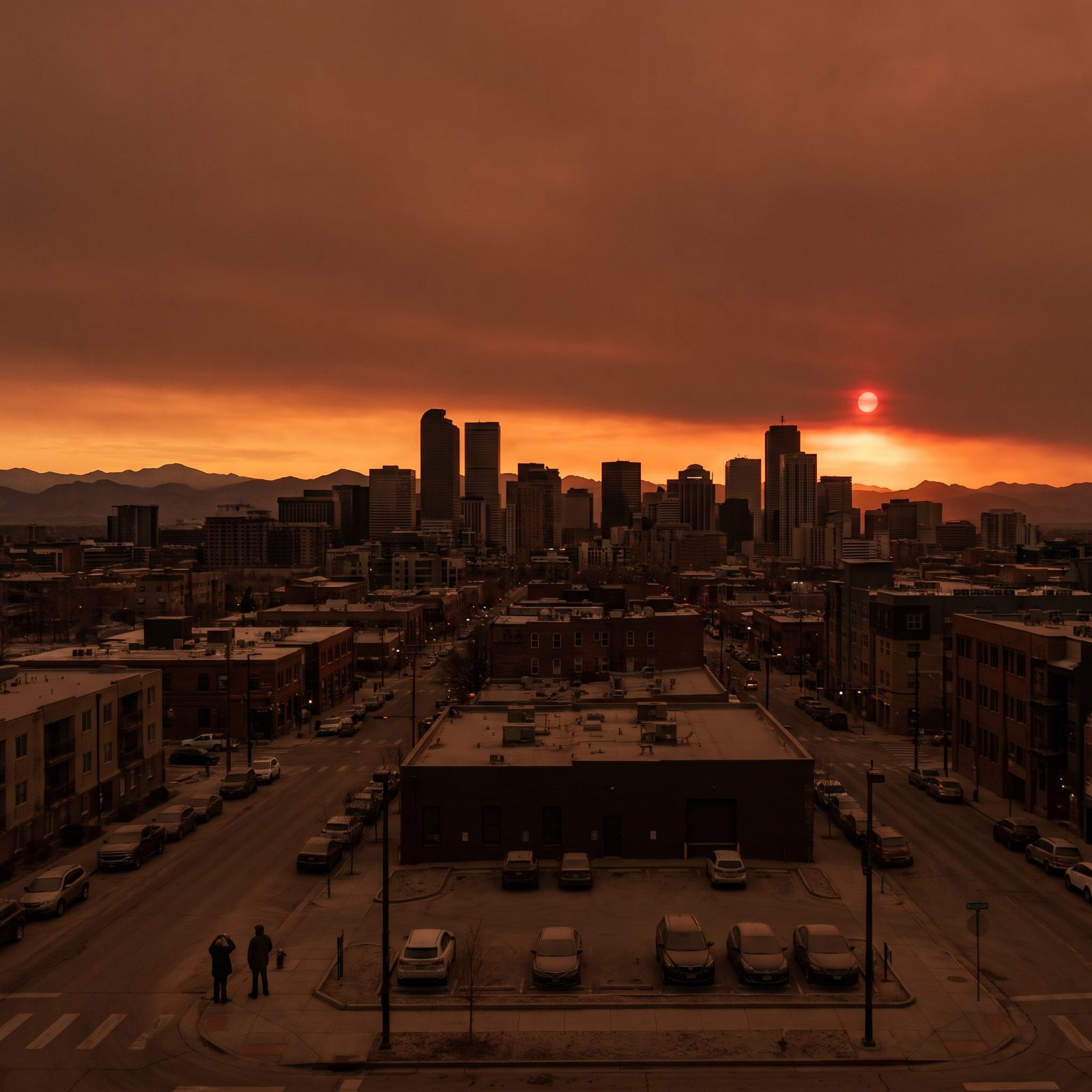
About 350 miles from the source and shielded by the mountains, Denver’s story is more about light than accumulation. The ash column throws fine particles high into the stratosphere, and those particles scatter sunlight toward the red end of the spectrum. The result? A dawn the color of a struck match.
Ground fallout here would be light, a thin dusting at most, uncertain and heavily wind-dependent. What’s striking is the sky. You’ve seen wildfire smoke turn a sunset blood-orange. Imagine that cranked up and lasting days.
13. Phoenix, Arizona, A Dimmed Sun Above the Desert Skyline

Phoenix sits far enough south, roughly 800 miles, that direct heavy fallout is unlikely under a northeast-trending plume. The desert’s first morning would be subtler and, in some ways, stranger.
People assume distance means nothing changes. Wrong. High-altitude ash and sulfate aerosols spread far wider than the thick fallout zone, so the sun could dim to a pale disc, the sky take on a sepia wash, and midday light feel like a permanent overcast with not a single cloud in sight. Temperatures might tick slightly cooler from all that dimming, though by how much is genuinely uncertain and hinges on how much sulfur the eruption injects upward.
12. Spokane, Washington, Air-Quality Warnings Under a Murky Sky
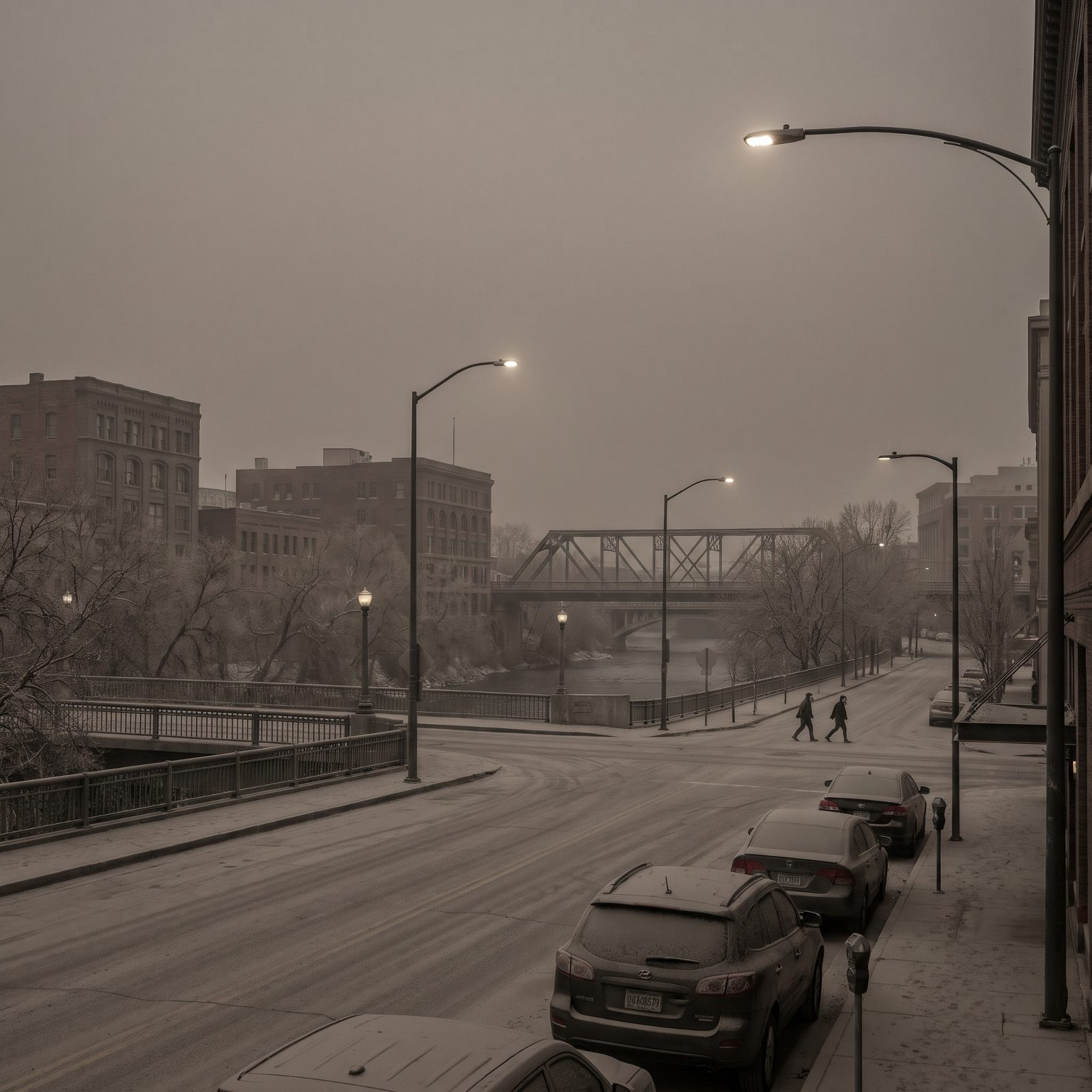
Spokane remembers 1980. When Mount St. Helens blew, this city got a genuine ashfall, streetlights on at noon, people shoveling gray powder off their porches. A Yellowstone event would dwarf that. In this westerly-wind scenario, eastern Washington sits in an awkward middle zone, not nearest but hardly spared.
Modeled fallout here might run a centimeter or more, highly uncertain. The air-quality index would pin at hazardous. Fine particulate under 10 microns goes deep into lungs, and the official guidance is blunt: stay inside, seal the gaps, don’t drive unless you must.
Recalling Spokane after the 1980 Mount St. Helens eruption, a newspaper photographer writes that “cars drove with headlights on and the streetlights came on at noon. Everyone was wearing masks and clearing the grocery shelves of toilet paper and beer.”
11. Seattle, Washington, A Distant Ash Layer Tinting the Sunrise
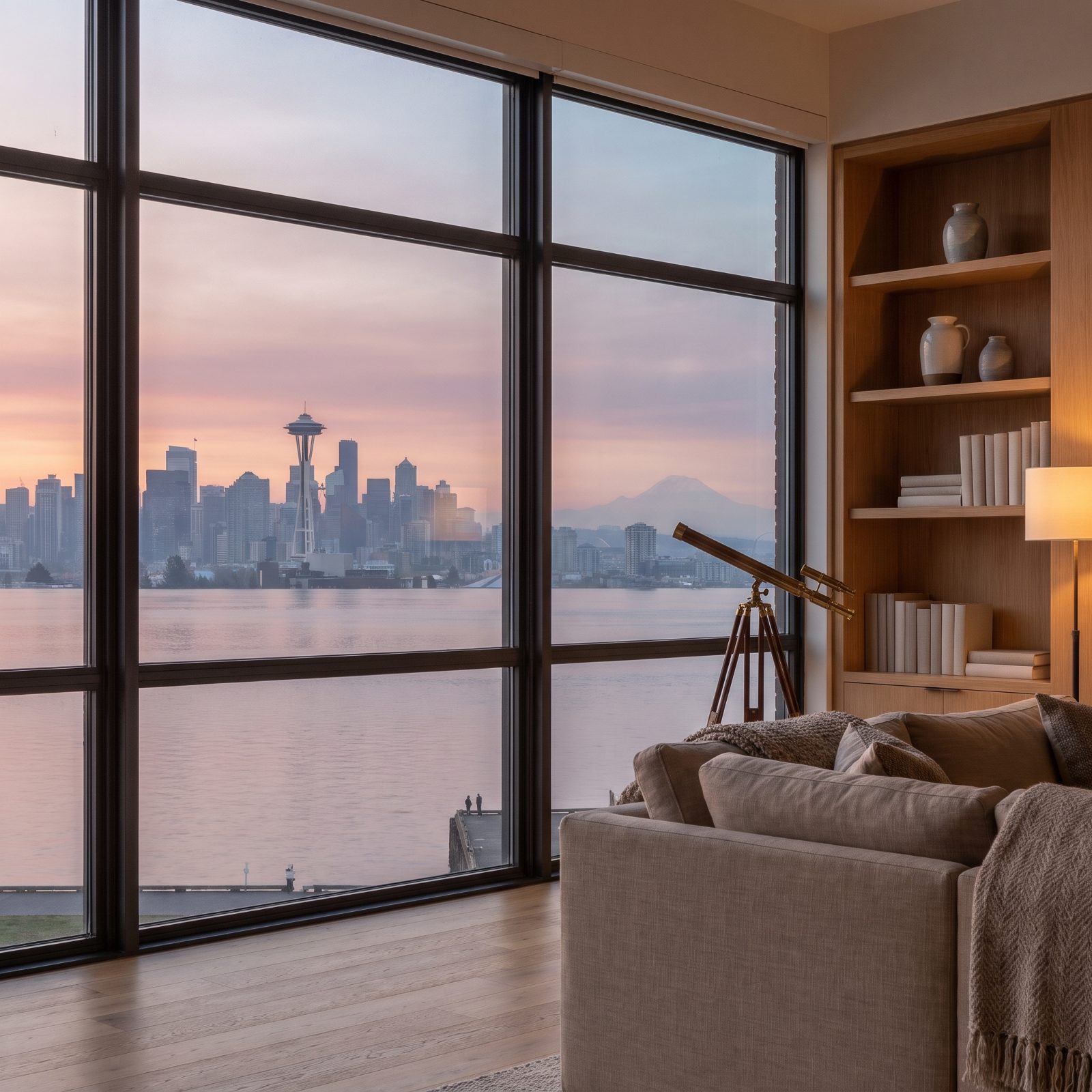
Seattle sits west of the caldera, upwind in this scenario, so the heavy plume mostly moves away from it. The first morning here would be the gentlest on this list.
Still, upper-atmosphere ash circles the globe within days regardless of surface winds. Expect a tinted sunrise, softer and pinker than usual, Rainier hazed at the edges, ground fallout minimal to none. The catch is aviation. Sea-Tac could face closures or reroutes if ash drifts into the flight corridors, and that ripples through every connecting city whether they see a speck of gray or not.
10. Portland, Oregon, Volcanic Haze Above the Willamette River
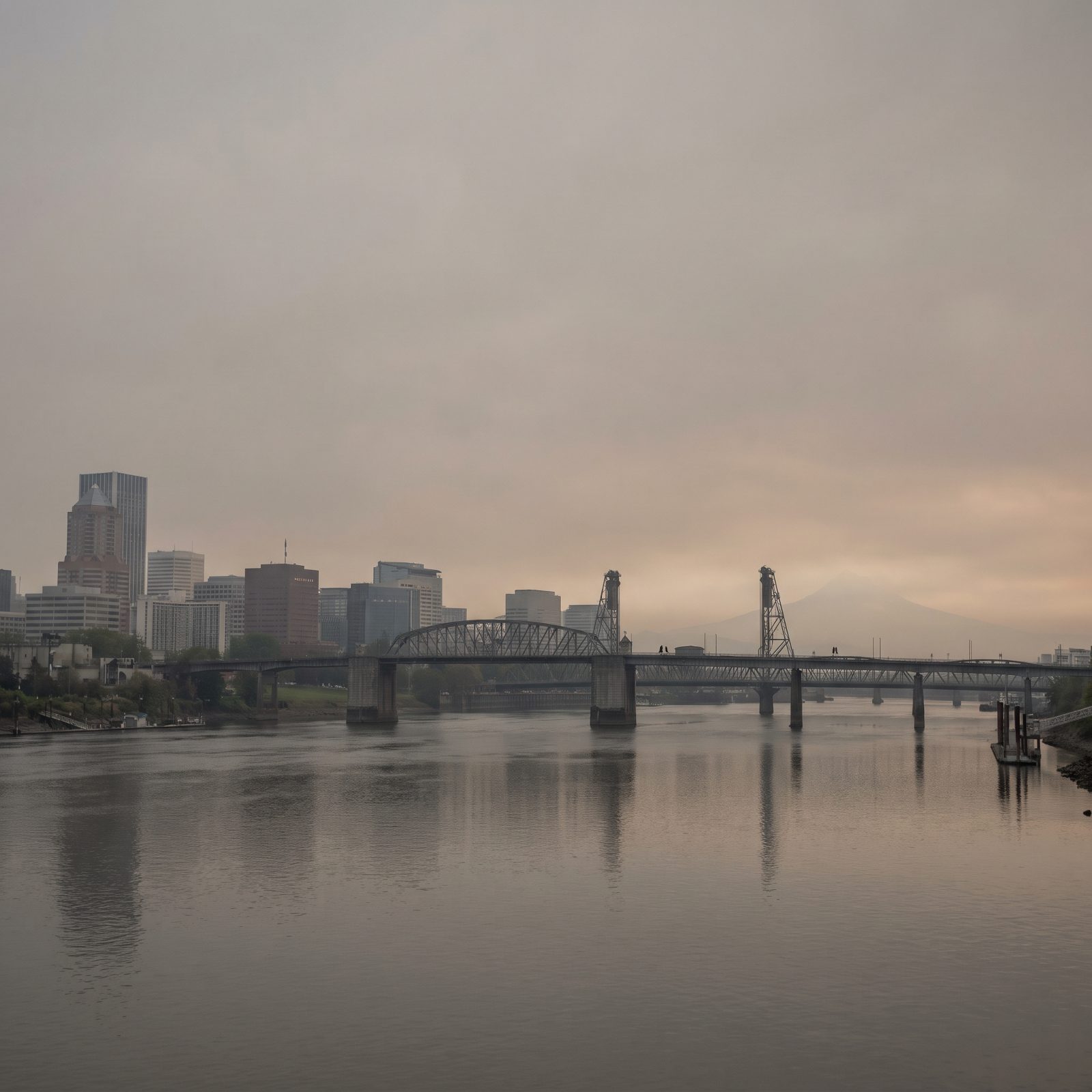
Like Seattle, Portland sits upwind in this westerly setup, so it mostly watches from the sidelines on day one. The Willamette would carry a pewter sky, Mount Hood ghosted in haze, the light flattened to something more November than August.
Now the overlooked part: wind patterns shift. A model locks the plume on one track, but real eruptions last days and the jet stream wanders. A change in direction could swing light fallout toward the Cascades. So the honest answer for Portland is that the first morning looks mild, and nobody can promise the second one does.
9. Fargo, North Dakota, Wind-Driven Ash Across the Plains
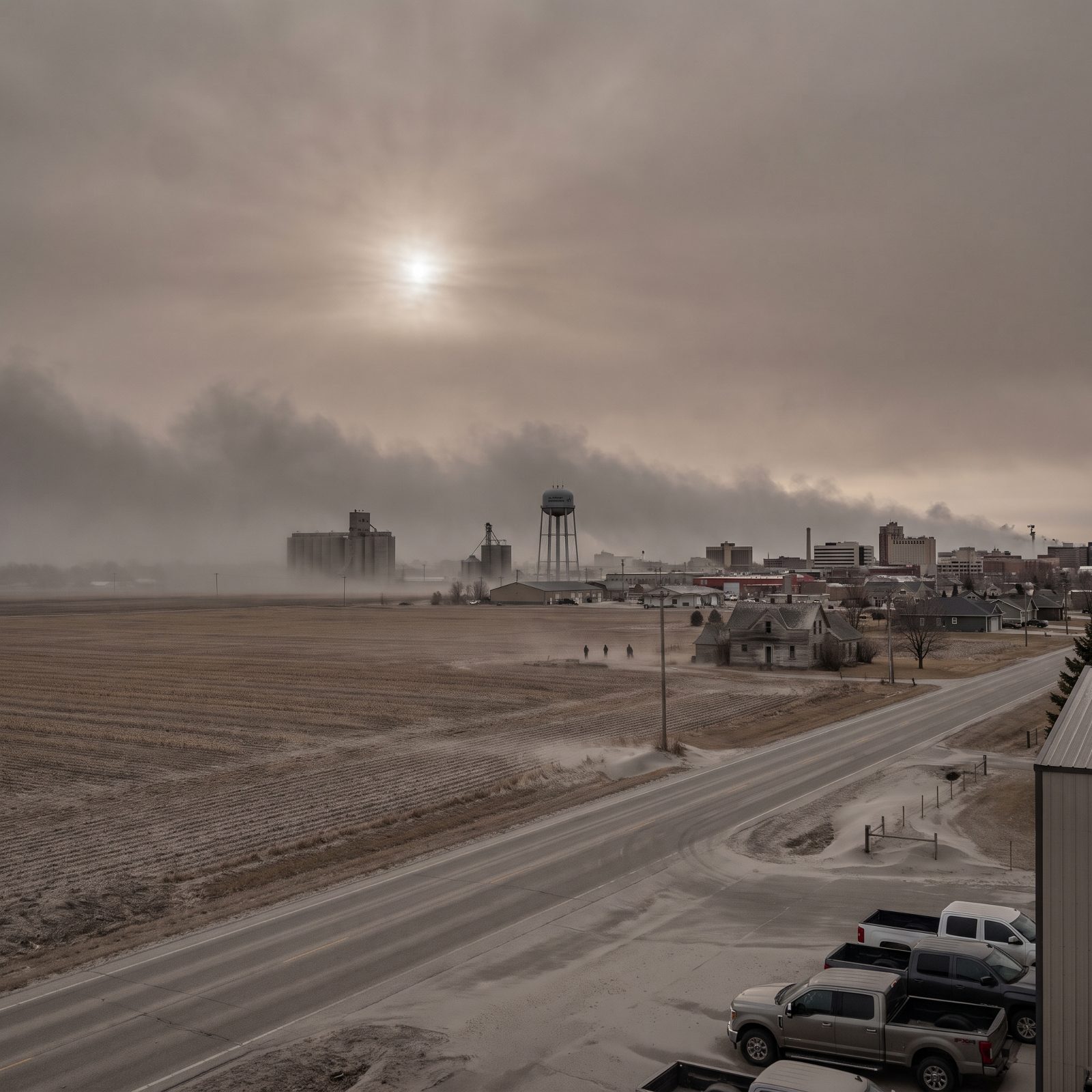
Roughly 900 miles downwind and squarely in the northeast-trending plume, Fargo catches ash the Pacific cities never will. The plains offer no barrier, and wind that normally carries snow across open fields would carry something finer and far more abrasive.
Fallout here can be heavier than the distance suggests, with wind piling ash into dune-like drifts several inches deep against utility poles, fence posts and parked trucks. The prairie wind is the wild card. It keeps fine ash airborne and drifting, so visibility and air quality swing hour to hour rather than settling into one stable gray.
8. Rapid City, South Dakota, A Gray Morning Near the Black Hills
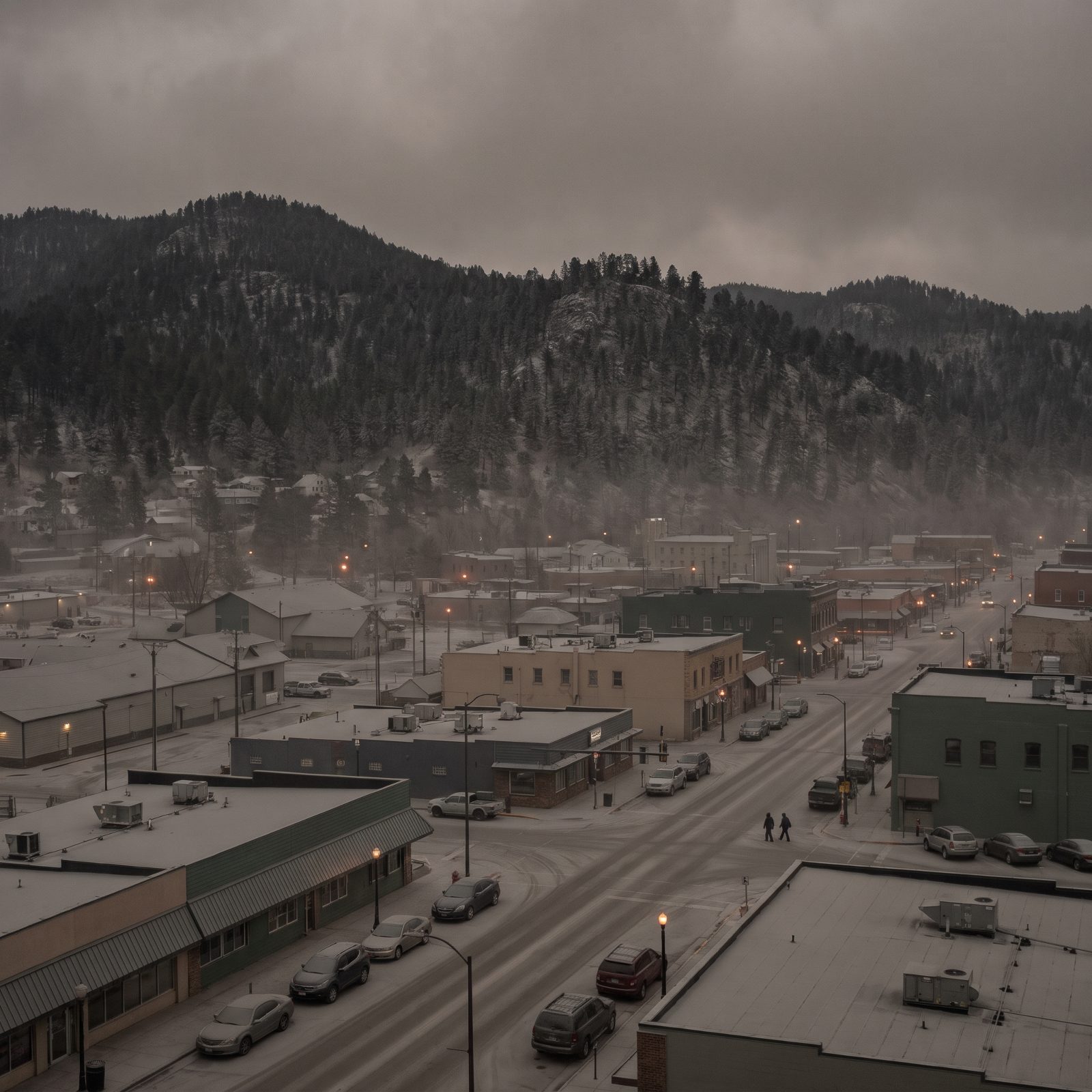
Closer to Yellowstone than Fargo, around 450 miles, and still in the modeled plume path, Rapid City could see one of the more meaningful fallouts east of the Rockies. The Black Hills’ dark pines would show the ash plainly, each needle holding a gray film.
A few millimeters up to a centimeter is plausible here, though the range is wide. Wet ash is the quiet danger nobody mentions. It roughly doubles in weight and can strain or collapse flat roofs. If rain mixes with fallout, that innocent-looking dusting turns into a load.
7. Sioux Falls, South Dakota, Ash Film Covering Wet Streets
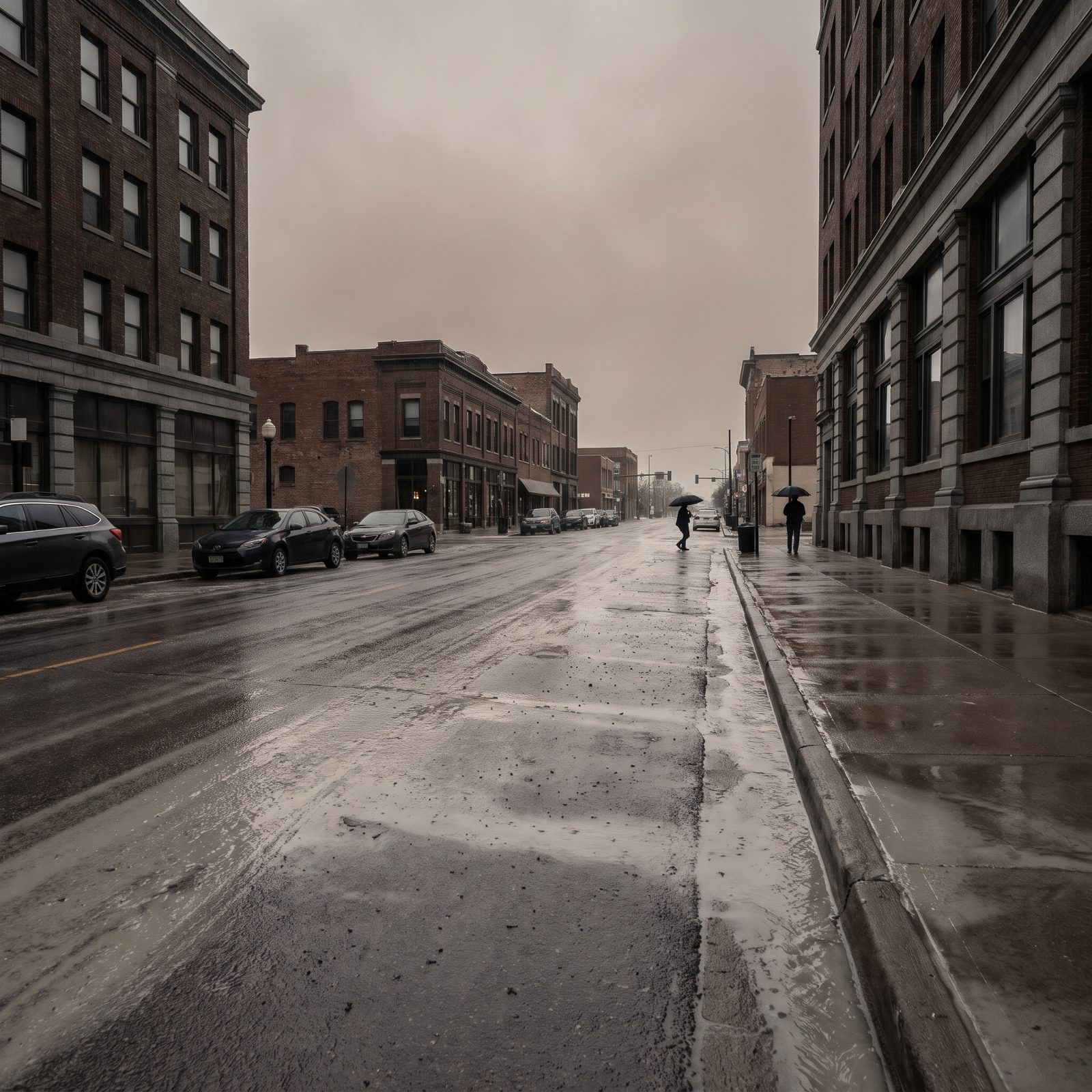
Farther east and at the thin edge of the modeled plume, Sioux Falls might get only a light film. But pair that film with overnight rain and you get the scene nobody pictures: ash turned to slurry, slick and gray, filming every wet street.
That slurry is the practical headache. It clogs storm drains, turns roads greasy, and dries into a crust that’s a pain to wash off. The amount here is at the uncertain end, possibly just a trace. On a rainy morning it would still make the whole city look like it had been dipped in wet cement.
6. Kansas City, Missouri, Volcanic Haze Over Union Station
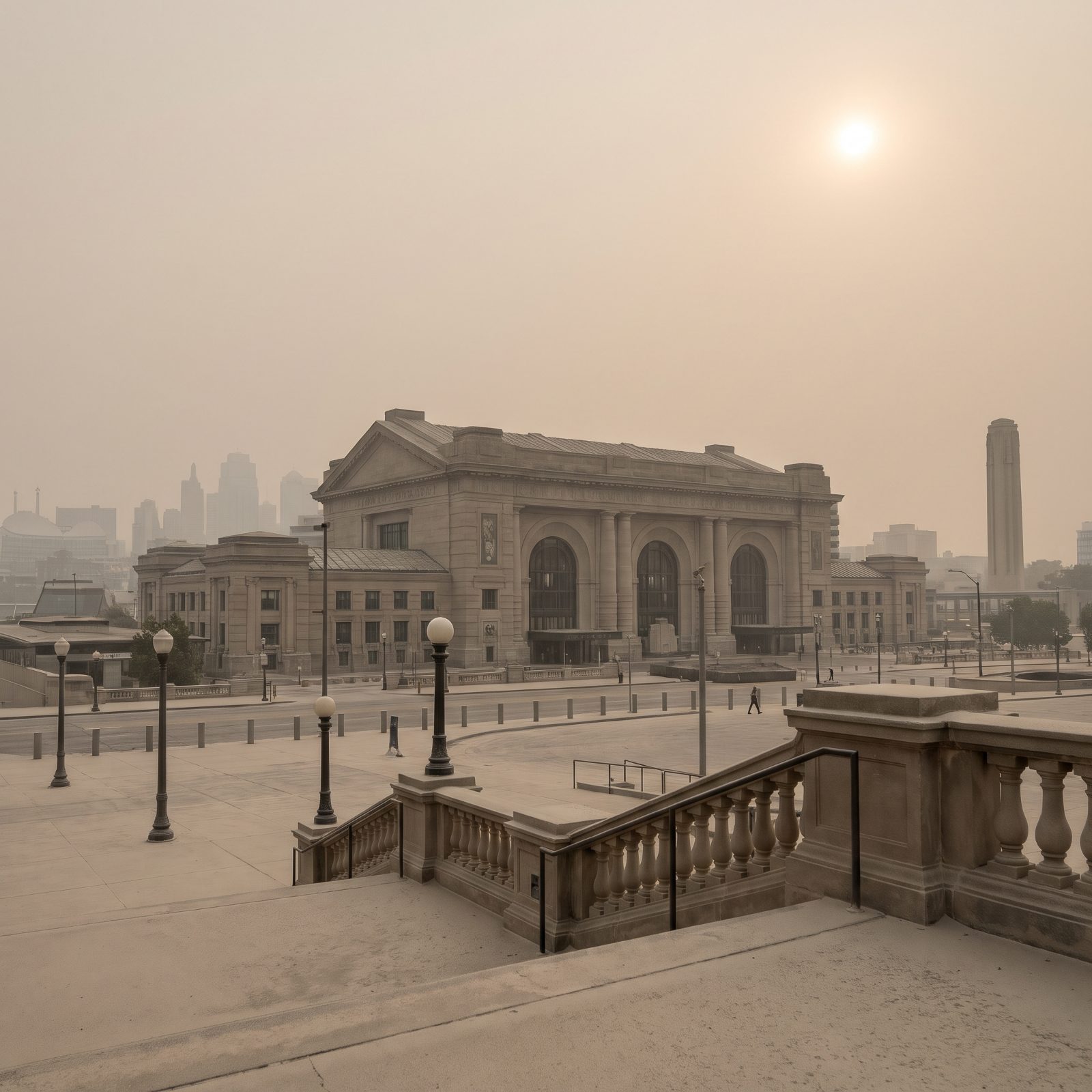
Northeast of Wichita in this same scenario, Kansas City wakes to a thinner but still gritty version of the morning. The haze over Union Station’s limestone turns the whole district the color of weak tea, visibility drops, and headlights come on at noon.
Here the ash runs lighter than Wichita’s — a trace to a few millimeters, with real uncertainty baked into that range. What people underestimate is the quiet. No birds. Traffic stalled, because fine ash chokes air filters within minutes. A city of half a million holding its breath.
5. Oklahoma City, Oklahoma, A Copper Sky Above Downtown
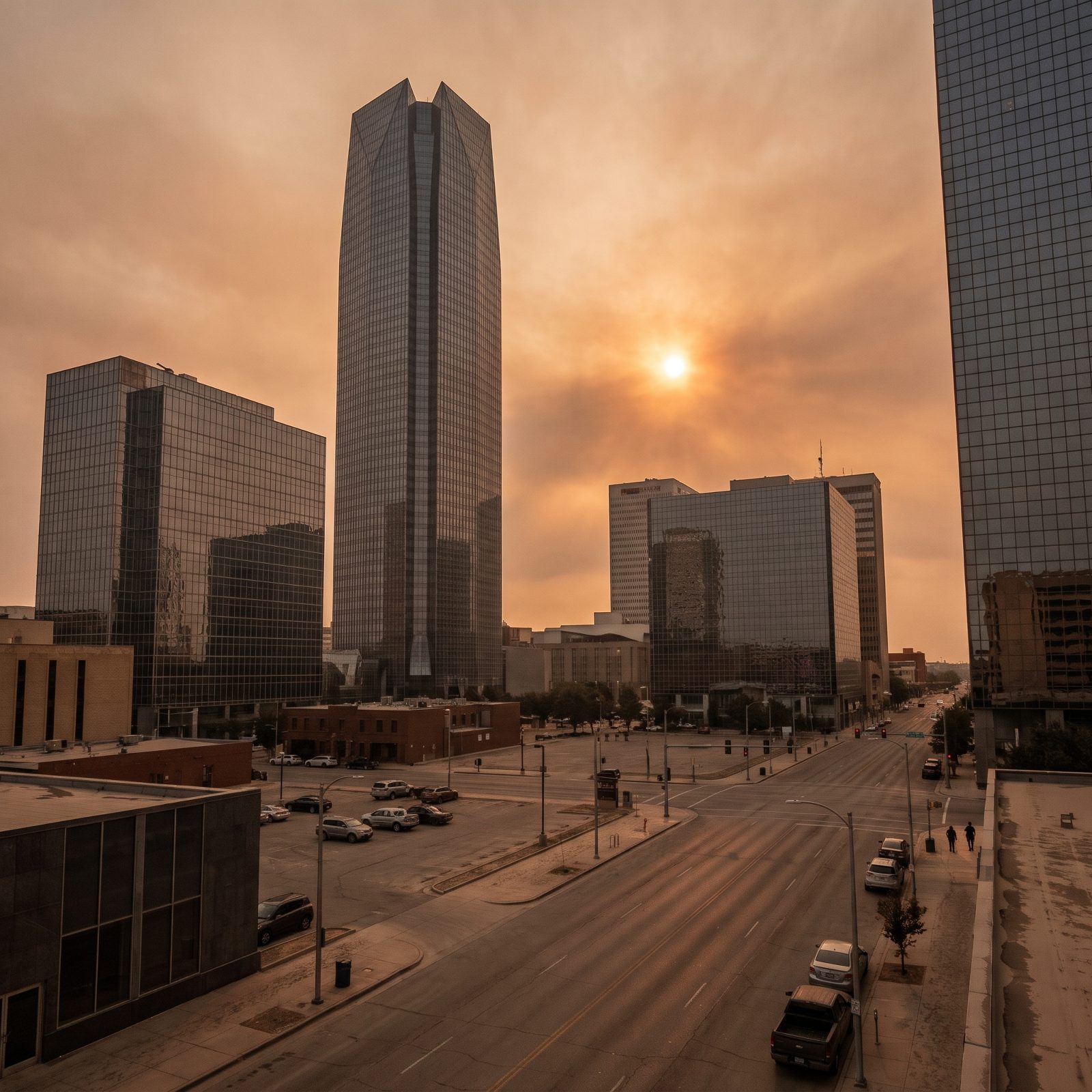
The color is what you’d remember. Sitting just south of the plume’s heaviest lobe in this scenario, Oklahoma City gets a copper-orange sky rather than deep darkness. Fine ash scatters the red and orange wavelengths, so the Devon Tower glows like it’s lit by a dying bulb.
Fallout here is modeled as light — a dusting, not a blanket — though a wind shift could rewrite that in an hour. The eerie part is how ordinary everything else looks. Buildings fine. Streets fine. Sky absolutely wrong.
4. Houston, Texas, Aviation Disruption Under a Hazy Sky
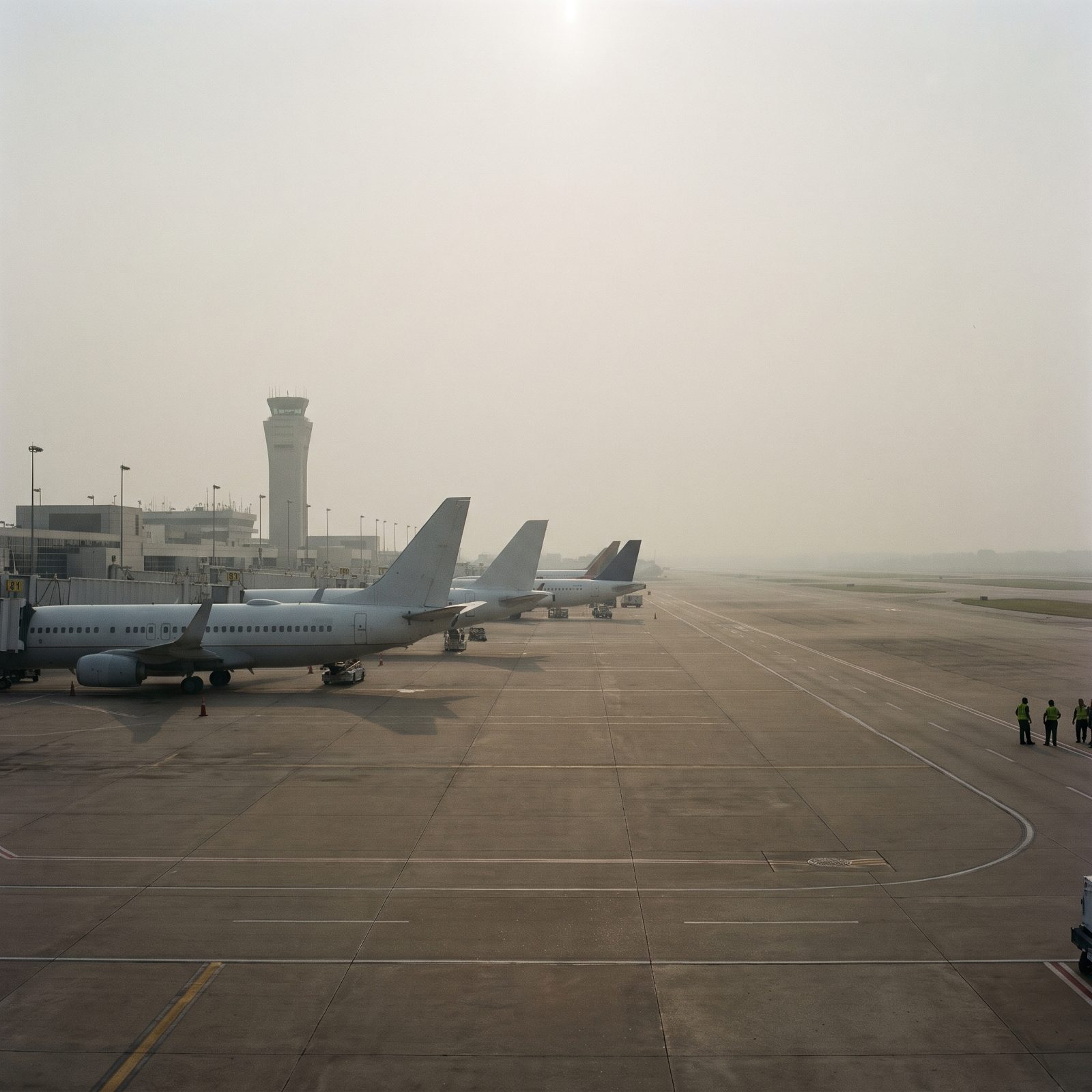
Far south of the main fallout path, Houston barely sees ash on the ground. What it sees is a grounded fleet.
Even trace amounts of high-altitude ash are deadly to jet engines. The glass melts inside the turbines, re-solidifies on the cooler parts, and chokes the whole thing dead. That’s not speculative — it’s why the FAA grounds flights near any serious eruption, and in this scenario airspace across a huge swath of the country shuts down within hours.
So Bush Intercontinental sits still under a pale, faintly yellow sky. The disruption here isn’t ashfall at all. It’s a continent’s worth of cancelled flights rippling outward from the plume, cascading through hubs that never saw a single gray flake.
Explaining why ash grounds aircraft, a jet engine researcher notes that “that part of the engine is hotter than the melting point of the ash. So we get glass which clogs up all of those little holes”
3. Chicago, Illinois, An Ash-Tinted Sunrise Over Lake Michigan
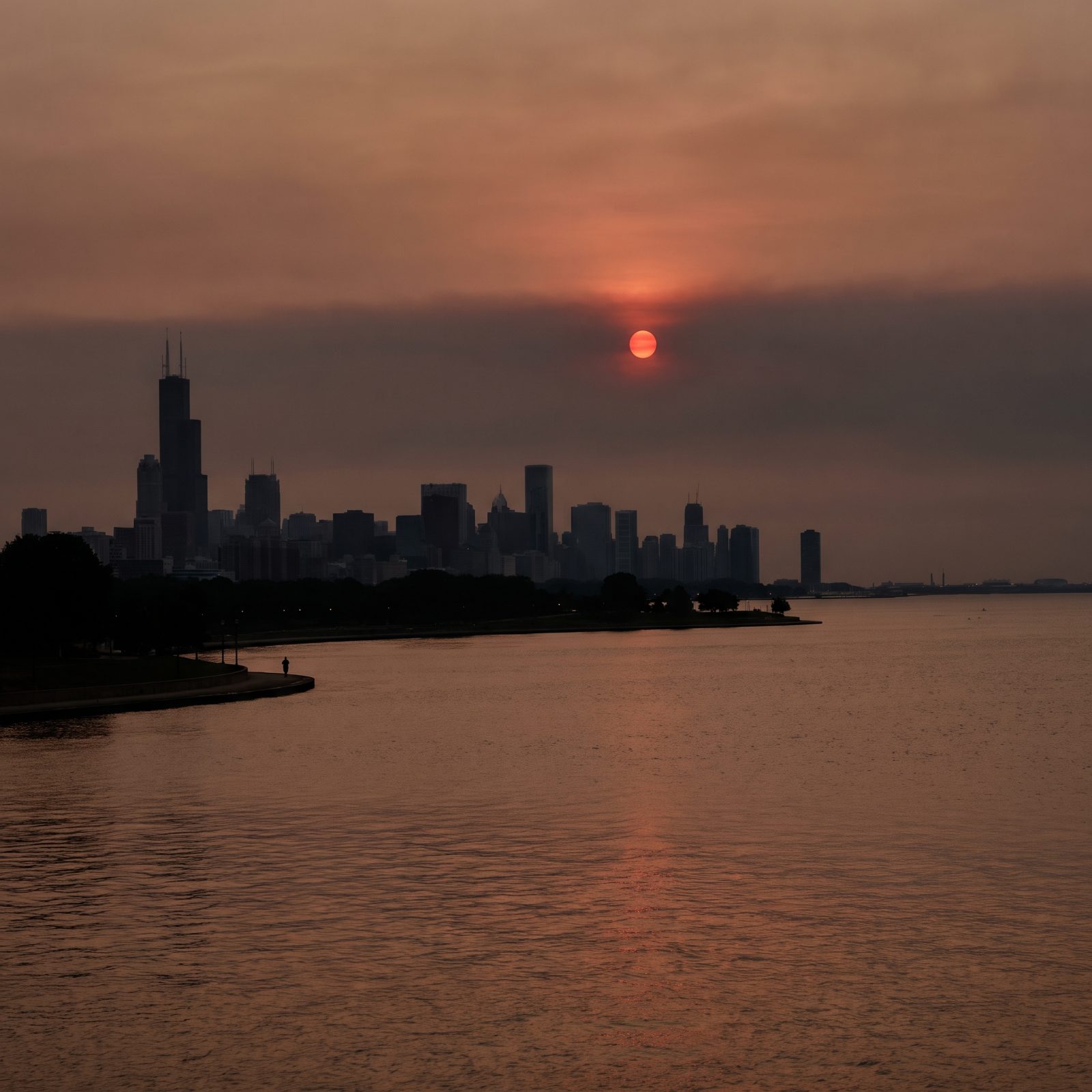
Chicago starts the day with one of the oddest sunrises anyone there has ever seen. The city sits near the northern edge of the ash cloud in this scenario, so almost nothing falls — but the high haze does extraordinary things to light.
The sun climbs out of Lake Michigan as a deep, bruised red, and the downtown skyline and the whole lakefront glow amber. It looks beautiful, which is the uncomfortable part, because the thing making it beautiful is pulverized rock hanging six miles overhead.
The most striking skies in history have often come after eruptions. Munch’s blood-red sky in The Scream is thought to be Krakatoa.
Describing the unusual dawns and dusks that followed a major eruption, a weather forecaster explains that “when stratospheric aerosols are present following a volcanic eruption, they scatter and bend the light as the sun dips or rises past the horizon, creating a glow in the sky”
2. Washington, D.C., A Hazy Dawn Behind the Capitol
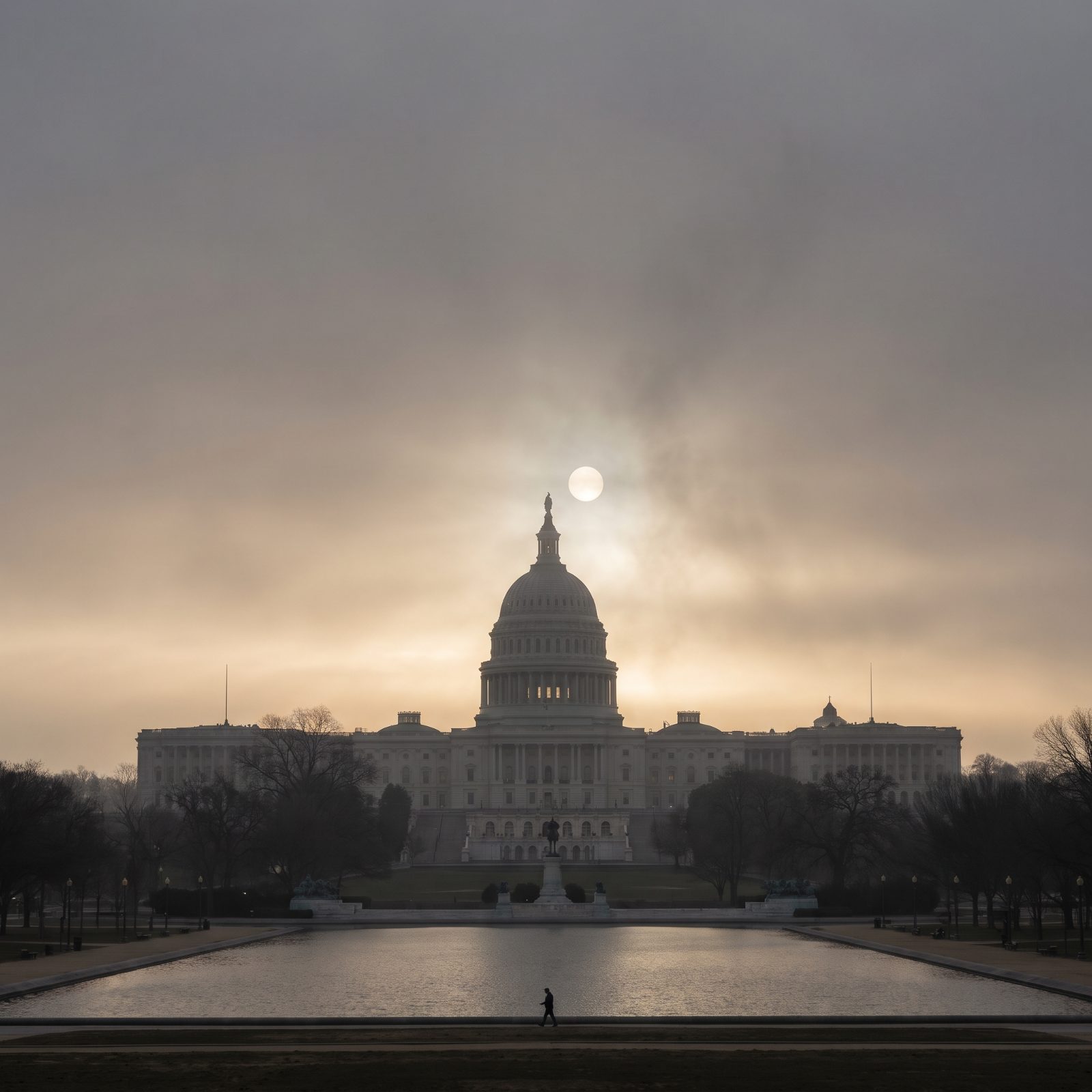
By the first morning, the leading edge of the high cloud reaches the East Coast. Washington — more than 1,800 miles from the source here — gets no ashfall worth measuring. What it gets is a filtered sky.
Dawn behind the Capitol dome comes softer and grayer than usual, the sun a pale disc behind a thin aerosol veil. You’d miss it entirely if nobody told you. The real story in D.C. is atmospheric and administrative at once: a hazy sunrise over a city suddenly running the largest emergency response in its history.
1. New York City, A Faint Ash Veil Above Manhattan
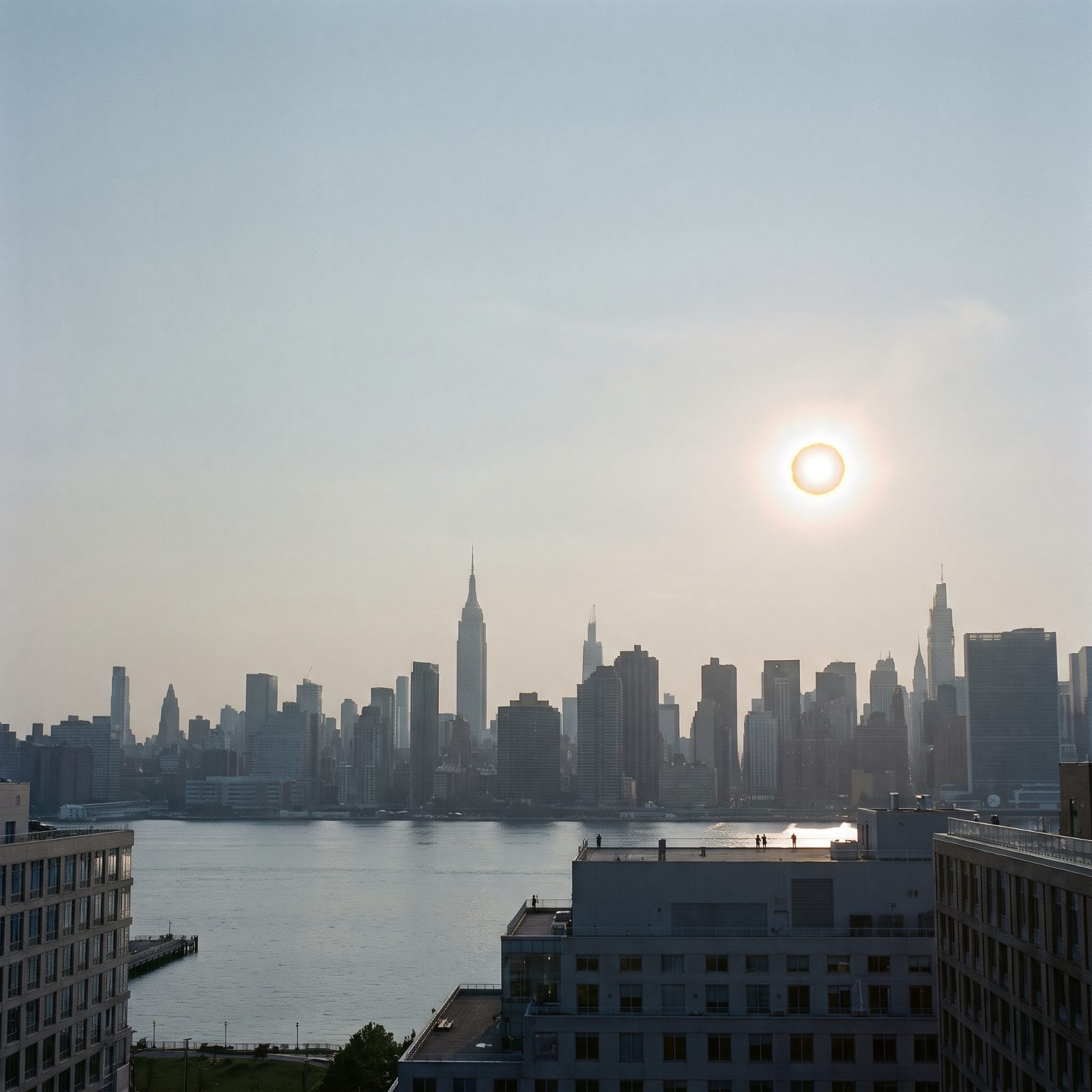
New York, at the far thin end of the plume, sees the subtlest sign of all. No ash. No copper glow. Just a sky that reads slightly off — a milky quality to the blue, sunlight a touch weaker than the forecast promised.
Most people wouldn’t connect it to a volcano 2,000 miles away, and that’s the lesson tucked inside this whole thought experiment. One eruption dims a coin-sized sun in Kansas and barely frosts the sky over Manhattan.
One caveat worth hammering home: this is a modeled worst-case, not a forecast. Yellowstone shows zero sign of a super-eruption, and the odds in any given year are vanishingly small. The science is here to help you picture the physics — not to lose sleep.