
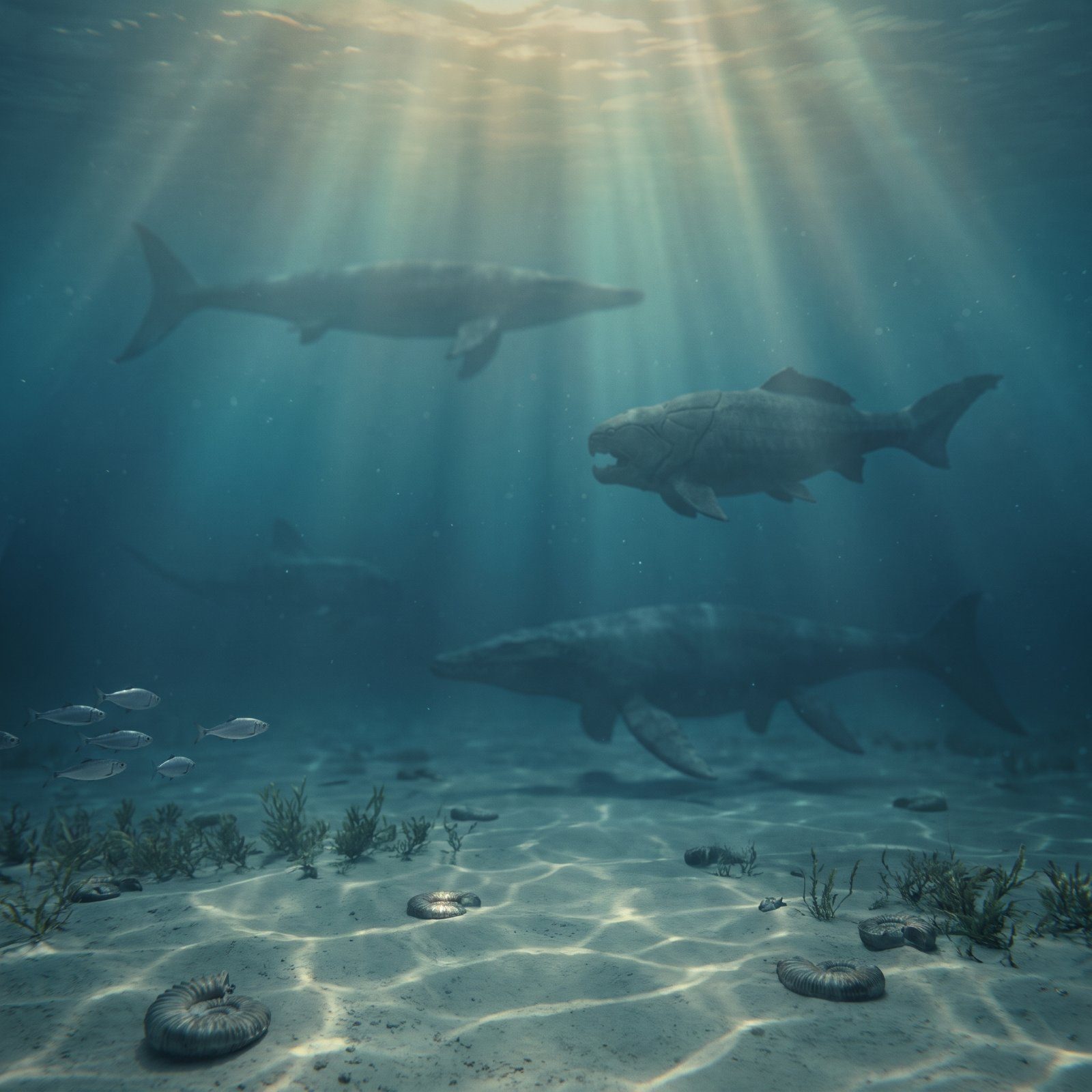
A single tooth. That is sometimes all we have, and from it paleontologists reconstruct a predator the length of a school bus. Prehistoric oceans grew monsters that make the great white look like bait, and separating the real science from the internet’s wilder guesses is harder than it sounds. A few of these animals are known from near-complete skeletons; others get reassembled from fragments, careful math, and comparisons to living relatives. We lined them up against creatures you already know, flagged where the evidence runs thin, and let the bones carry the argument. Believe it or not, some of the famous estimates shrank once the science caught up.
Please note that some of the images in this article were created with the assistance of AI.
25. Otodus megalodon: The Giant Shark With Hand-Size Teeth
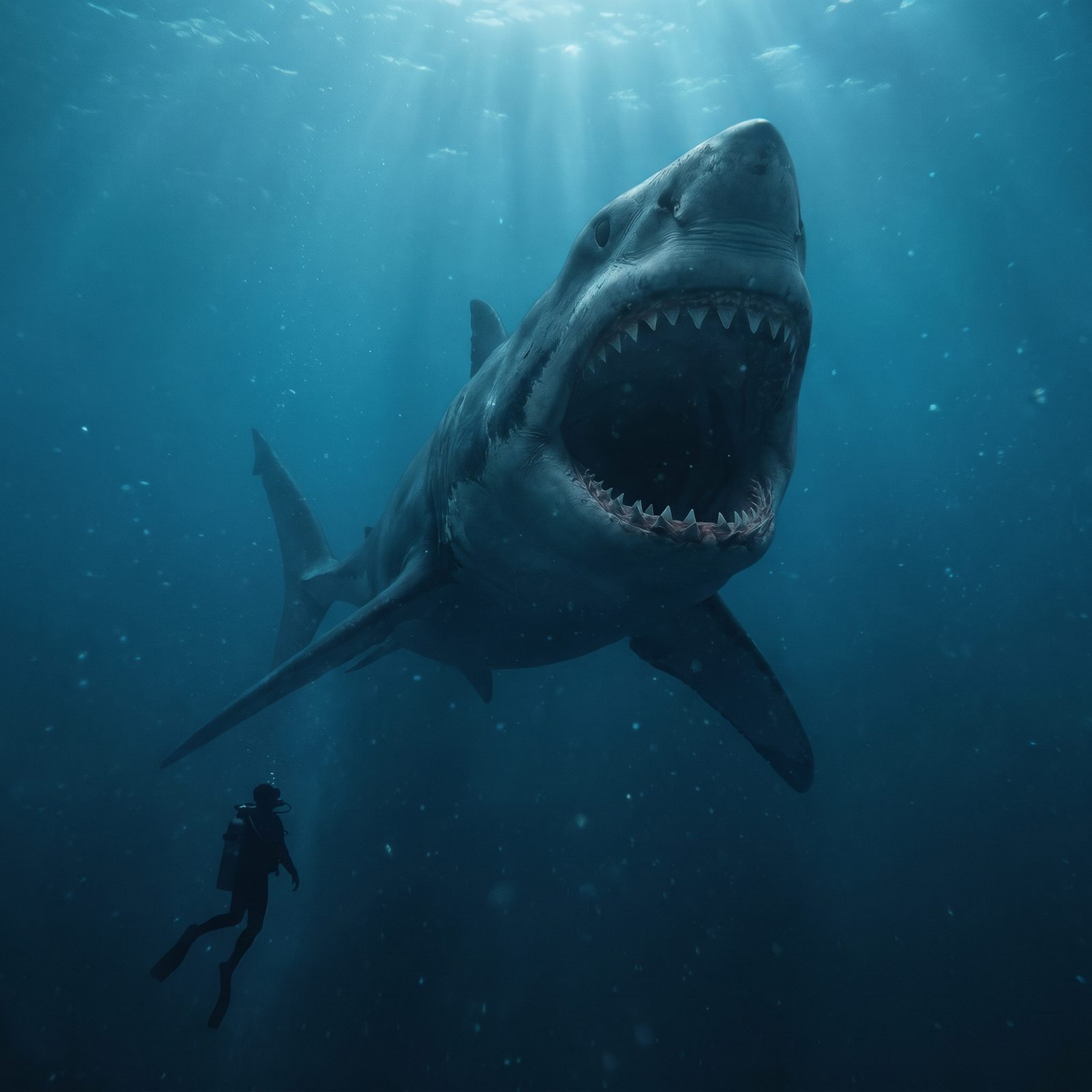
Everyone pictures a hundred-foot monster. The fossils say otherwise. Megalodon maxed out somewhere around 50 to 60 feet, probably nearer the low end, and here is the catch: we have almost no skeleton. Shark cartilage rarely fossilizes. So what survives is teeth, some as big as your open hand, and from those teeth researchers back-calculate an entire animal.
That’s a lot of inference drawn from a lot of enamel. Recent work even hints it was slimmer and longer than the chunky great-white-on-steroids most reconstructions give us.
As a veteran fossil hunter puts it, “Megalodon size estimates vary because most of the skeleton was cartilage and did not fossilize. Scientists rely mainly on teeth and vertebrae, using comparisons with modern sharks.”
24. Mosasaurus hoffmannii: The Lizard That Ruled the Late Cretaceous
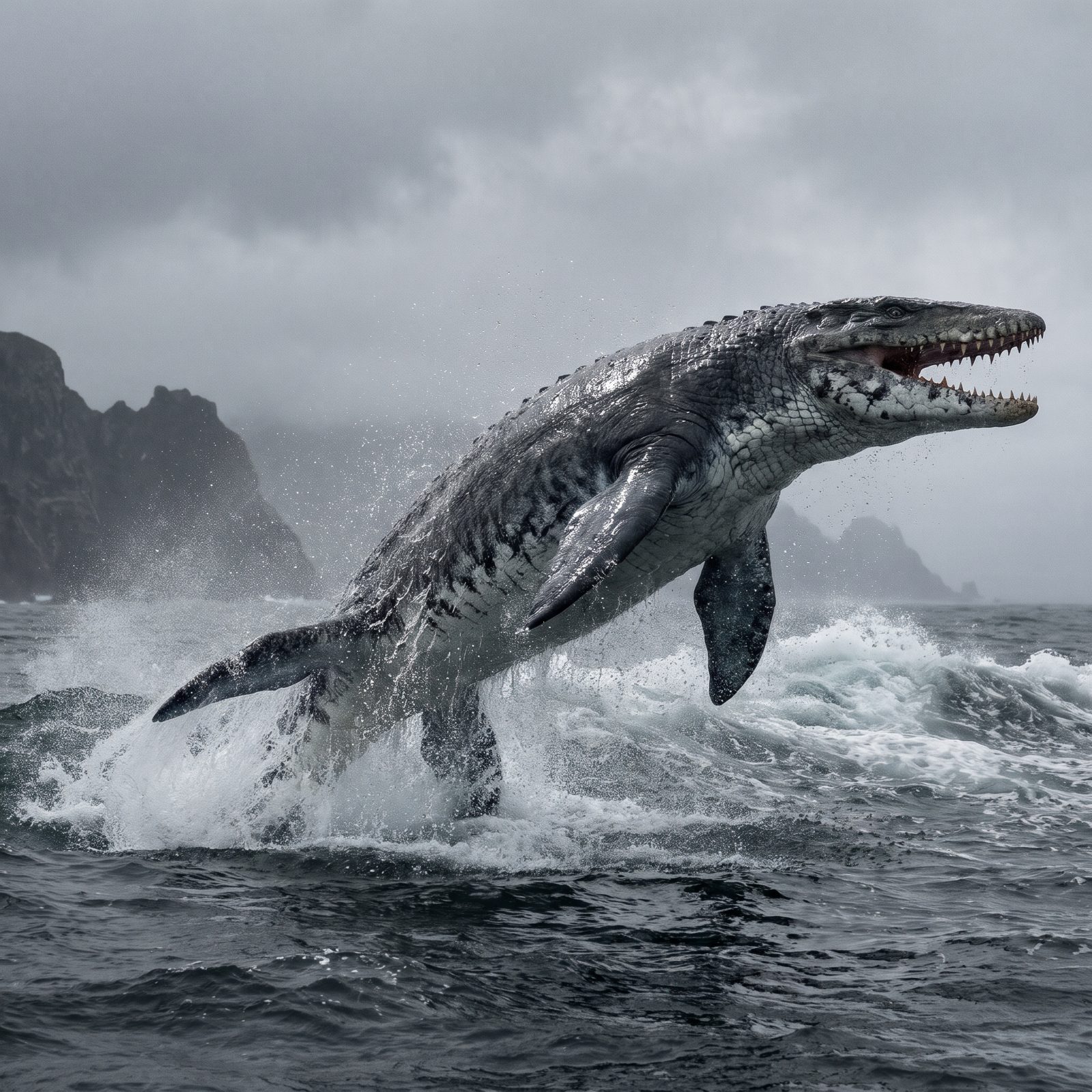
The one Jurassic World blew up to whale-shark proportions. The real animal was plenty impressive without the Hollywood inflation. A full-grown Mosasaurus hoffmannii ran around 40 feet, closer to a city bus than a cargo ship.
And it wasn’t a dinosaur. It was a marine lizard, cousin to today’s monitors and snakes, with a tail fluke it evolved for open-ocean cruising. That second set of teeth bolted to the roof of its mouth meant whatever it bit did not get loose.
Reviewing the Jurassic World films, a university paleontologist says “In the movies, they have them blue whale-sized, but they weren’t that big”
23. Leedsichthys problematicus: The Largest Bony Fish That Ever Swam
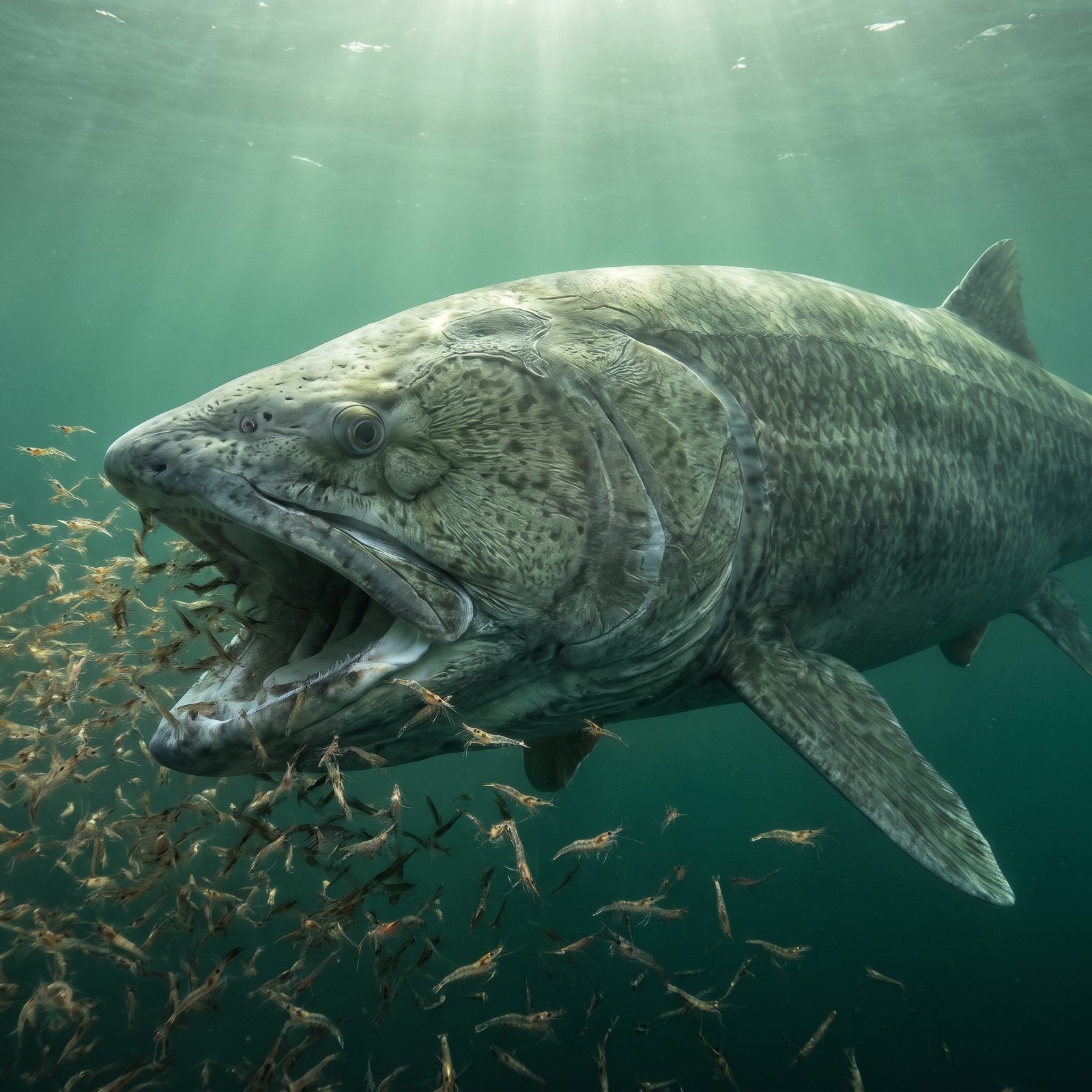
No teeth. No threat to anything bigger than a shrimp. And yet it still grew to roughly 50 feet, which makes it the biggest ray-finned fish we know of.
Leedsichthys was a filter feeder, the Jurassic answer to a basking shark. Its species name literally means “problematic” — a wry nod to how maddening the fossils are. The bones were partly cartilage and rarely preserved whole, so size estimates swung wildly over the decades before finally settling into something you can defend.
22. Shonisaurus sikanniensis: The Bus-Length Ichthyosaur of Triassic Seas
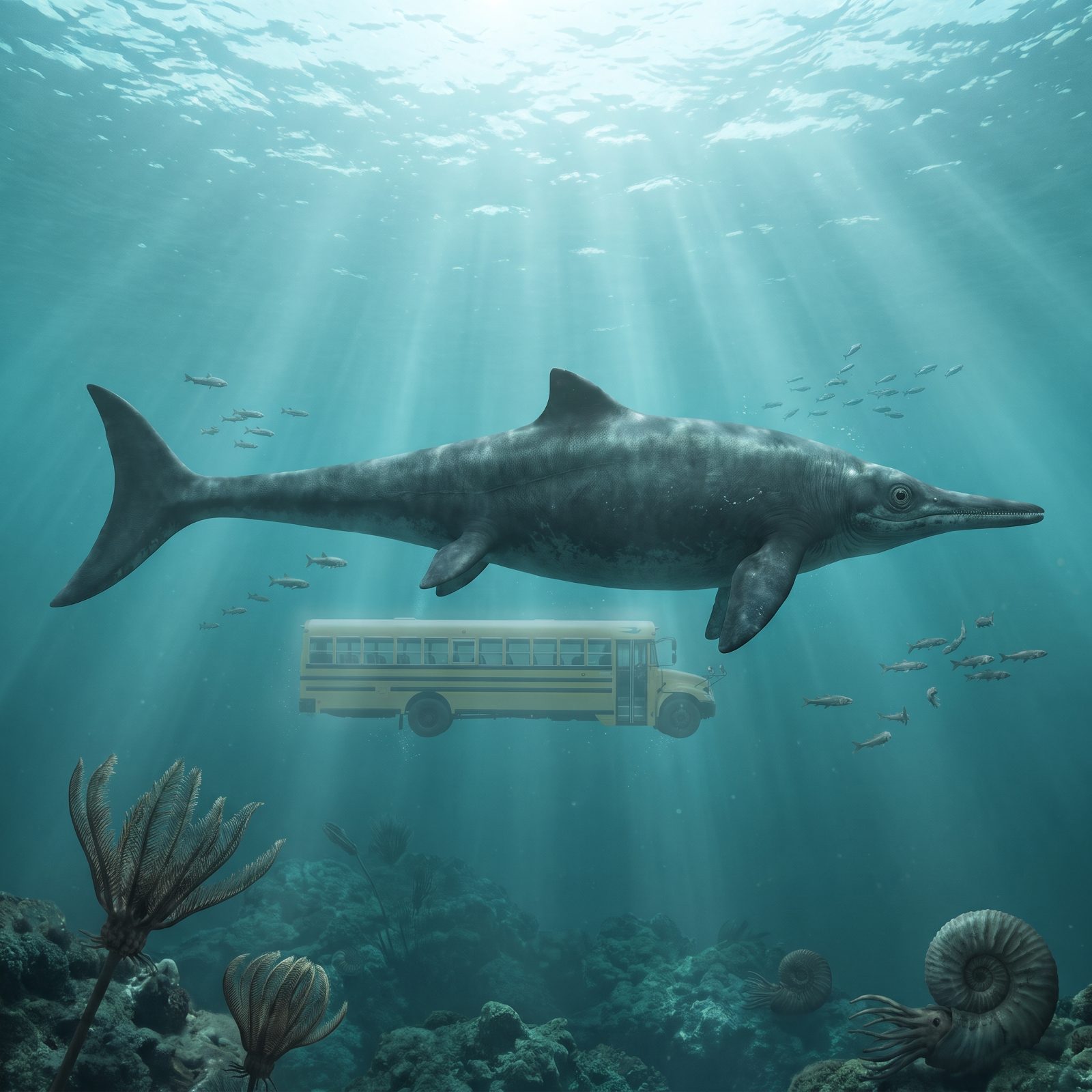
Picture a reptile shaped like a whale, nearly 70 feet long, gliding through the Triassic ocean more than 200 million years ago. That is Shonisaurus sikanniensis, the largest ichthyosaur ever found, dug out of British Columbia’s remote Sikanni Chief River.
Here’s what throws people: for all its bulk, the adult’s long, narrow snout appears to have been toothless. Something this size probably snapped up squid and fish rather than tearing into big prey. And because the skeleton is complete enough, it stands among the better-supported giants on this list — no guesswork about the length.
21. Livyatan melvillei: The Sperm Whale Built to Kill Other Whales
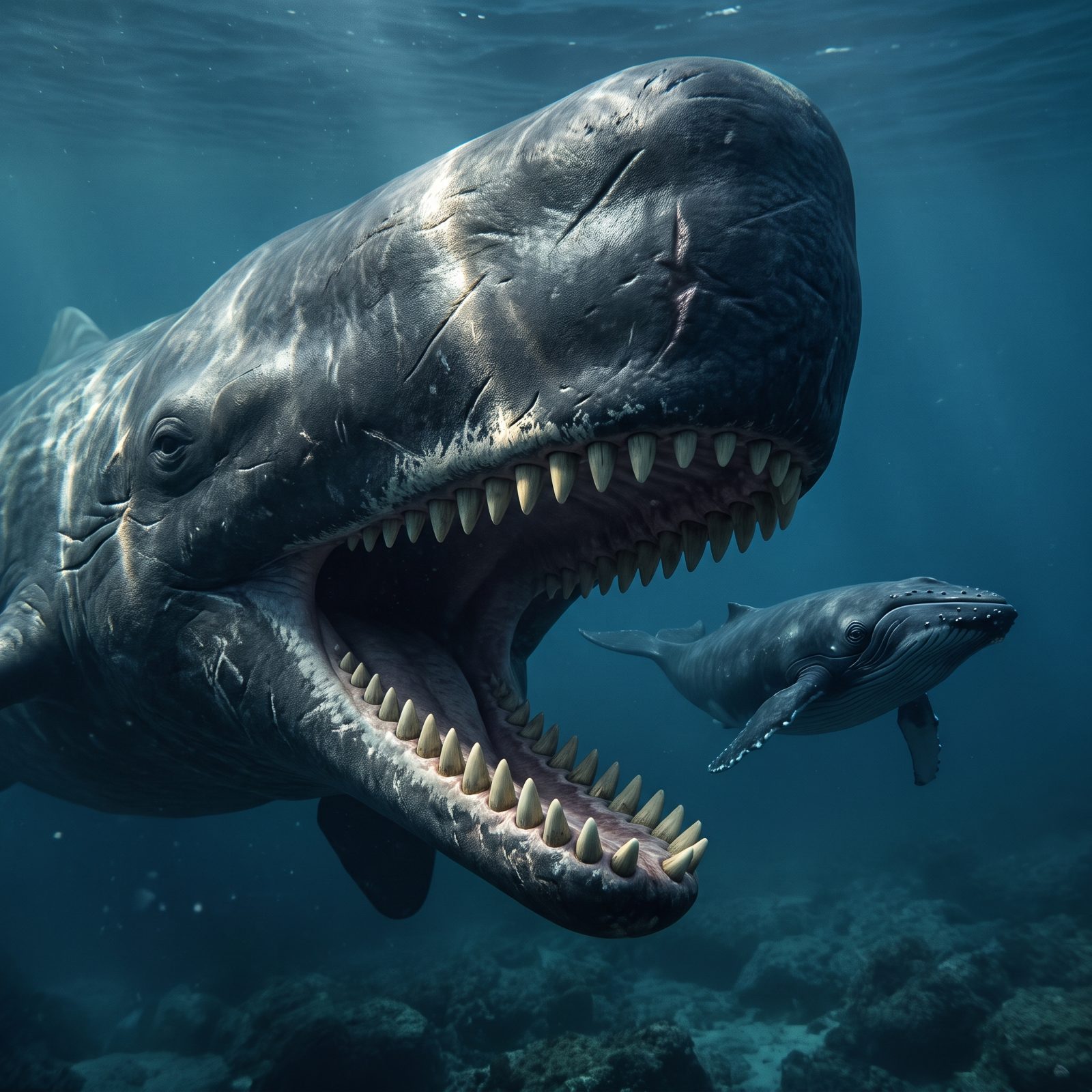
Teeth over a foot long. In both jaws. Modern sperm whales only have functional teeth in the lower jaw, and those are built for sucking up squid. Livyatan was the opposite — a 50-foot sperm whale designed to bite other whales in half.
We know it mainly from a skull found in Peru’s Pisco desert in 2008. The body length comes from scaling that skull against living sperm whales, so the exact figure carries some wiggle room. But the teeth are real and frankly absurd — larger than anything in the jaws of its rival megalodon.
20. Pliosaurus funkei: The Arctic Sea Monster Nicknamed Predator X
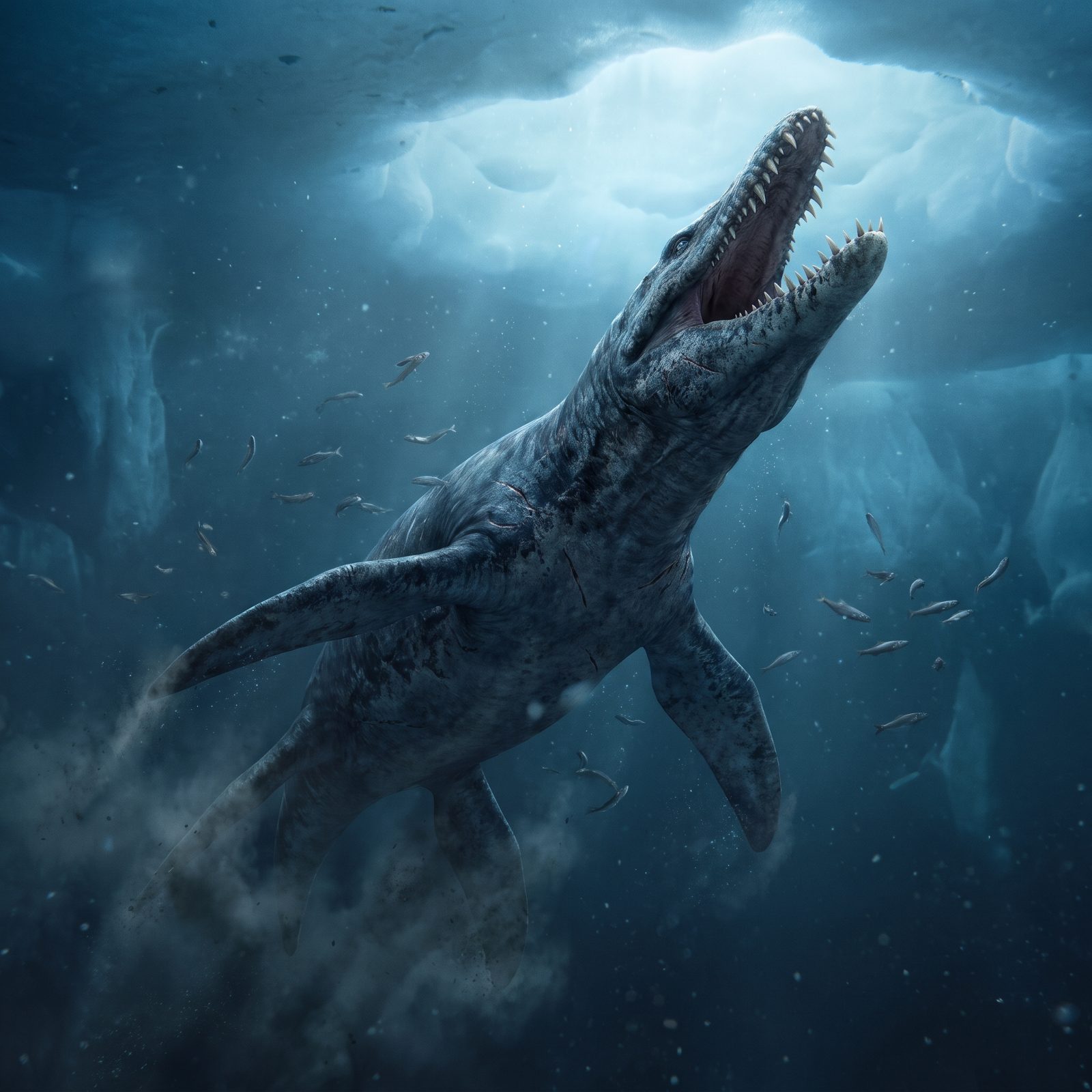
Found on Norway’s Svalbard archipelago, deep in the Arctic, this pliosaur earned the nickname “Predator X” before it even had a scientific name. The early hype promised a 50-foot monster with a bite force that dwarfed a T. rex.
The science trimmed it down. Pliosaurus funkei was more likely around 40 feet — still a terrifying thing to meet in open water. The skull alone could run close to seven feet. Short neck, huge head, four flippers the size of surfboards: an animal built as one enormous jaw with a body attached almost as an afterthought.
19. Dunkleosteus terrelli: The Armored Fish With Self-Sharpening Jaws
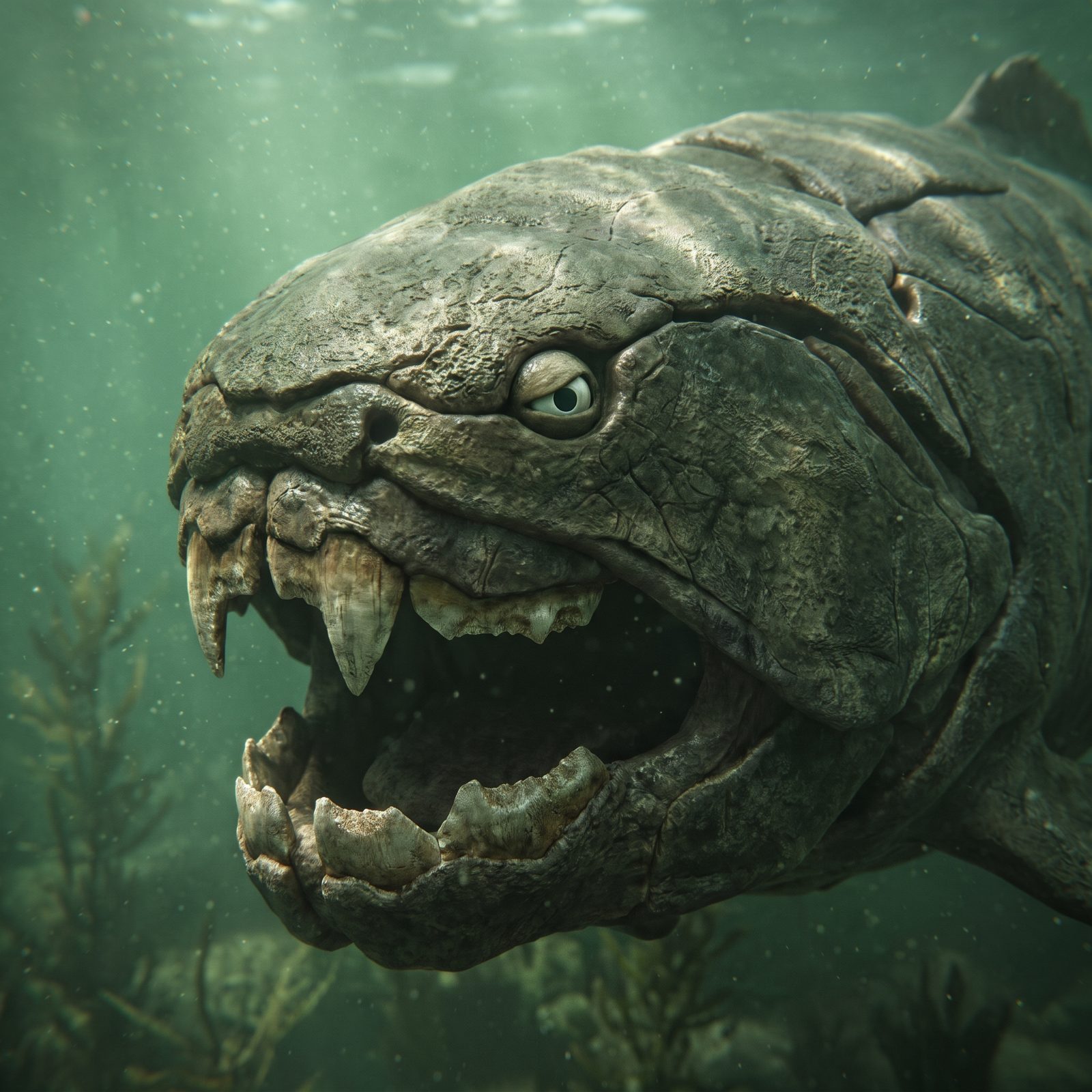
Here is a size estimate that went the other direction. For years Dunkleosteus was drawn as a 30-foot leviathan. Then a 2023 study crunched the proportions and suggested something closer to 11 or 12 feet, chunky and stubby rather than long and sleek.
The jaws are the real headline, though. Big curved fangs up top and a row of tooth-like points below — bony edges that ground against each other and honed themselves with every bite, like scissors that never go dull. The bite force rivaled a modern crocodile. This thing was cracking armored prey nothing else could touch, 360 million years ago.
As the paleontologist behind the study puts it, “An 11-foot Dunkleosteus is essentially the same weight as a 15-foot great white shark”
18. Archelon ischyros: The Largest Sea Turtle We Have a Full Skeleton Of
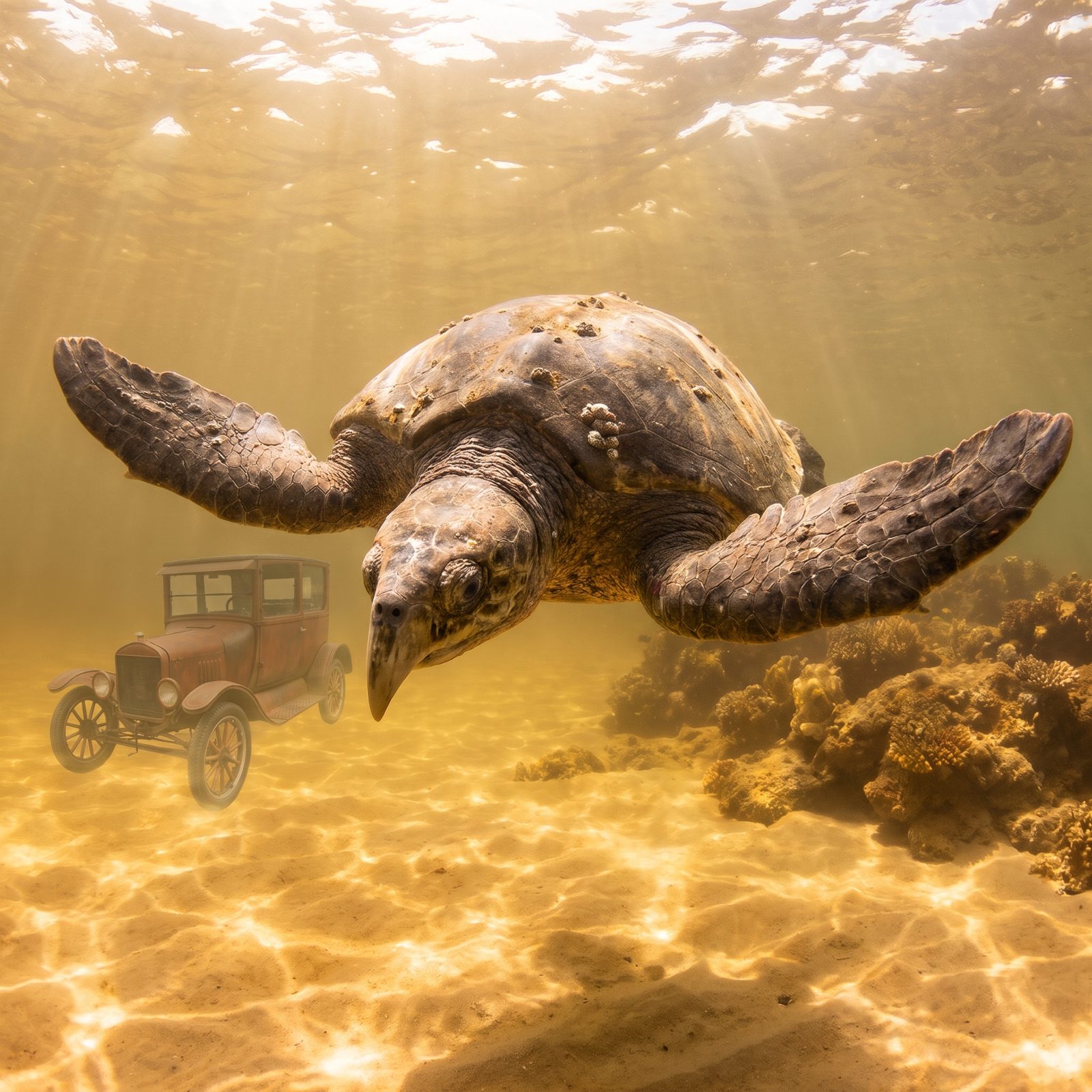
Flipper to flipper, Archelon stretched about 13 feet, wider than a small car. It swam the Western Interior Seaway, the warm sea that once split North America clean in two during the Cretaceous.
Unlike most entries here, we’re not guessing. A near-complete skeleton sits in Vienna’s Natural History Museum, dug from South Dakota. Its shell was no solid dome of hard scutes like the modern loggerhead pictured here, but a leathery lattice of struts, much like a modern leatherback. It probably cruised slowly and ate squid and jellyfish — a gentle giant in a sea full of nightmares.
17. Cymbospondylus youngorum: A Whale-Size Reptile That Got Big Shockingly Fast
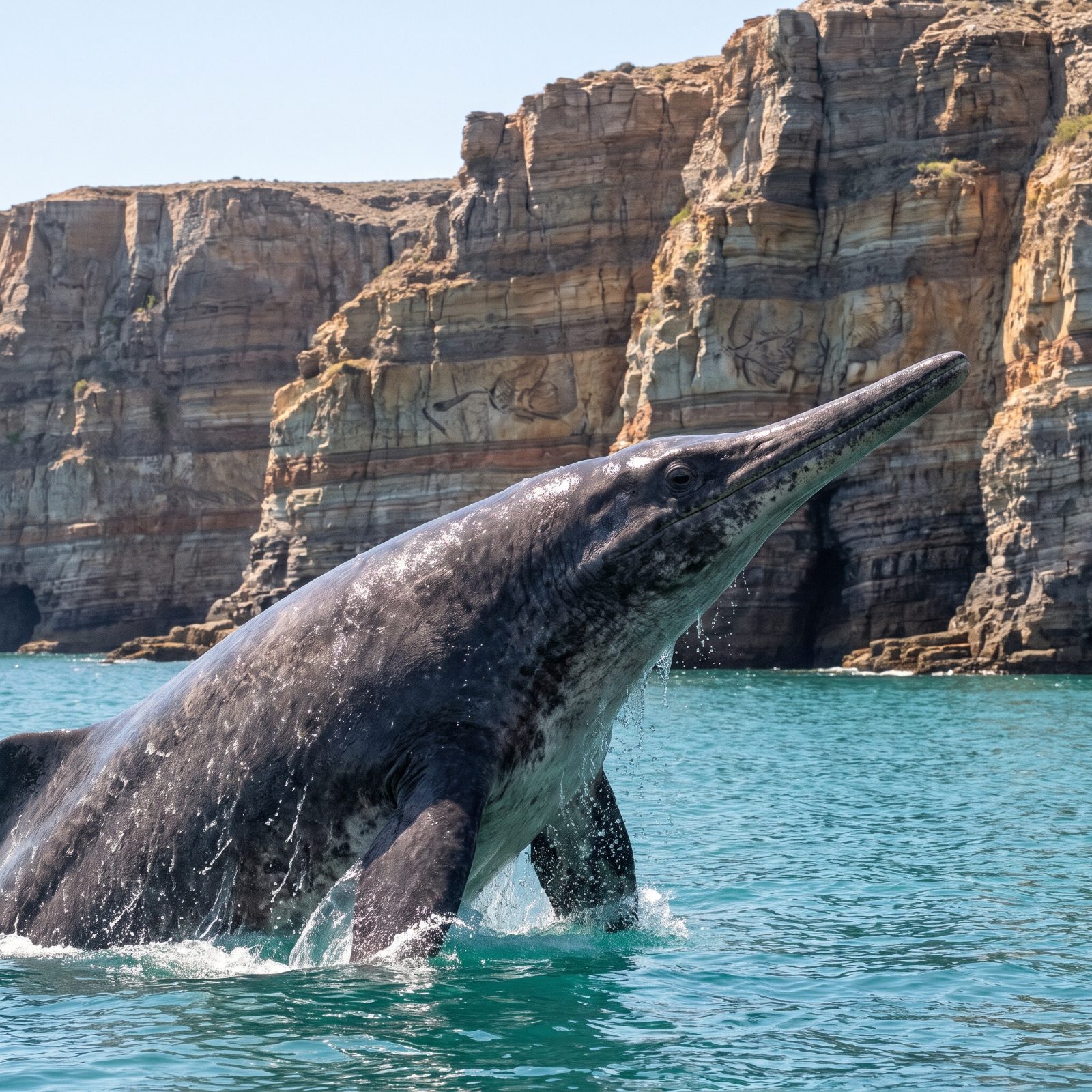
The timing is the jaw-dropper here. Cymbospondylus youngorum reached around 55 feet, whale-sized, only a few million years after the Triassic ichthyosaurs first took to the water.
Life scaling up that quickly rewrote what scientists thought about how fast giants can appear. Whales needed tens of millions of years to get this big. This reptile did it in a sliver of that time. The skull turned up in the Nevada desert, in rocks that were once the floor of a tropical sea. Ancient oceans, it turns out, had a head start on building monsters.
As the study’s senior researcher puts it, “We have discovered that ichthyosaurs evolved gigantism much faster than whales, in a time where the world was recovering from devastating extinction”
16. Basilosaurus isis: The Serpentine Early Whale That Hunted Other Whales
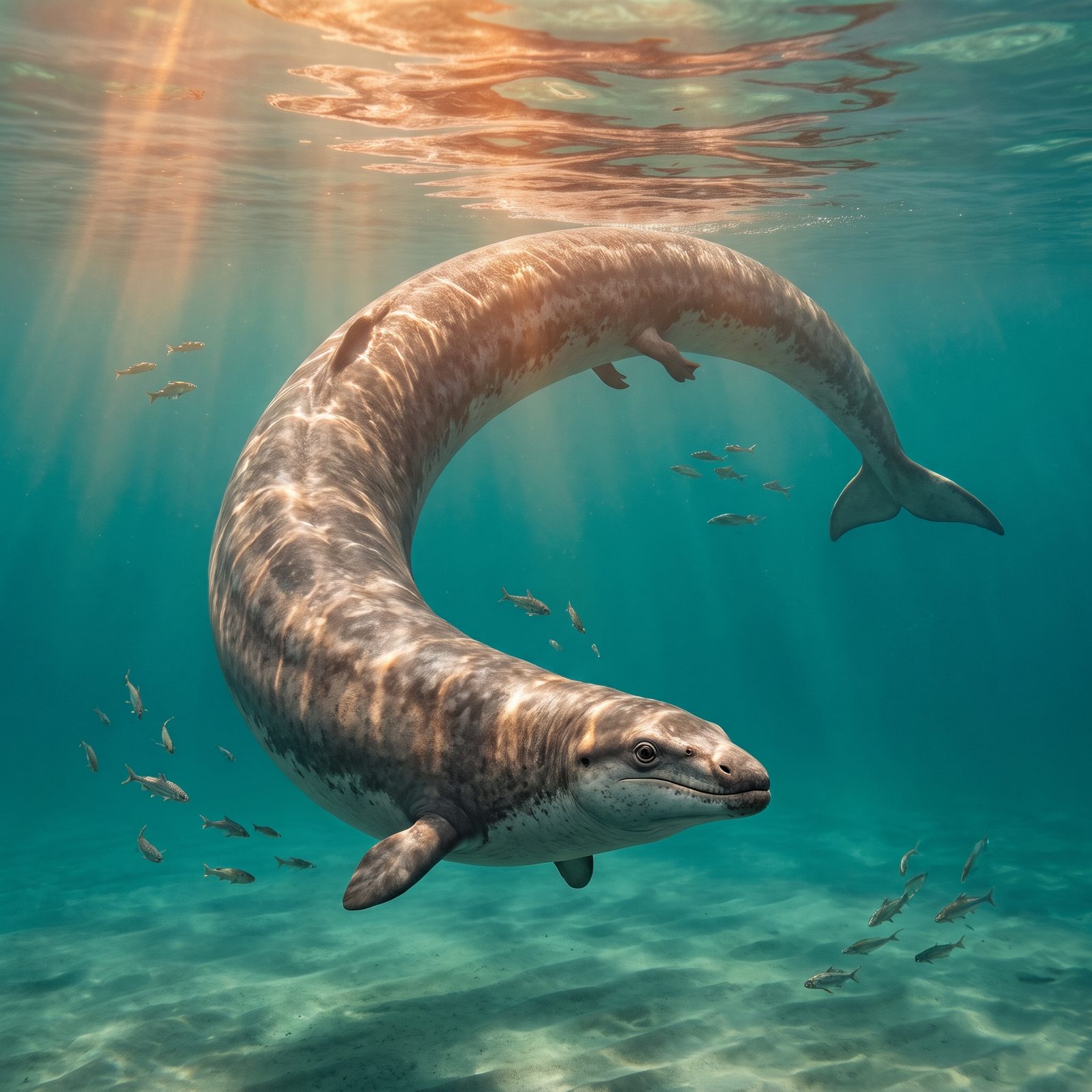
Its name means king lizard, which is wrong twice. Basilosaurus was no lizard and no king. It was one of the first fully aquatic whales, a snake-bodied predator stretching 50 to 60 feet through the warm Eocene seas.
The famous fossils come from Egypt’s Wadi Al-Hitan, the Valley of the Whales, where skeletons lie in the desert by the hundreds. Tooth marks and stomach contents show it cracked the skulls of smaller whales like Dorudon. And it kept a tiny secret near its tail: hind legs the size of a human hand, useless for walking, a leftover from ancestors that once strolled on land.
15. Elasmosaurus platyurus: The Marine Reptile With an Extraordinary Neck
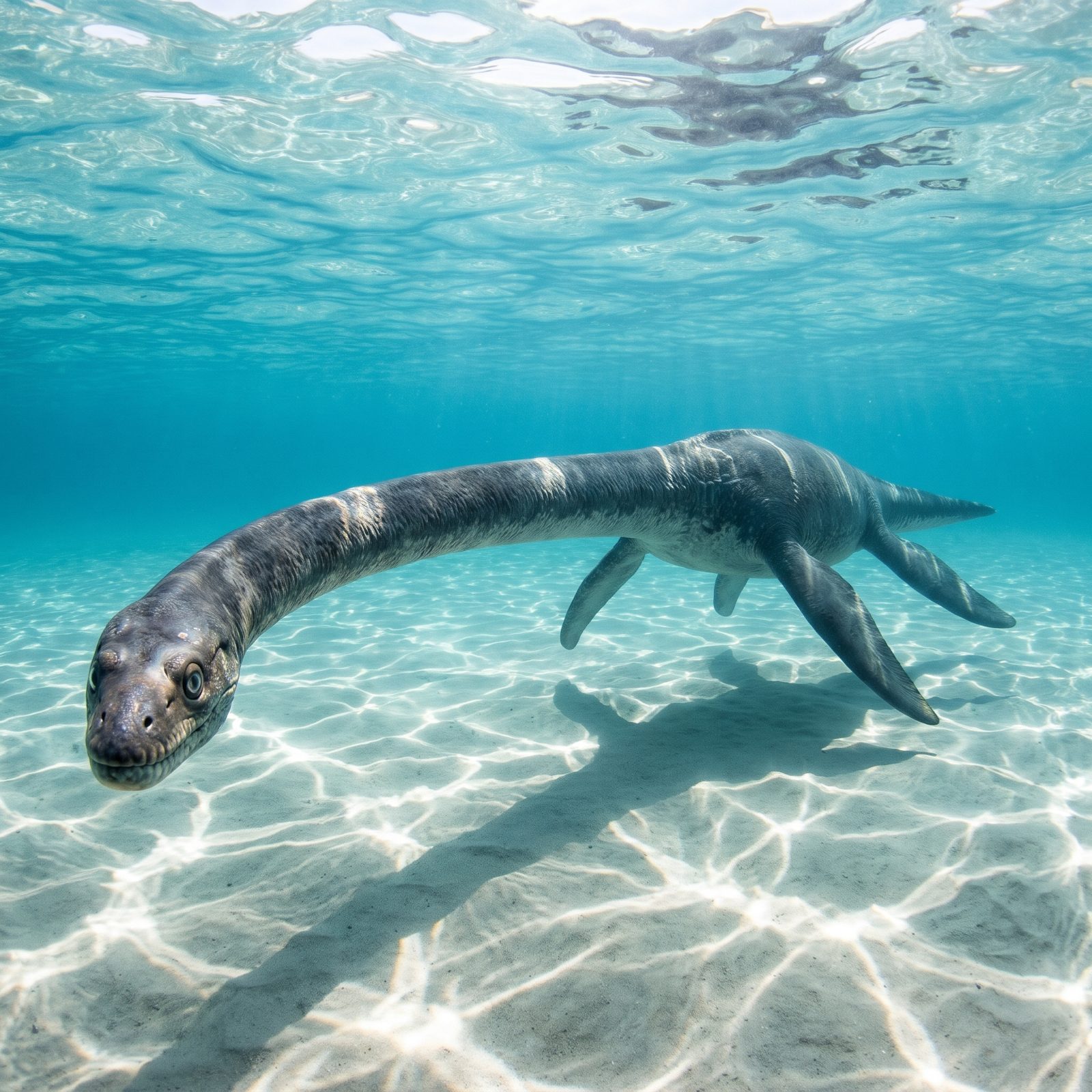
The neck is the whole story, and it once caused a famous mistake. When Edward Drinker Cope first reconstructed Elasmosaurus in 1868, he put the head on the wrong end, mounting the skull on the tail. His rival Othniel Charles Marsh never let him forget it.
That neck held more than 70 vertebrae, the longest of any animal that ever lived relative to its body. Here’s the thing people get wrong, though: the creature couldn’t raise it like a swan, because the bones were too stiff for that. Instead it likely swept the slender head sideways through schools of fish, snagging prey with needle teeth across the Cretaceous Western Interior Seaway.
14. Xiphactinus audax: The Bulldozer-Size Fish That Swallowed Prey Whole
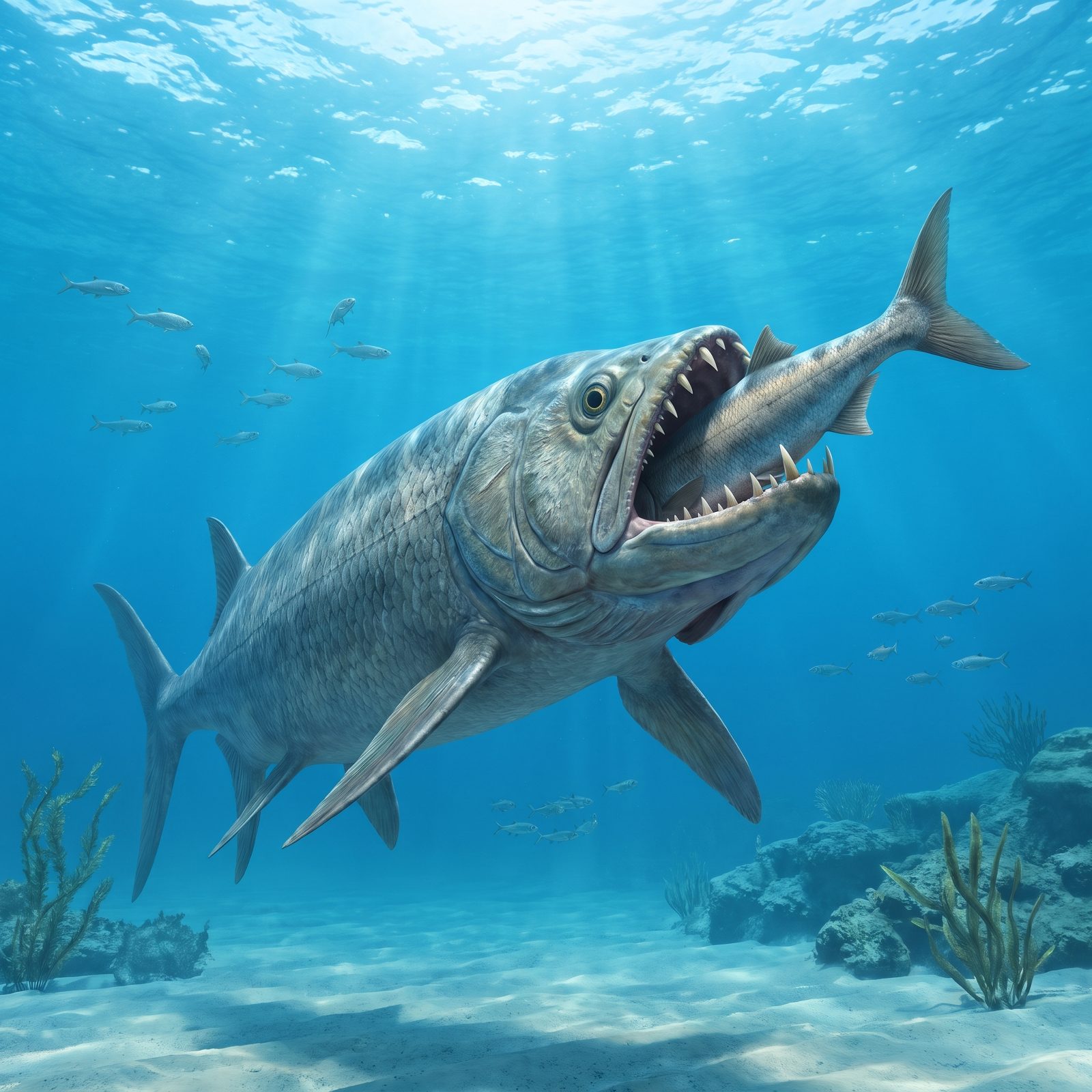
One fossil earned this fish immortality. In the Kansas chalk, a Xiphactinus turned up with another six-foot fish, a Gillicus, swallowed whole inside its body cavity. The meal killed the predator, probably by thrashing hard enough to rupture something vital on the way down.
That “fish within a fish” specimen sits in the Sternberg Museum and tells you everything about how Xiphactinus hunted. Prey went down whole and headfirst, past a mouth crowded with fangs. At 17 feet and built like a battering ram, it was one of the largest bony fish of its day, roughly 80 million years ago.
13. Kronosaurus queenslandicus: Australia’s Barrel-Bodied Marine Reptile
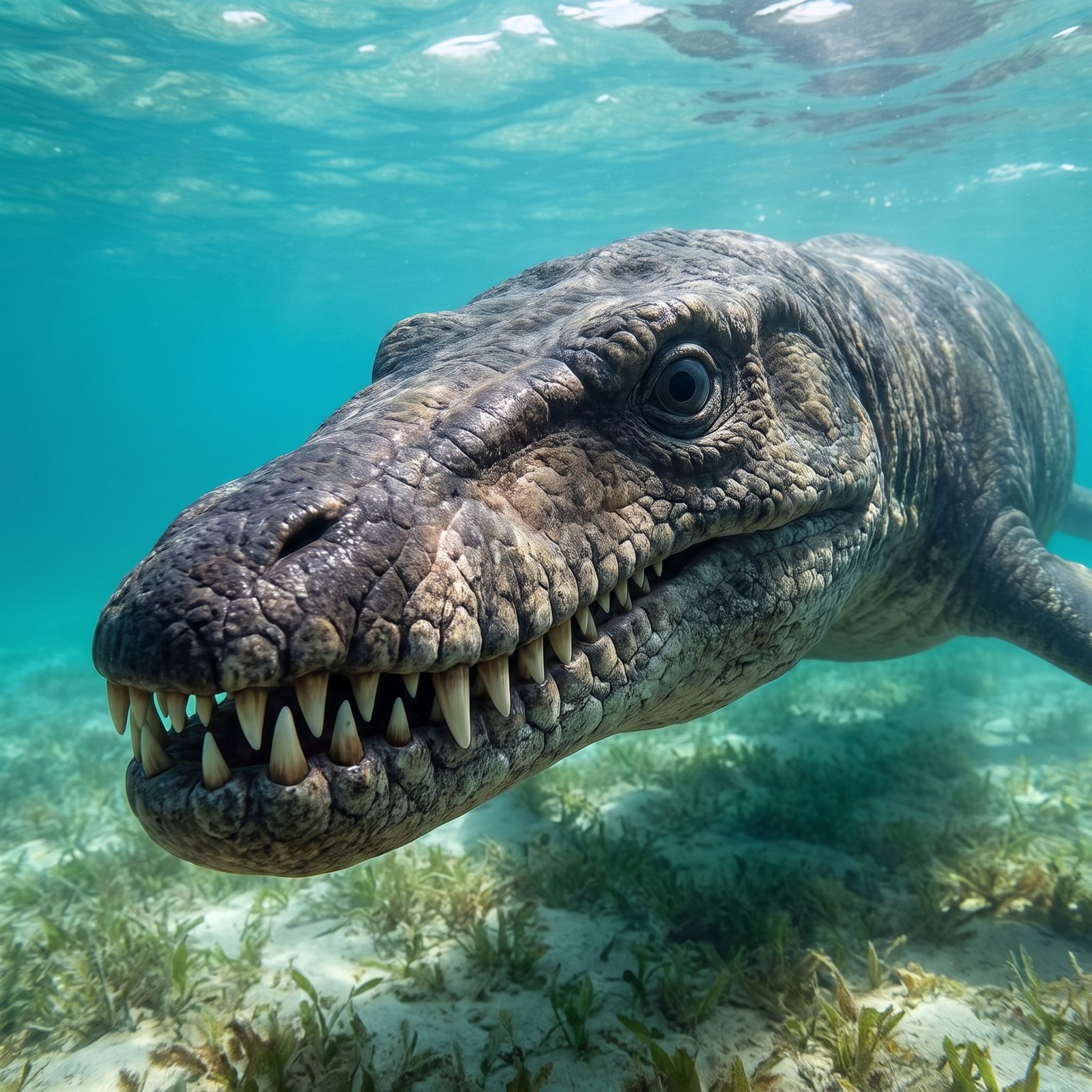
Australia had its own sea monster, and it was mostly head. Kronosaurus carried a skull close to seven feet long on a short, bull-like neck, swimming the shallow inland sea that flooded Queensland 110 million years ago.
Now for the catch worth knowing. The classic Harvard mount that fixed this animal at around 40 feet included too many back vertebrae, a reconstruction nicknamed “Plasterosaurus” by skeptics. Better estimates put it closer to 33 feet. Still a barrel-bodied pliosaur with teeth built to crush turtles and other reptiles whole.
12. Palaeophis colossaeus: A Colossal Sea Snake From Eocene Africa
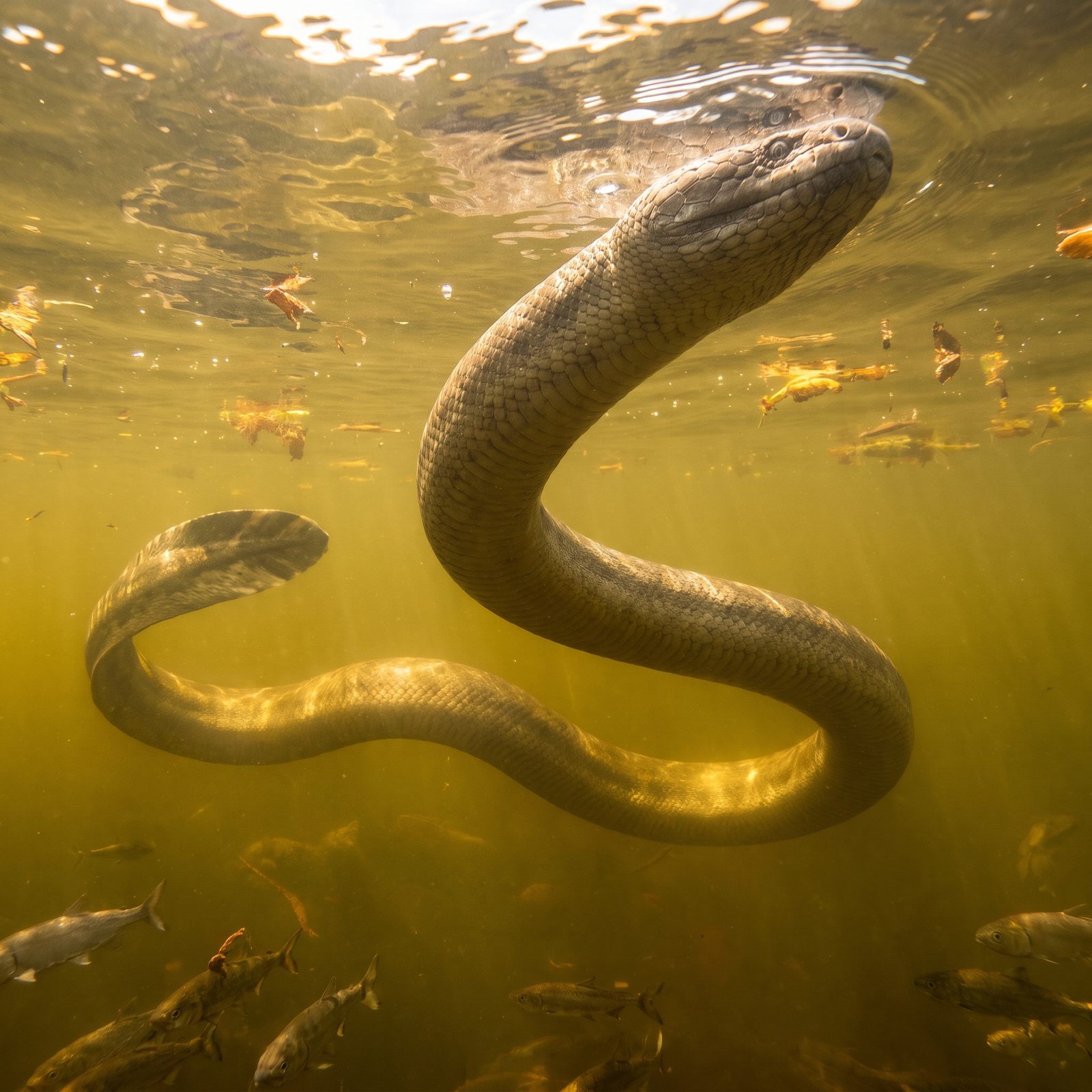
Before Titanoboa made headlines, there was a sea snake that may have rivaled it. Palaeophis colossaeus swam the shallow seas of Eocene North Africa around 50 million years ago, and the fossil vertebrae are genuinely enormous.
Honesty check: we have bones, not a full skeleton. Length estimates run anywhere from 25 to 40 feet depending on how you scale from those isolated vertebrae, so treat the biggest numbers as educated guesses rather than gospel. The body was flattened side to side, the mark of a true swimmer rather than a snake that wandered into the water by accident.
11. Titanichthys termieri: The Huge Armored Fish That May Have Filter-Fed
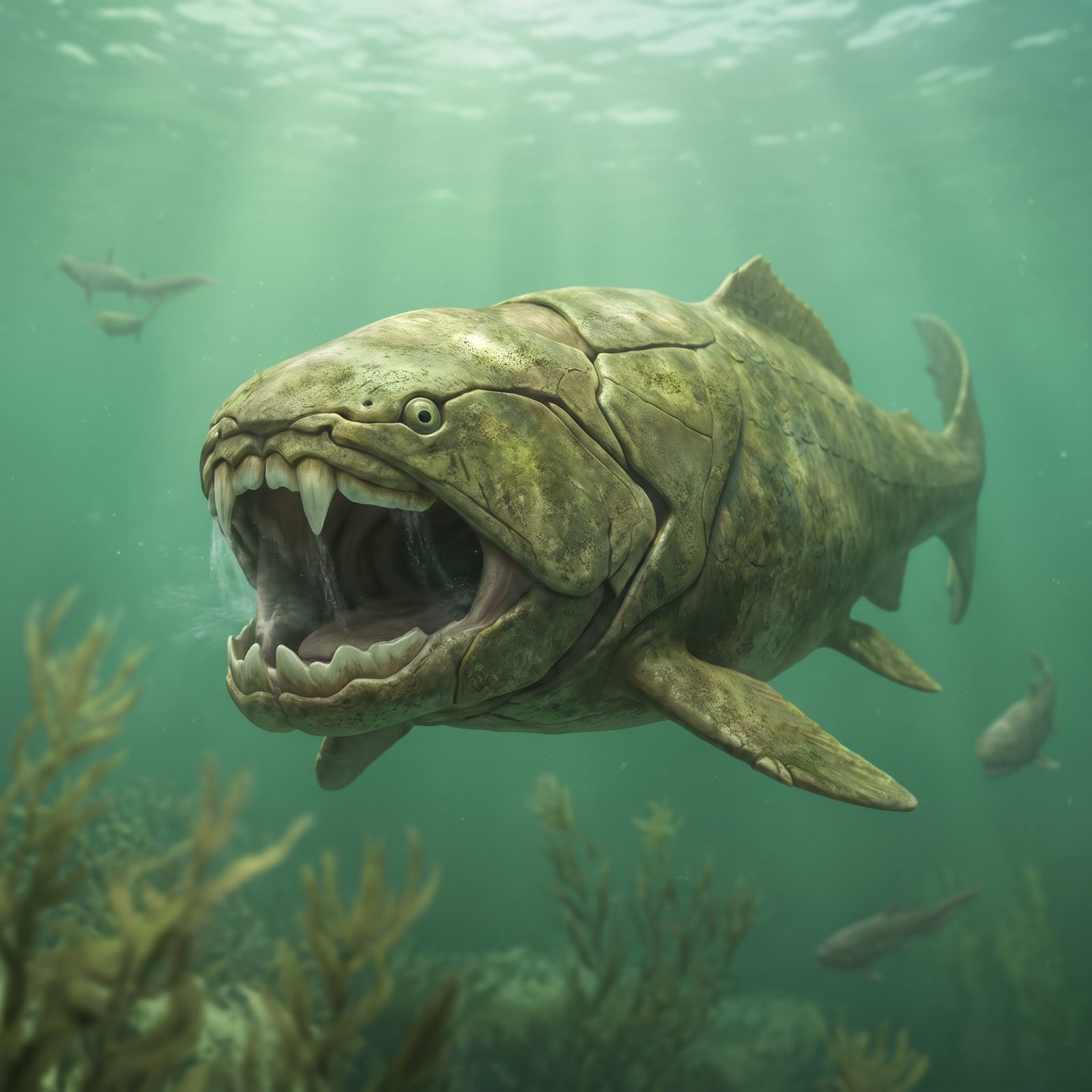
Most armored placoderms had jaws like guillotine blades, and this artist’s reconstruction gives Titanichthys a gaping mouth full of large fangs and rows of sharp teeth on both jaws. The fossils suggest something different: a broad, toothless lower jaw with no cutting edge at all, which is downright strange for a 20-foot predator.
Biomechanical studies of the jaw found it was simply too weak to grab or bite struggling prey. So the leading idea is that Titanichthys filter-fed, straining plankton and tiny animals from the Devonian seas around 370 million years ago, the same niche whale sharks and baleen whales fill today. It’s a hypothesis, not a certainty. We’ve never found a gill-straining apparatus fossilized. But the jaw mechanics point hard in that direction.
10. Machimosaurus rex: A Bus-Length Sea Crocodile With Crushing Teeth
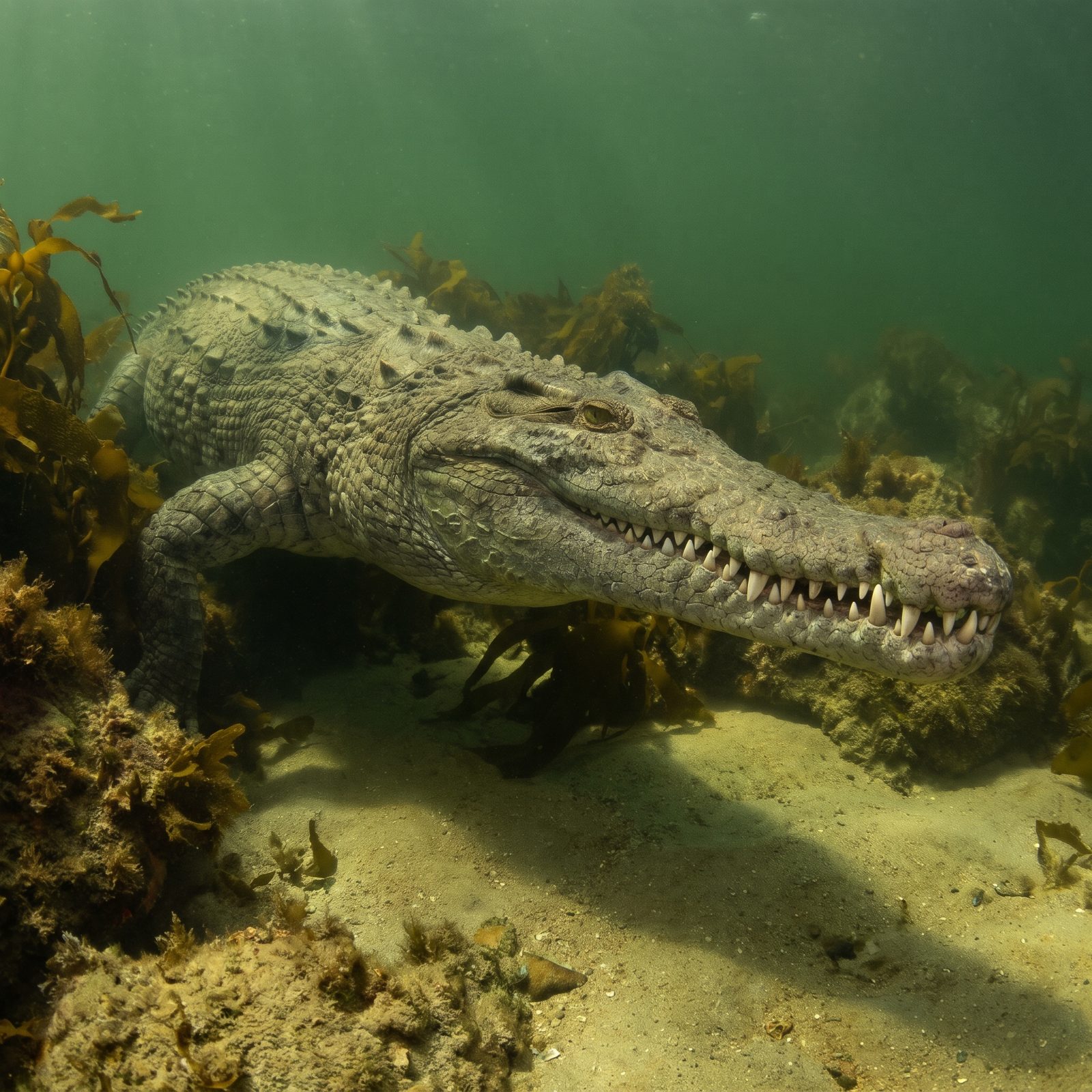
The world’s largest known sea crocodile turned up in the Tunisian desert in 2016. Machimosaurus rex stretched around 30 feet, roughly the length of a city bus, and prowled shallow coastal waters about 120 million years ago.
Its teeth were rows of thick, blunt, rounded teeth, built for gripping and crushing rather than slicing, and paleontologists think it specialized in sea turtles, cracking their shells like a nutcracker. The discovery matters for a quieter reason too. This croc lived right across the Jurassic-Cretaceous boundary, where scientists once assumed marine crocs had gone extinct. It proved they hadn’t.
9. Temnodontosaurus platyodon, The Ichthyosaur With Dinner-Plate Eyes
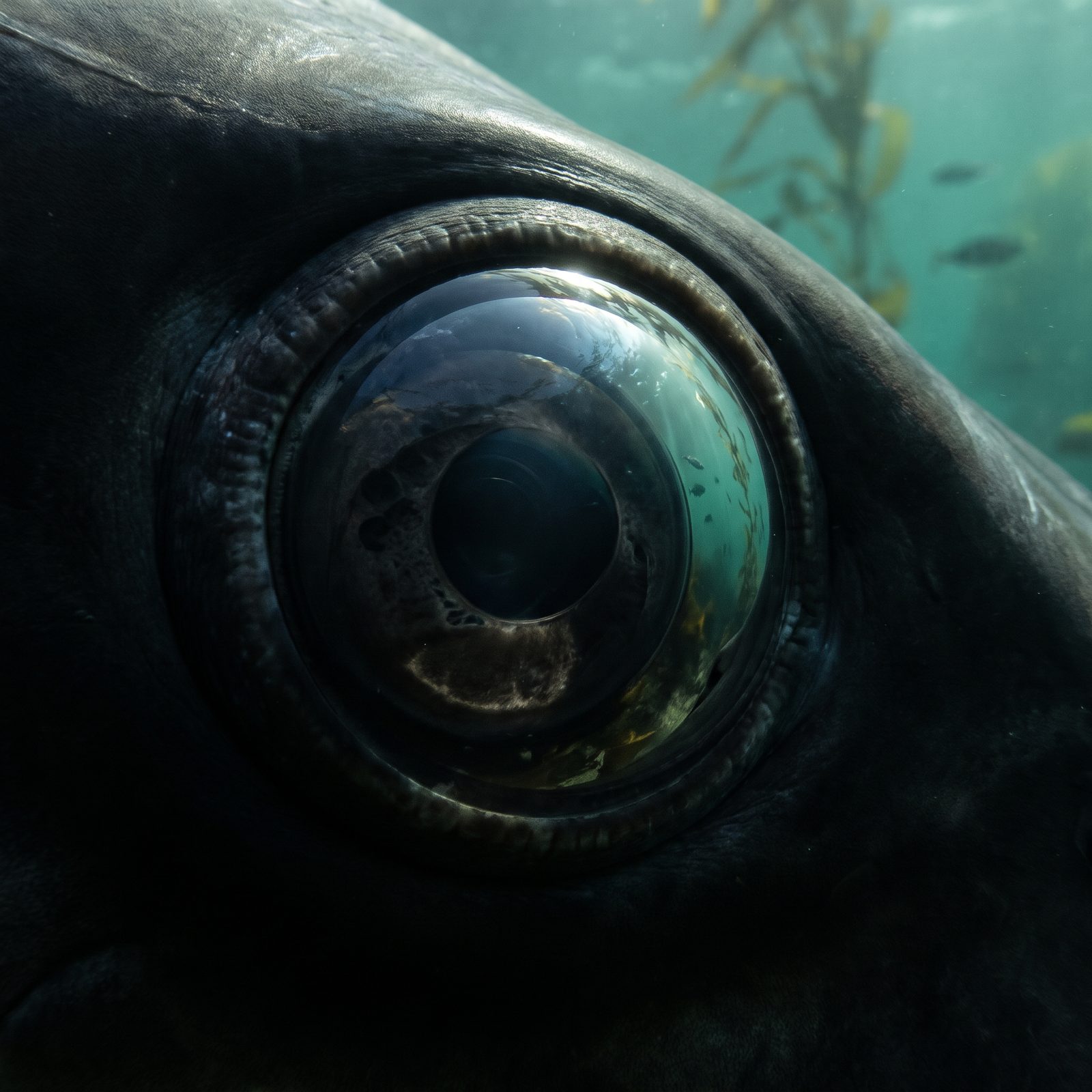
Start with the eye, because everyone else does. Temnodontosaurus had eyeballs around 20 centimeters across, among the largest known in any animal, and that wasn’t decoration. It was an adaptation for hunting in the gloom, where catching the last scraps of light meant the difference between eating and starving.
The body ran close to 9 meters, somewhere between a great white shark and a small whale, patrolling the warm shallow seas that drowned Europe during the Early Jurassic. The first good fossils came tumbling out of the Lyme Regis cliffs on England’s Dorset coast. Picture a reptile shaped like a dolphin, built like a torpedo, watching you with an eye the size of a frisbee.
8. Ptychodus mortoni, The Giant Shark Built to Crush Shellfish
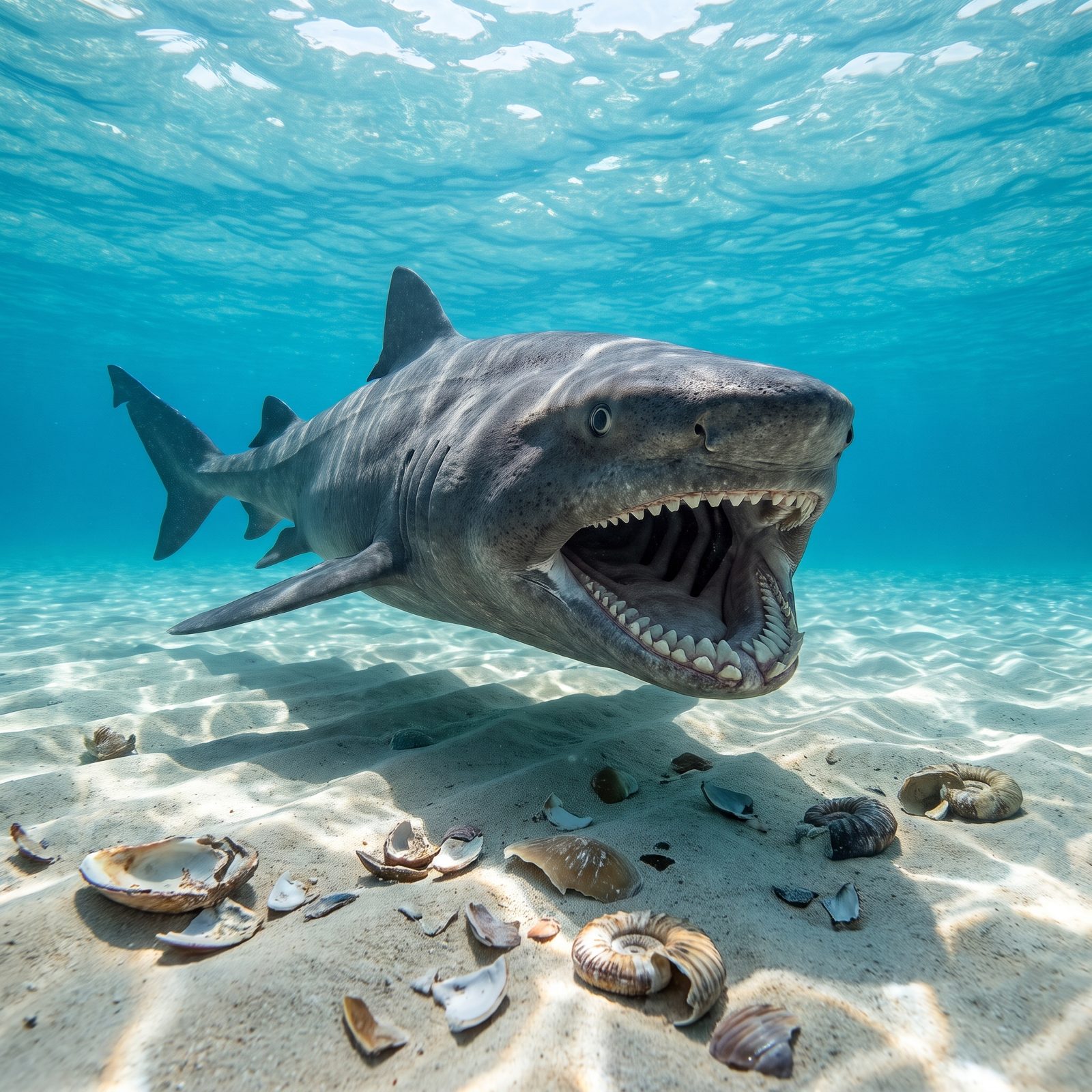
Not every giant shark wanted your leg. Ptychodus had a mouth paved with flat, ridged crushing teeth, row after row of them, aimed at clams and thick-shelled bivalves on the sea bottom. A bear trap, but for shellfish.
For ages it was known almost entirely from those teeth, which left its size a guessing game. More complete material now points to a body plan in the range of 7 to 10 meters, ranking it among the largest sharks that ever lived. It swam the shallow Cretaceous seas, including the vast inland ocean that once split North America right down the middle.
7. Albertonectes vanderveldei, The Plesiosaur With 76 Neck Bones
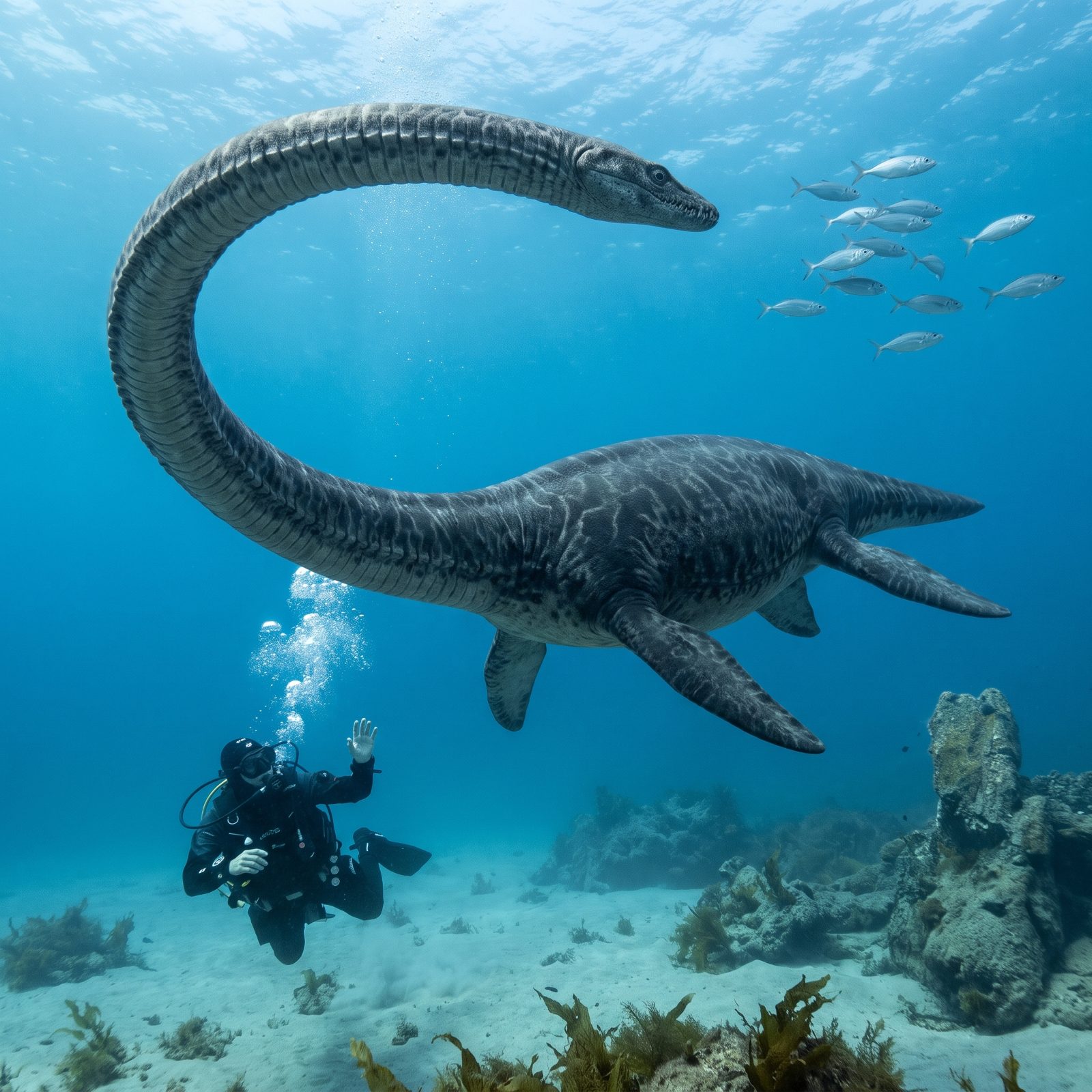
Seventy-six neck vertebrae. That’s the record for any animal, ever, and it belongs to this plesiosaur pulled from the rocks of Alberta, Canada.
The neck alone ran about 7 meters, more than half the creature’s full 11-meter length. People love to imagine these animals rearing up swan-like out of the water, but the bones say otherwise. The neck was too stiff to hold upright, so it most likely stretched forward, letting the small head slip into a school of fish well ahead of the bulky body. Elegant, really, in a way that has nothing to do with the postcards.
6. Cretoxyrhina mantelli, The Ginsu Shark of the Cretaceous Seas
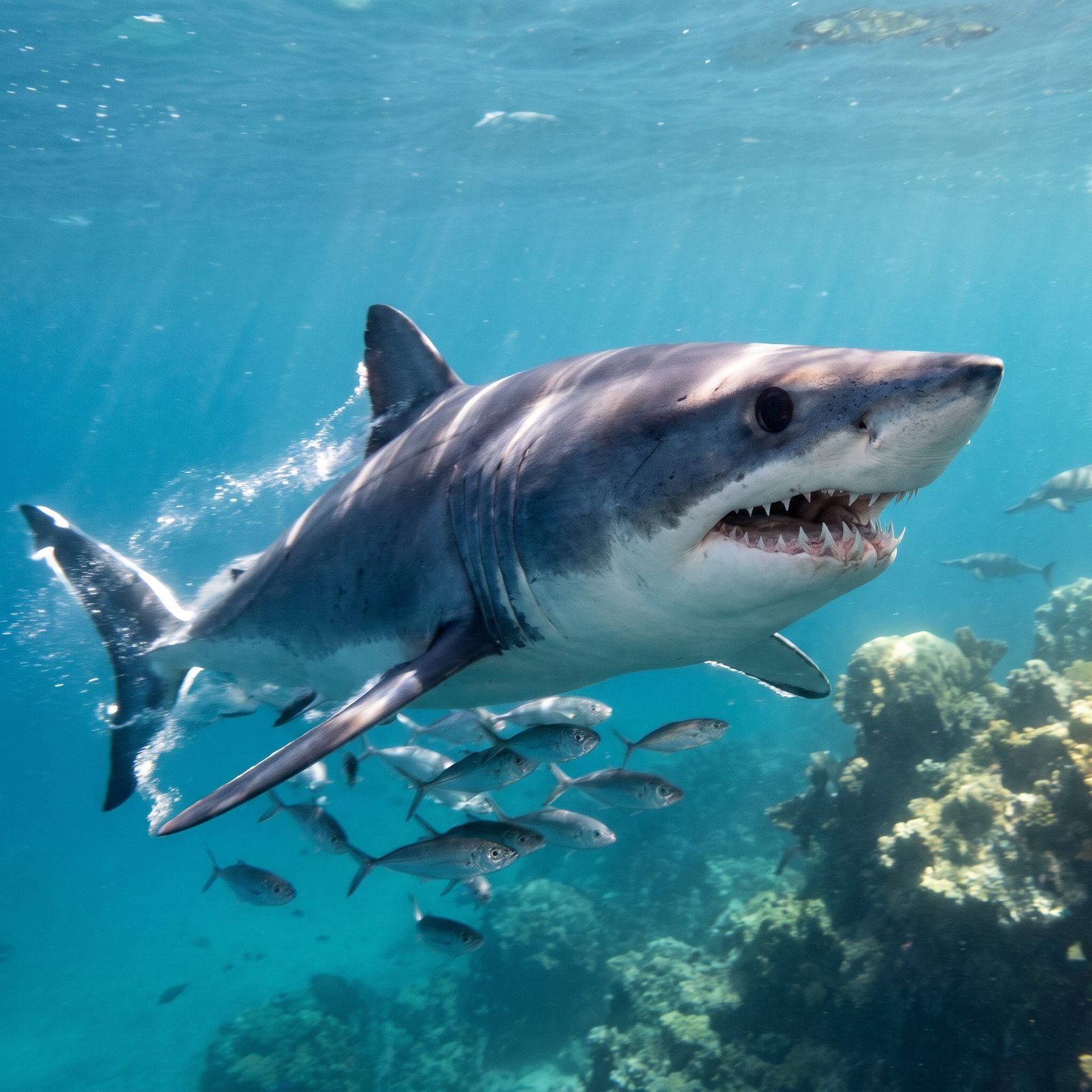
The nickname says it all. Someone dubbed it the Ginsu shark, after the knife that slices tomatoes and tin cans in the same ad, and it stuck. A 7-meter apex predator with teeth like polished blades.
We know what it ate because the evidence is literally lodged in the fossils. Cretoxyrhina teeth and bite marks turn up embedded in mosasaurs, giant fish, plesiosaurs, even diving seabirds. It shared the inland sea with the shellfish-crushers of this list, around 85 million years ago, and it wasn’t fussy about what it bit.
It left its teeth lodged in the bones of nearly everything else alive at the time. That’s not a theory. That’s a crime scene.
5. Liopleurodon ferox, The Pliosaur With a Reputation It Can’t Live Up To
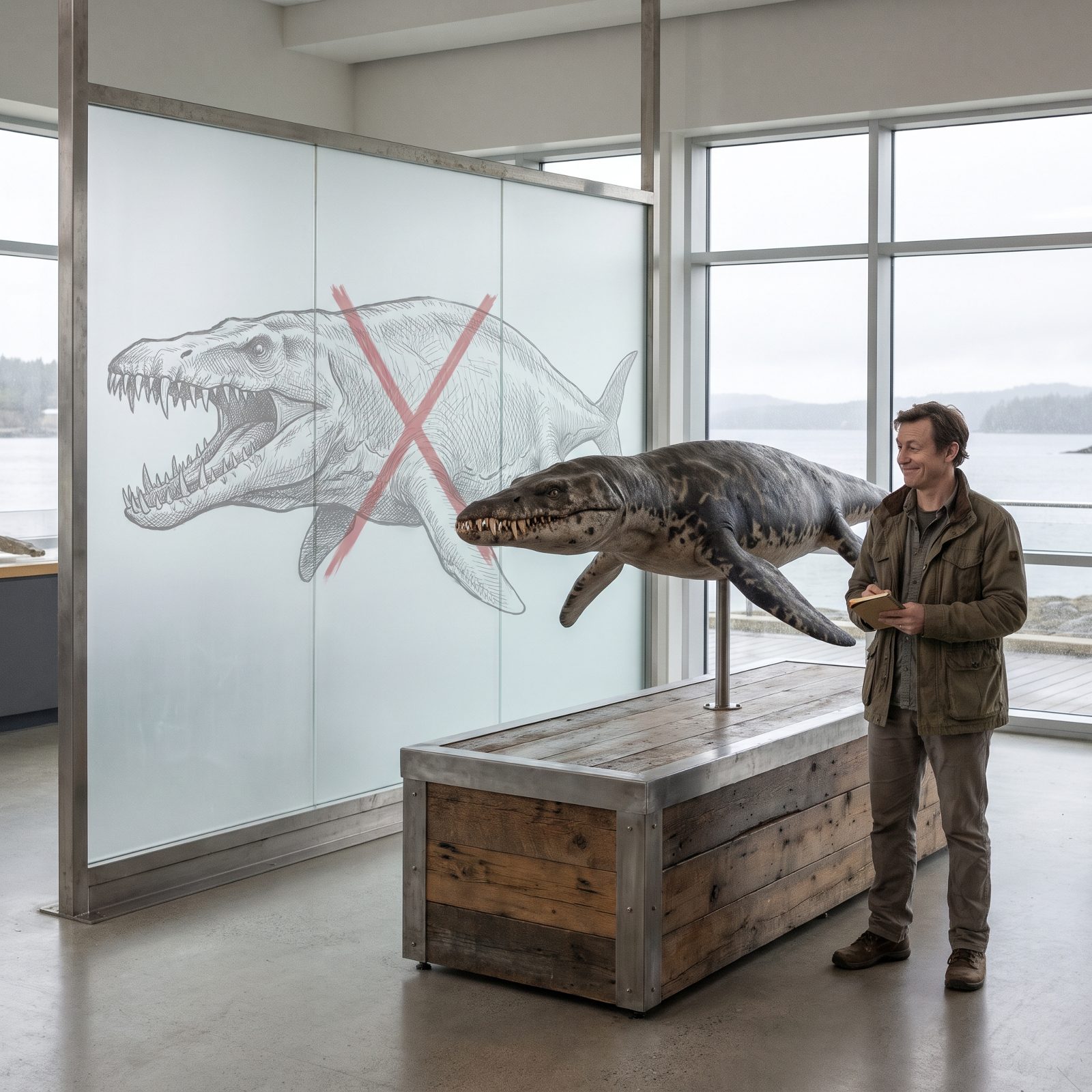
A TV documentary once handed Liopleurodon a length of 25 meters. That number went everywhere, and it was fiction. The actual fossils point to something closer to 6 or 7 meters, which is still a serious animal, just not a sea monster the length of a tennis court.
This is speculation outrunning evidence, plain and simple. The real Liopleurodon was a Jurassic pliosaur with a crocodile-shaped skull and four flippers it beat like underwater wings, hunting the shallow seas that covered Europe around 160 million years ago.
After re-examining every specimen assigned to Liopleurodon ferox, the study’s lead researcher says “Although it was smaller than some famous reconstructions, it was still the dominant marine predator”
4. Onchopristis numidus, The Saw-Snouted Giant of Cretaceous Rivers
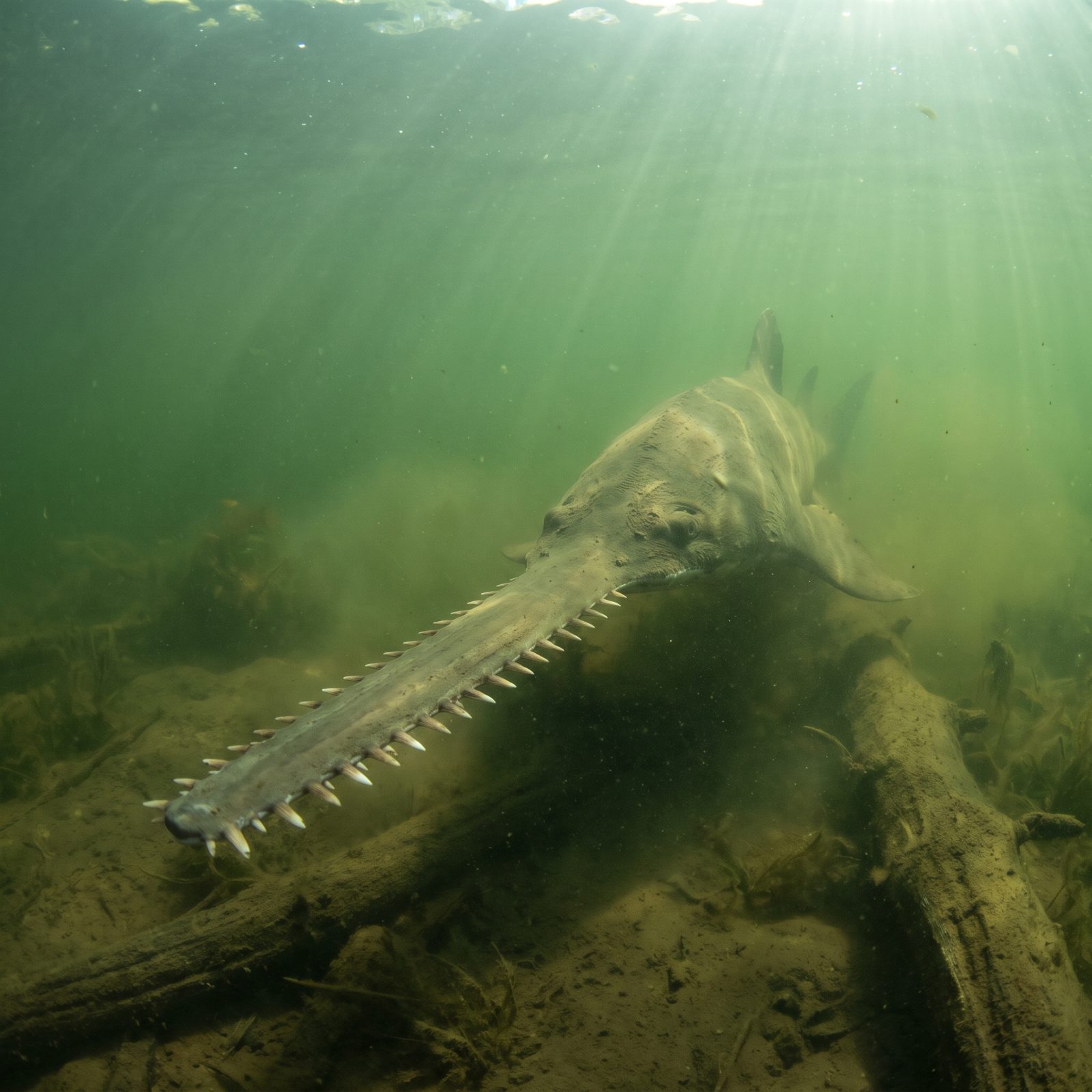
Imagine a sawfish the length of a school bus, and you’re close. Onchopristis carried a long snout lined with vicious barbed teeth, a living rake it swung through murky water to stun and snag prey.
Those saw-teeth are what mostly survive, tipped with backward-facing barbs that still look mean today. The animal haunted the river systems and coastal shallows of North Africa around 95 million years ago, the same soggy ecosystem that produced Spinosaurus. There’s a decent case it was Spinosaurus food. Two giants, one river, one of them with a snout that doubled as a weapon.
3. Endoceras giganteum, The Towering Straight-Shelled Squid Relative
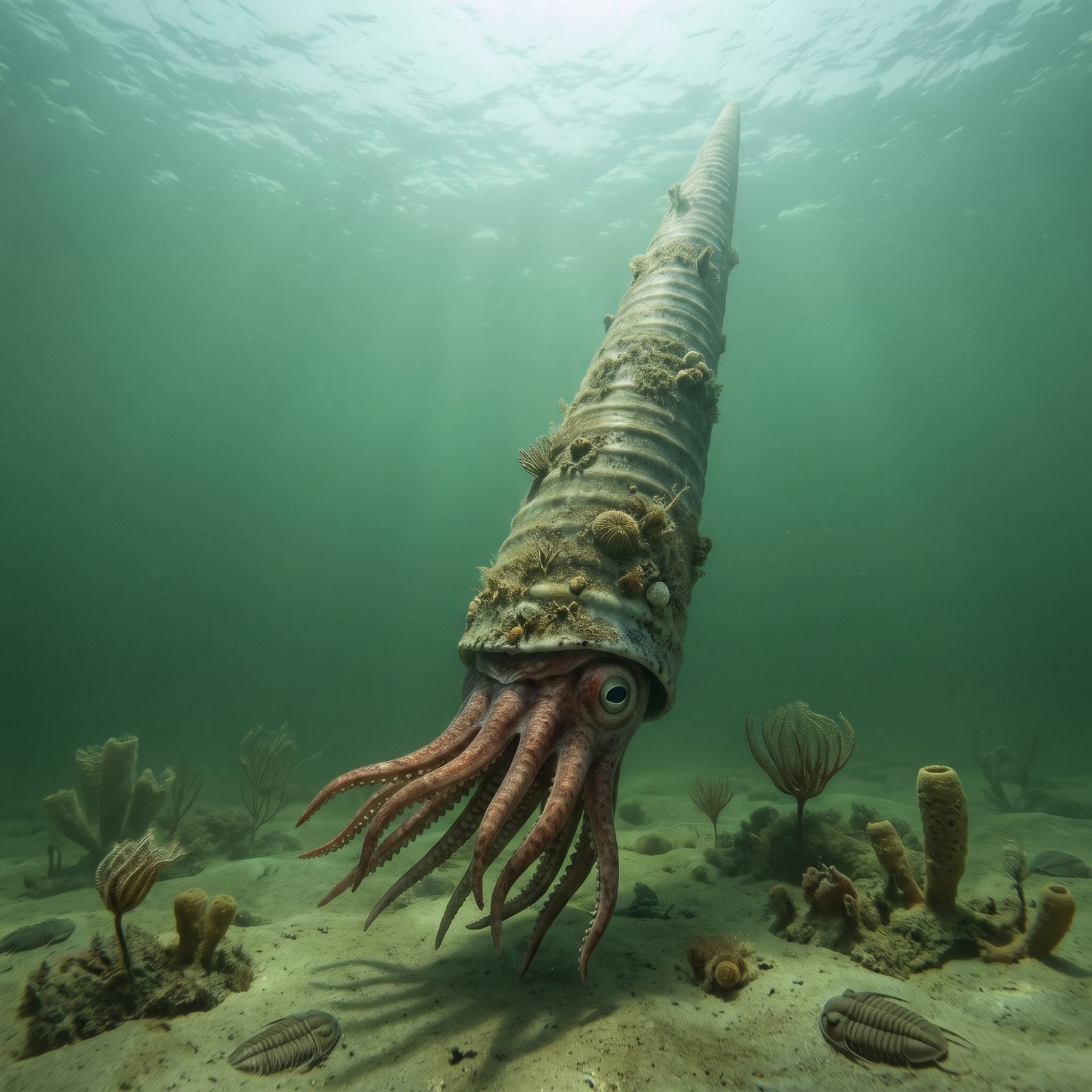
Long before anything with a backbone ruled the oceans, this thing did. Endoceras was a nautiloid, a cousin of the squid and the modern chambered nautilus, but it carried a straight cone-shaped shell that may have stretched several meters.
Here’s the honest part. The complete length is debated, because the longest shells are fragmentary and the biggest estimates lean hard on extrapolation. Even taken conservatively it was one of the largest animals of the Ordovician seas, some 460 million years ago, drifting above a seafloor crawling with trilobites. A soft body, a horn of shell, and a reign that predates the dinosaurs by a couple hundred million years.
2. Parapuzosia seppenradensis, The Ammonite Taller Than You Are
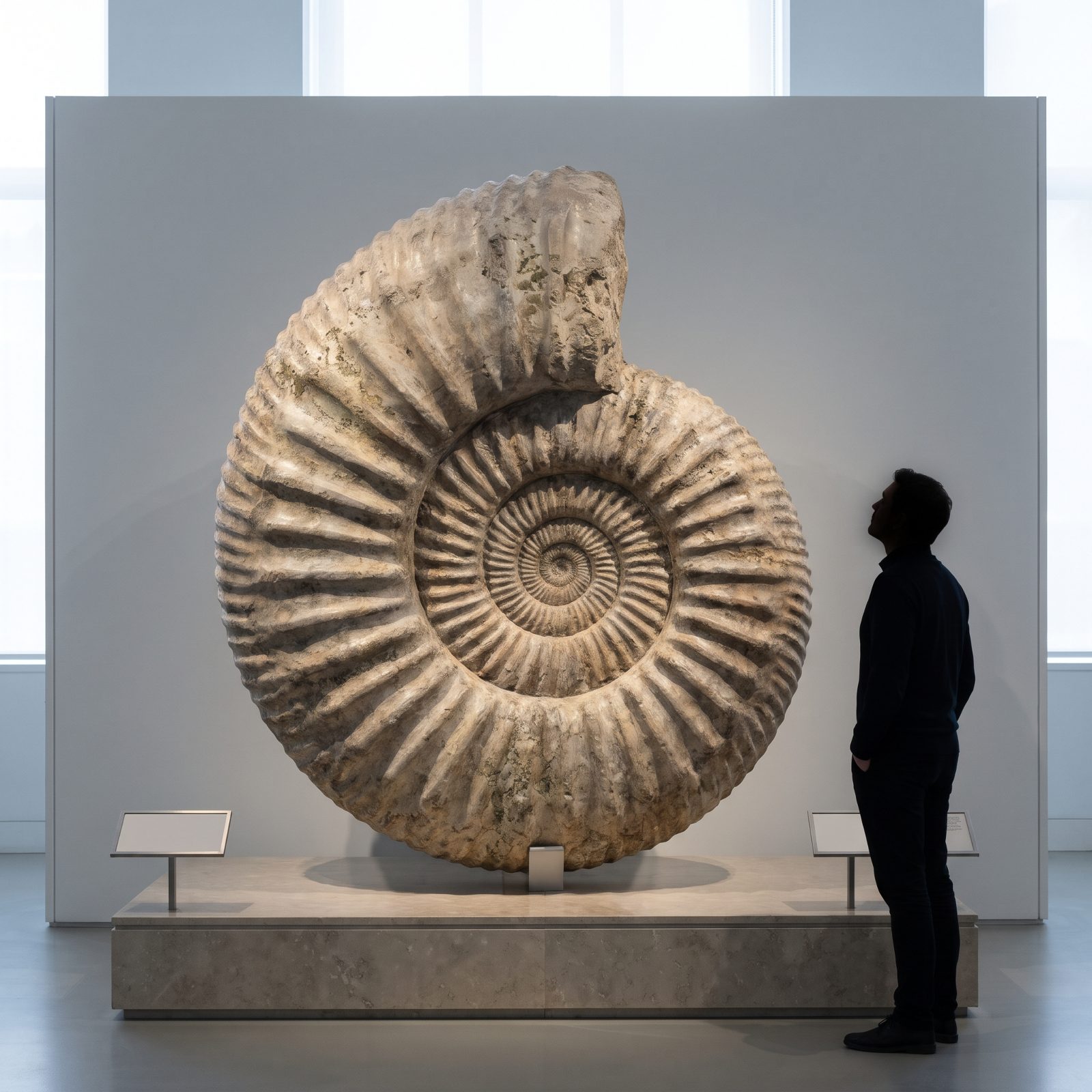
The largest known specimen measures about 1.8 meters across the shell. Stand it on edge and it’s taller than most people. That’s the biggest ammonite ever found, hauled from rock in Seppenrade, Germany, which gave the species its name.
And the famous one isn’t even complete. The outer part of the shell is missing, so the living animal was likely larger still, maybe over 2 meters. Ammonites were coil-shelled relatives of today’s squid and octopus, and most were palm-sized. This one broke every rule about how big a drifting, tentacled spiral is allowed to get.
1. Ichthyotitan severnensis, A Giant Known From a Single Jawbone
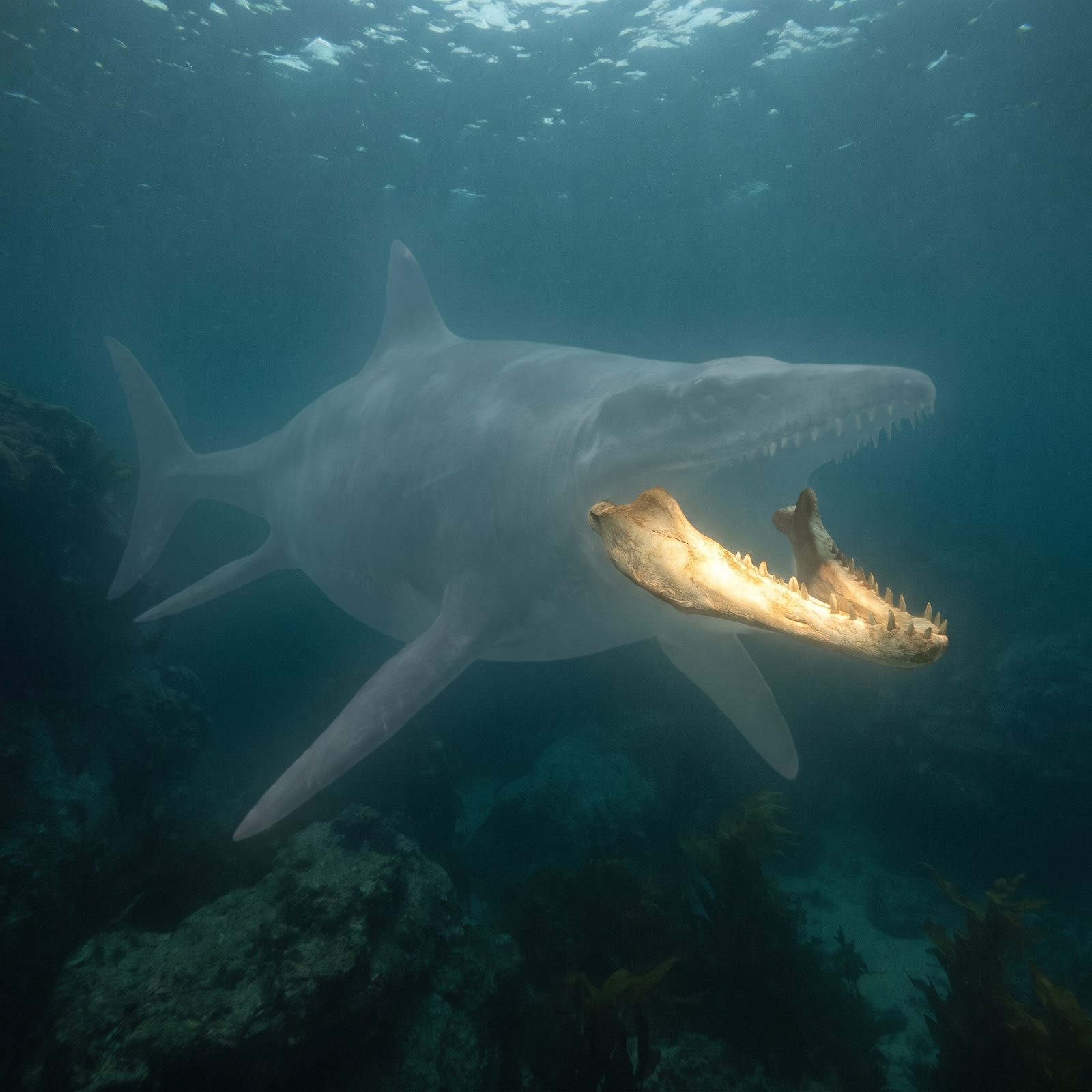
Sometimes the whole giant comes from one bone. Ichthyotitan is known mainly from pieces of an enormous lower jaw, found along the Somerset coast of England, one fragment spotted on a beach by a young fossil hunter.
Scale that jaw against its relatives and you land on a length estimate around 25 meters, which would rank it among the largest marine reptiles that ever lived, rivaling a blue whale. Fair warning: that figure rests on comparison and proportion, not a full skeleton. We don’t have the body yet. What we have is a jawbone roughly 2 meters long, from a Triassic ocean 202 million years ago, hinting at something almost too big to picture.
And honestly, that’s the thrill of this whole tour. The evidence is partial, the math is careful, and the ocean still hasn’t coughed up its biggest secrets.
As a paleontologist who described it puts it, “It is quite remarkable to think that gigantic, blue whale-sized ichthyosaurs were swimming in the oceans around what was the UK during the Triassic Period.”