
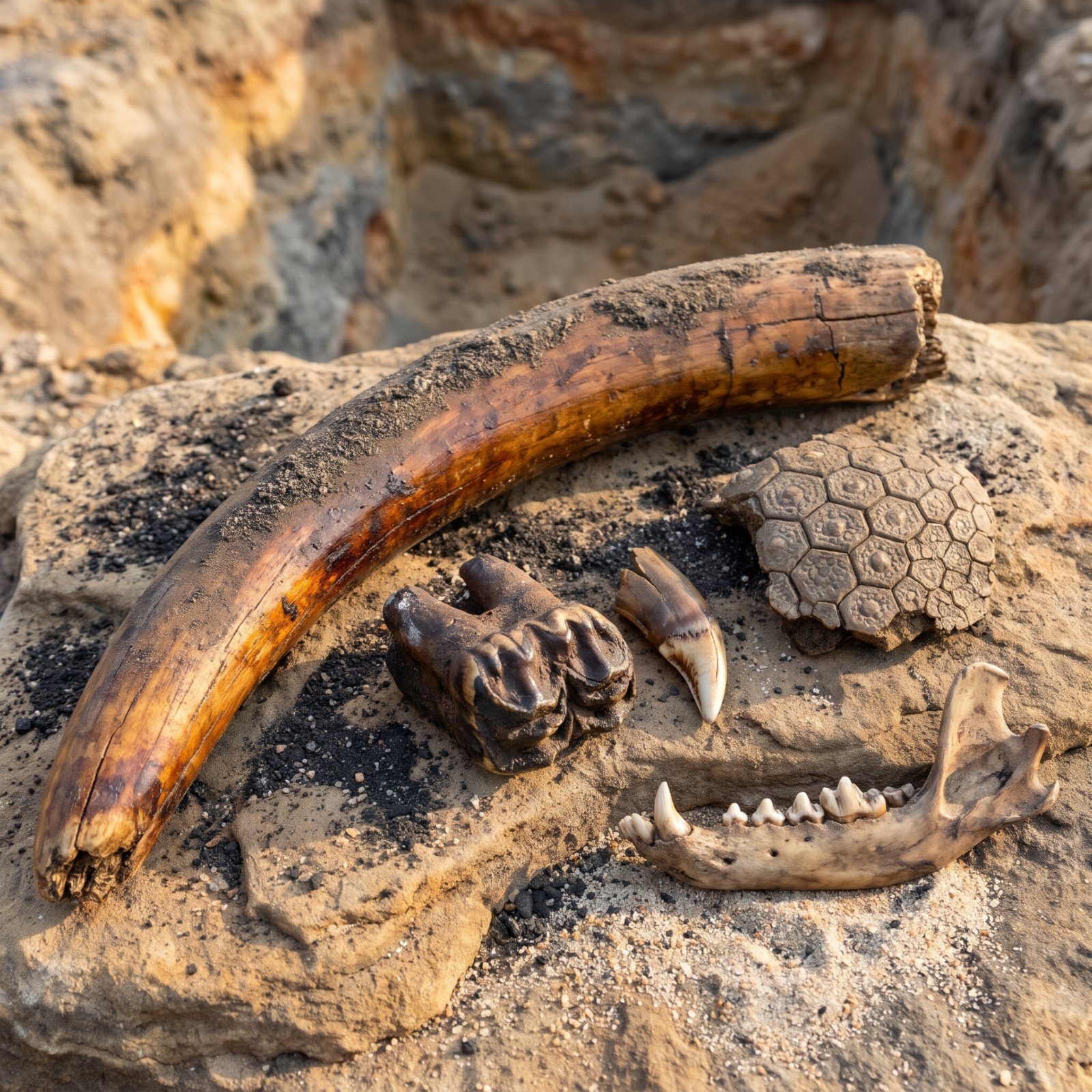
Dig thirty feet under a Los Angeles parking lot and you might hit the shoulder blade of an animal that weighed as much as a school bus. The ground under your feet is a graveyard with a long memory. Before the freeways and the skyscrapers went up, these exact coordinates held tar pits that swallowed lions whole, forests that fed mastodons, and tundra patrolled by bears that could meet a grown man’s eyes without bothering to stand up. The fossils are real. The locations are exact. And the animals were stranger than anything a horror movie ever dreamed up. Here is what used to live at your address.
36. Columbian Mammoths Crossed the Plains Beneath Modern Los Angeles
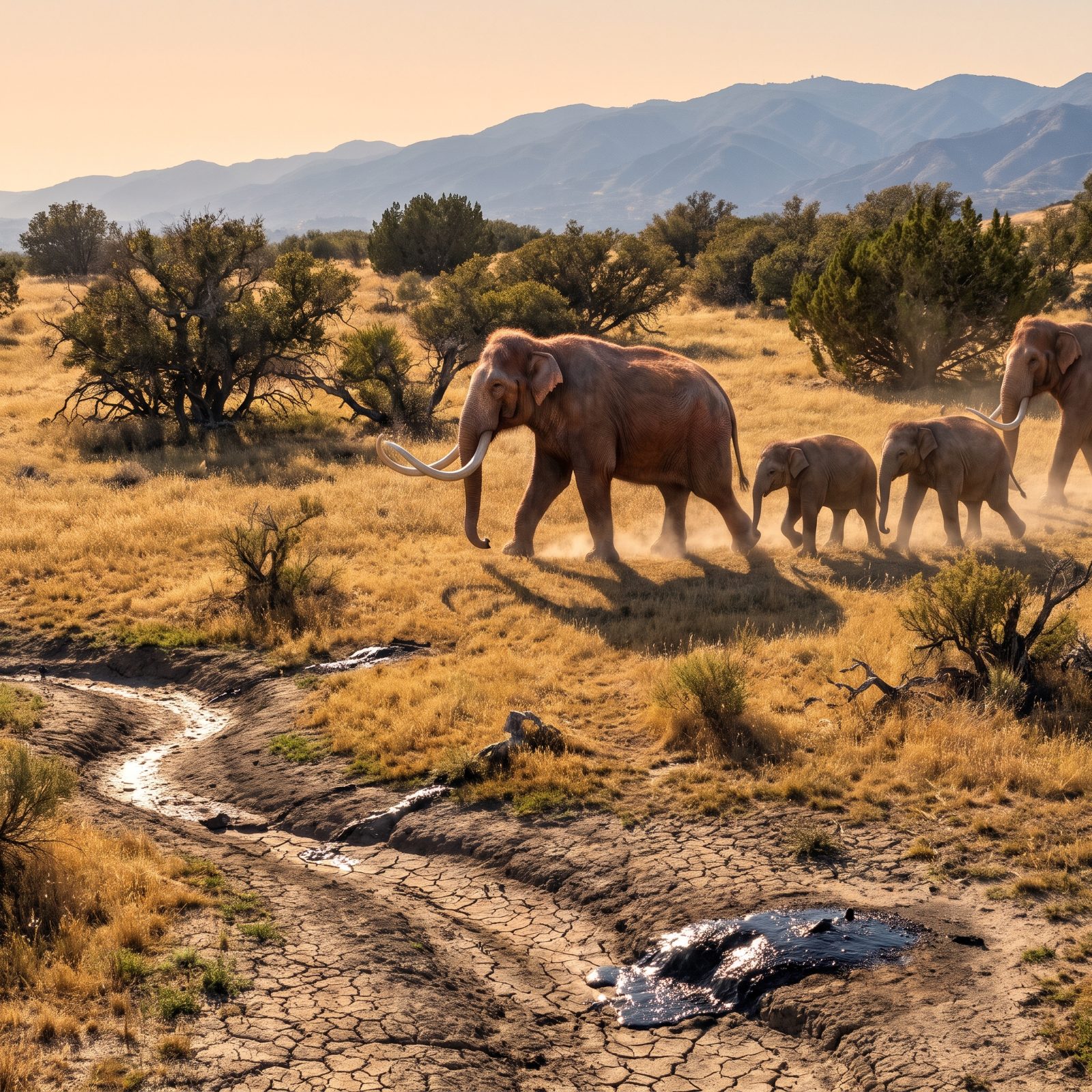
Forget the woolly mammoth with the shaggy coat. The giant that actually lived at the La Brea coordinates was the Columbian mammoth, which stood taller, carried far less hair, and preferred warm grassland to frozen tundra. Bulls reached around thirteen feet at the shoulder and ten tons.
They weren’t rare here, either. The tar pits near Wilshire Boulevard have given up mammoth bones alongside everything that hunted them. These animals grazed the same ground now buried under museum foundations, chewing through grass with teeth built like washboards.
35. American Mastodons Browsed the Woodlands Beneath New York City
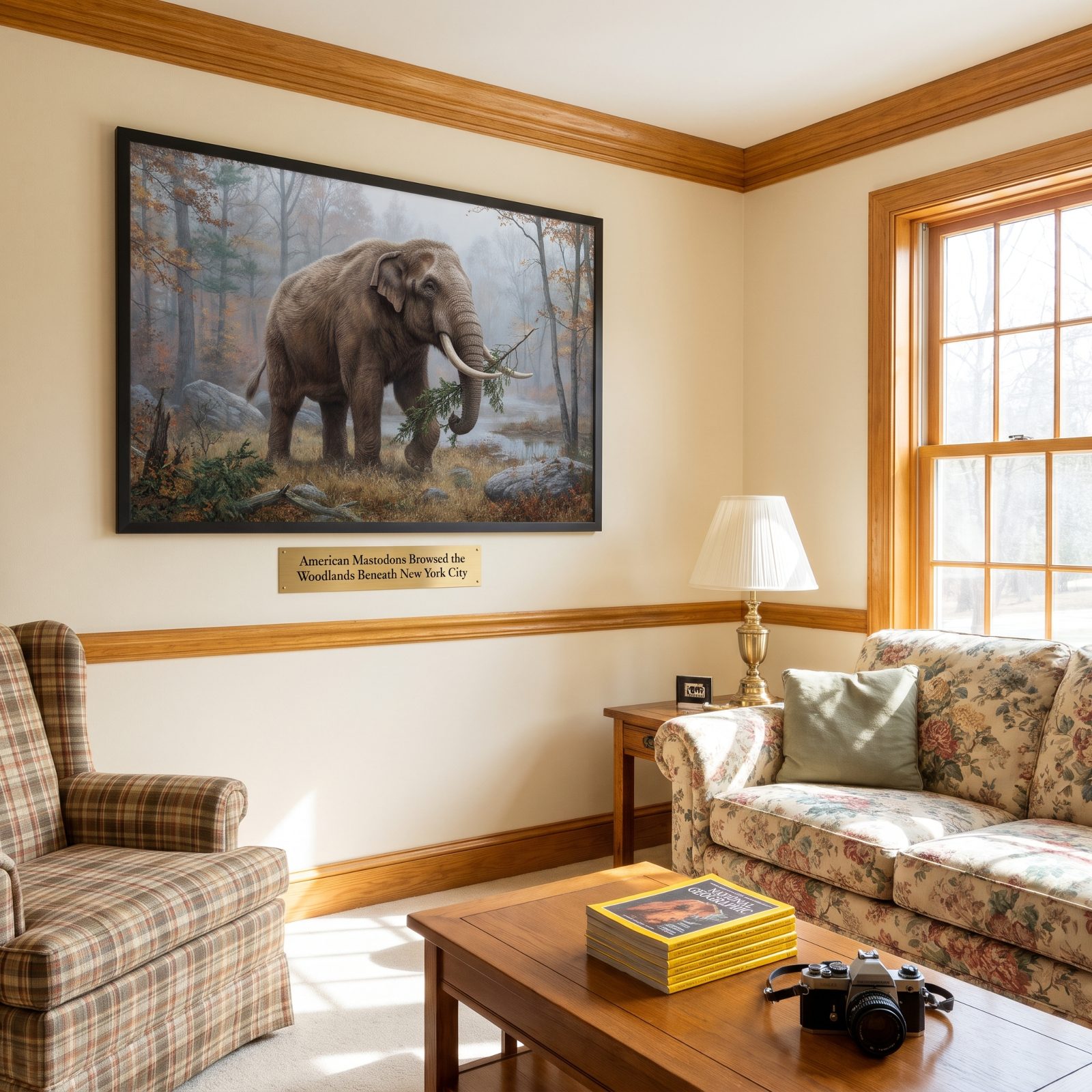
People mix up mastodons and mammoths constantly, and the difference sits right in their teeth. Mammoths had flat grinding molars for grass. Mastodons had blunt cone-shaped cusps built to crush twigs, bark and conifer needles — the name even means “breast tooth,” after the nipple-shaped bumps on the crown.
The forested ground beneath New York suited them perfectly. Their bones keep turning up across the region in old bogs and ponds, where the heavy animals blundered in and sank. Shown here with only a light fuzz of hair, big elephant-like ears and a high domed head, they were basically a tank that ate trees.
34. Eremotherium Ground Sloths Towered Over the Landscape Around Miami
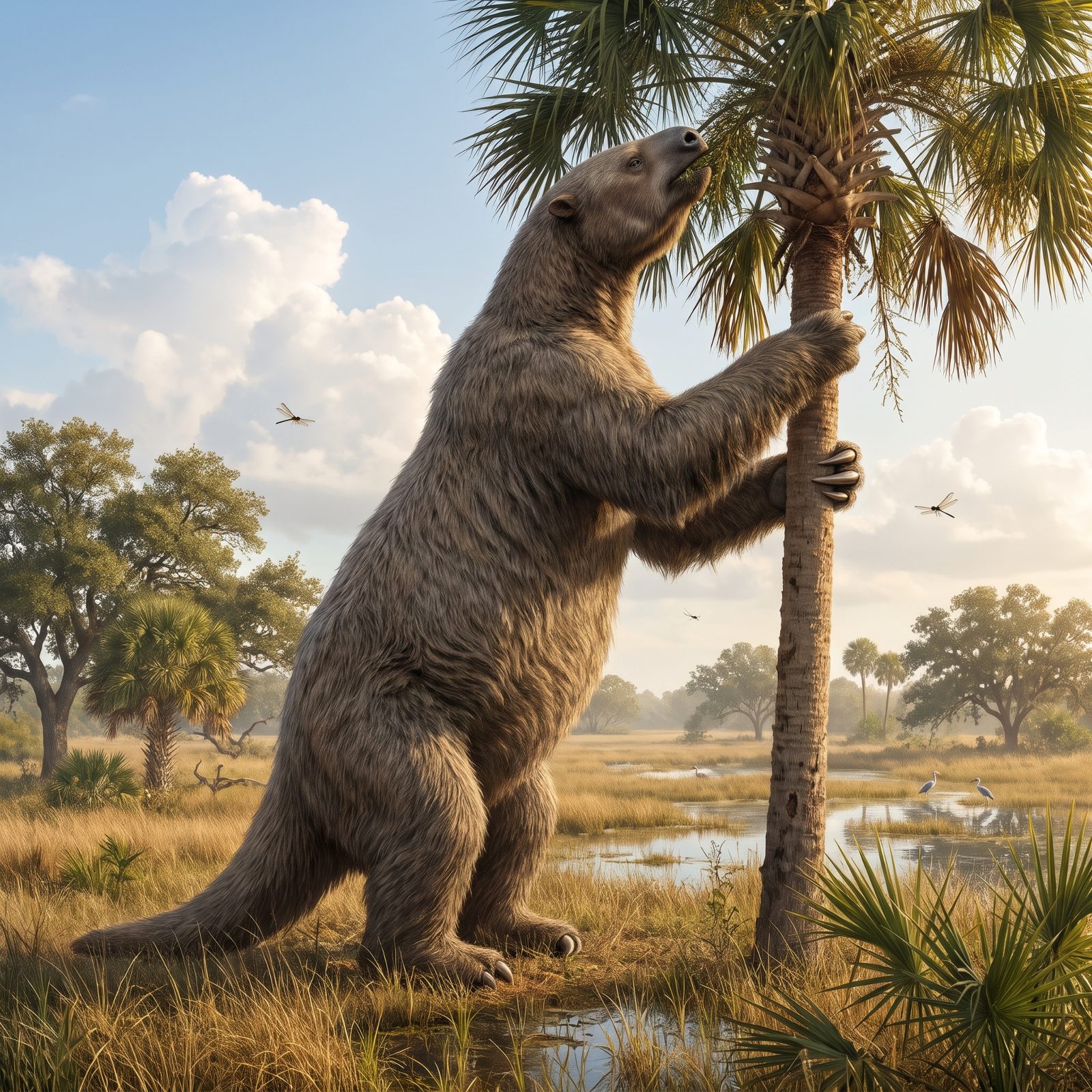
Here is the part nobody expects: some ground sloths were the size of elephants. Eremotherium stood close to twenty feet when it reared up on its tail to feed, swinging forelimbs tipped with claws longer than carving knives.
Warm Pleistocene Florida suited this giant, and its bones show up across the Southeast. The claws weren’t for hunting — they were for hooking branches down to a mouth that couldn’t otherwise reach them. Picture a sloth the weight of a bull elephant, moving slow and deliberate through the scrub, afraid of almost nothing.
33. American Lions Hunted Across the Los Angeles Basin
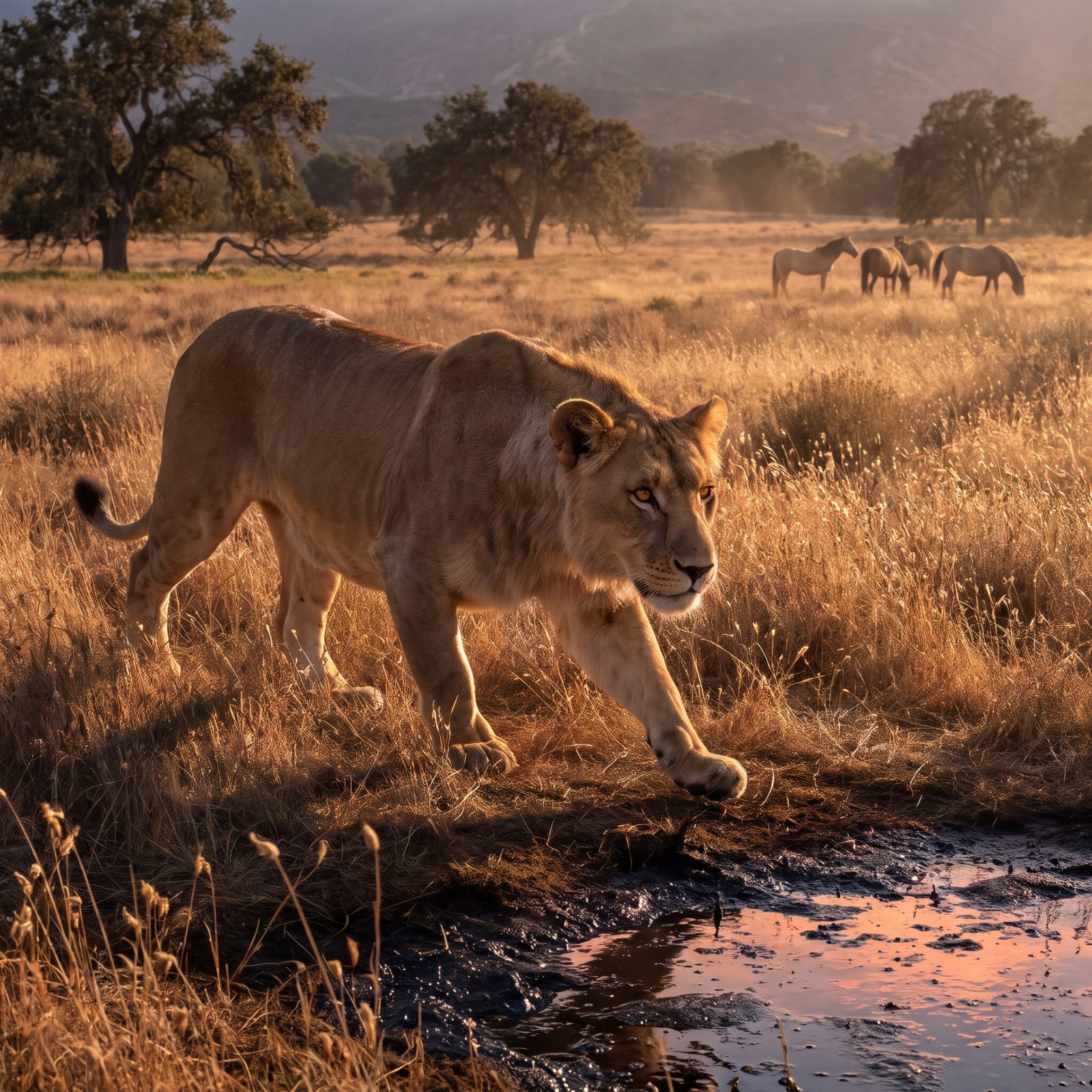
The biggest cat that ever lived in North America was not a saber-tooth. It was the American lion, Panthera atrox, and it outweighed a modern African lion by a quarter or more. Big males likely topped 500 pounds.
Hundreds of their bones came out of the La Brea tar pits, trapped while chasing prey that was already stuck. Long legs built for open country, and the Los Angeles basin was exactly that. Some researchers think the males lacked the heavy mane we picture on lions today, which would have made a pride of these animals look leaner and far stranger than you’d guess.
32. Giant Short-Faced Bears Patrolled the Country Around Kansas City
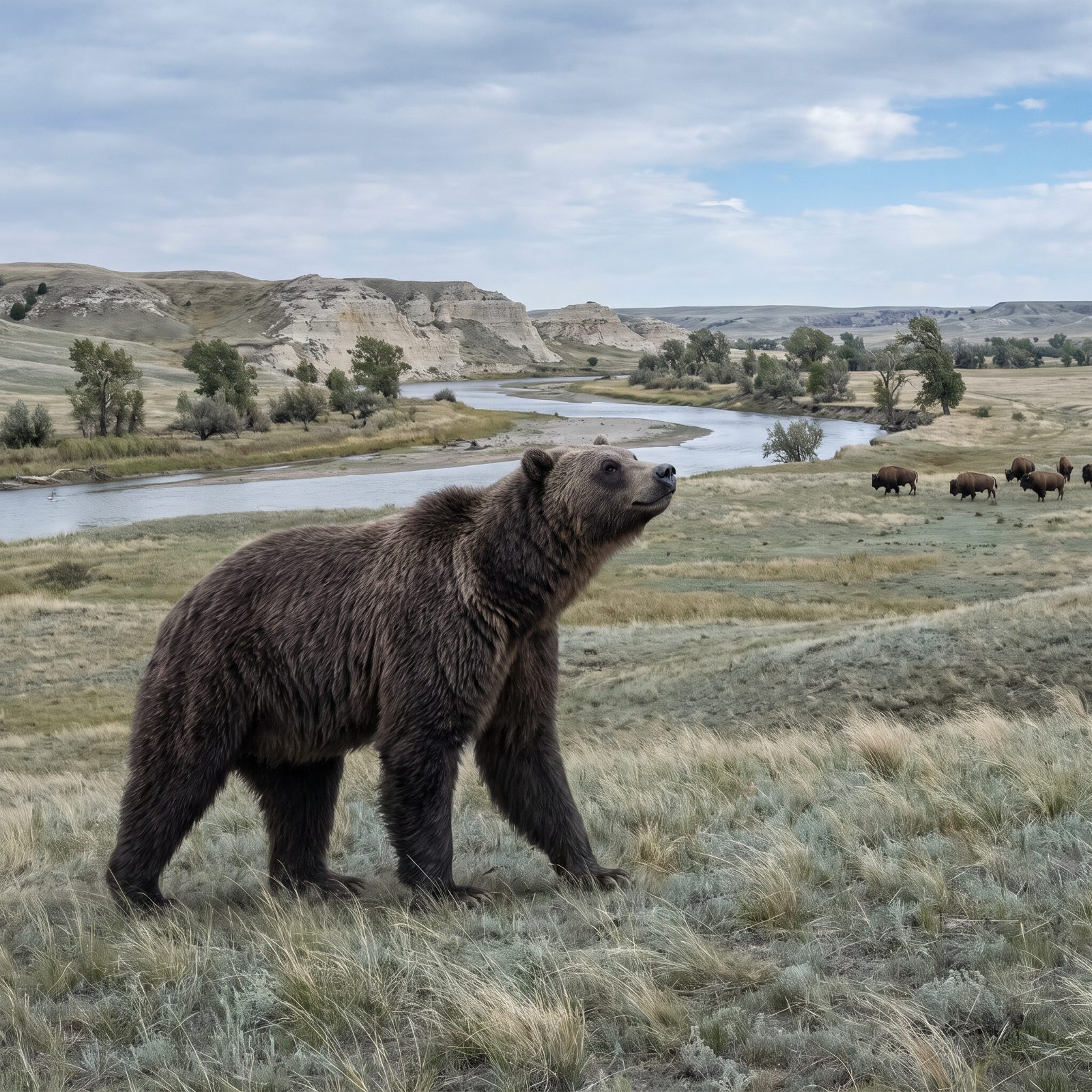
Stand a short-faced bear next to a grizzly and suddenly the grizzly looks stocky. Arctodus was built tall and long-legged. On its hind legs it could have reached eleven or twelve feet — eye-to-eye with a person on a second-floor balcony.
The open country around Kansas City was its kind of ground, and scientists still argue about how it fed. Those long legs suggest a roaming scavenger covering huge distances to steal kills, though it could certainly take down prey when it chose to. Either way, nothing else on the continent came close to its size.
A bear with legs built for distance, a face built for power, and a range that covered half a continent.
31. Woolly Mammoths Grazed Around What Is Now Fairbanks
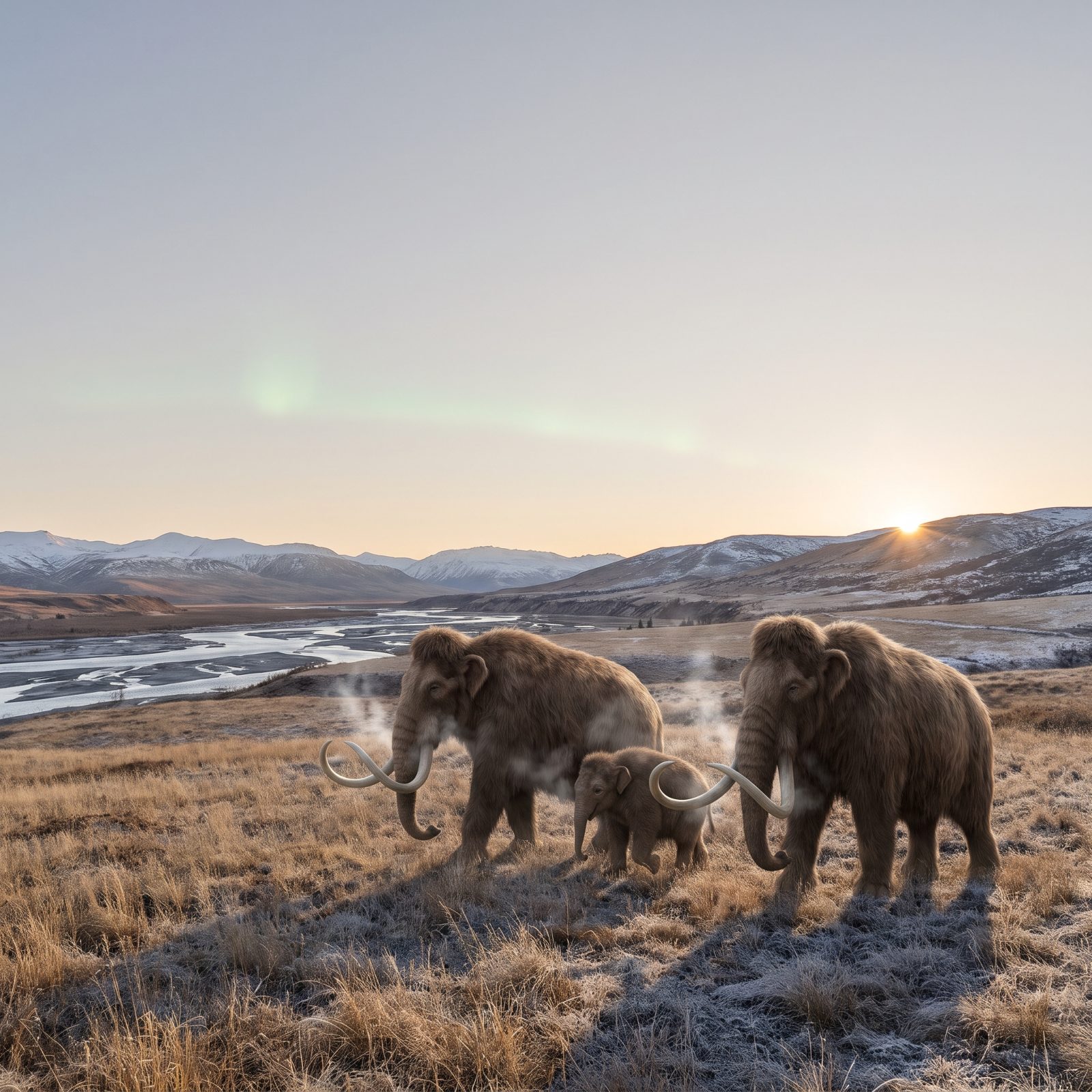
This is the mammoth everyone pictures, and interior Alaska is where it actually belonged. The ground around Fairbanks holds so many bones, tusks and even frozen soft tissue that old gold miners used to hose the remains out of the permafrost by accident.
Woolly mammoths ran smaller than their Columbian cousins and came built for the cold — short ears, short tail, a thick double coat, a hump of fat riding over the shoulders. They grazed the dry “mammoth steppe,” a grassland ecosystem that exists nowhere on Earth anymore.
30. Dire Wolves Ran in Packs Across the Site of Los Angeles
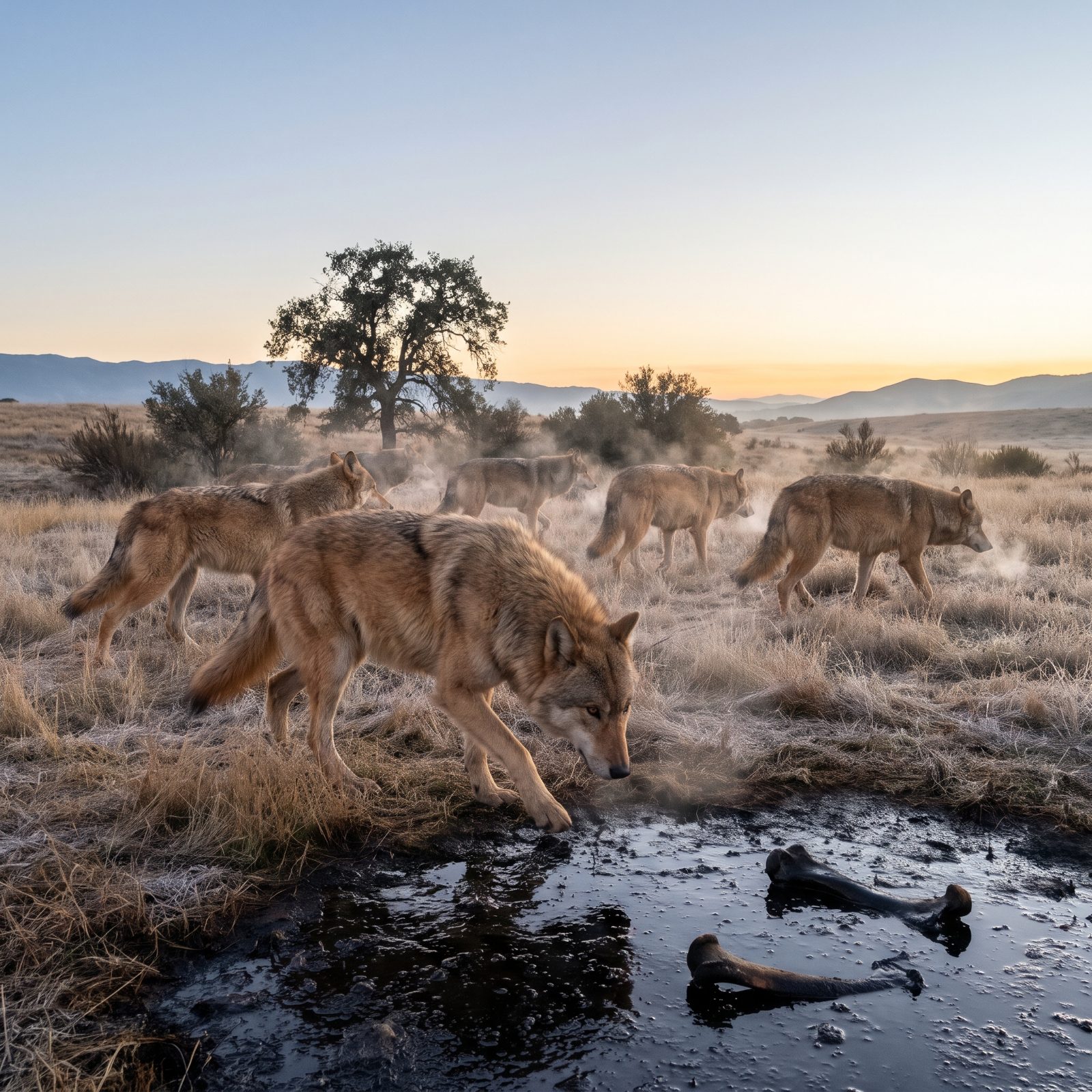
More dire wolves came out of the La Brea tar pits than any other mammal. Thousands of them. Drawn in to feed on trapped prey, then trapped themselves, generation after generation walking into the same shining snare.
Ancient DNA rewrote their story recently. Dire wolves weren’t just oversized gray wolves — they split off from the wolf family line millions of years ago, which is why researchers handed them their own genus, Aenocyon. They looked the part, but they were a separate lineage running on a parallel track.
29. Cuvieronius Gomphotheres Wandered Near Present-Day Mexico City
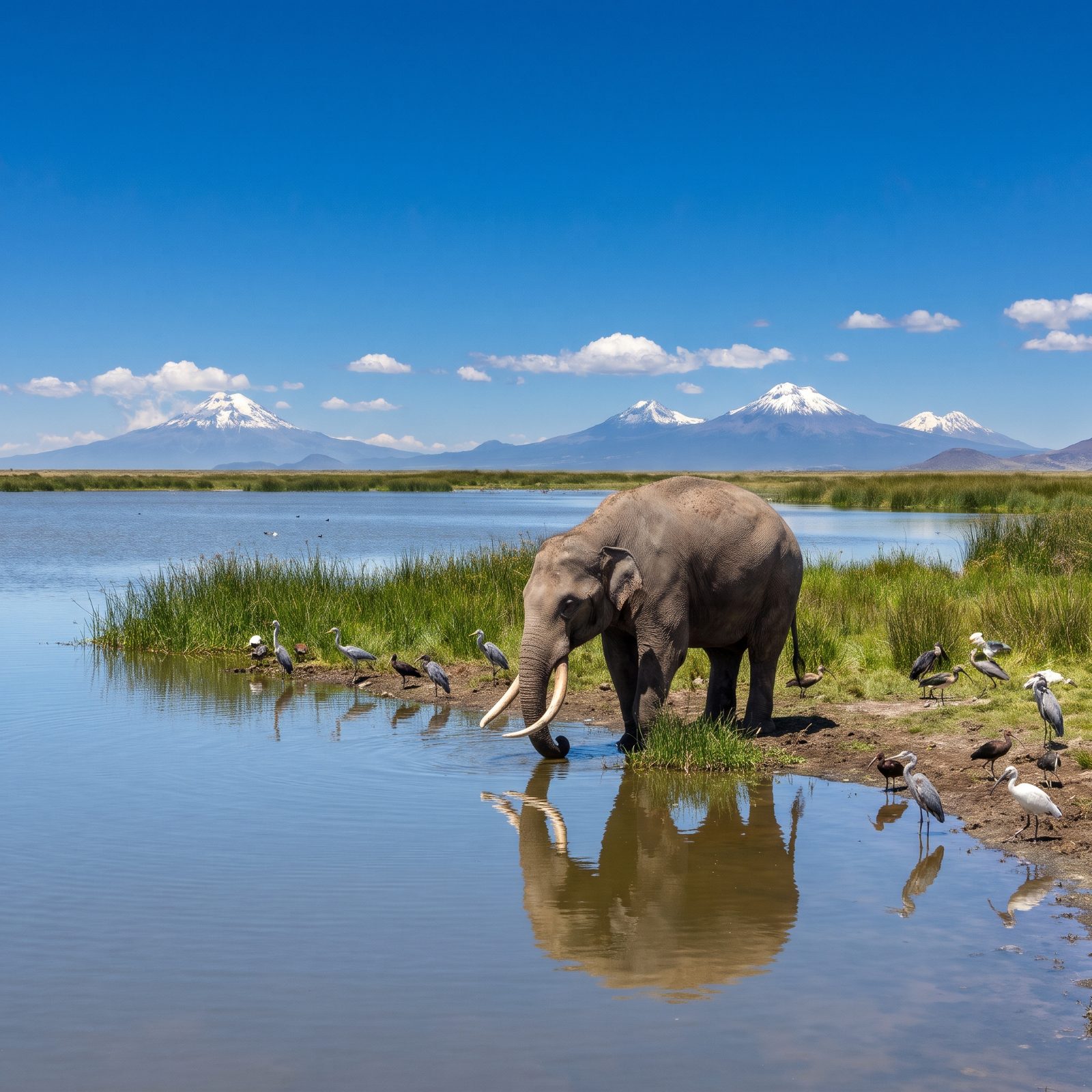
Not every proboscidean was a mammoth or a mastodon. The high basin where Mexico City now sits was home to Cuvieronius, a gomphothere and a distant cousin of modern elephants, known for its distinctive spiraling tusks.
The Valley of Mexico was a chain of shallow lakes back then — the kind of wetland that preserves bones beautifully. Gomphotheres sit on an ancient branch of the elephant family, and Cuvieronius was one of the last of them in the Americas. Humans and these animals overlapped here, and some sites in the region hold both their remains tangled together in the same sediment.
28. Glyptotherium Carried Its Armored Shell Across the Tucson Region
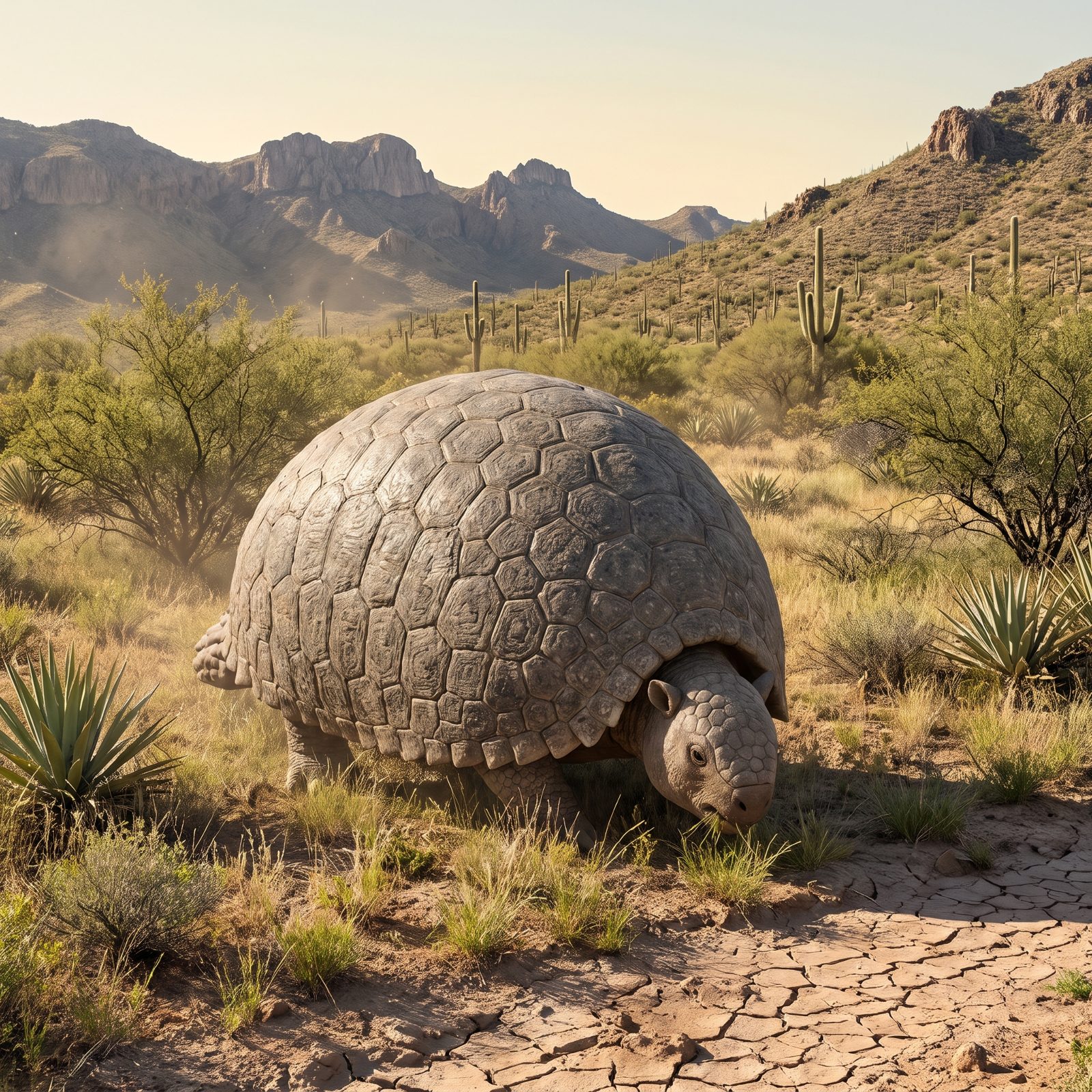
Imagine an armadillo the size of a small car and you’ve got Glyptotherium. The desert grassland around Tucson once carried these living tanks, dragging a solid dome of fused bone plates that no predator could easily crack.
The shell did all the work. These animals couldn’t run and never needed to — some relatives even swung a bony club on the tail. Low, slow, heavily plated, they grazed the open country while lions and short-faced bears went looking for softer targets.
27. Scimitar-Toothed Cats Ambushed Animals Near Modern San Antonio
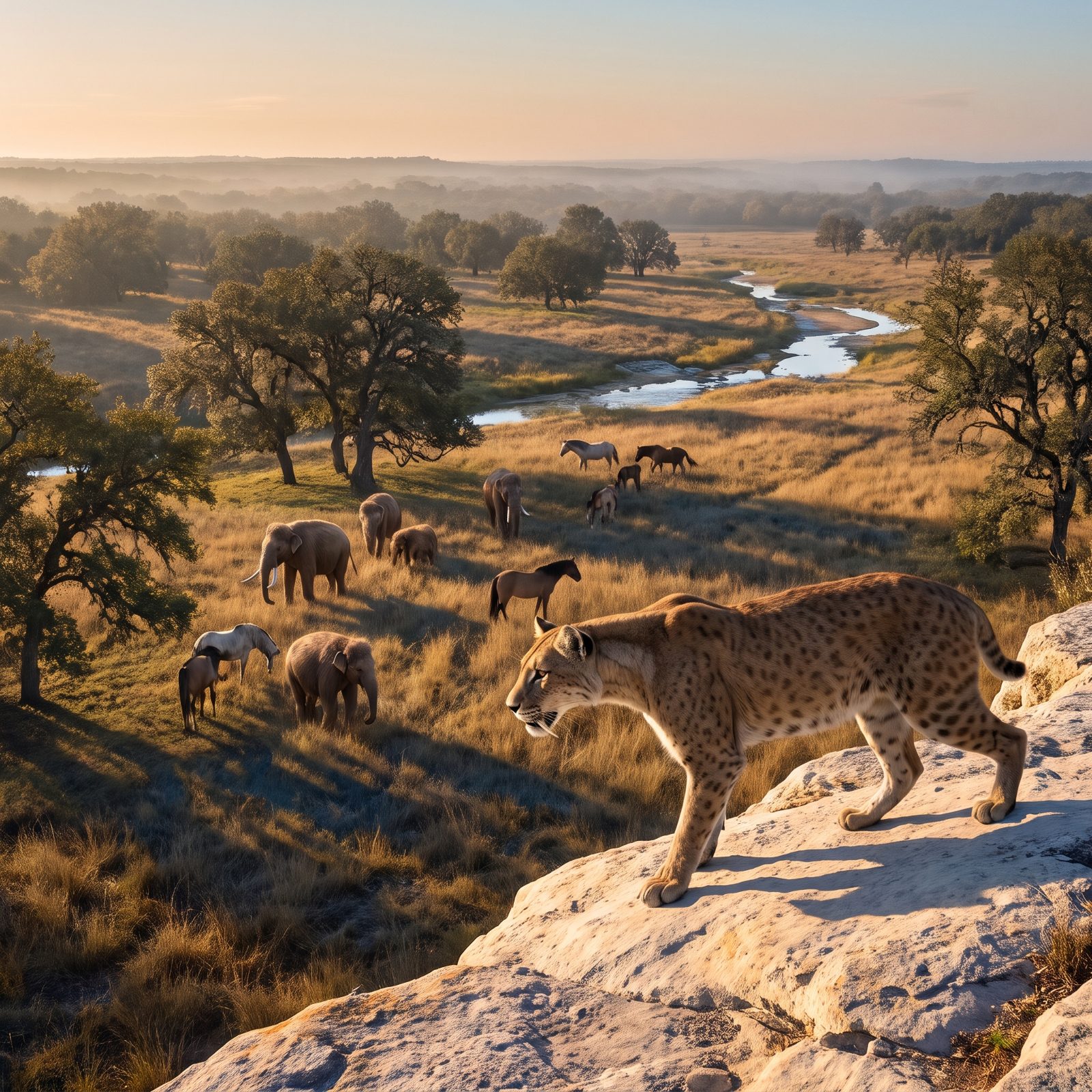
Everyone knows Smilodon, the saber-tooth with the dagger fangs. Fewer people know its cousin Homotherium, the scimitar cat, which hunted the Texas savanna with shorter, curved, serrated teeth and a wholly different body plan.
Friesenhahn Cave near San Antonio holds one of the richest Homotherium sites anywhere. Inside, researchers found the cat’s bones piled alongside hundreds of young mammoth remains — strong evidence that these cats specialized in juvenile mammoths and hauled the carcasses back to the den.
The build tells the story. A compact, level-backed frame, powerful legs, eyes fixed on the herd below. A cat engineered to stalk from a rocky perch and strike at short range, an ambusher rather than a long-distance runner.
26. Giant Beavers Built Their Homes Near Modern Toronto
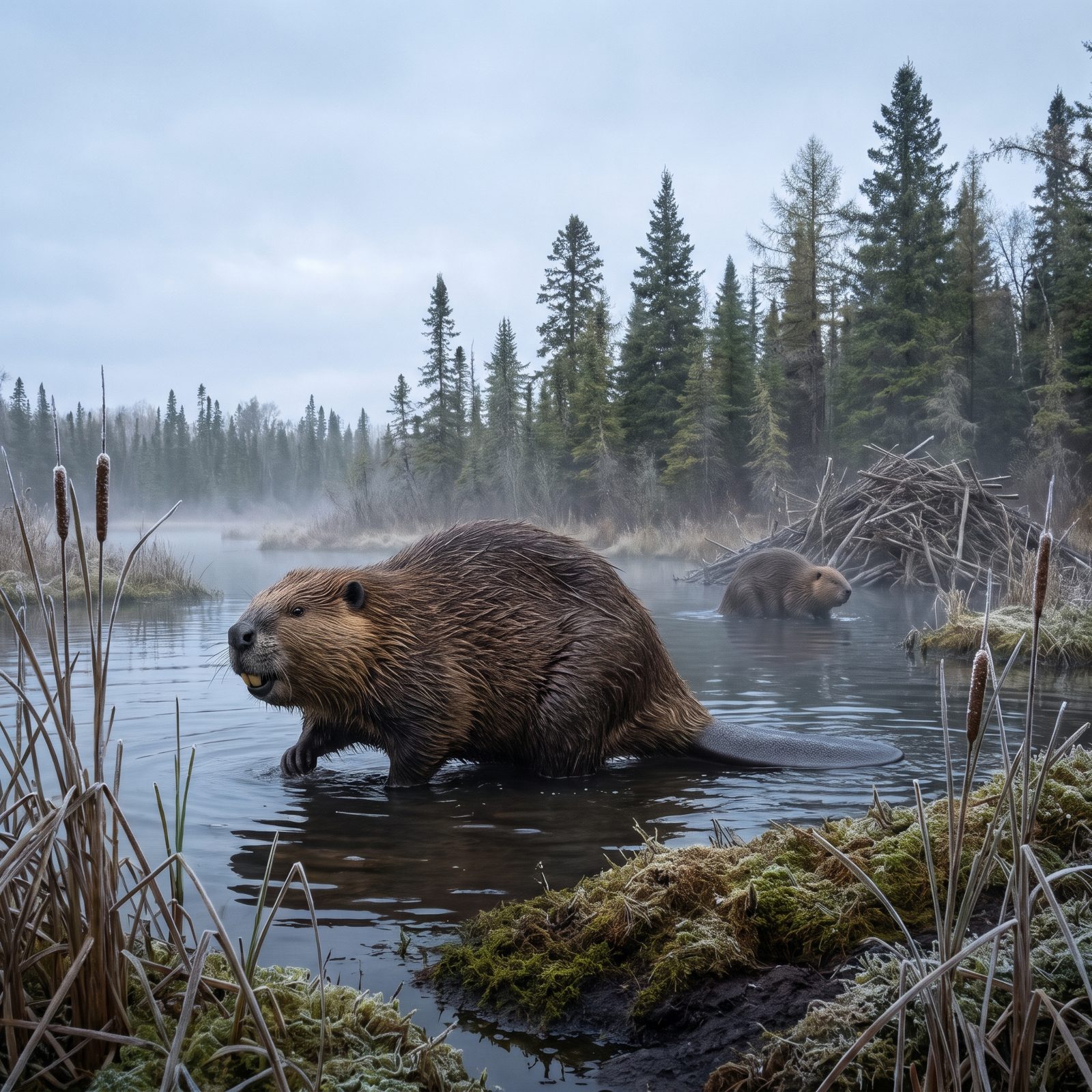
Meet the beaver on the nickel. The pair wading these misty marshes are ordinary modern beavers, about three feet long plus a broad, paddle-shaped tail, and weighing up to around 60 pounds. Their Ice Age relative here was the size of a black bear.
Castoroides ohioensis waded through the marshes beneath Toronto during the last Ice Age, right up until roughly 10,000 years ago. Its fossils turn up across the Great Lakes region, and its teeth set it apart: blunt, rounded incisors up to six inches long, far bigger than the short, orange, chisel-edged incisors of the modern beavers pictured here.
Here’s the twist nobody expects. There’s no good evidence it built dams or lodges at all. The giant beaver may have simply lived in the wetlands without ever bothering to engineer them.
25. Camelops Camels Crossed the Desert Around Present-Day Phoenix
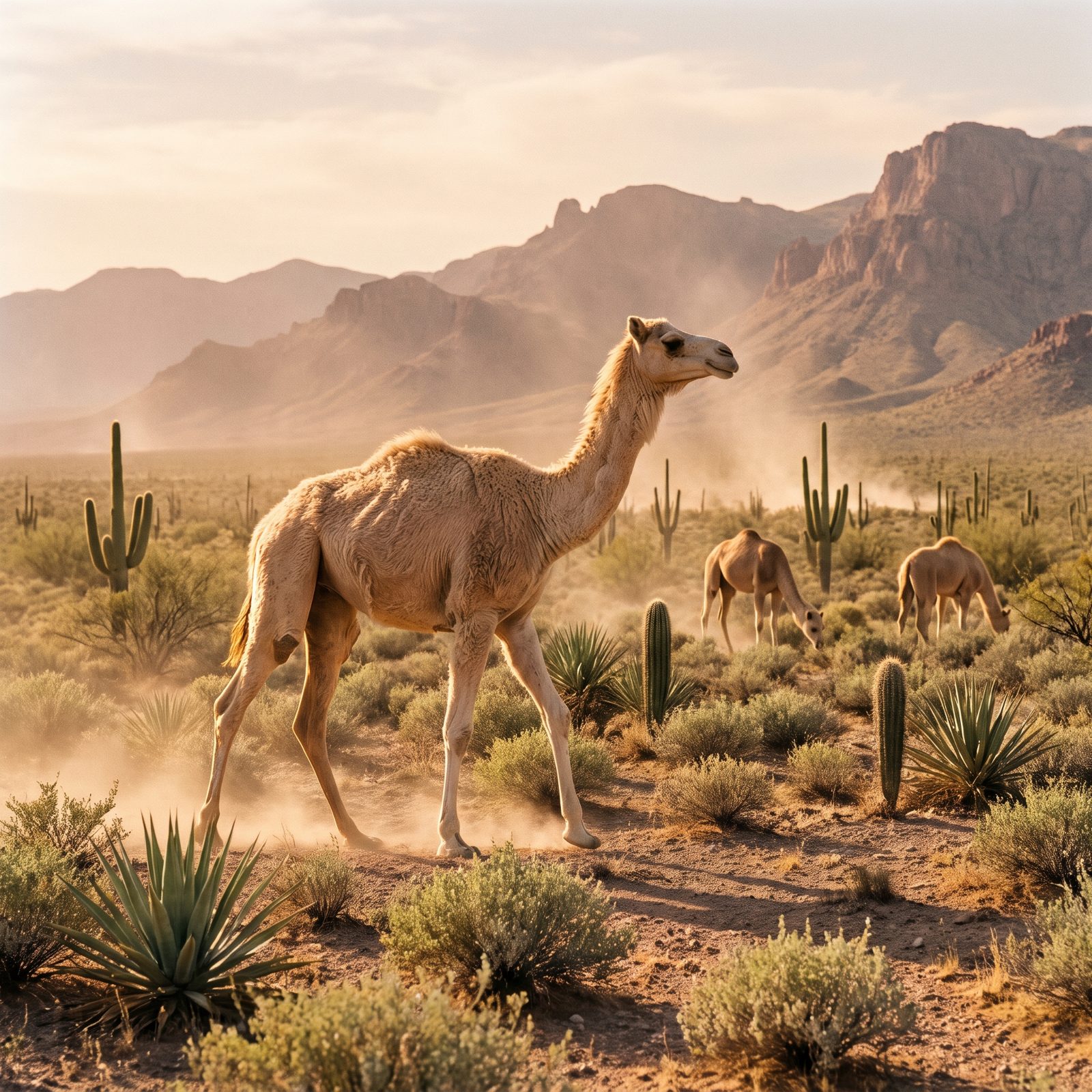
Camels are an American invention. They evolved here, spread to Asia and South America, then vanished from the continent that made them.
Camelops hesternus walked the Sonoran basin around Phoenix during the Pleistocene, standing about seven feet at the shoulder, taller than a modern dromedary. Its bones show up across the American Southwest. Whether it had a hump, we genuinely don’t know, because humps are fat, and fat doesn’t fossilize.
It browsed desert shrubs and grasses right up to around 11,000 years ago, then disappeared along with most of the big stuff. The camels you picture plodding across the Sahara are descendants of relatives that got out in time.
24. Giant Long-Horned Bison Roamed the Plains Around Dallas
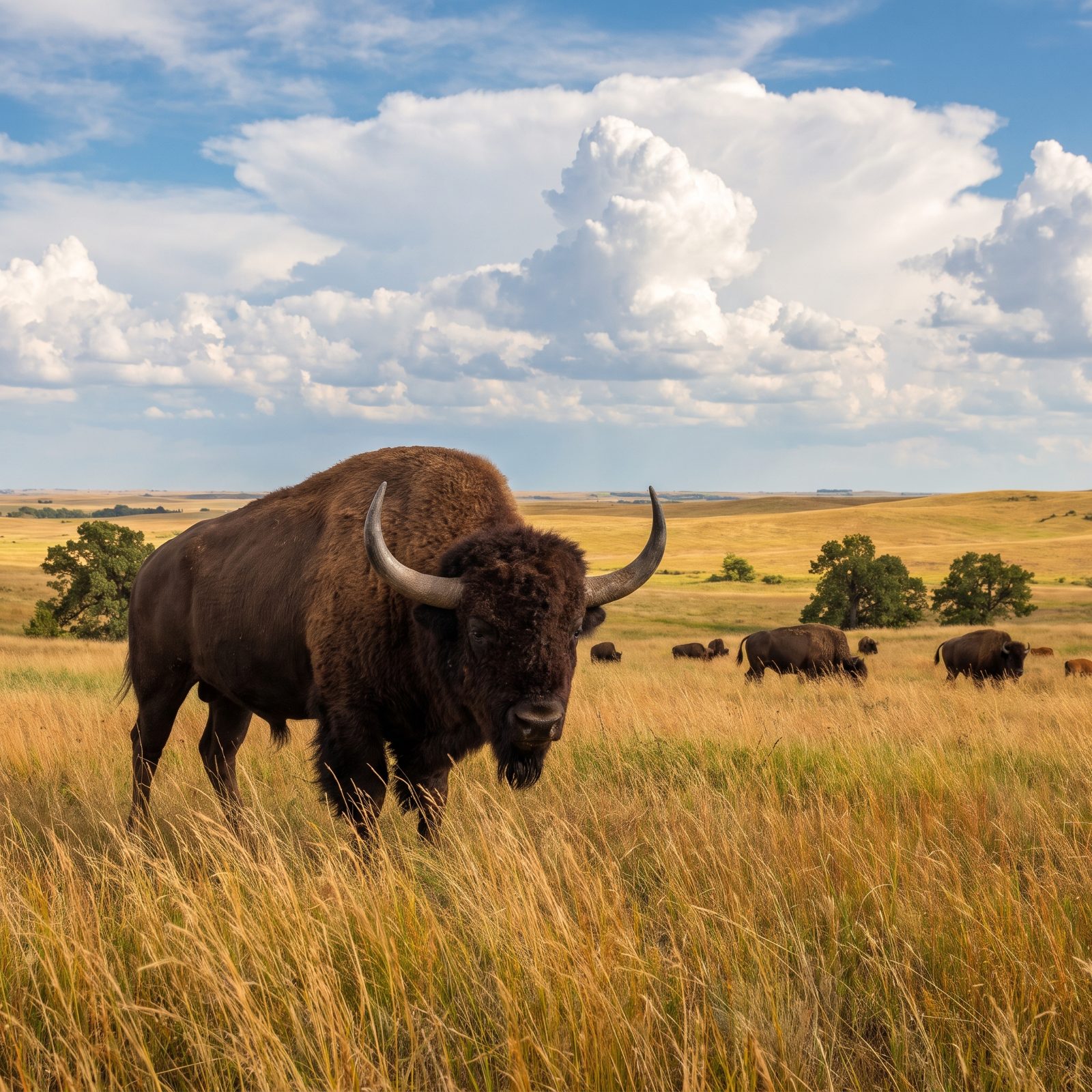
The horns are the headline. Bison latifrons carried a horn span of nearly seven feet from tip to tip, roughly twice the spread of the bison you see at Yellowstone today.
This giant grazed the grasslands of Texas and across North America during the mid-to-late Pleistocene, and its fossils turn up throughout the southern plains. Those colossal horns probably weren’t for fighting so much as for showing off, sorting out dominance before anyone had to actually charge.
It died out well before the famous extinction wave, replaced by smaller, herd-forming bison. Big horns are expensive. In a cooling, crowding world, the compact model won.
23. Jefferson’s Ground Sloths Roamed Where Nashville Stands
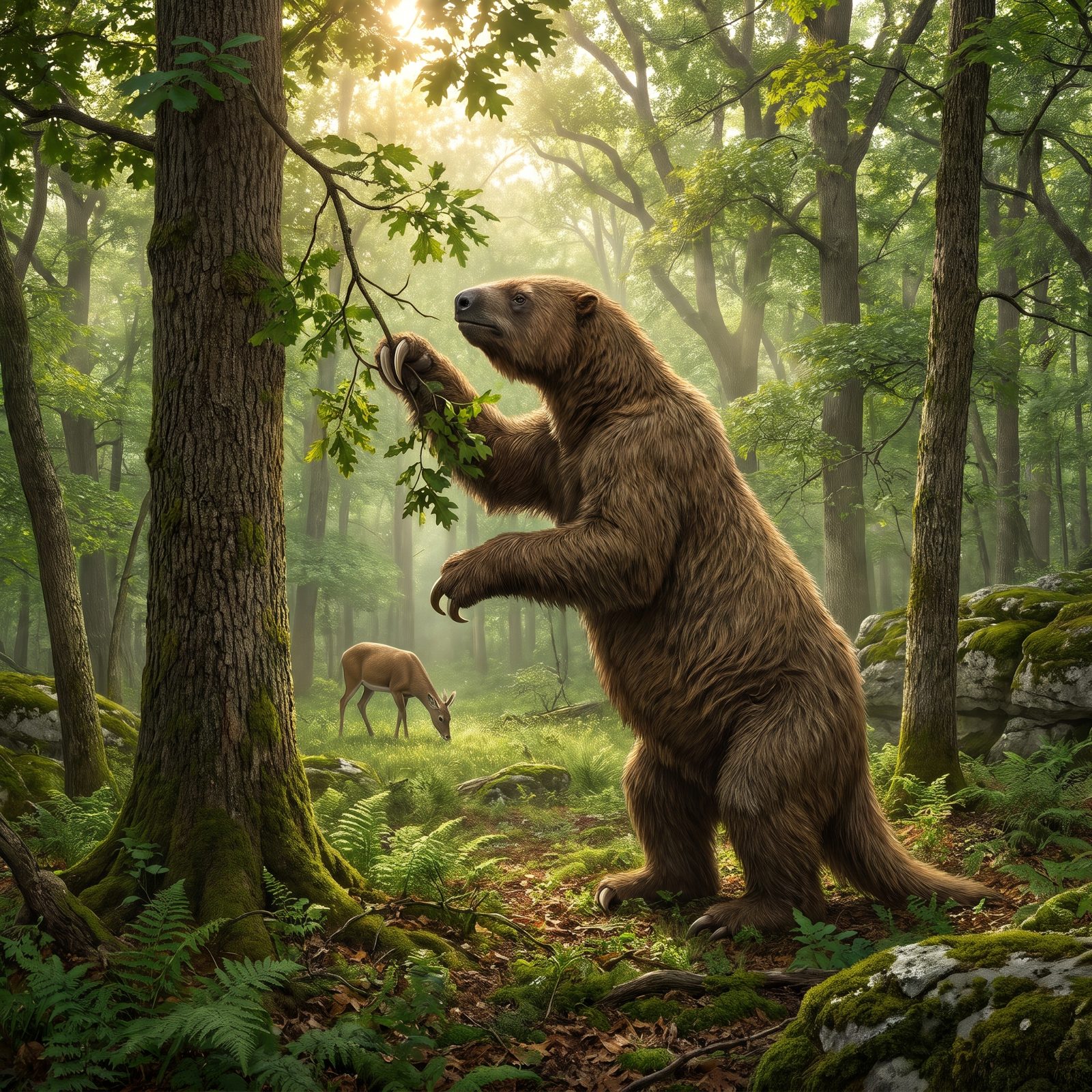
Thomas Jefferson thought he’d found a giant lion. The claws sent to him in 1797 belonged to a ground sloth, and the species now carries his name as thanks for the mix-up.
Megalonyx jeffersonii lived across much of North America, including the Tennessee hill country where Nashville sits. It stretched nine or ten feet long, reared up against trees to haul down branches, and used those long curved claws to strip leaves rather than kill anything.
Jefferson, to his credit, got the science moving. His 1797 paper is often called a founding moment of American paleontology, even if his animal turned out to be a vegetarian.
22. American Cheetahs Chased Prey Across the Plains Around Denver
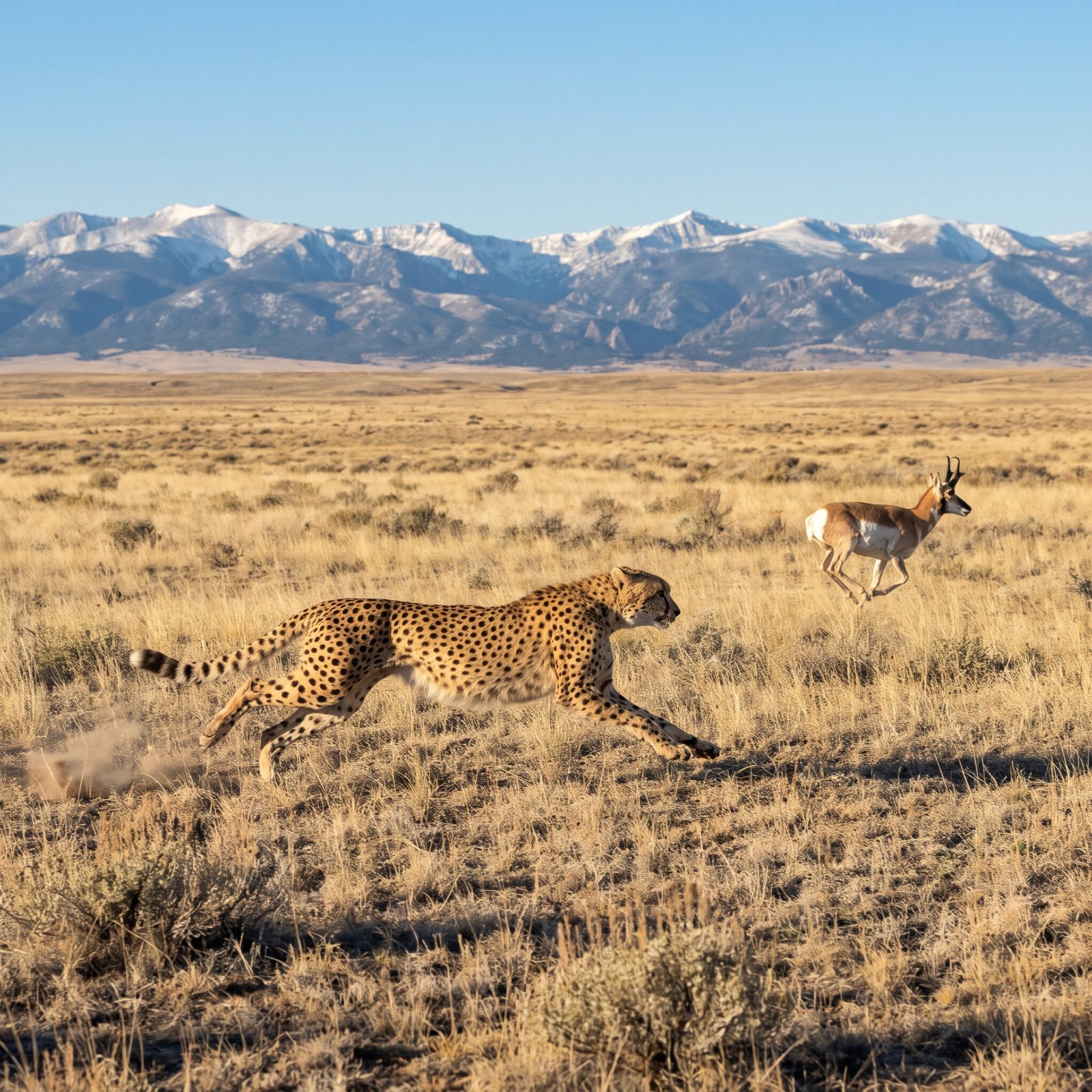
Pronghorn run 55 miles an hour to escape a predator that no longer exists. That predator hunted the plains below Denver.
Miracinonyx trumani, the American cheetah, had the same lean build and long legs as the African cheetah, though it was more closely related to the puma, a case of two cats evolving the same body for the same job. Its remains come from caves and sites across the American West.
It chased pronghorn across the high steppe, which is why pronghorn are absurdly overbuilt for speed today. They’re still outrunning a ghost.
21. Giant Tortoises Lumbered Through the Warm Country Around Orlando
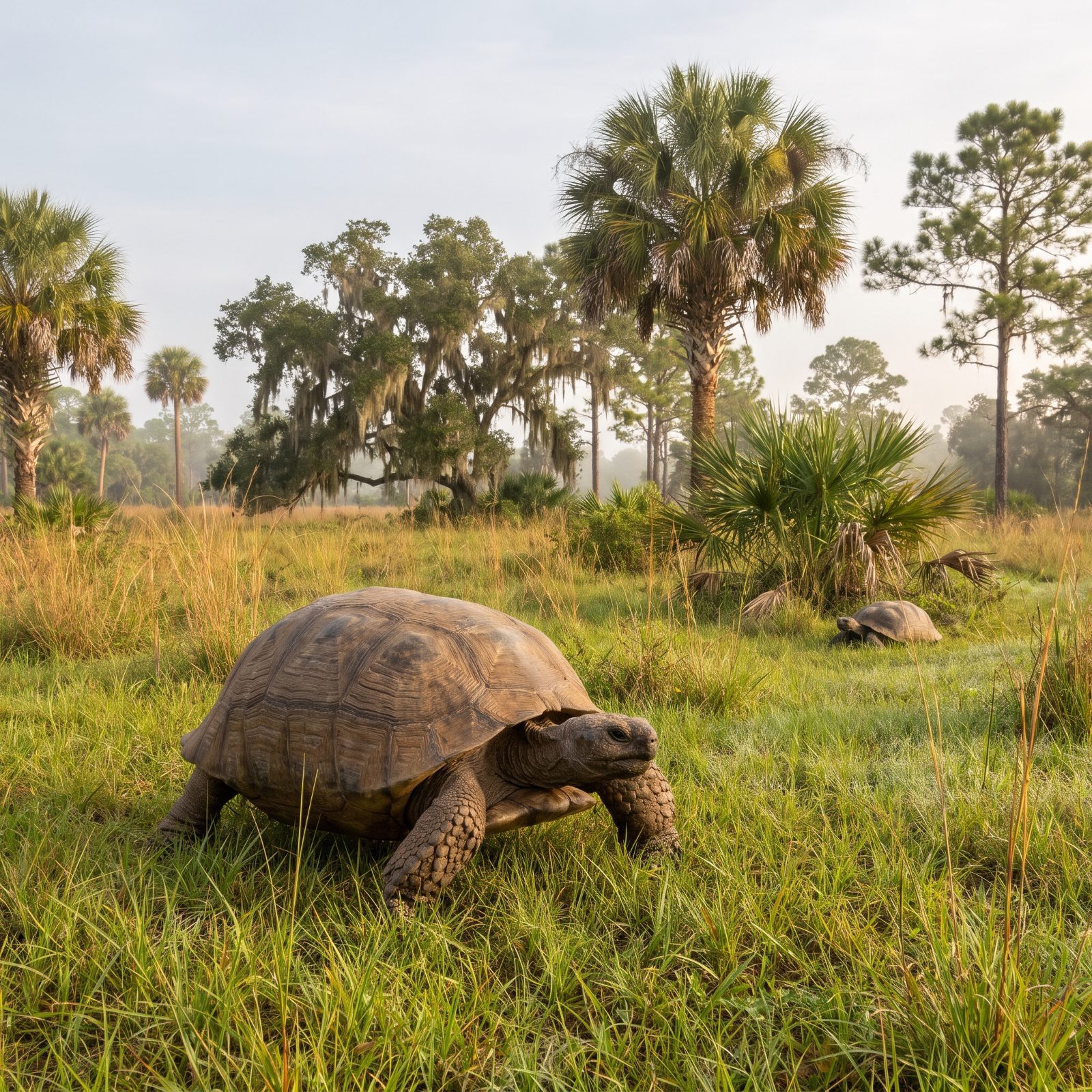
Florida had its own giant tortoises long before anyone shipped them in from the Galápagos.
Hesperotestudo crassiscutata carried a shell four to five feet long and plodded through the warm savannas of what’s now central Florida, and its fossils are common in the state’s Pleistocene sites. Big, slow, and unable to burrow deep, it needed a frost-free climate to survive. That last fact is the gift to scientists.
Find this tortoise in the dirt and you’ve found proof the winters here almost never dropped below freezing. The animal is basically a thermometer that walked.
20. Stag-Moose Waded Through Wetlands Around Modern Chicago
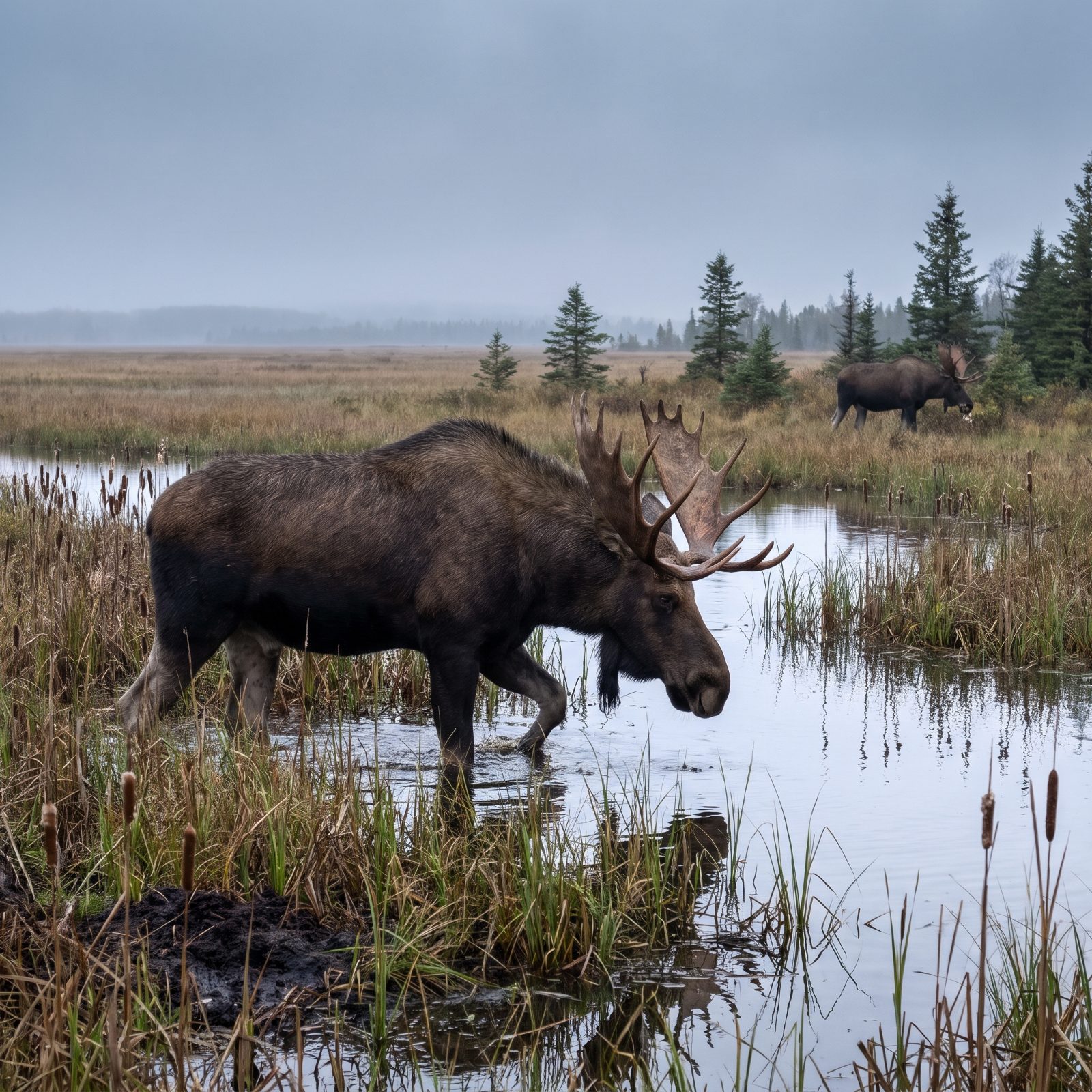
Imagine a moose that couldn’t decide what kind of antlers to grow. That’s the stag-moose.
Cervalces scotti stood as tall as a modern moose but wore far more elaborate headgear, branching, palmate, bristling with points. It waded the wetlands of the upper Midwest around what’s now Chicago, and its fossils come from bogs and lake beds across the region. It wasn’t a true moose at all, just a close relative sharing the same swampy neighborhood.
It vanished around 11,000 years ago. The ordinary moose that replaced it kept the long legs and dropped the baroque antlers.
19. Ice Age Jaguars Hunted Near Present-Day New Orleans
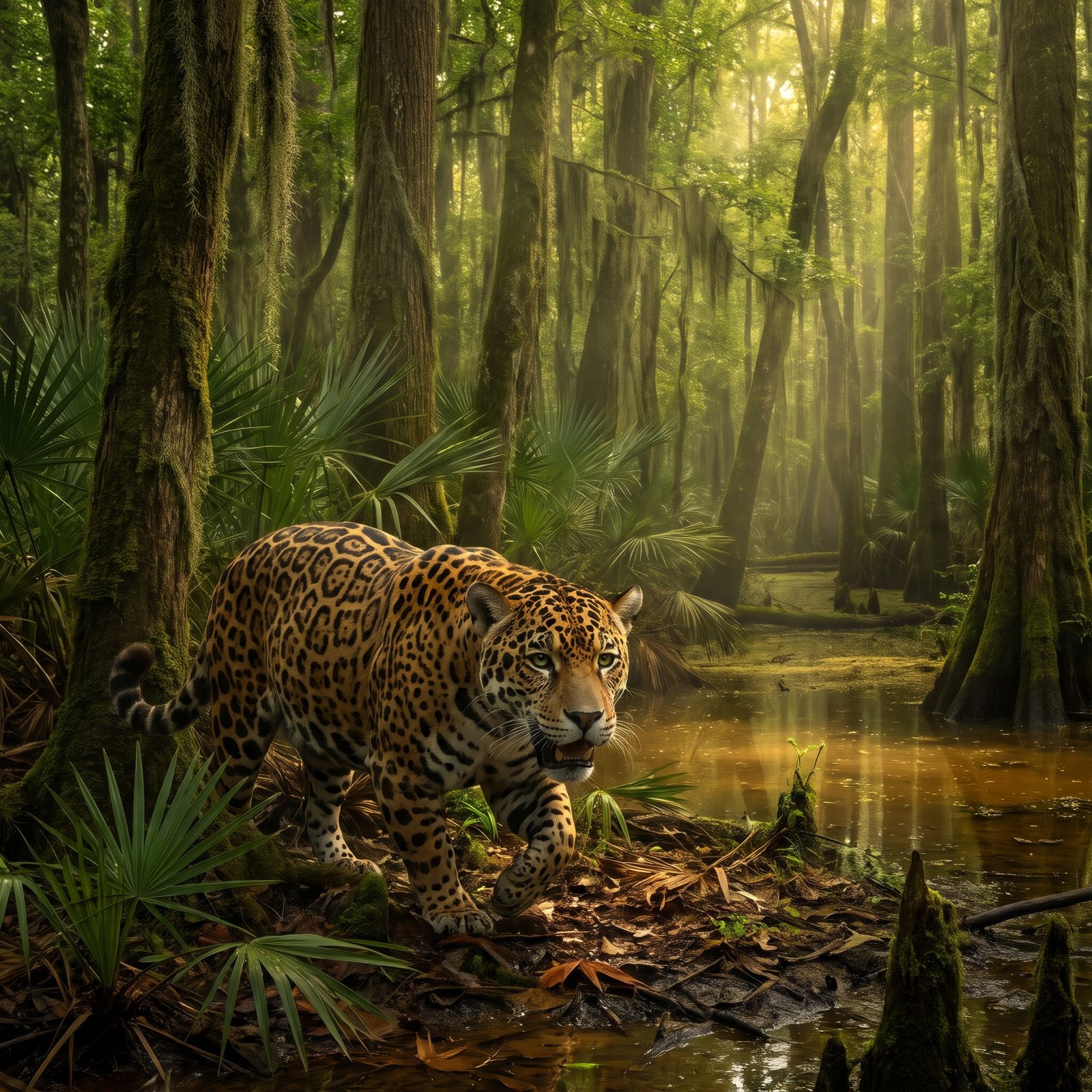
Jaguars once ranged far north of the Rio Grande, and the Ice Age version was a brute.
Panthera onca augusta was a larger subspecies of the living jaguar, prowling bottomland forests and caves across the southern and central United States, including the Gulf country near New Orleans. Built for bone-crushing bites, it took down big prey in thick cover.
People forget jaguars are American cats, not just Amazon cats. They clung to the Southwest into recent history and still wander across the Arizona border now and then. The ones beneath New Orleans were simply the bigger, older model.
18. Giant Capybaras Grazed Around What Is Now Savannah
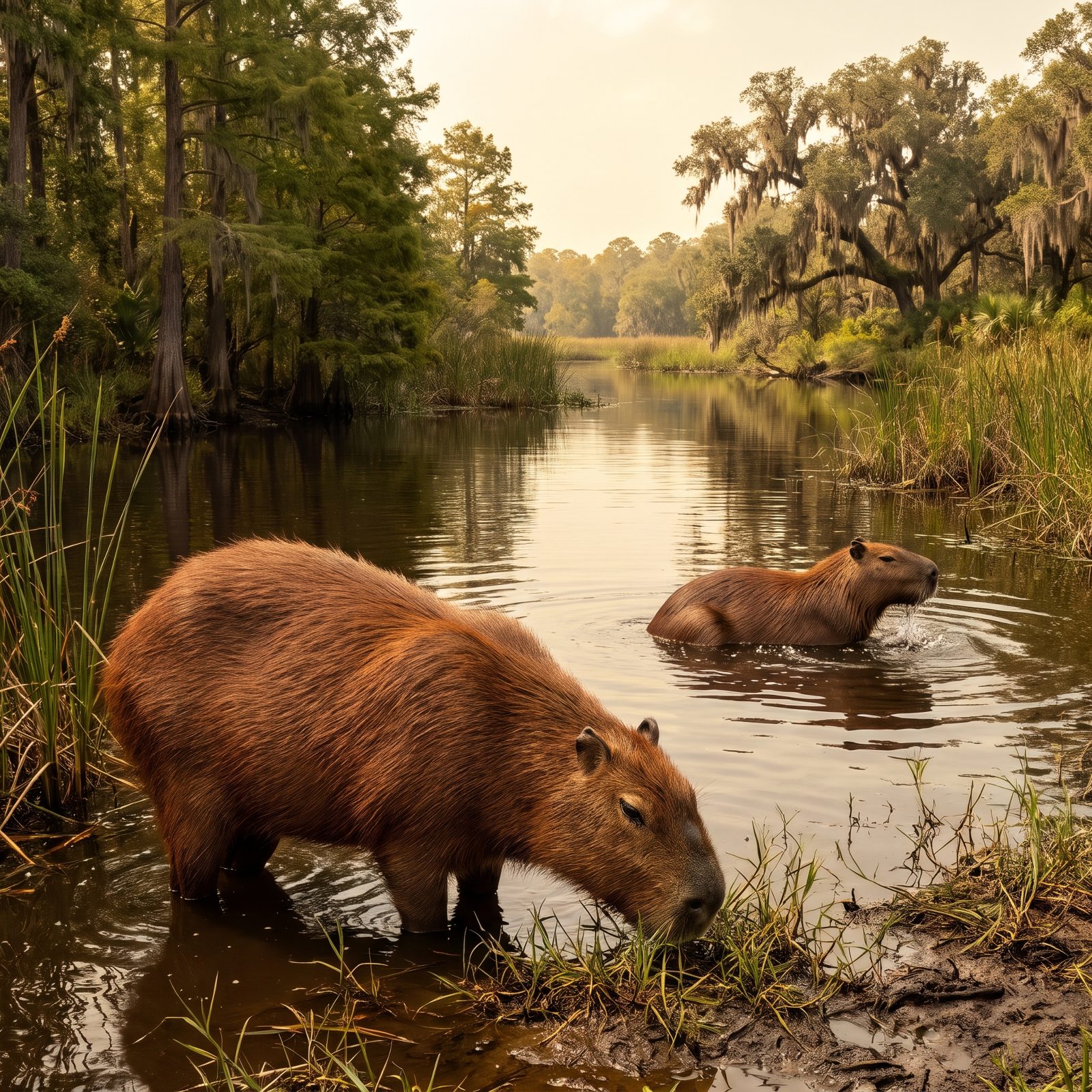
The capybara is already the largest rodent alive. The Ice Age had a bigger one.
Neochoerus pinckneyi grazed the wet coastal plains of the Southeast, including the river country around Savannah, and ran roughly twice the heft of today’s capybara, pushing well over 200 pounds. Its fossils turn up across the Gulf and Atlantic coastal states.
It’s a South American lineage that walked north once the Isthmus of Panama connected the continents, part of the great faunal exchange that sent camels south and giant rodents north. Then the ice waned, and the giant capybara went with it.
17. Shasta Ground Sloths Sheltered Near Modern Las Vegas
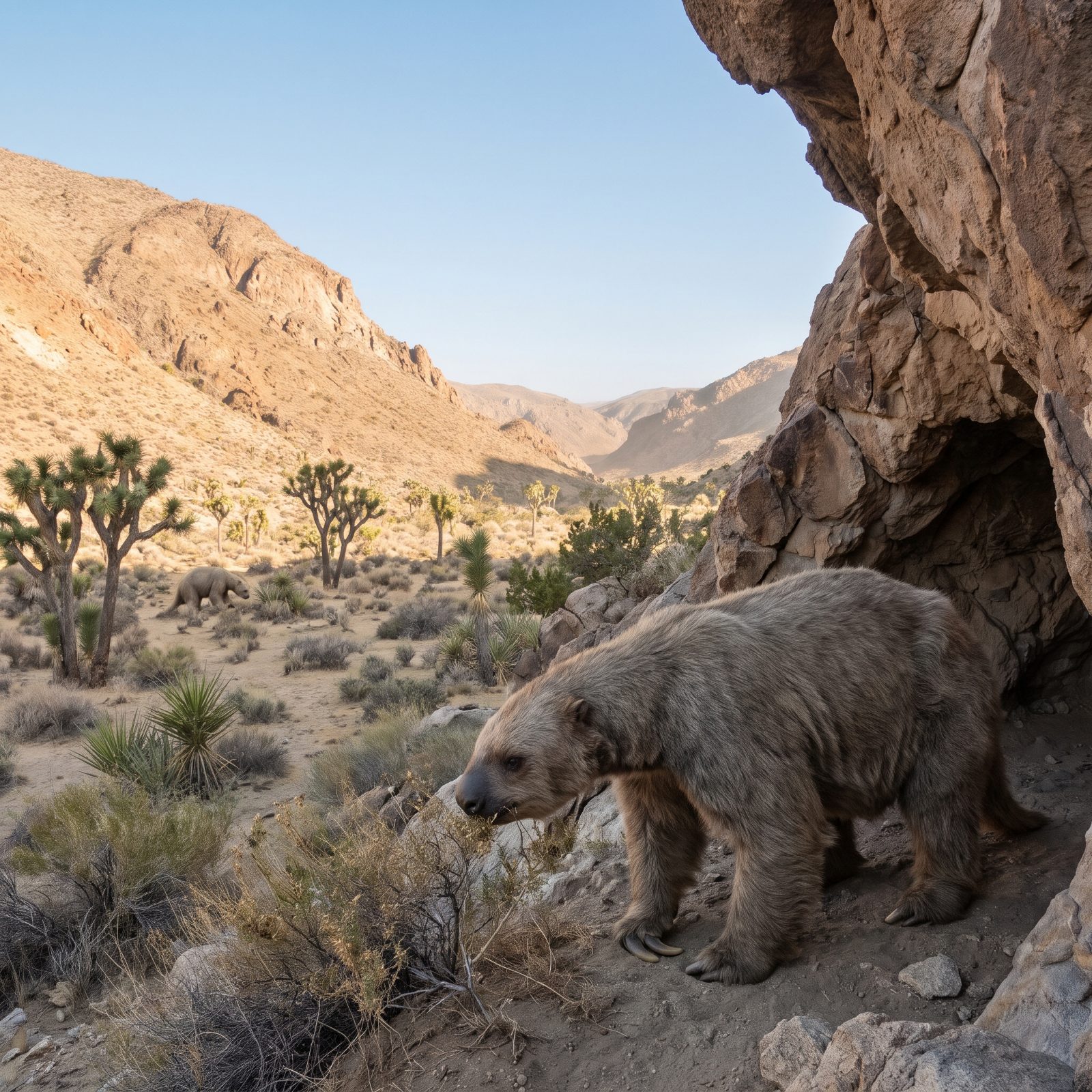
We know exactly what this sloth ate for its last meals, because the evidence didn’t rot.
Nothrotheriops shastensis, the Shasta ground sloth, sheltered in desert caves across the Southwest, including the dry country around Las Vegas. In places like Rampart Cave and Gypsum Cave, its dung preserved for tens of thousands of years in the arid air, packed with recognizable plant fragments.
That hands paleobotanists a menu: globemallow, Mormon tea, desert shrubs, the vegetation of a wetter Ice Age Mojave. Few extinct animals leave such a detailed record of what kept them alive.
It was gone by around 11,000 years ago. The dung outlasted the sloth by a hundred centuries.
16. Holmesina Pampatheres Foraged Around Present-Day Jacksonville
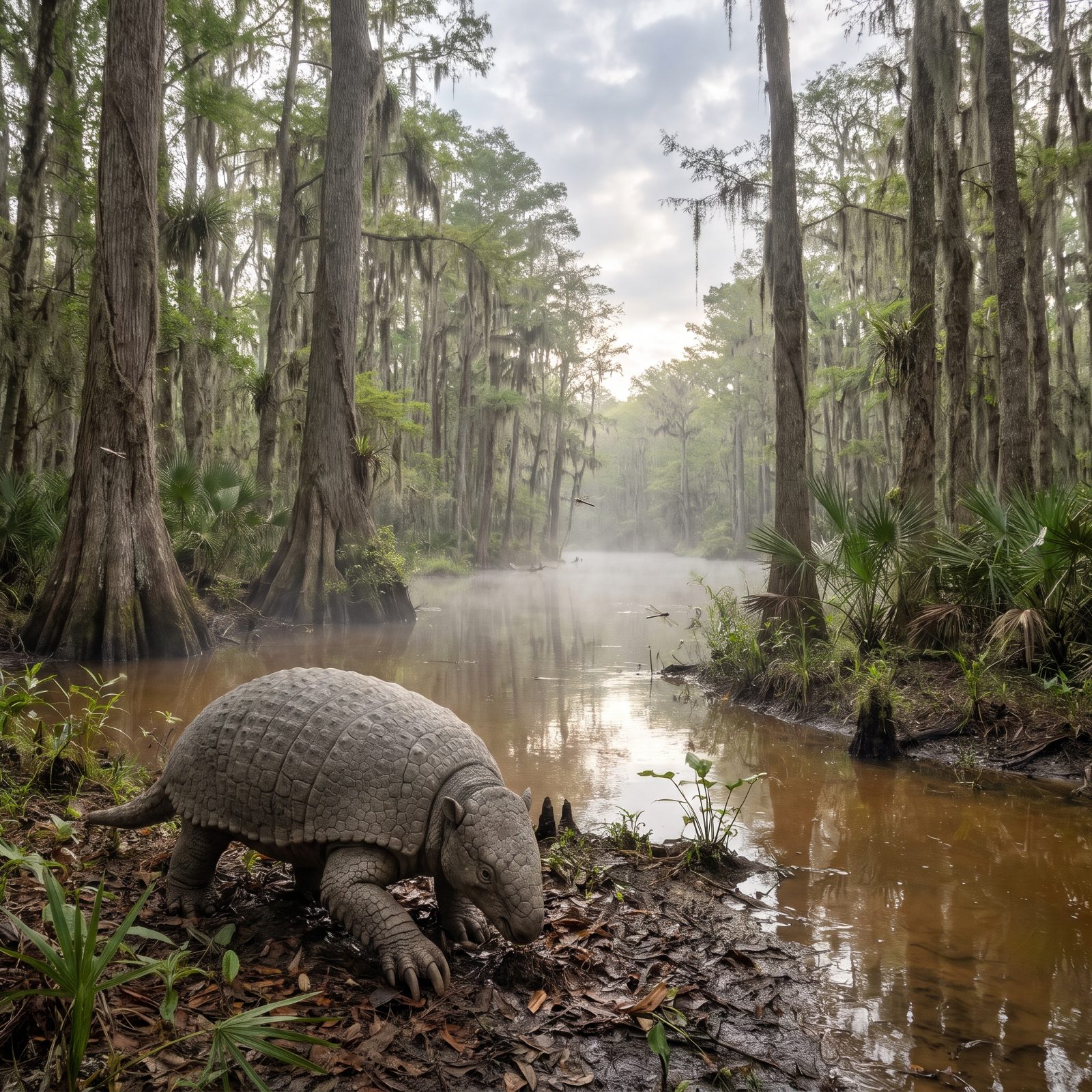
Picture an armadillo scaled up to the size of a black bear, and you’re close. Holmesina wasn’t a true armadillo but a pampathere, a heavy grazing cousin covered in a flexible shell of bony plates arranged in movable bands.
Fossils turn up all over Florida’s river bottoms, and the Jacksonville area sat in prime pampathere country during the late Ice Age. The telltale sign in the rock is the osteoderm, a single scute of armor about the size of a bottle cap, and collectors dredge them from the St. Johns and nearby rivers by the hundreds.
15. Giant Peccaries Foraged Where St. Louis Stands
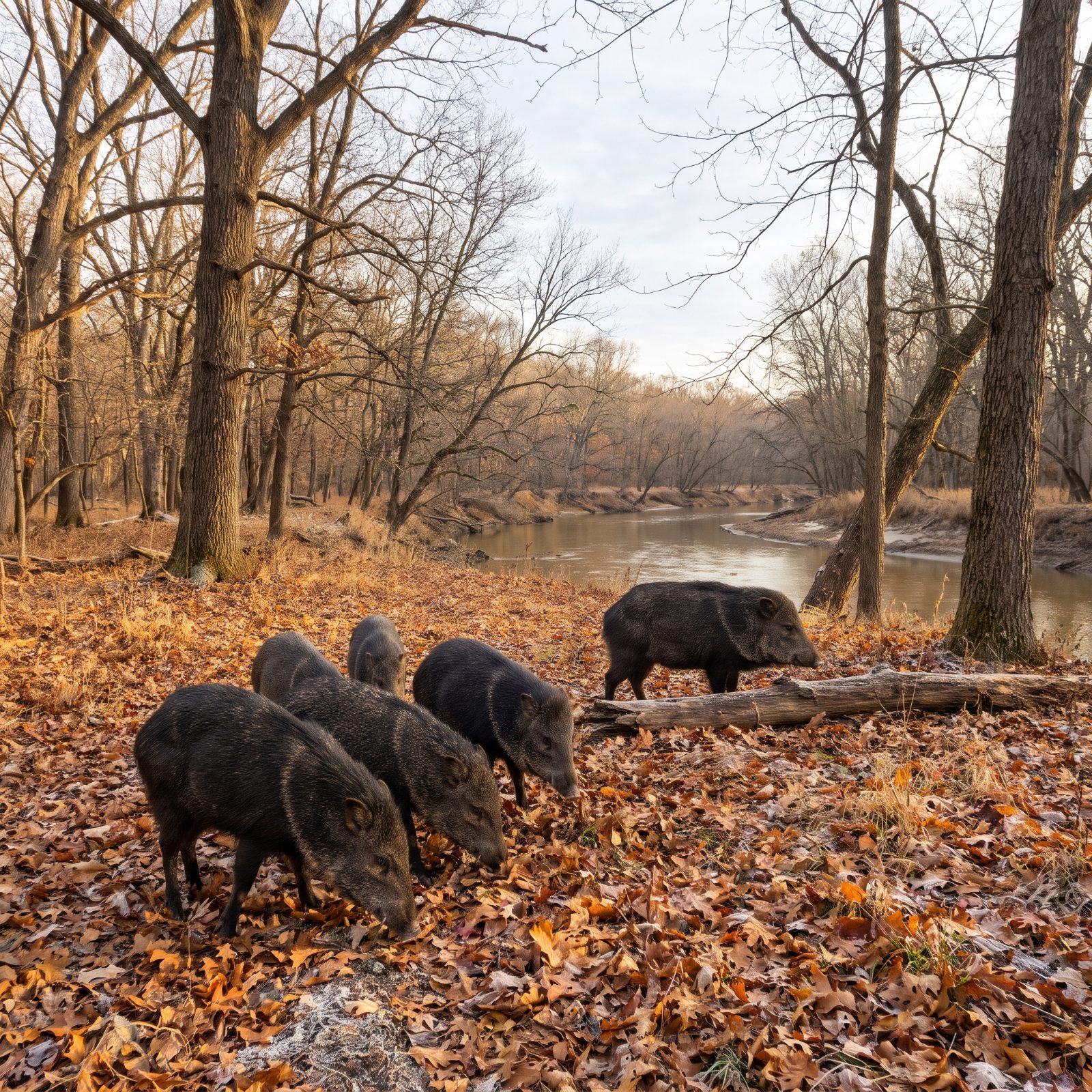
Two very different peccaries walked the Missouri bottomlands, and people tend to lump them together. They shouldn’t.
Platygonus, the flat-headed peccary, was a herd animal of open and wooded country, pig-snouted and nervously social, forever bunched up with its own kind. Mylohyus, the long-nosed peccary, went the opposite way: a loner with a narrow face built for picking through brush. Both show up in Midwestern cave and river deposits, and the St. Louis stretch of the Mississippi preserved plenty of them.
Modern javelinas in the Southwest are the last whisper of this group. The Ice Age versions were bigger, stranger, spread clear across the continent.
14. Giant Ice Age Elk Roamed the Valleys Around Salt Lake City
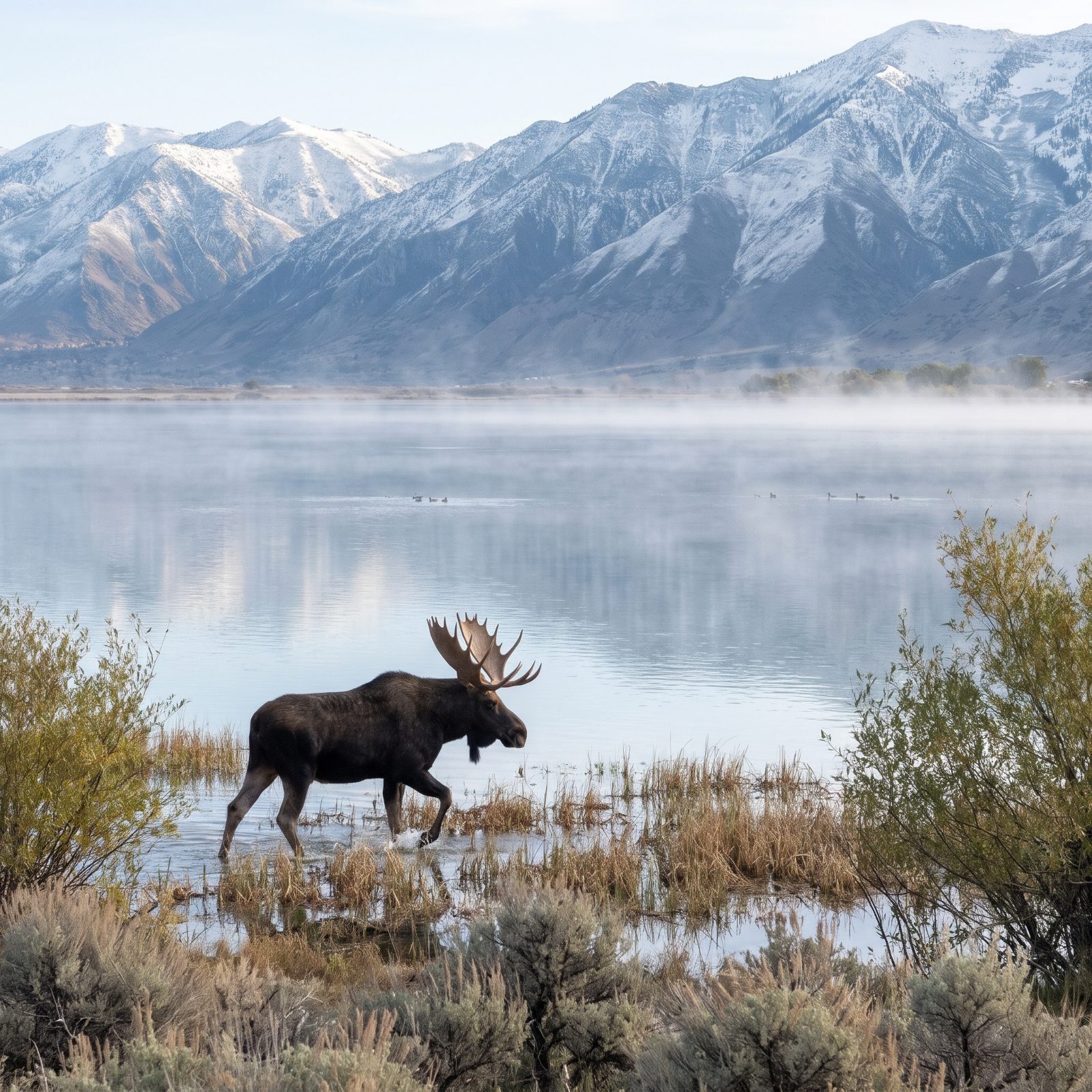
Call it an elk or a wapiti and you’ll confuse everyone, which is fitting. Cervus canadensis was a big deer with a shaggy brown mane and sweeping antlers, long curved beams that branch into sharp, pointed tines in ways that still impress the people trying to measure them.
It favored wet ground, and the shrinking shorelines of Lake Bonneville handed it exactly that. As the great lake drew down into what’s now the Great Salt Lake, marshes and willow thickets lined the valleys below the Wasatch. Prime elk country.
It outlasted the mammoths that shared those valleys, and we still don’t have a tidy answer why.
13. Palaeolama Herds Grazed Across the Land Around Orlando
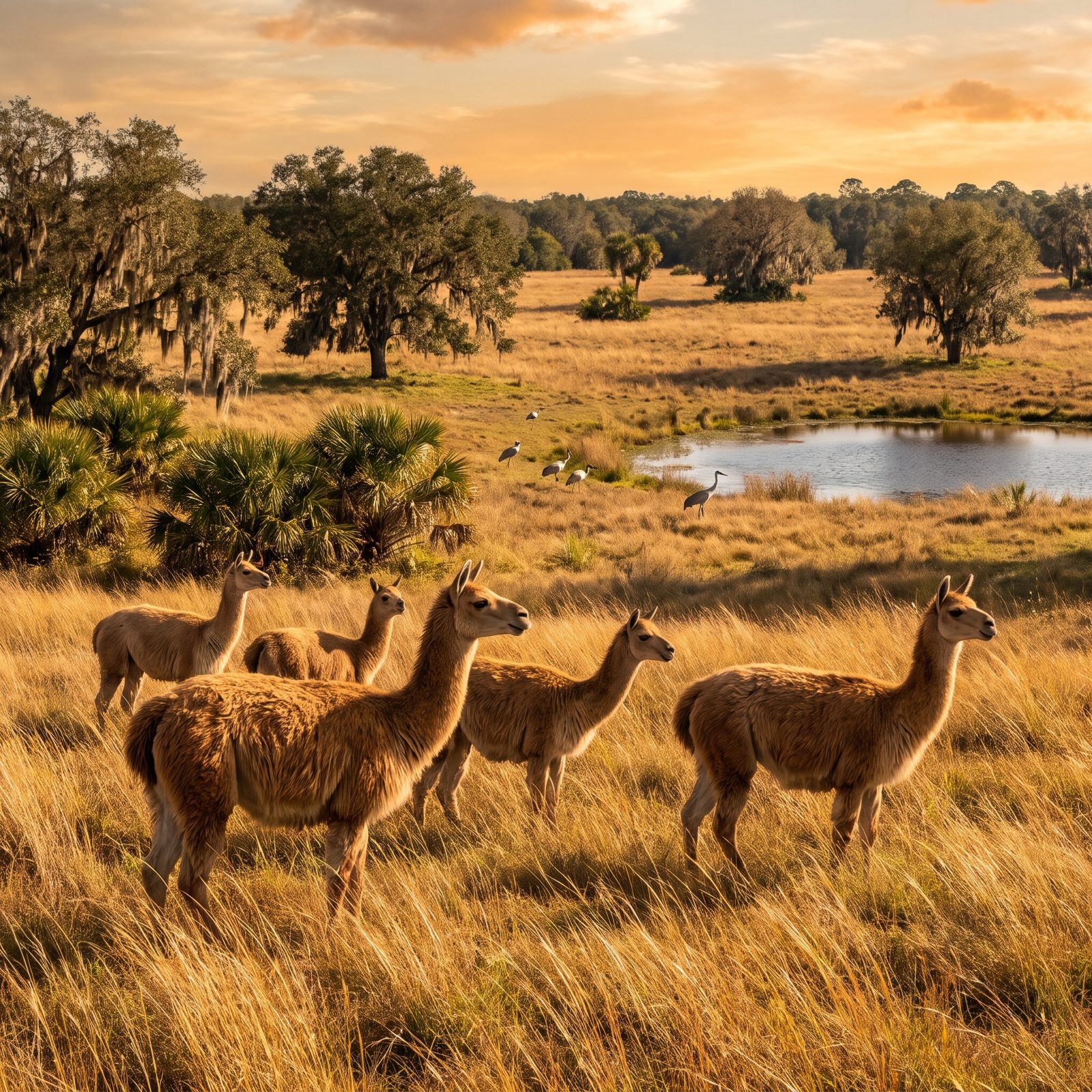
Llamas in Florida sounds like a joke until you see the teeth in the drawer.
Palaeolama was a llama cousin adapted to warm, low ground, and central Florida suited it. It mixed grazing with browsing, cropping grasses and stripping leaves off shrubs, which let it thrive in the oak-and-palmetto mosaic around what’s now Orlando. Here’s the twist most people miss: camelids evolved in North America and spread outward from here before vanishing on their own home continent.
12. Western Horses Galloped Through the Los Angeles Basin
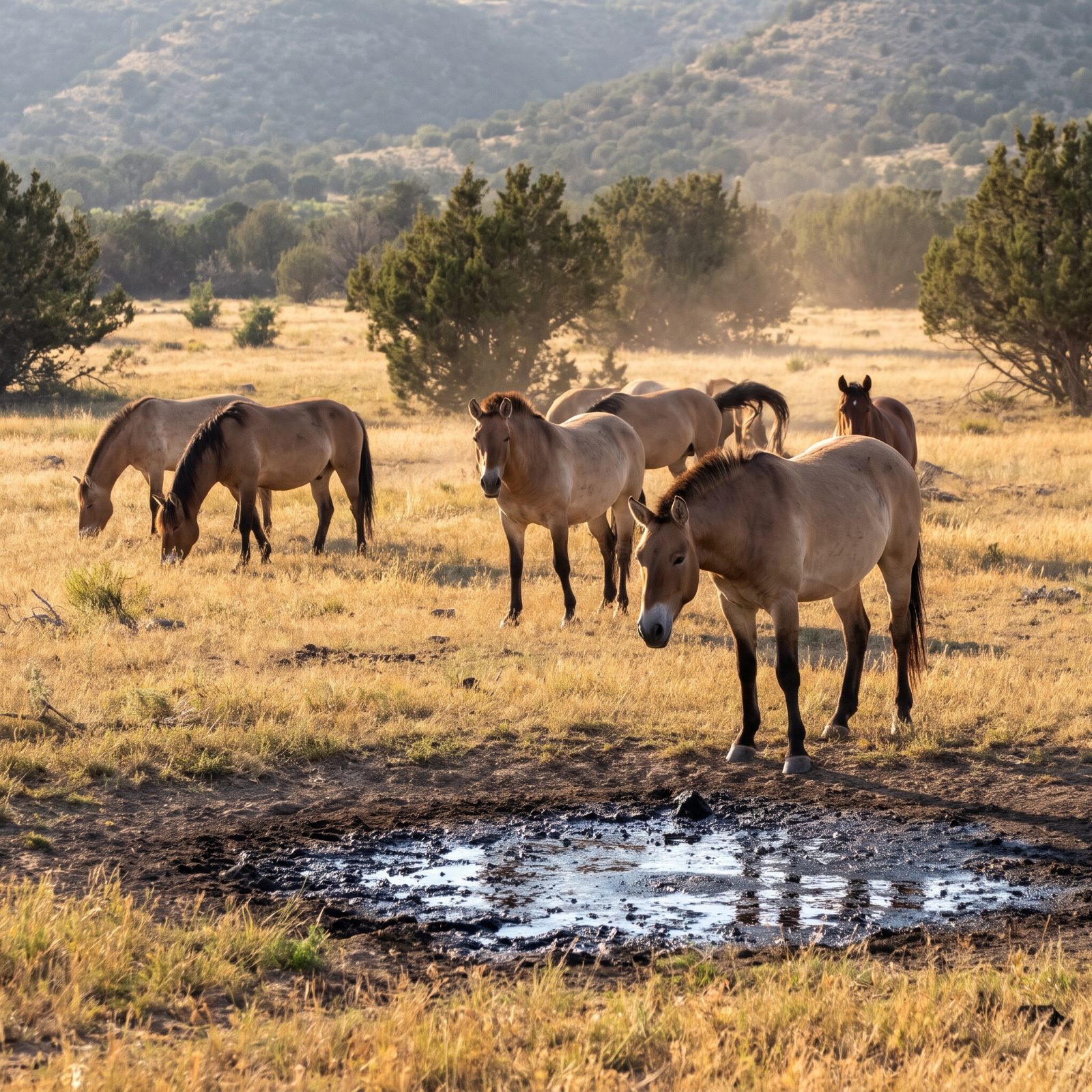
Here’s the detail that surprises people at La Brea: horses are native North American animals, and they were everywhere.
Equus occidentalis, the western horse, is one of the most common large mammals pulled from the asphalt seeps under Los Angeles. Thousands of bones. These were real horses, not some distant relative, grazing the grasslands of the basin in big bands.
Then they vanished from the Americas entirely, around 11,000 years ago. The horse didn’t return until Spanish ships carried domestic ones back across the Atlantic. Every mustang running the West today descends from animals that came home to a continent their ancestors had quit.
11. Helmeted Muskoxen Grazed Across Ice Age Texas Near Houston
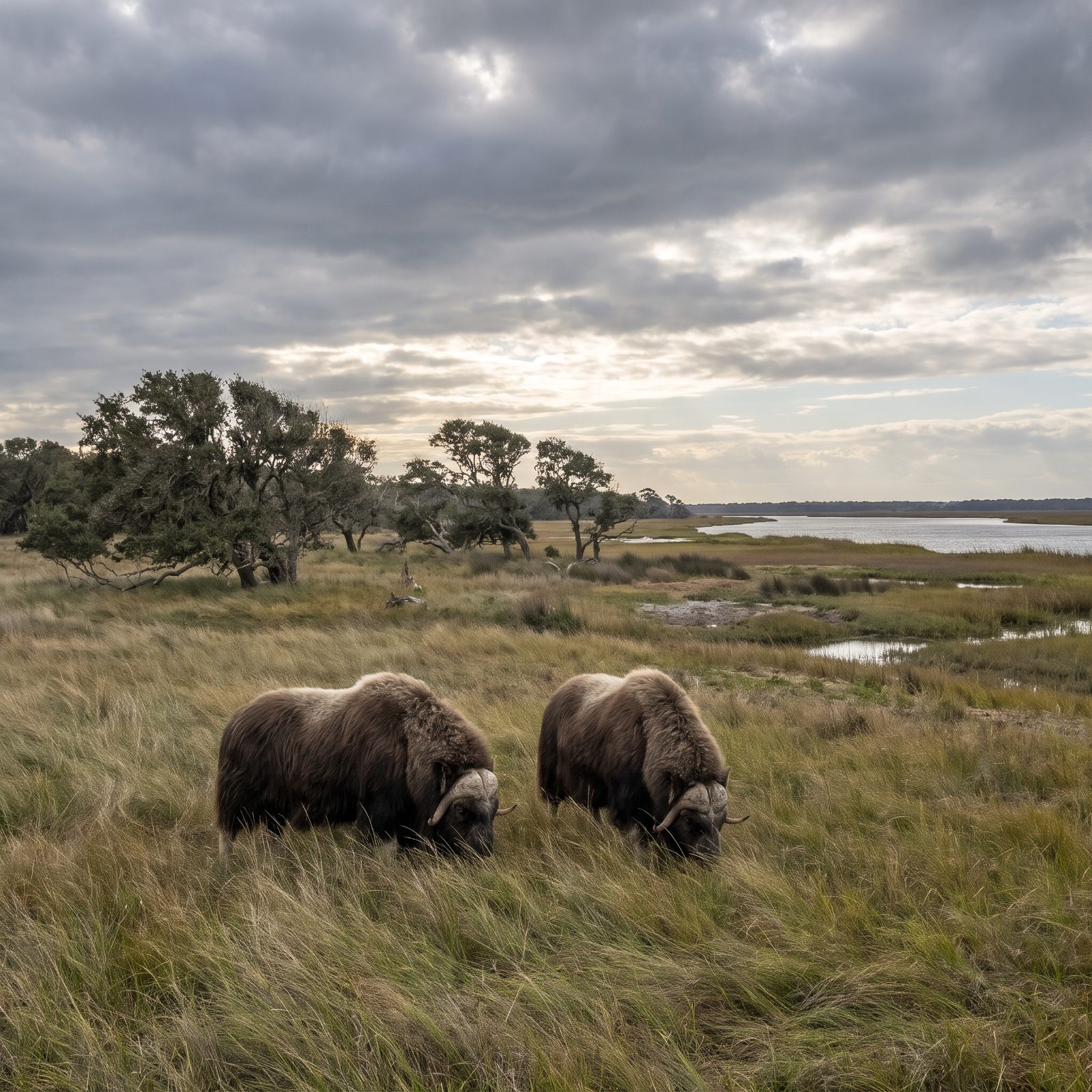
Muskoxen in Texas feels wrong. The fossils say otherwise.
Bootherium, the helmeted or woodland muskox, wasn’t a creature of the far north at all. It ranged across the southern United States, and its bones turn up in the Houston area and along the Gulf coastal plain. The name comes from the fused bony boss across its skull, a solid helmet where a modern muskox has a narrow part between its horns.
Picture a bulky, short-legged muskox in a heavy shaggy coat, grazing temperate grassland rather than tundra. The Ice Age climate shoved cool-grass habitats far south of where you’d expect them, and Bootherium followed the grass.
10. Saiga Antelope Raced Across the Steppe Near Fairbanks
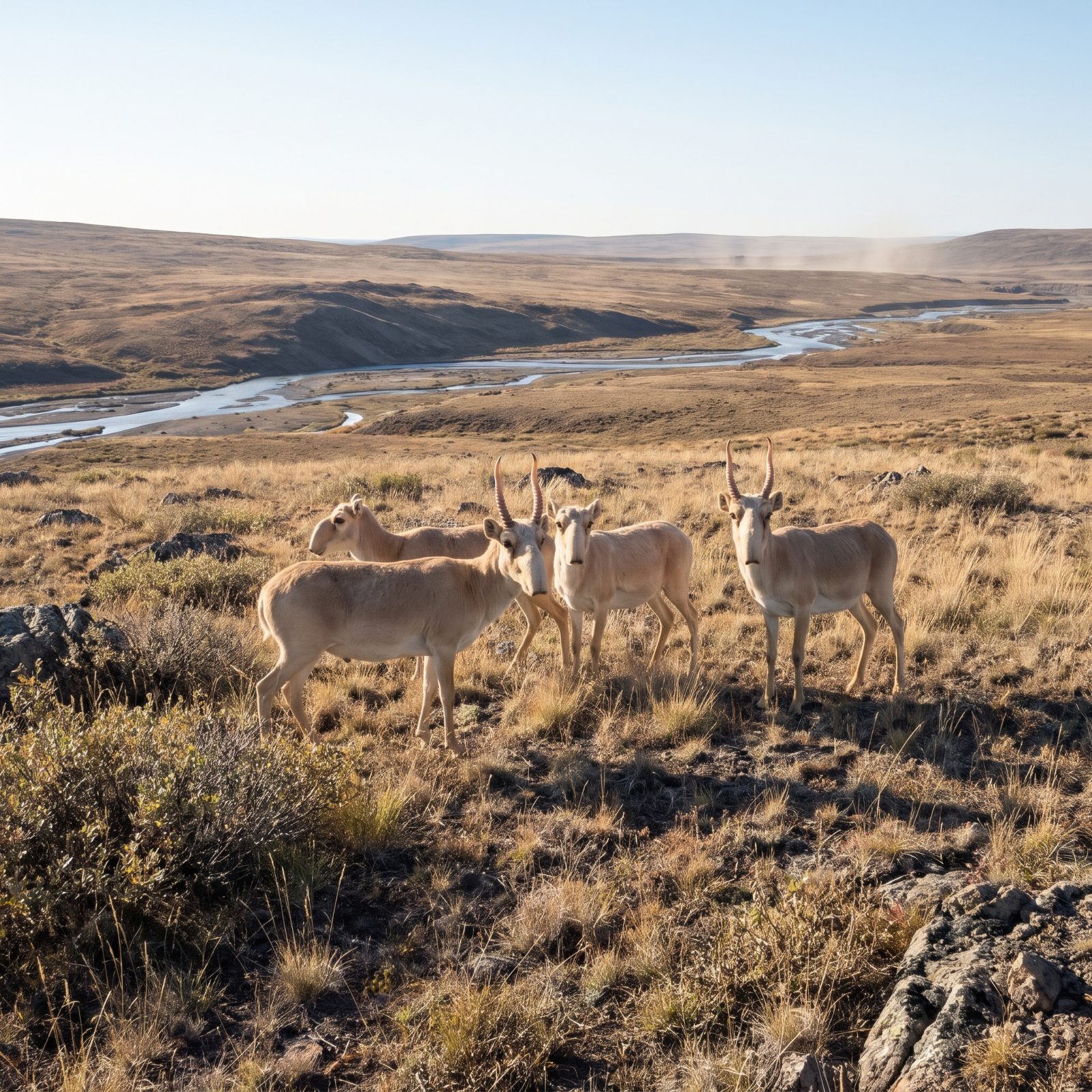
The saiga’s nose looks like a mistake. It isn’t.
That bulbous, down-pointing snout filters dust in summer and warms frozen air in winter, which is exactly what you want on a dry, cold, windblown steppe. Today saiga cling on in Central Asia. During the Ice Age they ran clear across the Bering land bridge into interior Alaska, and their bones surface in the frozen deposits around Fairbanks.
That connection matters. Alaska was biologically part of Asia back then, a grassy corridor that let steppe animals walk between continents.
9. Vero Tapirs Browsed Near Present-Day Tampa
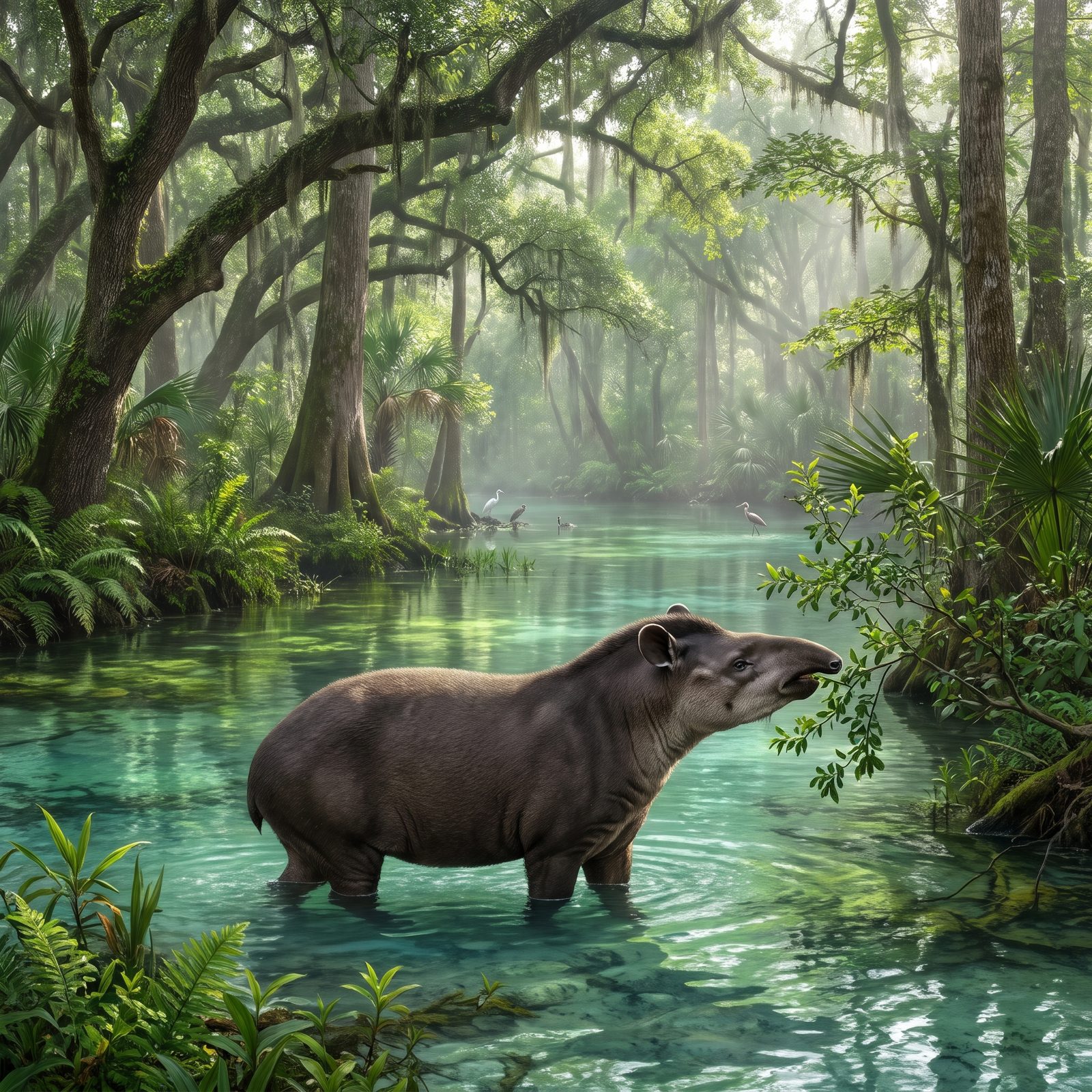
Tapirs survive today in Central and South American jungles and across Southeast Asia. Few people realize they once lived in Florida.
Tapirus veroensis, named for Vero Beach where early finds surfaced, was a late Ice Age browser that haunted the spring-fed rivers and hardwood forests of the Tampa region. Short trunk, barrel body, a taste for leaves and water plants. It suited the lush, wet subtropical hammock of central Florida perfectly.
Its bones still wash out of the same clear spring runs that divers love today. One moment you’re looking at a snail shell, the next it’s a tapir molar.
8. Giant Anteaters Foraged Across Northern Mexico Near Monterrey
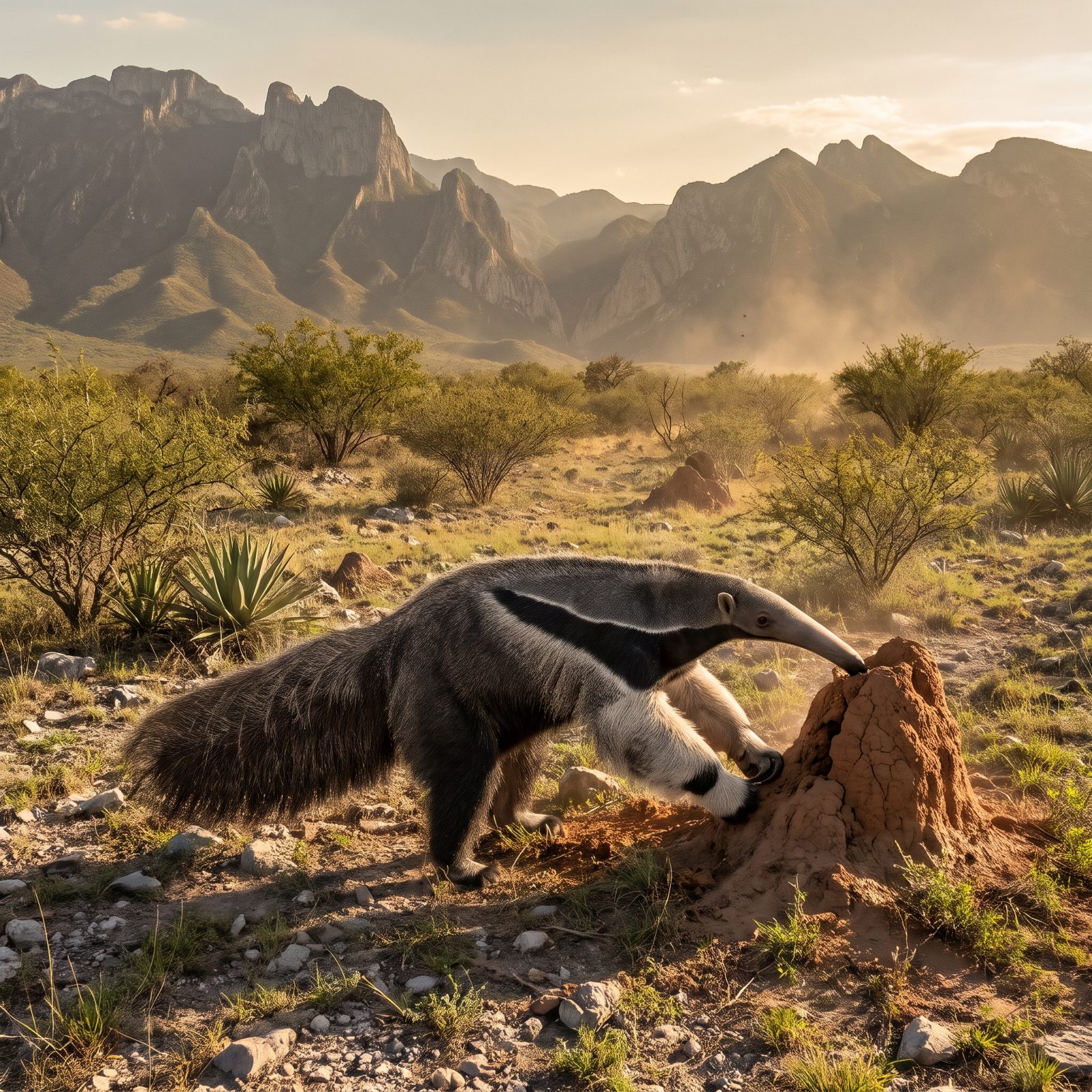
The giant anteater still lives, just not this far north anymore.
During the Ice Age its range pushed up through Mexico, and the thornscrub around present-day Monterrey sat at the very edge of its world. Two-foot tongue, no teeth at all, claws so big the animal walks on its knuckles, a nose built for one job: wrecking ant and termite mounds.
It’s a reminder that Ice Age extinction wasn’t only mammoths and sabercats. Plenty of species didn’t die out. They just retreated south as the climate shifted, and the northern edge of their old range quietly fell silent.
7. Teratorns Soared Above the Site of Los Angeles
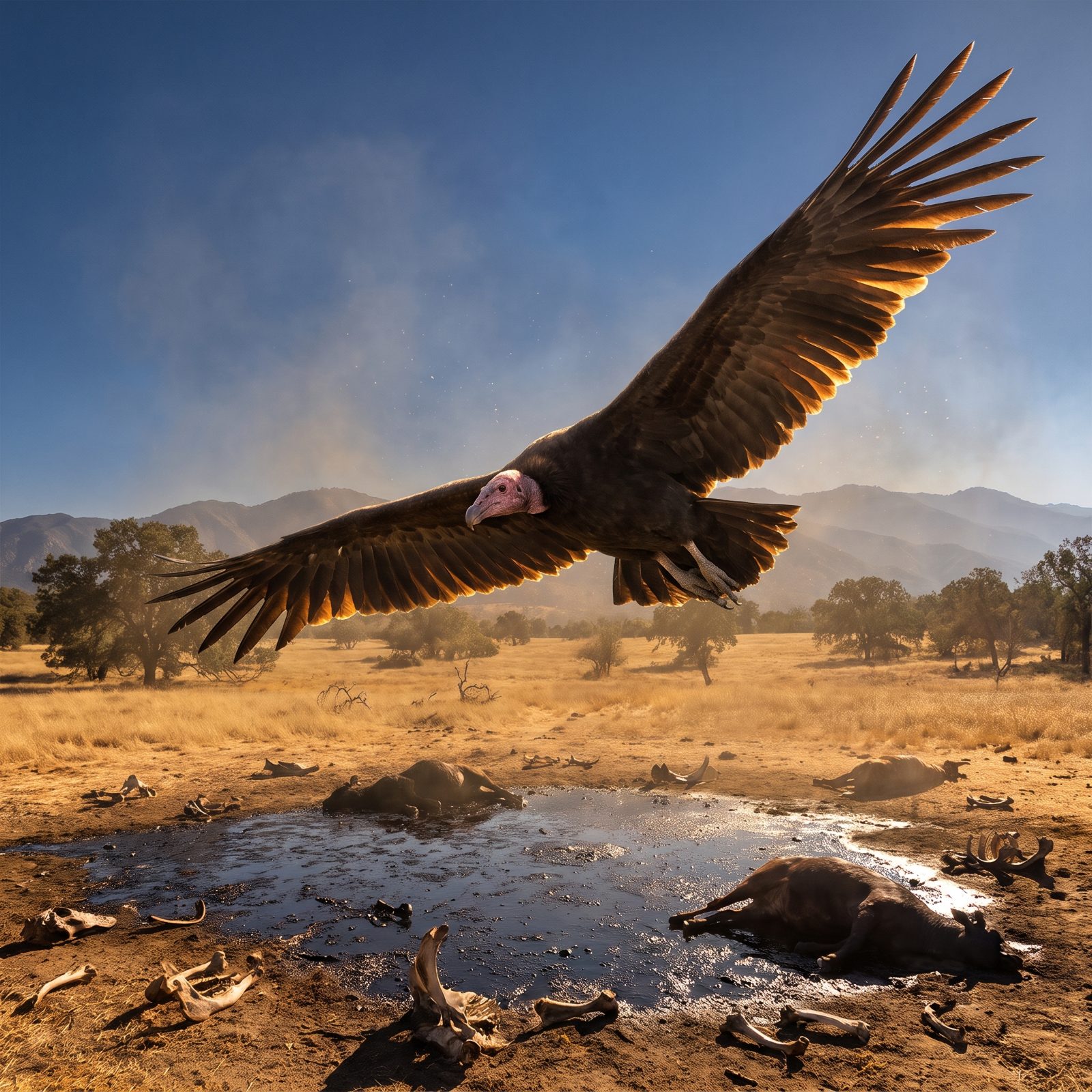
Condors are big. Teratorns made them look modest.
Teratornis merriami carried a wingspan around 12 feet and ranks among the most recovered birds at La Brea, with over a hundred individuals pulled from the asphalt. It rode the basin’s thermals, scanning for carcasses the way a condor does, dropping to feed on animals the tar had already claimed.
And it had a monstrous cousin. Aiolornis incredibilis, sometimes called the incredible teratorn, stretched past 16 feet across, among the largest flying birds North America ever produced.
A bird you could not have wrapped your arms around, riding the same hot air that still rises off these hills today.
6. Giant Snapping Turtles Lurked in the Wetlands Beneath Northern Florida
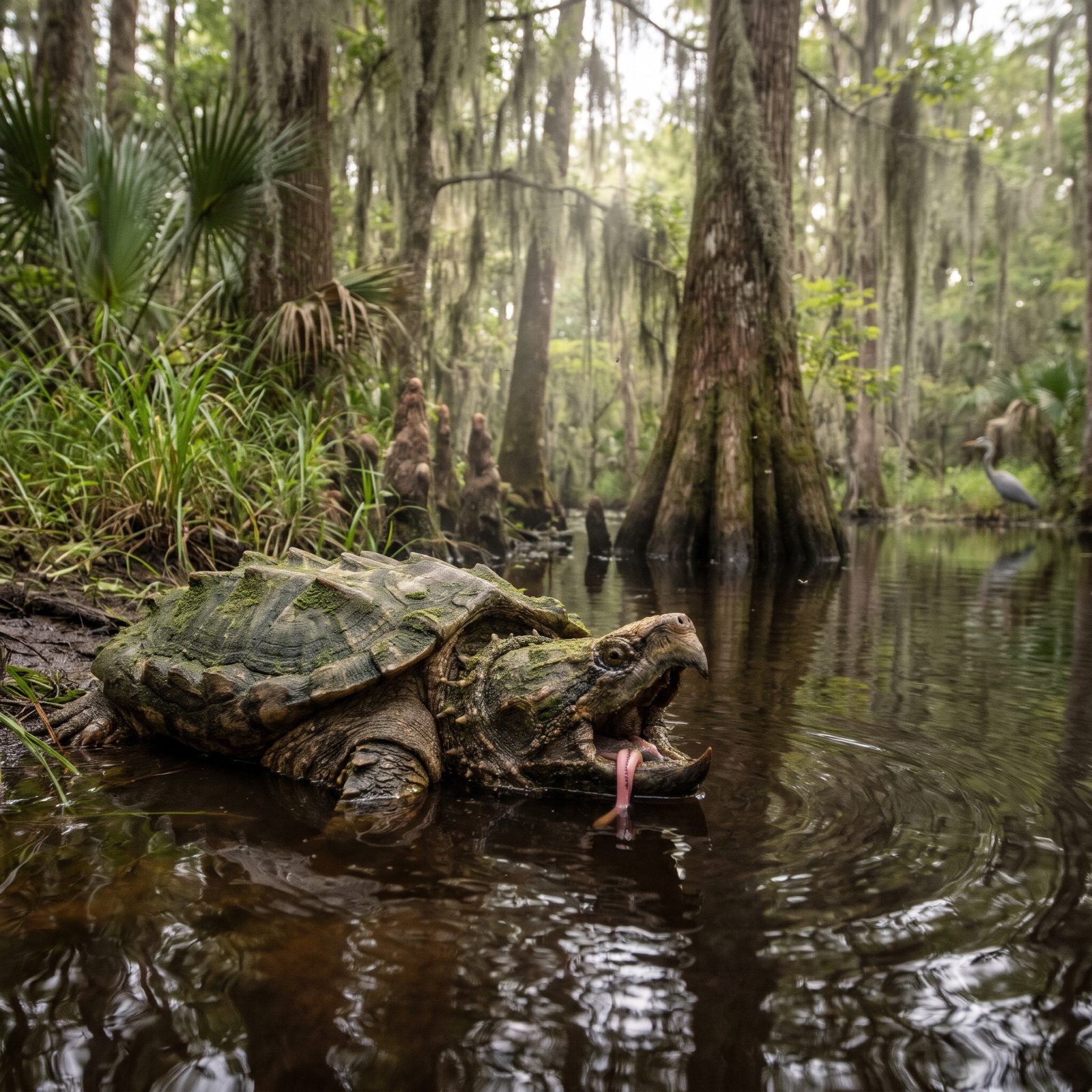
Its mouth is the trap, and it barely moves. The alligator snapping turtle’s tongue extends into a long pink lure shaped like a wriggling worm that dangles well outside its jaws, and the turtle just rests on the muddy bottom, nearly invisible, with its jaws cranked open, waiting for some unlucky fish to swim in and investigate what it thinks is lunch.
Back in the Late Pleistocene, the cypress swamps around what became northern Florida ran warm and shallow — a dream setup for an ambush hunter that does nothing but wait. Here’s the odd part: the species never left. You’re looking at an animal whose ancestors watched mammoths drink from the same water it still hunts in today.
5. American Crocodiles Hunted the Shallows Where Miami Would Rise
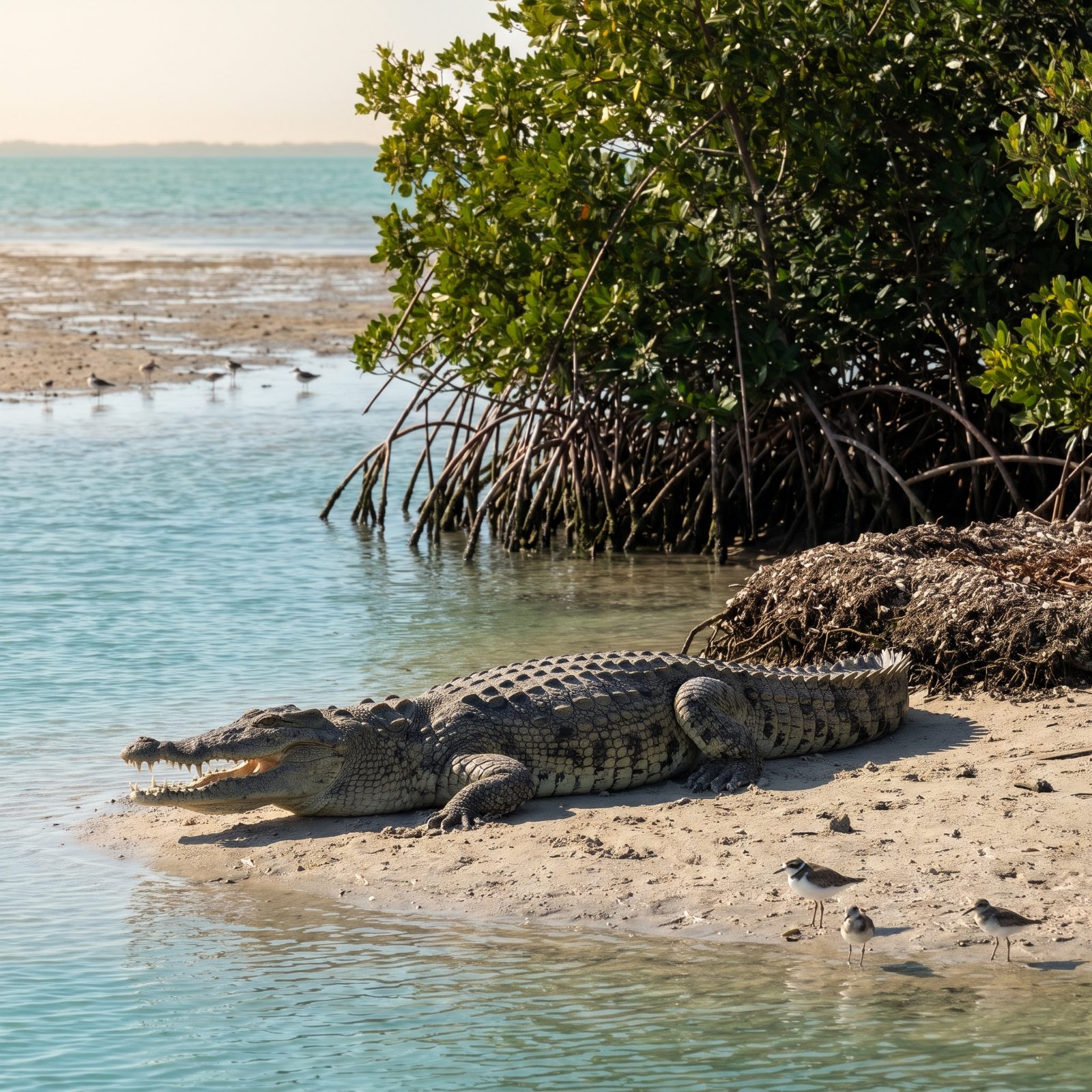
Everyone pictures alligators when they think Florida. The American crocodile is the quieter resident, and the snout gives it away — narrow and tapered, nothing like the broad shovel of a gator.
In the Late Pleistocene, the coastline around future Miami was a shifting maze of mangrove lagoons and brackish flats, just warm enough for a cold-sensitive reptile that needs both saltwater and sun. Crocs handle the salt through glands on their tongue, which let them work the estuaries where rivers spilled into the sea. They still do. A small population clings to South Florida, the ragged northern tip of a range that stretches all the way down to South America.
4. Bowhead Whales Pushed Through the Icy Waters off Future Anchorage
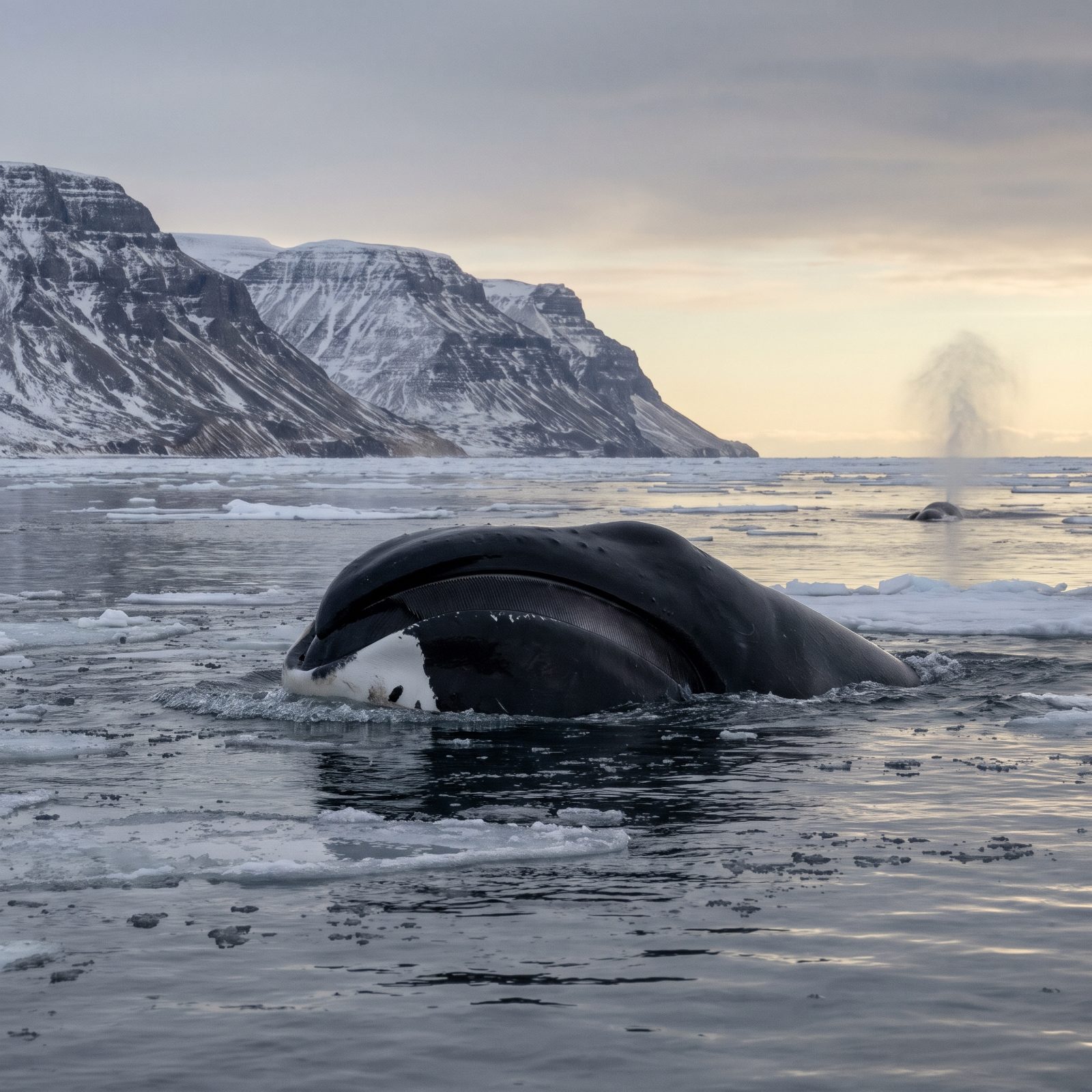
No dorsal fin. A head that eats up a third of its body. The bowhead is built for exactly one job — living under ice.
That enormous skull doubles as a battering ram. Bowheads break through sea ice up to a couple feet thick by shoving up from below, which opened frozen waters that shut most other whales out. When glacial periods pushed cold, plankton-rich seas south along the coast near what’s now Anchorage, the bowheads followed the food. And they may be the longest-lived mammals alive. Harpoon tips from the 1800s have turned up buried in living animals, which hints at lifespans past a century and a half, maybe closer to two hundred years.
3. Northern Elephant Seals Hauled Out Near the Drowned San Francisco Bay
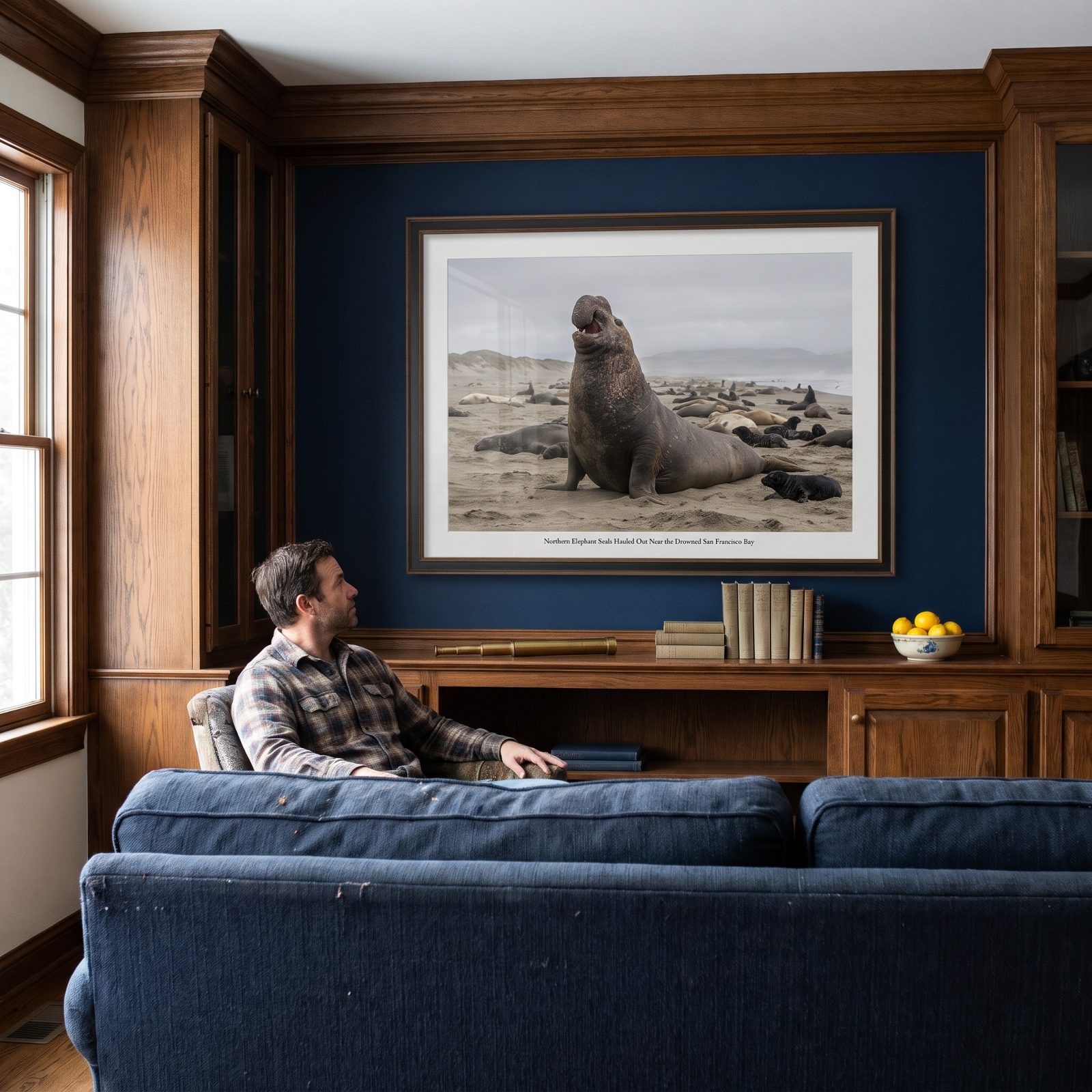
That hanging snout gives the males their name, and it isn’t just for show. Come breeding season, bulls inflate the thing to amplify a roar that warns off rivals before anybody has to throw a punch.
Here’s where it gets strange. When sea levels crashed during the last glacial period, San Francisco Bay simply wasn’t water — it was a river valley cut through a wide coastal plain, the shoreline sitting miles west of where it rests now. Elephant seals would have hauled out to breed and molt along those vanished beaches, the same way they crowd the Farallones and Point Reyes today.
Their comeback is a quiet little miracle. Hunters knocked the whole species down to maybe a few dozen animals by the 1890s, and every elephant seal alive now descends from that scrap of survivors.
2. Glossotherium Ground Sloths Roamed the Scrublands Around Monterrey
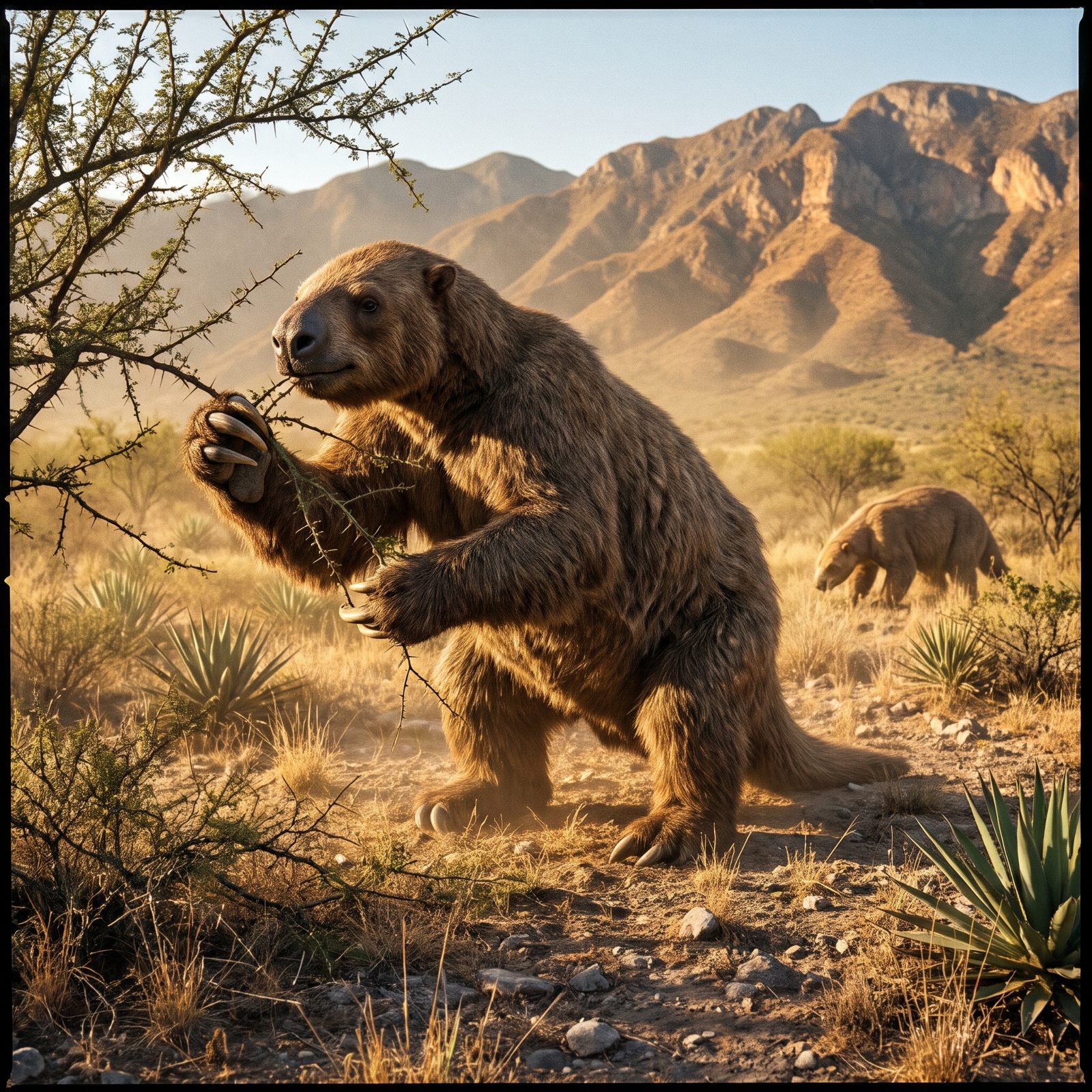
Forget the slow tree-dweller. Glossotherium was a ground sloth built like a bear with the temperament of a bulldozer, lumbering along on the sides of its feet to keep those long claws out of the dirt.
The scrub and grassland around future Monterrey, tucked up against the Sierra Madre Oriental, suited a browsing giant just fine. It yanked down thorny branches, dug for roots, and carried a weird advantage under its skin: bony pebbles called osteoderms, scattered through the hide like gravel, that gave it a crude built-in armor big cats couldn’t easily bite through.
1. Saber-Toothed Cats Ambushed Prey Where Los Angeles Now Stands
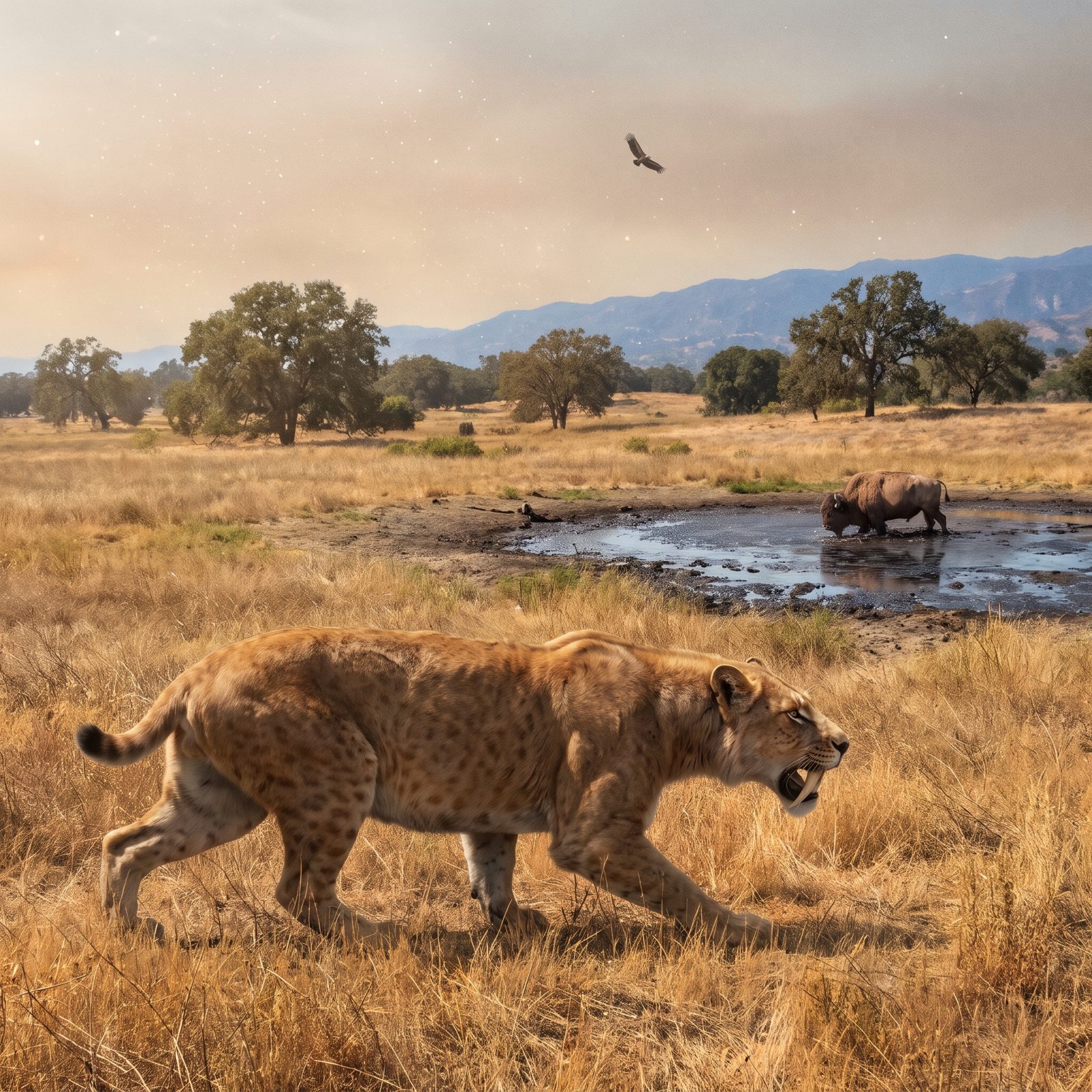
The teeth are famous. The forelimbs did the actual work.
Smilodon fatalis couldn’t afford a long chase, because those fragile seven-inch canines would snap clean off against a thrashing animal. Instead it used absurdly powerful front legs to wrestle big prey to the ground, pin it still, and only then sink a precise killing bite into the throat.
We know this cat intimately, and we have the La Brea Tar Pits to thank — sitting right in the middle of Los Angeles. Over tens of thousands of years, animals blundered into shallow asphalt seeps, got stuck, and drew in the predators that came to feast and got stuck too. Those pits have coughed up thousands of Smilodon individuals. Nowhere else on Earth comes close.