
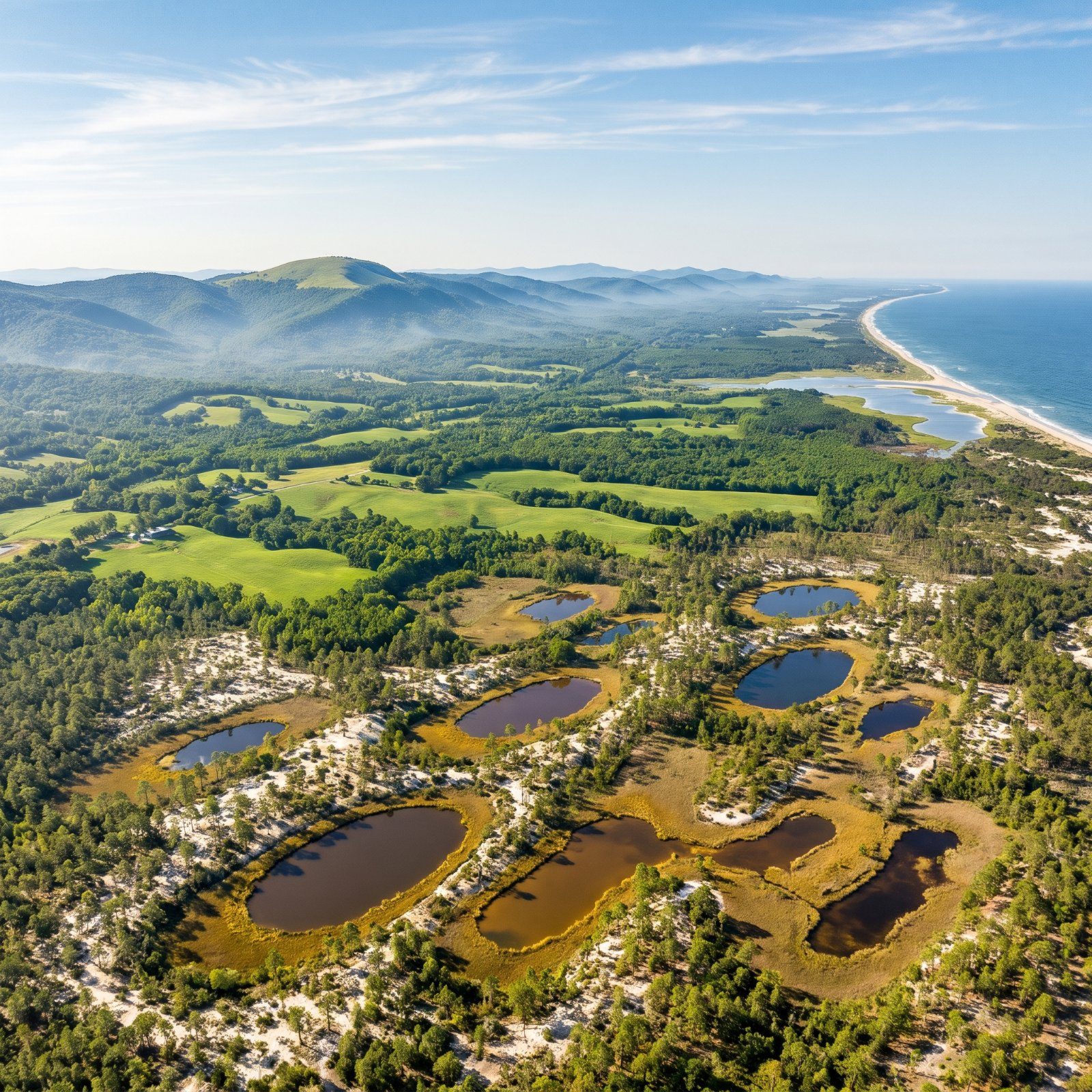
A booming cannon that no one fired. Lakes shaped like a fleet of footprints pressed into the Coastal Plain. Lights that have floated over a ridge near Morganton for more than a century, outlasting every tidy explanation anyone throws at them. North Carolina hides a strange amount of genuinely unsolved science, and most of it sits where anyone can drive out and look. From the bald summits of the Roan Highlands to the last wild red wolves on Earth, these puzzles still make geologists argue and ecologists shrug while residents swear they felt the ground move. Believe it or not, the answers aren’t in yet.
11. The Carolina Bays and Their Argued-Over Origins
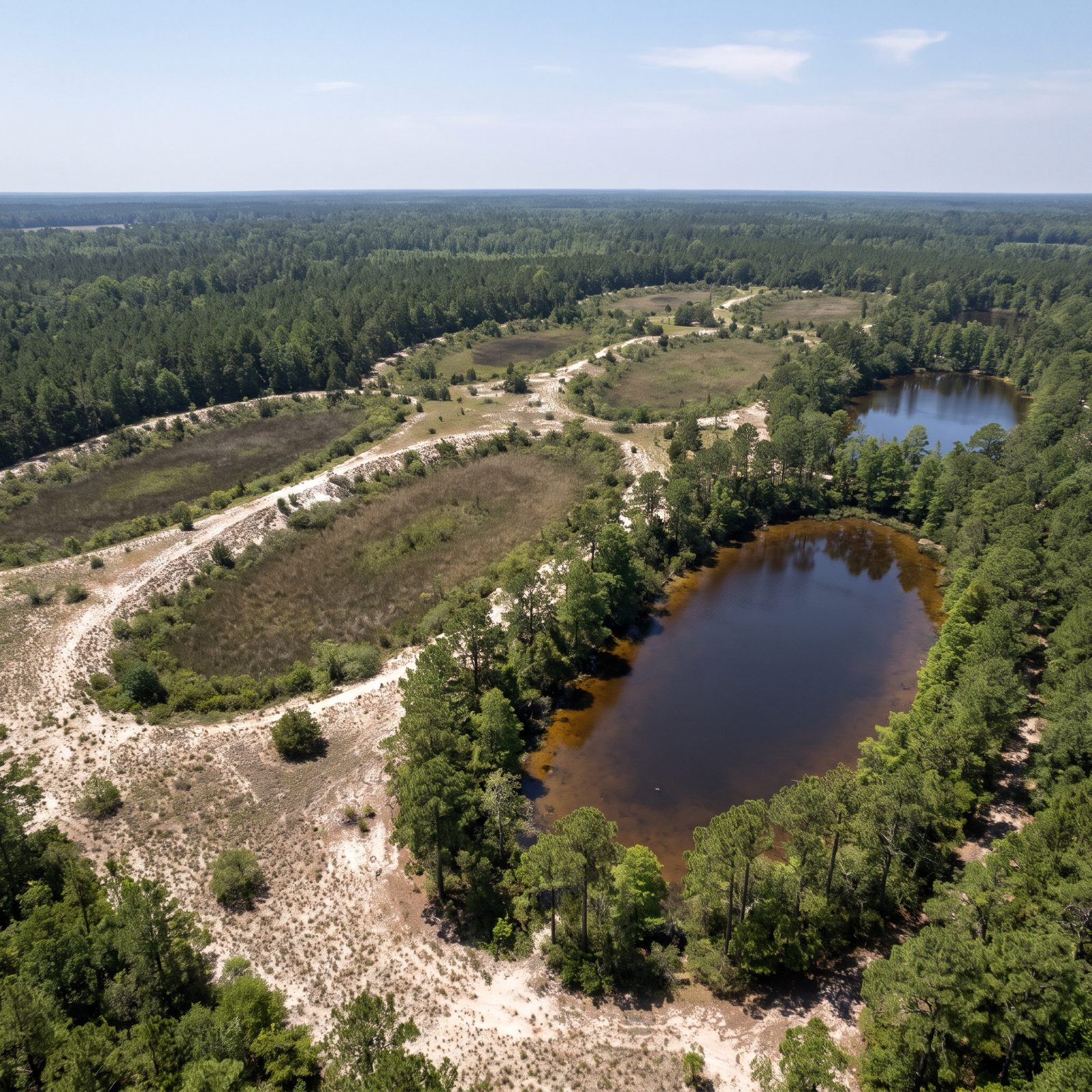
Look at Bladen County from the air and the ground seems stamped by something. Thousands of shallow oval depressions, all tilted the same way like a flock of giant footprints. These are the Carolina bays, and NC State Parks freely admits their origin “has long been a matter of speculation and debate.”
Four big ideas compete. Sinkholes from dissolving limestone. Spawning fish fanning out hollows back when the ocean covered the region. A meteorite shower. And plain wind and waves stretching round ponds into ovals — the “oriented lake” theory, which currently has the most support, according to Lake Waccamaw’s park superintendent.
In the 1950s, UNC geologist William Prouty pinned it on a comet or meteor strike over 12,000 years ago. Coastal geologist Anthony Rodriguez counters that the bays didn’t all form at once, which a single impact would require. Want the textbook examples? Jones and Salters lakes in Jones Lake State Park, about 2,200 acres near Elizabethtown, are still holding water.
10. The Brown Mountain Lights Above Burke County
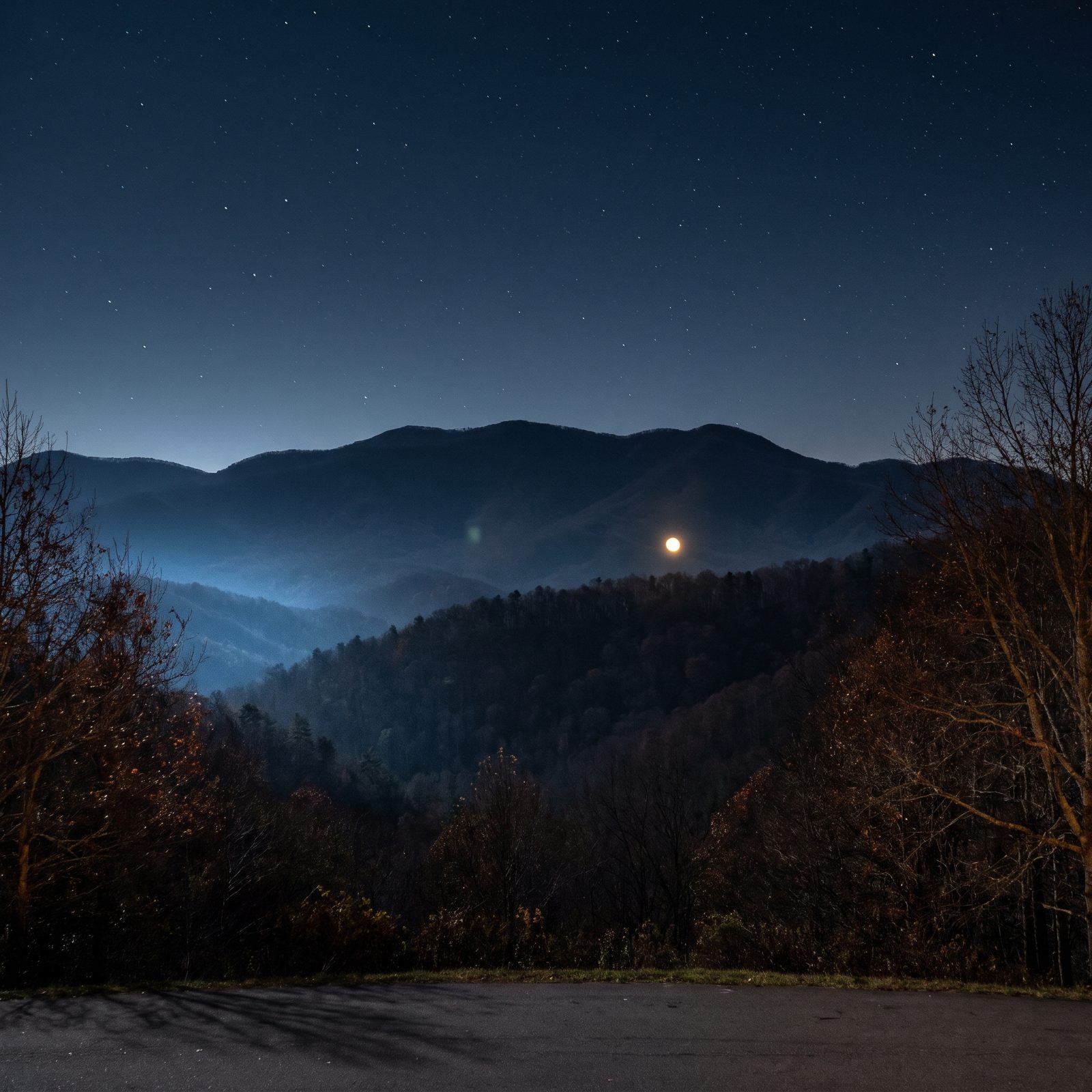
People have reported glowing orbs over Brown Mountain for more than a hundred years. You can still hunt them on clear nights from viewpoints along NC Highway 181 and from Wiseman’s View in the Linville Gorge Wilderness.
The U.S. Geological Survey showed up in 1913 and declared the whole business was locomotive headlights, nothing more. Three years later a flood washed out the tracks — and people kept seeing the lights anyway. A 1922 survey floated eleven possible causes, from will-o’-the-wisps to phosphorus to radium emanations, which should tell you how stumped everyone was.
Appalachian State physicists Dan Caton and Lee Hawkins have run remote cameras over the ridge for years. One July they caught a round glowing light on two time-lapse cameras at once, and they suspect it may be the genuine article. After a local symposium, residents and scientists — skeptics included — formed a research team. Go in fall, once the leaves drop. The Brown Mountain Overlook sits on NC 181, about 12 miles north of Morganton.
9. The Grassy Balds of the Roan Highlands
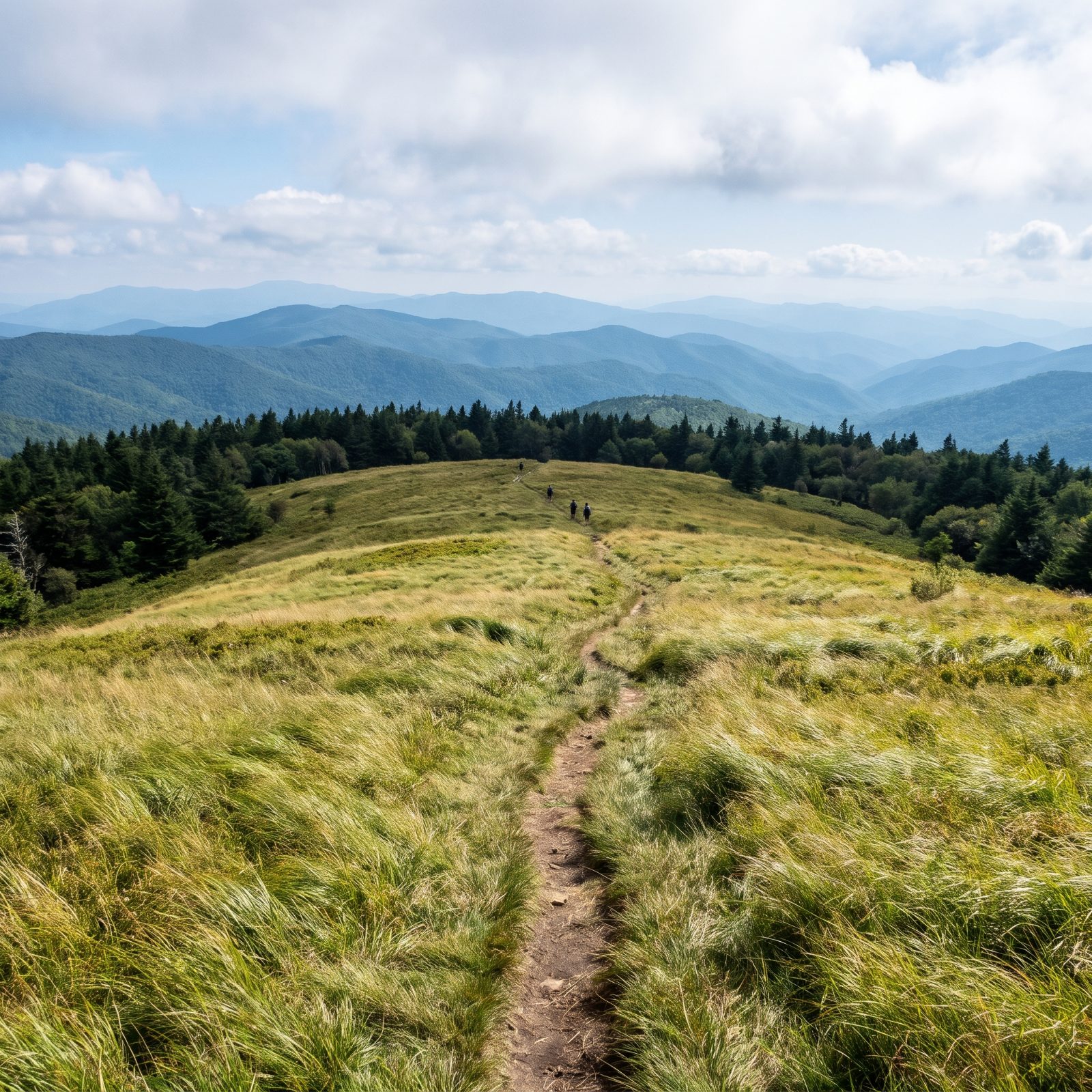
Climb high enough on the Roan and the forest just quits. The summit goes bald — open, grassy, treeless — for no reason anyone can fully explain. Ecologists flatly call these grassy balds a scientific mystery, and they mean it.
Why some peaks are bald while the ones right beside them stay wooded is still poorly understood. The leading guesses? Grazing by giant Ice Age herbivores that kept tundra-like openings cropped short. Burning or clearing by Native Americans. Climate. The Appalachian Trail Conservancy calls them Ice Age relicts found only in Tennessee, North Carolina and Virginia.
Here’s the sad part. Our State reports that more than three-quarters of the Roan region’s historic balds have already vanished. And don’t confuse Roan with Max Patch, which is a cultural bald cleared for cow pasture — Roan is the real, natural, ecological puzzle.
8. The Seneca Guns That Rattle the Coast
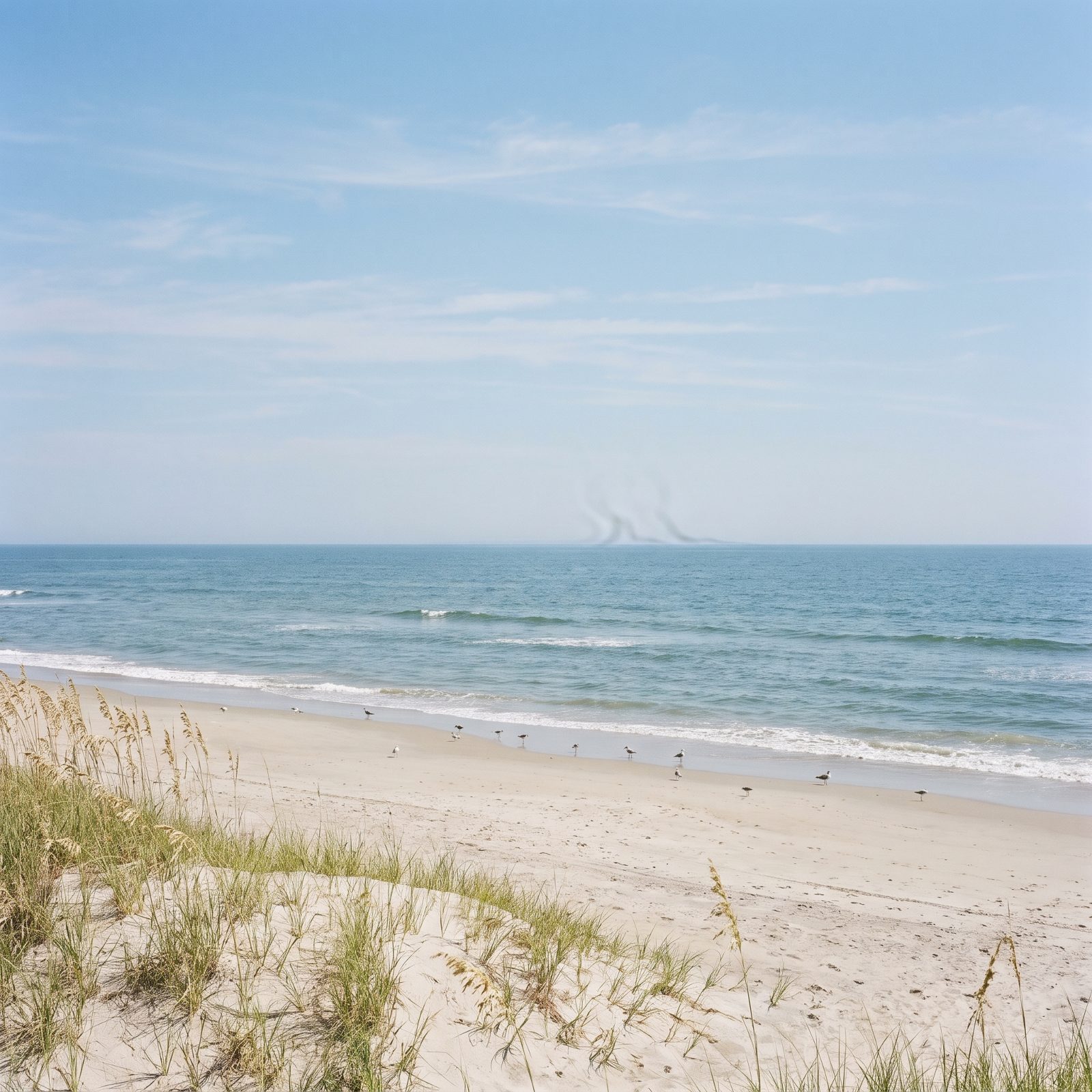
Imagine your windows rattling and your house shaking from a boom like a cannon. No storm. Maybe a few dark, smoky wisps curling on the far horizon, but nothing anyone can tie to the boom. Along the North Carolina coast, folks call it the “Seneca guns,” and that name explains absolutely nothing.
The USGS says plainly there’s no agreement on a cause, and most cases are never explained. In March 2019, one boom shook houses from the northern Outer Banks all the way down to Craven and Carteret counties, yet a USGS seismologist found nothing in the data. The weather service ruled out a sonic boom or demolition training because the shaking covered far too wide an area.
A 2020 study still called the booms “unverified by scientific observation.” Suspects range from ocean processes to meteors and lightning. Researchers did find correlations between Cape Fear booms and infrasound and seismic records from nearby stations — a real clue, but nowhere close to an answer.
Explaining why the booms can rattle houses along the Cape Fear coast, a university geology lecturer says “What’ll happen is if you generate a sound, it’s actually kind of trapped”
7. Lake Mattamuskeet’s Fiery Birth
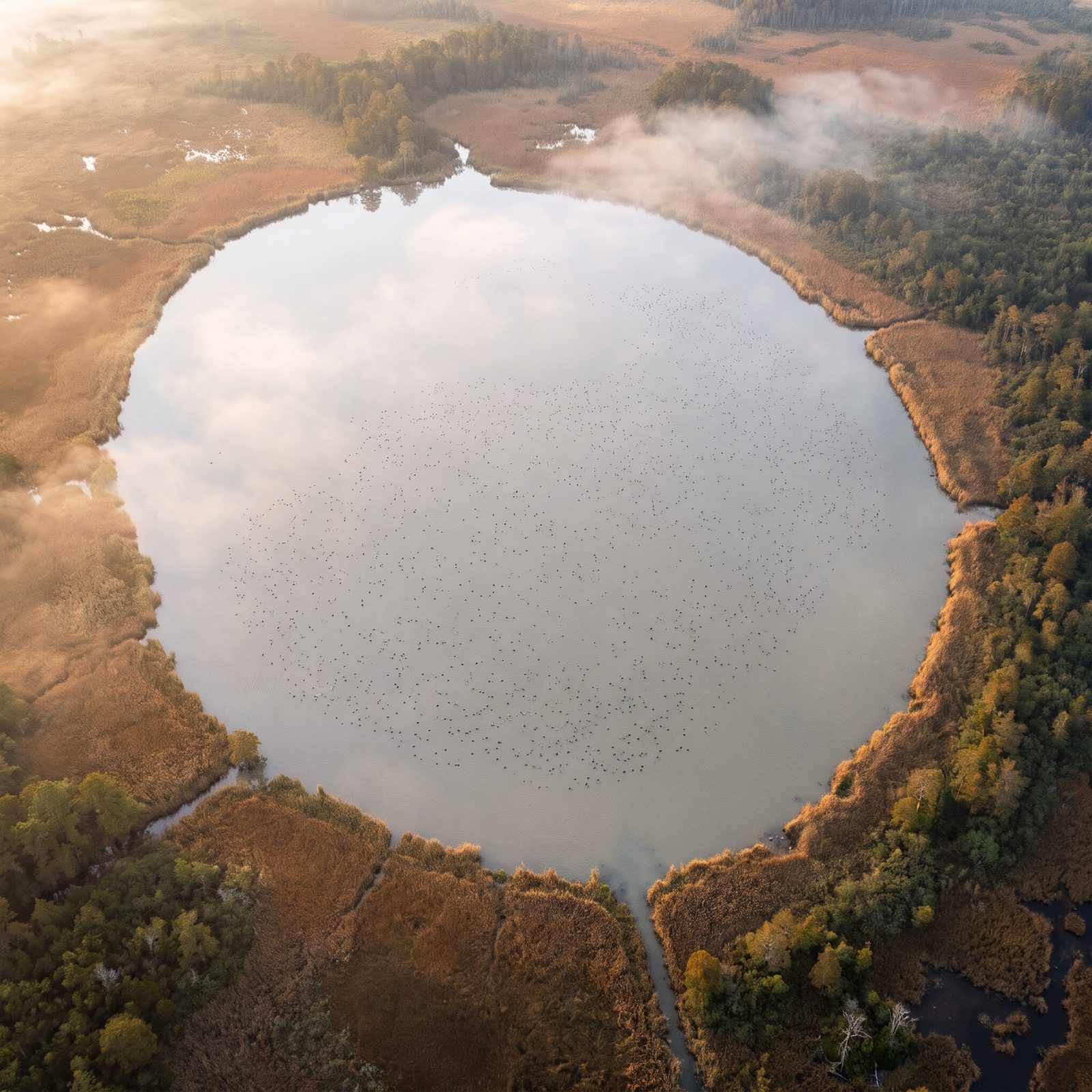
Lake Mattamuskeet, North Carolina’s largest natural lake, may owe its existence to fire, not water. How basins like these came to be is still argued over.
Researchers from UNC’s Institute of Marine Sciences concluded that repeated peat fires during dry climate stretches burned out a basin, which later filled with water, and wind then smoothed the rim into a rounded outline. Sediment cores backed them up. The core evidence points toward fire.
Meteor-strike stories still circulate locally, and an Algonquian legend credits a long-burning peat fire for the lake bed — which lines up neatly with the science. The researchers stay careful, though, and refuse to stretch this explanation across every Carolina bay.
6. Lake Waccamaw and Its Creatures Found Nowhere Else
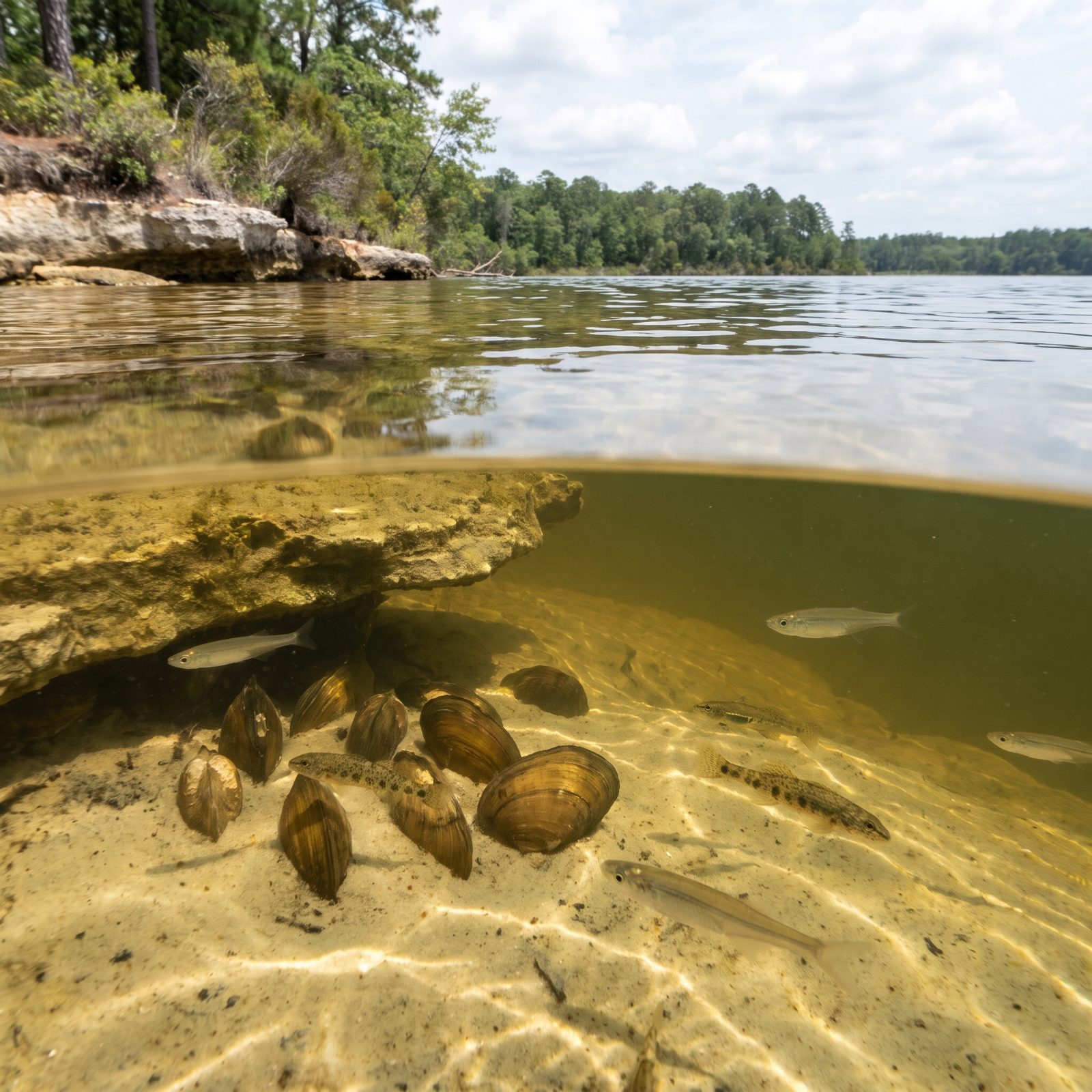
Most Carolina bays hold water too acidic for much to live in. Lake Waccamaw breaks the rule. Limestone bluffs along its north shore neutralize the water, and the lake became an engine of life found nowhere else on the planet.
The roll call is remarkable: the Waccamaw darter, Waccamaw silverside and Waccamaw killifish, plus the Waccamaw spike and Waccamaw fatmucket mussels. Fish, mussels and snails that exist in this one lake and nowhere else at all.
The strange twist is the clock. Citing a journal, Wikipedia puts the lake at only 15,000 to 32,000 years old, yet several endemic species have already evolved inside it. That’s remarkably fast by evolutionary standards. The Waccamaw Siouan tradition says a falling star made the lake. The state park, established in 1976, covers 2,201 acres in Columbus County.
5. The Red Wolf and the Fight Over Whether It’s Real
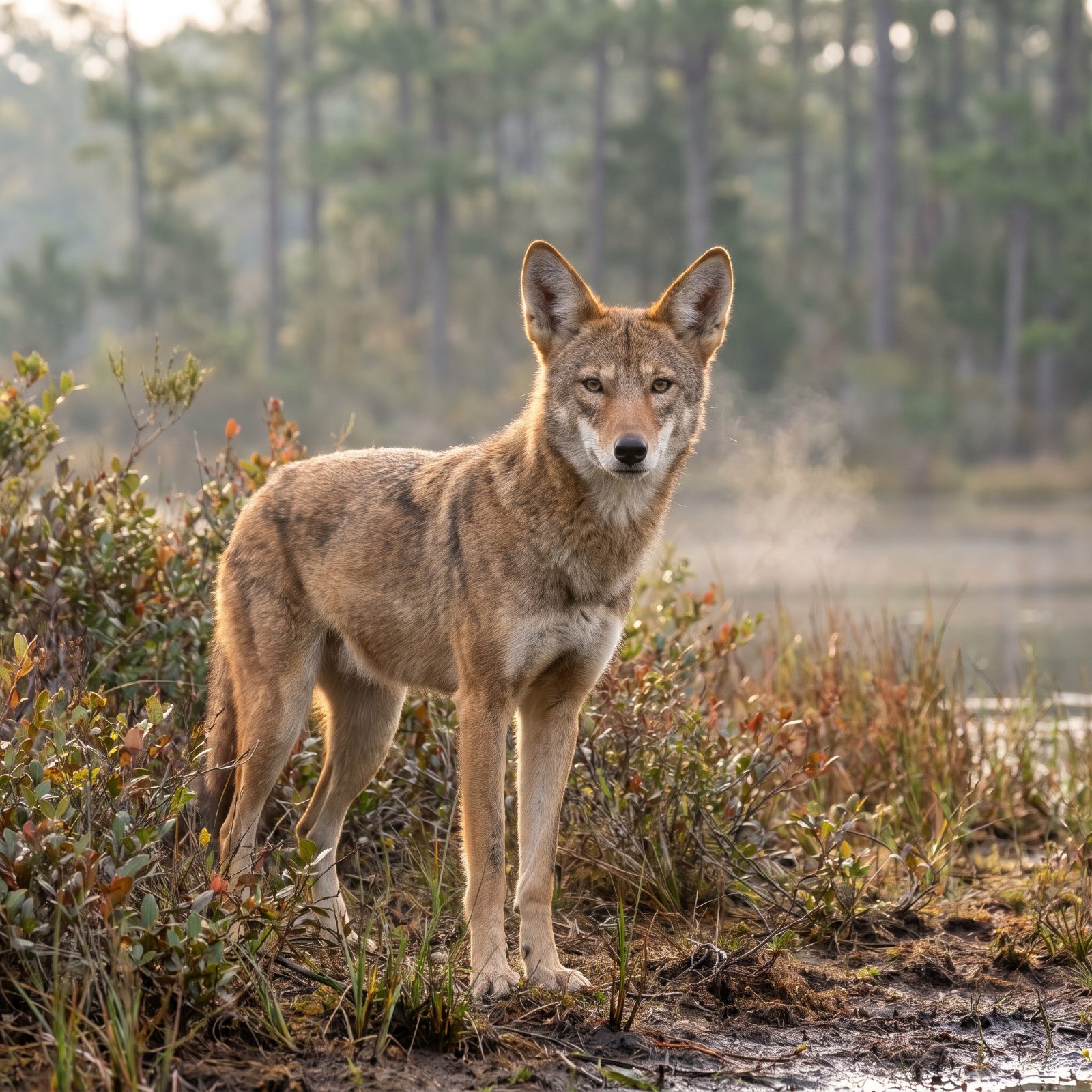
North Carolina holds the only confirmed wild red wolves on the planet. In 1987, Alligator River National Wildlife Refuge became the first place where a carnivore extinct in the wild was returned to its native range. A genuine first.
Then came the question that won’t die: is the red wolf even a species? Studies disagree, calling it its own species, a subspecies of gray wolf, or a gray wolf and coyote hybrid. Critics in the state have long argued it’s a hybrid undeserving of Endangered Species Act protection.
A 2019 National Academies report found the red wolf to be a taxonomically valid species, carrying genetic traits unique to historical red wolves.
The taxonomy debate matters because the animals are nearly gone. The NC Wildlife Federation reports the wild population crashed by more than 85 percent in a decade, from roughly 130 wolves down to 15.
4. Where the Corolla Banker Horses Actually Came From
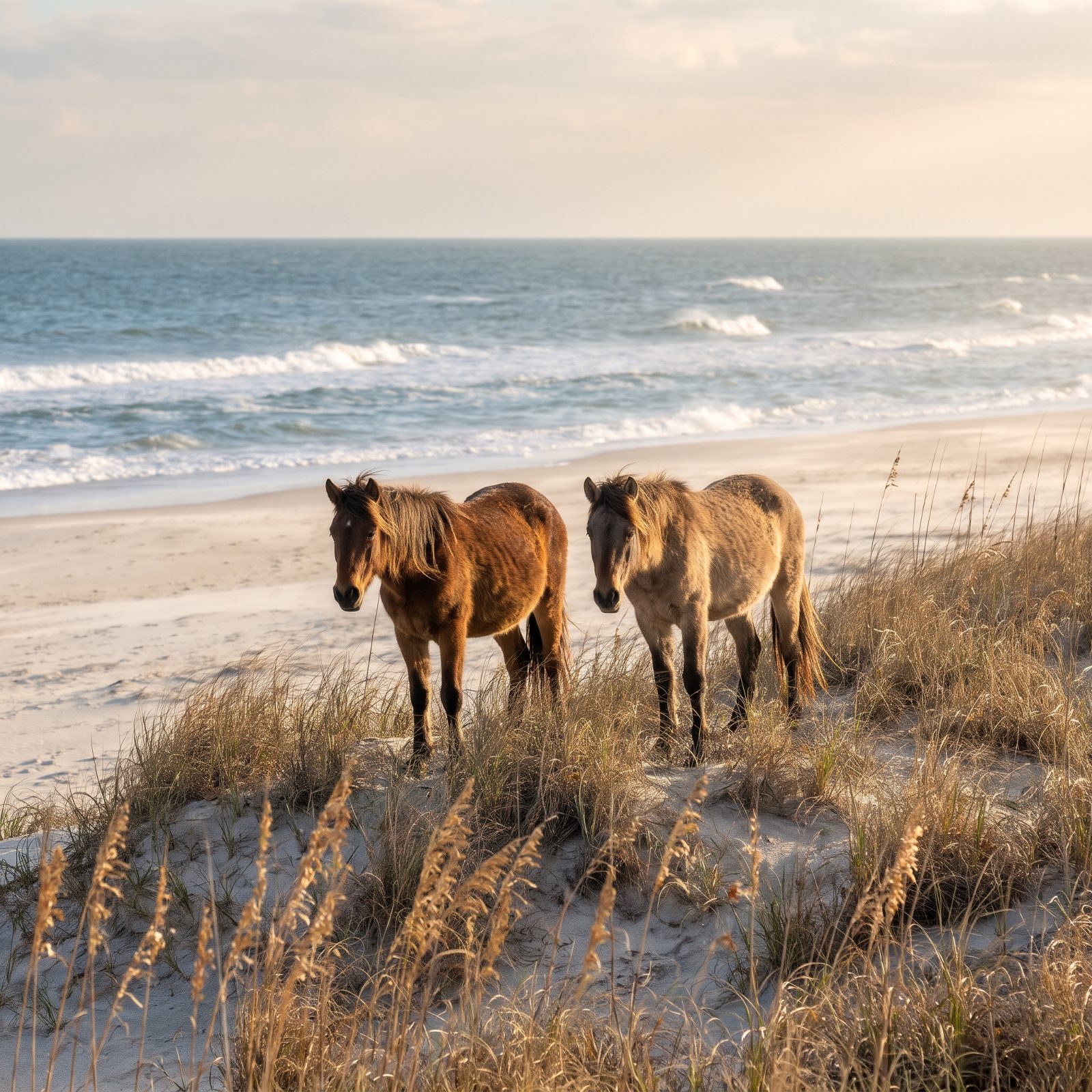
The romantic story says Corolla’s wild horses swam ashore from wrecked ships. Historians lean toward something less dramatic: Spanish explorers dropping horses on small islands while they sailed onward.
The Corolla Wild Horse Fund is now settling the question with science, collecting tissue using special darts to trace each horse’s DNA. The herd manager estimates that the vast majority of the herd’s ancestry traces to Spanish horses of the 1500s, though that’s the Fund’s own figure and hardly a closed case.
The genetics are telling. Banker horses carry a marker, Q-ac, shared with Spanish-descended breeds like the Pryor Mountain Mustang and the Paso Fino. The Corolla and Shackleford Banker strain is listed as critically endangered. Around 100 horses roam the 4×4 beaches north of where NC 12’s pavement ends.
3. The Sparta Earthquake and Its Previously Unknown Fault
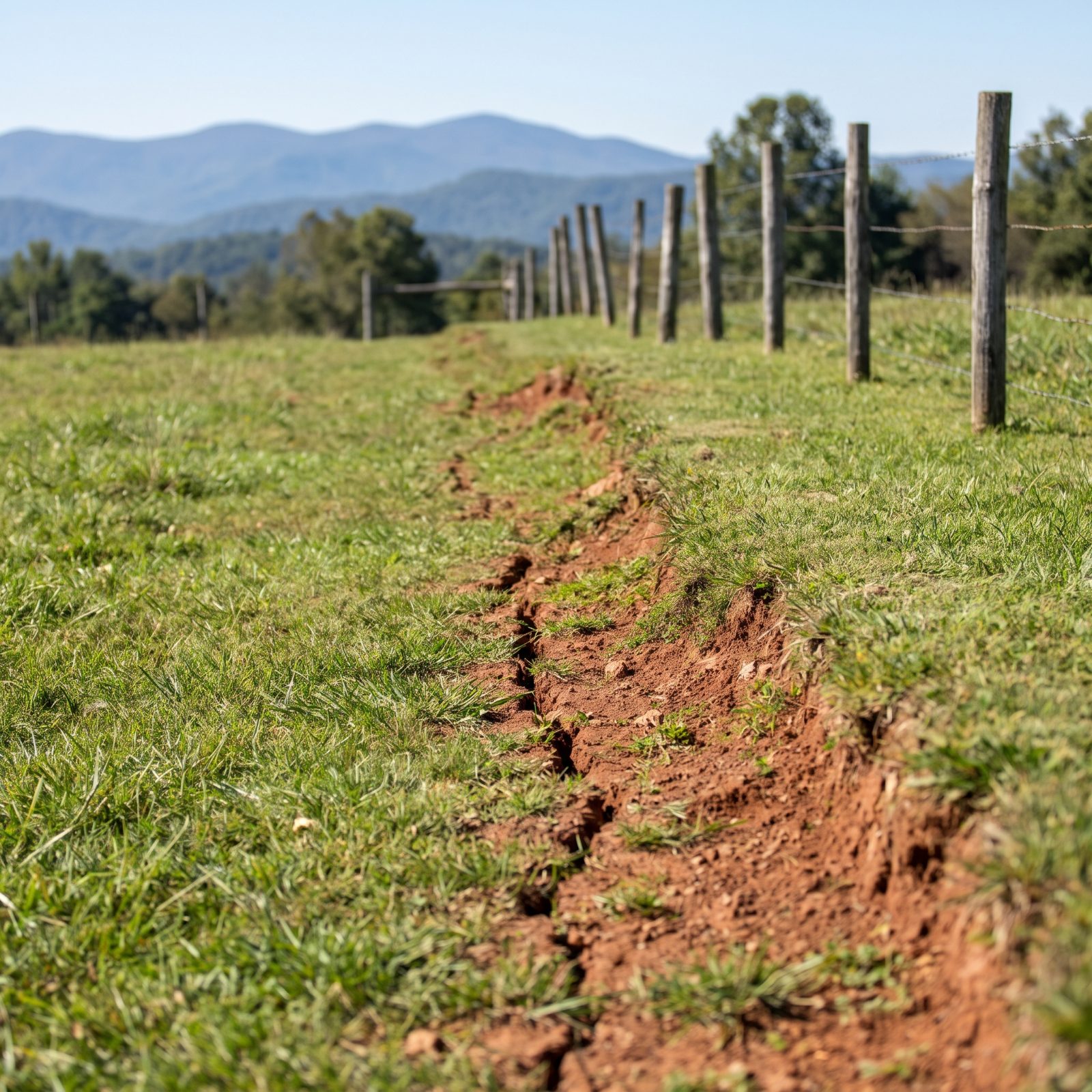
On August 9, 2020, a magnitude 5.1 earthquake struck about 3 kilometers south of Sparta in Alleghany County. Moderate as quakes go. Historic as science goes.
It produced the first documented surface rupture from faulting in the entire eastern United States. Even the massive 1886 Charleston earthquake left no recorded surface break. The Sparta rupture followed a fault nobody knew existed, now named the Little River fault.
“We don’t even know when the fault line formed,” an NC State geologist put it, and that’s the unsettling takeaway. The studies suggest that shallow, moderate quakes capable of cracking the surface may be more common out east than geologists had assumed. In one quiet corner of North Carolina, the ground rewrote part of the textbook.
Explaining why the newly found Little River fault slipped, a postdoctoral earthquake researcher who led the study says “But these characteristics don’t apply in the Sparta region, which means that there may be something else at play that we don’t fully understand yet.”
2. The Carolina Capes and the Fifth One That Vanished
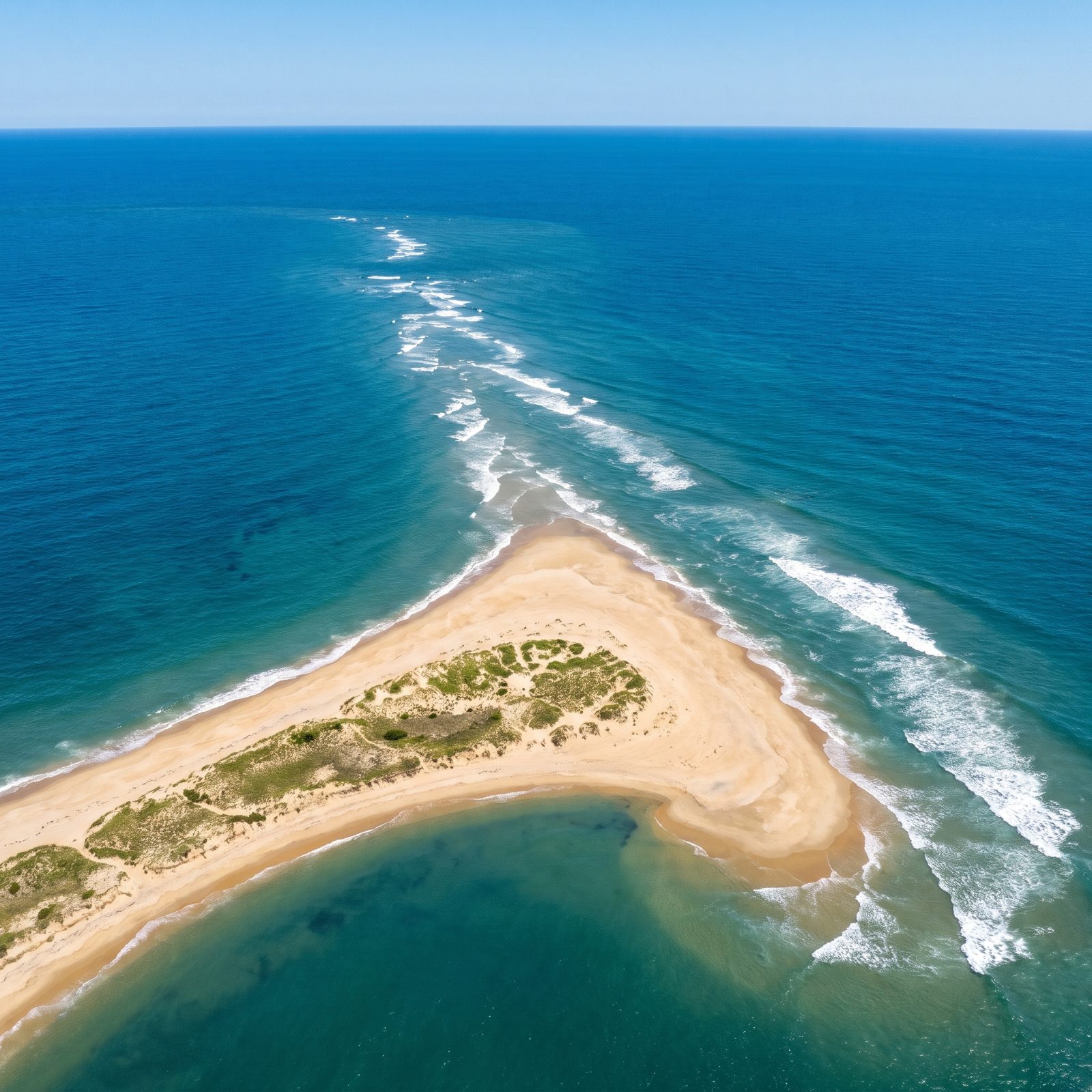
North Carolina’s coast points its fingers into the Atlantic. Cape Hatteras, Cape Lookout, Cape Fear and South Carolina’s Cape Romain — sharp sandy cusps, each trailing a shallow shoal that can run for tens of kilometers underwater. Scientists have argued over how these capes form for more than a century.
In a 2011 paper in the journal Geology, USGS and Woods Hole researchers Thieler and Ashton proposed something wild. Geologic data and modeling point to a fifth Carolina cape that once existed and was lost during the Holocene. They call the process “cape capture,” where one cape essentially swallows its neighbor as the coast reshapes itself.
A missing cape, erased by the slow machinery of sand and sea. It’s a theory, not settled fact. But it’s the kind of idea that makes you squint at a familiar coastline and wonder what else the water has quietly taken back.
1. The Devil’s Tramping Ground Where Grass Refuses to Grow (Siler City)
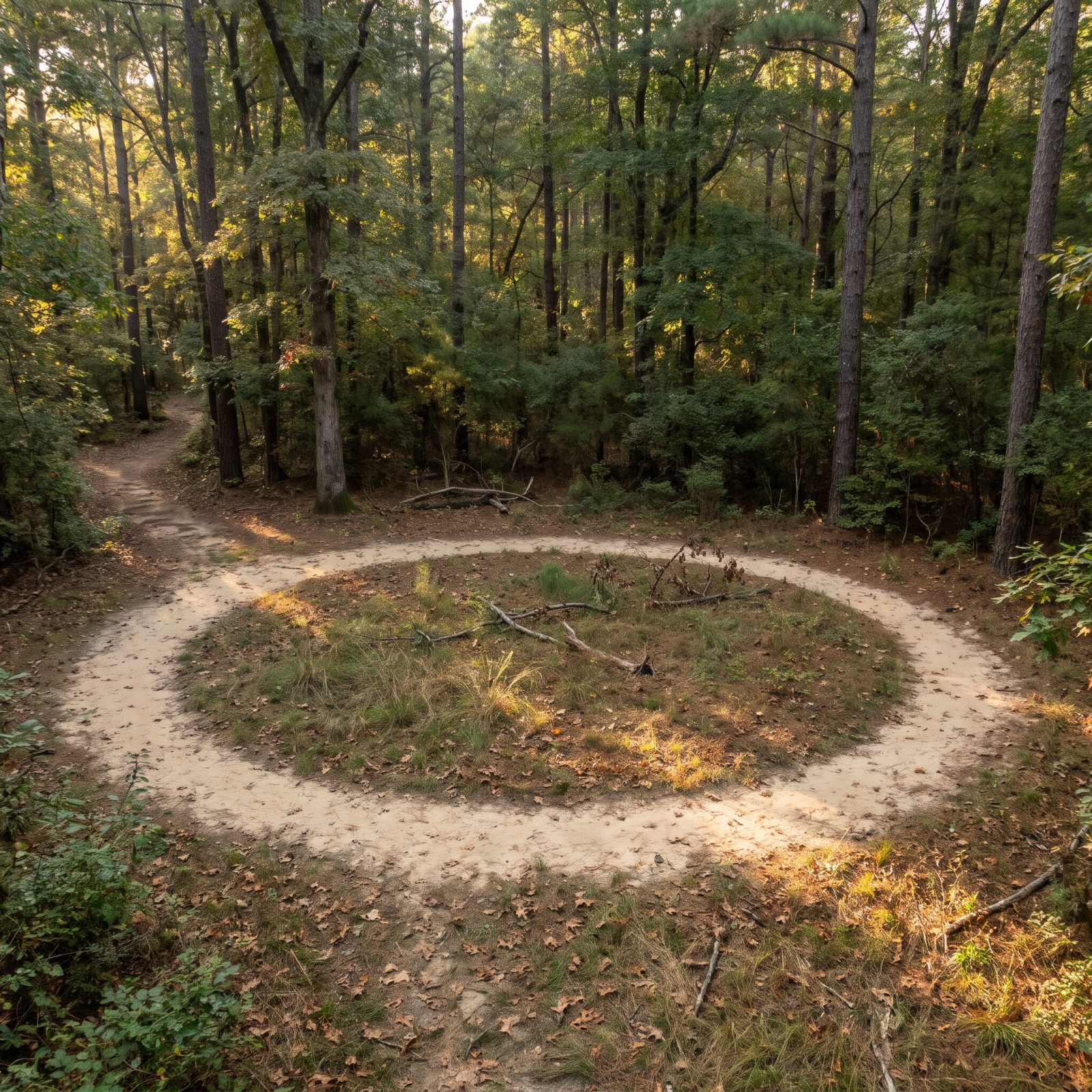
Local legend says the Devil paces this circle at night, plotting his mischief, and nothing dares grow where his feet land. Tidy story. The problem is that nobody has actually figured out why this bare ring keeps hanging on in the Chatham County woods, year after stubborn year.
NCpedia points out that only a wiry grass survives inside the circle, while the path itself stays stripped clean. Soil scientists have tossed around the usual suspects: high salt left behind by old salt licks, or packed earth from horses that once worked a mill nearby. One researcher went in suspecting copper or salt in the dirt. None of it has ever closed the case.
Now for the plain-spoken part. This is often described as private property, so if you go looking, check access first and treat the land decently. A circle that has shrugged off a century of curious boots deserves better than one more careless trampling.