
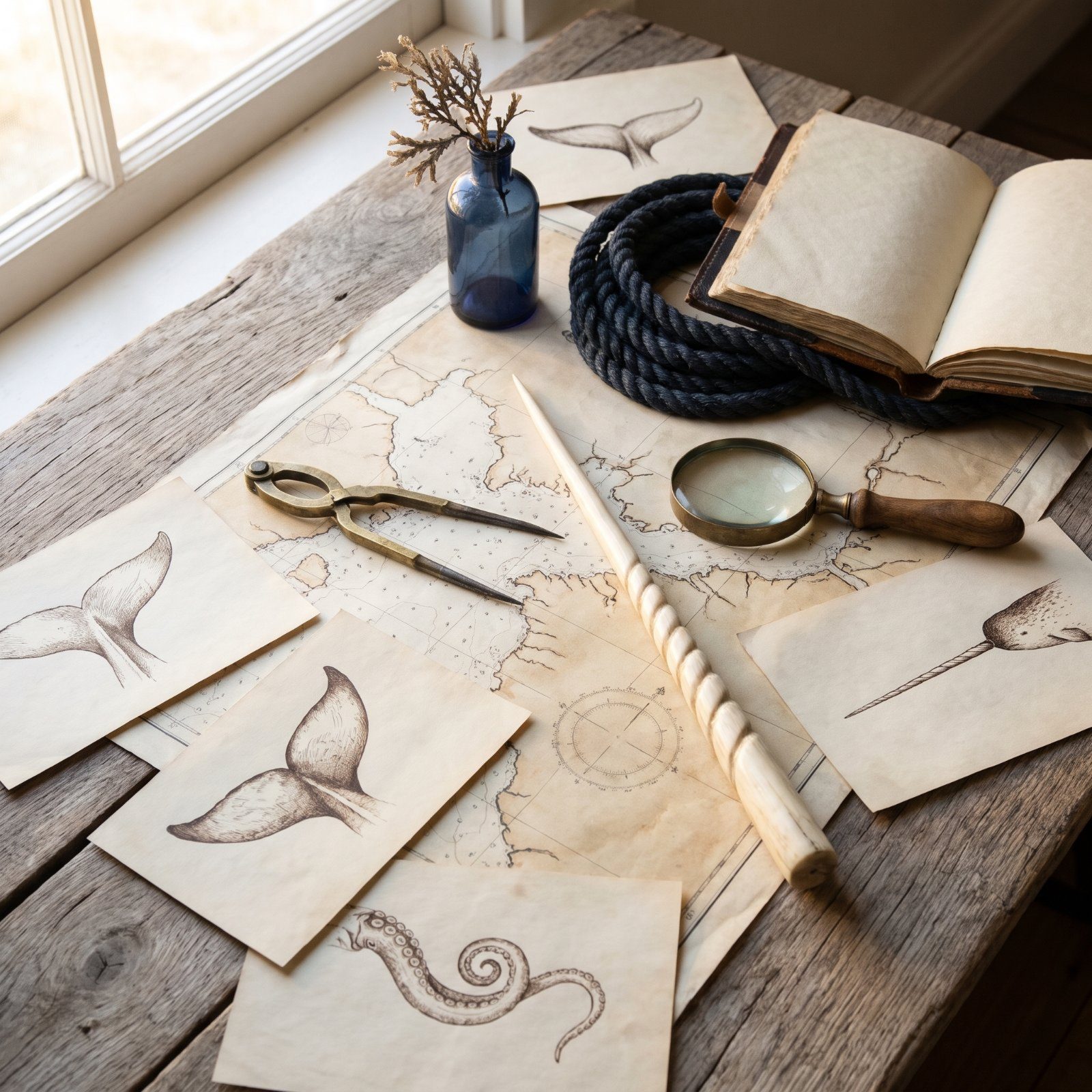
A sixteenth-century chartmaker never saw the thing he inked in the margin. He heard about it. Some sailor stumbled ashore raving about a serpent longer than the mast, or a beast that rose like an island and swallowed a longboat whole, and the cartographer handed that story teeth, scales and a coiling tail. But peel back the ink and the fear, and a real animal is almost always sitting underneath. We lined up the most famous monsters on historical maps against the living creatures that likely inspired them, and the matches turned out stranger and more wonderful than any fiction.
37. The Ship-Dragging Kraken, Giant Squid
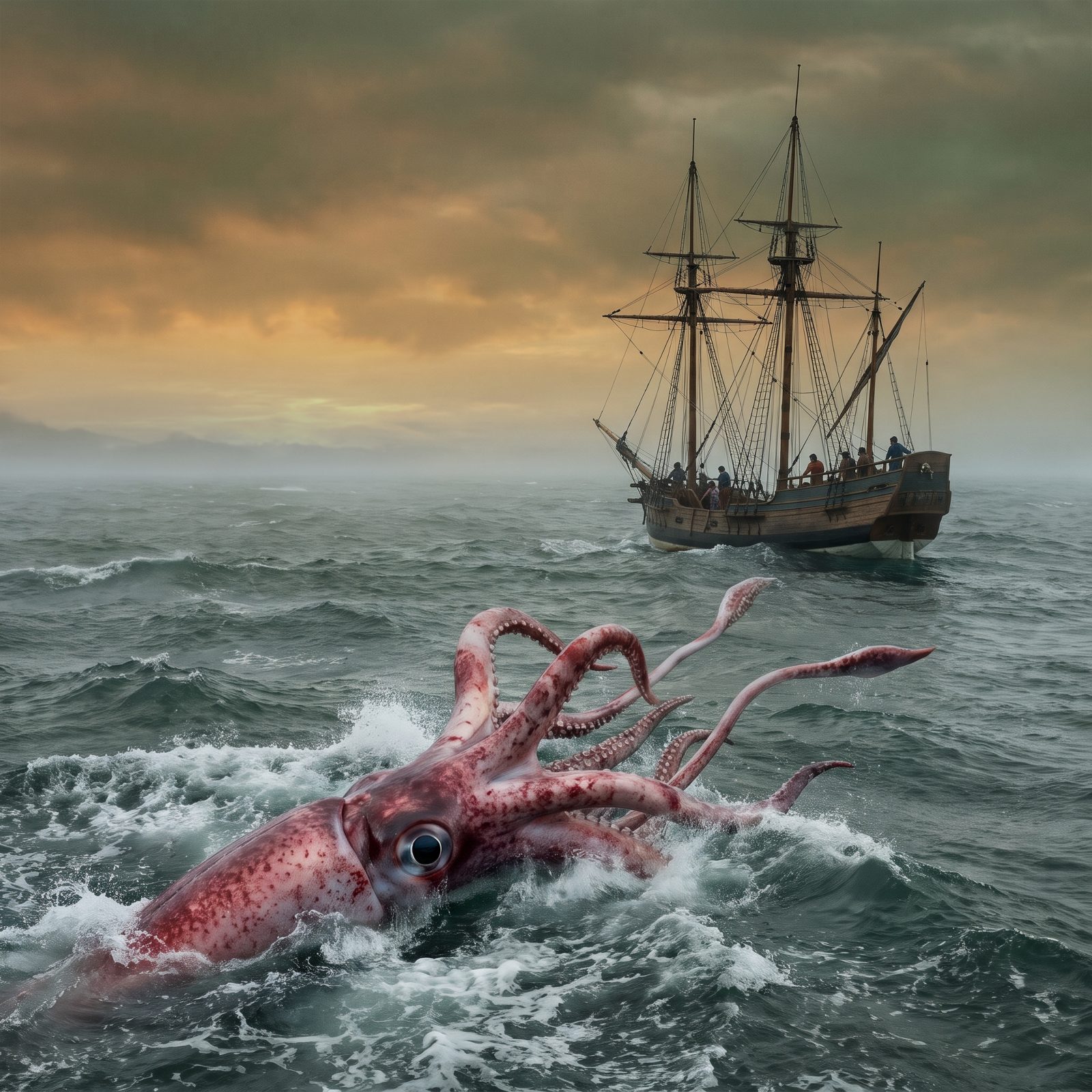
Nobody on those ships ever saw a healthy giant squid. They saw a dying one. The animal lives in cold darkness half a mile down, and the only time sailors ever met it was when a sick or injured individual drifted up to the surface, flailing those long feeding tentacles across the waves like a drowning thing that didn’t want company.
To a frightened crew leaning over the rail, that was all the proof anyone needed. Arms thick as cables. A beak that could bite through wood. An eye the size of a dinner plate staring straight back up at them. The kraken was born from a real animal having the worst day of its life.
As a museum mollusc curator explains, “Giant squid can’t get the oxygen they need at the surface. So when people do come across a live one at the surface, it’s because they’re stressed and probably dying.”
36. The Ribbon-Long Sea Dragon, Giant Oarfish
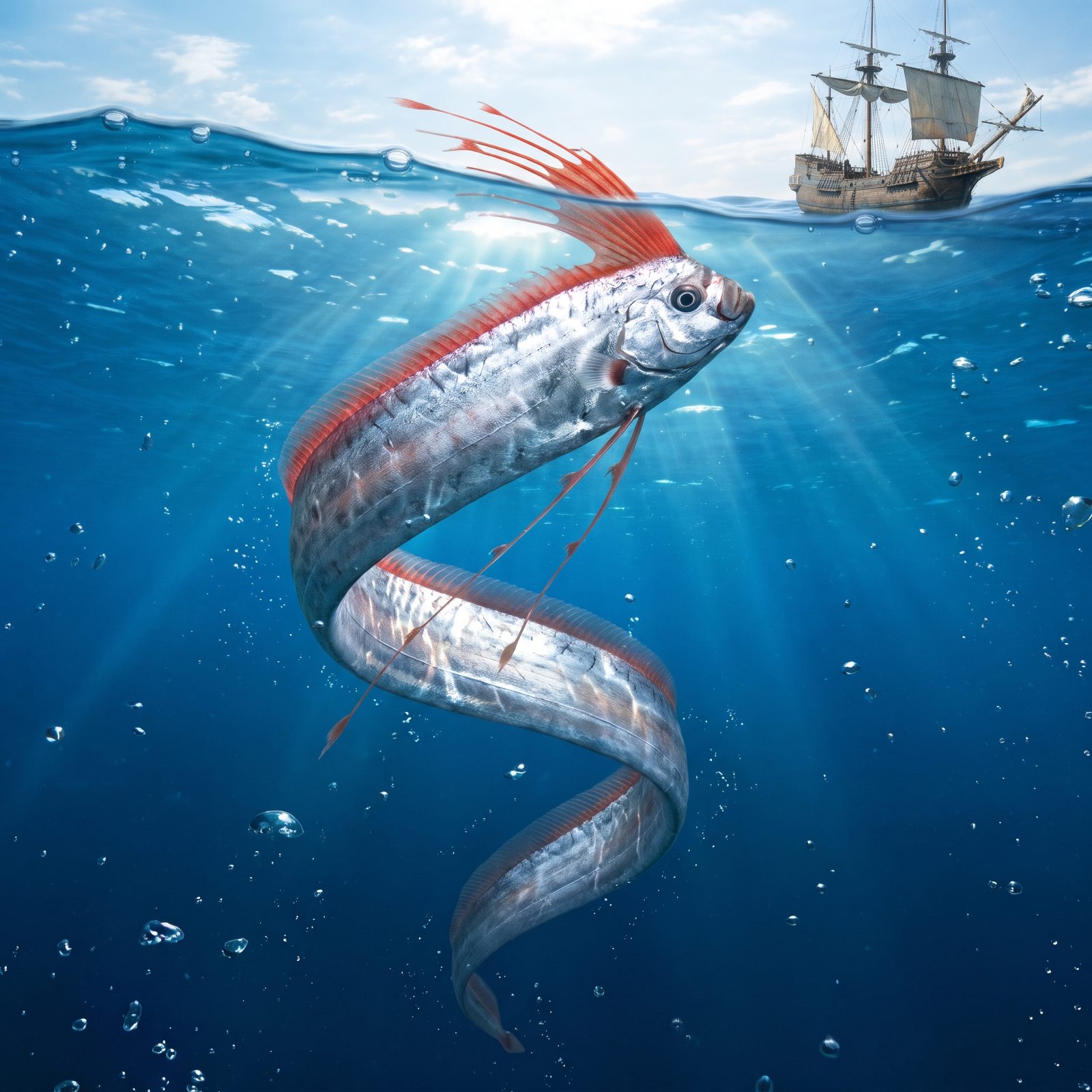
Picture a silver ribbon forty feet long hanging just beneath a flat, calm sea, a scarlet crest brushing the surface from below like a mane caught in the current. That’s a giant oarfish, and it’s almost certainly the sea serpent of a hundred old charts.
They rarely surface alive. When one does, it climbs the water in slow vertical undulations, the body gleaming like hammered metal. A sailor who glimpsed that just once would spend the rest of his life swearing he’d seen a horned snake taller than a man. Honestly? The real thing is harder to believe than the drawing.
As a federal fisheries biologist put it on a podcast, “The striking nature of this long, sinewy fish is what many people say gave rise to the original notion of sea serpents”
35. The Island-Backed Monster, North Atlantic Right Whale
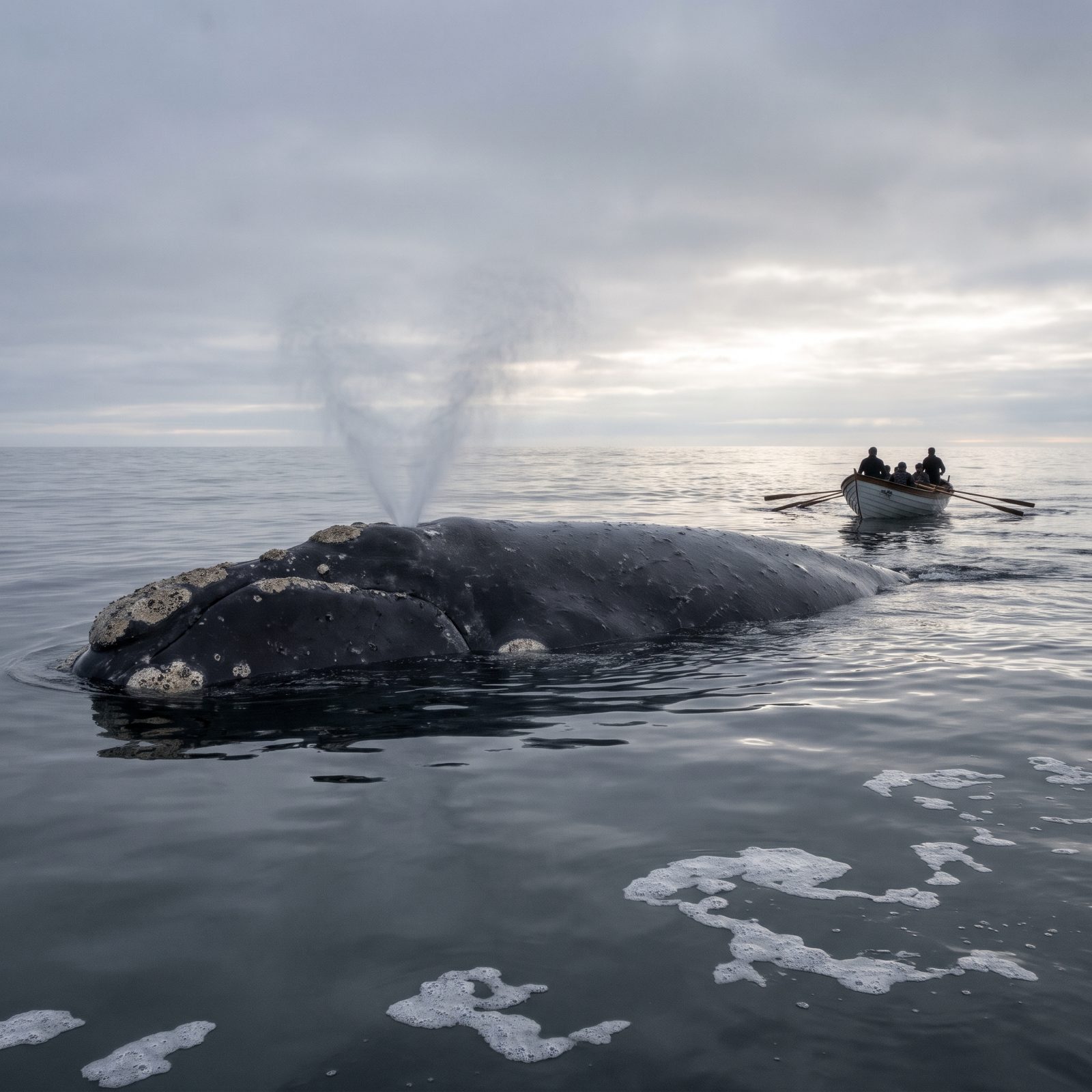
The whale that looks like it has no business floating.
Right whales ride low and slow at the surface, their dark backs crusted with pale callosities, no dorsal fin to break the line. From a distance, a resting right whale reads as a black reef where no reef should be, and mariners told stories of landing on an island that suddenly dove out from under them. This is the animal that made those stories feel plausible.
The name is the grim part. Whalers called it the “right” whale to hunt because it floated when dead and swam slow enough to catch. That one convenience nearly finished the species off. Only a few hundred remain today.
34. The Square-Headed Leviathan, Sperm Whale
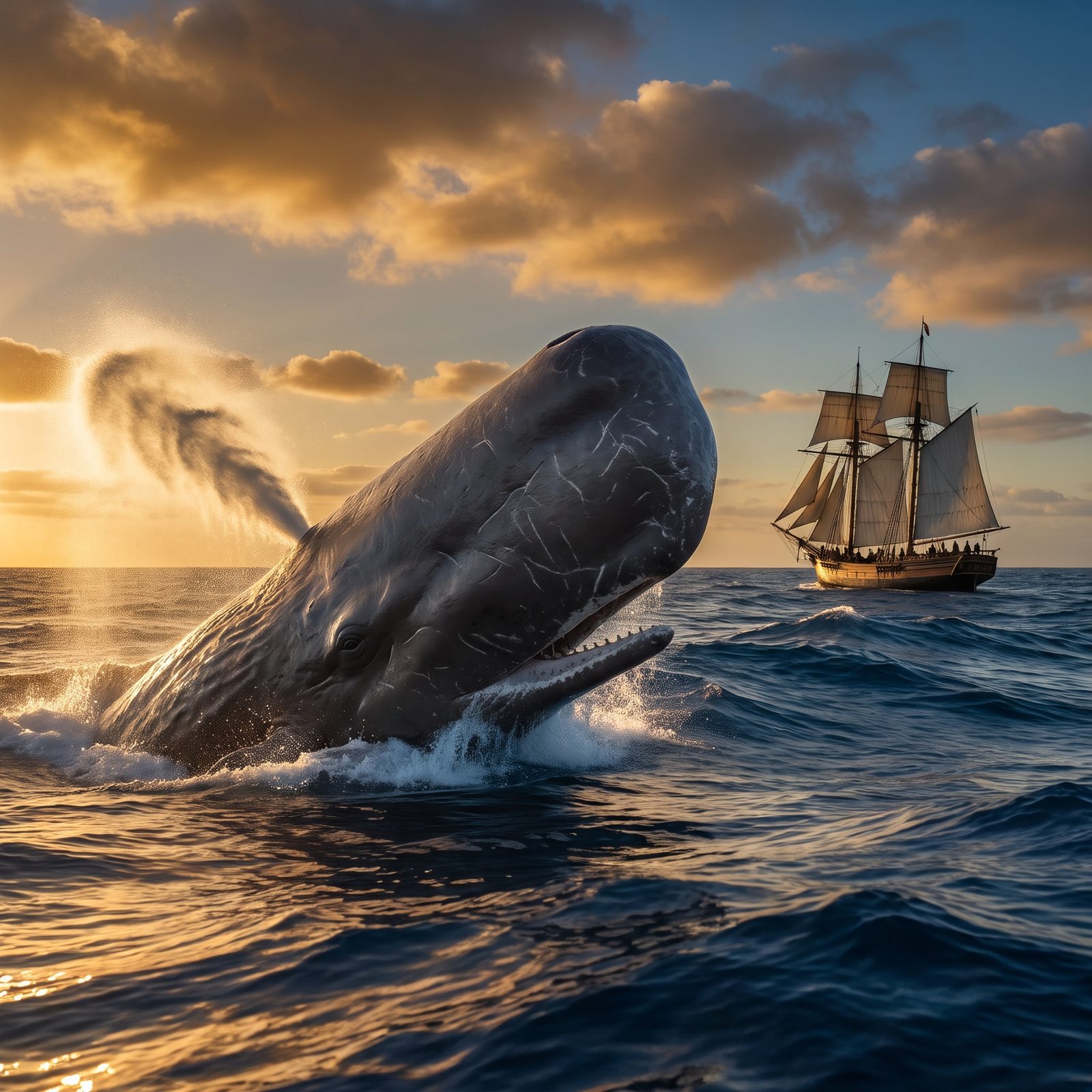
That great square head isn’t decoration. It’s a sound cannon. The sperm whale’s forehead is packed with spermaceti oil and powers the loudest biological sound on Earth, a barrage of clicks it uses to stun squid in total darkness thousands of feet below the keel of any ship that ever hunted it.
Early whalers saw the blunt forehead, the off-center blow angling sideways, the scars raked across the skin, and they drew a leviathan. And they weren’t wrong about the fight. Those scars come from giant squid suckers and beaks. So the two great monsters of the old maps were, out in the real cold dark, mortal enemies.
Writing up a sperm whale survey, a marine mammal acoustics researcher notes “Basically, the whale produces a sound that bounces around inside its head before being focused and sent out as a super loud click. Seriously, sperm whale clicks are the loudest animal sound on Earth!”
33. The Many-Armed Polypus, Giant Pacific Octopus
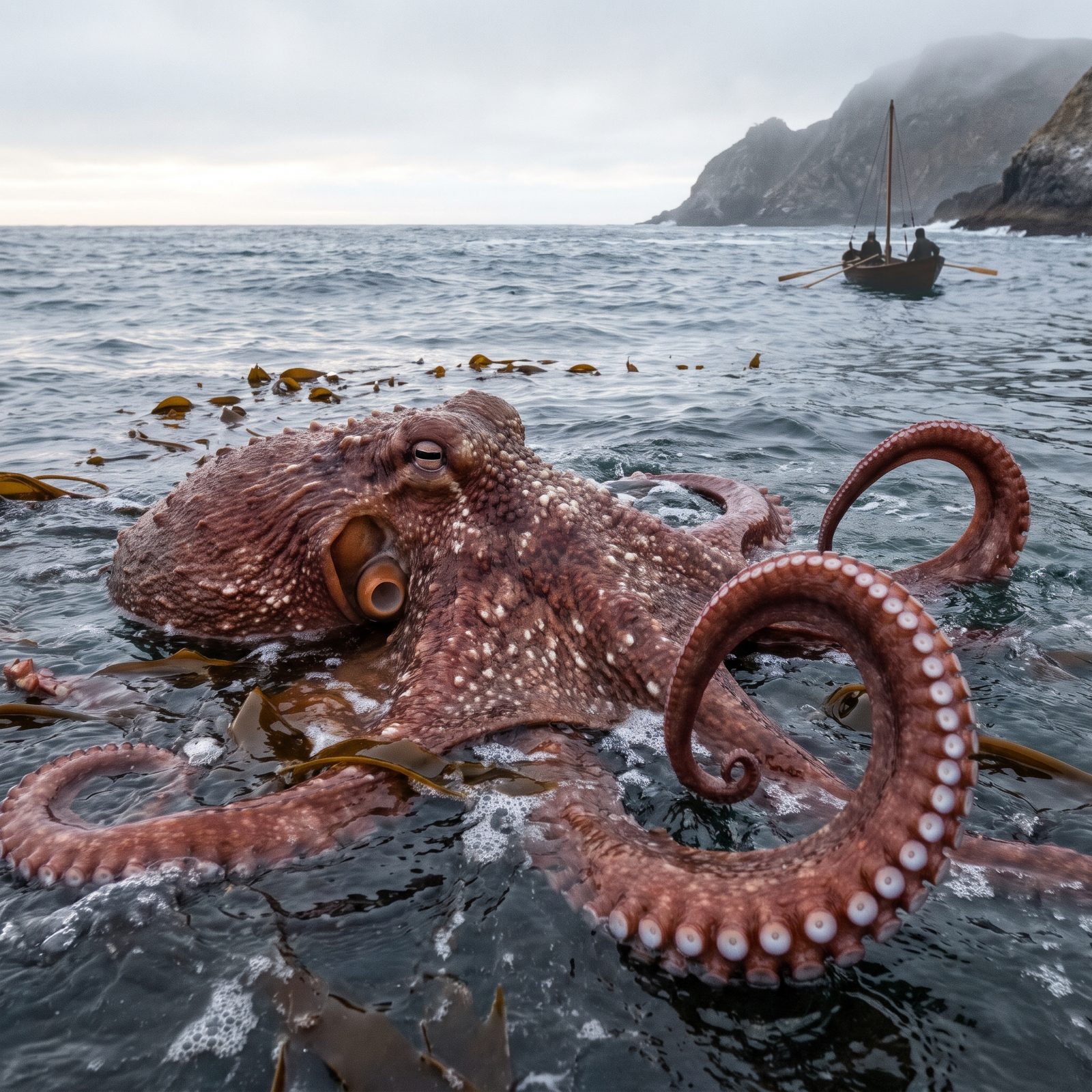
A giant Pacific octopus can reach an arm span wider than a car and still pour its boneless body through a gap the size of an orange. That shapeshifting is exactly why old sailors could never describe it the same way twice.
Ancient maps crawled with the polypus, a many-armed thing grabbing at hulls. The reality is an animal with nine brains, blue blood, and a knack for problem-solving that embarrasses most pets. It can taste with its skin. It can unscrew a jar lid. A frightened deckhand had no words for any of that, so he reached for the one he had: monster.
32. The Mountain Rising From the Sea, Blue Whale
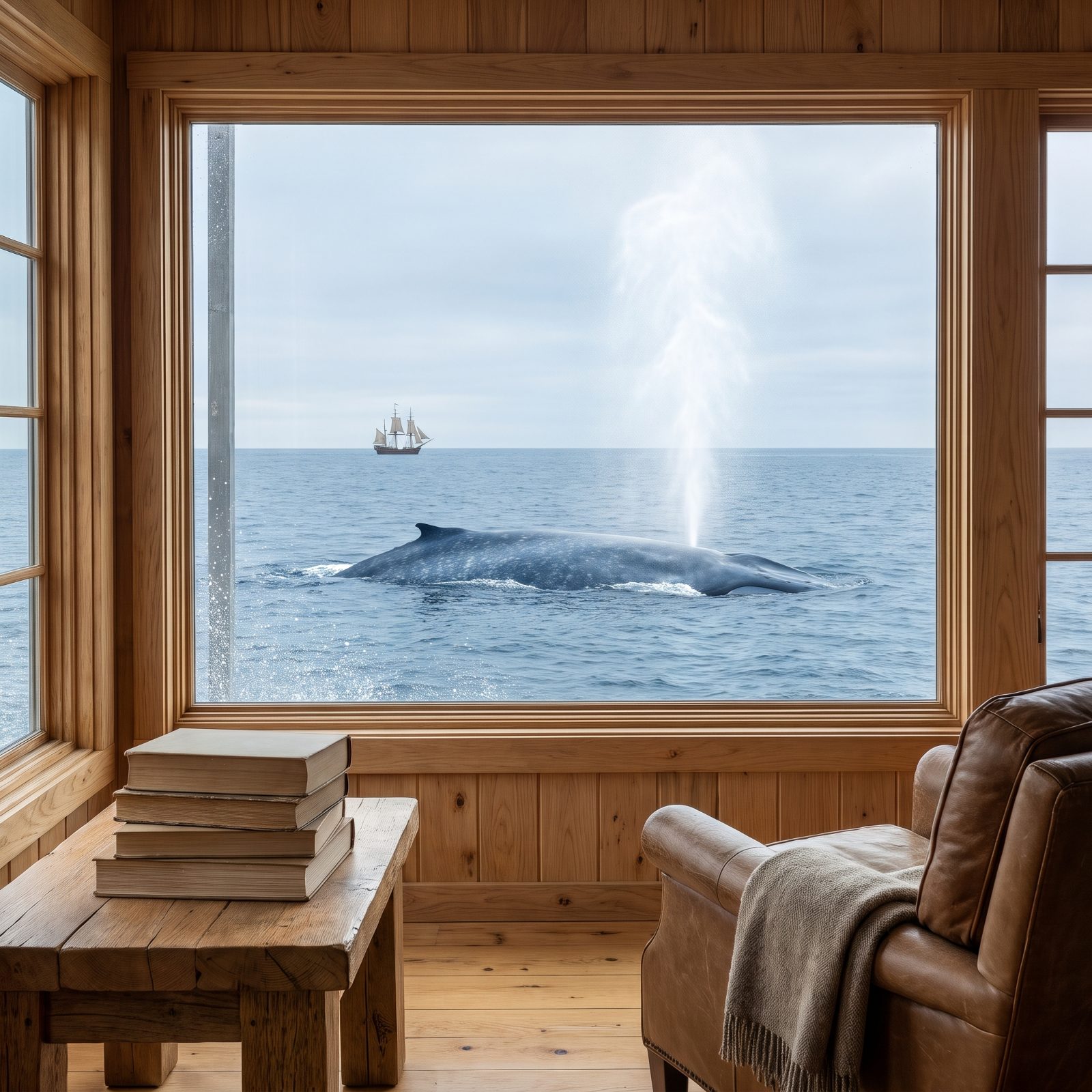
The biggest animal that has ever lived is also one of the gentlest. A blue whale stretches close to 100 feet and outweighs a herd of elephants, yet it feeds on tiny shrimp-like krill by the ton, straining the sea through a mouth that could swallow a rowboat but never a person.
What would a crew in a small wooden ship make of that first vertical blast of breath shooting higher than their own mast? A mountain surfacing. That was the only word for it. The heart alone is the size of a small car, and on a quiet day the low pulse of this animal carries through the water for miles. No wonder it ended up on the charts as something out of myth.
31. The Wing-Finned Sea Beast, Humpback Whale
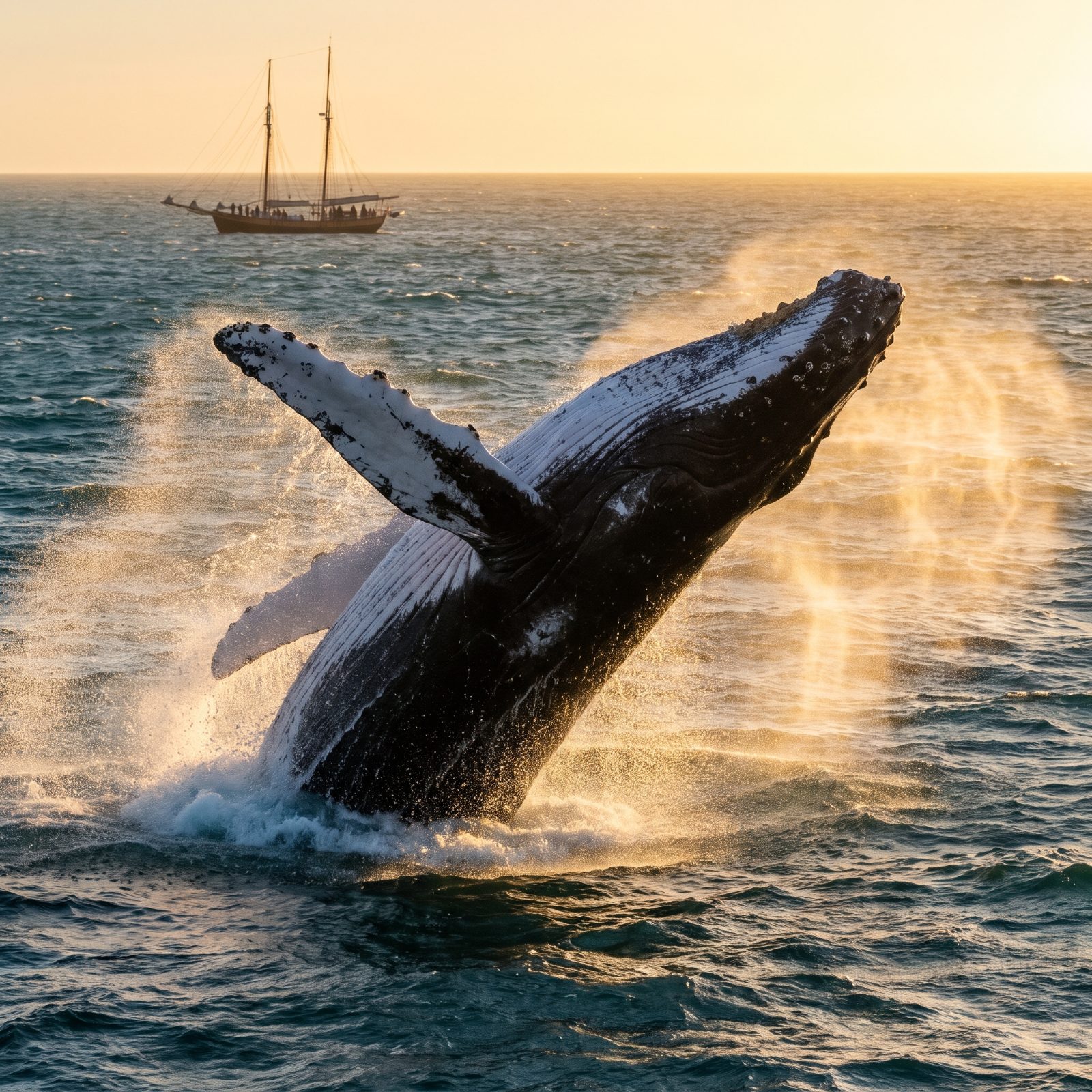
Those aren’t wings. But you’d swear they were.
A humpback’s pectoral flippers run nearly a third of its body length, the longest of any whale, pale and knobbled and crusted with barnacles. When one breaches and flings those fins out, forty tons of animal hangs in the air looking for all the world like a winged beast hauling itself up out of the sea.
Old illustrators drew exactly that, a horned and finned creature leaping. And they heard the males, too. Humpback song travels for miles underwater, eerie moans and squeals that pass through a wooden hull like a ghost slipping through a wall. A singing, flying mountain of flesh. Of course it became a monster.
30. The Black-and-White Sea Wolf, Orca
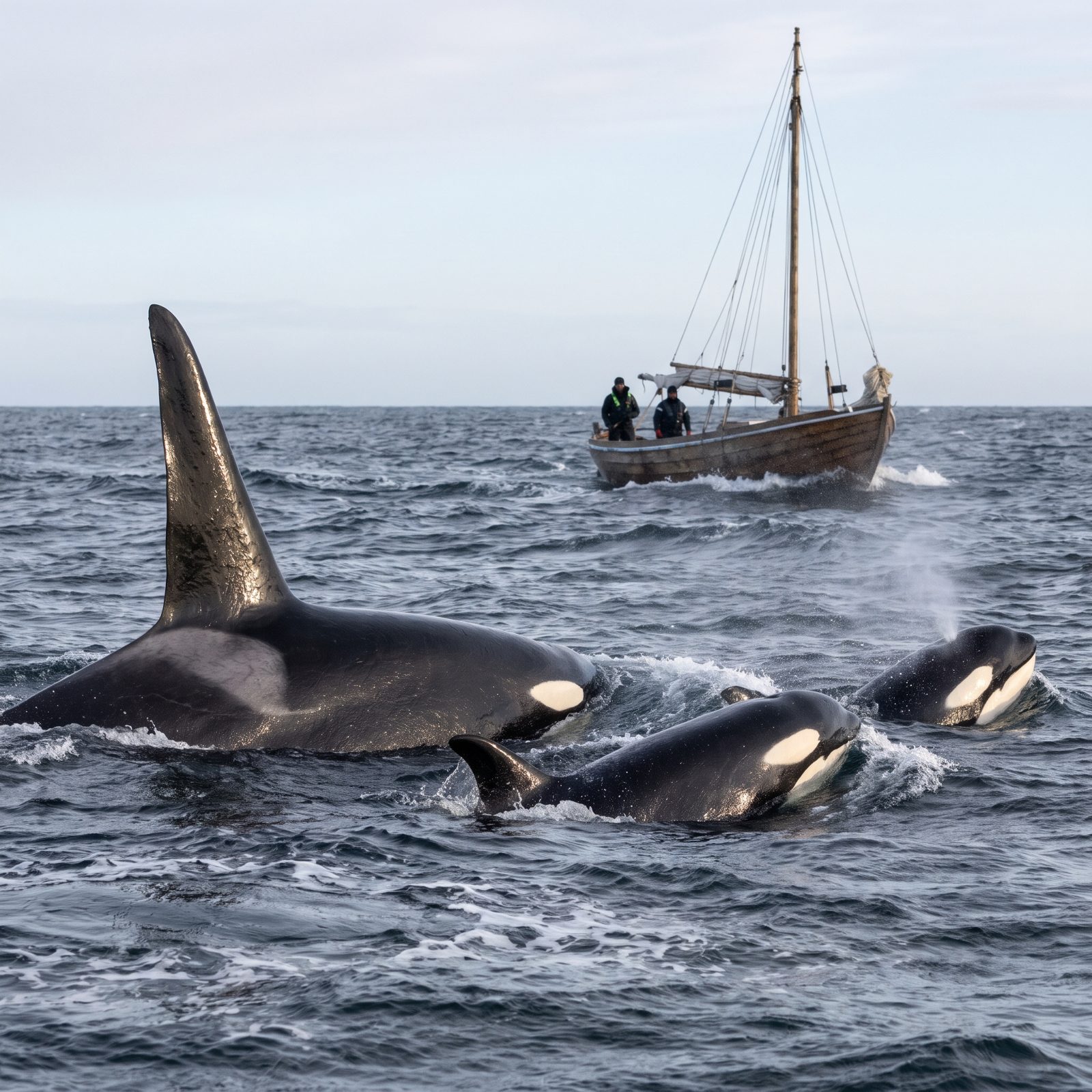
Sailors called it the whale killer, then later flipped the words around into killer whale. They watched pods run down whales far larger than themselves, working together like a wolf pack on open water, and they drew a sea wolf dressed in wicked black-and-white.
They weren’t exaggerating the teamwork. Orcas hunt in coordinated families, teach each other techniques, and keep regional dialects that pass down through generations. A pod off Norway hunts nothing like one off Patagonia, and the two don’t mix. So the monster on the map was real. We just hadn’t figured out yet that it was also one of the smartest animals in the ocean.
29. The Horned Sea Unicorn, Narwhal
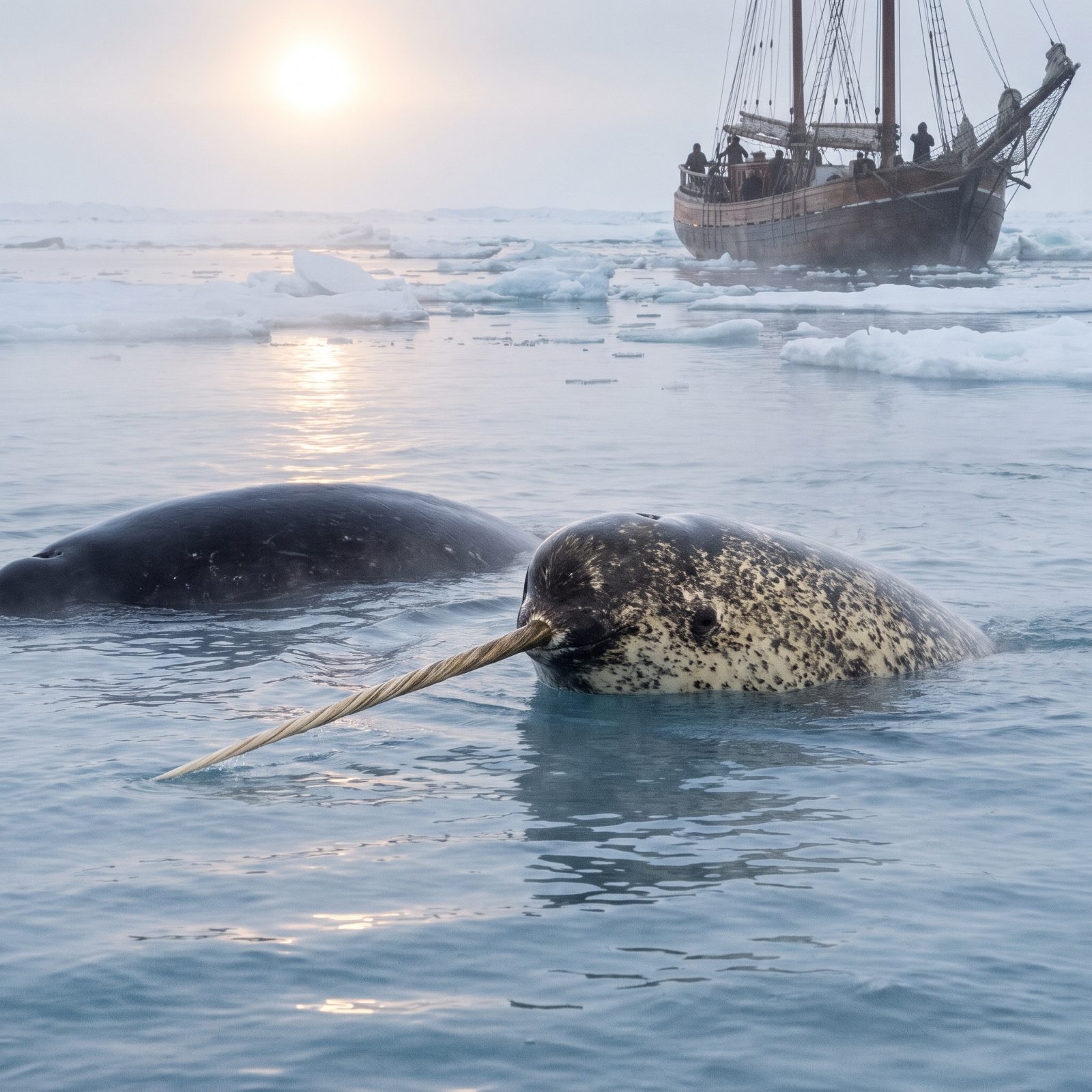
The unicorn myth was funded by whale teeth. Traders sold narwhal tusks across medieval Europe as the horns of unicorns, and royalty paid fortunes, ground them into fake cures, even built thrones out of the things.
The tusk is really an overgrown tooth, a left canine that spirals out through the lip and can reach nine feet. It’s packed with nerve endings, so this “horn” can read water temperature and salinity like a living instrument. Hunters picking their way through the Arctic ice saw a speckled whale with a single ivory spear leading the way, and the legend of the sea unicorn wrote itself.
28. The Tusked Sea Horse, Walrus

Some old maps show a monster that’s half fish, half horse, armed with giant teeth. The honest answer is less glamorous and far funnier.
Early northern explorers called the walrus a “sea horse,” and medieval accounts twisted it into a tusked beast that climbed cliffs by hooking its teeth into the rock. A bull can top 3,000 pounds and carry tusks up to three feet long, and it uses a face full of stiff whiskers to root clams out of the seabed mud.
It does not climb cliffs. It does haul its enormous body up onto ice and rock using those tusks for leverage, which is almost certainly where the cliff story crawled out of. Scale up a clumsy, tusked animal lurching out of freezing water, hand it to a nervous cartographer, and you get a monster. I’d take the walrus over the drawing every single time.
27. The Trunk-Nosed Sea Elephant, Southern Elephant Seal
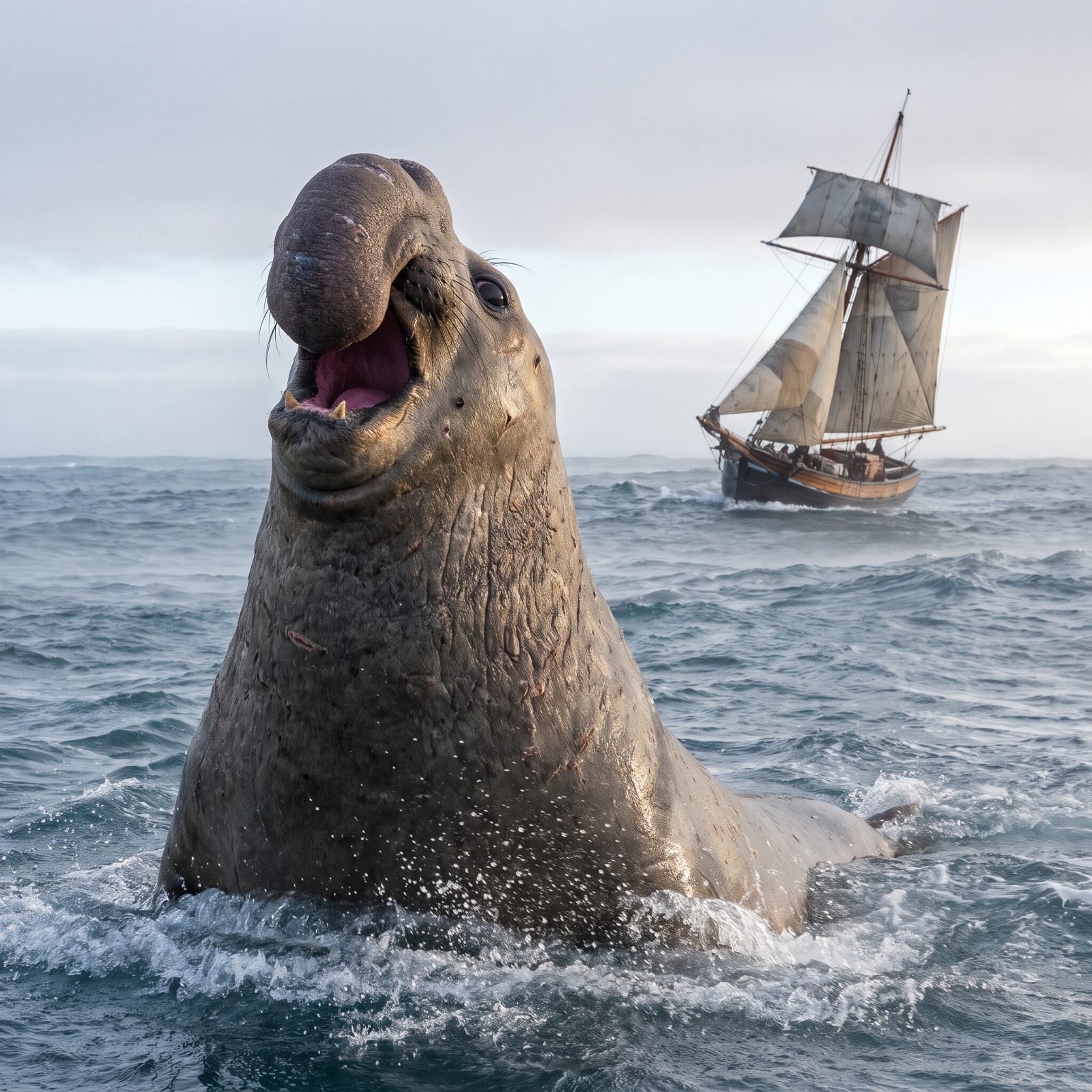
A bull southern elephant seal can top four tons and rear up like a slick grey wall. That inflatable snout, swollen for roaring contests, is exactly the kind of thing a cold, frightened sailor would stretch into a horror.
Cartographers heard “a beast with a trunk, rising from the waves,” and handed us tusked, snorting ocean monsters. The real animal is stranger — it dives past a mile deep, holds its breath for nearly two hours, and sleeps on the way down.
26. The Spotted Beast of the Ice, Leopard Seal
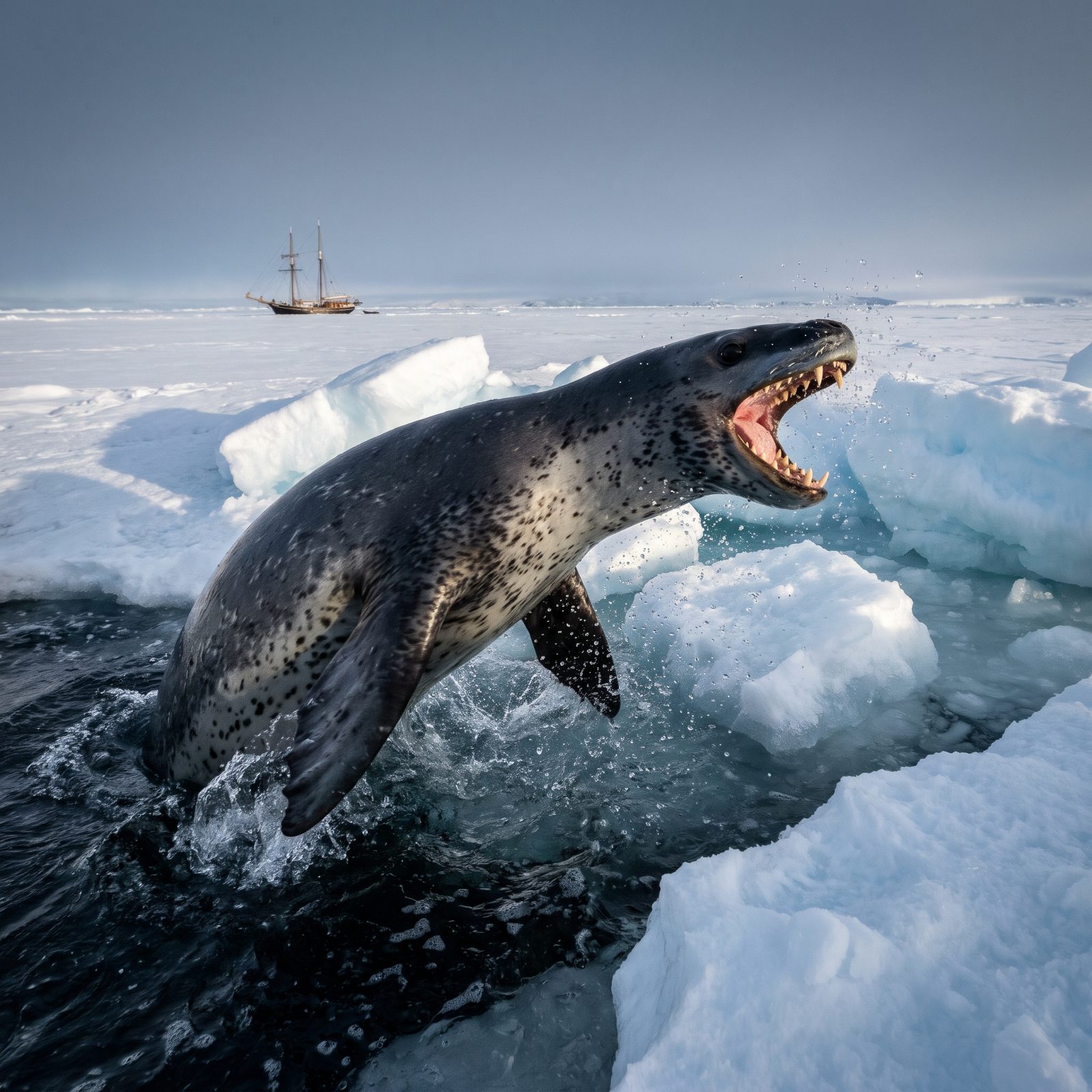
The head gives it away. A leopard seal has a long, almost reptilian skull and a mouth that opens into a wide, toothy grin, nothing like the round-faced seals most people picture.
Watch one explode out of black water after a penguin and the old reports of a serpent-necked ice demon start to make sense. It’s a mammal — three meters of coiled muscle — and one of the very few animals that has shown real curiosity about humans in the water. Not always friendly curiosity, mind you.
25. The Roaring Sea Lion, Steller Sea Lion
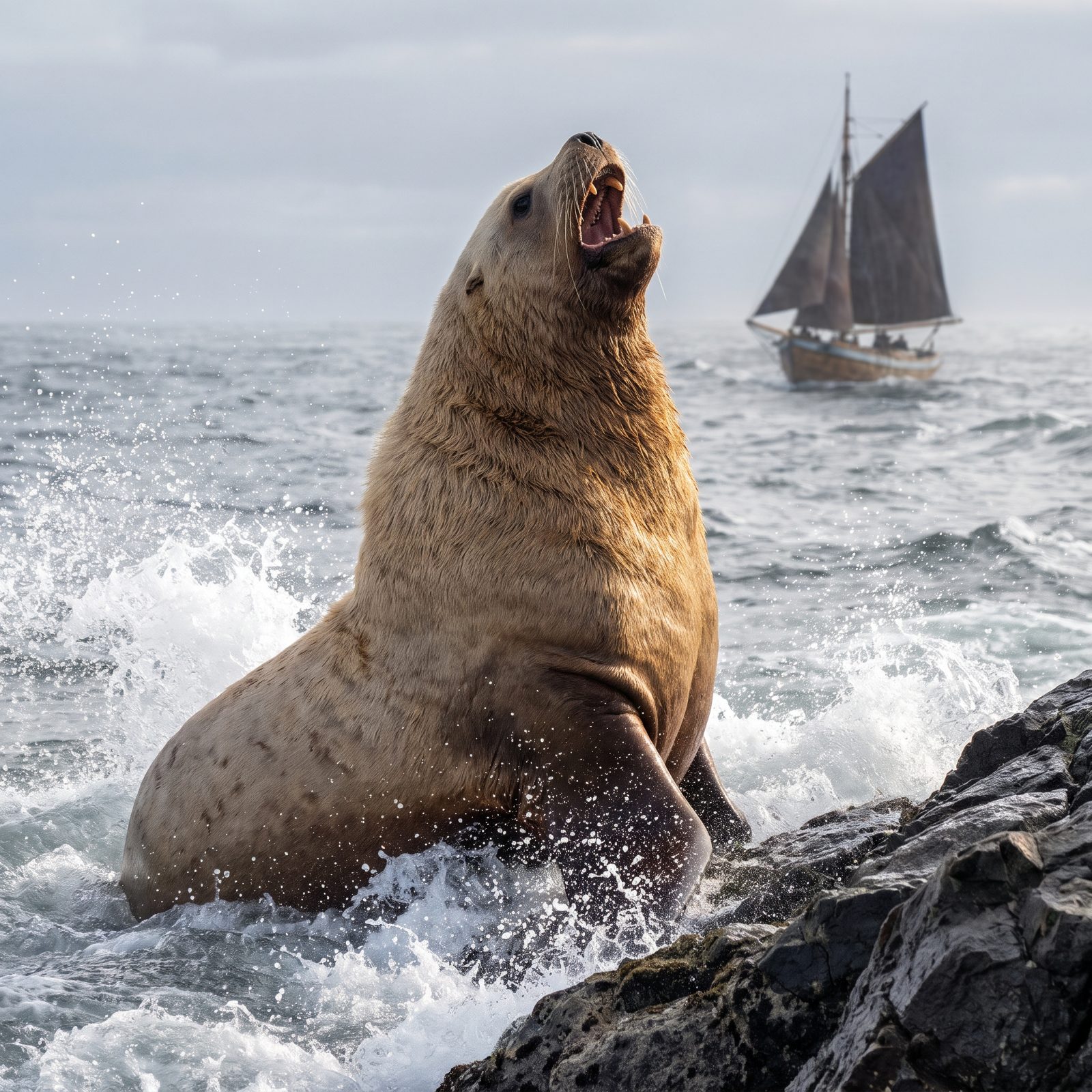
Steller sea lion bulls hit a thousand pounds and roar like something torn out of a storm, nothing like the bark you’d expect. Early mariners in the North Pacific described a maned beast that bellowed from the rocks, and mapmakers obliged with lion-headed horrors prowling the margins.
The mane is real. So is the volume — these are the largest of the eared seals, and a rookery packed onto a sea stack sounds like a battlefield from a mile out.
24. The Star-Spotted Giant Fish, Whale Shark
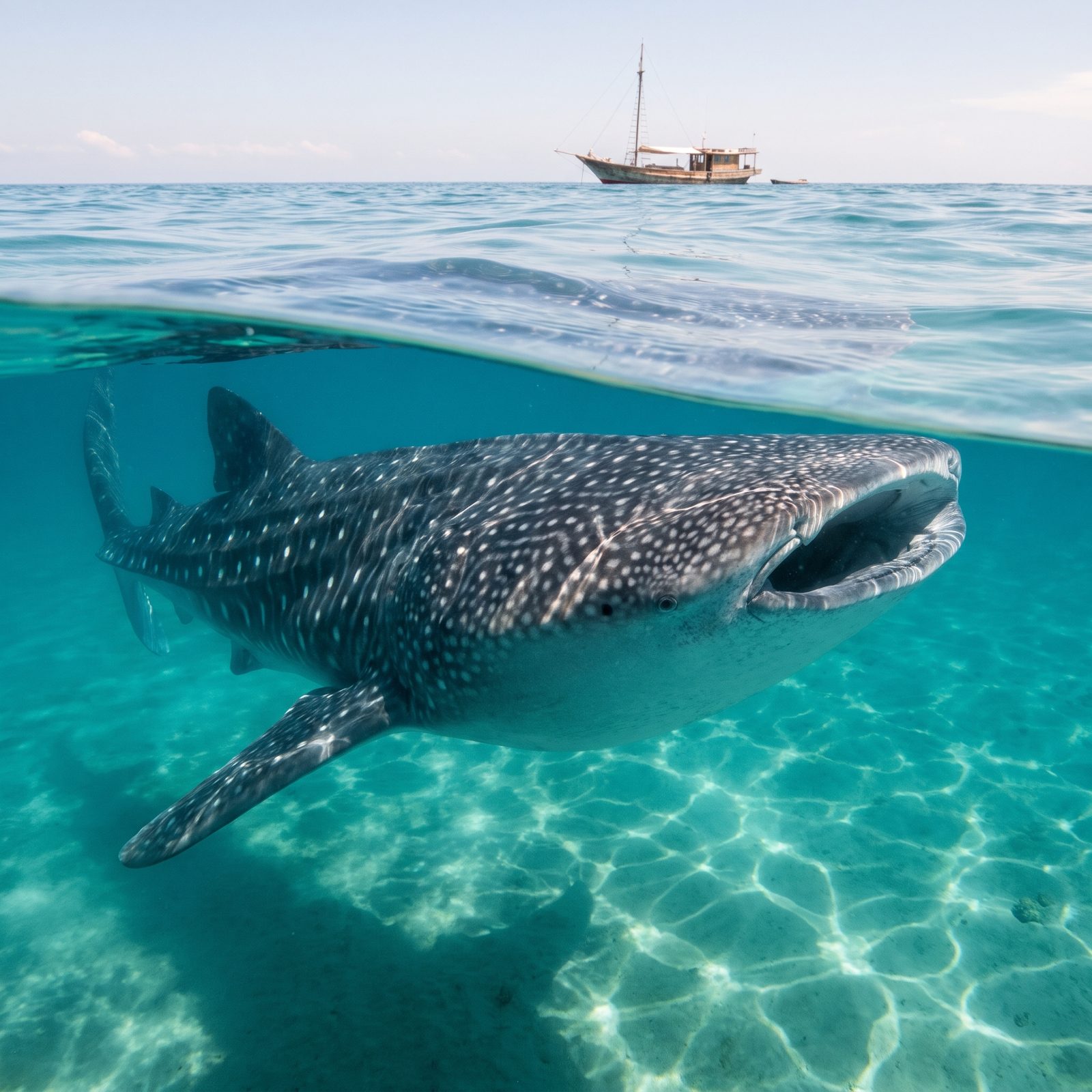
The biggest fish alive, up to forty feet, scattered with white spots. From a small wooden deck, that pattern reads like stars spilled across a living island.
And here’s what nobody expects: it’s a filter feeder. All that bulk runs on plankton and tiny fish, strained through a mouth wide enough to swim into. The spots aren’t just decoration, either. Every whale shark carries a unique arrangement, and researchers now identify individuals using the same software astronomers built to map star fields — which is a lovely bit of borrowing when you think about it.
23. The Gaping-Mouthed Sea Monster, Basking Shark
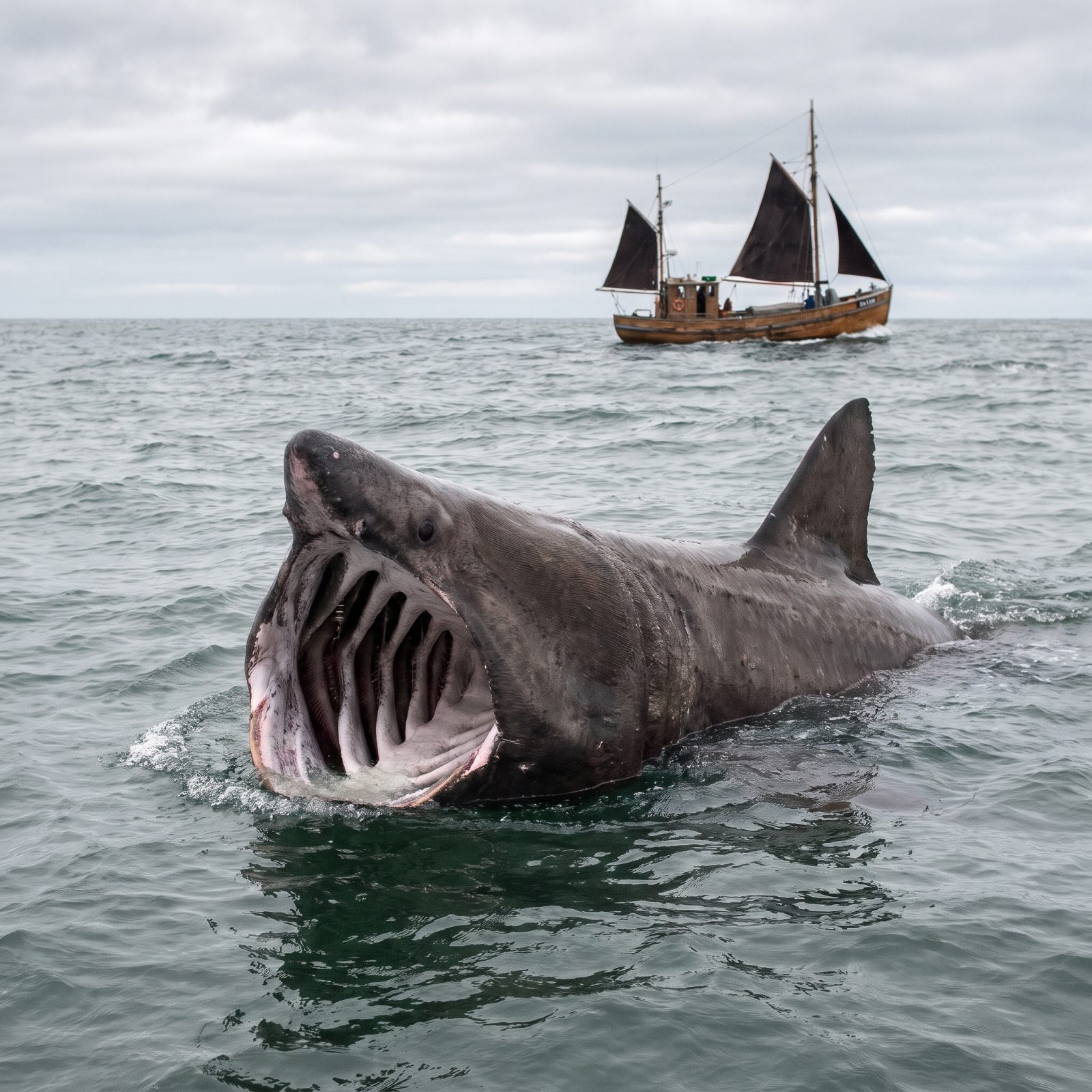
Picture a thirty-foot shark coming at your rowboat with its mouth stretched into a cavern you could nearly steer into. That gaping maw launched more sea monster legends than almost anything else in the Atlantic.
And yet the mouth is harmless. The basking shark is the second-largest fish on Earth, cruising slowly with its jaws held open to filter plankton through gills that wrap almost the whole way around its head. Then there’s the afterlife problem. When one washes ashore and rots, the decaying carcass looks eerily like a long-necked serpent — which explains a surprising number of “sea monster” bodies in old newspapers.
22. The Triangular-Toothed Devourer, Great White Shark
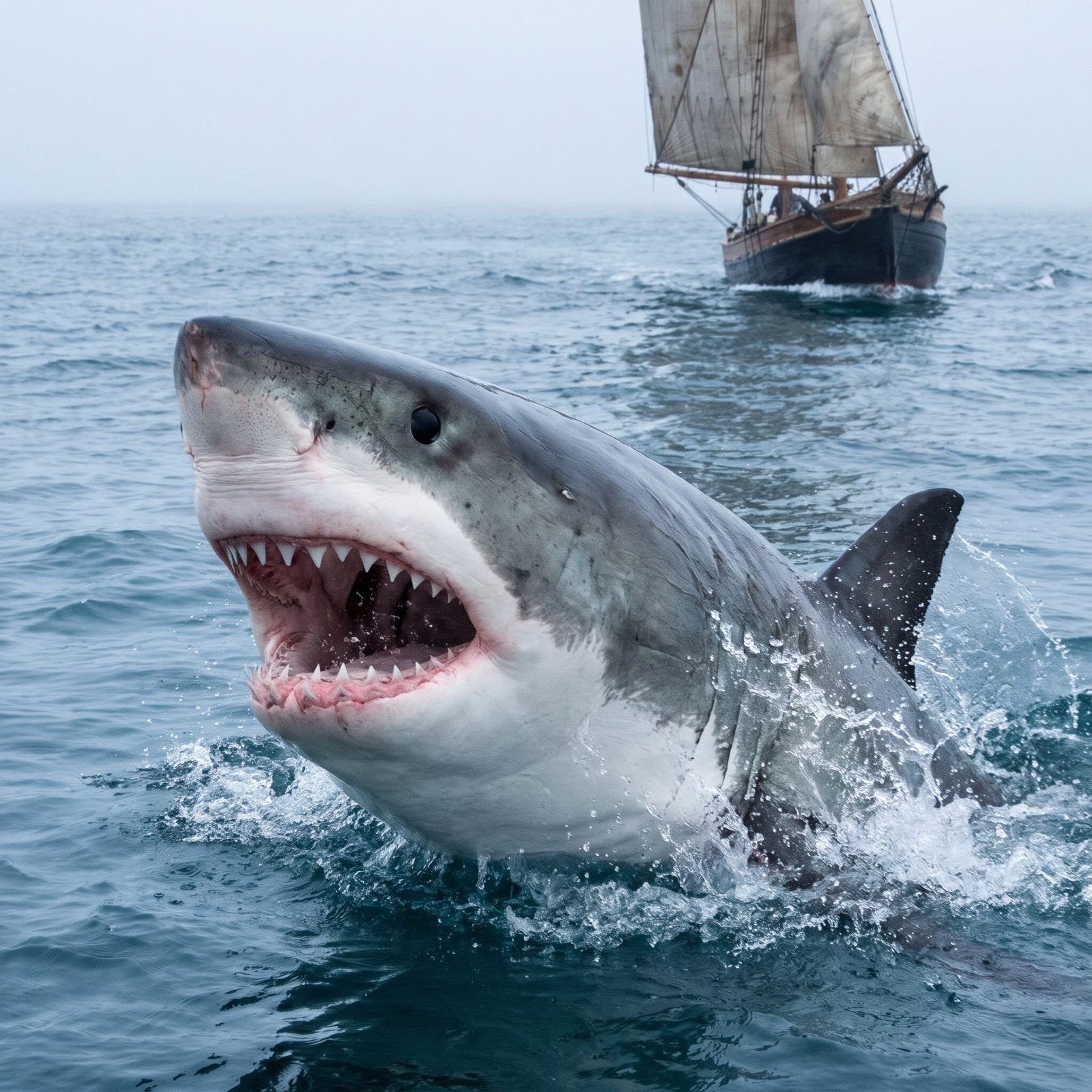
Those teeth are the stuff of every nightmare chart — serrated, triangular, replaced in endless rows, built for one job. When a great white breaches with its jaws open, it’s about as close as the living world gets to the monster the mapmakers dreamed up.
But the reputation runs well ahead of the animal. Great whites are warm-bodied, curious, and far rarer than fear suggests. Most “attacks” amount to a single investigative bite, because a shark’s only way to inspect something unfamiliar is with its mouth. They were sizing up the hull. Not the sailors.
21. The Scythe-Tailed Sea Beast, Thresher Shark
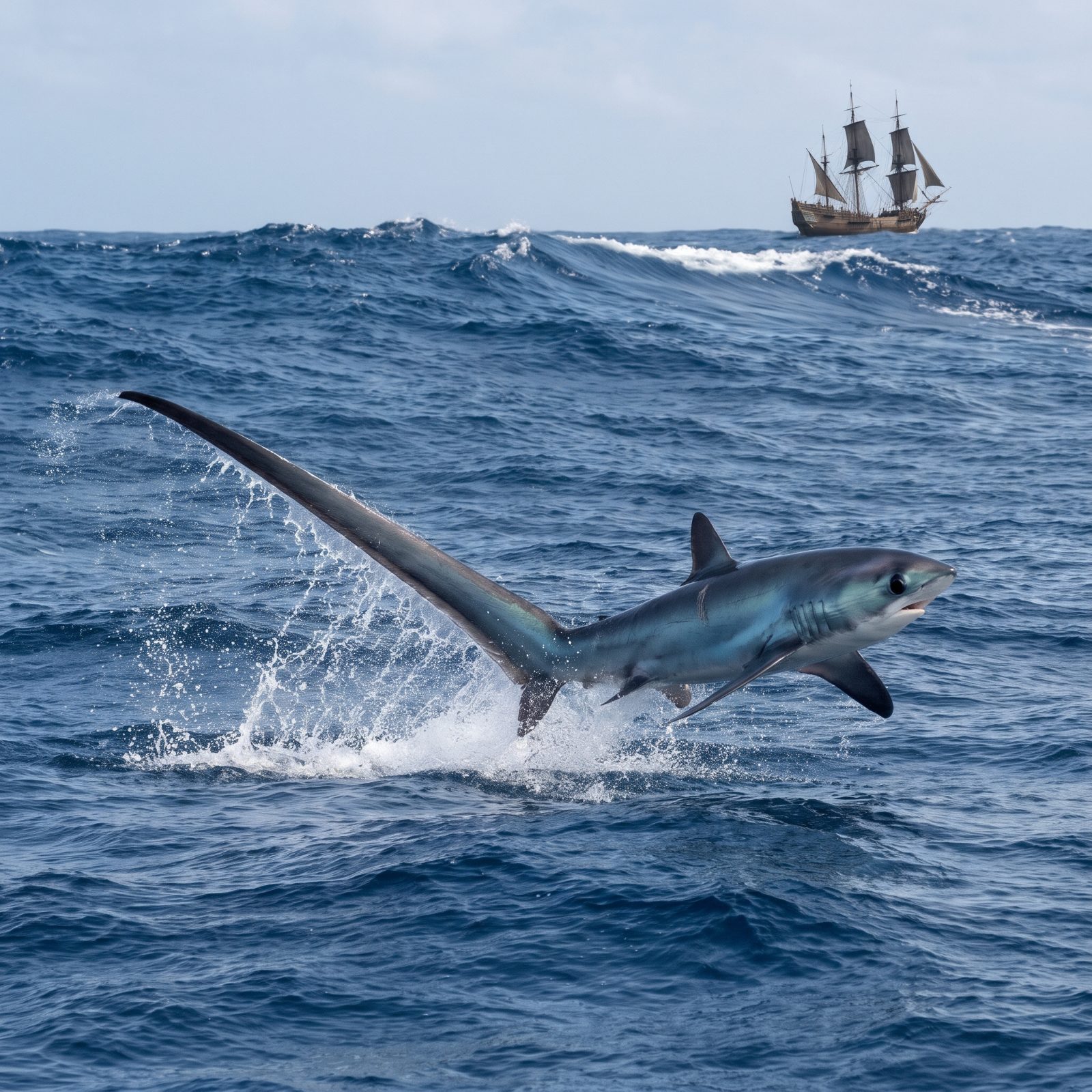
The tail is the whole story. A thresher’s upper fin can run as long as its entire body, swept like a scythe, and the animal wields it as a weapon — snapping it forward to stun fish before eating them. It’s one of the very few sharks that hunts with a whip.
From a ship’s rail, a thresher breaching and lashing the surface would pass easily for a sea serpent beating the water. No wonder a few old charts carry long-tailed horrors coiling through their margins.
20. The Wide-Headed Monster Fish, Great Hammerhead Shark
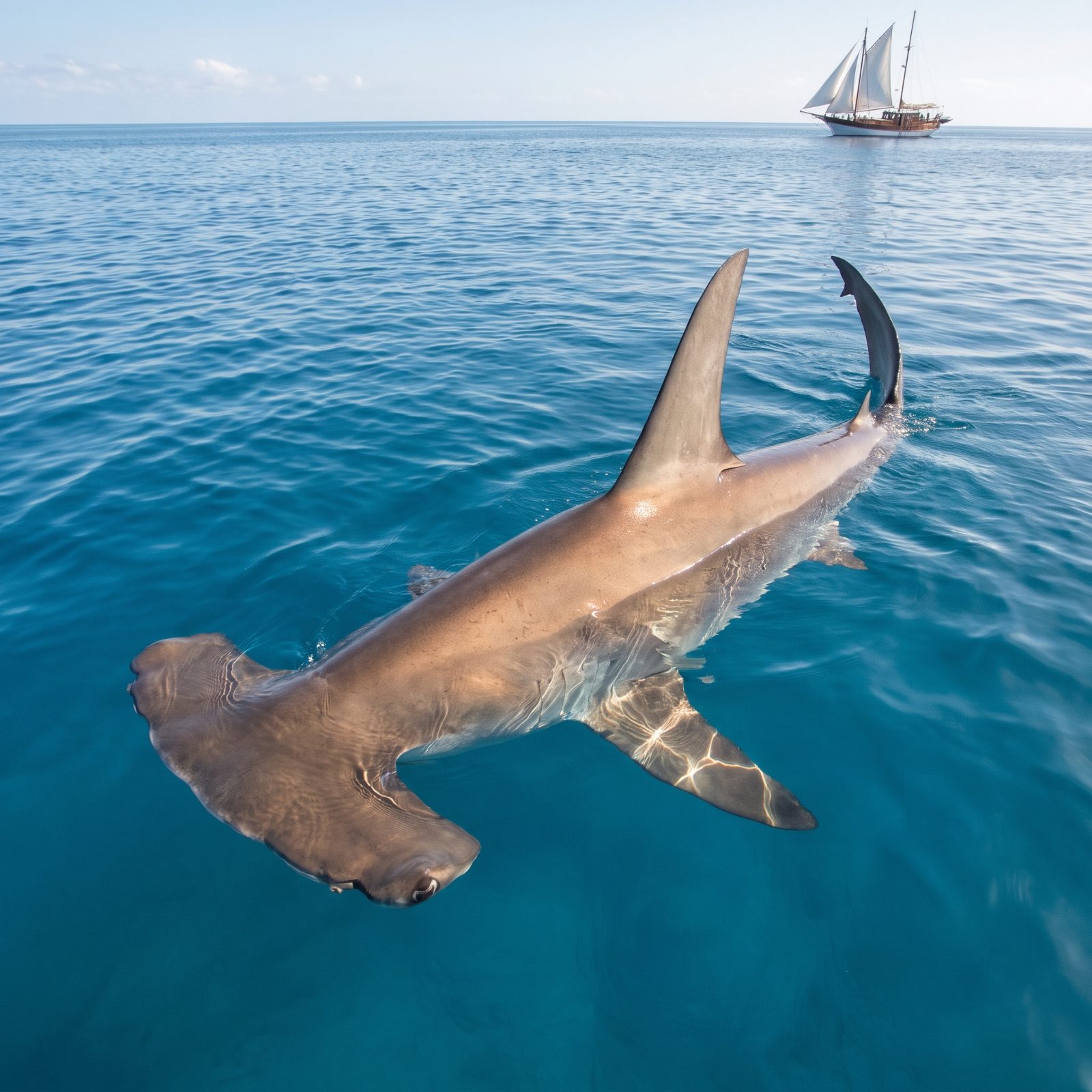
Nobody draws a shark with a head shaped like a mallet unless they’ve actually seen one. The great hammerhead’s wide, flat head, eyes planted at the tips, is so improbable the old illustrators assumed a monster must have invented it.
That head is a tool. It spreads the shark’s electrical sensors across a wider sweep, letting it pick up stingrays buried in sand, then pin them flat with the same broad skull. And the tall, sickle-shaped dorsal fin slicing the surface? That’s the detail sailors turned into a fin-backed serpent.
19. The Sword-Snouted Sea Dragon, Largetooth Sawfish
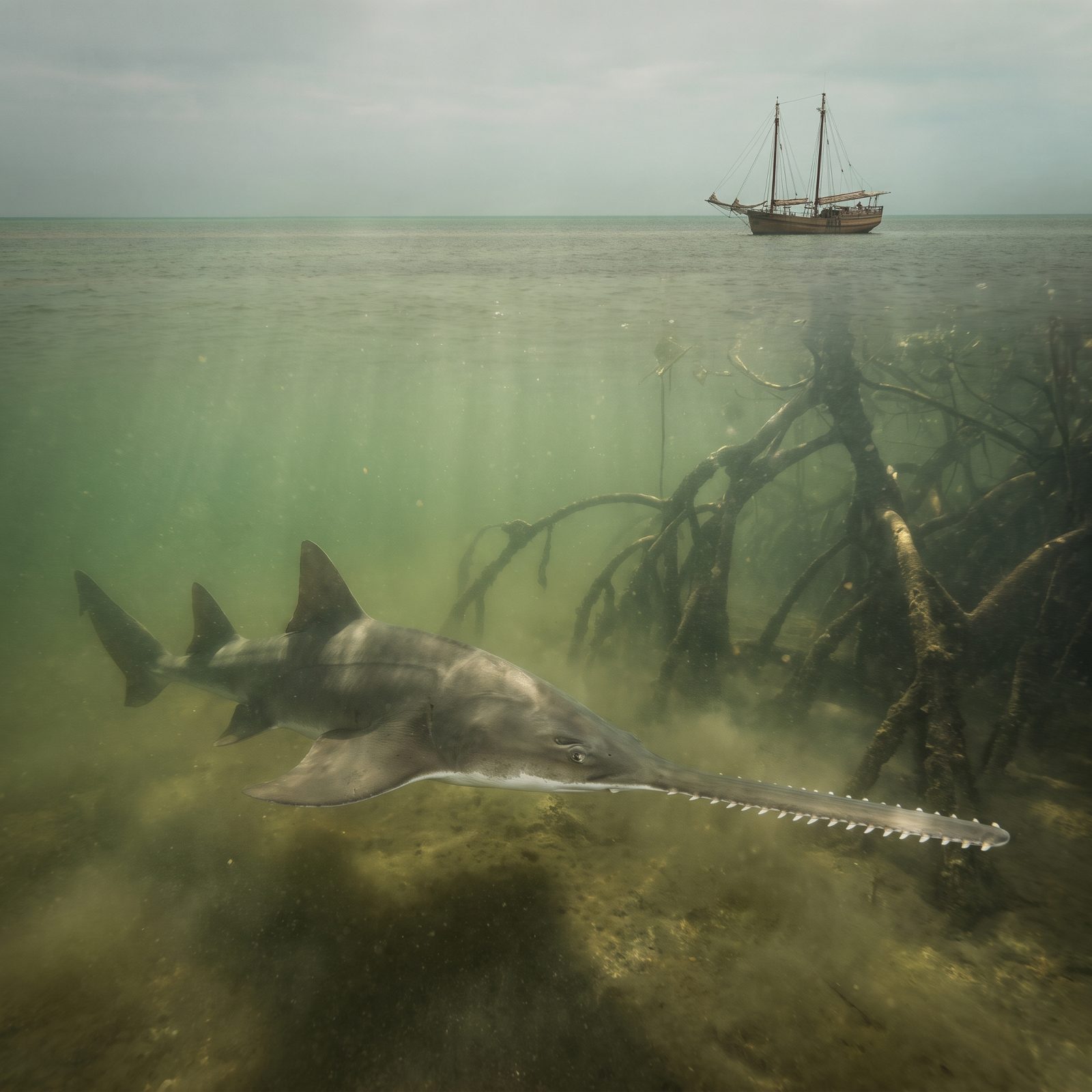
A creature hauling a toothed sword through the water is nearly impossible to improve on for a monster chart. The largetooth sawfish is real, and its rostrum can stretch past a grown man’s height, studded with tooth-like spines along both edges.
It isn’t a nose for show. The saw bristles with electrical sensors to find prey in muddy water, and the sawfish swings it side to side to slash and stun fish. Despite all that armament, these animals are gentle toward people and critically endangered now — which makes the survivors feel like living fossils washed up from the age of sea dragons.
18. The Horned Devil of the Open Ocean: Giant Oceanic Manta Ray
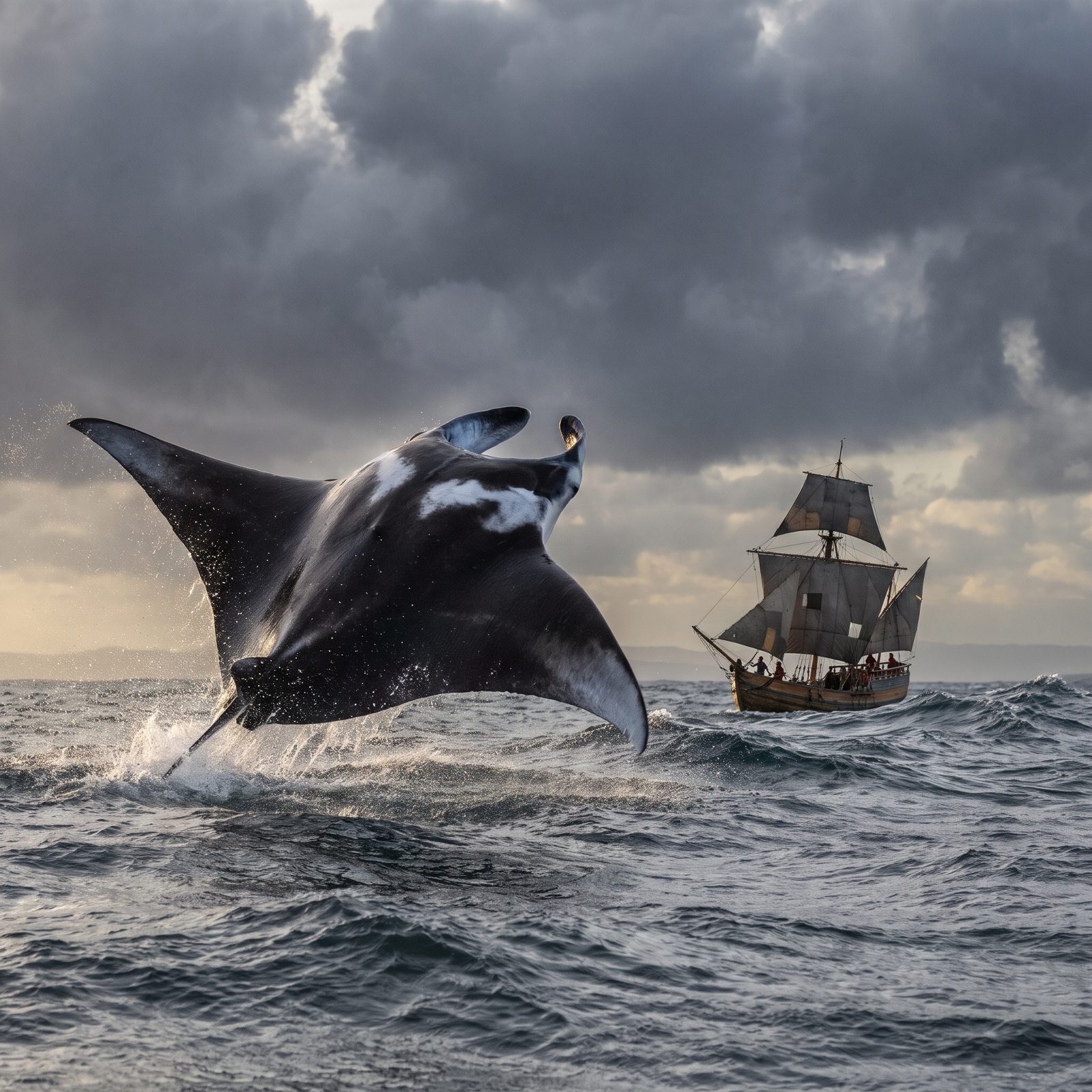
The horns did the damage. On old charts, the manta’s two paddle-shaped cephalic fins got drawn as actual devil horns, and that’s how a harmless plankton-strainer wound up branded the “devilfish” for three straight centuries.
A breaching oceanic manta clears the water with a crack you can hear from the deck of a ship — over 20 feet wing to wing, flashing a mostly white, dark-spotted underside under orca-like black-and-white saddle patches, gone again in a wall of spray. To a frightened lookout that is not a fish. That is something reporting for duty from below.
17. The Headless Round Monster: Ocean Sunfish
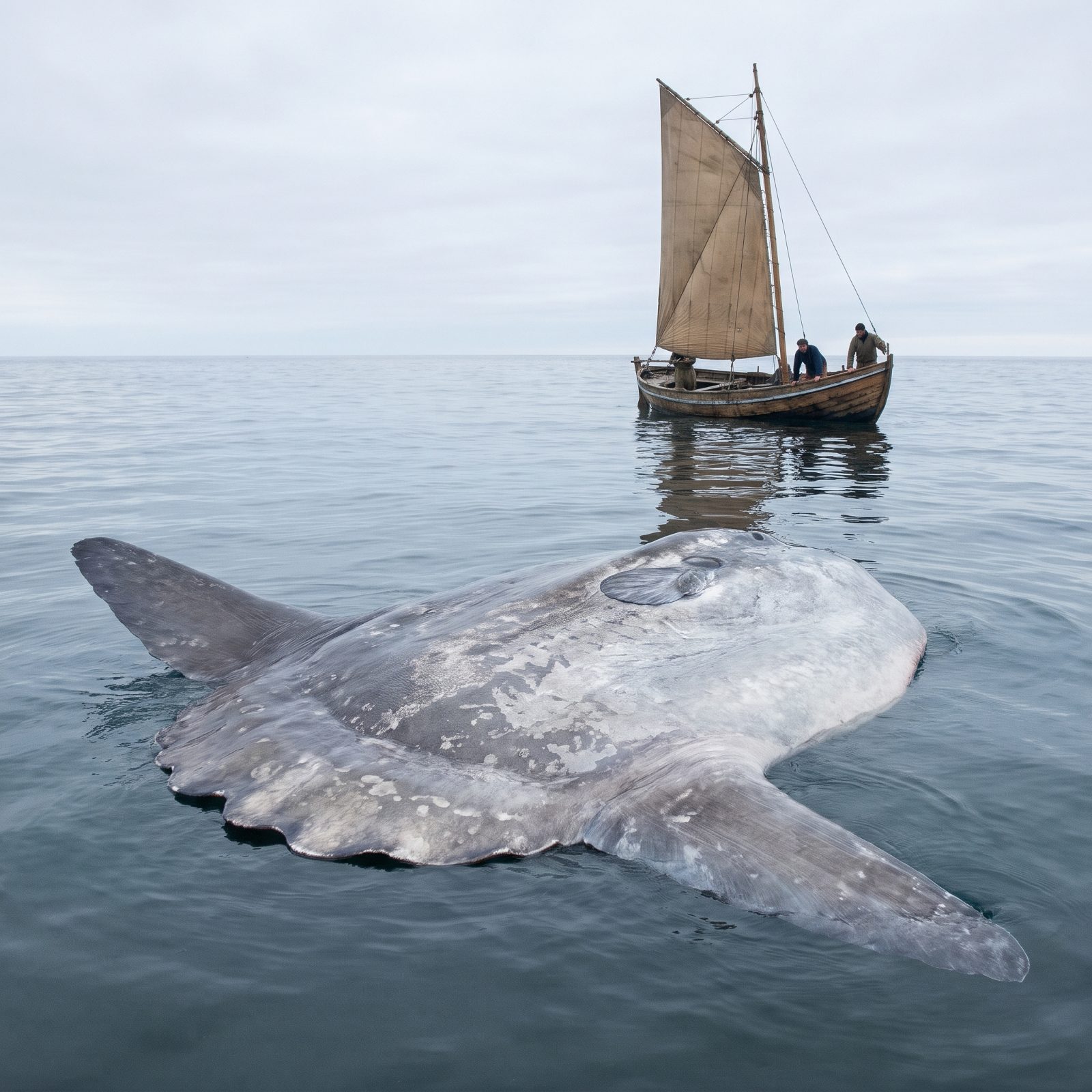
Imagine hauling up something the size of a dining table that appears to have no back half. The sunfish, or mola, swims on its side at the surface — a great silver disc that looks violently unfinished — and sailors swore they’d found a fish that lost its tail to some bigger beast.
It never had one. That truncated stump is a clavus, a rudder grown where a tail should be. Molas can top 2,000 pounds and spend their days basking flat, warming back up after plunging into cold water far below.
16. The Armored Island Turtle: Leatherback Sea Turtle
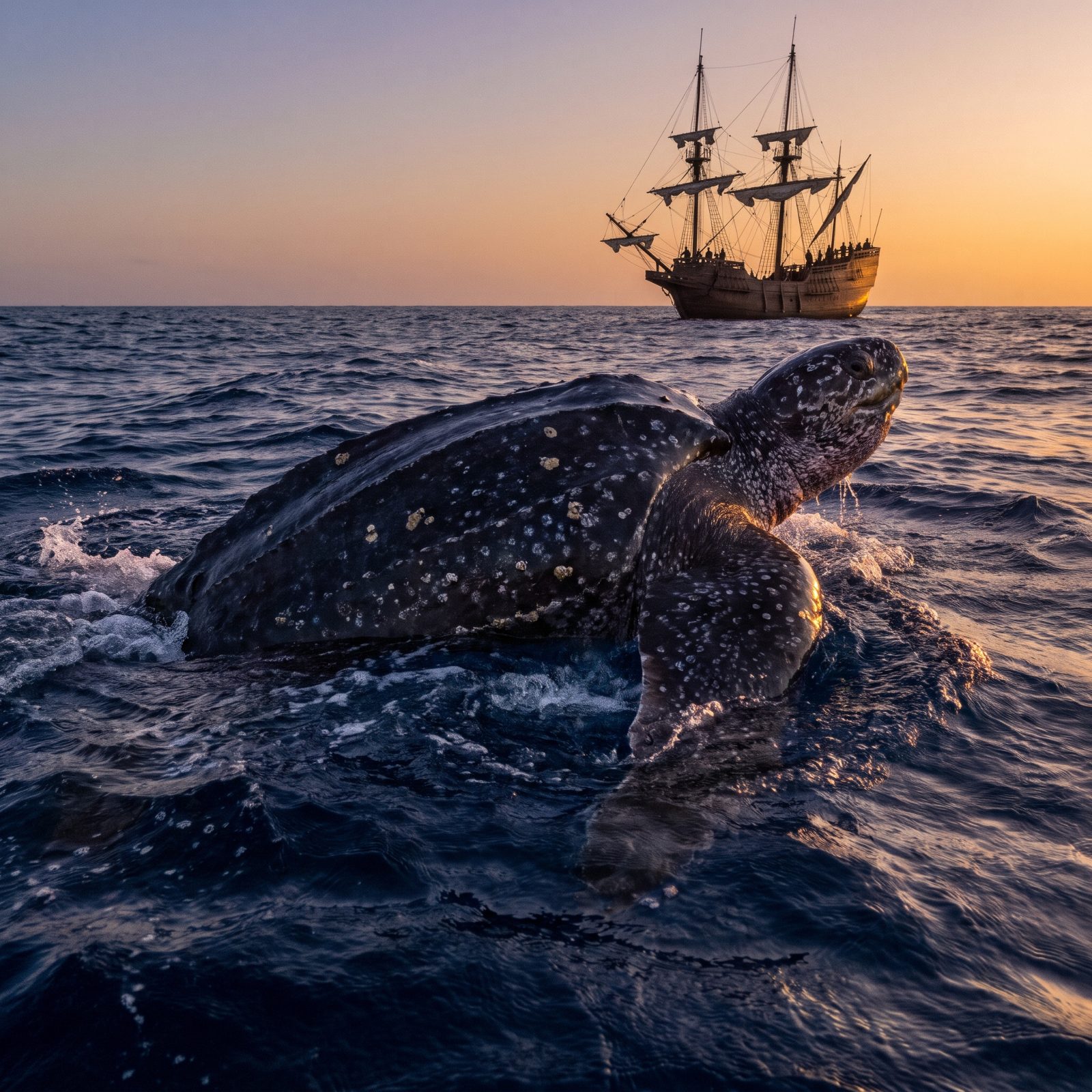
A leatherback surfacing at dusk looks less like an animal than a ridged, barnacled reef that decided to swim. Up to seven feet long and over a thousand pounds, it’s the largest turtle alive, wrapped in a rubbery keeled shell no other sea turtle wears.
Old sailors reported small floating islands that moved against the current, rose to breathe, then vanished. A breaching leatherback fits that exactly. And these animals dive deeper than most whales, well past 4,000 feet, hunting jellyfish down in the dark cold.
15. The Scaly River Dragon at Sea: Saltwater Crocodile
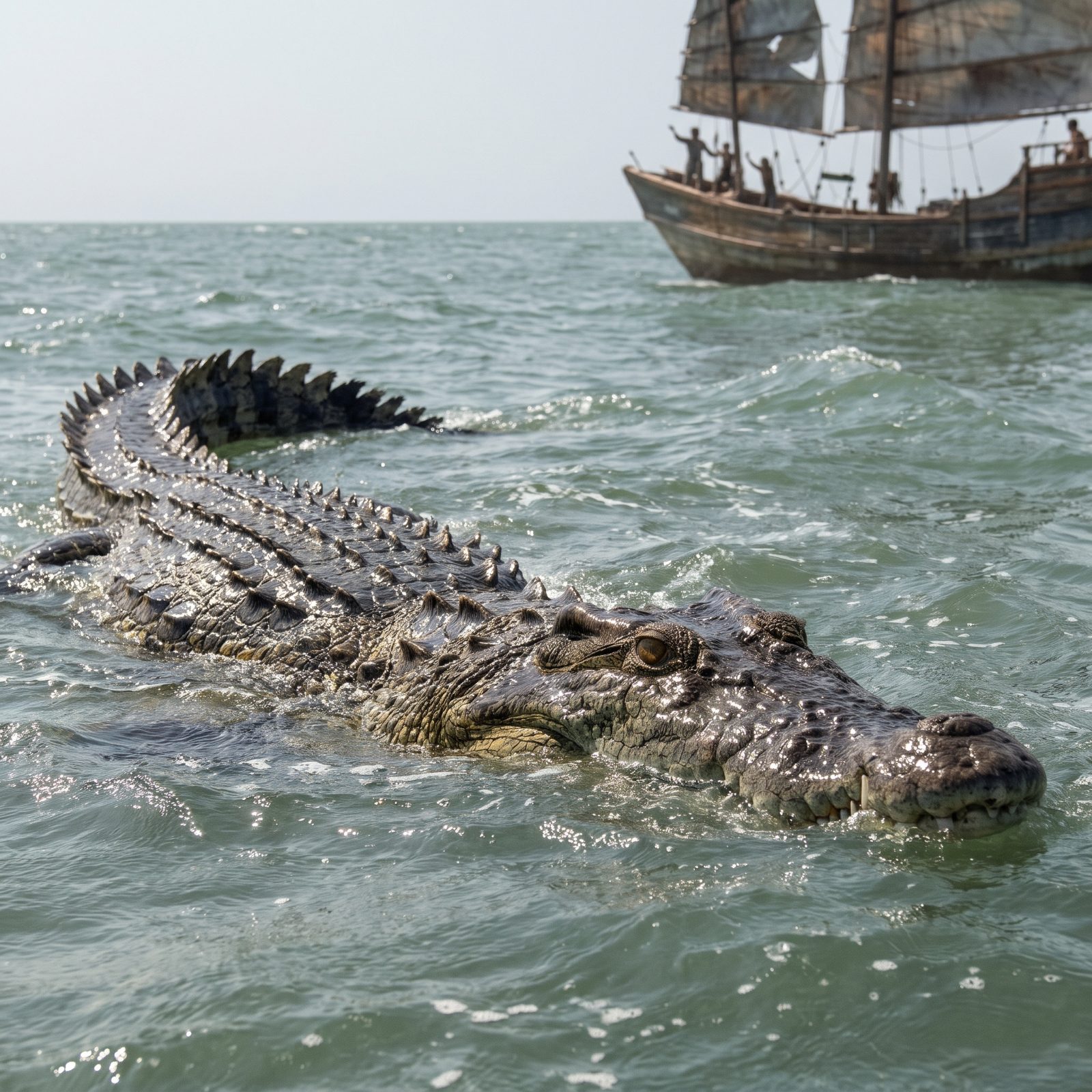
Here’s the part that breaks people’s brains. The biggest crocodile on Earth is a long-distance ocean swimmer, riding currents hundreds of miles across open sea with its armored head and serrated tail cutting a wake and no land anywhere in sight.
Picture a lookout off the East Indies clocking a scaled, dragon-headed thing paddling past the horizon. Of course the chart came back marked with a sea dragon. It was real — just a 20-foot reptile somewhere it had no business being.
The monster on the map wasn’t invented. It was a crocodile that refused to stay in the river.
14. The Golden-Bellied Ocean Serpent: Yellow-Bellied Sea Snake
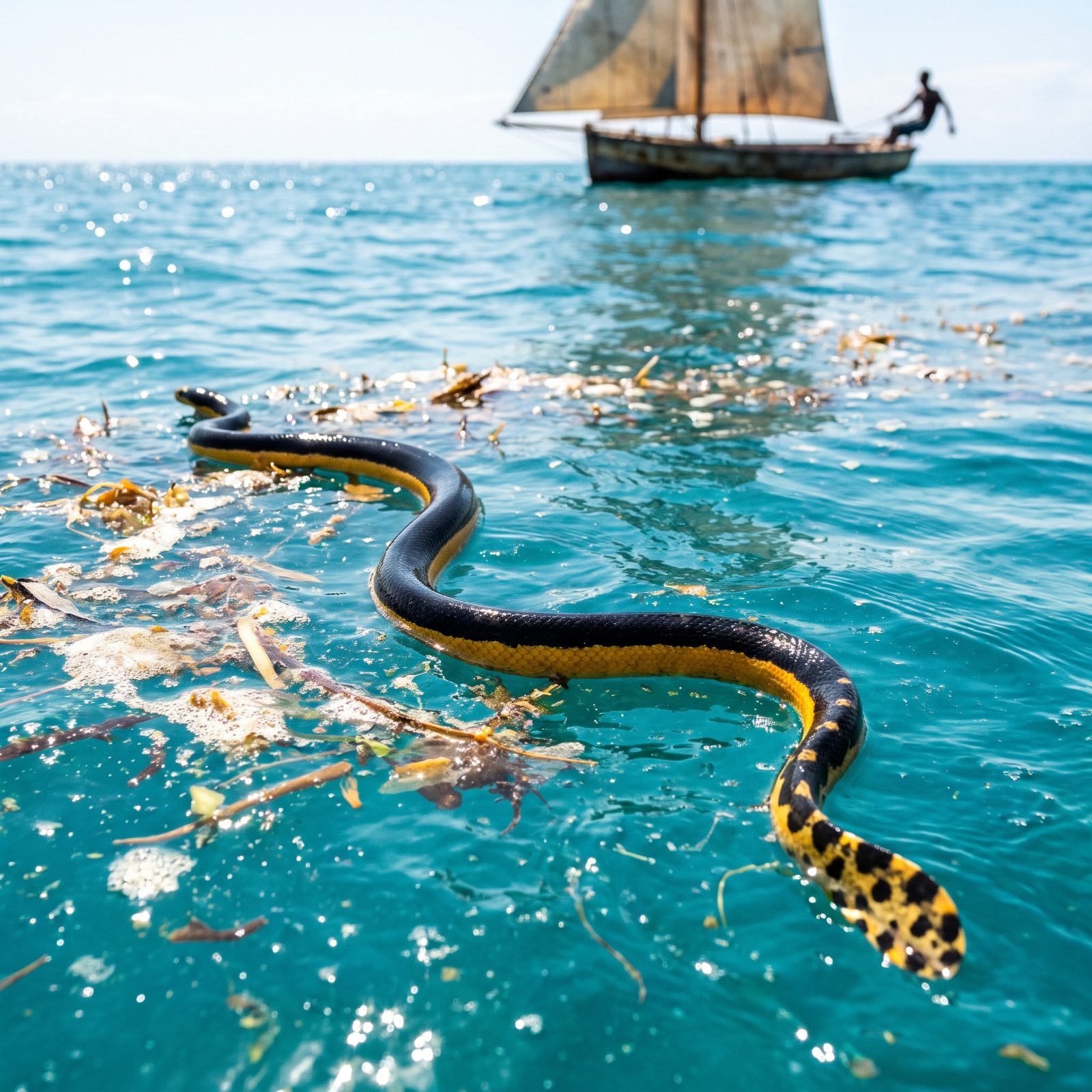
Black on top, molten gold below, with a paddle-flat tail that rows it through blue water like an oar. The yellow-bellied sea snake is the most widespread snake on the planet, and the only one that lives its entire life out in the open ocean.
When thousands drift together along a current slick, they pile into a writhing golden line on the surface. So reports of a many-coiled serpent weren’t always exaggeration. Sometimes they were a raft of these, tangled on the tide.
13. The Reef Monster With Hidden Jaws: Giant Moray Eel
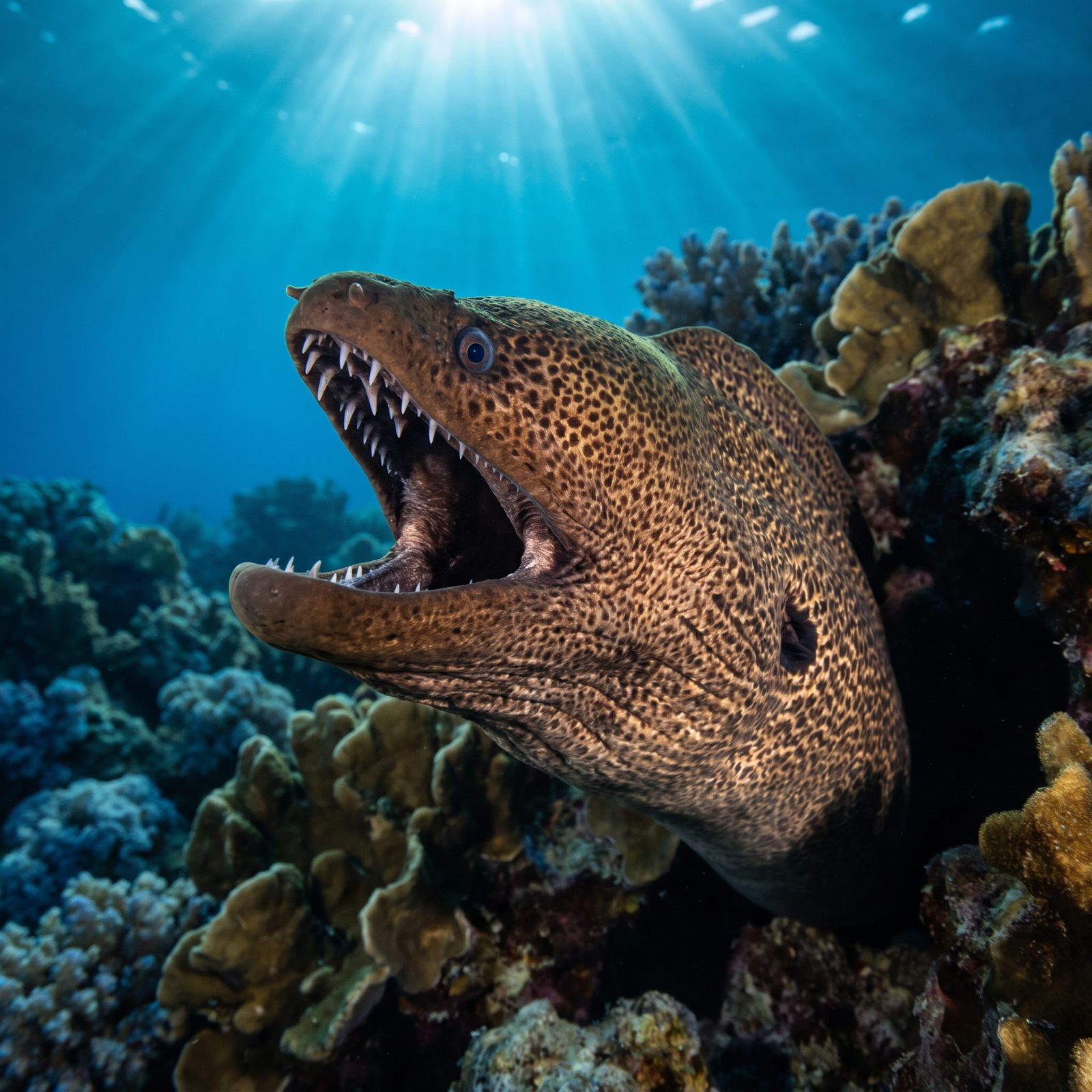
A moray never looks friendly. It sits in a reef hole working its jaw open and shut, baring a mouthful of glass needles — and that constant gaping is just how it breathes. To a diving pearl-hunter, though, it read as a snarling thing lying in ambush.
Then there’s the detail nobody mentions: the second set of jaws. Buried in the throat, a giant moray’s pharyngeal jaws shoot forward to seize prey and drag it down the gullet, the only animal known to feed this way.
12. The Fanged Sea Wolf: Atlantic Wolffish
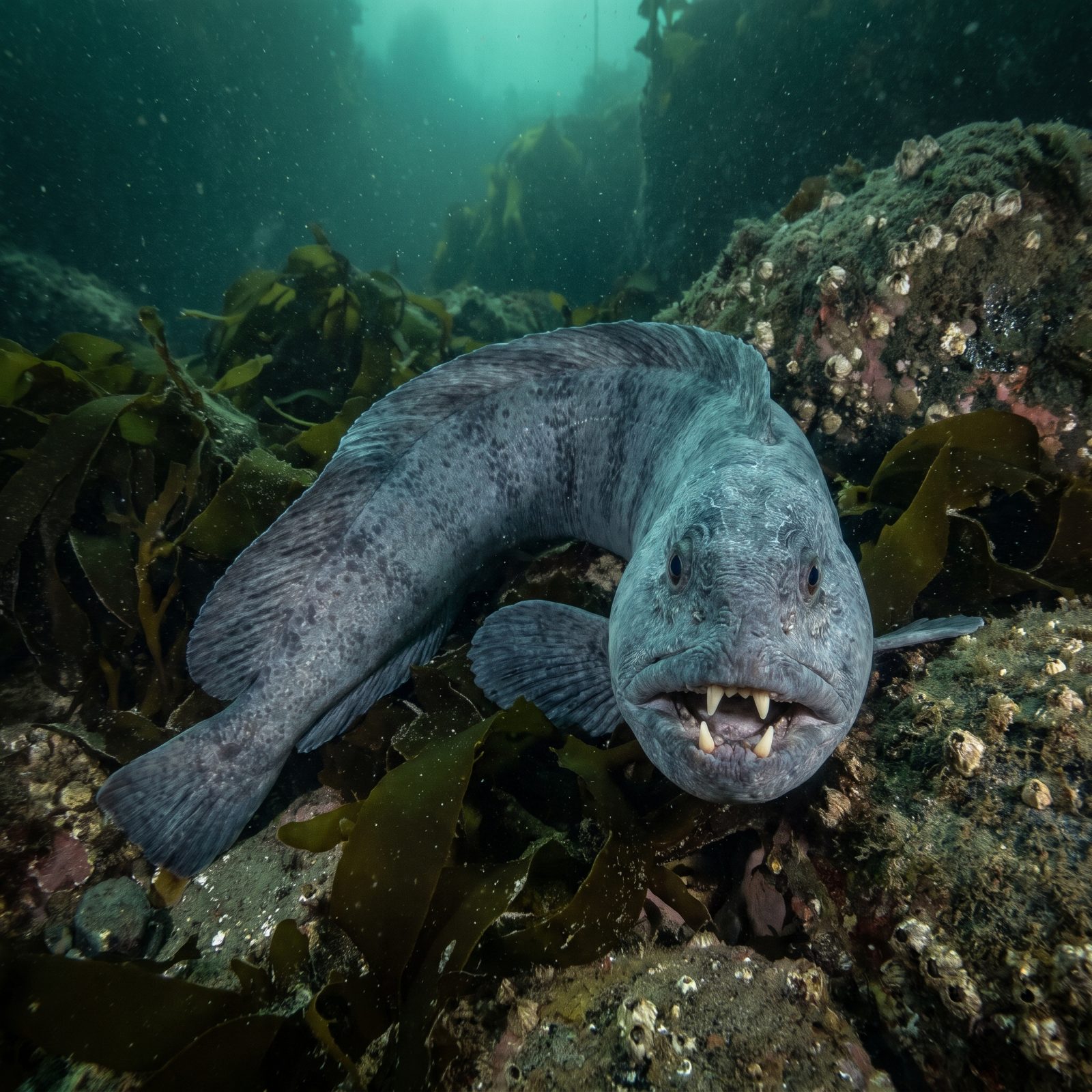
Dredge one up on a cold North Atlantic morning and the name explains itself. The Atlantic wolffish has a blunt, dog-like head set with jutting fangs out front and flat crushing molars behind, all of it built to splinter crabs, urchins and clams on the seabed.
Fishermen who’d never glimpsed one below the surface hauled this snarling, scaleless, gray thing over the gunwale and had every reason to call it a sea wolf. The fangs aren’t for you. They’re for cracking armor on the bottom. The face just didn’t get that memo.
11. The Human-Sized Reef Devourer: Atlantic Goliath Grouper
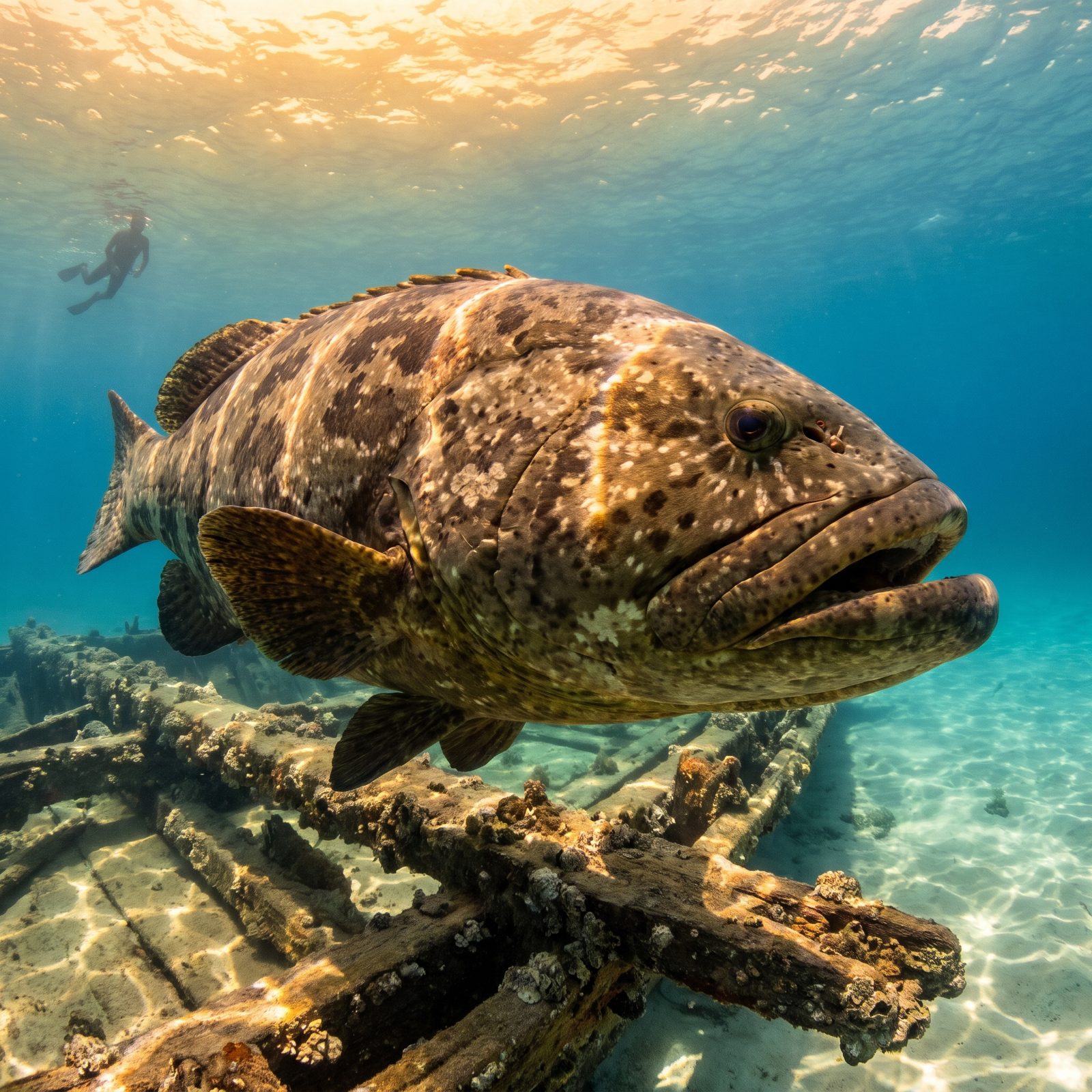
Seven feet. Up to 800 pounds. A mouth wide enough to inhale prey in one suction gulp loud enough to startle a diver. The goliath grouper is a slab of muscle the size of a grown man, and it hangs motionless beside wrecks and reefs like it owns the whole neighborhood.
It does the owning quietly, until it doesn’t. Threaten one and it fires off a deep booming thud from its swim bladder, a sound divers feel in their chest before they hear it. So tales of a man-sized reef beast that swallows things whole weren’t fiction. They were a Tuesday on a Florida reef.
10. The Spear-Nosed Sea Beast: Swordfish
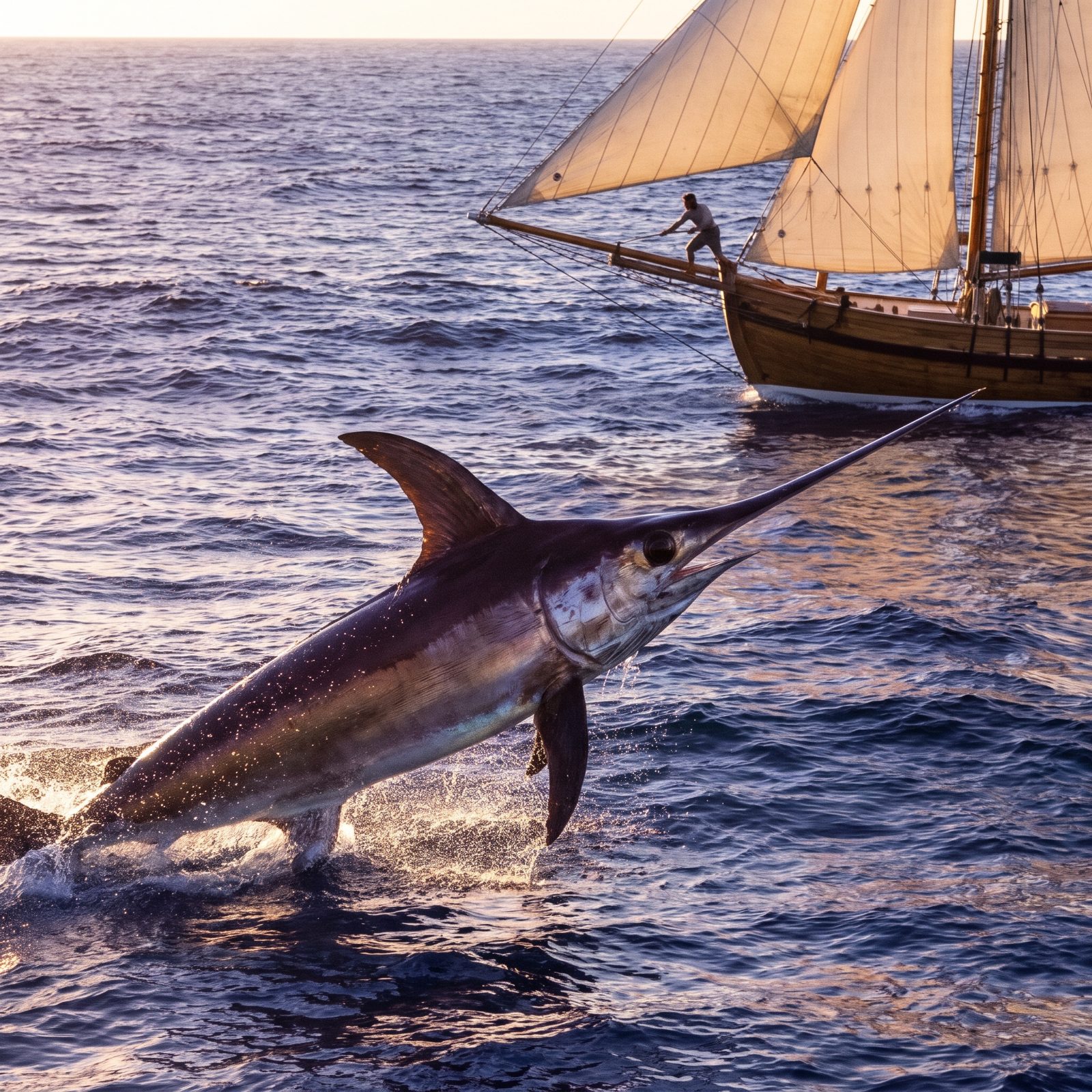
A swordfish doesn’t just carry a weapon. It is one. The flattened bill can run a third of the animal’s whole length, and swordfish have driven it clean through wooden hull planking — there are recovered timbers to prove it.
Now picture a harpooner at the bow watching that bronze-backed shape rise alongside, bill breaking the surface first. Of course the mapmaker drew a lance-nosed sea beast. Swordfish hit speeds few fish can match, and they warm their eyes and brain with a built-in heater organ so they can see down in the cold deep where they hunt.
9. The Sail-Backed Monster Fish: Atlantic Sailfish
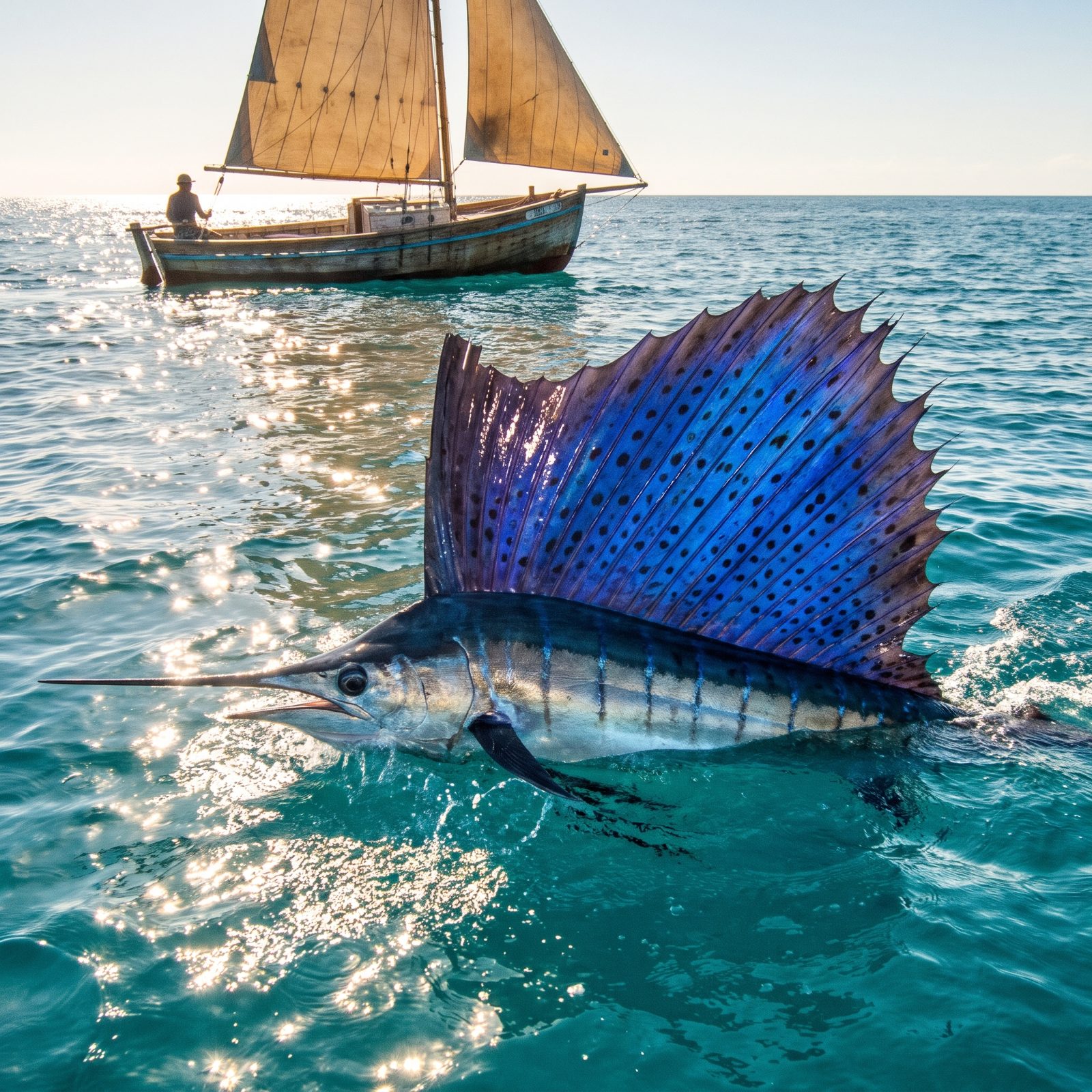
When a sailfish throws up its dorsal fin, it unfurls a fan taller than its own body and flushes electric cobalt in seconds. The effect is a fish that seems to sail across the surface, mast and all.
Spot that from a distance — sail raised and glowing blue — and you’d log a sea monster too. The fin isn’t for show, mind you. Sailfish flash it to herd bait and to look suddenly enormous, and they rank among the fastest fish in the sea, changing color at will. A living semaphore with a spear on its nose. The old charts never stood a chance.
8. The Winged Fish Escaping the Waves, Atlantic Flyingfish
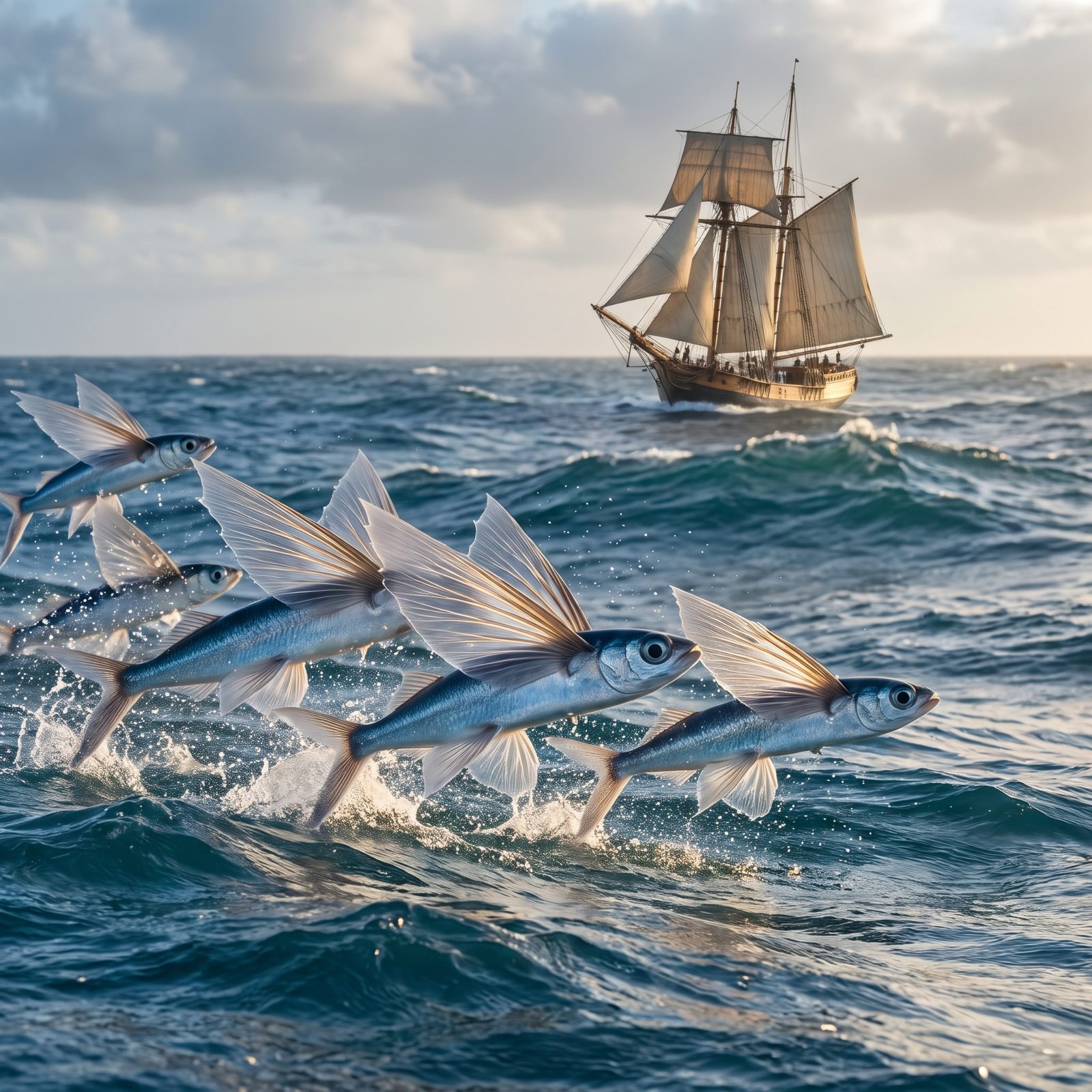
Sailors swore they’d seen fish with wings, and old charts obliged with scaly things that leapt from the sea on feathered pinions. The truth needs no exaggeration. An Atlantic flyingfish builds speed underwater, breaks the surface at a stunning clip, and glides on outstretched pectoral fins for distances that, in a good gust, can carry it the length of a few ships lined bow to stern.
They don’t flap. The fins are stiff gliders, and the fish taxis along with its tail to relaunch when momentum fades. From a pitching deck at dawn, a dozen of them skating the swell looks exactly like a small flock of impossible birds.
7. The Coiled-Shell Sea Monster, Chambered Nautilus
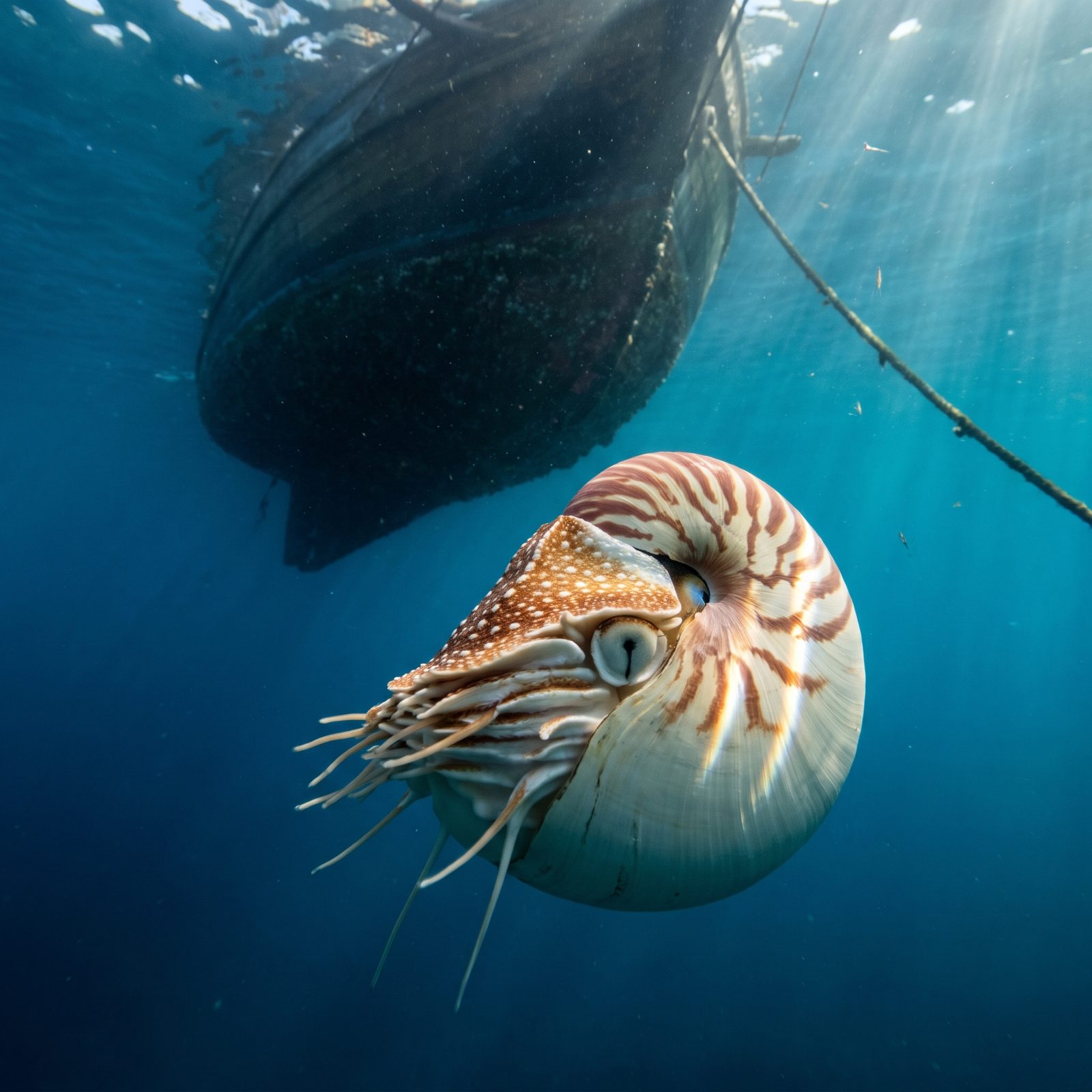
A striped spiral shell bobbing up at twilight, tentacles fanning like something’s fingers testing the air. No wonder the old illustrators drew it as a monster hauling itself toward their ship.
The chambered nautilus is a living relic whose basic design has barely budged across hundreds of millions of years. It controls its buoyancy by pumping gas and fluid between the sealed chambers of its coiled shell, drifting up from the deep at night to feed. Those chambers also happen to trace a near-perfect logarithmic spiral, the same curve artists spent centuries fumbling to pin down. The animal cracked it before there were fish around to admire the result.
6. The Floating Blue Dragon, Portuguese Man-of-War
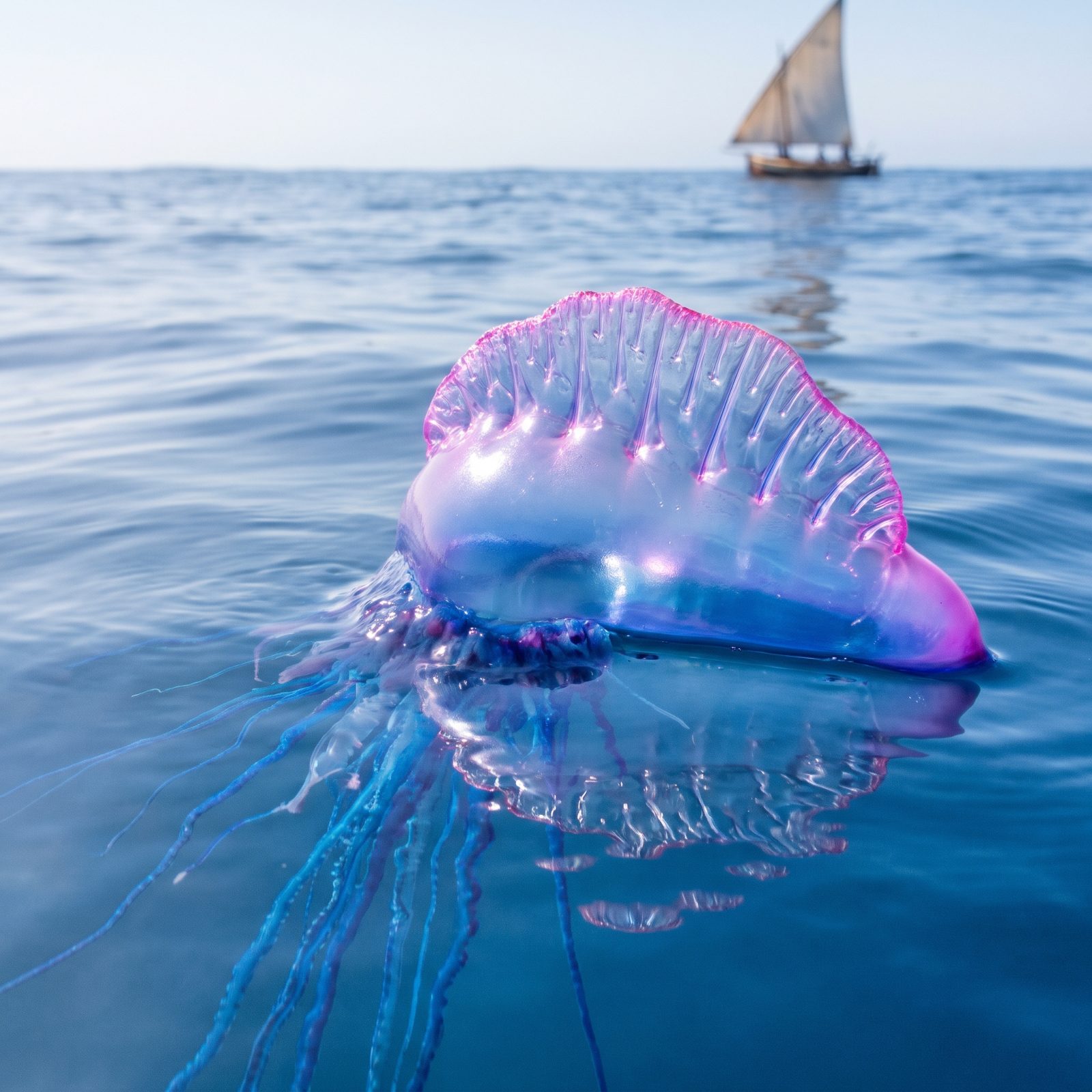
It looks like one animal. It isn’t. A Portuguese man-of-war is a floating colony of specialized bodies called zooids, each handling one job: floating, stinging, feeding, breeding. None of them survives alone.
That gas-filled blue float, crested like a Renaissance warship’s sail, is where the name comes from. Below it hang tentacles that can trail many yards into the dark, loaded with venom that still packs a punch hours after the thing washes ashore dead. Early sailors saw the pink-and-sapphire sail cresting a swell and logged a small sea dragon. They weren’t entirely wrong about the danger.
5. The Mane-Trailing Gelatinous Beast, Lion’s Mane Jellyfish
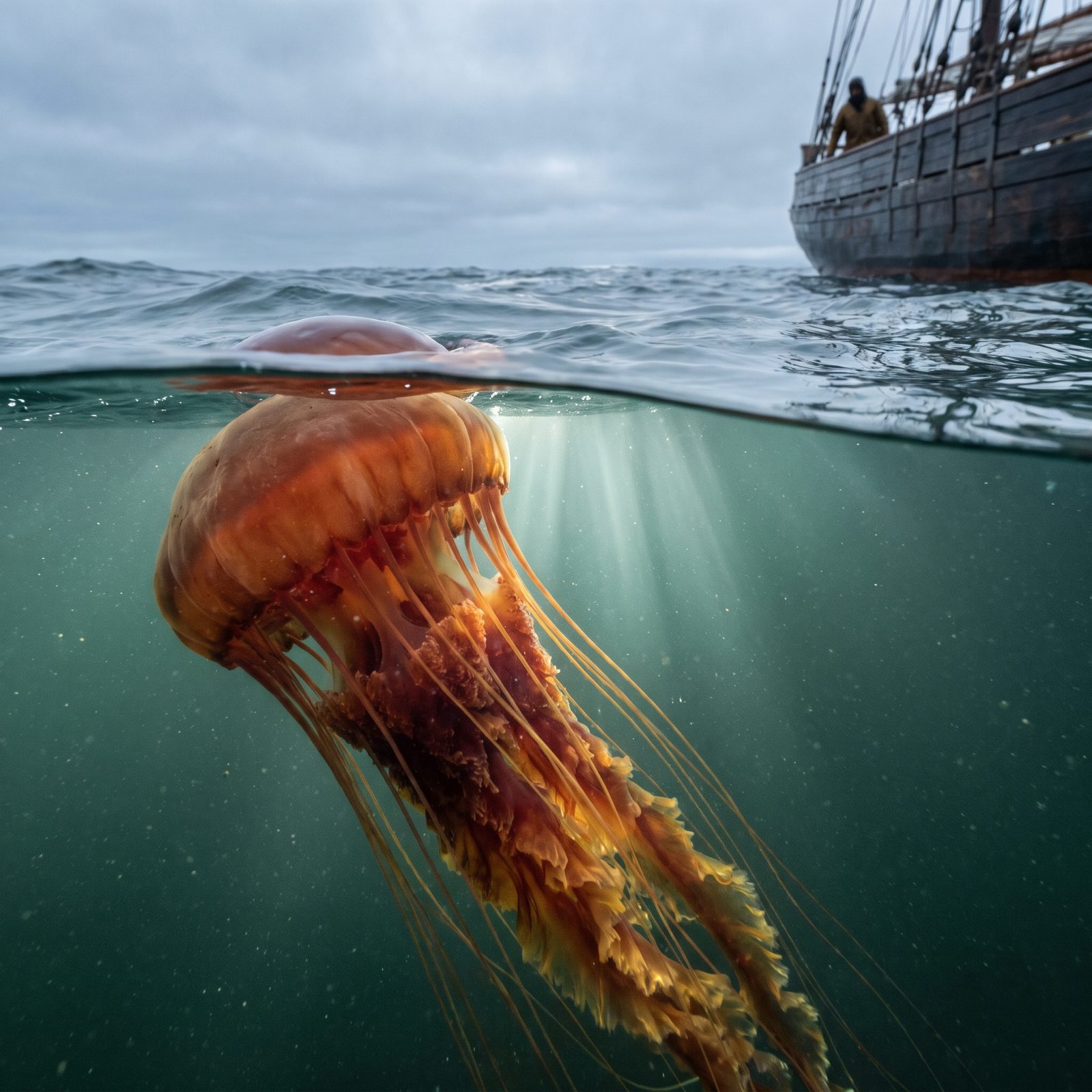
Picture a northern swell the color of old pewter, and something the width of a wagon wheel pulsing up through it, trailing a mane of amber hair the length of a tall ship’s mast.
The lion’s mane jellyfish is the largest known jelly. The biggest documented specimen had a bell well over six feet across and tentacles stretching to a length that would make it, measured tip to tip, longer than a blue whale. Those tentacles number in the hundreds. Every one stings. All of it drifts cold and silent under the surface, a submerged beast with flowing hair that any sailor leaning over a rail into gray water would swear he’d seen. Honestly? So would you.
Longer than a blue whale, and made almost entirely of water.
4. The Glowing Hollow Sea Serpent, Giant Pyrosome
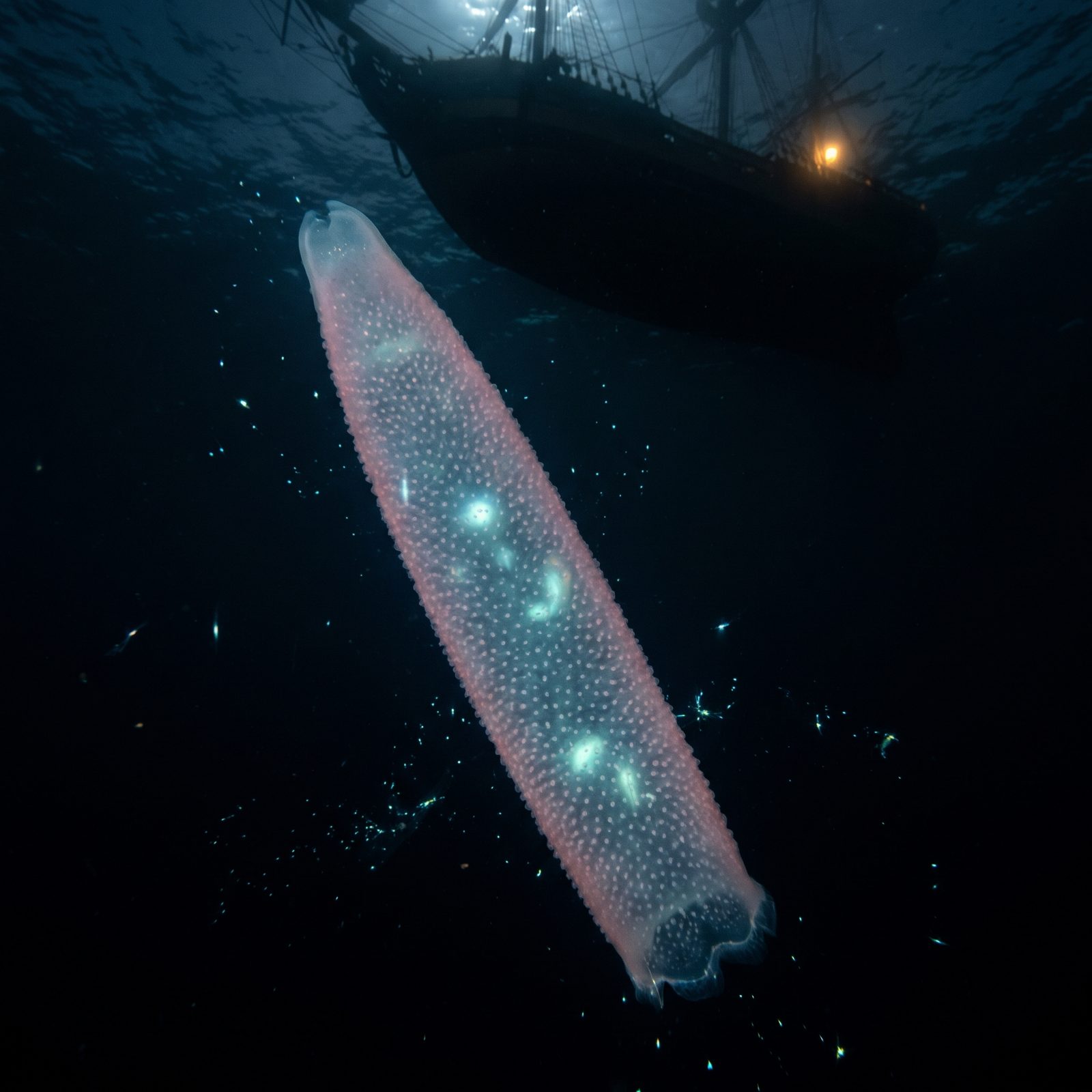
Imagine dark water, an old sailing ship sitting silent on the surface under a hanging lantern, and a glowing hollow serpent drifting in the water below its hull, lit from inside. You’d log a monster too.
A pyrosome isn’t one creature, and that’s where it gets strange. It’s a free-floating colony of thousands of tiny animals called zooids, each a few millimeters long, fused into a hollow gelatinous tube that can run longer than a person is tall. The whole thing burns with its own cold light. The name means “fire body,” and it earns it. The zooids feed by filtering water pulled through the open tube, and the colony simply drifts through the deep like a slow luminous pipe.
3. The Long-Legged Armored Monster, Japanese Spider Crab
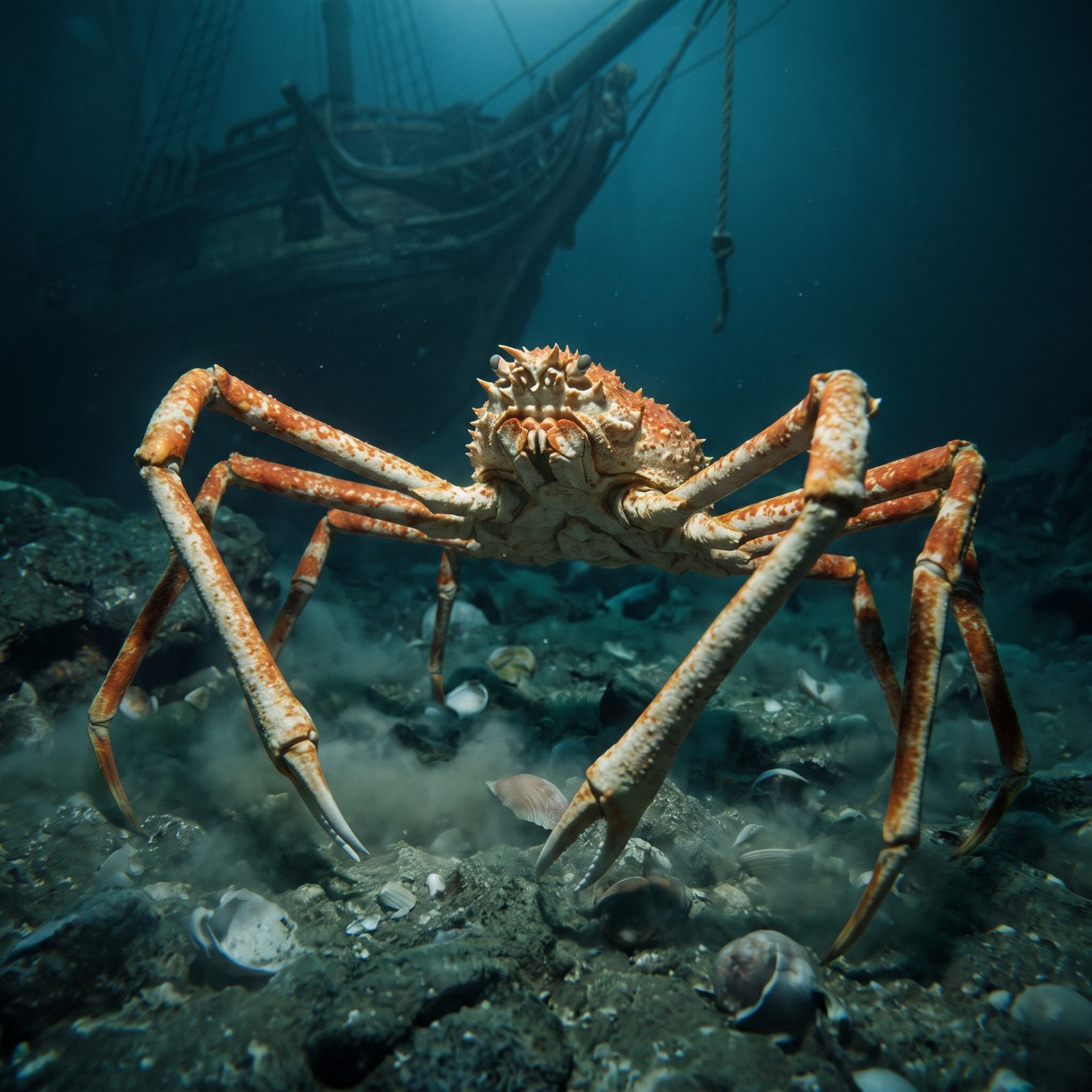
Haul one up in a net and you’d understand the woodcut monsters instantly. The Japanese spider crab owns the largest leg span of any arthropod alive, reaching close to twelve feet from claw to claw. The body stays modest, roughly the size of a dinner plate. It’s all leg, all angle, all armor.
They live on the seafloor off Japan at depths of several hundred feet, scavenging slowly across the silt, and some are thought to outlast a human lifetime. Now picture that pulled dripping over a wooden gunwale, legs splaying wider than a man is tall. The chart illustrators had a field day, and I can’t say I blame them.
2. The Living Treasure Chest, Giant Clam
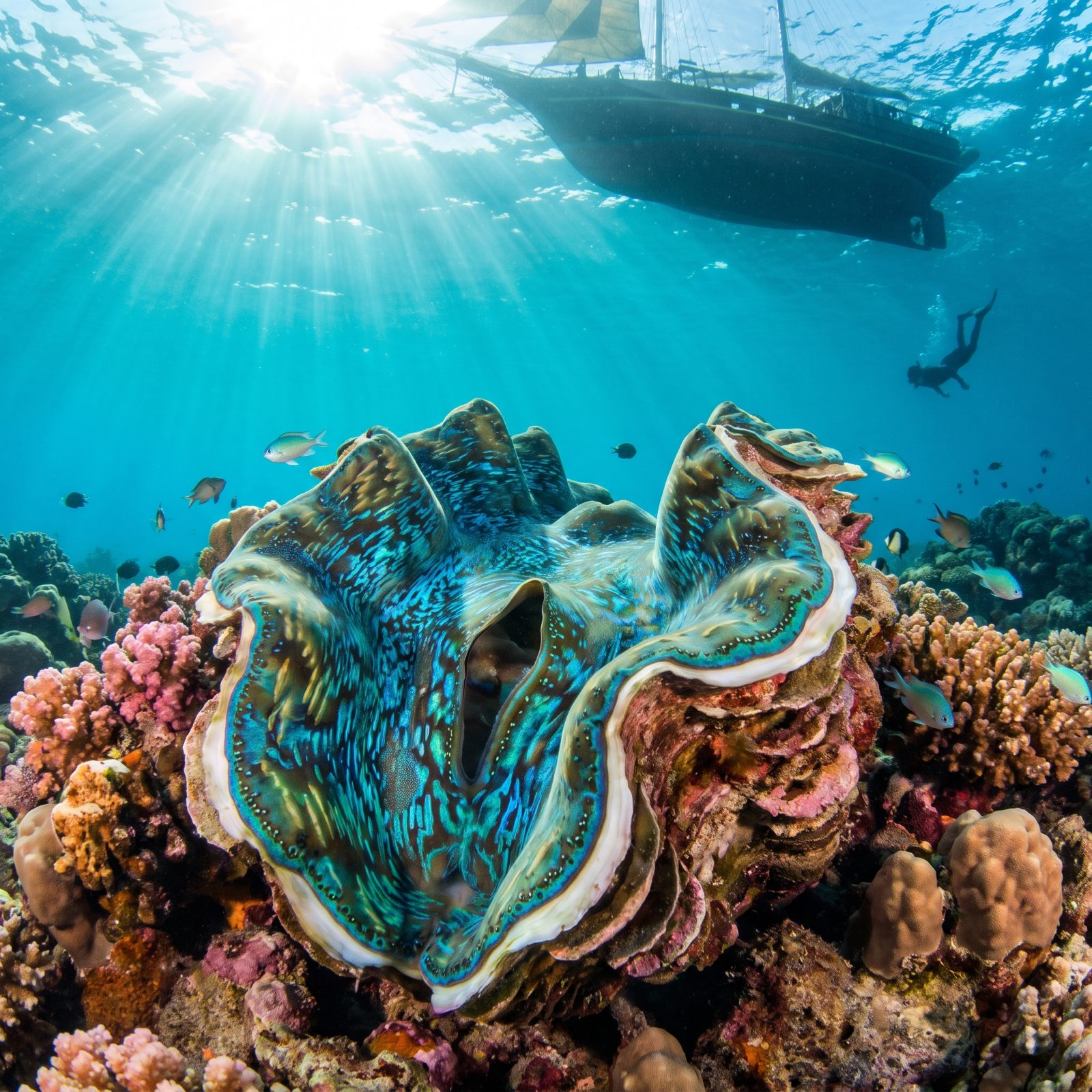
Sailors’ tales turned it into a man-eating trap that clamped shut on a diver’s leg. Nonsense. The giant clam is slow, harmless, and the largest living bivalve on Earth, with shells that can span more than four feet and tip the scale past a quarter-ton.
The jewel-bright mantle isn’t decoration. It farms. Countless algae live in that electric blue-and-gold tissue, soaking up sunlight and feeding the clam in return, which is why it sits mouth-up in the shallows like an open treasure chest. Even the colors are a side effect of managing all that light. Pry one open and you’d swear you’d found a vault of living gemstones.
1. The Mermaid With a Paddled Tail, West Indian Manatee

The mermaid myth has a punchline, and the punchline is a wrinkled gray sea cow with whiskers.
Columbus himself logged sighting “mermaids” in 1493 and noted, with some disappointment, that they were “not half as beautiful as they are painted.” He was looking at manatees. From a distance, a surfacing manatee lifts its upper body, cradles a calf against its chest, and sweeps a broad paddle-shaped tail, and long months at sea can bend all that into a woman wearing a fish’s tail.
The scientific order that holds manatees and dugongs is called Sirenia, named for the sirens of Greek legend. The taxonomists kept the joke on purpose. These gentle grazers eat seagrass, move slow, and have never lured a single sailor to his doom.