
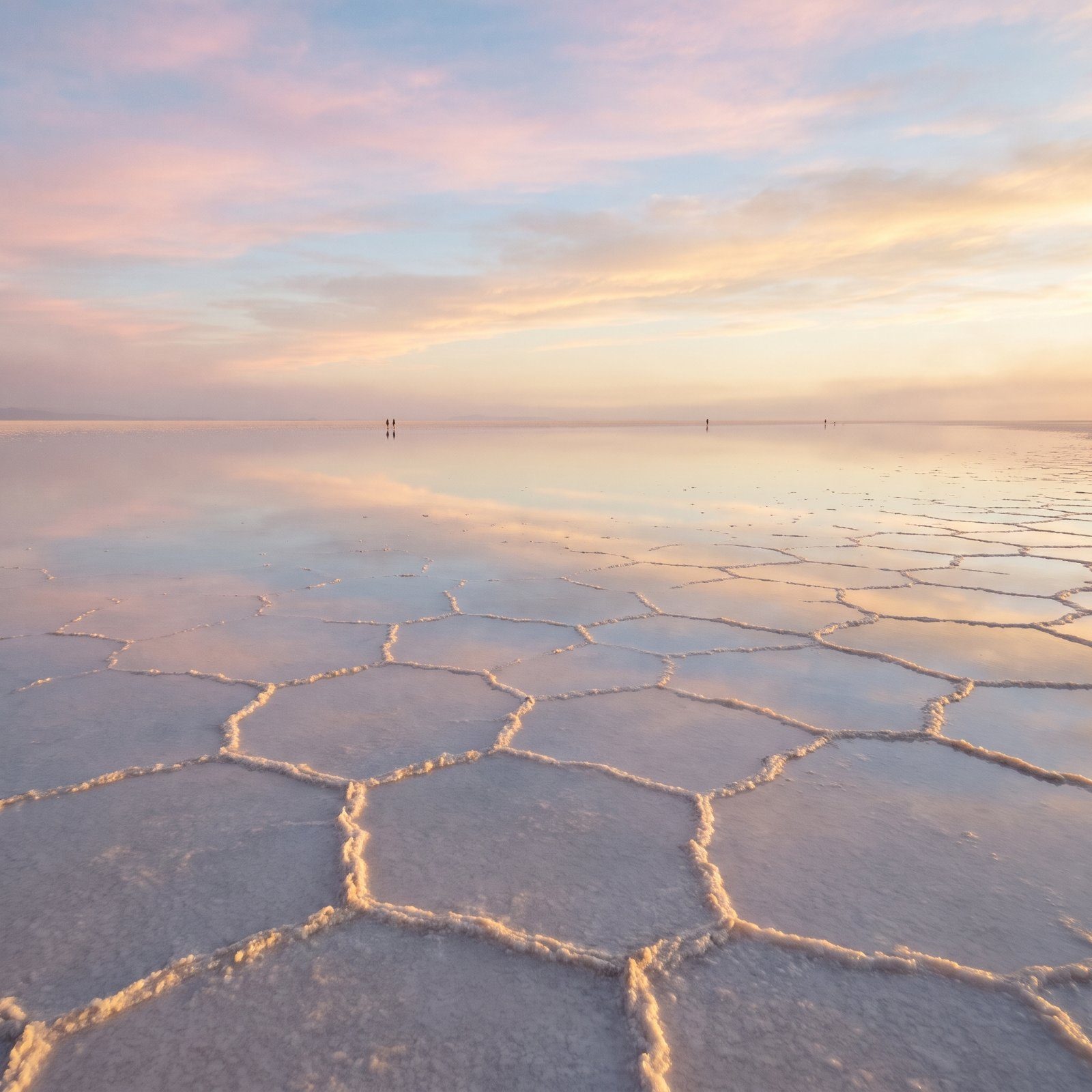
A sheet of water so still it swallows the sky whole. Trees that bleed red when you cut them. Mountains striped like a layer cake left out in the rain. None of it was rendered on a screen. Every one of these places exists right now, somewhere you could theoretically fly to, stand in, and feel the heat or the cold on your own skin. Our eyes evolved to trust certain rules about how a landscape should behave, and these spots shred every one of them. Here’s the strange part: the science behind the weirdness usually outdoes the photo. These are the places that make people squint and ask whether someone faked the shot.
Please note that some of the images in this article were created with the assistance of AI.
48. Salar de Uyuni: The Salt Flat That Turns Into the Sky, Bolivia
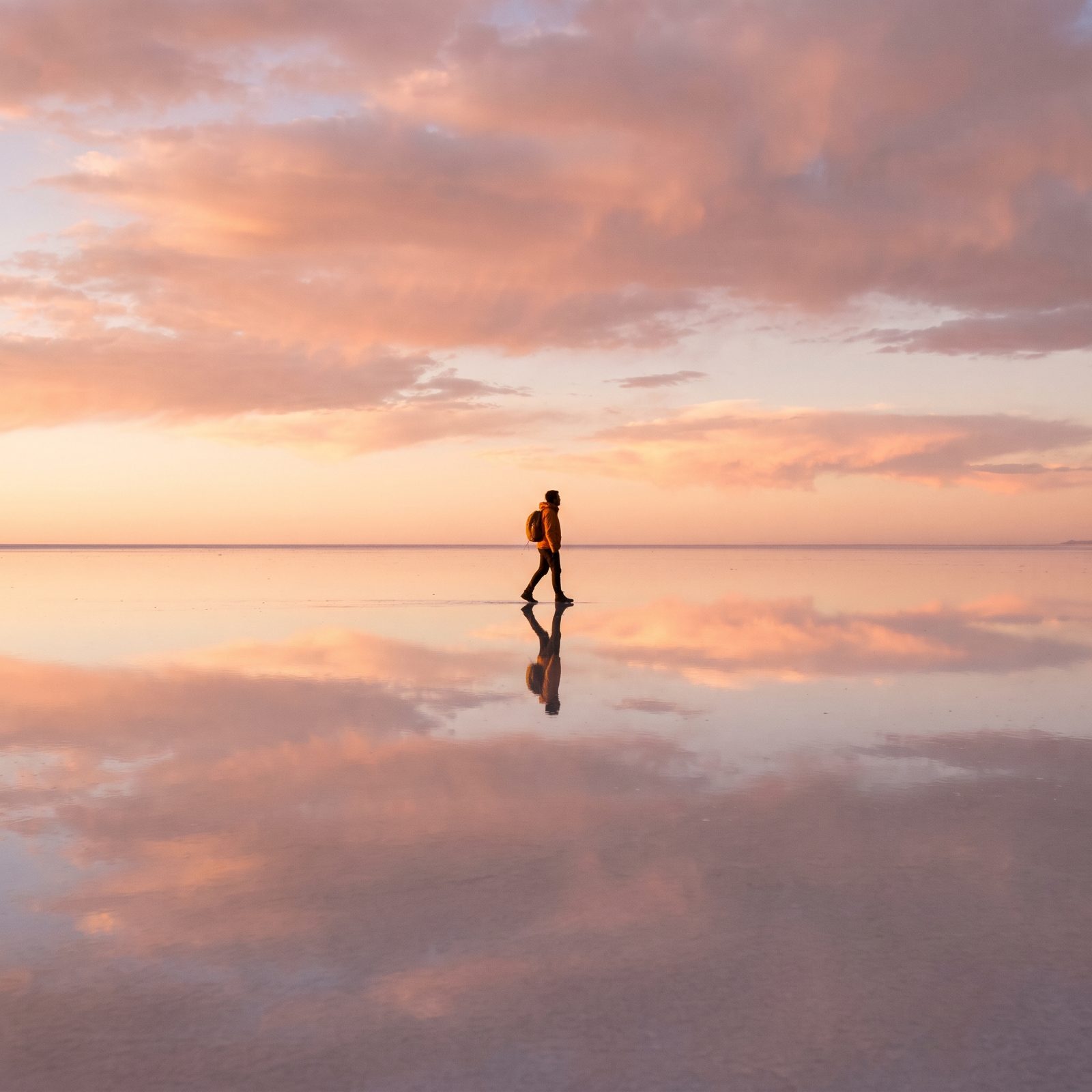
Thousands of square miles of ancient lakebed, flat to within about a meter across the entire expanse. Drop a thin layer of rain on top and the whole surface becomes a mirror, and the brain just quits trying to find the horizon. People genuinely lose their sense of up and down out here. Photographers stand their subjects on the water and the subjects look like they’re strolling across a cloud.
And there’s a hidden payload underfoot: the flat holds a staggering share of the world’s lithium, though very little of it has actually been mined so far.
47. Socotra’s Dragon’s Blood Trees, Yemen
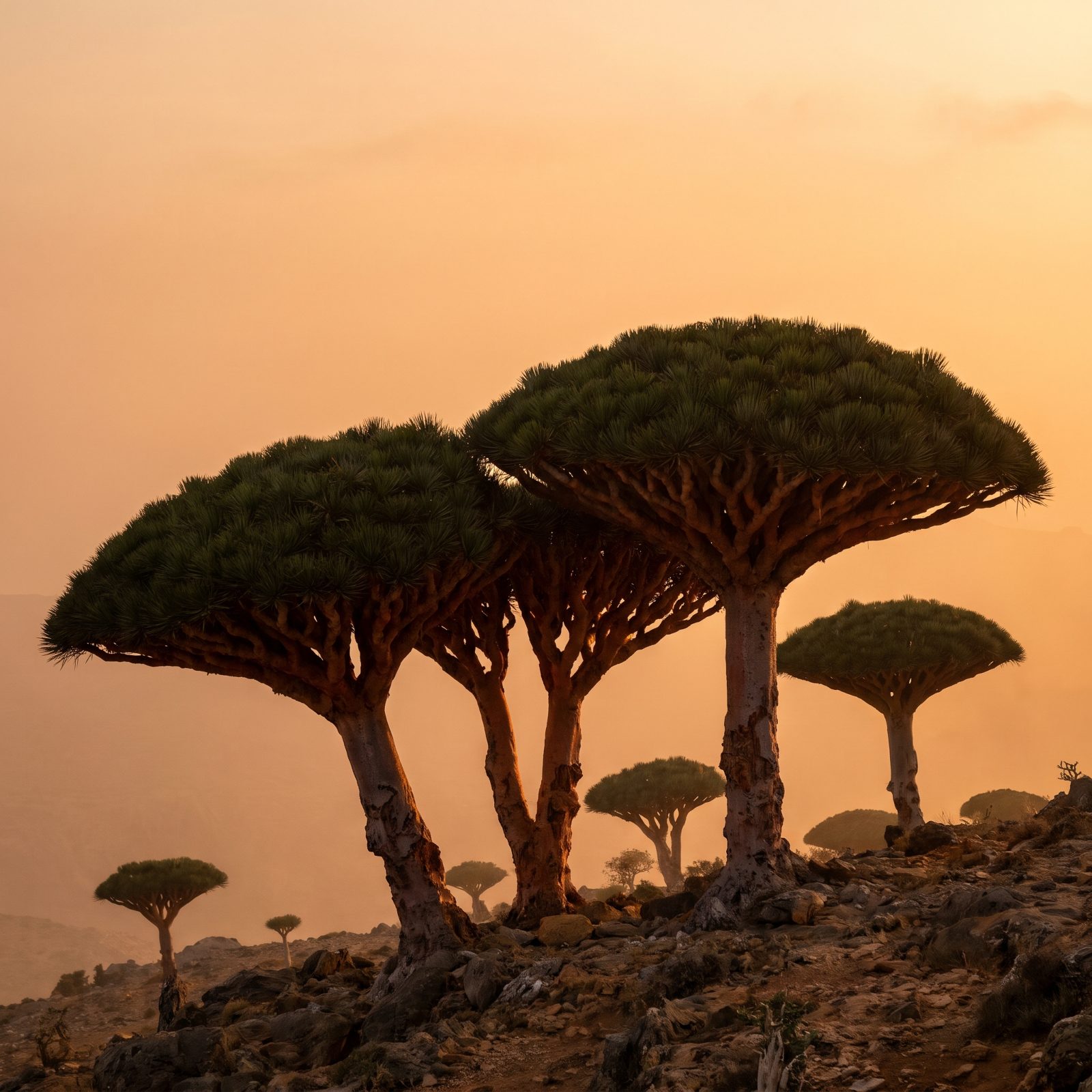
They look like someone planted a field of green umbrellas and wandered off. But the shape does a job. That tight upturned canopy funnels the island’s thin mist down the branches to the roots, a tree reshaped by drought to drink straight out of fog.
Slice the bark and it weeps a deep red resin, the “dragon’s blood” that gave the tree its name and got traded as medicine and dye for thousands of years. Socotra floated alone in the Arabian Sea long enough that roughly a third of its plants grow nowhere else. People keep calling it the most alien-looking place on Earth. Stand in that forest and you won’t put up much of a fight.
46. Lençóis Maranhenses: Blue Lagoons Trapped Between White Dunes, Brazil
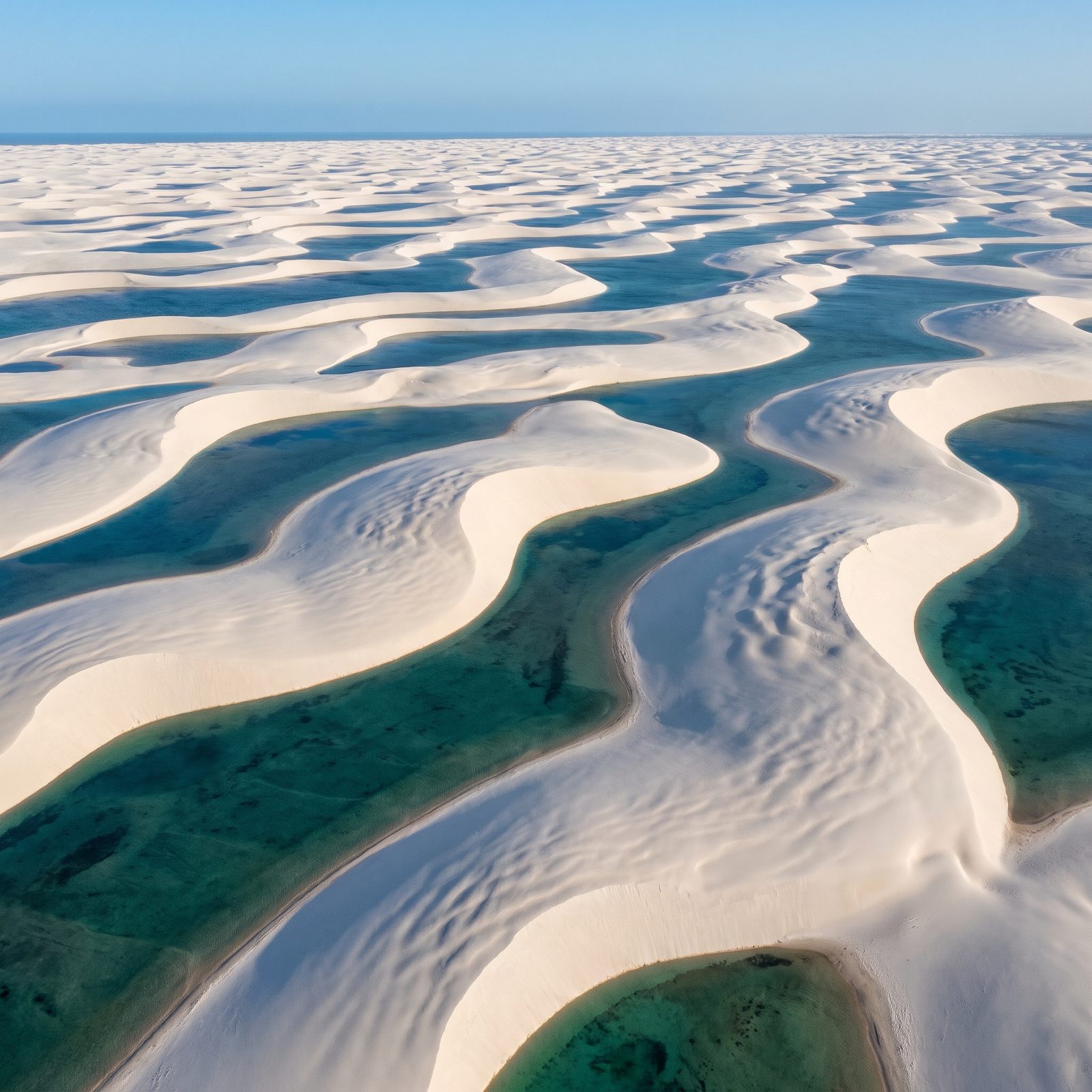
A desert that fills with water. For most of the year this is a blank sheet of white dunes near the equator, and then the rains arrive. The sand sits on a hard layer that refuses to drain, so the valleys between the dunes fill into thousands of clear turquoise pools.
Now the part nobody mentions: there are fish in them. The lagoons dry out completely by late year, yet the fish come back every season, carried in as eggs by birds or riding out the drought in damp mud. A dune field that stocks its own swimming pools, then restocks the fish. Show up roughly July through September to catch them brimming.
45. Zhangye Danxia’s Rainbow-Striped Mountains, China
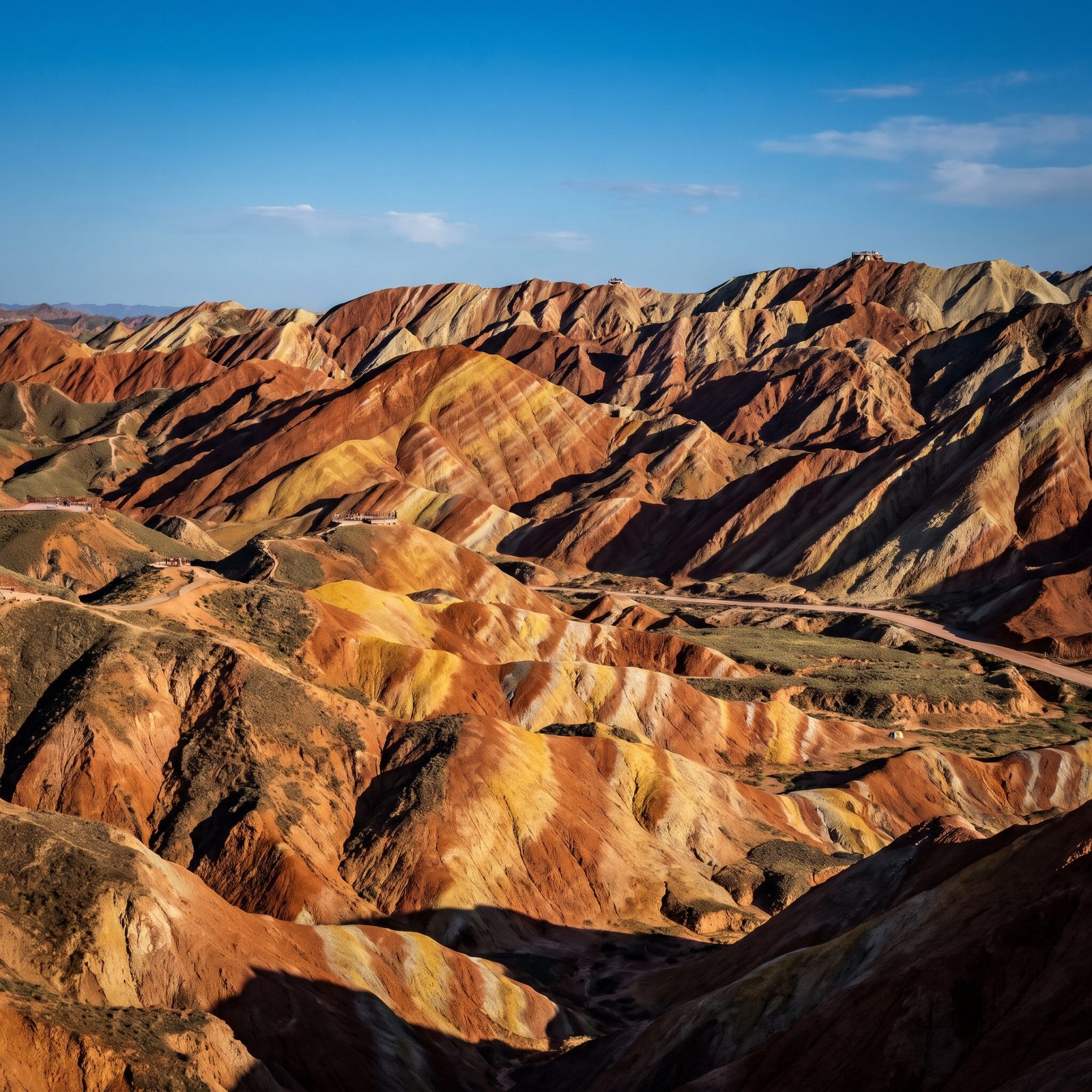
Those stripes are time, tipped onto its side. Millions of years of sandstone and mineral layers settled down flat, then got shoved up and folded by the same collision that raised the Himalayas, turning the horizontal bands into diagonal ribbons that run across the hills.
The colors trace back to different minerals in each layer, iron oxides for the reds and oranges, other traces for the yellows and greens. And light matters here more than almost anywhere. Go after rain or in low golden sun and the bands blaze. Go at flat midday and the same hills look dusty and grey, which is precisely when most disappointed visitors turn up.
44. Dallol: Ethiopia’s Neon Acid Landscape
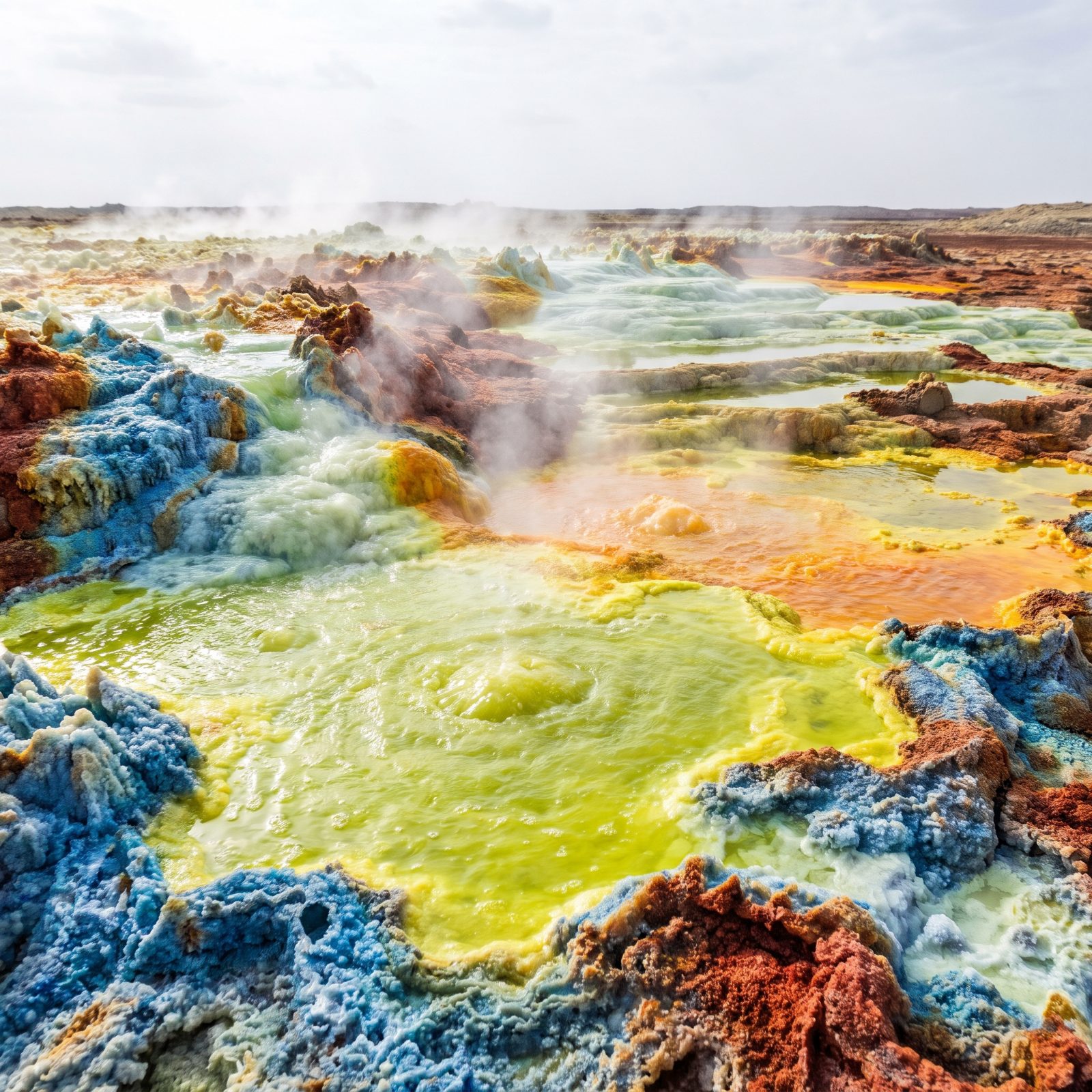
One of the hottest inhabited spots on Earth, and it looks like a chemistry set that boiled over and nobody cleaned up. Volcanic heat drives superheated water up through layers of salt and sulfur, and it dries into terraces of screaming yellow, green and orange crust.
Those pretty pools? Concentrated acid and salt brine, hot enough and corrosive enough to kill you. Scientists study Dallol partly because it’s so brutal that even microbes struggle here, which tells us something about the hard edges of life, and where to go hunting for it on other worlds.
43. Grand Prismatic Spring’s Bullseye of Color, Wyoming
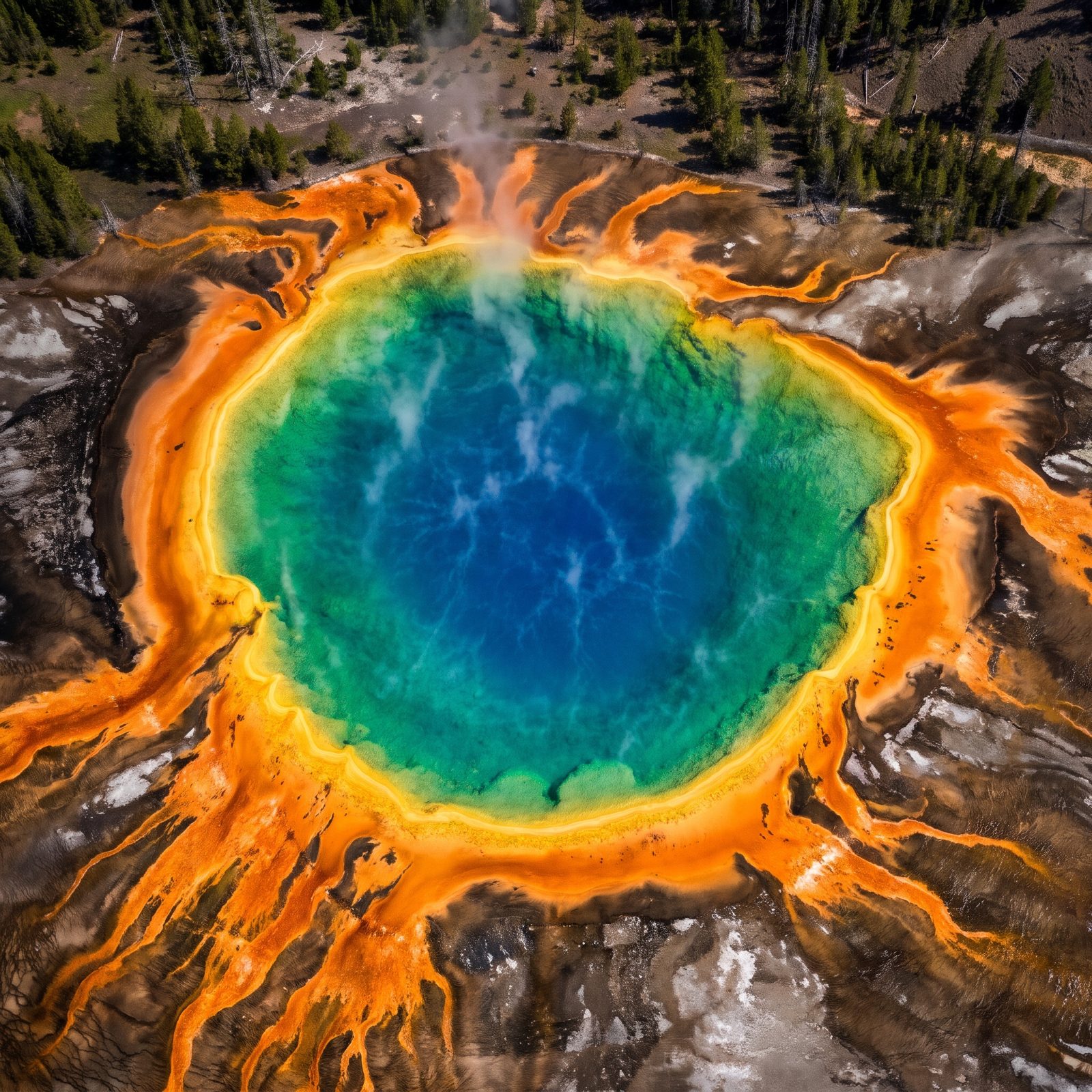
The biggest hot spring in the United States, and here’s the twist: the rings aren’t minerals. They’re alive. The deep blue center sits near boiling, too hot for almost anything to survive, so the water there stays clear and scatters blue light like a clean mountain lake.
Move outward and the water cools in bands, and each temperature suits a different pigmented microbe. That’s why you get those tidy concentric rings of orange, gold and rust. The color is made of trillions of heat-loving bacteria, sorted by exactly how much warmth they can stand. You need to get above it to read the full bullseye, so the hillside overlook earns the short climb.
42. Deadvlei: Black Dead Trees on an Orange Dune Floor, Namibia
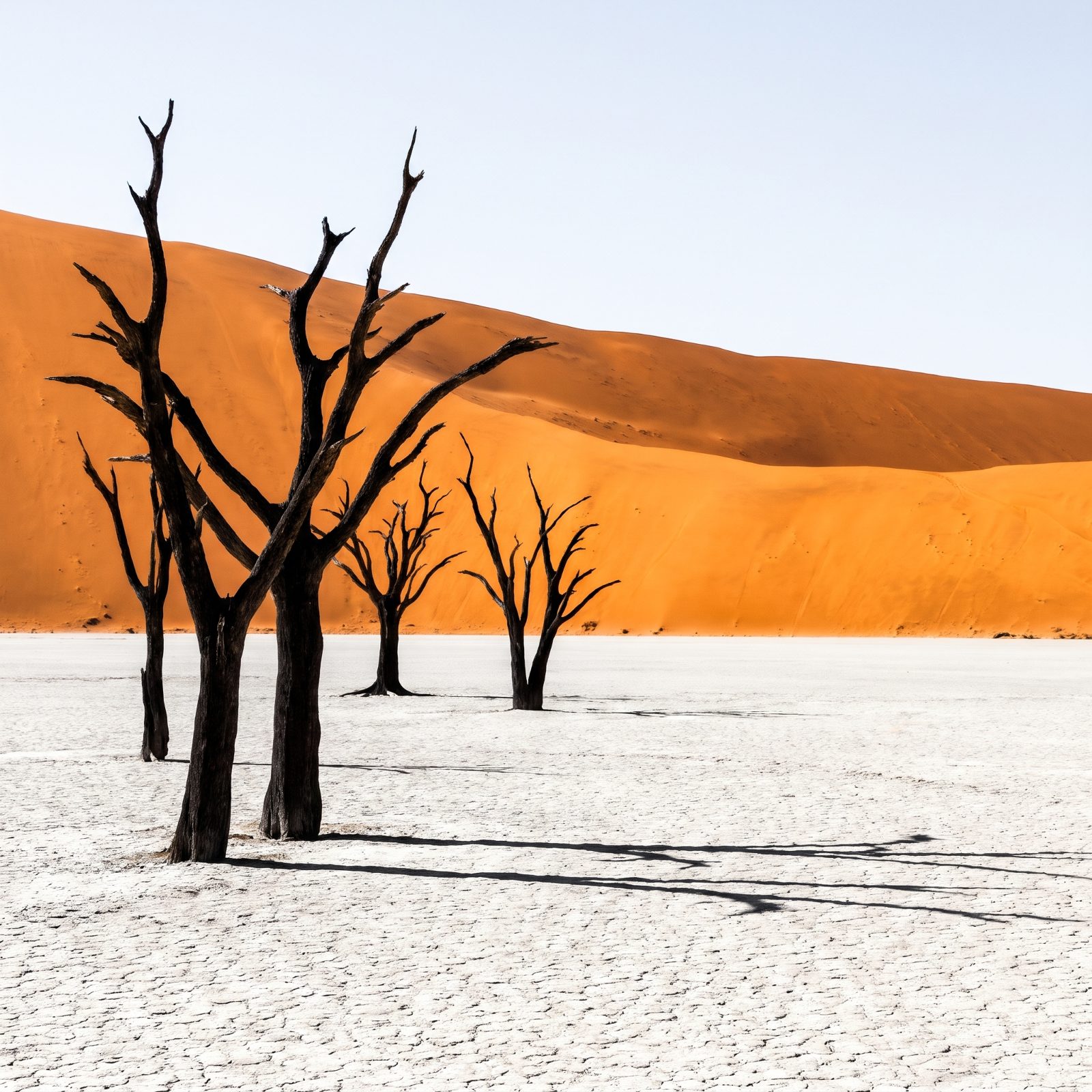
The trees have been dead for something like six or seven centuries, and they’re still upright. A river once fed this pan. Then the climate shifted, dunes marched in and sealed it off, the camel thorn trees died, and the desert here is so bone-dry that they never got the chance to rot.
So they just stand there, scorched black by the sun, planted on a bone-white clay floor, against orange dunes that rank among the tallest anywhere. Three flat blocks of color too bold to look real. The whole scene reads like a painting, and that’s exactly why it’s one of the most photographed spots on the continent.
41. Pamukkale’s White Travertine Terraces, Türkiye
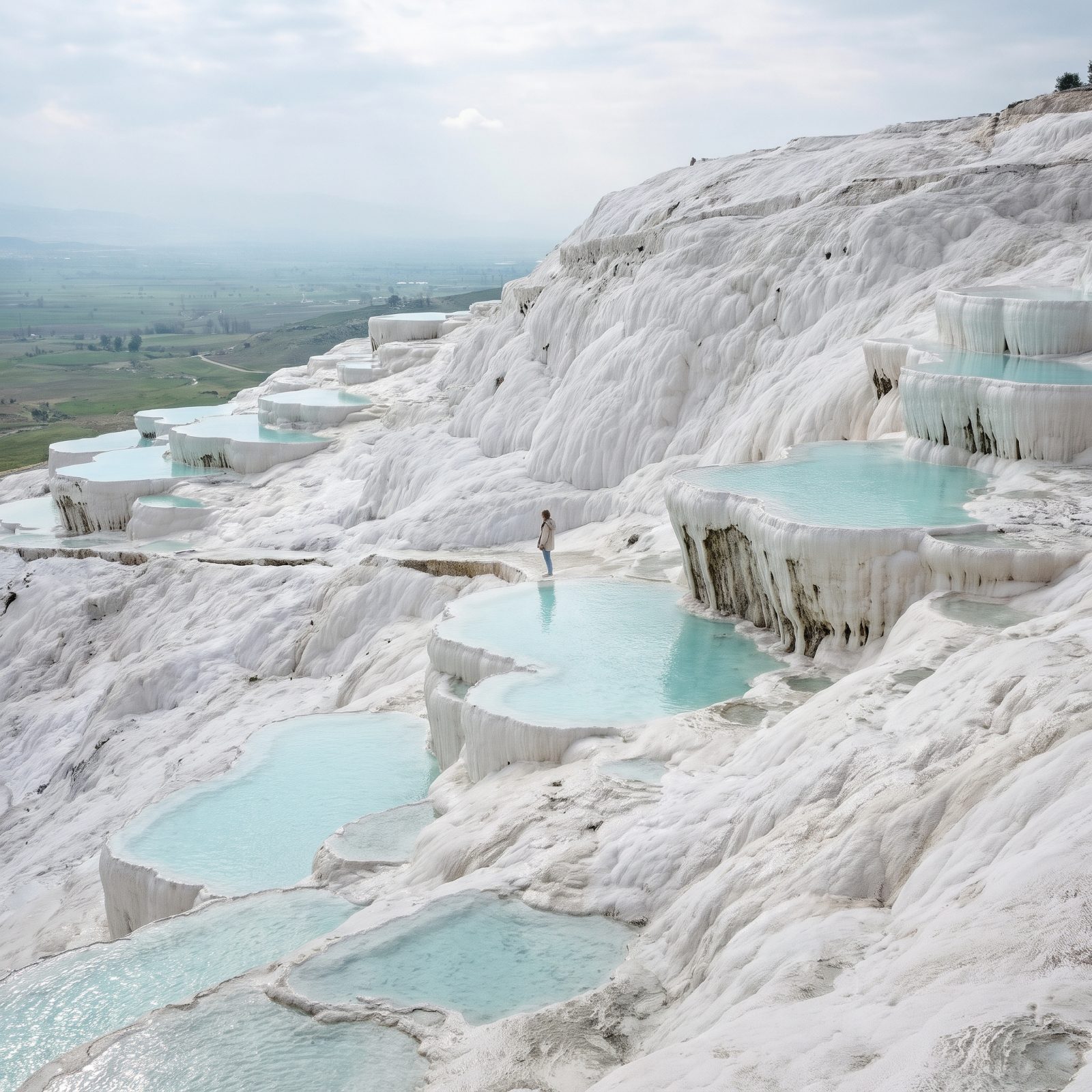
Pamukkale means “cotton castle,” and from a distance you’d swear the hillside was buried in snow in the middle of a warm Turkish valley. It isn’t snow. It’s travertine, a white mineral left behind as warm, calcium-rich spring water trickles down the slope and cools.
The water sheds its dissolved limestone step by step, building terrace after terrace of brilliant white stone cupping shallow turquoise pools. People have soaked here since Roman times, and the Greeks went ahead and built the city of Hierapolis right on top of the whole thing.
40. Waitomo’s Ceiling of Living Stars, New Zealand
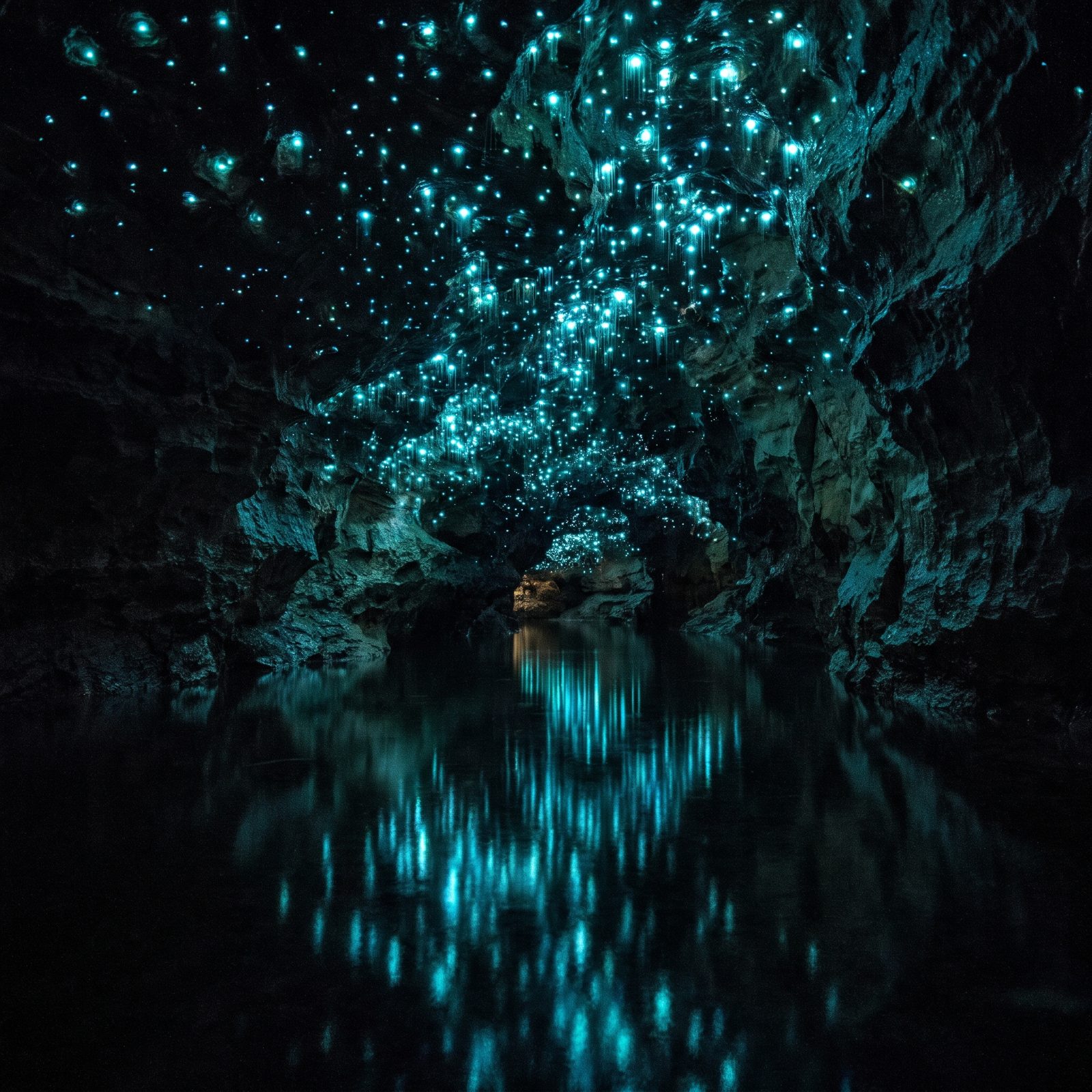
You drift through a cave in total darkness, glance up, and find a galaxy. Thousands of pinpoint blue-green lights spangle the ceiling. The effect is so convincing that people drop their voices like they wandered into a planetarium.
Now the ugly truth behind the beauty: each “star” is a fishing line. The glowworm is a fungus gnat larva, and it dangles sticky silk threads from the ceiling to snare insects lured in by its glow. Hungrier larva, brighter light. So that gorgeous starfield is really a predator’s trap, thousands of them, hunting in the dark right above your head.
39. Zhangjiajie’s Stone Pillars That Look Like They’re Floating, China
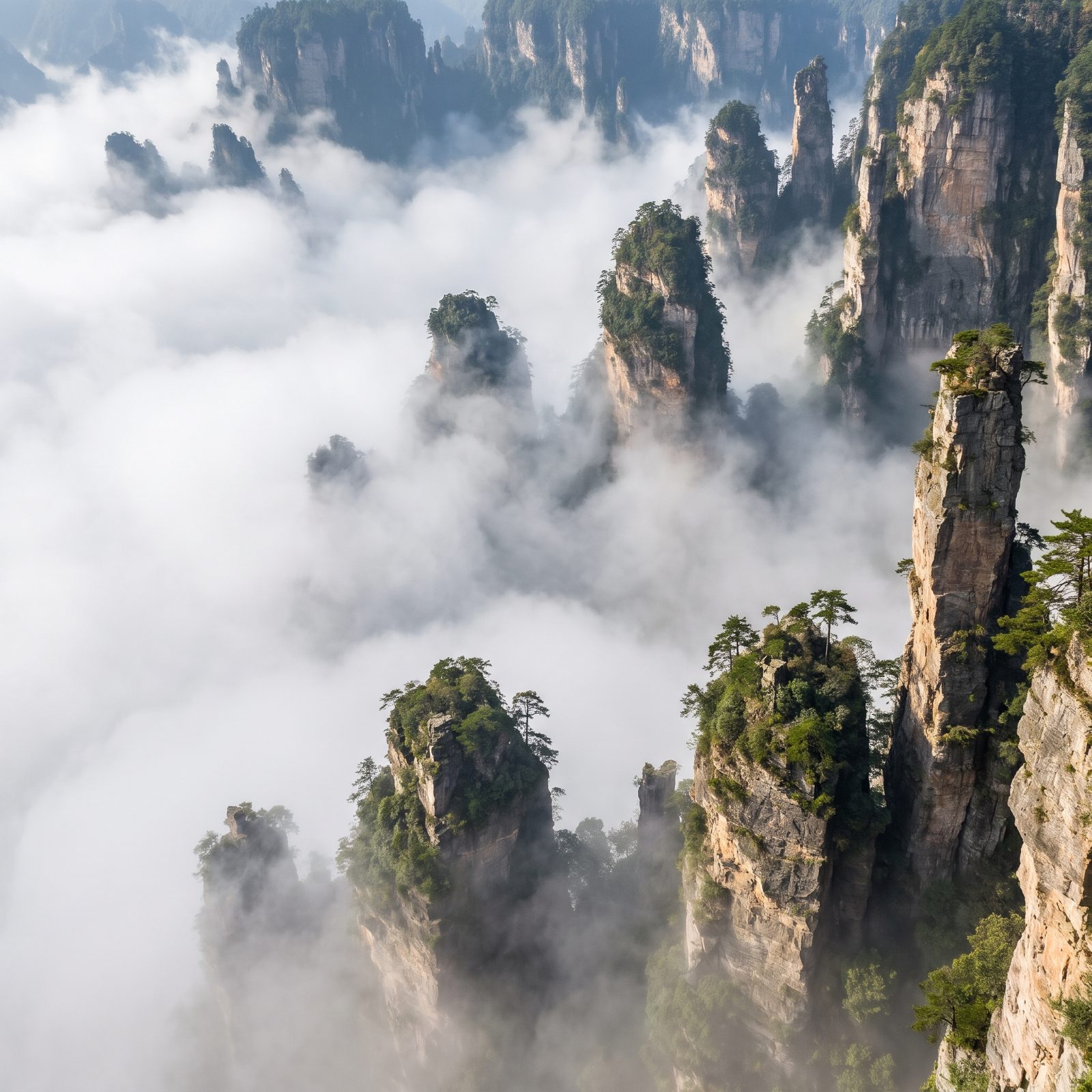
Thousands of quartz-sandstone pillars, some soaring hundreds of feet, crammed into one valley and swaddled in cloud. When the morning mist rolls through and hides their bases, the green-topped columns look like they’re hanging in midair, which is exactly where a certain blockbuster film borrowed the look of its floating mountains.
These weren’t carved by wind. Water did it. Rain and ice pried apart a thick sandstone plateau along its fractures over millions of years, stripped away everything loose, and left the hardest cores standing as towers. Catch them on a misty morning and your brain flat-out refuses the picture. Clear, flat days don’t do them justice.
38. The Marble Caves’ Swirling Blue Walls, Chile
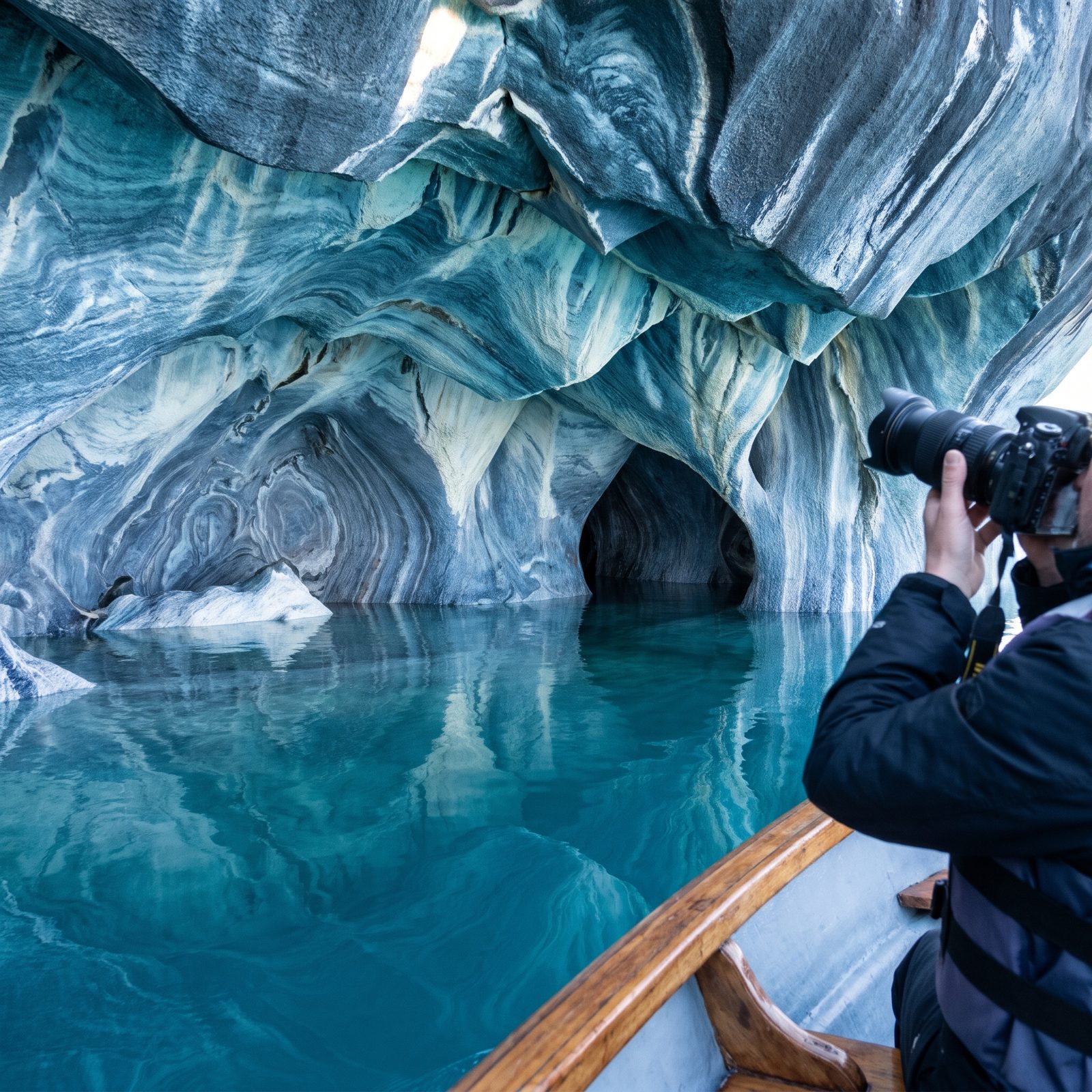
The walls look painted by someone who ran a thumb through wet glaze. They weren’t. That swirl is thousands of years of waves grinding away at solid marble, one lap at a time.
The color is the trick that breaks your brain. Those blue ribbons aren’t pigment — they’re the glacial water below bouncing light up onto the pale stone, so the whole cave changes shade with the season and the sky. January, when the lake is fullest and bluest, is the postcard. By autumn the water drops and the glow fades.
You reach it by boat from Puerto Río Tranquilo, and only when the lake is calm enough. It refuses to perform on a windy day.
37. Fly Geyser’s Technicolor Mineral Cones, Nevada
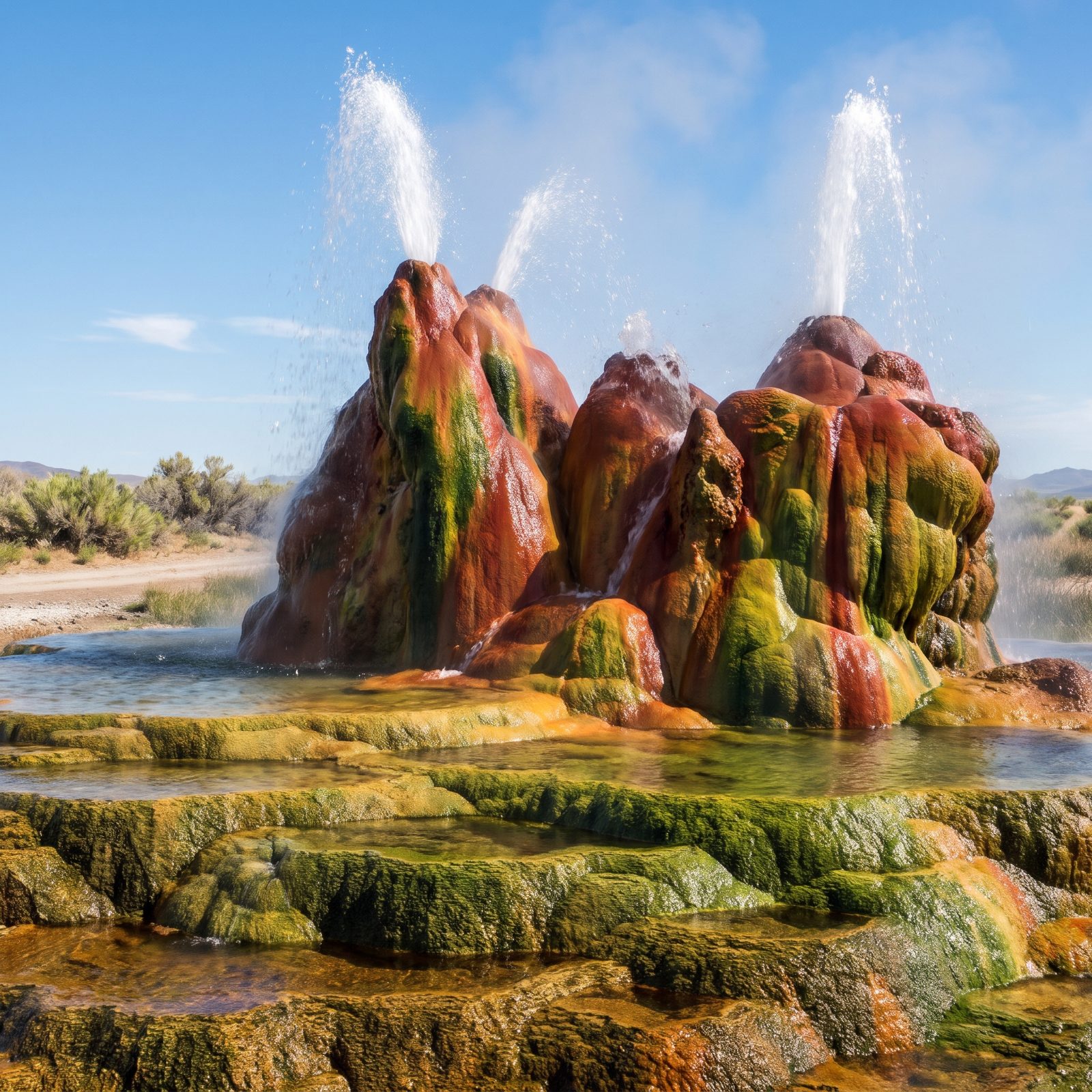
Here’s the believe-it-or-not twist: this one’s an accident. A geothermal well drilled back in 1964 got capped badly, and mineral-rich water has been building these candy-colored cones ever since. Nature took a human mistake and ran with it for decades.
The colors come from thermophilic algae — heat-loving microbes that paint the wet rock in reds, greens and golds. It grows a little taller every year.
36. Antelope Canyon’s Sculpted Light Beams, Arizona
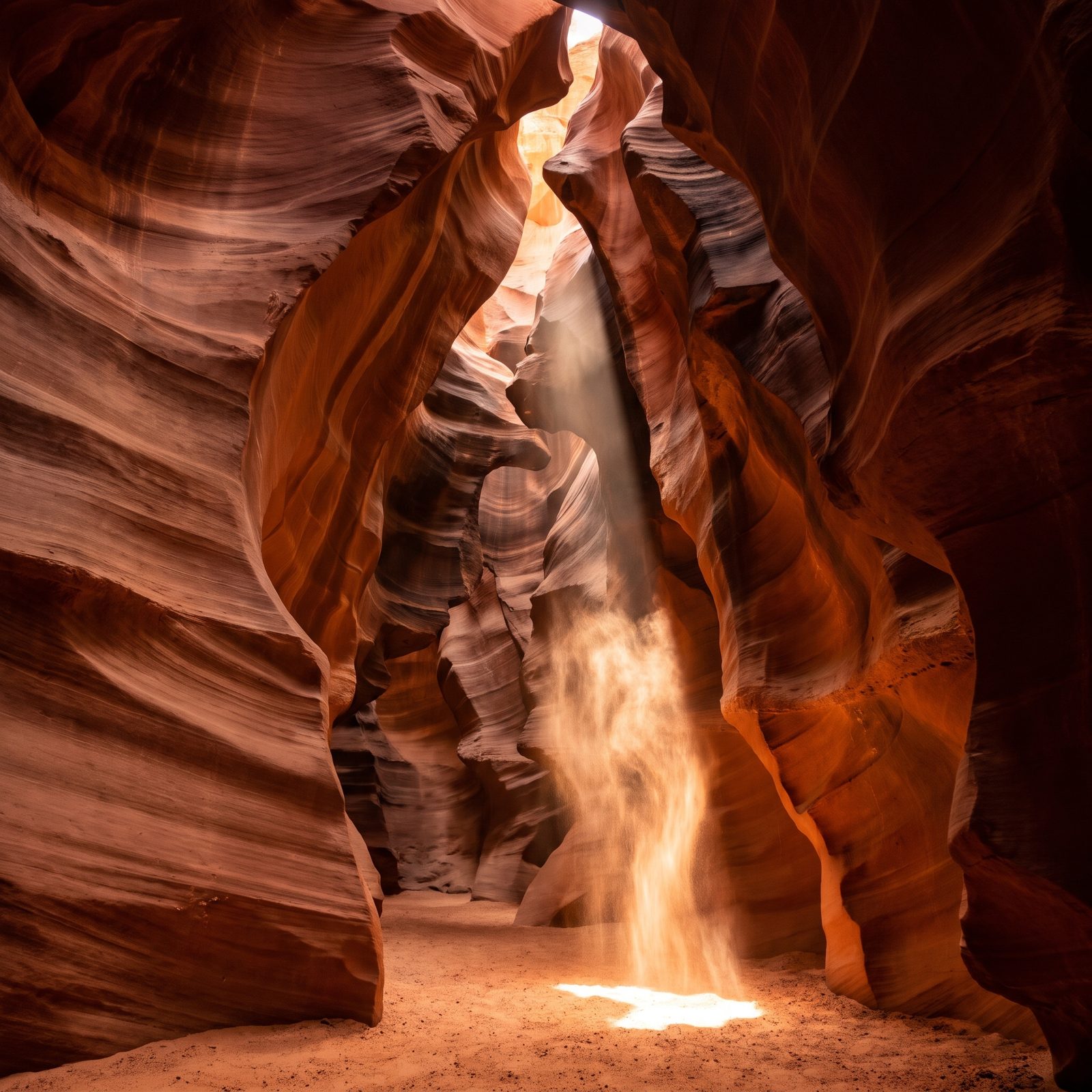
The light beams only show up for part of the year. People assume Antelope Canyon glows like this all day, every day. It doesn’t.
Those solid golden shafts need the sun almost directly overhead — late morning into early afternoon, and only from roughly late March through early October. Outside that window the slots are still gorgeous, but the beams go missing.
And the dust in the beam? Guides sometimes toss a handful of sand to make it pop for the camera. The canyon sits on Navajo land near Page, Arizona, and you cannot enter without a Navajo-authorized guide. No solo wandering, no exceptions.
35. Lake Hillier’s Bubblegum-Pink Water, Australia
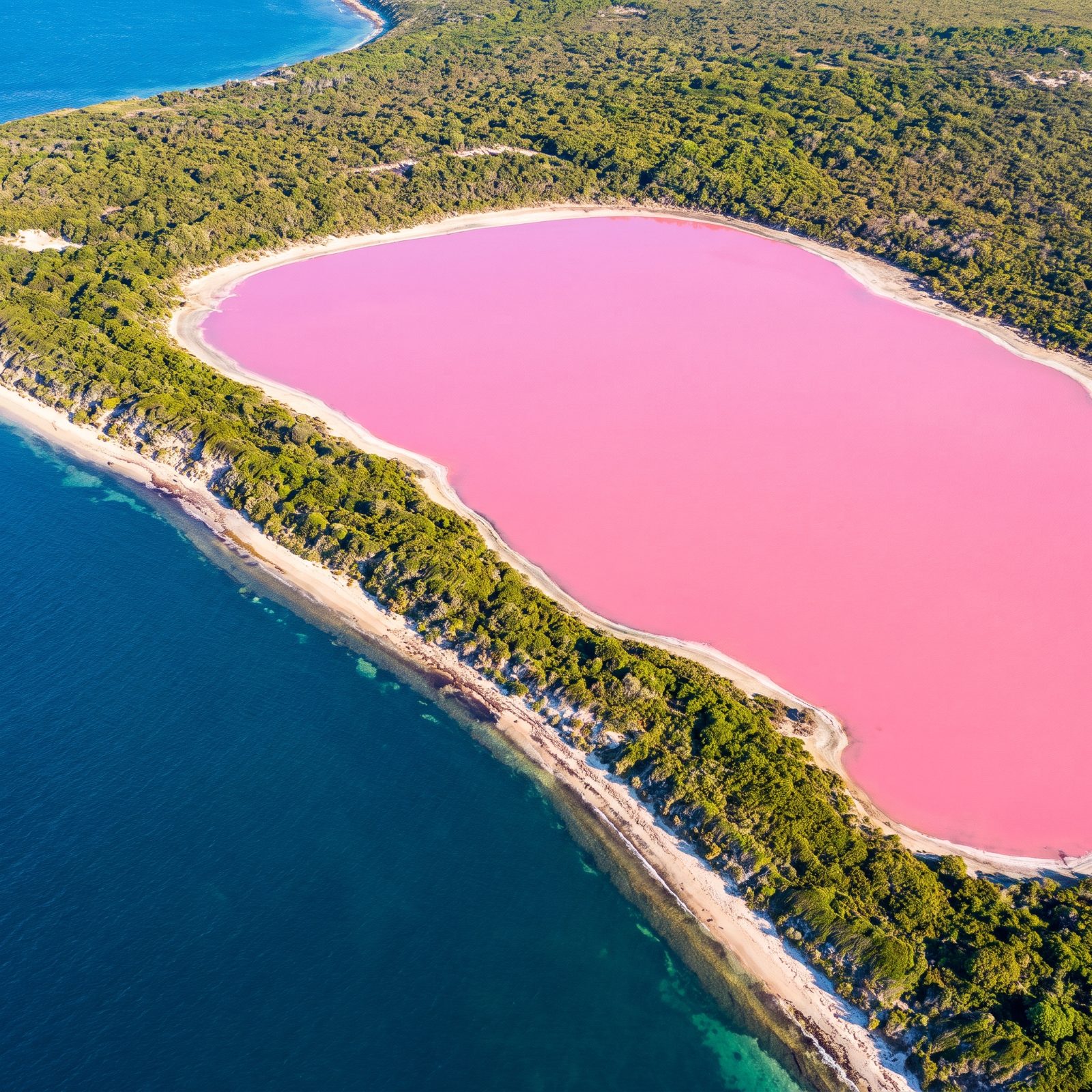
From the air it looks like someone spilled a strawberry milkshake into the ocean. The pink is real and permanent — not a seasonal fluke, not a filter.
What makes it pink is still argued over. The leading suspects are a salt-loving algae called Dunaliella salina and pink bacteria living in the salt crust, both of which pump out red pigment in the briny water. Scoop a glassful and the color stays. That’s the part that stumps people.
It sits on a protected island off Esperance, so most visitors see it from a scenic flight. No swimming, no boat ramp, no gift shop.
34. Caño Cristales’ Liquid Rainbow, Colombia
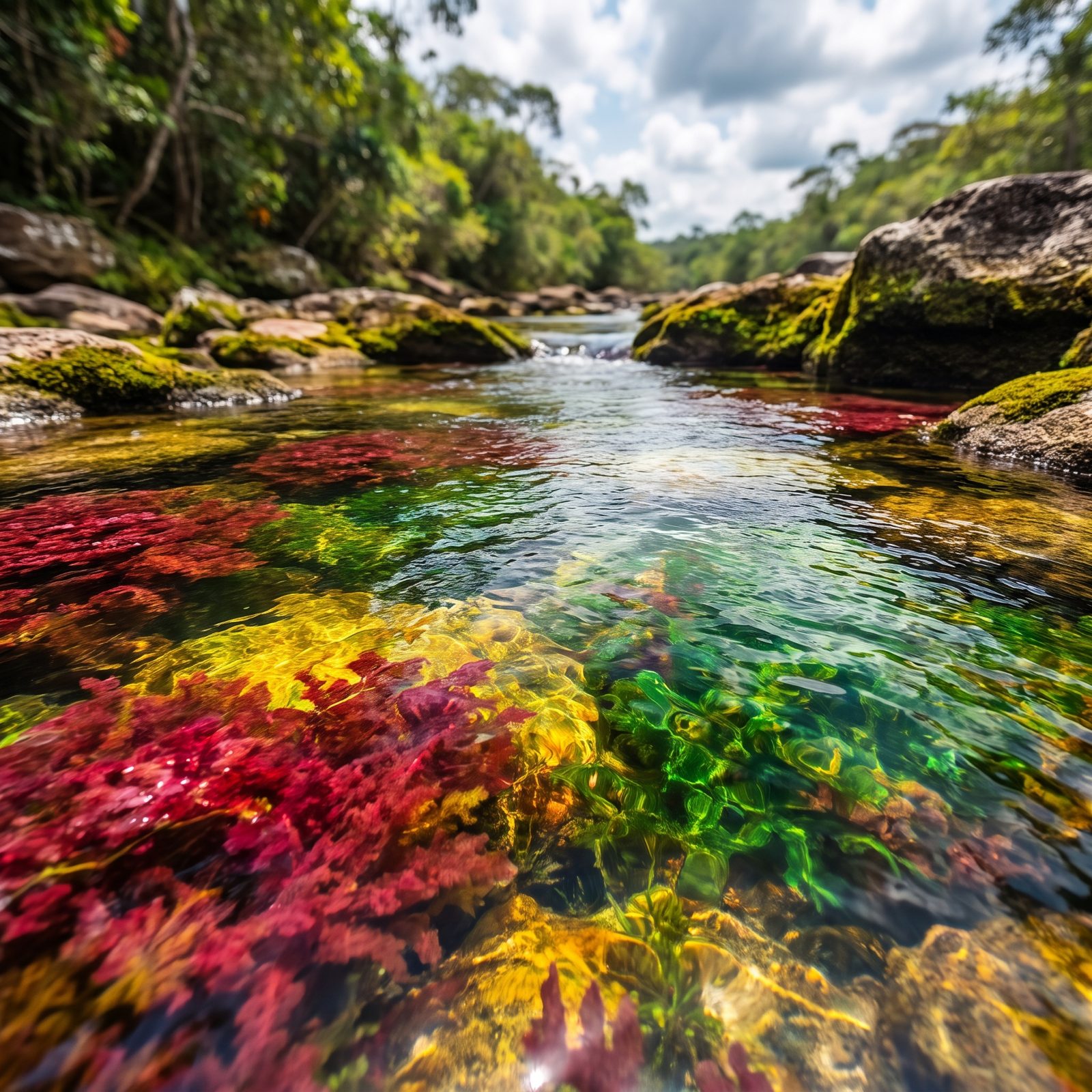
Colombians call it the river that ran away from paradise. For most of the year it’s an ordinary clear stream. Then, for a narrow window usually falling between June and November, the riverbed detonates.
The red isn’t rock or algae. It’s an aquatic plant, Macarenia clavigera, that turns a furious crimson only when water level and sunlight hit an exact sweet spot. Too deep, no red. Too shallow and sun-baked, no red. It wants the in-between.
Five colors in one river: red plants, green moss, blue water, yellow sand, black rock.
Access runs through guides from La Macarena, and sunscreen is banned in the water to protect the plants.
33. The Giant’s Causeway’s Hexagonal Columns, Northern Ireland
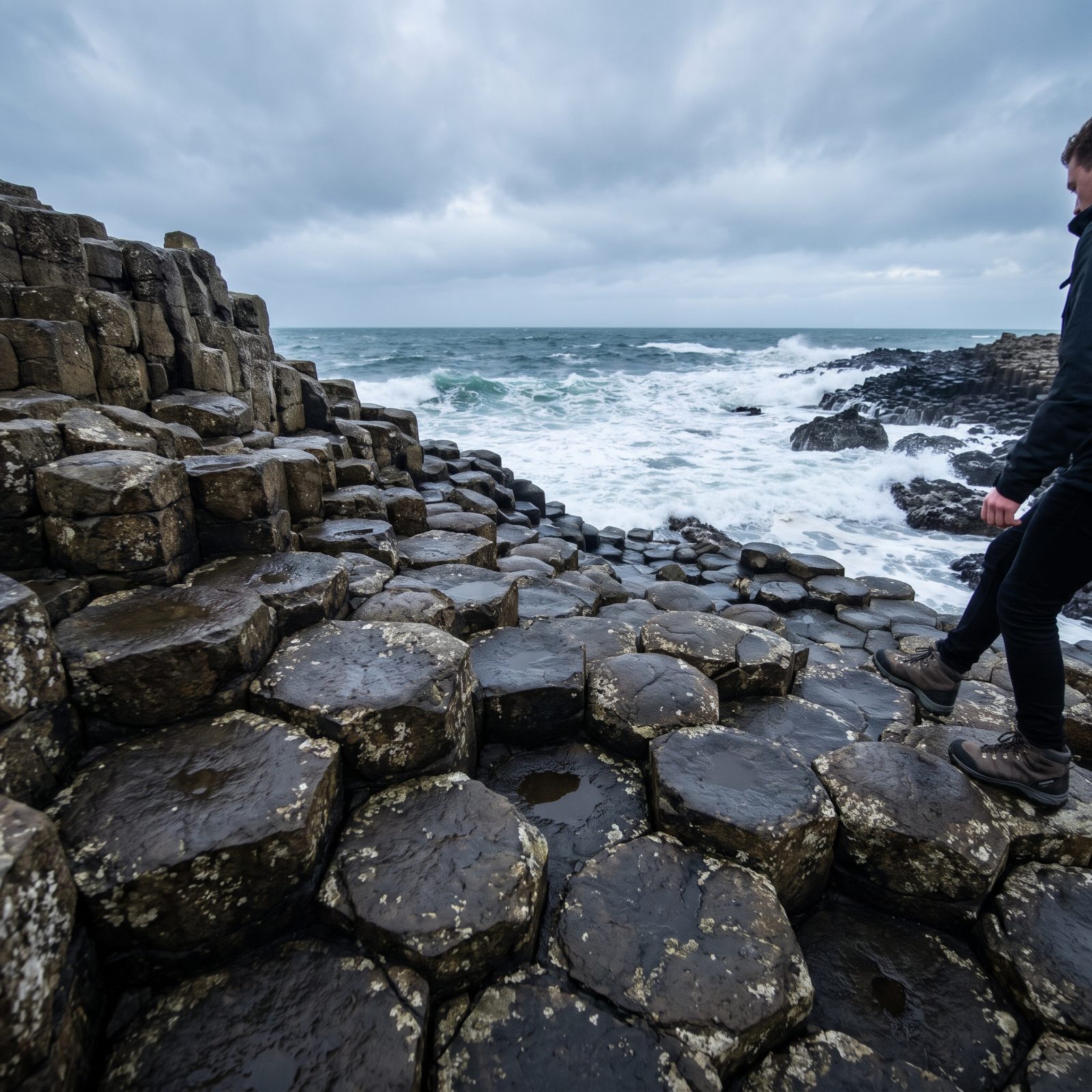
Roughly 40,000 columns, most of them hexagons, packed together so neatly they look machine-cut. They aren’t. This is simply how cooling lava cracks when it contracts evenly — the same way drying mud splits into polygons, only in slow-setting basalt about 60 million years ago.
The old legend blames a giant named Finn MacCool, who supposedly built a path across the sea to fight a Scottish rival. Honestly, the legend is hard to beat, even for people who love geology.
32. The Richat Structure’s Giant Desert Eye, Mauritania
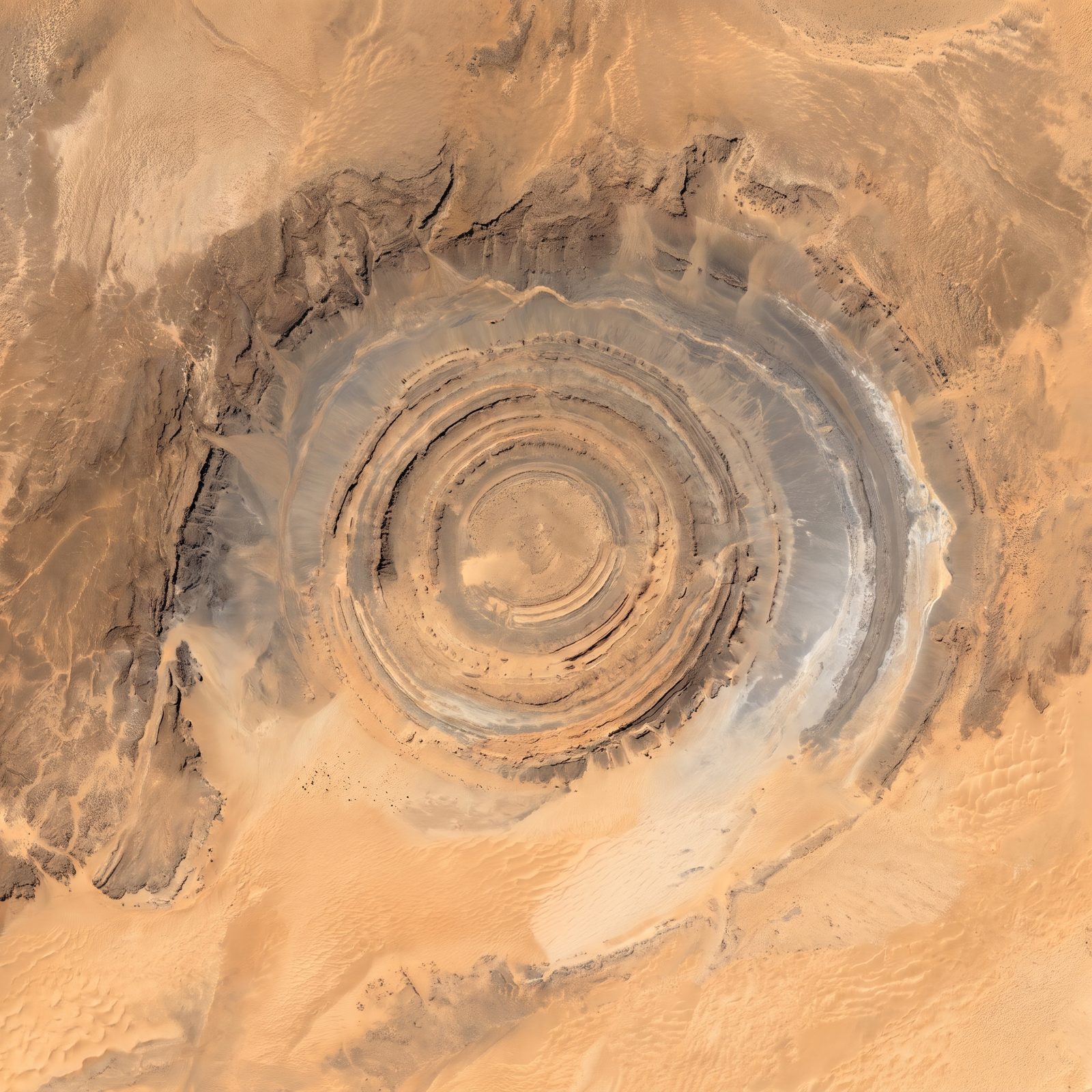
Astronauts use it as a landmark. From orbit the Sahara is a blank sheet, then this enormous bullseye appears, so perfectly circular that early observers wondered if a meteor had punched it out.
It didn’t. The Eye is a dome of layered rock that bulged up, then eroded from the top down, exposing ring after ring of different-aged stone like tree growth laid bare. The harder bands resist weathering and stand as ridges. The softer ones wear away into valleys between them.
You almost can’t grasp it from the ground. It’s just too big. The only honest way to appreciate this thing is from the air.
31. Mount Roraima’s Flat-Topped Lost World, Venezuela
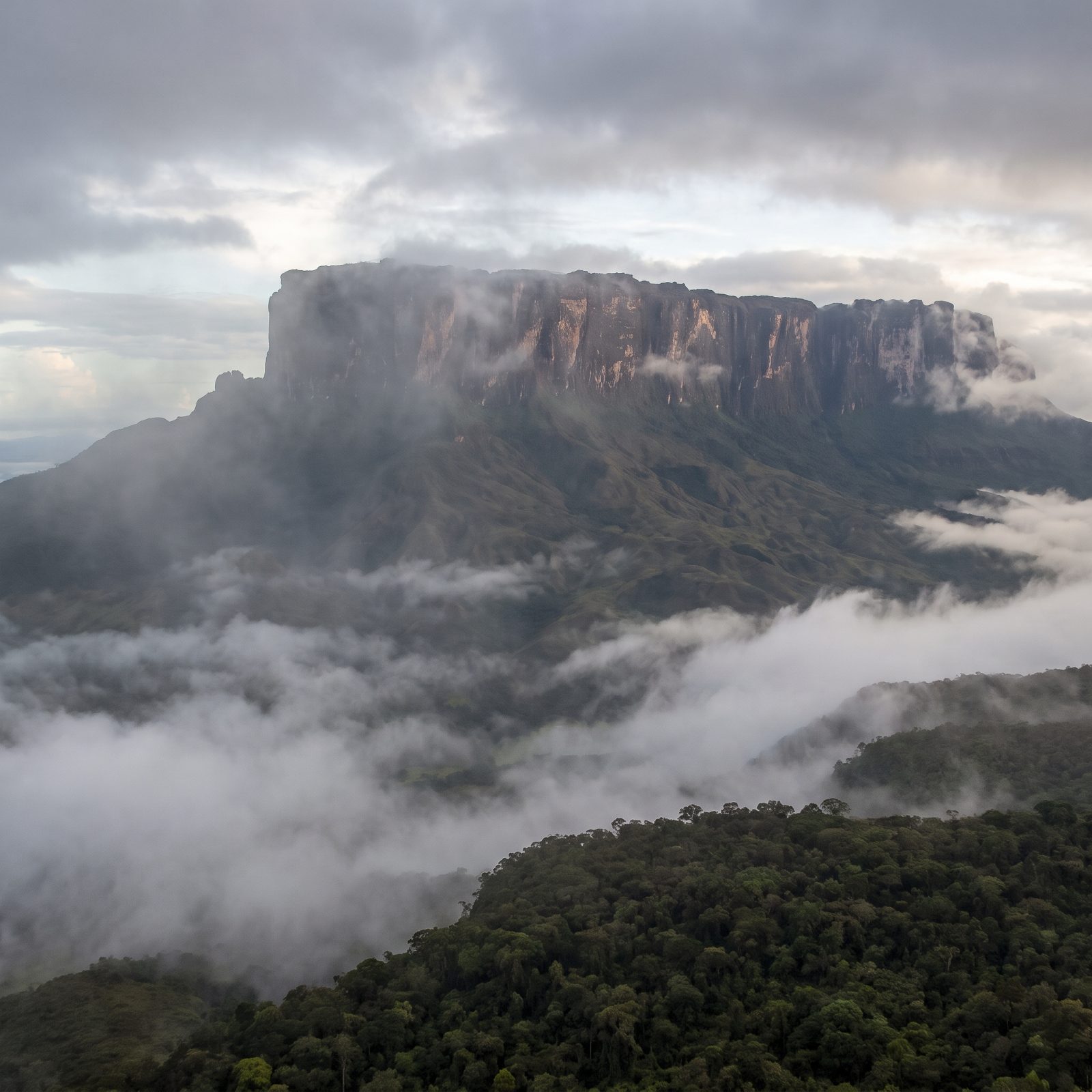
Cut the top off a mountain, lay it flat, and wrap the sides in a thousand-foot cliff. That’s a tepui, and Roraima is the most famous of them.
These table mountains rank among the oldest exposed rock on Earth, worn down over hundreds of millions of years until only the hardest sandstone cores remained, standing like islands above the jungle. Whatever lives up top evolved in isolation, cut off from the plains below.
That isolation inspired Arthur Conan Doyle’s 1912 novel The Lost World, where dinosaurs survive on a plateau nobody can reach. Real explorers found carnivorous pitcher plants and tiny black frogs instead. Still a decent trade.
30. Tsingy de Bemaraha’s Stone Forest, Madagascar
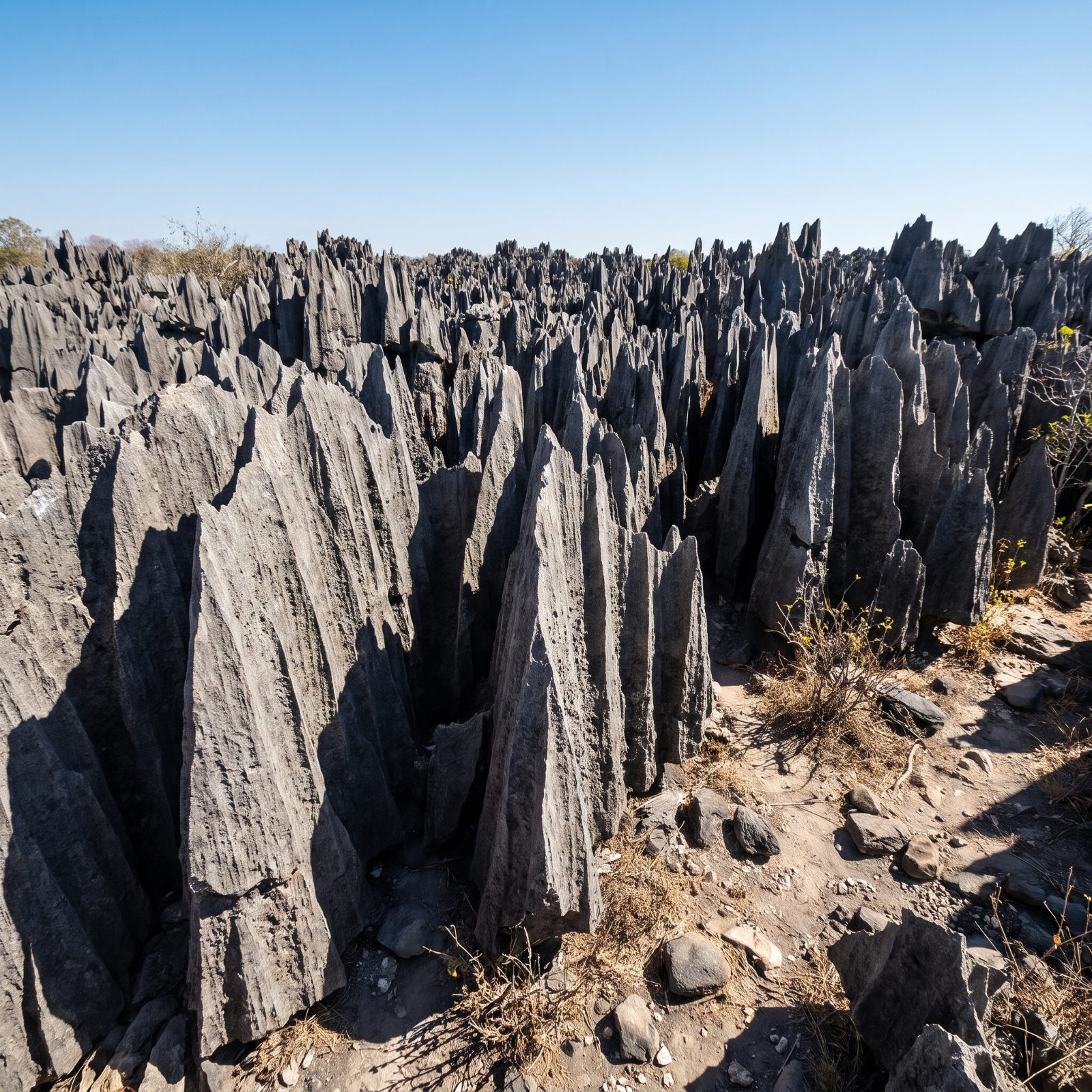
The name means “where you cannot walk barefoot,” and the locals weren’t exaggerating. This is a forest of stone knives — thousands of limestone spires honed to edges that would open your hand.
Rain did it. Acidic water dissolved the soft limestone from the top and the sides over millions of years, leaving only the hardest blades standing vertical. You cross it on fixed cables and bridges, or not at all.
29. Sơn Đoòng’s Jungle Growing Inside a Cave, Vietnam
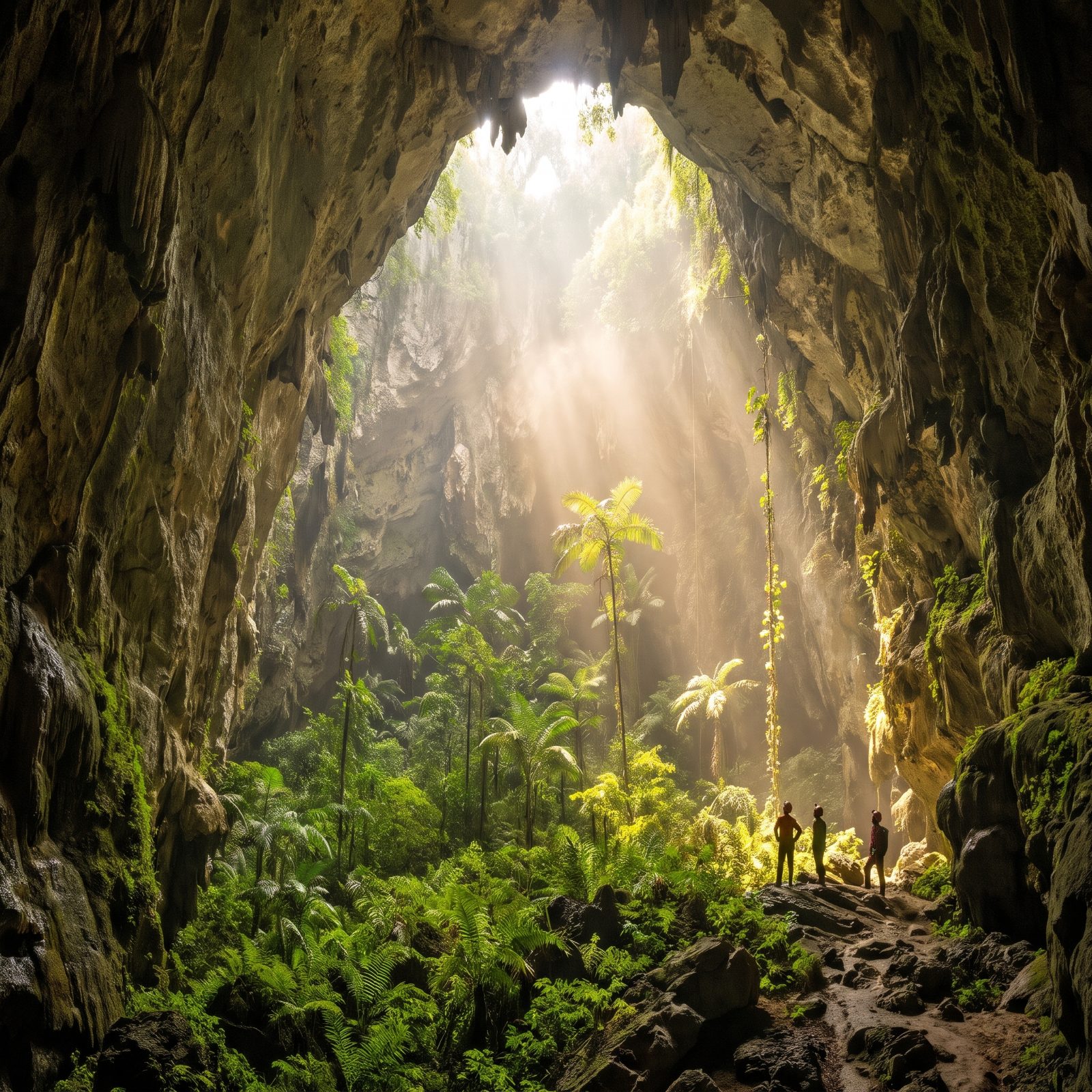
It’s big enough to fit a 40-story building inside, and a jumbo jet could taxi through the main passage. Even those numbers don’t prepare you for a cave with its own weather and its own sunlit jungle growing on the floor.
Where the ceiling collapsed long ago, light floods in through huge skylights, and trees took the invitation. Mist rolls through. Clouds form inside. A river runs the whole length of it.
A local man found the entrance in 1990, lost it, then rediscovered it in 2008. Explorers only surveyed it in 2009 — making it one of the last truly giant discoveries on a planet we thought we’d mapped.
28. Kawah Ijen’s Electric-Blue Flames, Indonesia
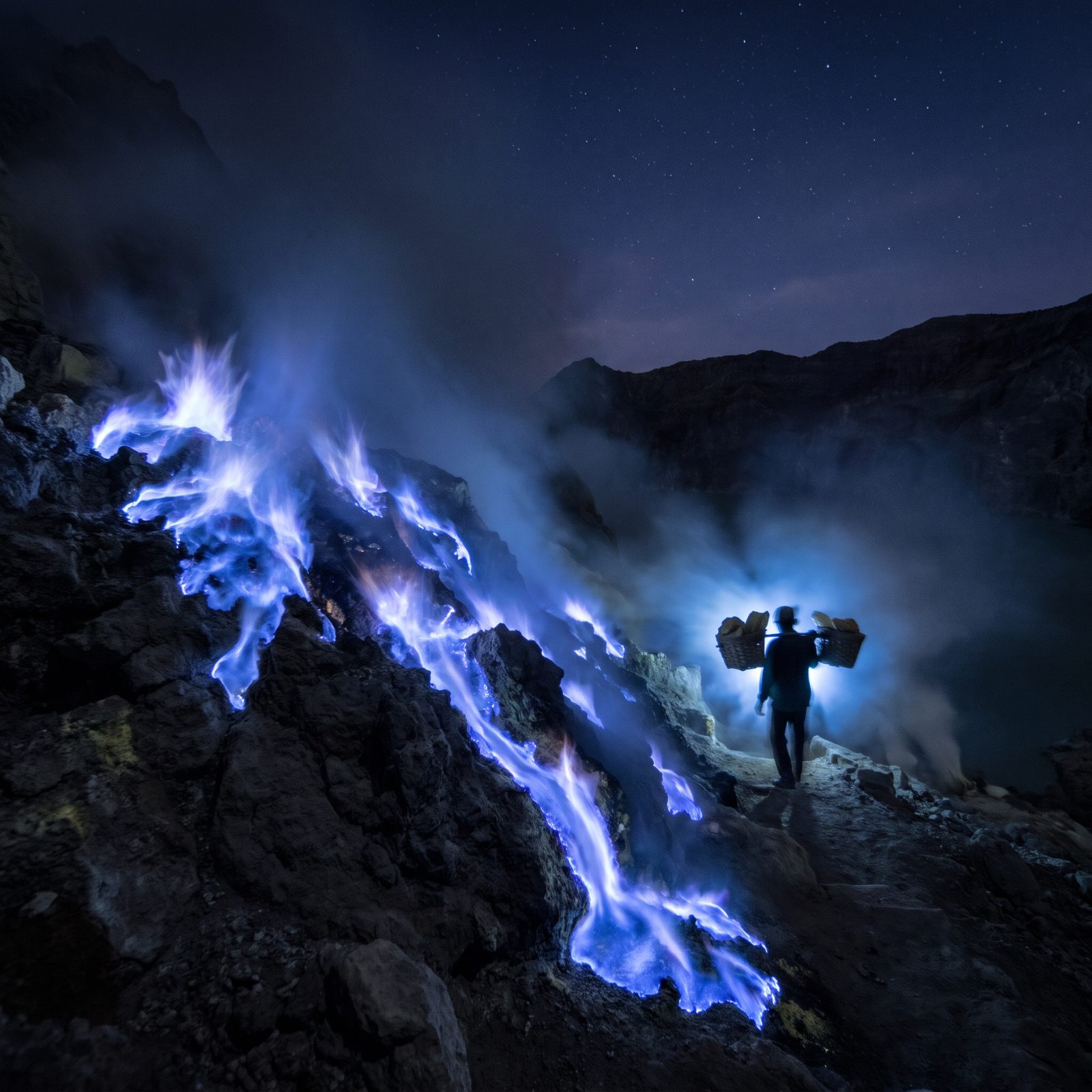
The blue isn’t lava. That’s the first thing everyone gets wrong. It’s sulfuric gas igniting as it escapes cracks in the volcano, burning hot enough to push the flames into an electric cobalt you’d swear came out of a render engine.
The gas emerges blisteringly hot, and some of it condenses back into liquid sulfur that runs downhill glowing orange. Daylight hides the whole show. You only see the blue after dark, which is why miners and photographers haul themselves up in the black of pre-dawn wearing gas masks against fumes that would otherwise flay a set of lungs.
27. Blood Falls’ Red Streak Across Antarctic Ice
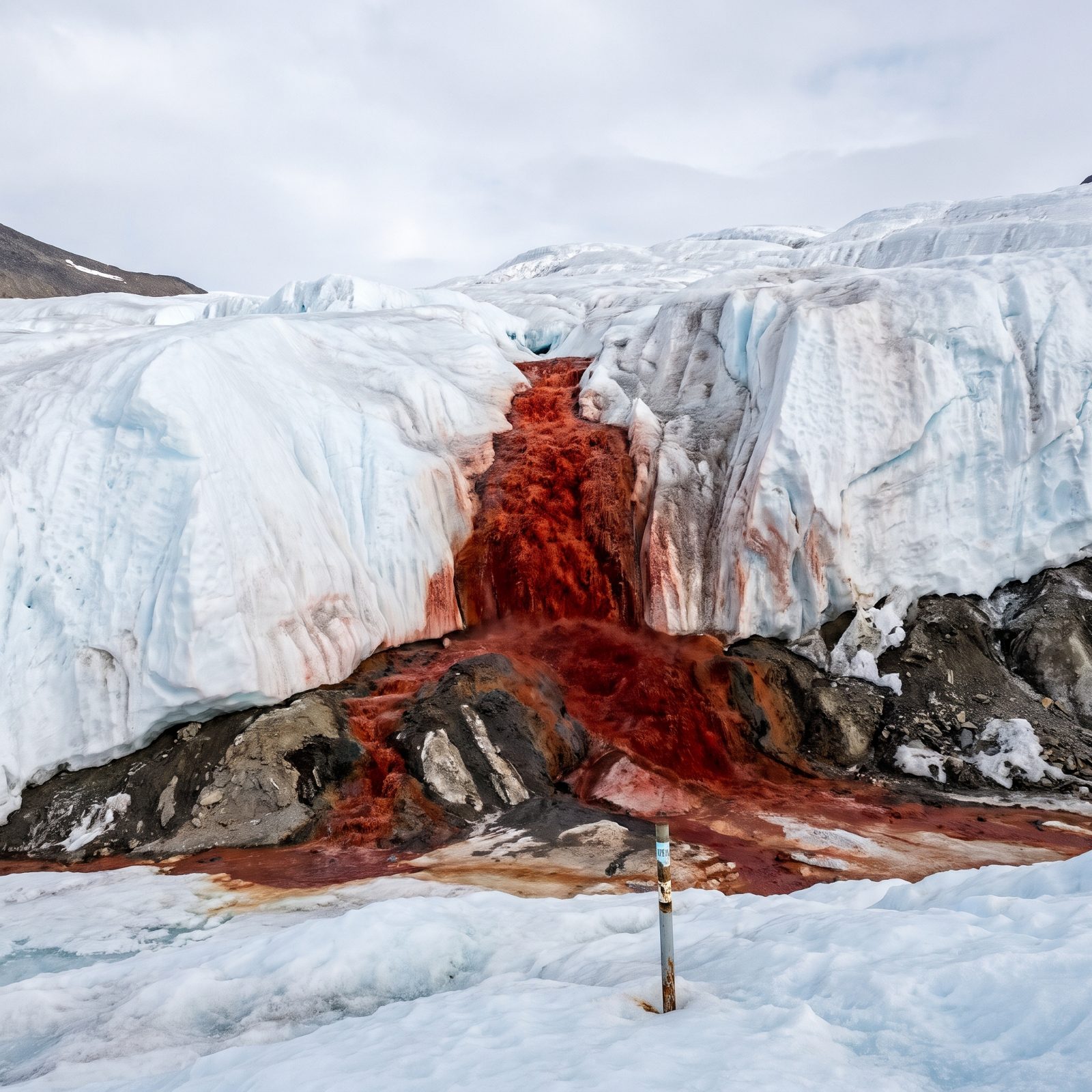
A red waterfall gushing from a white glacier looks like someone spilled paint on the planet. For a century nobody could explain it.
The answer is stranger than the sight. Trapped under the glacier sits an ancient pool of brine, cut off from air and light for maybe a million years and packed with iron. When that water finally seeps out and meets oxygen, the iron rusts on contact, so the fall goes red the instant it hits open air. And here’s the part that keeps the scientists coming back to a frozen nowhere: living inside that sealed, sunless brine are microbes that survive with no oxygen whatsoever.
As a glaciologist whose team traced the brine feeding the falls explains, “While it sounds counterintuitive, water releases heat as it freezes, and that heat warms the surrounding colder ice”
26. The Great Blue Hole’s Perfect Ocean Circle, Belize
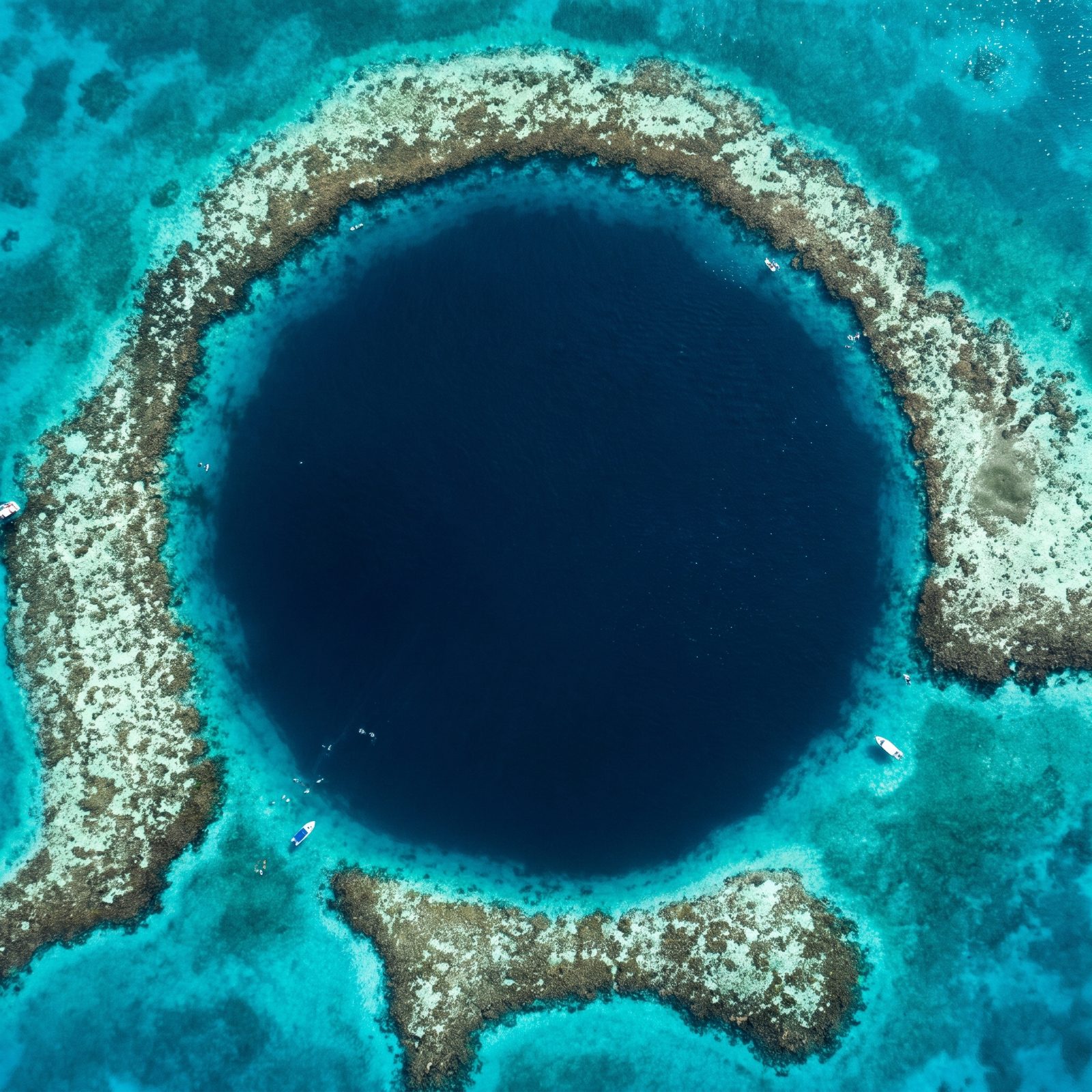
From above it reads like a bullet hole in the sea — a circle so round and so dark it seems drawn with a compass, dropped into glowing turquoise.
It’s a drowned cave. During past ice ages, when sea levels sat far lower, this was a dry limestone cavern with a domed roof. The roof collapsed, the oceans rose, and the sinkhole flooded. It runs hundreds of feet deep and several city blocks across. Divers who reach the bottom find stalactites down there — rock formations that can only grow in open air, now sitting far beneath the waves.
25. The Wave’s Flowing Sandstone Ribbons, Arizona
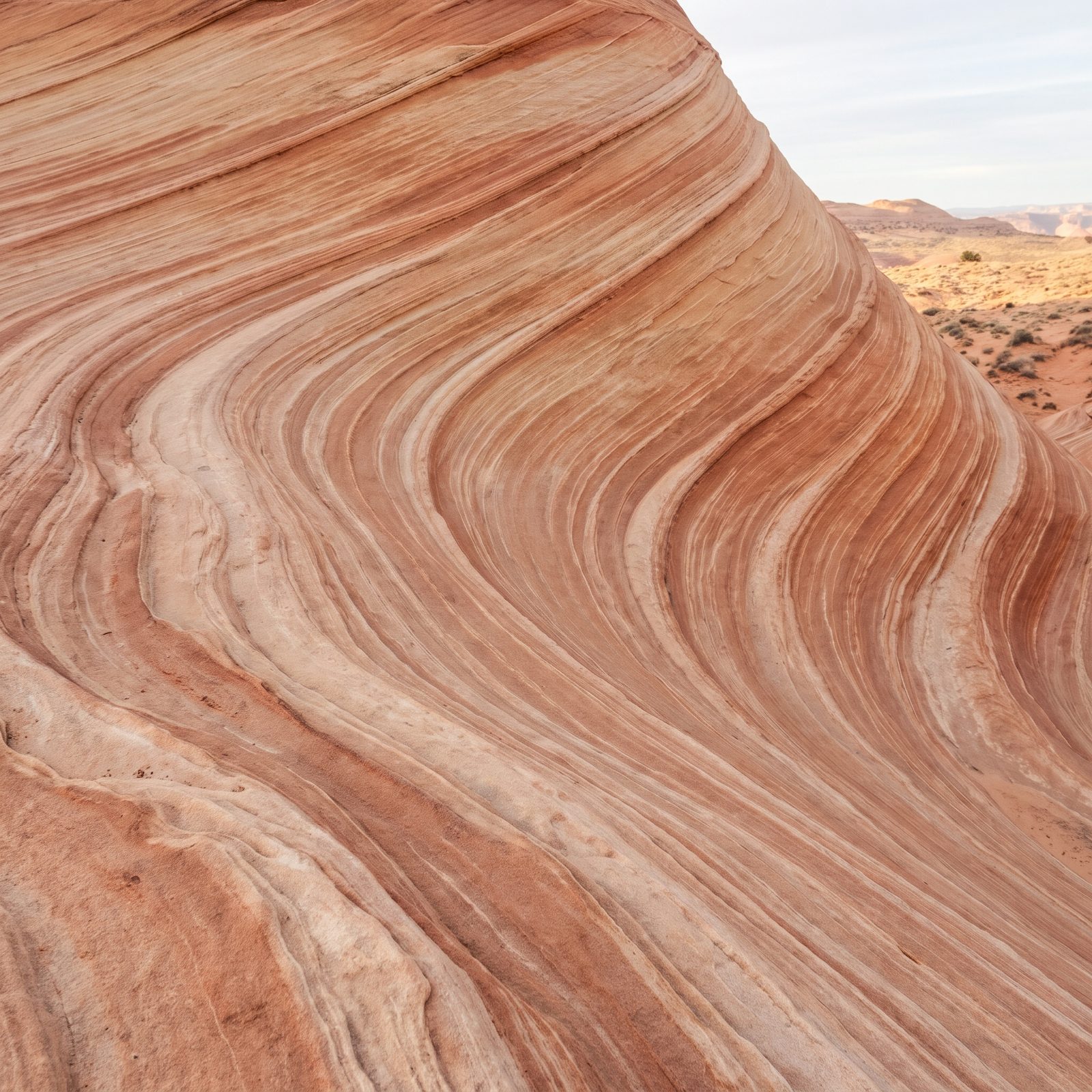
Sandstone that looks poured, not carved. Bands of cream and rust and apricot flow in parallel curves like a photograph of liquid caught mid-motion.
Those stripes are ancient sand dunes turned to rock, their layers tilted and compressed over something close to 190 million years, then sculpted by wind and the occasional flash of water into these sweeping troughs. Access is brutal by design. A tiny number of permits go out each day through a lottery, and the hike crosses unmarked desert with no trail to follow. That scarcity is the only thing keeping the rock intact under all those boots.
24. Vatnajökull’s Translucent Blue Ice Caves, Iceland
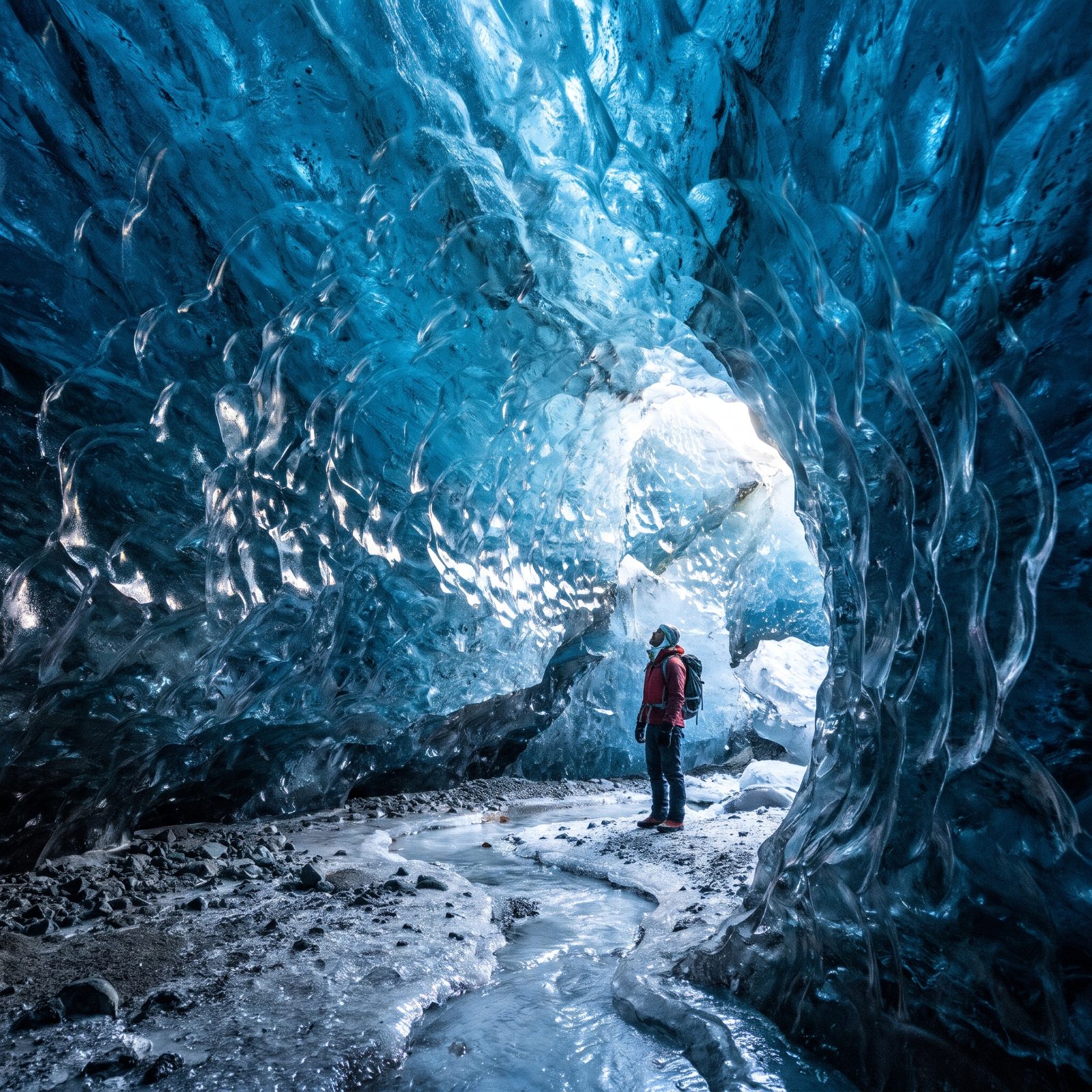
Step inside and the whole room glows blue, like standing inside a frozen sapphire. The color isn’t a trick of the lights. It’s physics.
Glacier ice is so dense and air-free that it absorbs every color of light except blue, which it lets through. Centuries of pressure squeeze out the tiny bubbles that make ordinary ice white, and what’s left transmits that deep cobalt.
The catch nobody mentions? These caves are seasonal and temporary. They form in autumn when meltwater carves tunnels, hold through winter, then collapse and reshape every spring. Photograph one this year and it’s gone the next — a different cave in the same slab of ice.
23. Kelimutu’s Three Differently Colored Crater Lakes, Indonesia
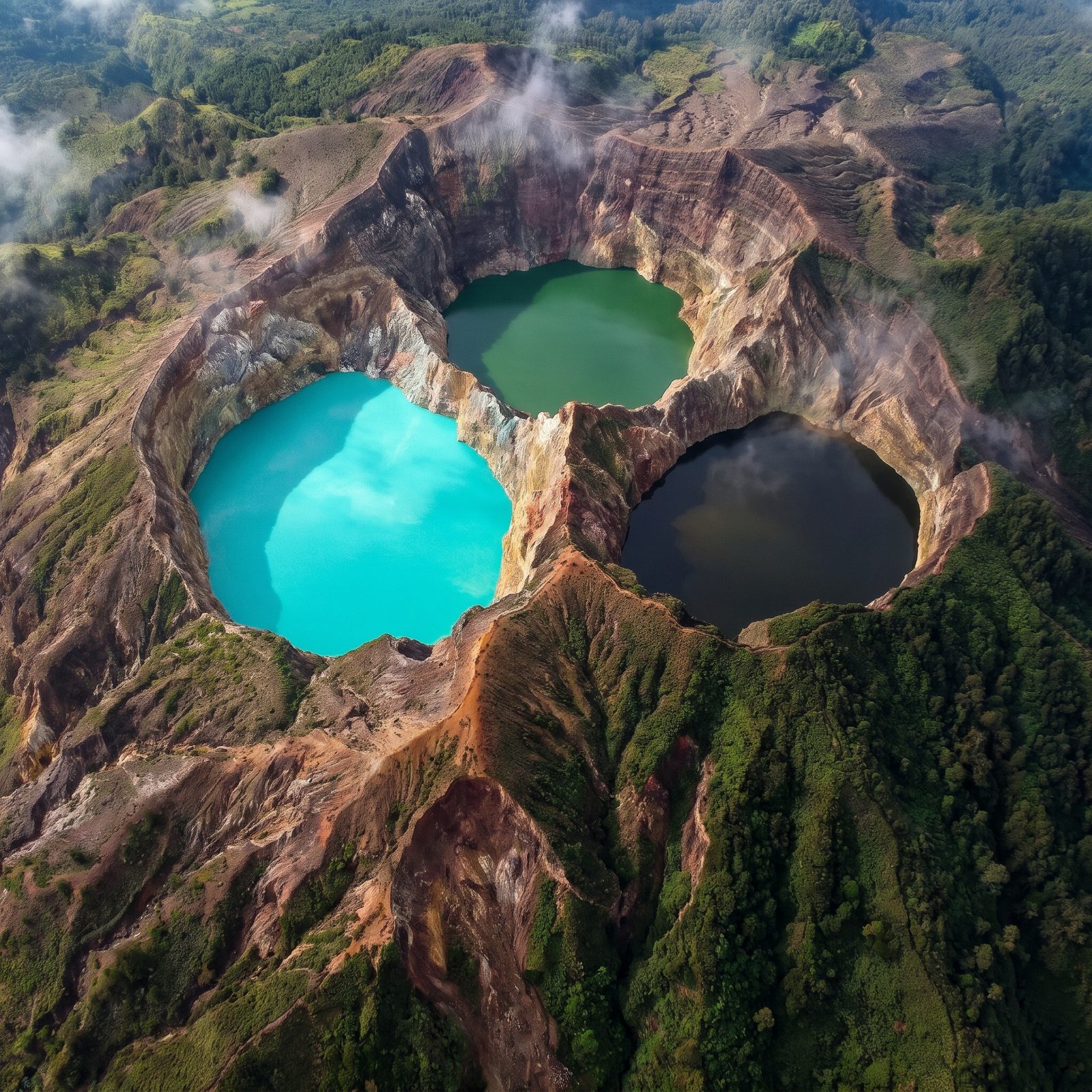
Three lakes sit side by side on one volcano’s summit, separated by thin rock walls. One can be turquoise, another olive, the third black as ink. Same mountain, same rain, wildly different colors.
Each lake pulls its color from dissolved minerals and volcanic gases bubbling up from below, and that mix never holds still. A lake that’s turquoise one year can turn green, red, or brown the next as the chemistry shifts underground. Nobody can fully predict the schedule.
22. Lake Natron’s Crimson Water and Salt Crust, Tanzania
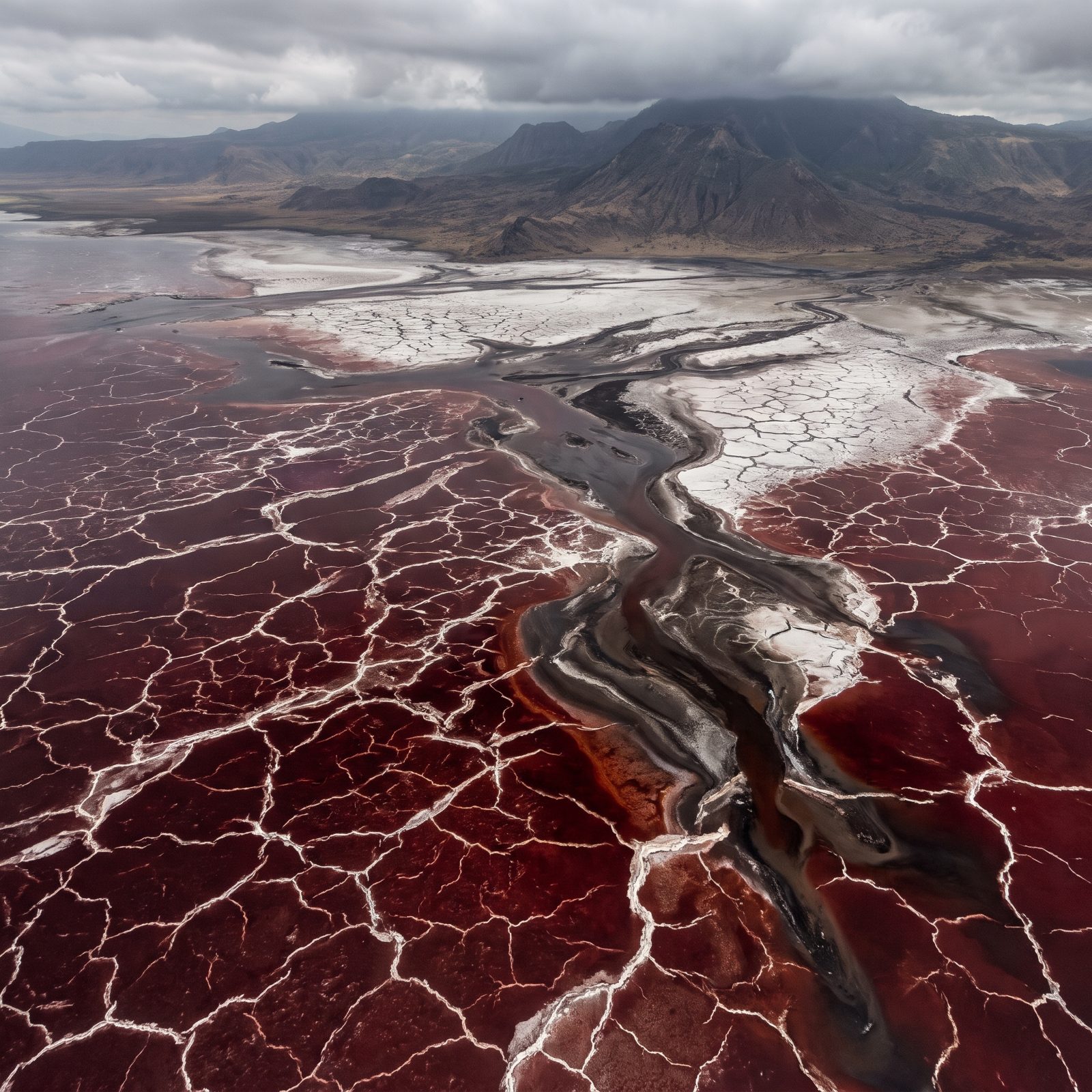
From the air it looks like a lake of blood veined with bone-white salt. The red is alive. Microorganisms that thrive in the lake’s brutal chemistry pigment the water crimson and orange.
Natron ranks among the harshest bodies of water on Earth. Its alkalinity can creep close to ammonia — hot enough and caustic enough to burn the skin and eyes of any animal not built for it. And yet it’s the one reliable breeding ground in East Africa for millions of lesser flamingos. They wade the caustic shallows, feed on the microbes, and take their pink from the very pigments coloring the water around them.
21. Spotted Lake’s Polka-Dot Mineral Pools, Canada
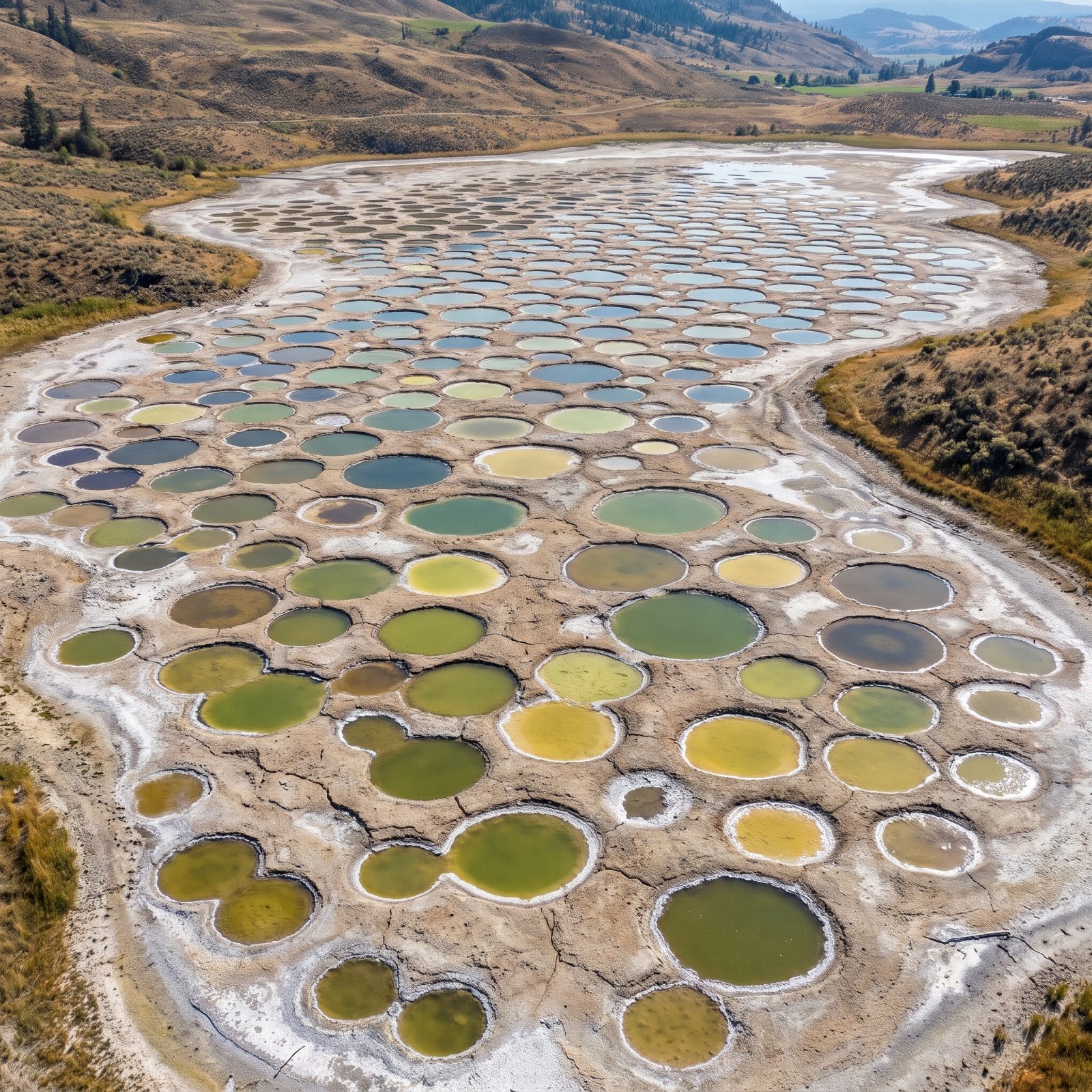
In high summer the lake dries into hundreds of separate round pools, each one rimmed with a hard crust, each a slightly different color. The ground ends up looking like a leopard skin — or a painter’s abandoned palette.
The mechanism is evaporation doing bookkeeping. The water is loaded with minerals, mostly magnesium sulfate alongside calcium and sodium salts. As it boils off in the dry Okanagan heat, those minerals concentrate and crystallize into separate basins, and the different salts tint each pool its own shade. It’s sacred land to the Syilx Okanagan people and fenced off, so you view it from the roadside and no closer.
20. Bohol’s Nearly Perfect Chocolate Hills, Philippines
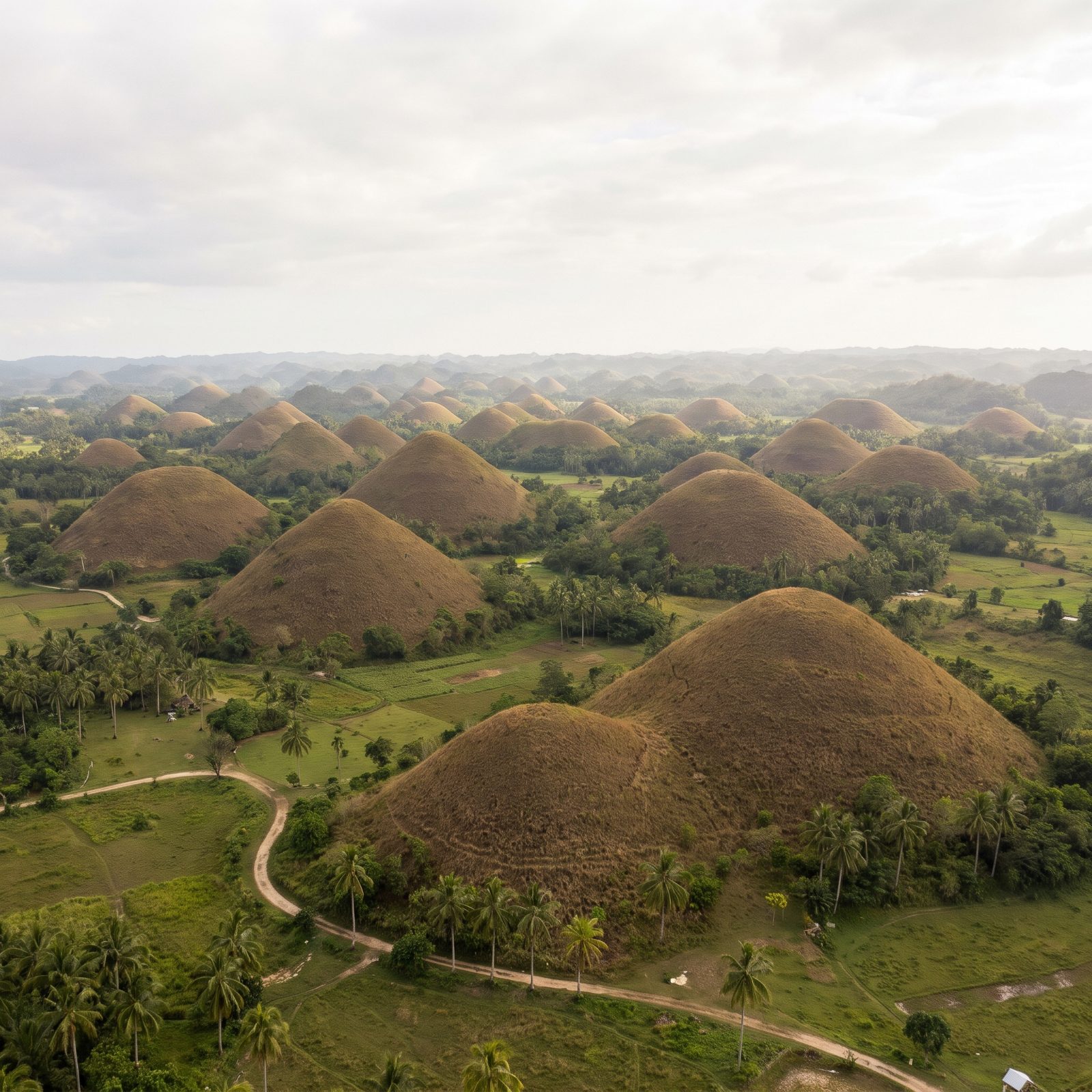
Over a thousand hills, all roughly the same shape and roughly the same height, spread across a plain as though someone worked the whole landscape with an ice cream scoop. Come the dry season the grass browns and they turn the exact color that named them.
Geologists still argue about how they formed. The leading idea runs like this: ancient coral limestone, uplifted from an old seabed, then weathered and dissolved by rain and groundwater across an enormous stretch of time into these near-matching mounds. The uniformity is the uncanny part. Nature rarely repeats itself this cleanly, and standing among them you feel the strangeness of it.
19. Cappadocia’s Fairy Chimney Valleys, Türkiye
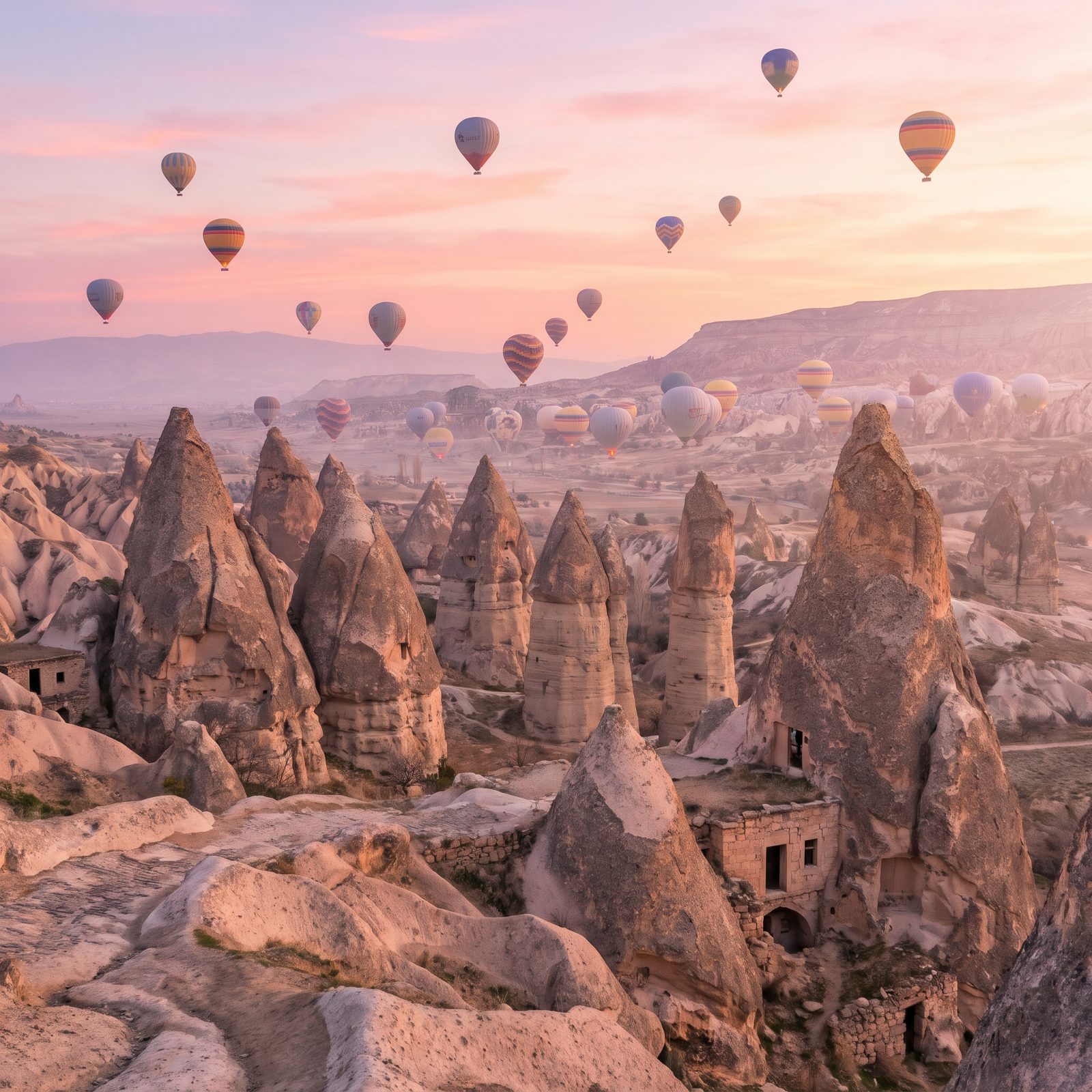
Stone towers topped with balanced boulders rise from a valley like a forest planted by something that never quite understood trees. The locals call them fairy chimneys.
The recipe needs two rocks of different hardness. Ancient volcanoes buried the region in soft ash that hardened into tuff, then capped it with a tougher layer on top. Wind and water wore away the soft stone fast and the hard caps slowly, leaving spires crowned by a hat of resistant rock. And because that tuff stays soft, people have carved homes, churches and entire underground cities into it for thousands of years.
18. The Darvaza Gas Crater’s Fiery Desert Pit, Turkmenistan
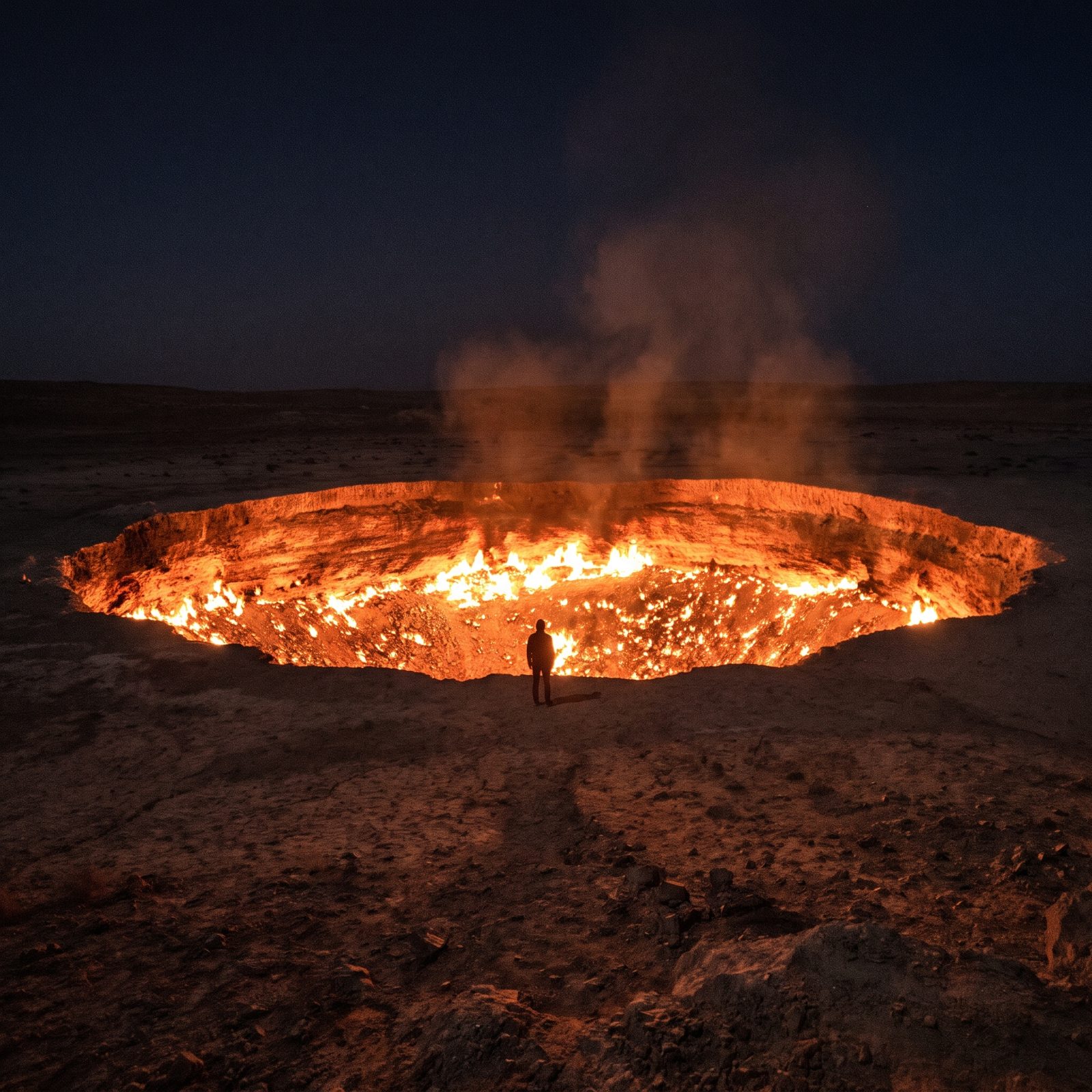
Locals call it the Door to Hell, and for once the nickname undersells the thing. A Soviet drilling rig punched into a gas pocket here in 1971, the ground collapsed under it, and engineers lit the escaping methane figuring it would burn off in a few weeks. It’s still burning. More than fifty years of fire pouring out of a hole in the middle of flat desert.
Up close the whole crater floor flickers with individual flames, like someone rendered a lava texture and forgot to turn down the saturation. Turkmenistan’s president has repeatedly ordered the fire put out. It keeps winning.
17. Mosquito Bay’s Bioluminescent Blue Water, Puerto Rico
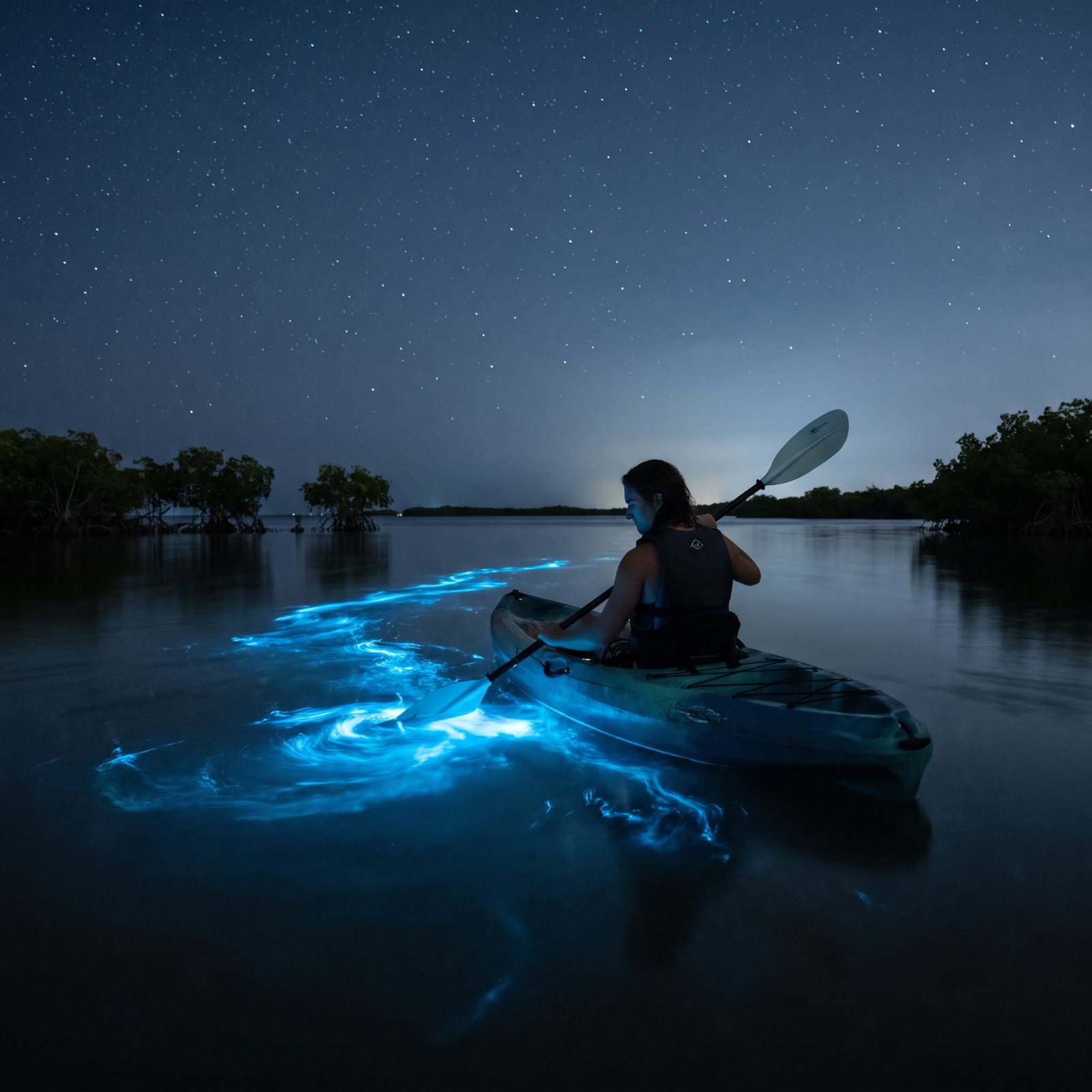
Drag your hand through this water and it lights up behind you like a comet tail. The glow comes from Pyrodinium bahamense, a single-celled organism that flashes blue whenever the water around it moves, and Mosquito Bay holds the Guinness record for the brightest bioluminescent bay on Earth — hundreds of thousands of these dinoflagellates crammed into a single gallon.
The science underneath is cold chemistry. A compound called luciferin reacts with oxygen and throws off light. The effect looks like a visual effects budget.
One warning from someone who read the signs twice: sunscreen and bug spray poison the organisms, which is why guided tours ban both. The magic is fragile.
According to one local bioluminescent tour operator, Mosquito Bay is now a lot brighter than it was before Hurricane Maria.
16. Abraham Lake’s Stacks of Frozen Methane Bubbles, Canada
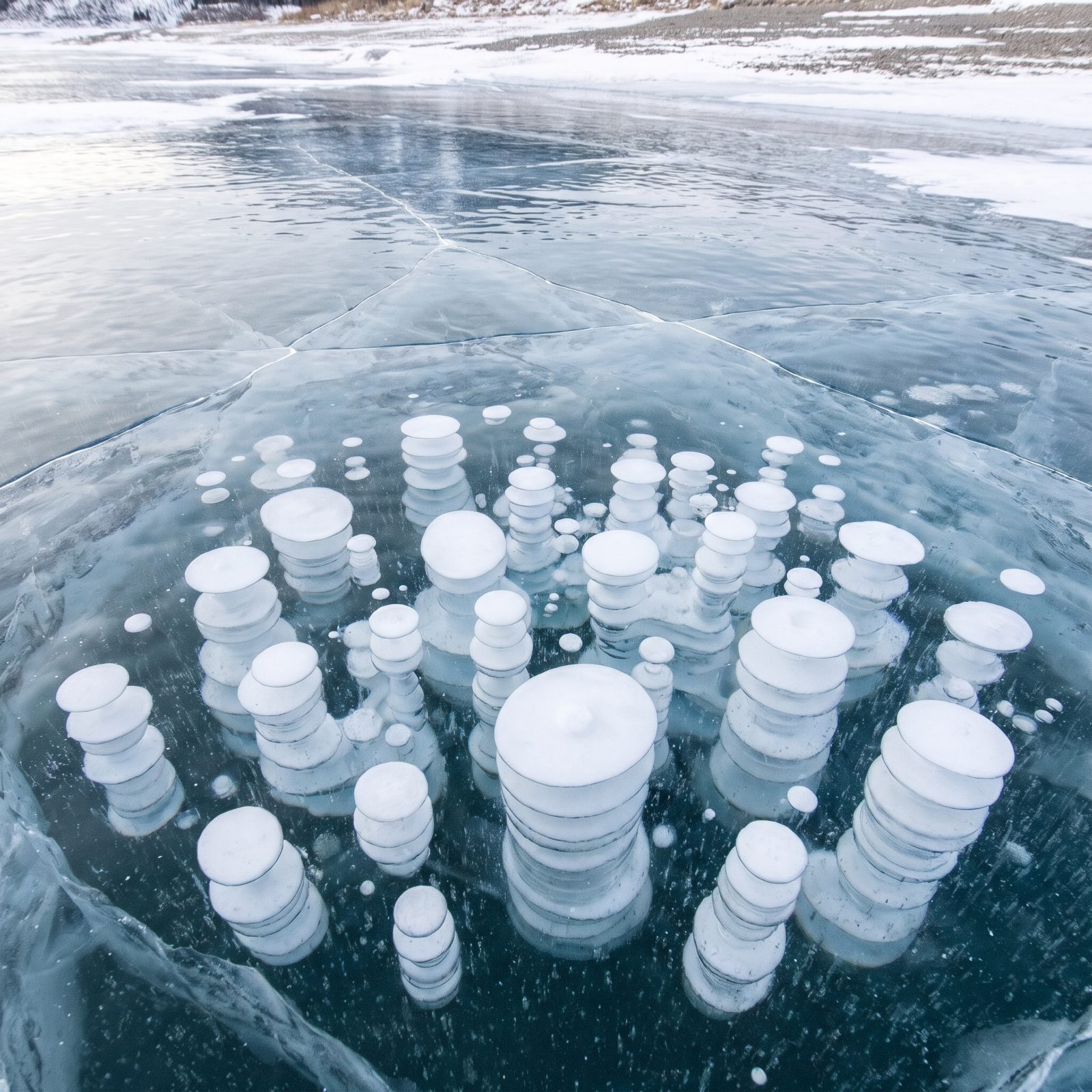
Those frozen white discs stacked under the ice aren’t decoration — they’re methane. Plants and other organic matter sink to the lakebed, bacteria chew through them, the gas bubbles up, and when it meets the freezing surface it gets trapped and pancaked into those eerie columns.
Here’s the part that keeps the geologists honest. The same gas that looks gorgeous frozen is flammable the moment it thaws. Crack the ice over a bubble in warmer months and it can ignite. Beautiful and combustible — a pairing that shows up more than once on this list.
As an earth sciences professor explains, “These bubbles are actually methane gases that are developed at the bed of the lake”
15. Mauritius’ Underwater Waterfall Illusion
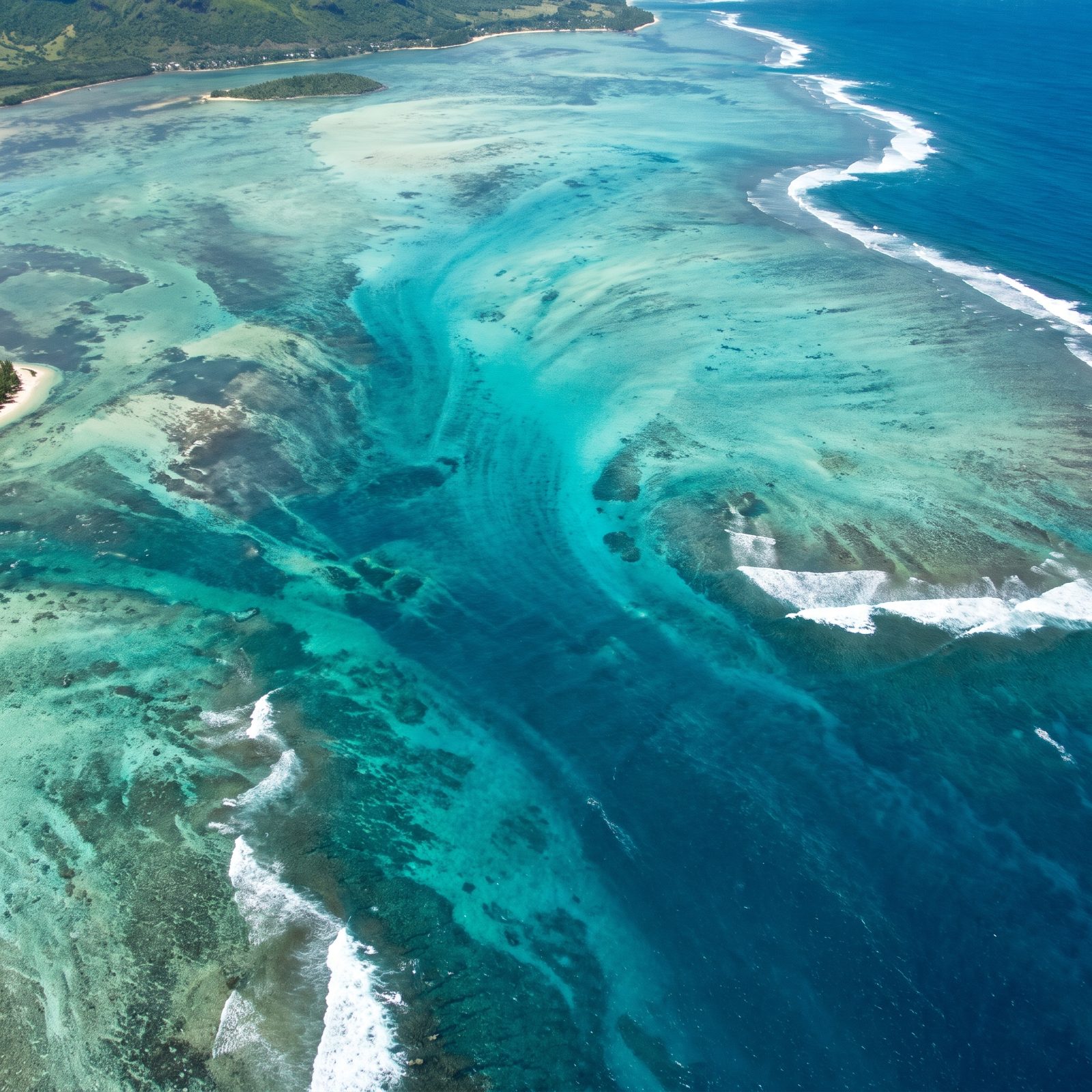
From a plane it looks like the ocean has a drain. A churning blue chasm where the water seems to spill off the edge of the island and vanish into the deep. First-timers swear it’s a vortex that would swallow a boat whole.
It isn’t. The island sits on an underwater plateau, and ocean currents drag sand and silt off the shelf’s edge into much deeper water, so the falling sediment reads as a cascade from above. There’s no actual drop in water level, only the illusion of one. Your eye insists otherwise. Your eye is wrong.
14. Lake Kaindy’s Submerged Spruce Forest, Kazakhstan
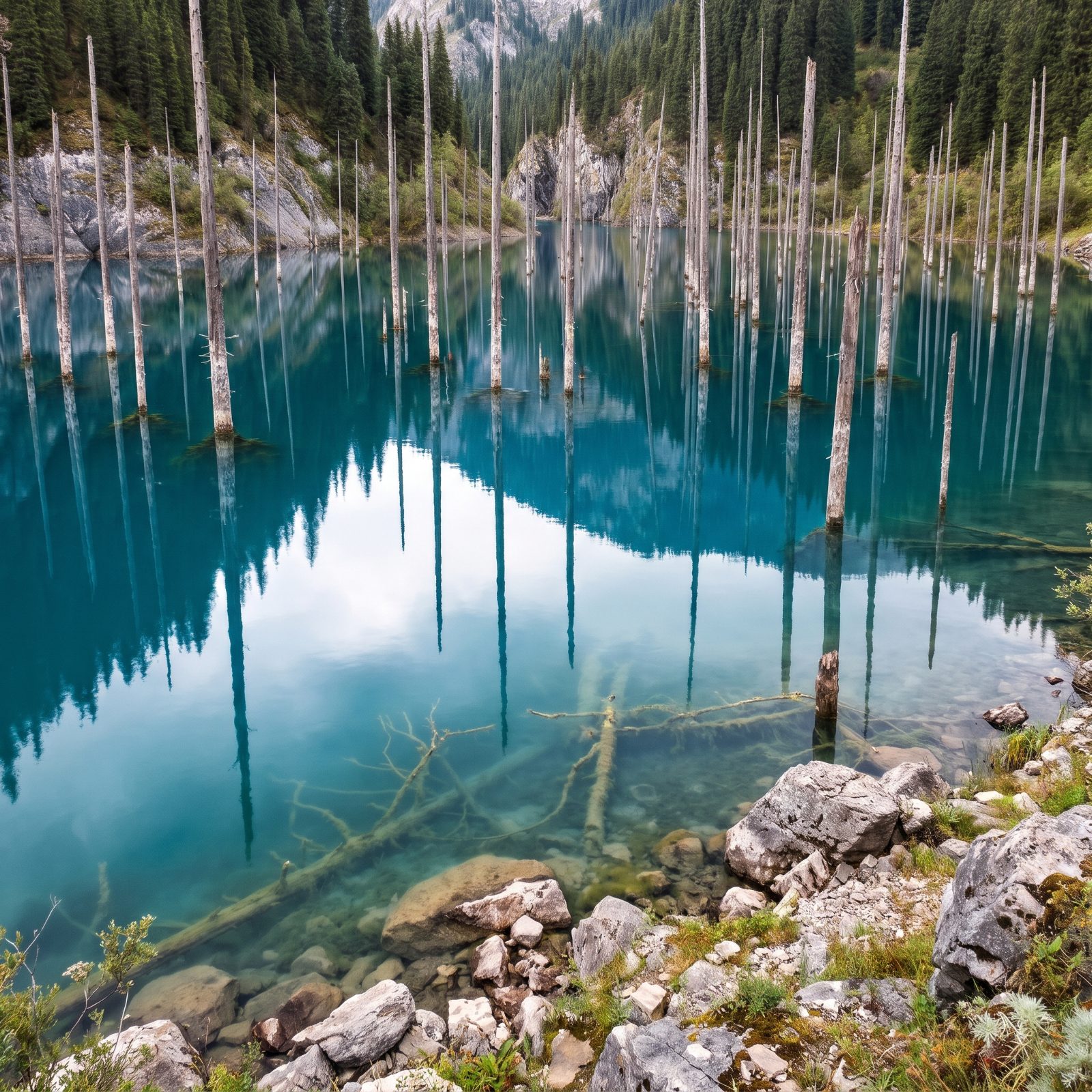
A 1911 earthquake triggered a landslide that dammed a river, and the rising water drowned a spruce forest. The trees died — but the lake runs so cold that the submerged trunks never rotted. They just stand there, bleached and spear-straight, poking out of water the color of antifreeze.
Above the surface the trunks are bare and silver. Dive below and you find whole branches preserved intact, a ghost forest you can swim through. Divers rate it one of the strangest cold-water sites anywhere, and the reason is simple: the water hovers near freezing even in summer, so the dead wood refuses to go away.
13. Thor’s Well’s Seemingly Bottomless Ocean Drain, Oregon
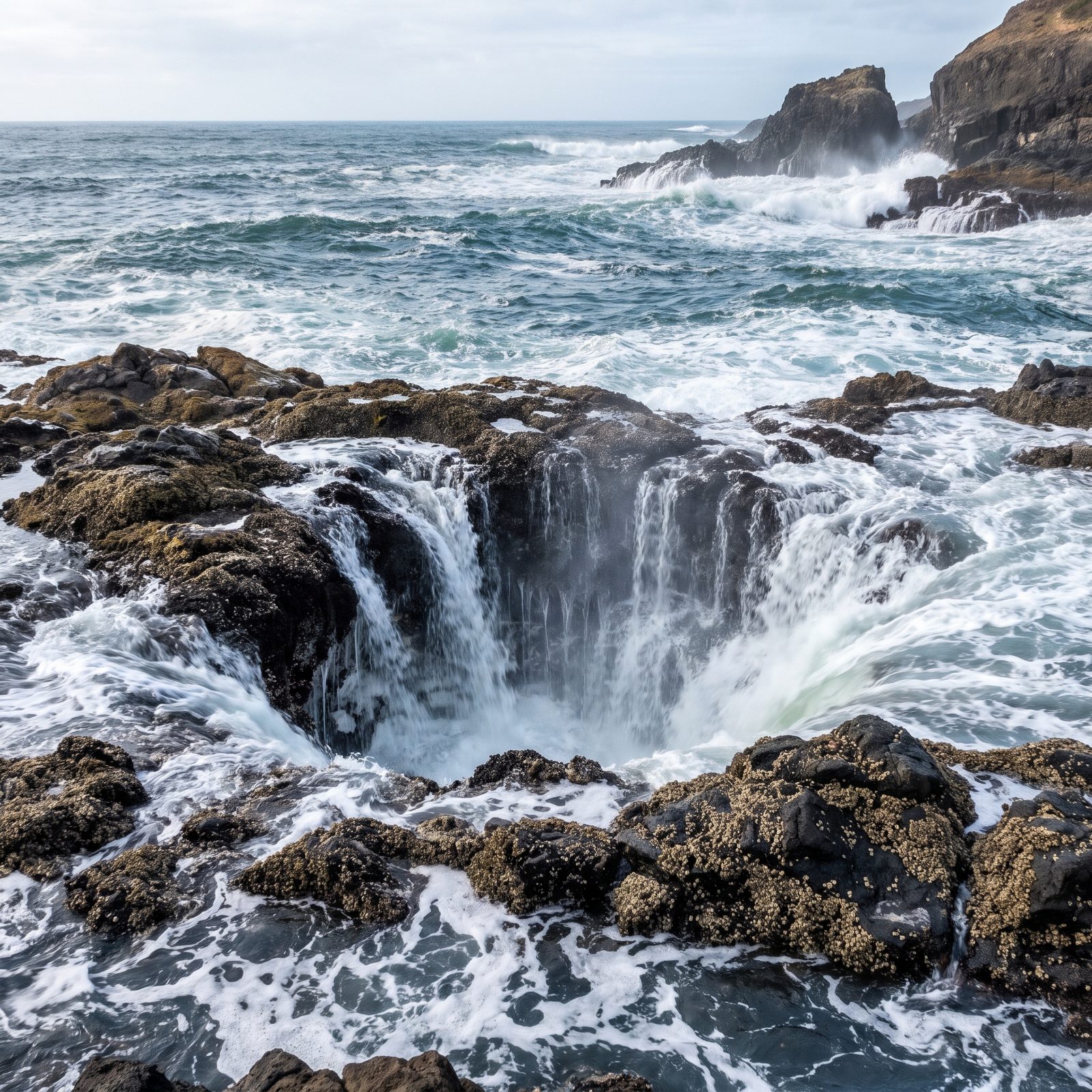
It certainly looks bottomless. That’s the first thing to say, because the scale catches everyone off guard. Thor’s Well is a sinkhole in the basalt shelf, dozens of feet across, its walls streaming with multi-story waterfalls that vanish into a chasm with no visible floor, probably a collapsed sea cave with an opening at the top and another below the waterline.
But watch it at high tide and logic stops mattering. Water pours in, the hole appears to drink the entire Pacific, then it belches the whole lot straight up in a geyser of spray. Over and over.
12. Eternal Flame Falls’ Fire Behind Water, New York
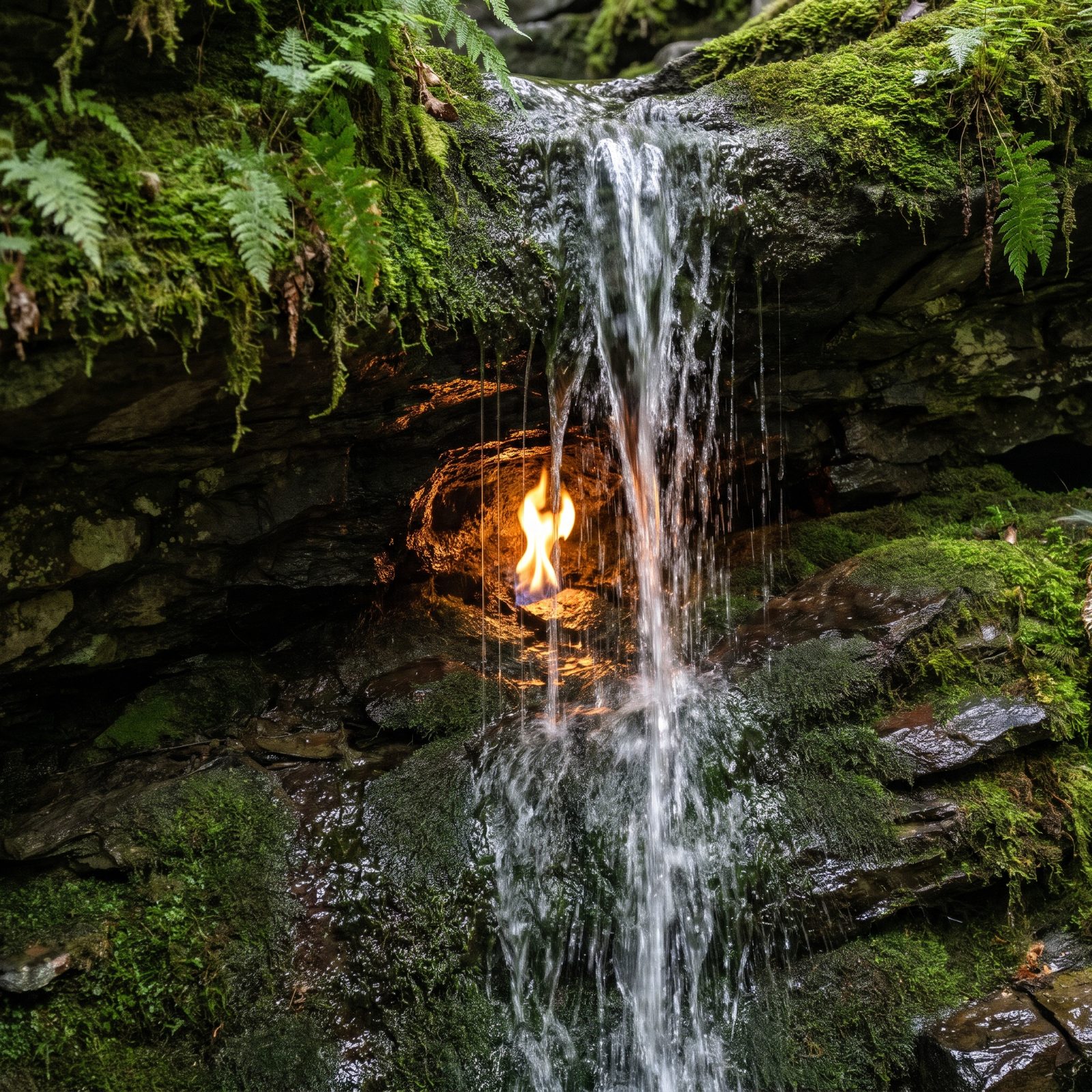
A flame burning behind a waterfall sounds like a lie. Fire and water don’t share space. Except here, in a small grotto in a park south of Buffalo, a flame the size of your palm flickers inside a rock alcove while water tumbles right past it.
Natural gas seeps up through fractures in the ancient shale and feeds that flame, and hikers relight it when wind or spray snuffs it out — so “eternal” comes with an asterisk. What genuinely puzzles scientists is the rock itself. It isn’t hot enough to produce gas by the usual mechanism, so where the gas actually comes from remains an open question. A flame that shouldn’t exist, burning where it shouldn’t burn.
11. Racetrack Playa’s Mysterious Sailing Stones, California
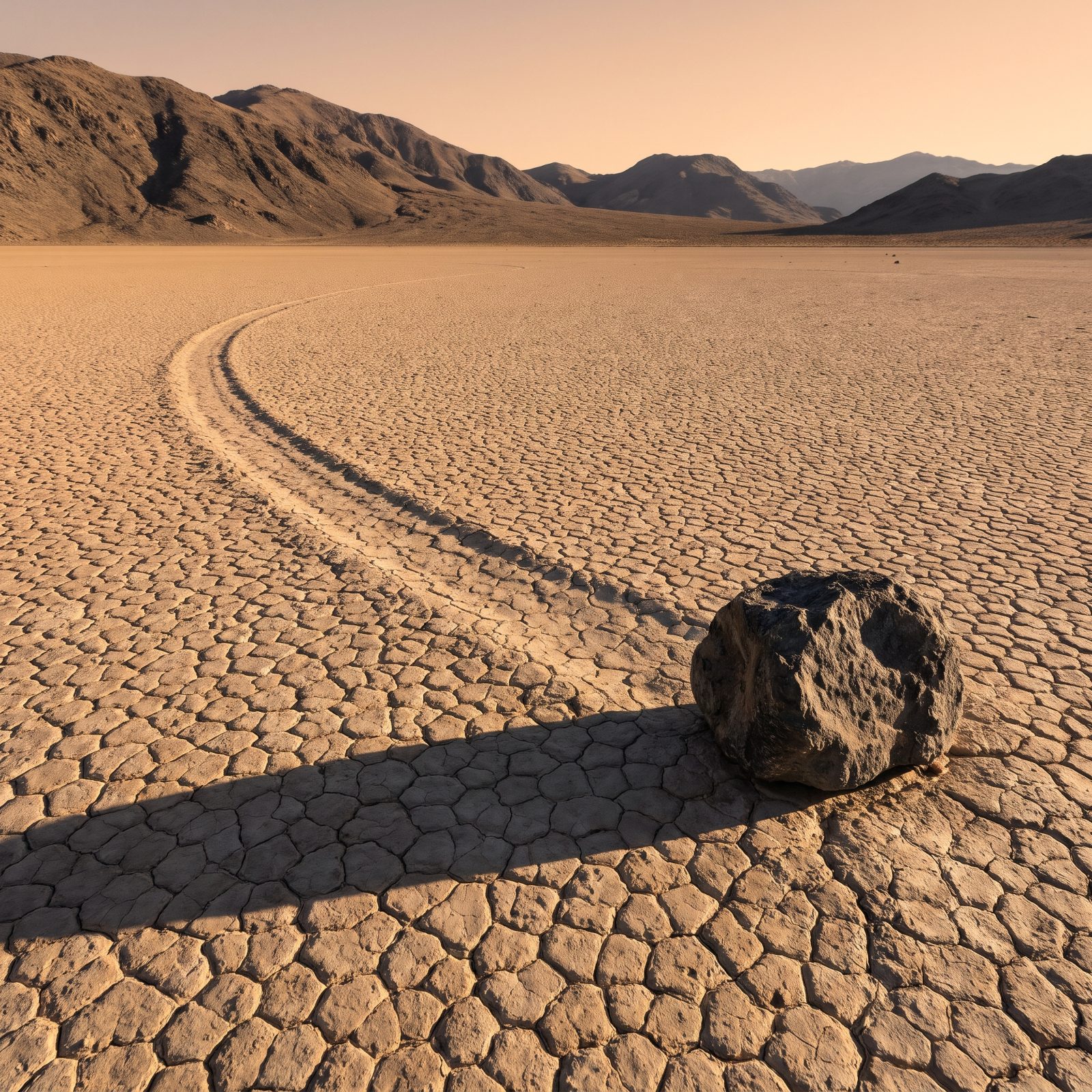
Rocks that leave trails across a dry lakebed, some heavier than a bowling ball, with no footprints, no tire marks, nothing to explain the movement. For nearly a century this was a genuine mystery. People blamed wind, magnetism, aliens, pranksters.
In 2014 researchers finally caught it on camera, and the answer turned out to be almost too tidy. On rare cold nights a thin skin of water freezes into delicate ice sheets. Light morning sun breaks the ice into floating panels, a gentle breeze nudges the panels, and they shove the embedded rocks along a few inches at a time. The stones sail, the ice melts, the tracks remain. And almost nobody ever sees it happen in person.
10. Namibia’s Perfectly Spaced Fairy Circles
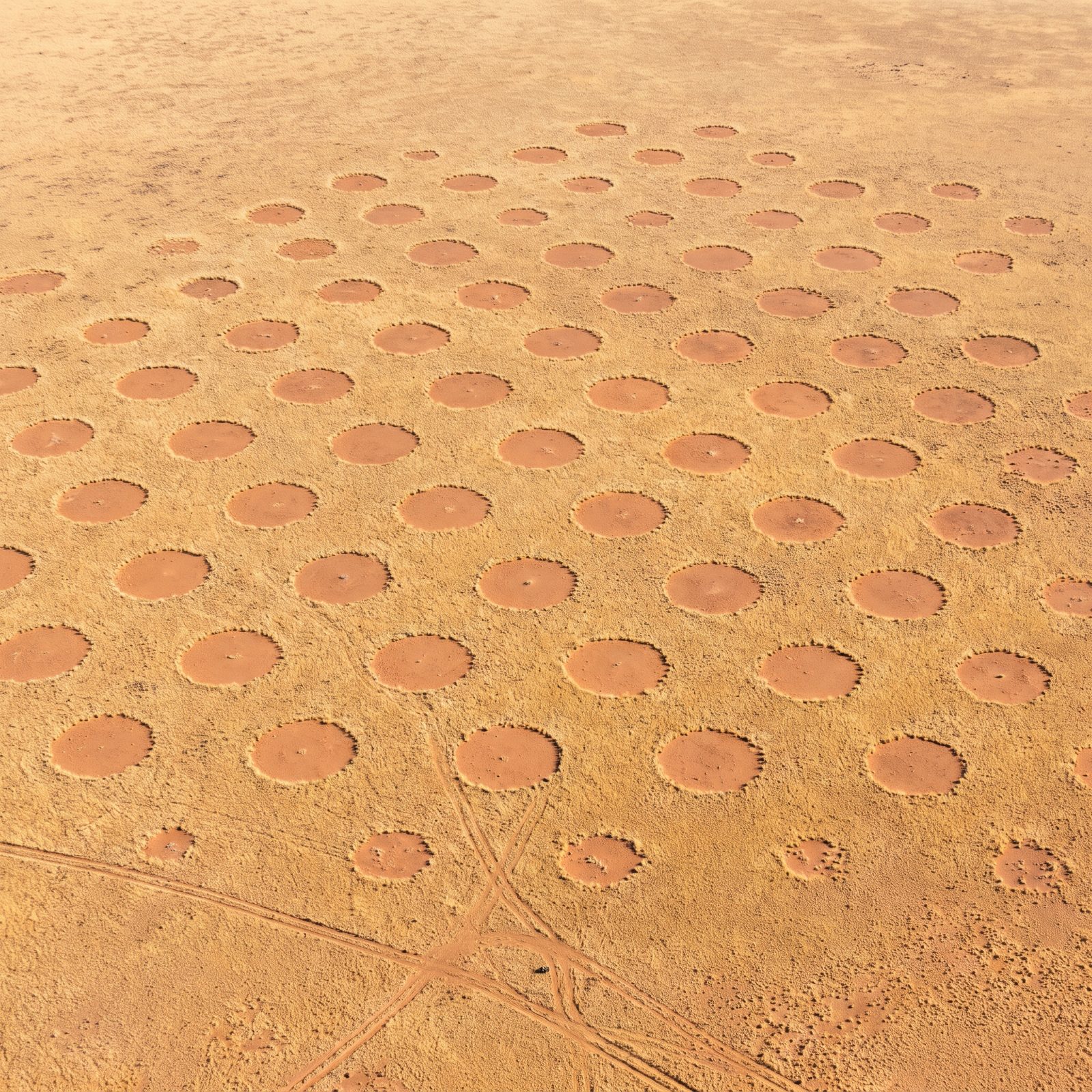
Millions of bare red circles, each rimmed with grass, spaced so evenly across the Namib that they look pixel-mapped onto the desert. From the air it’s a honeycomb that runs for miles.
Scientists have been arguing about these for decades, and they haven’t stopped. One camp says termites clear the vegetation from underground. Another says the grasses self-organize, competing for scarce water until they space themselves out into a repeating pattern — the same math that paints the spots on a leopard. The honest answer may be both at once. Nature running an algorithm and refusing to share the source code.
Still, one botanist who has spent more than a decade arguing for the termite explanation insists “The cause for the formation of the fairy circles is thus clear—it is the sand termites that secure a considerable survival advantage through soil moisture storage.”
9. Maui’s Rainbow Eucalyptus Grove, Hawaii
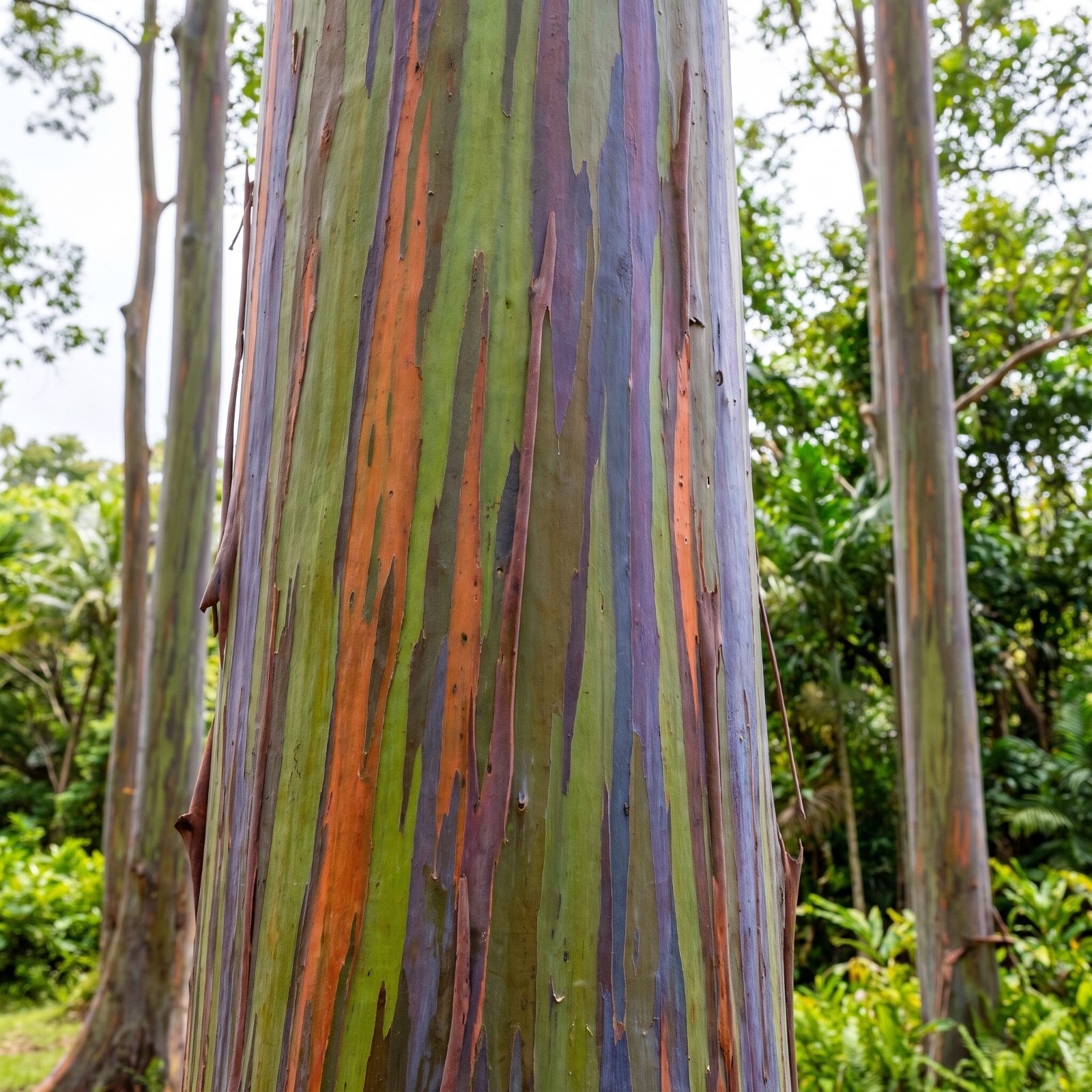
The colors are real, and nobody painted them. As the bark peels in strips through the year it exposes fresh green underneath, which ages through orange, purple and rust, and because different patches shed at different times, one trunk wears half a dozen colors at once.
Here’s the part that surprises people: those vivid streaks look loudest right after rain, when the wet bark darkens and deepens every hue. Most visitors spot the grove along the Hana Highway, where it photographs like someone cranked the saturation slider all the way up. Except nobody did. The tree managed that on its own.
8. Panjin’s Brilliant Red Coastal Wetland, China
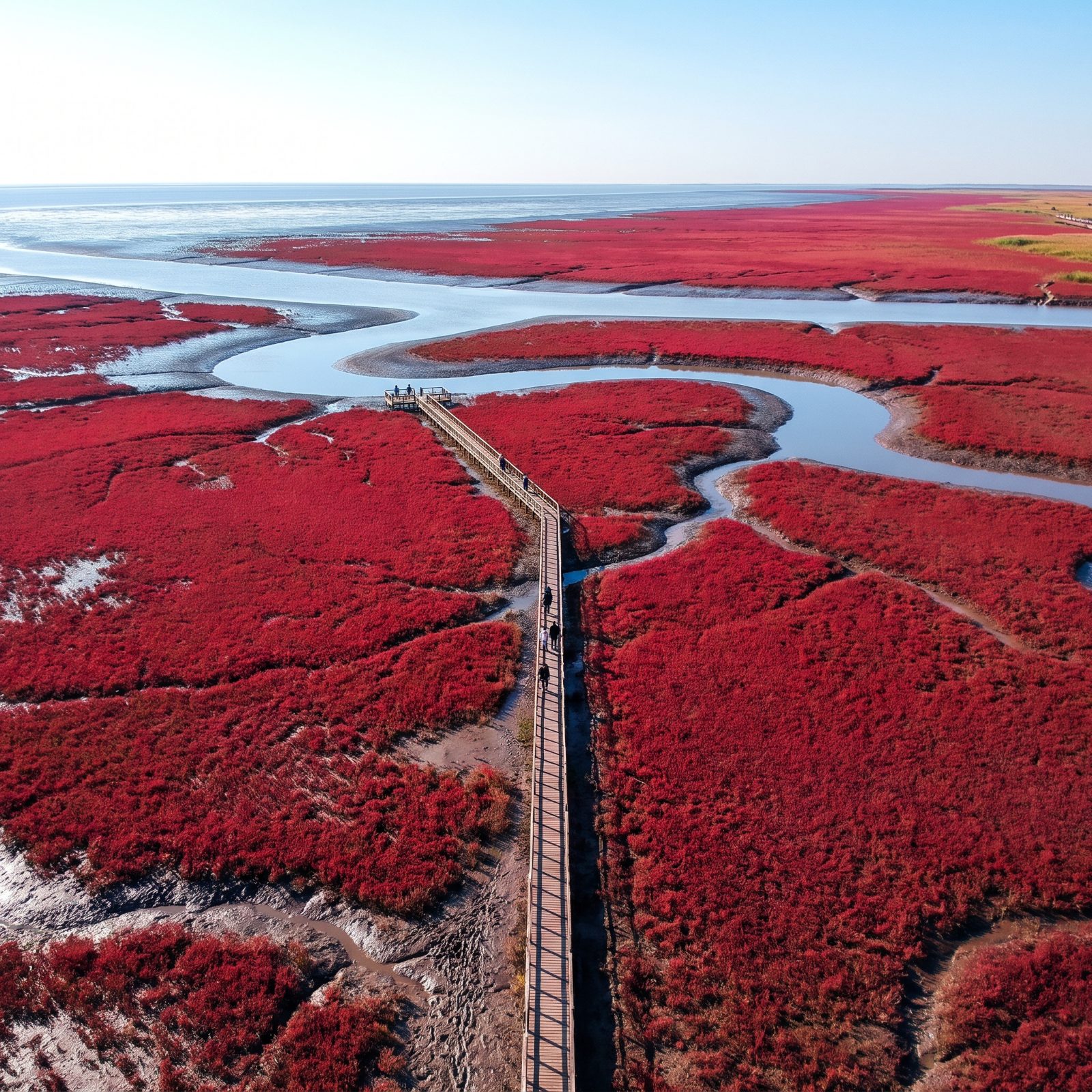
Most people assume it’s algae, or dye, or a filter. Nope — it’s a plant. Suaeda salsa, a salt-tolerant seepweed, grows green through spring and summer, then turns deep red as autumn tightens its grip on this estuary at the mouth of the Liao River.
The red peaks for only a few weeks. Come in the wrong month and you’ll find a quiet green marsh instead of a scarlet one. Time it right, though, and the wetland looks like someone upended a bucket of paint across the entire horizon, split only by silver tidal creeks and the occasional red-crowned crane picking through the shallows.
7. Lake Sørvágsvatn’s Cliff-Top Optical Illusion, Faroe Islands
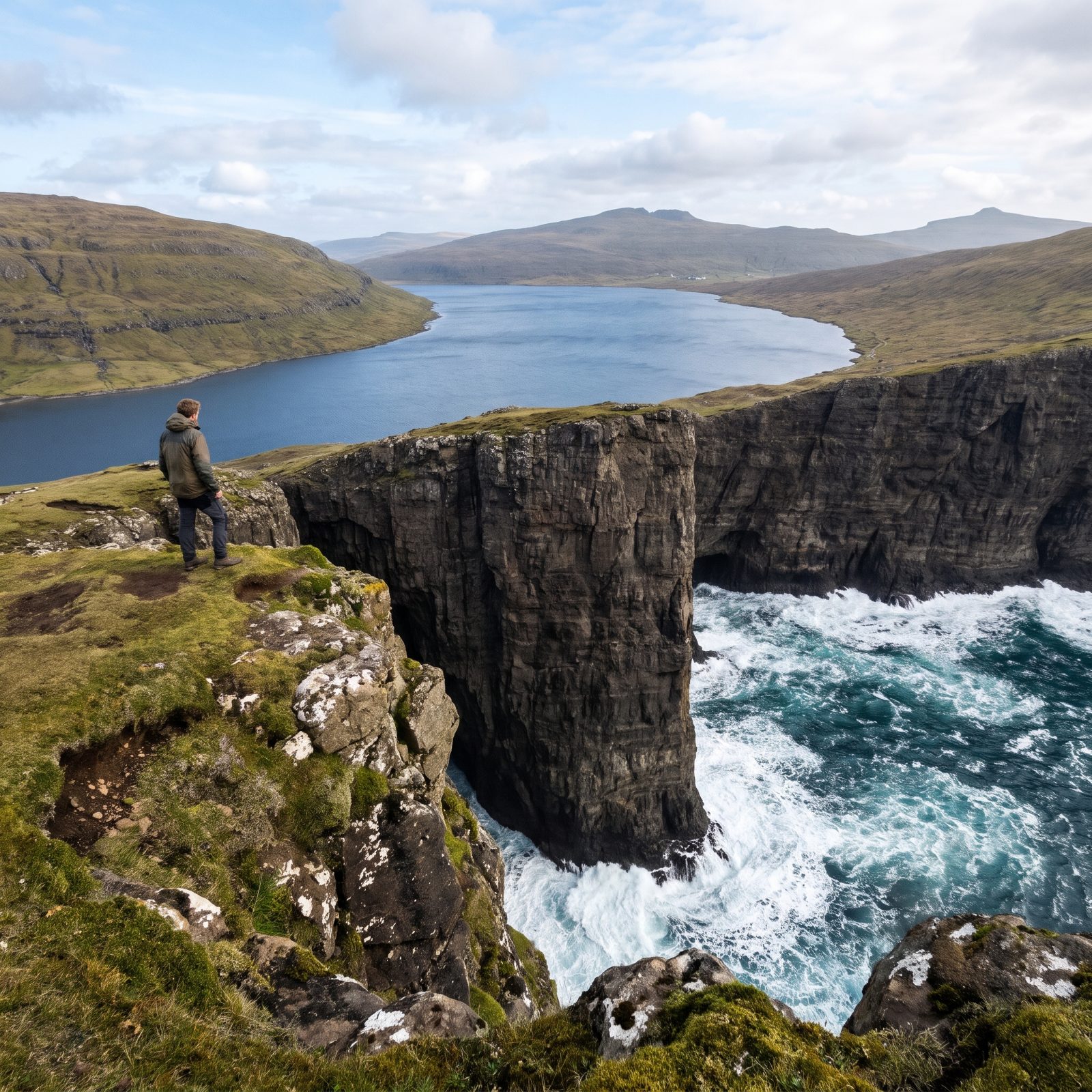
The lake is not hovering above the sea. It just looks that way from one specific vantage point, and the trick is pure geometry.
Photograph Sørvágsvatn from the right clifftop angle, with the camera low and the lake tilted toward you, and the water seems to sit hundreds of feet in the air above the Atlantic. In reality it rests only about 30 meters above sea level, separated from the ocean by a wall of basalt, and the waterfall Bøsdalafossur tips the lake’s overflow straight off the cliff edge. Your brain simply refuses to accept it — and that refusal is exactly what people come for.
6. The Moeraki Boulders’ Giant Stone Spheres, New Zealand
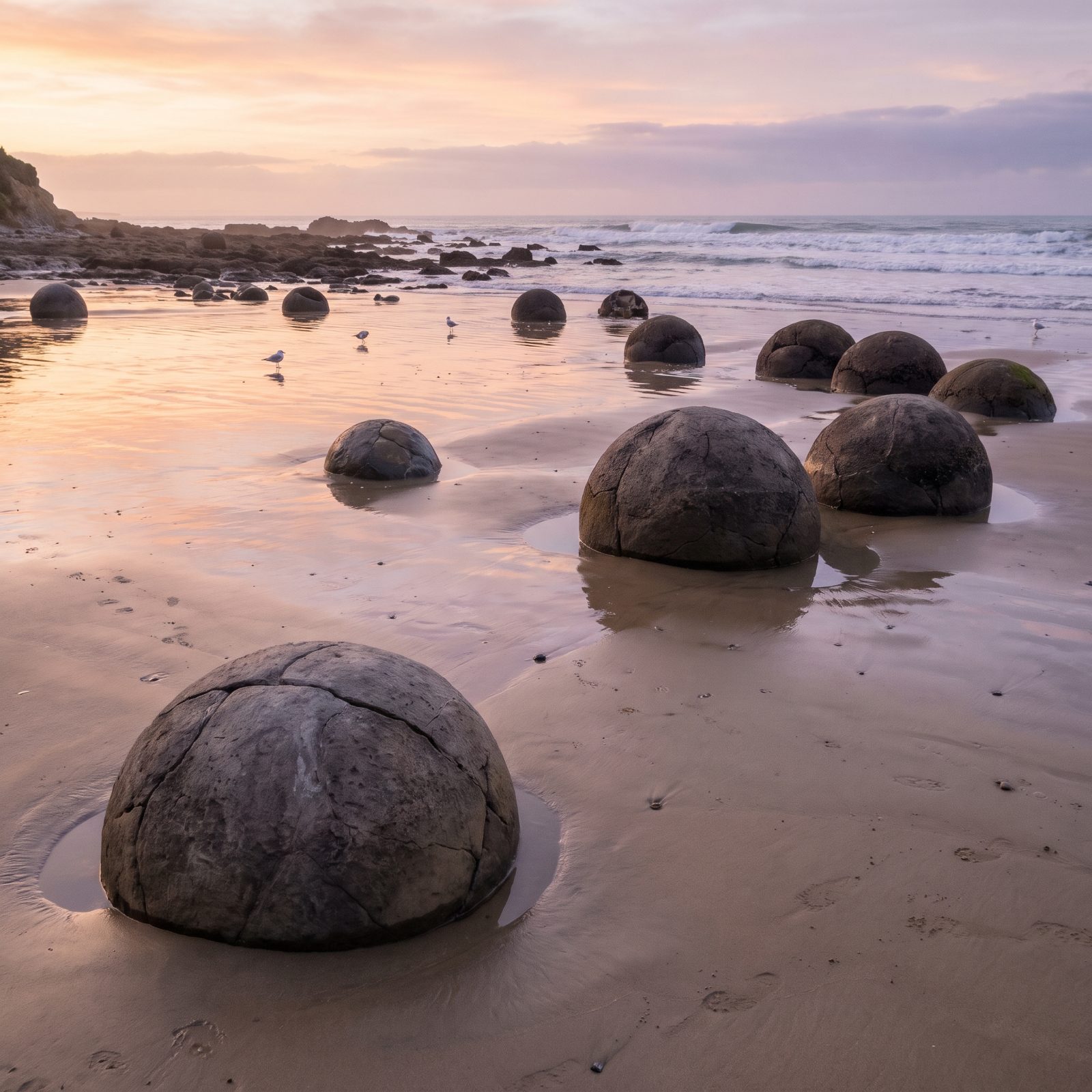
They look manufactured, like cannonballs some giant left behind. They’re concretions: sediment that accreted around a core over millions of years on the ancient seafloor, hardening into near-perfect spheres before the softer mudstone around them eroded away and dropped them onto the beach.
Crack one open and it gets stranger. The insides are shot through with amber and yellow calcite, splitting the rock into a webbed lattice of veins, and the biggest ones weigh several tons apiece. The tide uncovers them twice a day along Koekohe Beach. Best viewing is at low water near dawn, when the wet sand throws back the whole scene.
5. Mono Lake’s Limestone Towers Rising From Water, California
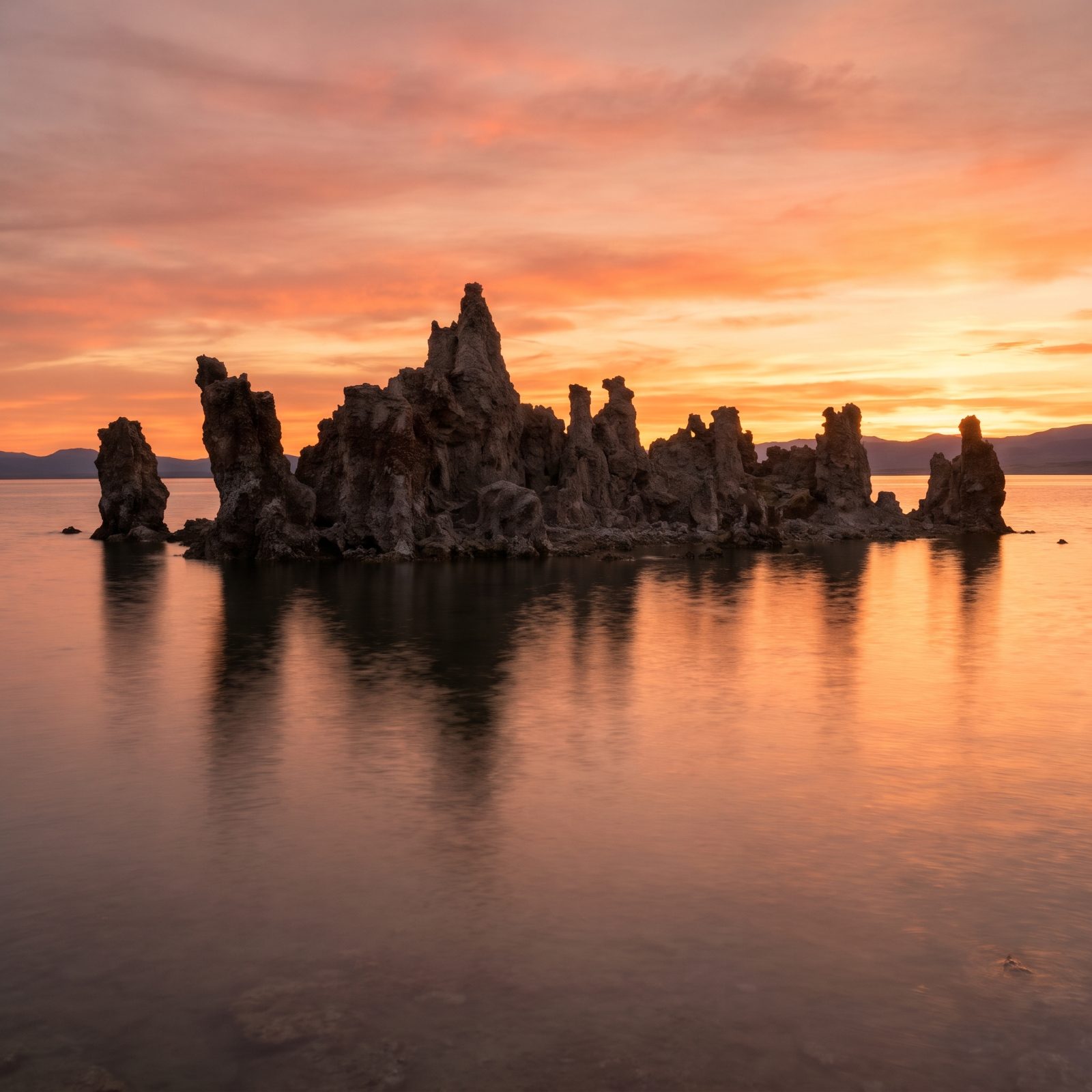
These towers formed underwater, which is the detail nobody mentions. Calcium-rich freshwater springs bubbled up through the carbonate-rich lake, the two reacted, and limestone tufa built up slowly, column by column, below the surface.
Then the water level dropped. Los Angeles started diverting Mono Lake’s feeder streams in 1941, and the lake fell far enough to strand the tufa high and dry. So the eerie forest of spires you walk among today is really a monument to a shrinking lake. Conservation efforts have since set a target level to refill it. And honestly, the reflections at sunset — towers doubled on glass-still alkaline water — are worth the drive out to Lee Vining on their own.
4. Azerbaijan’s Bubbling Mud Volcano Fields
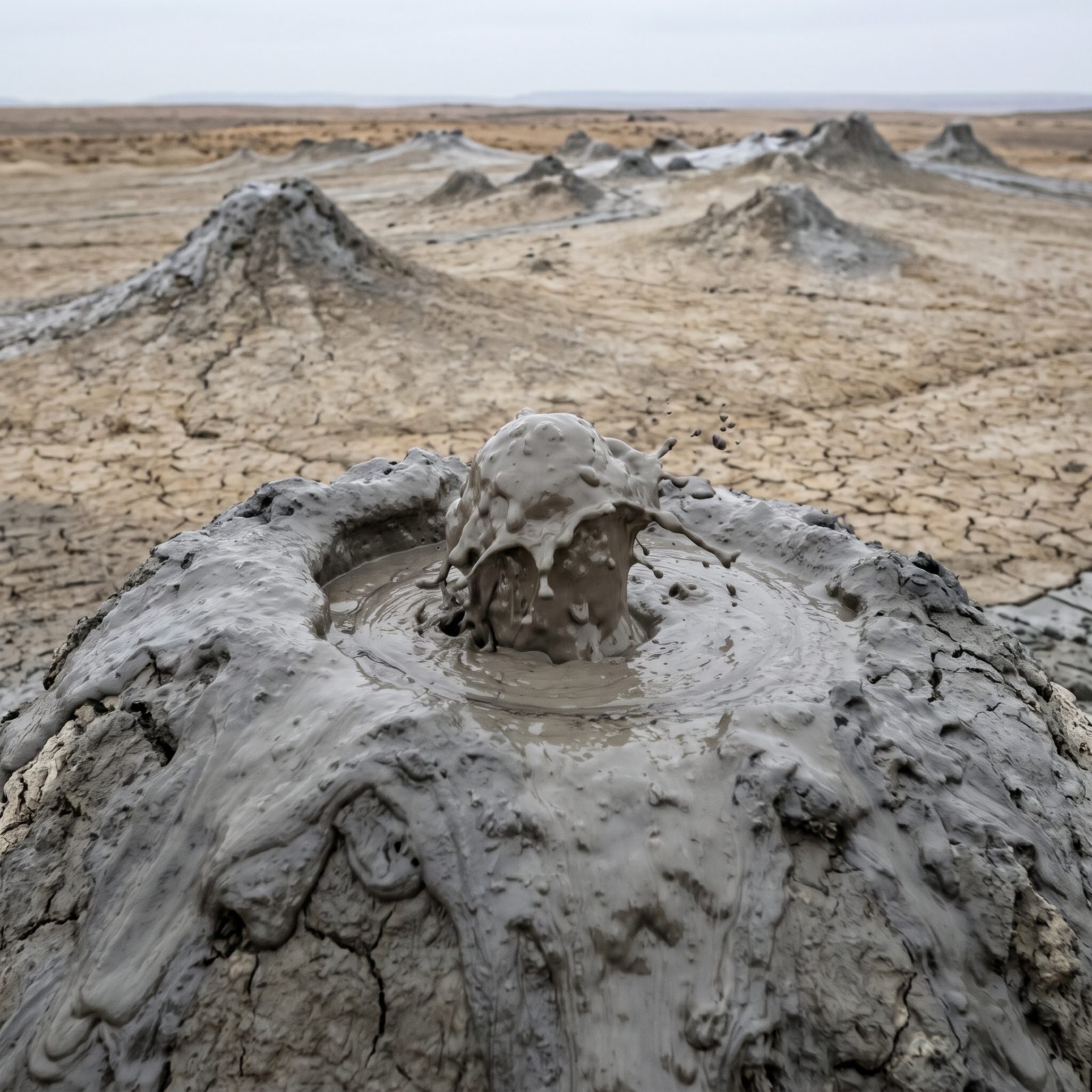
Azerbaijan has more mud volcanoes than anywhere on Earth — hundreds of them, clustered mostly near Gobustan and the Caspian coast. They’re not volcanoes in the lava sense, though. Pressurized gas and water force clay up from deep underground, and it oozes out cold and grey, bubbling and belching like a planet-sized pot of porridge.
The whole scene reads as alien, which is partly why researchers study these formations as stand-ins for features spotted on Mars.
3. Mount Erebus’ Smoking Ice Towers, Antarctica
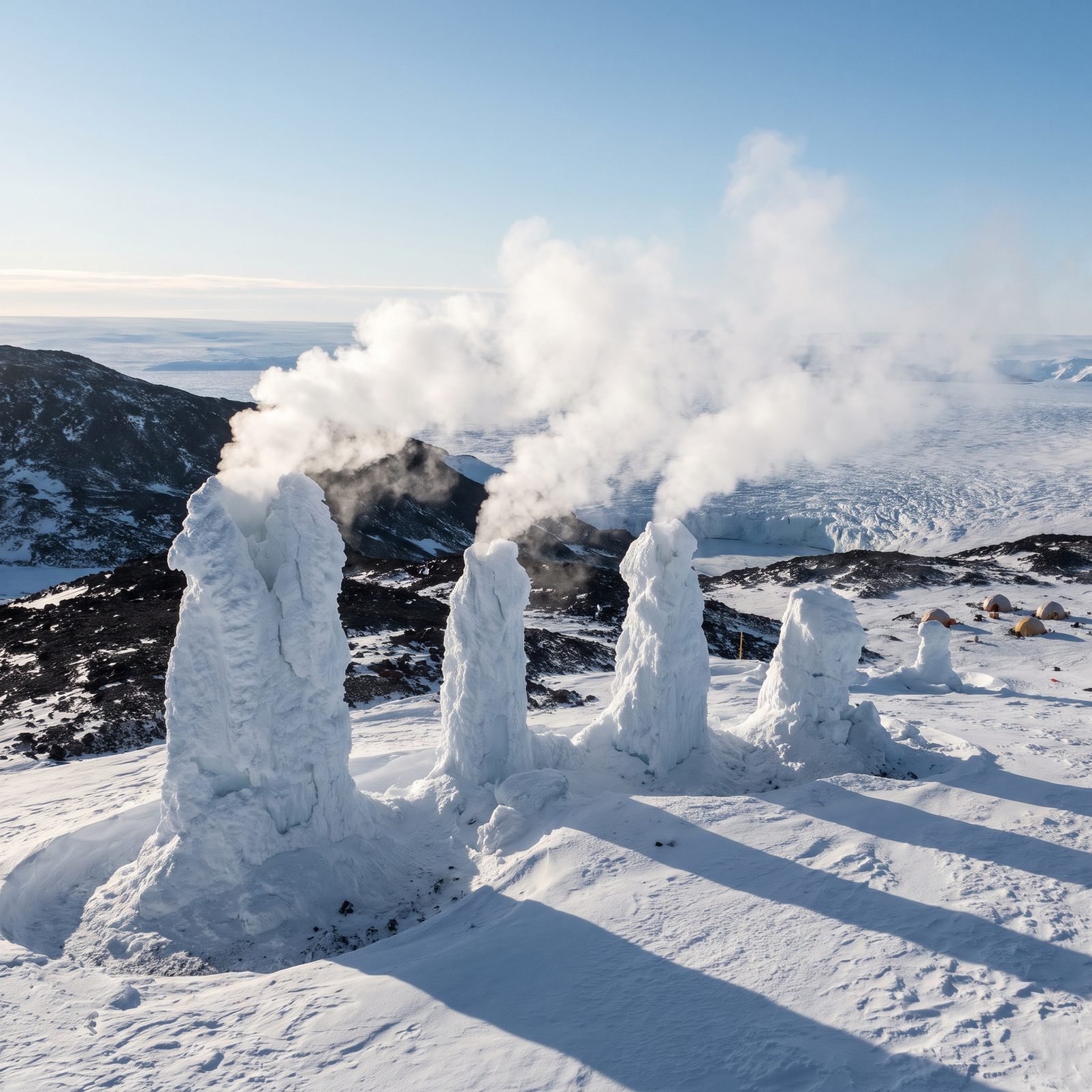
Fire and ice, and both are literal here. Mount Erebus is the southernmost active volcano on the planet, cradling a rare lava lake near its summit at the bottom of the world.
Where volcanic steam escapes through cracks in the ice and hits the Antarctic air, it freezes instantly, stacking up into hollow chimneys called ice fumaroles. Some rise several meters, each one quietly smoking from the top like a little frost-built factory. Scientists actually crawl inside them to study the warm, dark cavities beneath. From the outside, though? A field of smoking ice towers perched on a volcano. No contradiction there. Just Erebus being Erebus.
2. The Andes’ Forest of Bladed Snow Penitentes
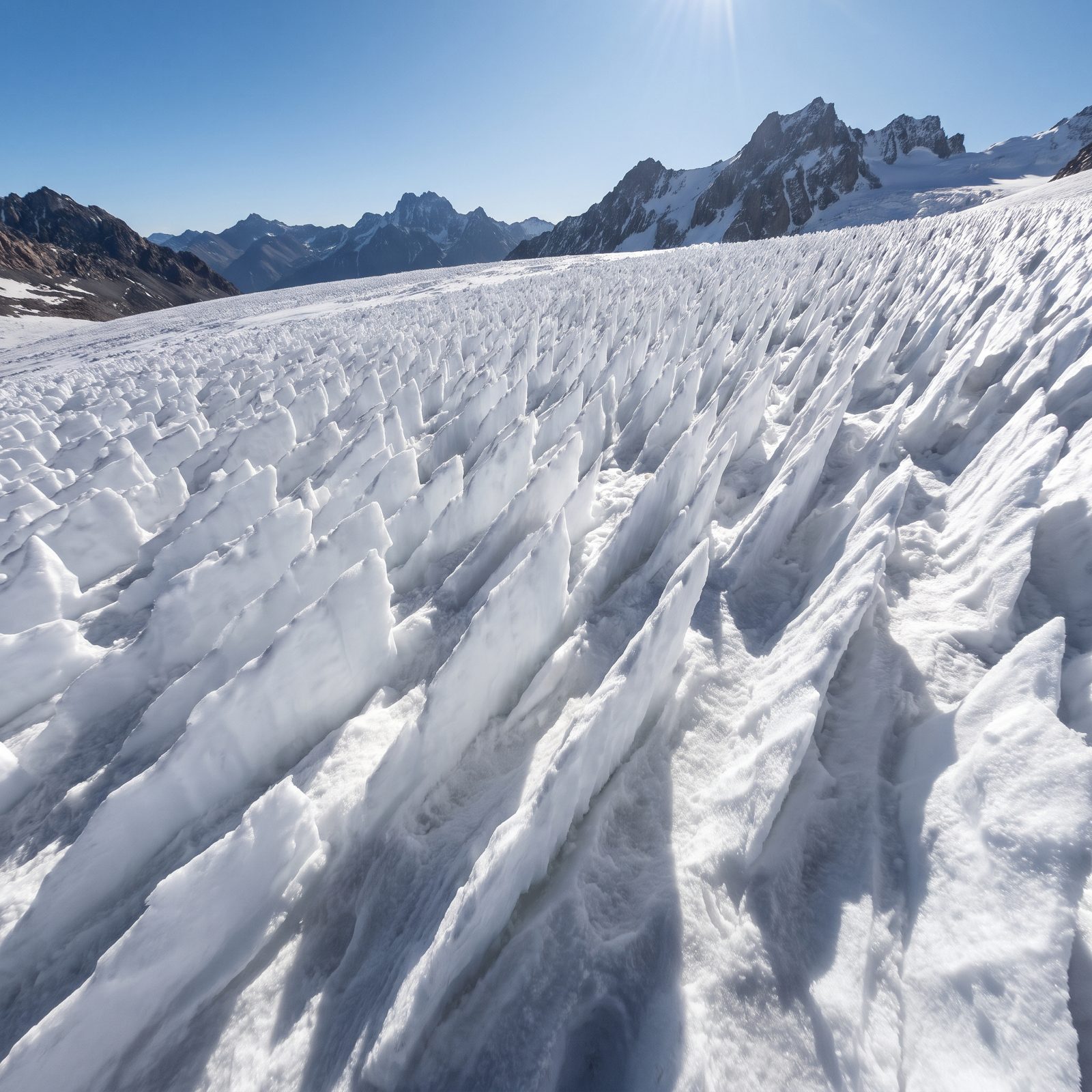
Imagine a snowfield that grew teeth. Penitentes are tall, thin blades of hardened snow, all tilted toward the midday sun, and in dense packed fields across the high Andes they can stand taller than a person.
They form in cold, dry, high-altitude air where sunlight sublimates snow straight into vapor. Small dips melt faster, deepen, and the ridges between them sharpen until the whole surface splinters into spikes. The name comes from their resemblance to robed penitents kneeling in prayer — Charles Darwin crossed a field of them in 1835 and wrote the whole thing up. They’re real, they’re sharp, and climbers curse them to this day.
1. Naica’s Cave of Giant Crystals, Mexico
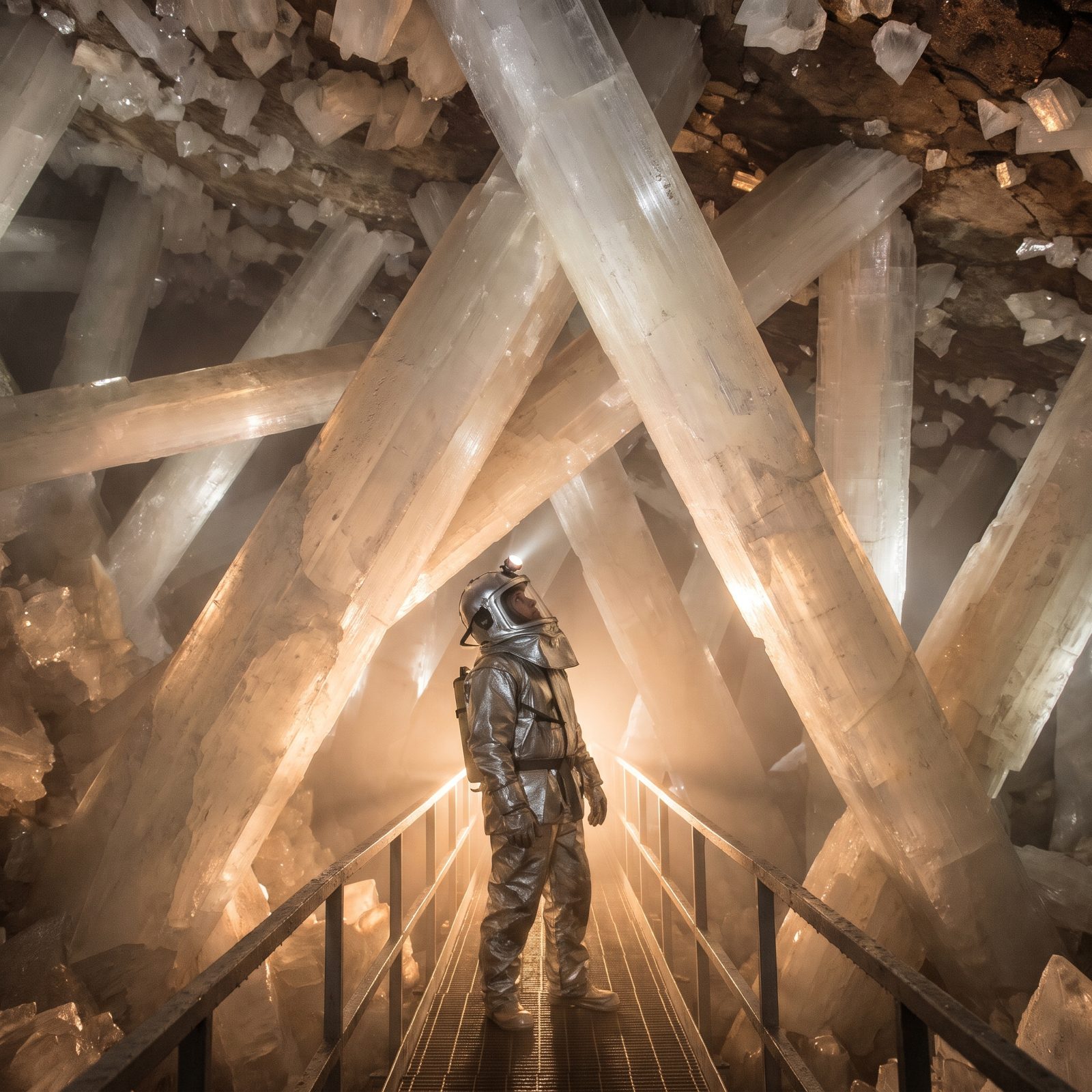
The largest natural crystals ever found look like a set from a science-fiction film, and they nearly killed the first people who walked in.
Miners drilling at Naica stumbled onto the Cave of the Crystals in 2000. Inside sit selenite gypsum beams over 30 feet long, grown painfully slowly over hundreds of thousands of years in mineral-rich water heated by magma below. The cave sits around 58°C with near-total humidity. Go in unprotected and you’ve got minutes before the air itself turns on you, so explorers used ice-packed suits and chilled breathing systems to stay long enough to study anything.
Here’s the catch: the crystals only survived because the cave stayed flooded for eons. Once mining pumps drained it, the clock started ticking. When the pumps were finally switched off, the water flooded back, and the cave sealed itself away all over again.
The crystals grew in the dark for 500,000 years. We got a few years to see them.