

A hyena-sized skull with knife blades for canines. A sloth that could look a giraffe in the eye. A bear whose shoulder cleared the roof of your car. None of these were movie monsters — they walked, grazed, hunted and died on the same continents we live on now, close enough in time that our ancestors watched them do it. The last woolly mammoths were still alive when the pyramids went up. We pulled together what the bones, frozen carcasses and tar pits actually tell us, then used it to build images that respect the evidence. No invented horns, no dragon snouts, just the real animals as close as science can get.
Please note that some of the images in this article were created with the assistance of AI.
28. Woolly Mammoth, The Shaggy Tundra Colossus
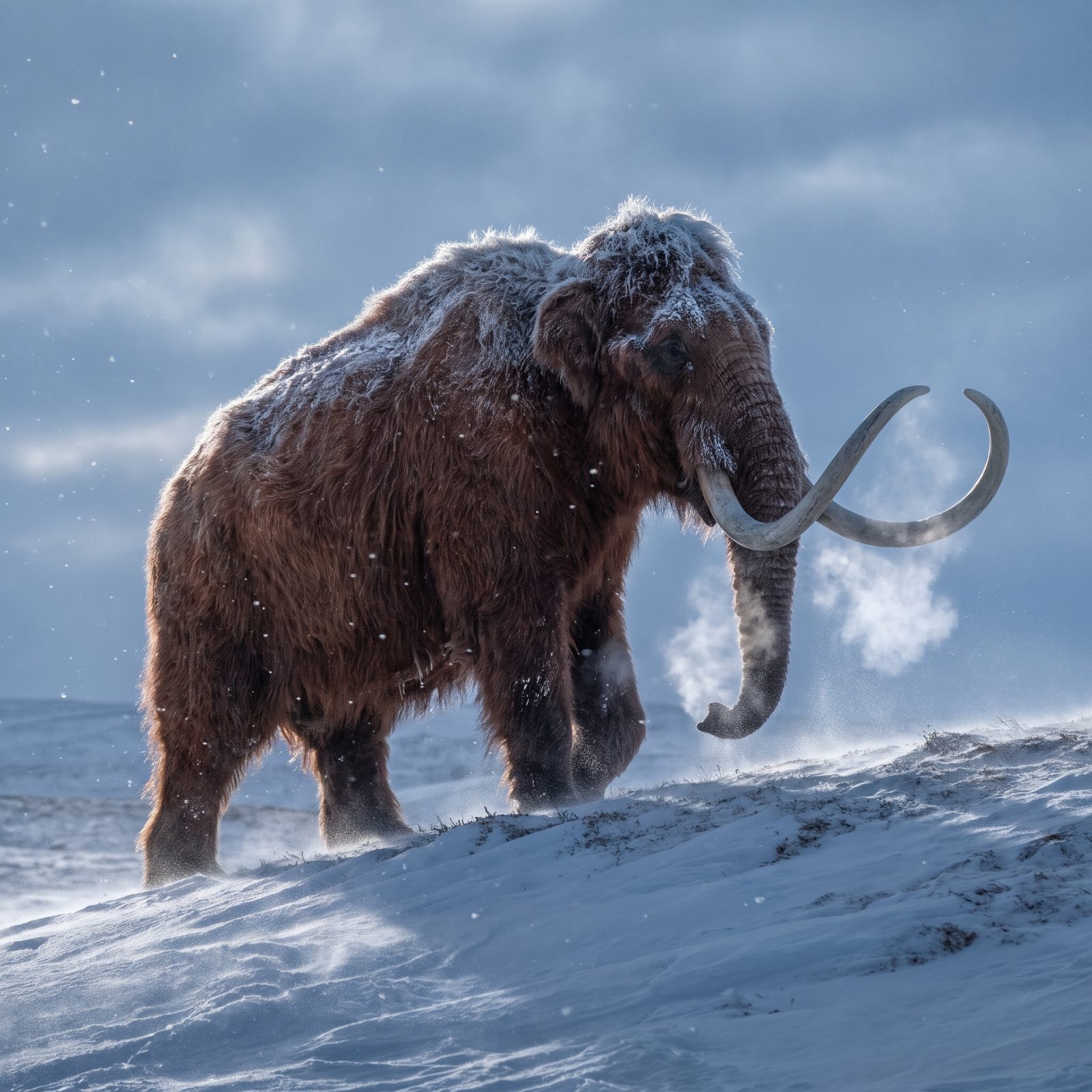
Everybody pictures the tusks. Almost nobody gets the hump right. The woolly mammoth carried a fatty shoulder hump, like a camel’s, that stored energy through the brutal Ice Age winters when the grass ran out. That high domed skull in the reconstructions isn’t artistic license either — it’s bone.
We know the coat color down to the pigment. Frozen carcasses pulled from Siberian permafrost still carry hair, and DNA analysis points to reddish and dark-brown tones, not the uniform brown of old museum dioramas. The last isolated population clung on at Wrangel Island until roughly 4,000 years ago.
27. Giant Ground Sloth, Megatherium at Full Height
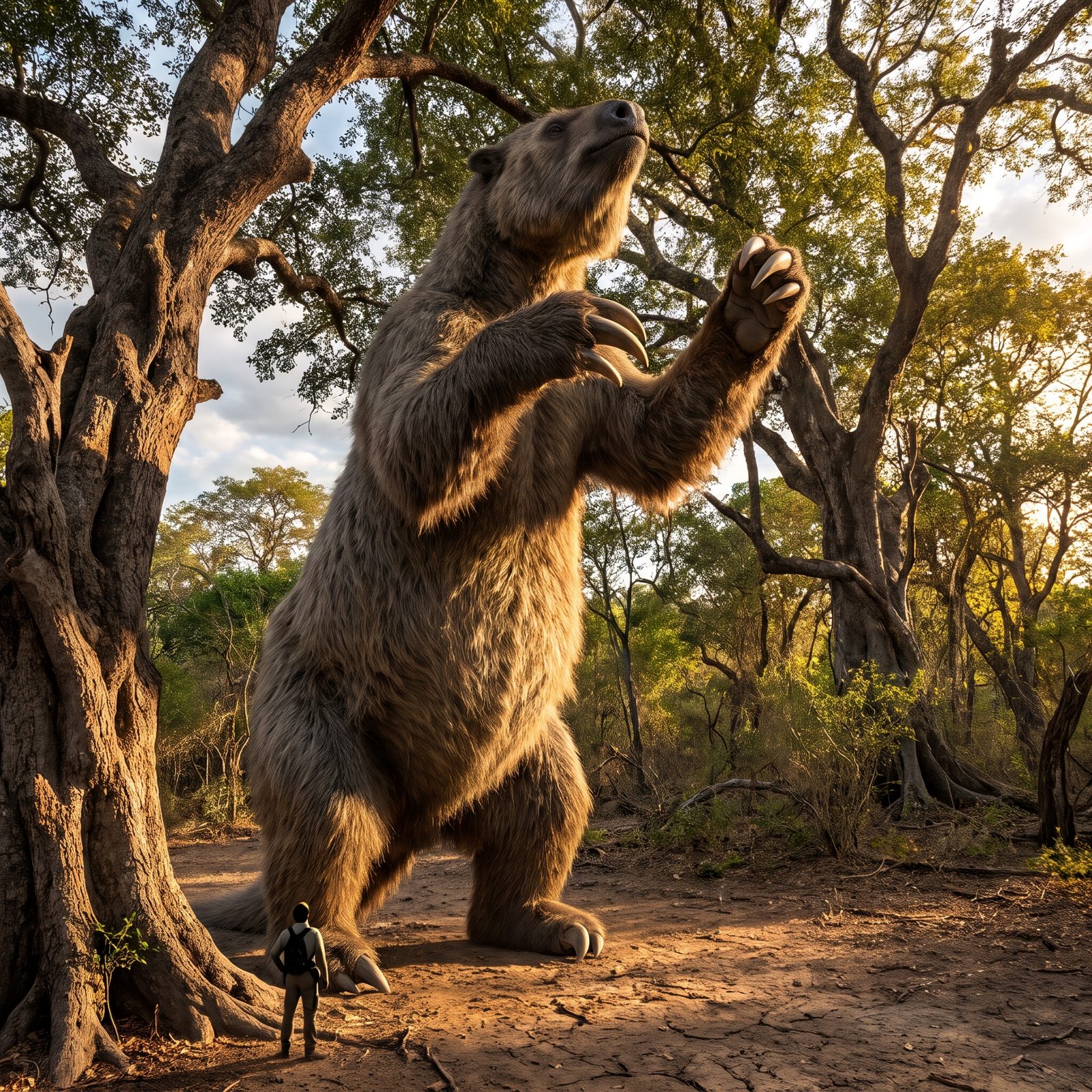
Stand one up and it clears twelve feet. Megatherium americanum weighed as much as a bull elephant and reared onto its tail to strip leaves no other animal could reach. Those claws look like weapons, and they could be, but mostly they hauled branches down to that cavernous mouth.
Fossils turned up across Argentina and the pampas in the late Pleistocene, and Charles Darwin himself carted some of the first good specimens back from his Beagle voyage. The walk was the strange part. Its claws were so long the animal rolled onto the outer edges of its feet to move, leaving footprints that baffled researchers for years.
26. Elasmotherium, The Giant “Siberian Unicorn”
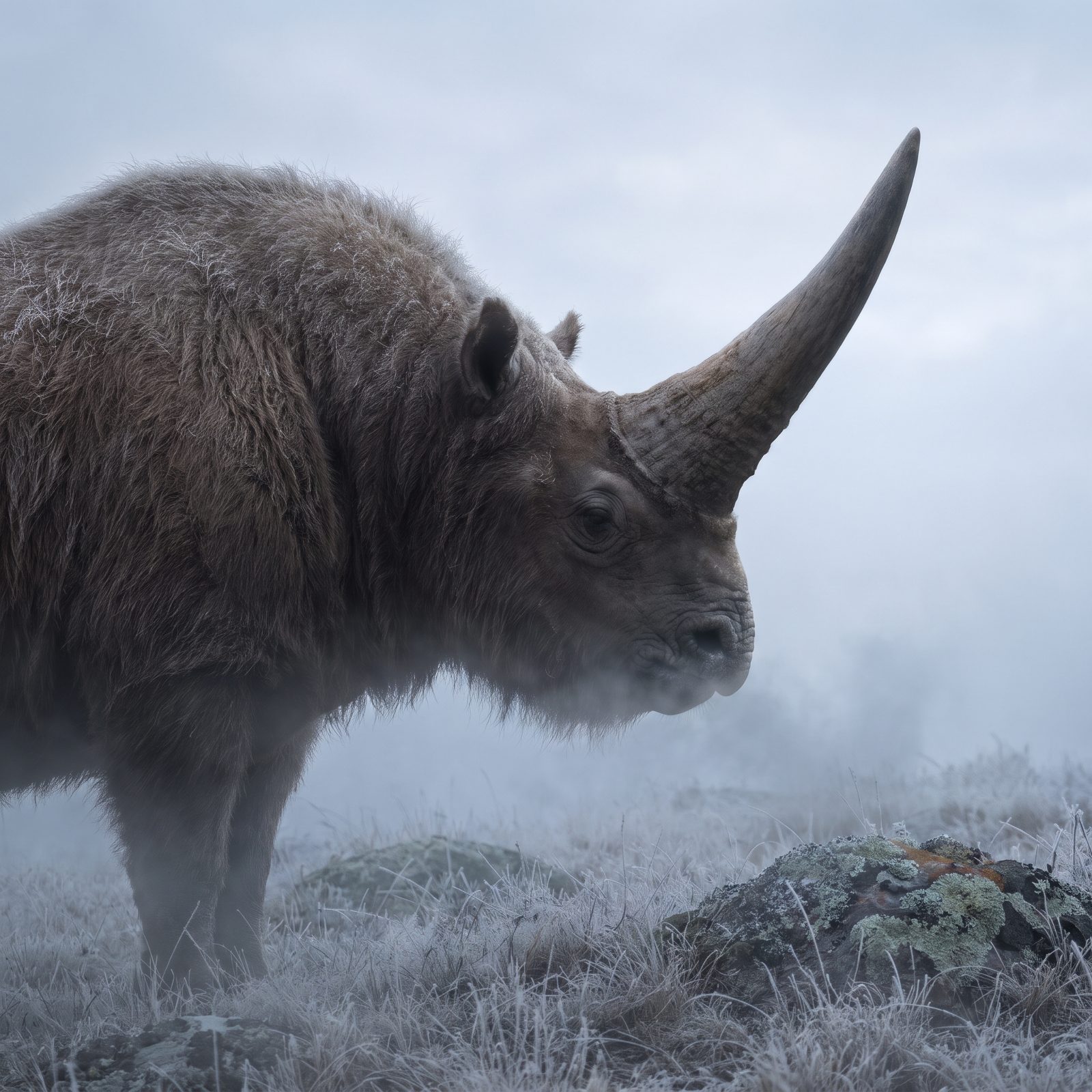
The “unicorn” nickname oversells it, and we should be honest about that. Elasmotherium was a rhinoceros the size of a mammoth, with a massive bony dome on its forehead. That dome anchored something — a horn, almost certainly, possibly enormous. But horn is keratin, and keratin rots, so no actual horn has ever been found.
Every reconstruction is guessing at its length and shape. Fossils come from the steppes of Russia, Kazakhstan and Siberia. For decades scientists thought it died out hundreds of thousands of years ago, until better dating pushed its survival forward to around 39,000 years ago, overlapping with early humans. And here’s the twist on the legend: it grazed low grasses, not the high browse its horn once suggested to researchers.
25. Smilodon Populator, The Largest Saber-Toothed Cat
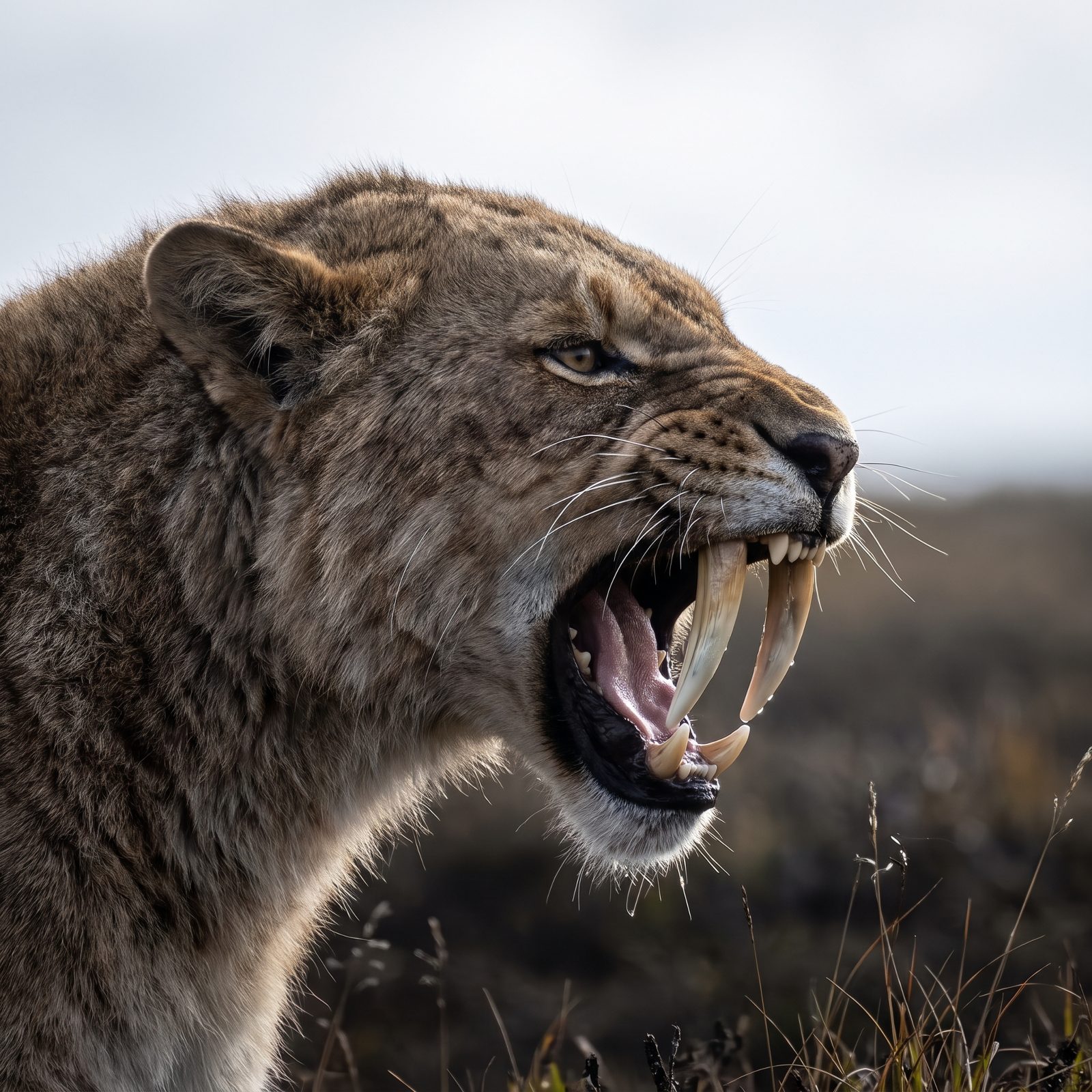
Those famous fangs were fragile. People assume a saber-tooth bit into living, thrashing prey — it didn’t, not if it wanted to keep its teeth. The flattened canines would snap under a struggling animal’s weight.
So Smilodon populator used its grotesquely powerful forelimbs to pin prey flat and hold it dead still, then delivered one precise killing bite to the throat or belly. This was the biggest of the saber-tooths, up to 900 pounds, roaming South America. The famous Smilodon fatalis fossils come from the La Brea Tar Pits in Los Angeles, where thousands got trapped chasing prey that was already stuck.
24. Giant Short-Faced Bear, The Towering Arctodus
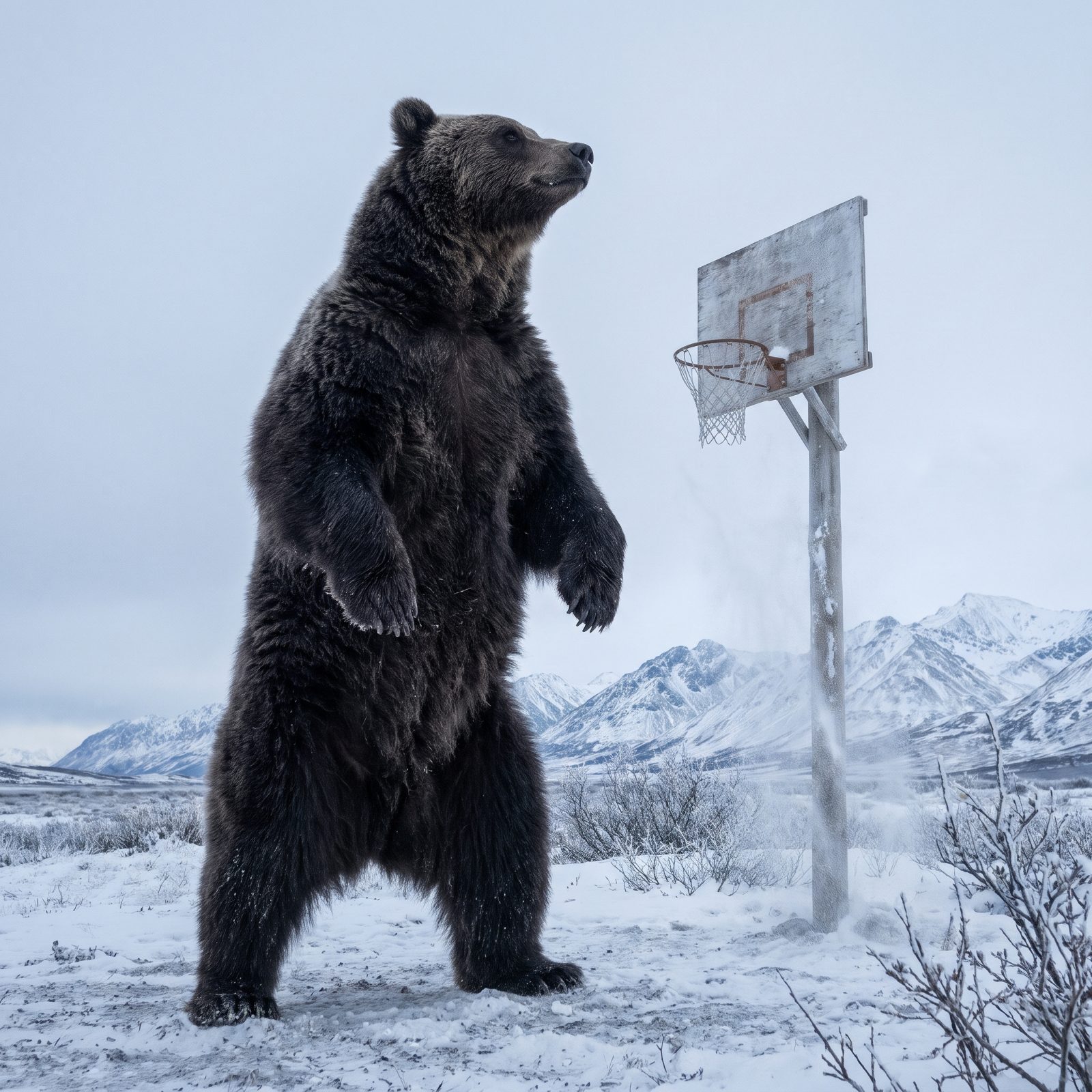
Reared up, it towered over a basketball hoop. Arctodus simus stood somewhere around eleven feet on its hind legs and could survey tall grass without even stretching. Those long legs tell a story paleontologists still argue about.
One camp says it was a running predator, built to chase down horses and bison across the North American plains. Another says those legs were about covering huge distances to scavenge carcasses, muscling other hunters off their kills by sheer size. The truth is probably both, depending on the day. Fossils turn up from Alaska down into Mexico. Whatever it was doing, the first humans crossing into North America had to share the landscape with it.
23. Irish Elk, The Deer With Enormous Antlers
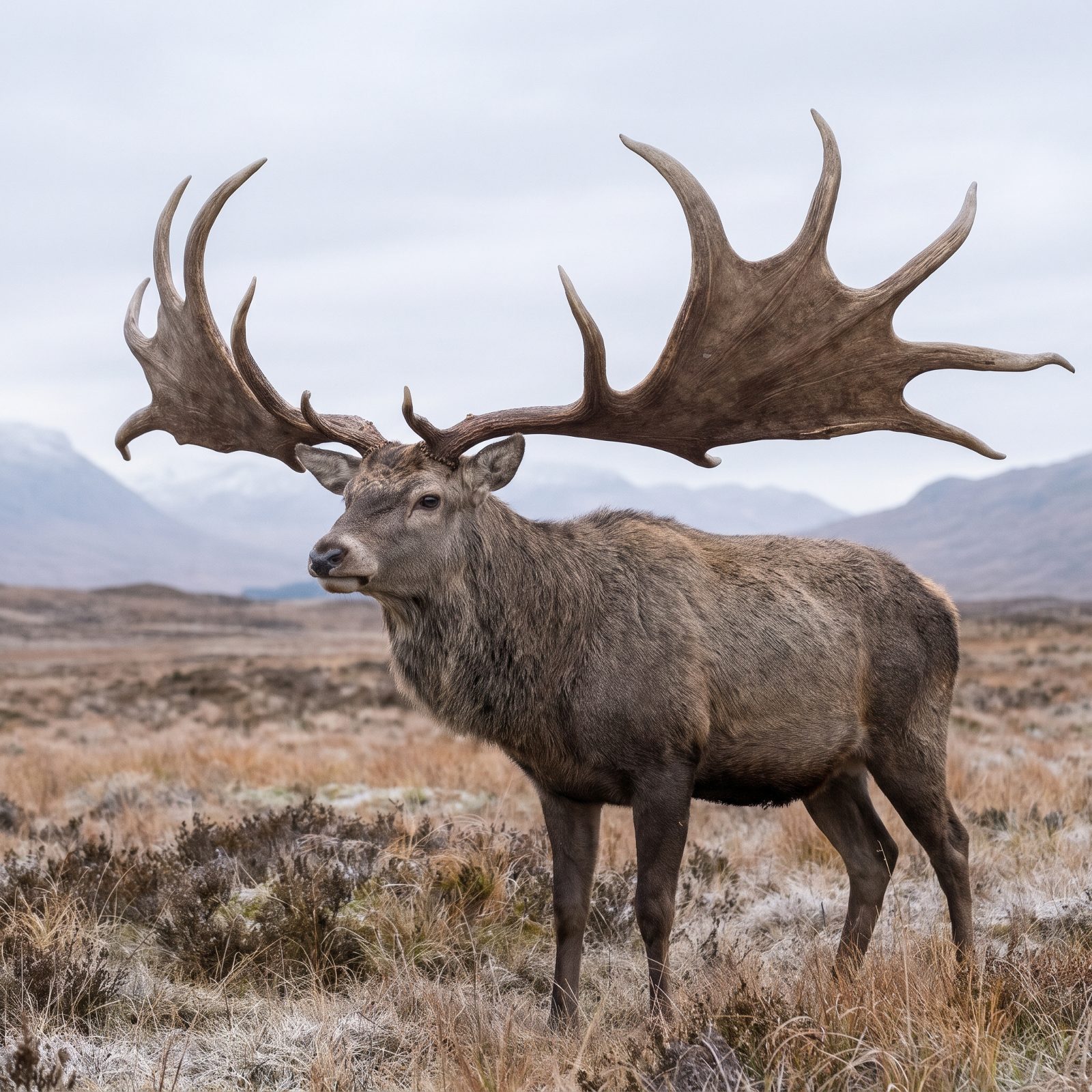
Not Irish, not an elk — the name is wrong twice. Megaloceros giganteus ranged across Europe and Asia, a giant deer more closely related to fallow deer than to any elk. The “Irish” part stuck because so many perfect skeletons came out of the peat bogs of Ireland.
The antlers are the headline. Up to twelve feet across, the broadest of any animal that ever lived, grown and shed every single year — a staggering yearly cost in calcium and energy. Victorian thinkers decided those antlers grew so absurd they doomed the species, a tidy morality tale. Modern research says climate change starved the habitat the animal needed to grow them. Less satisfying, truer.
22. Diprotodon, The Largest Marsupial Ever Known
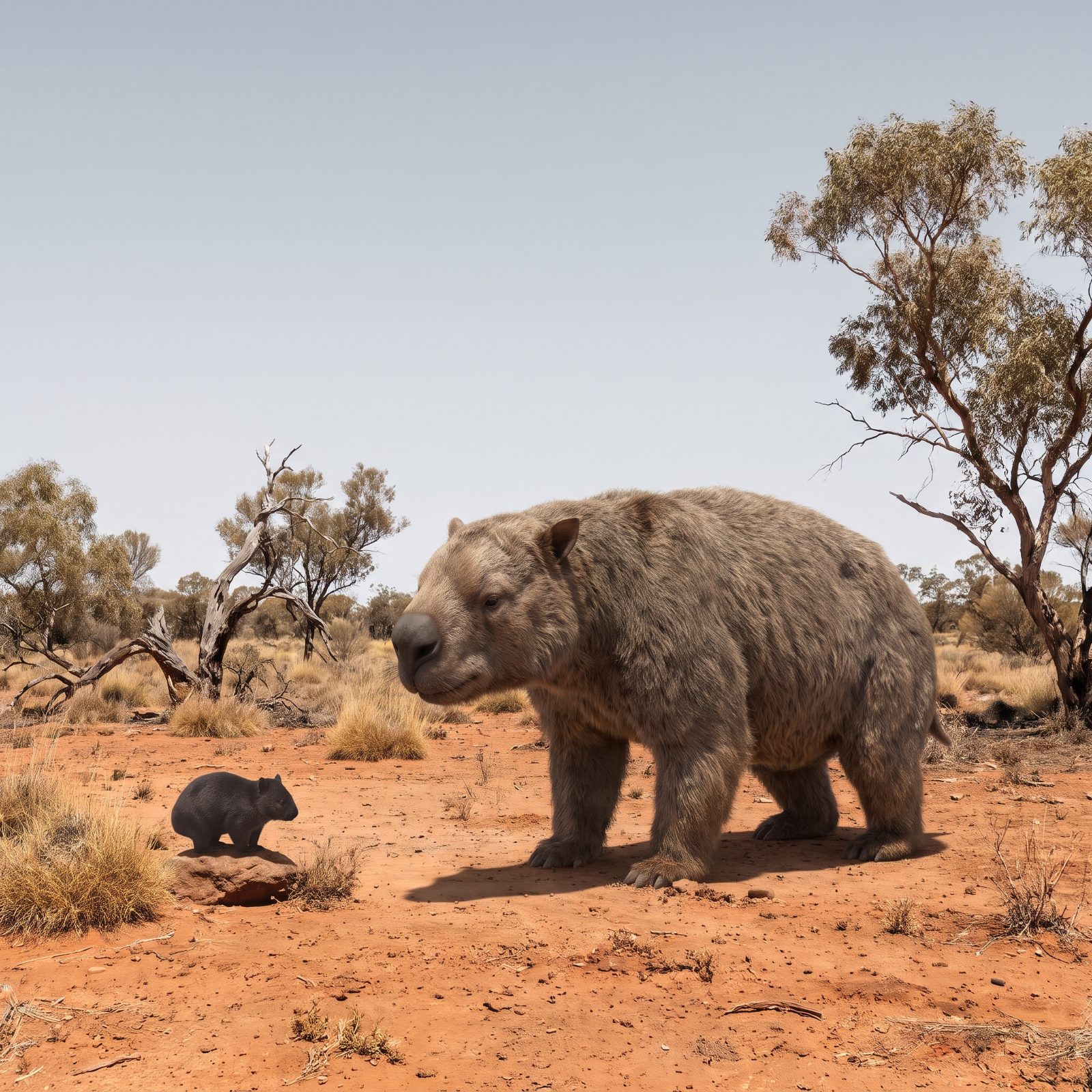
Imagine a wombat the size of a hippo. That’s Diprotodon optatum — roughly ten feet long, heavier than two tons, the biggest pouched mammal that ever lived. It plodded across Australia browsing saltbush and shrubs right up until about 44,000 years ago.
Here’s the detail that gets people. The first Aboriginal Australians almost certainly saw these animals alive, and some researchers think Diprotodon bones are behind the “bunyip” stories in parts of Aboriginal oral tradition. Fossils pepper the continent, with a famous bone bed at Lake Callabonna in South Australia where dozens got stuck in drying mud and died together. And yes, it kept its young in a pouch. A pouch on a two-ton animal.
21. Gigantopithecus, The Largest Known Ape
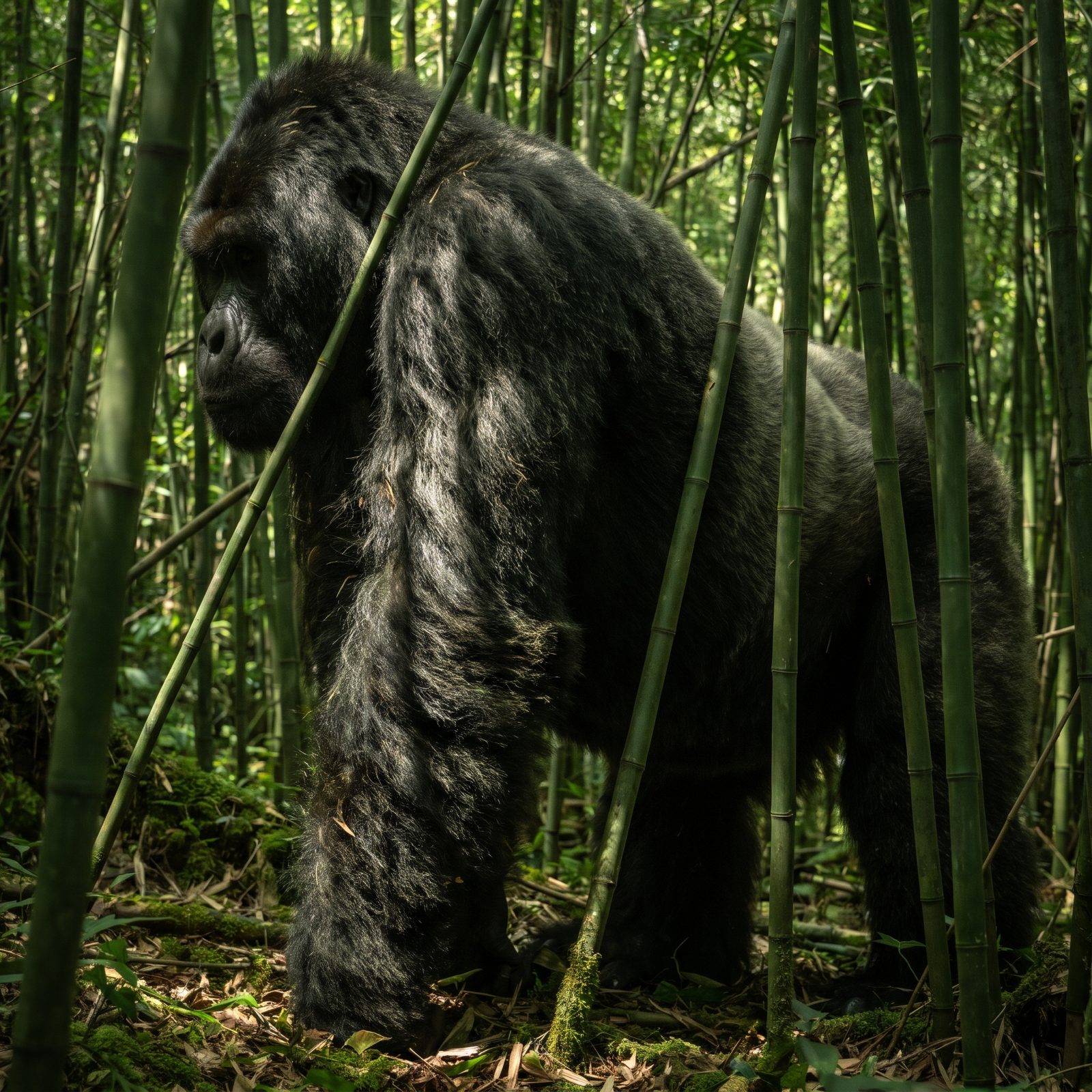
We know this animal almost entirely from teeth and a few jawbones. That’s it — no skull, no skeleton. Thousands of its molars have turned up in cave deposits across southern China, scraped up over decades, some originally sold in markets as “dragon teeth” for traditional medicine.
Those teeth tell us it was huge, maybe ten feet tall and north of 500 pounds, the largest ape ever. The size figure is an educated extrapolation, so treat the towering reconstructions with a pinch of salt. The teeth also reveal its downfall: they’re built for grinding tough vegetation, likely bamboo. When the forests shifted toward open grassland around 100,000 years ago, a giant that specialized in forest plants had nowhere to go.
20. Woolly Rhinoceros: The Horned Tank of the Mammoth Steppe
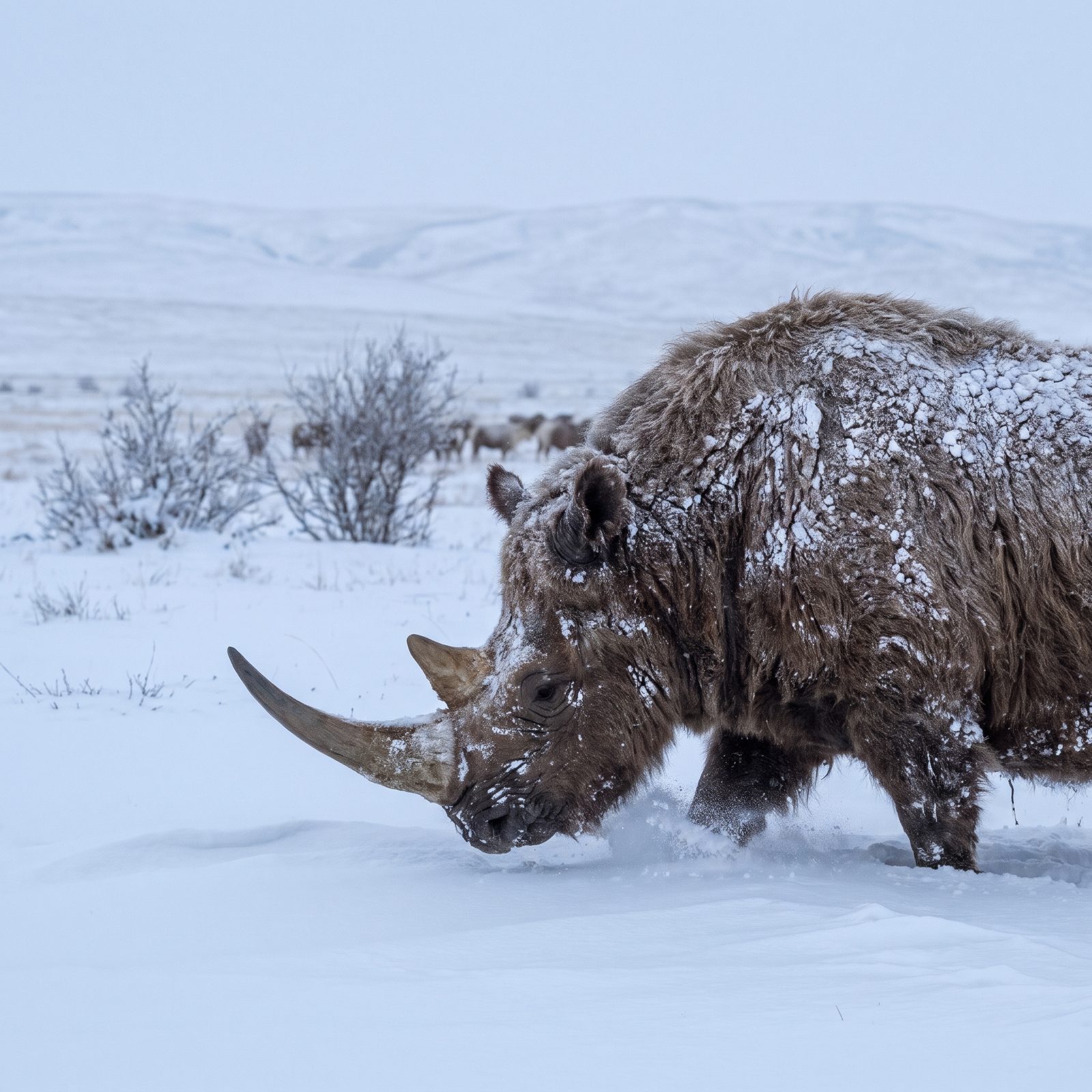
That front horn didn’t gore much of anything. Wear patterns on preserved specimens show it swept side to side like a broom, shoveling snow off frozen grass so the animal could reach the dry stalks underneath. A built-in plow, not a weapon.
We know this creature better than almost any Ice Age species, and the permafrost is why. A frozen female pulled from Siberia still had her strawberry-blonde coat, her last meal sitting in her gut, and skin soft enough to study. Coelodonta weighed around two tons and ranged all the way from Spain to Korea, grazing a cold dry steppe that no longer exists anywhere on Earth.
One paleontologist who examined woolly rhino horns reports that wear on their front reached nearly half the width of the base, which fits the view that the flattened horn was used to brush away snow while feeding. (via one paleontologist)
19. Elephant Bird: Madagascar’s Half-Ton Flightless Giant
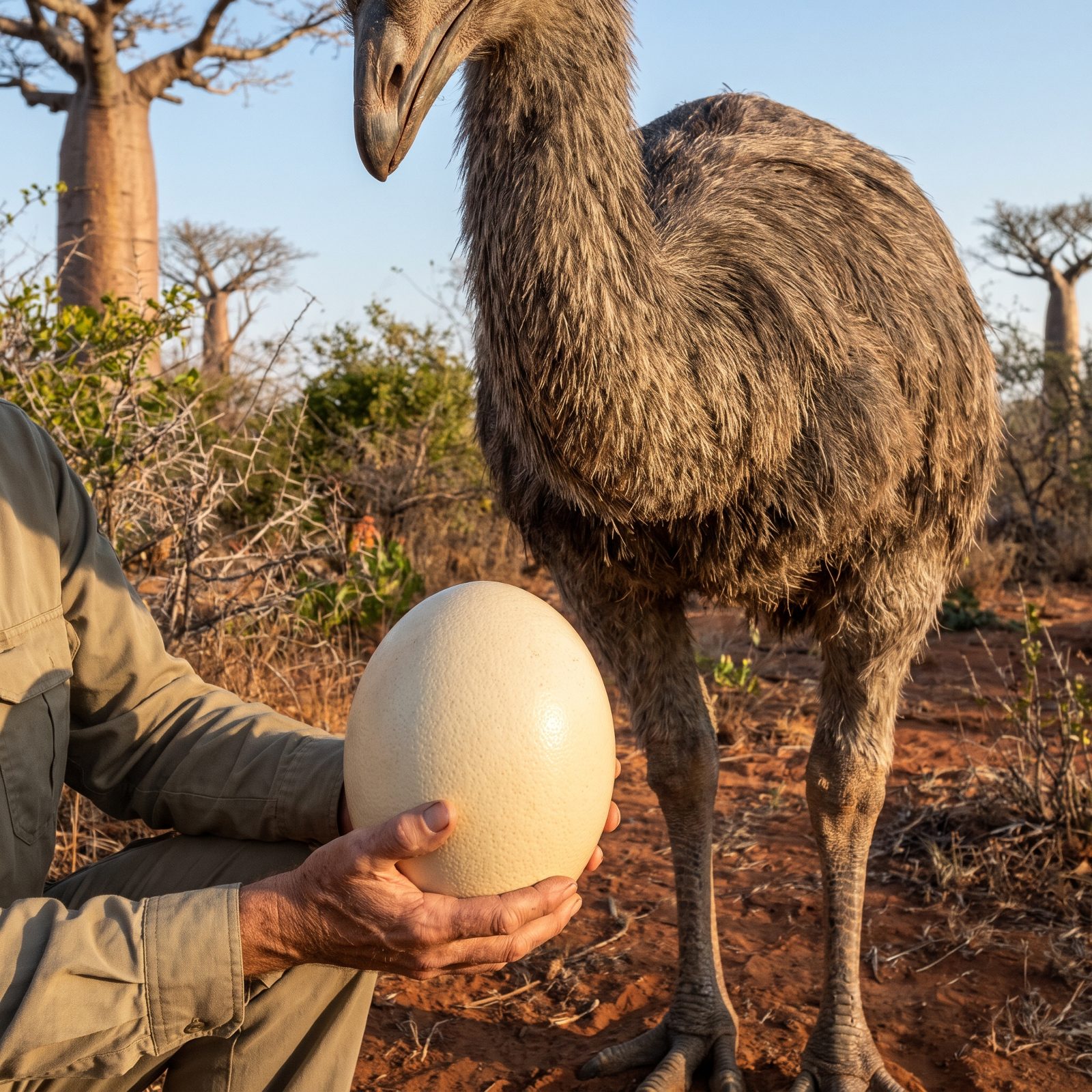
A single egg could hold the volume of about 150 chicken eggs — one shell was a household meal. People scavenged them, cooked them, and carved them, which is a big part of why this bird is gone.
Aepyornis stood taller than you and weighed close to half a ton, the heaviest bird science has ever confirmed. It couldn’t fly, had no reason to, and shuffled through Madagascar’s forests eating fruit in the dark. Then DNA work dropped a bombshell. Its closest living relative is the kiwi — a chicken-sized bird on the far side of the Indian Ocean. The giant and the mouse of the bird world share a grandmother, and nobody saw that coming.
18. American Mastodon: The Stocky Browser of Ice Age Swamps
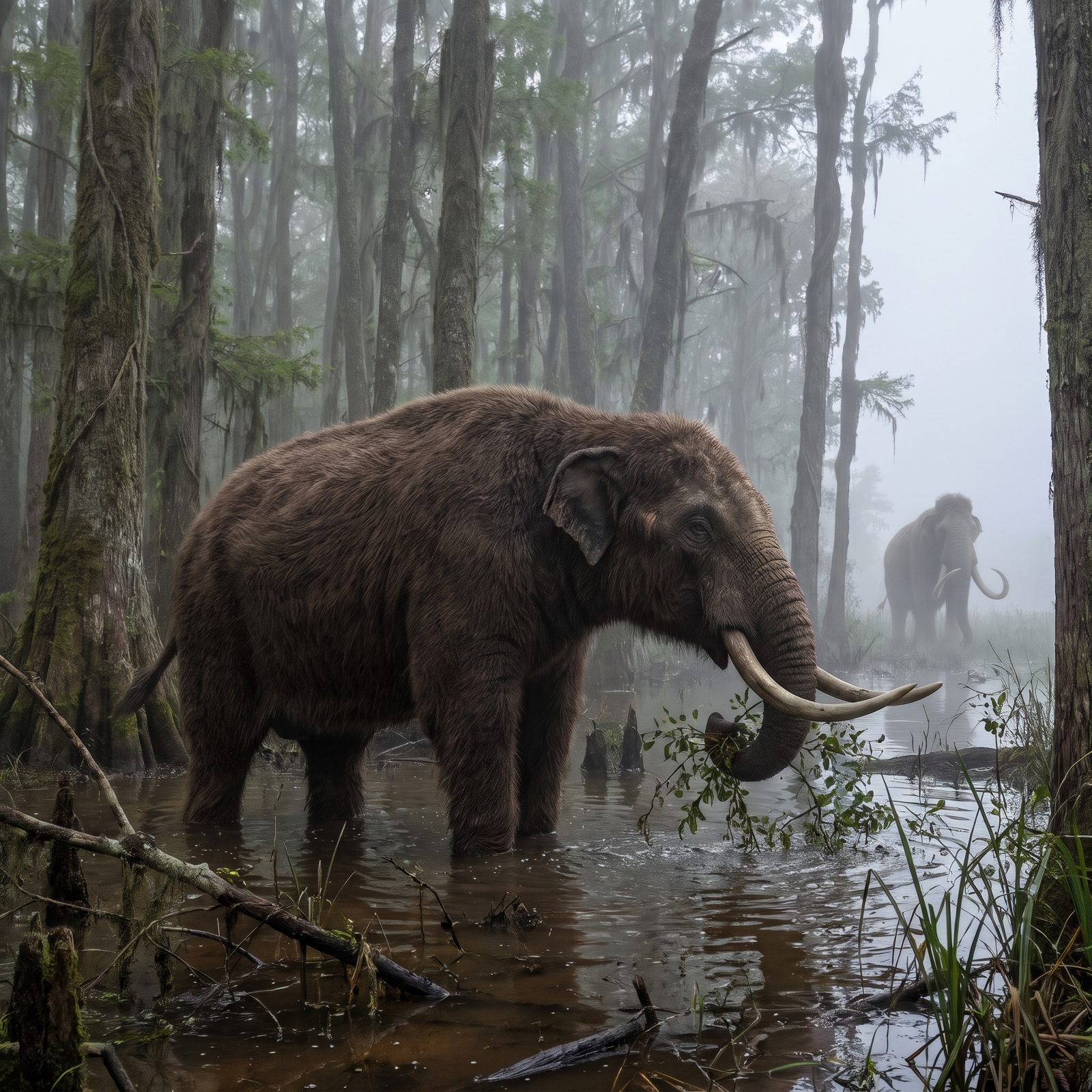
People mix up mastodons and mammoths constantly. Different animals, barely related, separated by millions of years of evolution. The quickest tell is in the teeth.
Mammoth molars carry flat washboard ridges for grinding grass. Mastodon molars have blunt cone-shaped cusps — and that’s where the name comes from. Mastos plus odon, “breast tooth,” because a 19th-century anatomist decided the bumps looked like them. Those cusps mashed twigs, leaves and cones. Woodland browsers, not steppe grazers, and they held on in North America until roughly 11,000 years ago.
17. Straight-Tusked Elephant: The Forest Giant That Dwarfed Most Mammoths
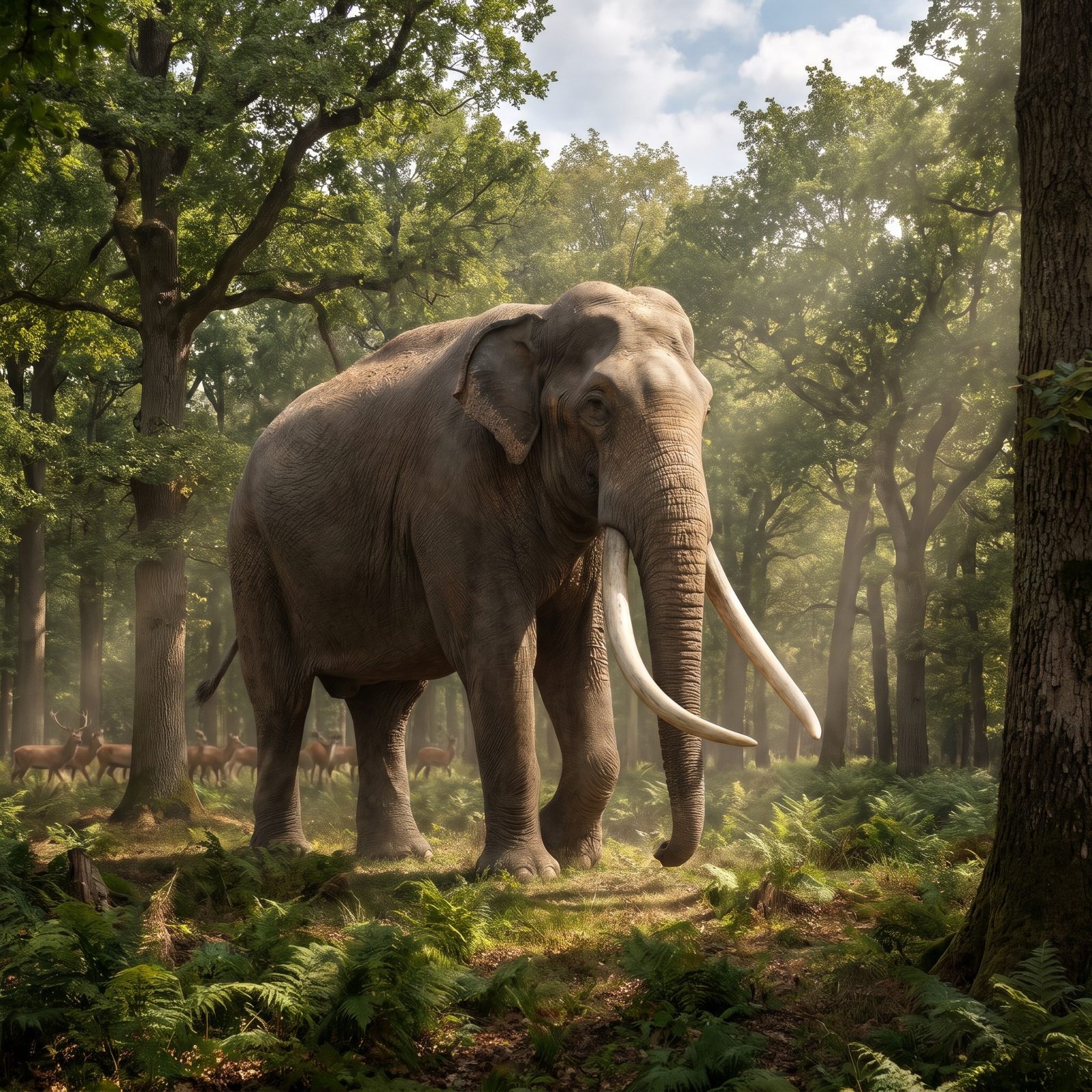
Here’s the elephant everyone forgets. Palaeoloxodon antiquus stood around four meters at the shoulder and weighed well over ten tons, outsizing the woolly mammoth and nearly every elephant alive today.
It lived in the warm forests of Europe between ice ages, not out on the frozen steppe, which is why it rarely makes the popular Ice Age highlight reel. Its island relatives went the complete opposite direction. Trapped on Mediterranean islands with barely enough food to go around, they shrank over generations into dwarf elephants barely a meter tall. Same lineage, two opposite extremes — giants under the oaks, ponies on the rocks.
16. Procoptodon: The Giant Short-Faced Kangaroo of Australia
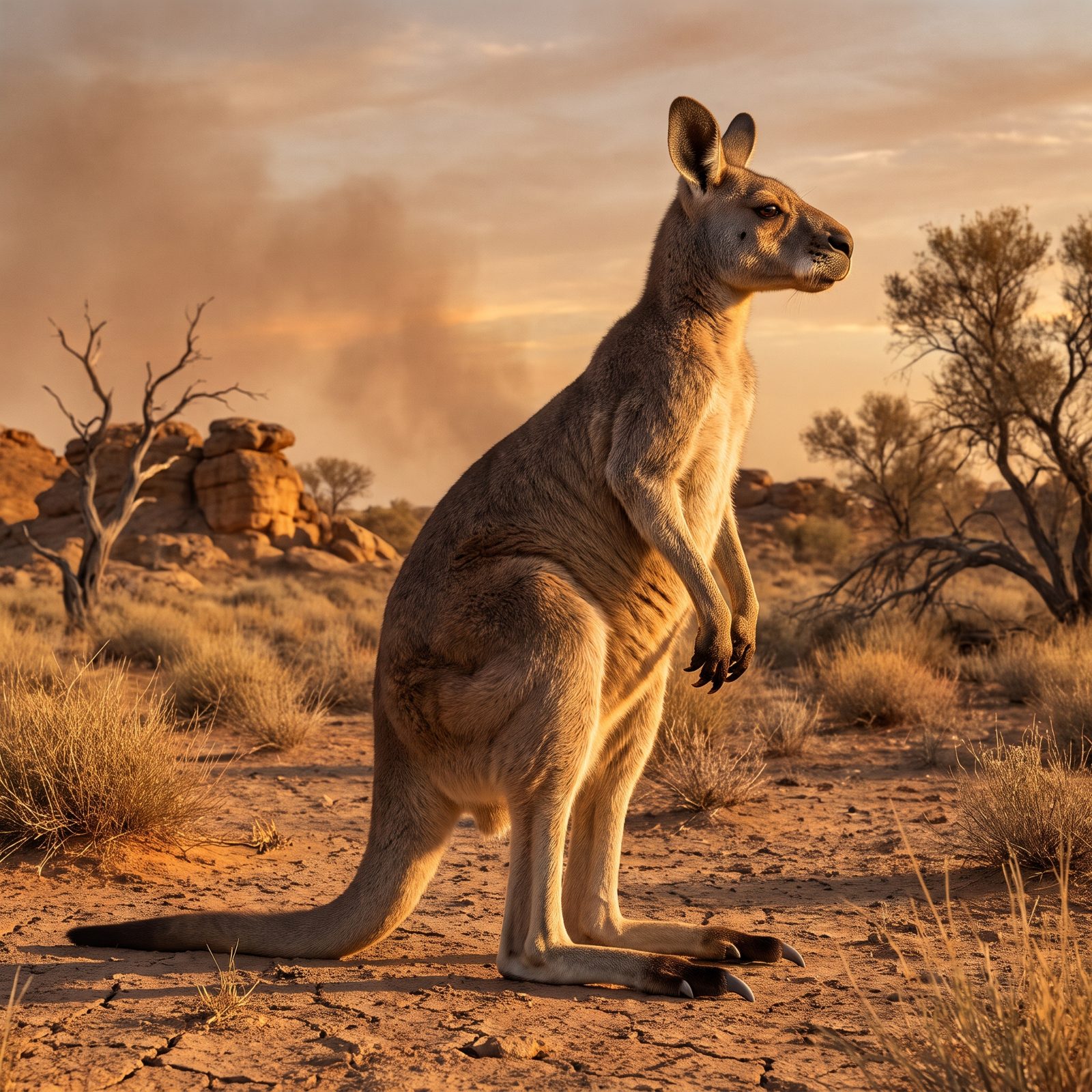
A kangaroo with a short, flat face and hind feet tipped with a single large toe. Procoptodon goliah ranks among the strangest marsupials anyone has ever reconstructed.
At around 500 pounds it was simply too heavy to hop the way a modern kangaroo does. Biomechanics studies suggest it mostly walked, one leg at a time, the way a person might limp across a room hauling a refrigerator. Its long arms and hooked fingers reached up to pull branches down, and eyes set on the sides of the head gave it a wide view of the scrub around it. Built to browse, not to bound.
15. Giant Beaver: The Bear-Sized Rodent of North America
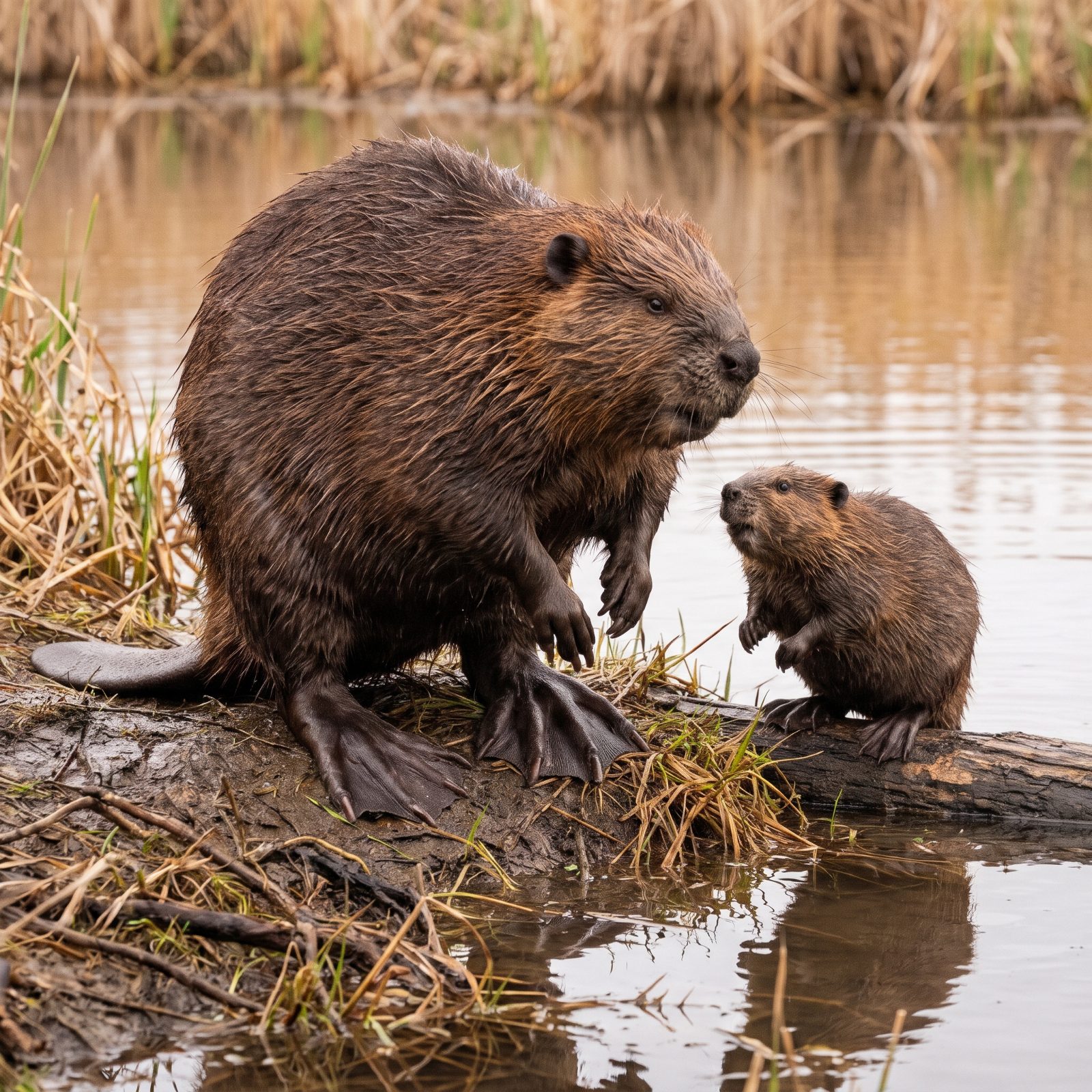
Everyone pictures the industrious little dam-builder with the flat paddle tail. Its extinct cousin was something else entirely.
That cousin, Castoroides, reached the size of a black bear, around 200 pounds, with incisors as long as your hand. Unlike the broad, scaly paddle of the modern beaver, it had a thin rounded tail, and not a shred of evidence says it built dams at all. It lived in natural wetlands and seems to have grazed on aquatic plants instead of felling trees, and tooth chemistry backs that up. Then the warming climate dried out its marshes at the end of the Ice Age, and the giant beaver had nowhere left to go. The small tree-cutter survived. The giant didn’t.
14. Josephoartigasia: The One-Ton Rodent With Monstrous Incisors
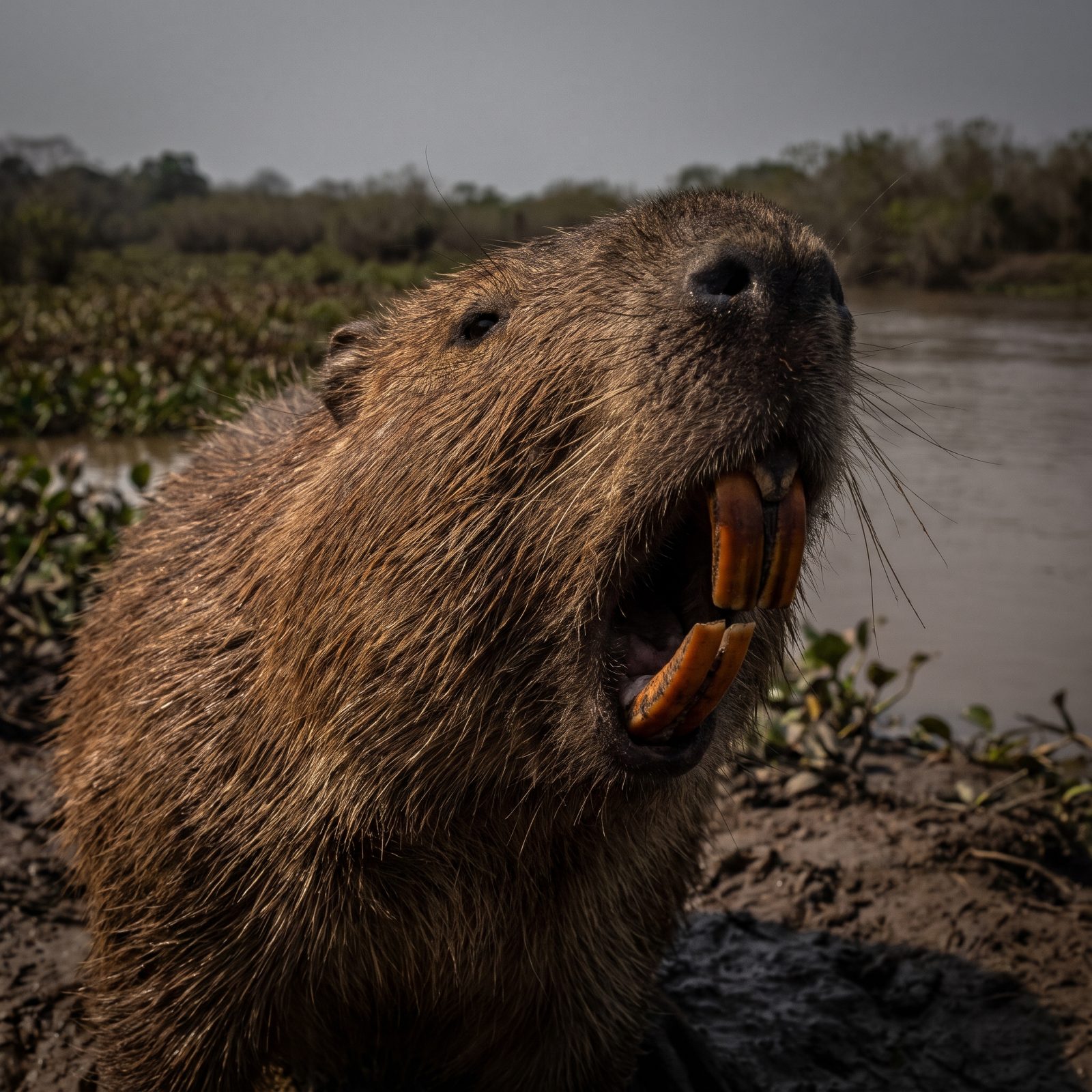
A rodent the size of a bull. Josephoartigasia monesi weighed roughly a ton, the largest rodent that ever lived, and we know it from a single remarkable skull found in Uruguay.
Those incisors were as thick as your wrist, and biomechanical modeling turned up something genuinely strange. The bite force at the tips was modest — no harder than a tiger’s — yet the teeth could withstand far more stress than they ever delivered in an actual bite. So what were they for? The leading idea is that this animal wielded its front teeth like tusks: digging, fighting, stripping bark. A giant guinea pig cousin that solved its problems the way an elephant does.
13. Bison latifrons: The Giant Bison With Six-Foot Horns
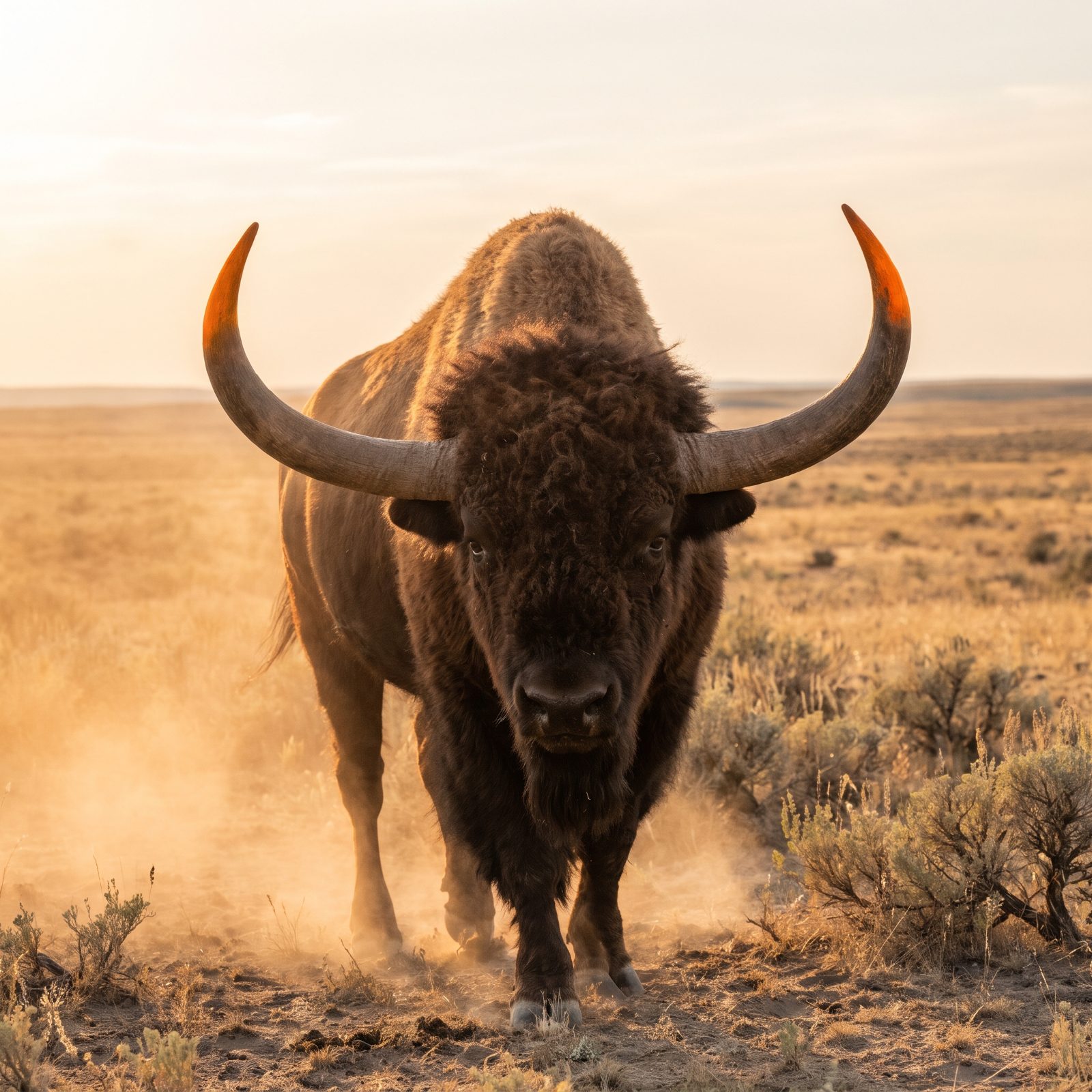
Horns nearly two meters from tip to tip. Bison latifrons wore the widest headgear of any bison that ever lived, and honestly, those horns are the whole story.
This giant roamed North America long before the modern plains bison showed up, and it stood considerably bigger, around 2.5 meters at the shoulder. Horns that size make lousy weapons, though. They were display gear — signaling health and status to rivals and mates, the prairie equivalent of a peacock dragging around a ridiculous tail. As the climate shifted and open woodland gave way to short grassland, the smaller, nimbler bison we know today simply outcompeted it. Big horns look impressive. Flexibility wins.
12. Macrauchenia, the Long-Necked Oddball of South America
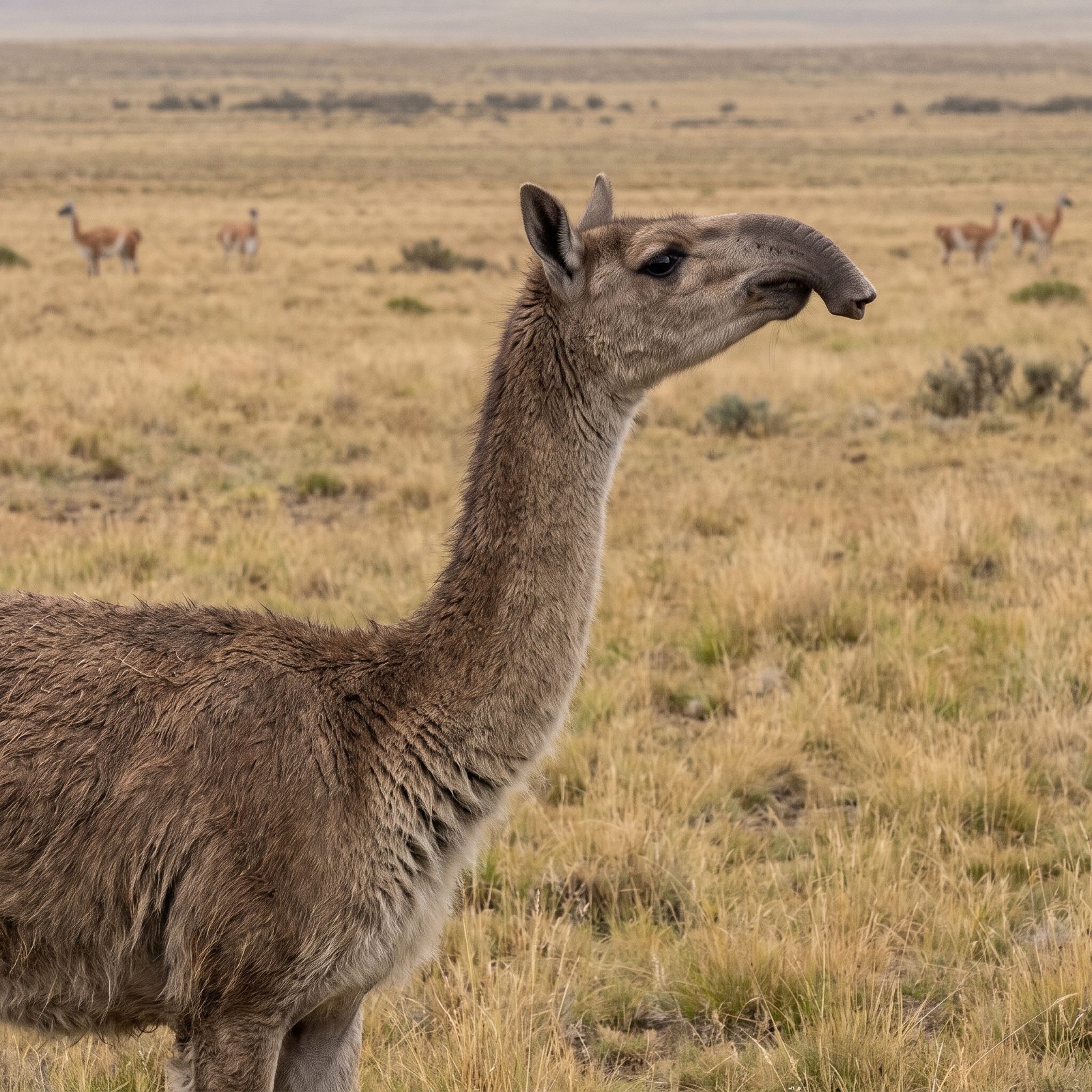
Darwin’s crew dug up its bones in 1834, and for the next 180 years nobody could say what they were looking at. A neck like a camel, feet like a rhino, and a face that may have carried a short trunk — it fit no family tree we had.
Then ancient collagen cracked the case. Macrauchenia belongs to a lost branch of hoofed mammals called the litopterns, whose closest living cousins are horses and tapirs. A whole order of South American giants, gone, with no descendants to carry the memory forward.
After bone collagen placed Macrauchenia and Toxodon on the mammal family tree, a molecular evolutionary biologist on the study said “We have resolved one of the last unresolved major problems in mammalian evolution: the origins of the South American native ungulates”
11. Toxodon, the Barrel-Bodied Beast That Baffled Darwin
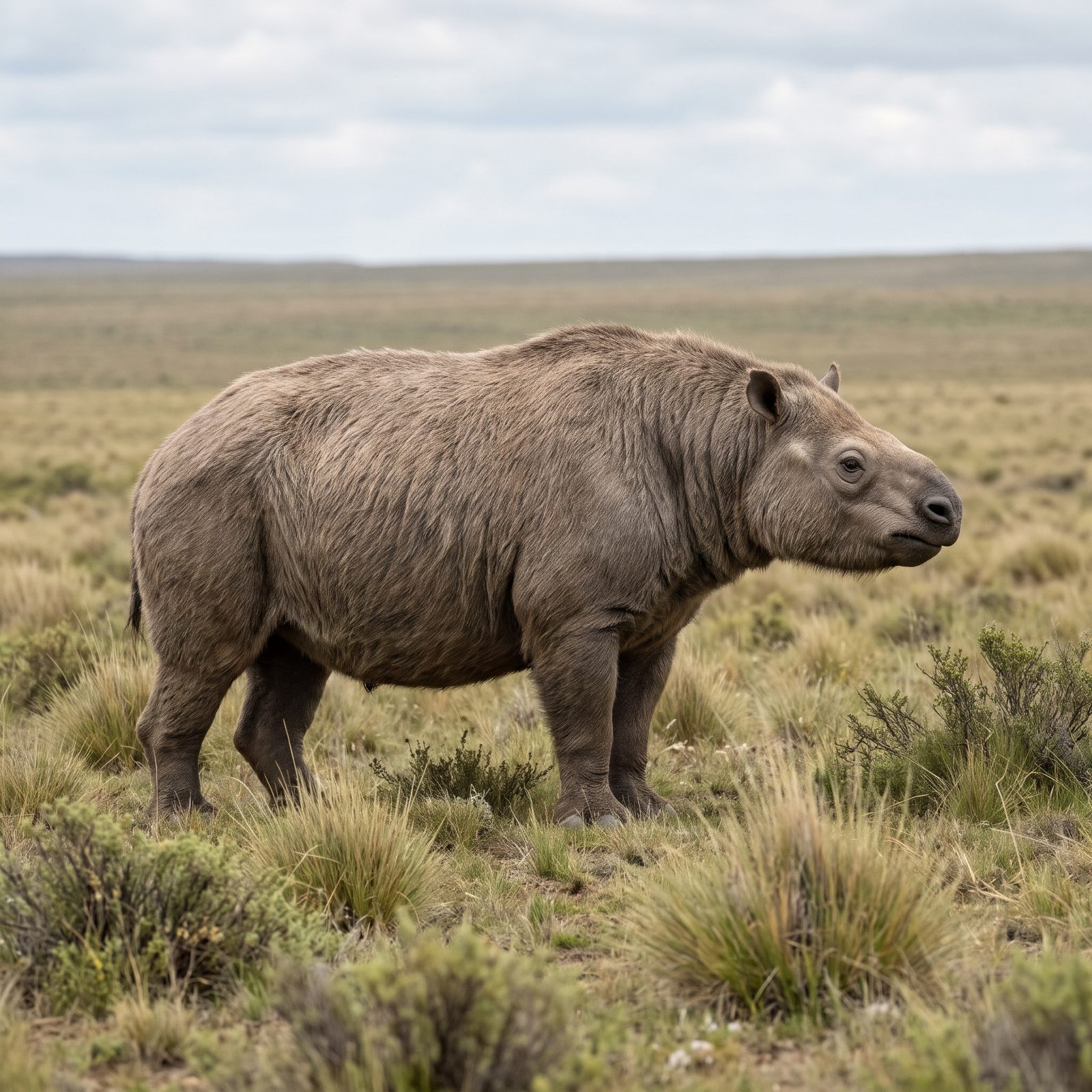
Darwin bought the skull for eighteen pence from a farmer who’d been using it for target practice. He called it “perhaps one of the strangest animals ever discovered,” and for once nobody could accuse him of overselling.
Toxodon weighed well over a ton and stood like a rhino assembled by a committee that never once agreed on a shape. Teeth grew continuously. The gut was an enormous fermentation barrel for rough plants, and nostrils perched high on the skull hint at a swampy, water-loving life.
It belonged to the notoungulates, yet another vanished South American lineage. Big, successful, widespread — and then simply over.
10. Palorchestes, the Clawed Marsupial Nobody Expected
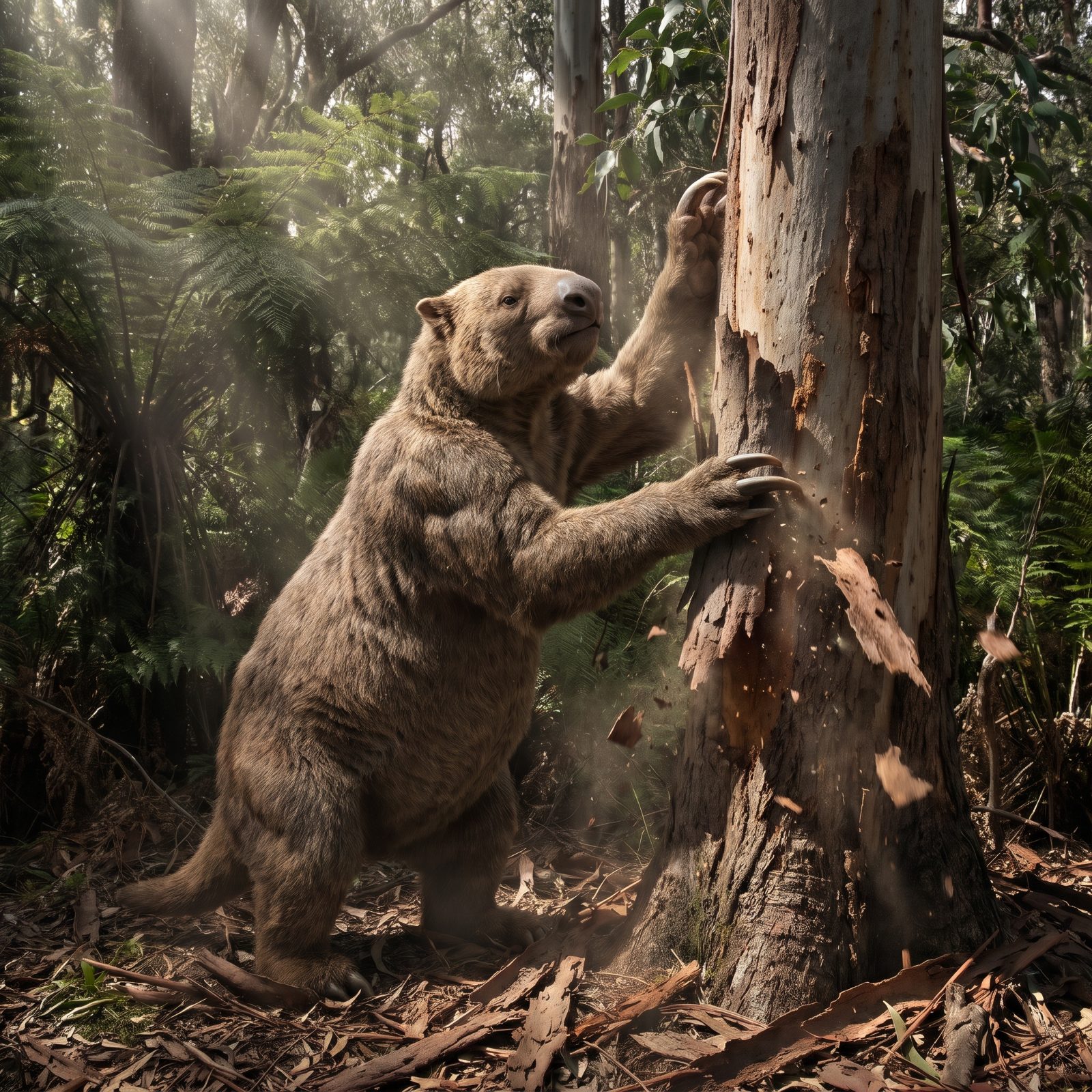
Picture a marsupial the size of a horse with the shoulders of a prizefighter and claws built to peel bark off trees. That’s Palorchestes — and for years it was wrongly rebuilt as a giant kangaroo, which tells you how badly early reconstructions can go.
Newer skeletal work painted a stranger picture. The forelimbs were extraordinarily muscular, the elbow locked at a fixed angle that never fully straightened, built for brute pulling power, and the claws huge. A blunt, wombat-like snout sat at the front of a deep, heavy head.
9. Dire Wolf, the Heavyweight of the Pack
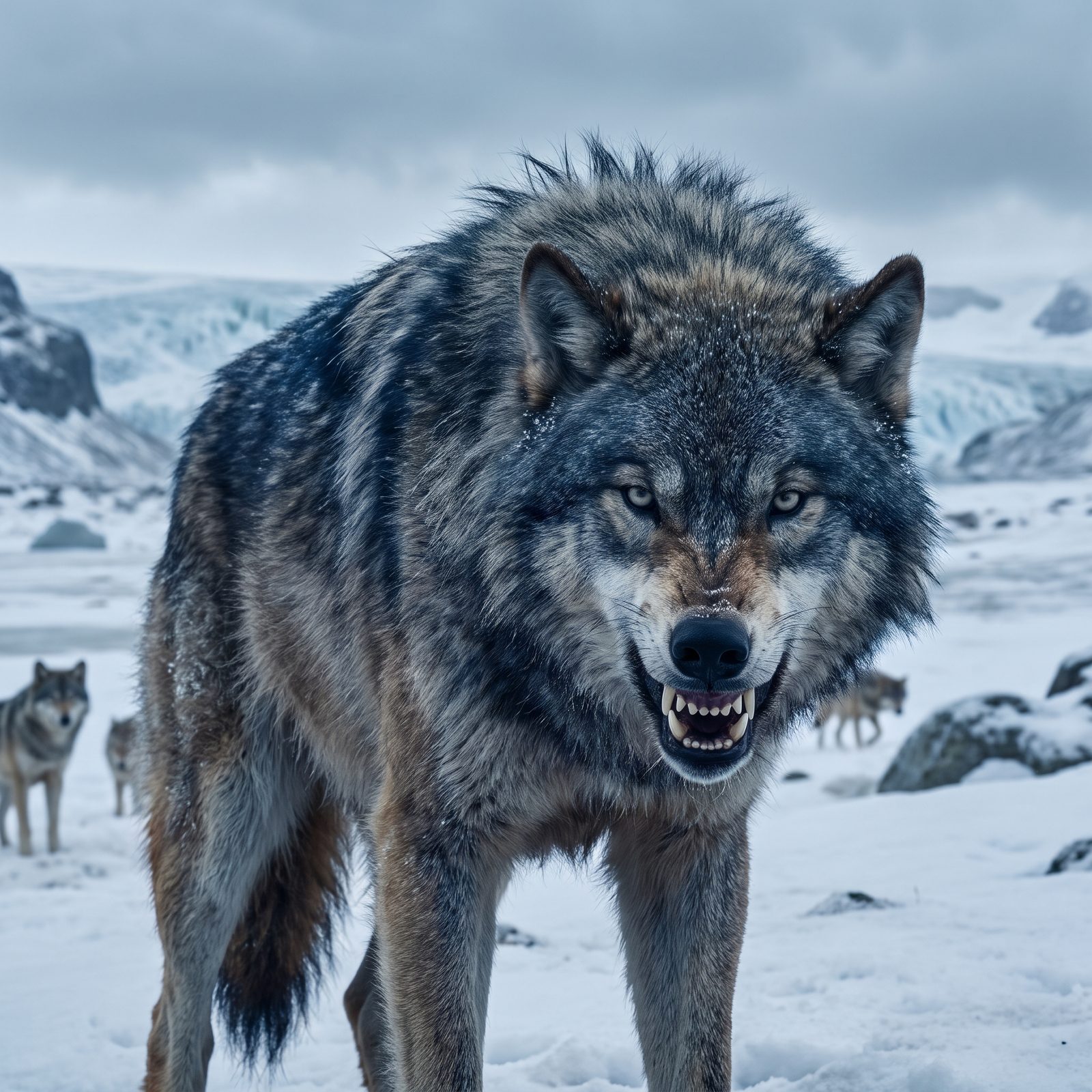
Forget the fantasy-show version. The real dire wolf was heavier and stockier than a gray wolf, with a crushing bite tuned for big, stubborn prey like bison and horses.
The La Brea tar pits in Los Angeles have coughed up thousands of them, making it one of the best-documented Ice Age predators anywhere. And here’s the twist from recent DNA work: dire wolves weren’t really wolves in the close sense at all. They split from living canids millions of years ago, and convergent evolution simply handed them the wolf shape. The family resemblance is skin deep.
8. Camelops, the Western Camel That Walked the Great Plains
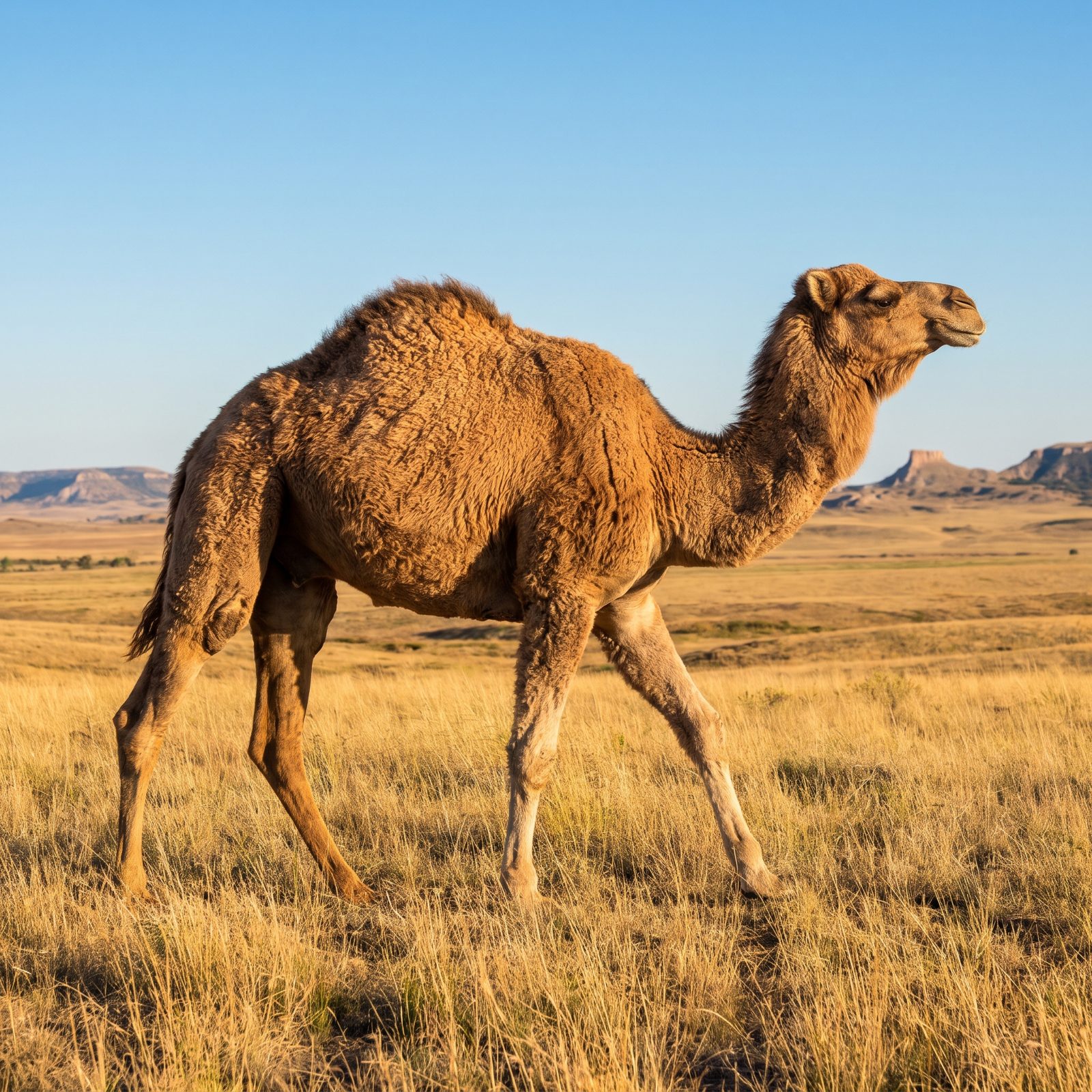
Camels are an American story that moved abroad. The whole family evolved in North America, and Camelops was the last of the great homegrown species, striding across what’s now Utah, Texas and California until the end of the Ice Age.
It stood taller than a modern dromedary and browsed tough desert shrubs. Did it carry a hump? We honestly can’t say. Soft tissue doesn’t fossilize, so illustrators make a judgment call and hope.
7. Cuvieronius, the Spiral-Tusked Elephant Cousin of the Andes
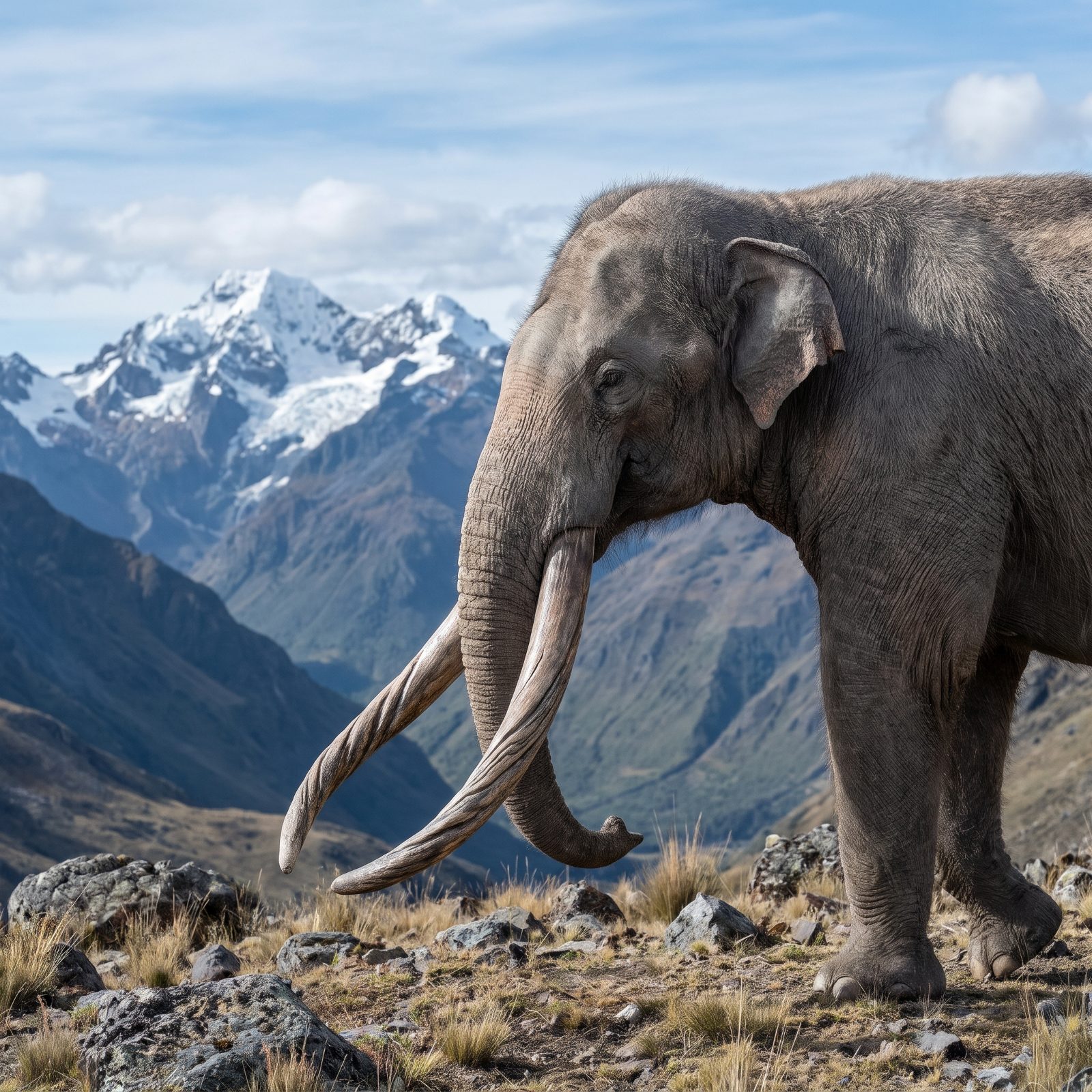
Those tusks catch the eye. Here they sweep out in long arcs that curve downward toward the ground, the far one twisted into a rope-like spiral unlike a mammoth’s or a modern elephant’s — a reminder of how distinct this gomphothere was from its cousins.
It trekked all the way down from Central America into the high Andes, surviving in grasslands and valleys that would exhaust a modern elephant. Fossils and even ancient DNA slot it into the broader elephant group while confirming just how distinct these Andean gomphotheres really were.
Early South Americans knew this animal. Kill sites with stone tools and gomphothere bones show people and these beasts sharing the same muddy riverbanks.
6. Aurochs, the Wild Bull That Became Every Cow You’ve Met
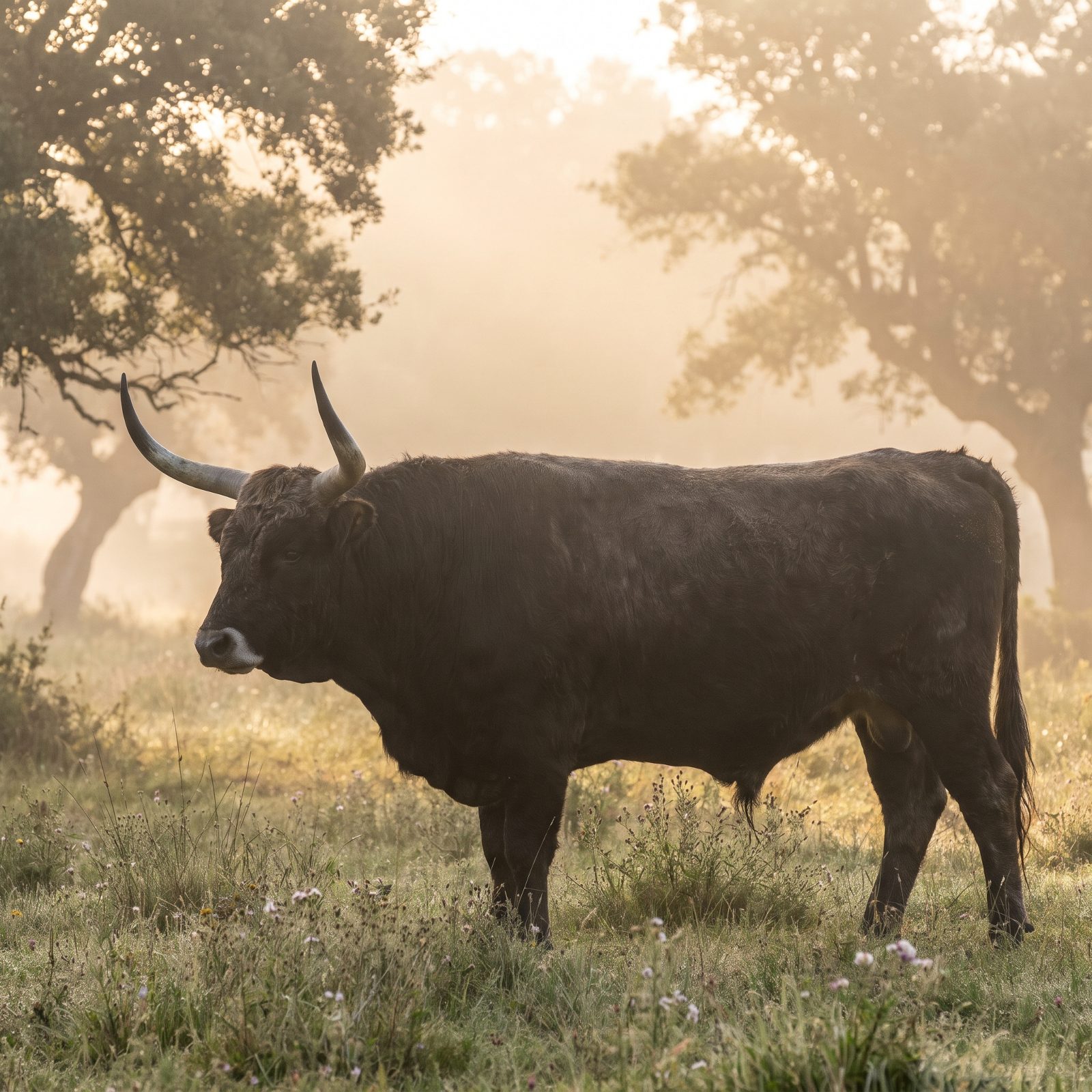
Every dairy cow and beef steer on the planet descends from this animal. The aurochs was the wild ancestor of domestic cattle, and it dwarfed its tame grandchildren.
Bulls stood nearly six feet at the shoulder with horns that swept forward like curved blades. Cave painters at Lascaux immortalized them. Roman writers feared them. The last known aurochs died in a Polish forest in 1627, making it one of the few Ice Age giants to outlast the start of written record.
5. Pampatherium, the Giant Armored Grazer of the Grasslands
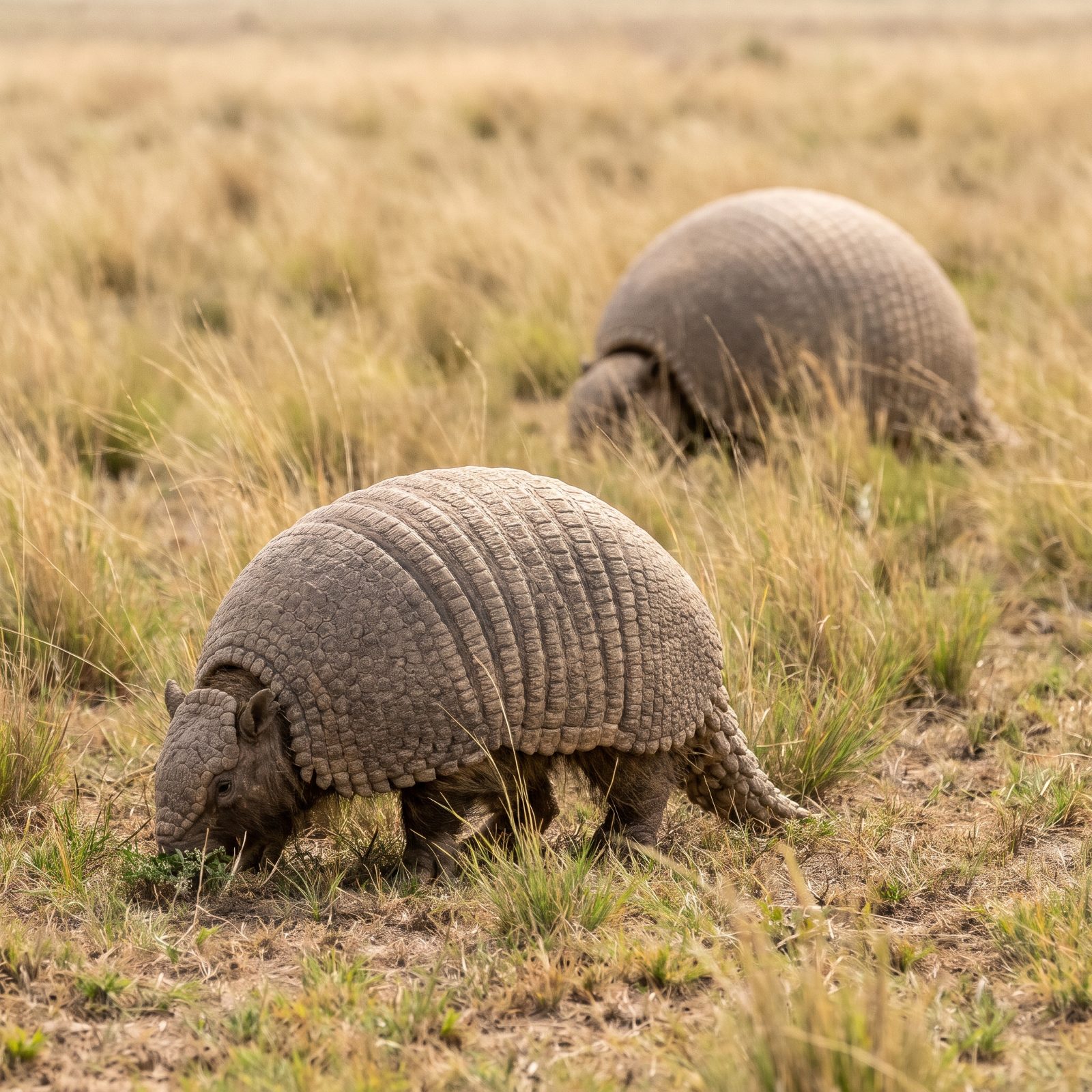
People mix it up with the glyptodont, so let’s clear that up. The glyptodont wore a rigid dome like a Volkswagen Beetle. Pampatherium wore flexible banded armor, more like an oversized armadillo stretched to the length of a sofa.
That flexibility mattered. It could bend and move where the dome-backed glyptodont stayed locked stiff, and its teeth and jaws point to a dedicated grazer cropping the tough grasses of the South American plains.
Both armored giants are gone now. The small armadillos trotting across Texas backroads are the last survivors of a once-enormous armored family.
4. Archaeoindris: The Gorilla-Sized Lemur That Hung From Nothing
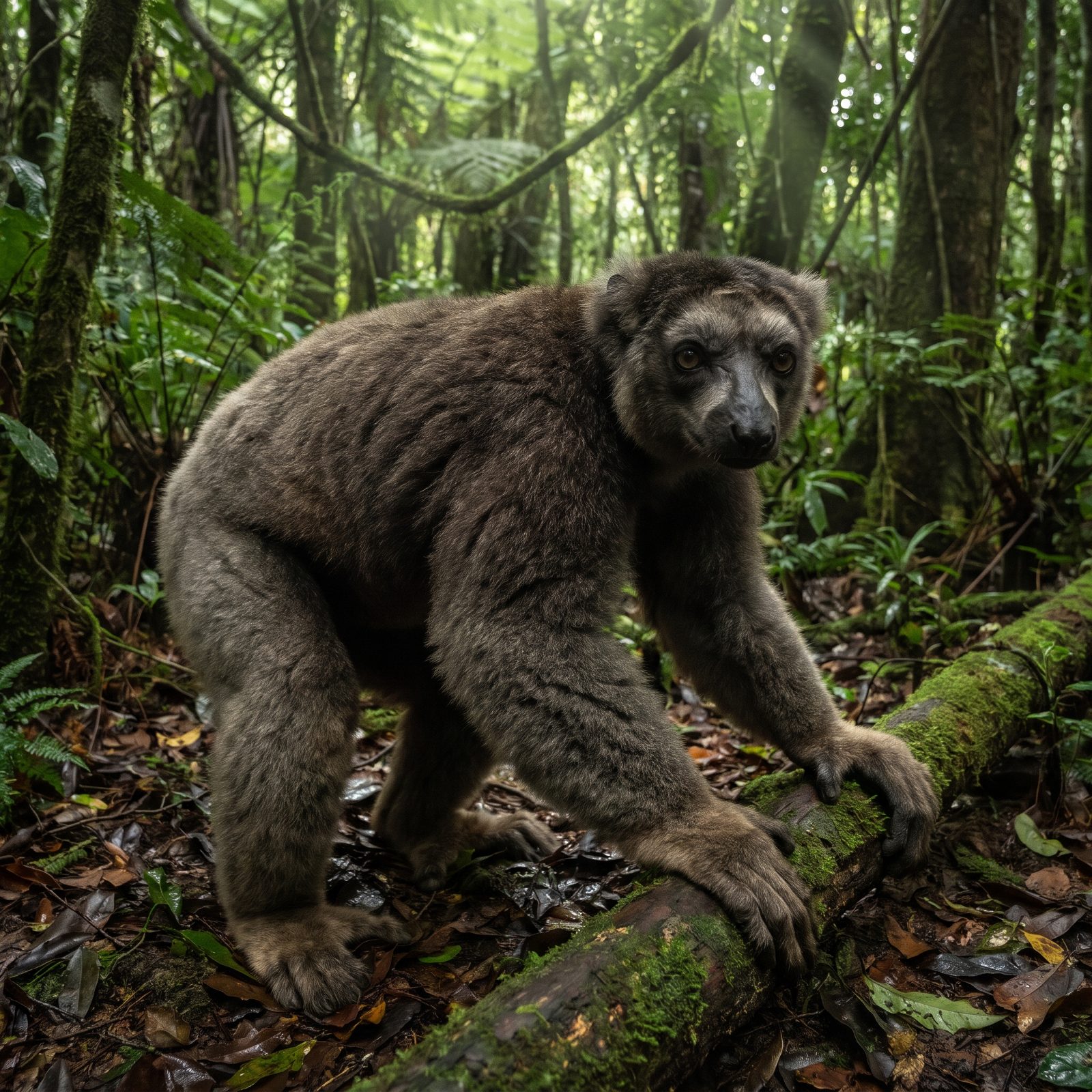
Forget the lemurs you know. Those twitchy, cat-sized things leaping through branches at the zoo? Archaeoindris was built on a completely different scale, a primate that likely weighed as much as a silverback gorilla, somewhere between 350 and 440 pounds. That makes it one of the largest primates ever to climb a tree. Barely.
Here’s the part people get wrong. The name translates roughly to “ancient indri,” so everyone assumes it swung through the canopy like its nimble relatives. It almost certainly didn’t. At that size it moved slowly, spending most of its time on the ground or clinging low, more sloth than acrobat. Fossils turned up at Ampasambazimba in central Madagascar, and the species hung on into the last few thousand years, overlapping with people who walked those same forests.
3. The Giant Fossa: Madagascar’s Lion-Dog That Hunted Giant Lemurs
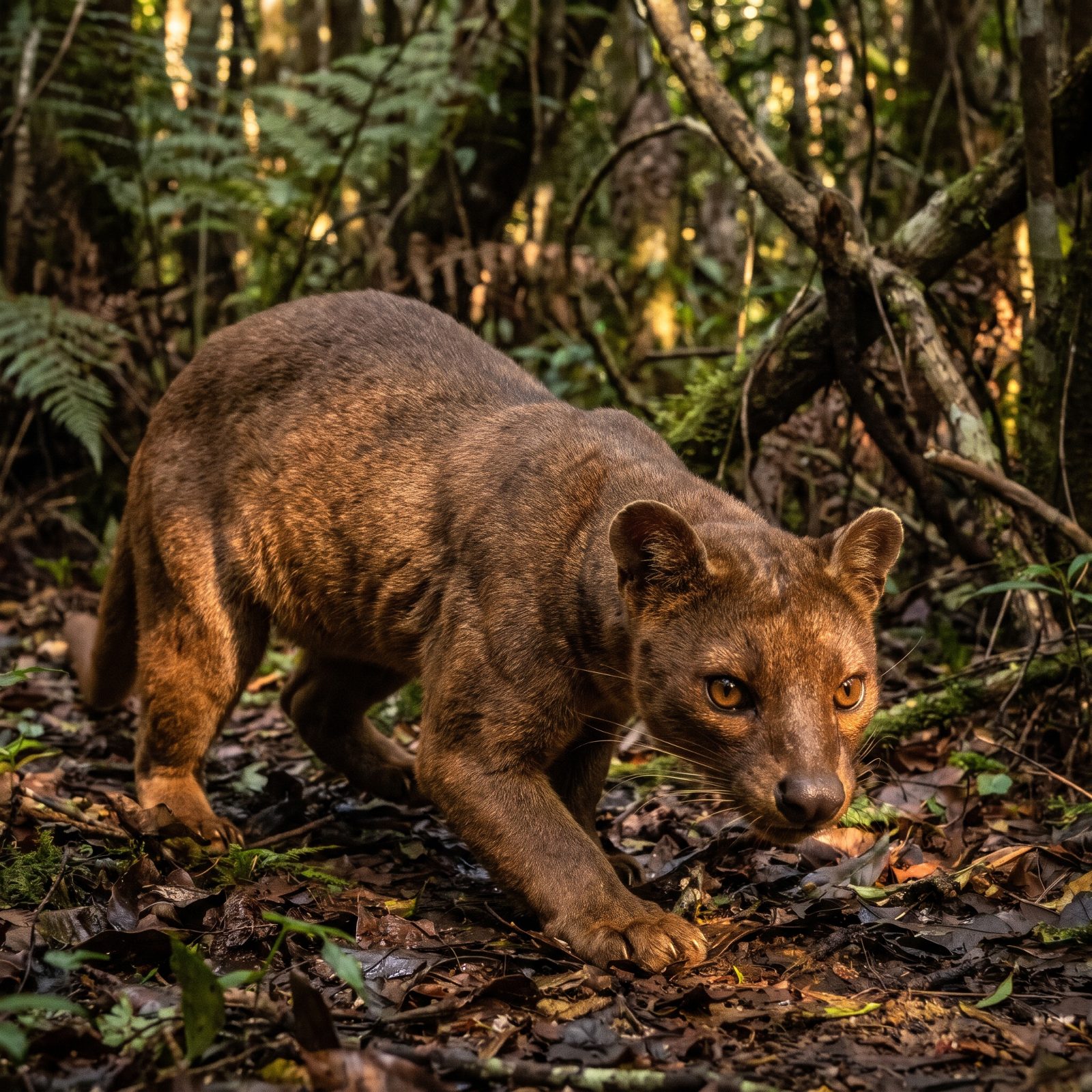
The fossa alive today is already strange, a cat-shaped mongoose relative that terrifies lemurs across Madagascar. Now make it the size of a cougar.
Cryptoprocta spelea, the giant fossa, ran maybe 35 to 45 pounds, roughly double its living cousin. That extra bulk mattered. It shared the island with lemurs far larger than anything alive now, including the gorilla-sized ones, and something had to hunt those giants. This was the something. Subfossil remains have come out of cave deposits in the island’s north and west, and here’s the part that genuinely haunts me: the whole food web collapsed together once the large prey vanished. Lose the big lemurs and you lose the big predator that evolved to eat them. The chain breaks in both directions.
2. The Giant Moa: A Twelve-Foot Bird With No Wings at All
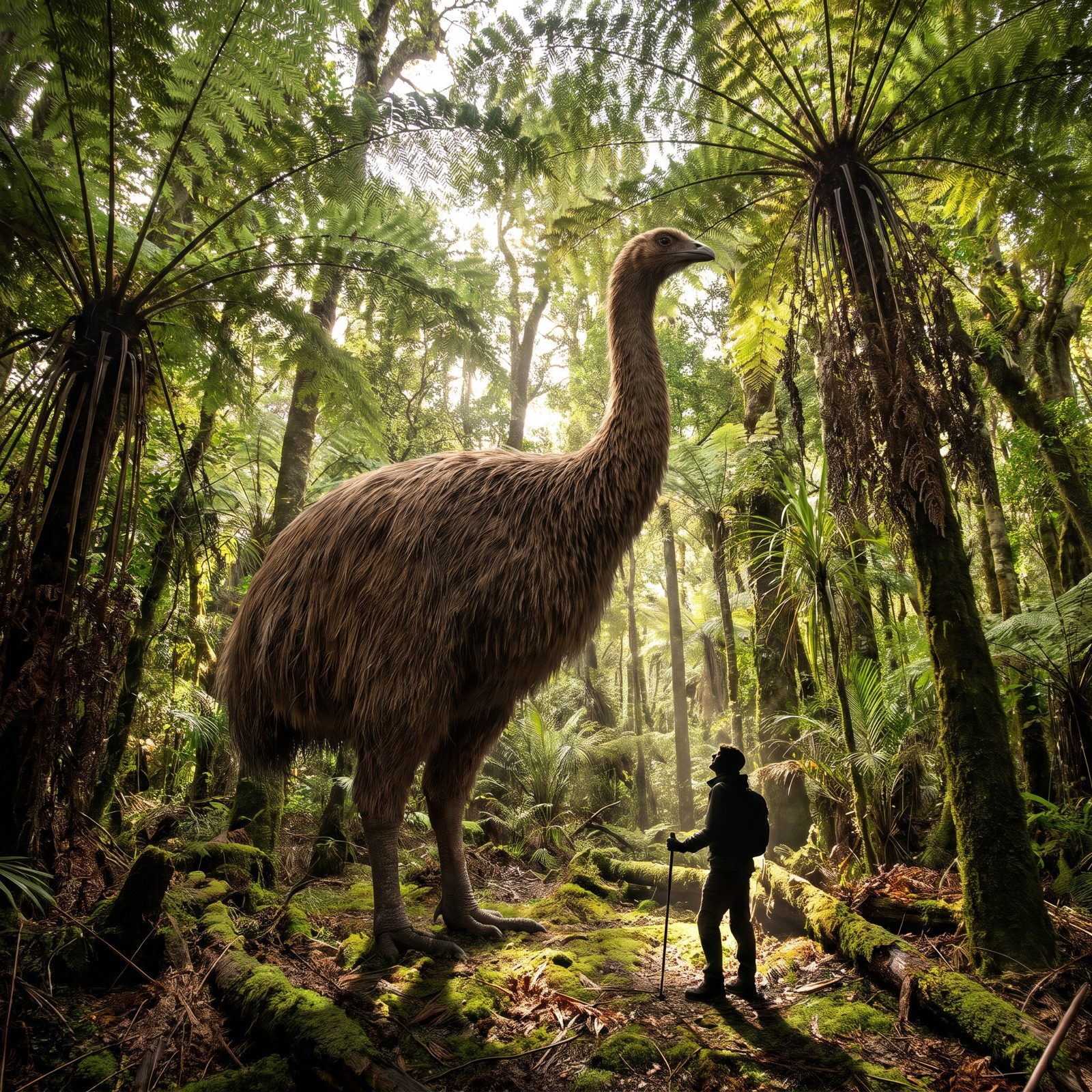
Imagine a bird so committed to life on the ground that it gave up wings entirely. Not reduced them. Lost them. The giant moa, Dinornis, is the only bird known with no wing bones whatsoever, not even the tiny vestigial stubs kiwi still carry around.
Females towered up to twelve feet with the neck extended and could outweigh a male by an absurd margin, one of the most extreme size gaps between sexes in any bird that ever lived. For years paleontologists filed the big females and smaller males as separate species. DNA pulled from the bones finally sorted the mess out.
These birds ruled New Zealand’s forests for millions of years with no mammal predators at all. Their one enemy was Haast’s eagle, a raptor heavy enough to kill them outright. Then people arrived around the 13th century. Within roughly a century, every moa was gone.
A bird that survived 60 million years of evolution lasted barely a hundred years alongside humans.
1. The Cave Bear: Europe’s Vegetarian Giant That Died in Its Sleep
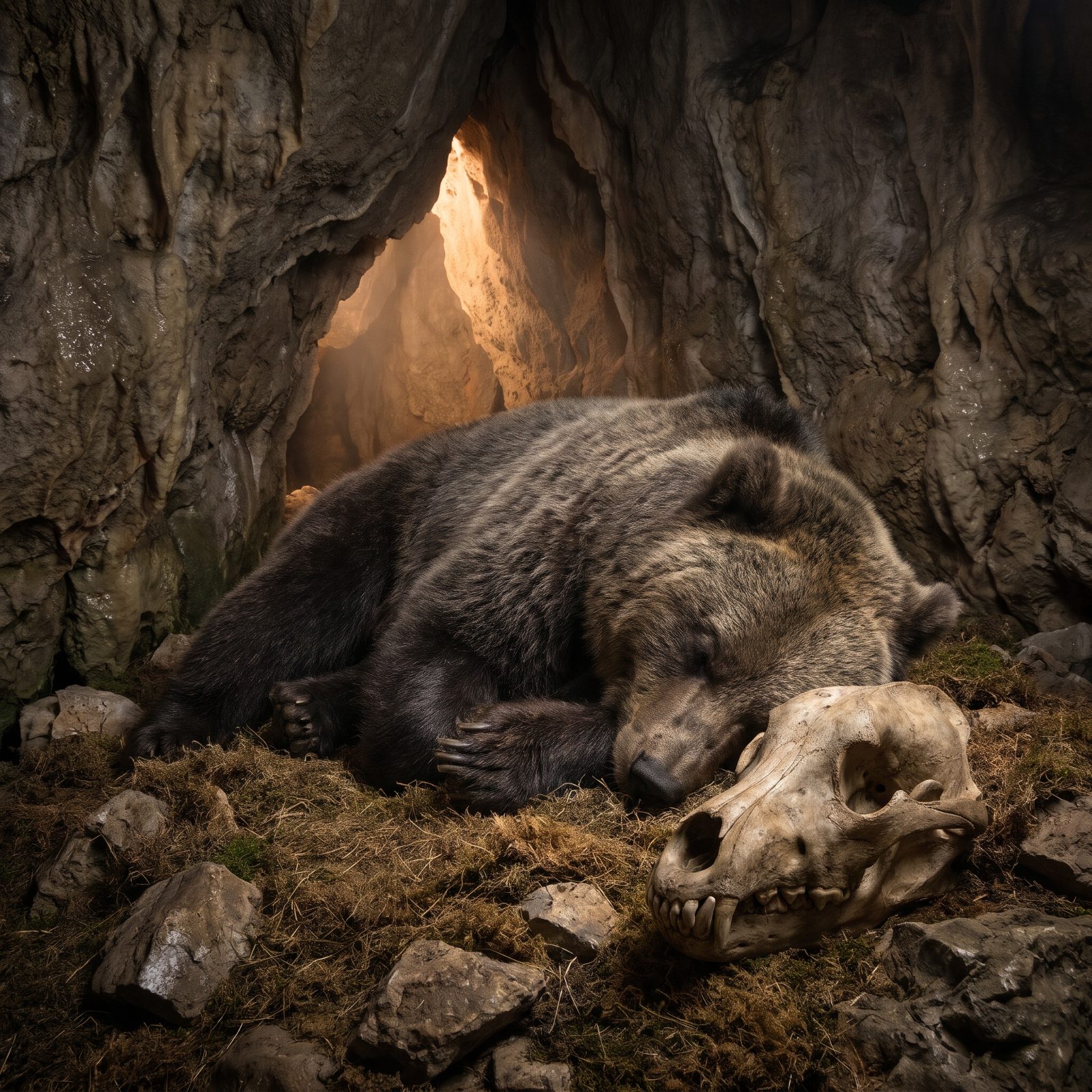
A big male cave bear could top 1,500 pounds, heavier than almost any brown bear walking the planet today. The skull alone looks like it belongs to something that ate whatever it wanted. It mostly ate plants.
Tooth wear and chemistry from Ursus spelaeus fossils point to a diet heavy on vegetation, nothing like the apex-predator reputation the name conjures. And the “cave” part? Literal, and a little sad. Thousands of these bears died deep inside caves during hibernation, probably starving through brutal winters, and their bones piled up over tens of thousands of years. Some European caves hold the remains of hundreds of individuals, a slow-motion graveyard of giants.
They vanished around 24,000 years ago, well before the mammoths, as the climate cooled and the plants they leaned on thinned out across Ice Age Europe.