
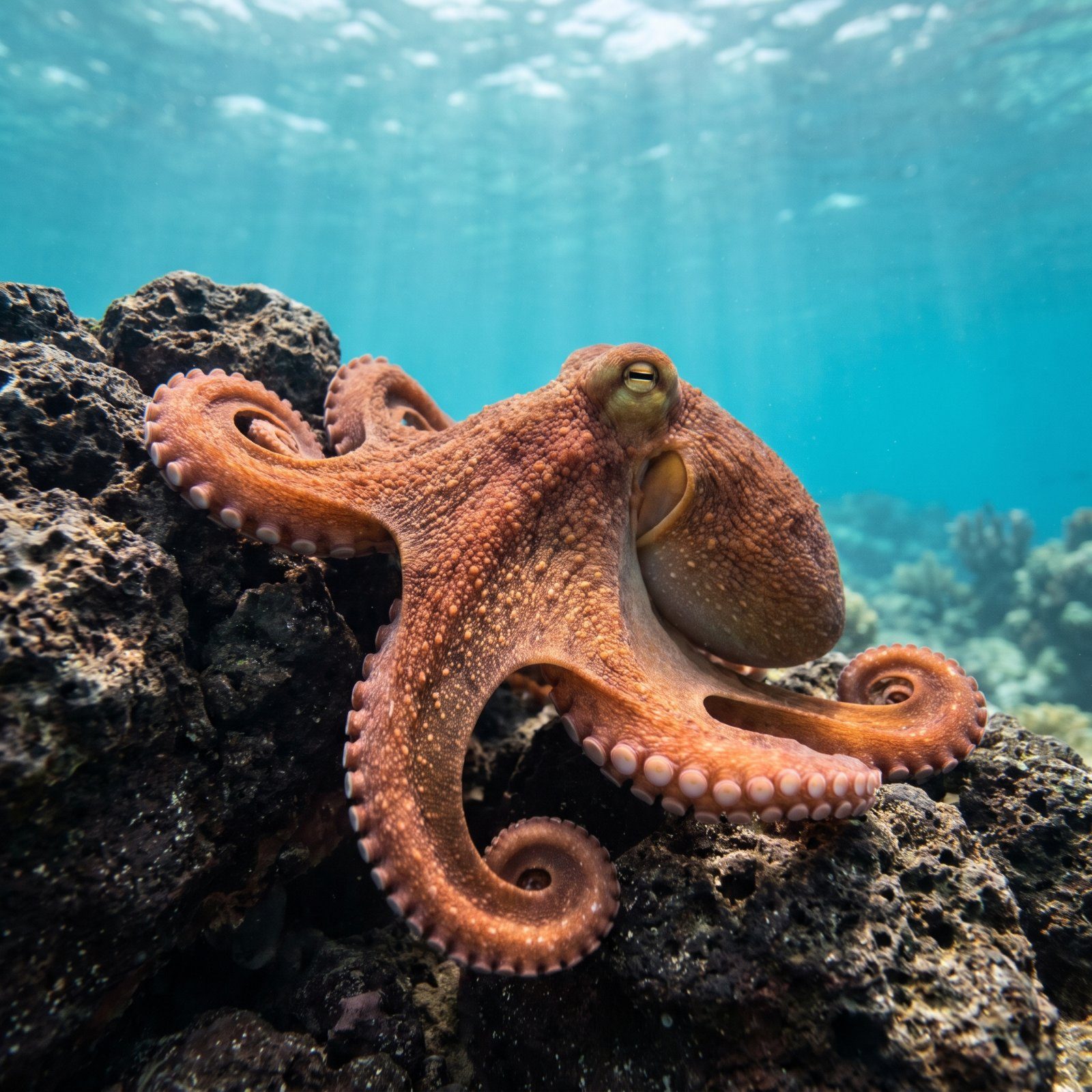
An octopus can pour its entire body through a hole the size of a quarter. It tastes your skin with the suckers on its arms, bleeds blue, runs on three hearts, and would honestly rather watch you leave than fight you. Most of what people confidently believe about octopuses is wrong. The real answers are weirder than the myths. These are the questions that surface at aquariums, over seafood dinners, and halfway through a nature documentary when somebody pauses the TV and asks, wait, is that even an animal? Here are the honest, science-backed answers.
37. Is the Correct Plural Octopuses, Octopi, or Octopodes?
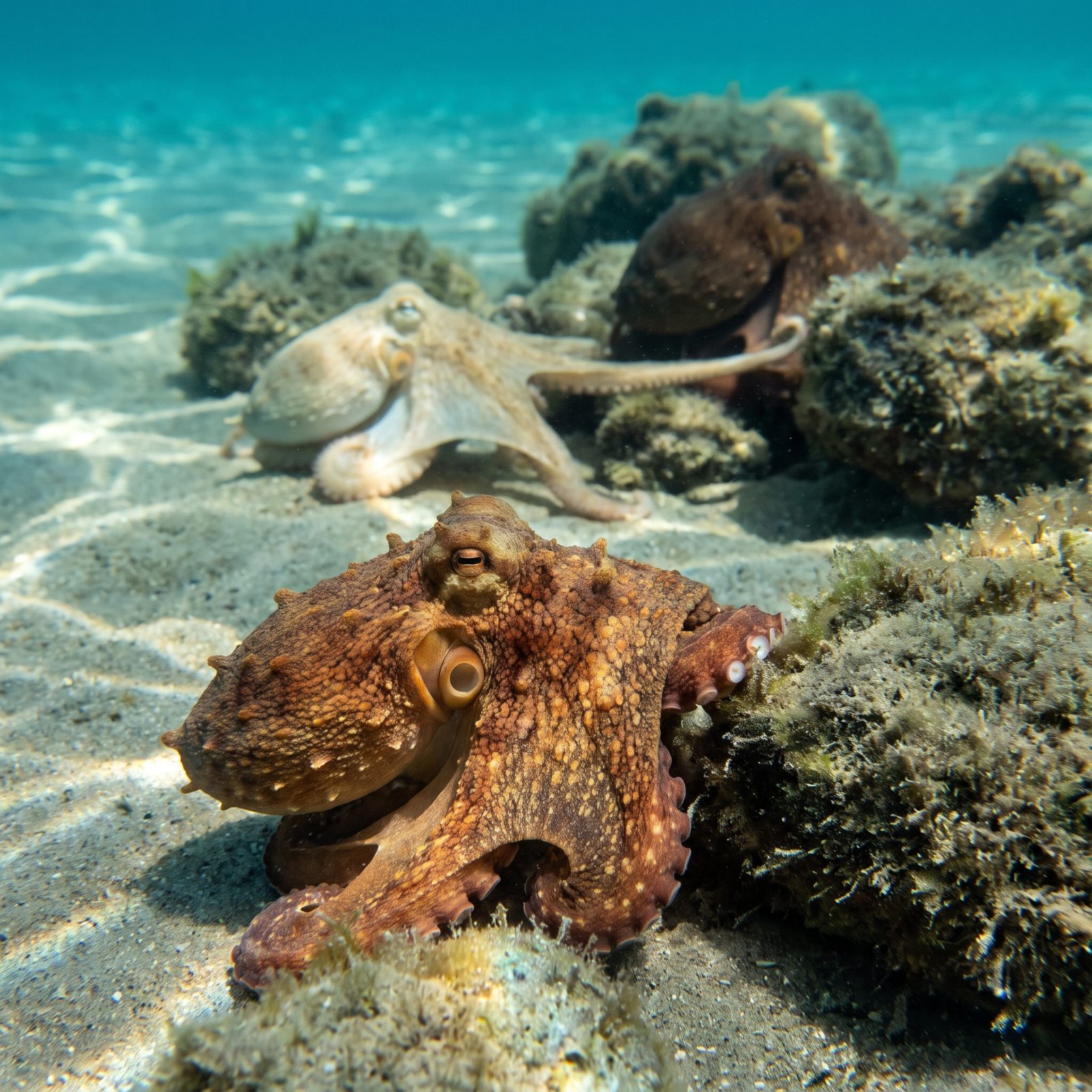
Octopuses. That’s the one. It’s the plural almost every marine biologist uses, and you can say it at dinner without anyone raising an eyebrow.
Octopi is where people get fancy and get it wrong. The -i ending comes from Latin, but octopus started out as Greek, and you can’t bolt a Latin plural onto a Greek root and call it correct — though plenty of smart people do it anyway.
Then there’s octopodes, the strict Greek form. Technically defensible. Makes you sound like you swallowed a classics degree. Say it out loud in public and watch what happens.
36. Are Octopuses Fish?
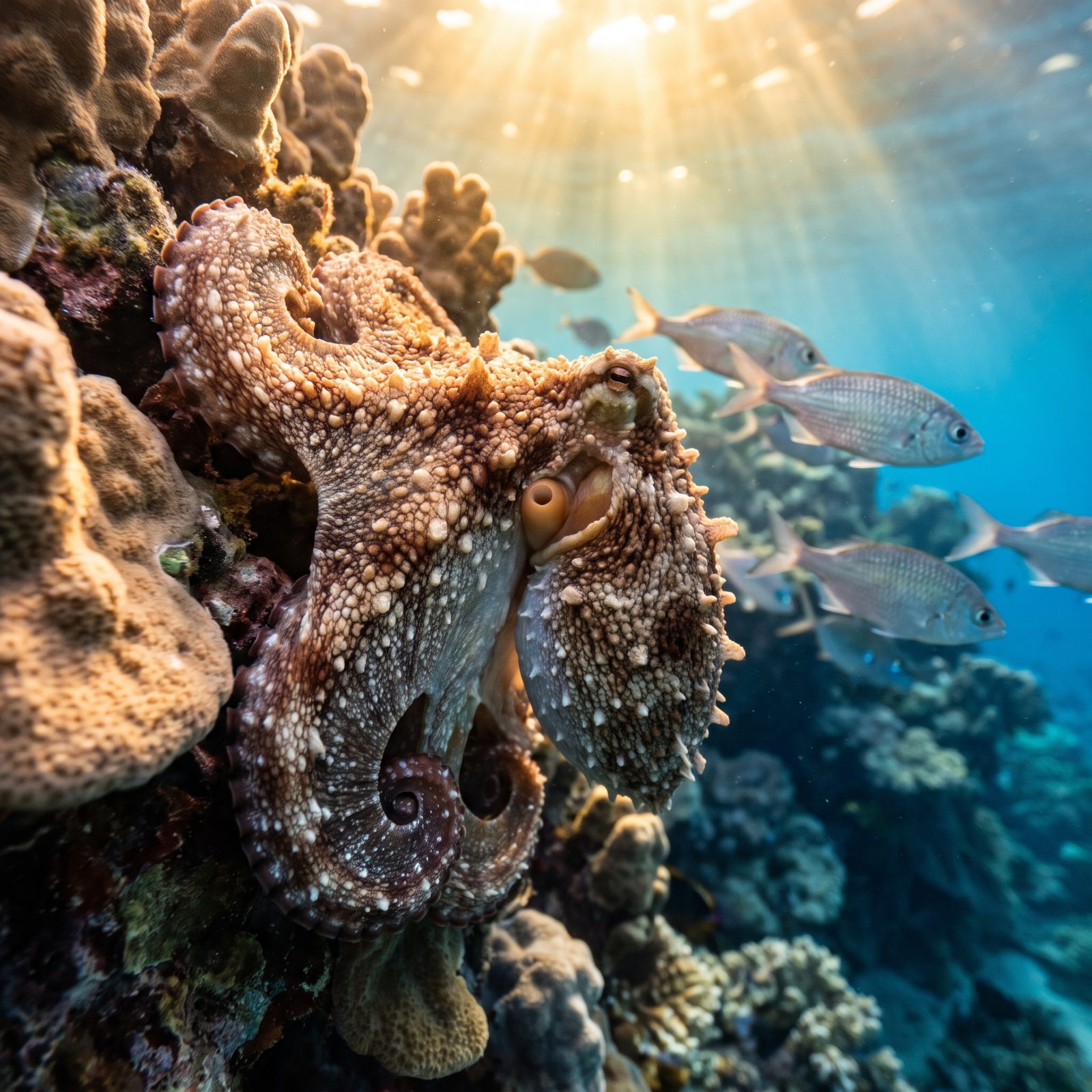
No. Not even close. Octopuses are mollusks — cousins to snails, clams, and oysters. The nearest relative to the thing on your plate is the garden slug, not the salmon.
Fish come with backbones, gills set into bony skulls, and scales. An octopus has no bones at all, a body that’s mostly muscle and brain, and blue blood running through three hearts. The only thing they share is a mailing address in the ocean.
35. Do Octopuses Have Arms or Tentacles?
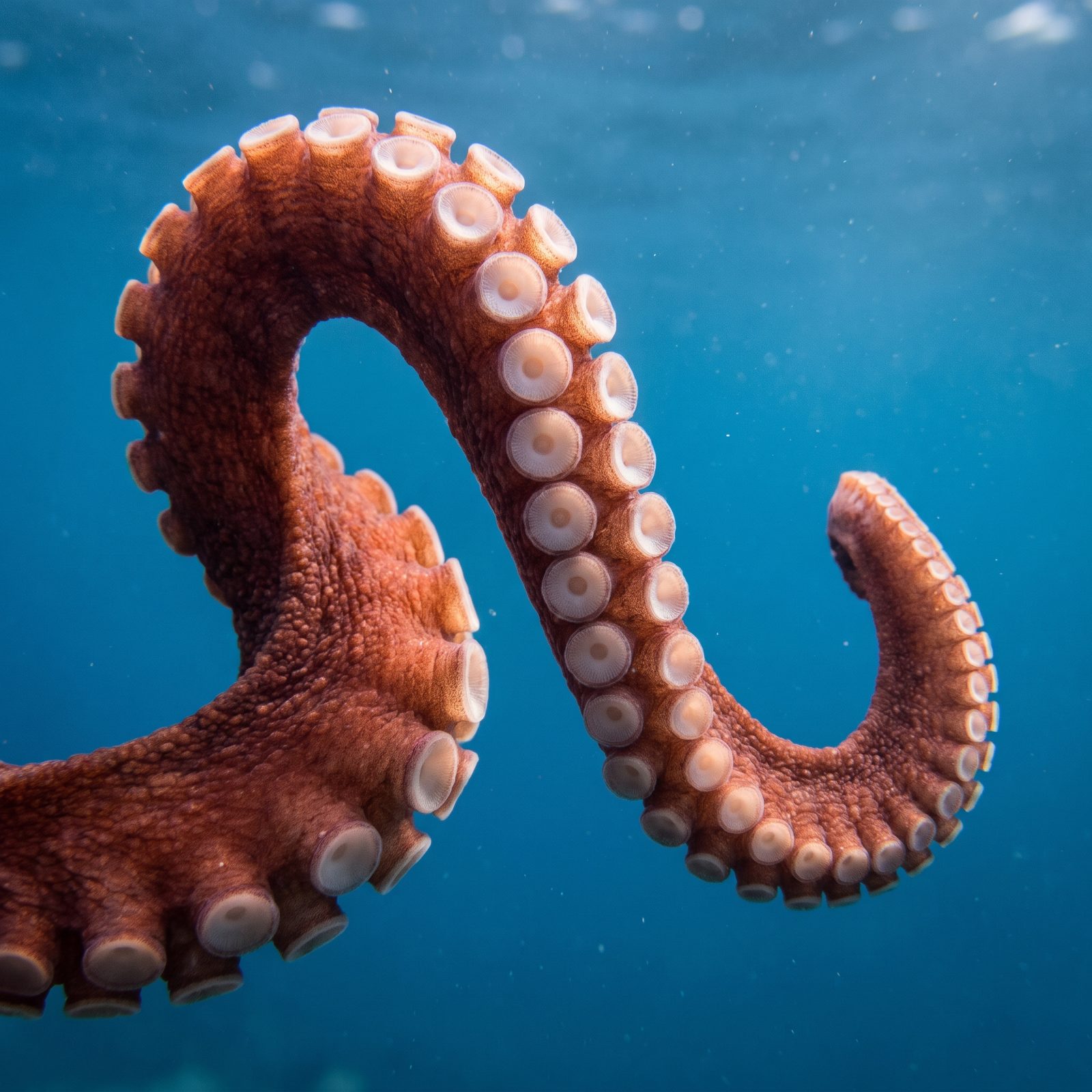
An octopus has eight arms and zero tentacles. This trips up almost everyone, and the difference is real, not pedantry.
It all comes down to suckers. An arm has them running its whole length; a tentacle only has them clustered near the tip, with a long bare stalk before you get there. Squid and cuttlefish carry both — eight arms plus two long feeding tentacles they fire out to snag prey.
Octopuses skipped the tentacles. Eight arms, suckers all the way down, no exceptions.
34. Do Octopuses Have Bones, and How Do They Squeeze Through Tiny Holes?
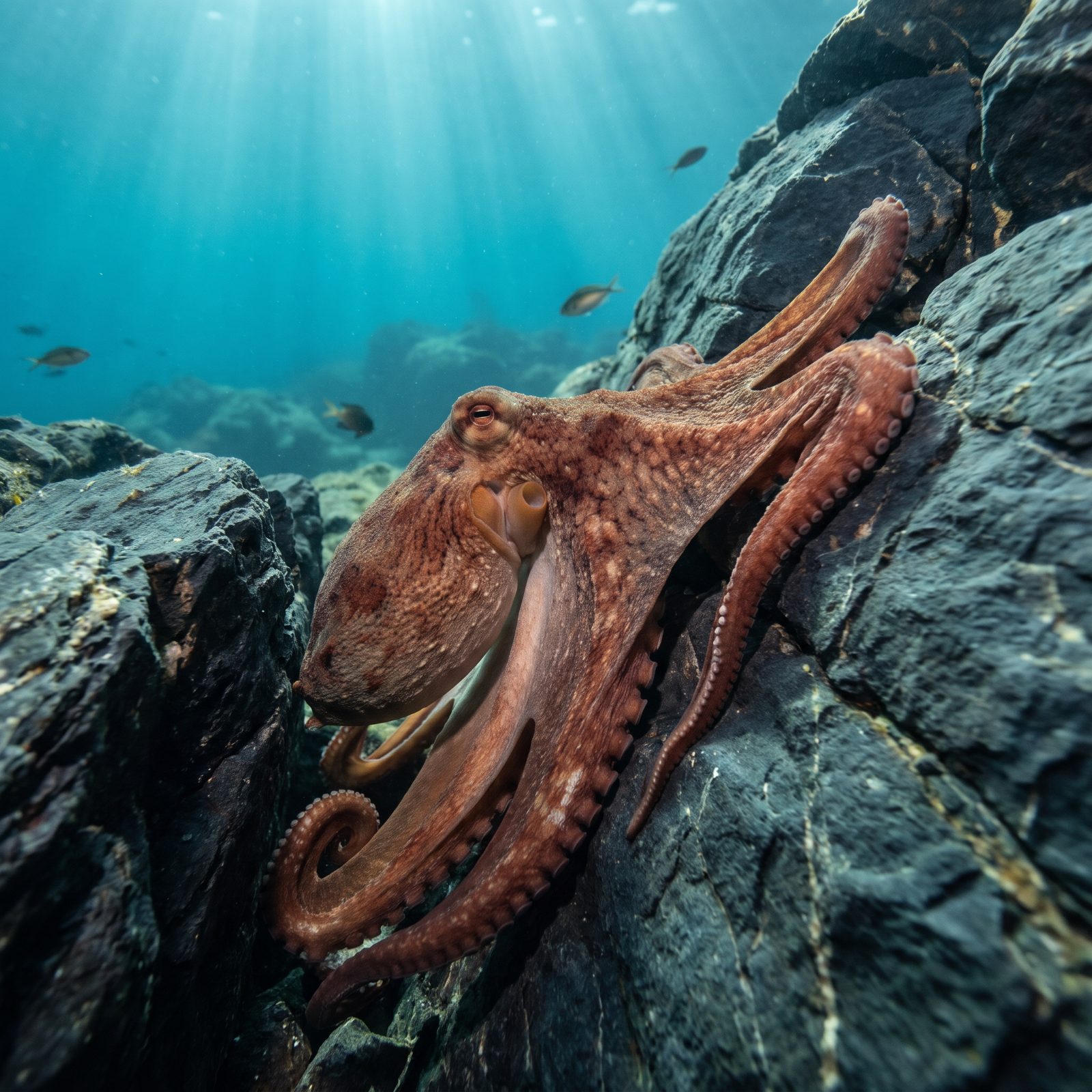
An octopus has no bones. None. That’s the secret behind every viral clip of one oozing through an impossible gap.
The only hard part in its whole body is its beak, the parrot-like mouthpart it uses to crack shells. Everything else is soft muscle and skin. So the rule for escape is dead simple: if the beak fits, the octopus fits, and a common octopus can flow its body through a hole the size of a coin.
No magic involved. Just an animal with one rigid part and the good sense to send that part through first.
33. Why Does an Octopus Have Three Hearts?
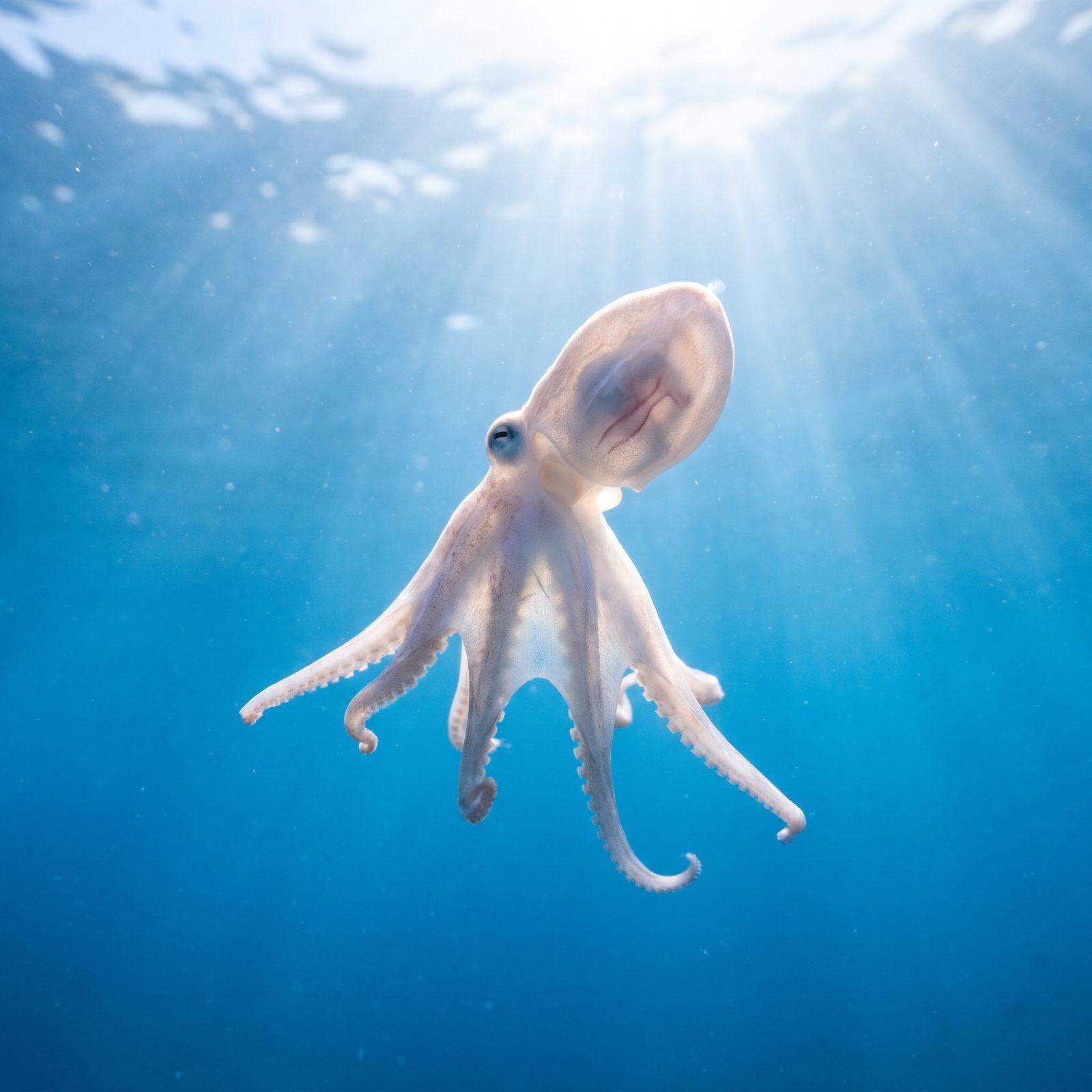
Three hearts, each with a day job. Two of them — the branchial hearts — sit beside the gills and do exactly one thing: push blood through the gills to load up on oxygen. The third, the systemic heart, pumps that oxygenated blood out to everywhere else.
And here’s the odd part. When an octopus swims, the systemic heart actually stops beating. Which is why an open-water swim comes at a cost — swimming wears them out because their main pump takes a break every time they jet away. Walk, don’t run. For an animal built like this, that’s just the economical choice.
32. Why Is Octopus Blood Blue?
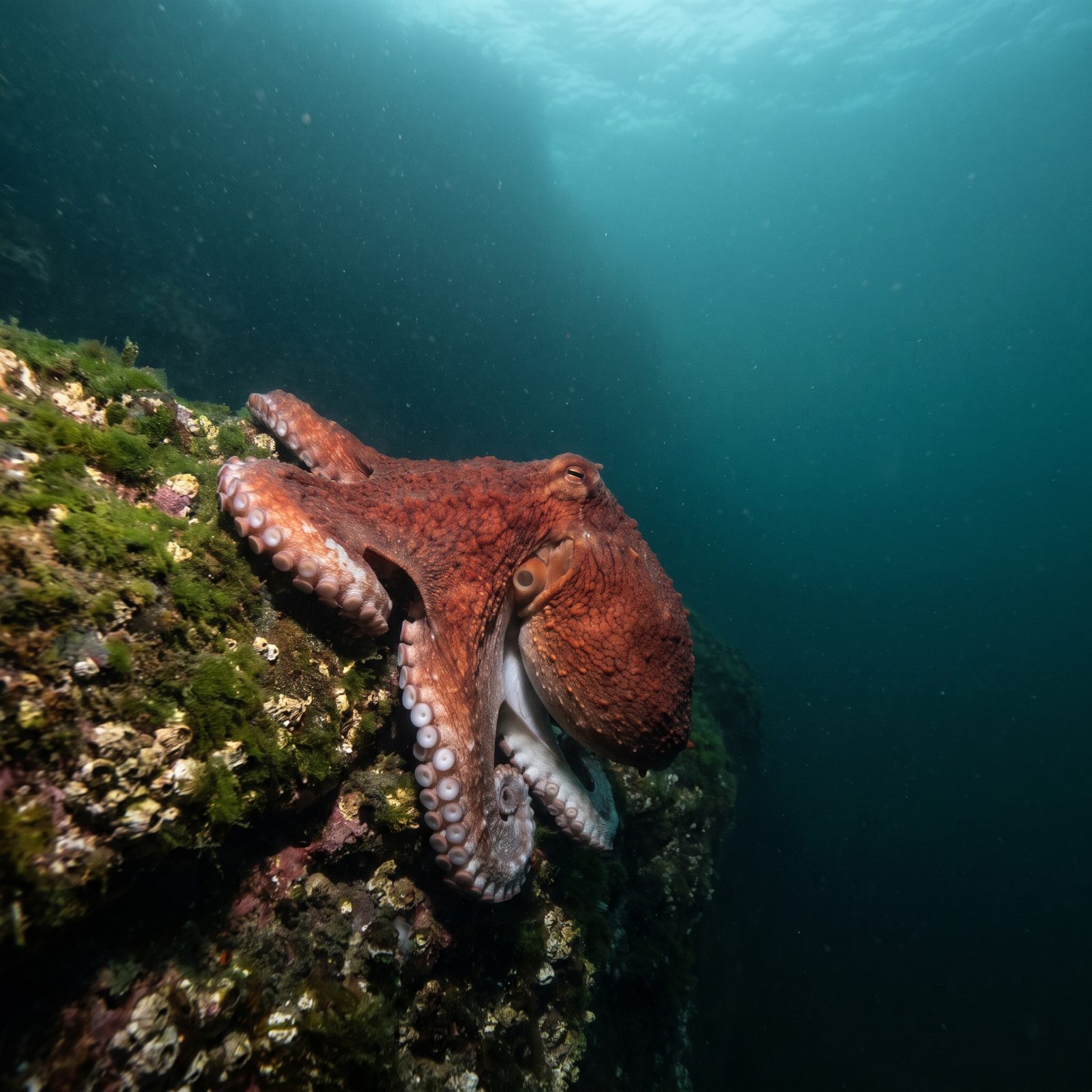
Your blood is red because it hauls oxygen on iron, in a molecule called hemoglobin. Octopus blood is blue because it hauls oxygen on copper instead, in a molecule called hemocyanin.
This isn’t a quirk — it’s survival. Hemocyanin shuttles oxygen more efficiently in cold, low-oxygen water, which is exactly where plenty of octopuses live. The catch? Copper-based blood struggles in warm water, one reason octopuses are so sensitive to a heating ocean.
The blue only shows when the blood is oxygenated. Drain the oxygen and it fades toward clear.
31. Where Is an Octopus’s Mouth?
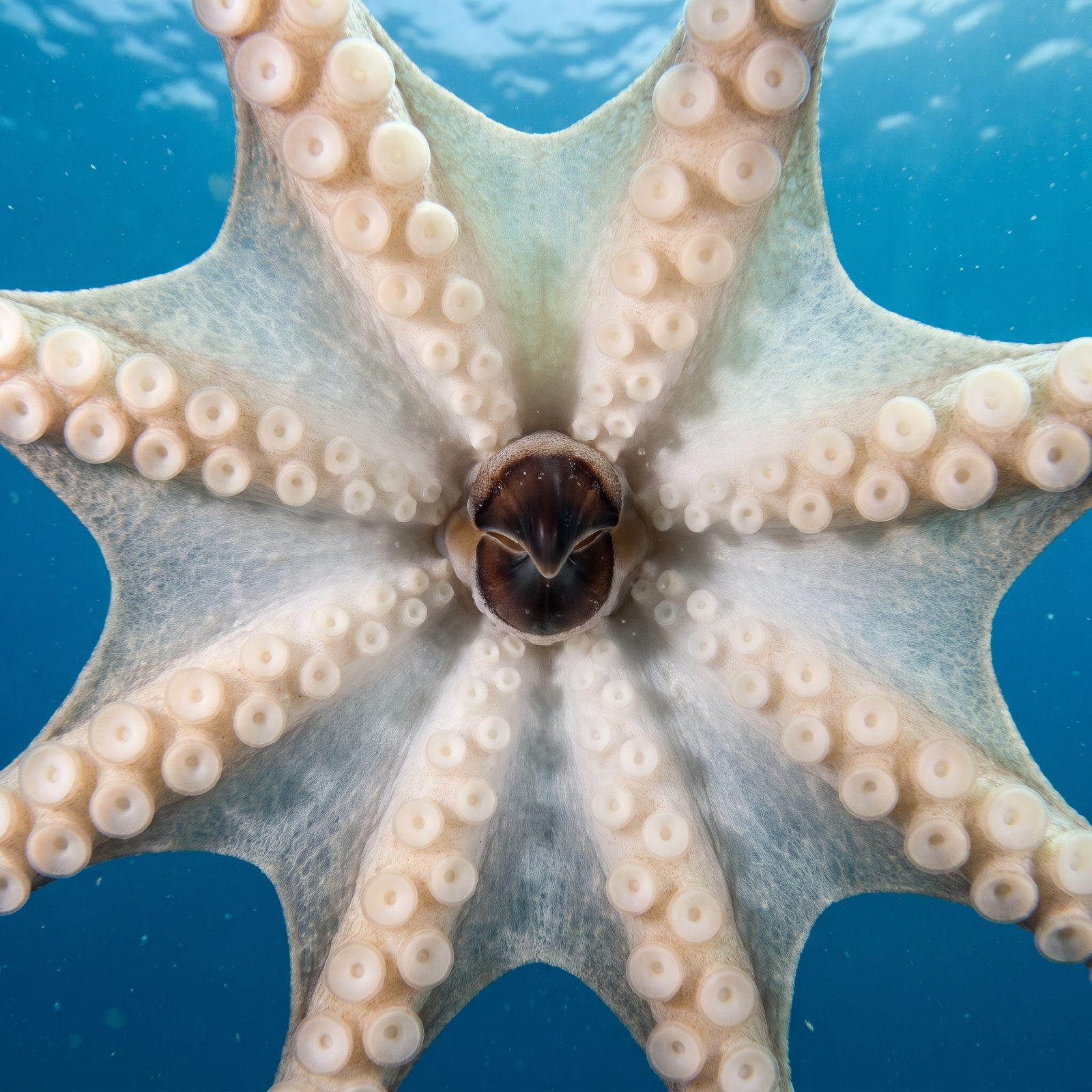
Right in its armpit, so to speak. The mouth sits dead center where all eight arms join the body, tucked underneath where you’d never think to look.
Jutting out from that mouth is the beak, framed by thick, textured lips. It looks almost like a turtle’s head poking out — hard, sharp, and the one part of the octopus that refuses to bend. The animal drags prey toward that central point, pins it with its arms, and bites down. Some species go further, drilling through shells and injecting venom to soften the meal before they eat.
30. What Does an Octopus Use Its Siphon For?
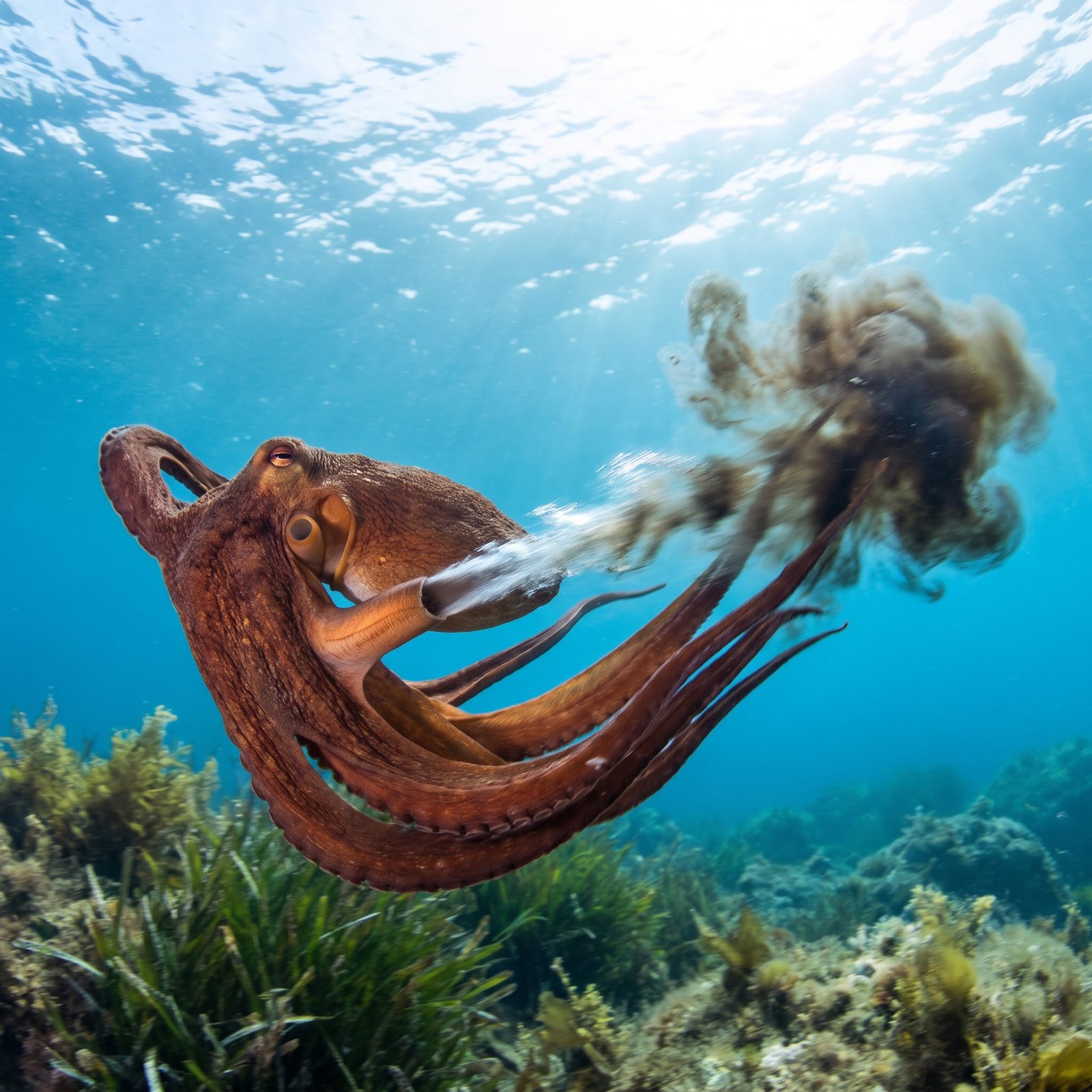
The siphon is the octopus’s multitool — a single flexible funnel near the head that does the quiet heavy lifting of staying alive.
- Jet propulsion. The octopus fills its mantle with water, then blasts it out in a powerful jet to rocket backward in a blink. That’s the escape move.
- Breathing. Water washes over the gills and is pushed back out of the body. The exhale.
- Ink and waste. Threatened, the octopus releases a billowing cloud of ink to throw up a smokescreen.
It can even swivel the siphon to steer, and some use a gentle jet to puff sand off a buried meal. One nozzle, a dozen jobs.
29. How Do Octopus Suction Cups Work?
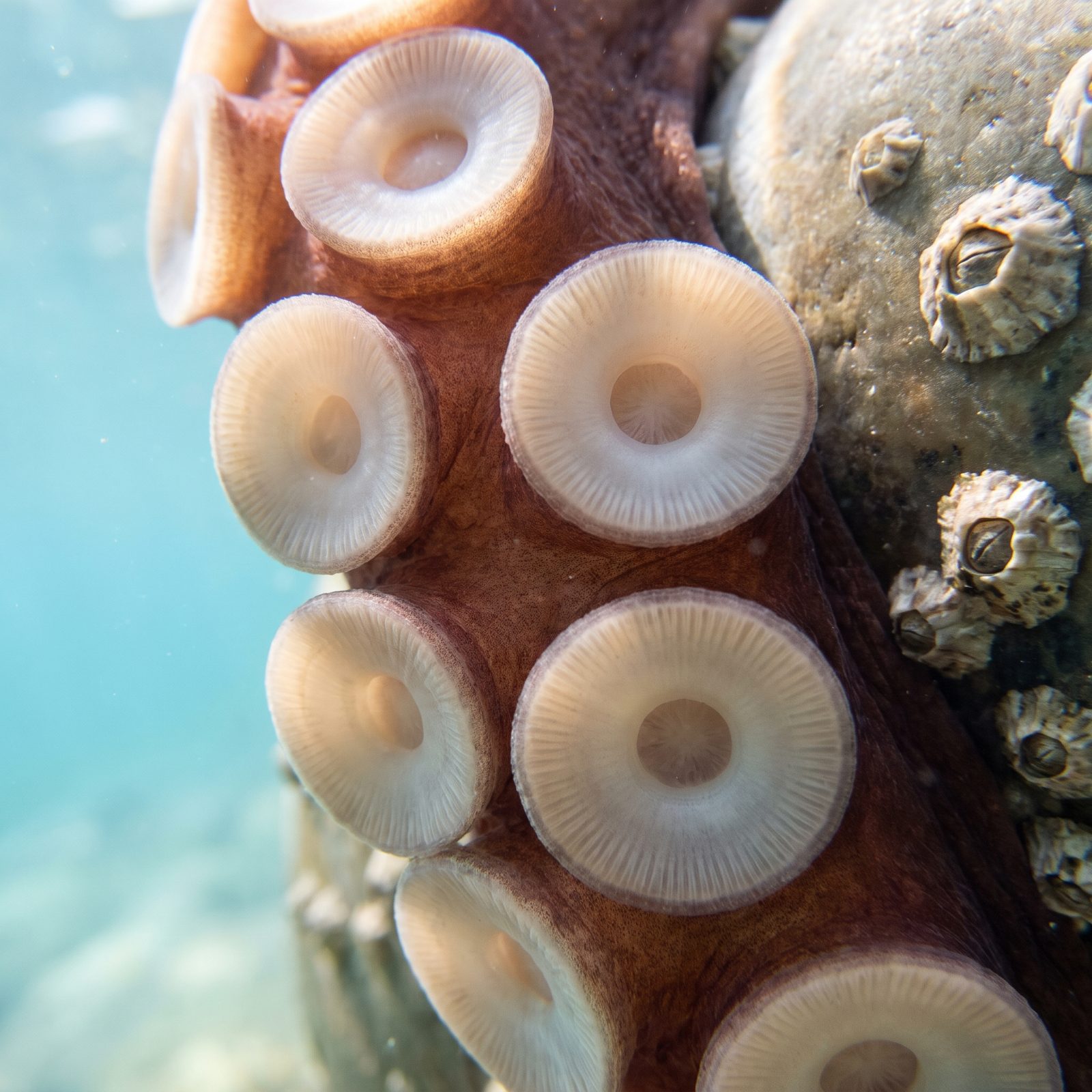
Forget the idea that octopus suckers work like the plastic hook stuck to your bathroom tile. They’re far cleverer than that.
Each sucker is two chambers of muscle. The flat outer rim seals against a surface, the inner cup pulls back to drop the pressure inside, and the vacuum does the gripping. No glue, no air — just controlled suction, released the instant the octopus relaxes the muscle.
A giant Pacific octopus carries thousands of these, and each one works on its own. That’s how a single arm can grip a jar lid in a dozen places while a second arm twists it open.
28. Can Octopuses Really Taste With Their Arms?
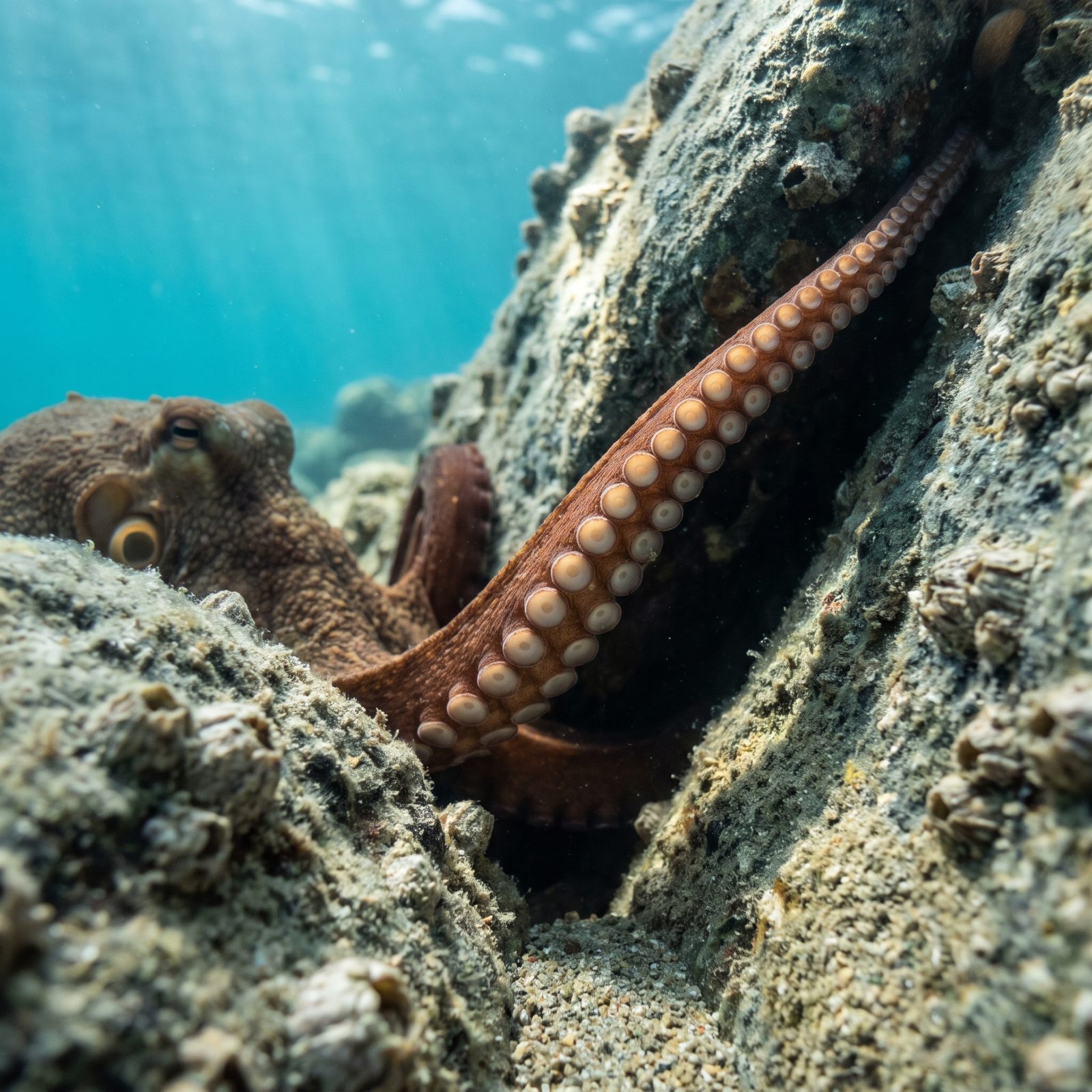
Yes — and the mechanism behind it is genuinely strange. An octopus’s suckers are crammed with sensory cells that let it taste by touch. Grip something, and the arm is feeling and sampling the surface chemistry at the same moment.
Which is why an octopus can reach blindly into a black crevice and know, instantly, whether it’s bumped a crab worth eating or a rock worth ignoring. No eyes required. The arm reads the food on contact.
Researchers have found specialized receptors on the suckers that detect compounds straight off a surface rather than dissolved in the surrounding water. So the octopus isn’t tasting the whole ocean. It’s tasting the exact thing it touches, and nothing else.
27. Why Don’t an Octopus’s Arms Stick to One Another?
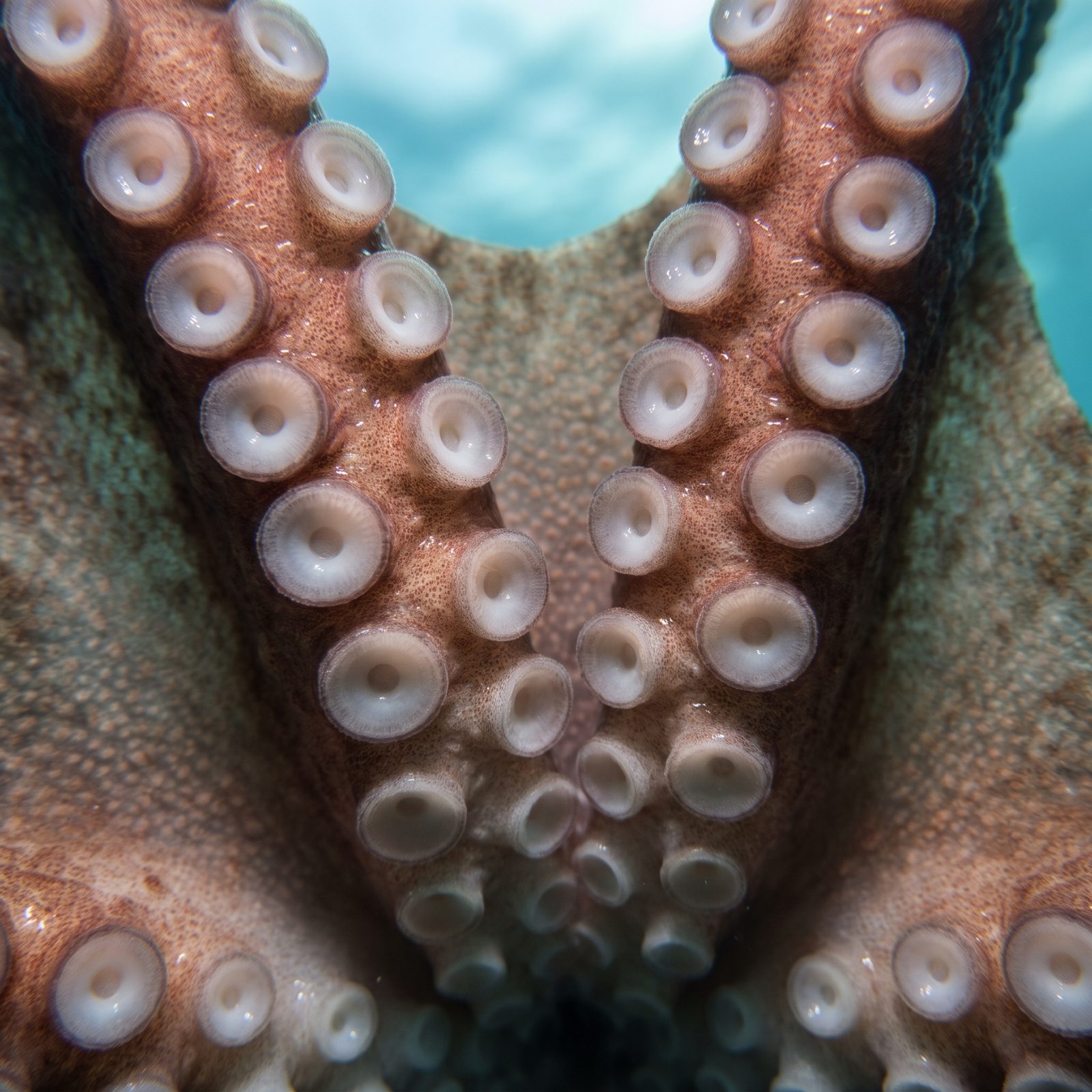
Evolution had a problem to solve here. An octopus carries thousands of suckers that grab almost anything they touch, so why doesn’t the animal end up knotted into a squirming ball?
Researchers at the Hebrew University of Jerusalem traced the answer to the skin itself. Octopus suckers refuse to grip their own animal’s skin, and the reason is chemical — the skin produces something the suckers won’t latch onto. Strip that skin off an amputated arm and other arms will grab it like prey. Leave the skin on and they ignore it completely.
So the arms recognize self by taste. No central command required, no brain checking in.
26. Can an Octopus Regrow a Lost Arm?
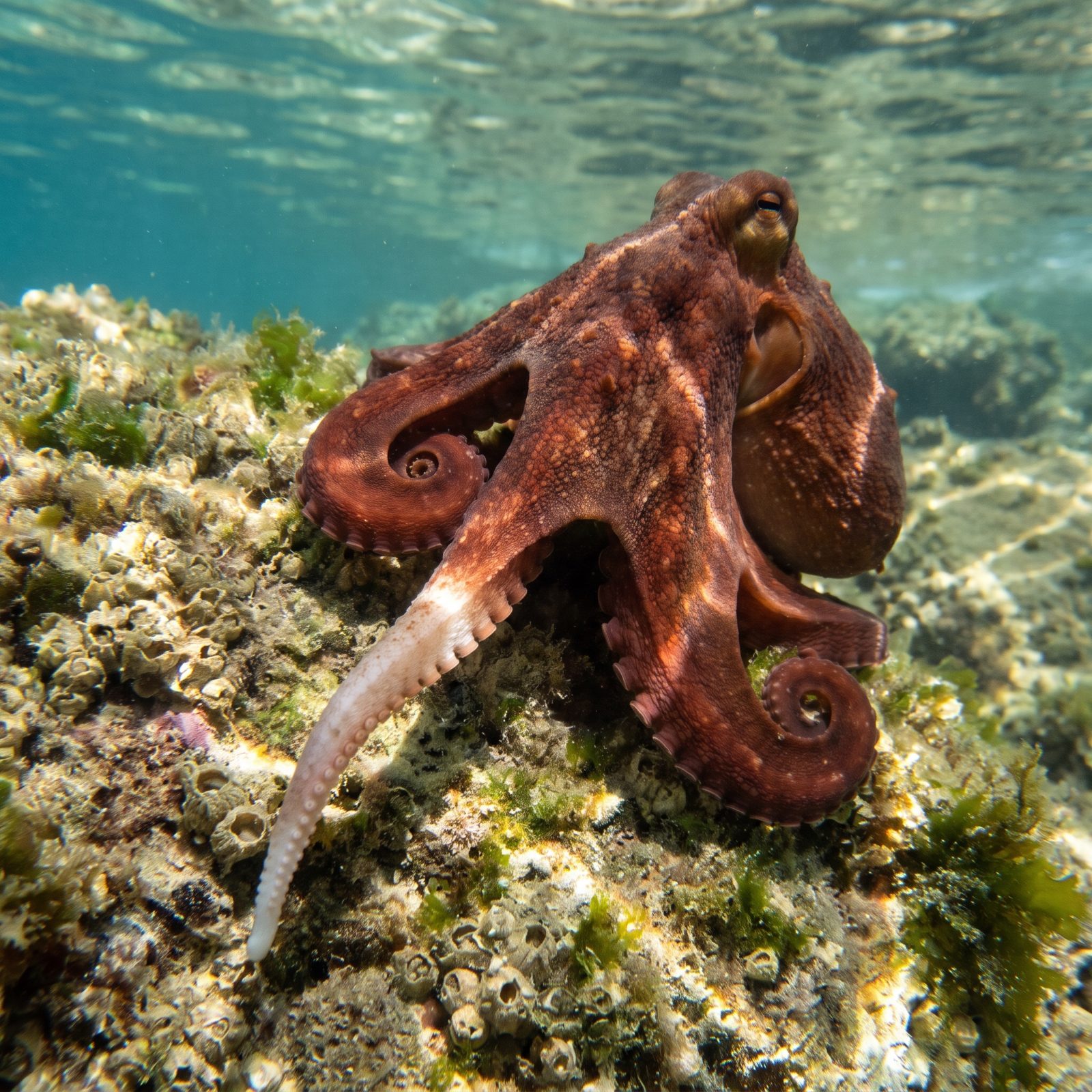
Lose an arm to a moray eel and an octopus doesn’t just survive the encounter — it rebuilds the whole limb. Nerves, suckers, muscle, all of it, grown back into something that works as well as the original did.
The process runs on a protein tied to regeneration, and the fresh arm pushes out tapered and pale before filling in. Now compare that to us. Lose a finger and it’s gone for good. An octopus shrugs off a lost arm as a temporary nuisance, nothing more.
25. Does an Octopus Really Have Nine Brains?
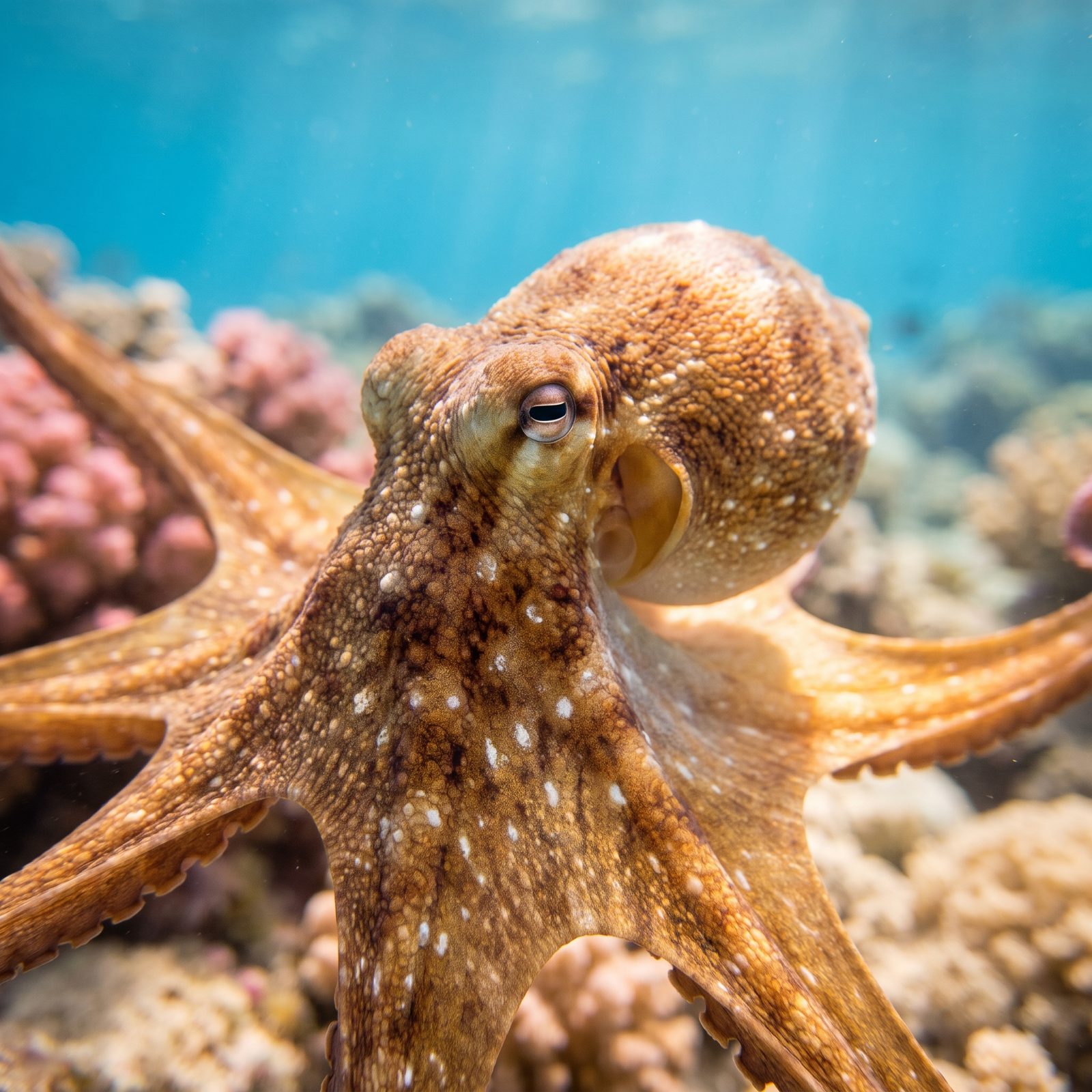
The nine-brain claim is close to true, with an asterisk. There’s one central brain wrapped around the throat, plus a cluster of nerve cells — a ganglion — at the base of each of the eight arms. Count those up and you land at nine control centers, if you want to be generous about the word “brain.”
The independence is what turns this strange. Sever the nerve between an arm and the central brain and the arm keeps reaching, grabbing, bringing food toward where a mouth would be. In a real sense, the arm thinks for itself.
So the central brain delegates. It sets the intention and lets the arms work out the fiddly details, and that’s a big part of why no robot has come close to copying how an octopus moves.
24. Can an Octopus Recognize Individual People?
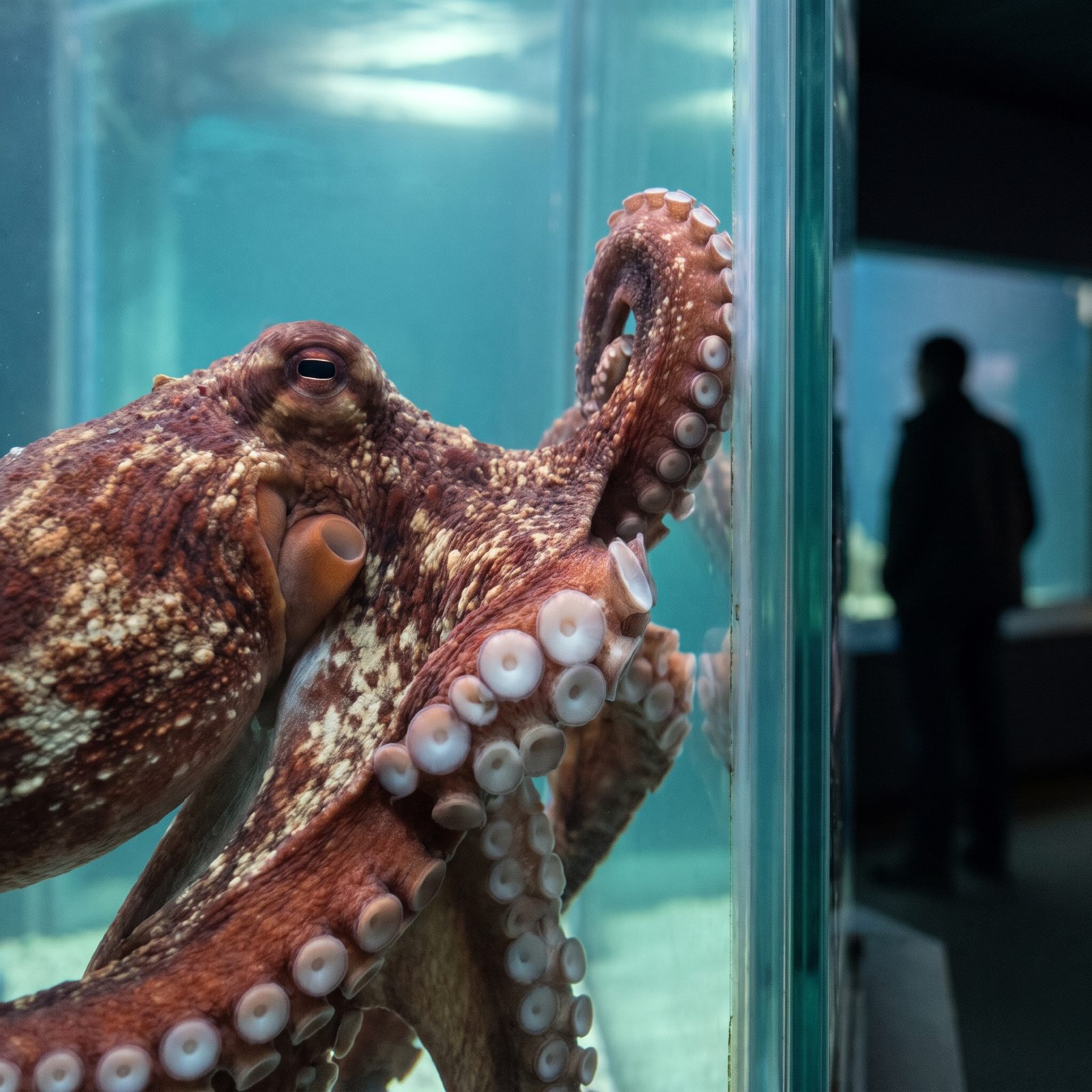
At the Seattle Aquarium, keepers ran a simple test. One person fed the octopuses. Another poked them — gently, with a bristly stick. After two weeks, the animals treated the two people differently the moment they appeared, aiming water jets and wary postures squarely at the one who had been annoying them.
They weren’t reading uniforms or routines. They were reading faces. An invertebrate holding a grudge against a specific human is the kind of fact that rearranges how you think about brains.
23. Can Octopuses Really Unscrew Jars?
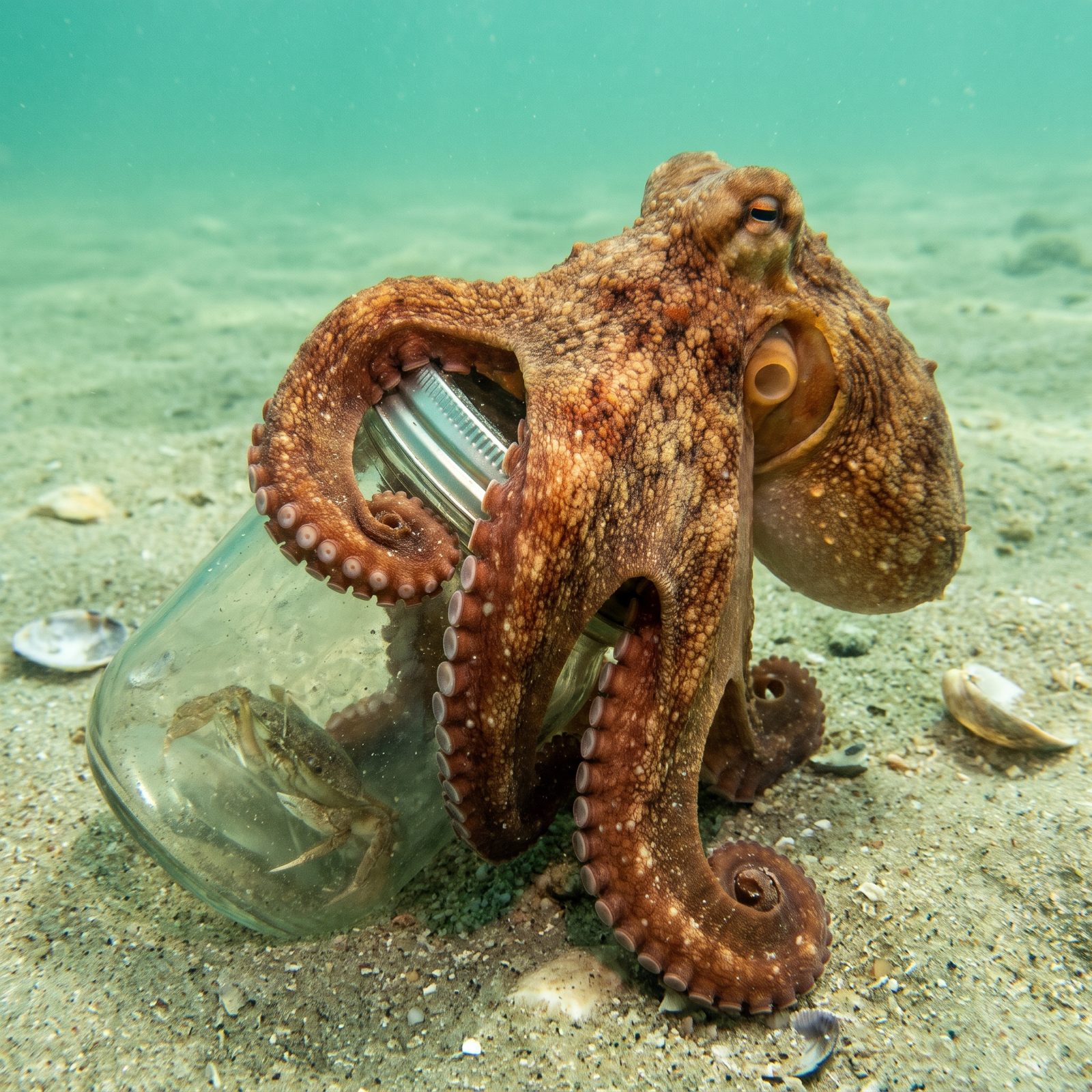
Yes, and it’s less a party trick than a lesson in motivation. Drop a tasty crab into a screw-top jar and an octopus will work the lid loose — sometimes in under a minute, sometimes after a long, patient wrestle that would exhaust anybody watching.
The dexterity wasn’t what surprised researchers. It was that the animals cracked the problem without being taught, cycling through different grips until the lid finally gave. A few have even opened jars from the inside after being sealed in, which is its own small marvel.
To an octopus, a crab behind glass is a puzzle with a snack at the end. Precious few animals treat an obstacle as something to solve rather than a wall to quit at.
22. Can Octopuses Feel Pain?
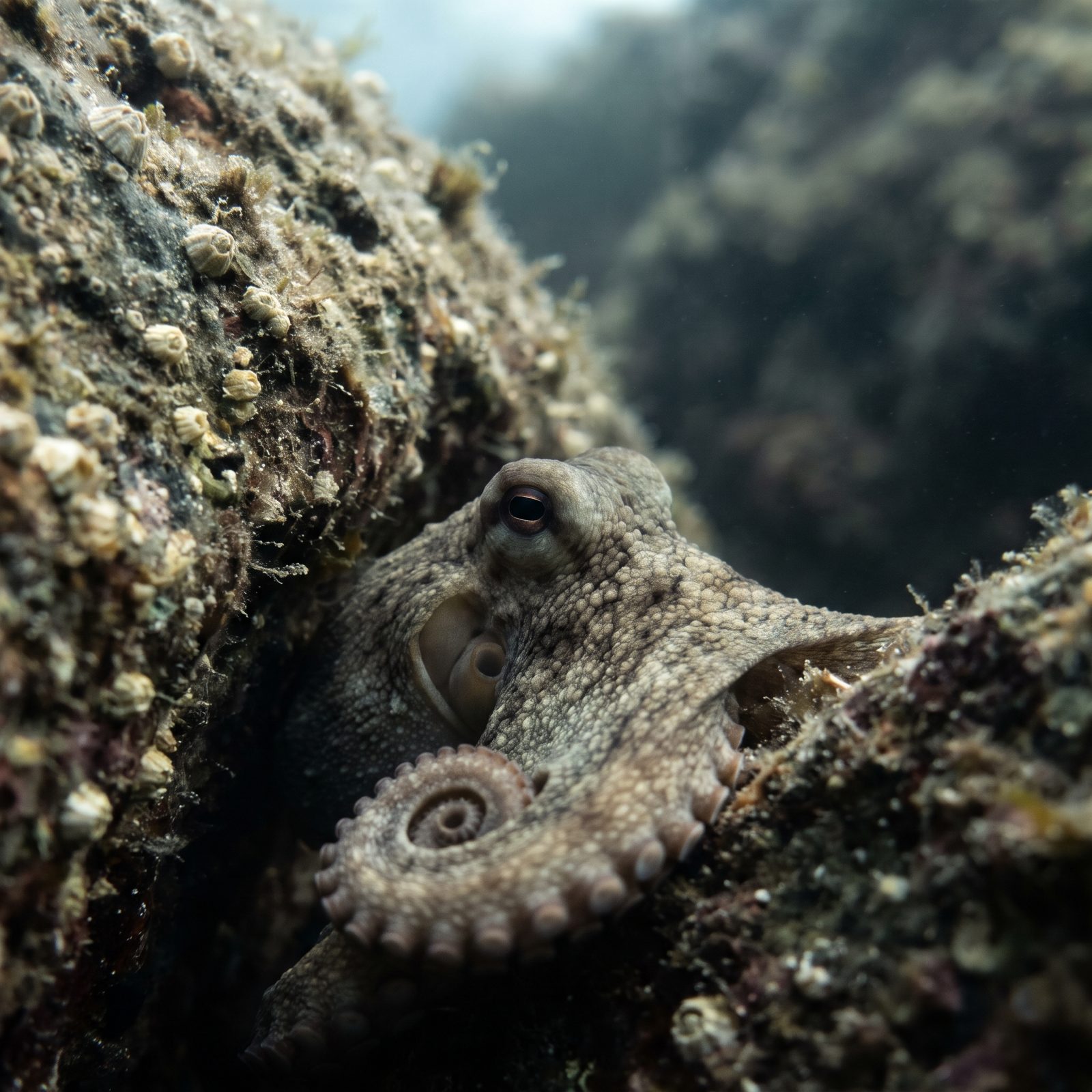
The evidence now points to yes. A 2021 study found that octopuses avoid places where they’ve been hurt, seek out spots where pain gets relieved, and nurse injured areas — all hallmarks of felt pain rather than a bare reflex.
That finding has teeth. The UK formally recognized octopuses as sentient beings in law, which means their capacity to suffer is now taken seriously in policy.
And it reframes every jar puzzle and escape story on this page. These aren’t clever machines running on instinct. They’re animals with inner states — which is precisely why how we handle them has started to matter.
21. How Can a Color-Blind Octopus Match Its Surroundings?
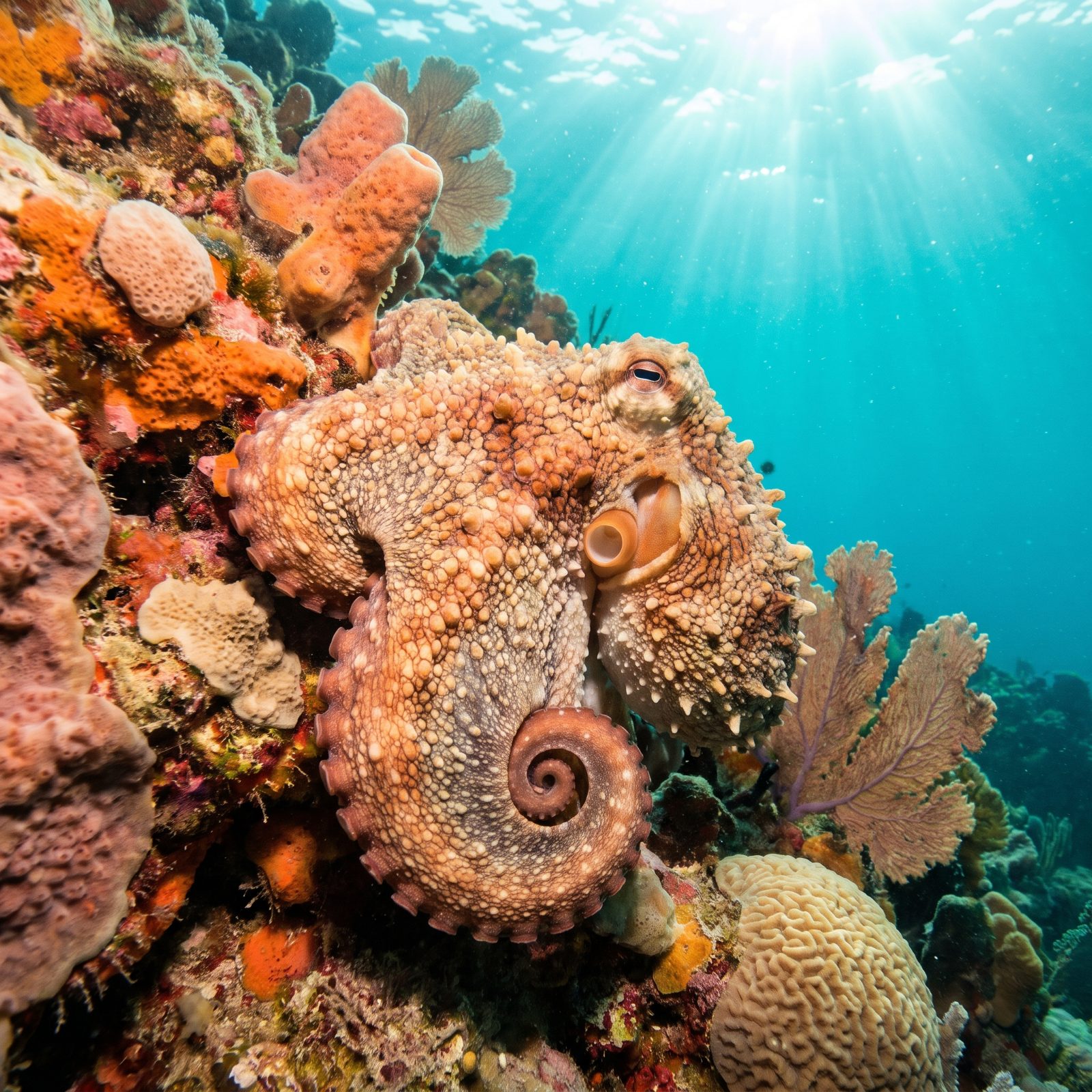
Here’s the real head-scratcher. As far as we can tell, octopuses are color-blind, carrying only a single type of photoreceptor in their eyes. Yet they match the color of a reef with maddening, uncanny accuracy.
One leading idea says they see color with their skin. Octopus skin is dotted with light-sensitive proteins — the same kind packed into their eyes — scattered right across the body. A competing theory points to their oddly shaped pupils, which split light in a way that might let the brain reconstruct color out of the resulting blur.
Nobody has fully nailed it down yet. An animal that can’t see color but somehow becomes the color around it remains one of the better unsolved puzzles in biology.
20. How Does an Octopus Make Its Skin Look Bumpy or Smooth?
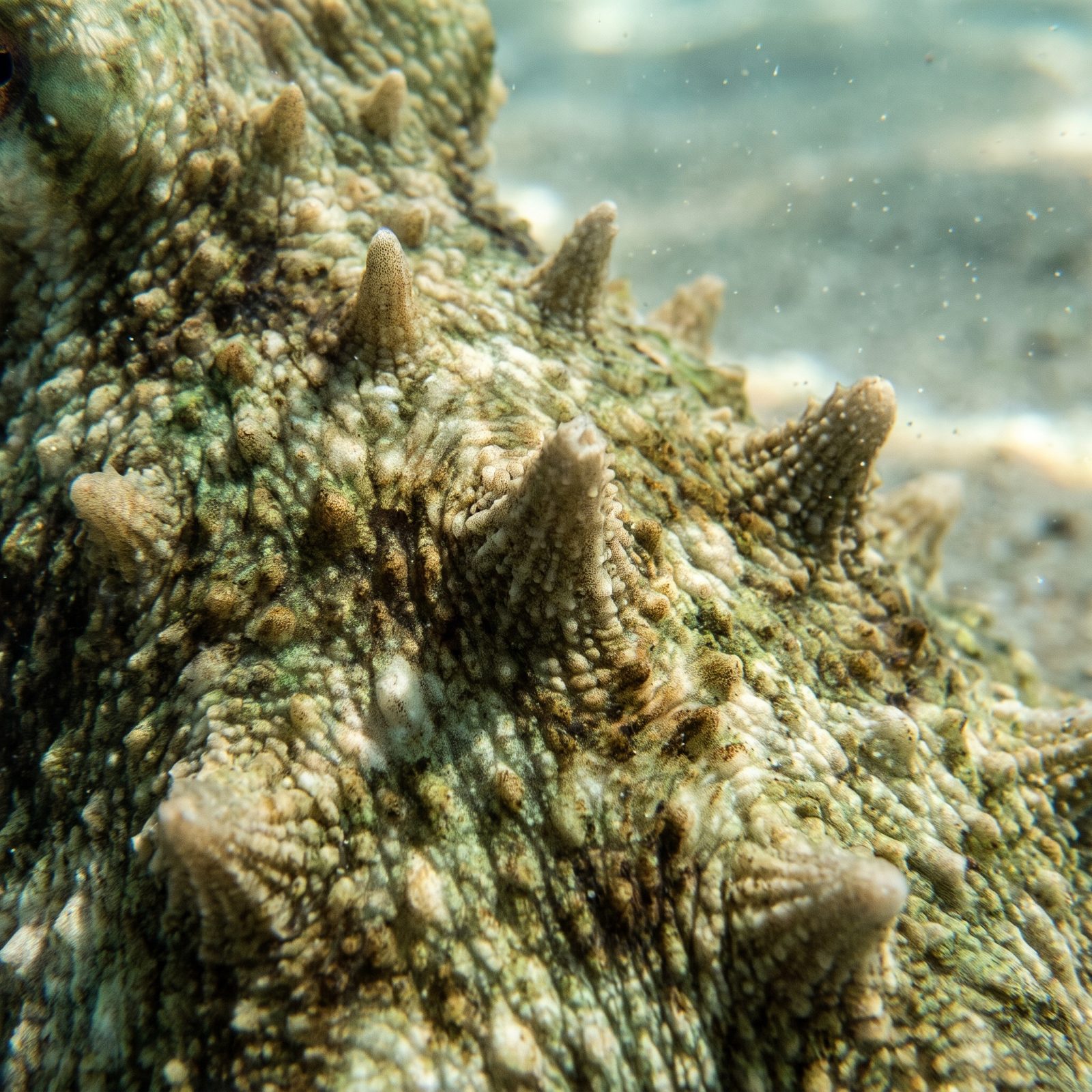
Octopus skin can flip from glass-smooth to spiky in a fraction of a second. The bumps are called papillae, raised by tiny muscles that pull the skin into cones — much the way you’d pinch a bit of fabric into a ridge between two fingers.
And unlike us with our goosebumps, the octopus runs this with real precision, dialing the texture to match kelp, coral, or bare rock on demand. It’s a muscular hydrostat doing the job, no bones and no fluid pumps anywhere in sight.
Texture, plus color, plus posture — that’s when the disguise goes total. The octopus isn’t hiding against the rock. For a moment it simply is the rock.
19. Why Do Octopuses Have Rectangular Pupils?
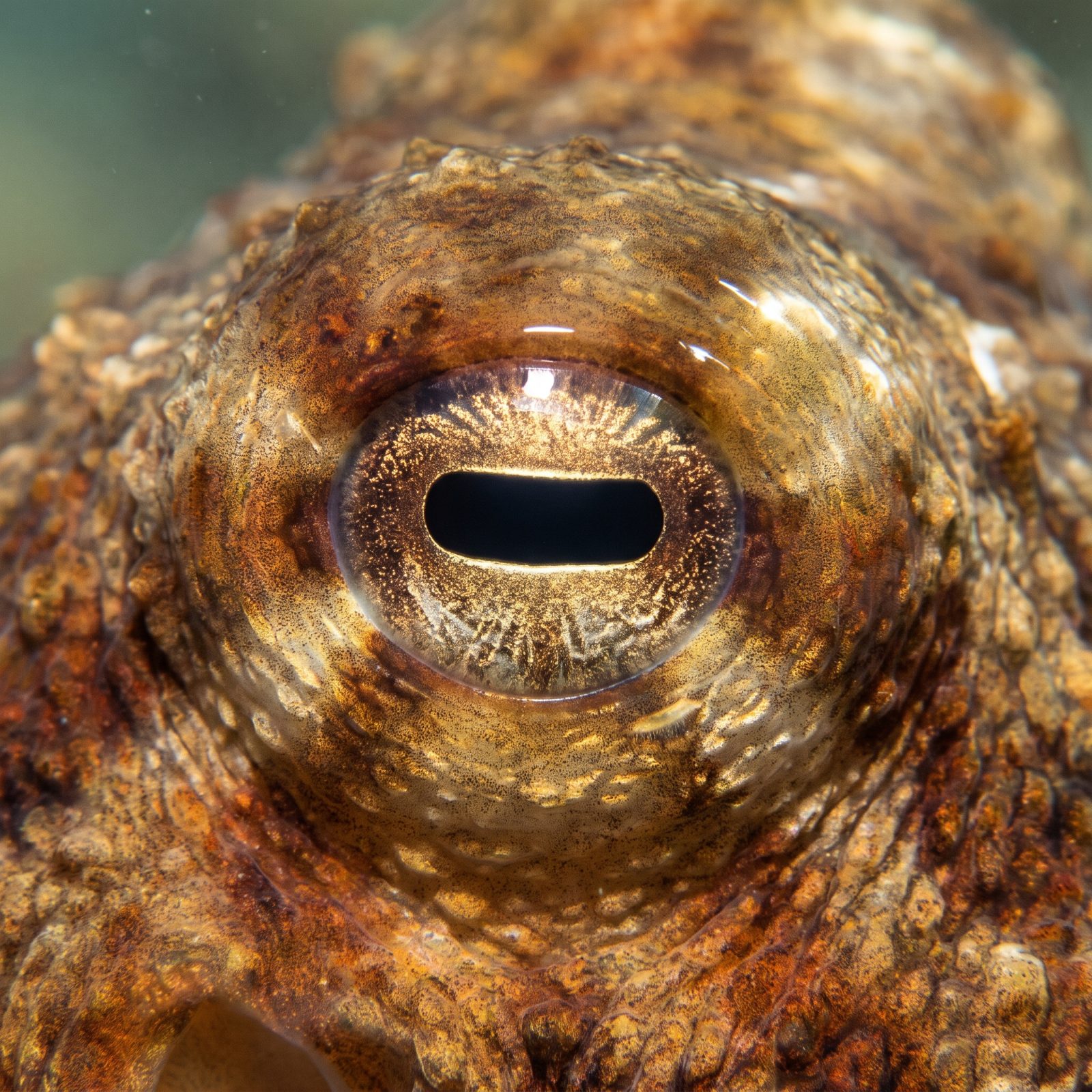
That horizontal bar of a pupil isn’t a quirk. It’s a wide-angle survival tool.
A rectangular, horizontally set pupil hands the octopus a sweeping field of view across the seafloor — exactly what an animal needs when it has to watch for predators from any angle while hunting below. It also helps even out incoming light and keep the horizon crisp.
There’s a stranger possibility lurking here too. Those odd pupils may split white light into its colors by smearing each one at a slightly different depth, which could be part of how a supposedly color-blind animal still senses color at all. In that theory, the pupil does the work the retina can’t manage.
18. Can Octopuses Hear Sounds?
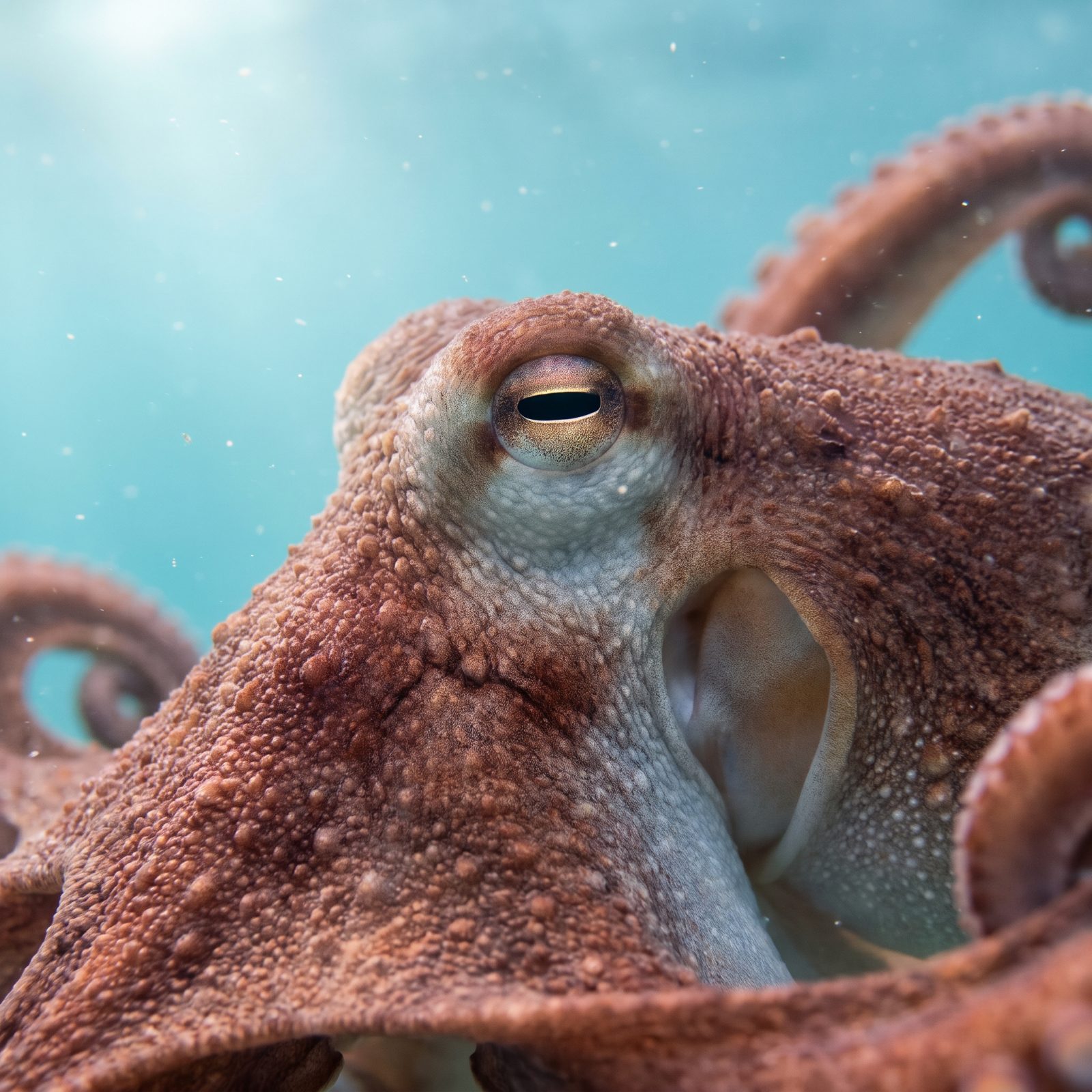
No ears, but not deaf either. Tucked inside the head sits a pair of fluid-filled sacs called statocysts, and those pick up the low vibrations rolling through the water.
Lab work on common and bigfin octopuses shows they respond best to low rumbles. The thud of a boat engine, a big predator shouldering past, the pressure wave of something heavy on the move. A dolphin’s high whine mostly sails right over them. They feel the ocean more than they hear it, which, when you think about a body that tastes with its skin, starts to make a strange kind of sense.
17. Can an Octopus Be Harmed by Its Own Ink?
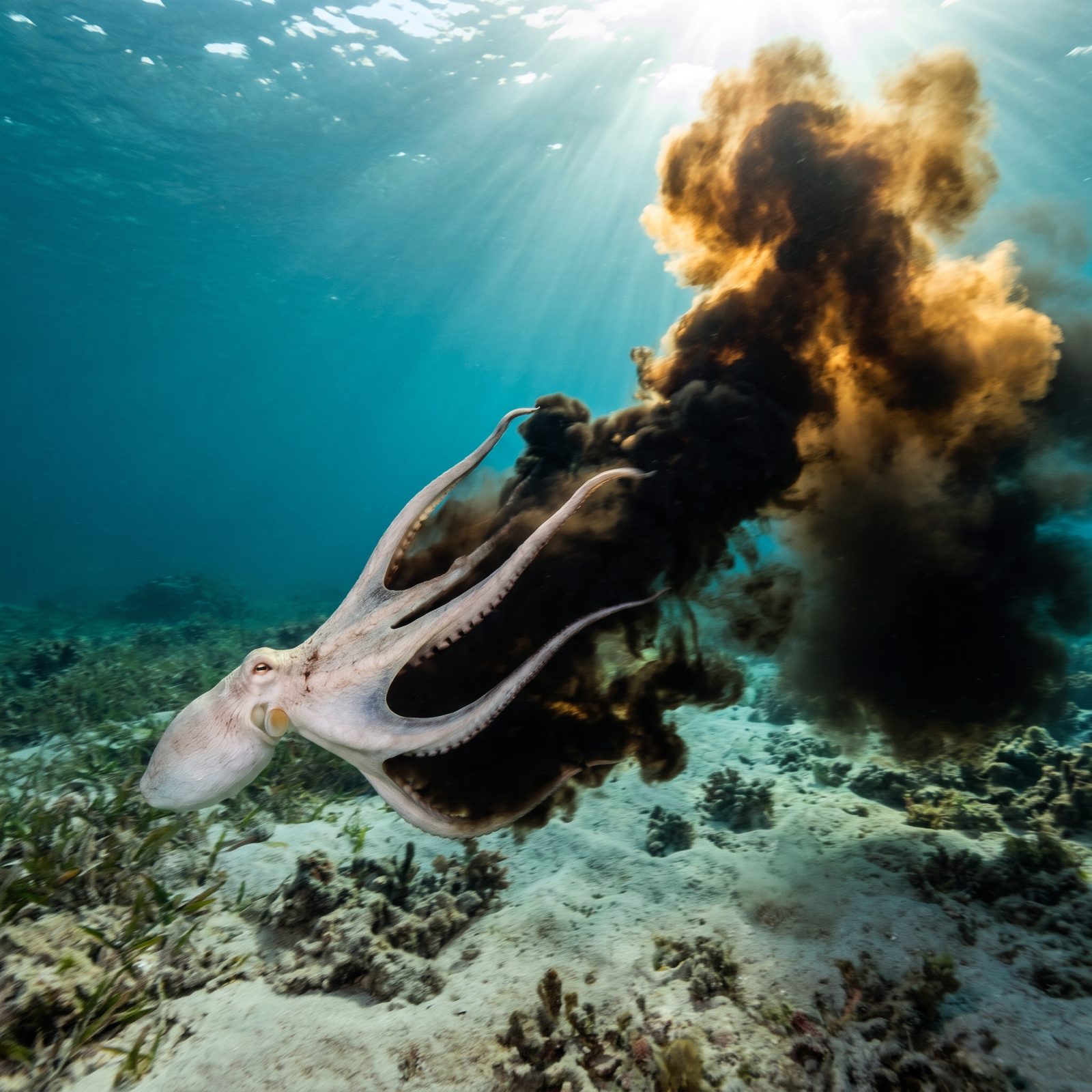
It can. An octopus is perfectly capable of poisoning itself with its own ink — but only if it gets trapped in the cloud.
The ink is mostly melanin, the same pigment in your skin, mixed with mucus and a compound called tyrosinase that stings eyes and clogs gills. Open water, no problem: fire the cloud, jet sideways, leave it behind. Squeeze into a bucket or a small tank or a dead-end crevice, though, and that cloud has nowhere to go. Octopuses have died in aquariums after inking in enclosures too small to flush the water. The decoy becomes a gas chamber.
16. Can a Blue-Ringed Octopus Really Kill a Person?
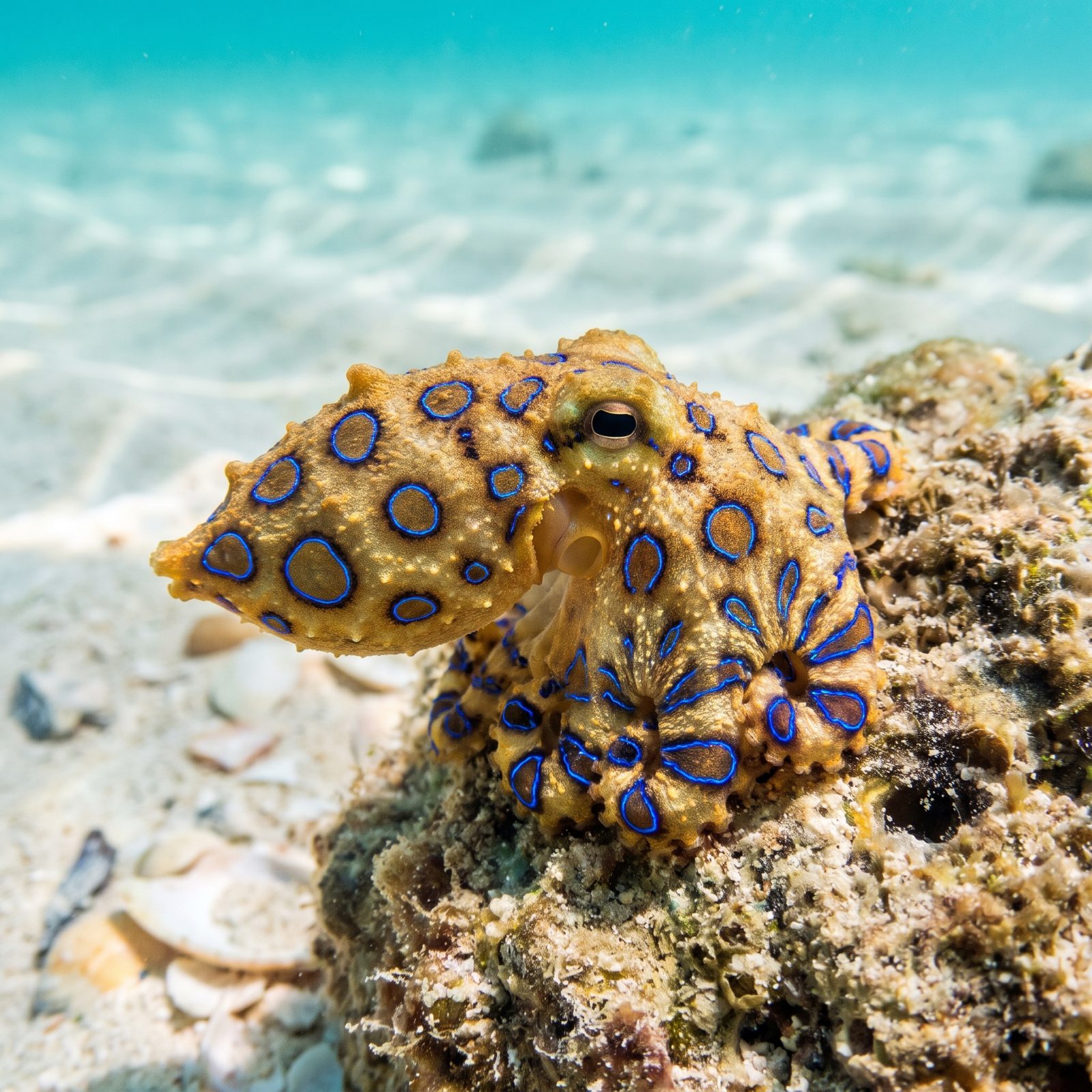
Yes. And it is small enough to sit in your palm.
The blue-ringed octopus carries tetrodotoxin in its saliva, the same poison found in pufferfish, many times more potent than cyanide by weight. A single tiny bite, often painless, can paralyze your breathing muscles within minutes. There is no antivenom.
Before you cancel the beach trip: these animals live mostly in the Indo-Pacific and never come looking for people. Bites are rare and nearly always happen when someone picks one up. The glowing rings are not an invitation — they are a warning the animal flashes only when it feels cornered.
15. Why Do Some Octopuses Walk on Two Arms?
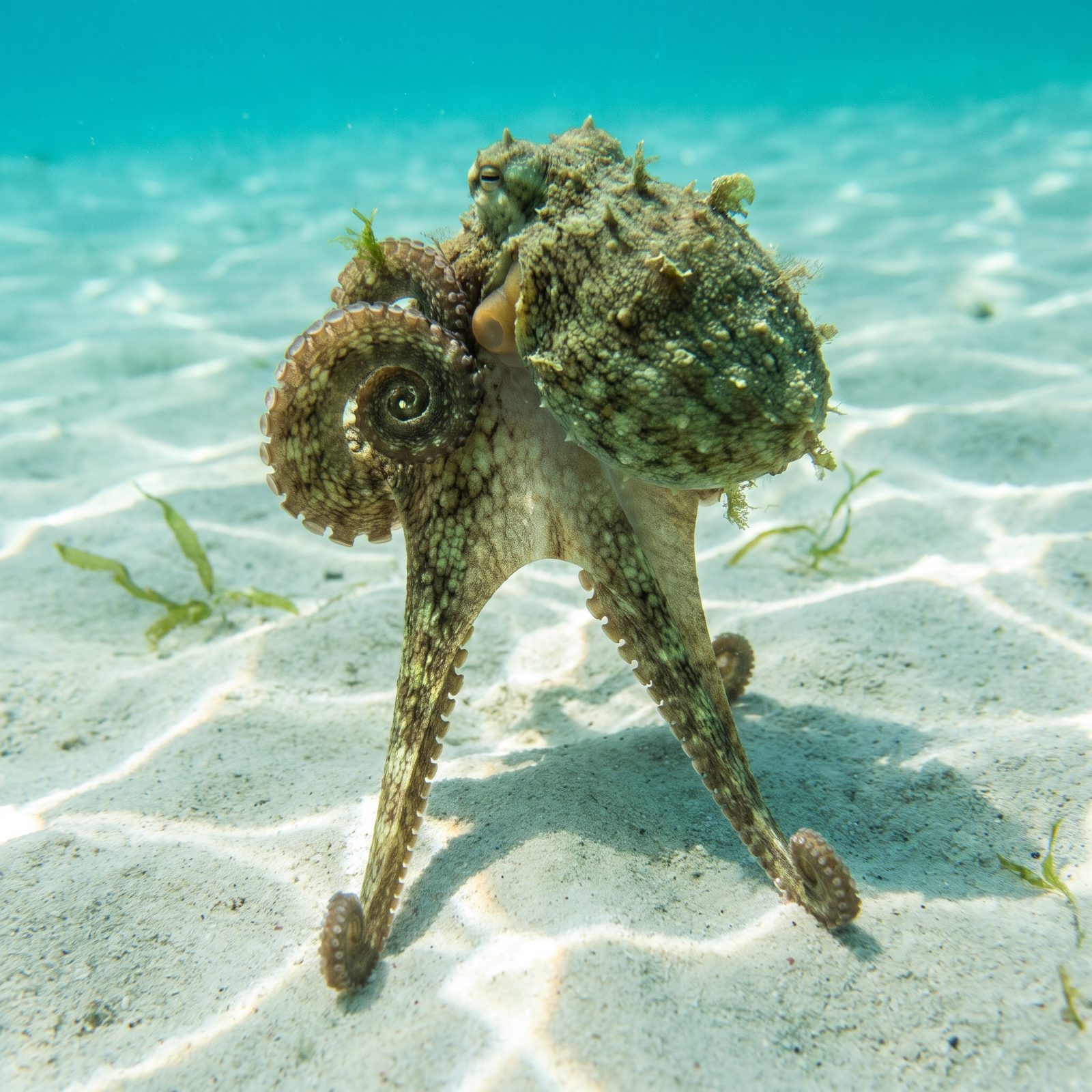
It is a disguise, not a shortcut.
Two species, the algae octopus and the coconut octopus, bundle six arms into a ball above the body and tiptoe backward on the remaining two. Scrunched up like that, they read as a drifting clump of weed or a rolling coconut. The animal keeps moving while pretending to be junk, which lets it cross open ground without announcing “soft, edible octopus” to every predator in the neighborhood.
It burns more energy than a plain crawl, and it is slow. But camouflage while actually moving is a rare trick in nature, and these two pull off a walking lie nobody else manages.
14. How Long Can an Octopus Survive Out of Water?
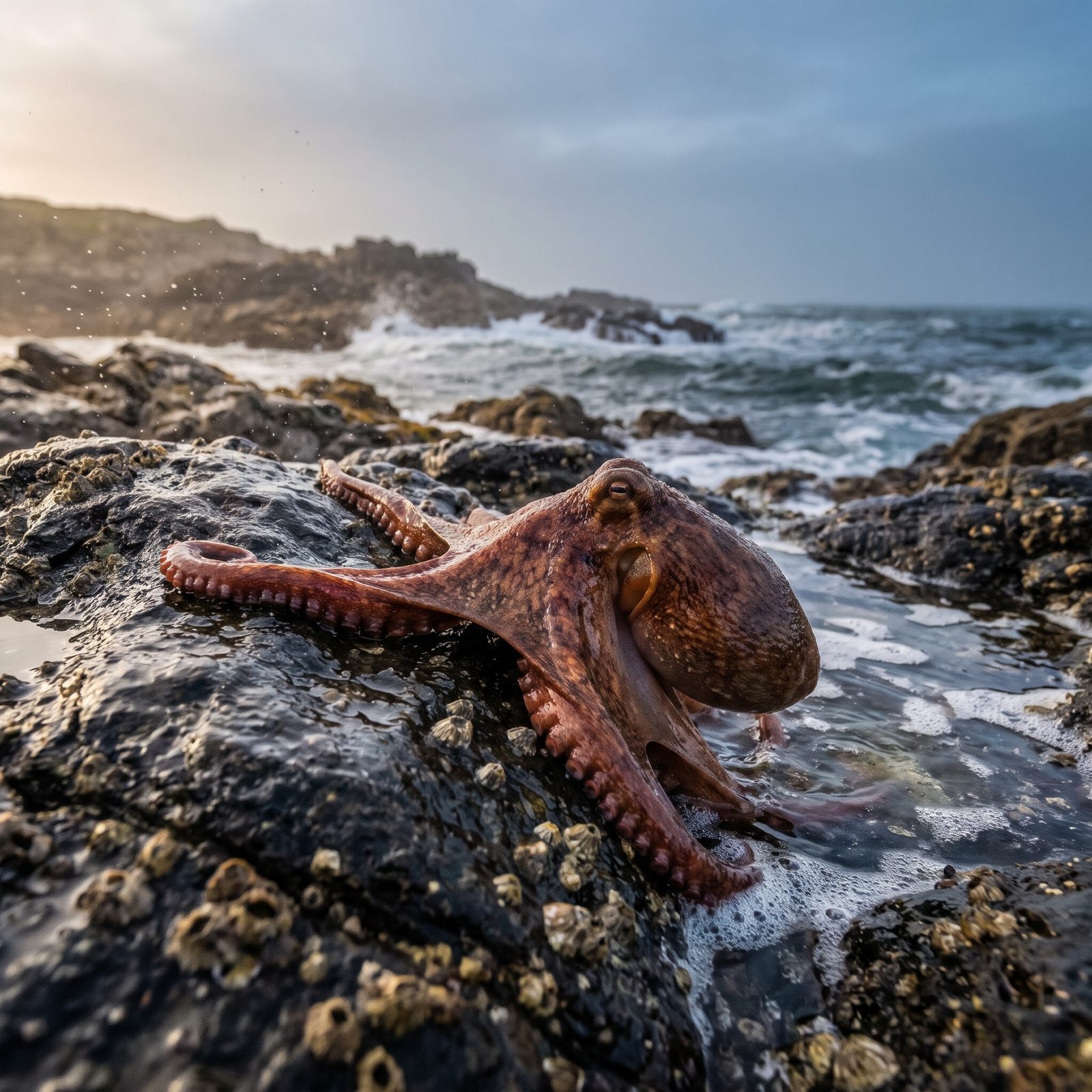
Minutes, usually. A little longer if things stay cool and wet.
Octopuses breathe through gills that collapse in air, so most suffocate within half an hour of being stranded, often far sooner. What they can do is cross short stretches of land. Common and algae octopuses haul themselves out of one tide pool and slither to the next to raid a trapped crab, as long as their skin stays damp — wet skin pulls a little oxygen straight from the air.
So those famous photos of octopuses escaping tanks and oozing across the floor? Completely real. They just cannot keep it up for long before the clock runs out on them.
13. Can Any Octopus Live in Fresh Water?
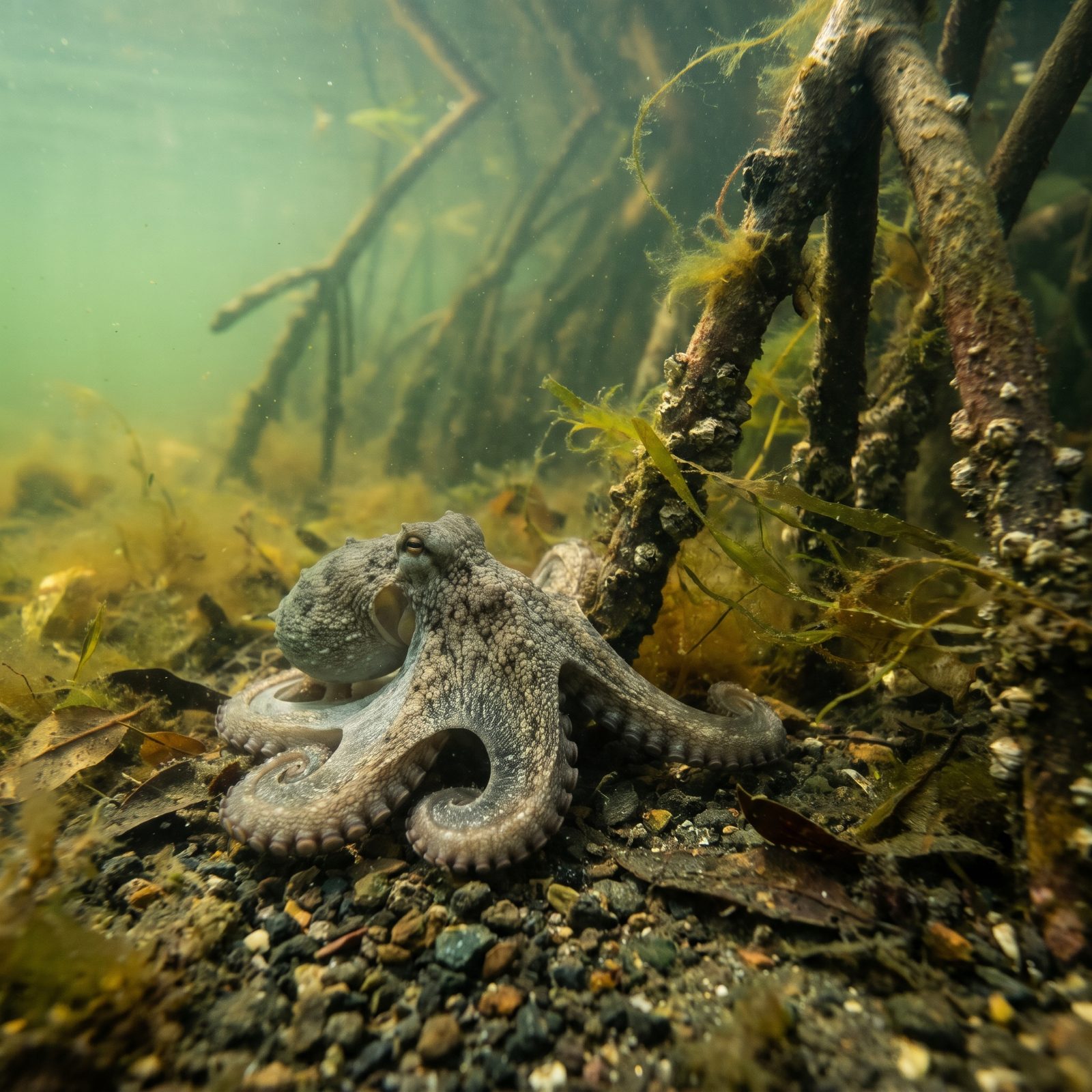
No. Not one species anywhere, and this one genuinely surprises people.
Octopuses are chained to salt water by their own plumbing. Their blood and body fluids match the saltiness of the sea, and they have nothing like the kidneys river fish use to pump out excess fresh water. Drop an octopus in a lake and its cells swell until they fail.
A handful can tolerate brackish estuaries for a while, those salty-ish zones where rivers spill into the sea. But a true freshwater octopus — a lake dweller, a river creature — simply does not exist on this planet. Hear otherwise and someone is selling you a story.
12. How Do Octopuses Mate, and Which Arm Does the Male Use?
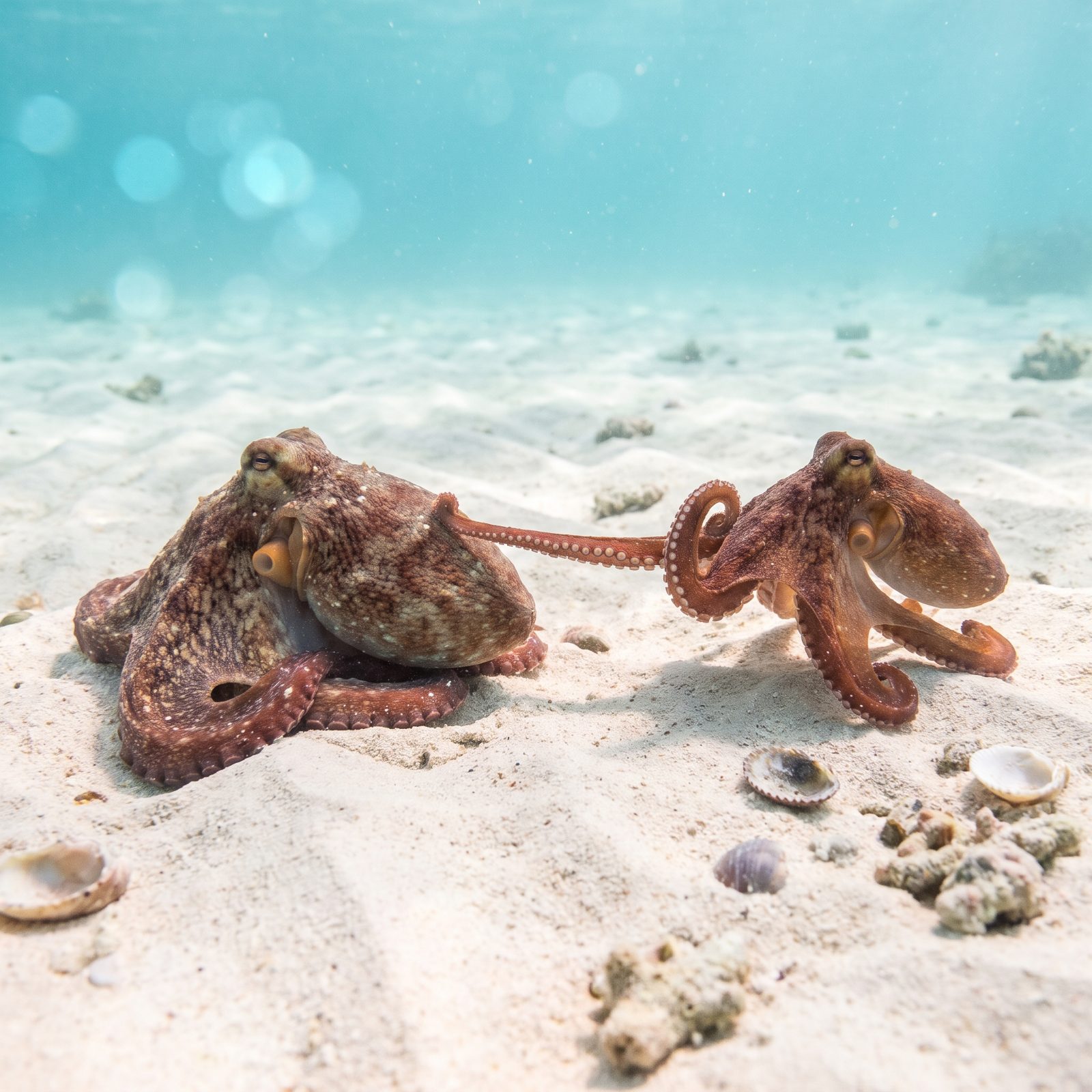
Males have a dedicated sex arm, and it even has a name: the hectocotylus. In most species it is the third arm on the right, tipped with a specialized groove where the usual suckers would be.
Mating is a nervous affair. The male hangs back and reaches across the gap to slip packets of sperm, called spermatophores, into the female’s mantle cavity with that one arm. Why the caution? She is often bigger, and sometimes hungry. Cannibalism during mating is well documented.
A few species go further still. The male argonaut, or paper nautilus, detaches his entire mating arm and leaves it behind inside the female — it swims off on its own to finish the job. He keeps a safe distance by surrendering a limb outright.
11. How Many Eggs Can an Octopus Lay?
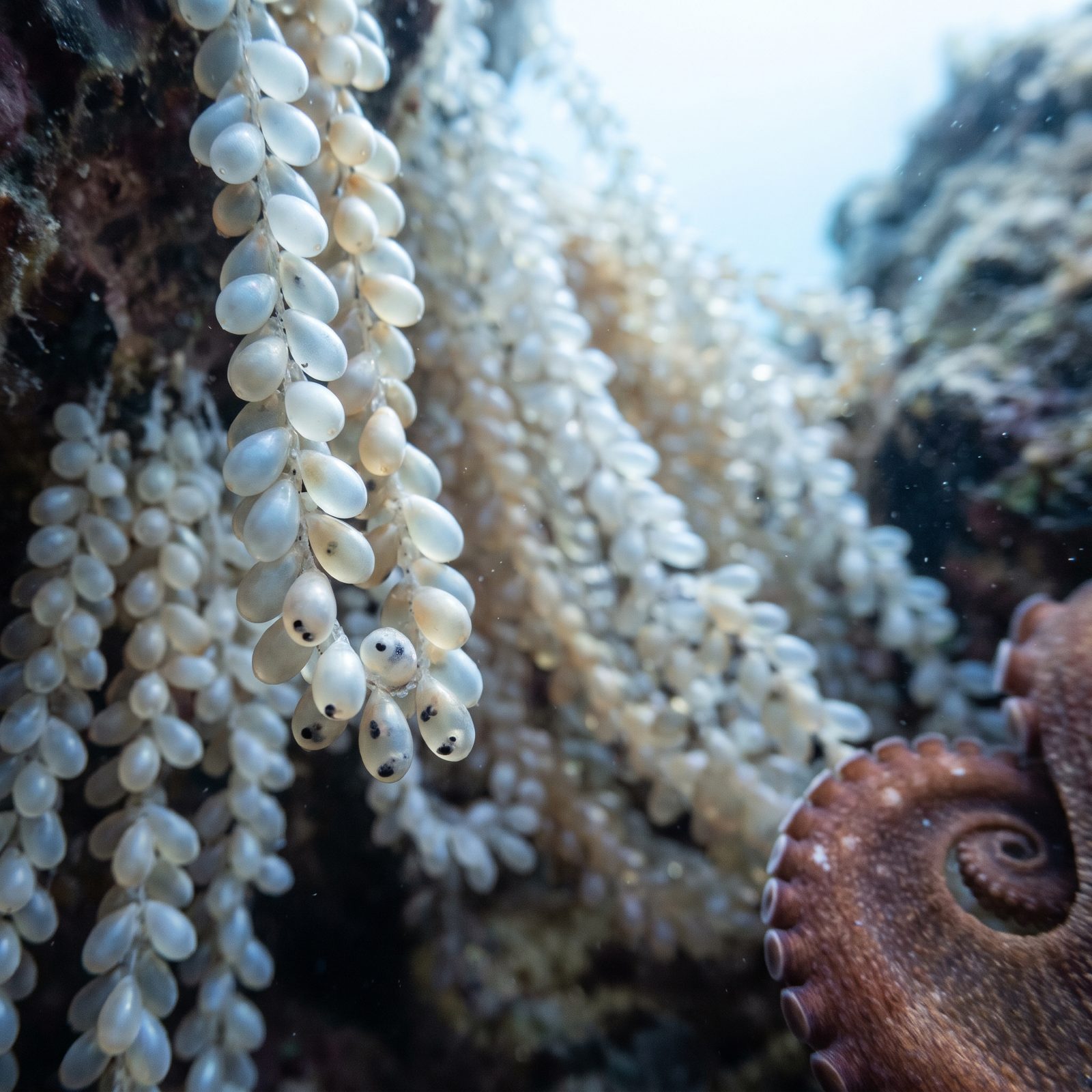
Think big. A single female can lay tens of thousands of eggs in one clutch, and the giant Pacific octopus pushes well past 50,000, sometimes toward 100,000.
She strings them in long festoons across the ceiling of her den, each egg the size of a grain of rice, and then she stands guard. Weeks or months of fanning oxygen across them, picking off debris, chasing away intruders, never once leaving to feed.
Then the brutal math. Of those tens of thousands, maybe one or two survive to adulthood. The rest feed the ocean as larval drift. She spends every day she has left, and finally her body, on a lottery with the longest odds imaginable — and she never meets a single winner.
10. Why Does a Mother Octopus Stop Eating and Die After Guarding Her Eggs?
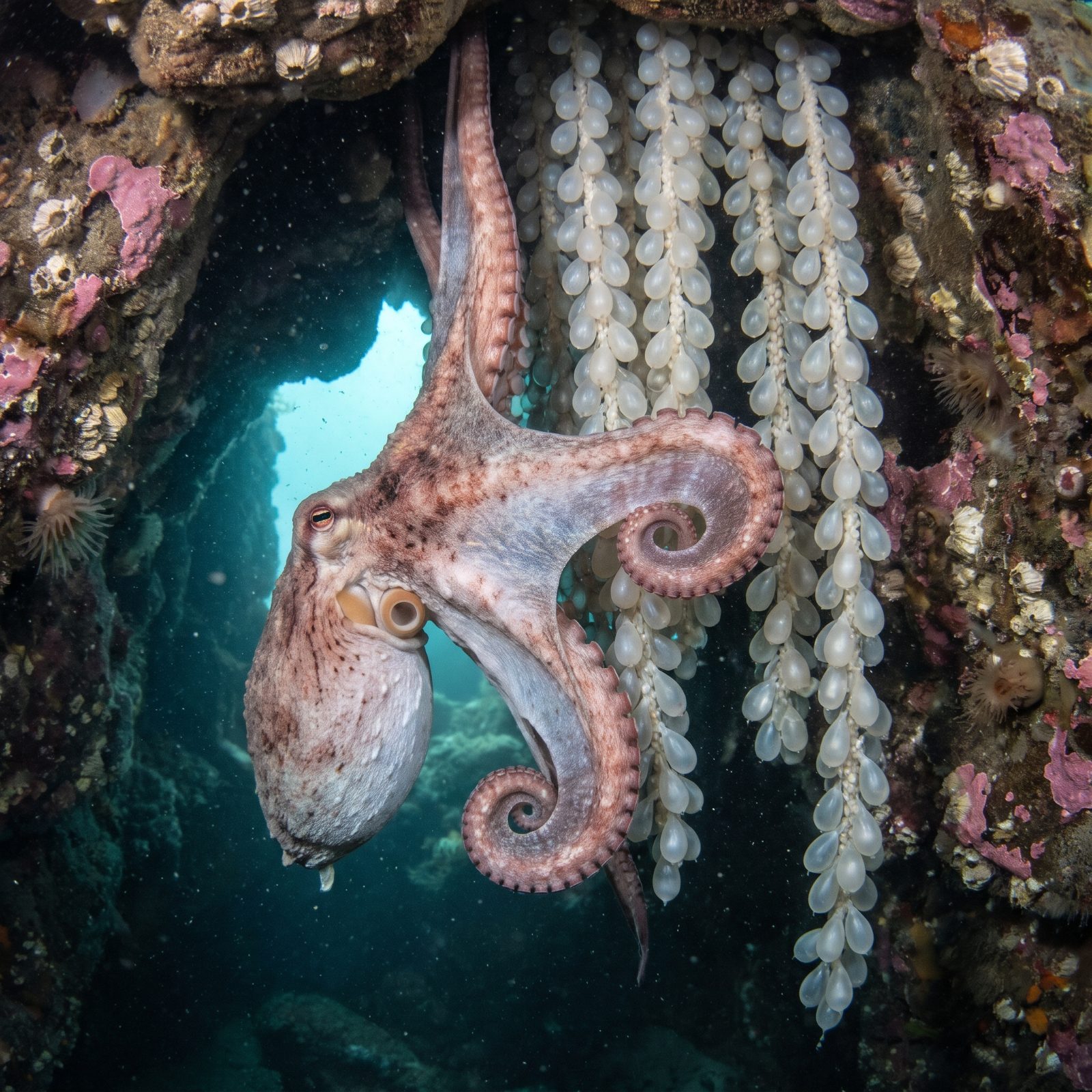
She starves on purpose. Once a female octopus lays her eggs she stops hunting entirely, and for weeks or months she does nothing but clean the clutch, blow water across it, and chase off anything that drifts too close. One deep-sea mother off the California coast brooded her eggs for years, the longest vigil researchers have ever documented. By the time they hatch, she’s a shadow of herself.
Blame a tiny gland near her eyes, the optic gland. After mating it floods her system with signals that shut down feeding and speed her decline. Snip that gland out in a lab and the self-destruct switch flips right off. Grim, elegant biology.
9. What Does a Baby Octopus Actually Look Like?
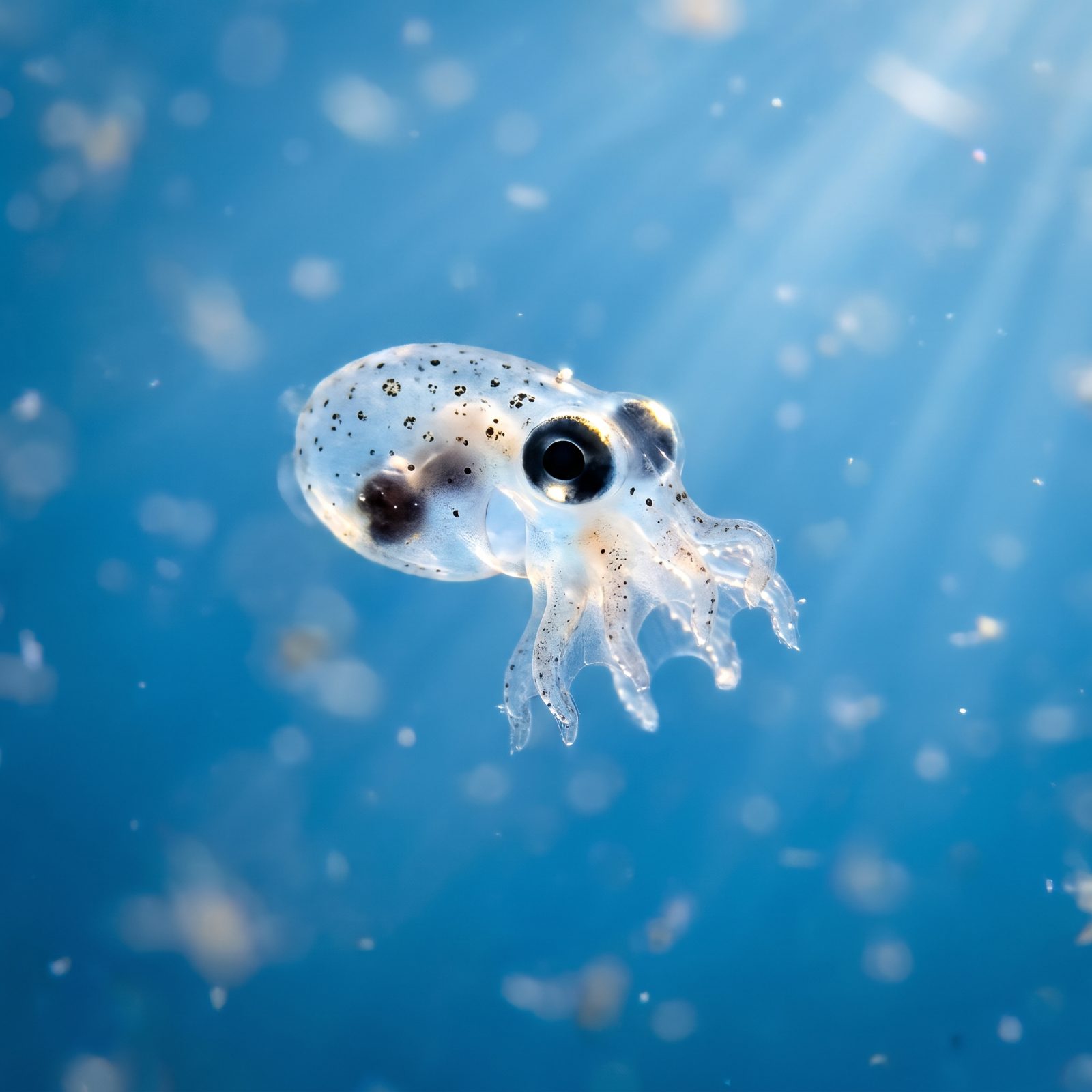
Forget a mini version of the adult. Most octopus hatchlings are planktonic specks barely bigger than a rice grain, nearly see-through, dusted with a few color cells and lugging eyes far too big for their bodies. Up into open water they drift, joining the plankton.
Now the part nobody mentions. The odds are brutal. A single female may release tens of thousands of these paralarvae, and nearly all of them get eaten within days — a mere handful survive to sink back down and den up. That staggering egg count isn’t excess. It’s the toll charged by a world that eats almost everything.
8. How Does an Octopus Crack Open a Clam or Crab Shell?
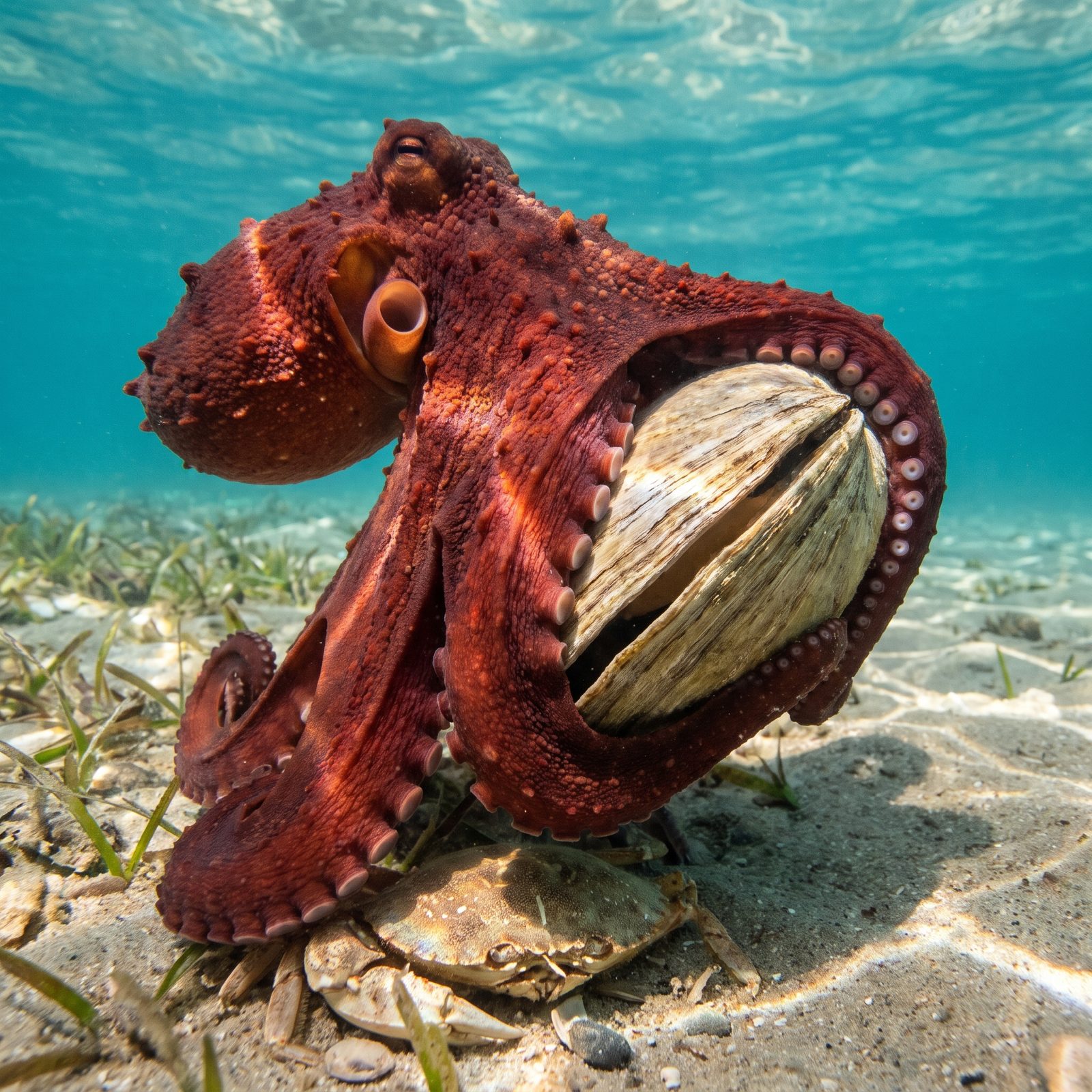
An octopus has more than one way into a shell, and it picks the easiest one going. Brute force first: it wraps its arms around a clam and simply pulls the halves apart until the muscle gives up. If that fails, out comes the drill.
Hidden under its arms sit a hard parrot-like beak and a rasping tongue, the radula. The octopus bores a tiny hole through the shell, then injects saliva loaded with venom and enzymes that relax the clam’s clamping muscle. The shell pops open and dinner is served. Walk a beach sometime and you’ll spot those neat little drill holes in the empty shells.
7. Do Octopuses Eat One Another?
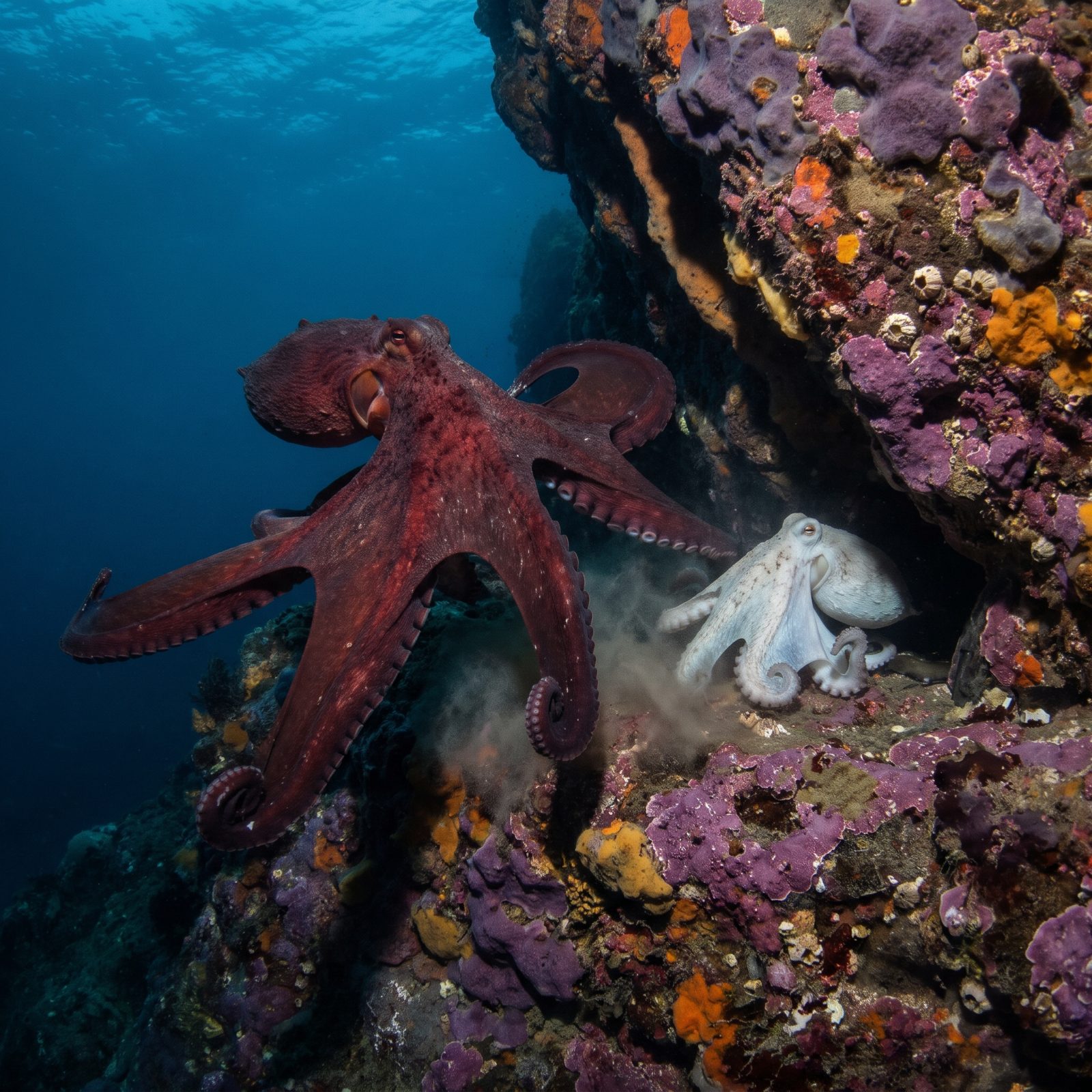
Yes, and freely. Octopuses are cannibals, and a hungry one that bumps into a smaller octopus usually sees food, not kin. Divers have watched one drag another back to its den to eat it.
Which is exactly why two in one tank tends to become one in one tank. It also explains why they’re loners, so quick to vanish into a crevice. Being an octopus means treating almost everything your size or smaller — your own species included — as a possible meal or a possible threat. No sentiment here. Just survival math.
6. Why Do Octopus Dens Have Piles of Shells Outside?
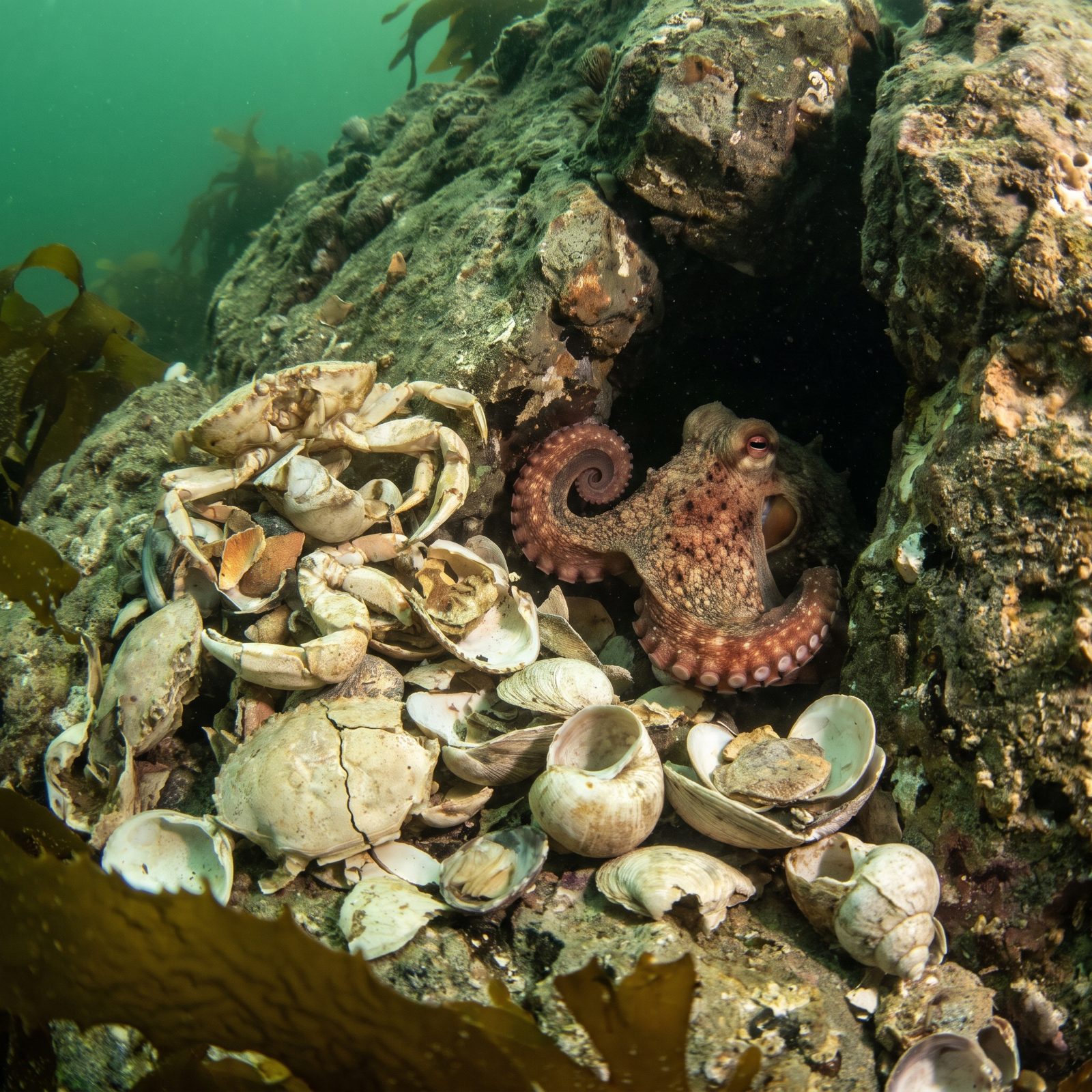
That little junkyard outside the den is a dinner log. Octopuses are tidy in a strange way — they haul prey home, crack it open inside the safety of the den, then fling the empty shells out the front door. Over time the discarded bits build into a telltale heap called a midden.
Field researchers adore these piles. Sift through one and you can read exactly what an octopus has been eating: which species, which sizes, how often. It’s a receipt the octopus never meant to share.
5. Do Octopuses Really Carry Coconut Shells as Armor?
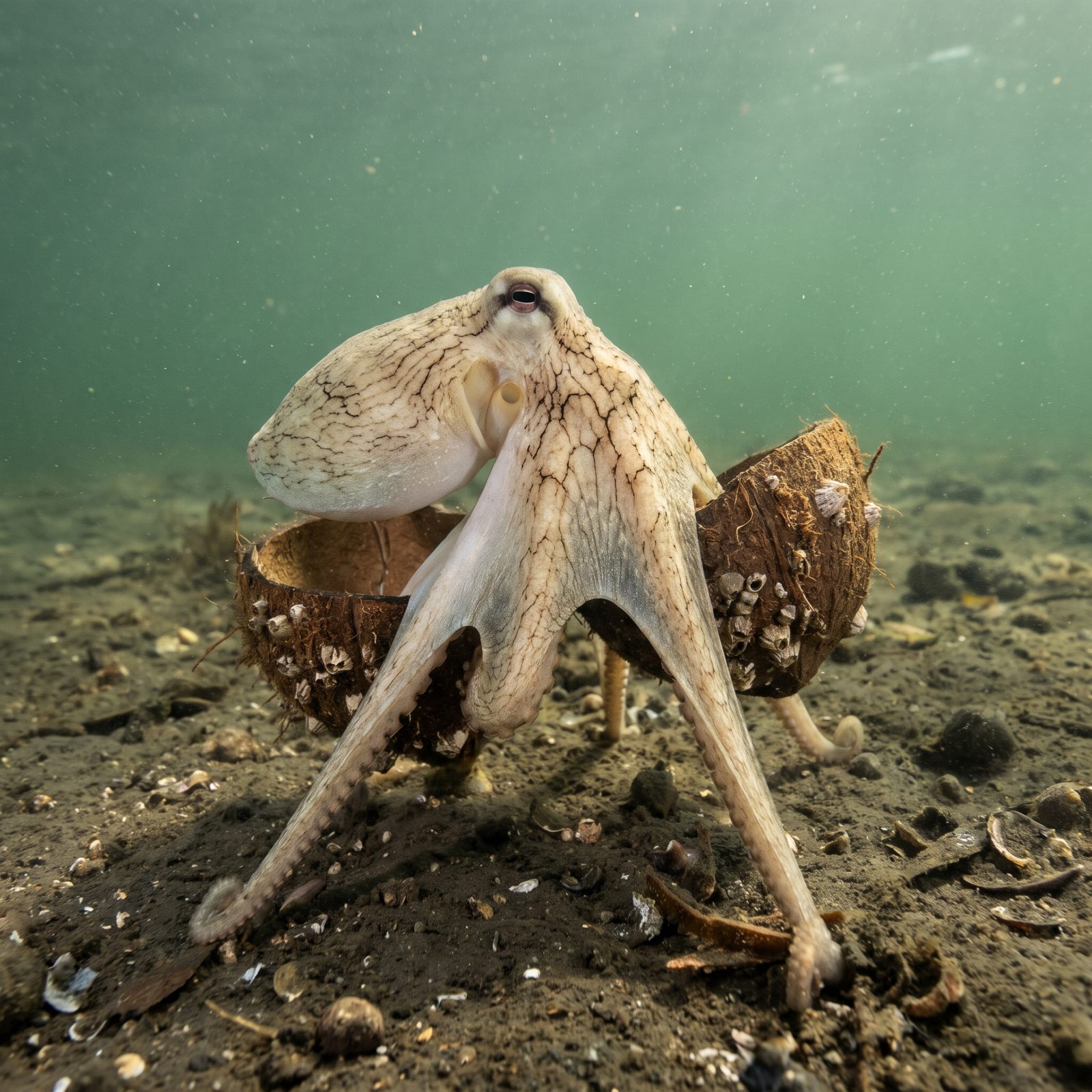
Yes, and the behavior stopped scientists cold. The veined octopus gathers discarded coconut shell halves, cleans them out, and carries them stacked under its body across open seafloor. When danger shows up it snaps the halves together into a sphere and hides inside. Researchers documented this off Indonesia in 2009.
Here’s why that’s a big deal. Carrying a tool for later — when it’s useless and cumbersome right now — is a signature of real cognition. The octopus hobbles along on stiffened arms, dragging dead weight, betting on a threat that hasn’t arrived yet. Forward planning, in an animal with no bones and no backbone.
4. Is the Kraken Supposed to Be an Octopus or a Squid?
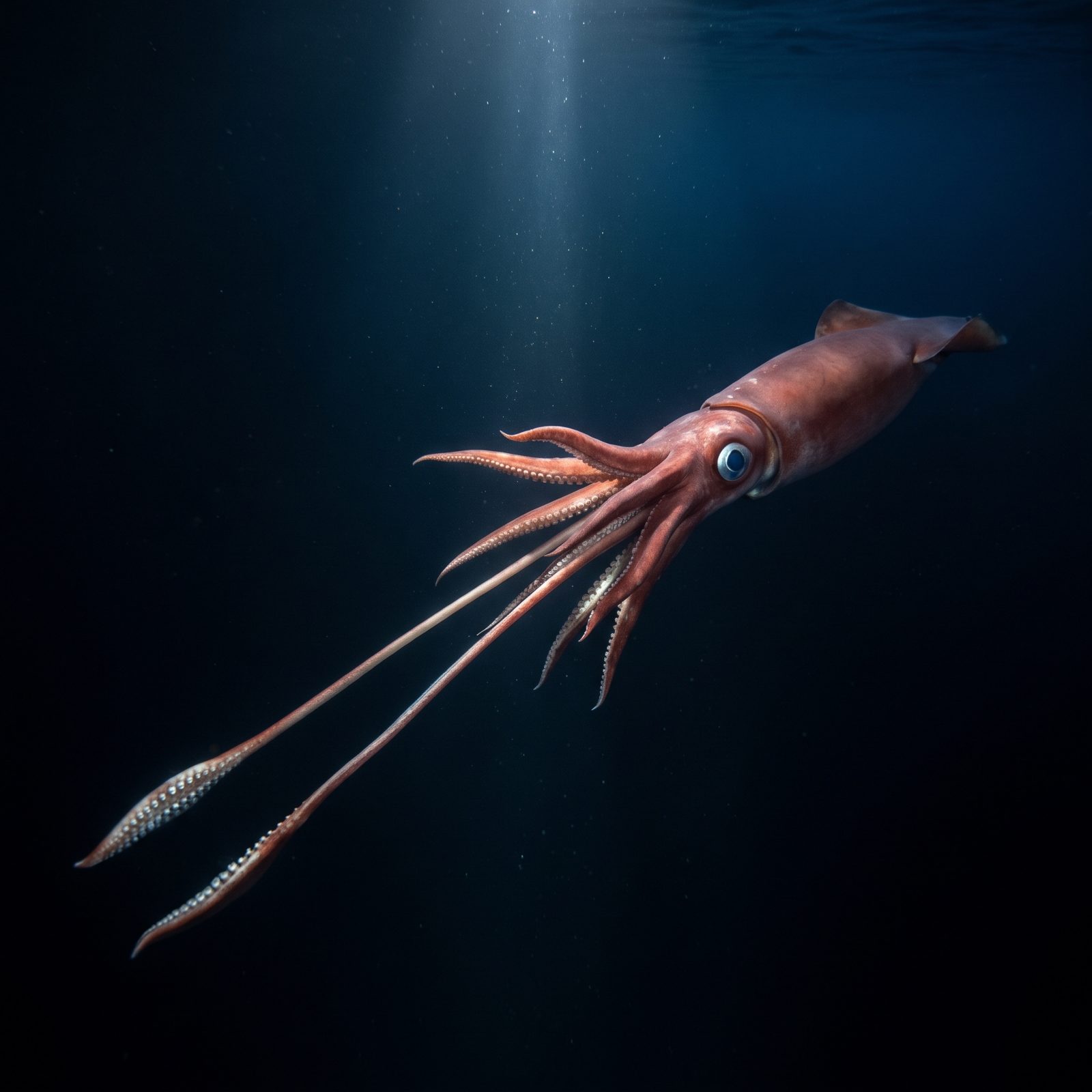
Neither, strictly — but the biology leans squid. The kraken is a sea monster out of Scandinavian folklore, reported by sailors as an island-sized beast that dragged whole ships under. Old illustrations tend toward octopus, all writhing arms wrapped around a hull.
The likelier real-world seed, though, is the giant squid, which can stretch over 40 feet with those two extra feeding tentacles and eyes the size of dinner plates. A sailor hauling up a dying one, or stumbling on a rotting carcass, had every reason to dream up a monster. Nobody even filmed a live giant squid in its own habitat until 2012.
3. Can an Octopus Be Kept as a Pet?
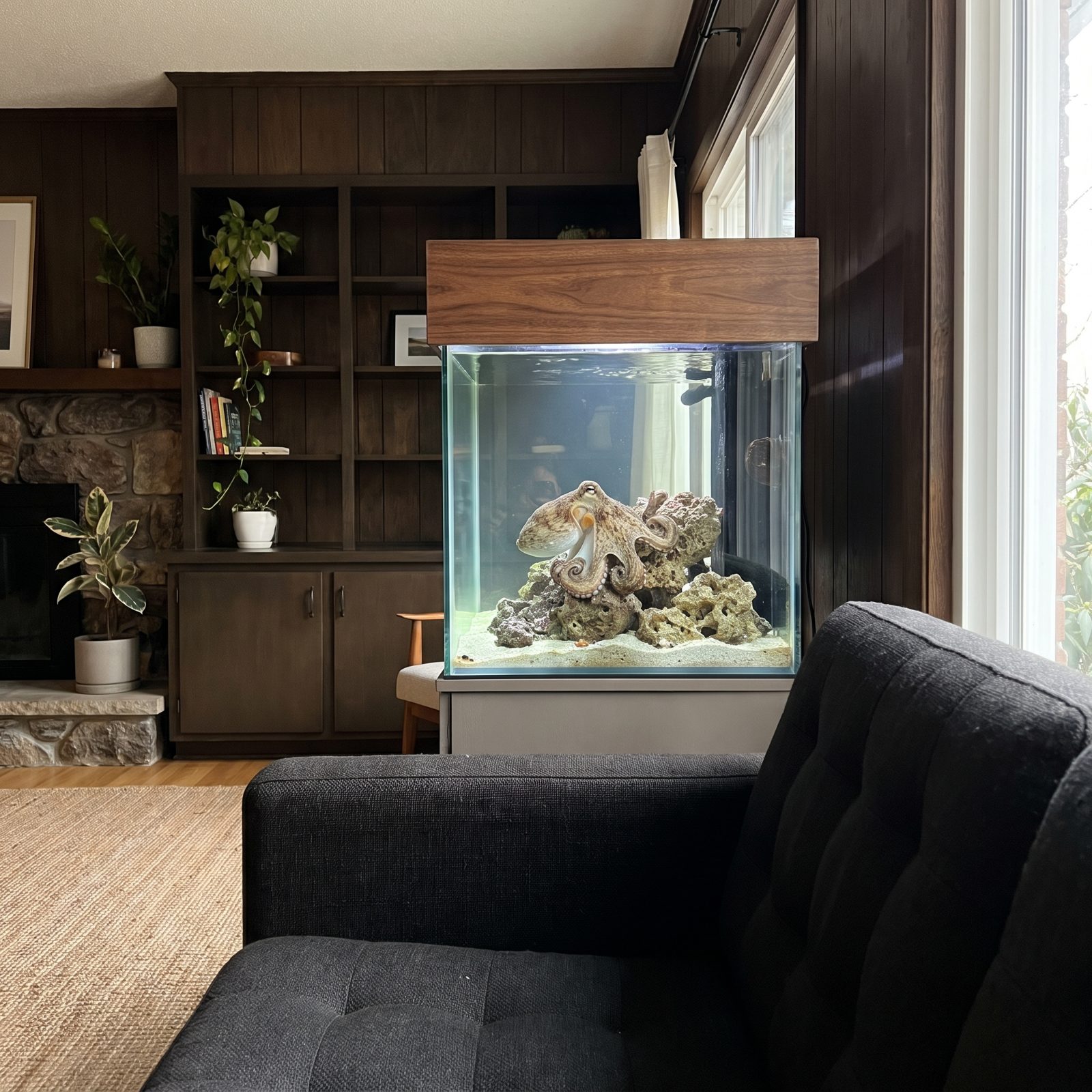
Technically yes. Realistically? Probably don’t. Octopuses are the escape artists of the aquarium world, squeezing through any gap bigger than their beak — and the beak is tiny. Keepers routinely find them dead on the floor or raiding the tank next door.
They also burn bright and die young. Most common aquarium species last only a year or two, and that brief, dazzling life demands chilled water, pristine chemistry, a sealed lid, and nonstop mental stimulation. Skimp on any of it and they get bored, then destructive. You’re minding a short-lived, escape-prone genius that may never stop prying at the lid.
Honestly, this is one of those animals better admired on a dive or a documentary than owned.
2. Do Sleeping Octopuses Dream?
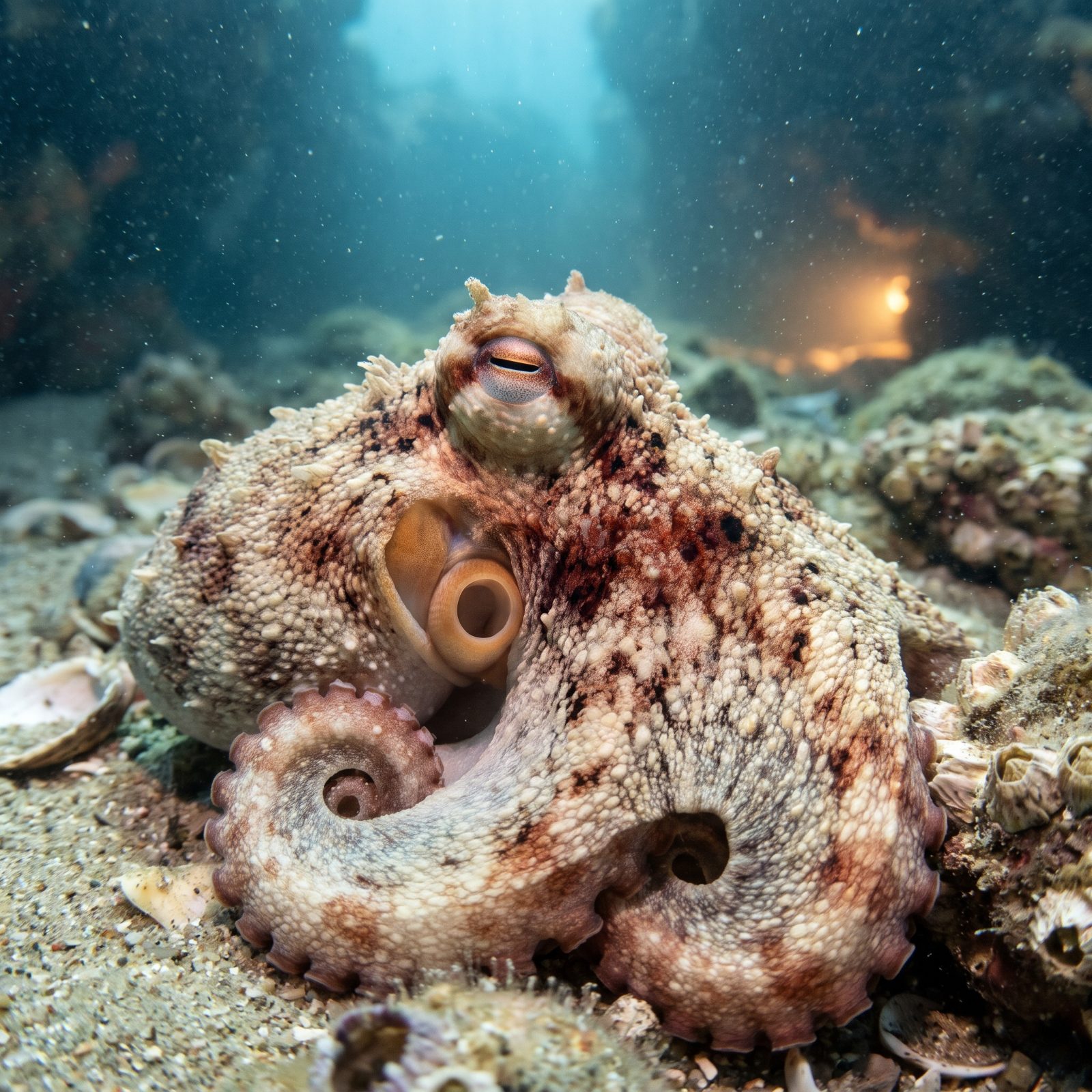
Watch a sleeping octopus long enough and the skin starts talking. It drifts from pale and still to sudden flashes of dark brown, mottled patterns, even the ripple of a hunting pose — and the whole time the arms stay curled and limp. Researchers filming this in 2021 noticed it looked a lot like the two-stage sleep we see in mammals: long quiet stretches broken by short bursts of twitchy, color-changing activity that resemble our own REM.
Dreaming, though? Nobody can prove it, and the octopus certainly isn’t going to tell you what it saw. Here’s the tantalizing part. The pattern-flashing during active sleep sometimes mirrors the exact camouflage the animal uses while awake, which hints the brain might be replaying something — a hunt, a hide, a near-miss. Or maybe not. We genuinely don’t know, and that’s half the fun.
1. Why Can a Severed Octopus Arm Keep Moving?
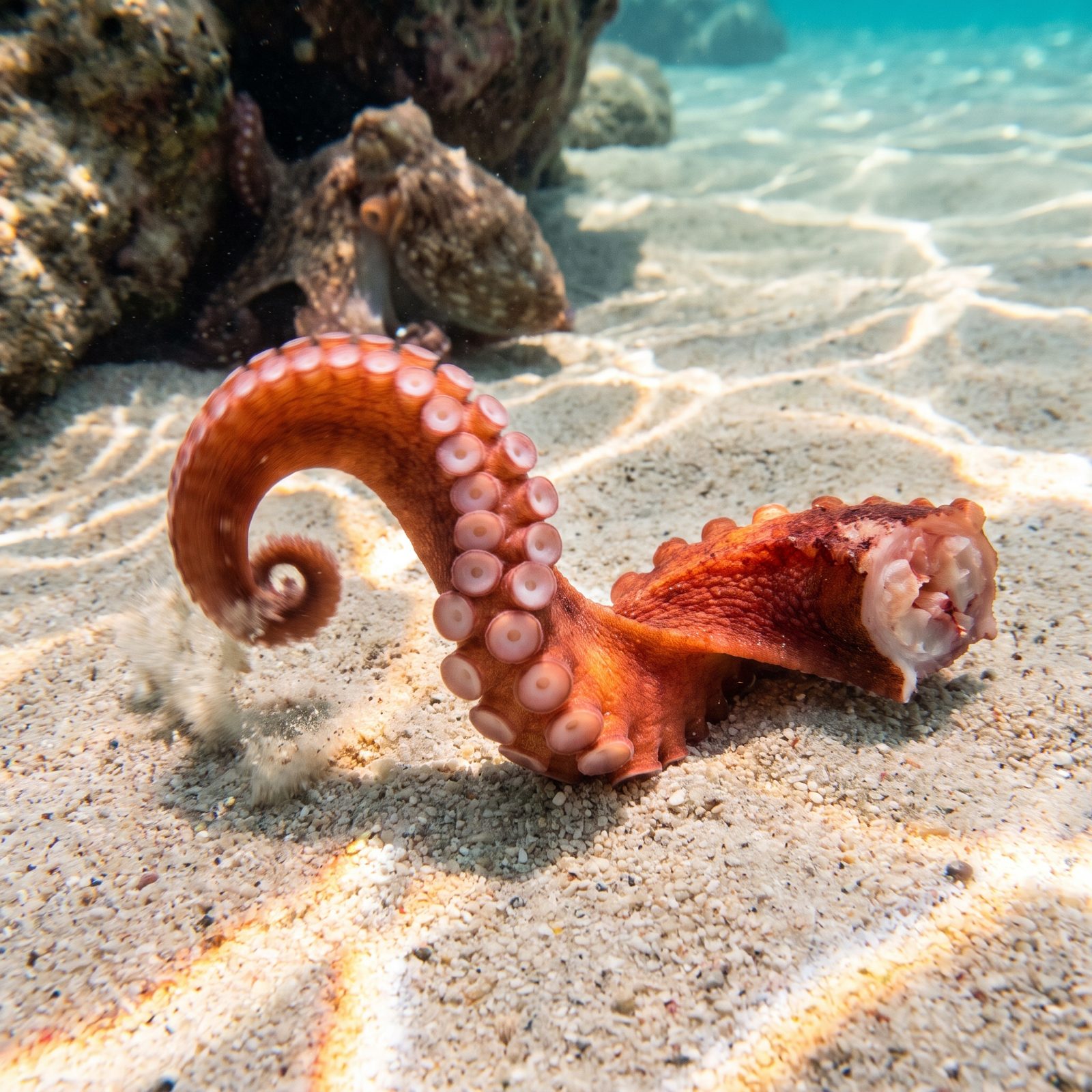
A cut-off octopus arm doesn’t get the memo that it’s cut off. It keeps curling, gripping, reaching toward food for an hour or more after the split. The explanation lives in the arm itself, because most of an octopus’s neurons are bundled out there into a nerve cord that runs the full length of each limb. That means the arm can sense, decide, and act without ever checking in with the central brain.
So an arm lost in a fight or torn off by a predator simply carries on doing arm things — grabbing prey, passing it along as if a mouth were patiently waiting at the far end. Gruesome? A little. And the octopus just grows a new one, nerve cord and all.