
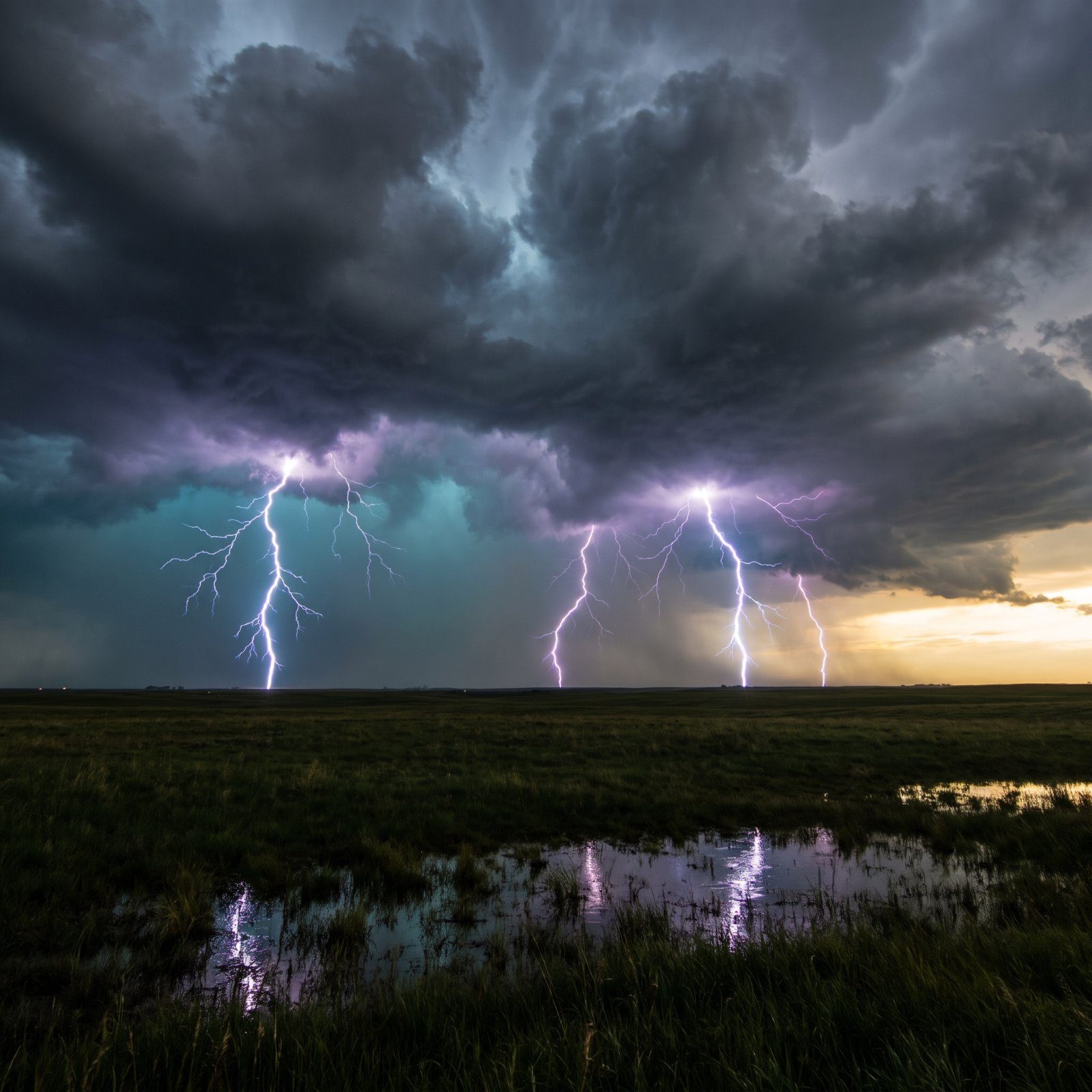
A single flash lasts less time than a blink, yet in that sliver of a second the air splits open to temperatures no furnace on Earth can match. Lightning is the most common dramatic event in the sky, and almost everything the average person believes about it is slightly wrong. The bolt doesn’t travel the way you think, the thunder isn’t the sound you assume it is, and some of the strangest lightning on record didn’t even happen on this planet. Here’s the real physics behind the flash, pulled apart fact by fact — with the surprising details that rarely survive a weather report.
42. A Lightning Bolt Can Be Hotter Than the Sun’s Surface
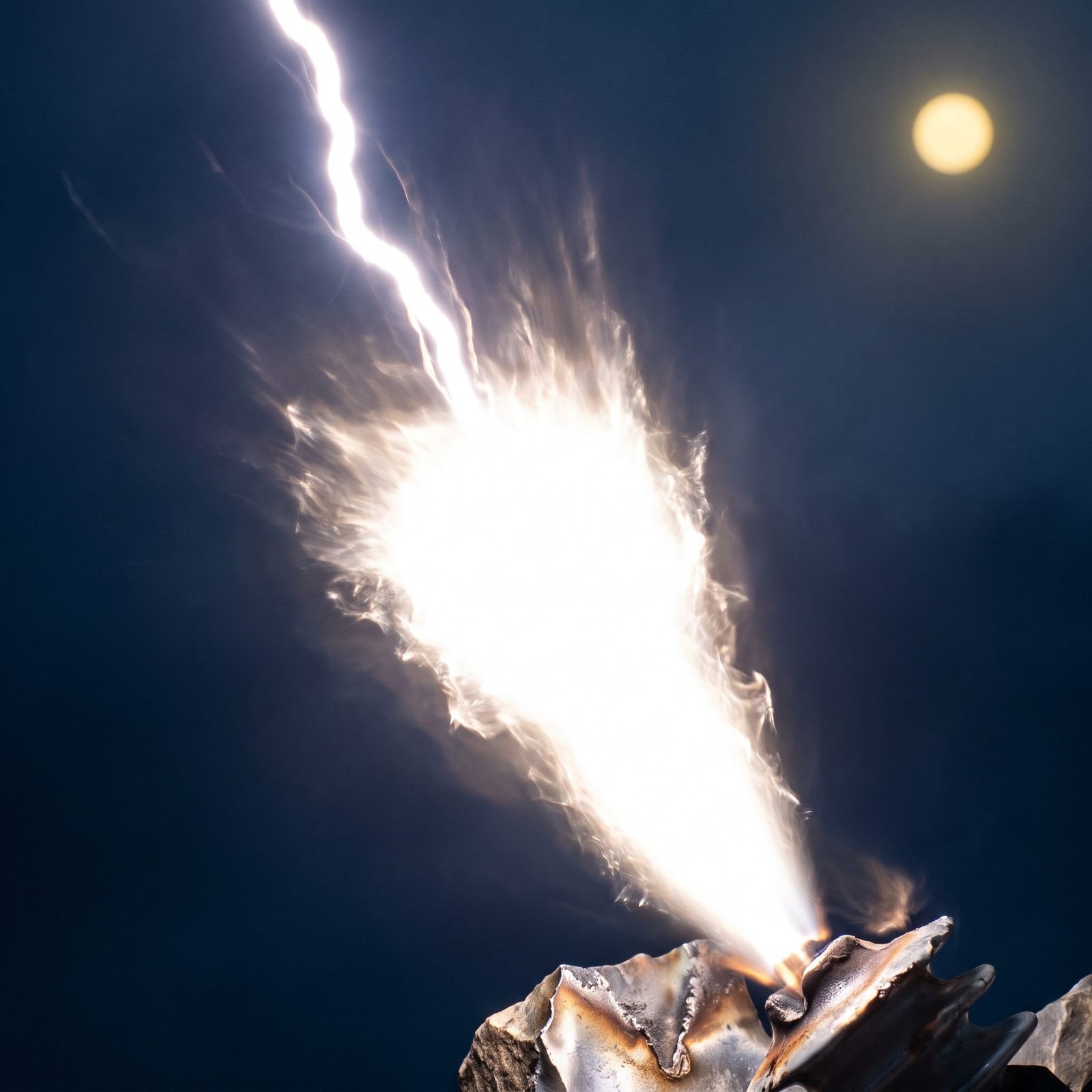
The air inside a lightning channel can hit roughly five times the temperature of the Sun’s visible surface — a searing, furnace-shaming spike that lasts barely a heartbeat.
Here’s the part people miss. The bolt gives off almost no heat you’d ever feel from a distance, because all that energy is crammed into a hair-thin channel for a few millionths of a second. Staggering temperature, trivial total heat. The torch-like plume blasting from the rock in this image is a dramatized take — a real bolt is a thin, branching channel, less a bonfire and more a camera flash made of fire.
41. The Bright Current Channel Can Be Only Inches Wide
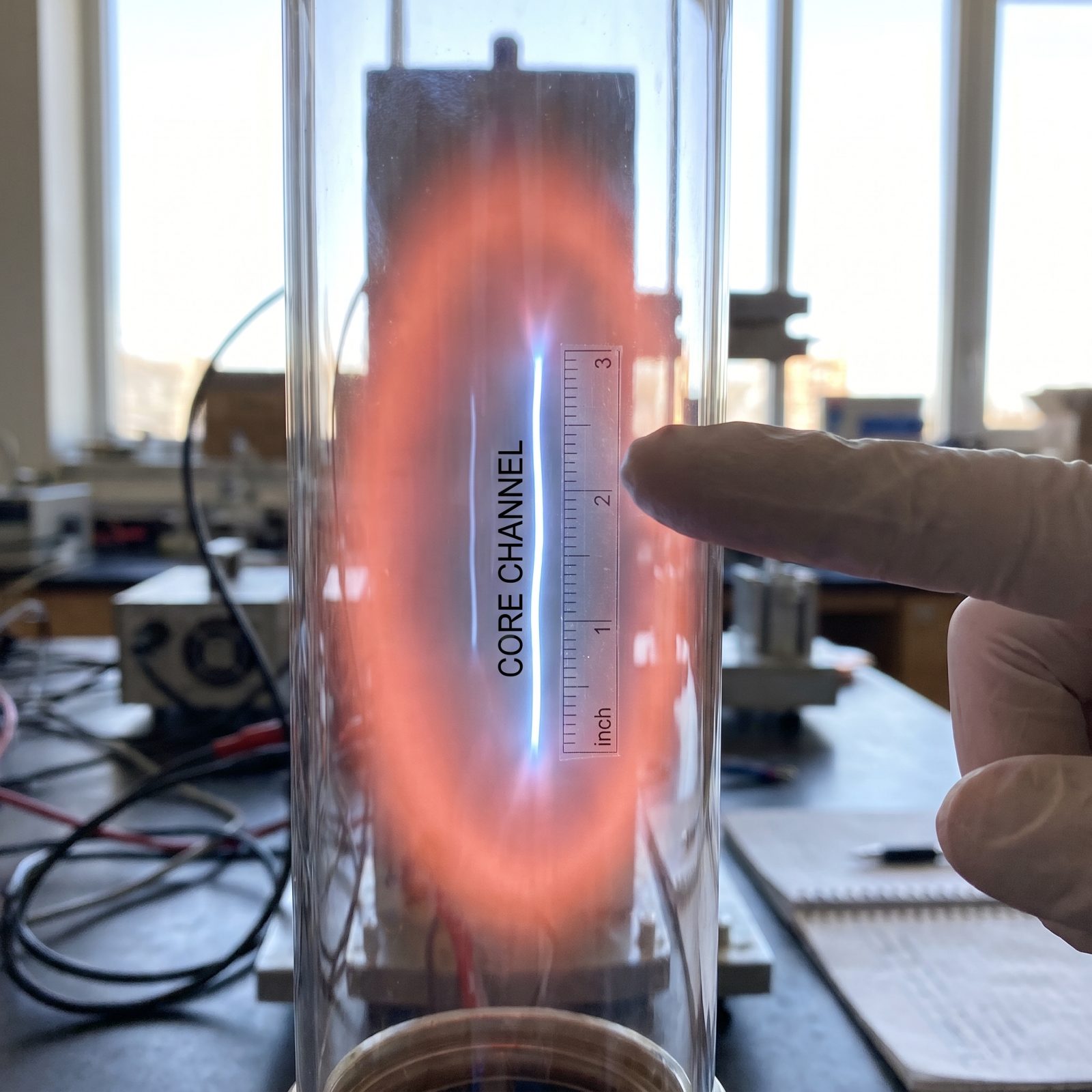
Look at a photo of lightning and the bolt seems fat, almost rope-like. That’s an illusion. The actual current-carrying core is often just an inch or two across, sometimes less.
Brightness is what fools your eyes. The channel is so intensely luminous that it overwhelms your retina and the camera sensor, blooming outward and looking far thicker than the real conductor. The thing threading all that current through the sky? Thinner than your thumb.
40. Most Lightning Never Reaches the Ground
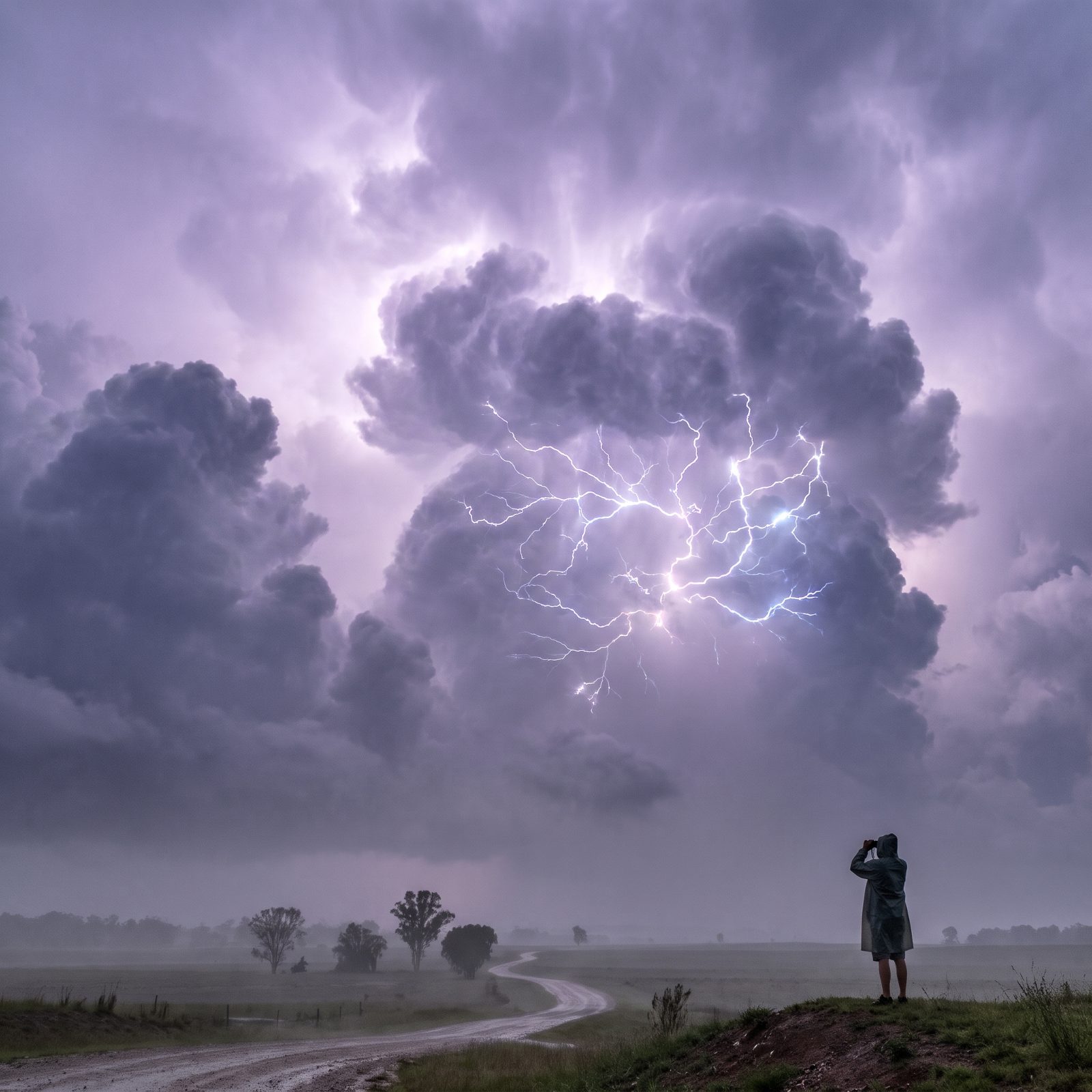
Ask most people to picture lightning and they imagine a bolt slamming into the ground. But cloud-to-ground strikes are the minority. Most lightning stays up in the sky, jumping within a single cloud or leaping between neighbors.
Inside a storm, charge separation builds between the icy upper reaches and the lower regions, and the quickest path to neutralize that imbalance is often a short hop within the cloud rather than a long dive to Earth. So the drama you fear on the ground is usually just the overflow from a much busier light show happening overhead.
39. Earth Flashes With Lightning Roughly 40 Times a Second

At any given moment, the planet is crackling. Satellite and ground sensors suggest Earth experiences dozens of lightning flashes every second, adding up to millions every single day.
They aren’t spread evenly. Lightning loves warm, humid air rising over land, so the tropics dominate. A spot over the Catatumbo River in Venezuela ranks among the most electrically active places on Earth, lighting up on many nights of the year. Picture that and it stops feeling like weather. It starts feeling like a pulse.
38. Rare Positive Bolts Can Be Far More Powerful
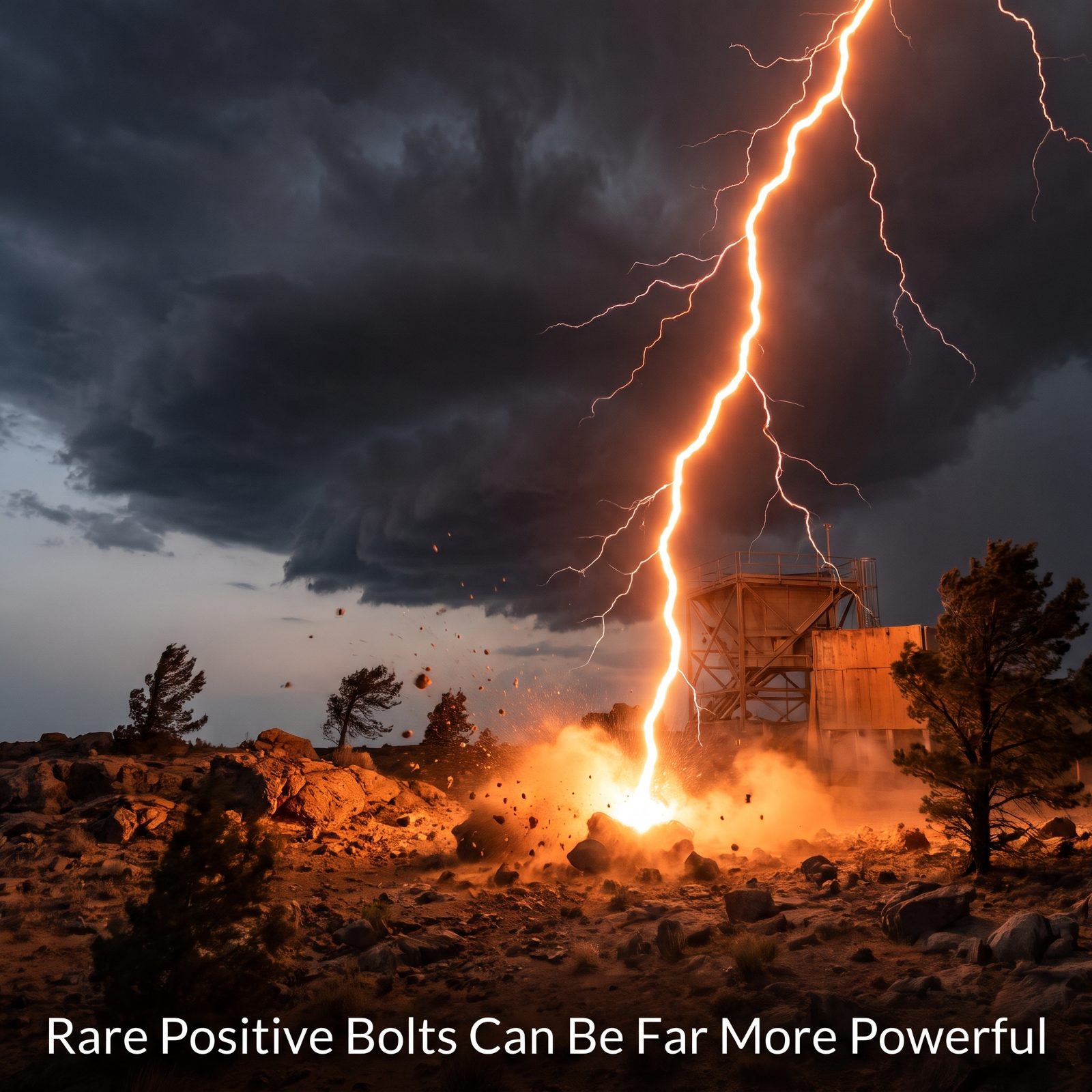
Most cloud-to-ground strikes carry negative charge. A smaller group carries positive charge, and those are the ones you should respect.
Positive bolts tend to originate from the high, far reaches of a storm’s anvil cloud, which means they can strike miles away from the rain, sometimes out of what looks like clear sky. People call it a “bolt from the blue,” and it earns the name. These strikes often carry more current and last longer than their negative cousins — exactly why they’re tied to a disproportionate share of lightning fatalities and wildfires.
37. Objects on the Ground Send Streamers Upward
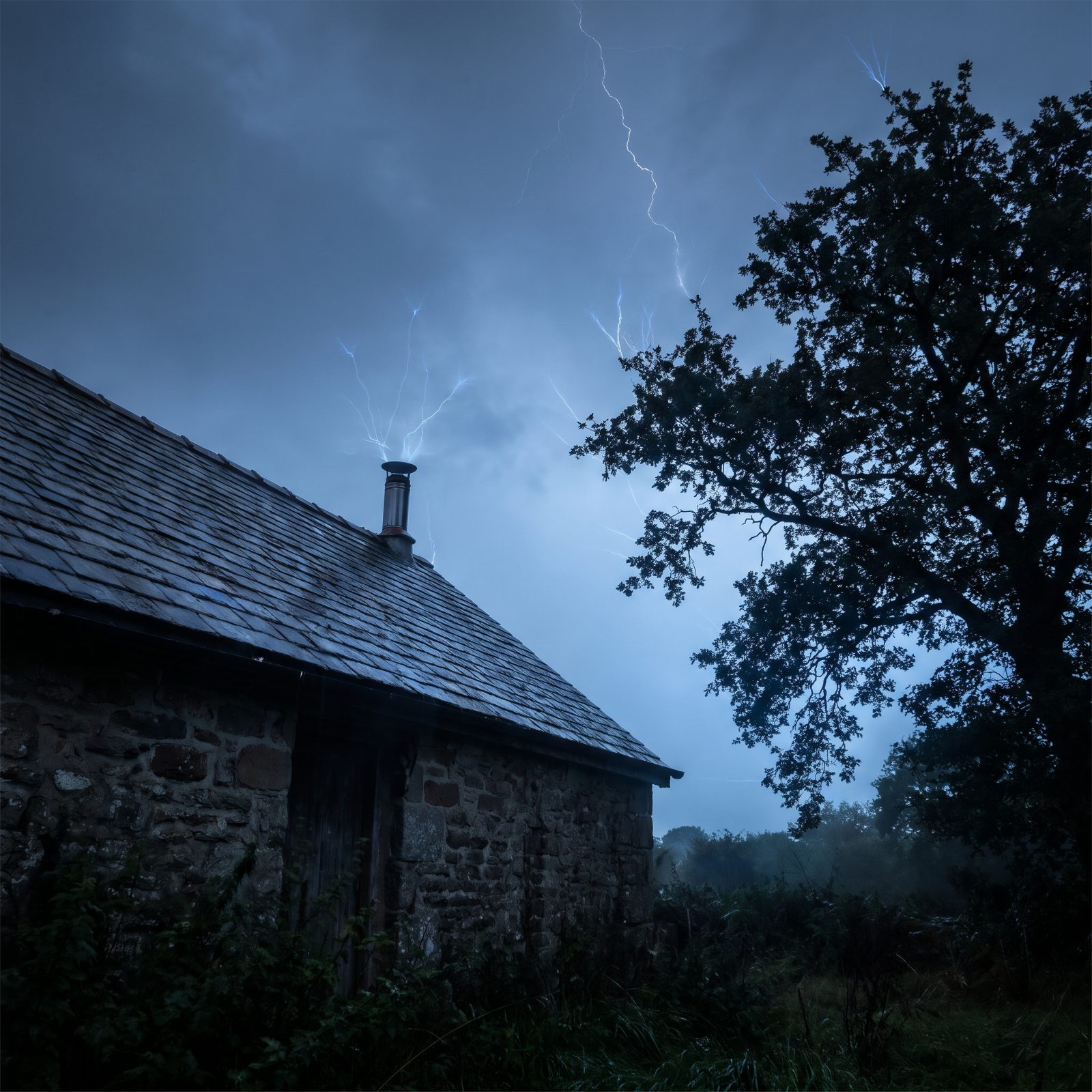
Lightning doesn’t simply decide where to hit. The ground gets a vote.
As a charged channel called a stepped leader gropes its way down from the cloud, the strong electric field near the surface makes tall, pointed objects fling faint upward streamers of ionized air into the sky — trees, chimneys, flagpoles, even people caught on exposed ground. When a downward leader and an upward streamer meet, the circuit completes and the main flash fires along that connection. So the strike is less a one-way bolt than a handshake reaching from both ends.
36. The Brilliant Return Stroke Actually Races Upward
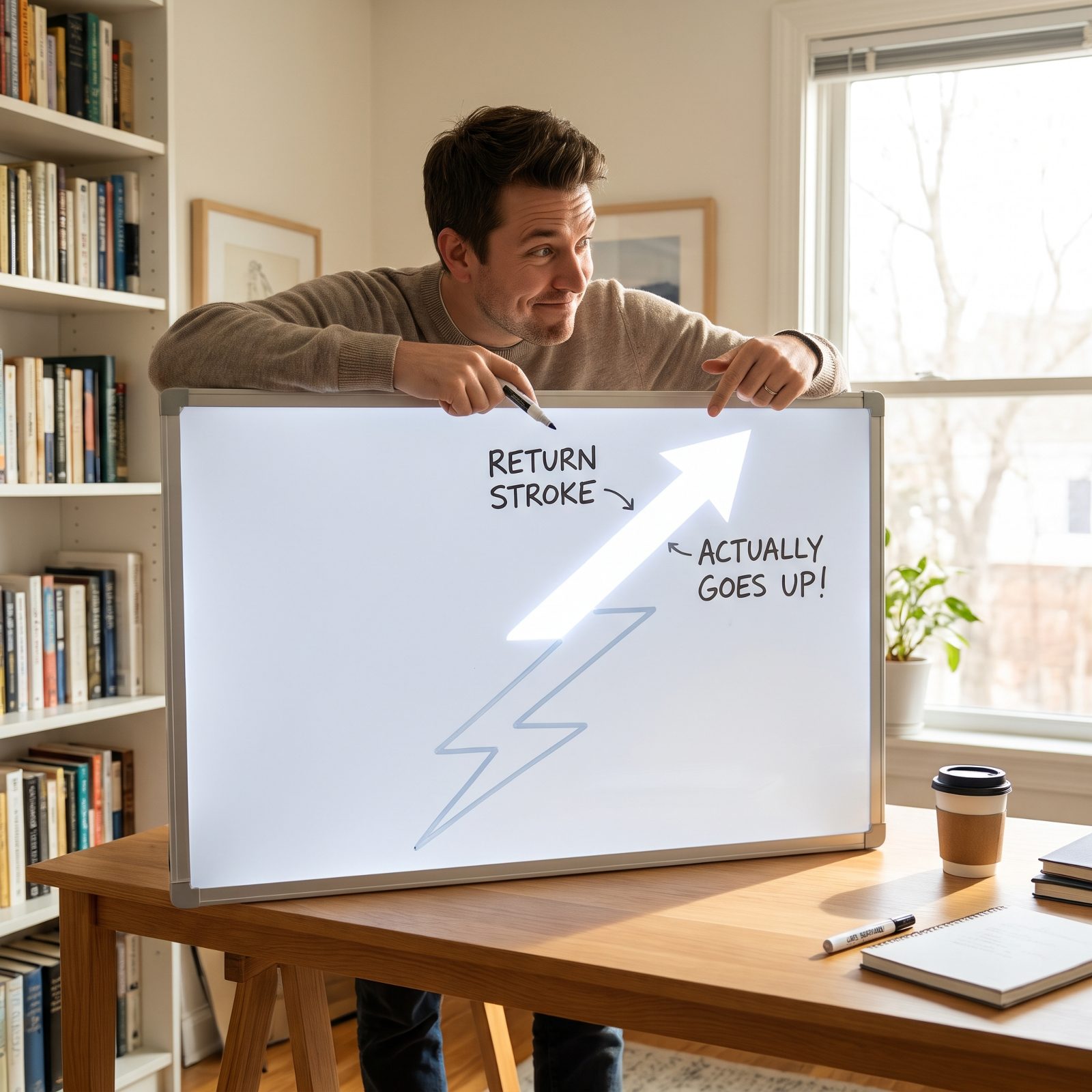
This is the one that breaks people’s brains. The dim, invisible part of the strike travels down from the cloud — but the dazzling flash you actually see, the return stroke, surges from the ground up.
Once the downward leader connects with the surface, a wave of current rockets back up the channel at a significant fraction of the speed of light, and that upward surge is what glows so violently. Your eye can’t resolve the direction, so it all reads as a single downward stab. It isn’t. The bright part goes the other way.
The bolt you fear coming down is really the flash blazing back up the path it just opened.
35. One Flickering Flash May Contain Several Separate Strokes
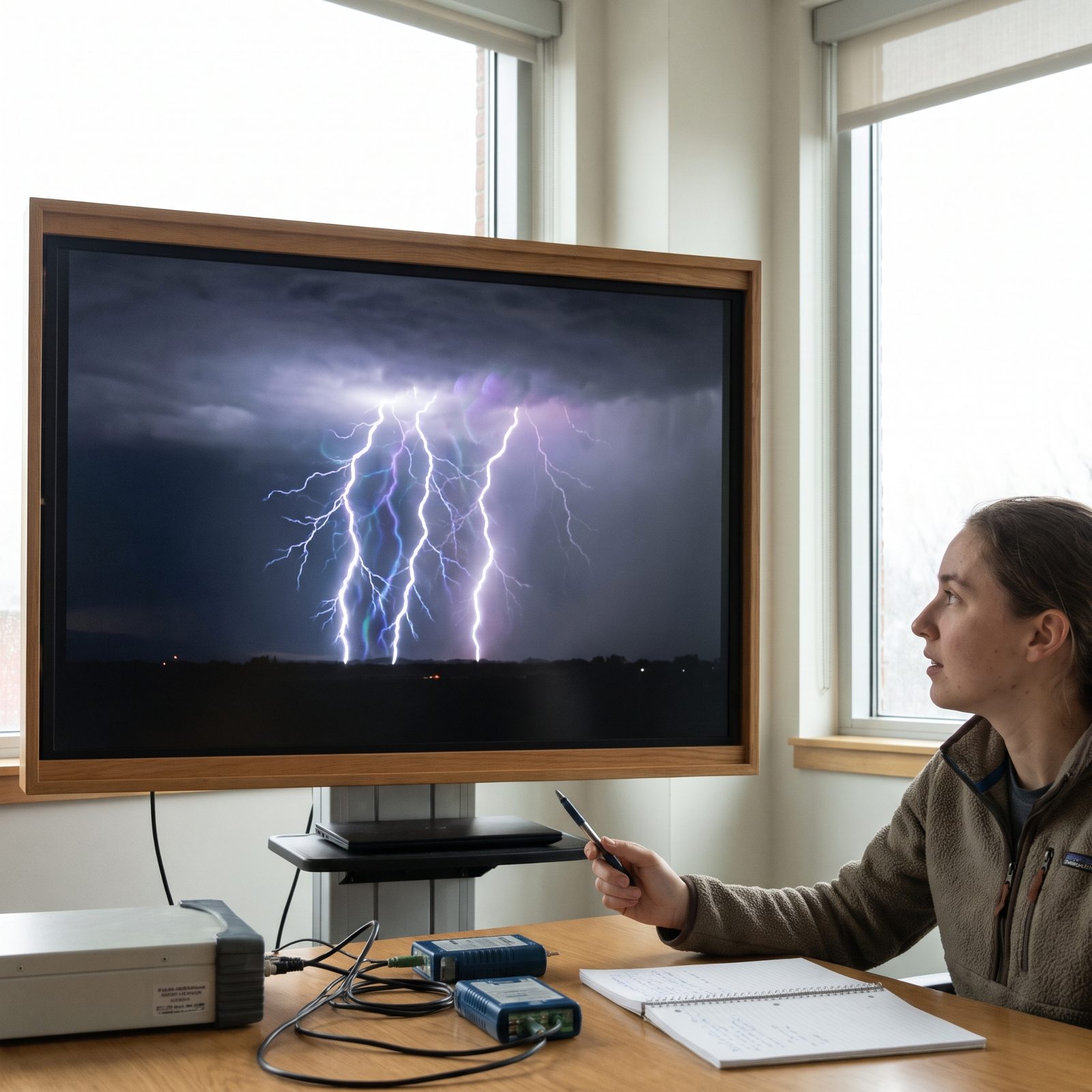
That flickering, strobing look lightning sometimes has isn’t your imagination. A single flash is often made of three or four distinct return strokes, each ripping between cloud and ground in a blink, sometimes forking off to hit the ground at several separate spots.
After the first stroke clears the path, fresh pockets of charge in the cloud fire again, sometimes reusing the ionized channel and sometimes carving new paths to strike nearby ground. And again. The whole sequence can finish in under a second, which is why you perceive it as one jittery flash instead of a rapid-fire burst. High-speed cameras tell the real story.
34. Thunder Begins as a Shock Wave in Superheated Air
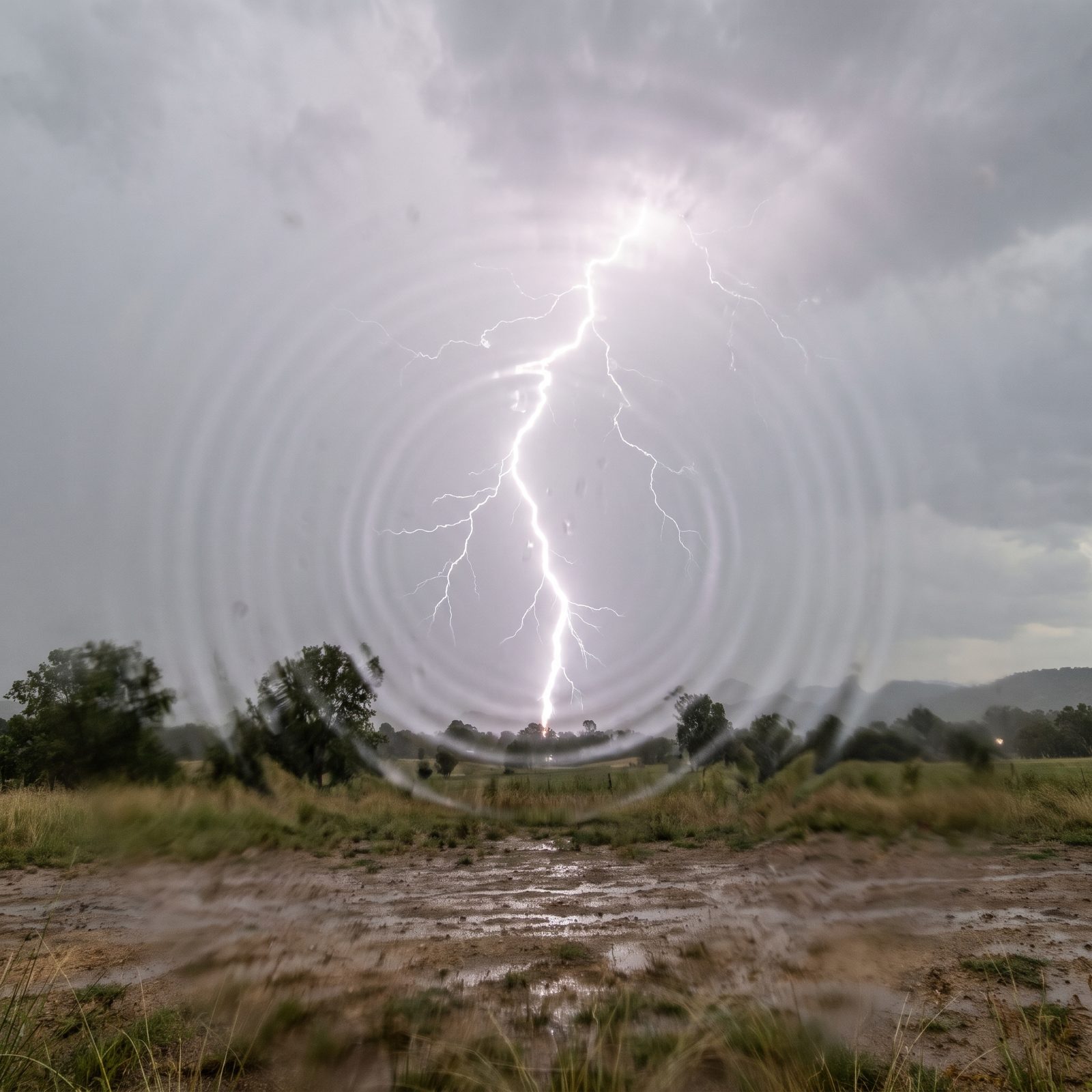
Thunder isn’t the sound of the bolt. It’s the sound of air panicking.
When lightning superheats its channel to tens of thousands of degrees in millionths of a second, the air explodes outward faster than sound and creates a shock wave, which slows into the rolling boom you hear. The crack-boom-rumble has a reason, too. Nearby parts of the channel reach you first as a sharp crack, while sound from farther along the twisting bolt arrives later as a drawn-out growl.
33. Lightning Really Does Strike the Same Place Repeatedly
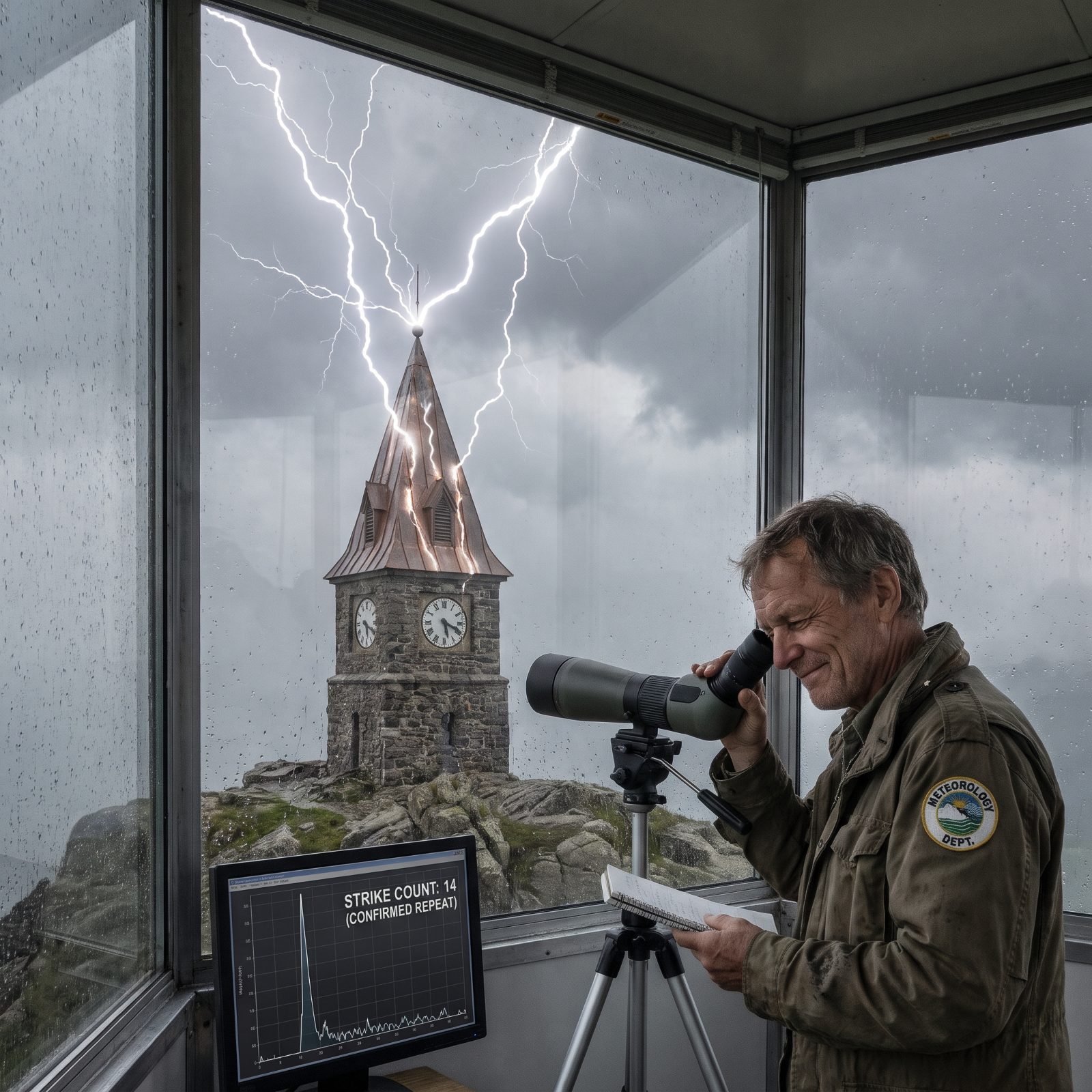
The saying is flatly wrong. Tall, isolated, pointed structures get hit over and over because they keep offering the easiest path to ground.
The Empire State Building takes dozens of strikes a year. The CN Tower in Toronto absorbs its own share annually. And park ranger Roy Sullivan survived being struck seven separate times across his life, which tells you the universe has no memory and no mercy. Good target yesterday? Good target today.
32. The Tallest Nearby Object Is Not Always the Target
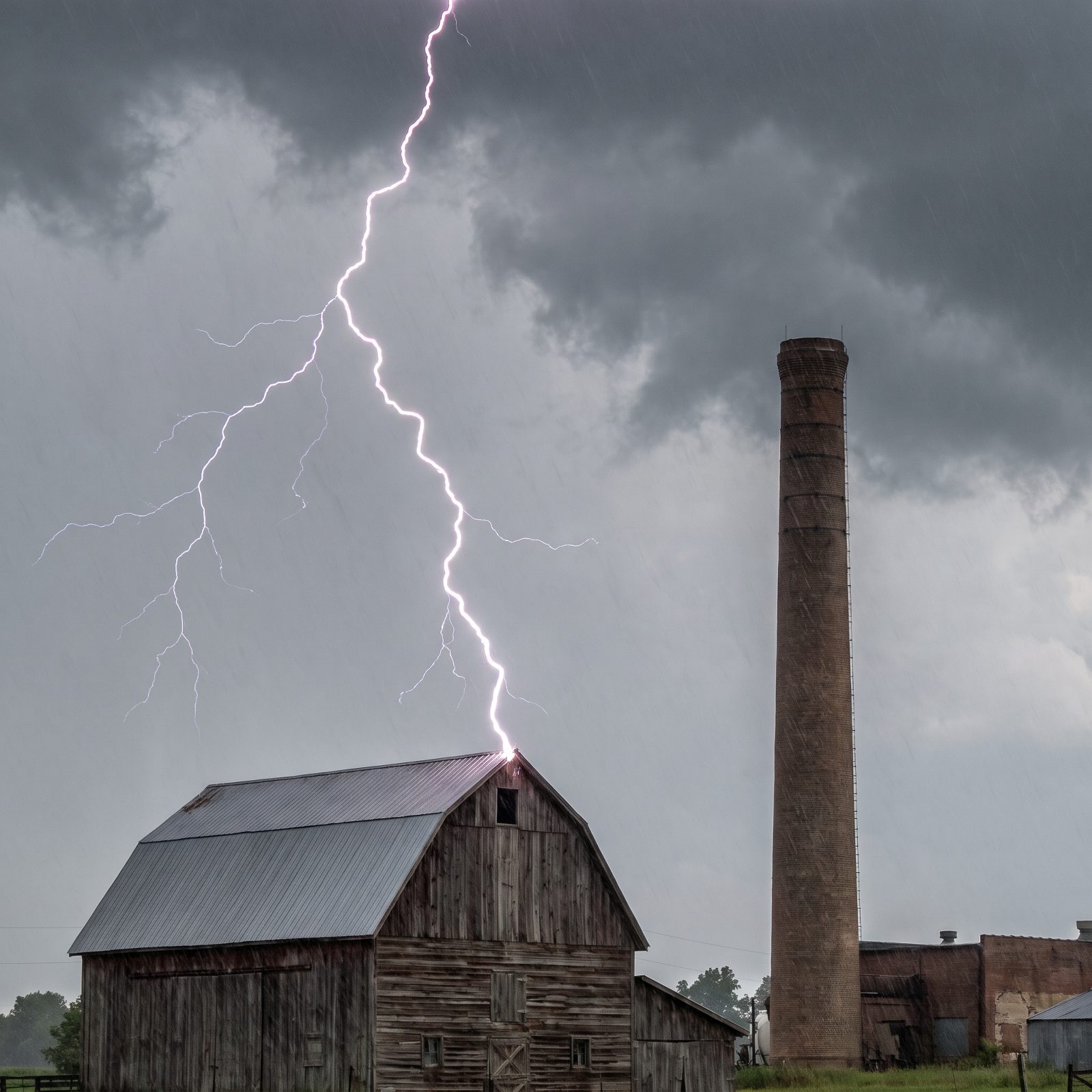
Height helps. It does not decide everything.
A descending stepped leader reaches down in jagged steps, essentially blind, probing for the shortest route. In the final hundred feet or so, upward streamers rise from objects on the ground to meet it, and the winner is whatever streamer connects first. That depends on local geometry, ground conductivity, and plain dumb luck. A short metal fence post sitting in wet soil can beat a taller, drier tree. That final handshake is why a strike sometimes lands somewhere that looks, to us, like the wrong choice.
31. Skyscrapers Can Launch Lightning Upward
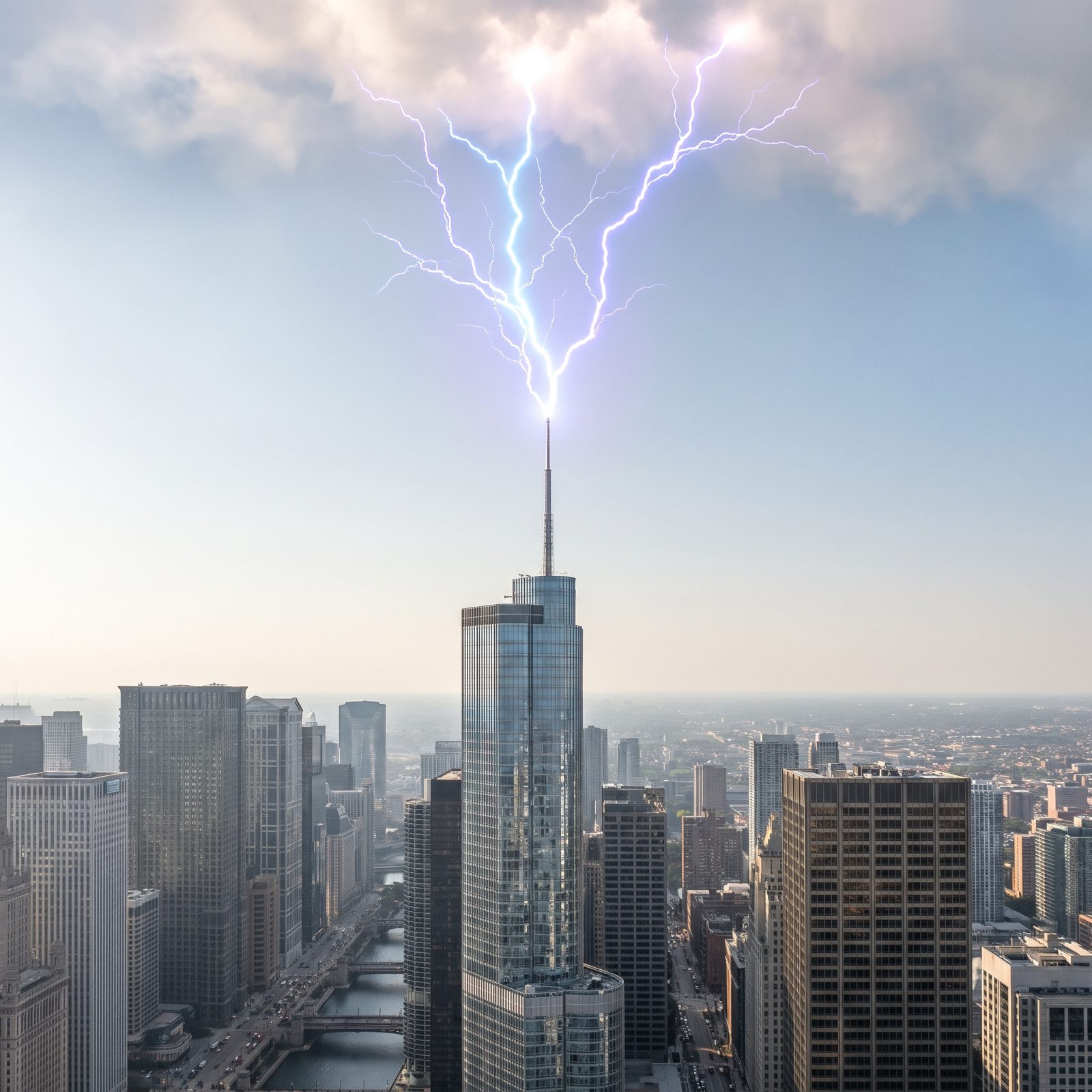
Most lightning runs top to bottom, cloud to ground. But very tall structures can flip the script and start the whole thing themselves.
When the electric field beneath the clouds gets intense enough, a tower or skyscraper fires an upward leader from its tip, growing into the cloud rather than waiting for the cloud to come down. You can spot it in photos because the branches point skyward instead of fanning toward the earth. Researchers love these events. Instrumented towers make them far easier to measure than random ground strikes, and they expose how a storm’s charge really builds.
30. Commercial Airliners Are Struck Surprisingly Often

Every airliner in a busy fleet gets struck roughly once a year, and passengers almost never notice anything worse than a flash and a bang.
The metal skin works like a Faraday cage, routing the current around the outside of the cabin and off the trailing edges through little static-discharge wicks on the wings. The last US crash blamed chiefly on a lightning strike was back in the 1960s. Modern planes are built around the certainty that they’ll be hit. So the thing that terrifies you mid-flight is the thing engineers solved generations ago.
29. A Car’s Metal Body Protects You, Not Its Rubber Tires
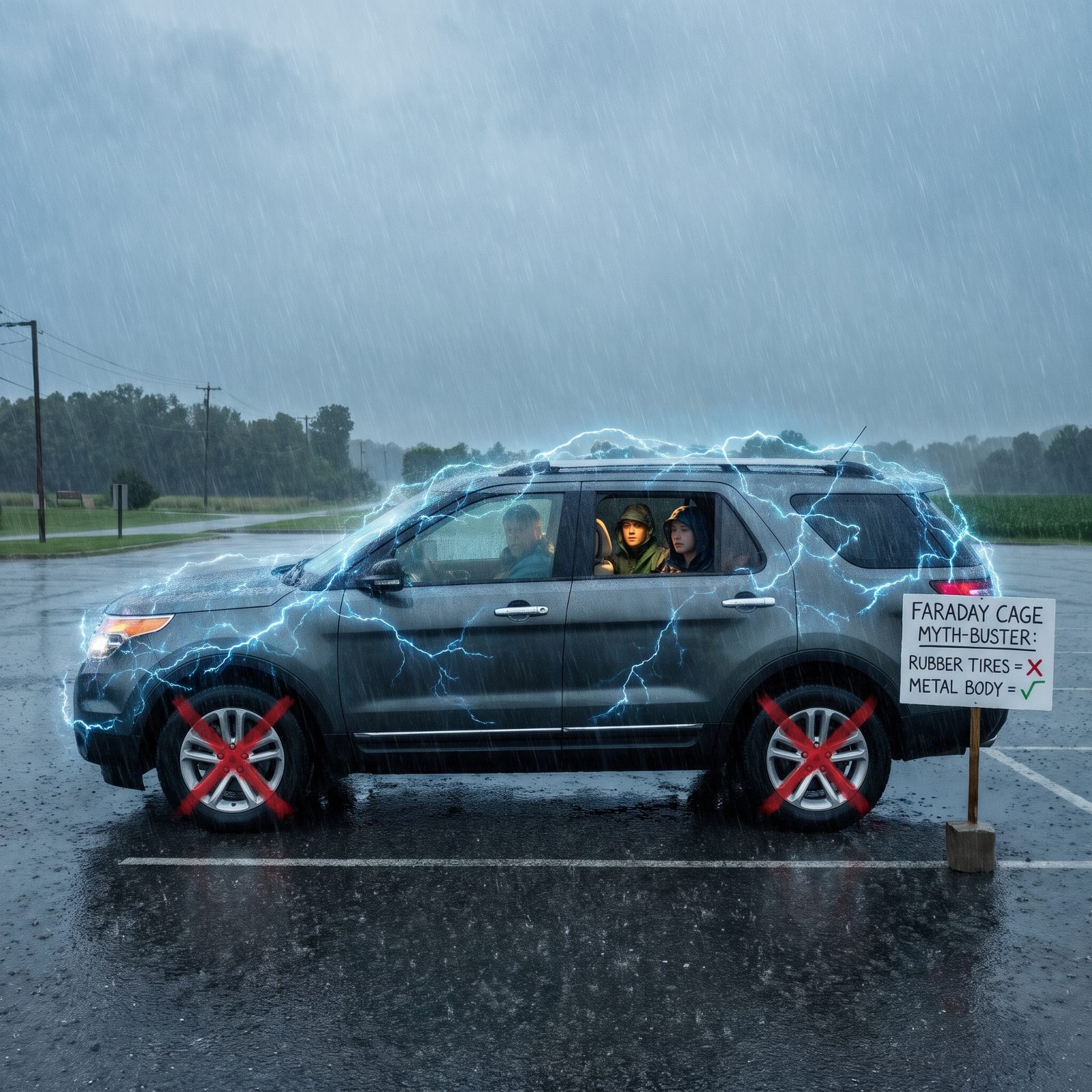
The myth credits the tires. The tires have almost nothing to do with it.
A few inches of rubber would never stop a current that just punched through miles of insulating air. What actually saves you is the metal shell, which carries the charge around the outside and down to the ground, leaving the cabin shielded. The catch? Keep your hands off metal surfaces during the strike, and understand that a convertible or fiberglass-bodied vehicle offers next to nothing. A hard-topped metal car ranks among the safer spots you can occupy in a storm, though you should still roll the windows up, unlike the passengers pictured here sitting by an open rear window.
28. Lightning Can Travel Through Household Plumbing

Stay out of the shower during a thunderstorm. That advice is not an old wives’ tale.
When lightning strikes a house, the current hunts for conductive paths to ground, and metal plumbing is a highway. The water inside, laced with dissolved minerals, conducts right along with it. Older homes with metal pipes carry the most risk; newer PVC plumbing is safer, though not a guarantee, since the water column itself can still carry charge. The same logic covers anything wired or plumbed. Skip the bath, the dishes, and the corded phone until it passes.
27. Ground Current Causes Many Lightning Injuries
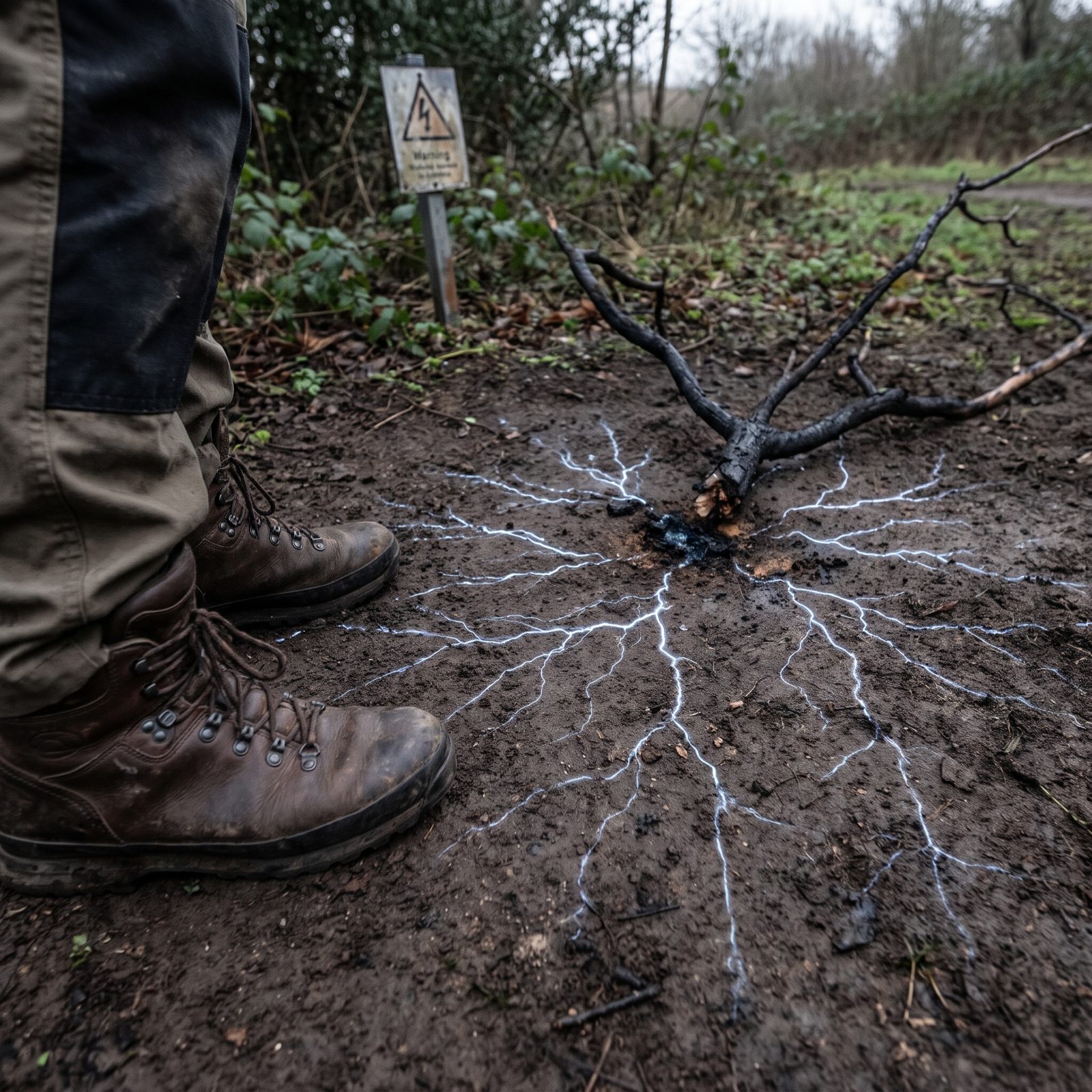
Most people picture a direct hit. In reality, direct strikes account for only a small share of lightning casualties.
When a bolt slams into the ground or a nearby tree, the charge spreads outward through the soil. If your feet sit apart, a voltage difference builds between them, and current can flow up one leg and down the other. This “ground current” is the leading cause of lightning deaths worldwide. It is especially brutal for livestock, which often die in groups because their four legs span such a wide gap. Caught in the open with no shelter? Keeping your feet together shrinks that difference.
26. Lightning Can Blast Bark From a Tree
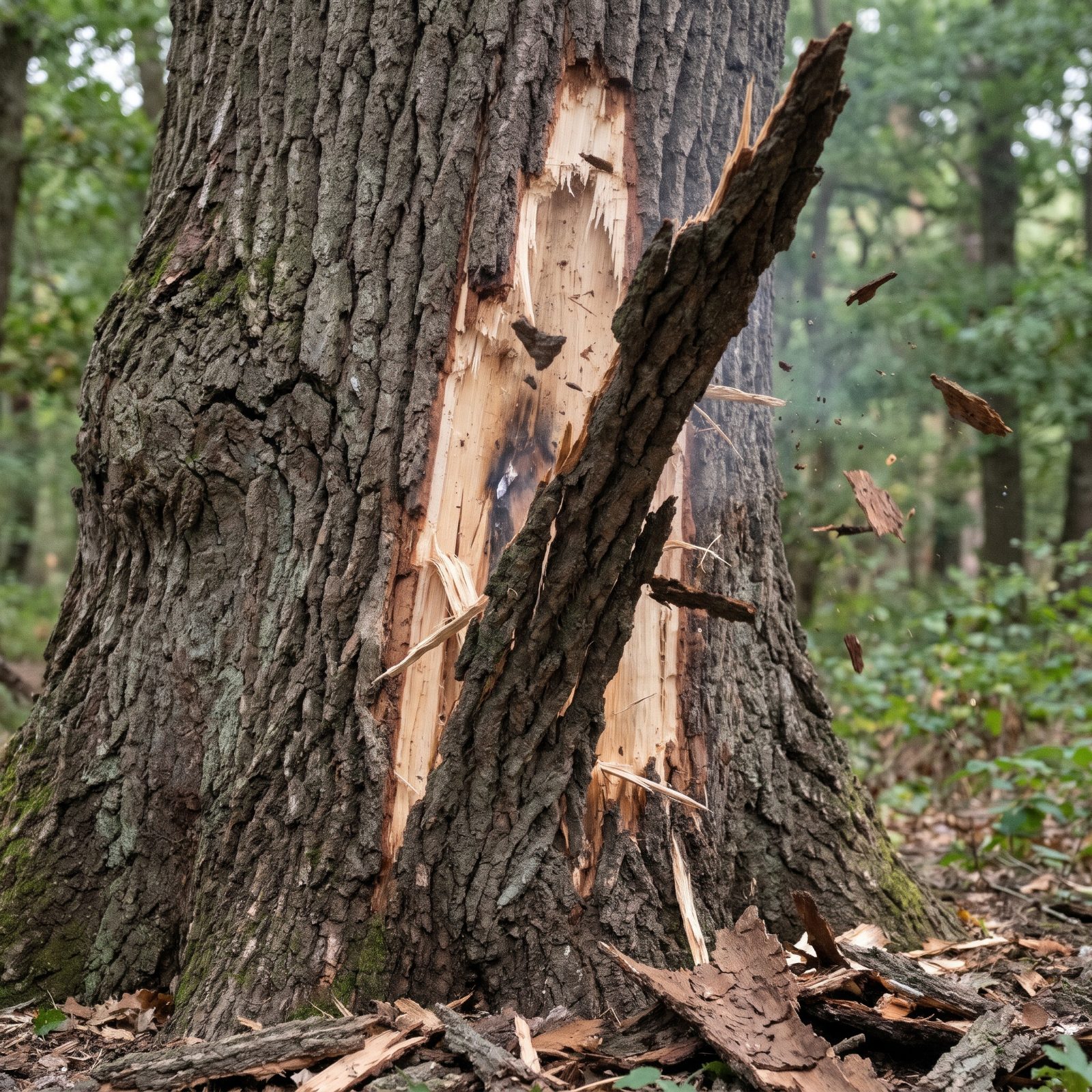
A struck tree can have a strip of bark torn clean off, top to bottom, as if something unzipped it.
Blame the water. Sap and moisture under the bark flash to steam in a fraction of a second when thousands of amps surge through, and the sudden pressure detonates outward, peeling bark and sometimes splitting the trunk wide open. Moisture-heavy trees like oaks tend to show the most dramatic wreckage. The scar is a record of the current’s path. Follow it, and you are tracing exactly where the lightning chose to travel on its way to ground.
25. A Strike Can Explode Moist Concrete

Concrete looks indestructible until something strikes it hard, whether that’s a steel demolition spike or lightning finding the water inside it.
Fresh or damp concrete holds moisture in its pores, and the embedded steel rebar is a ready-made conductor. Drive current through all that and the trapped water flashes to steam while the metal heats in an instant, so the slab cracks, spalls, or blows apart in chunks. Here, a soggy slab on a muddy construction site erupts from the center, cracking outward and sending chunks, dust and steam flying. No one is near it and no tool touches it, which is exactly how lightning works: far more force and no warning. Driveways, patios, even building foundations have been wrecked that way. Which is a fine reminder that “solid ground” is not automatically safe ground. Water hides in nearly everything, and lightning is very, very good at sniffing it out.
24. Lightning Fuses Desert Sand Into Hollow Glass Tubes Called Fulgurites

Lightning that strikes sand can hit something close to 50,000 degrees Fahrenheit at the point of contact — hotter than the surface of the sun, and gone in a fraction of a second. In that flash, loose quartz grains melt and fuse along the path the current carved underground.
What’s left behind is a fulgurite. It’s a brittle, glassy tube shaped like a root, or maybe a frozen branch of the bolt itself, most of them no thicker than a finger. This one is a forked tube with a clear, glossy, almost ice-like glass surface, patched with clinging sand and pocked with tiny bubbles where trapped air boiled during the strike. Collectors prize them. Geologists read them as a record of ground chemistry at the exact moment the sky touched down.
23. Lichtenberg Figures: The Fern-Shaped Marks a Strike Can Leave on Skin

Survive a close lightning strike and your skin may bloom with a pattern that looks drawn by a botanist — fine, branching lines fanning out like a fern pressed into your arm.
These are Lichtenberg figures. The leading explanation traces the path of electrical discharge across the body, probably linked to ruptured capillaries just under the skin. And here’s the part people get wrong: they aren’t burns, and they usually fade within hours or days. Temporary, not scars.
22. A Single Bolt Can Scramble the Magnetism of Nearby Rocks
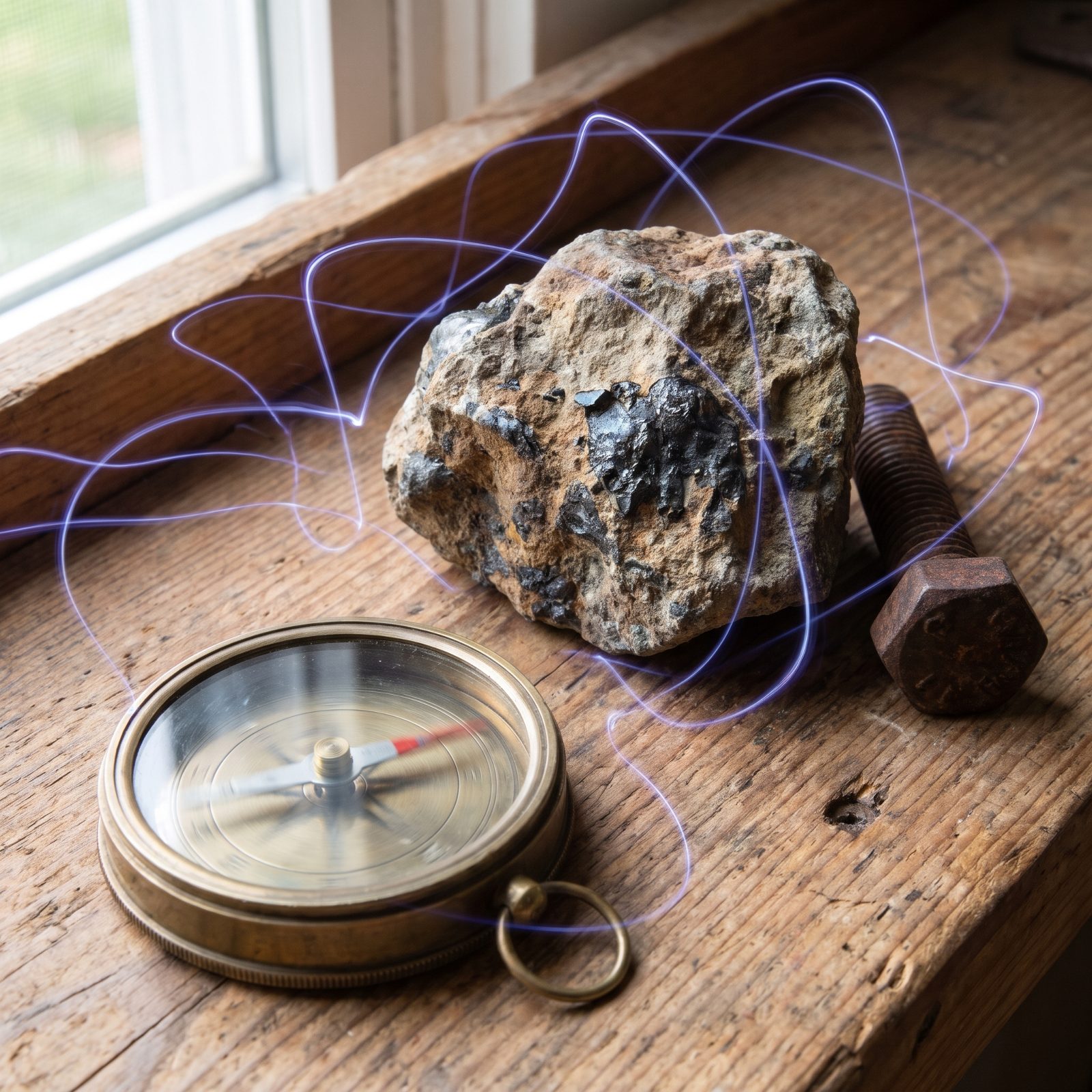
Geologists mapping ancient rock magnetism learned to watch for lightning early. A strike can deliver a current so intense that it overwrites the magnetic signal locked into the minerals it passes through.
The effect has a name: lightning-induced remanent magnetization. Normally rocks record the direction of Earth’s magnetic field at the moment they formed, which makes them a quiet archive of the planet’s past. A bolt erases that archive in an instant and replaces it with a chaotic, high-intensity jumble pointing every which way. Field geologists sometimes find a compass needle swinging wildly near an outcrop. That swing is the tell. Lightning was here, and it left a mess in the stone.
21. Lightning Pulls Nitrogen Out of Thin Air and Feeds It to Plants
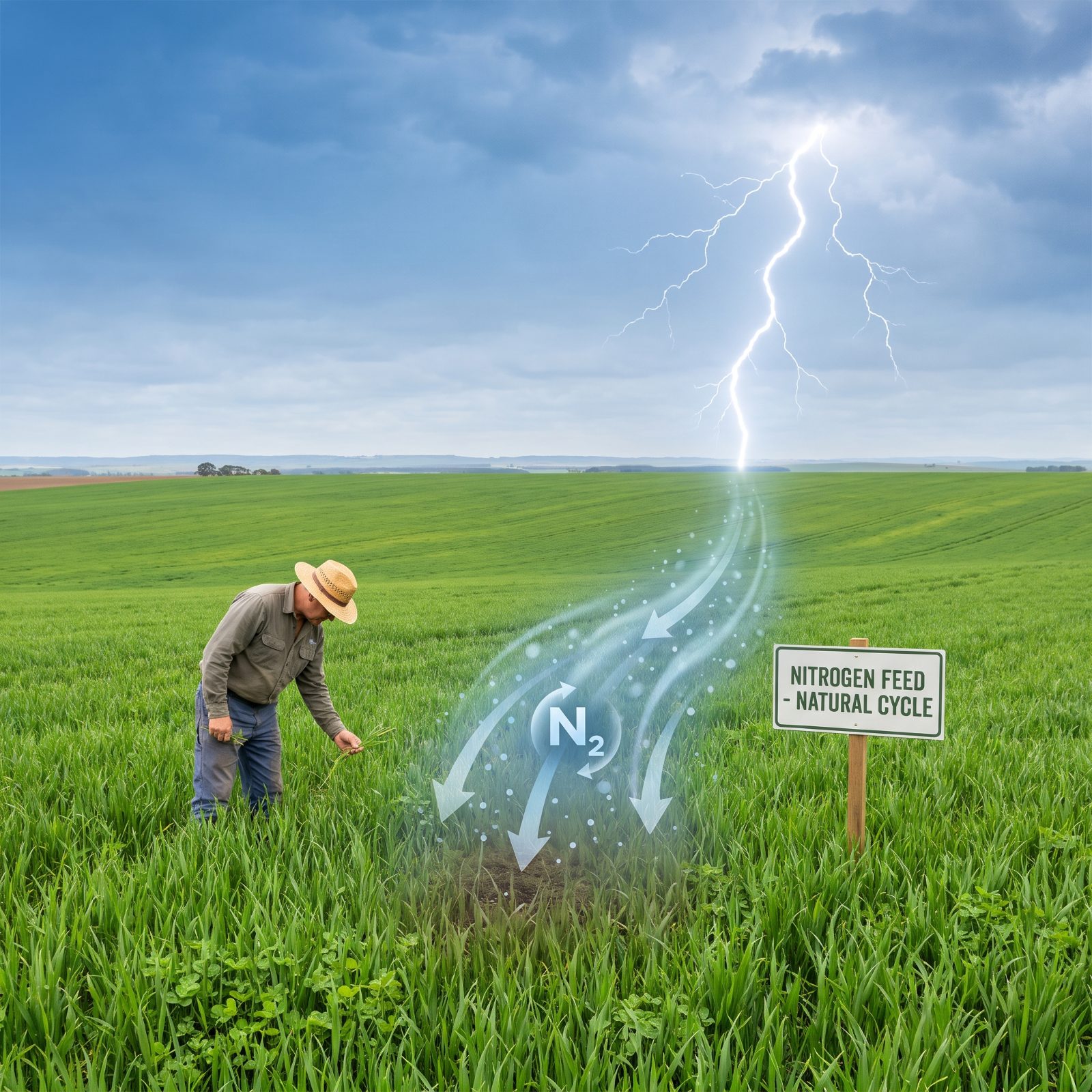
The air around you is about 78 percent nitrogen, and almost none of it is any use to a plant. Nitrogen gas is locked into a tough molecular bond that most living things simply can’t break.
Lightning breaks it. The searing heat of a bolt splits nitrogen molecules apart and lets them bond with oxygen, forming compounds that end up in the soil, where plants can actually use them — a link between sky and ground traced here by the glowing arrows that stream down from the bolt into the soil beneath the plants. It’s a real, if modest, slice of the nitrogen fixation that keeps ecosystems fed, working alongside the soil bacteria that do most of the heavy lifting. That faint, almost sweet smell after a storm, and the way lawns seem to green up overnight? Not entirely your imagination.
20. Dry Lightning: The Bolt That Starts a Fire Without Dropping Rain
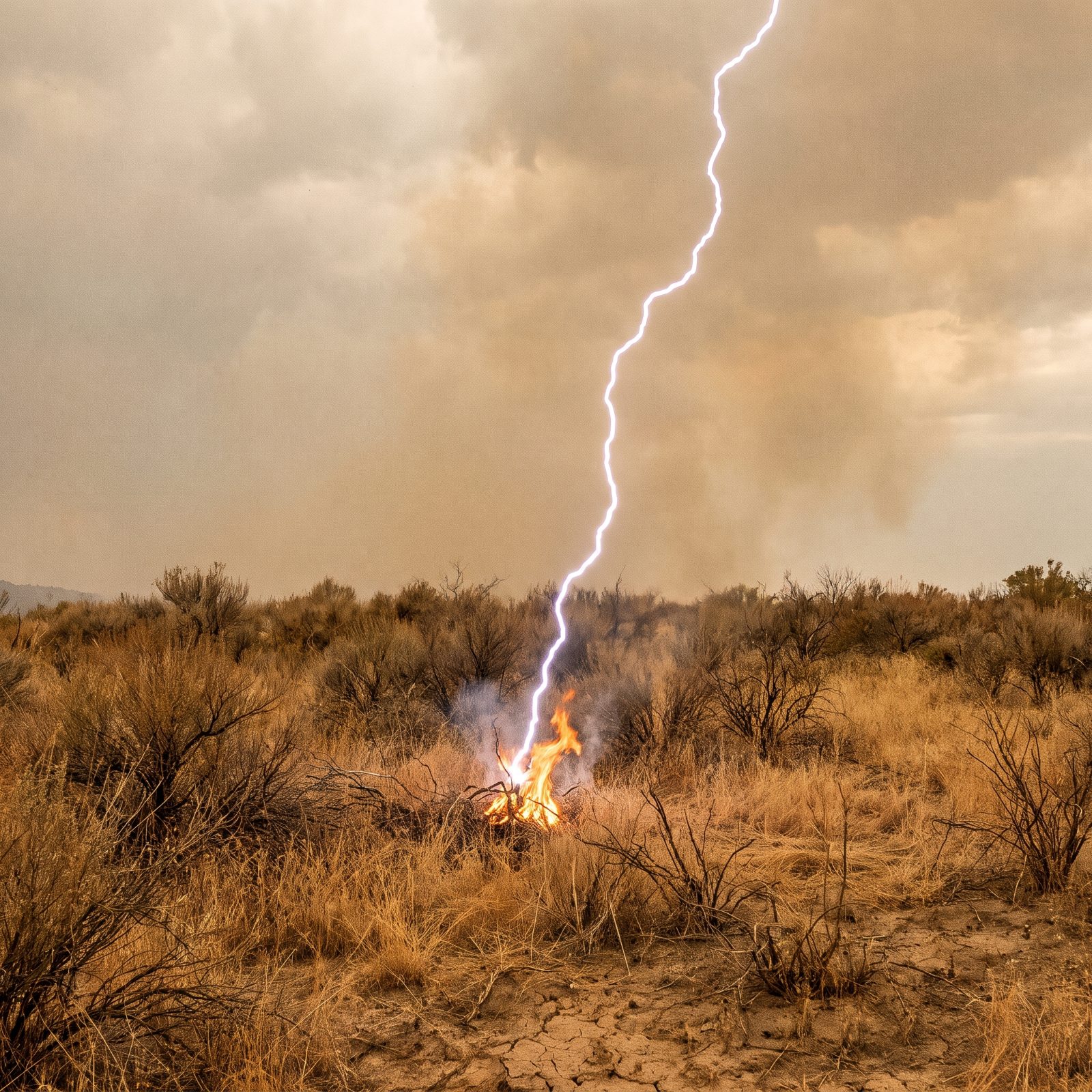
You picture lightning arriving with a downpour. In the dry West, it often doesn’t.
Dry lightning strikes when rain falls from a high storm cloud but evaporates before it ever reaches the ground — a ghostly curtain called virga. The bolt still comes down; the water doesn’t. What you get is ignition on tinder-dry fuel with nothing to put it out.
Storms like these have launched some of the largest wildfire outbreaks in California history, sometimes seeding dozens of fires across a region in a single night. It’s the worst possible pairing: an ignition source and drought-cured brush delivered together, with the firefighting rain stripped out.
19. Thundersnow: The Rare Winter Storm That Rumbles Instead of Dusting
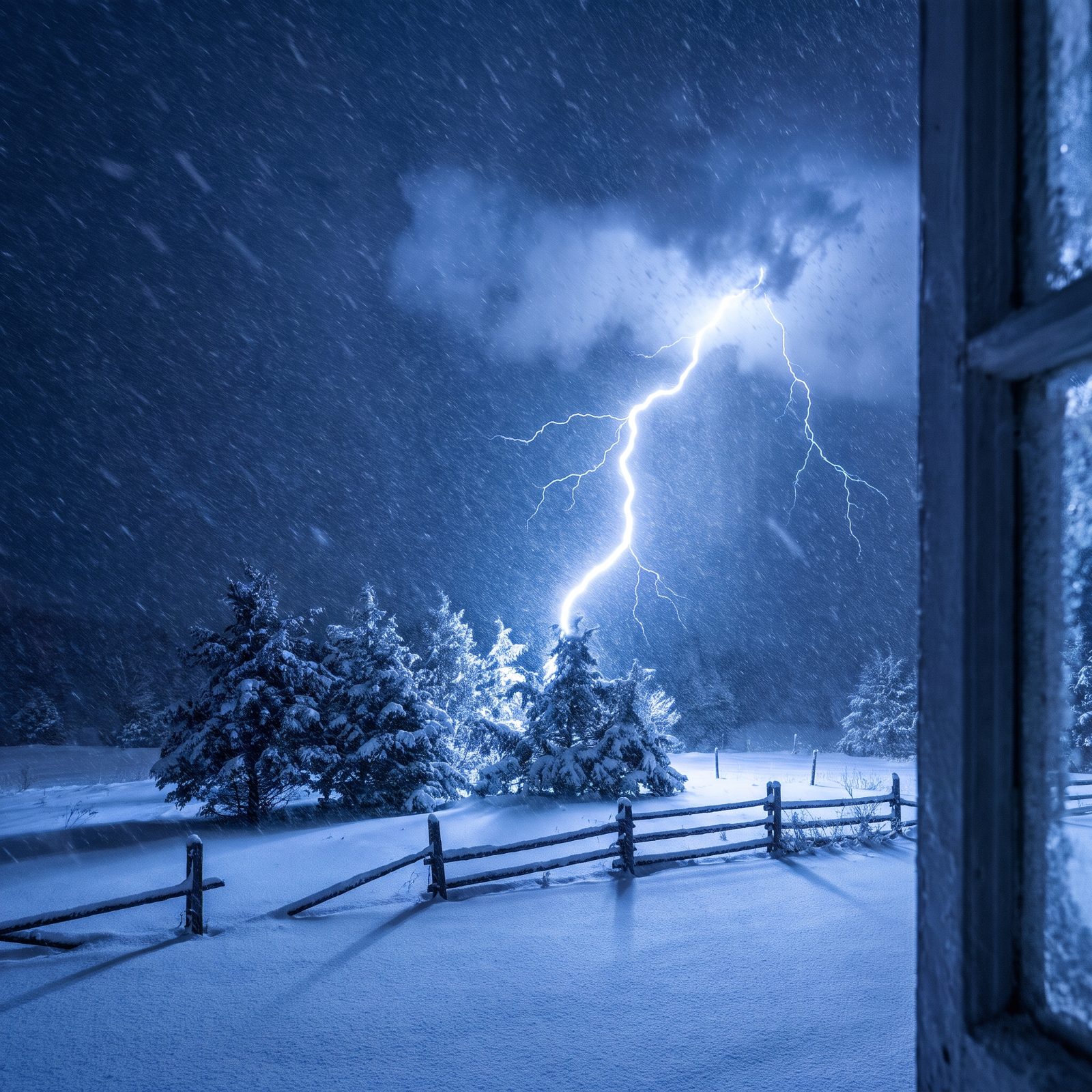
Imagine a blizzard that thunders. It happens — and it’s strange enough that plenty of people live whole decades without ever hearing it.
Thundersnow is exactly what it sounds like: a snowstorm packing enough atmospheric instability to generate lightning and thunder. What makes it uncanny is how it sounds. Snow absorbs and muffles noise, so the thunder doesn’t boom across miles the way a summer crack does. Instead it arrives as a low, close, oddly intimate rumble, usually audible only within a couple of miles of the strike.
Meteorologists get genuinely giddy about it, and if you ever catch a flash lighting up falling snow, you’ll understand why.
18. Volcanic Ash Clouds Spark Their Own Lightning
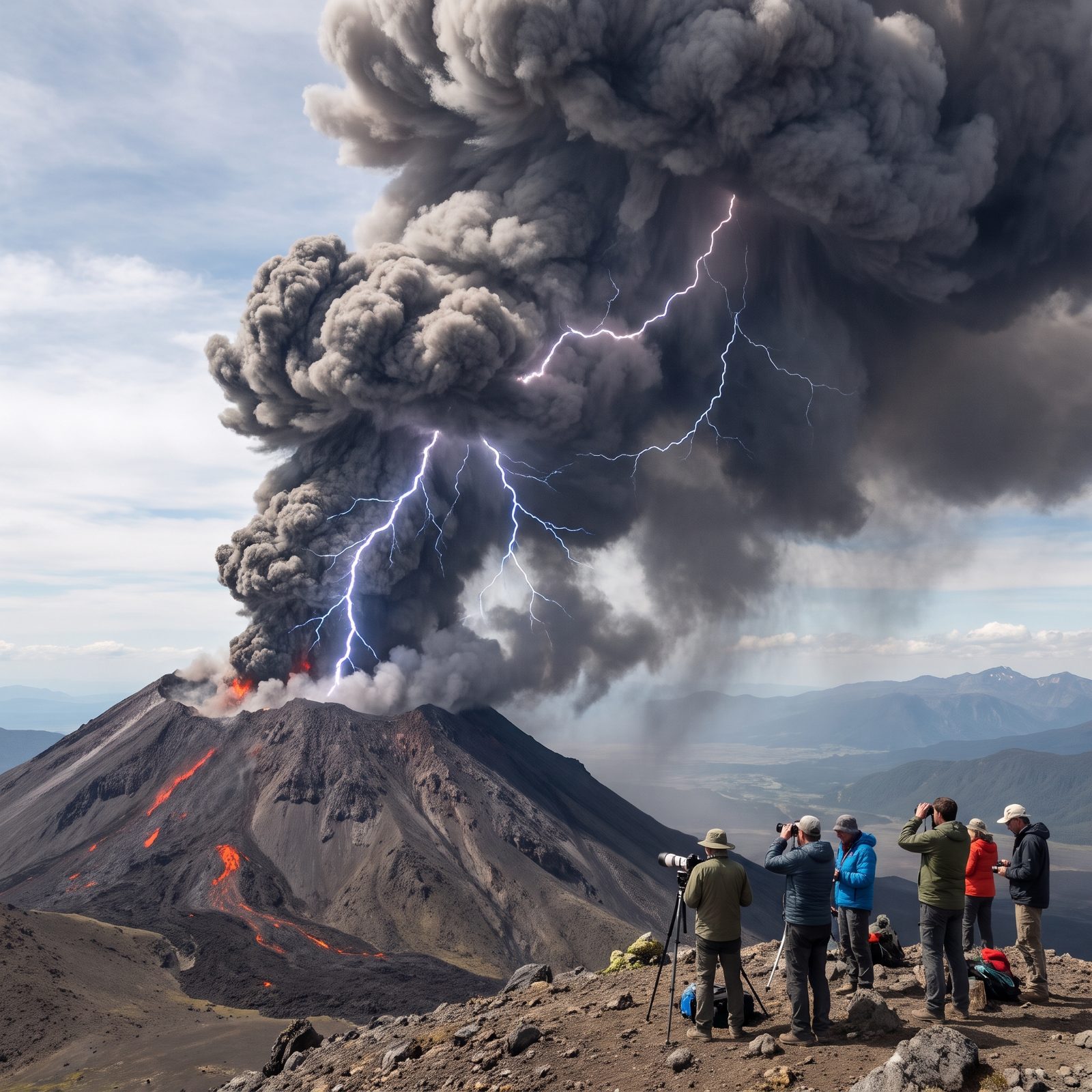
You don’t need a rain cloud to make lightning. You need friction — and an erupting volcano has it in staggering quantities.
As an eruption blasts ash, rock fragments and ice skyward, those particles collide and grind against each other by the billions. All that friction piles up an electrical charge, and once the imbalance grows big enough, it discharges. The result is volcanic lightning — a “dirty thunderstorm,” crackling right through the ash column.
Researchers now lean on these flashes as an early-warning tool. Lightning detectors can pick up an eruption’s electrical signature even when the volcano itself is hidden by darkness, distance or its own ash.
17. Pyrocumulonimbus: When a Wildfire Builds Its Own Thunderstorm
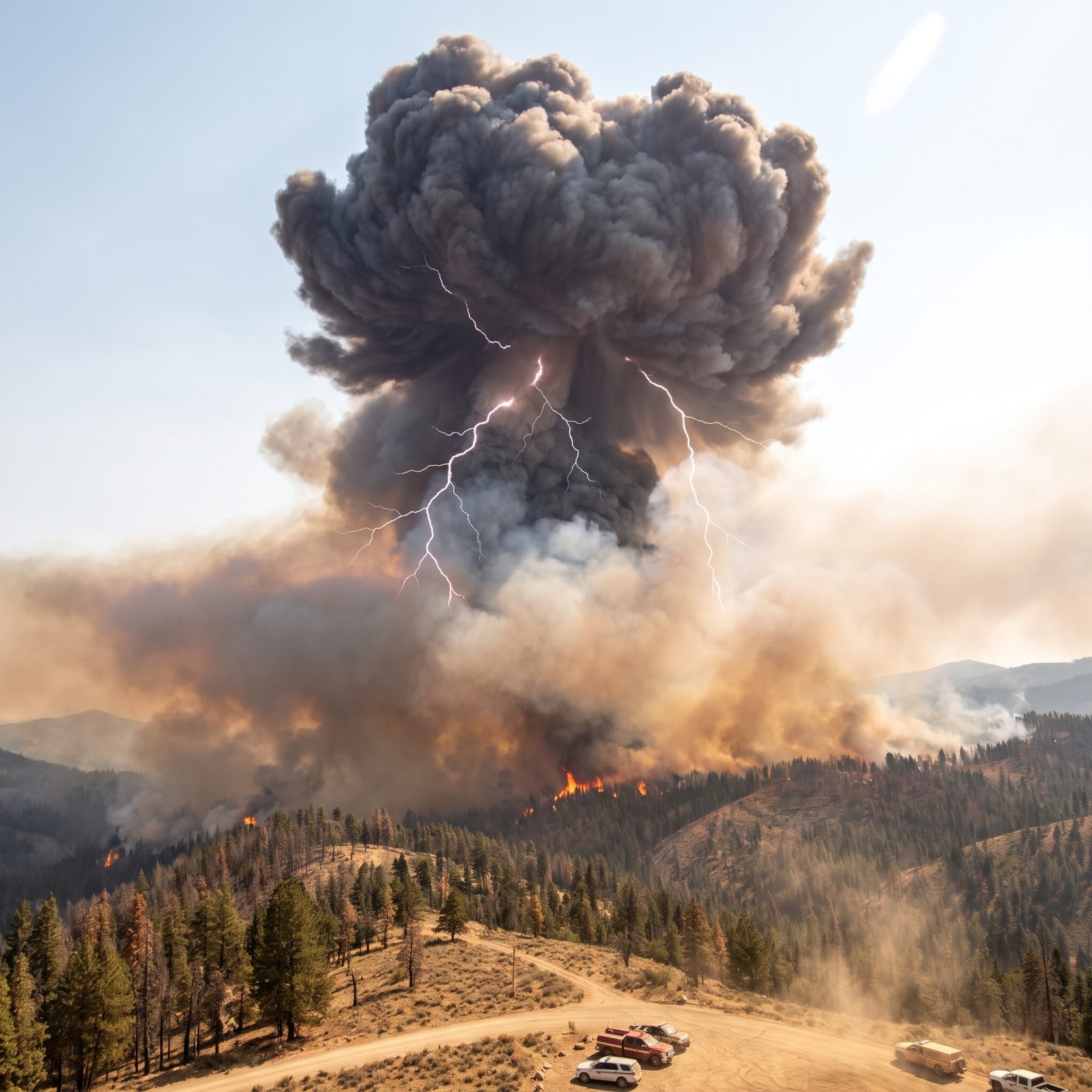
A big enough wildfire stops being a ground problem and becomes a weather system.
The intense heat sends a tower of smoke, ash and water vapor rocketing upward. Rise high and cold enough and that column forms a storm cloud all its own — a pyrocumulonimbus, nicknamed the fire-breathing cloud. It can brew lightning, spin off violent downdrafts, even throw fire tornadoes.
And here’s the cruel loop: that lightning can strike far from the original fire and start brand new ones. The blaze, in effect, manufactures the weather that spreads it.
16. Japan’s Winter Storms Fire Off Some of the Planet’s Most Powerful Bolts
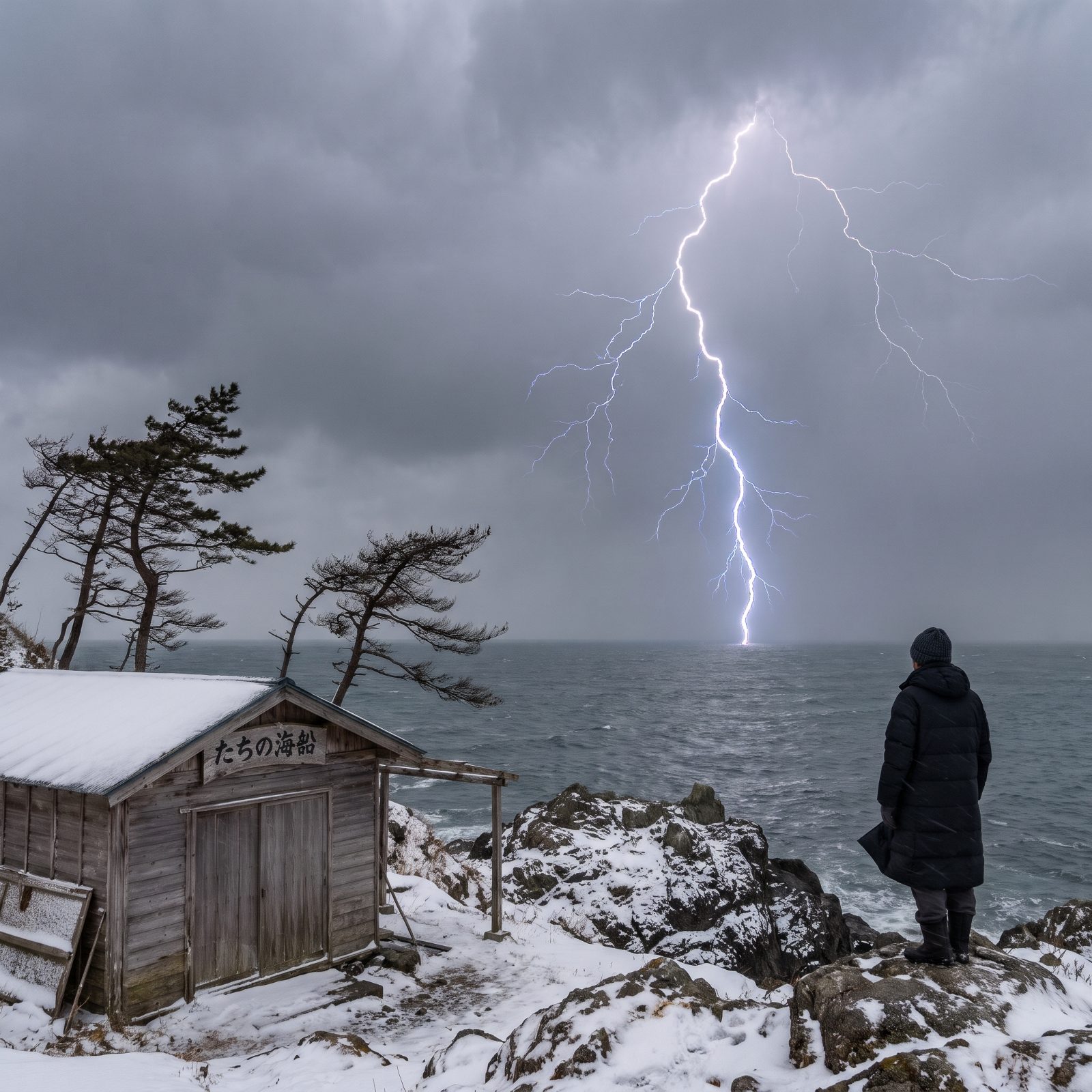
Lightning is a summer thing almost everywhere. Not along Japan’s western coast.
In winter, cold air sweeping off the Asian continent meets the warmer Sea of Japan and churns up thunderstorms with unusually low cloud bases. These storms fire off relatively few strikes — but the ones they do produce can be monsters, carrying far more charge and energy than typical summer lightning.
That power has a practical downside. The region’s wind turbines take a beating, and the hunt for better protection has turned this stretch of coast into one of the most closely watched natural laboratories for extreme lightning anywhere on Earth.
15. Ball Lightning: The Glowing Orb Science Still Can’t Fully Explain
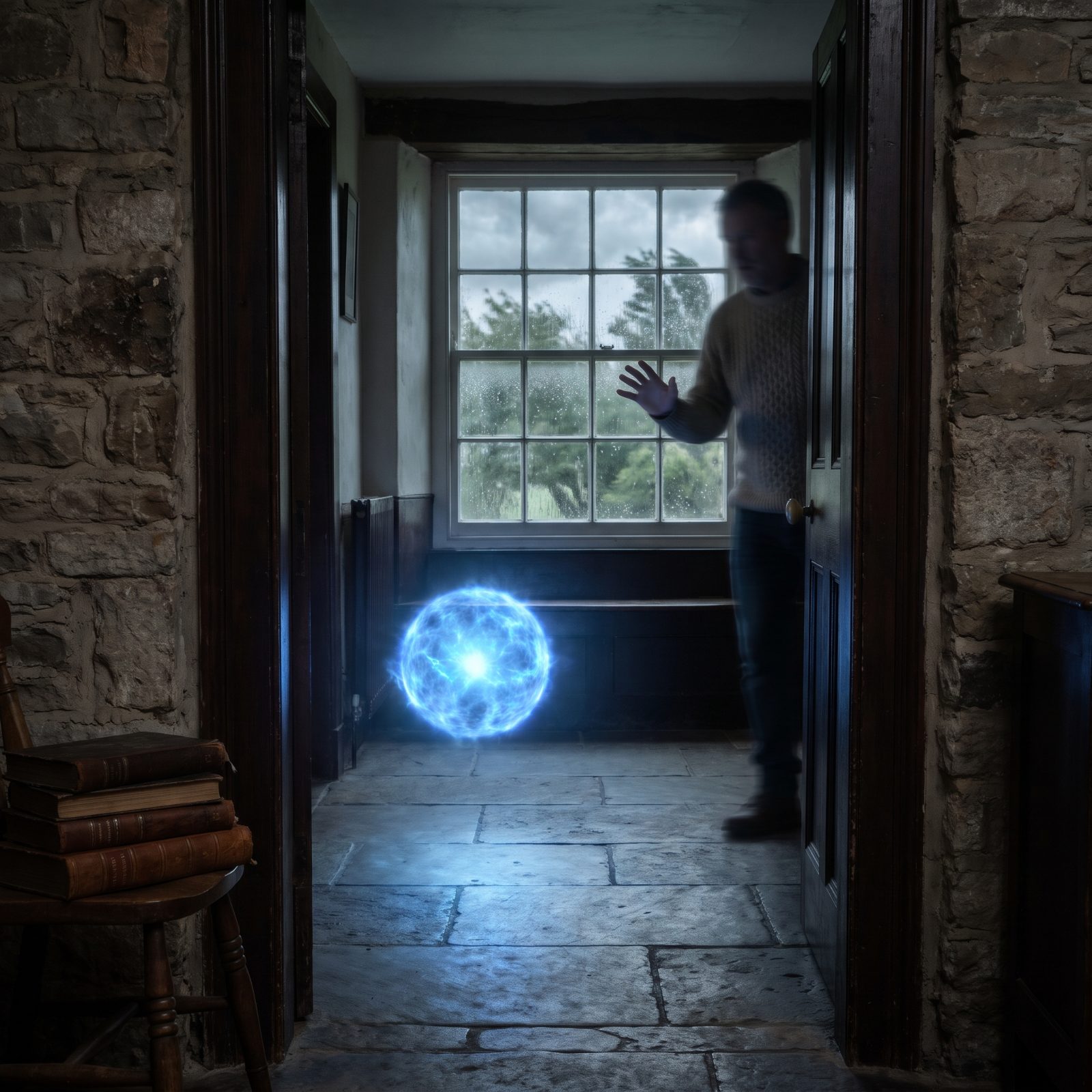
For centuries, people have reported glowing spheres of light drifting through storms, into houses, down airplane aisles — sometimes hissing, sometimes vanishing with a pop.
Ball lightning remains one of the few atmospheric phenomena that is genuinely unexplained. Reliable, controlled observations are vanishingly rare, and that scarcity is the whole problem. One of the stronger theories holds that a ground strike vaporizes silicon from the soil into a floating, slowly burning ball of glowing particles. Plausible. Not proven.
The honest answer is that a well-documented natural phenomenon is still waiting for an explanation everyone agrees on.
That’s no failure of science. It’s what the frontier actually looks like — still flickering out there in the dark.
14. Bead Lightning Breaks a Bolt Into Glowing Pearls
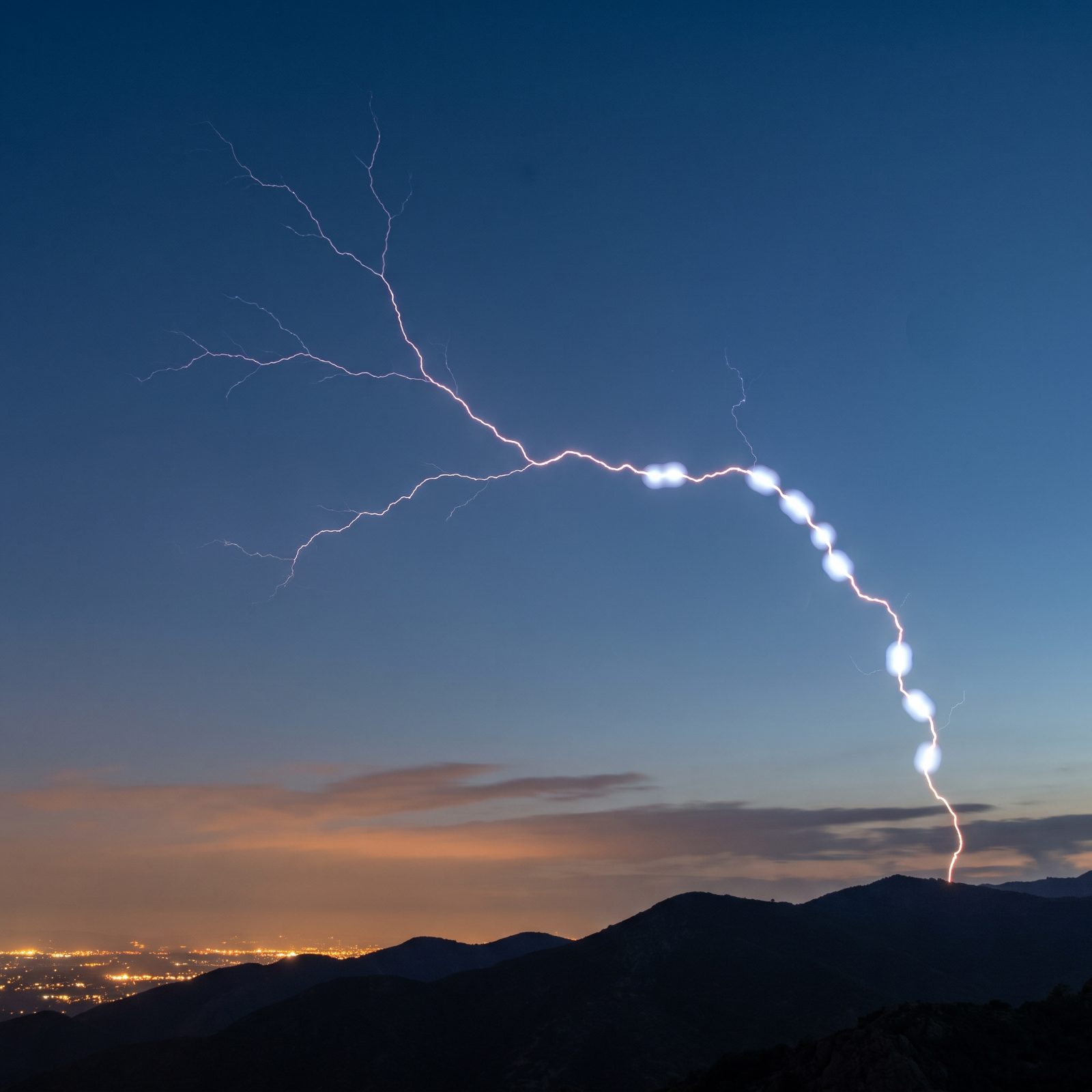
Watch a lightning bolt fade in slow motion and sometimes it doesn’t vanish all at once. It falls apart into a line of bright dots, a glowing string of pearls hung across the sky. That’s bead lightning, one of the few forms you can occasionally catch with the naked eye after the main flash.
Why it beads is still argued over. The leading idea: parts of the channel cool faster than others, so the thin stretches wink out first while the fat, hot pockets of plasma keep glowing a split second longer. Rare, brief, and most people who see it assume their eyes played a trick.
13. Spider Lightning Crawls Sideways Under a Storm’s Anvil
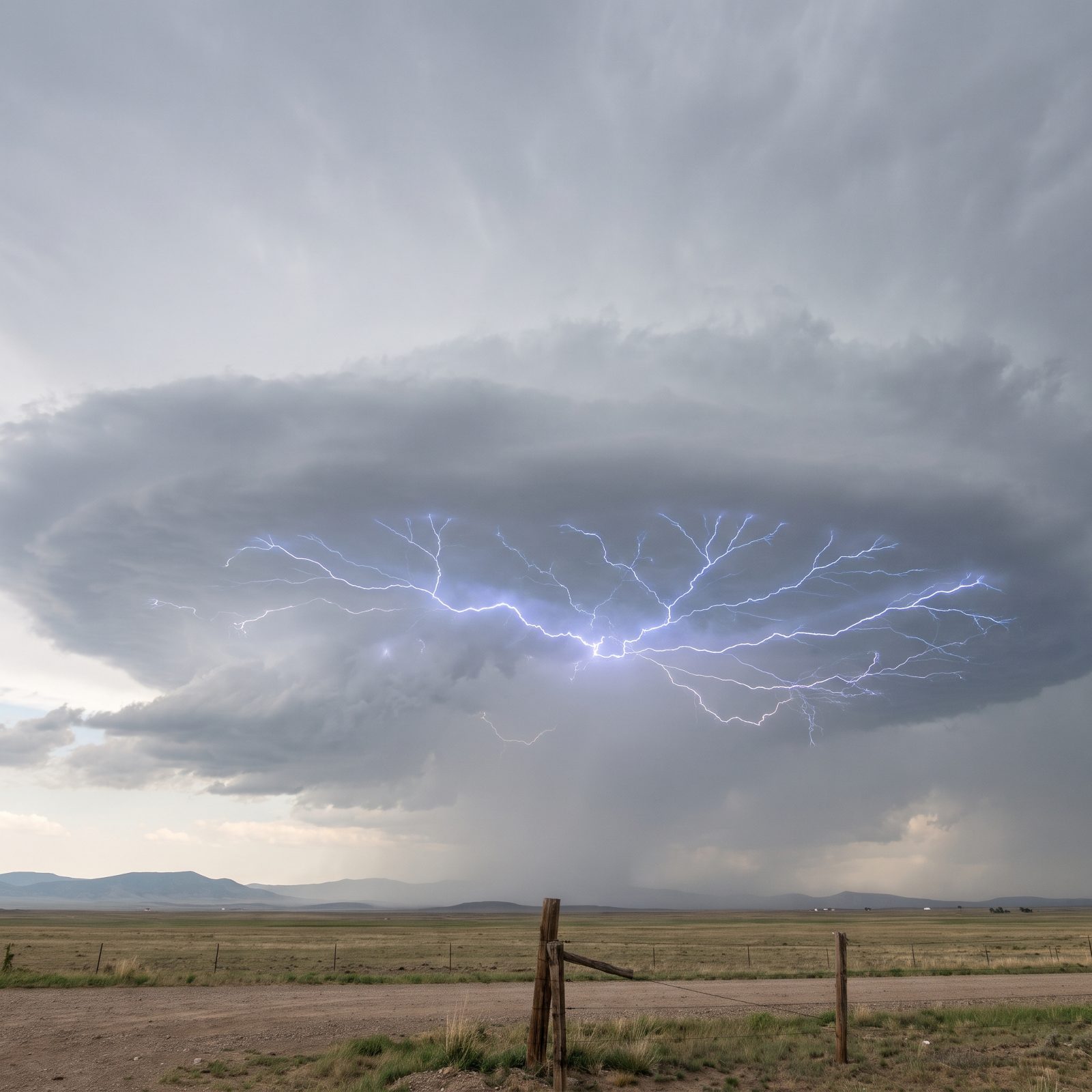
Not all lightning stabs the ground. Some of it sprawls.
Spider lightning crawls horizontally along the base of a storm’s anvil, throwing out dim, branching tendrils that can creep for tens of miles across the underside of the cloud. You’ve probably seen it and not known what it was — those slow, spreading flickers that seem to go sideways forever on a summer night far from the storm core. These sprawling discharges usually come from big, mature storm systems, and they’re often the parent flashes that feed the record-breaking megaflashes further down this list.
12. Red Sprites Bloom High Above the Storm
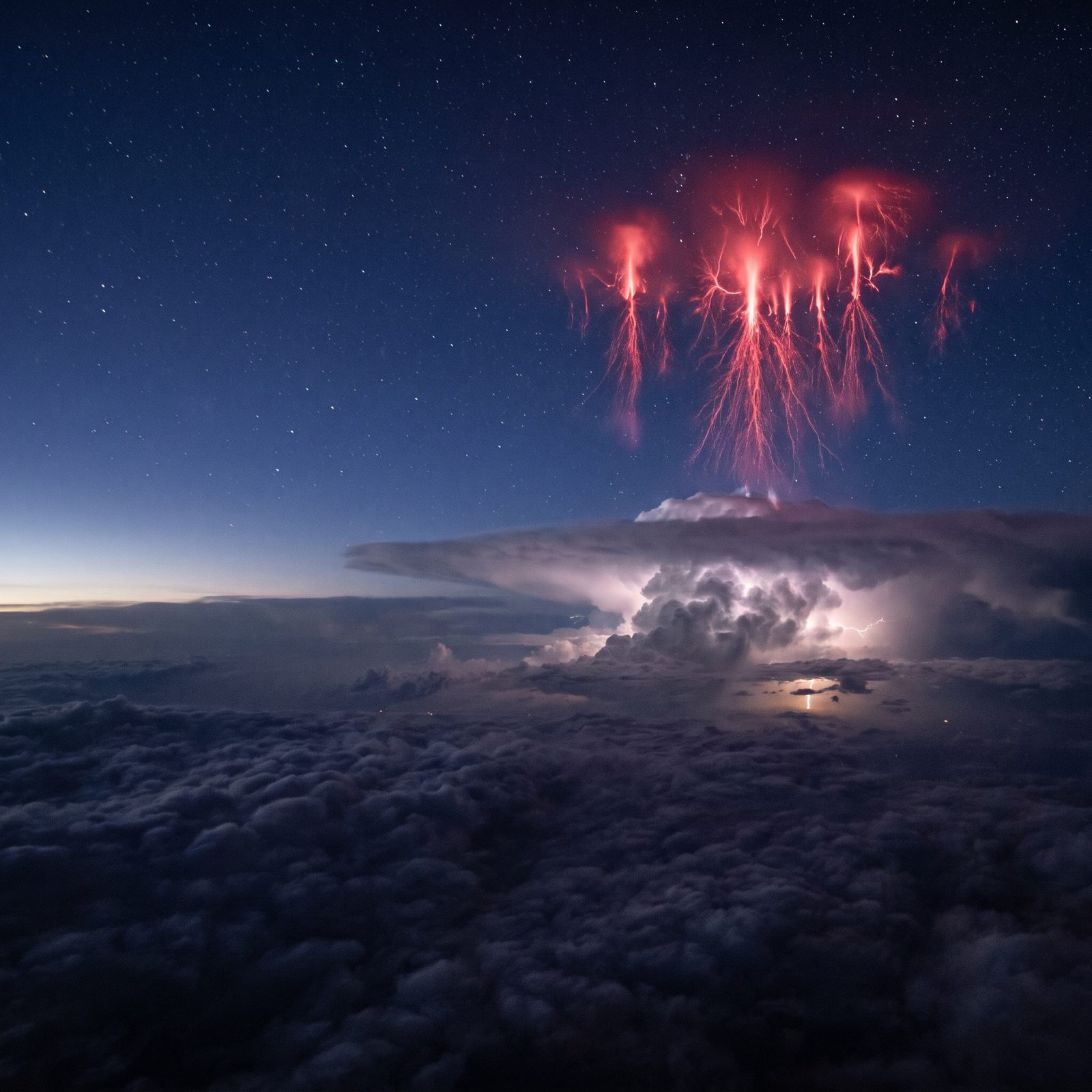
For most of aviation history, pilots who reported red flashes above storms were quietly ignored. Then in 1989 a camera accidentally caught one, and the science had to scramble to catch up.
Red sprites are enormous electrical bursts that flash dozens of miles up, in the mesosphere, far above the cloud tops where ordinary lightning lives. They glow red because they’re exciting nitrogen in the thin upper air. A single sprite can be larger than the storm that triggered it, yet it lasts only a few thousandths of a second — which is why you need a dark sky, a distant storm, and a lot of patience to ever catch one.
11. Elves Ring the Sky at the Edge of Space

Above the sprites, something stranger happens, and it happens in under a thousandth of a second.
An elf is a huge, flat ring of glowing light that blooms in the ionosphere roughly 60 miles up. The name is an acronym scientists clearly enjoyed building: Emissions of Light and Very Low Frequency perturbations due to Electromagnetic Pulse Sources. What creates it is an electromagnetic pulse from a powerful stroke racing outward and slamming into the thin gas near the edge of space, lighting it up in an expanding disc that can spread hundreds of miles wide before it’s gone.
Far too fast and faint for the naked eye, elves took sensitive cameras on aircraft and the Space Shuttle to prove they were real at all.
10. Gigantic Jets Shoot From Cloud Top to the Ionosphere
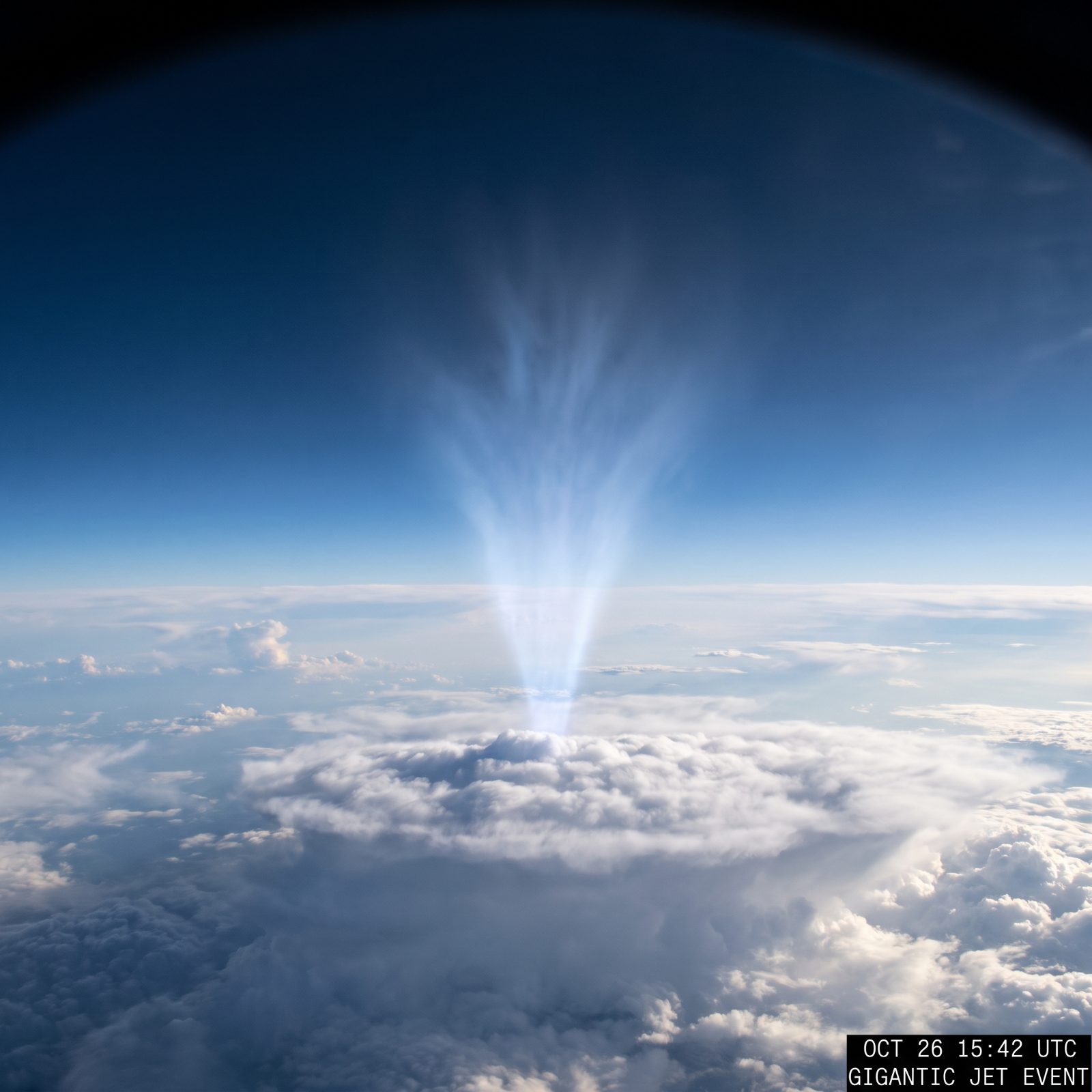
A gigantic jet is the full connection most lightning never makes: a channel that climbs straight out of a thunderhead and reaches all the way to the ionosphere, roughly 50 miles up. Glowing white-blue from the cloud top all the way up, it stitches together the lower atmosphere where we live and the electrified region near space.
These are genuinely rare. Only a handful get documented clearly in a given year, often over warm ocean storms, often by accident. Researchers think gigantic jets help balance the planet’s global electric circuit, draining charge upward that would otherwise have nowhere to go. That part is still being worked out.
9. Superbolts Pack Thousands of Times the Usual Punch
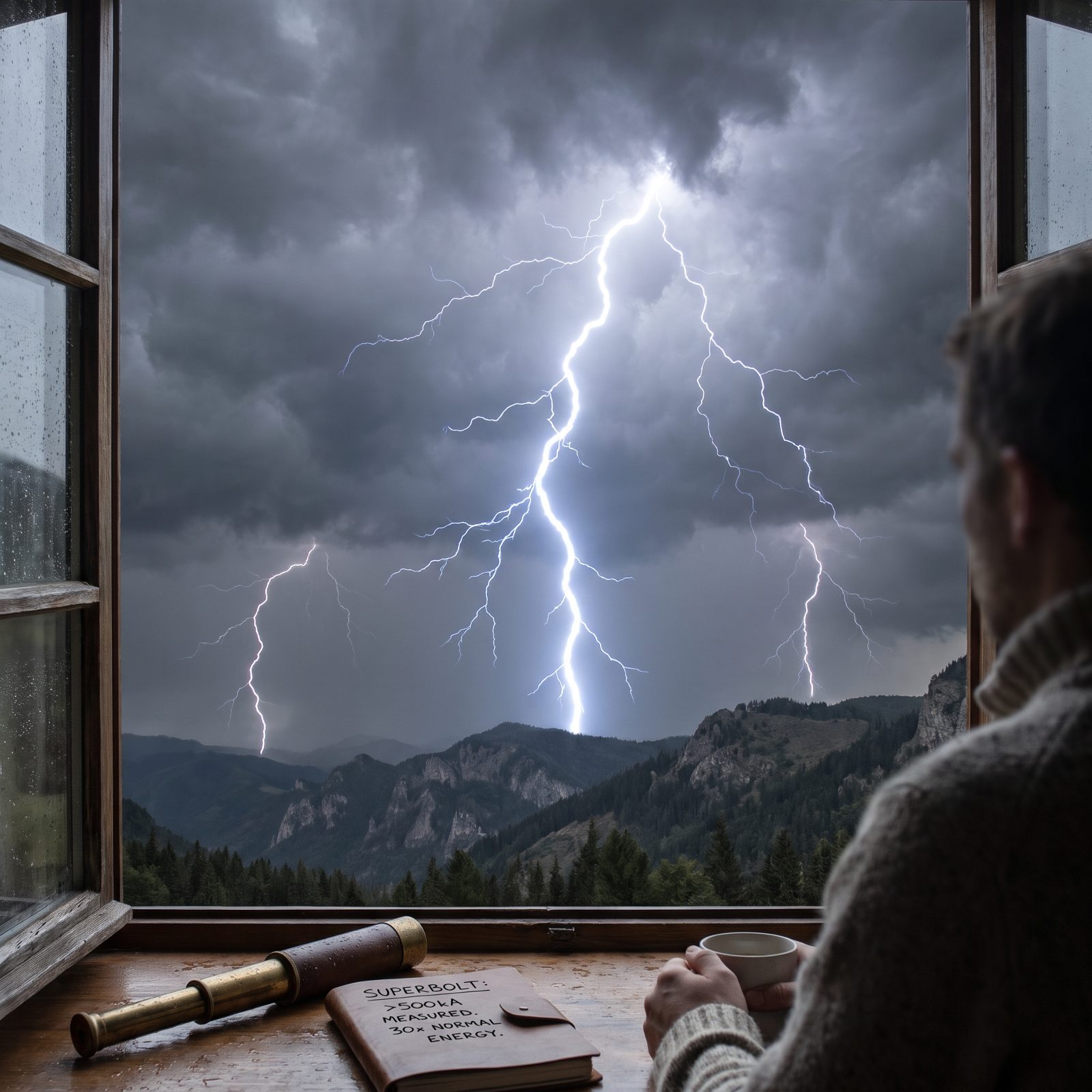
Most lightning strokes are roughly similar in power. A tiny fraction are freaks.
Superbolts are the heavyweights, releasing far more energy than an average flash, with the very strongest measured at thousands of times a typical stroke’s output. They’re vanishingly rare, a minuscule sliver of all lightning. What’s odd is where they cluster. Satellite surveys have found superbolts favor the winter ocean — over the North Atlantic and the Mediterranean — rather than the tropical land where lightning is most common overall. Still, they can strike over land too, even hitting a forested mountain peak during a summer storm.
Why do cold seas breed the most violent strokes? Nobody has nailed it down. It likely ties to how low the electrified part of the cloud sits above the water, shortening the path and concentrating the discharge into something brutal.
8. A Single Megaflash Can Stretch Across State Lines
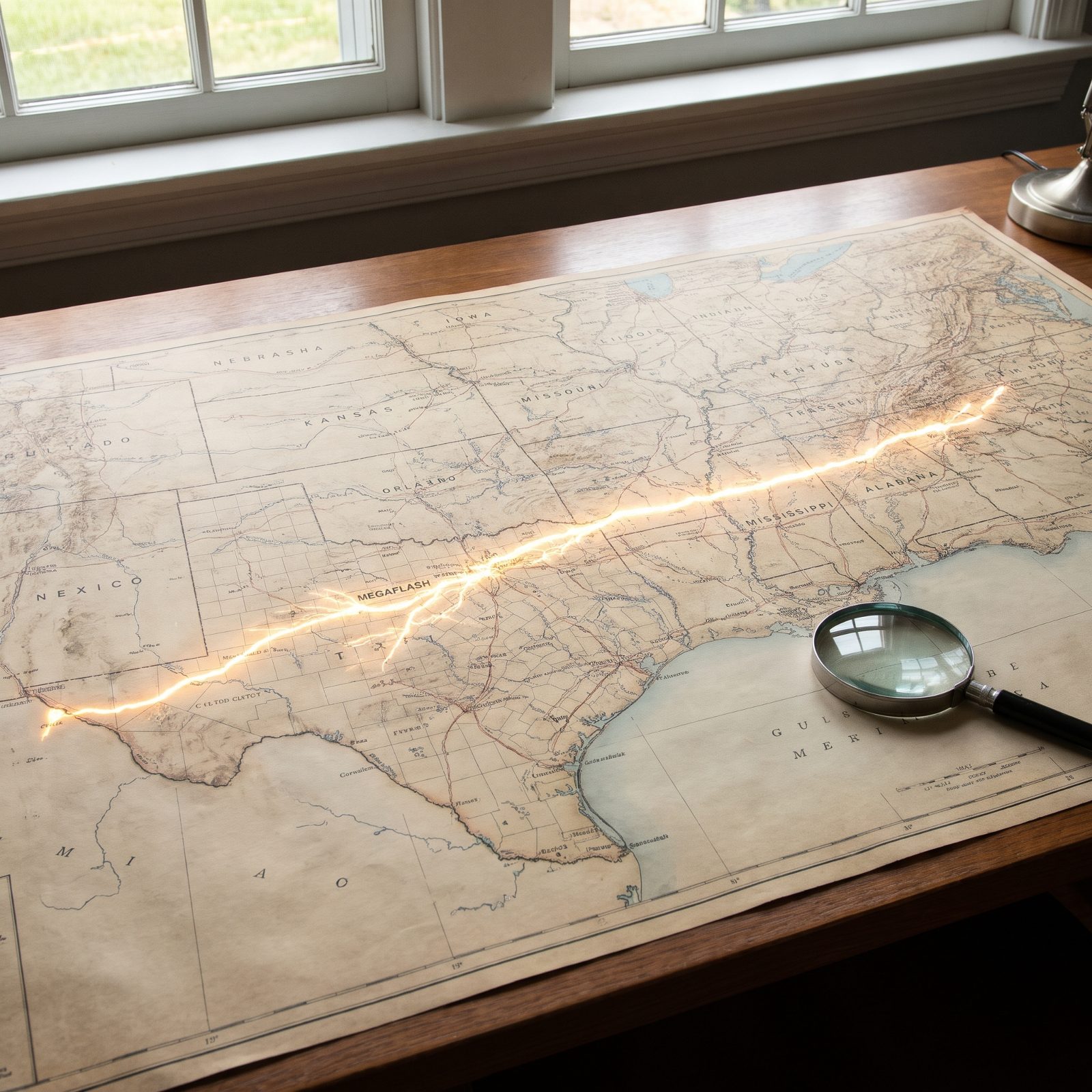
Lightning doesn’t stay local. The record holders travel.
A megaflash is a single discharge that spreads horizontally for hundreds of miles through a large storm system. The World Meteorological Organization has certified megaflashes stretching well over 400 miles across the southern United States and parts of South America, distances that would carry a flash from one major city to another in one continuous event. One certified flash also lasted over 17 seconds, far longer than the blink most people picture.
We only know these monsters exist because geostationary satellites can now watch entire continents at once and map a flash end to end. From the ground, you’d never guess the bolt you saw was part of something that huge.
7. Venezuela’s Catatumbo Lightning Barely Stops

There’s a place where lightning is basically the local weather.
Over Lake Maracaibo in Venezuela, where the Catatumbo River empties in, storms fire for up to 160 nights a year — sometimes for nine or ten hours at a stretch, with hundreds of flashes an hour. The recipe is nearly perfect: warm, moist air sweeping off the Caribbean gets trapped against the Andes, rises, and detonates into storms almost every night. Add the heat and moisture coming off the lake itself, and you’ve got the most electrically active spot on Earth.
Sailors once used it as a lighthouse. The glow is so dependable you can navigate by it.
6. Jupiter’s Lightning Dwarfs Anything on Earth
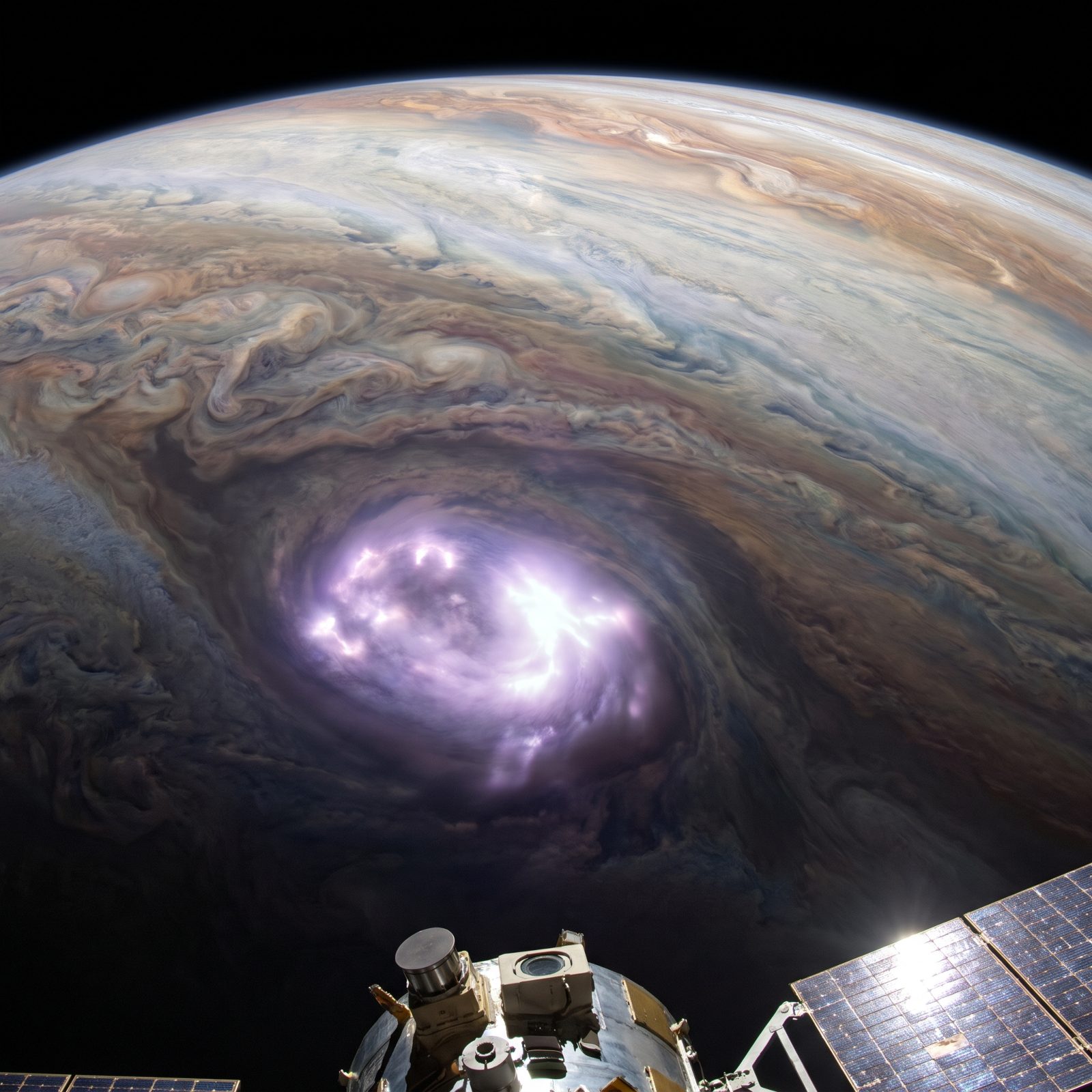
Our storms look modest next to Jupiter’s.
The Voyager probes first caught lightning there in 1979, and NASA’s Juno spacecraft has since mapped it in detail — flashing most often near the poles, the opposite of Earth’s pattern. Jovian lightning can carry vastly more energy than ours, and it happens inside clouds driven by water deep in a planet so large it could swallow more than a thousand Earths.
The strangest twist: Juno detected giant, branching bolts of light linked to what’s nicknamed “shallow lightning,” thought to involve a slushy mix of water and ammonia acting as an antifreeze high in the atmosphere. Lightning, it turns out, signs its name a little differently on every world.
5. Lasers Are Learning to Steer Lightning
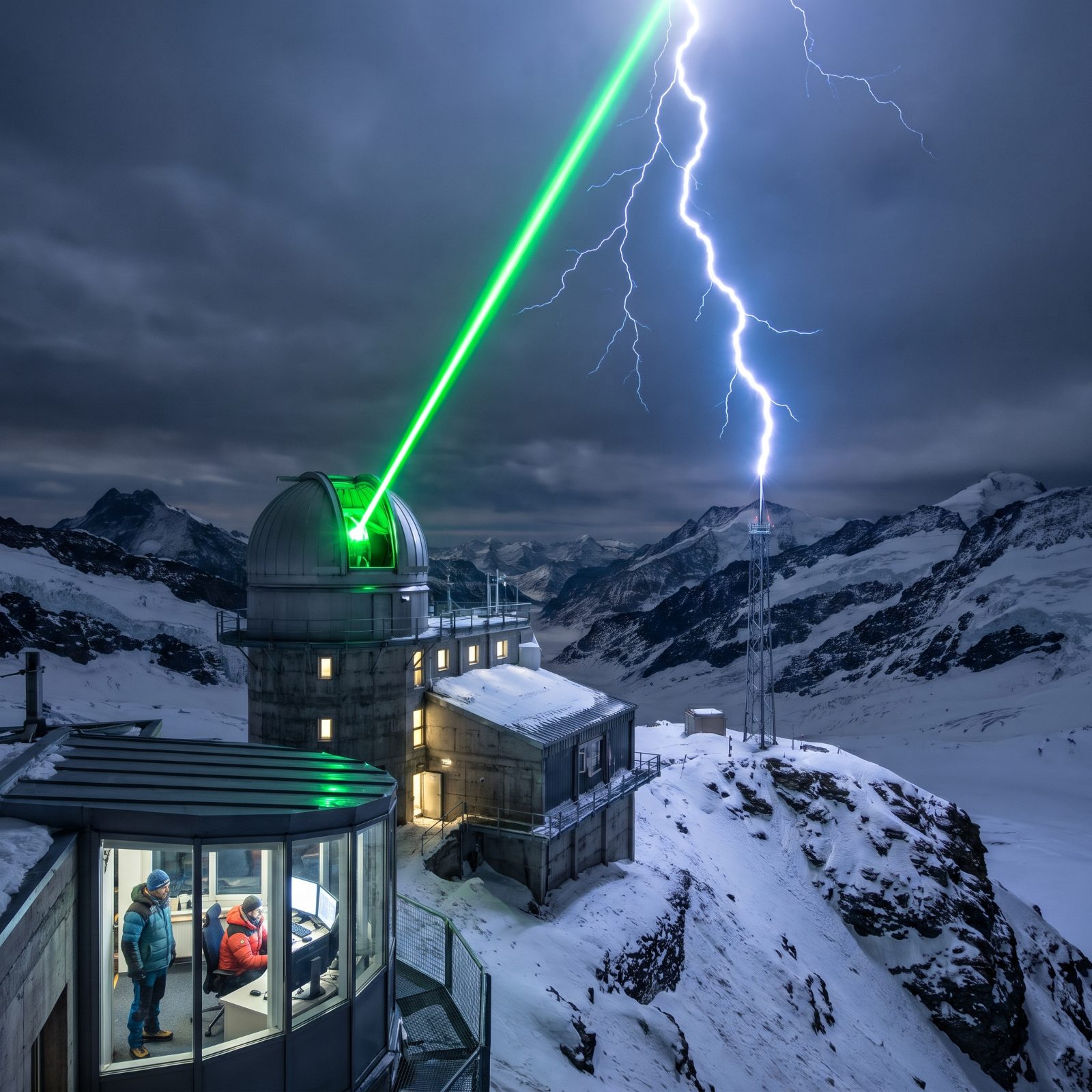
Benjamin Franklin flew a kite. Modern researchers fire a laser.
On a Swiss mountain, scientists aimed an intense pulsed laser skyward from beside a tall telecommunications tower and pulled off something people had tried for decades without luck — they nudged real lightning to meet the beam high in the sky, then zigzag down to a thin metal pole on the ground. The laser rips a faint channel of ionized air, a line of least resistance the discharge prefers to start along.
Published in 2023, the work is a first step, not a finished tool. It won’t be guarding your house anytime soon. But the goal is real protection for airports, launch pads and power stations, places where a well-aimed strike could do enormous damage. After thousands of years of simply ducking, we’re beginning to tell lightning where to go.
4. Lightning Struck Apollo 12 Twice During Launch
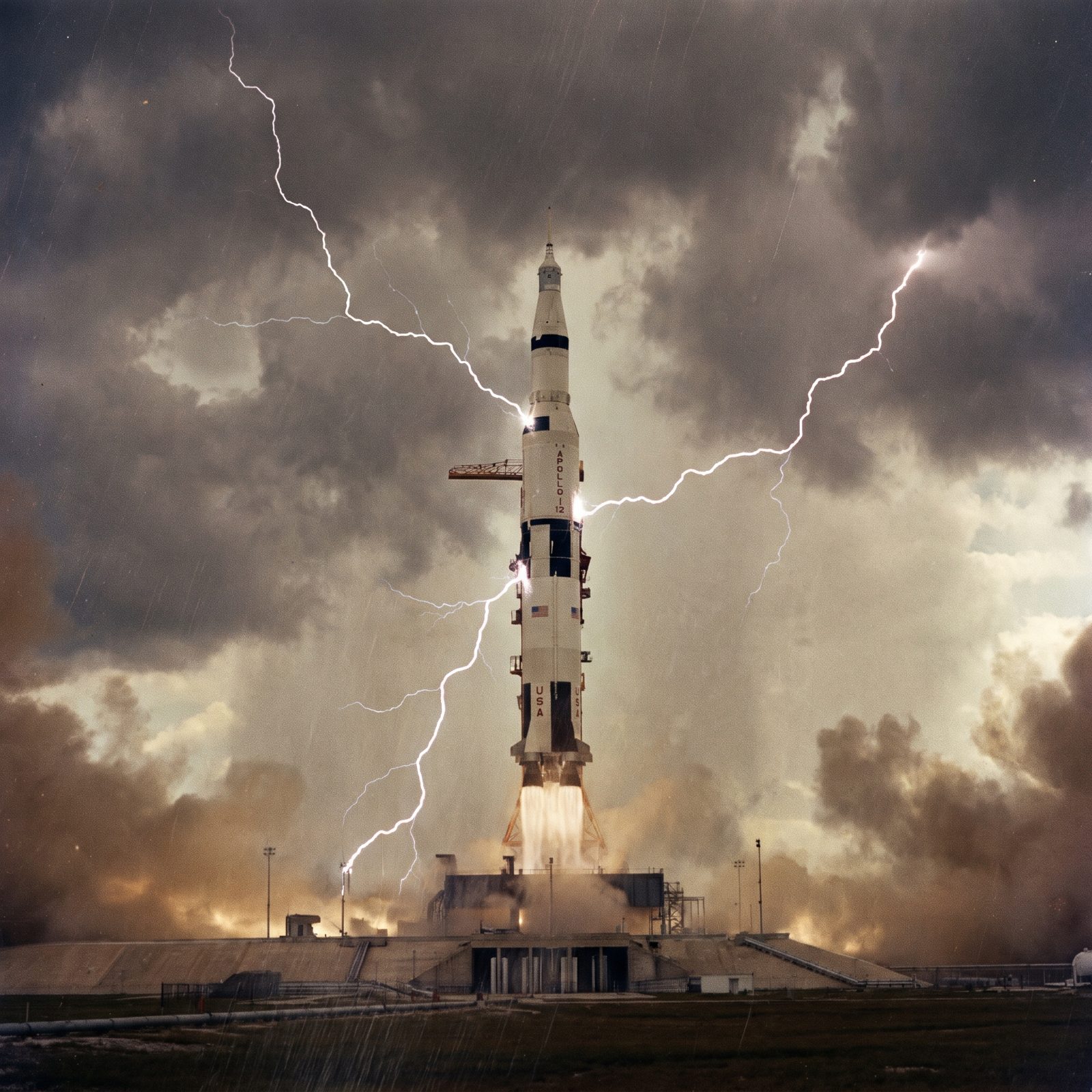
In November 1969, less than a minute after liftoff, Apollo 12 did something nobody had planned for: climbing through charged rain clouds, it turned itself and its long exhaust plume into a 363-foot lightning rod. Two bolts struck it, roughly 36 and 52 seconds into the flight.
Every warning light in the capsule flared at once. The fuel cells dropped offline, the guidance platform tumbled, and chaos took over. Down in mission control, a flight controller named John Aaron remembered an obscure switch from an old test and radioed up, “Try SCE to Aux.” The crew flipped it. The telemetry came roaring back.
3. Lightning-Generated Whistlers Travel Through the Magnetosphere
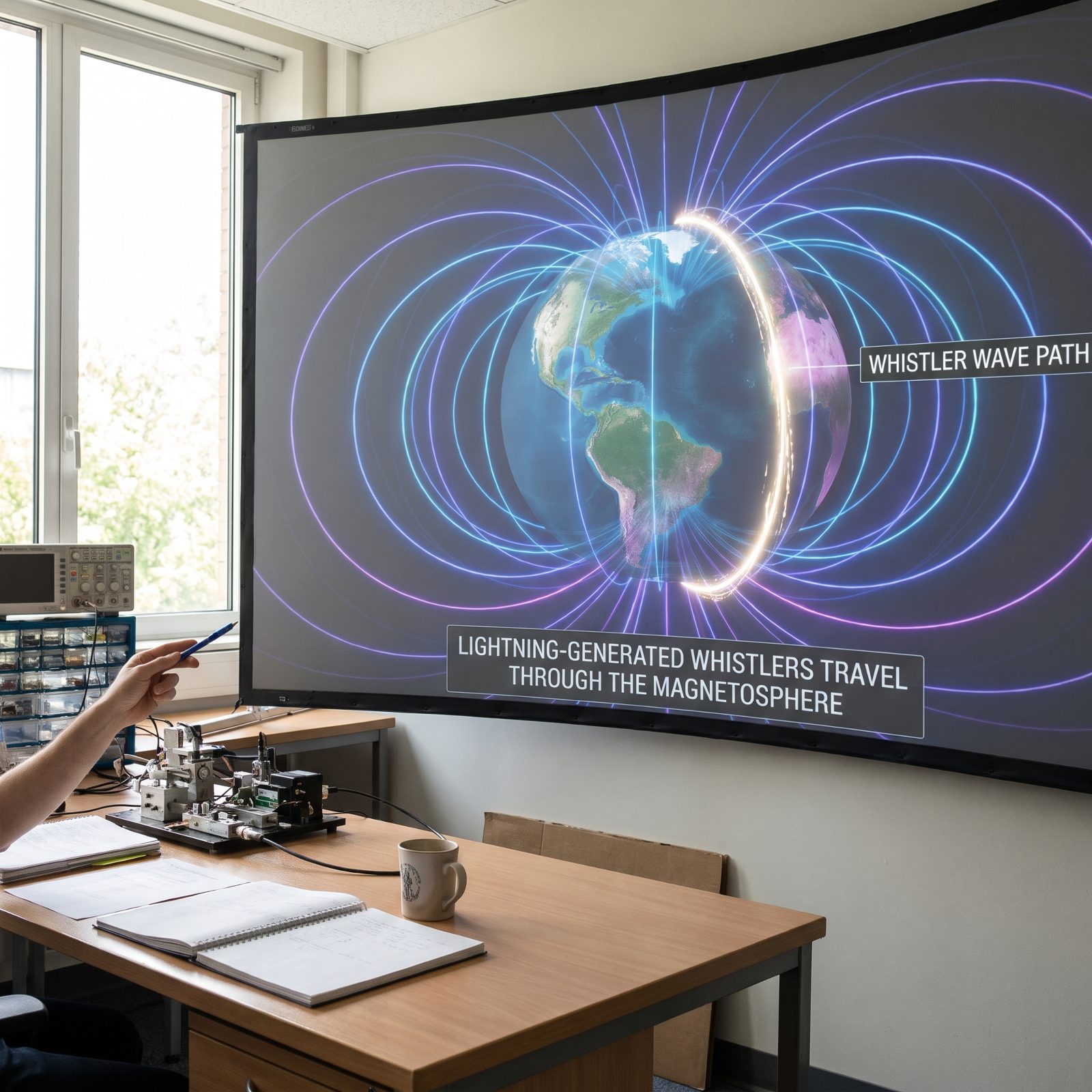
When lightning cracks inside a thunderstorm, part of its energy escapes as a radio pulse. That pulse can race along Earth’s magnetic field, arcing around the planet from one pole to the other, and then come back down in the opposite hemisphere.
Here’s the odd part. Plug an antenna into an audio amplifier and you can actually hear them. The high frequencies arrive a hair before the low ones, so each pulse slides from a high pitch down to a low groan — a falling whistle. Radio operators huddled in the trenches of World War I picked them up on their field telephones and, being soldiers rather than physicists, just called them whistlers.
2. Stepped Leaders Emit Bursts of X-Rays
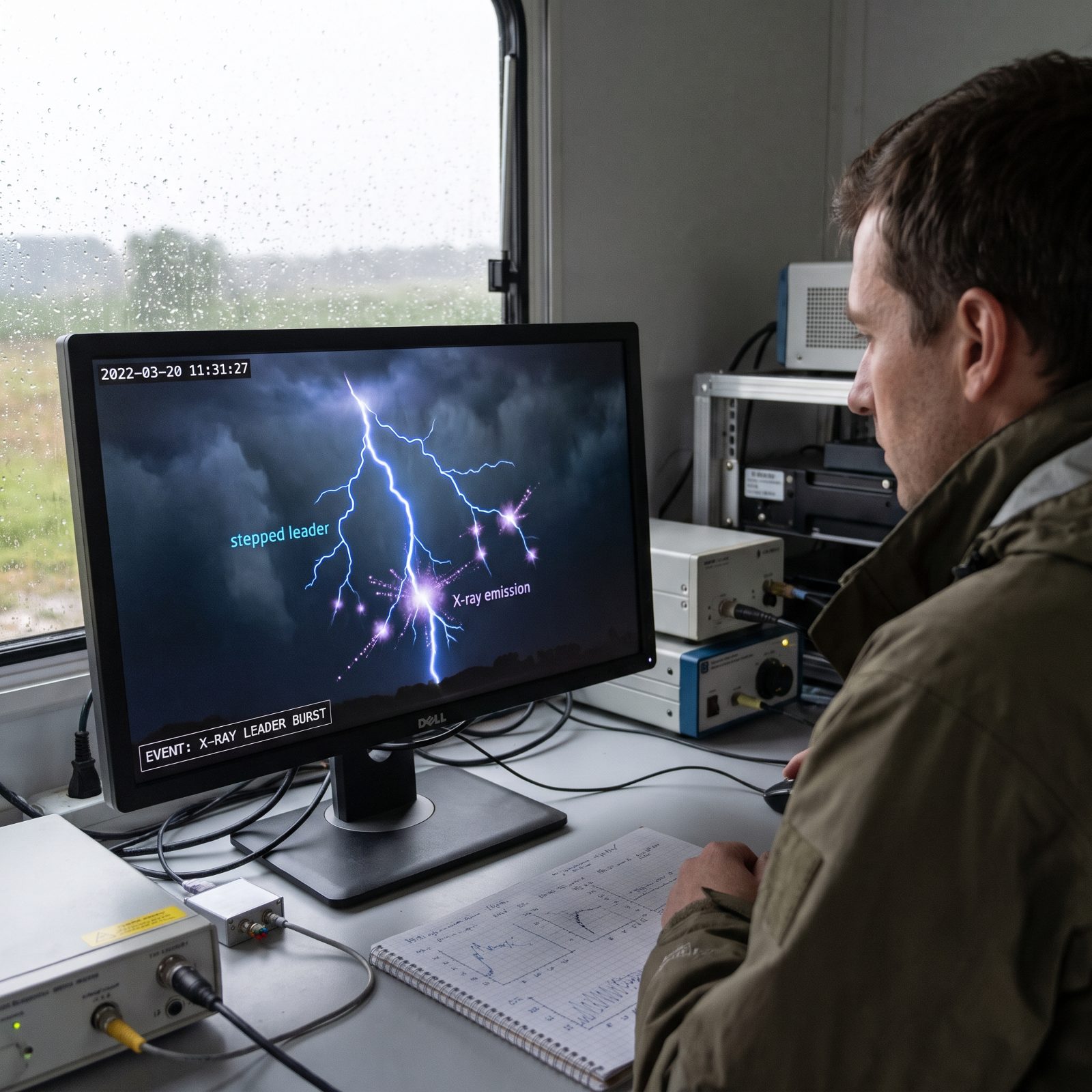
Lightning doesn’t drop in one clean flash. A faint, forked channel called a stepped leader gropes its way down from the cloud in jumps of roughly 150 feet, pausing a millionth of a second between each one like it’s feeling for the ground in the dark.
In the early 2000s, ground-based detectors caught something that made no sense at the time — bursts of X-rays, fired off in those tiny steps. The electric fields crowding the leader’s tip are strong enough to fling electrons to nearly the speed of light, and when those electrons smash into air molecules, they throw off high-energy radiation. All of it happens in the microseconds before the bolt you actually see with your eyes.
1. Some Lightning Events Create Antimatter

Thunderstorms are antimatter factories. For a flickering instant, they cook up the rarest stuff in the universe — and then it’s gone.
It begins with those accelerated electrons churning inside a storm. Shove them hard enough and they produce intense flashes of gamma rays known as terrestrial gamma-ray flashes, or TGFs. A few of those gamma rays pack enough punch to spawn pairs of electrons alongside their antimatter twins, positrons.
Those positrons don’t last. Almost instantly they meet ordinary electrons and annihilate, releasing gamma rays at a telltale energy — a signature that orbiting telescopes have picked up from above thunderstorms.