
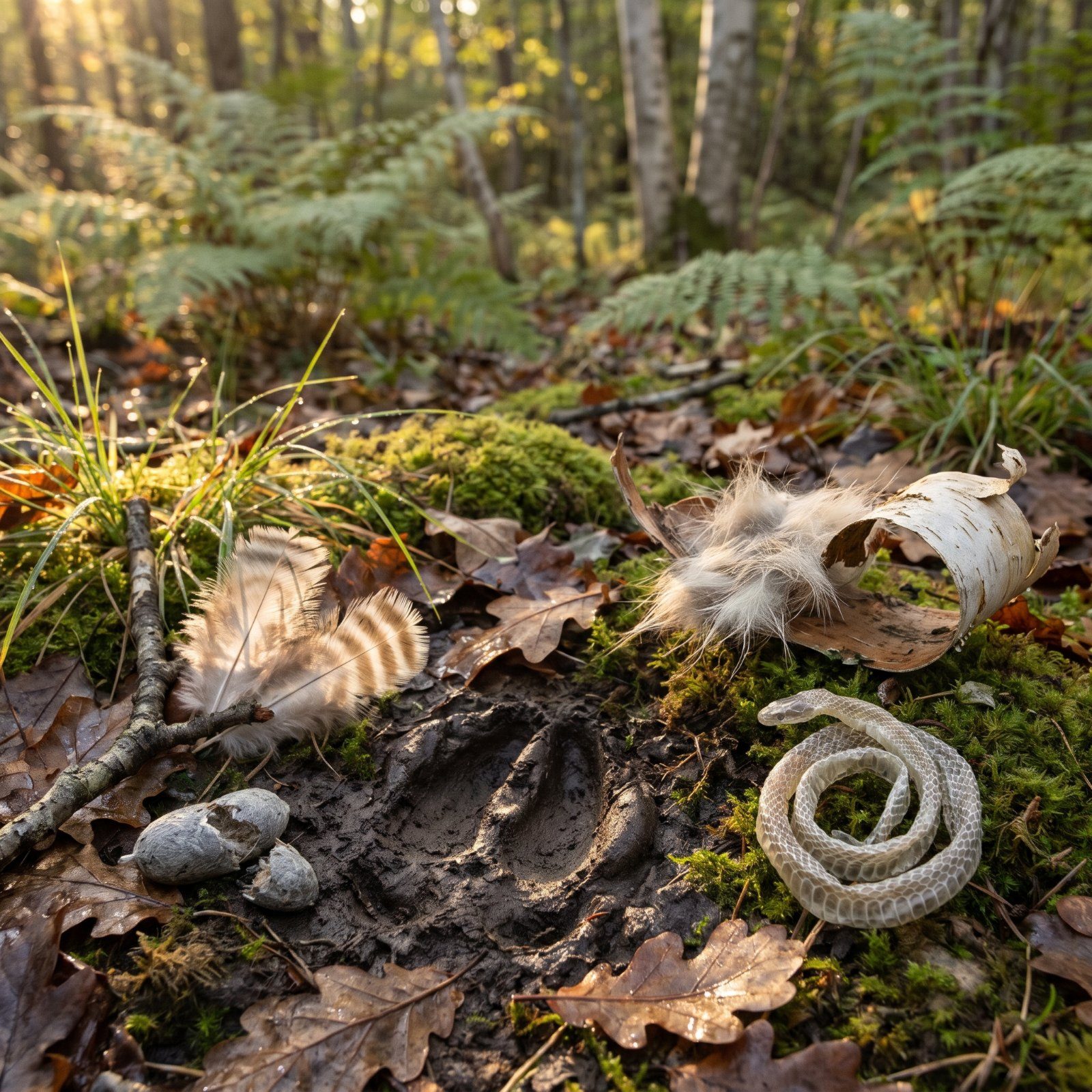
A robin going berserk in an oak tree is not having a tantrum. It is pointing. Somewhere in that canopy sits an owl the whole forest wants gone, and if you follow the noise instead of tuning it out, you walk right up to a bird most people never see in their lives. The woods are littered with these little confessions — pressed mud, a feather fan, a scuff on a sapling, a thread of fur caught on bark at nose height. None of it shouts. All of it is specific. Learn to read the signs below and you stop wandering hopefully and start arriving on purpose.
38. Songbirds Screaming at a Predator You Can’t See Yet
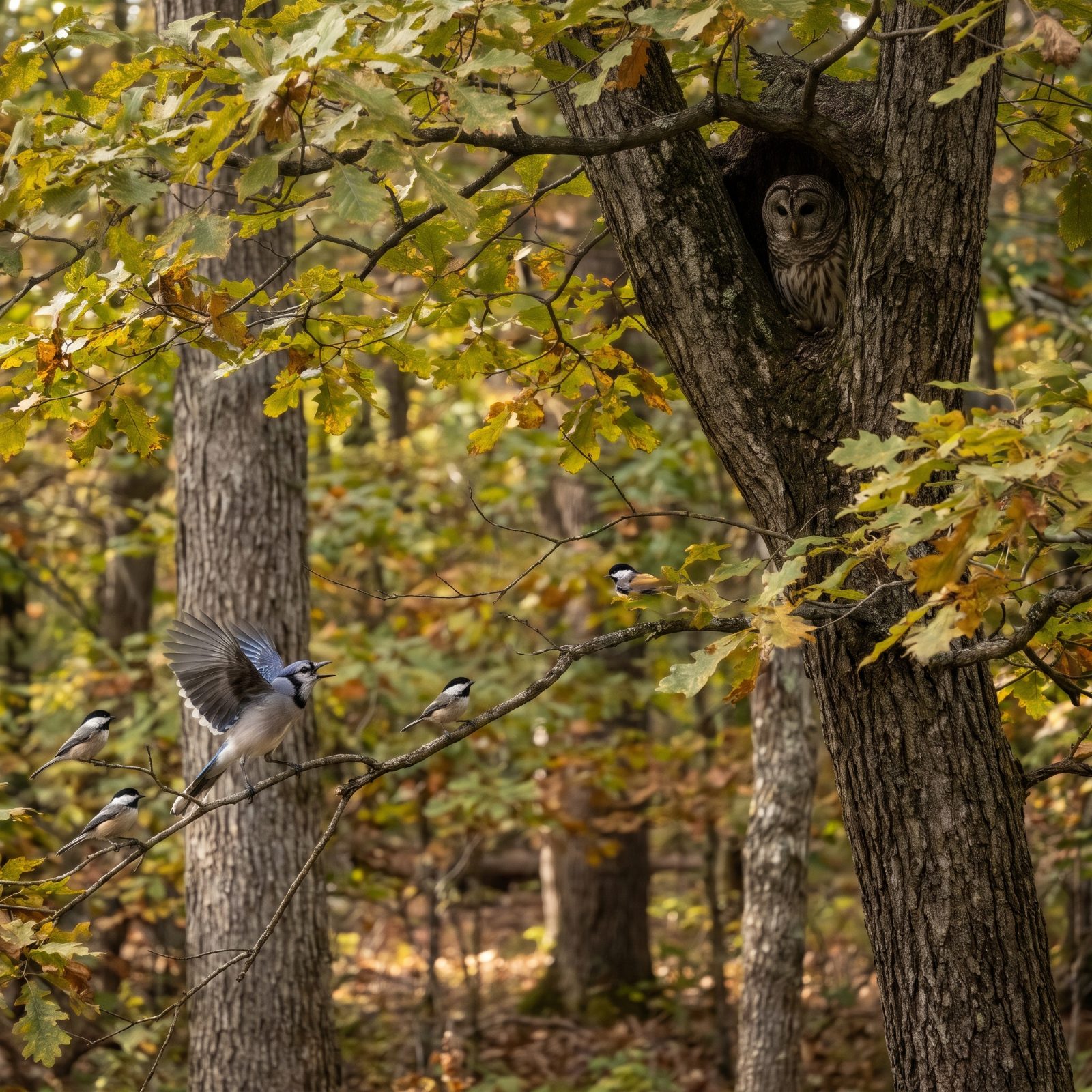
That chaotic burst of alarm calls is the forest’s early warning system, and birders have a name for it: mobbing. A dozen tiny birds will harass a predator relentlessly, dive-bombing and shrieking to drive it off. The noise is a gift — it tells you something worth photographing is sitting still and surrounded.
I ignored this for years. I’d hear the racket, think “noisy jays,” and keep walking right past a roosting owl. Stop instead. Find the branch all those beaks are aimed at, and the predator is usually the calm center of a very loud circle.
37. Fresh Tracks Still Holding Their Sharp Edges in Mud
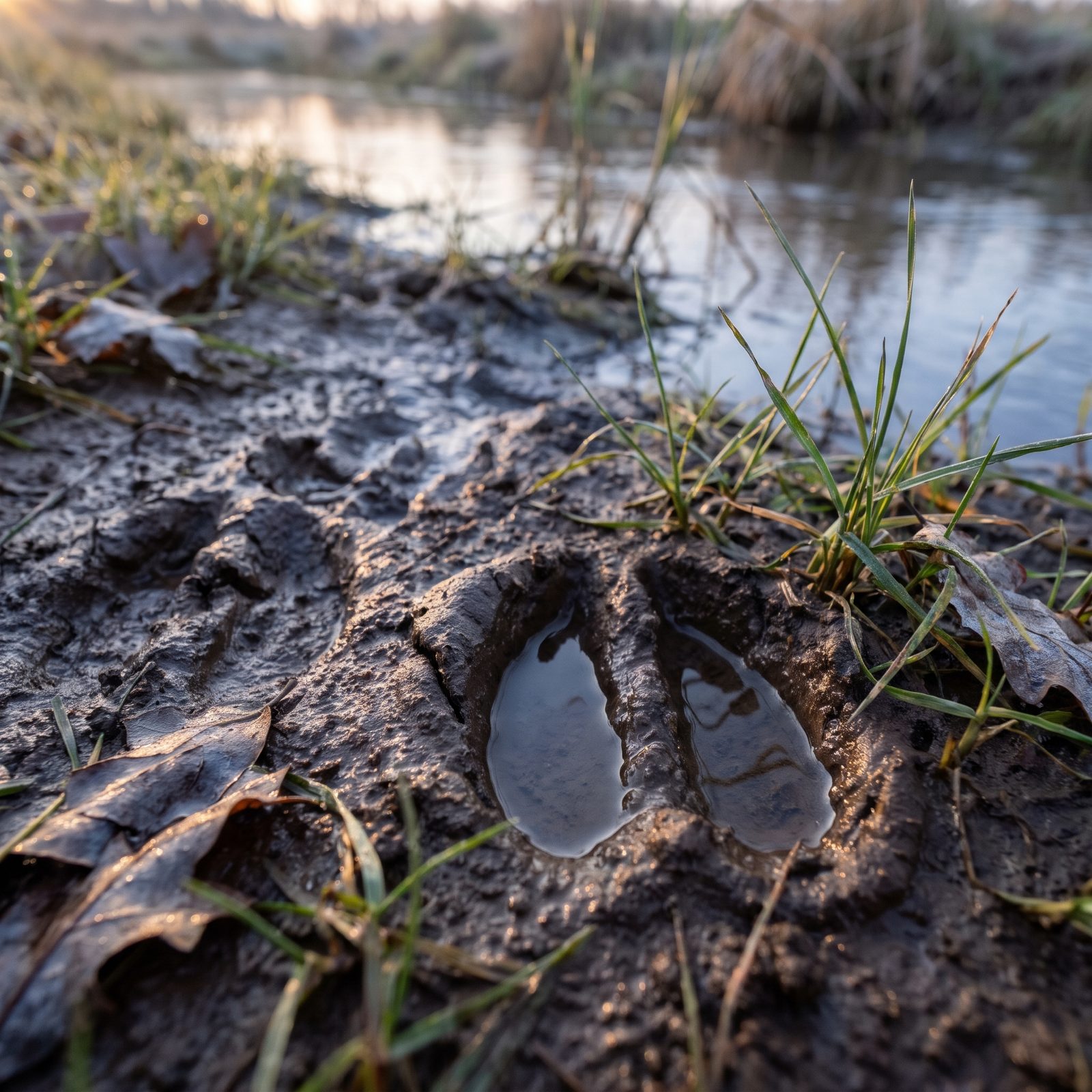
A track is a clock if you know how to read it. Sharp, crisp edges with a thin film of water still settling in the bottom means the animal passed minutes ago, not hours. Crumbling, rain-pocked, leaf-filled prints are old news.
Check the direction too. Mud holds the story of where something was heading, and if the trail leads toward cover or water, you now know where to wait. Beats hiking in circles hoping to get lucky.
36. The Faint Pressed Corridor Running Through Tall Grass
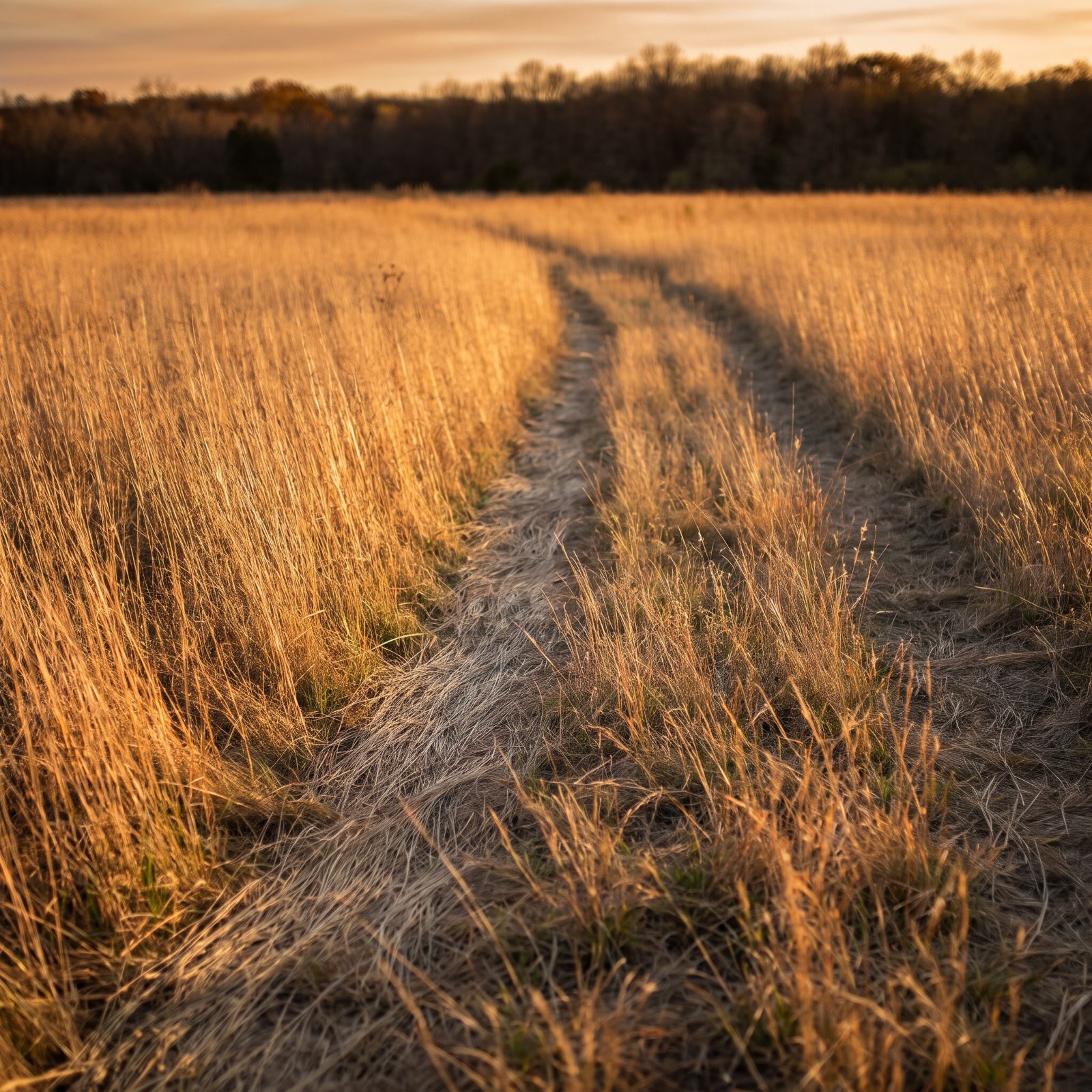
Look across a field at the right angle and you’ll spot it: two parallel ruts where the grass lies flatter and paler than everything around it. That’s a game trail, worn in by animals using the same route night after night because it works.
These corridors often link fields, woodlots and water, and deer and coyotes travel them too. Set up downwind of one near dusk and you’ve positioned yourself on the animal’s commute. It shows best in low evening light, when the pressed grass reads paler than the standing grass around it.
35. A Dark Line Through Silver Dew Where Something Just Walked
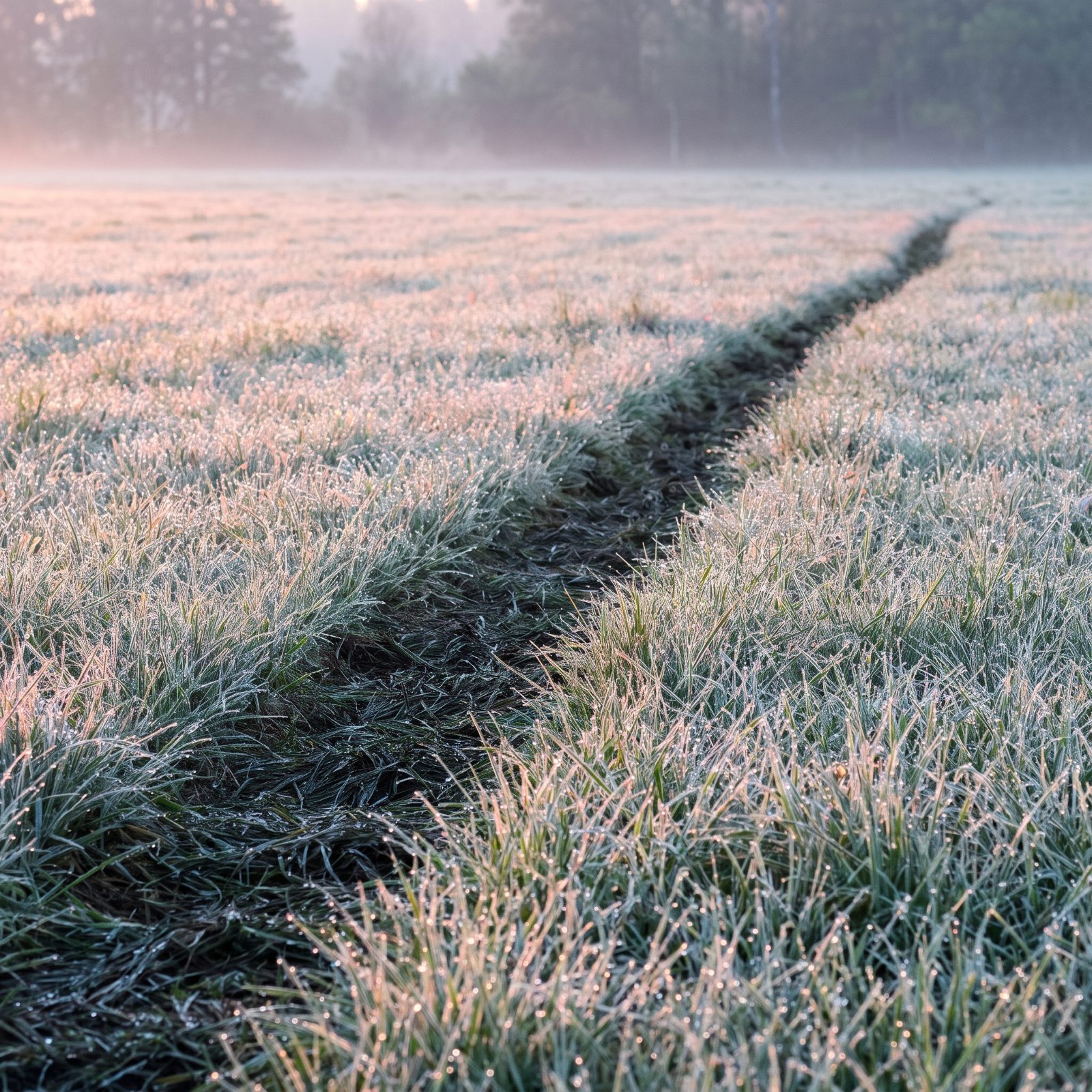
Dew is the most honest clock in the woods. A heavy dawn coats every blade in silver, and anything that walks through knocks it off, leaving a dark swept line across the shimmer. That line didn’t exist an hour ago. Whatever made it is close.
Follow the direction of the break and you’re tracking something that passed within the last few minutes. It’s a clue that only exists in a narrow window after sunrise — one more reason the early start always pays.
34. Gray Pellets Piled Under a Regular Owl Roost
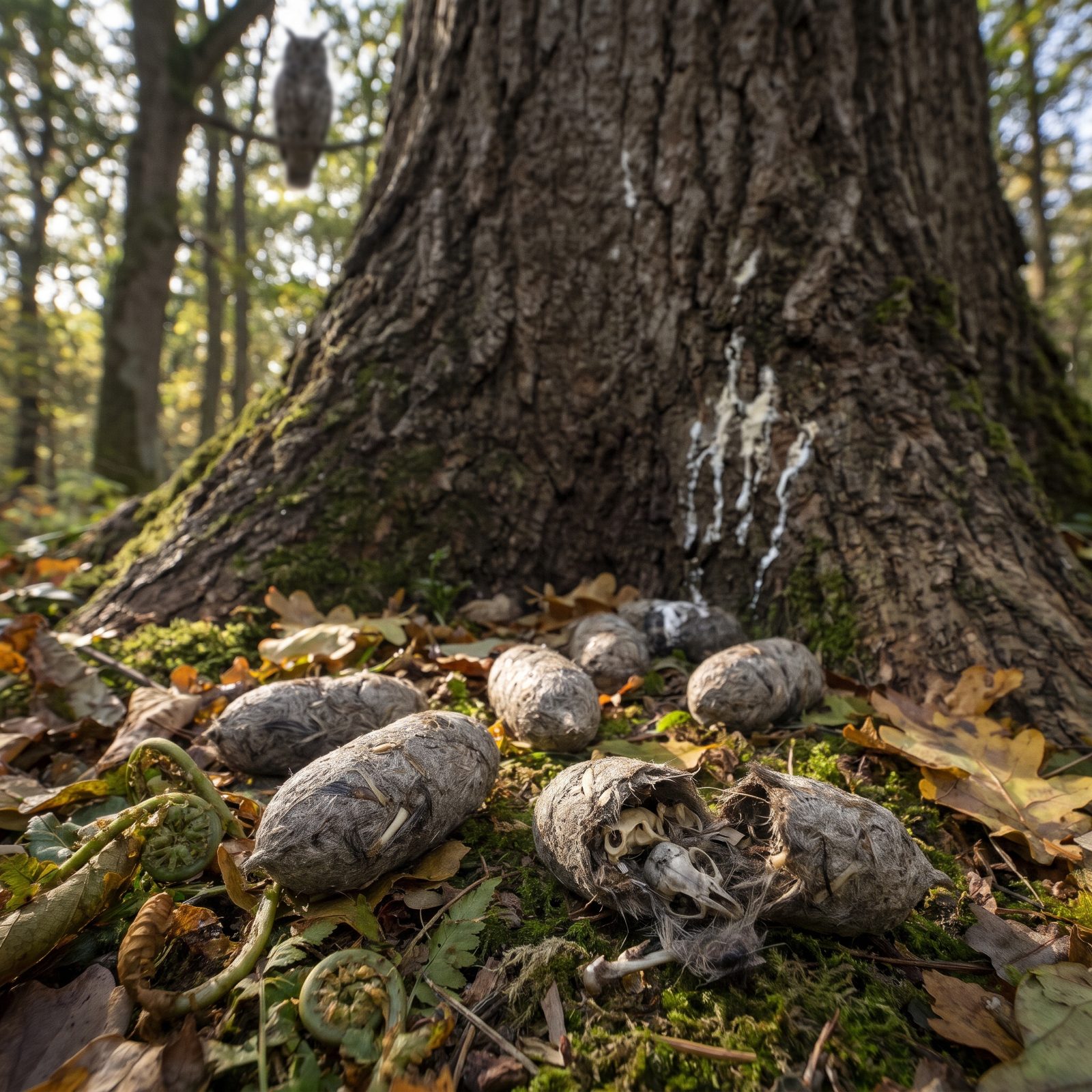
Owls can’t digest bones and fur, so they cough them up as gray pellets — compact, rounded lumps that often show small white bones inside. Find a cluster of them on the ground and you’ve found a spot an owl returns to again and again. Look straight up.
Whitewash streaks on the bark above confirm it. A roost this reliable means you can plan a shot around it rather than stumbling on an owl by accident — which almost never happens, because owls see you first every single time.
33. Wisps of Fur Caught on Bark at Nose Height
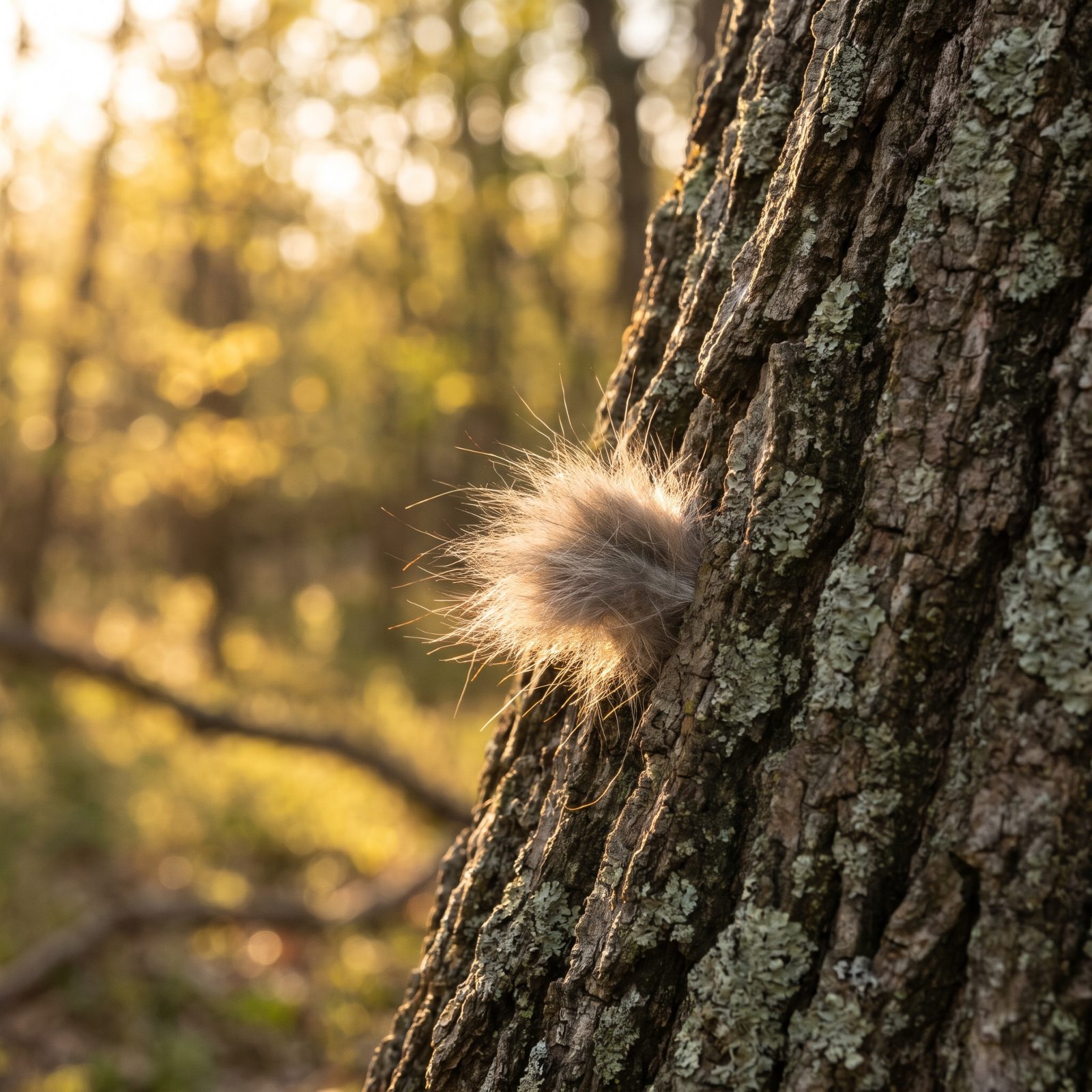
Run your eye along tree trunks and fence posts at roughly knee-to-chest height and you’ll start noticing little clumps of fur snagged in the bark. Animals brush the same pinch points on their routes, leaving tiny hair samples behind.
Color and coarseness tell you who. Coarse gray-brown might be a deer; soft reddish hints at a fox. But here’s the part that matters more than the ID — the fur marks a trail you’d otherwise miss, often at a gap in a fence or a squeeze between two trunks where the animal has nowhere else to go.
32. A Ghostly Shed Snakeskin Tangled in Low Brush
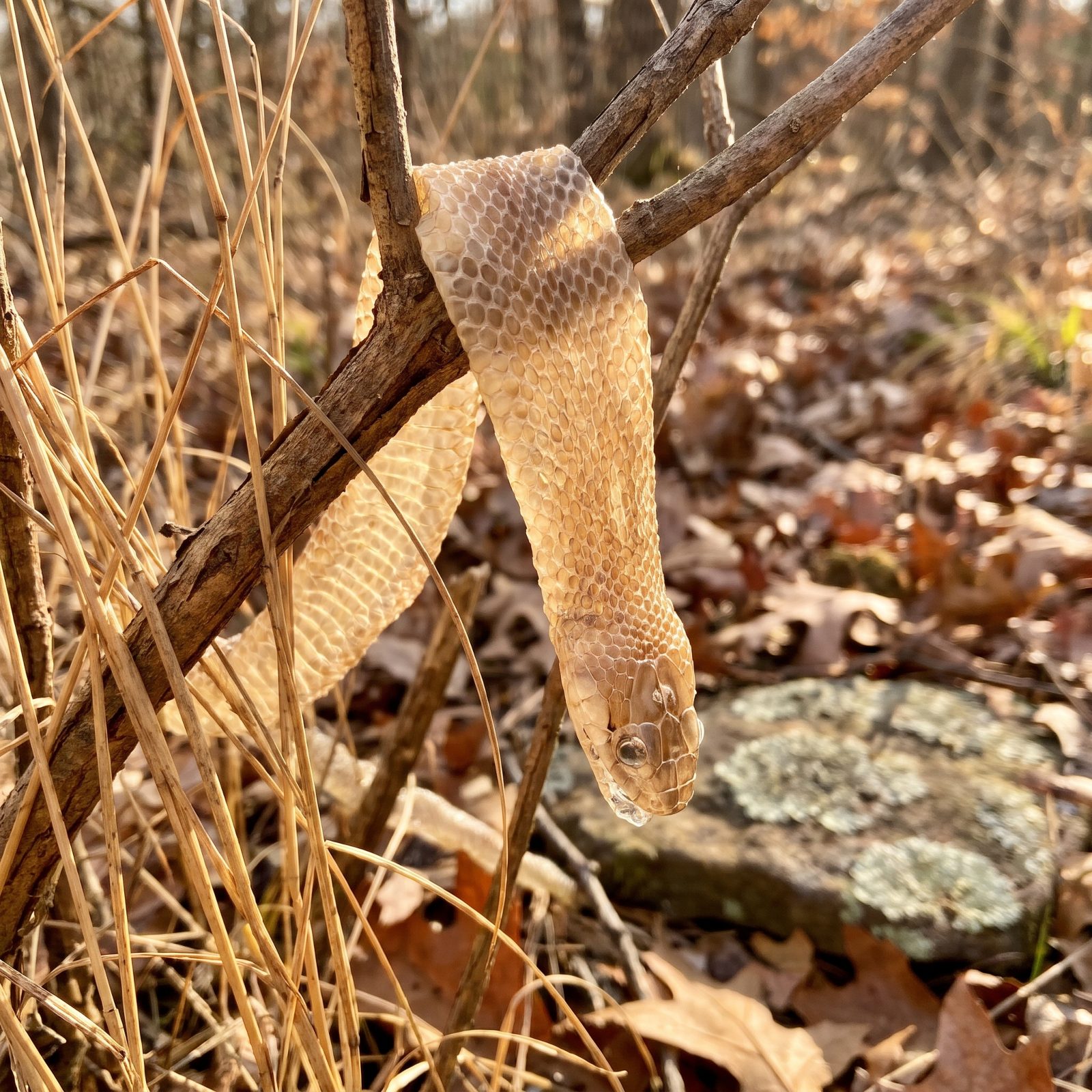
A length of papery, scaled skin draped over brush, often complete right down to the clear eye caps, can look like a real snake at first glance. A snake shed it here, which means the snake lives here — probably close, probably basking somewhere nearby when the sun’s out.
Fresh sheds are supple and complete; old ones go brittle and fragment. A recent one points you toward rock piles, log edges, and sunny flat spots where cold-blooded reptiles warm up in the morning. That’s your blind. Just mind where you put your hands and feet while you set up.
31. A Fan of Plucked Feathers Marking a Hawk’s Dining Table
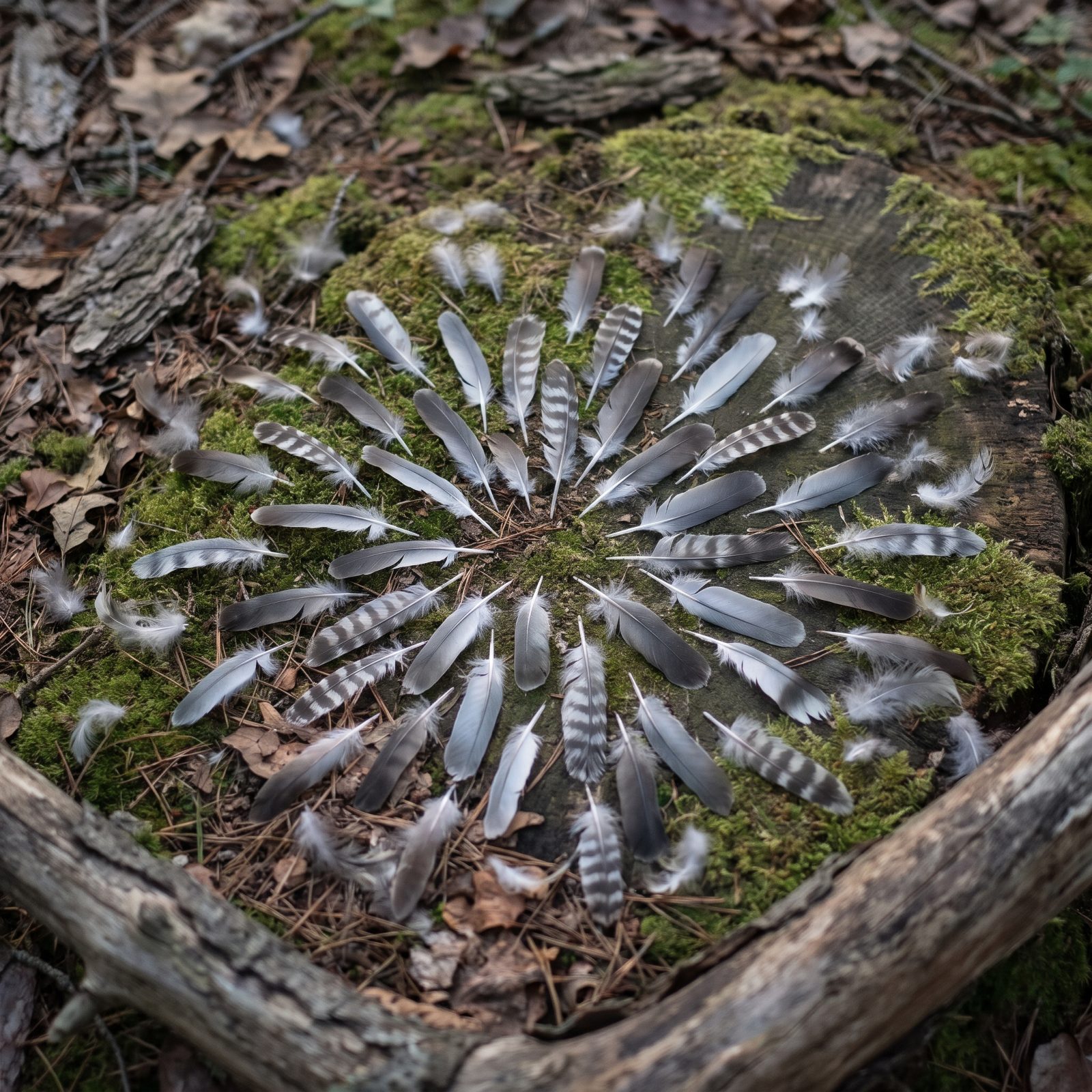
Hawks and falcons pluck their prey before eating, and they tend to use the same perch to do it. The result is a telltale scatter of feathers around a stump, a fence post, or a flat rock.
This is a plucking post, and raptors are creatures of habit. Find one and you’ve found a reliable spot to set up and wait. The feathers also tell you what’s being hunted, which hints at what else in the neighborhood might be worth your attention.
30. Bark Shredded Off a Sapling by Antlers in Rut
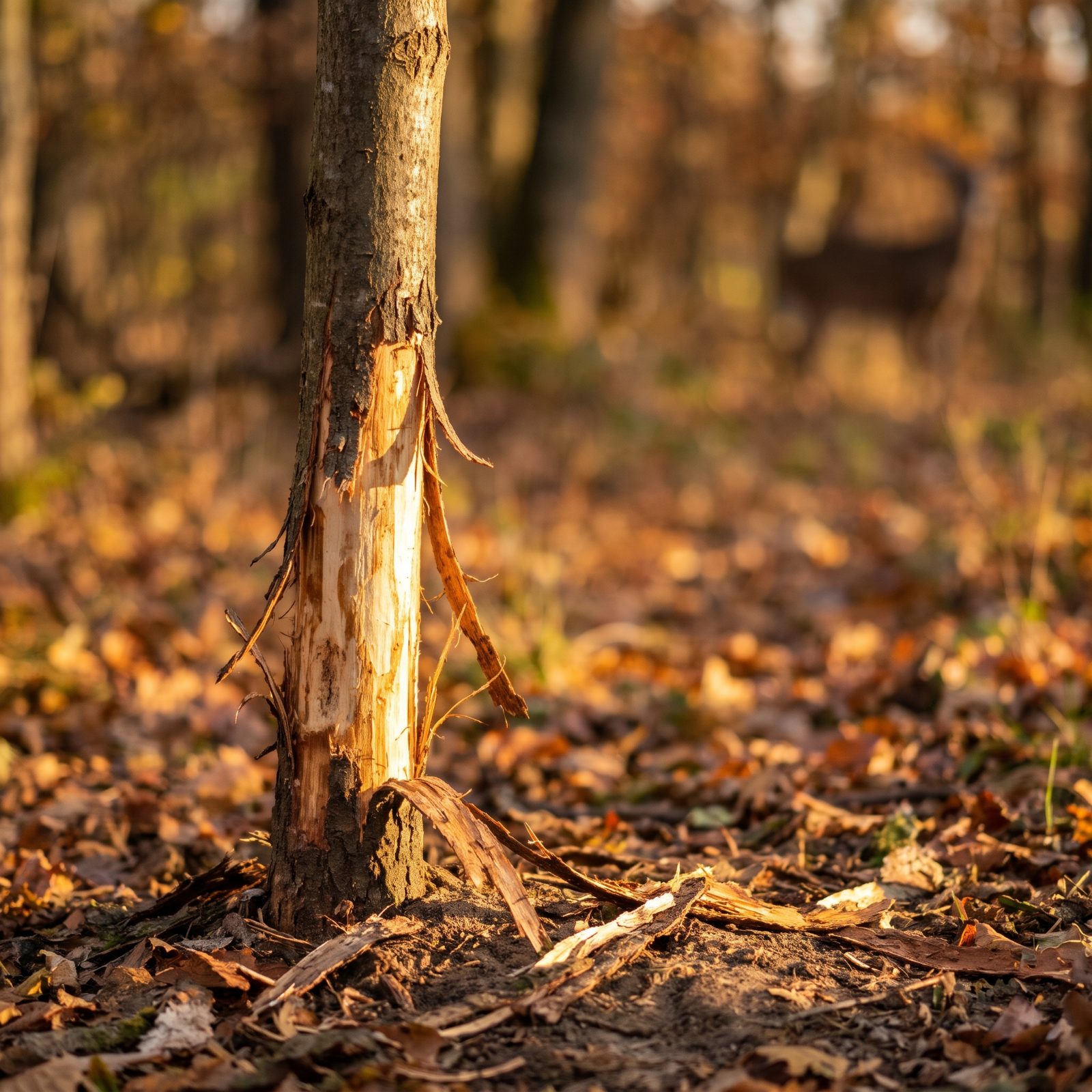
A sapling with its bark torn away, pale wood gleaming at knee height, isn’t storm damage. That’s a buck rubbing his antlers and marking territory in the run-up to and during the rut. The exposed wood glows against the dark bark if you catch it in low light.
Rubs cluster in a buck’s core area, and he’ll refresh them year after year. Fresh ones — sticky, bright wood — mean he’s working the spot right now. Find a line of rubs and you’ve mapped a deer’s address in the weeks leading into and through the breeding season.
29. Deep Claw Marks Raked High Into a Tree Trunk
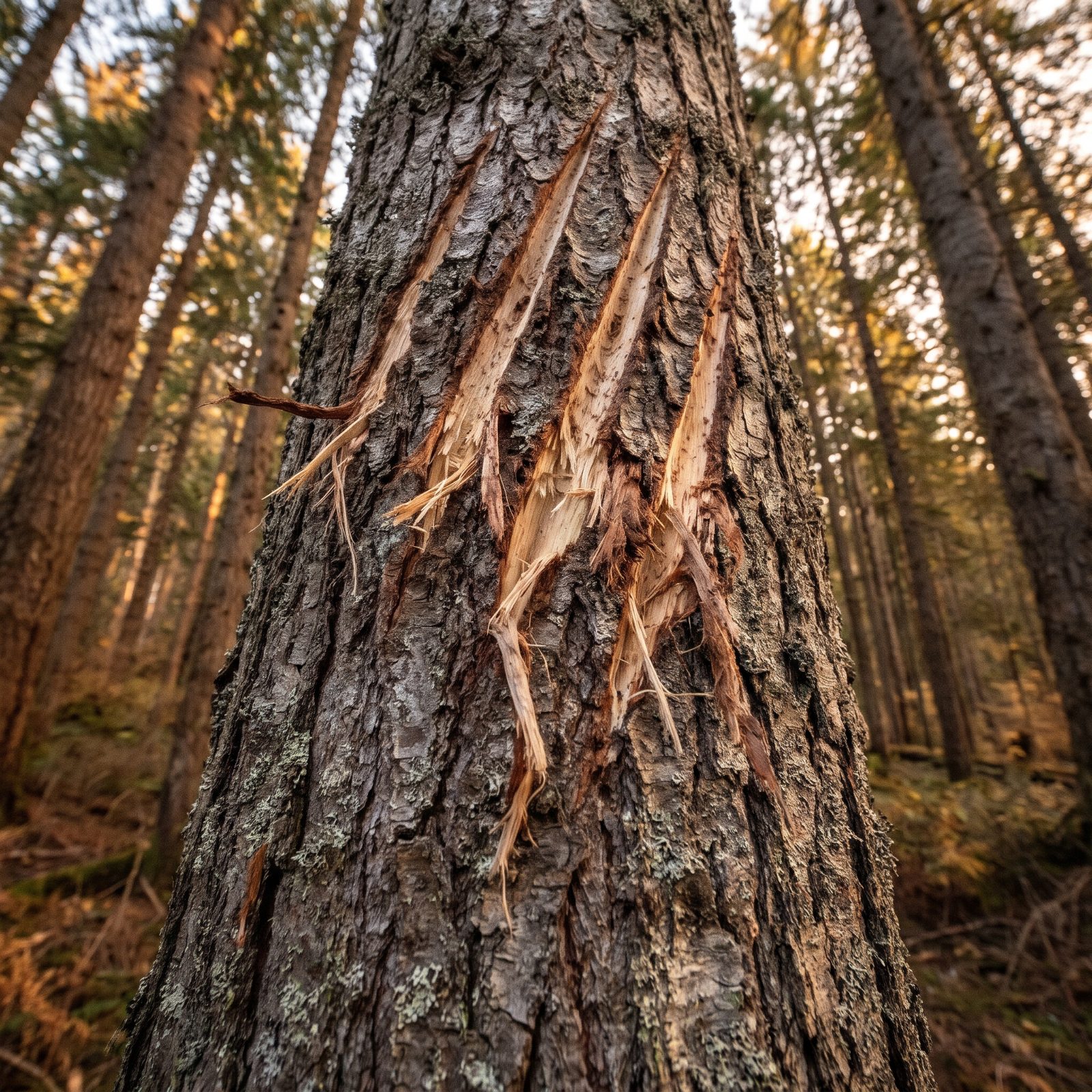
Four parallel grooves raked down a trunk, higher up than any deer could reach, mean a clawed mammal came through. Bears do this to mark territory and stretch, and the height of the marks hints at the size of the animal that made them.
Pale, splintery wood under torn bark means fresh. These marks tell you a big animal considers this patch home turf — information to respect as much as to use. So read it, note it, and keep plenty of distance between you and whatever left it.
28. A Browse Line Along the Forest Edge
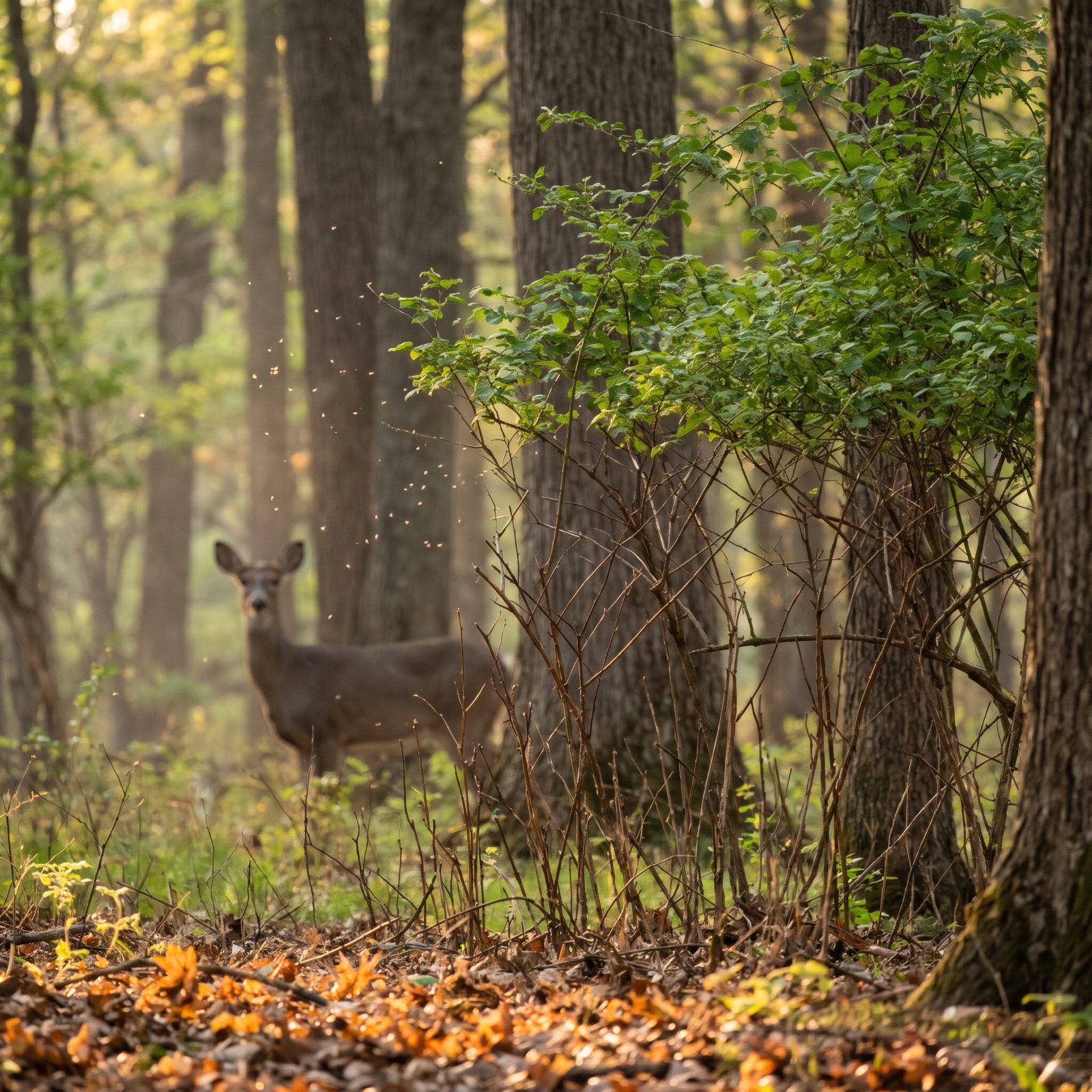
Read the understory as a flat ruler, not a mess of leaves. Where every shrub is nibbled bare to the same height but untouched above, you’re standing inside a dining room. Deer, moose and elk all leave this telltale shelf, and the height roughly tells you who ate here.
The mistake is scanning for a whole animal. You’ll walk past twenty of them that way. Scan for the line instead. Once you clock that even horizontal edge, you know the herd works this patch at dawn and dusk — and that’s your reason to be sitting still before the sky goes pink.
27. Pinecones Stripped by Hungry Squirrels
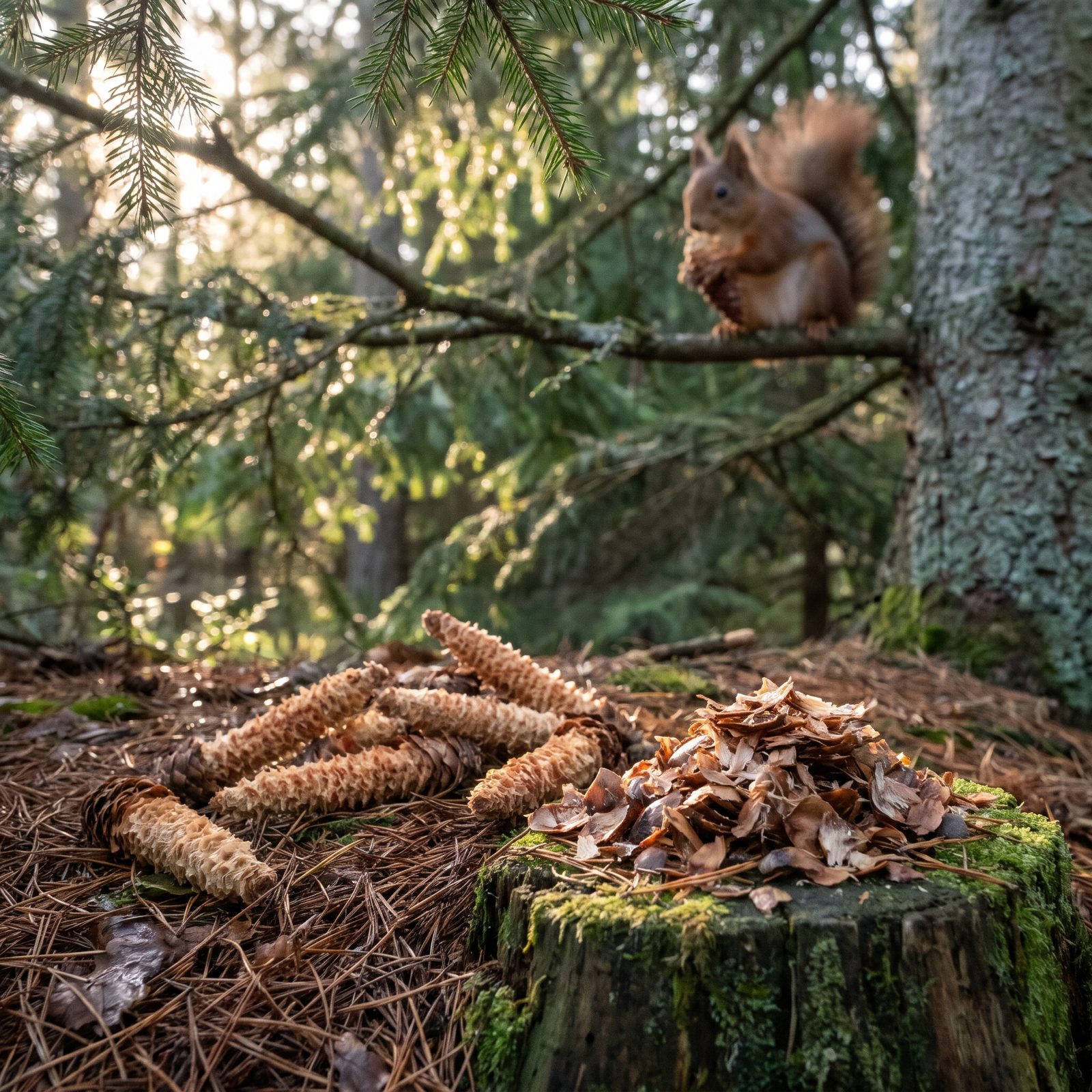
A pine cone chewed down to its bare core looks like trash. It’s actually a mailbox. Squirrels — red squirrels especially — strip cones at the same perches over and over, leaving a mound of shredded scales called a feeding pile. Find the mound, find the dinner table.
Fresh piles are pale and resinous, smelling faintly of pine; old ones go grey and weathered. Set up near a fresh one, stay quiet, and the owner usually turns up within the hour, because food this good is worth defending.
26. Wood Chips Beneath an Active Tree Cavity
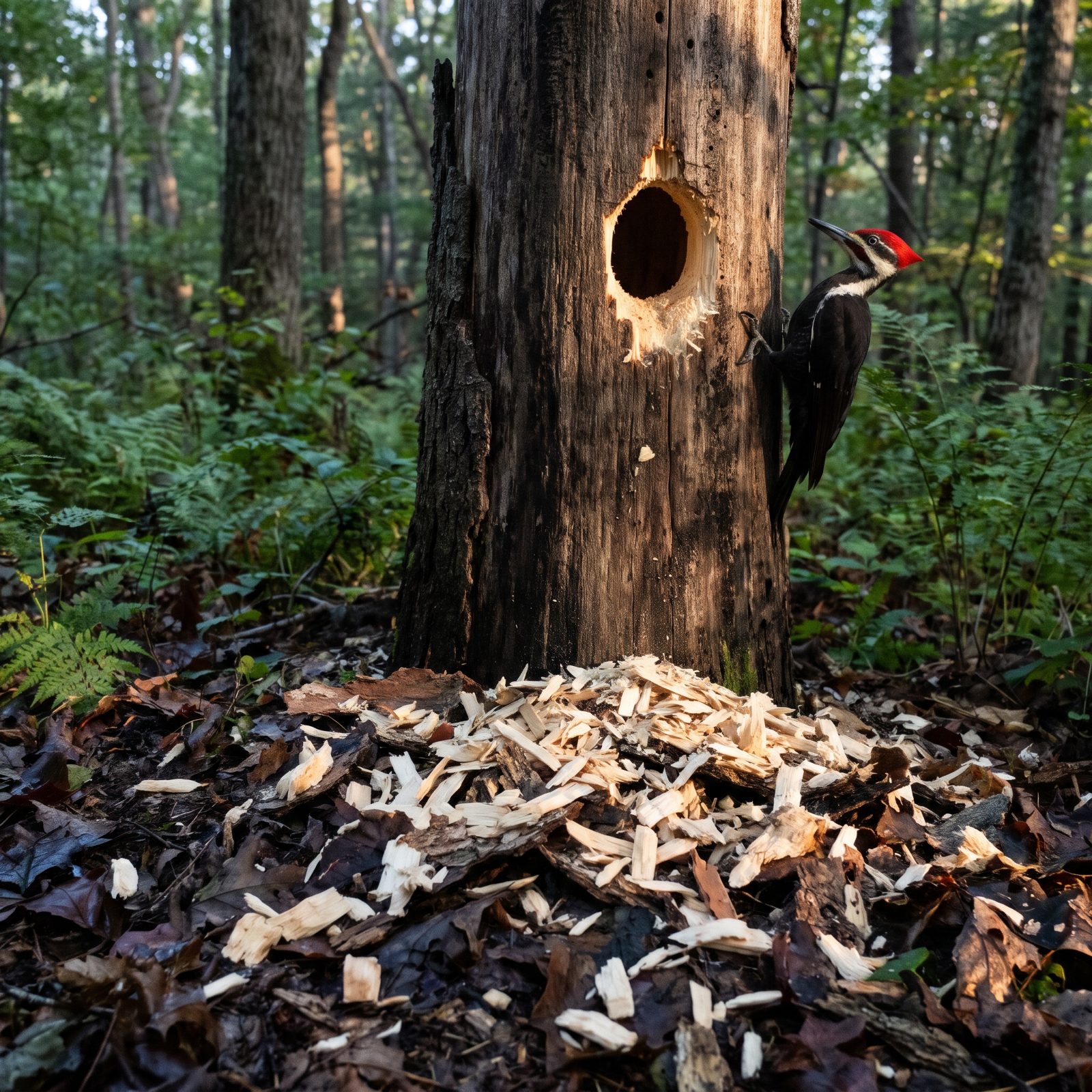
Sawdust at the foot of a tree means something is excavating above you. So look up. A fresh cavity shows clean, bright edges where new wood is exposed; old holes weather grey and often sit empty. The pile of chips below tells you the work is recent and the resident is probably still around.
Woodpeckers make the big ones. Nuthatches, chickadees and owls move into the leftovers. I wasted far too many mornings staring at empty old holes before I learned to check the ground first. The chips don’t lie about timing.
25. A Midden of Snail Shells or Small Bones
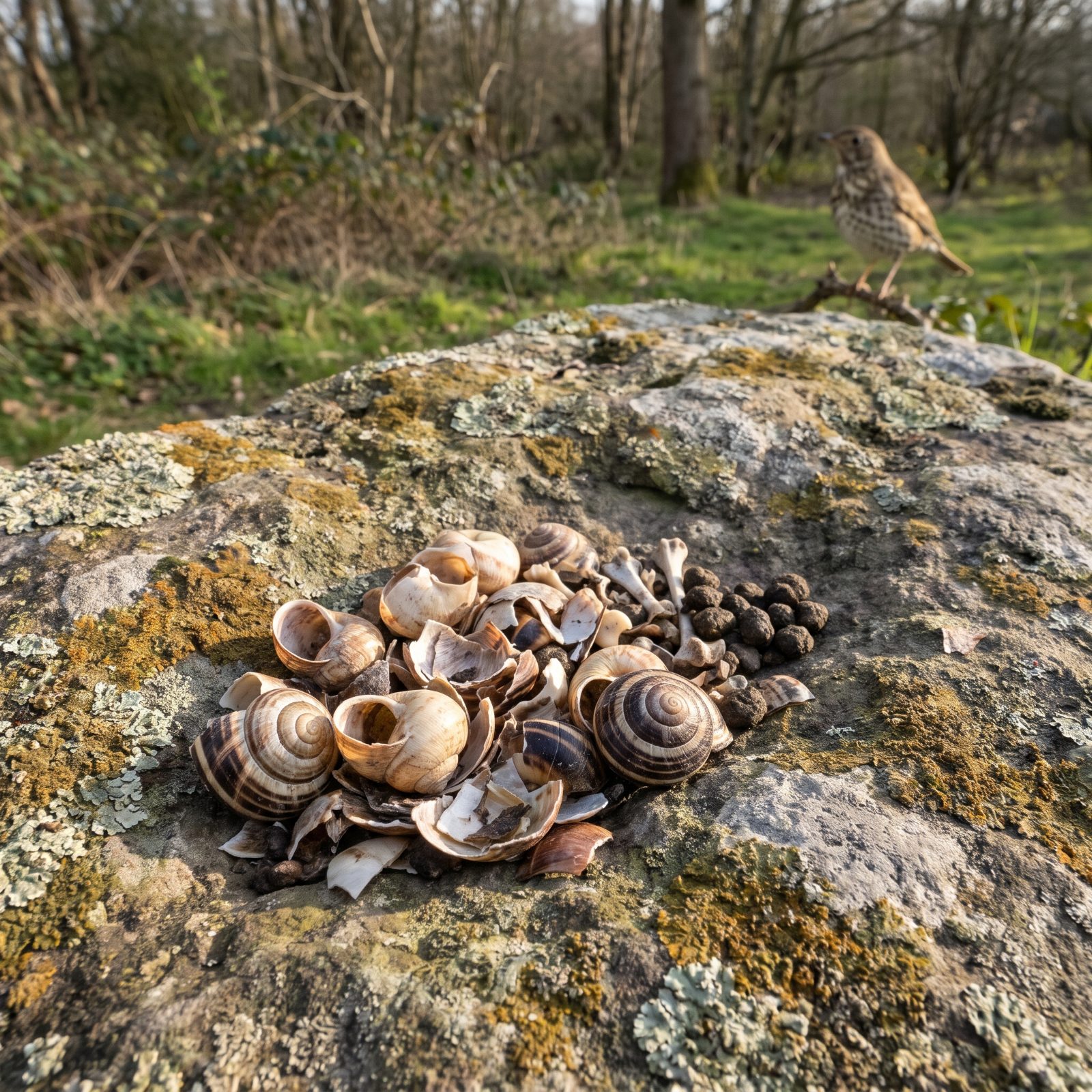
Find a flat stone littered with smashed snail shells and you’ve found a song thrush’s anvil — the same rock used again and again to crack shells open. Owls and other birds leave their own signatures nearby: pellets packed with fur and tiny bones, dropped under a regular roost.
These spots are habit, not accident. The bird comes back because the tool or the perch works. Mark the location, back off, and let it settle into its own routine.
24. A Camouflaged Food Cache Under Leaves
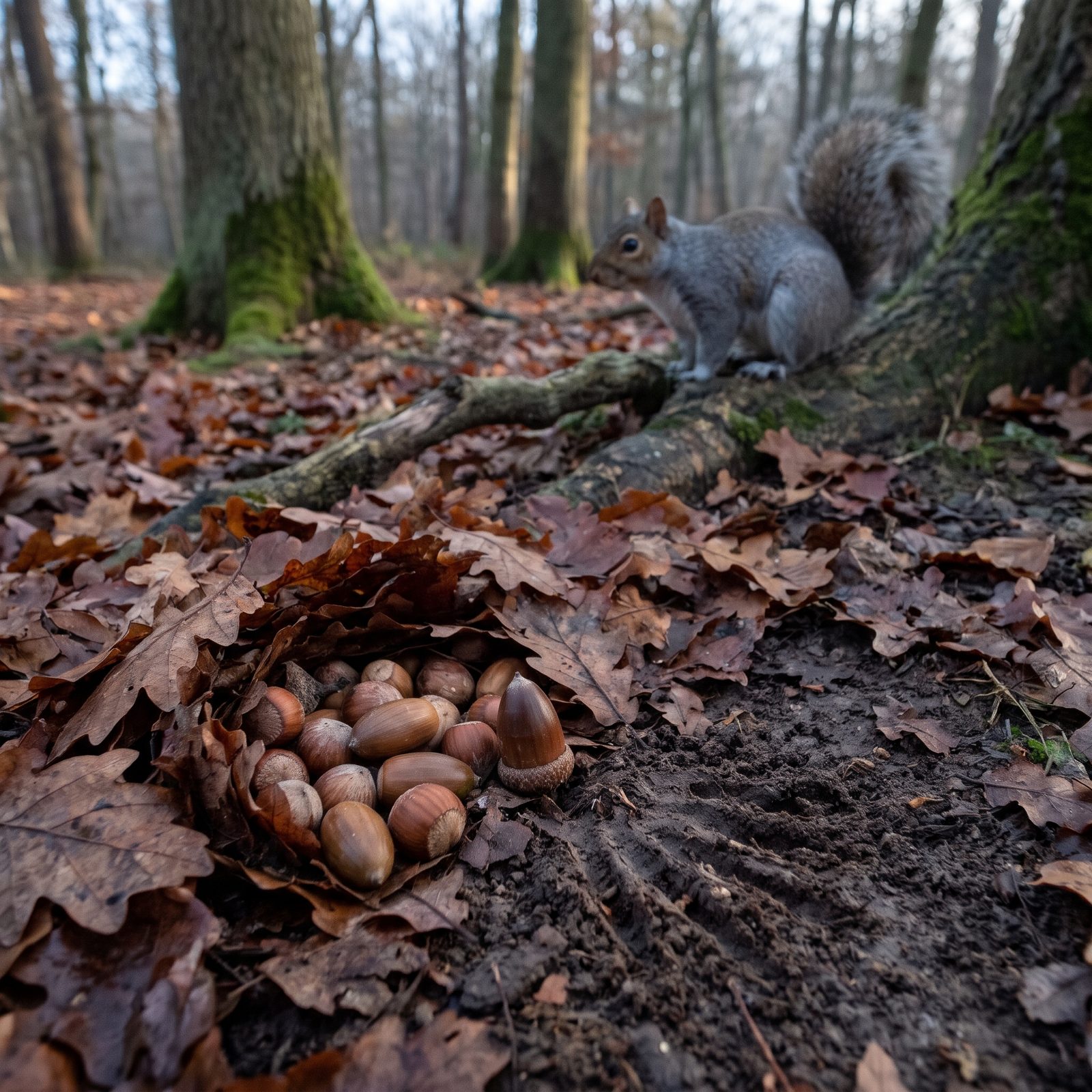
A pocket under the leaf litter holding a pile of fifteen or so nuts is a food cache, and whoever made it is rarely far. Squirrels often scatter-hoard one nut per site, but a heap like this is a larder pile, and they circle back to re-check and restock it for weeks on end.
That constant revisiting is your opening. Jays do the same with acorns, usually out in grassy clearings. Don’t dig the cache up — you’ll only spook the owner and lose your shot. Note it, step back, watch the paths leading in. The animal treats that spot like a savings account it can’t stop checking.
23. Flattened Grass Where an Animal Rested
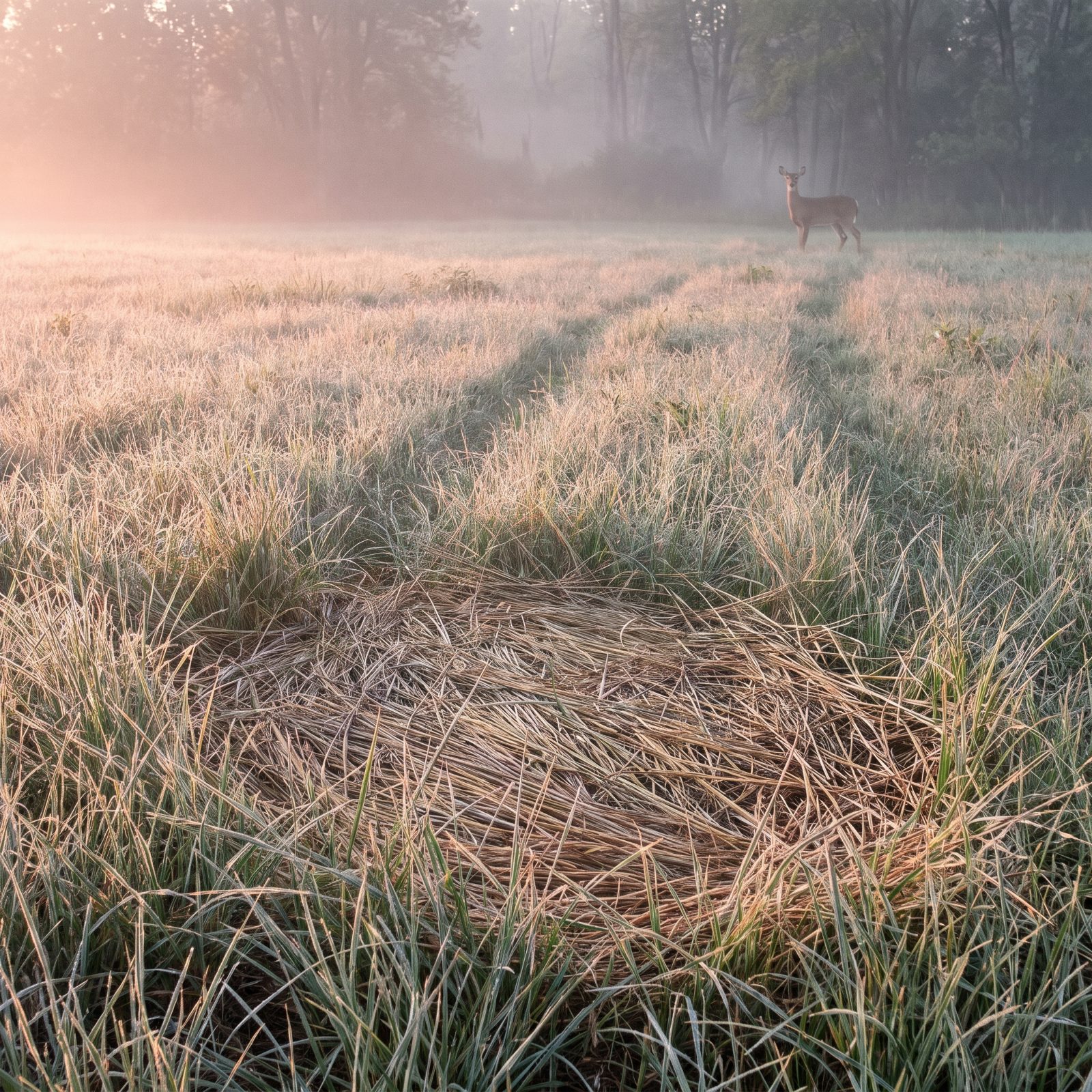
An oval of pressed-down grass is a bed. Deer, hares and foxes all leave these forms, usually tucked into sheltered spots with a clear view of approaching trouble. And a warm, crisp depression? That often means the animal left seconds before you blundered in.
Size and shape narrow down the maker. A tight curl in tall grass reads fox; a broad flattened oval reads deer. Beds cluster where cover meets feeding ground, so one bed usually means more nearby — and a reason to come back at the same hour tomorrow.
22. A Nest Disguised as a Clump of Moss
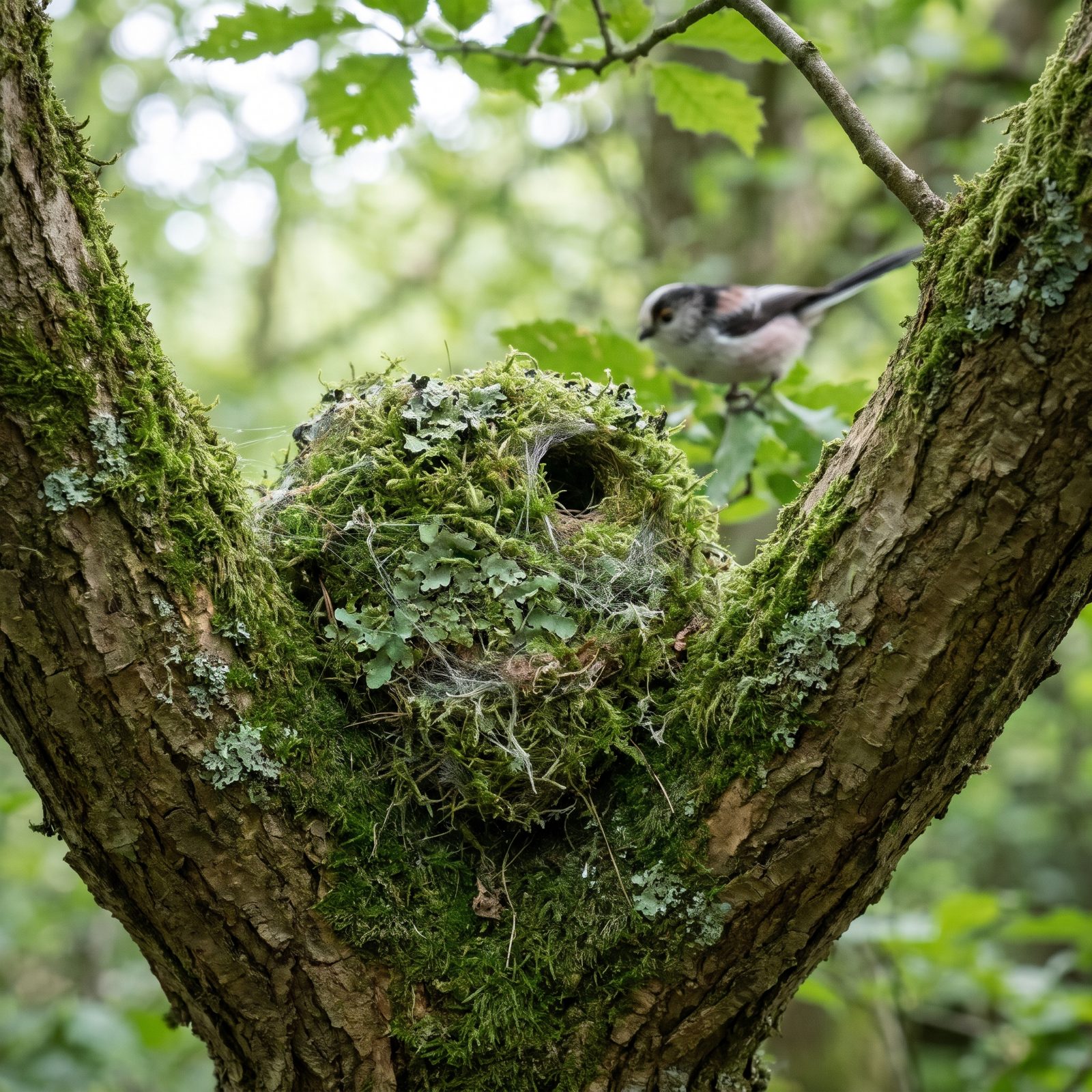
The best nests are built to be missed. Wrens, long-tailed tits and many warblers weave domed nests from moss, lichen and spider silk that read as a natural lump on a branch or bank, and your eye slides right over them.
Give yourself away and you risk the parents abandoning the eggs, so keep your distance.
Watch for the giveaway instead: a small bird that keeps coming back to the same spot with food in its beak, then vanishing. The bird finds the nest for you. The rest is just patience and quiet.
You rarely spot the nest. You spot the parent that cannot stop going back to it.
21. A Squirrel Drey High in Bare Branches
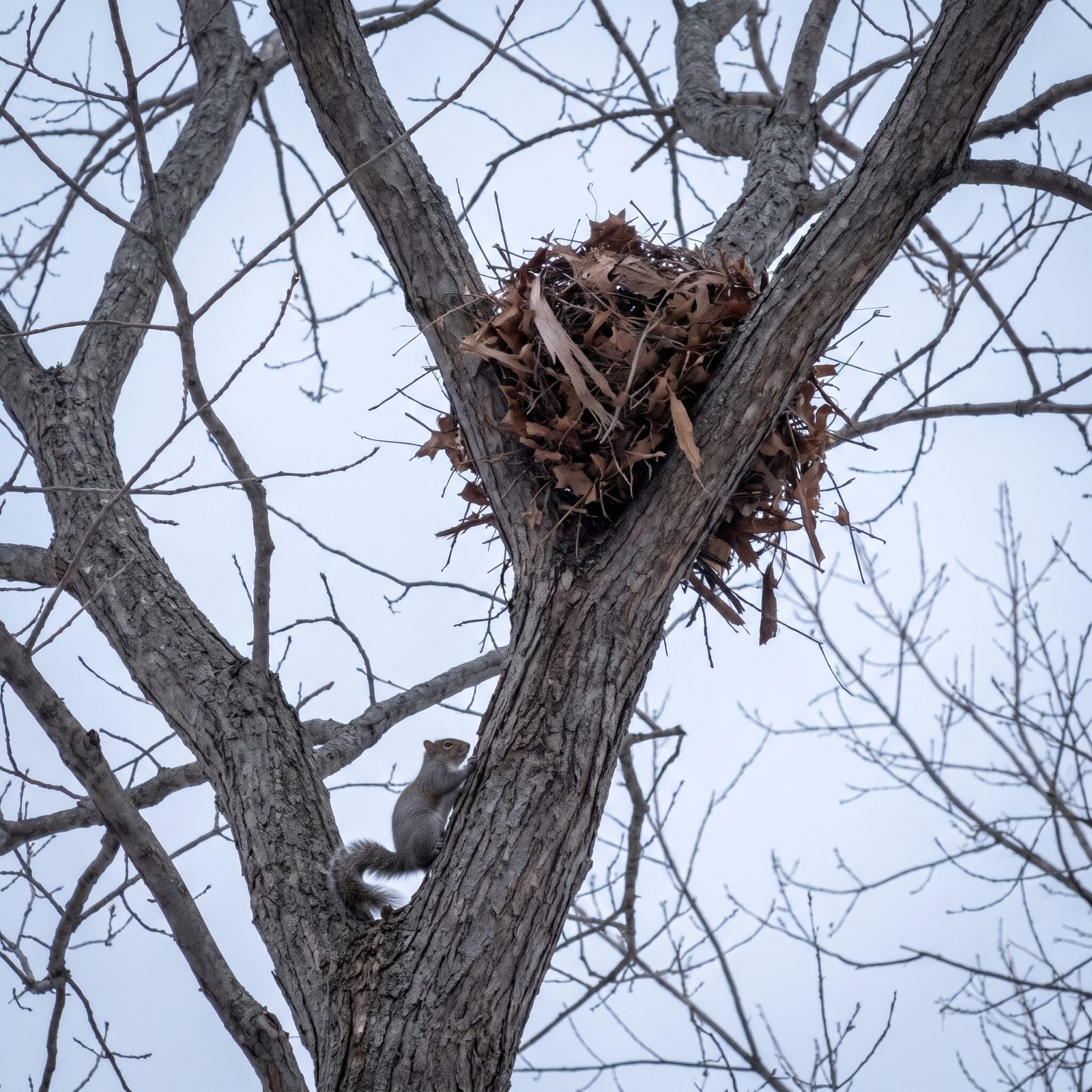
Winter strips the trees and hands you a gift: the squirrel drey. Those basketball-sized balls of leaves and twigs wedged into a high fork vanish in summer and stand out like a sore thumb in January. A lived-in drey looks tight and rounded. An abandoned one goes ragged and starts coming apart.
Several dreys in one tree usually mean a productive patch, not a crowd. Pick a cold, still morning and settle in nearby. Squirrels don’t truly hibernate — they come out to feed even in frost — and the drey points you straight at the tree to watch.
20. A Burrow Entrance Hidden Beneath Roots
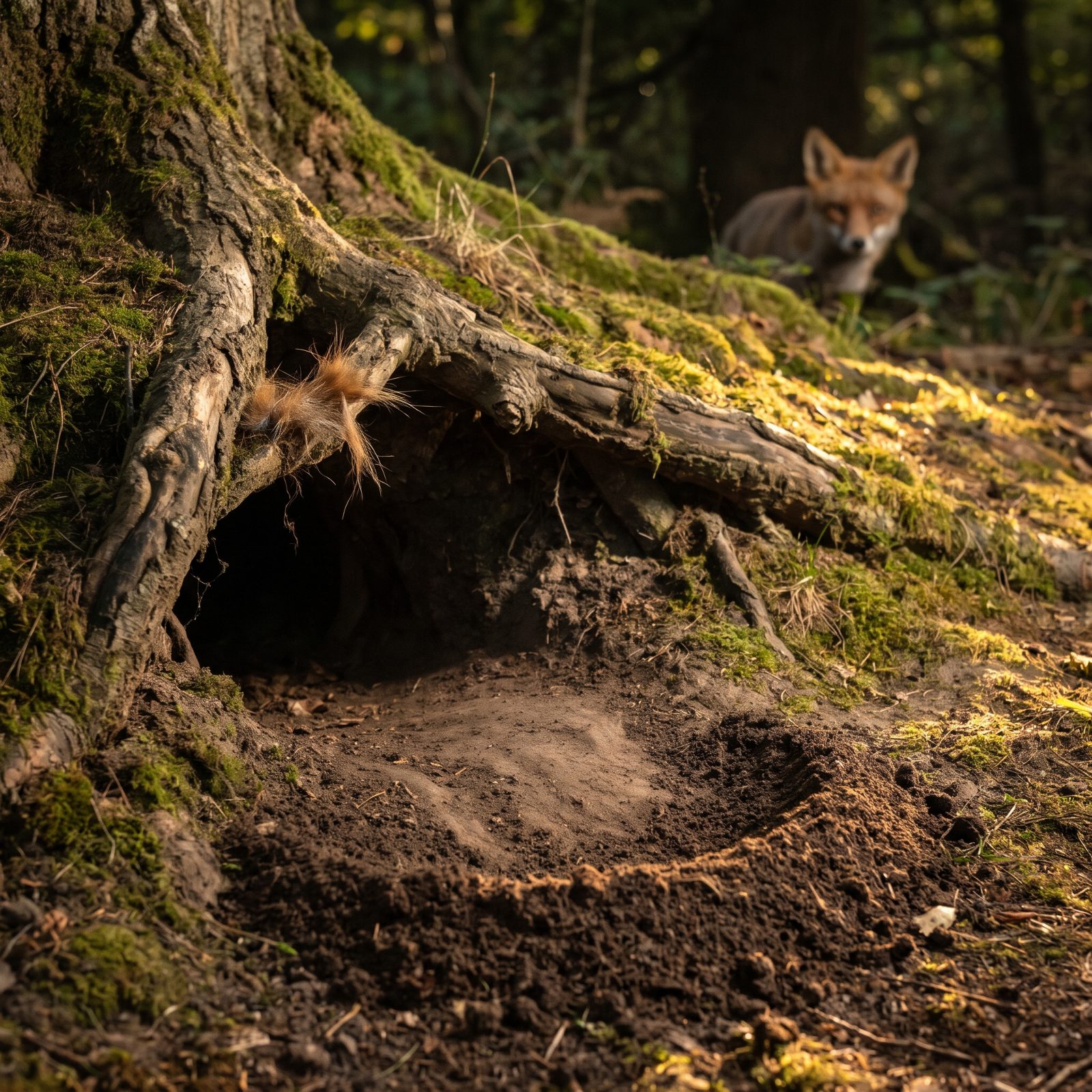
A hole beneath tree roots is a question, and the answer sits in the details at the entrance. A smooth, worn run of bare earth means the burrow is in use. Fresh soil fanned out front means recent digging. Snagged hairs on a root tell you the species, and sometimes the mood.
Fox, badger, groundhog, rabbit — each leaves its own scale of entrance and spoil heap. Active burrows usually smell, faintly or not so faintly, which is the one clue no photo will ever show you.
Never block a burrow or peer down it. Set up downwind, well back, and let the occupant come and go on its own clock.
19. A Beaver Slide Polished Into the Bank
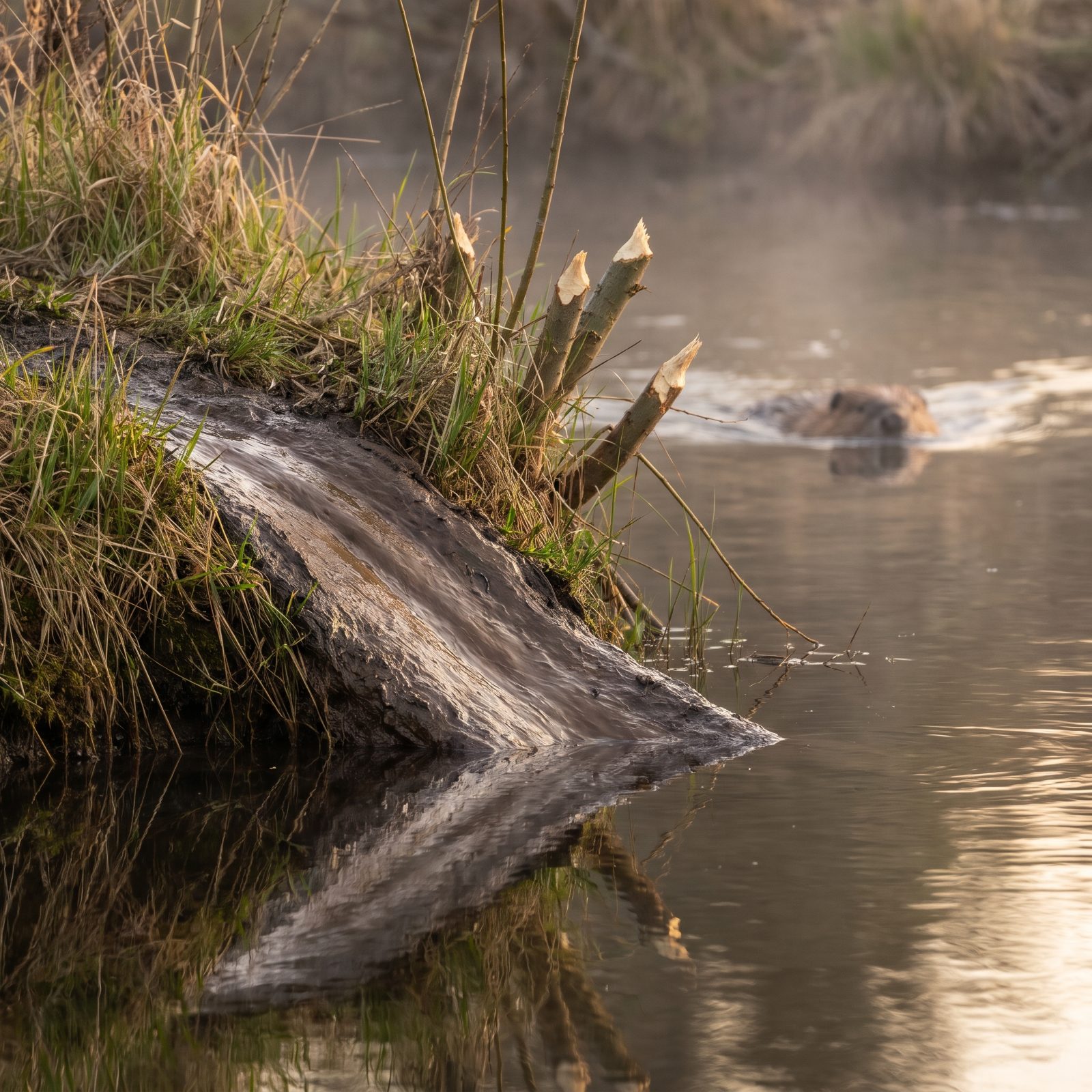
A slick mud chute running down a bank into the water is a beaver slide, worn to a shine by a heavy body hauling itself in and out at the exact same spot night after night. It’s one of the most reliable wildlife signs in any wetland, because beavers are hopeless slaves to routine.
Look nearby and the supporting evidence turns up fast: gnawed stumps cut to a clean point, drag marks, a scent mound of piled mud and vegetation. Beavers work mostly at dusk and dawn, so set up as the light fades, stay downwind, keep still. The slide tells you the stage is set. Now you wait for the performer.
18. Freshly Cut Sticks Around a Beaver Dam
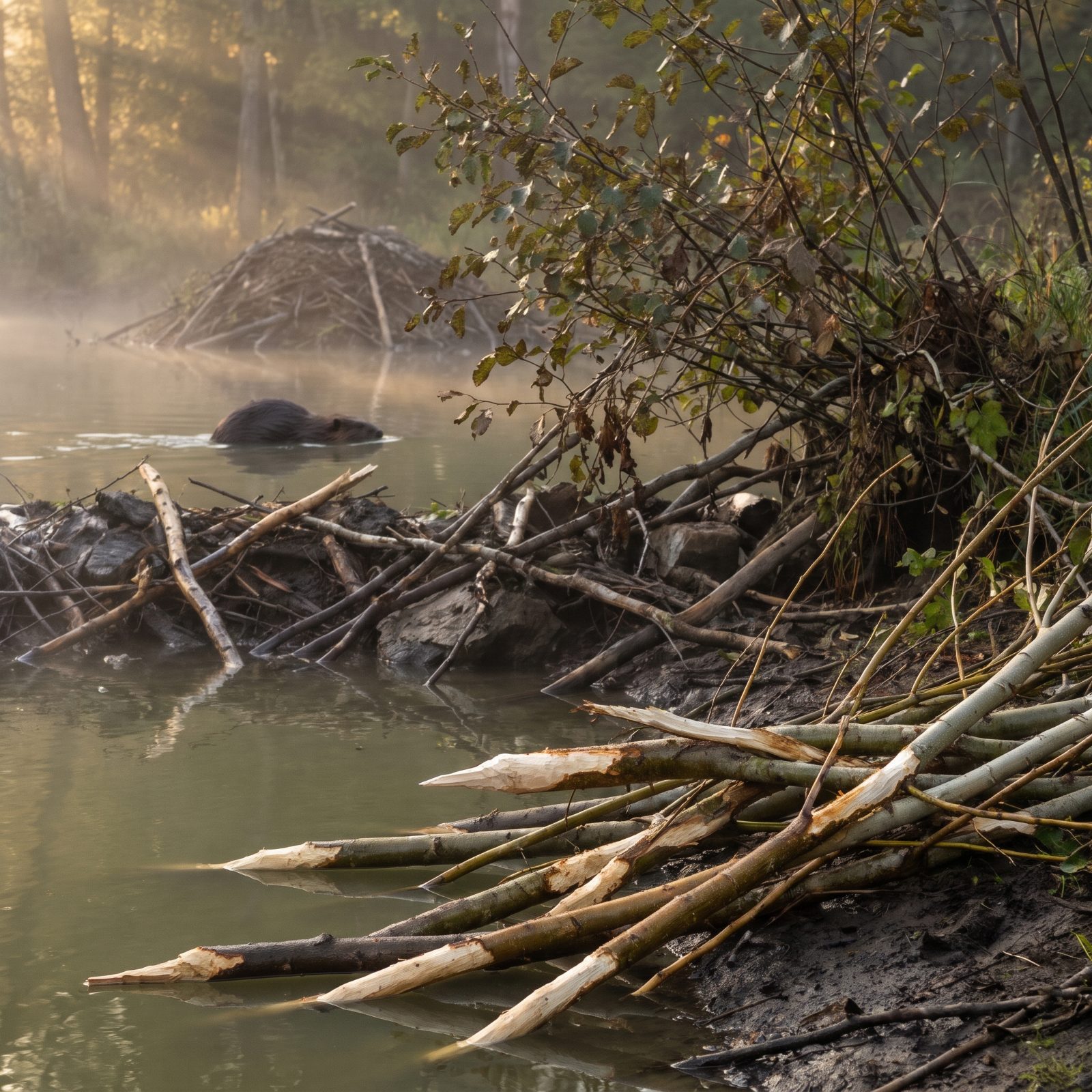
Pale, pointed stick ends are the tell. A beaver chews on a slant and leaves a sharpened pencil tip the color of fresh cream, and that bright wood only stays bright for a day or two before it weathers to gray.
Most walkers see a messy pile of branches and keep going. But those sticks are a clock. Wet, pale cuts mean a beaver worked here last night, which means it’ll probably be back tonight. Find the freshest cuts, note where the dragged branches point, and you’ve traced its path to the water.
17. A Small Tunnel Running Beneath Snow
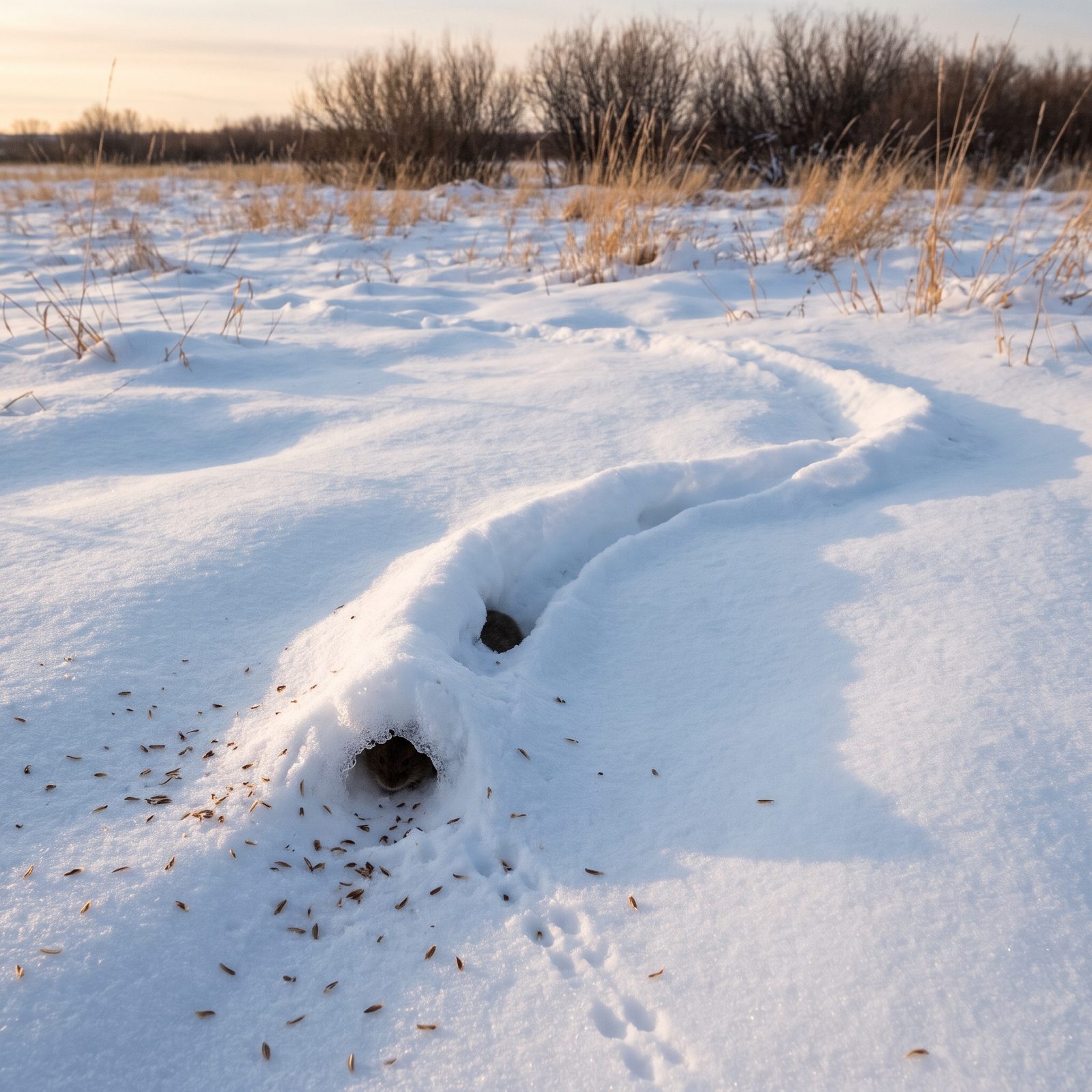
That faint raised seam winding across fresh snow is a roof, not a wrinkle. Voles, shrews and lemmings live in the subnivean zone, the warm gap between frozen ground and the snowpack, where it hovers near freezing even when the air above bites at twenty below.
Where a tunnel caves in, you get a shallow trough and sometimes a clean round hole frosted with crystals around the lip. Why should that hole matter to you? Because it matters to everything that hunts here. A fox cocks its head, listens for the squeak under the crust, then dives nose-first. Owls and weasels work the same lines. Watch the collapsed tunnels and you’re reading a predator’s dinner map.
16. Dust-Bathing Hollows Beside a Trail
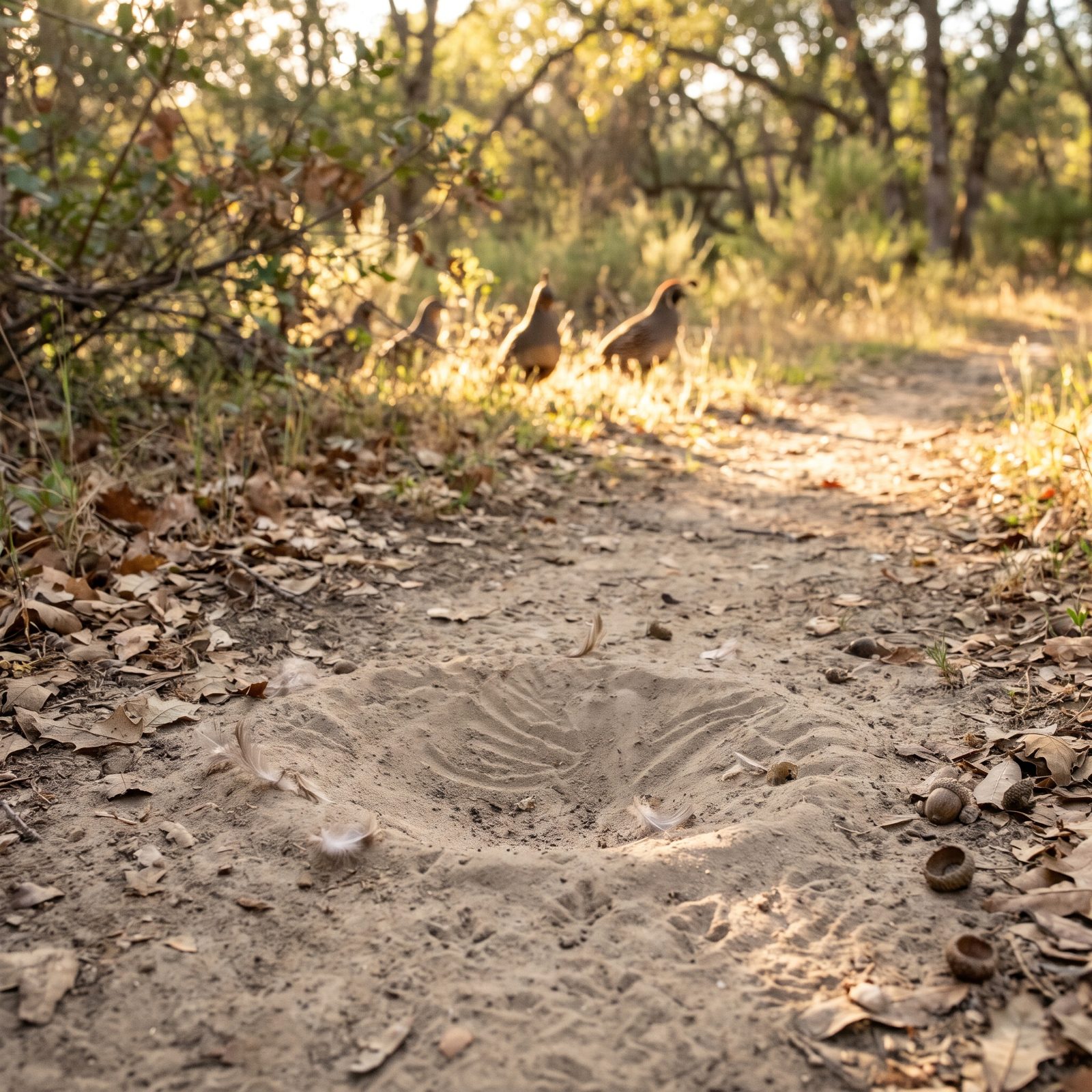
Birds bathe in dirt on purpose.
Those shallow dusty bowls at the trail edge get dug by quail, pheasants, turkeys and plenty of songbirds working fine soil through their feathers to smother mites and soak up excess oil. Look for a feathered rim, a few downy feathers, and the loose churned center.
I ignored these for years, figuring something had just scuffed the ground. Then I learned the truth: the same covey comes back to the same hollows, usually in the warm part of the afternoon. Find a cluster and you’ve found a regular bathing spot. Sit still nearby in decent light and they come to you.
15. Mud Bubbles Betraying a Buried Amphibian
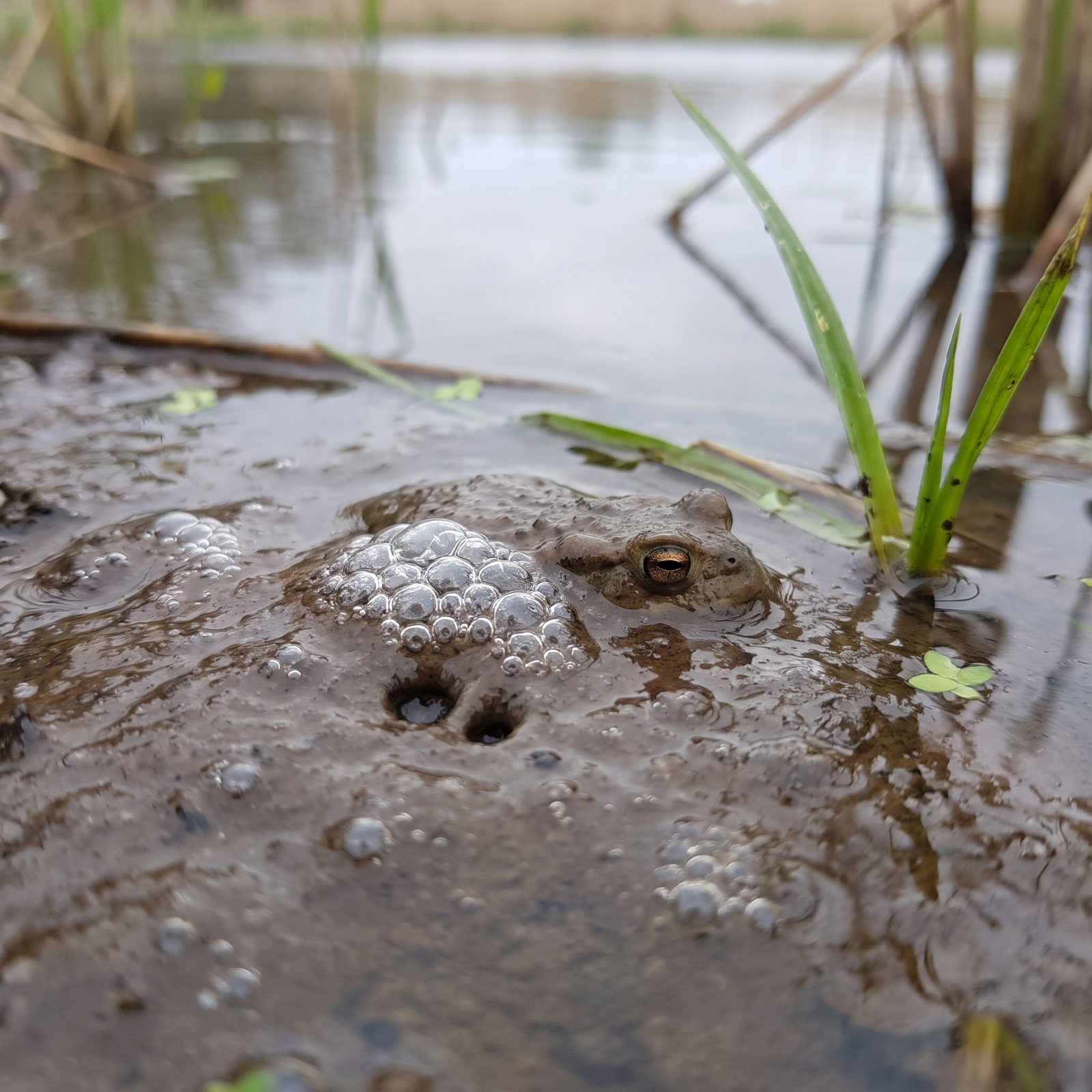
A single string of bubbles rising from still mud, with no wind and no current to explain it, can mean something is stirring down there, though decaying plants release gas too.
Frogs and toads bury themselves in soft pond margins, sometimes with just the eyes and nostrils poking out. Spot a fresh set of bubbles beside a couple of pinprick holes and you’ve likely found a buried amphibian waiting out the heat or the cold.
14. A V-Shaped Wake Moving Without Wind
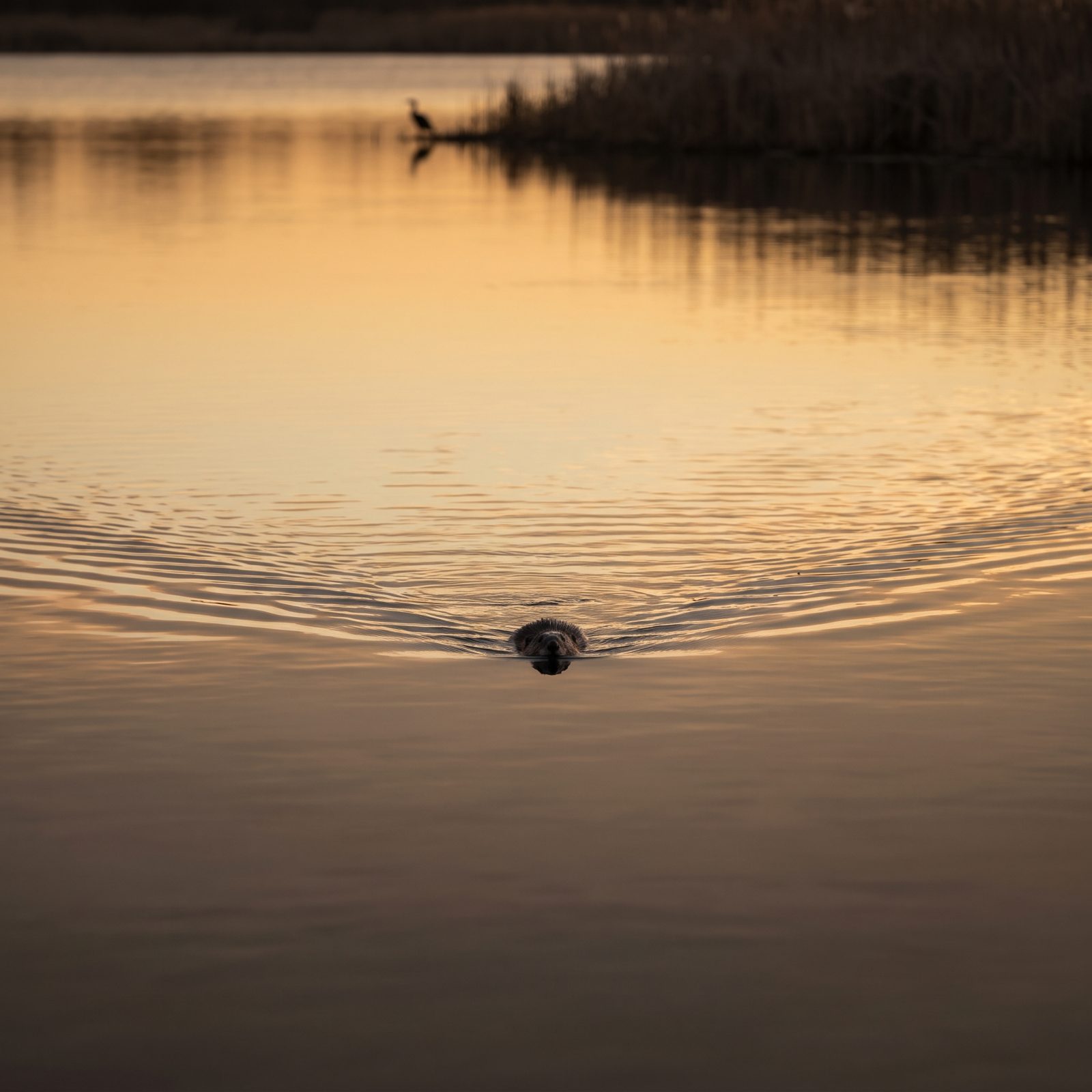
Flat water, no breeze, and yet a neat V creases the surface and slides steadily across it. That’s an animal, almost always.
Muskrats, beavers, otters, swimming snakes and diving ducks all shove a wake ahead of them, and the apex of the V marks the swimmer even when the body rides too low to see.
Read how the wake behaves. A straight, unhurried line usually means a muskrat on a mission. A tight, playful zigzag that keeps vanishing and resurfacing? That’s otters. Track the apex, guess where it’ll haul out, and get your lens there first.
13. A Sudden Shower of Baitfish
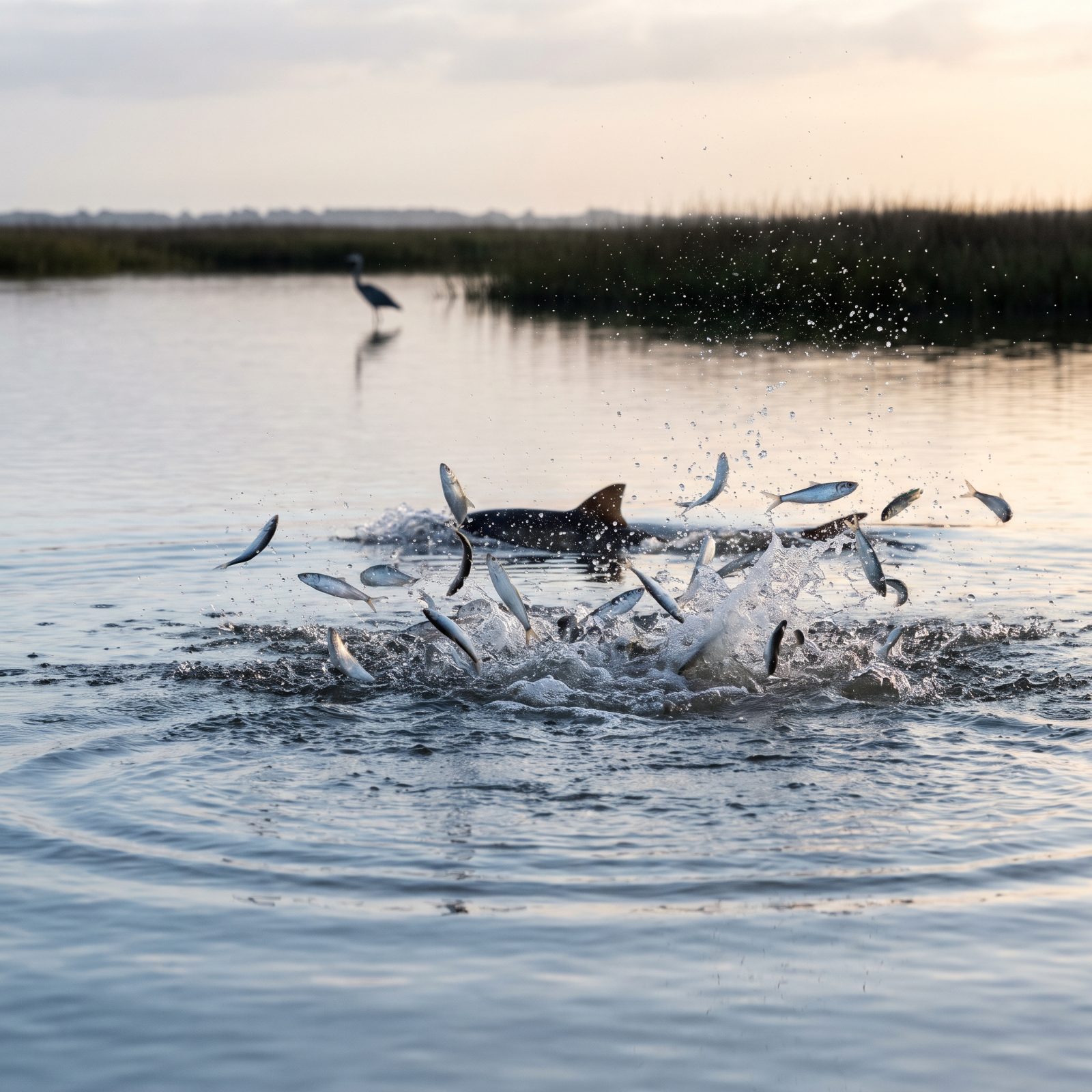
A patch of calm water erupts into a silver spray, hundreds of tiny fish breaking the surface at once like scattered coins flung in the air. That panic has a cause below.
Baitfish fling themselves clear of the water when something is eating them from underneath — bluefish, striped bass, a hunting pike, or a diving loon. The showering fish are the alarm bell, and whatever triggered it is right there.
Birds read this faster than any of us ever will. Watch for terns and gulls suddenly wheeling and dropping onto one spot. They’ve clocked the feeding frenzy, and if you swing your attention there fast, you catch the action at its peak instead of the empty ripples afterward.
12. Songbirds Freezing at an Alarm Call
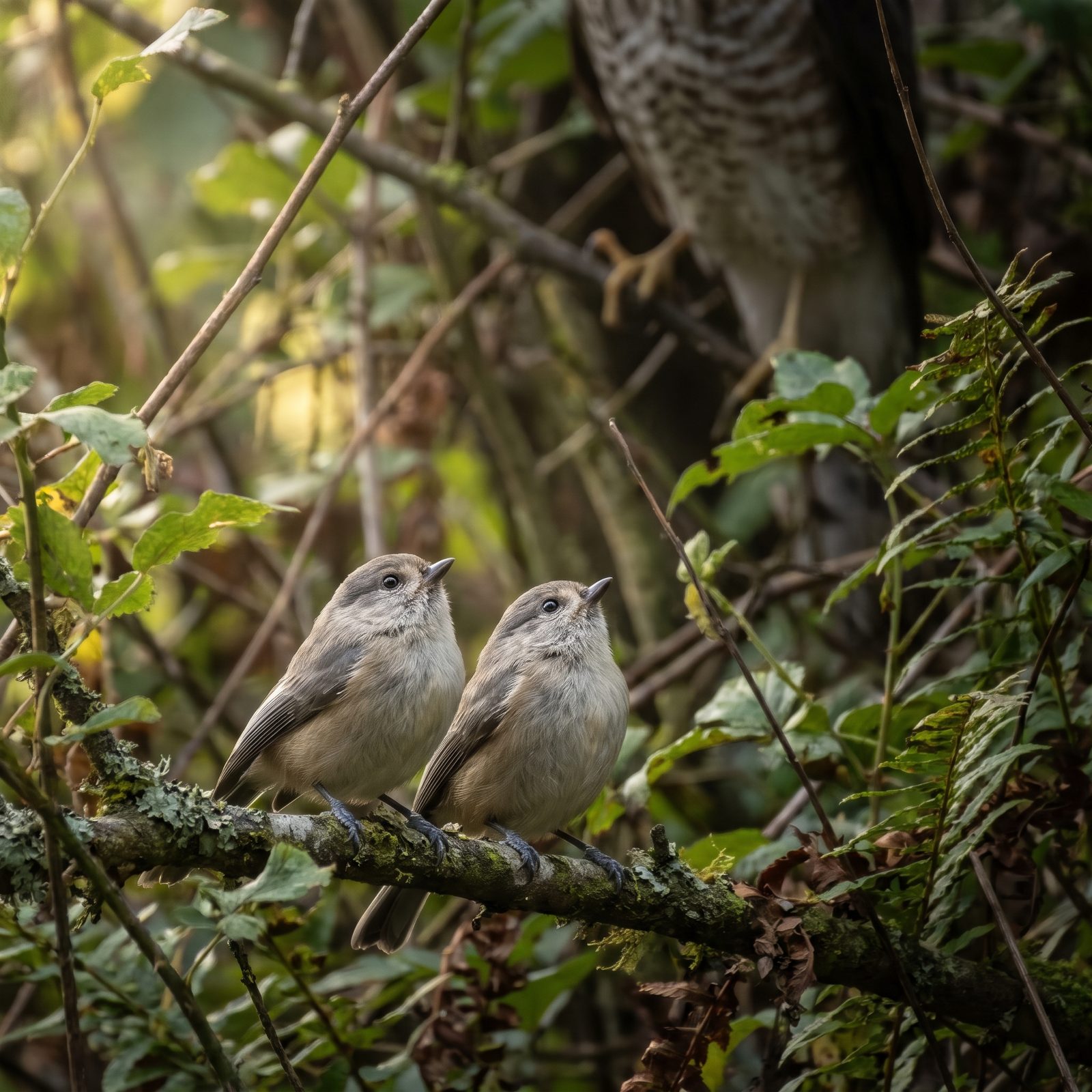
When a loud, chattery woodland goes dead silent in a heartbeat, pay attention. The birds know something you don’t.
Chickadees and many other songbirds give a thin, high alarm note when a hawk shows up, and the whole neighborhood responds by freezing, sleeking their feathers, and staring upward. That sudden stillness is a pointer. Something with talons just arrived.
11. Ears Protruding Above Tall Grass
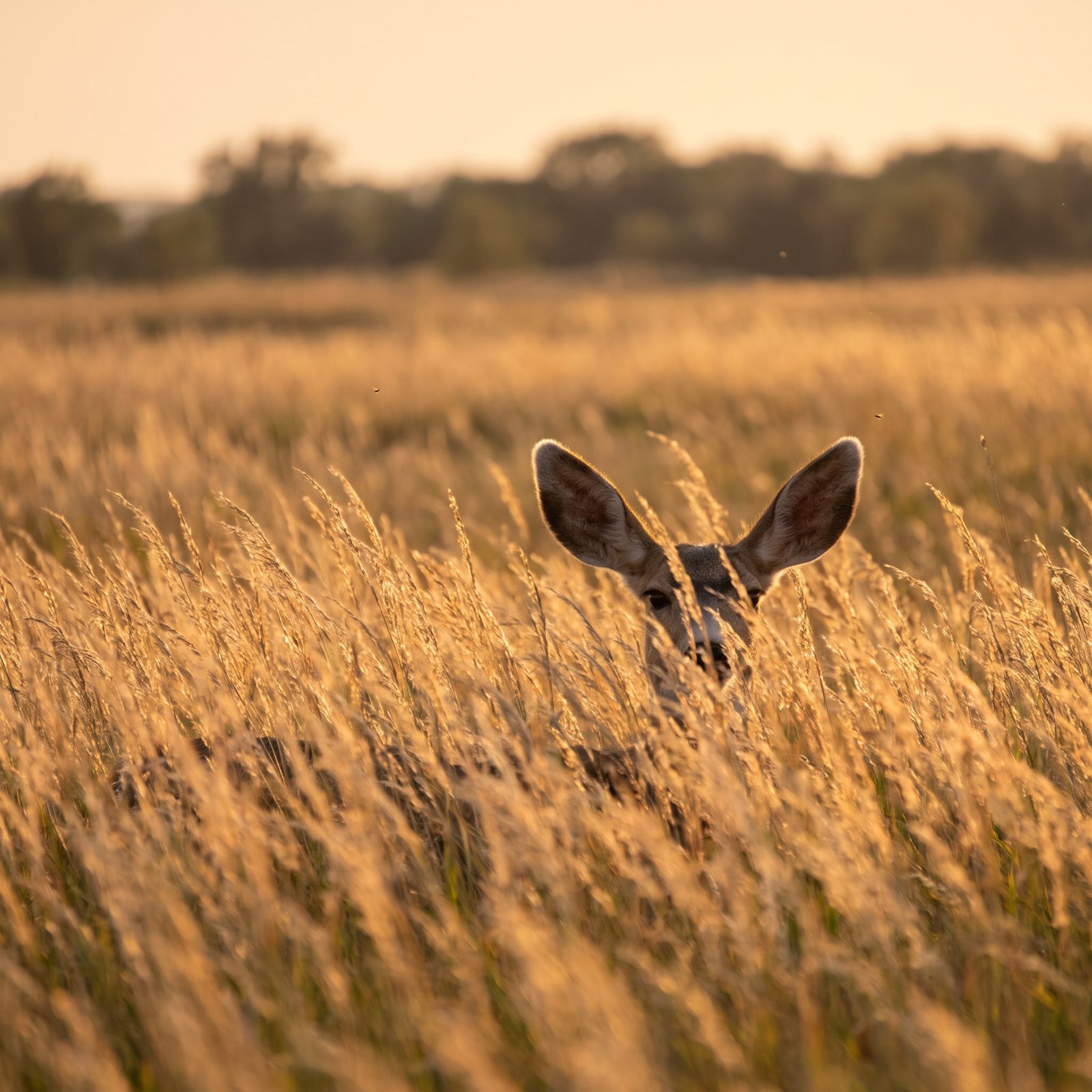
In a field of tall grass, you’ll spot the ears long before you spot the animal. Deer, hares, foxes and bobcats all hunker down and let the vegetation swallow their bodies, but the ears stay up, swiveling, giving the whole game away.
Train your eye to hunt for the wrong shape. A grassland is all vertical lines and nodding seed heads — nothing but straight edges and feathery tips. A pair of cupped ears is a smooth curve that simply doesn’t belong, and once you learn to catch that curve riding above the grass line, you start spotting bedded animals everywhere. They’ve usually been watching you the entire time.
10. Eye Shine at the Edge of Twilight

A fox peering from the dusk undergrowth beside a tree trunk, its eyes burning like two amber coins. That glow comes from the tapetum lucidum, a mirror-like layer behind the retina that bounces light back through the eye, handing nocturnal animals a second chance to catch every photon.
Eye color is a loose clue. Deer and many mammals shine greenish, while canids often throw back gold or yellow. The real gift is that eyes catch the last light and blaze brighter than the body around them, so even in a photograph of the blue edge of twilight they draw your gaze straight to an animal you might otherwise overlook.
9. Leaves Falling From a Still Canopy
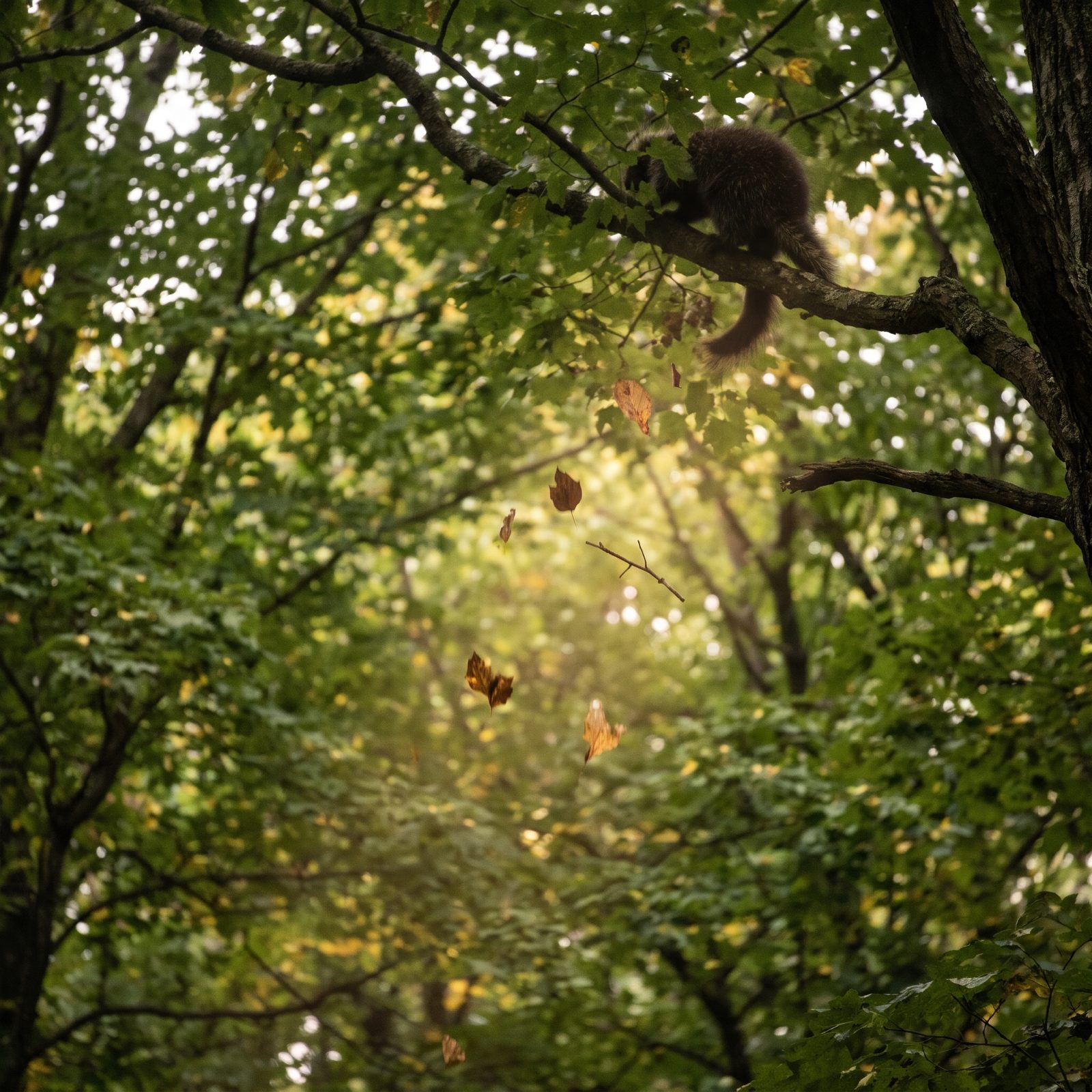
No wind, yet leaves and bits of twig keep drifting down from one patch of canopy. Something up there is moving, and you should find out what.
Squirrels, porcupines, browsing deer stretching up, even a heavy bird shifting its weight — all of them shake debris loose. On a dead-still day, that quiet rain of leaf fragments is one of the best vertical clues going.
So stop walking. Look straight up at the source, not down at the ground. The fallen bits tell you where to aim, and the animal is almost always directly above the mess, chewing and dropping scraps, utterly unaware it just announced itself.
8. Butterflies Gathering on Damp Ground
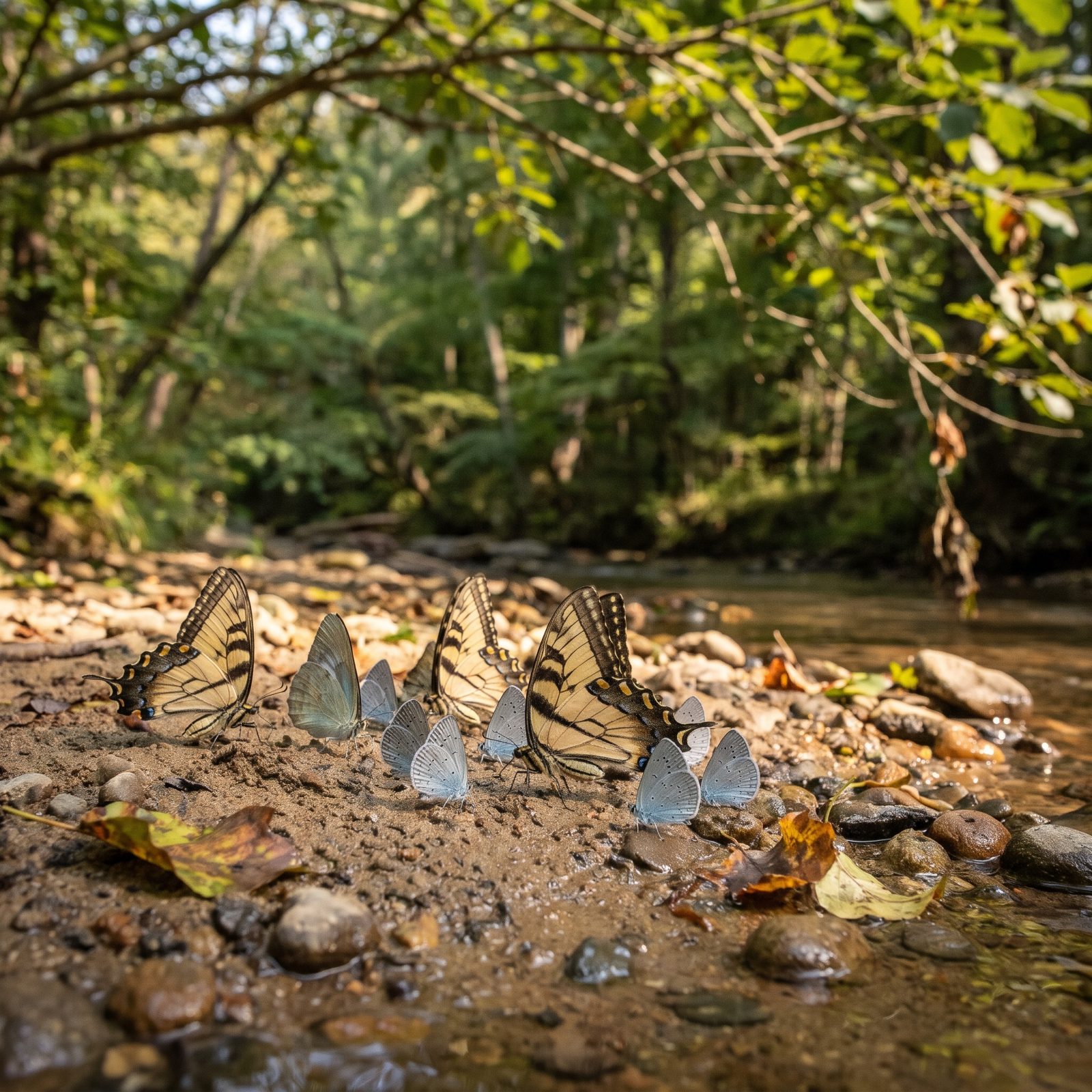
A cluster of butterflies sipping at wet gravel isn’t a happy accident. It’s a map. Male butterflies gather on damp soil to pull up sodium and minerals they can’t get from nectar, a behavior called puddling, and where there’s puddling there’s reliable moisture, and moisture draws everything else.
So watch where they land. That damp seep in an otherwise bone-dry trail often marks a hidden spring or the edge of a vernal pool where birds drink and deer cross at dawn. The butterflies just found it first, and they’re broadcasting the location in slow, flickering color.
7. Bees Flying a Direct Route to Their Nest
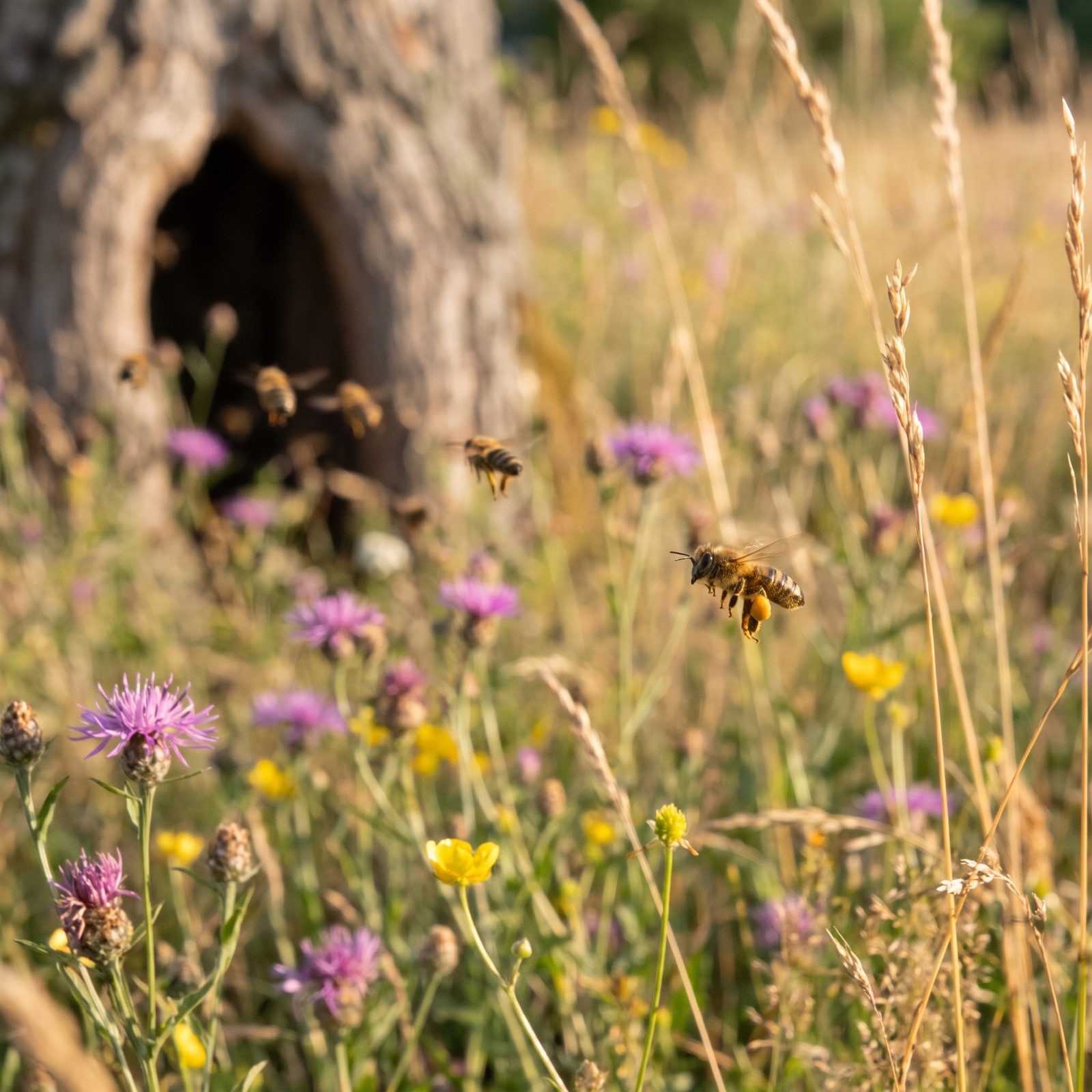
Bees don’t wander home. They fly a beeline, and that straight, purposeful flight is one of the oldest tracking tricks there is. Early honey hunters followed loaded bees back to wild hives by watching the direction they bolted after feeding.
The same logic finds the nest for a photographer. A foraging bee meanders between flowers, loose and unhurried, while a bee heading home flies flat, fast, and arrow-straight. Mark two or three of those departure lines, find where they cross, and the colony is right there. Wild honeybee cavities and bumblebee burrows both draw woodpeckers, badgers, and honey-loving mammals. The bees point the way.
6. Flies Concentrating Around a Hidden Carcass
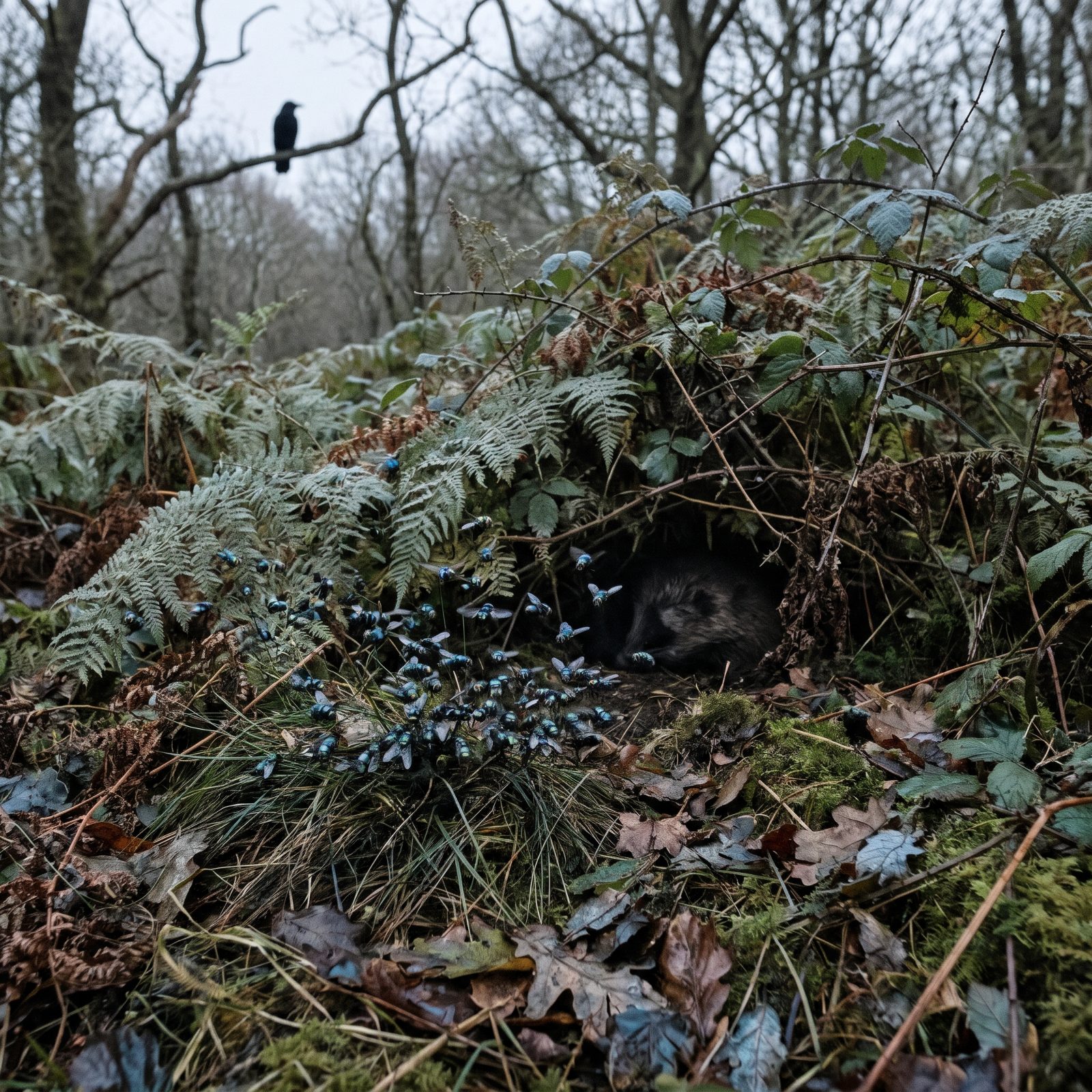
Not pleasant, but honest: a dense swarm of flies carpeting one patch of ground in the brush almost always means something died there. Blowflies find a carcass within minutes, and they crowd the ground around it like nothing else in the woods does.
For wildlife photographers, that’s a dinner bell. Foxes, vultures, eagles, martens, and corvids all work carcasses, often on a schedule, and the flies get there first to tell you where to point the lens.
Read the ground, not just the air above. A wide, busy layer of insects hovering low and settling on the grass and leaf litter, concentrated around one point — that’s the tell. Set up downwind at a distance and wait.
5. A Kingfisher Reusing the Same Fishing Branch
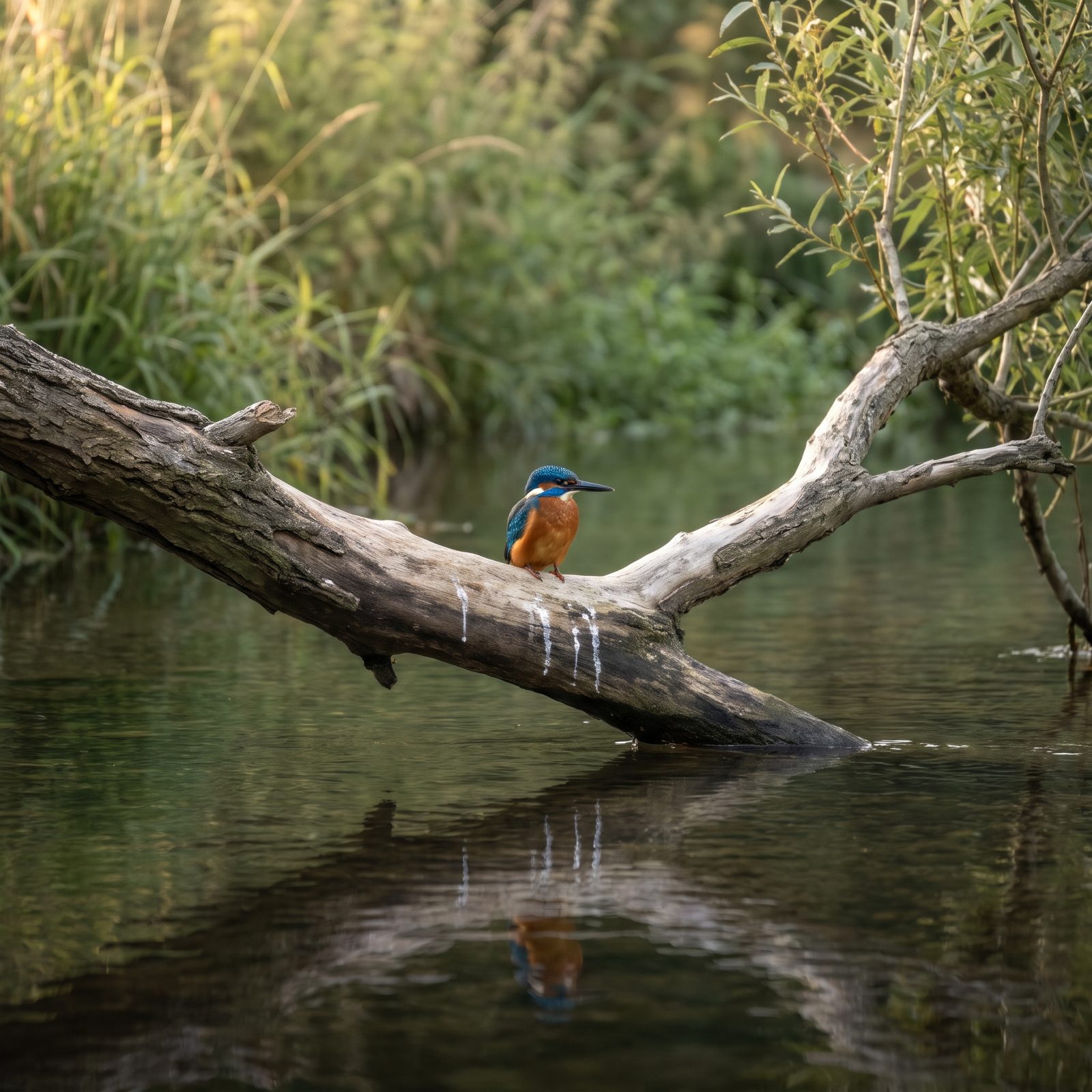
Kingfishers are creatures of habit, and habit leaves marks. A good fishing branch gets used over and over until the bark wears pale and smooth and a dribble of whitewash stains the wood underneath.
Find that worn, stained perch and you’ve found a bird that will return, probably within the hour. You don’t chase a kingfisher. You locate its office and wait for it to come to work.
The best kingfisher shots almost never come from spotting the bird. They come from reading the branch and getting there first.
4. Tracks Converging at a Tiny Water Source
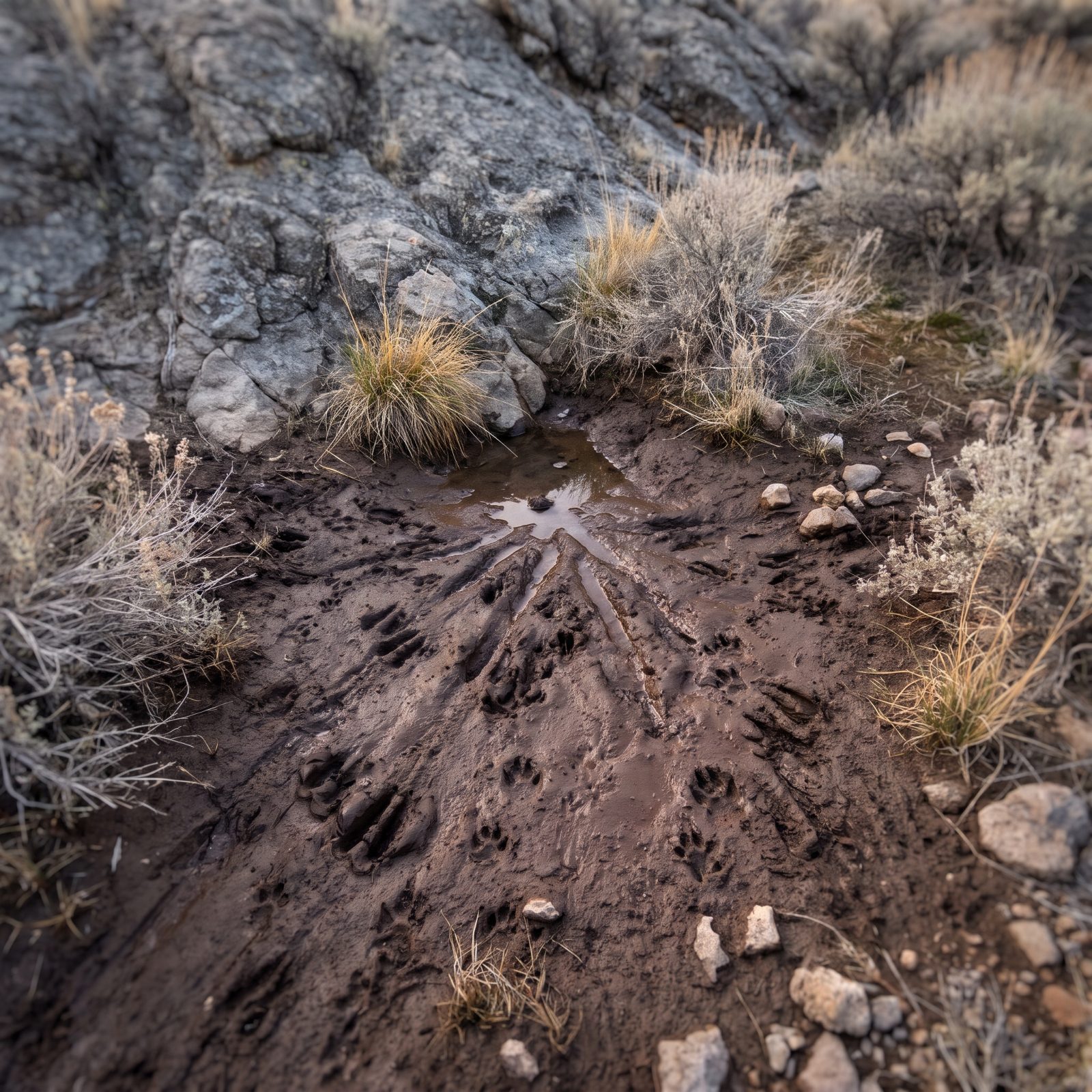
In dry country, water is the whole game. Every animal for miles eventually visits the same seep, puddle, or spring, and their tracks pile up at the approach like footpaths funneling to a door.
Where a dozen trails converge on one small wet patch, you’ve found a crossroads shared by deer, predators, rodents, and birds, just at different hours.
I ignored these spots for years, chasing movement across open ground instead. Dumb. The convergence point does the work for you — sit still at a distance, stay downwind, and the whole neighborhood walks past.
3. Frost-Free Openings Around Animal Dens
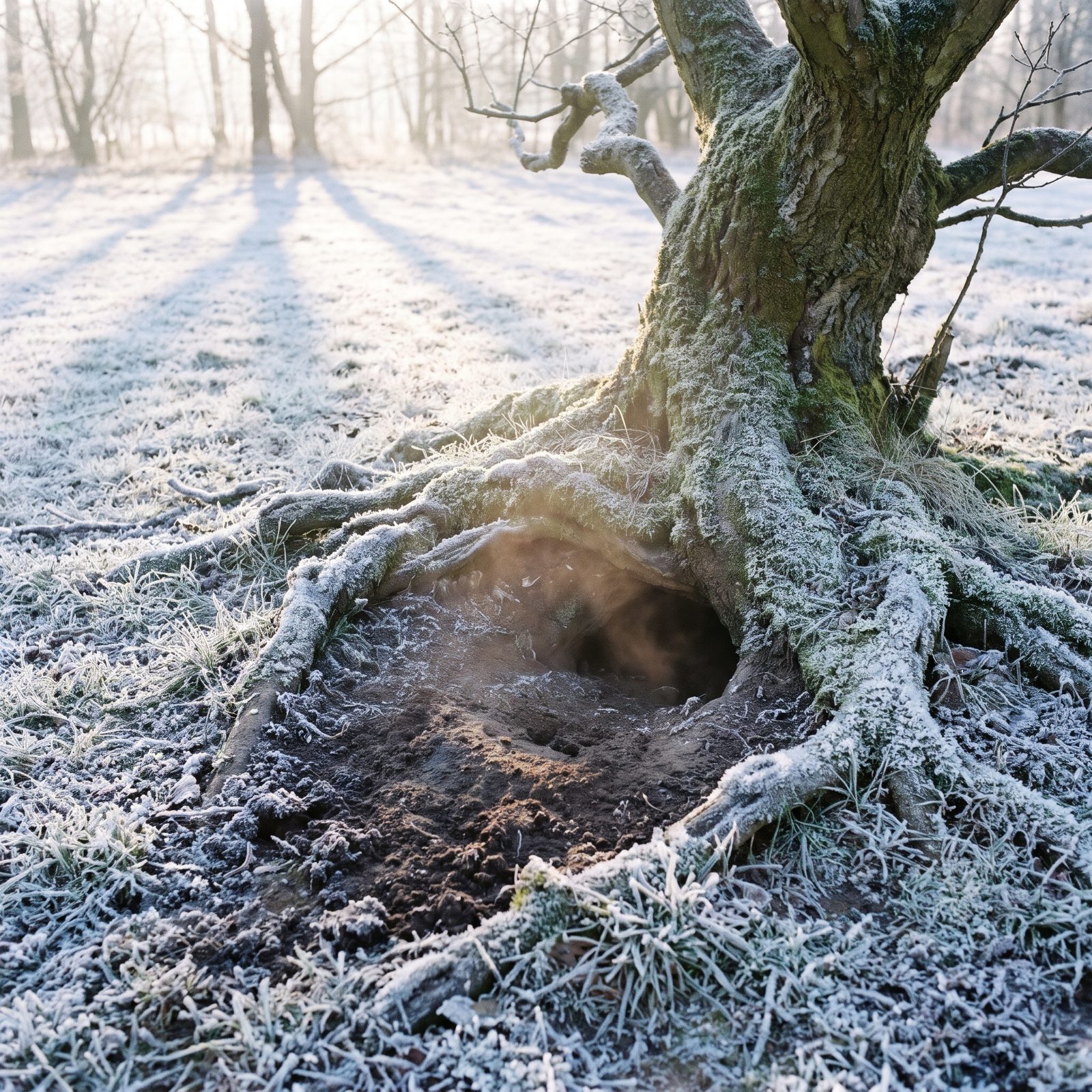
On the right winter morning, an occupied den gives itself away. While the whole bank glitters with hoarfrost, the mouth of an active burrow stays dark and clear, because warm air leaking from inside, plus the animal’s breath and the traffic in and out, keeps frost from settling at the entrance.
Fox earths, badger setts, groundhog holes, marmot burrows — they all do this. Scan a frosted slope for the one black opening that didn’t freeze over, and you’ve likely found a home with someone in it.
2. Web Strands Stretched Across a Deer Trail
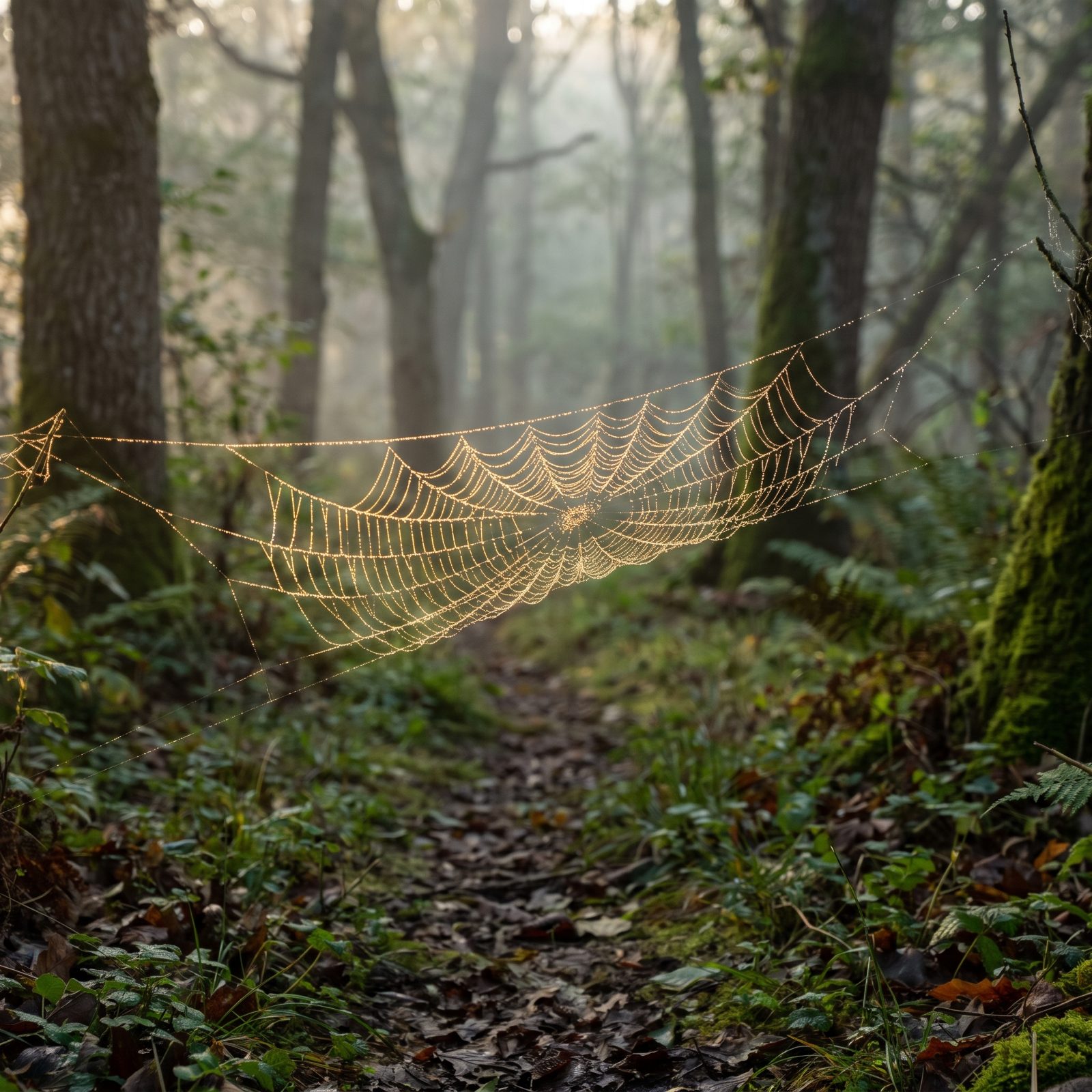
A spider rebuilds its web most nights. So an intact web stretched across a game trail at dawn is a quiet verdict: nothing large came through since the spider finished spinning, usually sometime after dusk.
Flip it around and the clue gets useful. A trail with its webs broken low means an animal passed recently, probably that same morning. Webs untouched? Your subject moved earlier, or takes a different route at this hour.
It’s a timing tool more than a location tool. Check the webs, and the trail tells you when to stand here, not just where.
1. Branches Moving Against the Wind
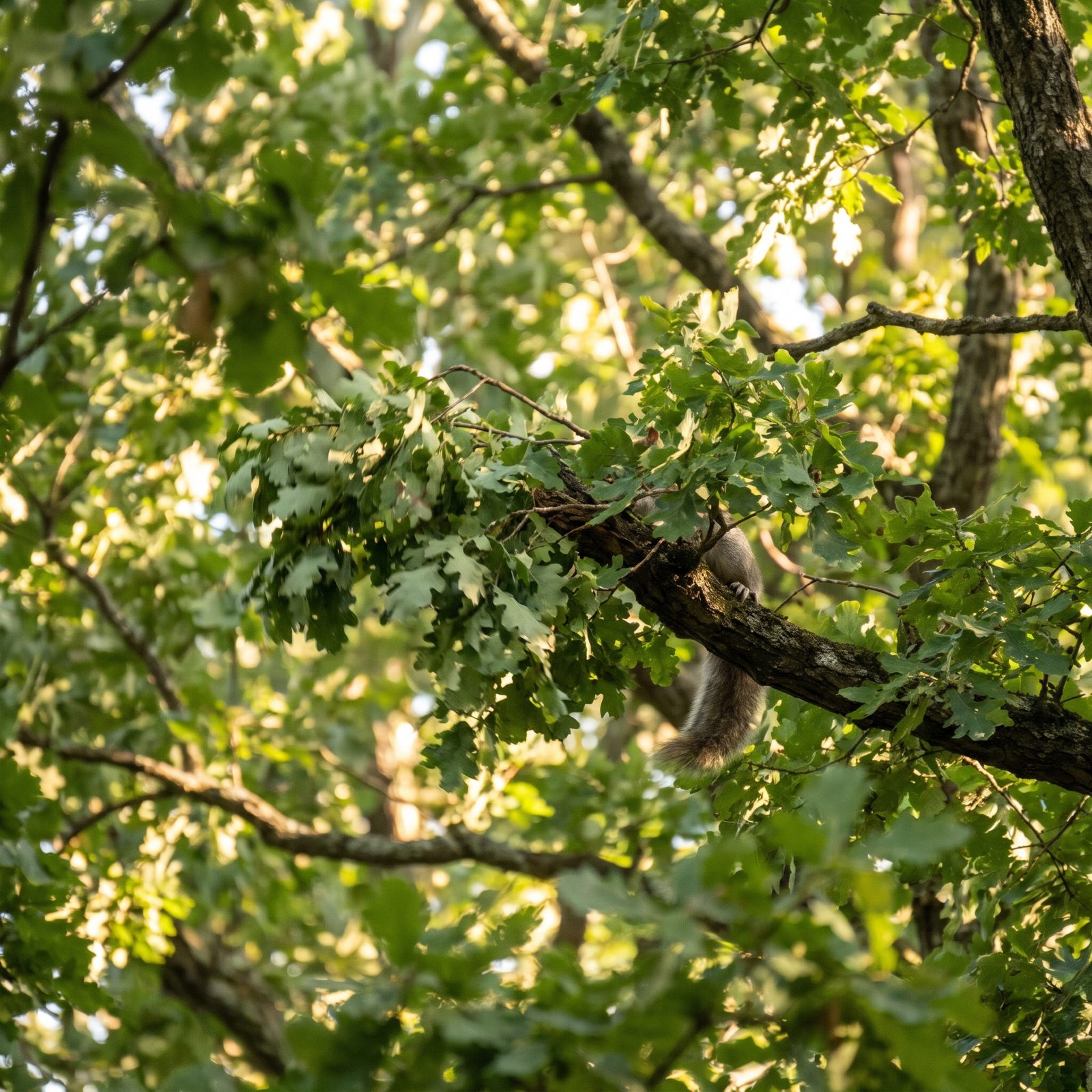
The woods move as a whole in the wind, everything swaying in the same rhythm and the same direction. So when one branch jerks on its own, or bends the wrong way, or keeps shivering after the breeze has passed, something is up there.
This is the oldest spotting skill in the book, and it finds animals your eyes would never pick out directly. Monkeys, squirrels, pine martens, perched birds, even snakes shifting their weight all betray themselves through foliage that moves out of step with the rest.
Stop scanning for the animal. Scan for the wrong motion. Then let your eyes settle on the branch that broke the pattern, and wait for it to show you what it’s hiding.