
Ruins lie to you. A broken column, a grass-covered mound, a stretch of foundation stones, and your eye fills in gray stone and silence, and gets it wrong. These places were loud. They were painted in colors that would make a modern downtown look timid, and they smelled of fish sauce and cedar smoke and wet plaster. From pigment traces and pollen cores and drainage trenches, archaeologists now know roughly what these cities looked like on an ordinary busy day. We rebuilt them here, each caught at the moment it was strongest. Believe it or not, the evidence for most of this is sitting in a museum drawer.
Please note that some of the images in this article were created with the assistance of AI.
35. Pompeii on the Morning Before Vesuvius Erupted
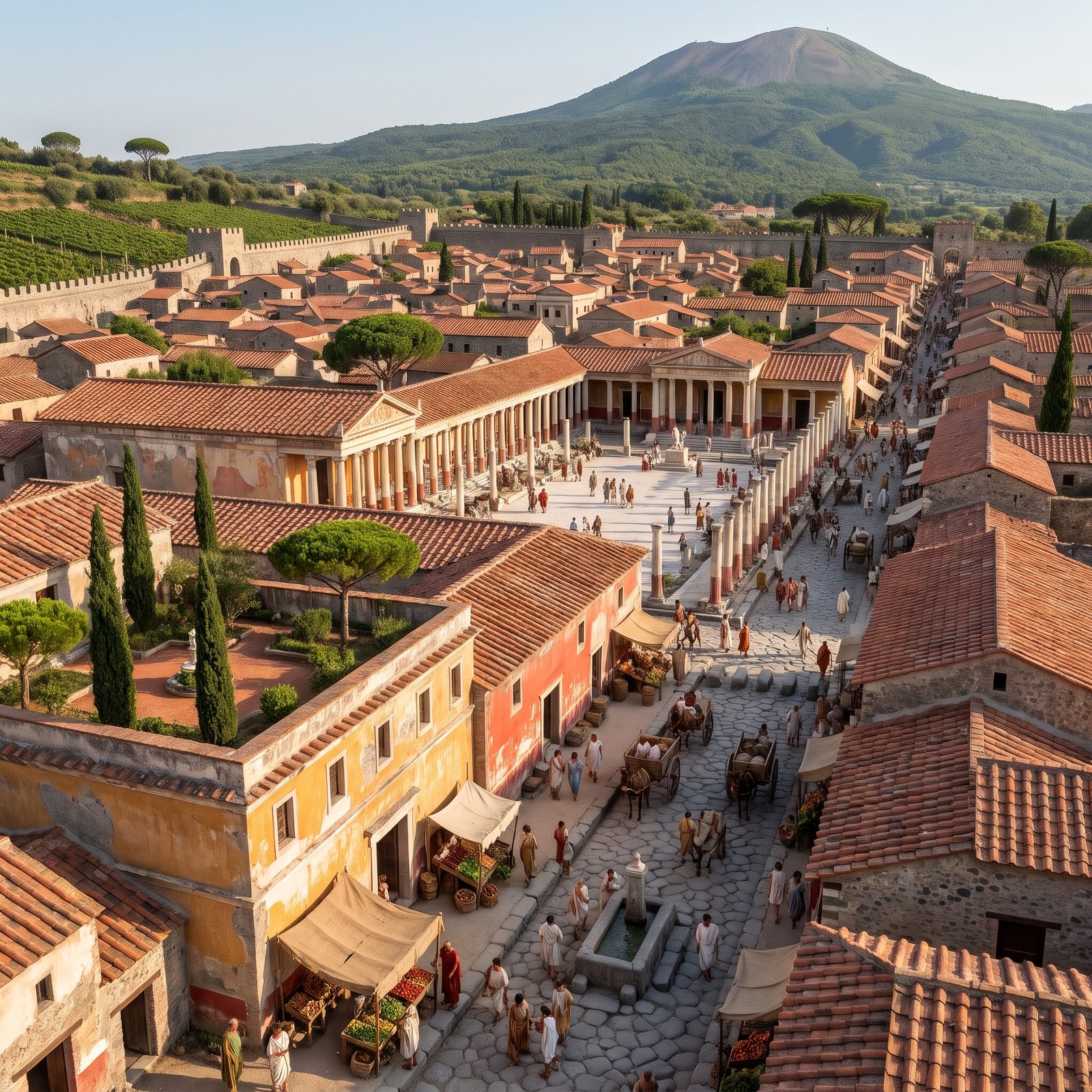
Everyone pictures Pompeii as ash and plaster corpses. On that August morning it was a working port town, thousands of people loud with cart wheels grinding over basalt streets so deep the ruts still survive.
The walls were not the beige we see now. They were painted — blood-red panels, yellow ochre, that famous deep blue made from ground glass. Out in the streets, election slogans were scrawled across house fronts. The bakeries had stone mills turned by donkeys, and on a good morning the smell of fresh loaves would have drifted all the way to the forum.
Vesuvius sat in the background looking like a pleasant green mountain. Nobody in that city had a word for volcano.
34. Tenochtitlan Before the Spanish Conquest
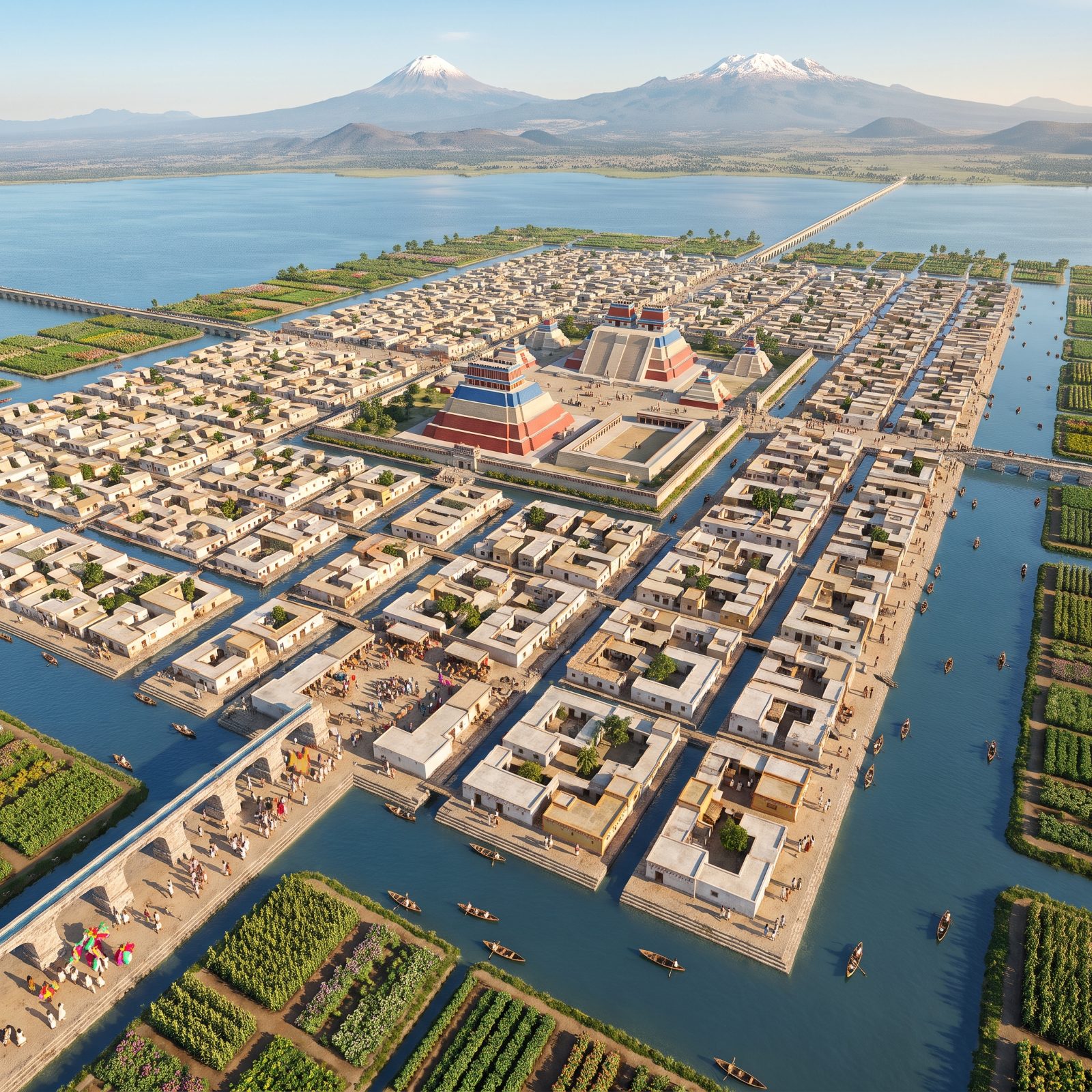
The Spanish who first saw it thought they were dreaming. One of them wrote that the causeways and towers rising out of the water looked like an enchantment from a story. The city held well over a hundred thousand people — bigger than anything back in Spain.
And it floated. The Mexica built farm plots called chinampas directly on the lake, anchored by willow roots, so productive the city ate several harvests a year. Fresh water arrived by a twin aqueduct from Chapultepec, one channel running while the other was cleaned.
The Templo Mayor at the center was not gray stone. Painted red and blue, it was visible from the far shore.
33. Babylon Under Nebuchadnezzar II
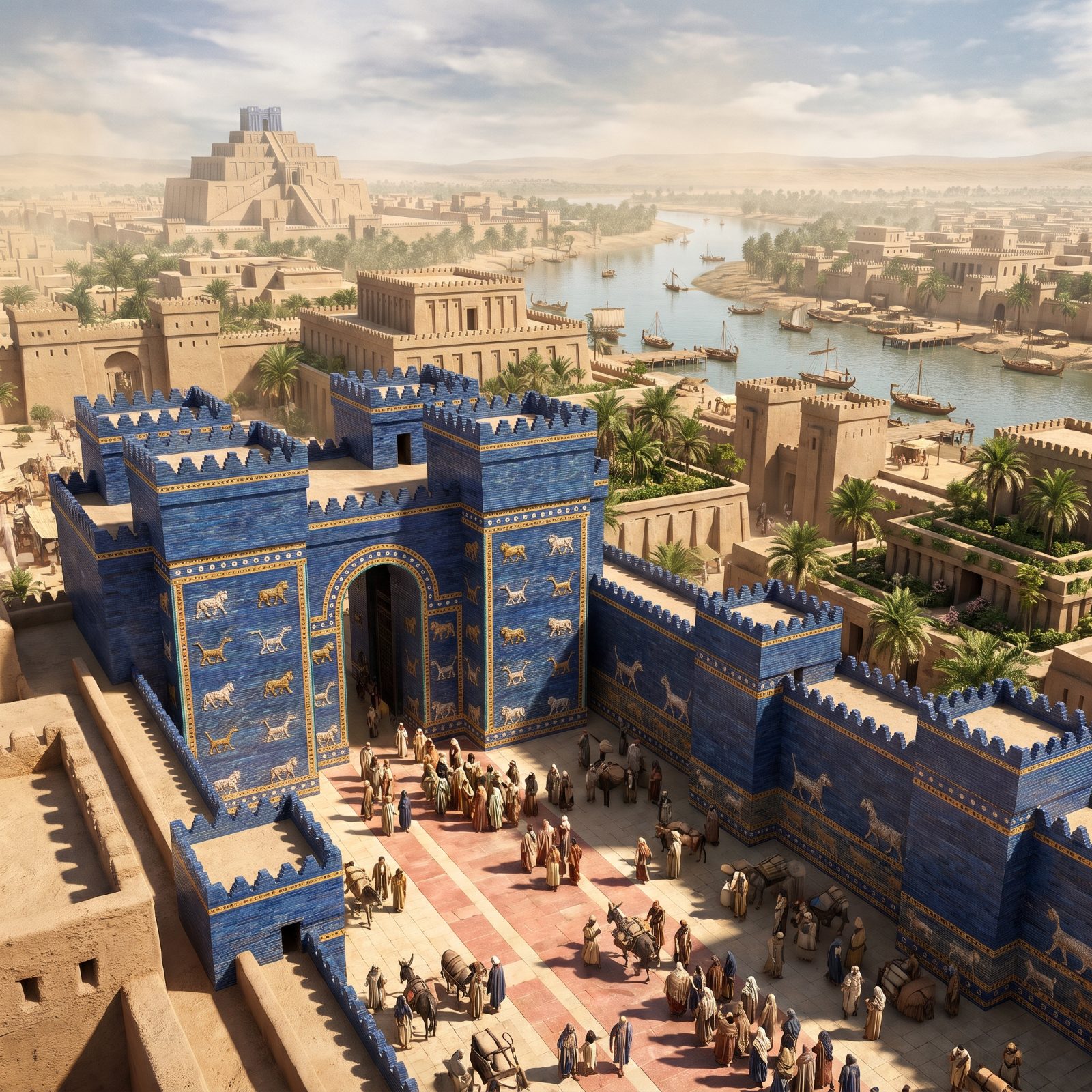
Blue. That is the thing nobody tells you about Babylon.
The Ishtar Gate was glazed in lapis-blue brick studded with white bull-like beasts and spotted, leopard-like cats, and the reconstructed one sits in a Berlin museum right now if you want to check my work. Beyond it, the processional avenue ran on between long lapis-blue glazed walls and towers.
Nebuchadnezzar rebuilt the place in the 500s BC into the biggest city in the world, ringed by walls the Greeks claimed were thick enough to race chariots along the top. The ziggurat Etemenanki, likely the kernel of the Tower of Babel story, rose in great stepped tiers.
The Hanging Gardens? Honestly, we have never found them. They may have been in Nineveh. They may be legend. I love them anyway.
32. Angkor at the Peak of the Khmer Empire
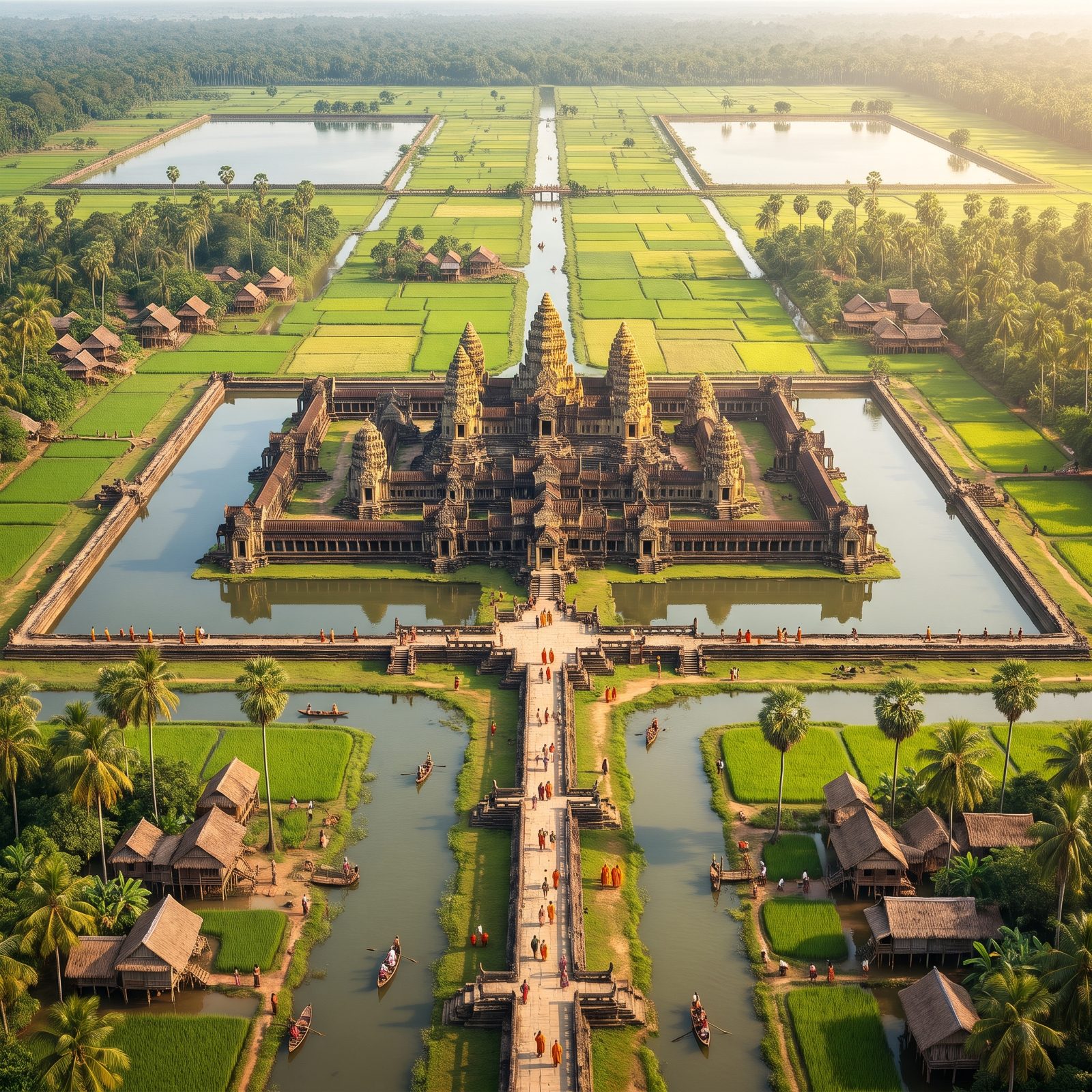
You know Angkor Wat as a temple swallowed by jungle, tree roots strangling the stone. Around 1150 it was the opposite of abandoned, the beating center of the largest preindustrial city on Earth, spread across an area the size of modern Los Angeles.
The genius was water. The Khmer carved enormous reservoirs and a web of canals that let them farm rice through the dry season and feed close to a million people. Satellite radar has since mapped the whole hidden grid of it beneath the forest.
And Angkor Wat itself may have gleamed. Traces suggest parts were once gilded and painted, not the honey-gray sandstone you see today.
31. Petra When Nabataean Caravans Filled Its Streets
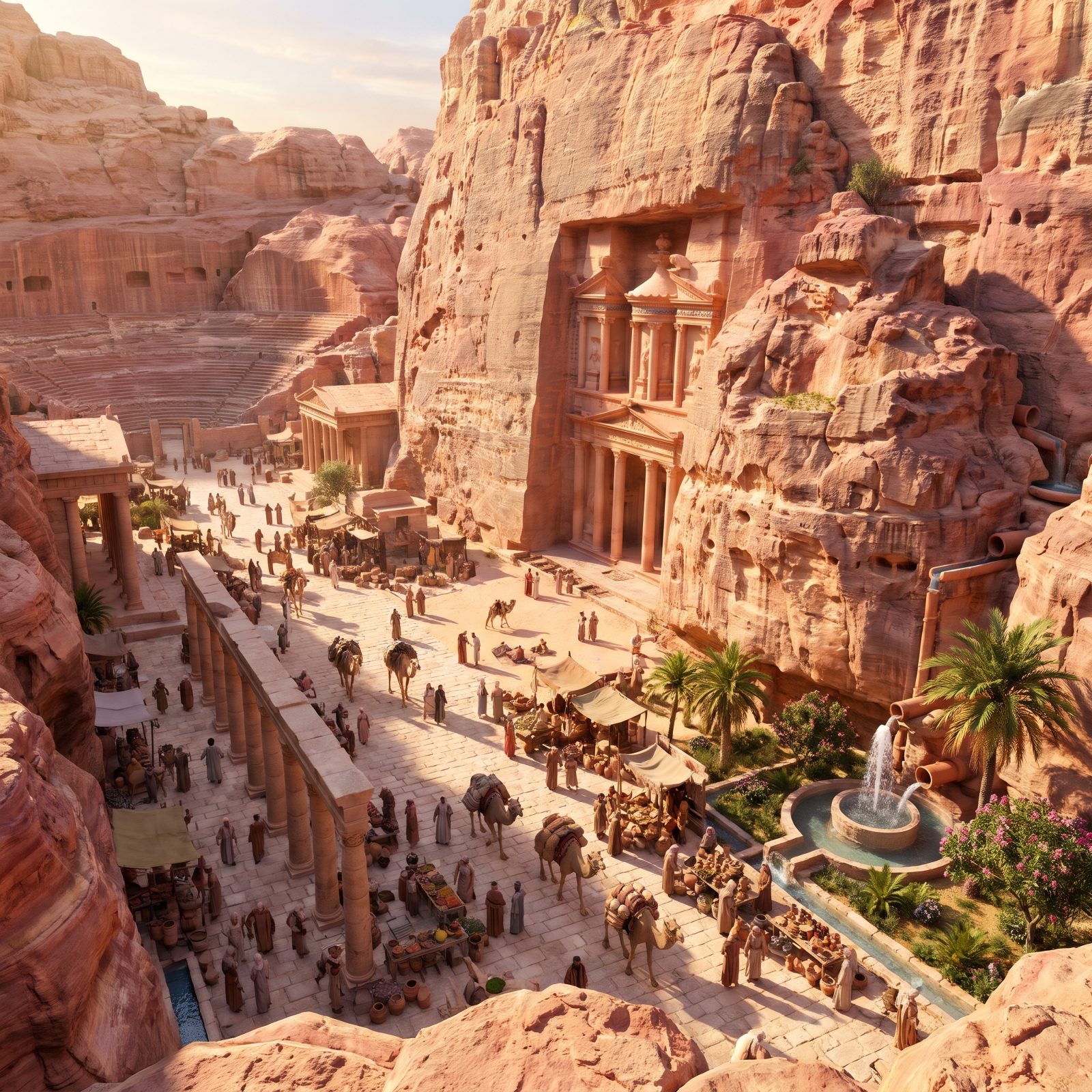
Petra sits in a desert canyon with almost no rain. That it existed at all is the magic trick.
The Nabataeans were water engineers before they were anything else. They cut channels and ceramic pipes into the rock faces, trapped flash floods in hidden cisterns, and turned a slot canyon into a thriving city that controlled the incense trade between Arabia and the Mediterranean. Tens of thousands lived there.
That Treasury facade you have seen in a thousand photos was just the entrance act. Behind it ran a colonnaded avenue, temples, a Roman-style theater carved into the cliff, and gardens that should not survive in that heat.
The famous rose-red stone? Often plastered and painted over. Petra was dressier than its ruins let on.
30. Troy at the Height of the Late Bronze Age
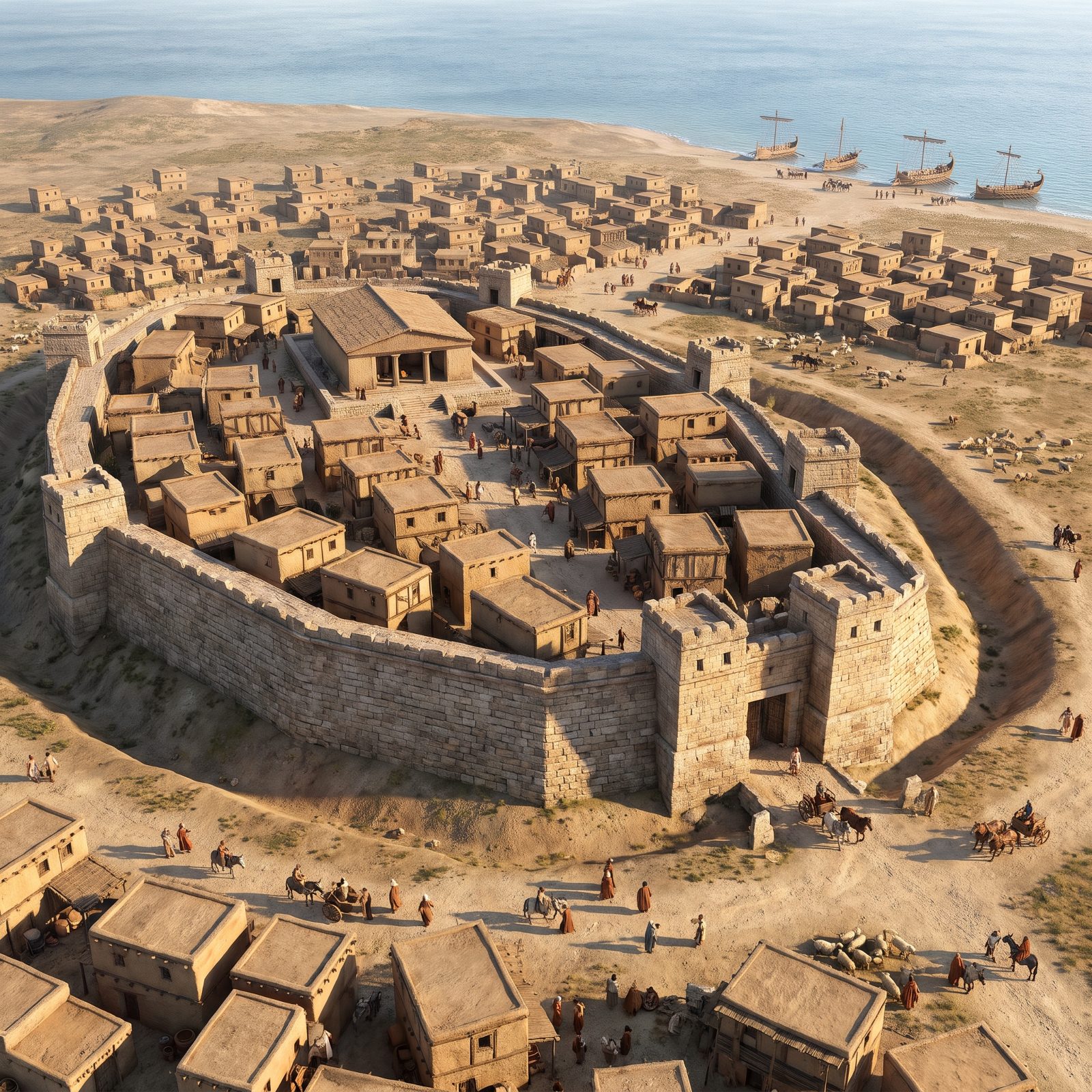
For centuries people argued Troy was pure poetry, a city Homer invented. Then excavators found it, layer on layer, at Hisarlik in Turkey, right where the epic put it, guarding the entrance to the Dardanelles.
The Troy of around 1250 BC was a real Bronze Age stronghold with steep stone walls, a towered gate, and a lower town far bigger than anyone expected until ground-penetrating surveys revealed it. Its position was the whole point. Ships waiting for the right wind to pass the strait had to wait near Troy, and Troy taxed them for the privilege.
Was there a Trojan War? Maybe several. There are burn layers and scattered arrowheads. The wooden horse stays a legend.
29. Mohenjo-daro With Its Great Bath in Use
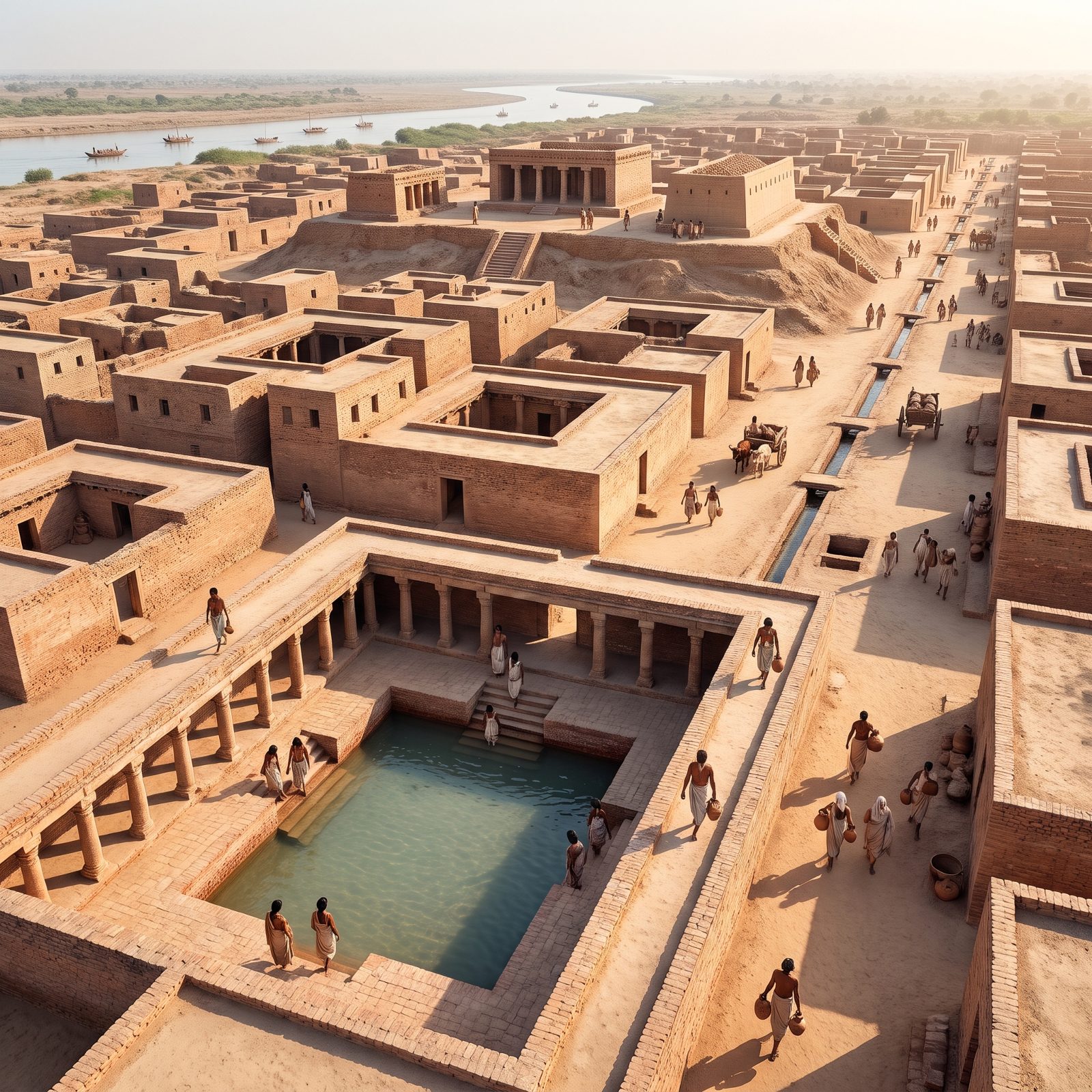
Here is the strange part about Mohenjo-daro. There are no palaces. No obvious kings, no giant temples to a single god, no tombs stuffed with gold — just an extraordinarily well-run city.
Built around 2500 BC in what is now Pakistan, it had a grid of straight streets, standardized fired bricks, and brick-lined drainage channels running along the streets, a system so good that most cities would not match it for thousands of years. Houses had bathing areas and toilets that drained to the street. At the center sat the Great Bath, a watertight brick pool sealed with bitumen and reached by steps, probably for ritual bathing.
We still cannot read their writing. Whoever ran this place kept their secrets.
28. Persepolis During a Persian New Year Festival
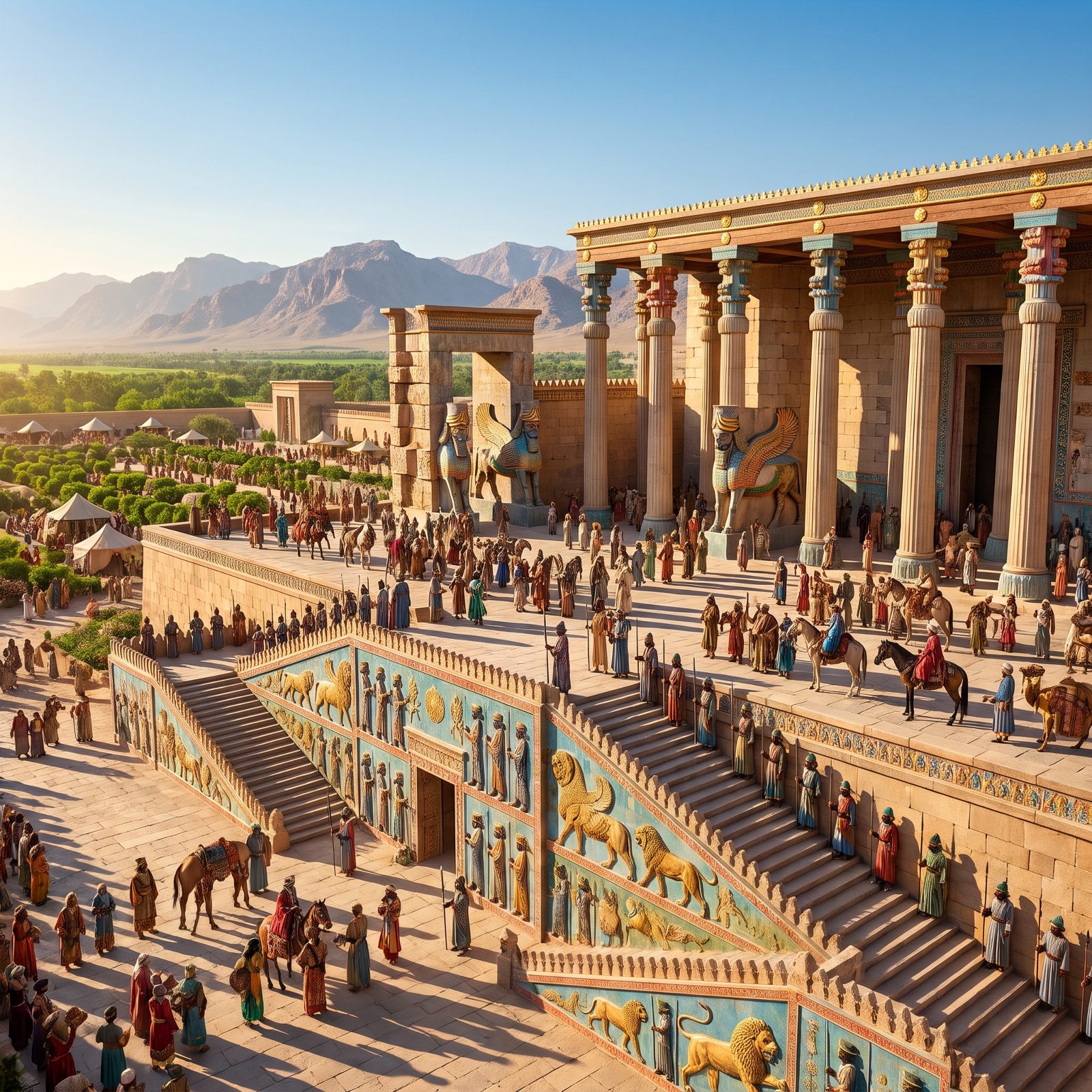
The columns at Persepolis were painted, and the stone was never meant to stand bare.
Pigment traces found on the reliefs show the processions of tribute-bearers were colored in reds, blues and golds. The gray ruin you see now is a corpse. The living city flashed.
Darius and Xerxes built it around 500 BC as a ceremonial capital of the Persian Empire, used above all at Nowruz, the spring new year, when delegations from across the empire climbed the gentle staircase to present gifts in the great pillared Apadana hall.
Alexander the Great burned it in 330 BC. Drunken accident, or cold revenge for the burning of Athens? The ancient sources still argue about it.
27. Knossos at the Peak of Minoan Crete
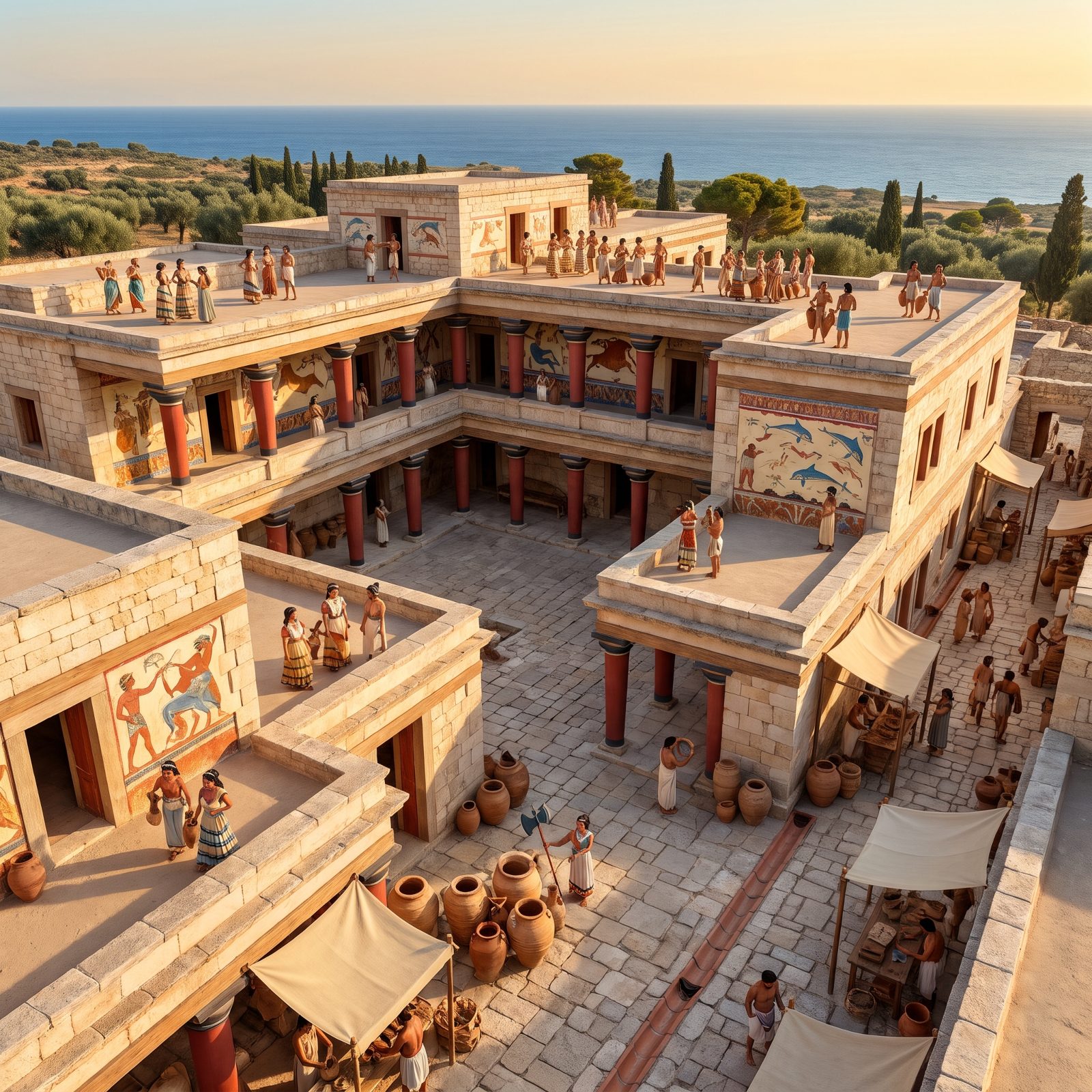
No walls. That’s the first thing that hits you. Knossos was the beating heart of a civilization that controlled the Bronze Age Aegean, yet it sat out in the open with no fortifications at all, as if the sea itself did the guarding. This model shows it at its height rather than as excavators found it: a sprawling, fully intact complex of many blocks, staircases and red-columned colonnades, crowded with people and covered in frescoes of bulls and dolphins. The palace even had plumbing that pushed fresh and waste water through terracotta pipes a couple of thousand years before most of Europe worked out the trick.
The Minotaur legend grew straight out of this place, probably seeded by that maze of corridors and the bulls painted everywhere you looked. Real archaeology, mythic afterglow. Both true, in their own way.
26. Cahokia When Monks Mound Overlooked Its Neighborhoods
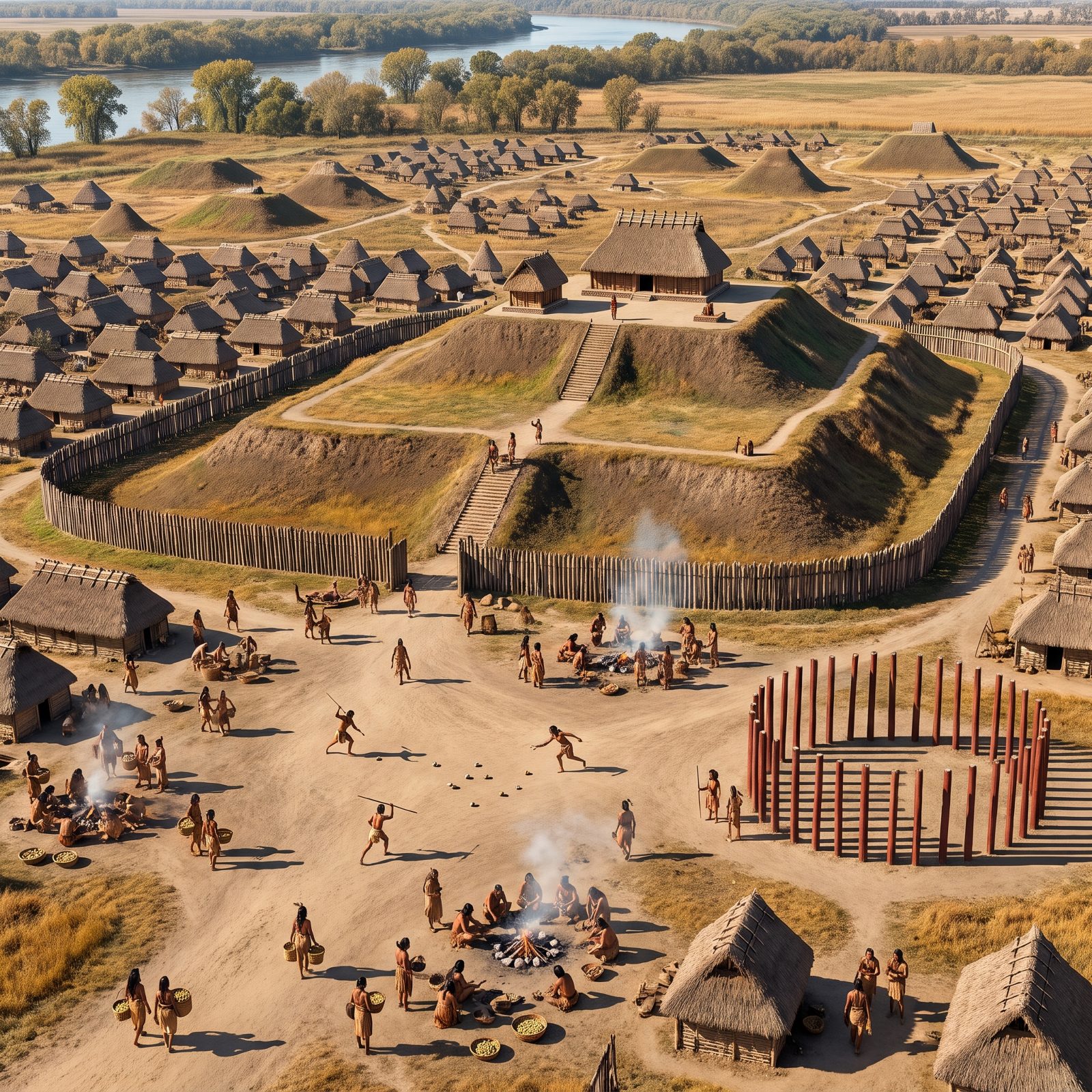
Around 1100 CE, a city in what is now southern Illinois may have held more people than London did at the same moment. Cahokia. Nobody writes it on the postcards.
Monks Mound is the giant here — a flat-topped earthen pyramid stacked basket-load by basket-load, tens of millions of cubic feet of soil hauled by hand, covering more ground at its base than the Great Pyramid of Giza. The builders left no written language, so we read them through post holes, game pieces and that enormous plaza where thousands gathered to watch chunkey.
25. Ayutthaya Before Its Destruction in 1767
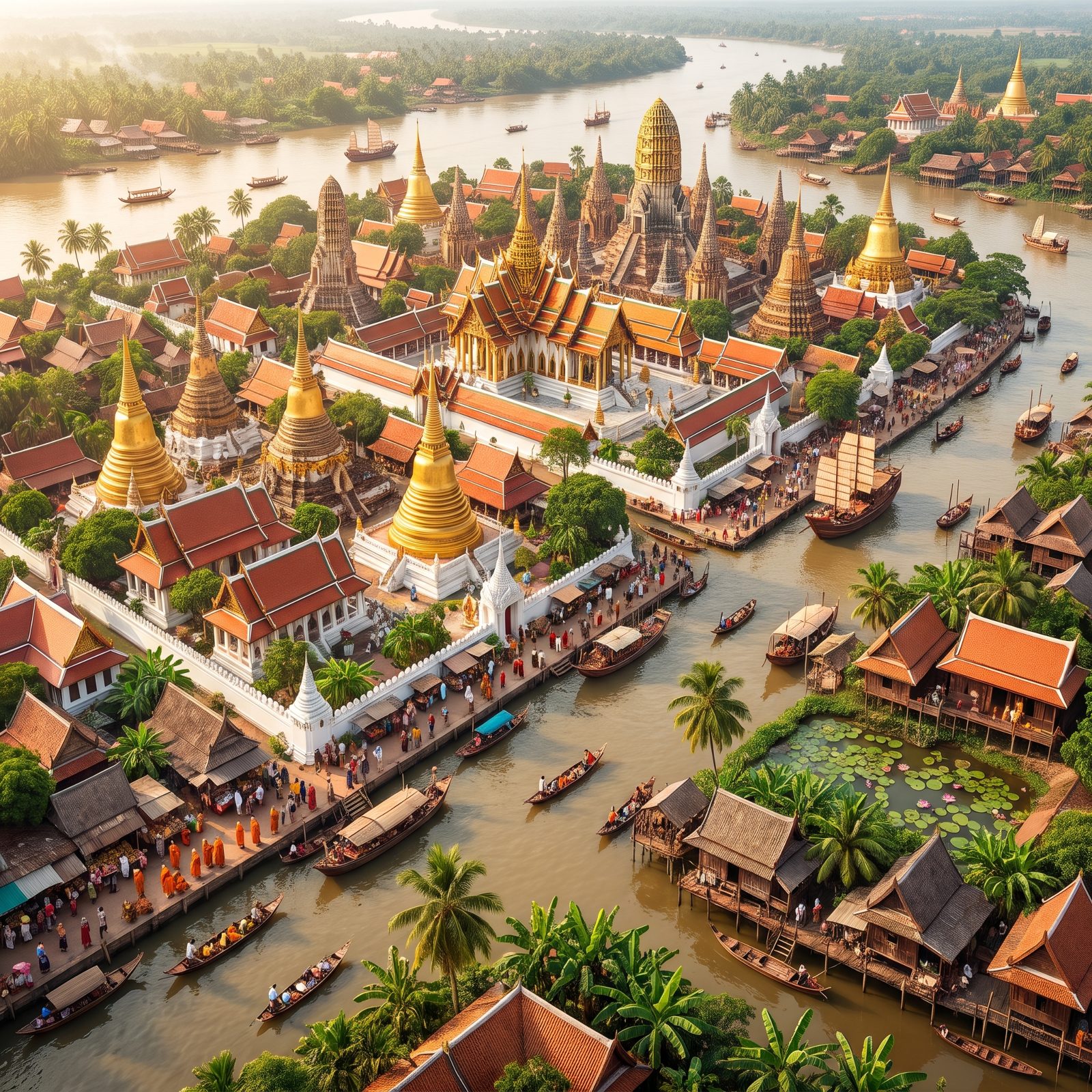
Foreign traders called it the finest city in the East, and these were people who’d seen plenty. Ayutthaya sat on an island where three rivers met, laced with canals instead of streets, home to maybe a million people and merchants from a dozen nations, each living in their own quarter.
Hundreds of temples blazed gold under the tropical sun. Then in 1767 a Burmese army took the city, burned it, melted the gold off the Buddhas and carried away everything that moved. What survives now is roofless brick and headless Buddhas — beautiful, and gutted.
24. Ur During the Reign of Its Third Dynasty
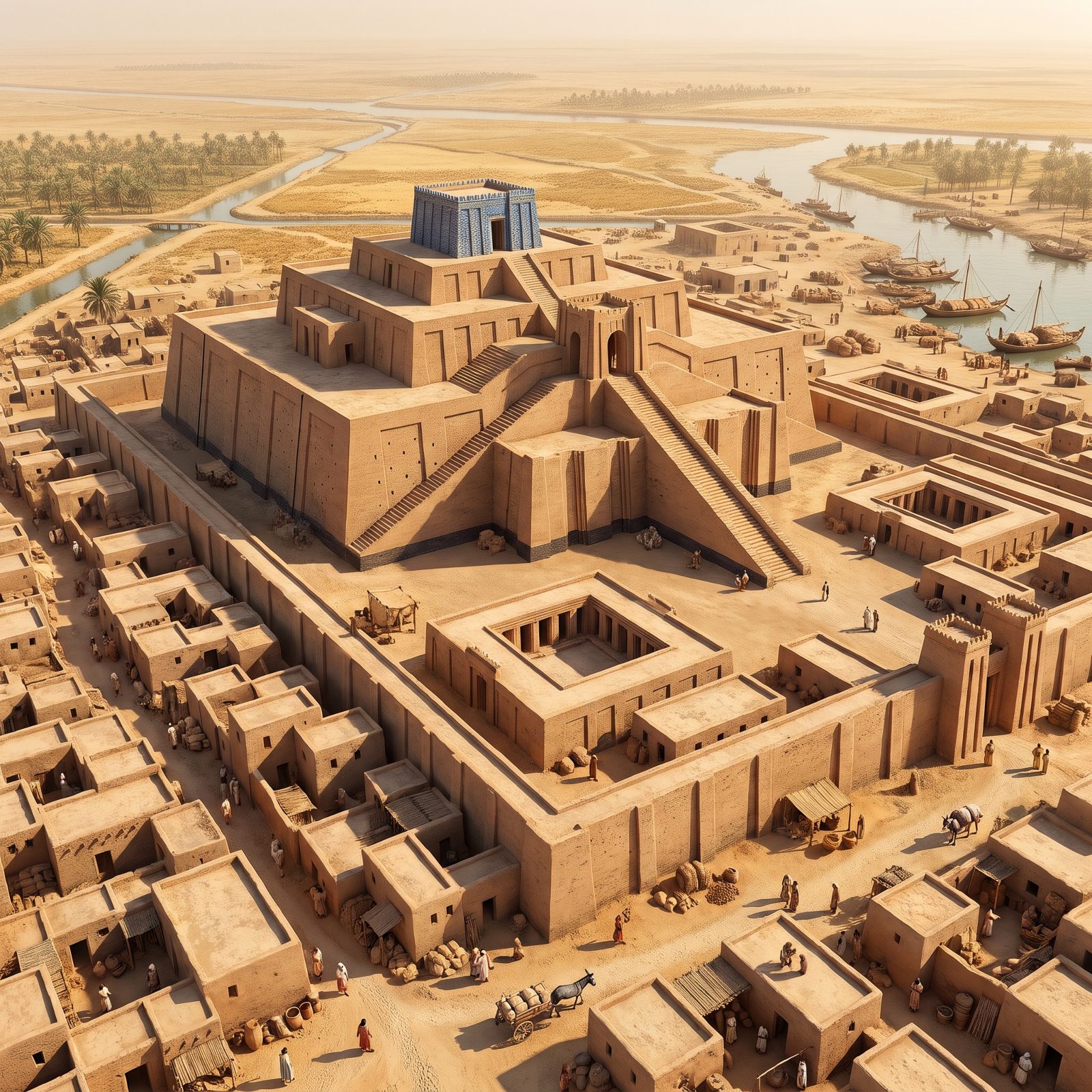
The ziggurat is the survivor. Four thousand years on, the lowest tier of the Great Ziggurat of Ur still stands in the Iraqi desert, its brick and bitumen core outlasting every empire that came after.
Under its Third Dynasty, around 2100 BCE, Ur ran a bureaucracy so thorough it logged individual sheep. Tens of thousands of clay tablets record wages, rations, lawsuits, even school exercises. This is where writing quits being pictures of oxen and becomes paperwork. The moon god Nanna lived at the top of that staircase. The accountants worked at the bottom.
23. Palmyra During Queen Zenobia’s Reign
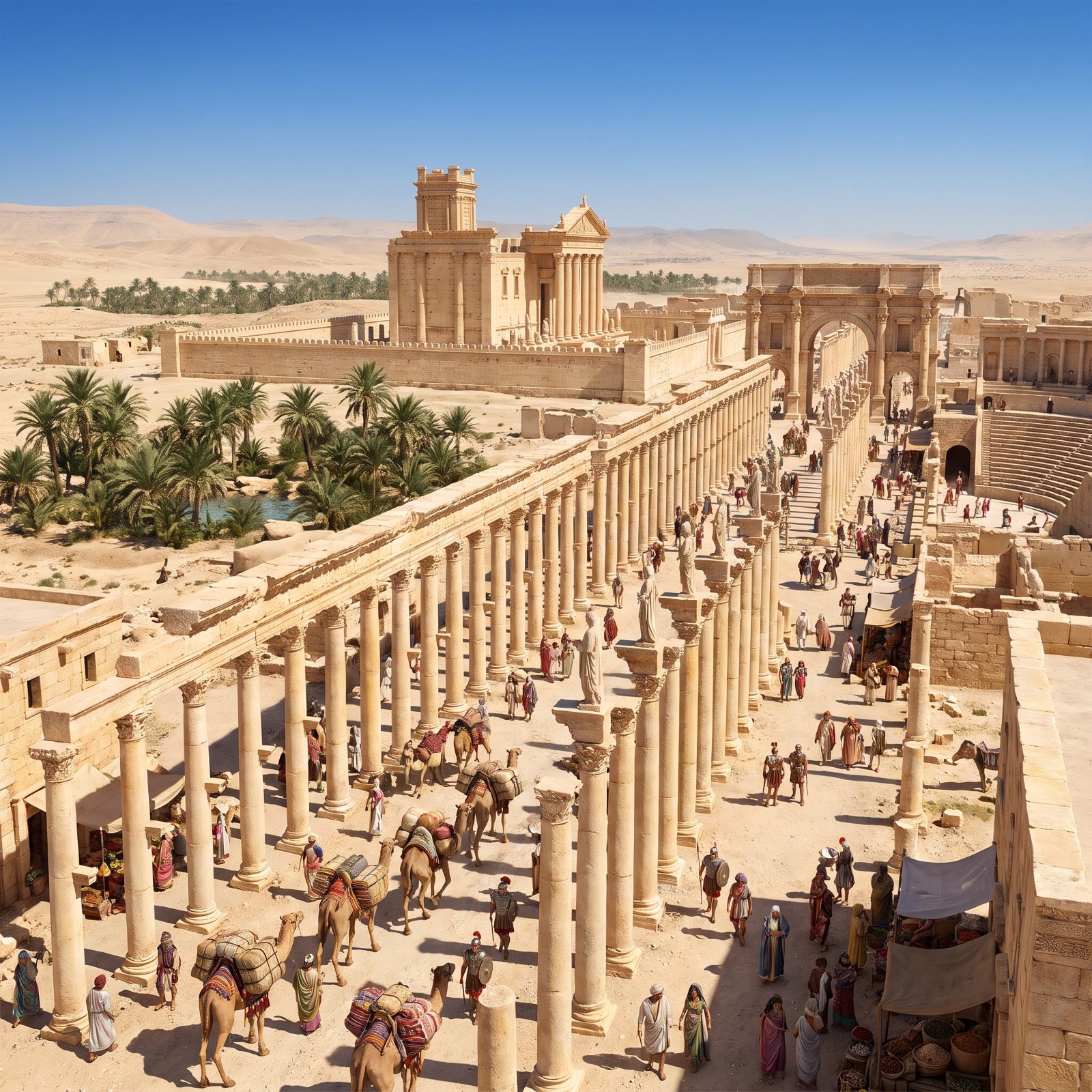
An oasis got rich by sitting in exactly the right spot. Palmyra took a cut of every caravan hauling silk and spice between Rome and the East, then blew the money on a mile of golden colonnades in the middle of nowhere.
Then came Zenobia. She claimed descent from Cleopatra, spoke several languages, and around 270 CE broke from Rome to carve out an empire reaching into Egypt and Anatolia. Rome did not take this well. Emperor Aurelian marched east, beat her, and the story has her paraded through Rome in golden chains. What became of her afterward? Nobody agrees.
22. Chichén Itzá Around the Great Ball Court
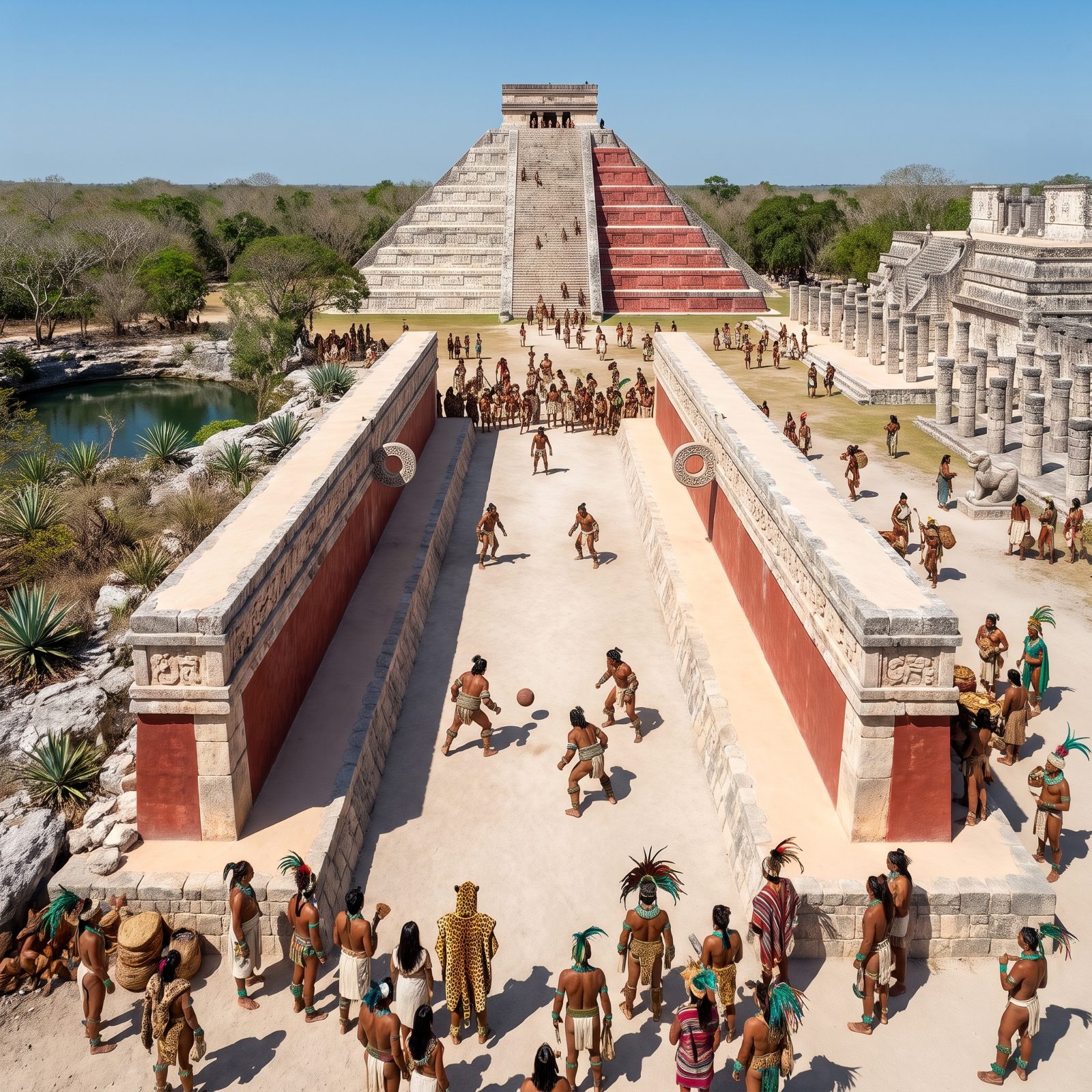
The acoustics alone will get you. Stand at one end of Chichén Itzá’s Great Ball Court and a whisper carries clean to the far end, roughly 150 meters away, past barriers high enough to swallow a shout. Did the builders plan it, or stumble into it? We don’t know. The effect is real either way.
This is the largest ball court in Mesoamerica, long walls hemming in the players. The game ran on a heavy rubber ball, hips and no hands, and carried crushing religious weight — carved panels on the walls show a player being decapitated. Win or lose as the sacrifice, scholars still debate which.
21. Akrotiri Before the Thera Eruption
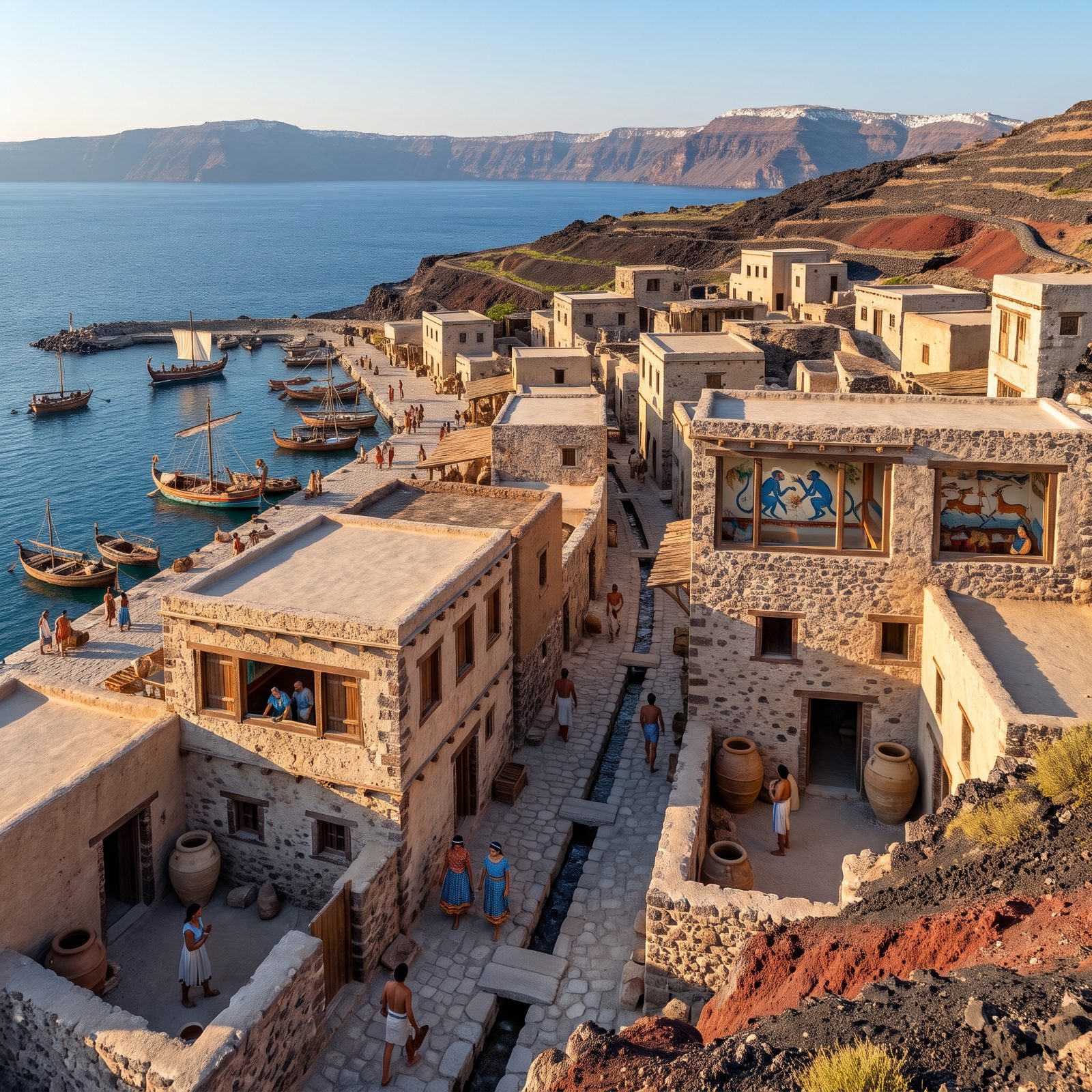
No bodies. That’s the detail that haunts archaeologists. A thriving port town on Santorini, buried under volcanic ash around 1600 BCE in one of the largest eruptions in human history — and they’ve turned up almost no human remains and few valuables. The people saw it coming and got out.
What the ash preserved instead is a town frozen mid-life: three-story houses, indoor plumbing, frescoes of blue monkeys and a fleet of ships so finely painted you can count the oars.
Some researchers suspect this is the real memory buried inside Plato’s Atlantis: an advanced island civilization swallowed in a day.
Asked where the missing townspeople went, the site’s excavation director says “But I don’t believe that they ever left the island, because there was no time. They are probably still somewhere to the west of Akrotiri: buried, just like their town.”
20. Pataliputra Under Emperor Ashoka
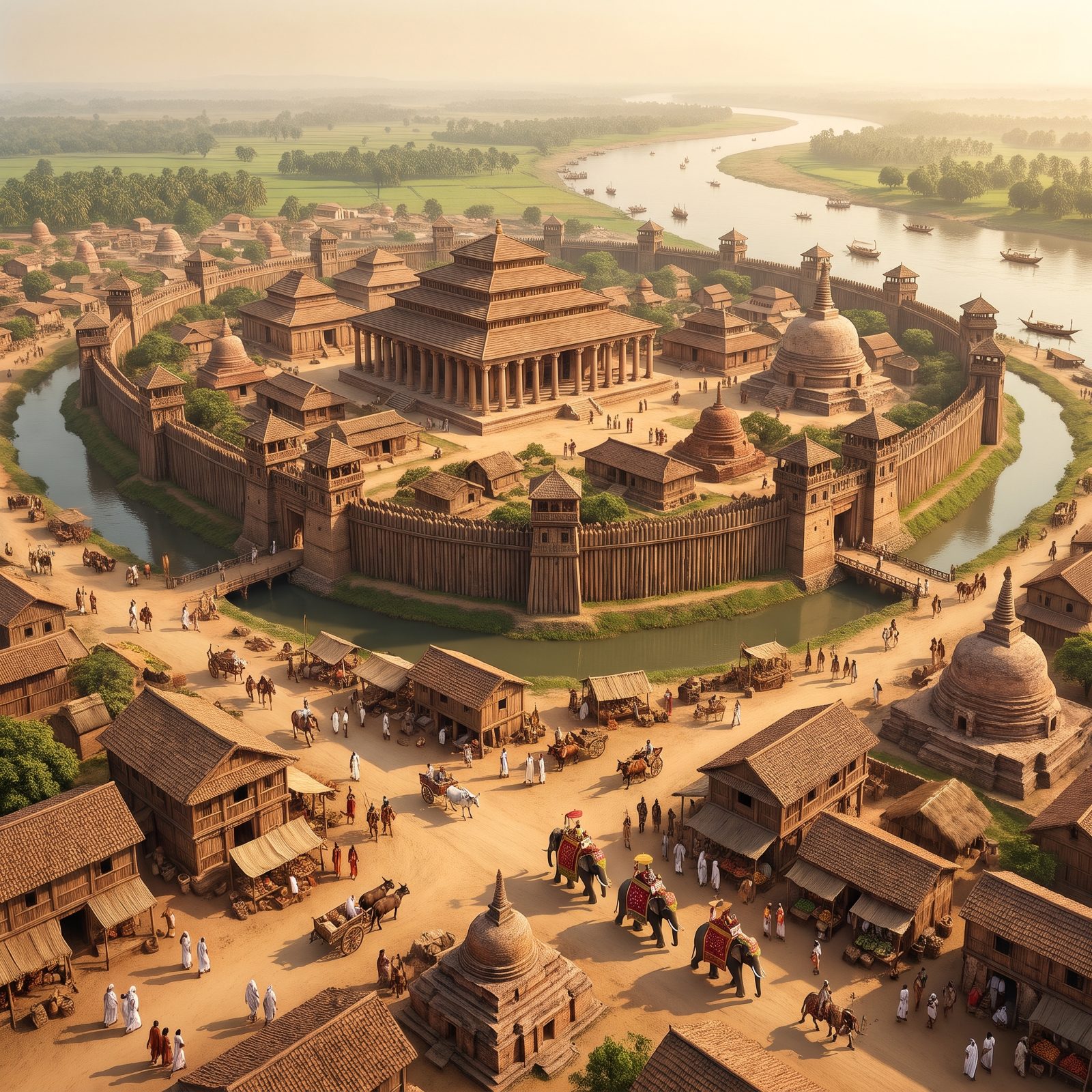
A Greek ambassador named Megasthenes walked these streets around 300 BCE and went home stunned, describing a city stretching nine miles along the Ganges, ringed by a wooden wall bristling with hundreds of towers. He reckoned it outclassed anything in the Greek world.
Under Ashoka, who ruled a few decades later, Pataliputra became the center of something genuinely strange — an emperor who conquered, stared at the carnage of his own war at Kalinga, converted to Buddhism, and spent the rest of his reign carving edicts about mercy and tolerance into rock across the subcontinent.
19. Chan Chan at the Height of the Chimú Empire
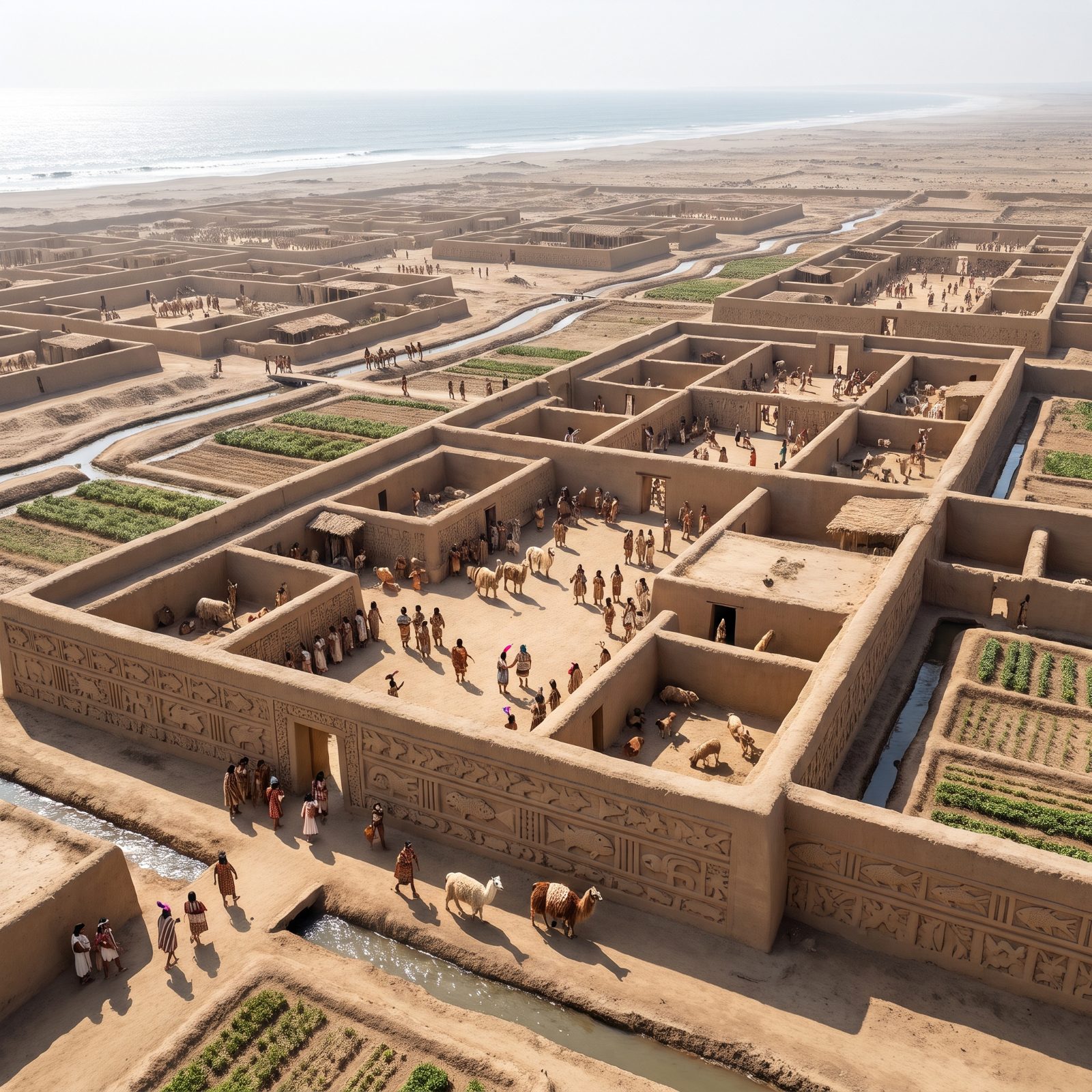
The largest adobe city on Earth, and it never saw a single stone building. Chan Chan was built almost entirely from mud, and that choice tells you how little rain the Peruvian north coast gets. Rain would have dissolved it. Drought preserved it.
At its height around 1450, tens of thousands of people lived inside ten walled royal compounds, each one raised by a new king who refused to inherit his predecessor’s palace. The walls carried carved friezes of pelicans, fish and fishing nets, because the Chimú lived off the sea. What astonishes engineers most are the walk-in wells, sunk deep to reach the water table in a place that barely drizzles.
18. Hattusa as the Fortified Hittite Capital
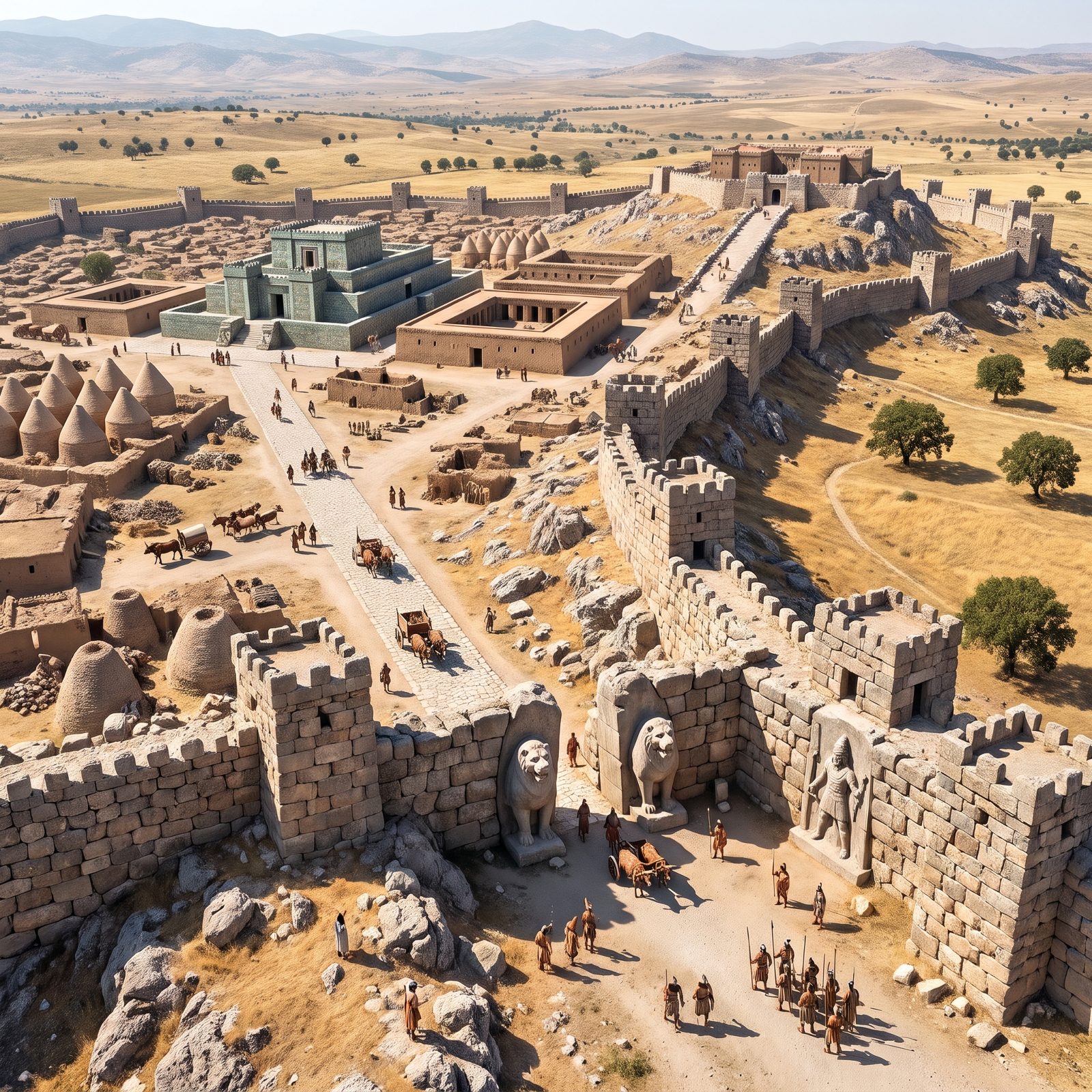
Imagine walls so thick that a tunnel runs straight through them, built so an army could pour out and ambush attackers from behind. That is the Yerkapı rampart at Hattusa, and it still works.
The Hittites ran an empire that fought Egypt to a standstill at Kadesh, and they ran it from this cold, windswept plateau in what is now Turkey. The city sprawled across steep ridges, ringed by miles of stone fortification studded with lion gates and sphinxes.
Then around 1200 BC the city was abandoned and burned, caught in the collapse that swallowed half the Bronze Age world. Nobody fully agrees why.
17. Bagan When Thousands of Temples Were New
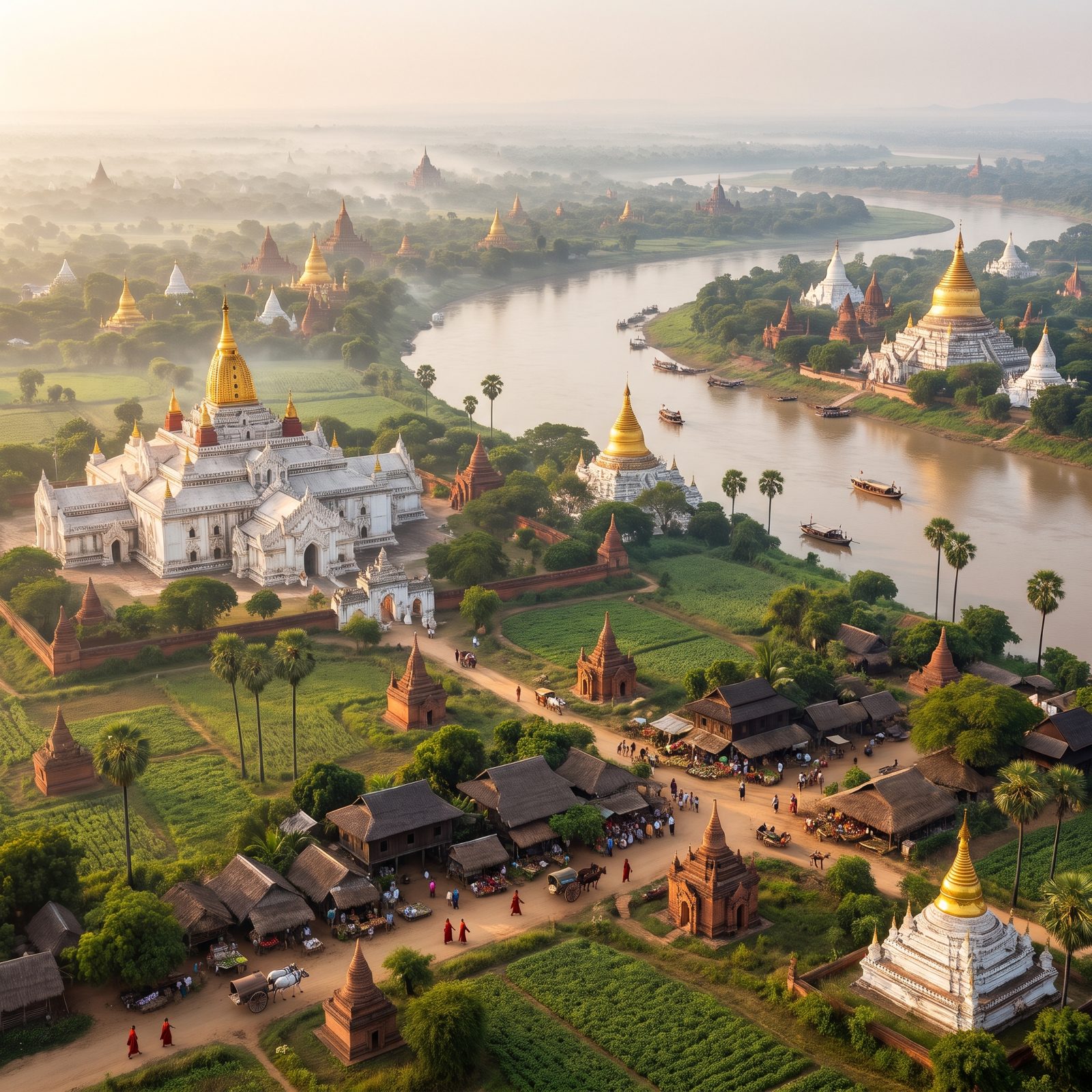
Today Bagan reads as a sea of weathered red brick. When it was new, it blazed. Plenty of those temples wore white stucco and gold leaf, and the spires threw sunlight back across the Irrawaddy plain like scattered coins.
Between the 11th and 13th centuries, the kings of Pagan built on a scale that’s genuinely hard to believe. Thousands of religious monuments went up on this plain, funded by a merit economy where wealth bought you a temple and a temple bought you a better rebirth. More than a couple thousand still stand.
Earthquakes have shaken the plain for centuries, the most recent in 2016. The temples keep standing anyway — which tells you something about 12th-century bricklaying.
16. Uruk When It Was the World’s Largest City
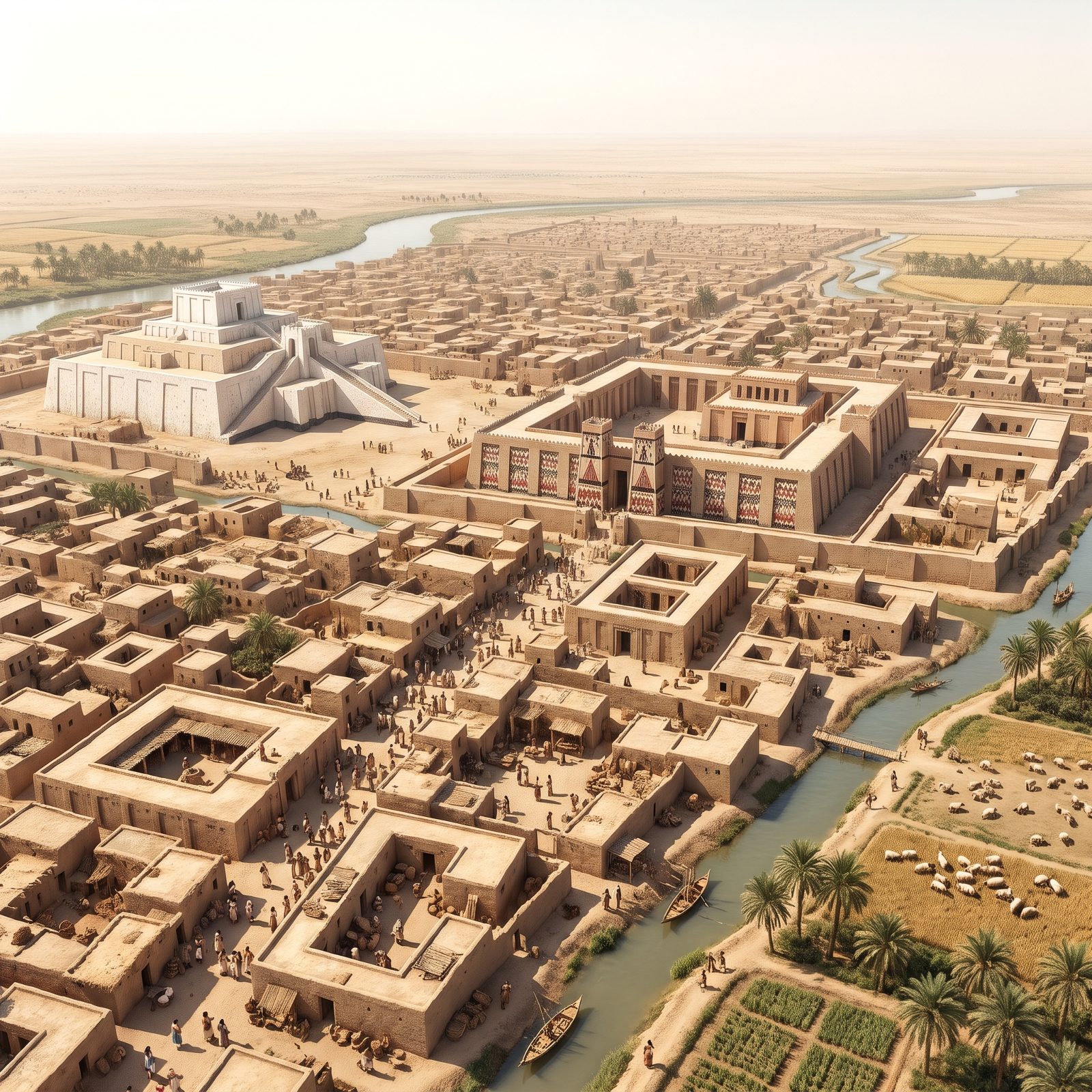
Writing was invented here. Not as poetry, but as bookkeeping — scratched into wet clay to track barley and beer rations. The oldest written documents on Earth are, basically, Uruk’s receipts.
Around 3200 BC, Uruk may have held tens of thousands of people, packing them into a mudbrick sprawl bigger than anything the world had seen. This is the city of Gilgamesh, the half-legendary king, and its walls were famous enough to star in the oldest surviving epic.
Everything downstream of Mesopotamian civilization — cities, kings, written law — started on this hot, flat, unpromising plain.
15. Leptis Magna Under Emperor Septimius Severus
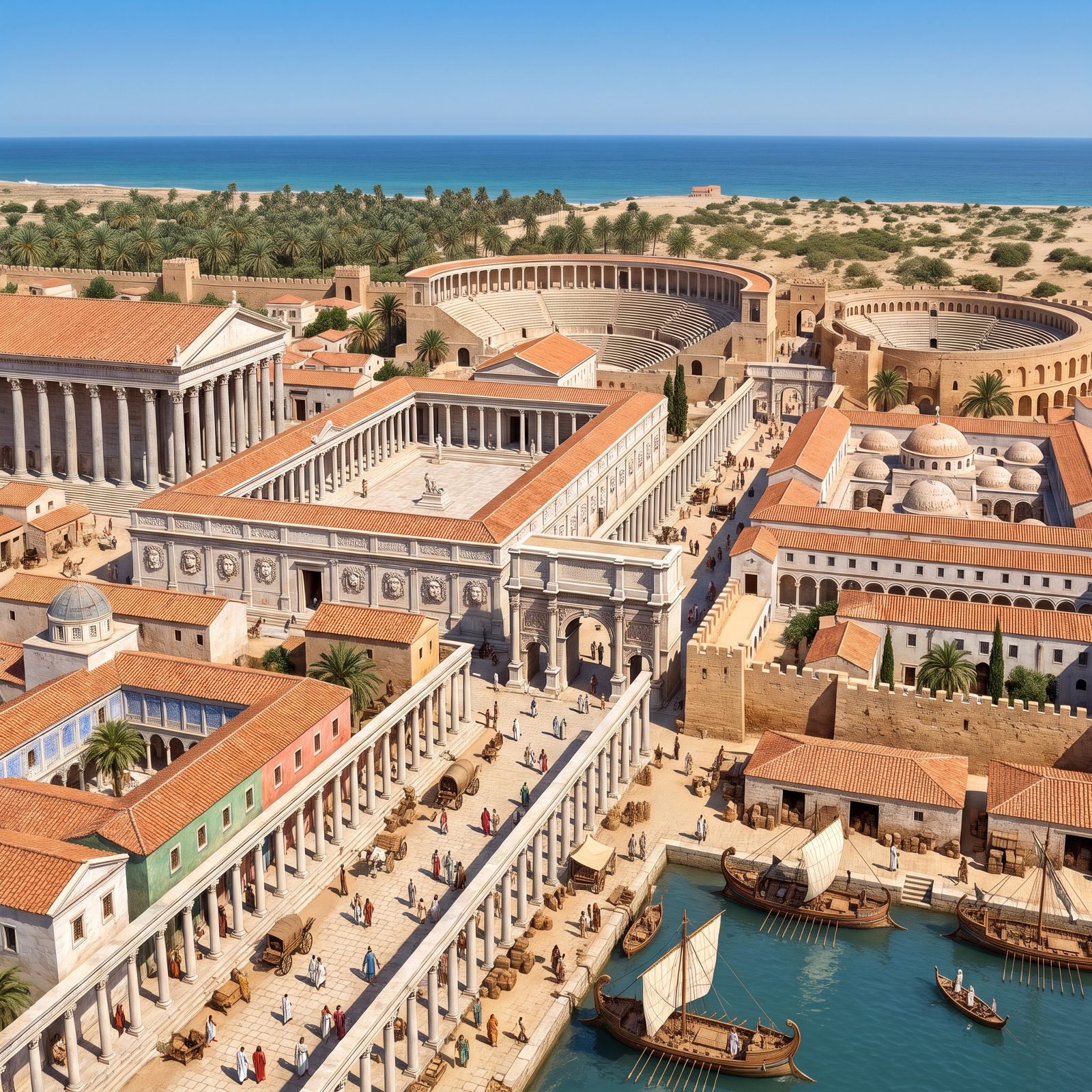
A boy from this town grew up to rule the entire Roman Empire, and then he poured the empire’s money back into his hometown. Septimius Severus turned Leptis Magna — a provincial port on the Libyan coast — into a showcase of marble.
He imported colored stone from across the Mediterranean, green from Greece, pink granite from Egypt, and raised a new forum, a basilica and a harbor worthy of a capital. For a few decades, this corner of North Africa gleamed like Rome itself.
The harbor silted up, the trade died, the desert moved in. What the dunes covered, they kept.
14. Dholavira When Its Reservoirs Were Full
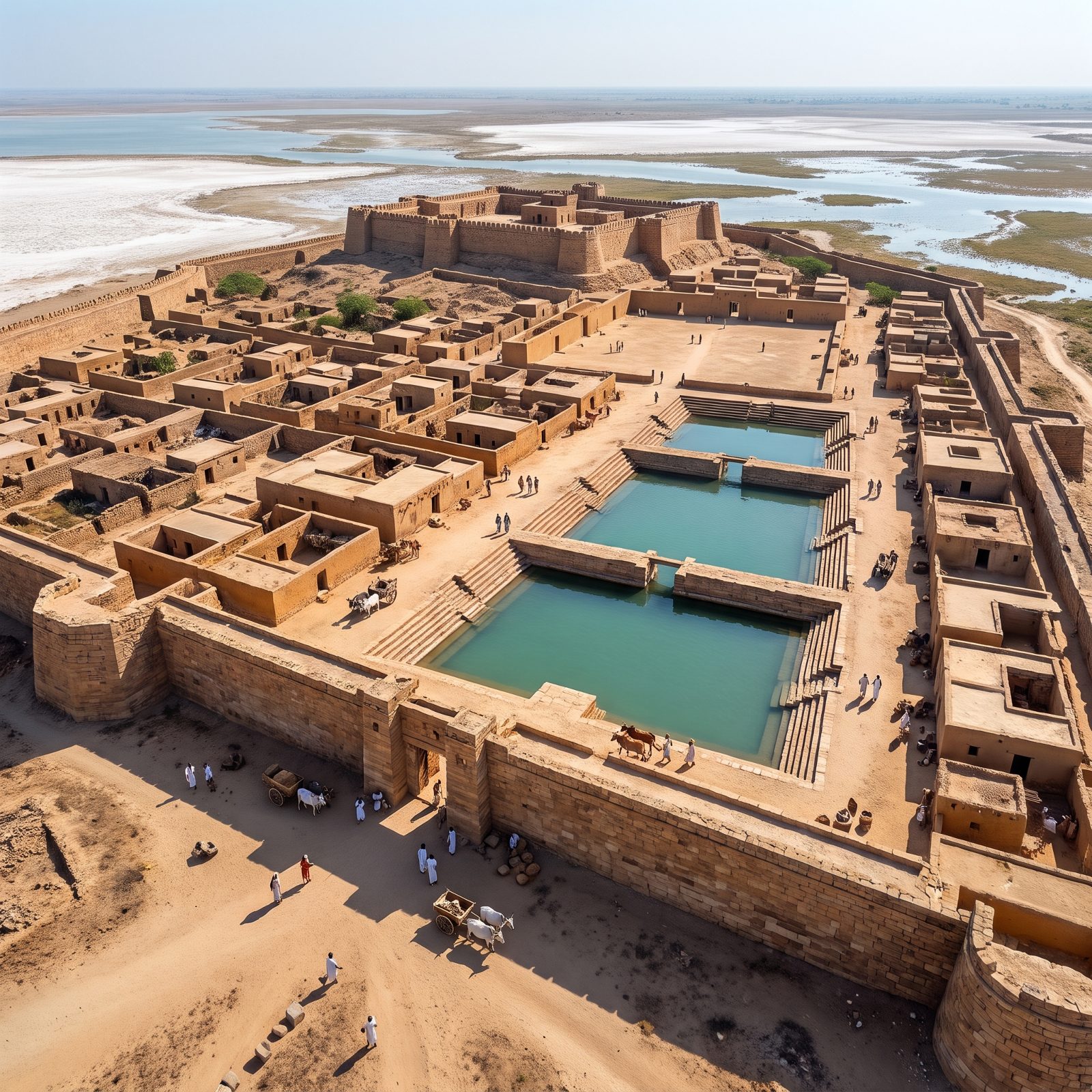
Everything about Dholavira comes down to water, and the fact that there wasn’t any. The Indus Valley engineers built this city on a parched island in a salt desert, then survived there by catching every drop the rare monsoon offered.
They cut a chain of giant reservoirs into the bedrock — some of the largest and oldest water-harvesting structures ever found — and ringed them with stepped stone banks. Full, they turned a desert city into something that could outlast a drought. And the layout? Geometric to a fault: three walled sectors, dead-straight streets, a drainage system that would embarrass some modern towns.
Nobody knows what language they spoke. Their script sits uncracked on hundreds of seals, a civilization that balanced its whole existence on rainwater and left us a puzzle we still can’t read.
13. Paestum When Its Greek Temples Were Brightly Painted
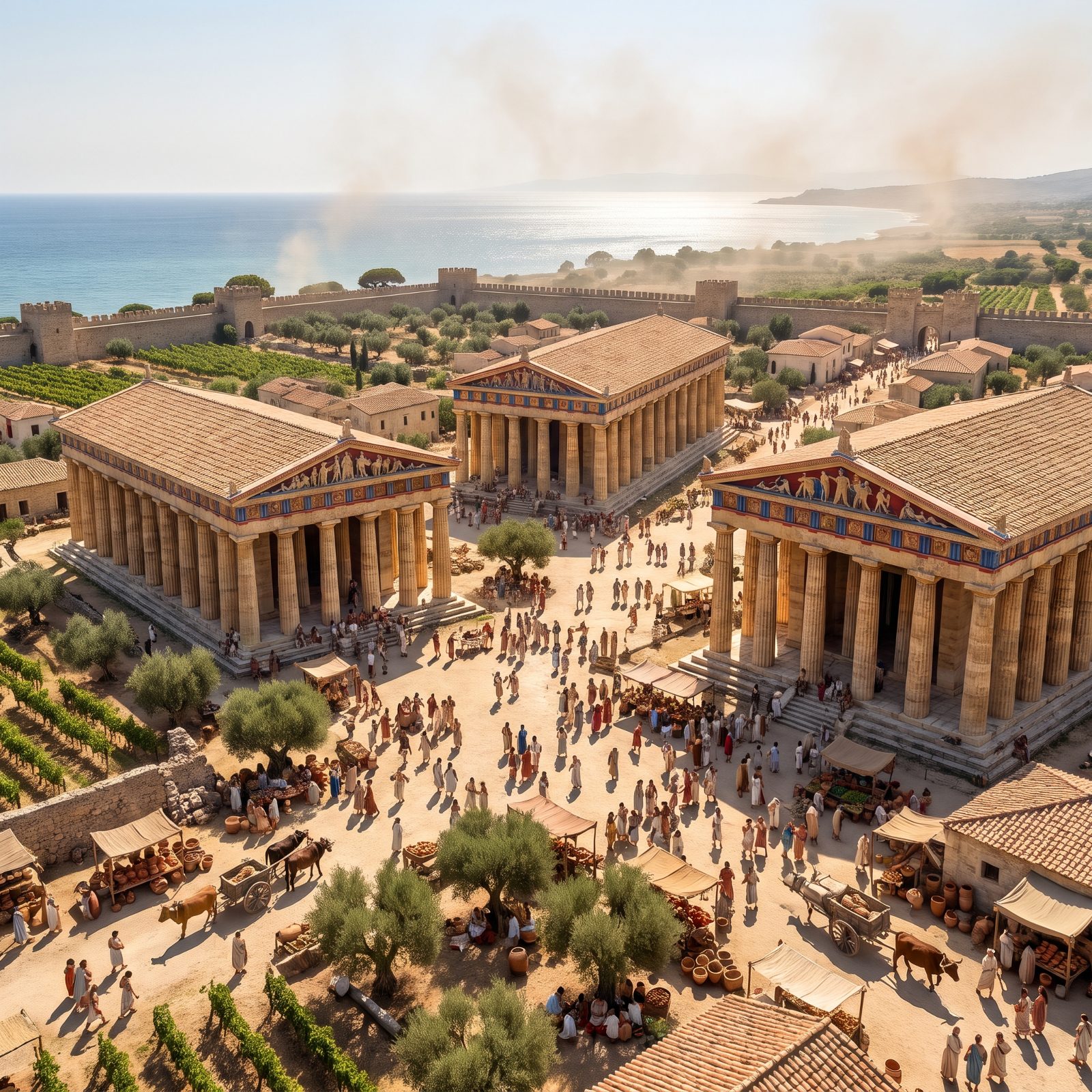
Strip away the modern assumption first. Greek temples were not pale — they blazed.
At Paestum, founded by Greek colonists as Poseidonia around 600 BCE, the three Doric temples you can still walk through today once wore paint. The triglyphs ran blue, the backgrounds behind sculpted figures went deep red, and the antefixes along the roofline were picked out in ochre and black. That honey-gold travertine you see now? A ghost of the original.
The temples survived mostly because malaria later emptied the area and nobody bothered to quarry them for stone. Neglect preserved what prosperity built.
12. Gordion During the Age of King Midas
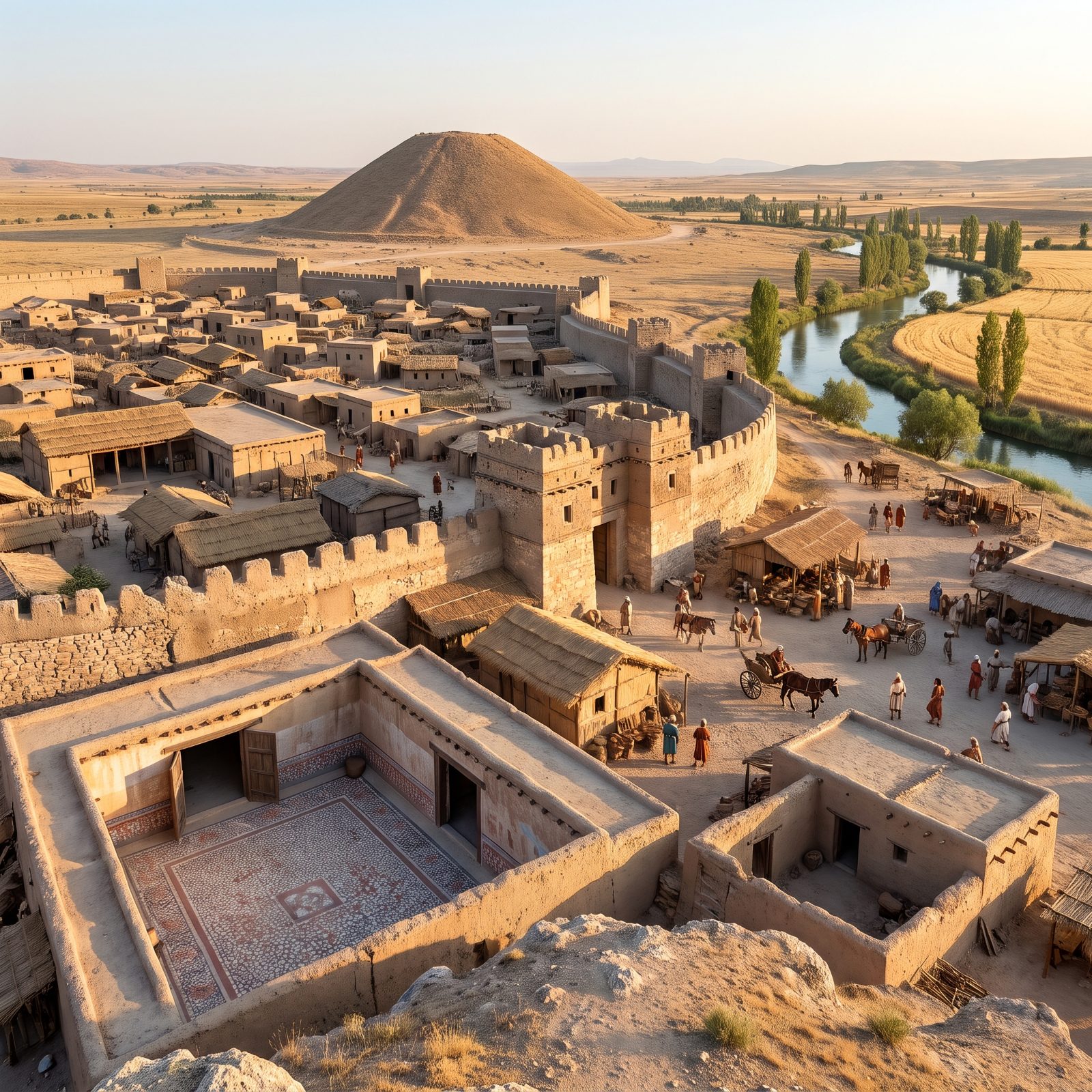
Midas was real. The golden-touch part is legend, but the king behind it ruled a genuine power from Gordion in the eighth century BCE.
His capital guarded the main road across Anatolia. Inside the citadel stood megaron halls floored with pebble mosaics in geometric reds and whites, some of the earliest decorative floors known, and outside rose the burial tumulus now called the Midas Mound, a hill of earth piled over a wooden chamber that still held its cedar furniture and bronze cauldrons when excavators finally opened it.
The feast residue in those cauldrons has been analyzed: spiced lentil stew and a drink mixing wine, barley beer and honey mead. A funeral banquet, served some twenty-seven centuries ago.
11. Anuradhapura Around the Sacred Bodhi Tree
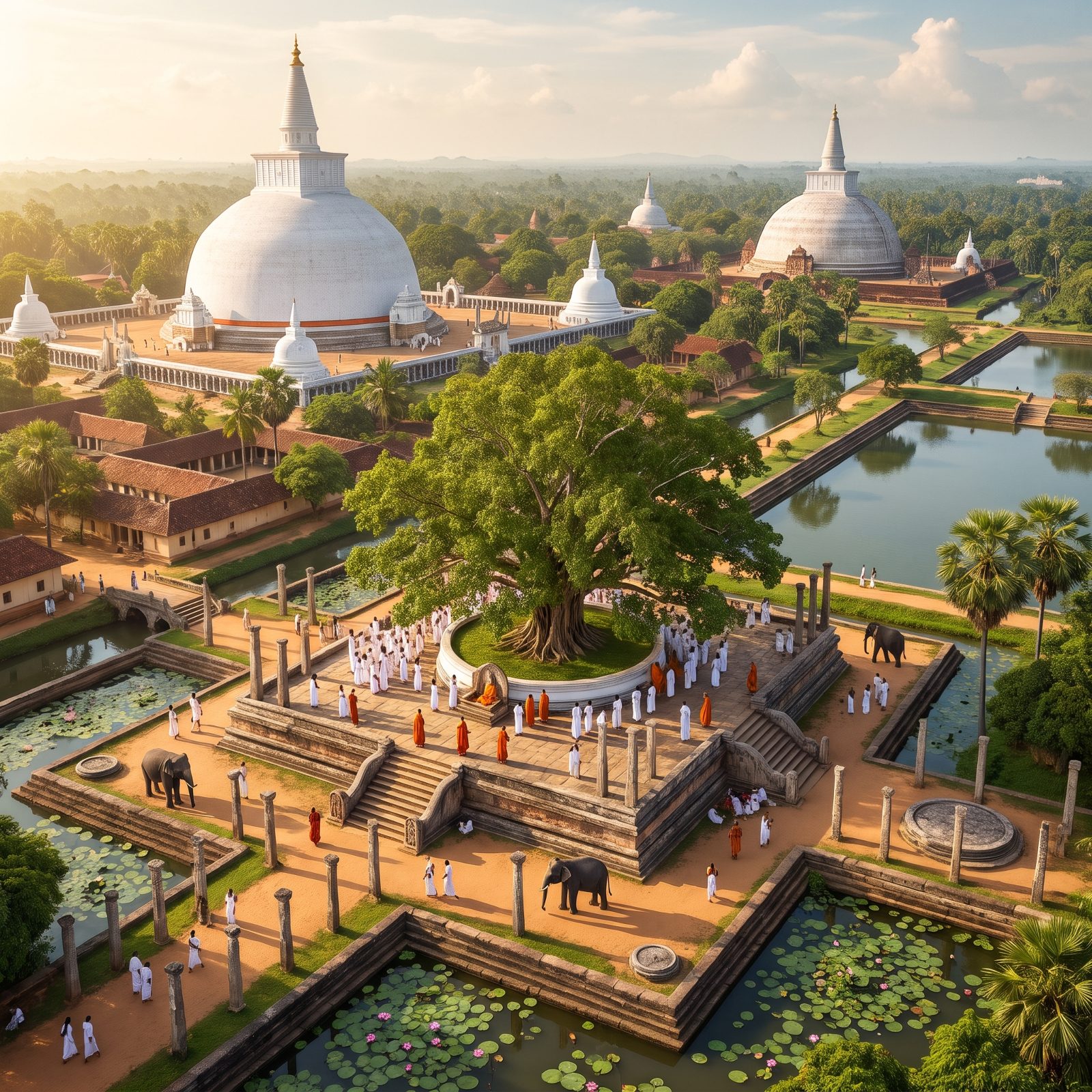
There is a tree in Sri Lanka with a continuous written history going back to 288 BCE. That alone should stop you cold.
The Jaya Sri Maha Bodhi at Anuradhapura is a fig grown from a cutting of the tree the Buddha is said to have sat under, and people have tended it in an unbroken chain of guardianship for well over two thousand years. As far as anyone knows, it’s the oldest human-planted tree on Earth with a recorded planting date.
The city around it grew into one of Asia’s great capitals, its brick stupas rivaling the pyramids in sheer volume, its survival resting on a staggering network of reservoirs that turned dry plains into rice country.
10. Copán When Its Hieroglyphic Stairway Was Complete
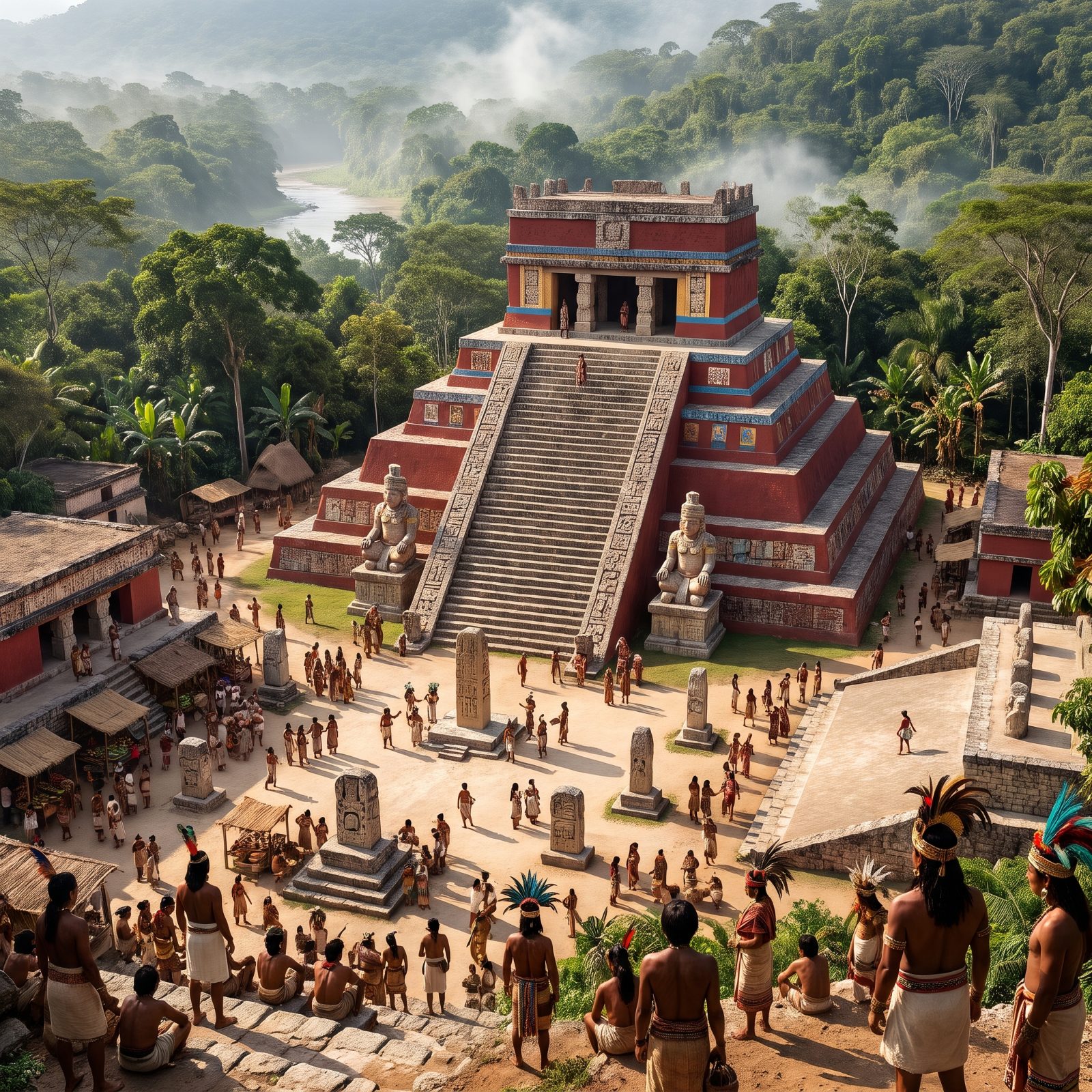
Copán holds the longest text the Maya ever carved into stone.
Its Hieroglyphic Stairway climbs a temple on more than 60 stone steps, their risers packed with glyphs — thousands of them — recording the dynasty of this kingdom in the lush hills of western Honduras. When it was finished around 755 CE the whole structure wore red paint, studded with statues of seated kings.
And here’s the frustrating part. The stairway collapsed in antiquity, and early excavators reassembled it before anyone could read Maya script. The blocks went back in the wrong order. Scholars are still arguing over what it actually says.
9. Çatalhöyük When Thousands Lived Roof to Roof
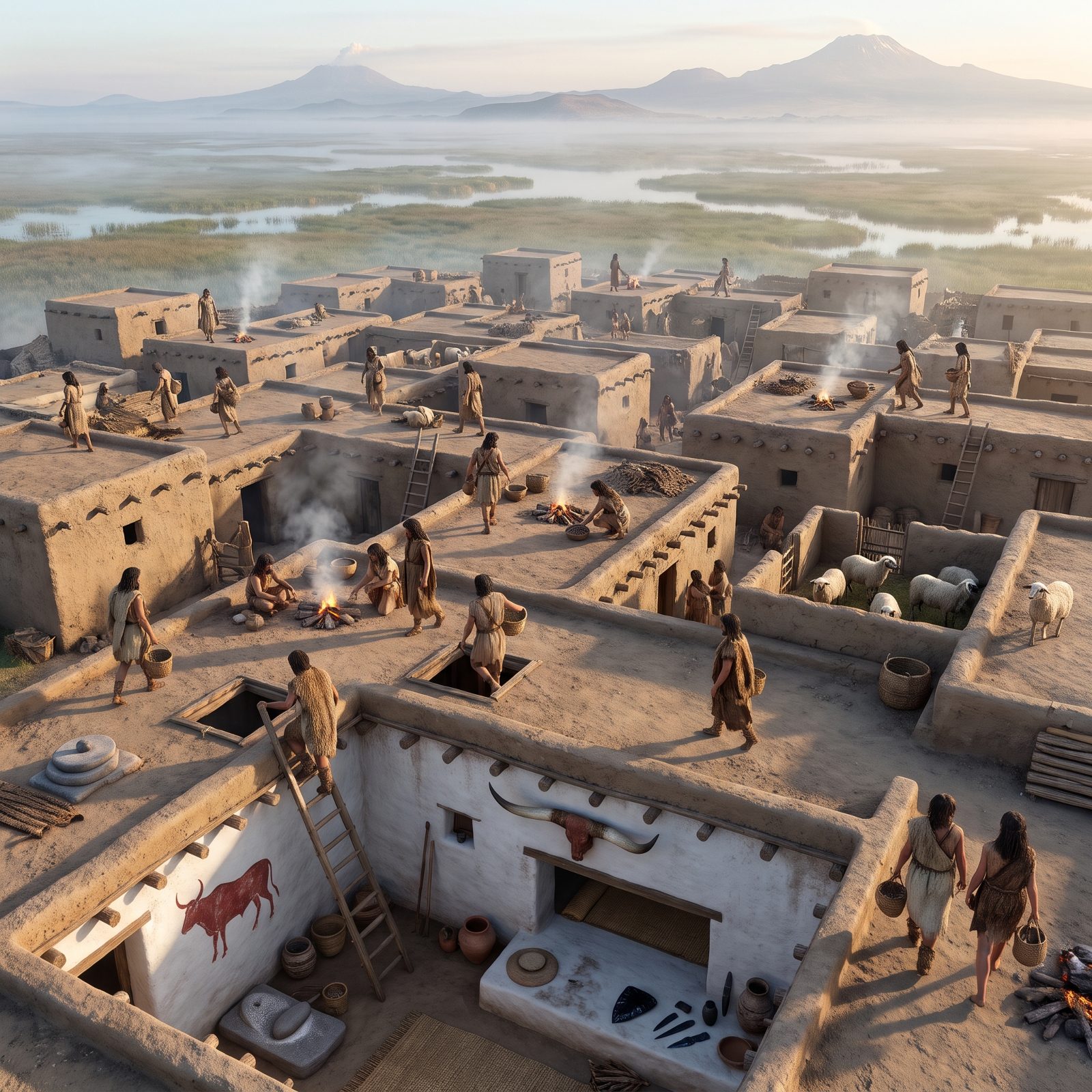
Hardly any streets. That’s the thing to hold onto about Çatalhöyük.
Around 7000 BCE, several thousand people lived in this town in central Turkey, packed into mudbrick houses so tight the walls touched. You mostly didn’t walk between buildings — you walked across the rooftops, then climbed down a ladder through a roof hole, or into an open sunken courtyard where doorways led indoors.
They buried their dead under the floors, right beneath the sleeping platforms, and plastered and repainted the courtyard walls year after year: mounted bulls’ heads, red zigzags, patterns layered over patterns. One of the earliest proper towns anywhere, and it ran with barely an alley.
8. Jiaohe When Its Earthen City Stood Above Two Valleys
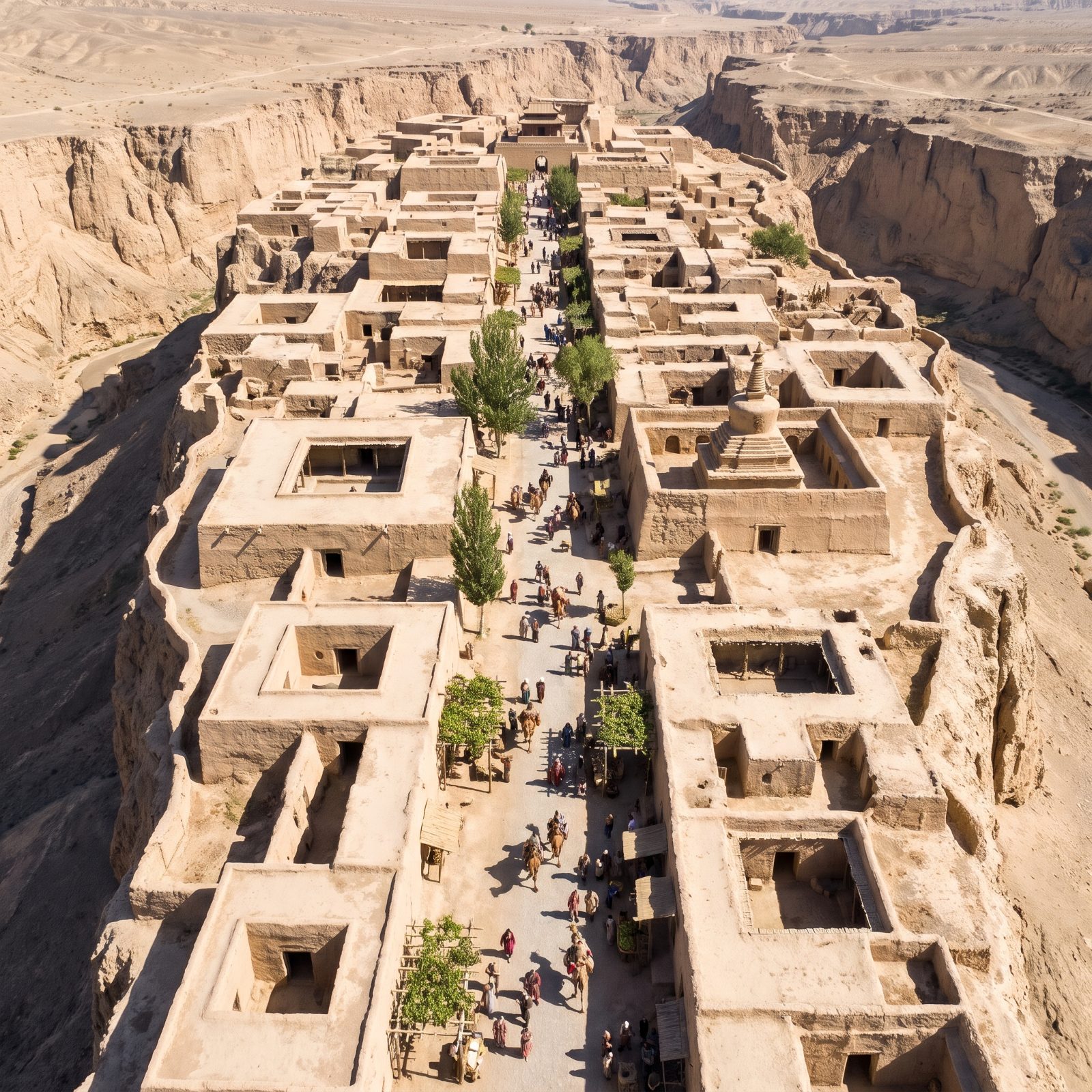
Most cities are built up. Jiaohe was carved down.
Perched on a knife-edge plateau between two river gorges in the Turpan Basin of western China, this Silk Road town dug its streets and buildings straight into the solid loess earth. Rooms were scooped out below ground level, courtyards sank beneath the surface, and the cliffs on either side did most of the defending, topped by an earthen wall running along the plateau’s edge.
At its peak it anchored trade through one of the hottest, driest corners of Asia, with a Buddhist monastery and stupa still recognizable today. It survives as one of the best-preserved earthen cities on Earth precisely because the climate is so brutally dry that nothing rots.
7. Caral When Its Sunken Plazas Hosted Ceremonies
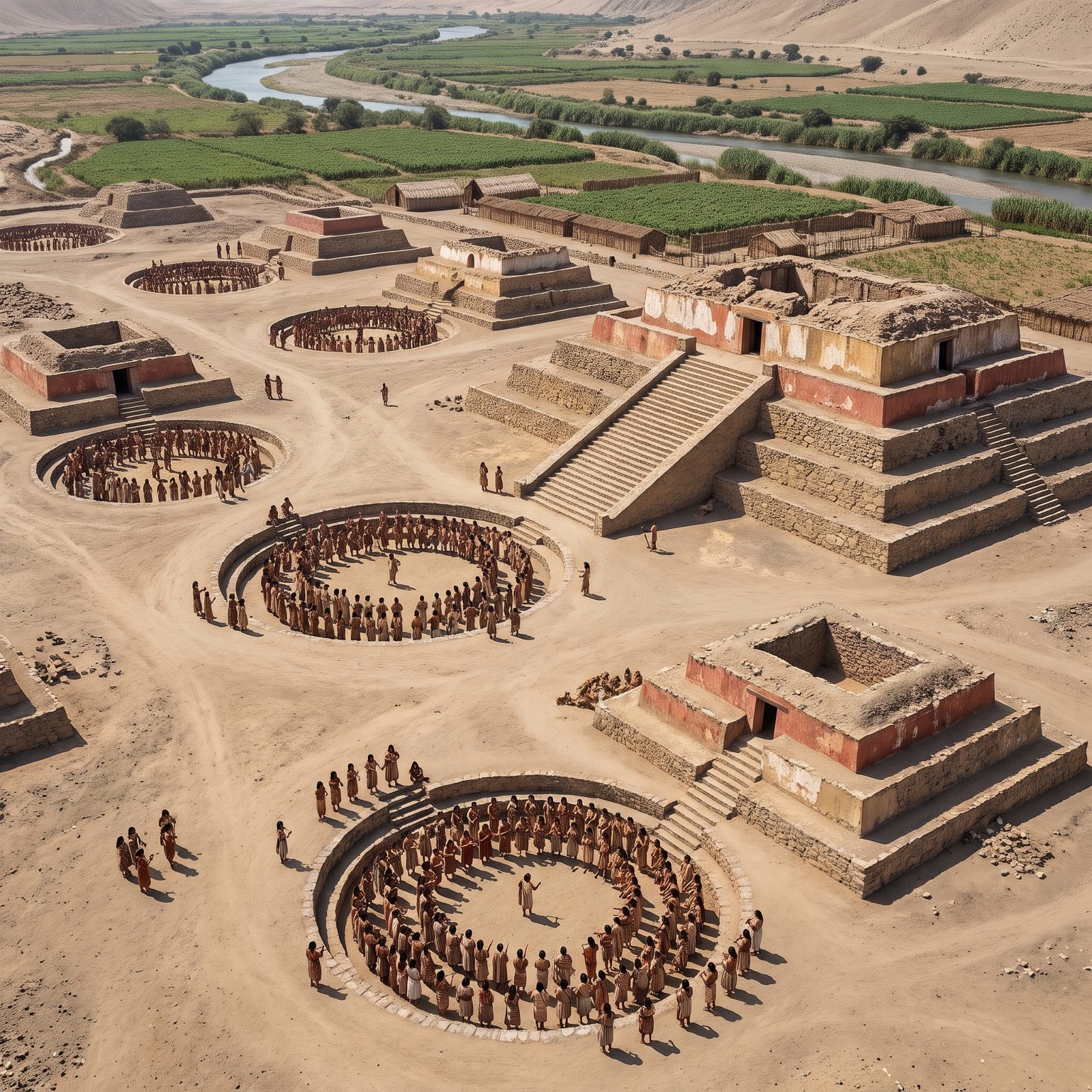
Caral was raising pyramids while the pharaohs raised theirs. That comparison still catches people off guard.
Dated to around 2600 BCE in a desert valley north of Lima, it’s the oldest known city in the Americas, built by people who had no pottery and apparently no warfare. Archaeologists found no weapons, no fortifications, no signs of battle. What they found instead were flutes carved from condor and pelican bone, and sunken circular plazas built for gathering.
To survive earthquakes, the builders leaned on a clever trick. Woven reed bags called shicra, packed with stones and stacked inside the platforms, let the structures flex instead of topple.
6. Mari When Zimri-Lim Occupied Its Vast Palace
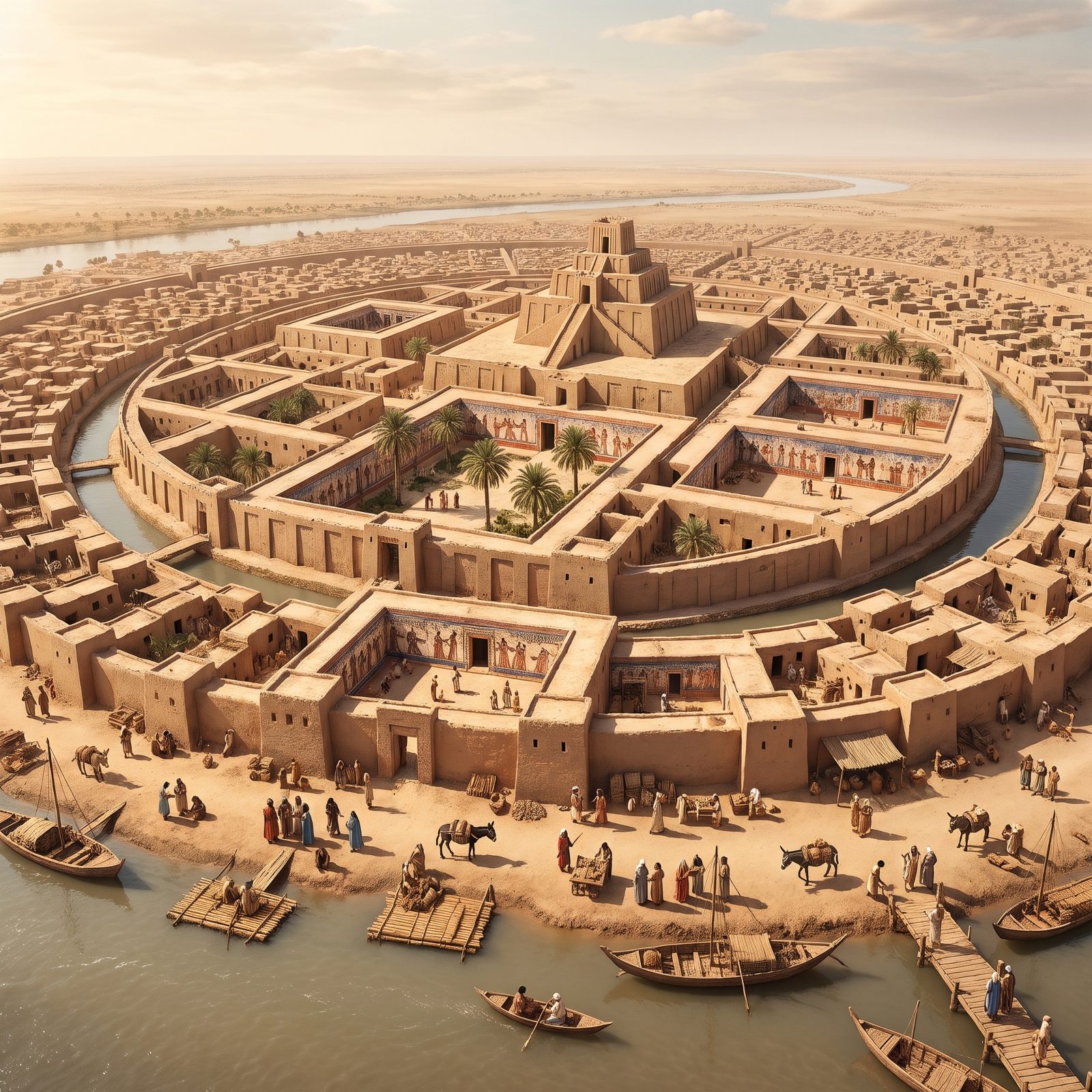
The palace at Mari was so famous in its own day that a Syrian king sent his son hundreds of miles just to see it.
Under Zimri-Lim, around 1775 BCE, this Euphrates city on the Syria-Iraq border centered on a royal complex of roughly 300 rooms, its walls painted with murals that still held their red and blue when excavators uncovered them. The ruler sat at the heart of a buzzing trade and diplomatic web stretching across the ancient Near East.
Then Hammurabi of Babylon sacked it and burned it. That fire baked the palace archive of thousands of clay tablets hard, preserving one of the richest records of Bronze Age politics we have. Destruction turned out to be a kind of filing system.
5. Monte Albán as the Zapotec Capital
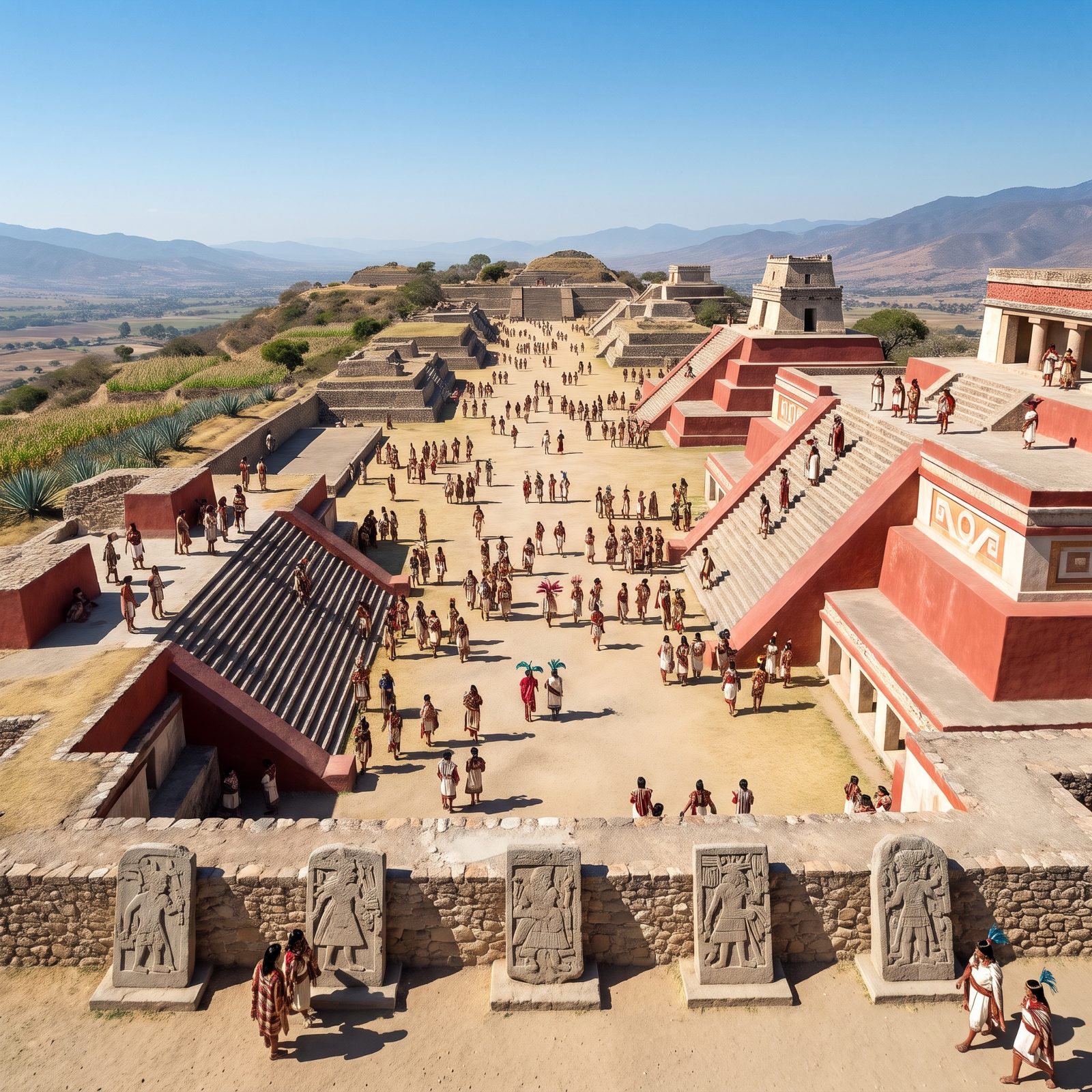
Imagine deciding your capital will sit on top of a mountain with no water and only steep slopes to farm, then flattening the summit by hand to make room for it.
That’s Monte Albán. Around 500 BCE the Zapotec founded their capital on a leveled ridge more than a thousand feet above the valley floor in Oaxaca, a site chosen for position and politics rather than convenience. Water had to be carried or caught. Corn, agave and vegetables grew on terraces cut into the slopes right beside the plaza.
At its height it commanded a plaza the length of several football fields, ringed by stucco-faced temples once painted red, plus an oddly angled building many think was an observatory aligned to the stars.
A capital placed where farmers had to terrace the mountainside just to grow food, for reasons that were never about farming.
4. Ugarit on the Eve of the Late Bronze Age Collapse
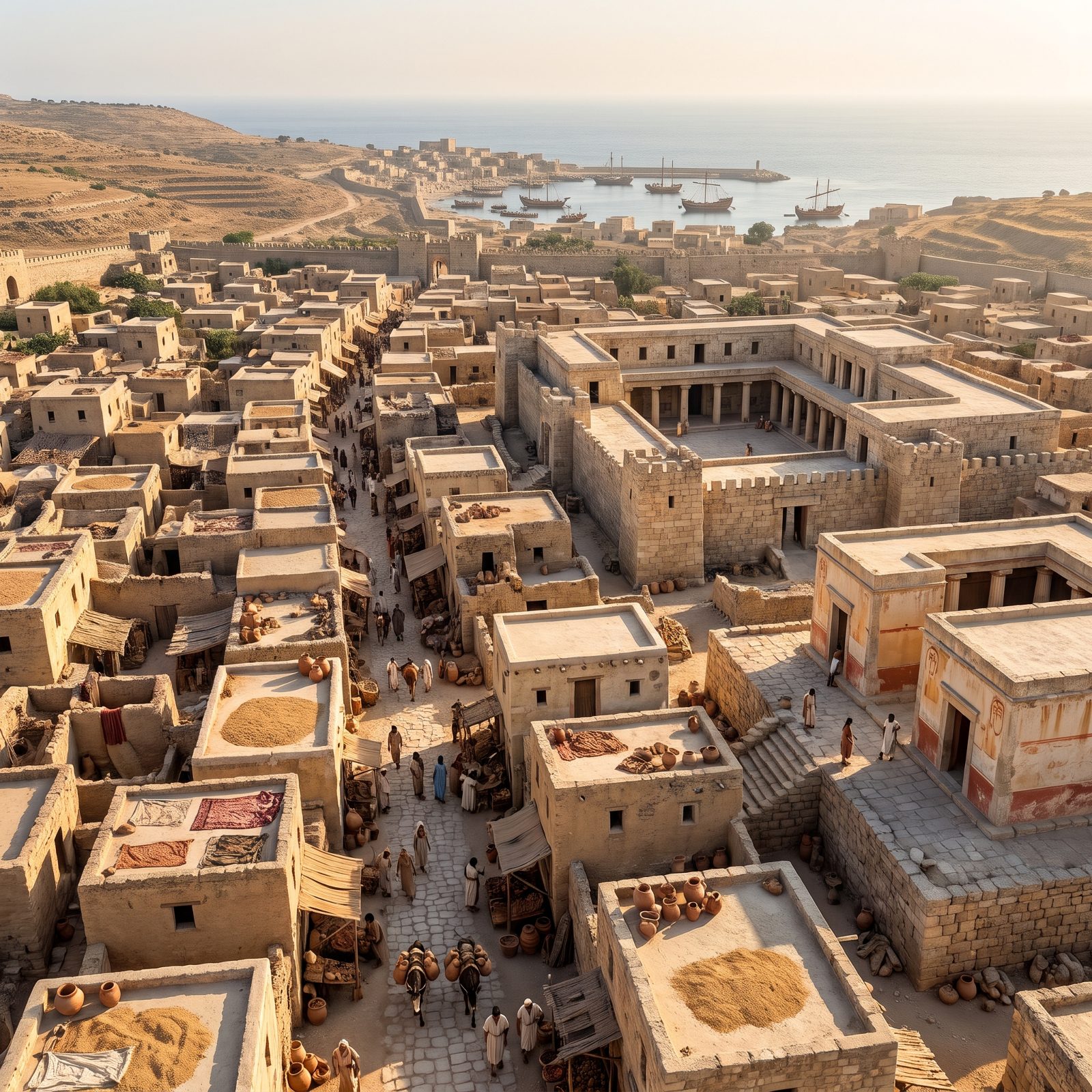
A clay tablet found in the ruins ends mid-sentence. It warns of enemy ships on the water, pleads for help, and then — nothing. Ugarit was one of the richest ports on the Mediterranean, a clearinghouse for Cypriot copper, Egyptian gold and Aegean pottery, and its scribes were scratching out one of the earliest alphabets anyone has ever found.
At its height the city ran on trade and literacy, and the palace archive held letters in seven languages. Then around 1185 BCE it burned and was never reoccupied. That fire was one knot in a wider unraveling that pulled down kingdoms all across the eastern Mediterranean inside a single lifetime.
3. Merv at Its Zenith as the Silk Road’s Great Oasis
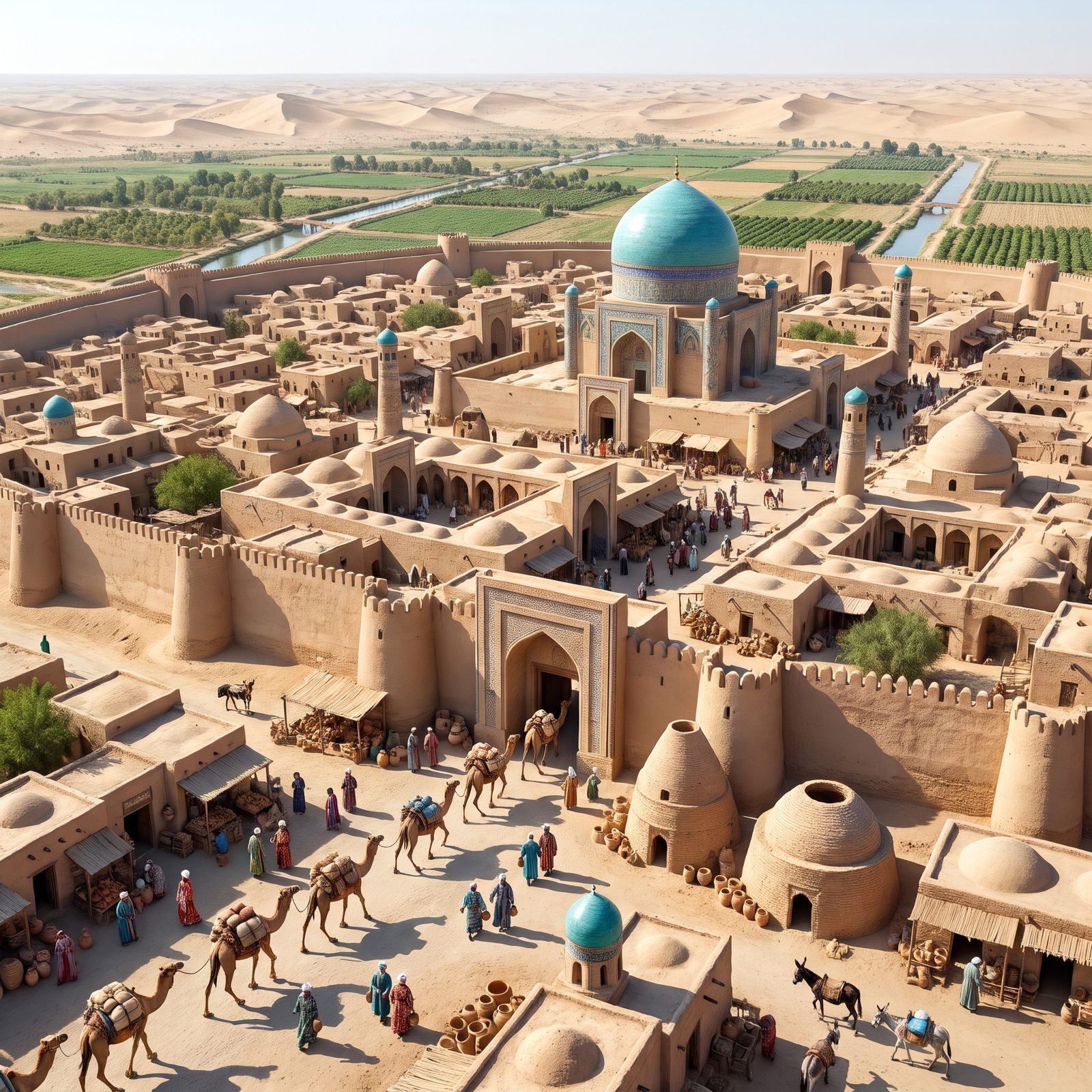
Some historians think Merv was briefly the largest city on Earth. Under the Seljuks in the 12th century it may have held hundreds of thousands of people, fed by an irrigation system so exacting that a dedicated official — the mir-ab — controlled the river’s flow and answered straight to the sultan.
Libraries, observatories and glassworks made it a magnet for scholars. Then the Mongols arrived in 1221 and emptied it with a thoroughness that still turns the stomach. Chroniclers counted the dead in the hundreds of thousands, and the canals that had kept the oasis alive slowly choked back into sand.
Water built Merv, and when the water stopped, the desert simply walked back in.
2. El Mirador When El Tigre Loomed Over the Rainforest
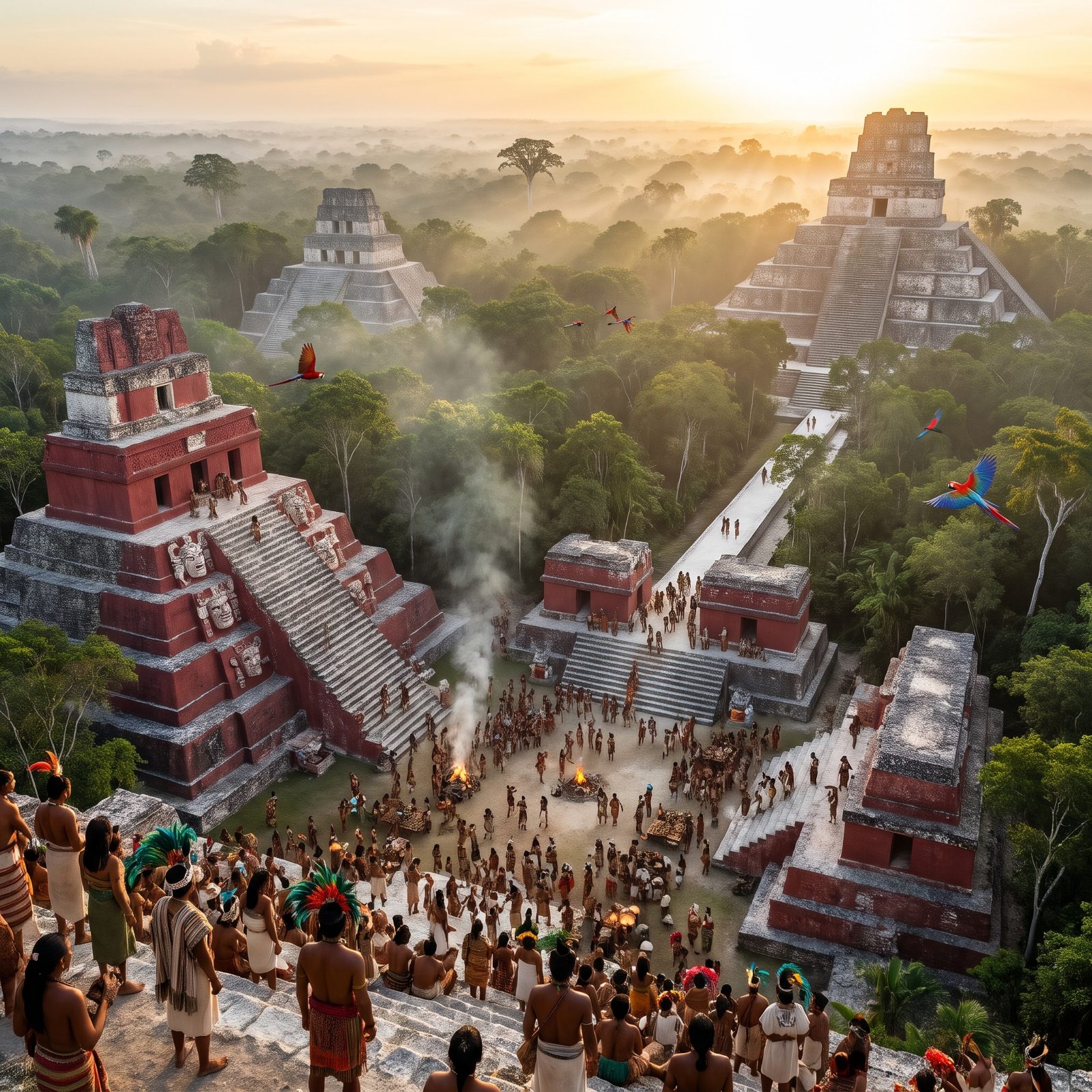
El Tigre rises higher than an eighteen-story building, and it went up centuries before the Maya cities most people have actually heard of. El Mirador flourished in the Preclassic period, roughly 300 BCE to 150 CE, back when the surrounding forest was laced with raised plaster roads you could walk for miles.
La Danta, its largest pyramid, holds more sheer bulk than the Great Pyramid of Giza once you count the platform beneath it. The city trapped water in reservoirs and turned swamp mud into farmland — and then it was abandoned. The jungle took it so completely that the pyramids now read as plain forested hills from ground level.
1. Dur-Sharrukin, the Capital That Was Abandoned the Day Its King Died
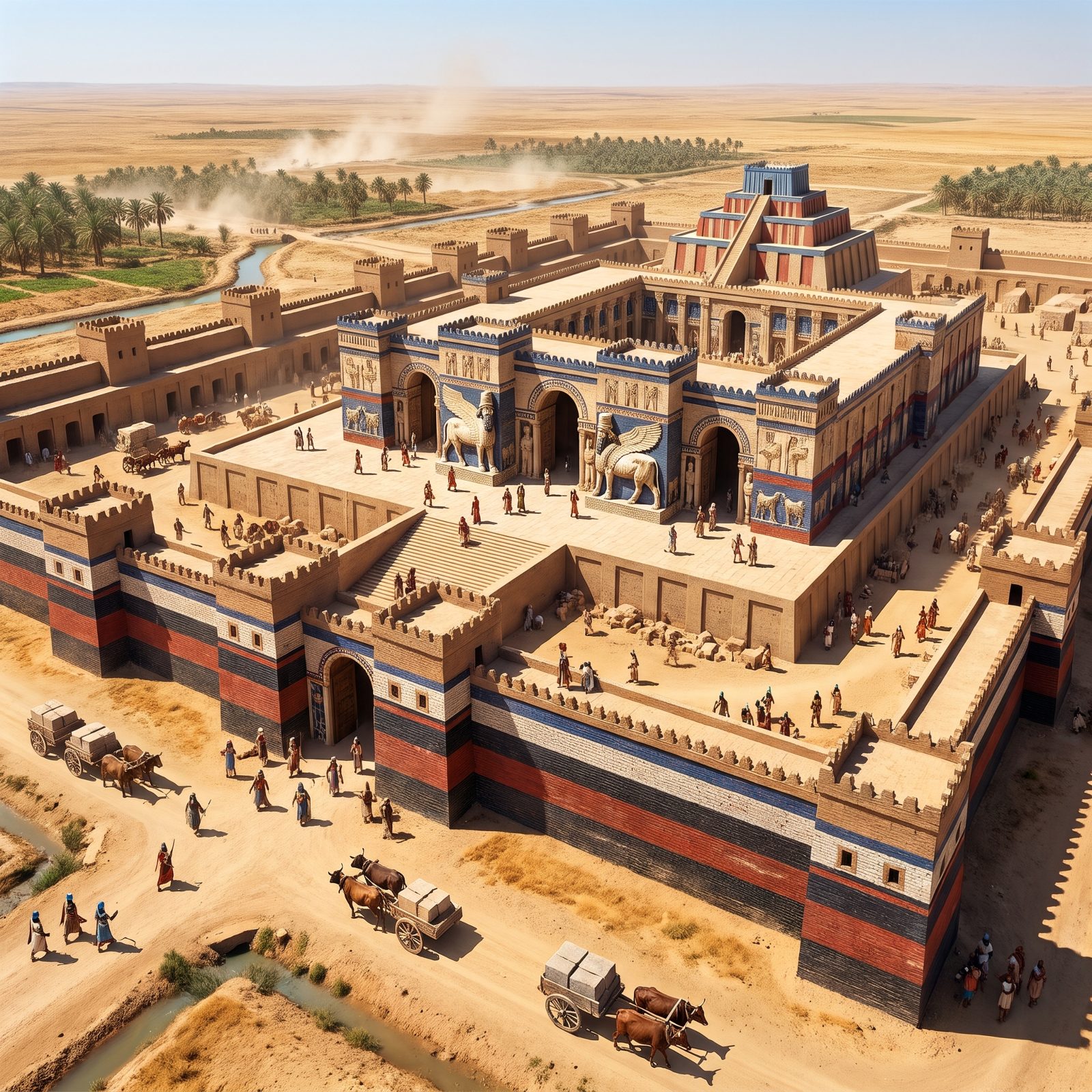
Sargon II built a brand-new capital from nothing and barely got to live in it. Dur-Sharrukin — “Fortress of Sargon” — went up fast in the late 8th century BCE, a planned city with a palace guarded by winged bull colossi and walls glazed in blue and gold.
Then in 705 BCE Sargon was killed in battle, and his body was never recovered. The Assyrians read that as a curse. His son shifted the court to Nineveh almost overnight, and the gleaming new capital was simply walked away from.
What makes it eerie is how finished the place was. The paint had barely dried. A city raised to stand forever got a handful of years, then was left to the plain.