
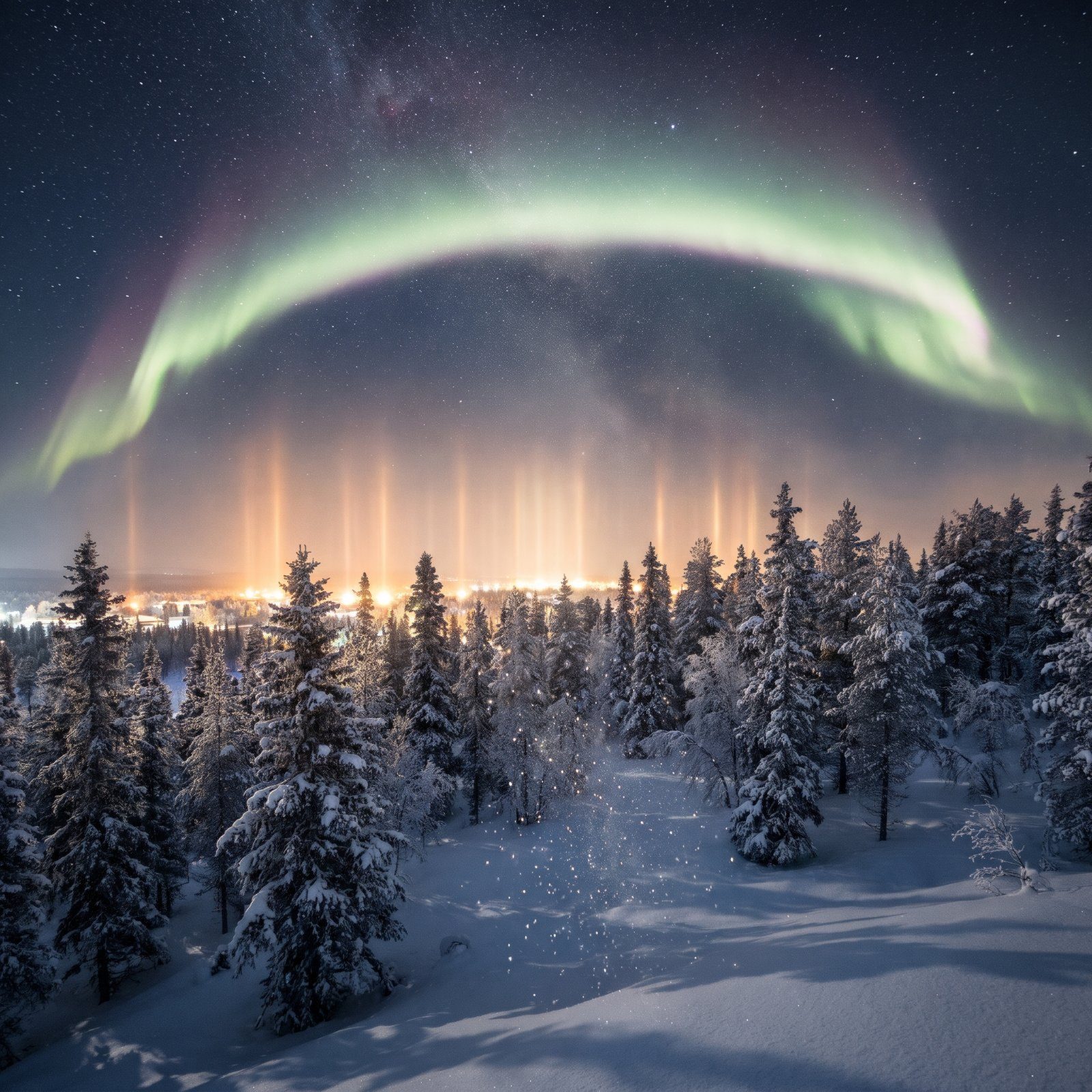
The sky hung ornaments long before anyone thought to string lights on a porch. On the coldest, clearest nights, water and ice and sunlight conspire to drape ribbons across the dark, hang glowing beads above frozen peaks, and burn candles of light straight up from the ground. None of it is decoration, though. It’s all physics: light bending through tiny crystals, water freezing in strange ways, and a few charged particles blown in from the Sun. Here are the winter tricks that mimic our garlands and glass baubles, why they happen, and exactly where you’d stand to catch each one.
Please note that some of the images in this article were created with the assistance of AI.
46. Aurora Ribbons Draped Across Snowy Skies
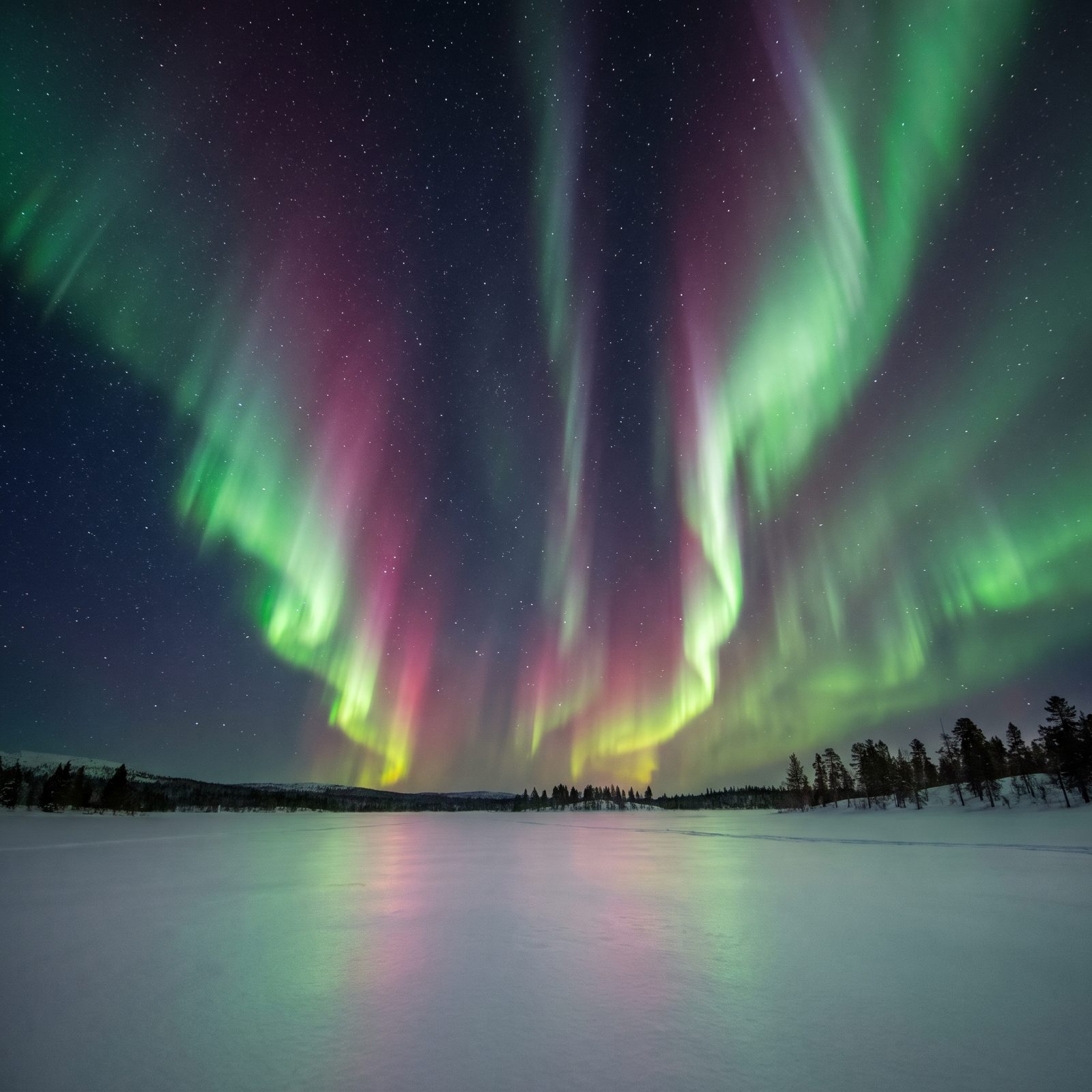
Those shimmering curtains are atoms taking a hit. Charged particles stream off the Sun, funnel down Earth’s magnetic field lines, and slam into oxygen and nitrogen somewhere between 60 and 150 miles up. Oxygen gives you that signature green, while the rarer red comes from oxygen even higher, where the air thins out to almost nothing.
Here’s what the glossy photos never tell you. To your naked eye, a faint aurora often looks grayish-white, not vivid green, because cameras gather far more light than your retina ever will. The vivid shots are real — just coaxed out by a long exposure.
45. Nacreous Clouds Glowing Like Mother-of-Pearl
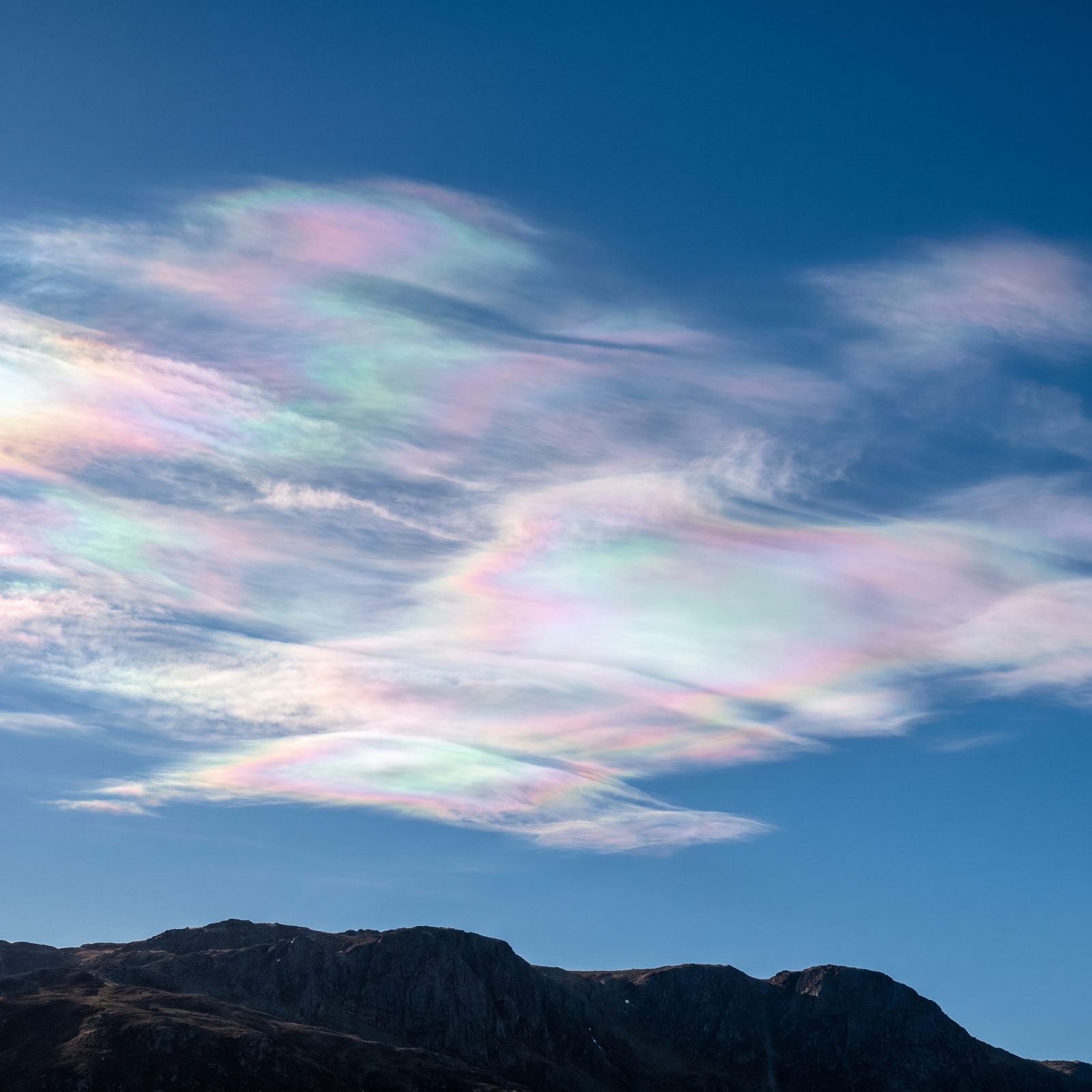
These are the highest clouds most people will ever see, and they only show up in brutal cold. Nacreous clouds (polar stratospheric clouds) ride somewhere around 50,000 to 80,000 feet, far above ordinary weather, and they demand temperatures below roughly minus 108 degrees Fahrenheit to even form. So they haunt polar winters — Scandinavia, Iceland, Antarctica.
The colors come from diffraction. Tiny, uniform ice particles bend sunlight into pastel bands, the same pearly sheen you’d find inside an oyster shell, and they blaze brightest at twilight when the Sun lights them from below the horizon.
Worth knowing: they’re gorgeous and a little sinister at once. The same clouds host the chemistry that chews through ozone.
44. Lenticular Clouds Stacked Above Snowy Peaks
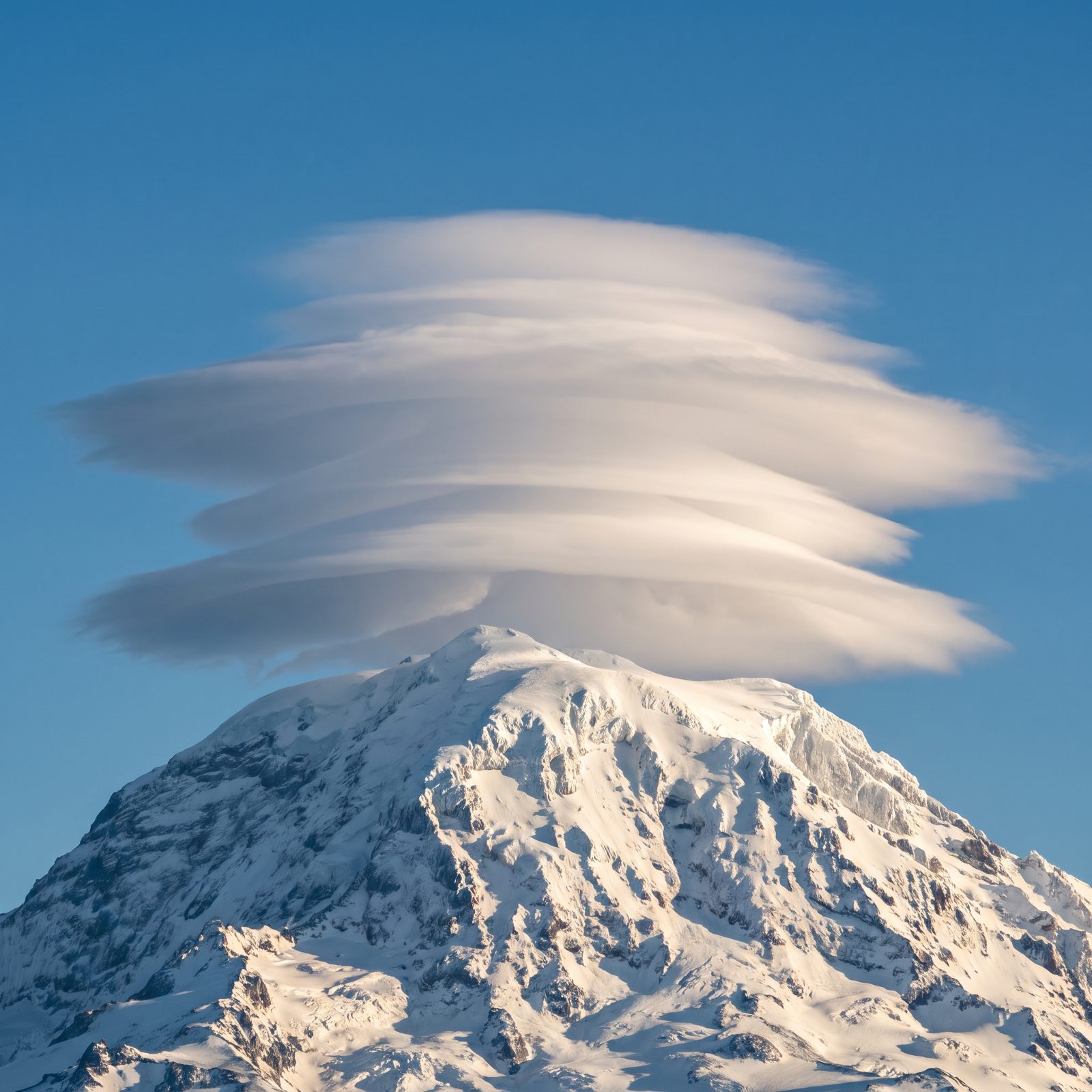
Smooth, stacked, impossibly still. A lenticular cloud looks like a pile of glass ornaments balanced on a peak, and no wonder it earns its UFO reputation.
The mechanism is sneaky. Moist air flows over a mountain and gets shoved upward, cooling at the crest until the water vapor condenses into cloud. Then, as the air sinks down the far side, it warms and the cloud evaporates away. So the cloud appears to hang frozen in place while the air itself rushes straight through it, condensing on one edge and vanishing off the other. A river of air, constantly rebuilding the same shape.
43. Light Pillars Rising Like Celestial Candles
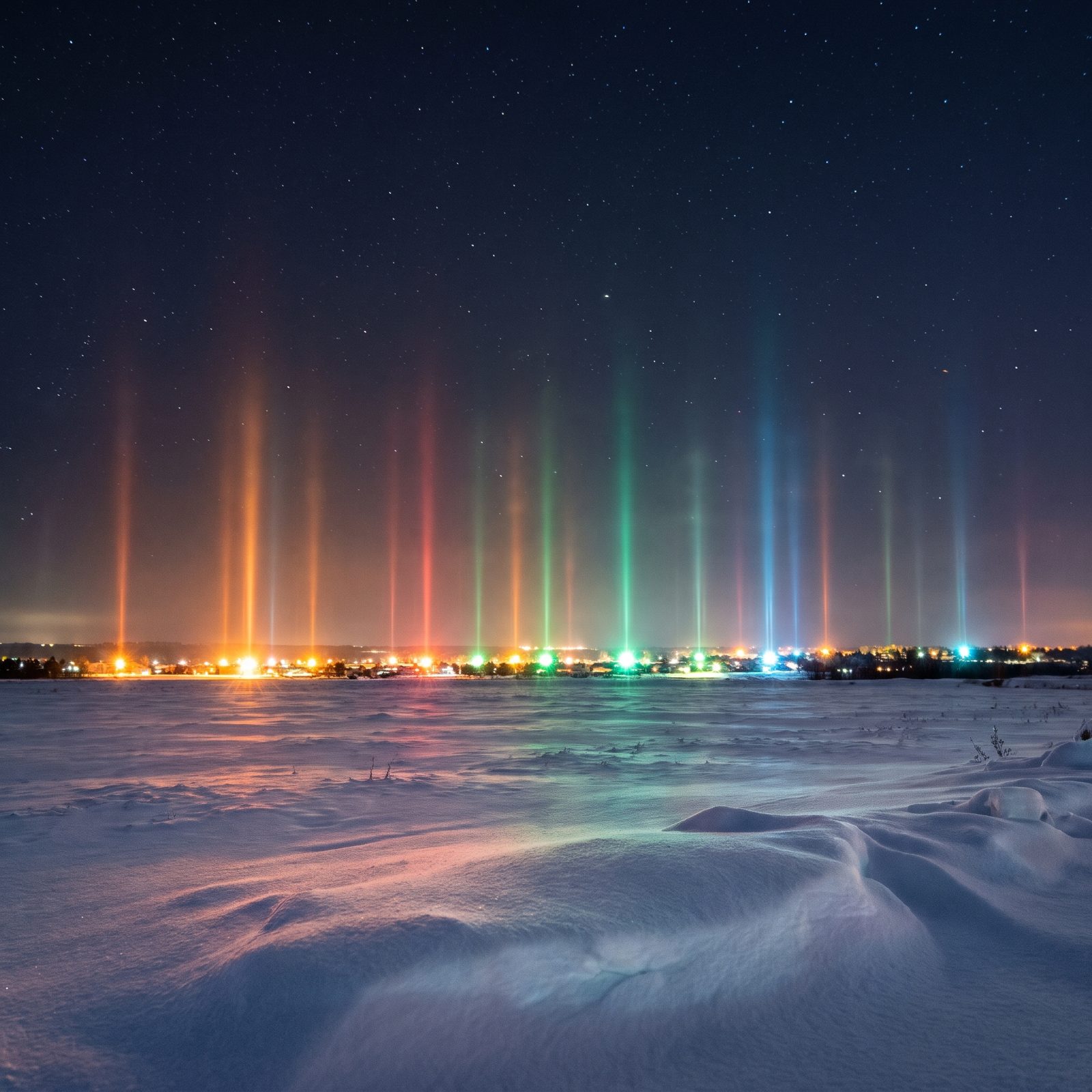
On a windless, bitterly cold night, streetlights sprout vertical beams that look like candles standing on the horizon. No searchlights involved.
Flat, plate-shaped ice crystals drift down slowly through still air, staying roughly horizontal like tiny floating mirrors, and each one reflects a light source sitting straight below or above it. Stack millions of those little mirrors and you get a column of reflected light climbing into the sky. Whatever color the source is, the pillar borrows it — amber from sodium lamps, white from LEDs, and yes, the Sun or Moon can do it too.
What you can’t skip is genuine cold and dead-calm air. Any breeze tumbles the crystals and the whole pillar collapses.
42. Sundogs Flanking the Low Winter Sun
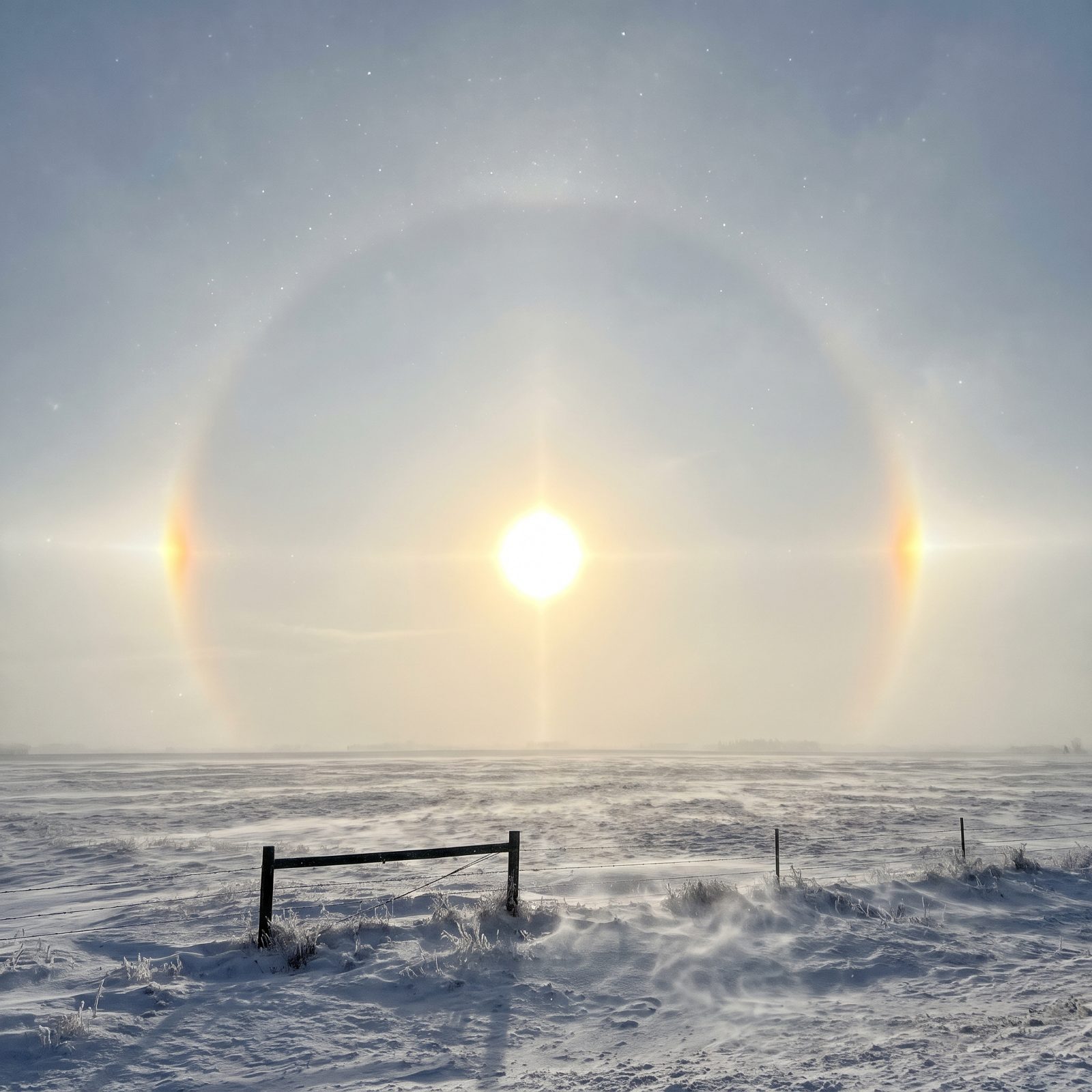
Look to the left and right of a low sun on a cold hazy day and you may catch two glowing spots keeping pace with it. Sundogs. Old sailors called them mock suns.
They form when sunlight passes through hexagonal ice crystals drifting flat in thin cirrus cloud. The crystals bend light by 22 degrees, so the bright spots show up exactly that far out on either side of the Sun. Red shows on the side nearest the Sun and blue on the far side, because different colors bend by slightly different amounts.
41. A 22-Degree Solar Halo Around the Sun
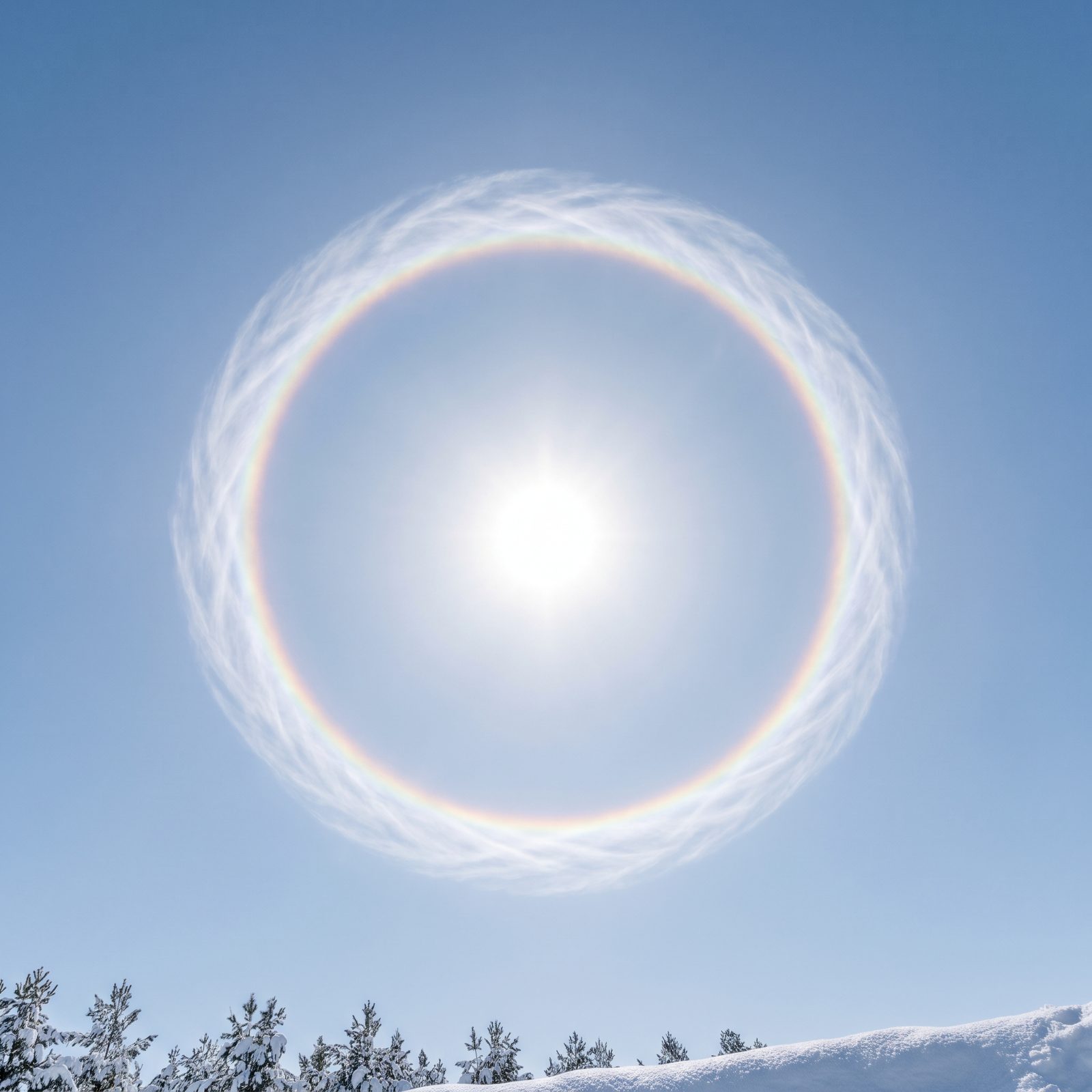
A perfect ring of light drawn around the Sun, wrapped in a wreath of feathery white cloud that hugs the halo. Same ice crystals as sundogs, different geometry.
Light enters one face of a hexagonal crystal and exits another, bending by 22 degrees along the way. With crystals tumbling at every conceivable angle, that single deflection smears into a full circle around the Sun instead of two tidy side spots. Watch the inside of the ring — the sky there looks noticeably darker than the sky outside, because almost no light gets bent by less than 22 degrees. It all piles up right at the ring edge.
Folk wisdom says a halo means rain or snow within a day, and there’s real truth buried in it. High, wispy cirrus like the ring of cloud in this shot often runs out ahead of an approaching warm front.
40. Diamond Dust Glittering in the Air
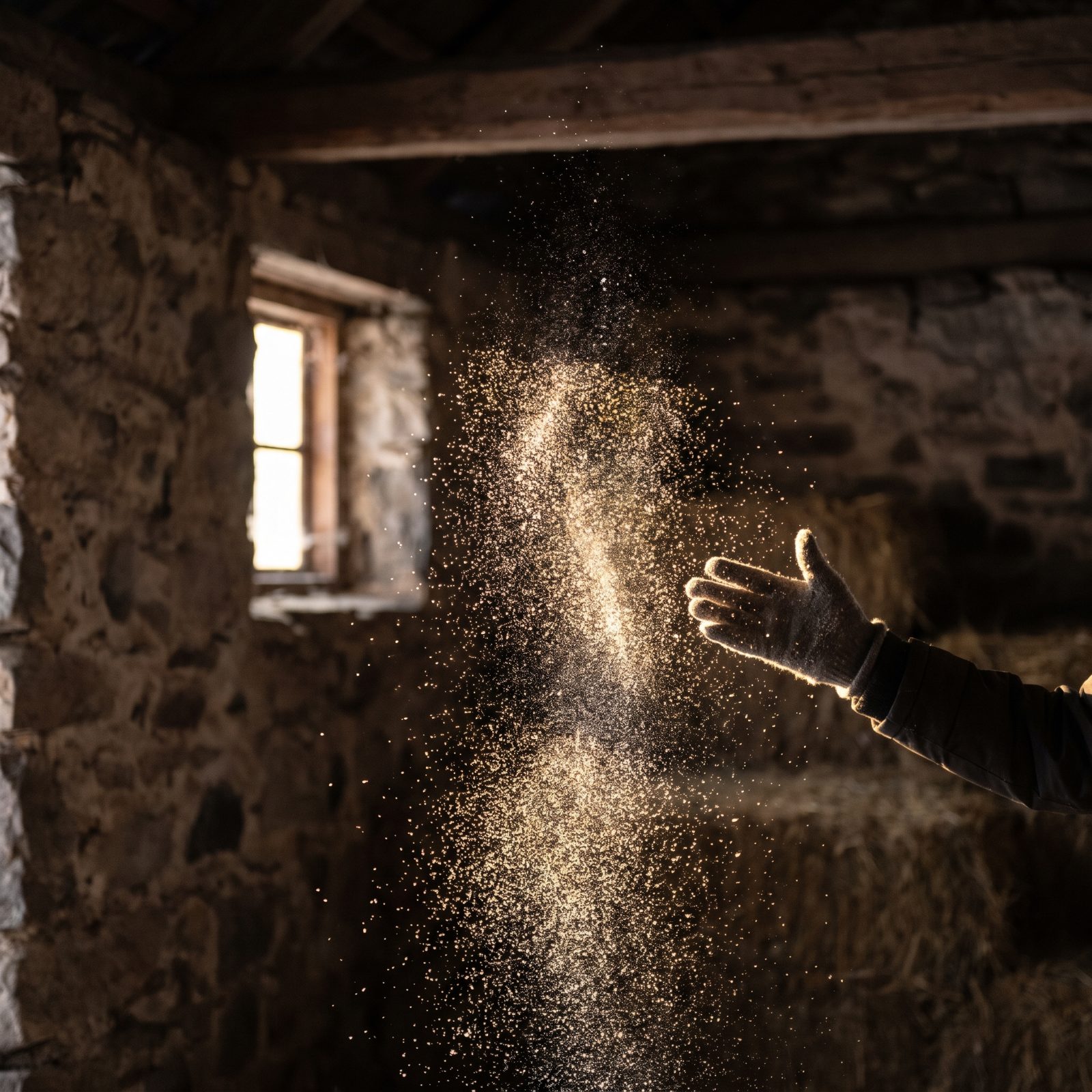
Picture fog, except it’s made of dust and it glitters. Here a gloved hand has tossed a cloud of fine powder into the dim air of an old stone barn, where it hangs like diamond dust against the dark walls and hay bales.
Because each grain is a minute floating speck, it flashes as it catches the backlight and turns, so the whole body of air seems sown with sparks. It’s the same effect that makes sunbeams visible indoors, except it’s hanging right there at eye level where you can walk through it.
39. A Fogbow Arching Over a Snowfield
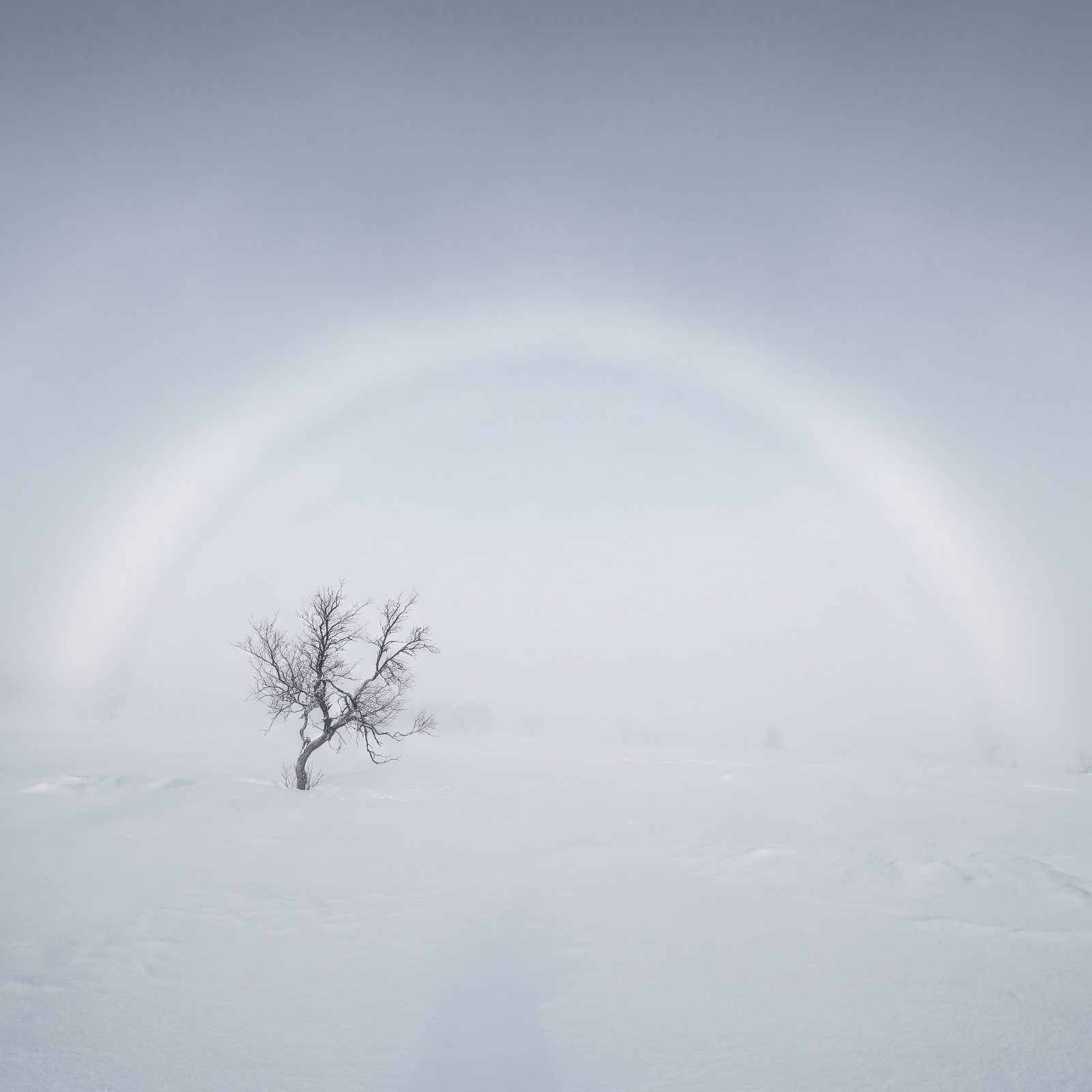
A rainbow with the color wrung out of it. A fogbow is the rainbow’s quieter cousin, built the exact same way — light bending inside water droplets with the Sun at your back.
The difference is droplet size. Fog droplets are minuscule, so small that diffraction blurs the colors together into a broad, ghostly white arch. You’ll usually catch one over a snowfield or lake when the morning sun burns through thinning fog. Look opposite the Sun, roughly where your own shadow points.
They’re strange and easy to walk right past, because your eye reads them as just a brighter patch of fog rather than the full pale bow they actually are.
38. A Brocken Spectre Ringed by a Rainbow Glory
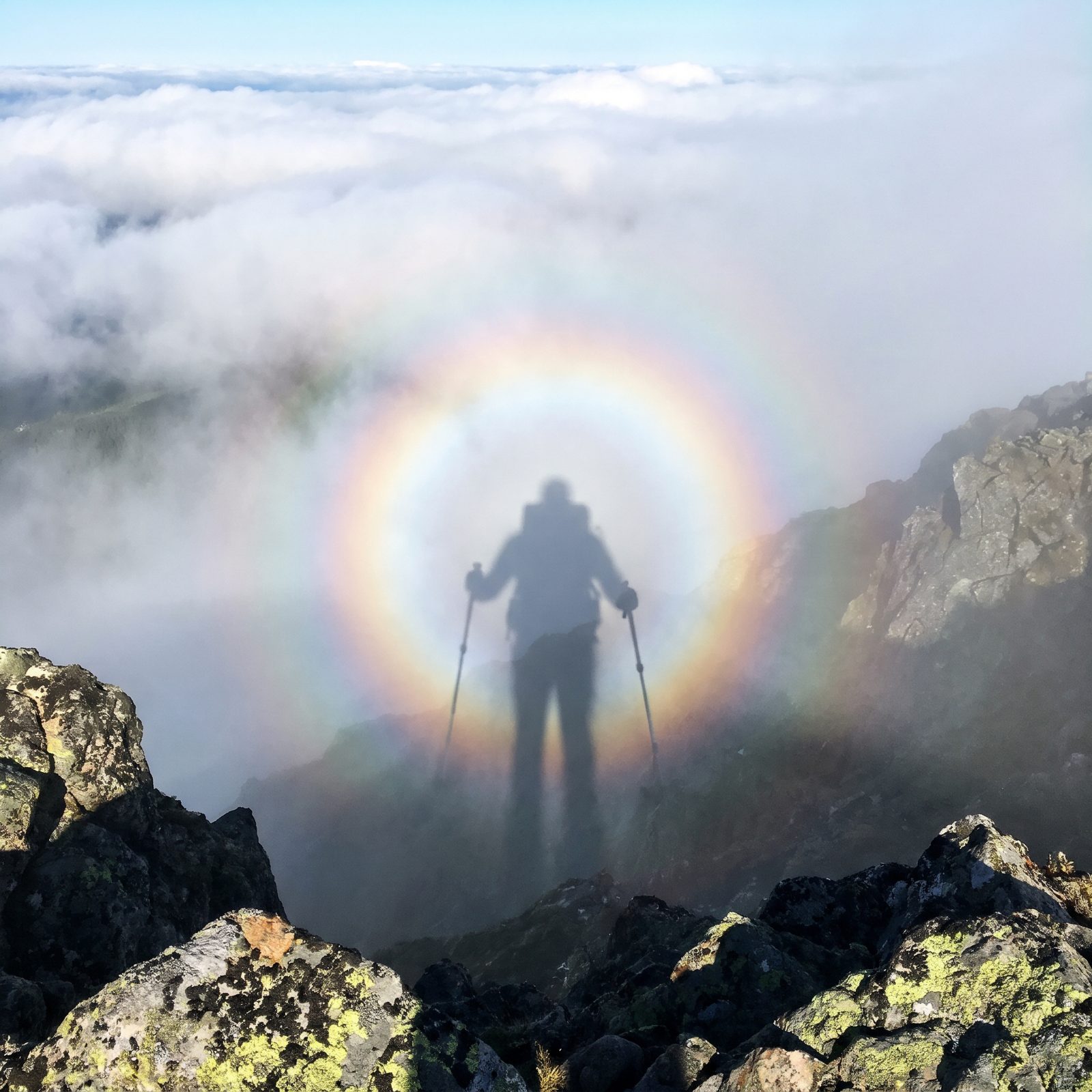
Your own shadow, enormous, thrown onto cloud and crowned with a rainbow halo. Mountaineers have seen this for centuries, and more than a few mistook it for a ghost or a dark omen.
Stand on a ridge with the Sun behind you and fog filling the valley ahead. Your shadow projects onto the cloud and looks gigantic because your brain can’t judge its distance against the featureless mist. Those rainbow rings circling the shadow’s head are the glory, caused by light backscattering through the fog droplets.
And here’s the genuinely eerie part. In a group, each person sees the glory only around their own head. The optics center on your eyes alone, nobody else’s.
37. Alpenglow Blushing Across Snowy Mountains
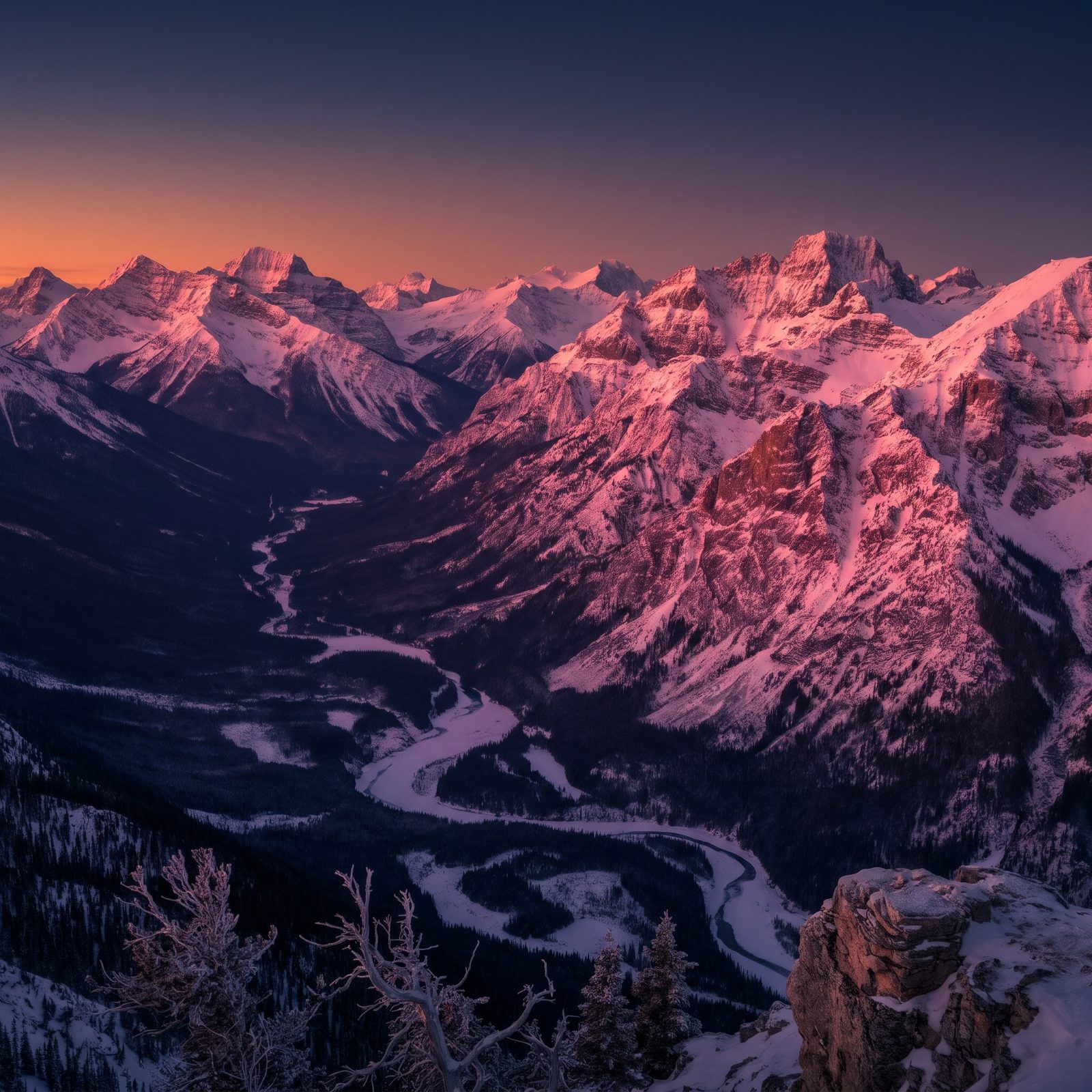
The Sun has already set, and yet the highest snow is on fire with pink. That’s alpenglow, and it isn’t the same creature as a normal sunset.
Once the Sun drops below the horizon, its light can’t strike the peaks directly anymore. Instead, sunlight scatters off airborne particles and bounces back onto the summits as a soft, diffuse rosy glow. The short blue wavelengths get scattered away over the long low-angle path through the atmosphere, which leaves the warm reds and pinks to do all the painting.
36. Snow Virga Hanging Like Sheer Curtains
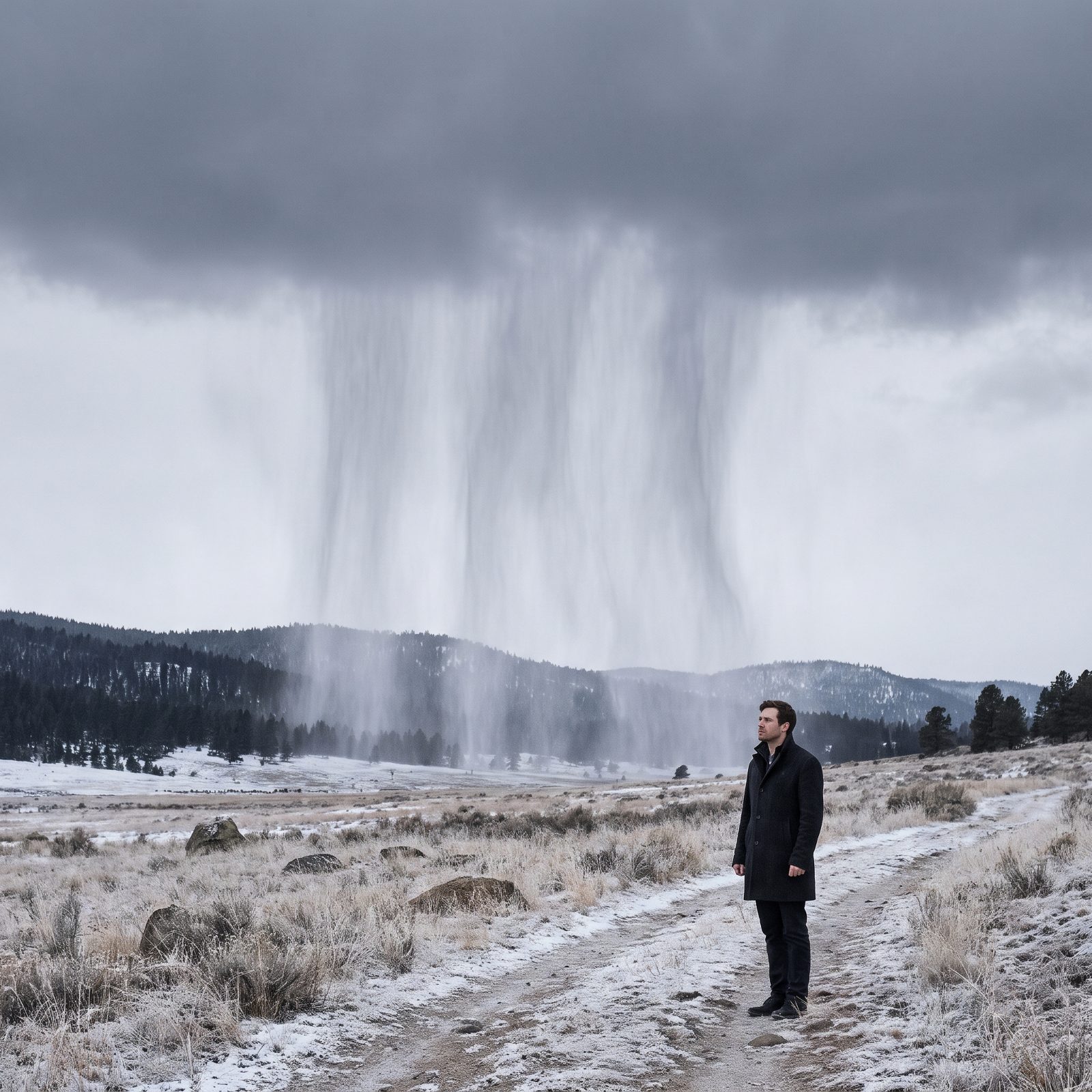
You’ve seen rain do this in summer. Snow does it too, quieter and far stranger. Virga is usually precipitation that falls but never lands — the snow drifts out of the cloud base, hits a layer of dry air, and sublimates straight back to vapor. Here the streaks trail down toward the ridgeline and treeline but fade out before they reach the valley floor.
It just hangs there, gray and trailing, under a flat, overcast sky in pleats that look like sheer curtains stopping just short of the floor. With little wind to push them around, the falling streaks drop perfectly vertical on the way down.
35. Sea Smoke Curling Above Open Winter Water
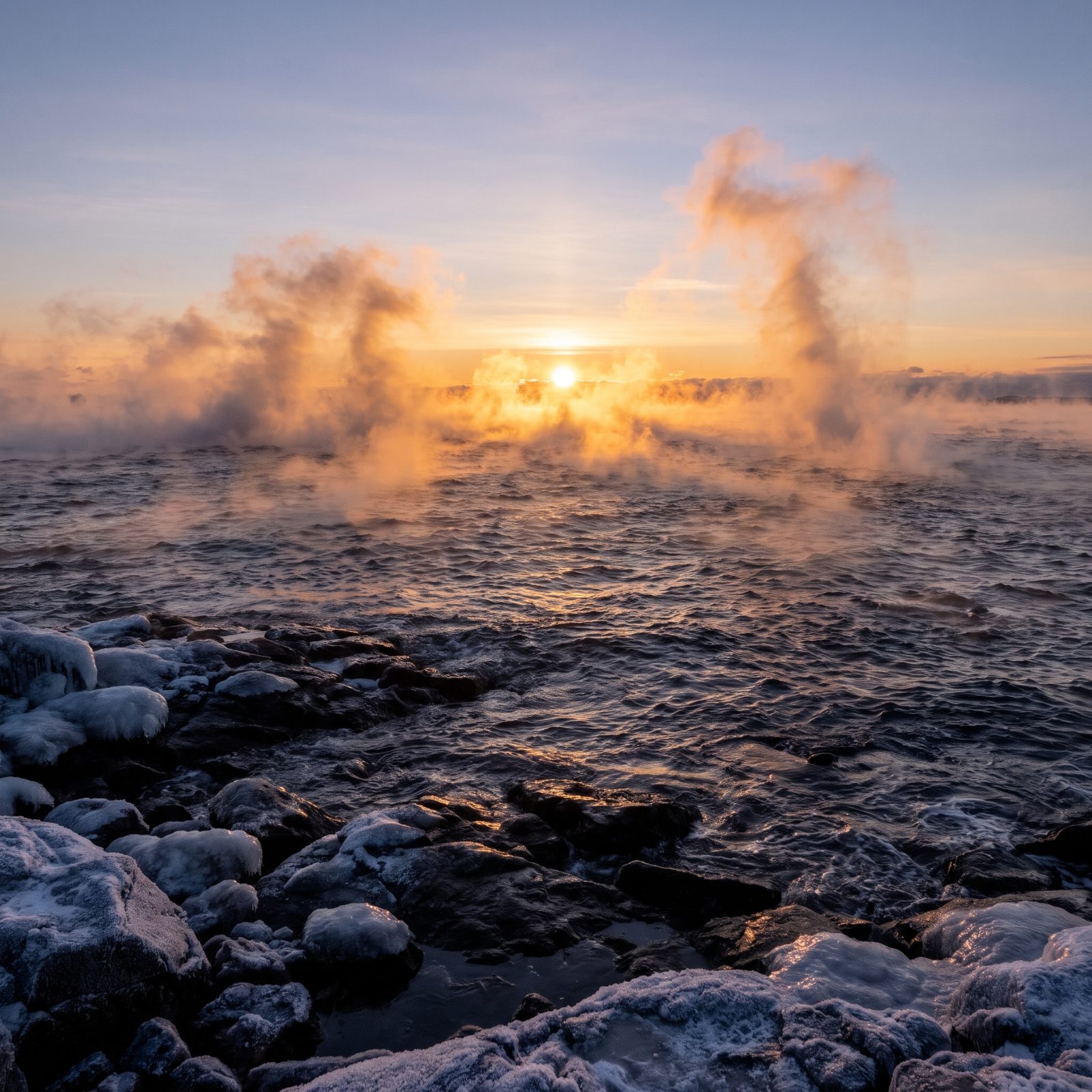
Water smoking in a deep freeze looks impossible. It isn’t. Sea smoke forms when brutally cold air — sometimes far colder than the water itself — slides over a lake or bay that hasn’t frozen. The water evaporates into that frigid air, instantly condenses, and rises in curling white ropes.
Fishermen on the Maine coast named it for a reason. On a still morning the plumes stand straight up like garland strung from nothing, then lean and swirl the moment a breeze catches them. The colder the air relative to the water, the thicker the show gets.
A national weather service meteorologist in Maine explains that sea smoke forms when very cold air flows over relatively warmer seawater, and the water evaporates and then condenses into fog. (via a national weather service meteorologist)
34. Hoarfrost Crystals Trimming Every Branch
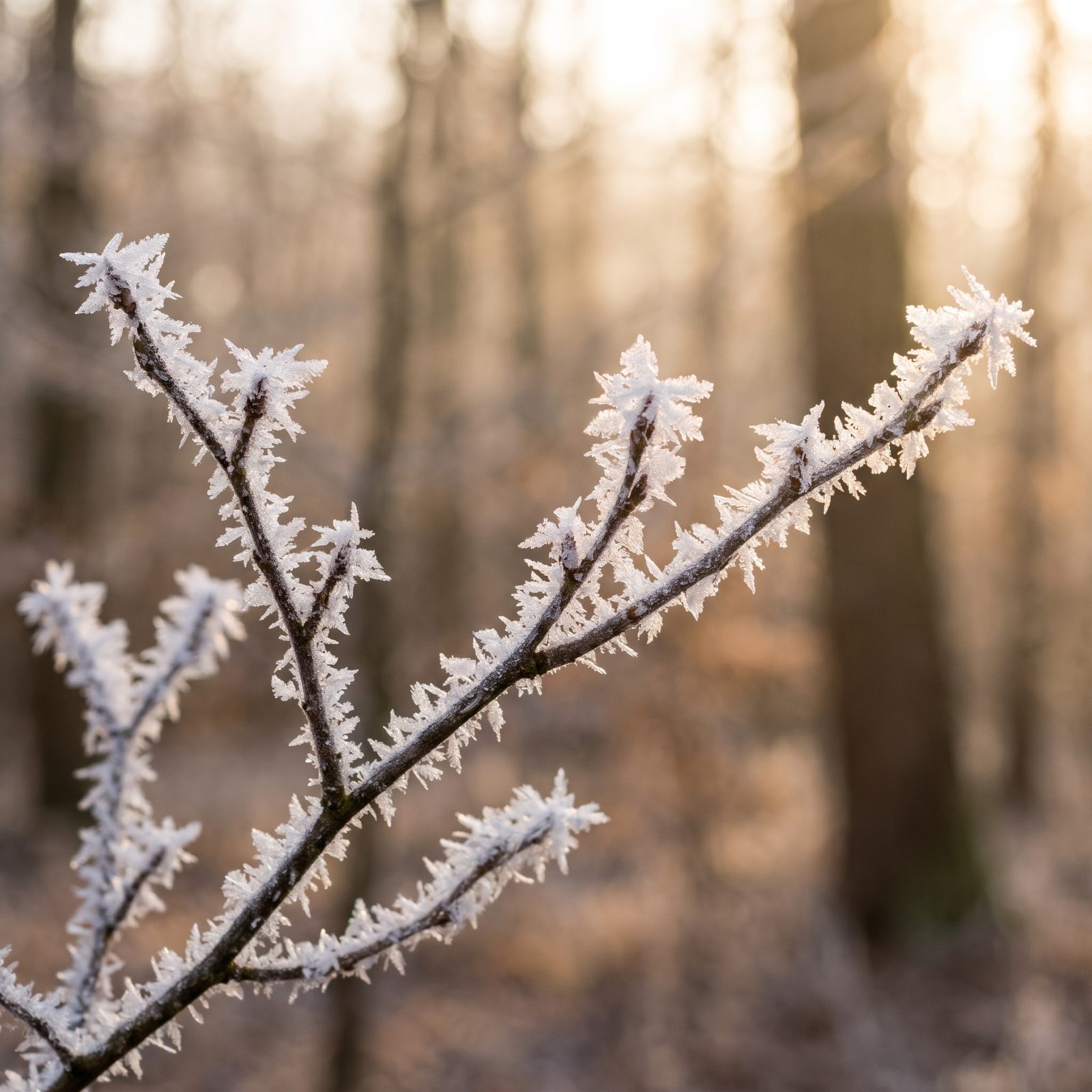
Not all frost is the same frost. Hoarfrost is the showy one. It grows on clear, still, bitterly cold nights when water vapor skips the liquid stage entirely and crystallizes directly onto a cold surface. That vapor-to-solid trick is called deposition, and it’s why the crystals grow outward in feathery spikes instead of lying flat.
Walk out after one of those nights and every twig, fence wire and blade of grass wears a white fringe. Touch it and it’s gone — the whole display melts in minutes once the sun hits, which is part of why it feels like a gift you weren’t supposed to keep.
33. Hard-Rime Trees That Become Snow Ghosts
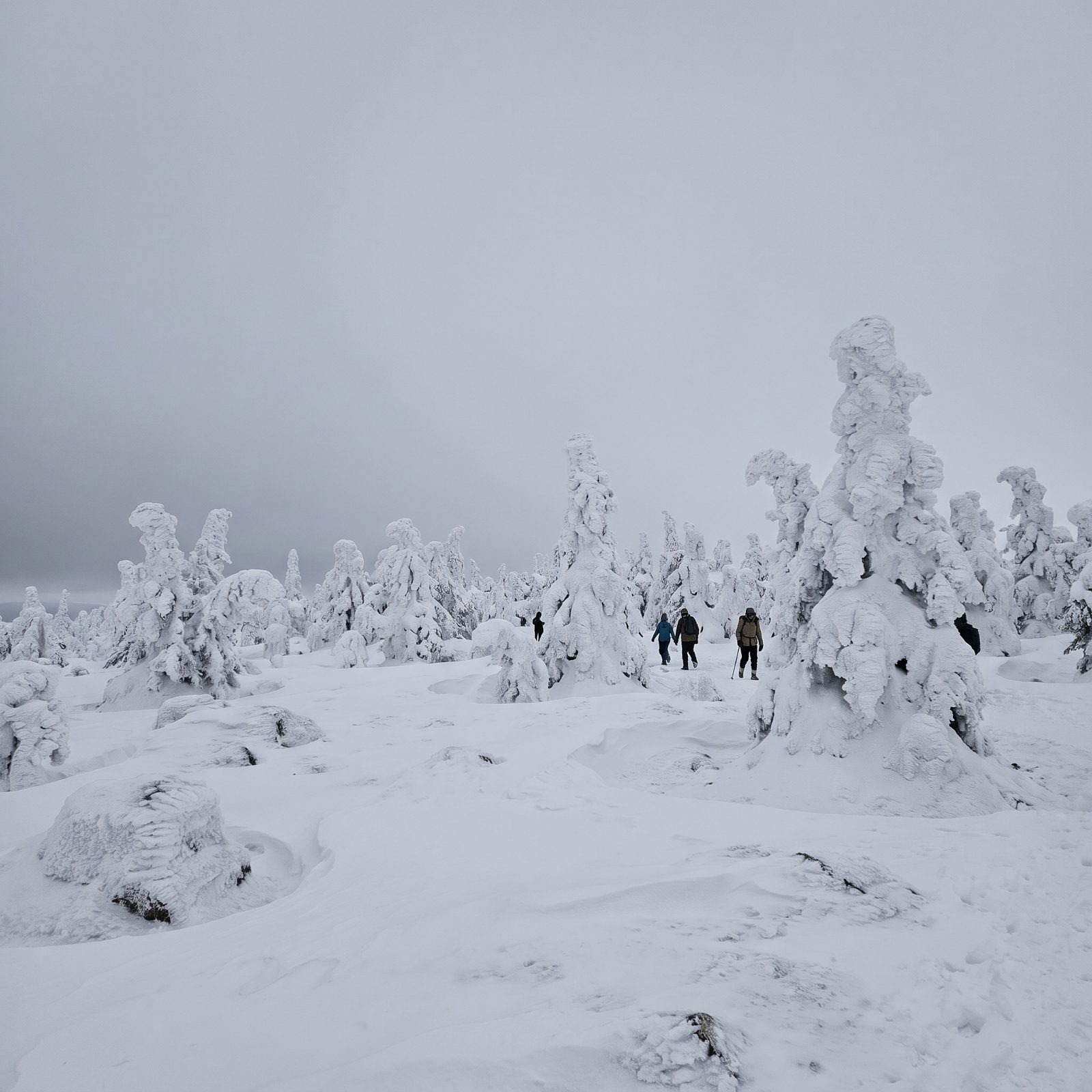
These aren’t sculptures. They’re trees that lost a fight with the wind.
Hard rime forms when supercooled fog droplets — liquid water still below freezing — slam into a cold surface and freeze on contact. Fir trees near a mountaintop catch that fog all winter long, and layer after layer builds on the windward side until the tree vanishes under white, lumpy ice. Locals on peaks like Japan’s Zao or in the Rockies call the results snow ghosts, or snow monsters.
The ice always grows into the wind. That’s how you read the weather off a frozen tree — the ridged, feathery buildup points back at the storms that made it.
32. Glaze Ice Turning Bare Branches to Glass
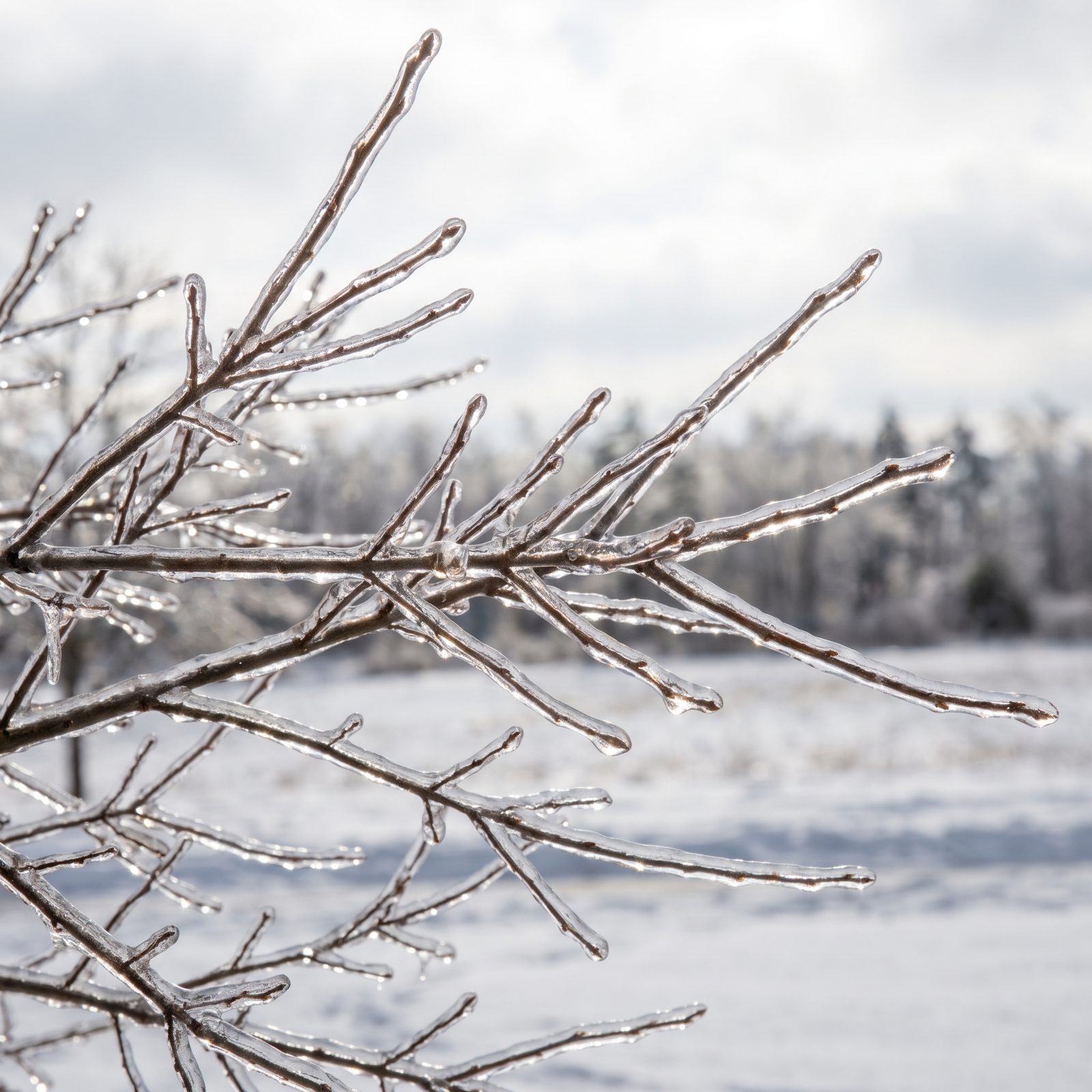
An ice storm is the cruelest beauty winter makes. Freezing rain falls as liquid, then freezes the instant it touches anything below 32 degrees, sheathing every branch, wire and blade of grass in a clear, hard, glass-smooth shell.
In the right light the whole forest looks dipped in crystal. The problem is weight. A half-inch of glaze can pile hundreds of pounds onto a single tree — that’s the sound you hear during these storms, the slow splintering crack of limbs giving way. The 1998 ice storm across the Northeast knocked out power to millions for exactly this reason.
31. Frost Ferns Spreading Across Windows
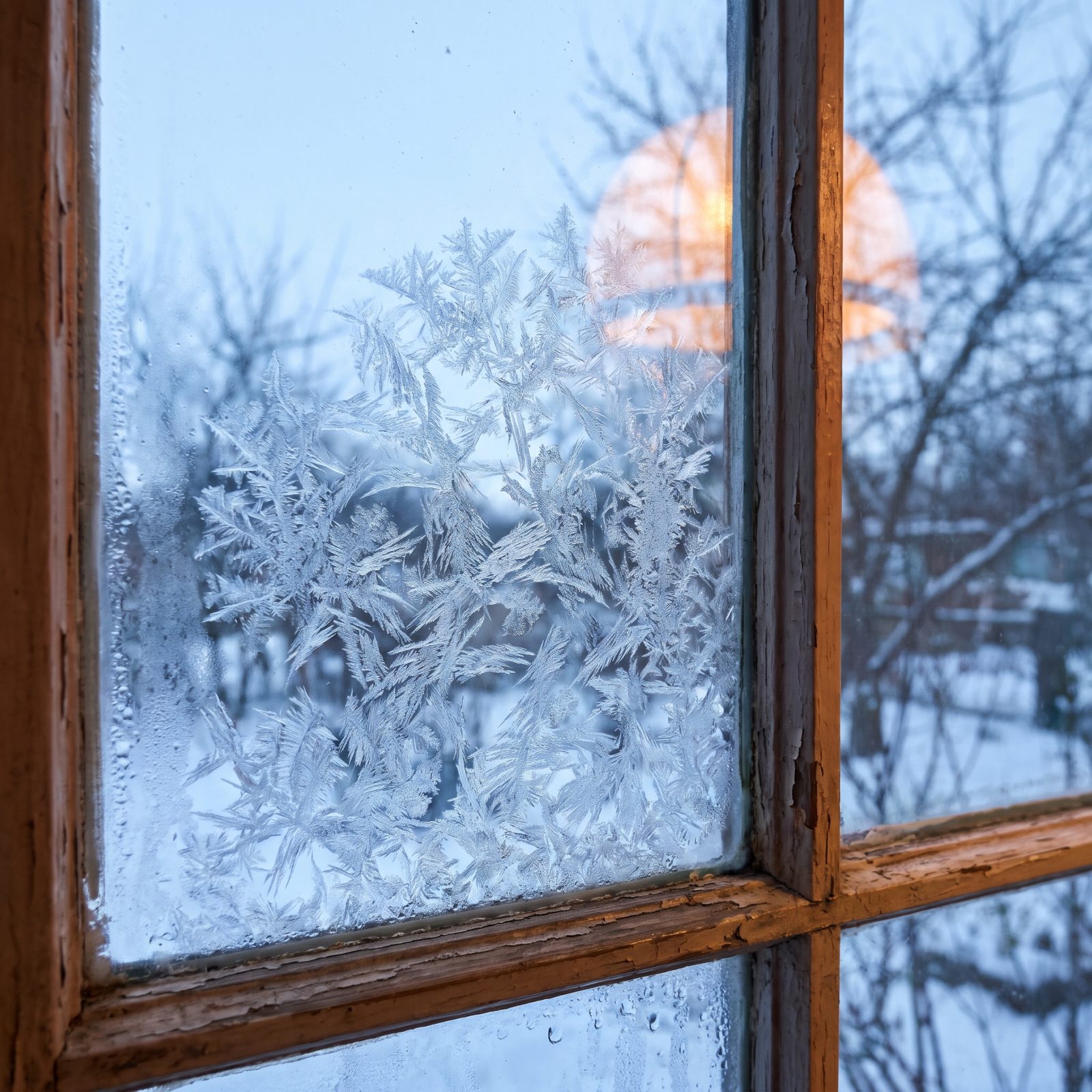
Older houses made the best winter art. Frost ferns need a single-pane window — cold glass on one side, humid room air on the other. When the inside surface drops below freezing, water vapor crystallizes into those branching, leafy fronds.
The pattern isn’t random. The ice follows microscopic scratches, dust and oils on the glass, which is why no two windows ever match and why a clean pane grows a different fern than a smudged one.
Double-pane windows killed most of this. The inner glass stays too warm. If you grew up scraping ferns off your bedroom window with a fingernail, that memory came with a cold house.
30. Frost Flowers Blooming on New Sea Ice
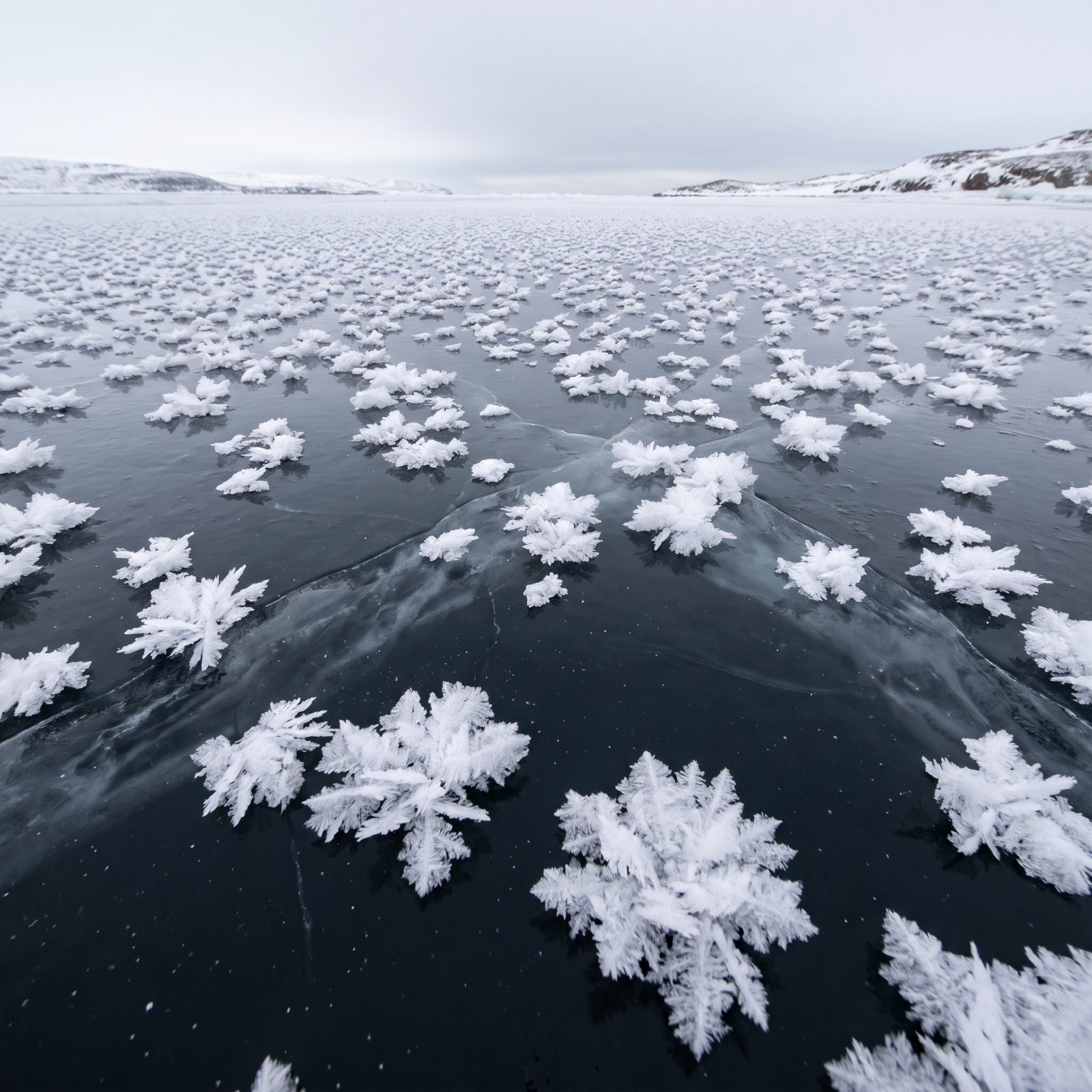
Picture a field of white blossoms growing on black ocean ice, each the size of a thumbnail. Frost flowers form on fresh, thin sea ice when the air above runs far colder than the ice surface. Humid air just over the ice becomes supersaturated, and crystals bloom upward from tiny imperfections.
Now the part scientists love: these crystals wick up brine from the young ice, so each flower is wildly salty and packed with bacteria. Researchers now study them as tiny, self-contained ecosystems, and some argue they’re a clue to how life might survive on frozen worlds.
29. Hair Ice Growing Like Silvery Tinsel
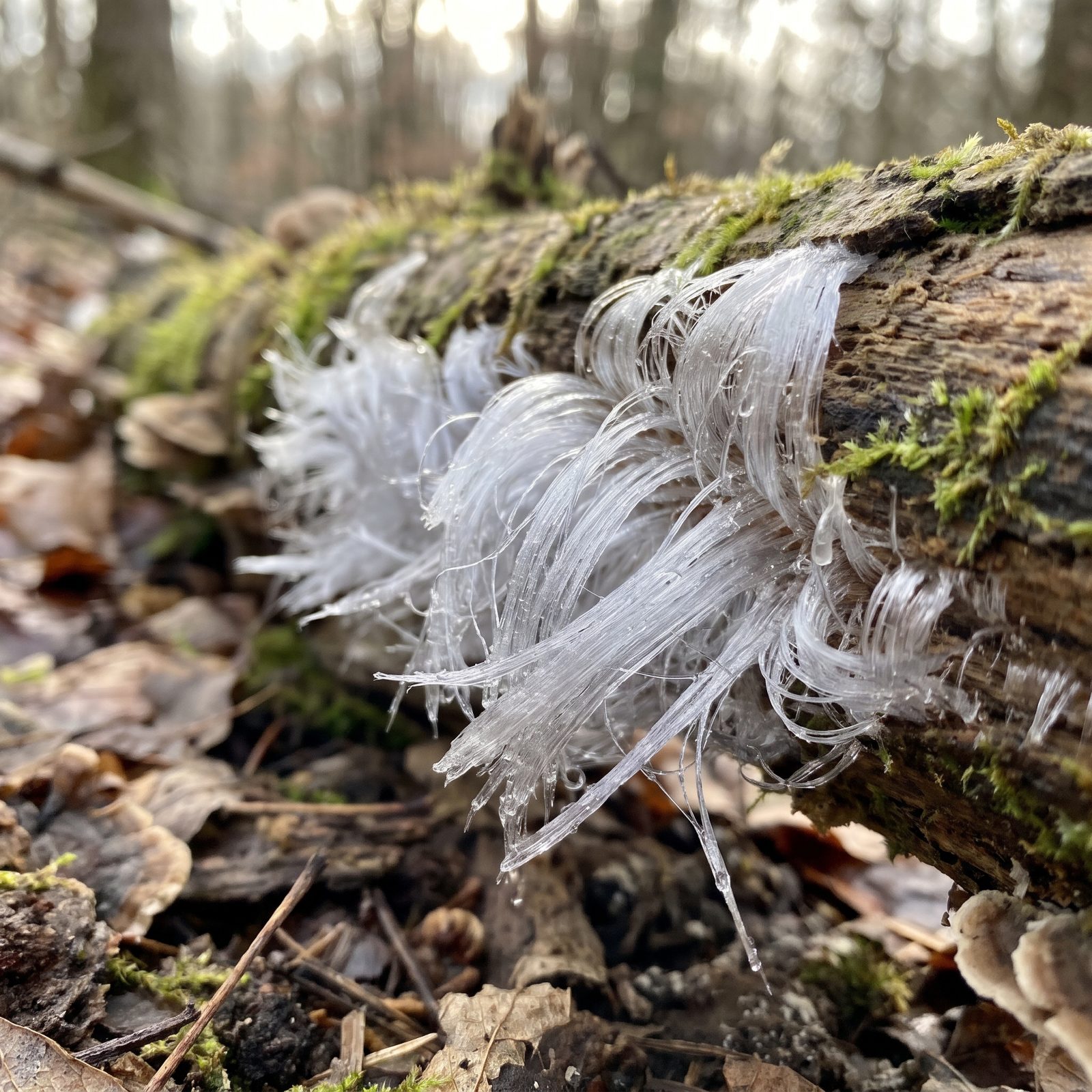
Find a wet, rotting branch on the forest floor some frosty morning and you might see what looks like white hair combed out of the wood. Hair ice is real, and it baffled people for a century.
The threads grow only on dead hardwood, only near freezing, and only where a specific fungus — Exidiopsis effusa — lives in the wood. Researchers nailed this down in 2015. The fungus shapes the ice. Without it, the same branch just grows an ordinary crust of frost. With it, water pushed out of the wood freezes into silky strands as fine as actual hair, sometimes holding their shape for hours.
As an emeritus physics professor puts it, “Our hypothesis includes that the hairs are stabilized by a recrystallization inhibitor that is provided by the fungus.”
28. Frost-Laced Spiderwebs That Resemble Doilies
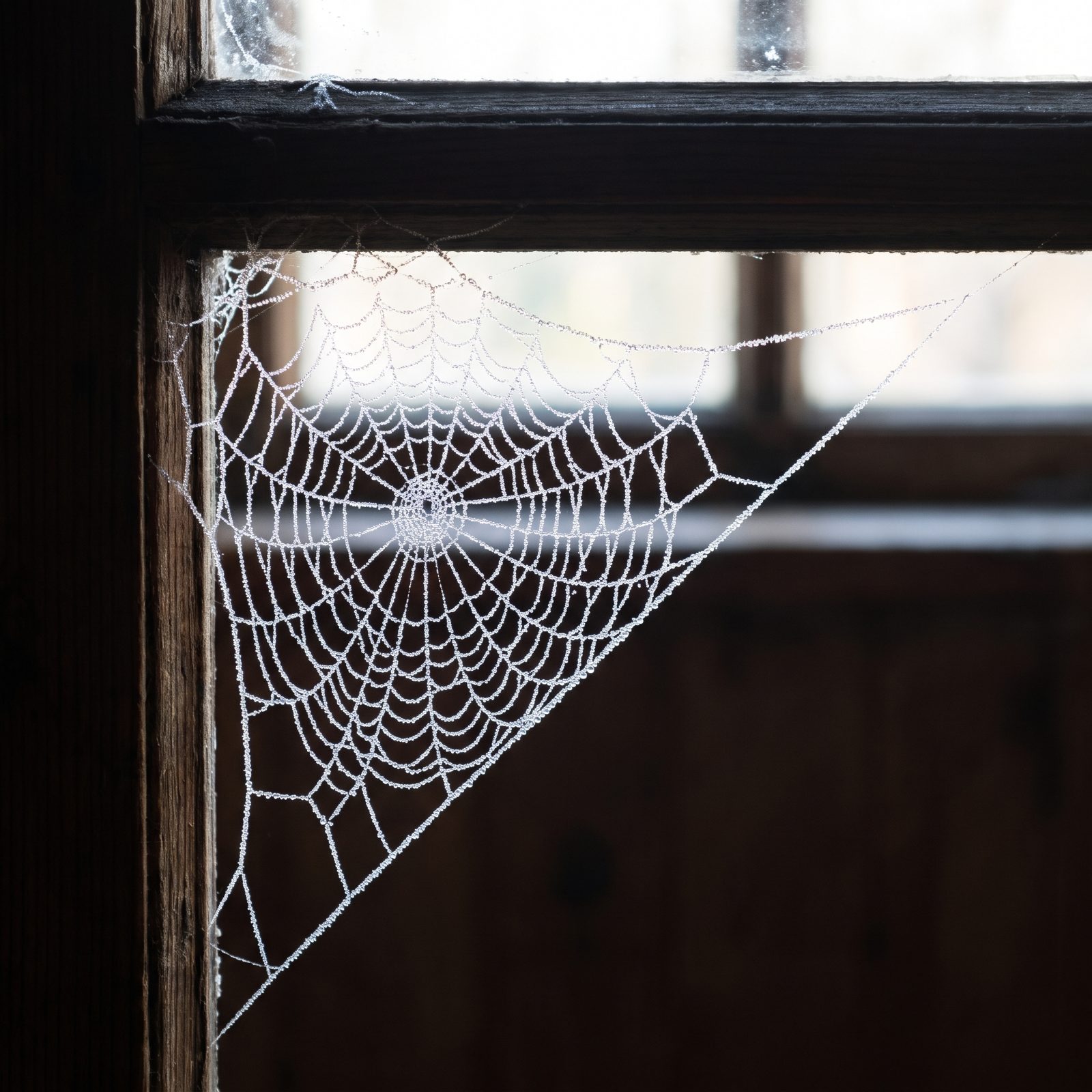
An abandoned spiderweb is nearly invisible. Add a cold, foggy night and it becomes the most delicate thing in the garden. Frost forms along every thread of silk, outlining the whole geometric spiral in white until the thing looks like a crocheted doily hung in the air.
Why does silk make such a good frost scaffold? It’s so thin it cools fast, and it gives water vapor an immediate surface to crystallize on. Catch it at sunrise, before any breeze or warmth touches it, and the frozen beads along each strand throw back pinpricks of light.
27. Stellar Snowflakes With Six Perfect Arms
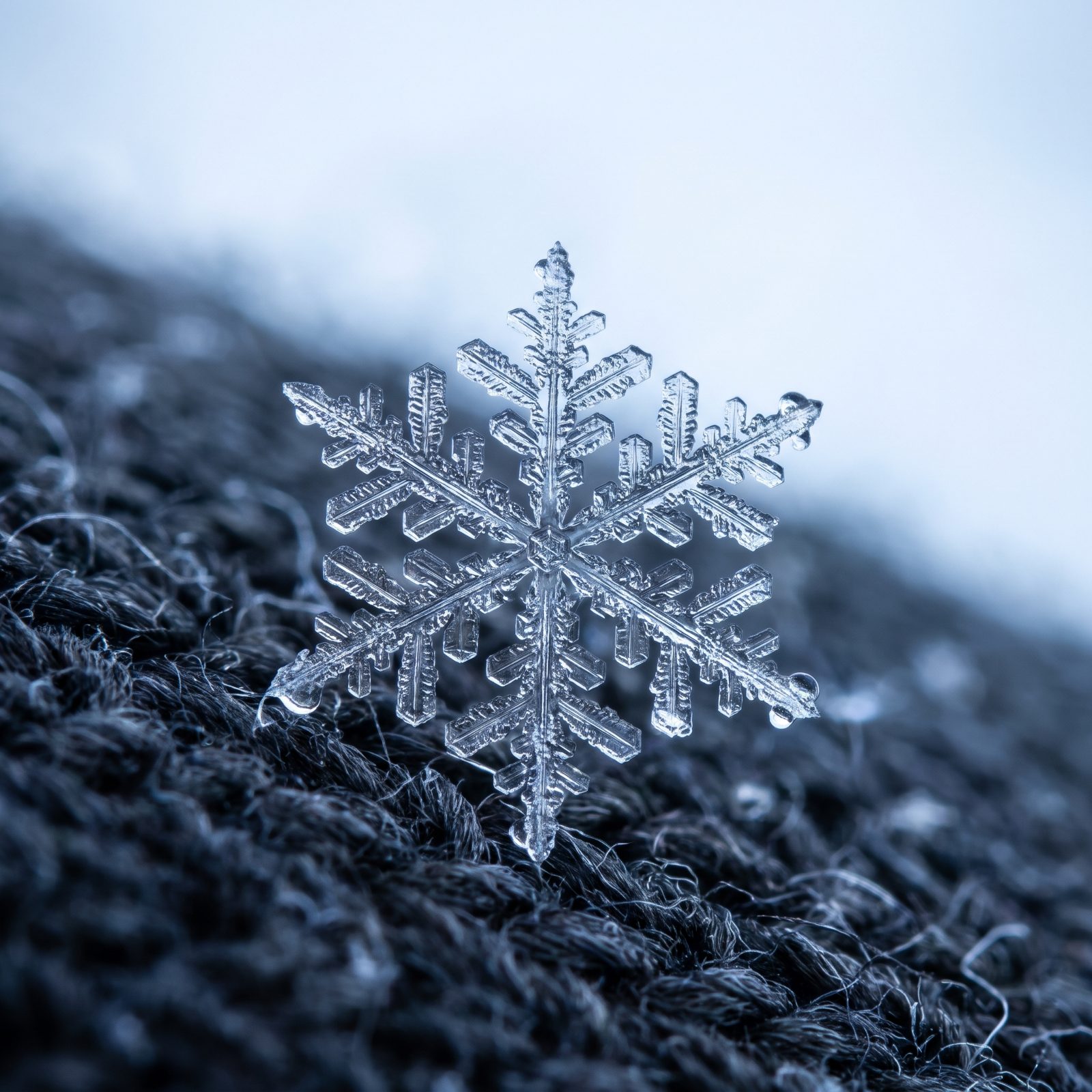
Six arms. Never five, never seven. A snowflake grows hexagonal because water molecules lock into a six-sided lattice when they freeze, and every branch obeys that same blueprint. The ferny, feathered kind are called stellar dendrites, and they only form in a narrow temperature band near 5 degrees Fahrenheit with just the right humidity.
Here’s where people get it wrong. The old line about no two being identical isn’t poetry, it’s probability. A single flake holds something like a quintillion water molecules, and the odds of two arranging themselves the same way are essentially zero. Look close and what you’ve got is a glass ornament the size of a pinhead.
26. Graupel Covering the Ground in White Beads
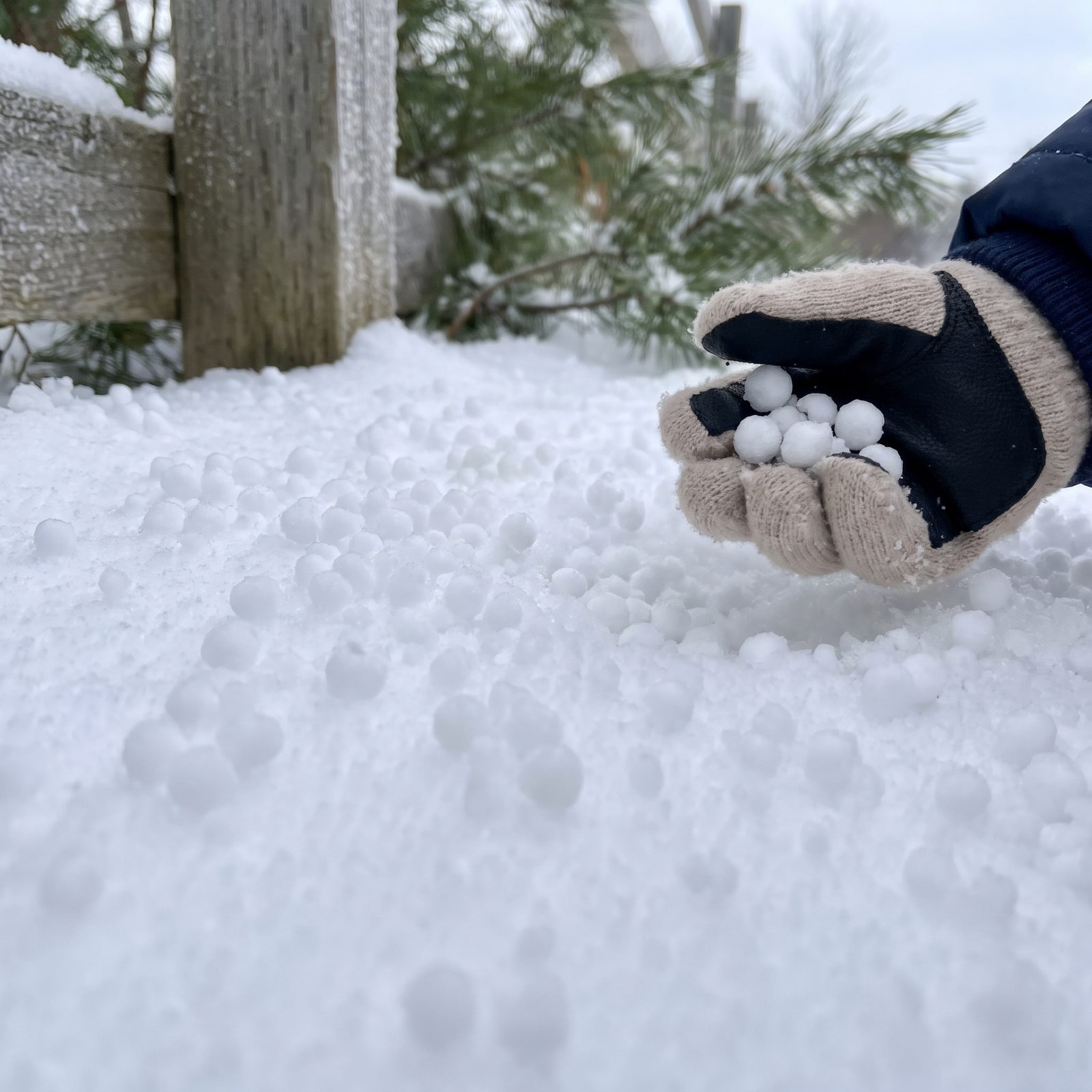
You’ve kicked these on a December hike and figured it was hail. It isn’t. Graupel forms when a snowflake drifts through supercooled cloud droplets that freeze onto it on contact, coating the crystal in rime until it rounds into a soft white ball. Crunch one and it collapses, and that’s your tell apart from hail, which doesn’t.
Skiers have a love-hate thing with it. A fresh graupel layer behaves like ball bearings on a slope, and avalanche forecasters start watching the moment a cold squall drops a batch. Pretty little pearls. Genuinely dangerous underfoot.
25. Sastrugi Carved Into Frozen Waves
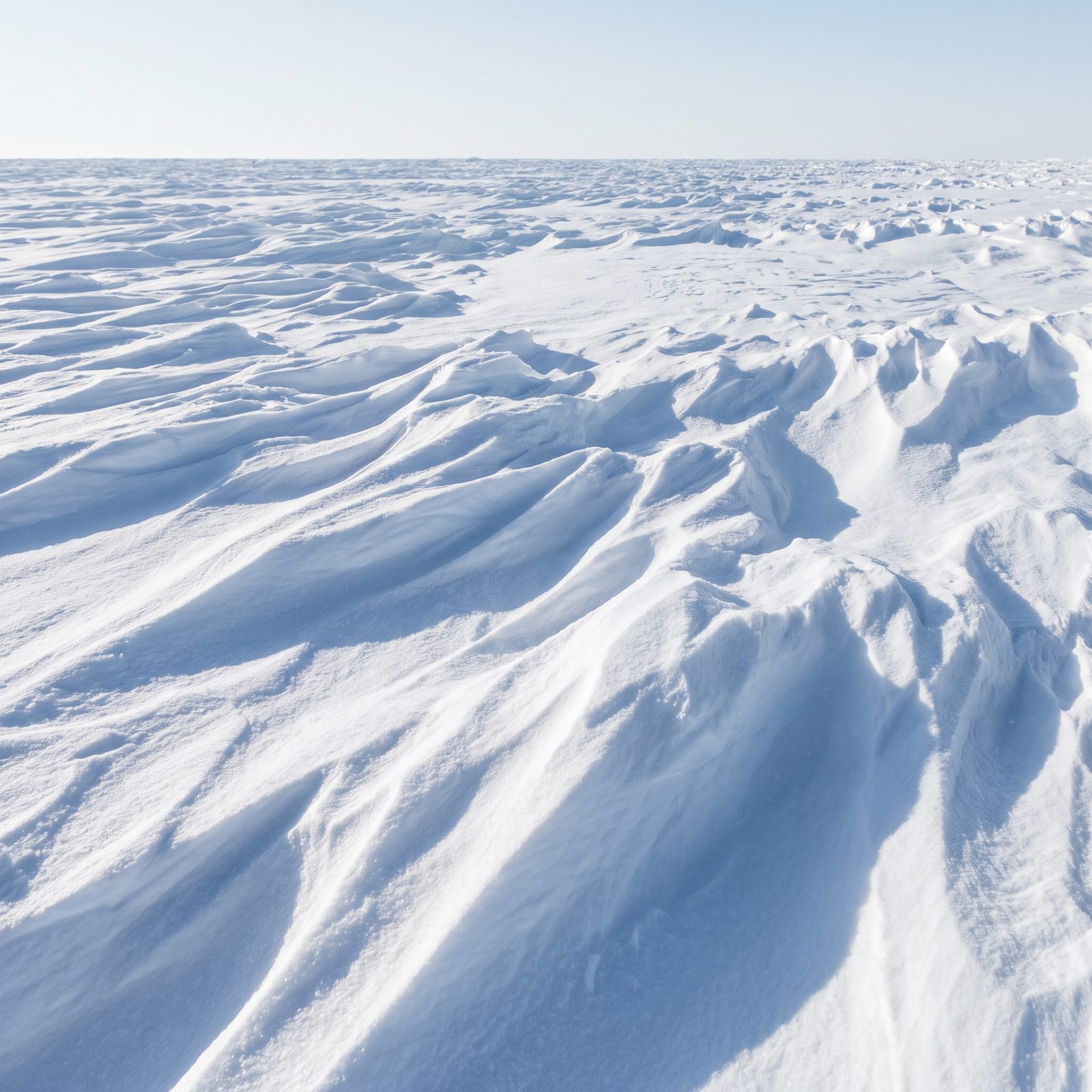
The wind writes on snow, and sastrugi is its handwriting. These sharp parallel ridges appear when persistent wind scours away the soft snow and leaves the hard-packed ridges standing, every one of them pointing back into the direction the wind came from. Polar explorers read them like a compass.
They are brutal to cross. Antarctic traverse teams have snapped sled runners and twisted ankles on waist-high ridges that look soft and silky from a hundred yards off. Up close? Frozen concrete with knife edges.
24. Snow Mushrooms Perched on Stumps and Boulders
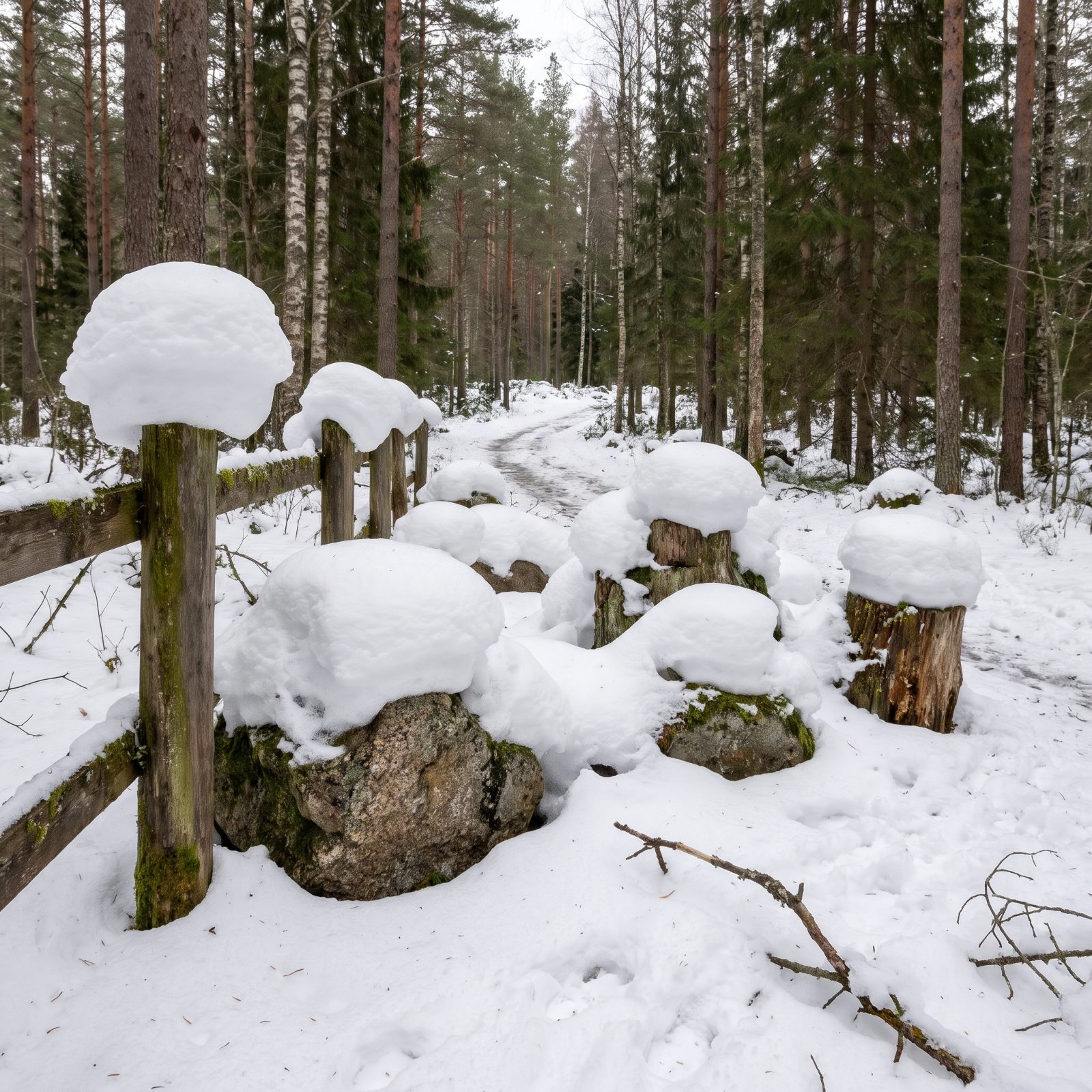
Walk a forest after a heavy, windless snowfall and you’ll find them: fat white caps sitting on stumps, posts and rocks like someone went around scooping meringue onto pedestals. Snow mushrooms form when snow falls slowly and clings to any flat-topped surface, stacking higher and higher with no wind to knock it loose.
The overhang is the magic. As the cap grows, its edges push out past the base, held together by nothing but the faint cohesion of cold crystals. Then one warm afternoon or a stray gust comes along and the whole thing slumps. These are temporary ornaments, which is exactly why catching one feels like a gift.
23. Penitentes Rising Like Fields of White Candles
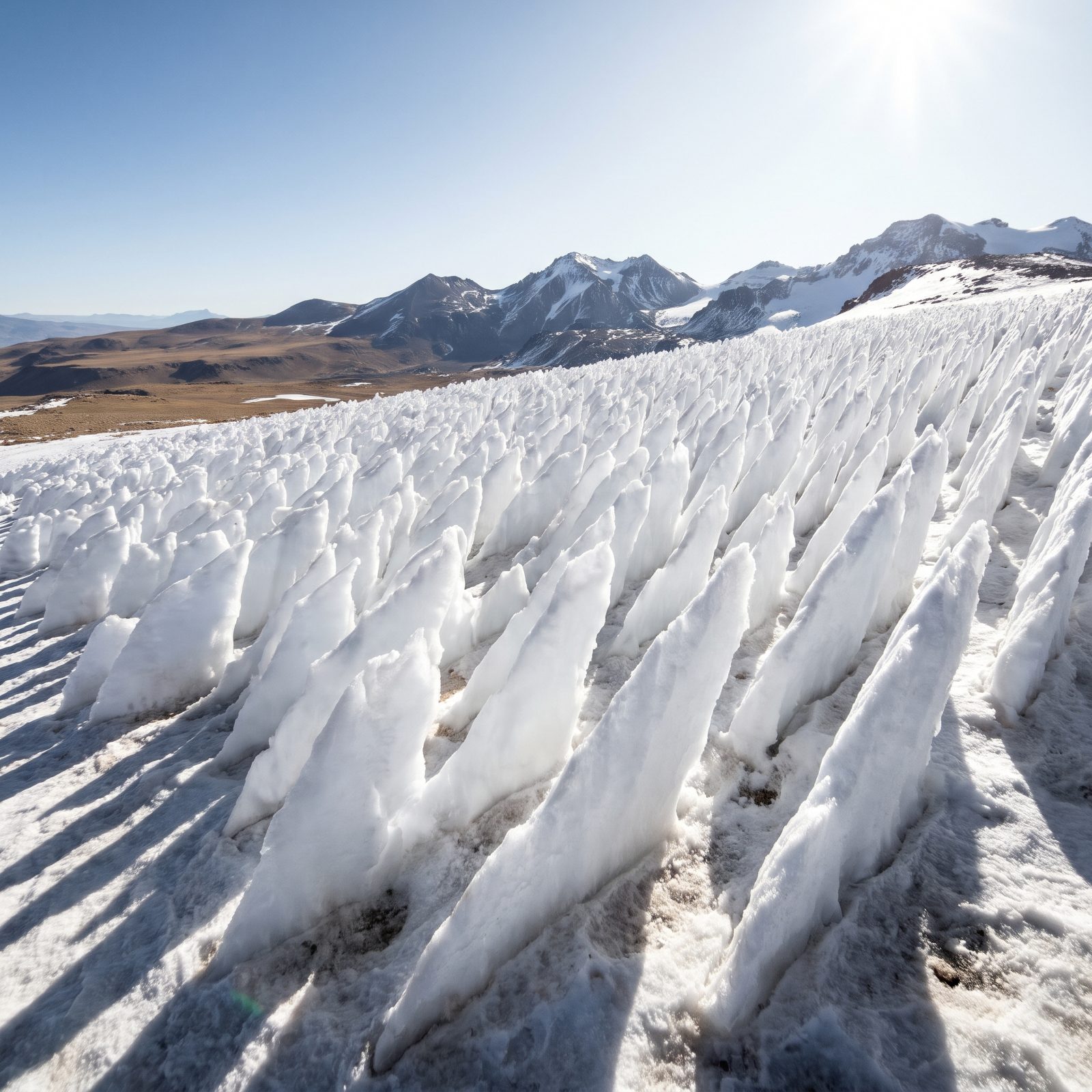
Picture a field of white candles, knee to shoulder high, every one of them leaning the same way toward the sun. Penitentes form in the high, dry air of the Andes, where sunlight sublimates snow straight into vapor without bothering to melt it first. The tiny dips sublimate faster, deepen into troughs, and leave the ridges behind as tall spires.
Darwin trekked through them in 1835 and blamed the wind, which turned out to be wrong. The real driver is dry cold air and a fierce high-altitude sun working together, a mix you mostly find above 13,000 feet. Scientists even suspect similar spires stand on Pluto and on Jupiter’s moon Europa.
A field of them can stop a mule train and a determined hiker cold, which is how they got their name: penitentes, the hooded penitents of a religious procession.
22. Natural Snow Arches Sculpted by Wind
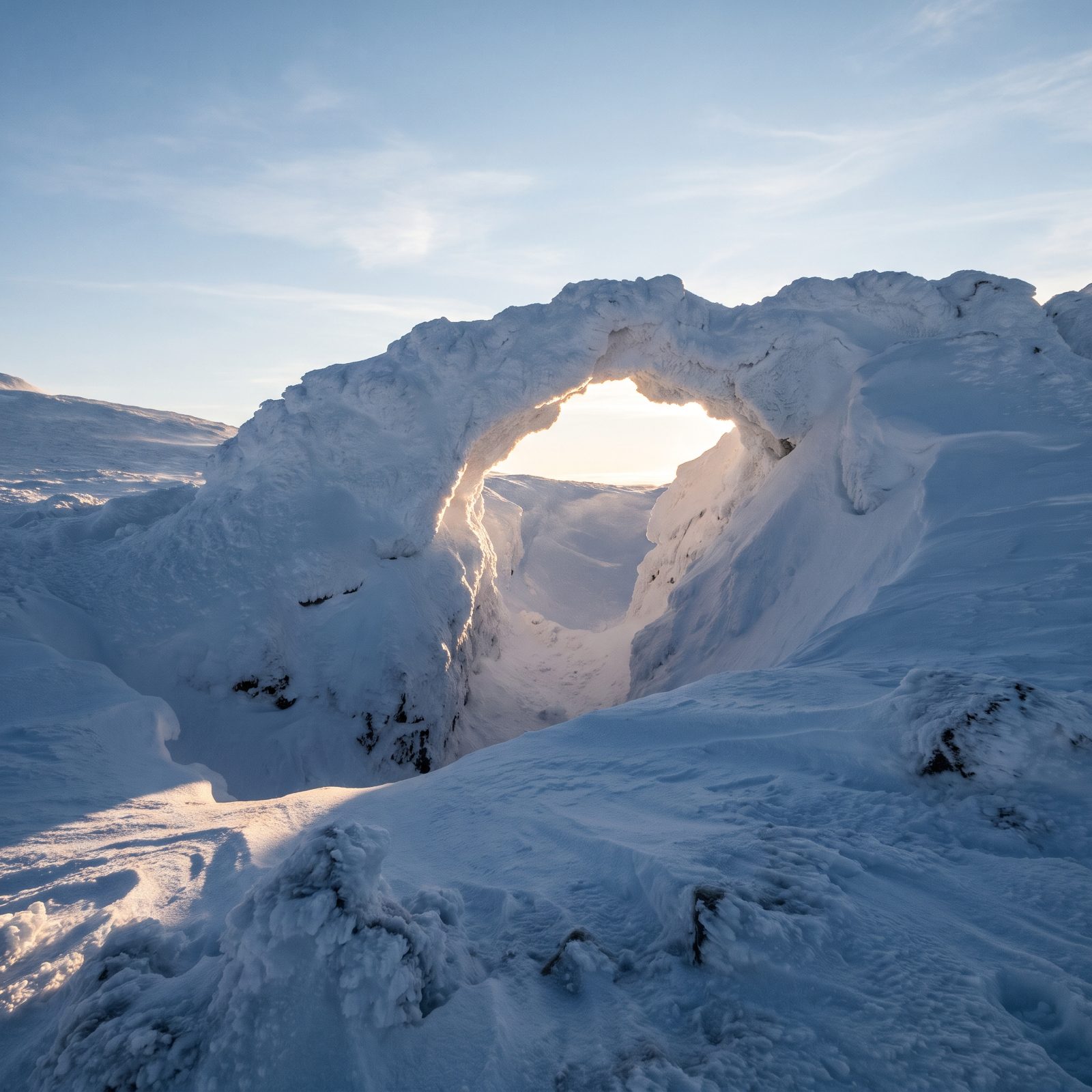
Snow doesn’t usually span a gap on its own. But wind, handed the right drift and a night cold enough to harden the top crust, will scoop out the underside of a snowbank and leave a self-supporting arch draped across a gully like a frozen garland.
They’re fragile and short-lived. Catch one on camera before it collapses under its own weight, or before the first warm spell finishes it off, and you’ve managed something genuinely rare.
21. Snow Devils Twirling Across Frozen Fields
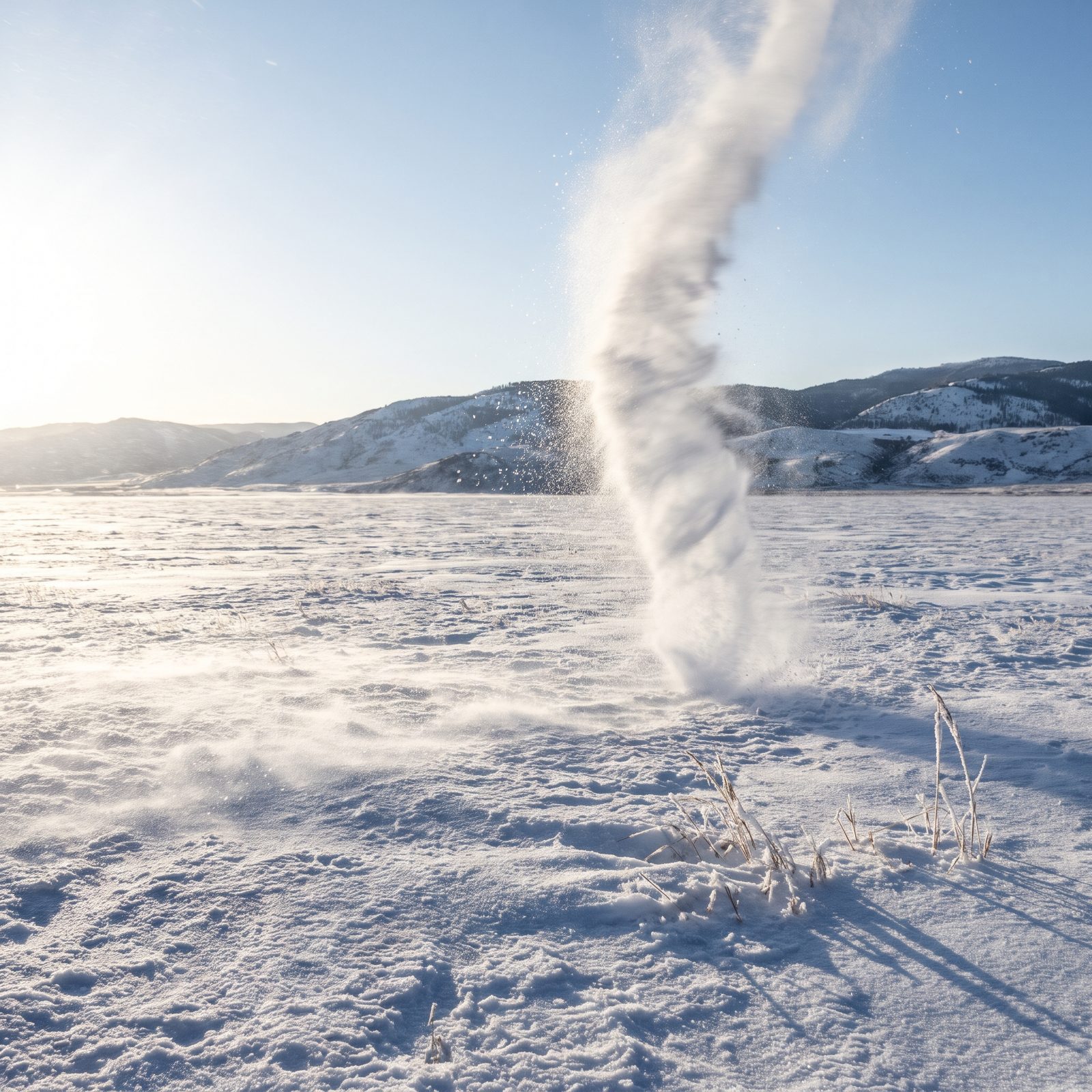
Everyone knows dust devils. Far fewer have ever watched their winter cousin. A snow devil is a small spinning vortex of air that scoops loose, dry snow into a twirling column, usually on a cold sunny day when the ground warms just enough to send up a rising pocket of air.
They’re genuinely uncommon, because you need all the ingredients at once: powder-dry snow, light wind, and that odd pairing of sun and cold. Most people go their whole lives without seeing one. And when the low sun lights the spinning crystals from behind, the column glitters like it’s been strung with tiny lights.
20. Frozen Bubbles Suspended in Clear Lake Ice
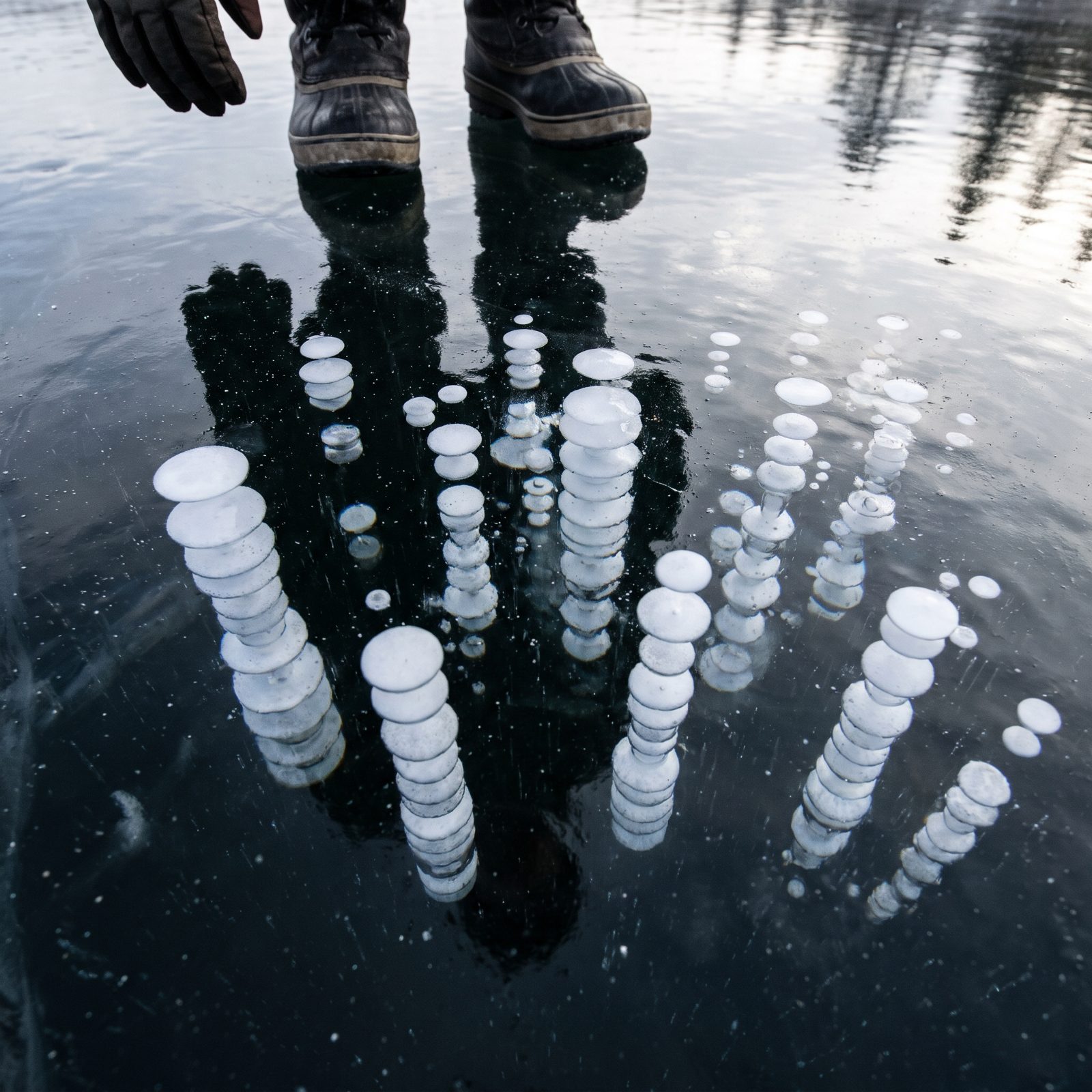
Those photographs from Abraham Lake in Alberta that look like strings of pearls frozen in black glass? Those bubbles are methane. Organic matter rots on the lake bottom, bacteria release the gas, and the bubbles climb until clear ice catches them mid-rise and locks them in place, stacked in columns by the date they let go.
Now the sobering part. That trapped methane is a potent greenhouse gas, and warming lakes release more of it every year. Scientists poke holes in the ice, touch a flame to the escaping gas, and it flares right up. Beautiful, and a little unsettling. The natural world in a nutshell.
As an earth sciences professor puts it, “These bubbles are actually methane gases that are developed at the bed of the lake”
19. Pancake Ice Floating in Overlapping Circles
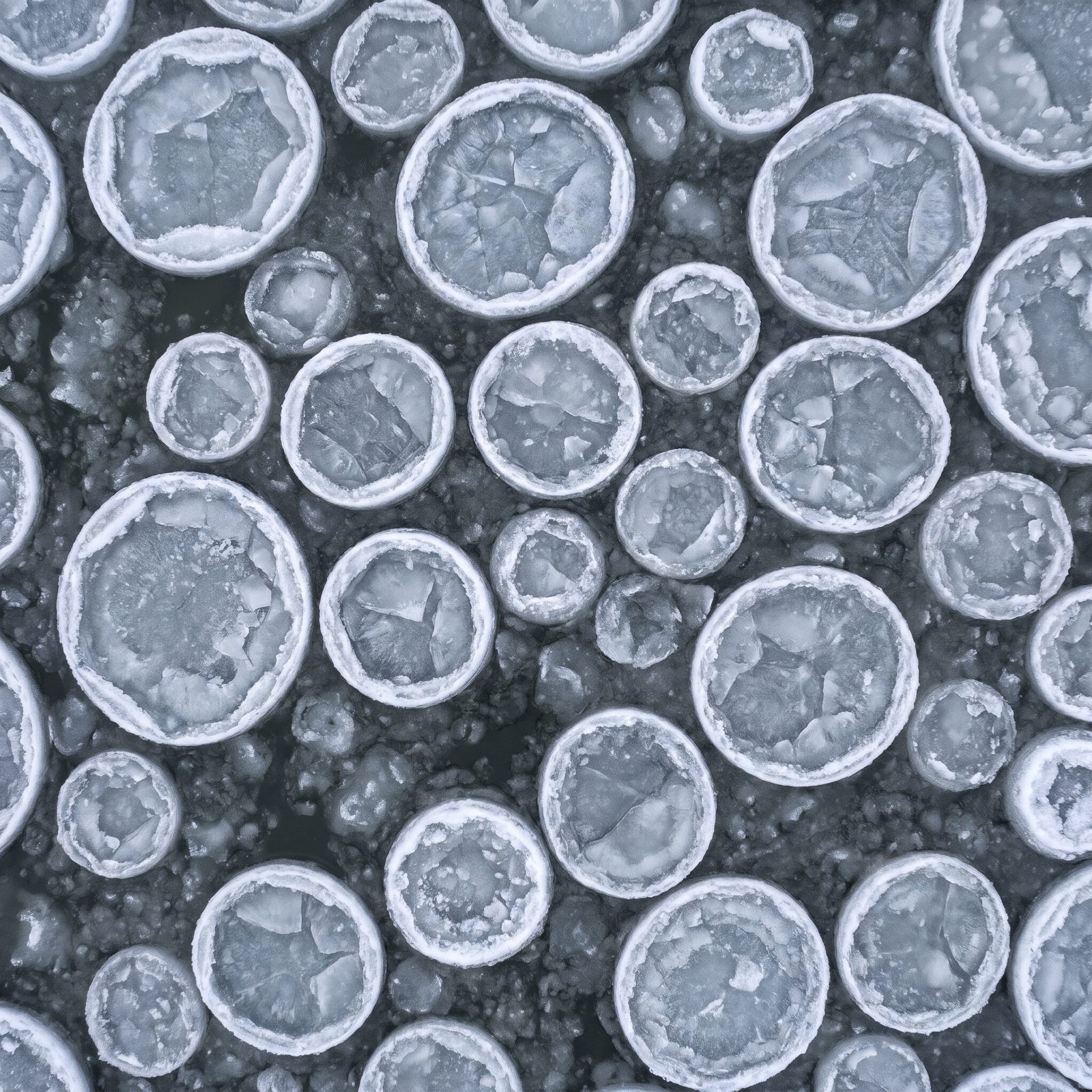
Pancake ice is what you get when the sea tries to freeze but won’t hold still. In choppy, cold water, slush gathers into rounded plates, and as those plates bump and grind against one another, each develops a raised white rim from the collisions. The whole surface ends up looking like a floating spread of lace doilies.
It signals a body of water caught between liquid and solid, mid-transition. Look for it in Arctic seas, the Great Lakes, and now and then on the Baltic. And once in a rare while, a slow river eddy spins a single plate into a perfect rotating ice disc, which locals will tell you is the strangest thing they’ve ever watched a river do.
18. A Spinning Ice Disk Turning Slowly in a Frozen River
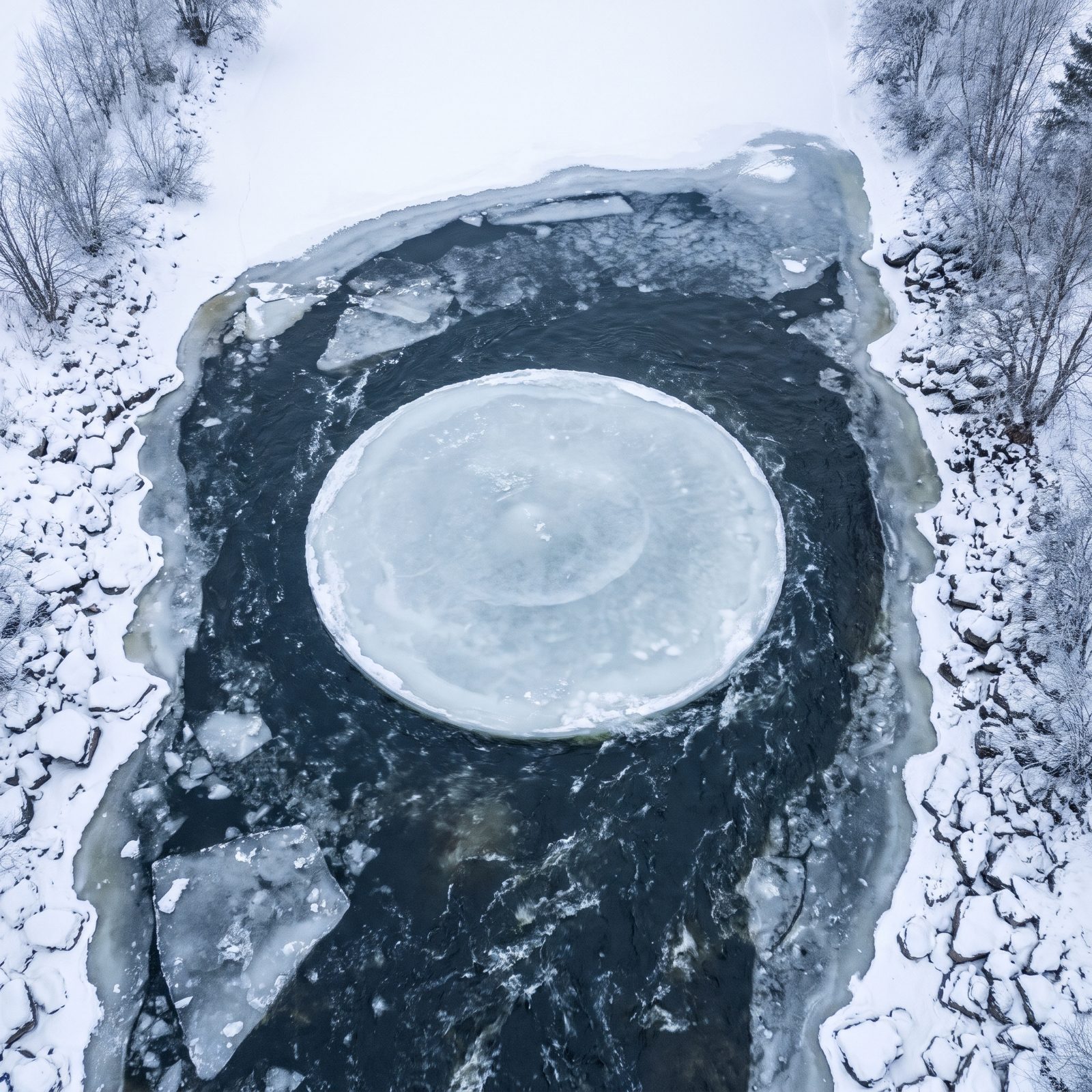
Ever watched a vinyl record spin on a turntable? Now scale it up to the size of a backyard and drop it into a river in the dead of winter. That’s an ice disk, and the first time you see footage of one you half-assume it’s a hoax.
It isn’t. When slow-moving water swirls in a gentle eddy, a slab of ice can break free and rotate on its own axis. For years people blamed the current for the spin, but research now points to a subtler engine. Cold meltwater sinking off the underside of the disk creates a tiny vortex, nudging it around like an invisible finger on a lazy Susan.
17. Naturally Rounded Ice Balls Carpeting a Frozen Beach
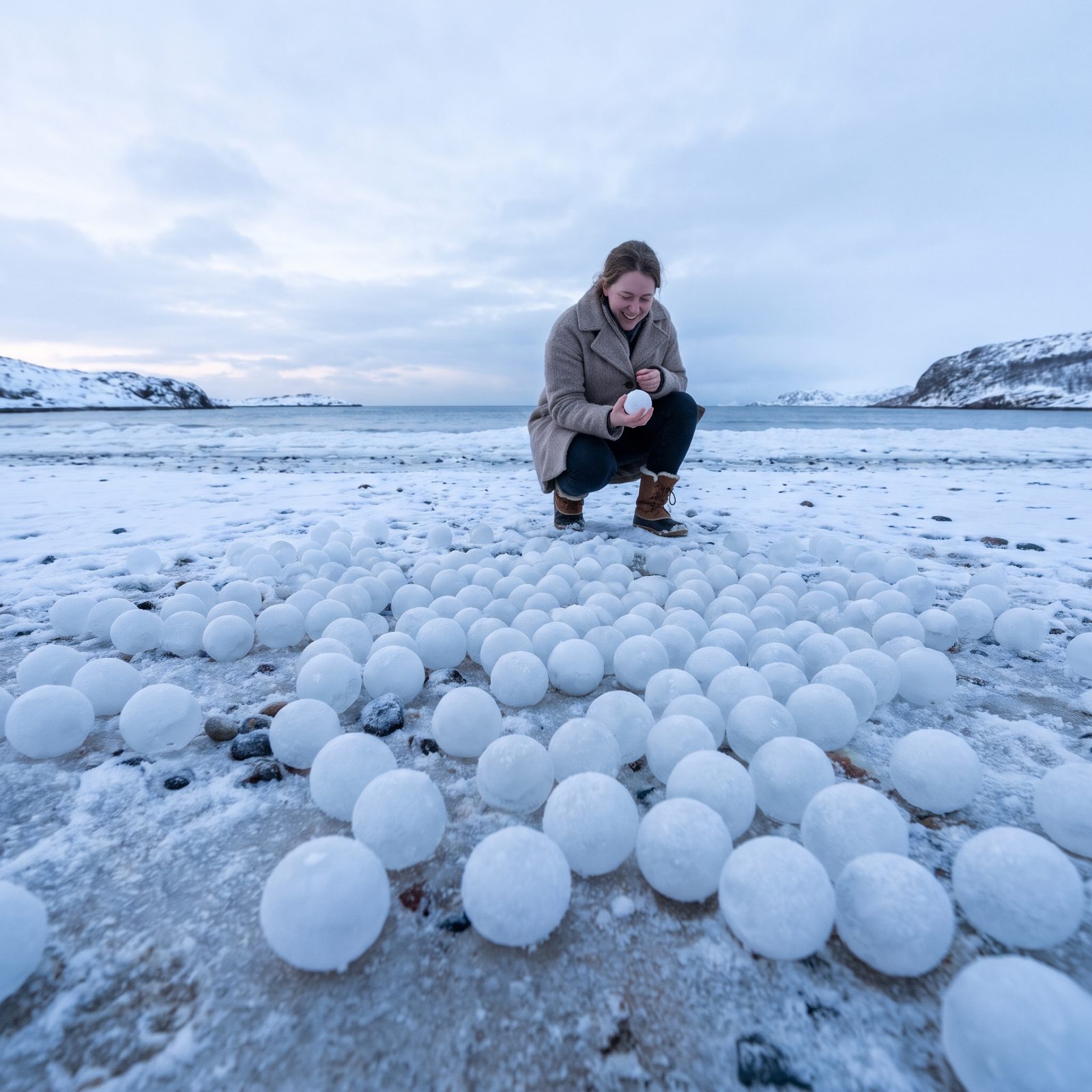
Picture thousands of frosted gumballs washed up along a lakeshore and you’ve basically got it. Ice balls form when slush gathers in cold, gently churning shallow water and the waves roll the clumps over and over, rounding them the same way a river rounds a stone.
The Great Lakes produce them most famously — Lake Michigan especially. They range from egg-sized to boulders you’d struggle to lift, and when you walk among them they knock together with a dull ceramic clink.
16. Finger Rafting That Stitches Zigzag Seams Into Sea Ice
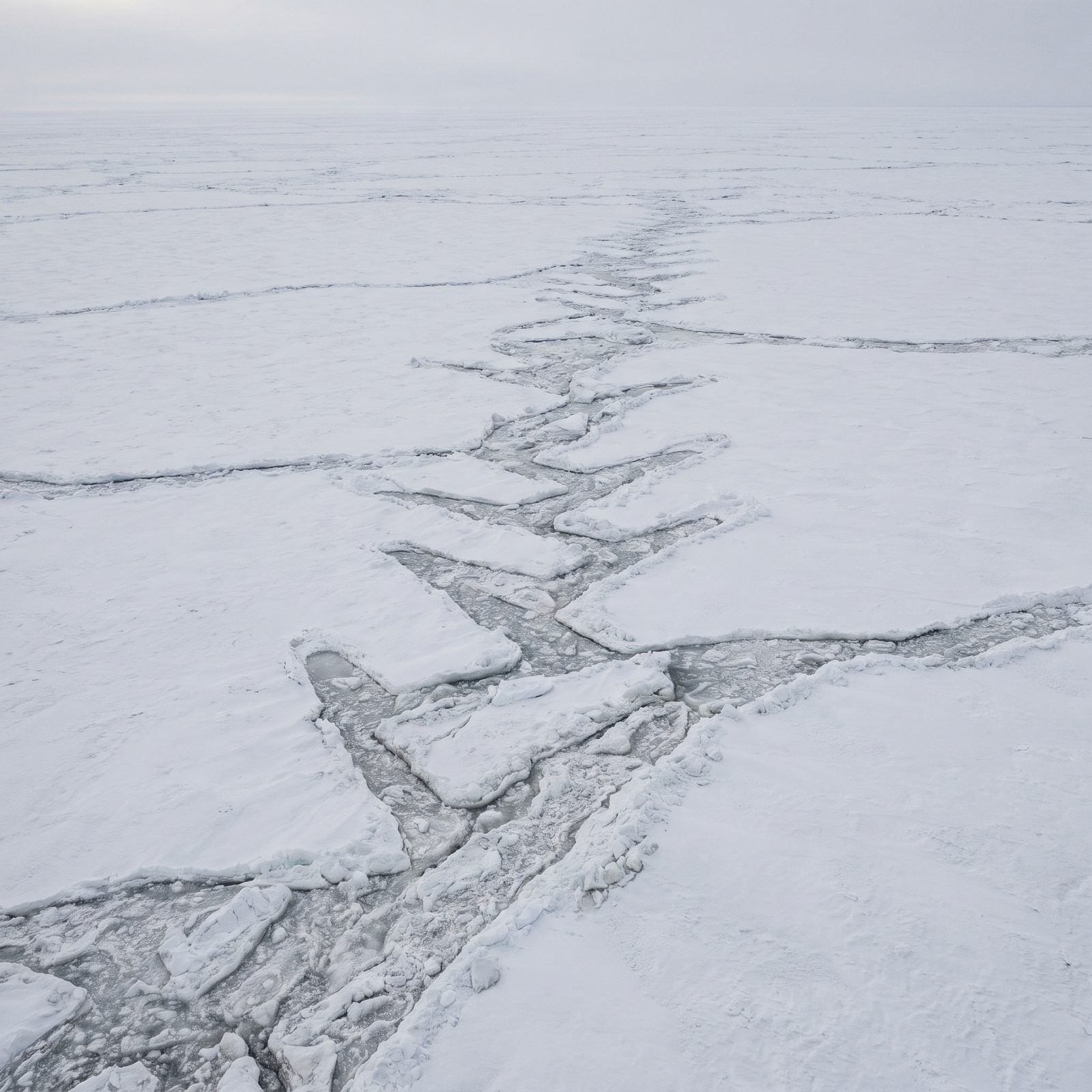
Nature has a zipper, and it lives in the Arctic.
When two thin floes of sea ice drift into each other, they don’t simply crumple. Instead, they split along the seam into tabs that slide alternately over and under one another — one finger on top, the next below — producing a neat zigzag of interlocking teeth that can run for miles. Scientists call it finger rafting.
Those interlocking teeth only form on young, thin, flexible ice, exactly as pictured here. Once the ice grows thicker, the sheets just pile into a chaotic pressure ridge instead. The clean geometry needs a narrow window, a brief moment when the physics lines up just so.
15. Ice Volcanoes That Erupt Along a Frozen Lake’s Edge
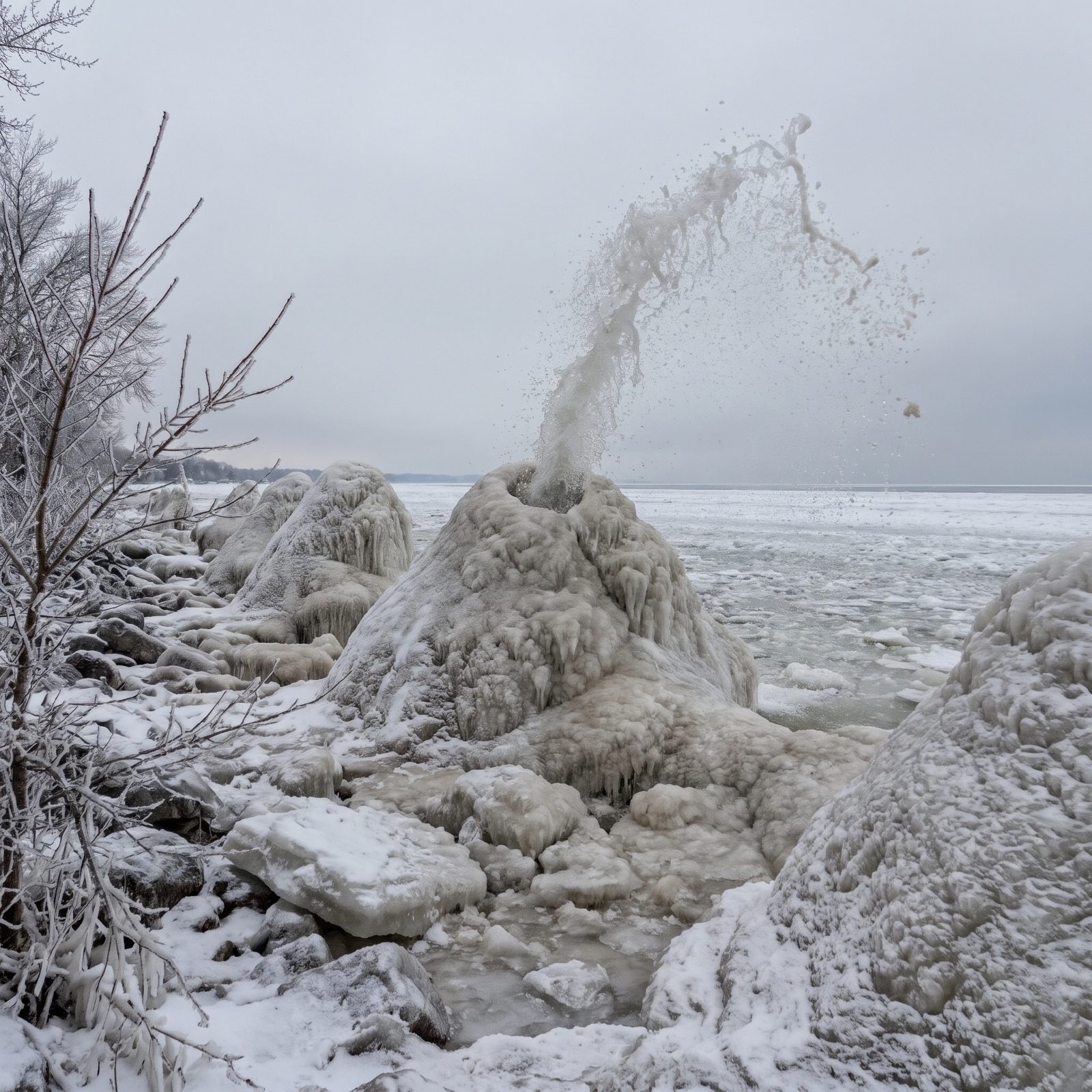
They look like someone planted miniature snow-cone geysers along the beach, and in a sense someone did. The lake.
Here’s the mechanism. Waves surge up under a shelf of shoreline ice and find a crack or a hole. Water forces through, shoots into the frigid air, and freezes almost instantly where it lands. Do that a few thousand times and you build a hollow cone — sometimes 20 feet tall — that “erupts” cold spray with every wave.
14. A Brinicle: The ‘Icicle of Death’ Growing Beneath Antarctic Sea Ice
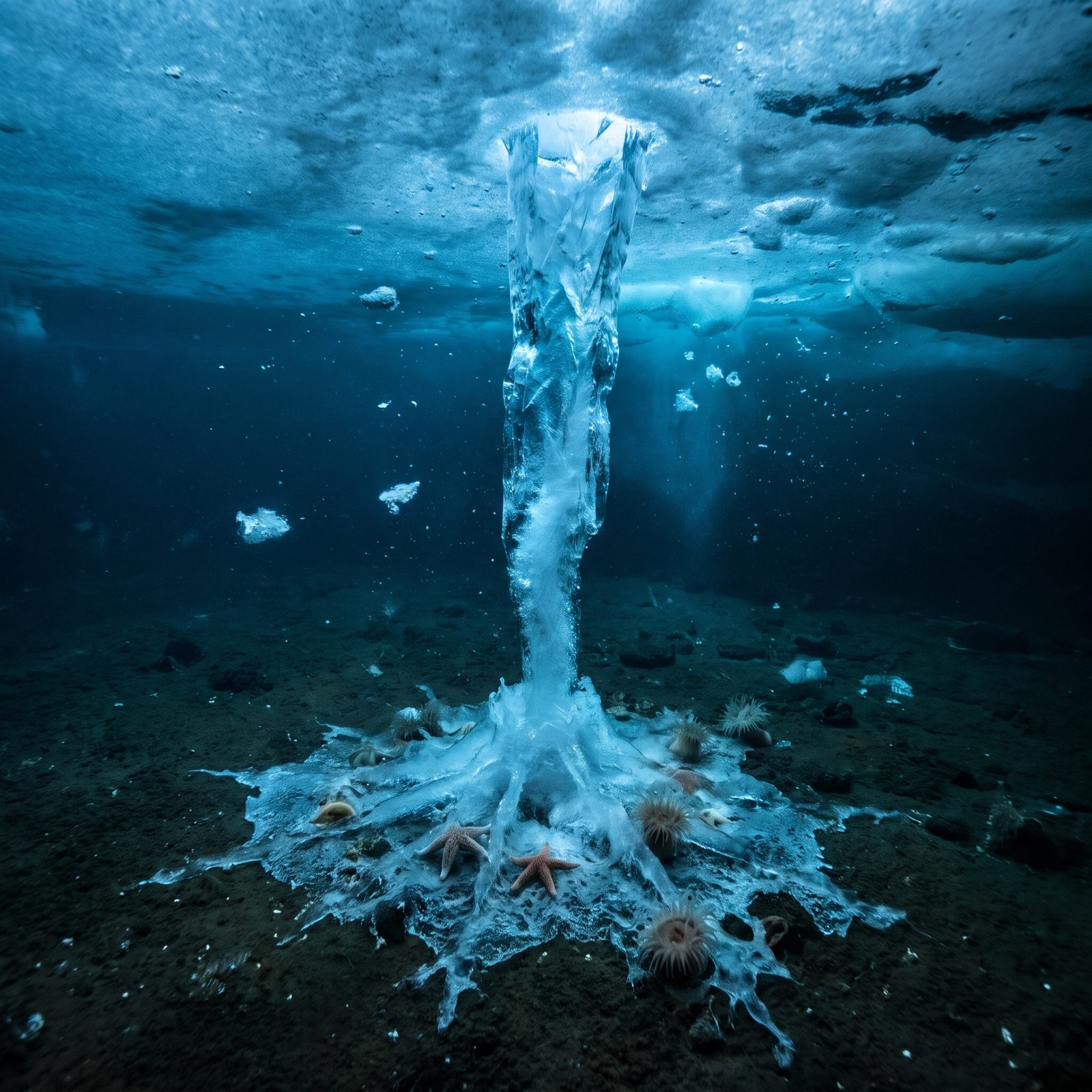
A chandelier that kills everything it touches. That’s not hyperbole.
As sea ice forms, it squeezes out super-cold, super-salty brine. Because that brine is denser than the water around it, it sinks. And because it’s far below the normal freezing point, it flash-freezes the ordinary seawater it falls through, forming a hollow tube of ice that grows downward toward the seabed.
When a brinicle reaches the bottom, the freezing spreads outward across the floor, trapping slow-moving starfish and sea urchins in ice. A BBC camera crew filmed one forming in 2011, time-lapsed over hours, and gave it the nickname the icicle of death. Earned it, too.
13. Anchor Ice Growing Crystal Gardens on the Riverbed
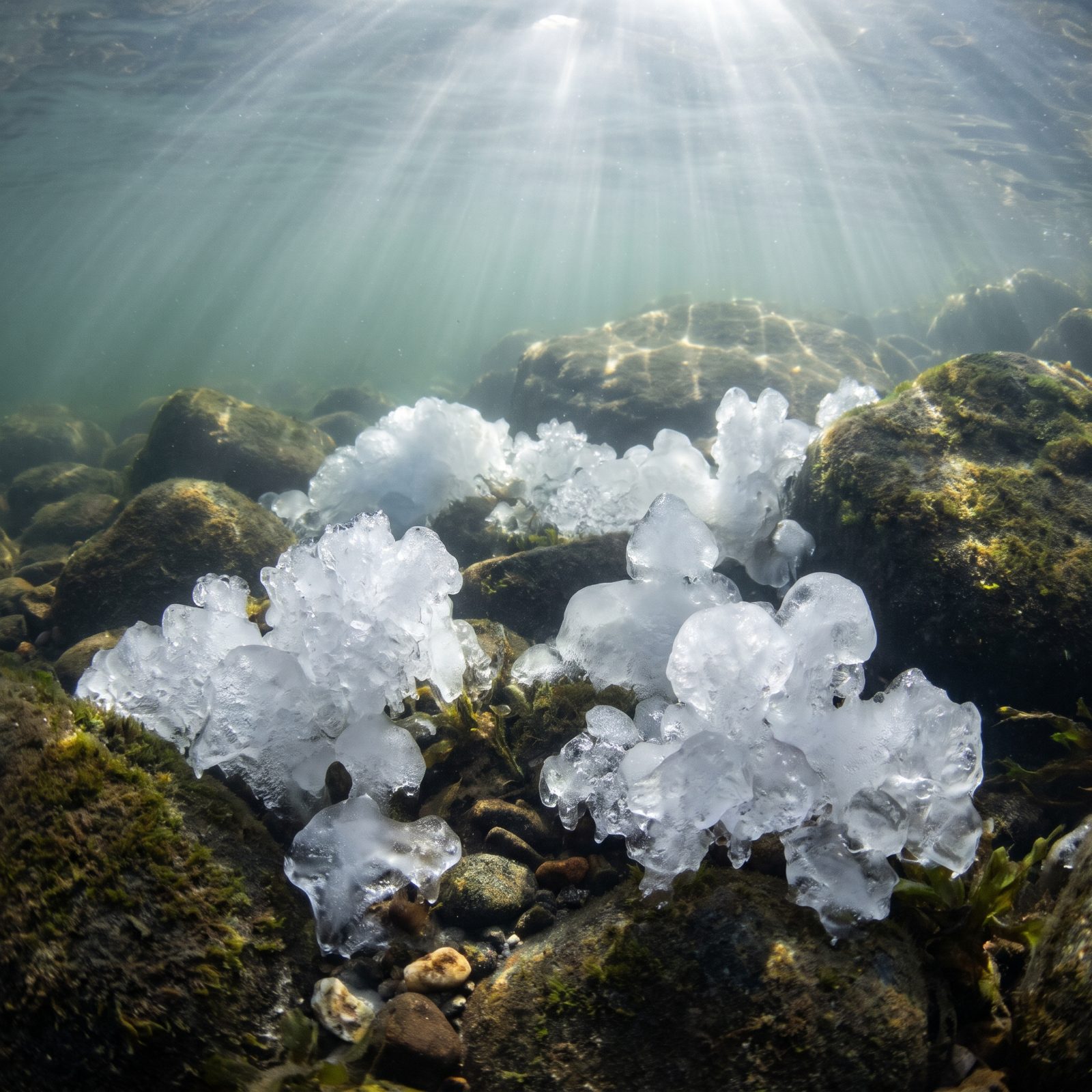
Ice usually forms on top of water. Anchor ice ignores the rulebook and grows on the bottom.
In fast, clear, super-cooled streams, ice crystals can nucleate directly onto rocks, gravel and sunken logs, building up a spongy white garden that clings to the riverbed. Submerged branches end up frosted like glass sculptures. When the sun hits and the ice lets go, whole chunks of the bed can lift and float away — gravel and all.
Trout and salmon eggs tucked into that gravel don’t love this arrangement. Anchor ice is a genuine stressor on cold-water fish habitat, which is why it gets more attention from fisheries biologists than from tourists.
12. Candle Ice That Shatters Into Chiming Crystal Columns
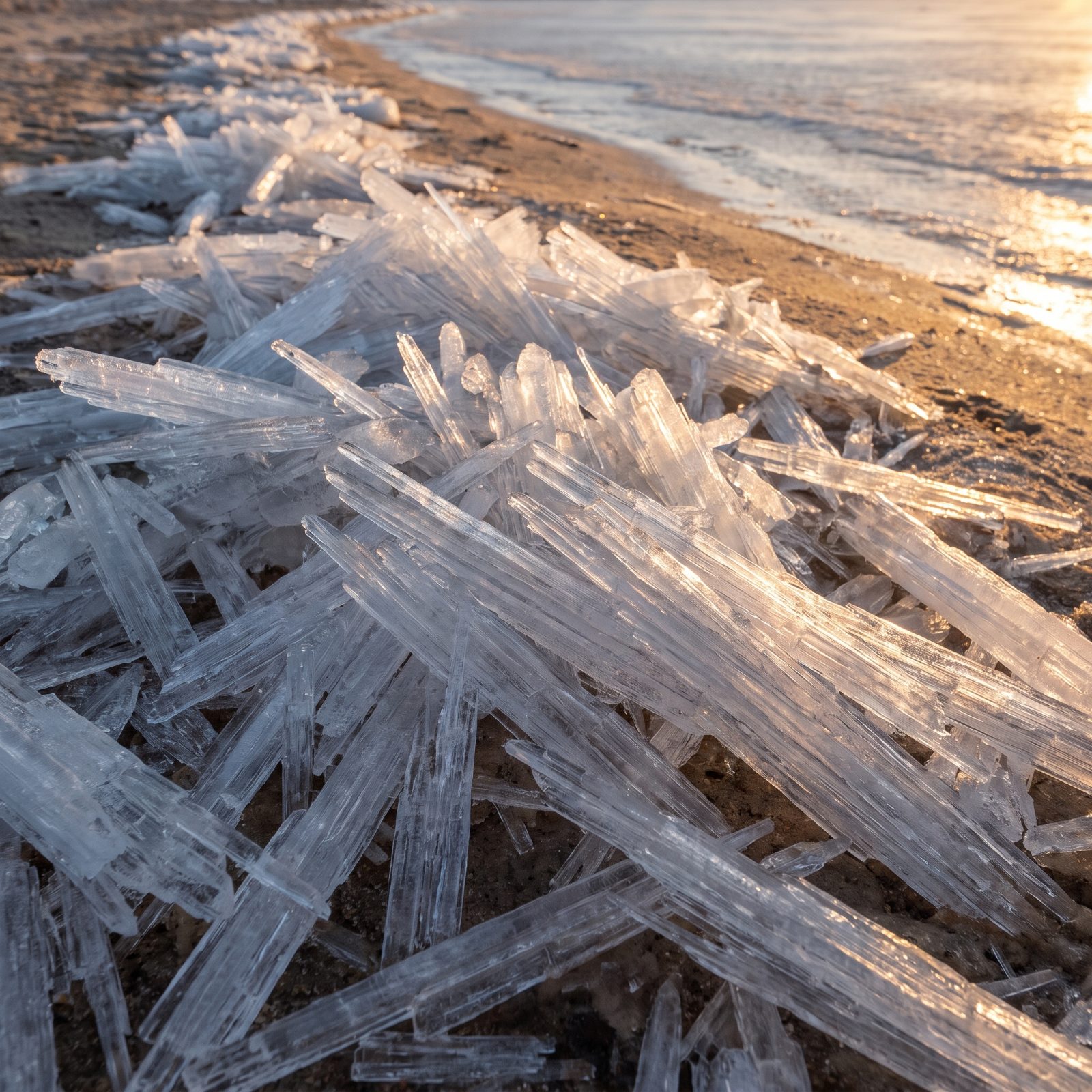
Thawing ice has a sound, and candle ice is the one that makes it.
As a lake’s ice sheet ages and starts to rot in spring, it fractures along vertical lines into countless pencil-thin columns, each one standing upright like a candle in a box. Step on it, or let the wind push it to shore, and the columns topple against each other with a bright glassy tinkle — wind chimes made of broken window.
It also means the ice has lost almost all its strength. Candle ice looks solid and holds almost no weight. If you see it, the skating season is over.
11. Star-Shaped Cracks That Spread Like Frozen Fireworks on Lake Ice
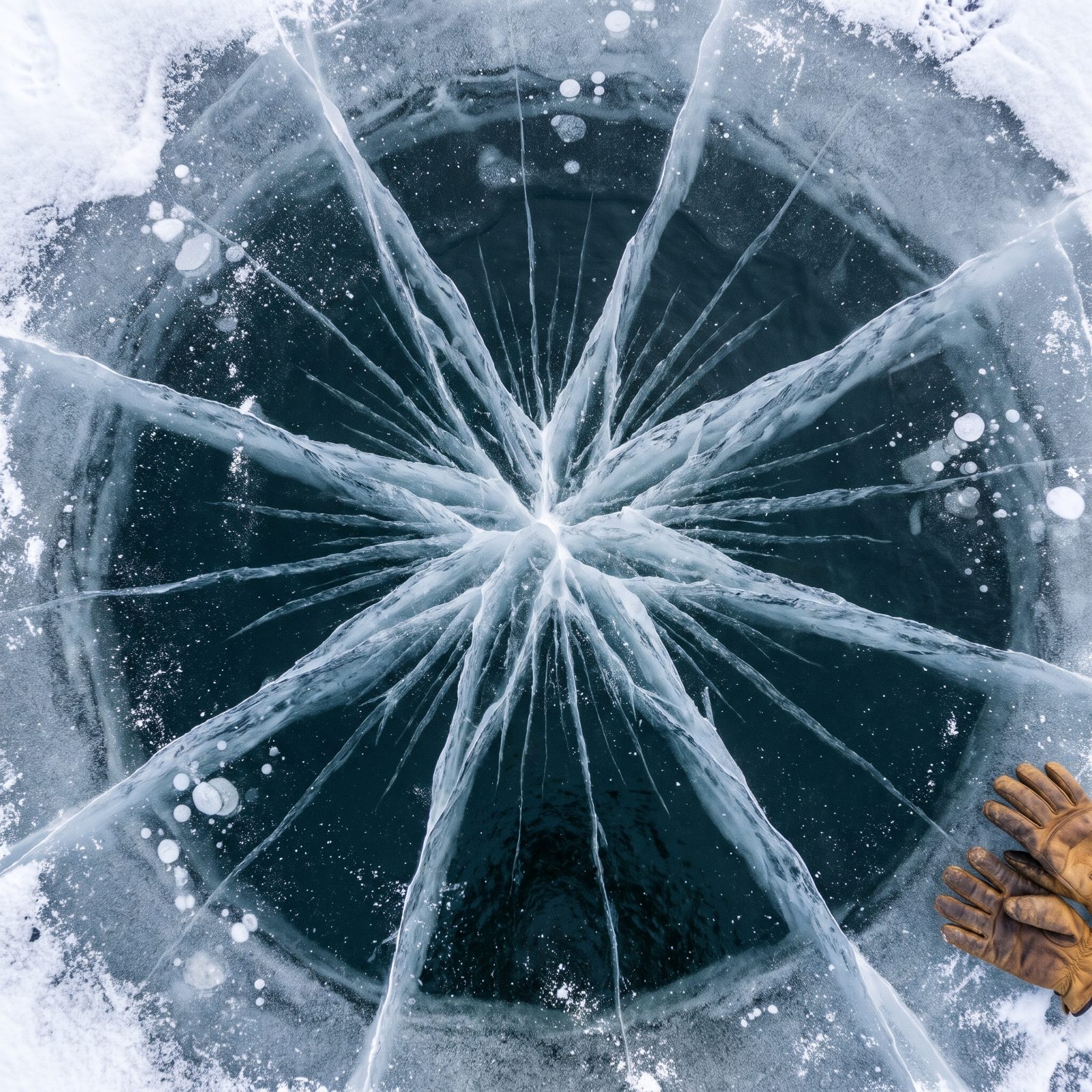
Drop a stone on fresh clear ice and you get a burst pattern. Or the ice does it on its own, overnight, with no help from you at all.
Star cracks form when stress concentrates at a single point and fractures shoot outward in a radial burst, often with secondary cracks branching between the main arms. On black lake ice they look like fireworks caught mid-explosion. The air that works into the fissures turns them bright white against the dark sheet.
10. Ice Dendrites Branching Like Silver Ferns Under Clear Lake Ice
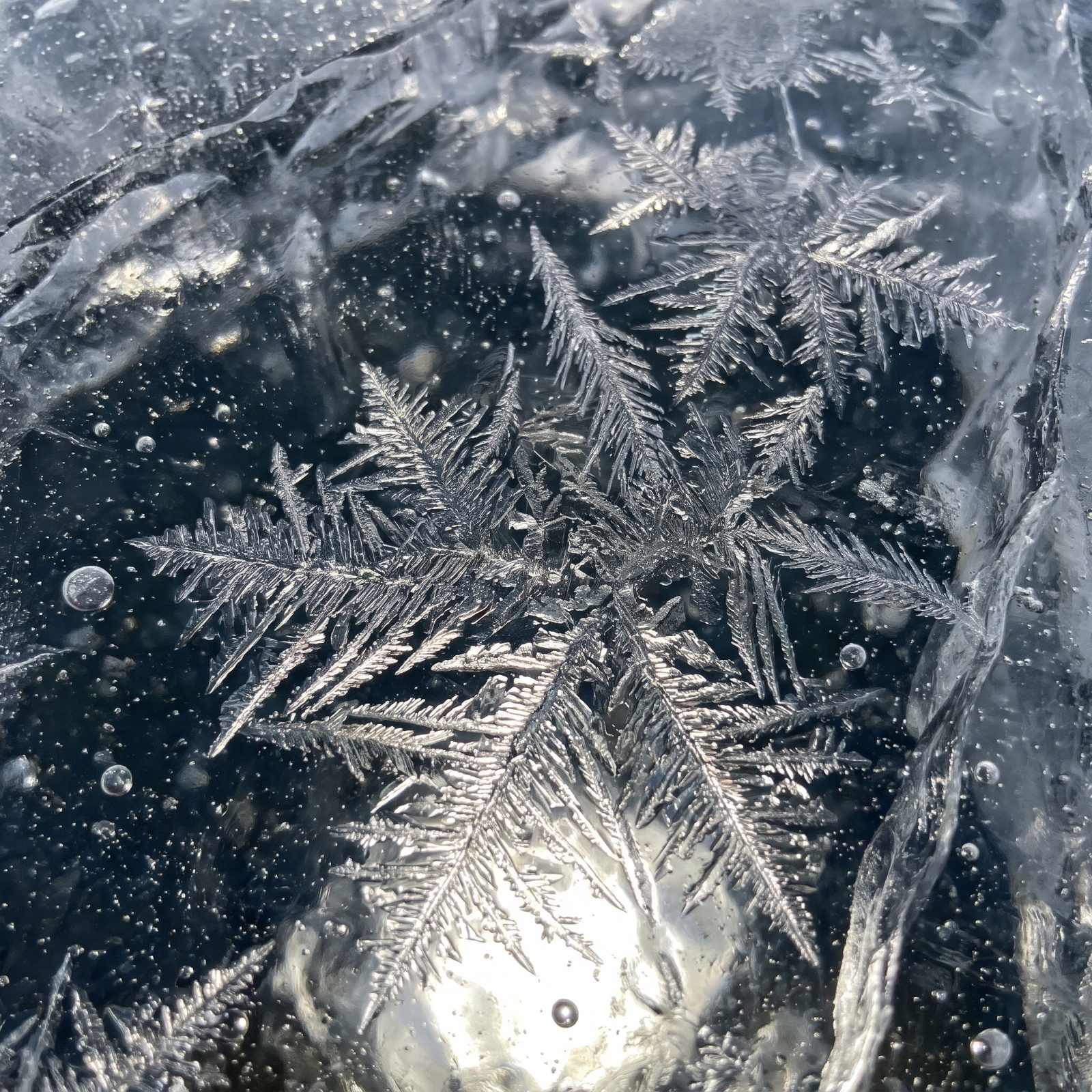
Get down on your knees on clear lake ice, cup your hands around your eyes to kill the glare, and look straight down. Sometimes you’ll find garlands.
Ice dendrites are branching crystal structures that grow in repeating fractal patterns — feathery arms splitting into smaller arms, splitting again. They form as water freezes and the crystal front reaches out into the liquid ahead of it. Trapped air bubbles string along the branches like tiny beads on a silver thread.
The same math that draws these also draws snowflakes and the frost on a cold windshield. Nature keeps reusing one good idea.
9. Turquoise Lake Ice Glowing Beneath the Snow
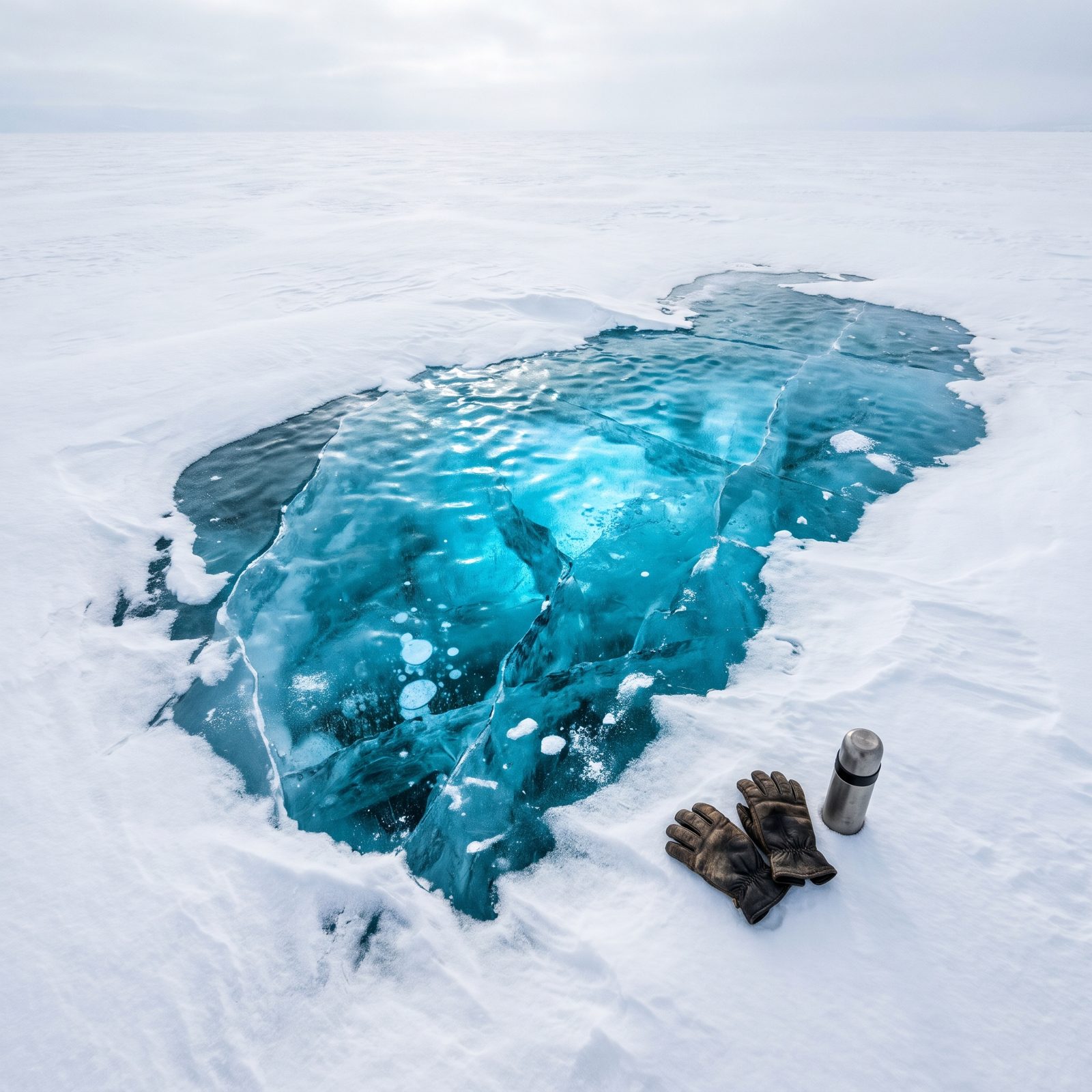
Sweep the snow off a frozen alpine lake and you can expose a slab of color so saturated it looks lit from below, like a swimming pool at night. That blue is real, and it’s physics, not pigment.
Thick, pure, bubble-free ice absorbs the red end of sunlight and lets blue scatter back to your eye, the same reason deep glacier ice glows. The clearer the ice, the deeper the turquoise. Snow on top hides it completely, which is why a gust of wind peeling back a drift can reveal the color like lifting a sheet.
Lake Baikal in Siberia and Abraham Lake in Alberta are the famous showstoppers. At Abraham, frozen methane bubbles stack into white columns suspended in the blue — one of the strangest beautiful things on any frozen surface anywhere. We’d put it on a short list of winter sights worth the cold.
8. Frozen Foam Creating Lace Along a Shoreline
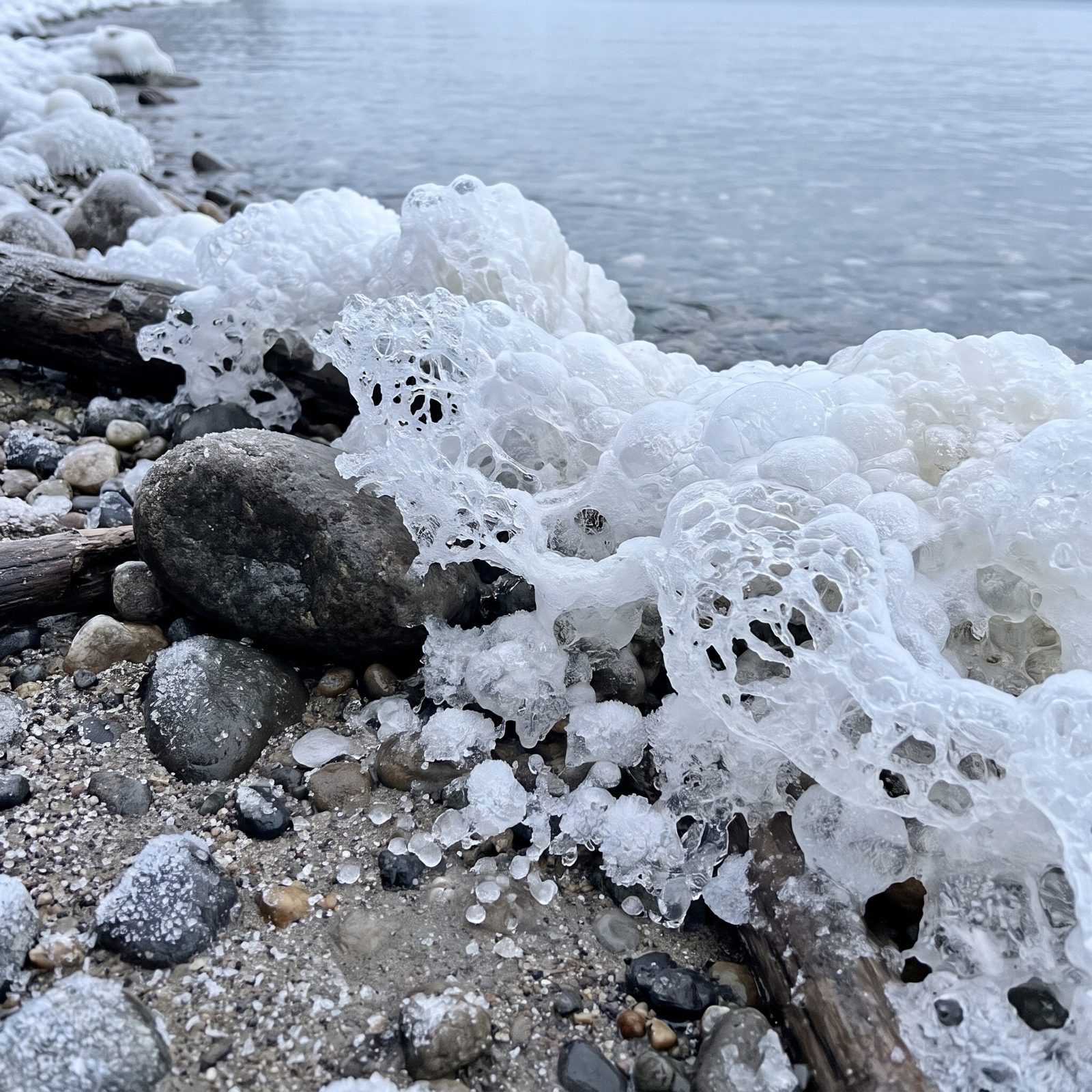
Lake foam is mostly air and dissolved organic matter, the kind churned up when wind drags across a big body of water for hours on end. Catch it at the right temperature and the whole froth freezes before the waves can knock it down. What you get looks hand-tatted — thin white webbing, scalloped at the edges, pinned to the sand like somebody dropped a doily and forgot about it.
The chemistry is boring. The result is not. Surfactants leaching out of decaying plants lower the surface tension, the foam holds its shape a little longer, and a hard freeze finishes the job. It’s easy to walk right past it thinking it’s spilled snow.
7. Ice Collars Forming Around Reeds and Twigs
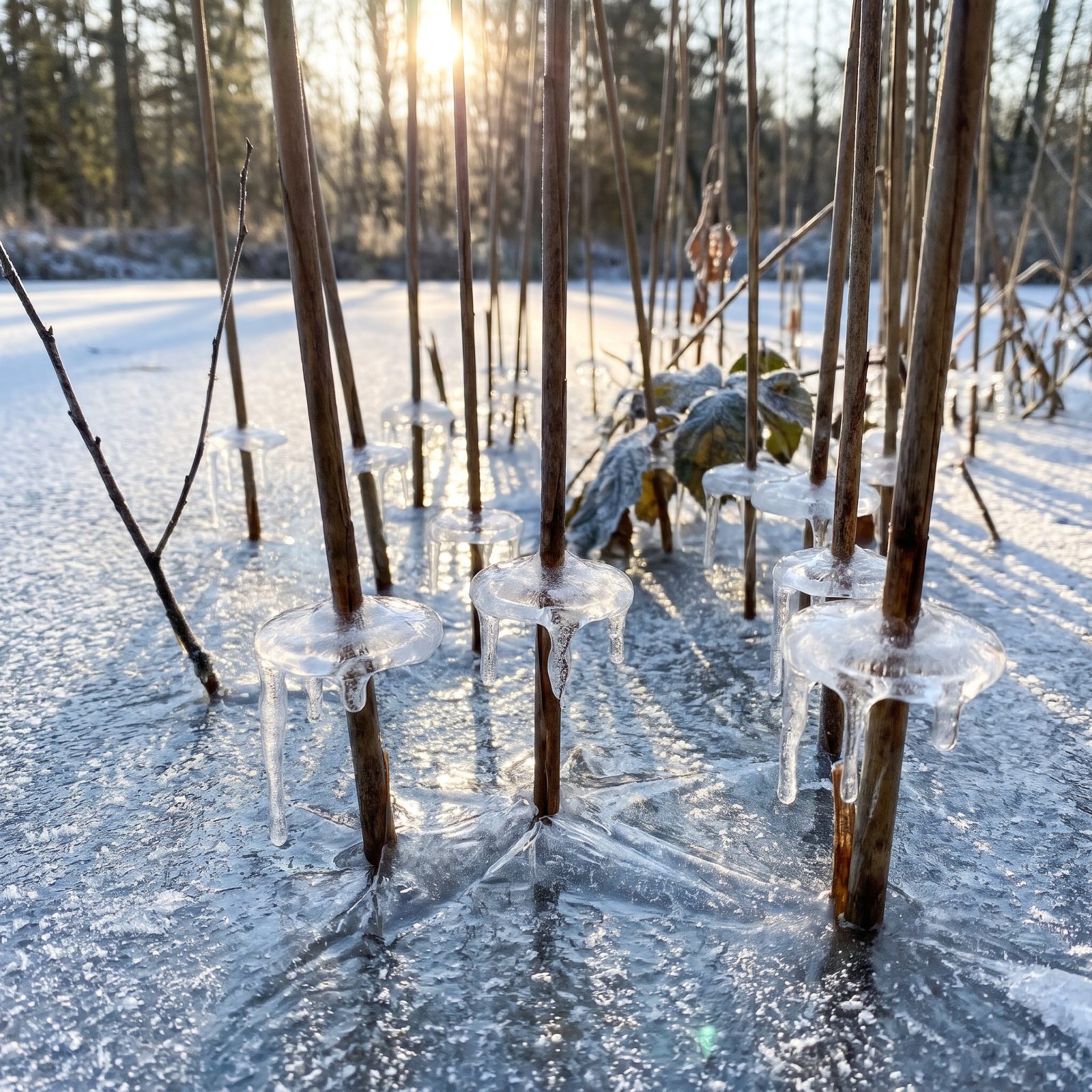
Watch a pond freeze and drop at the same time. As the water sinks under the forming lid of ice, each reed and twig keeps a heavy dome of ice clamped around it right where the old surface used to sit — dozens of them, hovering at matched height, as if someone patiently threaded glass bells onto every stalk in the marsh.
The domes survive because ice bonds hard to the stem and refuses to let go even as the water retreats beneath it. Thick, clear, bulging like jellyfish, with drippy, melted-glass edges. On a bright morning the rims catch fire with gold light and pass for blown-glass baubles waiting on a tree.
6. Ice-Encrusted Beach Pebbles Resembling Glass Baubles
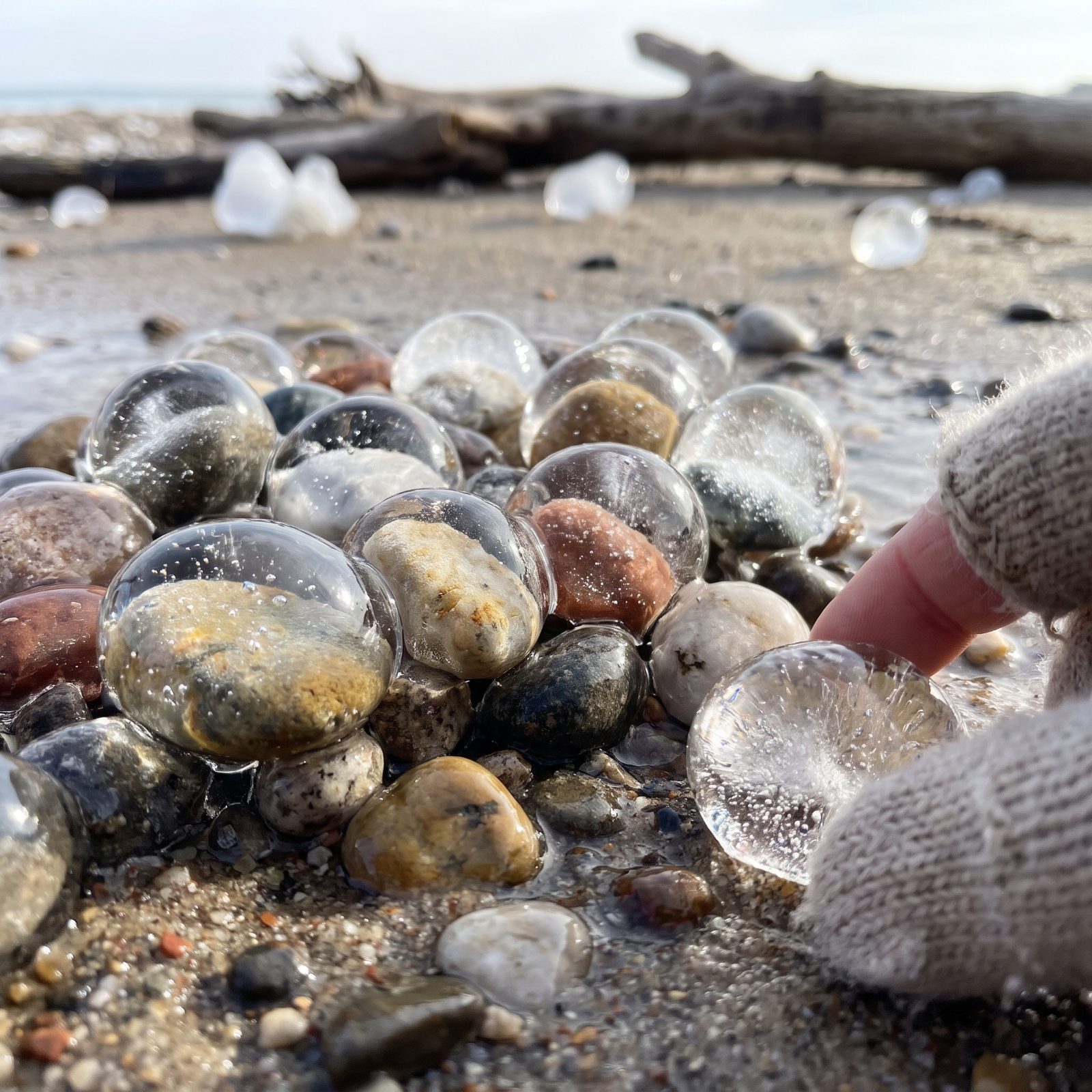
Wave splash plus a freezing wind coats shoreline pebbles in layer after layer of clear ice. Each coat thickens the shell, rounds the edges, and traps a little glassy bubble of air around the stone. By afternoon the beach looks like somebody spilled a bag of ornaments down it.
It takes a specific combination: open water still throwing spray, air cold enough to freeze on contact, and a few hours of patient, repeated splashing. Pick one up. It’s heavier than it looks, slick as a wet marble, the pebble inside magnified by its own ice lens. None of them survive the first warm afternoon.
5. A Frozen Waterfall Draped Like a Crystal Curtain
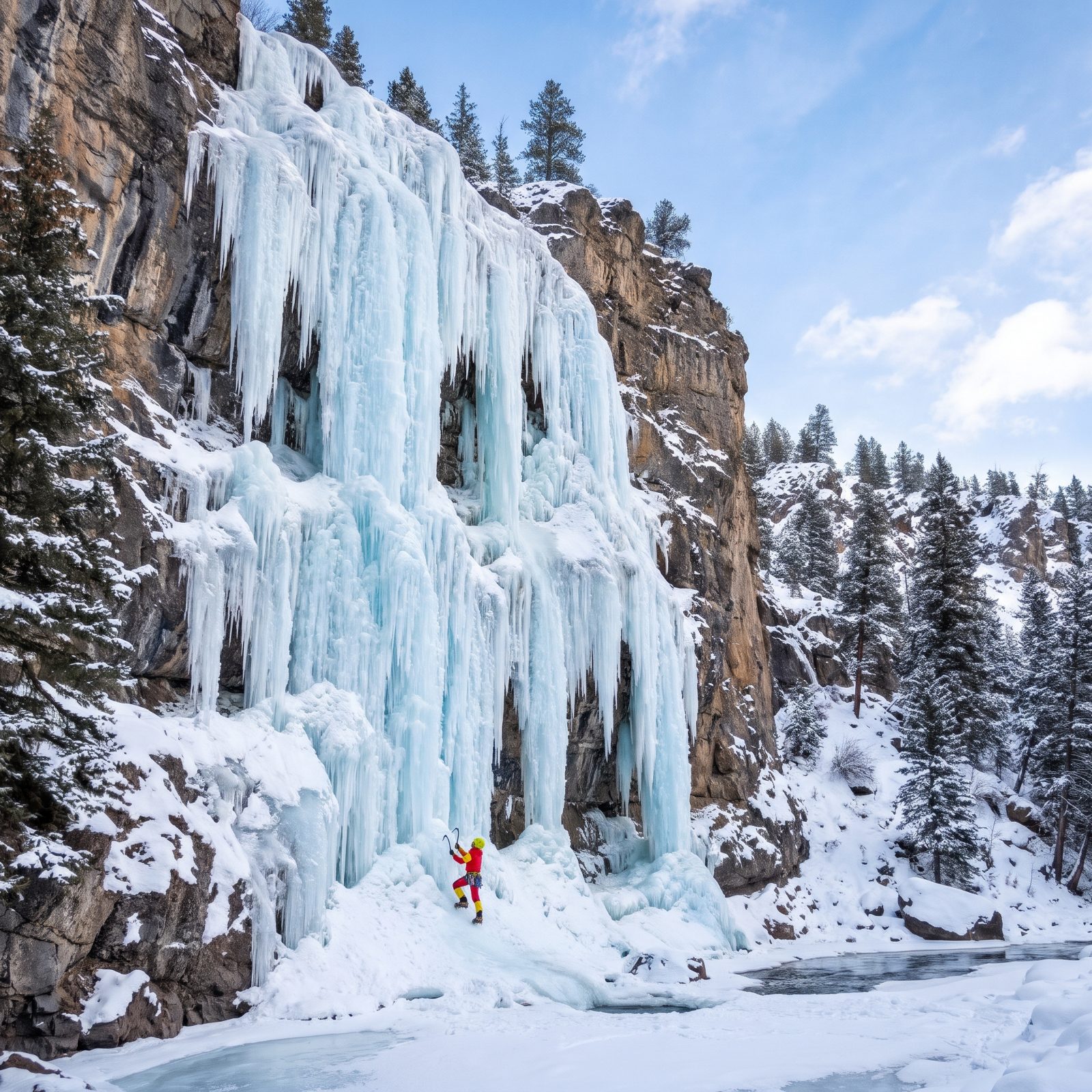
A waterfall doesn’t freeze all at once. The outer edges lock up first while water keeps running behind the shell, so the ice builds in fluted columns, ridge after ridge, until the whole face hangs like pleated crystal drapery.
Ice climbers live for these, and they’ll tell you the blue columns are the solid ones while the white, aerated ice is the stuff that shatters under a pick. The color is a tell — dense, bubble-free ice absorbs red light and sends back blue, and the milkier sections are just packed with trapped air. Stand close and you can hear water still moving somewhere inside, which is either beautiful or alarming depending on how long you plan to stand there.
4. Icicle Forests Hanging Beneath Stream Banks
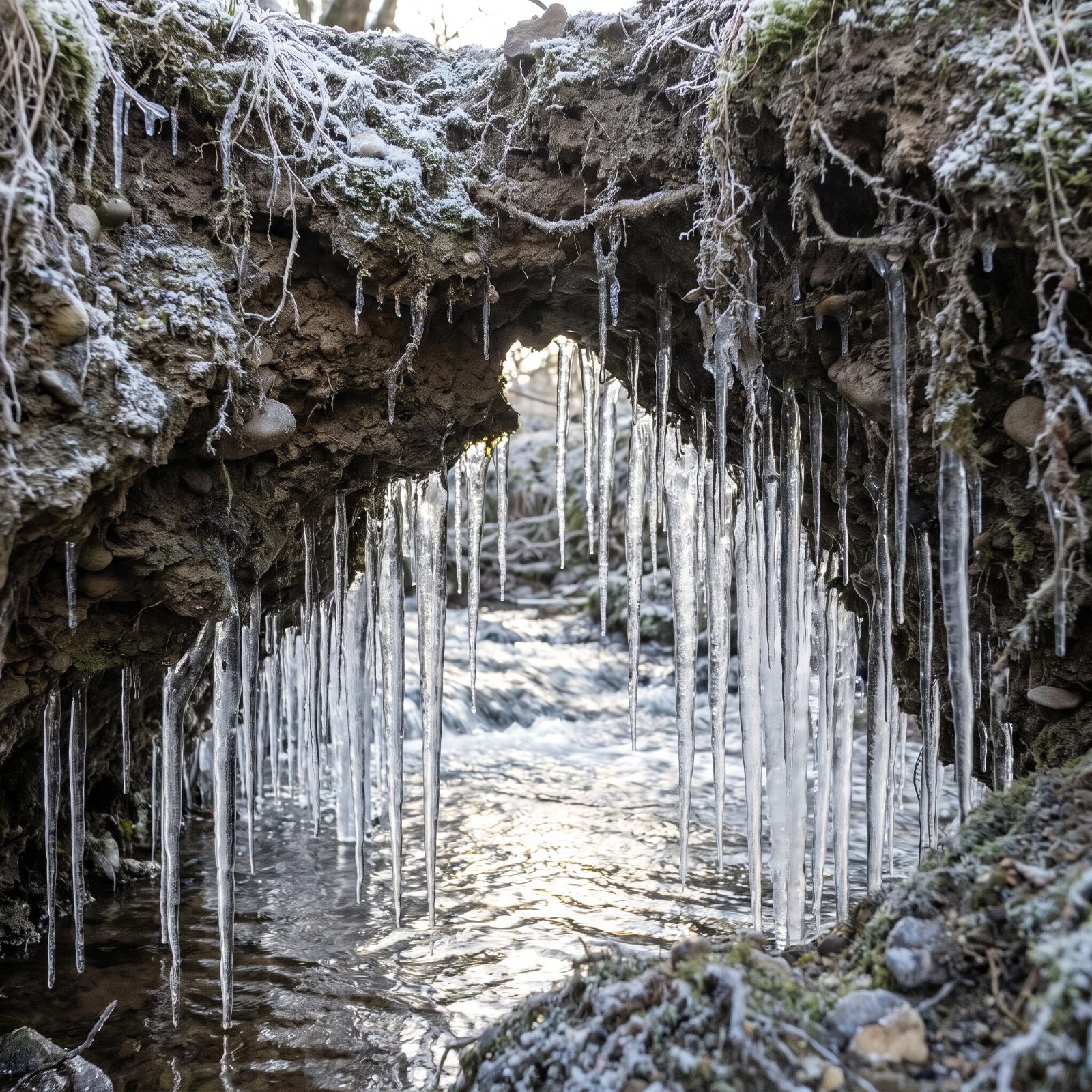
The best icicles aren’t on your gutter. They’re hiding under the overhang of a stream bank, where seep water drips off a frozen lip all day and builds into rows of clear needles aimed at the current below.
Density is what makes these worth the crouch. One drip source gives you one icicle, but a saturated bank leaks along its whole edge, so you get a hanging thicket — hundreds of tapering spikes packed into a few feet, each recording its own slow history in faint rings. Get down low, look up into them with the sun behind, and the underside of the bank lights up like a chandelier nobody bothered to hang.
3. Striped Icebergs Layered With Blue and White
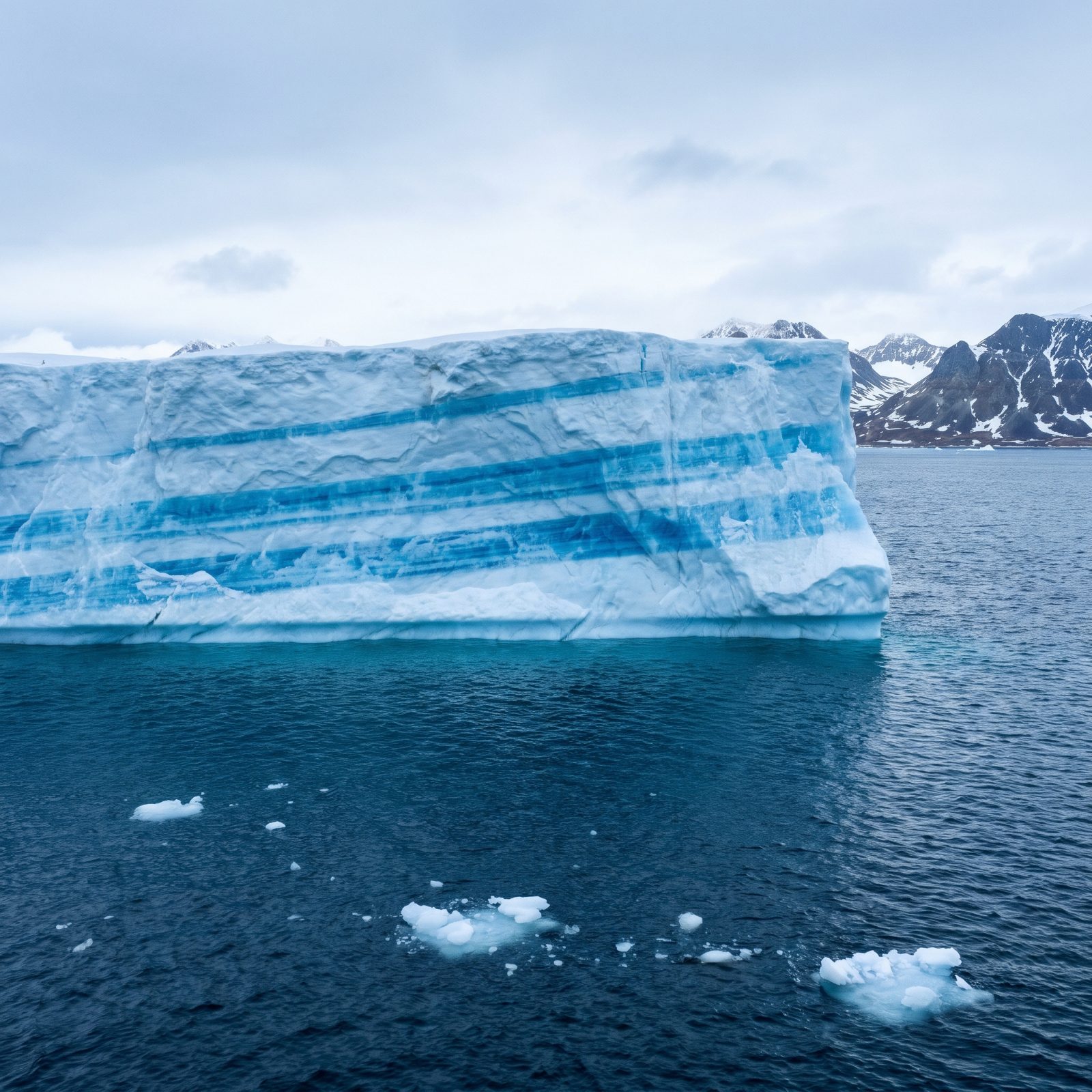
Blue stripes on an iceberg aren’t paint. They’re frozen records of how the ice formed, one event at a time.
When meltwater on a glacier refreezes fast and clean, with no air bubbles to scatter light, it turns deep blue and lays down a ribbon. Green bands can mean seawater rich in organic matter froze onto the underside. The white? Ordinary glacier ice, full of compressed air. Stack centuries of those events, then flip the whole berg when it calves and rolls, and you’ve got a tilted layer cake showing off its history to anyone who sails past.
You’ll find them mostly around Antarctica, where these candy-striped giants drift for years until the sea works them smooth again.
2. Seracs Rising Like Frozen Castle Towers
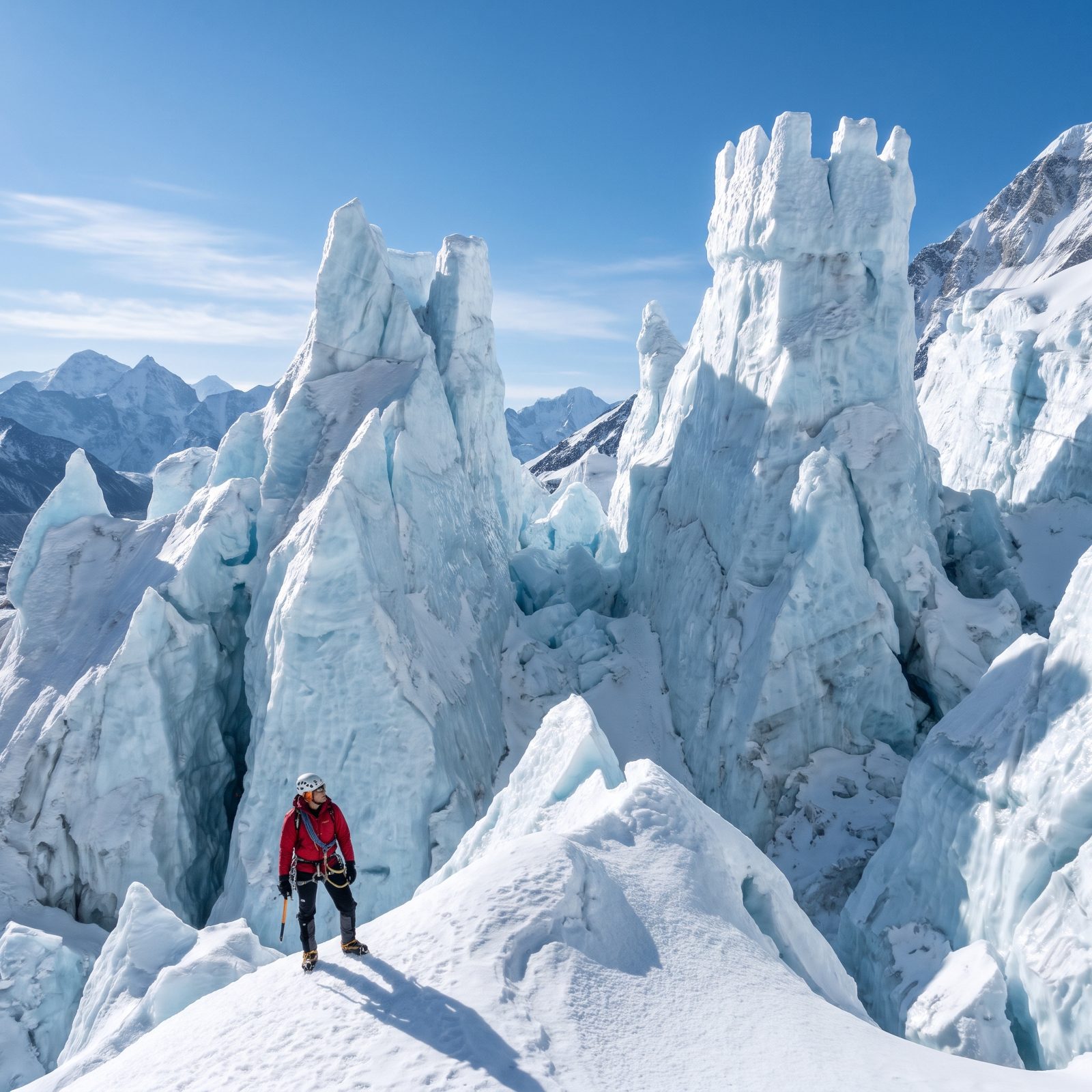
A serac is what happens when a glacier flows over a cliff and tears itself apart. The ice fractures into enormous blocks, some the size of a house, that tilt and lean against each other in a frozen traffic jam. From a distance they look like the broken ramparts of an ice fortress nobody ever finished.
Mountaineers respect seracs the way you’d respect a loaded gun. They collapse without warning, on no schedule you can read, because the glacier underneath never stops creeping. Lit by low morning sun from a safe ridge, though, a serac field is one of the eeriest sights in the high mountains — all that chaotic blue and white, perfectly still, until it isn’t.
1. Glacier Ice Caves Glowing Electric Blue
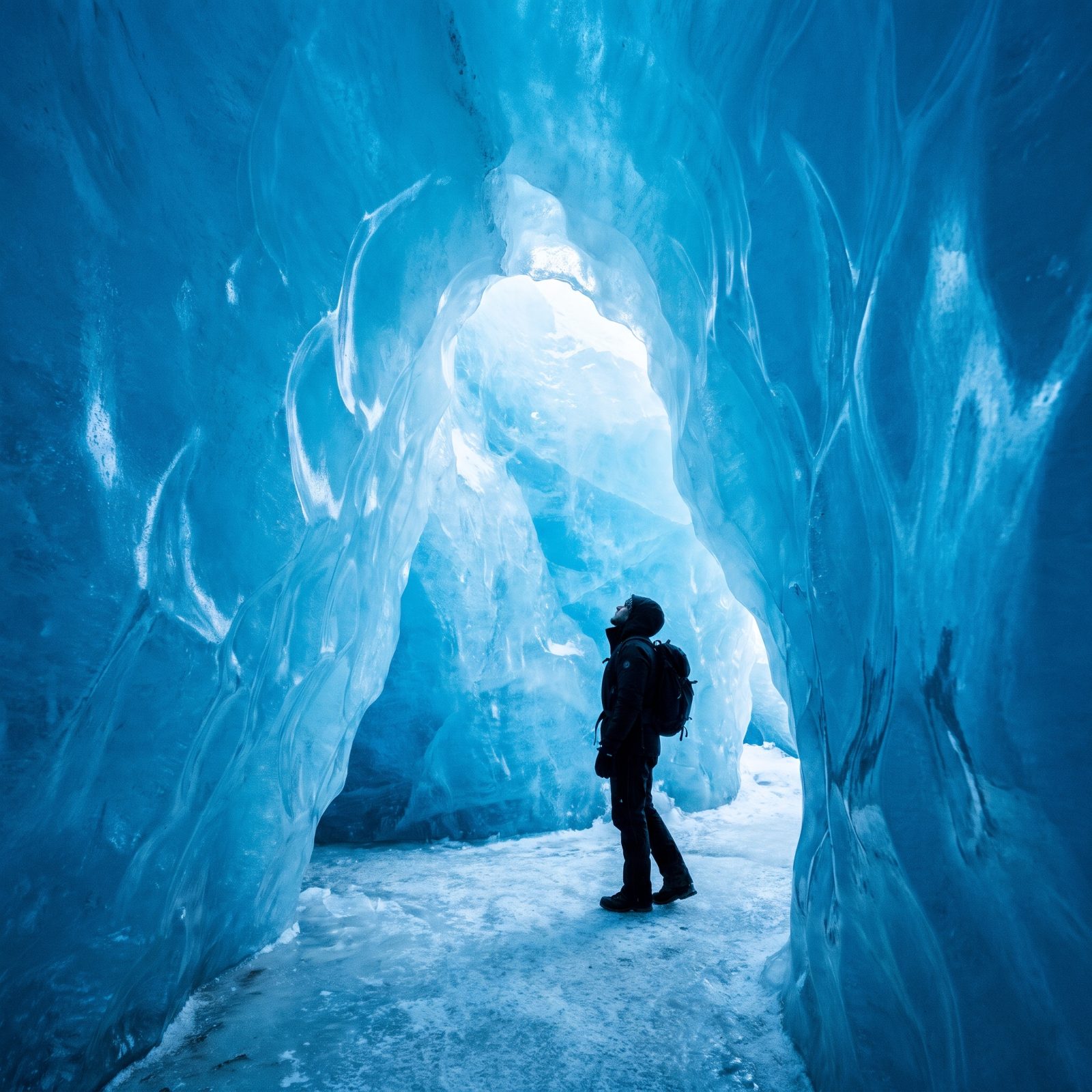
Step into a glacier cave on a bright day and the whole room turns the color of a gas flame. No light rig. Just the ice.
Glacier ice is so dense and so old, compressed under centuries of weight until almost every air bubble has been squeezed out, that it filters sunlight the way deep ocean water does. The red and yellow wavelengths get absorbed in the first few feet, and only blue makes it all the way through to your eye. Older ice, more compression, more electric the glow.
These caves form where meltwater carves tunnels under or inside a glacier — and here’s the catch worth taking seriously. They’re toured mainly in the depth of winter, because the warmer months are exactly when the ice overhead is least stable. Guides close them for a reason.
Explaining the cave’s color, a glacier mountain guide in Iceland writes that “it occurs because glacial ice absorbs the longer red wavelengths of light while scattering the shorter blue wavelengths.”