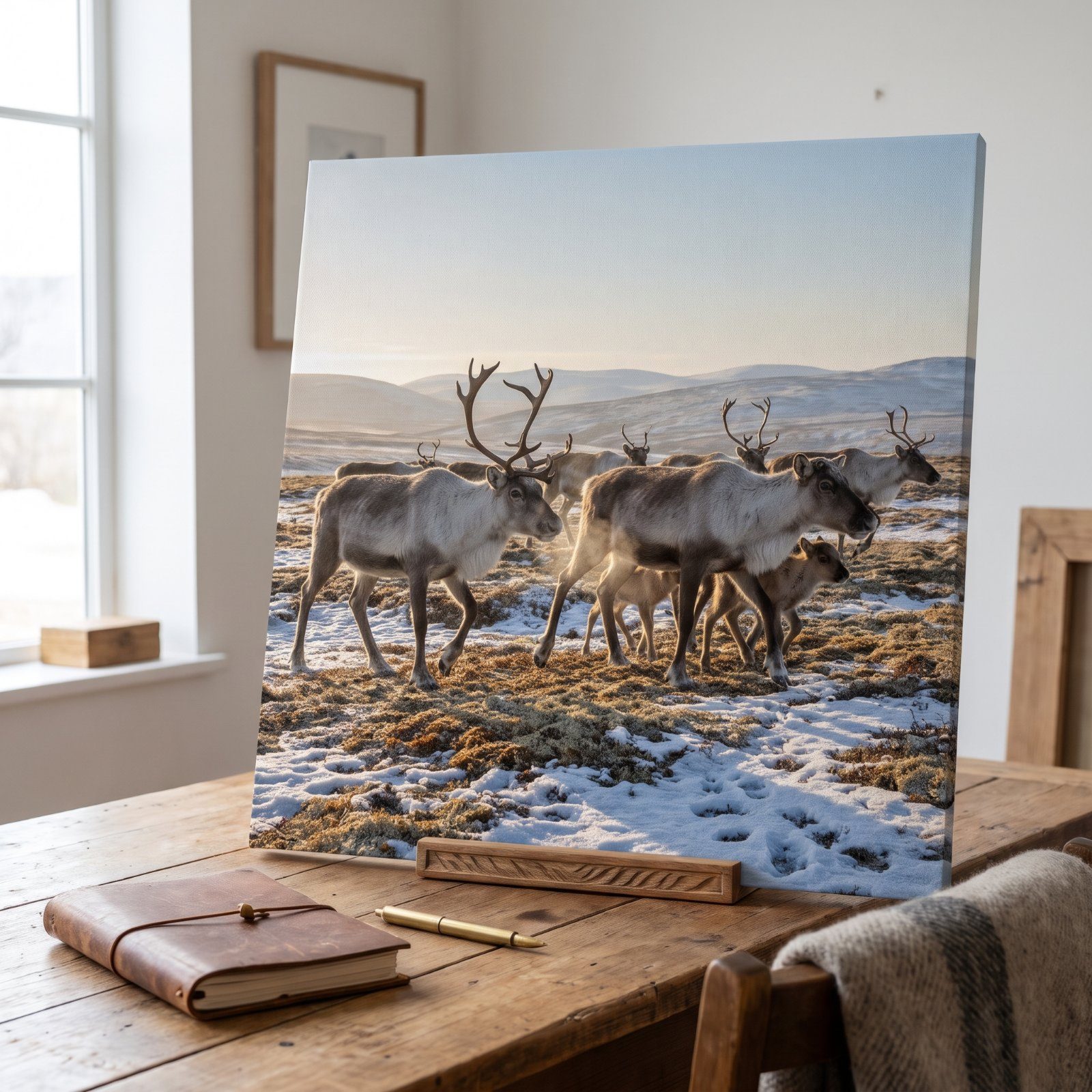
By late December, the big antlered reindeer of the holiday card have usually dropped their headgear into the snow. That red-nosed team pulling a sleigh? If they’ve still got antlers in December, odds are every one of them is female. The animal we think we know from greeting cards and movie reels has a stranger, tougher life than any of that. It survives winters that would kill most mammals, grows bone faster than almost any tissue in nature, and has worked alongside humans for thousands of years. Here’s what the campfire version skips.
38. Mature Males Usually Drop Their Antlers Before Christmas
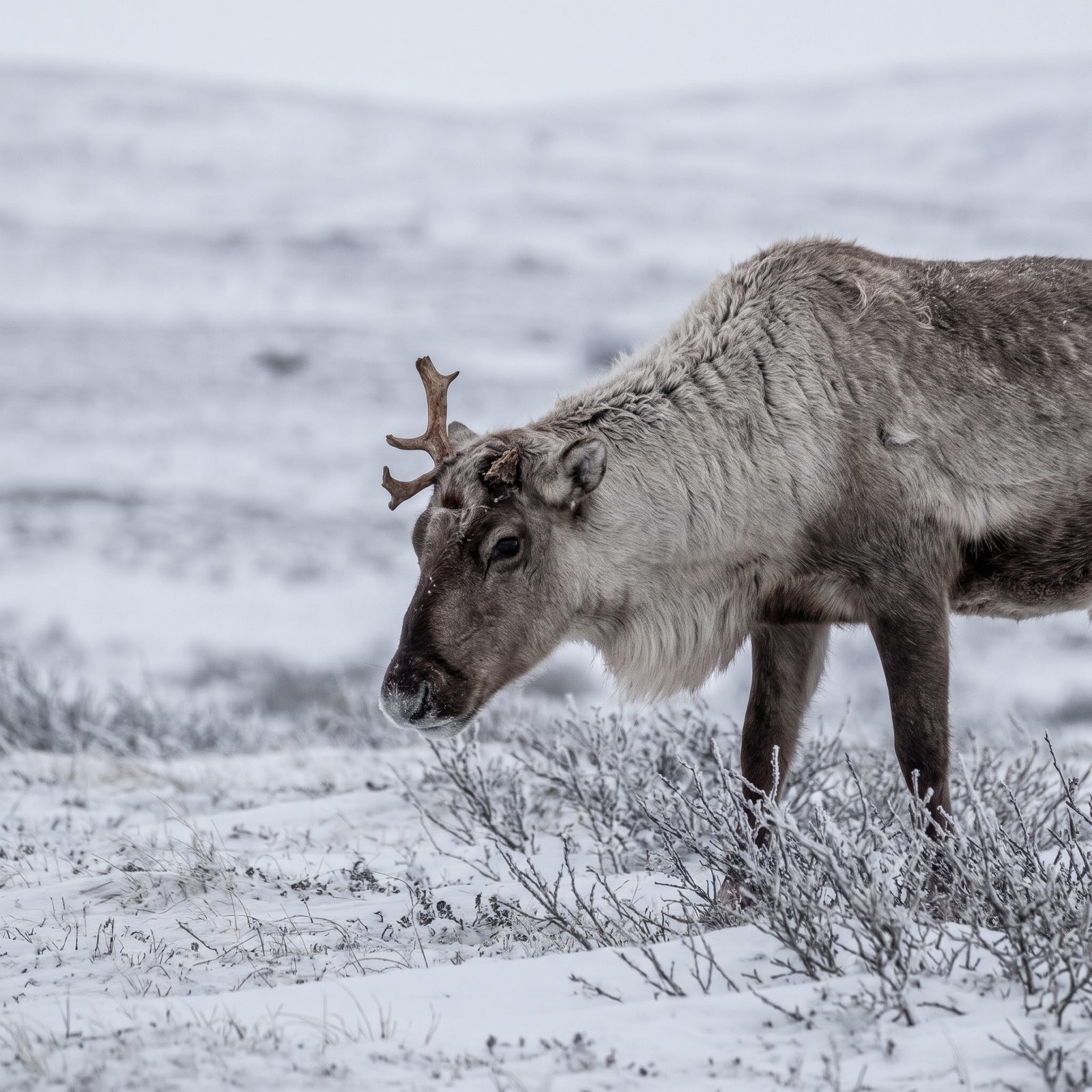
Here’s the detail that quietly dismantles the whole sleigh scene. Dominant bulls carry their massive antlers through the autumn rut, then drop them, often by late November or early December once breeding wraps up. So that big antlered animal most people picture in harness on Christmas Eve? Biologically wrong for a male.
The timing isn’t random. Hauling heavy antlers through deep winter costs energy a bull simply doesn’t have after the rut has wrung him out. Shedding early is good accounting, nothing more.
37. Females Grow Full Antlers, and Keep Them All Winter
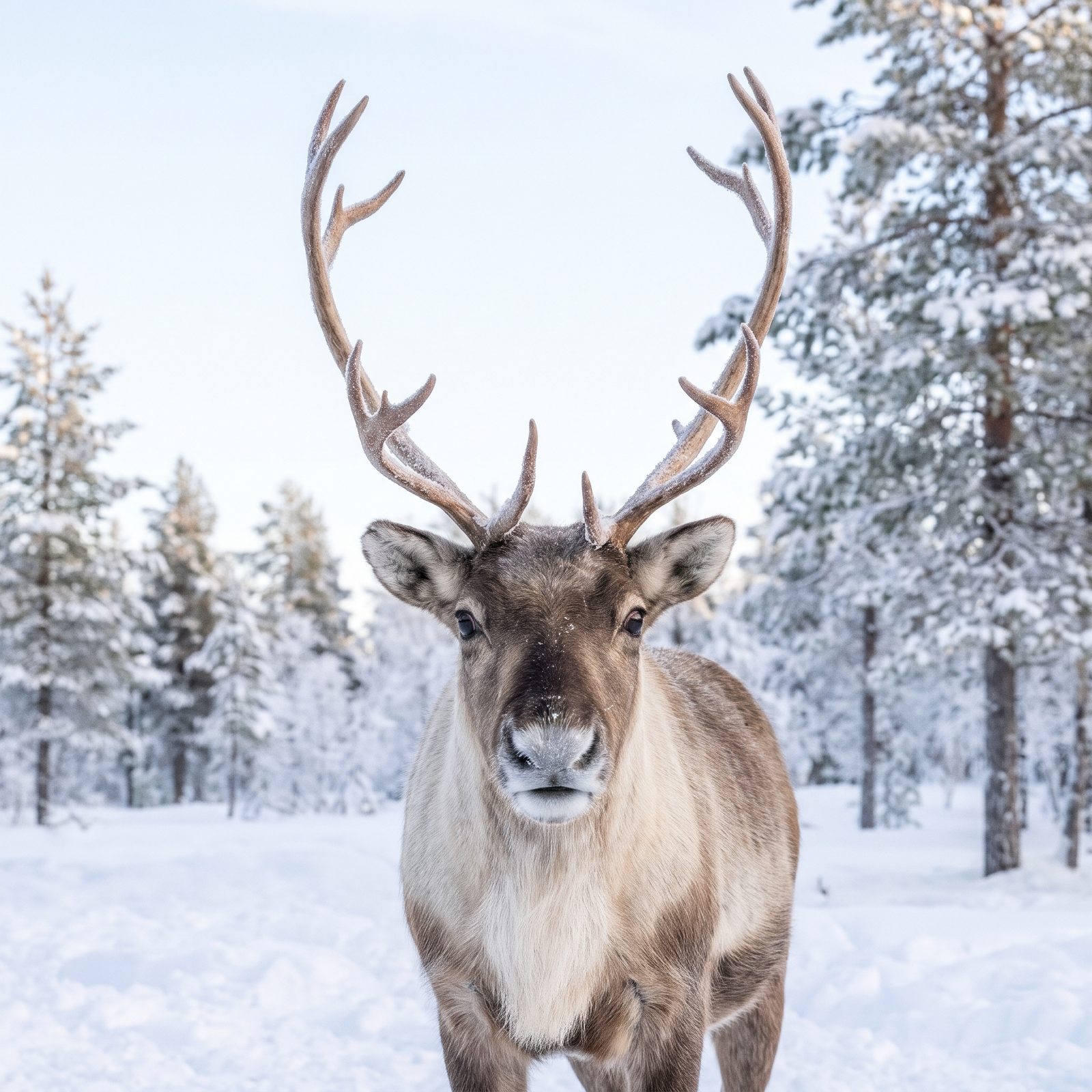
Female reindeer are the only female deer on the planet that routinely grow antlers. And they hang onto them through winter into spring, long after the bulls have gone bald.
There’s a payoff buried in the snow. A pregnant cow uses her hardened antlers to defend the feeding craters she digs down to the lichen, shoving rivals away from scarce food while carrying her calf. These aren’t decoration. They’re a tool for winning the one fight that matters: access to buried food during the leanest months.
36. Reindeer and Caribou Are the Exact Same Animal
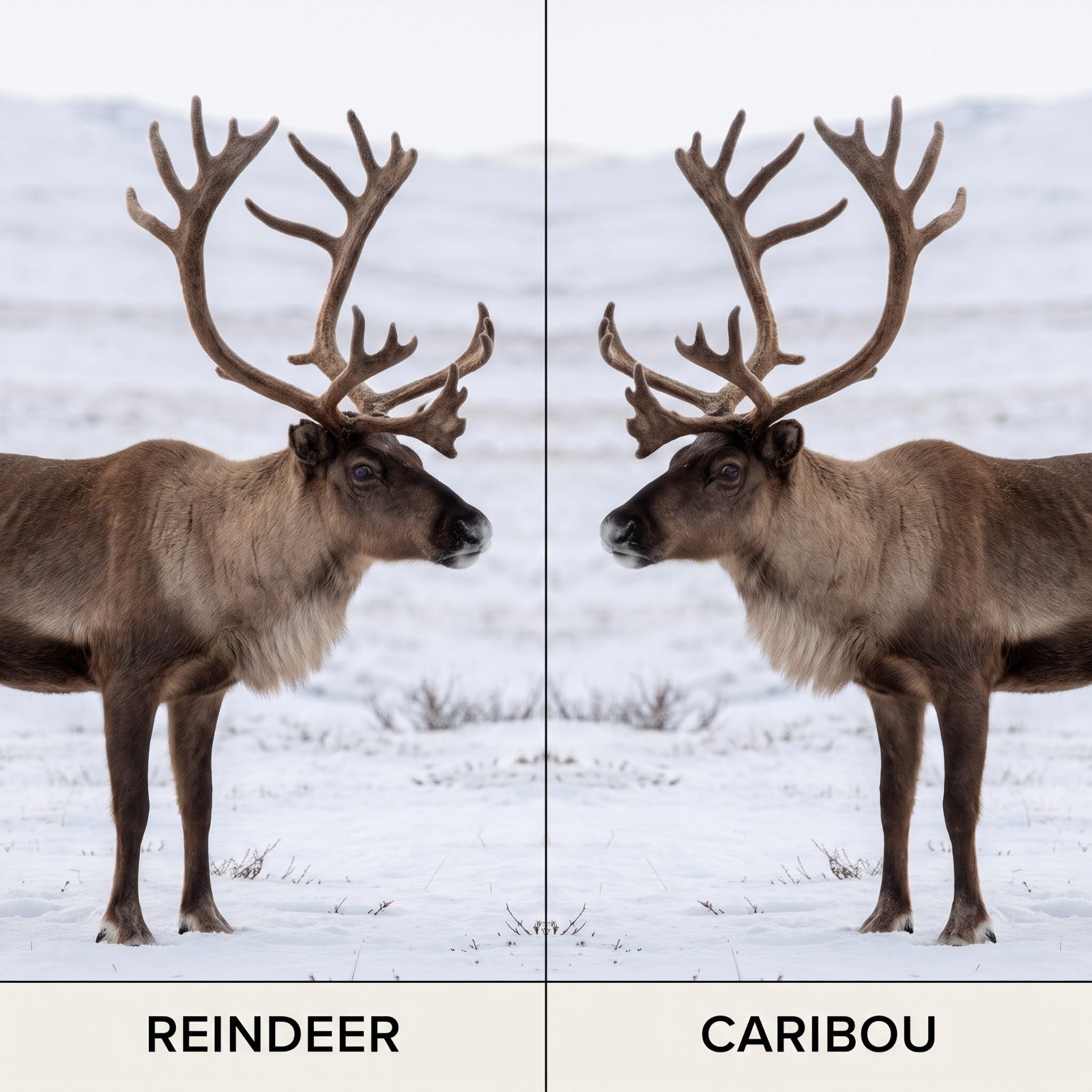
Same species, different name. Rangifer tarandus goes by reindeer across Eurasia and caribou across North America. The word changes when it crosses the ocean; the animal doesn’t budge.
In Europe and Asia, many herds are semi-domesticated and tended by herders. In North America, the vast majority stay wild and run in enormous migrating herds. One animal, two cultural stories, and a naming split that trips people up every single December.
35. The Only Deer Humans Ever Truly Put to Work
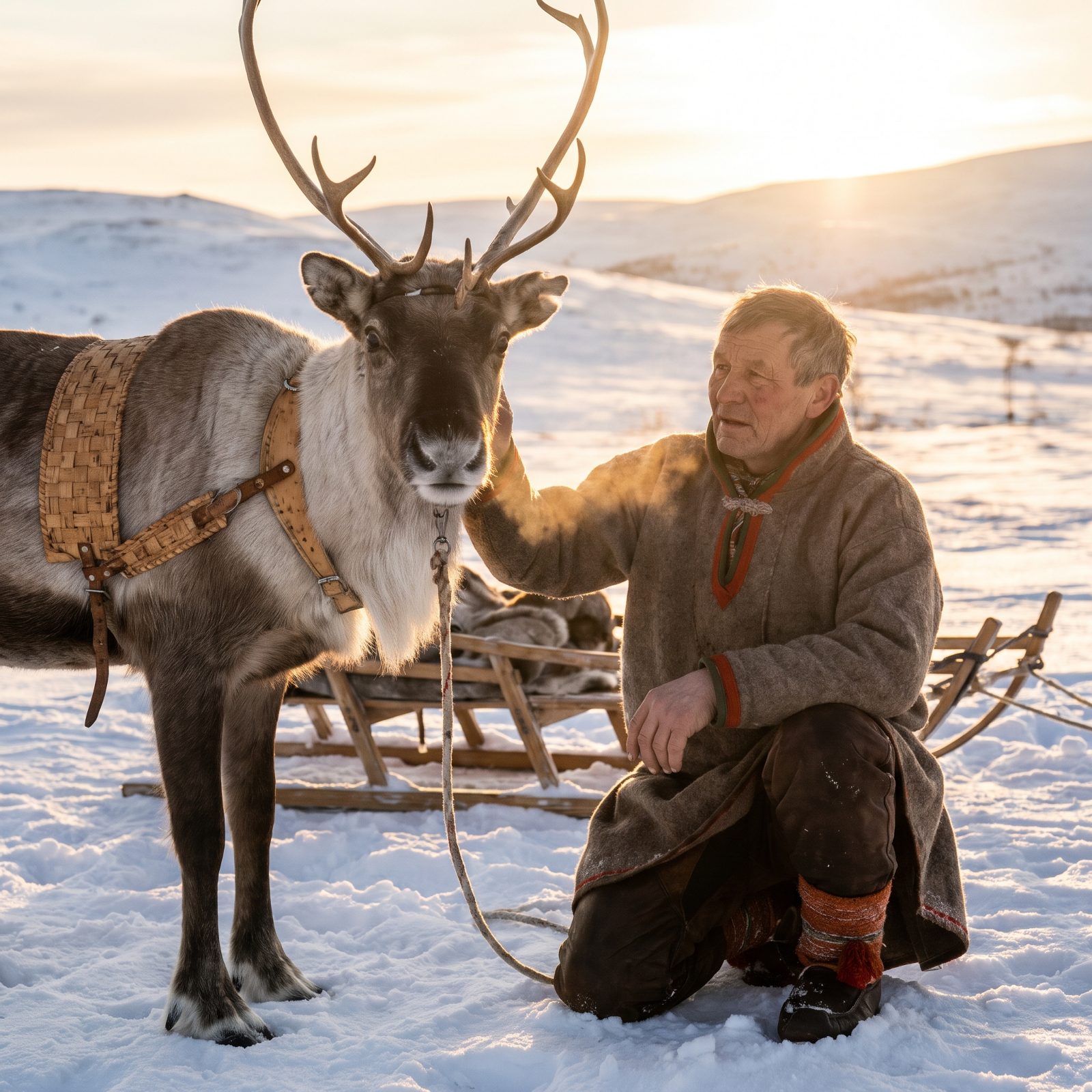
Of all the world’s deer species, reindeer are the only one humans have herded and worked at any real scale. For thousands of years, peoples across the Arctic including the Sami, Nenets and others have lived alongside them, following the herds and leaning on them for meat, milk, hides, transport and tools.
But “domesticated” needs a footnote. Many herded reindeer are better called semi-domesticated. They still roam, still migrate, still make their own calls. Partnership, really, more than ownership.
34. Not a Single Reindeer Lives at the North Pole
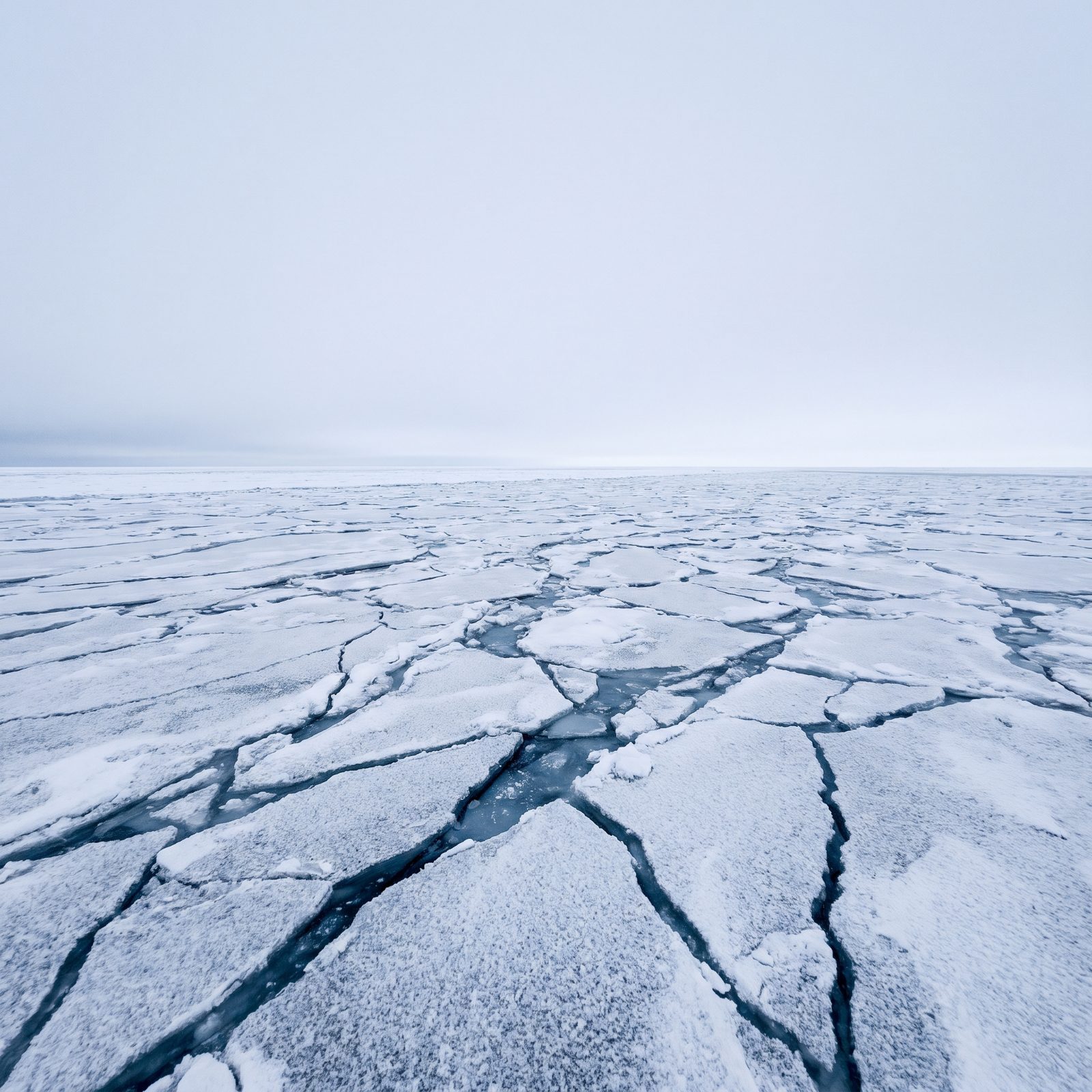
The geographic North Pole is floating sea ice over deep ocean, and nothing grows there. No lichen, no shrubs, no plants of any kind. A reindeer dropped at the Pole would starve long before the cold finished the job.
Real ones need land that produces food. They live on Arctic and subarctic tundra and forest across northern Europe, Asia, North America and Greenland, sometimes hundreds of miles south of the Pole and never once anywhere near it. The postcard address is pure fiction.
33. Plenty of Reindeer Live Well South of the Arctic Circle
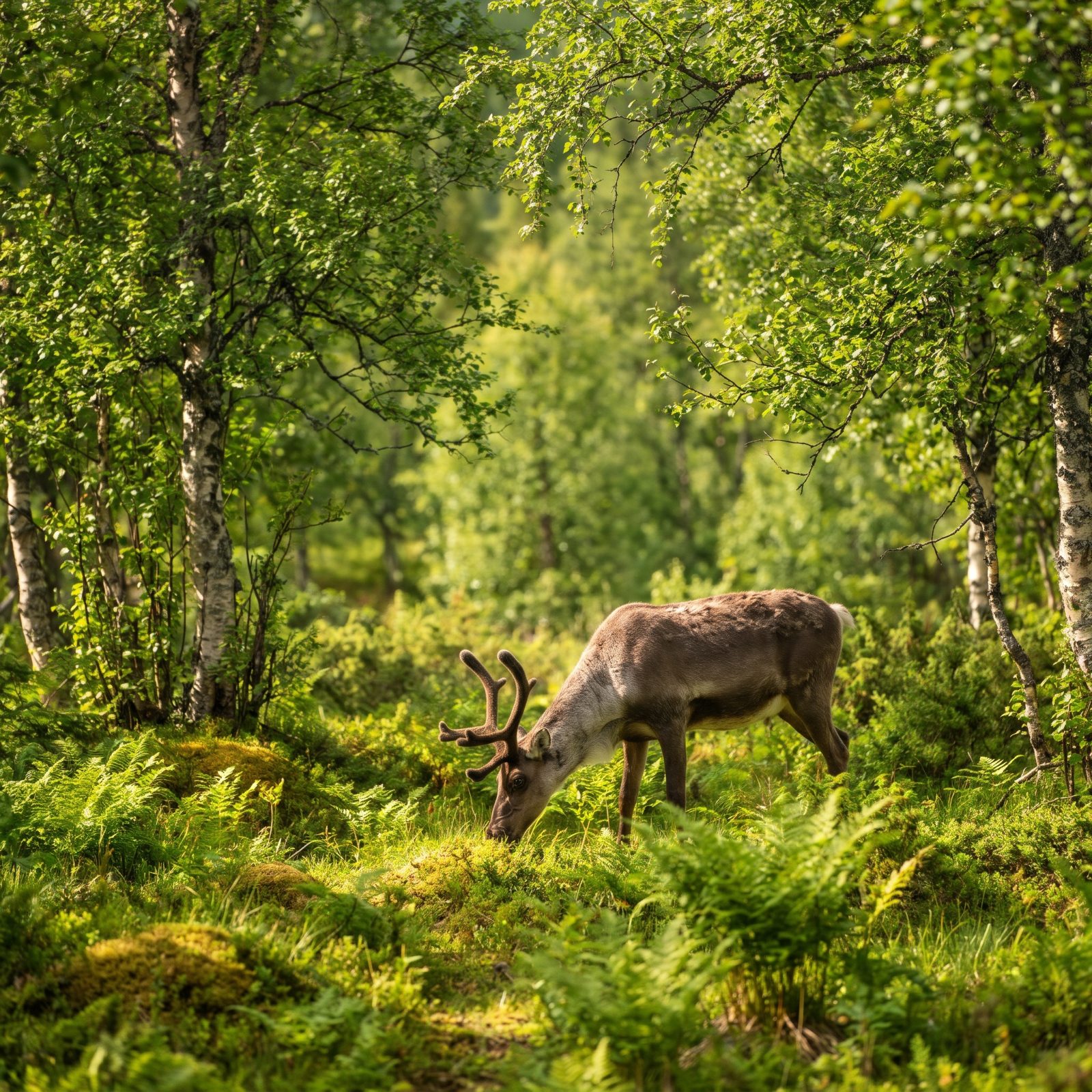
Reindeer aren’t chained to the far frozen north. Their range dips well south of the Arctic Circle into subarctic forests and mountains, and historically some populations reached surprisingly temperate latitudes.
What they actually need isn’t extreme cold. It’s the right food, mainly lichens and low tundra plants, plus conditions cool enough to stay comfortable under all that insulating fur. Give them that and they’ll live far closer to places you might drive through on vacation than the Christmas story ever let on.
32. Woodland Caribou Hide in Forests, Not Open Snow
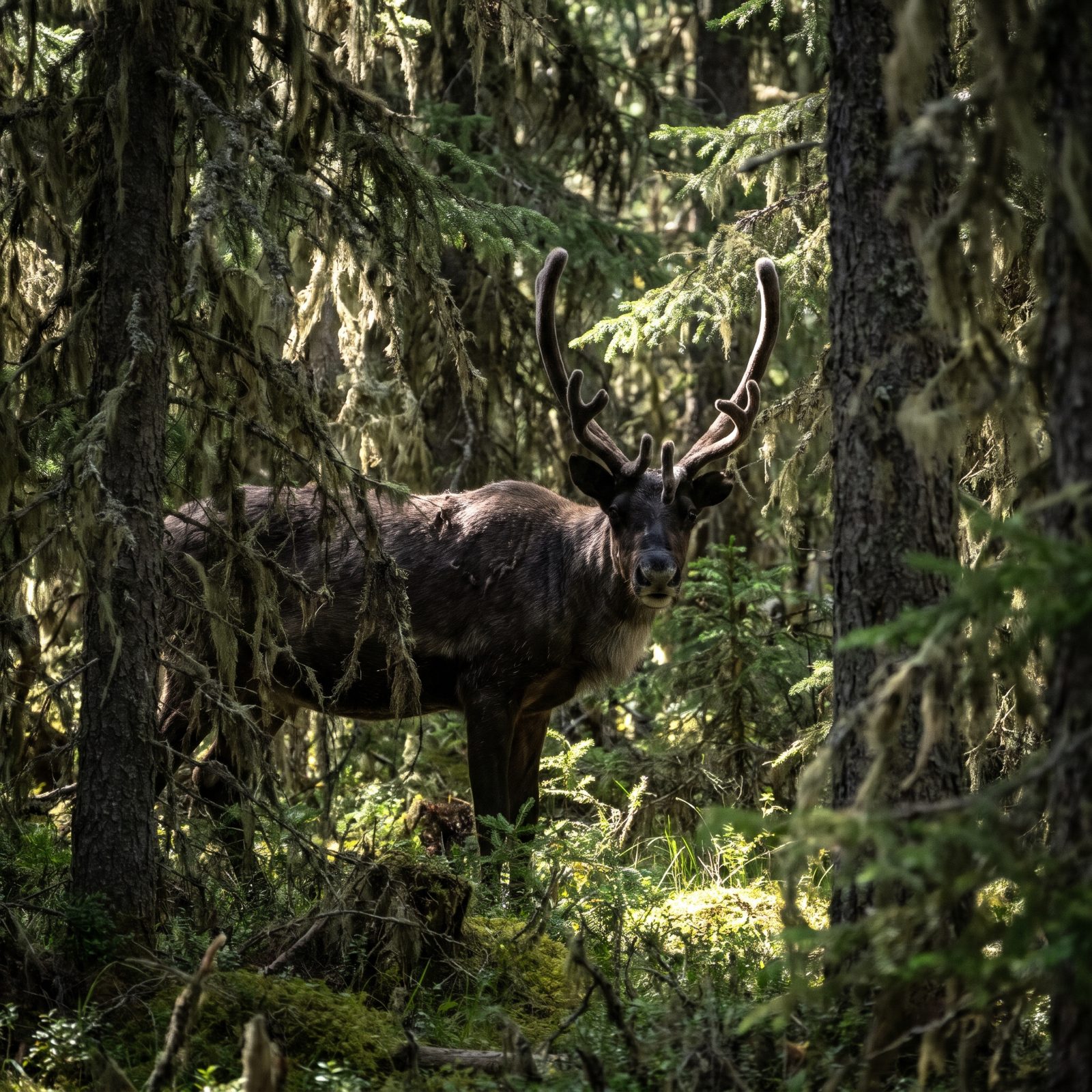
Forget the open-tundra image for a second. Woodland caribou spend their whole lives inside dense boreal forest, threading between spruce and feeding on lichens that drape from branches and carpet the ground below.
These forest dwellers tend to run larger and more solitary than their tundra cousins, and they count among the most threatened populations on the continent. Habitat loss hits them hard. A caribou that needs old-growth forest can’t just pick up and relocate when the trees come down.
31. Svalbard Reindeer Are Short, Round and Stubby-Legged
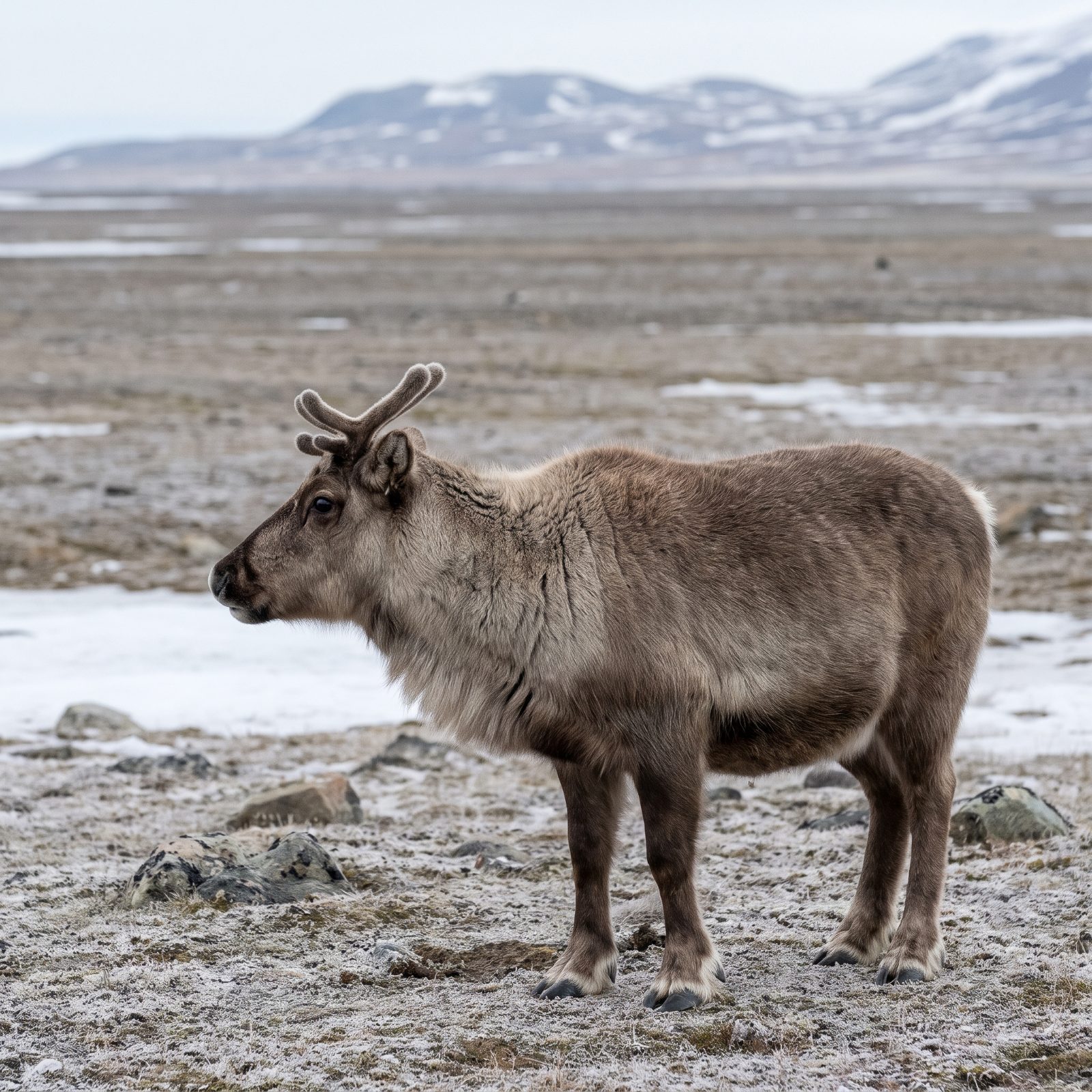
The high-Arctic Svalbard reindeer looks almost comically unlike the leggy, elegant creature of the cards. Small, round, short-legged, stubby-faced. Basically a furry barrel.
That shape keeps it alive. A compact body loses less heat in brutal cold, and these reindeer live further north than almost any other. They barely migrate, move slowly, and pack on fat. Where mainland herds run for hundreds of miles, the Svalbard version stays put and conserves everything it’s got.
30. Those Antlers Are Living Bone, Not Horn
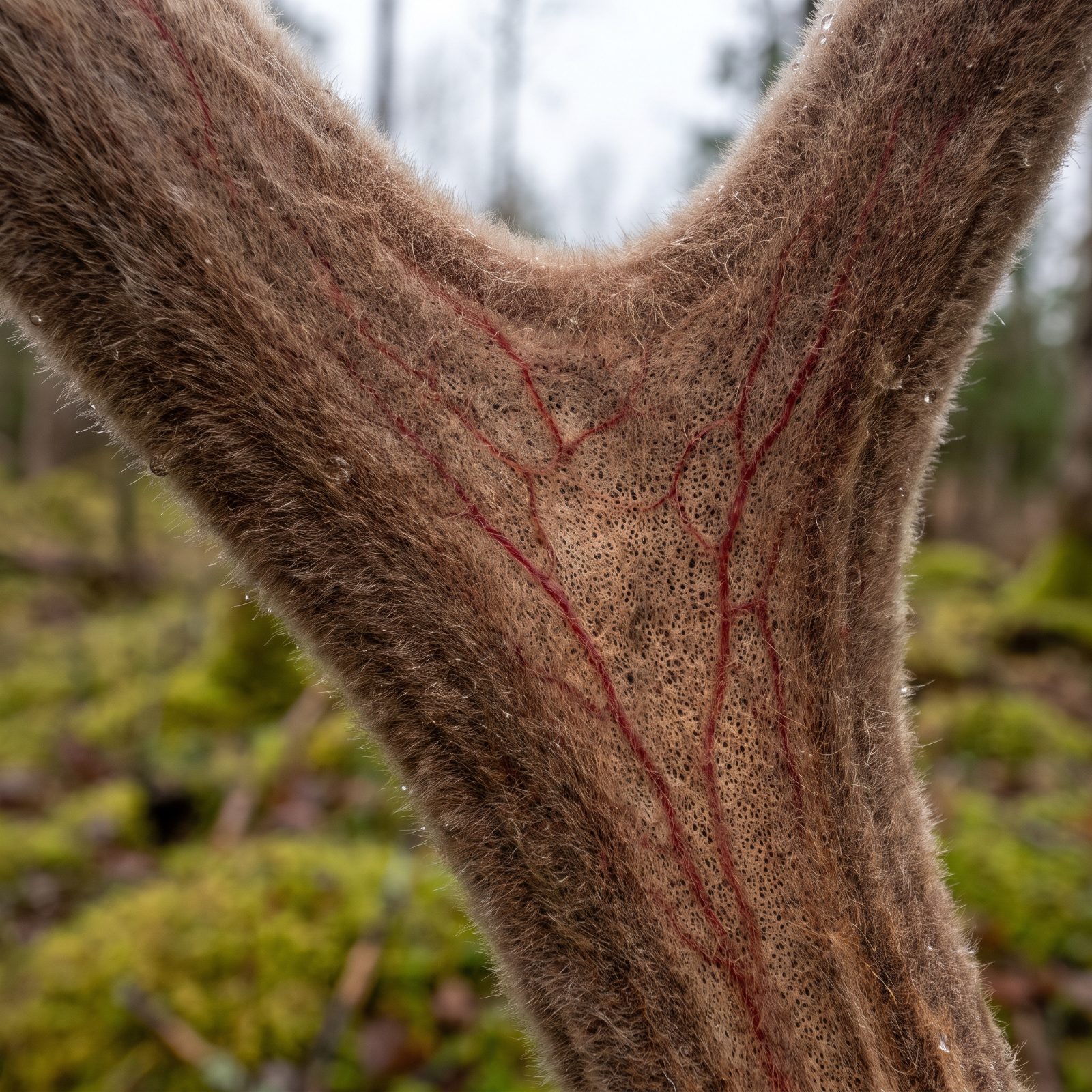
People mix up antlers and horns constantly. Horns are permanent, built from keratin over a bony core, and most animals keep them for life. Antlers are pure bone, grown fresh and shed every single year.
While they grow, antlers are living tissue wrapped in a blood-rich skin called velvet. The velvet feeds the bone the way scaffolding feeds a building mid-construction, then dries and gets rubbed off once the antler hardens. Come winter, what’s left is solid dead bone, due to drop and regrow all over again.
29. Antlers Rank Among the Fastest-Growing Bone in Nature
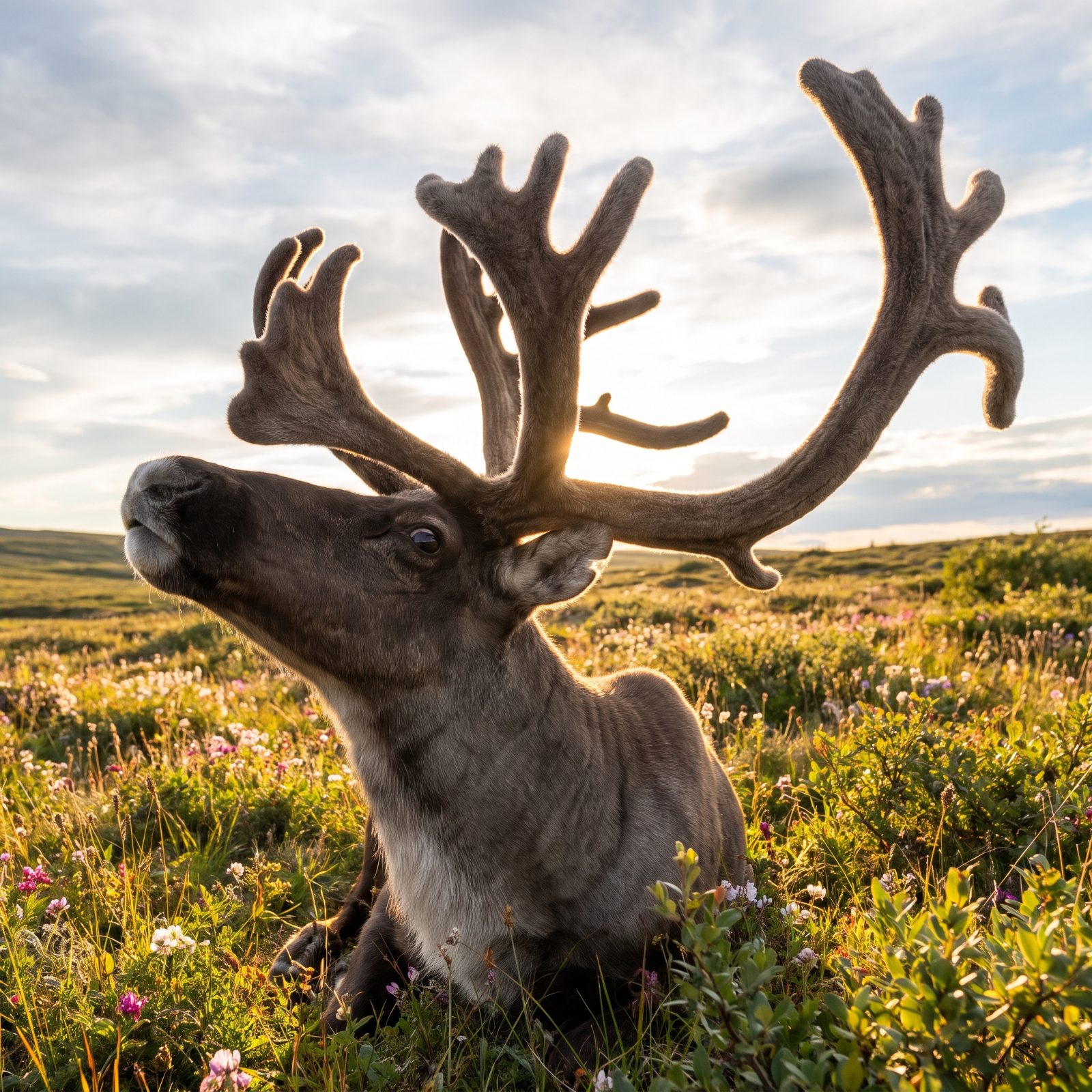
Watch a reindeer in early summer and you’re watching one of the fastest bone-growth feats on Earth. A full rack can pile on serious length in a matter of months, pushed along by that velvet blood supply running flat out.
Consider the demand. Every spring the animal rebuilds a heavy, branching structure from nothing, draining calcium and energy to pull it off, then chucks the whole works and starts over the following year. Not many bodies in nature sign up for that kind of annual rebuild, over and over, for life.
28. A Reddish Nose Comes From Dense Blood Vessels, Not Magic
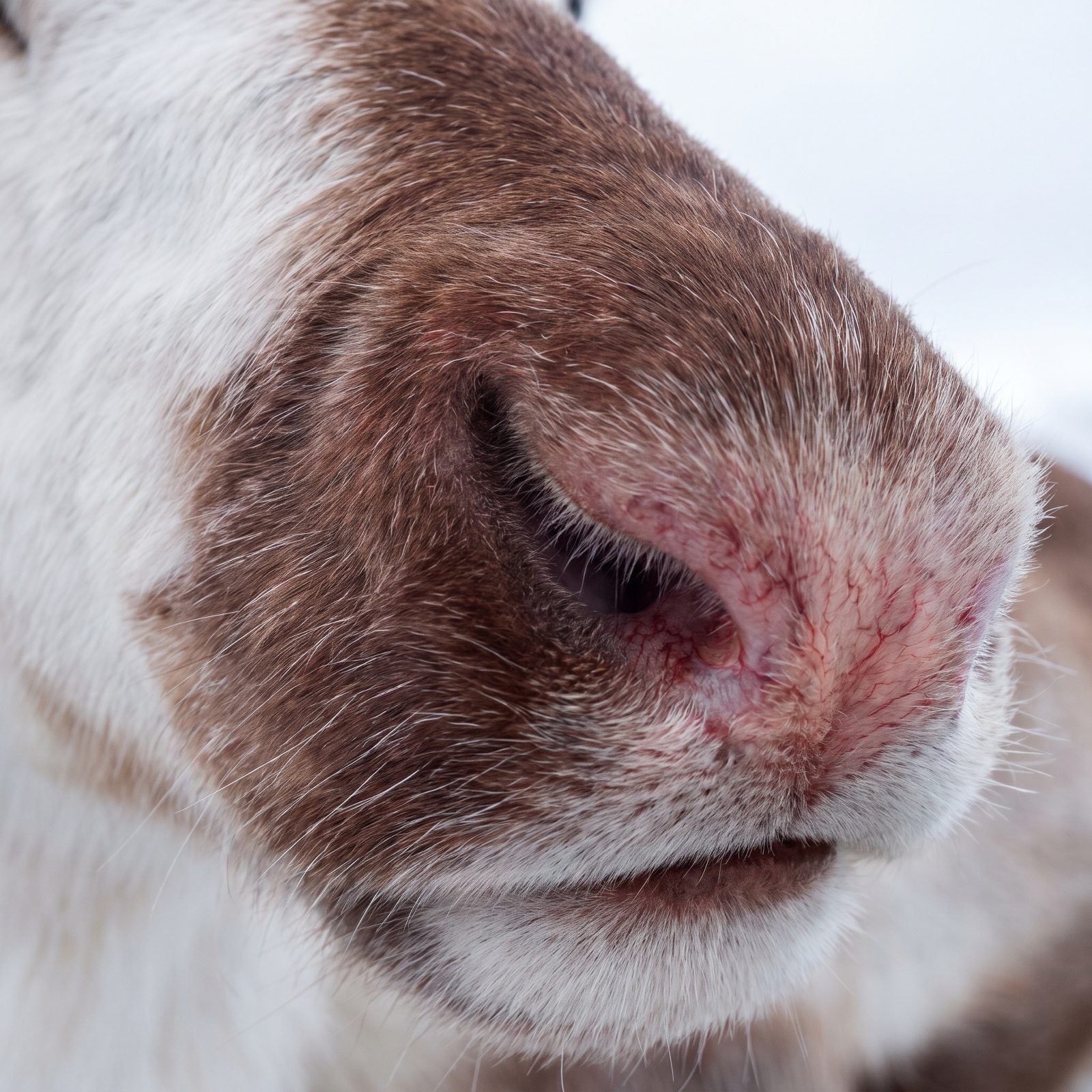
The famous glowing nose has a dull, wonderful explanation. A reindeer’s muzzle is packed with blood vessels, and all that circulating blood gives the skin a genuine reddish cast under certain light and cold.
Those vessels aren’t decoration. They regulate temperature in an animal that lives where breathing itself can freeze tissue, so the nose runs warm and can look flushed. No bulb required.
27. Their Nasal Passages Reclaim Heat and Moisture From Each Breath
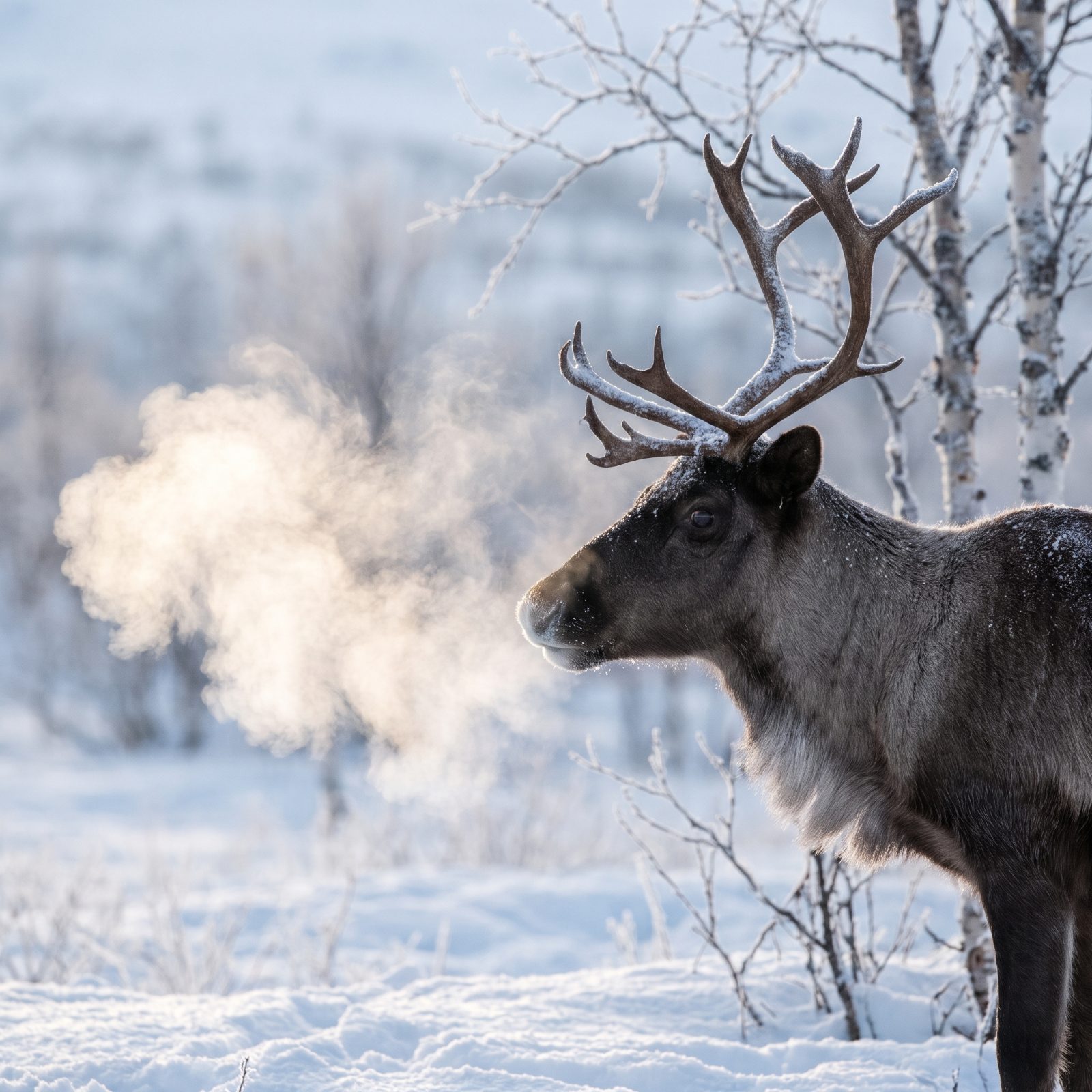
Every breath a reindeer takes in winter is a tiny recycling operation. The scrolled bones inside its nose, called turbinates, carry a vast surface area lined with warm, moist tissue.
Freezing air rushes in and gets warmed before it reaches the lungs. On the way out, that same tissue pulls heat and water back from the exhaled breath, so the animal loses far less of both. That’s how a creature lives at forty below without dehydrating itself one exhale at a time.
26. Their Ankles Make a Clicking Sound as They Walk
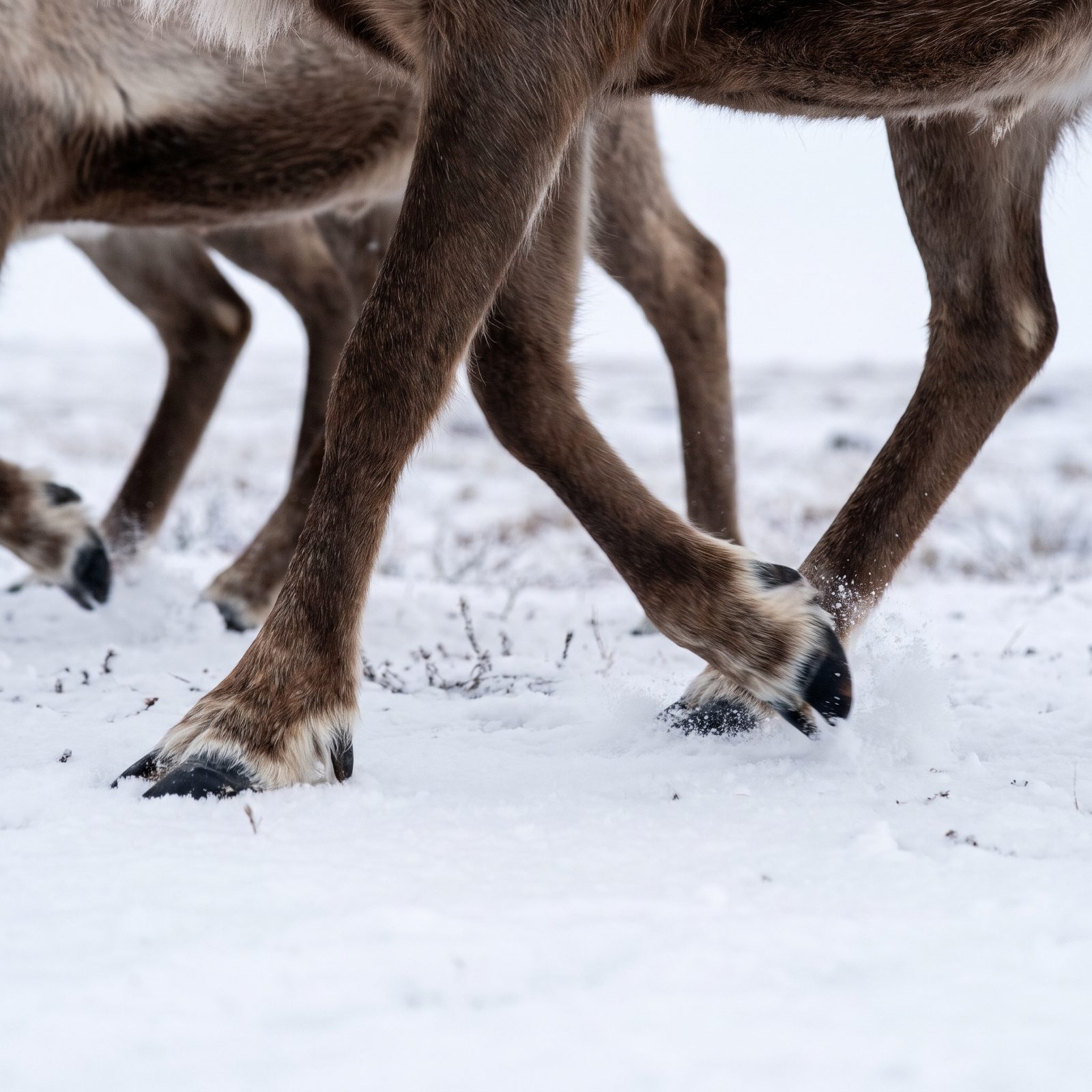
Walk through a herd in winter and you’ll hear it before you understand it: a soft, steady clicking, like someone shuffling a deck of cards in another room.
The sound comes from a tendon slipping over a bone in the foot with each step, and it’s no accident. In poor visibility and swirling snow, the clicks help animals track each other and keep the group together. Some research suggests the volume even signals body size, a quiet credential in a crowd.
25. Wide Hooves Spread Their Weight Across Soft Snow
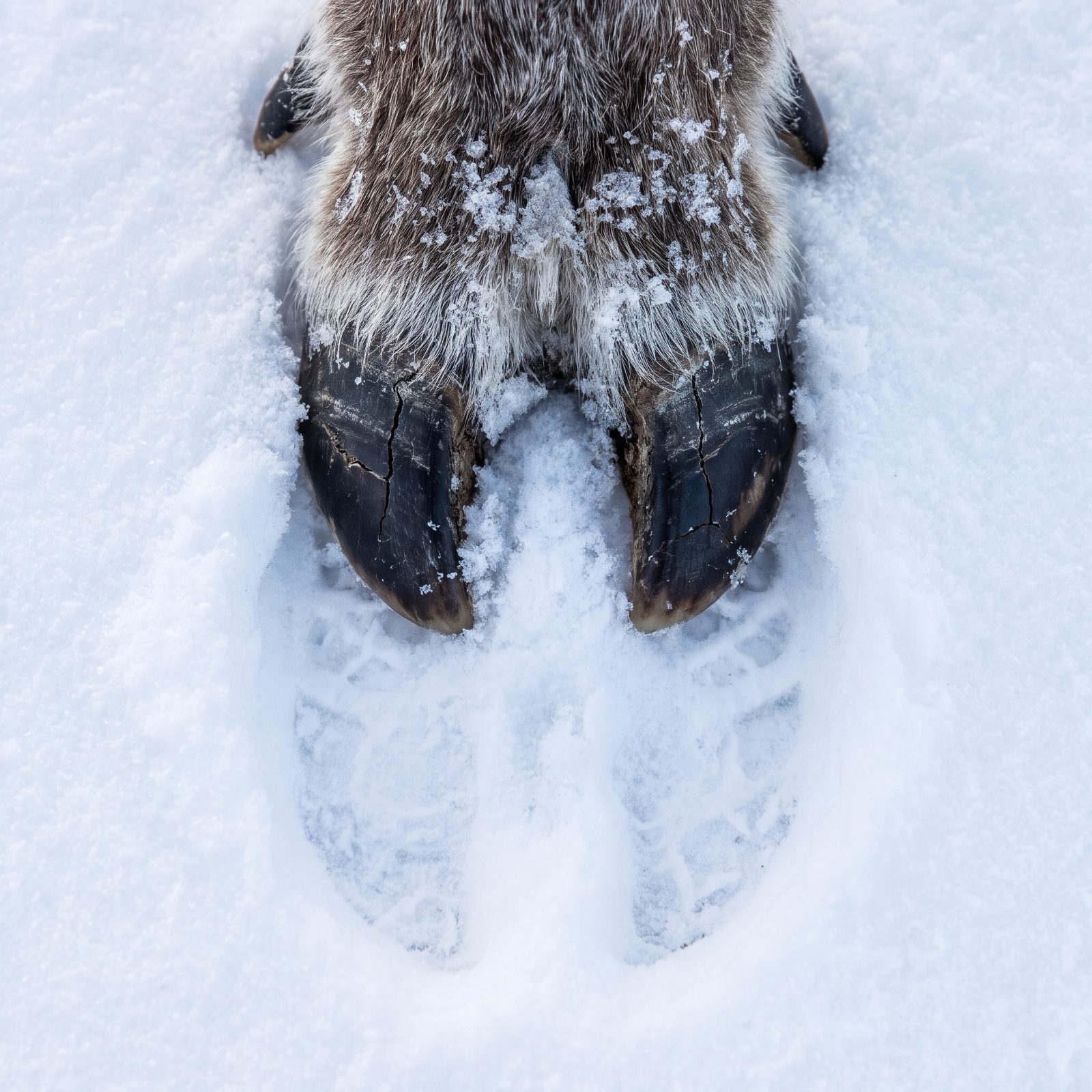
A reindeer hoof isn’t a fixed tool. It’s seasonal gear.
In deep snow the two large toes spread wide and the dewclaws drop to add surface area, working like a pair of built-in snowshoes. Weight that would sink a narrow-footed animal gets distributed across a broader footprint, so the reindeer stays on top of powder that would swallow a horse. That same splayed hoof doubles as a shovel and a paddle, which is why it keeps showing up in the stories below.
24. Their Footpads Shrink and Harden in Winter
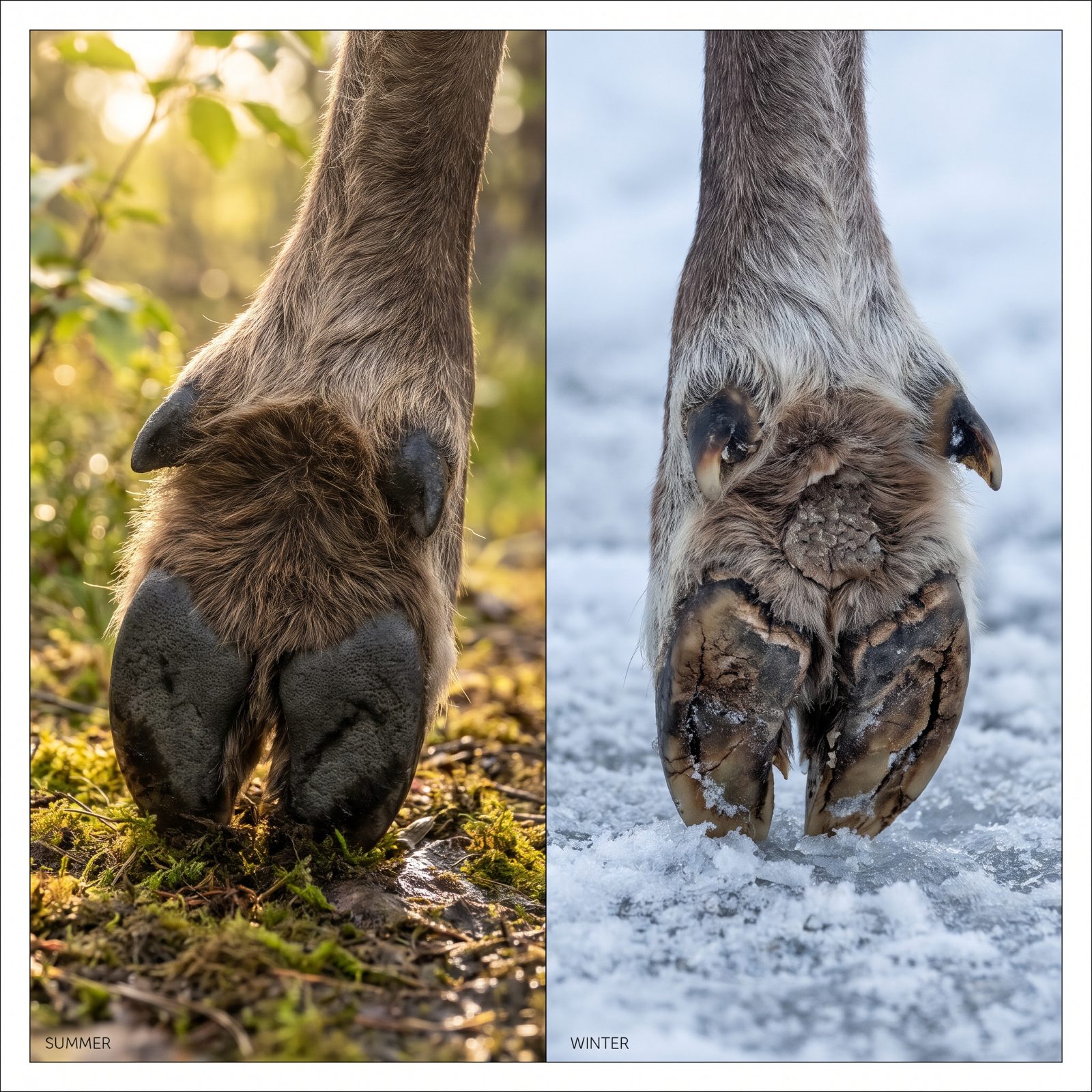
Here’s the detail nobody mentions. The reindeer foot changes shape with the seasons.
In summer, when the ground is soft and wet, the footpads are fleshy and spongy, gripping the soggy moss. Come winter, those pads shrink and tighten, exposing the hard, sharp rim of the hoof so it can bite into ice and crusted snow. One animal, two completely different feet, no equipment swap needed.
23. They Dig Through Snow to Find Food
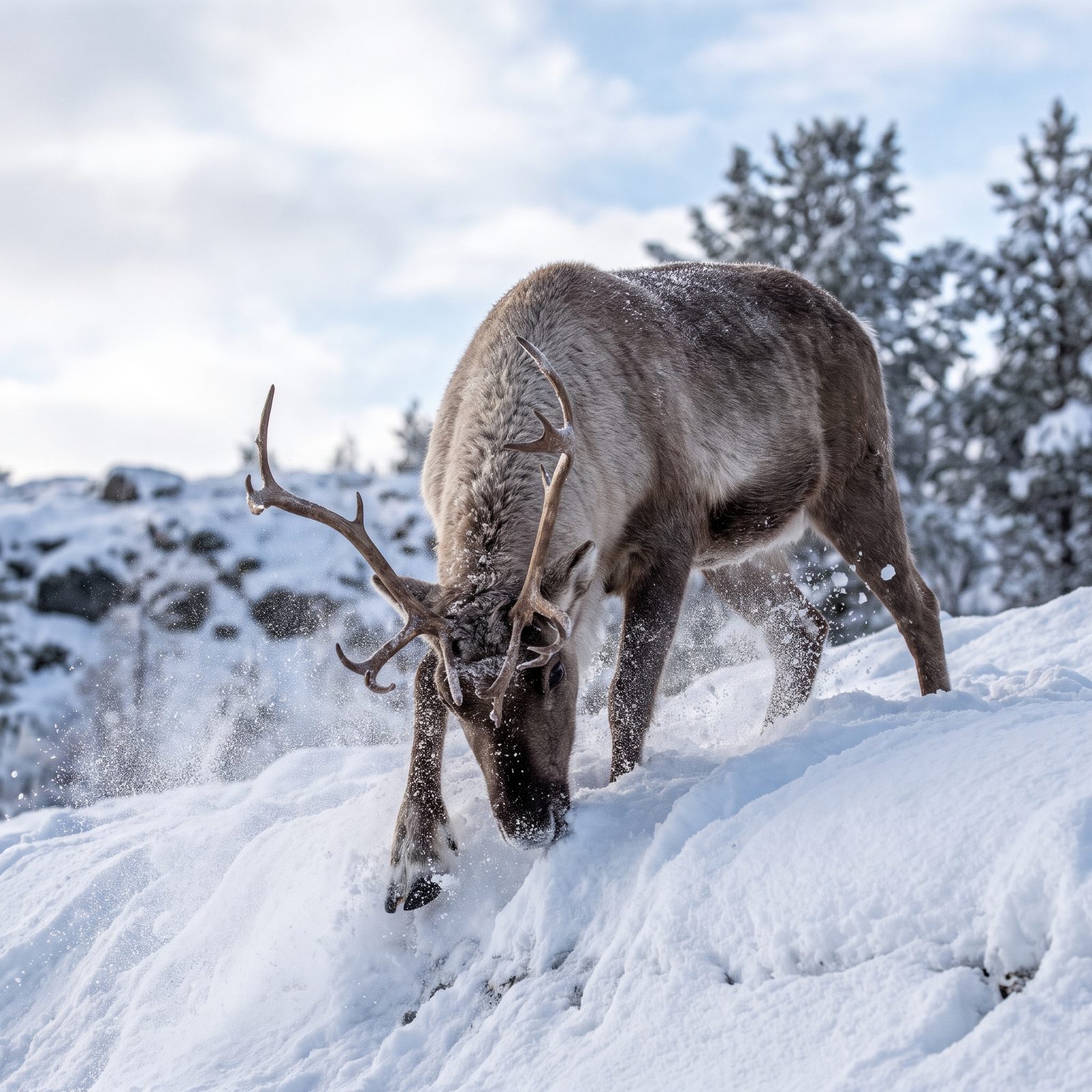
The word caribou likely traces to a term meaning “snow shoveler,” and that’s the daily job. All winter long, reindeer live mostly on lichen they can’t see until they move the snow aside.
They dig circular pits called craters, sometimes a couple of feet deep, using those sharp winter hooves and that UV vision to home in on lichen patches. By spring a herd can pockmark a whole slope with these craters.
22. Reindeer Are Powerful Long-Distance Swimmers
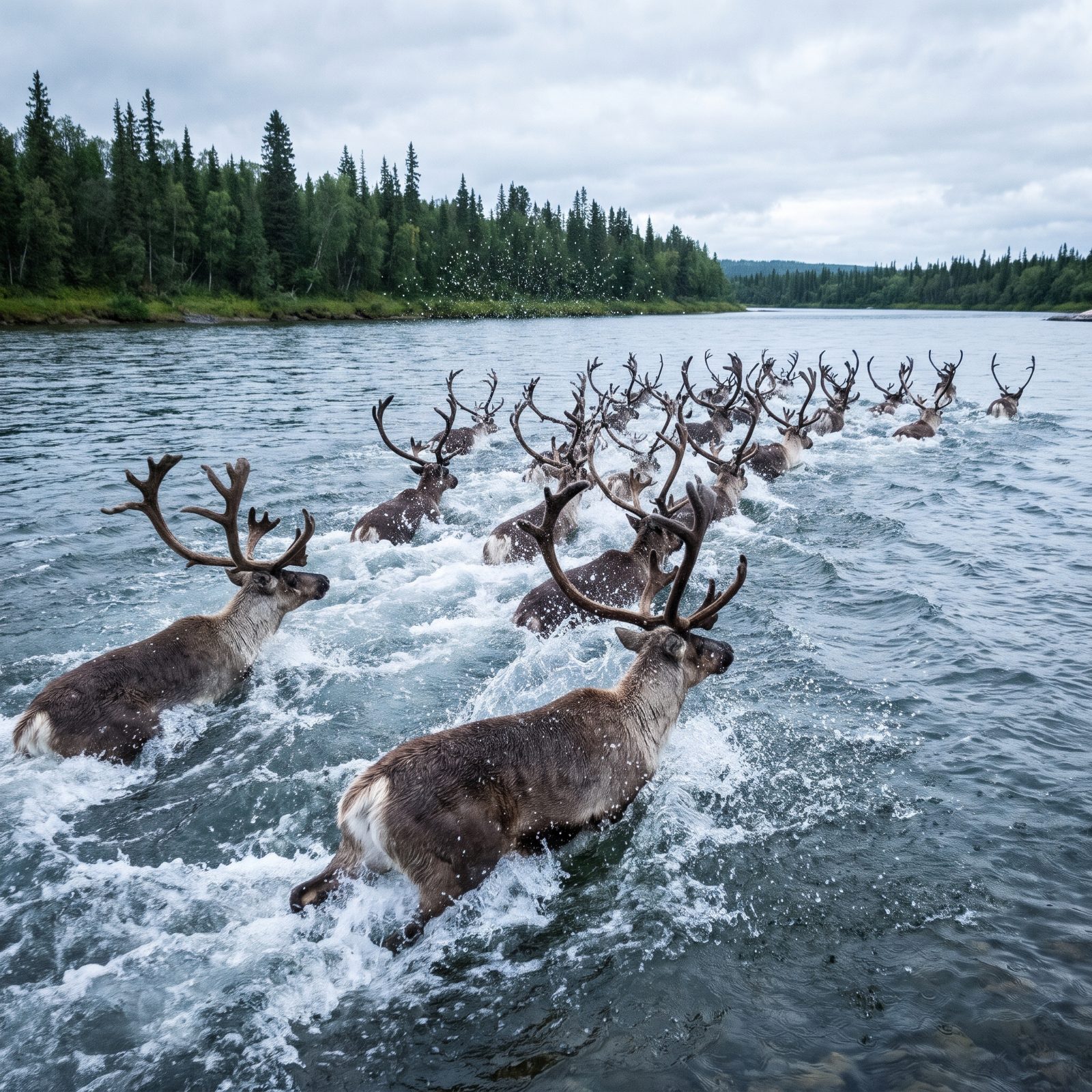
Picture a river two miles across and a herd that needs to be on the far bank. They don’t hesitate.
Reindeer swim well, and their coat does a lot of the work. The guard hairs are hollow, trapping air, so the whole animal floats higher than you’d expect while those wide hooves push like paddles. Herds cross lakes, rivers and even ocean straits during migration, calves and all. They hold a steady clip through the water. Not bad for something built for snow.
21. Their Heavy Winter Coat Can Make Overheating a Real Risk
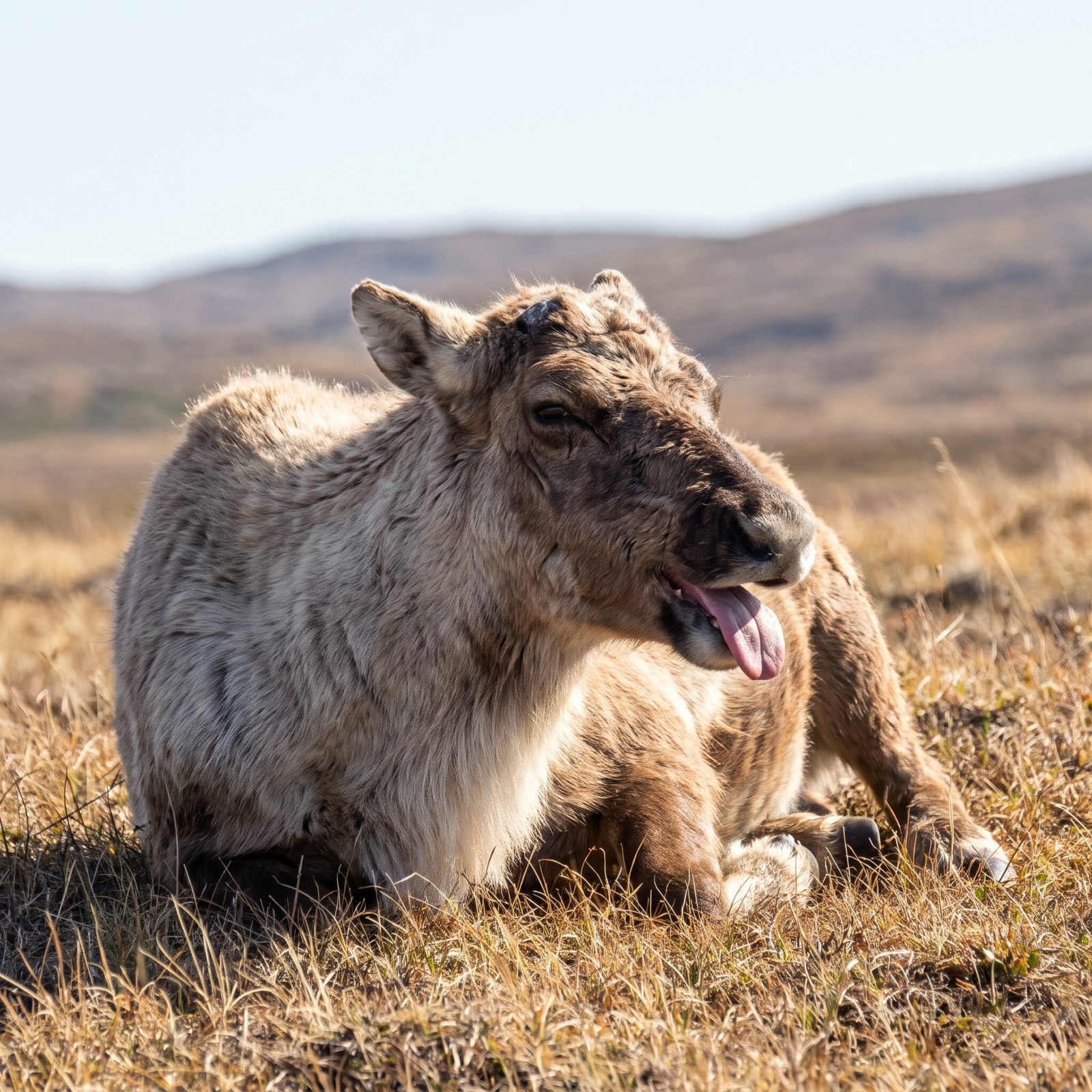
We picture reindeer as cold-weather animals that could never be too warm. The opposite problem is the dangerous one.
That double coat, a dense woolly undercoat beneath hollow guard hairs, insulates so well that reindeer struggle to shed heat. A hard run on a mild day, or a warm spring, can push them toward overheating fast. So they pant, hunt for shade and snow patches, and sometimes just stand in water to cool down.
It’s a quiet reason warming winters hit them so hard. Built for forty below, they have little room to run hot.
20. Some Herds Make Extraordinary Long-Distance Migrations
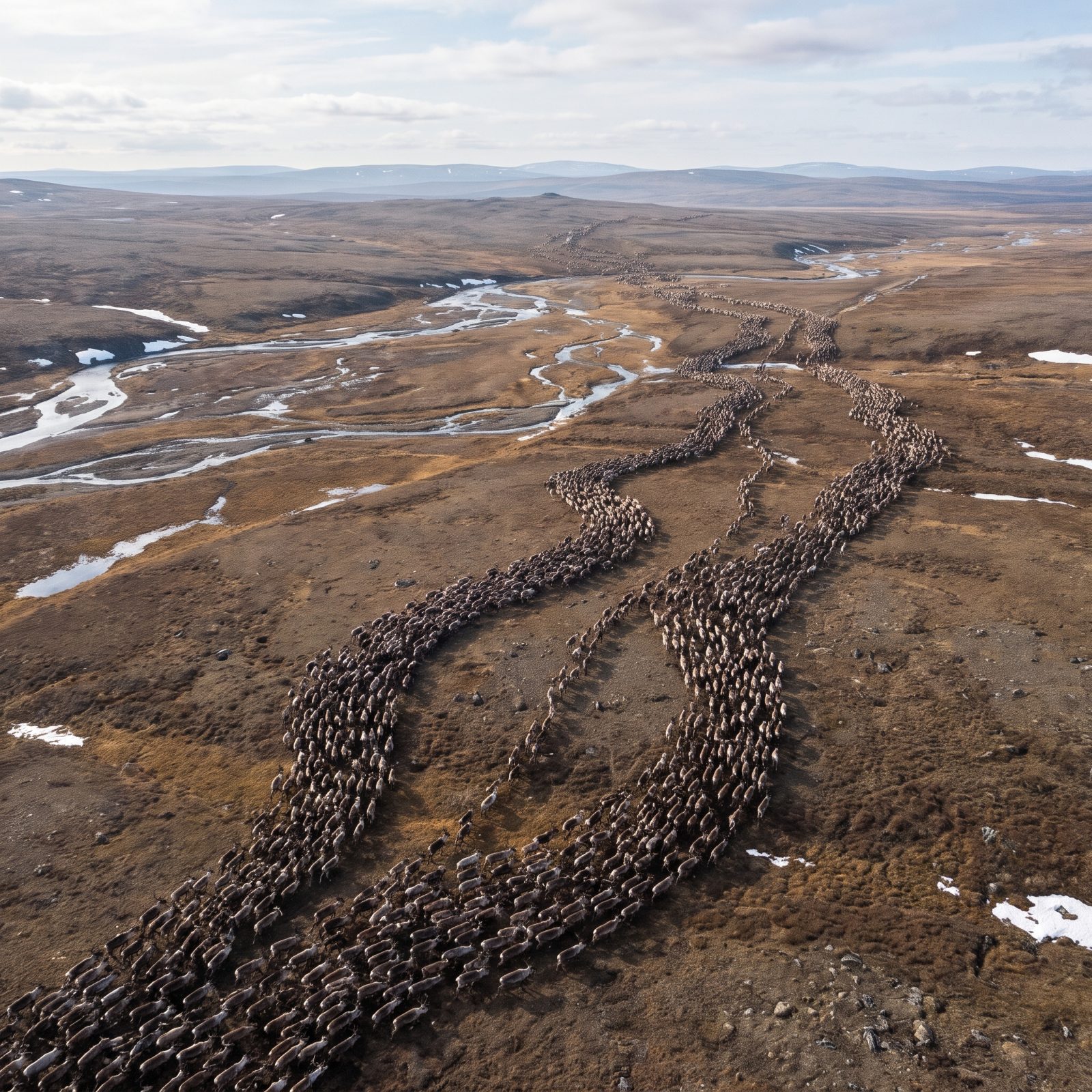
Forget the rooftop sprint. The real reindeer travel is far more astonishing, and it happens every single year.
Some wild caribou herds in North America cover the longest land migrations of any mammal, moving hundreds of miles between winter range and calving grounds, with annual round trips reaching into the thousands. They follow the retreat and return of snow, trailed by wolves, chasing fresh forage wherever it greens.
19. Wild Herds Can Number in the Hundreds of Thousands
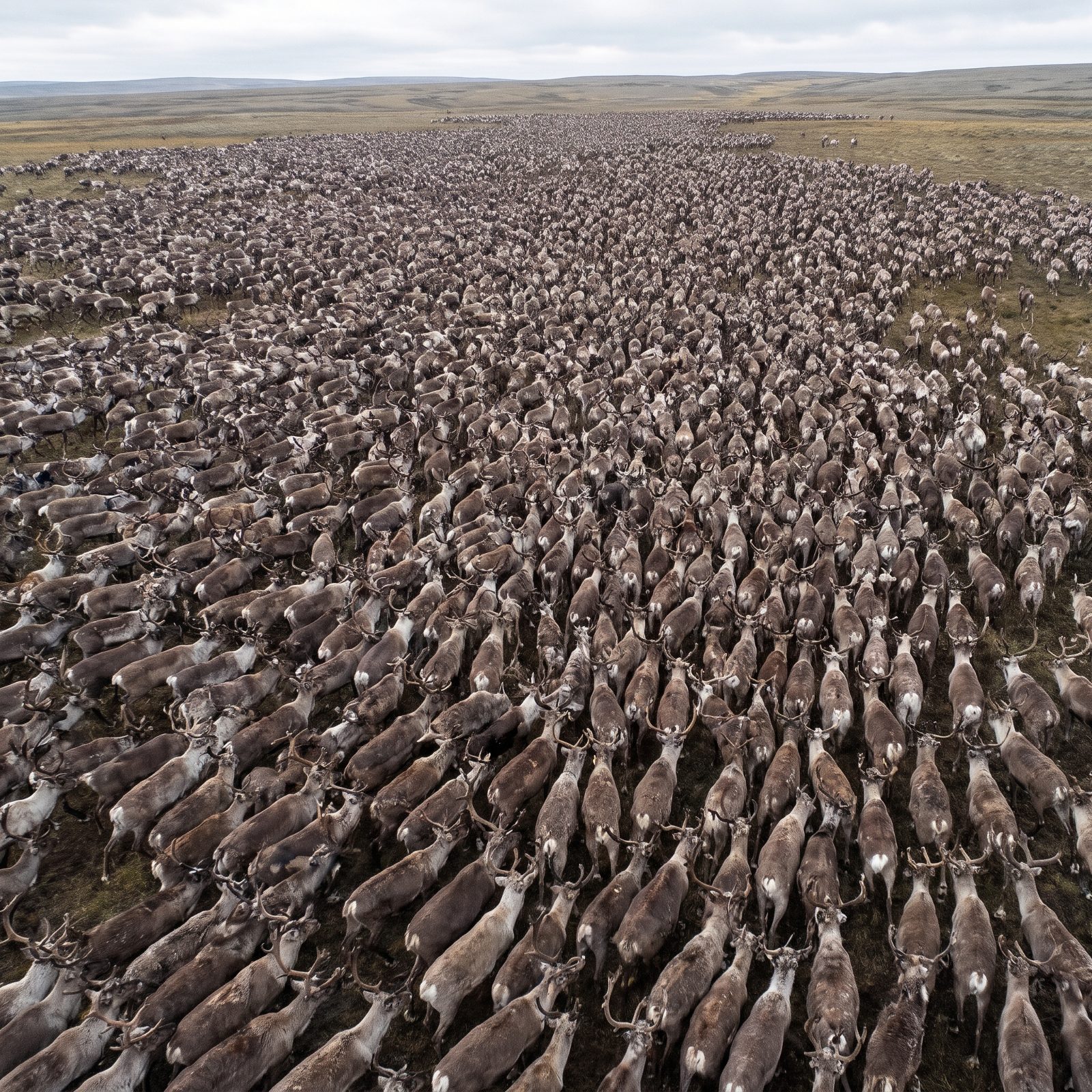
Forget the tidy team of eight. The Taimyr herd in Siberia has at times run close to a million animals, and North American caribou (same species, Rangifer tarandus) move in masses that darken whole valleys.
These aren’t settled little groups — they’re some of the largest land-mammal migrations left on Earth, animals pouring across tundra on routes older than any human memory. Watch footage of one and the ground itself seems to be moving.
18. Real Reindeer Give Birth in Spring, Not at Christmas
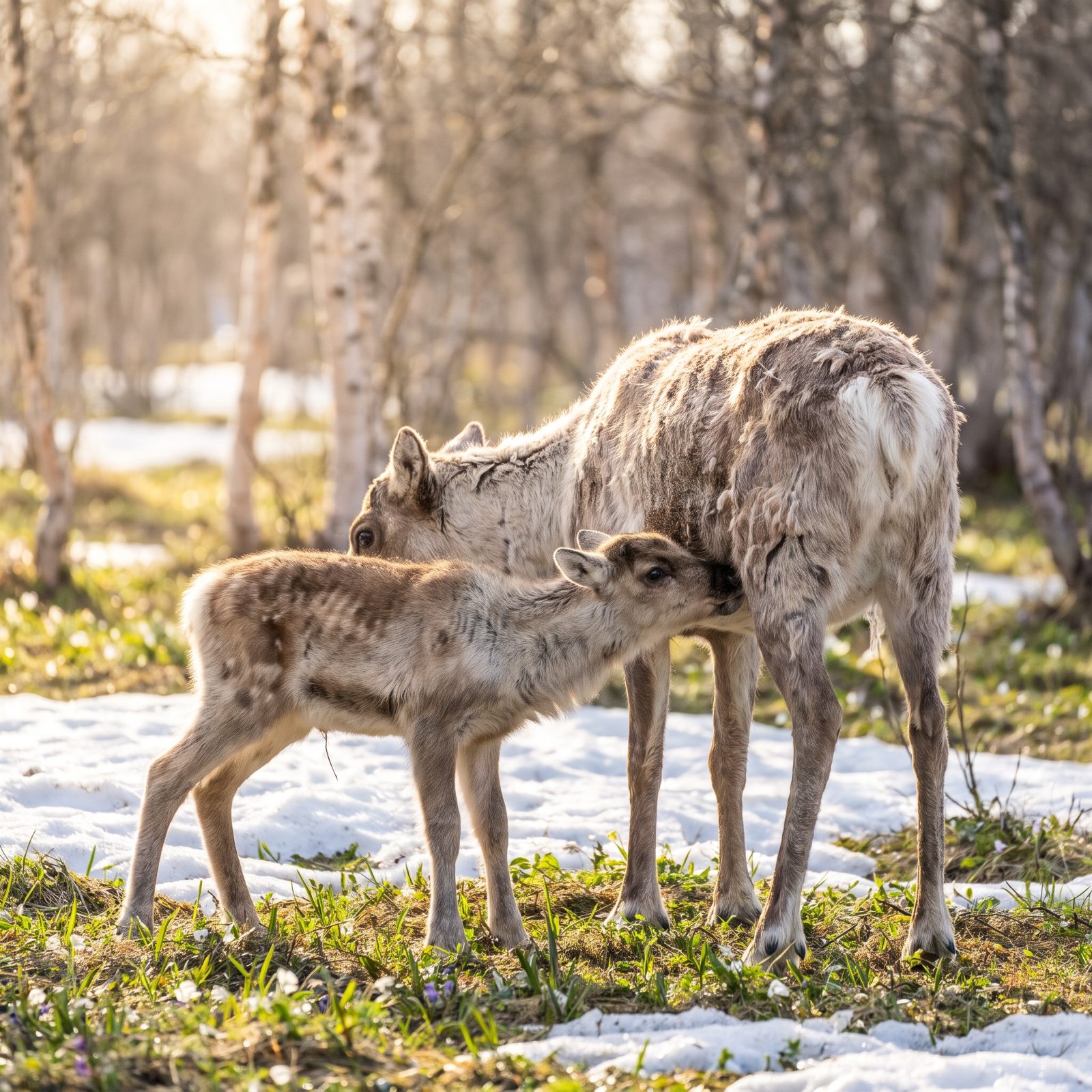
The whole flying-at-midnight-in-December story gets the calendar backwards. Reindeer calves arrive in late spring, roughly May into early June, timed so the newborns hit the ground just as the tundra greens and food is at its richest.
It’s a brutal piece of scheduling. Give birth too early and the calf freezes; too late and it won’t be strong enough for autumn migration. Evolution hammered out the window, and the cows hit it almost to the week, right across the herd.
17. Newborn Calves Can Stand Within About an Hour
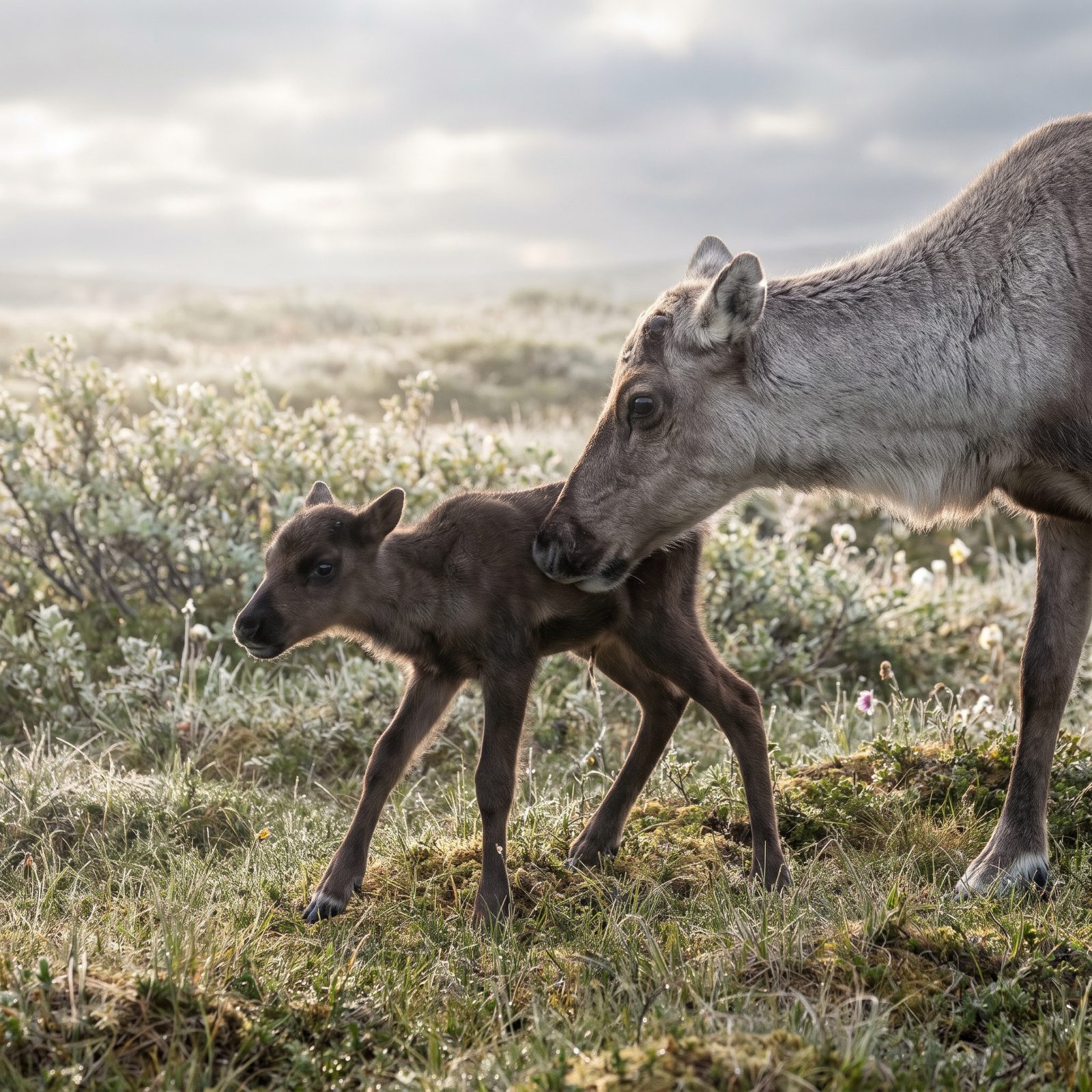
A reindeer calf is on its feet in under an hour. Within a day or so it can outrun a human.
This isn’t cute — it’s survival math. On open tundra there’s nowhere to hide a baby, and wolves and bears are always working the edges of the herd. A calf that can’t keep up with the migration is a calf that gets left behind, so they come out of the womb practically ready to walk.
16. Reindeer Milk Is Exceptionally Rich in Fat and Protein
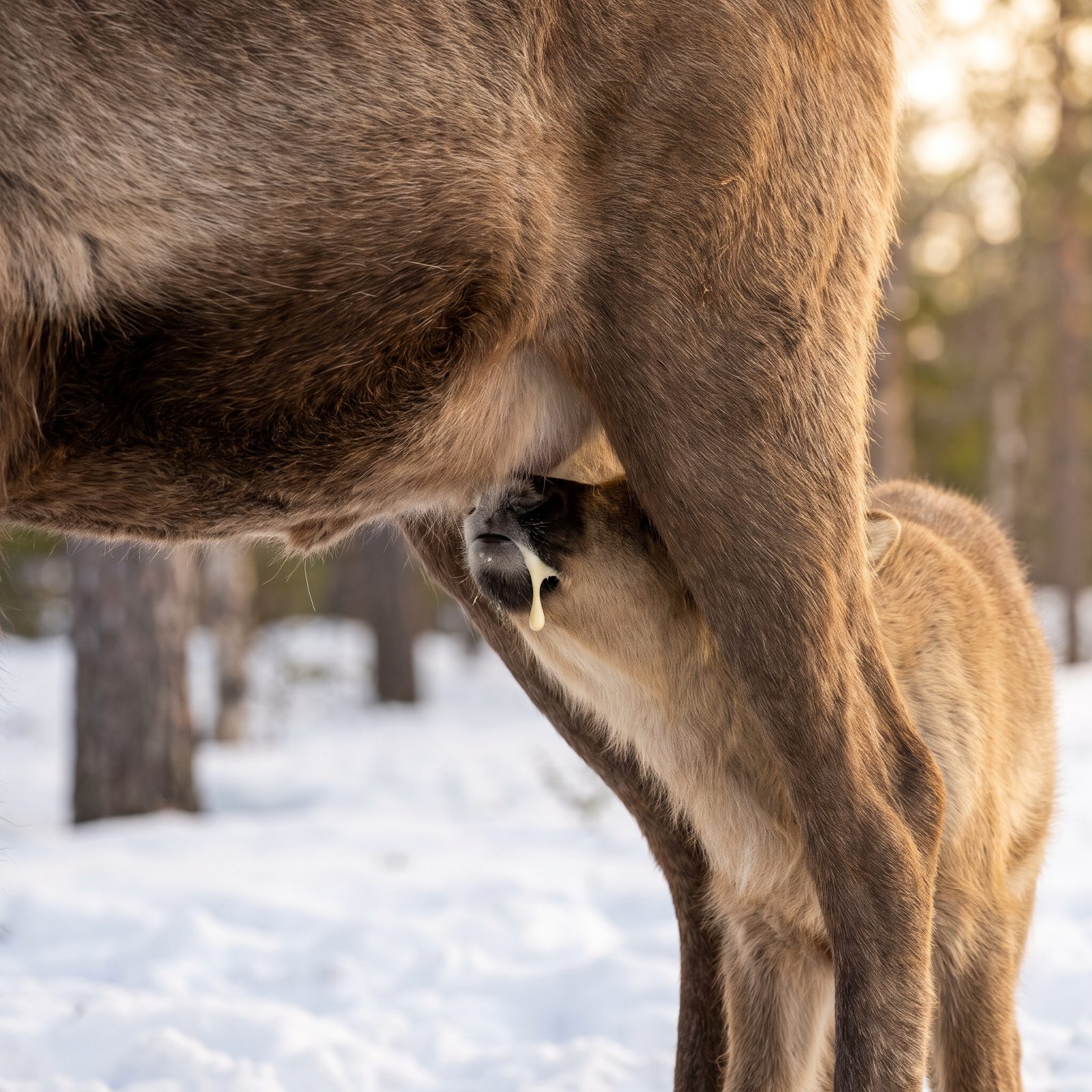
Reindeer milk is closer to cream than to the stuff you pour on cereal. It carries far more fat than cow’s milk, plus heavy protein — exactly what a calf needs to pack on insulation and muscle before its first Arctic winter.
Sami herders have milked reindeer for generations, turning that fatty milk into cheese so dense it barely resembles anything in a supermarket. Little of it, a lot of calories. In a place where every mouthful has to count, that’s the whole point.
15. Their Mating Season Happens in Autumn
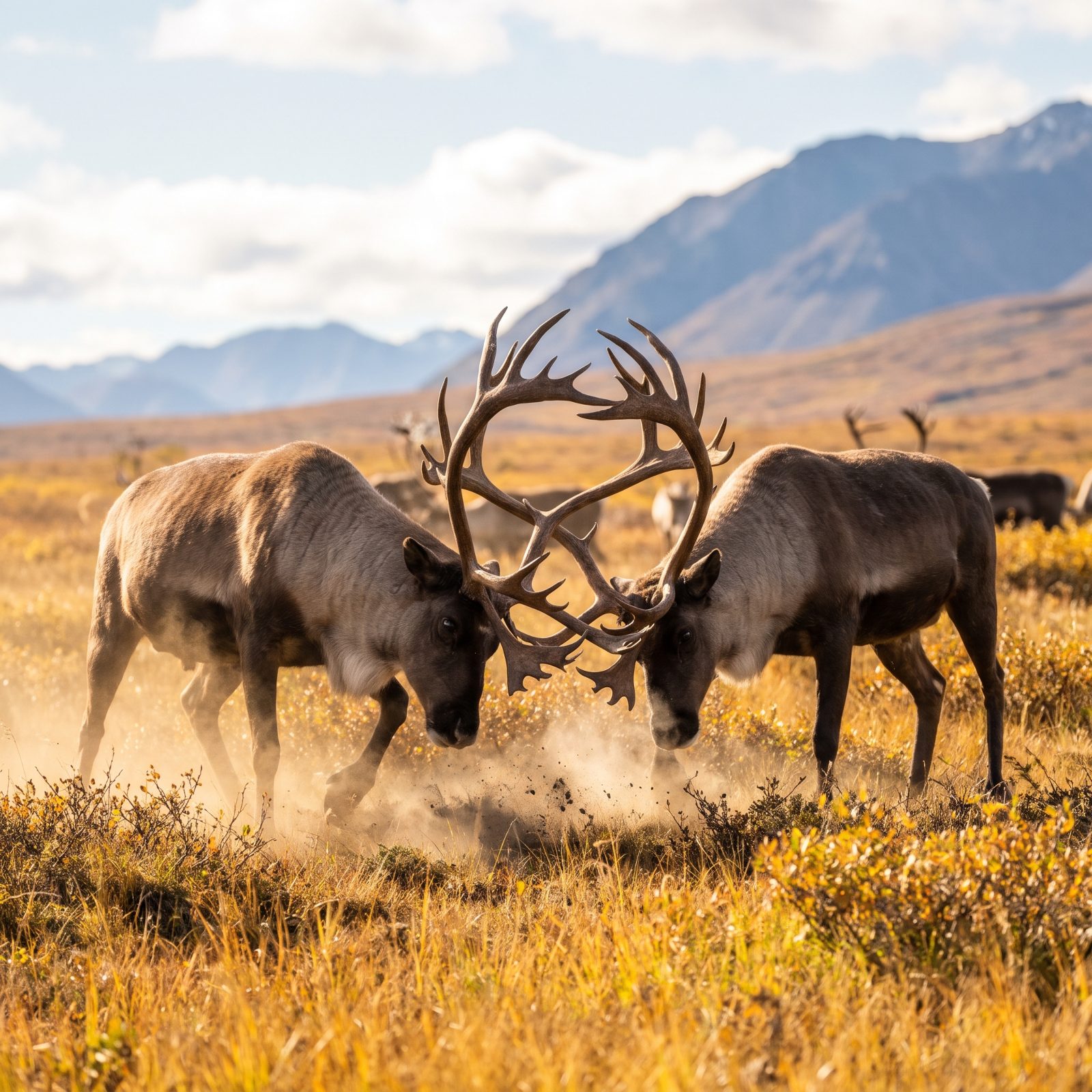
The rut lands in autumn, roughly late September into October, when the antlers have hardened and the bulls are at their heaviest. This is the loud, violent season — bellowing, clashing, chasing, bulls gathering harems and defending them from every rival that wanders too close.
Count back from here and the spring calving makes perfect sense. Gestation runs about seven and a half months. Mate in October, give birth in May, right as the snow retreats. The calendar isn’t romantic. It’s precision-tuned.
14. Rutting Males May Barely Eat and Lose Enormous Weight
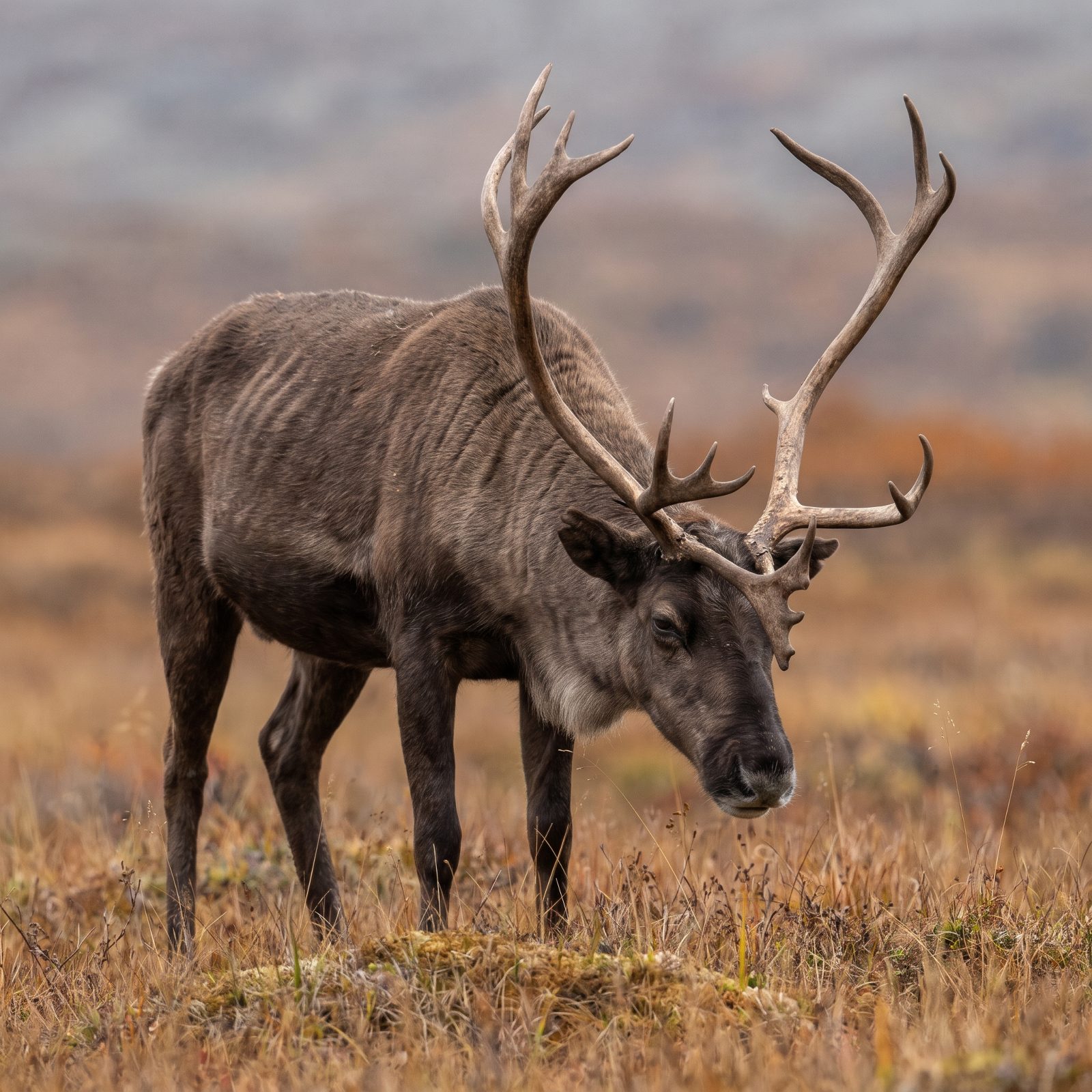
This is the part the storybooks skip. During the rut, dominant bulls can almost stop eating. They’re too busy fighting, herding females and fending off rivals to graze, and they burn through the fat reserves they spent all summer building.
A big bull can shed a staggering share of his body weight in weeks. By the time the rut ends he’s gaunt, exhausted, and heading into the harshest months of the year in terrible condition. Some don’t survive the winter that follows. The breeding season quite literally costs them their bodies.
13. Reindeer Eat Far More Than Lichen
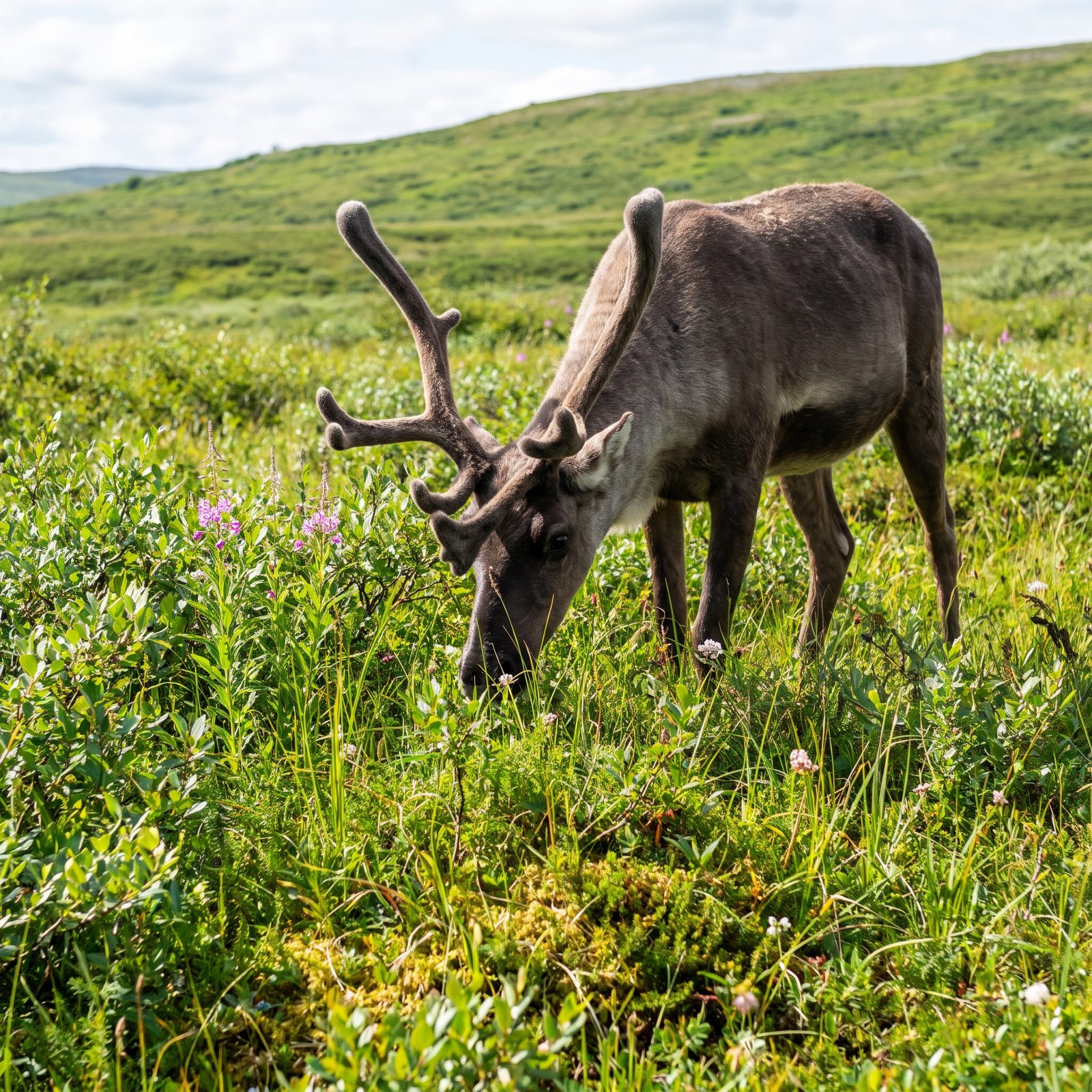
Lichen is the winter survival food, not the whole diet. Come summer, reindeer gorge on a wide spread — grasses, sedges, willow and birch leaves, herbs, flowering plants, anything green pushing out of the thawed ground.
That summer feast is where they rebuild, piling on fat fast during the short Arctic growing season, because they’ll need every ounce of it when the snow returns and the menu shrinks back down to scraped-up lichen. Lichen keeps them alive. Summer greenery makes them thrive.
12. Reindeer Lichen Is Not Actually a Moss
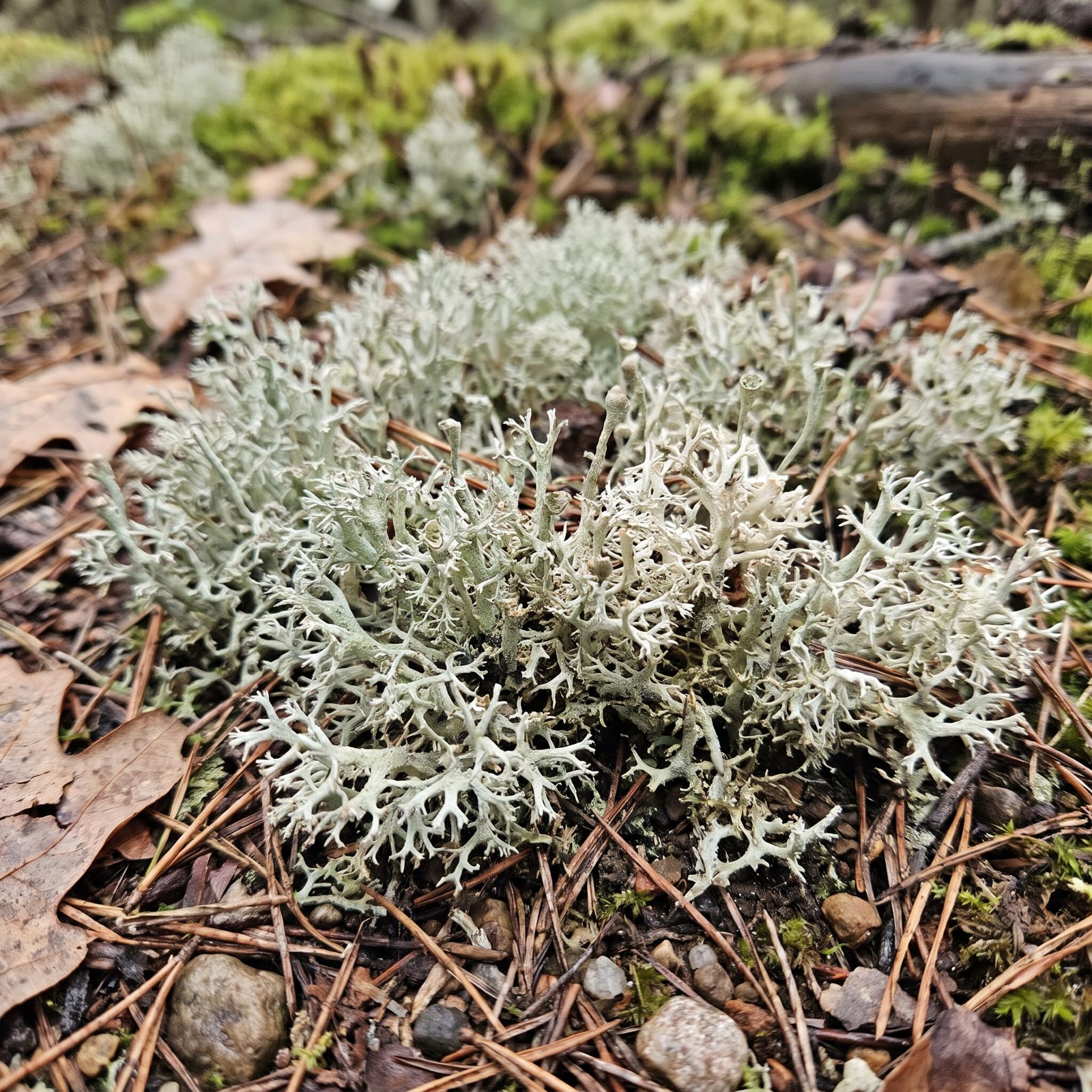
People call it reindeer moss. It isn’t moss at all.
Reindeer lichen — mostly Cladonia species — is a lichen, meaning it’s two organisms living as one: a fungus and an alga partnered together, the fungus building the pale branching frame while the alga runs photosynthesis. That odd marriage lets it survive where almost nothing else grows.
11. They Actively Seek Out Mushrooms in Late Summer
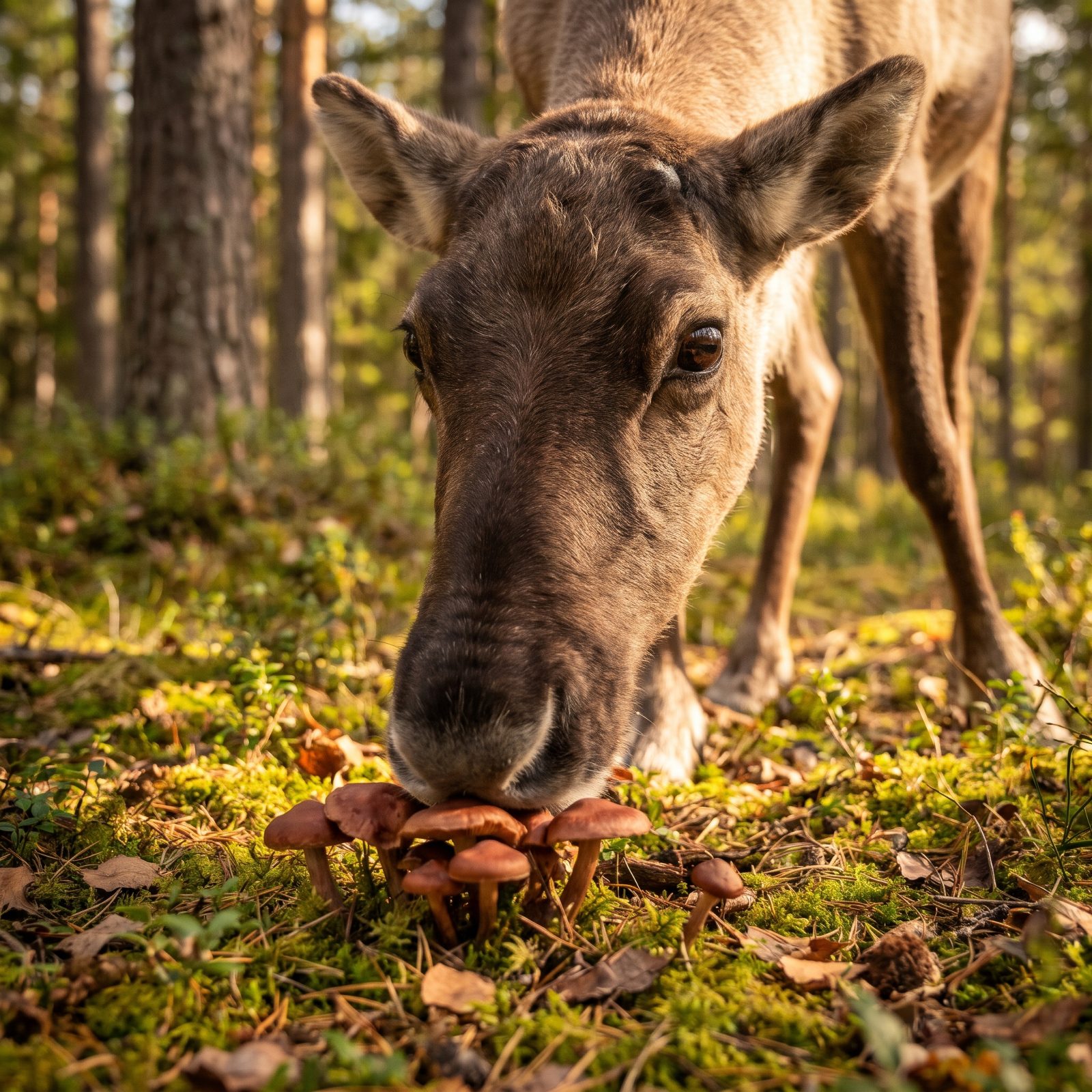
When the fungi fruit in late summer, reindeer go looking. They’ll travel and forage specifically for mushrooms, which are loaded with protein and minerals at exactly the moment the animals are trying to fatten up before winter.
Herders have long known this. A reindeer can get so fixated on hunting mushrooms through the forest floor that it scatters from the main group, nose down, working the moss like a forager with a target. For a few weeks the fungi are worth breaking formation for.
10. Coastal Reindeer Sometimes Eat Seaweed
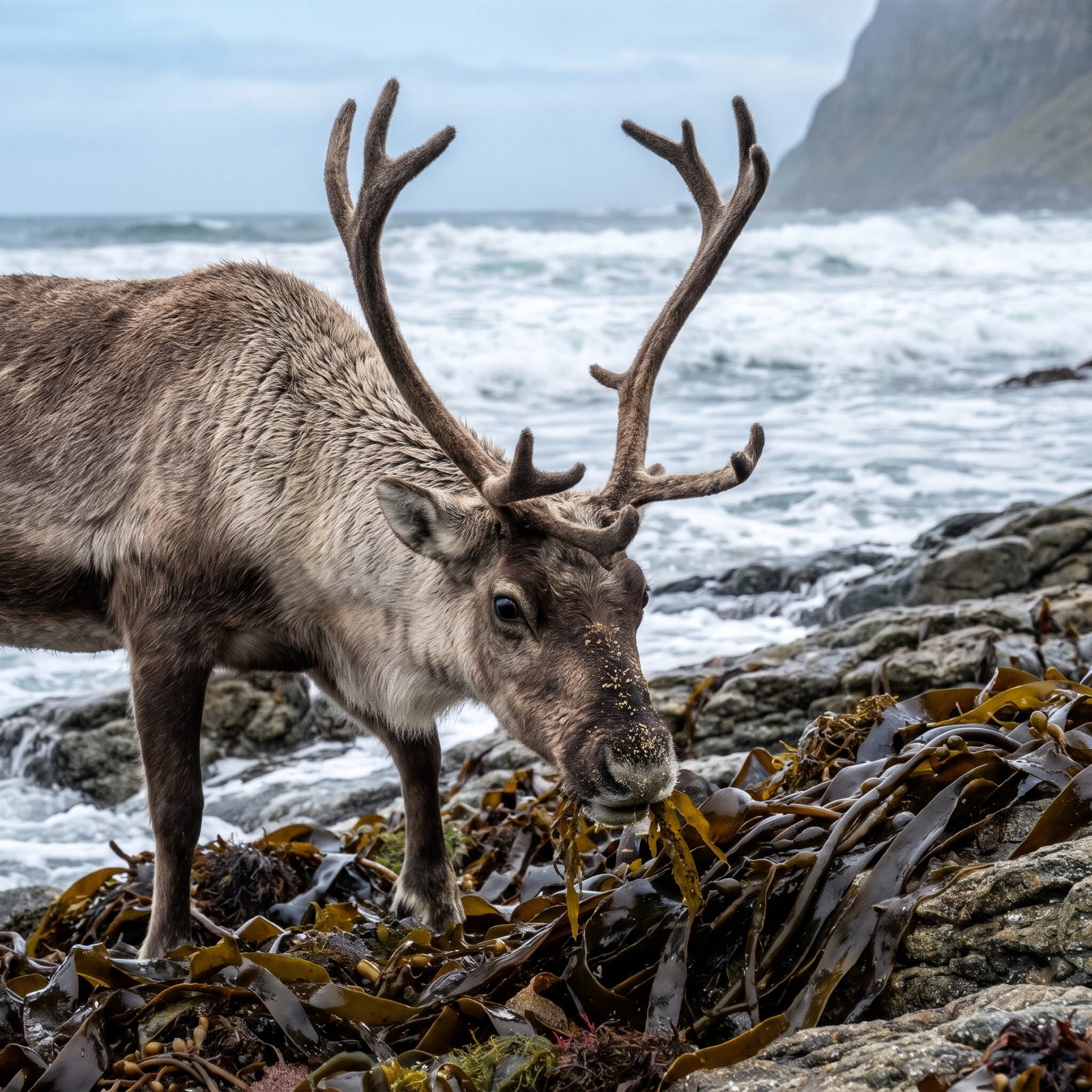
On some northern coasts and islands, reindeer walk down to the shoreline and eat seaweed. Svalbard’s reindeer and certain island populations have been recorded grazing kelp and other washed-up marine plants when land forage runs thin.
Sounds absurd for a tundra animal until you remember the rule they live by: in the Arctic, you eat what’s there. Salt-crusted kelp on a freezing beach is nobody’s first choice. But a reindeer facing a long winter on a scoured island takes the calories wherever the tide leaves them.
9. Reindeer Have No Upper Front Incisors
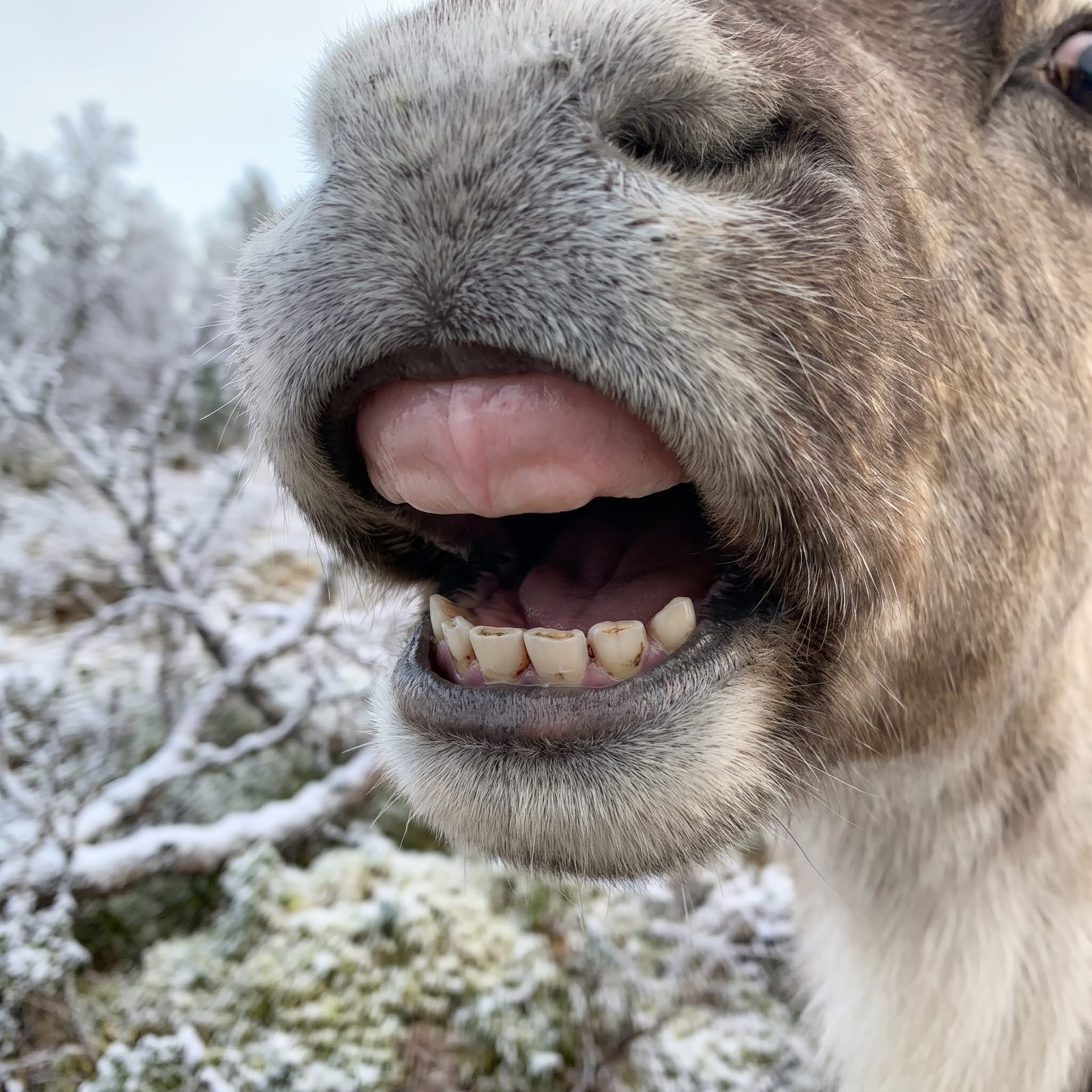
Flip back a reindeer’s top lip and you find no front teeth up there at all — just a tough, horny pad. The lower incisors press plant material against that pad and tear it loose, which is why a feeding reindeer nips and yanks rather than cleanly bites.
Storybook reindeer flash full grins. Real ones chew with a hidden toolkit most people never notice, their cheek teeth grinding lichen and sedge for hours. The front of the mouth is built for cropping tough Arctic vegetation close to frozen ground, not for smiling at a sleigh driver.
8. A Hard Ice Crust Can Lock Them Out of Their Winter Food
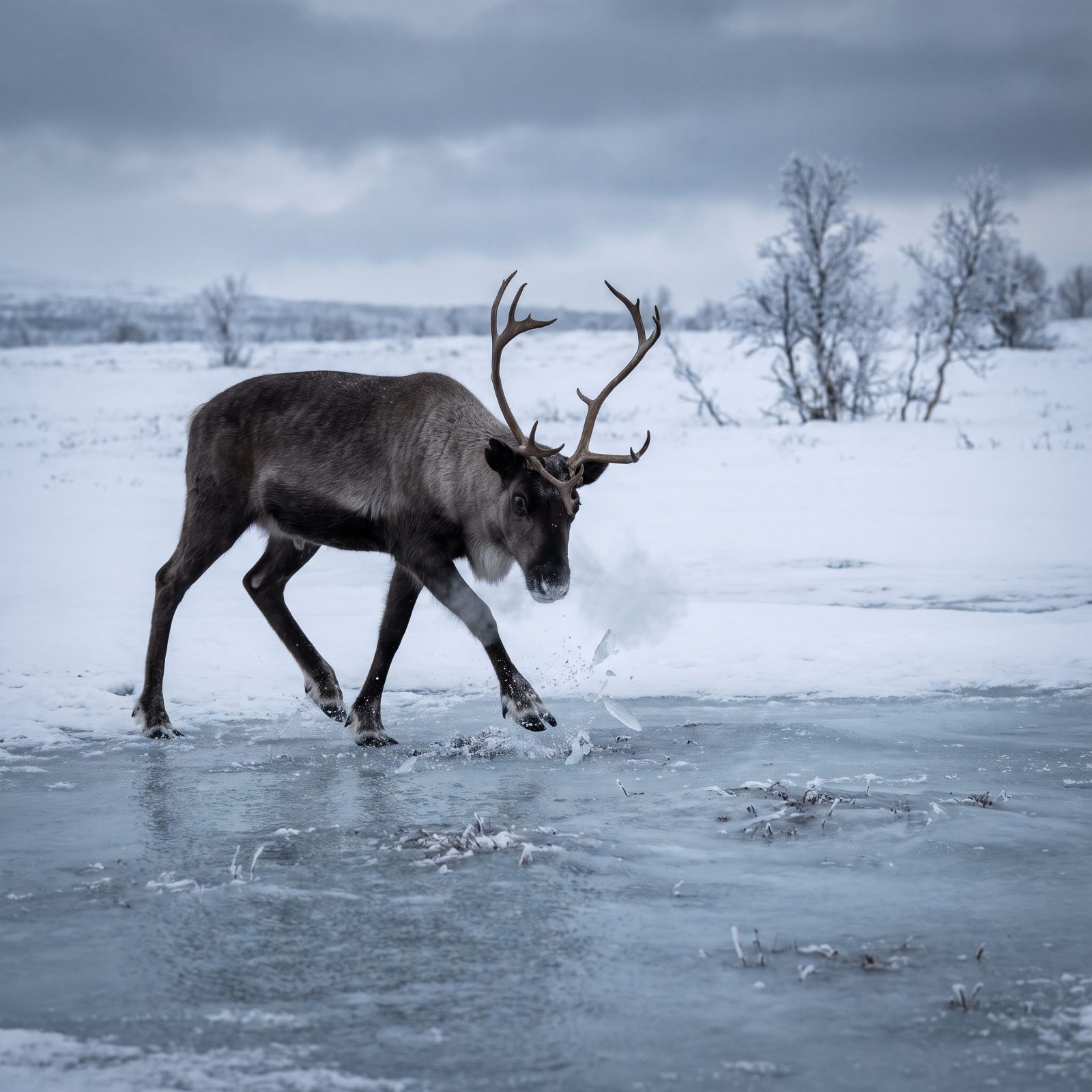
Reindeer dig feeding craters in snow to reach the lichen beneath, and a healthy animal can shovel through a surprising depth of soft powder to find a winter meal.
The trouble comes when rain falls on snow, then freezes. That builds a solid ice layer the hoof must hammer through. A reindeer can smash a thin crust, sending shards flying, but every strike burns precious energy, and thicker ice can leave the food right there, visible, inches down, and completely sealed off. Herds can starve above a buffet they can see but never reach. Warmer, wetter Arctic winters make these icing events more common — a quiet, creeping threat facing wild reindeer and the people who herd them.
7. Mosquitoes Can Drive Entire Herds Toward Snowfields
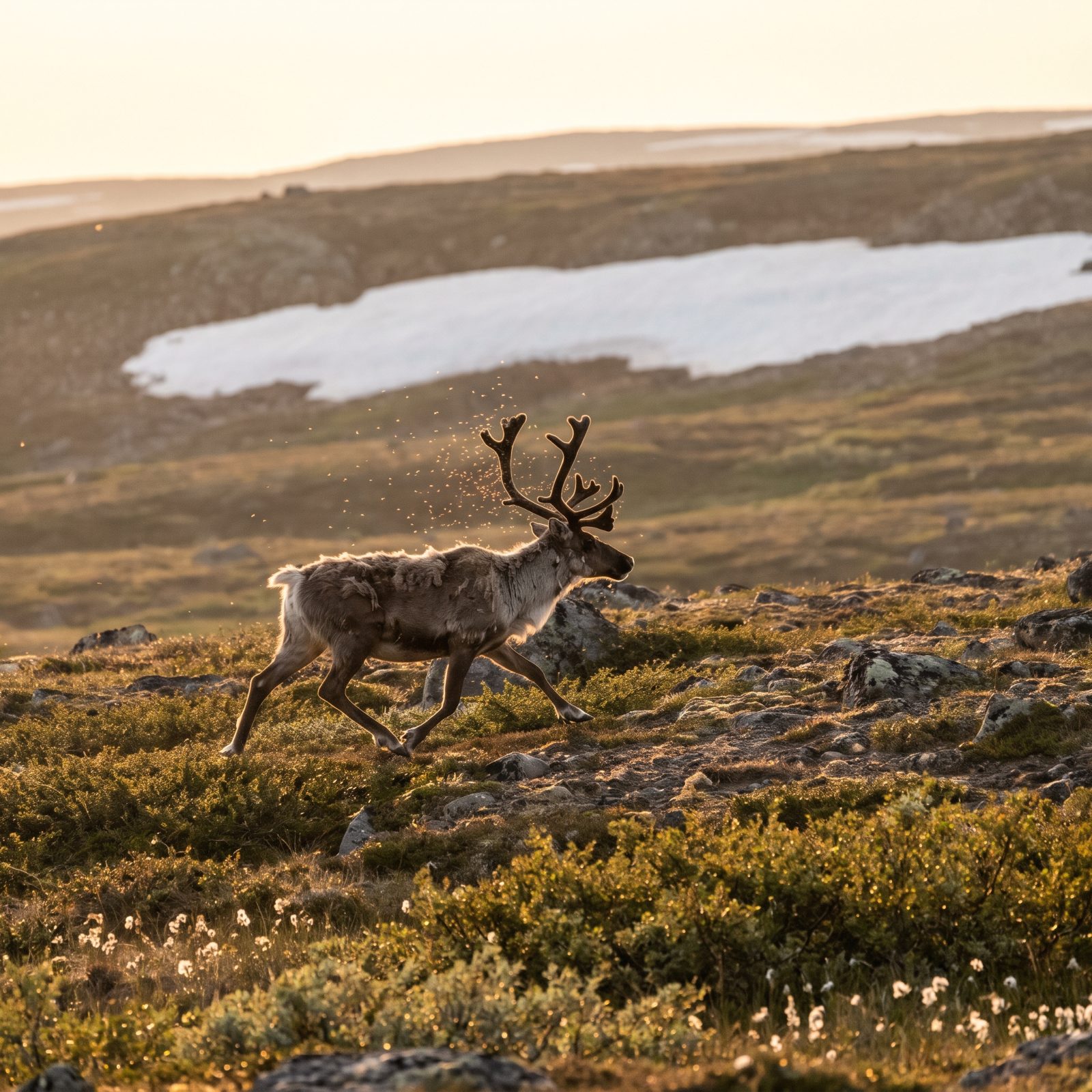
A cloud of mosquitoes can move a thousand animals. On still Arctic summer days, biting insects swarm reindeer in numbers hard to imagine, drawing blood and driving the animals half-mad with irritation.
So the herd does something clever. It climbs toward snow patches and windy ridges where the cold and breeze keep the insects grounded, and the animals pack together, heads down, trading the best grazing for a little relief. That retreat isn’t laziness. It’s the difference between a feeding animal and one burning every calorie twitching off bites.
6. Reindeer Can Gain Sleep While Chewing Their Cud
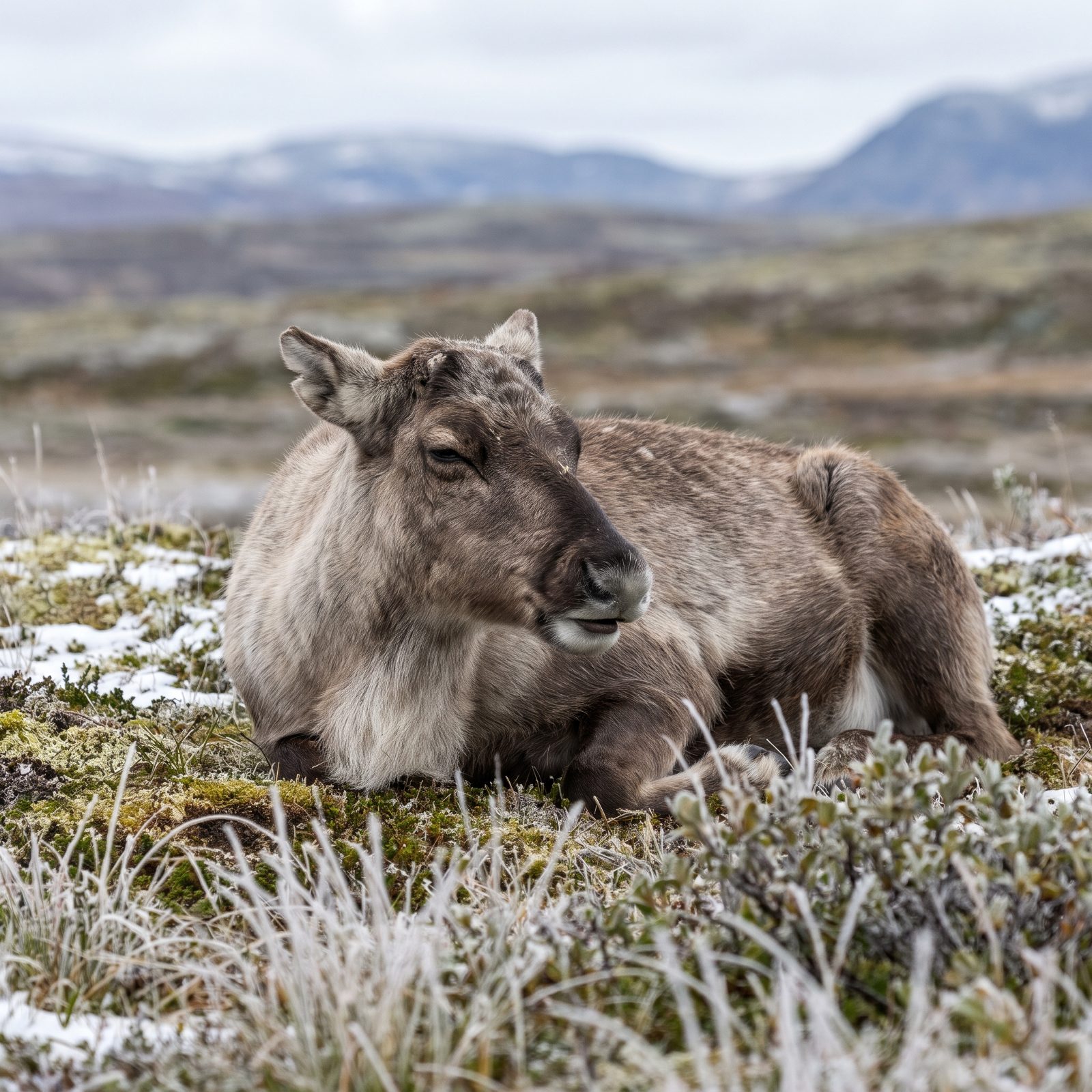
Research on reindeer found that their brainwaves during rumination look a lot like the brainwaves of slow-wave sleep. In other words, while they chew the cud, they appear to be banking rest at the same time.
Handy, when you live in the land of the midnight sun — where summer never really goes dark and winter barely gets light. When daylight stops telling you when to sleep, you take rest wherever you can grab it.
Chewing and dozing at once is exactly the kind of efficiency you’d expect from a creature with no reliable night.
5. Pulling Sleds Is a Genuine Traditional Role for Trained Reindeer
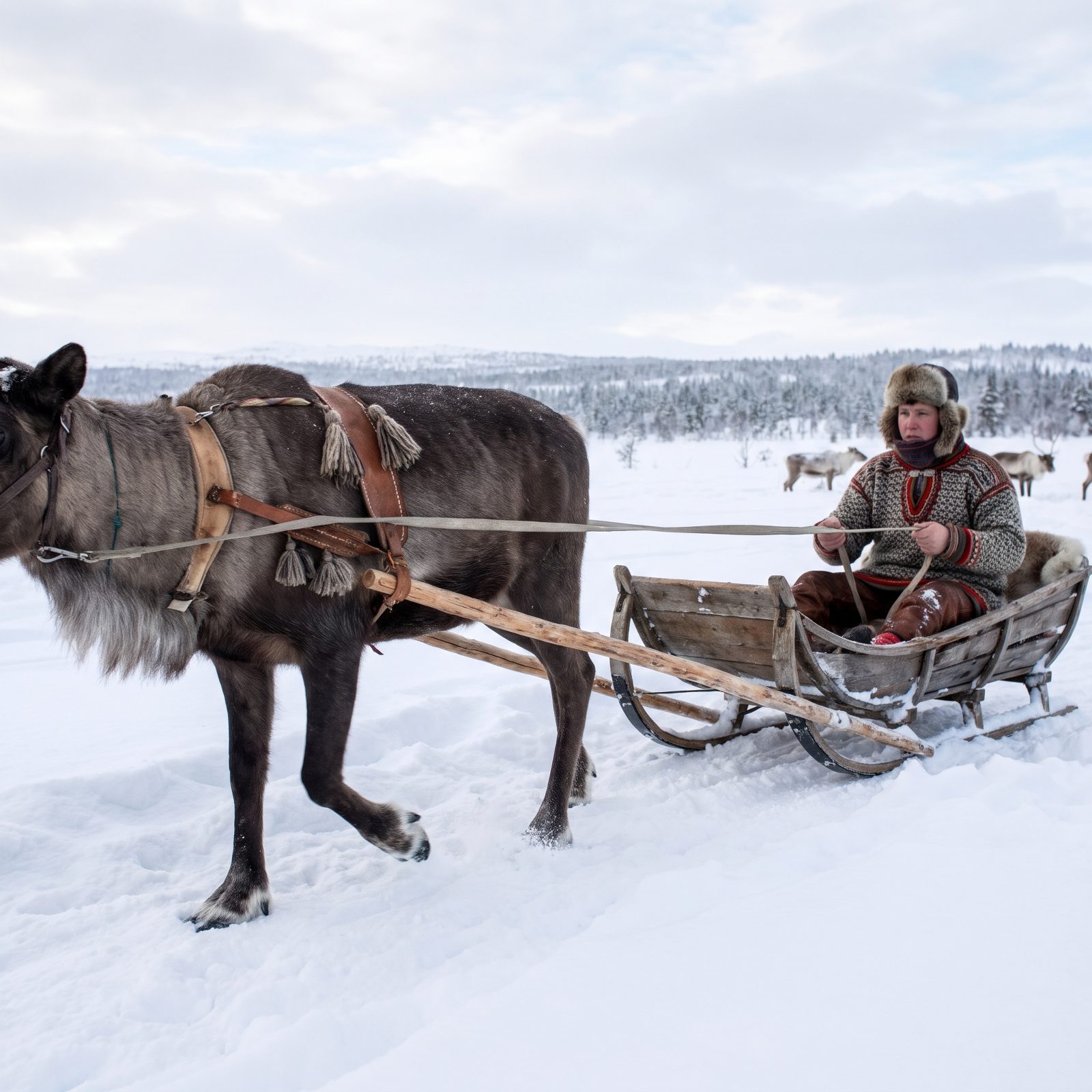
The sleigh-pulling reindeer isn’t pure invention. Herding peoples across the Arctic, including the Sámi of northern Scandinavia and groups across Siberia, have trained reindeer to haul sleds and carry loads for centuries.
One trained draft reindeer and a light sled, not a flying team of eight. The real version is quieter work — moving people, gear and supplies across snow where nothing on wheels would get far. A living tradition tied to deep knowledge of the animals, not a holiday cartoon.
4. Reindeer Racing Is a Real Competitive Sport
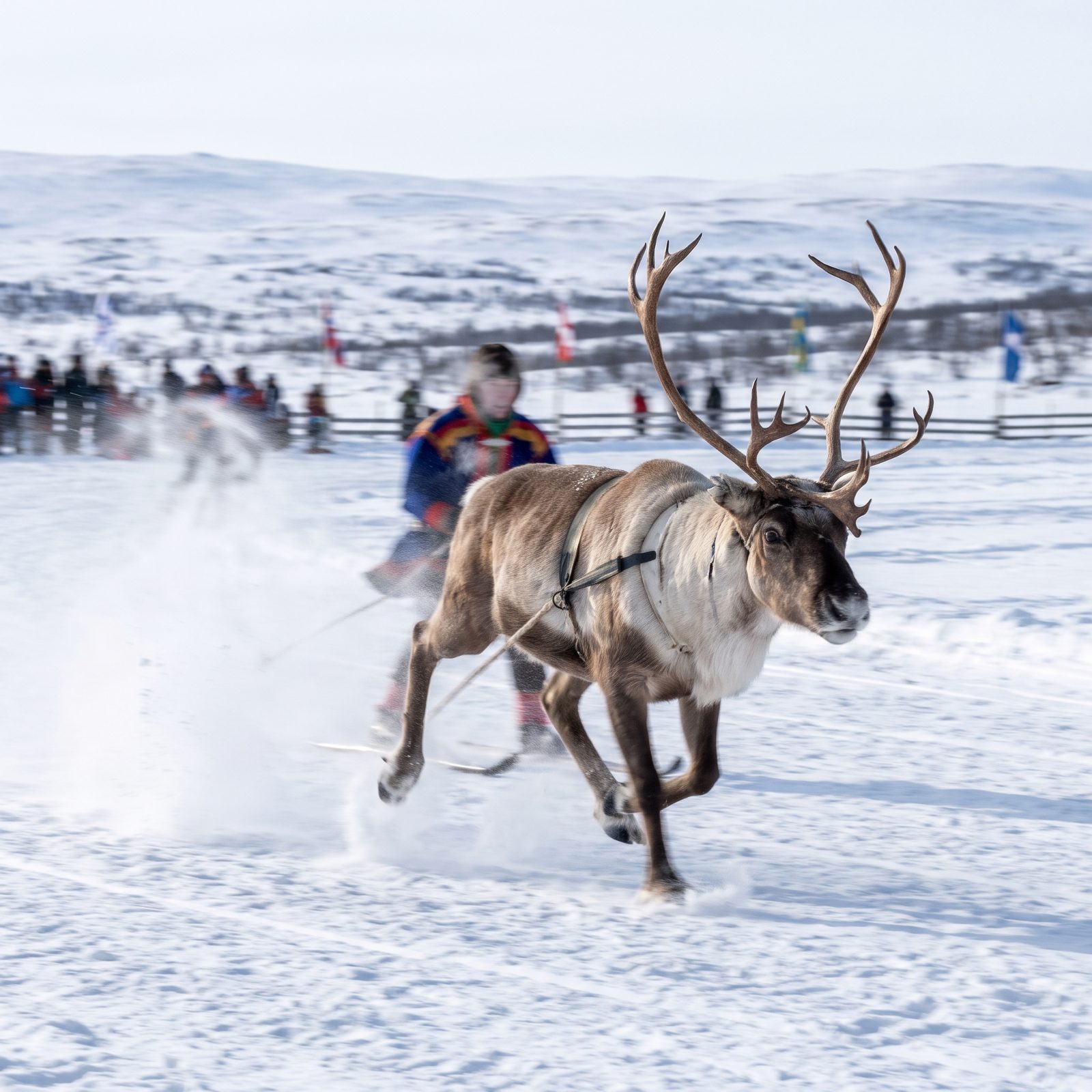
In parts of Finland and across the Nordic Arctic, reindeer racing is an actual competitive event. A reindeer gallops across packed snow or ice, often towing a skier on reins behind it, and the animals are shockingly quick.
These races draw crowds and real rivalry during winter festivals. Forget the gentle sleigh glide. A racing reindeer at full tilt is a serious, powerful runner, and holding on behind one takes nerve.
3. Even Trained Reindeer Are Not Oversized Christmas Pets
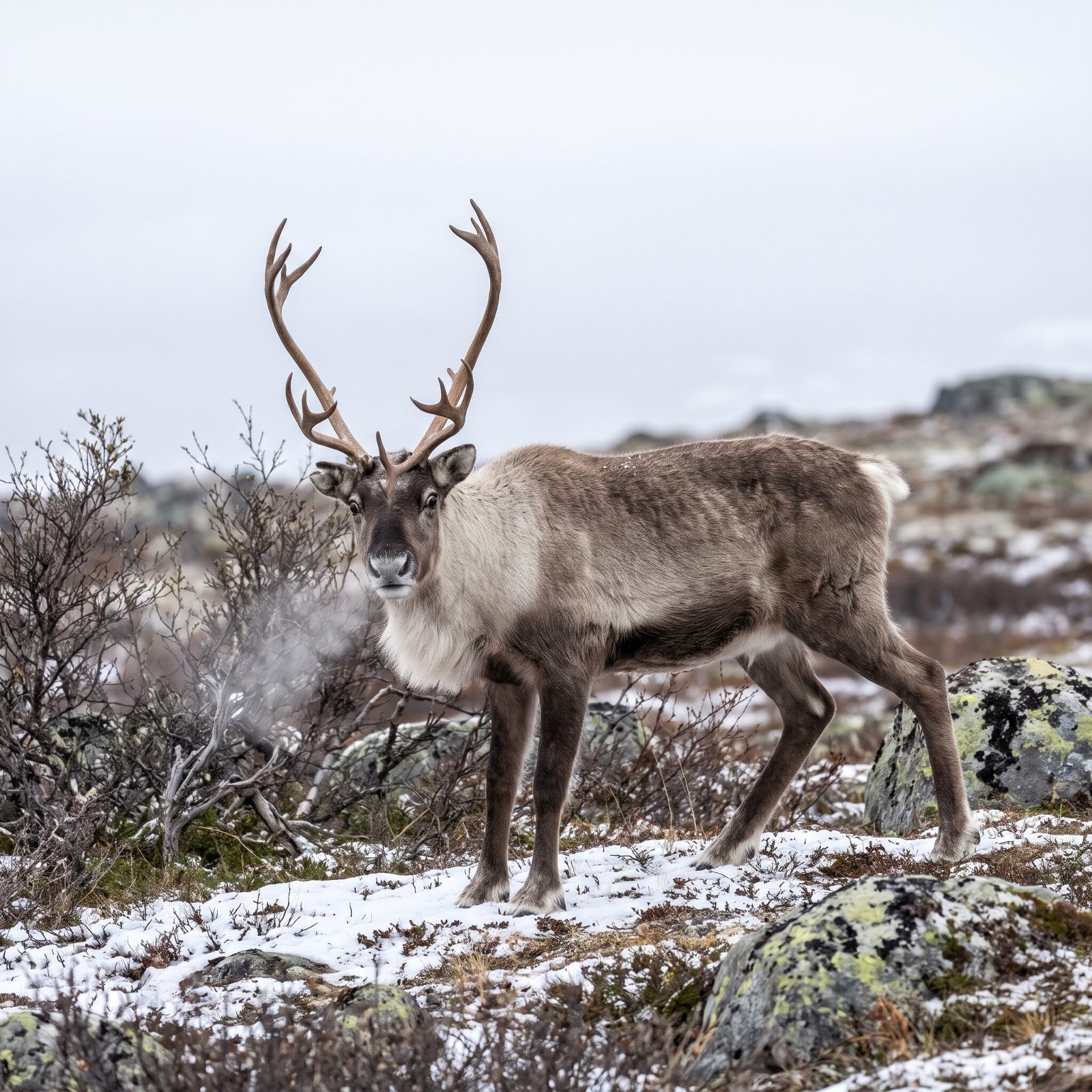
A trained reindeer is still a half-wild Arctic grazer. Even animals raised around people stay skittish, strong and driven by deep instincts to roam and feed. They aren’t tame the way a dog or horse is tame.
Handling them well takes real skill and patience, and the relationship is working, not cuddly. The storybook image of a plump, patient pet waiting by a fireplace misses what these animals actually are: nervous, tough survivors built for one of the harshest places on Earth.
2. Their Eyes Change From Gold in Summer to Blue in Winter
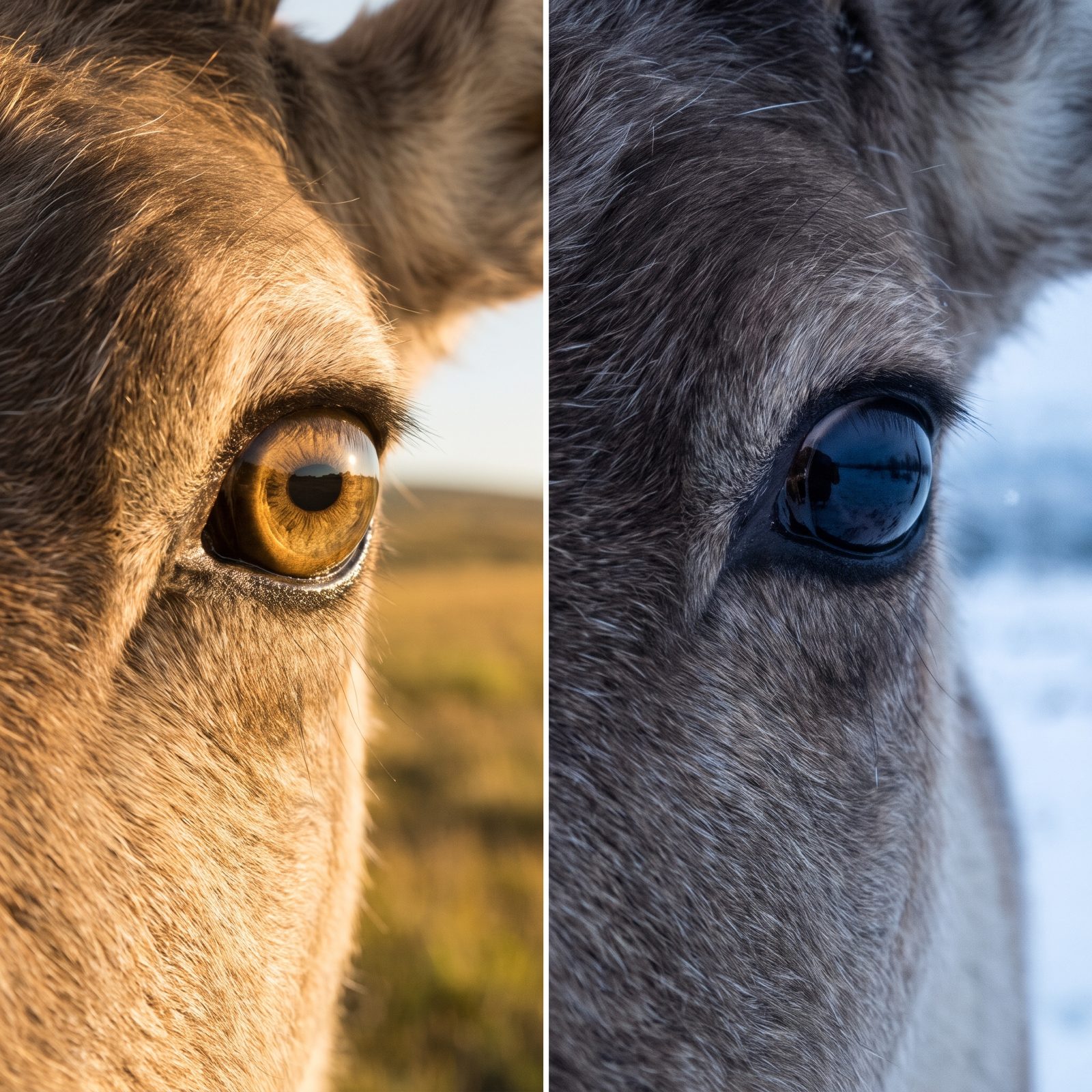
Peer into a reindeer’s eye across the seasons and the eye itself shifts color — the reflective layer behind the retina glows gold in summer and a glossy deep blue in the near-permanent gloom of Arctic winter.
Scientists found this change helps the eye catch more of the scarce light during months of polar twilight, a seasonal adjustment to a world where the sun barely rises. There’s a cost. Vision goes slightly blurrier. But when daylight nearly vanishes, catching any light at all matters far more than sharpness.
1. Their Tail Is Much Shorter Than Storybook Art Often Suggests
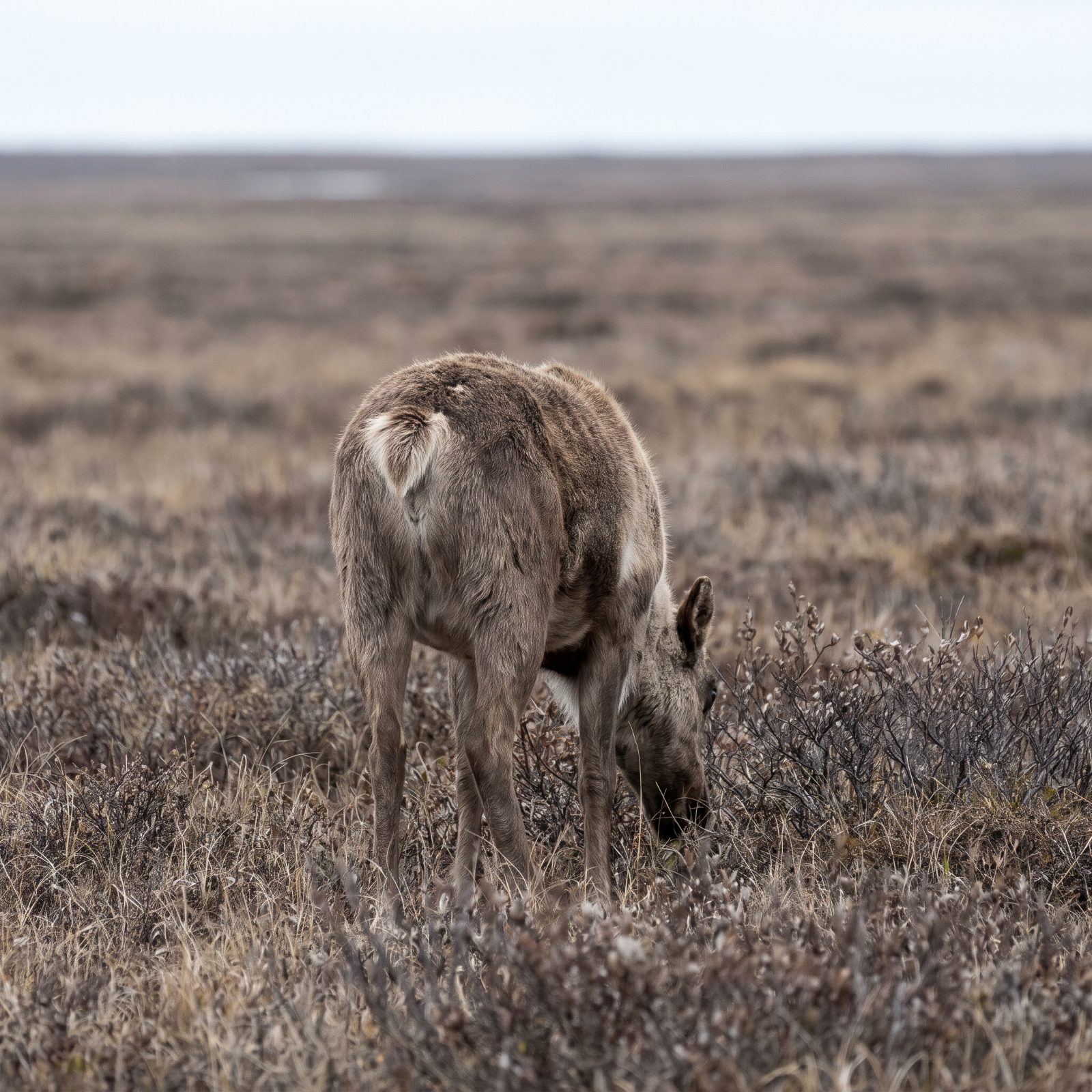
Look at a real reindeer from behind and the tail is almost an afterthought — short, stubby, often tucked flat, nothing like the long swishing tails some holiday illustrations give them.
It’s a small detail, but a telling one. A compact tail means less exposed surface bleeding away precious heat in brutal cold. Short legs, dense coat, modest tail — nearly everything about a reindeer reads as an animal pared down to survive the freeze. The cartoon versions add flourishes the Arctic would never allow. The honest reindeer is all business.