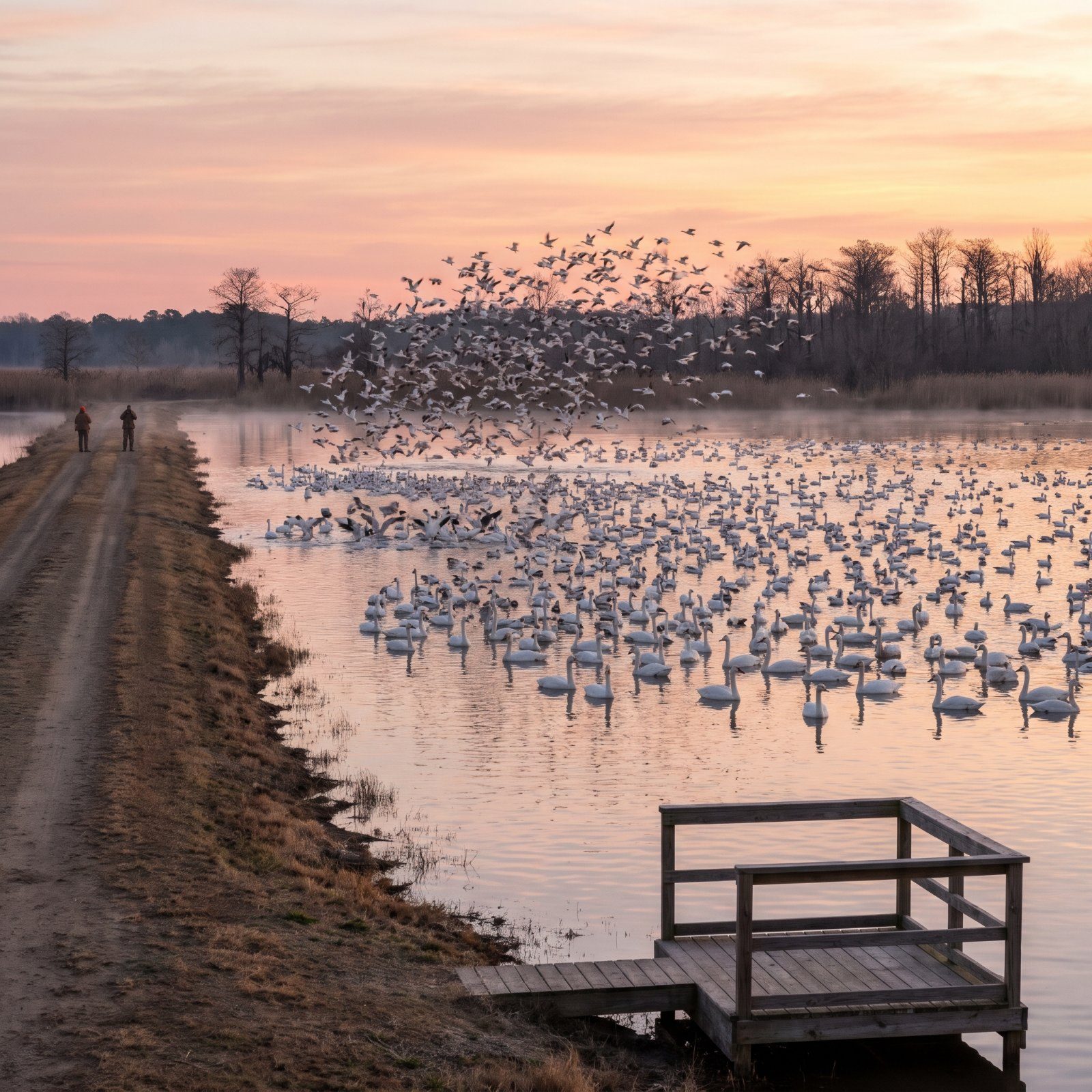
The sound reaches you before the sight does — a low, musical clamor rolling across a flooded field at first light, like a thousand distant bugles tuning up. Then the swans lift, and the whole sky goes white. North Carolina’s coastal plain becomes winter headquarters for more tundra swans than almost anywhere in the country, snow geese and a dozen-plus duck species crowding in beside them. Most of the birds funnel into a handful of refuges and lakes east of the fall line. The show runs from late November through early February, and it rewards anyone willing to get up in the cold and dark.
8. Pungo Unit, Pocosin Lakes National Wildlife Refuge (near Pantego)
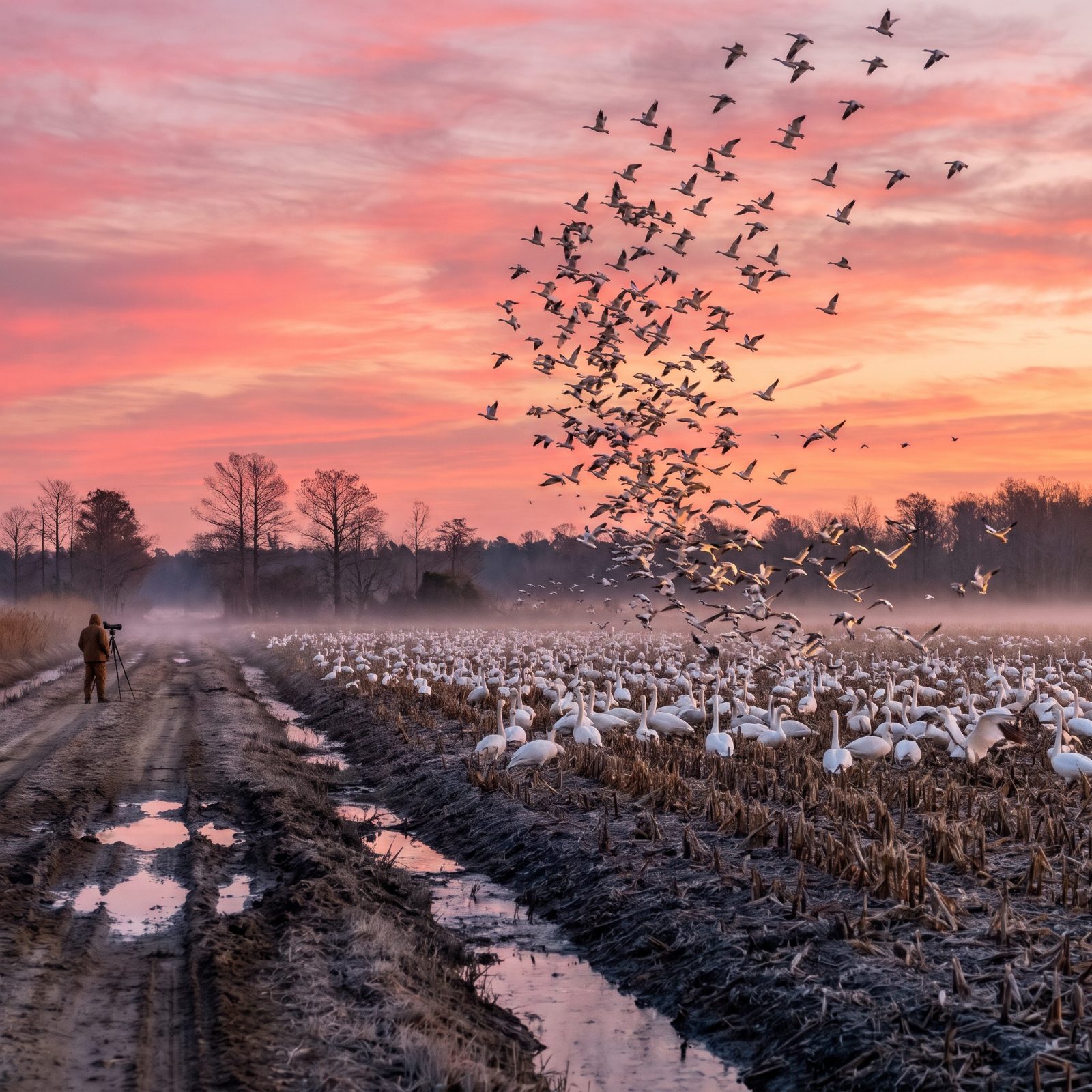
If you only make one swan trip, make it here. The U.S. Fish and Wildlife Service counts well over a hundred thousand ducks, geese and swans wintering across the refuge, and the Pungo Unit is where the crowds pile in — on Pungo Lake, the wetlands and the surrounding farm fields. The Carolina Bird Club logged a peak of 60,000 tundra swans here in January 1996. Snow geese and swans hold from November on.
The catch is the roads. They’re dirt, they turn to soup after rain, and most are posted for vehicles under 8,000 pounds. Call 252-796-3004 ext. 225 before you drive out. Daylight hours only, and the Duck Pen Wildlife Trail sits off South Lake Road.
7. Mattamuskeet National Wildlife Refuge (Swan Quarter to Engelhard)

Most of North Carolina’s wintering tundra swans end up at or near Mattamuskeet. The lake is a marvel in its own right — 40,000 acres and an average depth of about two feet, the biggest natural freshwater lake in the state. The refuge tearsheet puts winter numbers above a hundred thousand swans, Canada geese and snow geese, plus 18 species of duck. The Carolina Bird Club lists a peak count of 32,186 swans at Lake Mattamuskeet on December 29, 2008.
Drive the NC Highway 94 causeway straight across the lake for the long views. Then take the refuge Entrance Road and the 3-mile Wildlife Drive loop, which has observation platforms over the main impoundment. The refuge has traditionally run a Swan Days Festival in December with guided birding caravans — confirm this winter’s dates before you plan around them.
6. Pea Island National Wildlife Refuge (Rodanthe, Hatteras Island)
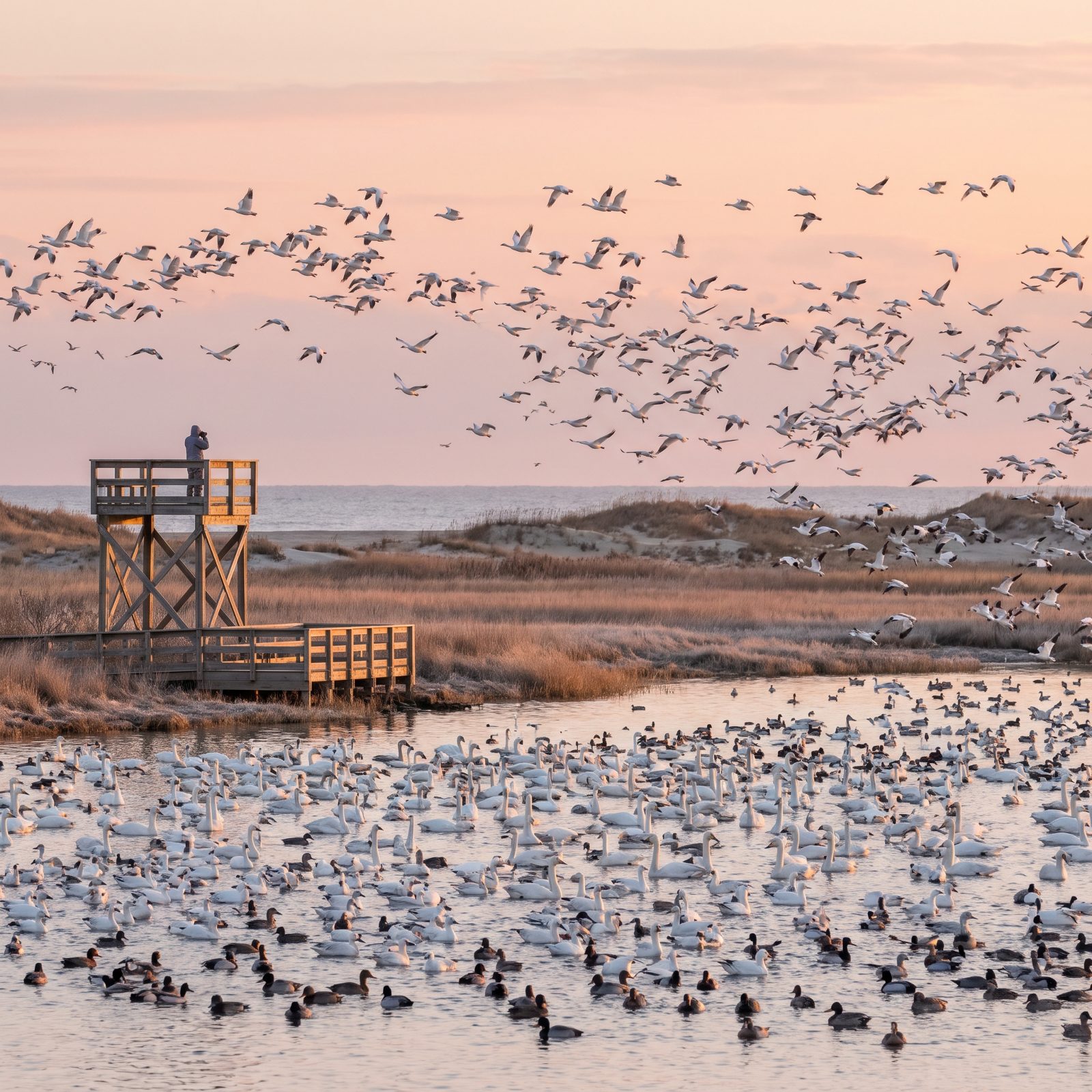
One of the Outer Banks stops on this list, and it earns the sand in your shoes. Established in 1938 partly to winter greater snow geese, Pea Island has recorded more than 370 bird species, with thousands of ducks, swans and geese each cold season.
You get three looks at North Pond: the Salt Flats Wildlife Trail platform, the photo blind off NC 12, and the North Pond Wildlife Trail tower. A platform south of the visitor center scans New Field and South Ponds. Per Island Free Press, swans arrive in late October and linger into late February or March, peaking late November into early December.
5. Mackay Island National Wildlife Refuge (Knotts Island, Currituck County)
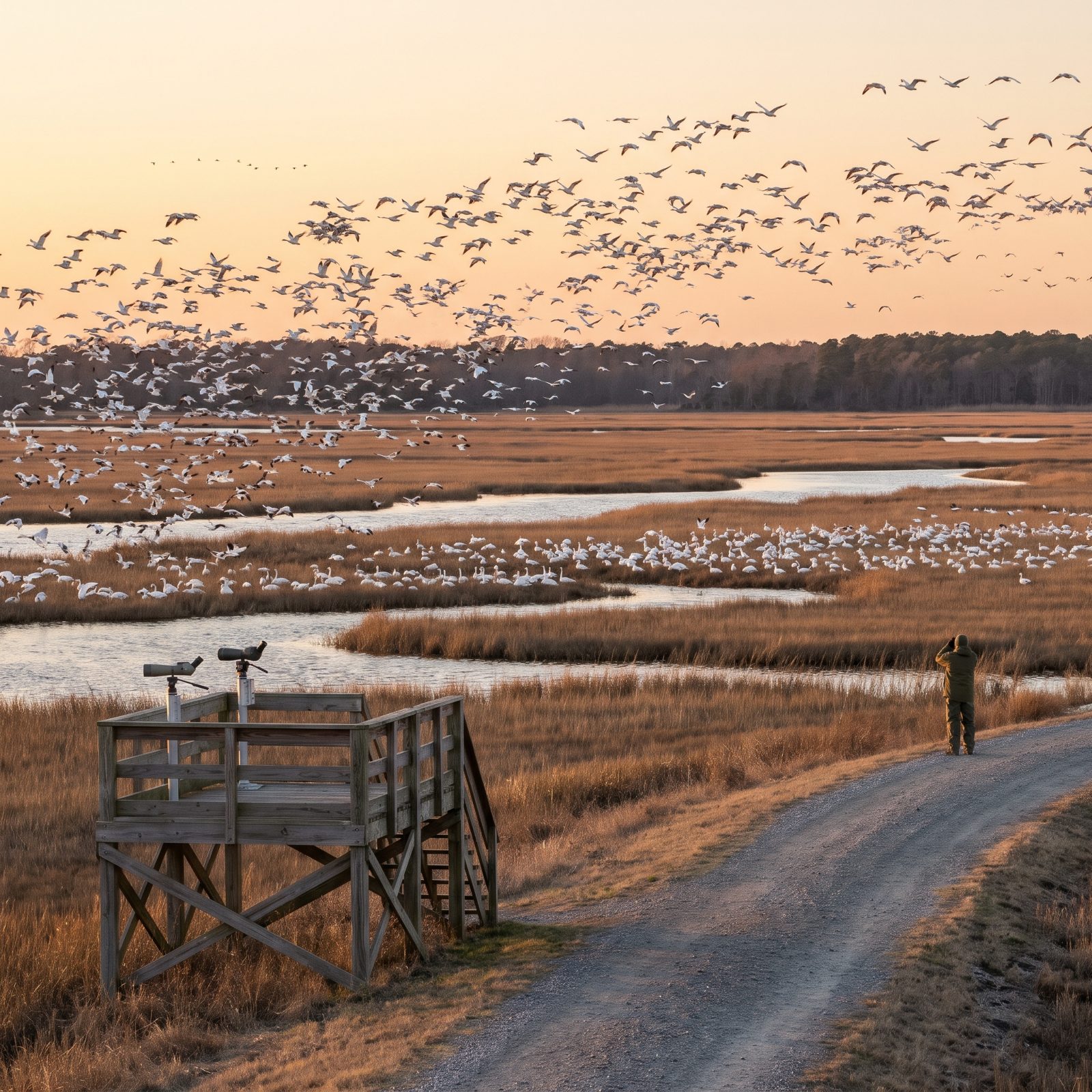
Getting here is half the fun. From the North Carolina mainland you ride the free Currituck–Knotts Island ferry, then roll up to a refuge built in 1960 mainly as winter habitat for greater snow geese along the Atlantic Flyway.
The elevated Kuralt Trail Overlook keeps spotting scopes trained over the Great Marsh, where tundra swans, ducks and big flocks of snow geese gather in fall and winter. Here’s the part people miss: most of the refuge closes October 16 to March 14 to protect the birds. The parts that stay open year-round are the ones you want anyway — Mackay Island Road to the Dike Gate, the Great Marsh Loop Trail, the Kuralt Overlook and the Marsh Causeway. Headquarters is 316 Marsh Causeway on NC 615.
4. Pettigrew State Park and Lake Phelps (Creswell)
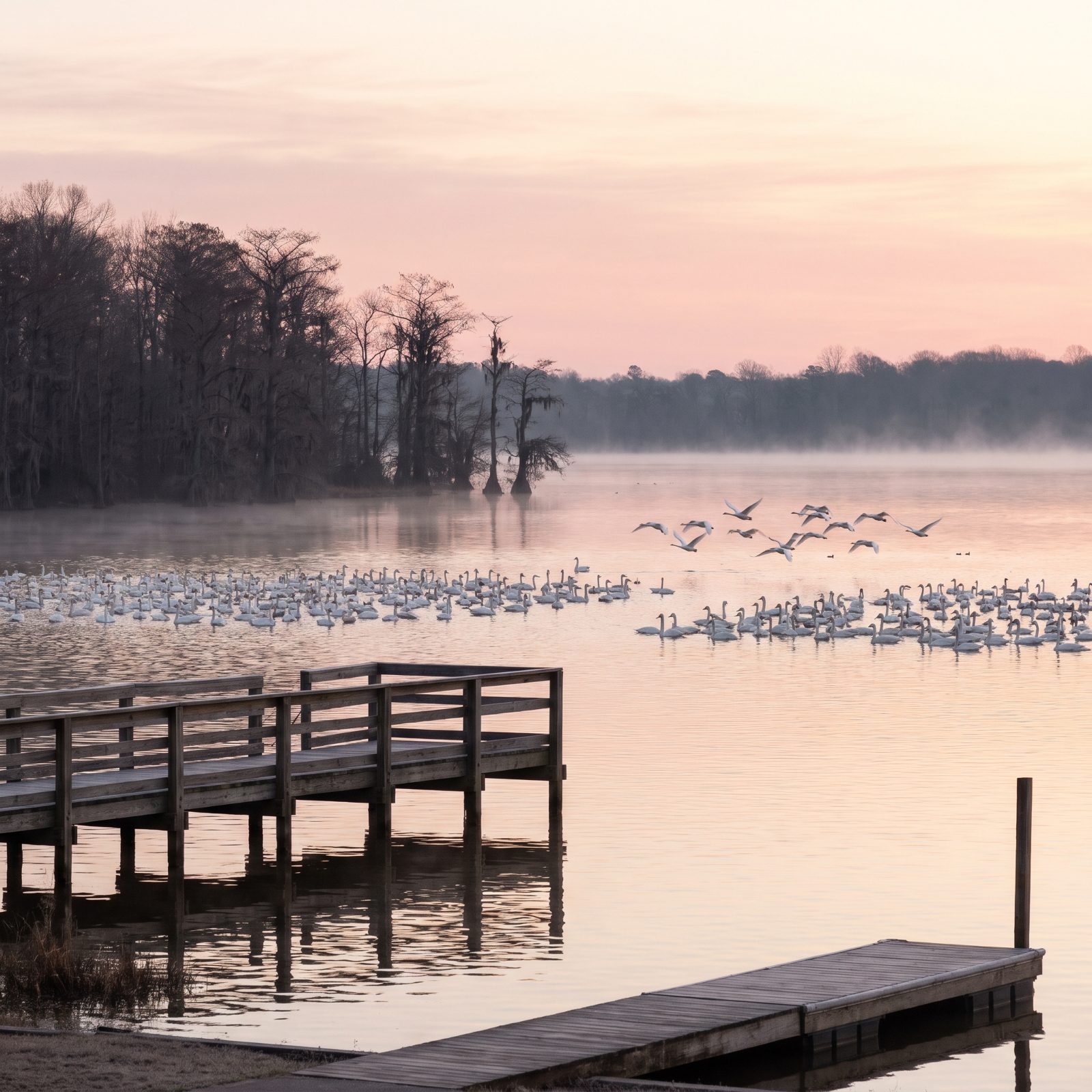
The state park entry, and a quieter one. NC State Parks says Lake Phelps hosts wintering tundra swans from November through February. The Pettigrew Christmas Bird Count tallied nearly 39,000 tundra swans on December 30, 2015 — though that count covers a wide circle around the park, not just the shoreline you can walk.
Visit Cypress Point for the fishing pier, picnic area and paddle launch, ringed by some of the oldest trees in the state. Read the fine print first. Campgrounds and the office are closed for renovations through 2026, low water has made the boat ramp unusable, and winter hours run 8 a.m. to 6 p.m. with the park shut on Christmas Day. Day use is still open, and the lake still fills with swans.
3. Alligator River National Wildlife Refuge (Dare County mainland near Manteo)
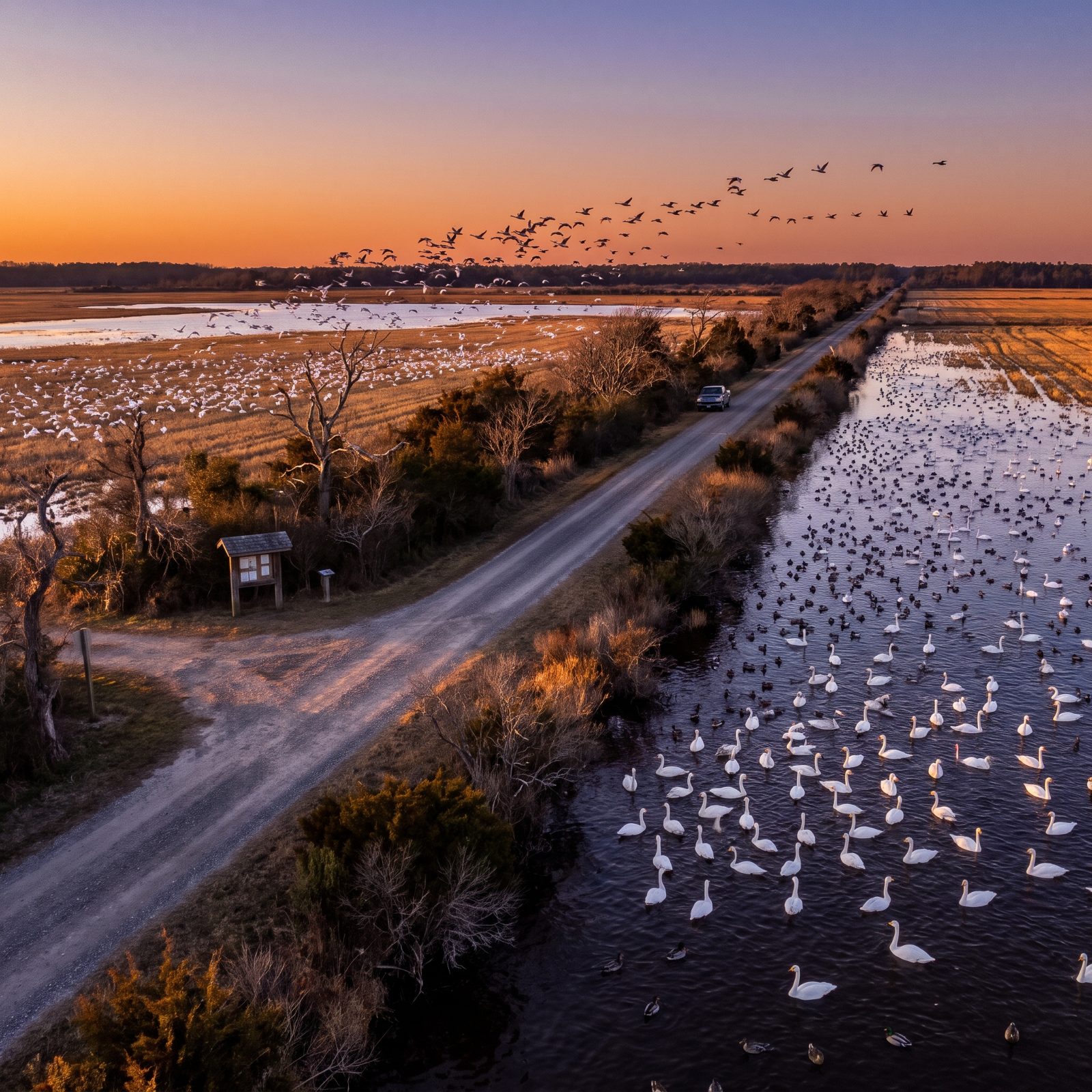
Two reasons to point your car down Milltail Road. One, the refuge’s farm fields fill with thousands of wintering waterfowl, tundra swans included, and the Carolina Bird Club names Alligator River among the places you can see swans by the thousands. Two, this is black bear country — home to some of the densest populations ever recorded — so your swan drive doubles as a bear watch.
The Wildlife Drive is a choice of roads, not a tidy loop. Grab a map at the Creef Cut Wildlife Trail kiosk or at the Milltail Road operations entrance off US 64 before you commit, because the branching roads will turn you around otherwise.
2. Bodie Island Lighthouse Ponds, Cape Hatteras National Seashore (near Nags Head)
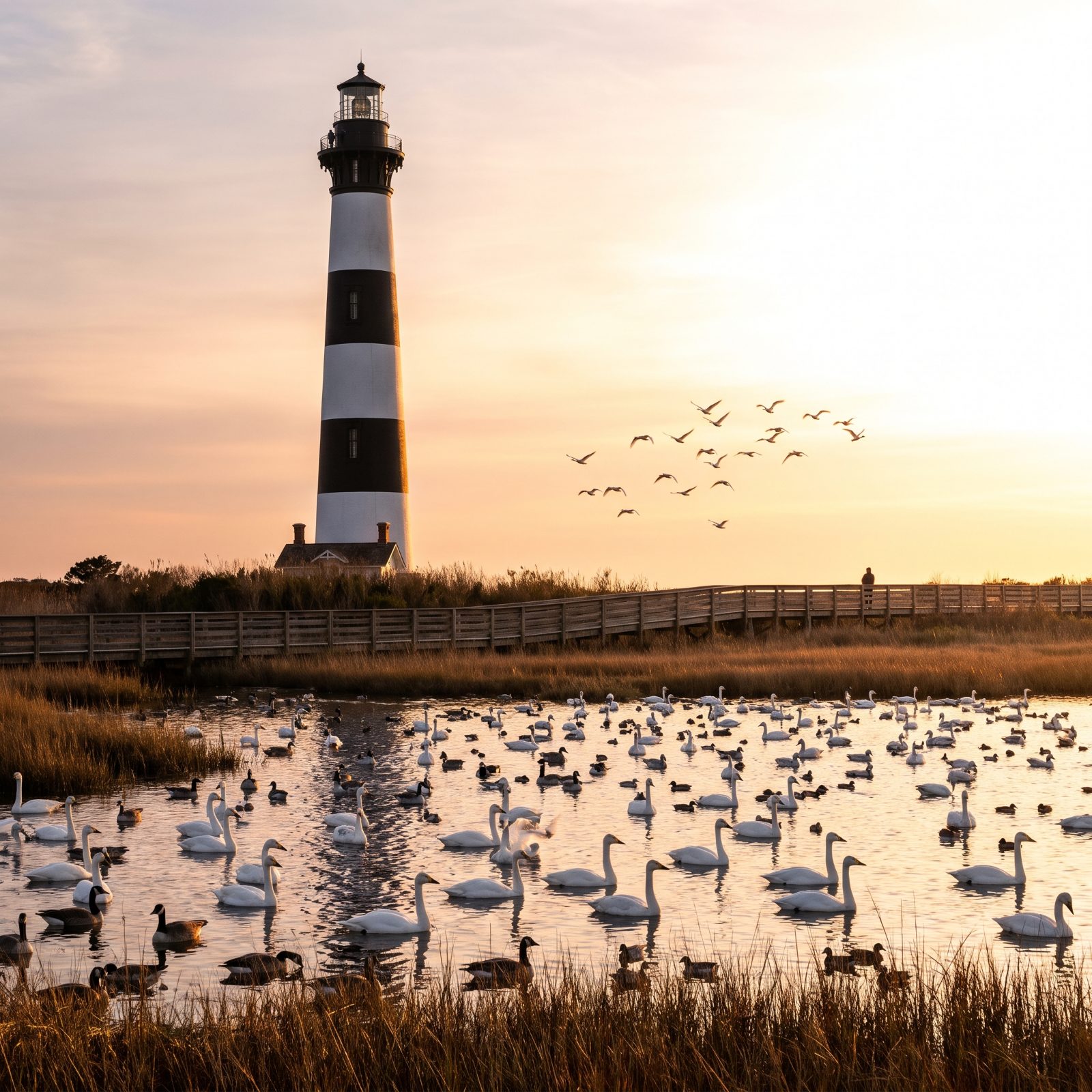
The easiest add-on in the state. The Carolina Bird Club lists Bodie Island right alongside Pea Island, Pungo and Mattamuskeet as a place to see tundra swans by the thousands in winter. Why is there water here at all? A bit of history: an on-site marker notes the Bodie Island Hunt Club built gated dikes in 1906 to manage a freshwater pond, and geese, swans and ducks have used it ever since.
Find it at the north end of Cape Hatteras National Seashore off NC 12, just north of the Oregon Inlet bridge. Pea Island is minutes south, so you can work both in a morning with the striped lighthouse watching over the whole thing.
1. Tarboro and Princeville Swan Fields (Edgecombe County, roadside viewing)
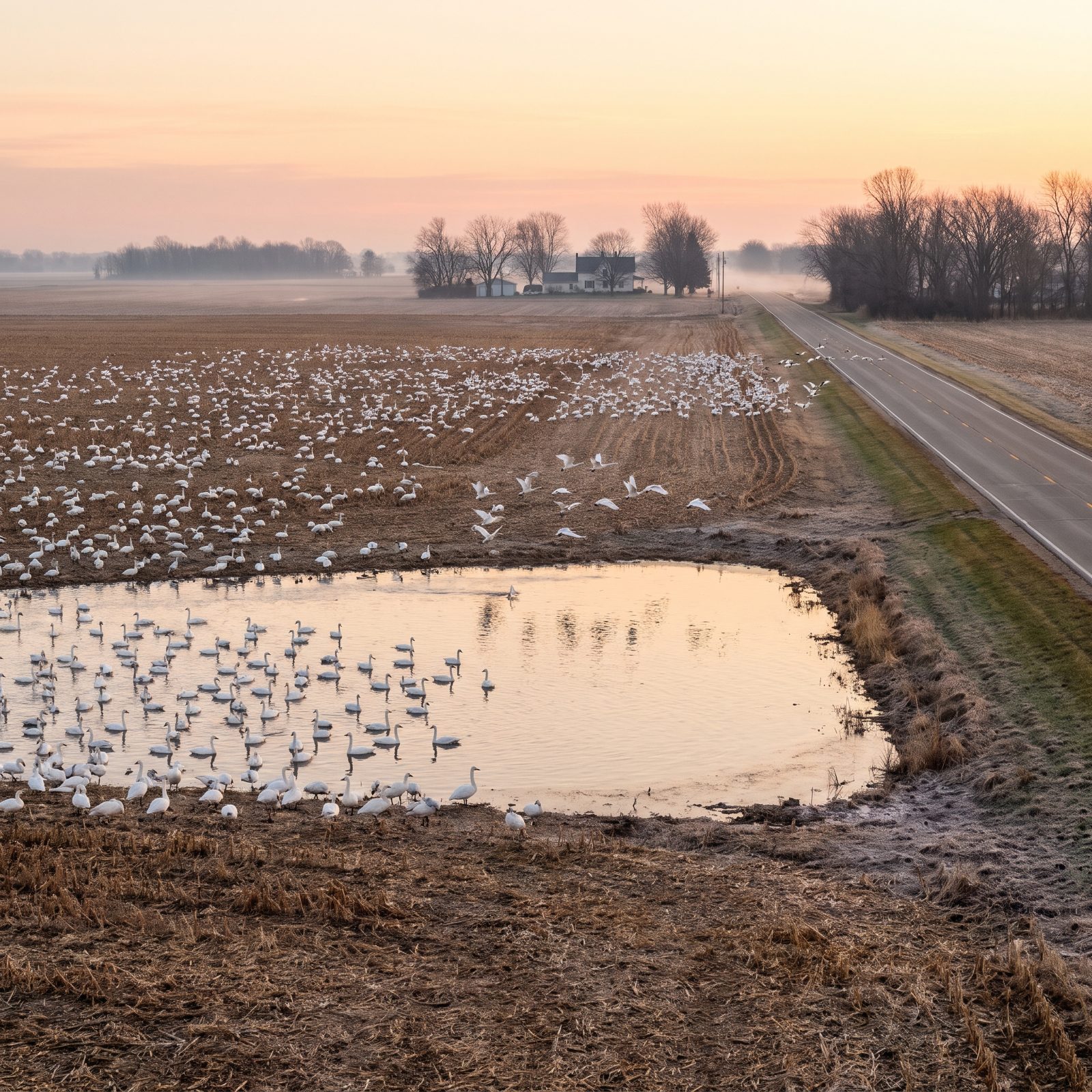
The oddball of the group, and the one worth knowing about. The Carolina Bird Club calls the Tarboro and Princeville area the westernmost regular wintering spot for tundra swans in the state. Hundreds to several thousand birds use the borrow ponds along US 64 and the big fields on either side. The club logged an inland peak of 7,000 swans in southeastern Edgecombe County on February 5, 2023. And in 2019, a rare Eurasian Bewick’s tundra swan turned up near Conetoe and got photographed — exactly the kind of needle-in-a-haystack find that keeps birders scanning.
One rule, no exceptions: these fields and ponds are private. Watch from public road shoulders, keep the engine off, and don’t step onto the land. The swans don’t need a closer look as badly as a landowner needs you off the crop.